

To understand Xiao Liu’s deep connection with civil engineering, we must travel back to his childhood.
As a child, Xiao Liu built his first small house with building blocks. Little did he know that two decades later, that small house would evolve into a large building, with building blocks replaced by reinforced concrete, and stacking replaced by pouring.

Every day, he contemplates how to construct these reinforced concrete buildings faster and more efficiently.
The modular assembly structural system, reminiscent of building blocks, undoubtedly paves the way for the rapid construction of high-performance buildings. According to the Outline for the Modernization of the Construction Industry, prefabricated buildings are expected to account for over 50% of new constructions by 2025.
Before diving into the world of prefabricated construction, let’s explore Dr. Wang’s summary of international research on prefabricated structural systems.
Introduction and Development of Seismic System Research for Prefabricated Structures (PRESSS)
PREcast Seismic Structural System (PRESSS) is a research initiative started in the 1990s by renowned earthquake engineering expert Nigel Priestley. It focuses on evaluating and designing the seismic performance of prefabricated structures.
Prof. Priestley, widely respected in his field, made significant contributions to earthquake engineering that continue to influence future generations. He taught at the University of California, San Diego from 1987 to 2000, before returning to the University of Canterbury in New Zealand, where he began his career. He passed away in 2014.
In honor of three distinguished earthquake engineering scholars—Vitelmo Bertero, Ray Clough, and Nigel Priestley—who passed away since the 15th World Congress on Earthquake Engineering (15WCEE, 2012), a commemorative event was held at the 16WCEE in Chile in January 2017.

Today, we will explore PRESS from the following perspectives:
- 1. Introduction to PRESS
- 2. Typical Node Construction of PRESS
- 3. Application of PRESS in Medium and High-Rise Structures
- 4. Performance of PRESS Structures in Earthquakes
1. Introduction to PRESS
PRESS is a collaborative research effort between American and Japanese scholars, focusing on the seismic performance of precast reinforced concrete structures. The project was initiated because researchers believed prefabricated assembly structures represented a key future direction in construction. However, at that time, research was limited, and there was a lack of advanced, efficient prefabricated structural systems suitable for high seismic intensity regions.
The PRESS program primarily studies seismic performance and design strategies for prefabricated structures across different seismic zones. It also seeks to develop new design concepts, technologies, and materials for prefabricated construction.
Design approaches for prefabricated structures are generally divided into two categories: strong connections and conduit connections. Strong connections focus on robust node designs that ensure structural integrity and can be designed similarly to conventional structures. Conduit connections, the focus of the PRESS project, involve advanced connection techniques.
The research is divided into three phases, covering conceptual design, experimental studies, numerical analysis, and design methodologies. Universities lead the research, while industry partners provide essential financial support and practical insights, as highlighted by Prof. Priestley.
2. Typical Node Construction of PRESS
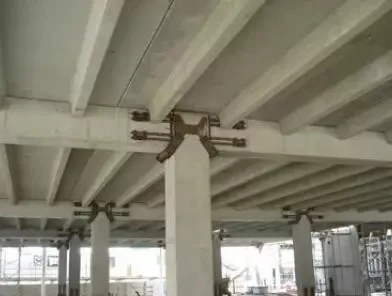
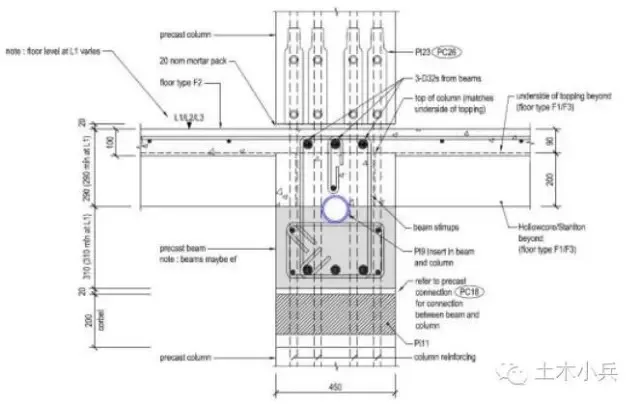
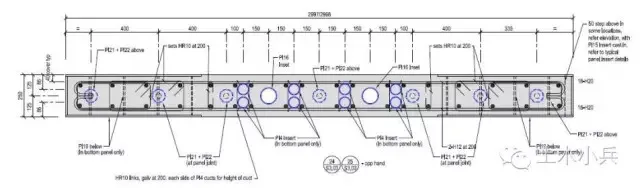
The PRESS project proposes various assembly methods for structural components. Notably, the use of post-tensioned prestressed connections allows components to self-reset after seismic events by pre-compressing gaps at interfaces, reducing damage. This technique is often combined with energy-dissipating components to create a “hybrid system,” characterized by a flag-shaped hysteresis curve.
This innovative technology was tested extensively on a five-story reinforced concrete shear wall structure.
3. Application of PRESS in Medium and High-Rise Structures
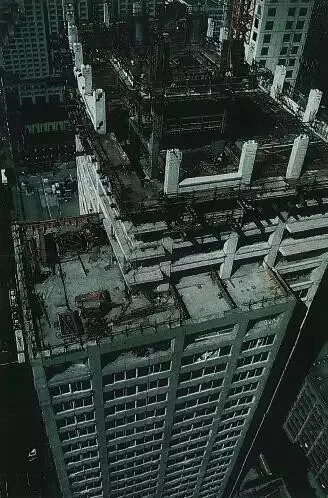
The 39-story Paramount Building in San Francisco is the tallest prefabricated structure employing PRESS technology in a seismic zone. Standing 128 meters tall, it was the tallest building in San Francisco from 2002 to 2008. The building uses prefabricated concrete combined with surrounding frames.
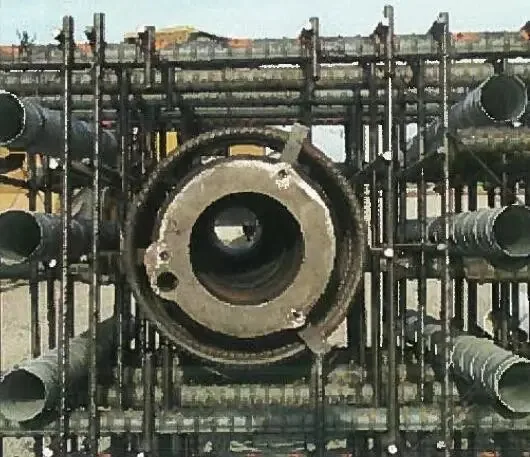
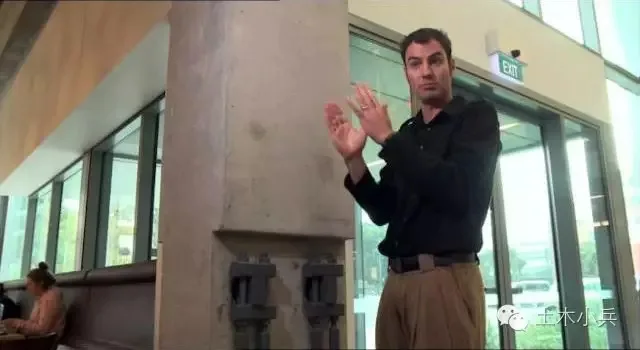
The Alan MacDiarmid Building at Victoria University of Wellington is New Zealand’s first PRESS concrete structure. It features multiple energy dissipation devices at beam-column joints and wall bases, forming a post-tensioned prestressed frame shear wall system. This innovation earned the building the 2009 New Zealand Concrete Society Supreme Award.
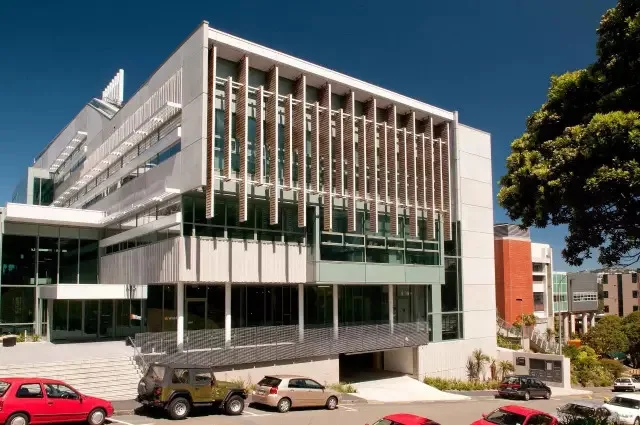
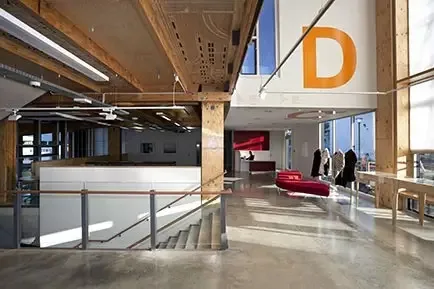
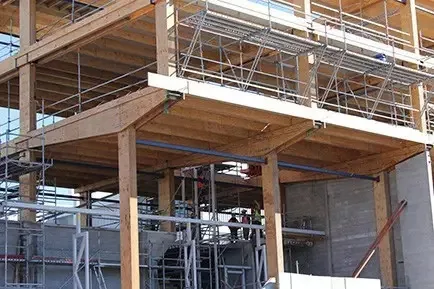
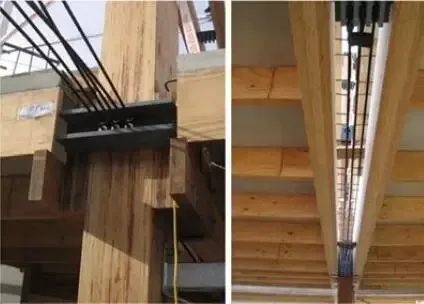
The new College of Creative Arts building at Massey University’s Wellington campus is the first to combine PRESS technology with wooden structures and reinforced concrete shear walls.
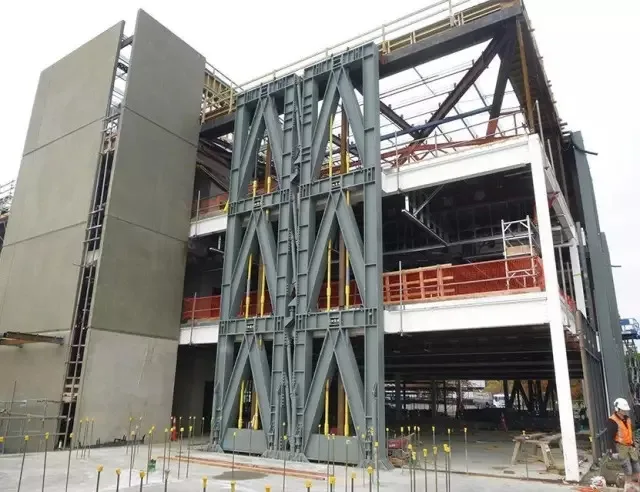
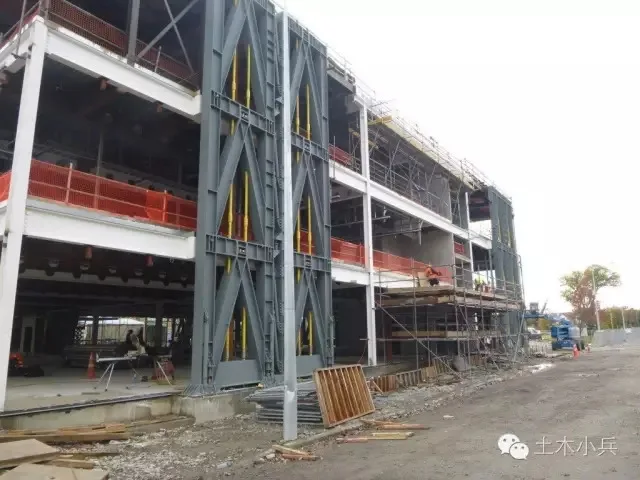
The Forte Health Medical Centre in Christchurch was the first steel structure building to adopt PRESS technology.

4. Performance of PRESS Structures in Earthquakes
During the February 2011 earthquake in Christchurch, New Zealand, many traditional reinforced concrete buildings suffered severe damage, including shear wall structures. However, buildings constructed with advanced seismic-resistant RC systems performed as expected, sustaining minimal damage.
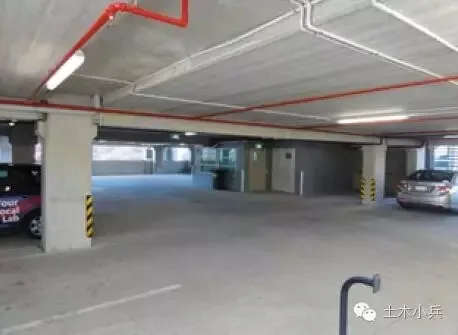
For instance, Christchurch Women’s Hospital, which uses seismic isolation technology, and Southern Cross Hospital, built using PRESS technology, both demonstrated excellent seismic resilience.
Southern Cross Hospital, located on New Zealand’s South Island and completed in 2010, employs a post-tensioned prestressed frame shear wall system. During the earthquake, the building experienced significant instantaneous deformation in the east-west direction, with minor concrete spalling at the top junction of coupled shear walls on the south side.
Analyses showed that the building’s instantaneous inter-story drift angle exceeded 2.5%. Thanks to PRESS technology, the structure exhibited self-centering capabilities, limiting damage to minor cosmetic issues and allowing the hospital to continue operating without interruption.
Main References
Priestley, M. J. N. “Overview of PRESSS Research Program.” PCI Journal, 1991, 36(4): 50-57.
Priestley, M. J. N. “The PRESSS Program – Current Status and Proposed Plans for Phase III.” PCI Journal, 1996, 4(2): 22-40.
Englekirk, R. E. “Design and Construction of The Paramount: A 39-Story Precast Prestressed Concrete Apartment Building.” PCI Journal, 2002, 47(4): 56-71.
Pampanin, S. “Emerging Solutions for High Seismic Performance of Precast/Prestressed Concrete Buildings.” Journal of Advanced Concrete Technology, 2005, 3(2): 207-223.













Must log in before commenting!
Sign Up