
Guide
Prefabricated concrete structures are rapidly advancing in China. As the industrialization of residential buildings continues to improve, the use of prefabricated exterior wall panels, beams, stairs, and other components in construction projects is becoming increasingly common. Below is a detailed overview of key points for prefabricated assembly construction for your reference.
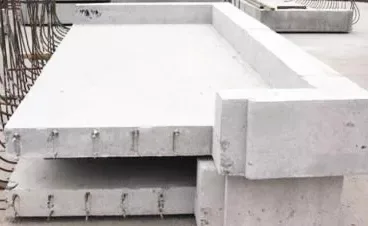
Installation and Construction of Prefabricated Stacked Yang Platform Plates
When hoisting prefabricated balconies, four lifting rings embedded in the panels are used.
During hoisting, pause when the balcony panel is approximately 500mm from the working surface to adjust its position before proceeding with installation slowly.
After aligning the control line and placing the balcony panel, make minor adjustments to ensure it is horizontally positioned. Finally, use a U-shaped bracket to fine-tune the elevation.
Once the balcony is hoisted and installed, calibration is necessary to guarantee installation quality.
Installation and Construction of Prefabricated Composite Panels
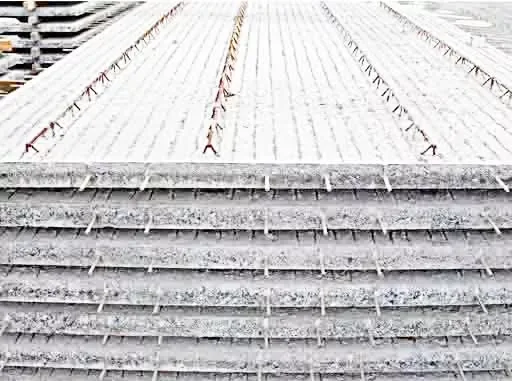
Modular lifting beams are used to hoist composite panels, ensuring a slow and stable lift.
During lifting, pause briefly when the panel is about 300mm above the working layer to adjust its direction and position. Avoid collisions by stopping steadily and lowering the panel slowly to maintain its integrity.
Temporary supports should be placed underneath during installation, spaced 150cm apart. Each bay requires 2-3 rows of supports.
If constructing the structural layer, double-layer supports must be used. Supports can only be removed once the cast-in-place concrete reaches at least 70% of its design strength after laminated floor construction is complete.
Installation and Construction of Prefabricated Wall Panels
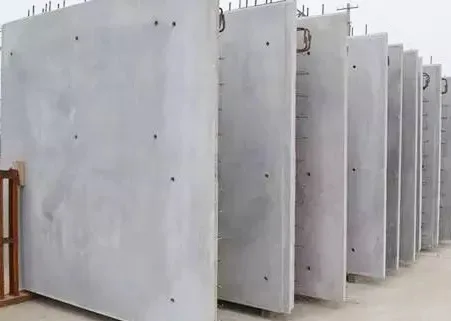
To avoid time-consuming adjustments of steel wire ropes on both sides when lifting different components, lifting beams are equipped with two lifting points on one side. On the other side, lifting points correspond to the component numbers as required.
Modular lifting beams are used for wall panel hoisting. Lifting points are selected based on the location of the lifting rings on the prefabricated wall panels. Steel wire ropes are connected to the reserved lifting rings on exterior wall panels with shackles, lifting the panels to about 500mm above the ground.
Before hoisting continues, inspect the panels’ appearance and verify that the lifting rings are properly connected.
A 500mm-wide full-length multi-layer board should be nailed to the outer corner of the prefabricated wall panel before lifting. The panel must be lifted slowly and evenly to prevent damage to the edges.
During hoisting, the tower crane should lift the panels slowly to approximately 600mm above the working layer. Construction personnel then use two ropes with hooks to pull and carefully lower the wall panels into place.
Installation and Construction of Prefabricated Bay Windows
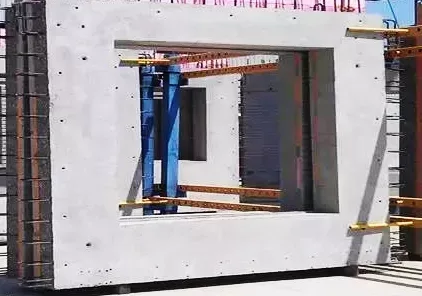
The bay window is lifted using lifting ears, bolts, and reserved nuts integrated into the bay window.
After connection, slowly move the bay window to within 30mm of the prefabricated assembly’s work surface, aligning it according to the position line. Wait until the bay window bolt aligns with the through-wall hole.
Then, place the customized U-shaped bay window horizontal interlocking measure set on the bay window and use a sliding rope to pull the bay window so the bolt inserts into the wall panel connection hole.
Installation and Construction of Prefabricated Beams
Measure the elevation difference between the top of the column and the bottom of the beam, and mark the beam edge control line on the column.
Mark the lifting sequence and component numbers on the structure to facilitate identification by construction personnel.
The beam’s bottom support consists of vertical pole support, adjustable top support, and a 100mm × 100mm wooden square. The elevation of the prefabricated beam is adjusted using the top wire of the support system.
When lifting the beam, hook the lifting ring on the pole beam with a sling. The sling length should ensure the angle between the sling and the beam is no less than 60°.
Once the beam is initially placed, use the beam positioning line on the column head to precisely calibrate its position. While leveling, tighten the lower adjustable support and then release the hook.
Installation and Construction of Prefabricated Stairs
When installing prefabricated stair treads, pause when the tread is about 500mm from the work surface. Adjust its direction carefully, and place it slowly to avoid damage caused by shaking or folding.
Once roughly positioned, use a pry bar to fine-tune the stair tread alignment according to the control line. After correction, weld and fix the tread securely.
(All content and images in this article are sourced from the internet, with copyrights belonging to the original creators.)














Must log in before commenting!
Sign Up