
Source: Reverse Method Engineering Center
This article examines common issues encountered during the construction of prefabricated buildings, explores their root causes, and suggests targeted solutions.
Common Quality Problems and Causes in Prefabricated Components
1. Production and Processing
Typical production issues with prefabricated components include missing or uneven edges and corners, warping, uneven surfaces, and protruding ribs. Surface defects such as roughness, peeling, sanding marks, contamination, honeycombing, and holes are also common. These problems usually stem from mold leakage, inadequate or excessive vibration, severe leakage, and insufficient quality checks during manufacturing.
Additionally, cracks or even fractures often appear on the component surfaces during transportation and hoisting. This is mainly caused by overly large spans of some panels, leading to compression between panels during transit or excessive deflection during lifting. Such cracks can spread across the entire panel, resulting in damage. Improper production and maintenance may cause surface warping, while uneven or insufficient application of release agents during demolding can cause panels to stick to molds. Furthermore, processing oversights can expose reinforcement bars or cause embedded parts on laminated boards to detach.
2. Seam Leakage
The quality of waterproofing directly impacts the long-term functionality of the building. Traditional prefabricated large wall panels use pressure-balanced horizontal and vertical joints—with horizontal joints featuring high-low arrangements and vertical joints combining cavity drainage for waterproofing. Despite adopting structural waterproofing measures, joint waterproofing is often overlooked, leading to frequent leaks.
This highlights the necessity of integrating waterproofing design with structural, insulation, thermal, and installation considerations. Only through thoughtful design can effective waterproofing be achieved.
3. Lifting and Positioning
Without a tailored hoisting plan that considers the specific quality, shape, installation height, and site conditions of each prefabricated component, problems with verticality and flatness during installation are inevitable.
4. Installation of Pre-Embedded Pipelines
Issues such as blockages, detachment, positional deviations, and threading obstacles arise mainly due to poor connections of embedded pipelines during production, concrete intrusion during vibration causing blockages, or inadequate fixation leading to detachment or displacement.
Moreover, after pre-embedding water and electrical pipelines in the factory, onsite assembly often neglects the curvature at corners. This results in sharp 90° bends in electrical conduits, making threading difficult during installation.
5. Finished Product Protection
Extended stacking times without proper protection and storage inevitably lead to component damage.
Measures to Address Quality Issues in Prefabricated Components
Production Stage
The quality of prefabricated components is fundamental to the overall safety of the structure.
During preparation, materials such as steel bars, cement, sand, and stone should be thoroughly inspected to meet quality standards. Molds must have sufficient strength, rigidity, overall stability, and precision. Their installation and fixation require straightness, tightness, stable positioning, and accurate dimensions.
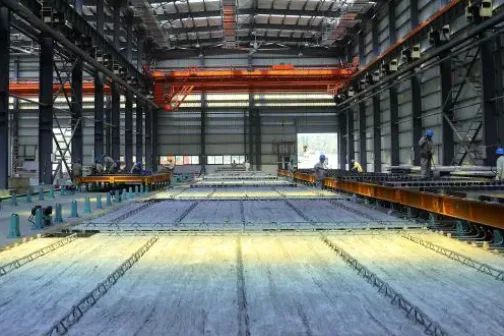
When processing prefabricated components, the steel reinforcement cage must be accurately sized and placed into the mold per specifications. The positions of steel reinforcements and embedded parts should be corrected before pouring concrete. Specialized plastic pads or washers should be used as concrete protective layers to ensure proper coverage.
Connectors and reserved holes within wall panels must be precisely positioned during manufacturing. Quality control for pouring and curing prefabricated components closely follows standards used for cast-in-place structures.
For board-type prefabricated elements with small cross-sections, small vibrating rods should be used to increase vibration points and duration, ensuring proper consolidation.
After forming, components should be inspected for appearance and dimensional accuracy. Defective elements must be promptly addressed to maintain performance. Common defects include loose or protruding steel bars, exposed reinforcement, and external surface flaws. Dimensional inspections focus on length, width, height, and thickness of the main reinforcement protective layer.
Design Phase
Control the Span of Prefabricated Components
To minimize breakage caused by excessive spans during hoisting, it is advisable to limit panel spans within their deflection tolerance during design. This reduces damage risks during onsite lifting.
Waterproof Measures
Wall panel joints can be designed with tongue-and-groove profiles featuring higher inner edges and lower outer edges, combined with pressure relief cavities to prevent water ingress via capillary action. Shims at the bottom help resolve leveling issues. After installation, prefabricated panels are connected internally with transverse connectors, followed by installation of inner diagonal supports to maintain perpendicularity.
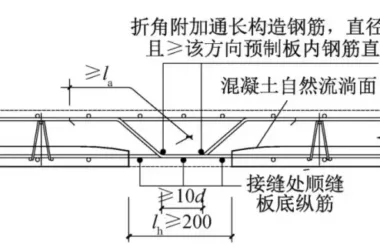
Waterproof tape is applied between panels to prevent water leakage at assembly joints (see Figure 1).
To avoid leaks around exterior walls, doors, and windows, window frames are cast into components during factory processing.
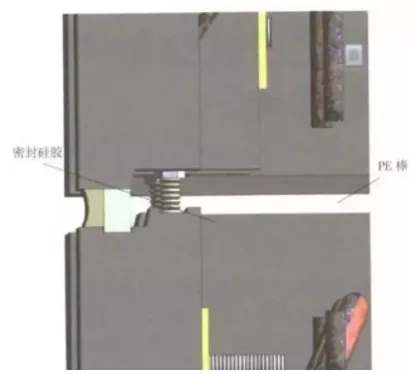
Figure 1: Leakage Node Section
Construction Phase
Component Lifting and Positioning
Before hoisting, the mechanical model and lifting equipment should be selected based on the component’s weight, shape, installation height, and site conditions. Lifting should proceed in stages: lifting, positioning, and preliminary calibration, starting with rough adjustments followed by fine tuning.
After hoisting, the panel’s horizontal alignment, in-and-out positioning, and verticality must be adjusted to ensure facade flatness.
Once wall panels are positioned, use pre-marked floor control lines to verify indoor and outdoor verticality. Align elevation markers on adjacent wall columns with the components, adjusting elevation clips to equalize heights. Laterally, use pry bars to shift the panel toward the correct position according to lateral guide lines. After rough adjustment of upper and lower openings, apply diagonal braces for fine-tuning (see Figure 2).
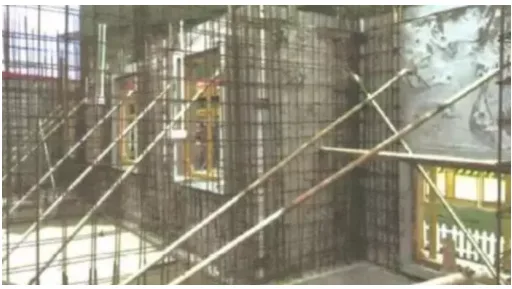
Figure 2: Temporary Support Fixation of Prefabricated Components
Pre-Positioning and Reservation of Pipelines
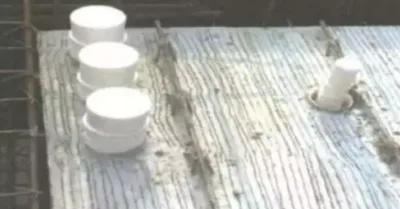
Pre-positioning drainage pipes and wire boxes in kitchen panels significantly improves future installation efficiency for drainage and flat-top pipes. For bathroom composite panels, protective measures include using plastic covers and short pipes to connect fittings. These are inserted into pre-embedded parts to prevent damage and to block concrete from entering during pouring. These accessories are reusable, environmentally friendly, and material-efficient.
Strengthen Quality Acceptance of Prefabricated Components Onsite
Onsite acceptance should strictly follow specifications, including verifying quality certificates, structural and functional inspection reports, appearance defects, dimensional deviations, conformity of reserved embedded parts, surface quality, keyway checks, and component identification. Except for batch inspections of dimensional deviations, all other checks require full inspection to guarantee component quality.
Develop Effective Transportation and Stacking Plans
Transportation and onsite handling should consider the stress characteristics of prefabricated components, implementing targeted measures to prevent damage. Steel supports for transport and stacking must be designed to match component dimensions and possess sufficient rigidity to prevent deformation or damage. Sleepers should be placed between components and supports to protect surfaces.
At the construction site, components should be sorted and stacked in installation order within the crane’s working range and away from other construction activities.














Must log in before commenting!
Sign Up