
BIM technology has become a prominent focus in the research and application of information technology within the construction industry. Its use on construction sites is gradually expanding and evolving.
This article provides a comprehensive study on applying BIM technology to aluminum formwork during the construction phase, highlighting how BIM enhances on-site construction efficiency and optimizes the overall building process.
Introduction to Aluminum Formwork
Why Choose Aluminum Formwork?
Aluminum formwork, also known as aluminum alloy formwork, is a building formwork system made from aluminum alloy. It is recognized for its easy installation and removal, capable of being reused over 120 times. The concrete surface finished with aluminum formwork achieves a clean, plain appearance, meeting the flatness and verticality standards outlined in the “Code for Acceptance of Construction Quality of Concrete Structures” (GB50204 Prefabricated Building-2002). This system is an energy-saving and environmentally friendly product promoted by the Ministry of Construction.
During the manufacturing of aluminum formwork, the incorporation of peroxide treatment and powder coating technology effectively addresses common quality issues such as concrete surface pores, roughness, and peeling caused by high-temperature oxidation during initial use. This ensures high-quality concrete finishes and improves overall project standards.
The design, research, development, and practical application of aluminum formwork represent a major advancement in the construction industry. The development of premium aluminum formwork aims to meet national and societal demands, fostering leadership in green construction, environmental protection, energy conservation, and efficient building practices.
Compared to traditional glued formwork, aluminum alloy templates offer several advantages:
1) Environmentally friendly, conserving wood and protecting forests;
2) Reusable multiple times with excellent surface finishing;
3) Minimal dimensional errors;
4) Neat stacking with less clutter;
5) Reduced construction waste, promoting cleaner, more civilized sites.
Limitations of Traditional Construction Methods
Traditional aluminum formwork assembly drawings mainly show numbering and dimensions on flat surfaces but fail to clearly illustrate detailed joint relationships. This results in a high learning curve for workers (see Figure 1). Workers often struggle to understand the exact placement of formwork, especially when mechanical and electrical openings or inclined beams are present, as flat drawings cannot accurately convey spatial positioning.
Moreover, discrepancies between the drawings and on-site conditions often lead to on-site arbitrary cutting of aluminum molds. Consequently, the cost and schedule benefits of aluminum formwork may not significantly surpass those of wooden formwork.
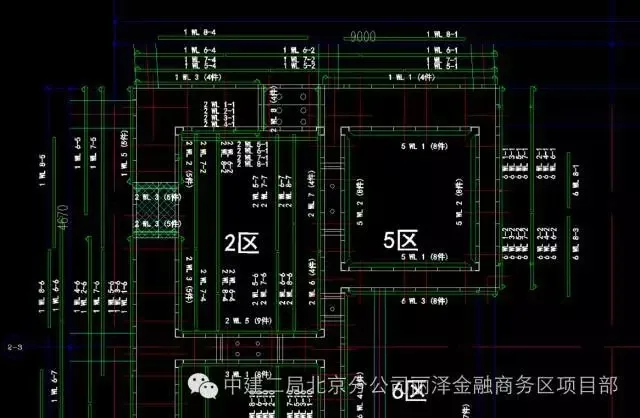
Figure 1: Aluminum Formwork Layout
Project Overview
The general contracting project for the Lize Financial Business District is situated in the core of Beijing’s Lize Business District, Fengtai District, between Lize Bridge (West Third Ring Road) and Caihuying Bridge (West Second Ring Road). The area benefits from well-established transportation and municipal infrastructure. The project site, covering approximately 45,000 square meters, is bordered by Lize Road to the north and Lianhua River Road to the east.
The development includes four super high-rise office towers: F02-1# (32 floors, 150 meters tall), F02-2# (25 floors, 120 meters tall), F03# (42 floors, 199.9 meters tall), and F05 (31 floors, 150 meters tall). It also features a 6-story commercial podium and a four-story commercial and parking basement. The total construction area is 513,153 square meters, comprising 379,900 square meters above ground and 133,253 square meters underground.
Construction Process
The F02-1# and F02-2# towers are designed with core tube frame structures. After thorough evaluation, aluminum formwork was selected for use from the 2nd floor to the top floors of both towers. The total formwork area for F02-1# is 97,738.12 square meters, with 5,400.39 square meters suitable for aluminum formwork. After multiple optimizations, the final panel area for F02-1# stands at 2,129 square meters.
For F02-2#, the total formwork area is 94,147.07 square meters, with 34,204.60 square meters designated for aluminum formwork. Its final panel area is 1,827 square meters. Thanks to the multi-use capability of aluminum formwork, nearly 75% savings were achieved compared to traditional wooden formwork.
The aluminum formwork construction sequence is as follows:
Wall and column positioning → elevation leveling → wall and column formwork installation → beam formwork installation → floor formwork installation → verticality inspection → flatness inspection → dowel wedging inspection → top plate reinforcement handover → wall and column reinforcement → concrete pouring.
Innovations in Aluminum Formwork Construction Using BIM Technology at the Lize Project
Model Optimization Process
To decrease the learning curve for workers handling aluminum formwork, the BIM team, led by Chief Engineer Zhang Xuefeng, developed and optimized a 3D BIM model based on detailed aluminum formwork CAD drawings.
First, a standard parametric model family for aluminum formwork was created using Autodesk Revit 2014 (see Figure 2). The aluminum formwork parameters are highlighted in red. This model facilitates assembly, quantity takeoff, and enriches the project’s BIM family library.
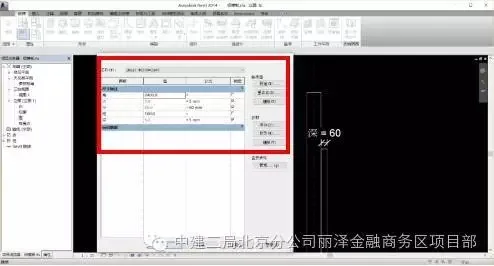
Figure 2: Revit Family Files for Aluminum Formwork
Next, using Revit software, the team referenced manufacturer CAD drawings to perform BIM-based aluminum formwork assembly. Since CAD drawings are planar and cannot fully represent the three-dimensional placement or the relationships between structural openings, beams, and formwork, errors were inevitable.
During BIM assembly, multiple errors were identified and resolved by the team, which reduced on-site rework and labor costs.
Additionally, the BIM software’s detailed schedule function was used to calculate the precise quantities of aluminum formwork for the F02-1 and F02-2 standard floors. These quantities were then compared with materials received from the procurement department, revealing discrepancies in material orders (see Figure 5).
Finally, 3ds Max software was used to create animated videos based on the BIM models to facilitate understanding of the aluminum formwork scheme and reduce workers’ learning time (see Figure 6).
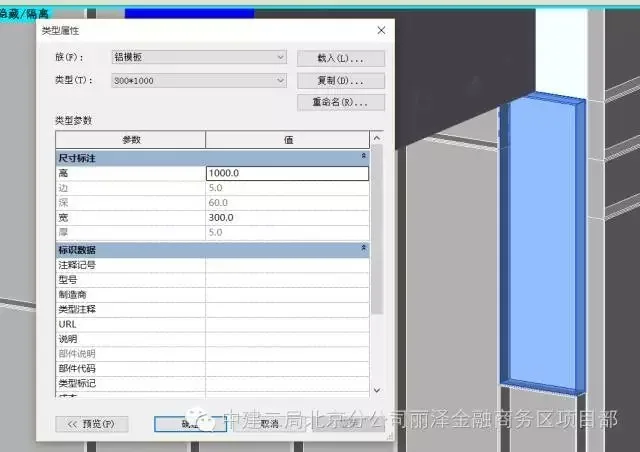
Figure 3: Local Parameters of Aluminum Formwork
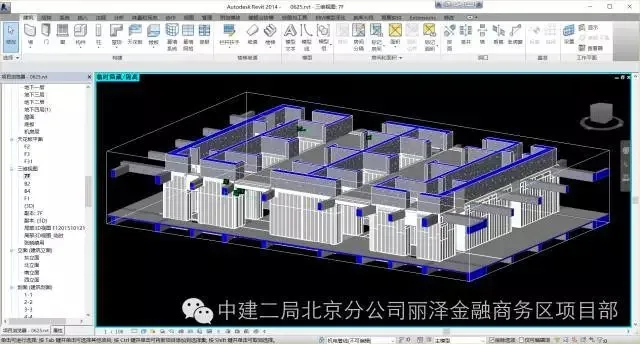
Figure 4: Standard Layers Assembled in Software
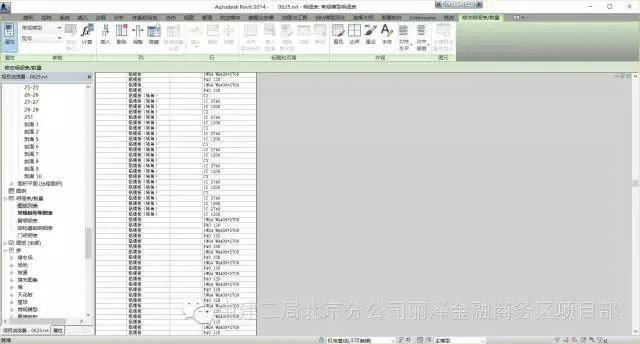
Figure 5: Quantity Orders Generated in Revit
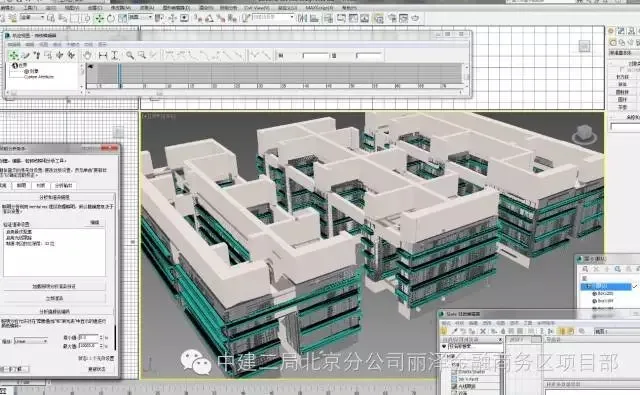
Figure 6: Aluminum Formwork Installation Animation Created with 3ds Max
Visual Communication
Leveraging BIM software visualization capabilities, the construction team provided clear visual instructions and process guidance to workers. The approach included:
1. Delivering an overall animated briefing of the standard floor construction process using 3ds Max;
2. Offering detailed construction process disclosures through BIM software;
3. Distributing standard layer assembly drawings and corresponding plan drawings to team leaders and on-site foremen to guide construction.
Implementation
On-site foremen pre-loaded the BIM model onto iPads for construction and quality control purposes, overseen by the quality department (see Figure 7).
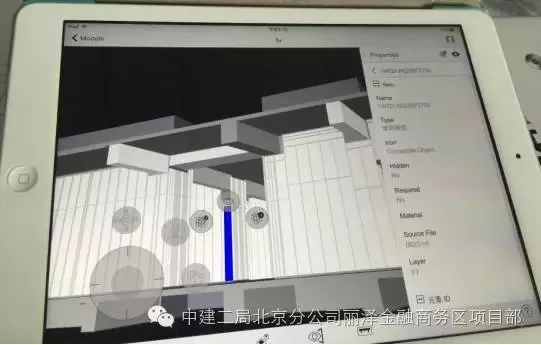
Figure 7: Aluminum Formwork Parameters on Site
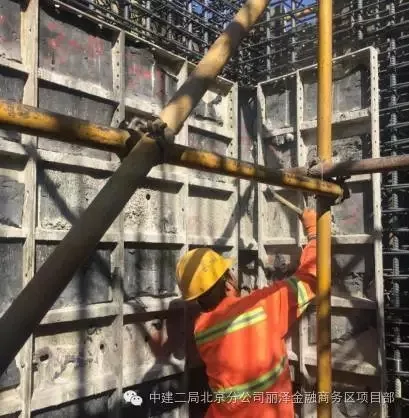
Figure 8: Workers Installing Aluminum Formwork
Summary
The integration of BIM technology into aluminum formwork construction has significantly accelerated on-site work, boosting economic efficiency and project timelines. The ability to quickly access aluminum formwork models on iPads reduces the learning curve for workers and foremen, ultimately improving construction quality and site management.














Must log in before commenting!
Sign Up