
6 Essential Design Considerations for Prefabricated Building PC Component Molds:
1. Exterior Wall Panel Mold Design
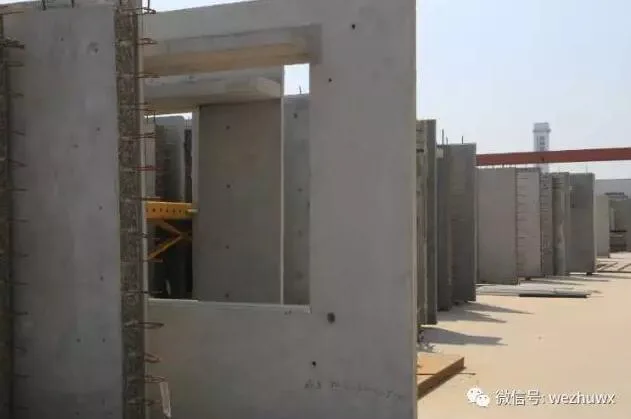
The exterior wall panel typically features a sandwich structure comprising a structural layer (200mm), an insulation layer (50mm), and a protective layer (60mm). Production can utilize either direct or reverse printing methods. Achieving high flatness is critical for exterior panels. Direct printing, whether by hand or machine plastering, often falls short of the required flatness, which can complicate later construction stages. However, this method supports accurate positioning of embedded parts and is relatively straightforward to operate.
Selection between these processes depends on project requirements. This article focuses primarily on molds using reverse printing technology. Based on the pouring sequence, the mold is divided into two layers: the first layer combines the protective and insulation layers, serving as the base for the second layer, which is the structural layer. Reinforcement at the first layer’s connection point is necessary to ensure stability. The structural layer mold resembles the inner wall panel mold. Since it has fewer positioning bolts, tie rod positioning must be added to prevent mold expansion.
2. Interior Wall Panel Mold Design
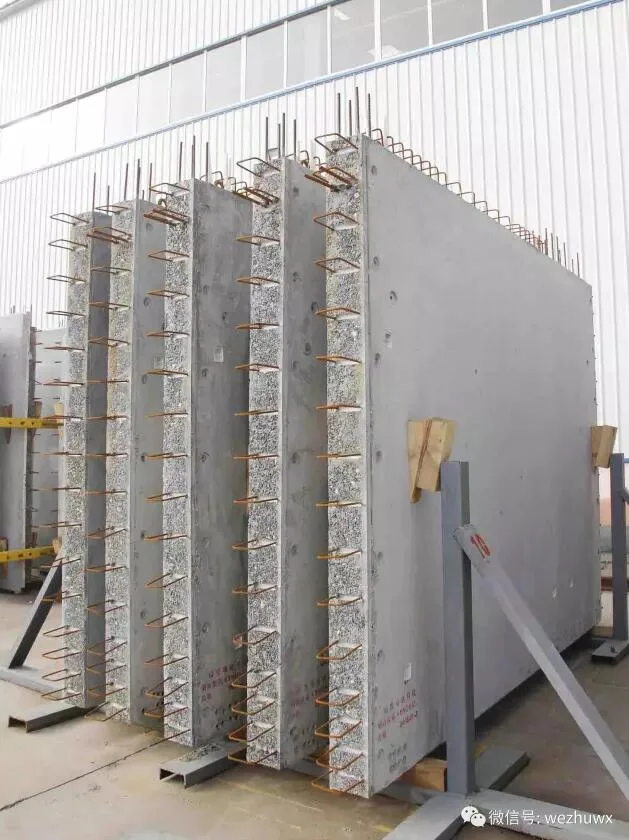
Interior wall panels are solid concrete walls, generally without complex shapes, and are typically 200mm thick. For ease of processing, #20 channel steel is often used as the edge mold. Since reinforcement bars are exposed on all three sides of the inner wall panel, and numerous notches must be cut into the channel steel, the side formwork tends to lack rigidity and can easily deform during handling. To counter this, rib plates should be added to strengthen the side formwork.
3. Laminated Floor Slab Mold Design
The side molds for laminated floor slabs should be chosen according to the slab’s height, often using angle irons. When the slab features chamfers on all four sides, bent steel plates can be welded onto the angle irons to accommodate the shape. Due to numerous notches in the angle iron edge mold, longitudinal stiffness may be insufficient. Therefore, the side mold should be segmented into sections 1.5 to 2.5 meters long. Additionally, strengthening ribs spaced 400–500mm apart should be installed to improve rigidity.
4. Stair Mold Design
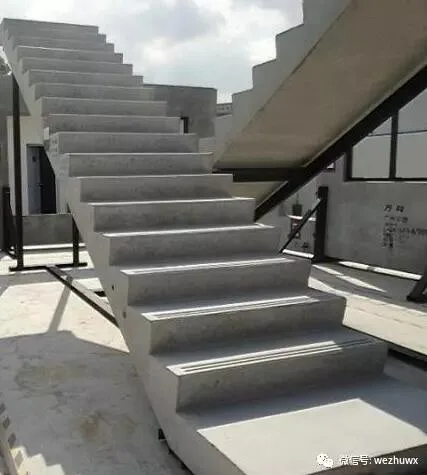
Stair molds can be designed in two orientations: horizontal or vertical. Horizontal molds consume more space, require a larger flat area, and involve multiple flipping operations. For these reasons, vertical stair molds are recommended. Special attention should be given to the stair treads, which have a wavy shape requiring bent and spliced steel plates. Joints should be positioned where they do not affect component effectiveness and are easy to work with. Welding or cold splicing can be used to join plates. It is crucial to ensure joints are properly sealed to prevent grout leakage.
5. Balcony Mold Design
To enhance the building facade, balcony panels in typical residential buildings are designed as opposite-sex components, with reverse edges on all four sides. This design prevents the use of a large base mold for production. Instead, independent molds are used, with mold materials selected based on the quantity of components. Demolding is a key consideration; a slight draft angle of about 1/10 should be maintained without compromising functionality. For taller components, special attention must be paid to the positioning and stiffness of the side formwork.
6. Bottom Mold Design
Bottom panels should be fabricated from a single steel plate, sized according to floor height and component length. Each large bottom formwork should hold no more than three components, with dimensions determined by building height. For surfaces with less stringent requirements, spliced steel plates may be used, but joints must be carefully treated. The support structure often consists of I-beams or channel steel. To avoid welding deformation, the bottom formwork is best designed as a one-way plate, typically made from 10mm steel plate. When using large bottom molds, they should be fixed on a flat foundation, and the operating height after positioning should not exceed 500mm.














Must log in before commenting!
Sign Up