
In the era of the Internet Plus, the construction industry is leveraging cloud computing, big data, GIS, and other emerging technologies to foster a new ecological environment in platform development, data management, modeling, industrialization, and integration. Since Jianyi Group launched its first BIM platform using cloud technology in 2016 — BIMCLOUD (Building Industry Big Data Cloud Platform) — specialized and diversified BIM platform products have rapidly emerged, continually enhancing platform structures and functionalities. Currently, most building big data platforms in China offer the following capabilities:
1. Full-Process BIM Collaborative Solutions
The platform supports seamless collaboration throughout the entire project lifecycle, from design to construction, maintaining scalability and consistency of BIM data.
2. Multi-Party Collaborative Management
Customized modular combinations cater to all stakeholders with project management as the core. The platform supports integration with various third-party systems, enabling team members to share documents, mark and discuss drawings online, and benefit from proactive message notifications.
3. Visual Project Management
The entire project process is visualized, minimizing communication layers, shortening management distances, and enabling strict control over cost, quality, and personnel.
4. Lightweight Model Browsing
The platform supports operations such as BIM model browsing, roaming, attribute viewing, slicing, measurement, filtering, and querying. Thanks to lightweight processing, BIM models can be easily accessed via standard web browsers without requiring high-end computers, significantly enhancing the accessibility and convenience of BIM applications.
5. Big Data-Driven Component-Level Management
The platform performs extensive data mining and intelligent analysis on massive datasets from multiple projects, providing scientific insights to support enterprise operations and project management.
6. Computer-Mobile Project Collaboration
Real-time communication is seamlessly enabled through mobile devices, allowing participants from different locations to monitor project progress anytime, anywhere. This facilitates design control, paperless construction management, and site supervision, greatly expanding BIM’s applicability and convenience.
Beyond these core functions, leading platforms each bring unique features and advantages. Below are several flagship products in the market.
1. Jianyi Group — BIMCLOUD: Building Industry Big Data Cloud Platform
BIMCLOUD is a cloud-based collaborative solution jointly developed by Beijing Jianyi Intelligent Internet Technology Co., Ltd. and GraphiSOFT. As the first BIM platform to utilize cloud technology, it supports comprehensive software applications and delivers a truly model-based collaborative BIM environment for companies and projects of any scale. The platform is compatible with mobile devices, offers lightweight BIM data presentation, and enables all personnel involved in design and manufacturing to actively participate in collaboration.
Platform Advantages:
┃ Real-Time Communication: Cloud deployment enables instant online communication, modular construction, and real-time release, allowing team members to synchronize and collaborate directly.
┃ Efficient Transmission: Utilizing Delta server technology, model modifications are uploaded incrementally, significantly improving data transmission efficiency.
┃ Interdisciplinary Collaboration: Integration through the internationally adopted IFC standard and BCF file formats facilitates data exchange between mainstream modeling software such as ARCHICAD, Tekla, and Revit, enabling genuine cross-platform BIM collaboration.
┃ Multi-Terminal Collaboration: Through mobile devices and BIMx Pro, the platform achieves seamless, real-time communication and integrated multi-terminal interaction.
2. Guanglian Da Digital Building Platform
As a leading digital building platform provider in China, Guanglian Da has developed several BIM application platforms, with BIM5D being the most widely adopted.
Project-Level BIM5D Platform
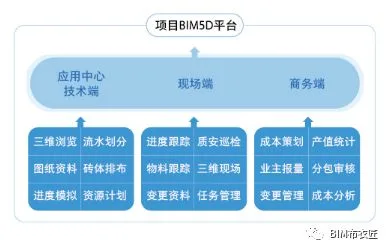
Guanglian Da’s BIM5D offers a visual, quantifiable collaborative management platform for engineering projects. It leverages a lightweight BIM application to reduce construction changes, accelerate schedules, control costs, and improve quality. The platform integrates data from various roles and uses BIM models as carriers to enable collaborative management of project quality, progress, and cost via three endpoints and one cloud.
Platform Advantages:
┃ Model Browsing: Integrated plugins for Revit allow direct access to original modeling information for in-depth business and data processing.
Models are imported with zero geometric and attribute loss, enabling their direct use during construction and avoiding duplicate modeling.
Seamless integration with Guanglian Da’s BIM computing products allows bidding models to transition directly into the construction phase.
┃ Quality and Safety: Data syncs automatically between mobile devices and computers, displaying on-site and ideal conditions through document thumbnails to assist production staff in managing quality and safety intuitively.
The software offers quality management solutions based on BIM technology.
Users can document on-site conditions via photos, audio, and text through mobile devices, linking these records to models for effective tracking.
Enterprise-Level BIM Cloud Platform
This platform provides real-time, accurate, and comprehensive project information and operational data to business leaders and decision-makers, facilitating goal setting, process management, resource allocation, and risk monitoring.
Construction Party BIM Collaborative Management Platform
Designed for construction clients, this enterprise-level platform centers on BIM to support data standardization, visual control, and business integration across the entire lifecycle — from design and construction to operation and maintenance.
Platform Advantages:
Powered by Guanglian Da’s proprietary BIMFACE, the platform supports efficient handling of large models on the web.
It enables multi-party project collaboration and integrates tightly with PM systems under a SaaS application model.
Comprehensive one-stop services cover BIM application solutions, product support, and project implementation for enterprises.
At the 2018 China Construction Industry Annual Summit, Microsoft, Huawei, and Guanglian Da jointly unveiled an Integrated Hybrid Cloud Solution based on Guanglian Da’s digital building platforms.
Huawei contributes next-generation Intel® Xeon® Fusion Server V5 processors and Cloud Engine low-latency, lossless switches. Microsoft provides the Azure Stack hybrid cloud platform, consistent with public cloud architecture and offering virtual machines, cloud storage, networking, cluster management, and application marketplace services. Guanglian Da focuses on industry-specific applications, including smart construction sites, BIM construction, digital enterprises, integrated planning and management, and BIM+PM integration for construction clients.
This first officially released integrated hybrid cloud solution in China’s construction industry combines the strengths of private and public clouds, enabling one-click installation and reliable backend services. It addresses local computing needs at project sites and within enterprises while maintaining compatibility with public cloud infrastructures. This allows seamless migration of cloud applications and data between private and public clouds, enhancing data sharing and multi-party collaboration.
3. Beiemu Company — BDIP Building Data Integration Platform
Developed by BIM (Shanghai) Building Data Technology Co., Ltd., BDIP is a data integration platform based on BIM models that aligns with BIM technology trends, covering applications from project planning and design through construction completion.
Platform Advantages:
┃ Domestic Cloud Server Framework: The platform offers simplified, standard, and professional versions using public cloud services, while the enterprise version employs private clouds. Its lightweight technology uses a model lightweight engine developed by Beiemu, with data stored on dedicated domestic servers (Alibaba Cloud & Baidu Cloud), ensuring compliance with the National Security Law and safeguarding BIM model data.
┃ 360° Panoramic Attachments: Supports integration of photos, audio, video, text, and 360-degree panoramic materials linked to BIM models, documenting every construction stage and concealed engineering processes.
┃ Realistic Sand Table: Project managers can remotely oversee critical site areas via UAV oblique photography, 3D terrain browsing, 360-degree panoramic scanning, and real-time monitoring.
┃ Mobile Office Applications: Key mobile features include:
- Offline Browsing: Models are automatically downloaded on first load for offline access, reducing network usage and speeding up loading times.
- WeChat BIM Positioning: Users can query, save, and share location data through QR codes or links during mobile browsing.
- Real-Time BIM-Based Problem Discussion: Enables recording and communication of engineering or design issues anytime and anywhere, with easy tracking.
- Mobile Database Access: Supports on-site communication, document consultation, inspection report review, and contract confirmation.
- Mobile CAD Markup: Synchronizes with desktop updates, allowing drawing issue annotations to be reviewed and managed on mobile devices, facilitating communication among all stakeholders.
4. Beijing Xunlian Ruichi Technology Co., Ltd. — BIMCOVER Cloud Platform
BIMCOVER is a newly launched BIM platform notable for being the only platform supporting P-BIM data standards and exchange standards. It is uniquely software-agnostic, facilitating cross-industry collaboration.
Platform Highlights:
Expert Consultation: The platform hosts 25 of China’s top construction industry consultants, ranked among the top 15 BIM experts nationwide, offering professional advice throughout the engineering project lifecycle.
Project Management: Offers customizable management modes and workflow templates, visualizes the entire process, reduces communication steps, shortens management distances, and tightly controls cost, quality, and personnel.
Collaborative Work Platform: Currently connects 32 professional software products domestically and internationally, with a total of 51 supported applications.
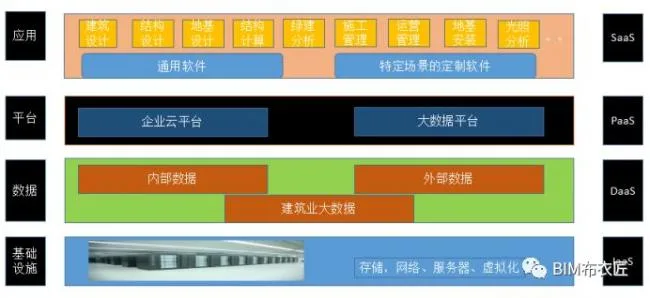
BIMCOVER Cloud Platform Big Data Application Framework
Platform Advantages:
- Independently developed with proprietary IP, not relying on any third-party software
- Built-in compliance with national standards
- Decentralized design, modular functions, and internet connectivity
- Automatic data collection without changing user habits
- Data encryption and distributed storage, enabling big data applications
- Business model library supporting task and organizational breakdown
- Enhanced communication mechanisms with vertical domain communication tools
- Template and business process customization supporting multiple business types
- Integration with mobile internet applications for user convenience
- Open API providing data development interfaces for entrepreneurs and users
- Full lifecycle services including secondary processing of model data
In May 2017, Shenzhen University’s School of Civil Engineering established China’s first P-BIM laboratory, utilizing the BIMCOVER cloud platform and cloud desktop virtualization to enable design collaboration across 50 indoor workstations.
References:
- http://www.chinabim.com/shop/bimcloud/guanyu.jhtml
- http://bim5d.glodon.com/
- http://www.17bim.com/product.html
















Must log in before commenting!
Sign Up