
1. Preparation of the Tender Bill of Quantities
According to the mandatory provisions of the bill of quantities pricing standard for bidding projects, the accuracy and completeness of the bill of quantities are the tenderer’s responsibility, while the contractor is responsible for construction according to the drawings. This creates an inherent conflict between construction based on drawings and pricing based on the bill of quantities in bidding projects. Therefore, the quality of the bill of quantities preparation significantly impacts both parties. Key considerations include:
1.1 The itemized bill of quantities must be comprehensive and detailed to avoid missing or omitted items. When listing items, distinguish them according to the design documents’ personalized requirements, technical standards and specifications, bidding documents, and the specific characteristics of the project. Continuously update the project content based on new processes, methods, and materials used in prefabricated buildings, utilizing the supplementary project quantity list effectively.
1.2 The list of measures should be reasonable and reflect all items involved in the conventional construction plan. Avoid intentionally omitting items due to variability in the measure item list during bidding—for example, specifications and models of vertical transportation machinery, layouts of construction access roads, component yards, construction sites, the use of professional lifting equipment and stacking frames for component stacking, materials and installation methods of wall support systems, and lifting auxiliary materials. Because engineering costs differ significantly depending on construction plans and organization designs, prepare the list of measures and projects with a rational demonstration of the adopted plans and organization designs.
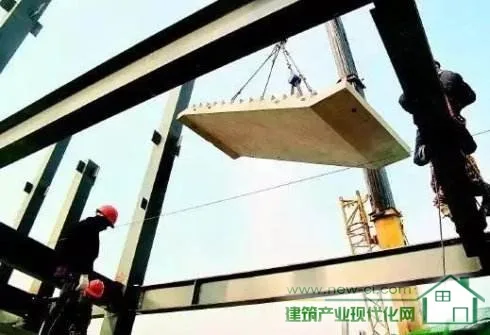
1.3 Industrialization of construction and project characteristics are crucial bases for quota items. Descriptions should be comprehensive and precise, expressing the essence of the listed items to meet pricing requirements. Due to the coexistence of regular and irregular components in prefabricated buildings, the lifting, hoisting, and positioning postures may vary, and safety controls may differ. Any unique features not covered by measurement specifications should be determined by the bill preparer based on the project’s specifics, with accuracy in item descriptions taking precedence. For instance, transportation of prefabricated components should not only specify distance but also consider defects, collision deformation of reserved steel bars, and component cracking during transport, all requiring high protection standards and resulting in significant cost differences for various component types.
1.4 The list of other projects must be thoroughly considered and clearly expressed. Costs related to testing materials, component parts, construction processes, and critical structural elements affecting the safety of prefabricated reinforced concrete components should be borne by the employer and included within the bidding scope and contract content. When preparing the bidding bill of quantities, include these in the provisional amount. The scope of general contracting services should be clearly defined, and pricing should reflect market reality.
2. Preparation of the Bidding Control Price (Maximum Bidding Limit)
The bidding control price is vital for reasonably determining costs during contract signing and effectively controlling costs during implementation, thus reducing investment risks. Key points in its preparation include:
2.1 Value-added tax (VAT) considerations: Whether component parts are self-purchased or supplied by the owner affects applicable pricing rules. Select the appropriate pricing method—general or simplified tax calculation—based on the construction project’s specific tax policies, project category, and bidding document requirements.
2.2 The price of prefabricated components should exclude VAT. Clarify whether transportation costs are included in the component prices. If information prices lack certain items, determine these through market inquiries. For market prices including tax, apply the relevant VAT rate and treat prices accordingly following the “price tax separation” principle. In cases where component prices are significantly high and lack legitimate price sources, provisional estimates may be used.
2.3 Group comprehensive unit prices scientifically, focusing on: (1) complete and accurate application of quota sub-items; (2) consumption differences between quota measurement rules and inventory measurement rules, as well as between measurement rules and actual consumption; (3) sources of prices for labor, materials, and machinery, along with benchmark unit prices for components, taking into account the upper risk limits specified in the bidding documents; (4) calculation of management fees and profits.
3. Preparation of the Bidding Quotation
The bidding quotation reflects the company’s competitive pricing strength, with sub-item prices serving as the basis for later price adjustments. Differences from the bidding control price preparation mainly include:
3.1 Component part prices are fully determined by the bidder based on market prices, procurement channels, and management capabilities.
3.2 Consideration of the comprehensive unit price risk range in the bidding documents depends on risk prediction and the bidder’s risk control ability.
3.3 Labor day unit prices can be calculated using both cost information and market prices.
3.4 Different construction plans lead to variations in measures and projects. Quotations should be based on the specific project characteristics and the proposed construction plan, ensuring consistency between the bidding quotation and the technical plan.
3.5 Management fees and profit rates can be adjusted according to fixed rates and market competition levels.
3.6 Bidding techniques such as unbalanced pricing can be applied appropriately in combination with evaluation criteria and methods outlined in the bidding documents. However, bidders should be aware of potential risks during bid settlement and evaluation.















Must log in before commenting!
Sign Up