
Since 2014, the construction industry has seen a significant decline in new projects, making it increasingly challenging for companies to win bids amid fierce competition. Even when successful, substantial discounts—sometimes exceeding 25%—are often required, putting project profits at risk. So, how can construction firms improve their chances of winning bids? And how can they lay the groundwork for profitability during the bidding phase?
BIM (Building Information Modeling) technology has become a crucial tool for construction companies aiming to enhance their bidding success and clarify potential project profits. With the nationwide surge in BIM adoption, owners’ awareness and acceptance of BIM have grown substantially. For instance, major owners such as SOHO and Wanda, as well as landmark projects like Shanghai Center, Shanghai Disney, and the future Bosco Central Enterprises headquarters, have incorporated BIM requirements into their bidding contracts. Even when not explicitly mandated, BIM has emerged as a key differentiator in the bidding process.
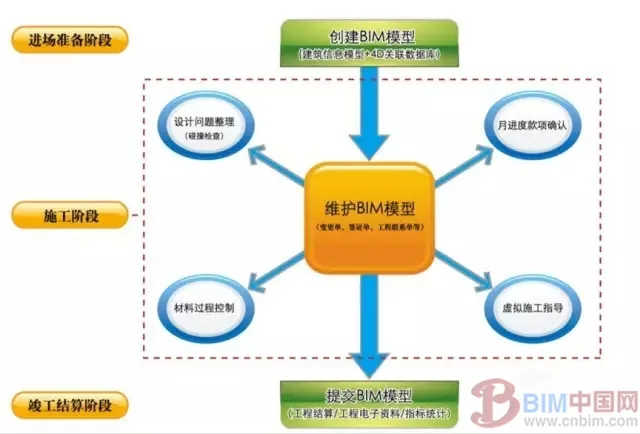
1. BIM Application in Bidding Control
An accurate and comprehensive bill of quantities is essential during bidding control. Calculating engineering quantities is one of the most time-consuming and critical tasks during this stage. BIM serves as a rich database of engineering information, providing the physical and spatial data necessary for precise quantity calculations. Leveraging this data, computers can rapidly analyze various components, significantly reducing tedious manual work and minimizing errors that typically arise from drawing-based calculations—thus greatly enhancing both efficiency and accuracy.
(1) Establishing or Reusing BIM Models During the Design Phase
Creating BIM models for each discipline during the bidding phase is foundational for BIM application. The quality and speed of model creation directly influence subsequent processes. There are three primary methods:
① Rebuild the BIM model directly from construction drawings; this remains the most basic and widely used approach.
② Convert 2D AutoCAD files (DWG format) into BIM models using software recognition and conversion tools.
③ Reuse and import BIM models generated by design software to create computational BIM models. This approach is ideal for the entire BIM workflow, reducing manual labor and potential errors from remodeling.
(2) Fast and Accurate Quantity Calculation Using BIM
BIM dramatically improves the efficiency of quantity calculations. Automated quantity estimation frees professionals from manual, repetitive tasks, allowing more focus on valuable activities like inquiries and risk assessments, leading to more precise budgeting.
The accuracy of quantity calculations also benefits from BIM. Since quantity estimation forms the basis of project budgeting, errors here can have significant consequences. BIM models store detailed component information, which cost engineers can directly use, minimizing the errors and workload associated with manual data extraction from drawings. Consequently, BIM’s automated quantity calculation reduces human error and produces more objective, reliable data.

2. BIM in the Bidding Process
Typically, construction firms have only 15-20 days to prepare bids. Traditional methods rarely allow for detailed quantity reviews within such short timeframes, often leading to discounted quotes based solely on grouped prices. BIM changes this dynamic by enabling quick and precise calculations.
(1) BIM-Based Construction Scheme Simulation
BIM technology facilitates immersive virtual exploration of project sites, allowing teams to experience and demonstrate solutions as if they were real. Using BIM models, construction organization plans can be visually simulated, with key construction aspects analyzed and optimized according to schedules. Critical processes, innovative construction techniques, and site layouts can be virtually tested, enhancing plan feasibility. During bidding, these simulations provide vivid, visual presentations to clients.
(2) 4D Progress Simulation with BIM
Construction is a complex, dynamic process. While network planning is commonly used to manage schedules, its technical nature and lack of visualization make it difficult to communicate progress effectively. By integrating BIM with project schedules, spatial and temporal data merge into 4D models (3D plus time), offering intuitive, accurate visualizations of construction progress.
4D simulations help formulate realistic plans, monitor progress, optimize resources, and arrange sites efficiently. This unified control over progress, resources, and quality shortens construction timelines, reduces costs, and improves quality. Moreover, during bidding, 4D models give construction companies a competitive edge by clearly demonstrating their project management capabilities, balance in construction arrangements, and overall plan feasibility to project owners.
(3) BIM-Based Resource Optimization and Funding Planning
BIM supports quick simulation of construction progress, resource optimization, output estimation, and funding plan preparation. By linking schedules with 3D models and cost data, cost management and analysis cover multiple dimensions—spatial, temporal, and process flow.
Combining the 3D model with scheduling enables simulation of resource and funding needs for each task, producing curves that help select optimal schedule arrangements.
Dividing BIM models into workflow segments allows automatic calculation of labor, materials, equipment, and funding demands. This WYSIWYG (What You See Is What You Get) approach aids in developing reasonable construction plans and visually presenting them to clients.
(4) Enhanced Efficiency in Preparing Commercial Standards
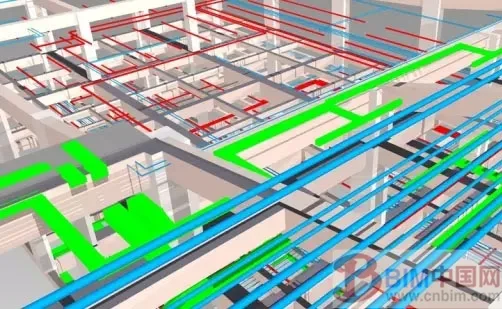
1) Collision Detection: BIM’s 3D visualization enables early and mid-stage collision checks. This reduces rework, shortens construction time, and lowers costs by optimizing designs and minimizing errors during construction.
2) Virtual Construction: Utilizing BIM’s 3D visualization and time dimension, optimized pipeline plans can be simulated and animated. This helps identify complex construction areas and develop detailed plans aligned with site conditions and regulations. Such visualizations assist bidding evaluators and even non-engineering stakeholders in understanding construction challenges and solutions.
3) Optimized Safety and Civilized Construction Planning: Safety features like fences are modeled in BIM at hazardous locations (openings, edges, elevator shafts). Visual safety briefings for workers enhance awareness and help prevent accidents during construction.
4) Material Usage and Logistics: BIM functions as a 6D database, allowing precise calculation of material usage by region and component. This facilitates targeted material delivery, reduces handling, and streamlines coordination, accelerating construction progress.
(5) BIM Model Submission for Operation and Maintenance
Upon project completion, a BIM database is delivered to the owner, serving as a comprehensive 6D information repository. This enables quick retrieval of information under various criteria, significantly enhancing property management capabilities.
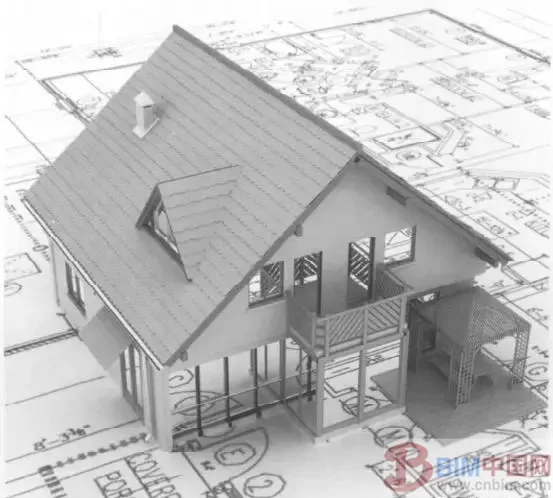
The value BIM technology brings greatly enhances technological sophistication and competitiveness, strengthening bid proposals. However, BIM is not just a bidding gimmick—owners expect real value from it. BIM’s current capabilities have proven immensely beneficial for precise management throughout construction, saving time, improving quality, and significantly increasing customer value.
Winning the bid is only the first step. Construction firms must effectively use BIM during construction to save time, reduce costs, and improve building quality. In summary, BIM offers unmatched advantages in elevating management and productivity across the entire project lifecycle. Its application improves bidding quality and efficiency, ensures comprehensive and accurate quantity calculations, promotes scientific and reasonable pricing, enhances bidding management refinement, reduces risk, and fosters a more standardized, market-oriented bidding environment.
In essence, the widespread adoption of BIM technology will profoundly impact construction industry advancements, boosting project integration and overall efficiency. Simultaneously, it delivers substantial benefits across planning, design, construction, and the entire project lifecycle.
















Must log in before commenting!
Sign Up