
The images in this article are sourced from a foreign blog post (copyright belongs to the original author). They are combined with my practical work experience and some bold speculation to create this rough translation. The focus is on exploring the workflow between Rhino and Revit.
To clarify, Rhino is a free-form rational modeling tool, while Revit is a parametric BIM (Building Information Modeling) platform.
Which tool is better to use? When should you choose one over the other? Can both be used simultaneously? How do you start a new project? The answers depend largely on the specific needs of the project team. For example, you might create custom families—such as furniture or curtain wall components—in Rhino and then import them into Revit. Alternatively, you could design a building’s exterior skin in Rhino, while assembling structural elements like walls and floors in Revit. Another common workflow is exporting complex elements like roofs from Revit to Rhino for detailed refinement, then importing them back into Revit.
All of these scenarios can work smoothly as long as the project team clearly understands their goals. However, in many typical projects, architectural design teams often lack clear objectives for their designers. Some team members may have studied parametric design and be familiar with tools like Grasshopper (GH) and Dynamo Player (DP), but during project execution, they aren’t sure when to adopt these tools or when to revert to traditional methods.
Despite having advanced styling tools available, many continue to rely on outdated architectural design workflows—focusing on how to draw grids, label dimensions, or whether precise construction is possible. This raises the question: can we assess whether the design thinking is clear and aligned with both the design process and construction methods?
The screenshot below illustrates a simple example of integrating Rhino and Revit workflows.
Figure 1: Architectural surface skin modeled in Rhino
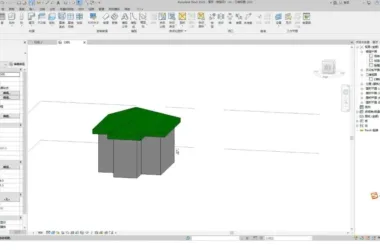
Figure 2: Geometry created in Rhino can be imported into Revit using the SAT format for mass families, which appears to be Autodesk’s proprietary format.
Figure 3: Once loaded into the project, building components such as walls and floors can be assembled and design drawings produced. Detailed schedules can be generated, including popular ones among architects like door and window schedules and room area tables.













Must log in before commenting!
Sign Up