
BIM Software Tip: Understanding the Locking Behavior of Walls in Revit
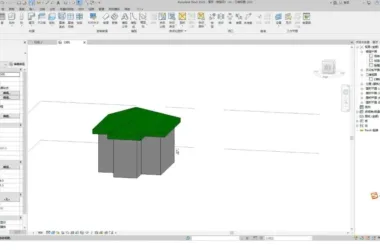
In a recent project, I encountered a peculiar wall that could move horizontally but was fixed vertically. Interestingly, Revit did not display any warnings or prompts about this restriction.
Upon investigation, it was clear that the wall was not pinned in place, nor was it locked through alignment with adjacent elements.
Nonetheless, some form of locking or constraint was definitely in effect.
After considerable effort, I discovered the cause: the wall had previously been dimensioned with locked distances.
When deleting such dimension annotations, clicking “OK” in the warning prompt does not actually remove the associated constraints. Instead, the locking relationships remain intact—even though the dimension annotations are gone. In many cases, users tend to confirm these warnings without closely reading them, unintentionally preserving constraints.
Trying to move the wall afterward revealed it was still immovable. I didn’t recall locking it manually, but there were numerous related door and window tags and positioning references attached. Simply deleting and recreating the wall would cause significant extra work.
This raised an important question: if the dimension annotation has been deleted, how can the locking constraint be lifted?
Here’s a useful trick: select the wall and press the spacebar to flip it. This action triggers a warning dialog.
Expanding the warning reveals the underlying constraint, as shown in the image below.
From here, you can select and delete the specific constraint, or use the “Remove Restrictions” button located at the bottom left of the dialog box.
Once the constraint is removed, flip the wall back to its original orientation by pressing the spacebar again. After this, you will be able to freely adjust the wall’s position.













Must log in before commenting!
Sign Up