
BIM Software Tip: How REVIT Enhances the Connection Sequence of Structural Components
In the RV2013 version, the default behavior for connecting structural components was often problematic. For instance, the connection between beams and slabs treated the slab as shearing the beam, while the connection between columns and slabs treated the slab as shearing the column. This overlapping logic does not align with real-world construction practices and can lead to significant errors in quantity calculations.
Fortunately, this issue was addressed in RV2014, where users gained the ability to easily change and switch the default connection relationships at any time.
Let’s look at an example: First, we create several beams, slabs, and columns, overlapping them. By default, all columns and beams are cut, resulting in a total volume of 191.437 cubic meters.
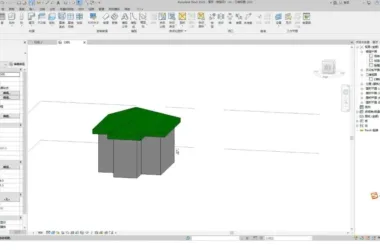
Now, using the new function, select the command “Connect – Switch Connection Order.” The first step is to select the common object—the structural slab. Next, select multiple other elements by framing, including all beams and columns. This process reverses the default connection order to a more logical sequence where columns and beams sit above the slabs, as shown in the image below:
Here, you can see both beams and columns have been lifted, while the slab’s area and volume have decreased accordingly. This method of fastening and shearing is much more practical and aligned with real-world structural behavior.













Must log in before commenting!
Sign Up