
Techniques for Multi-View Modeling in Revit
When working with Revit project models, it’s often necessary to switch between different views to accurately complete the model and observe real-time effects. To display multiple views simultaneously and work across them, you can use the Tile option (or press the shortcut key WT) or the Cascade command found on the View Window tab.
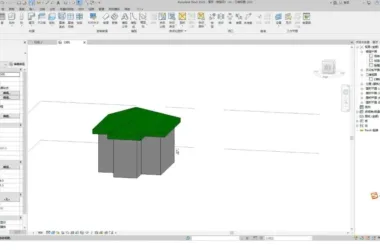
However, when opening a new view, the interface shown in the image below will appear:
At this stage, you might find yourself needing to close some views or repeatedly use tiled/stacked views to manage multiple perspectives, which can become cumbersome. To streamline this process, here is a method using drawings to avoid such issues and enable effective multi-view modeling.
- In the Project Browser, locate Drawings. Right-click to create a new drawing, or click the drawing command on the View Drawing Group tab. Select Frame and click OK. Since multiple views will be placed next, choose None from the title bar options.
- Rename the drawing number to 1F and set the drawing name to 01. Confirm by clicking OK.
- After making simple adjustments to the views you want to include, drag them from the Project Browser into the 1F-01 drawing. Arrange the layout according to your modeling preferences. The drawing will fully display the floor plan and vertical sections of the first floor, as well as 3D views of this floor and the entire model.
- To modify the model, simply double-click any view to make changes. Double-click outside the view on a blank space to exit the editing mode. This approach works for all views within the drawing.
- If you need to include the same view on multiple drawings, you can copy the view along with its details and place it across different drawings.
This technique not only facilitates multi-view modeling but also enhances modeling efficiency. It allows for focused modeling of individual floors within complex projects, making the process more manageable and productive.













Must log in before commenting!
Sign Up