
(Shu Chenggui, Deputy Director of the BIM Technology Research Institute at Giant Craftsman Group)
Today, a growing number of construction projects face challenges such as complex processes, tight schedules, and massive information management demands. BIM (Building Information Modeling) technology has proven to be a revolutionary productivity tool in the construction industry. However, many construction companies still struggle with the practical application of BIM: How can BIM be effectively implemented in projects? How can its value be clearly demonstrated? In this article, I will share a BIM project case from Giant Craftsman Group, focusing on the formation of their BIM team and their application experience.
1. Building a BIM Team
Giant Craftsman Group is a leading construction enterprise based in Jiaxing City, Zhejiang Province. It holds a special grade general contractor qualification for construction projects, a Class A qualification in construction design, and is listed on the Hong Kong H-share main board (stock code HK1459). The company has completed over 200 high-quality projects, winning awards such as the China Construction Engineering Luban Award, the National Quality Engineering Award, the Zhejiang Province Qianjiang Cup, and the Sichuan Province Tianfu Cup.
In 2014, the company first encountered Revit modeling while handling projects with multiple high and low spans in the basement and complicated inclined beam positioning. Due to tight site conditions and complex surroundings, they also used venue layout software for the first time.
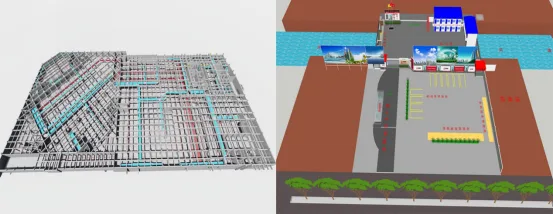
In 2015, the Vice President and Chief Engineer of Giant Craftsman Group conducted an external review of BIM technology. By August, the company had officially contracted with Guanglian Da Company, held a BIM launch conference in late September, and established a formal BIM team in October. The headquarters building project of Zhenshi Holdings Group was chosen as the pilot project. Guanglian Da Company provided technical training to Giant Craftsman’s BIM personnel, who officially joined the project department by the end of the month.

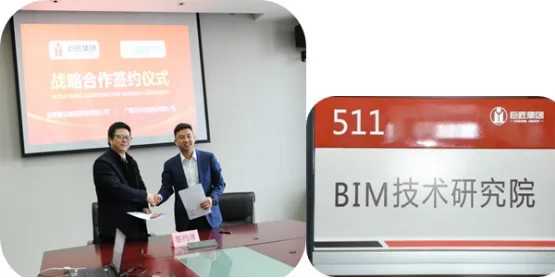
By 2016, multiple projects began implementing BIM applications. Numerous BIM conferences and training sessions were held to cultivate professional talent. At the end of 2016, the BIM Technology Research Institute was officially established, comprising over 20 members and managing 8 BIM application projects simultaneously. Giant Craftsman Group and Guanglian Da signed a strategic cooperation agreement to jointly develop an enterprise-level BIM technology application platform.
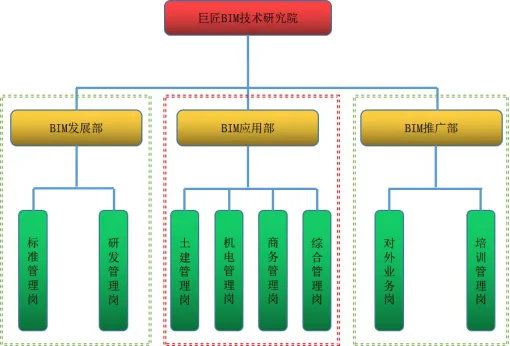
Internal organizational structure of Giant BIM Technology Research Institute
2. BIM Application in Pilot Projects
Project Overview
The pilot project selected was the landmark Zhenshi Headquarters Building in Jiaxing, located in Tongxiang City. With a total investment of approximately 400 million yuan, the building stands 162 meters tall and covers 64,400 square meters. It comprises two basement floors, a 37-story main building, and two podium floors. The main building features a frame tube structure, while the podium uses a steel-concrete frame structure. The basement includes multiple high and low spans, complex structures, and intricate mechanical and electrical pipelines. The client imposed strict deadlines, and the project aimed for the “Luban Award” and “National AAA Standardized Construction Site” standards, demanding high engineering quality.
Key technical challenges of the project include:
- The foundation pit depth and excavation depth in Building 1’s core area reaches 9 meters, requiring precise earthwork and support.
- The continuous concrete pour volume for the bottom plate is 6,700 m³, posing high requirements for crack control in large-volume concrete.
- Building 1, with a height of 149.9 meters, demands high precision in three-line control for construction layout.
- Buildings 2 and 3 feature large spans and heights; for example, the indoor basketball court’s steel beams in Building 3 span 33.2 meters, requiring advanced steel structure assembly and hoisting techniques.
- The installation of formwork for large-section cylinders and inclined columns on Building 1’s transfer floor requires high standards.
- Building 1’s structural facade includes multi-level inward folding forms, demanding precise external scaffolding installation.
- The complex curtain wall facade requires high installation accuracy.
- The basement’s complex structure, large volume, multiple mechanical and electrical disciplines, and intricate pipeline routes require precise layout of computer rooms, passages, pipelines, supports, and hangers.
BIM Equipment Configuration
Software Configuration
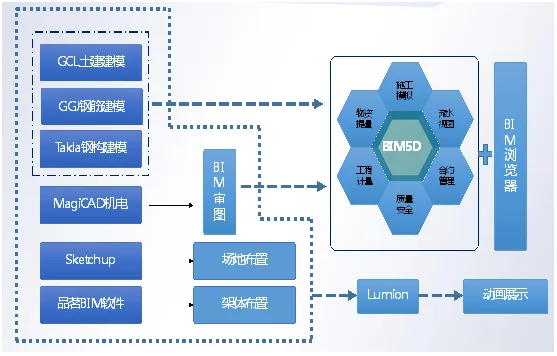
- Guanglian Da Series: BIM5D Software (PC, Web, Mobile, “Collaborative Building”), Civil Engineering Modeling Software (GCL), Steel Reinforcement Modeling Software (GGJ), Steel Bar Sampling Software (GFY), Mechanical and Electrical Modeling Software (MagiCAD), BIM Drawing Review Software, 3D Venue Layout Software (GCB).
- Autodesk Series: Autodesk Revit, Autodesk Navisworks, Autodesk Revit MEP.
- Steel Structure Modeling: Tekla.
- Auxiliary Software: SketchUp, Lumion, Fuzor, 3D MAX, CDR, Project.
Hardware Configuration
BIM Application Methods
The BIM implementation process follows four key stages:
- Develop implementation plans
- Establish institutional safeguards
- Allocate project personnel
- Summarize application experiences
1. Develop an Implementation Plan
- Analyze BIM technology requirements from the project department.
- Identify key challenges in construction management.
- Review main construction milestones.
- Clarify the scope of the construction contract.
- Define the project’s engineering objectives.
- Develop detailed implementation plans and schemes.
- Sign project service agreements.
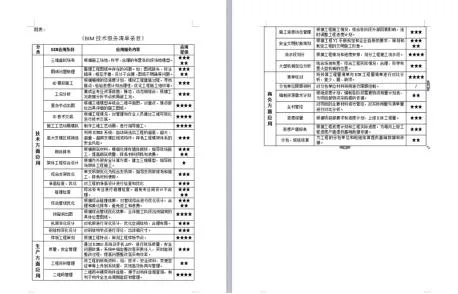
Project Services List:
2. Establish Institutional Safeguards
Company-Level Systems:
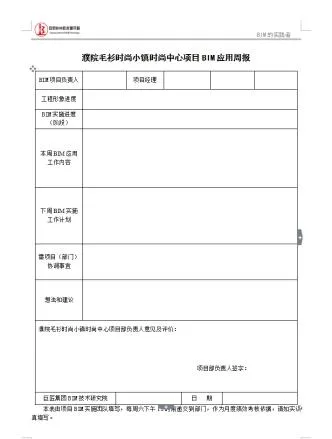
- Weekly and Monthly Reporting: Project leaders submit BIM progress, results, issues, and future plans to the project department and design institute regularly.
- Exchange Meetings: Regular technical exchange meetings with BIM personnel across projects.
- Project Leader Assessments: Monthly objective evaluations of on-site BIM implementation, incorporated into personnel assessments.
- Irregular Inspections: BIM Technology Research Institute staff conduct monthly random inspections of BIM application across projects.
- Training System: On-site personnel provide regular or ad hoc BIM technology training to project team members.
Project-Level Institutional Guarantees:
- Set up a management system for professional drawings.
- Develop submission and feedback processes for project service results.
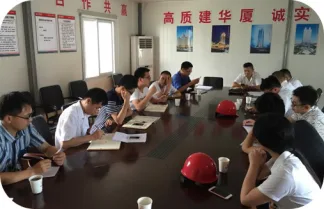
- Establish weekly project meetings with all relevant units and departments.
- Formulate plans for submitting relevant materials to the project department.
- The BIM team submits deliverables to headquarters in stages.
- Periodic project summaries.
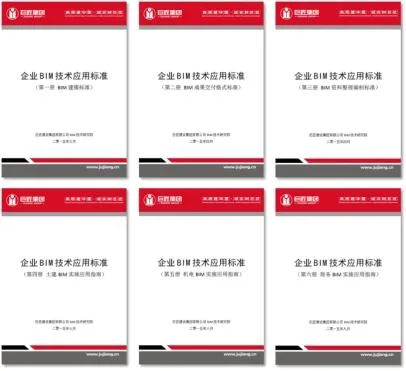
Additional guidelines include unified modeling rules and calculation criteria, deliverables standardization, ensuring BIM data completeness, and guiding on-site professional applications.
3. Project Personnel Configuration
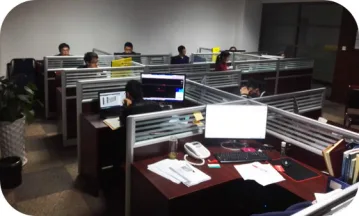
The BIM support model includes backend modeling and frontend applications. Personnel deployment varies by project phase:
- Early Stage: 2-3 civil BIM personnel on-site (depending on project), 1 business BIM person semi-resident, 1 mechanical and electrical BIM person off-site for tracking.
- Mid Stage: 1-2 civil BIM personnel on-site, 1 business BIM person on-site, 1 mechanical and electrical BIM person on-site.
- Late Stage: 0-1 civil BIM personnel semi-stationed, 1 business BIM person on-site, 1-2 mechanical and electrical BIM personnel on-site.
It is essential to assign 1-2 people to consistently track BIM technology application throughout the project and actively participate in its implementation.
4. Main BIM Application Points
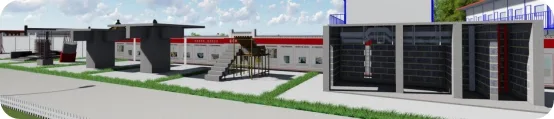
1. Site Layout
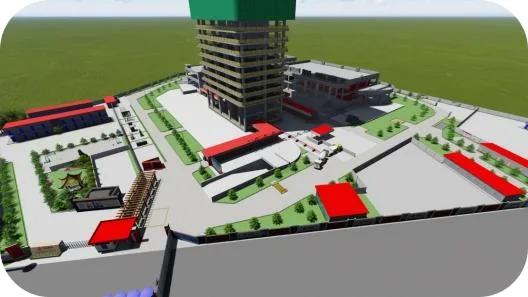
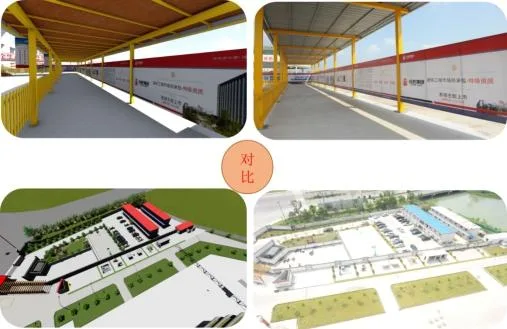
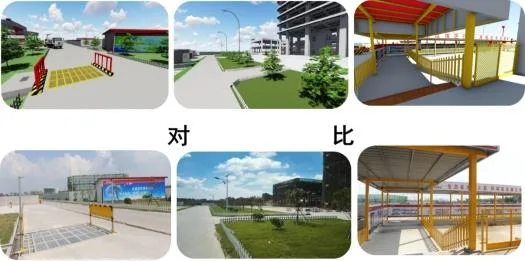
Value: Using BIM technology for 3D site layout and corporate image planning enables 1:1 realistic construction site reproduction. This enhances communication efficiency, solves layout challenges intuitively, and supports green construction and national standardization acceptance.
2. Civil Engineering Modeling

Key points:
- Set precise modeling accuracy targets early to enable quantity analysis and collaborative use later.
- Use experienced modelers with practical knowledge, cross-check models regularly, and resolve drawing issues before on-site application.
- Unify modeling rules and coordinate origins early to facilitate integration and application.
3. Mechanical and Electrical Modeling
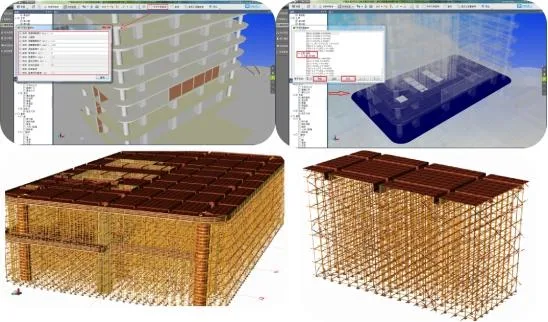
Key points:
- Maintain coordinate consistency with civil engineering models.
- Ensure modeling accuracy and professionalism align with civil engineering standards.
- Develop comprehensive management and optimization plans to minimize rework.
4. Drawing Review
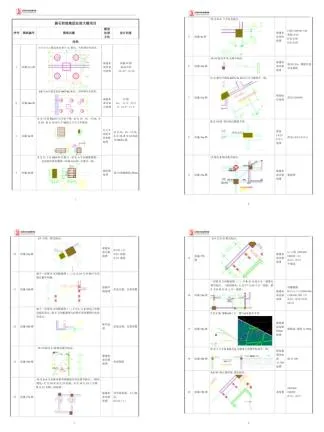
After modeling, each professional submits a modeling report and instructions. These are reviewed by the project department and shared with design units.
Value:
- Improves identification and resolution of design issues, reducing ambiguities.
- Outputs tables for intuitive problem detection, enhancing drawing review and construction efficiency.
- Early problem detection reduces construction changes and accelerates schedules.
5. MEP Optimization
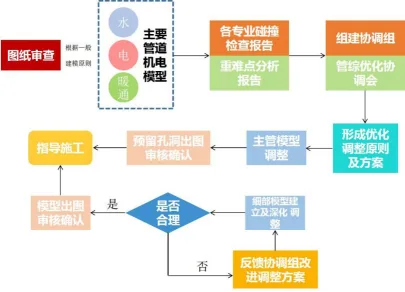
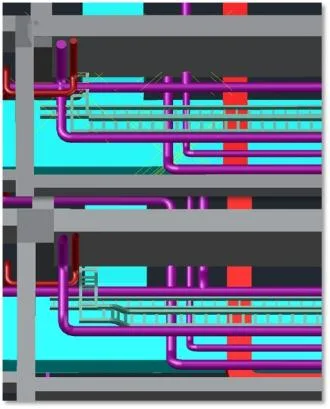
Key points:
- Develop detailed collision adjustment and avoidance principles, such as replacing certain pipe types and arranging electrical pipelines above water pipes.
- Conduct staged comprehensive collision checks across disciplines to enhance BIM efficiency.
- Coordinate cross-disciplinary operations, pre-control collision areas, and communicate adjustments to subcontractors for improved pipeline installation.
- Example: After modeling basement walls, beams, and columns, the civil engineering team submits models to MEP for collision inspection and optimization.
Value: Improved visual quality, optimized spatial structure, enhanced interdisciplinary cooperation, reduced risk of errors, effective rehearsal of adjustments, shortened construction periods, and reduced material waste.
6. Reserved Openings
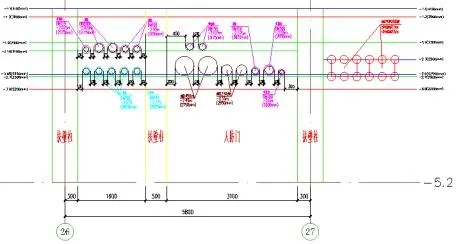
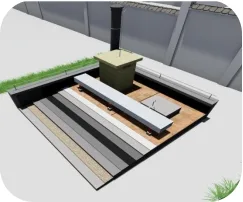
After pipeline optimization in the BIM model, reserved openings are provided with plan, section, and axonometric drawings, reviewed and approved by relevant units before delivery to the project department.
Value:
- Greatly improves accuracy of reserved openings, reducing errors and rework.
- Significantly saves material costs and construction time.
- Meets strict criteria for national awards.
7. Computer Room Deepening
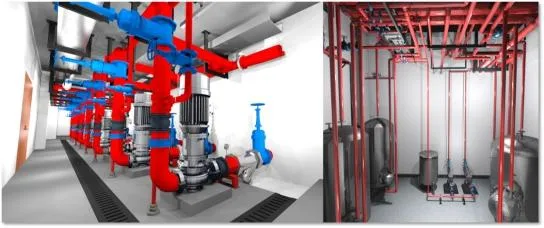
Value: Optimizes spatial structure aesthetically, reduces rework, and avoids issues like equipment not fitting through doorways.
8. Node Construction Simulation
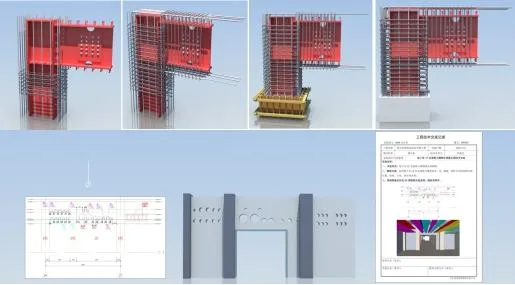
Value:
- Clarifies construction difficulties to project managers beyond mere descriptions.
- 3D model formats enhance communication efficiency and completeness compared to traditional methods.
- Enables real-time visualization, reducing rework and saving time and resources.

9. 3D Brick Arrangement
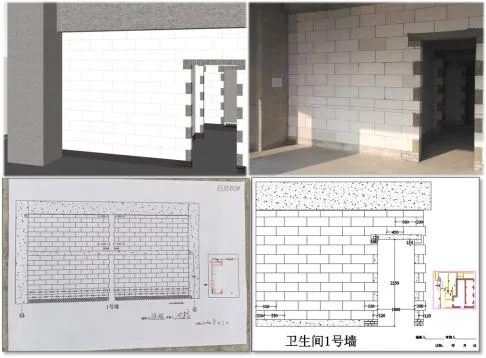
Value: Intelligent brick placement using BIM results in high-quality masonry, excellent wall appearance, low material loss, minimal waste, and accurate material transportation.
10. Special Program Testing
Used for components with excessive height, span, or weight.
- Conduct intelligent detection for over-limit engineering elements.
- Precisely locate issues.
- Arrange intelligent mold frame systems with detailed plans.
11. Component Quantity Inquiry
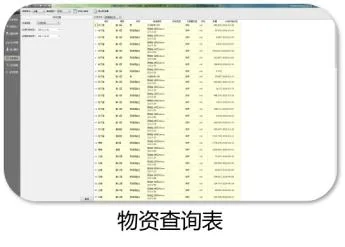
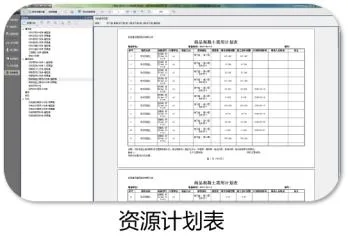
Using BIM5D’s material reporting and query functions allows for multi-dimensional material statistics and planned queries.
Value:
- Quick data retrieval and summary, reducing calculation time and providing accurate material control data.
- Supports reasonable material procurement planning and reduces on-site material storage.
- Provides a basis for limited material requisition, minimizing waste.
12. Comparison of Three Calculations
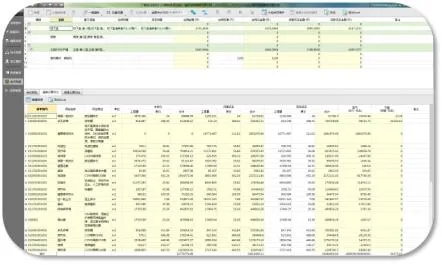
Value:
- Real-time insight into project profit and loss during construction.
- Reduces errors in budgeting and cost control.
- Supports reasonable funding and resource planning for each project stage.
13. Collaborative Management
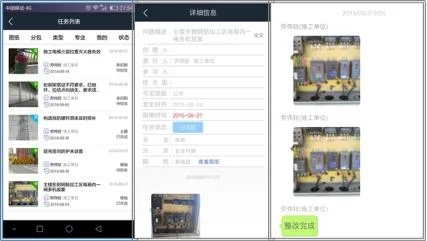
Collaborative management of quality, safety, and progress is facilitated through BIM5D’s cloud-based system.
Traditional challenges: Low rectification efficiency, poor problem tracking, and incomplete issue closure.
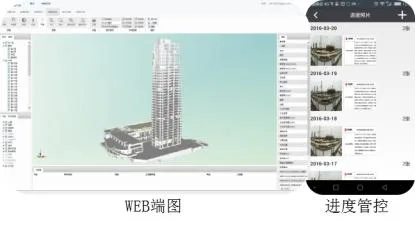
Value:
- Timely issue feedback.
- Clear individual responsibilities.
- Reduced safety risks.
- Improved problem rectification rates.
- Prompt issue tracking.
14. Document Management
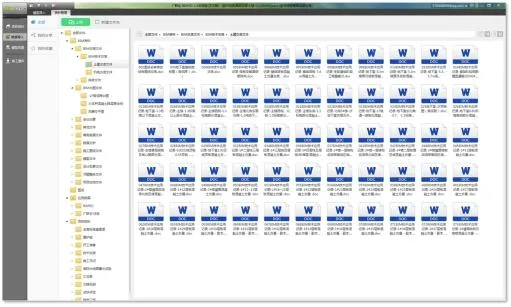
Centralized data management through BIM5D and cloud platforms offers:
- Convenient search and retrieval.
- High data security preventing loss.
- Unified data systems and comprehensive management.
15. Template Models
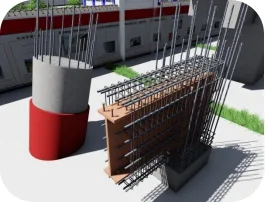
Engineering template nodes are selected based on the project’s characteristics and structural form, displayed in 3D for clarity.
16. Safe and Civilized Application
BIM is applied to safety, site image, and other aspects to enhance project management.
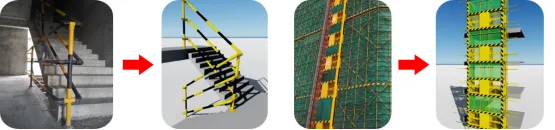

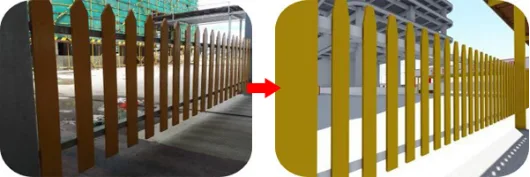
Value: Planning and establishing BIM models clearly visualize plans, facilitating quick decision-making on safety and site image.
Experience in BIM Application
1. Comprehensive Application Strategy
- Start with pilot projects before wider promotion.
- Focus on projects first, then expand company-wide.
- Address easier tasks before tackling more complex ones.
- Begin with current applications, then plan for future expansions.
2. Additional Insights
- BIM implementation requires strong support from senior leadership.
- Talent is crucial; prioritize BIM talent development and establish scientific training mechanisms to enhance innovation.
- Optimize projects and teams by starting with pilot and benchmark projects to experience BIM deeply.
- Focus on simple application points first to identify immediate value.
- Address project managers’ concerns using BIM to solve real problems.
- BIM is not just advanced technology but a practical management tool.
- Visually present project quantities during business information promotion phases.
- BIM personnel should actively communicate with project managers to explore application opportunities.
3. Benefits of Using BIM
- Improved efficiency in disclosure and communication.
- Better construction planning and organization.
- Reduced rework during construction.
- More reasonable material procurement planning.
- Enhanced coordination across trades.
- Effective pre-control during construction.
- Higher levels of refined management.
- Increased project management efficiency.
Message: BIM represents cutting-edge productivity technology. Today you might not see it, tomorrow you may not understand it, and soon after, you won’t be able to keep up without it.














Must log in before commenting!
Sign Up