
In 2019, we were honored to win the design rights for the campus building complex through a competitive process. The site presented an extraordinary challenge with its highly irregular boundary — nearly a trapezoidal polygon defined by polyline edges. This unique condition inspired us to break away from the traditional, regular layout patterns commonly used in educational buildings.
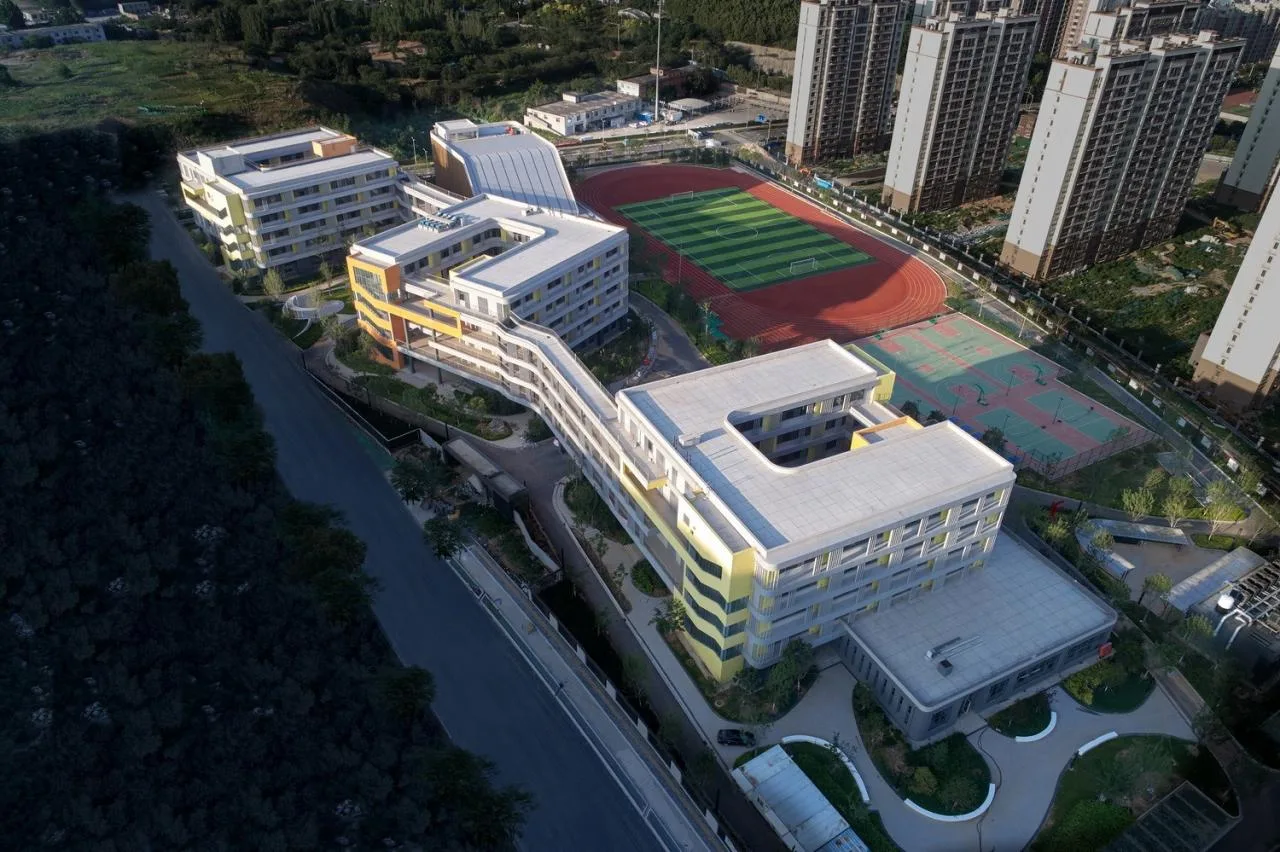
Southwest bird’s-eye view | Twisting cultural and educational garden © UA Youan Design
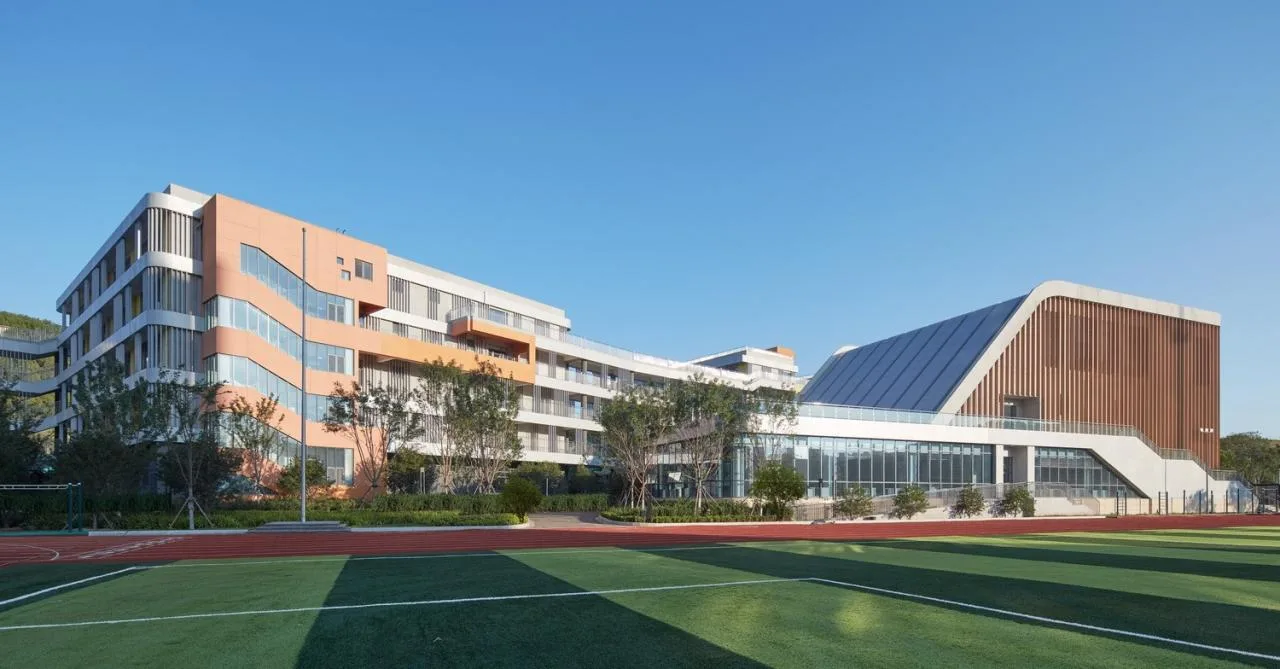
△ Cultural and Educational Community’s Interface © UA Youan Design
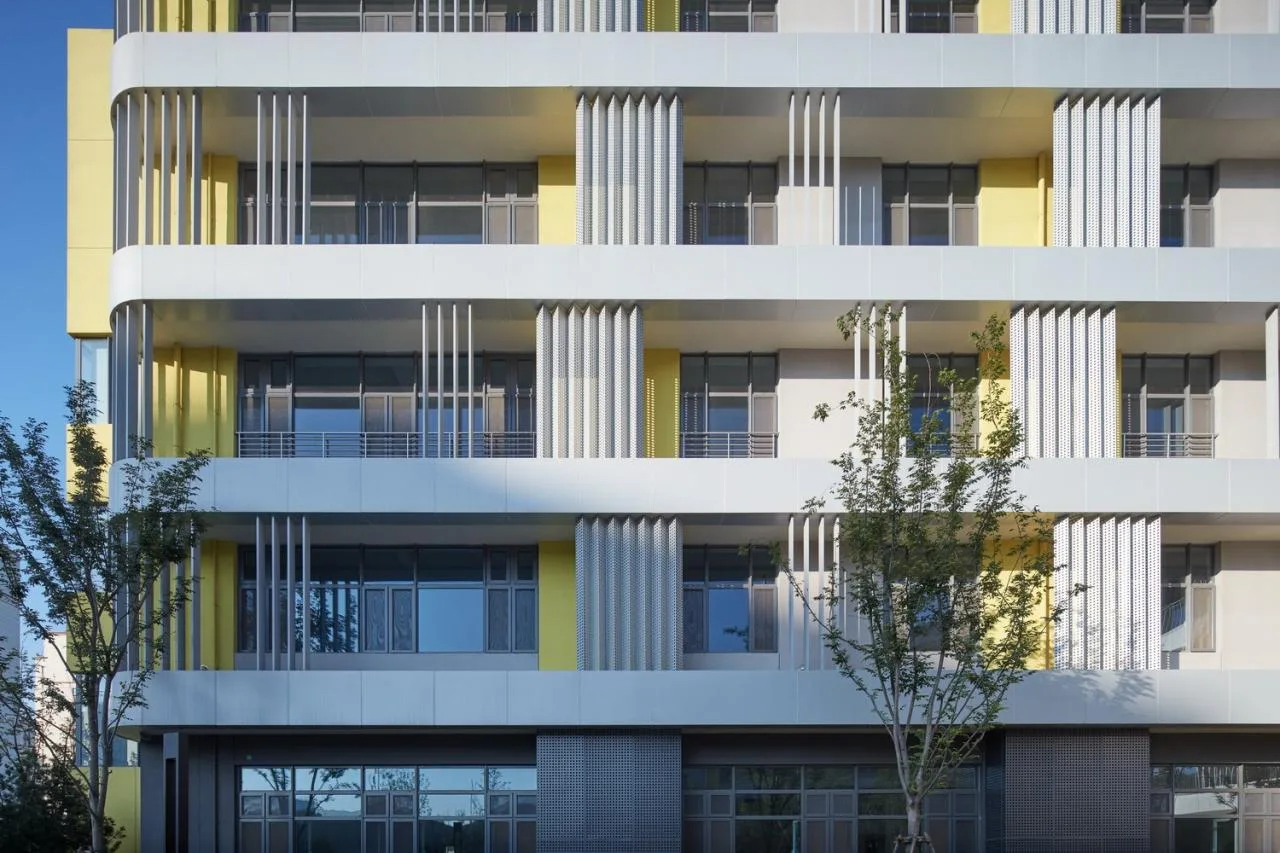
△ Diffused light, medium skin of teaching unit © UA Youan Design
Design Approach | Freeform Space Adapted to Site
The irregular site compelled us to reconsider the classic layout typologies of educational buildings. Traditional regular arrangements failed to conform to the site’s unique boundaries and could not efficiently accommodate the required number of classrooms. This mismatch resulted in wasted outdoor corner spaces.
Our solution was to create a compact, cluster-style “garden fortress” unit that can rotate and replicate freely along the site’s perimeter. This approach not only optimizes building utilization and fits the site boundary with suitable sunlight exposure and orientation, but also generates inviting outdoor spaces.
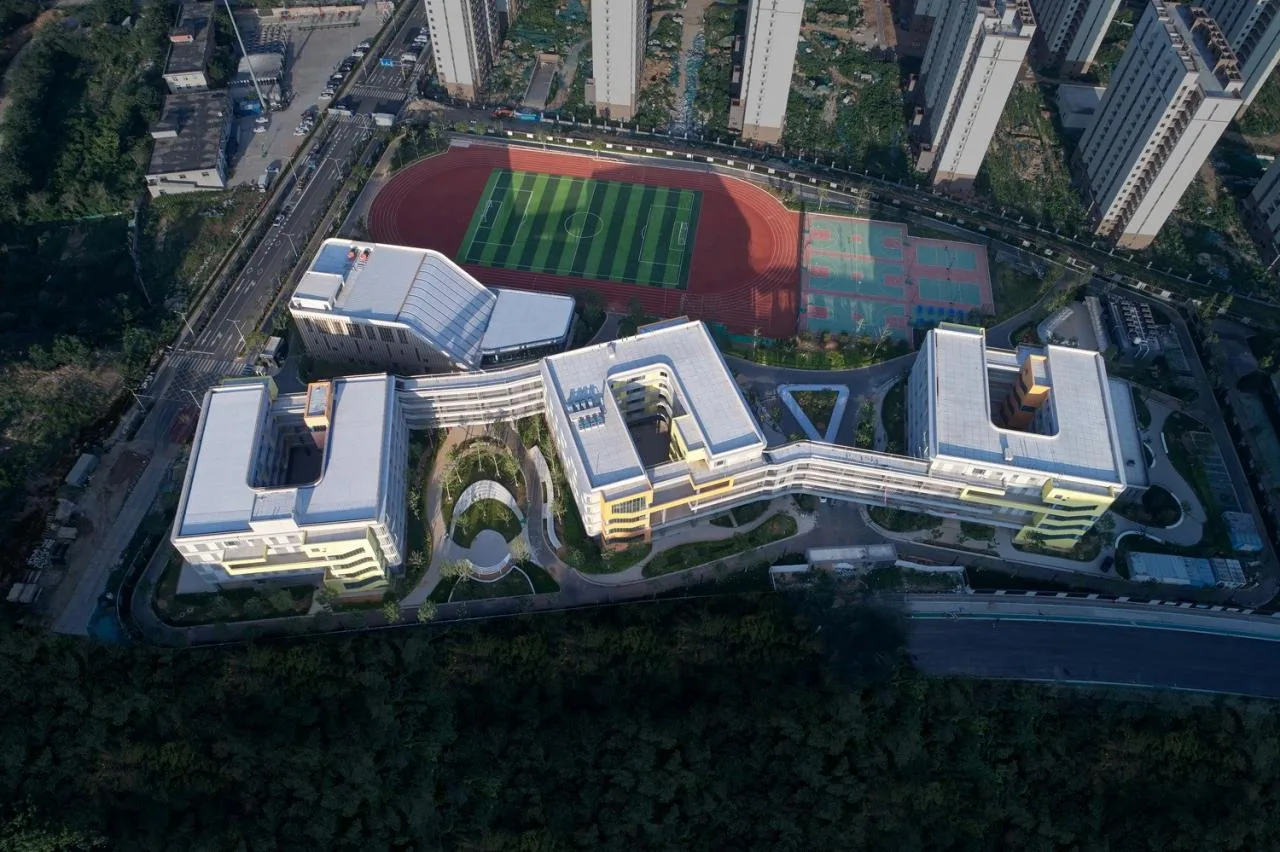
△ Campus West View | Integration of Inner and Outer Courtyards © UA Youan Design
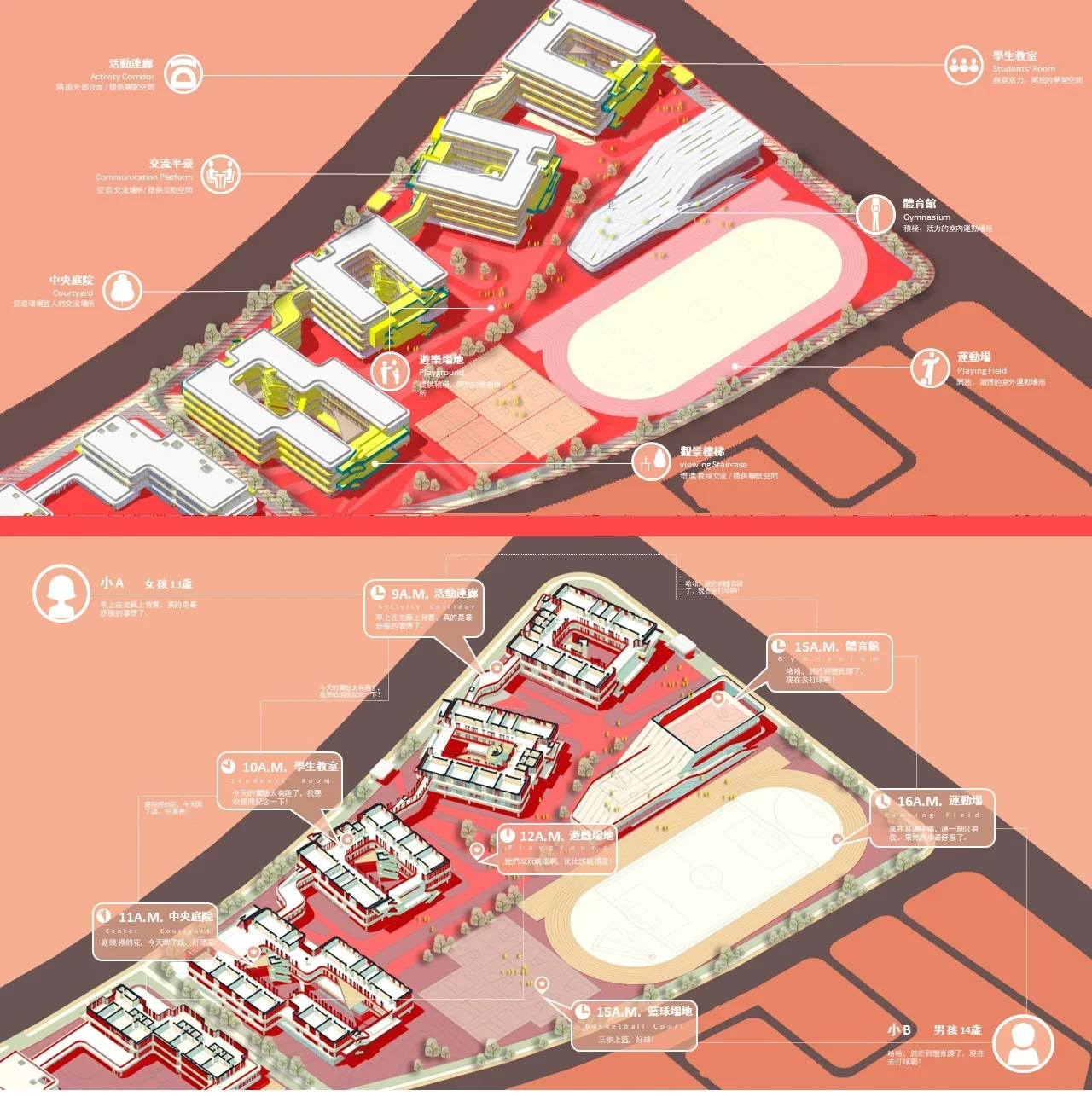
Conceptual diagram of campus spatial system | Intersection of static, mixed, dynamic, and ‘uncertainty’ zones © UA Youan Design
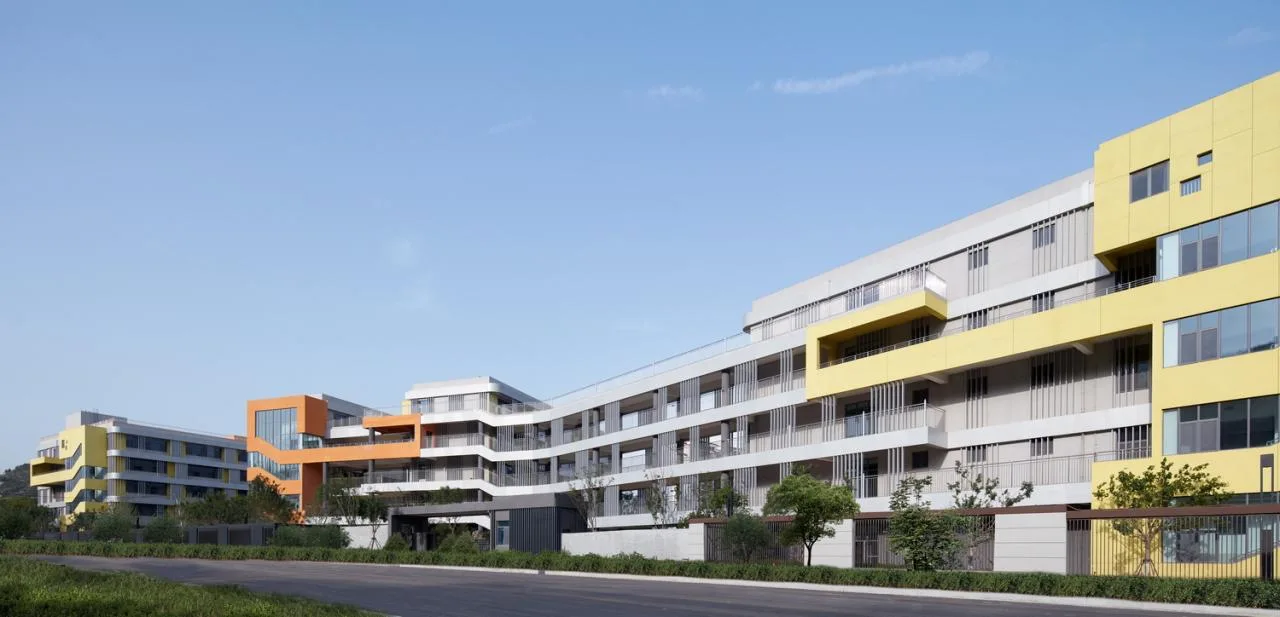
△ Campus West Interface | Pathways designed for free communication 1 © UA Youan Design
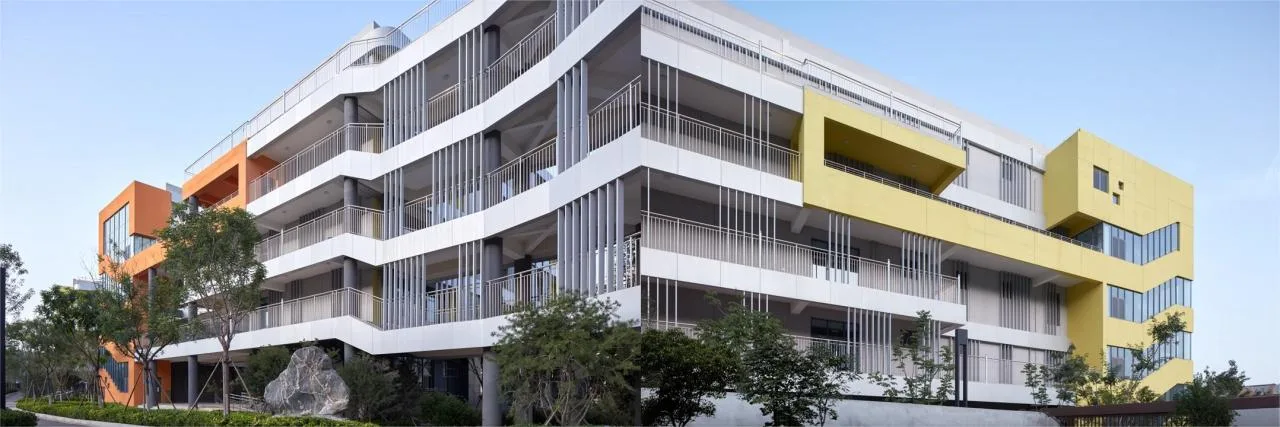
△ Campus West Interface | Pathways designed for free communication 2 © UA Youan Design
Students are not “books” to be lined up neatly on “shelves,” and campus architecture need not resemble rigid, orderly shelves. Beyond sunlight and standardized spacing, a campus should embody a variety of unexpected possibilities and embrace a balanced, non-dogmatic regularity.
Architecture should transcend the simple binary of “attending class” and “leaving class.” Campus planning must go beyond merely dividing areas into “dynamic” and “static” zones, fostering spaces that encourage communication, sharing, meetings, and discovery.
Methodology | Spatial Folding and Grouping
The teaching buildings are interconnected in a closed loop, forming a circular circulation system that fosters interaction and casual encounters during breaks. Extracurricular classrooms and support spaces are thoughtfully attached along these circulation paths.
This “folding” strategy enriches the spatial complexity of the traditionally linear teaching building, enabling the creation of independent, dynamic “garden castles.” These can be flexibly twisted, assembled, and replicated to suit the site’s needs.
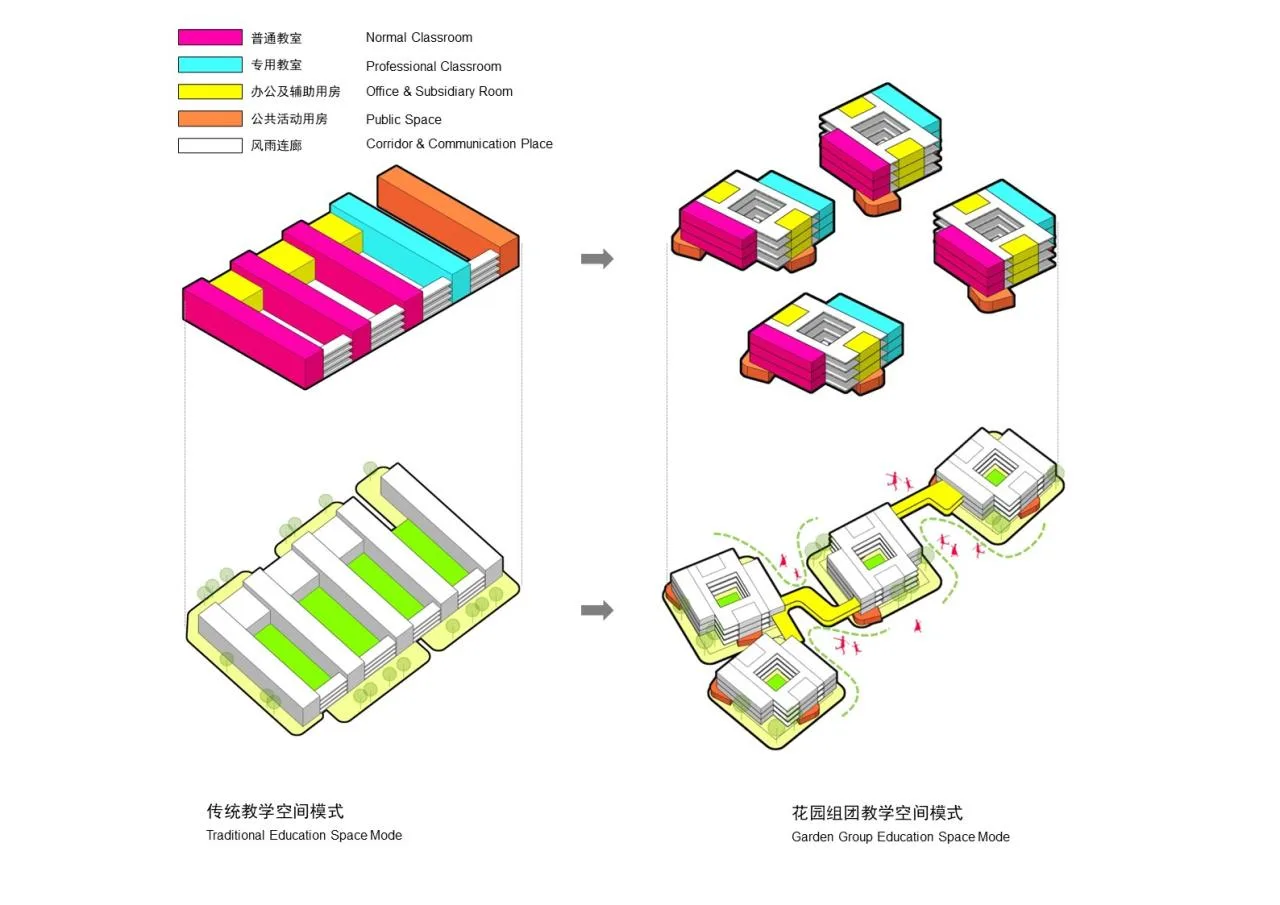
△ Campus Mode Interpretation | From Rows to Gardens © UA Youan Design
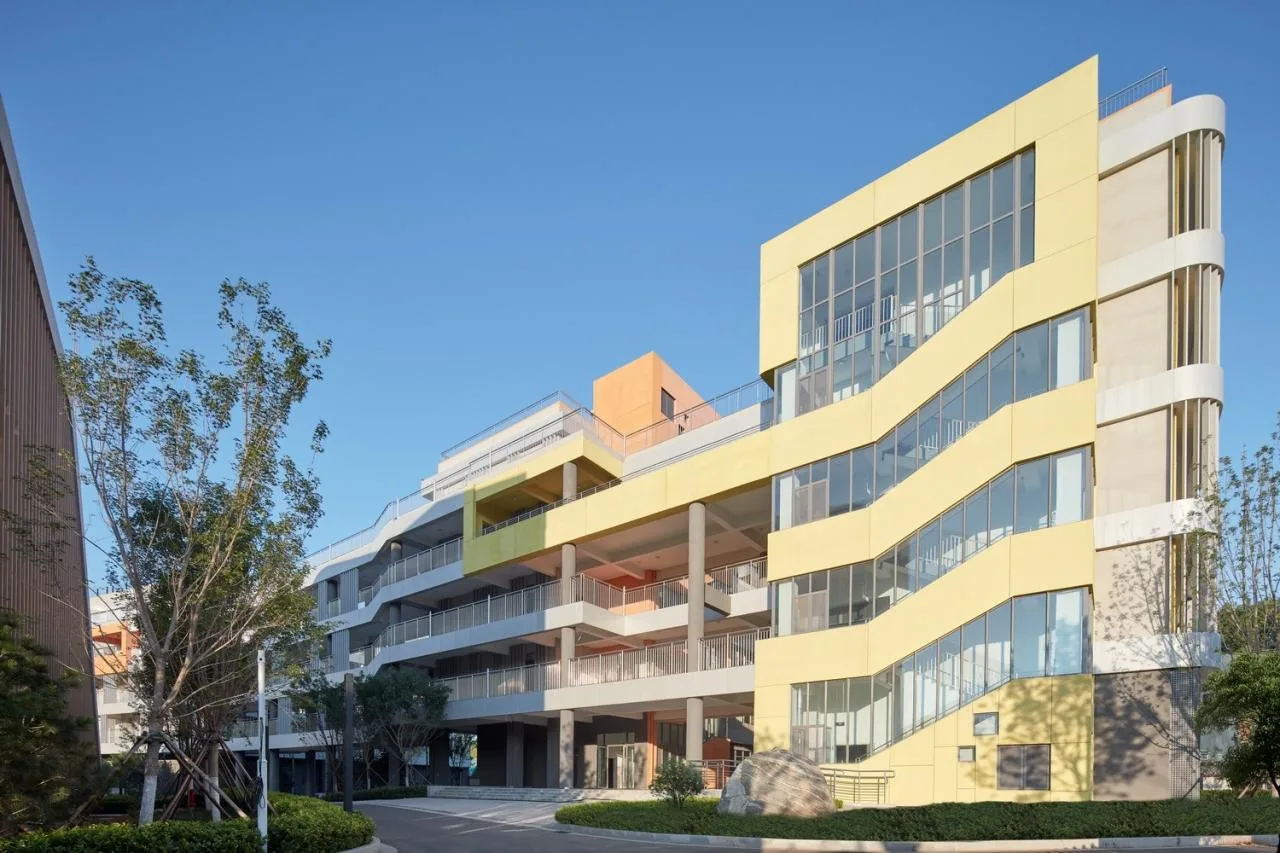
△ Free Exchange Garden | Entrance © UA Youan Design
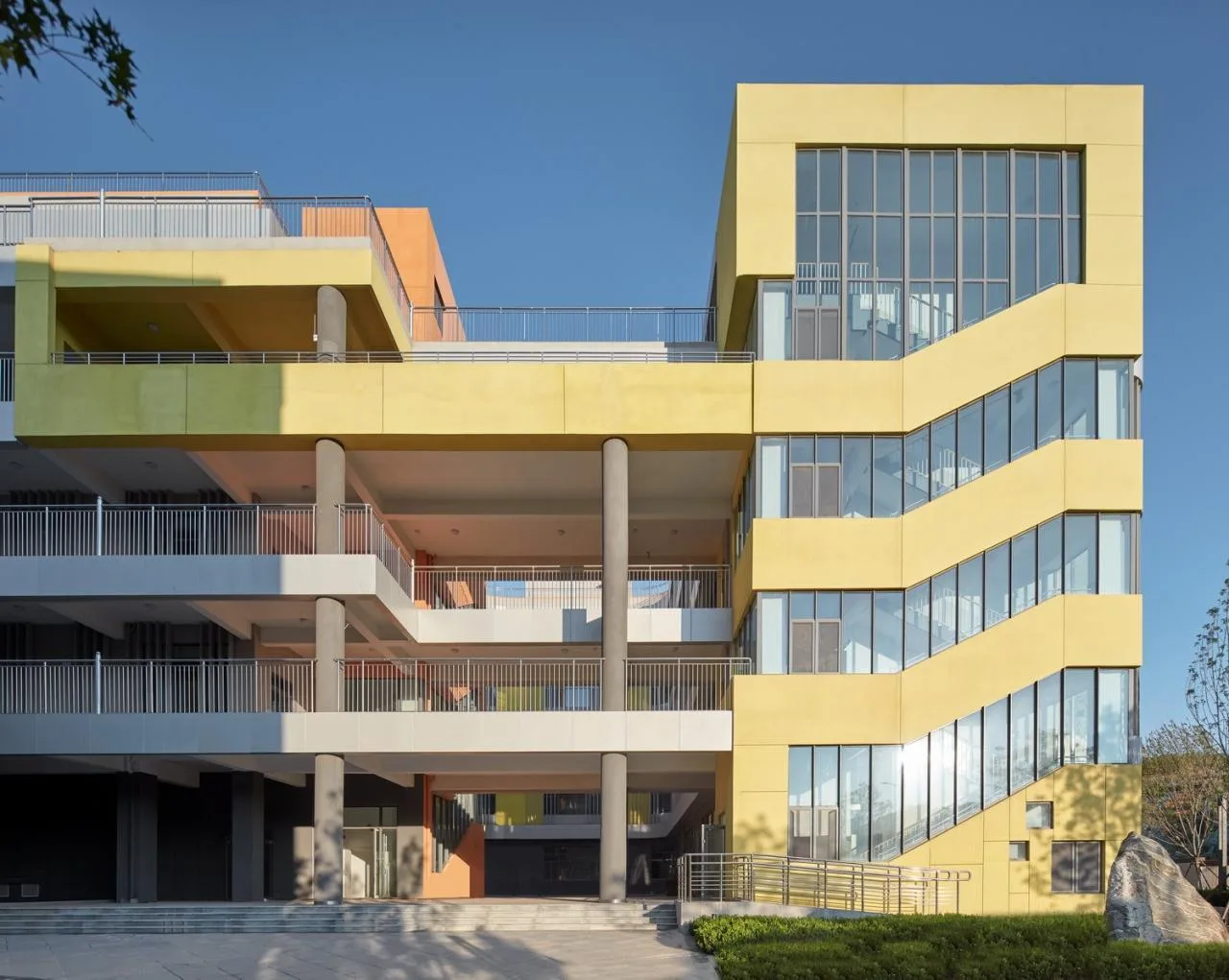
△ Free Exchange Garden | Entrance © UA Youan Design
Concept | A Dynamic Community from “Rows and Columns” to “Courtyard Castles”
This model integrates all functional and safety controls within the teaching units, forming small, closed-loop “garden castles” by connecting the eastern and western ends of each teaching cluster. Through ongoing collaboration with educational institutions, each cluster precisely accommodates the number of classes per grade.
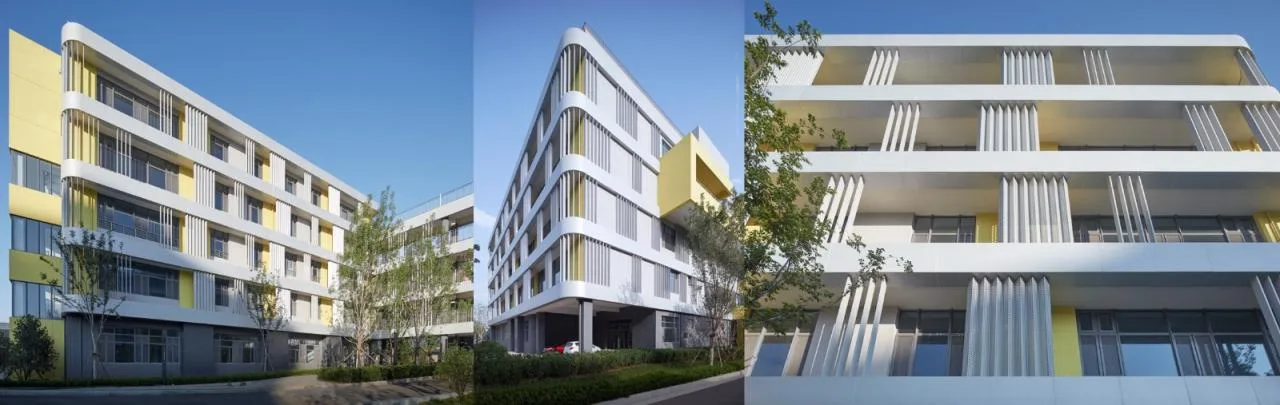
△ Teaching unit self-shading and light-diffusing facade © UA Youan Design
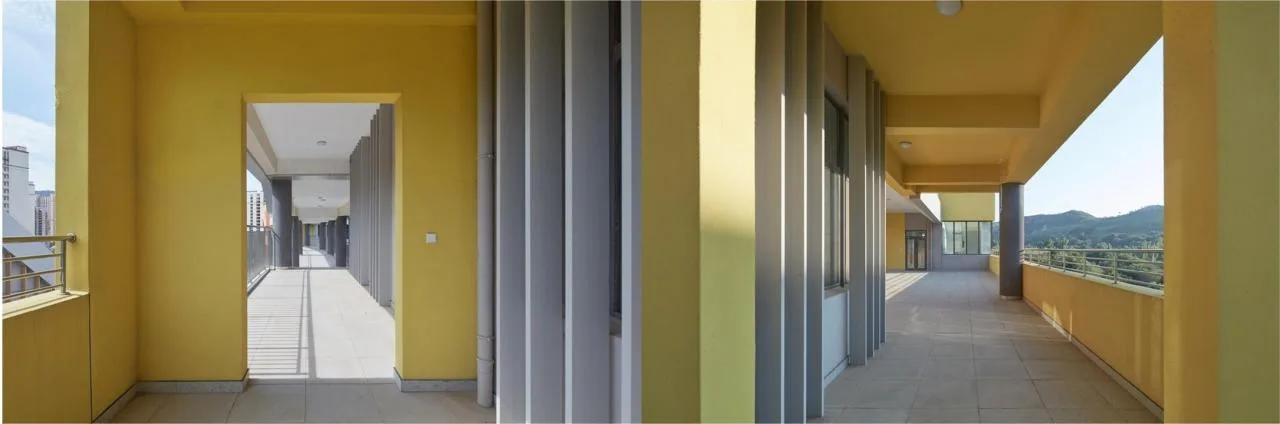
△ Sky Corridor Trail | A Mini ‘Castle’ to See and Be Seen © UA Youan Design
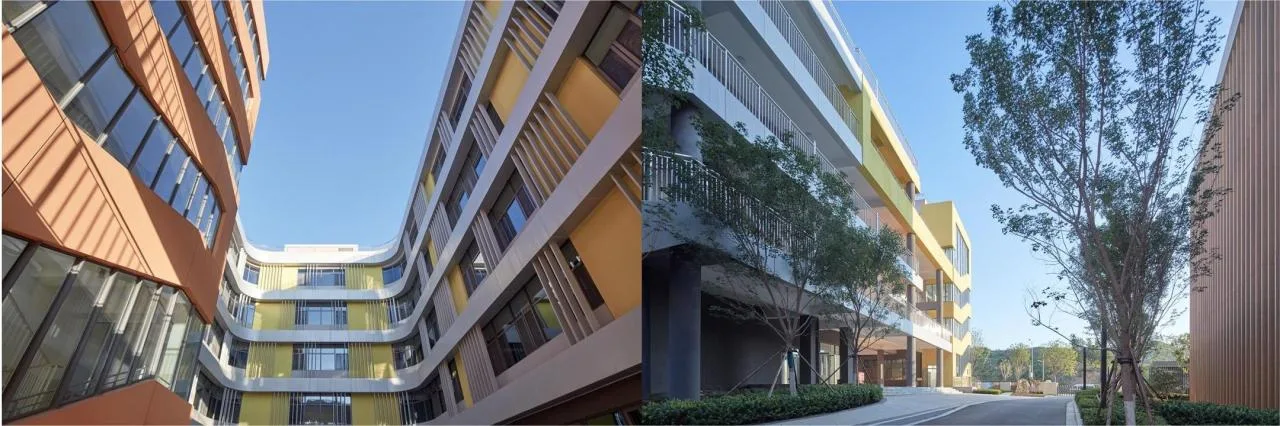
△ Communication courtyards across different blocks © UA Youan Design
Within this configuration, teaching groups of various ages and grades maintain relatively independent inner courtyards while sharing figure-eight shaped outdoor spaces between clusters. In this design, distance transforms into meaningful space — a transitional zone bridging traditional “quiet” and “dynamic” areas.
This enables independent and efficient teaching and activities for different grades within a free-form “fortress.” To give each educational “castle” a unique character for the future, we offer customization options for each group’s courtyard: color schemes, the layout of communication and sharing spaces, and planting designs serve as variables in this flexible formula.
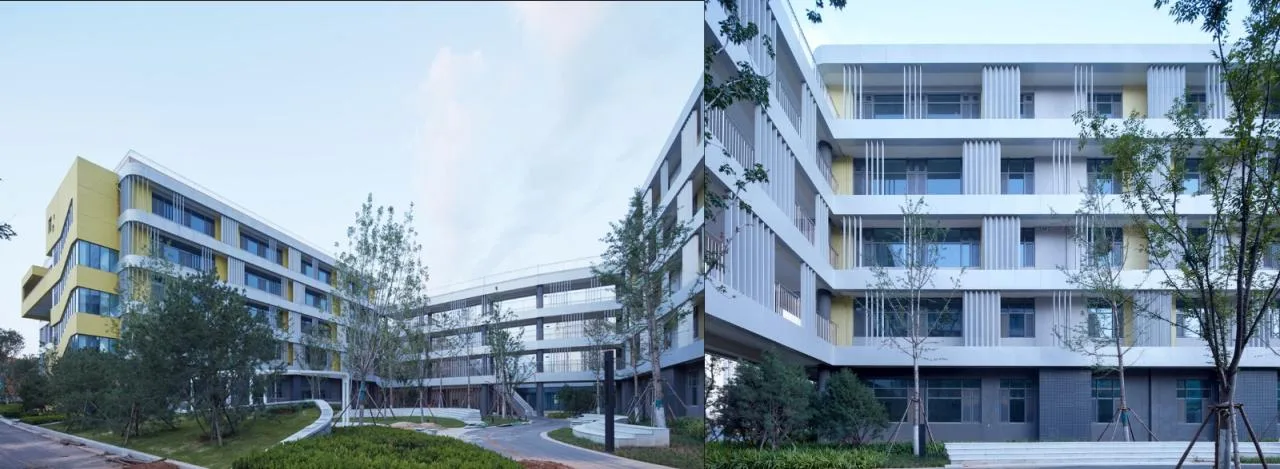
Transition zone between “quiet” and “dynamic” areas © UA Youan Design
The corridors serve as platforms and interfaces for both transportation and communication along the cluster’s edges. They act as bridges across grades and ages and provide vantage points to engage with the figure-eight shaped courtyard line of sight. Walking through the grassy courtyards, one can glimpse the playground framed by the surrounding landscape.
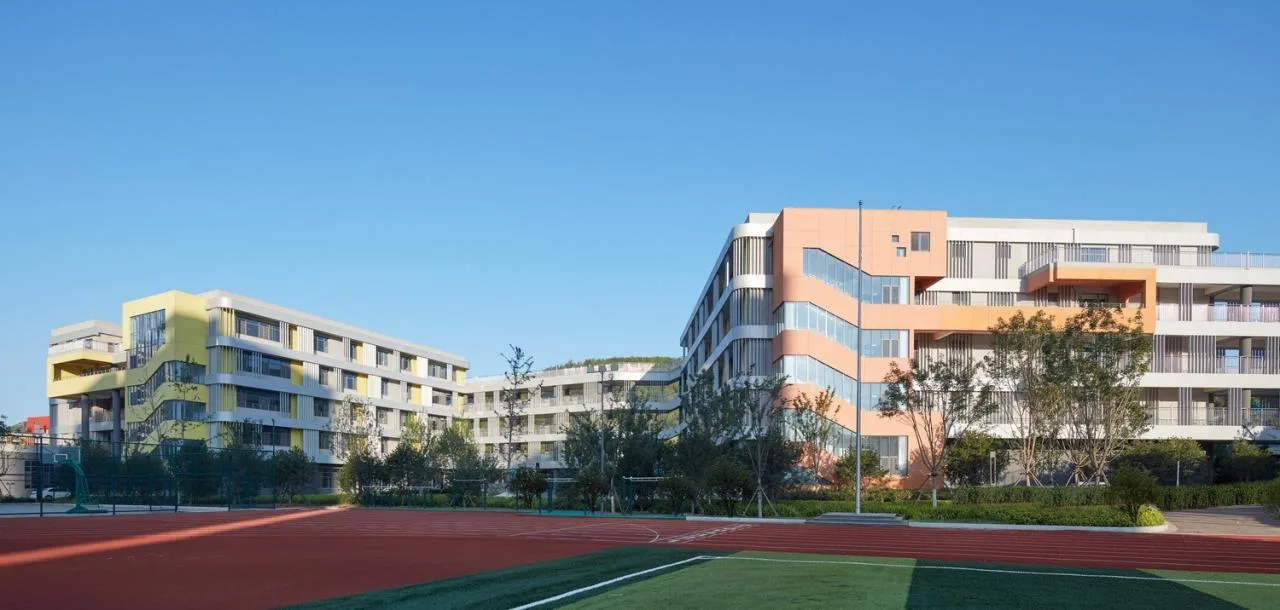
Platform and interface for combined transportation and communication © UA Youan Design
Emotional Connection | Freedom to Explore and Discover
Research in educational architecture must integrate emotional aspects such as uncertainty, unknown territories, and visual layering within the constraints of space, color, and safety. These elements represent breakthroughs beyond the conventional rigid teaching model.
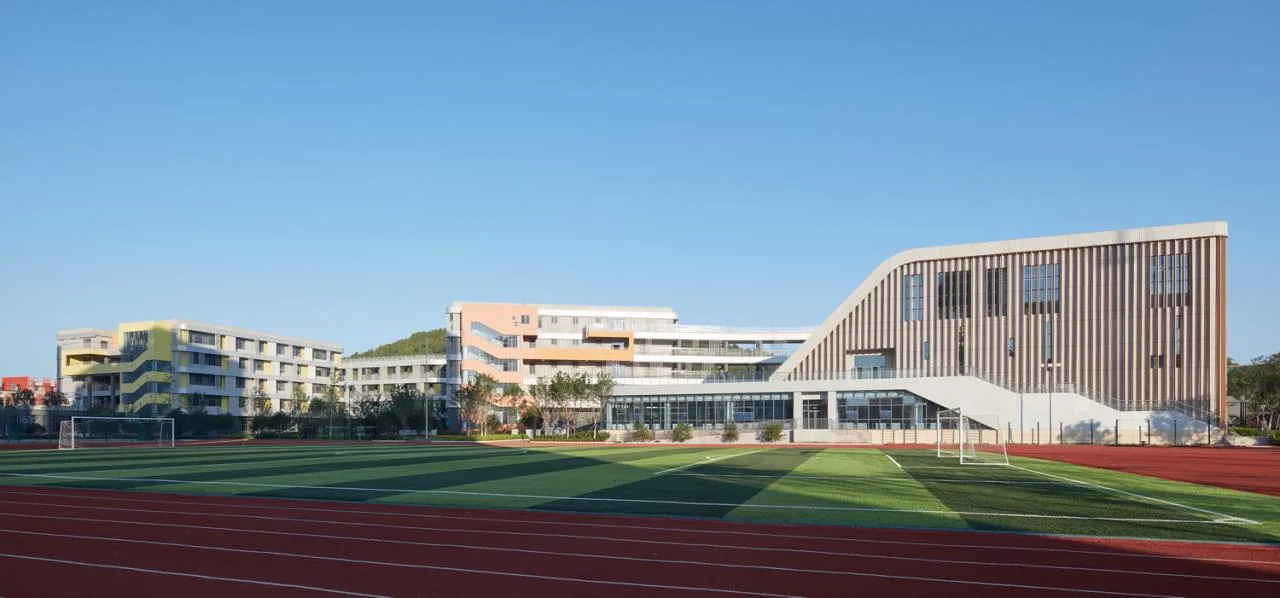
△ Penetration of open spaces, platforms, and courtyards © UA Youan Design
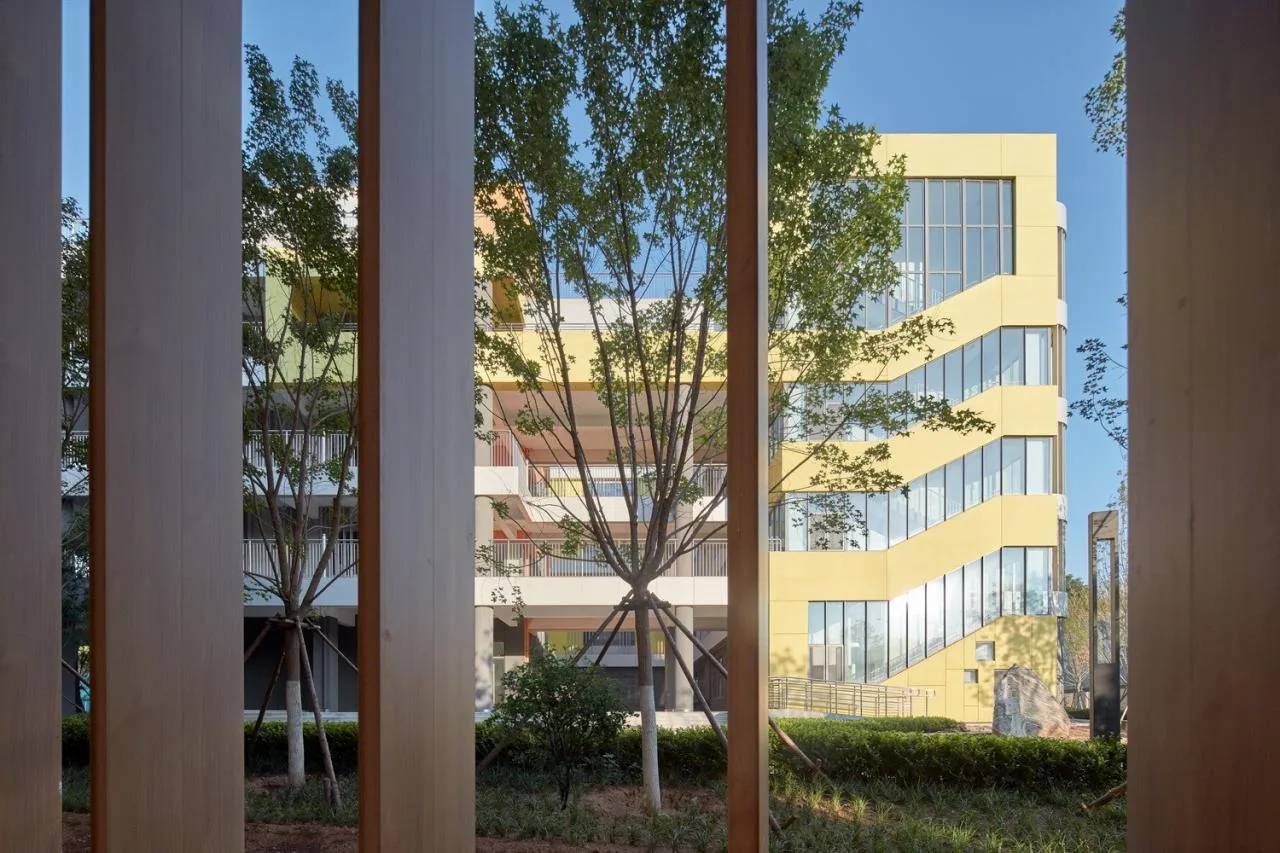
△ Visual layering and transitions between different functional areas © UA Youan Design
Time spent outside the classroom, such as during breaks or extracurricular activities, plays a crucial role in shaping a child’s personality and values. It is the unique experiences of each individual that create diverse life paths, much like the composition of each teaching group illustrated here.
A campus should encompass more than just classrooms and playgrounds — it should offer “domains” and places where students can experience joy in running, meeting, and discovering.
The garden fortress educational settlement aims to engage in dialogue with the city’s geographical context. In cities with springs, clusters of “gardens” appear as rounded forms resembling spring water after cleansing and polishing; in mountainous cities, artificial mountains (such as sports arenas) face the natural mountain backdrop.
Project Drawings
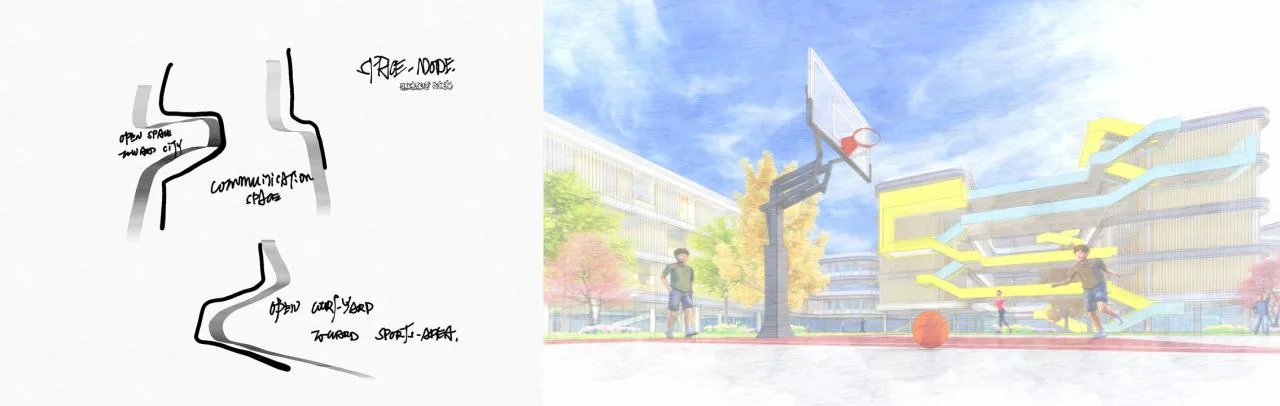
Initial conceptual sketch © UA Youan Design
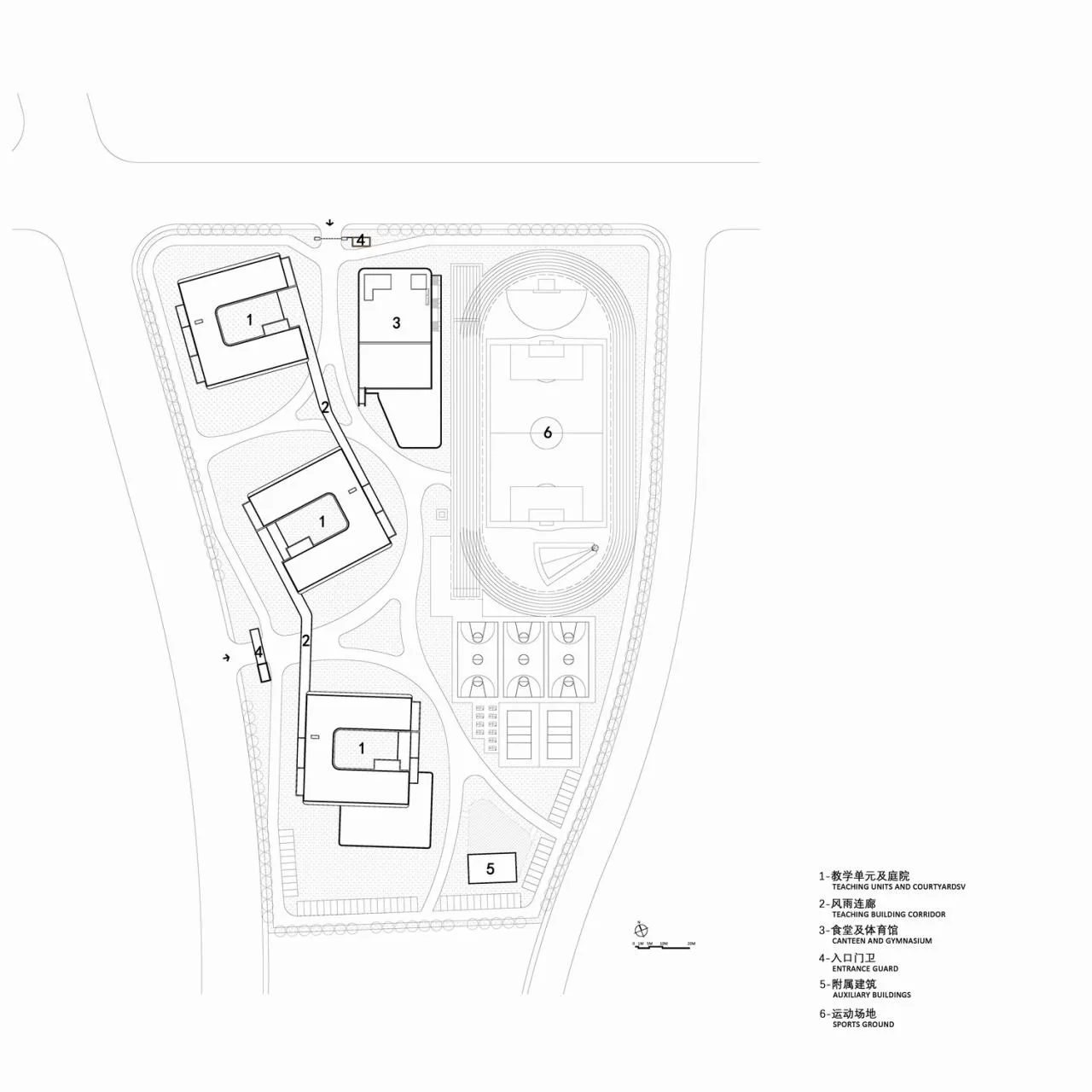
△ General layout plan © UA Youan Design
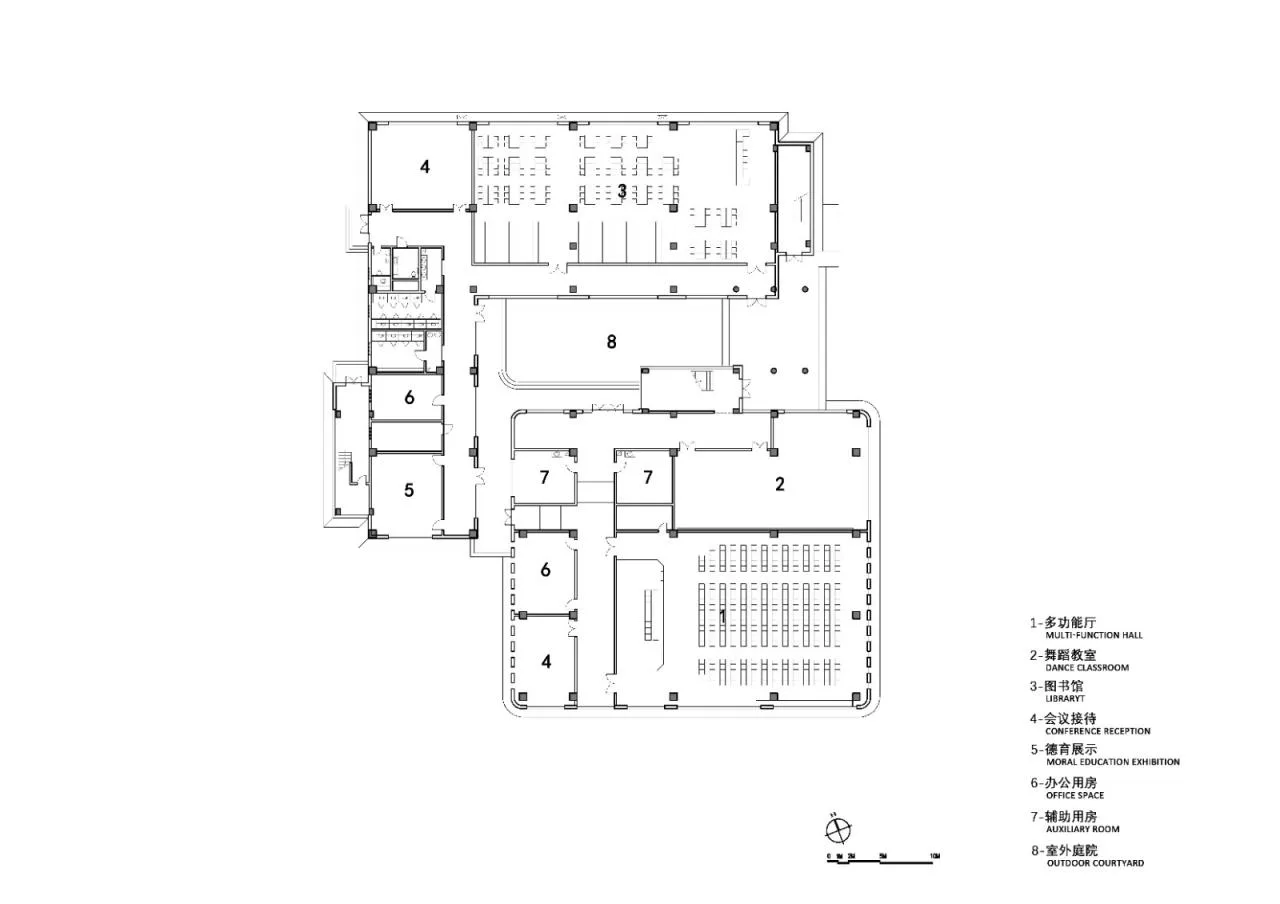
△ First floor plan © UA Youan Design
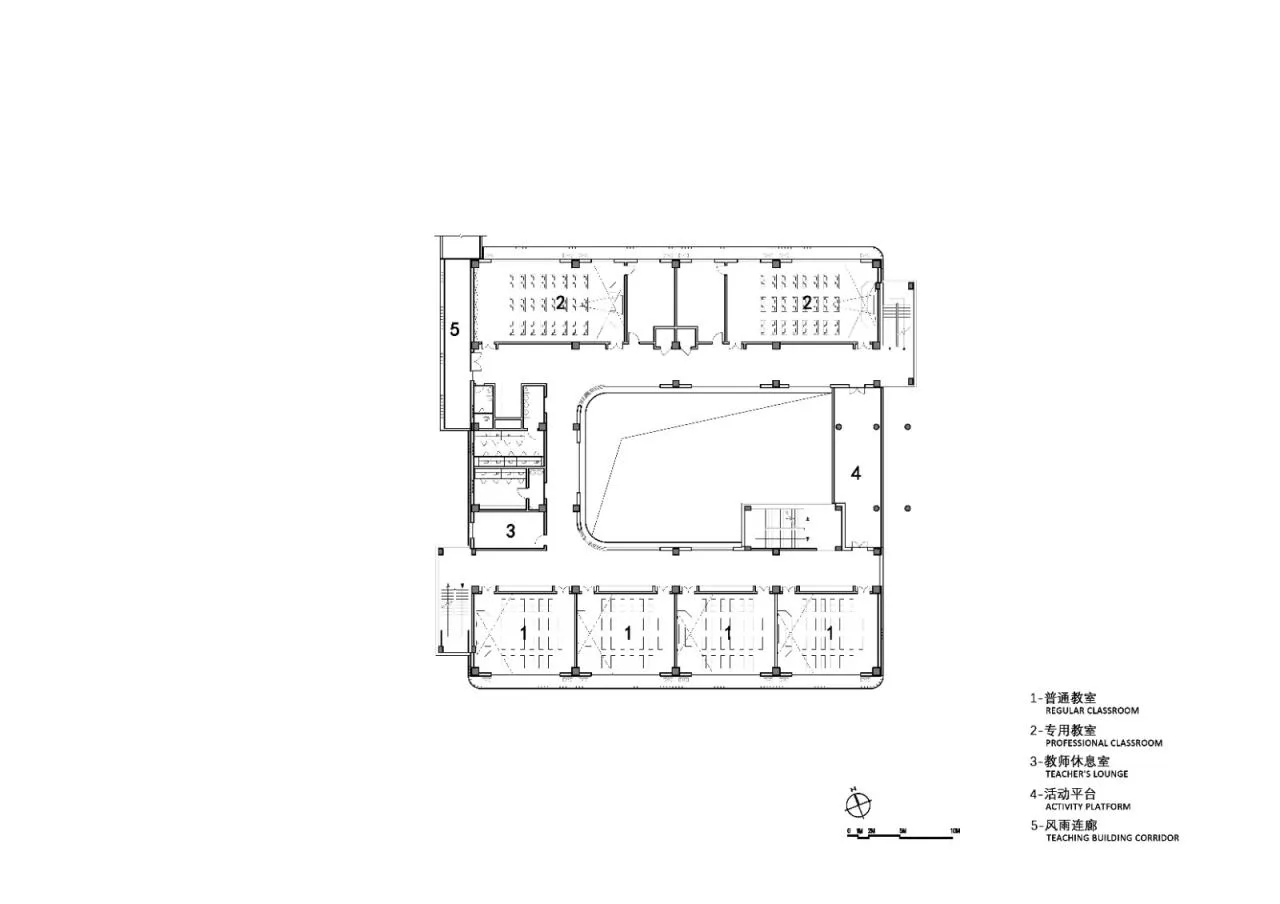
△ Teaching Floor Plan © UA Youan Design
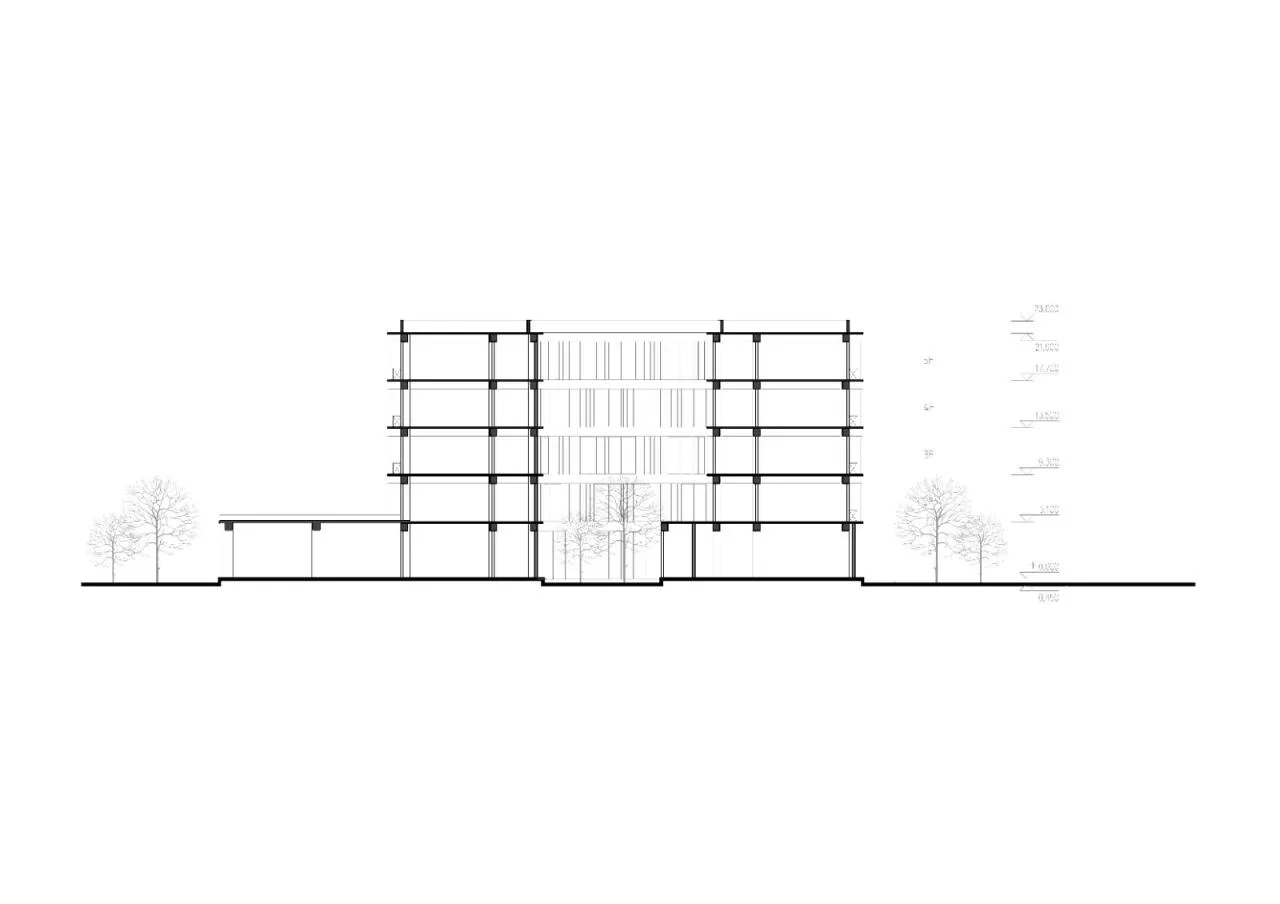
△ Section diagram of teaching unit © UA Youan Design
Project Information
- Project Name: Free and Ideal “Garden Castle” – Jinan Beikang Junior High School Education Architectural Complex
- Project Type: Cultural and Educational Architecture
- Design Team: UA Youan Design
- Client: Jinan Zhongbo Real Estate Co., Ltd
- Lead Architect: Bob Hu
- Main Creative Team: Suo Xiaodie, Luo Shengtao, Zhang Qianrong, Jia Baoding
- Construction Drawing Design: Jinan Municipal Engineering Design and Research Institute (Group) Co., Ltd
- Construction Unit: Jinan Yijian Group Co., Ltd
- Project Location: Jinan City, Shandong Province
- Building Area: 26,399.26 square meters
- Design Period: April 2019 – April 2020
- Completion Date: March 28, 2028
- Photography: Xia Qiang












Must log in before commenting!
Sign Up