
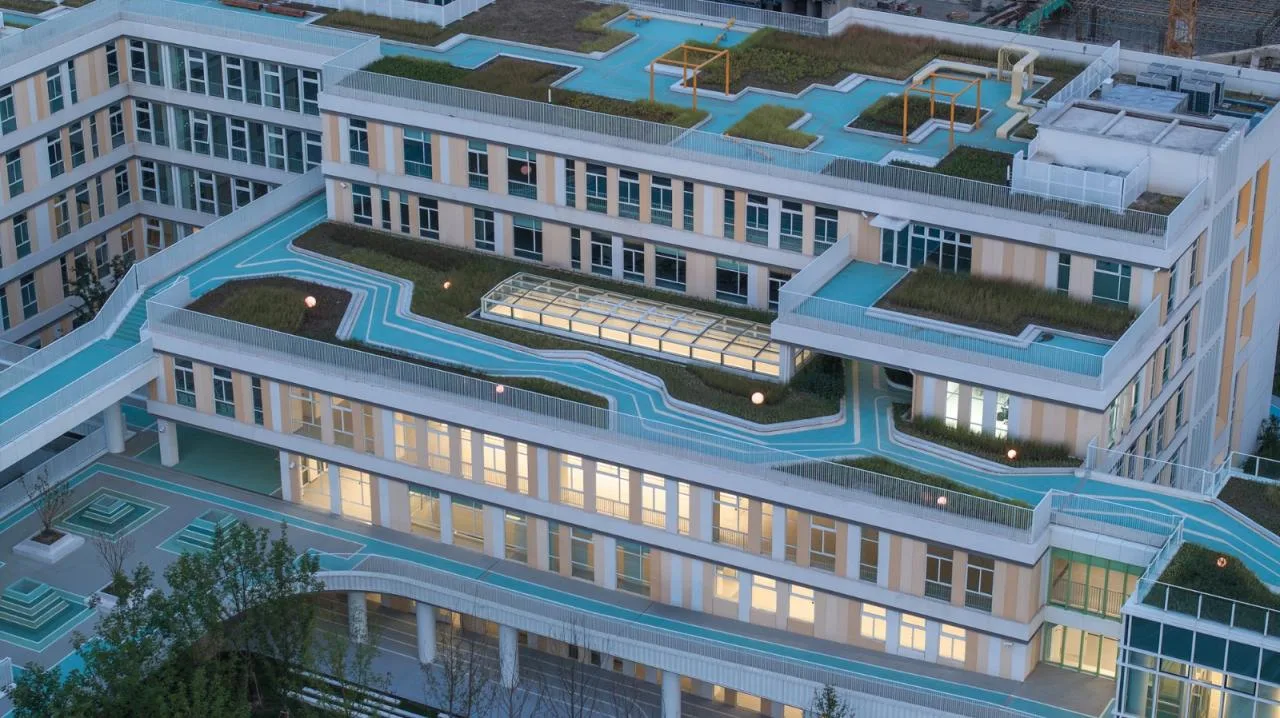
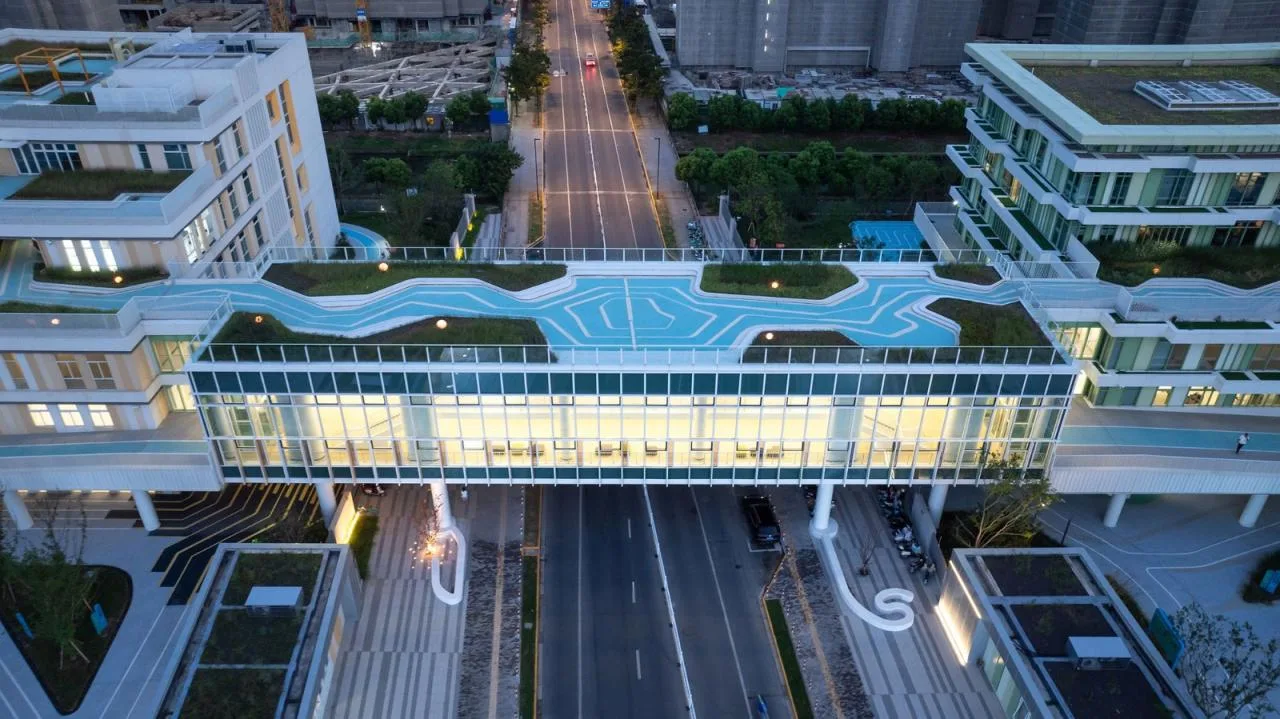
Located in the rapidly growing Jiading New City, Shanghai Experimental School Jiading New City Branch (JSES) is a flagship high-quality educational institution, developed as part of Shanghai’s “high-quality expansion” initiative. This innovative “cross-border school” breaks conventional boundaries: its aerial corridor spans land and roads from an urban perspective; its full-process involvement bridges education and design; and spatially, architecture, interior, and landscape design blend seamlessly across their professional disciplines.
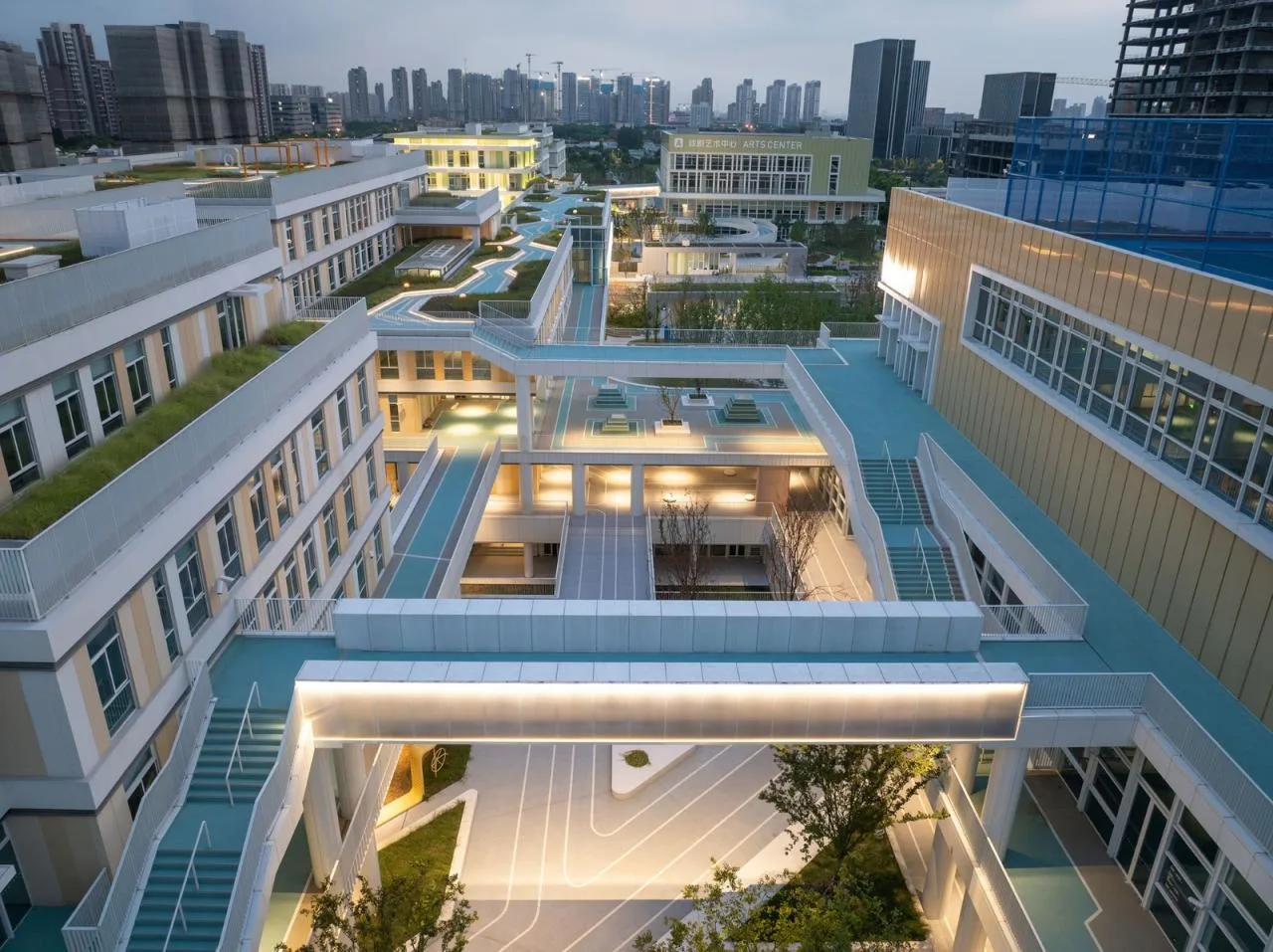
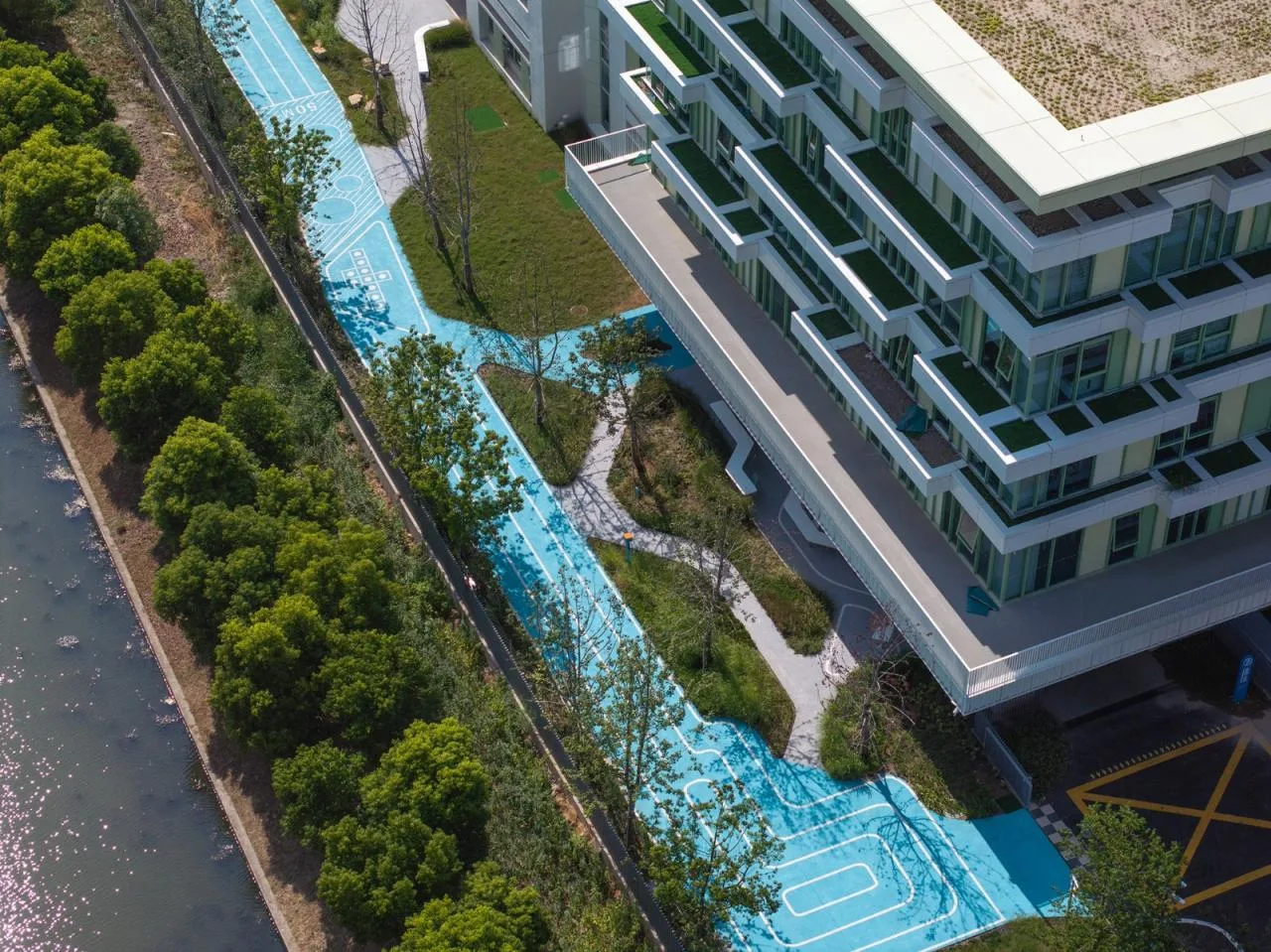
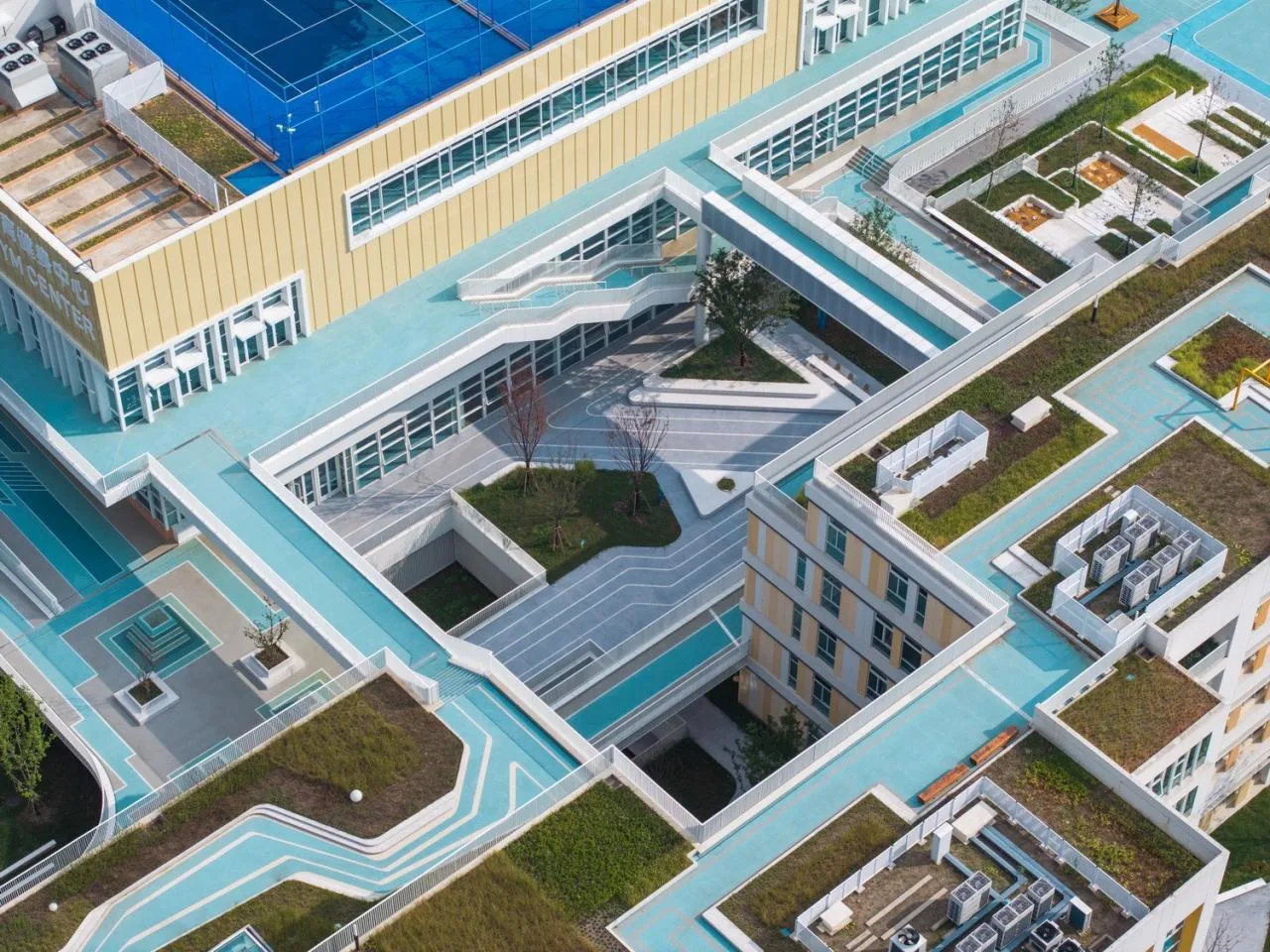
Inspired by the innovative spirit and educational philosophy of its main campus, Shangshi Jiafen incorporates key functional modules including teaching, art, sports, future development, and learning. By integrating a linear base mechanism with surrounding elements, the design forms a dynamic three-dimensional layout described as “one body, two wings, and three axes.” North-south corridors across different floors link these modules, creating a cohesive campus with vibrant indoor and outdoor activity spaces. This design fully embraces pedestrian priority and child-friendly concepts.
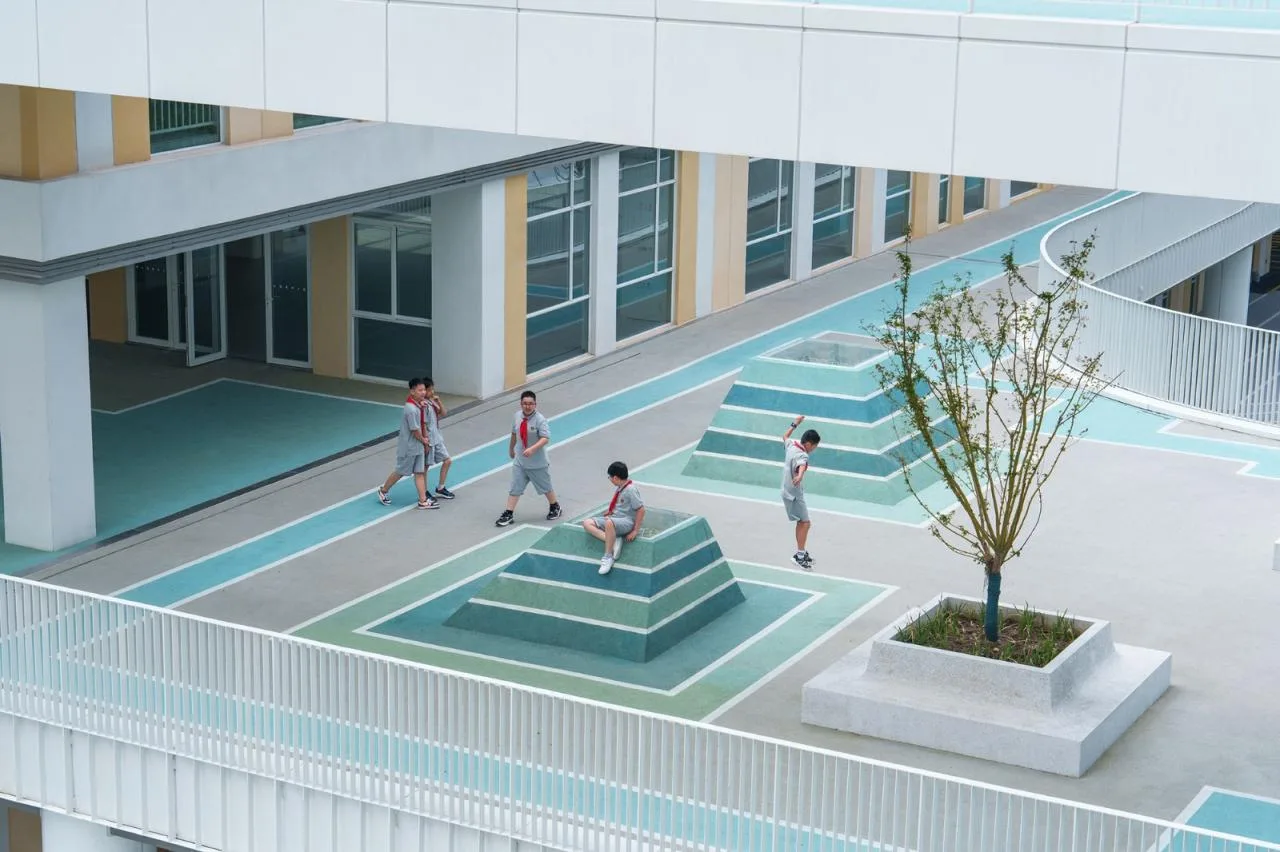
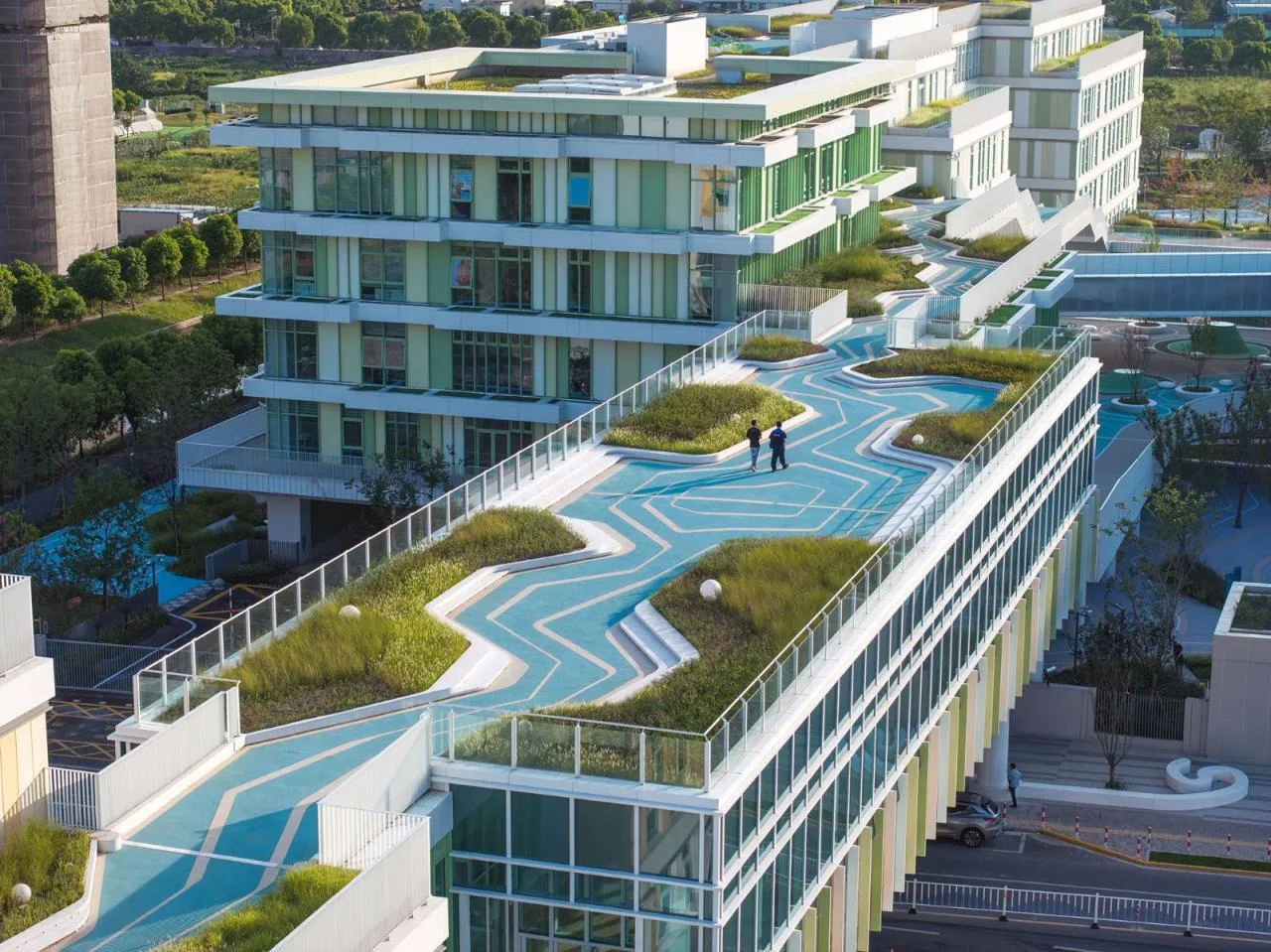
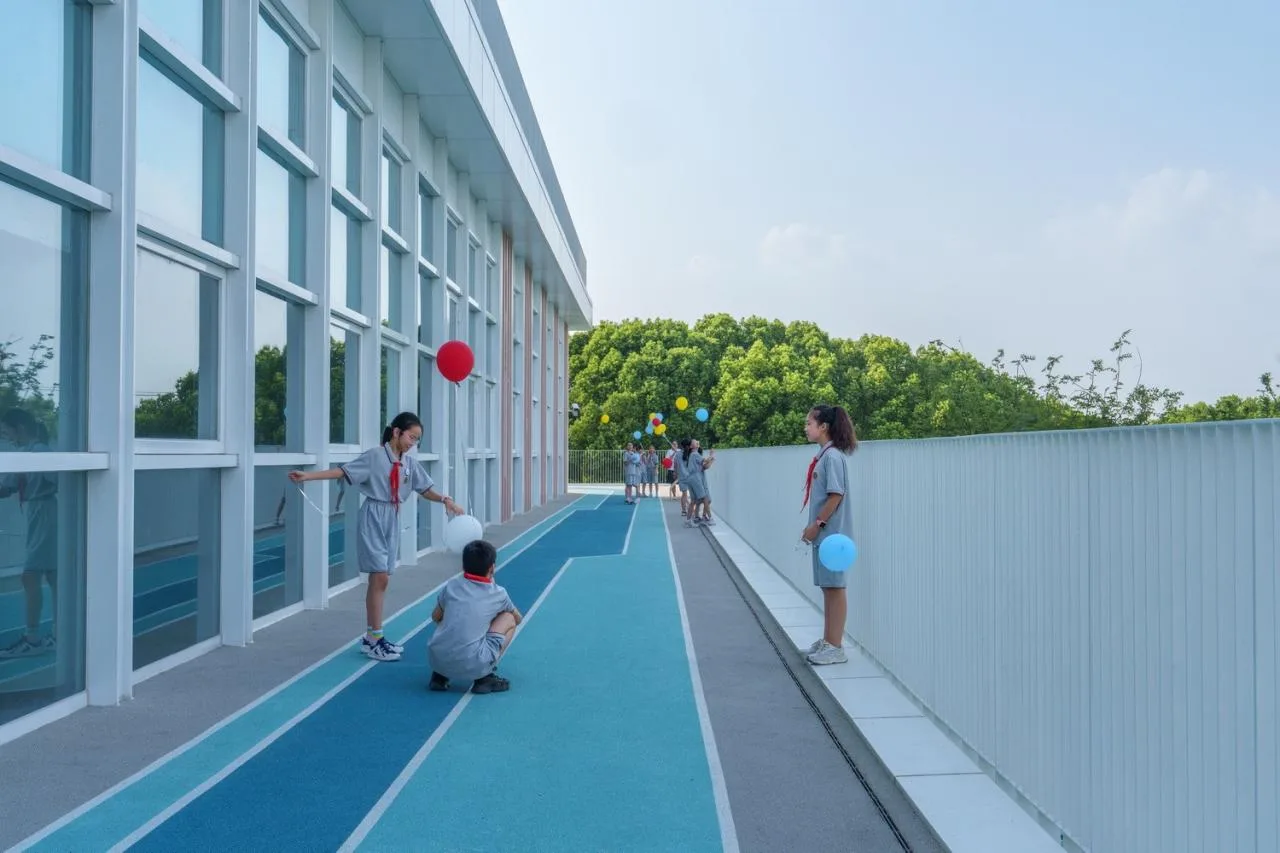
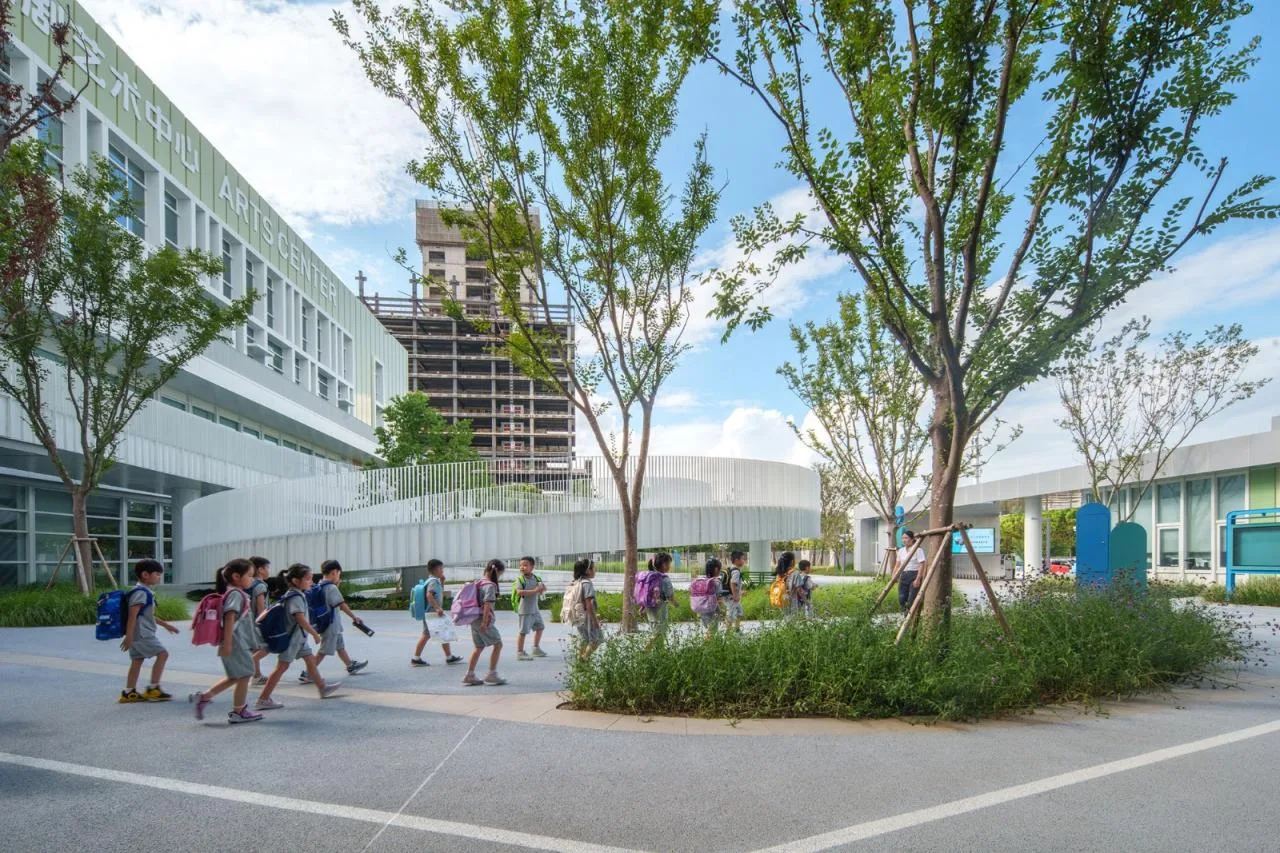
The campus spans two separate plots, and the design adopts a “block complex” strategy to unify them through aerial corridors and urban road spaces. This approach connects the primary and secondary school areas into a cohesive campus that is “separate but not isolated.” The east and west wings, aligned with urban roads, serve as the school’s main entrances and gateways. A rich layering of buildings, parks, and platforms creates varied spatial experiences.
The west wing houses a modern learning center—an upgraded, multi-age group learning space evolving from traditional school libraries. The east wing features a future center with stacked levels designed to support multifunctional spaces for meetings, presentations, performances, and exhibitions. Both wings’ main pedestrian entrances are designed with a park-like atmosphere to welcome visitors and students alike.
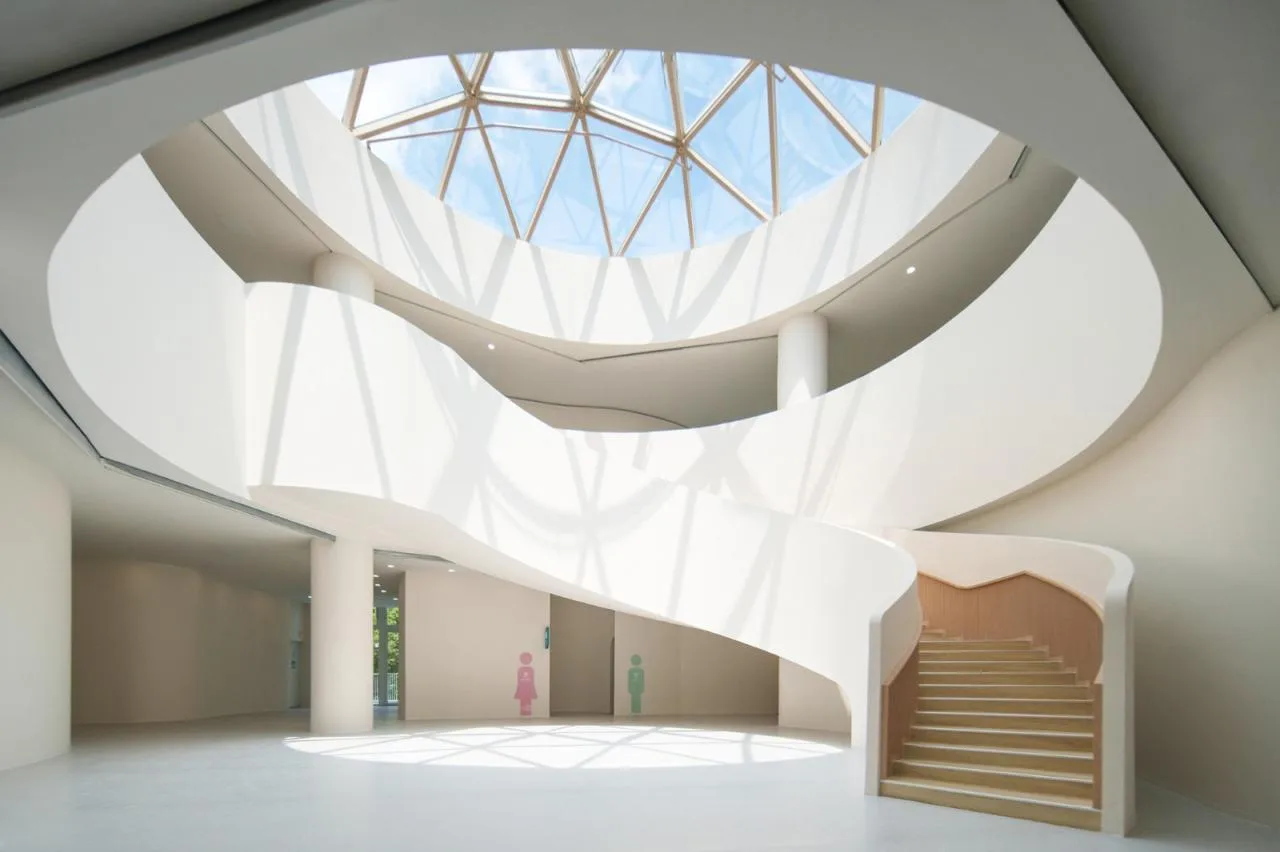
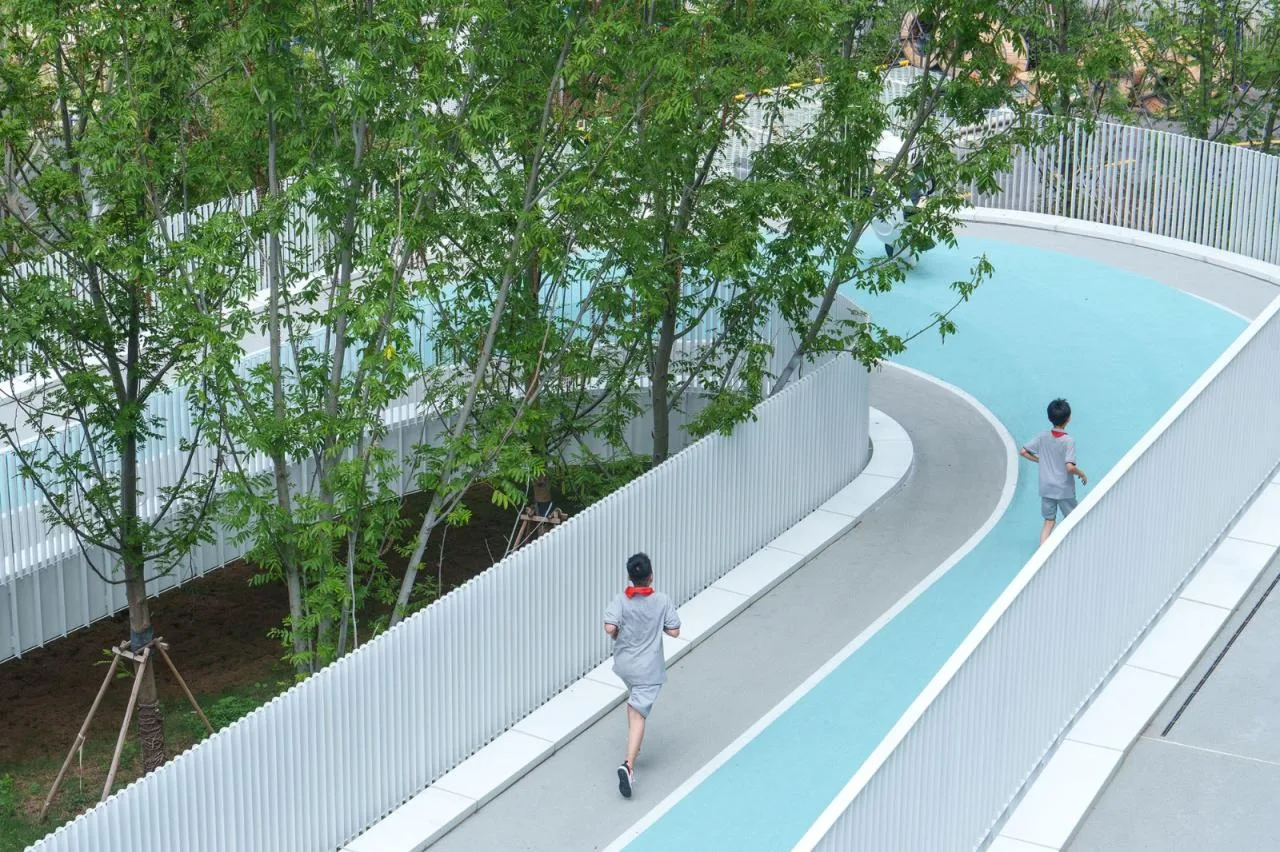
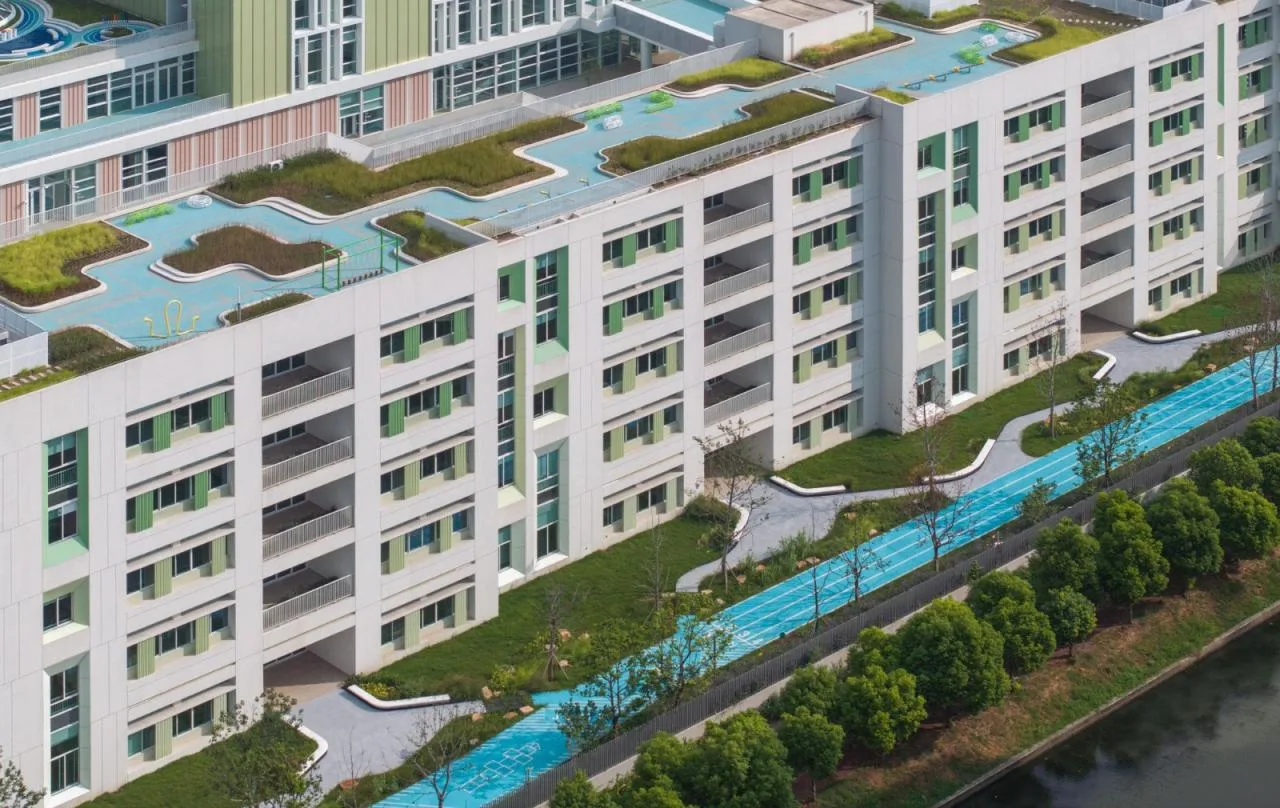
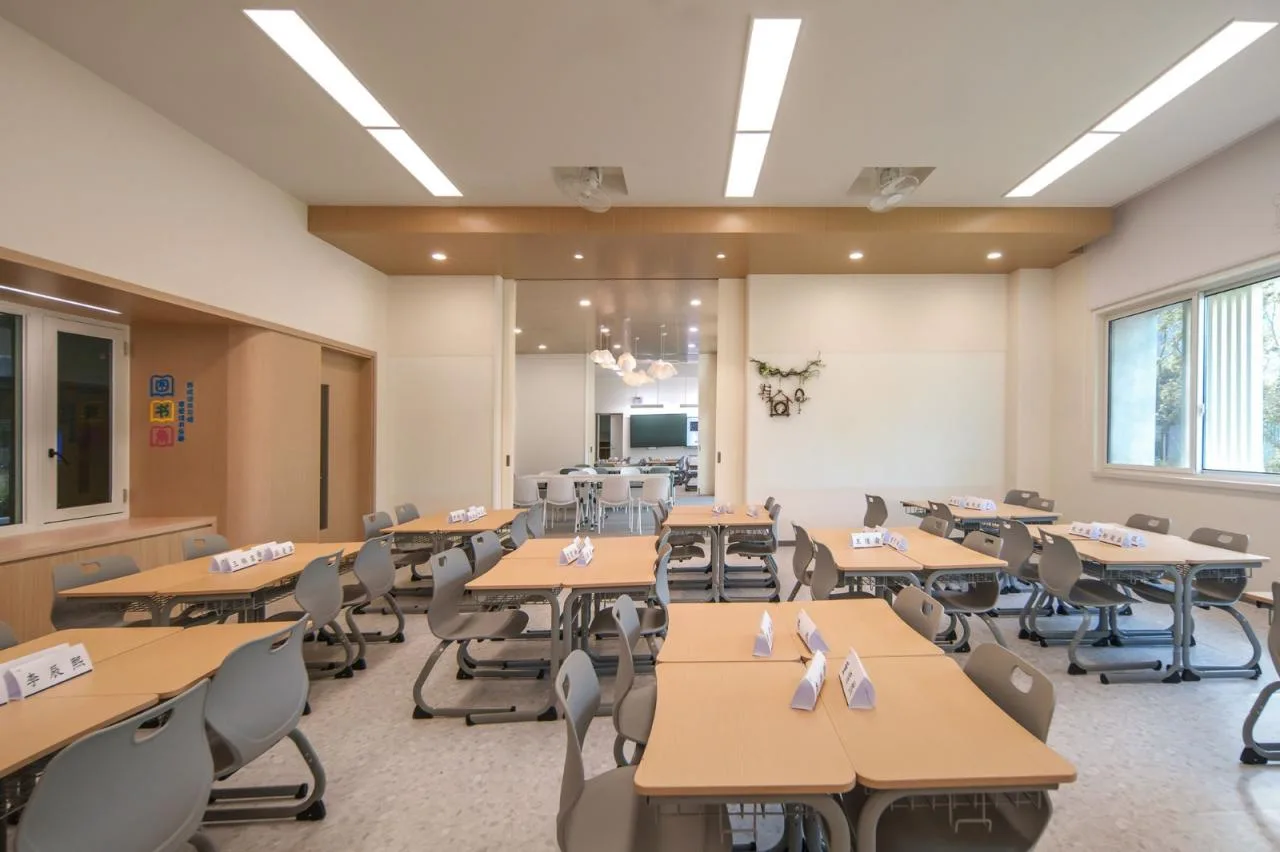
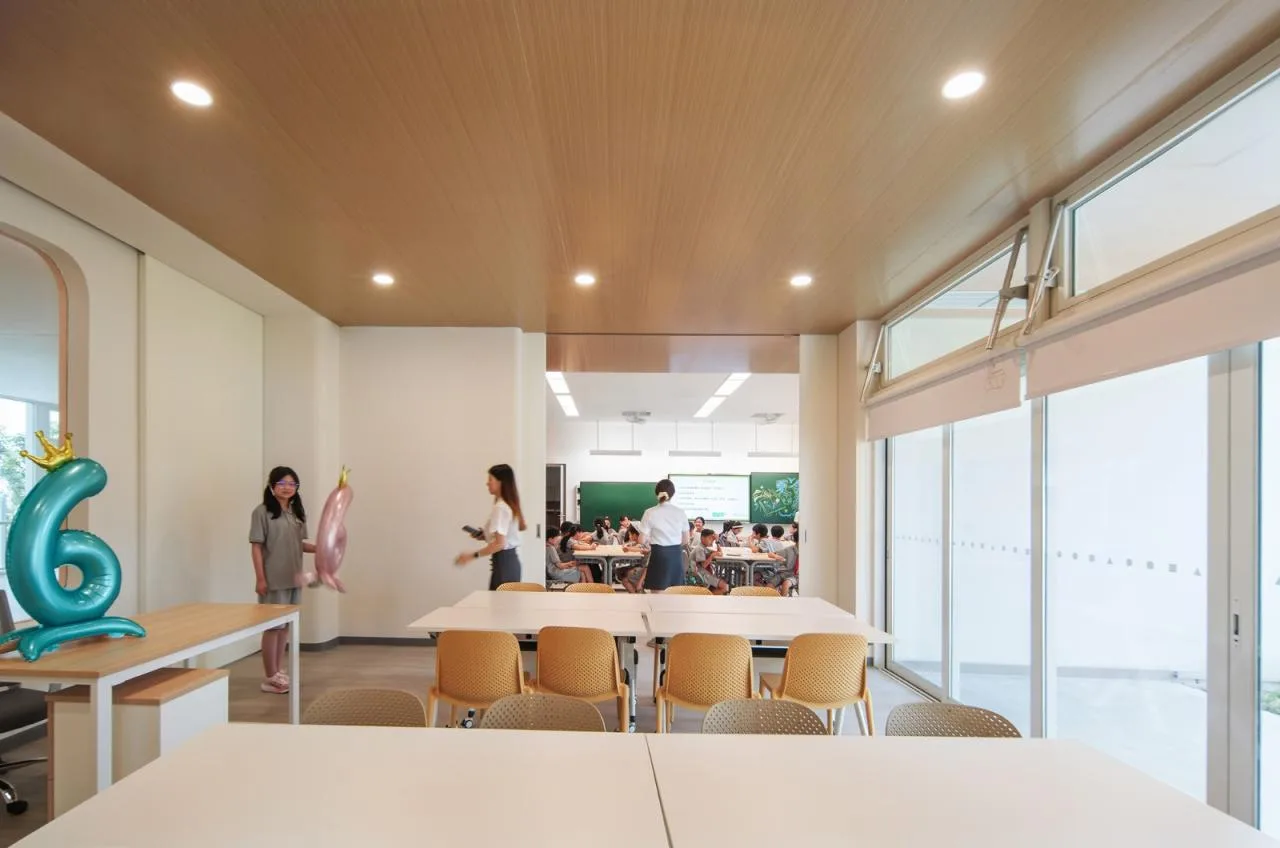
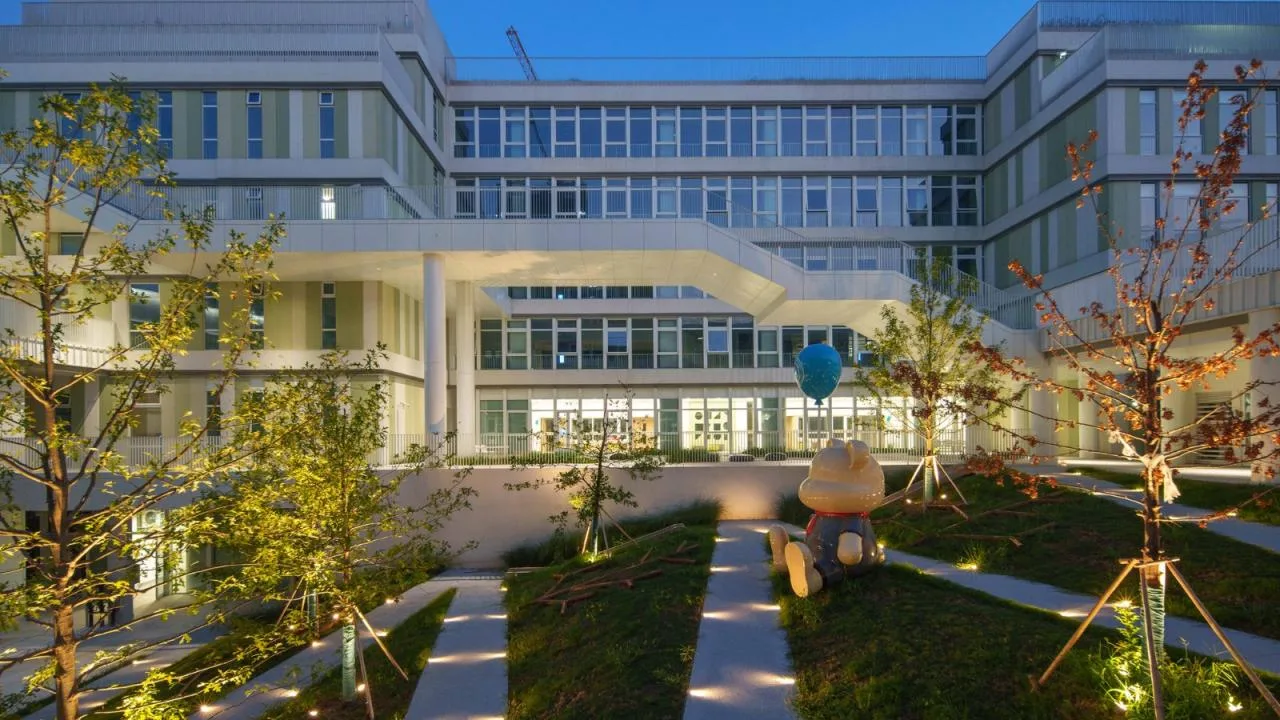
The school’s south axis integrates teaching buildings and public spaces along the river, ensuring classrooms and faculty offices benefit from optimal orientation and scenic views. The teaching building floors consist of three sets of “two classrooms and one common room” modules, where every two standard classrooms share a discussion hall that can be used independently or jointly as needed.
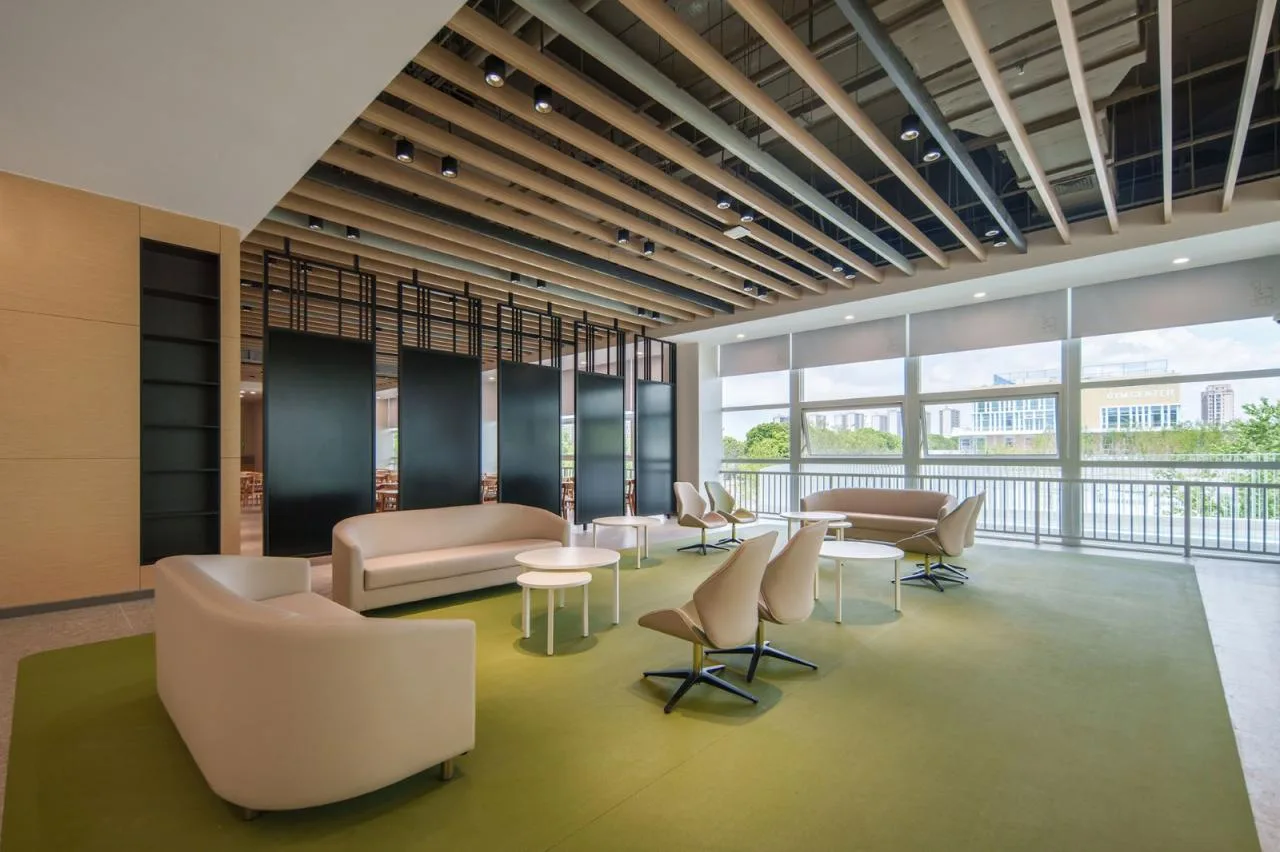
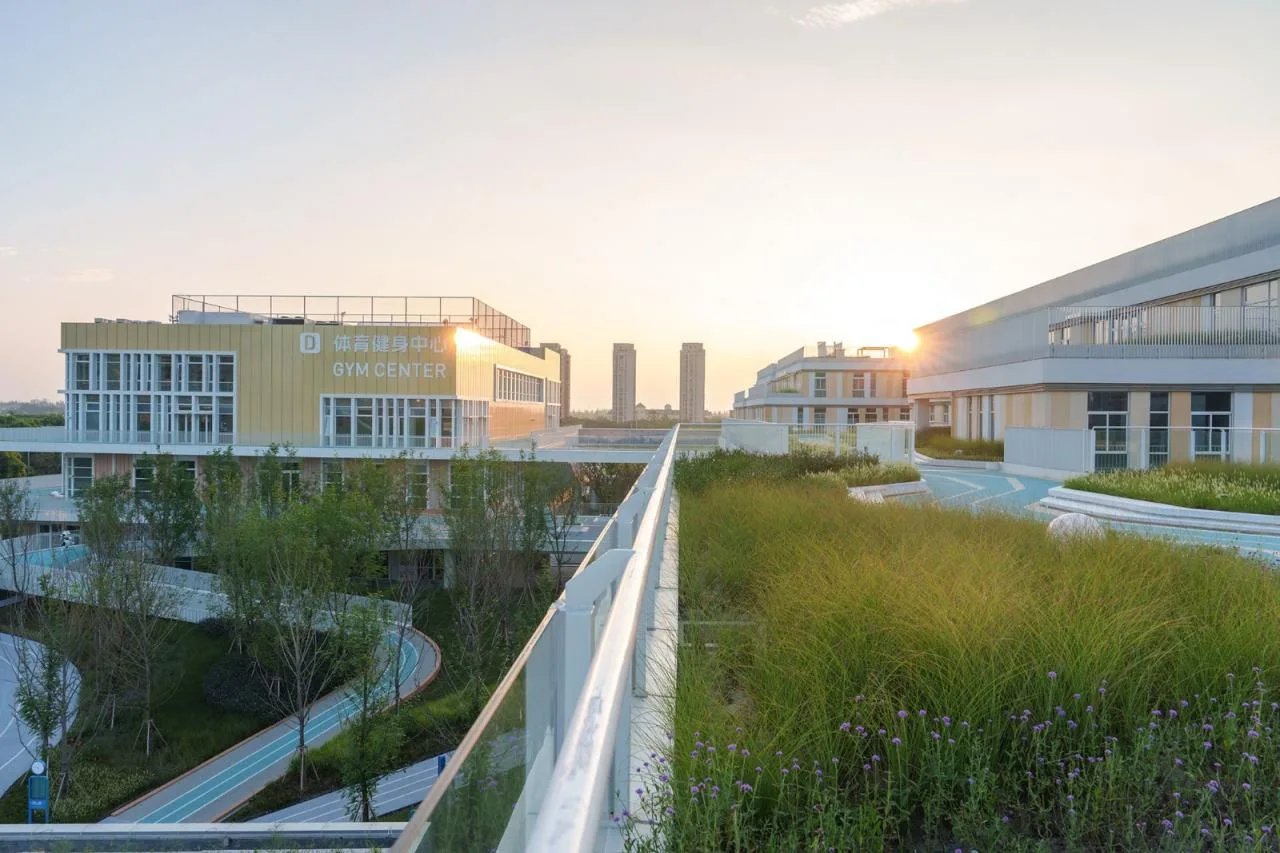
Wide corridors are designed within the teaching building to provide students with space for rest, socialization, and activities during breaks. On the south side, an outdoor play garden and relaxation garden provide leisure areas accessible via fire escapes. The rooftop serves as an accessible garden, promoting outdoor engagement.
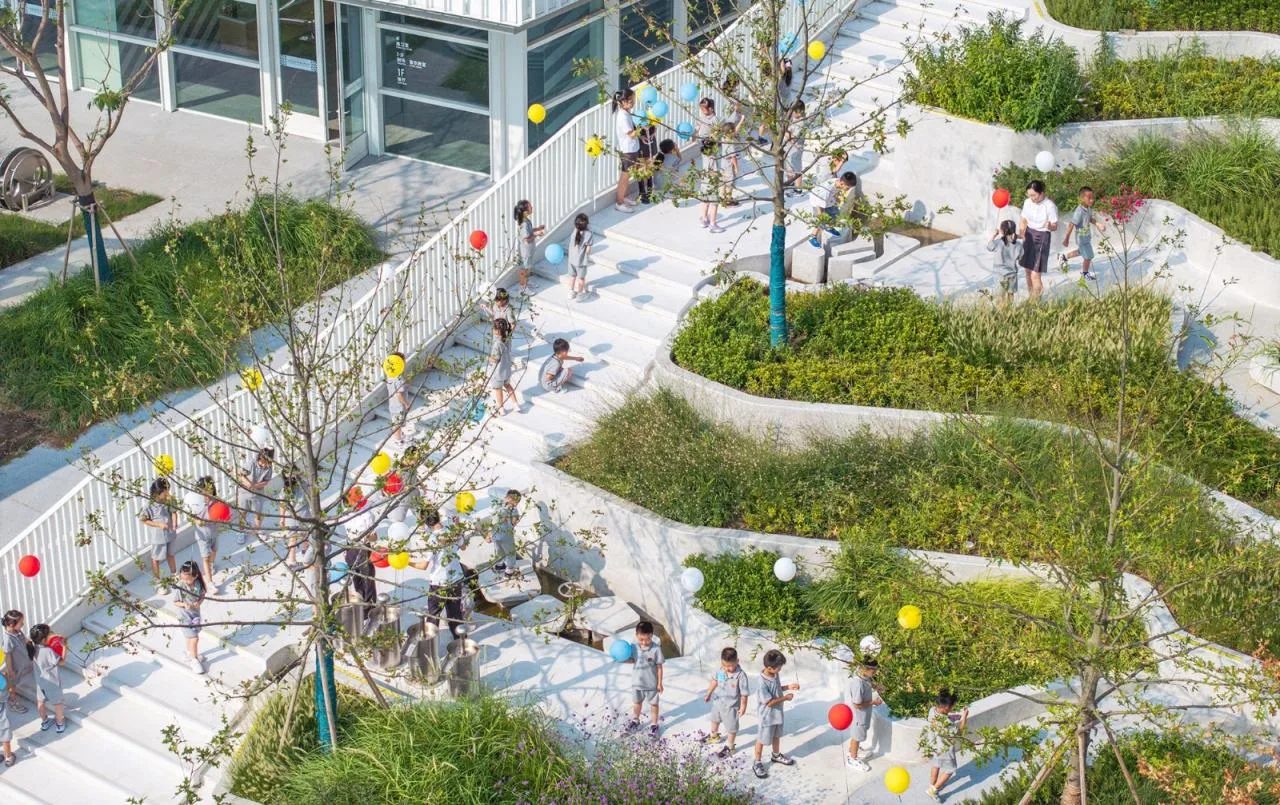
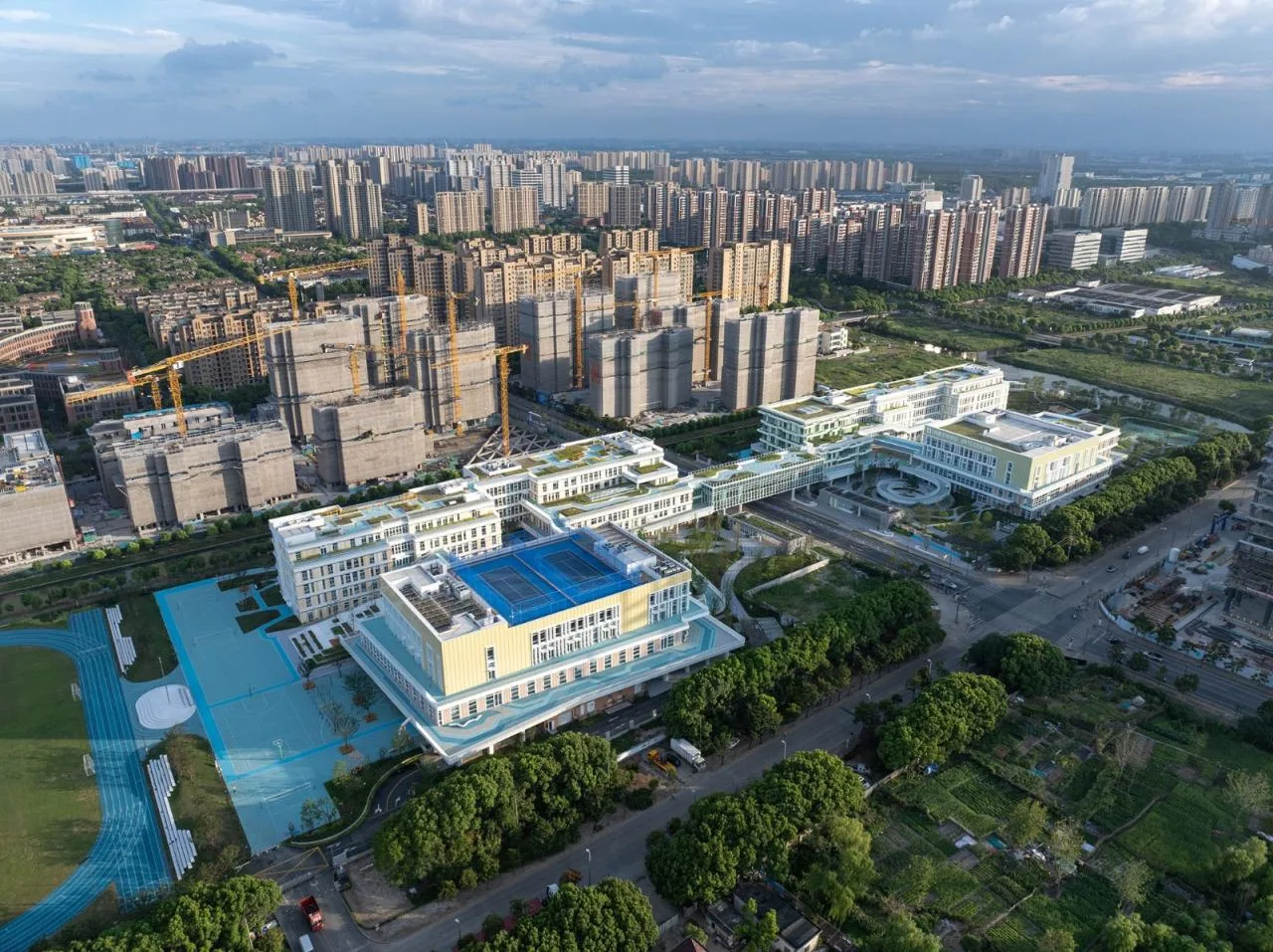
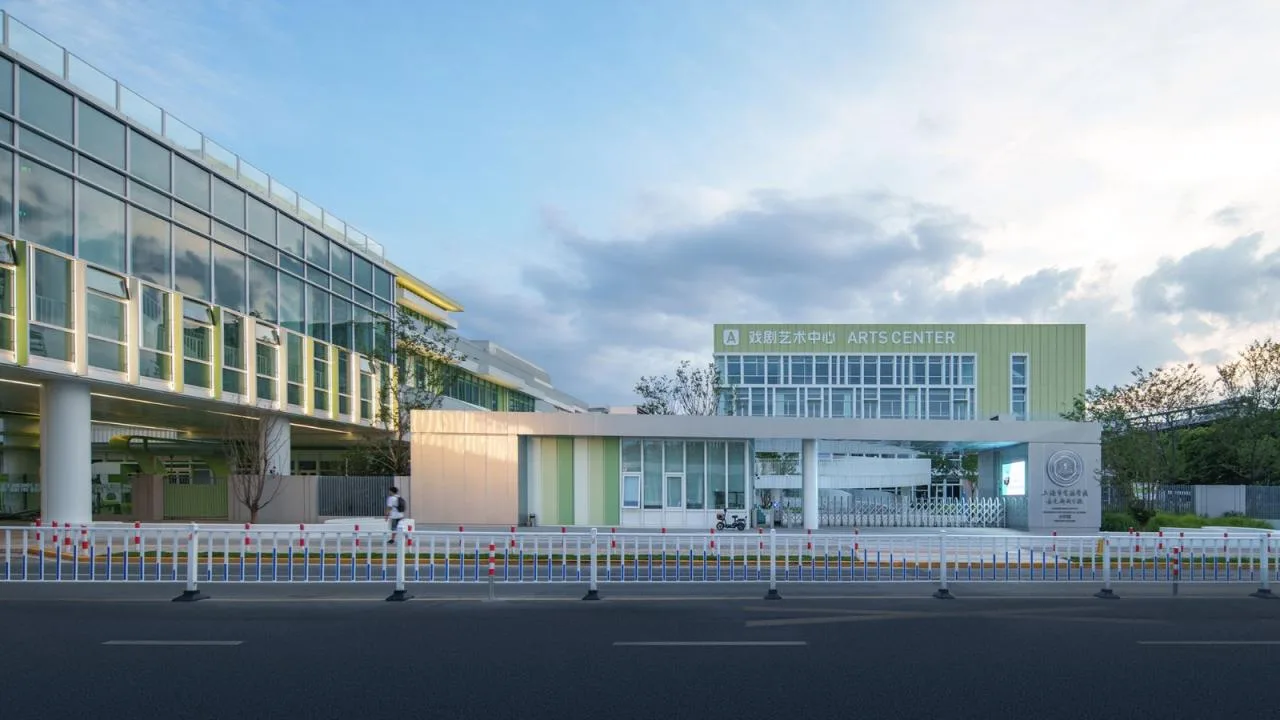
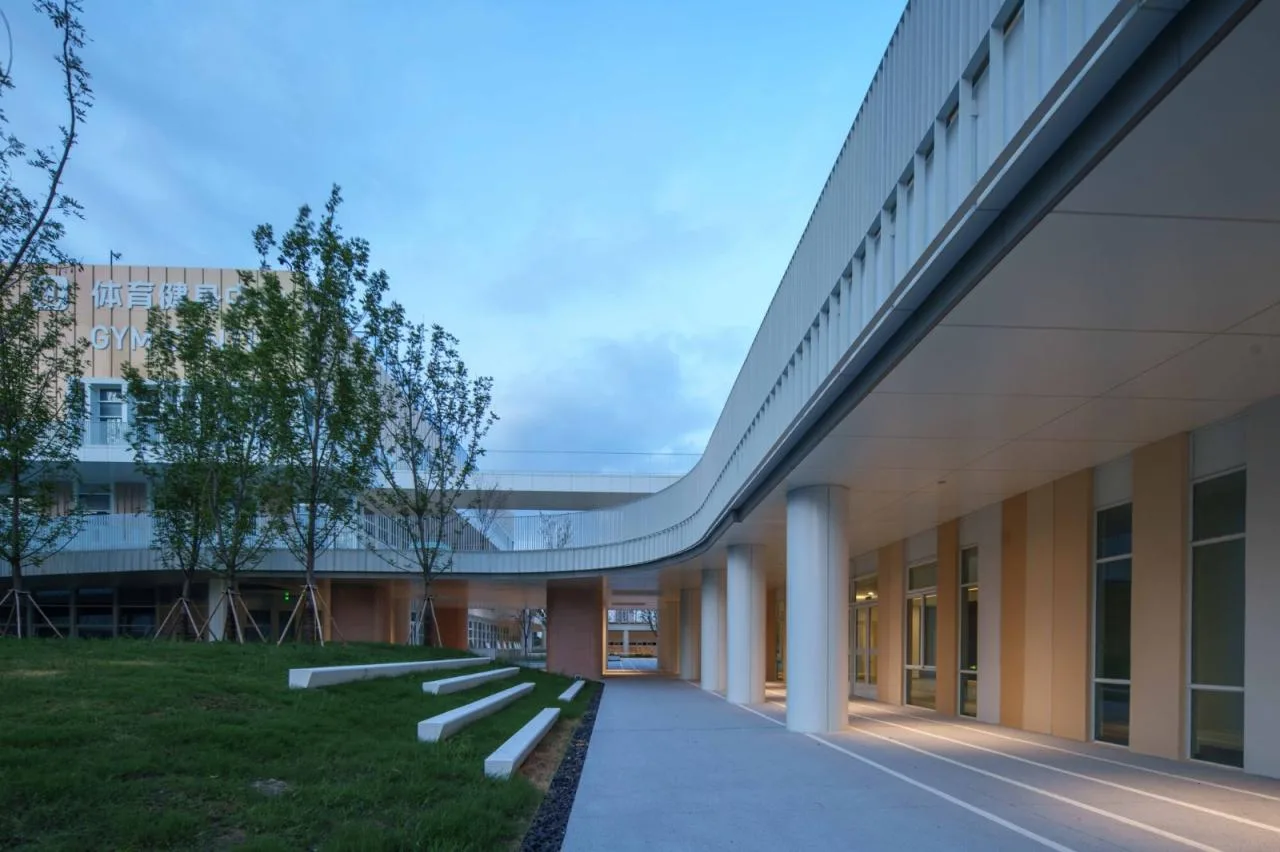
The larger school buildings form a northern axis aligned with a camphor forest, which buffers urban road noise and creates a clean campus skyline. The staggered building setbacks enhance the spatial dialogue between on-campus and off-campus areas.
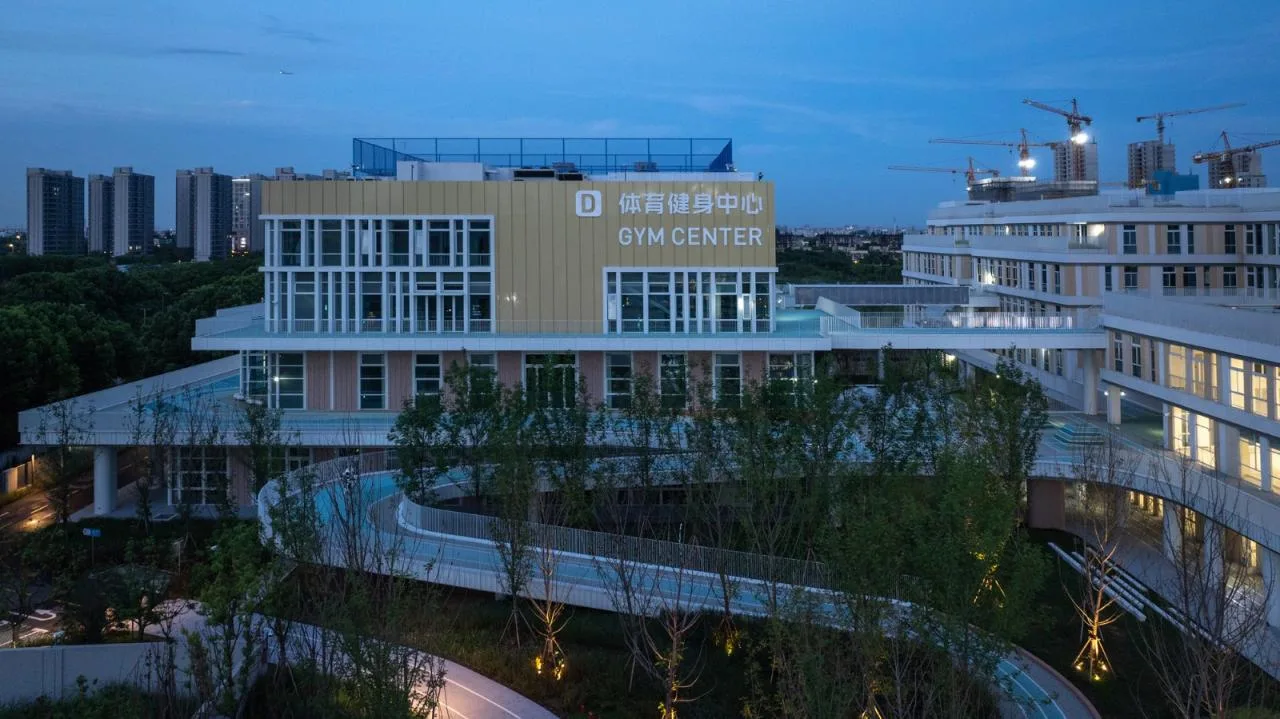
The art center, located on the primary school plot, is a multifunctional facility combining a theater, classrooms, and dining spaces within a compact design. Meanwhile, the sports center, the largest single building in the middle school section, offers access across three floors and supports a wide range of athletic activities. A playful slide positioned at the northeast corner provides a friendly, accessible connection to the ground level.
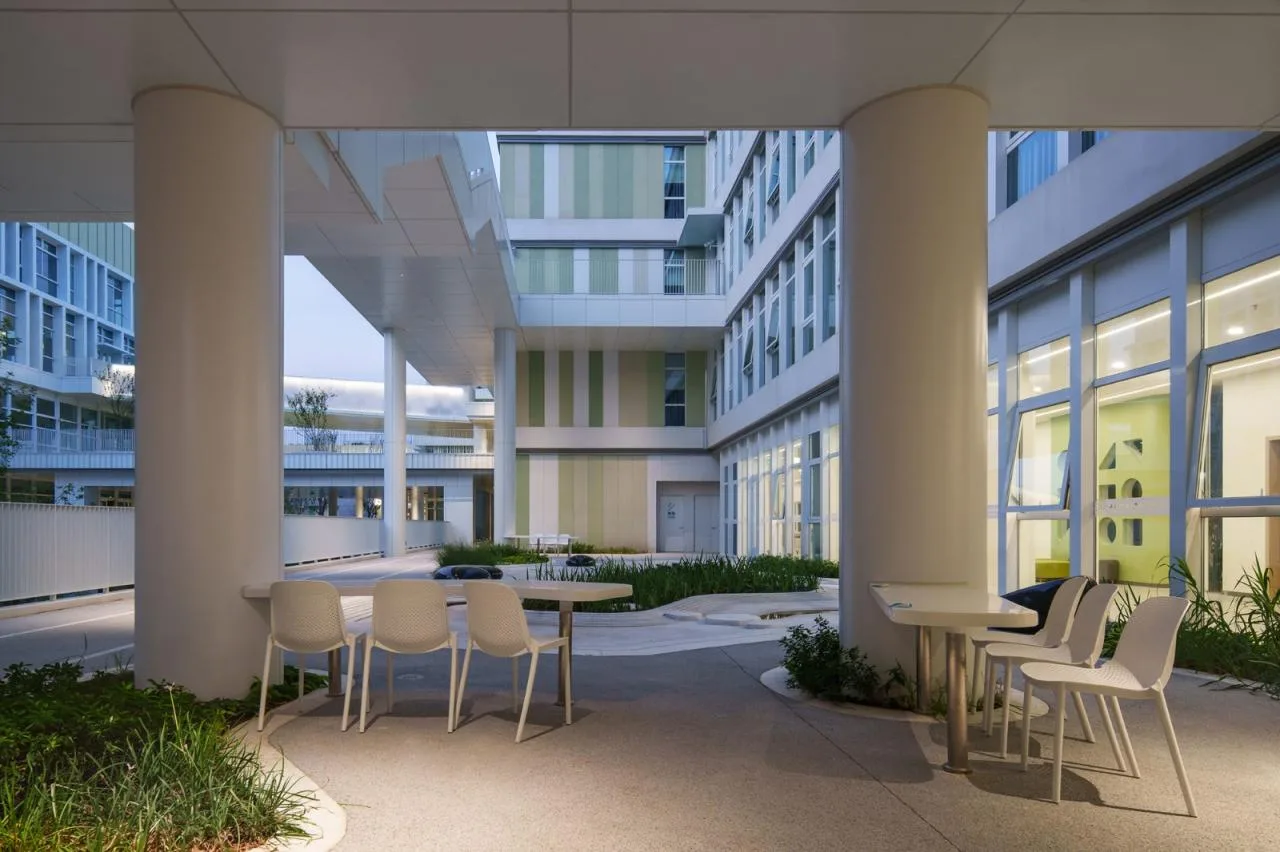
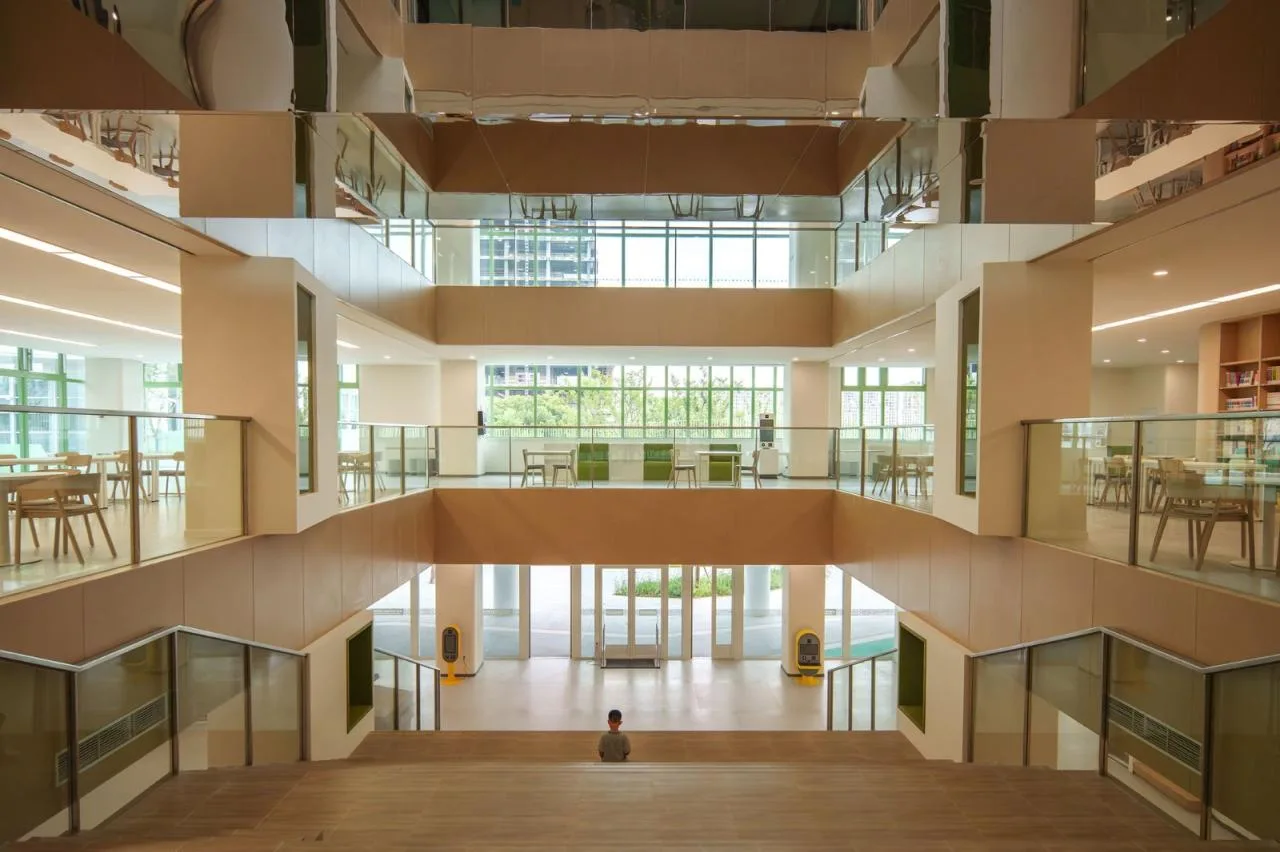
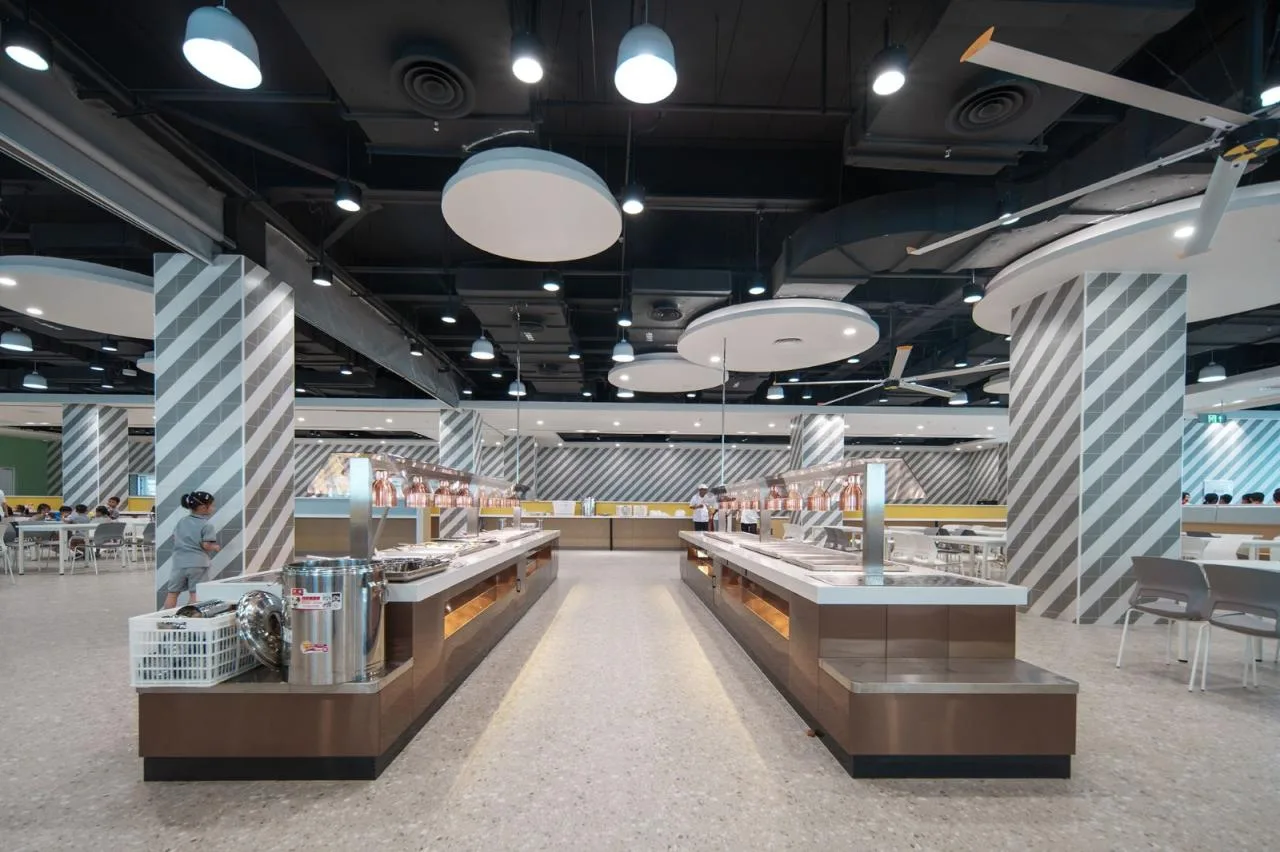
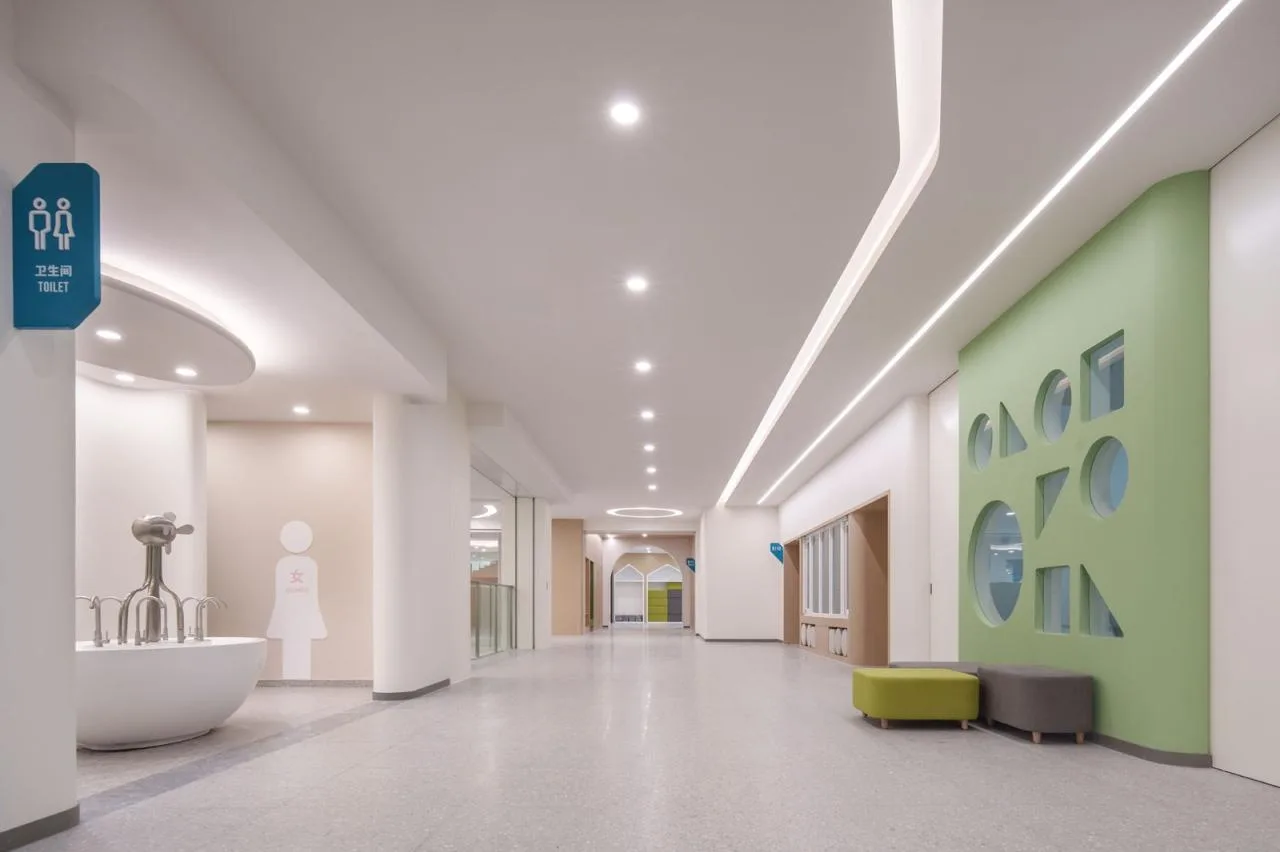
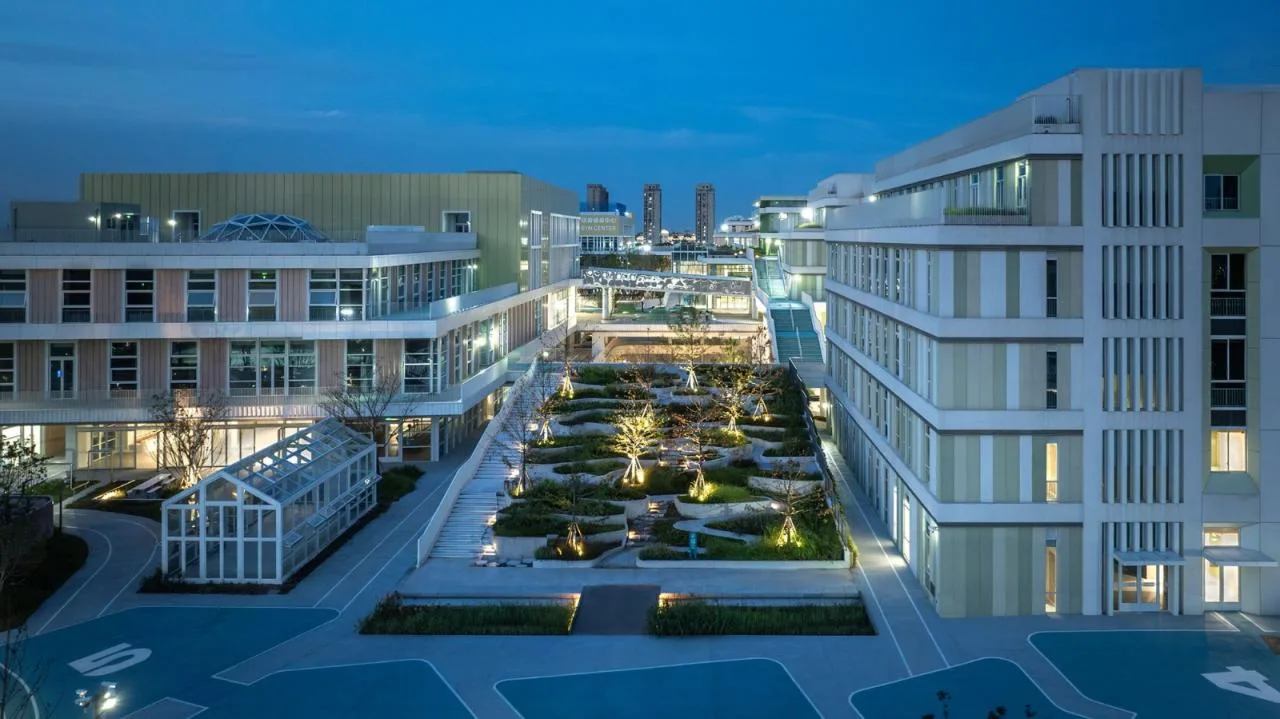
Stretching 550 meters, the school’s central axis features a fully open landscape corridor that seamlessly integrates with the city skyline at both ends. This vibrant public space connects buildings on both the north and south sides through gardens, courtyards, pedestrian bridges, underground areas, and platform spaces, fostering an active campus environment.
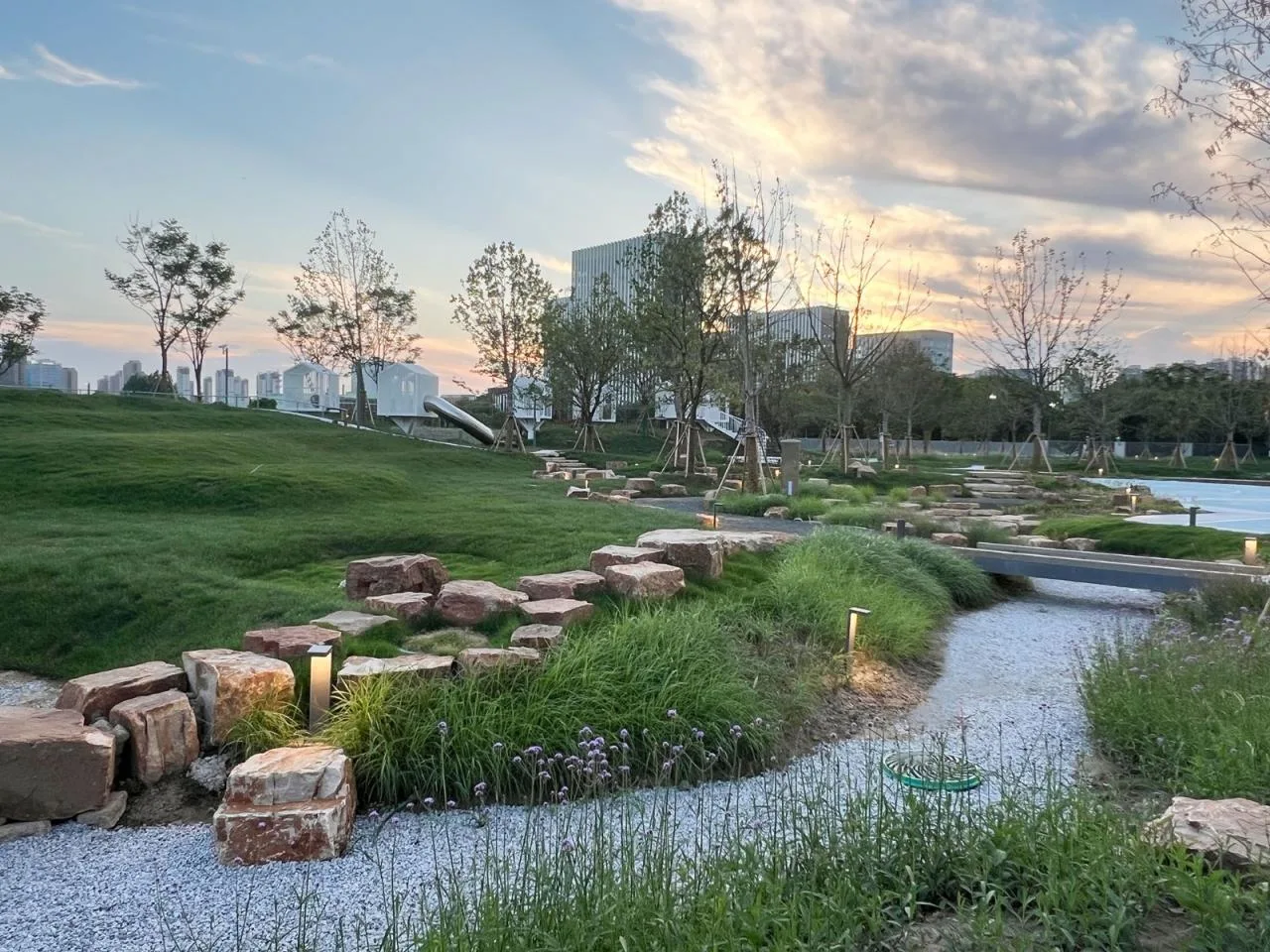
At the western end of the central axis lies the 8,000 square meter Racetrack Amusement Park—an unpowered outdoor attraction divided into three zones: sports vitality, amusement exploration, and natural experience. It offers students an engaging outdoor space that nurtures growth through play. Sustainable design elements such as rainwater infiltration, collection, and reuse are incorporated into the geological garden and dry creek boardwalk.
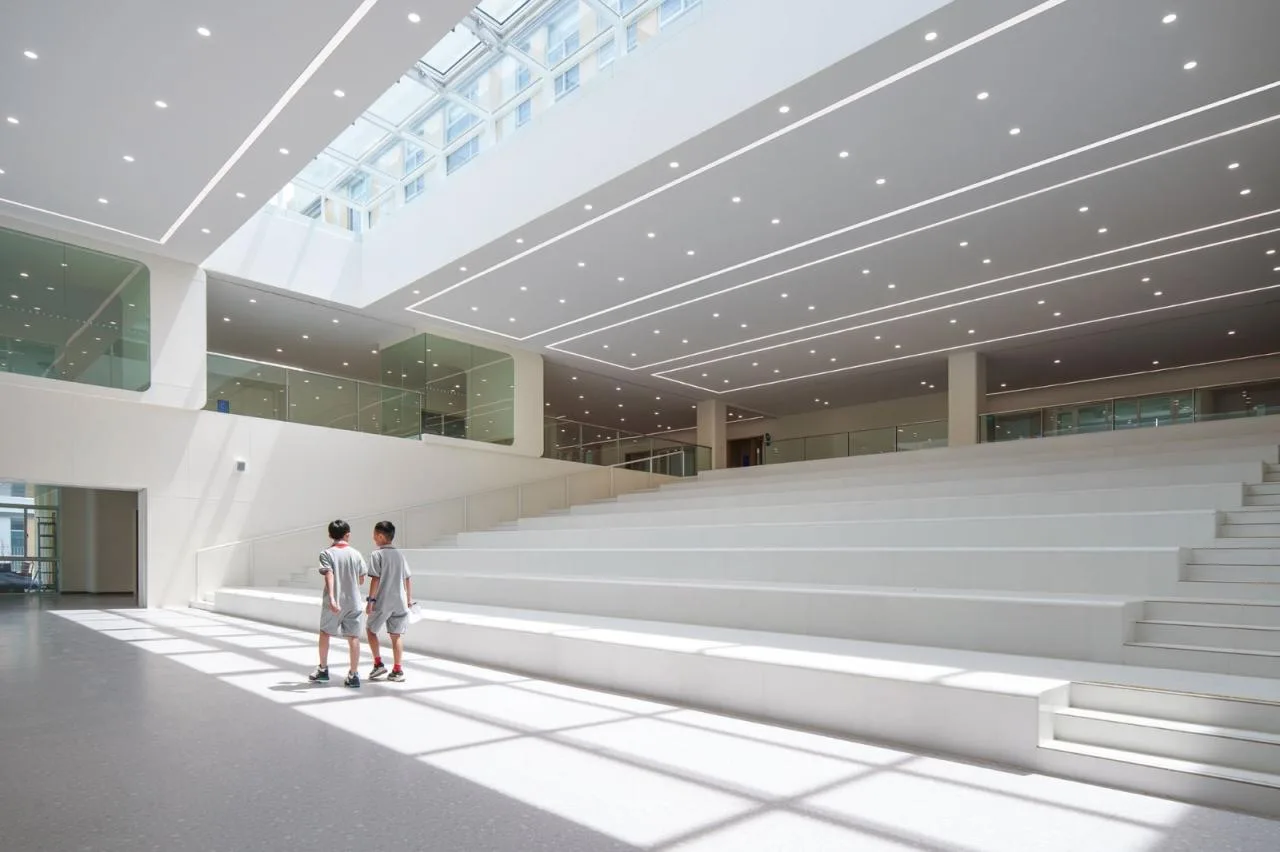
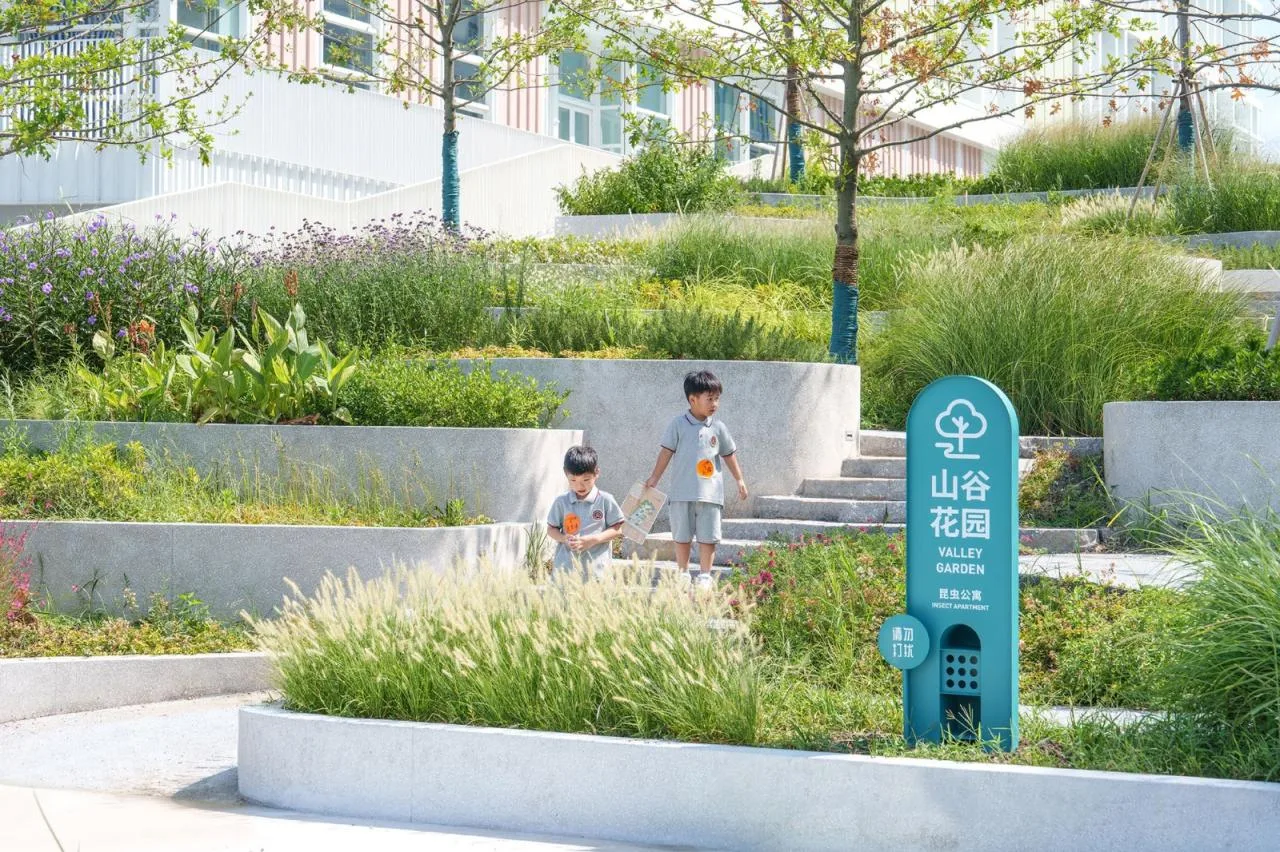
The valley and terrace gardens utilize a five-meter height difference to create a multi-level garden linking the second-floor platform to the ground. The underground hall, located on the first basement level and standing 10 meters tall, serves multiple functions including sports, cultural performances, and logistics.
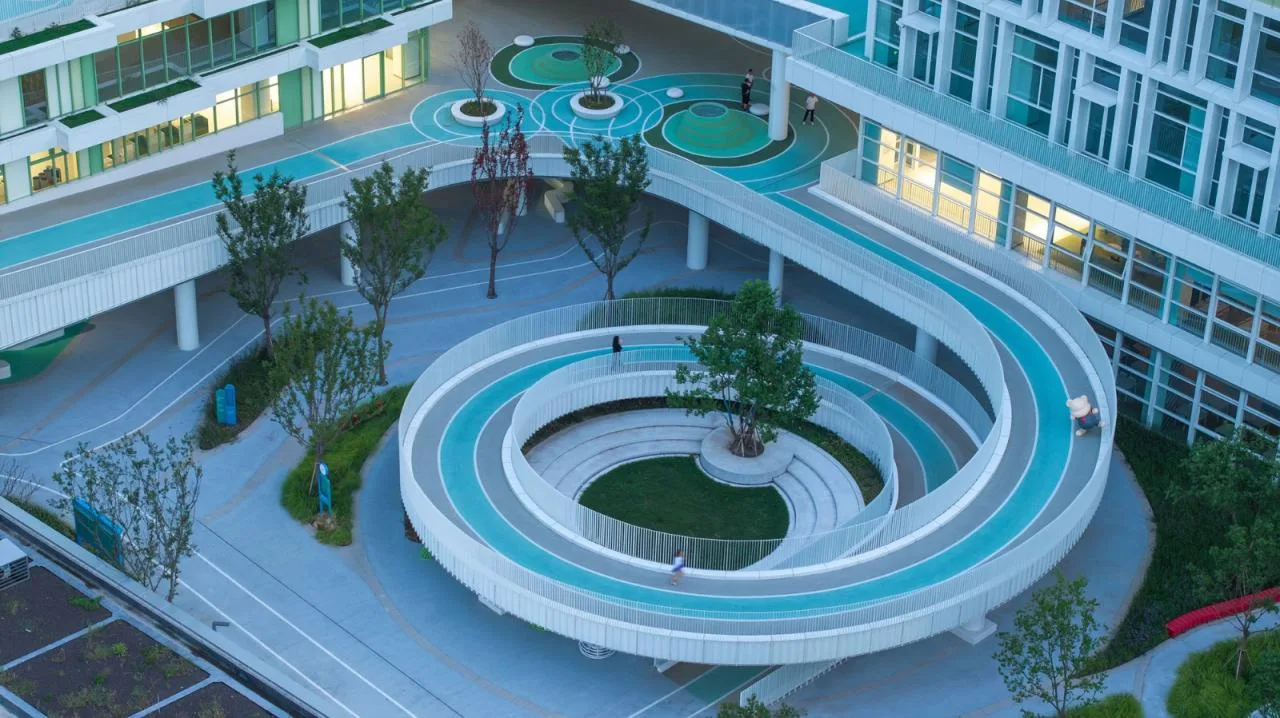
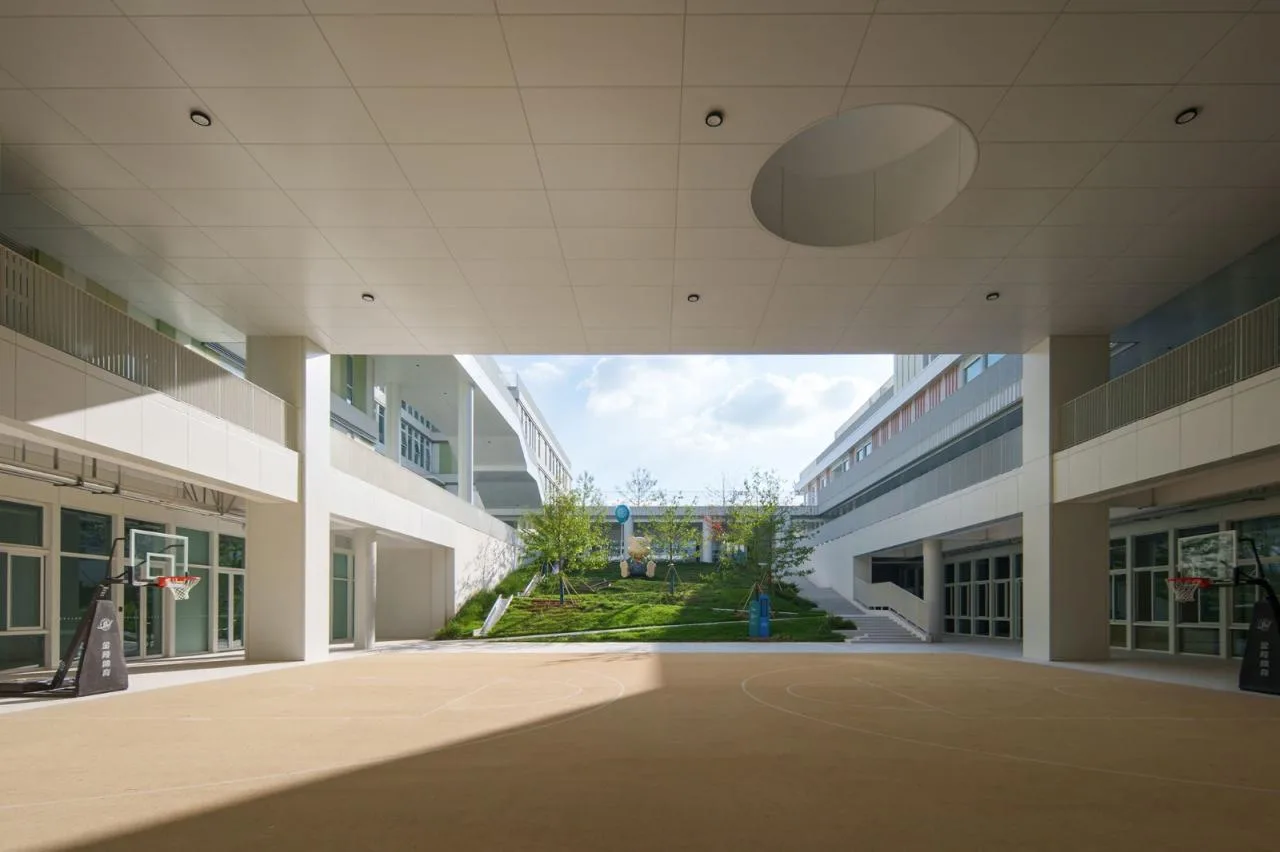
Above this underground hall is the Halo Park, enriched by natural light from a skylight well, offering a space for play and relaxation. Central to the axis, the Tree Table Garden blends shaded trees with outdoor seating, fostering an integrated environment for learning, communication, and rest.
At the eastern end of the central axis, the sports park provides an outdoor activity area featuring a 300-meter standard track, football field, ball courts, and fitness equipment, with potential access for the surrounding community.
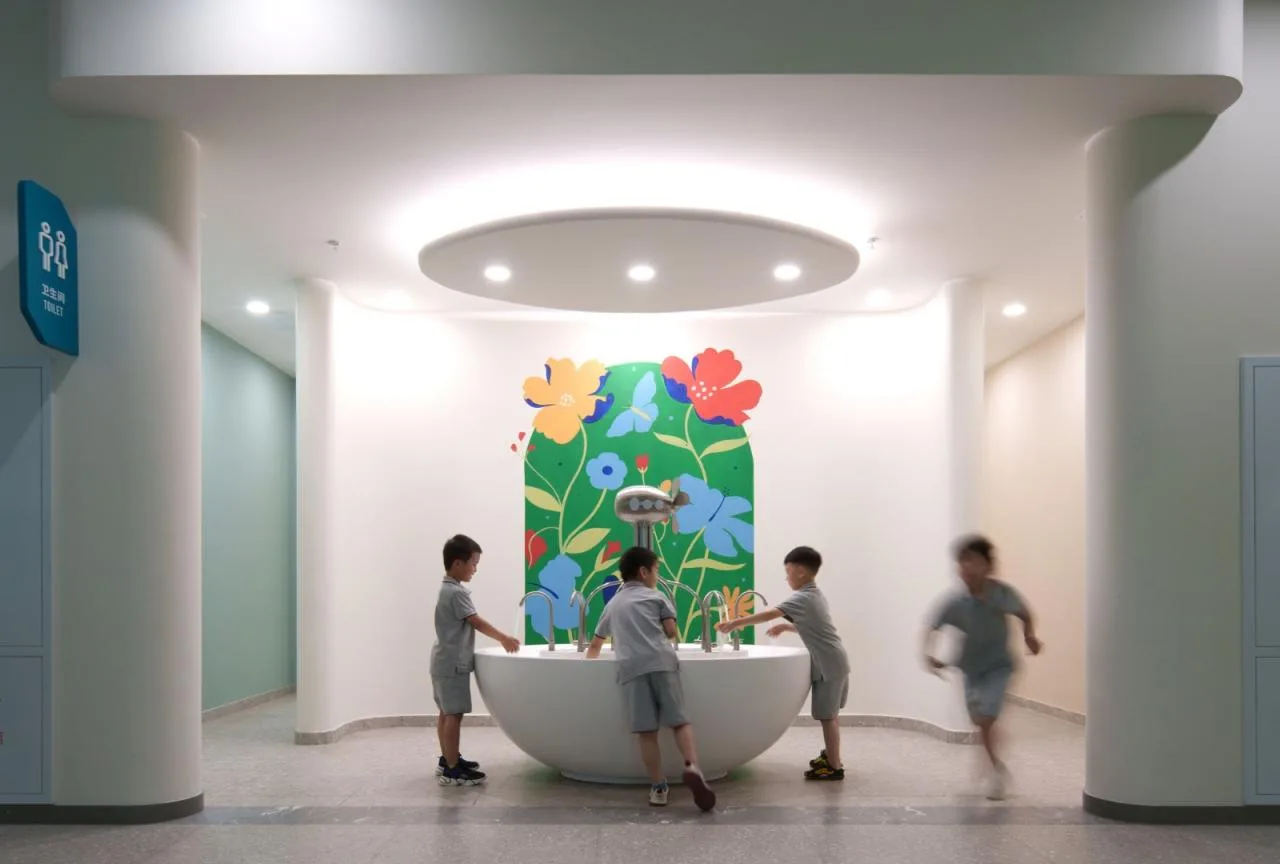
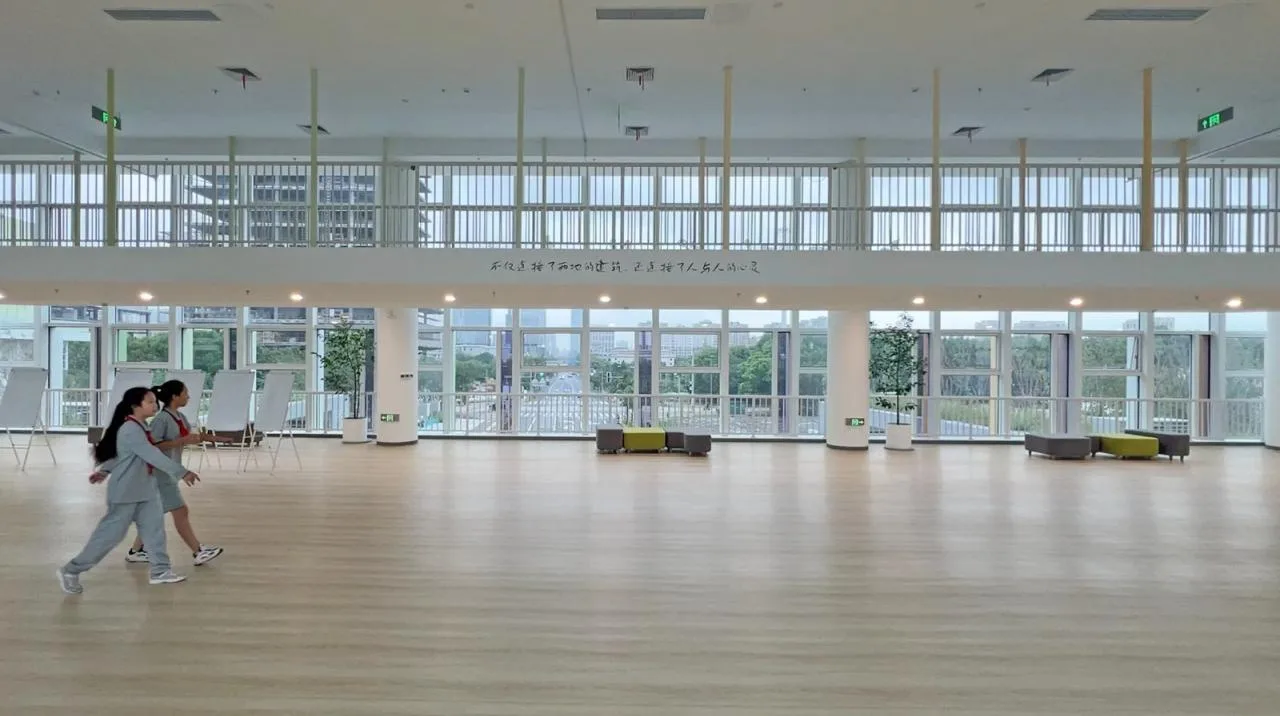
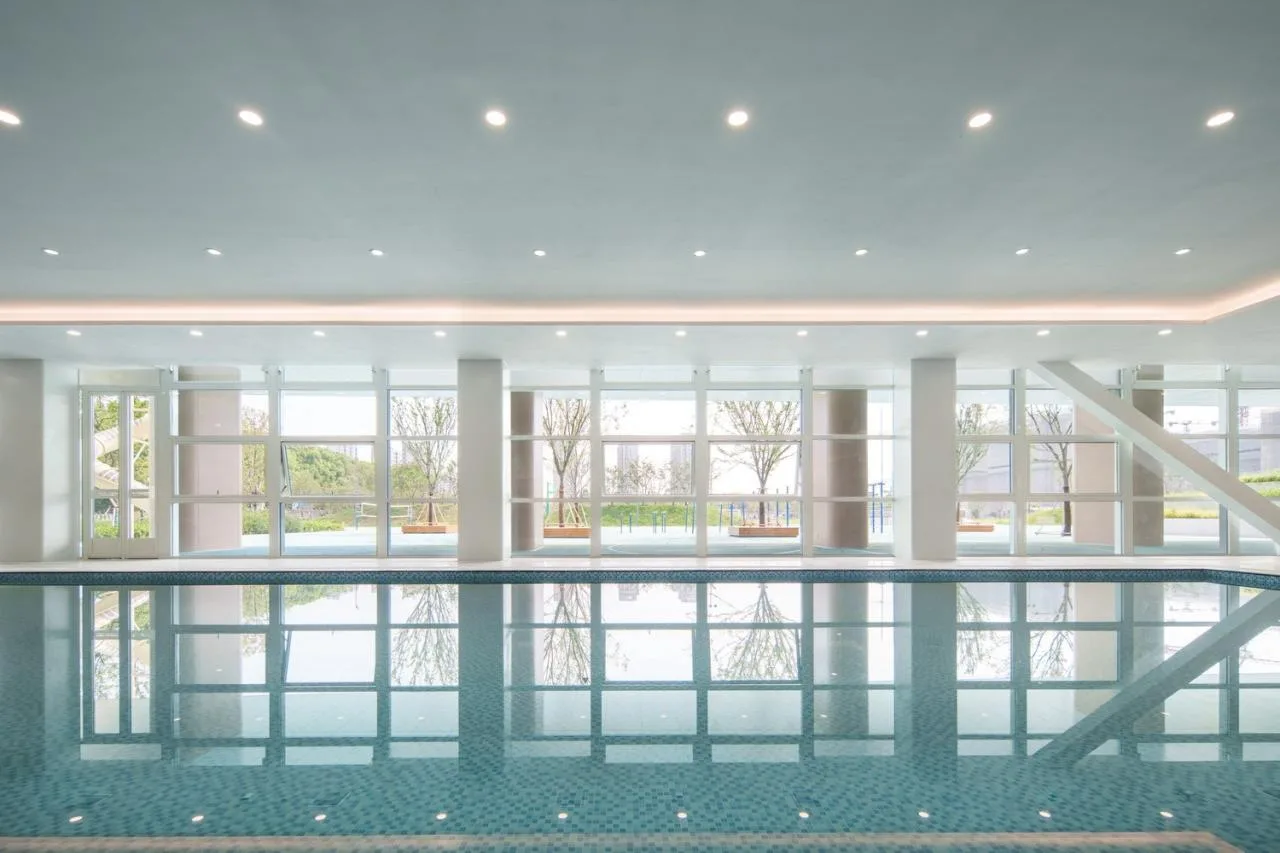
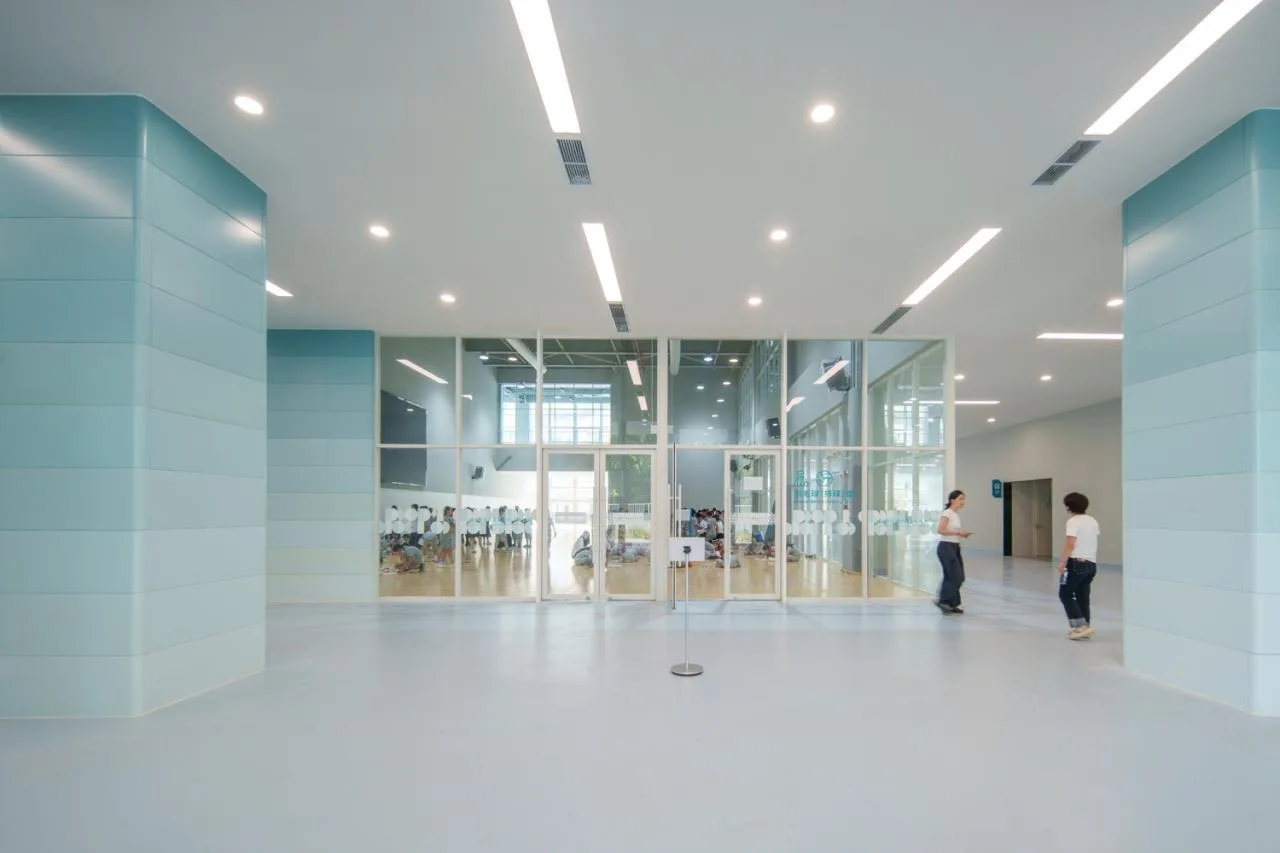
The cross-border Shangshi Jiafen project integrates education and design, balancing the scales of “city and desk” to create diverse usage scenarios and maximize public participation. This school transcends being a mere collection of buildings; it embodies an educational philosophy, a forward-looking vision, and a reflection on harmonious coexistence between humans and nature.
Crossing boundaries here is not about challenging existing rules, but about innovation and growth that fosters unique, personalized educational environments. As the principal welcomed new students, “This is a playground for children to learn—where learning happens everywhere, and knowledge is discovered in countless engaging ways.”
Project Drawings
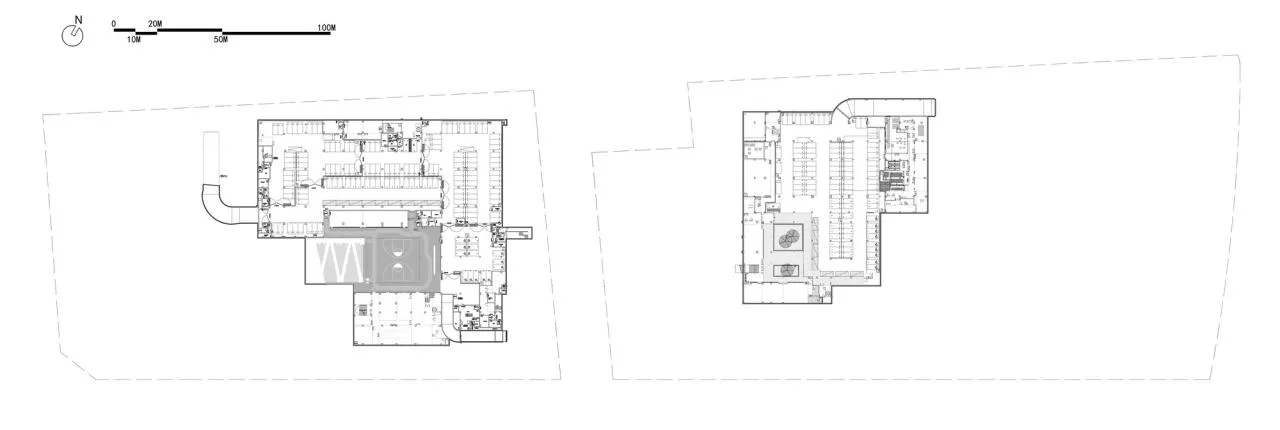
△ Underground Floor Plan
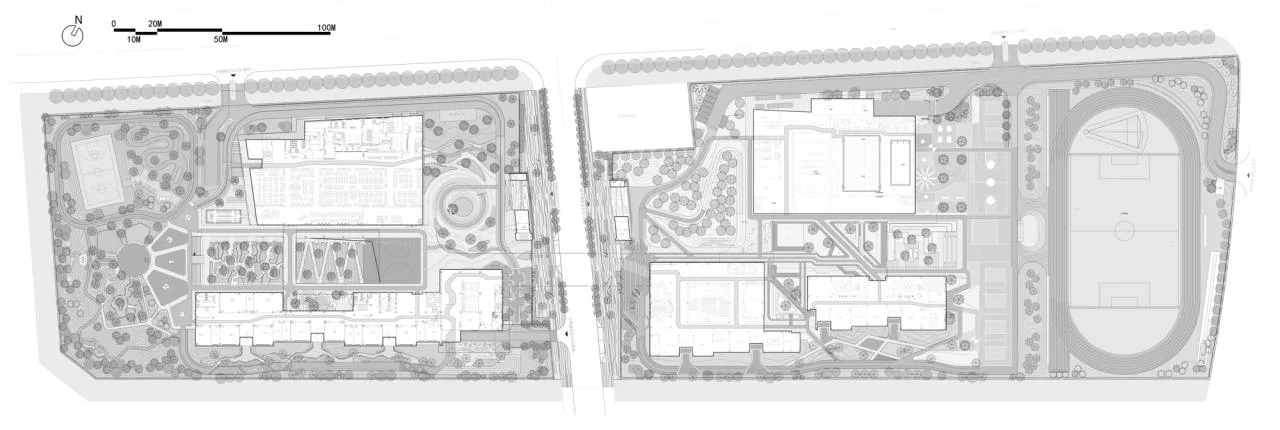
△ First Floor Plan
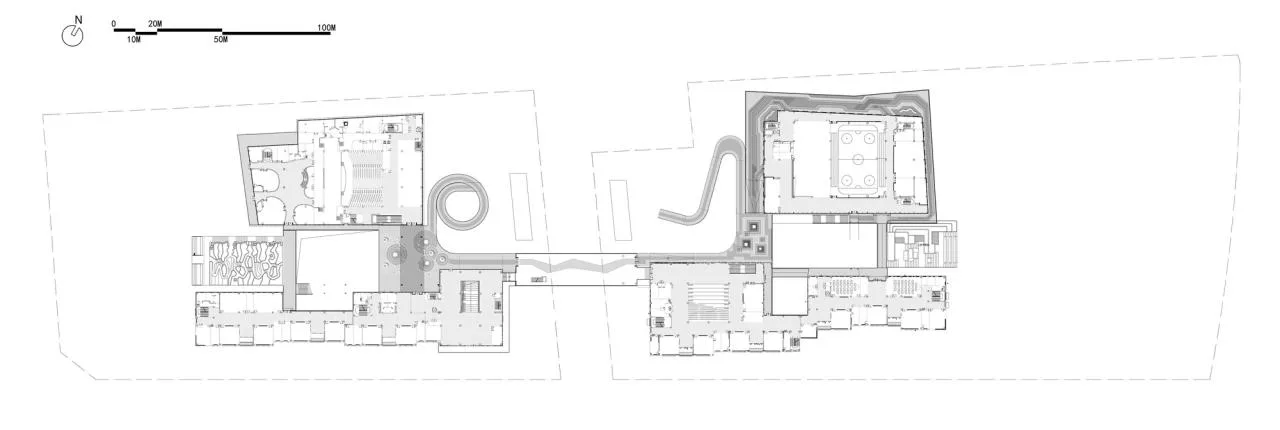
△ Second Floor Plan
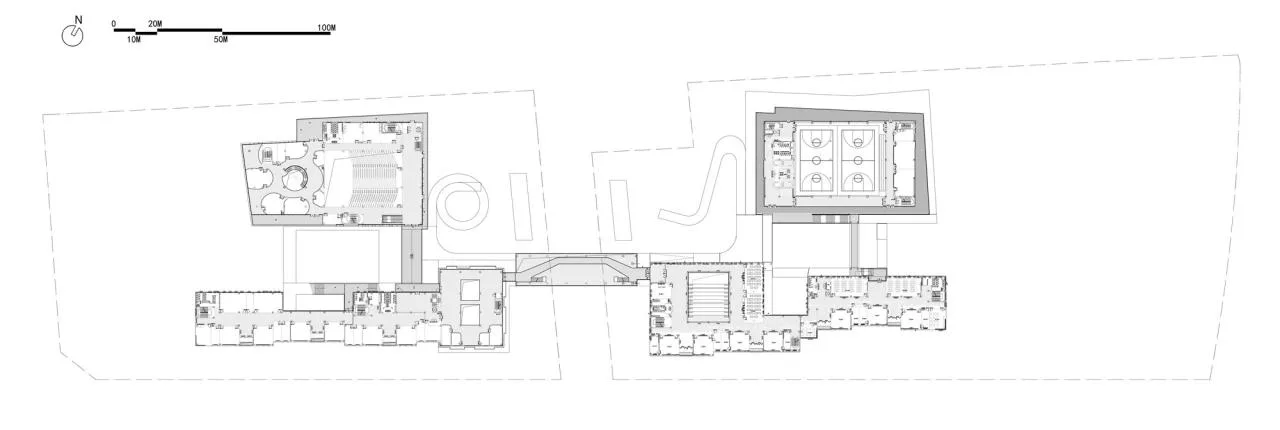
△ Third Floor Plan
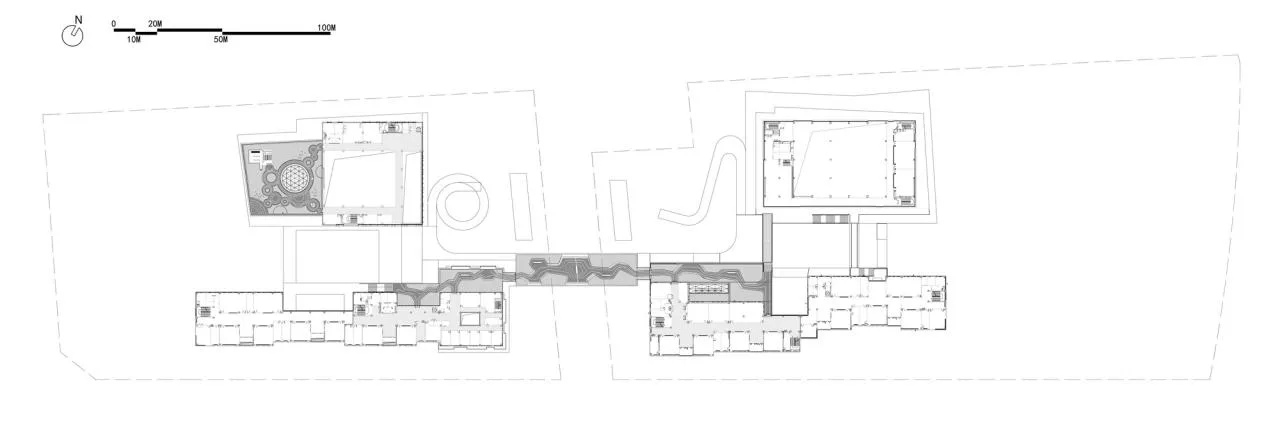
△ Fourth Floor Plan
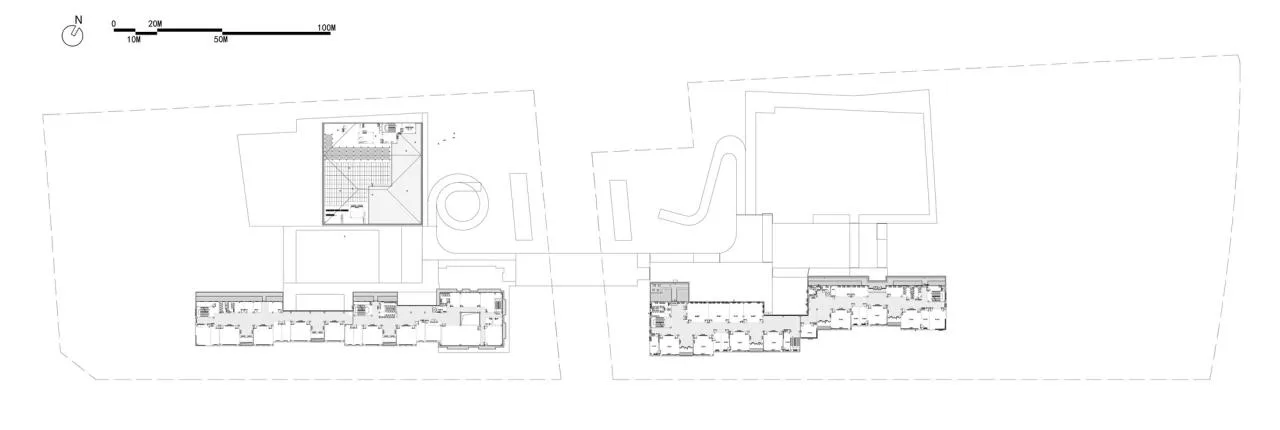
△ Fifth Floor Plan
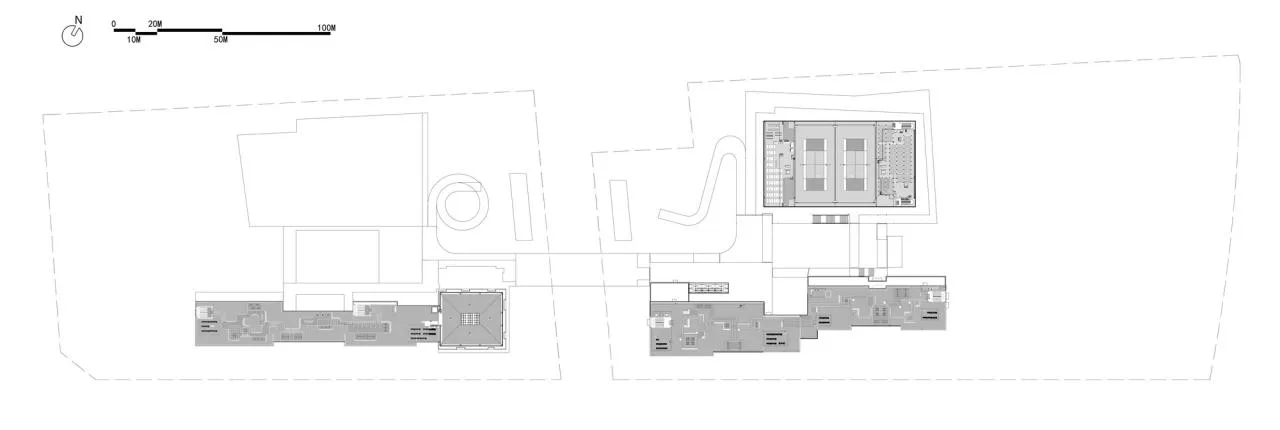
△ Sixth Floor Plan


△ Elevation Drawing
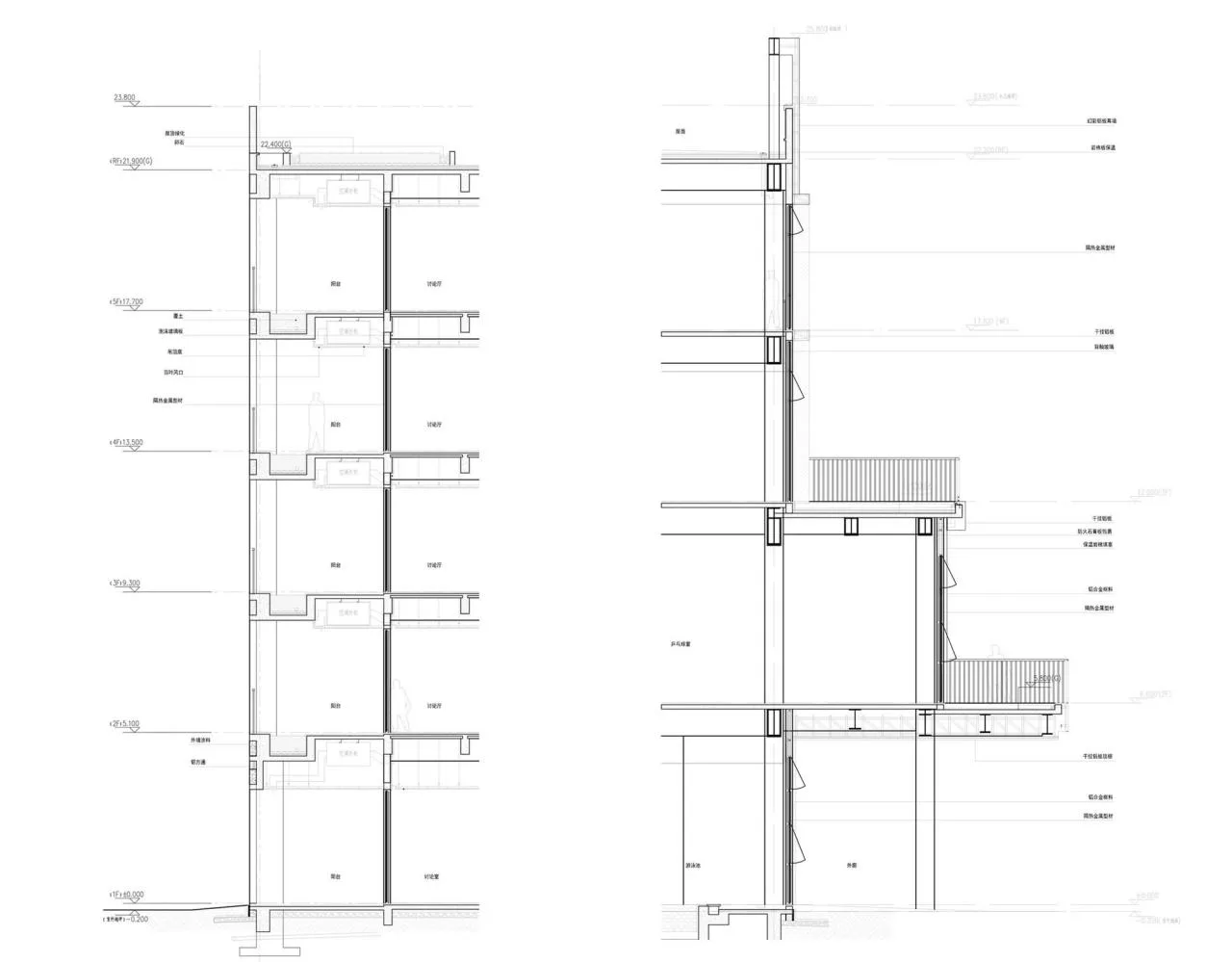
△ Detailed Structural Drawing
Project Information
Architect: Grand View Landscape
Area: 77,233 m²
Project Year: 2024
Project Leader: Guo Ming
Architectural Design Team: Hu Panyue, Zheng Yufei, Qian Linlin, Peng Xuanying
Structural Design Team: Xu Changhai, Luo Yongpei, Liu Xiaoli, Wei Jun, Dai Guangyi, Chen Ming, Li Lanxuan, Cheng Jin
Interior Design: Shanghai Huoyi Decoration Engineering Co., Ltd
Interior Project Managers: Wu Qinghua, Cui Hao
Interior Design Team: Zhang Wei, Xi Jin
Landscape Design: Shanghai Julong Landscape Design Co., Ltd
Landscape Project Manager: Zhang Xiangyang
Landscape Design Team: Wang Junjie, Sun Jie, Zhang Yanfei, Zhang Xianzhi, Lv Wenying, Shang Qianyun, Pan Erchao, Zou Min
Water Supply and Drainage Design: Zheng Daijun, Wu Xin, Zhang Yuehong
HVAC Design: Wu Ming, Shen Weigang, Li Jinzhi
Electrical Design: Wang Jiyuan, Jiang Yao, Jiang Zhen, Li Songsong, Cheng Fenqiang, Liu Li, Chen Xing
Green Building Design: Guo Ming, Li He, Wu Xin, Liu Xiaoli, Jiang Yao
Sponge Design: Zhang Yuehong
Identification Consultant: Wanbang Zhihe (Shanghai) Design Consulting Firm
Logo Design Team (Consultants): Chen Jian, Sun Junjie, Yang Fan, Yang Chao
Lighting Consultant: Shanghai Ruosi Lighting Design Co., Ltd
Lighting Design Team: Zhong Ming, Sun Yajuan, Wu Rong, Liu Sichen
Overall Advisor: Xu Hong (Principal of Shanghai Experimental School)
Project Leader: Yang Xiaoqing (Shanghai Daguan)
Design Unit: Daguan Landscape
Client: Education Bureau of Jiading District, Shanghai
Location: Shanghai














Must log in before commenting!
Sign Up