
BIM
Currently, construction management professionals are at a crossroads, facing the challenge of transforming their workflows through BIM (Building Information Modeling). What are the essential points construction managers should focus on during this BIM transformation journey?
1. Preliminary Preparation and Team Analysis
First, managers transitioning to BIM must ensure they have the appropriate software and equipment that meet the specific needs of their projects. They should then evaluate their team’s capabilities, leveraging each member’s strengths while identifying areas for improvement. Analyzing the engineering projects and pinpointing key demands will help establish effective entry points for BIM implementation.
2. Clarify Concepts and Establish Standards
It is important to understand that BIM is not merely software; it is a concept, and software tools serve only as means to implement BIM. Before adopting these tools, construction managers must develop a comprehensive set of standards tailored to their requirements. This involves creating application workflows or functional platforms, providing relevant training, and producing detailed operation manuals to guide personnel.
3. Expand BIM Applications
Different projects require varied approaches to managing engineering data. Technological advances have enriched project quality inspection and management methods. By linking quality information to BIM models, issues can be efficiently tracked and communicated across all levels through model browsing. This approach surpasses traditional text-based documentation by fostering better coordination and clarity in quality management.
4. Develop Construction Plans and Overall Layout Using BIM
Construction managers can utilize BIM technology to create a detailed 3D layout of the construction site before work begins. By integrating the exact dimensions of the site, the 3D model visualizes the entire construction area, allowing for logical arrangement of construction plans and traffic flow. This helps prevent site congestion and provides critical data to ensure safe high-altitude lifting operations.
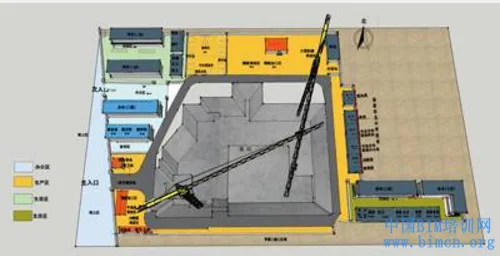
Figure 1: Construction Plan Layout during the Foundation Pit Stage
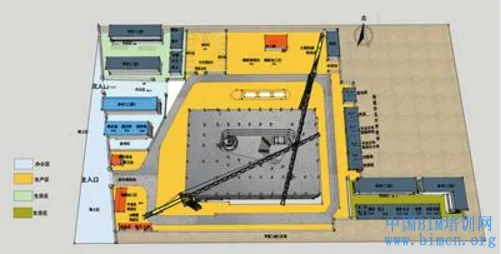
Figure 2: Construction Plan Layout during the Structural Stage
5. Integrate BIM Design Deepening and Drawing Review
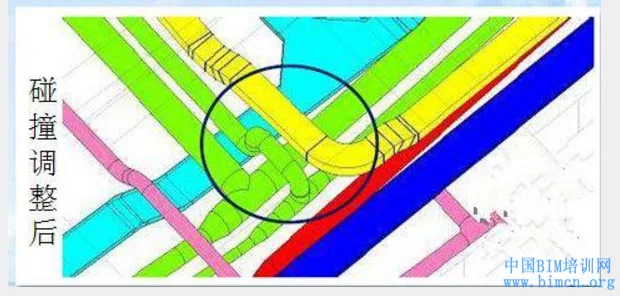
During the BIM 3D modeling process, construction managers review and refine design drawings. They conduct clash detection across disciplines such as architecture, structural engineering, and mechanical and electrical installations to resolve errors and omissions before construction begins. This includes integrating plumbing and electrical pipelines to ensure precise layouts. Using 3D collision detection helps achieve zero conflicts on-site.

6. Construction Progress Management
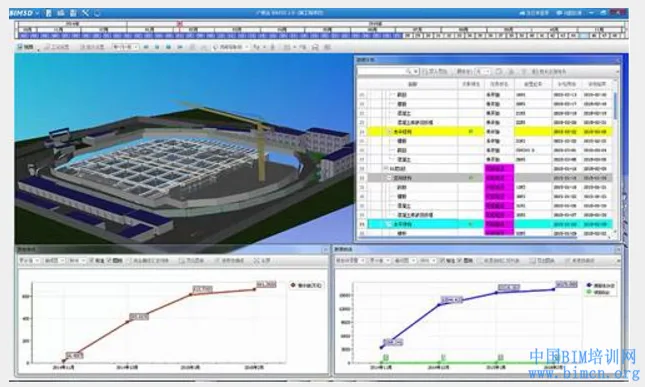
By integrating BIM with model quantification, construction managers can link 3D models to the project schedule, incorporating both spatial and temporal data. This enables real-time control over the construction timeline. Managers can compare actual progress against planned milestones by measuring completed work quantities, making progress tracking more intuitive, visual, and transparent. This approach transforms traditional progress management, ensuring that schedules remain realistic and achievable.
7. Digital Processing
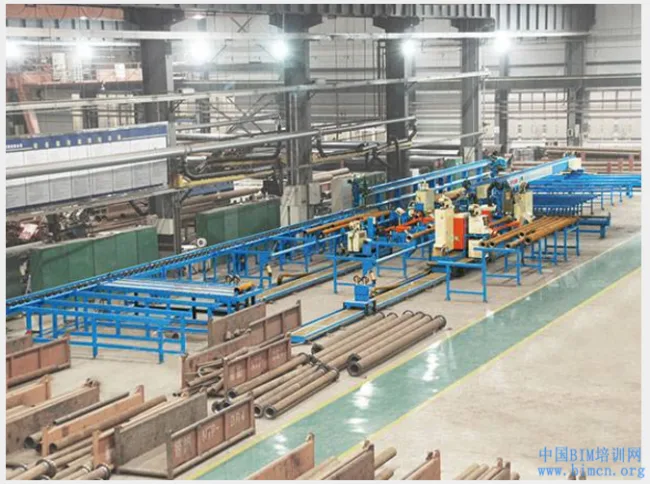
Construction managers can leverage BIM models to quickly organize installation component data for factory prefabrication. Applying the model for on-site layout control helps meet high precision construction requirements. By comparing the BIM model with physical constructions and performing digital acceptance checks, managers can ensure quality control after construction completion.
8. 3D Scanning Technology
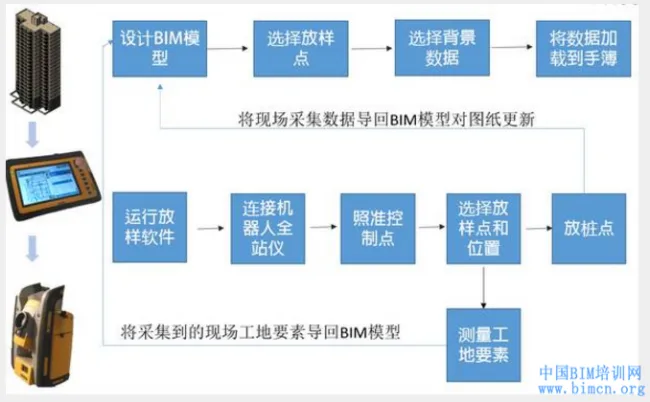
The use of intelligent robotic layout systems greatly simplifies site layout work, reducing the need for multiple operators to just one person with a device. By importing the BIM model into a specialized handheld tablet, layout points can be selected, and the robot will automatically mark these points using lasers. Additionally, the robot can send real-time layout information back to the model, allowing managers to verify accuracy on-site.
The transition to BIM holds tremendous value for construction management, yet many construction companies have yet to fully realize these benefits. Traditionally, management has relied heavily on personal influence or service skills, often undervaluing scientific management and technological tools. The value of BIM in construction management can be difficult to demonstrate, especially when conventional methods alone seem adequate to solve problems. Simply integrating BIM without overcoming this mindset will not yield significant results. To truly embrace BIM, construction professionals must shift their perspectives and commit to this transformative journey. The revolution is ongoing, and continued effort is essential!
















Must log in before commenting!
Sign Up