
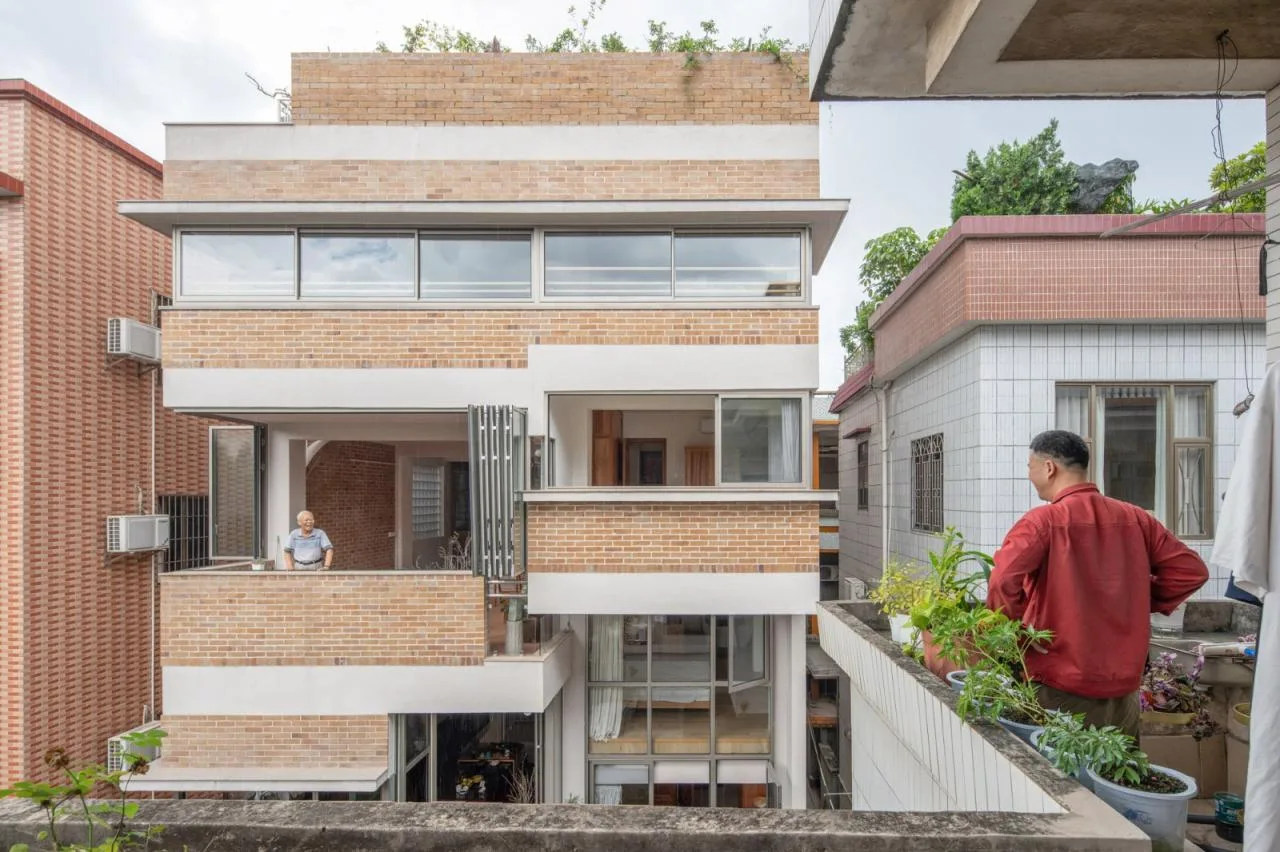
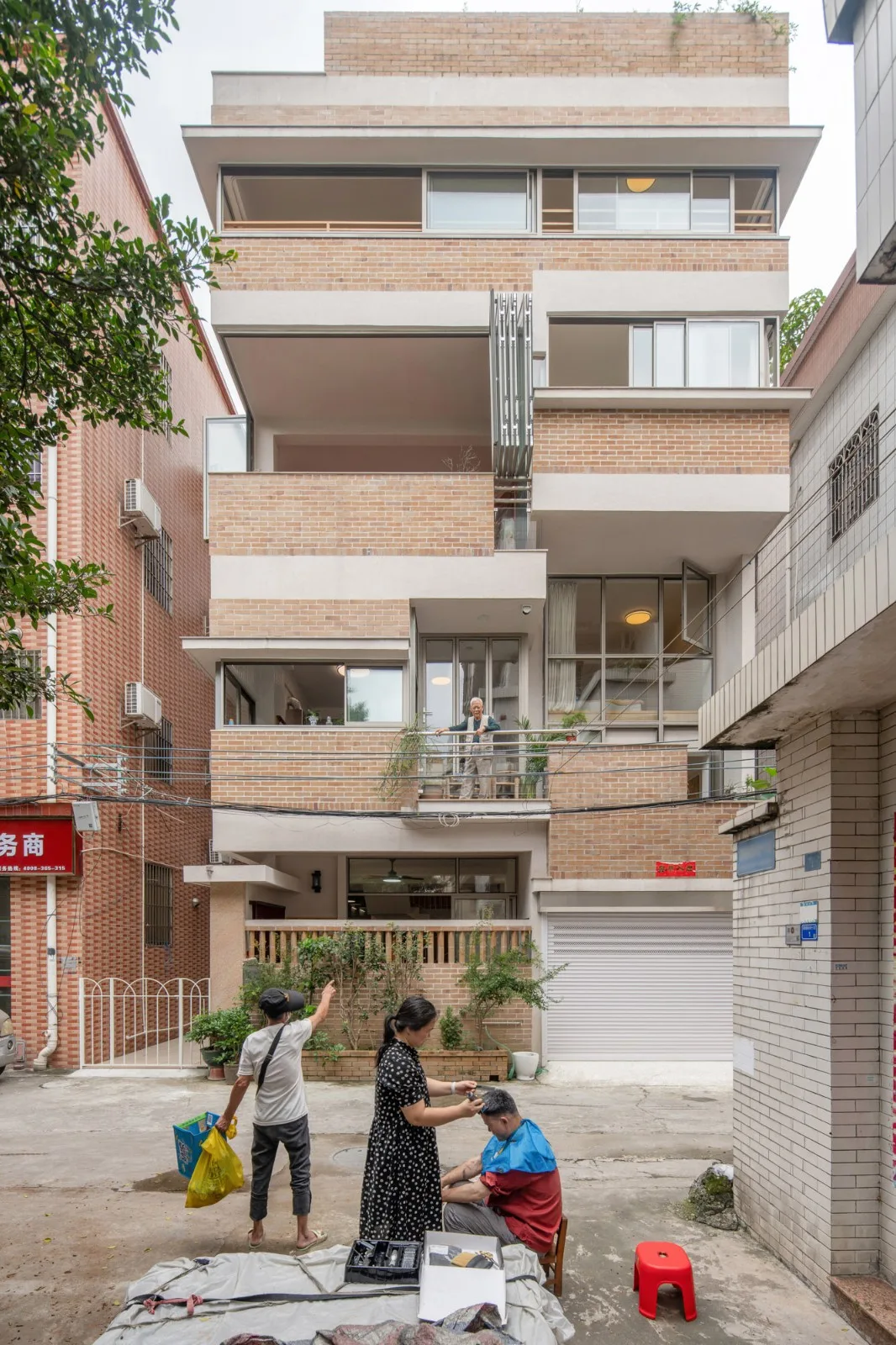
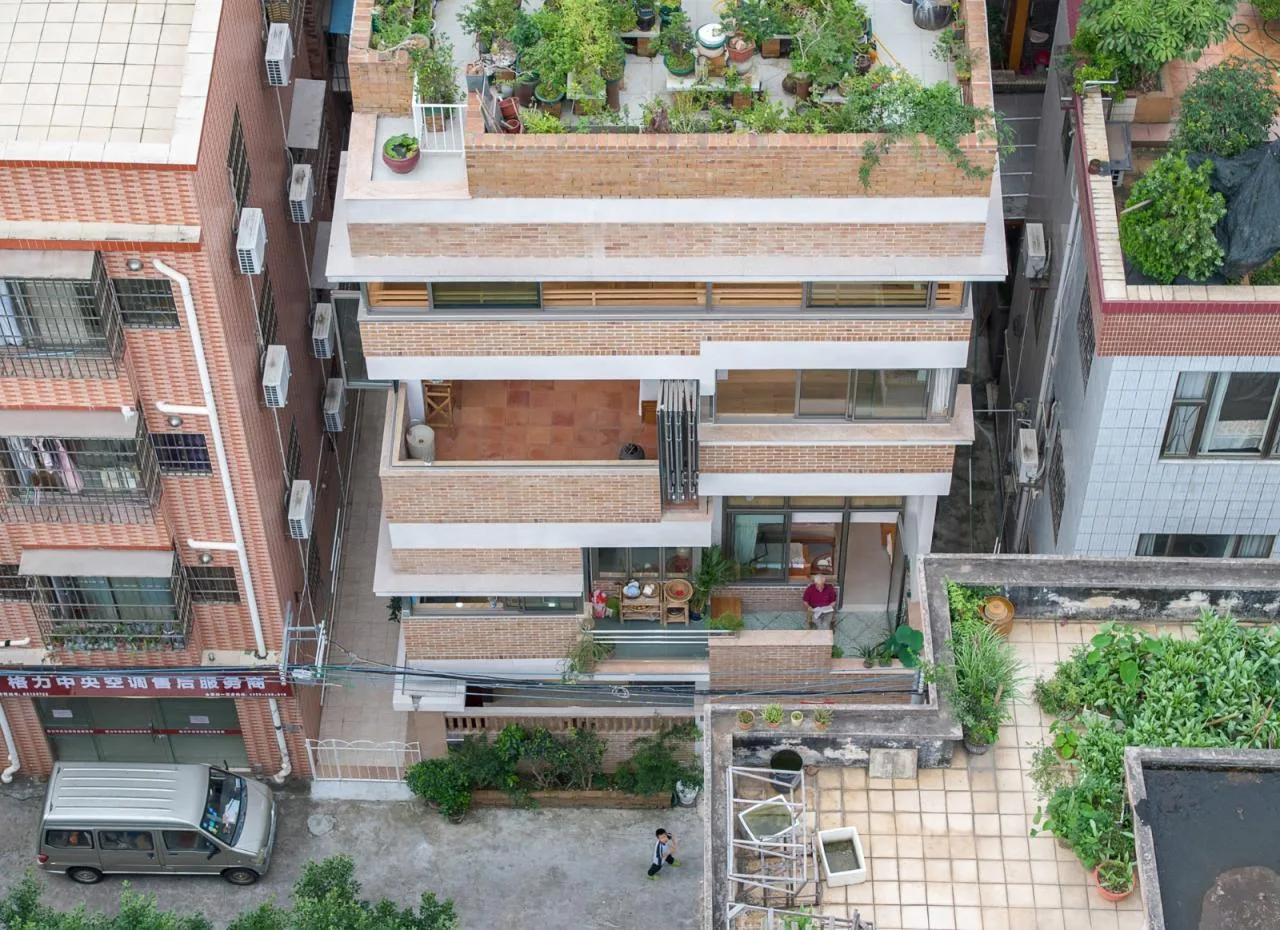
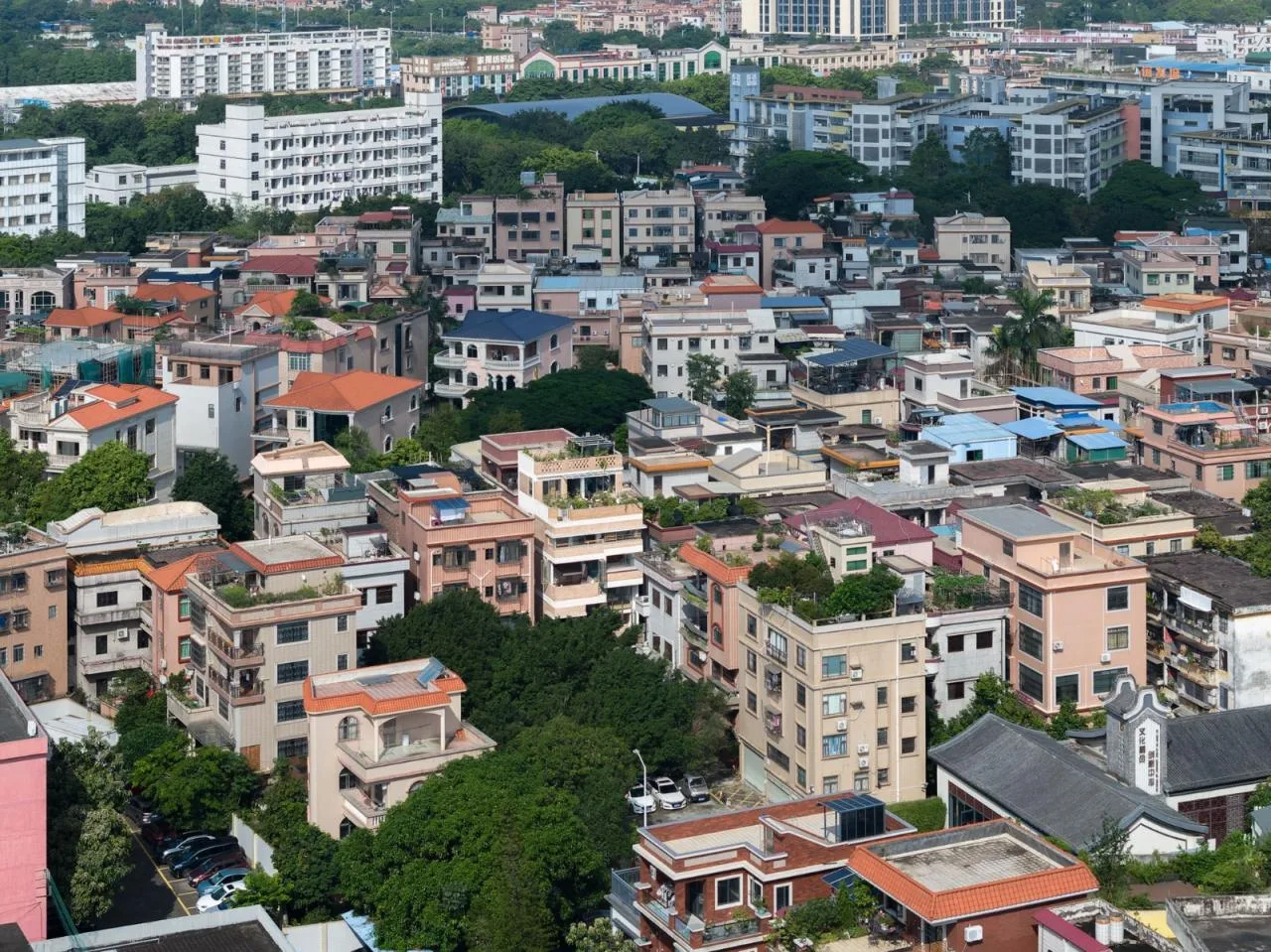
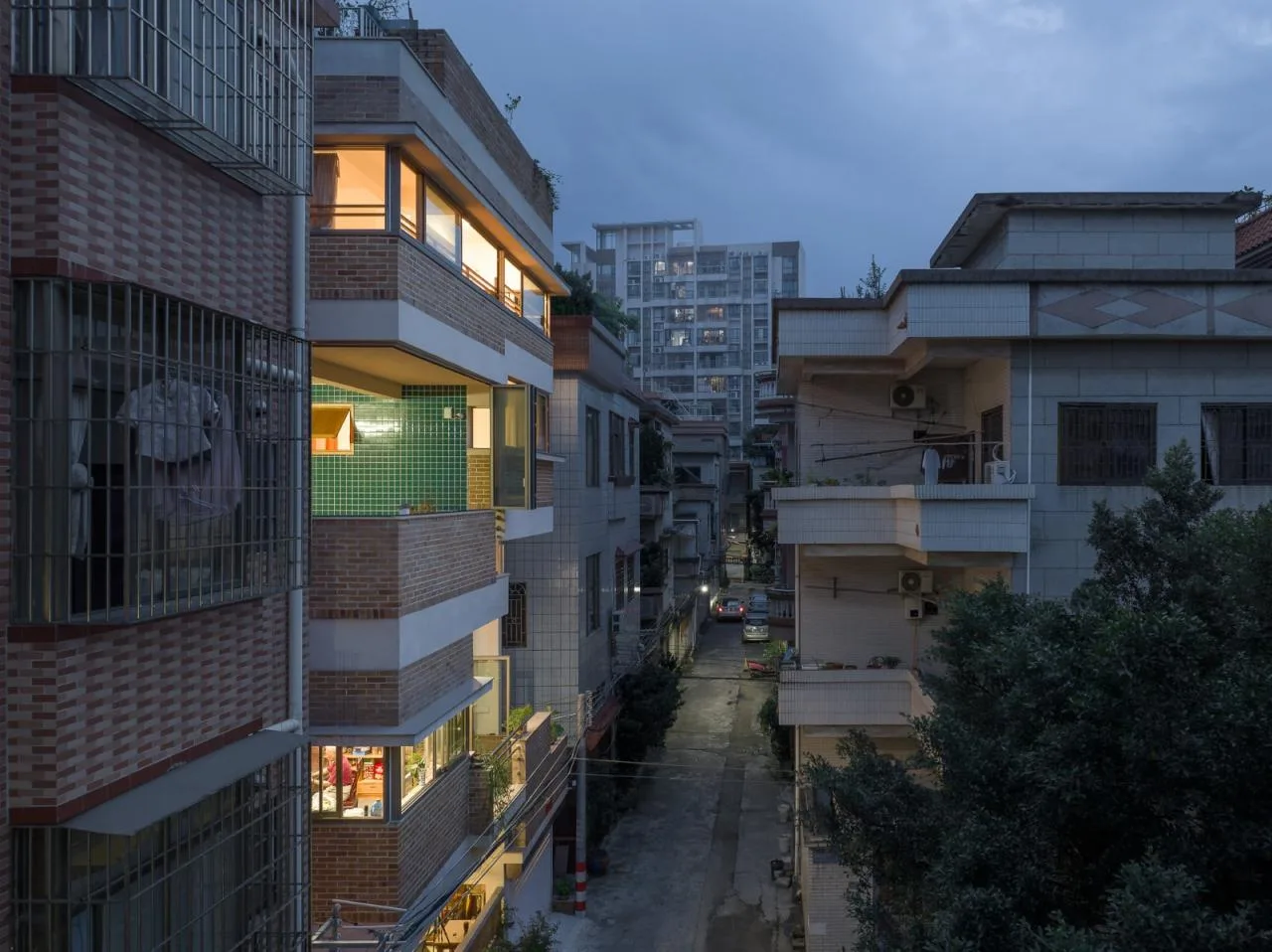
This residence in Shunde is home to a family of five. The couple works locally, and their children have recently become adults. Despite his age, the grandfather remains in good spirits. Situated in the town center, the site is surrounded mainly by owner-occupied homes, typical of self-built housing blocks in the Pearl River Delta. The property measures 8 meters wide by 10 meters deep, with narrow alleys accessible on the north and south sides. The west side lacks alley access, while the east side benefits from natural light.
Demolition Plan (First Line): The family’s original home, constructed in the 1980s, was a three-story framed structure. The entrance was through the alley on the south side, featuring a small courtyard enclosed within property boundaries. Inside, the Divine Hall faces north and south, creating a strong sense of spatial sequence. The staircase is centrally located, concentrating traffic flow on each floor in the middle of the plot. However, the three-sided enclosure results in poor orientation for the first-floor kitchen and bedrooms on the upper floors—a common challenge in local housing. Space limitations often hinder thoughtful living arrangements during construction, a frequent issue in self-built homes. To improve their living conditions, the couple sought architectural expertise.
Traditional Layout (Second Line): Guangfu’s traditional residences typically feature three rooms and two corridors. As land use became denser, variations like two-bay Ming-style houses and single-bay bamboo tube houses appeared. Today, in four-story self-built homes, the classic three-room, two-corridor design—usually limited to one or two floors—is often forgotten. Room count tends to reflect economic factors more than lifestyle needs. Yet, throughout the evolution from three rooms to single-room layouts, the depth of the house remains a constant. Looking deep into the courtyard, the altar sits in the dimmest area, while on the opposite side, the courtyard receives sunlight and rain. Bedroom doors open into this space, allowing generations of Guangfu residents to experience this architectural depth.
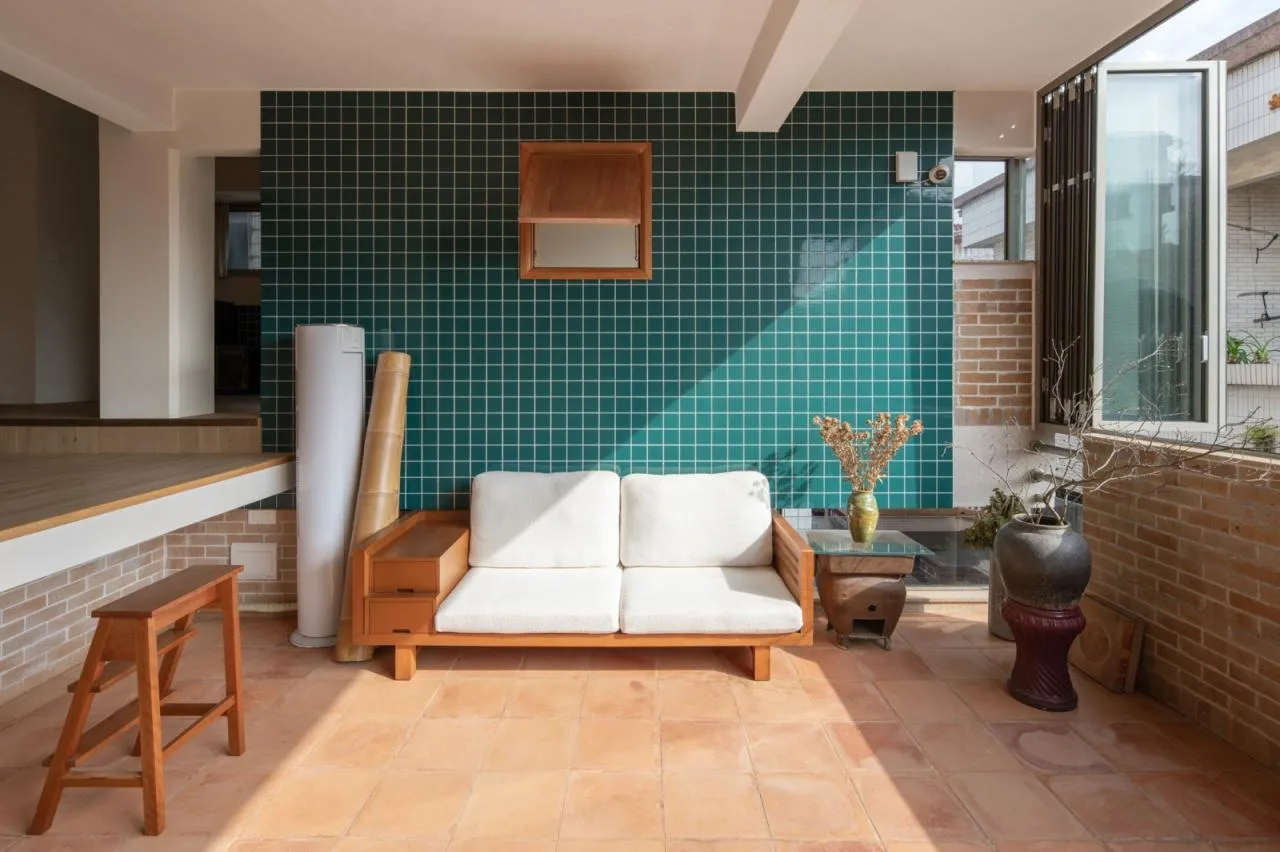
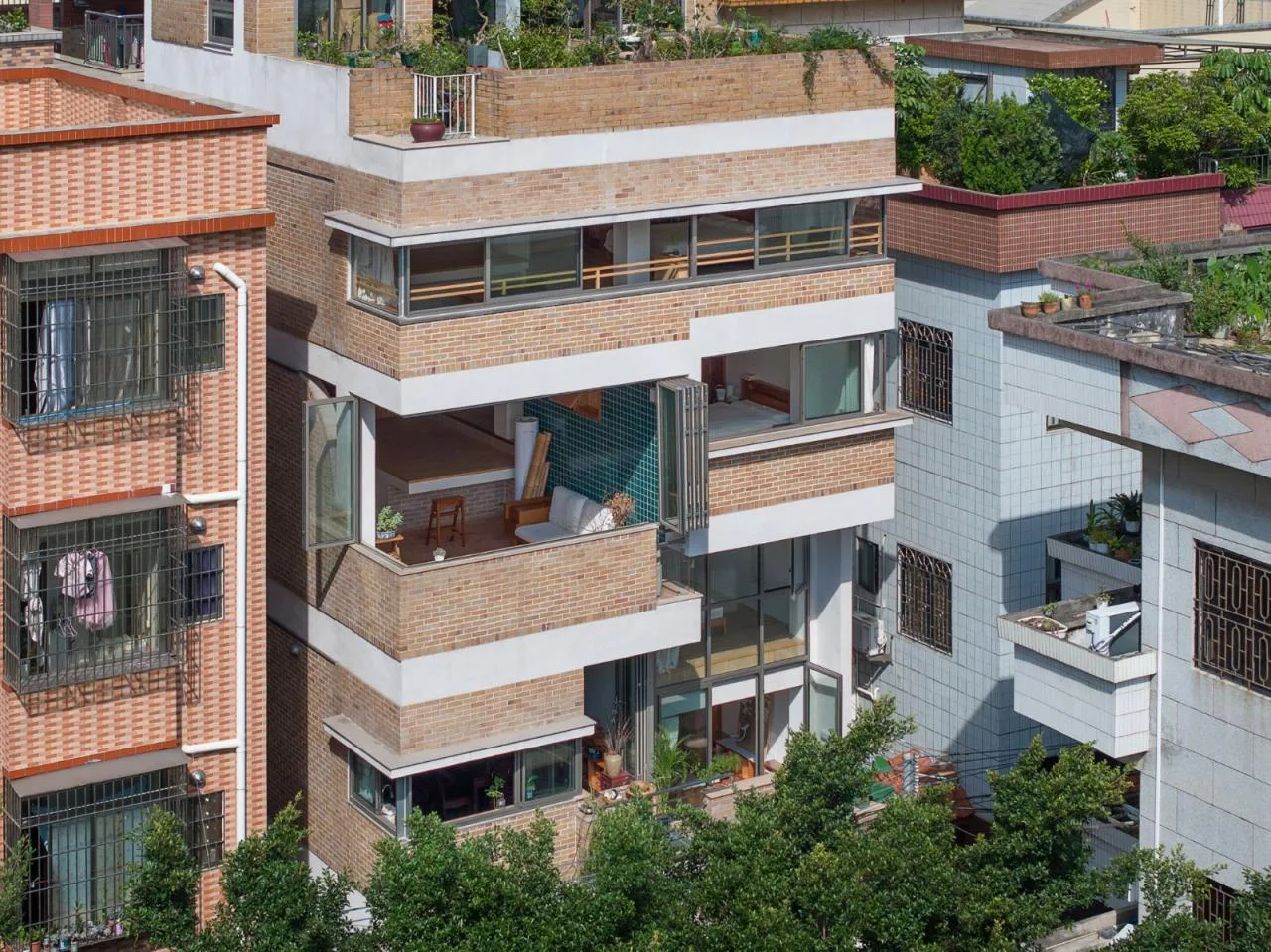
U-Shaped Homestead Concept (Third Line): The homestead is conceptualized as a U-shaped pocket, with sunlight and views primarily on the east side. The interior of this U-shape extends deeply inward, creating intimate spatial experiences.
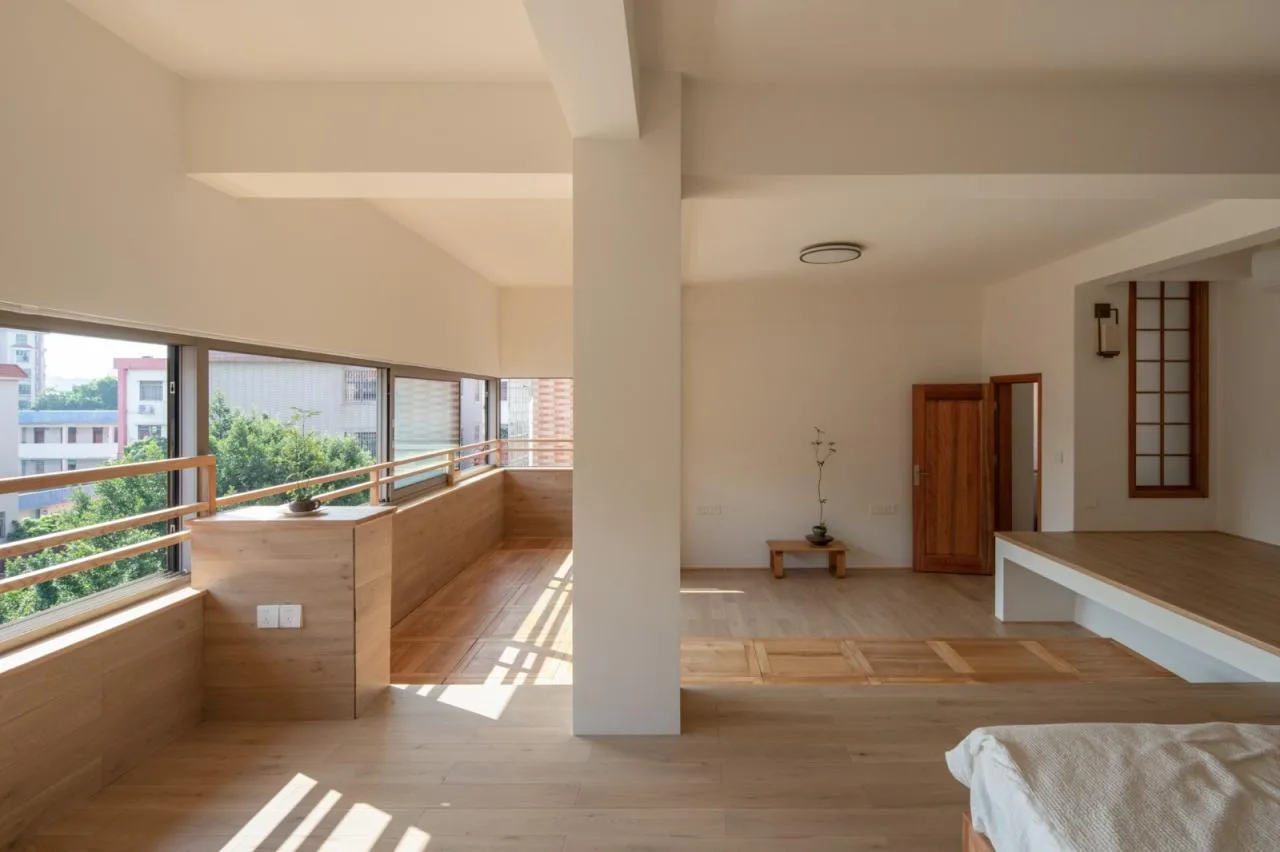
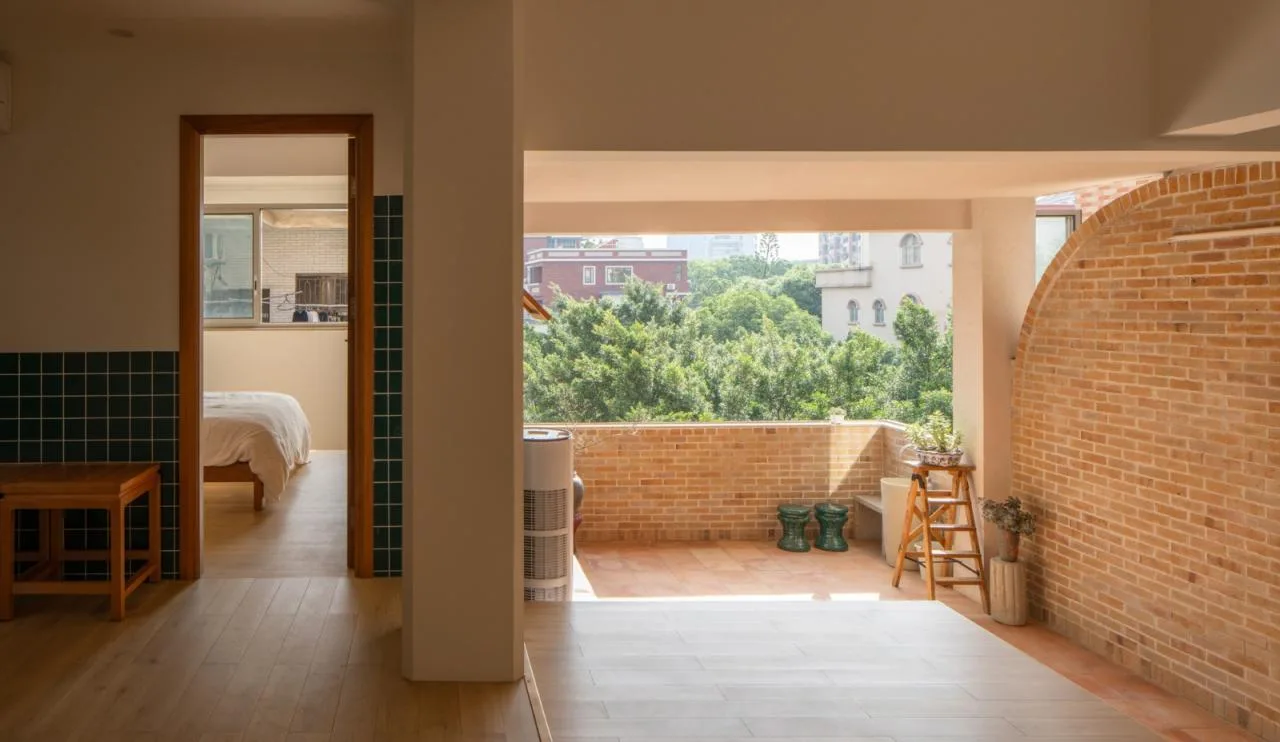
Facade Challenges (Fourth Line): The facade presents two main challenges: first, the 8-meter width limits the frontage to two bays at most; second, the vertical living layout. The two bays can be divided into one large and one small space, with personal areas measuring 3.7 meters and a total width of 4.5 meters. This layout allows each family member to occupy a different floor, with the couple sharing the top level. Shared spaces on each floor serve as vital connections between family members across levels.
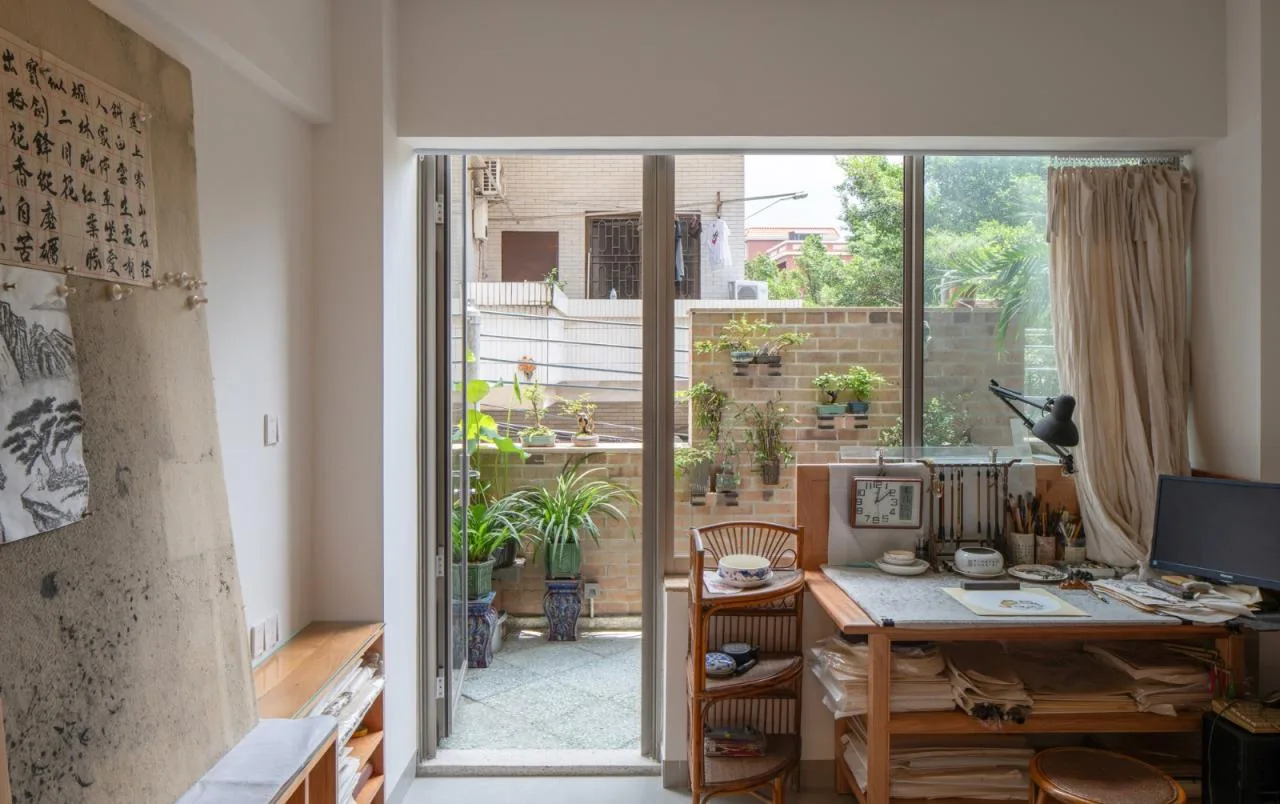
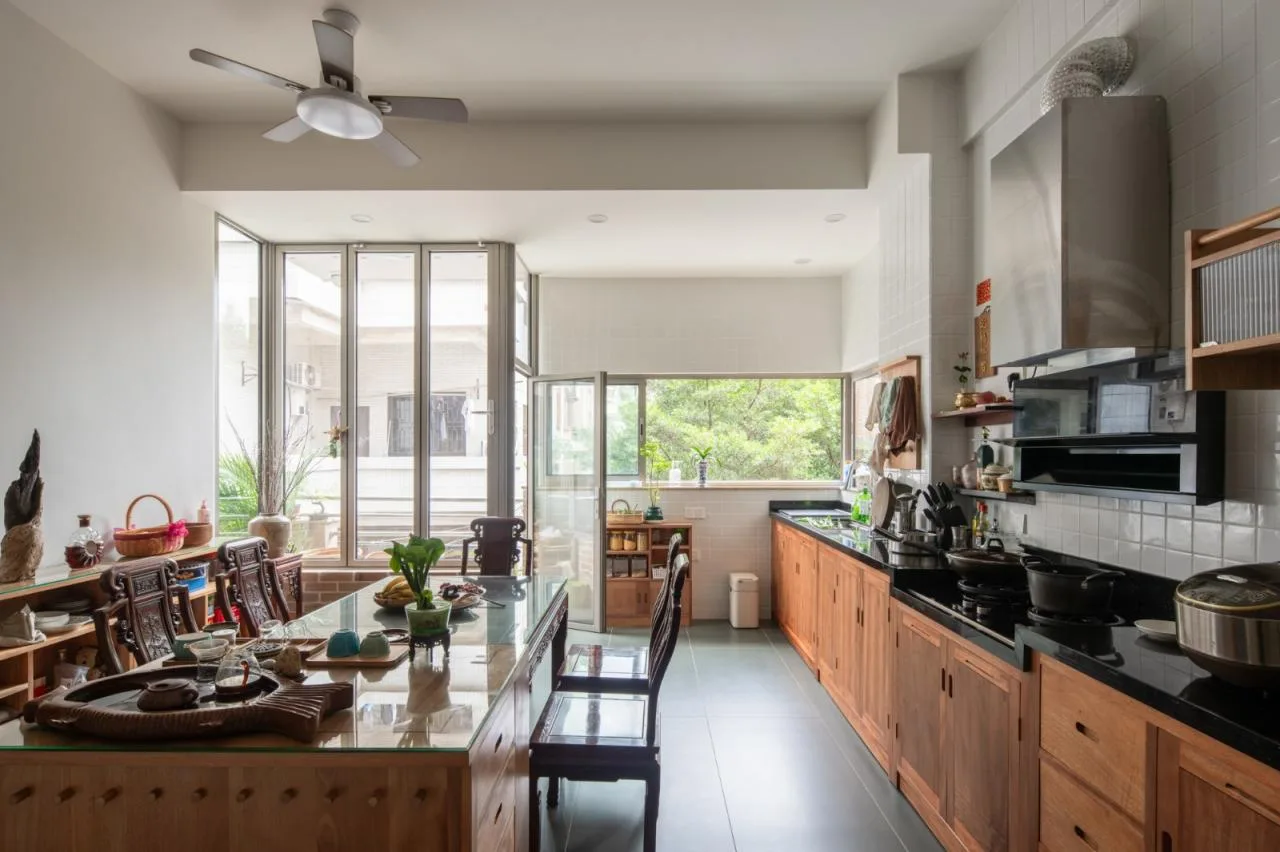
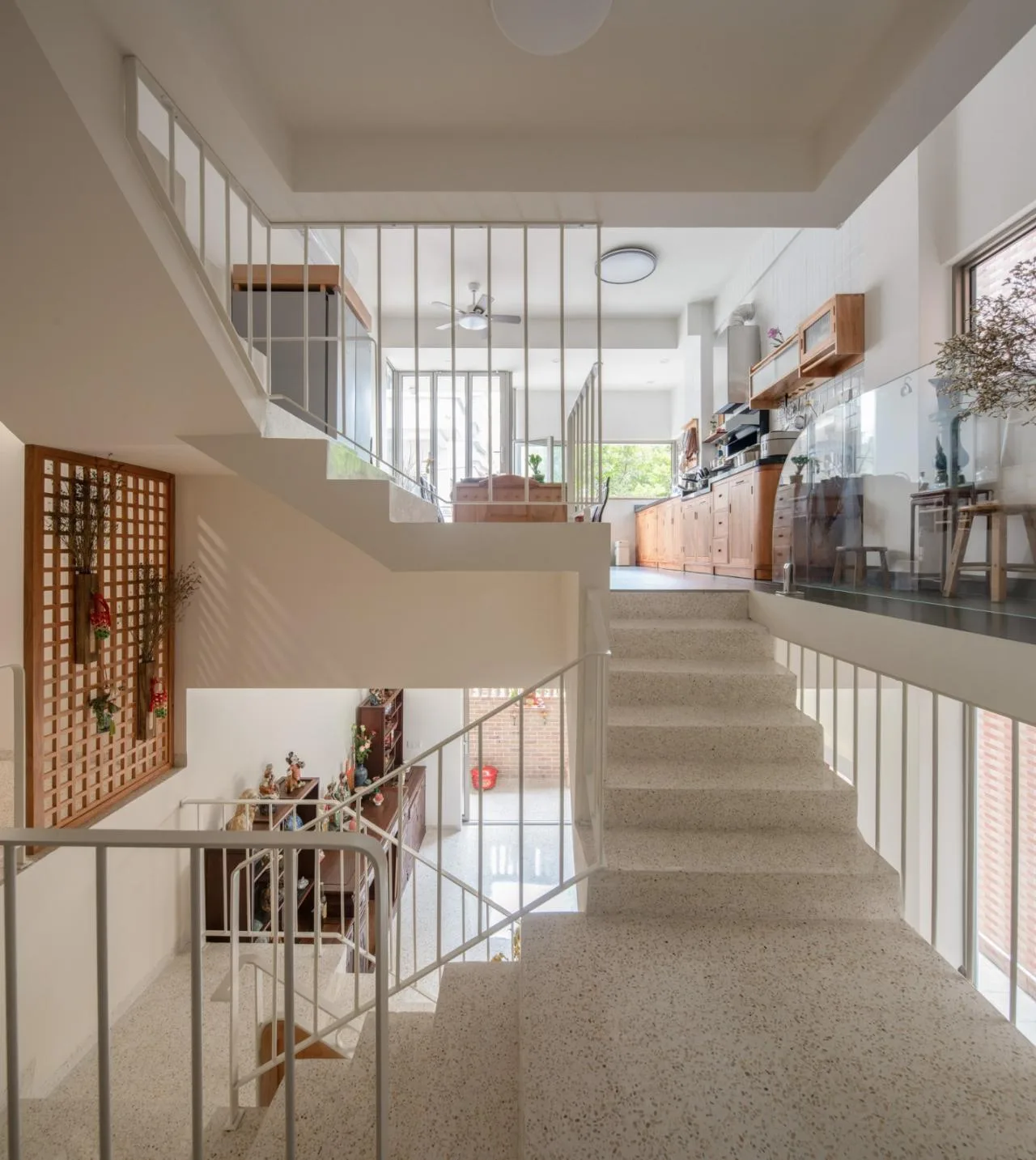
Floor Plan Overview (Fifth Row): The building features four floors with two bay rooms, optimally oriented to create four private spaces alongside four shared areas: the Divine Hall, Kitchen, Living Room, and Study. The staircase and elevator form a third type of space—primarily circulation—which is located at the innermost part of the U-shaped pocket. This placement offers views toward the distant exterior through the shared spaces and facilitates smooth transitions between private and communal areas. Rather than minimizing this circulation space, it was designed generously to enrich the spatial experience for the residents.
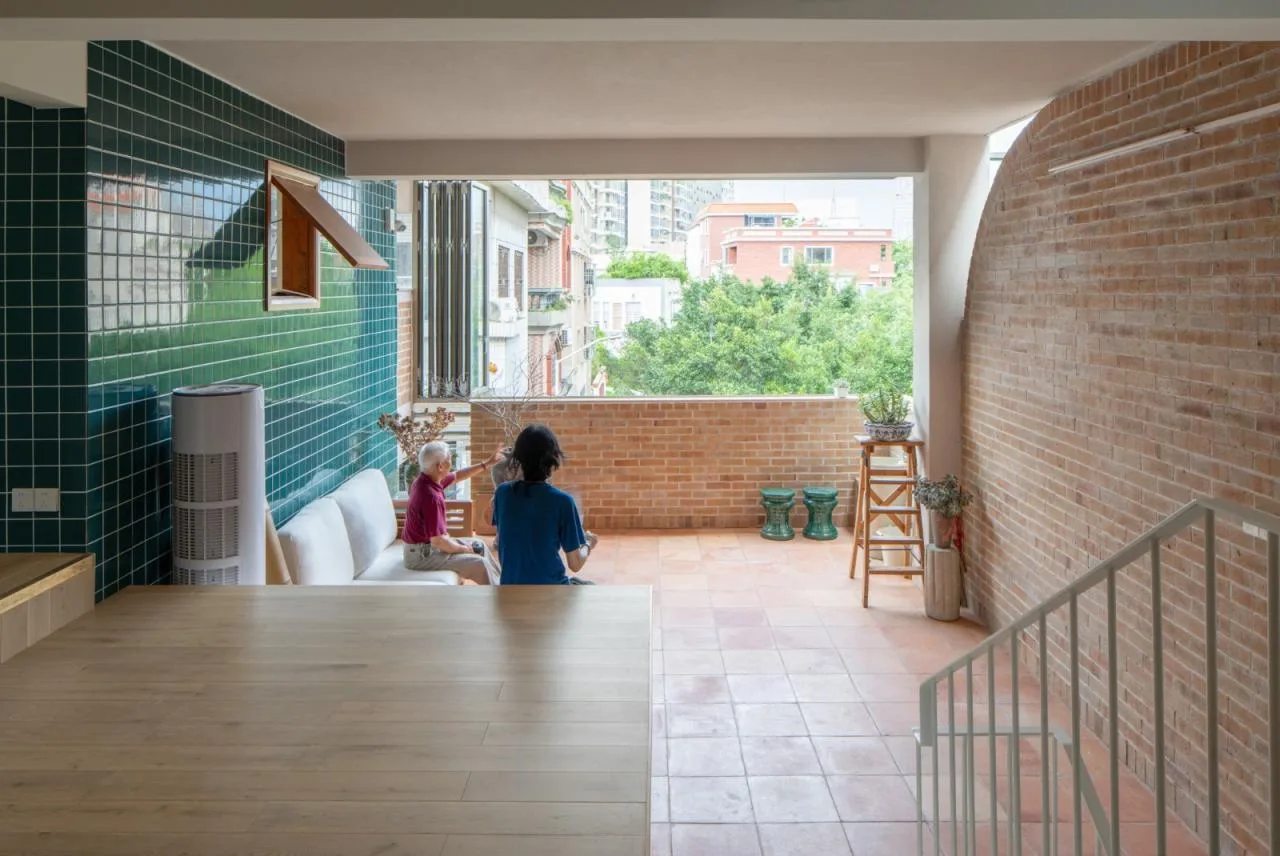
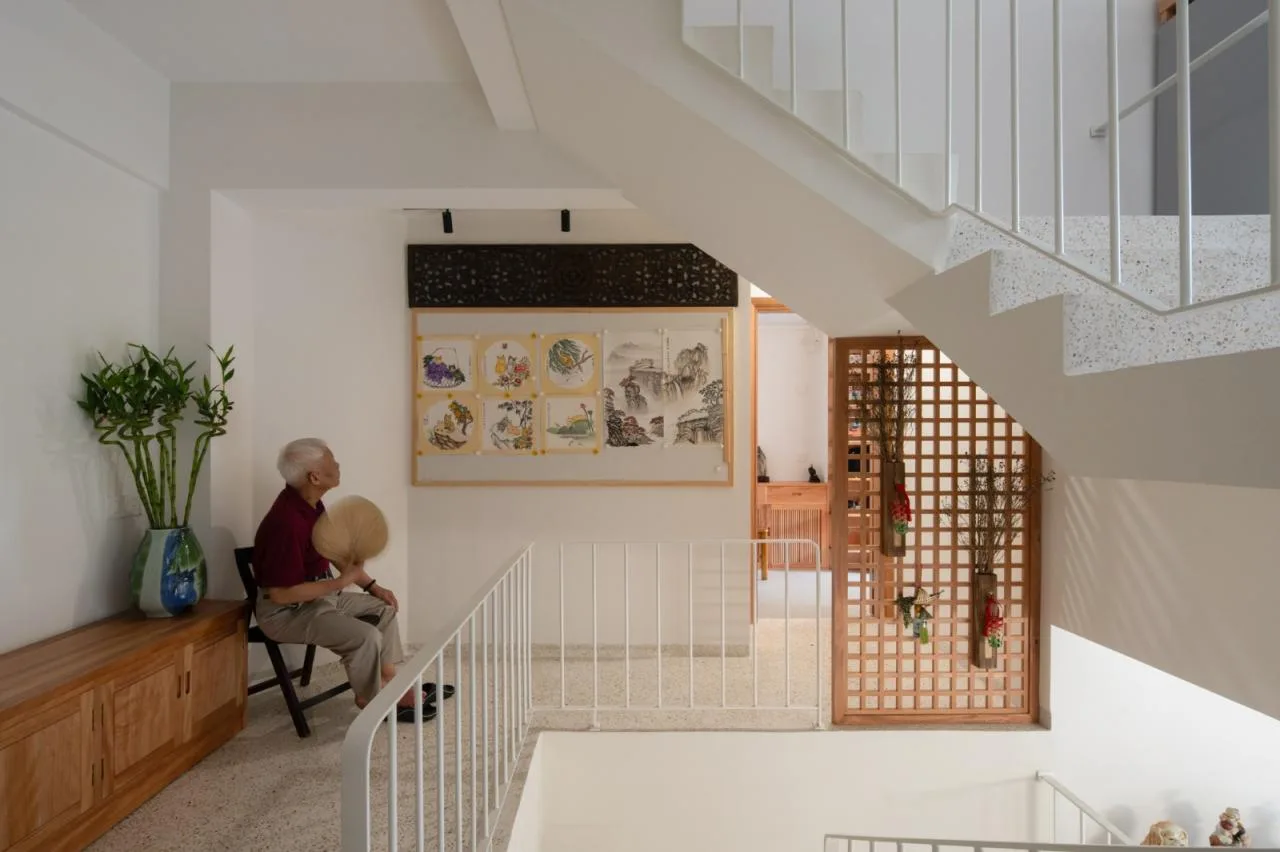
Facade Height Design (Sixth Line): The garage floor is kept as low as possible to maximize bedroom space, while shared spaces consistently maintain a height of 3.5 meters. This creates a vertical separation between private rooms and communal areas, enhancing the line of sight through the shared spaces and adding depth to the interior experience.
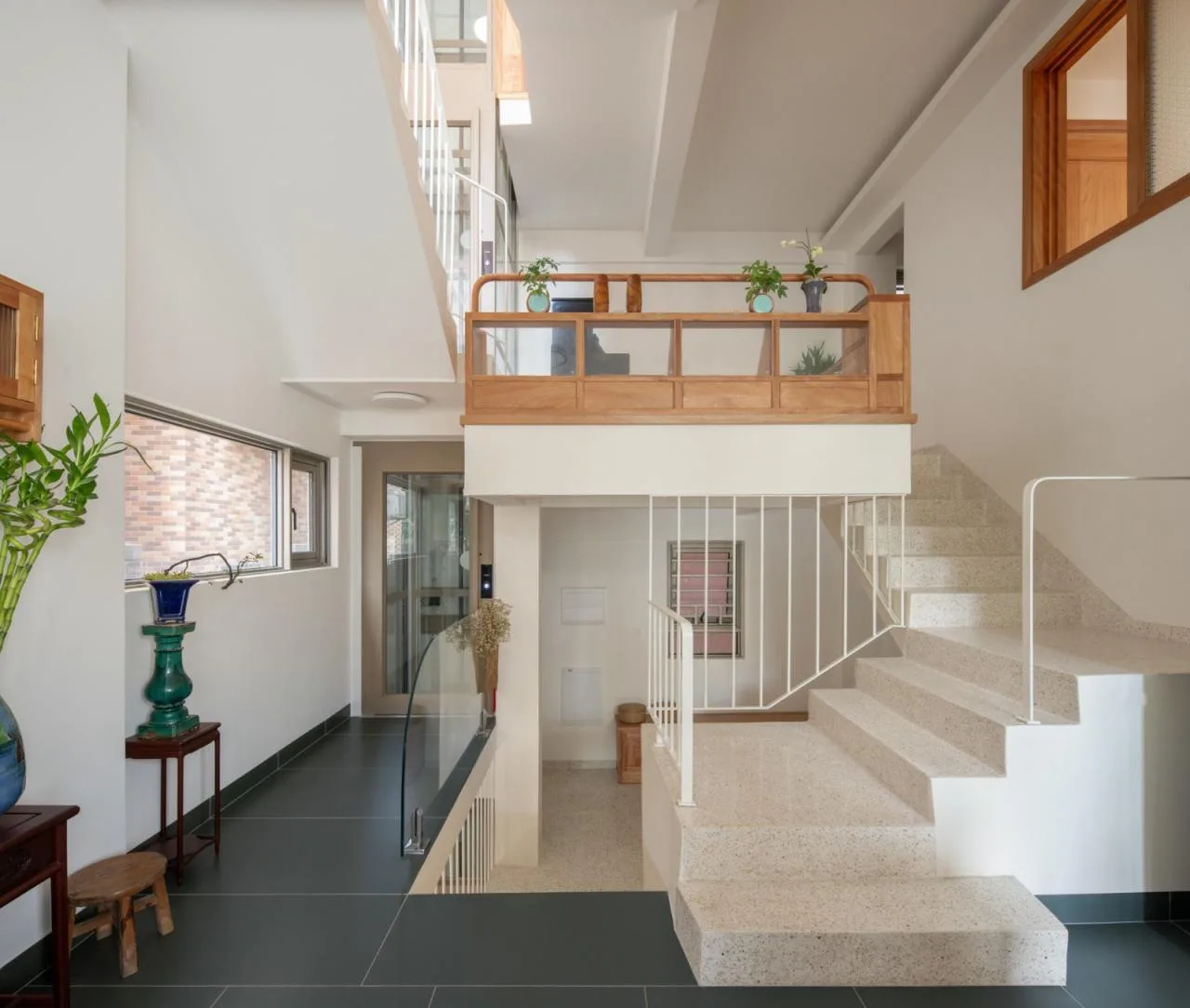
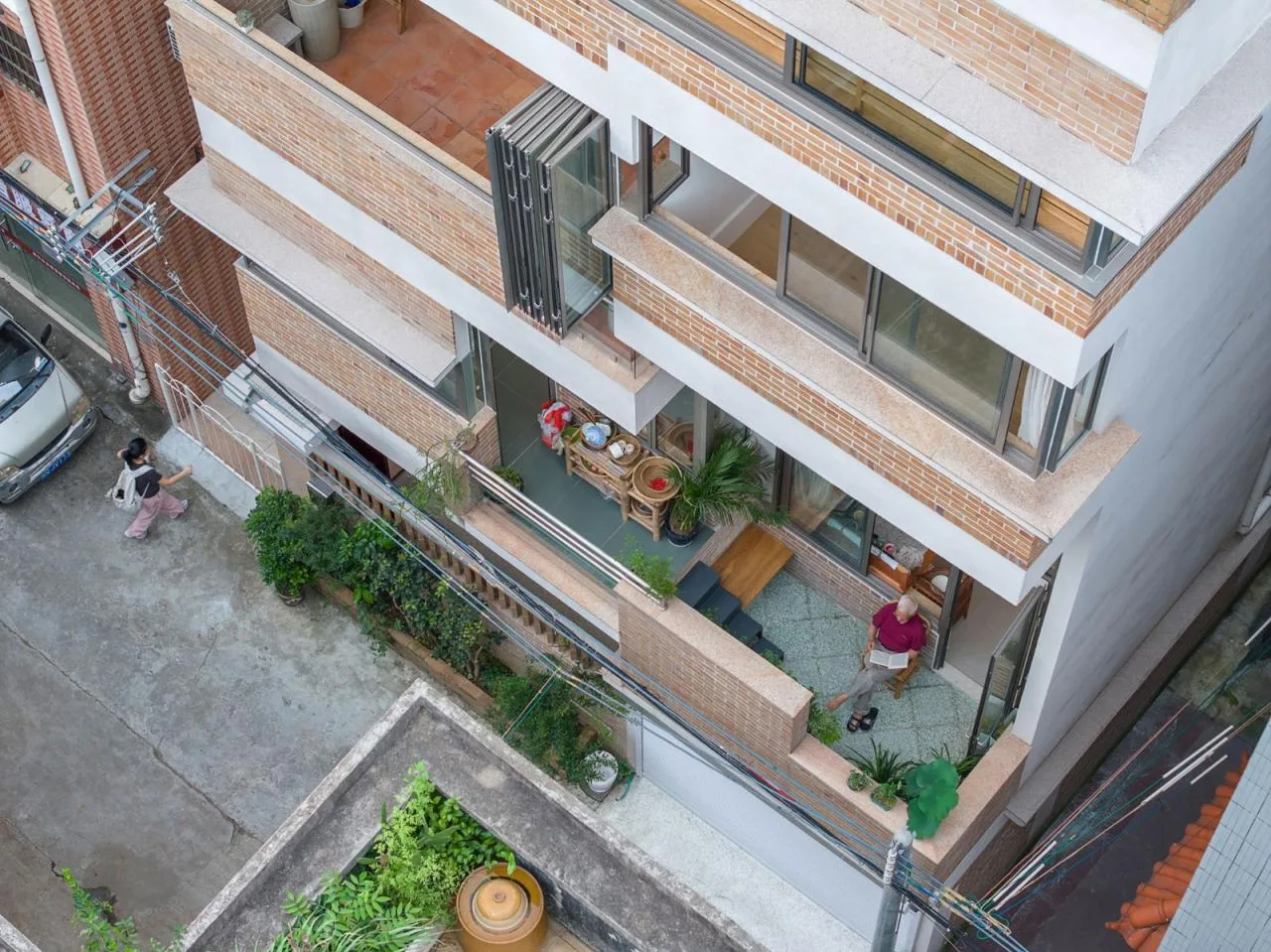
Structural Rhythm (Seventh Line): Nine pillars were strategically placed following a rhythmic pattern, creating a 1.8-meter overhang at the U-shaped opening. This design enhances the contrast in openness between the pocket’s opening and its interior. Five columns are concealed within the walls throughout, while A3, B2, C1, and C2 are sequentially exposed on the second, third, and fourth floors.
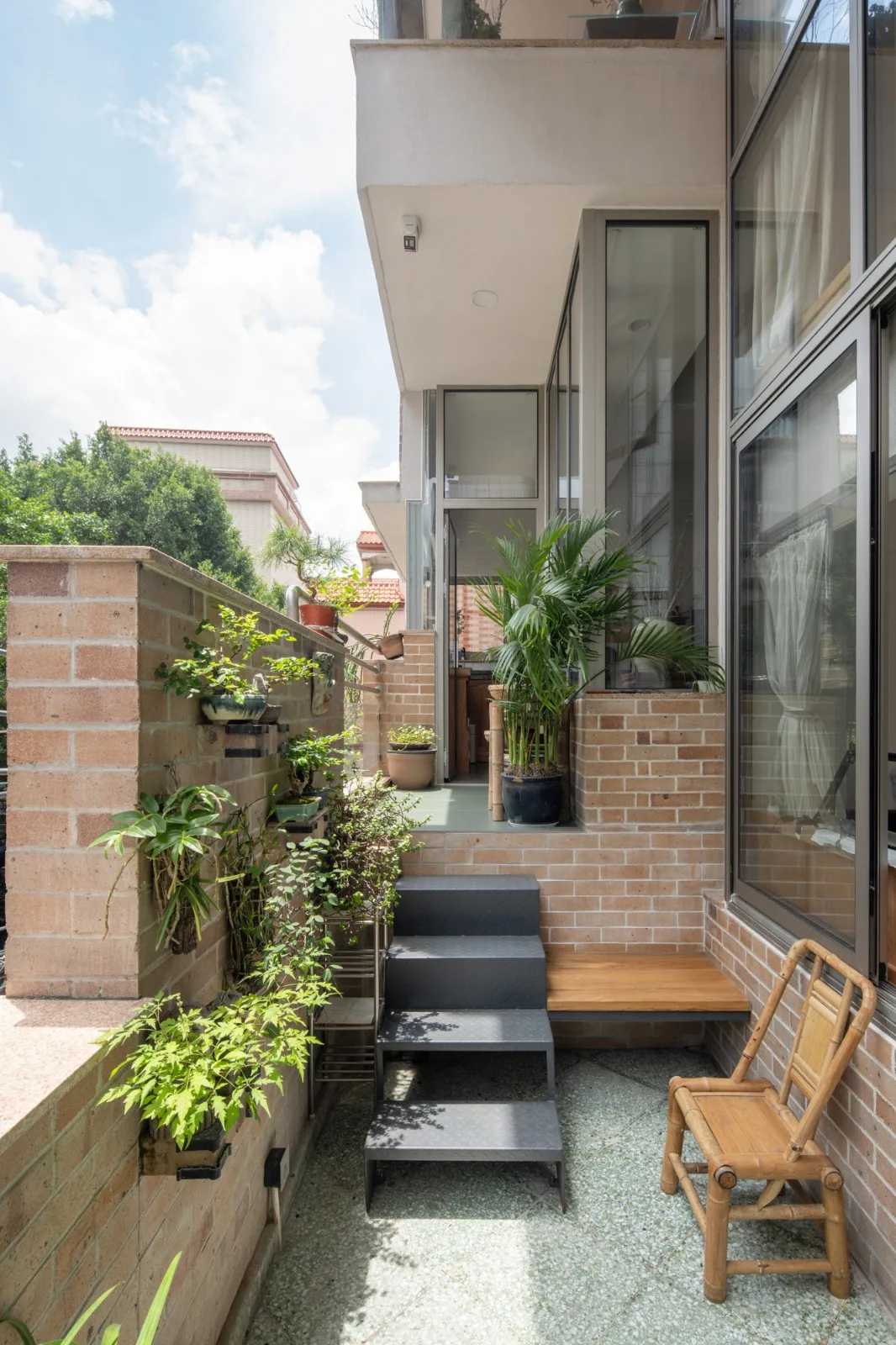
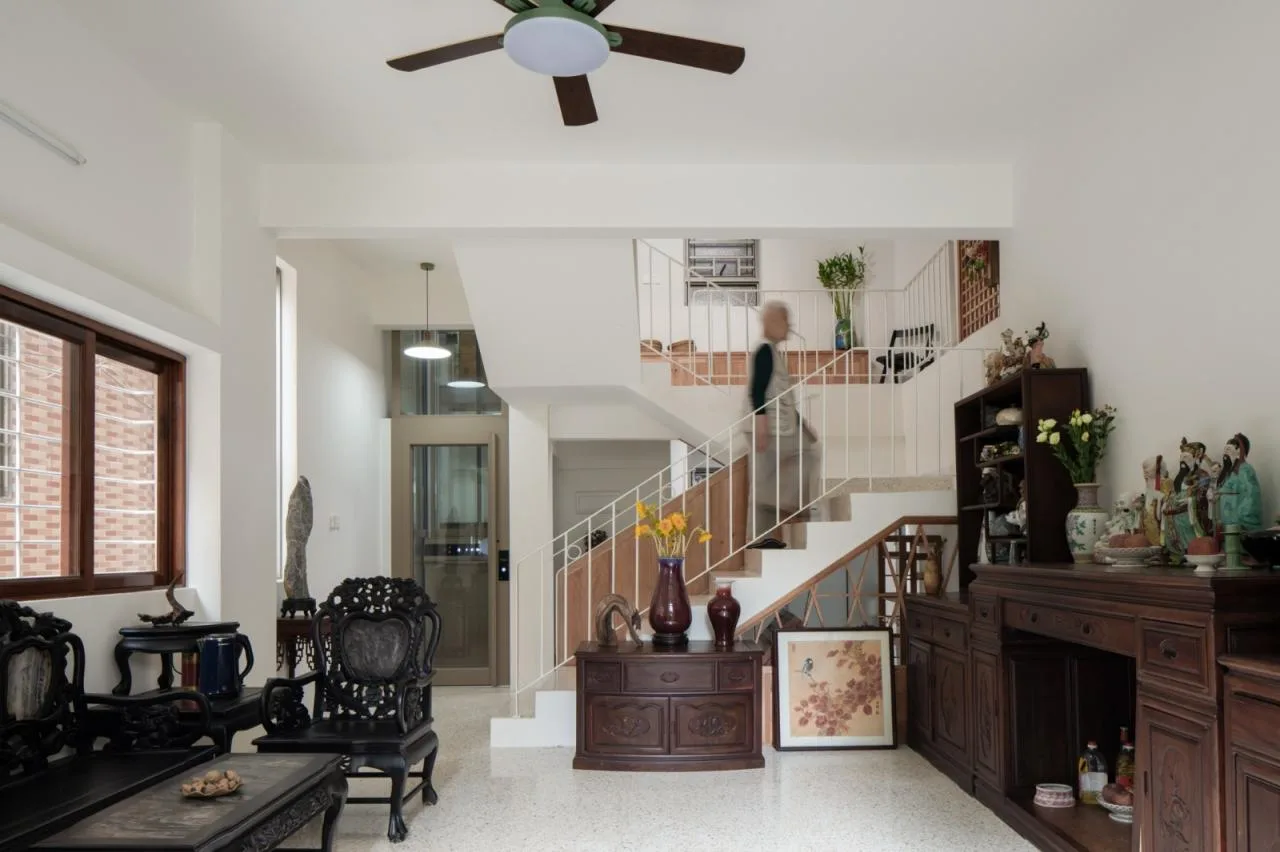
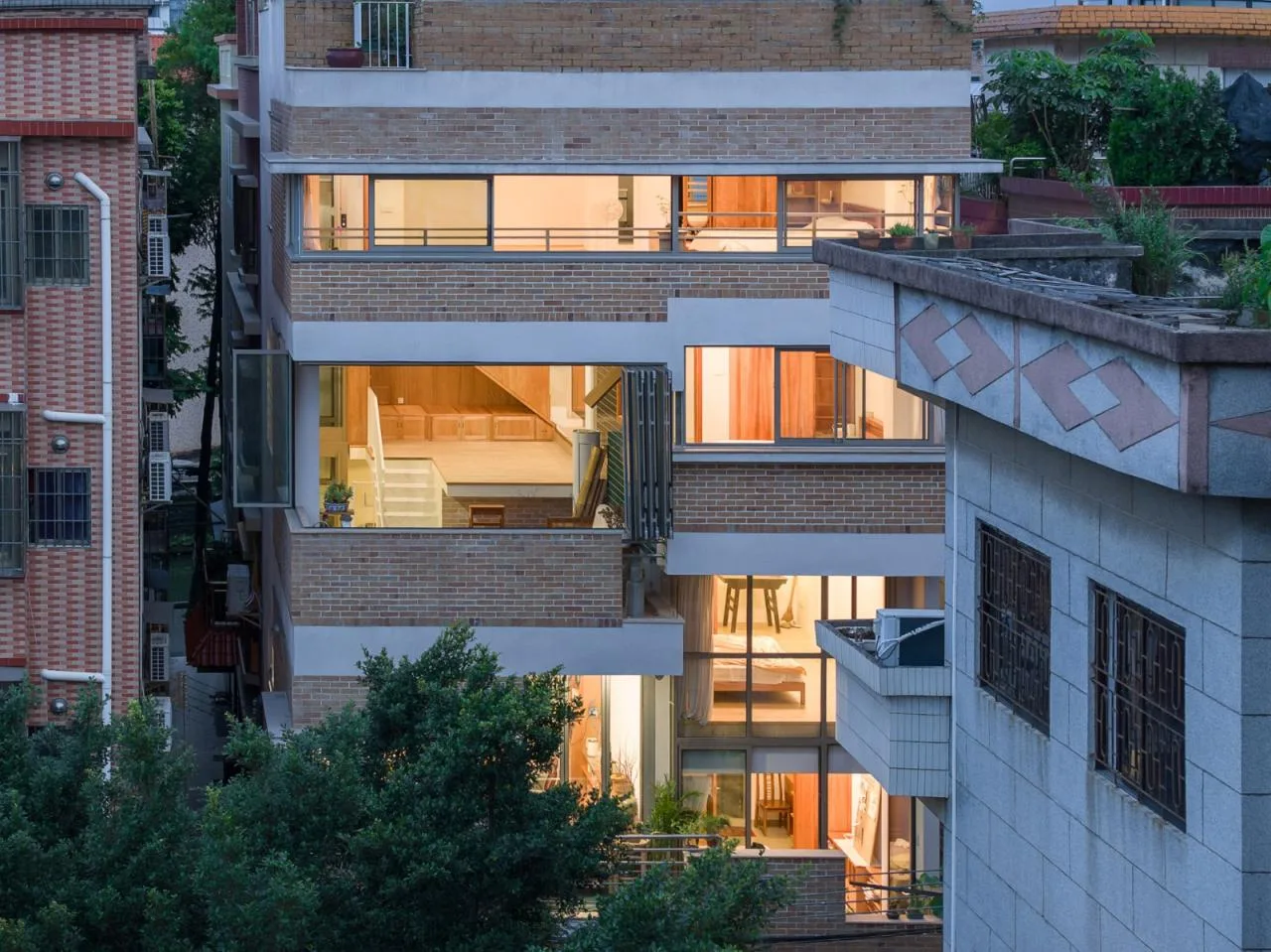
Facade Details (Eighth Line): With the main facade featuring overhangs, elements such as masonry, windows, and floating eaves are unified through horizontal lines, reinforcing the architectural language.
Plan Completion (Ninth Line):
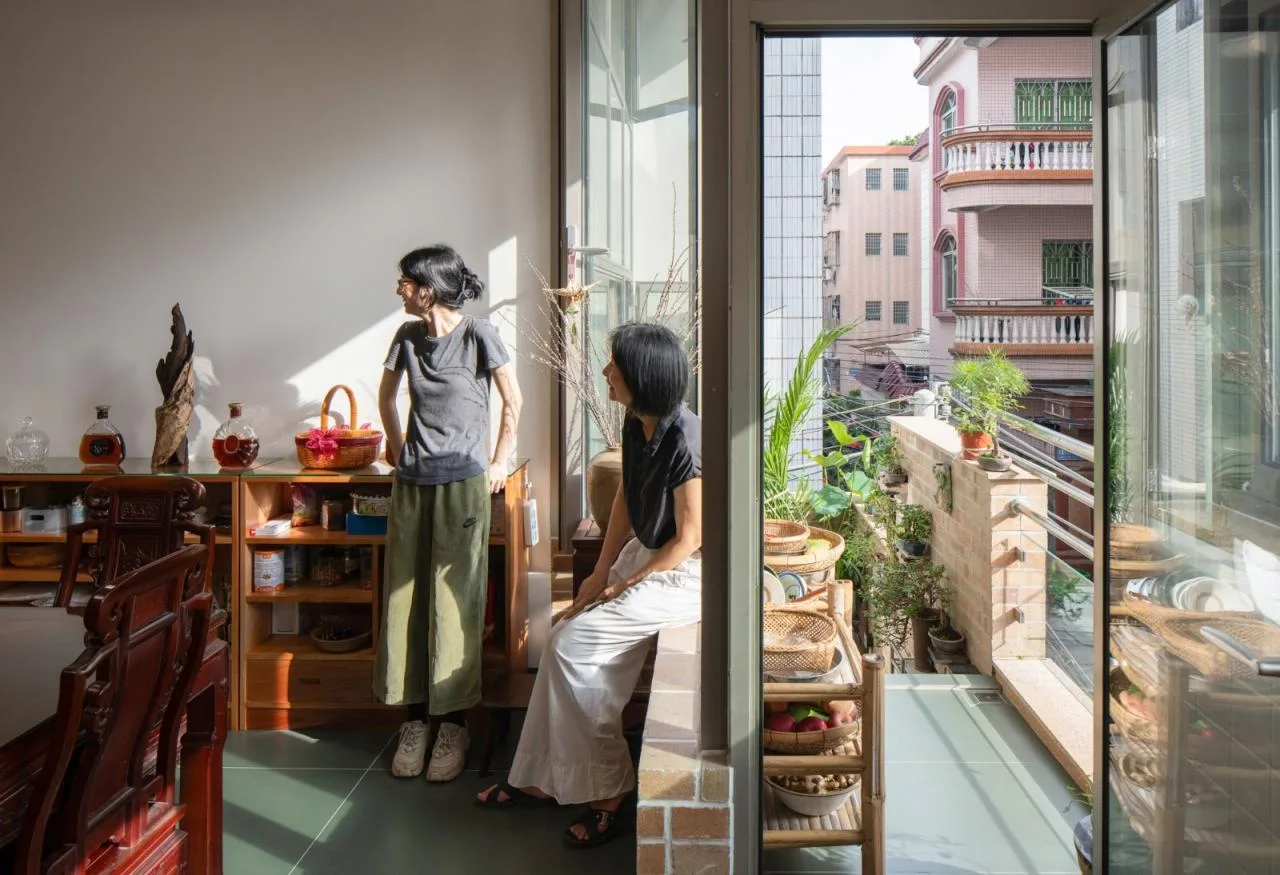
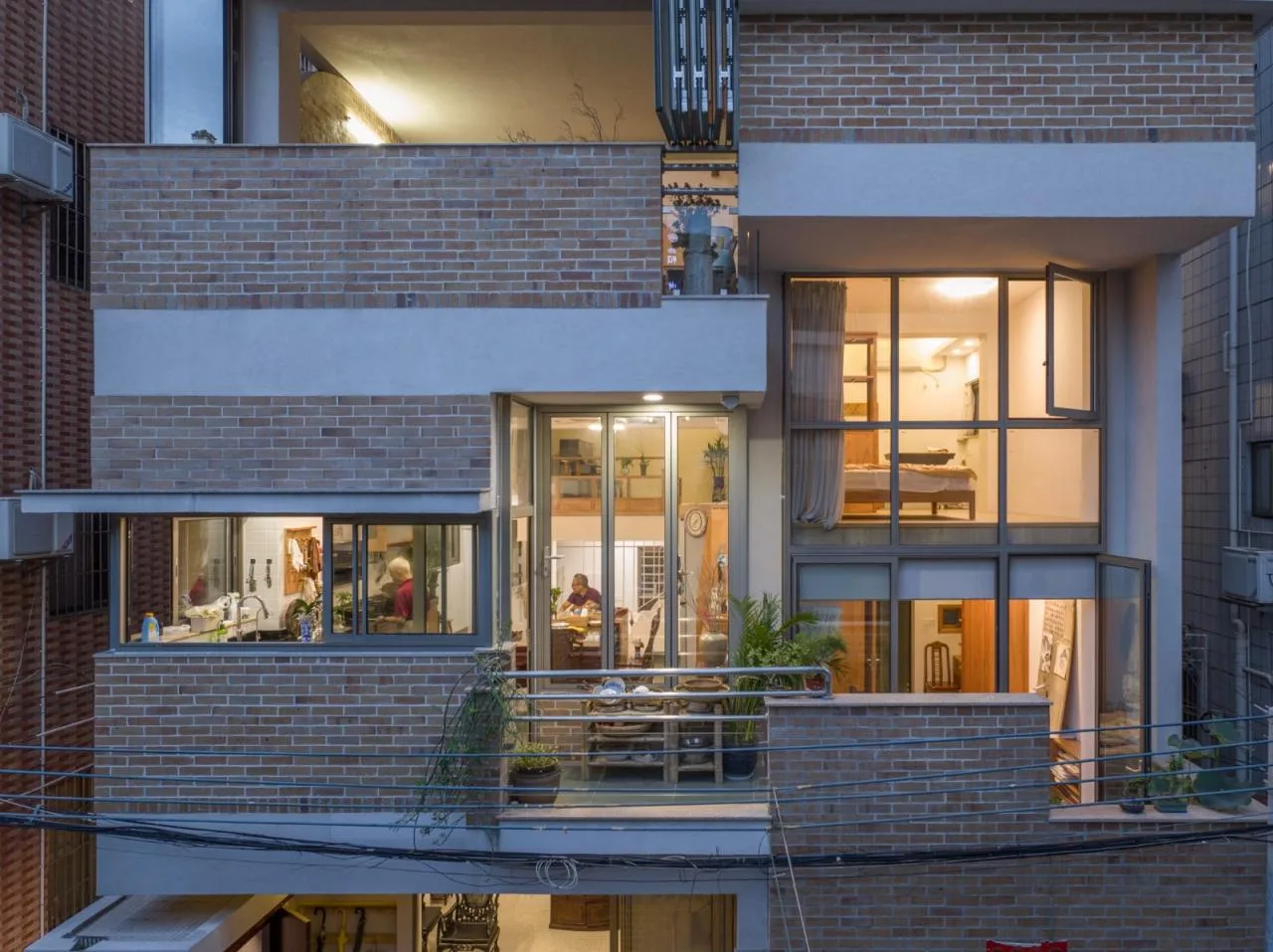
The second floor houses the kitchen and the grandfather’s bedroom. The kitchen and dining area can be viewed from 1.8 meters outside the pocket, while the grandfather’s bedroom opens onto a balcony from the same 1.8-meter overhang, allowing direct access to the kitchen and dining area from outside. A separate drying balcony was added for the grandfather on the west side, also exposing the A3 pillar. This layout often results in the grandfather moving freely throughout the home.
Project Drawings
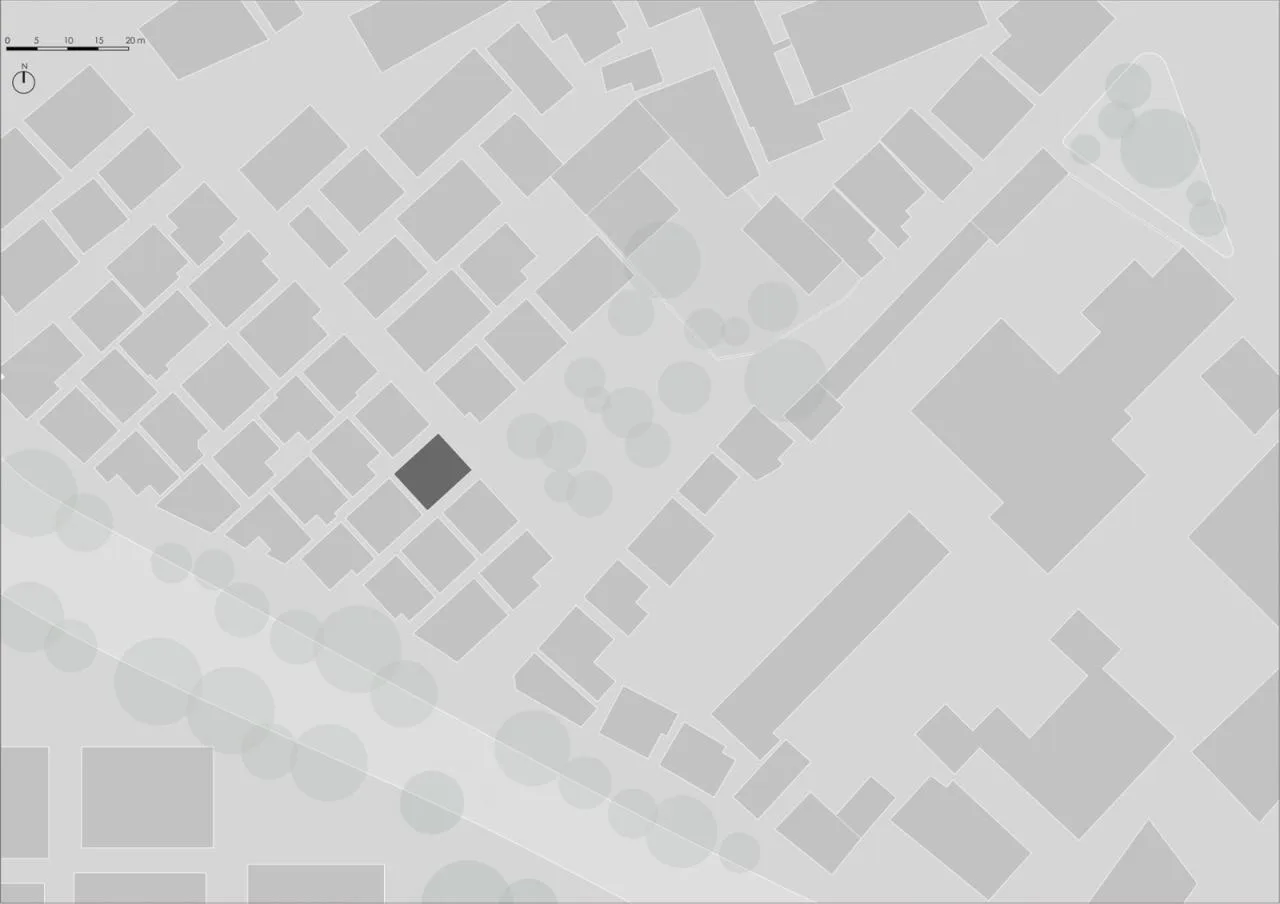
▲ Base schematic diagram
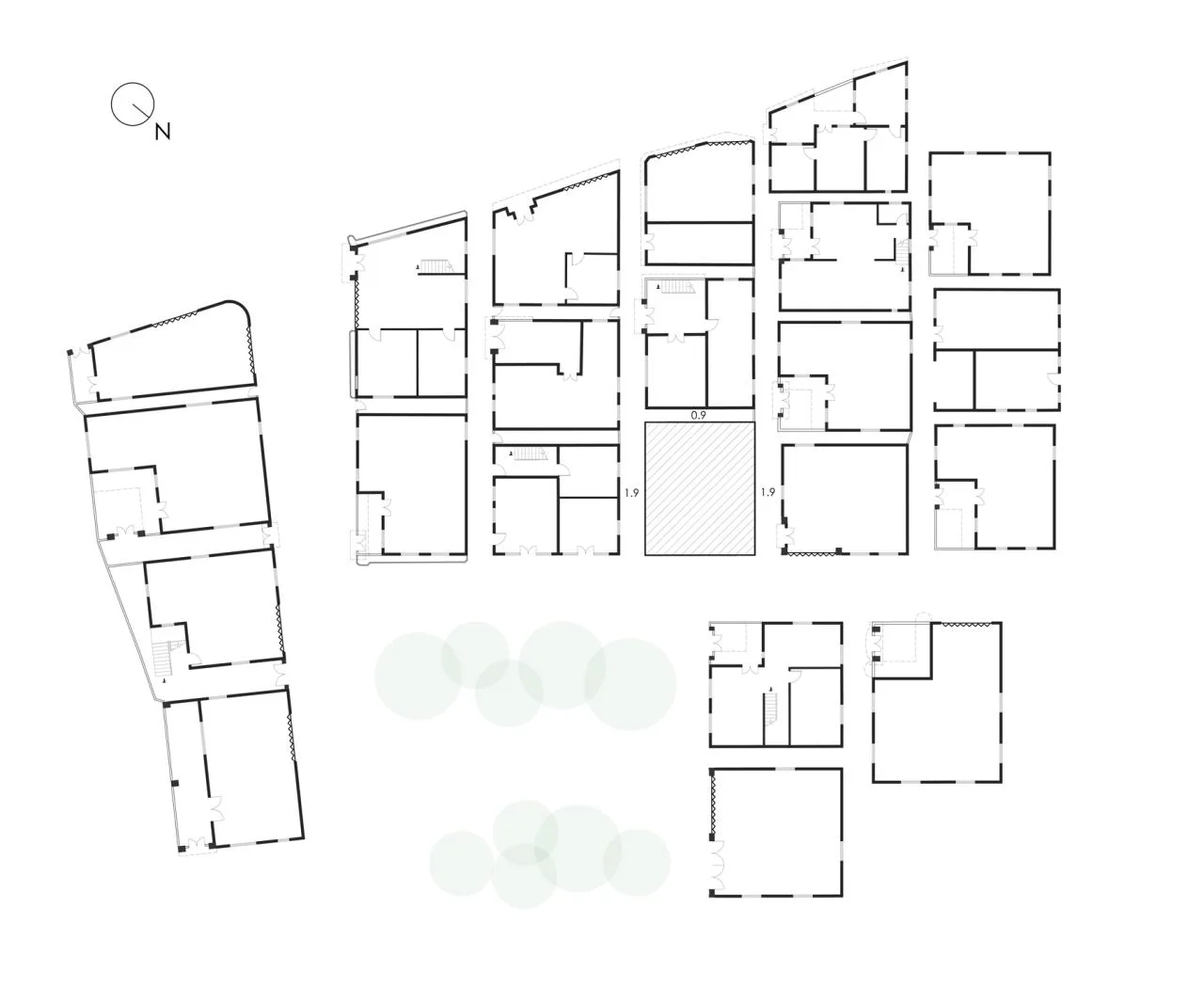
▲ Base location and dimensions
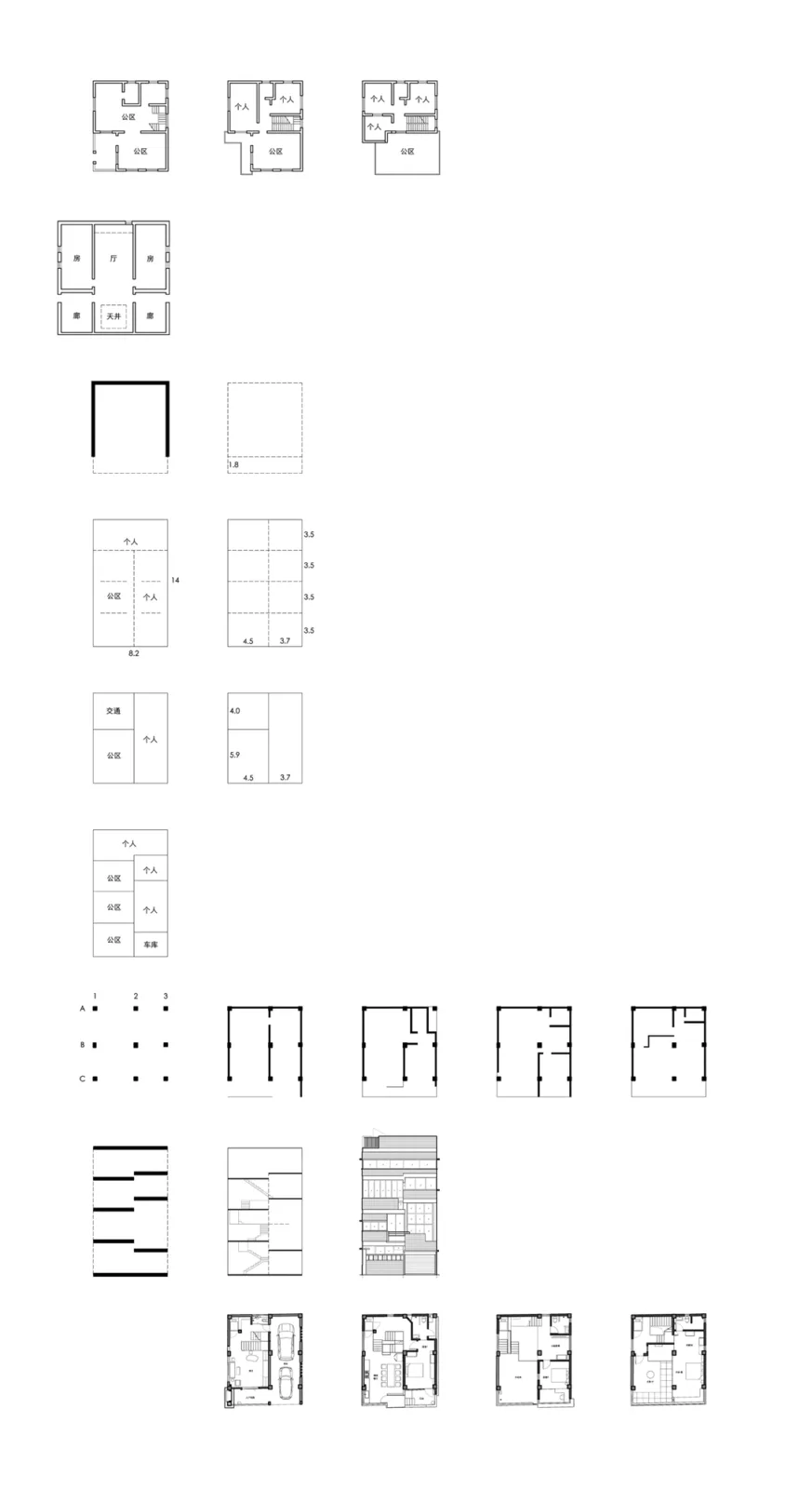
▲ Analysis chart
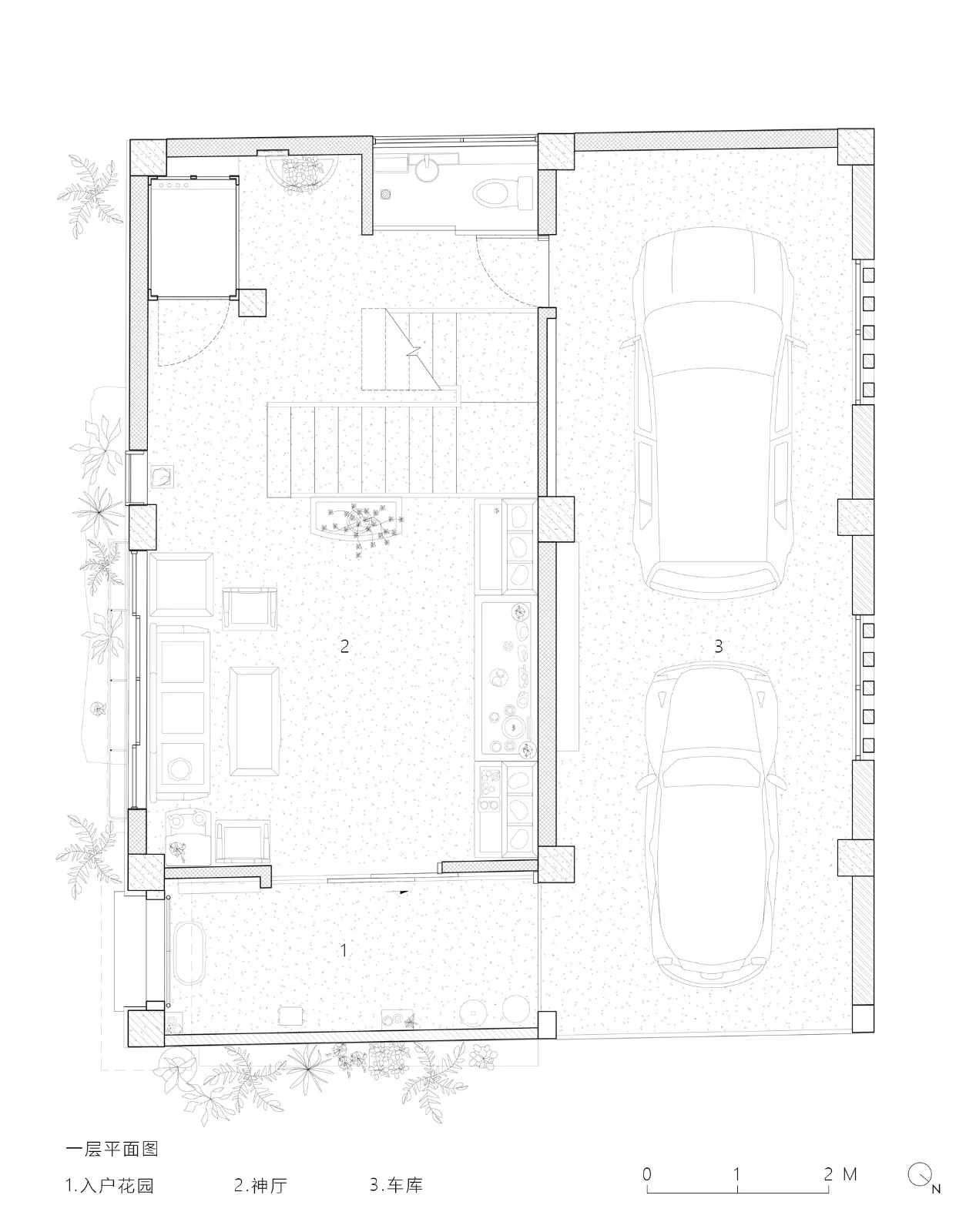
▲ First floor plan
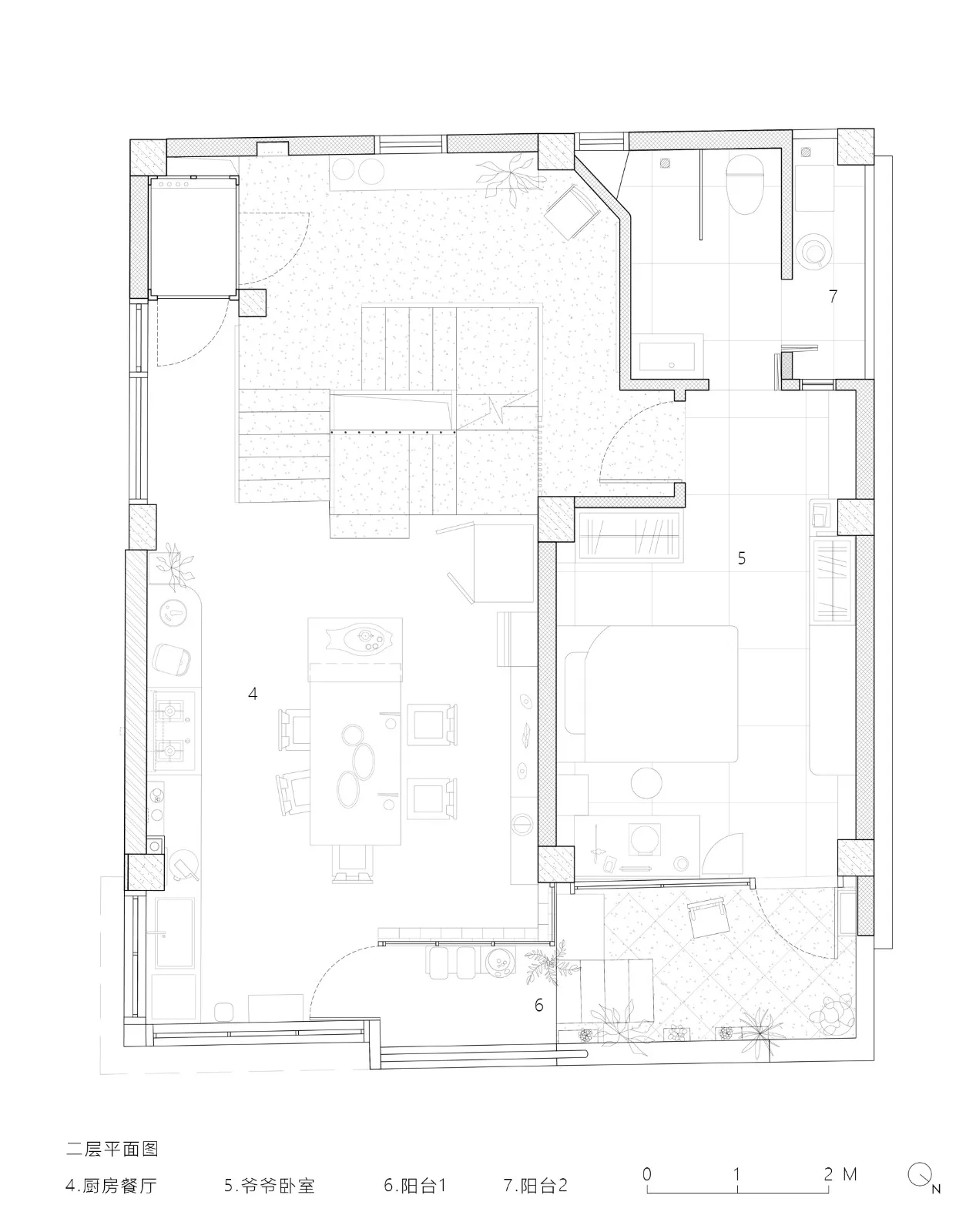
▲ Second floor plan
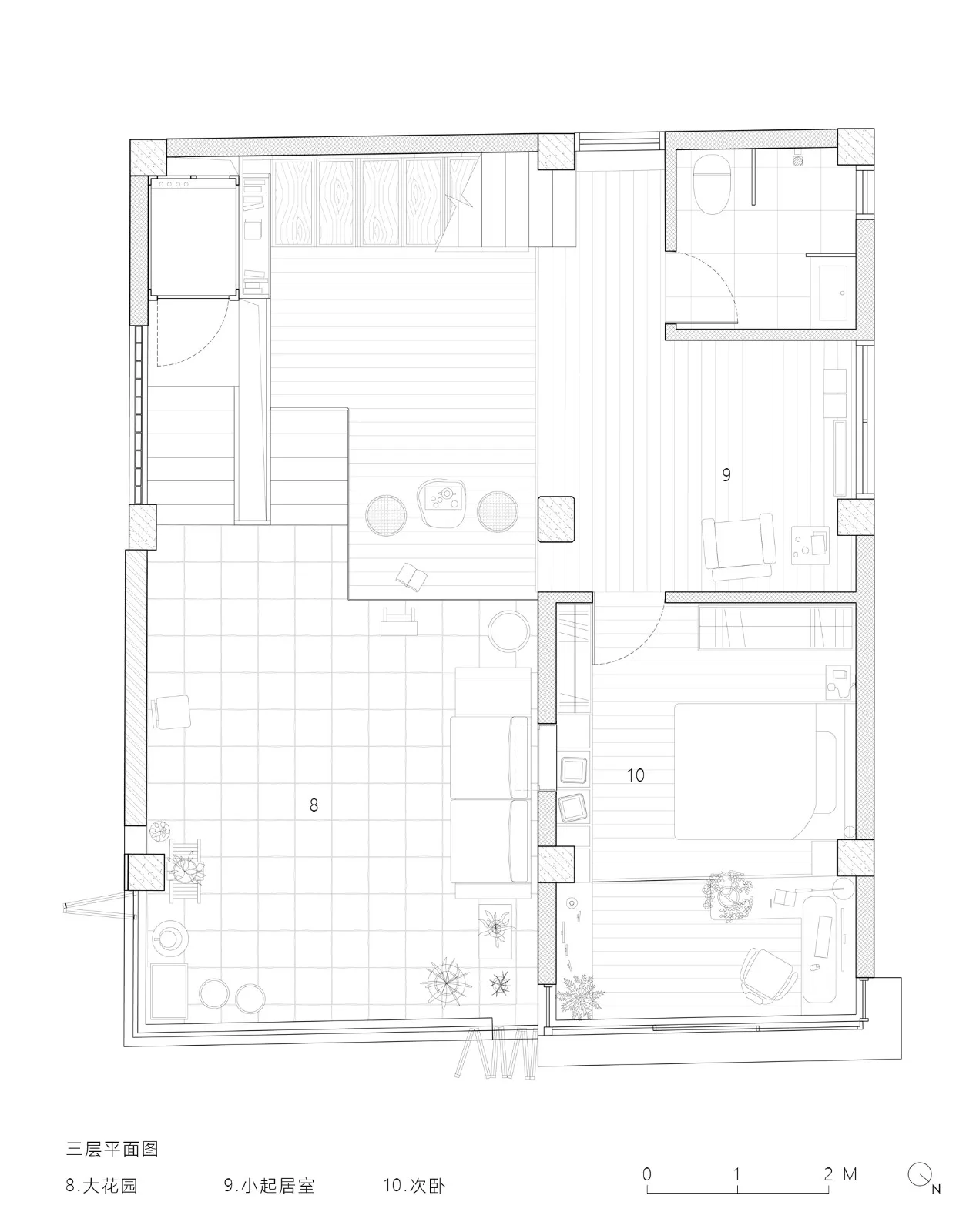
▲ Third floor plan
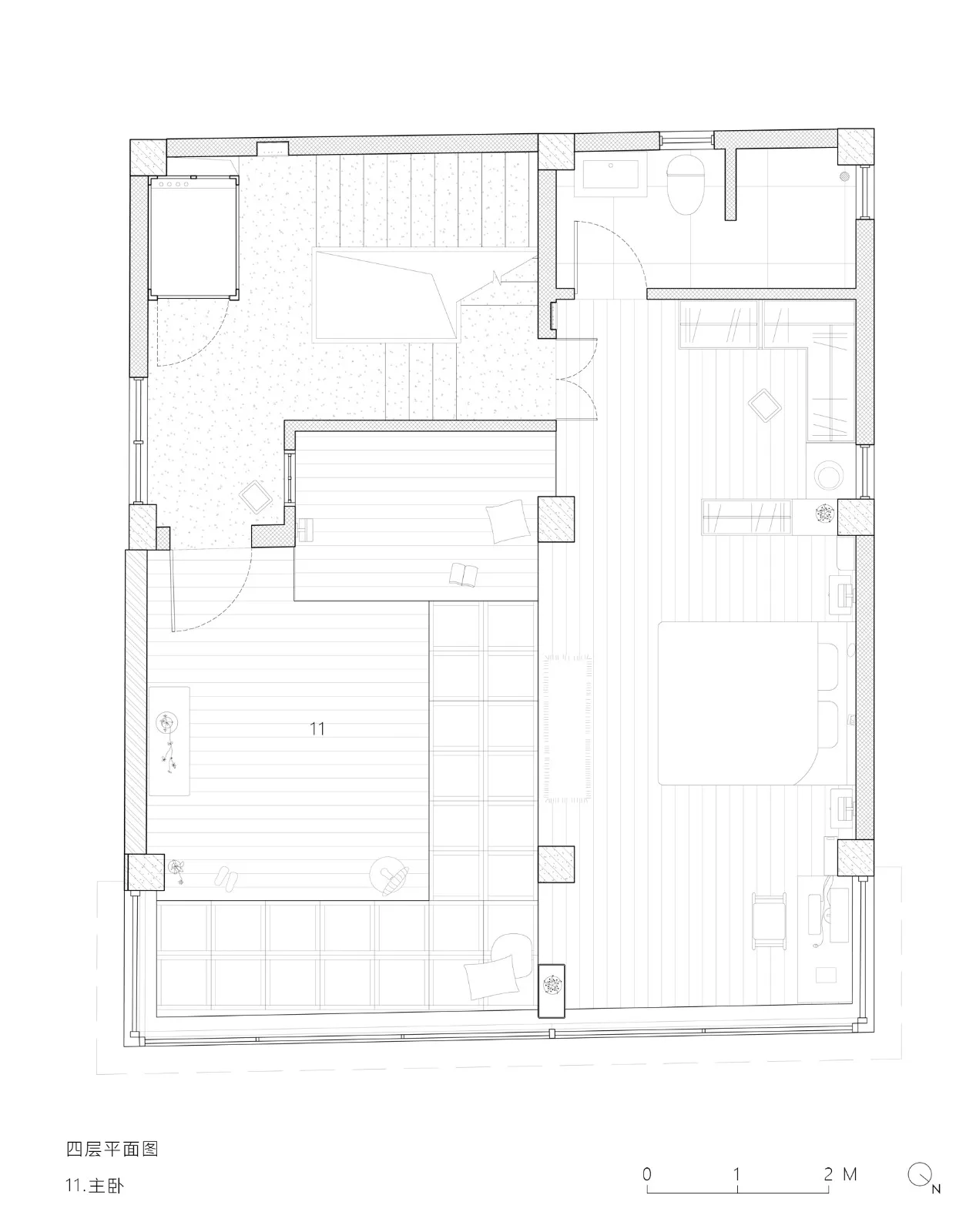
▲ Fourth floor plan
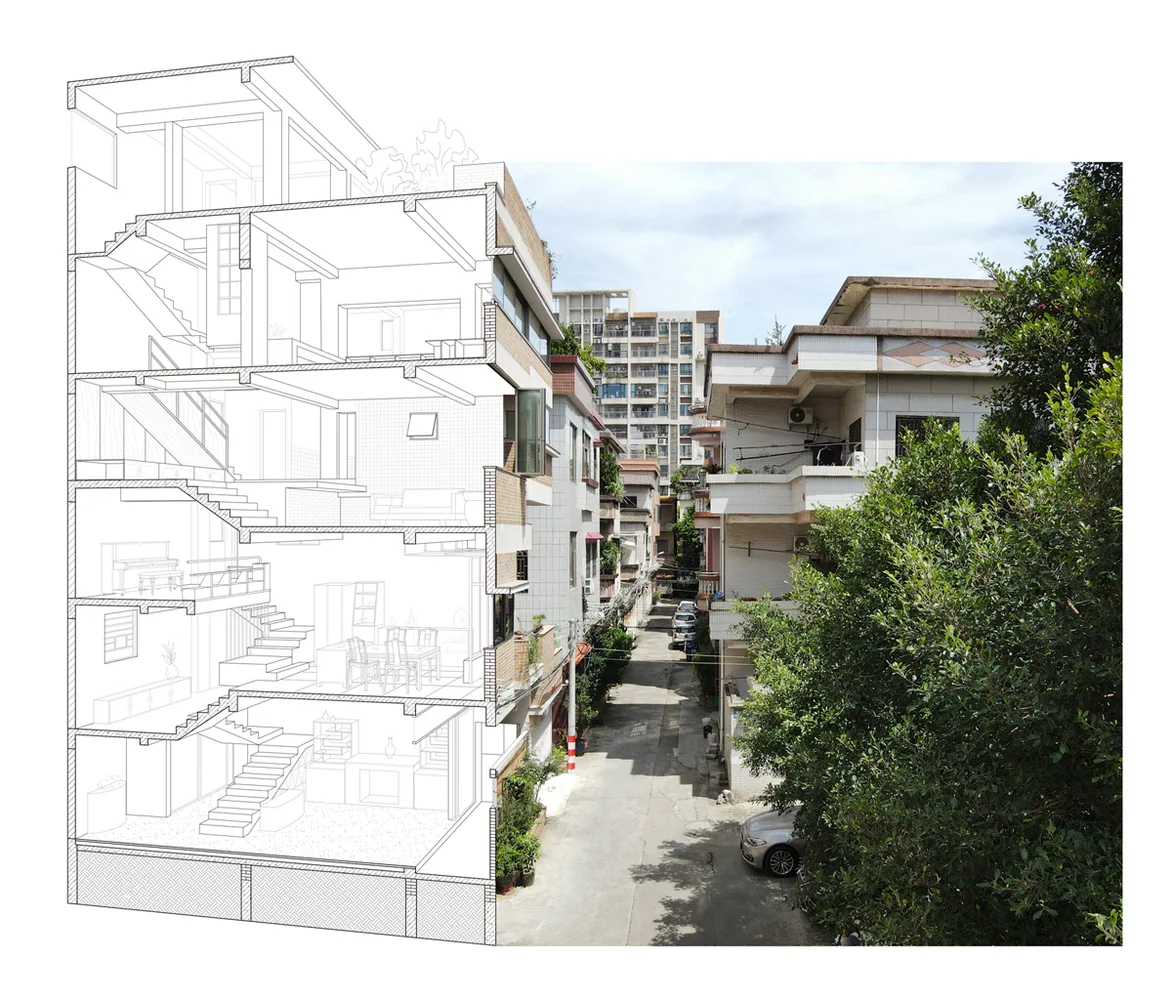
▲ Sectional perspective
Project Details
Architect: Multiple Buildings
Area: 82 m²
Project Year: 2023
Photographer: Wu Siming
Lead Architect: Jin Yuan
Project Architect: Wang Sihong
Design Team: Yang Jiaqi, Yan Yeqi, Chen Li, Ji Shaomin
Chief Engineer: Uncle Guang
Engineering Team: Wengong, OEM
Structural Team: Chen Chaojun, Li Mantang
Lighting Design: Yang Jiaqi, Wang Sihong
Furniture Design: Yang Jiaqi, Wang Sihong
Collaborators: Cotton Brother (Woodwork), Mr. Cui (Clear Water Brick Wall), Hui Ge (Electrician), Ming Ge (Plumber), Zhang Ruihua (Water & Electricity), Lin Changmin (Water & Electricity), Water Brother (Wooden Flooring), Xi Ge (Terrazzo), Mr. Li (Plaster), Chen Gong (Doors & Windows), Li Gong (Ironwork), Ming Ge (Floral Arrangement)
Guest Image Review Guide: Mi Xiao
Owners: Ming Ge, Lan Jie
Elevator: Xibaisi
Wind and Heat Simulation Analysis: Xu Zhejia
Location: Foshan













Must log in before commenting!
Sign Up