
Midea Heyou Hospital, founded by Midea Holdings, is situated in the Shunde District of Foshan City, Guangdong Province, at the heart of the Guangdong-Hong Kong-Macao Greater Bay Area. Listed as a key construction project in Guangdong Province in 2021, the hospital has been rapidly developed since November 13, 2020, adhering to the highest domestic tertiary hospital standards and international quality certification systems. It officially opened its doors on June 28, 2024.
Serving as a medical hub for the city and surrounding regions, Heyou Hospital has shifted from a traditional “treatment-centered” model to a “health-centered” approach. It is a comprehensive, large-scale tertiary medical complex designed to serve the entire population across all life stages and medical disciplines.
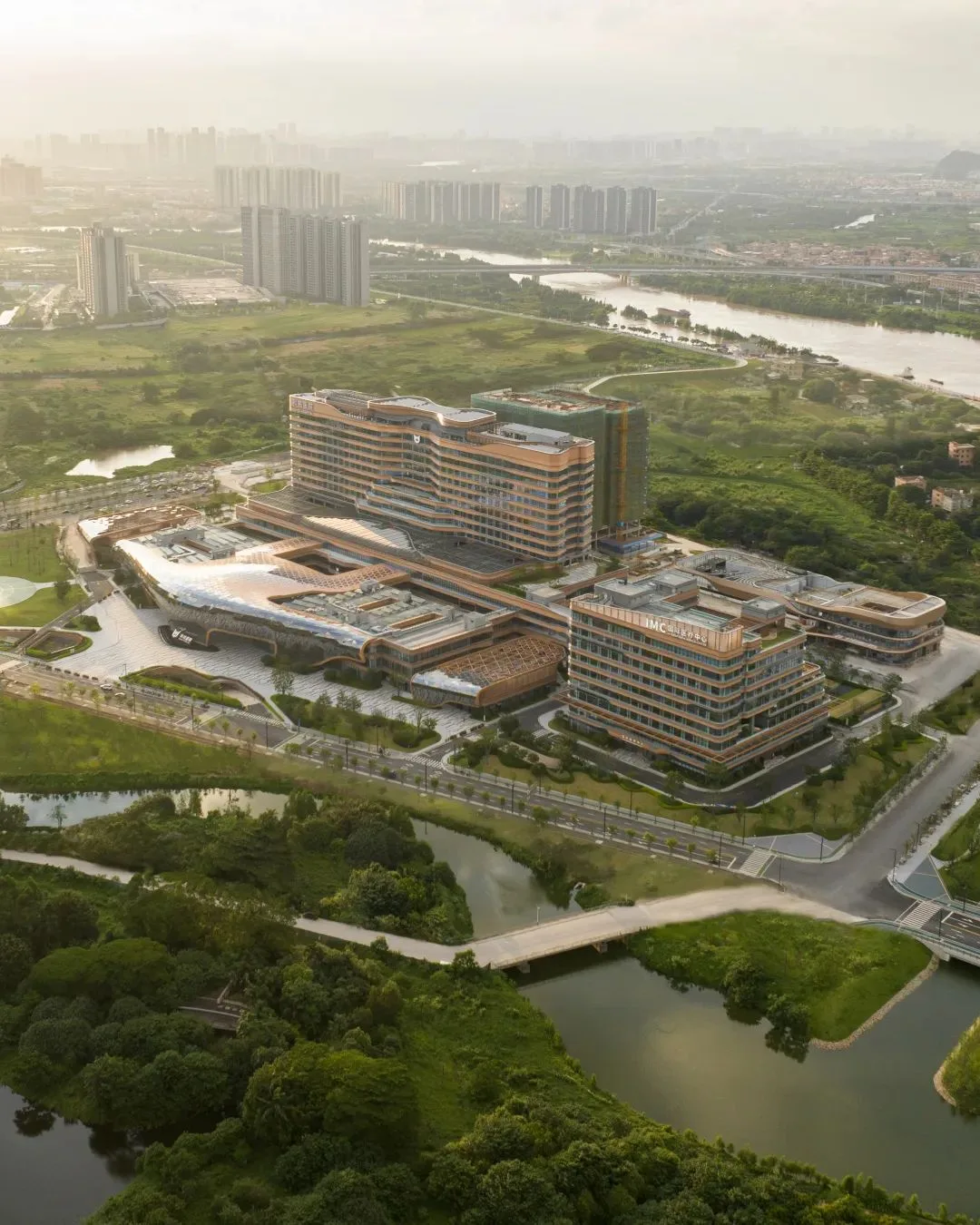
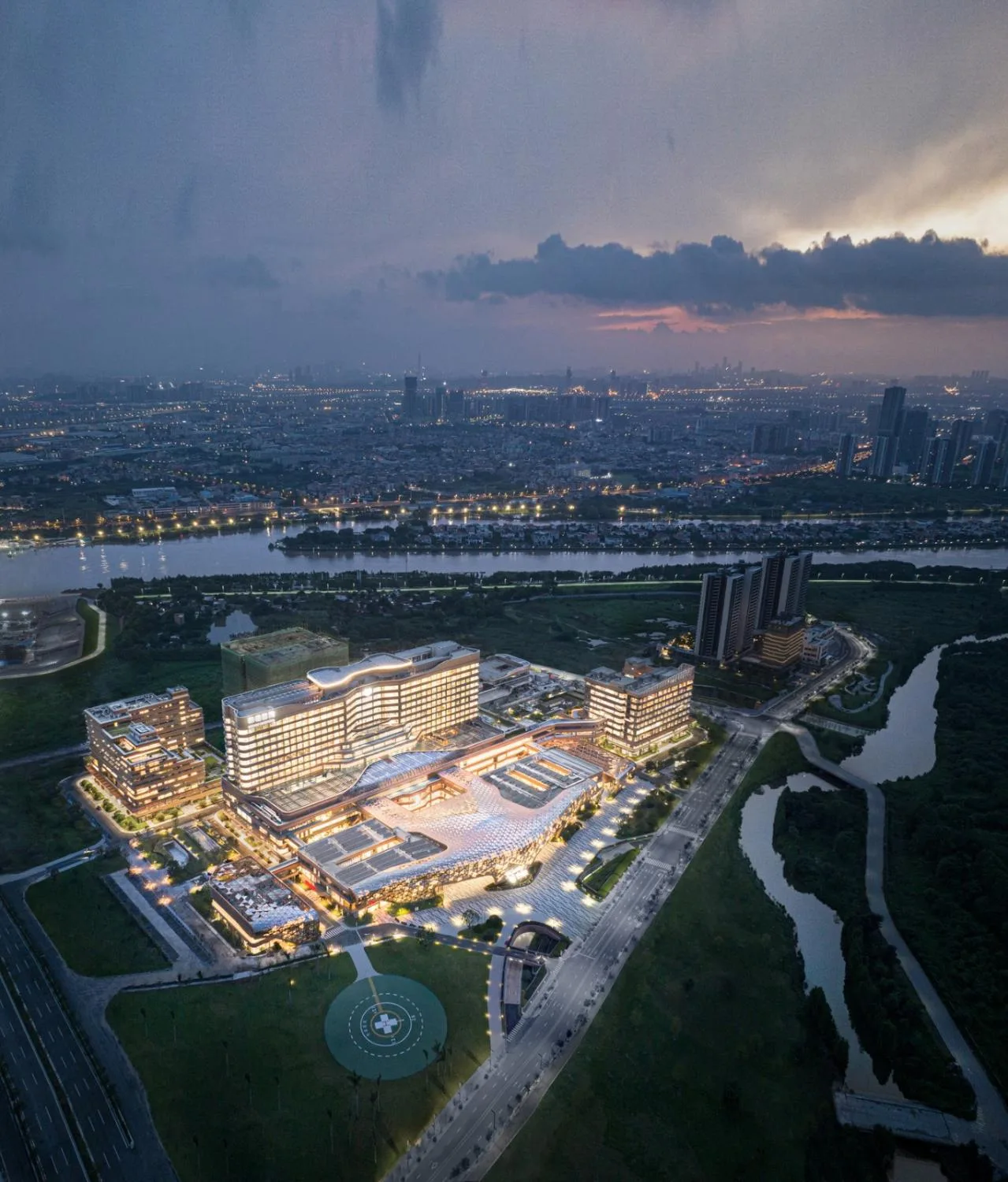
Regional, cultural, and artistic influences inspire the design, allowing the buildings to naturally emerge from the urban context.
Heyou Hospital was crafted by the top-tier UK-based design team, Jiedian International Architectural Design Co., Ltd., embracing the concept of a garden-style hospital to establish a green, eco-friendly, and smart medical benchmark.
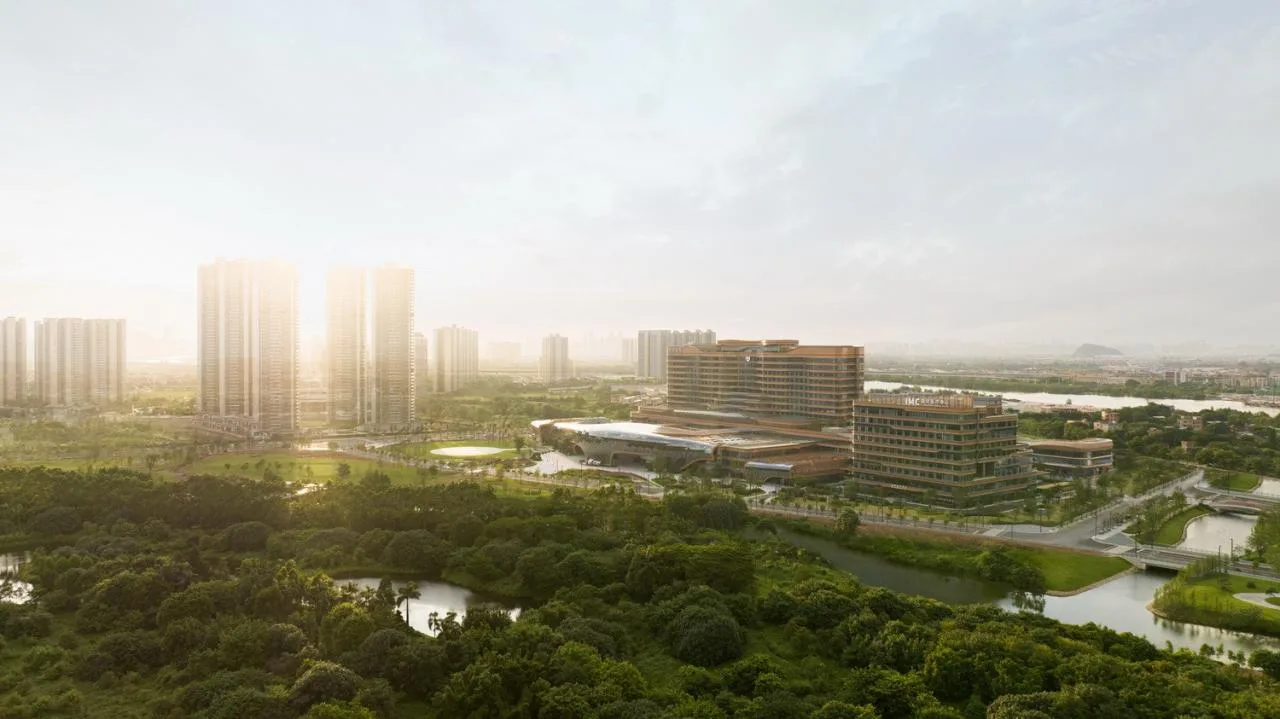
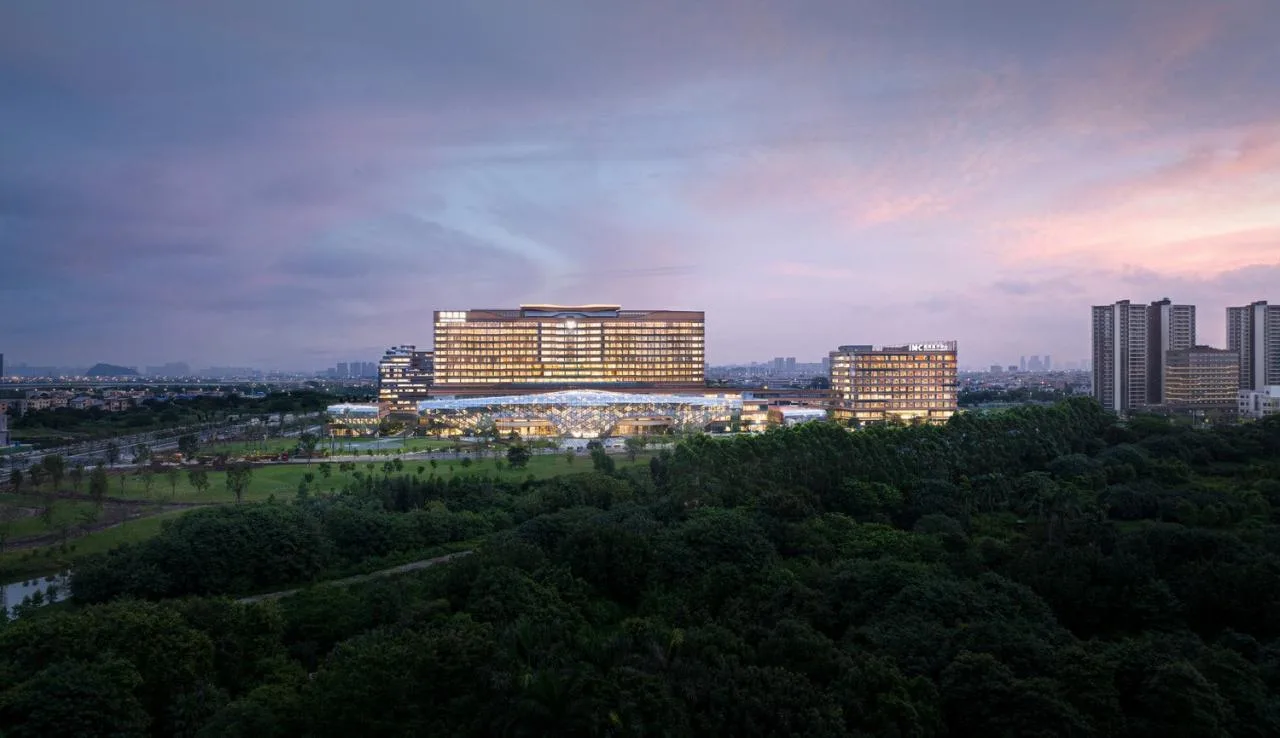
The project’s chief architect, Bai Yu, explained: “The design inspiration stems from Shunde’s ancient Lingnan water town, characterized by intersecting rivers. We envisioned a garden-style hospital that harmonizes with nature. Nurturing and growth are the most beautiful themes found in nature. Our goal was to let the building emerge organically from its site and blend seamlessly into the natural environment, capturing the essence of the design’s original intent.”
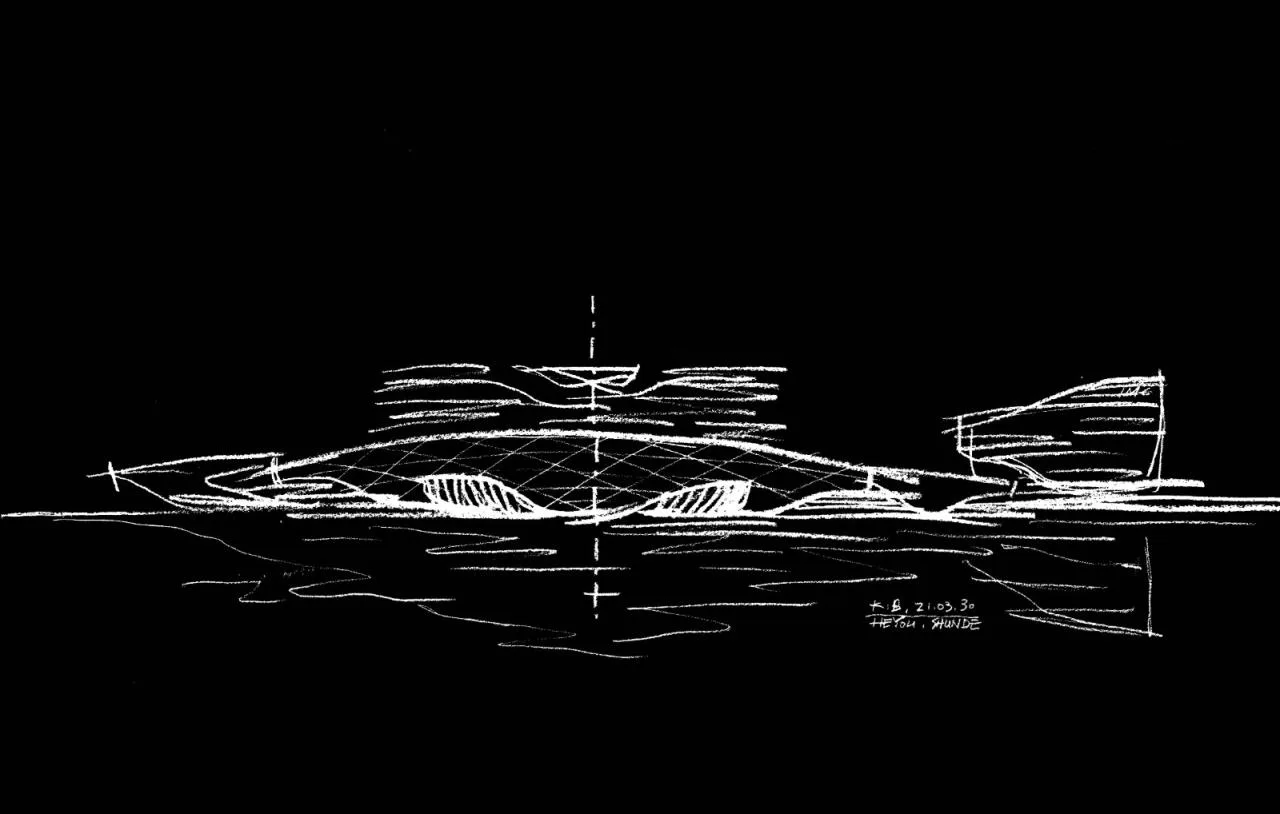
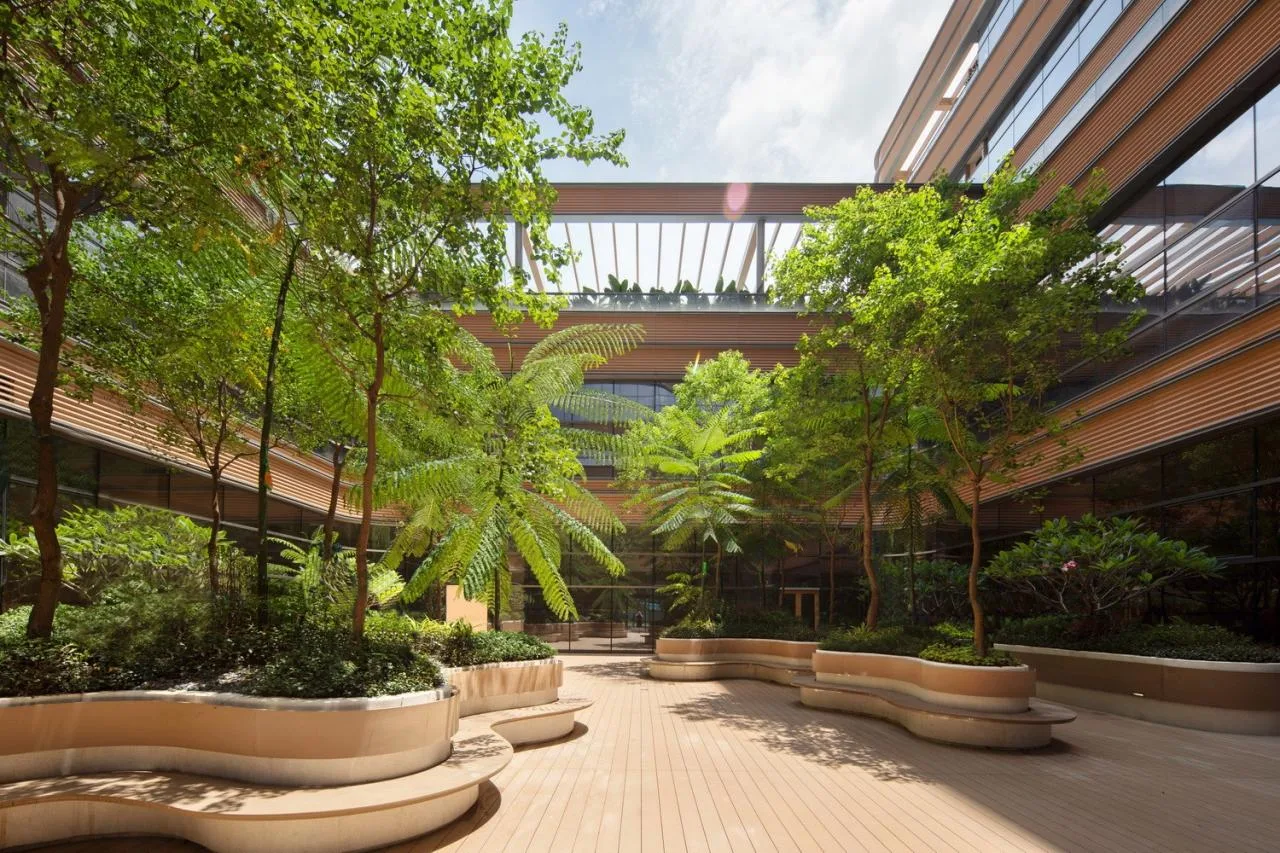
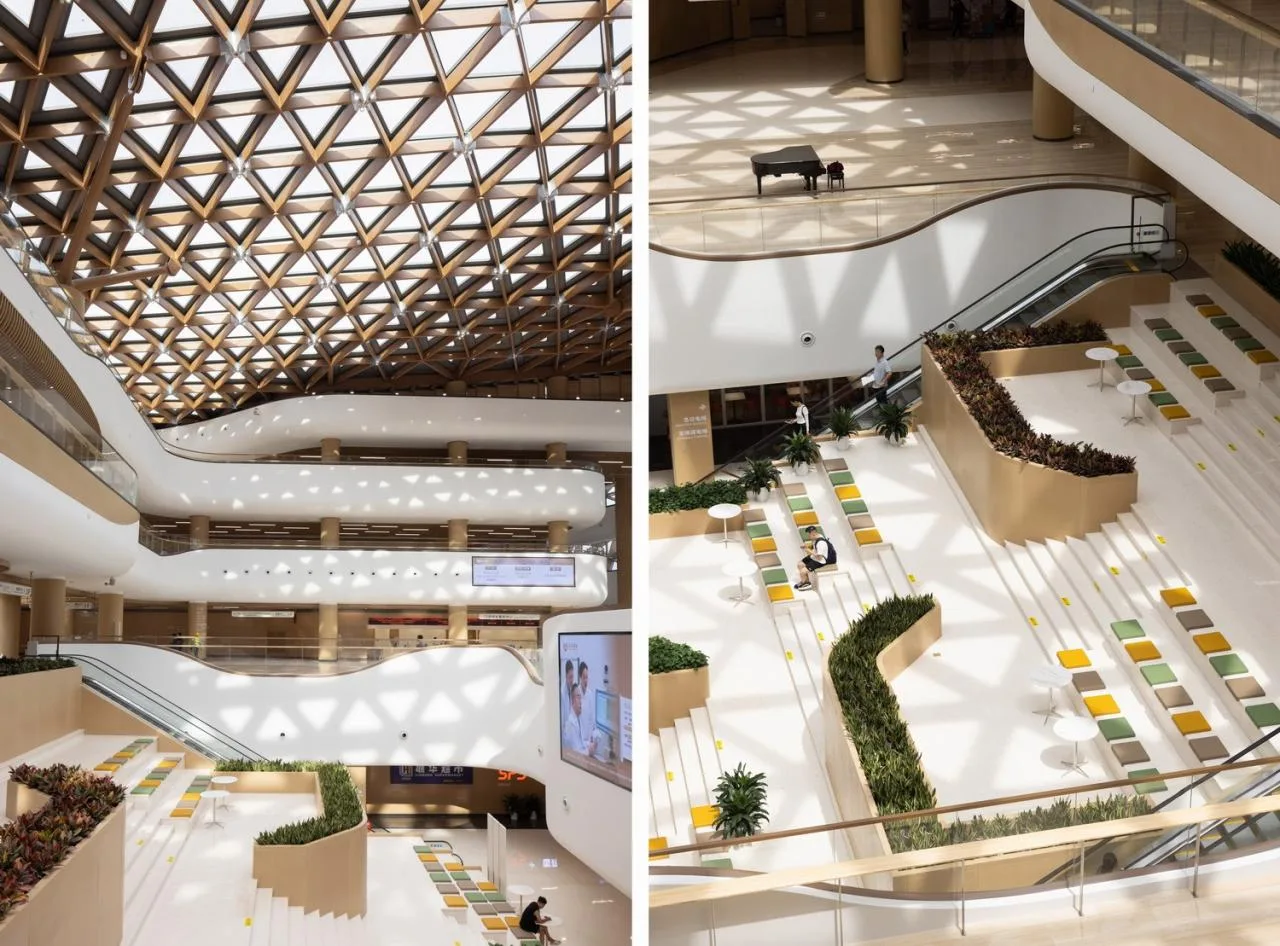
The hospital’s interior and exterior spaces engage in a dialogue with Shunde’s landscape paintings, creating an emotional and culturally resonant atmosphere.
Embracing technological sophistication in architecture, the British high-tech design team delivered refined design and implementation guidance.
Just as Midea is dedicated to innovation, excellence, and harmony, the architecture aims to reflect the company’s spirit and set a benchmark for technological and intelligent healthcare.
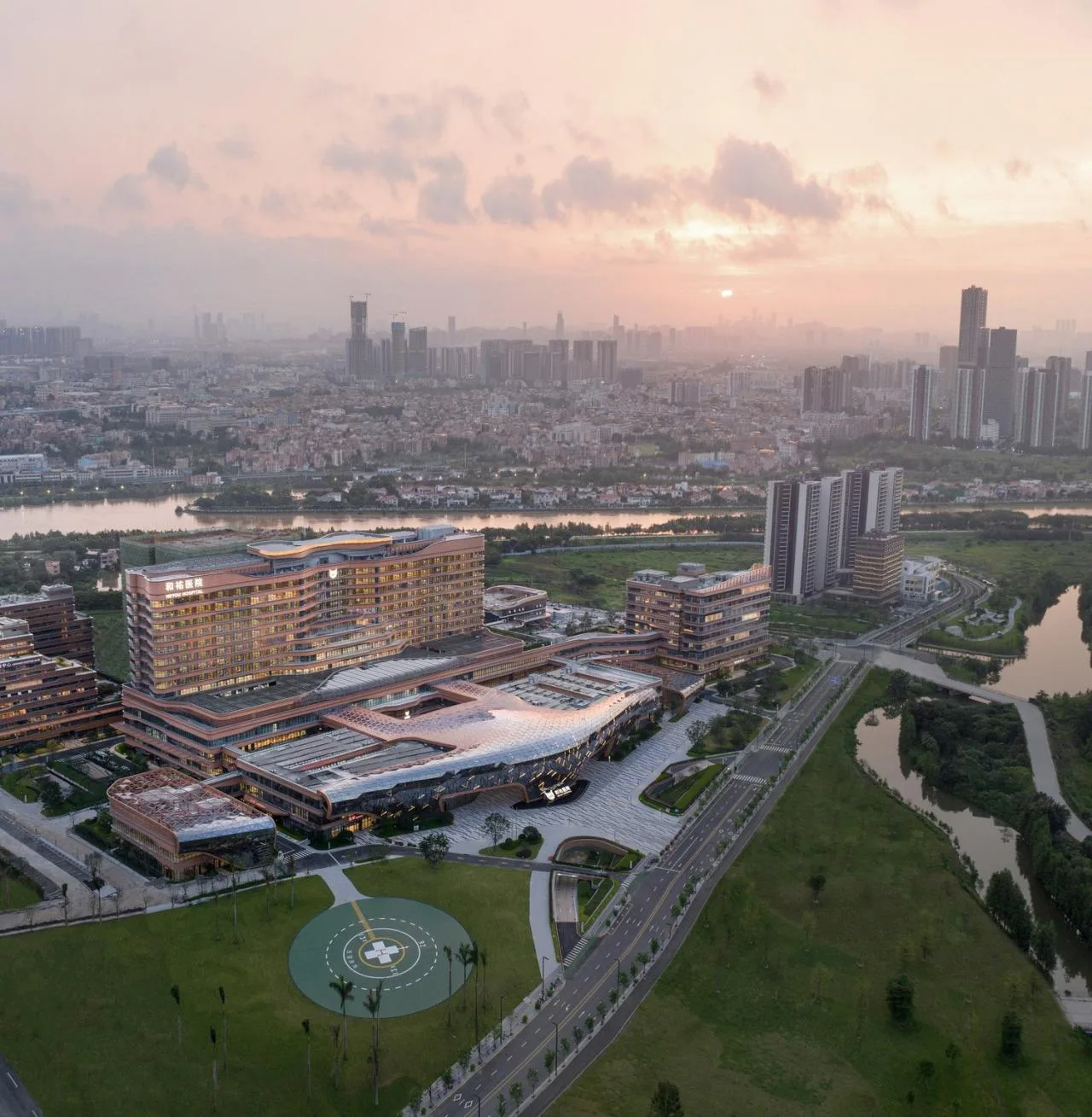
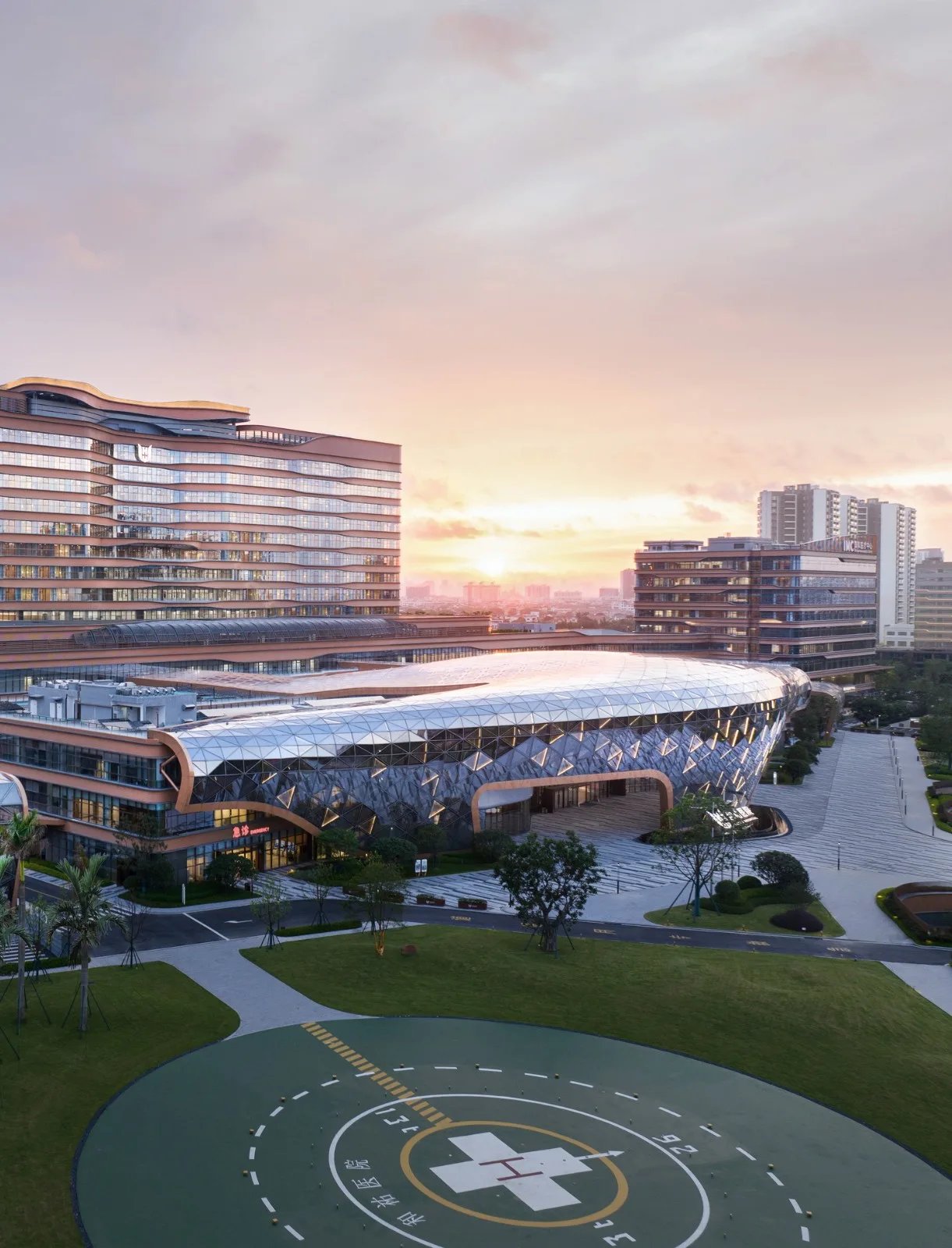
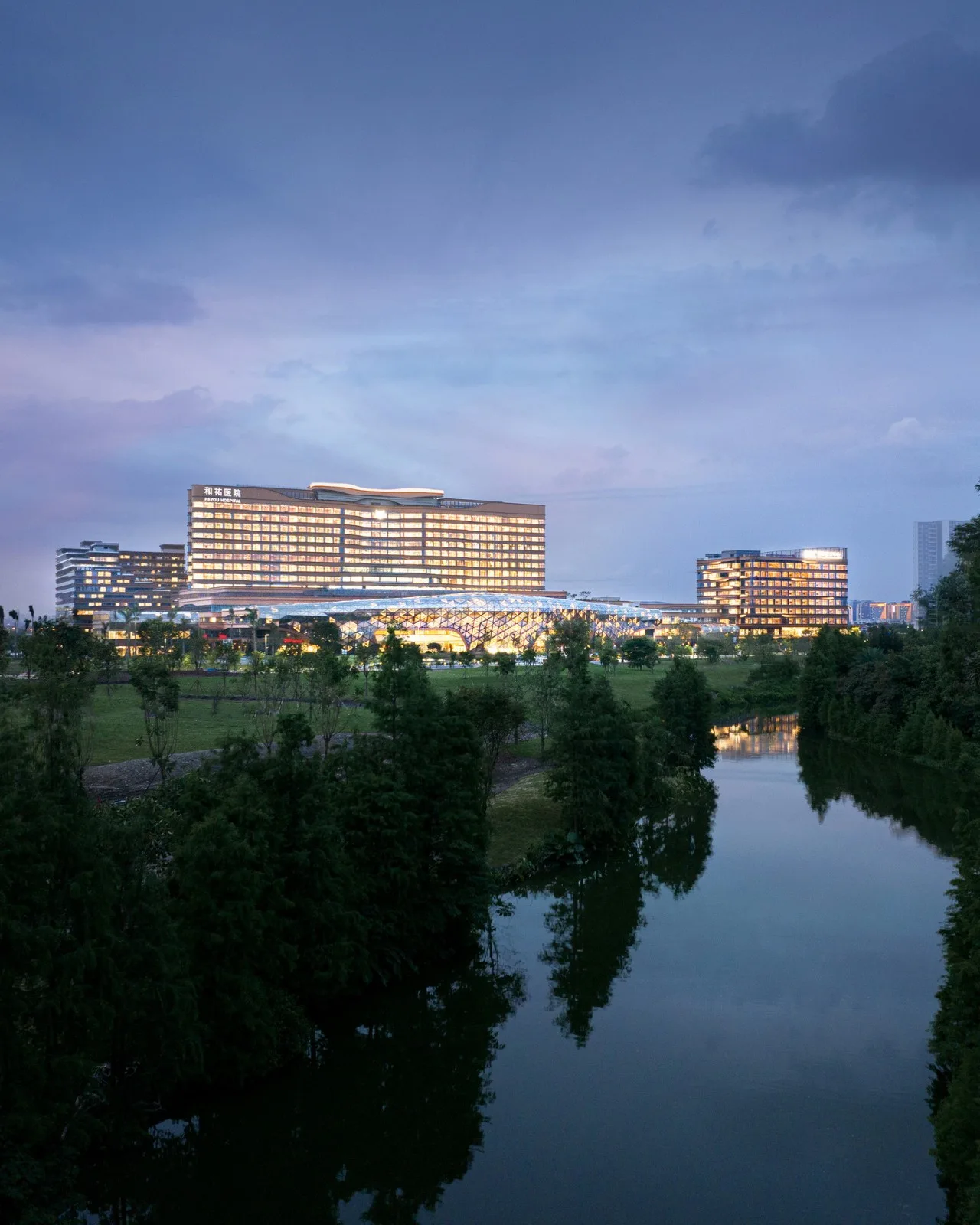
The main façade flows along the winding waterway on the south side, rising gradually in a pure, transparent, and natural manner that responds to the unique site context.
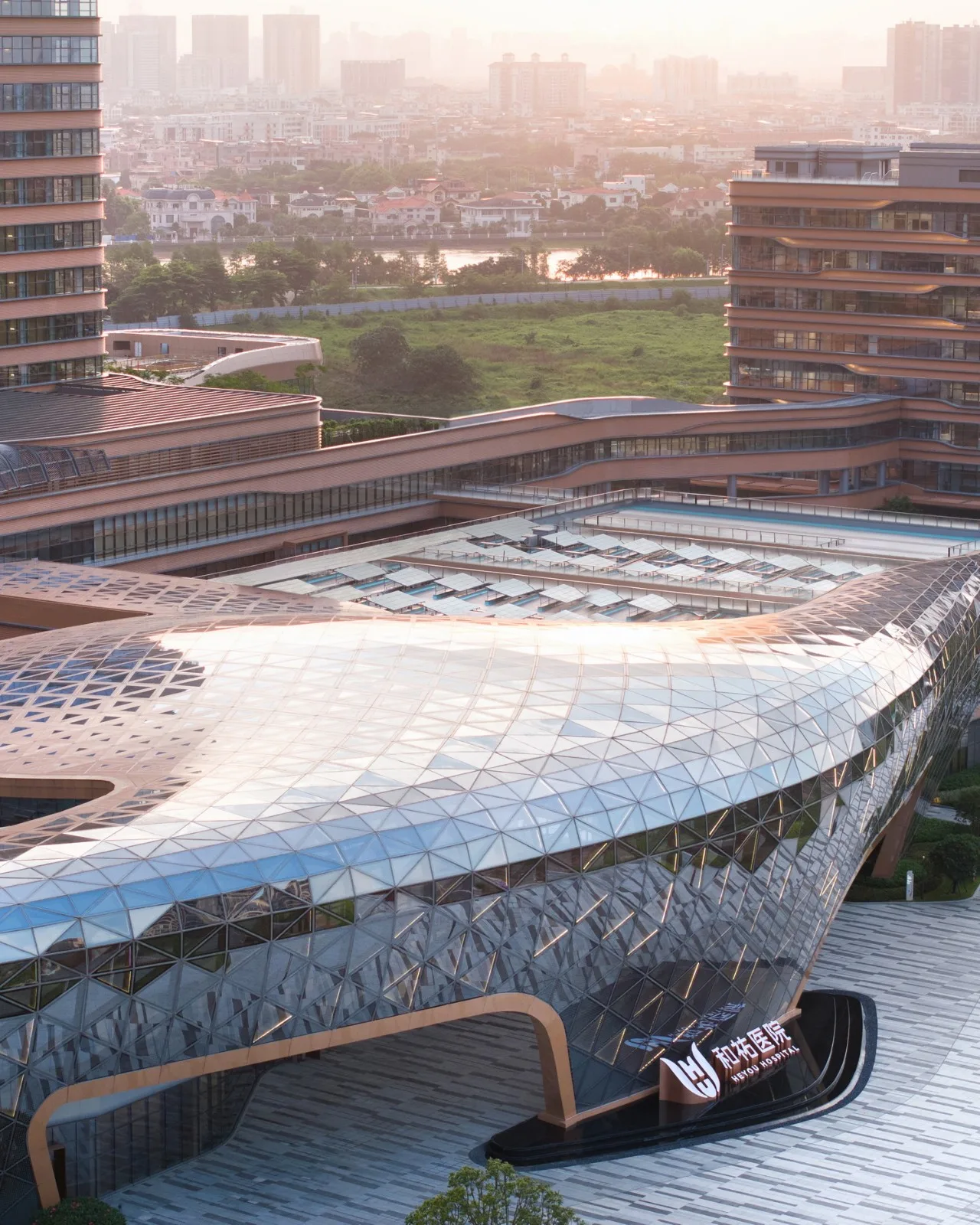
The façade uses a high-tech spatial mesh shell construction method, emphasizing a futuristic aesthetic while maximizing visual impact and technological appeal. This distinctive appearance makes the hospital easily recognizable and serves as a unique architectural icon in the medical and healthcare sector.
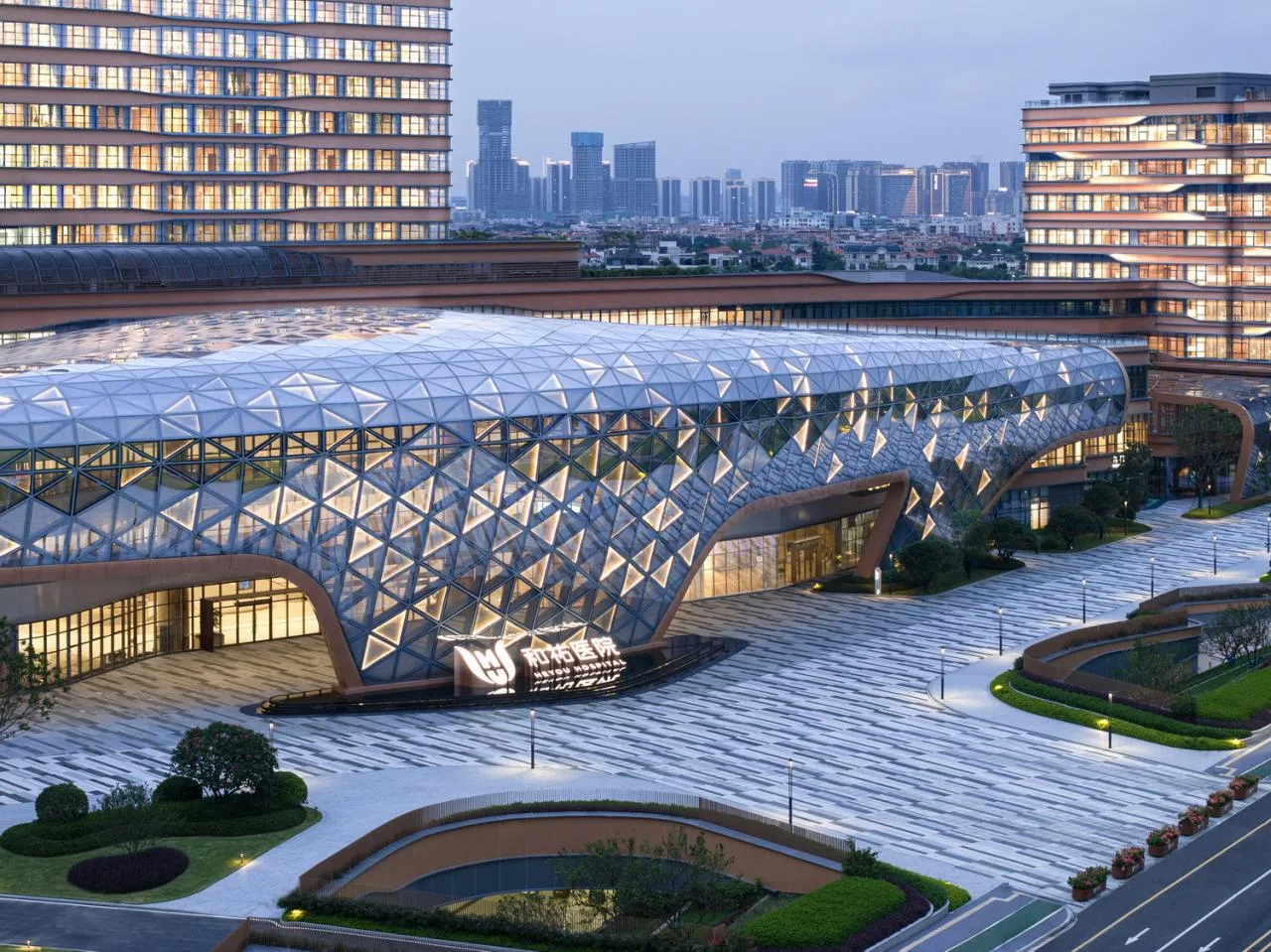
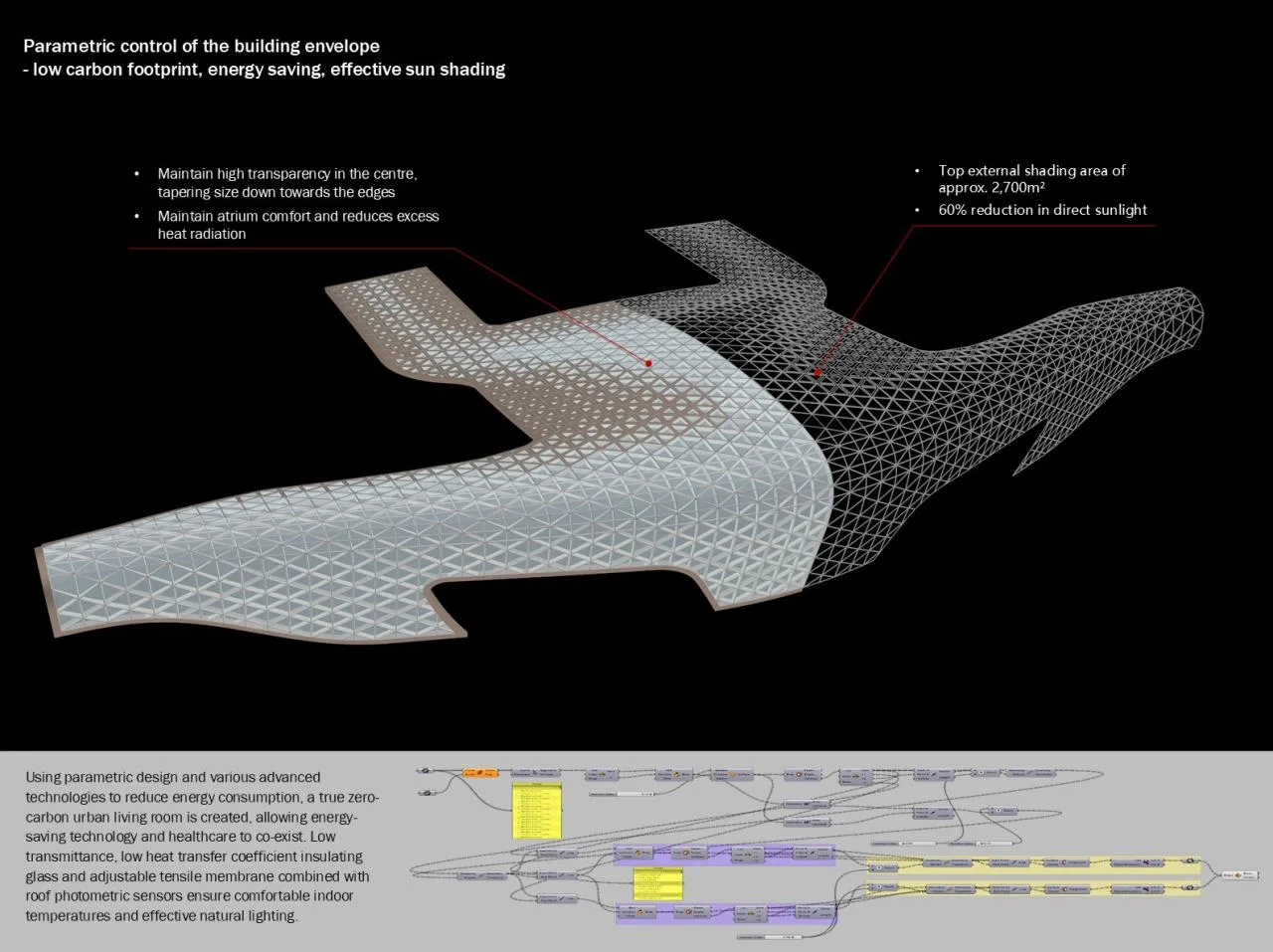
Using parametric design and advanced technologies from both domestic and international sources, the hospital reduces energy consumption to create a true zero-carbon, energy-saving urban oasis where sustainable technology and healthcare coexist.
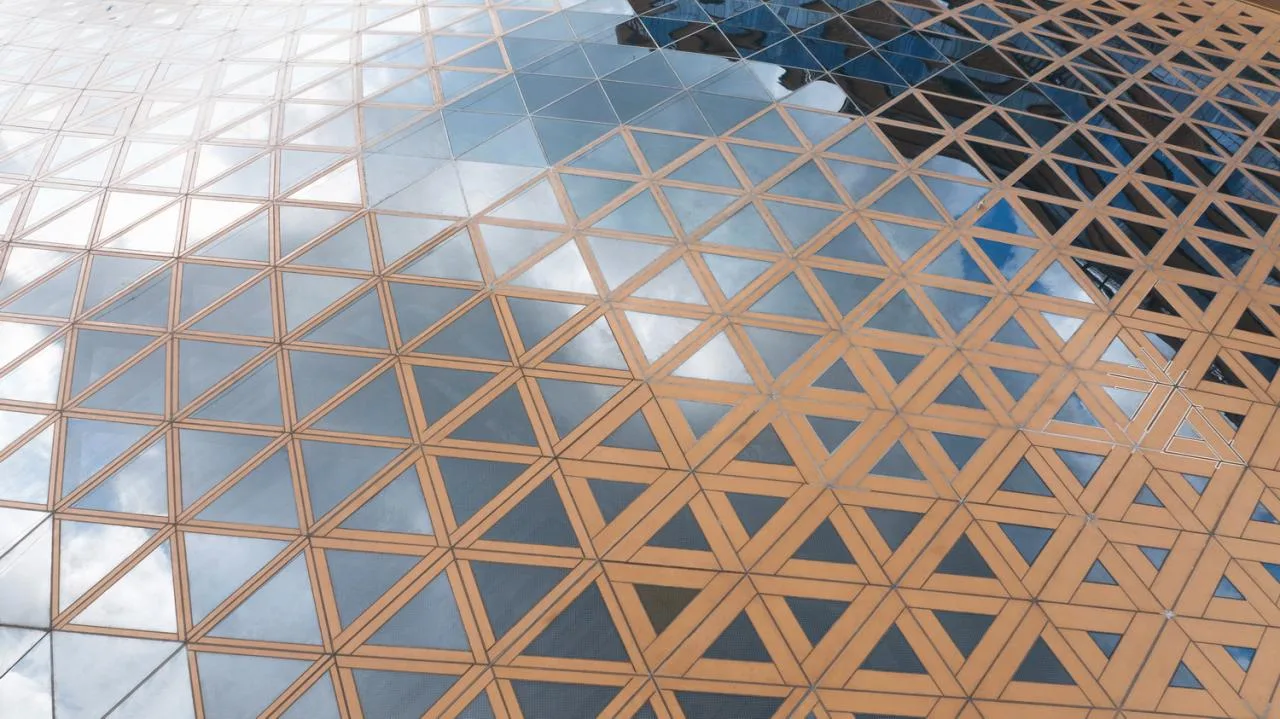
Low-transmittance hollow glass with a low heat transfer coefficient, combined with adjustable tension films and roof sensors, enables effective natural indoor lighting while maintaining a comfortable temperature.
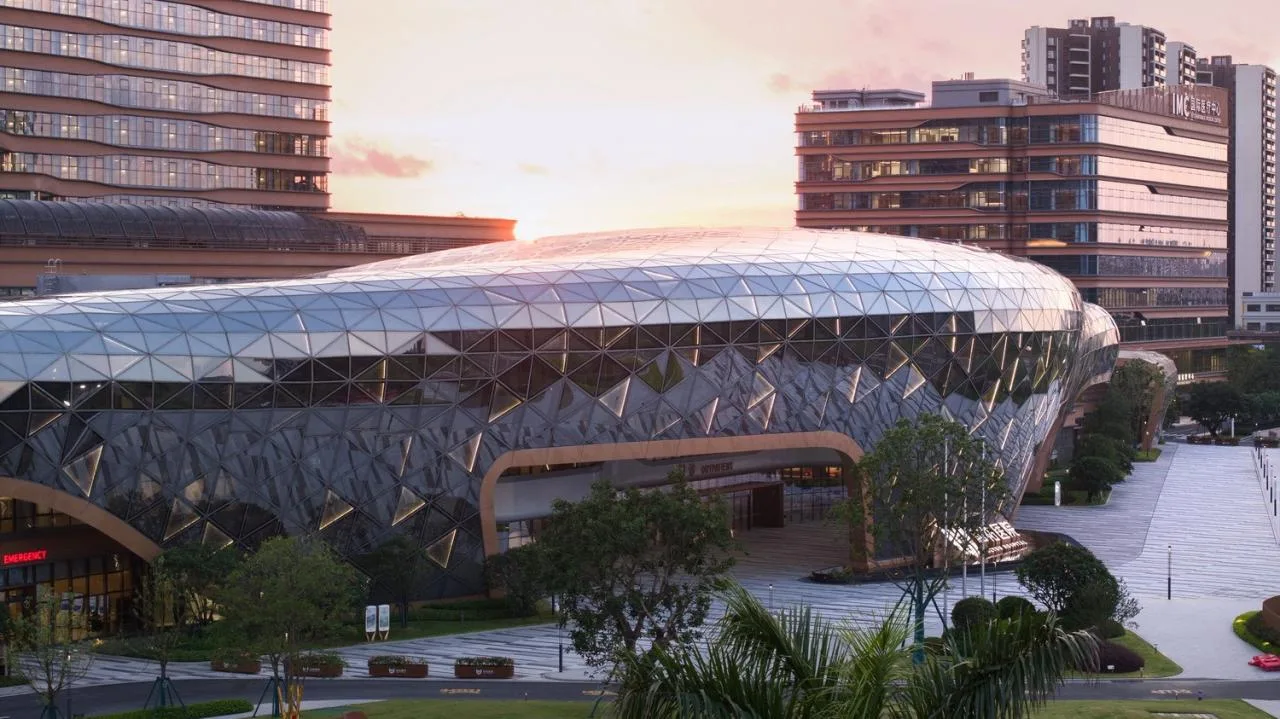
Professional calculations ensure optimal window opening rates to enable natural ventilation through the chimney effect, creating an indoor microclimate that effectively blocks heat transfer and lowers the building walls’ heat transfer coefficient.
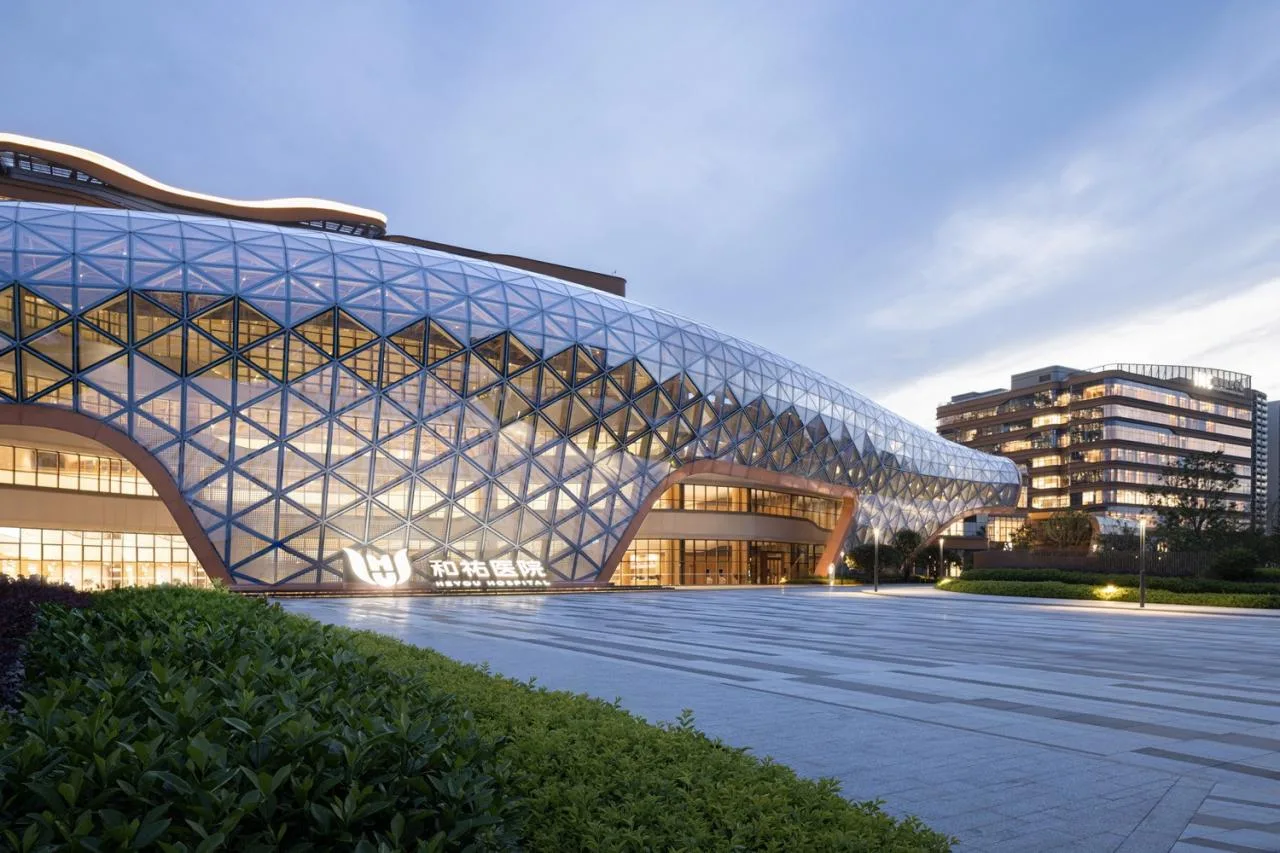
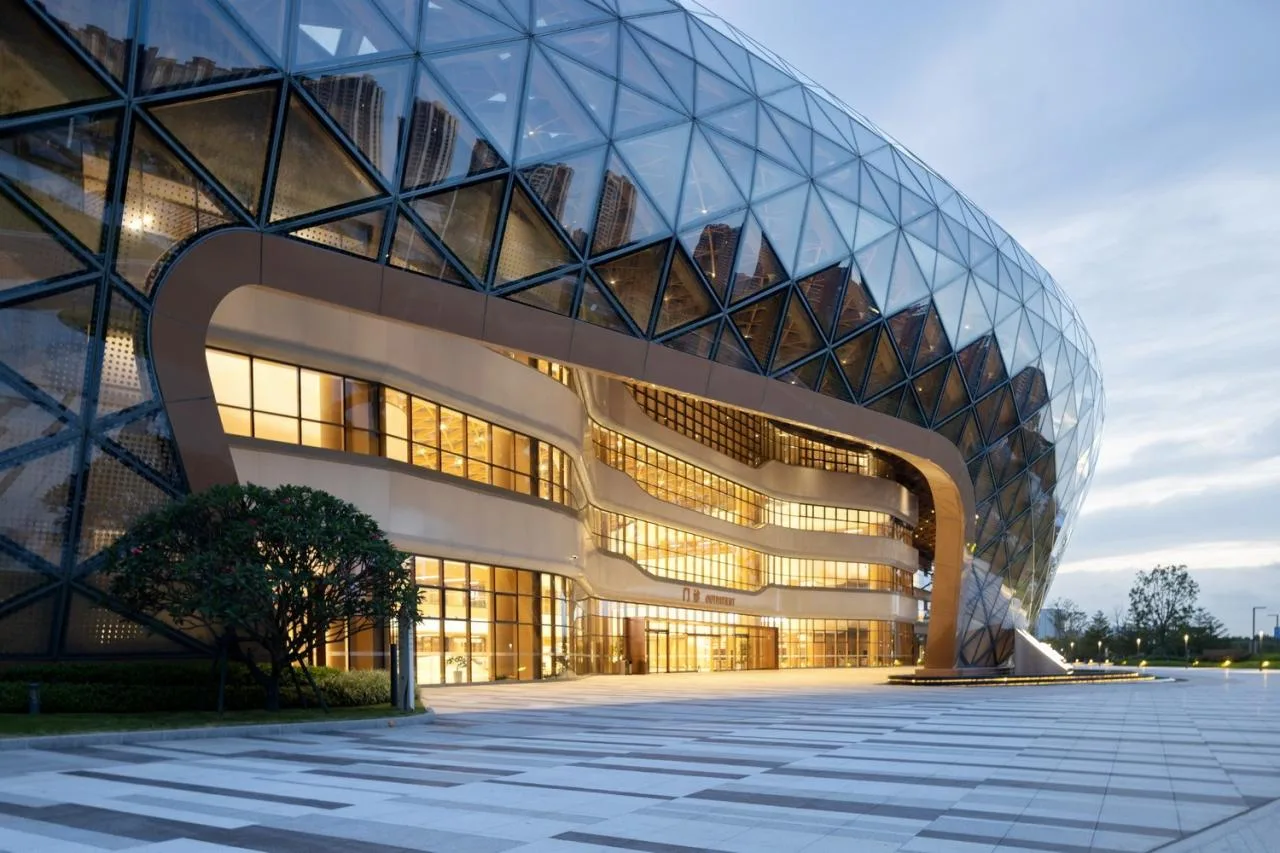
The detailed design of the mesh shell’s interior nodes exposes the high-tech structural elements, highlighting the construction’s aesthetic beauty and integrating lighting effects for nighttime visibility.
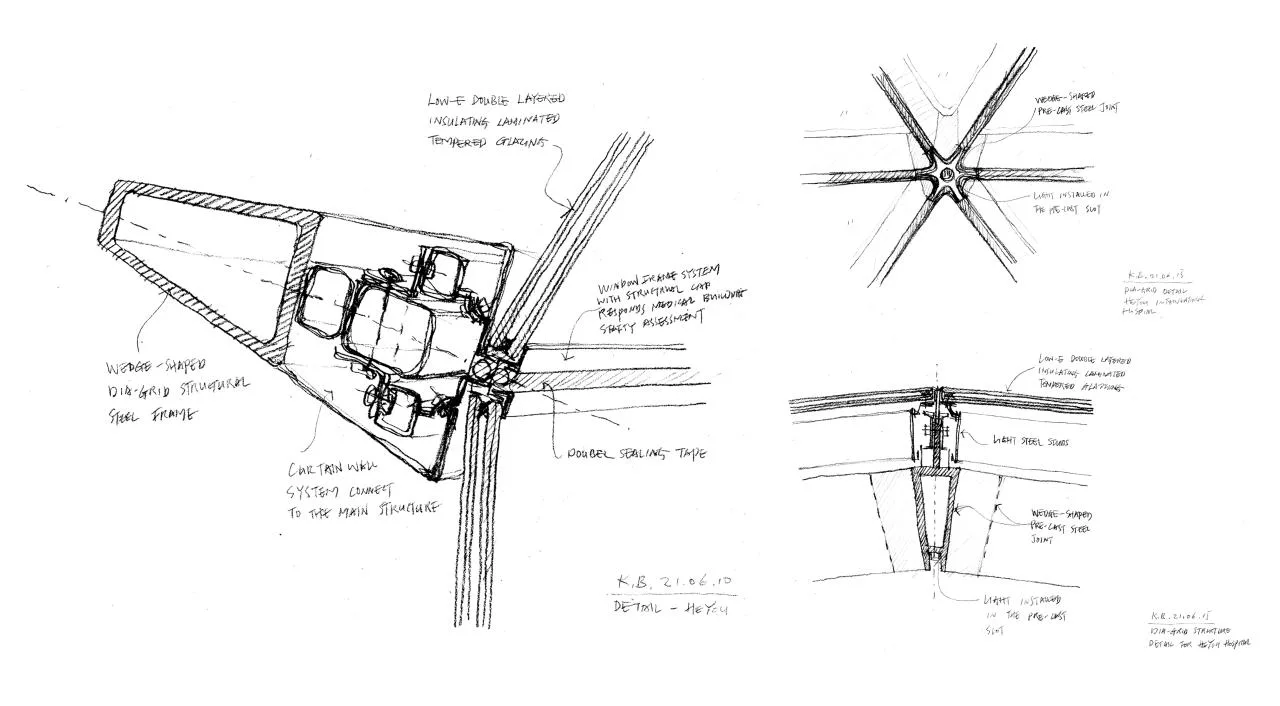
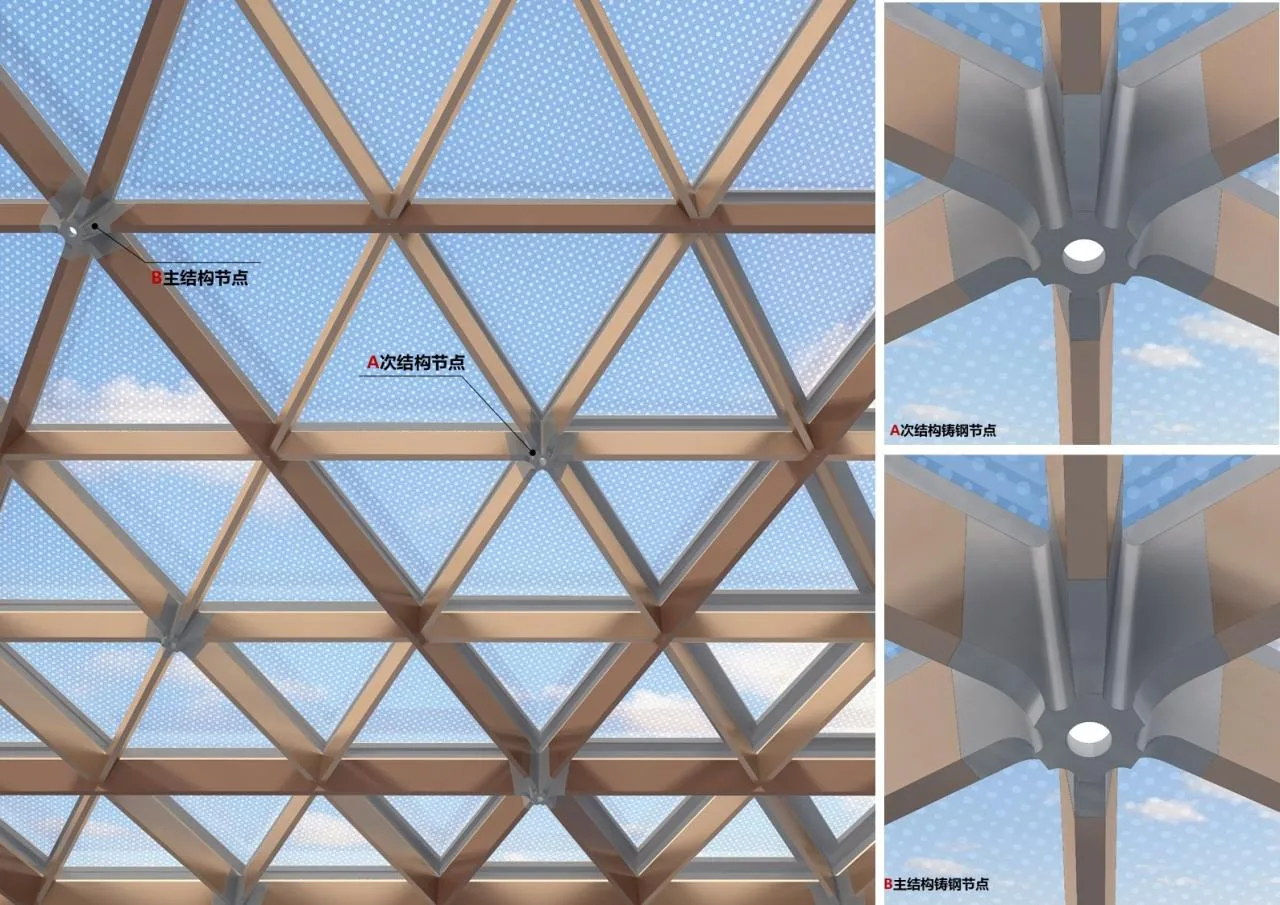
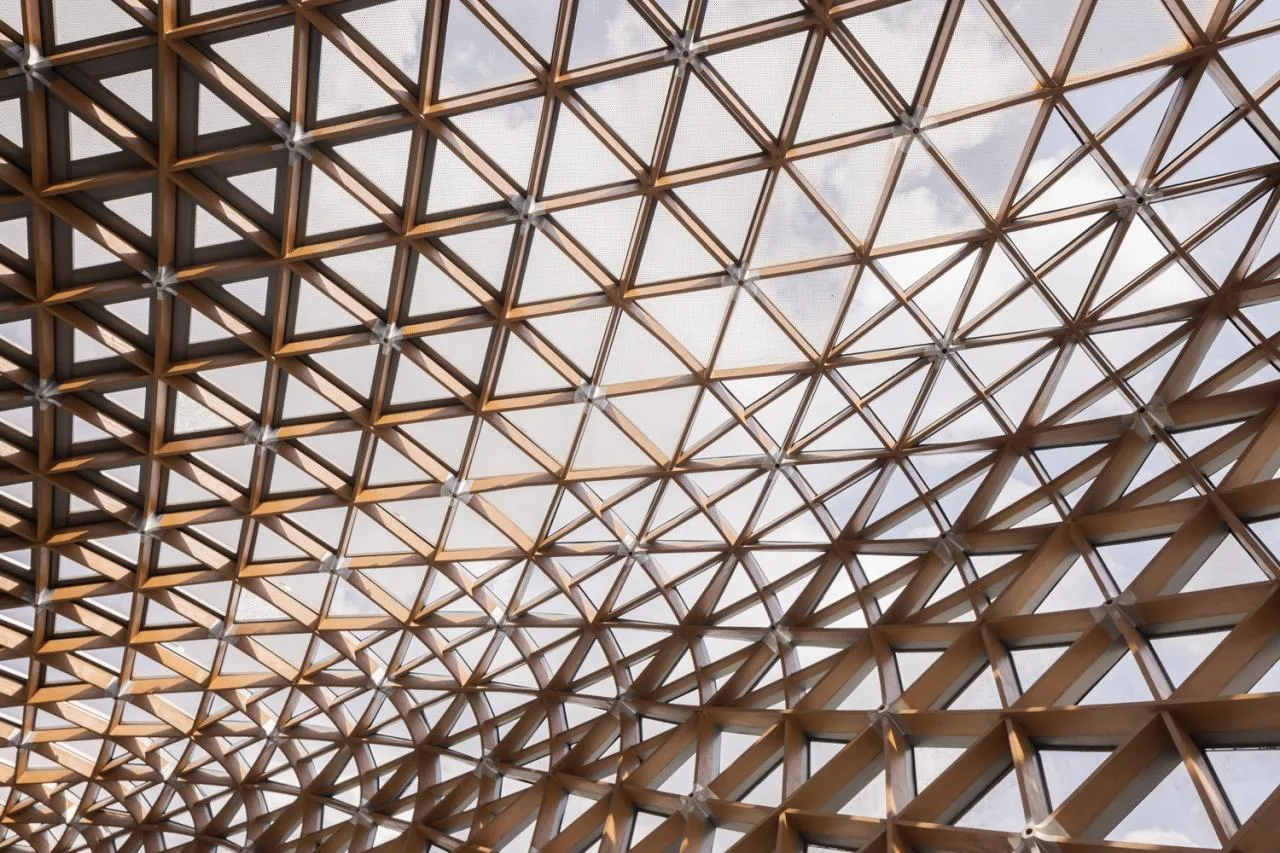
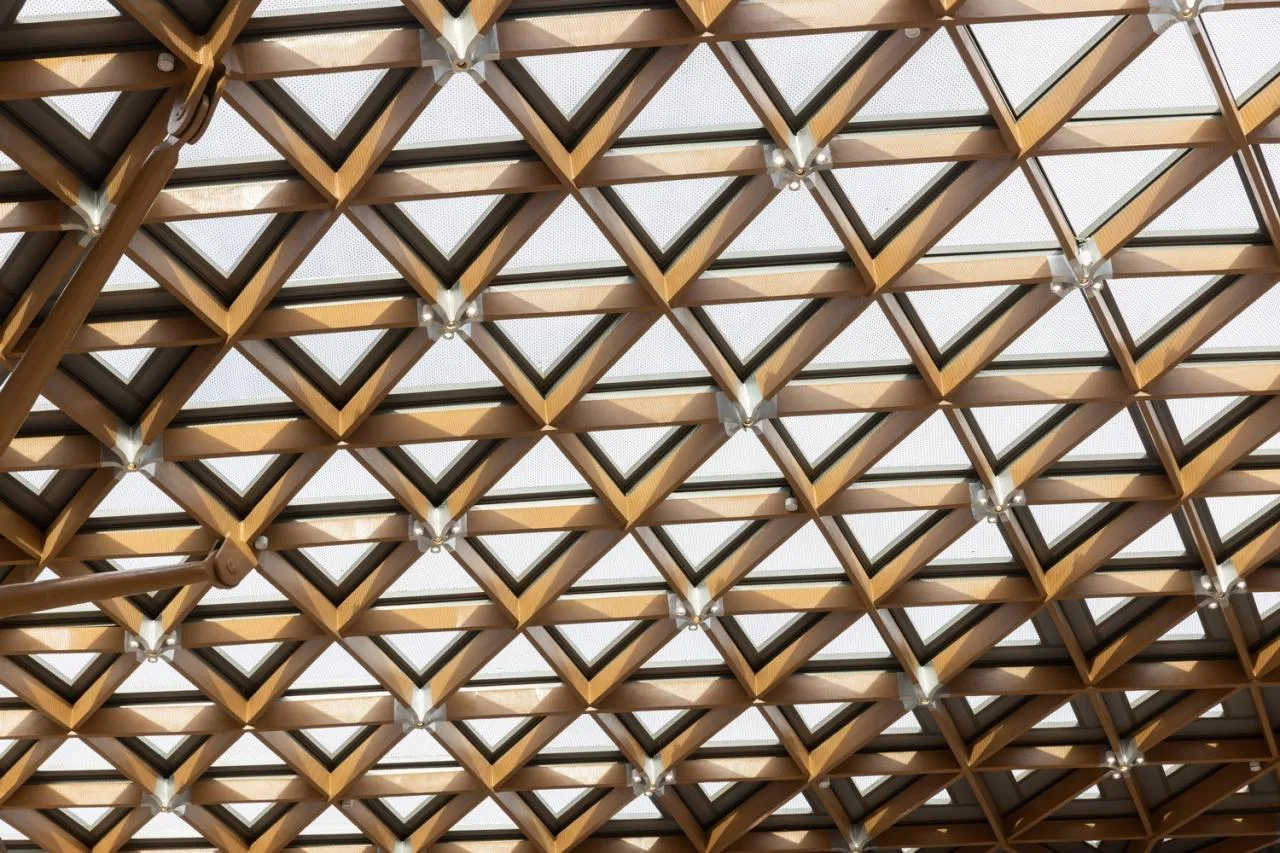
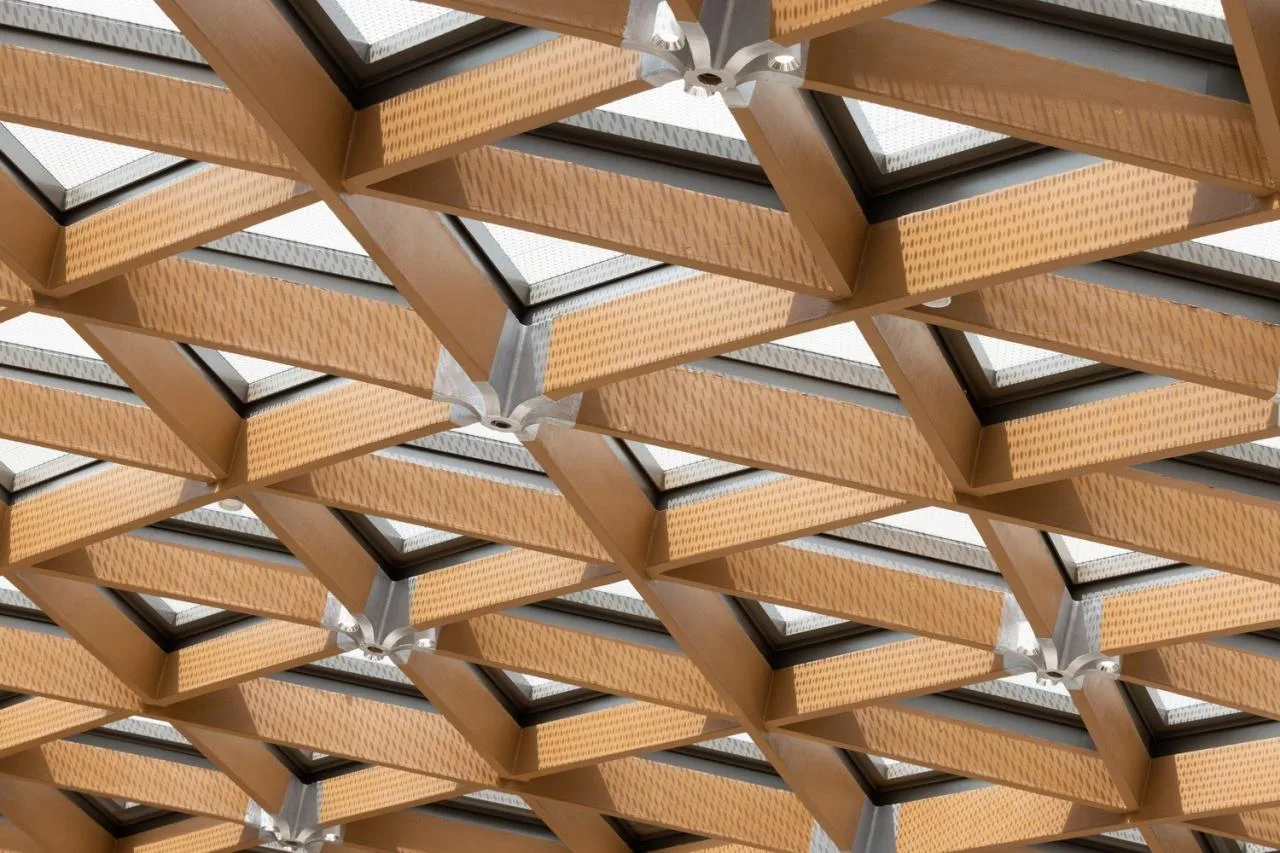
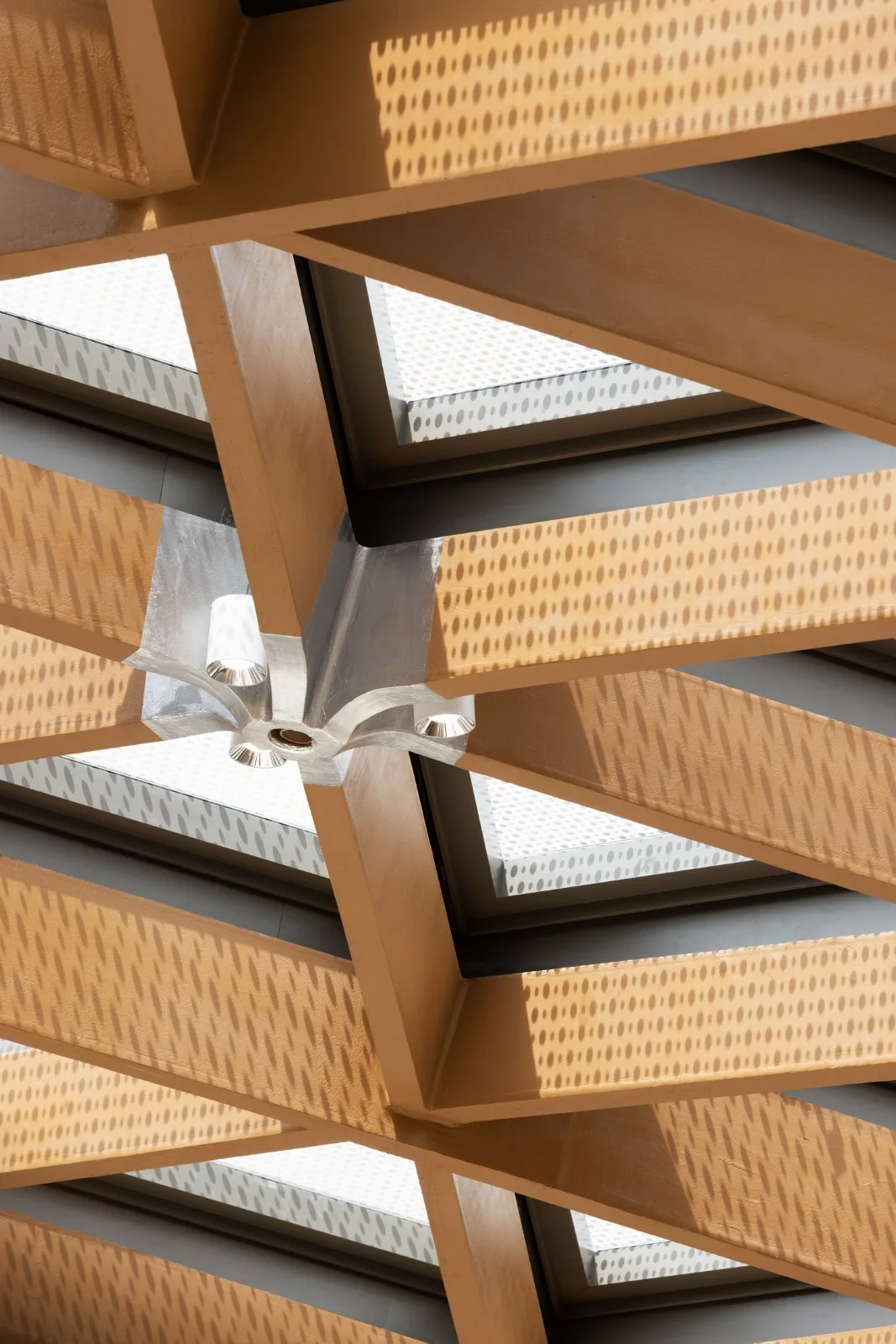
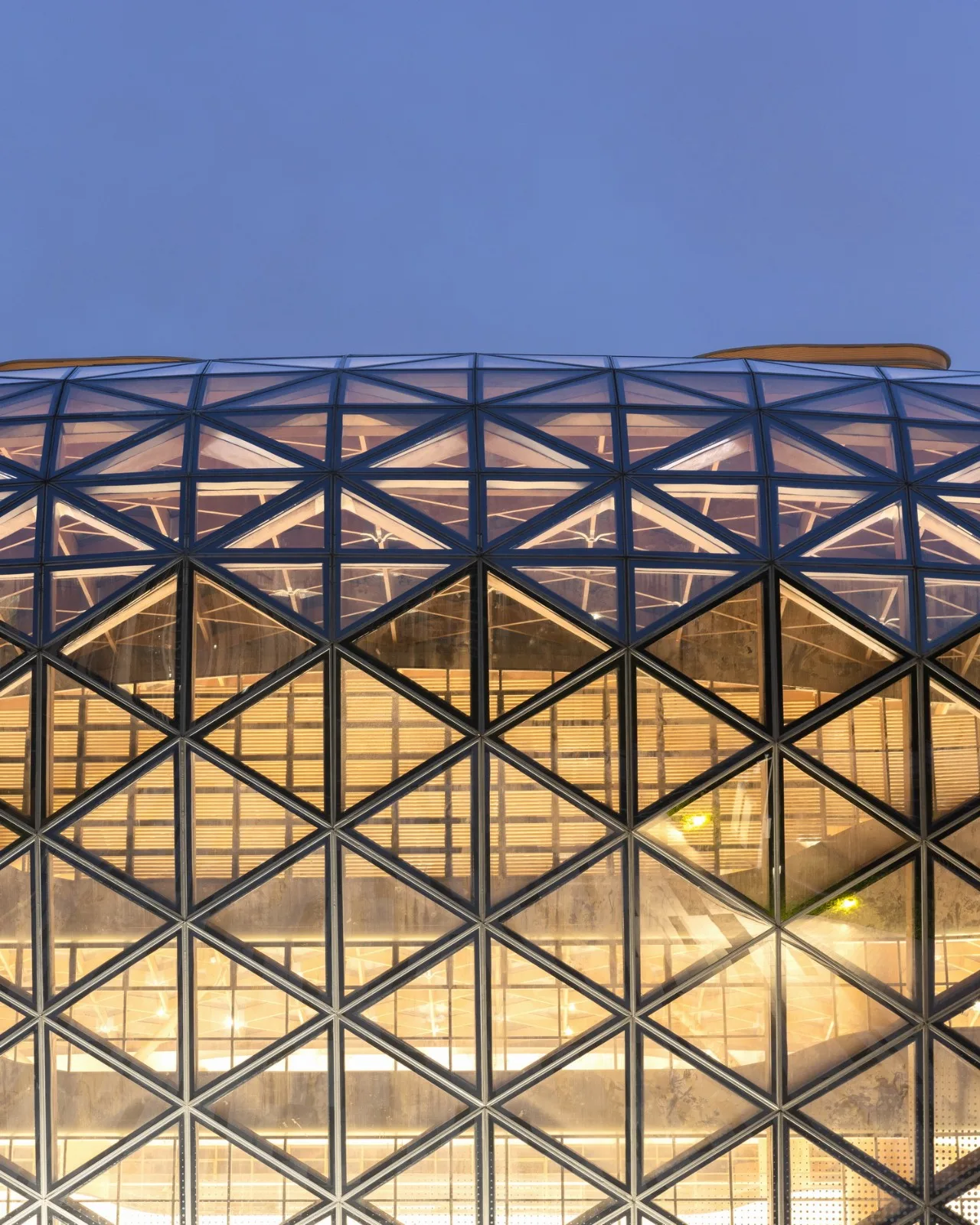
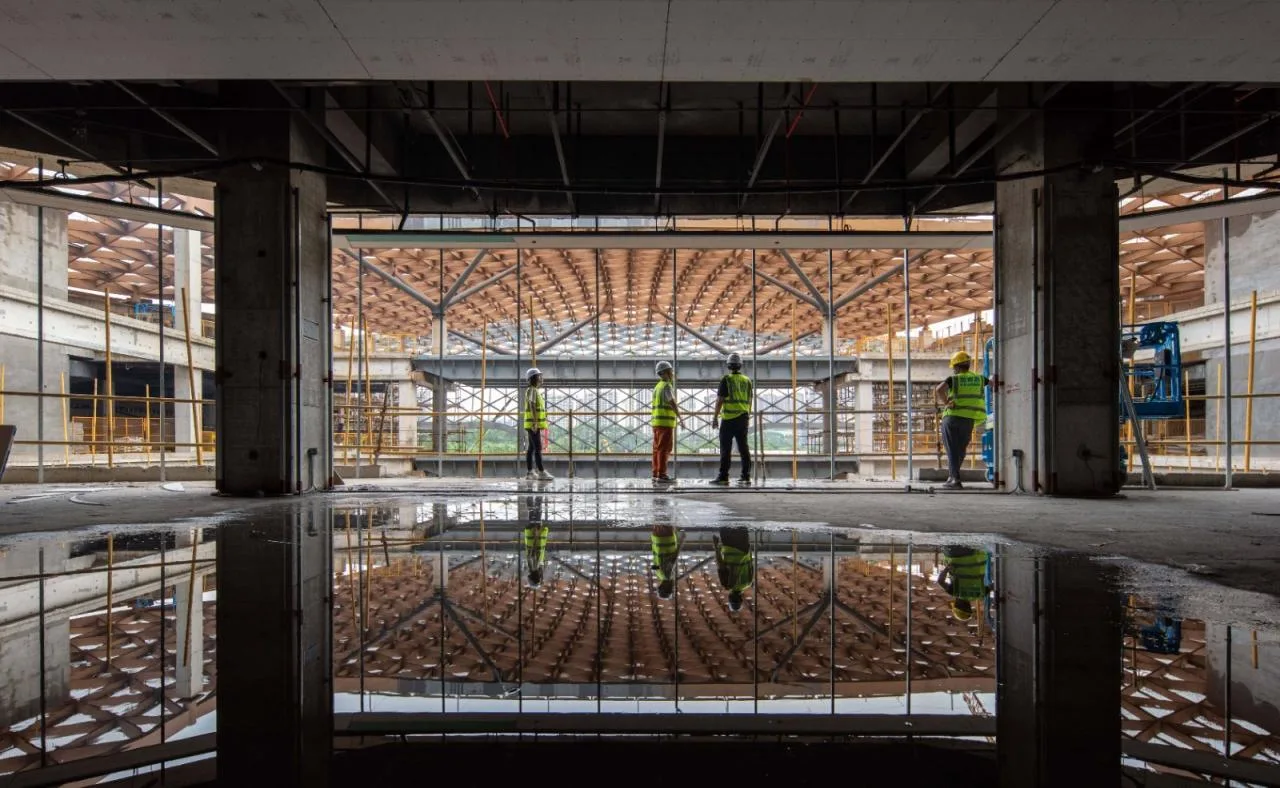
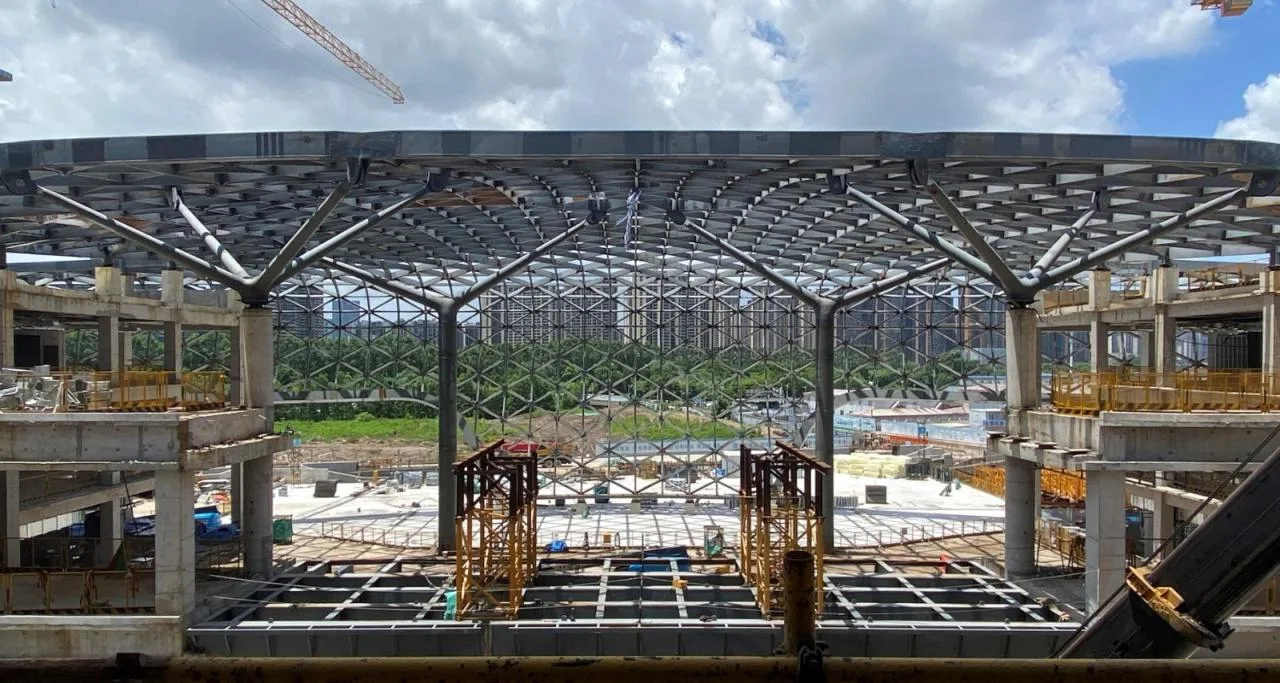
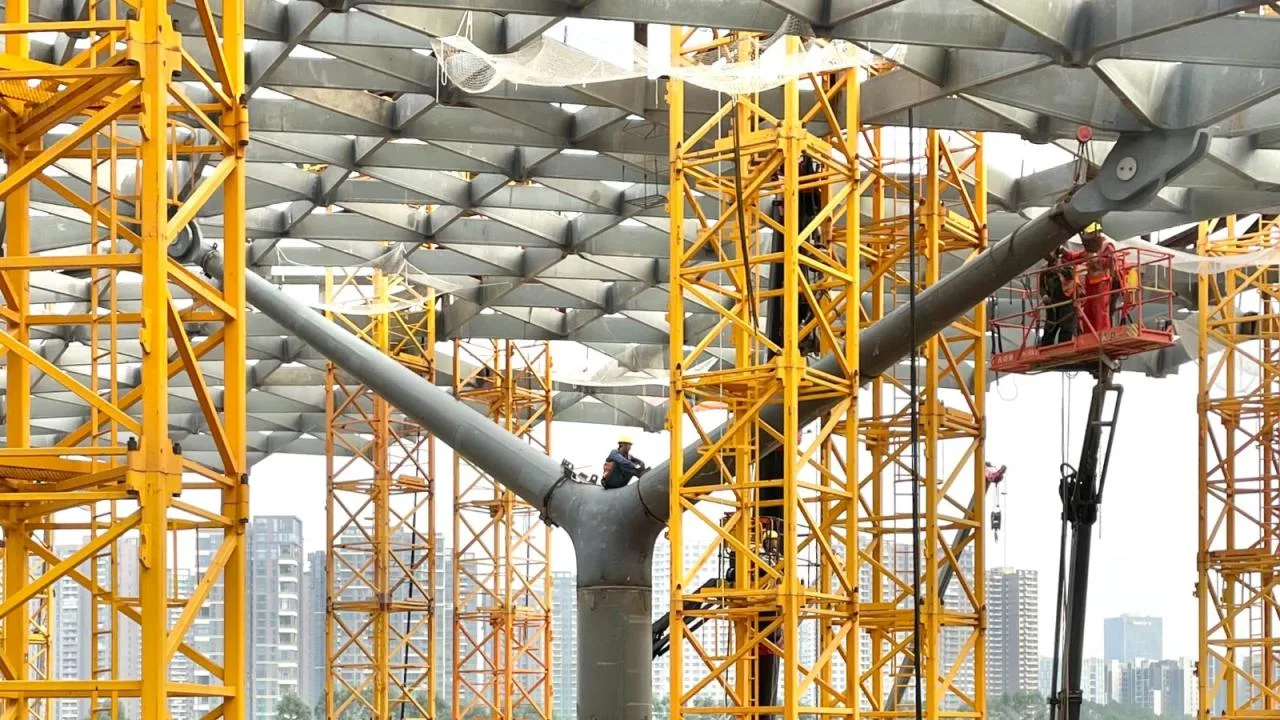
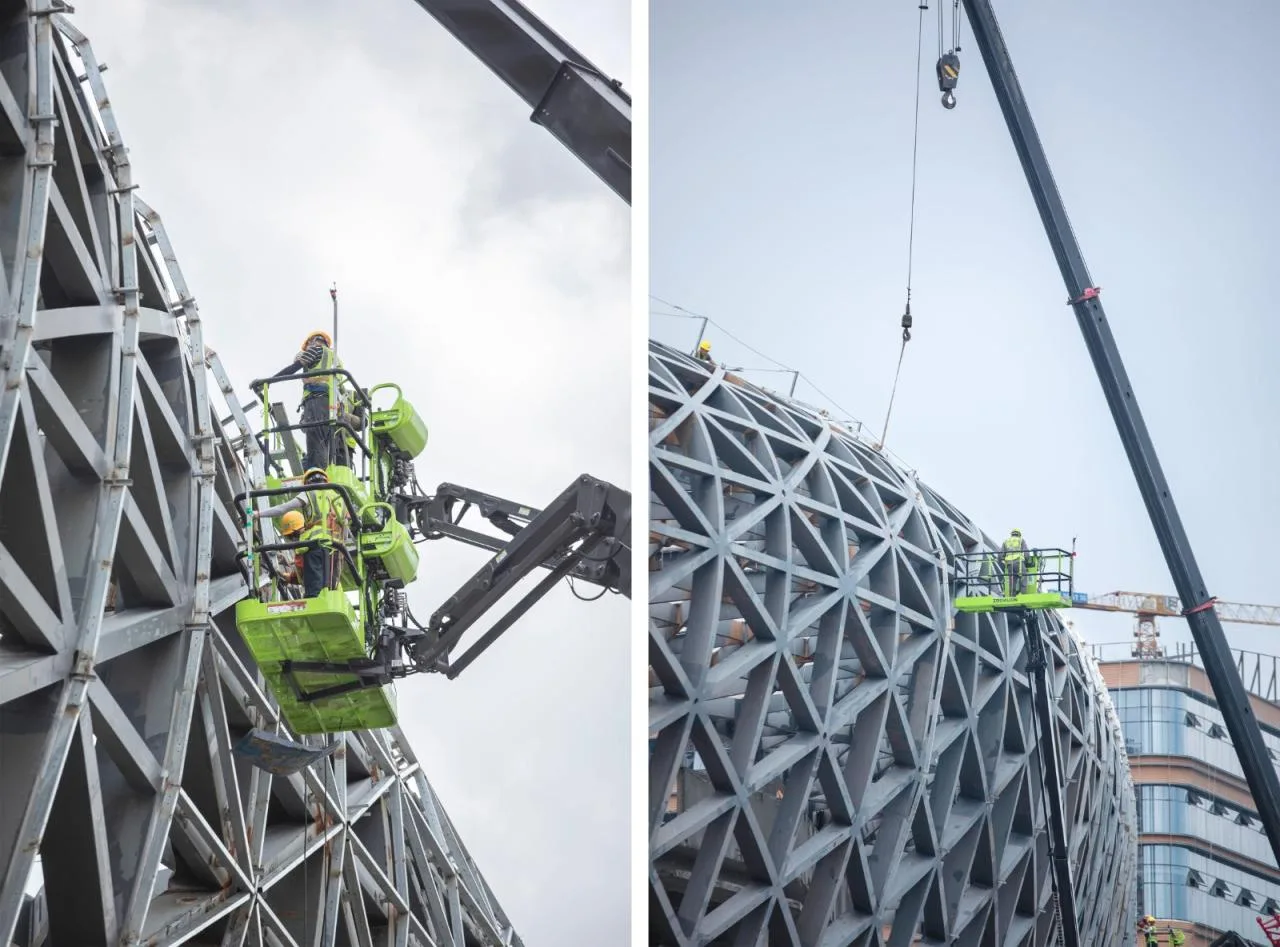
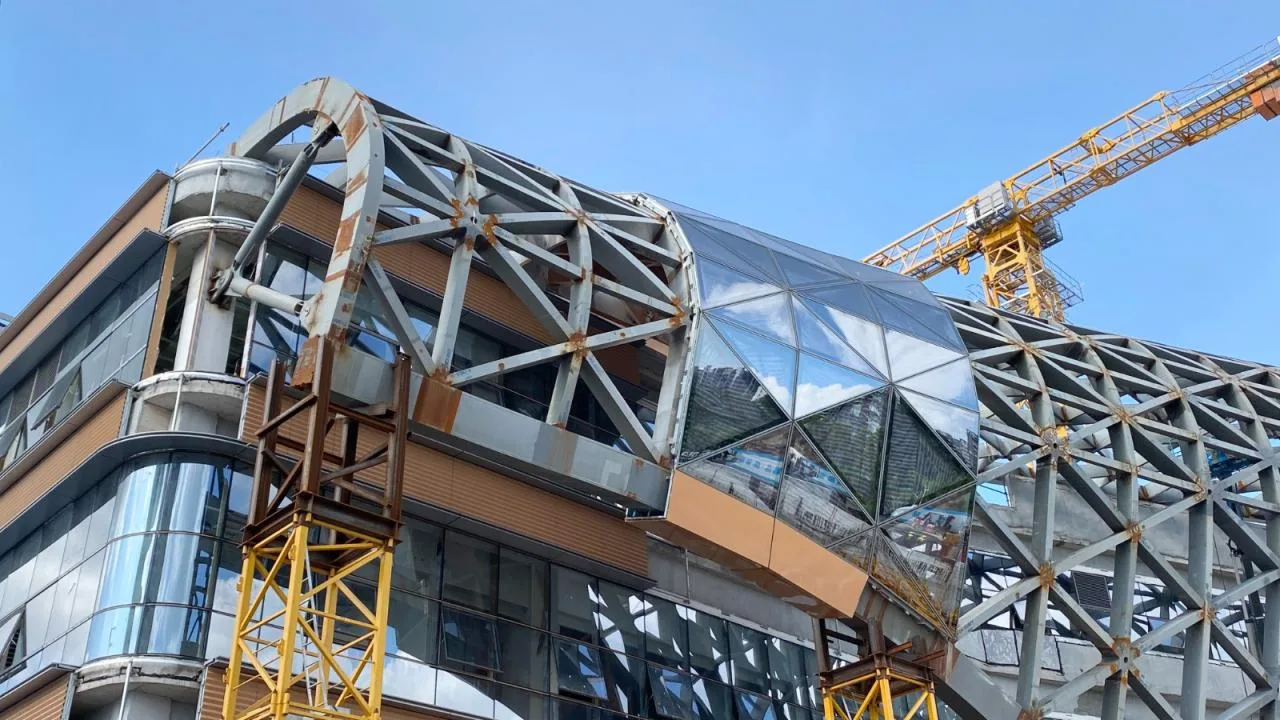
The roof integrates photovoltaic solar panels with the curtain wall system, embodying the concept of technology harmonizing with nature while addressing the building’s energy consumption challenges.
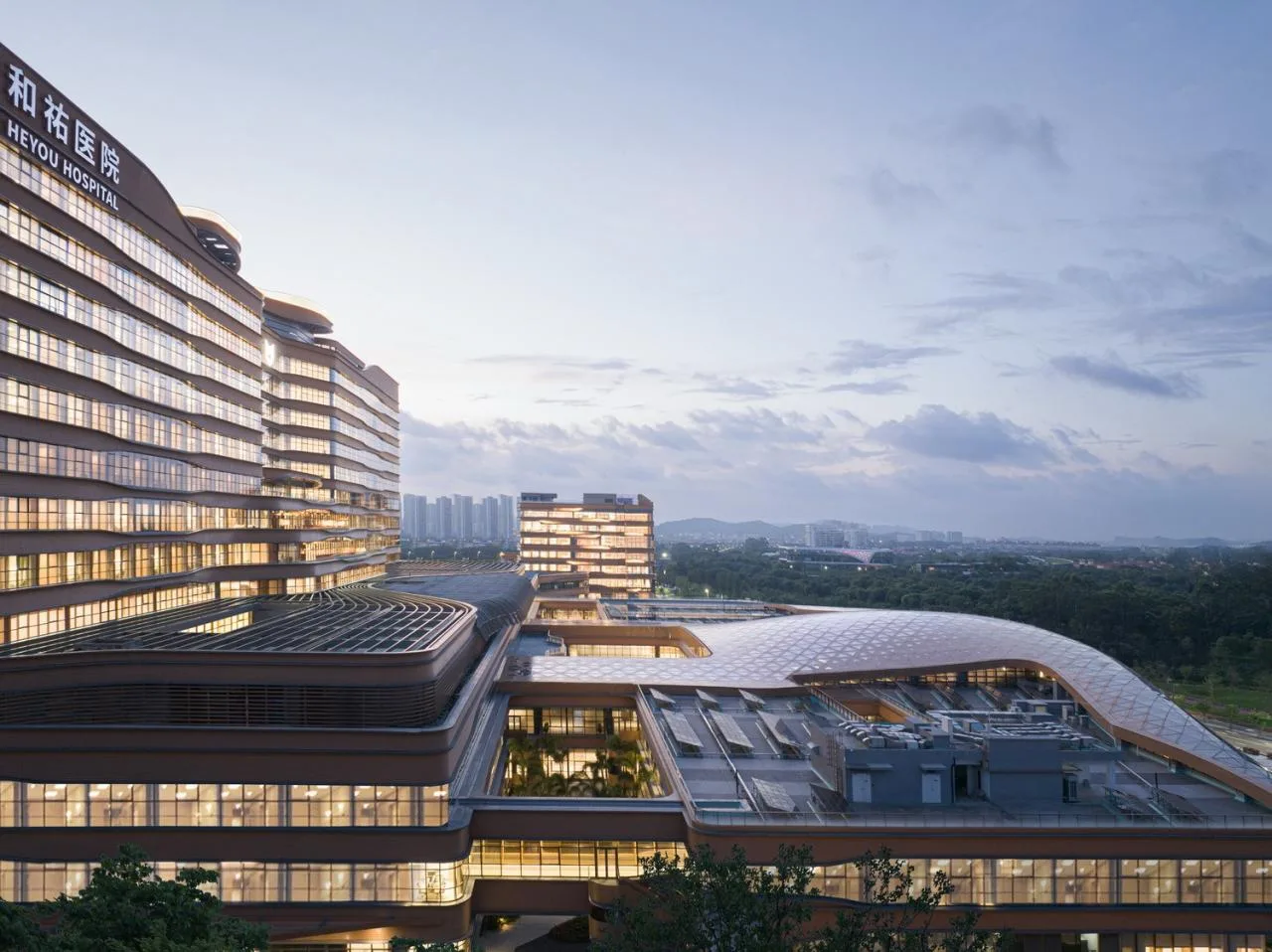
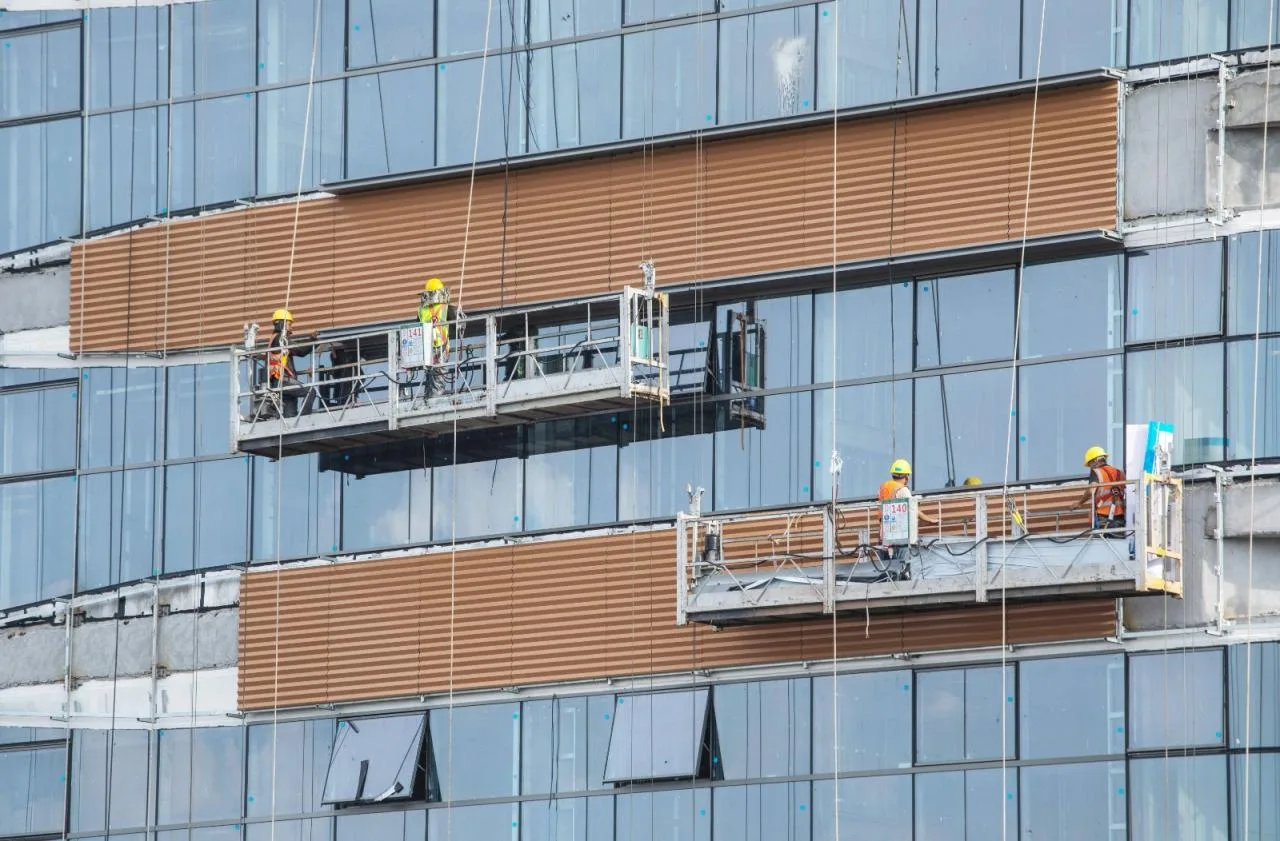
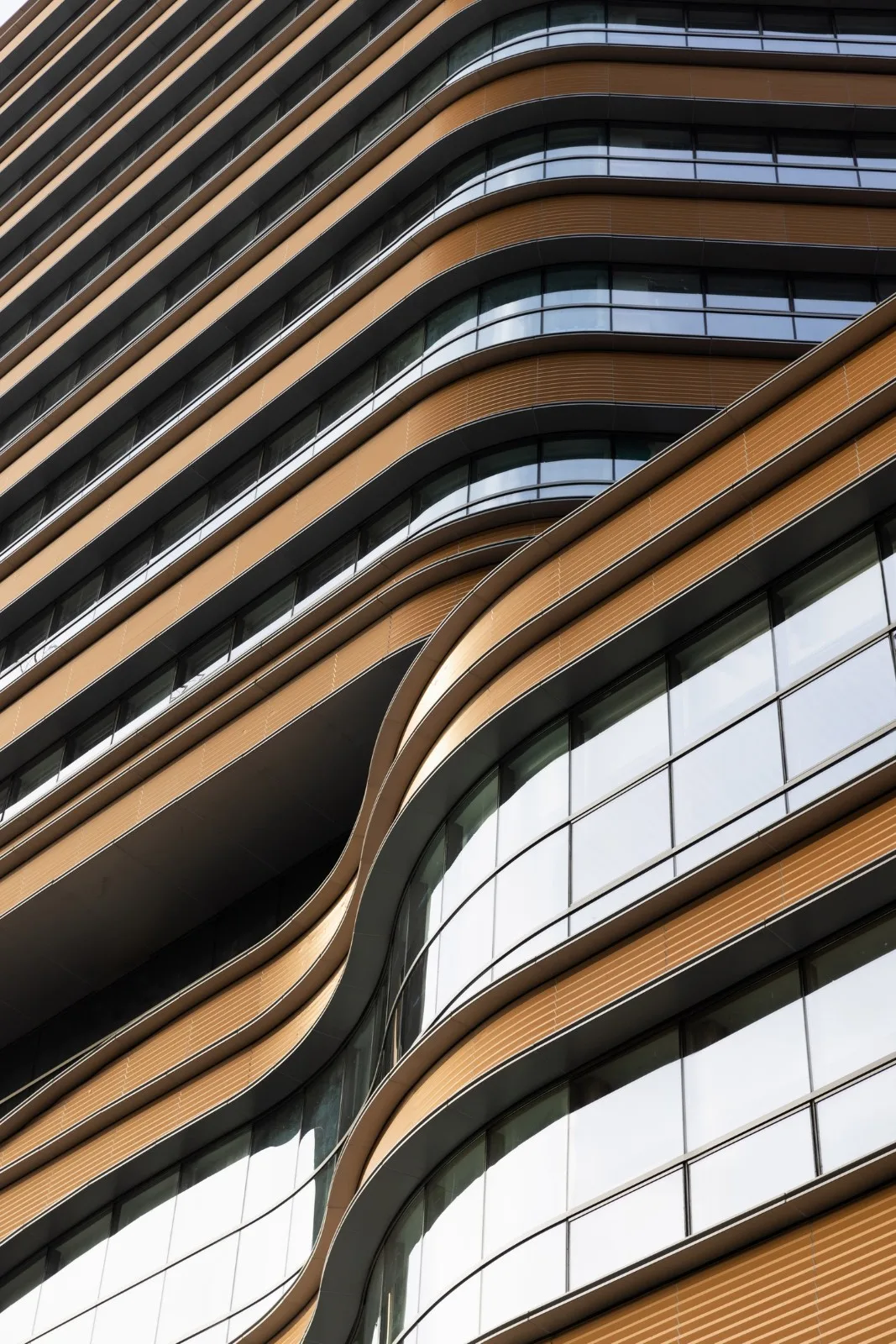
△ British high-tech design team guiding from refined design to implementation
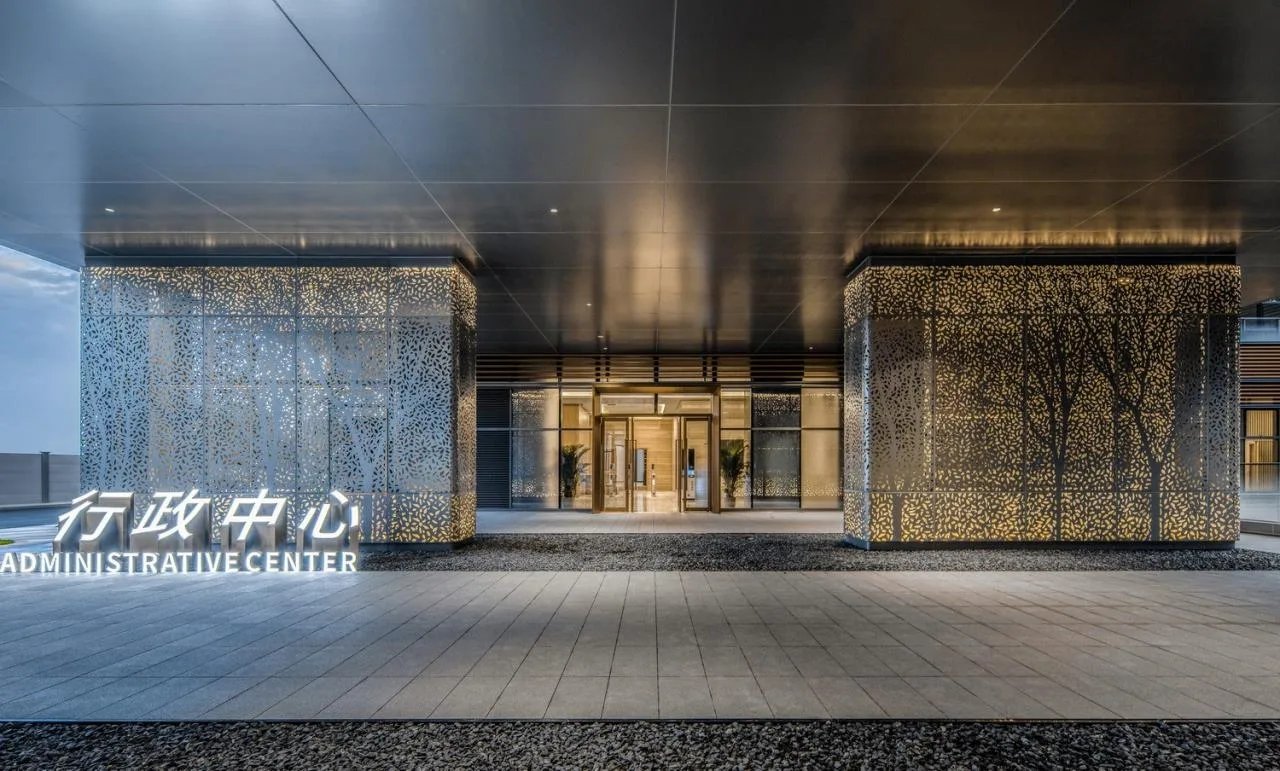
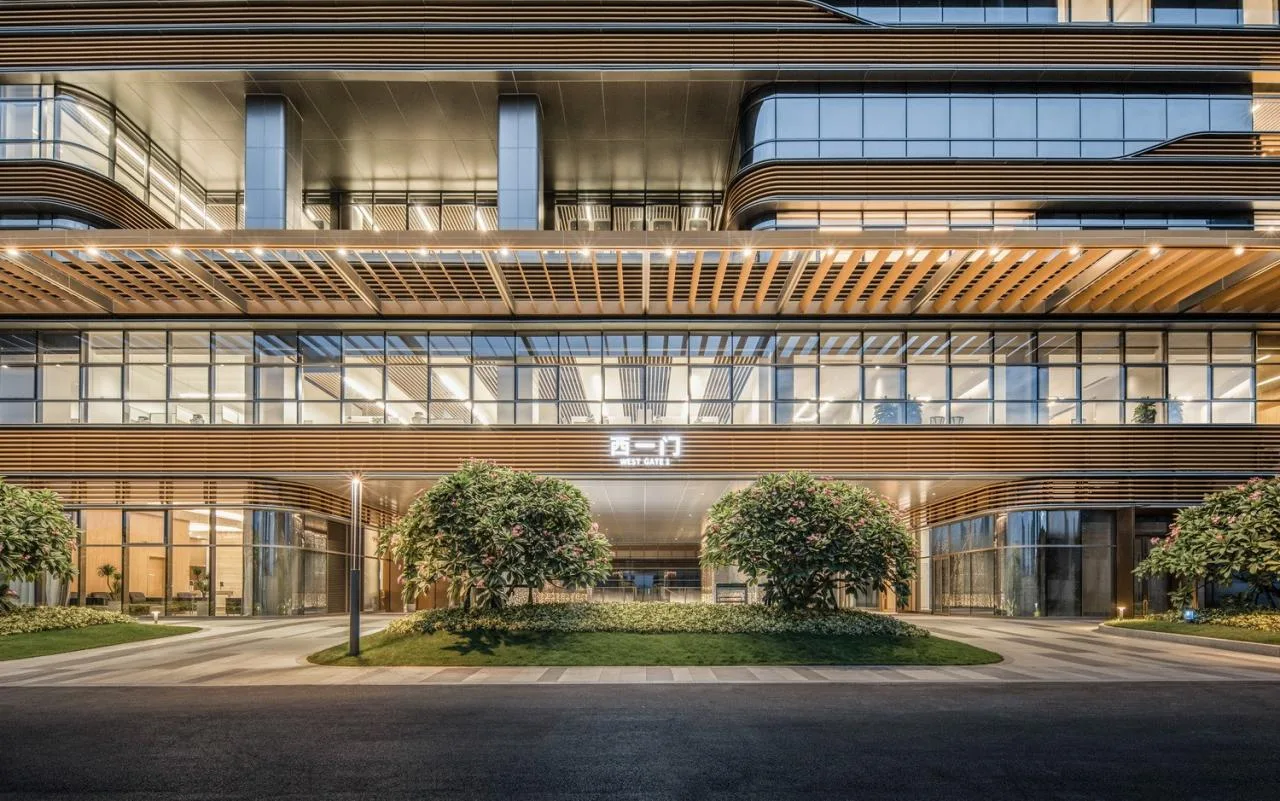
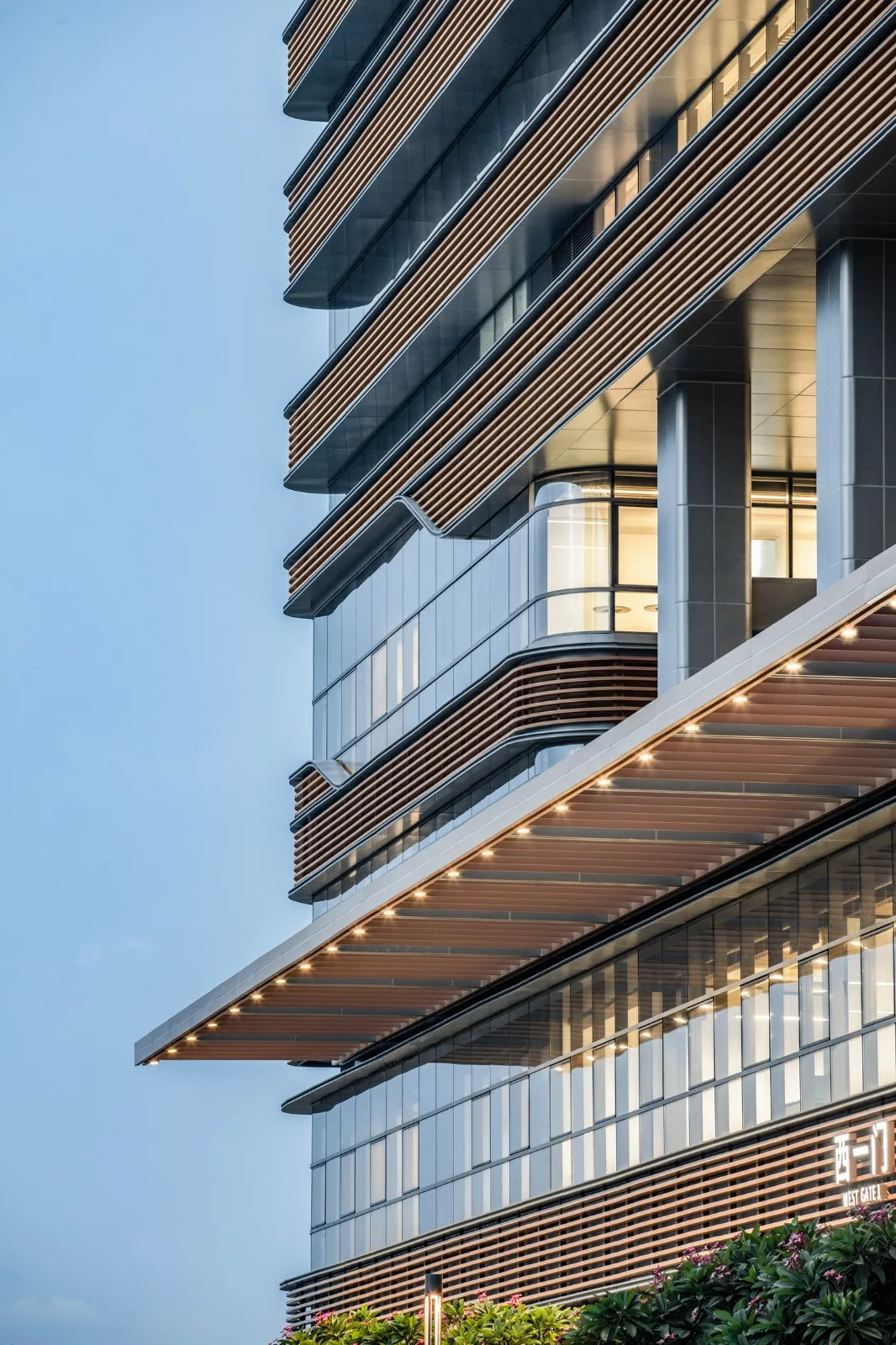
Main administrative center building
Healing environments in spatial design
What defines a “healing garden”?
Challenging traditional medical space stereotypes, Heyou Hospital achieves a true “garden-style hospital” by integrating natural coexistence with experiential medical services.
This creates a healing spatial environment, turning the entire facility into an experiential health park.
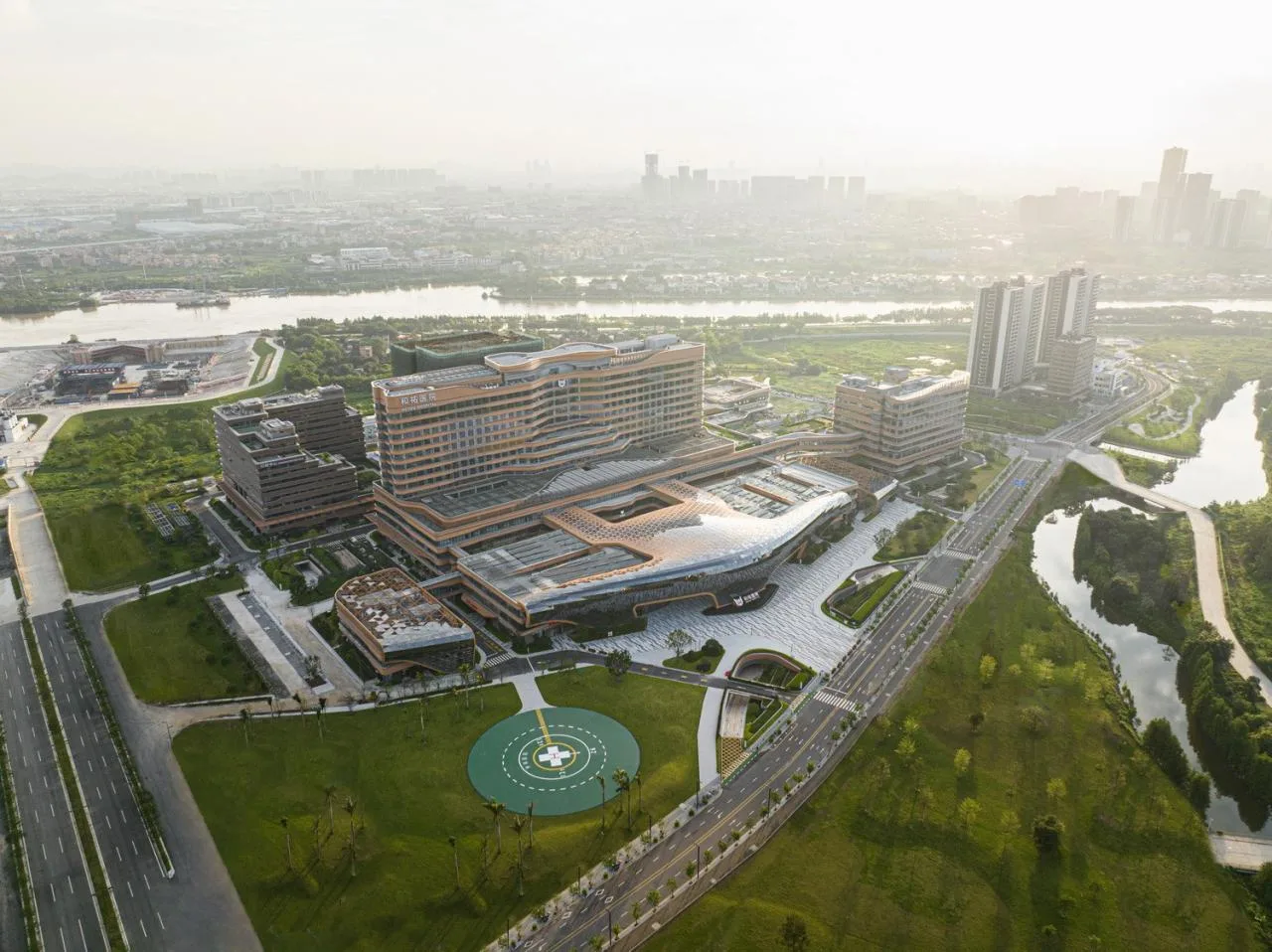
The spatial landscape axis connects various functions vertically and horizontally. The outpatient, medical technology, and inpatient areas feature indoor and outdoor spaces that coexist with nature. These face an enclosed natural courtyard, breaking down the building’s boundaries and merging indoor spaces with the natural environment.
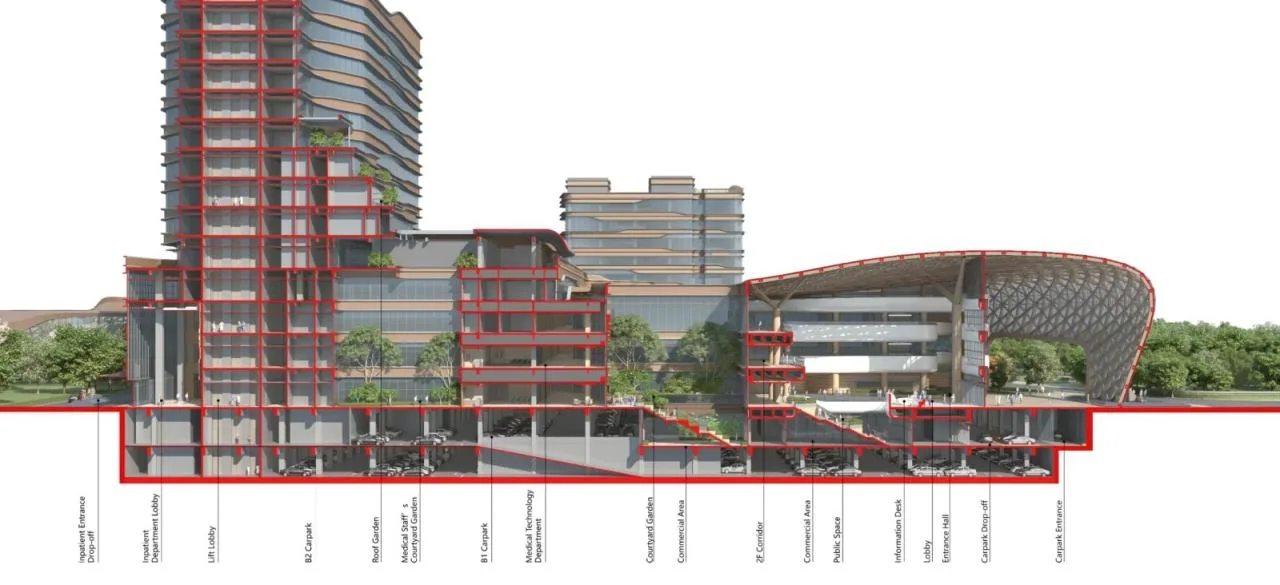
Internally, landscape features such as enclosed courtyards and sky gardens bring sunlight, fresh air, and greenery into the hospital, creating the feeling of a vast urban garden.
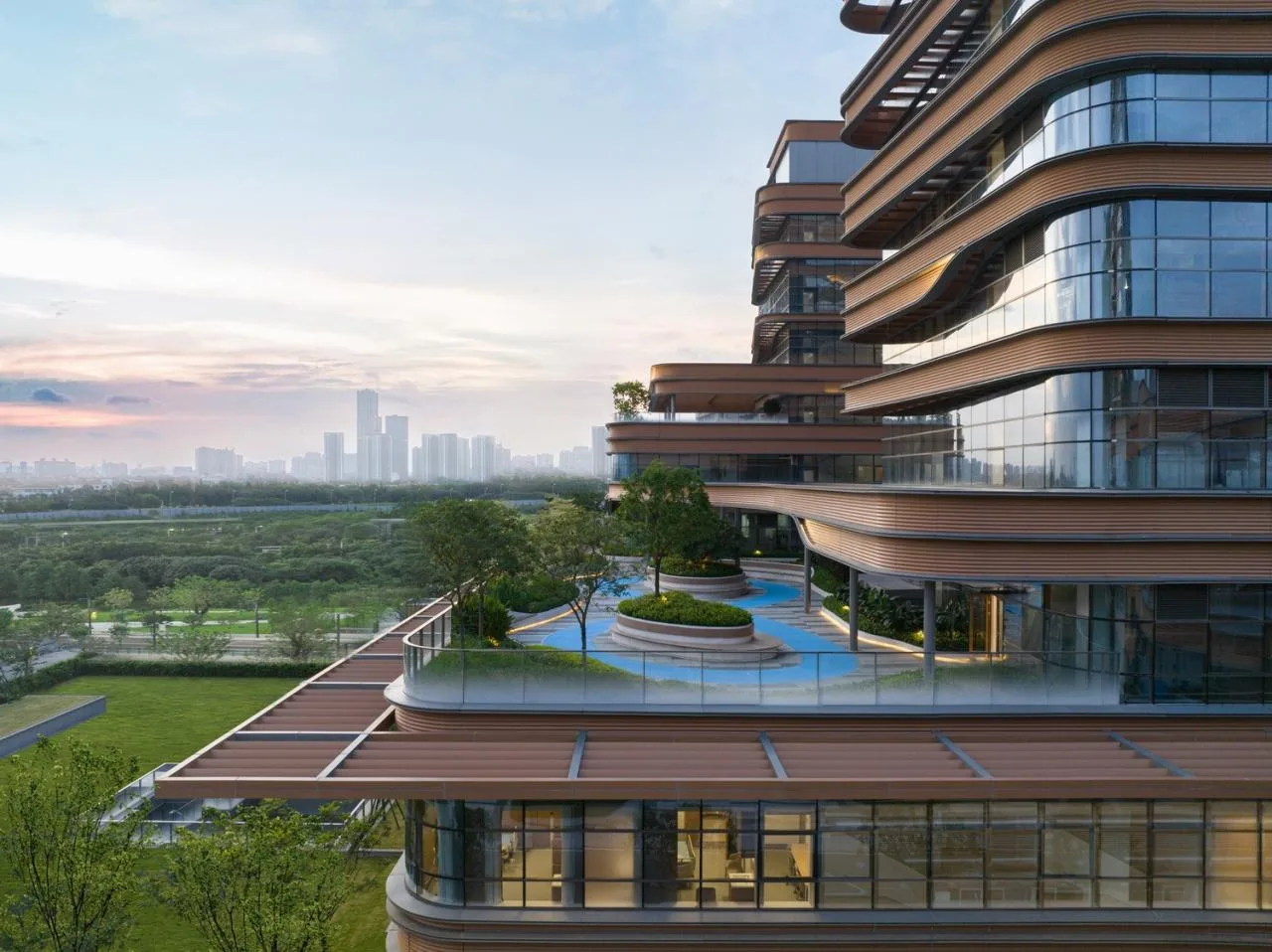
△ Medical staff and patients can enjoy the sky garden adjacent to the natural park from every angle and perspective.
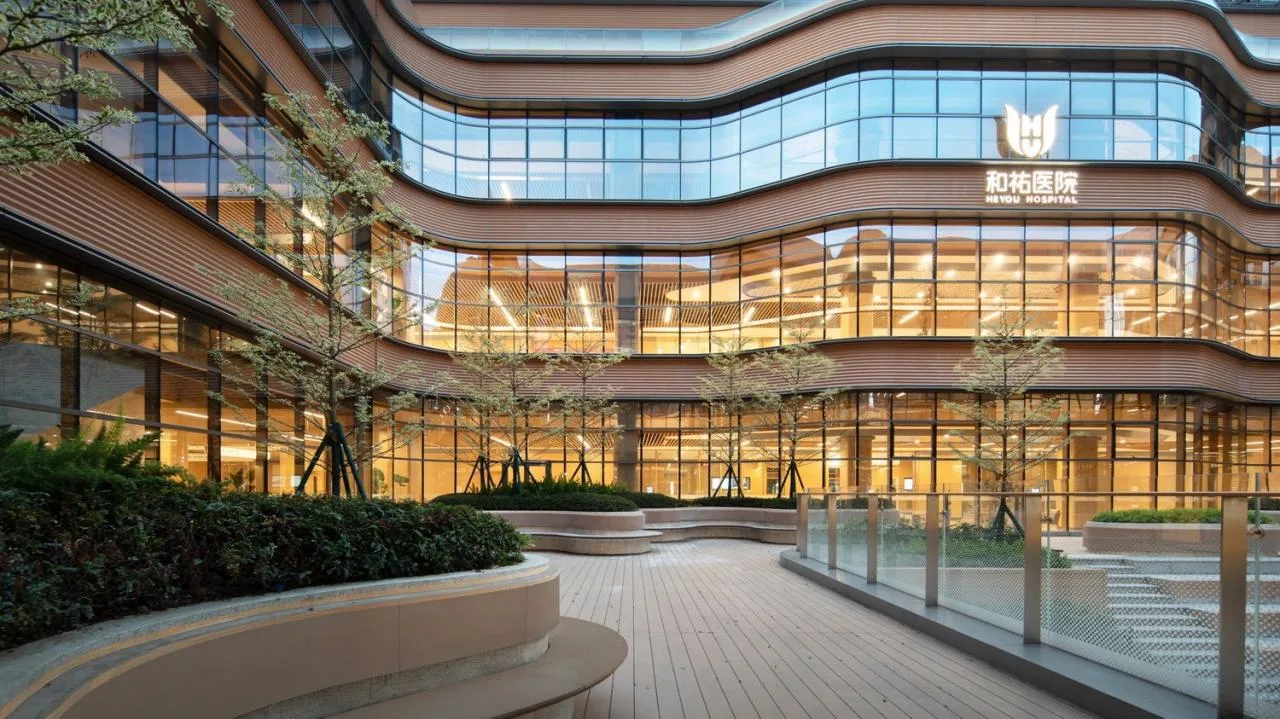
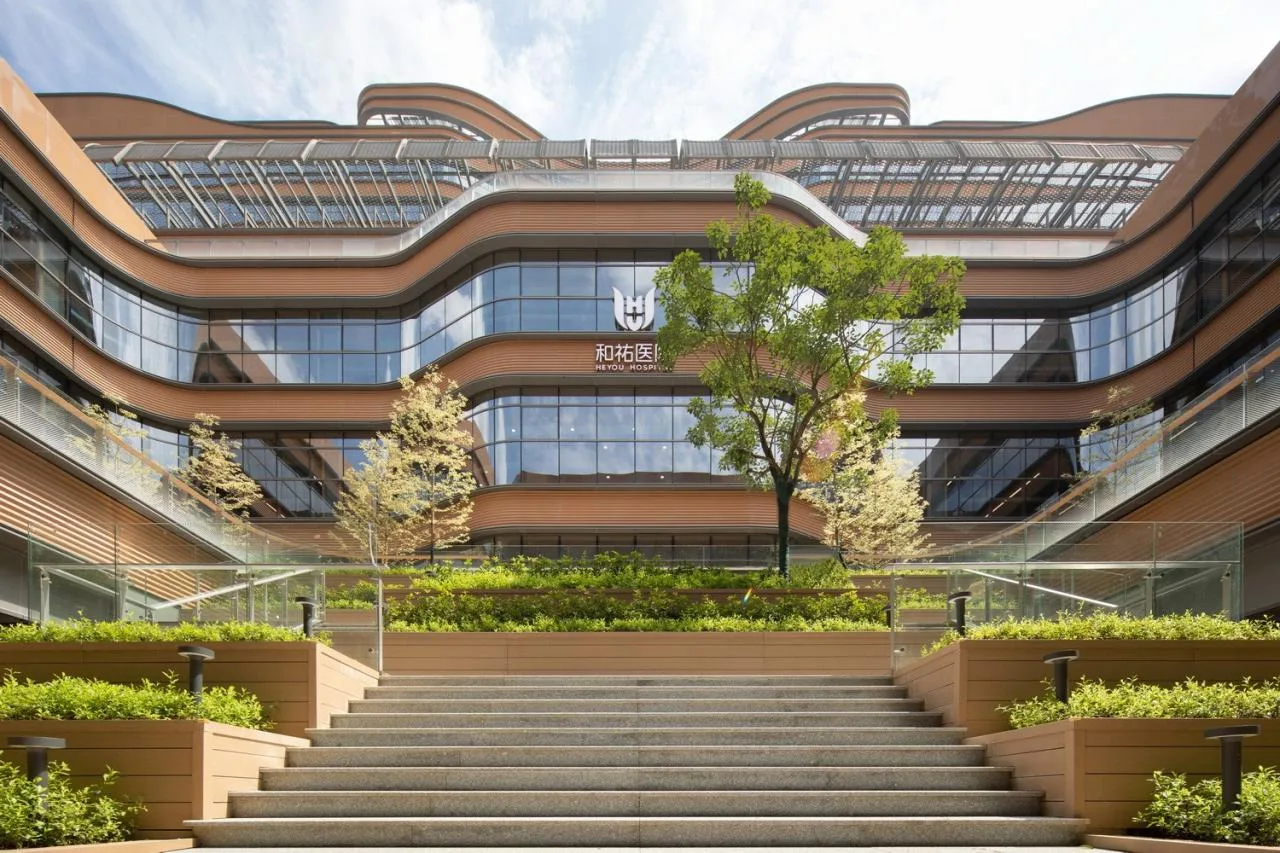
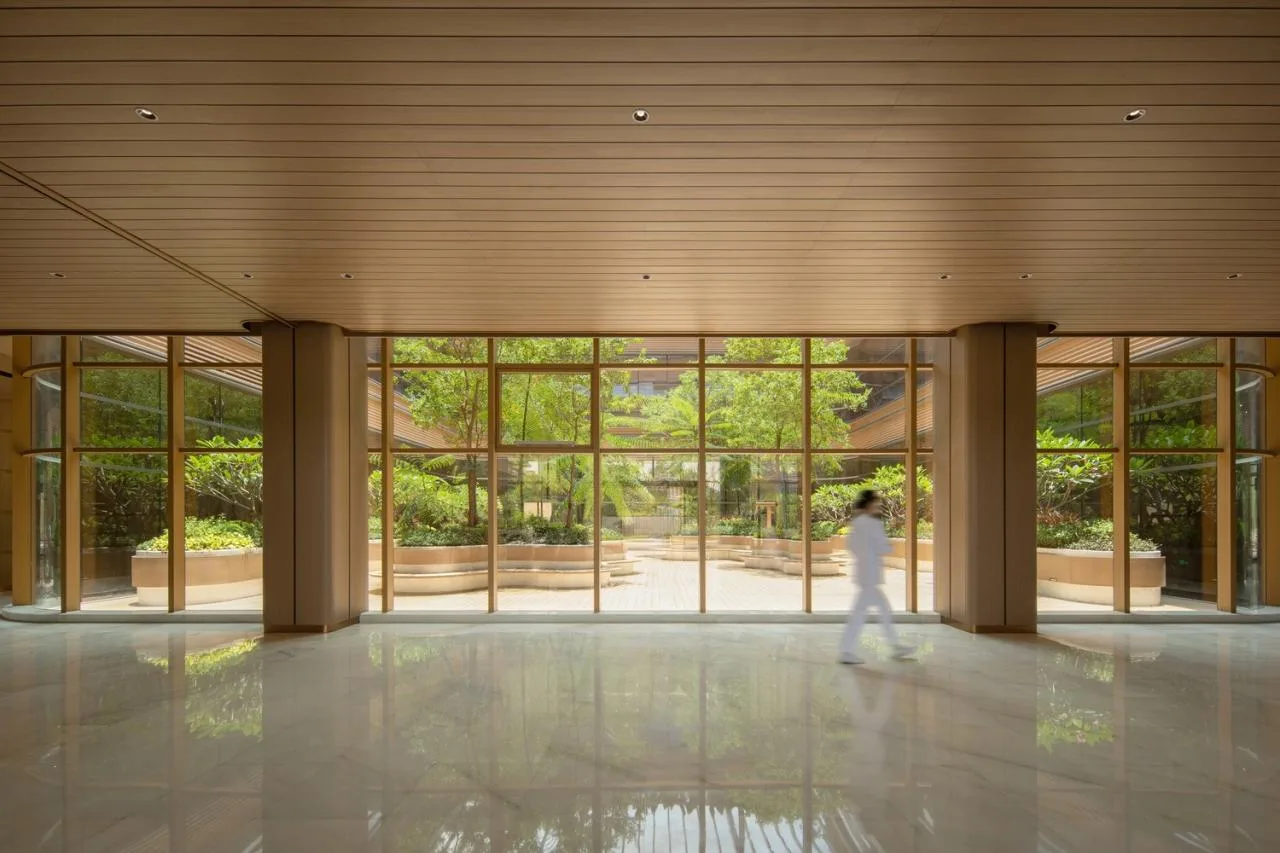
△ Sunlight, fresh air, and greenery are brought into the hospital’s enclosed courtyards.
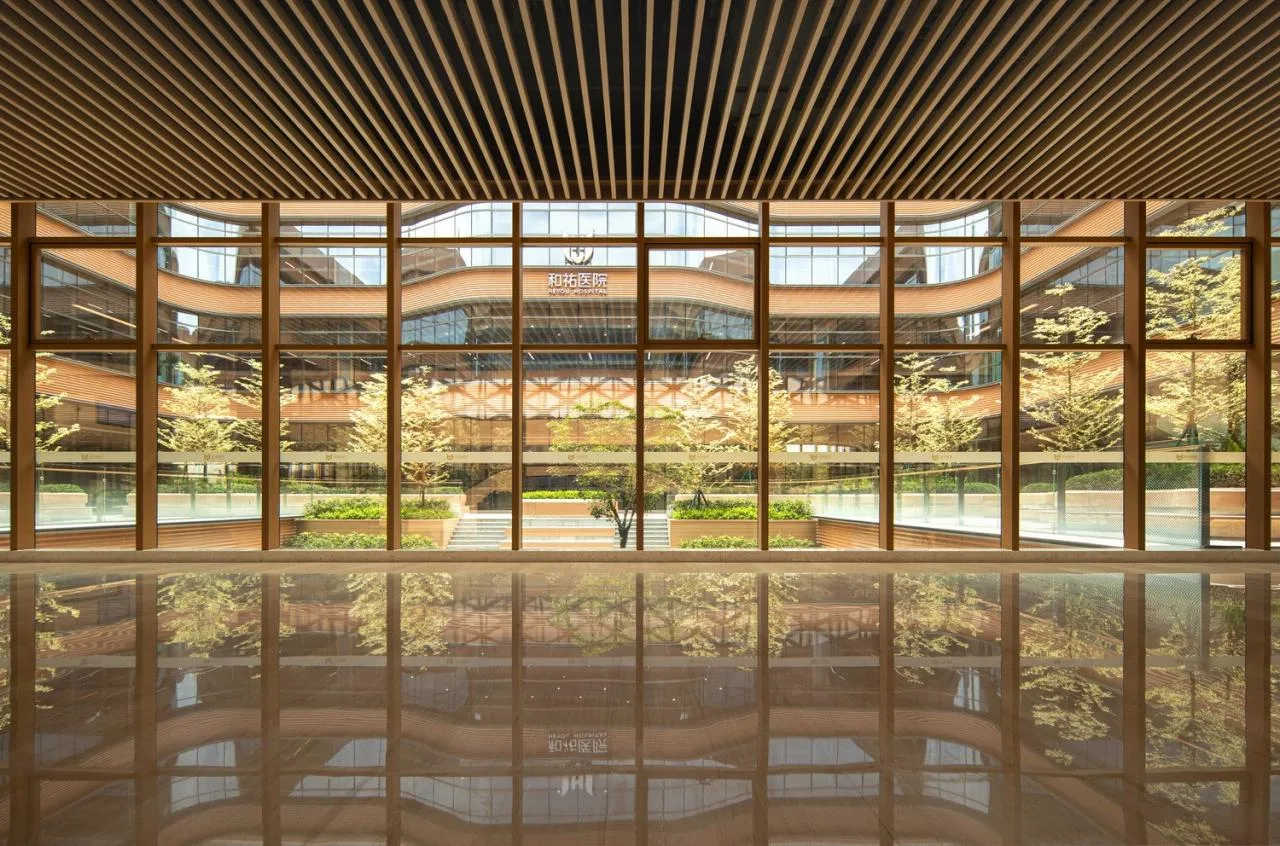
The main medical corridor is guided by green pathways.
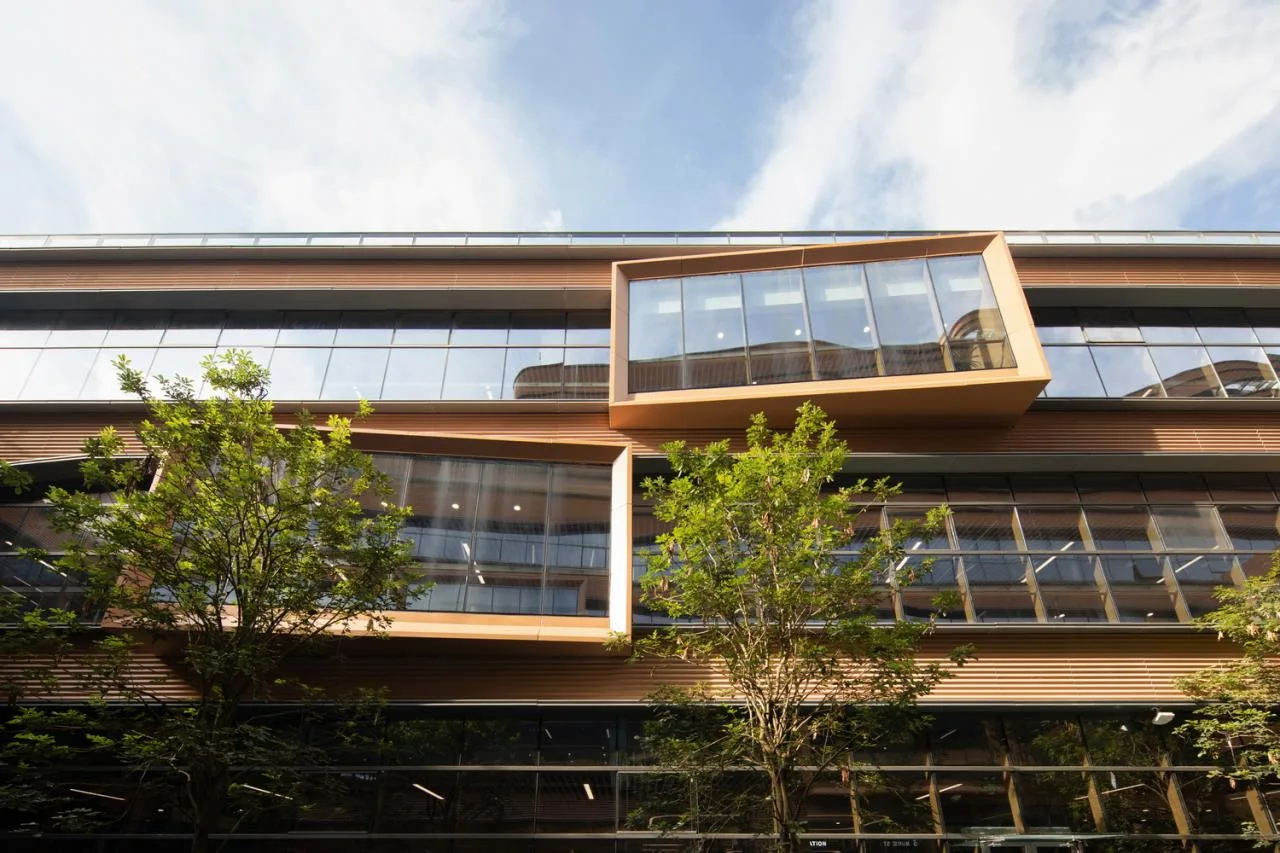
△ The “framing frames” within the green corridors bring visitors closer to nature.
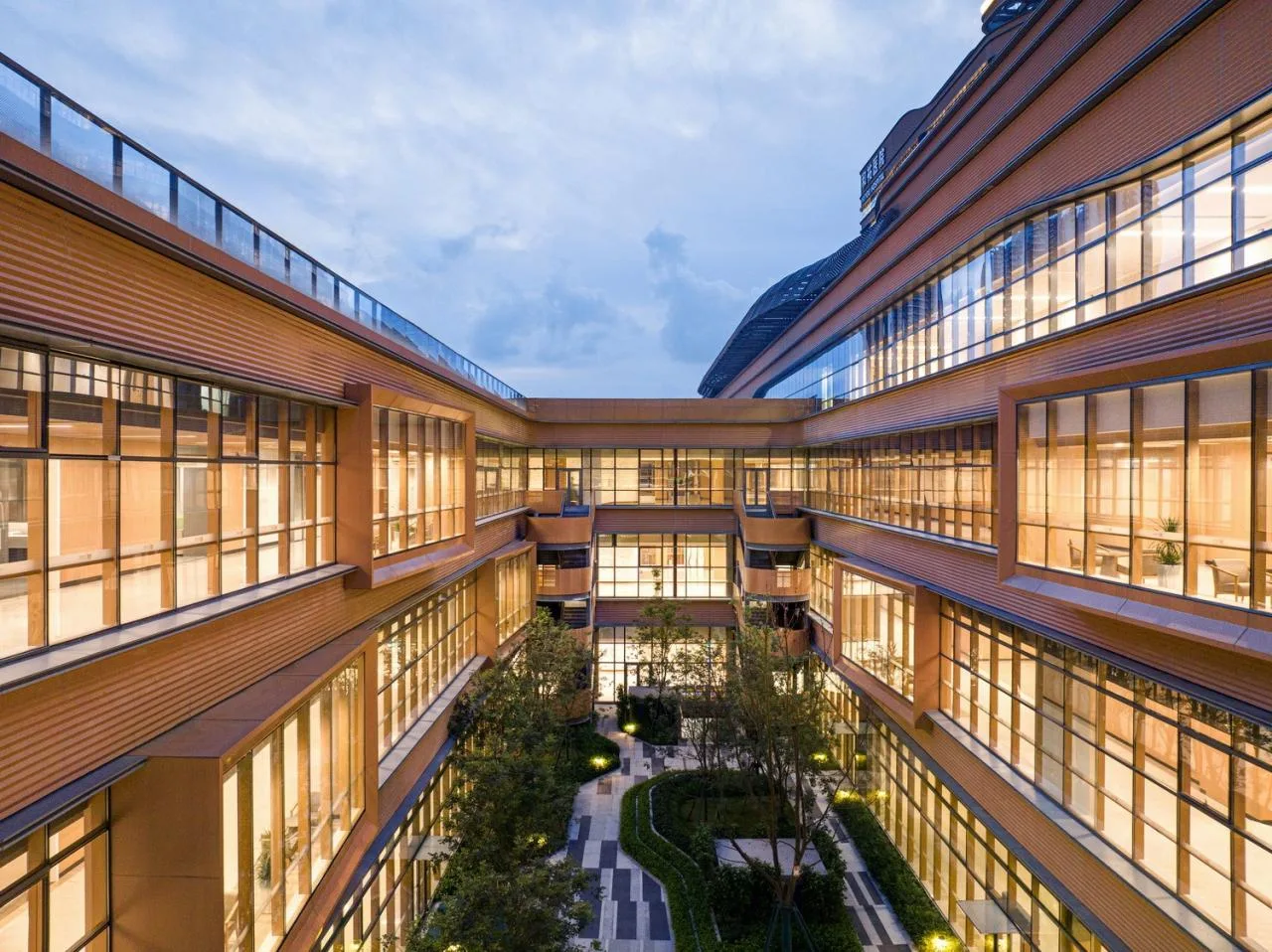
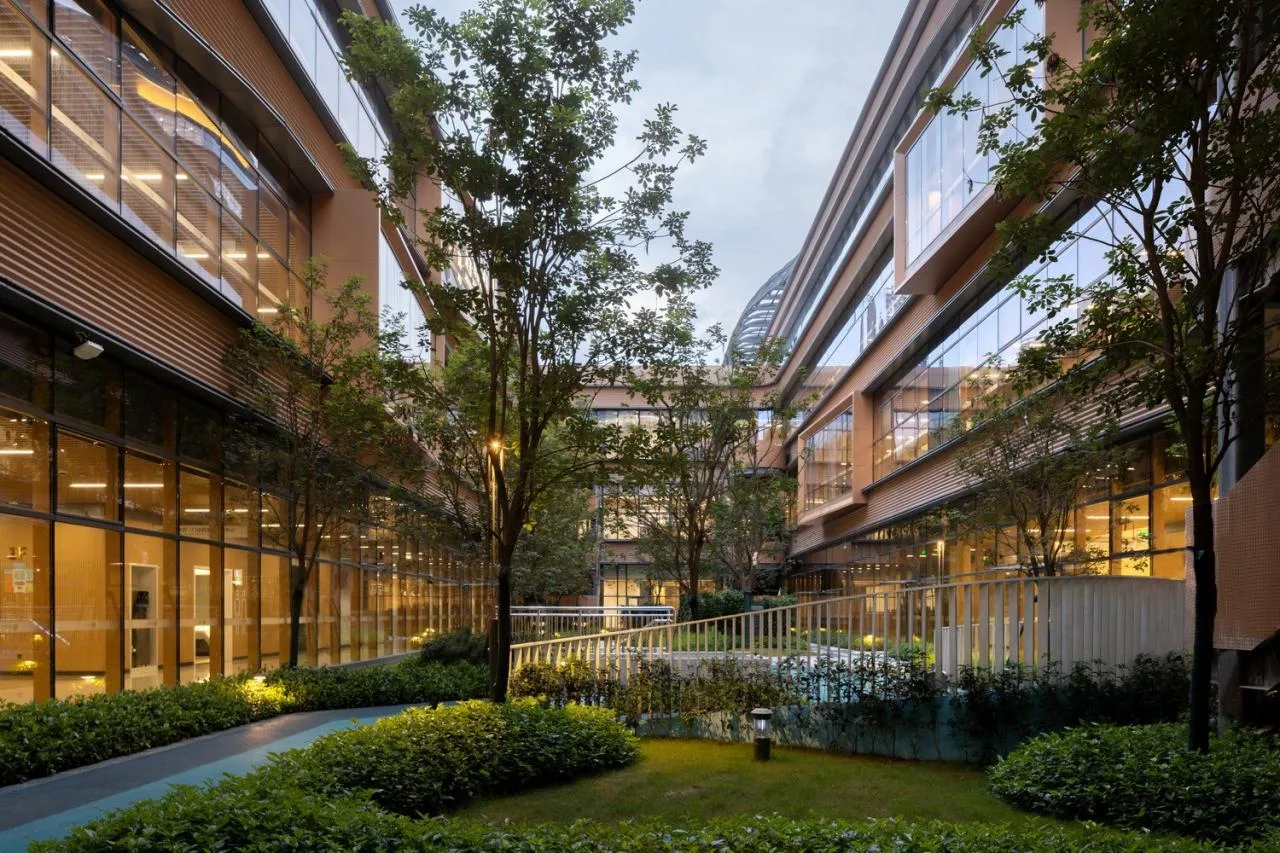
△ Spaces for both social interaction and solitude are designed to help alleviate patient stress.
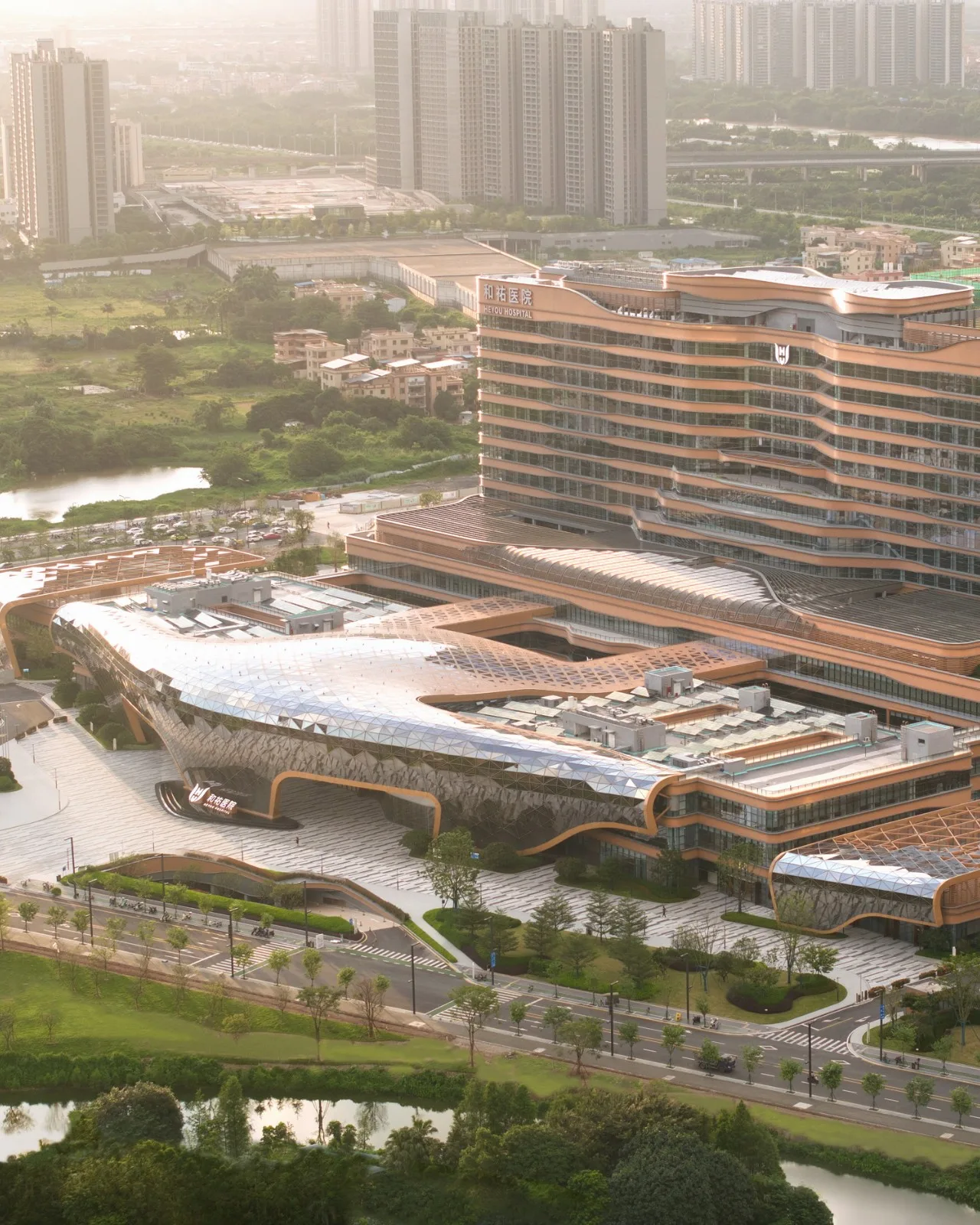
Heyou Hospital in the morning summer light
A city living room dedicated to health
Committed to emphasizing the public and artistic aspects of medical architecture, the hospital offers a museum-level medical experience with healing features.
Medical complexes like Heyou Hospital represent the future of hospital development. By ensuring safety and foresight in medical functions while blurring traditional boundaries, the outpatient lobby is designed as a “city health living room” that fully integrates technology and green energy-saving solutions.
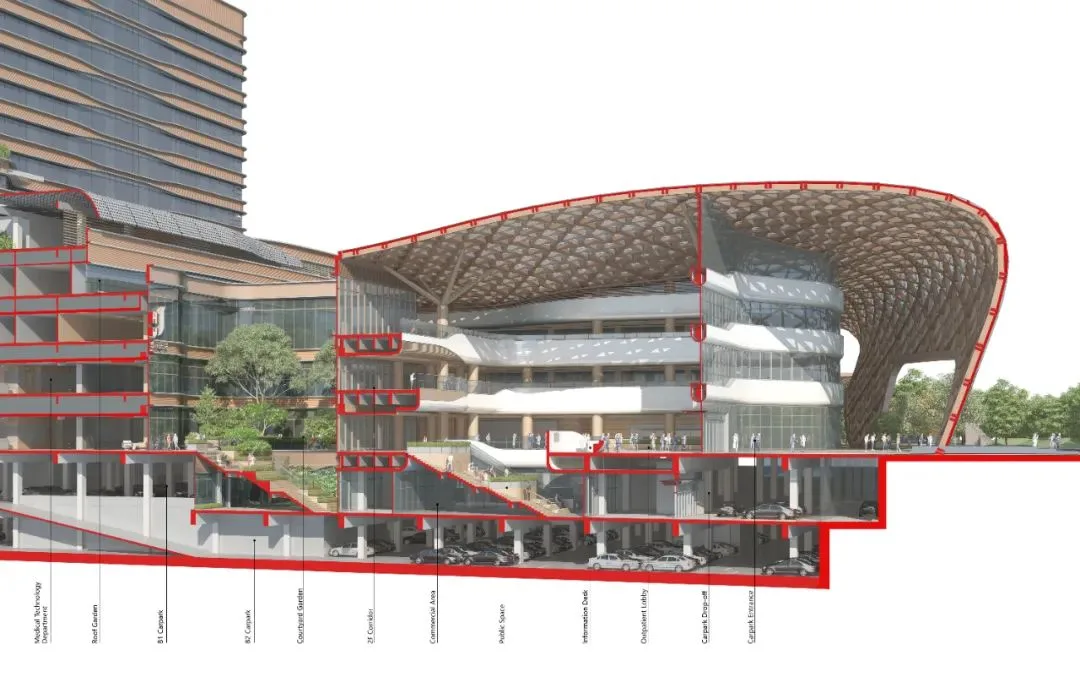
A “City Health Living Room” seamlessly blends advanced technology with sustainable green energy.
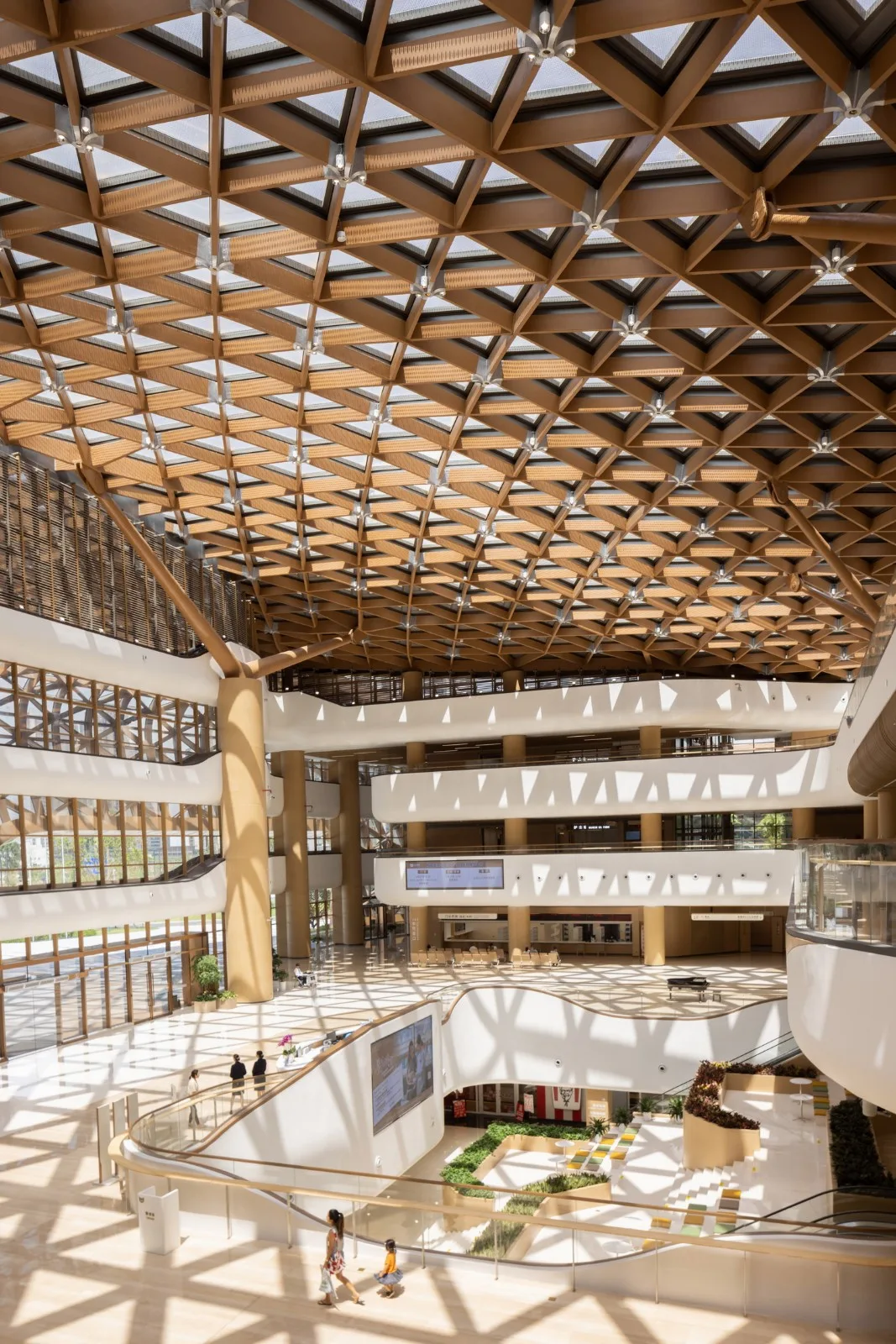
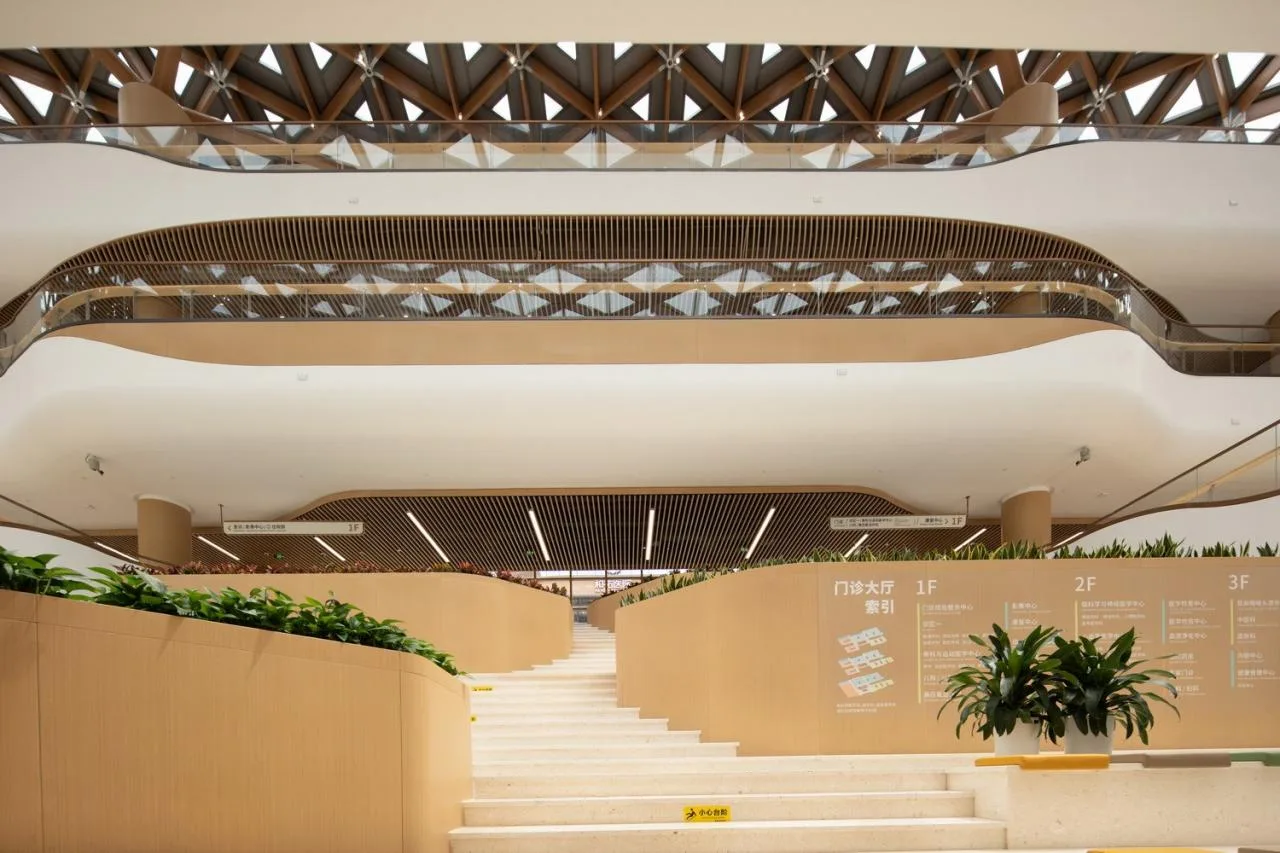
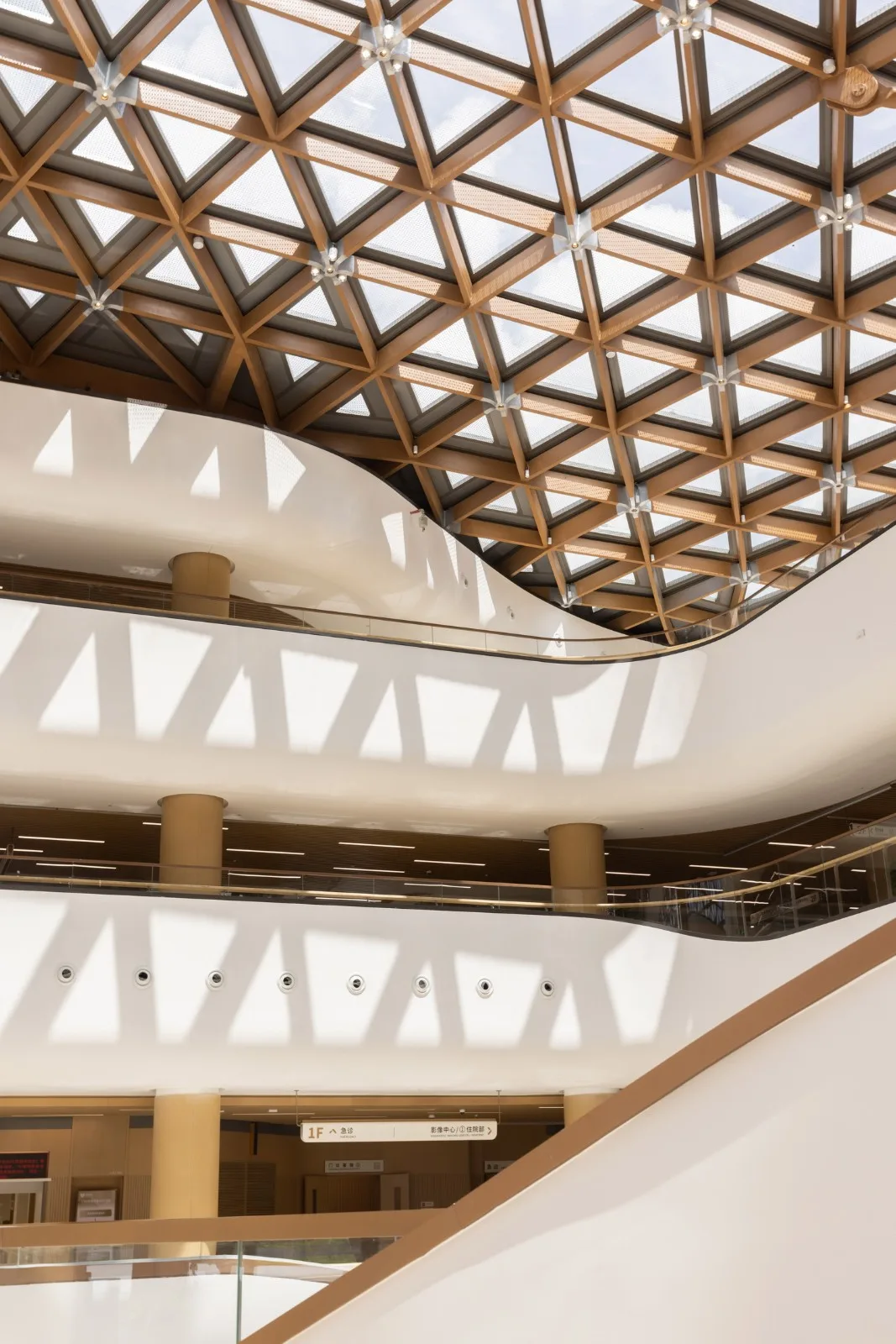
An open, community-focused urban living room dedicated to health
The architecture transcends mere functionality, becoming a catalyst for urban growth, inviting everyone to embark on a healthy journey toward the future.
Awards
To date, Midea Heyou Hospital has received 15 prestigious architectural awards worldwide, including the ICONIC Iconic Architecture Award (Germany), WAF World Architecture Festival Award, IAA International Architecture Award, IDA International Design Award, OPAL London Outstanding Real Estate Award, APR China Design Award, WAN World Architecture News Award, MUSE Design Award (USA), Masterprize Architecture Master Award (USA), A’Design Award (Italy), CHCC China Hospital Construction Award, TAC World Design Award, BLT Los Angeles Architecture Design Award, and was featured on the 2023 Fortune China Best Design List, among many others.
Project Information
Project Name: Midea Heyou Hospital
Building Type: Medical facility with 1,500 beds
Location: Shunde District, Foshan City, Guangdong Province
Construction Unit: Guangdong Hekang Medical Management Co., Ltd
Design Firm: British architectural firm BAI Design International (BAIDI)
Scope of Work: Integrated multidisciplinary design covering planning, architecture, interior, landscape, floodlighting, signage, and curtain wall systems
Lead Architect: Bai Yu
Architectural Team: Bai Yu, Fabio Canni, Zhao Xipeng, Feng Na, Meng Fei, Laura Zurbano, Wang Weina, Shi Haimer, Liang Ying, Park Xianglin, Lian Lili, Li Cheng, Wu Qingyu, Zhao Jing, Li Ziwei, Zhao Yan, Pei Fei, Deng Kang, Lv Hao
Interior Design: Bai Yu, Xiao Haibo, Wang Liang, Yan Jiarong, Yin Shengkuan, Wang Weina, Park Xianglin, Zhao Jing, Li Ziwei
Landscape Design: Bai Yu, Bai Jin, Wang Yinong, Wang Yulong, Chen Yuxi, Ma Linlin, Du Wenbo, Liu Jun, Shi Qingqing
Lighting Design: PROL Light Stone
Curtain Wall Design: Bai Yu, Ji Shan, Deng Wenxuan, Wang Liyong, Gao Bopeng, Shi Haimer
Architectural Photography: Literal Translation of Architectural Photography
Phase I LDI: Zhubo Design
Phase II LDI: China Academy of Architectural Design and Research
Proton Heavy Ion LDI: Shanghai Institute of Architectural Design and Research
Total Planned Construction Area: 580,000 square meters
Design Period: 2020–2023
Opening Date: June 2024














Must log in before commenting!
Sign Up