
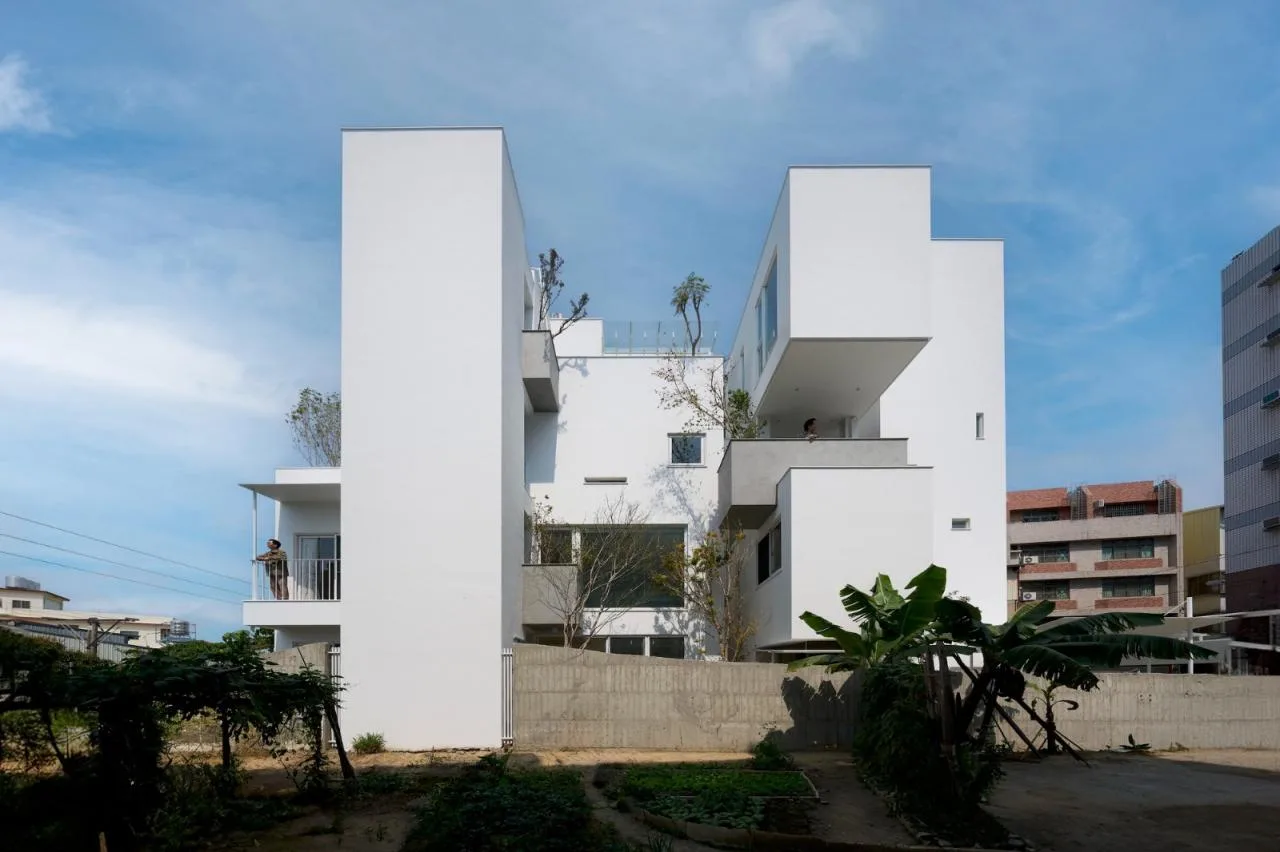
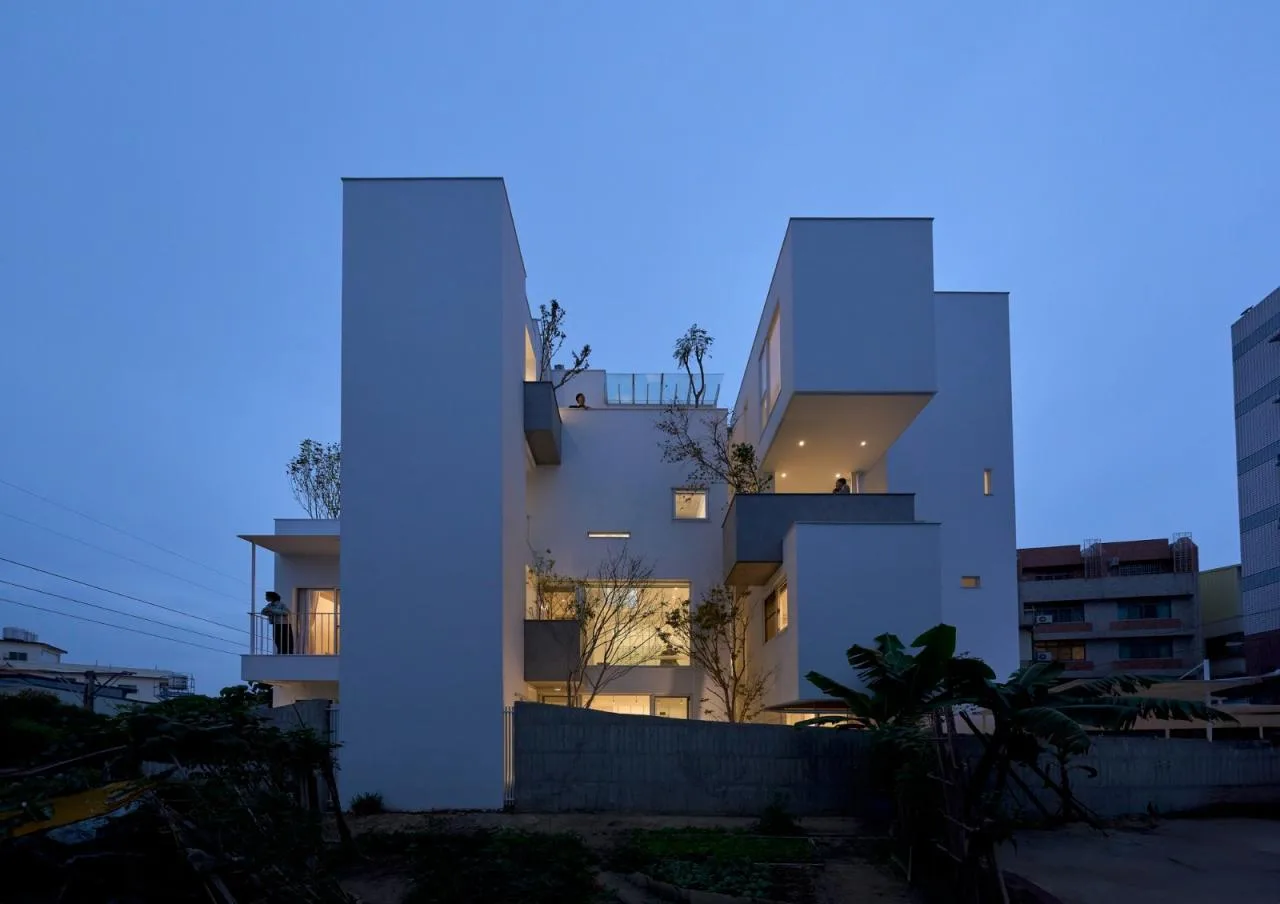
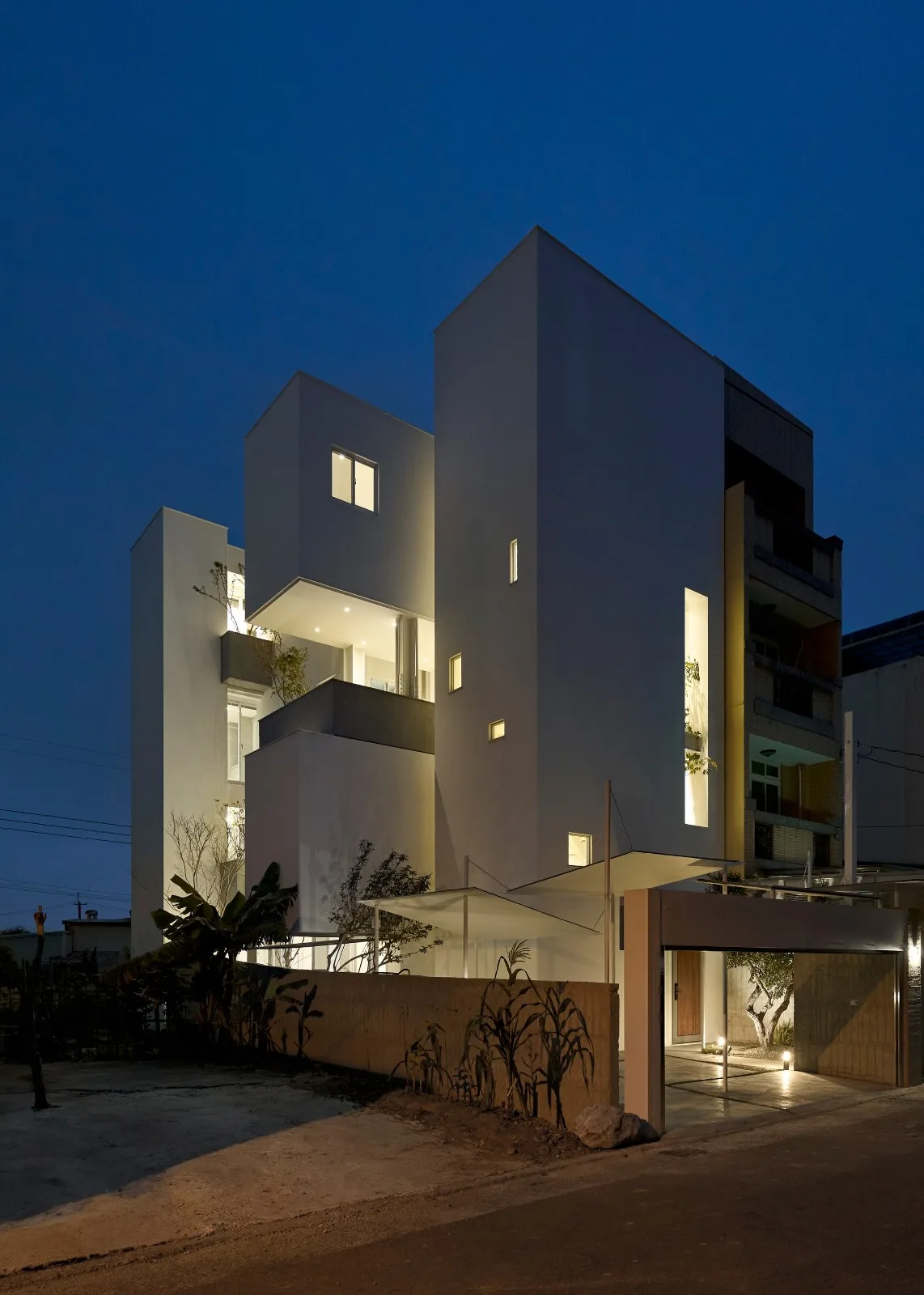
The Valley House design transforms the original building structure by integrating it seamlessly with nature. The homes along the long street have been reimagined as five staggered and stacked volumes with intentional gaps between them. These staggered horizontal and vertical planes create multiple floor levels, allowing natural elements to flow through the space. By blending valley imagery with traditional Taiwanese courtyard concepts, the building harmonizes with wind and light.
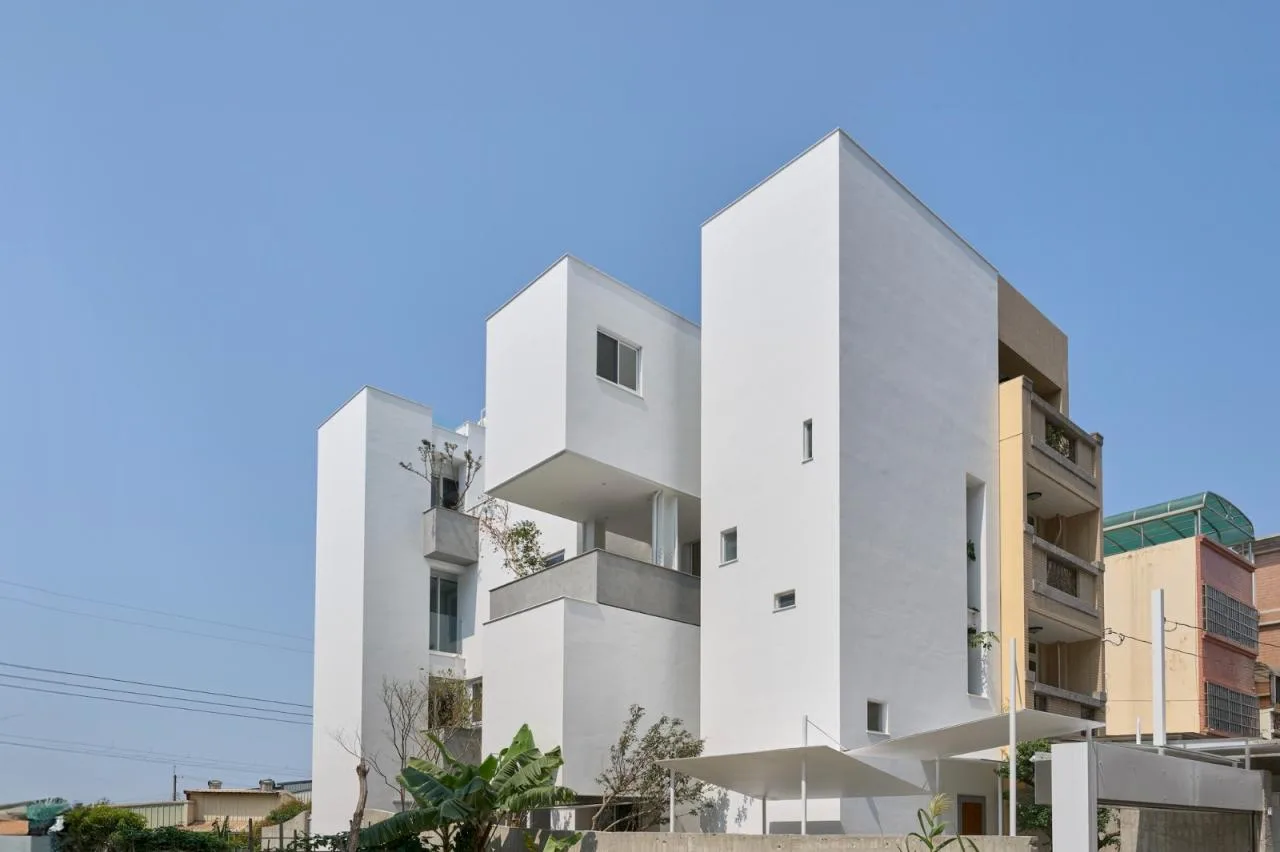
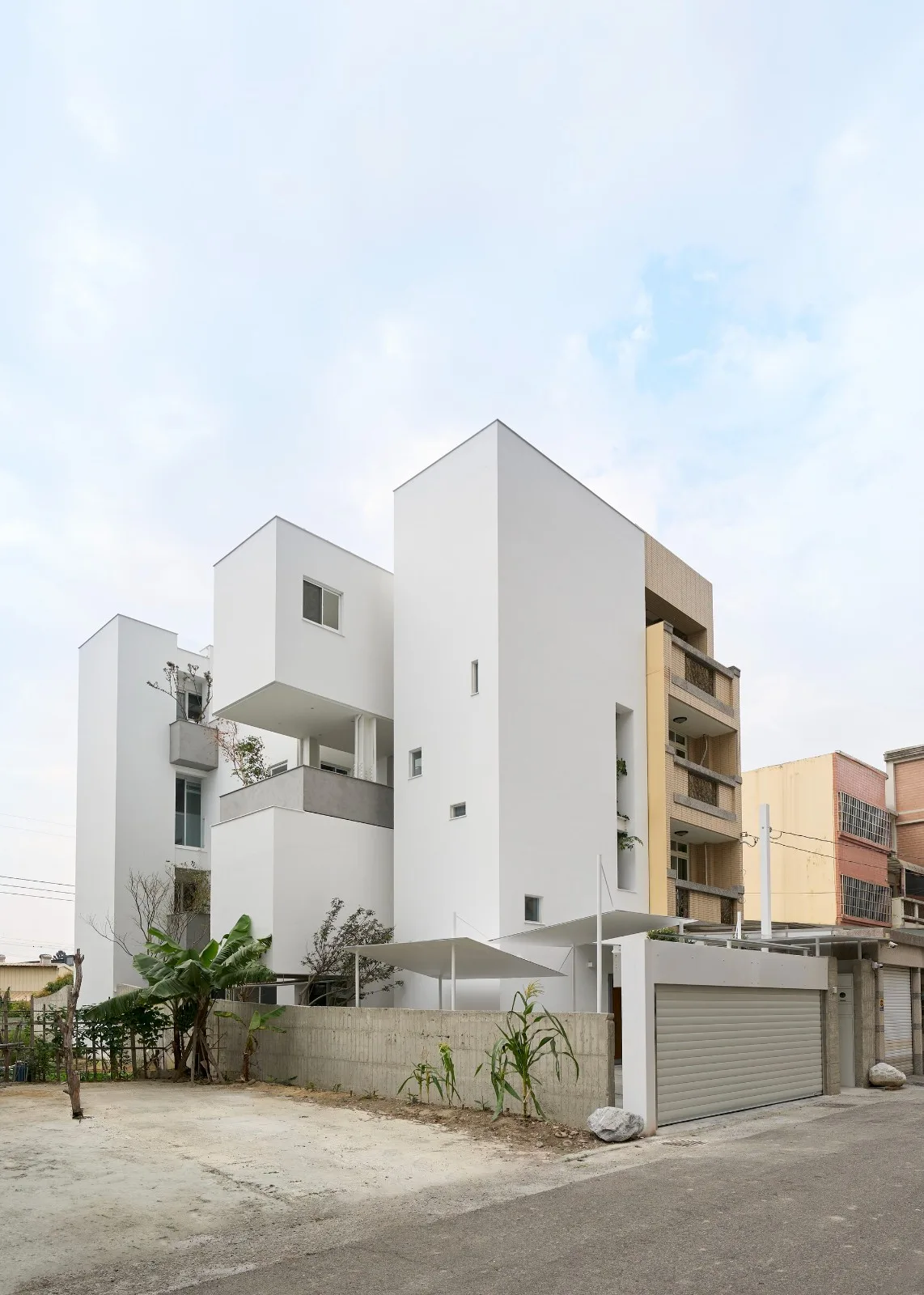
Key design features include:
- Employing deconstruction methods to respond to the natural environment and foster favorable microclimates
- Combining valley imagery with traditional courtyards to create architecture that coexists harmoniously with nature
- Allowing residents to fully experience natural elements within a space surrounded by greenery
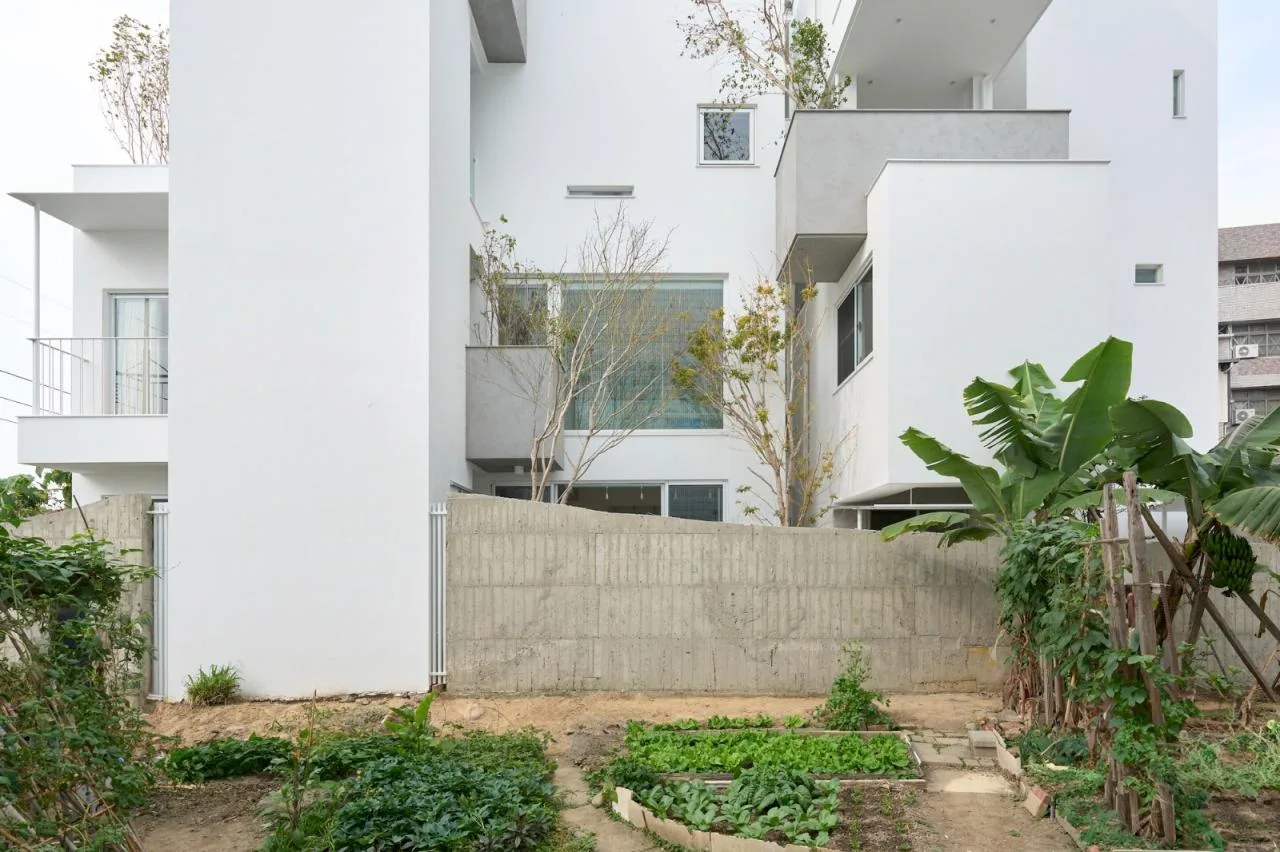
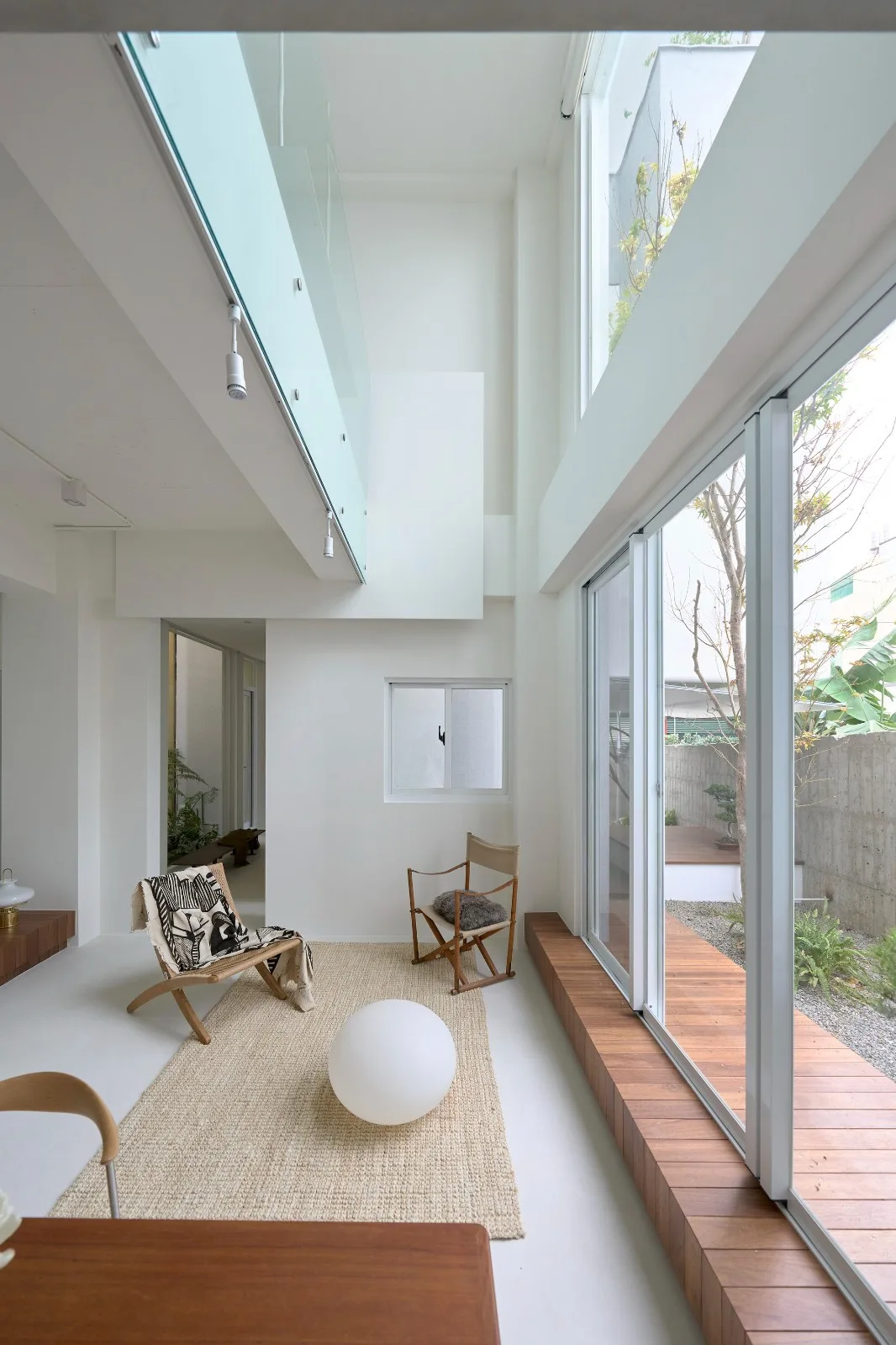
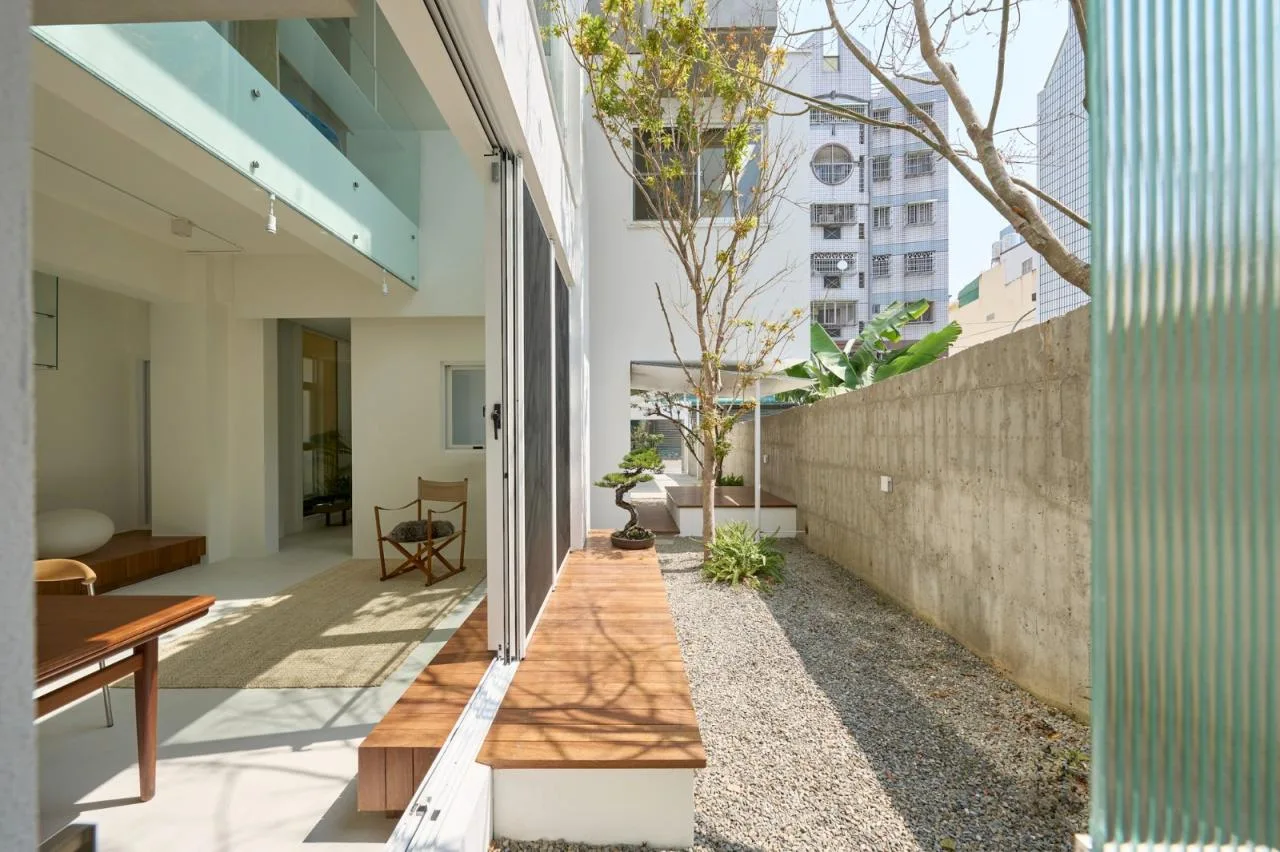
This project represents a typical independent building in the area: situated on a narrow strip of land, featuring only front and rear windows, and closely flanked by neighboring buildings, which disconnects it from the surrounding environment. Facing cold and humid northeast winds, the design addresses these climatic challenges to create a comfortable living space.
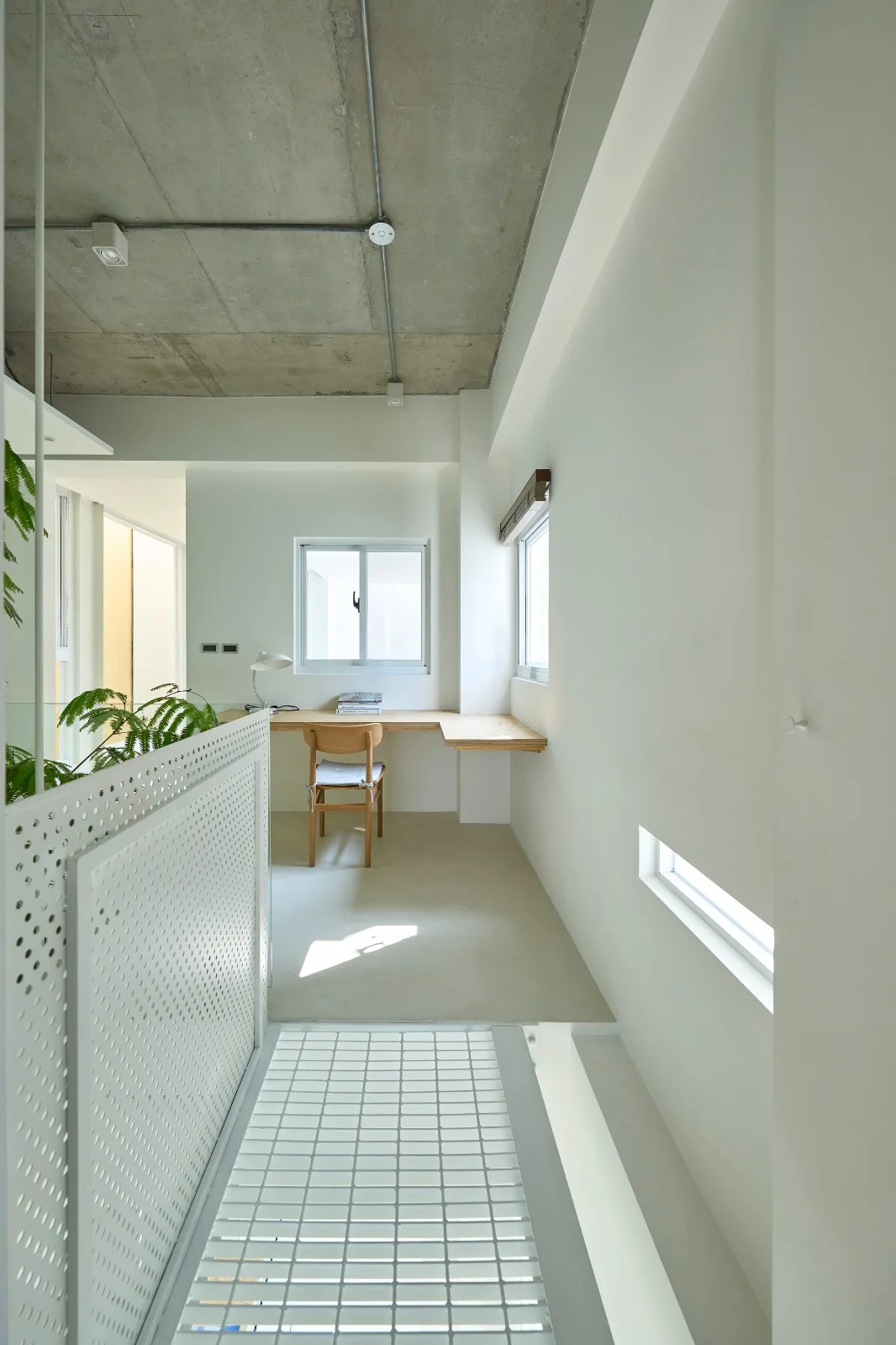
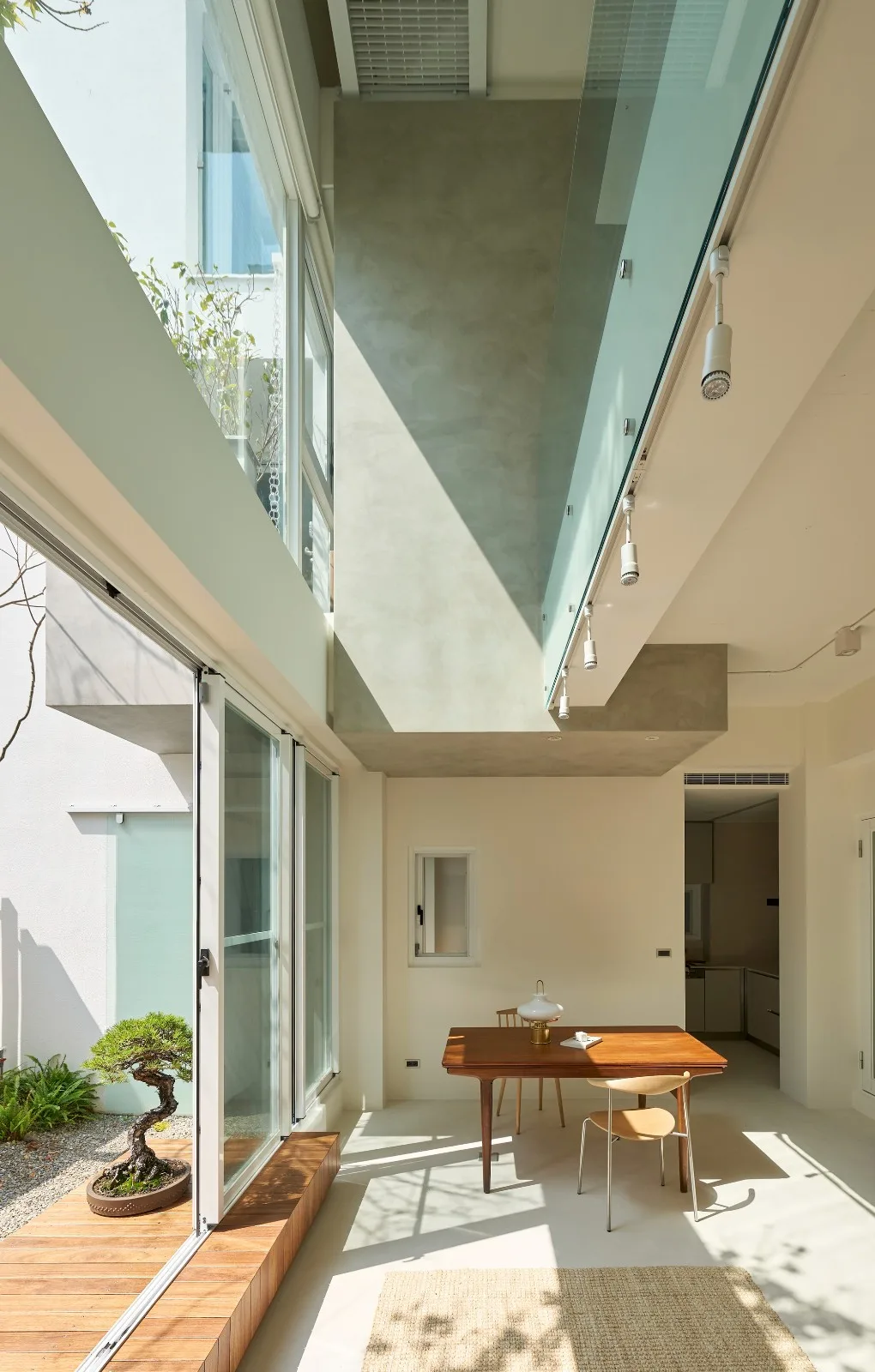
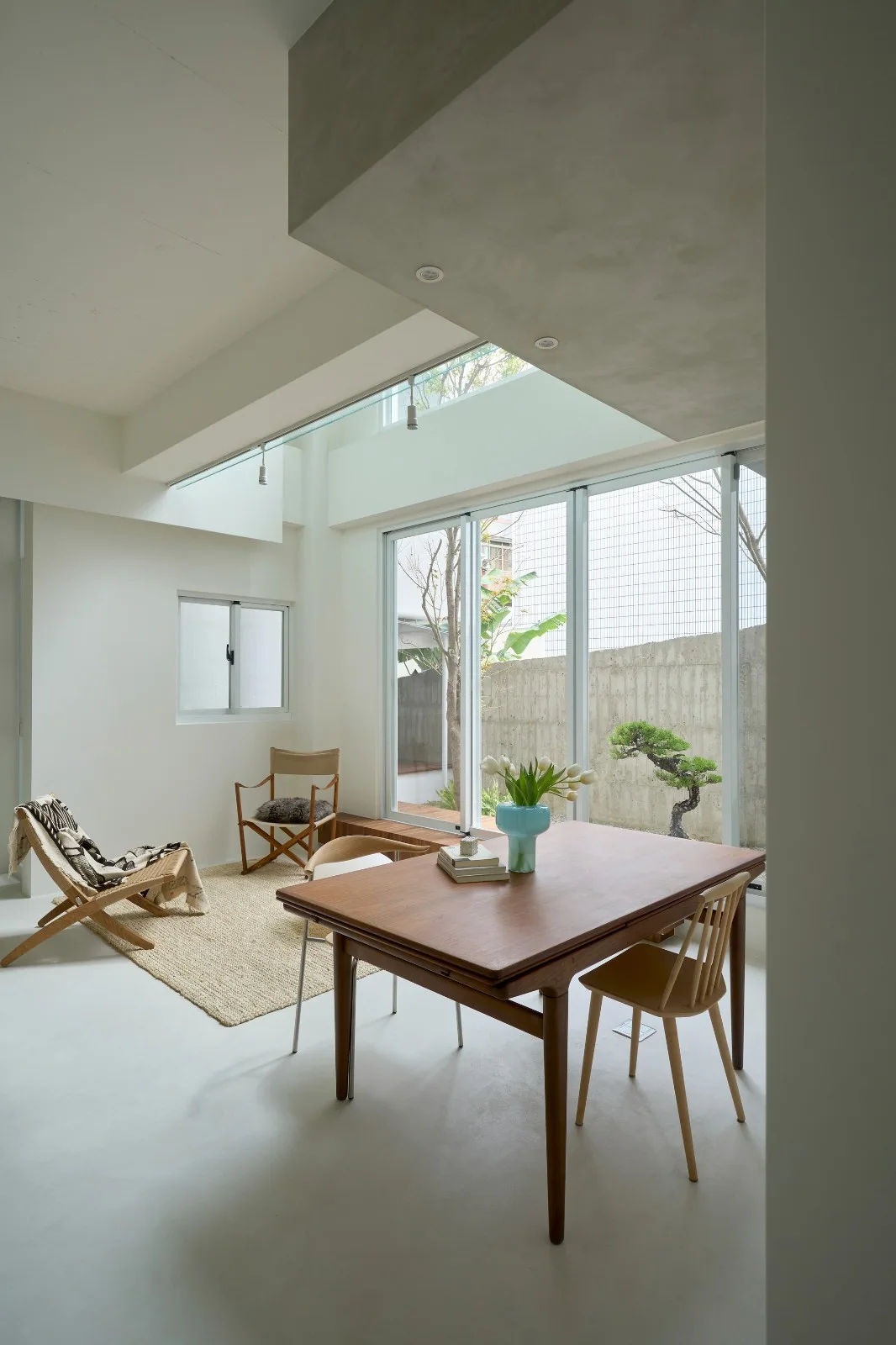
The design challenges traditional layouts by proposing new solutions for adjacent independent houses through “deconstruction.” Instead of placing living spaces at both ends, this approach introduces gaps and multi-level spaces within nature, breaking the typical concrete box with semi-outdoor areas. This creates a novel urban housing type and expands opportunities for residents to connect with nature.
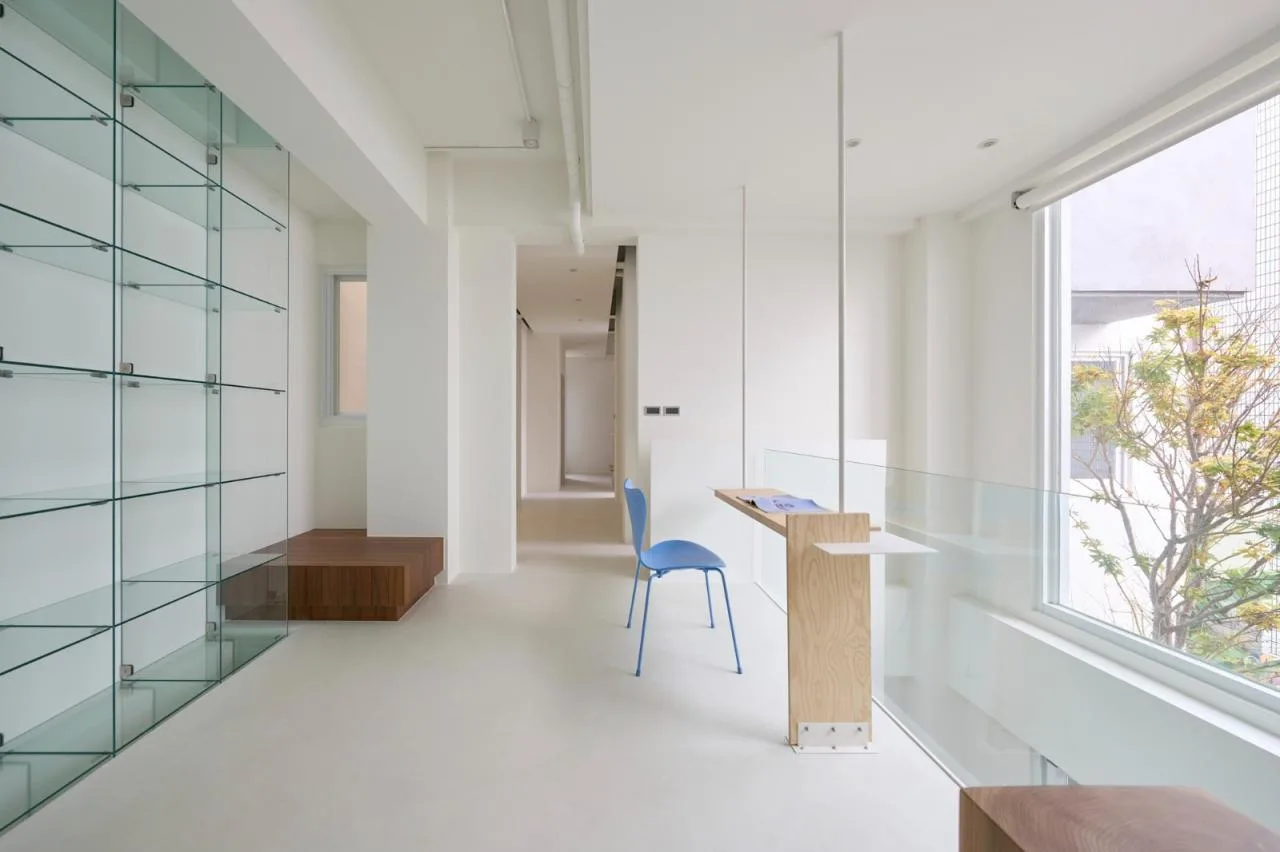
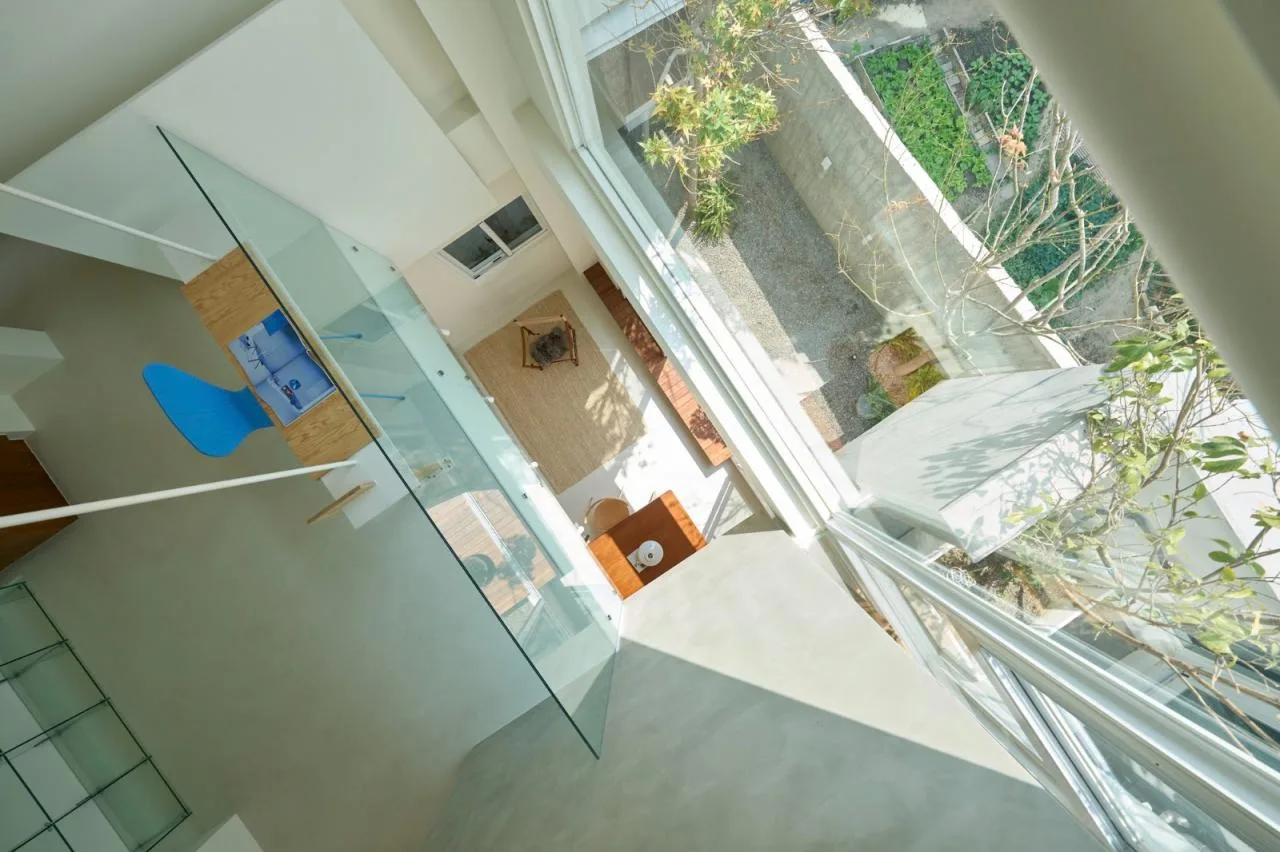
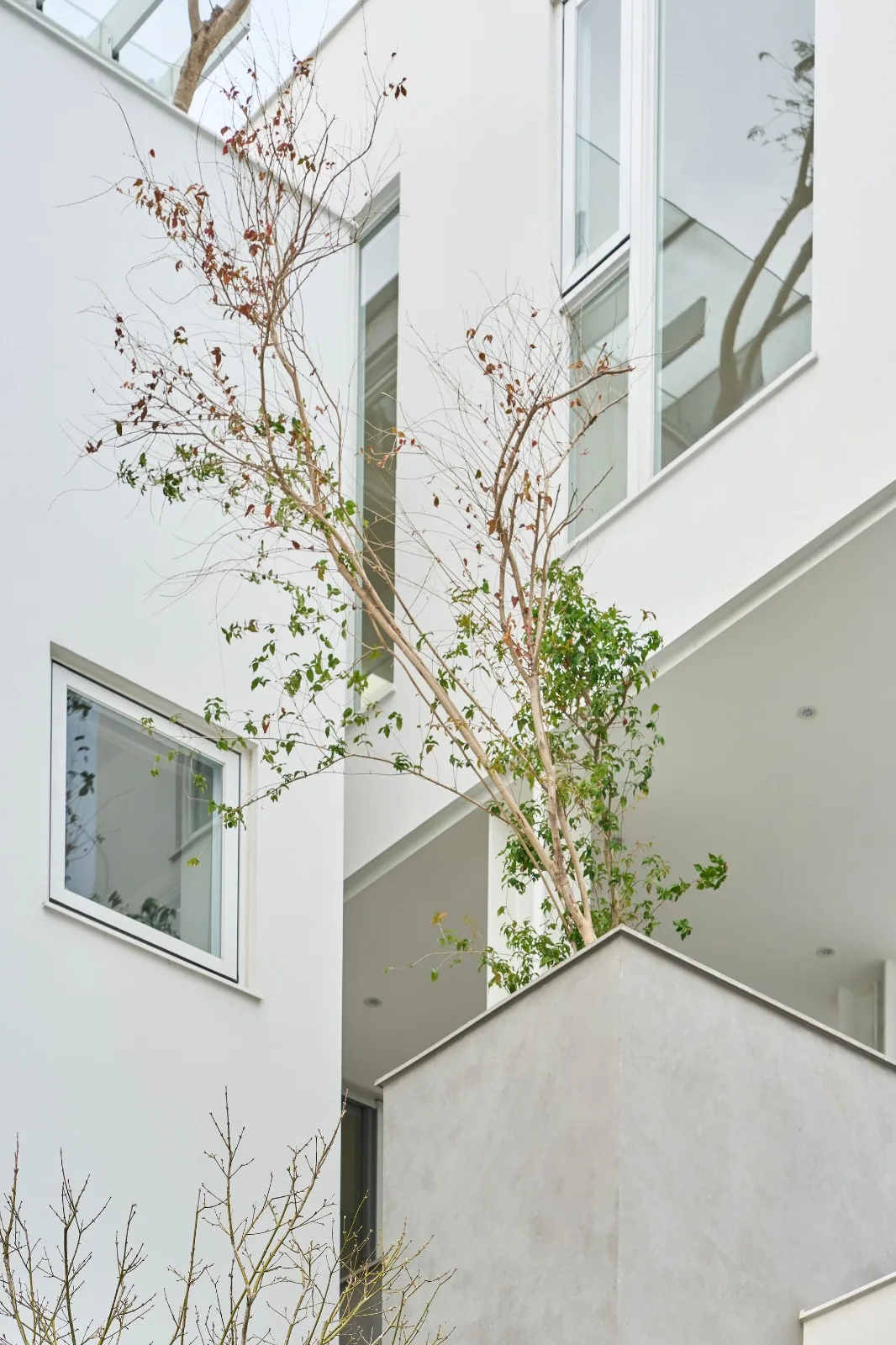
The residential architecture is deconstructed into five misaligned volumes, responding to climate and site conditions. Vertical circulation is placed in the first building facing the northeast wind, while living areas are pushed toward the rear to minimize exposure to cold and humidity. Buildings on the southwest side are lowered to welcome southwest winds. Narrowed air ducts accelerate airflow, allowing wind to penetrate the courtyard, rise along buildings and trees, or enter interiors through building gaps. This design fosters a pleasant indoor microclimate where occupants can experience nature even indoors.
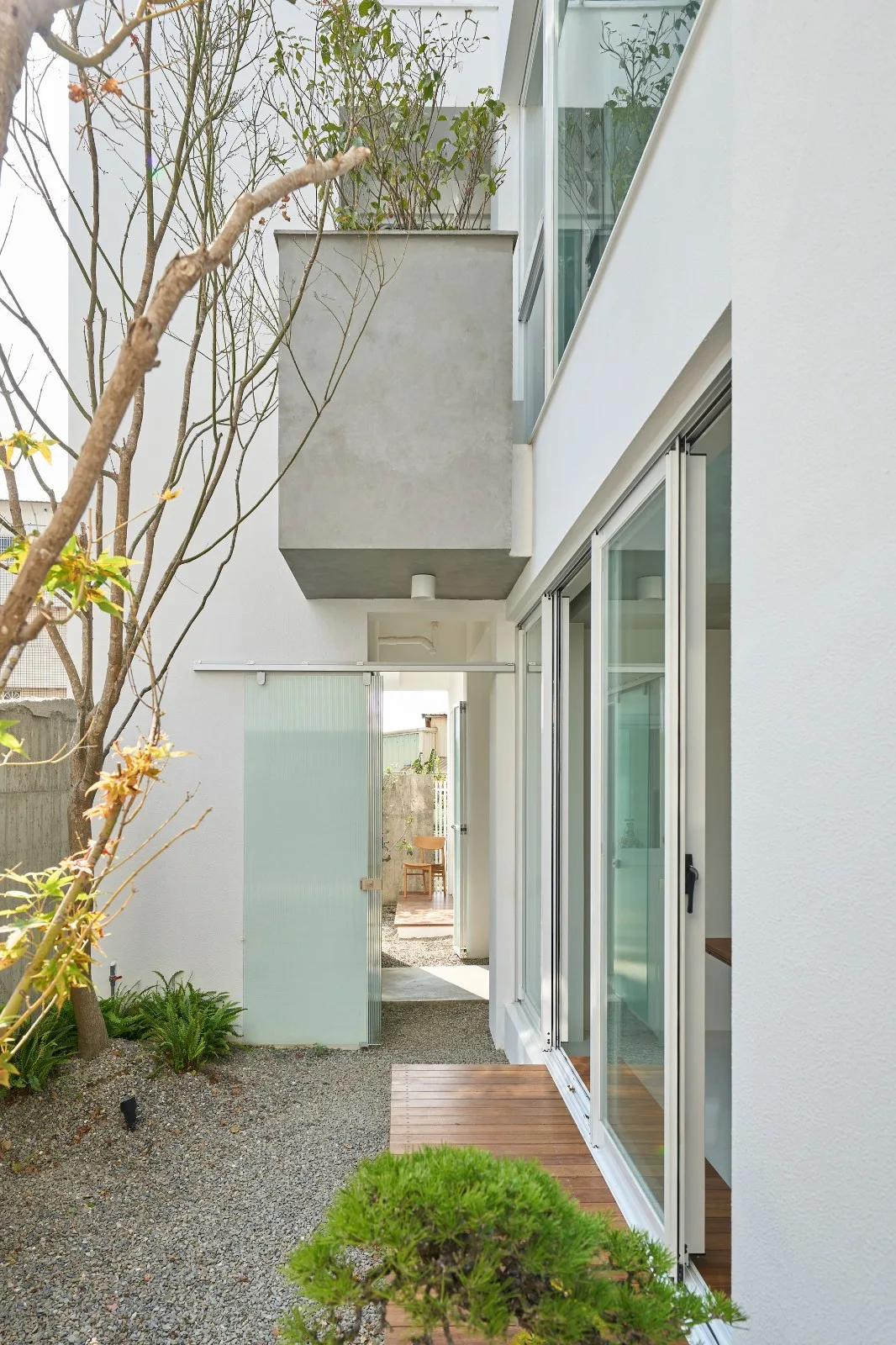
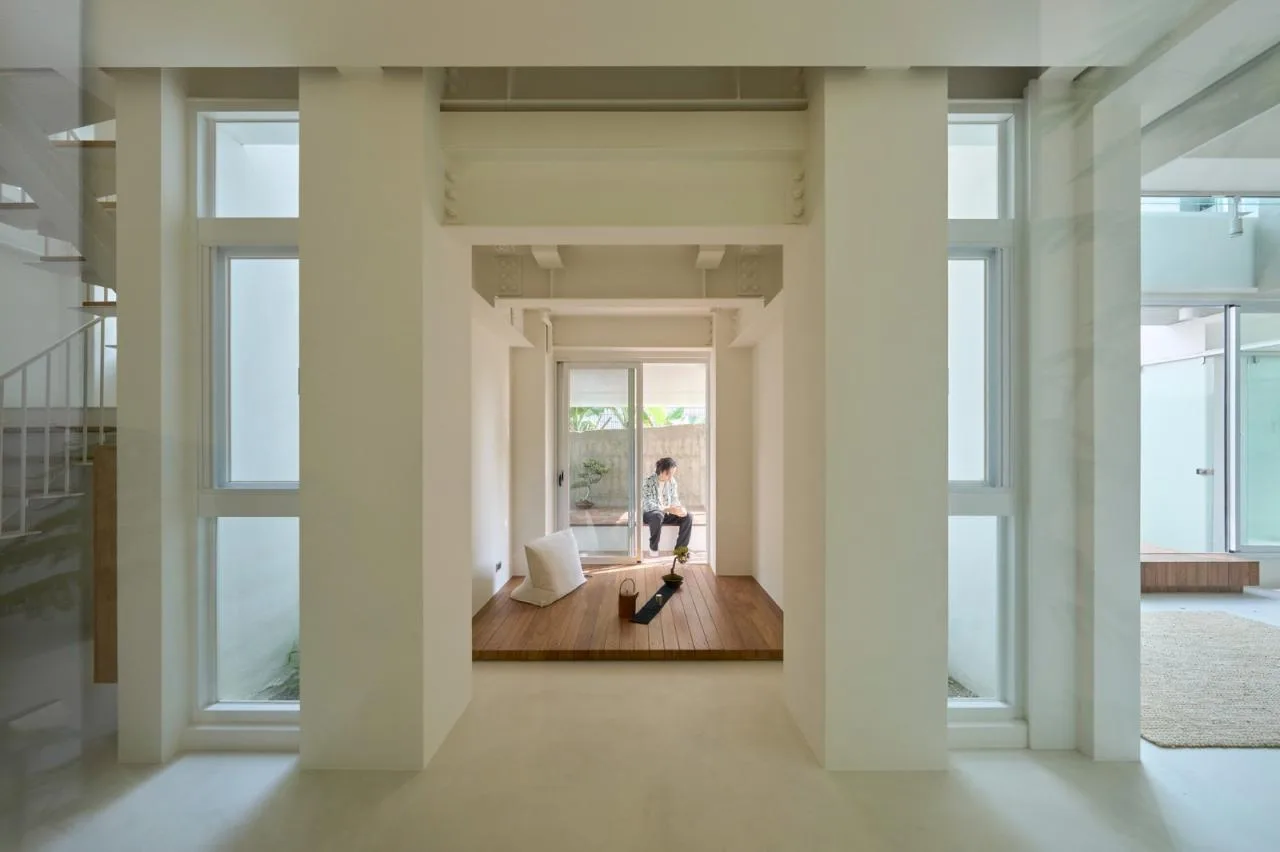
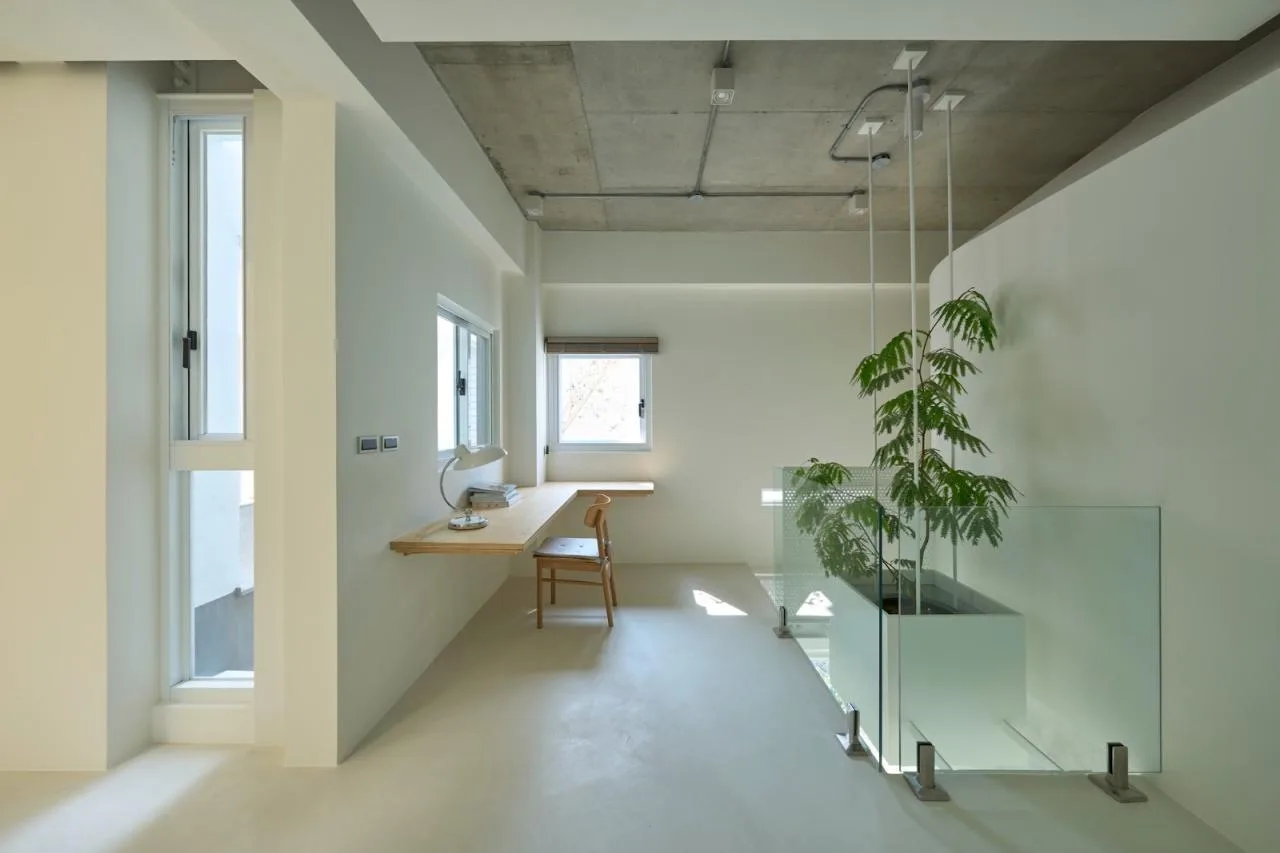
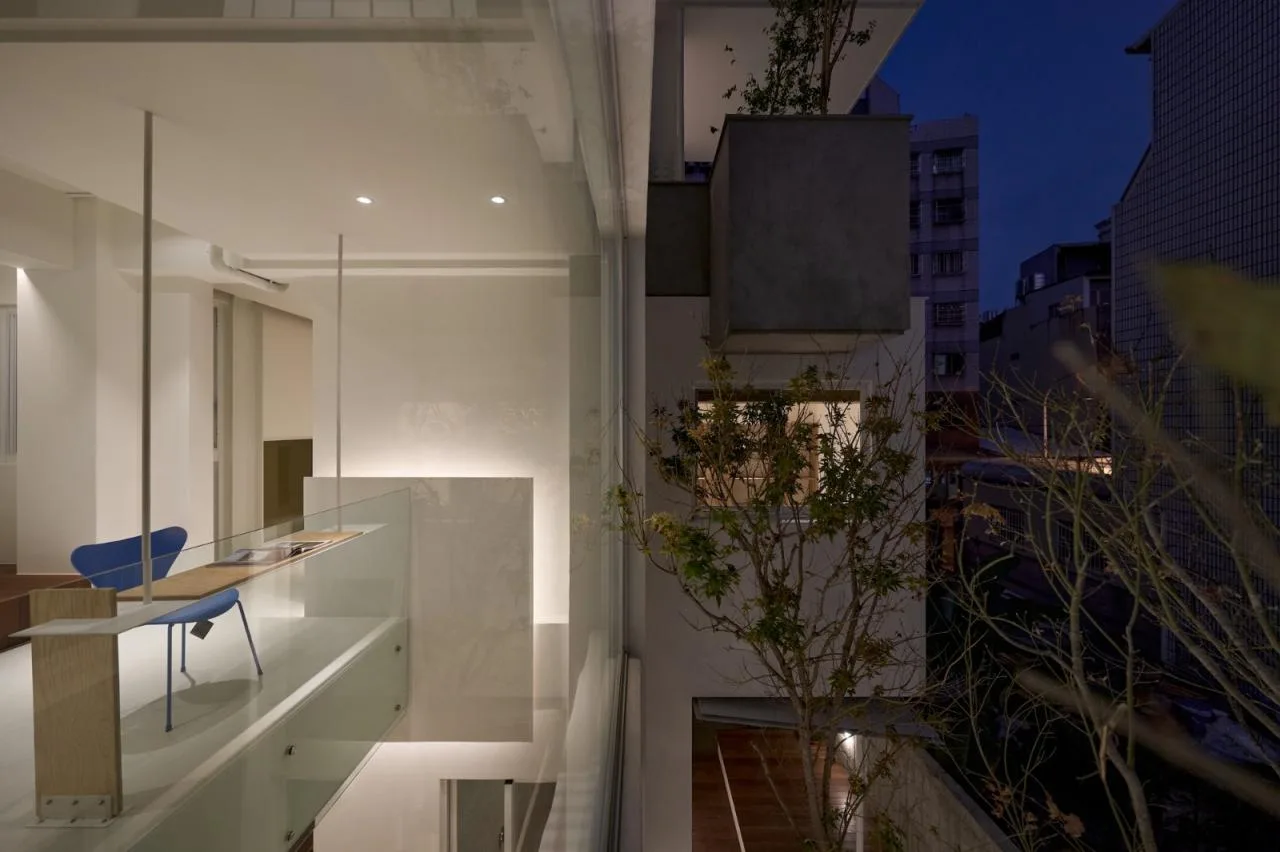
Inspired by Oriental gardens where the scenery changes with every step, the design vertically redefines the planes that receive wind and human activity by merging valley imagery with traditional courtyard concepts. The recessed balconies transform into a valley filled with wind, vegetation, and habitats, including human presence. Inside, these spaces emphasize verticality and establish a strong visual connection between the senses and nature.
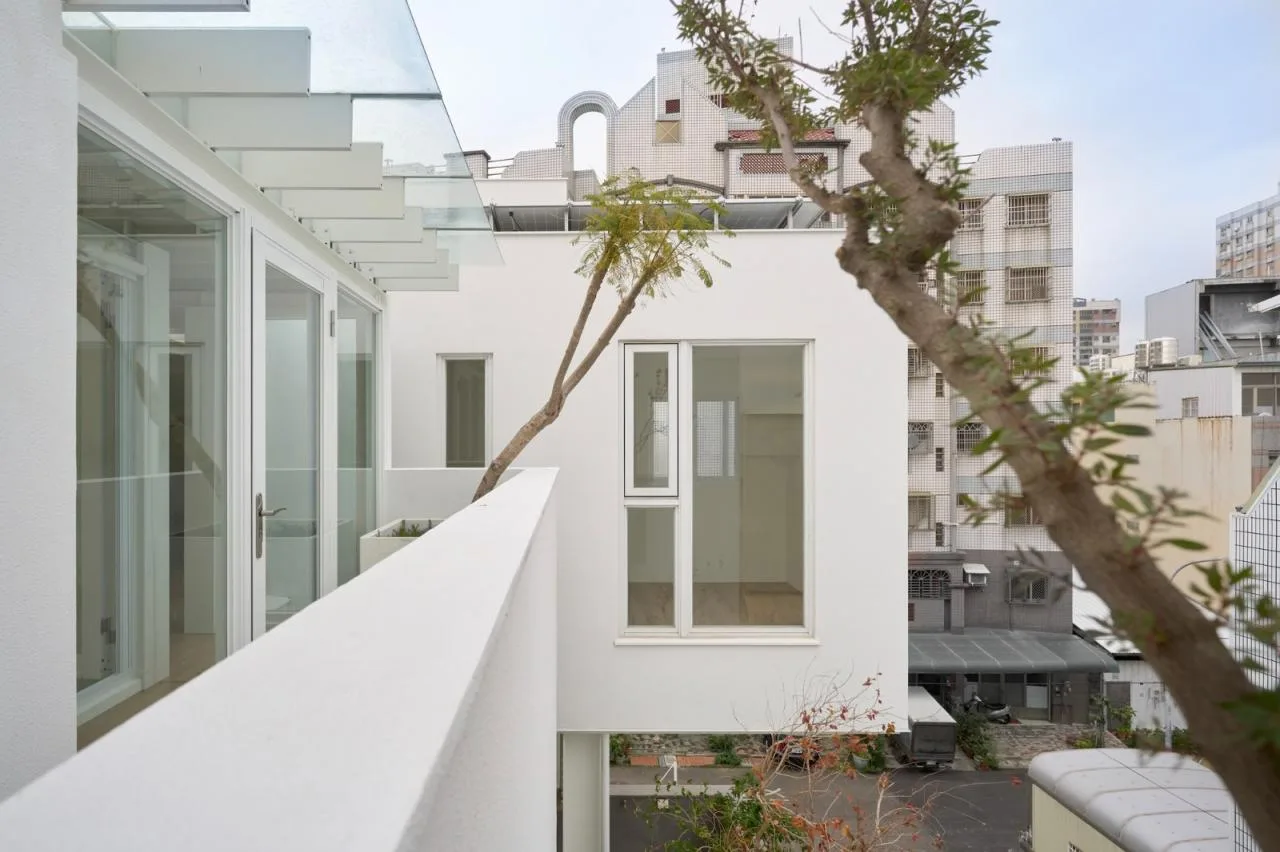
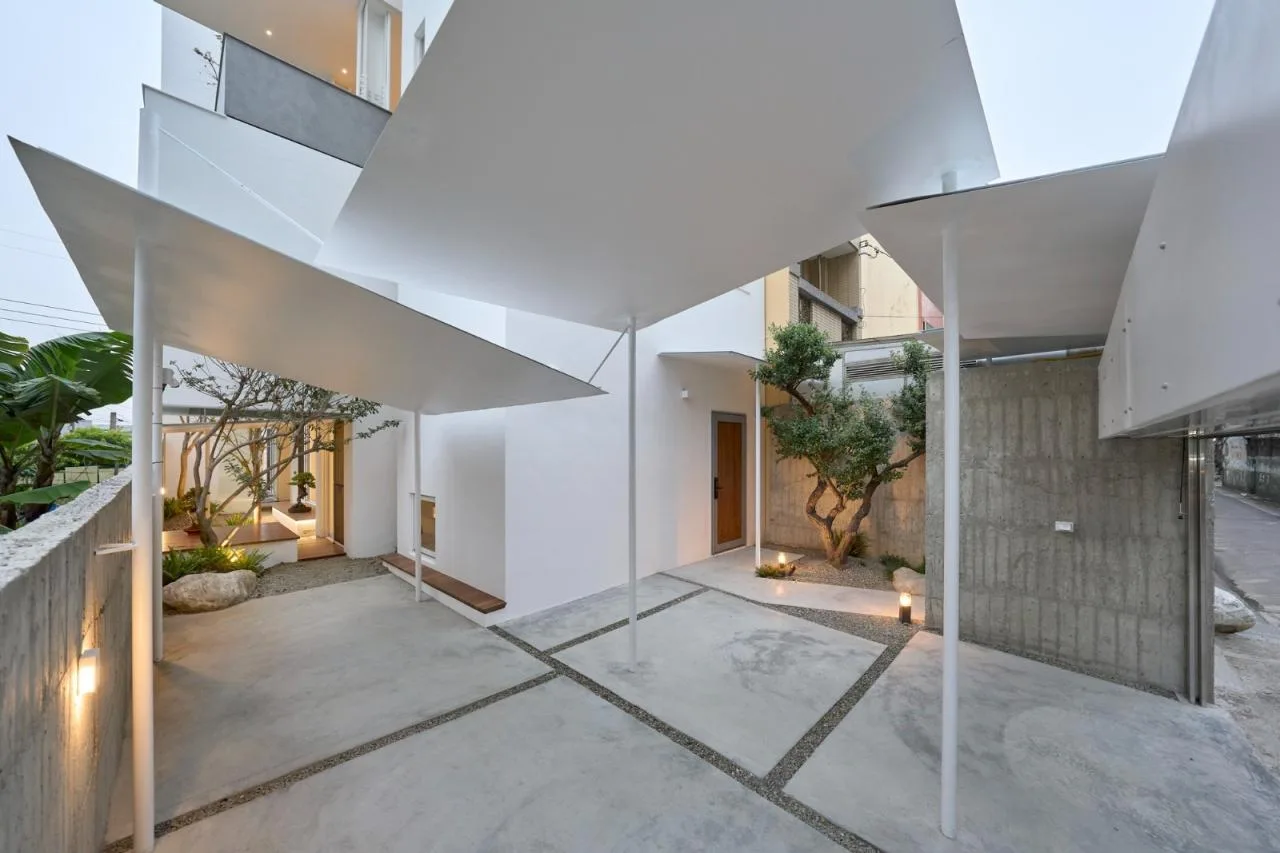
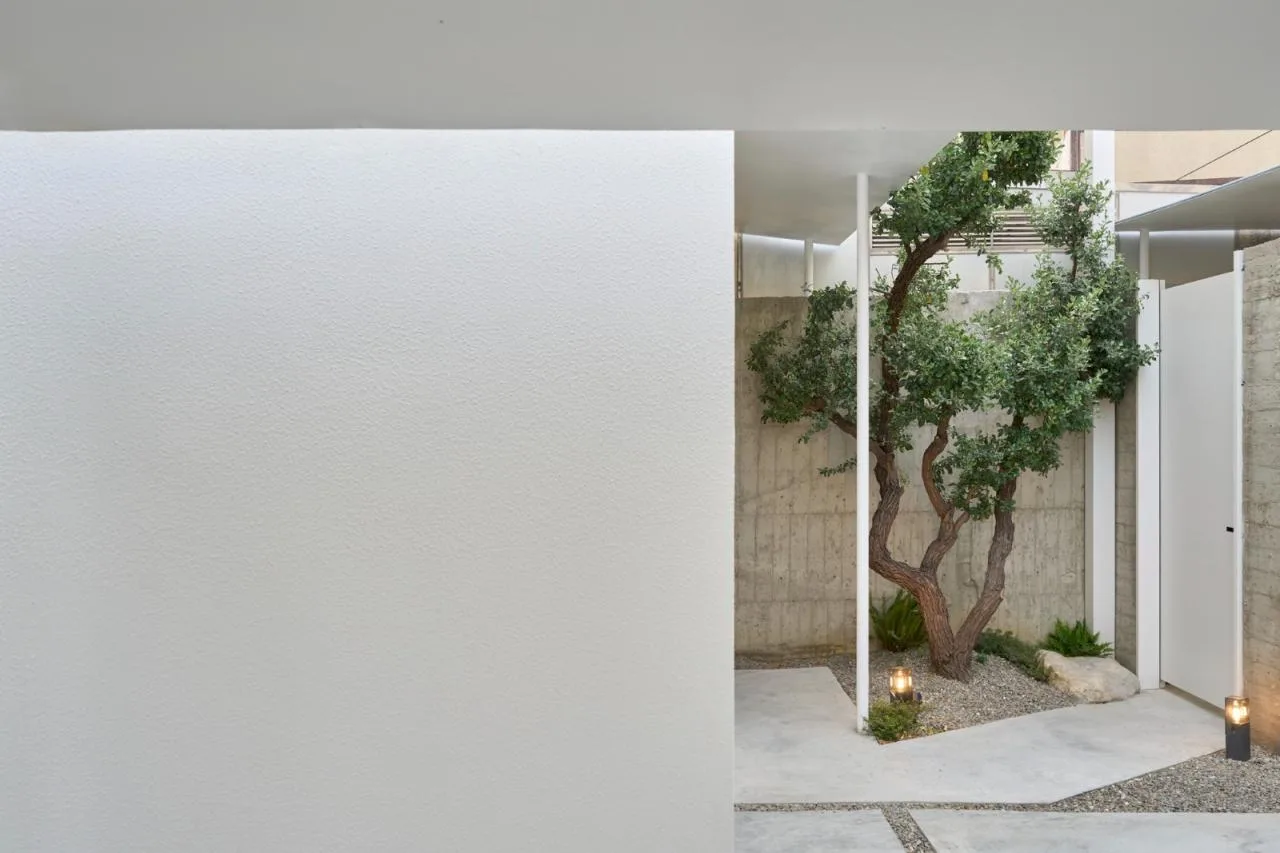
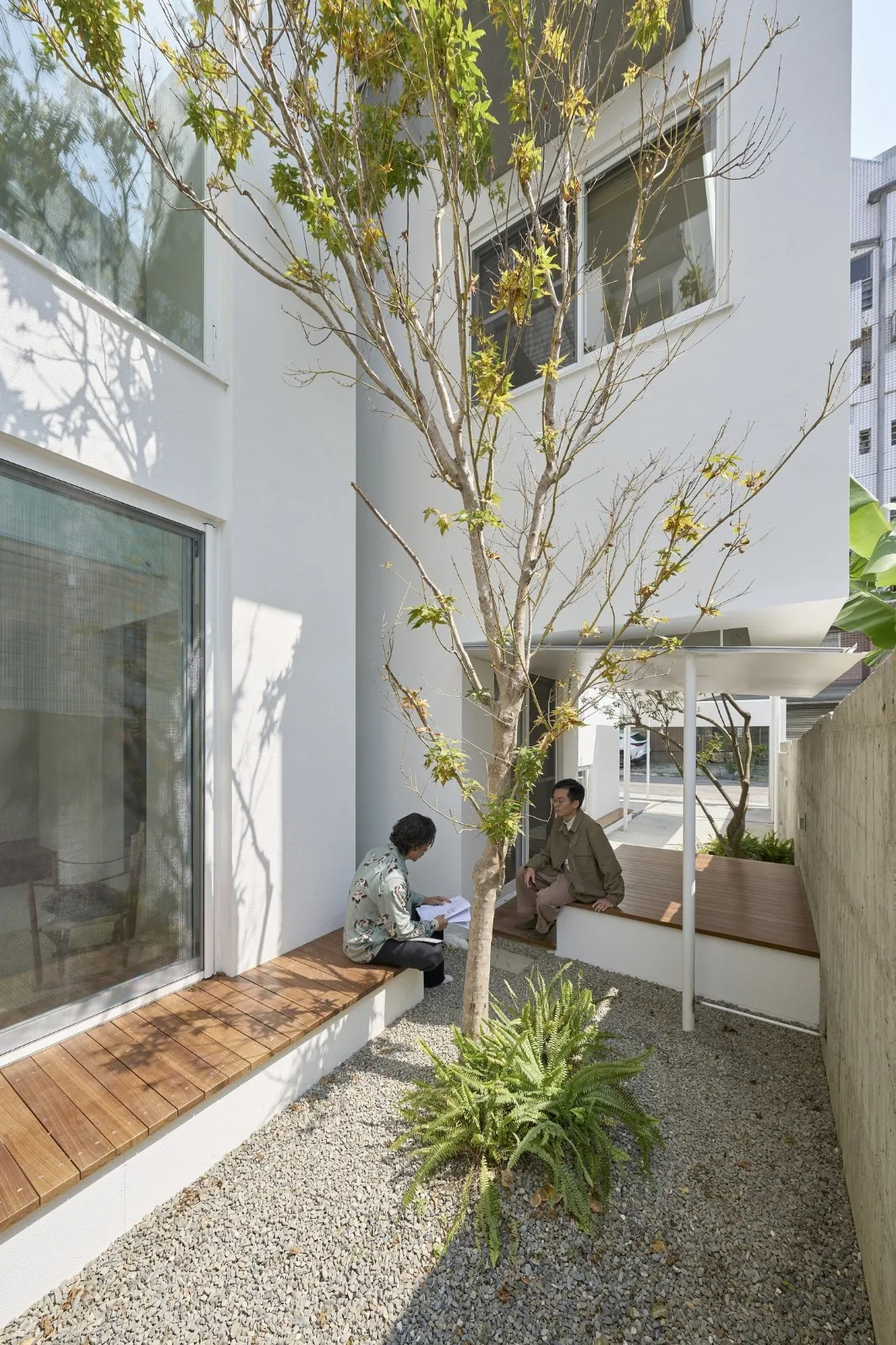
The design uses retreat and excavation to create permeable spaces where nature infiltrates both horizontally and vertically, redefining the relationship between architecture and nature. It challenges the boundaries between indoor and outdoor living across multiple perspectives—above, below, and at eye level. These deconstruction techniques adapt to site conditions and reshape the space to support a multi-generational lifestyle.
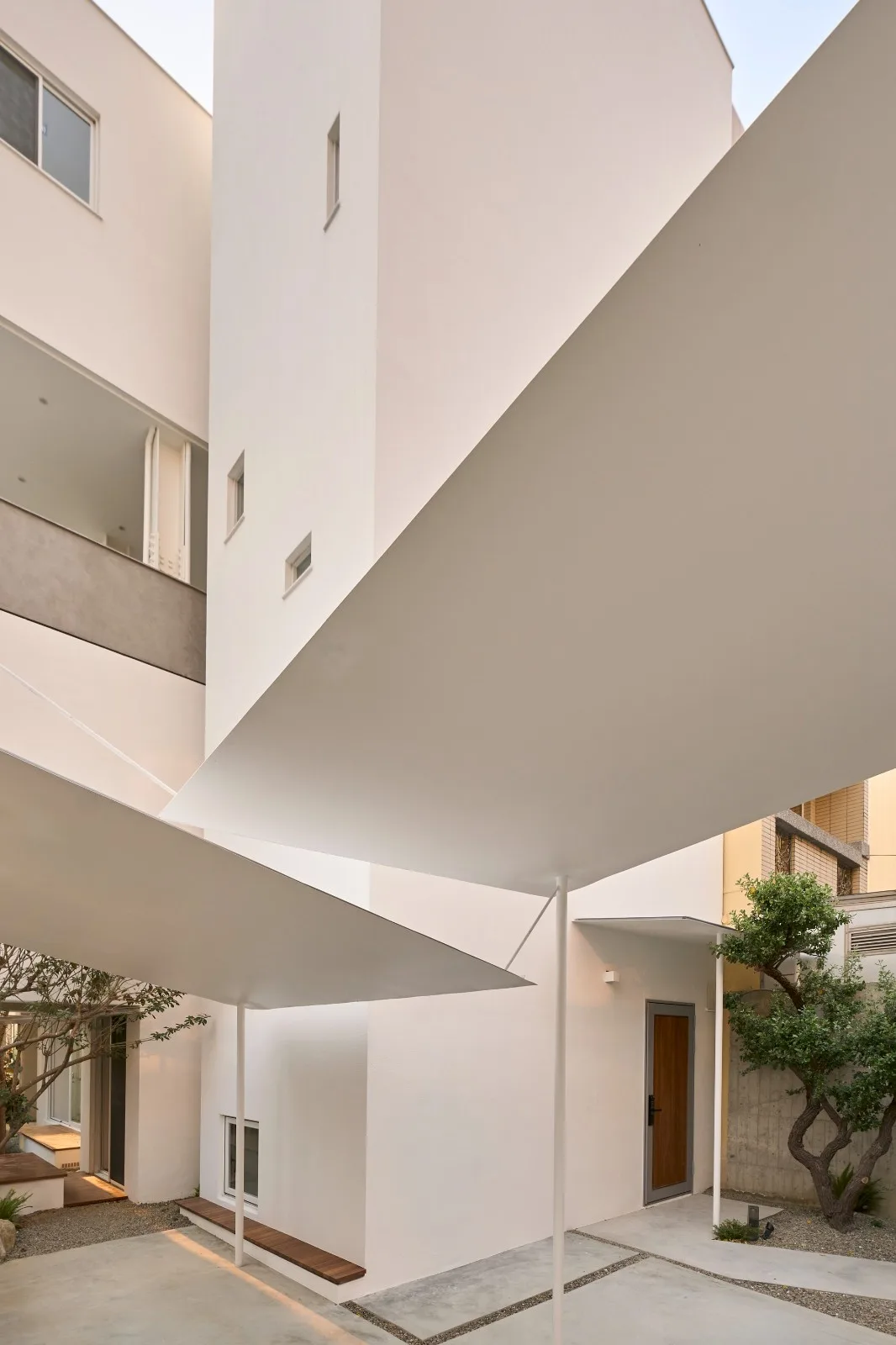
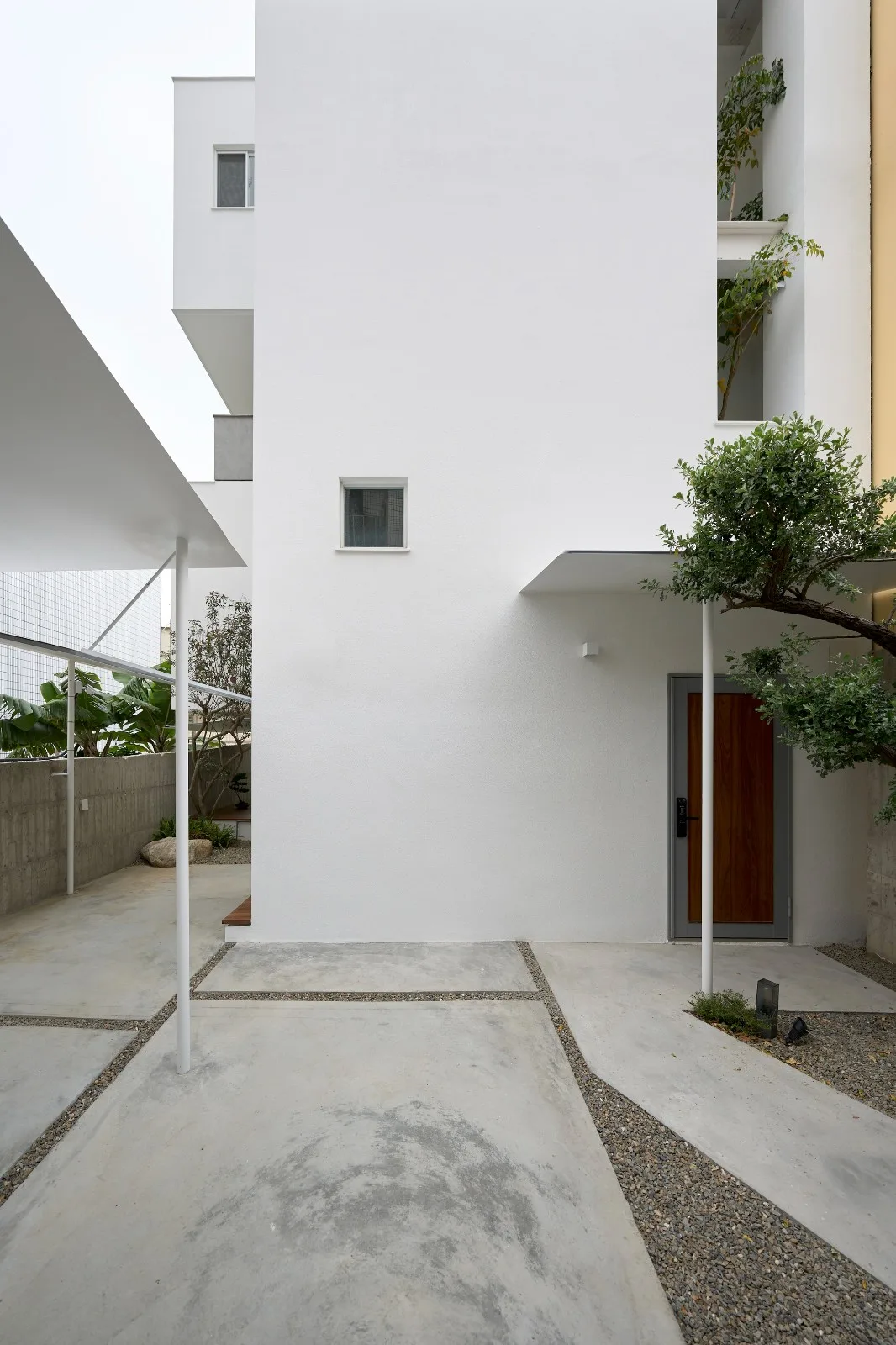
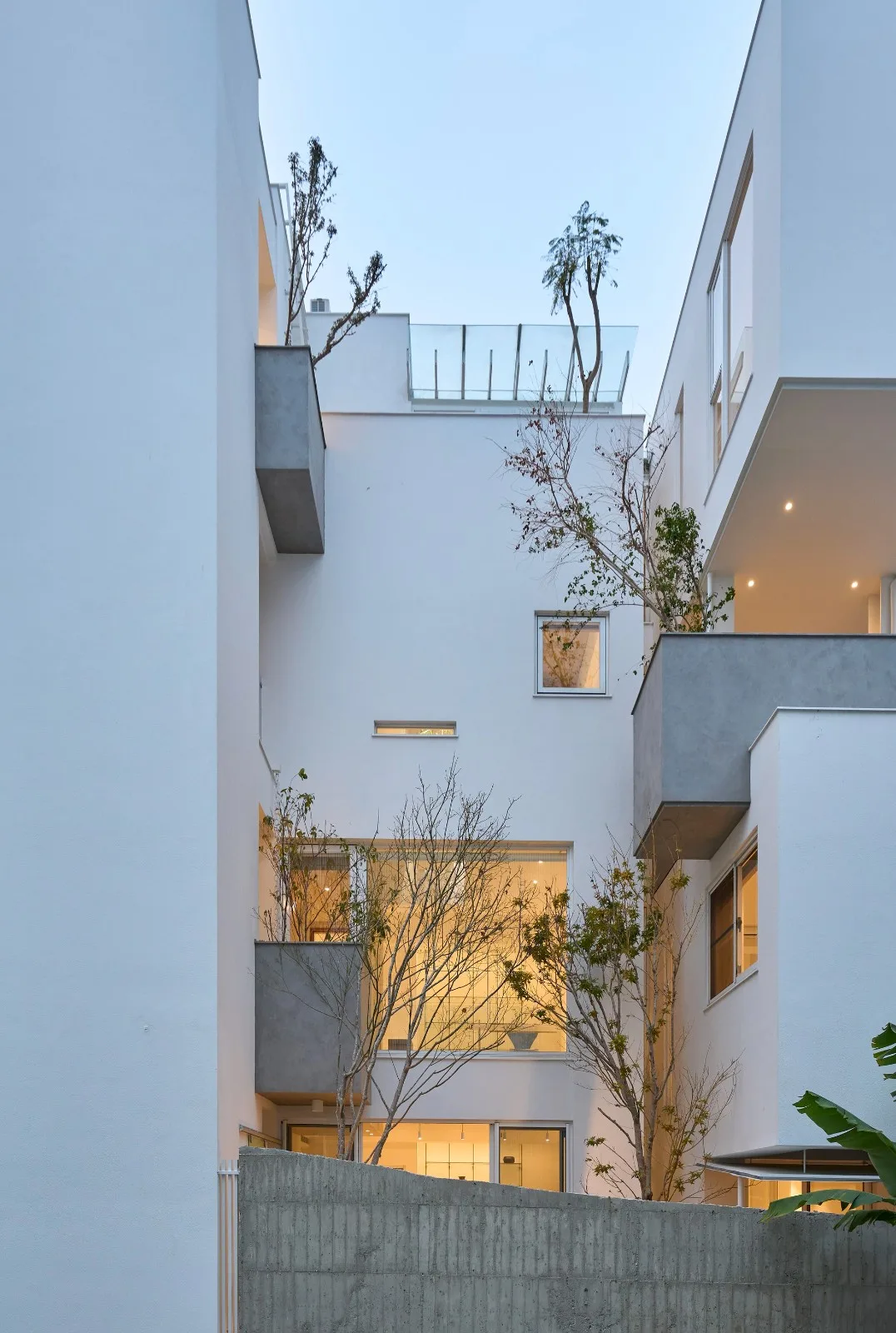
In this deconstructive residential design, space is defined by structure, gaps, and outdoor elements, establishing both separation and connection. Residents can explore diverse spaces and corners created by the building’s misaligned levels, enabling varied uses and scenarios. This design encourages both social interaction and solitude, breaking away from traditional housing norms. It integrates abstract sensibility and nature into the architectural composition.
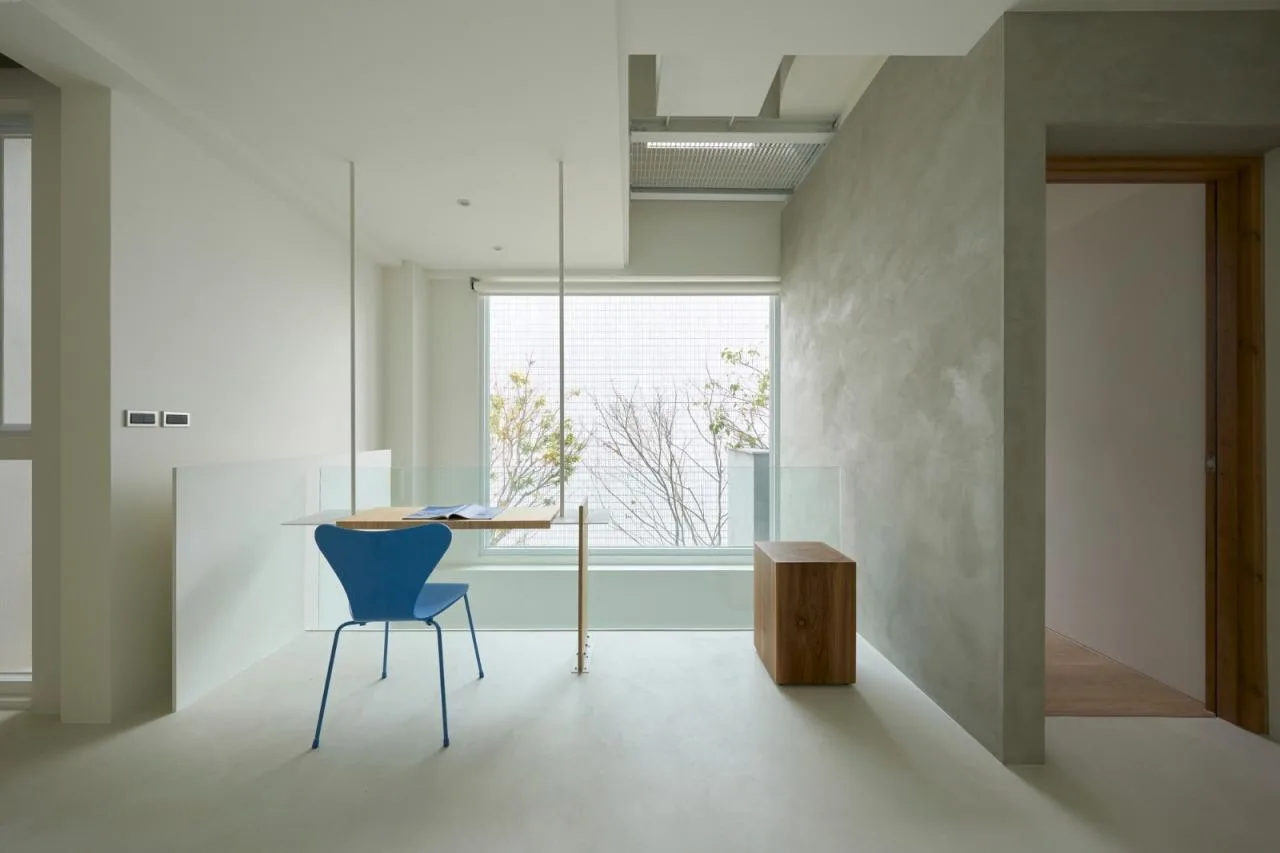
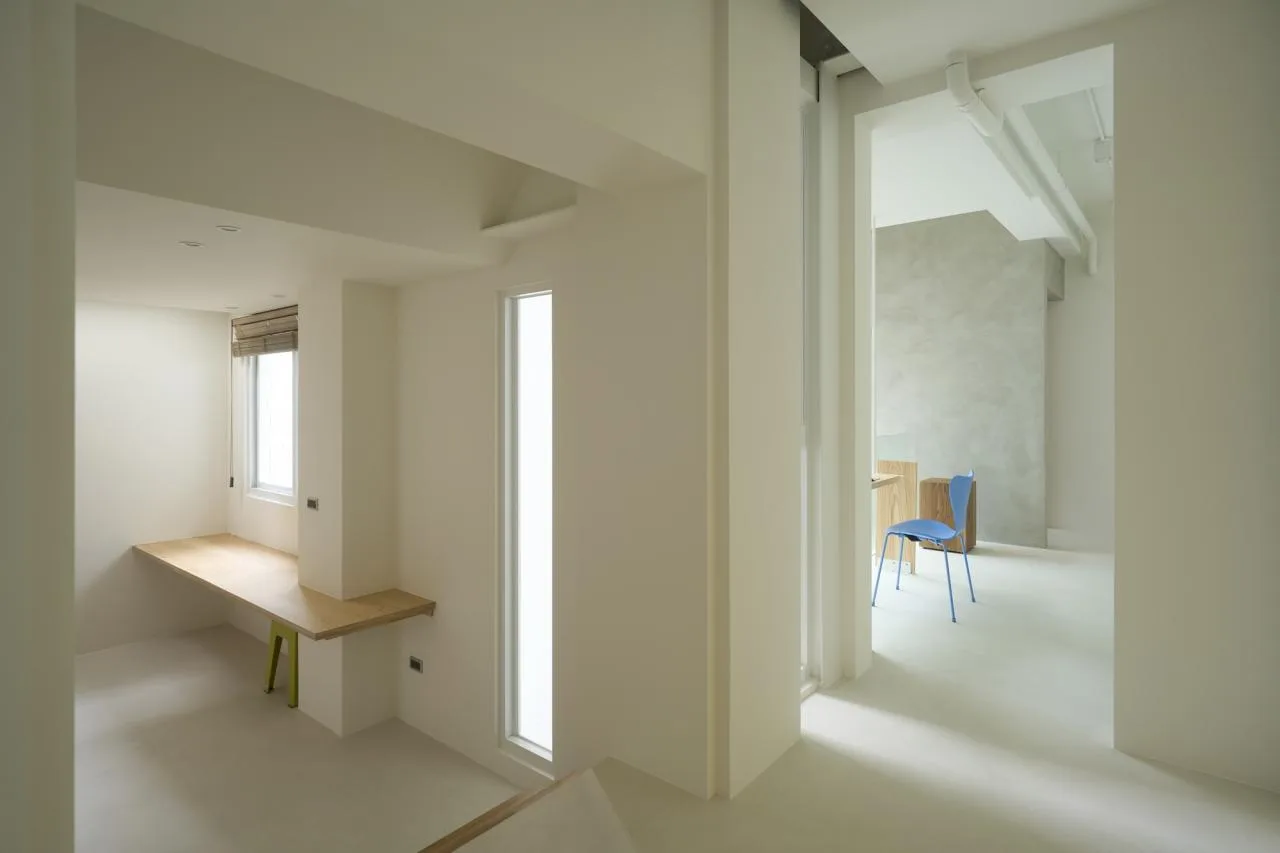
Service functions are primarily located in the first and fourth buildings. The second and third buildings house spaces such as tea rooms, studies, dining areas, and window-side reading nooks on different floors. This layout weaves living spaces between service areas, achieving balanced use of the narrow site. Bedrooms at the building’s end enjoy comfortable southwest breezes and views of the internal valley. Various trees planted on balconies across floors introduce seasonal natural color changes, evoking the essence of valleys and enhancing the indoor-outdoor natural flow.
Project Drawings
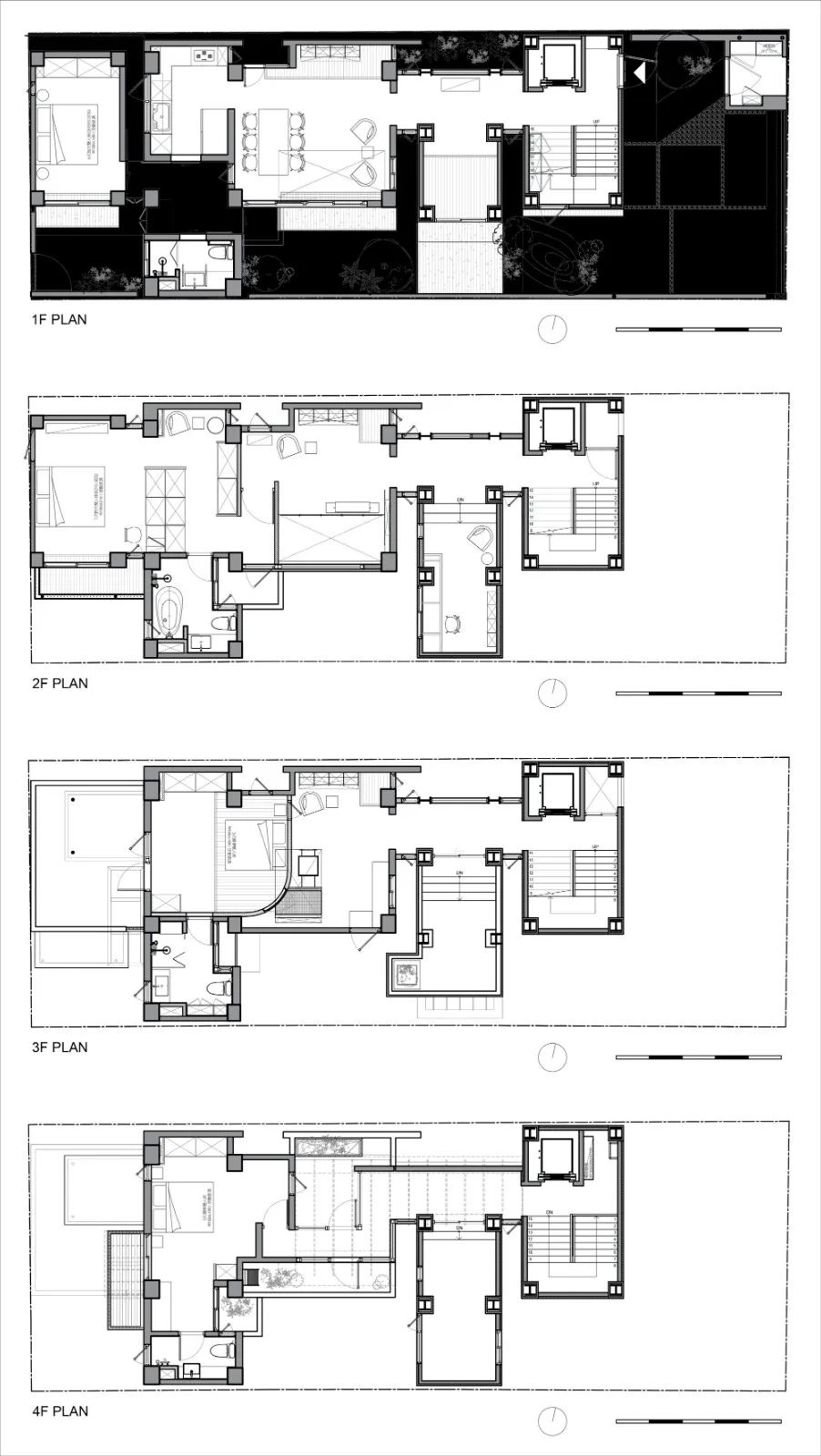
▲ Plan View
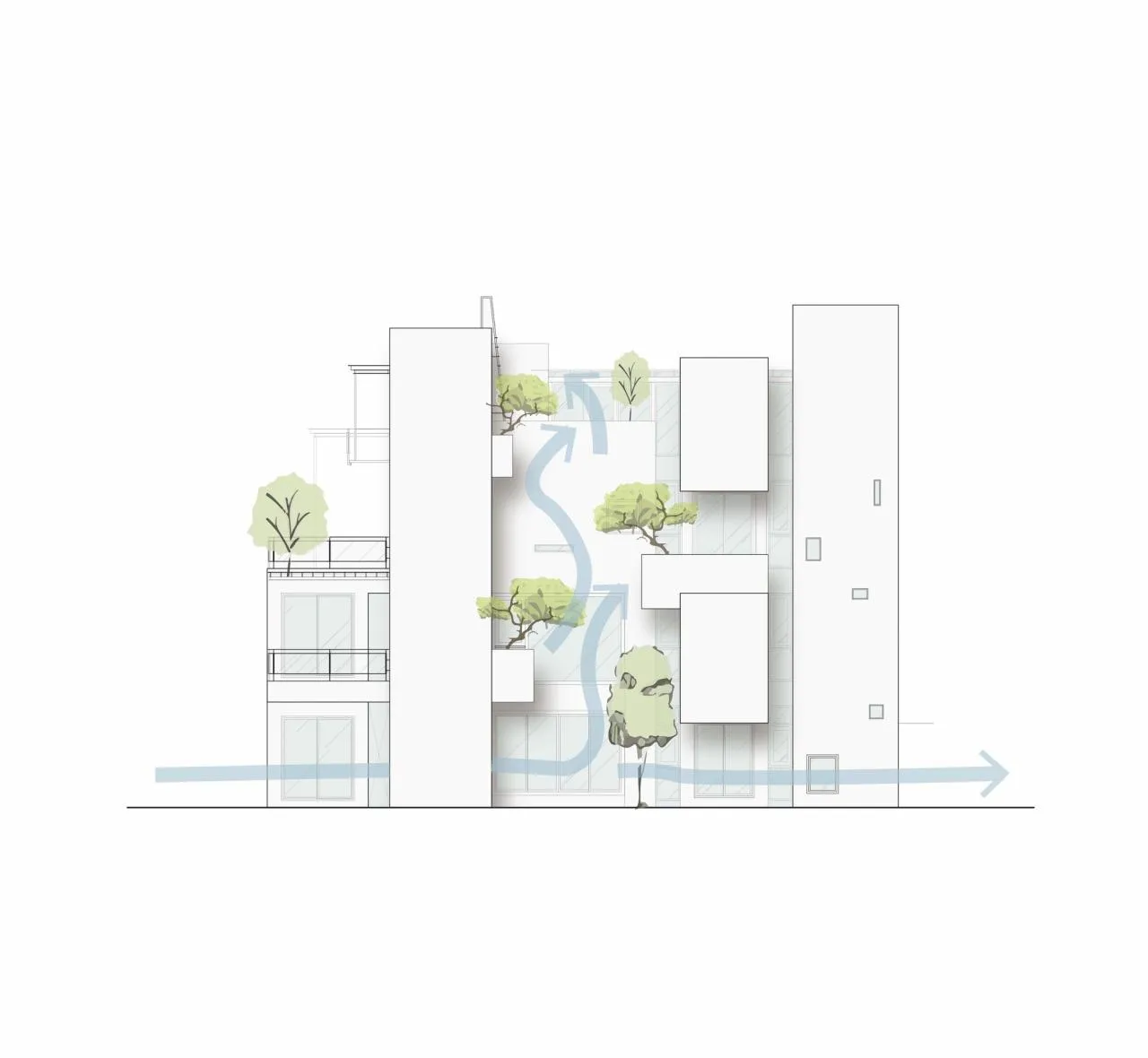
▲ Vertical Analysis Chart
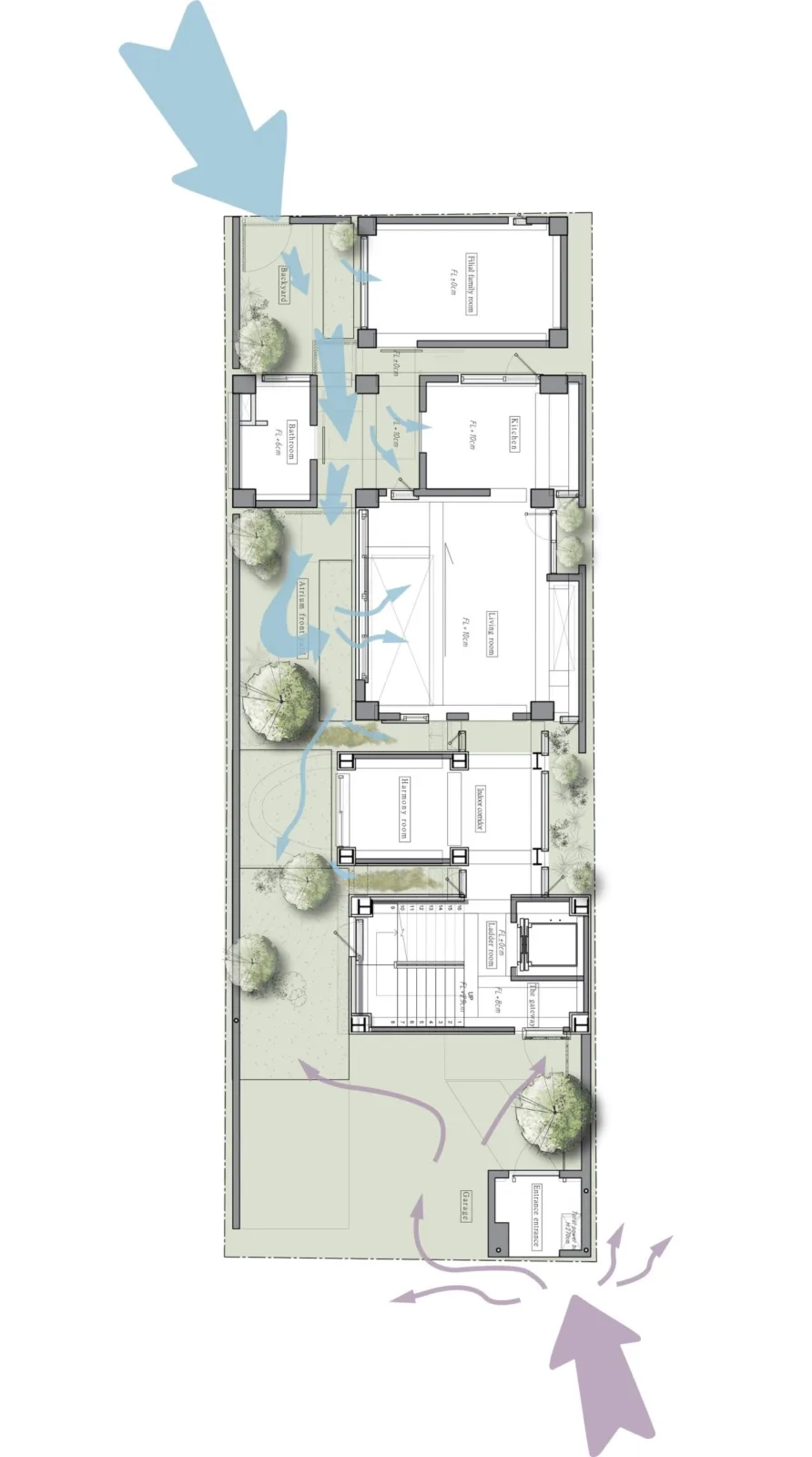
▲ Plan Analysis Diagram
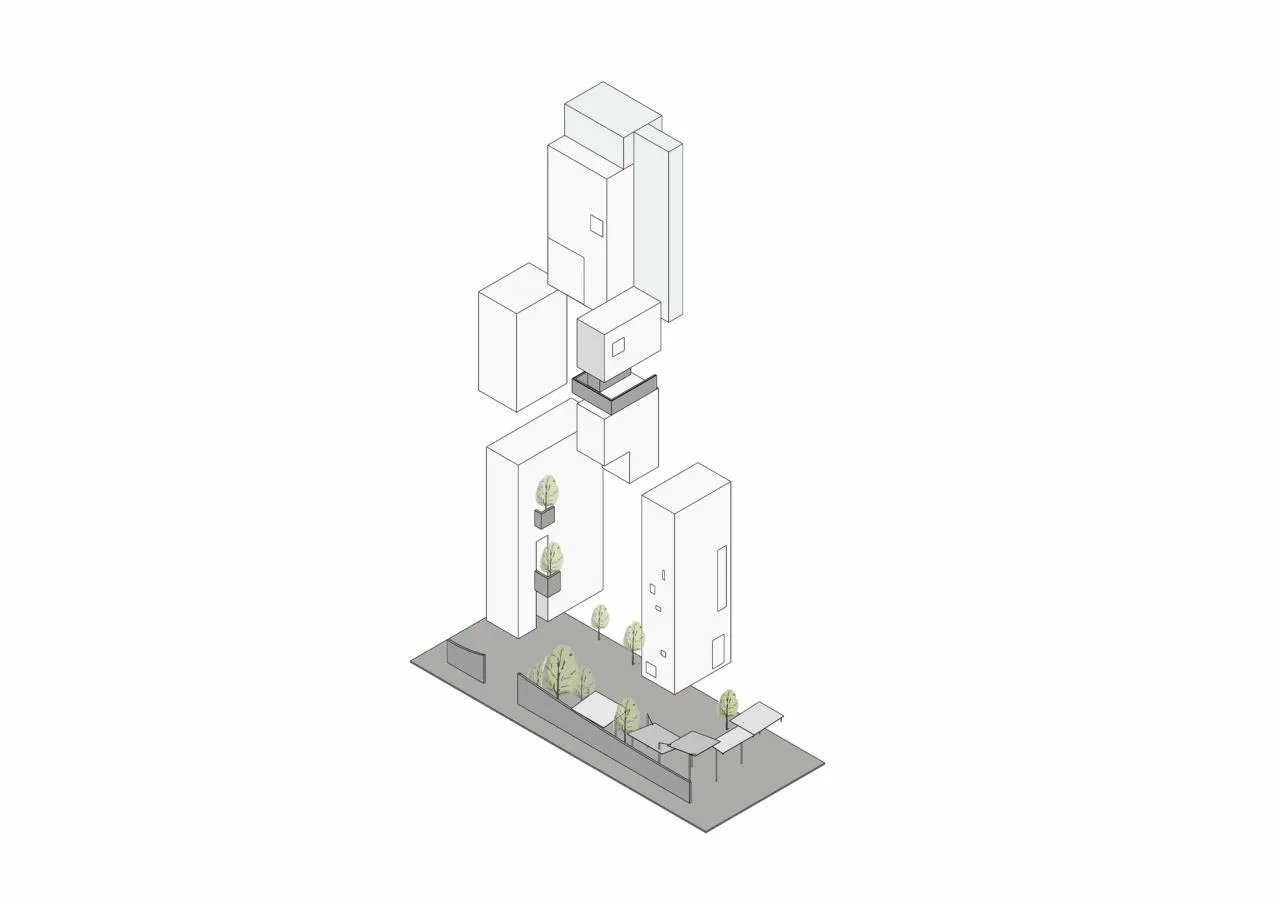
▲ Exploded View Diagram
Project Information
Architects: Ray Architects, He Feng Cangfei Design + Zhang Yurui Architectural Firm
Area: 338 m²
Year: 2024
Photography: Hey! Cheese
Suppliers: Carl Hansen and Son, MUJI, Republic of Fritz Hansen
Lead Architect: Ray Chang
Detail Design: Lin Yi Yuanyuan
Interior Design: Lin Shang Hsien
Location: Taichung
















Must log in before commenting!
Sign Up