
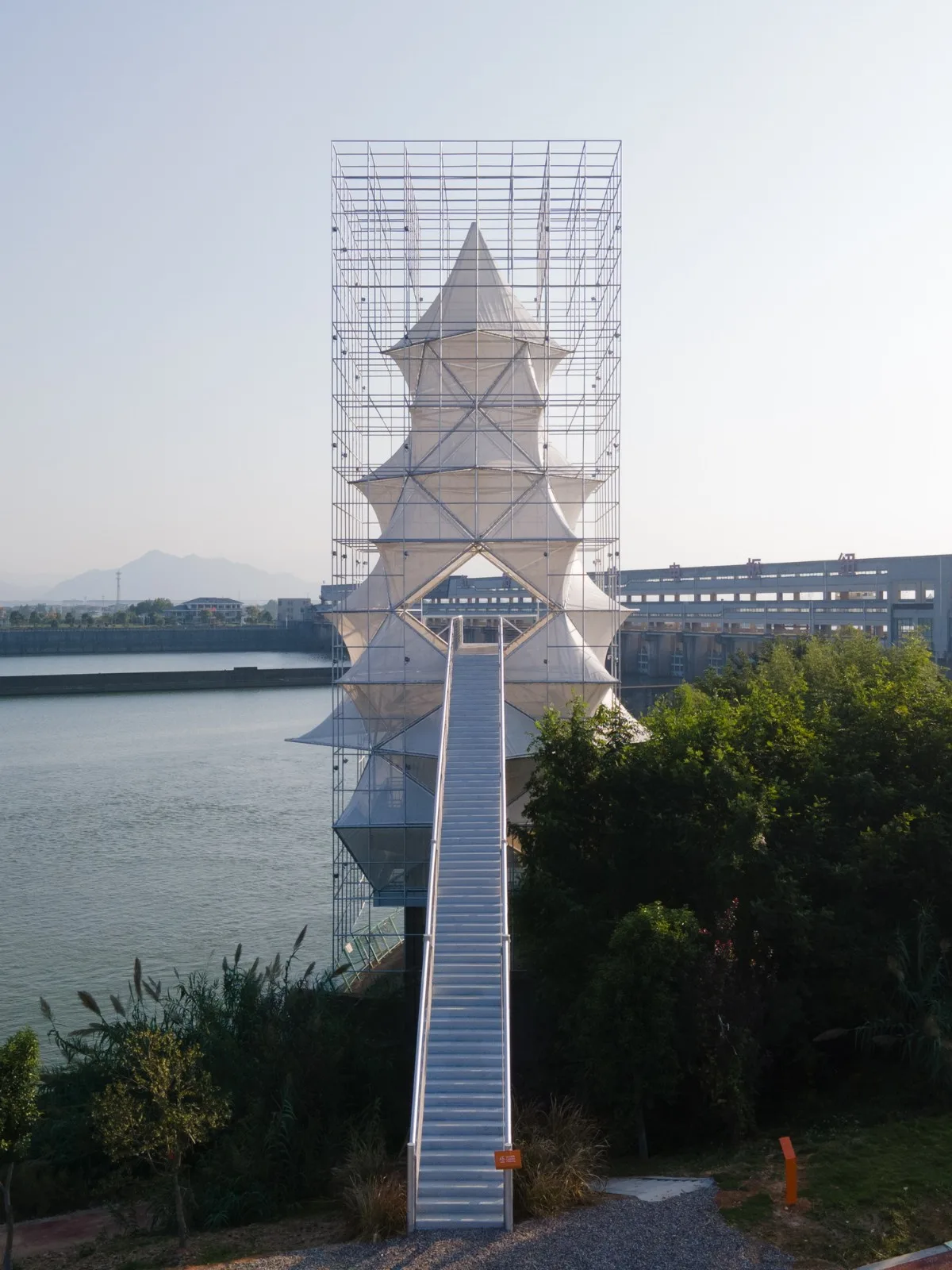
Project Background: Longyou County, located in Quzhou City, Zhejiang Province, faces common challenges of many county towns—lacking dominant industries and consequently experiencing significant labor outflow. In 2022, Longyou County set a goal to become a youth development-oriented county. To address the challenge of retaining and attracting young people, the China Academy of Planning and Design, Fengyuzhu, and Bilibili collaboratively proposed the “Jingshi Guang · Art Ecological Corridor.” This project brings together 27 (later expanded to 40) architects, landscape architects, and artists born in the 1980s and 1990s to create a unique cultural life at the county level, aiming to draw youth back to Longyou.
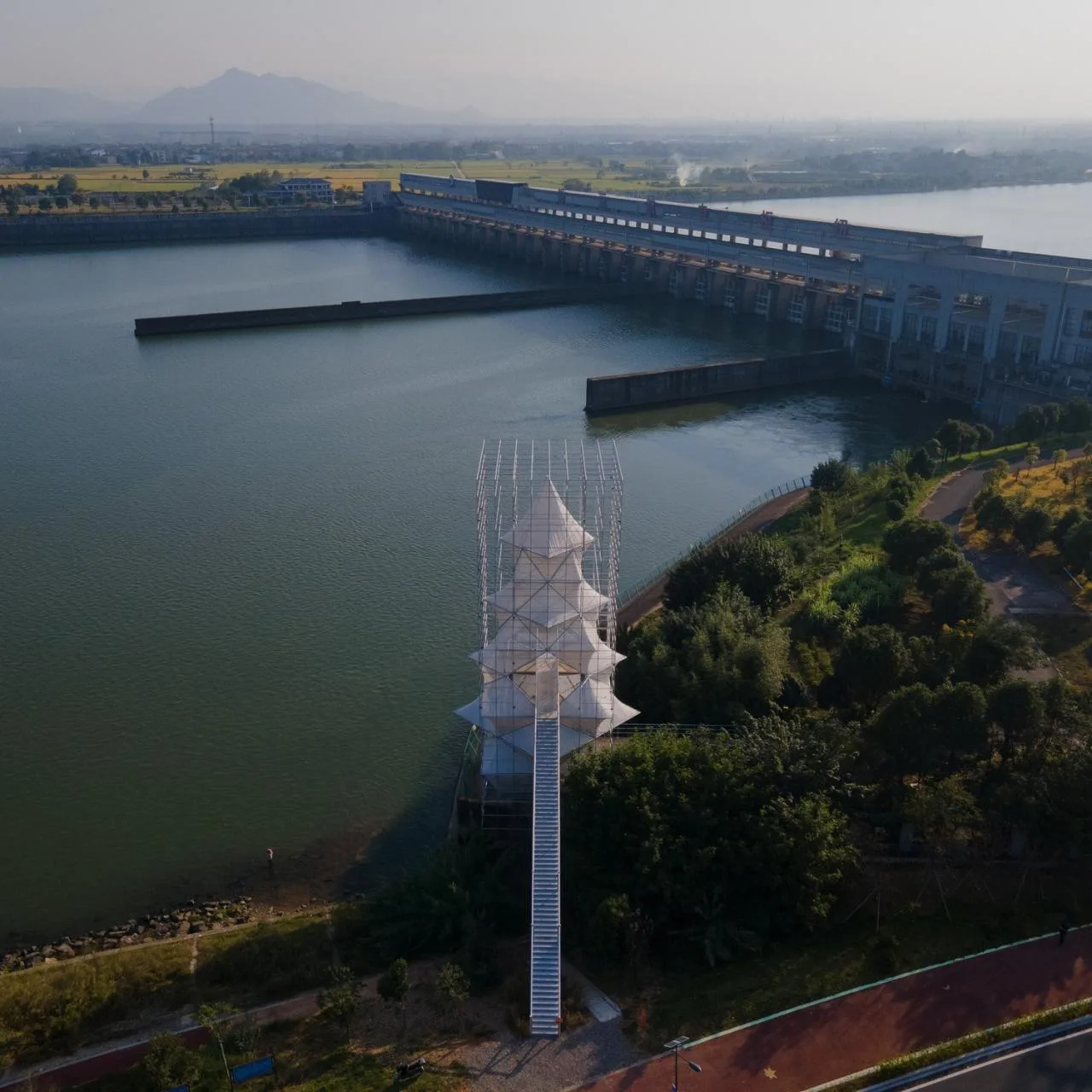
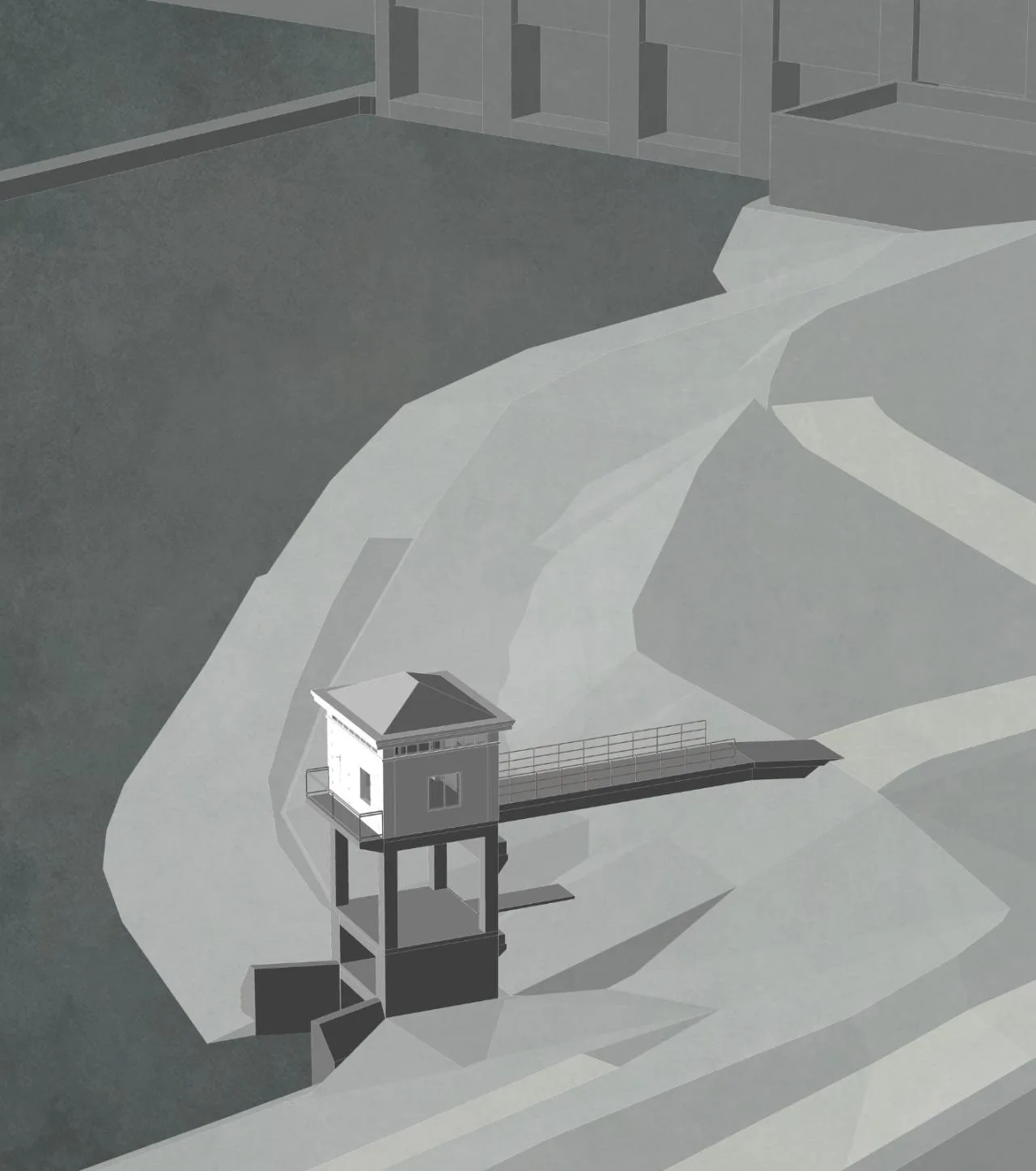
The Limited Design Studio team’s contribution includes designing a new observation tower and renovating and expanding the riverfront water gate management building. Both elements share the goal of establishing a visually striking landmark that marks the entrance to the entire art ecological corridor.
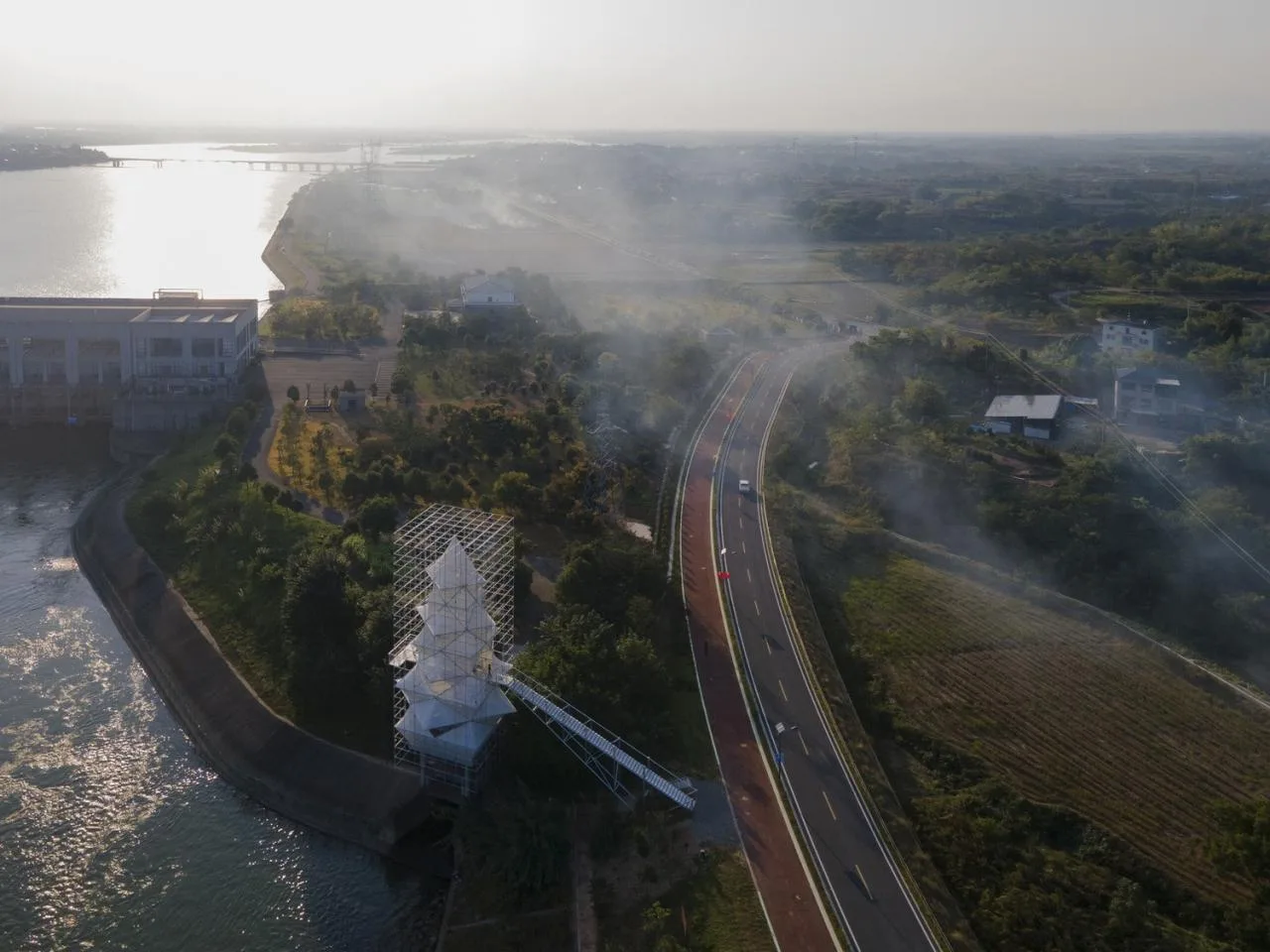
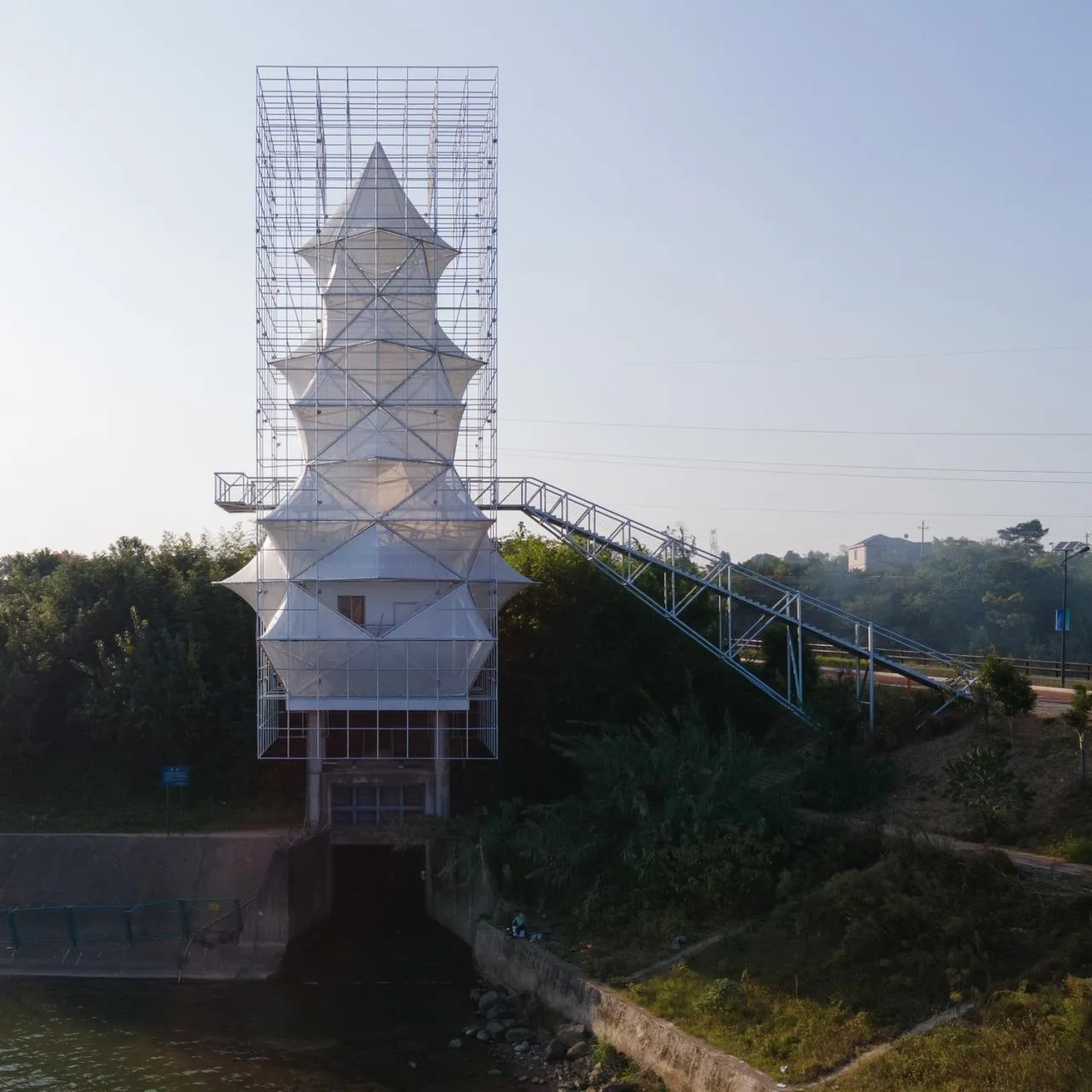
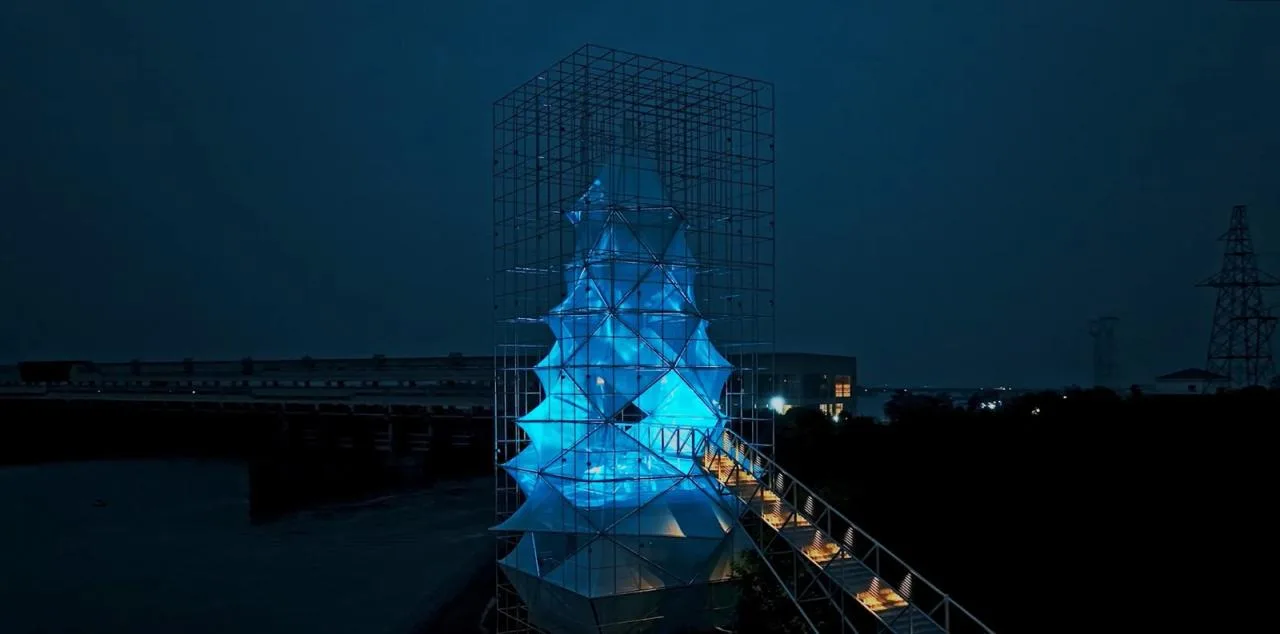
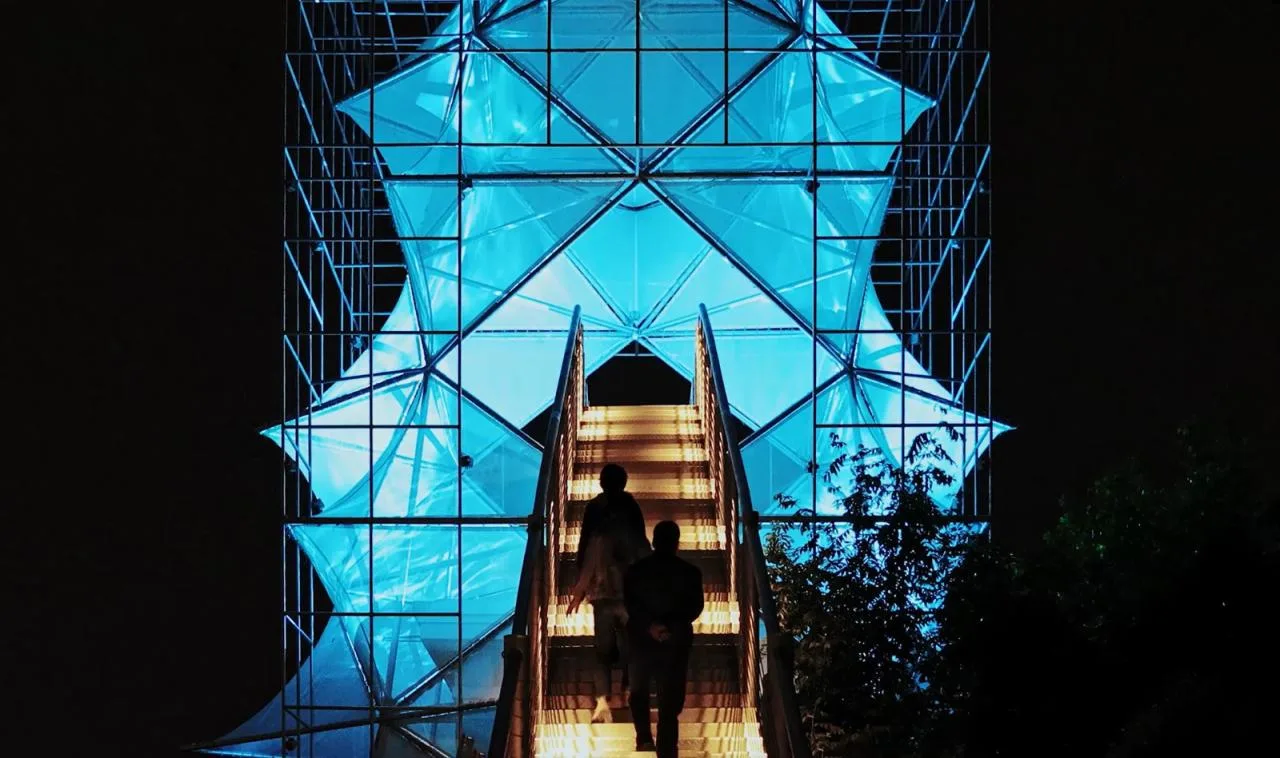
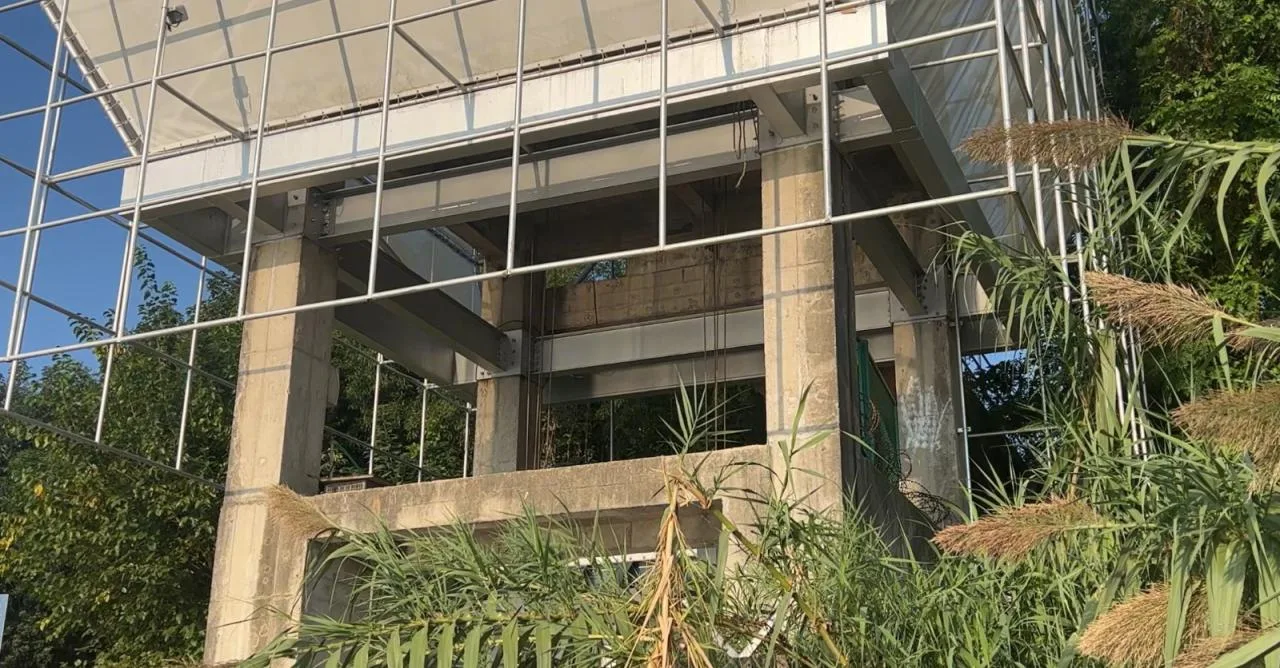
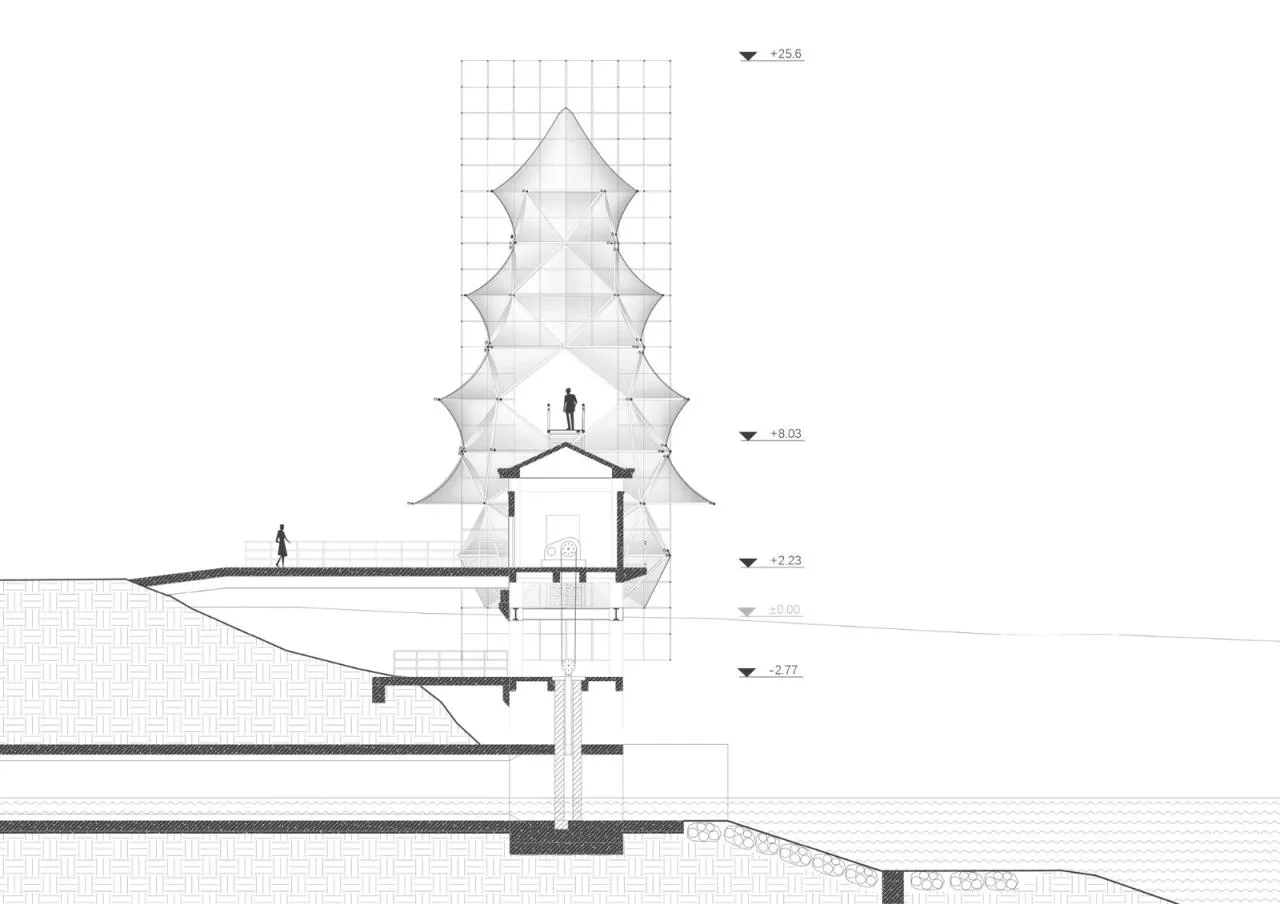
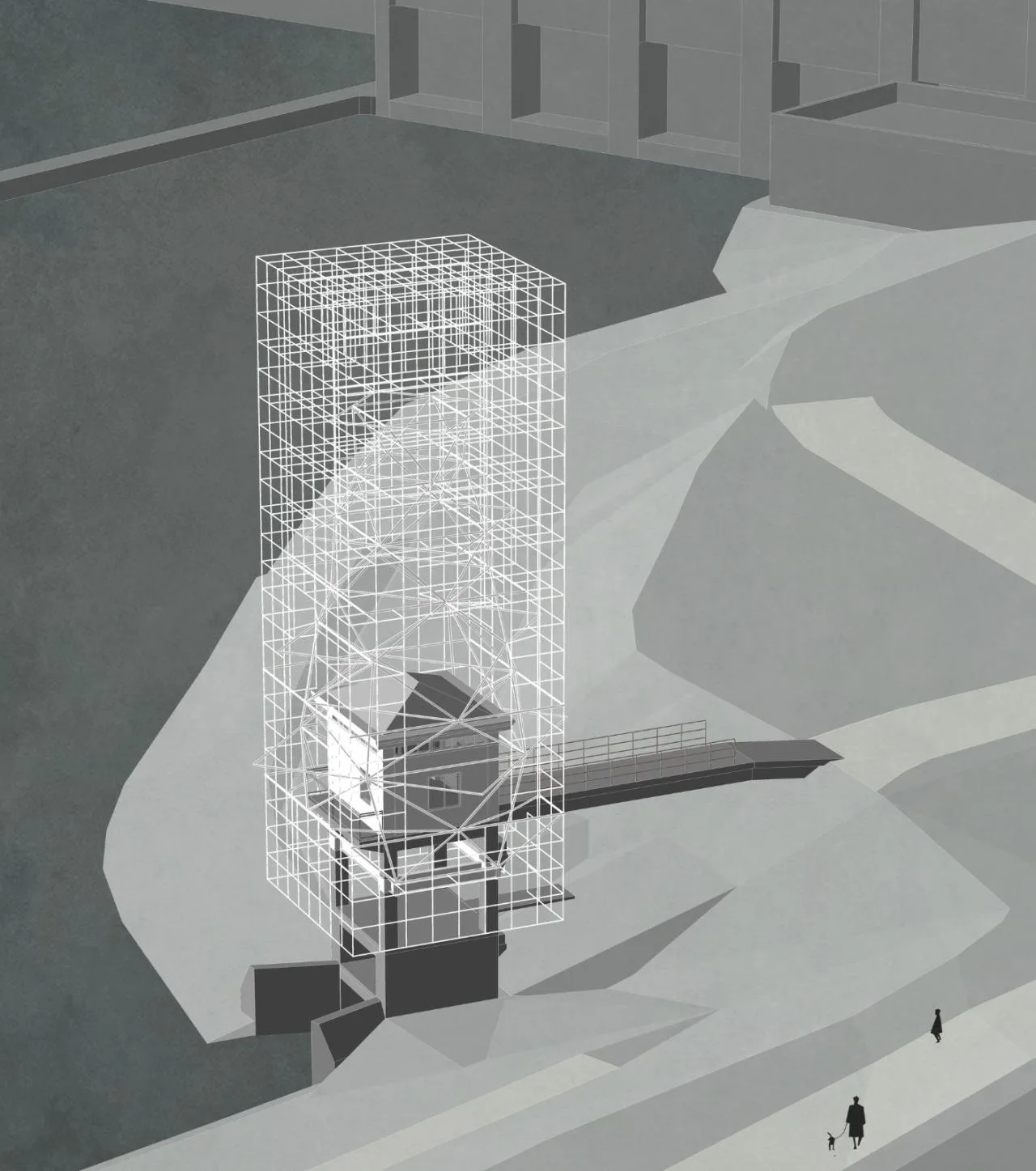
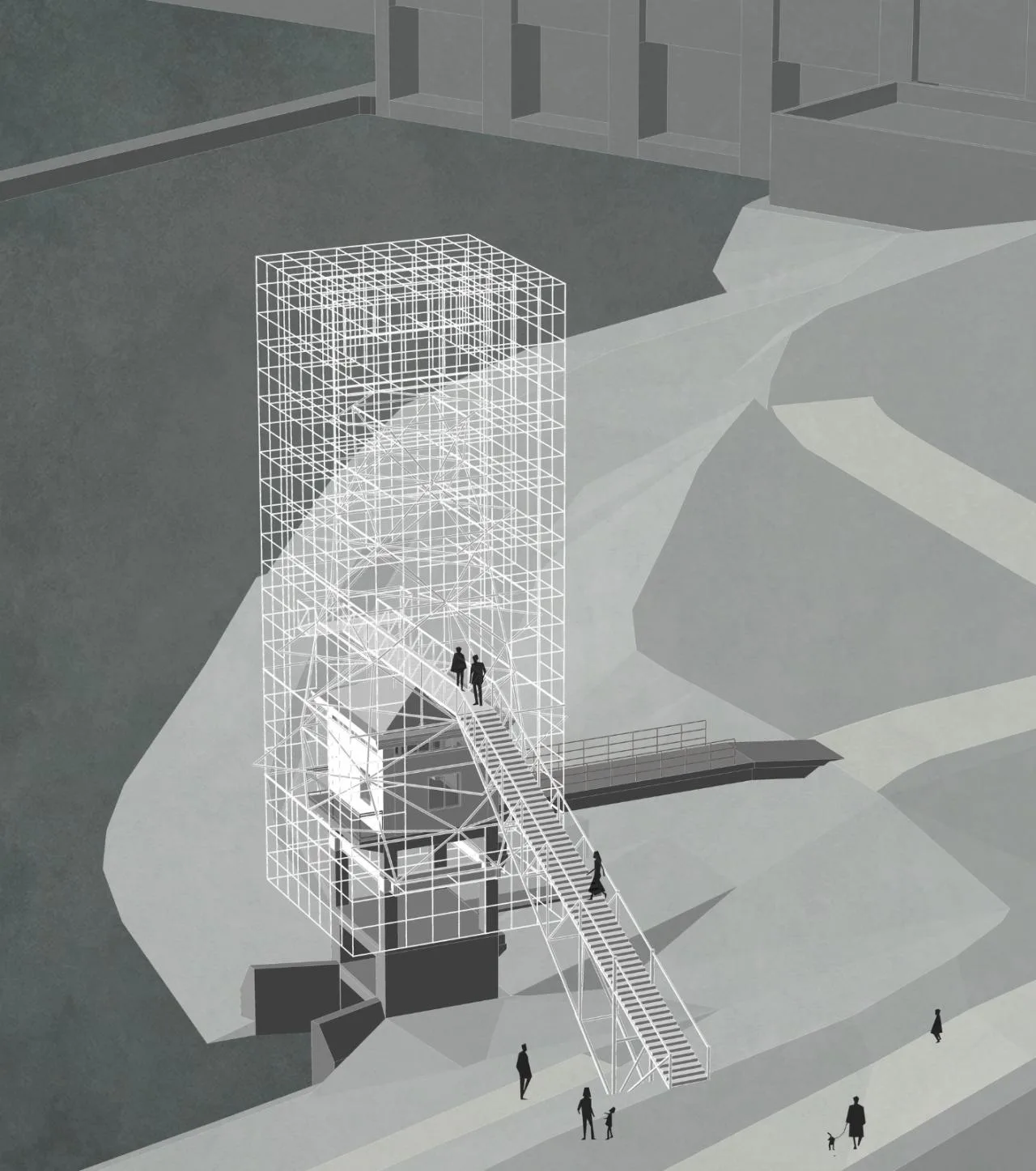
Is it an artificial tree or the ghost of a tower? The tower’s form serves as a metaphor for the human-earth relationship: the added steel grid represents human rational control, while the ‘big tree’ growing within the grid symbolizes a natural element shaped and constrained by this control. However, visible local conflicts emerge as the ‘big tree’ breaks the grid’s boundaries.
The concept of the big tree draws inspiration from the fallen cypress commonly found near southern waterways, sharing formal similarities with cedar trees and ancient pagodas. The design intentionally blurs the line between a tower and a tree, inviting multiple interpretations and associations.
The tension between the grid and the ‘big tree’ abstracts and metaphorically reflects nature’s reconstruction through infrastructure. The contrast between grid and tower encourages reflection on opposing themes such as tradition versus modernity, craftsmanship versus machinery, and agricultural versus industrial civilization. Looking ahead to an industrial future, land ethics may become a guiding belief, and these “artificial trees” could become the new Longyou Pagodas by the river, continuing the local tower-building tradition while engaging in a silent dialogue with ancient pagodas.
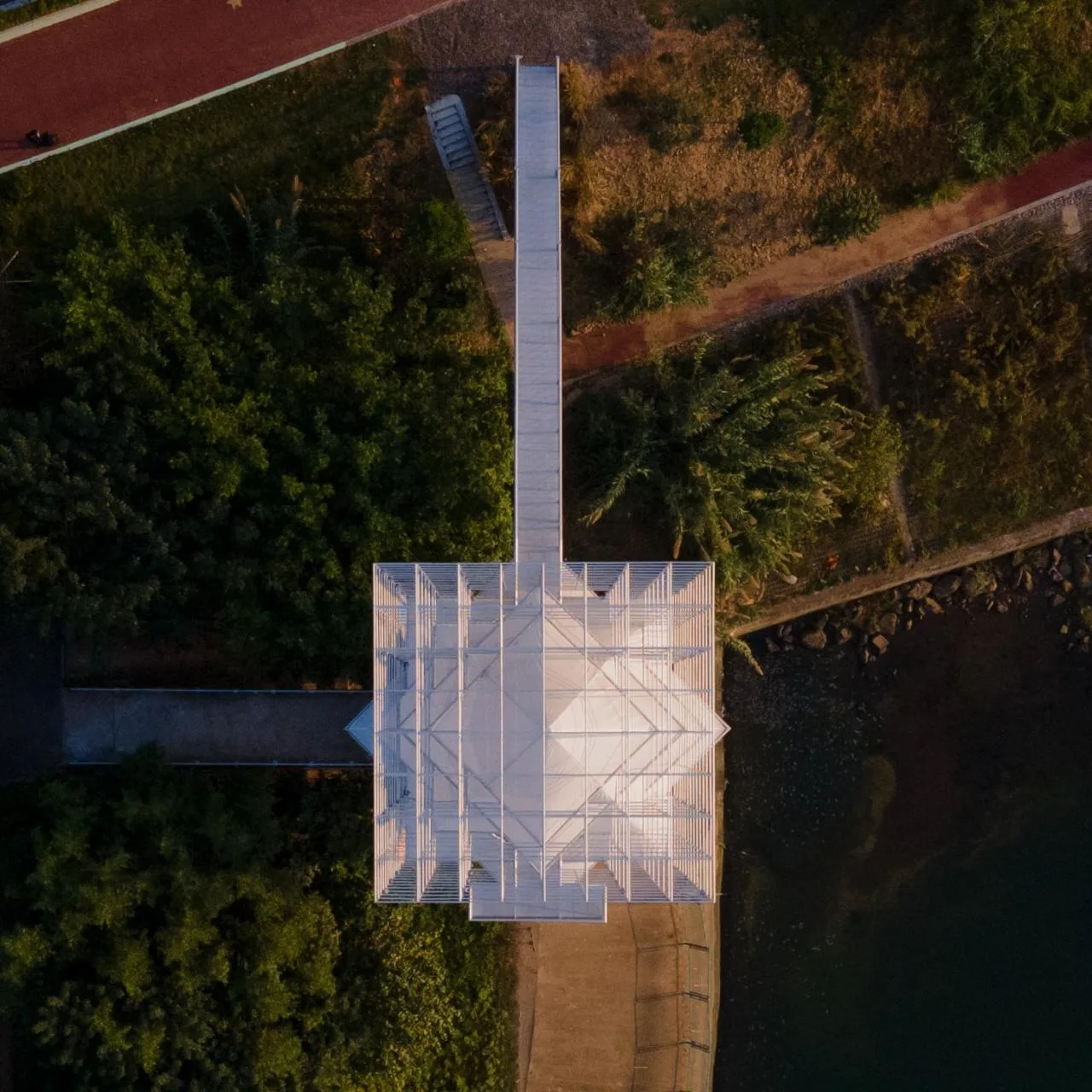
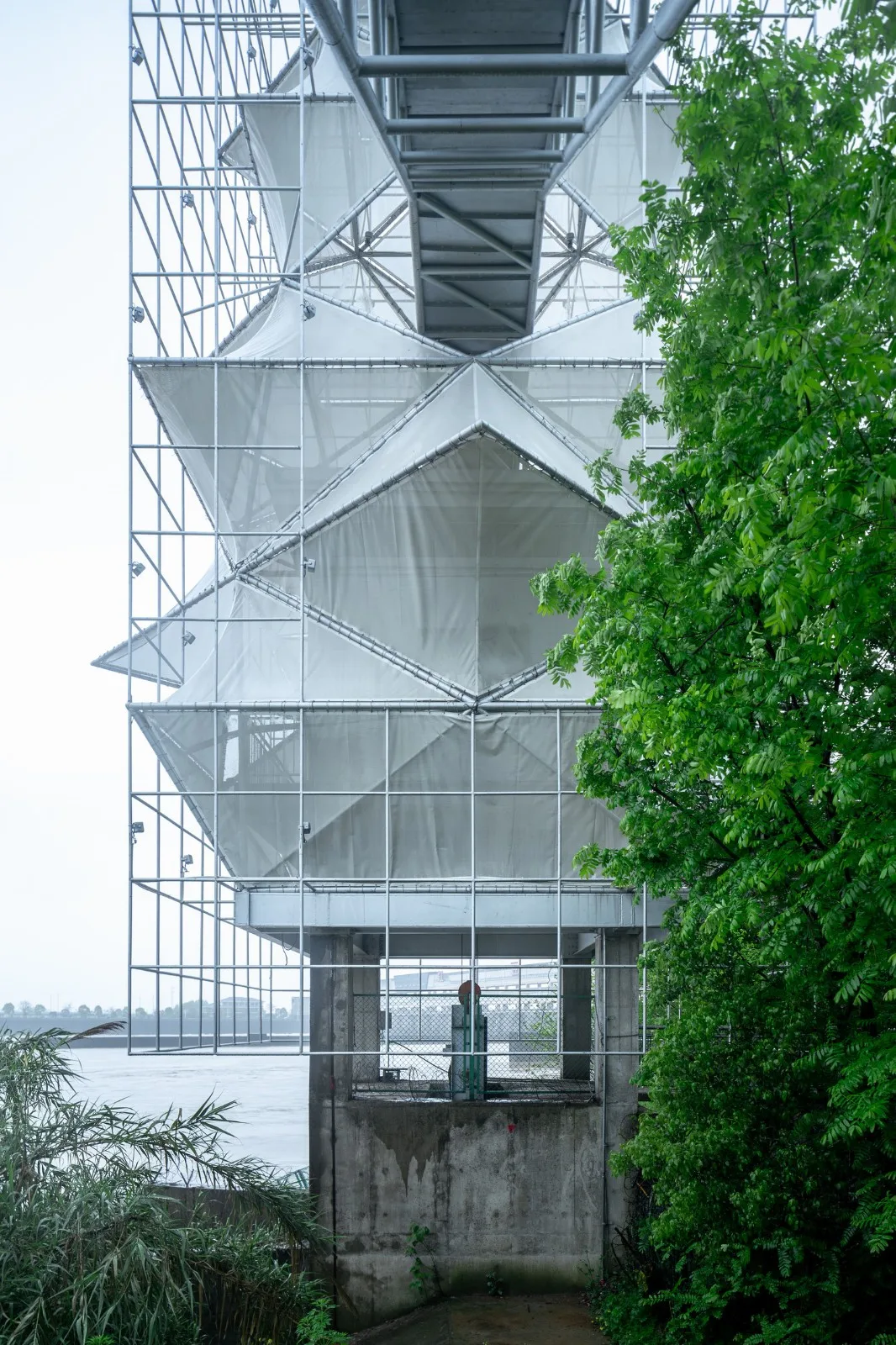
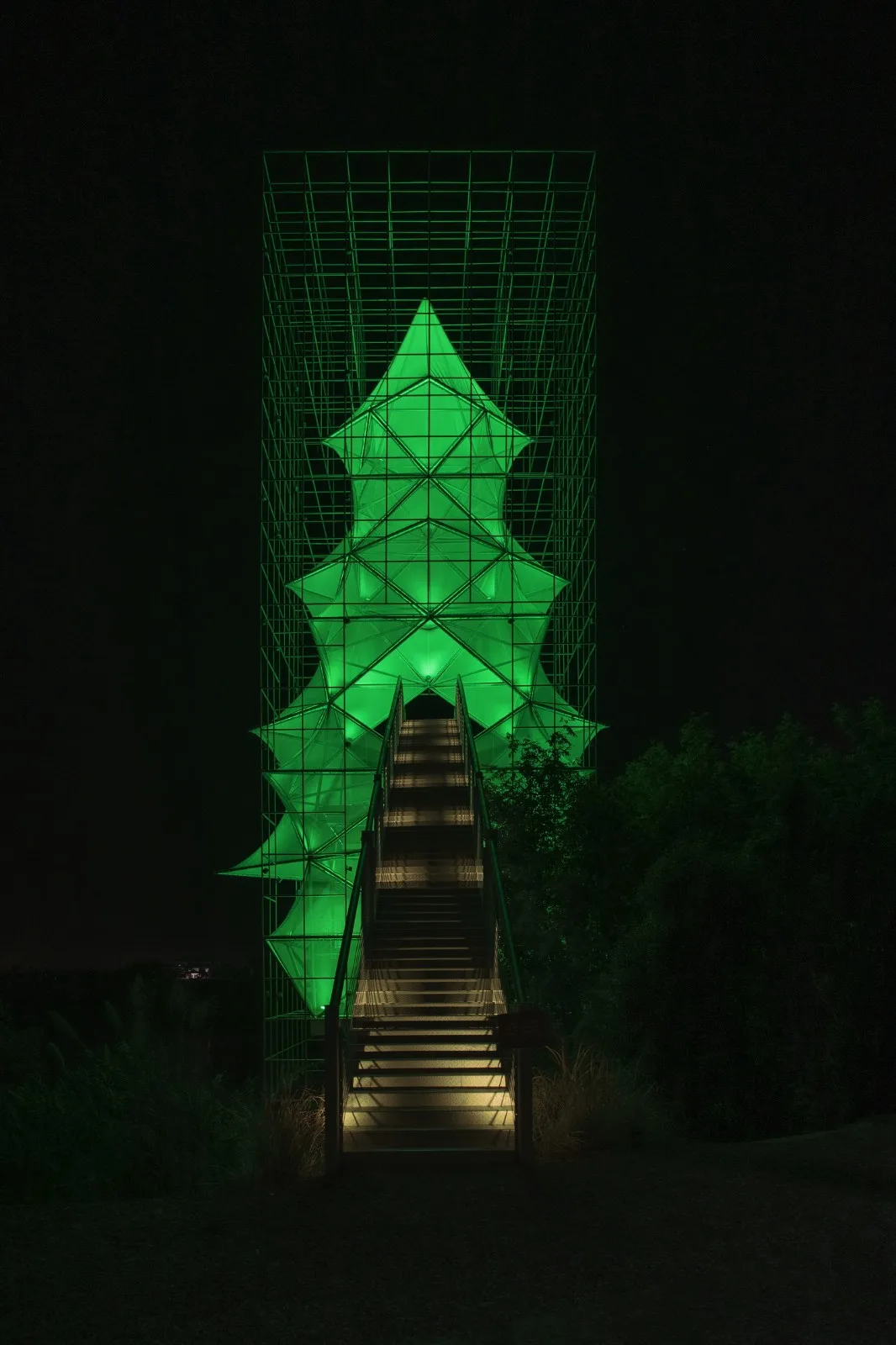
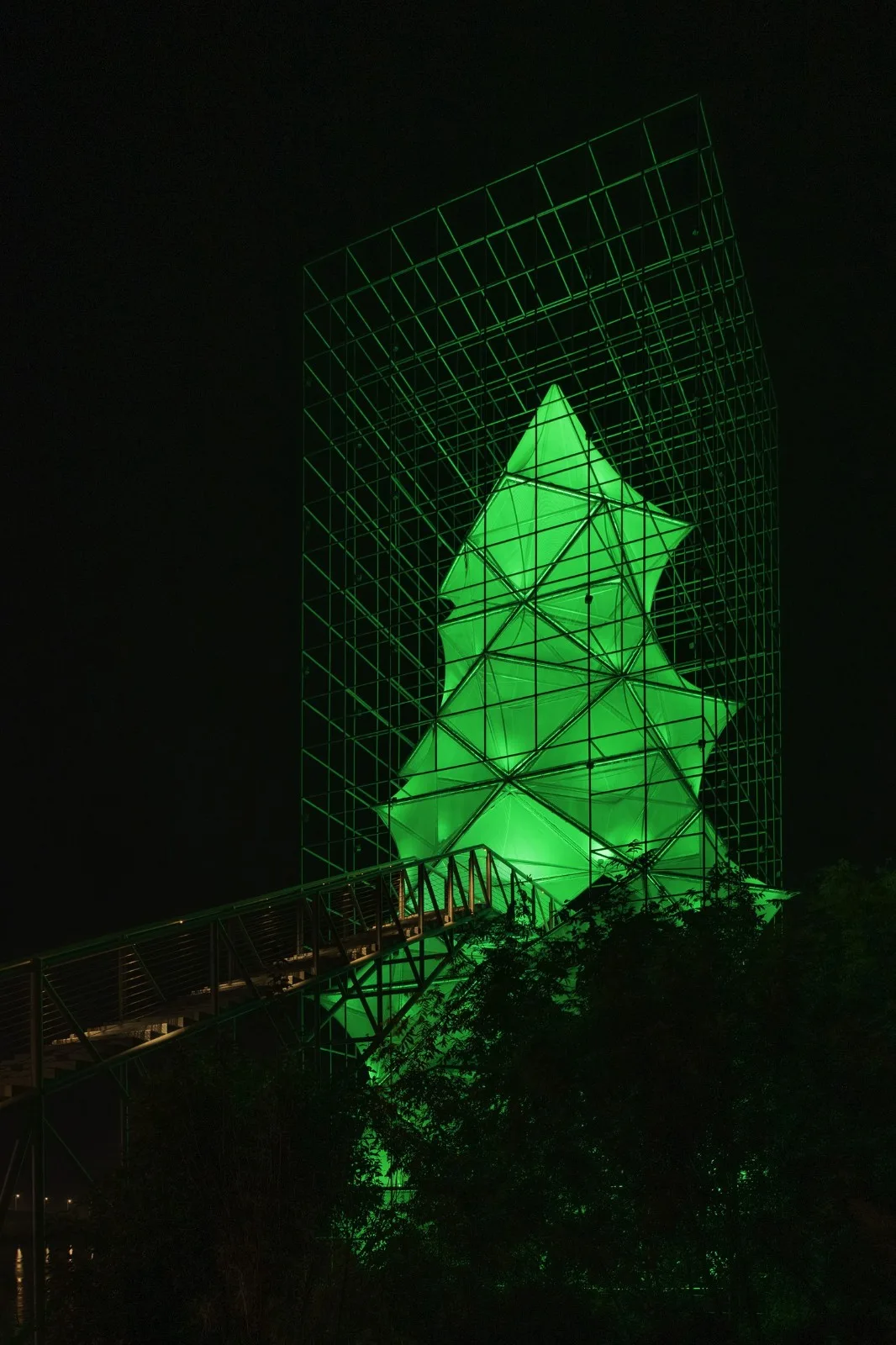
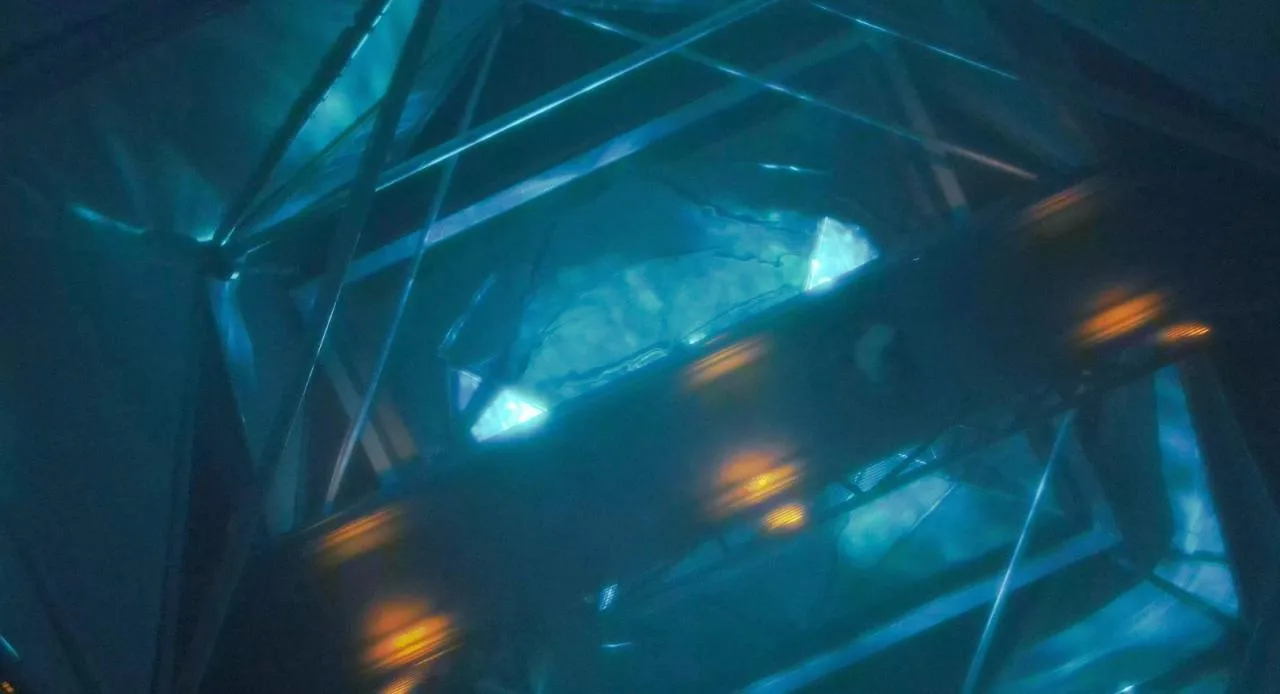
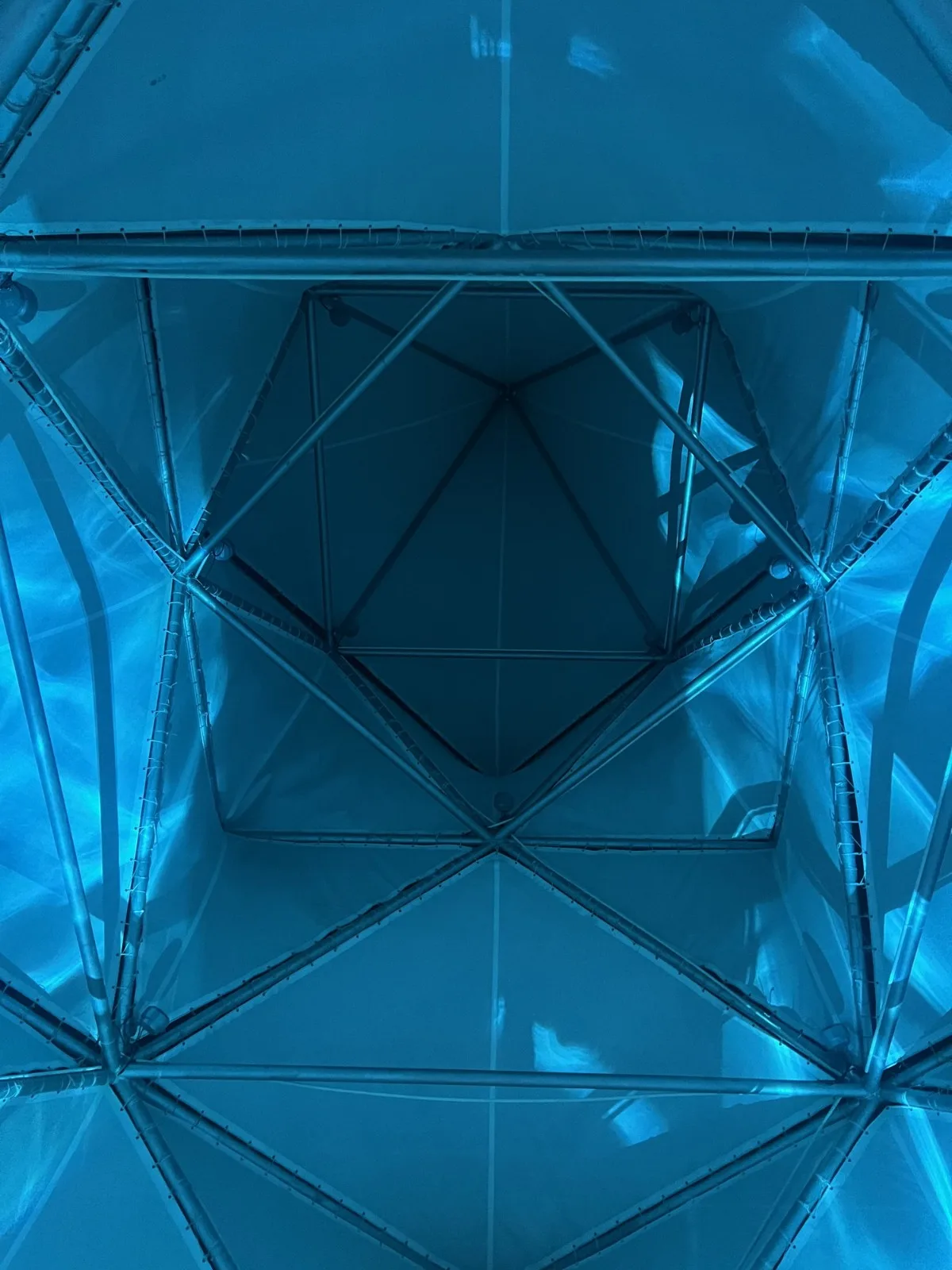
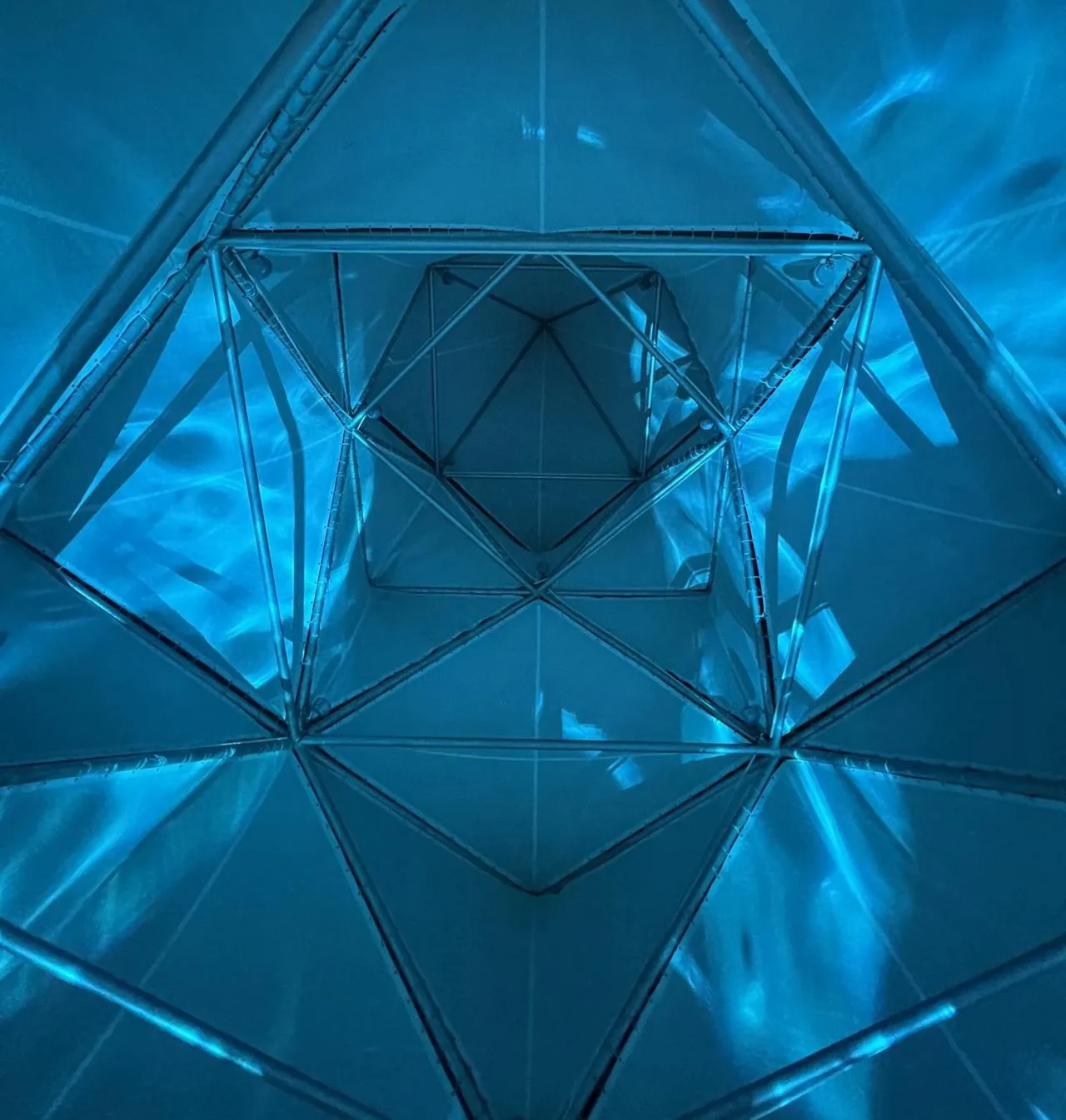
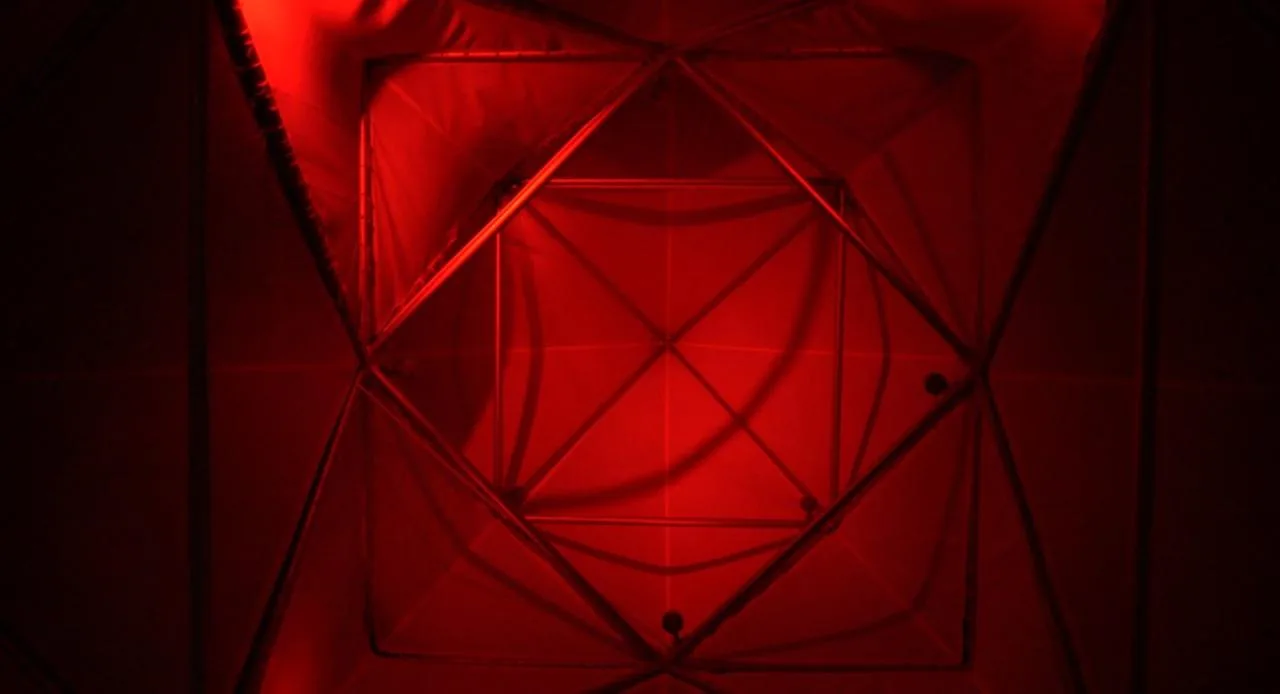
The lighting design highlights the geometric beauty of the steel structure and mesh membrane. Through carefully calibrated lighting angles and reflections, the original water gate management room subtly appears within the artificial tree, illustrating the relationship between old and new.
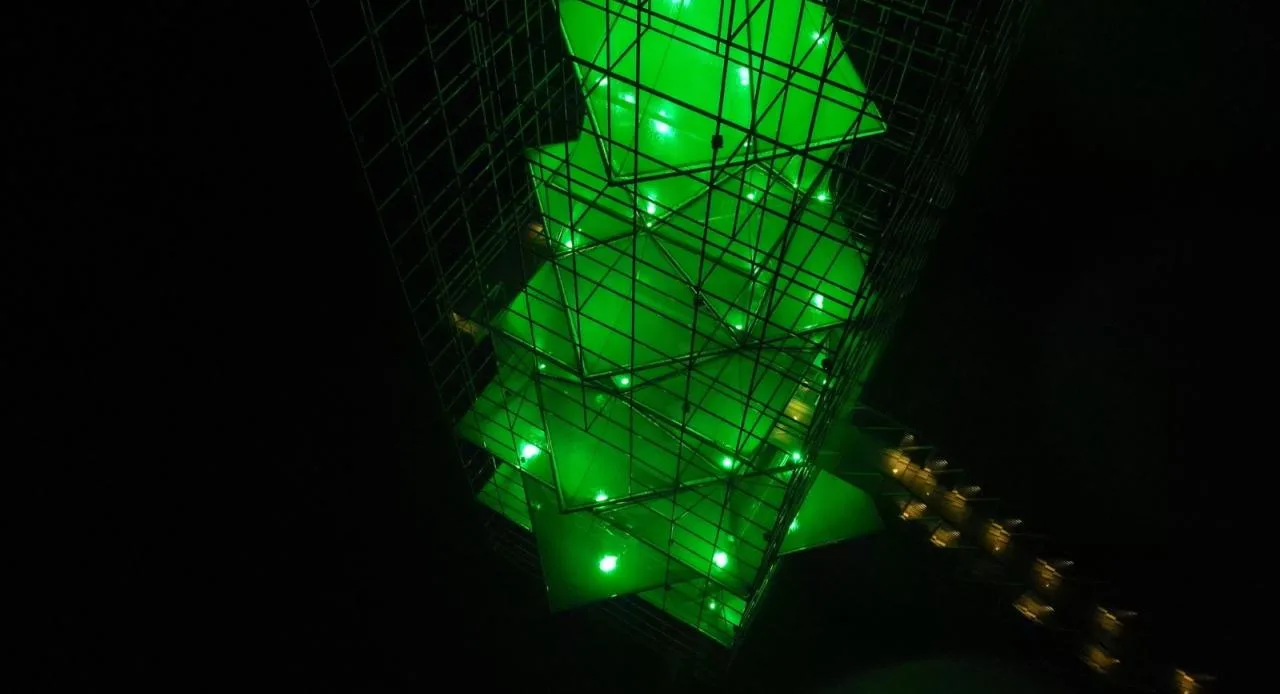
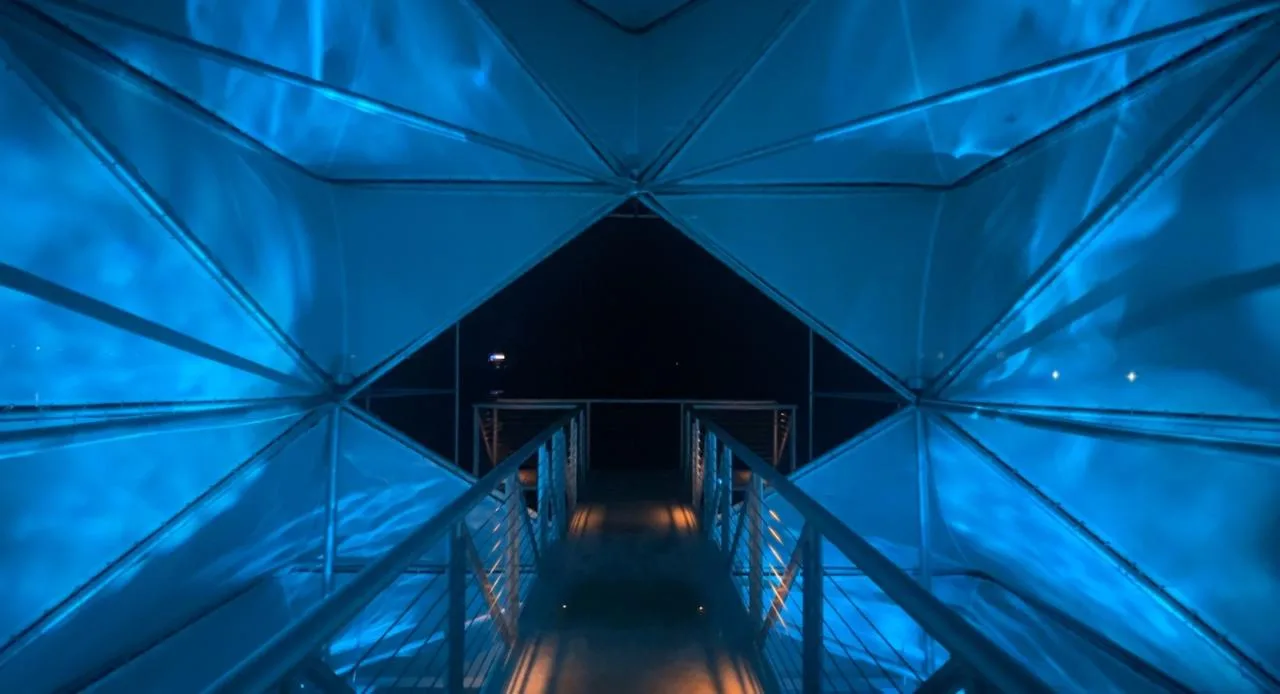
In the basic lighting mode, green lights with an industrial feel emphasize the artificial nature of the “artificial trees.” In the water-themed lighting mode, blue lights combined with ripple effects invoke the river’s presence, transforming the artificial tree into a mysterious water monster by the riverbank.
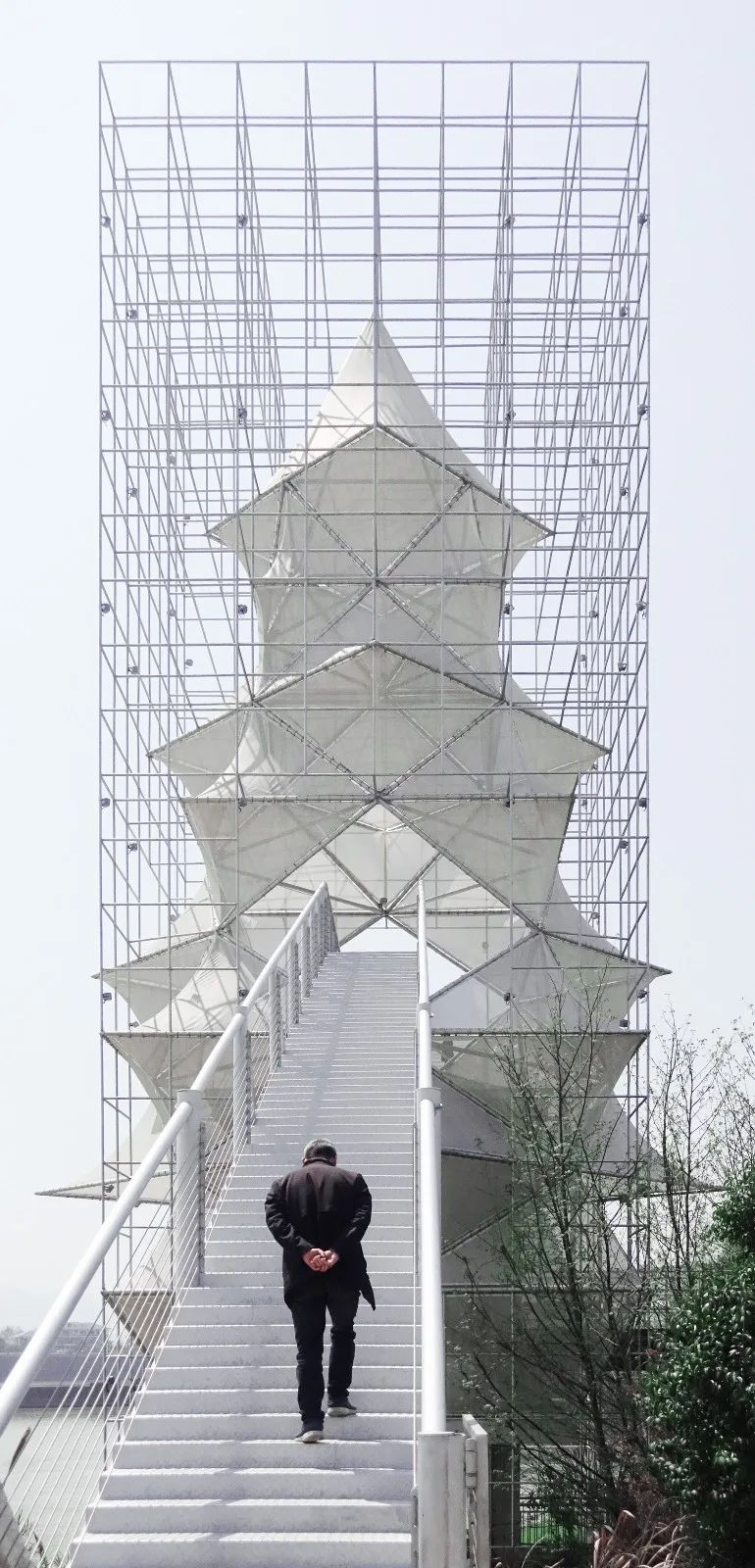
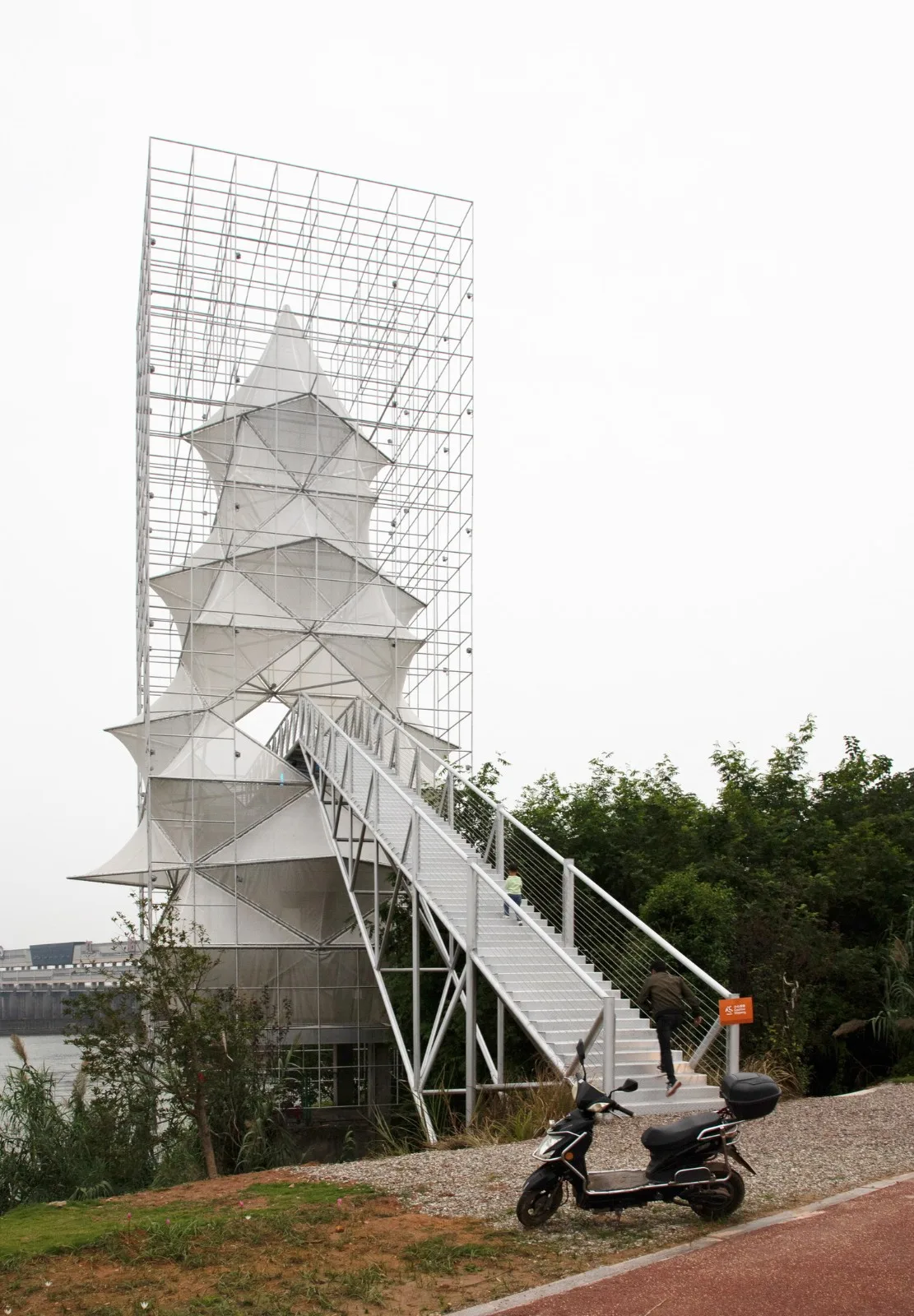
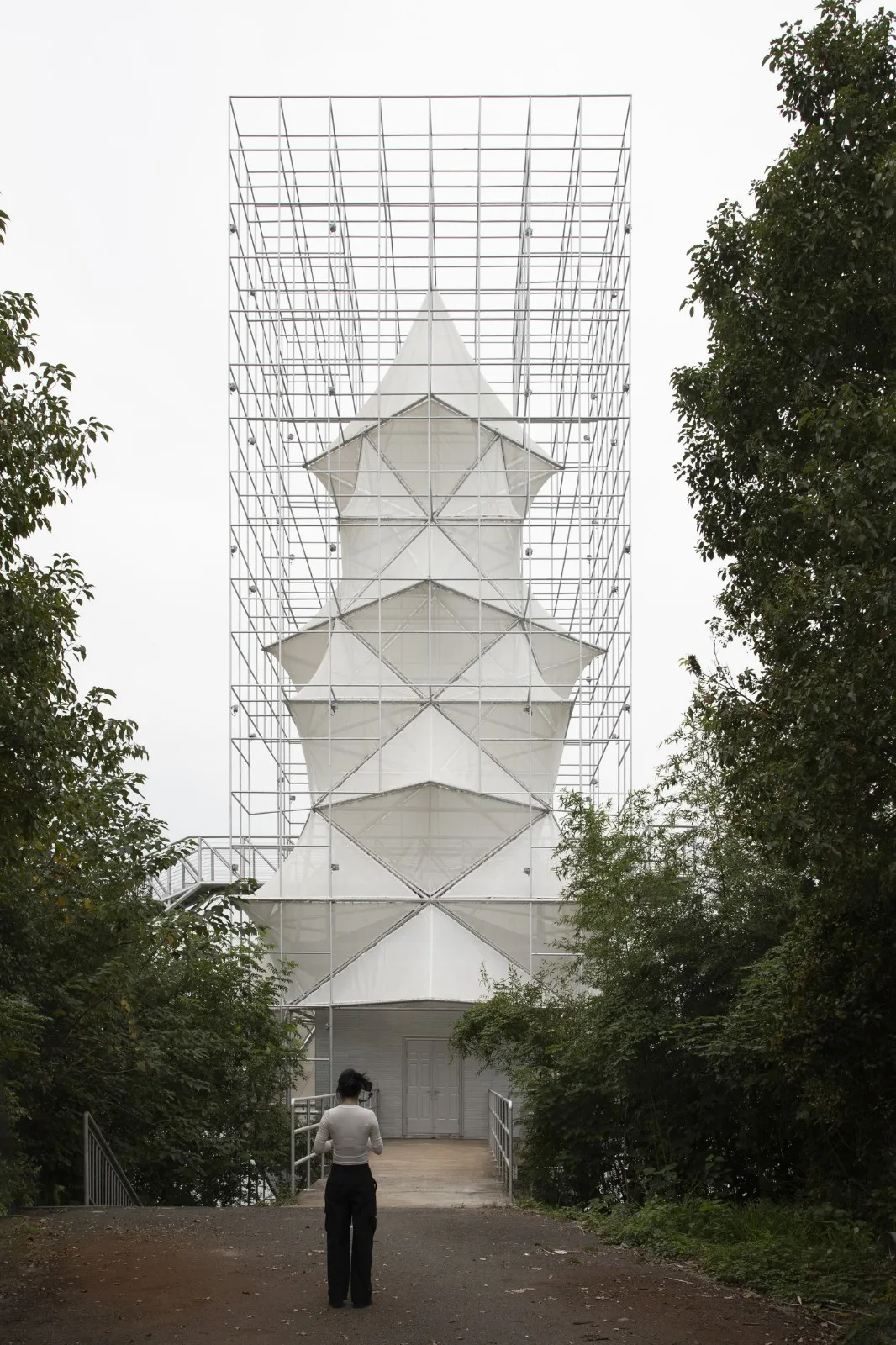
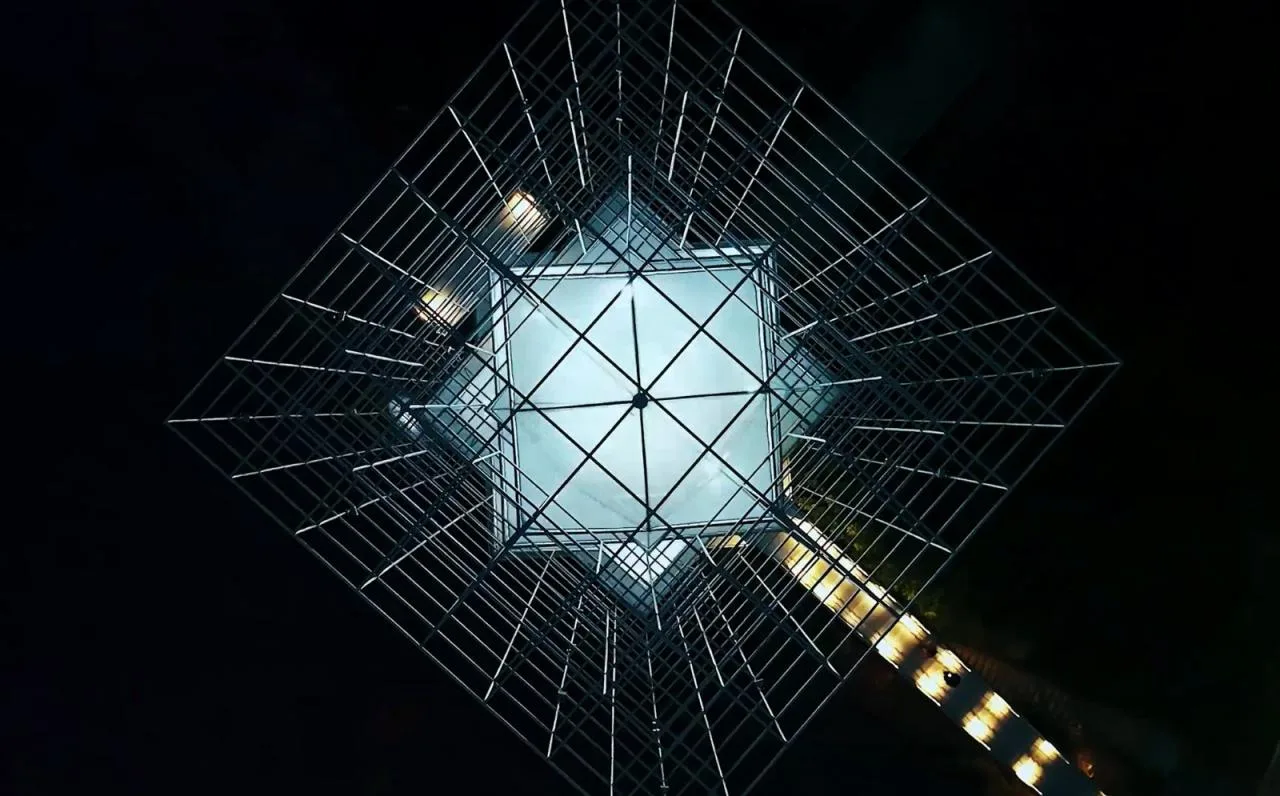
After finalizing the preliminary structural design, the team recognized that the tree-like form, with its many diagonal members, provides high stiffness and supports a hinged frame system with less outer stiffness. Structural calculations later confirmed this approach.
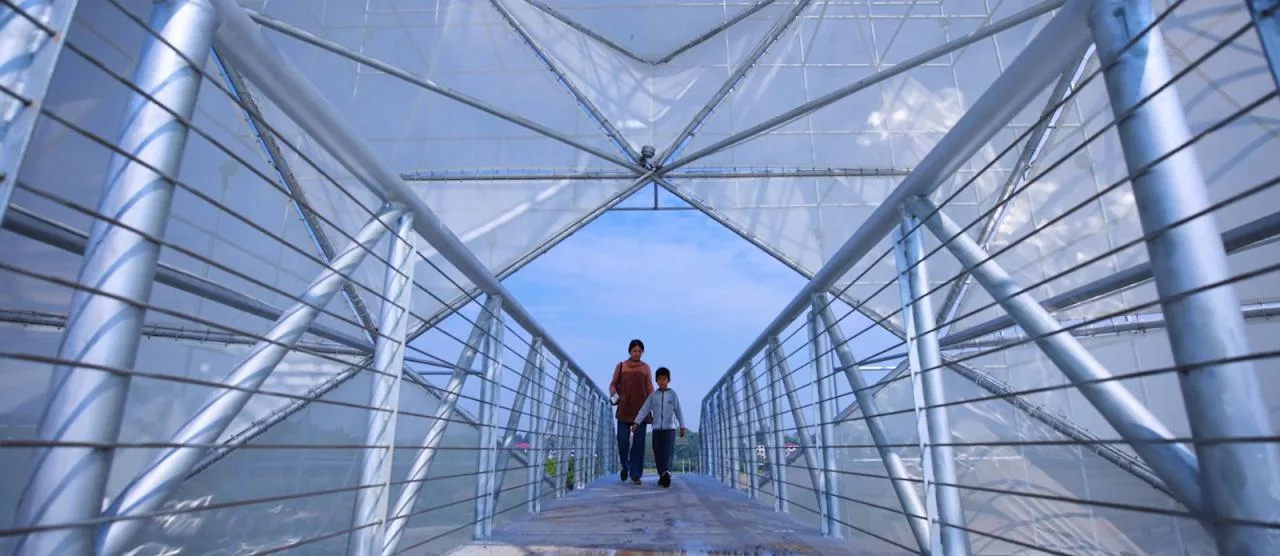
The final structural system combines an internal tree-like framework with a peripheral articulated frame system, connected through local members at each level to form a cohesive, unified structure. Most tree-like components use 89×6 steel pipes, with reinforced areas utilizing 102×7 steel pipes. The peripheral hinged frame system is built from 50×3 steel pipes.
The sky ladder employs a special-shaped steel truss system installed at both the ground level and atop the water gate room. The T-shaped viewing platform at the end leverages the steel truss’s rigidity to cantilever outward, offering expansive views.
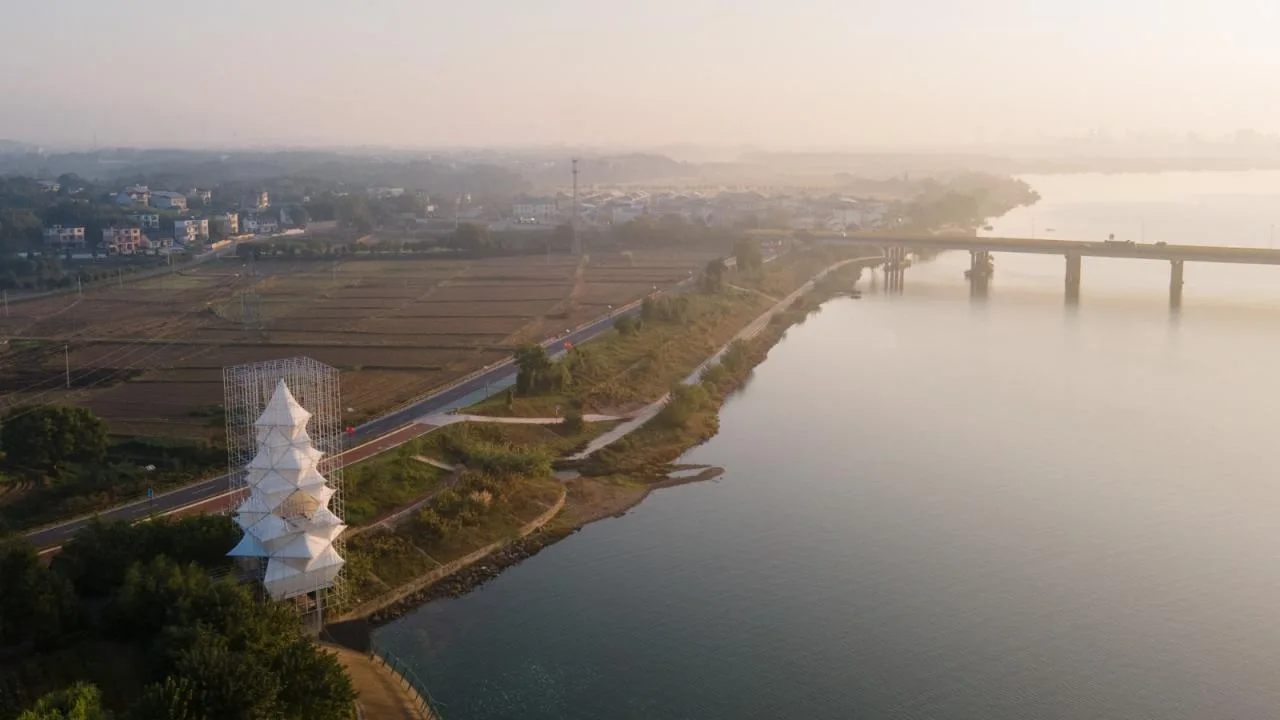
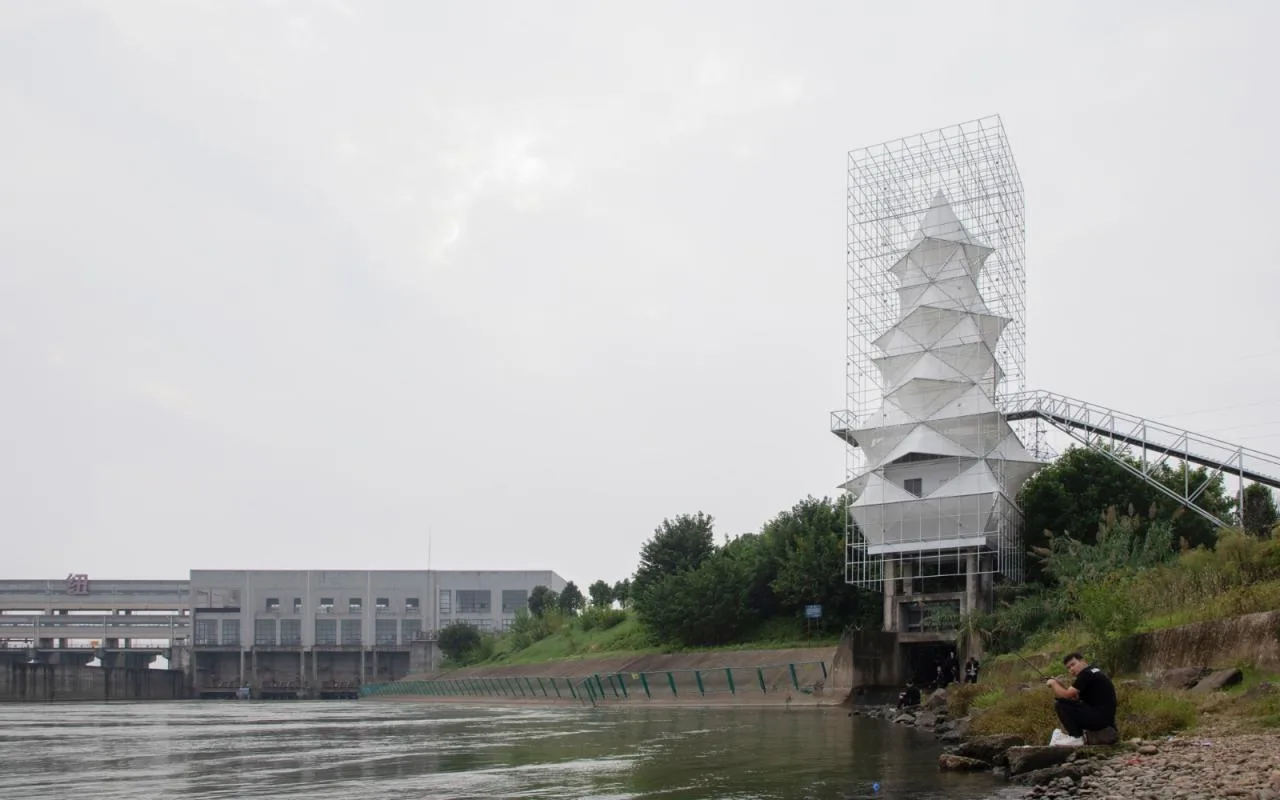
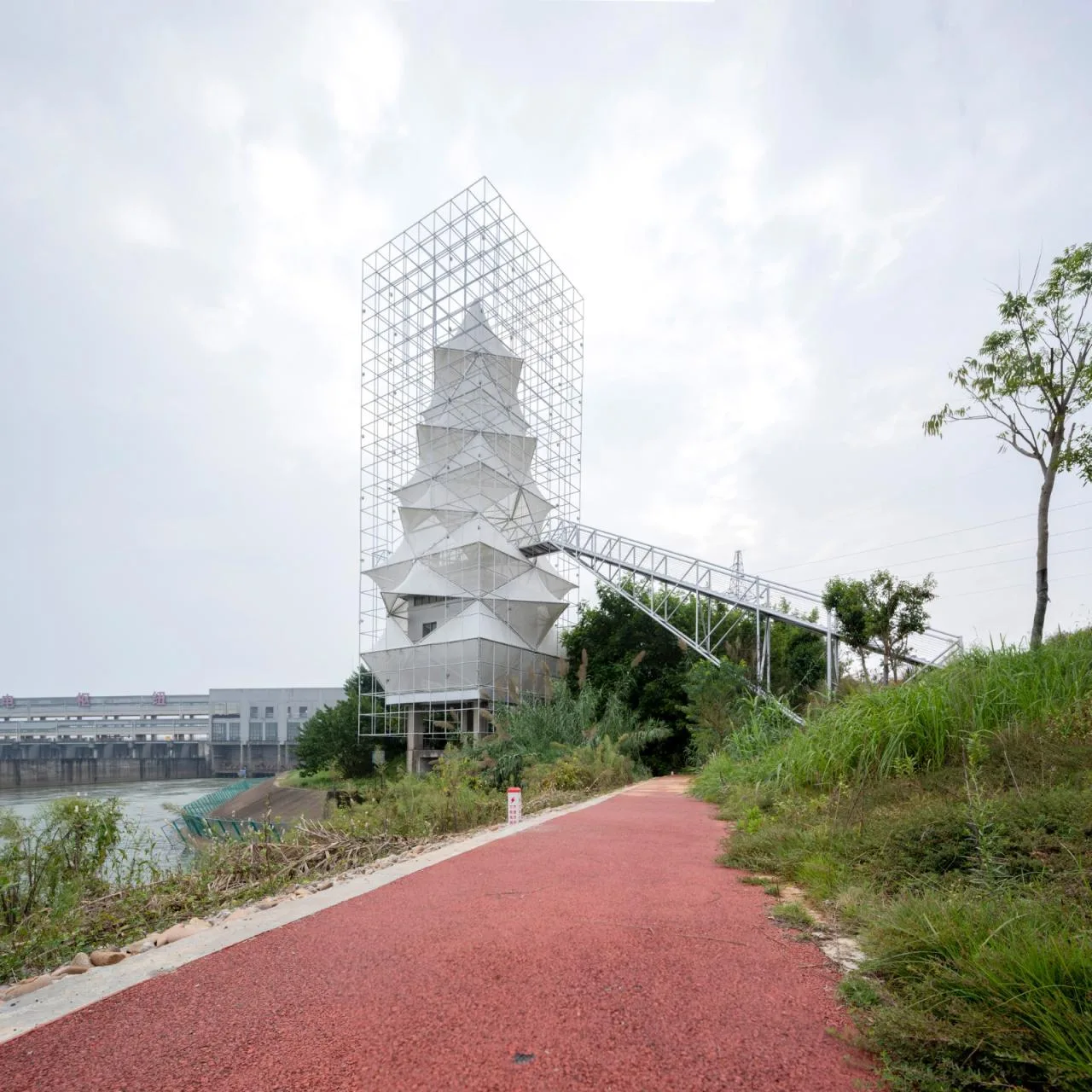
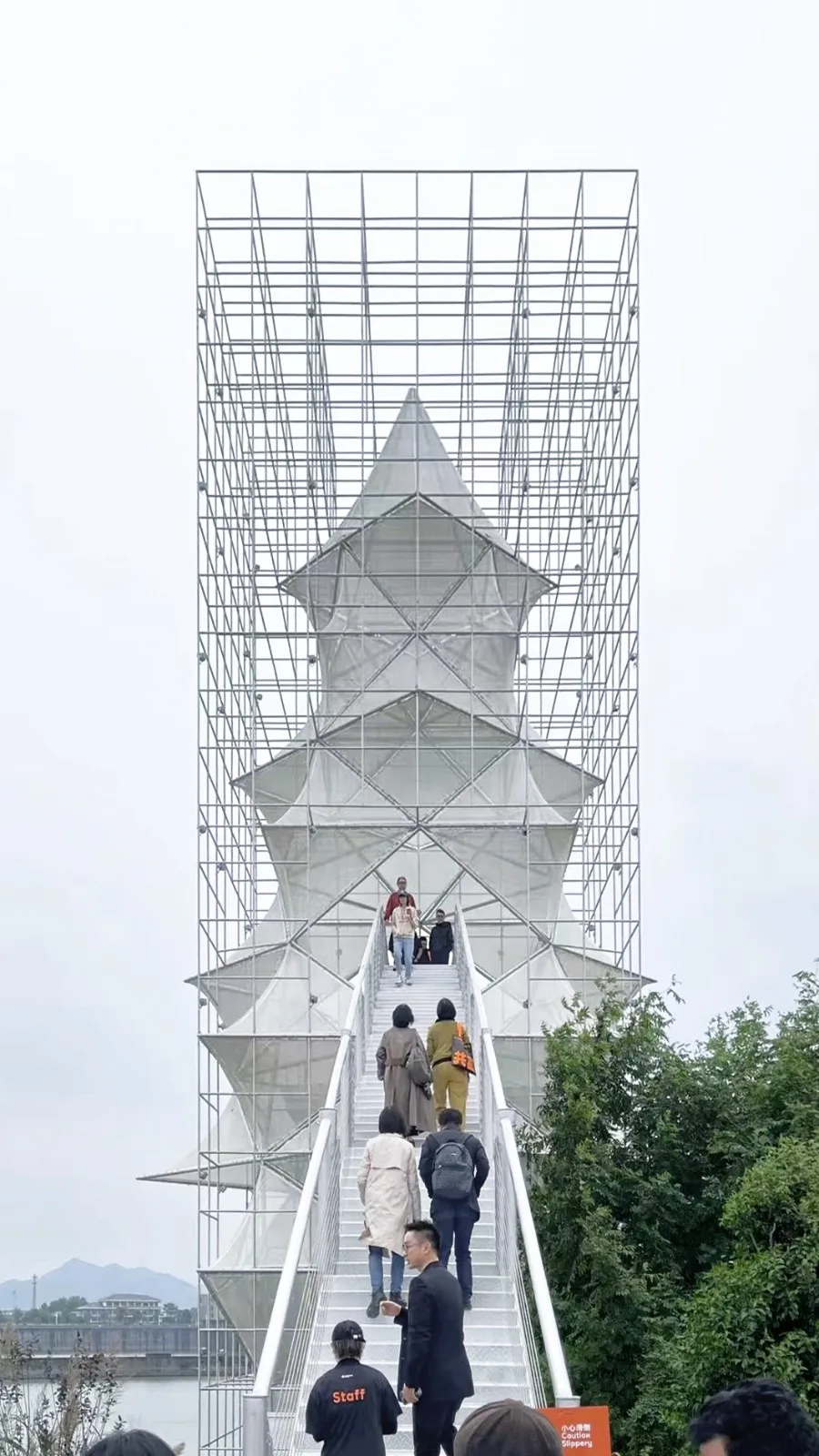
Drawing inspiration from infrastructure, the project prioritizes simple, practical materials and avoids overly complex structural nodes to facilitate construction and future maintenance.
The mesh membrane is lightweight and breathable, allowing for good ventilation in everyday use. It also reduces wind loads during extreme weather, such as typhoons, enhancing structural safety.
Silver powder paint is used uniformly on all steel components and the original water gate house facades, strengthening the overall sculptural effect of the “artificial tree.” This coating also boosts light reflection, which, combined with the semi-transparent mesh film, creates a rich, layered lighting effect.
Project Drawings
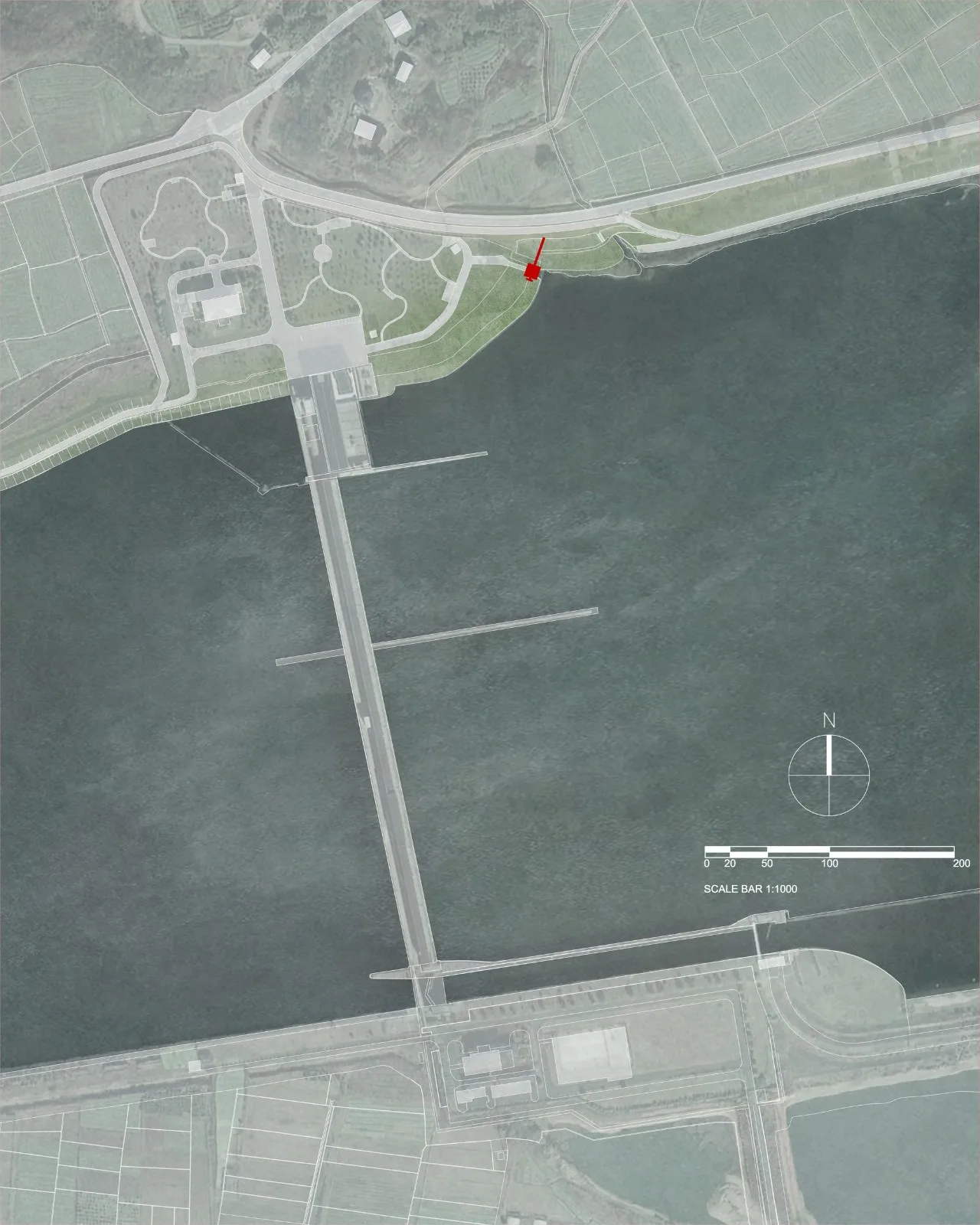
△ Base schematic diagram
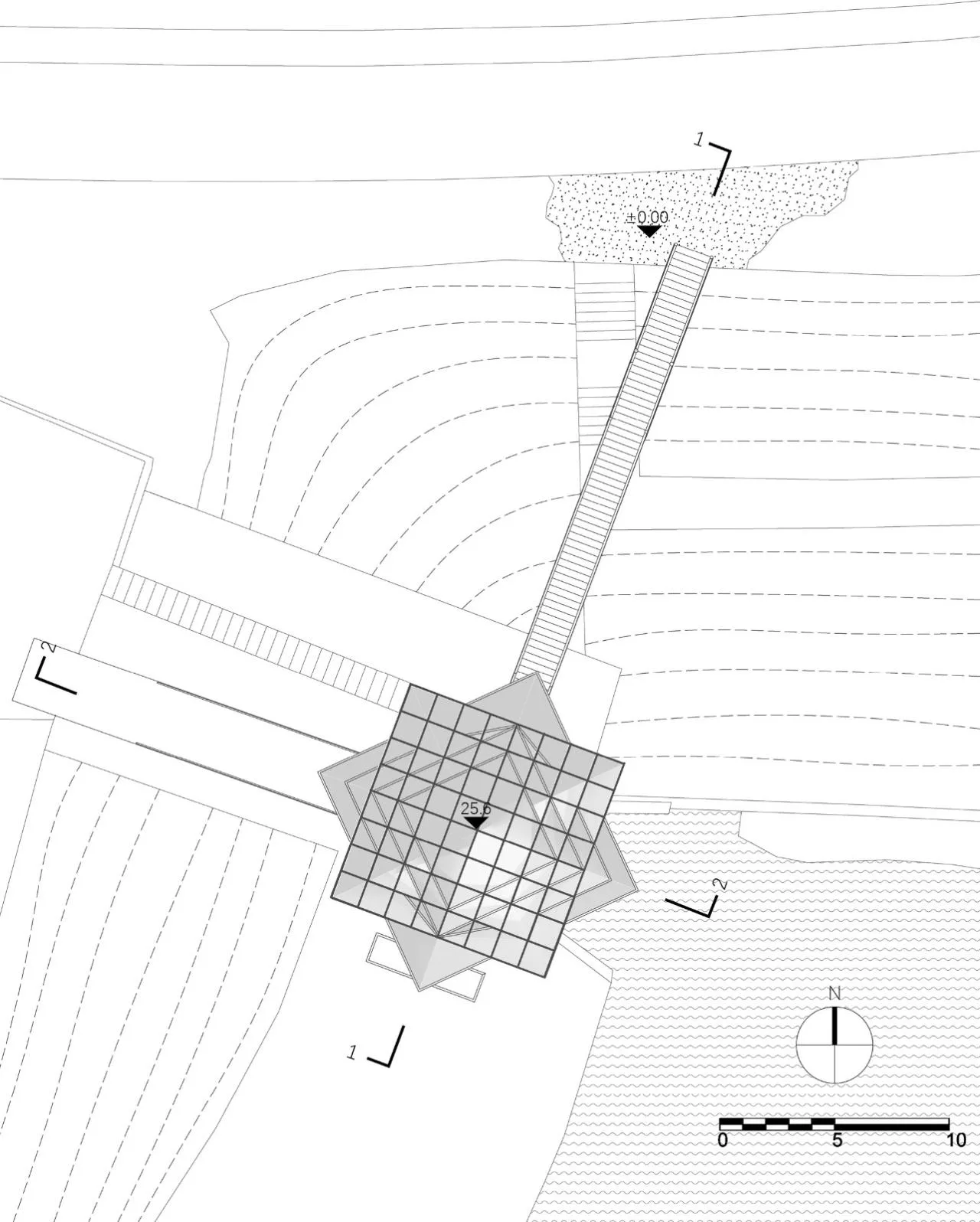
Top floor plan
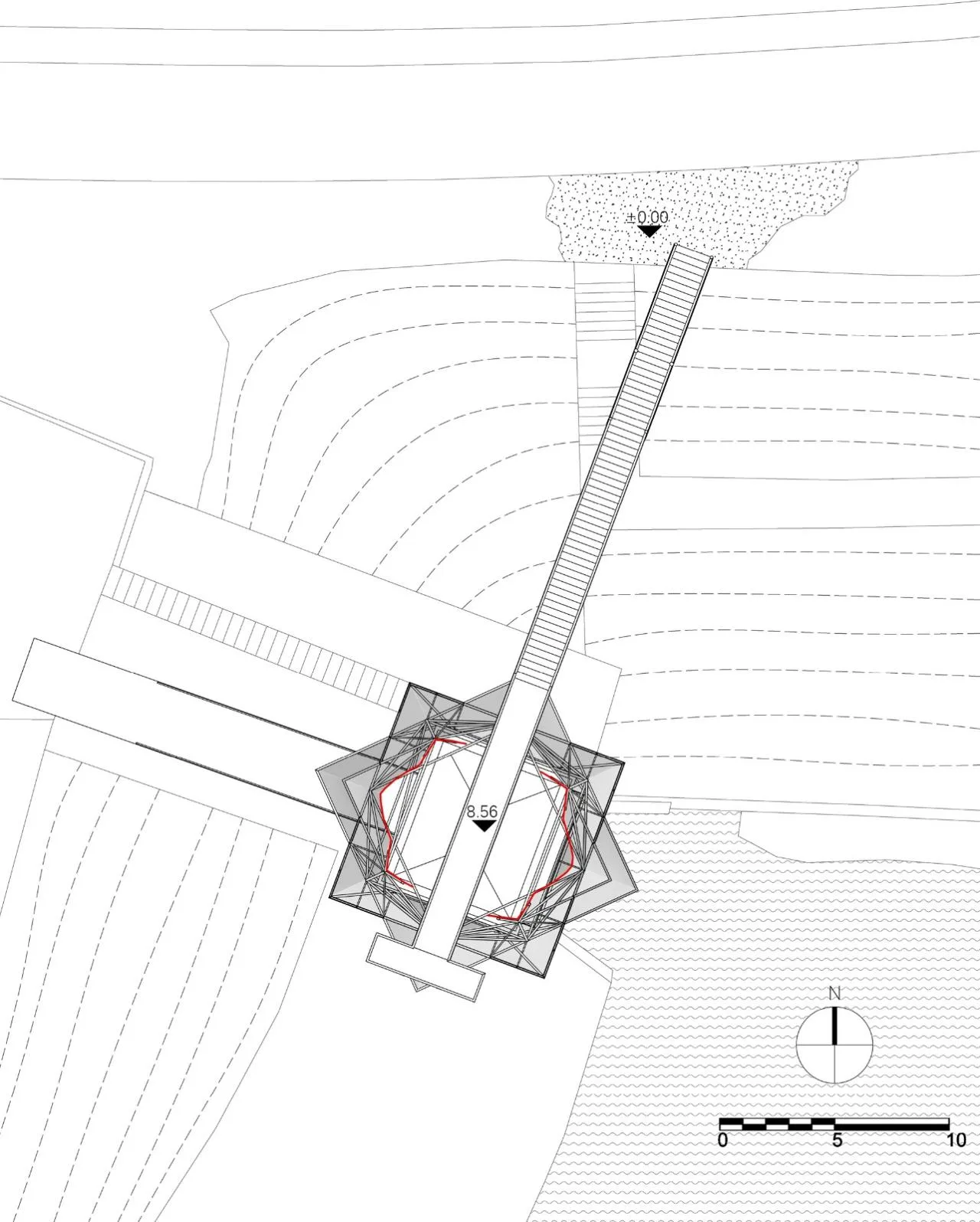
△ Plan of the middle layer
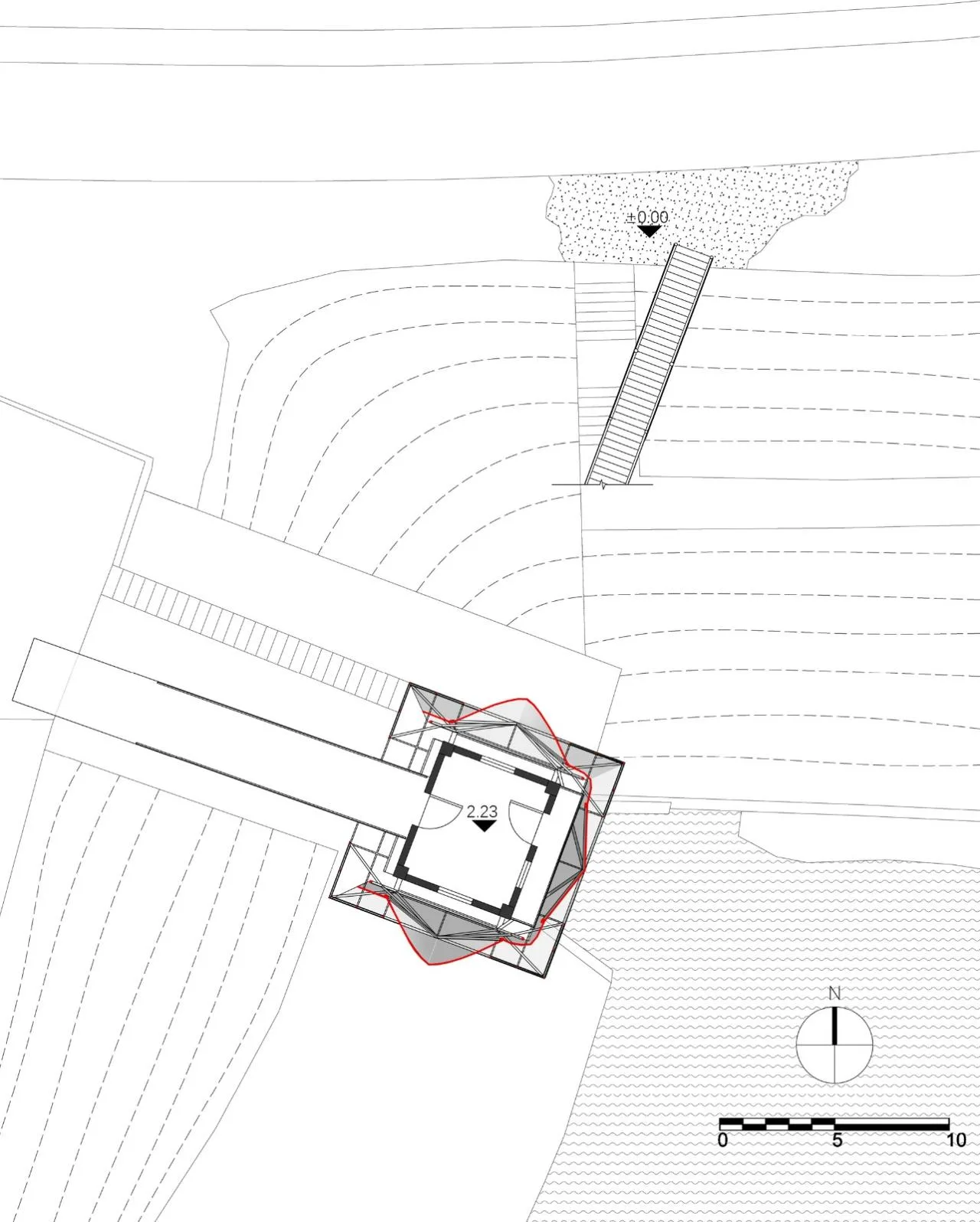
△ Plan of the middle layer
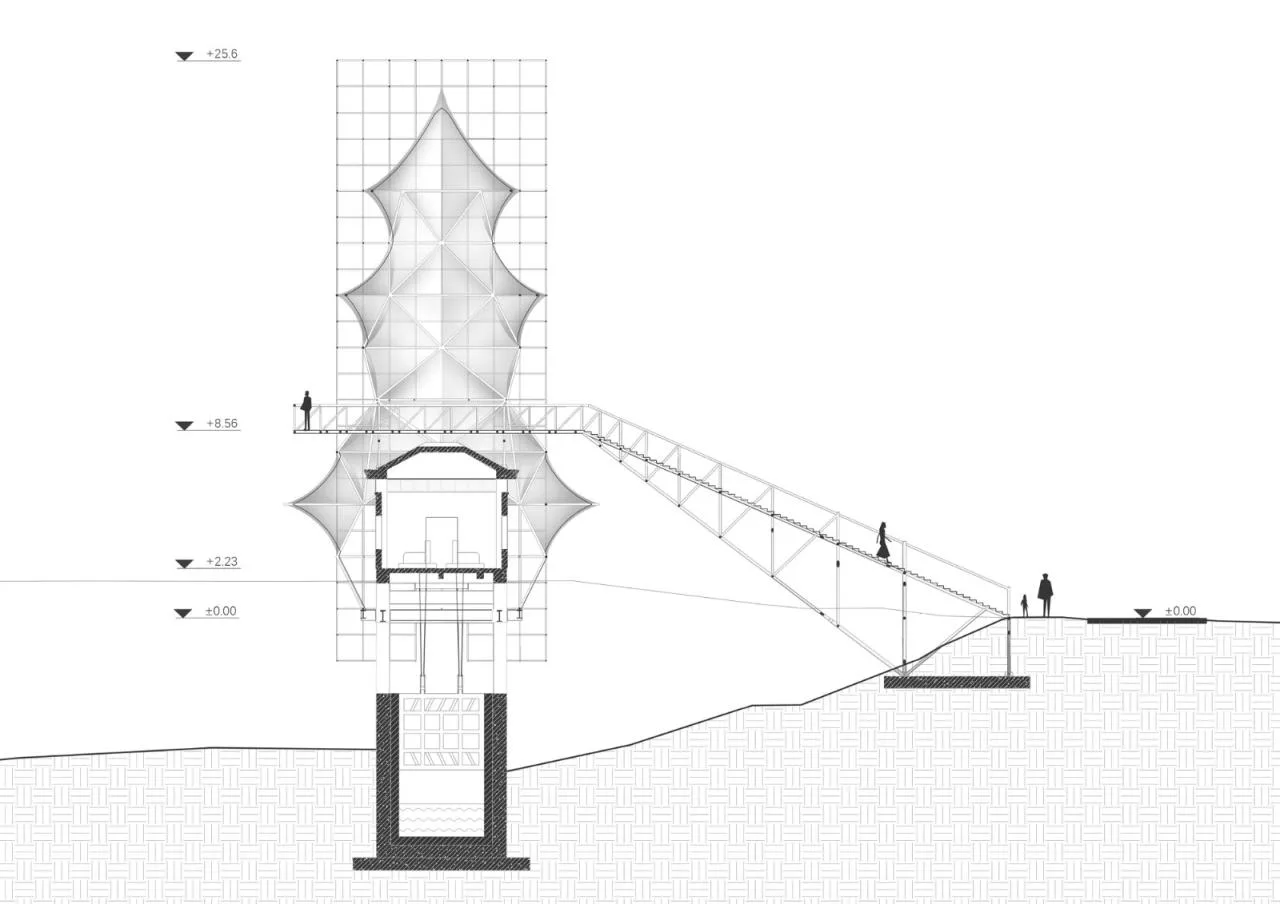
△ Section diagram
△ Section diagram
△ Project Generation Diagram
△ Project Generation Diagram
△ Project Generation Diagram
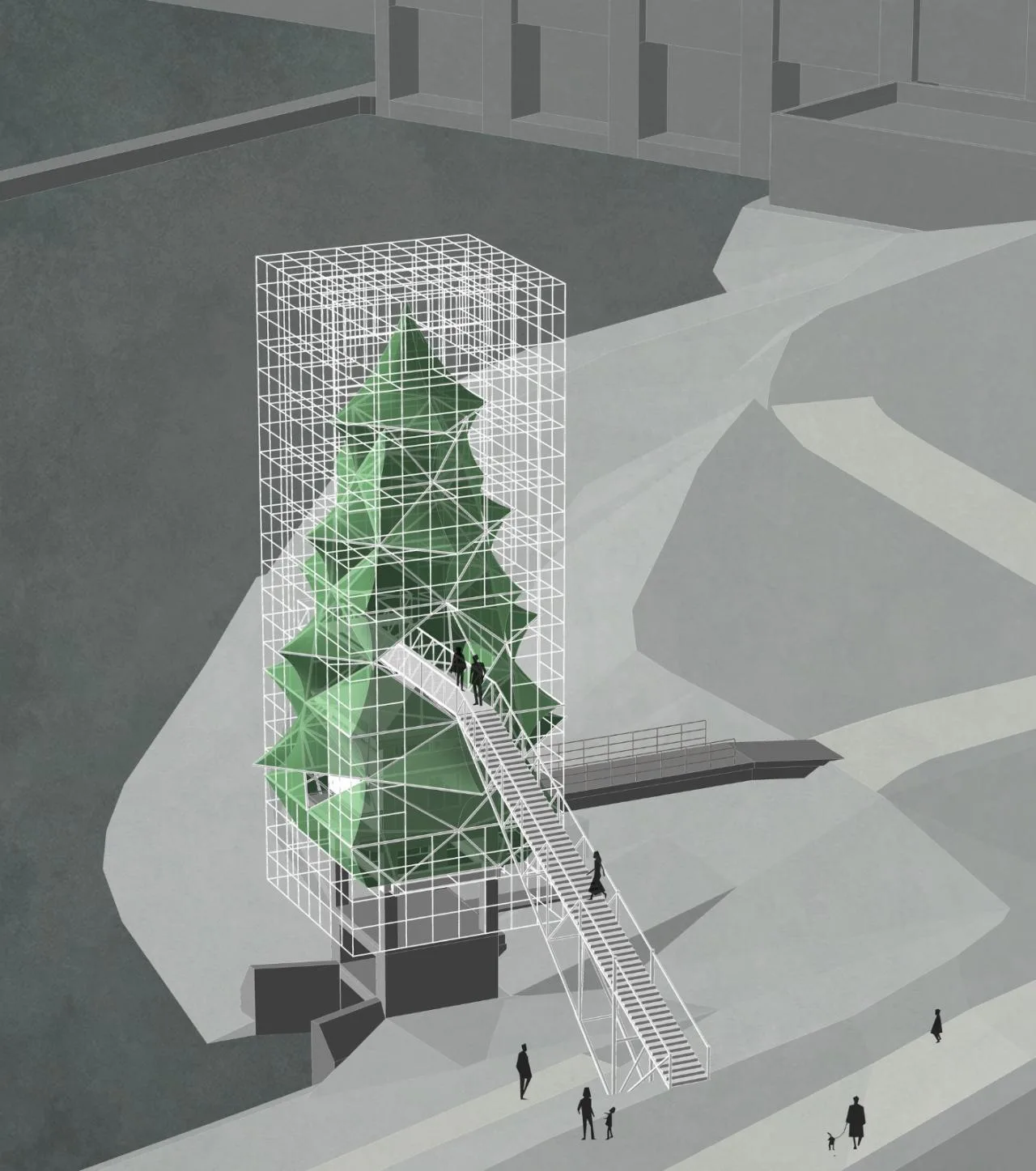
△ Project Generation Diagram
Project Information
Architect: Limited Design Studio
Area: 155 square meters
Project Year: 2023
Photographers: Zhao Sai (Rock Architecture Photography), Ji Xiaoling
Architectural Design Team: Lu Jiahong, Mo Linghuizi, Xue Yiwen, Peng Tan
Structural Design: Shanghai Zhuzhi Architectural Design Consulting Co., Ltd.
Structural Design Team: Sun Hasson, Chen Zeju, Huang Tao
Lighting Design: ADA Shenglin Lighting Design Firm
Lighting Design Team: Hong Shenglin, Zeng Huayu
Construction: Shanghai Tongcheng Construction Technology Engineering Co., Ltd.
Construction Management Team: Huang Tao, Hao Yancun, Chen Yong, Ren Yinping
Joint Initiators: China Urban Planning and Design Institute, Shanghai Fengyuzhu Culture Technology Co., Ltd., Shanghai Bilibili Technology Co., Ltd.
Executive Responsible Persons: Zhou Tianlu, Lv Ningjue
Fengyuzhu Execution Team: Fan Qian, Yu Liheng, Wu Zhe, Wang Meisi, Luo Xi, Liu Ming, Lv Jingxuan, Zhang Minghui
Client: Longyou County People’s Government
Location: Quzhou















Must log in before commenting!
Sign Up