
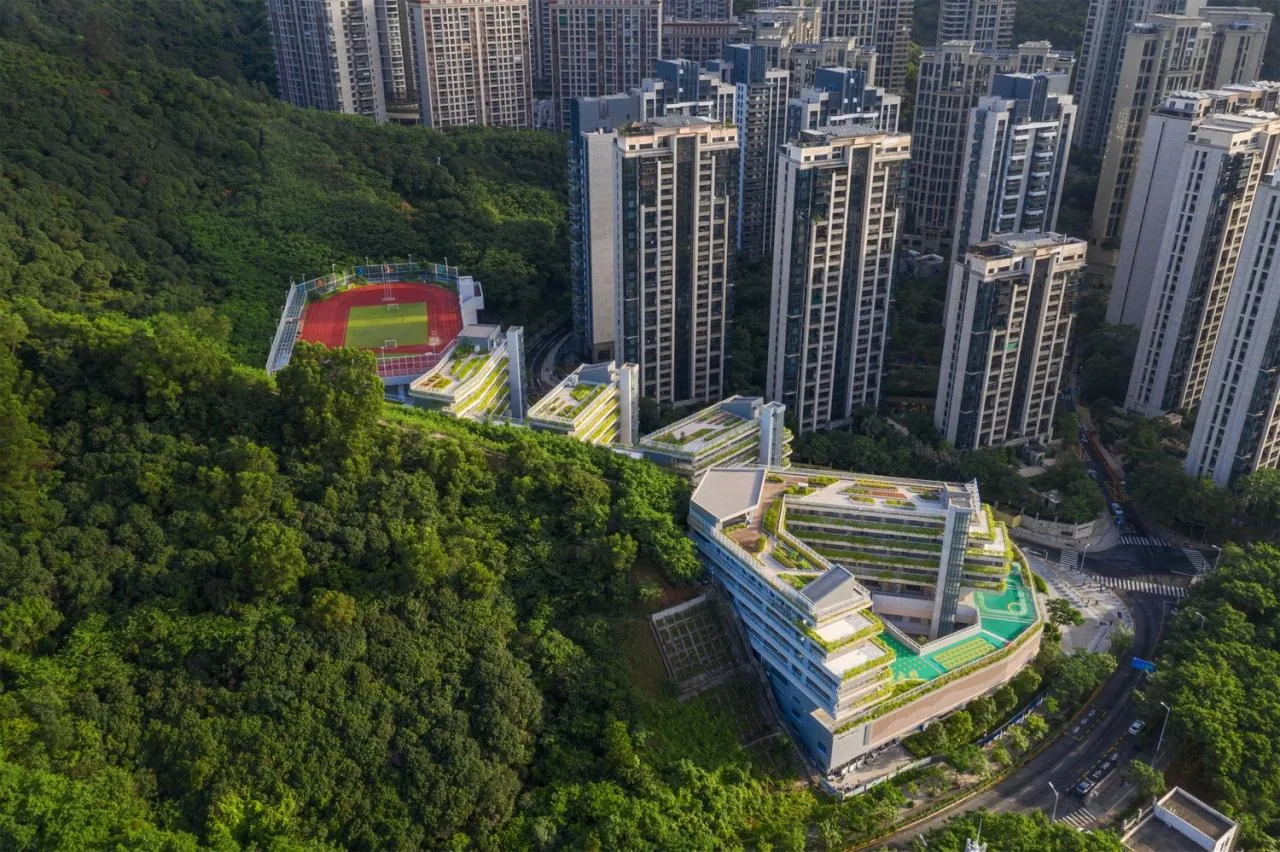
In ancient China, urban construction sought to harmonize nature and society, as well as landscape and architecture, following the philosophy of “tasting water from the soil and imitating the laws of heaven and earth.” This project embraces the connection between people and their environment, treating architecture as a living landscape that grows organically from the site. It integrates seamlessly with the surroundings to create a teaching space that fosters an awareness of nature and green ecology. Meanwhile, it maximizes the limited urban land by “thickening” the surface, efficiently utilizing multidimensional space.
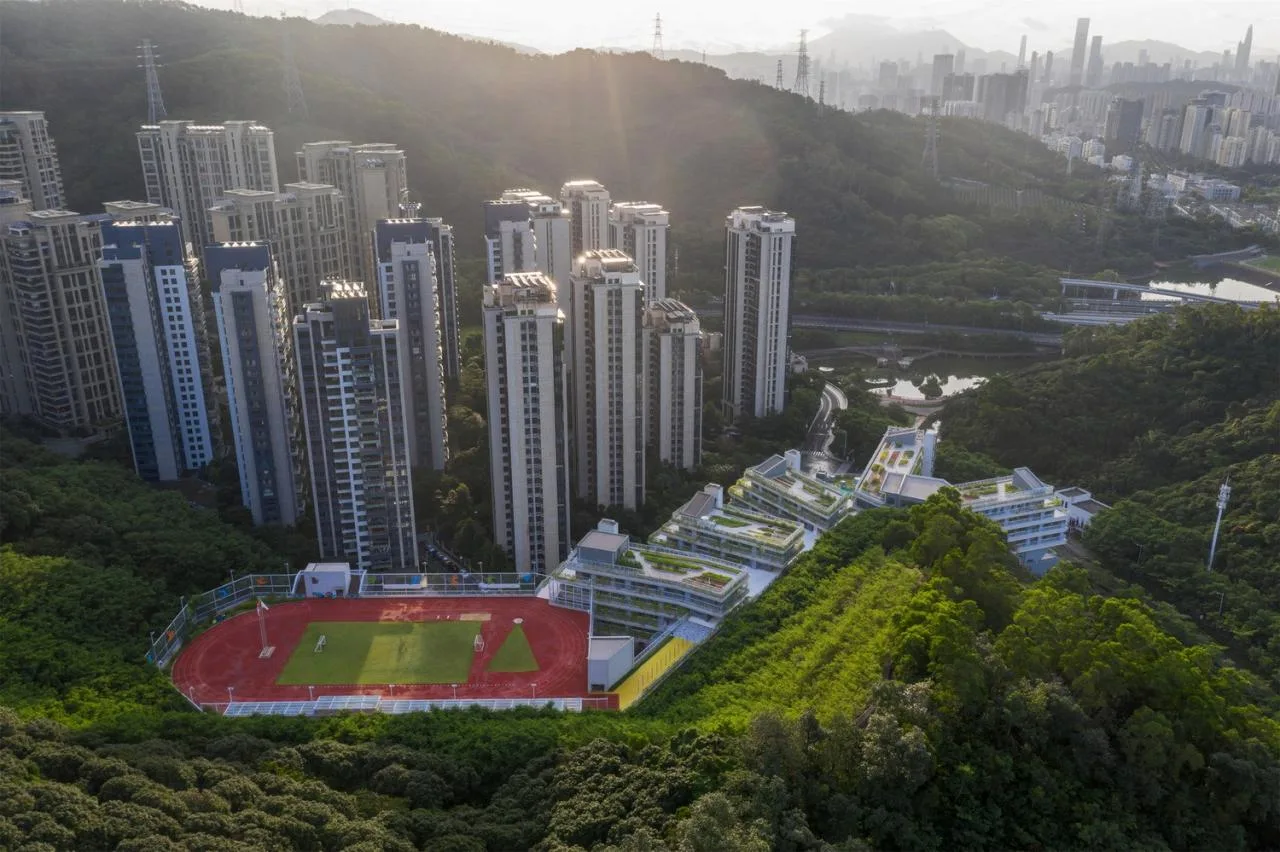
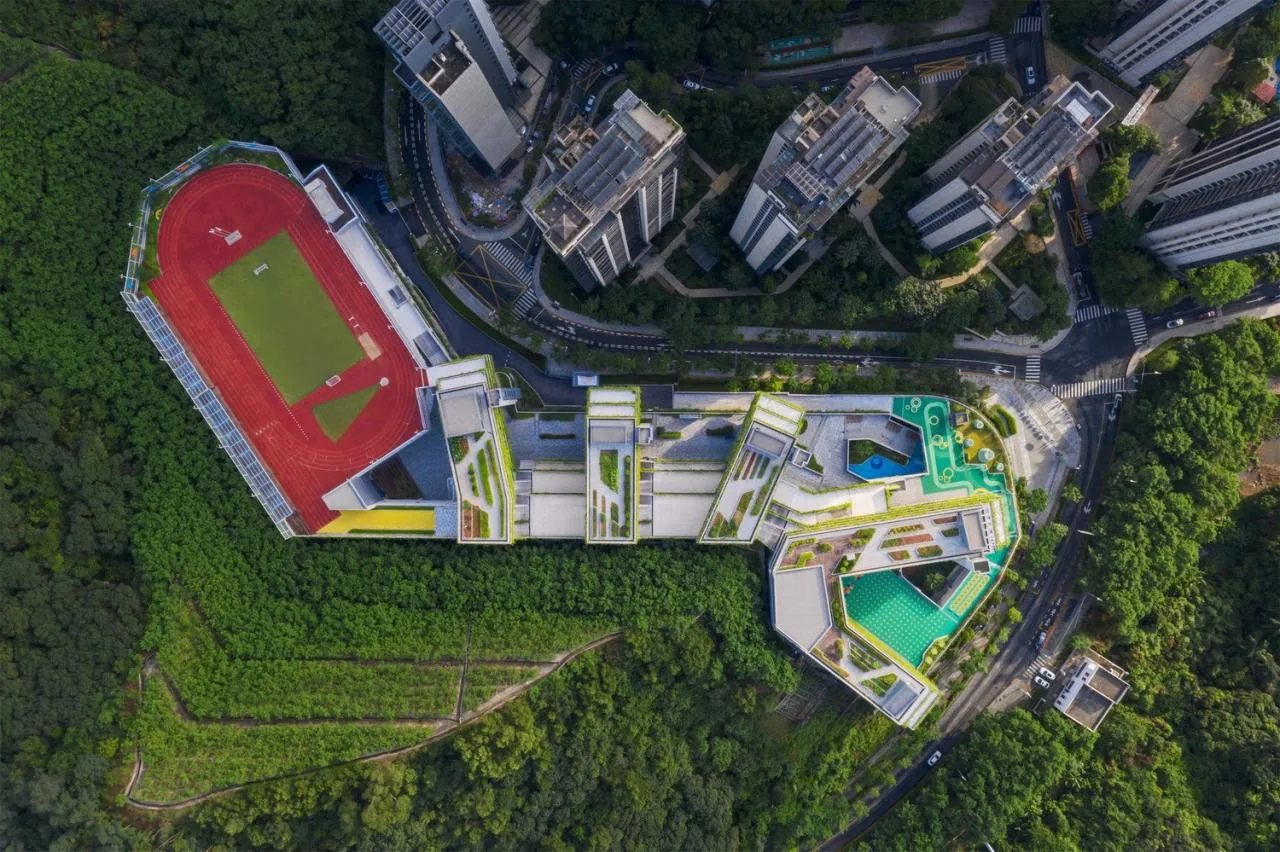
The North Campus of Qiaoxiang School, part of the Futian Experimental Education Group (formerly Fulong School), is situated on Liantangwei 1st Road in Shenzhen’s Futian District. Nestled against Tanglang Mountain, the campus spans 17,617.66 square meters of land with a total construction area of 44,249 square meters. It is a nine-year integrated school comprising 48 classes.
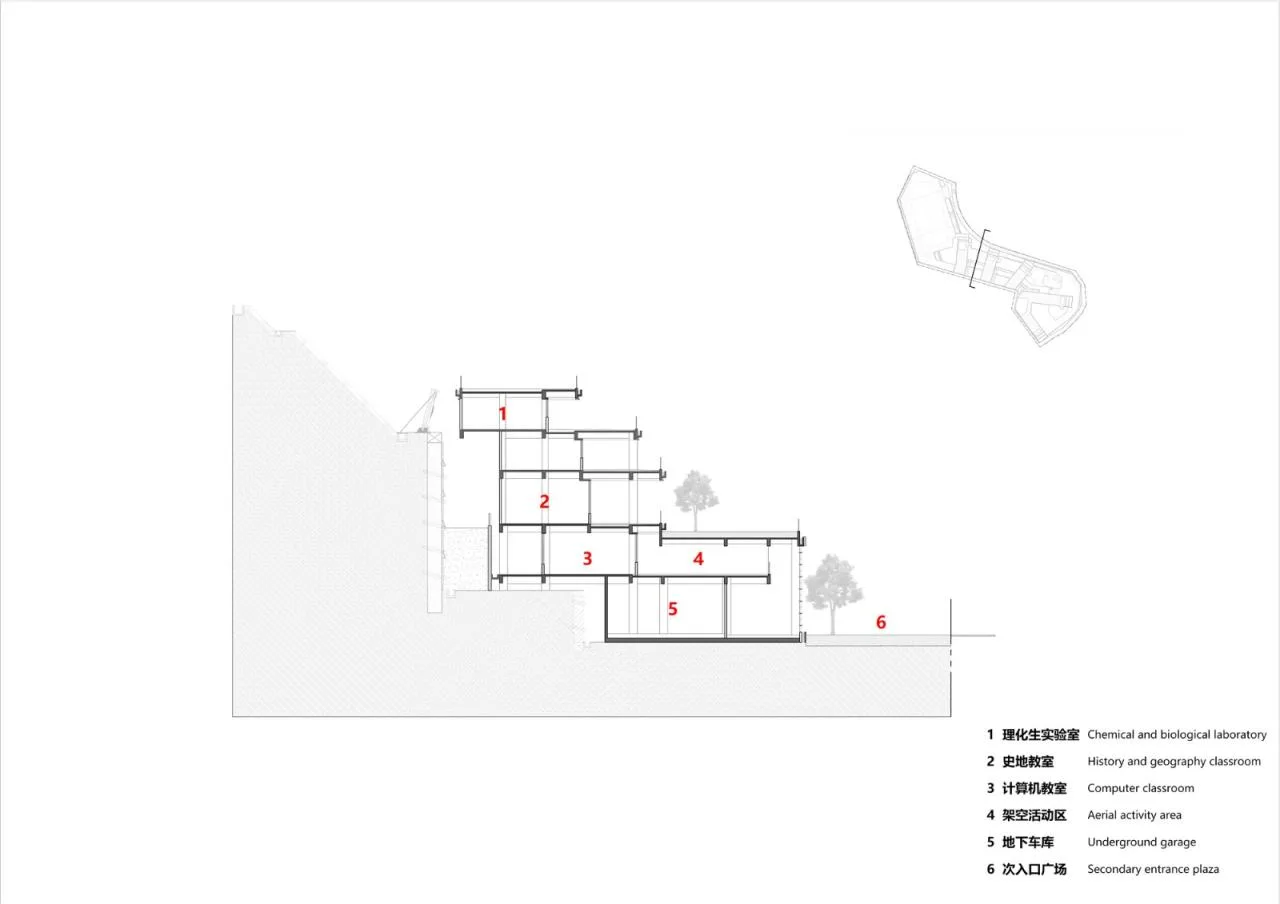
Because the site is located on a hillside sloping east to west, it features a height difference of approximately 40 meters. To ensure safe and controlled construction, the project dedicated two years to site excavation and slope support engineering during its early stages.
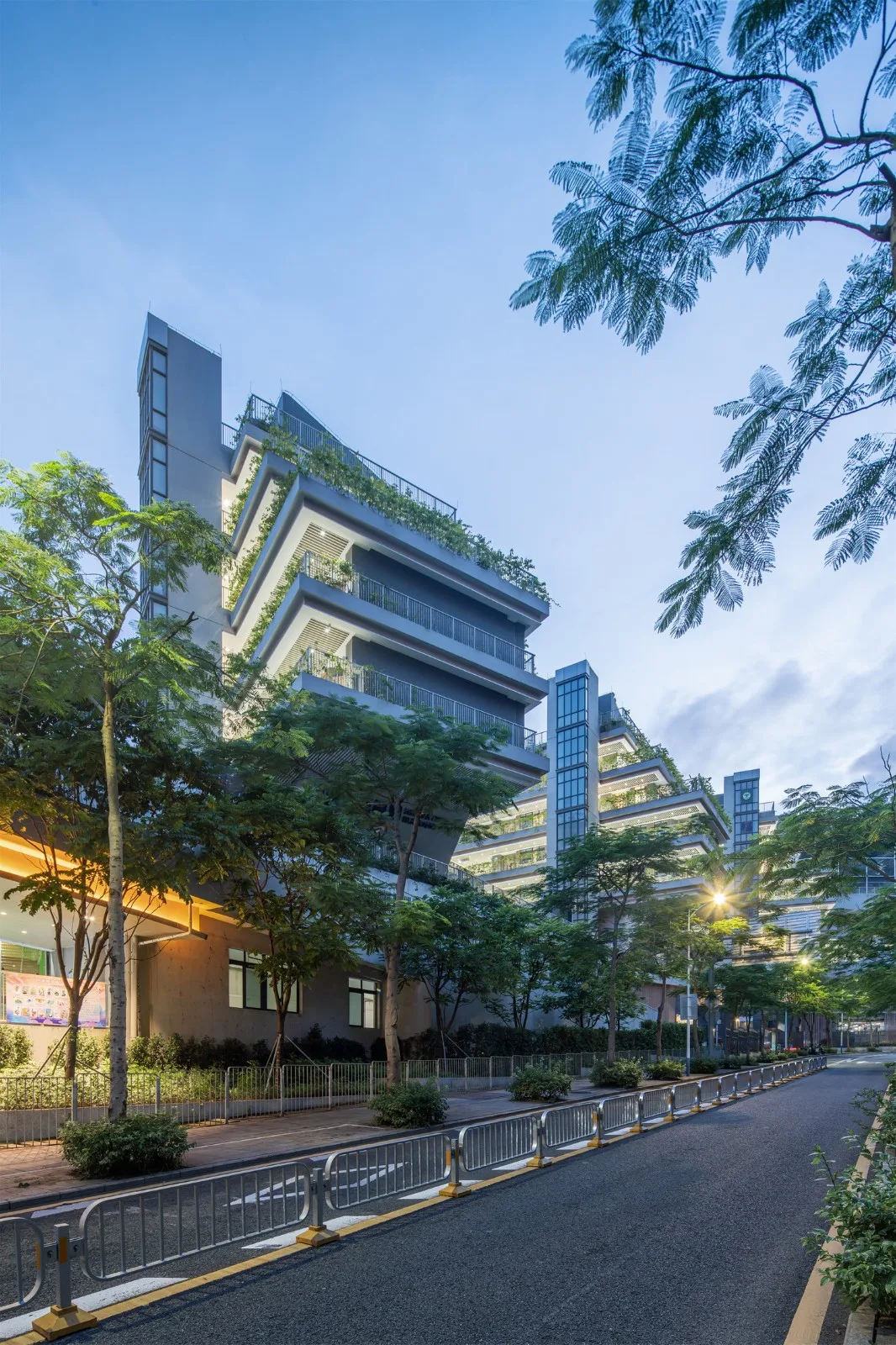
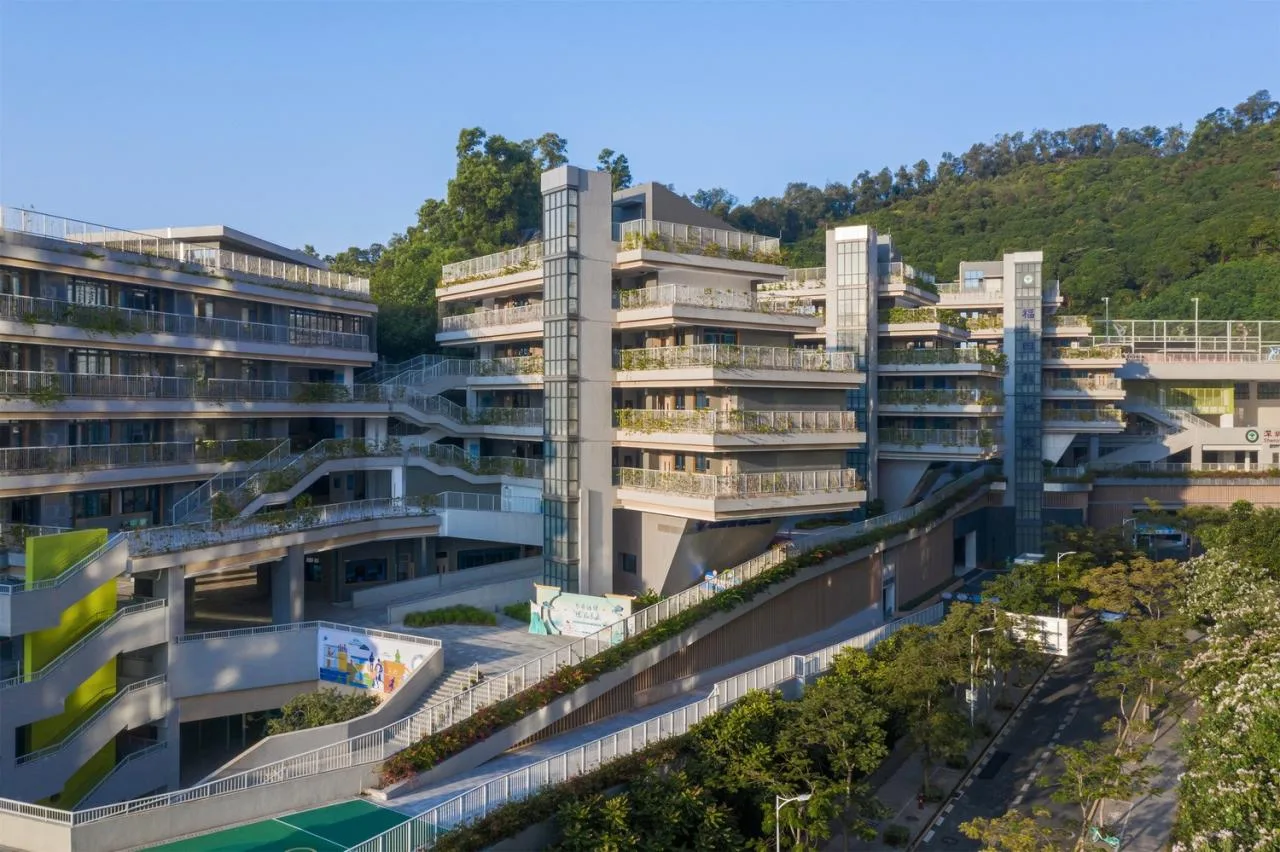
The original campus boasts an excellent natural environment. To minimize the environmental impact of earthworks, the site was terraced into multiple levels. Vertical retaining walls and slopes outside the construction boundaries reduce the interaction between the hillside and buildings.
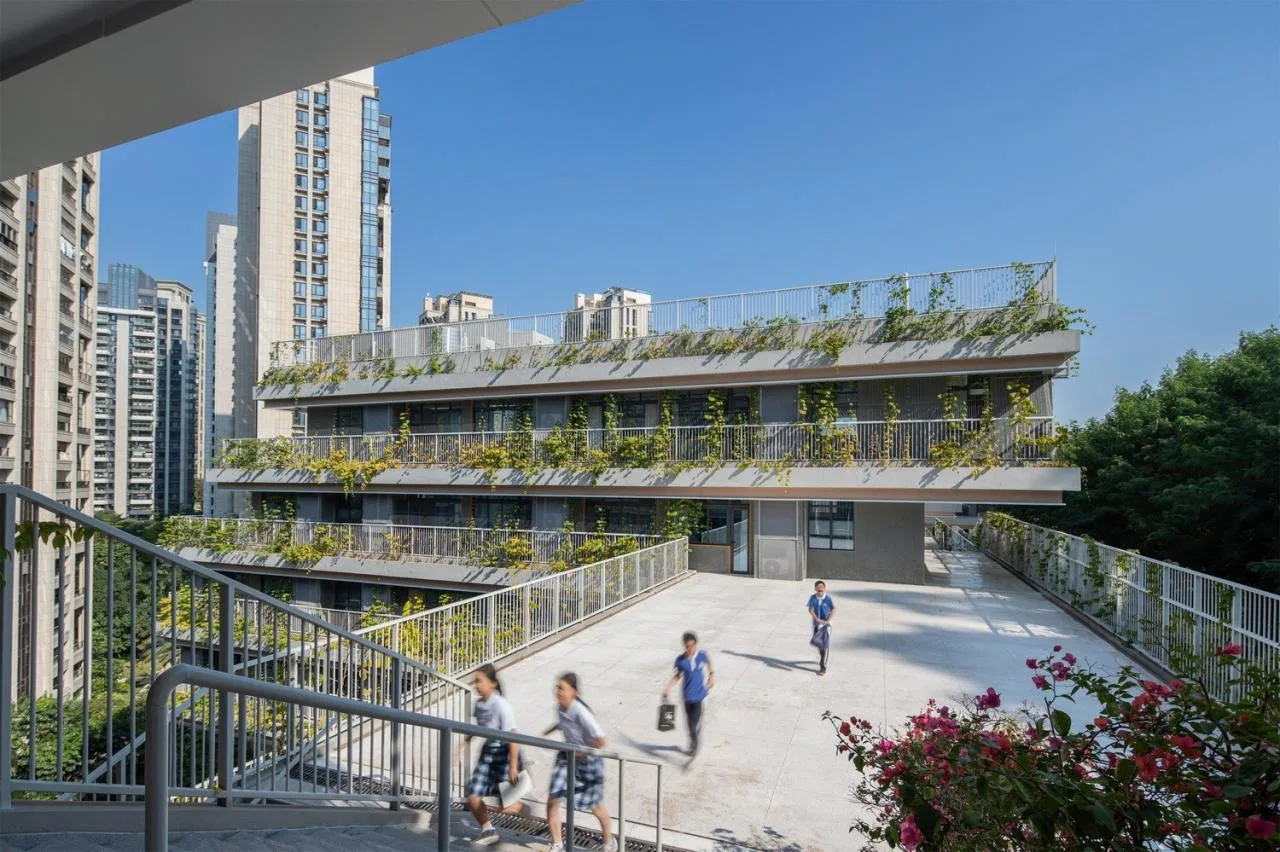
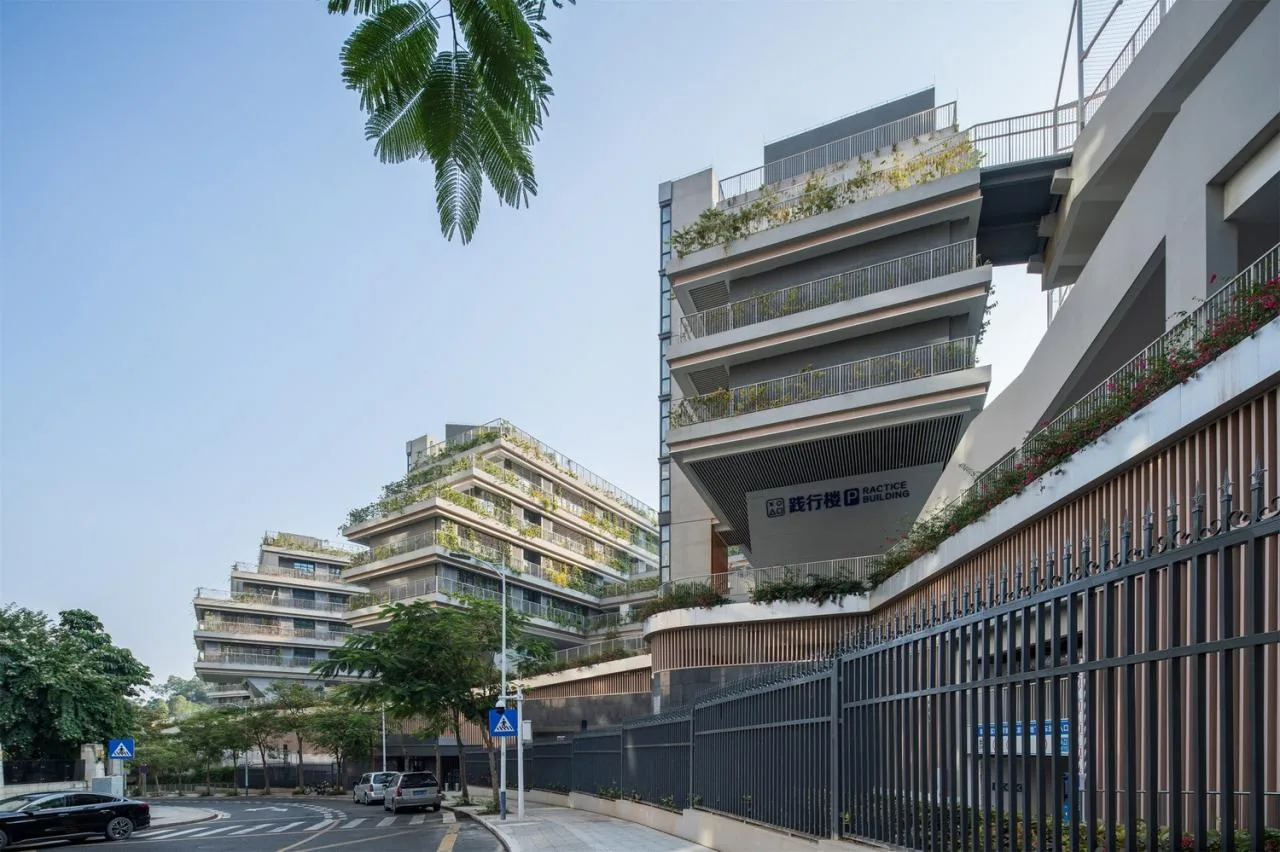
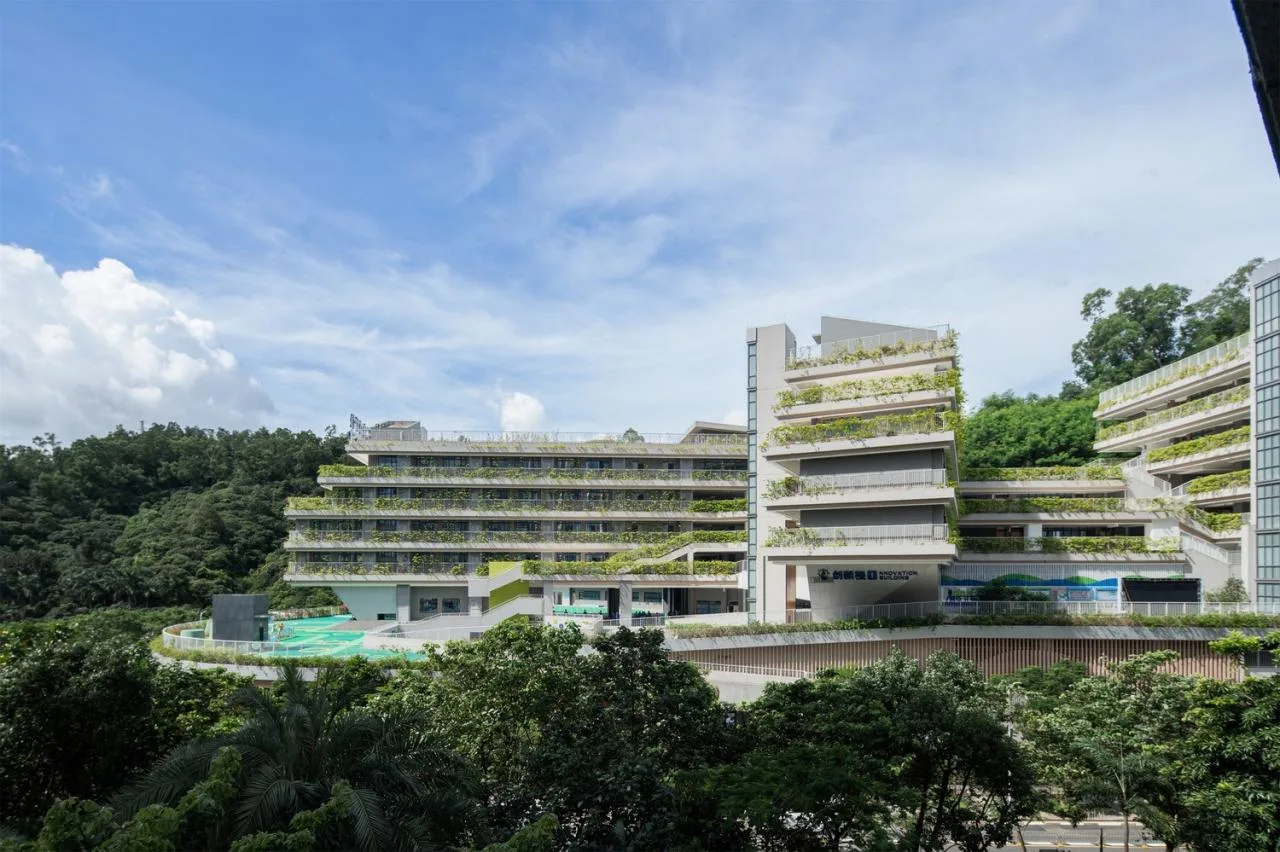
The overall plan is tailored to local conditions, featuring a large slab structure with “underground” parallel contour lines, complemented by above-ground teaching buildings oriented perpendicular to the mountain’s slope. Artificially carved slope retaining walls are planted with greenery, making the buildings appear as if they have grown naturally from the mountain. This design softens the building mass, helping it blend into the environment, while the horizontal lines of the façade and flower beds enhance ecological integration and scenic views.
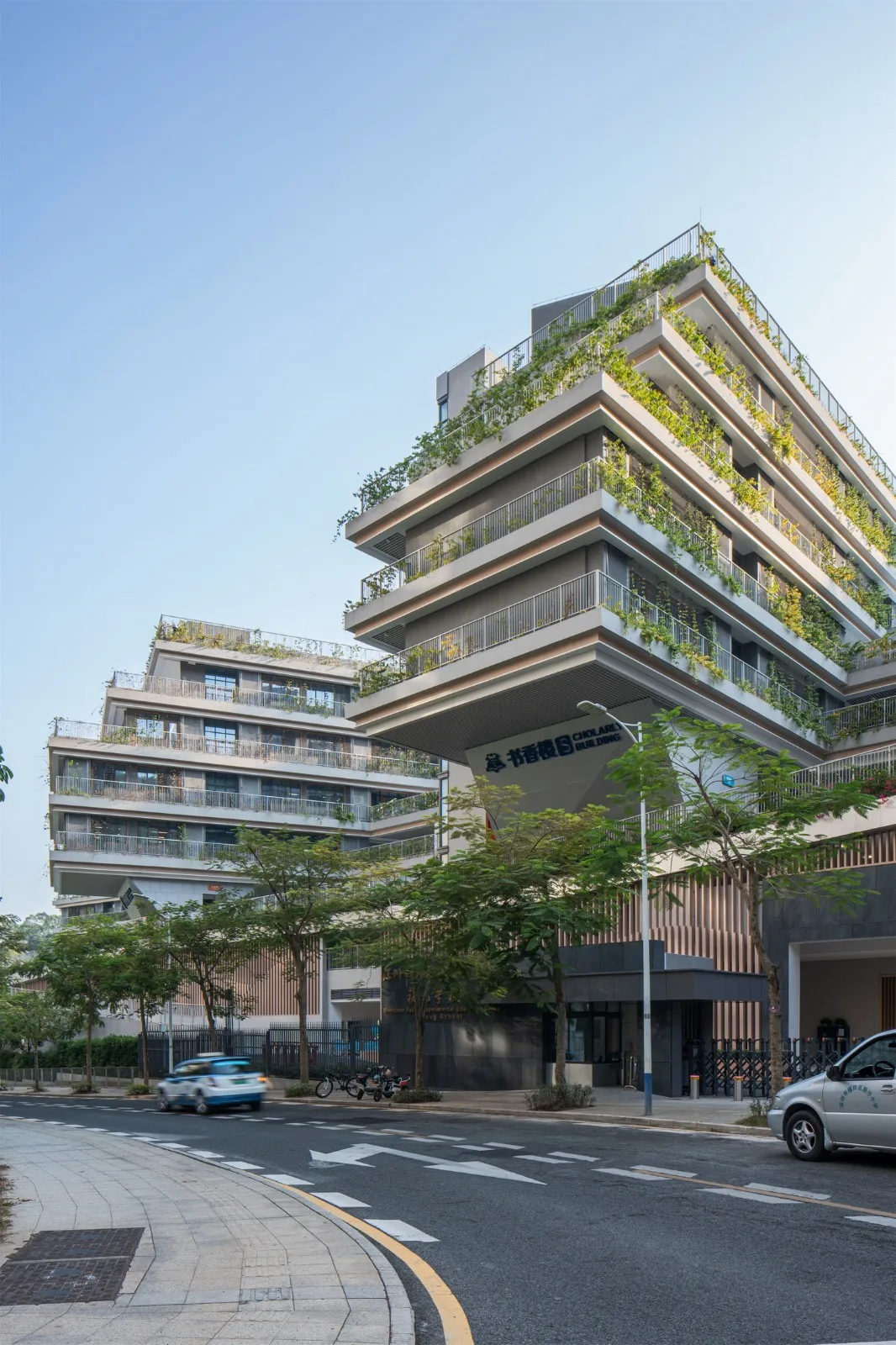
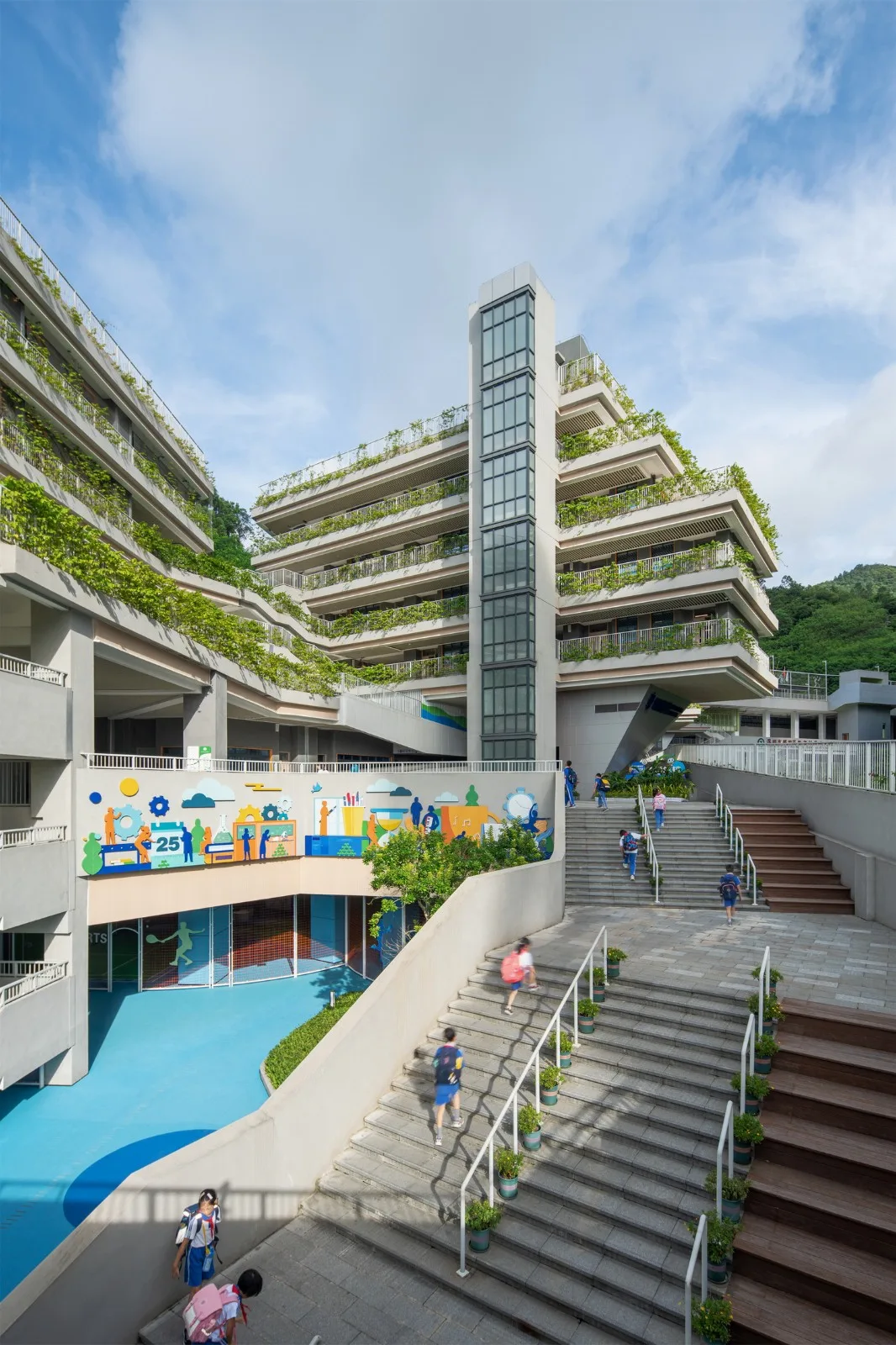
From the main entrance square to the central gathering courtyard, the campus path resembles a mountain park. It passes through seven courtyards at varying elevations along the “up the mountain” route, providing students with flexible and diverse outdoor spaces for activities. These courtyards also offer a unique landscape experience, allowing students to enjoy the beauty of nature as they move through the campus.
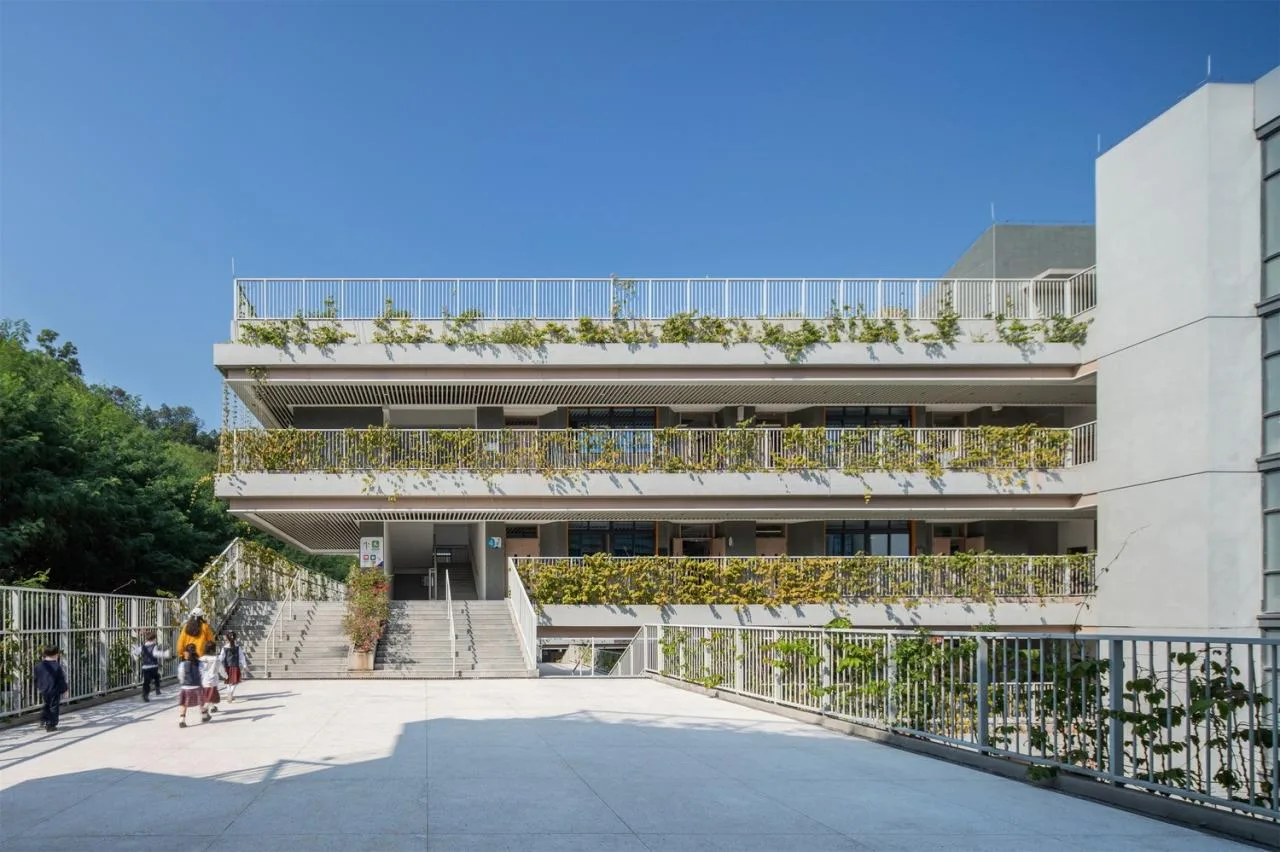
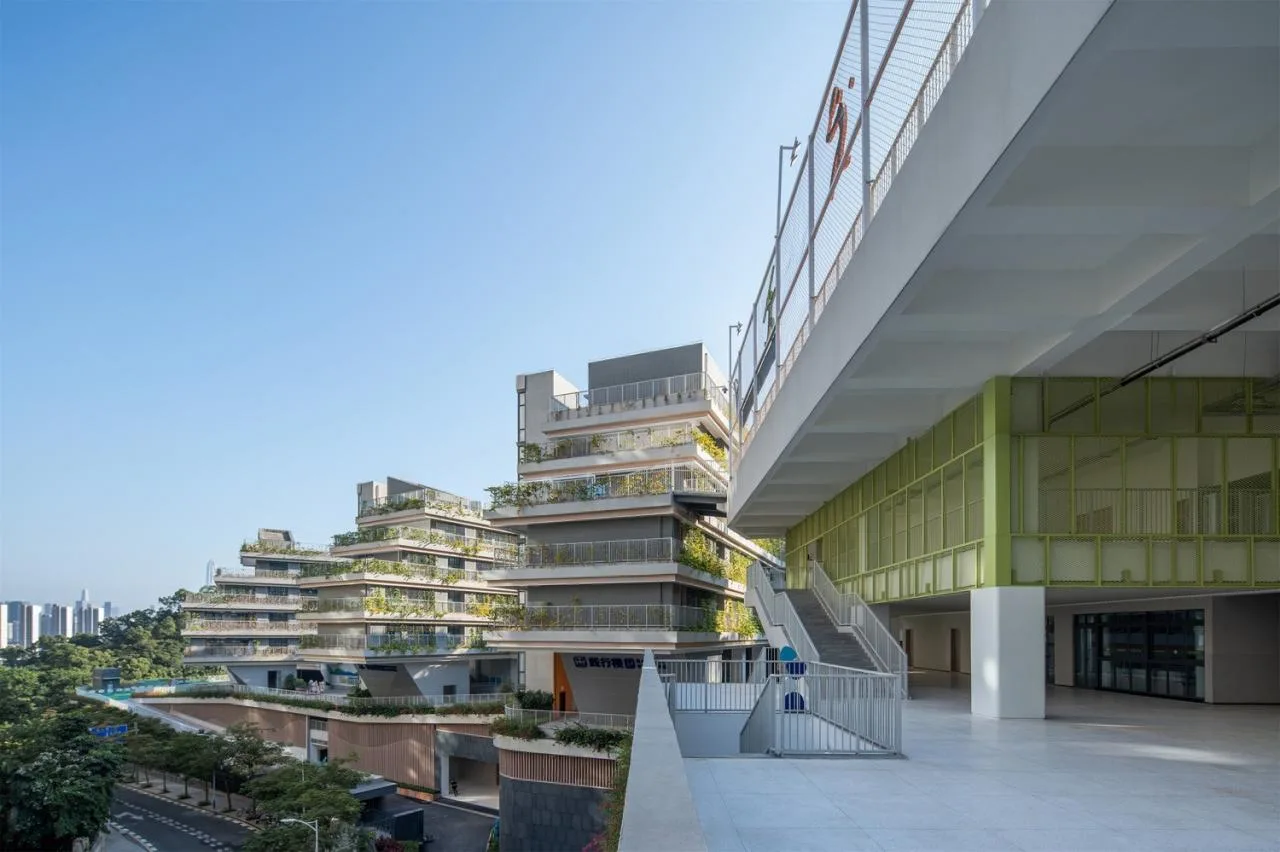
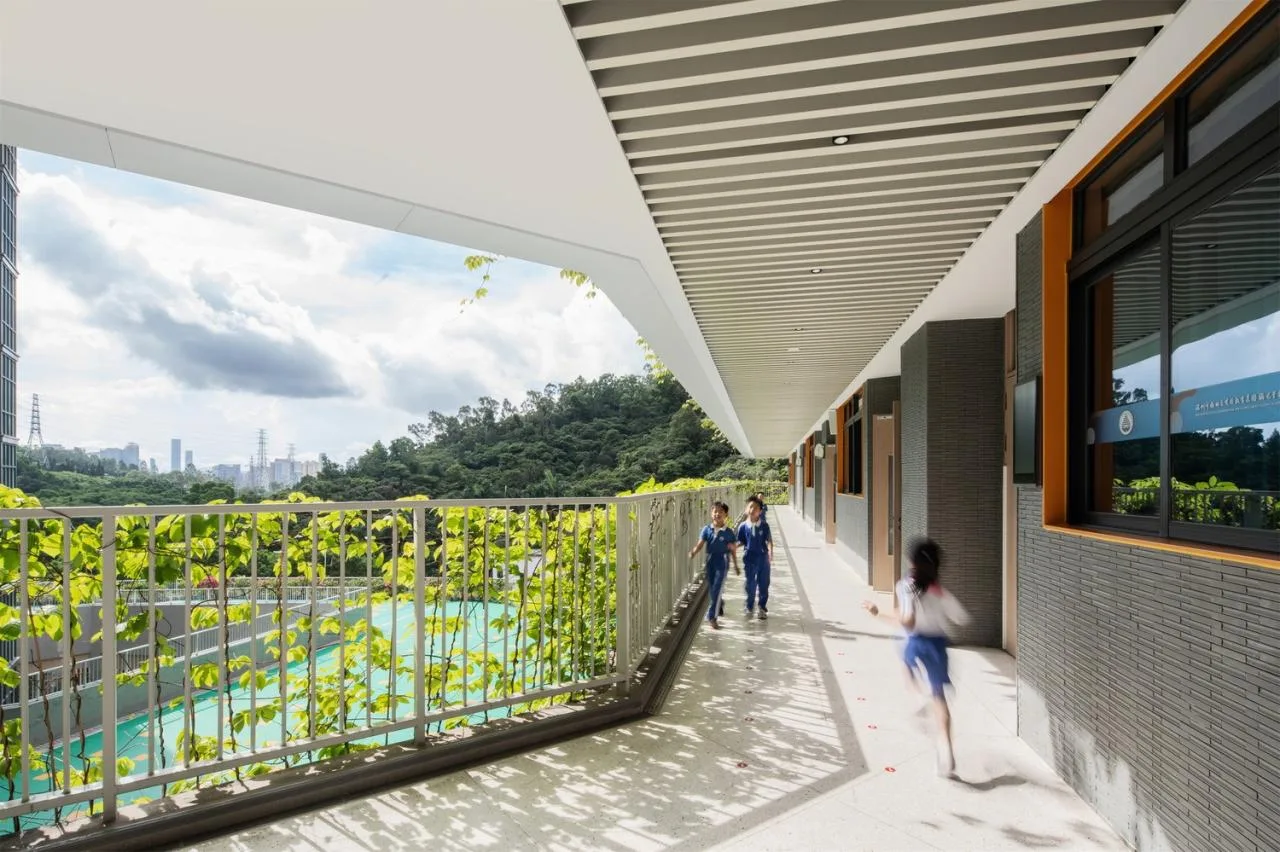
The project aims to create a teaching environment that is closely connected to nature. The pedestrian main entrance aligns with the city’s road corner, featuring a spacious entrance plaza that offers a wind-protected resting and waiting area. Ascending the landscaped staircase leads to the “Banshan Dieyuan” and elevated activity platforms at different levels. These spaces house specialized classrooms and club rooms, serving as venues for daily teaching activities and interaction between teachers and students.
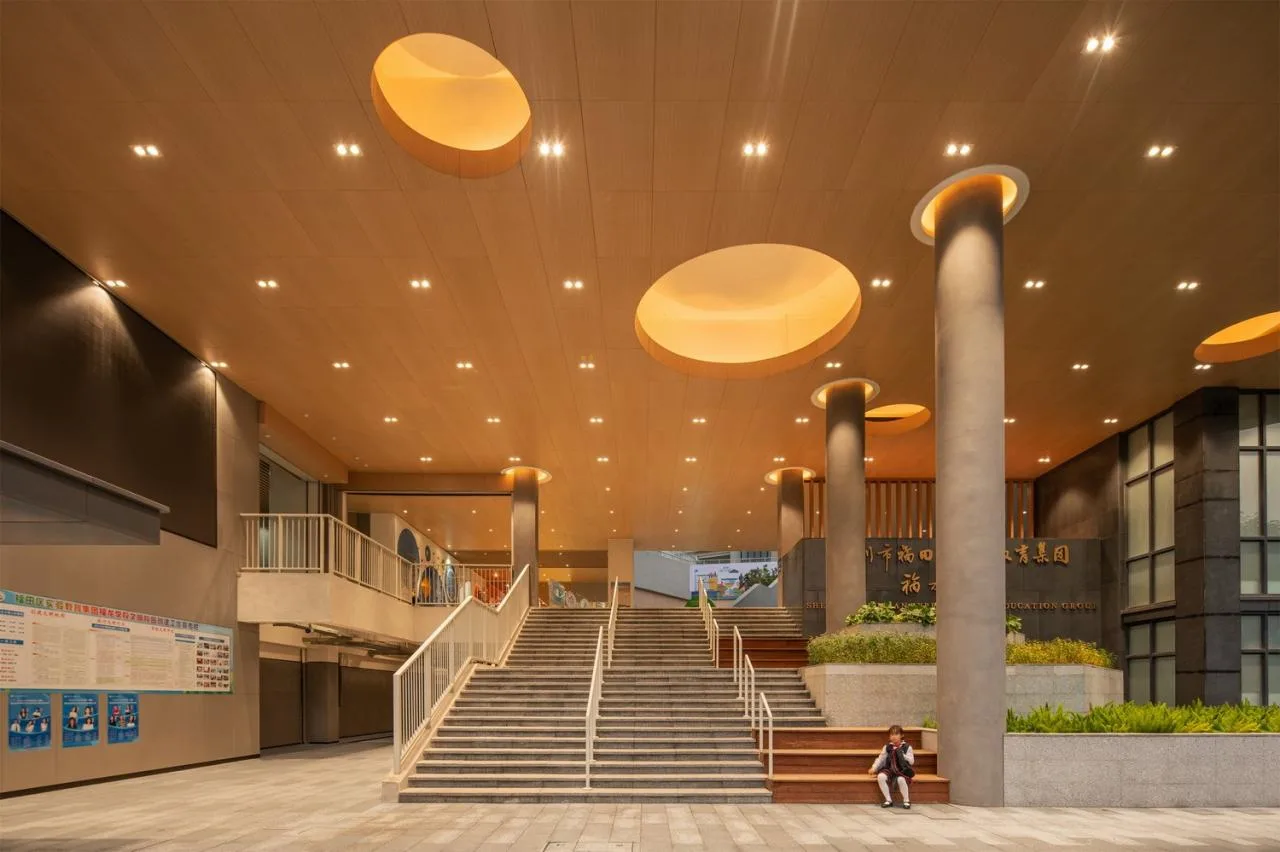
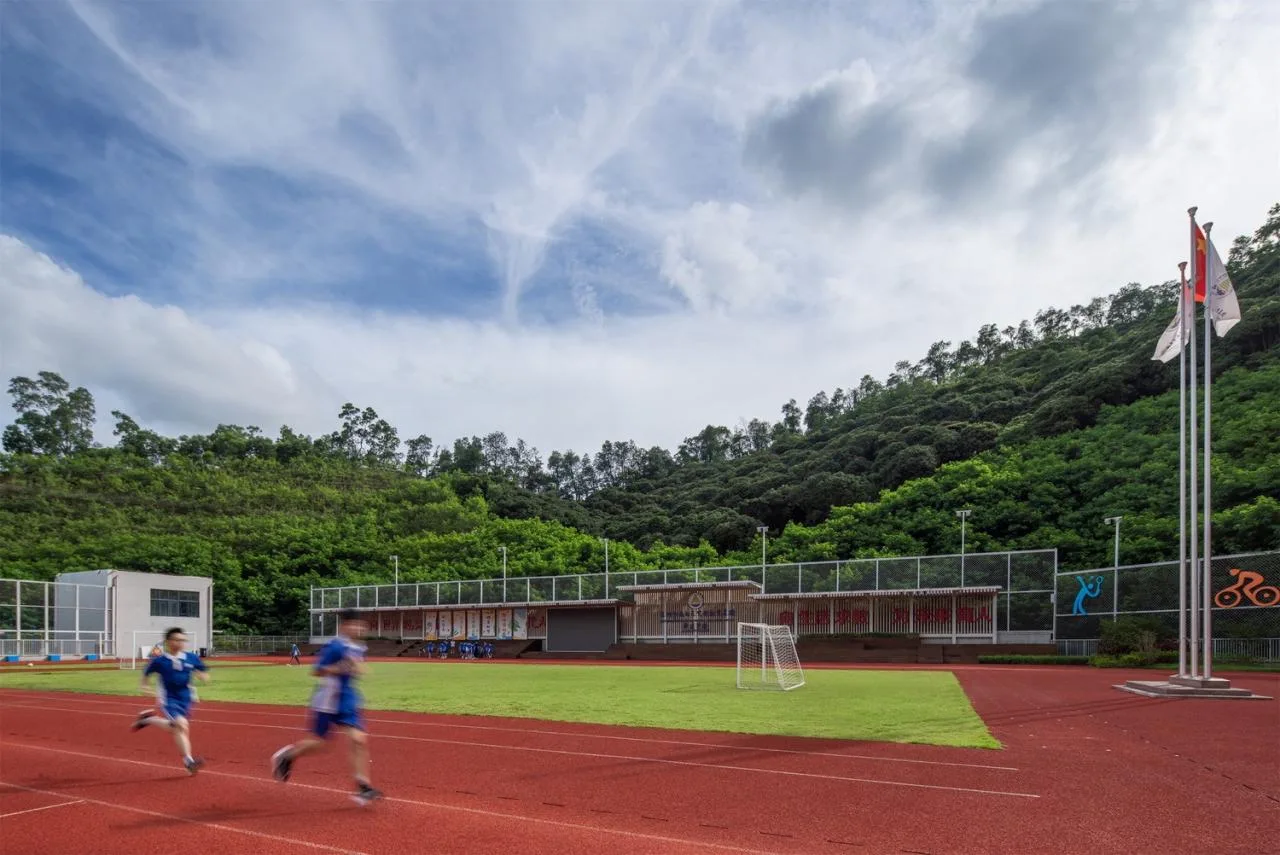
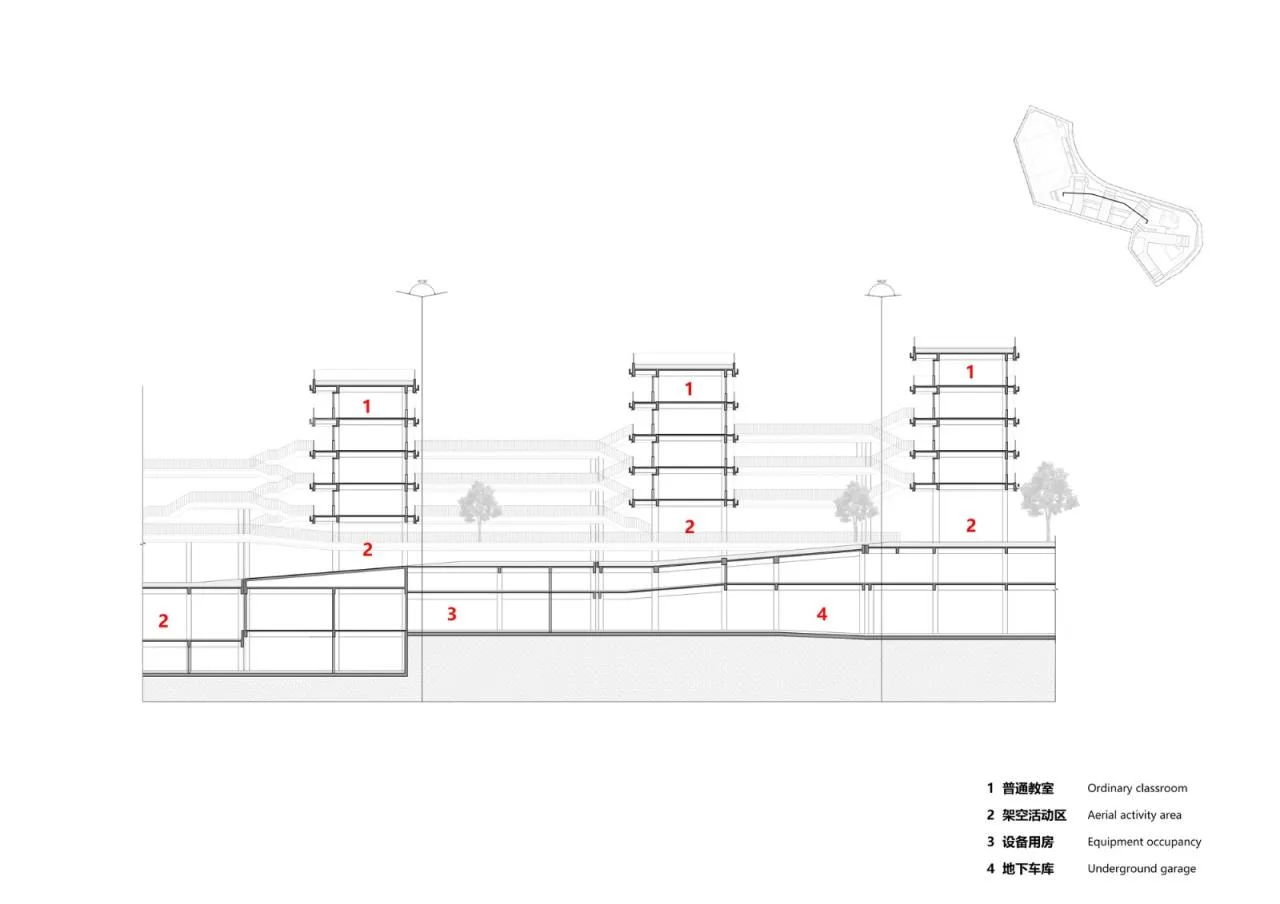
The design leverages the plateau created by the mountain’s natural elevation differences. It incorporates a large slab space at the lower level, consisting of overhead activities, garages, and music and dance classrooms, elevating the campus’s zero level by 10 meters. This public activity platform serves as the campus’s ground zero elevation and facilitates emergency access, allowing fire trucks to reach elevated areas to address fire safety concerns in dense campus settings.
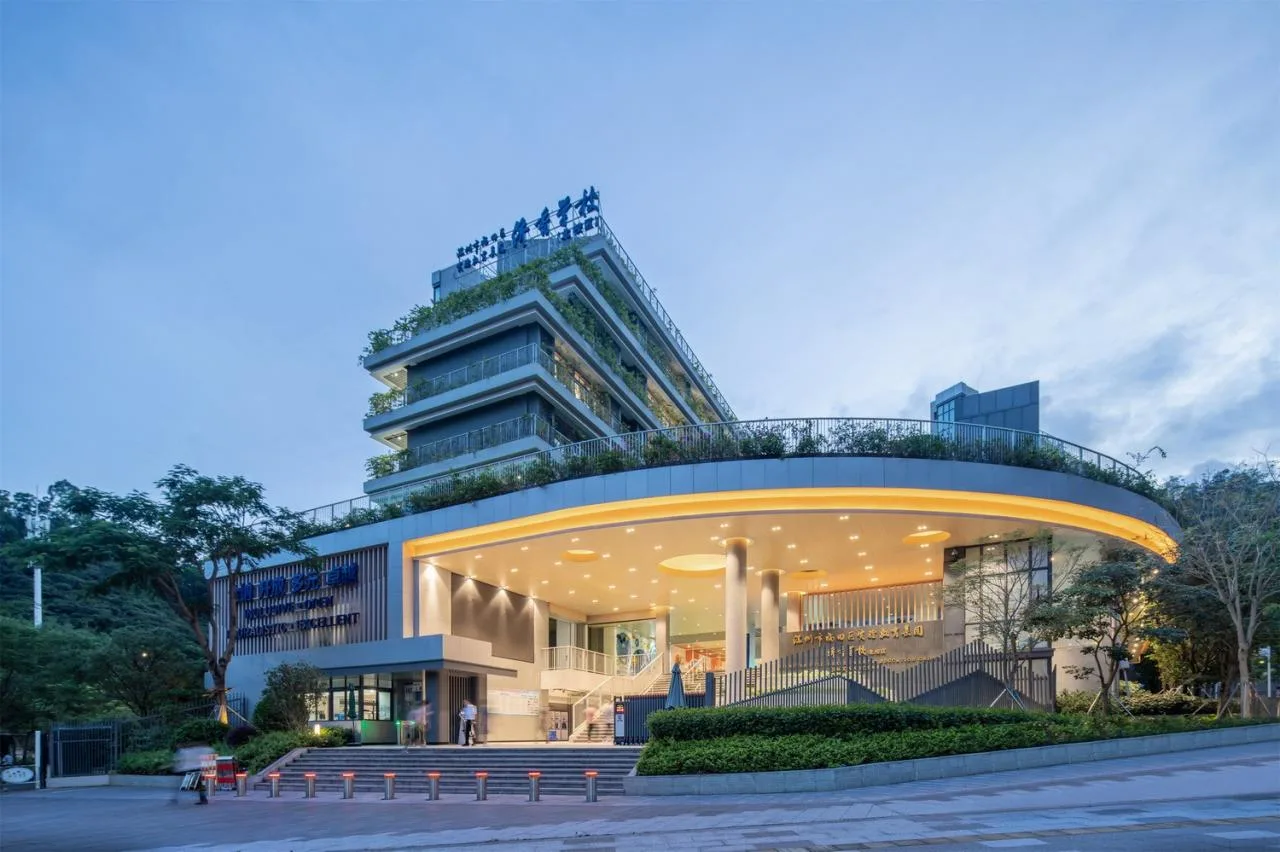
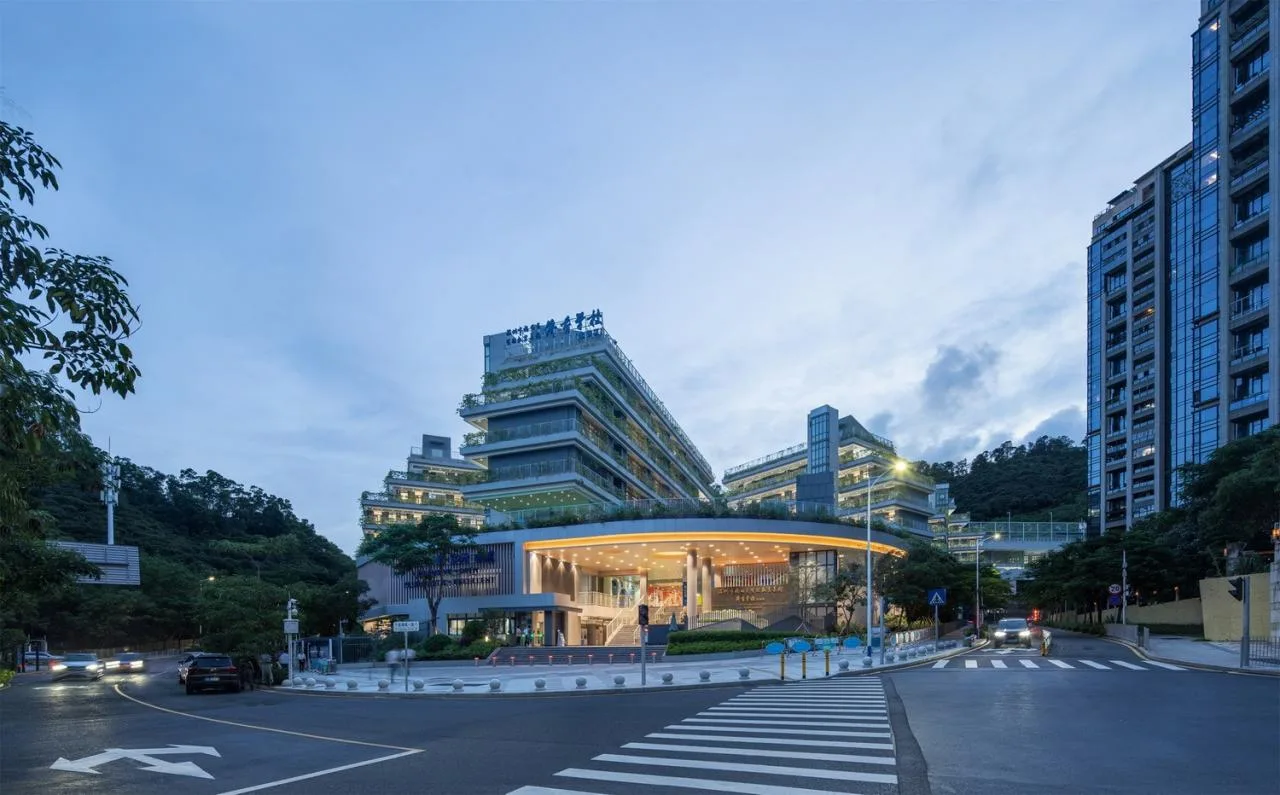
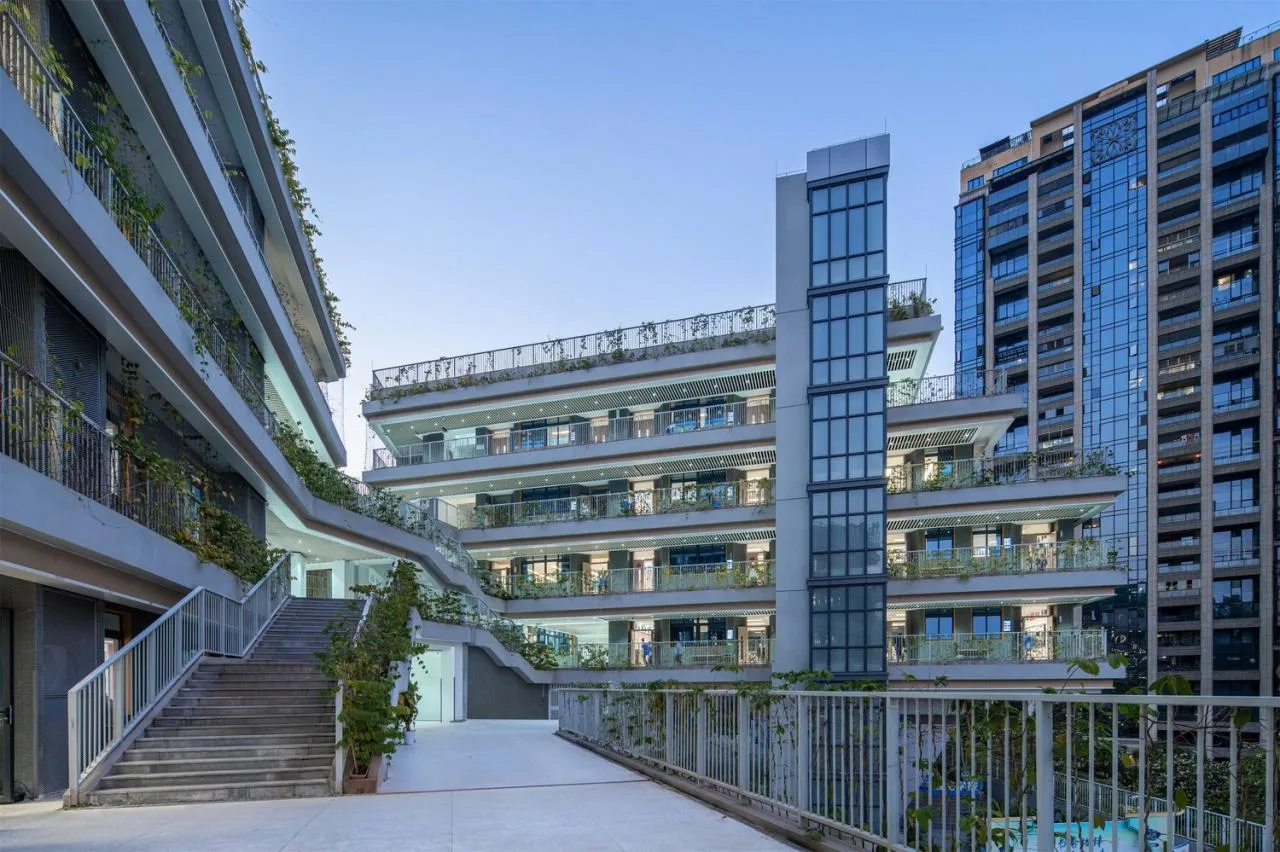
By integrating natural environmental design strategies and thoughtfully utilizing vertical space, the campus has been transformed into a multi-dimensional mountain school—a “cloud academy” harmonizing with nature. The design team envisions this unique spatial environment as a nourishing ground for inspiration, encouraging students’ creativity and curiosity. Here, teachers and students alike can experience the beauty of nature and enjoy the peace and comfort of a cloud paradise.
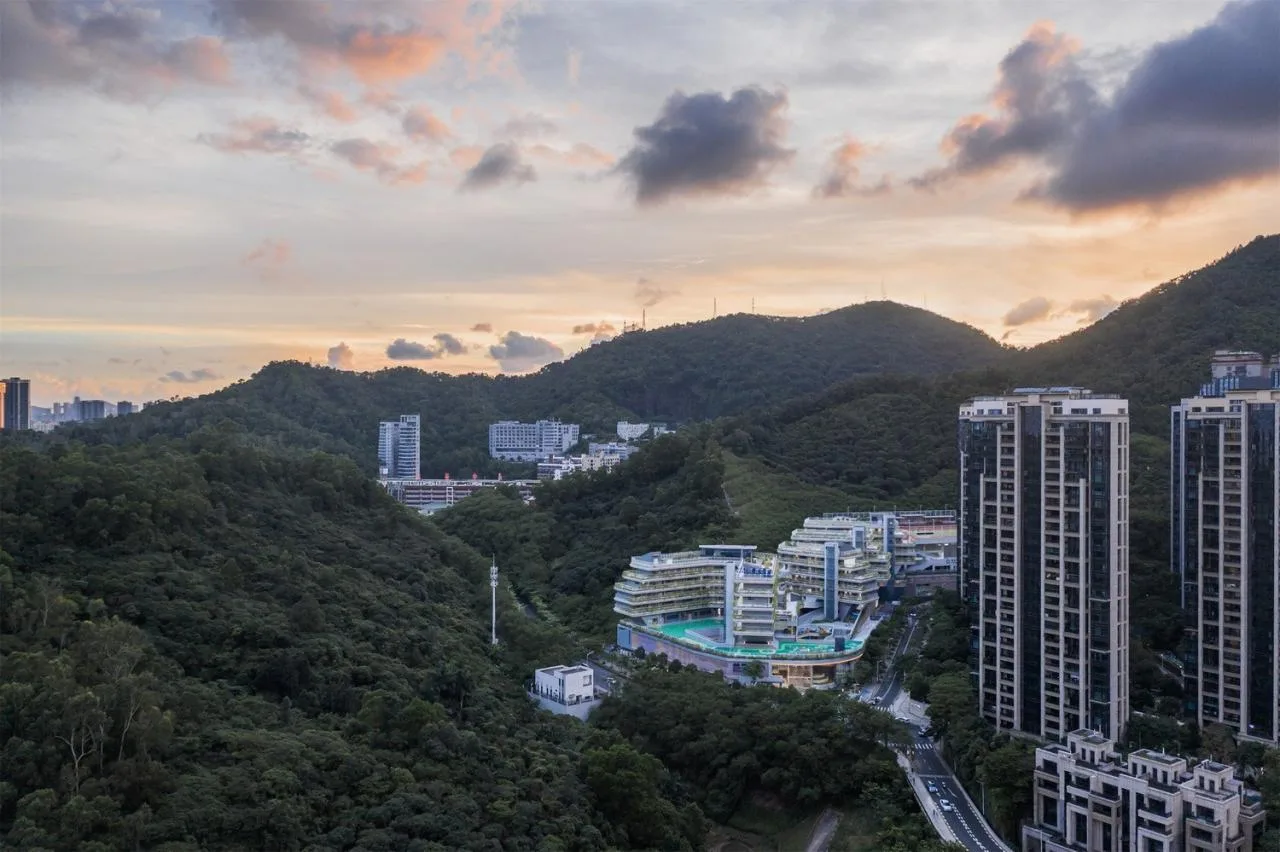
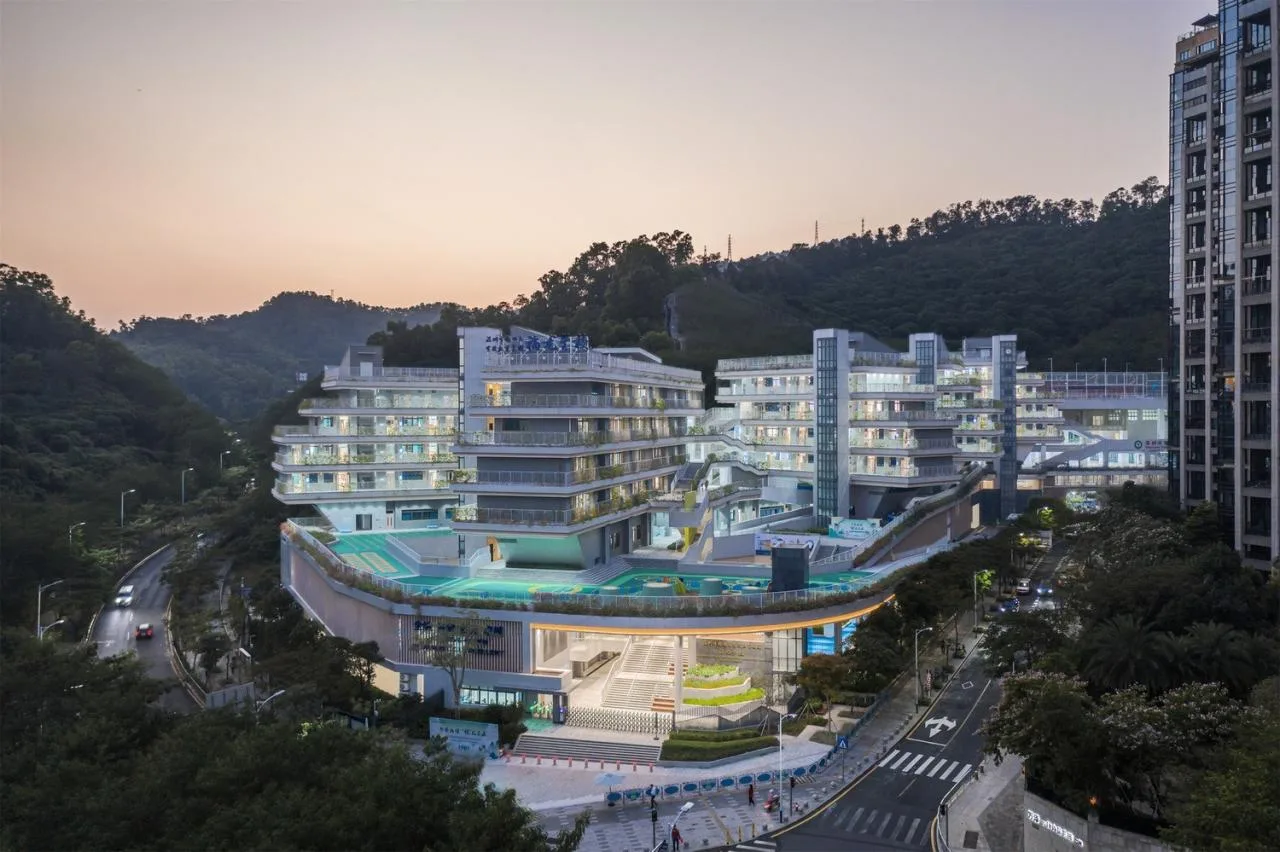
Project Drawings
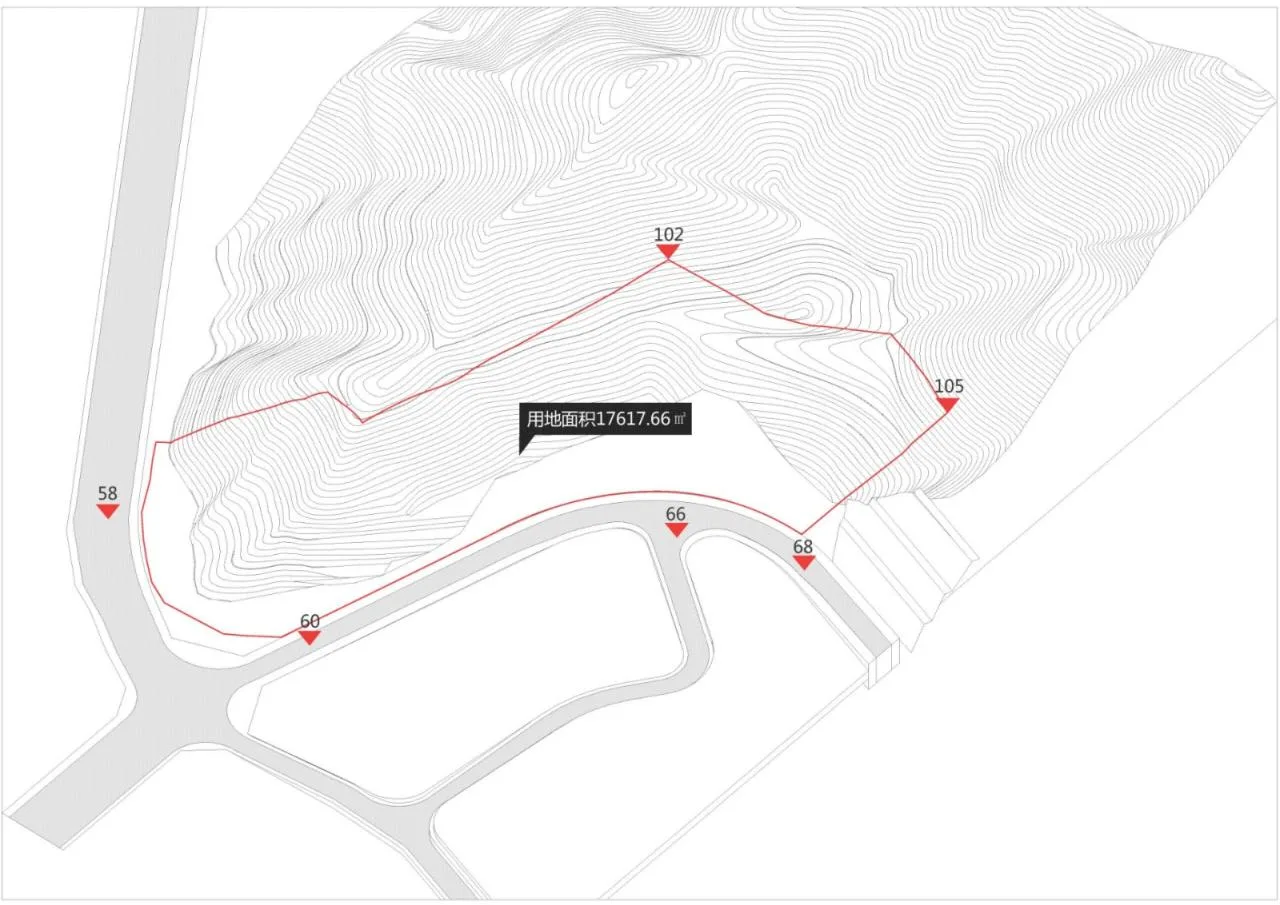
△ Base elevation difference schematic
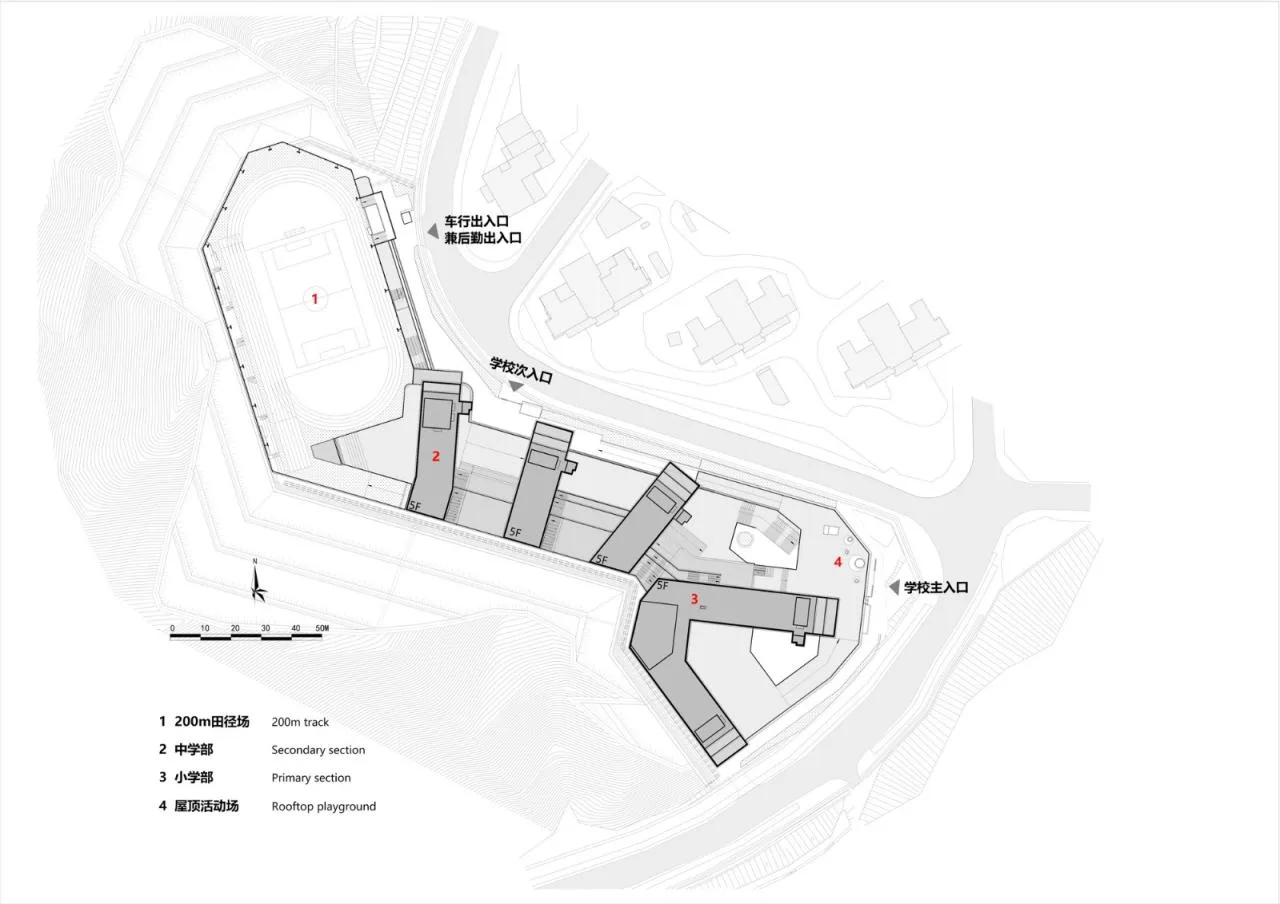
△ General layout plan
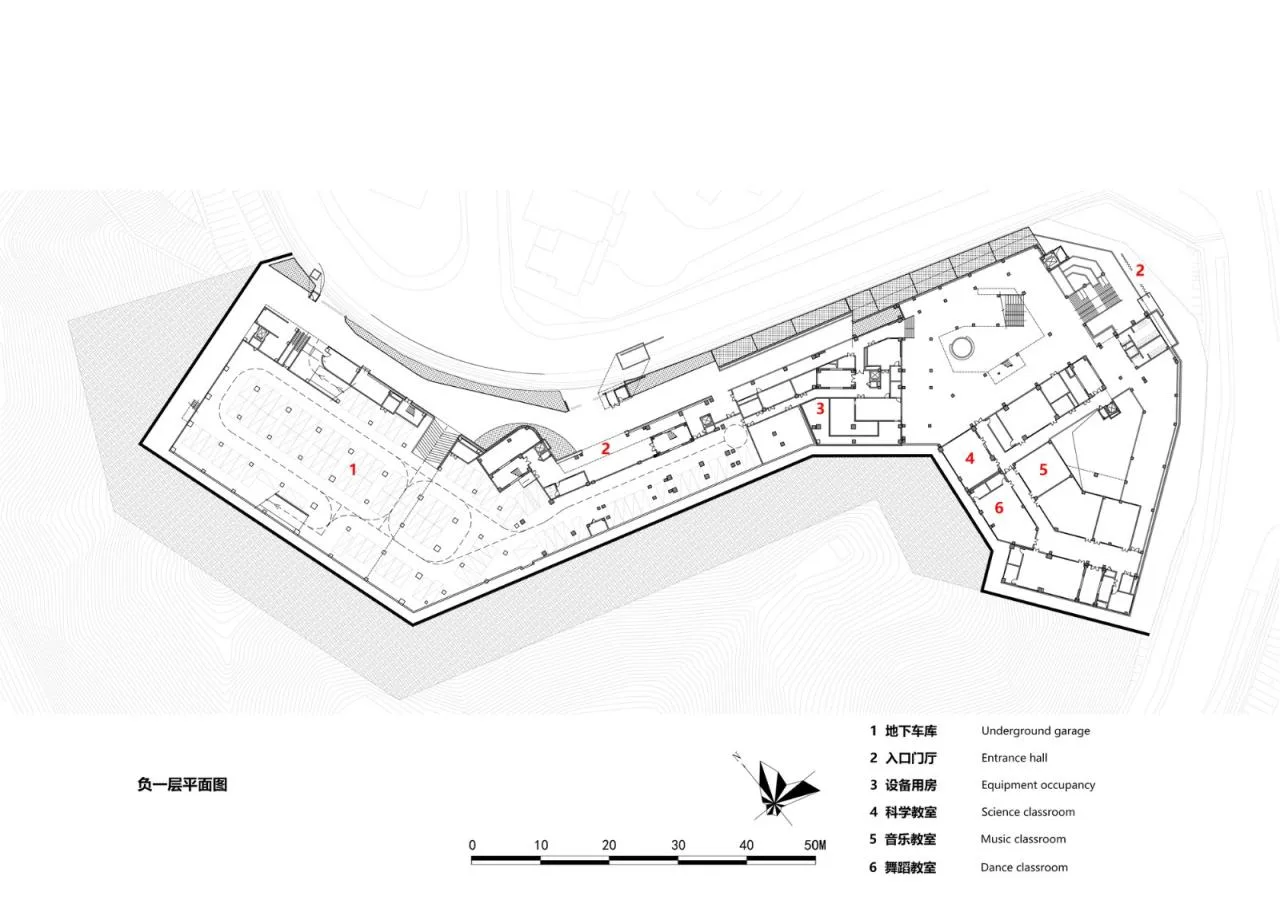
△ Basement floor plan
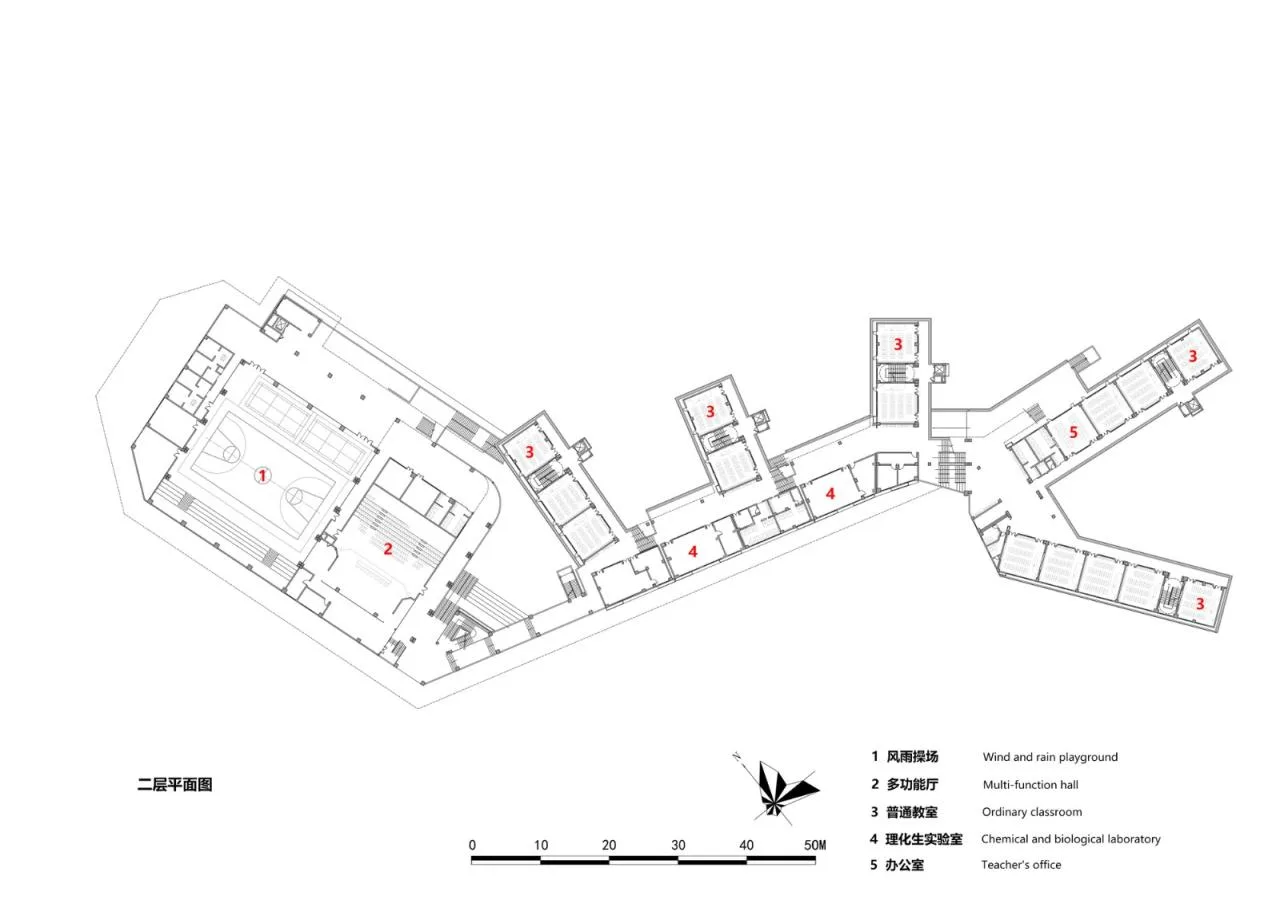
△ Second floor plan
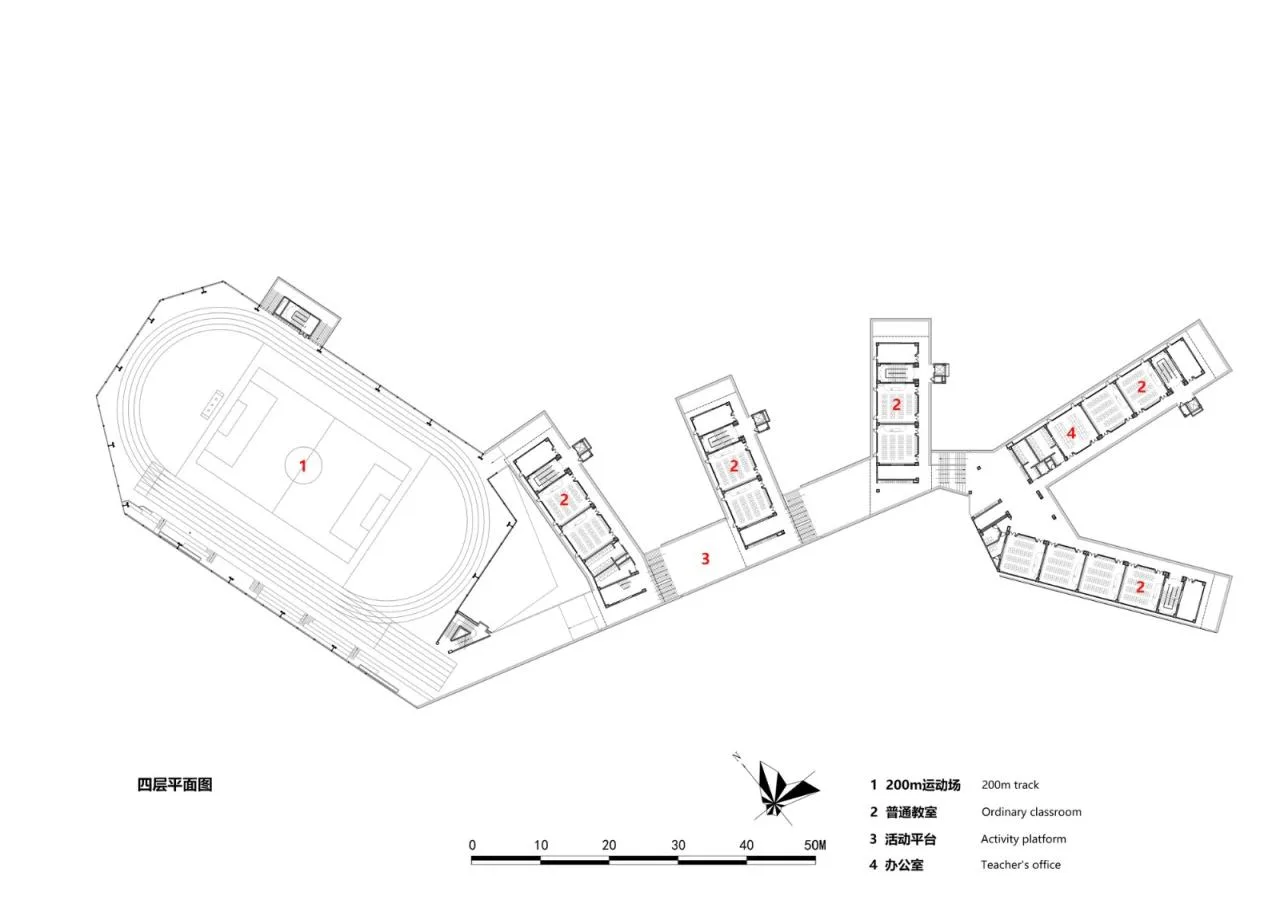
△ Fourth floor plan
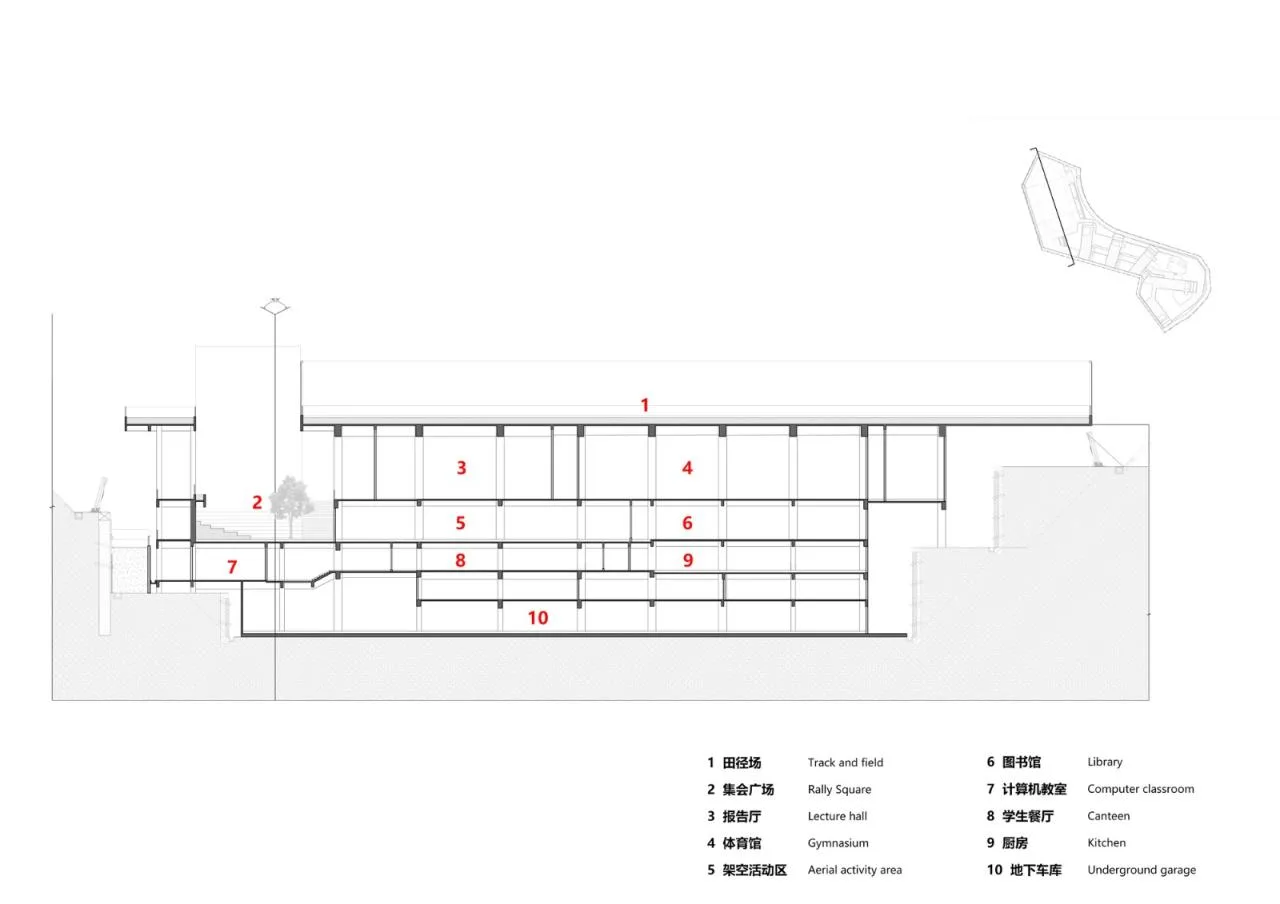
△ Section diagrams
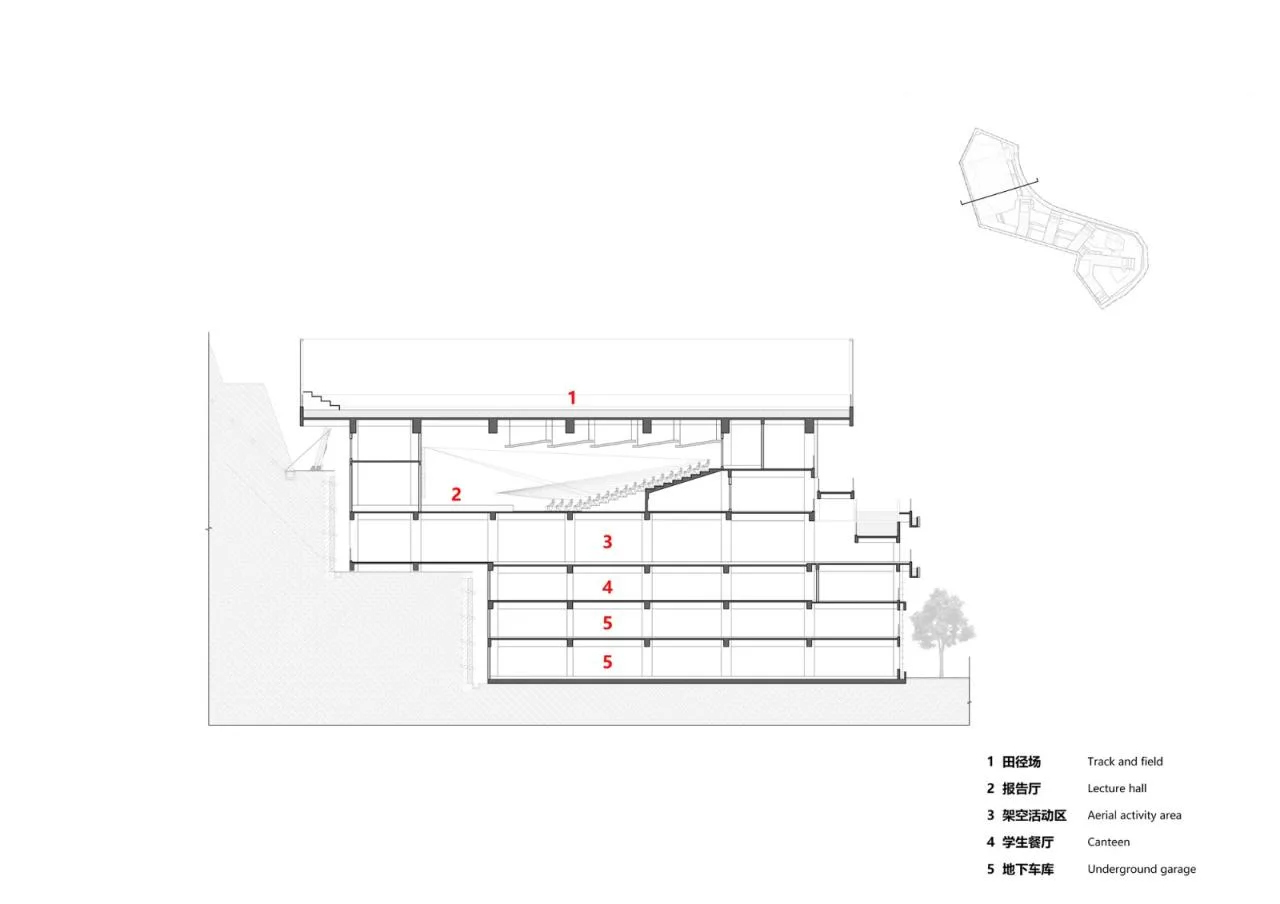
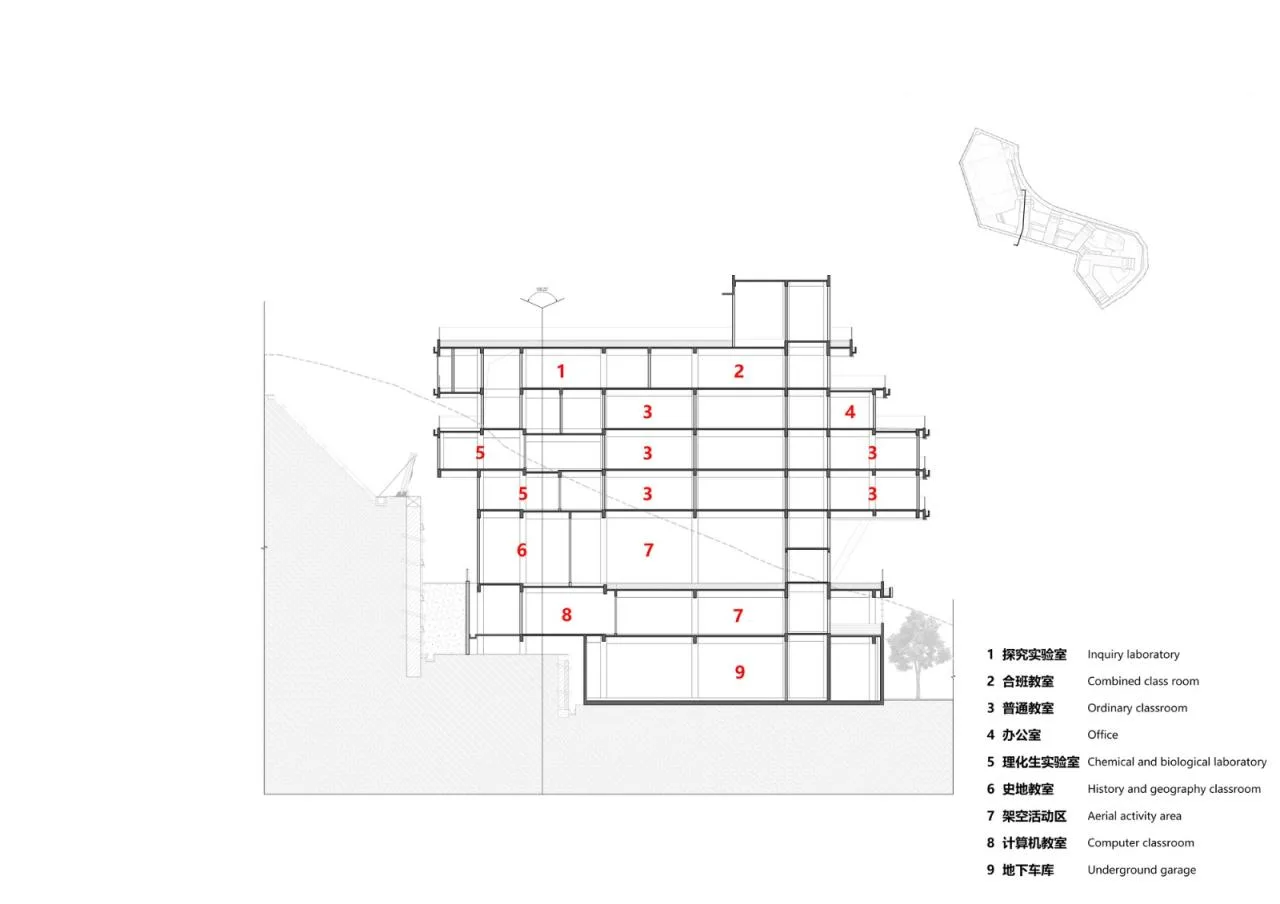
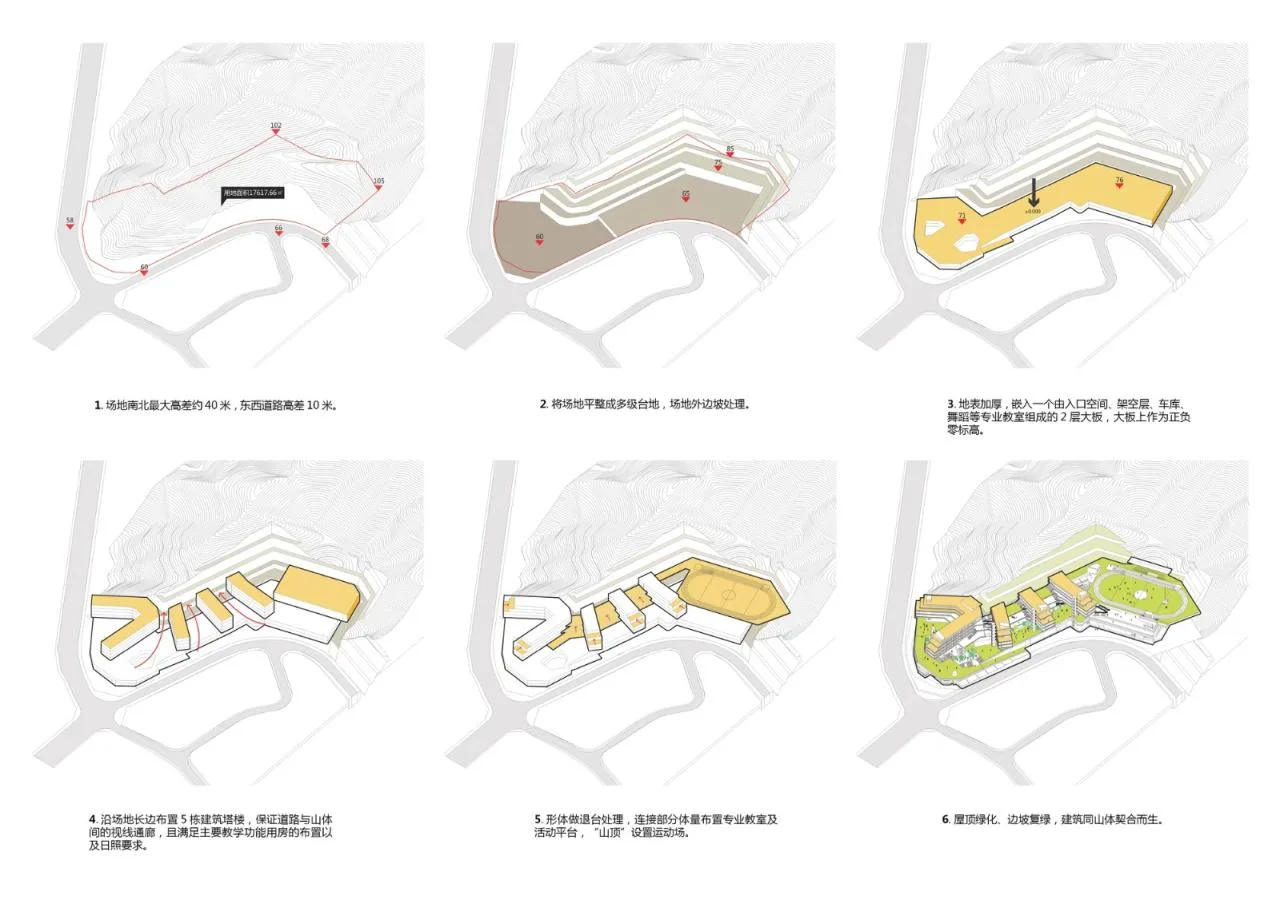
△ Analysis chart
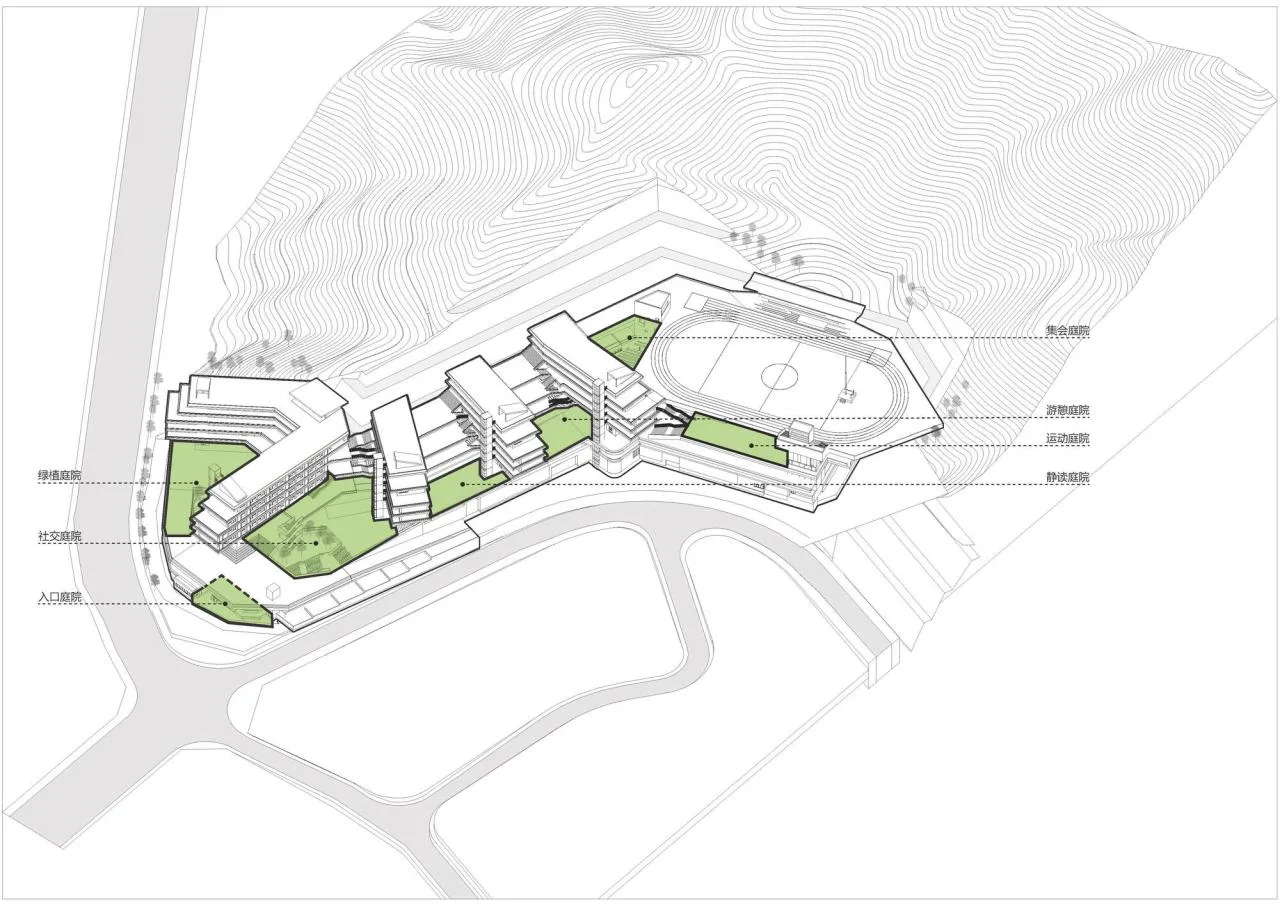
△ Courtyard zoning schematic
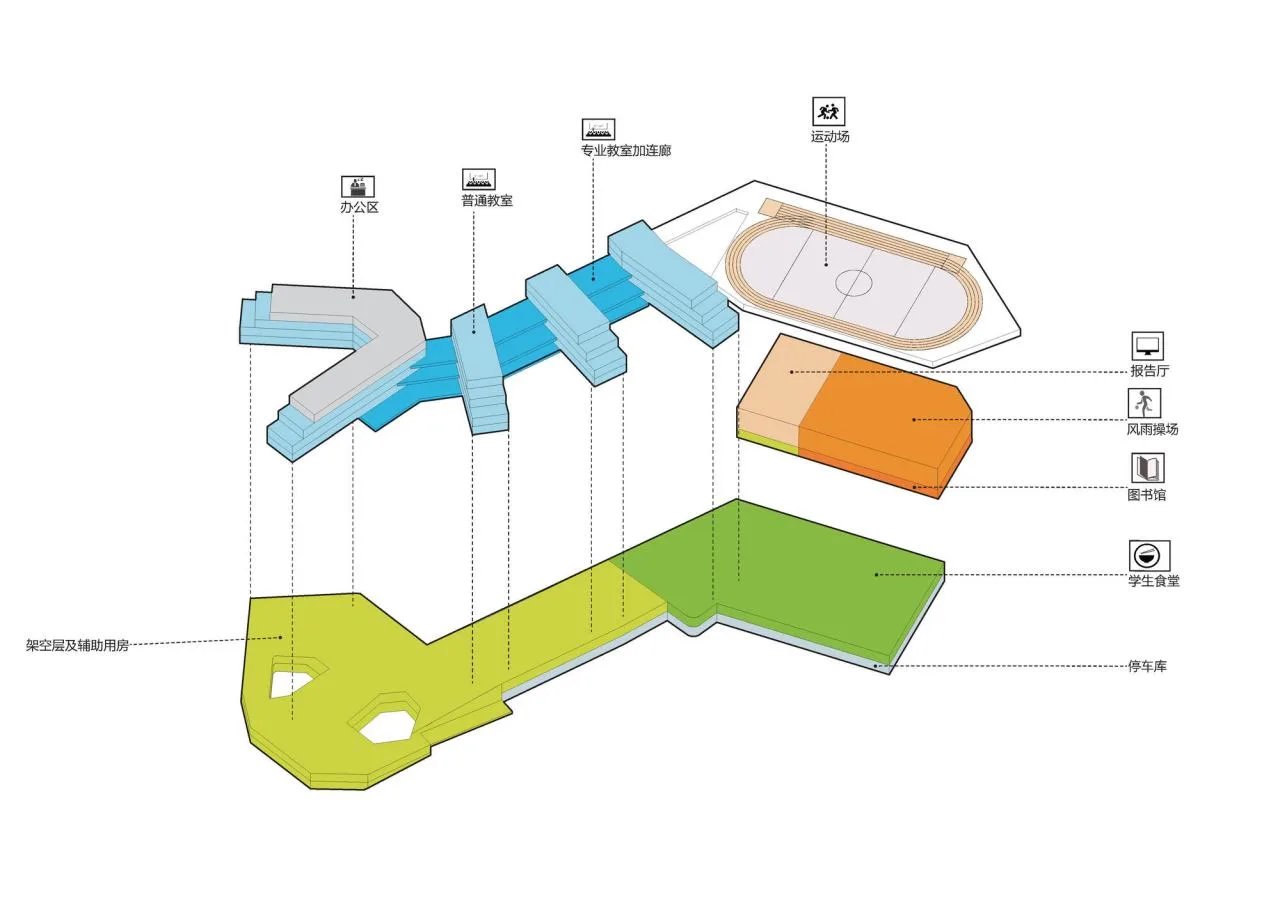
△ Functional analysis diagram
Project Information
Architect: Shenzhen Branch of Shendu Design Group Co., Ltd
Area: 44,249 m²
Project Year: 2023
Photographer: Ark
Manufacturers: Xiaoma, Nippon Paint, Jinba
Lead Architect: Zou Xiuhong
Lead Architects: Chen Muliang (Planning), Chen Zhuo (Design Development)
Design Team: Wang Yu, Li Tao, Huang Jiehui, He Jiankun, Zhang Kai, Wei Wenyi, Zhang Yawen, Chen Yongyin, Xu Wenhao, Yuan Minting, Zhuang Mei, Wen Fulin, Song Di, Xie Chengjun, Zeng Qian
Construction Drawing Manager: Chen Guodong
Construction Drawing Team: Chen Guojun, Zhao Yaqing, Li Jianyuan, Liu Yu, Wan Likun, Shang Shuangshuang, Liu Wentao, Shen Yuzi, Yang Yanchao, Du Jianwei, Jiang Qinfa, Chen Yifu
Principal: Construction and Engineering Bureau of Futian District, Shenzhen City; China Railway Construction Engineering Group Co., Ltd. (Construction Agent)
Location: Shenzhen, China















Must log in before commenting!
Sign Up