
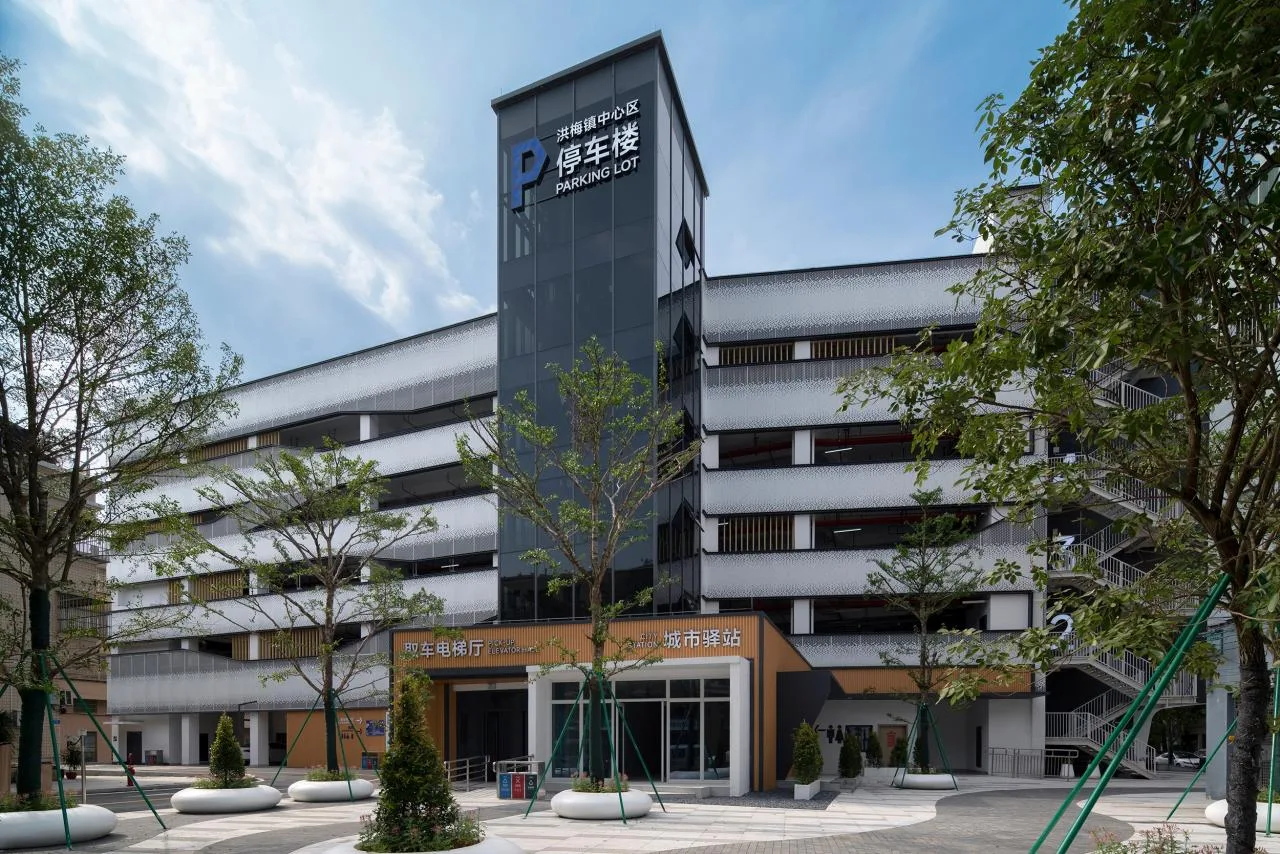
Located in Hongmei Town, Dongguan City, this project sits in the western part of Dongguan, a quaint town with a 200-year history. The new development plan envisions Hongmei Town as the “most beautiful and happiest town” in the Guangdong-Hong Kong-Macao Greater Bay Area. The aim is to create a harmonious blend of production, living, ecological space, and cultural integration—natural, economic, social, and cultural alike.
The plan emphasizes accelerating urban renewal, promoting new urbanization, and upgrading basic service facilities. To address the issue of chaotic motor vehicle parking, the local government decided to construct a parking building in the town’s central area to better serve the community’s needs.
Upon receiving the project, we conducted on-site research and quickly realized that the town’s lack of municipal services extended beyond just this site. This insight shaped our design focus: how to leverage this new construction to compensate for urban public service gaps. We envisioned future scenarios where citizens could conveniently park, relax, cool off, stroll, or shop—transforming the space into a vibrant, accessible urban experience.
Project Background
Before construction, the site was a surface parking lot accommodating approximately 80 vehicles. Situated in Hongmei Town’s commercial center, the area is surrounded by heavy traffic and complex structures such as the central market, primary schools, kindergartens, administrative buildings, and commercial streets. This led to a strong demand for parking, which the original lot could no longer satisfy.
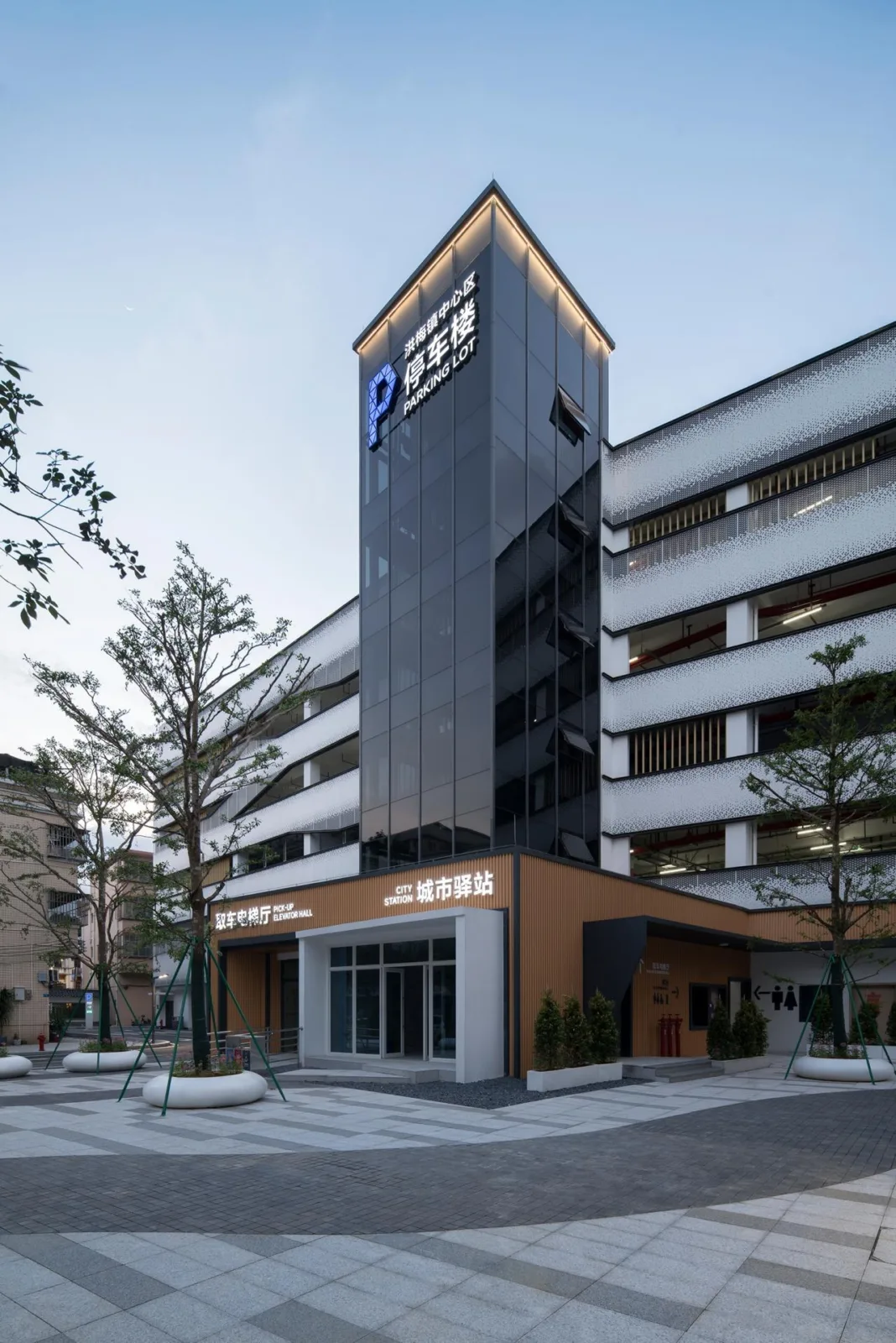
The west side featured a row of low-rise shops with poor utilization and a deteriorating environment, ripe for renewal. Additionally, the area lacked urban facilities and leisure spaces. To address these gaps, the new project incorporates public service amenities like city stations, public restrooms, maternity and baby rooms, and public squares.
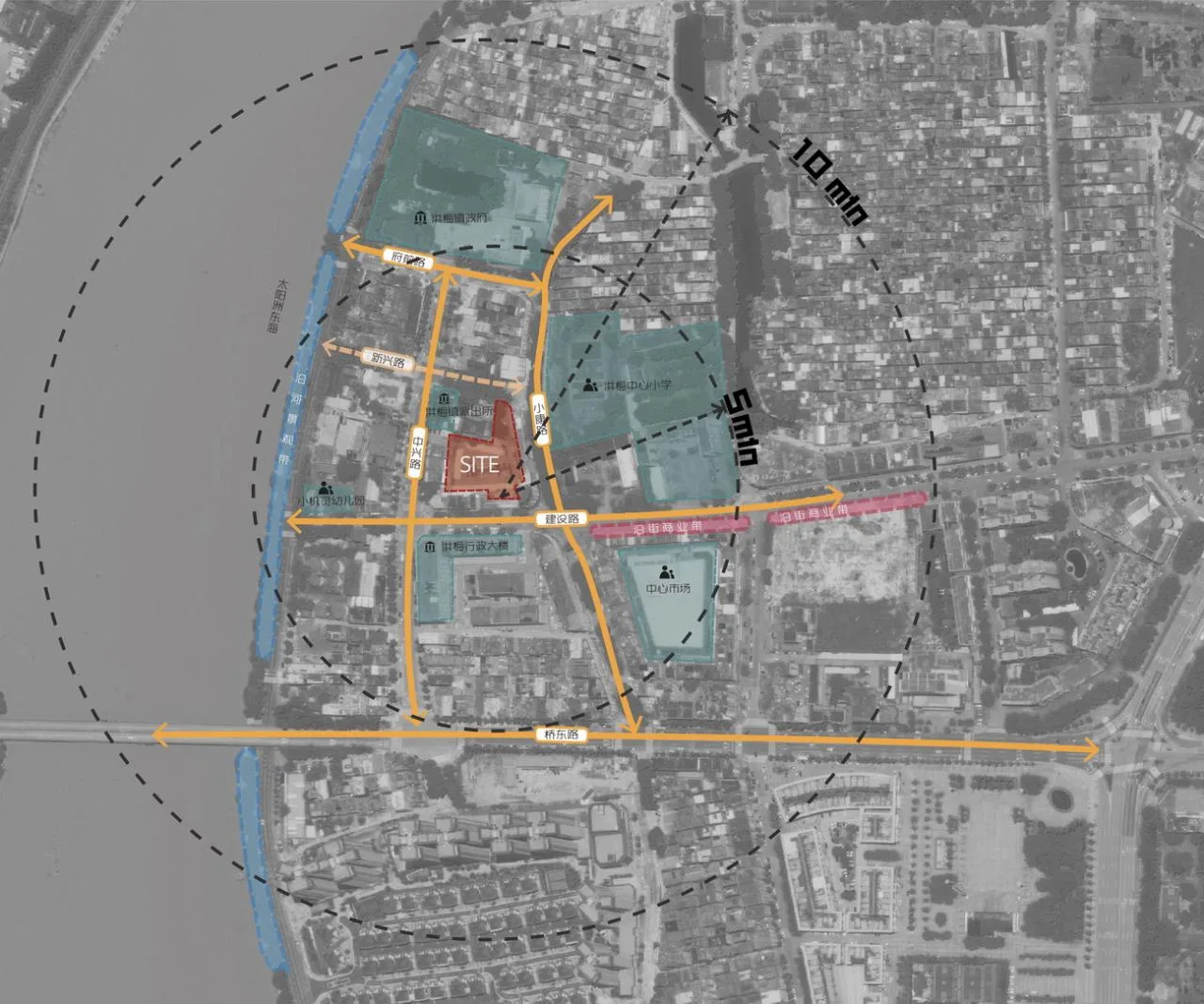
△ Project Location
Following thorough on-site investigations and analysis, we combined innovative design concepts with an enhanced urban image tailored to the project’s specific needs. Our goal was to alleviate parking congestion while upgrading urban public facilities, improving the city’s image, and creating a welcoming rest and transit hub for citizens in this bustling urban area.
Design Strategy
Due to strict land boundary limitations and the proximity of residential buildings to the west and south, setbacks were minimal. To maximize parking capacity, we carefully balanced lane widths, parking space dimensions, and turning radii to ensure the building’s footprint aligned precisely with the site boundaries.
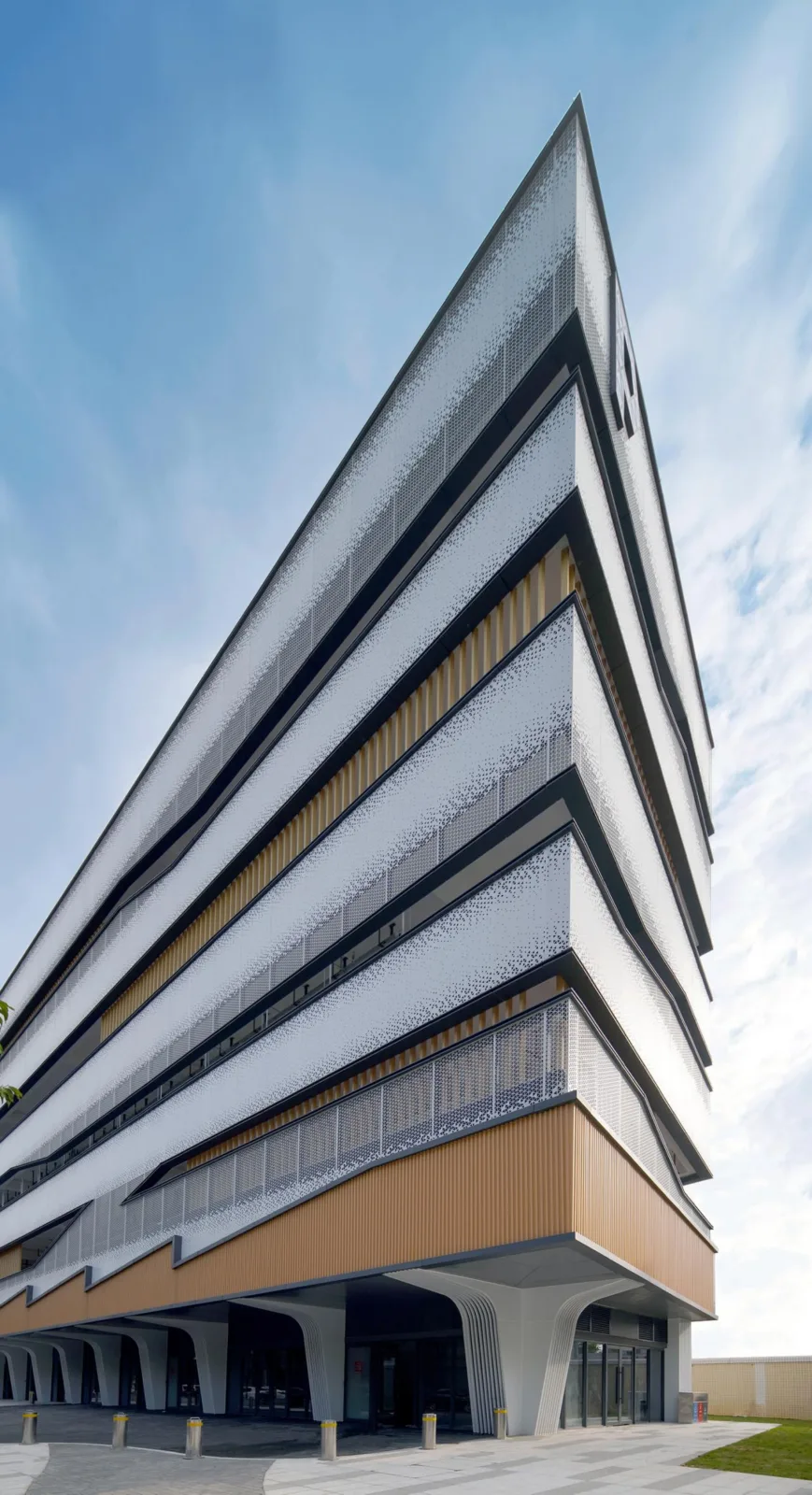
After assessing local traffic conditions, we established two vehicle entrances/exits on Wenwei Road and Zhongxing Road. This setup ensures smooth traffic flow and easy access without contributing to congestion on surrounding streets. The eastern side of the site abuts a busy retail street; pedestrian flow is directed from the parking area to the commercial zone, then dispersed to various nearby destinations, minimizing conflicts between pedestrians and vehicles.
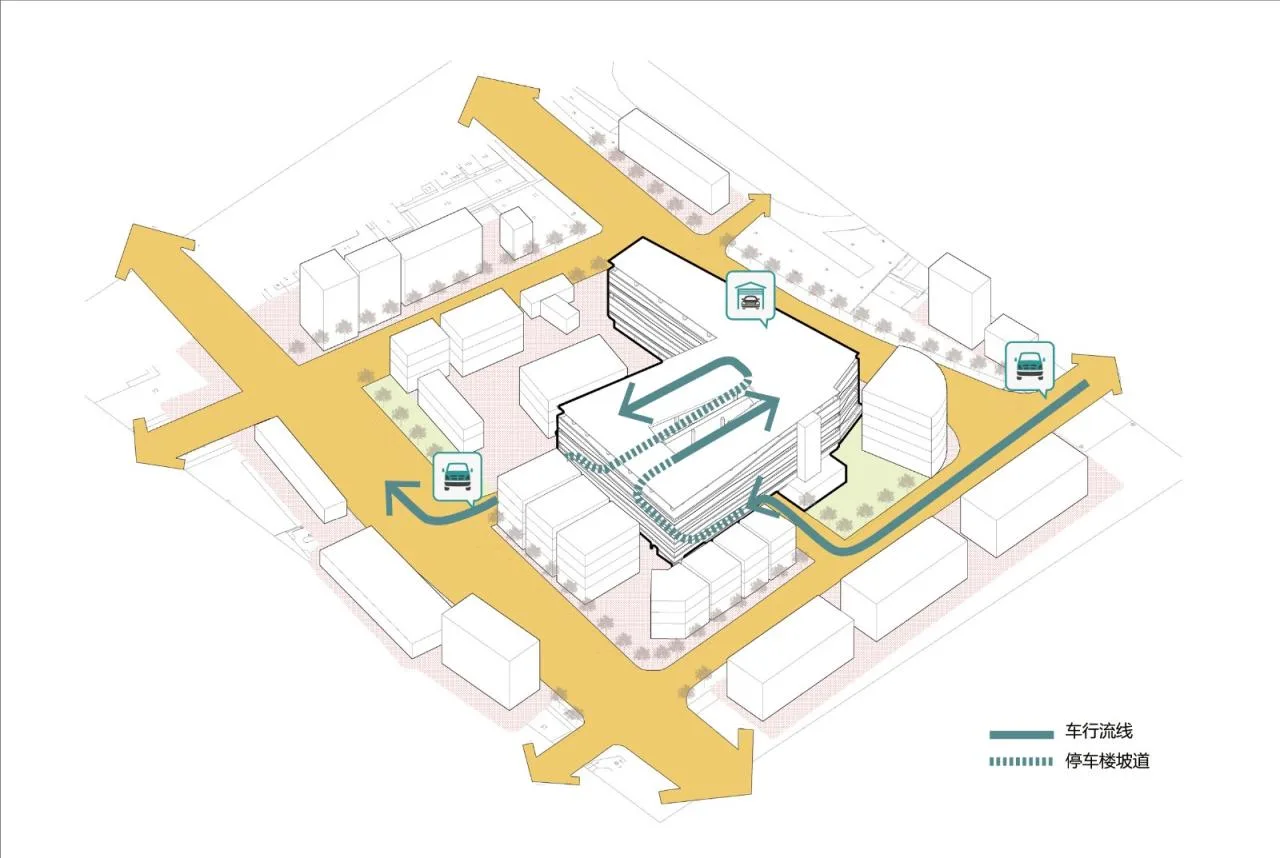
△ Vehicle Flow Diagram
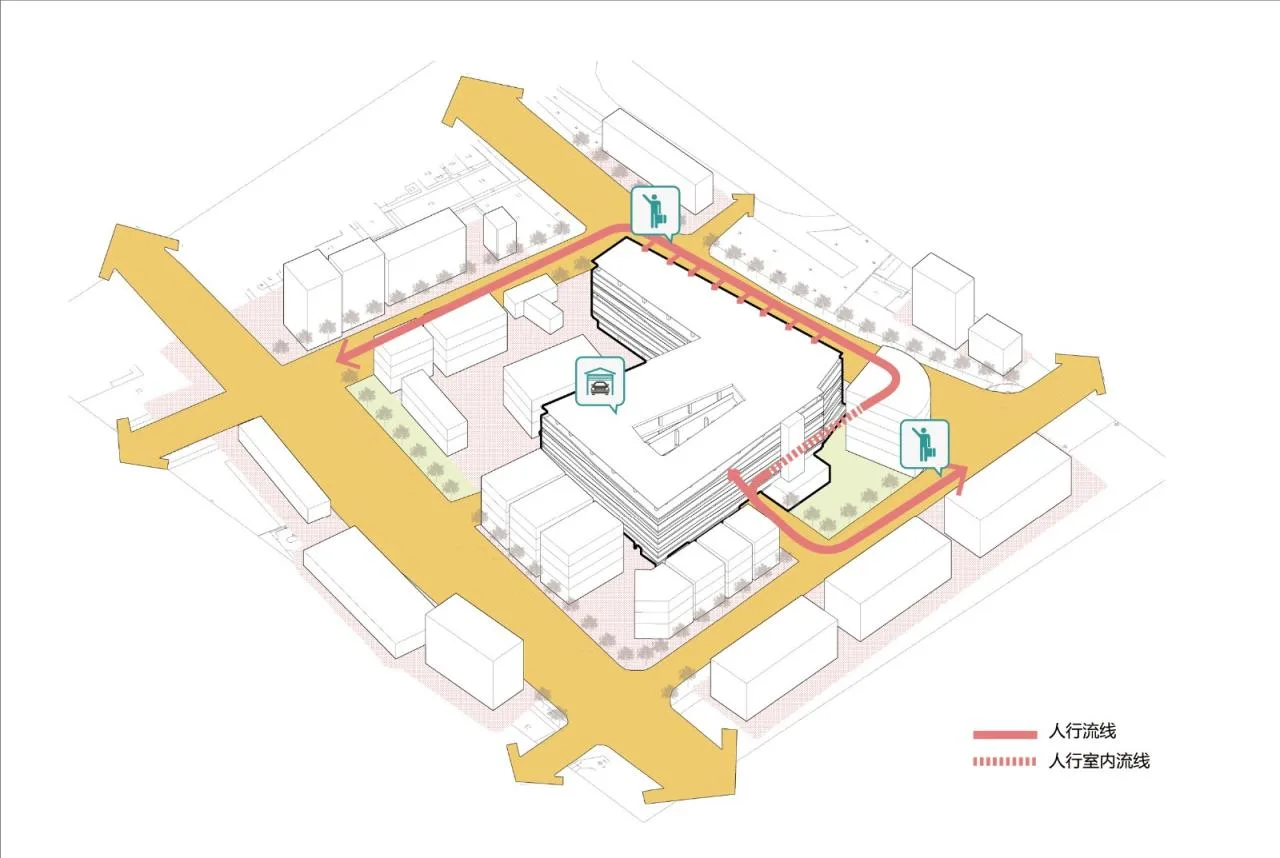
△ Pedestrian Flow Diagram
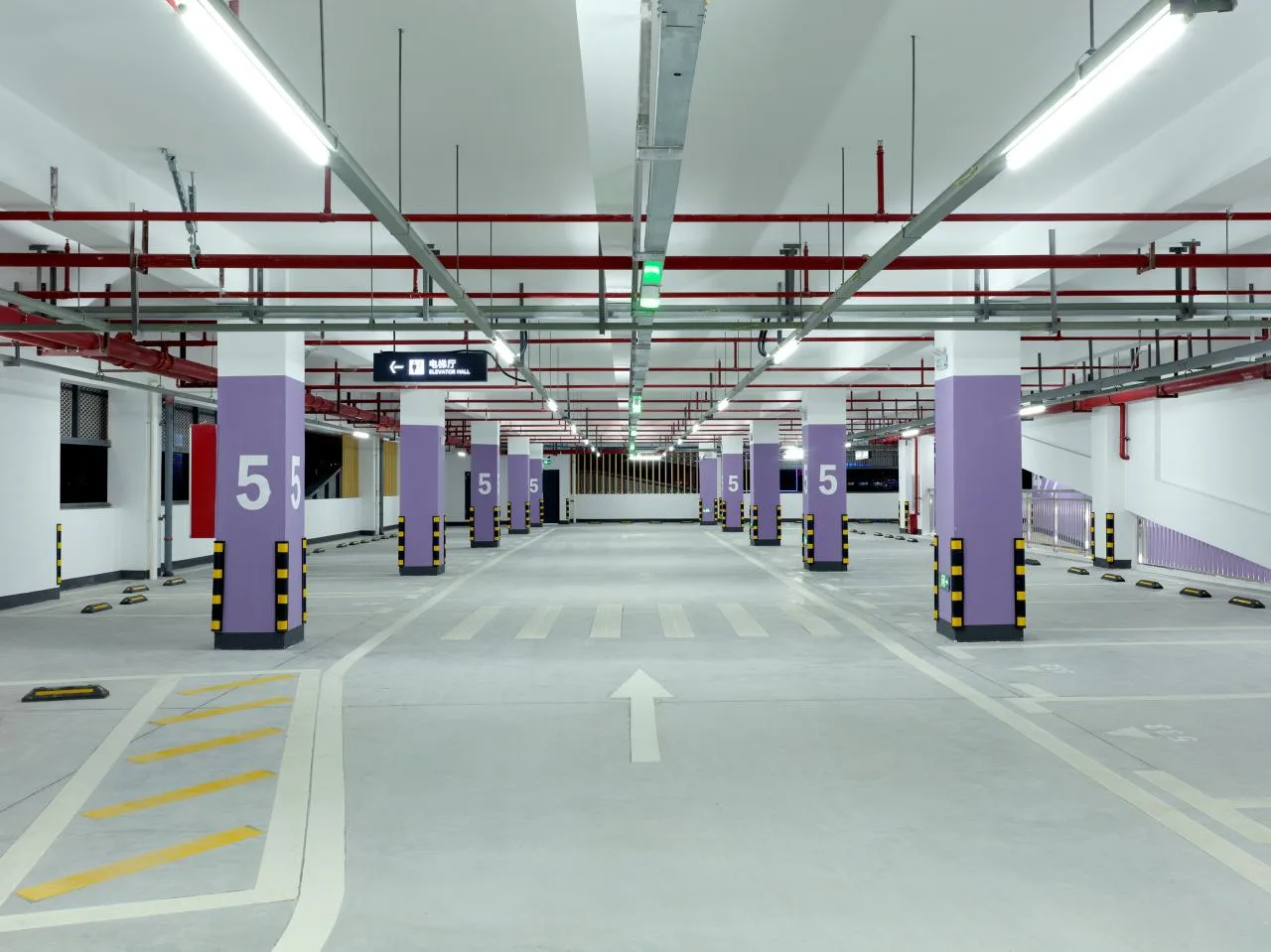
Efficient structure and dynamic flow lines form the core of the parking building design. We implemented horizontal segregation of pedestrians and vehicles, with a one-way entry and exit flow for vehicles. Cars enter the building through designated entrances, reach each floor via vertical ramps, and navigate circular closed loops on each level. This unidirectional flow simplifies navigation, maximizes parking efficiency, and makes spaces easy to locate.
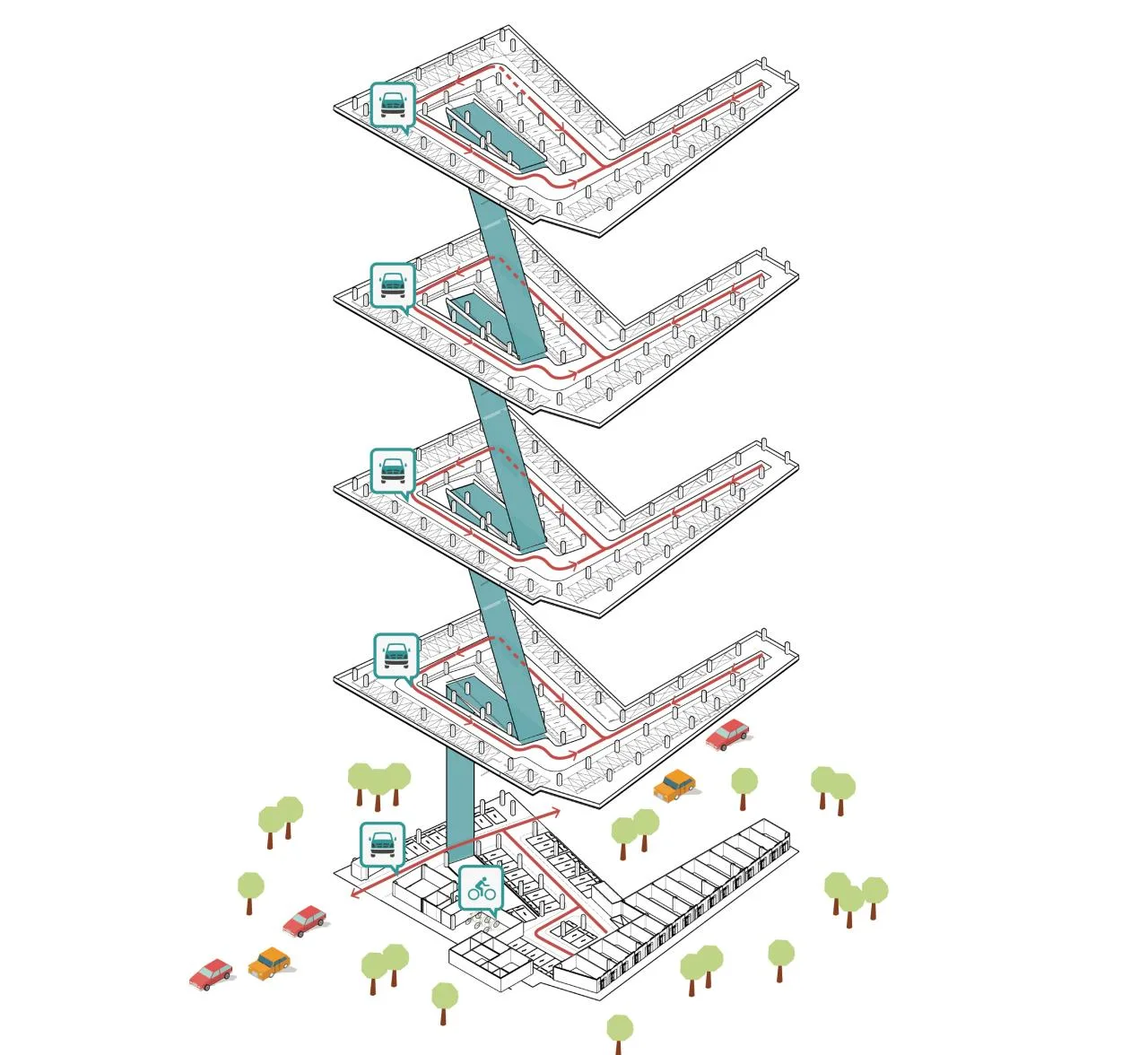
△ Parking Traffic Flow
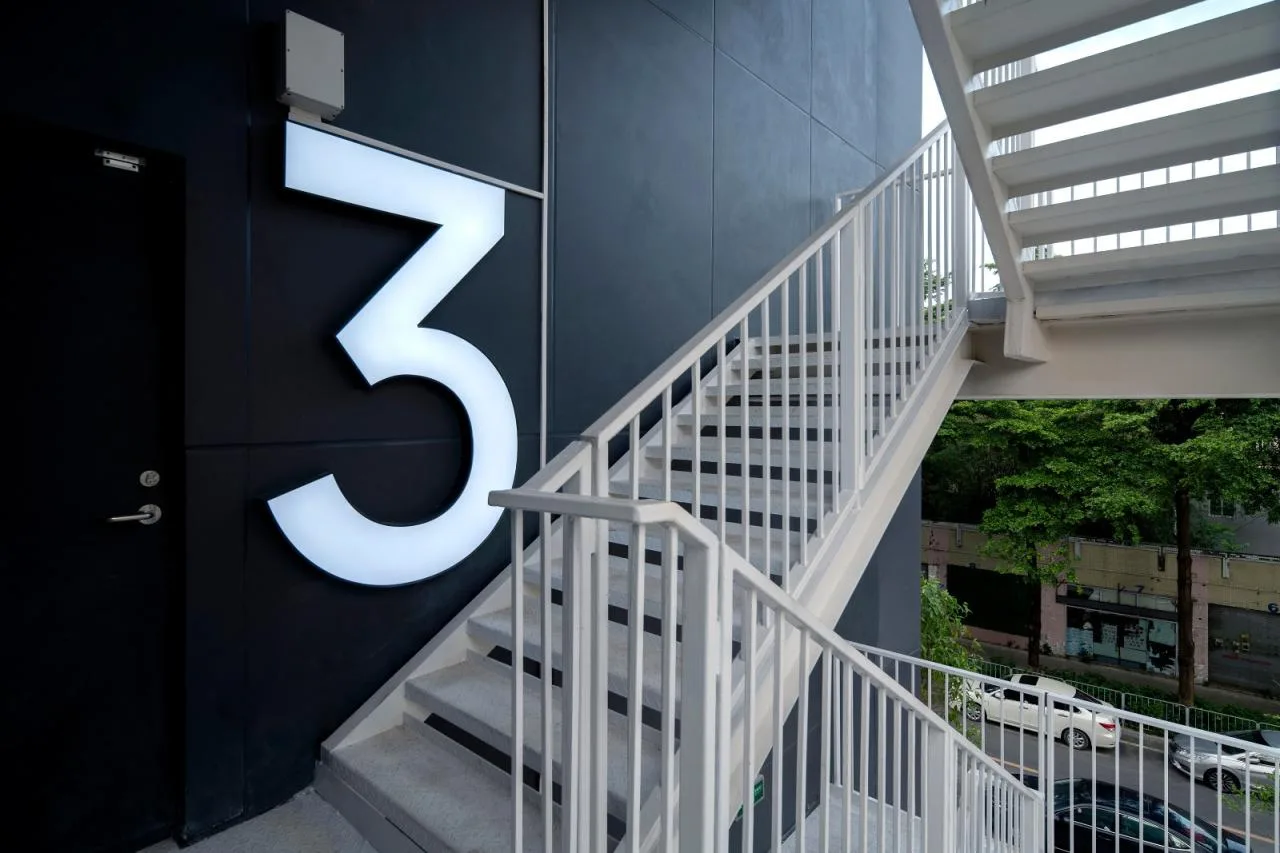
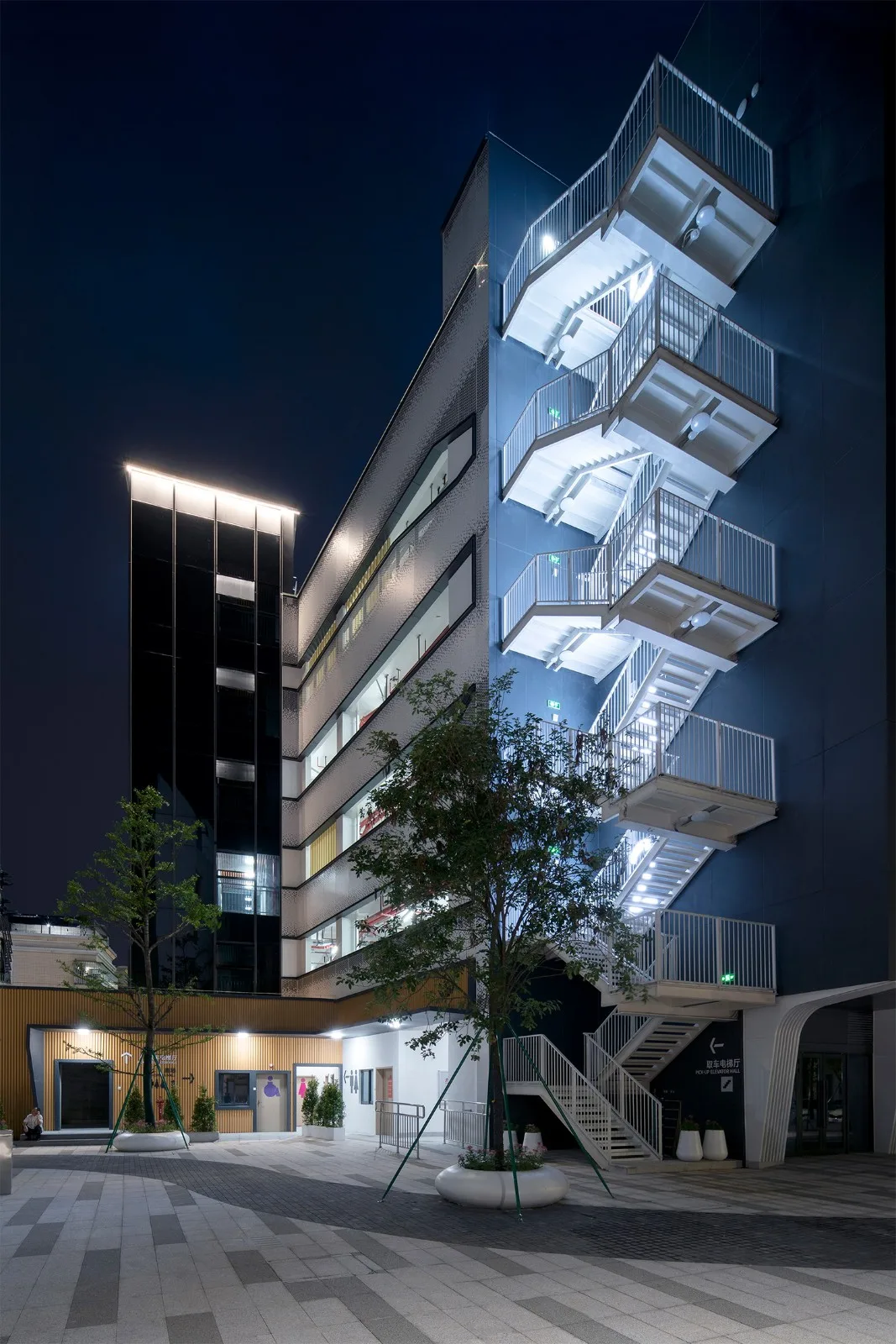
One evacuation staircase is located outdoors, providing convenient and efficient access for parking users on lower floors to retrieve their vehicles without detouring to the elevator lobby. The outdoor staircase features column-free steel stairs with minimalist industrial-style railings and beams, carefully refined through multiple design iterations. Its distinctive look attracts visitors to photograph and share their experience.
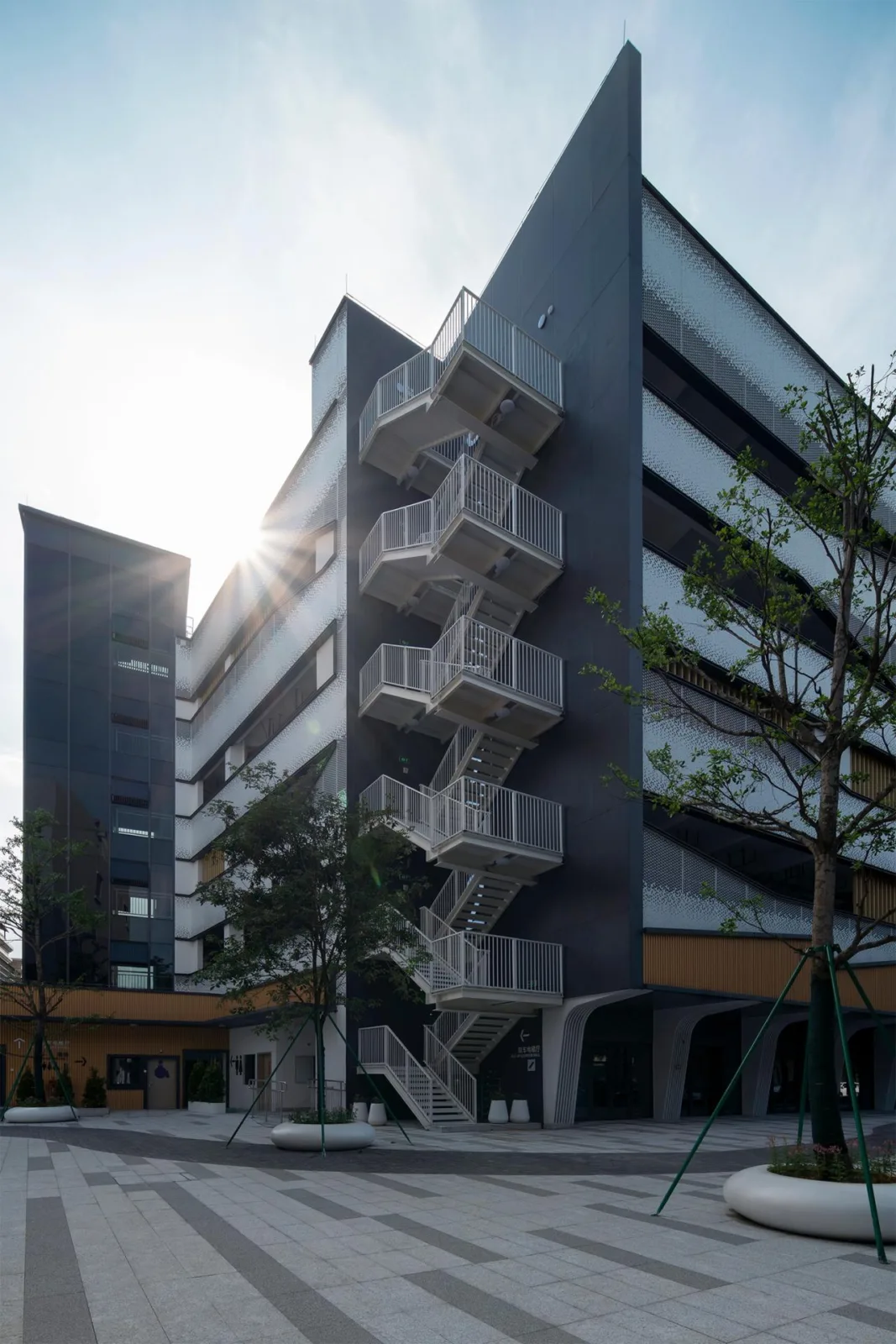
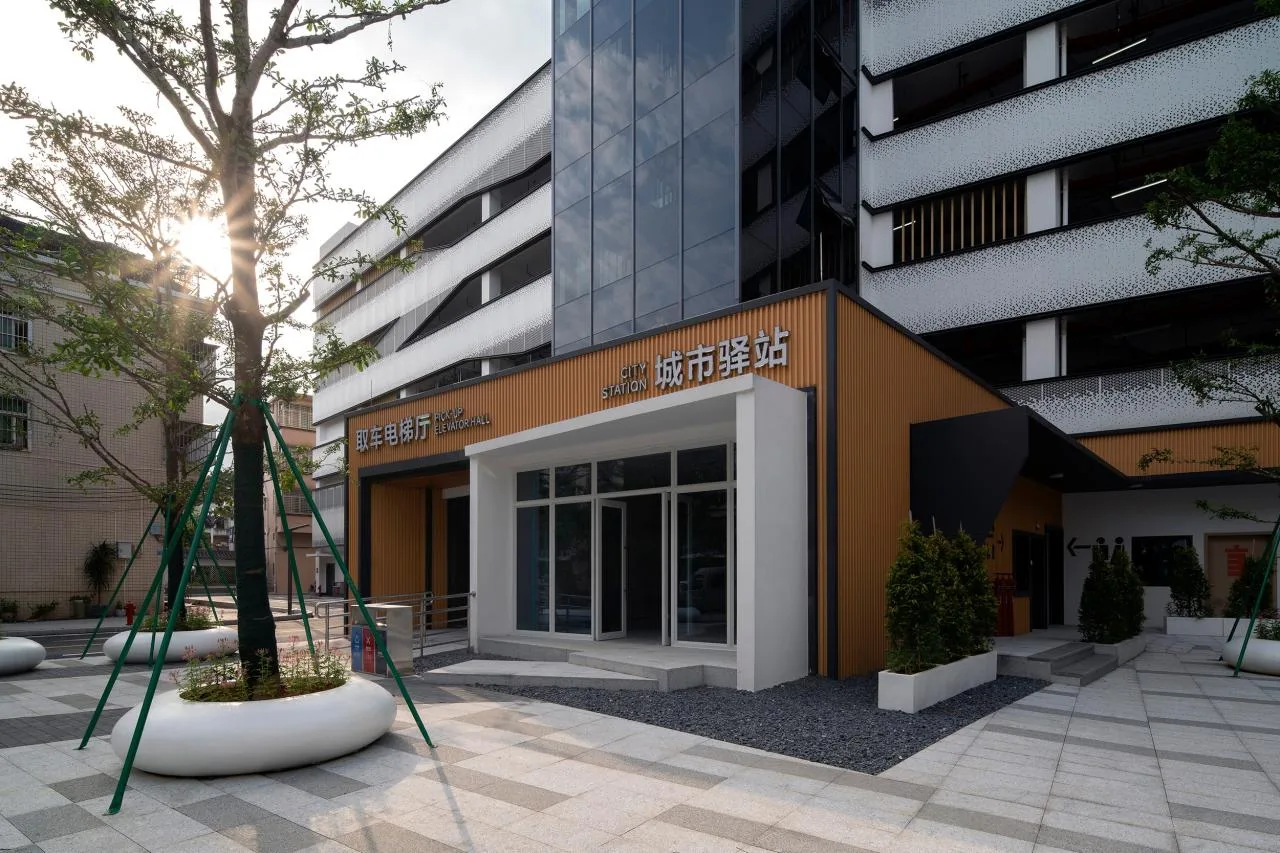
To better serve urban demands, additional public facilities are integrated on the ground floor, including city stations, public restrooms, water intake points, bicycle parking, retail shops, lounges, and waiting areas. This multifunctional approach enhances the project’s value and utility for the surrounding community.
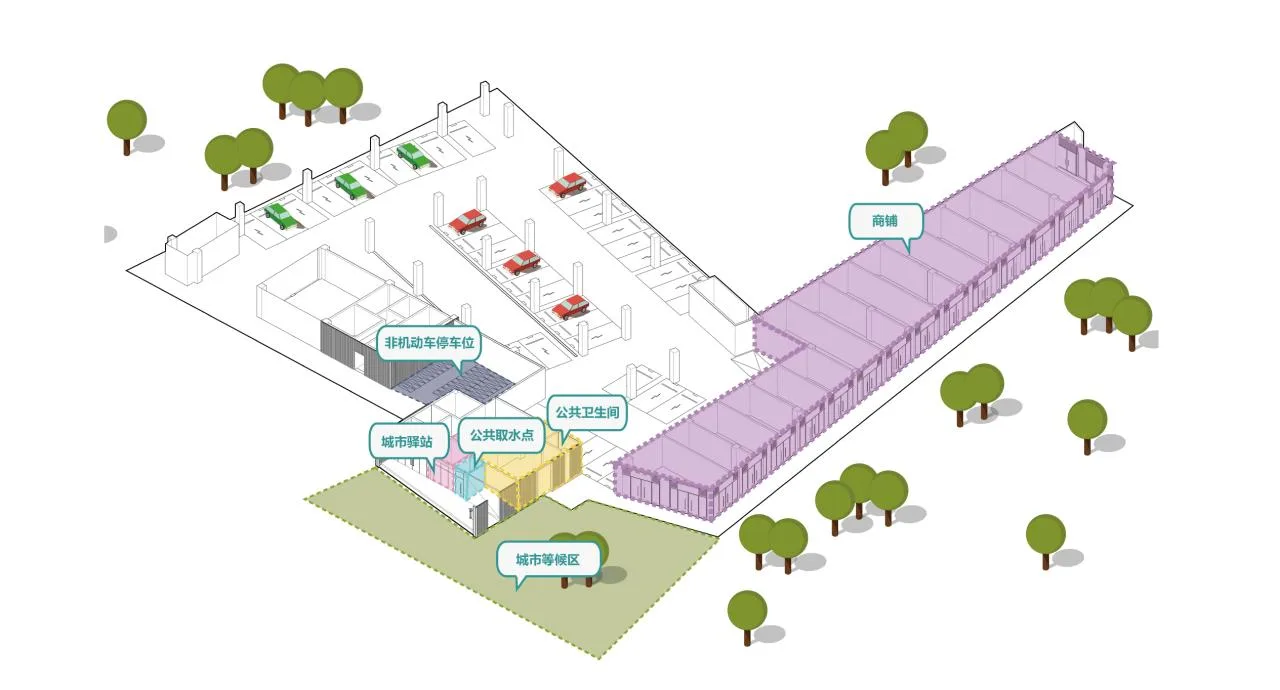
△ Public Amenities Design
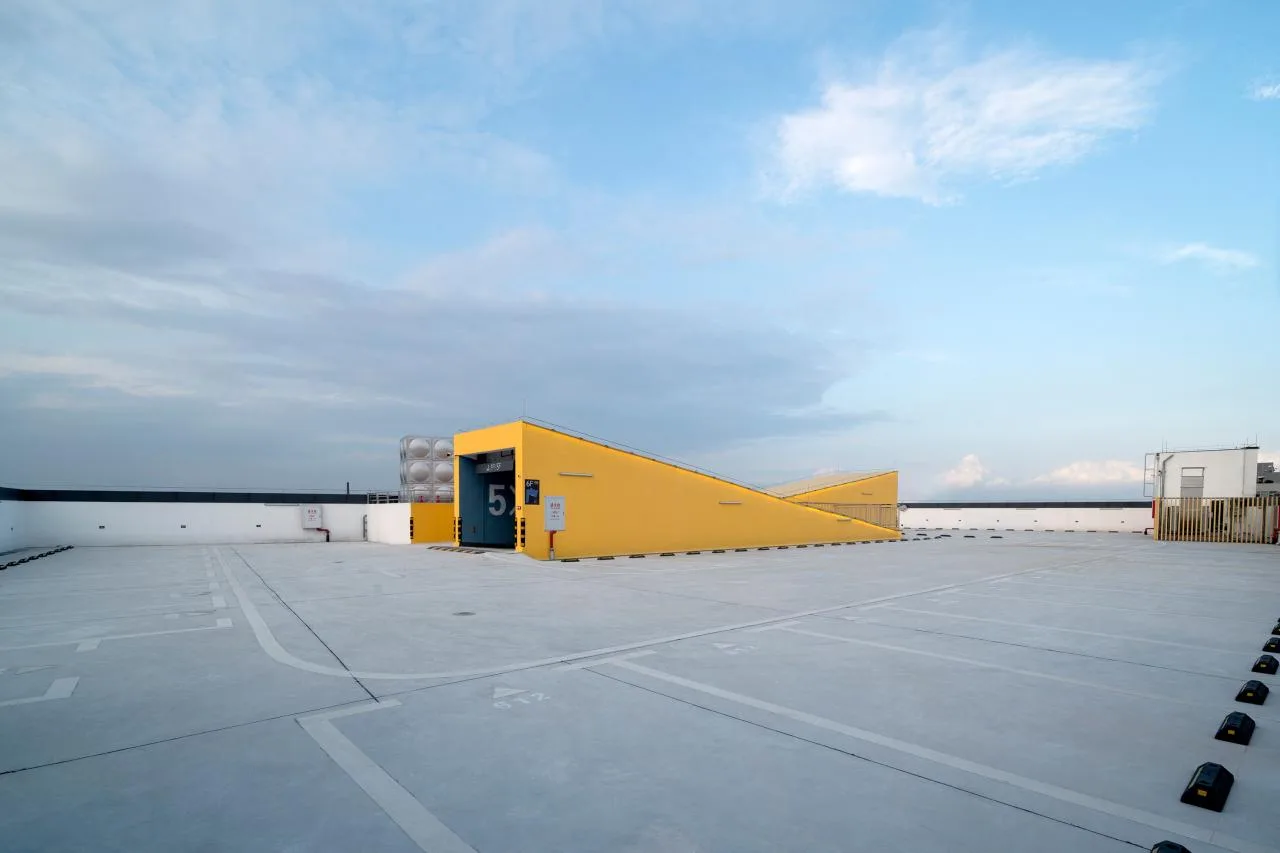
Facade Design
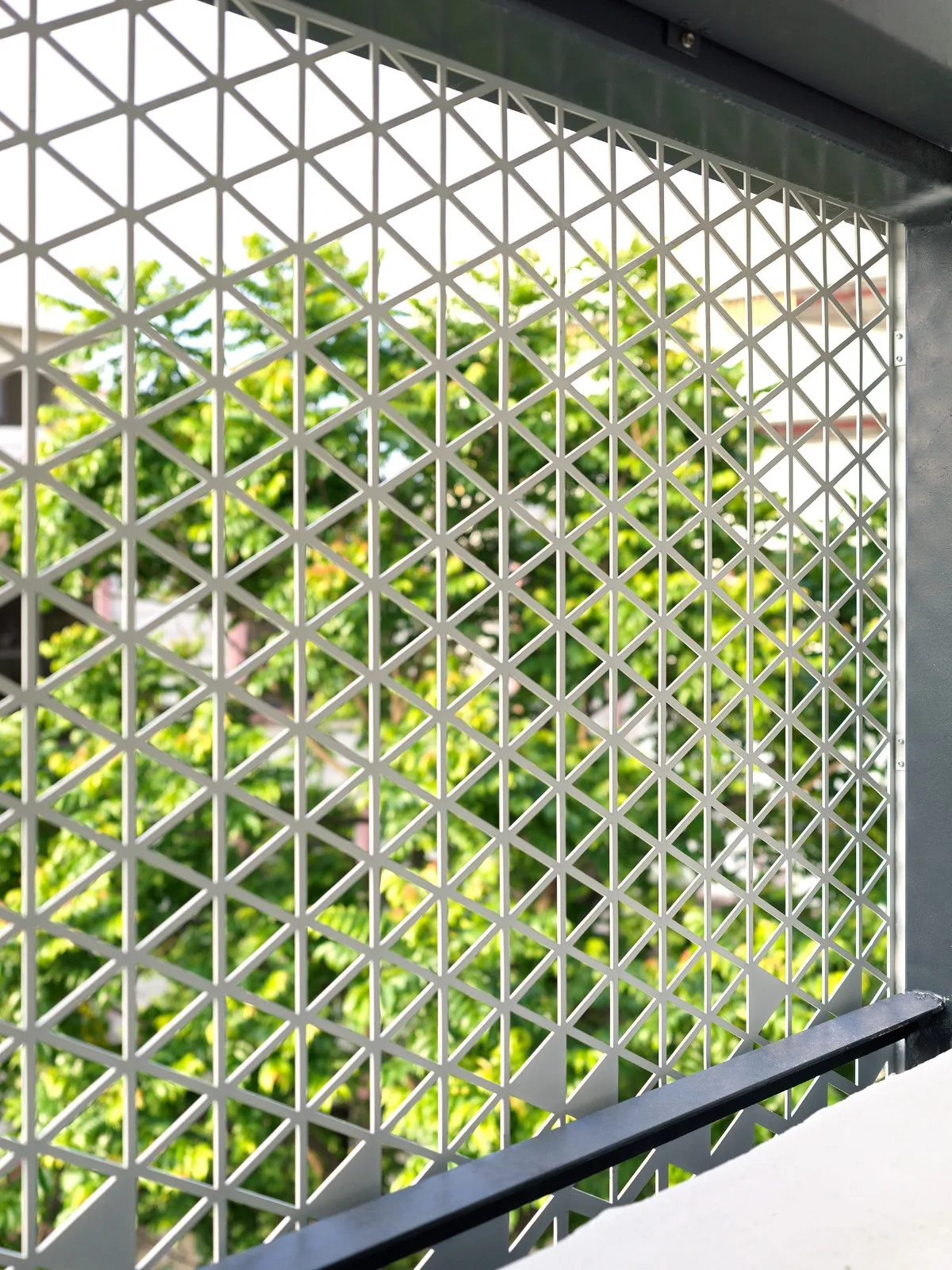
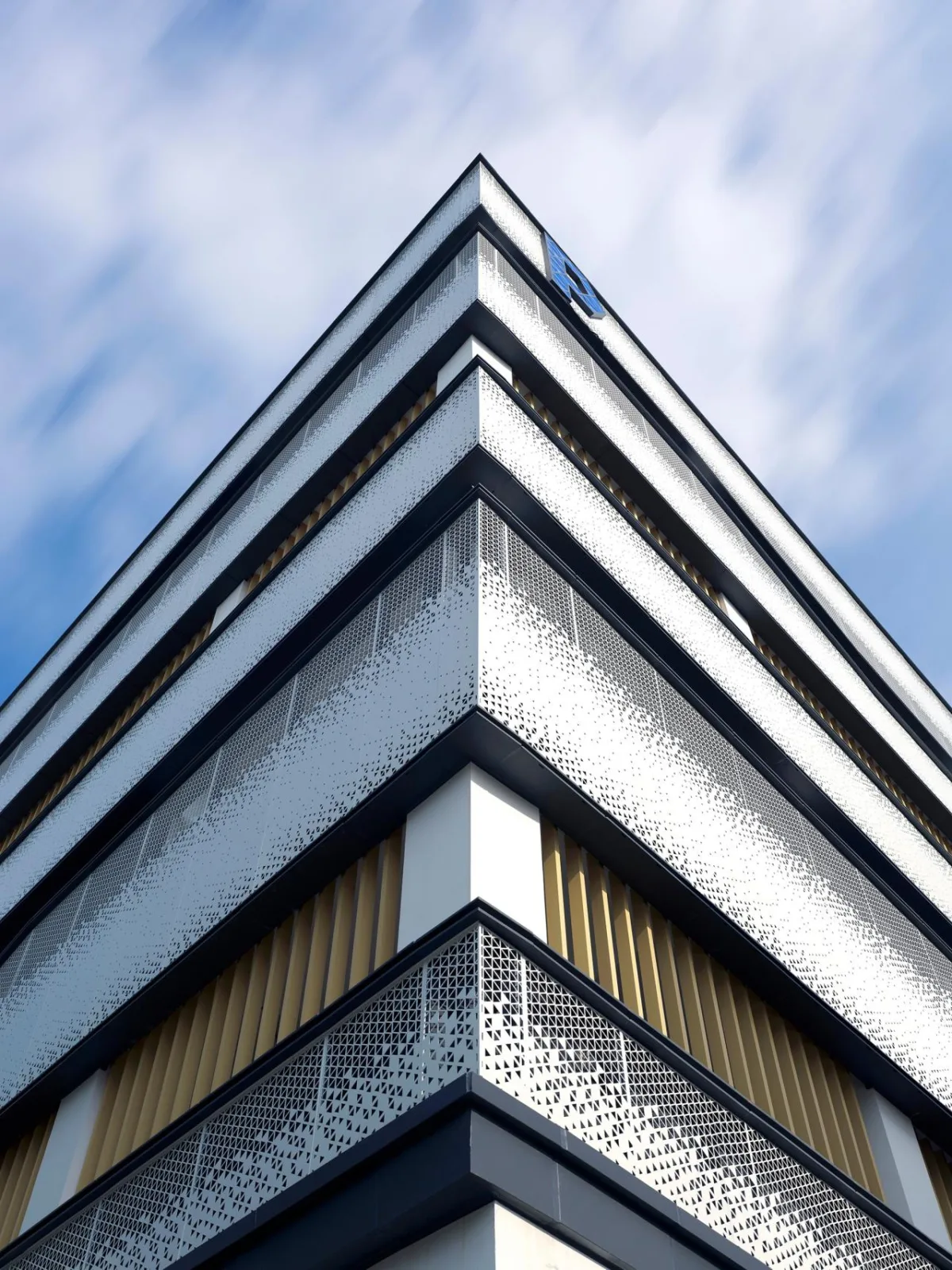
The building’s main facade is clad in white perforated aluminum panels wrapping the parapet wall. This design maximizes natural light and ventilation while maintaining a clean, minimalist exterior. The use of modern materials and design elevates the city’s streetscape, and the open interior spaces provide a comfortable parking environment.
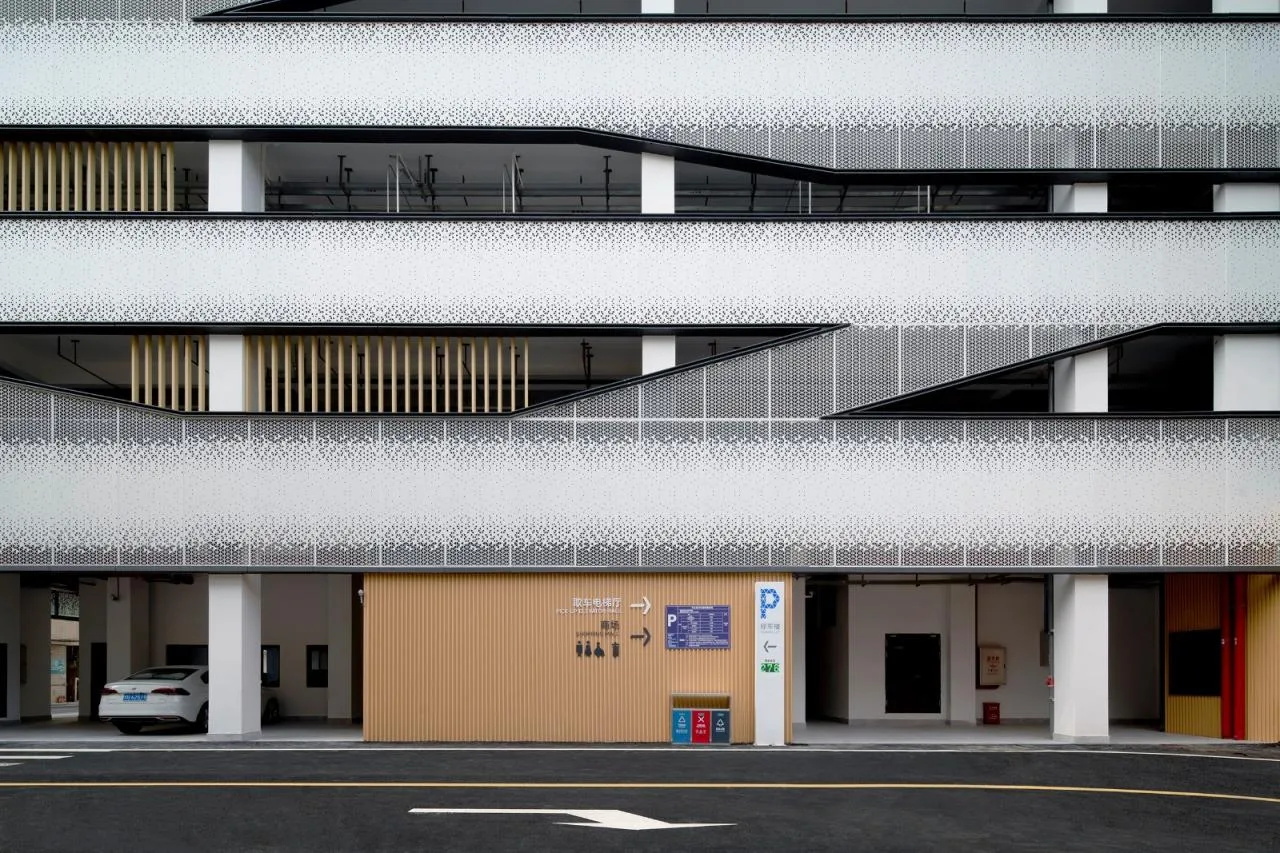
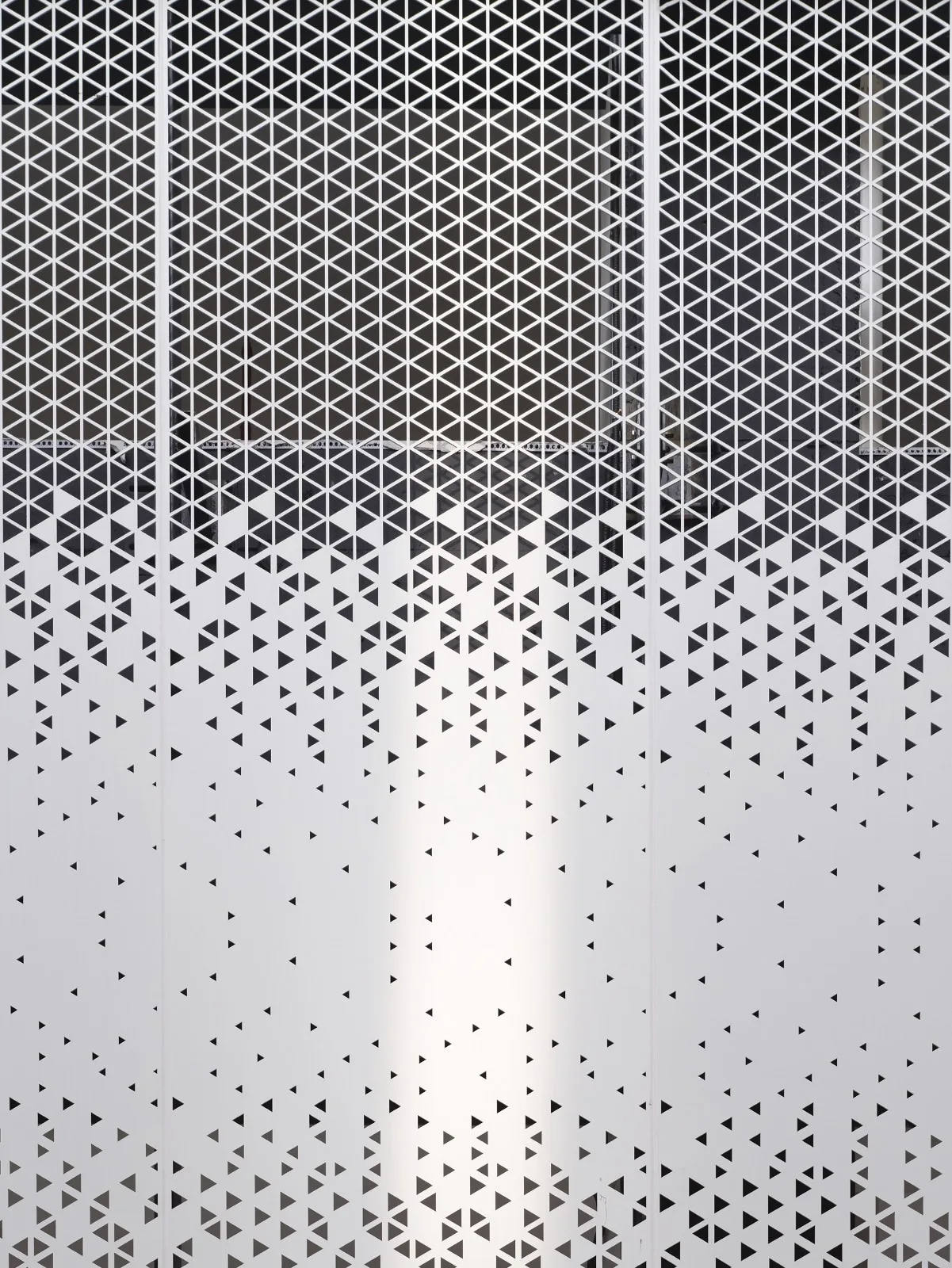
The perforated aluminum pattern is inspired by the triangular plum blossom petals common in Guangdong. These petals are reorganized into regular hexagonal modules, with six variations created by selectively removing triangles within the units. These modules are parameterized and arranged into a gradient pattern, creating an effect of scattered petals blending reality and illusion. During daylight, sunlight filters through the panels, casting lively, mottled shadows reminiscent of swaying petals.
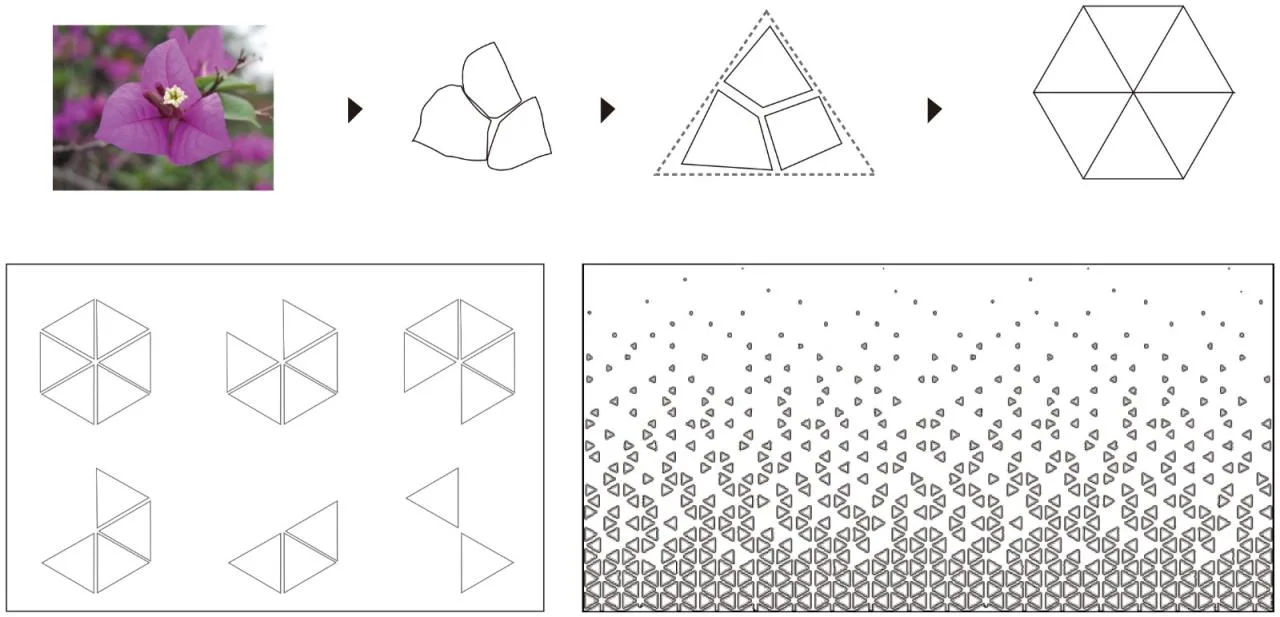
△ Perforated Panel Pattern Generation
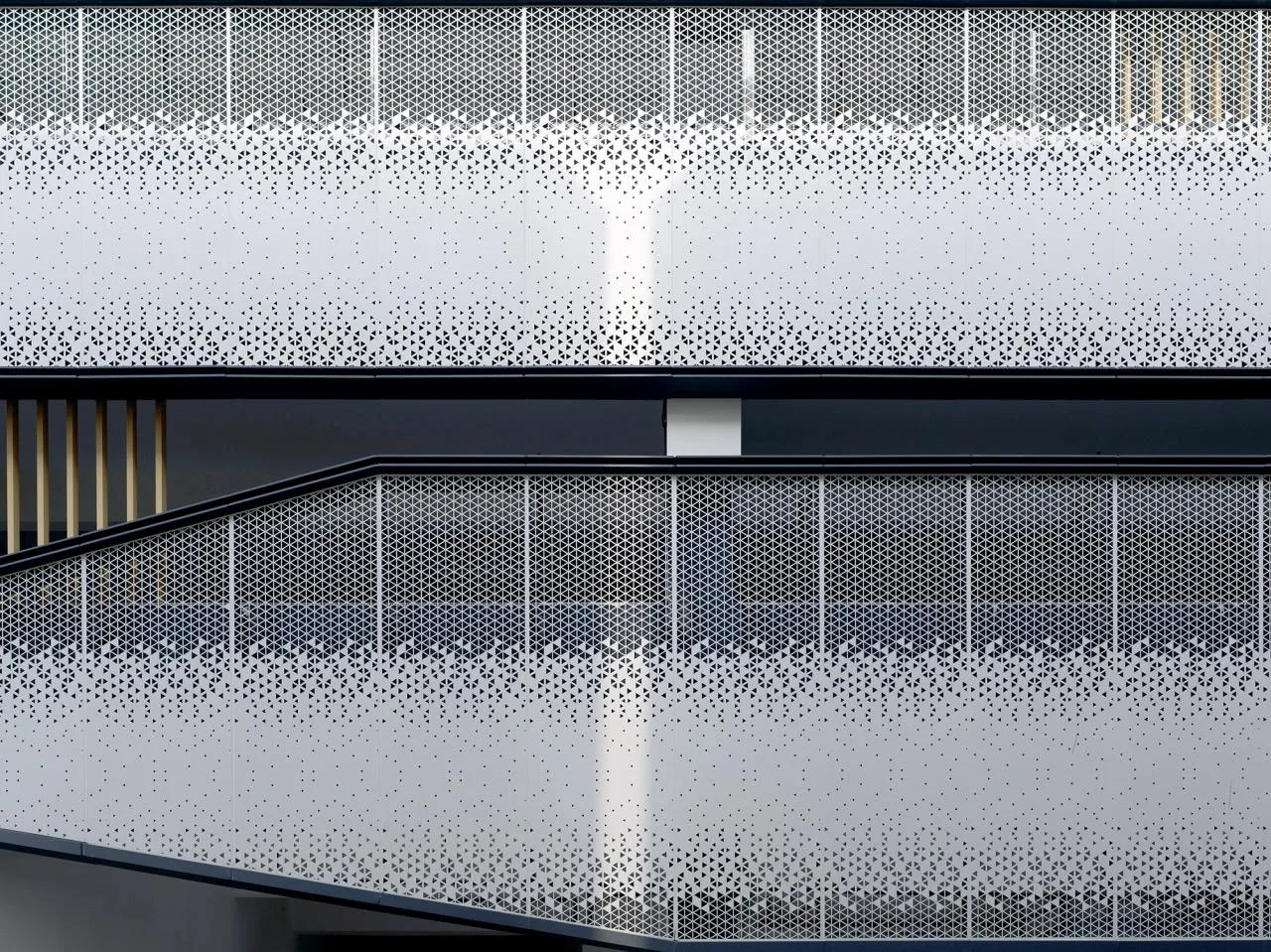
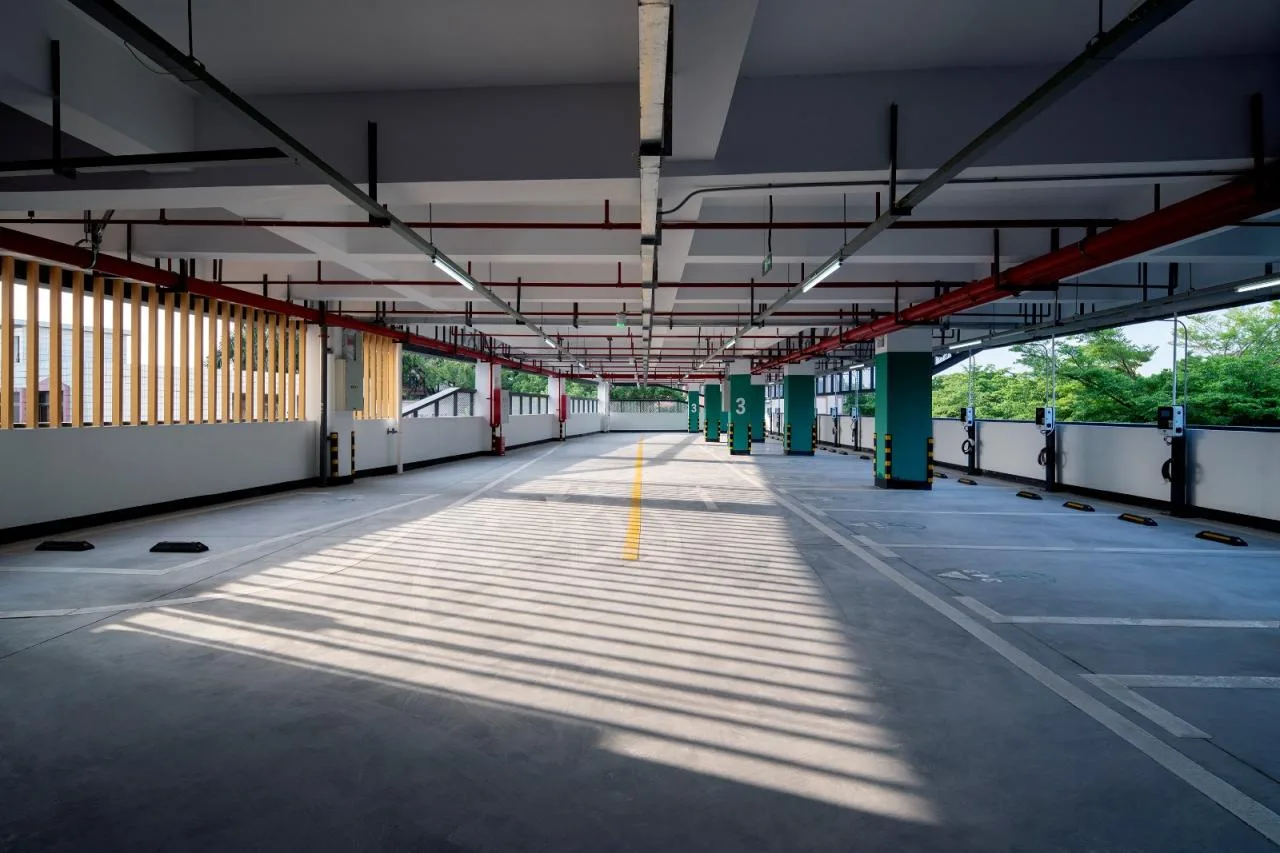
Areas of low porosity serve to block views and beautify the parapet, while high-porosity sections enhance the interior without compromising light or ventilation. Sunlight passing through these panels illuminates parking spaces and lanes, overcoming the common issue of dark interiors in parking structures.
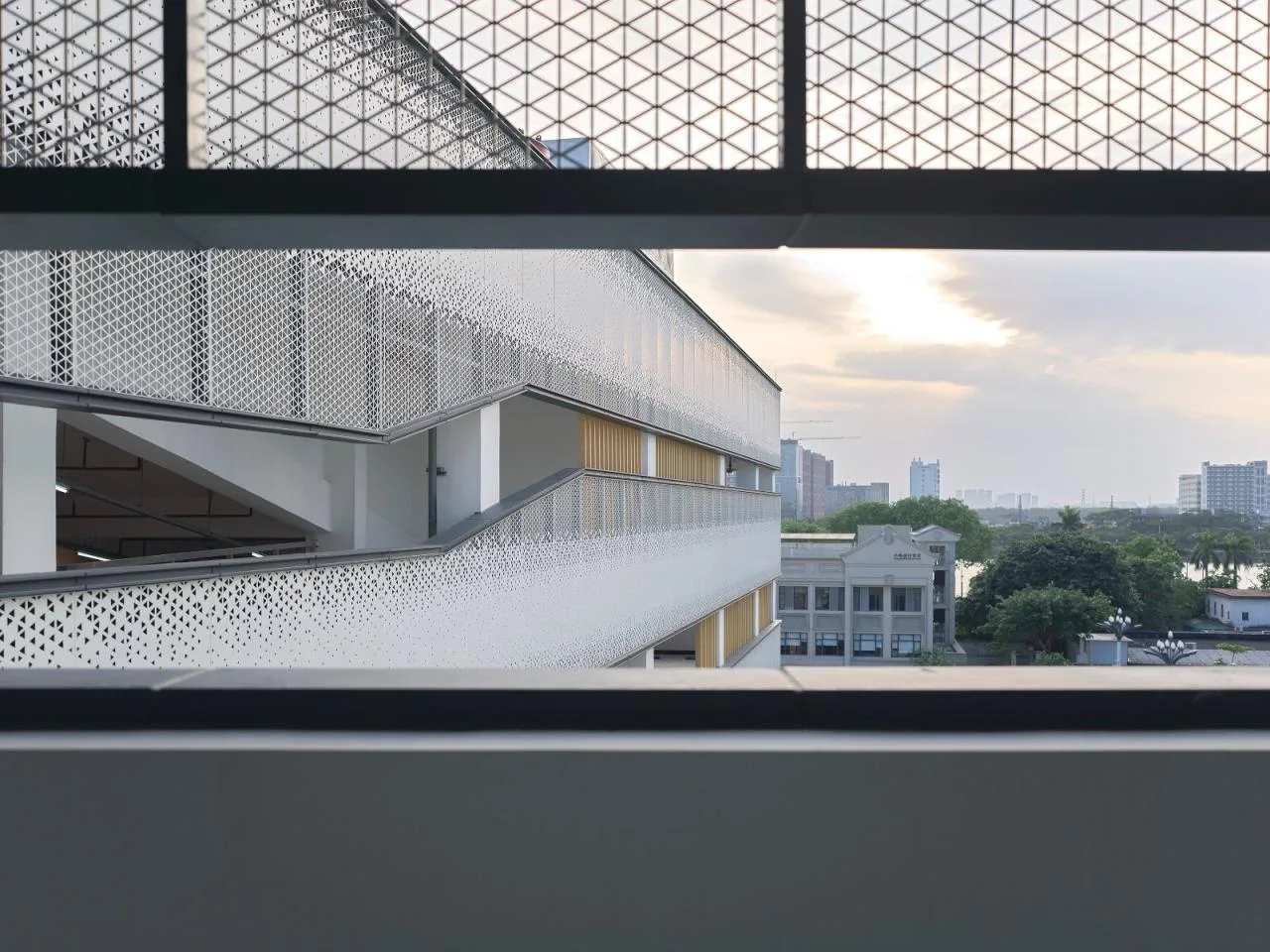
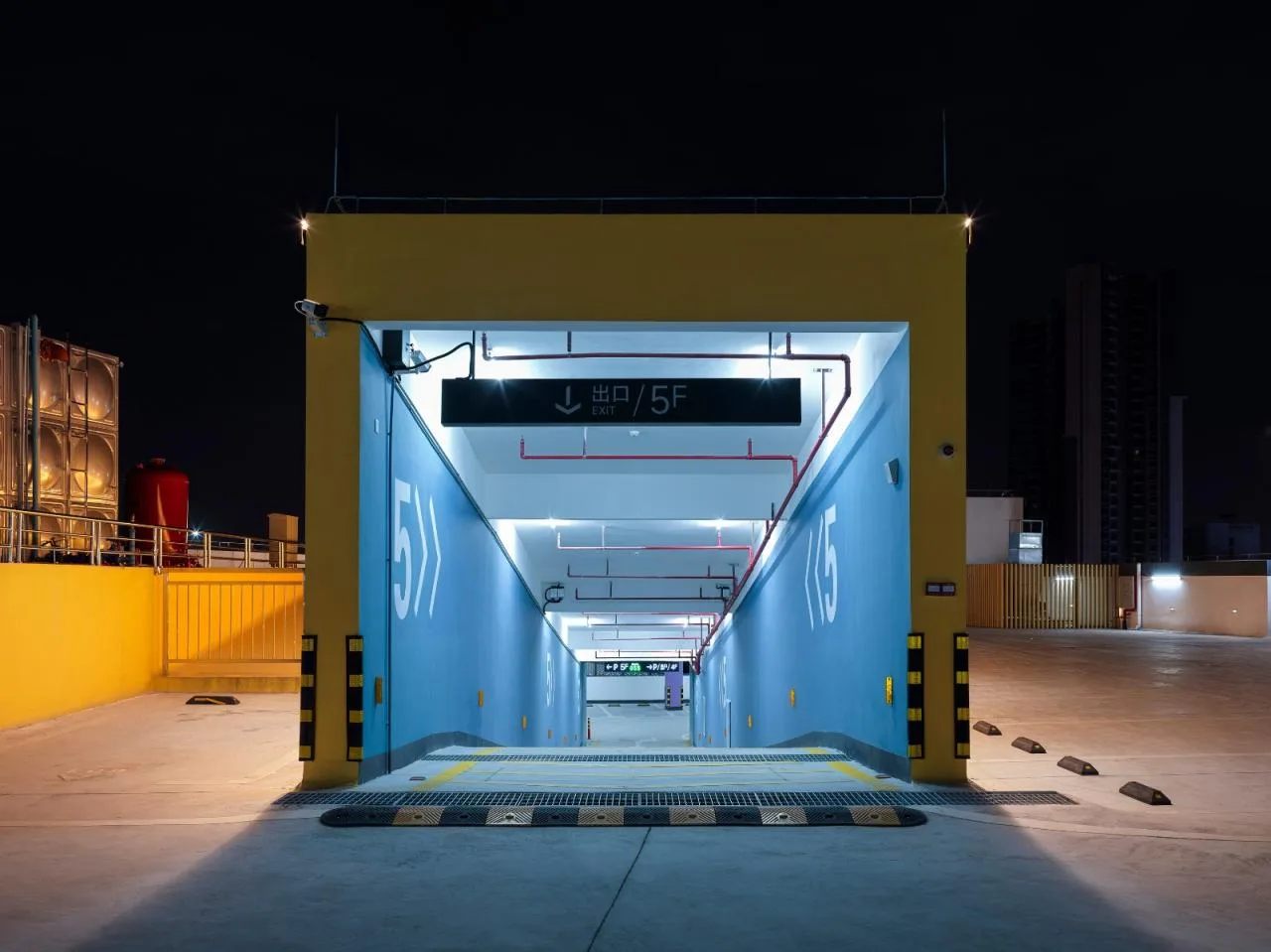
Additionally, signage design not only helps distinguish floors and guide users visually, but also enhances the building’s facade, making it appear more cohesive and thoughtfully finished.
Smart Parking
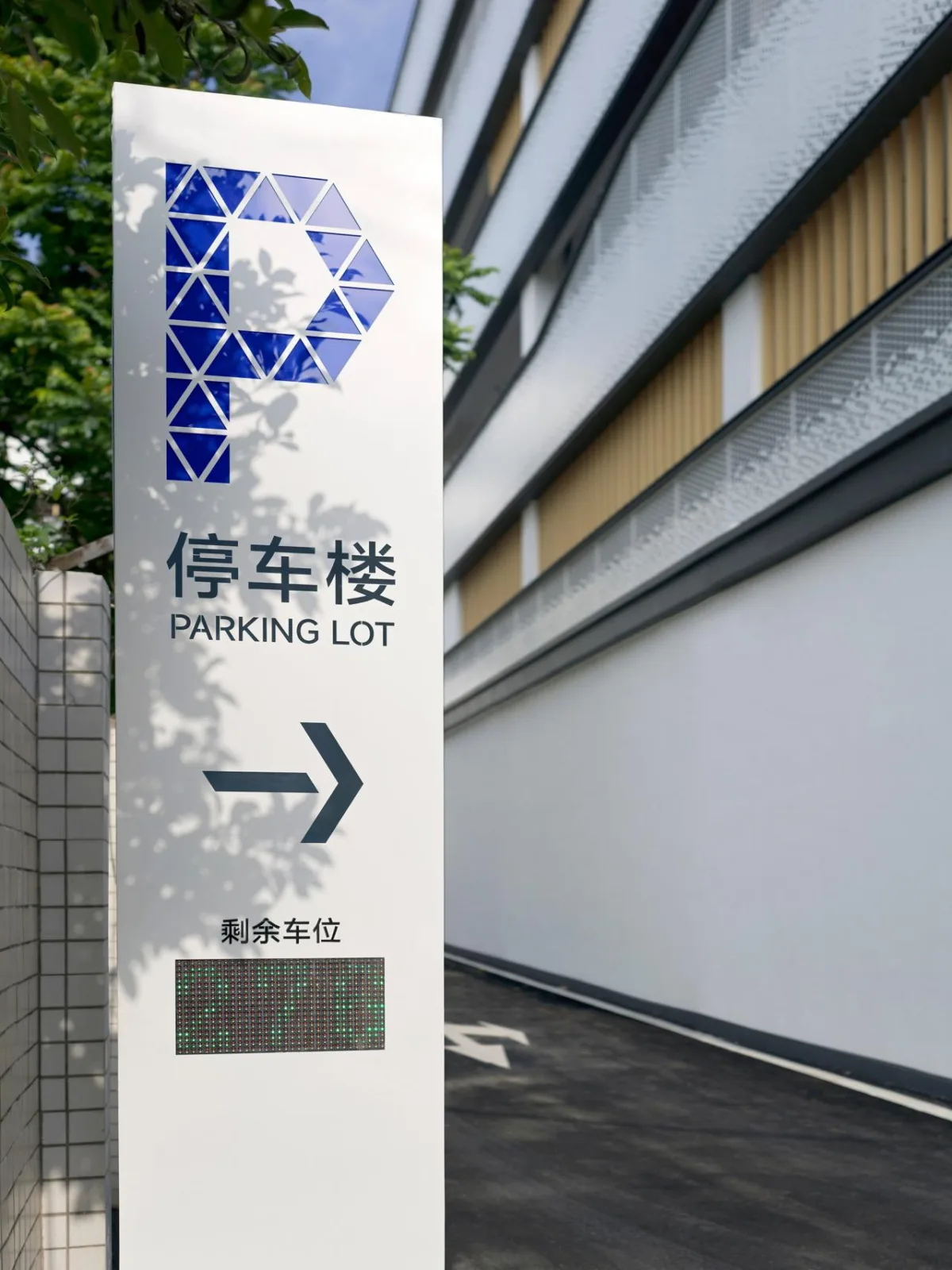
To harness big data and promote intelligent applications, the project integrates smart parking technology. It combines hardware and software systems to address challenges such as difficult parking, locating vehicles, and payment processes. This revitalizes existing parking spaces, creates new smart parking scenarios, and offers citizens a warm, user-friendly experience.
Summary of Experience
Since its completion and opening, the parking building has received widespread praise from both owners and residents. It boasts rapid operation, a compact footprint, and advanced intelligence. Features like electronic display screens and monitoring systems provide real-time parking information. Separate elevator halls and dedicated vertical circulation ensure pedestrian and vehicle separation. Color-coded floors help users quickly find their parking zones, reducing the time spent locating vehicles.
“This is the evaluation from the owner.”
This project serves as a design general contracting practice guided by the “Architect Responsibility System.” Our architectural team was deeply involved in overall planning, individual building design, and various subcontracted effect designs. Departing from the traditional narrow focus on the main building design, we applied the “Architect Responsibility System” across all subprojects, effectively controlling design outcomes, quality, and costs.
This system prioritizes the project’s completion effect as the foremost criterion, accumulating valuable construction experience and providing guidance for Senlei International’s future high-quality project implementations.
The parking building in Hongmei Town’s central area is designed primarily as a transportation facility but also functions as an urban gathering point for image enhancement, community interaction, and commerce. Through concise architectural language, user-friendly design, and optimized urban services, it elevates the surrounding environment’s value and meets citizens’ expectations.
Project Drawings
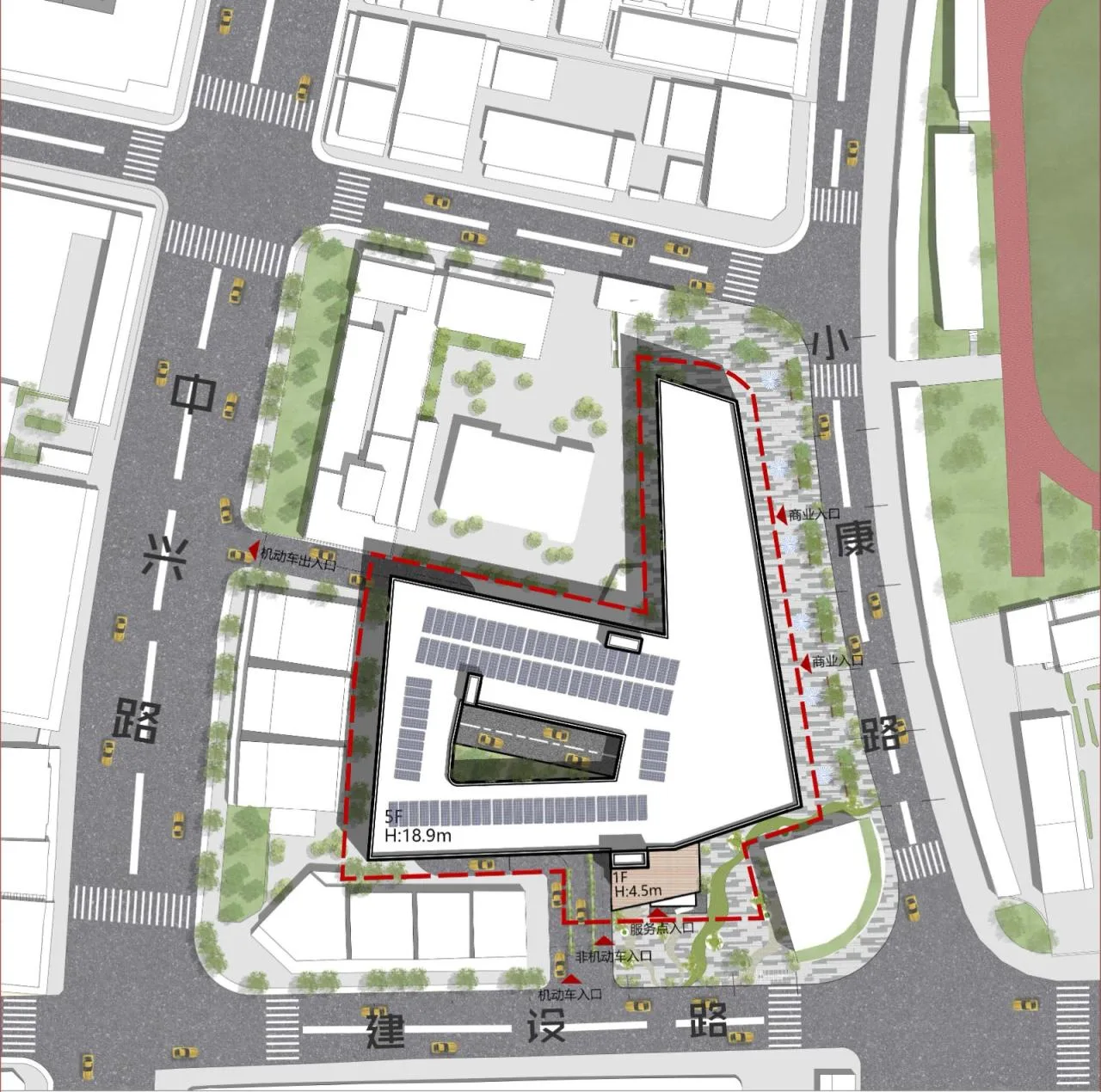
△ General Layout Plan
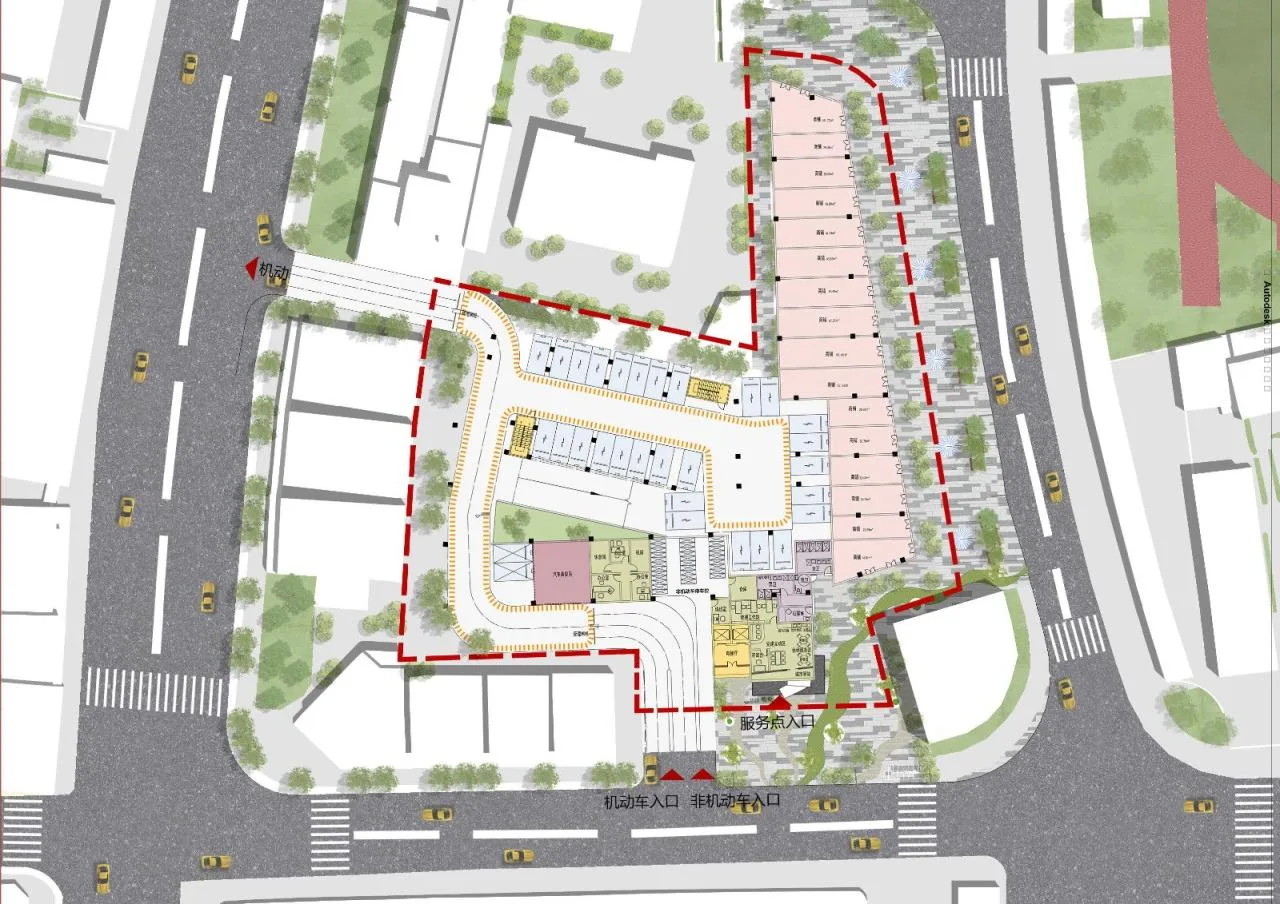
△ Plan View
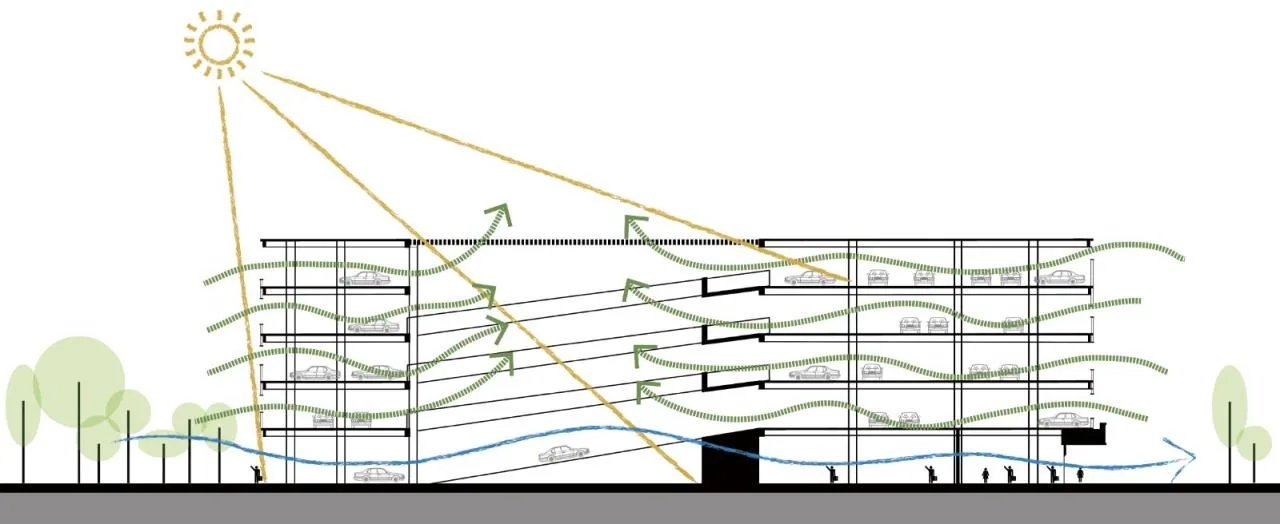
△ Sunshine Analysis Chart
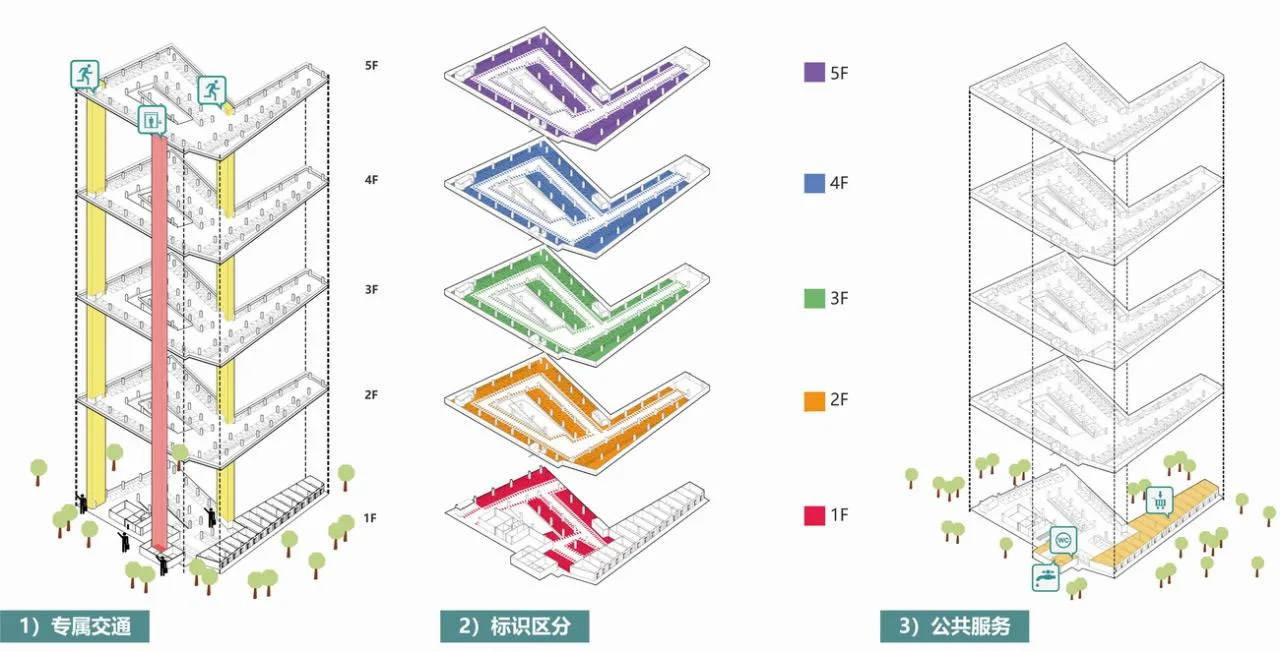
△ Analysis Chart
Project Information
Project Location: Hongmei Town, Dongguan City
Building Type: Parking Building, Commercial, Urban Public Facilities
Land Area: 3,855.97 m²
Total Construction Area: 9,880.62 m²
Floor Area Ratio: 2.57
Scope of Work: Design General Contracting
Developer: Dongguan Shuixiang Real Estate Management Co., Ltd.
Project Team
Lead Architect: Xiong Wei
Architectural Scheme Design: Liu Ting, Huang Jiaming
Design General Contracting Management: Lei Weiting
Construction Drawings: Zhu Yinpu, Jiang Muhua, Yan Hanqing, Zhang Haohua
Structure: Huo Yongxian, Zhuang Haijian
Electrical: Cheng Zhu’an, Wang Hongshuang, Yang Jing
Water Supply and Drainage: Wang Lingli, Zhang Bingshi, Liu Kun
Intelligence: Cheng Zhu’an, Zhu Bingkun
HVAC: Li Bo, Wu Qian
Landscape: Xu Tianle, Li Yulian, Qingwei, Wu Haowu
Project Assistant: Wei Wangqin
Photography by Li Zhiqiang














Must log in before commenting!
Sign Up