
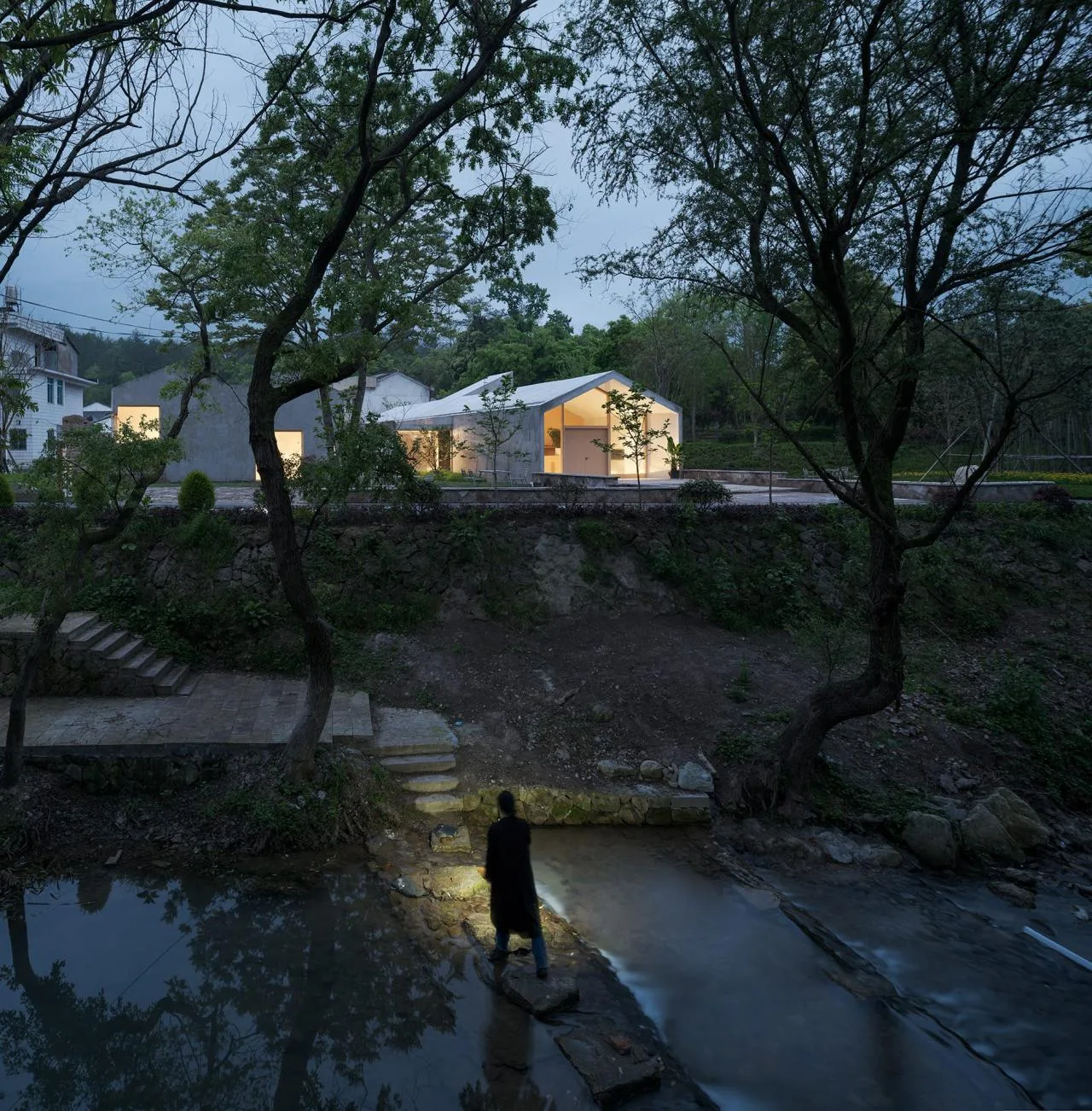
Rural revitalization efforts have increasingly emphasized the development of public spaces in countryside areas. However, many of these initiatives neglect the unique living environments and regional characteristics of rural communities. Moreover, they often overlook local cultural heritage and the importance of social interaction within public spaces. As a result, original village landscapes are damaged, local historical memories erased, and invaluable cultural resources lost.
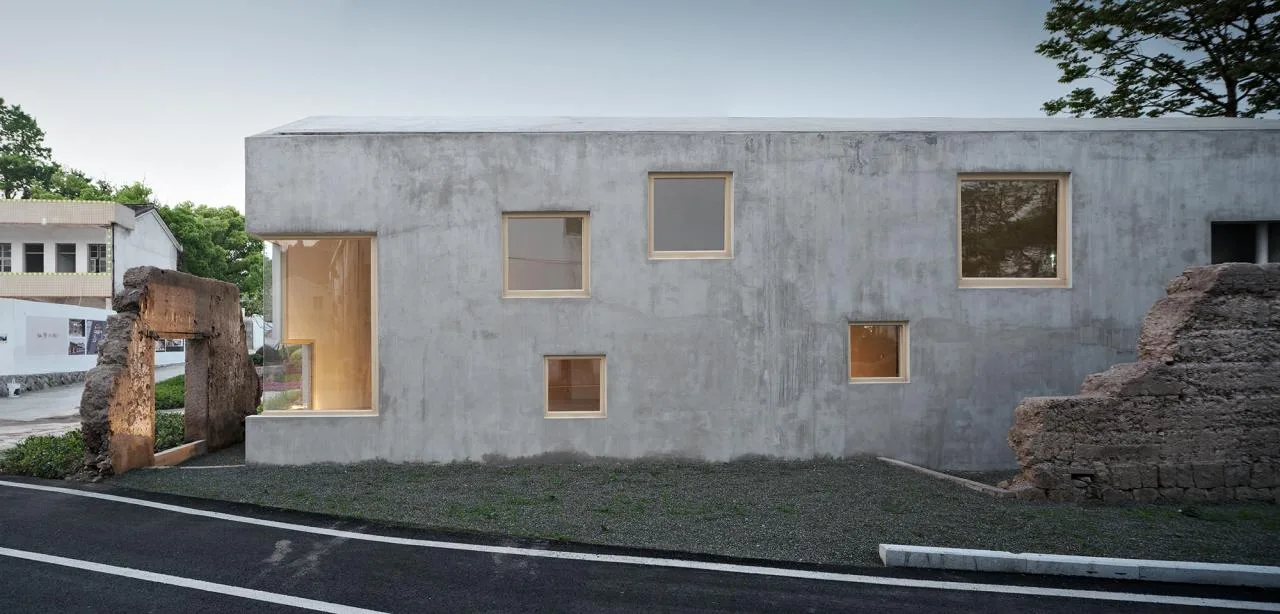
Interventions in rural construction should not only address the basic living needs of modern residents but, more importantly, aim to protect the village’s original environment. Through sensitive and appropriate methods, these efforts can revive the local spirit and allow regional culture to flourish once again in the countryside.
Natural Prototype
In traditional Chinese architectural philosophy, buildings are designed in harmony with nature. Both spatial forms and construction materials evolve naturally over time. From this perspective, vernacular architecture can be understood as a “natural prototype” that organically grows from the land.
The Wanghu Village Villager’s Home is located in Wanghu Village, Baita Town, Xianju County, Taizhou, Zhejiang Province. Positioned at the village’s eastern edge near the road and beside a small river, the local government aims to revitalize this historic village by developing public spaces within the village homes. This effort leverages Xianju County’s tourism potential alongside the area’s existing materials and environmental assets.
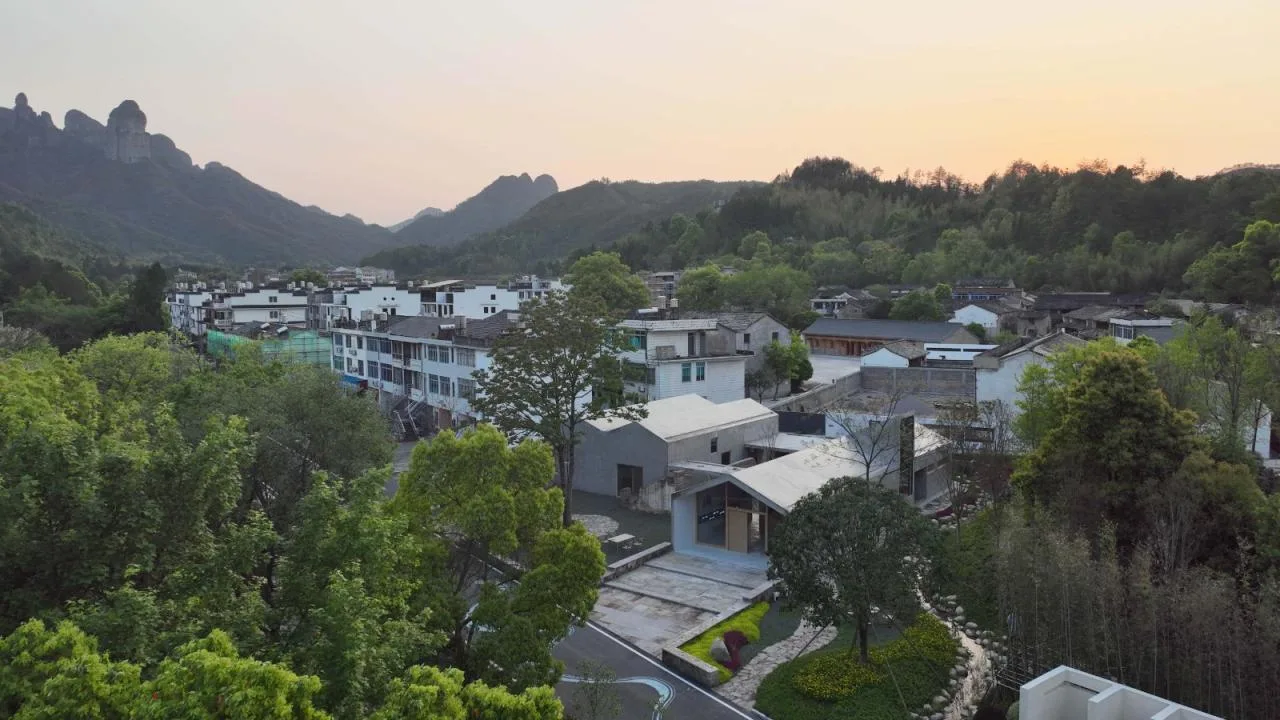
△ Village texture
Wanghu Village is nestled in a mountainous region with fertile soil and abundant agricultural produce. The existing earthen walls are remnants of old mud houses where villagers once cultivated mushrooms. With technological advancements, rural productivity has declined, and many memories of past livelihoods are fading. These decaying walls, with their windows and doorways, serve as poignant reminders of a bygone era.
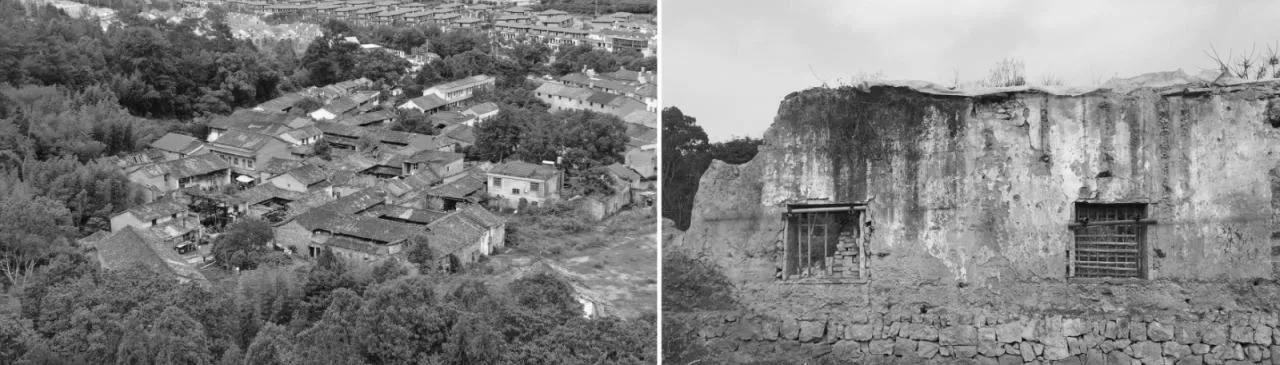
△ Village environment
Alongside these two earthen house ruins, additional earthen walls were uncovered. Local villagers explained that there were originally three mushroom houses, now mostly dilapidated and gone. The few remaining rammed earth walls stand as silent witnesses, projecting forgotten memories through their remaining openings to passersby.
Coexistence of Old and New
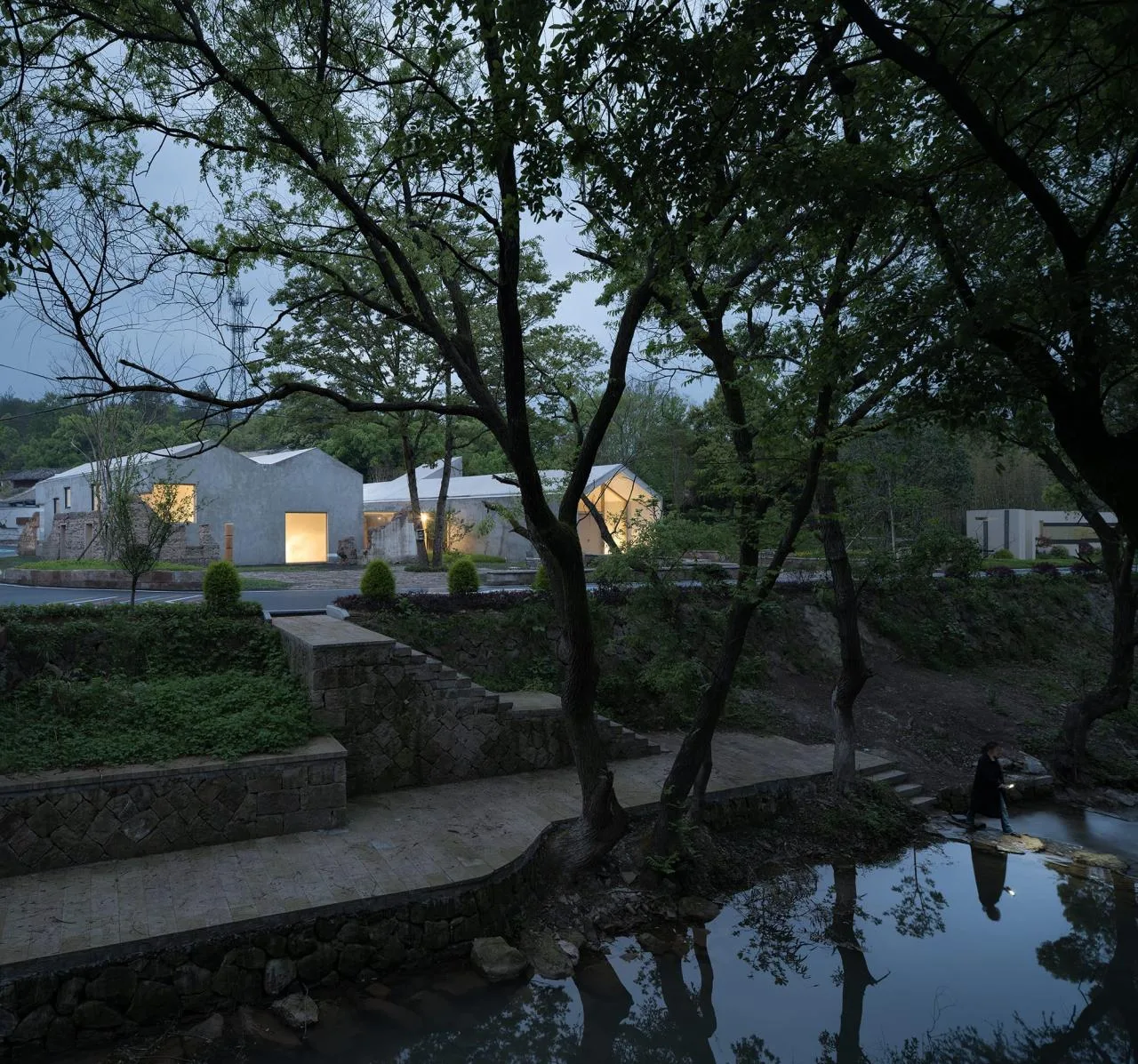
The Wanghu Village Villager’s Home reinterprets traditional residential architecture through spatial and construction methods that embed historical memories, continuing the original natural prototype. The sloping roof blocks are placed within the existing old walls, allowing the new structures to organically “grow” from the remnants. This creates a dialogue between new and old, where both elements complement and learn from each other.
Additionally, on the site of the former third mushroom factory, a new building has been erected to reimagine the past labor scenes, evoking collective memories of the villagers.
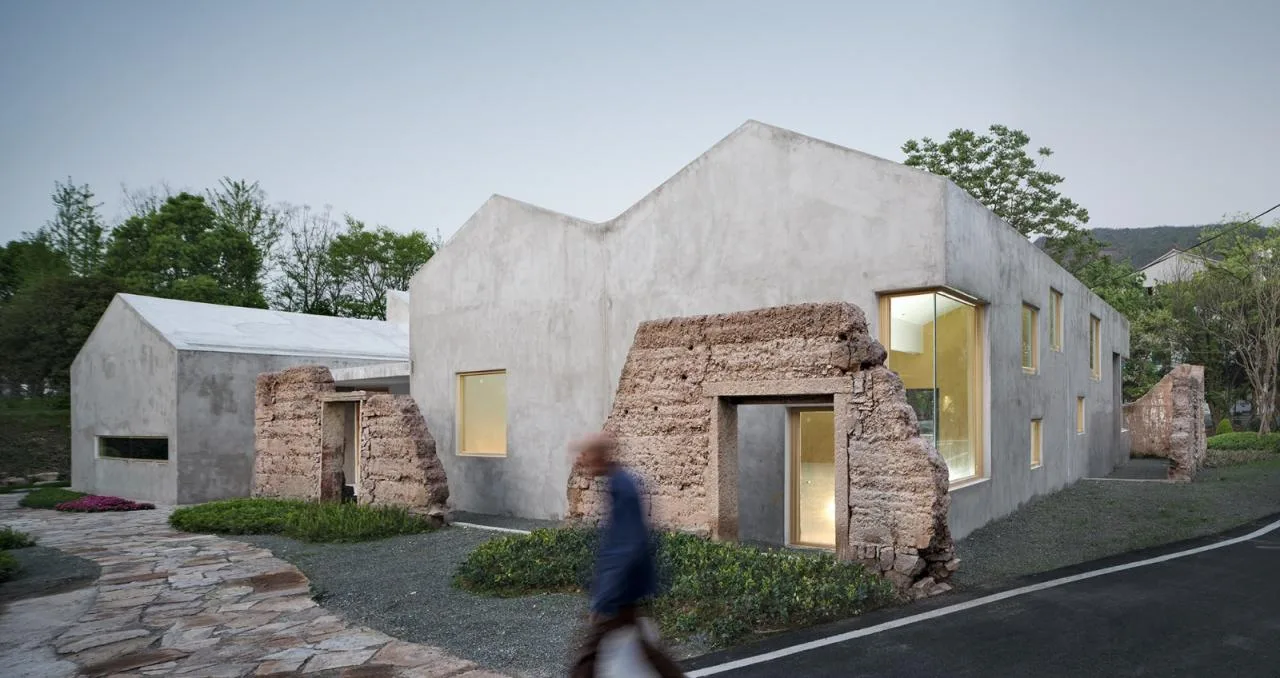
New buildings and old walls complement each other
Traditional village construction mainly used rammed earth walls and bricks. However, rammed earth is vulnerable to weathering and erosion. The existing buildings, with collapsed roofs and aging walls, could not serve as structural components for new construction.
Therefore, the new village house employs concrete exterior walls, creating a striking contrast with the original rammed earth walls. This contrast highlights modern construction technology while respecting the surrounding environment, bridging the past and present seamlessly.
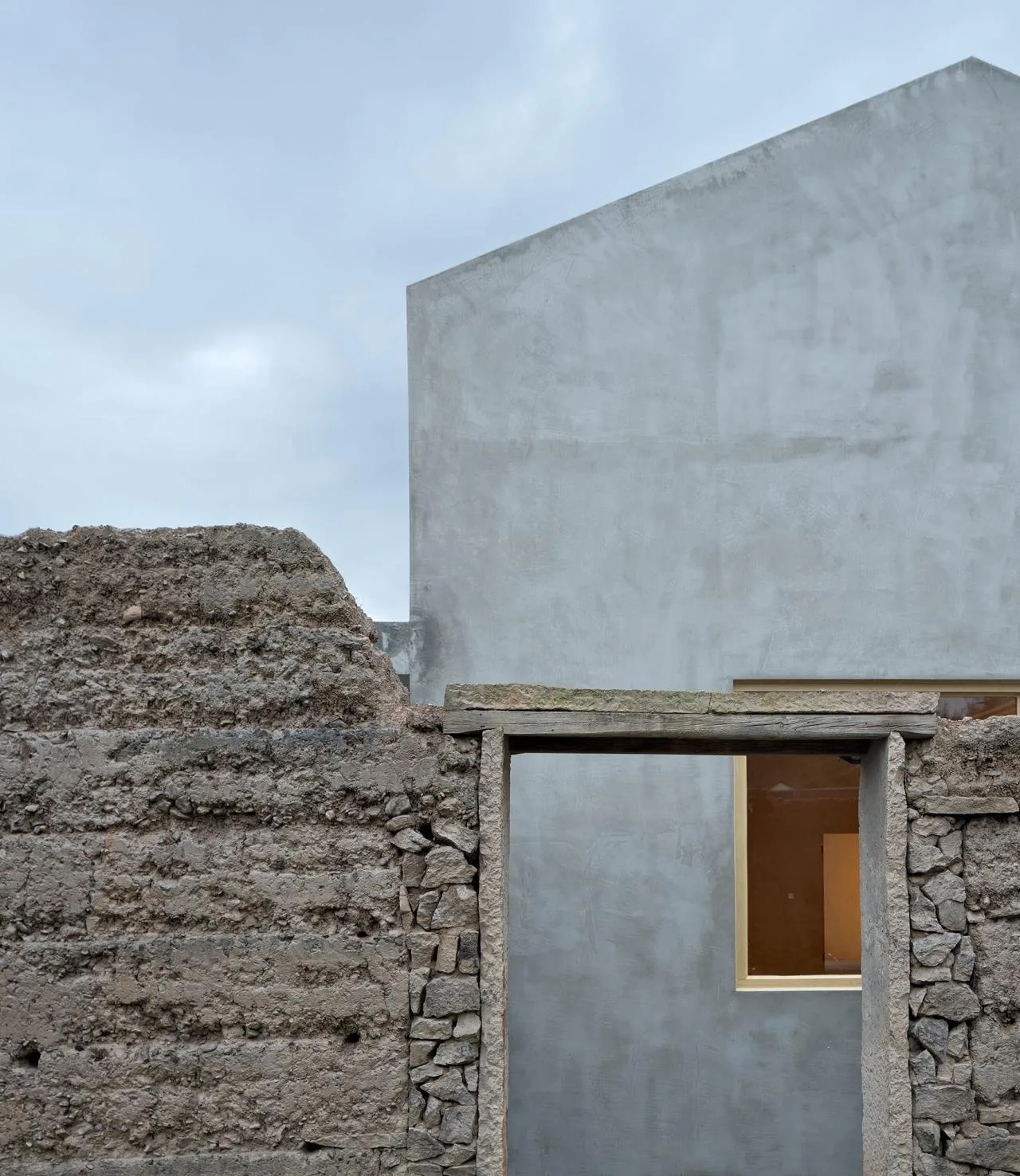
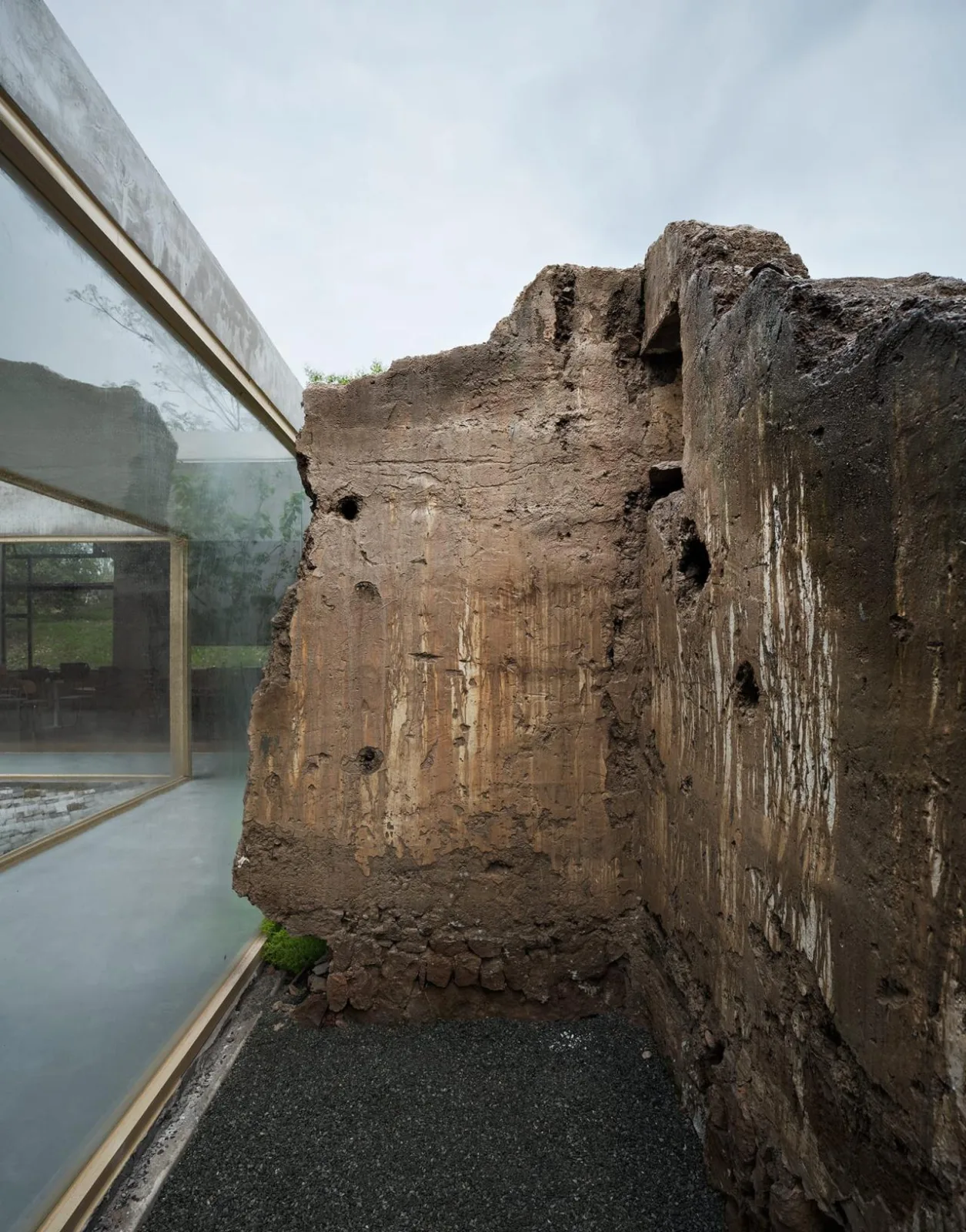
The transition between past and present
Modular Regeneration
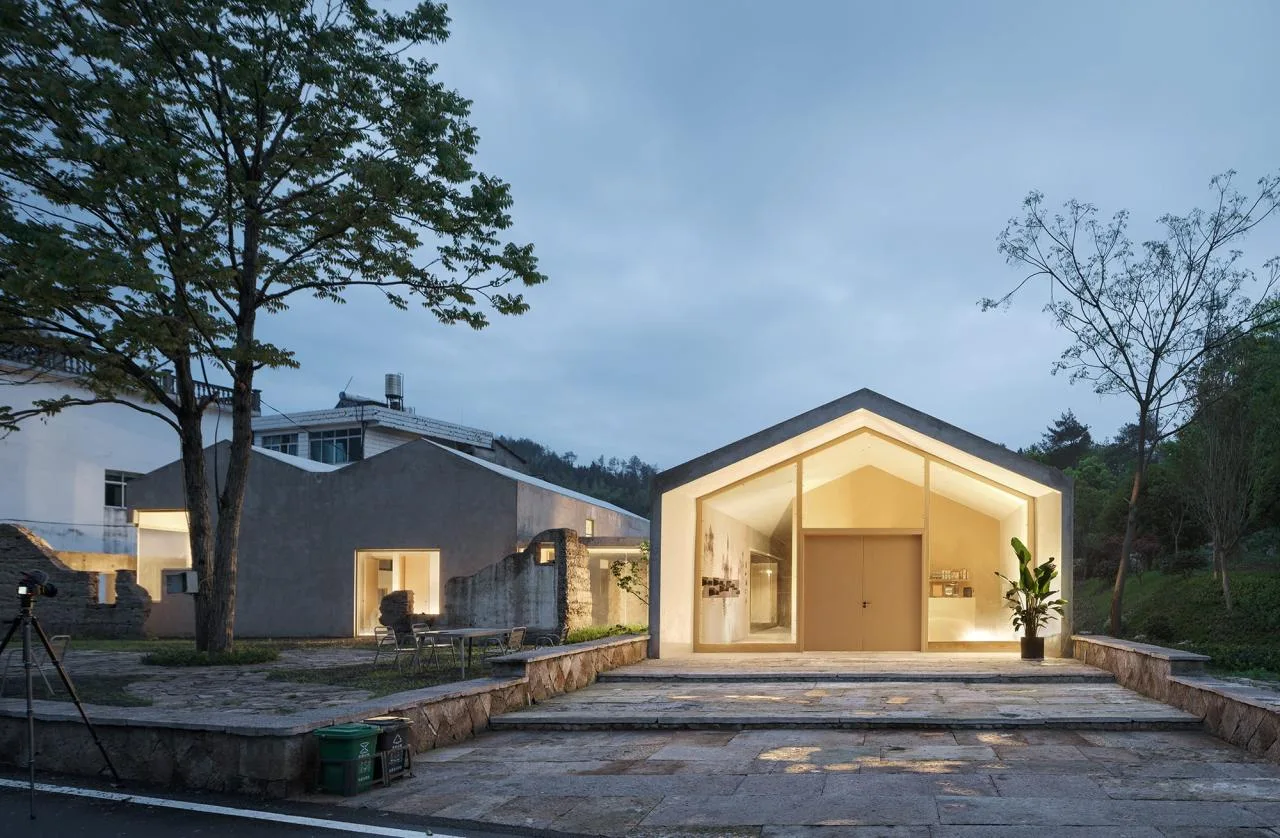
△ Night view of Wanghu Village Villager’s Home
Villages are organic entities formed by the continuous aggregation of individual units. Both individual components and the whole village follow modular principles, resulting in consistent architectural forms and scales.
Wanghu Village features many strip-shaped sloping roofs and spatial volumes. The Villager’s Home project respects these local scale “rules” and adopts traditional spatial models in its design. This approach ensures that the internal spaces align with local architectural scales, offering villagers a familiar spatial experience.

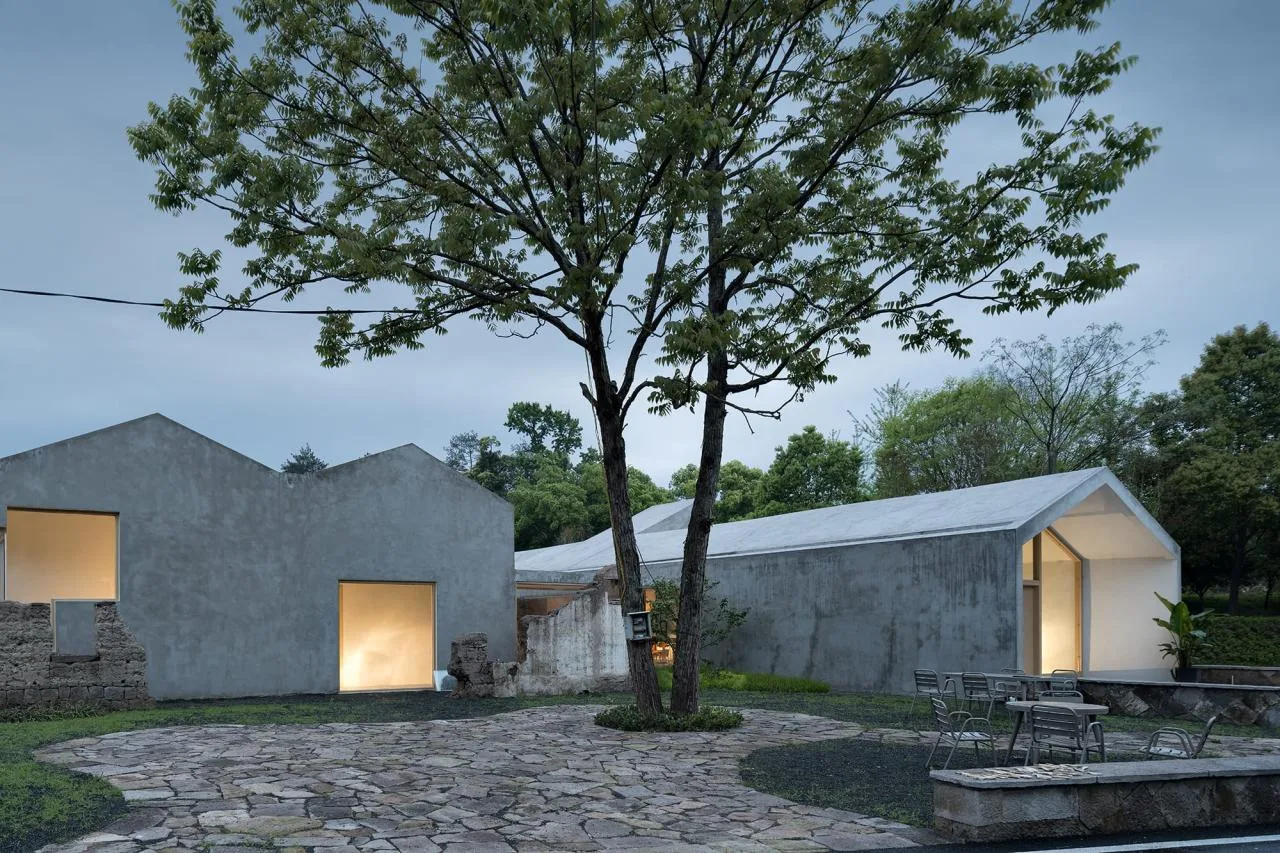
△ Continuing the local architectural “scale”
This modular design also supports the creation of external streets and alleyways. By preserving the local architectural forms, the project protects the external spatial environment of the historic village.
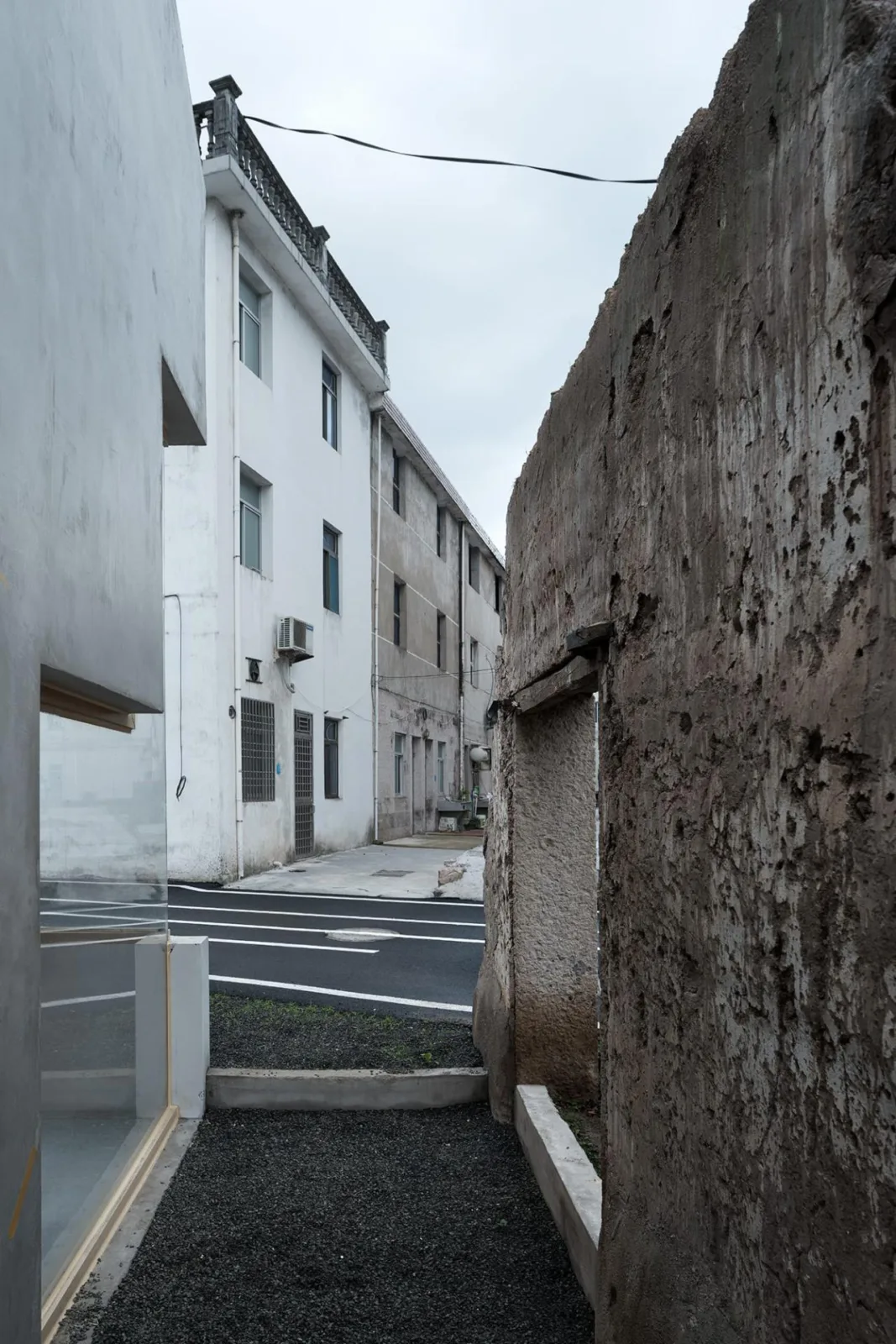
Village street and alley space
Functional Design
Currently, public activity spaces in villages are scarce and insufficient to support the preservation of collective culture or meet villagers’ material and cultural needs.
Due to limited land availability, the activity center is designed to occupy a small footprint while offering diverse, complex, and flexible functions. A multifunctional exhibition hall serves multiple roles, including hosting village meetings, receptions, sports and fitness activities, and film screenings.
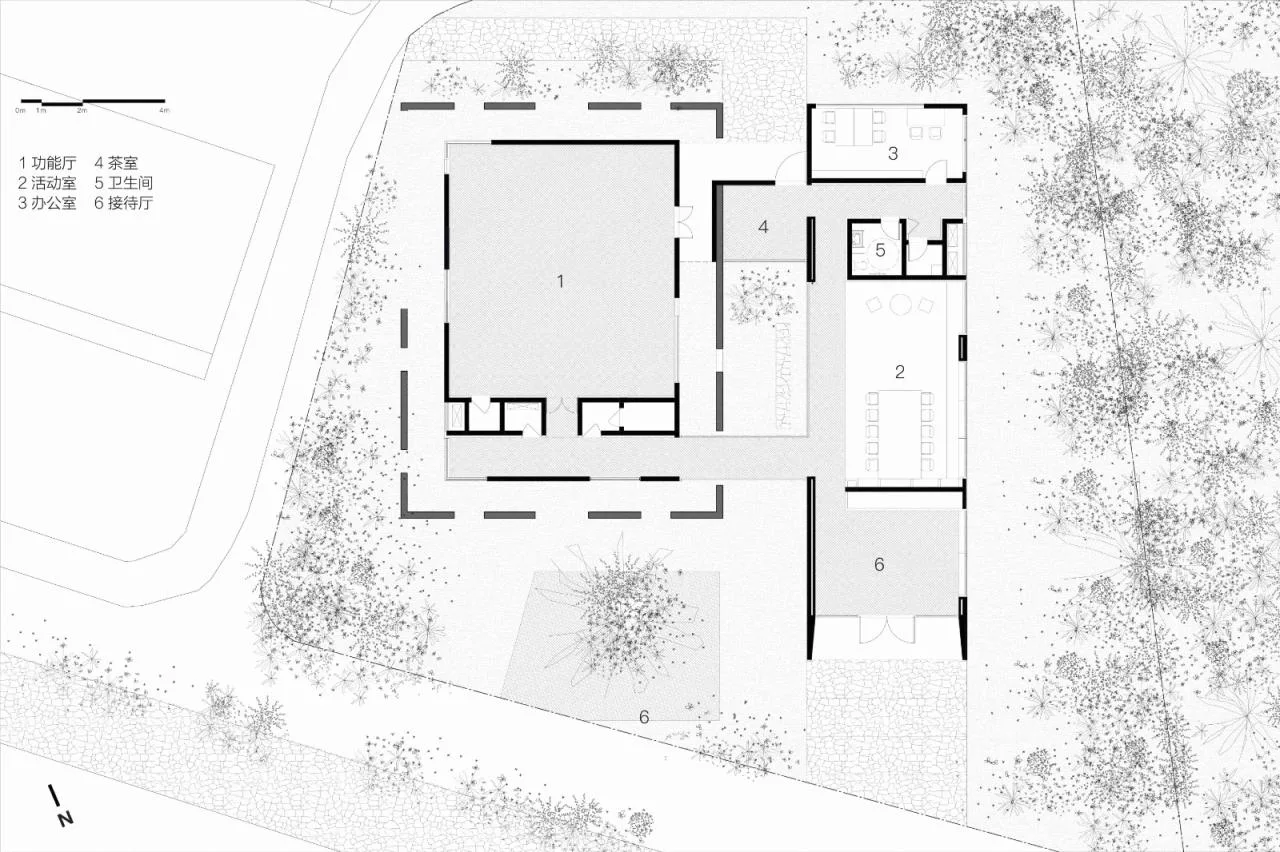
△ First floor plan
The multifunctional design extends the building’s usage throughout the day: commercial sales in the daytime, reading spaces for children, and movie screenings in the evening. The exhibition hall also displays graphic and textual content, showcasing the village’s history and mushroom processing heritage. This comprehensive approach enhances the building’s adaptability and functional sustainability.
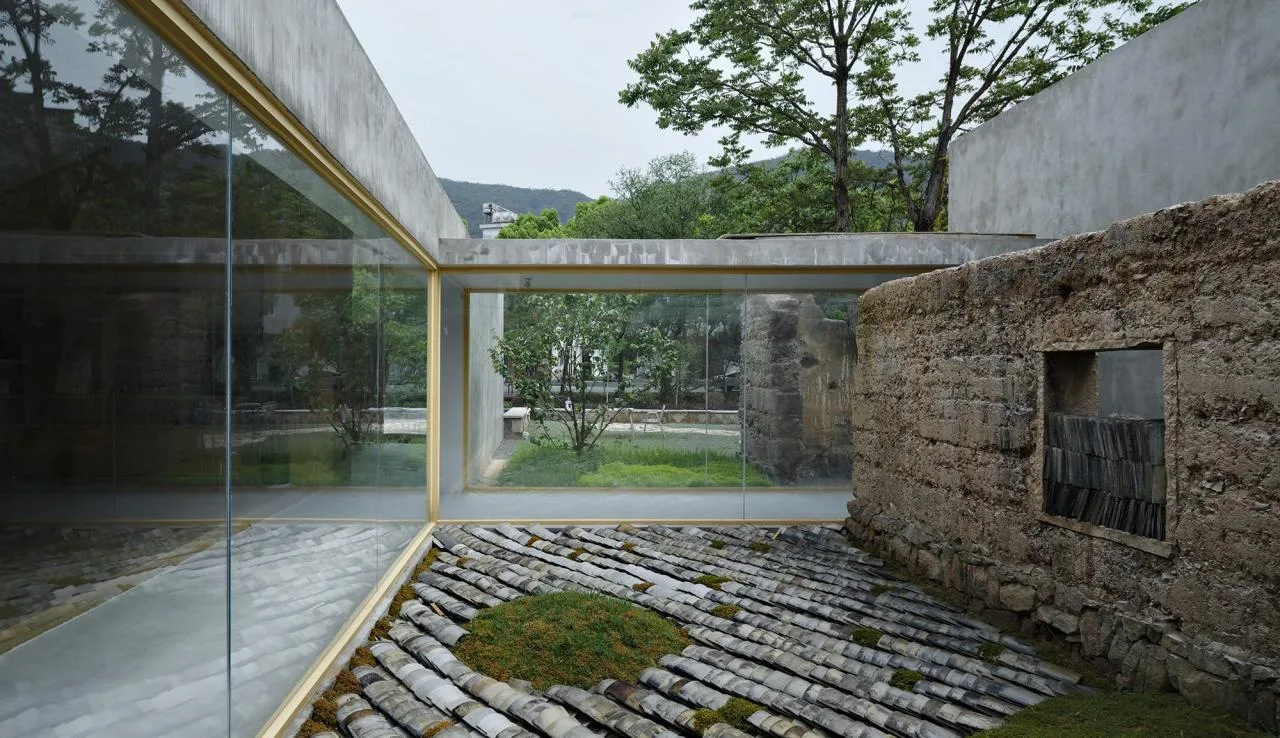
△ Inner courtyard
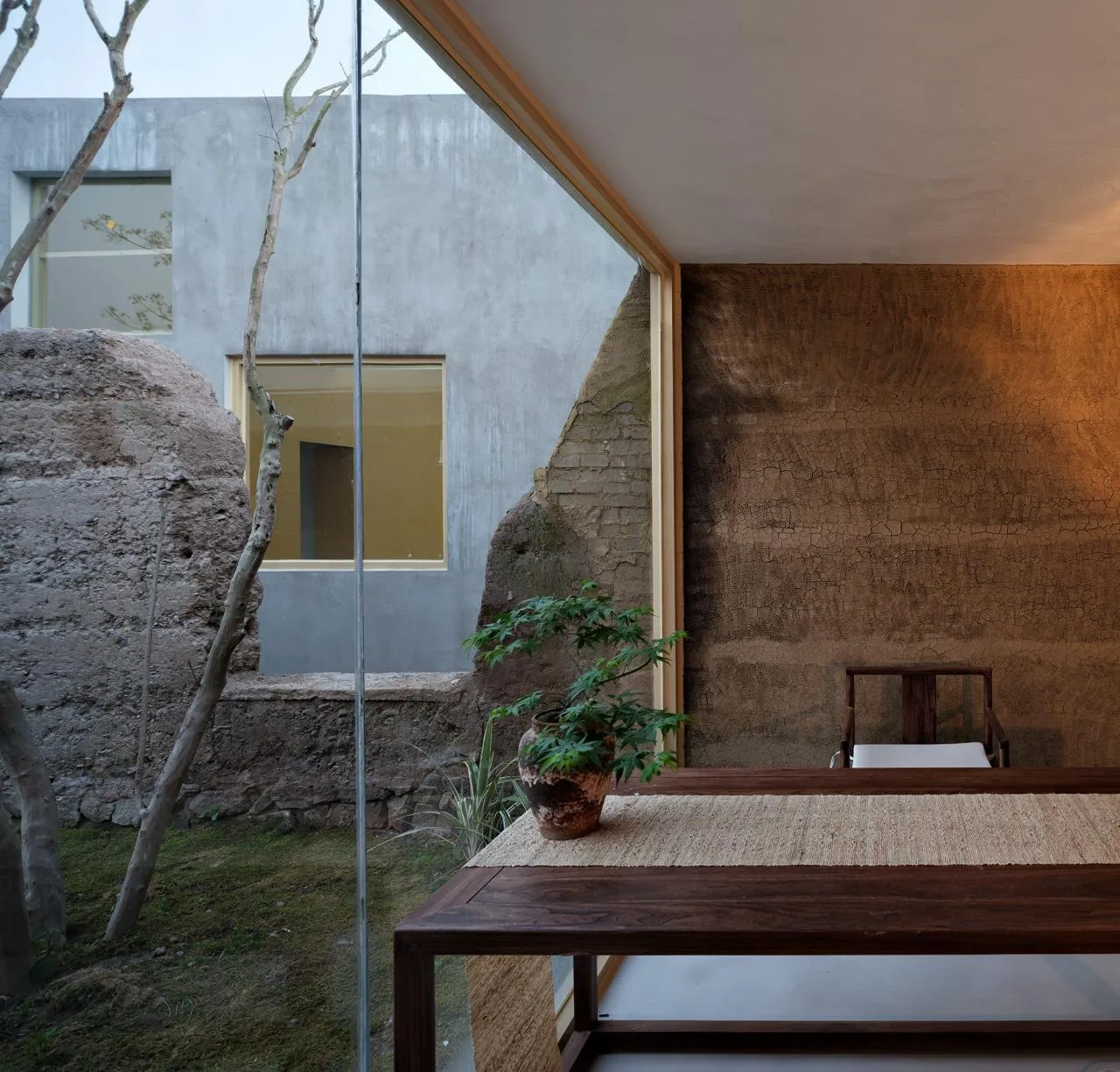
△ Indoor and outdoor spaces
This functional space fosters a new lifestyle, evolving from the original productive use to a vibrant social public area. It also redefines the relationship between architecture and community.
Facade Renovation
The original walls feature small, uniformly arranged windows limited by the structural constraints of rammed earth. Additionally, the mushroom farm’s breeding requirements demanded minimal light, resulting in a predominantly closed façade.
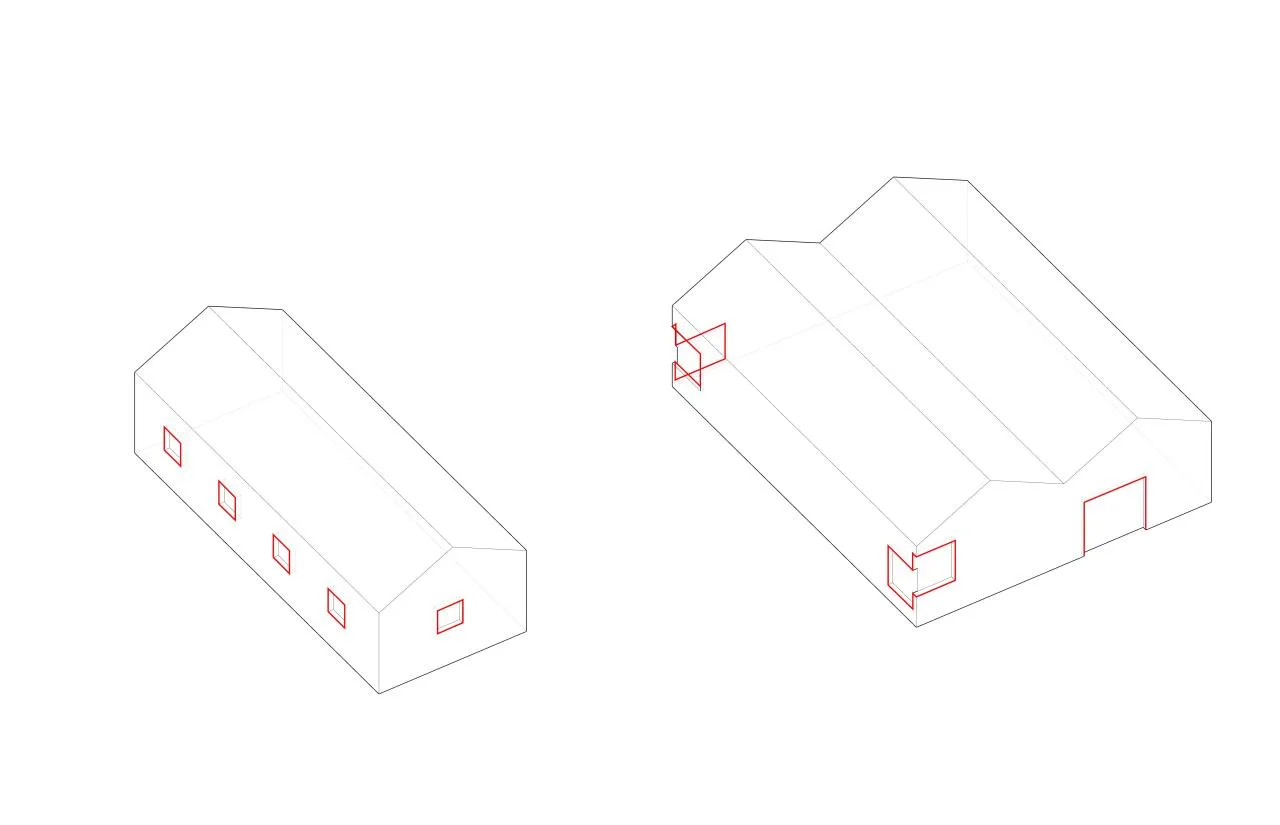
Evolution of facade window openings
The new design features varied window types that reflect the functional differences within the building. This contrast between solid and transparent elements allows villagers passing by to perceive the indoor activities.
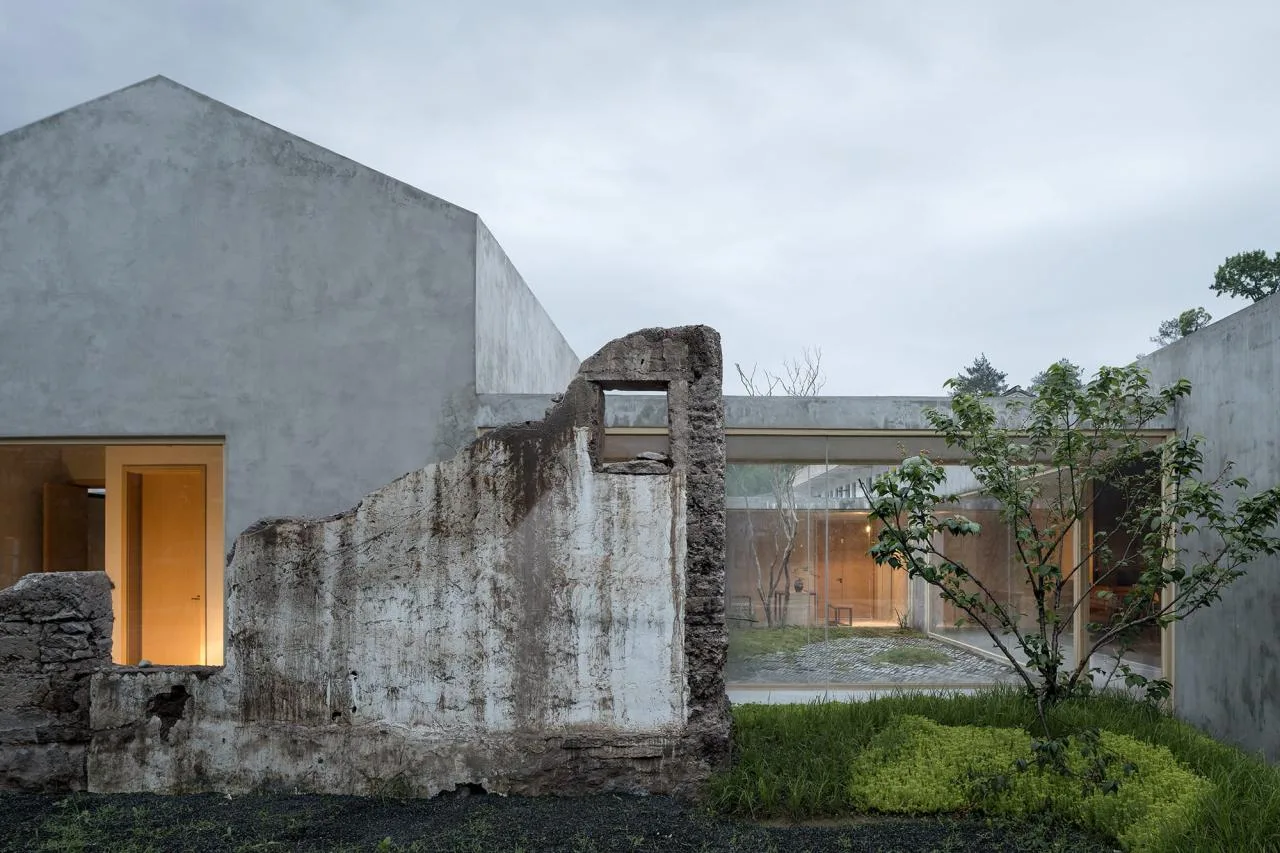
△ Contrast of window styles
The multifunctional exhibition hall incorporates large corner windows that open wide to maximize natural light. Similarly, the coffee shop entrance features expansive glass windows, inviting the surrounding natural environment inside.
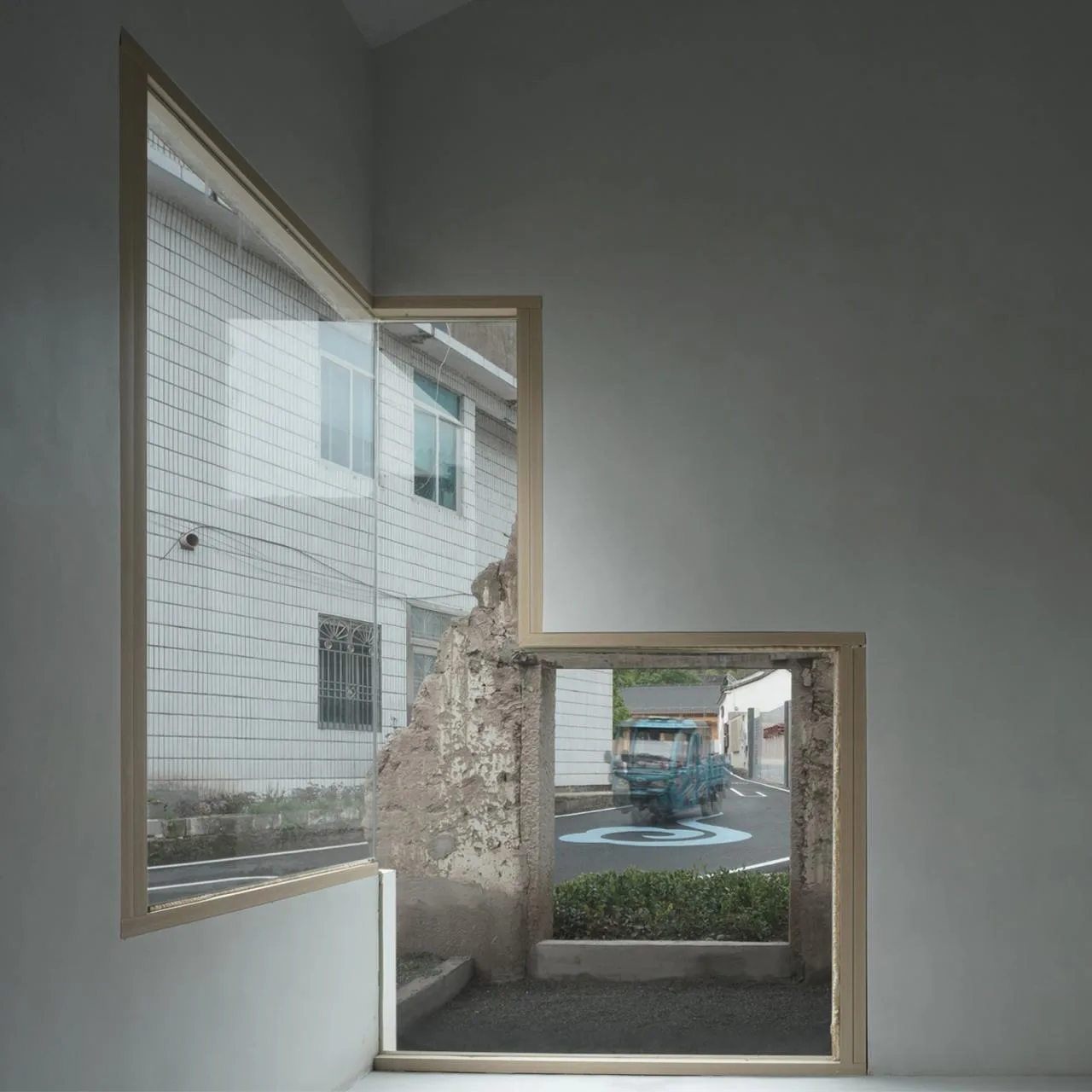
△ Corner window
High windows added to the sloping roof facing the hillside not only bring in natural views but also consider ecological technology and spatial comfort. These new openings reconnect the building with its natural surroundings, responding to nearby alleys, residences, and mountains. This design invites the external environment inside, creating stronger visual links and interaction between interior and exterior.
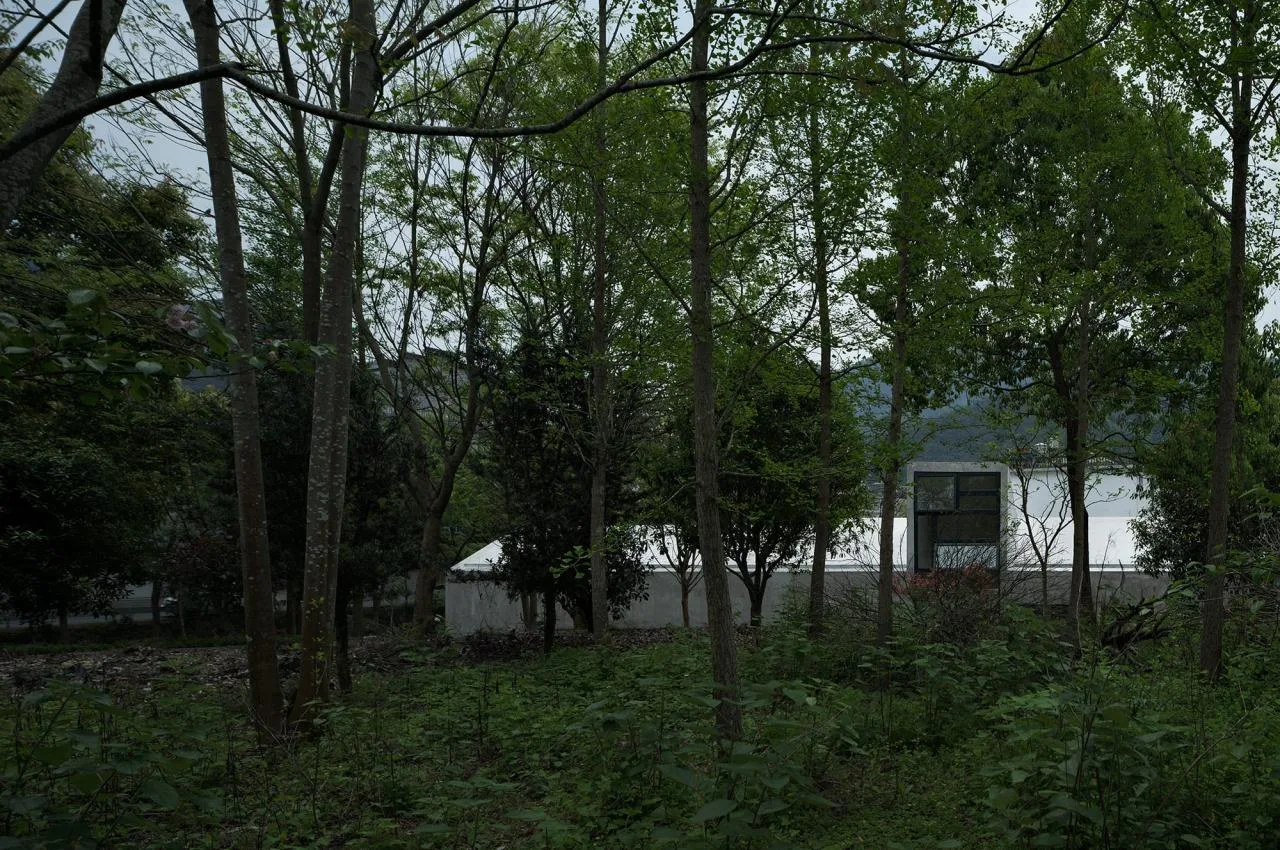
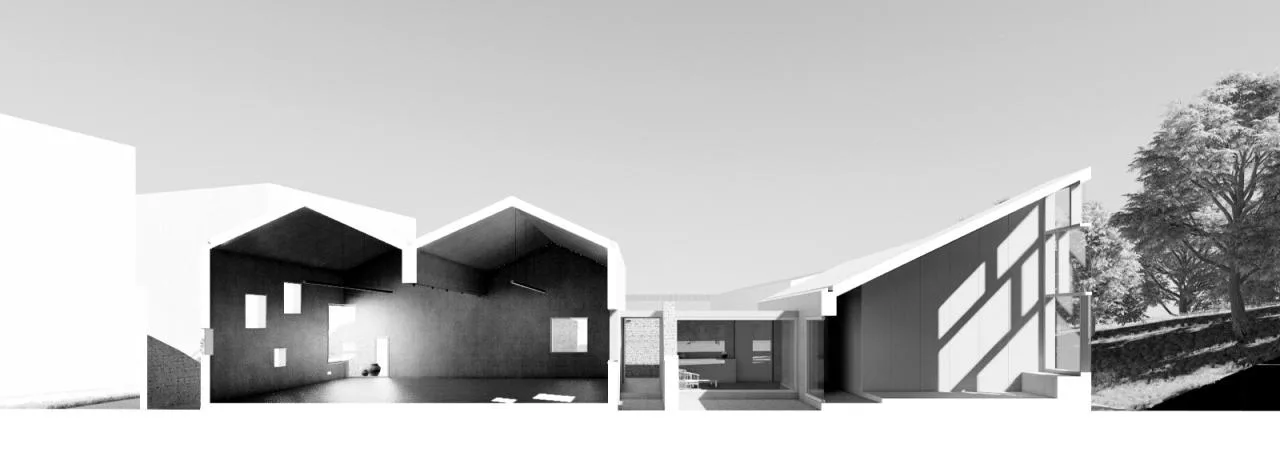
△ High windows on sloped roof
The natural prototype remains the foundation of ancient villages, embodying timeless wisdom. Looking toward the future, it is both youthful and resilient, allowing buildings to endure and respond deeply to their land. This approach bridges architecture and environment, championing a sustainable ecological coexistence between nature, society, and human habitation.
Project Drawings
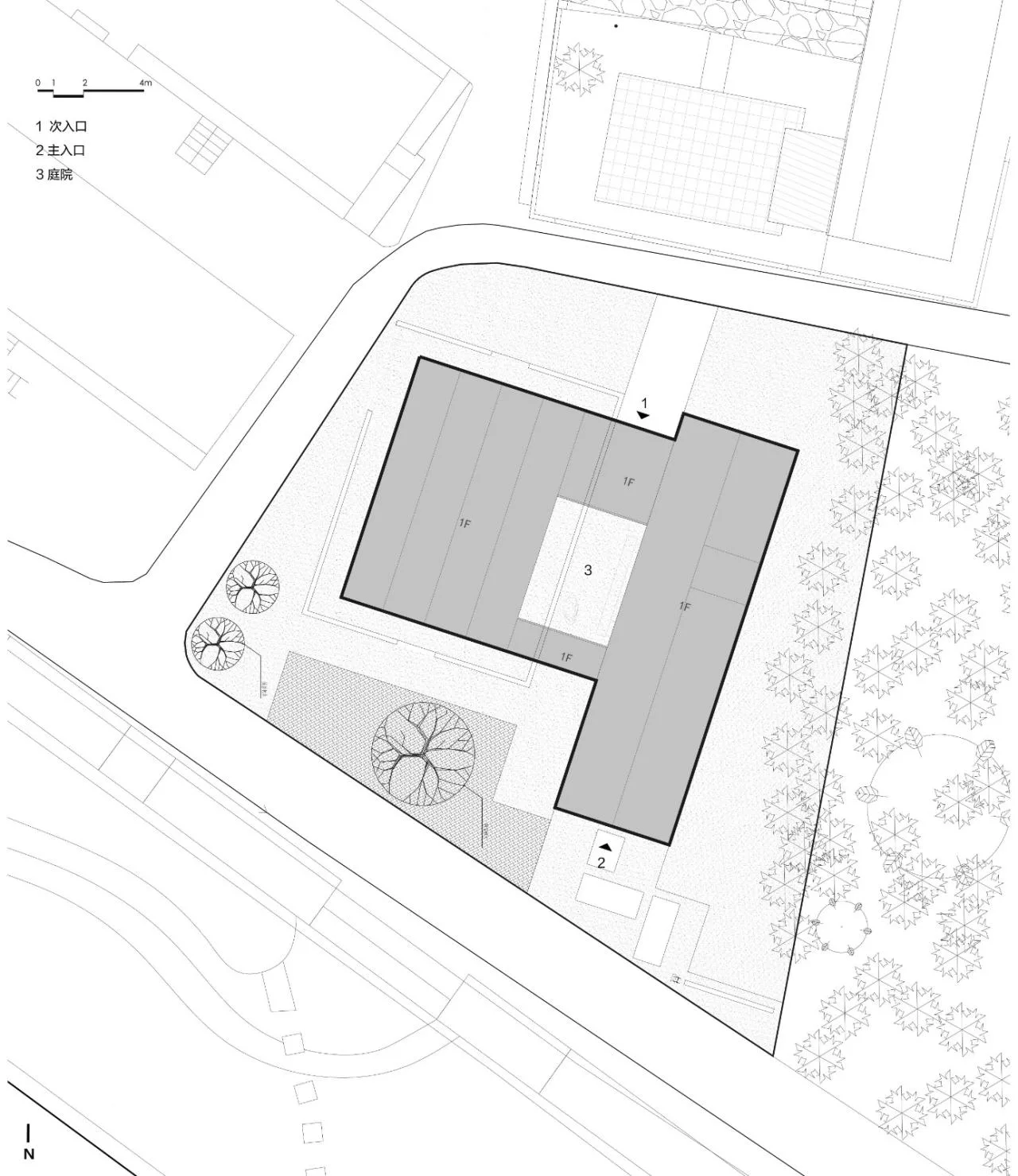
△ General layout plan
Project Information
Project Name: Wanghu Village Villager’s Home
Location: Taizhou, Zhejiang, China
Design Firm: Zhejiang University Architectural Design and Research Institute
Architectural Design: Mo Zhoujin, Wu Hegen, Guo Lidong
Structural Design: Jin Xingxin, Chen Dong
Water Supply and Drainage Design: Sang Songbiao, Wu Weihao
Electrical Design: Shen Yueqing, Li Zhaoyu
Intelligent Design: Lin Minjun
Landscape Design: Sun Dongming
Project Owner: Xianjing Village Stock Economic Cooperative, Baita Town, Xianju County
Project Area: 400 square meters
Design Period: 2021
Completion: 2023
Architectural Photography: Zhao Qiang















Must log in before commenting!
Sign Up