
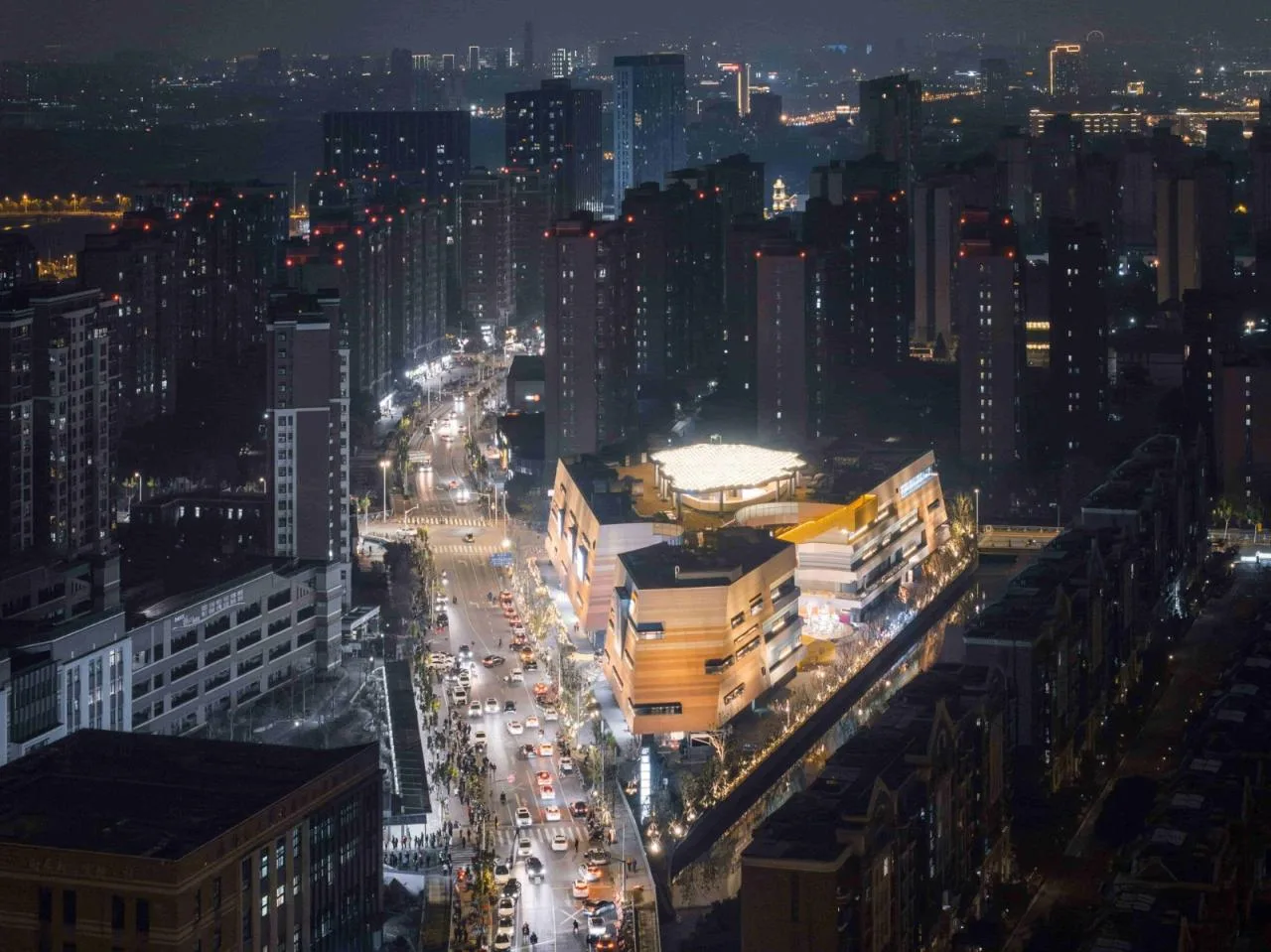
A shopping mall illuminated under the night sky © CreatAR Images
The Jinfang Neighborhood Sijing Commercial Center is set to open in December 2023 after a long-awaited journey. The design process began in April 2017, spanning nearly seven years filled with numerous challenges and milestones.
“Almost everyone is drawn to the allure of big cities. However, urban expansion means that only the fortunate few living near the city center can fully enjoy its beauty and vibrancy, while others can only admire from afar.” — Alexander’s Language of Architectural Patterns
Located in Shanghai’s Songjiang District, Sijing is known as the “Sleeping City” due to its abundance of residential areas but a lack of neighborhood amenities. Most jobs remain concentrated in the city center, leading to crowded subway stations during weekday rush hours. The local community atmosphere primarily comes alive at night or on weekends.
Site Constraints
The project site occupies a narrow, triangular plot bordered by two urban roads and a river to the south. To the north lies a school and residential neighborhood; the east side borders another river, with additional residential areas beyond it. The main commercial display zones focus on the street intersection along the northern site frontage and the northeastern road.
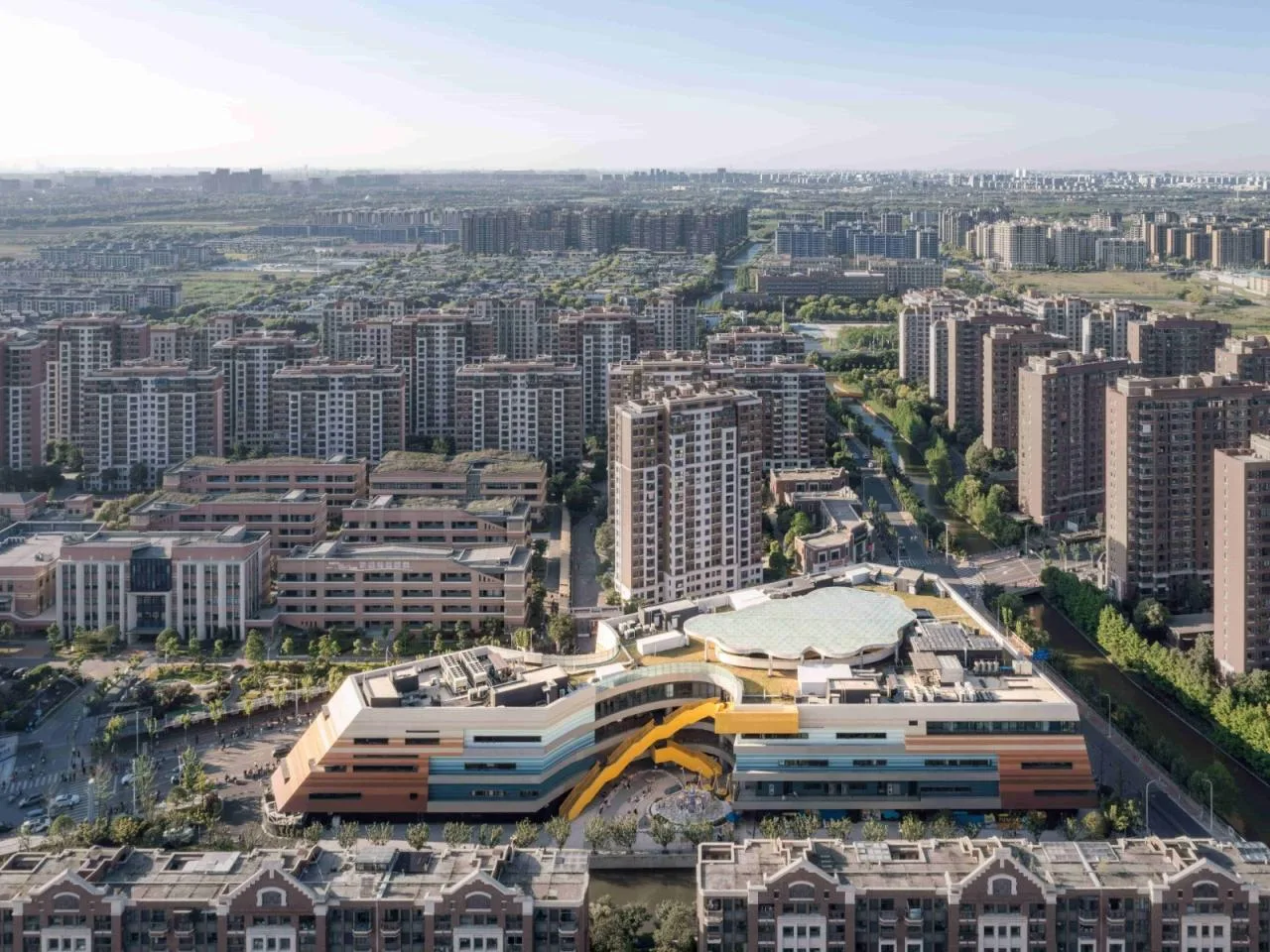
△ Bird’s-eye view from the south side © CreatAR Images
We designed a delicate, pure shell that protects the garden and the people enjoying it, shaping the exterior facade like a cut amber gem.
Community Focus
In this “sleeping city” lacking vibrant social spaces, the community commercial center aims to become a lively hub—a welcoming “living room” that residents can take pride in and feel connected to, surrounded by a large garden serving the neighborhood.
Initially, we envisioned a bridge across the river south of the site, directly linking the mall to the residential area. This would allow parents to pick up their children and conveniently cross through the mall on the way home. The owners hoped this design would foster greater interaction between residential and commercial spaces, enhancing convenience for residents. Unfortunately, this concept was not approved.
Design & Form
When asked why the design didn’t follow a traditional enclosed shopping mall format, I explained this is not a mall in the usual sense but a community commercial street—albeit one that diverges from conventional layouts.
Standard community commercial streets would not efficiently utilize this narrow, triangular plot, nor would they support smooth pedestrian flow.
Given the large building volume, there was also concern about creating a heavy, oppressive feel for pedestrians. Community commerce demands a relaxed and pleasant atmosphere.
My solution? Embrace a “mountain” concept. The inward-sloping exterior walls reduce the imposing nature of the volume.
Some say the building resembles a ship, others a chunk of cheese. I welcome these varied interpretations, as they reflect user perspectives rather than just the designer’s intent.
Buildings need to breathe; I avoided cramming all functions together. Even though the space is designed to feel intimate, it still requires openness. Circular arc-shaped cutouts on both sides serve as secondary entrance plazas and children’s play areas, attracting visitors and expanding commercial space.
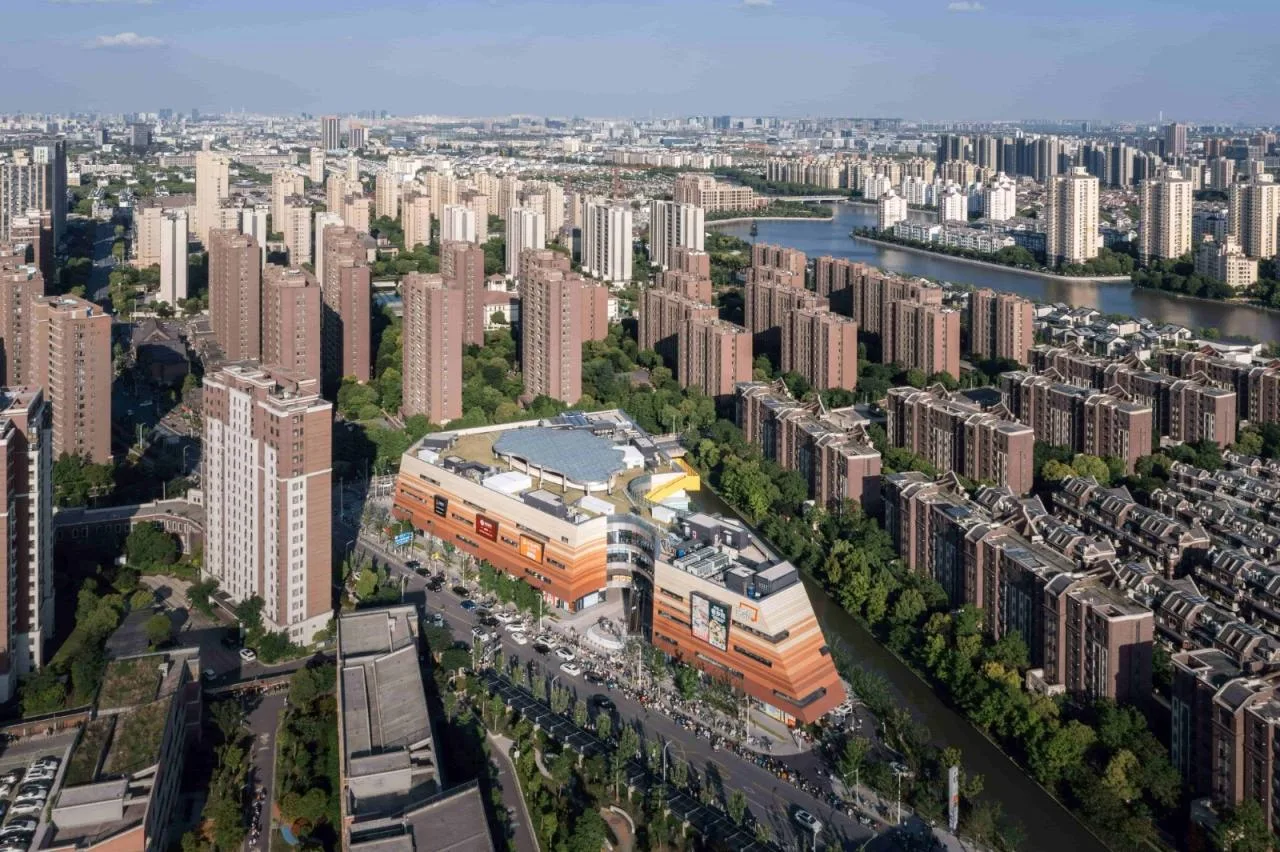
Bird’s-eye view from the northwest side © CreatAR Images
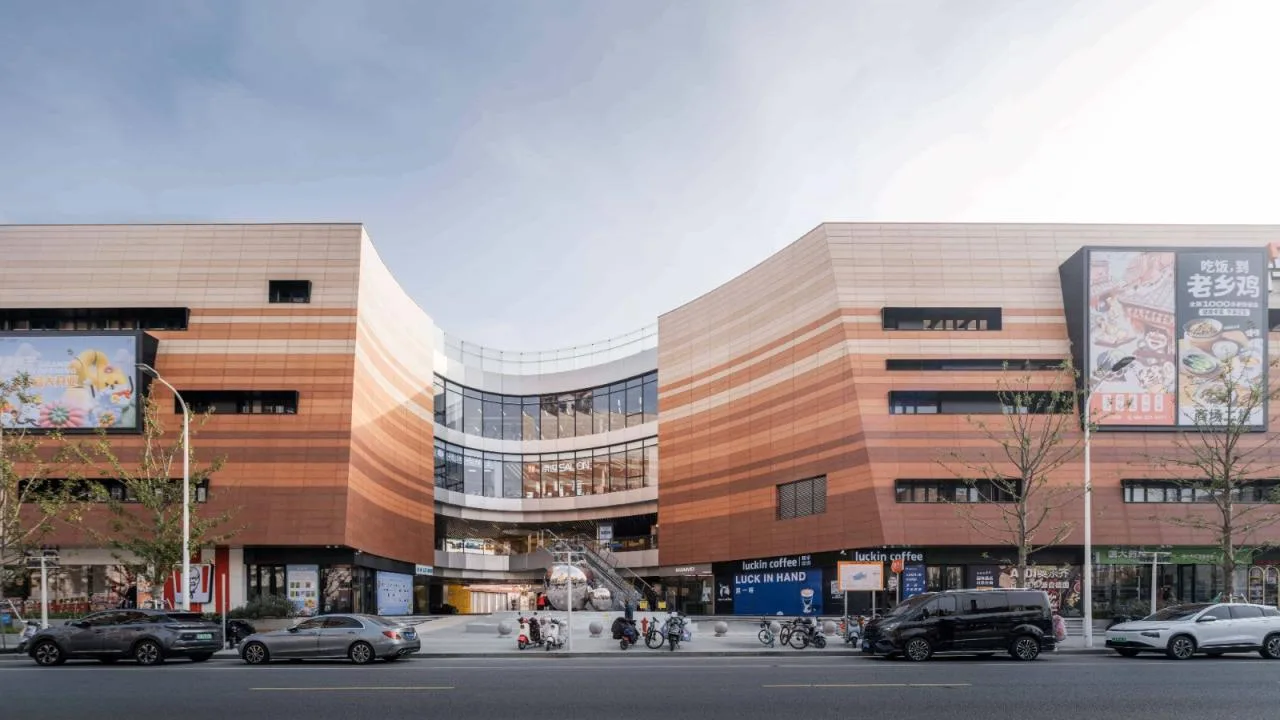
△ Secondary Entrance Plaza © CreatAR Images
Sparkling Dome
To attract extensive foot traffic, we carved out a diamond-shaped negative space at the street corner inside the building. This creates a large-scale “viewfinder” facing the residential area, where mirrored surfaces reflect diverse scenes.
The large mirror stainless steel panels, while not perfectly flat, add a dynamic and intriguing effect. Their slight unevenness causes multiple reflections that create a striking lightning-shaped light pattern across the surface.
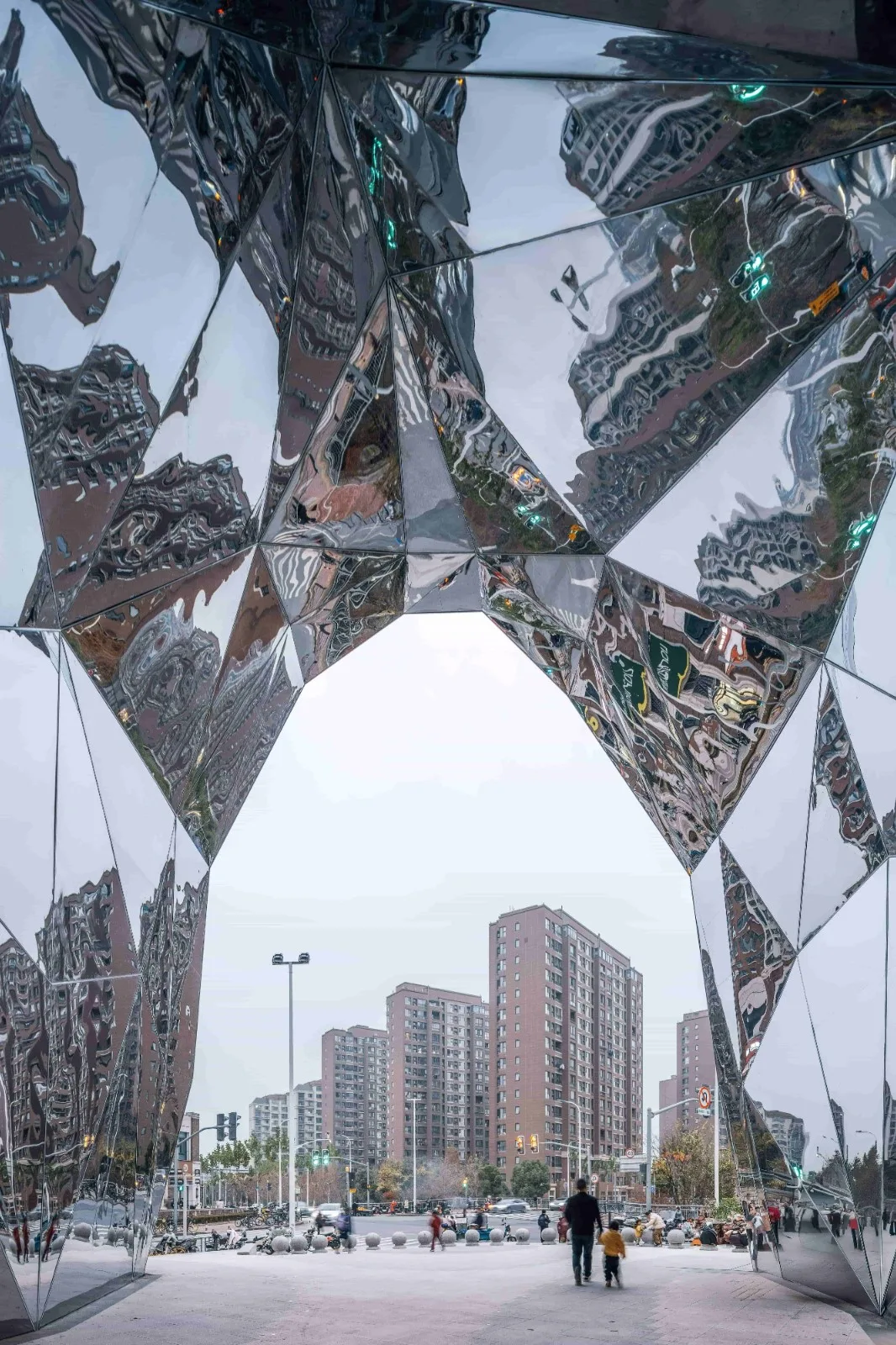
△ Main entrance mirror stainless steel dome © CreatAR Images
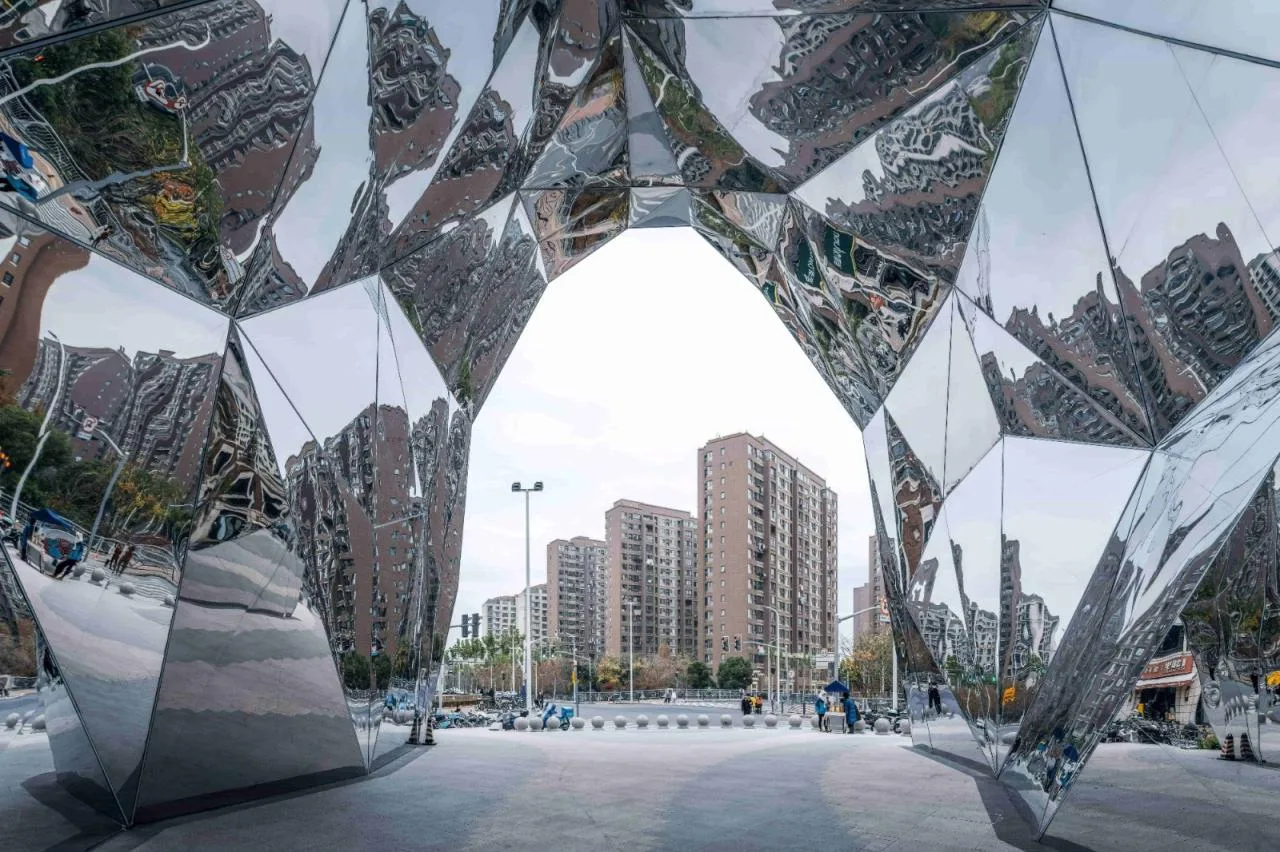
△ Main entrance mirror stainless steel dome © CreatAR Images
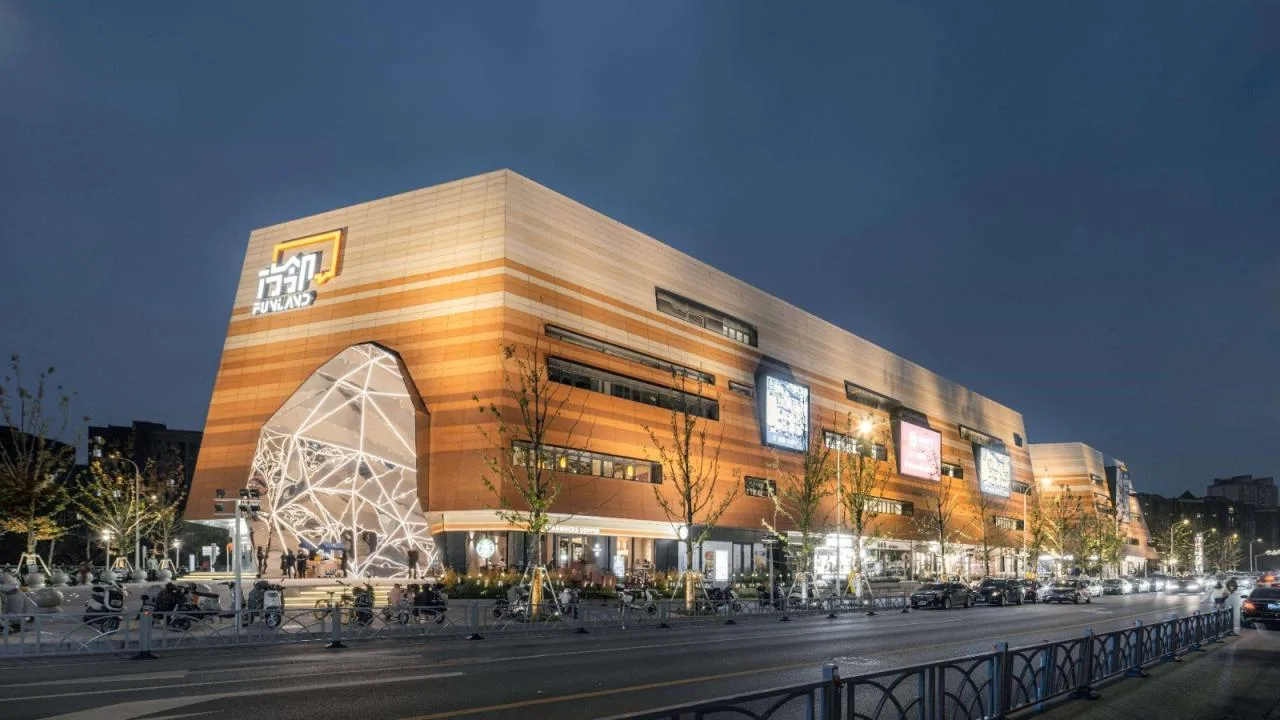
Sparkling dome © CreatAR Images
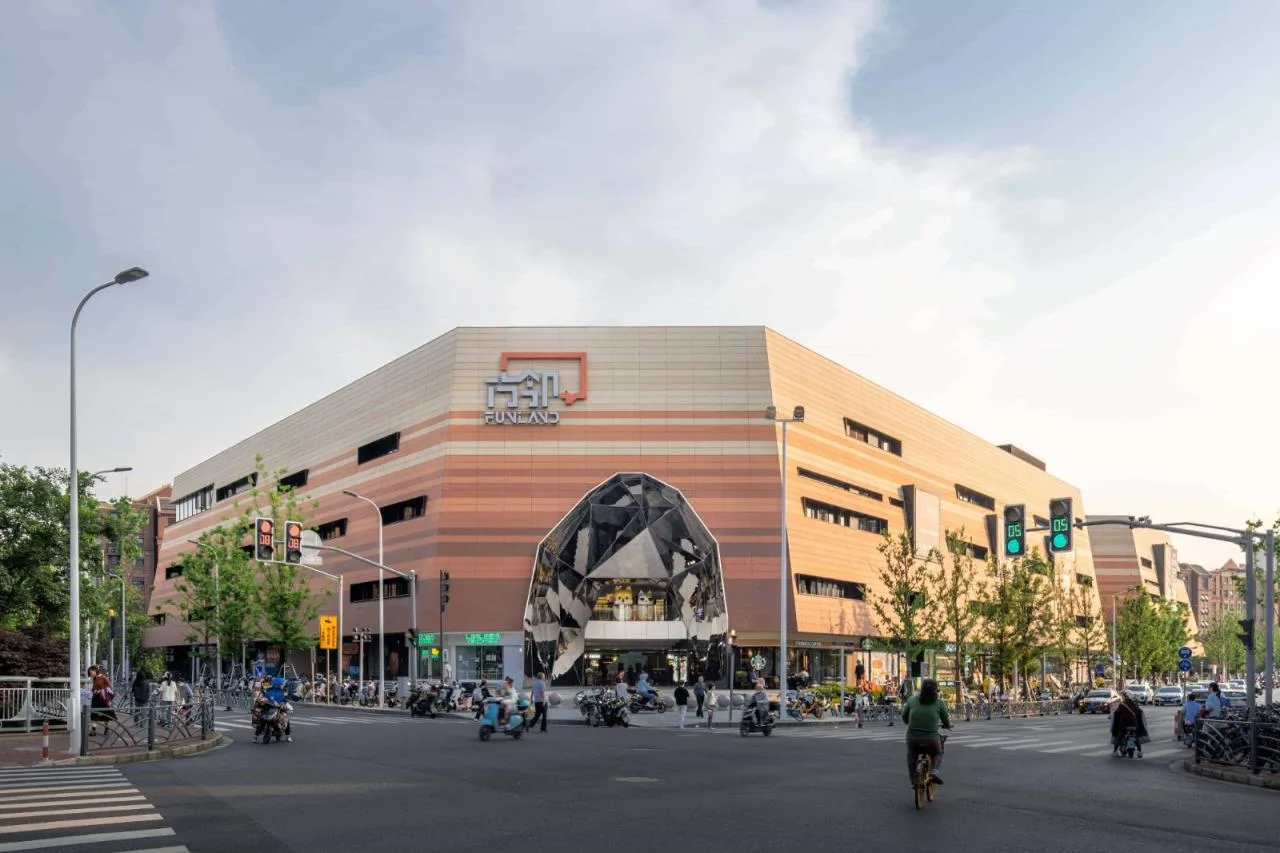
△ Street corner perspective of the building © CreatAR Images
Color Palette
The nearby residential buildings and school are predominantly reddish-brown. How could our design interact harmoniously with this environment?
Initially, I considered gray ceramic panels to represent the “mountain,” but gray felt dull in this setting. Colored aluminum panels were also tested but failed to deliver the desired texture. After reexamining the surroundings, I chose a gradient color palette inspired by the environment to evoke colorful mountains resembling Danxia landforms.
Since a single facade treatment can feel monotonous in commercial buildings, and the owners prioritized cost control, the riverside facade was modified by removing ceramic panels and applying a blue-green paint for a contrasting effect.
With the building as a mountain, the courtyard becomes a valley.
I wanted visitors standing in the courtyard to bask in sunlight and feel like they were in a rainbow valley. The ground uses a simple gradient of gray tones, while the large staircase on the south facade is painted bright yellow. Watching young people take photos on the staircase filled me with joy.
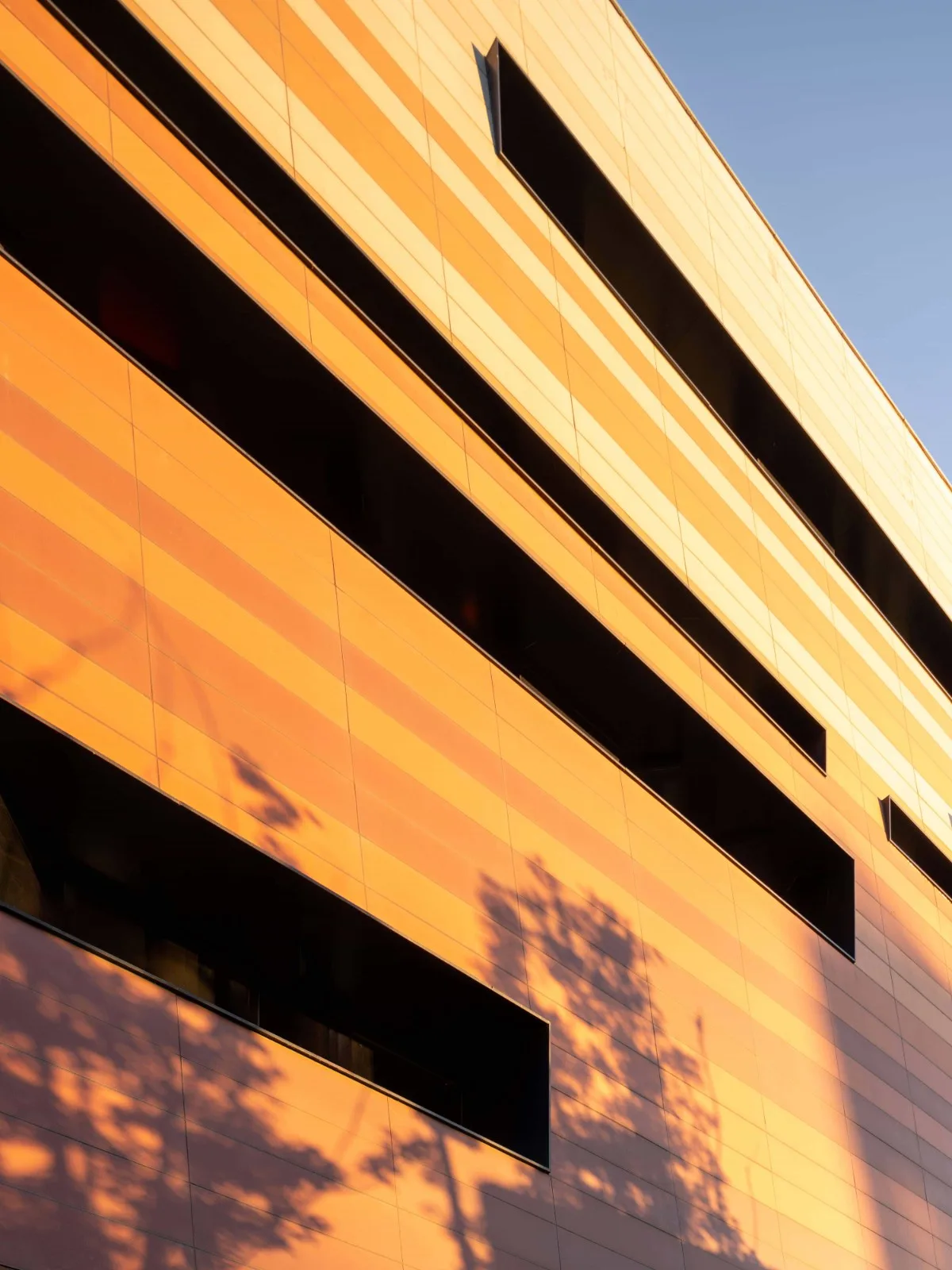
Colored pottery slabs shaded by trees © CreatAR Images
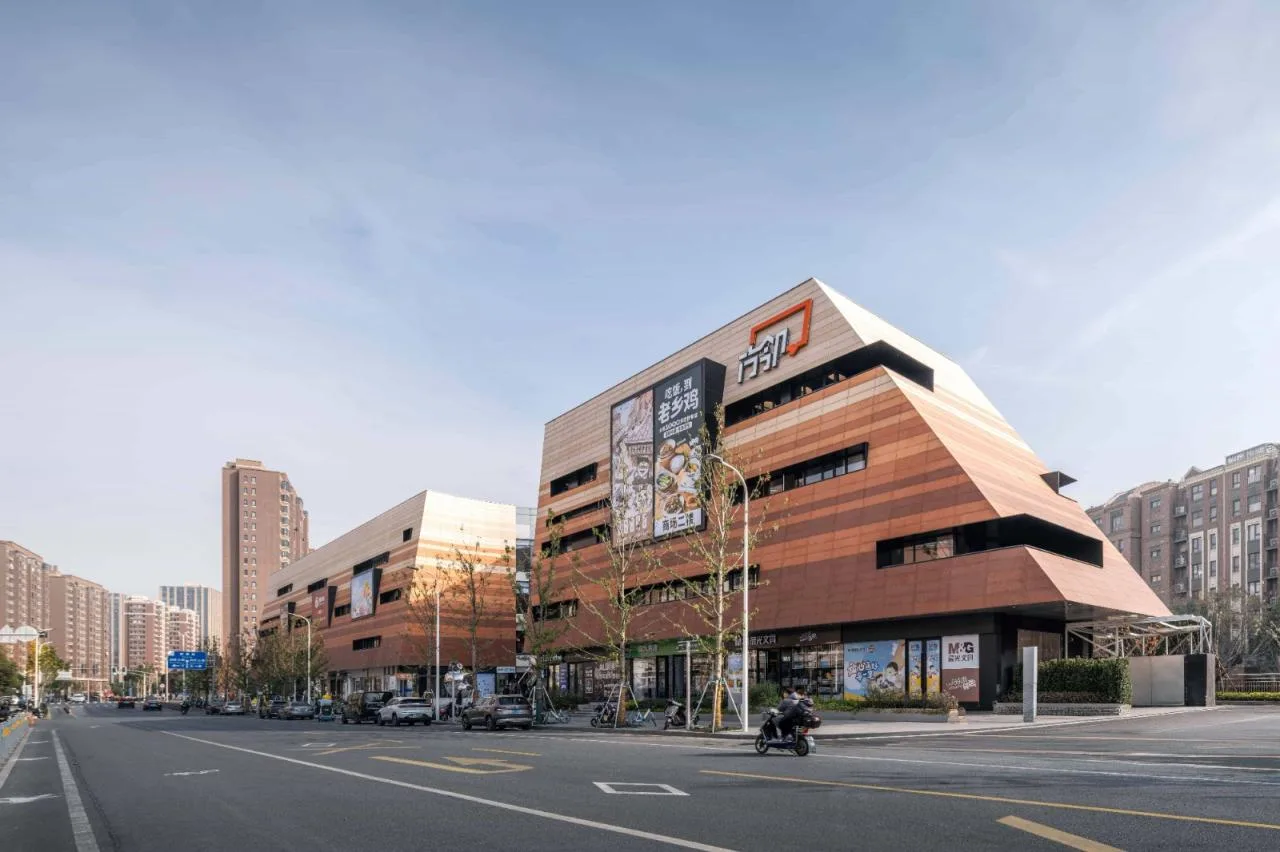
△ View of the building from the school entrance © CreatAR Images
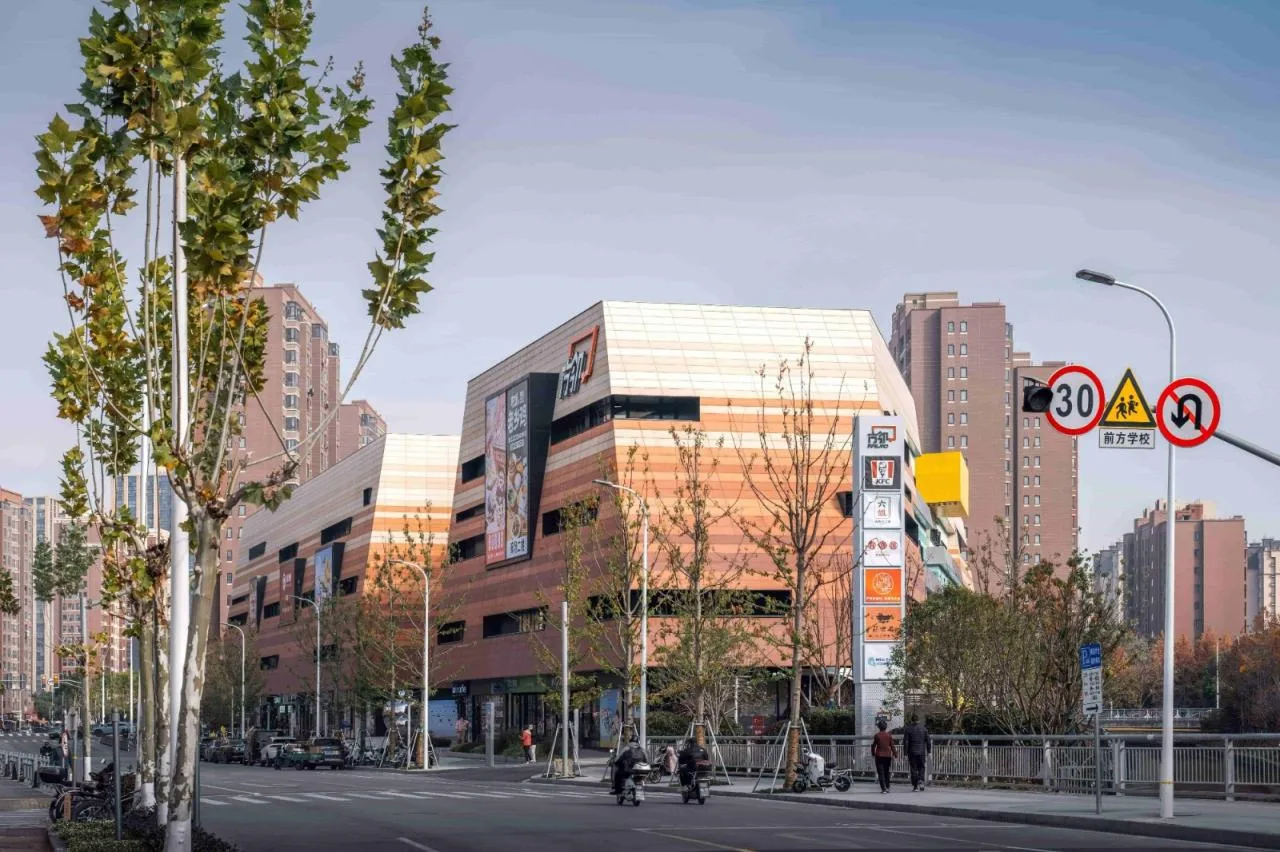
△ West perspective of the building © CreatAR Images
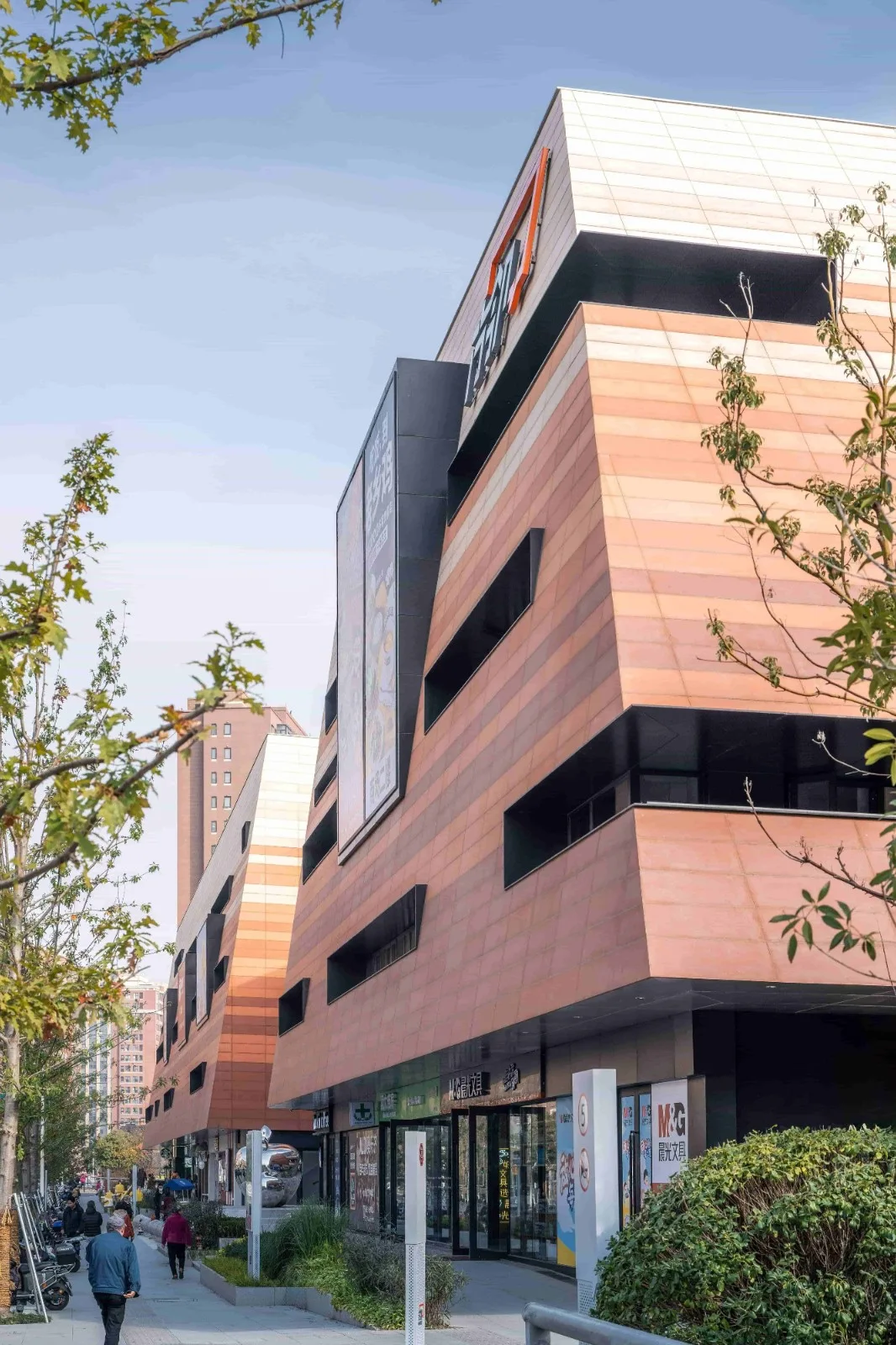
View of the north facade in relation to the sidewalk © CreatAR Images
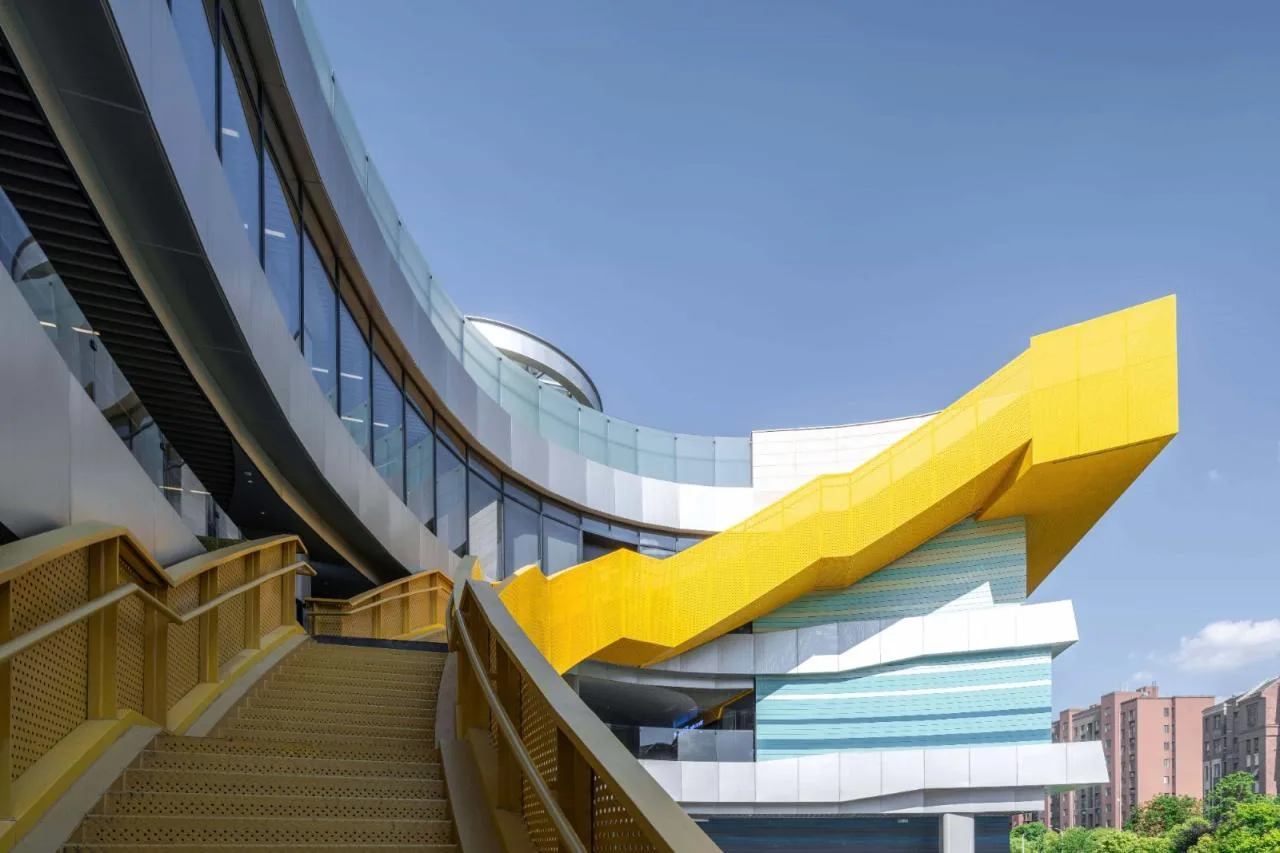
△ Bright yellow staircase © CreatAR Images
Facade Control
We categorized the ceramic panels’ color variations into five tones to create a gradient effect across the facade. The distribution of ceramic panels informed the placement of adhesive joints, aiming to achieve rich color variation within a logical, simple pattern.
Precise seam lines between colored coatings emphasize horizontal lines and prevent colors from blending inappropriately.
Window openings on the facade primarily follow horizontal lines. Over the long design cycle, adjustments were inevitable, but changes were carefully controlled within these horizontal window bands, including fire rescue windows and blinds.
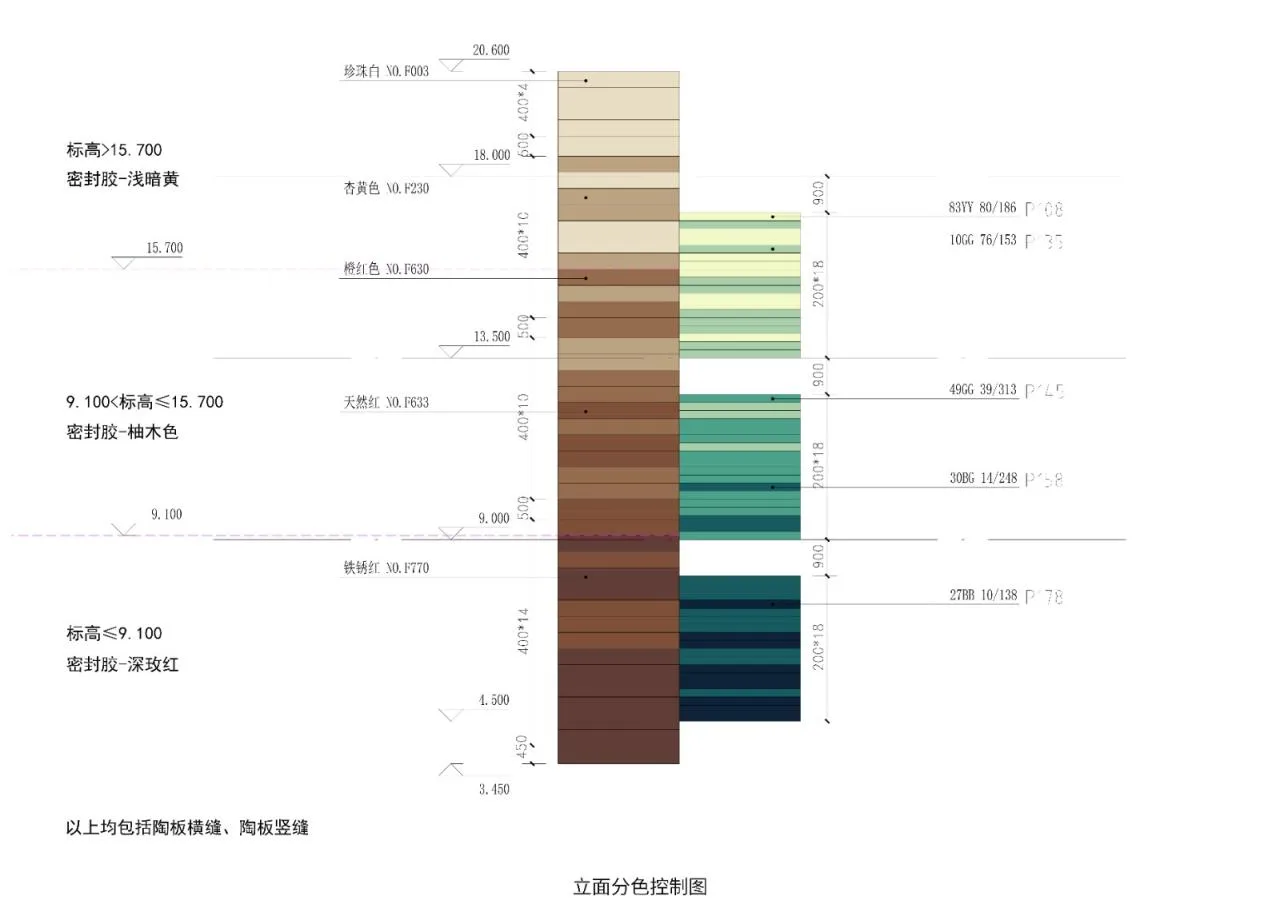
△ Diagram illustrating facade color separation control © Wutopia Lab
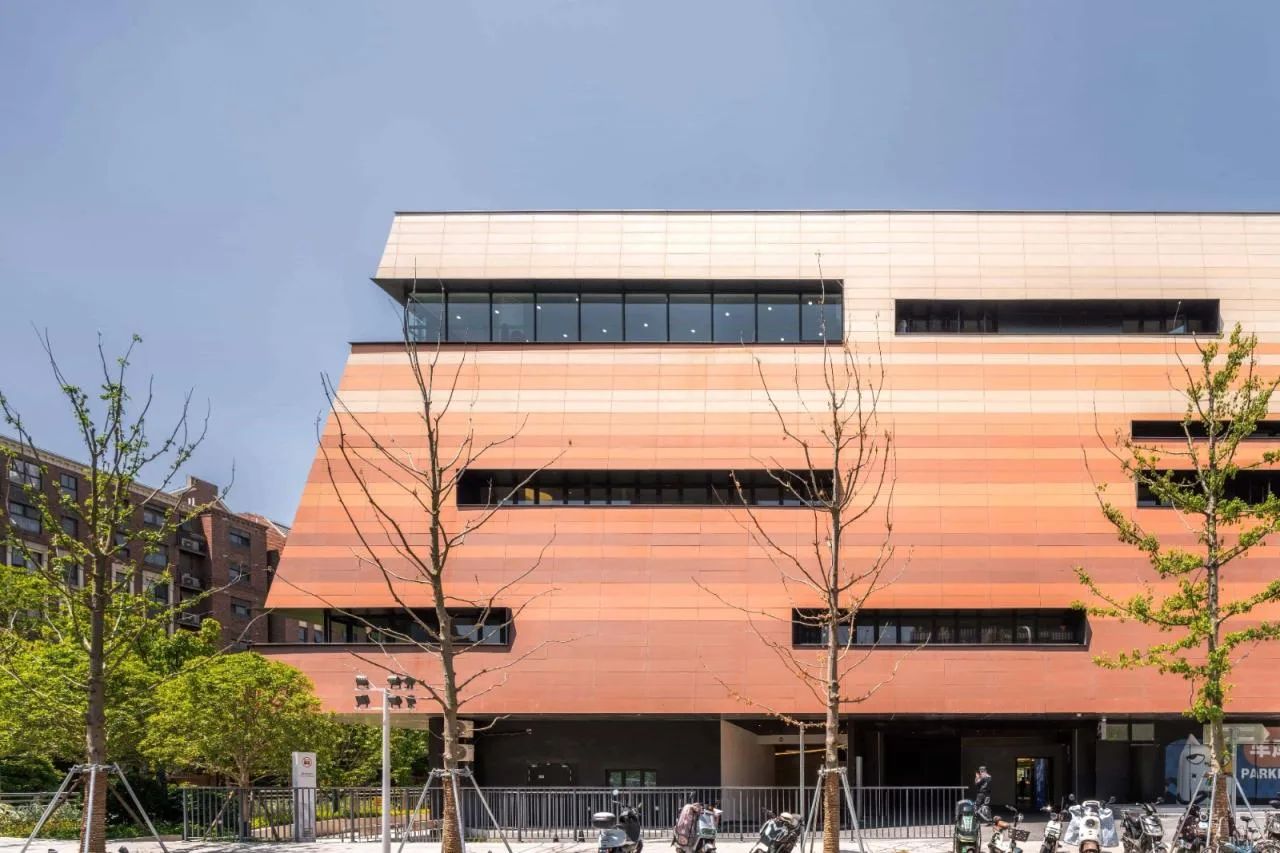
Partial view of the east facade © CreatAR Images
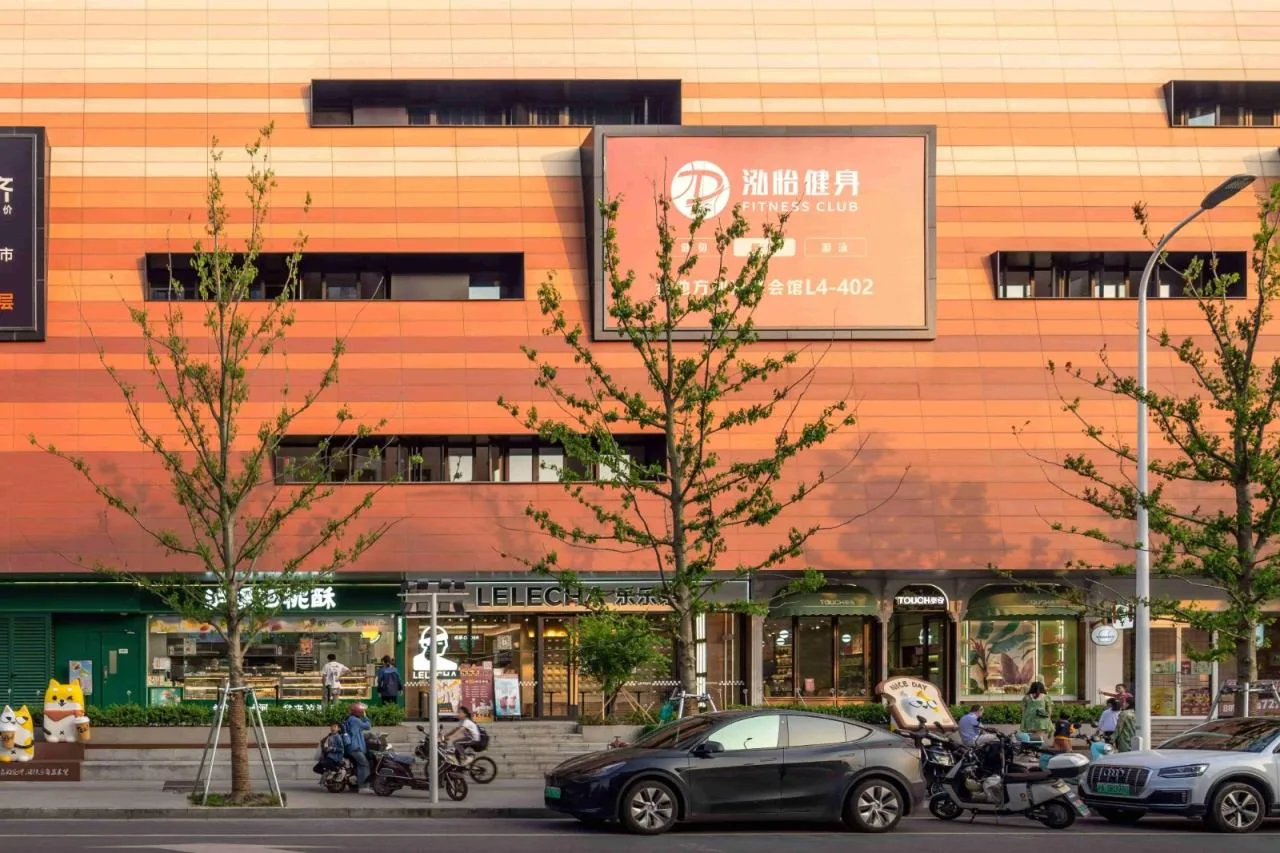
Partial view of the north facade © CreatAR Images
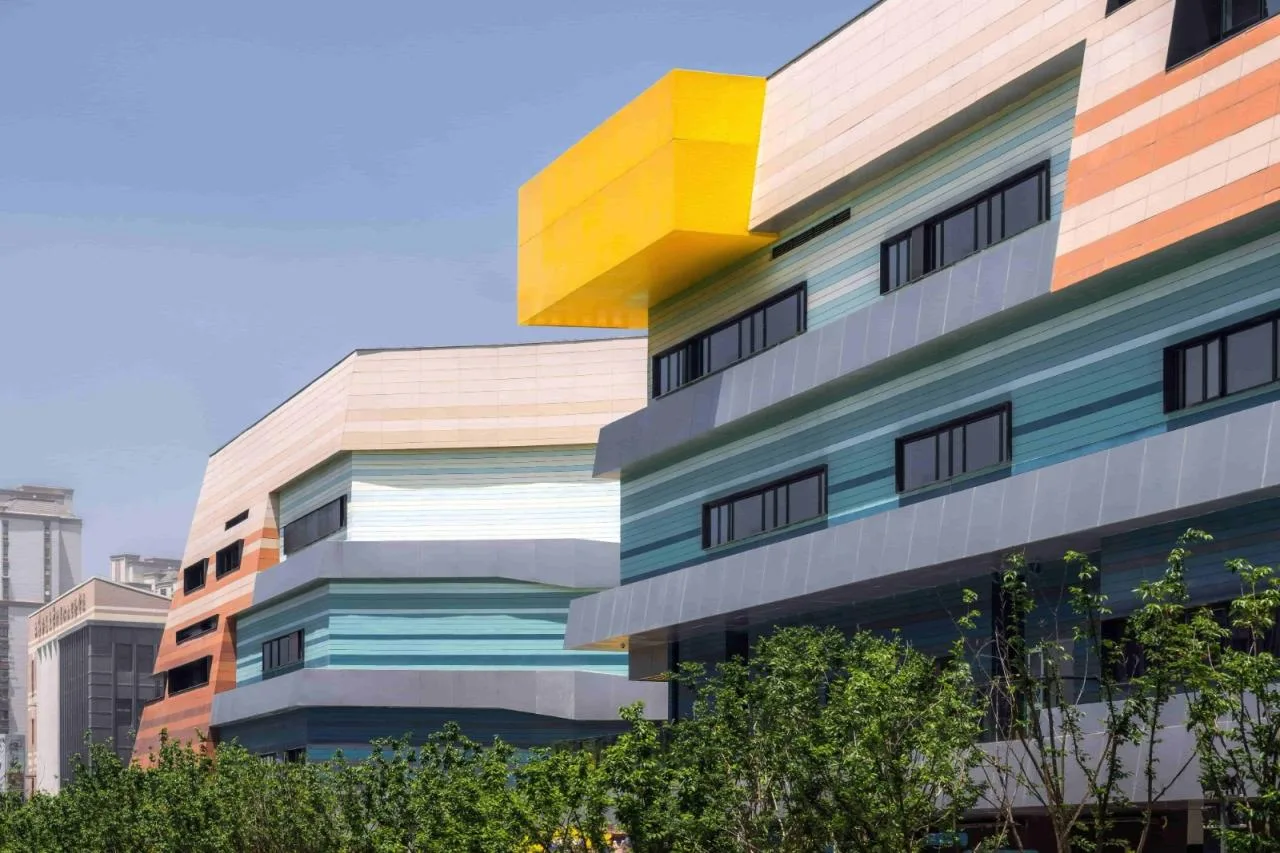
Partial view of the south facade © CreatAR Images
Courtyard & Landscape
I enjoy incorporating symbolism into design. Since the building represents a “mountain,” the atrium within it becomes a “valley,” while the ground pavement symbolizes “rivers, islands, and mudflats.” These symbols take form in specific, abstracted natural shapes digitally reinterpreted.
The atrium is a rainbow valley, transitioning softly from warm colors at the top to cool tones below.
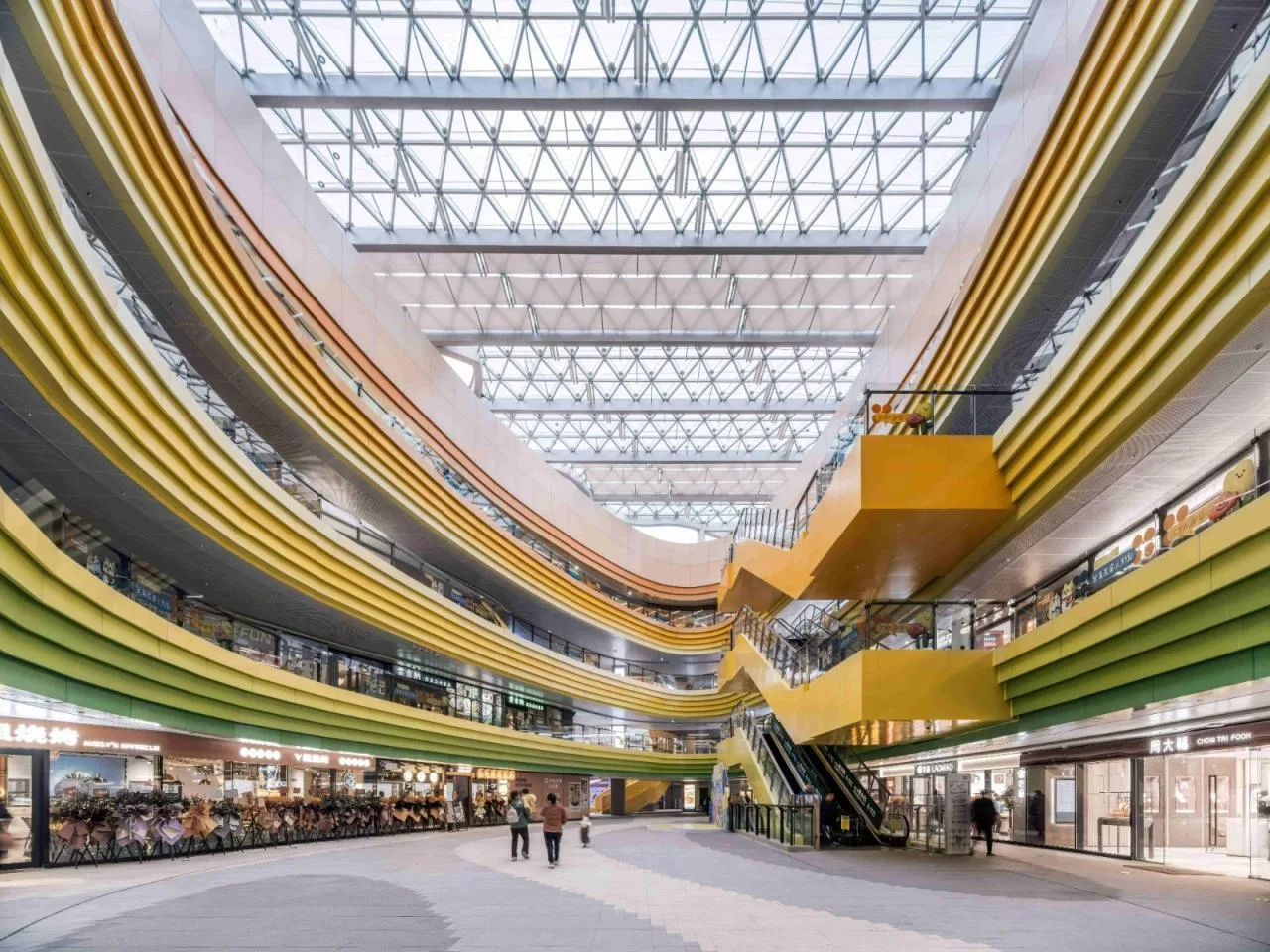
△ Rainbow Courtyard © CreatAR Images
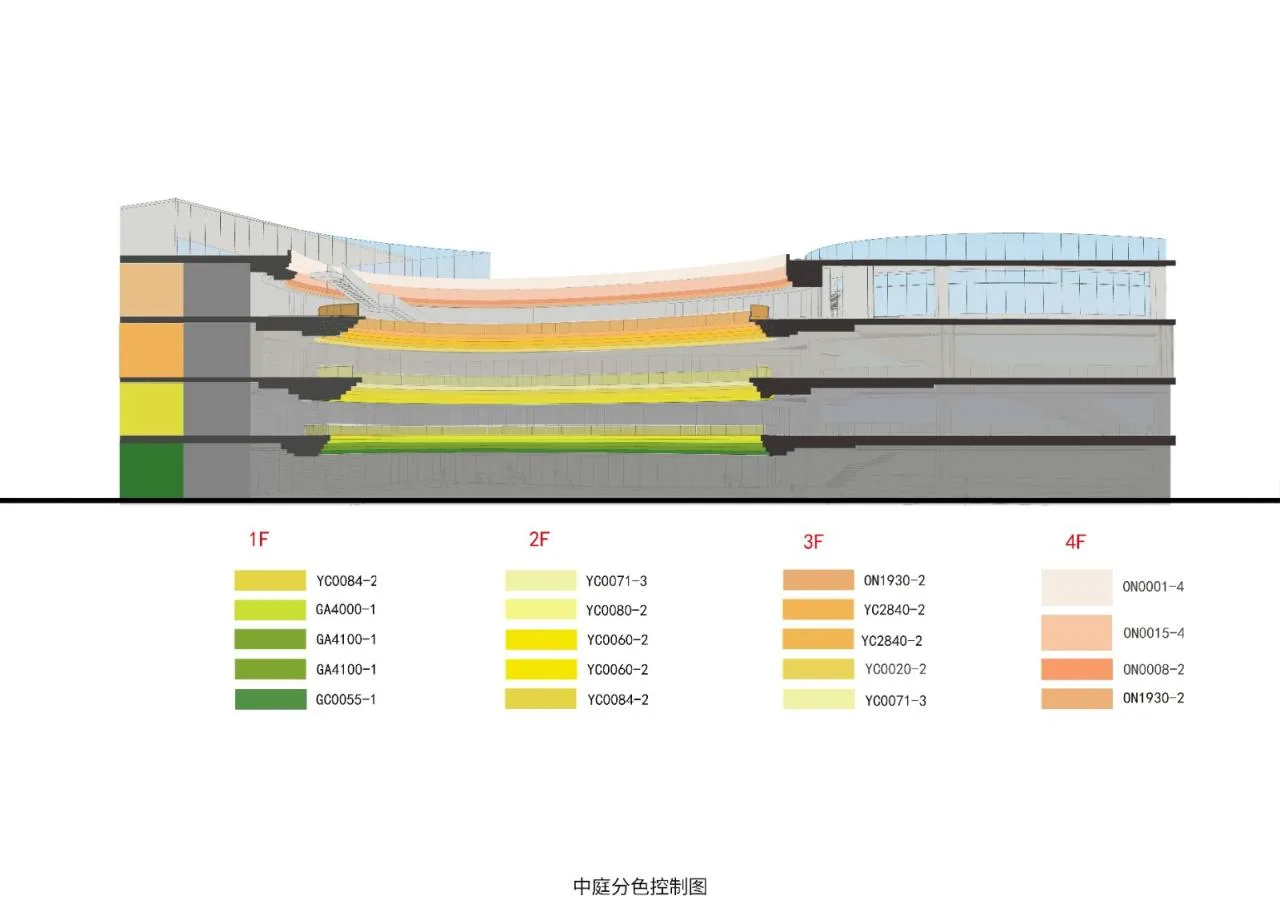
△ Color separation control chart for the courtyard © Wutopia Lab
Challenges
Throughout the lengthy design process, multiple changes occurred: updates to standards, shifts in the project management team, changes in construction drawing leads, and changes in material suppliers and samples. Managing these was a demanding task.
The ceramic panel facade incorporates three types of inclinations. Aligning the horizontal joints at facade turning points required custom panels in three different width modules.
Due to the limited site space, the fire lane partly runs under the second-floor overhang. Community commercial buildings are limited to a floor height of 4.5 meters, which is insufficient for fire truck clearance. We resolved this by locally lowering the site elevation, increasing the clear height.
Installing the dome presented challenges, requiring dimension verification after completing the internal steel structure, followed by fine adjustments. Budget constraints limited us to single-panel mirror stainless steel, making welding, transport, and installation of oversized plates particularly difficult.
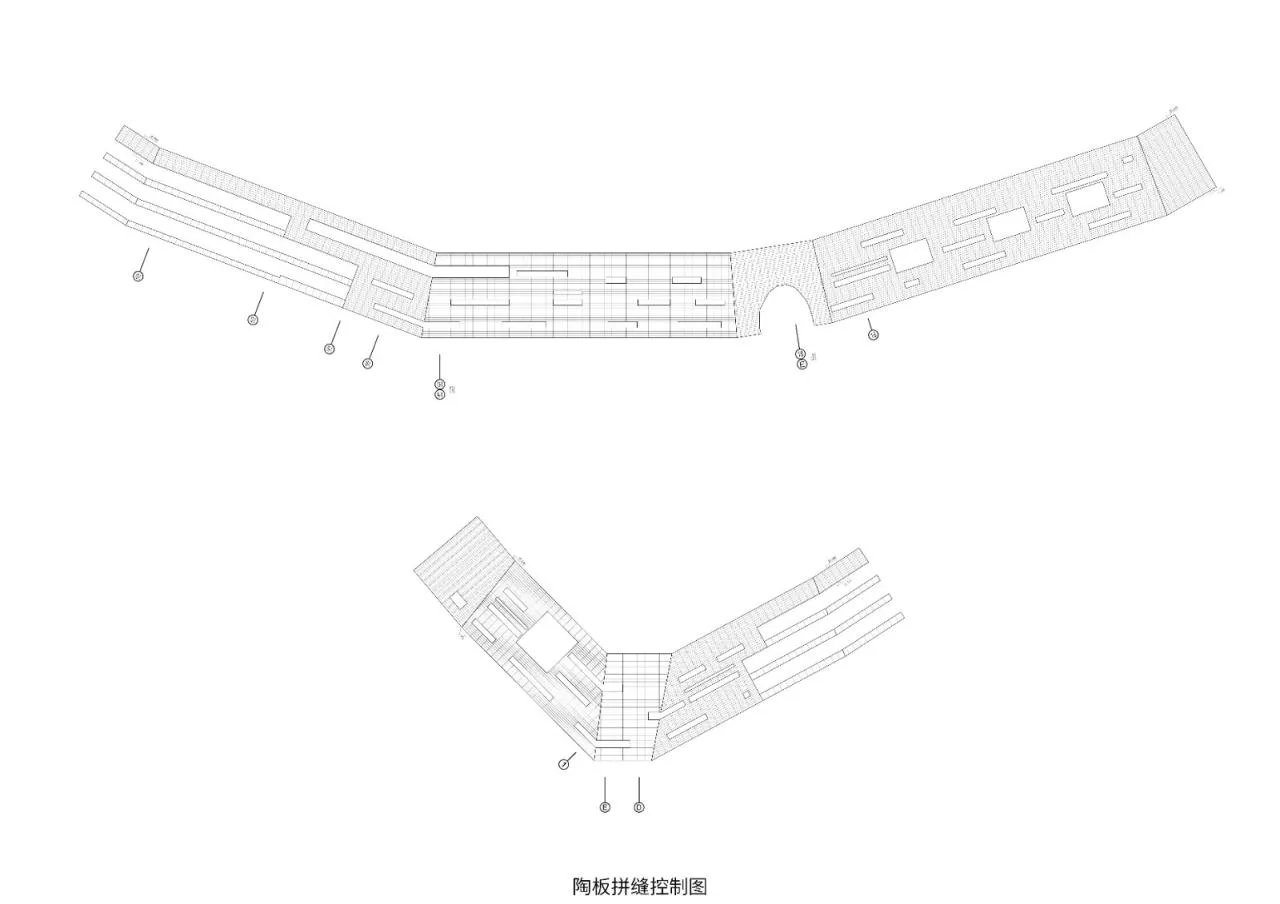
△ Diagram showing ceramic board joint control © Wutopia Lab
Love life, because within these gradually browning mountains, vibrant colors of life quietly flourish.
Embracing Life
While inspecting the bustling construction site, I was moved seeing sunlight filter through the rainbow courtyard’s grid—a feeling I hadn’t experienced in a long time.
I hope this place becomes more than just a shopping center. It should be a regional social hub where office workers unwind with dinner around the colorful courtyard after a long day, parents bring their children to enjoy sunny weekends, residents stroll along the river after meals, and young people gather to check in on weekends.
Seeing footage of people shopping, taking photos, walking children and pets, and sunbathing brought me great satisfaction. This place holds shared memories and life’s emotions, revitalizing the atmosphere of the “Sleeping City” community.
Love life, for even as the mountains turn brown, a colorful life quietly thrives within.
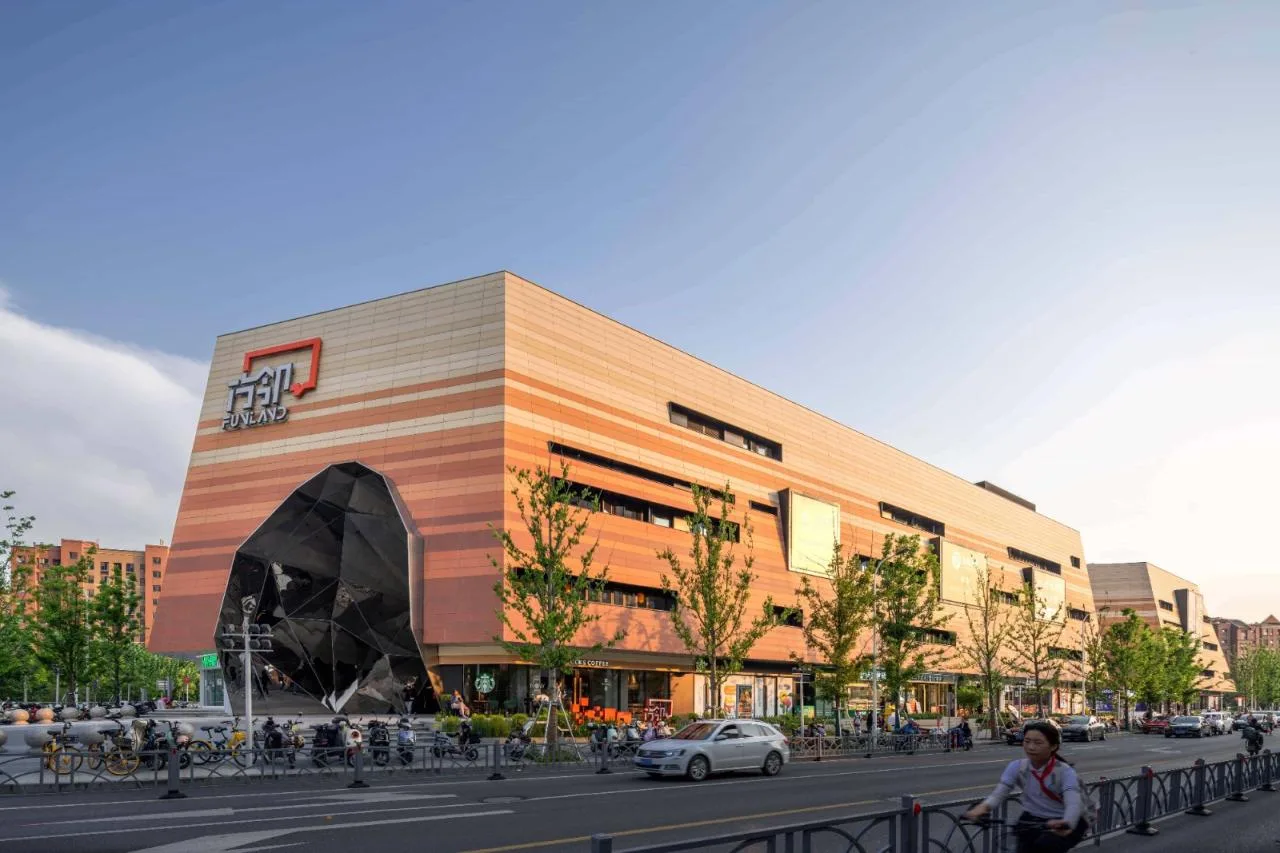
△ Street corner perspective of the building © CreatAR Images
Project Drawings
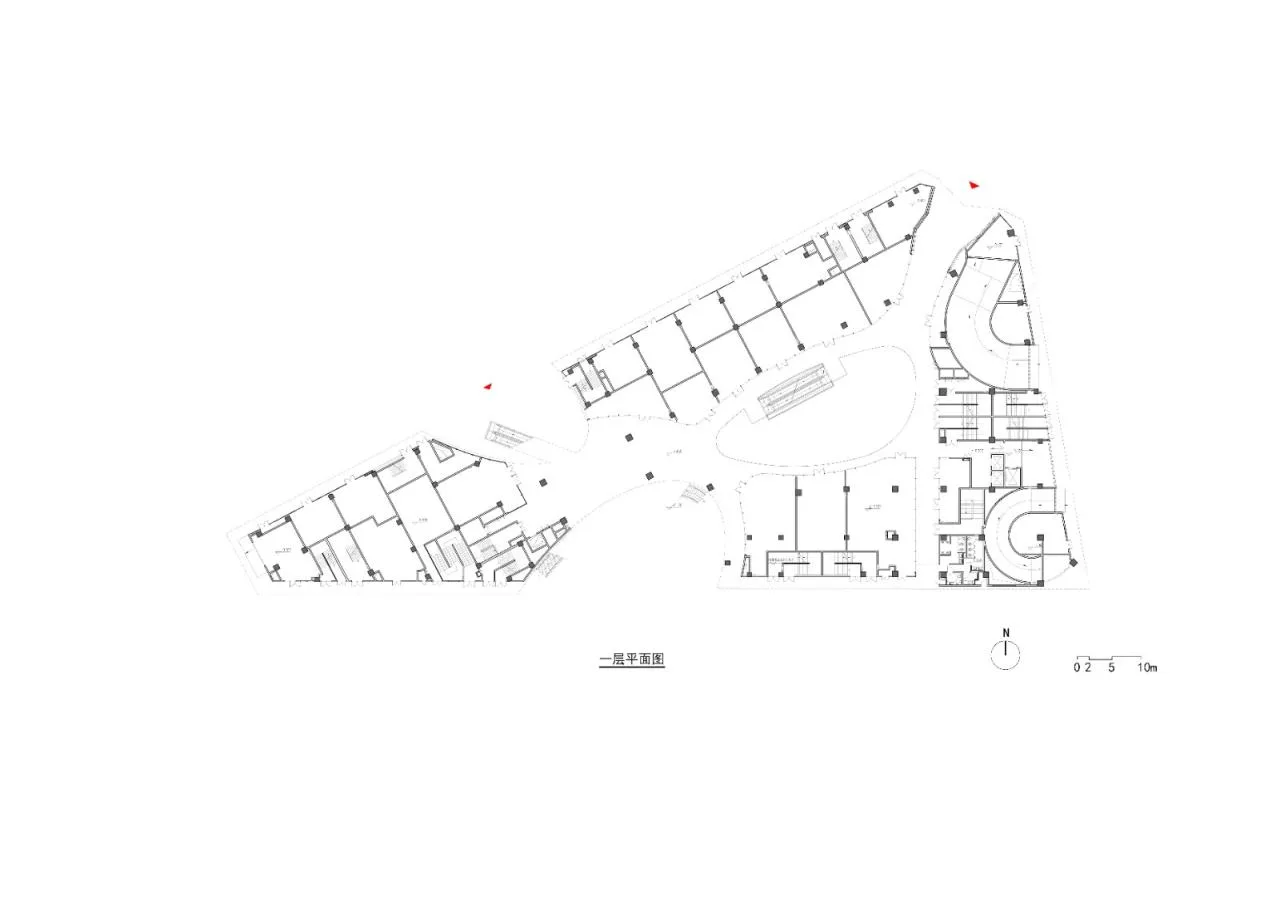
△ First floor plan © Wutopia Lab
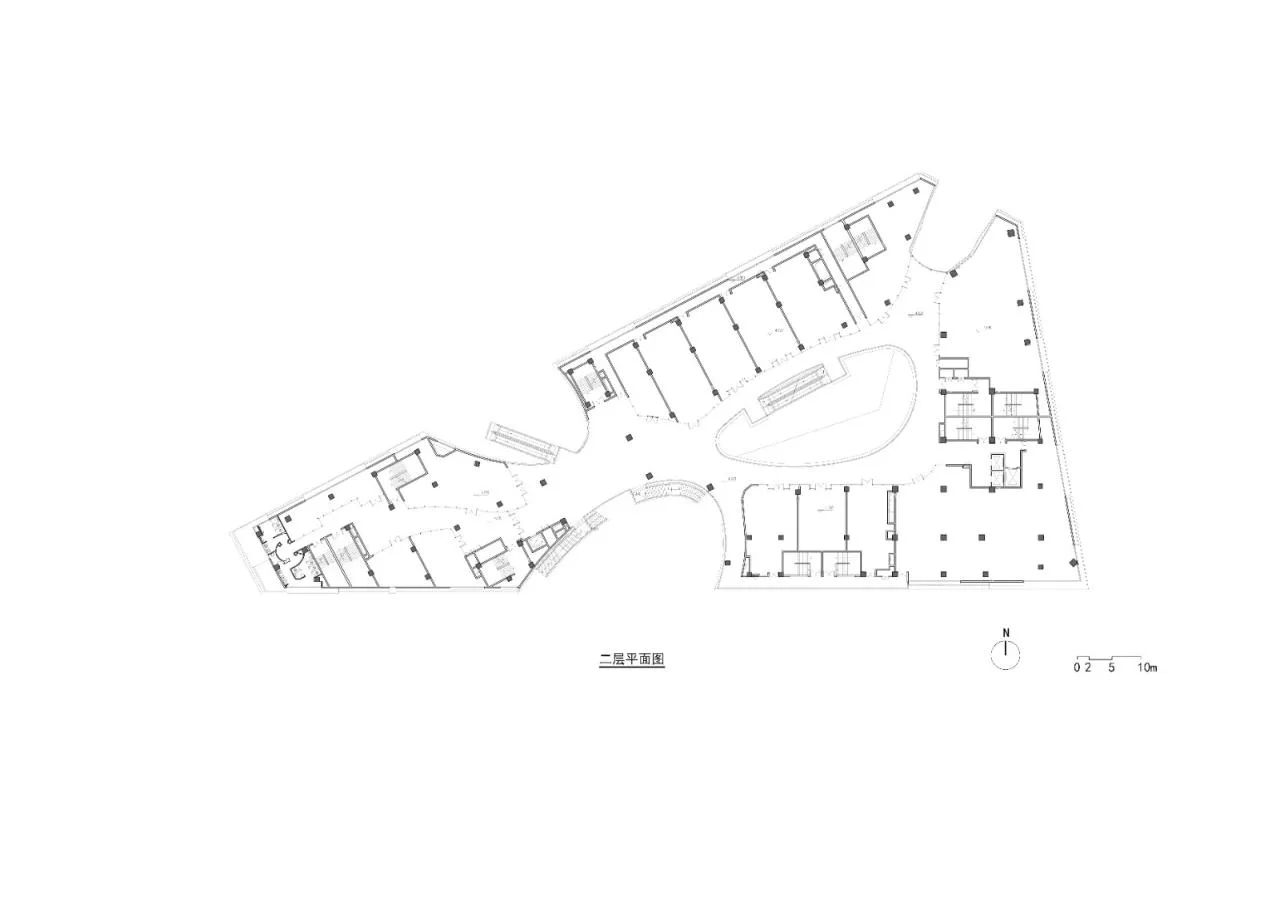
△ Second floor plan © Wutopia Lab
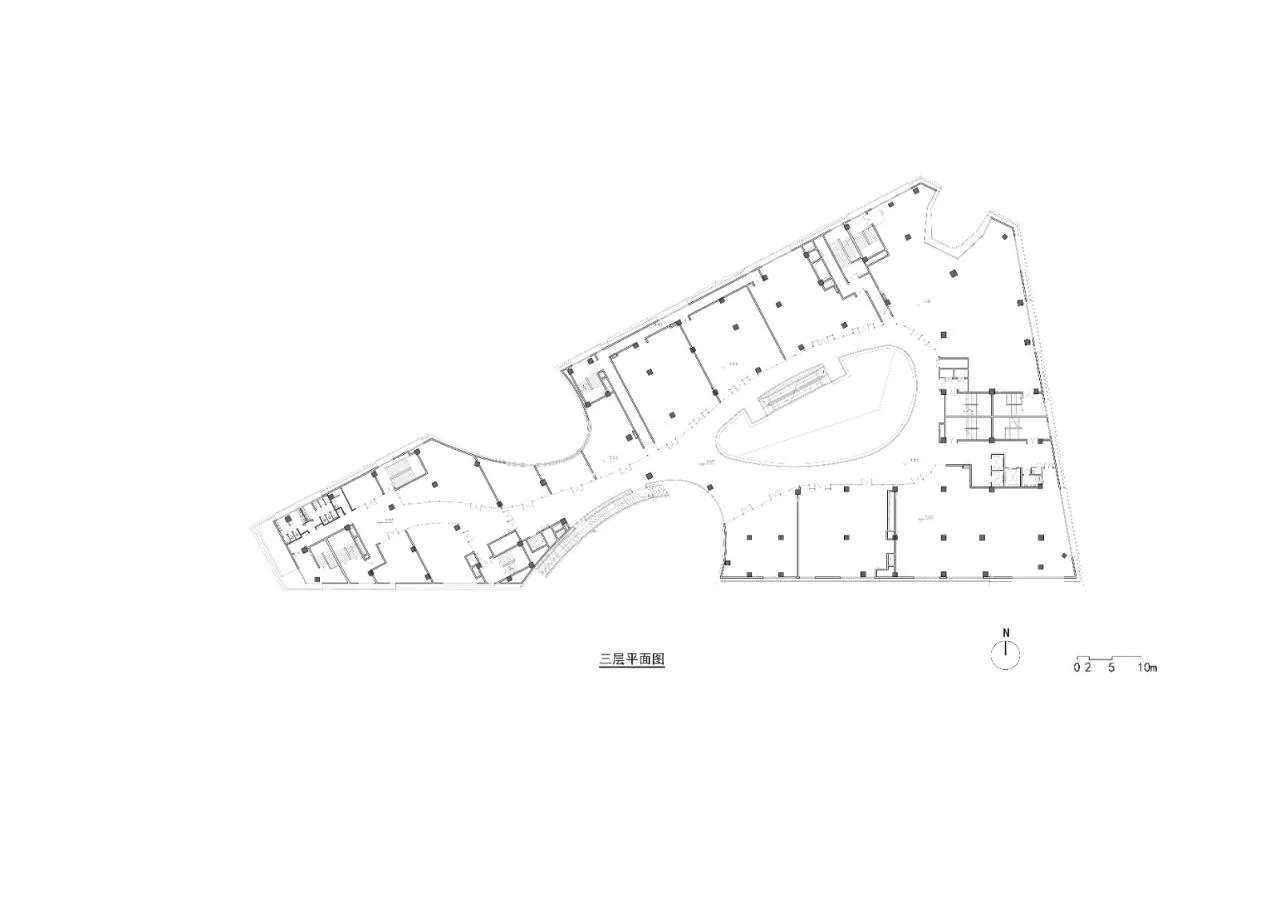
△ Third floor plan © Wutopia Lab
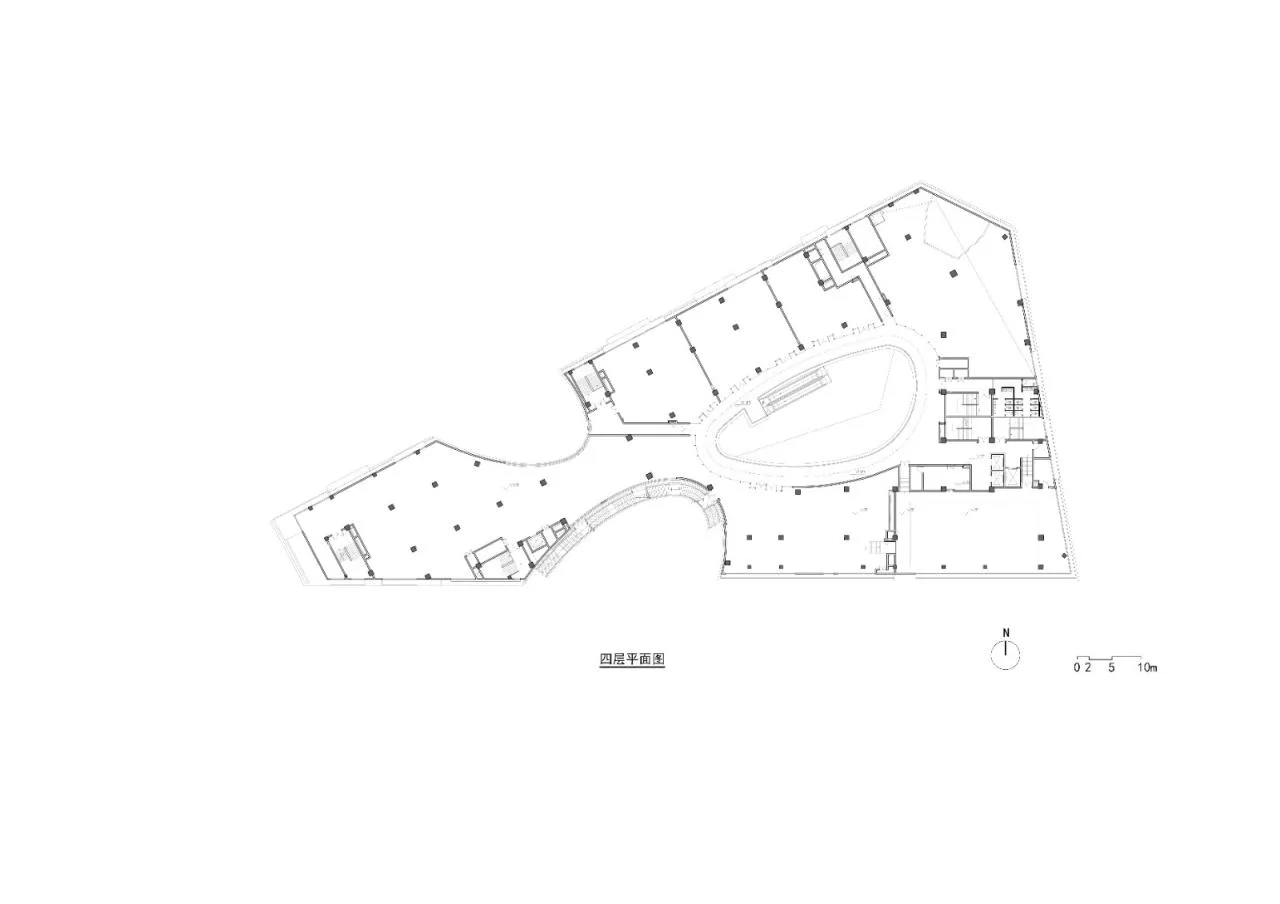
△ Fourth floor plan © Wutopia Lab
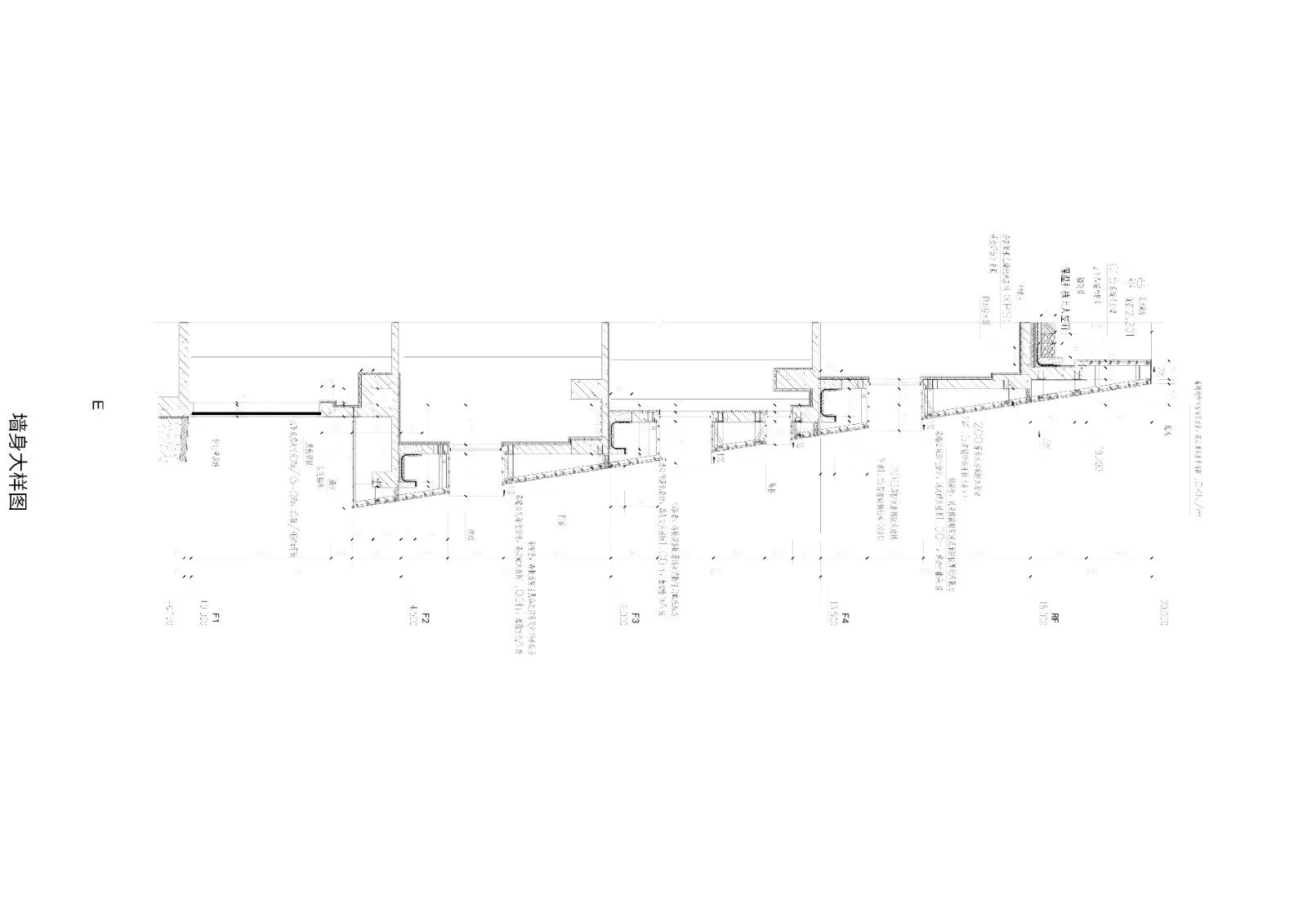
△ Detailed wall section © Wutopia Lab
Project Information
Design Company: Wutopia Lab
Lead Architect: Yu Ting
Project Architects: Pu Shengrui (Phase 1), Yellow River (Phase 2)
Project Manager: Pu Shengrui
Design Team: Pu Shengrui, Pan Dali, Yellow River (Phase 1); Yellow River, Pu Shengrui, Pan Dali (Phase 2)
Interior Design: Exciting Celebration, Wang Jing, Chen Jun
Landscape Design: Guo Wen, Wang Xiaoyi, Gu Hongyu
Owner: Jindi Group East China Regional Shanghai Company
Owner Design Team: Peng Huayuan, Liu Min, Ma Zhenglin, Wang Zhenyu, Chen Lin, Zhang Jiegao, Wu Meiyue, Peng Ying, Zhang Xianglin, Jin Tang, Wang Dan, Wang Lin, Zhang Bo, Shan Xiaozhong, Xiao He
Construction Drawing Design: China Architecture Shanghai Design & Research Institute Co., Ltd. (Architecture, Interior); Shanghai Jingsheng Landscape Design Co., Ltd. (Landscape)
General Contractor: ZTE Construction Co., Ltd.
Interior Construction: Shanghai Leixia Building Decoration Engineering Co., Ltd.
Curtain Wall: Shandong Xiongshi Building Decoration Co., Ltd.
Landscape Construction: Shanghai Aixiang Landscape Greening Co., Ltd.
Design Consultant: Wei Minfei
Floodlight Consultant: Zhang Chenlu, Zang Yanting, Yu Yanan (Gree Lighting Design)
Curtain Wall Consultant: Shanghai Anlei Curtain Wall Engineering Co., Ltd.
Steel Structure Consultant: Shanghai Tongyuan Architectural Design Consulting Co., Ltd.
Location: 399 Sibao Road, Songjiang District, Shanghai
Ground Floor Area: 16,679 m²
Design Period: April 2017 – December 2019
Construction Period: December 2023
Materials: Ceramic boards, aluminum veneers, paint, and others
Photography & Video: CreatAR Images















Must log in before commenting!
Sign Up