
Static and Motion:
Through the ongoing interaction of glaciers and seawater, these ancient glaciers—averaging over 5,000 years old—gradually drift toward the ocean, transforming into icebergs that continuously shift positions following ocean currents. The allure of icebergs lies not only in their timeless, unchanging ice masses and the mystery of their unpredictable drifting locations but also in the vast unknown beneath the surface, as Hemingway once described—the hidden seven-eighths.
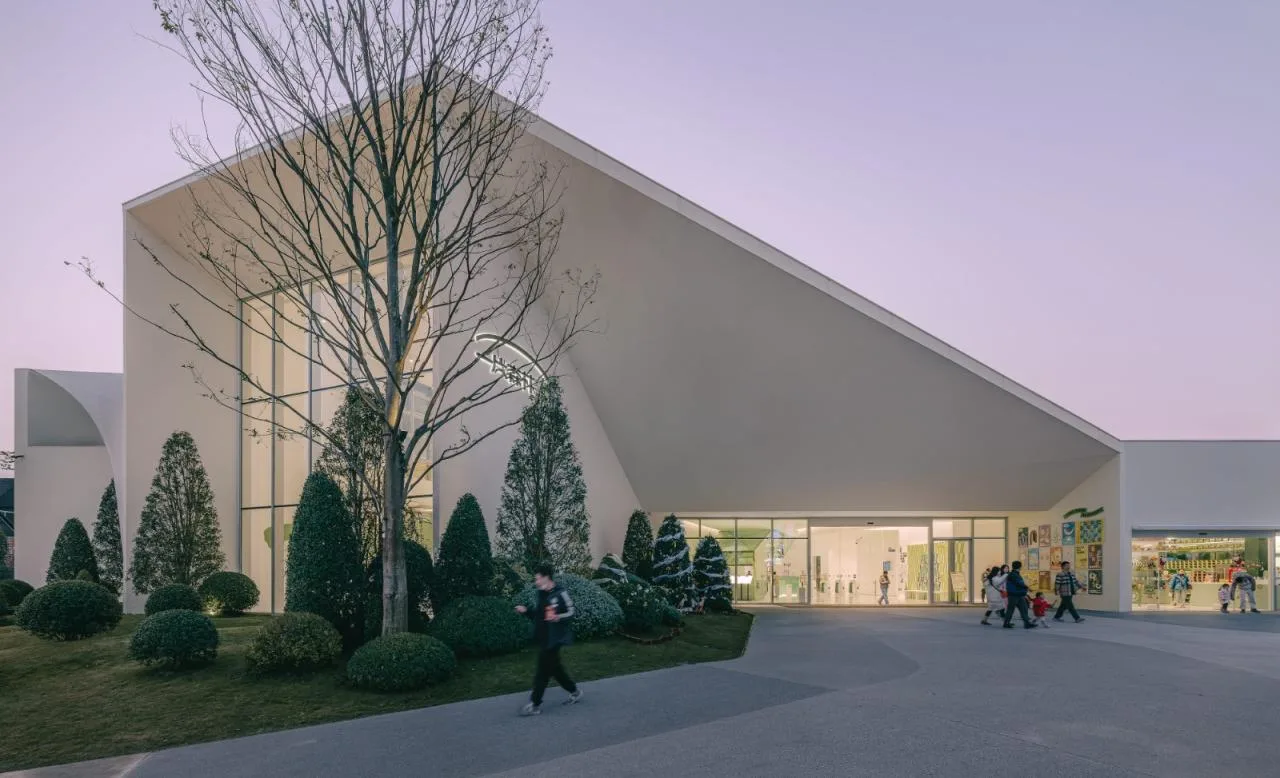
In 2021, amidst the lakes and islands scattered across Chengdu Luhu Ecological City, we embarked on creating an “iceberg” for children. Our goal was to inspire young minds to explore the vast and profound mysteries of the world. What began as a ten-month design and construction project extended to two years, blending stillness and motion—static architecture embodying unchanging intentions, adapting to shifting construction conditions and ongoing exploration. Finally, in October 2023, the forest-themed children’s museum emerged, floating on the ocean of children’s imaginations.
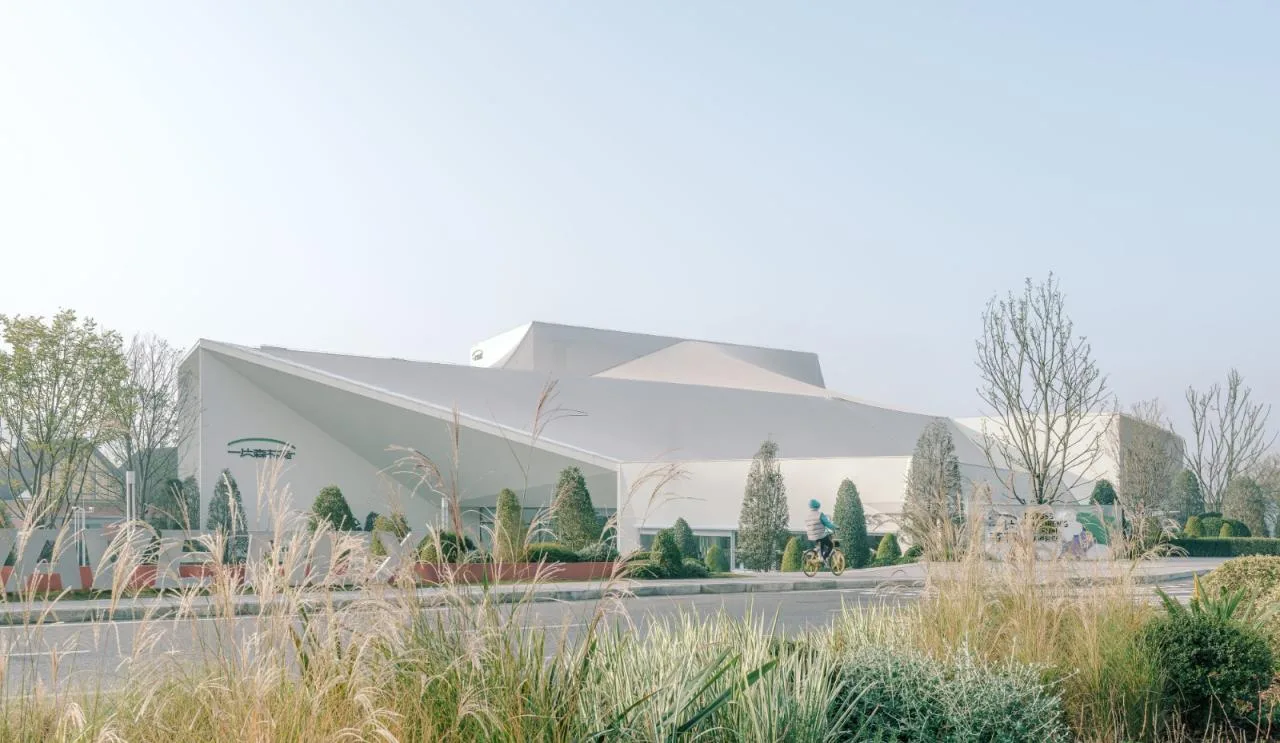
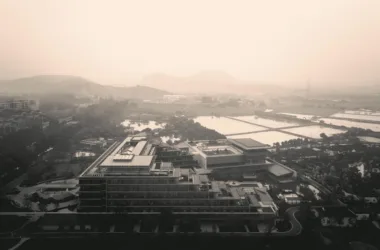
▲ Overview of Luhu Forest Children’s Museum © Zhu Yumeng
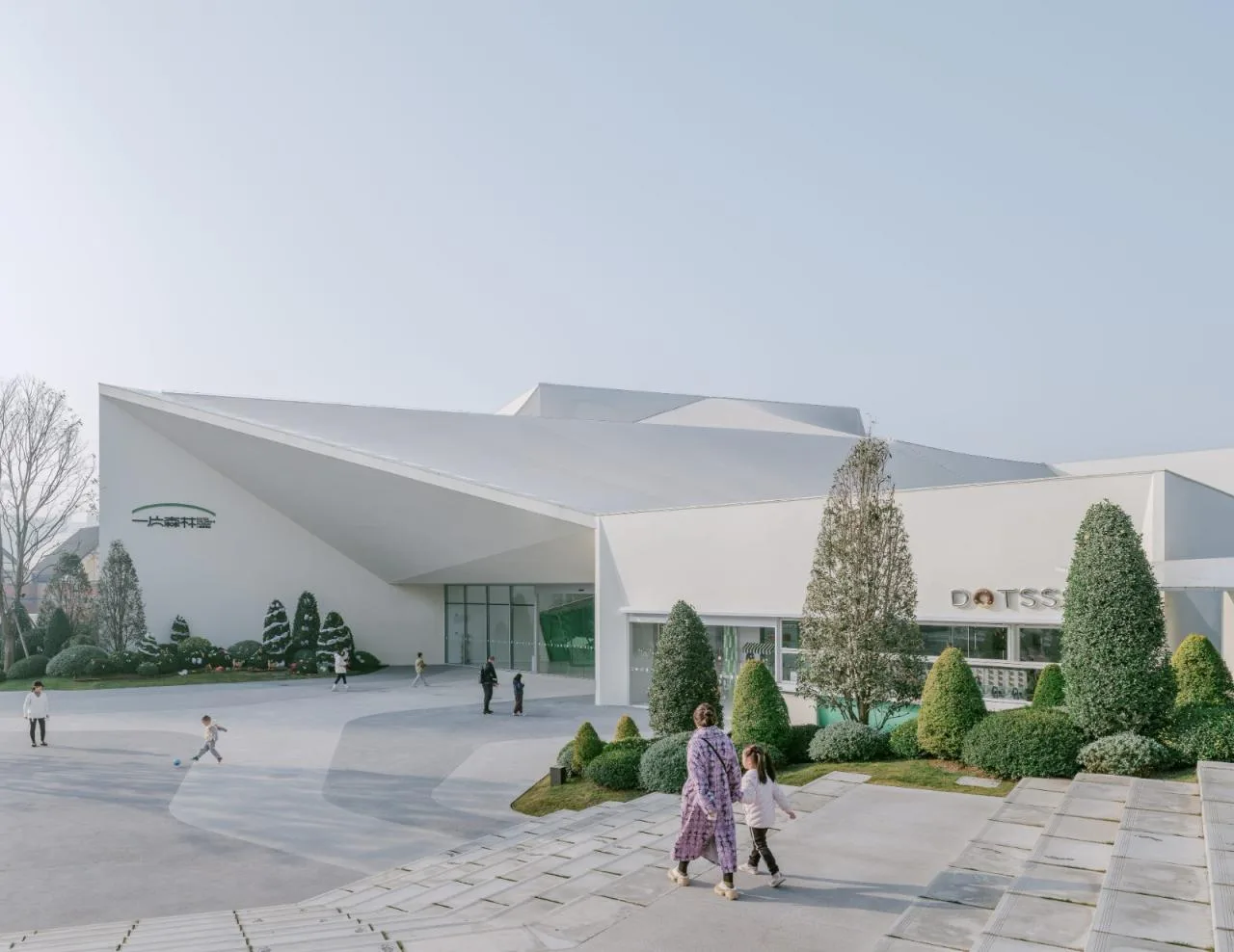
▲ Daytime view of the Children’s Museum main entrance © Zhu Yumeng
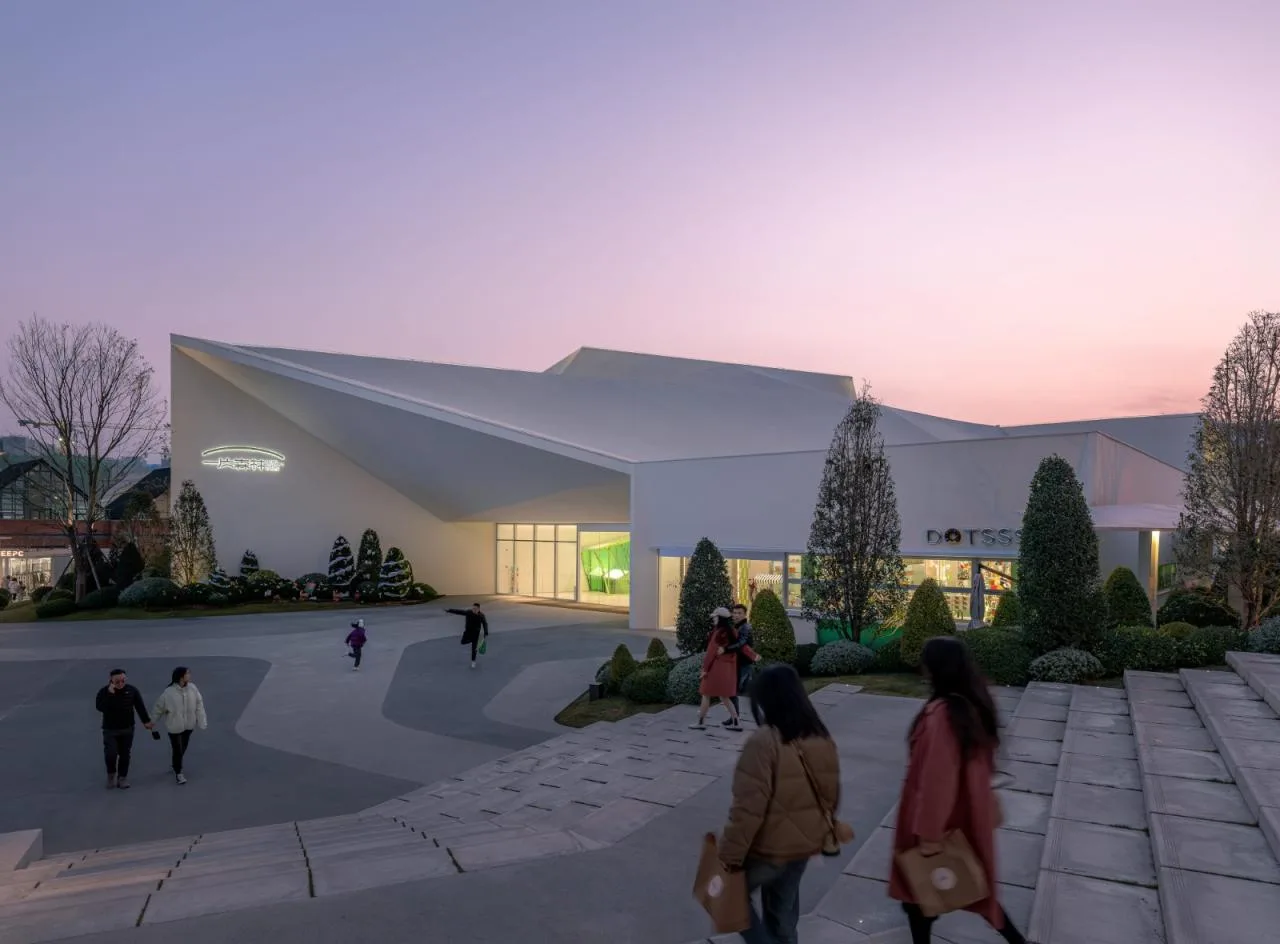
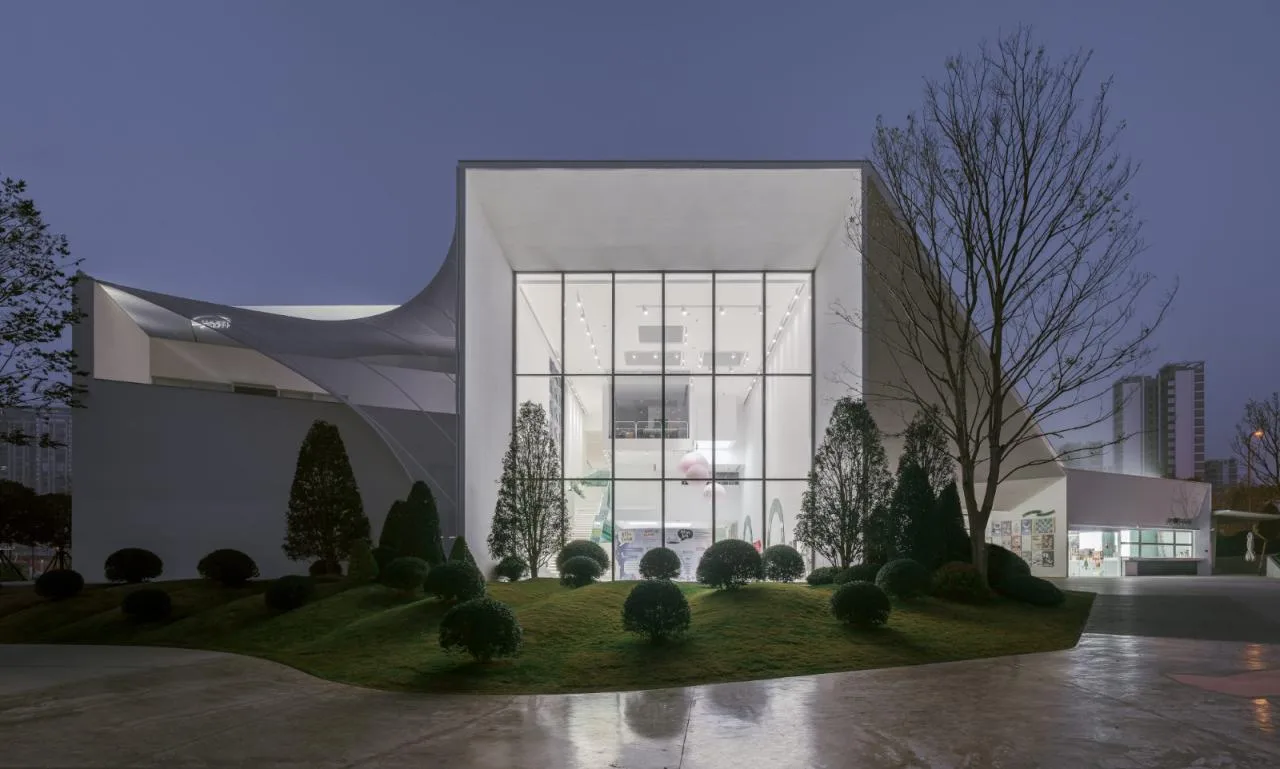
▲ Nighttime view of the Children’s Museum main entrance © Zhu Yumeng
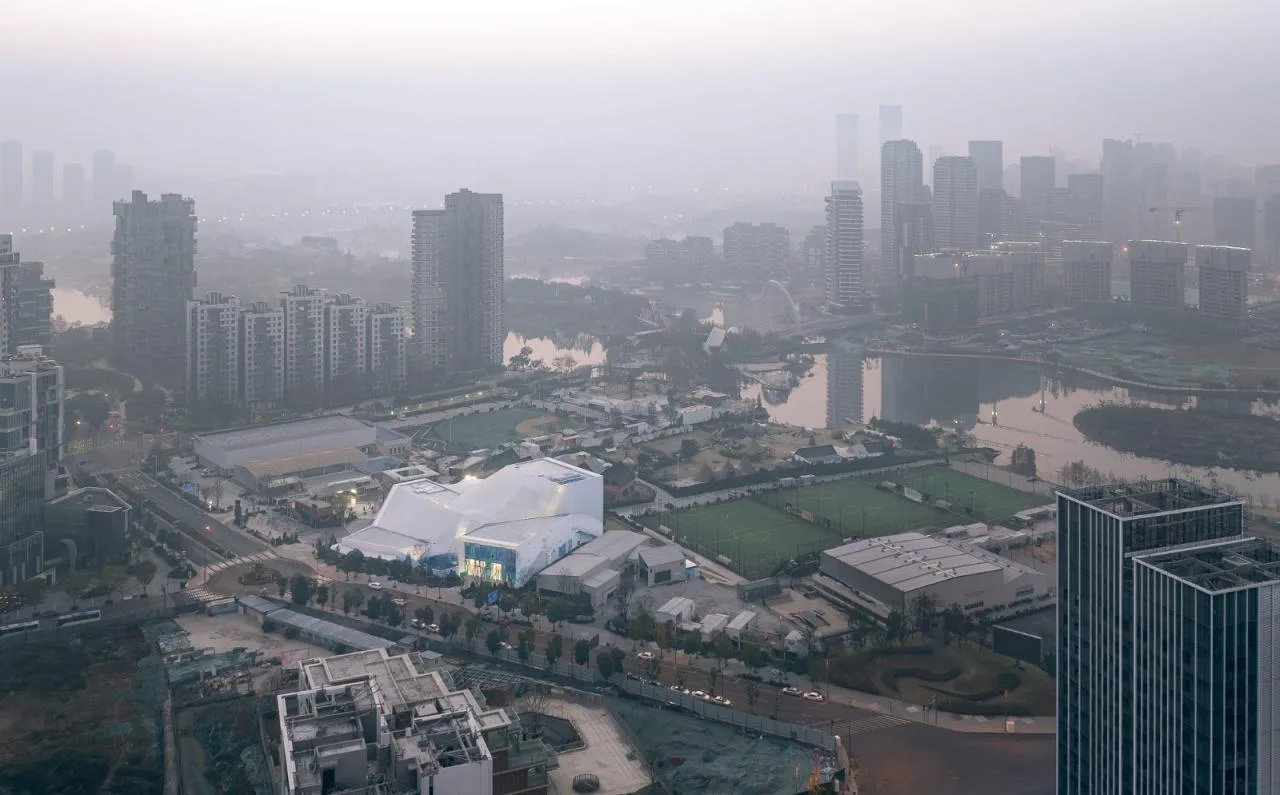
▲ Floating Children’s Museum on Luhu Lake © Zhu Yumeng
The Changing Venue:
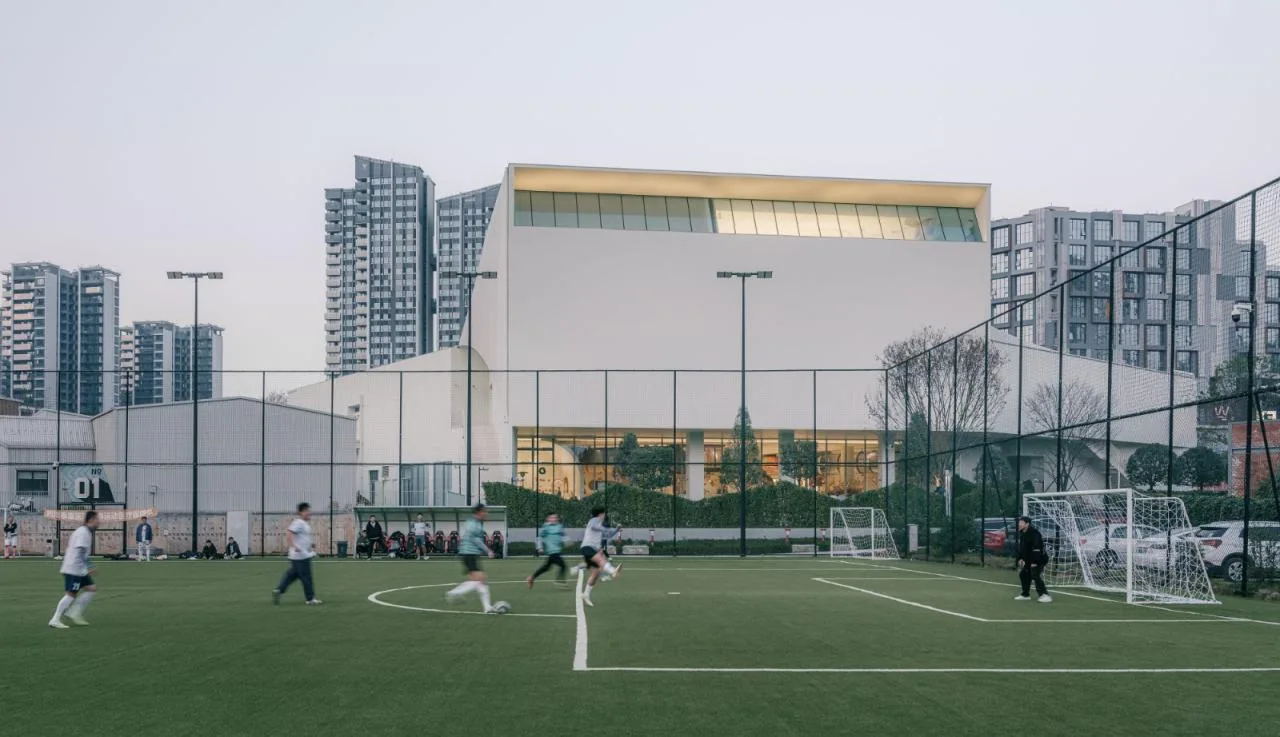
Located northwest of Luhu Ecological City and away from the busy Lufang Center, the museum is surrounded by a dynamic environment of sports and leisure. Nearby are sports parks, centers, camping zones, and commercial districts, all contributing to the area’s lively atmosphere. In fact, the pace of change here has outpaced our expectations—from design through construction to post-completion, the surroundings have continuously evolved.
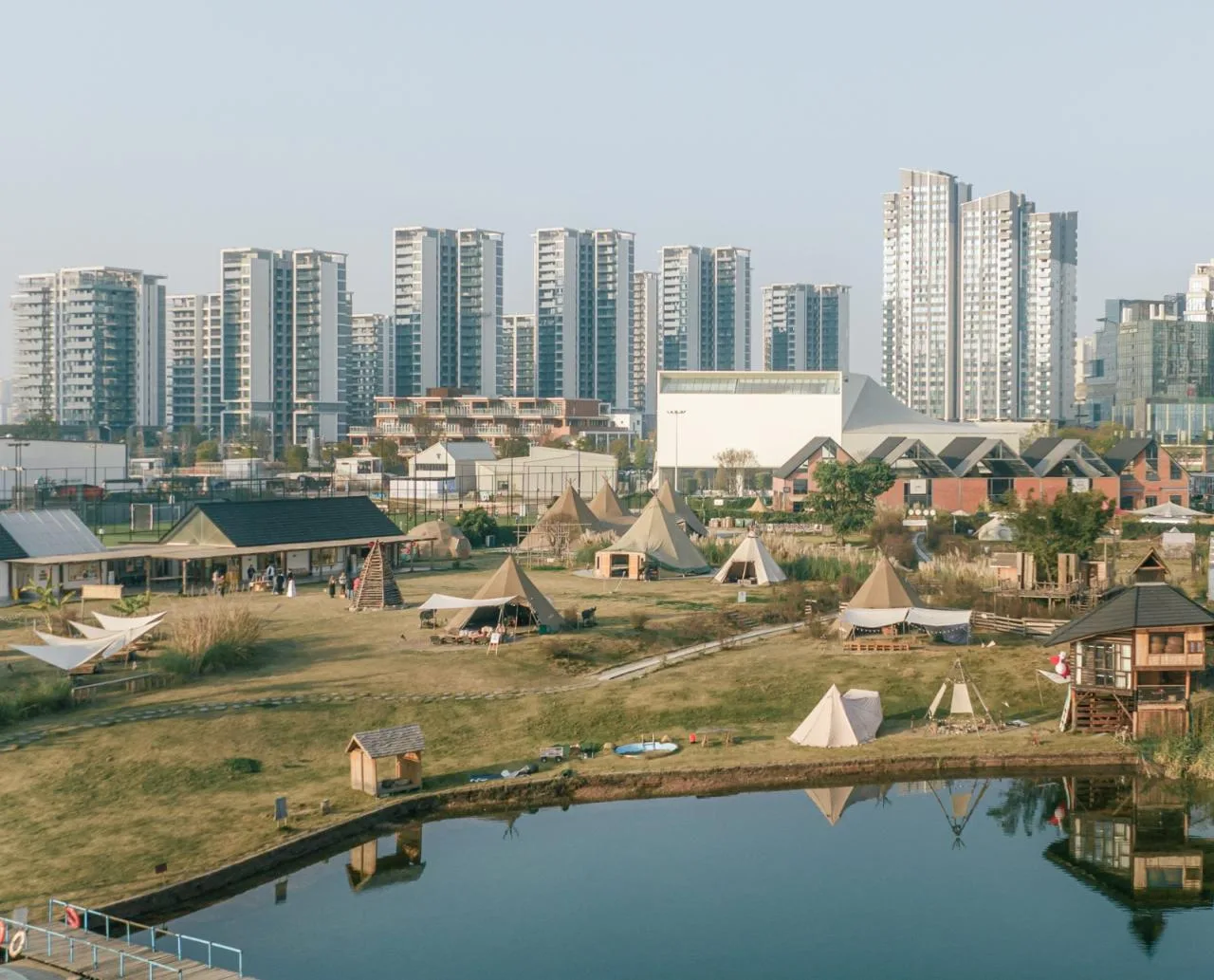
▲ Camping area adjacent to the project site © Zhu Yumeng
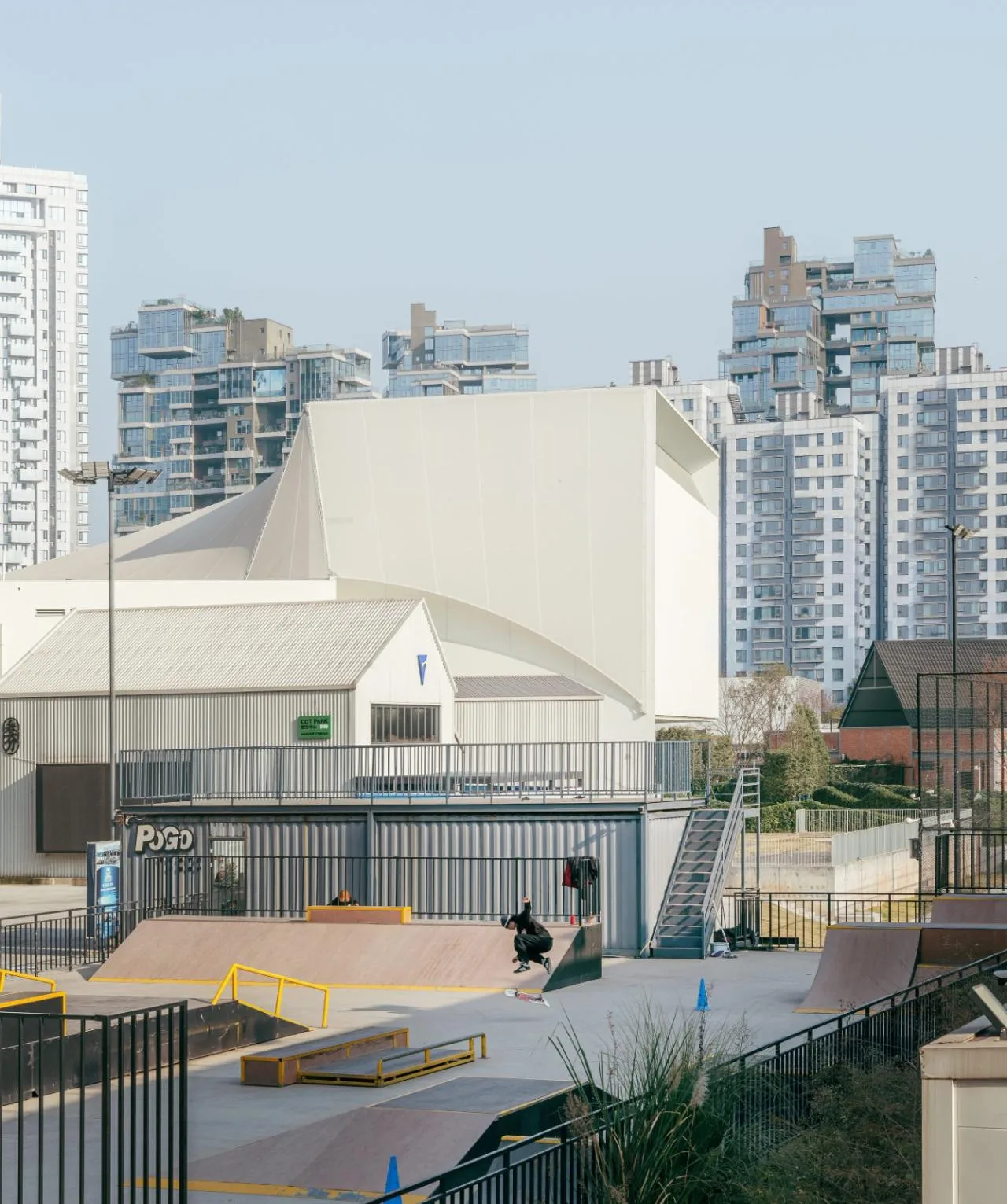
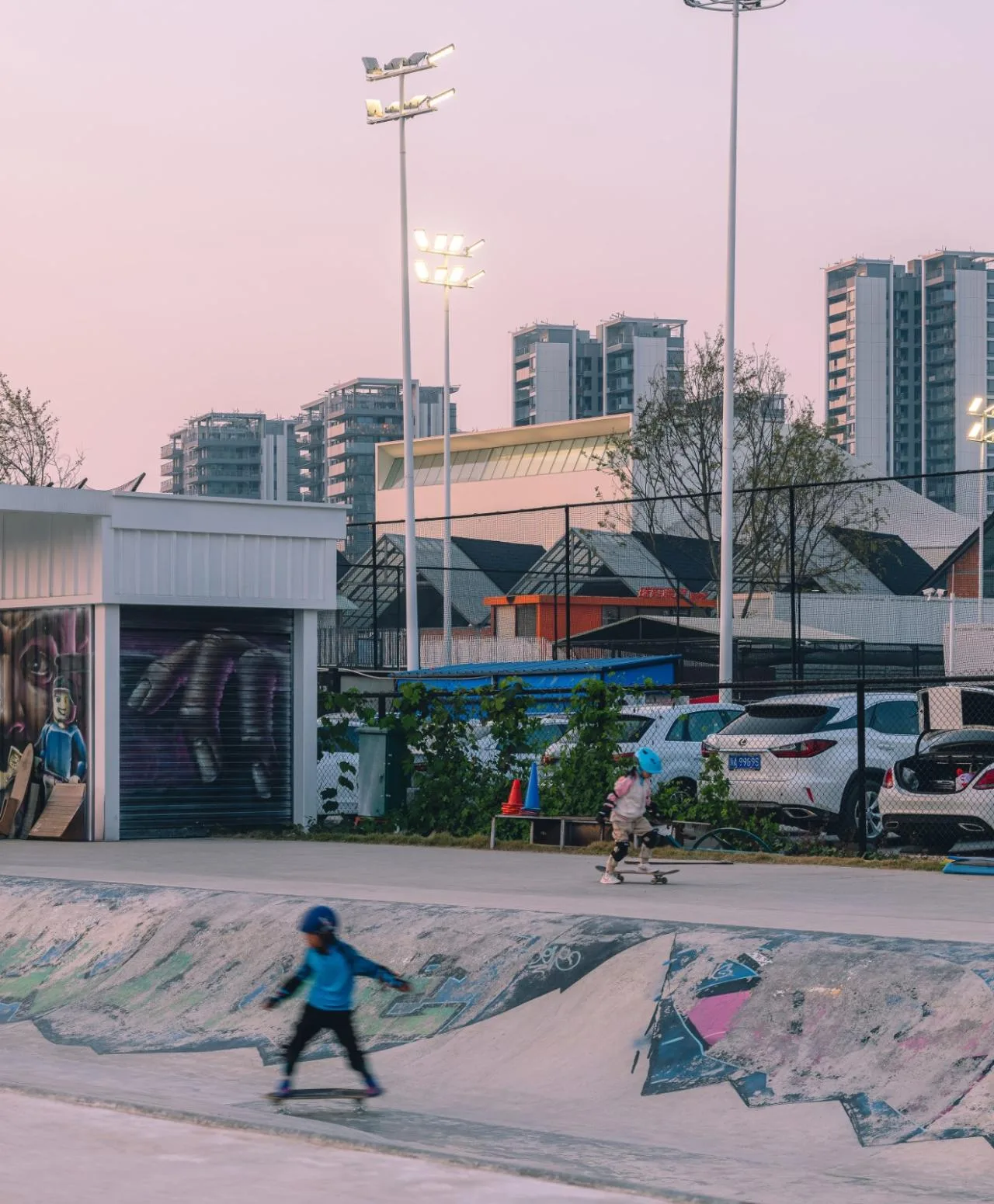
▲ View toward the Children’s Museum from the Sports Park © Zhu Yumeng
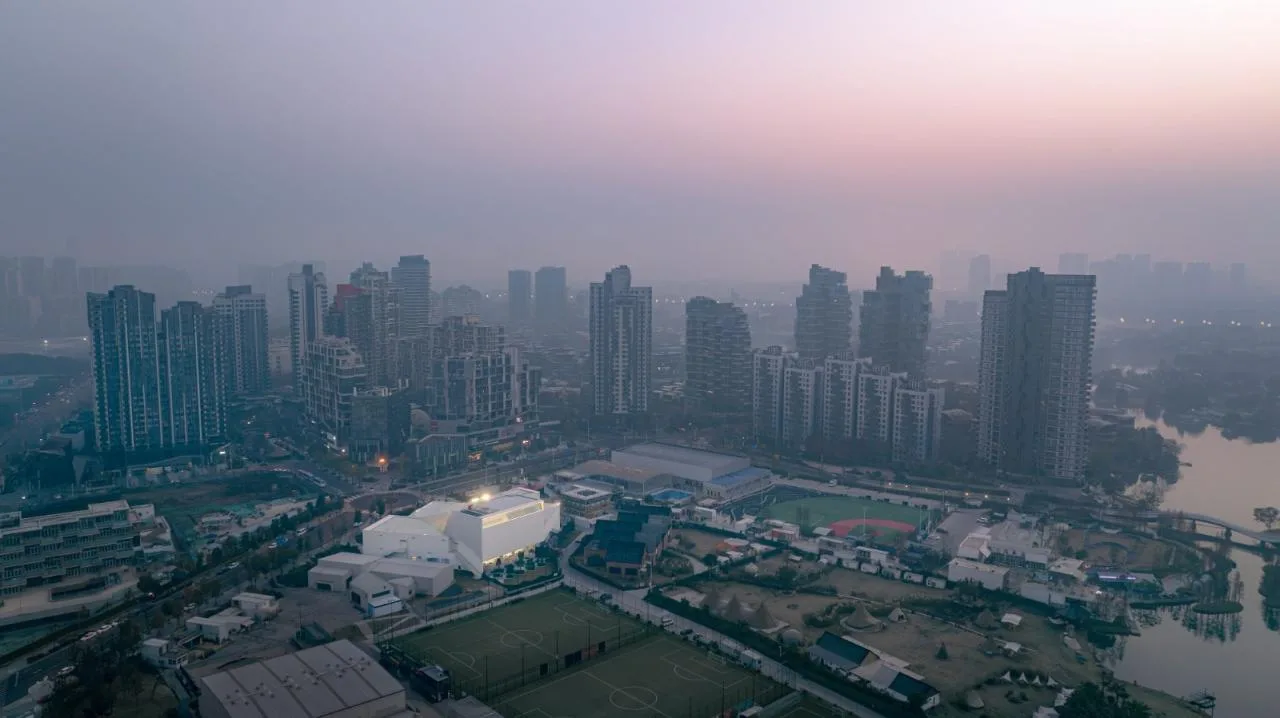
▲ Changing environment around the venue © Zhu Yumeng
Must buildings always adapt to their surroundings? Amid constant change, standing tall and seemingly still structures may offer their own form of adaptation through steadfastness.
Unknown Requirements:
Is the museum truly a fixed, immovable building? According to dialectical materialism, stillness is relative. While the building remains fixed on site, the museum itself has evolved.
From the outset, we understood that unlike traditional museums, this children’s museum is not designed to reflect history but to look ahead. It serves children by showcasing the world’s diversity through space and exhibits, encouraging young visitors to explore and think independently.
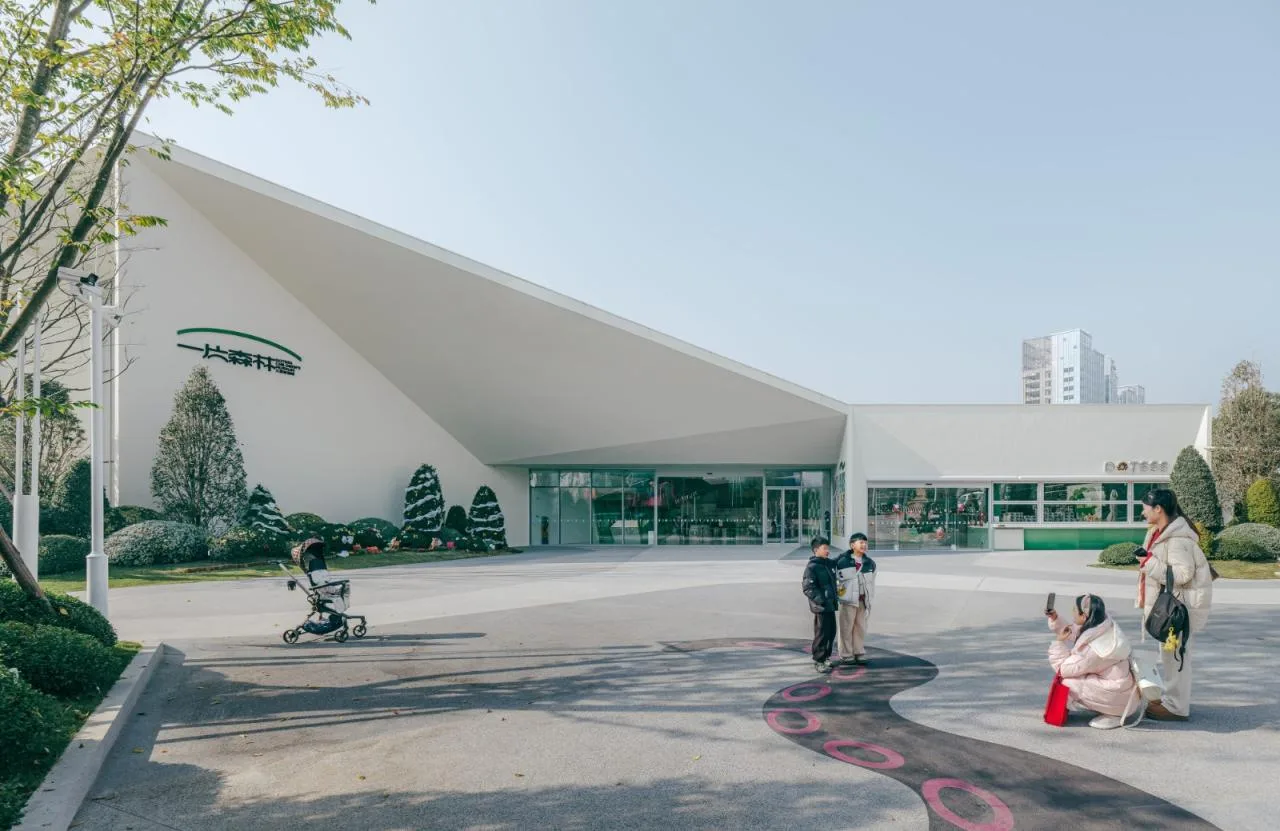
▲ Museums designed for children © Zhu Yumeng
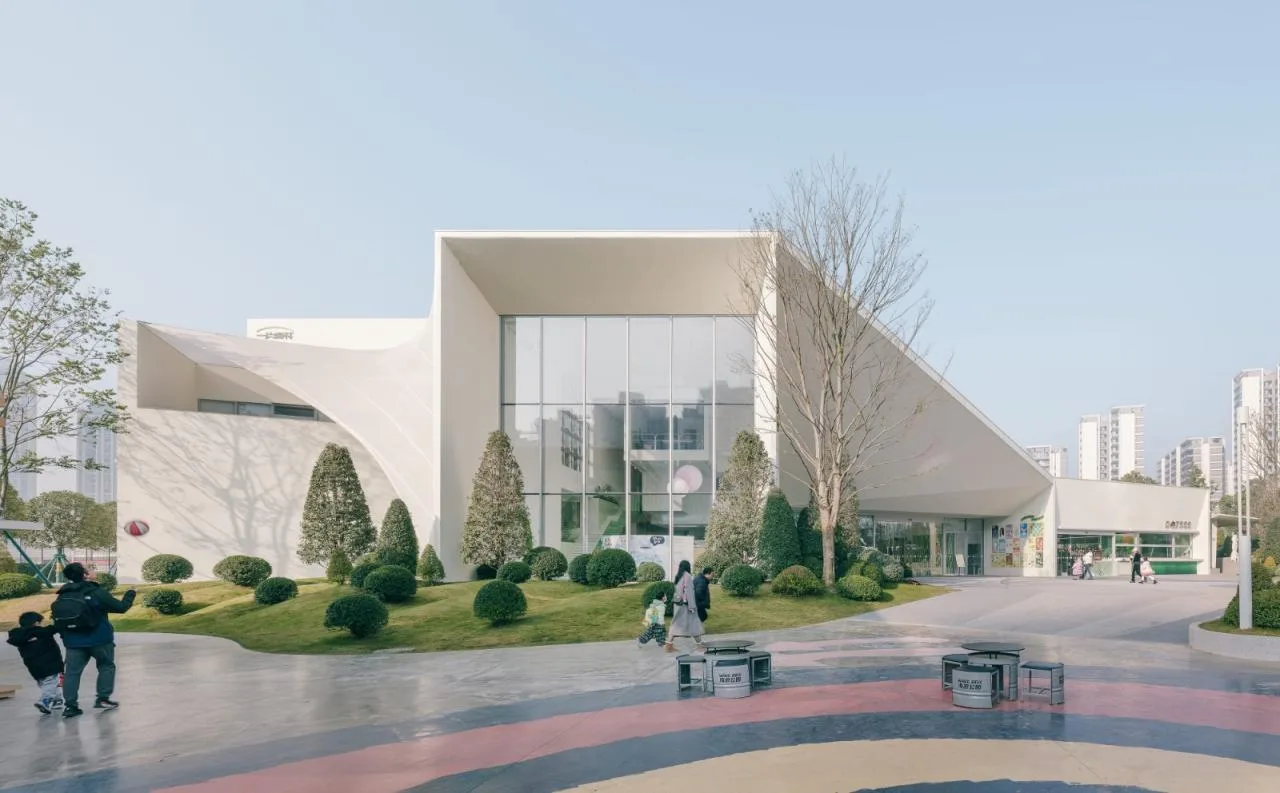
▲ Museums designed for children © Zhu Yumeng
Traditionally, the dimensions and spatial layout of exhibition halls are based on the content and form of exhibits. However, in this project, much like the evolving site conditions, the exhibition content was not yet determined due to the short construction period.
This meant the building had to be child-friendly, equipped with necessary museum facilities, and — most importantly — feature flexible and adaptable exhibition spaces to accommodate unknown future needs.
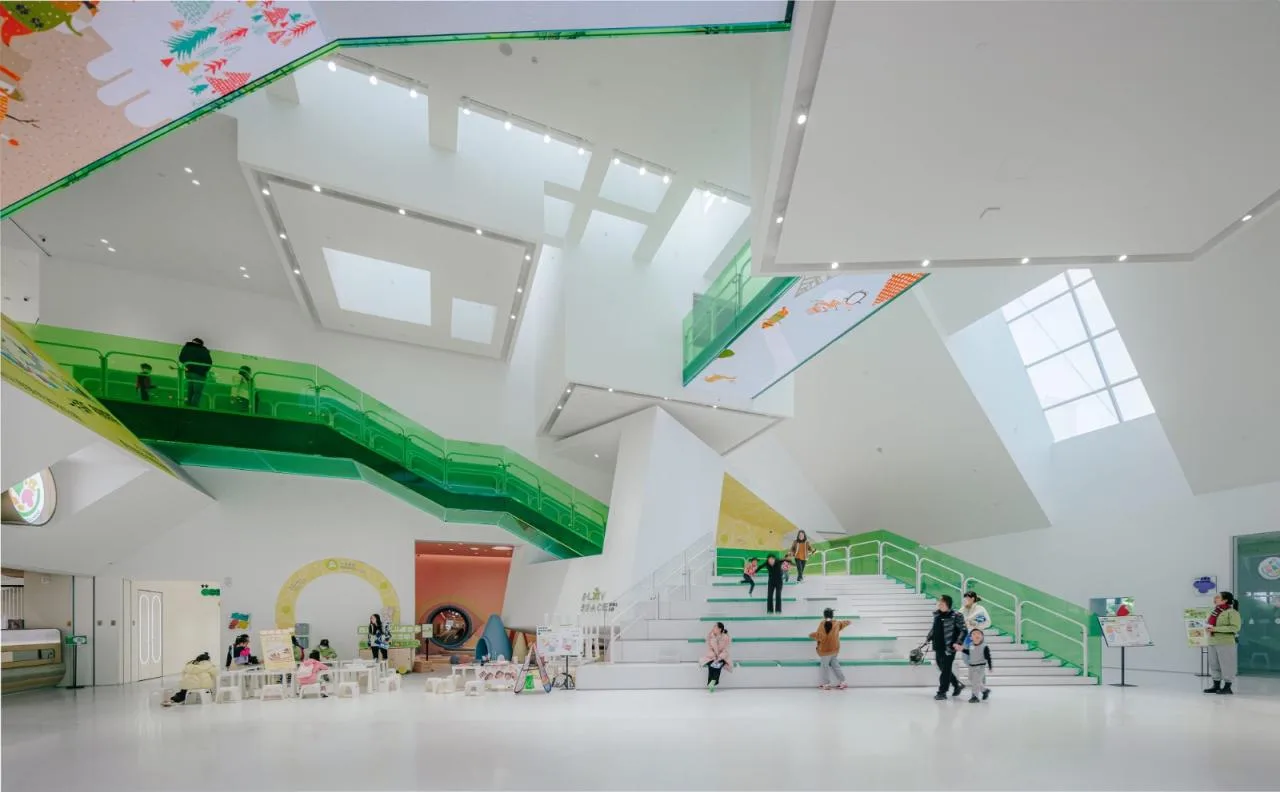
▲ Versatile and adaptable exhibition space © Zhu Yumeng
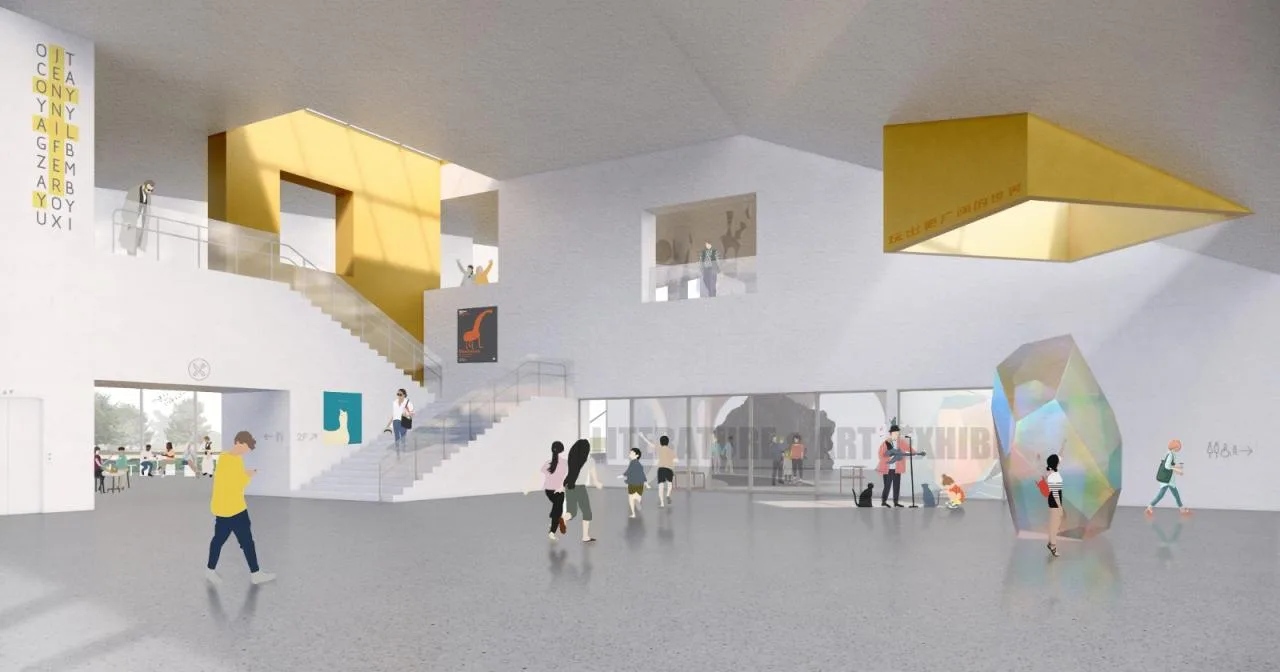
▲ Open visitor flow inside the large building (original interior design) © Large scale construction
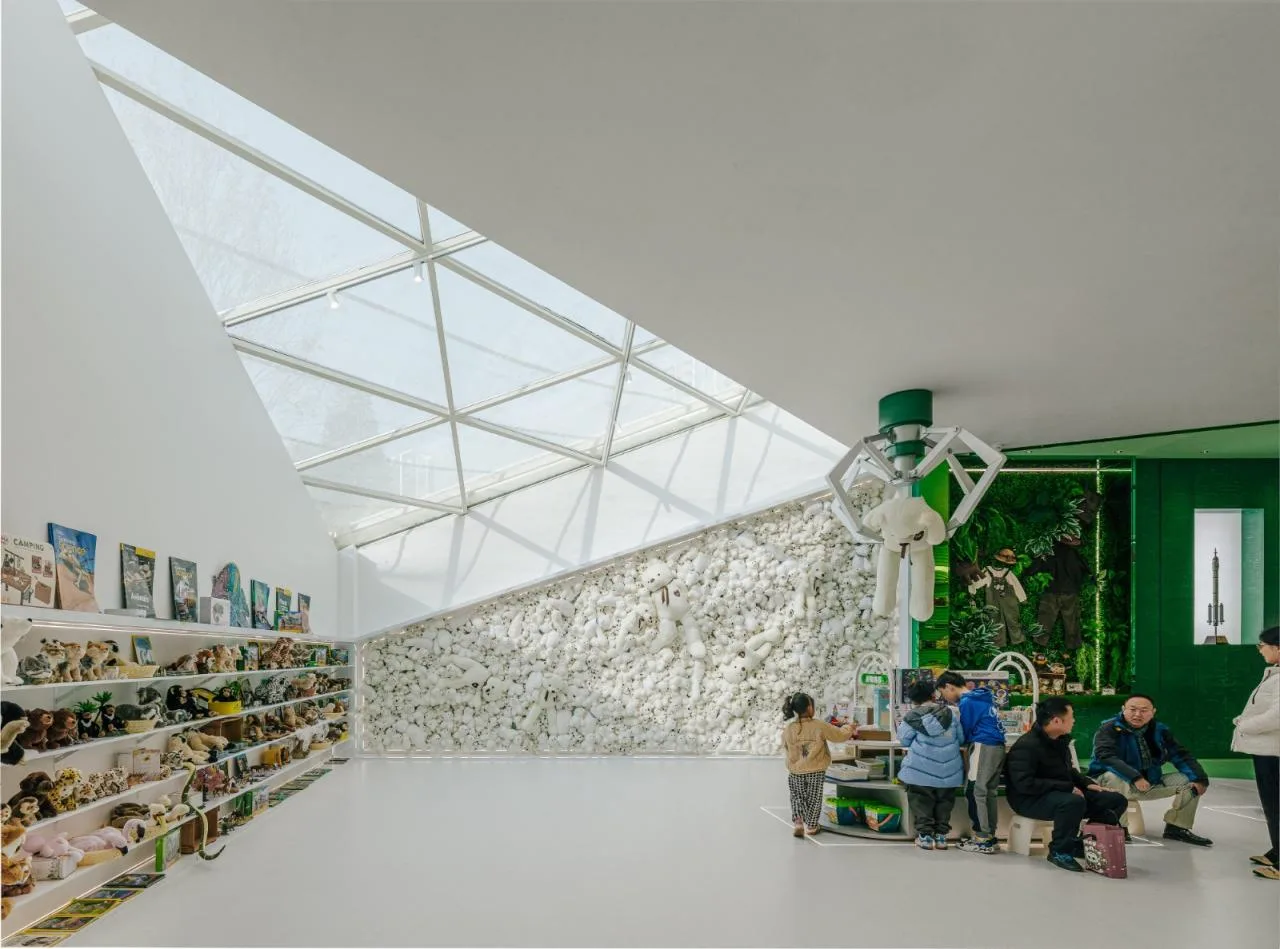
▲ Commercial area © Zhu Yumeng
To minimize how exhibition design influences the building’s form, the architecture opts for a simple, spacious square box. This allows room for future expansion without significantly altering the building’s appearance. Its straightforward shape can adjust aspects like height and volume flexibly, maximizing usable space and providing greater design freedom.
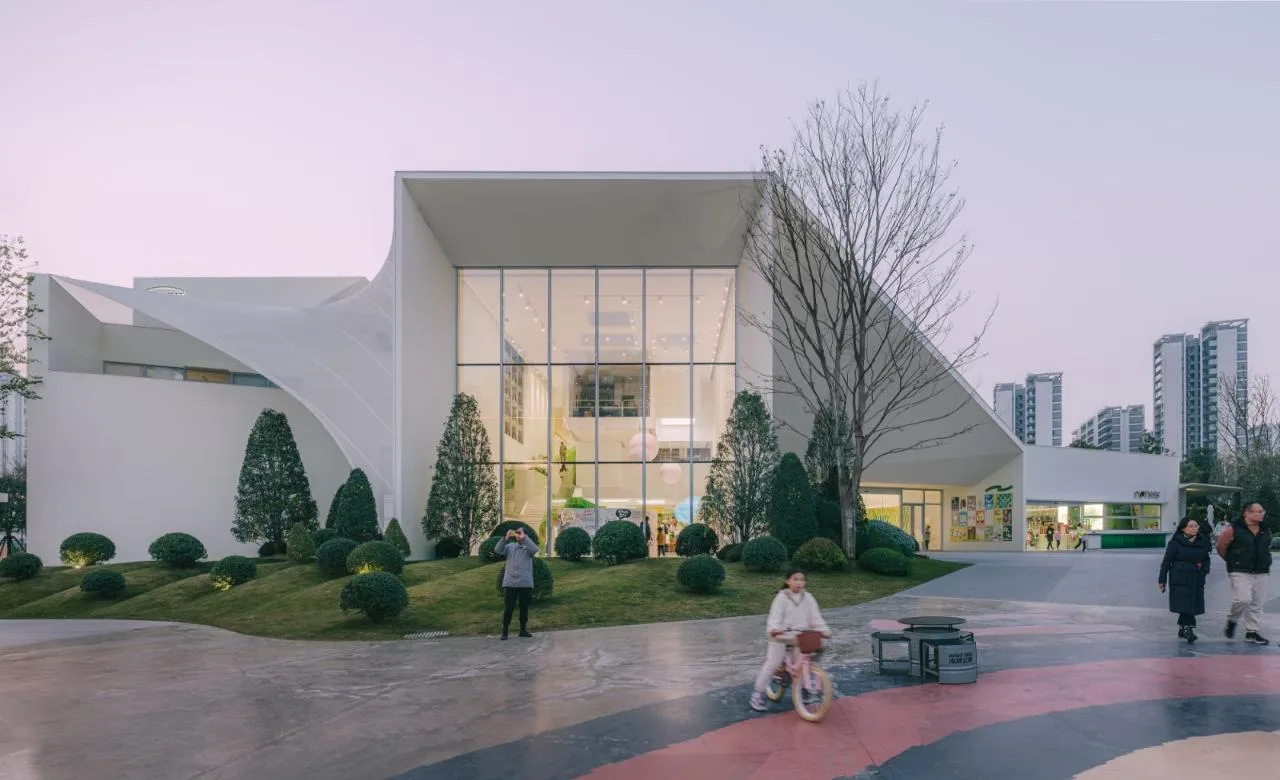
▲ Transparent blocks, inside and out © Zhu Yumeng
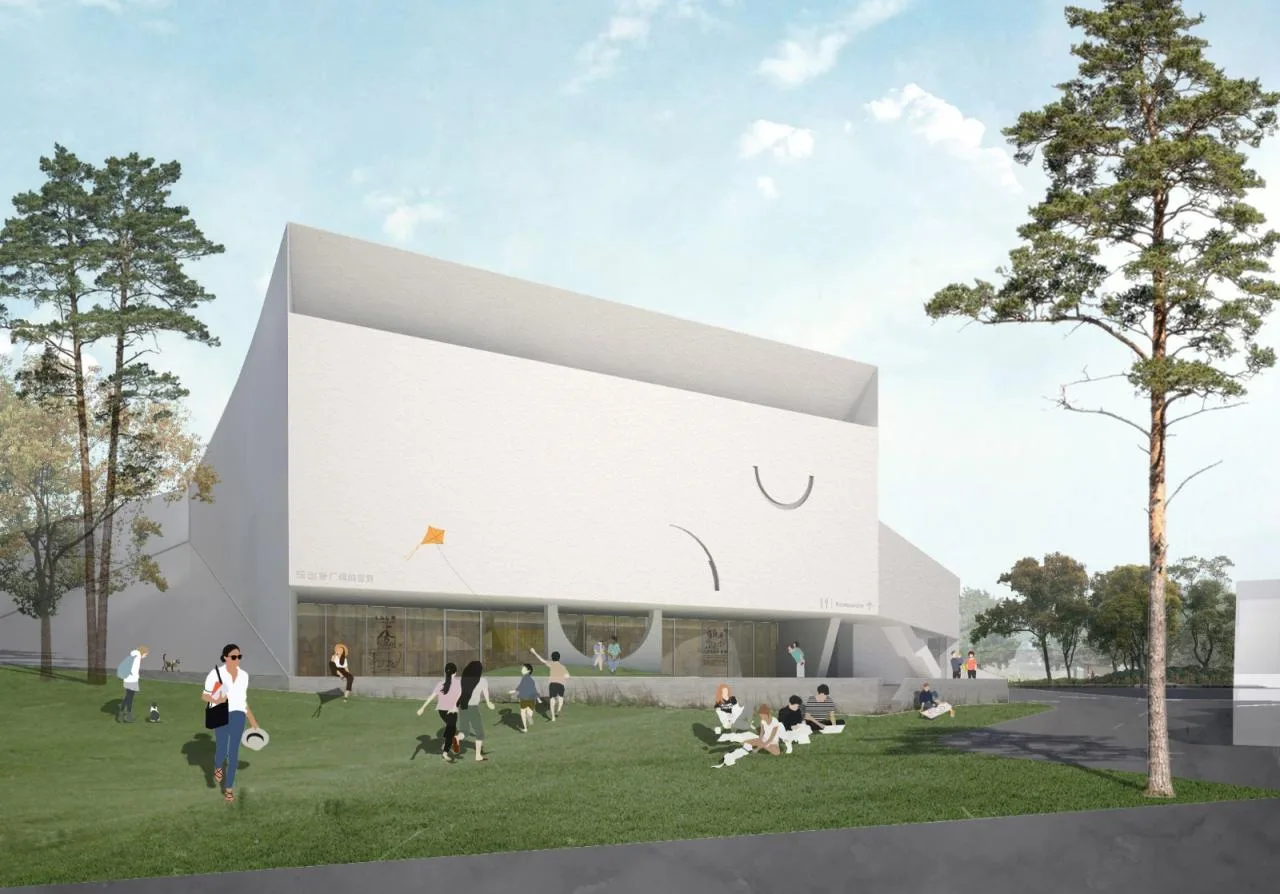
▲ Facade details of the square box volume © Large scale construction
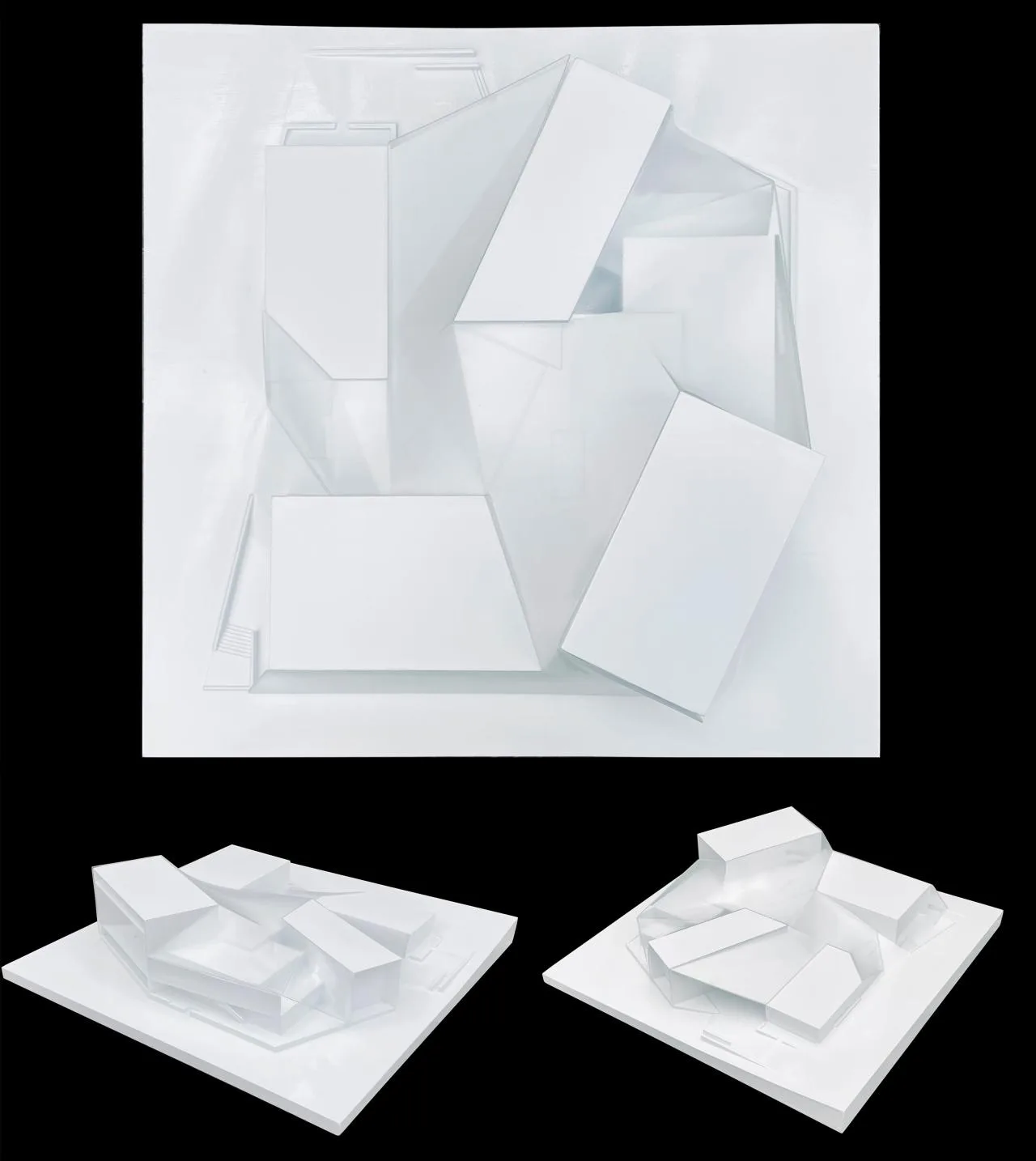
▲ Block model © Large scale construction
Flow Lines in Motion:
We aimed to create a freely flowing visitor experience, avoiding fixed pathways as much as possible.
Each box is not a closed “paradise”; instead, they are interconnected through courtyards and outdoor spaces surrounded by activity areas of varying sizes. This design encourages casual movement, with courtyards acting as unique “Doraemon Gates” into different exhibition halls, allowing children to choose their own path. This gentle spatial flow aligns with children’s natural curiosity, enabling them to roam freely, play, and explore without restrictions, all while taking in the sights and sounds around them.
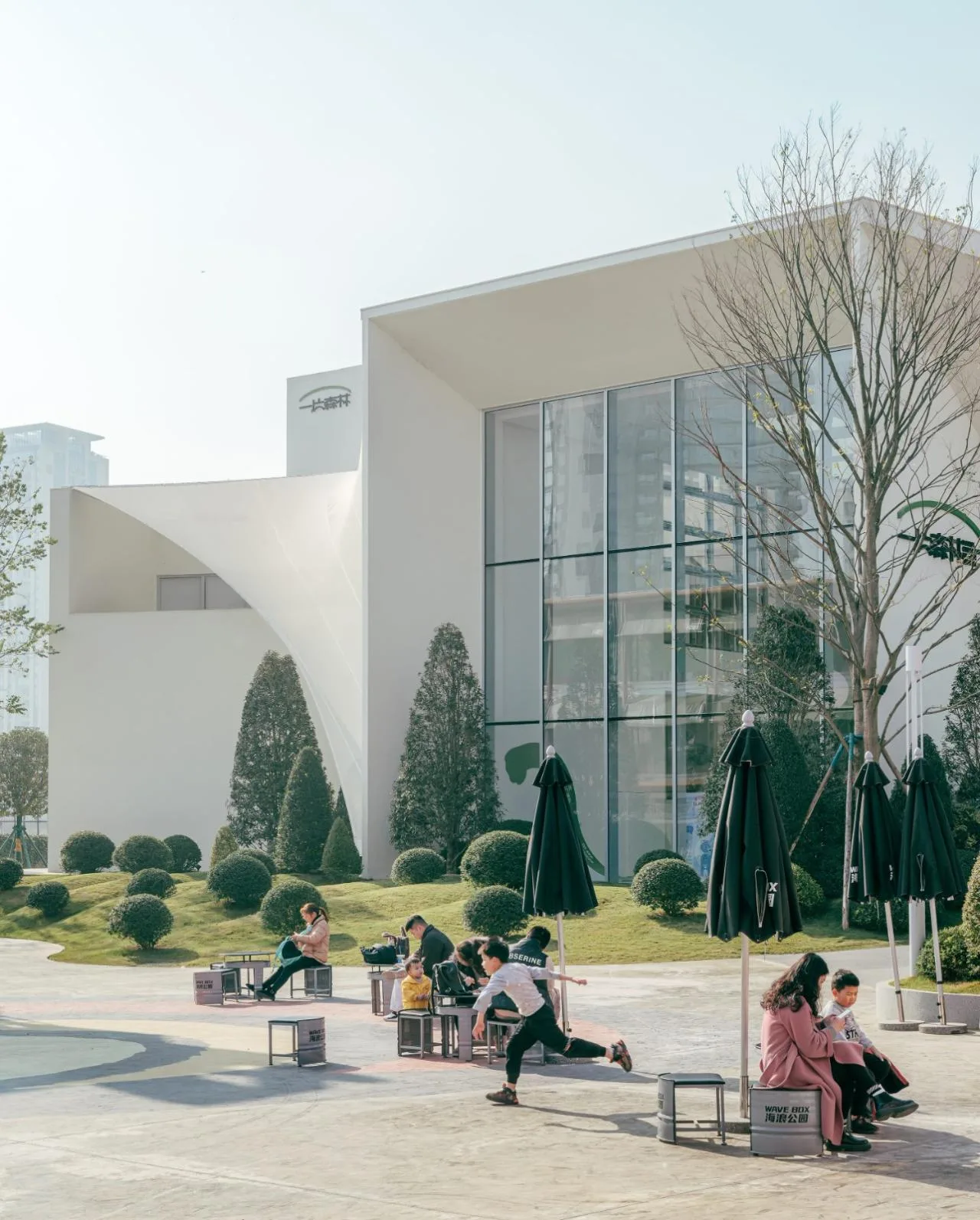
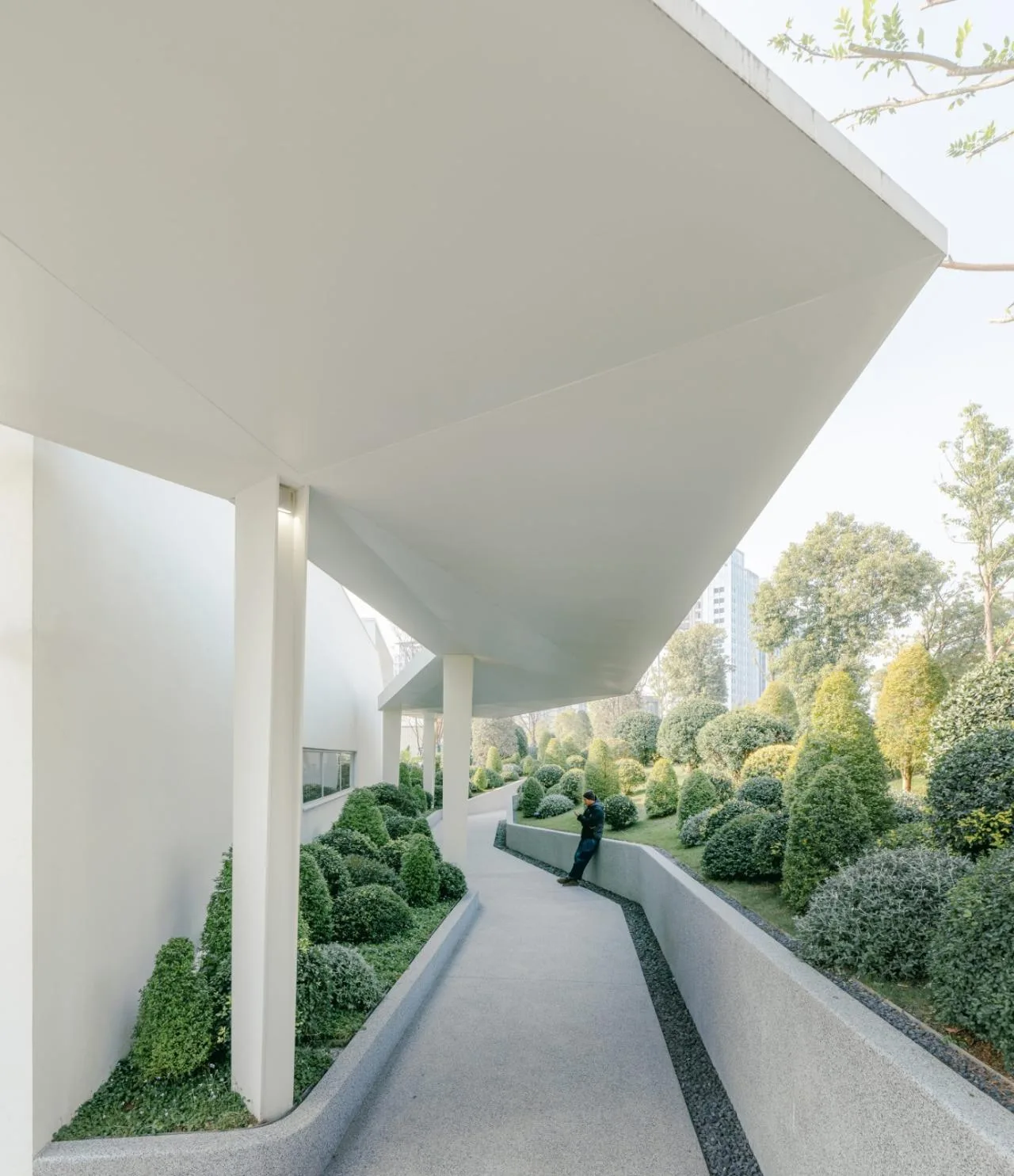
▲ Activity areas of varying scales © Zhu Yumeng
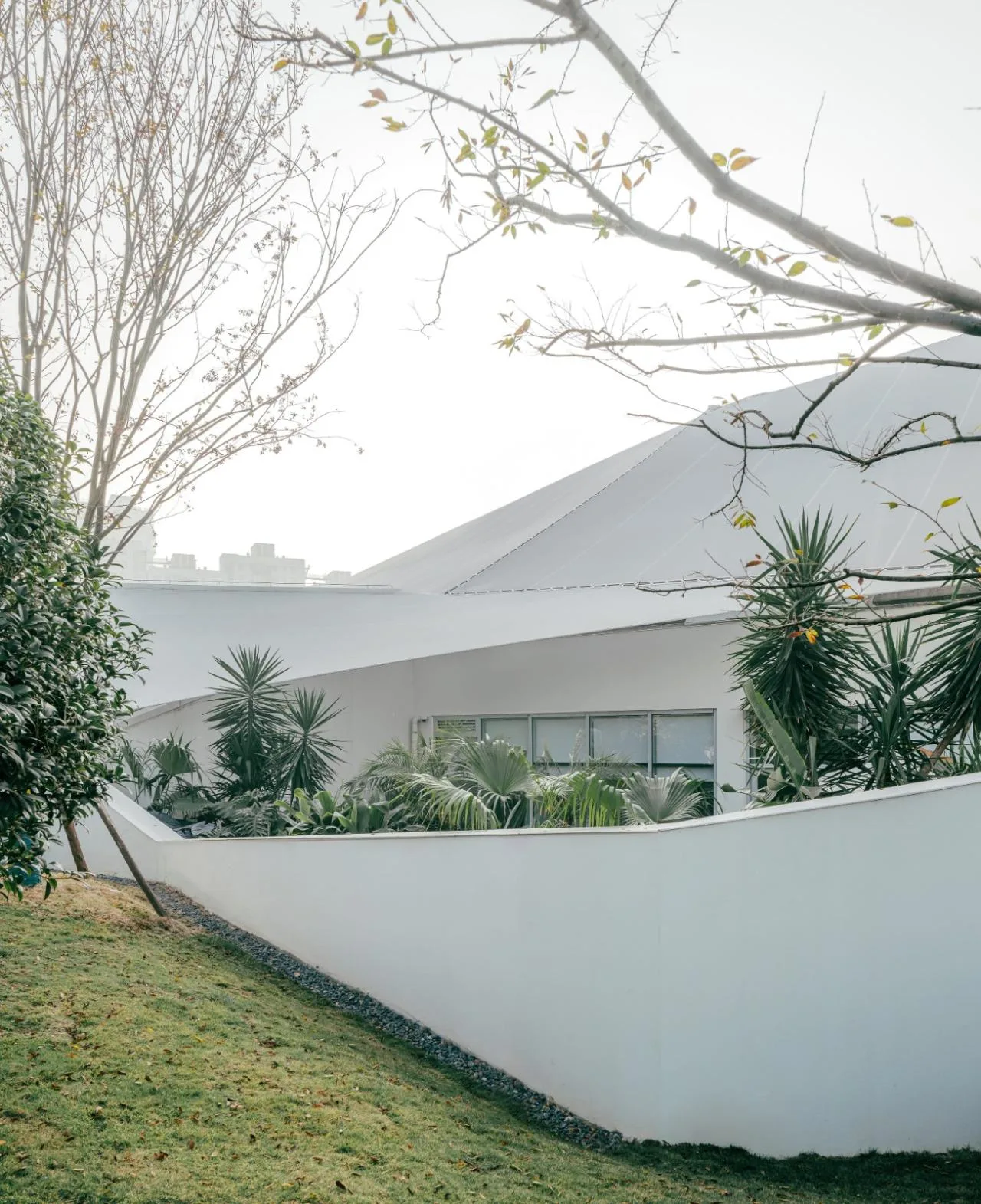
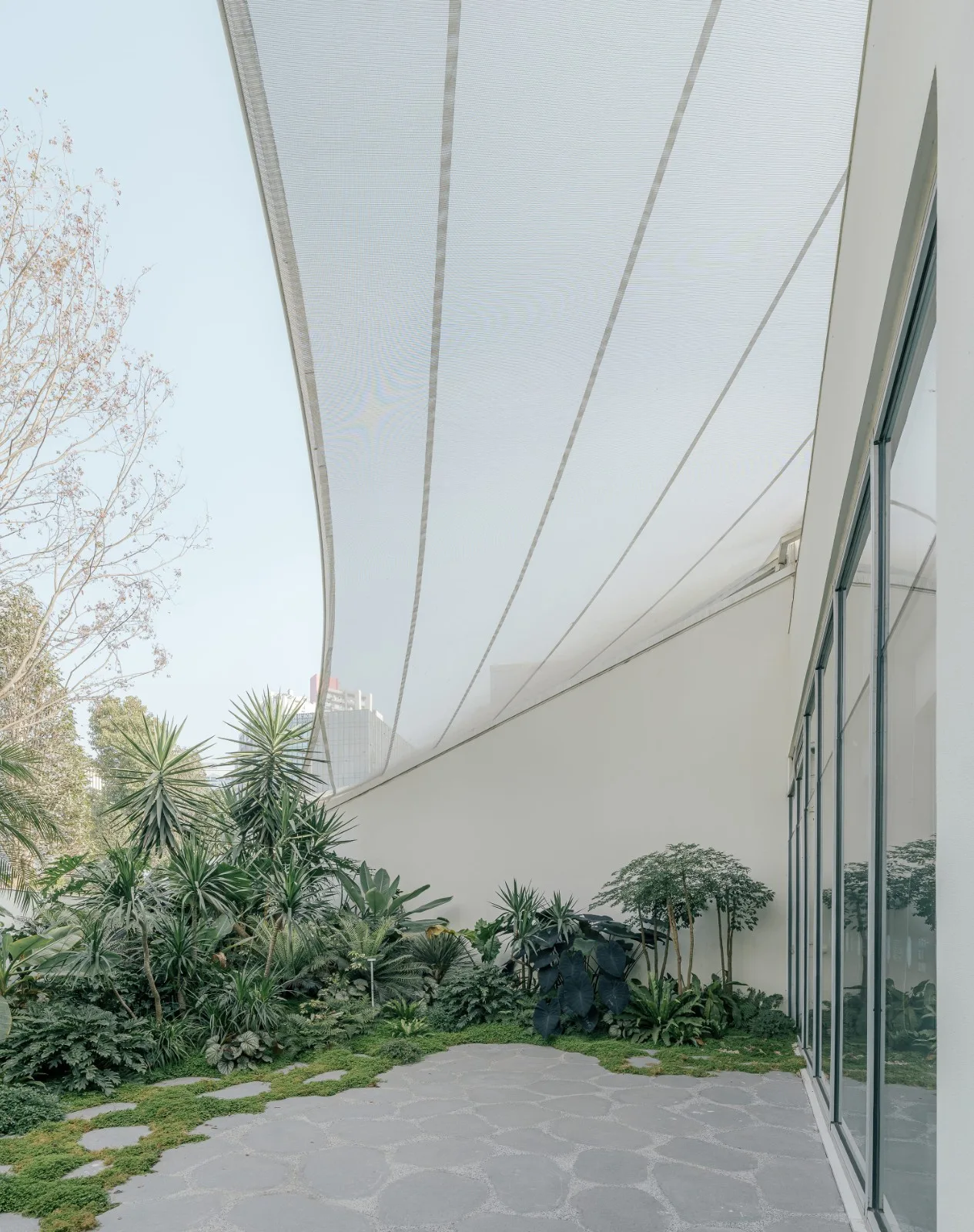
▲ Activity areas of varying scales © Zhu Yumeng
Beyond the free flow between exhibition halls, large windows connect the interior and exterior experiences, turning the views inside and outside into mutual “exhibits.” Passersby on the plaza outside can glimpse inside the museum through glass walls, while visitors inside can observe the outside world, creating an interactive exchange between interior and exterior.
▲ Large open window © Zhu Yumeng
▲ Interior and exterior as mutual “exhibits” © Zhu Yumeng
▲ Interior and exterior as mutual “exhibits” © Zhu Yumeng
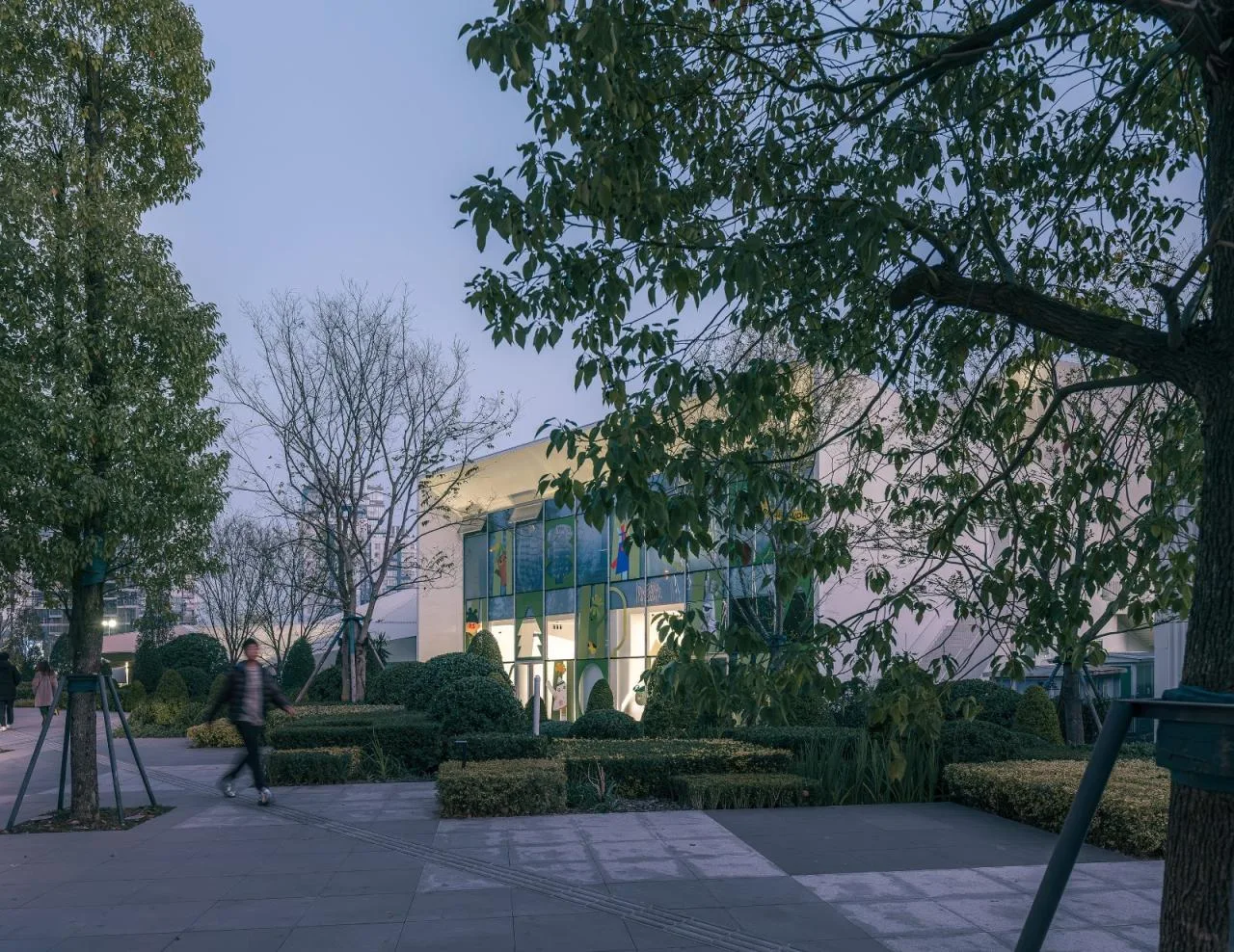
▲ Interior and exterior as mutual “exhibits” © Zhu Yumeng
Deformed Blocks:
The blocks are simply arranged to fit the site’s outline. From nearby tall buildings, the flat and straightforward arrangement becomes more apparent. Therefore, the building’s fifth facade—the roof—became key to breaking the monotony.
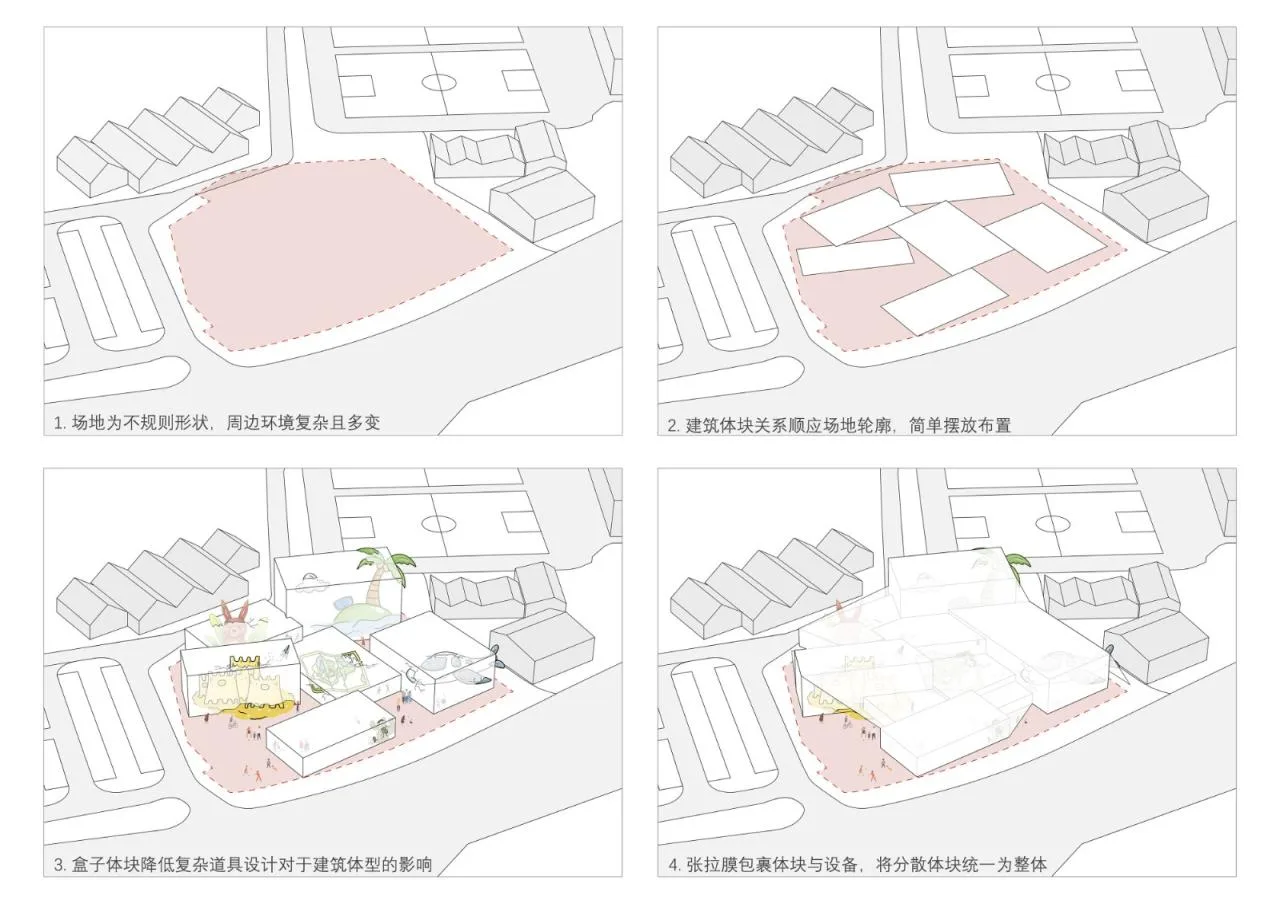
▲ Diagram showing block deformation process © Large scale construction
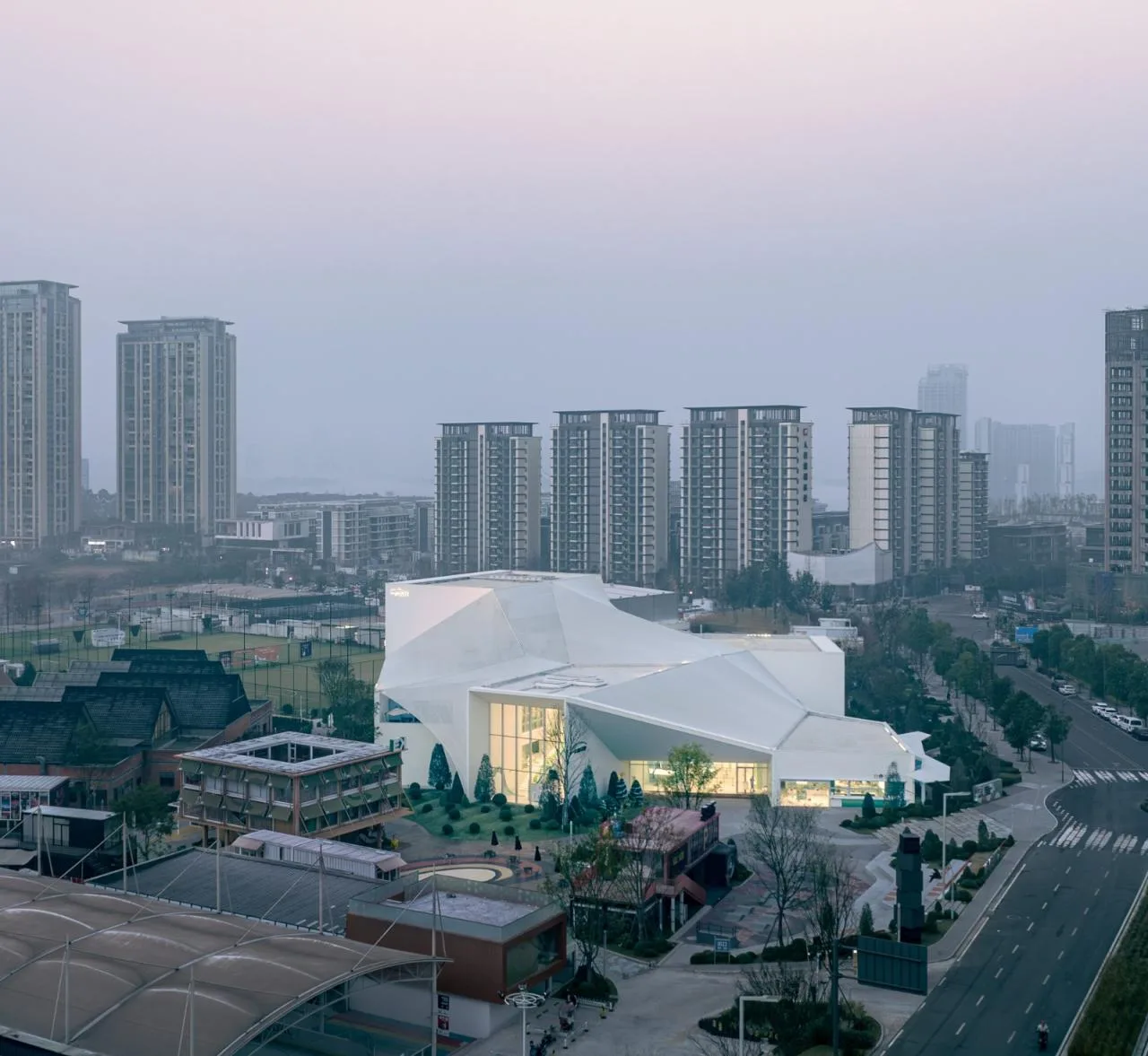
▲ Flat and straightforward block relationships © Zhu Yumeng
With construction accelerating, we relocated most equipment outdoors to avoid overlapping building and interior works. However, this led to a heavier block appearance as rooftop air conditioning units and fire water tanks accumulated.
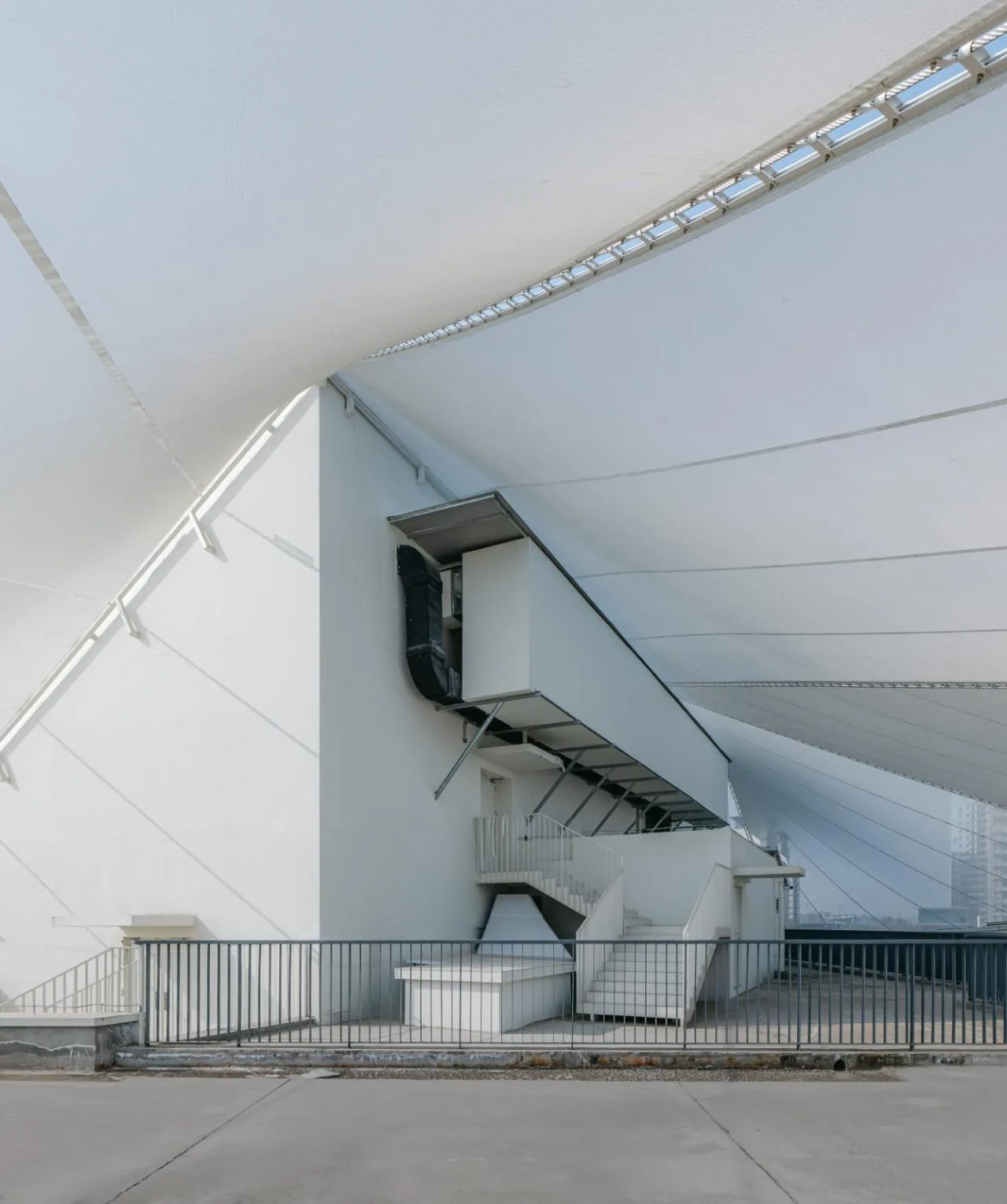
▲ Equipment relocated outdoors © Zhu Yumeng
Faced with complex and evolving construction challenges, we sought a simple, direct solution reminiscent of the “concealment and secrecy” in Christo and Jeanne-Claude’s land art. We initially wrapped the building with a soft, wrinkle-prone aluminum mesh but ultimately replaced it with a stretch film.
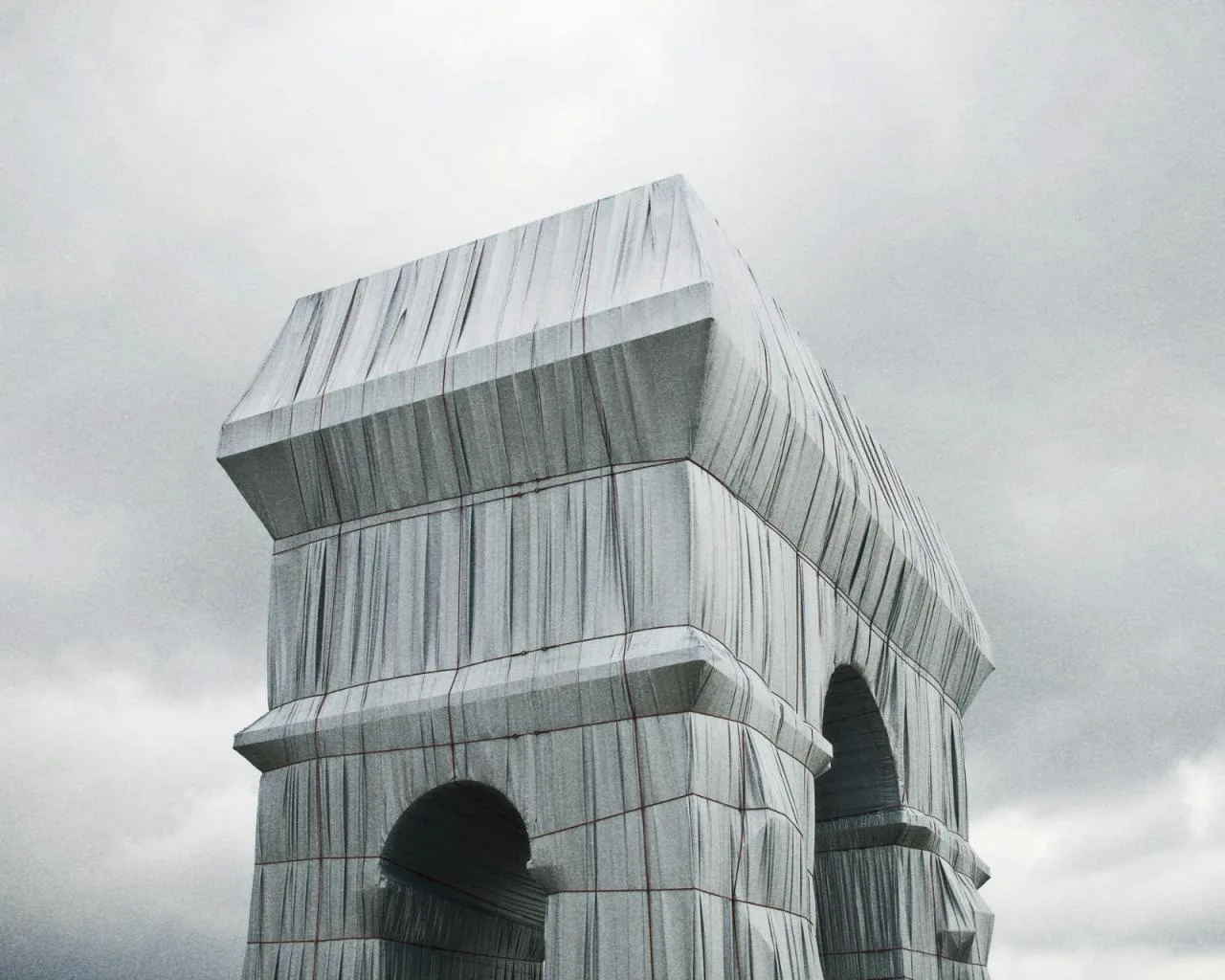
▲ “The Arc de Triomphe Wrapped” by Christo and Jeanne-Claude © Network (for learning and communication only)
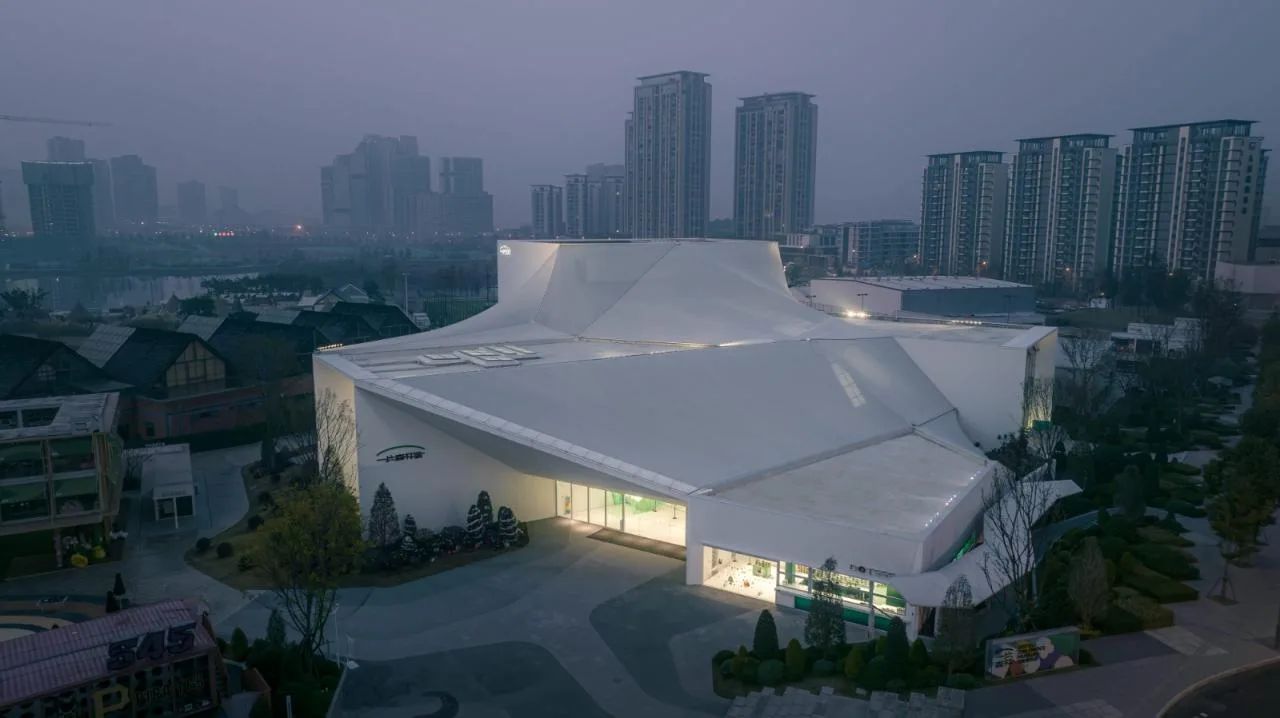
▲ Children’s Museum under wrapping © Zhu Yumeng
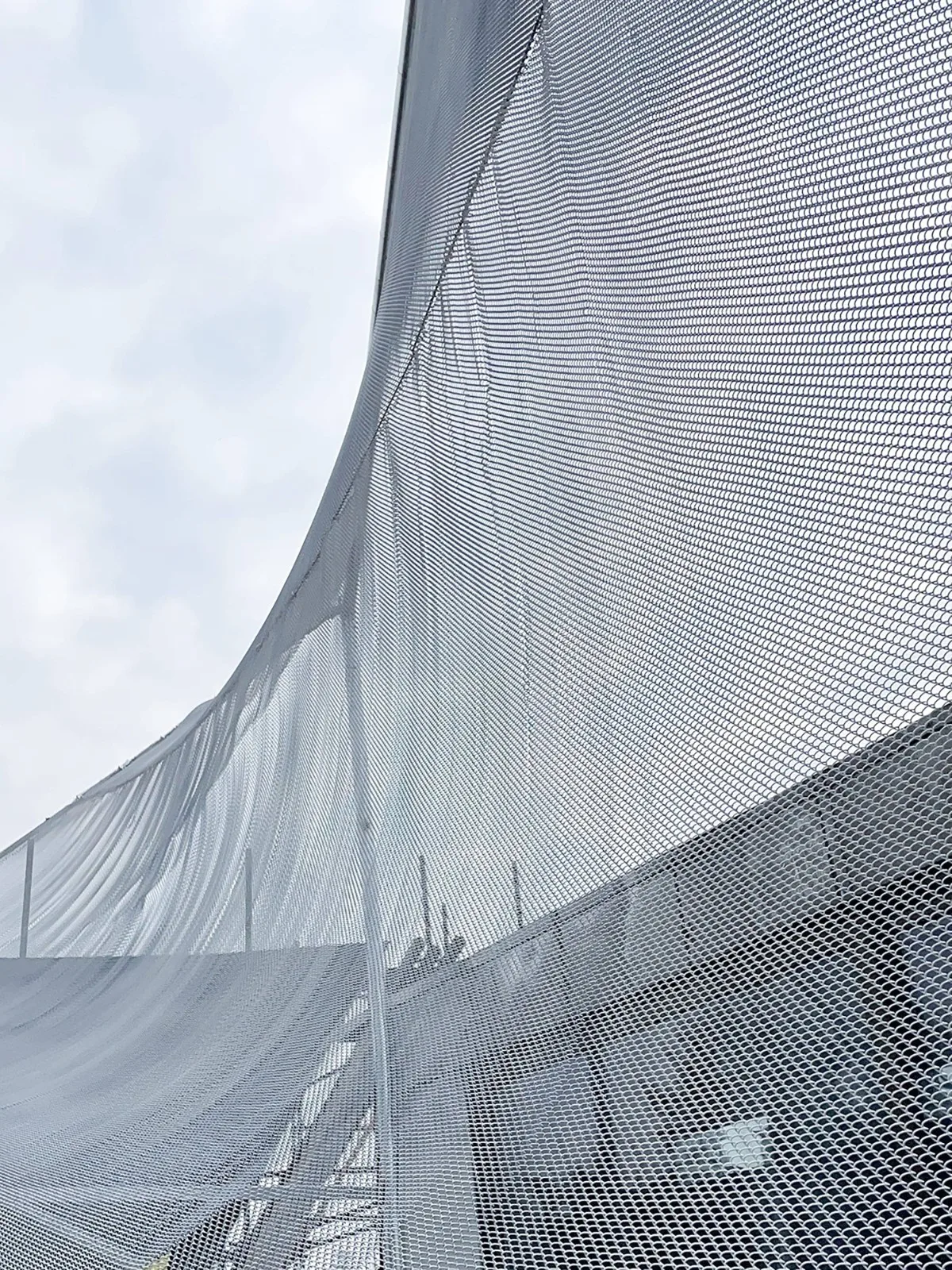
▲ Large-scale aluminum mesh material testing © Large scale construction
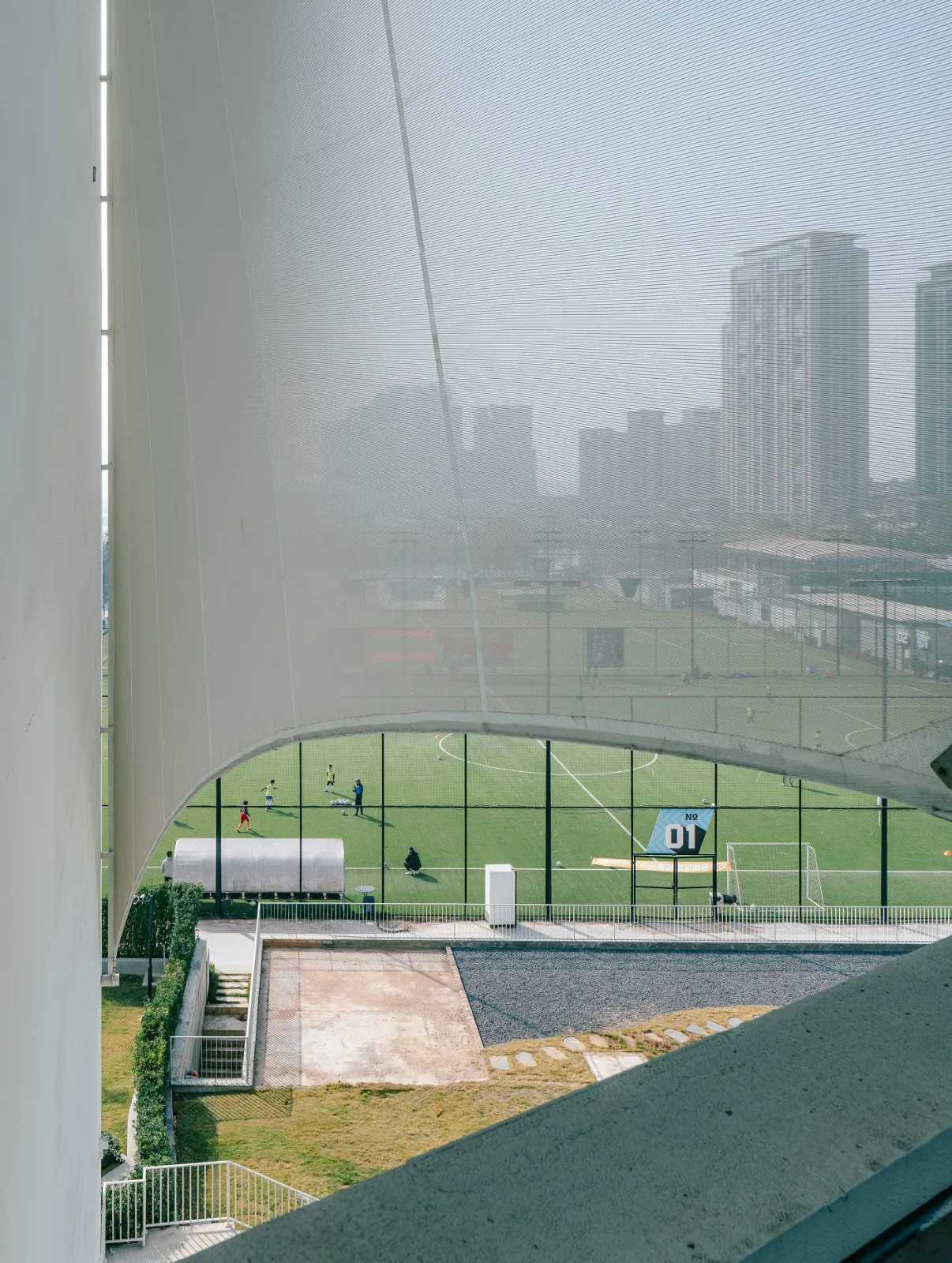
▲ Stretch film effect © Zhu Yumeng
The semi-transparent stretch film, viewed from different angles and lighting conditions, highlights the geometric beauty of the stacked blocks, resembling an iceberg. This vast, tensioned fabric connects multiple blocks and conceals rooftop equipment, softening the sharp edges into a blurred, mysterious form.
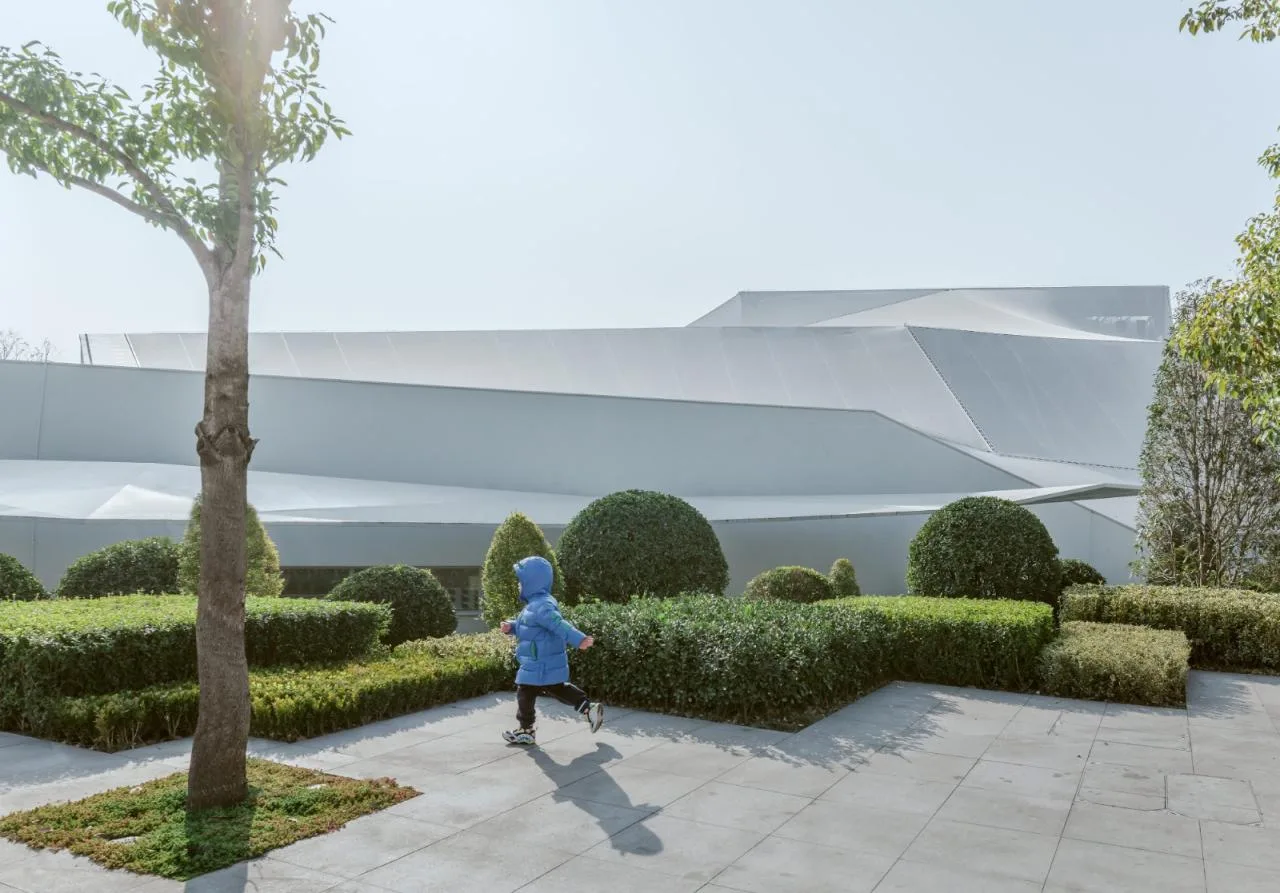
▲ Transformation of stacked blocks © Zhu Yumeng
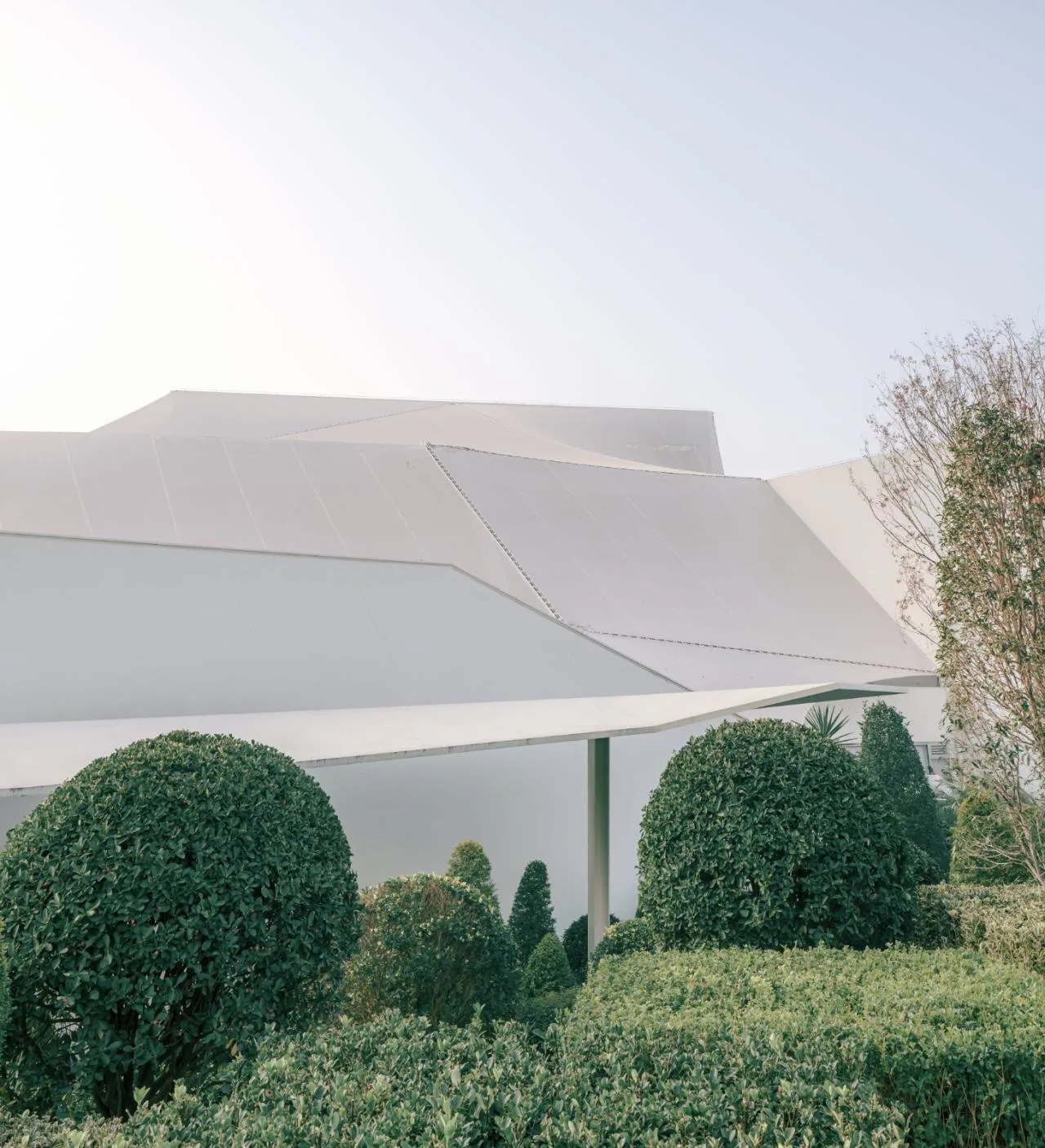
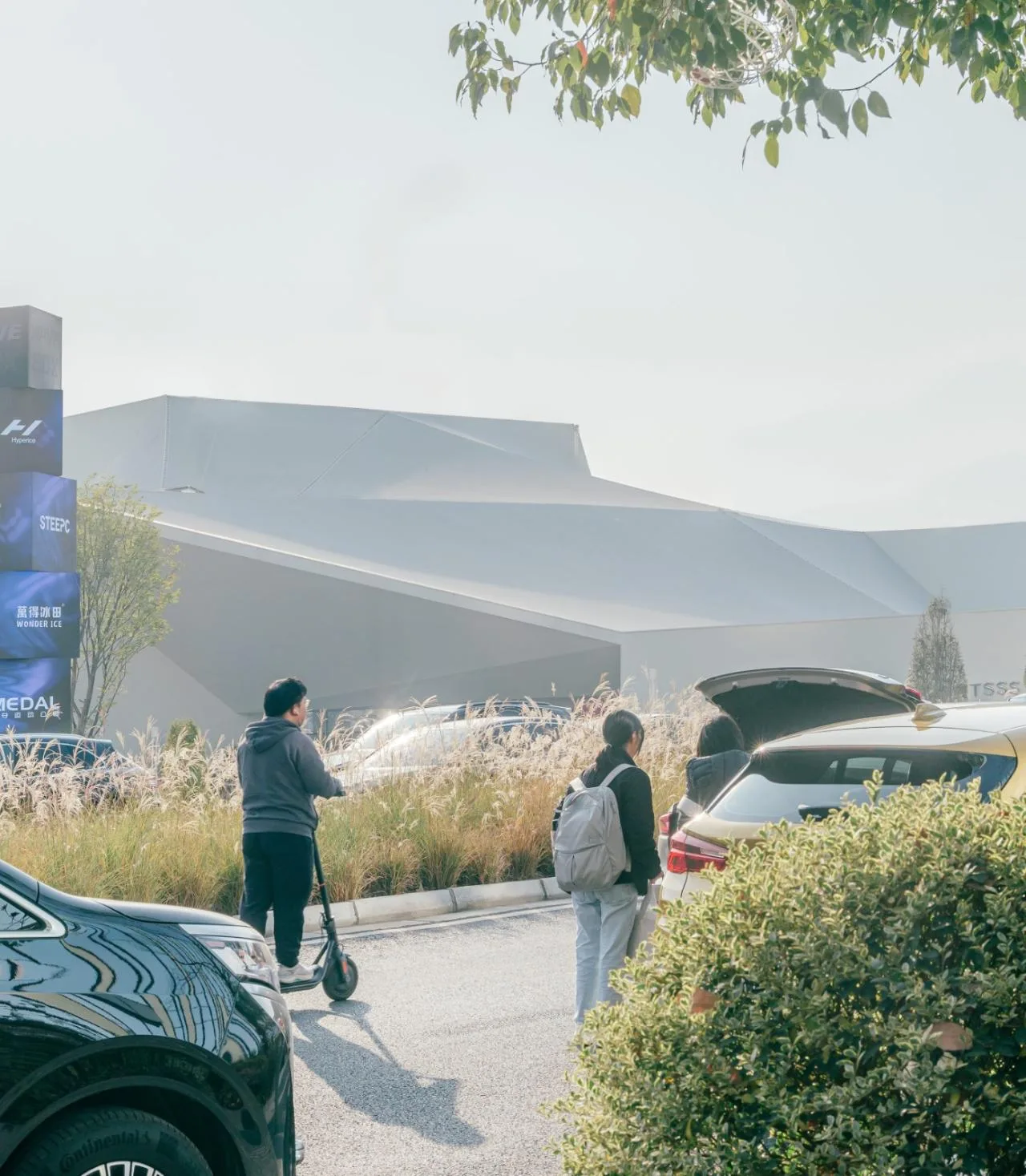
▲ Blocks stacked at varying angles © Zhu Yumeng
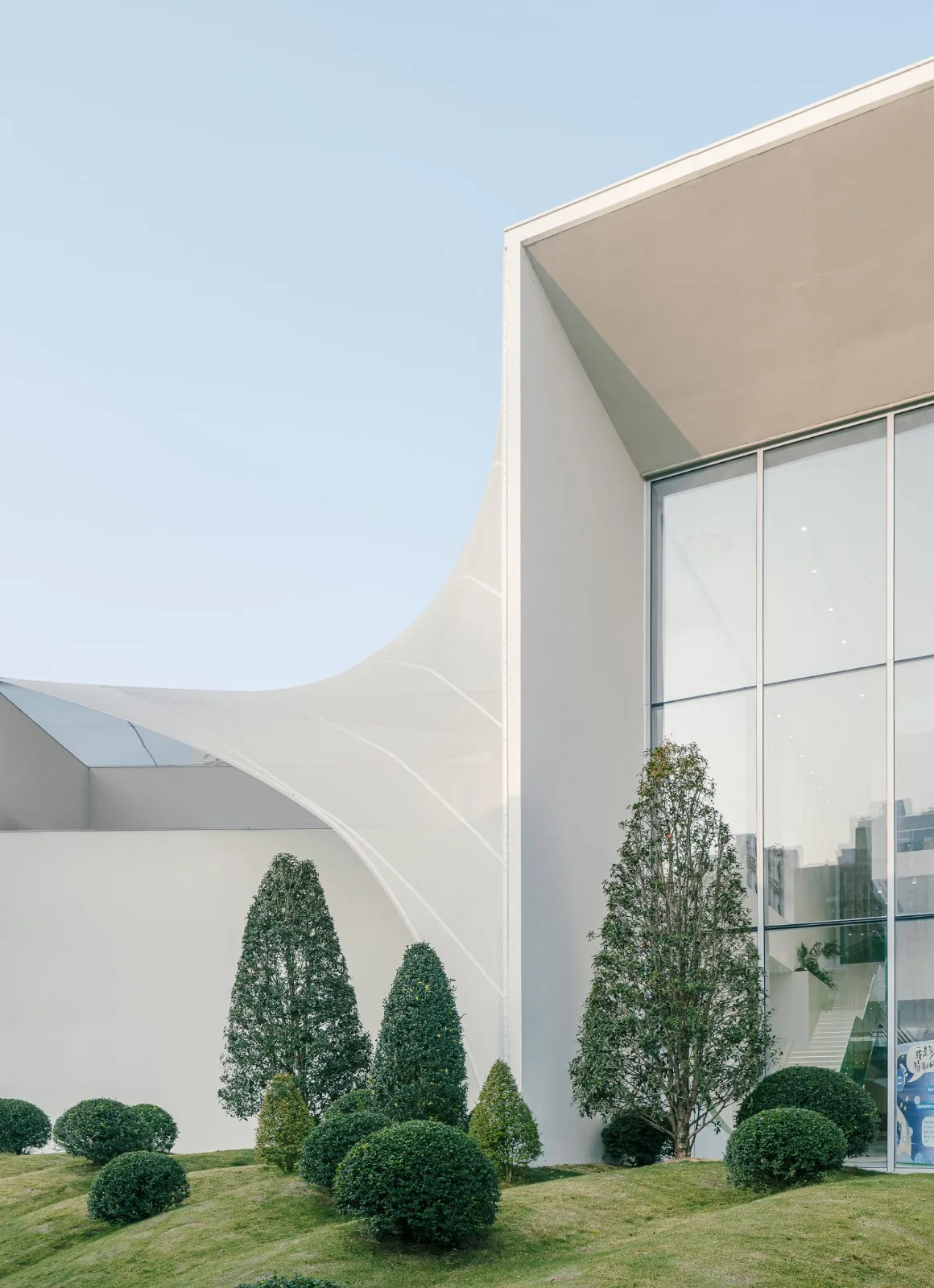
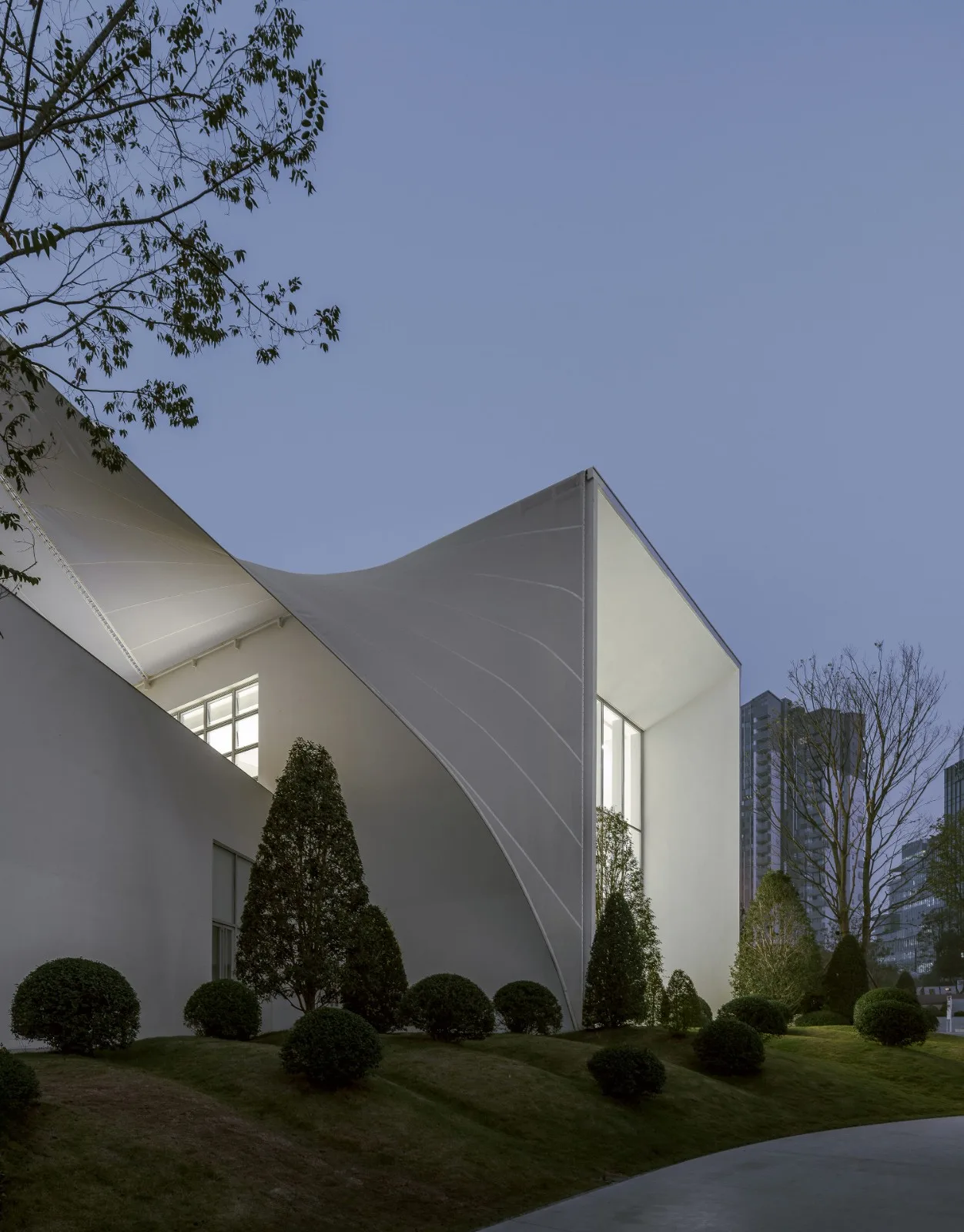
▲ Blocks connected continuously © Zhu Yumeng
The semi-open space between the stretch film roof and the building blocks was originally designed as a rooftop activity area to fulfill children’s wishes to climb and play on the roof. However, the installation of additional equipment on the roof prevented this plan from being realized.
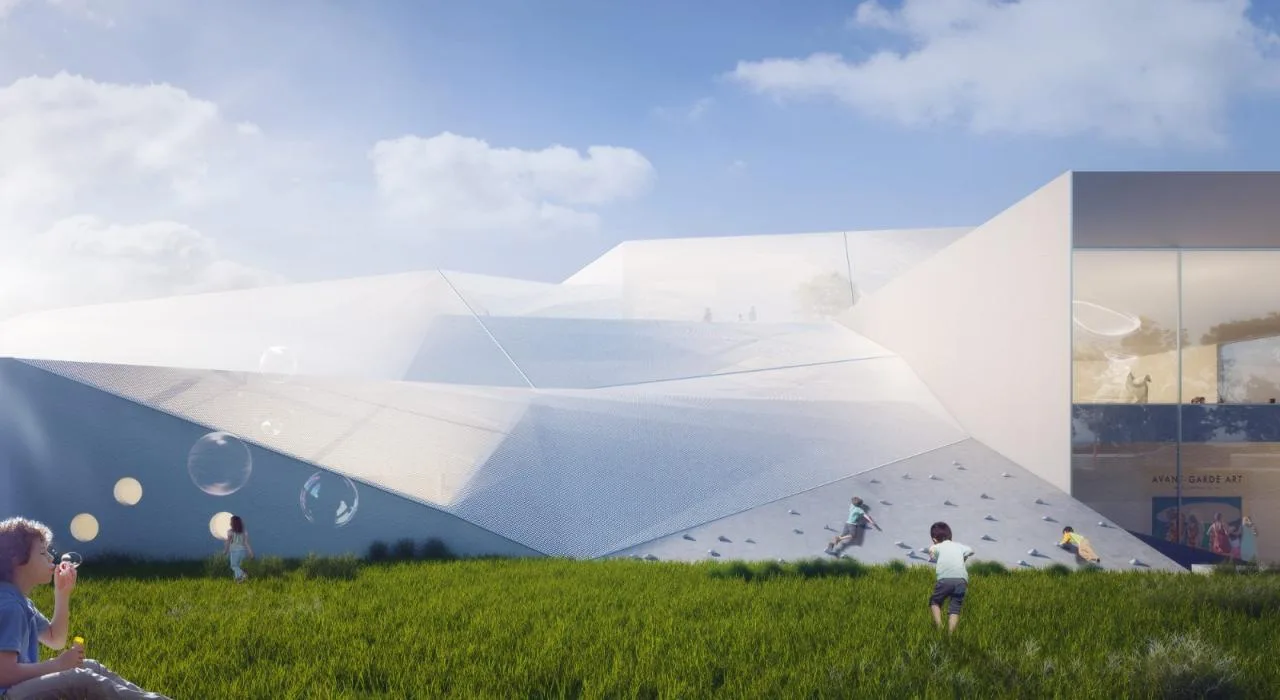
▲ Original landscape design concept for the building © Large scale construction
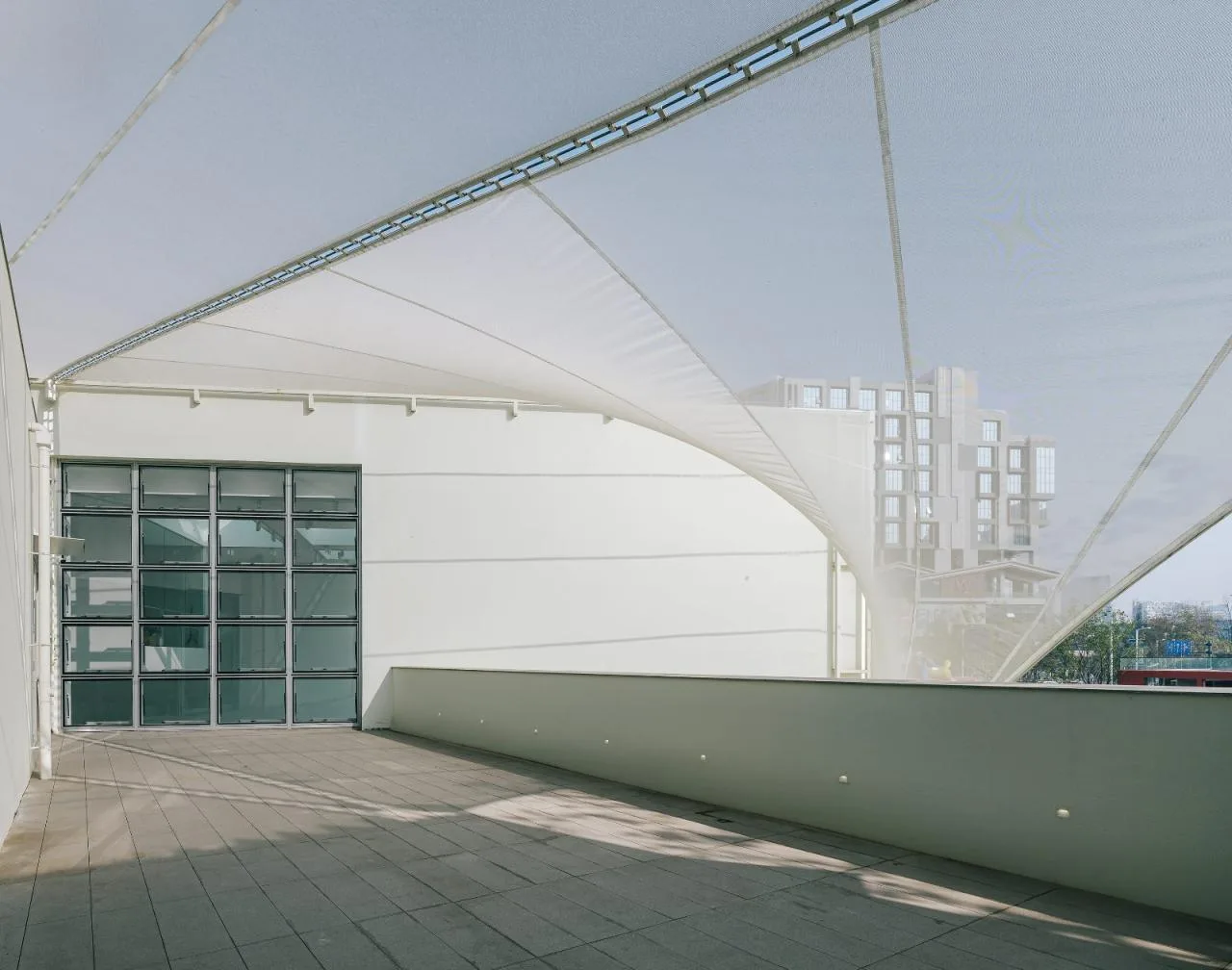
▲ The interlayer space between roof and blocks © Zhu Yumeng
The Same Approach:
We have always been drawn to exploration through daily reminders and unexpected anomalies.
The regular cubic form is a common architectural expression. A box with dimensions beyond a few meters, once opened by an entrance, naturally suggests an inhabitable space. Multiple scattered boxes become typical exhibition architecture styles. When wrapped together by a stretch film, the sharp yet softened boundaries create an intriguing anomaly. This pure white form resembles a drifting iceberg—both familiar and strange—offering a new architectural experience to the public.
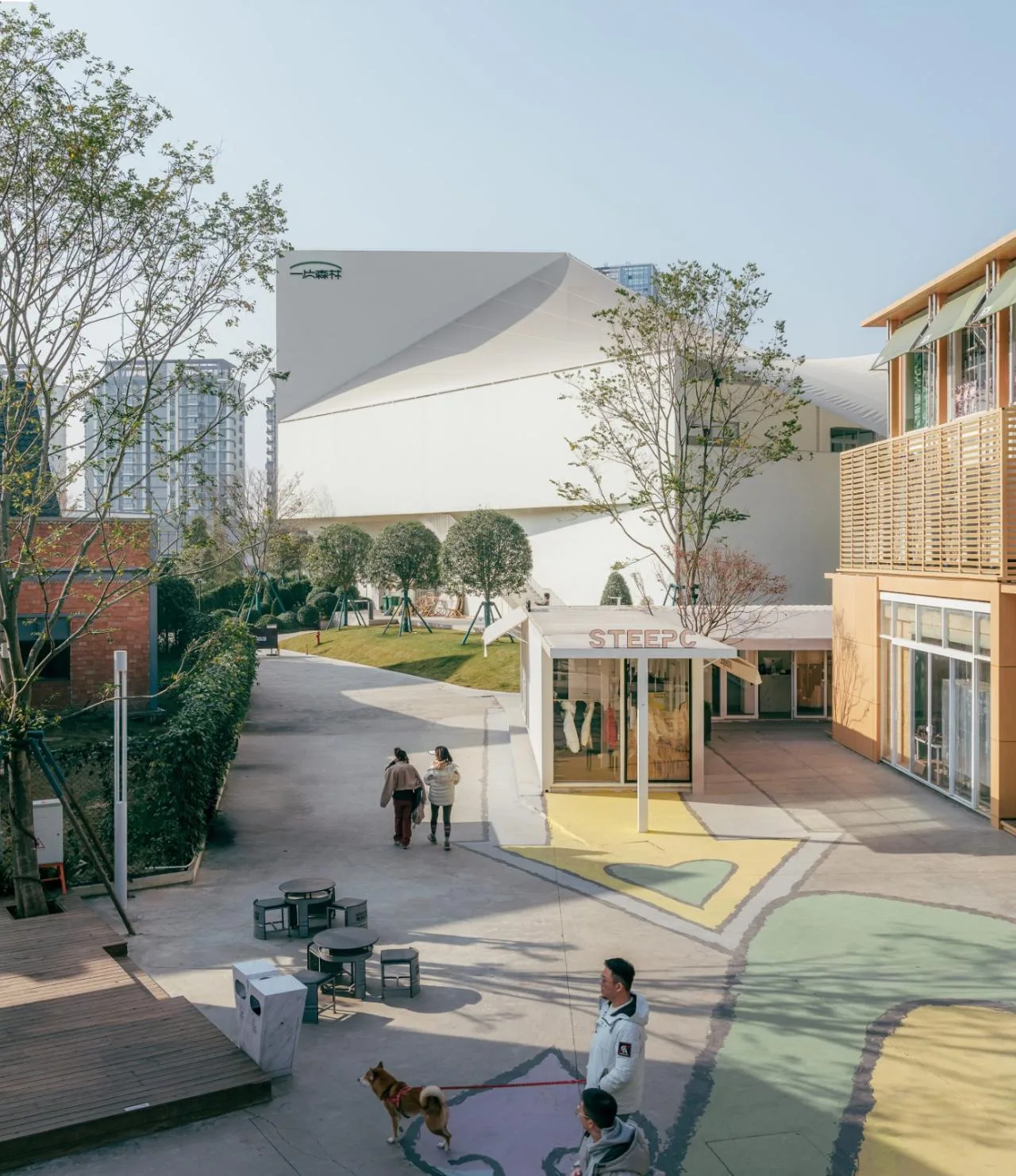
▲ Anomalous attraction © Zhu Yumeng
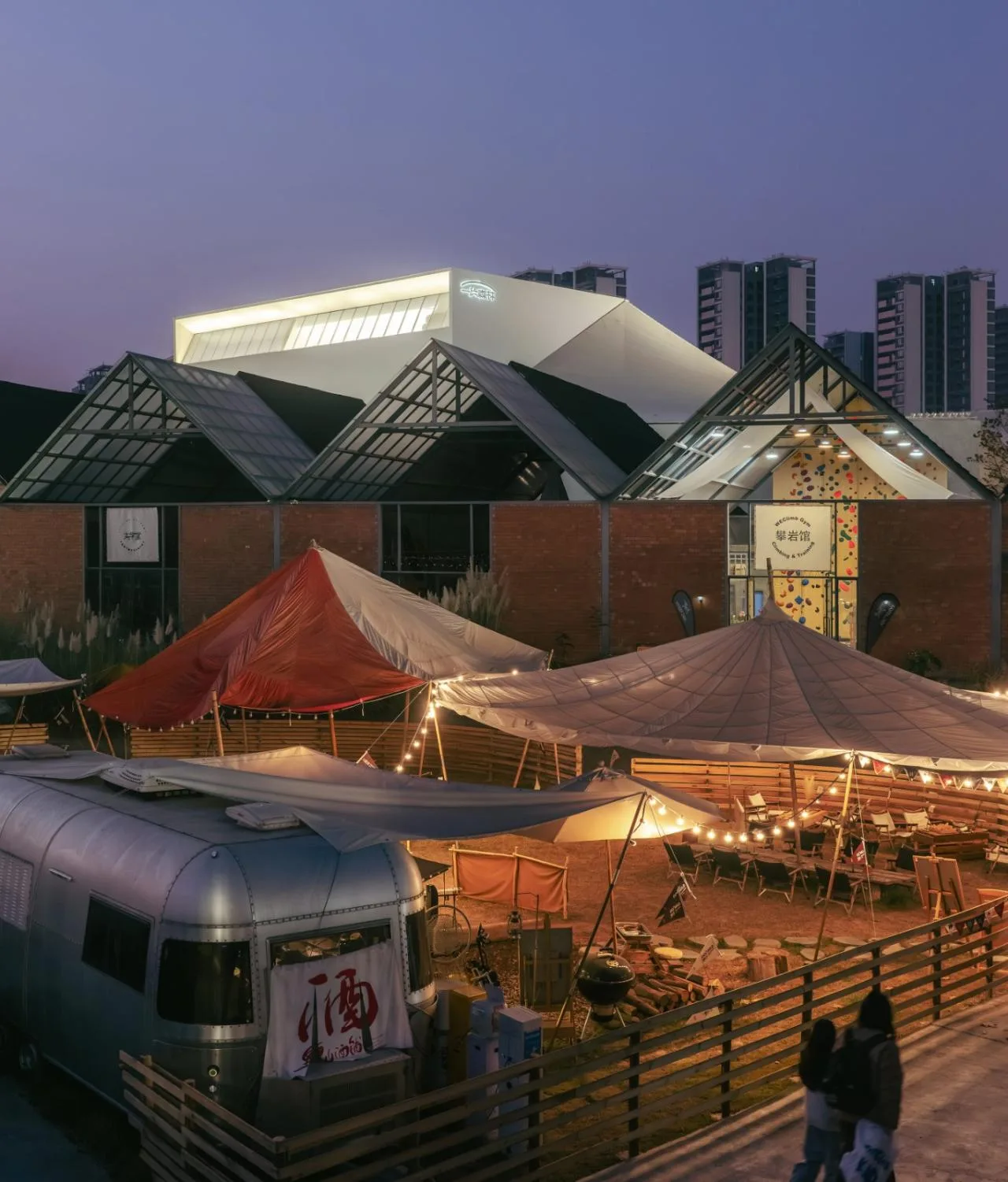
▲ Anomalous attraction © Zhu Yumeng
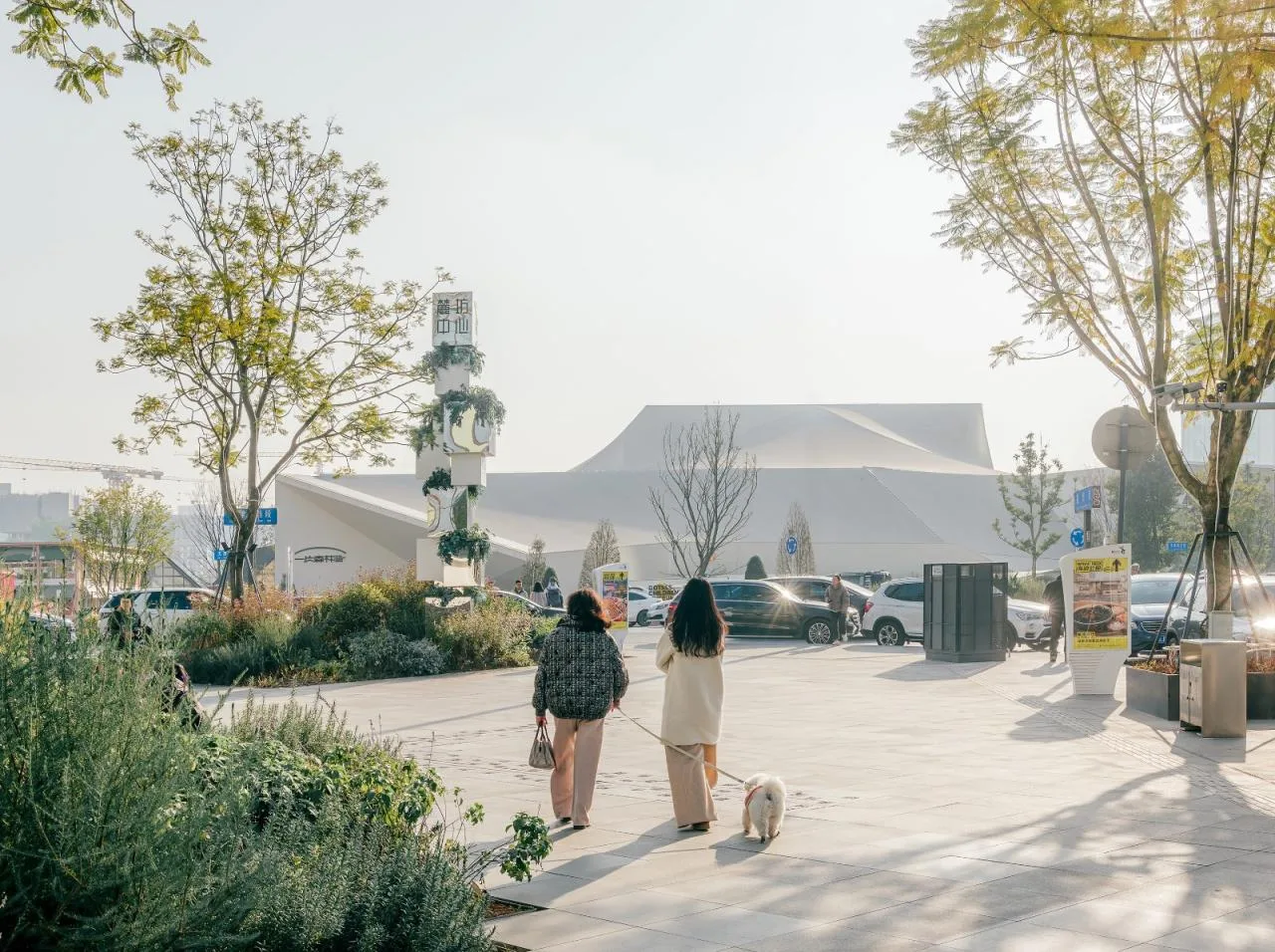
▲ Familiar yet unfamiliar architectural experience © Zhu Yumeng
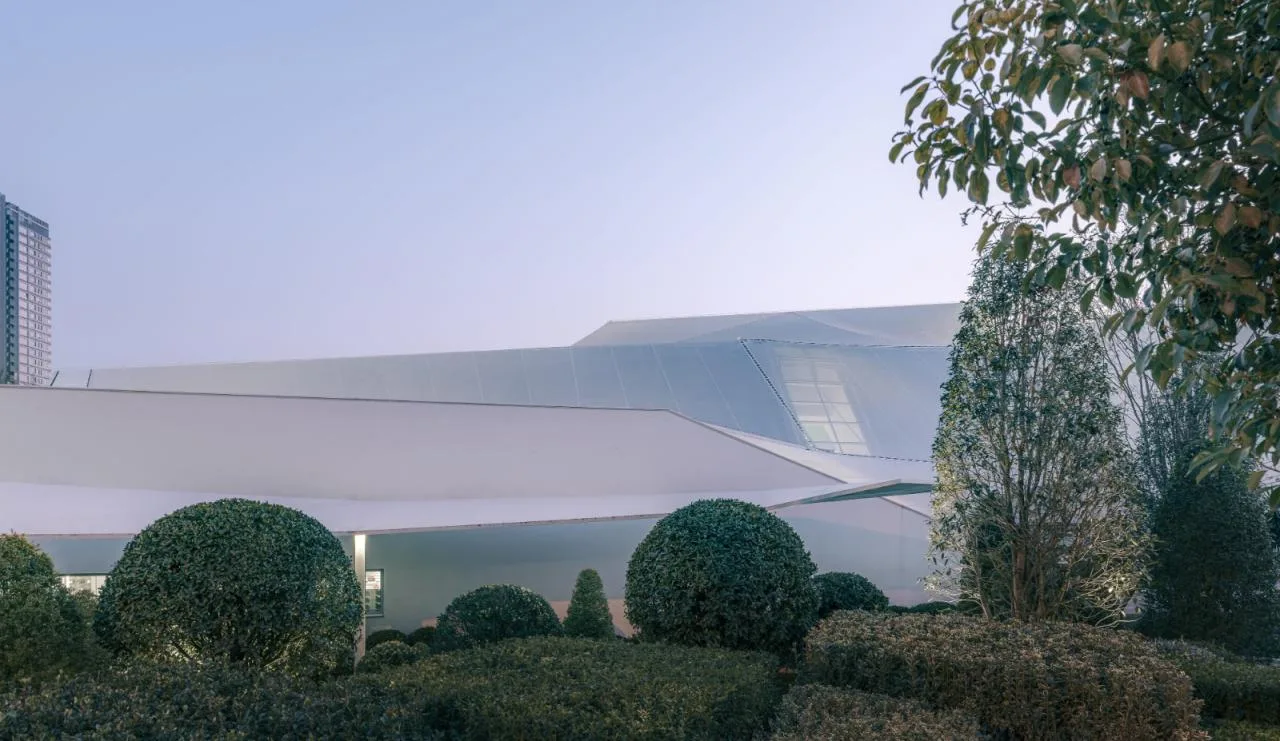
▲ Familiar yet unfamiliar architectural experience © Zhu Yumeng
Only a small portion of an iceberg’s mass is visible above the water, with the vast majority hidden beneath, sparking imagination about its true shape. Similarly, this forest museum uses visible boundaries to invite children to perceive the world, discover their interests, and actively explore its mysteries.
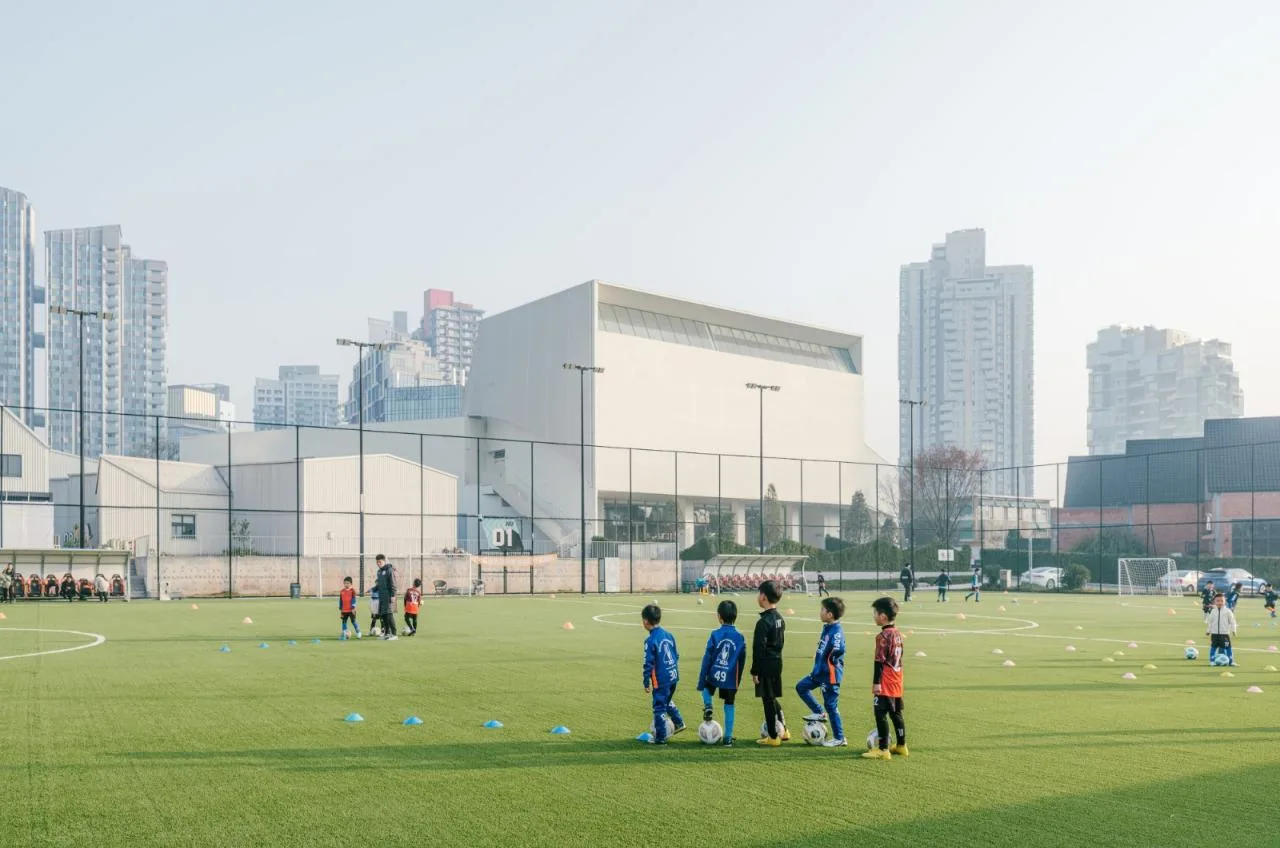
▲ Inspiring children to perceive the world © Zhu Yumeng
Within this “iceberg,” elements of stillness and motion coexist—the physical structure providing permanence, while the diverse design and construction process introduces change. From Lezhi School to Luhu Children’s Museum, our consistent aim has been to send educational messages: a building for children is not merely a static learning space but a dynamic, evolving educational platform.
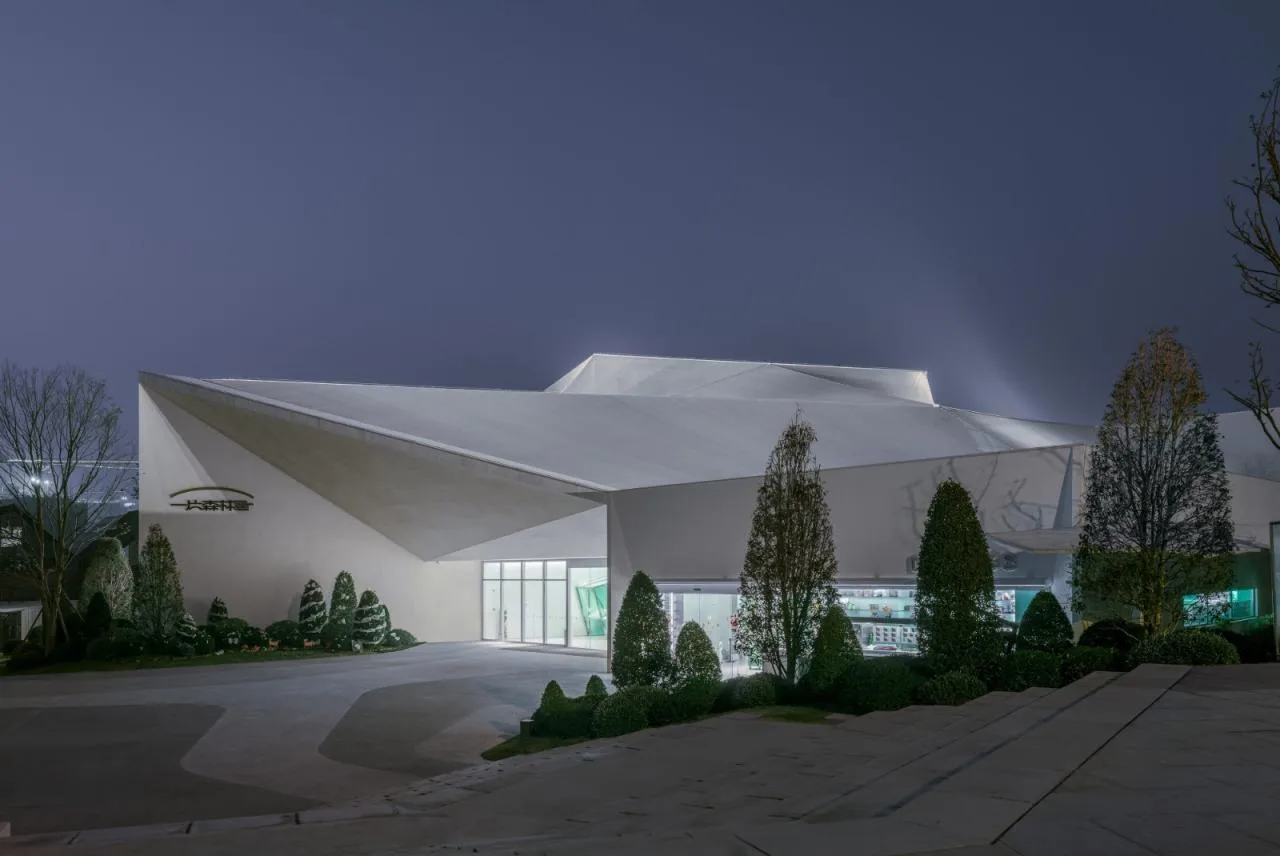
▲ Night view of the Children’s Museum © Zhu Yumeng
Perhaps the saying “seeing a mountain as a mountain, seeing a mountain not as a mountain, and ultimately seeing a mountain as a mountain” finds new meaning in this children’s museum.
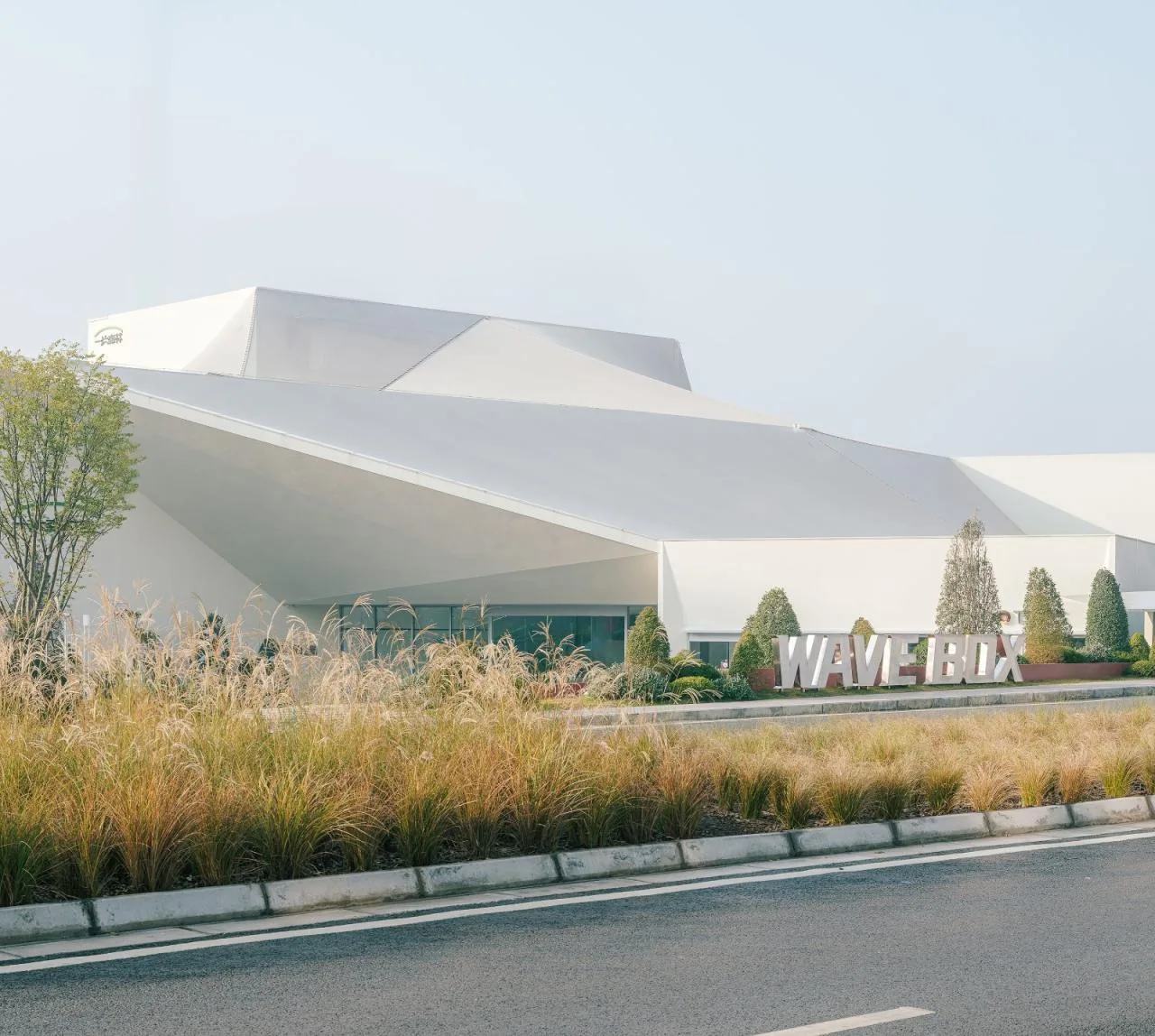
▲ Interpretations of “seeing a mountain” © Zhu Yumeng
Project Drawings
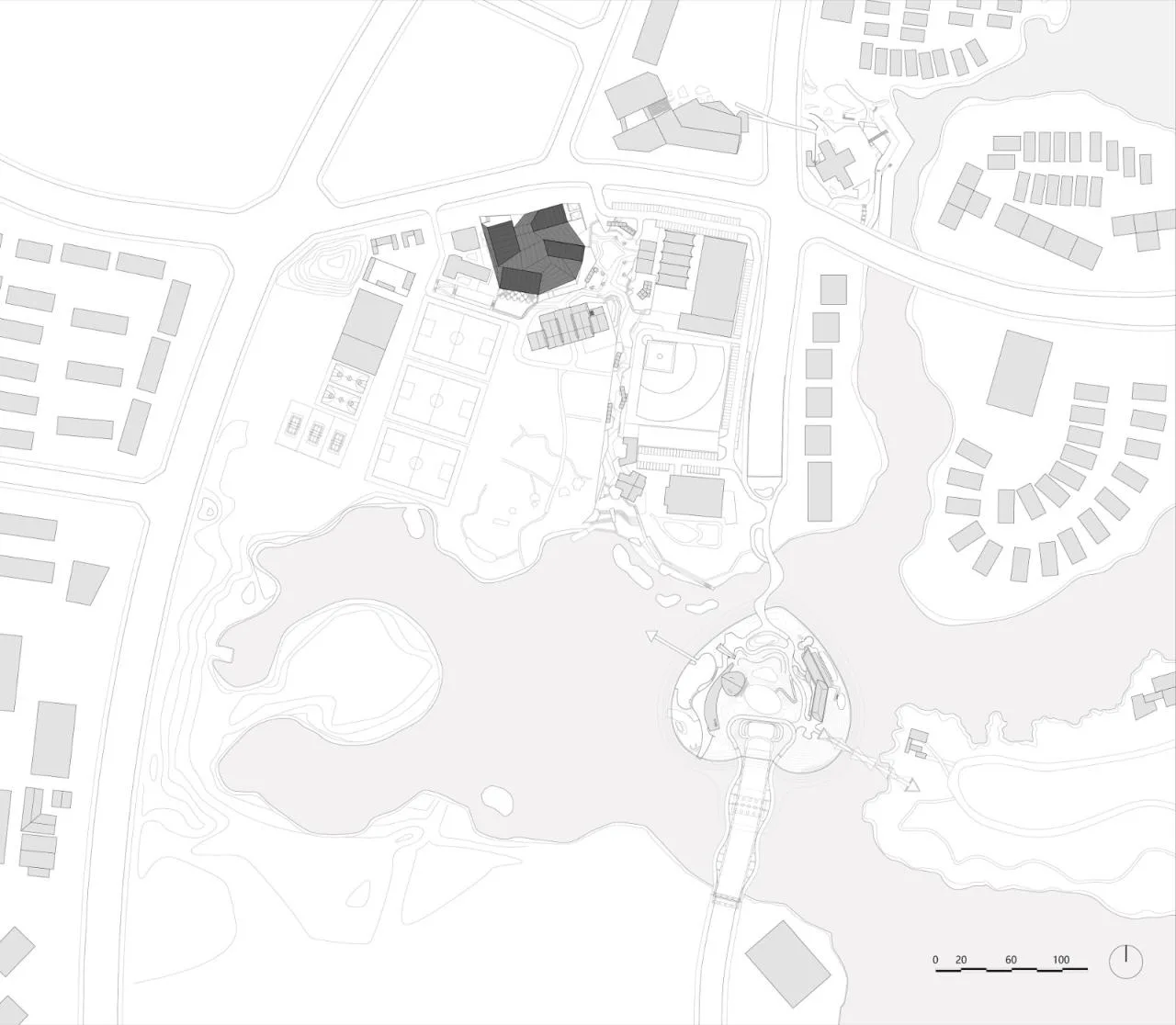
▲ General layout plan © Large scale construction
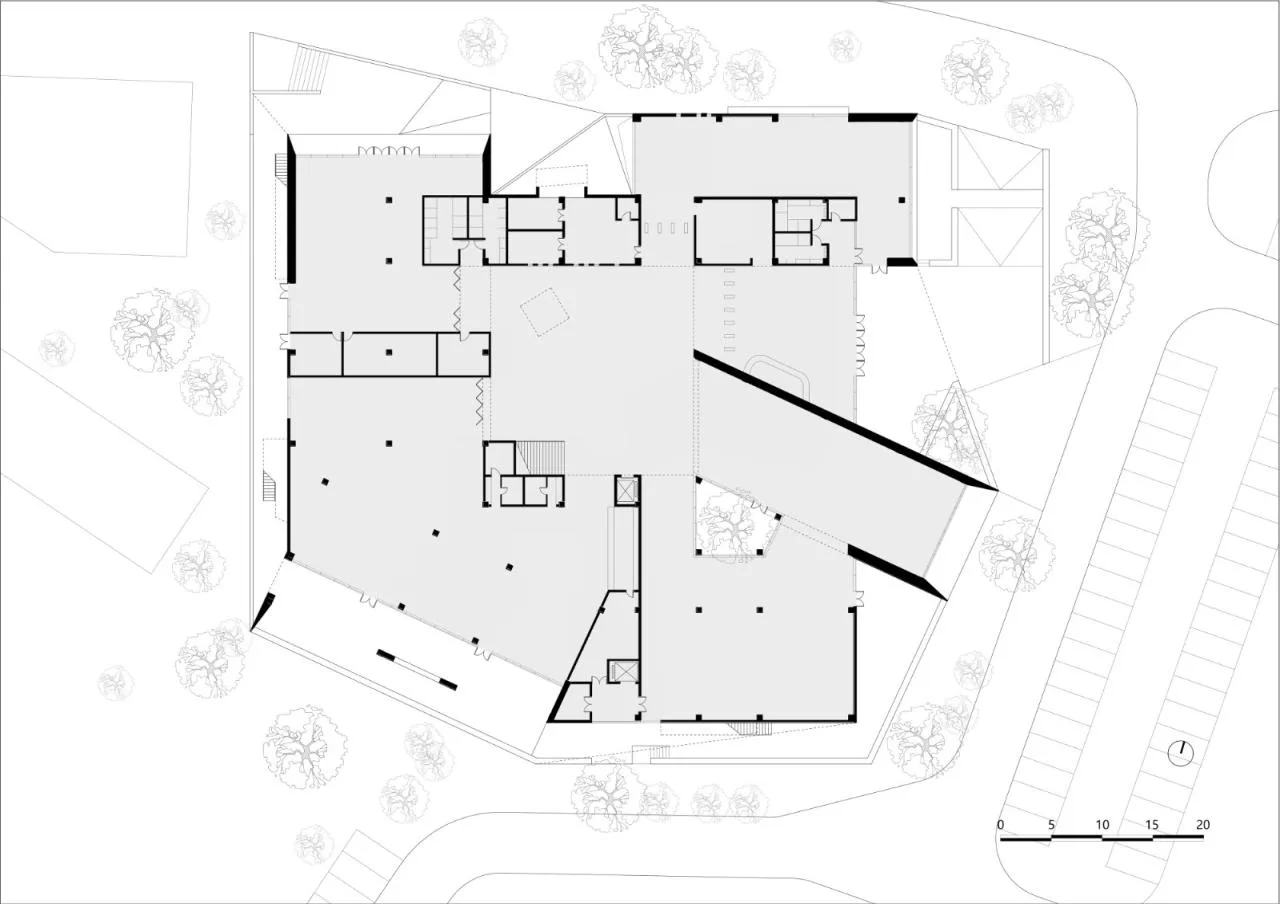
▲ First floor plan © Large scale construction
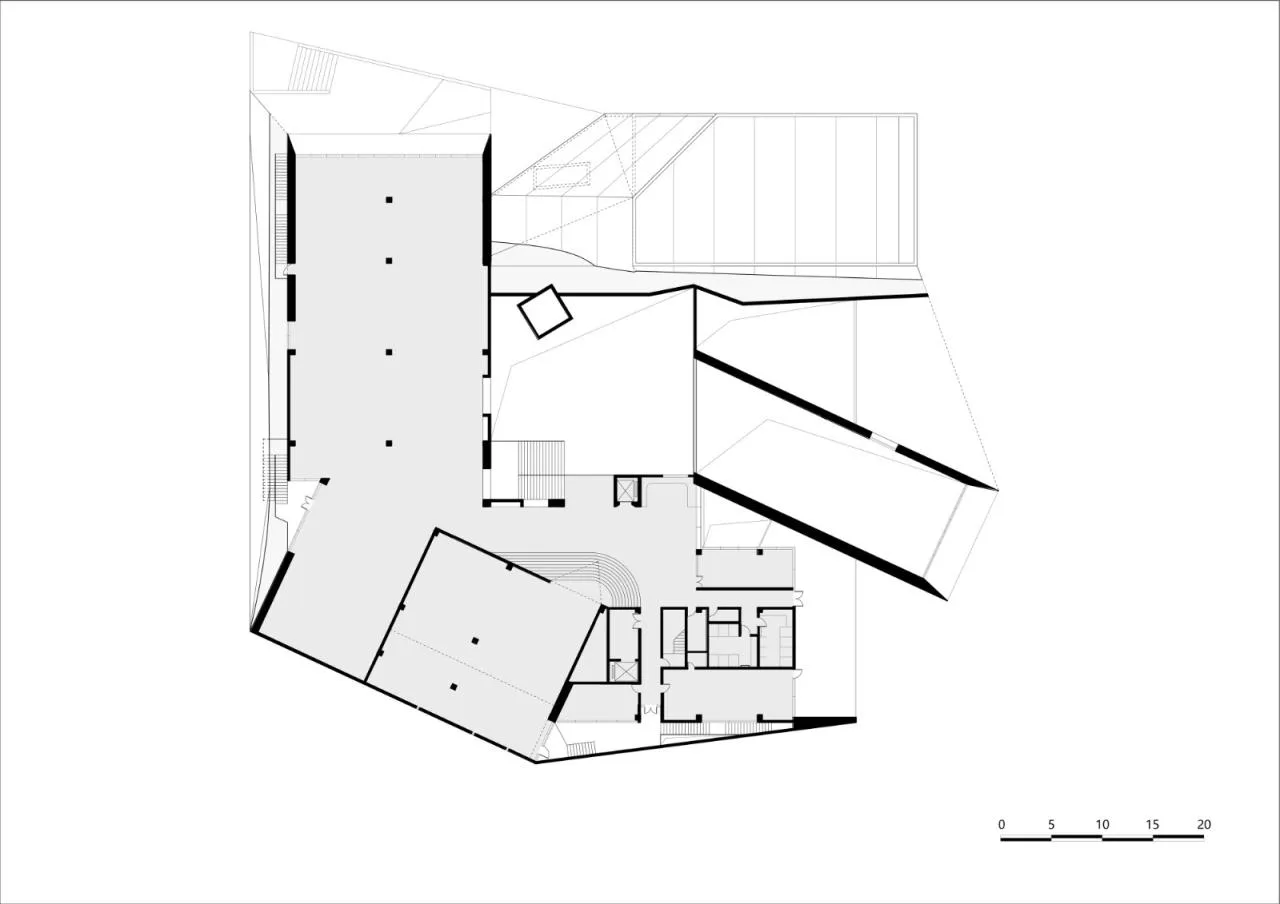
▲ Second floor plan © Large scale construction
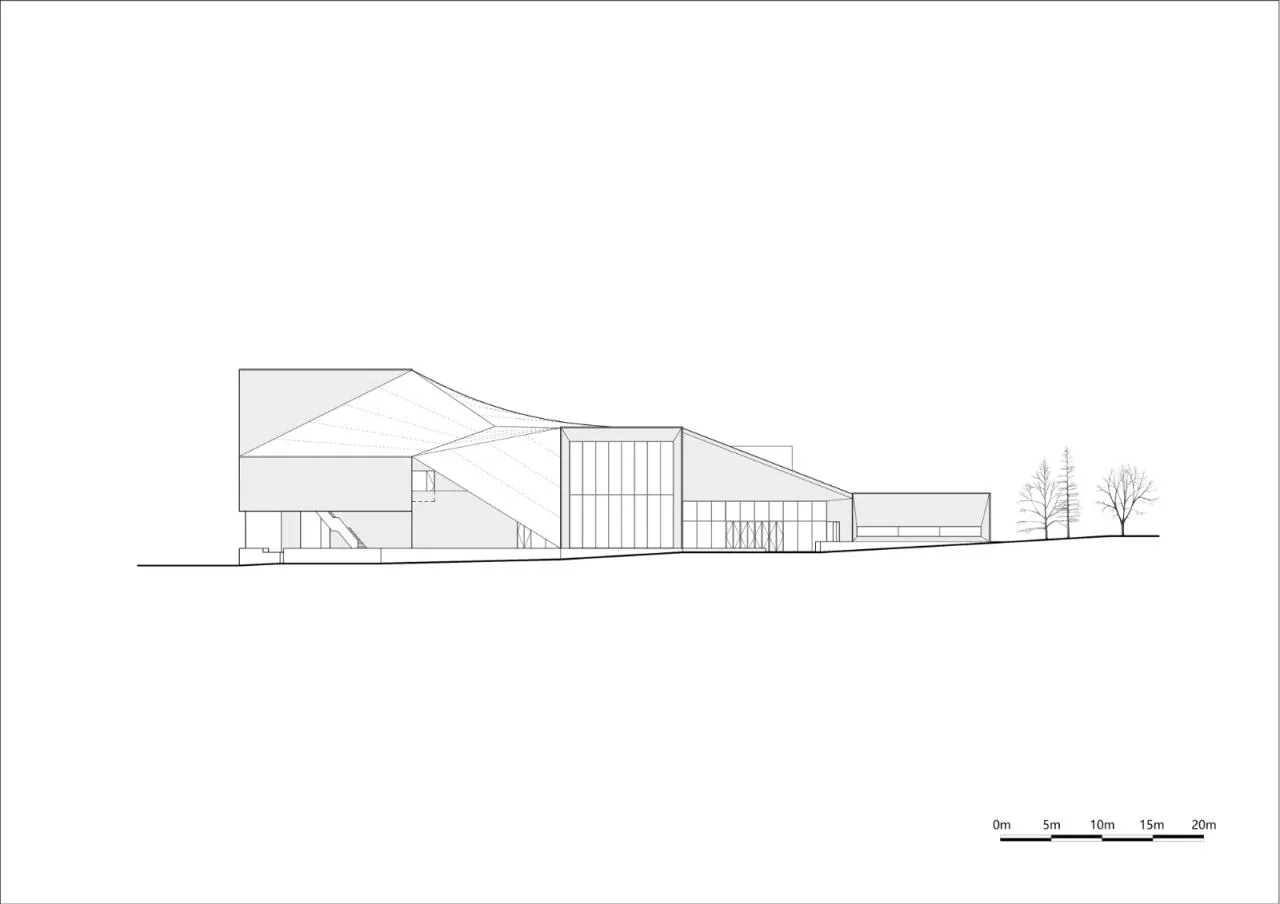
▲ Elevation view © Large scale construction
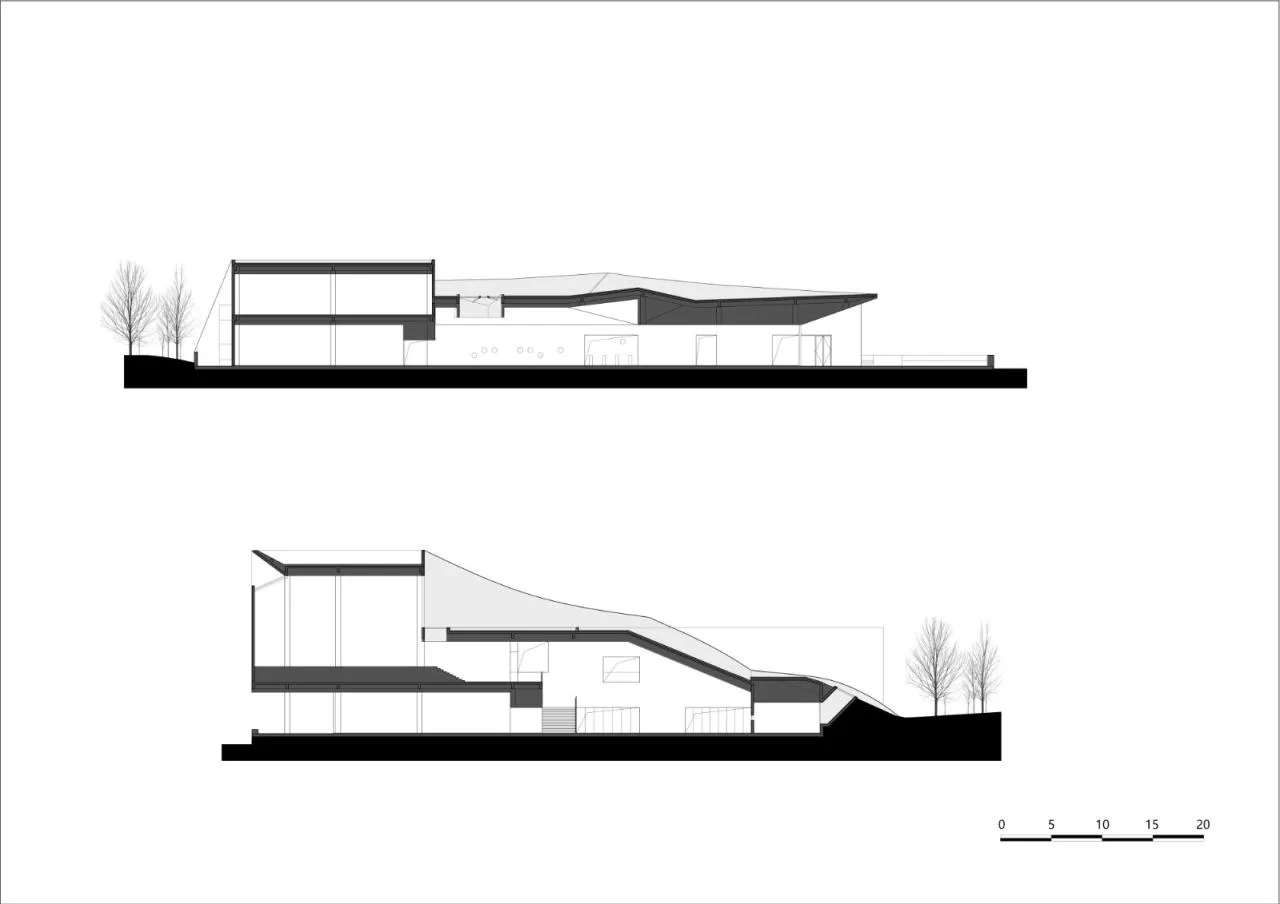
▲ Sectional view © Large scale construction
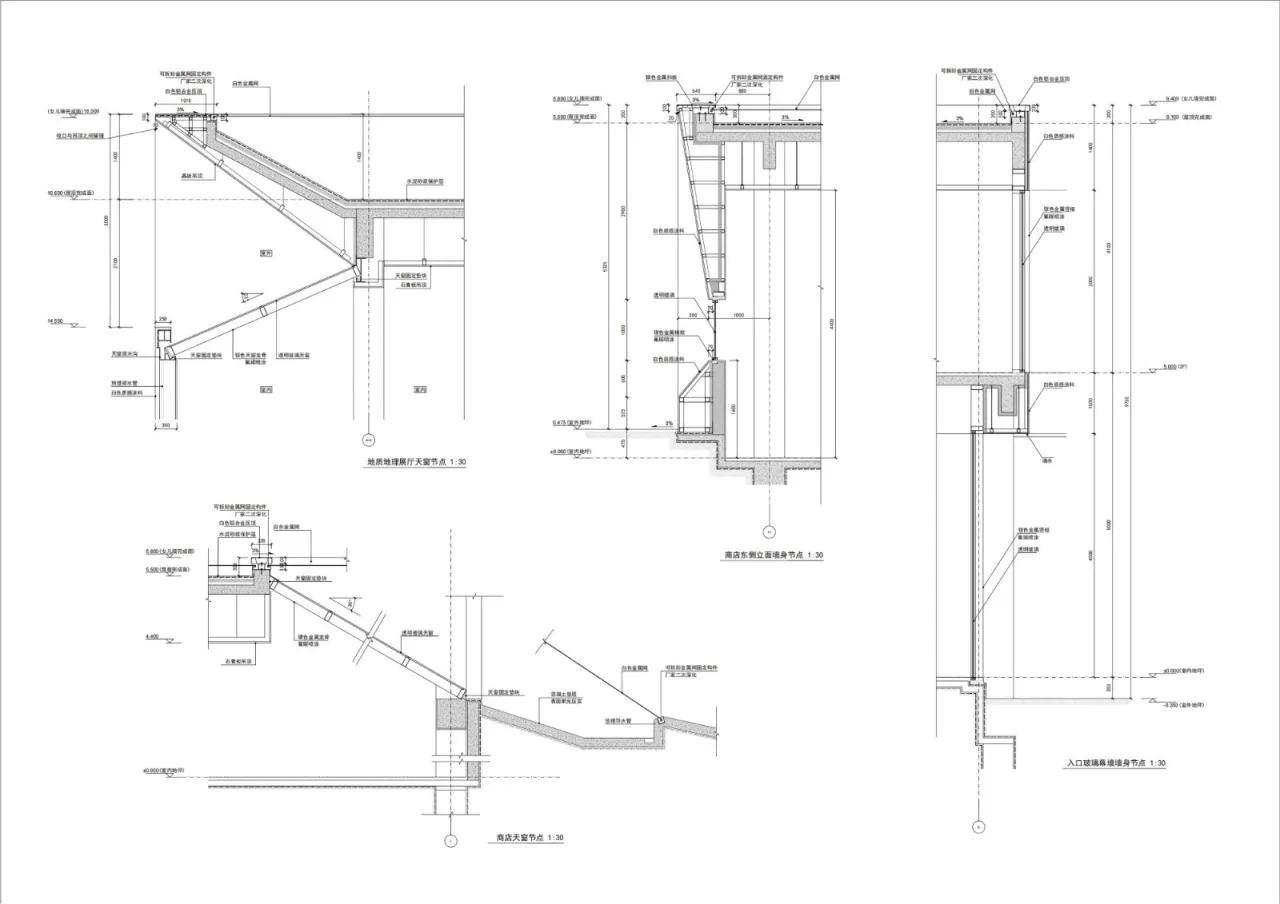
▲ Wall structure details © Large scale construction
Project Information
Location: Chengdu, Sichuan, China
Duration: 2021–2023
Area: 5,736 square meters
Owner: Chengdu Wanhua Group
Architectural Concept / Initial Design: Large scale Building
Lead Architect: Liu Yang
Architects: Sun Xinye, Cai Zhuoqun, Ding Yue, Wen Shi, Wei Wei, Duan Qi
Construction Drawing Design: Sichuan Xilian Architectural Planning and Design Co., Ltd.
Interior Design: MOD Ink Design
Landscape Design: Zhilan Landscape
Lighting Design: BPI Lighting Consultant Design Company
Curtain Wall Detailing: Foster Building Technology Co., Ltd.
Signage Design: Prism Design Firm
Photography: Zhu Yumeng












Must log in before commenting!
Sign Up