
In May 2023, the design scheme for the Shenzhen Vocational and Technical University Shenshan Campus (Phase I) was publicly tendered. Shenzhen Tanghua Architectural Design Firm and China Construction Technology Group participated in the bidding and advanced to the final round. Their design was selected as one of the top three winning candidate schemes.
△ © Tang Hua Architectural Design & China Construction Technology Group
The Shenshan Campus of Shenzhen Vocational and Technical University is situated in Chishi Town, within the Shenshan Special Cooperation Zone, adjacent to the Chishi Toll Station on the Yongguan Expressway. Surrounded by mountains on all sides, the site is traversed by the Chishi River and Wanyao Cave River, offering abundant natural resources of mountains and water. This unique cultural and geographical setting inspired the creation of a landscape campus that fosters urban-rural harmony, reconnects with nature, and respects cultural context.
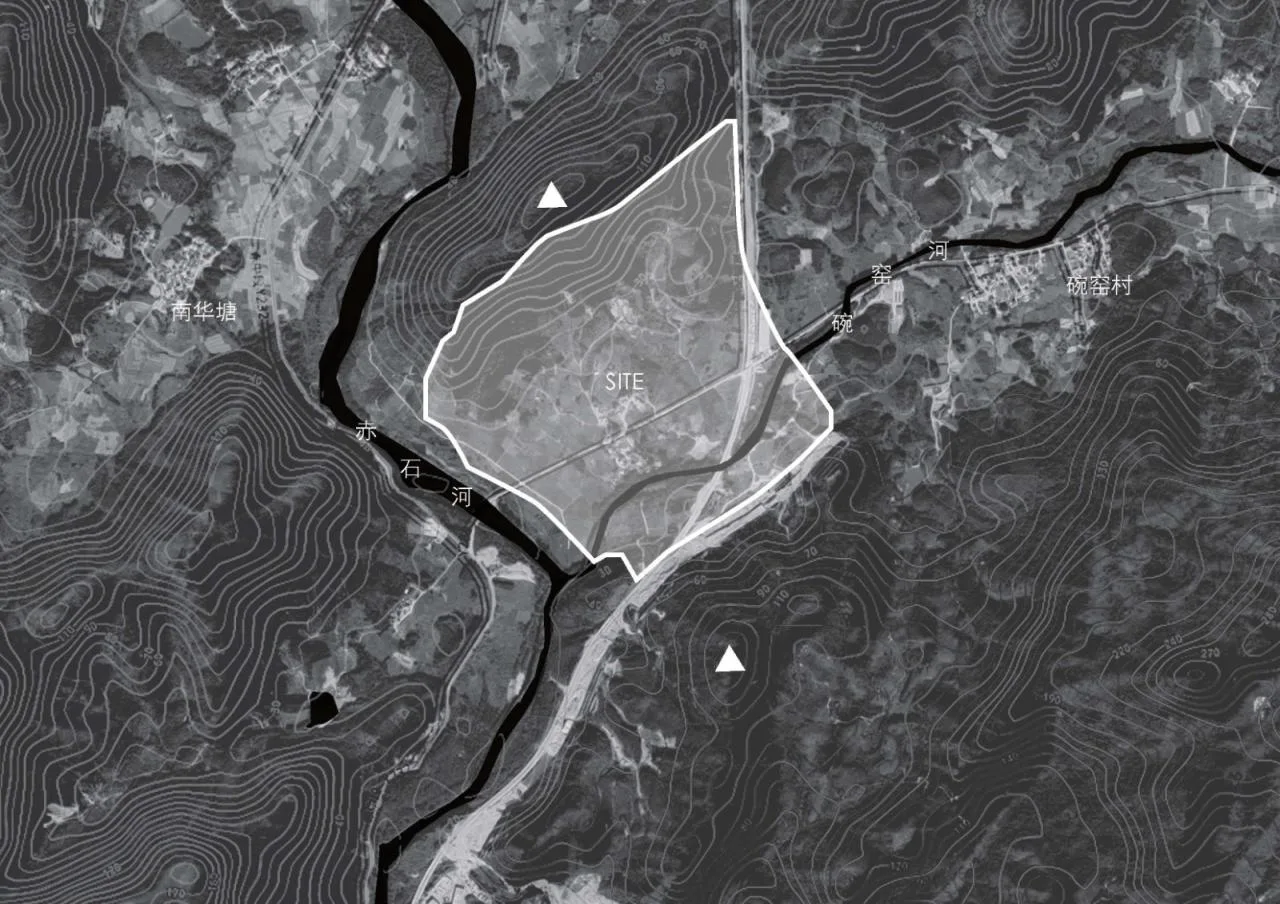
△ Project location map © Tang Hua Architectural Design & China Construction Technology Group
The total land area of the project is 100.14 hectares, with 53.24 hectares designated for the first phase of construction and 46.9 hectares for management. Within this area, 8.89 hectares are classified as basic farmland.
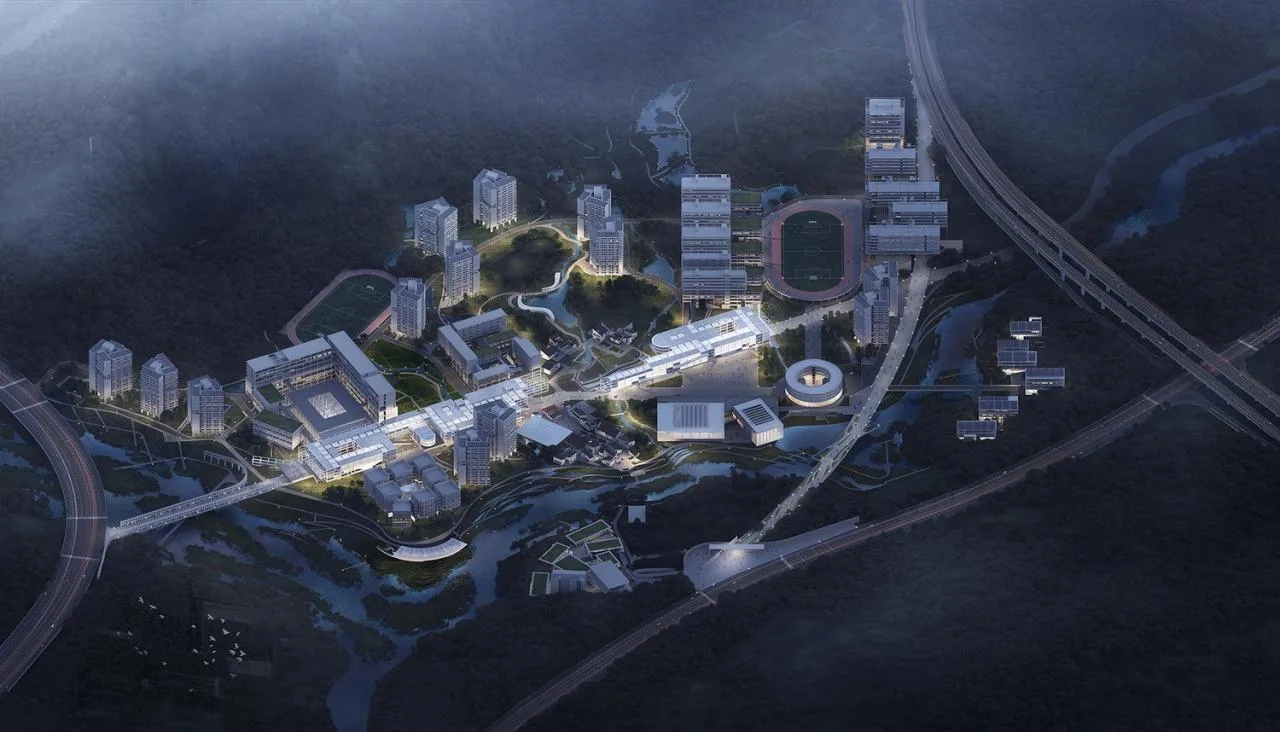
△ Night aerial view © Tang Hua Architectural Design & China Construction Technology Group
01. Layered Information Organization
The design carefully organizes the site’s existing features—mountains, waterways, farmland, villages, and roads—layer by layer, emphasizing the site’s water veins to enhance ecological resilience.
The campus architecture centers around existing human-made elements. Phase one of the campus construction is arranged along the current roads, while phase two preserves the elevated road, creating a dense campus framework that maximizes the preservation of intact landscape patches. The master plan aims for a zero-carbon campus through centralized development and carbon concentration.
02. Horizontal Axis – Creating Shared “Micro Cities”
The campus’s shared axis extends along the valley, serving as the urban core for the entire science and education corridor. Integrating existing roads, key campus functions—including the library, activity center, cafeteria, hospital, and public classrooms—are reorganized into a “miniature city.” This framework structures the campus’s public spaces, delivering a complex, efficient environment that mirrors urban life.
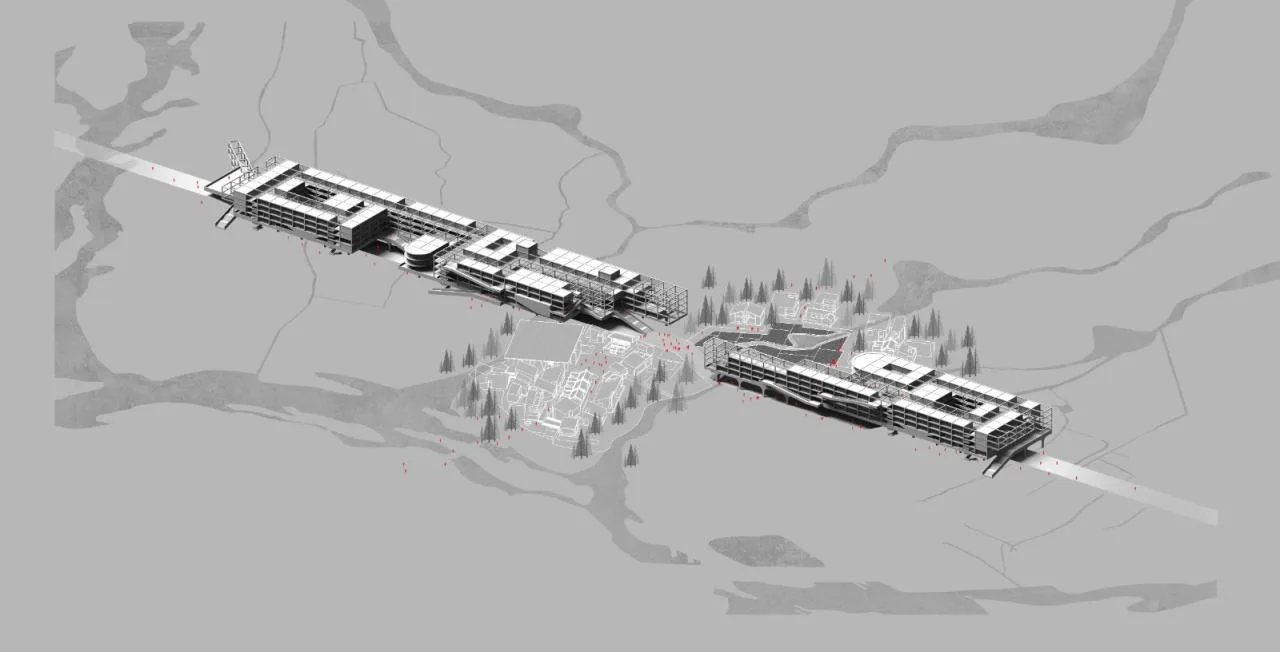
△ Miniature urban axonometric view © Tang Hua Architectural Design & China Construction Technology Group
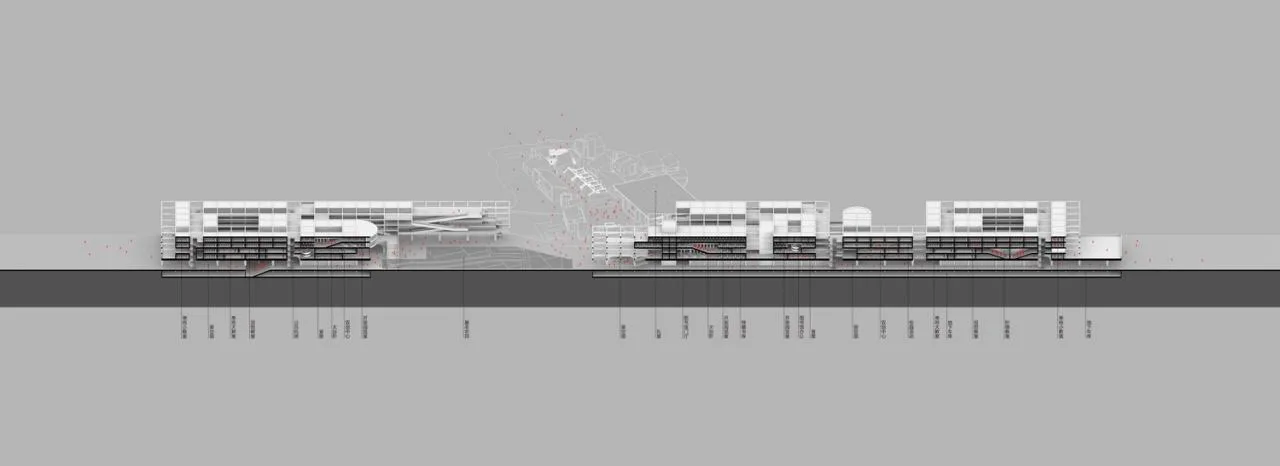
△ Miniature urban profile © Tang Hua Architectural Design & China Construction Technology Group
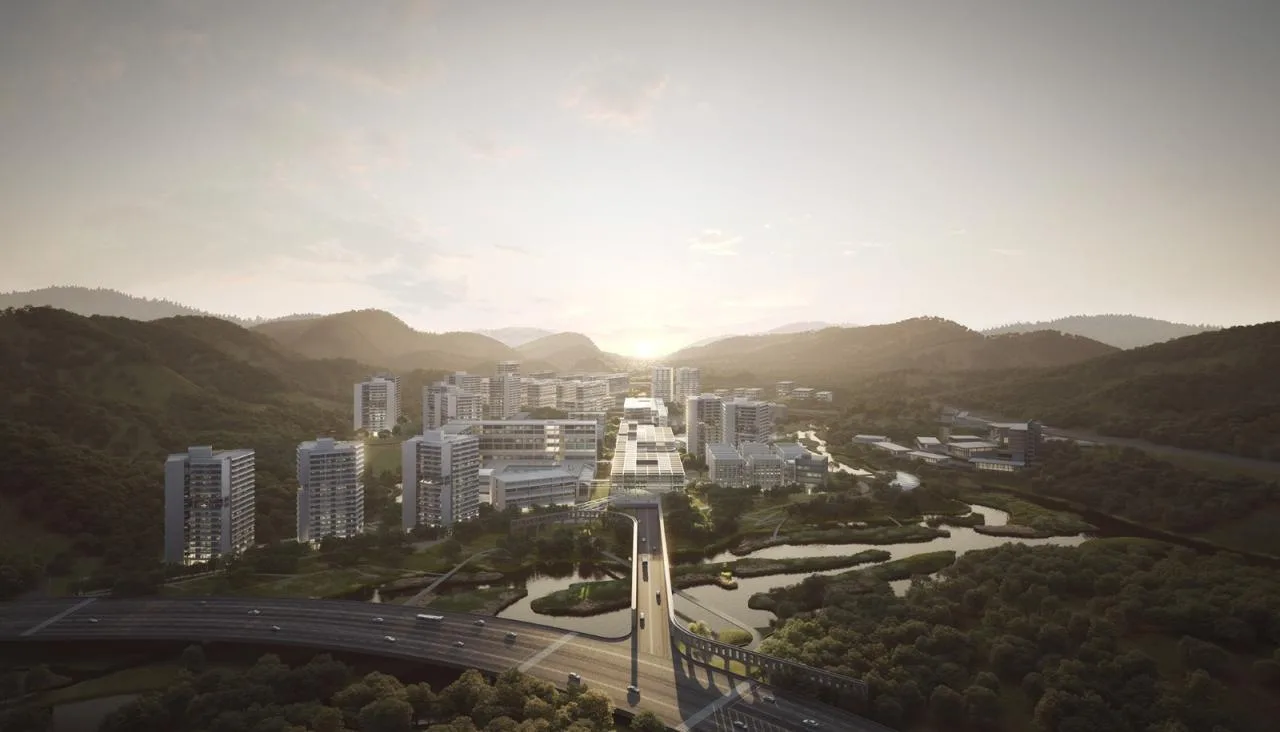
△ West side half bird’s-eye view © Tang Hua Architectural Design & China Construction Technology Group
03. Vertical Axis – Traversing the “Cultural Landscape”
A spatial sequence connects the campus entrance to the natural mountain, linking distinctive natural and man-made features. This creates a unique campus experience that includes overlooking landscapes, forest trails, stream paths, village crossings, hills, and mountain climbs, highlighting the Shenshan Campus’s local character.
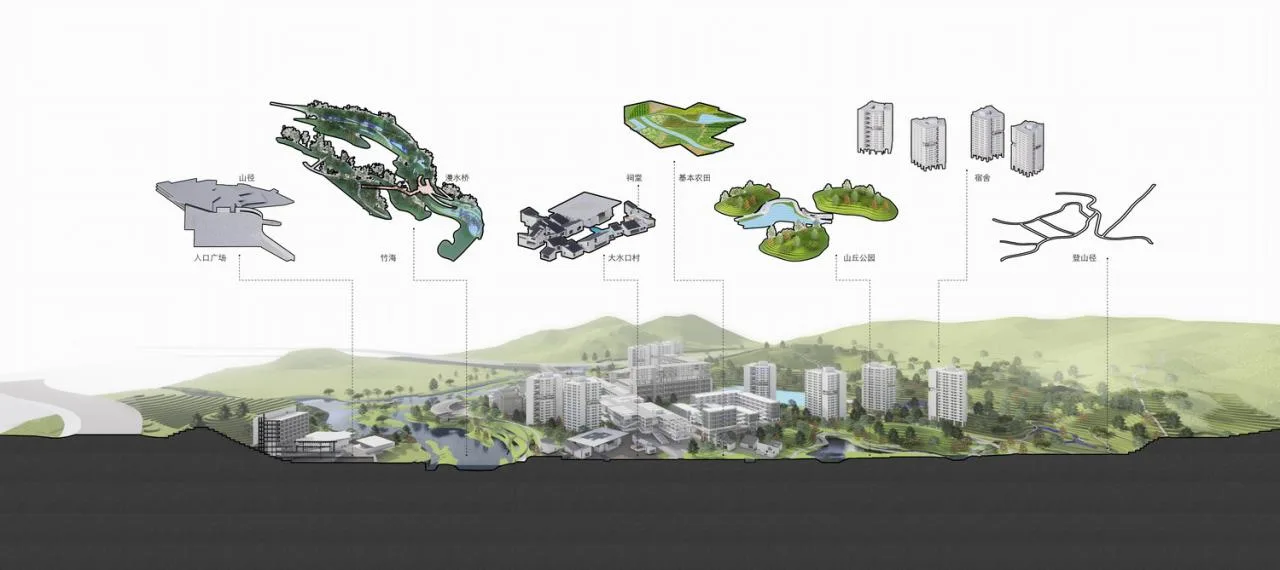
△ Humanistic Experience Axis © Tang Hua Architectural Design & China Construction Technology Group
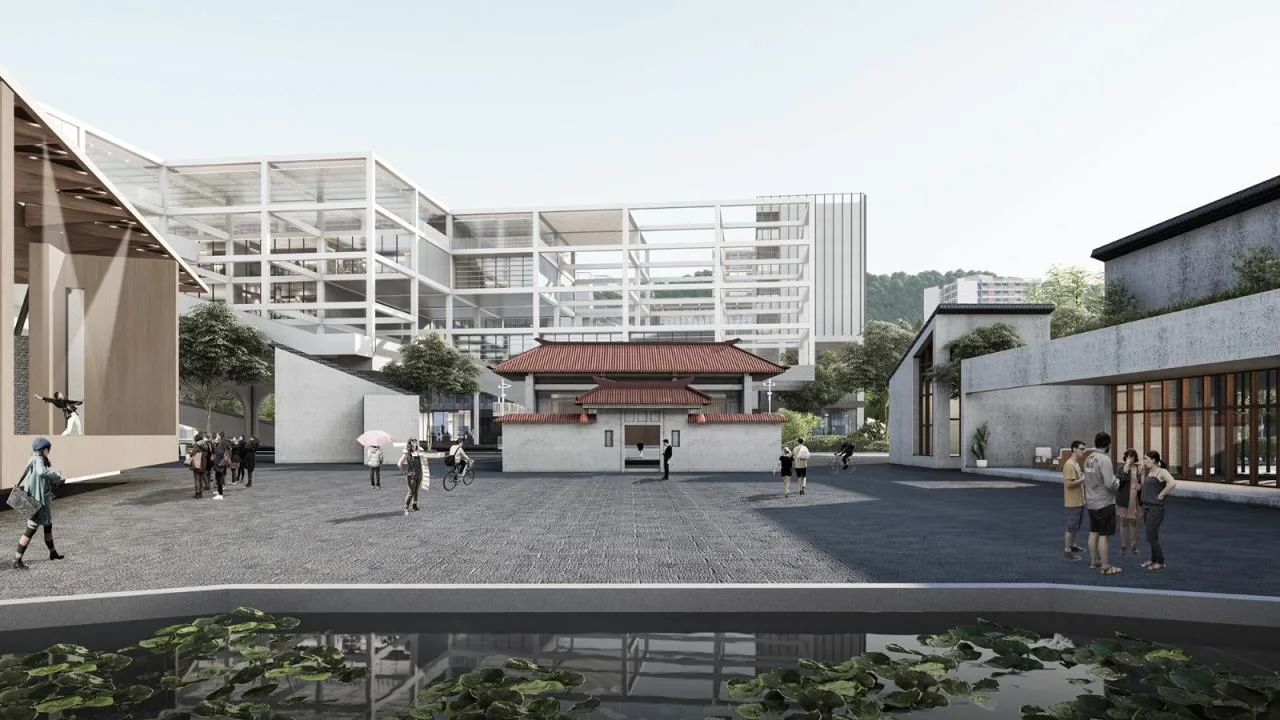
△ Ancestral Hall © Tang Hua Architectural Design & China Construction Technology Group
04. Intersection and Dialogue
The two main design axes intersect at the central farmland, creating a dynamic dialogue between history and future, nature and human intervention, urban and rural life. This area offers a diverse, convenient urban lifestyle within a rural, natural setting—reflecting the spirit of a contemporary university campus. The library, located here, surrounds the farmland and ancestral hall, preserving cultural heritage and honoring nature, thus forming a public core rich in historical significance.
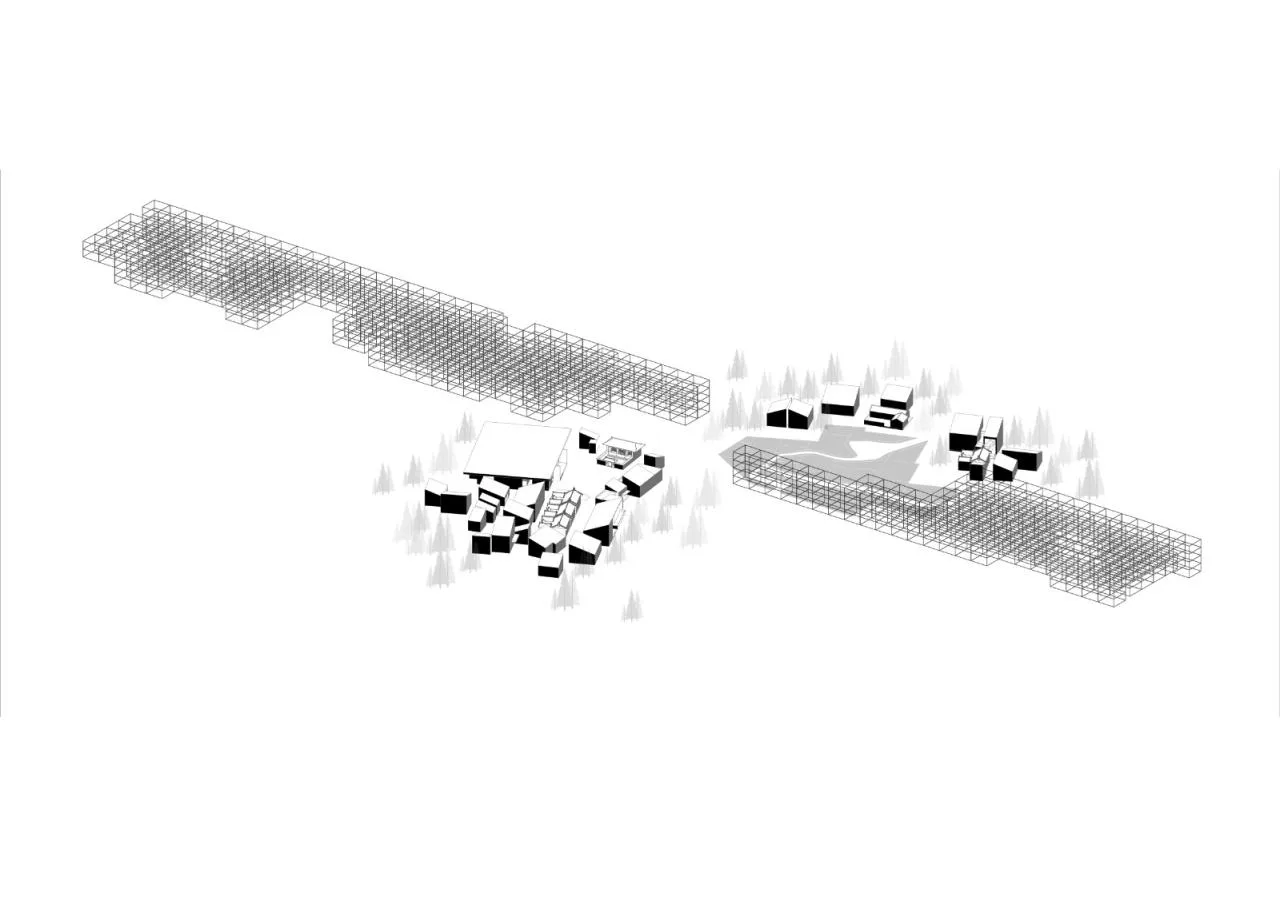
△ Intersection dialogue diagram © Tang Hua Architectural Design & China Construction Technology Group
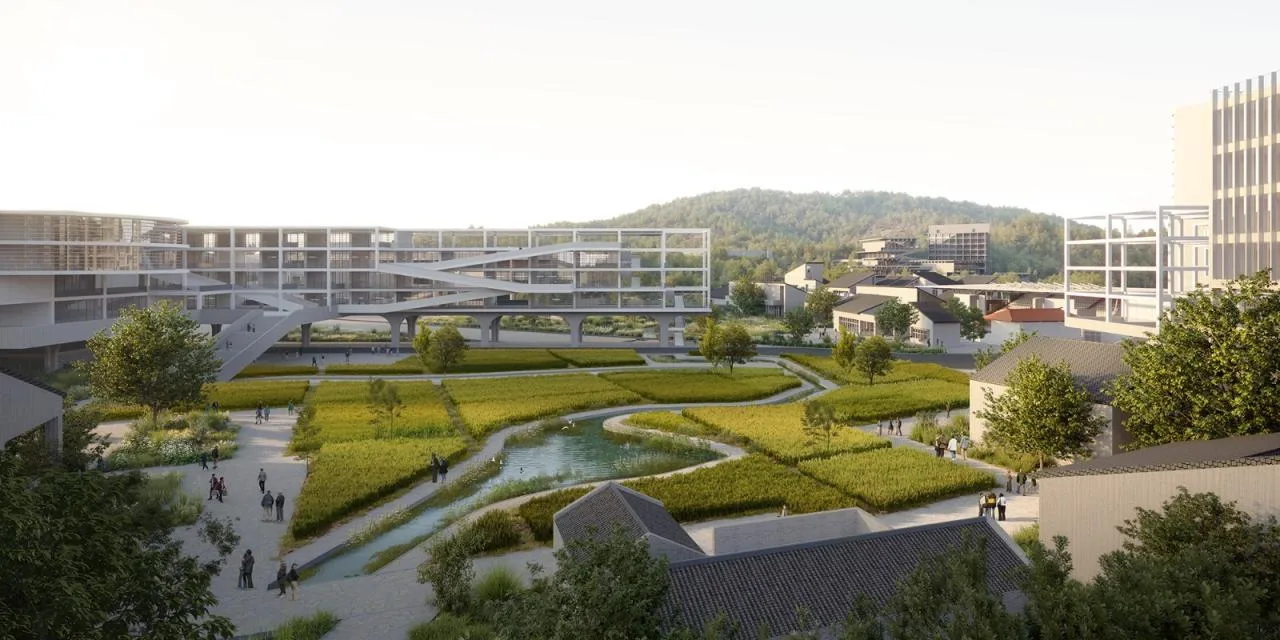
△ Central half bird’s-eye view © Tang Hua Architectural Design & China Construction Technology Group
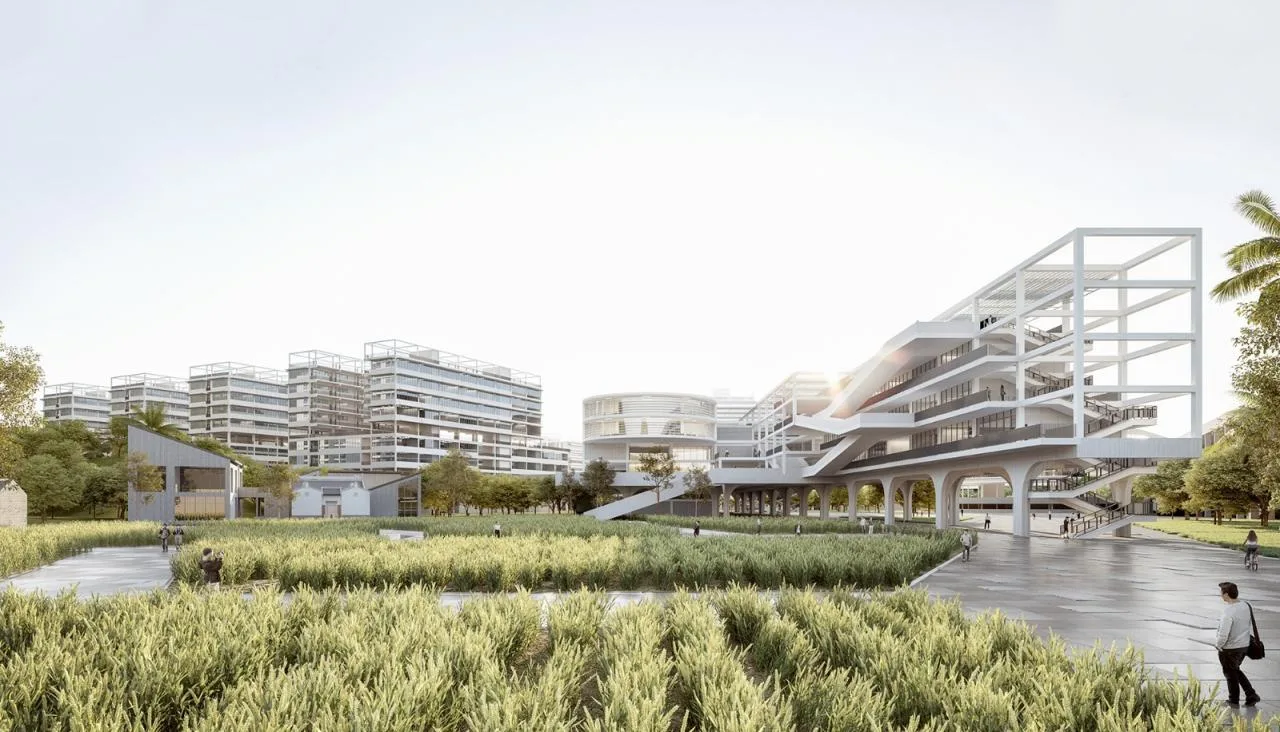
△ Central half bird’s-eye view © Tang Hua Architectural Design & China Construction Technology Group
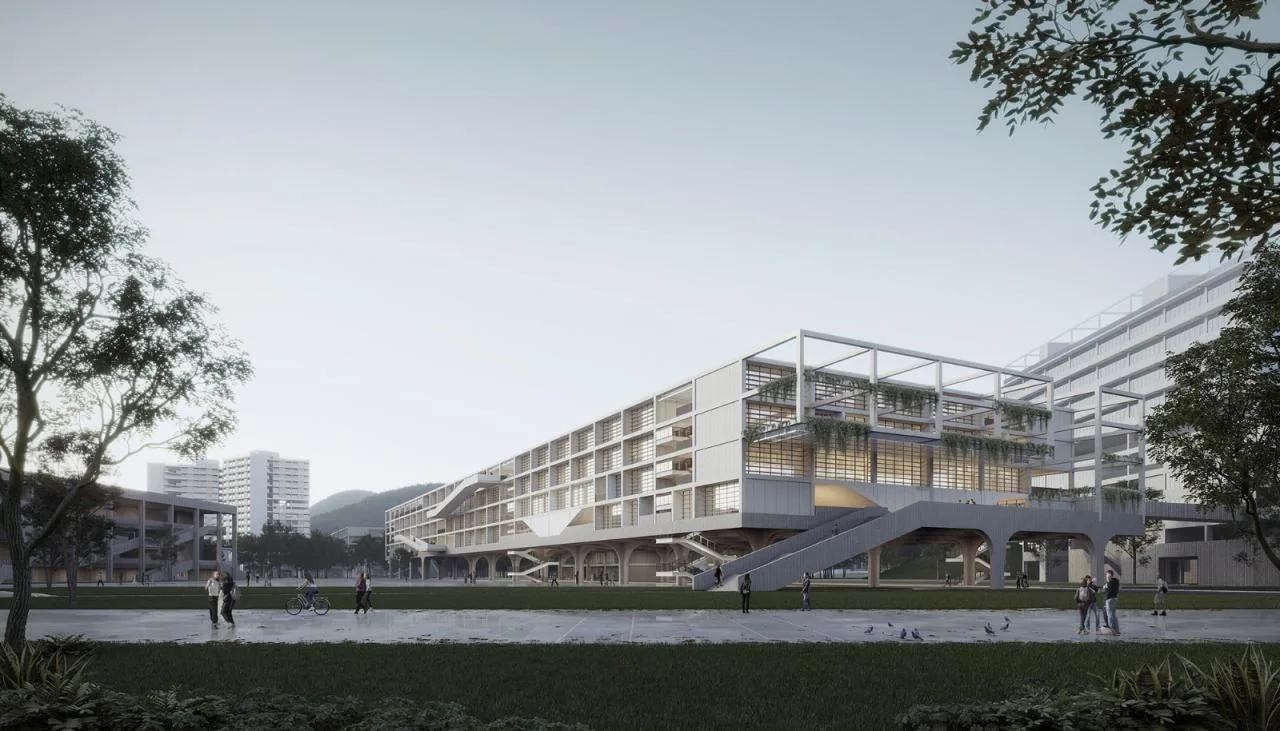
△ Central pedestrian view © Tang Hua Architectural Design & China Construction Technology Group
05. Organic Growth in Architectural Layout
The academic and practical training buildings are arranged in an intensive layout inspired by the village textures typical of the Shenzhen Shantou region. The design employs modular assembly to accommodate flexible future growth in functionality.
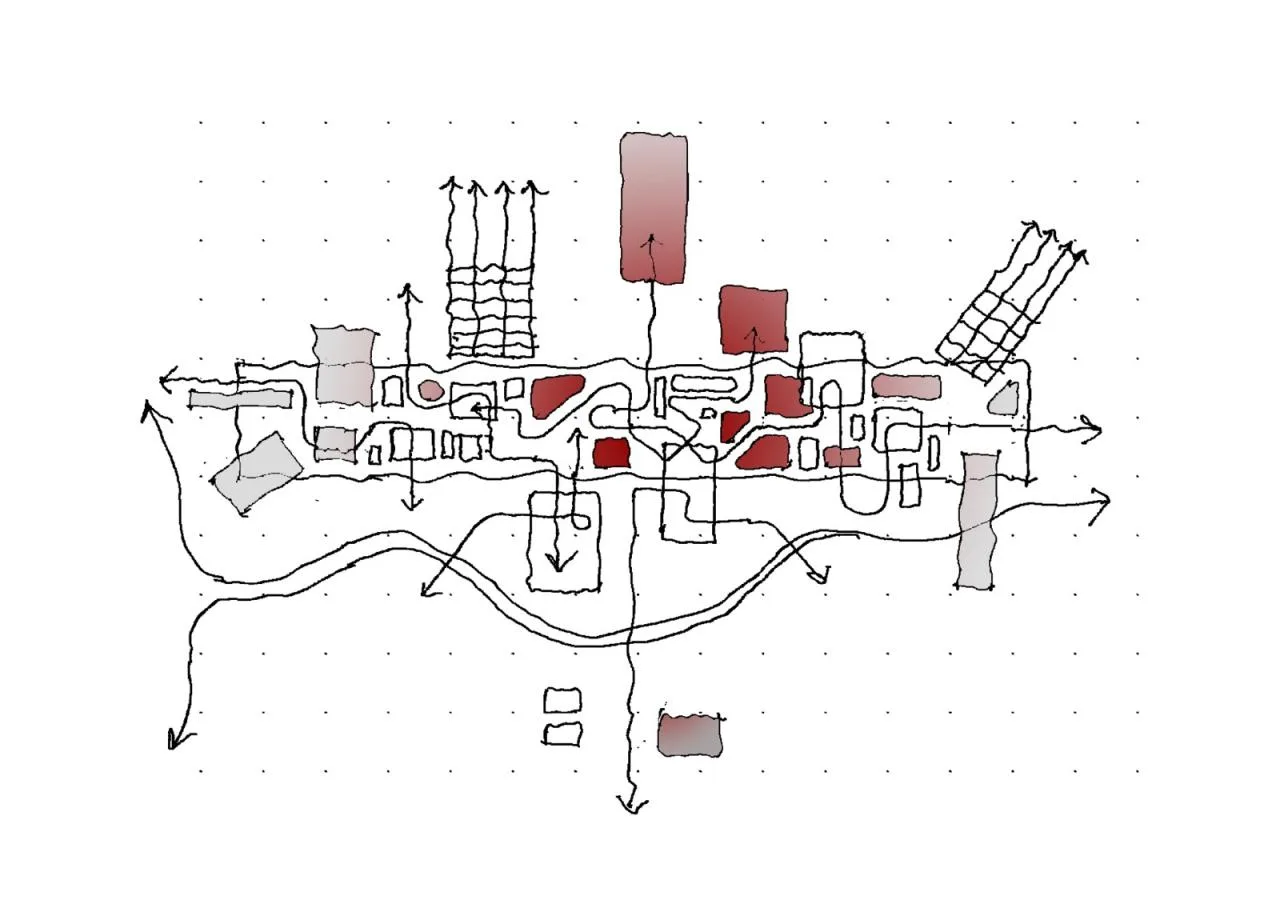
△ Sketch © Tang Hua Architectural Design & China Construction Technology Group
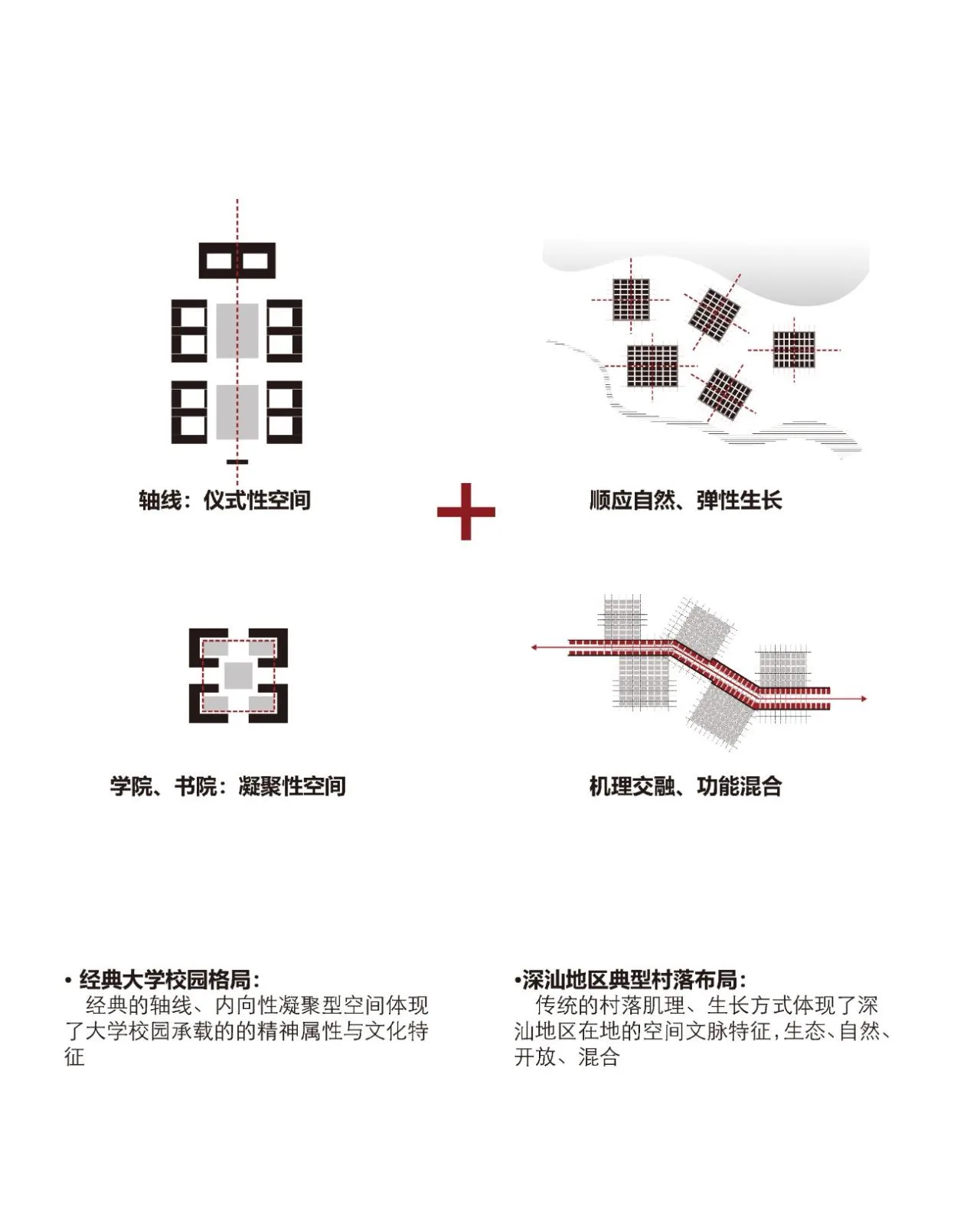
△ Architectural layout © Tang Hua Architectural Design & China Construction Technology Group
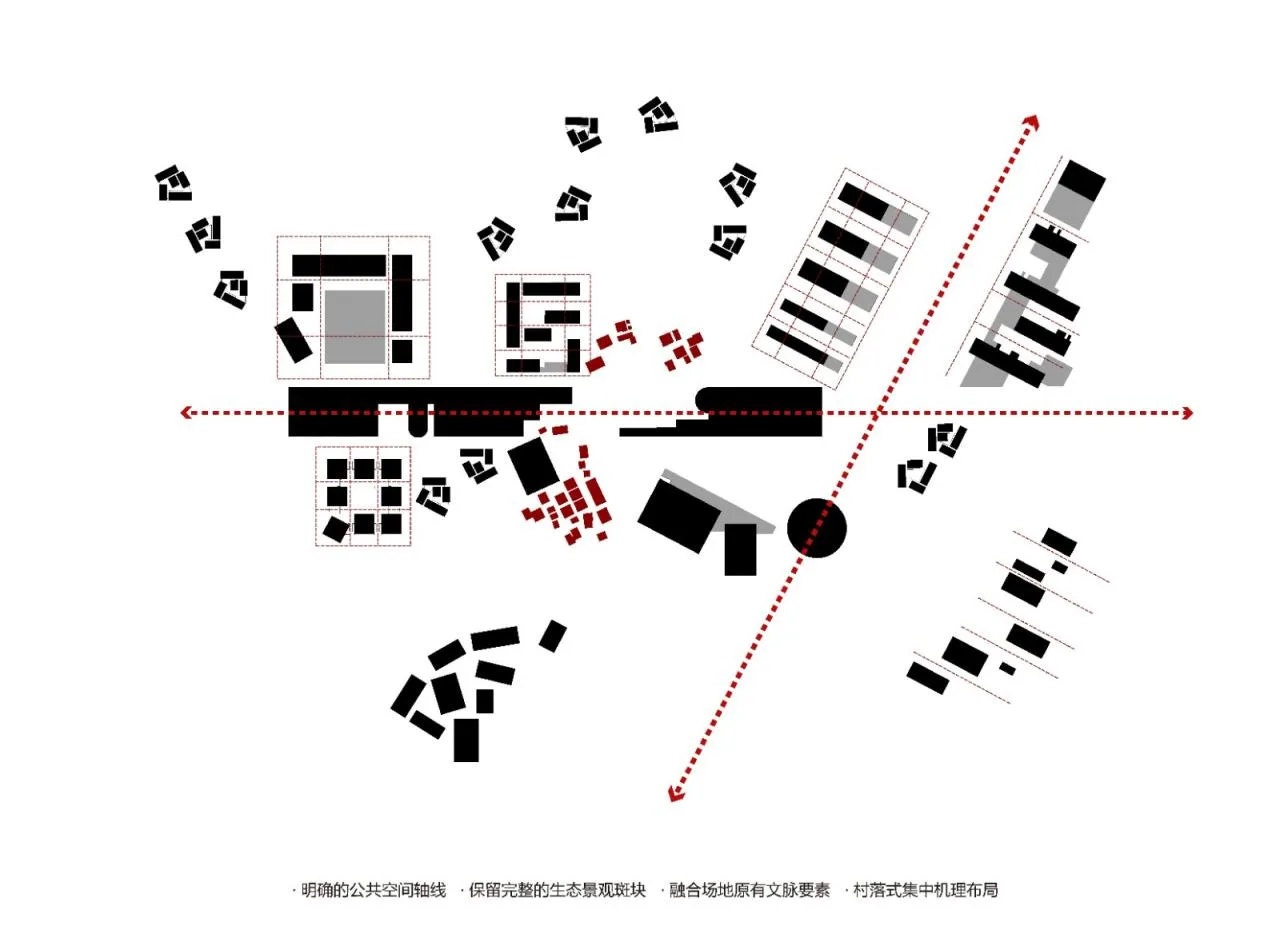
△ Architectural layout © Tang Hua Architectural Design & China Construction Technology Group
The academic clusters flank the shared central axis and are linked by open corridors, creating a continuous circulation space. Dormitories are flexibly arranged along the campus’s humanistic experience axis to ensure convenient access to core resources for students and faculty. The vertical and horizontal axes efficiently connect learning, living, and recreational spaces.
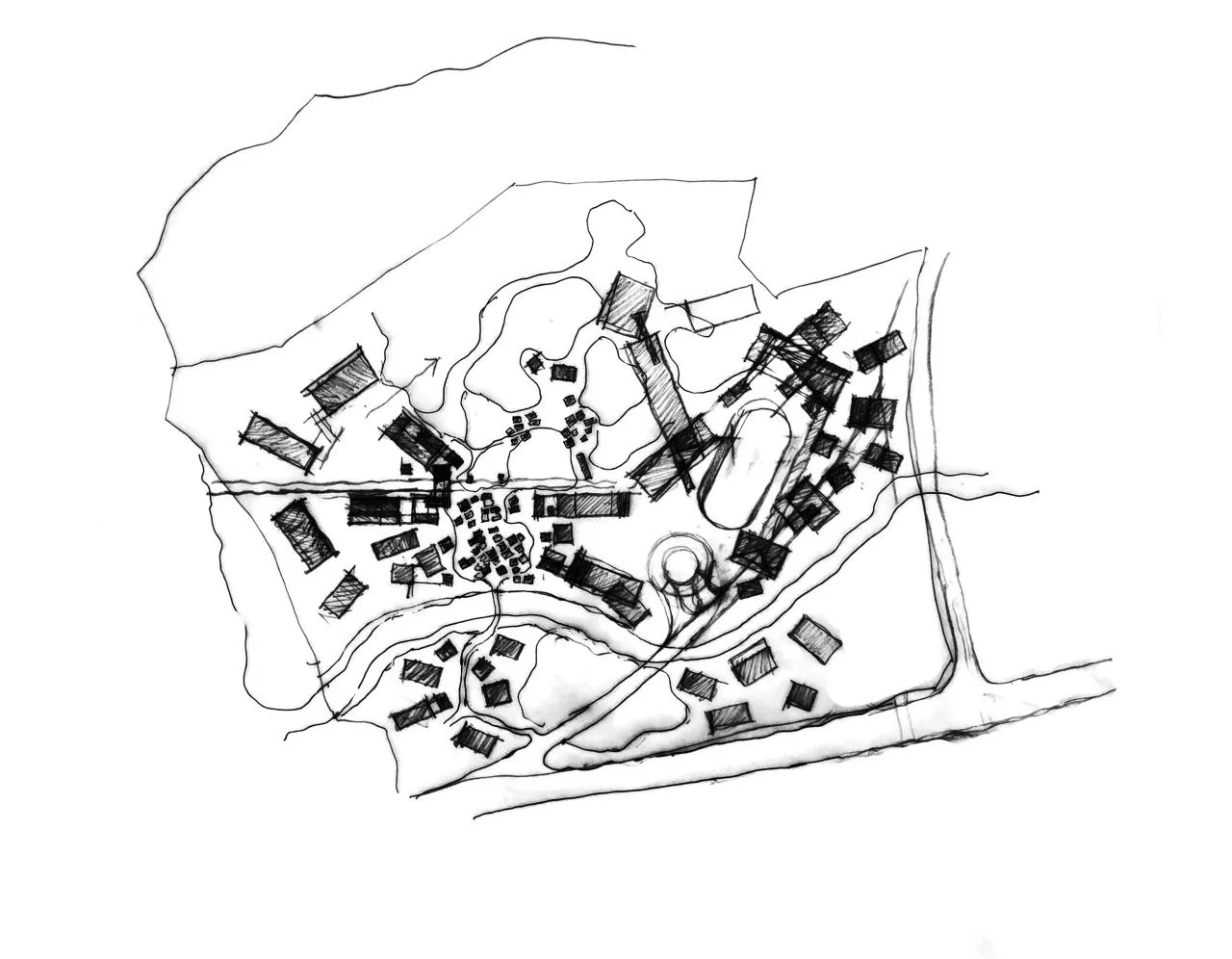
△ Sketch © Tang Hua Architectural Design & China Construction Technology Group
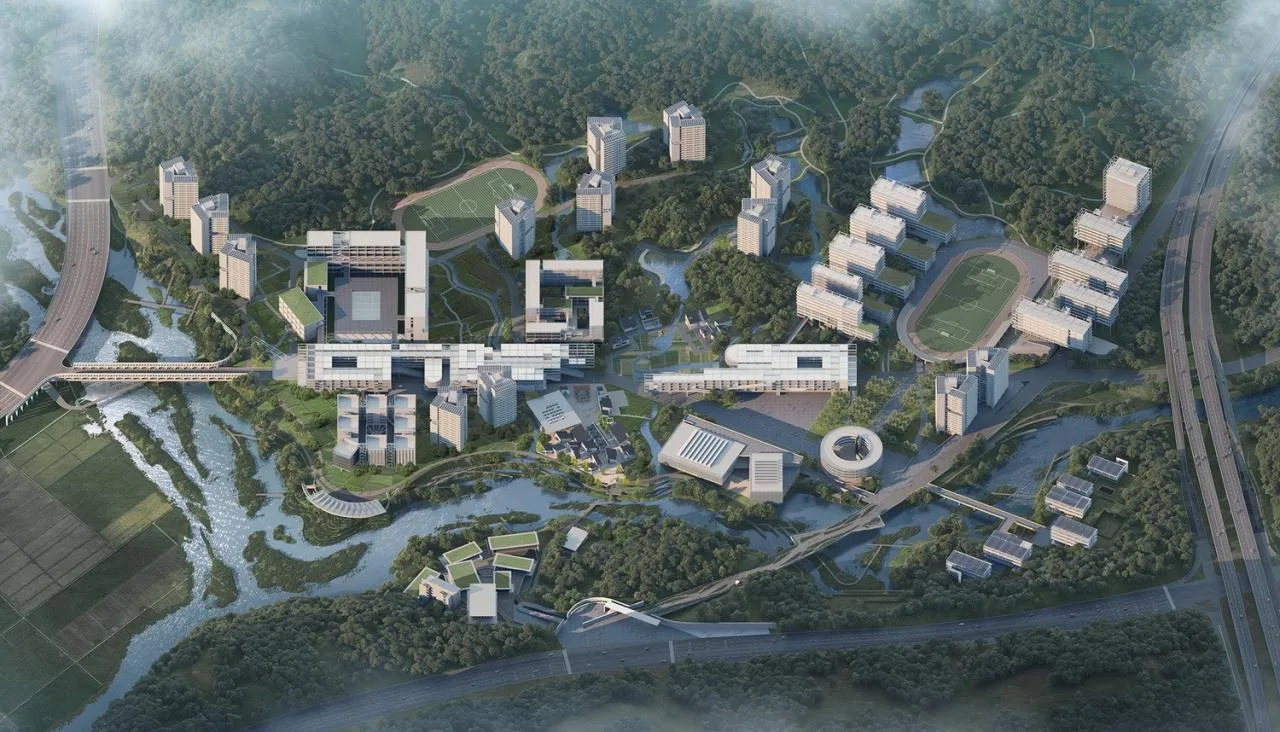
△ Daytime aerial view © Tang Hua Architectural Design & China Construction Technology Group
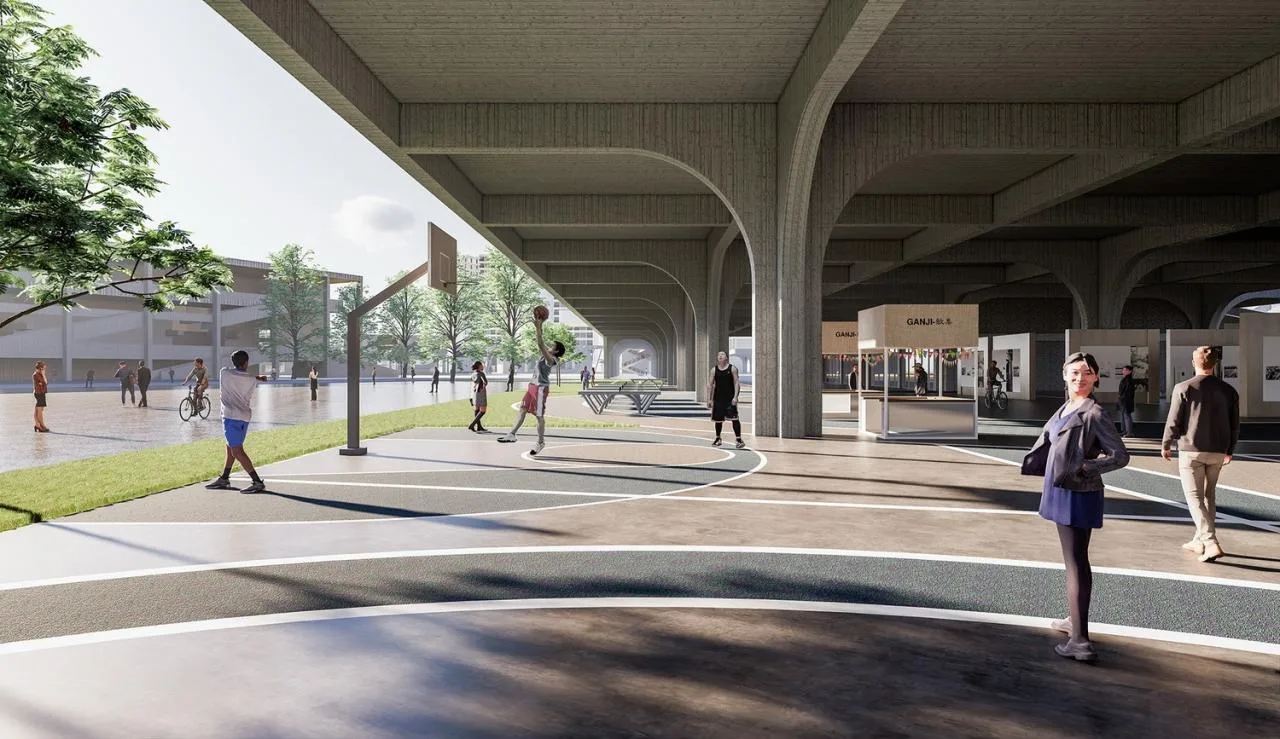
△ Overhead layer © Tang Hua Architectural Design & China Construction Technology Group
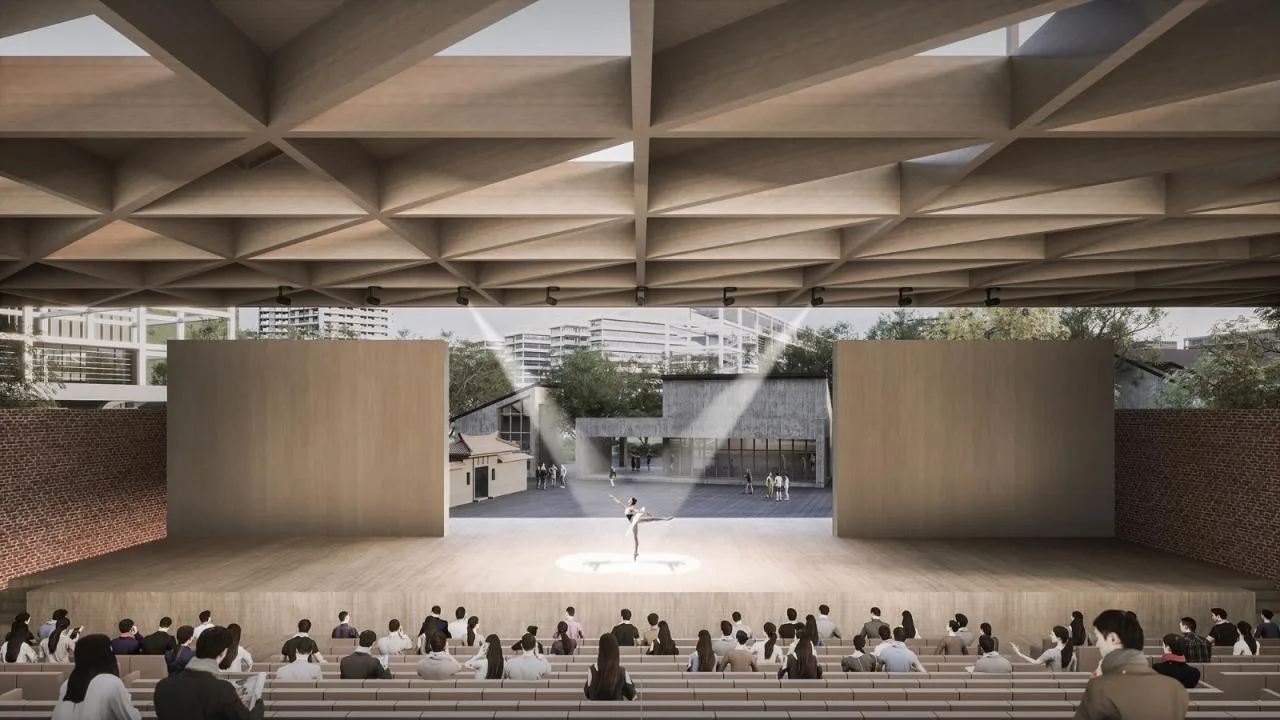
△ Auditorium © Tang Hua Architectural Design & China Construction Technology Group
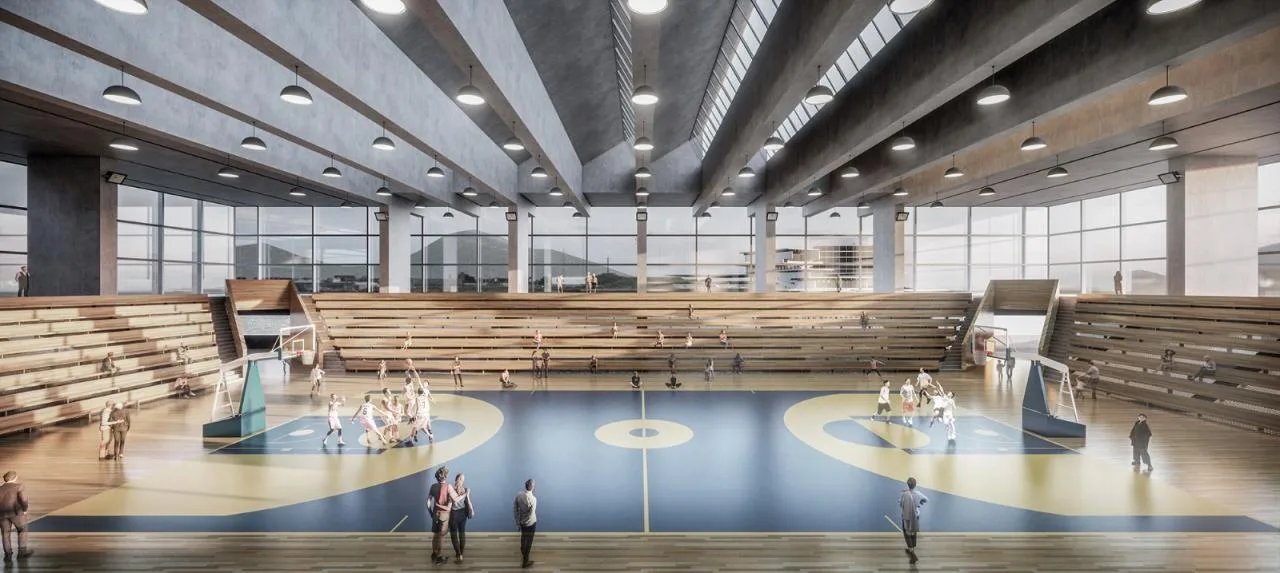
Indoor Sports Center © Tang Hua Architectural Design & China Construction Technology Group
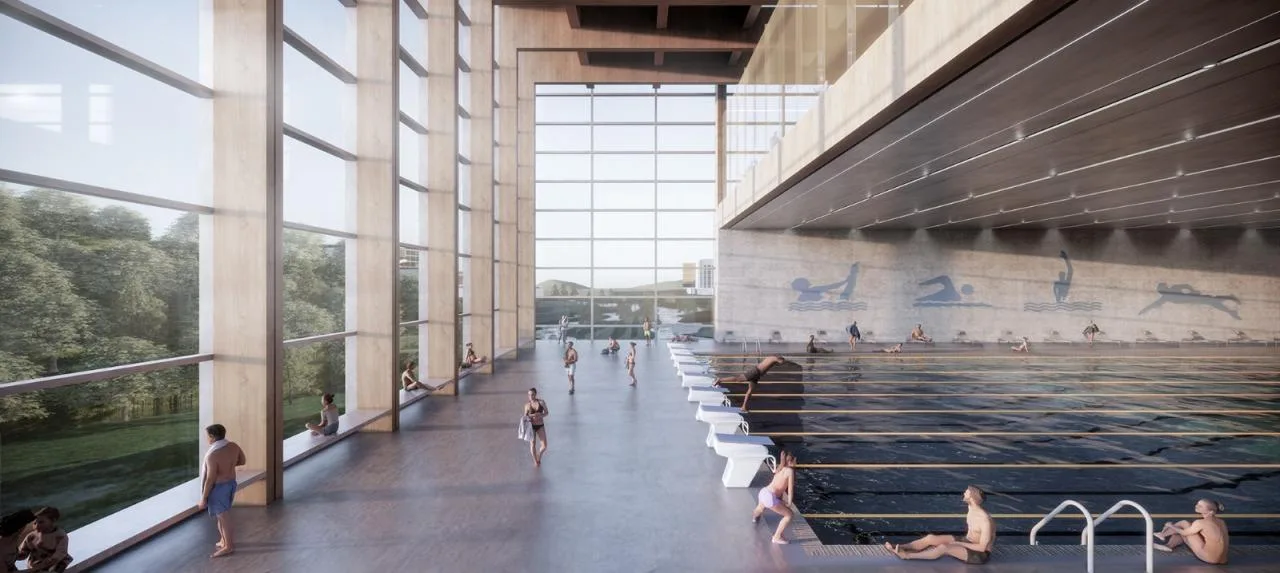
Indoor swimming pool © Tang Hua Architectural Design & China Construction Technology Group
06. Sustainable Landscape Strategy
The existing western road is transformed into an ecological embankment and buffer zone that supplements sediment, nurtures mudflats, and fosters a diverse wetland ecosystem. The wetland patches absorb floodwaters while forming a distinctive landscape path atop the embankment. Together, the embankment trail, high-speed park, and green footpath form a slow-moving outer ring around the campus.
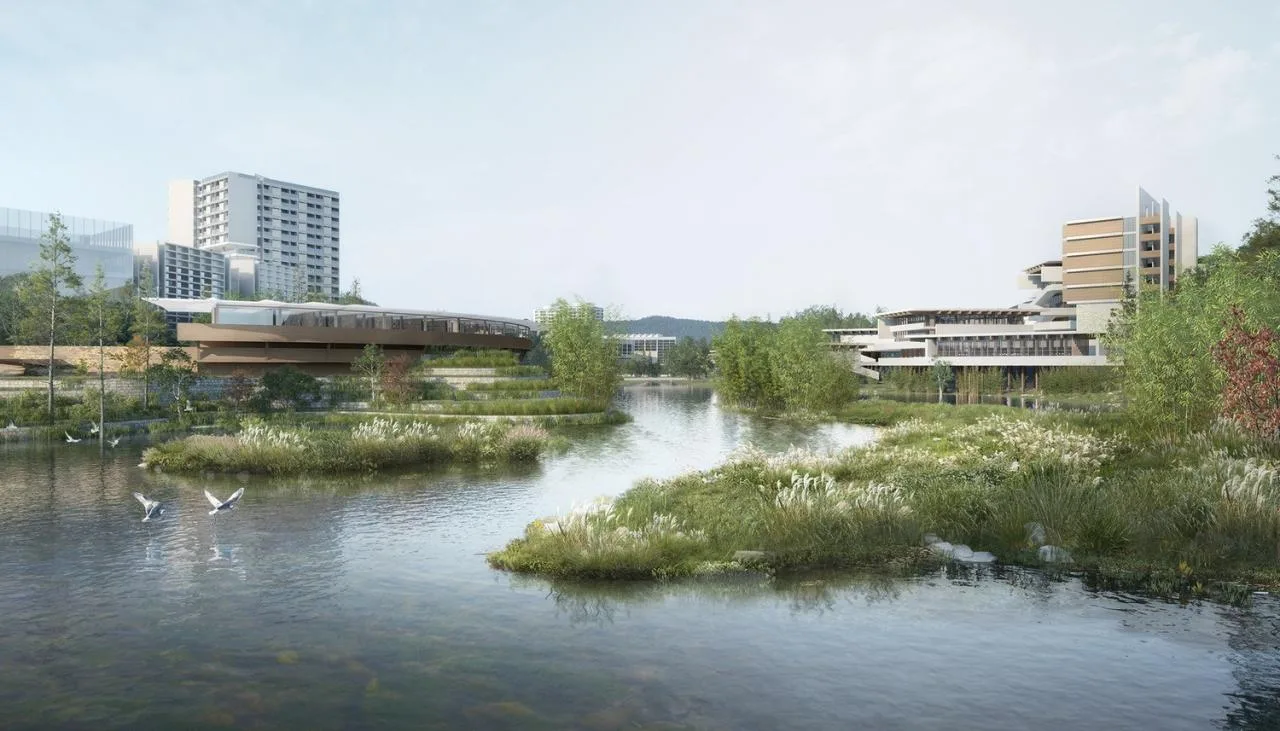
The confluence of two rivers © Tang Hua Architectural Design & China Construction Technology Group
07. Near Zero Carbon Campus
The campus integrates light-storage direct flexible technology alongside resilient sponge landscape design, green transportation systems, resource recycling, and smart energy management. This combination of passive and active design strategies aims to create a near zero carbon campus.
The campus spatial structure layers various functions and forms, creating an urban image composed of mountains, hills, rivers, ponds, forests, fields, villages, and cities. The design embraces the overlap of natural and man-made elements, blending urban and rural characteristics, and reconnecting with the natural and cultural foundations of the site.
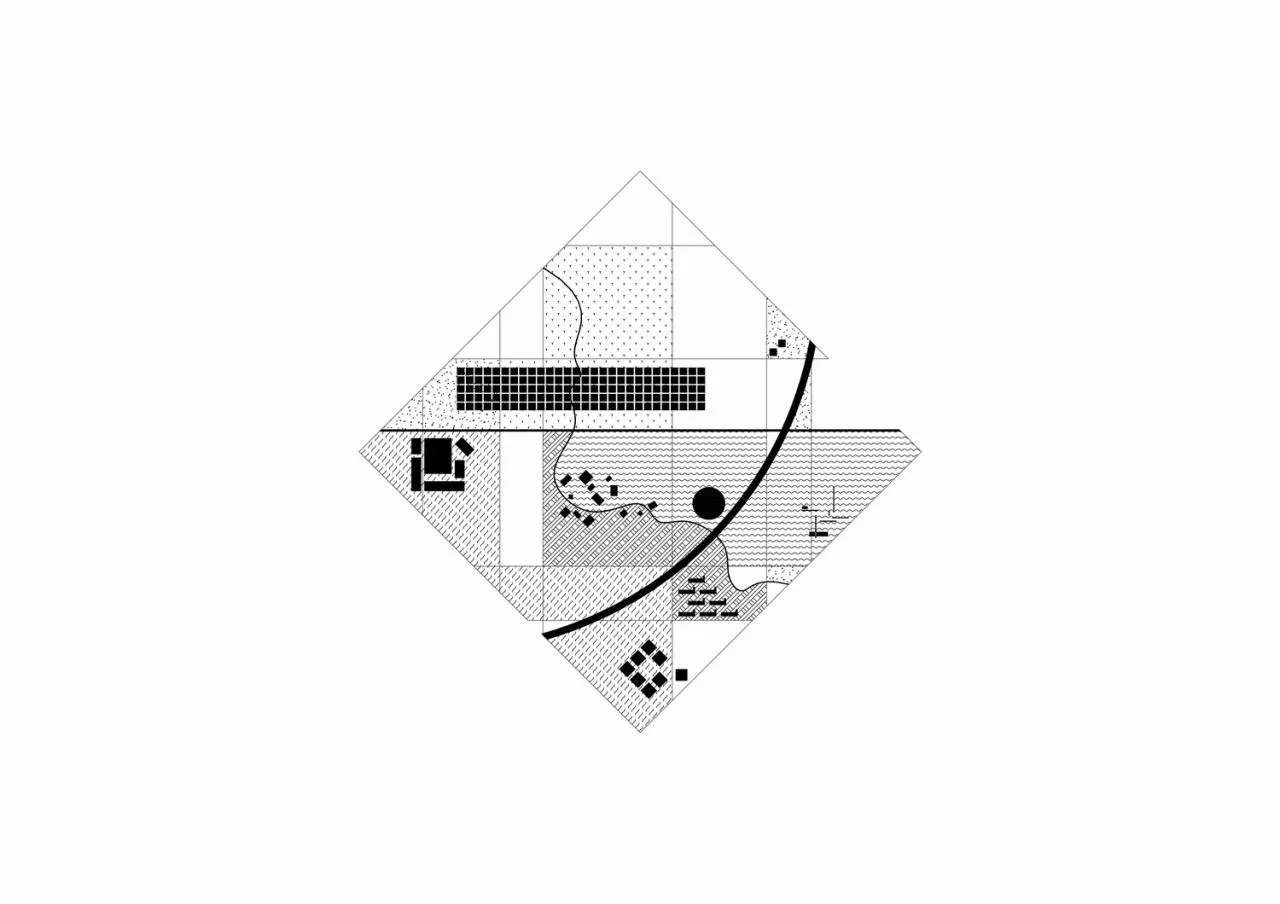
△ Urban imagery collage © Tang Hua Architectural Design & China Construction Technology Group
Project Drawings
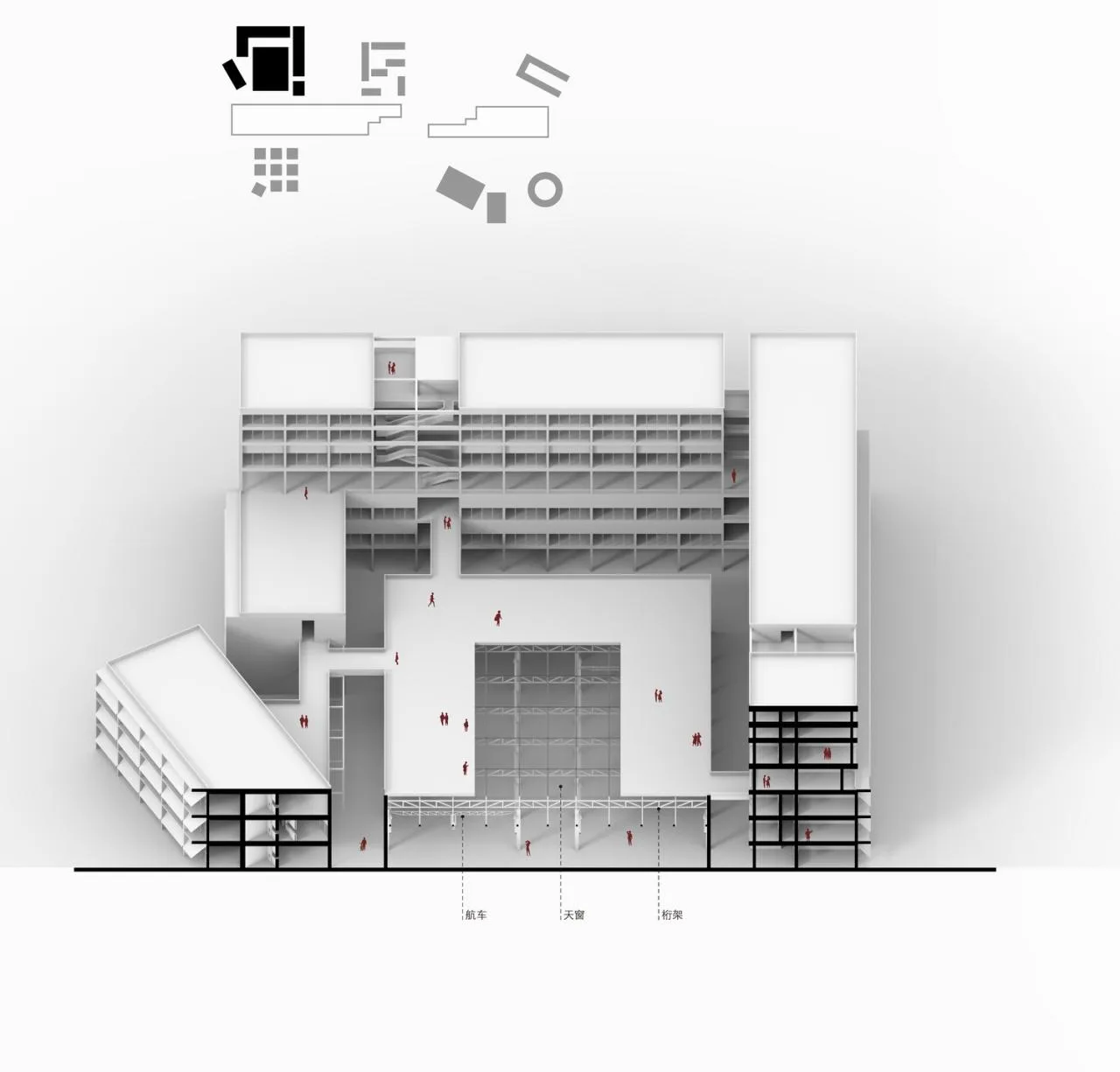
△ New Energy Vehicles and Intelligent Manufacturing Cluster © Tang Hua Architectural Design & China Construction Technology Group
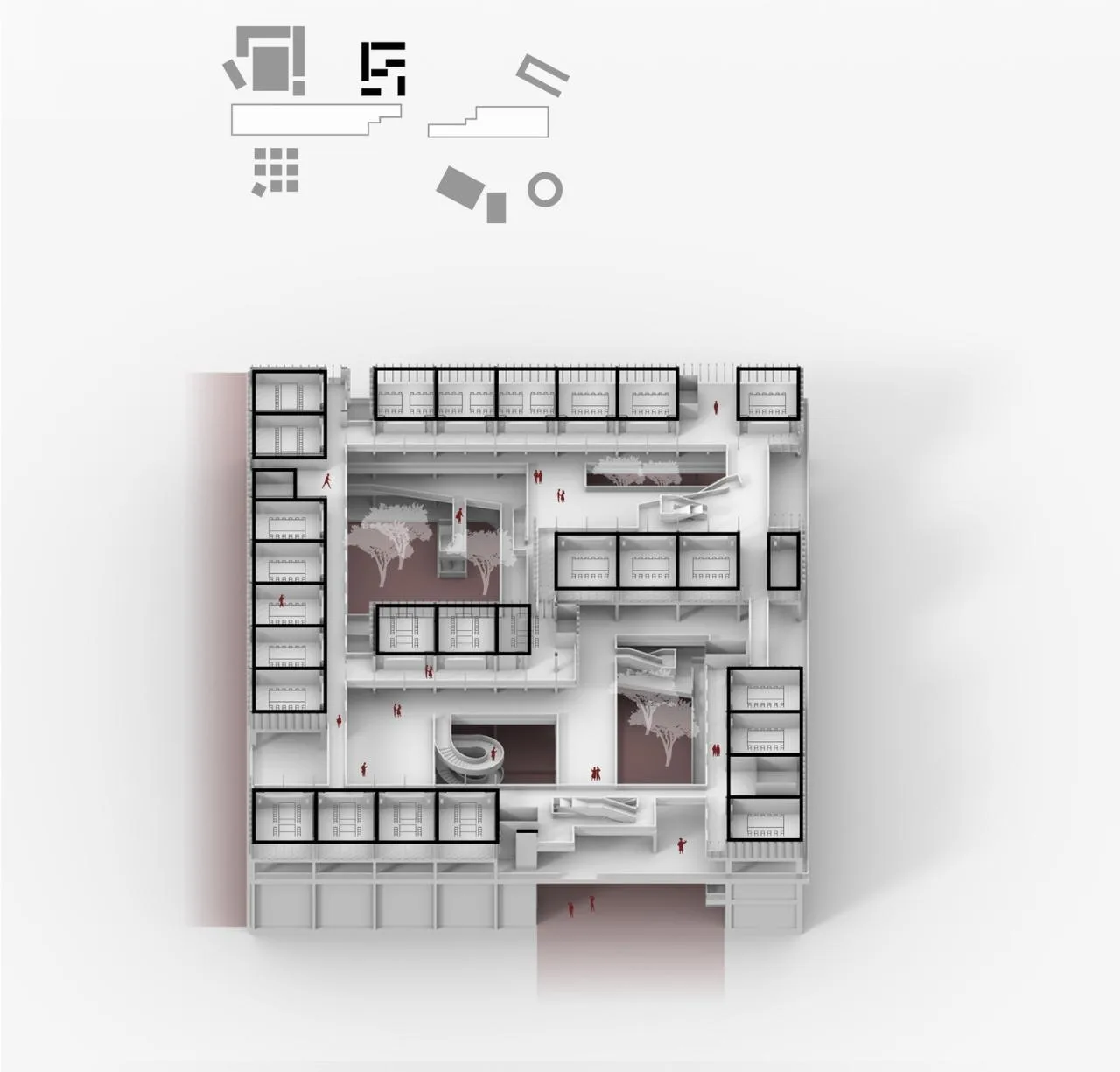
△ Network and Artificial Intelligence Cluster © Tang Hua Architectural Design & China Construction Technology Group
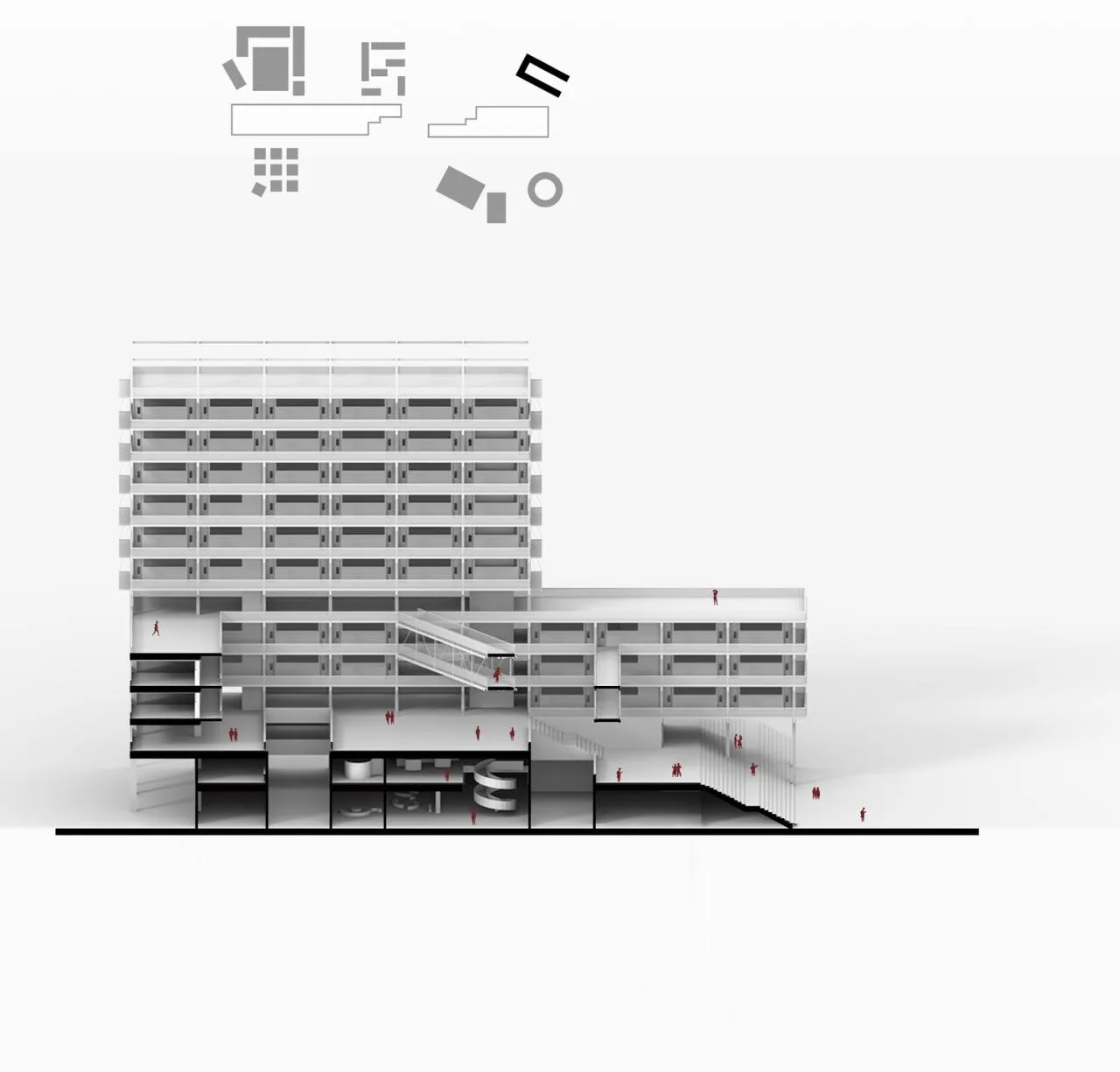
△ Smart City Engineering Cluster © Tang Hua Architectural Design & China Construction Technology Group
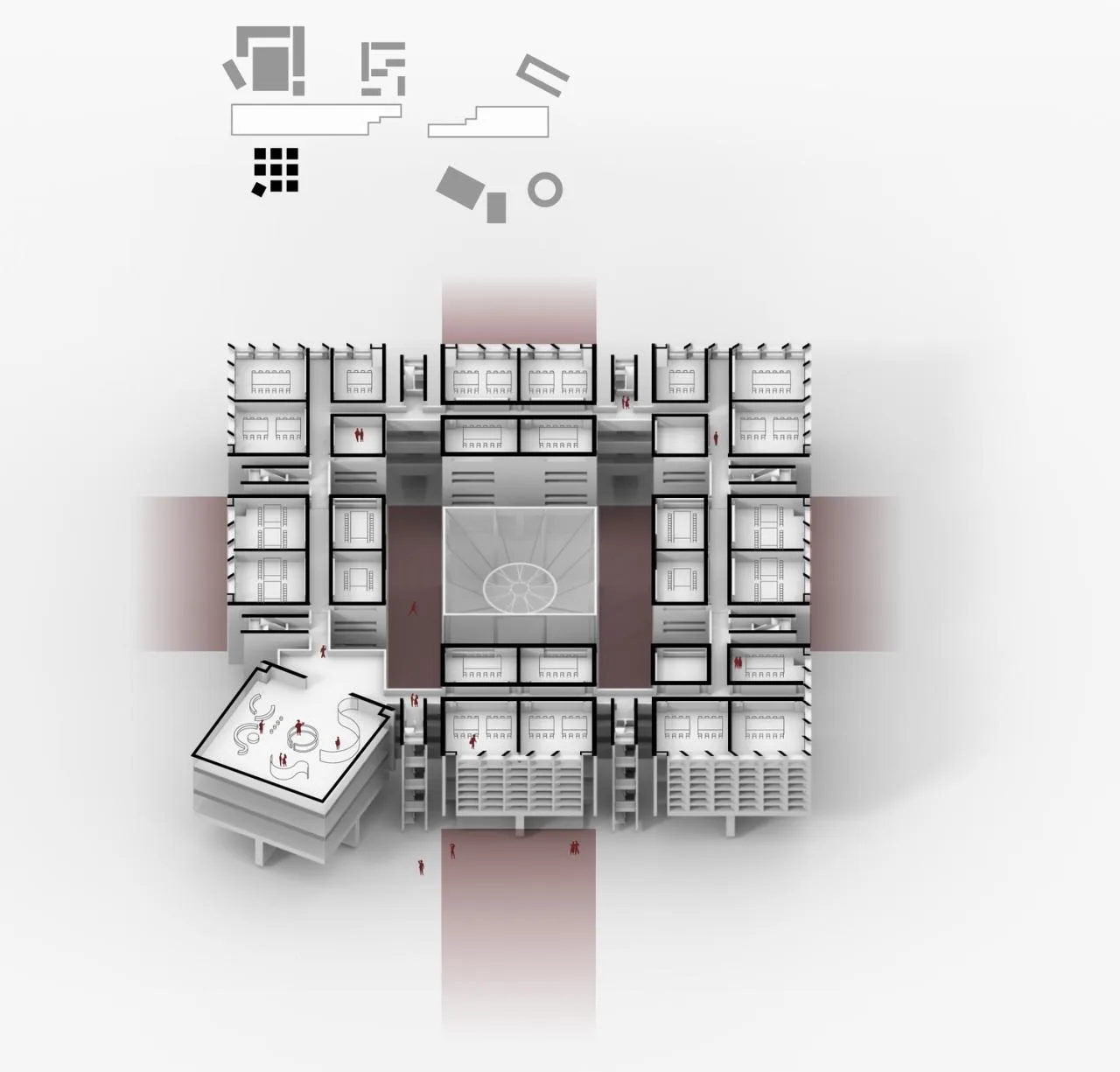
△ International Business and Digital Art Group © Tang Hua Architectural Design & China Construction Technology Group
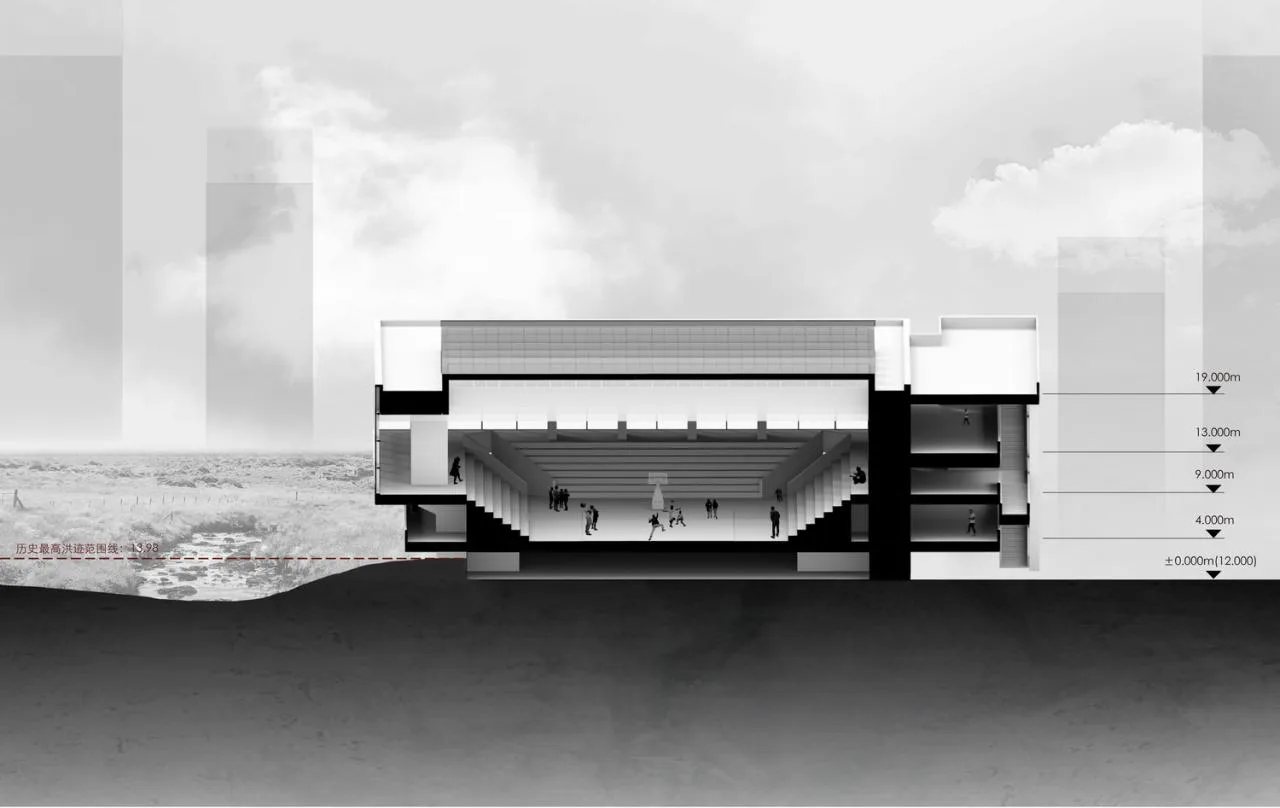
△ Sectional axonometric drawing of the sports hall © Tang Hua Architectural Design & China Construction Technology Group
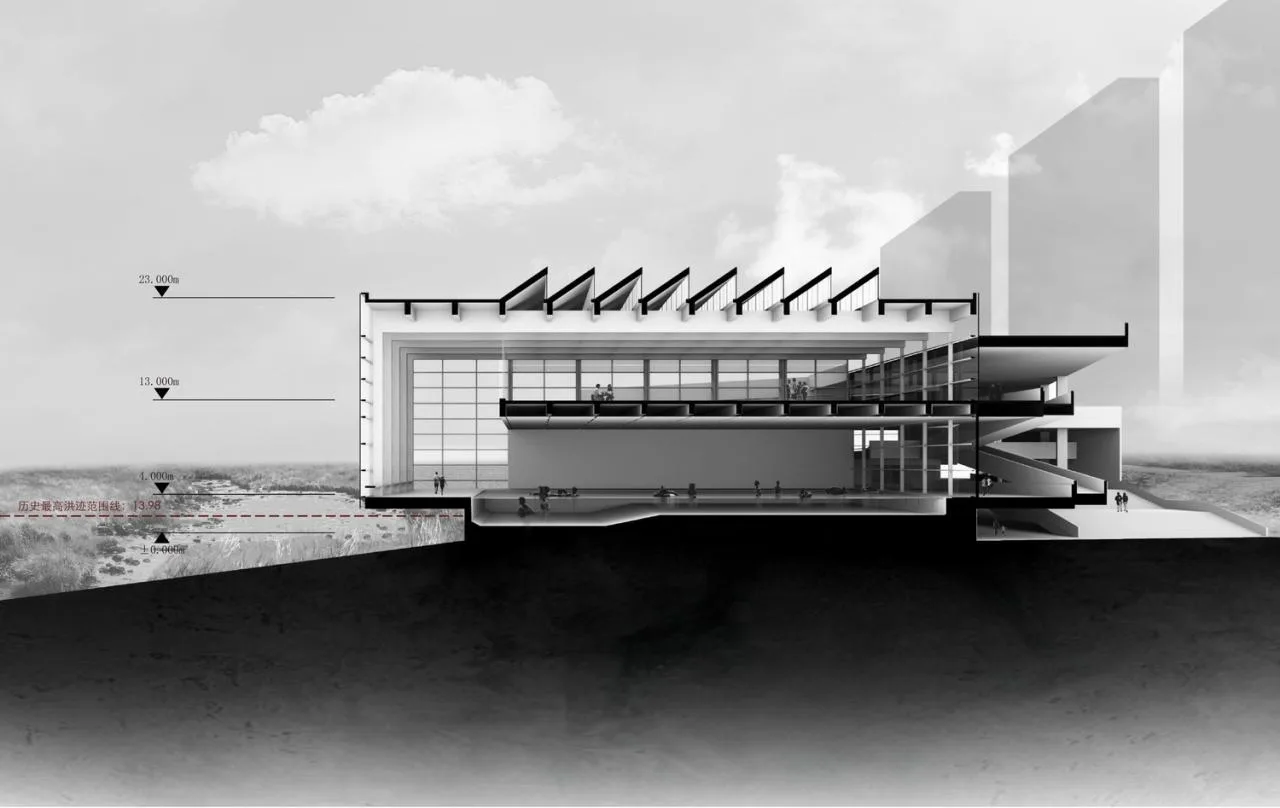
△ Sectional axonometric drawing of swimming pool and badminton hall © Tang Hua Architectural Design & China Construction Technology Group
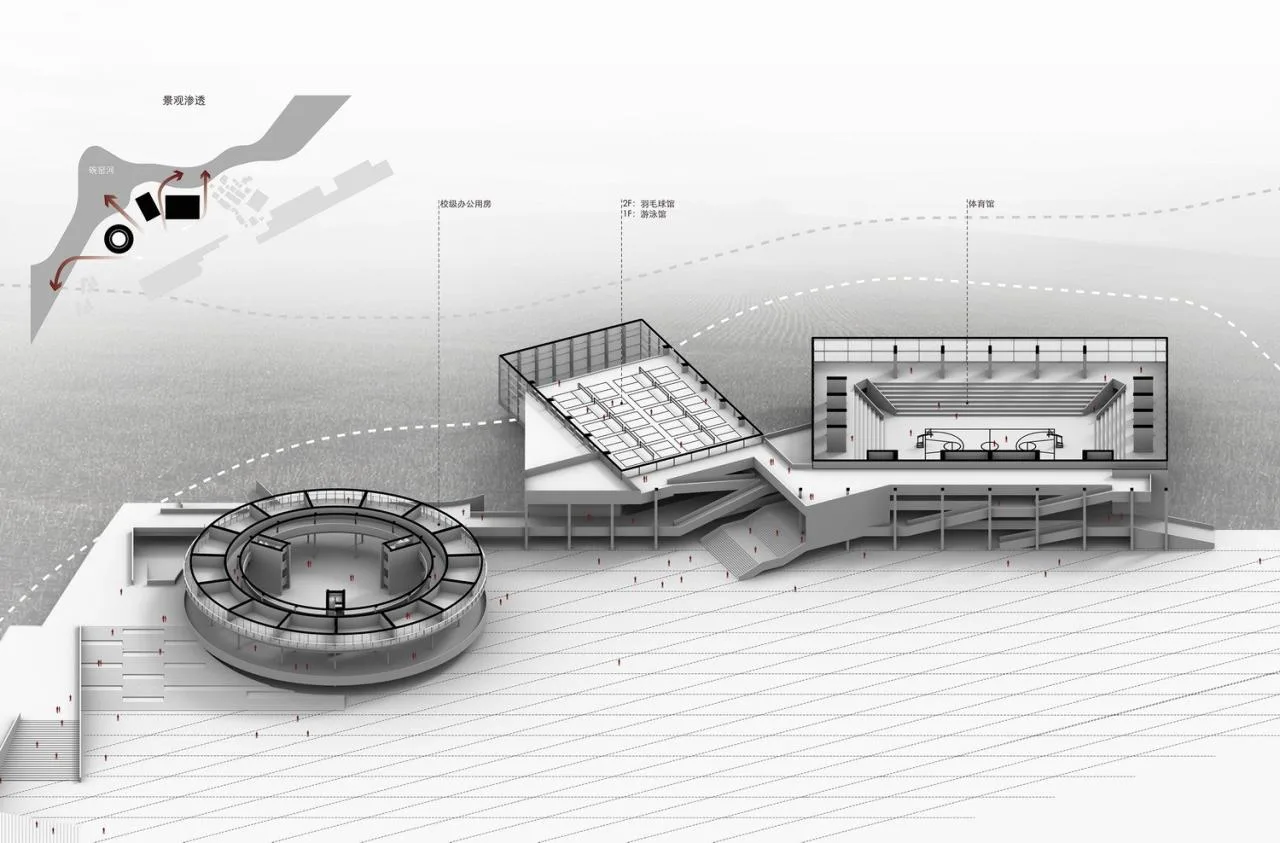
△ Sports Center Cluster © Tang Hua Architectural Design & China Construction Technology Group
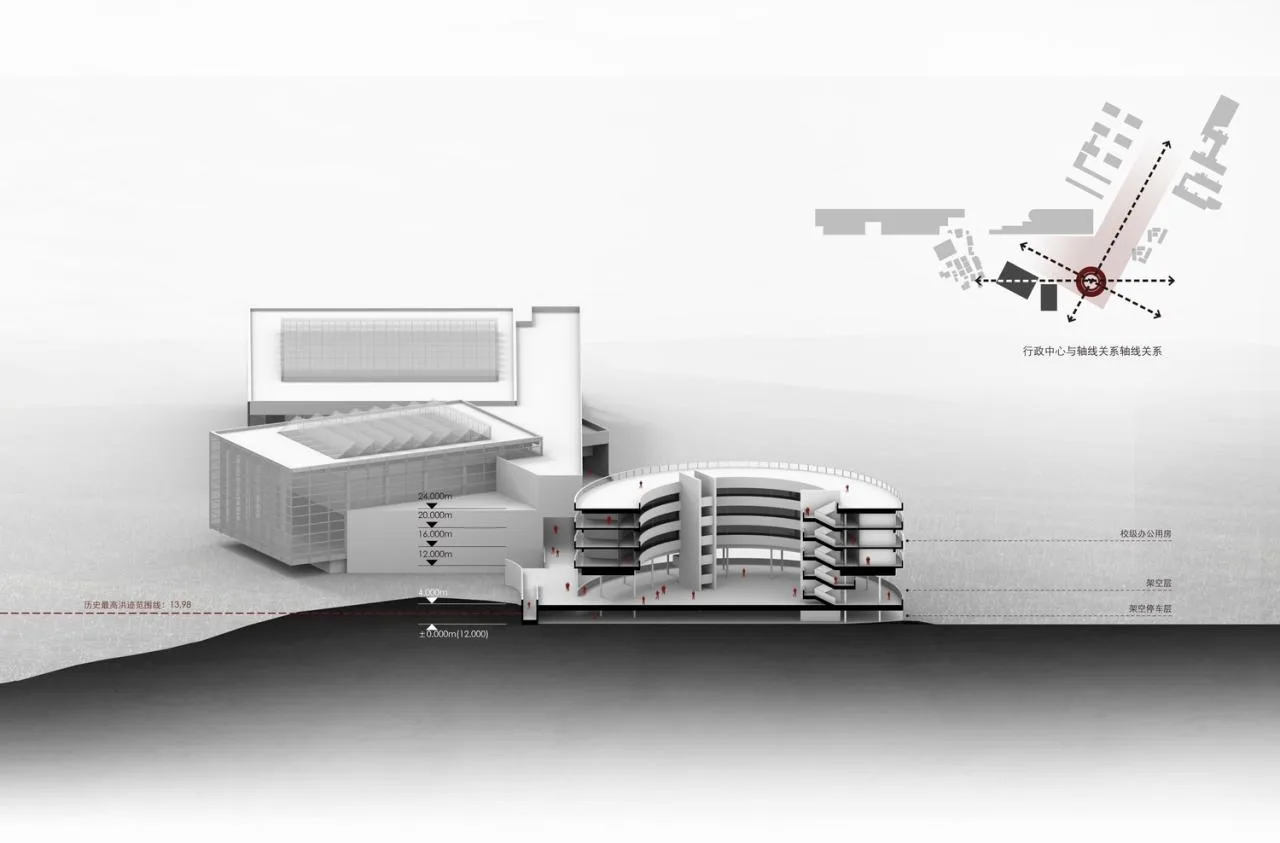
△ Administrative Center © Tang Hua Architectural Design & China Construction Technology Group
Project Information
Project Name: Shenzhen Vocational and Technical University Shenshan Campus
Project Type: University
Project Area: 417,856 square meters
Design Date: June 2023
Design Scope: Planning and architectural schemes
Design Companies:
Shenzhen Tanghua Architectural Design Firm Co., Ltd
Chief Creative Designer: Tang Hua
Design Team Members: Zhu Chuang, Yan Peiqi, Liu Ying, Wu Yurui, Tang Mengchan
China Construction Technology Group Co., Ltd
Project Leader: Dai Qiong
Architecture Team: Dai Qiong, Li Shuge, Zhang Xiaoyi, Jin Cheng, Su Xiaowan, Chen Jiongshun, Jiang Li, Li Min, Chen Dechao
Landscape Team: Mi Chengxi, Lv Xiuhong
Structure Team: Fang Yuan, Wang Yi, Zheng Qian, Zhang Chuan, Zhu Chuanxin, Zhang Mingyi, Zhou Wenlong, Wang Rusheng, Li Chen, Xiao Bin
Geotechnical: Peng Zhao
Water Supply and Drainage: Jiang Yajun
HVAC: Yi Peican
Electrical: Li Junbo
Green Building: Feng Jie, Xiao Wanting
Landscape Consultant: TMUP Tamu Landscape Planning and Design Co., Ltd
TMUP Design Team: Display, Huang Haoliu, Luo Xiaobo, Chen Minfeng















Must log in before commenting!
Sign Up