
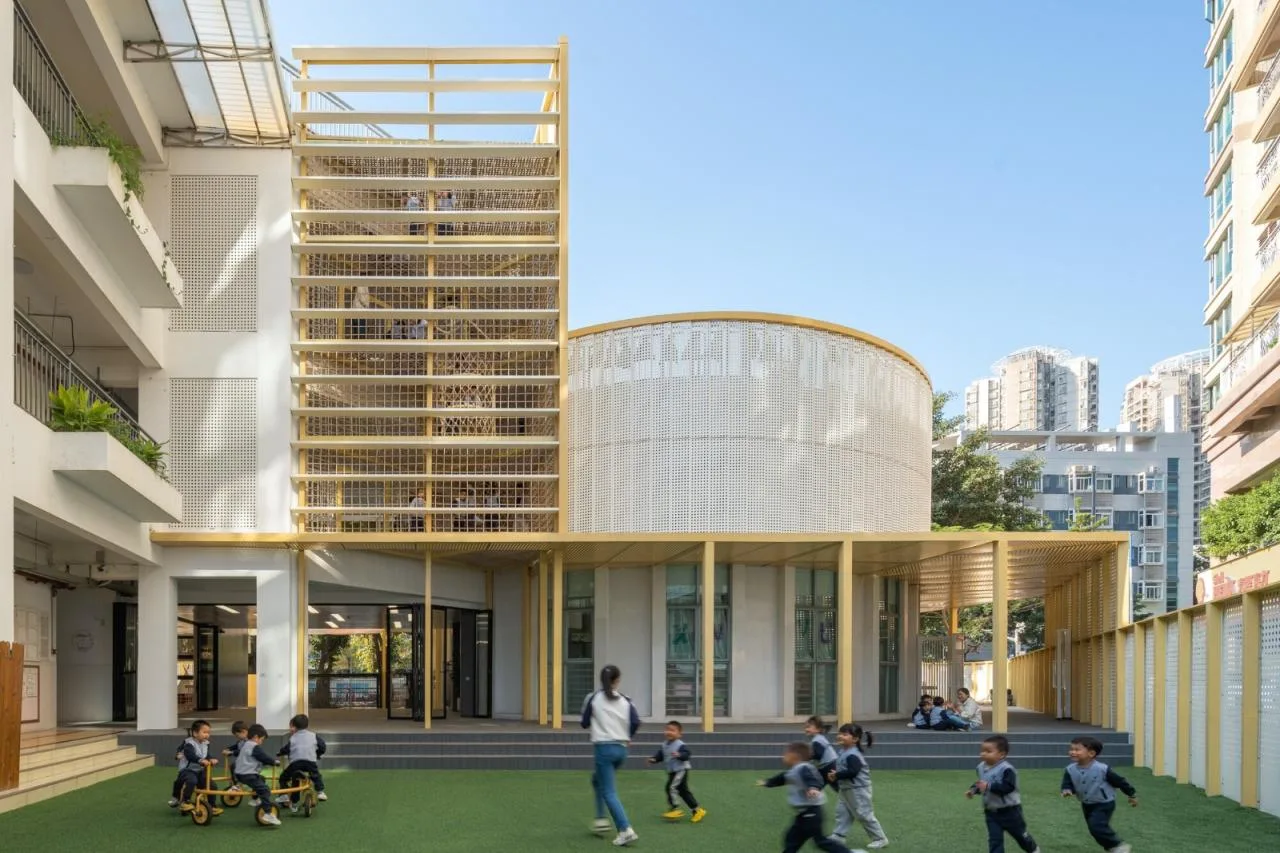
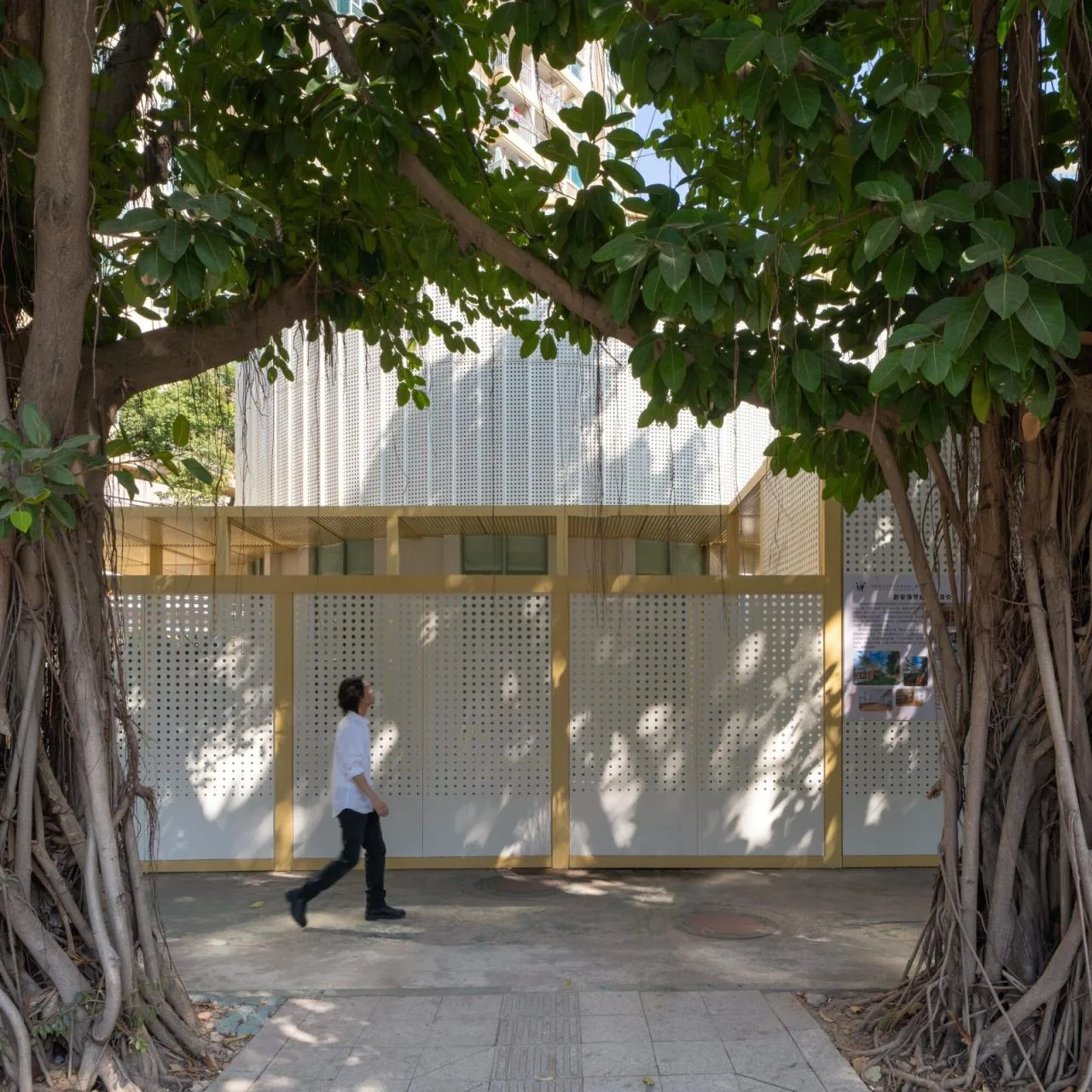
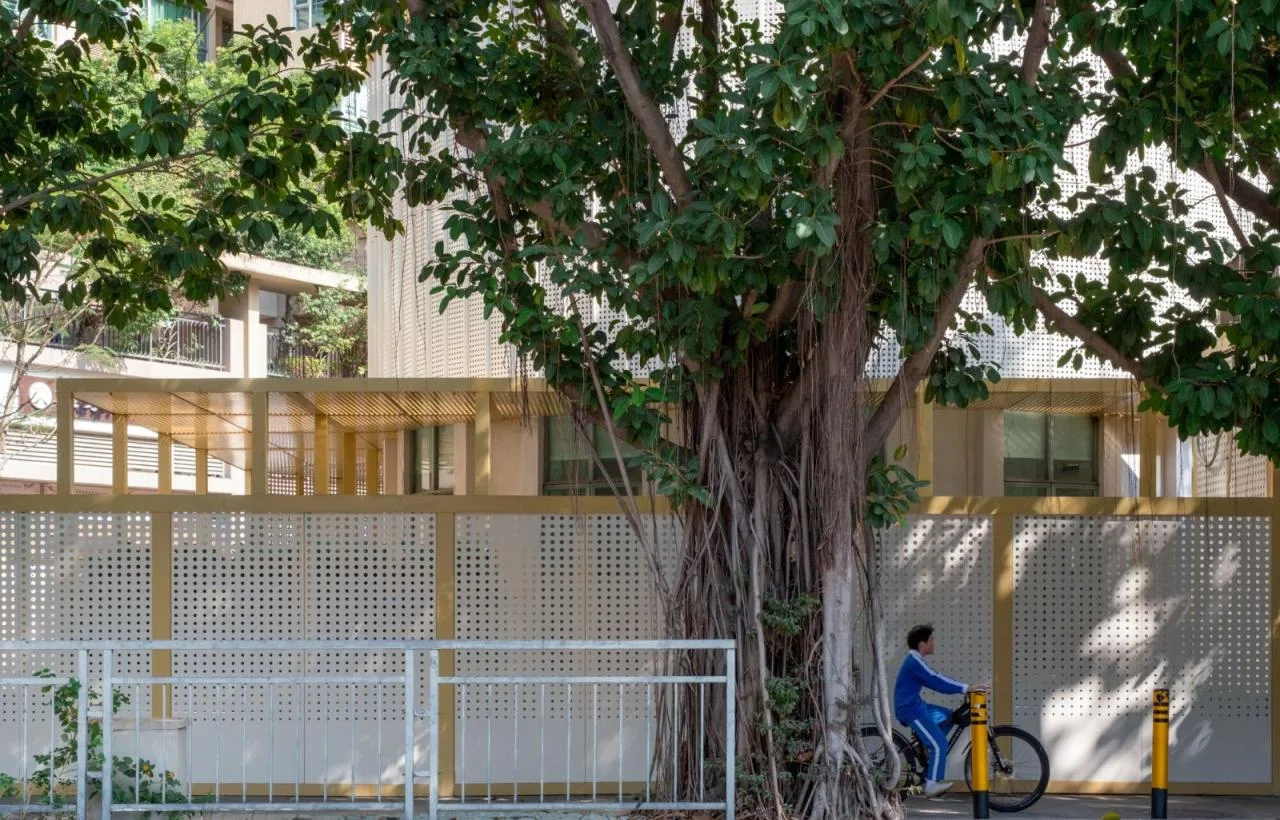
The Children’s Home Haibei Kindergarten is located less than two kilometers from Qianhai Bay, nestled within a high-density residential neighborhood featuring diverse architectural styles. Built around 2010 alongside residential buildings, it occupies a triangular site on the southern side with an L-shaped layout. The original institutional design embraced the concept of a “home,” focusing on the relationship between the “living rooms” and their spatial connections. This was expressed through an arrangement of geometric forms. Building on this foundation, the porch and garden have been redesigned to promote spatial fluidity and a welcoming atmosphere.
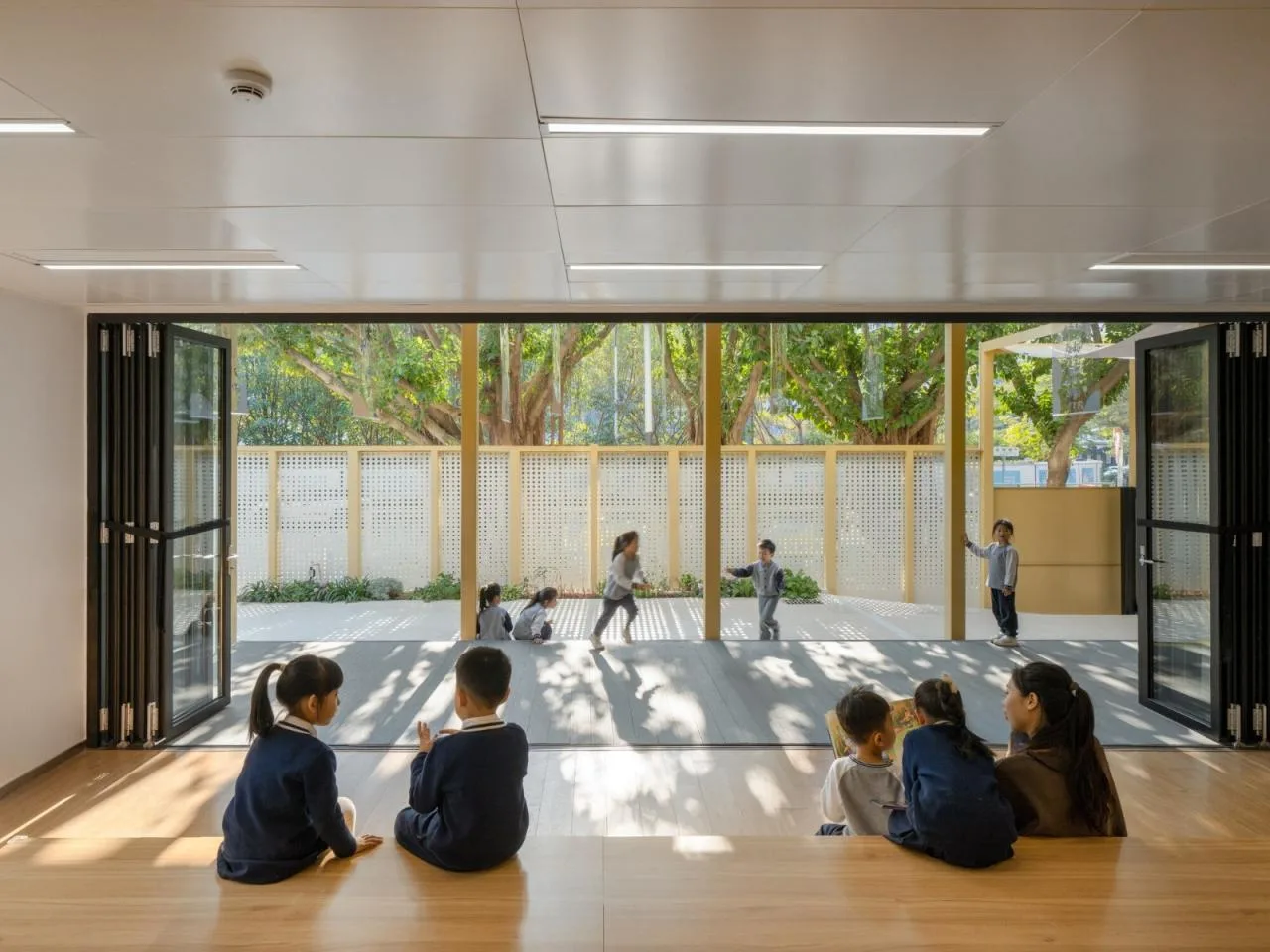
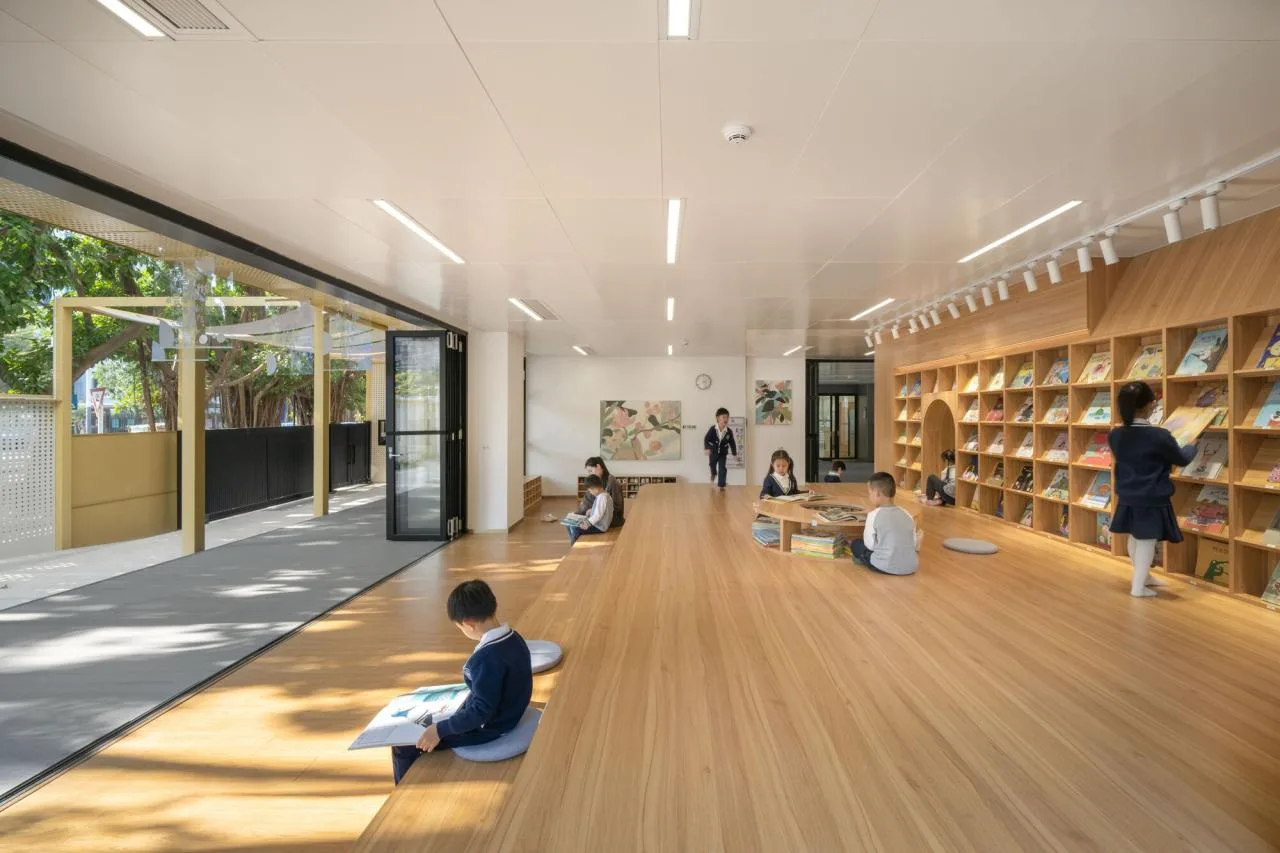
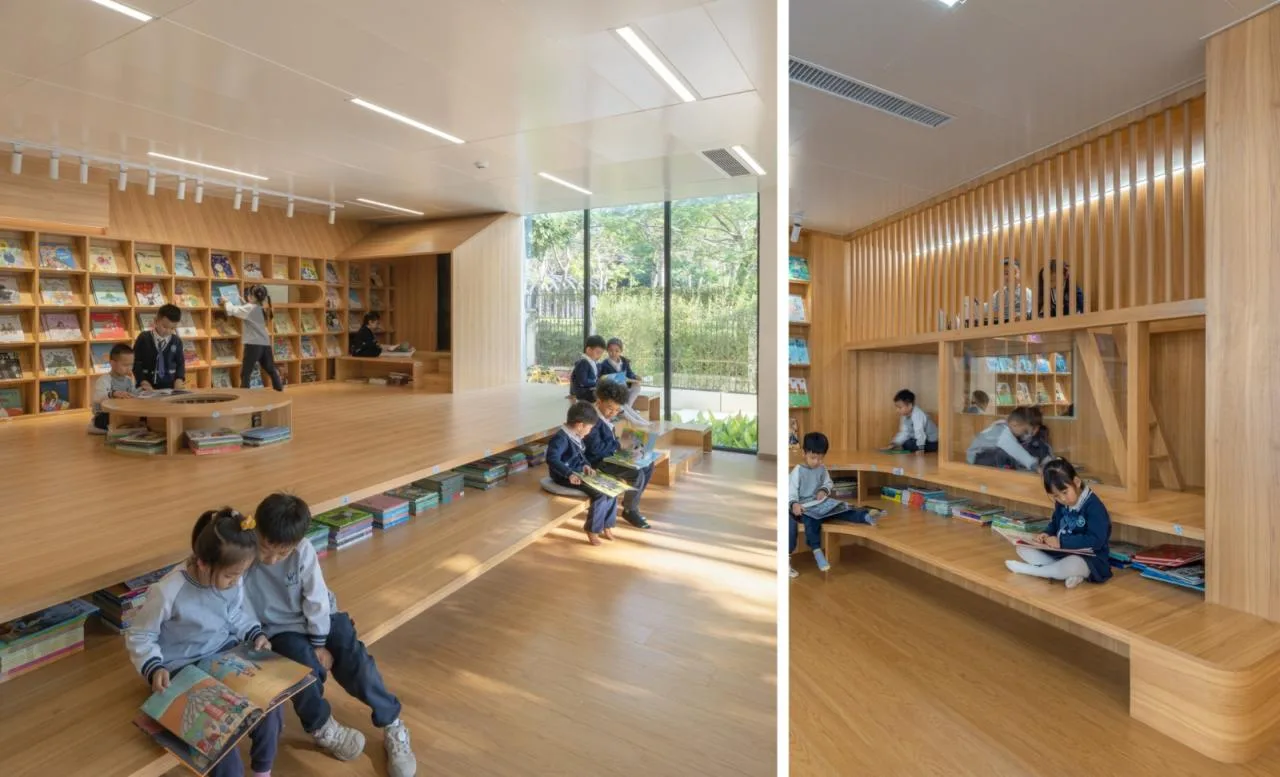
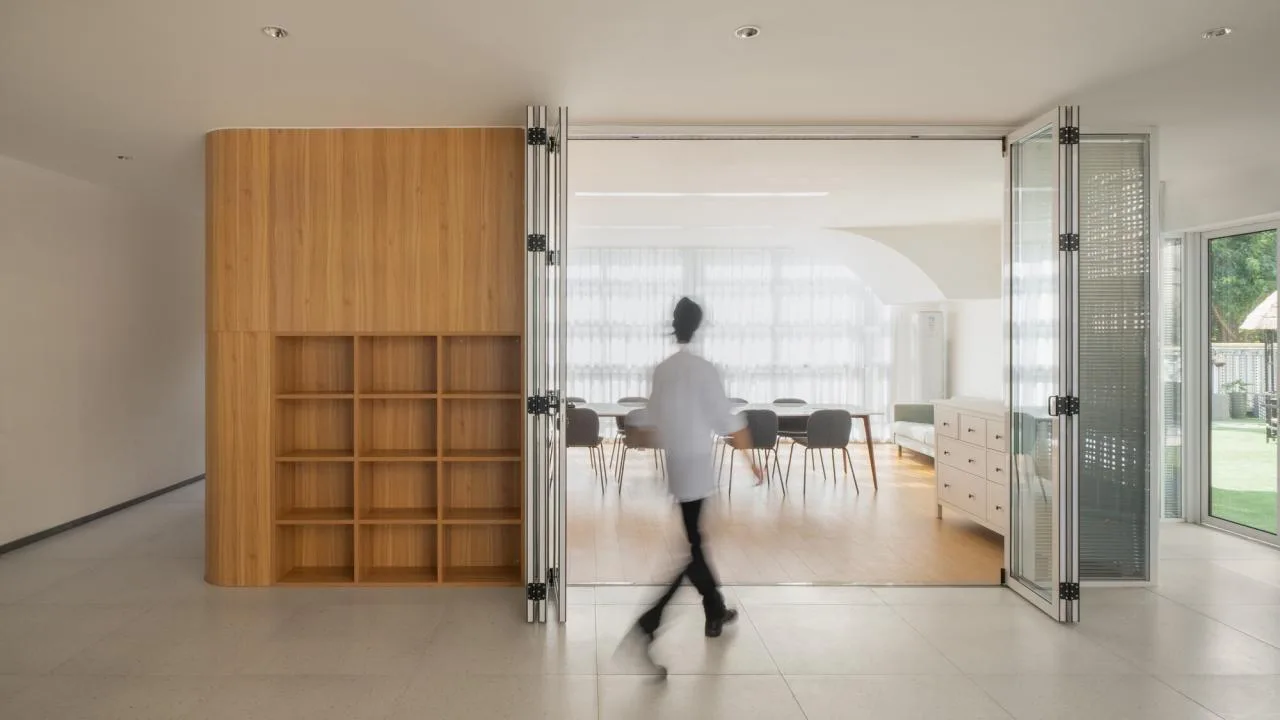
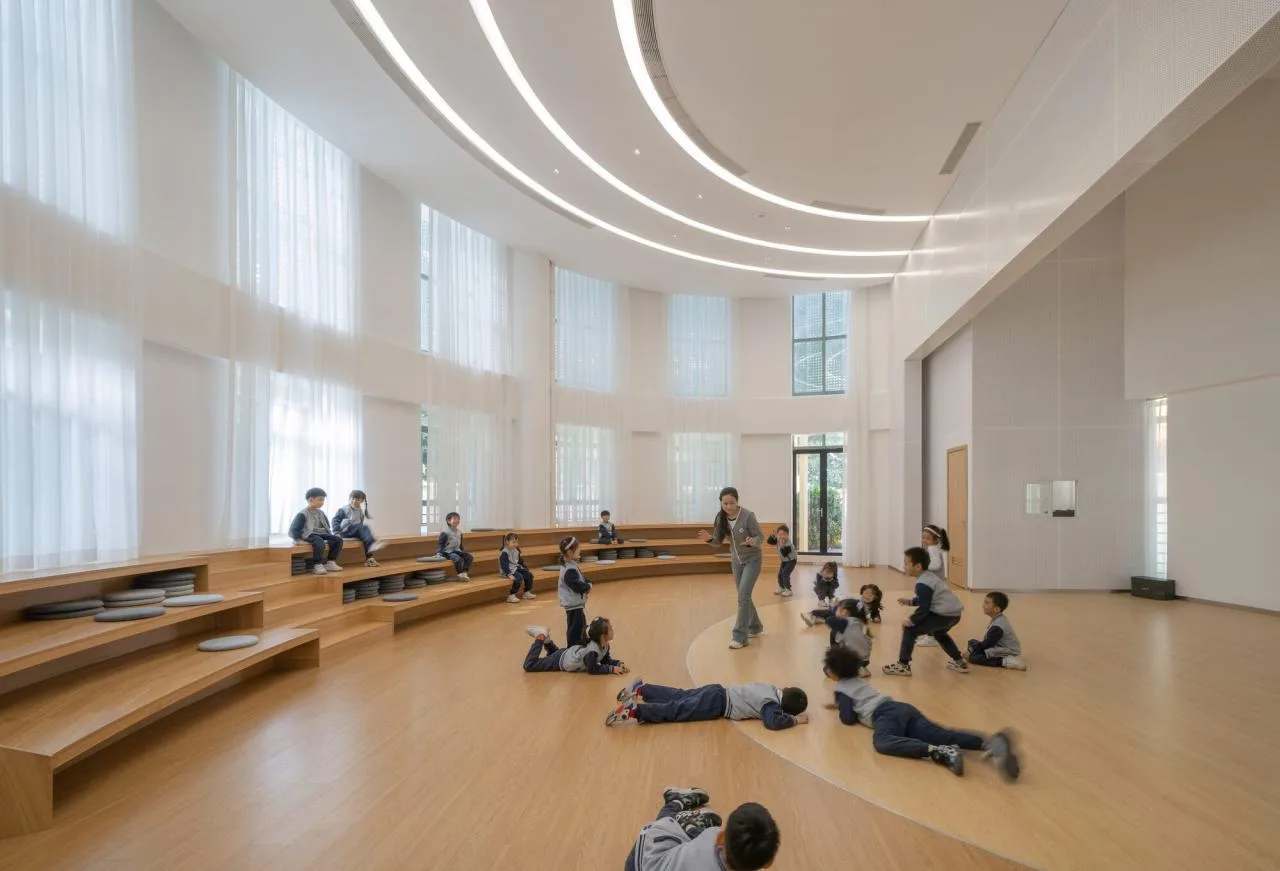
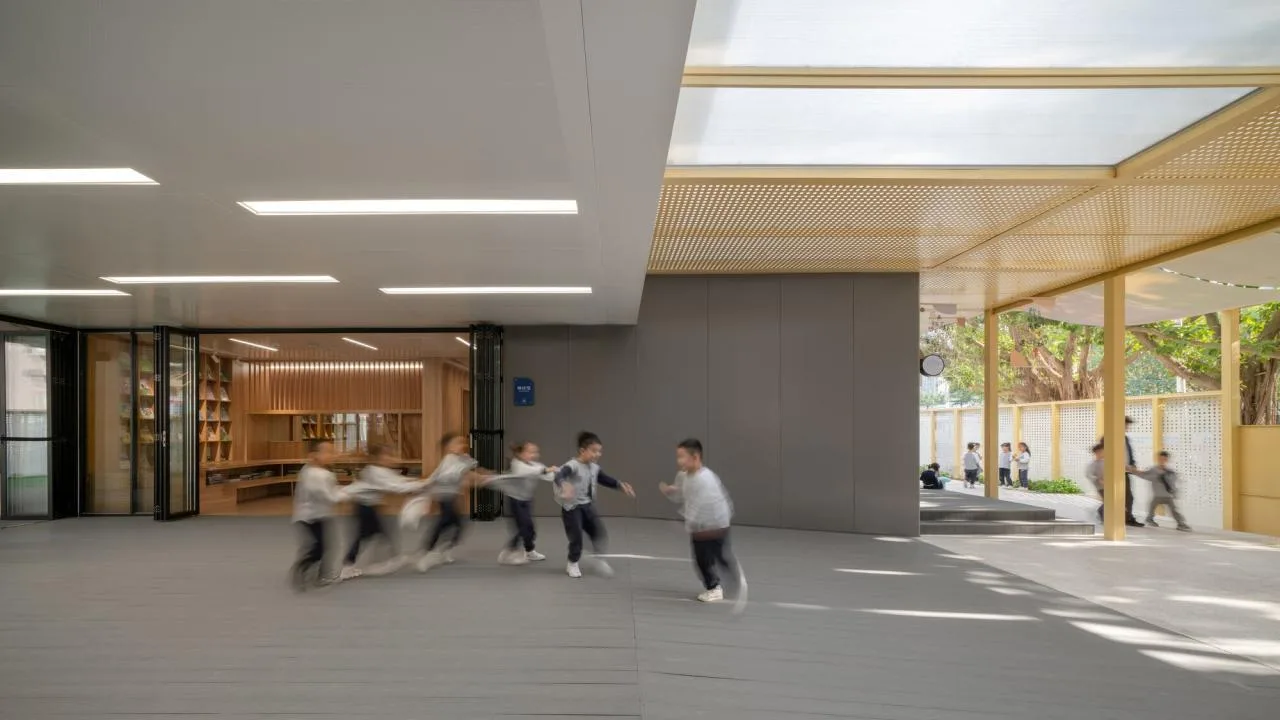
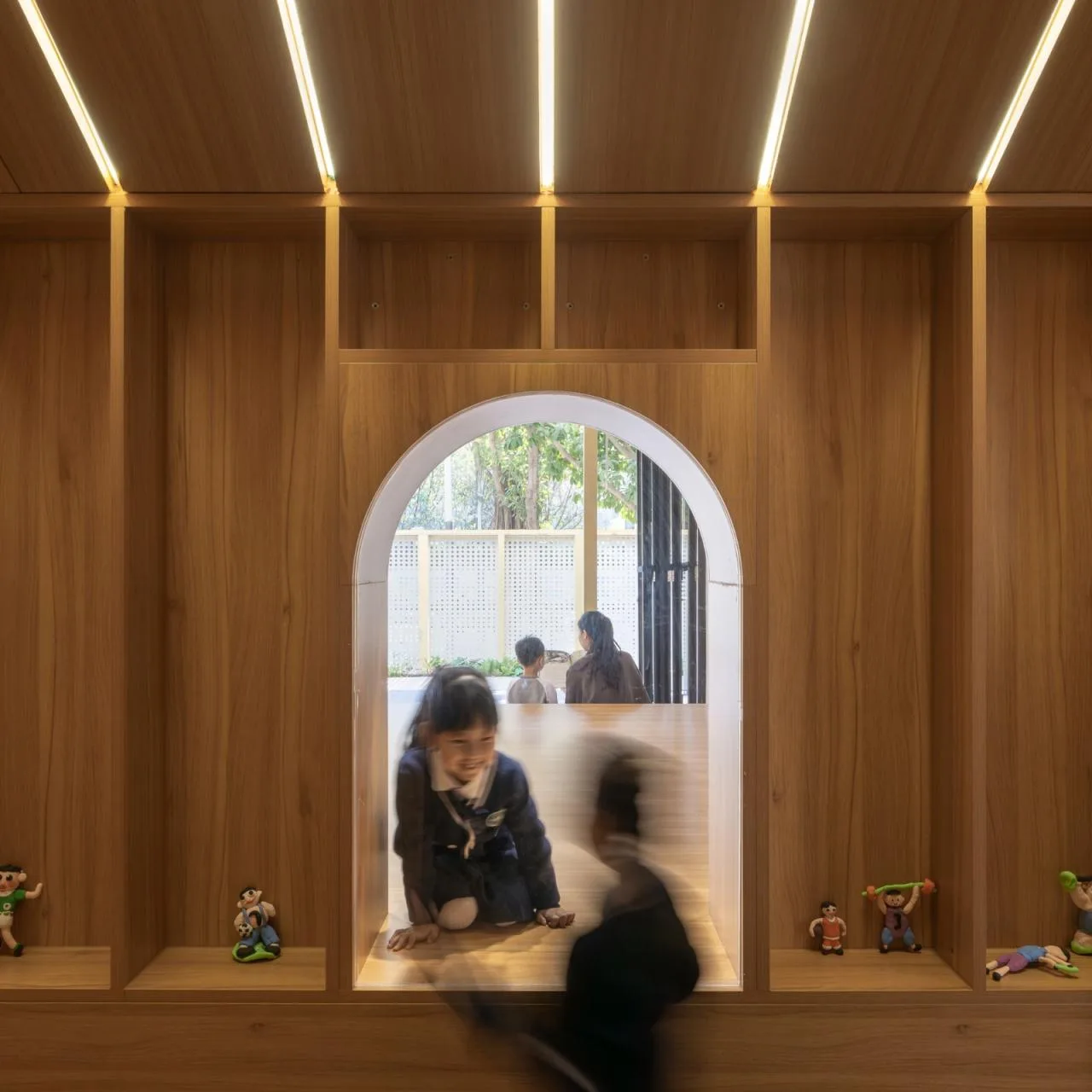
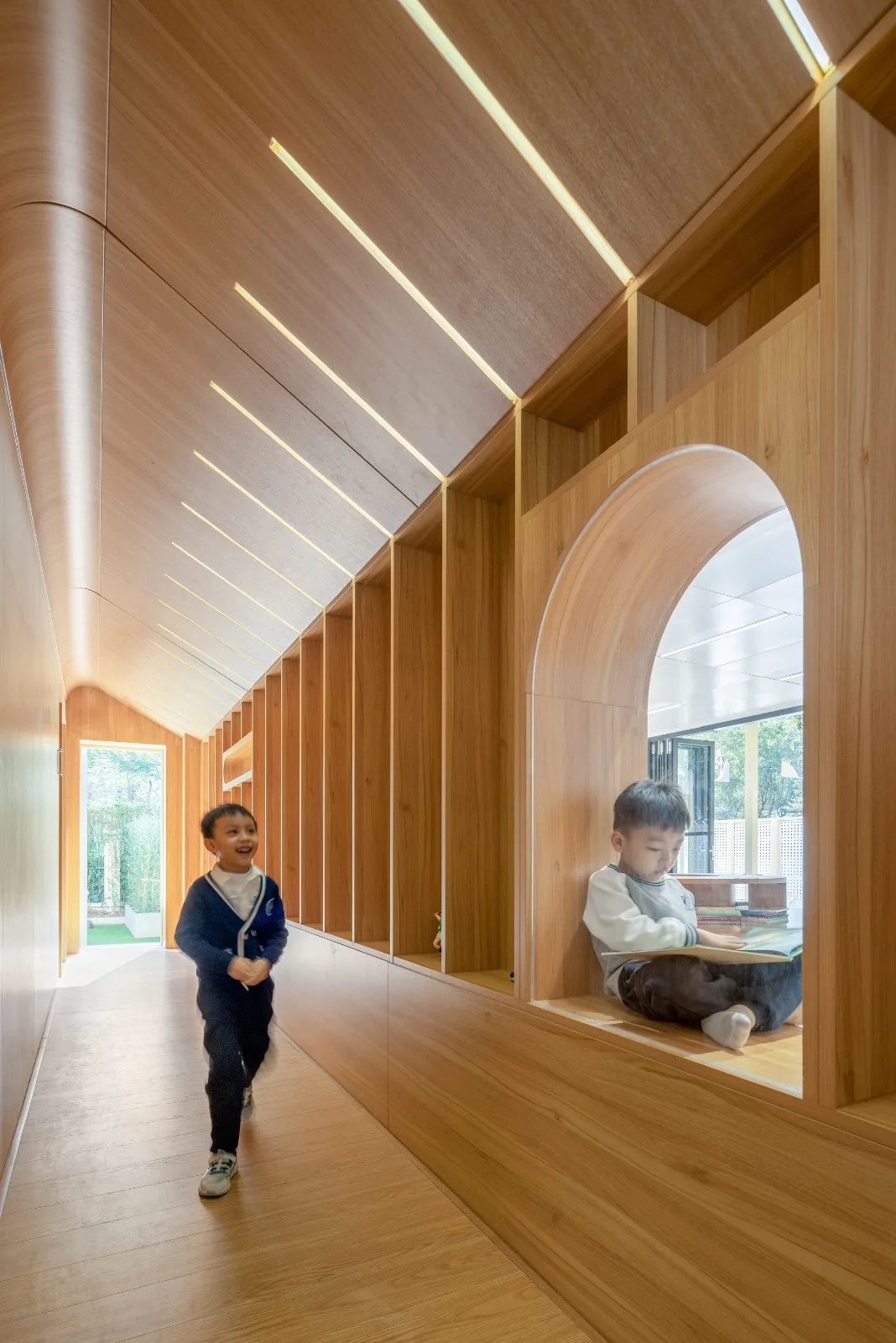
The first floor’s central living room is designed as a fully open space that connects the front and back courtyards. Surrounding this open hall are a music and physical activity room, along with a picture book library. Unlike a conventional small corner, the library is a spacious area that can be flexibly opened or closed, transforming into part of the living room, an extension of the courtyard, or a sunlit study room. These three elements redefine the focal point of the children’s home while blending their individual functions.
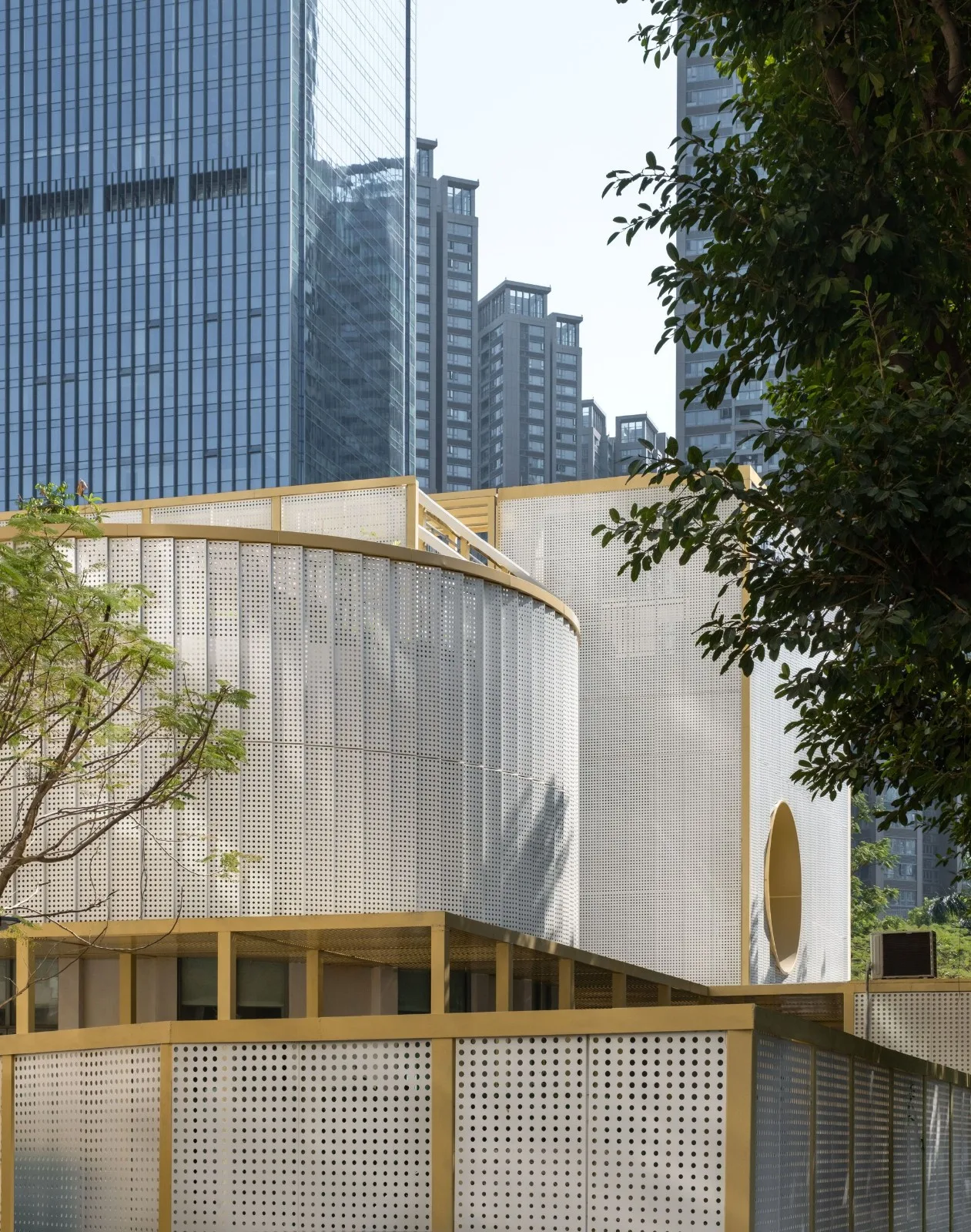
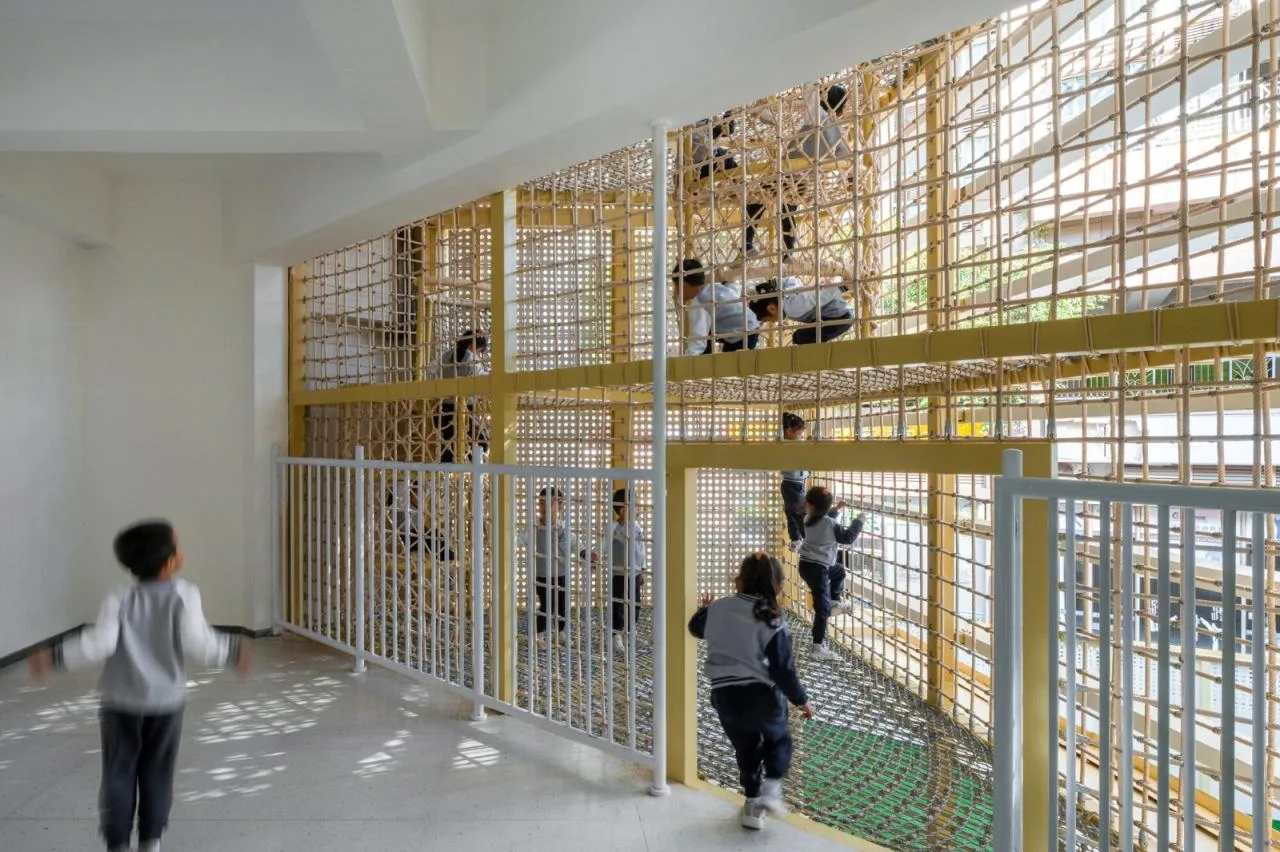
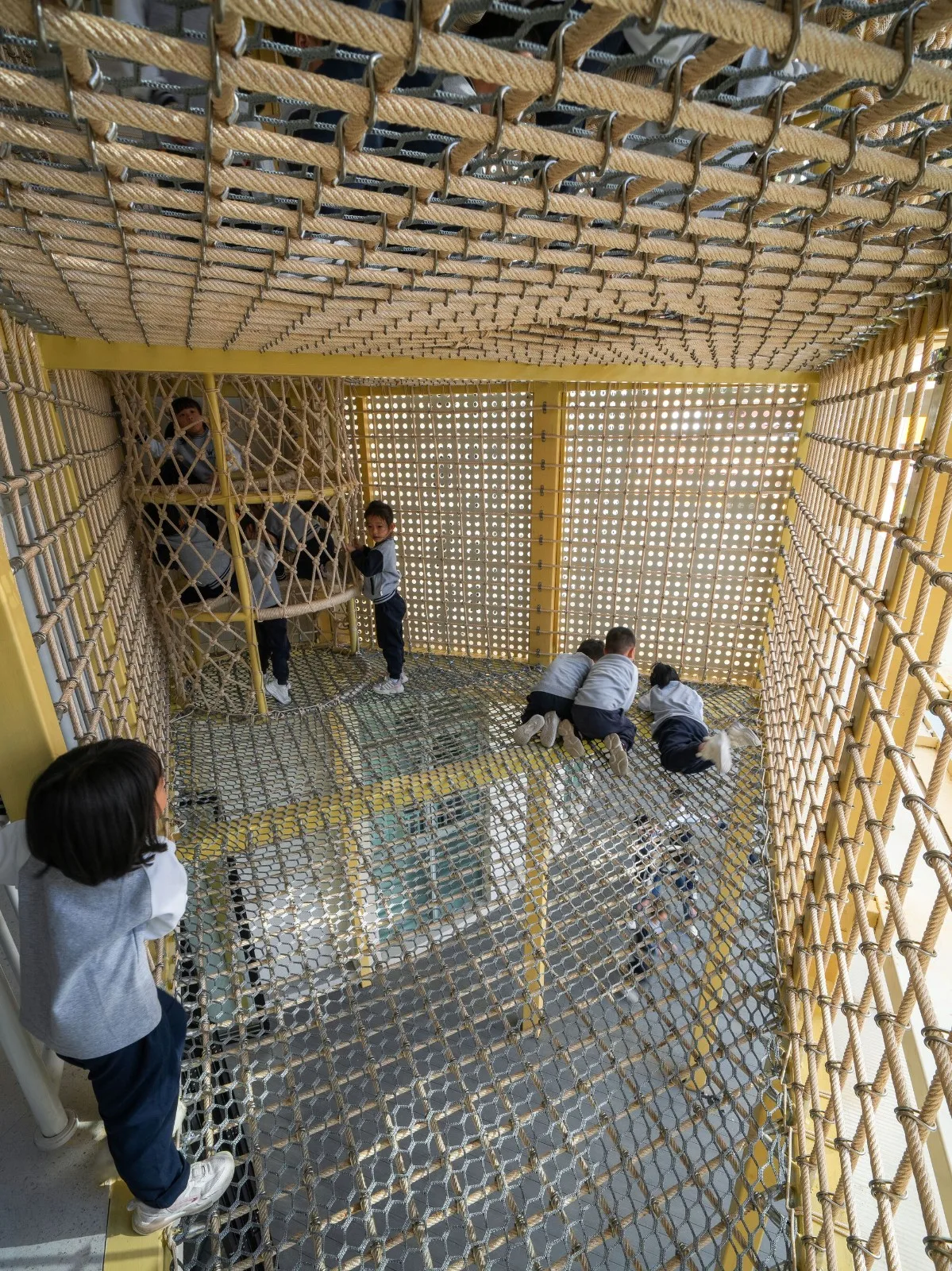
Originally, the vertical platform lobby included a closed art room above it. After demolition, this space has been transformed into a transparent activity platform that connects the front and back areas. Utilizing this platform, a set of vertical climbing structures was introduced, linking to the third-floor slab and creating a circular play space. The conference area measures 6 by 7 meters, providing a versatile space for meetings, exchanges, and workshops. The architectural transformation aligns with the building’s internal logic: the previously complex facade elements have been simplified to reveal geometric forms of ellipses and cubes through continuous folded plate coverings. This design strategy also enhances flexibility during the short-term construction process.
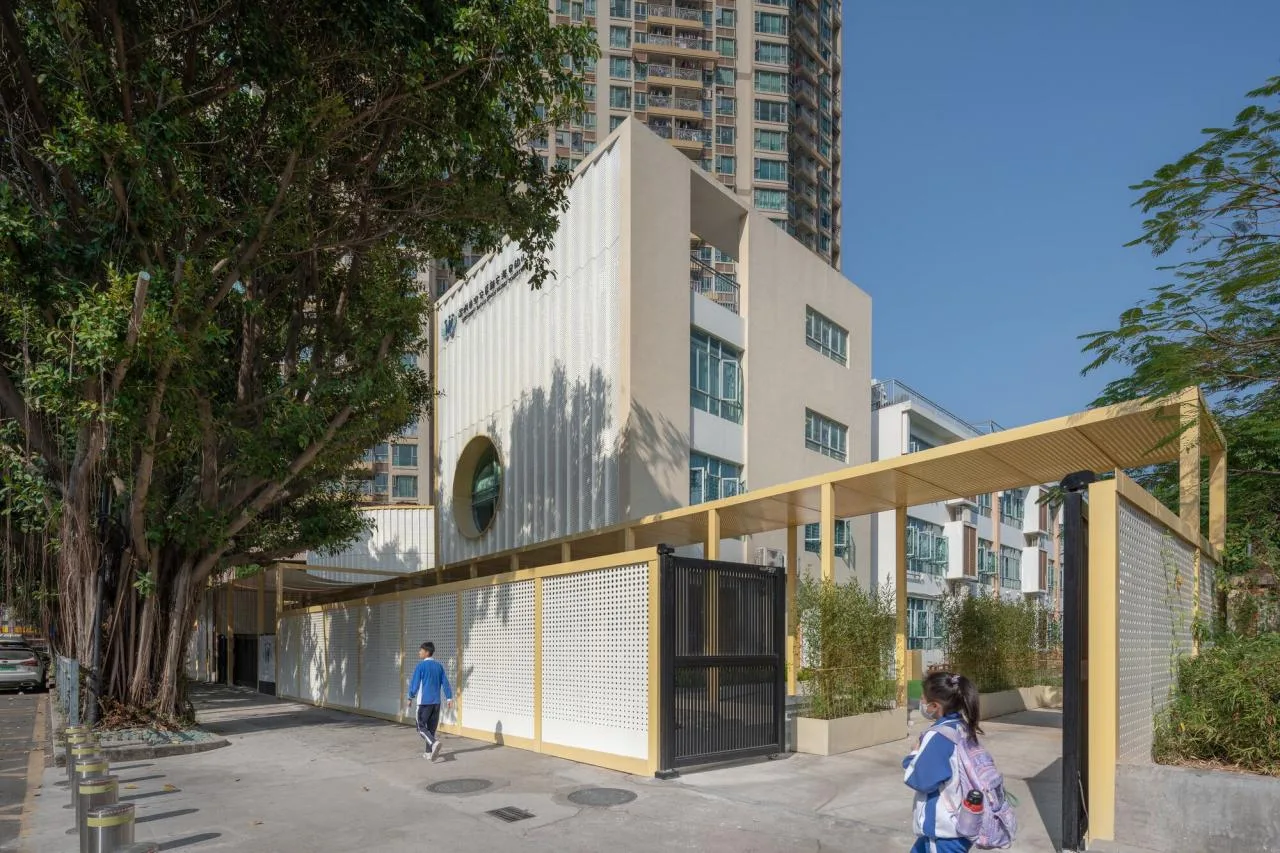
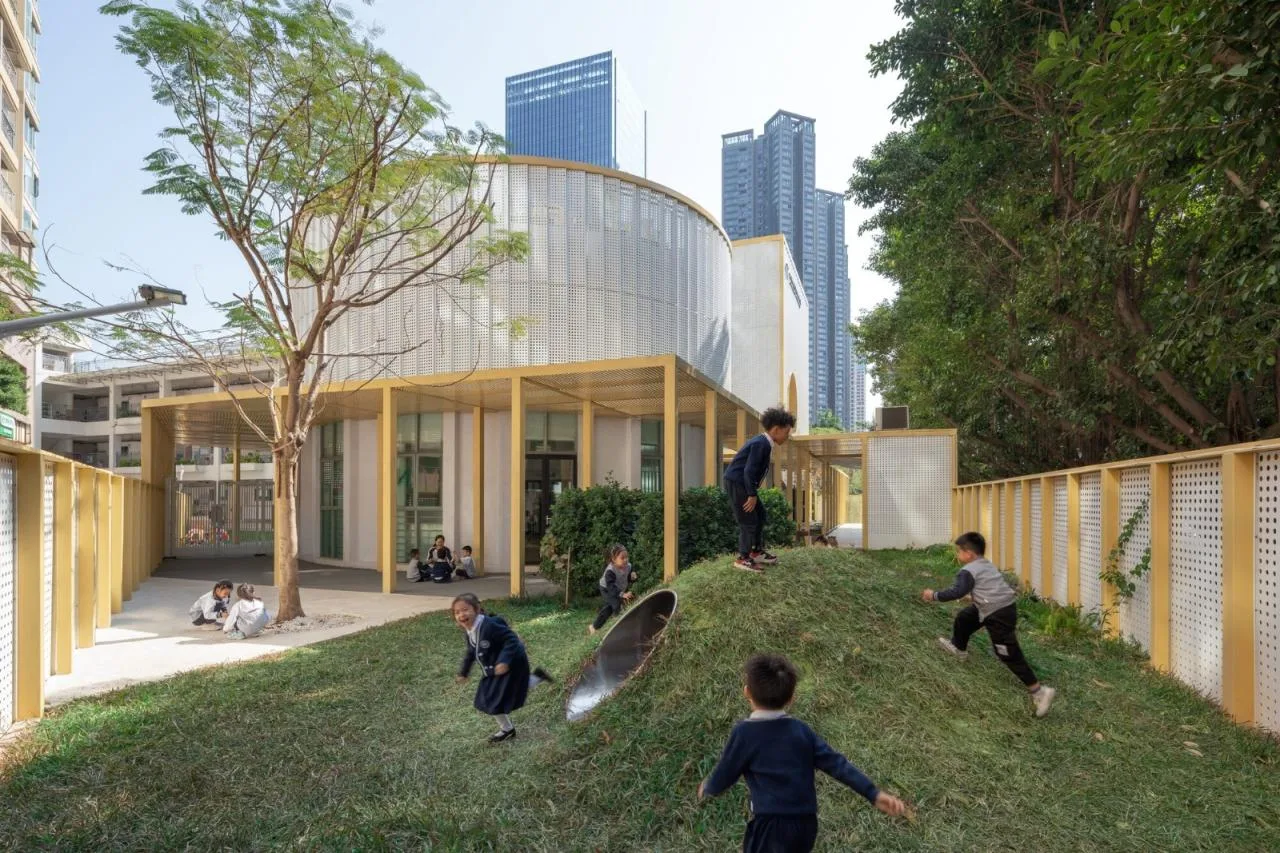
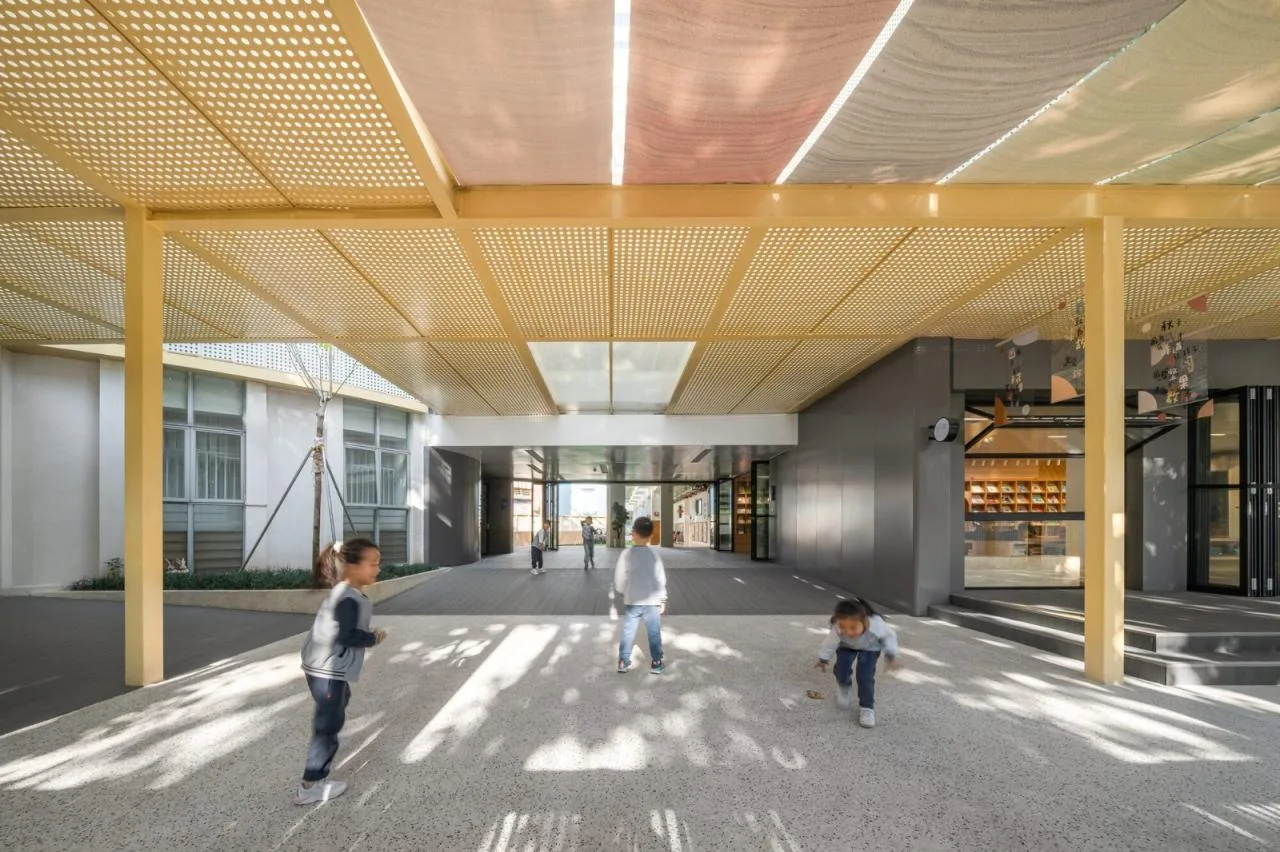
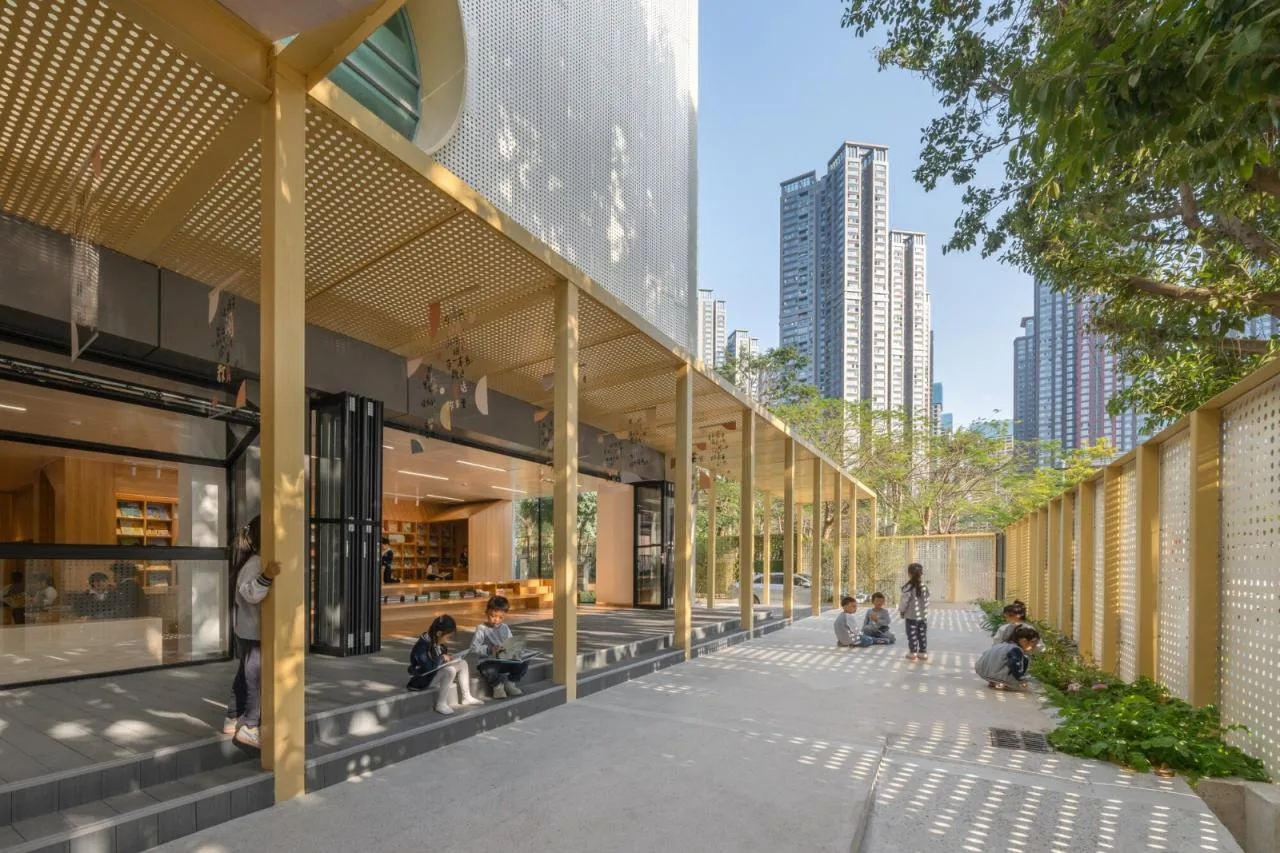
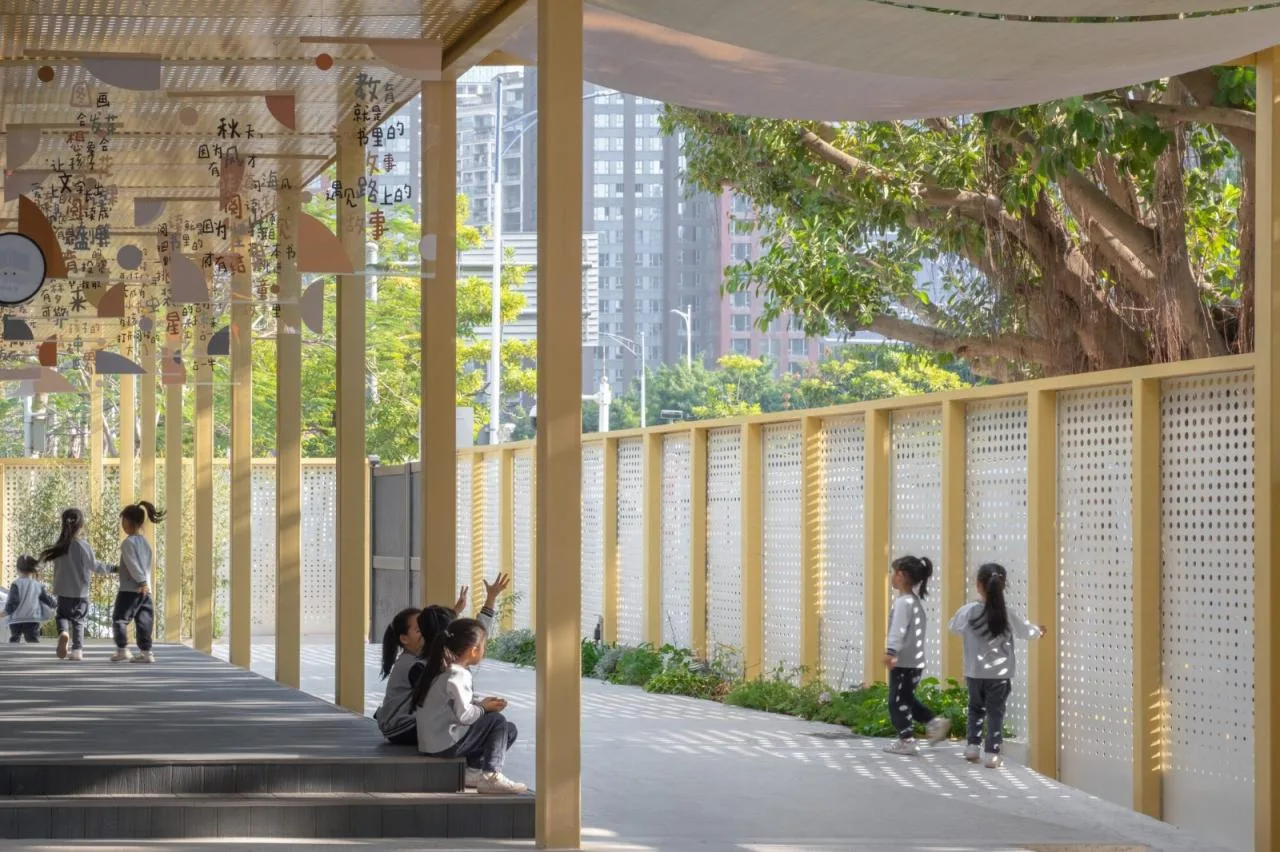
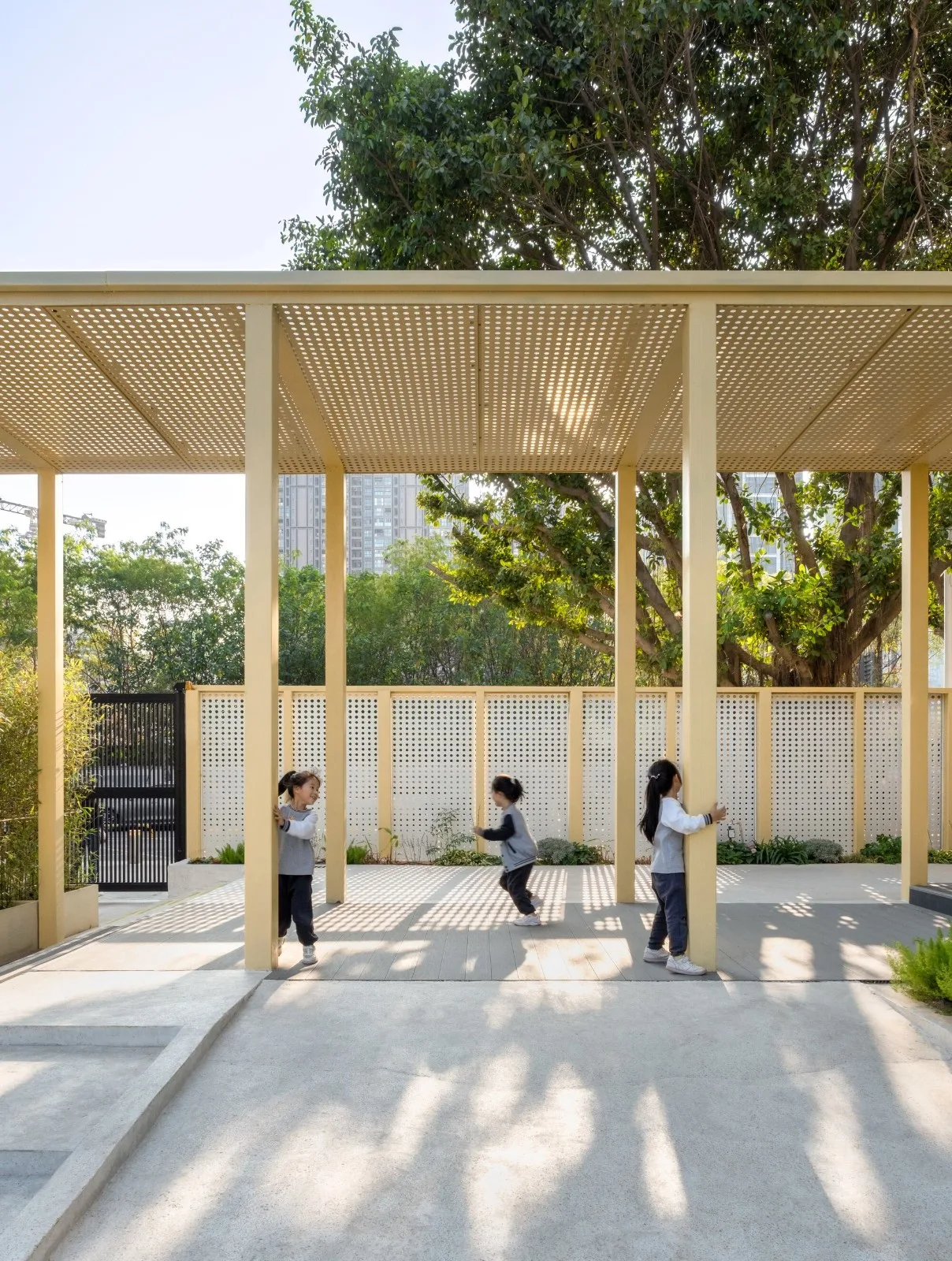
The courtyard entrance porch extends all the way to the building’s exterior wall, linking the east and west sides to form a continuous loop with the entrance hall. This creates a smooth transition between indoor and outdoor spaces. The corridor adds eaves to the building, casting shadows that enhance the spatial depth. The front yard features a mix of hard surfaces, flowers, mounds, shrubs, and trees, crafting a somewhat wild and natural activity space. The seasonal changes in the plants contribute dynamic, ever-changing scenery.
Additionally, we have integrated doors between classrooms and public areas in a way that creates a secondary management boundary. This allows spaces such as the front yard, music and sports room, picture book library, and open hall to be accessible to the community without disrupting the teaching areas. By rethinking functionality and embracing openness, this children’s home has become a true community neighbor.
Project Drawings
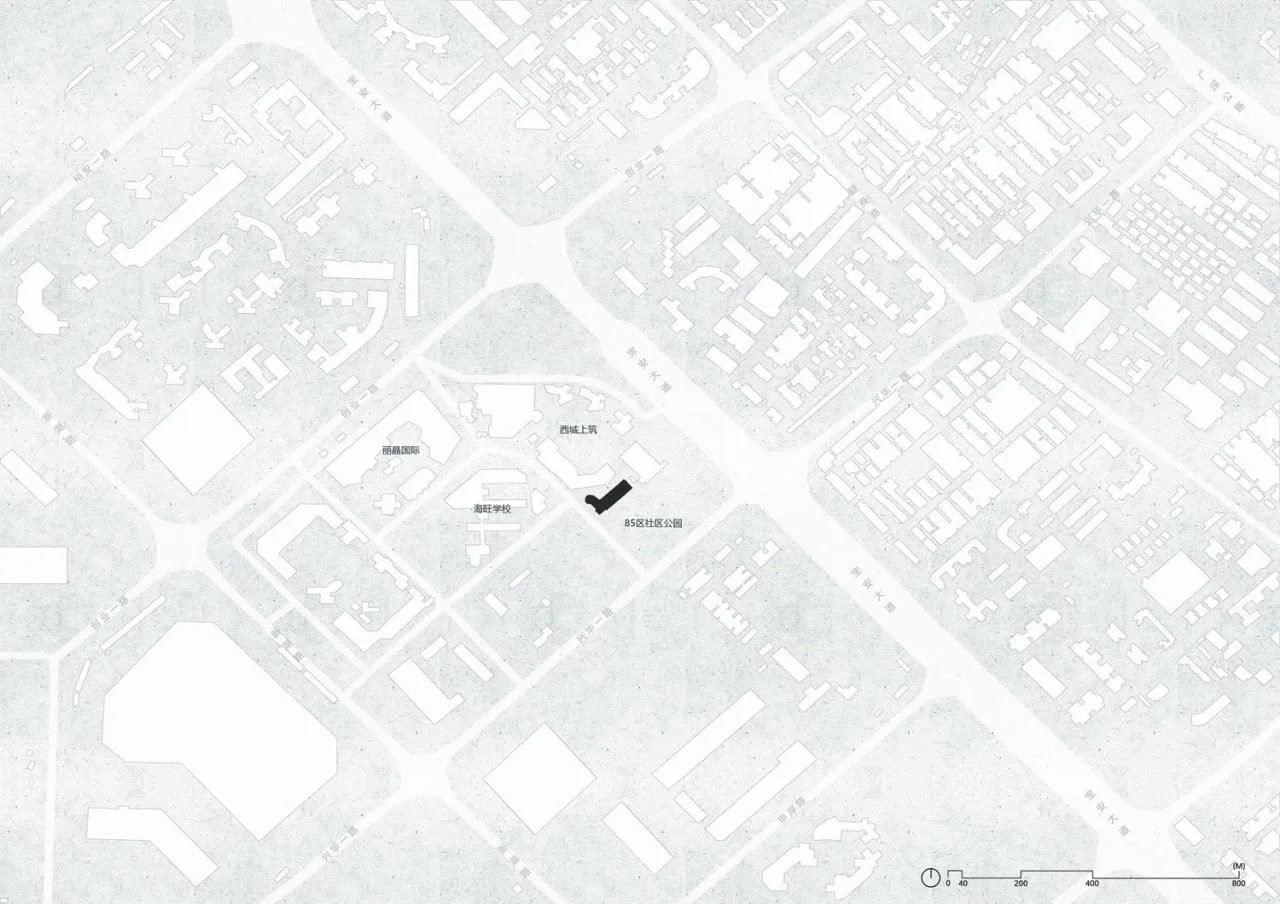
△ Base schematic diagram
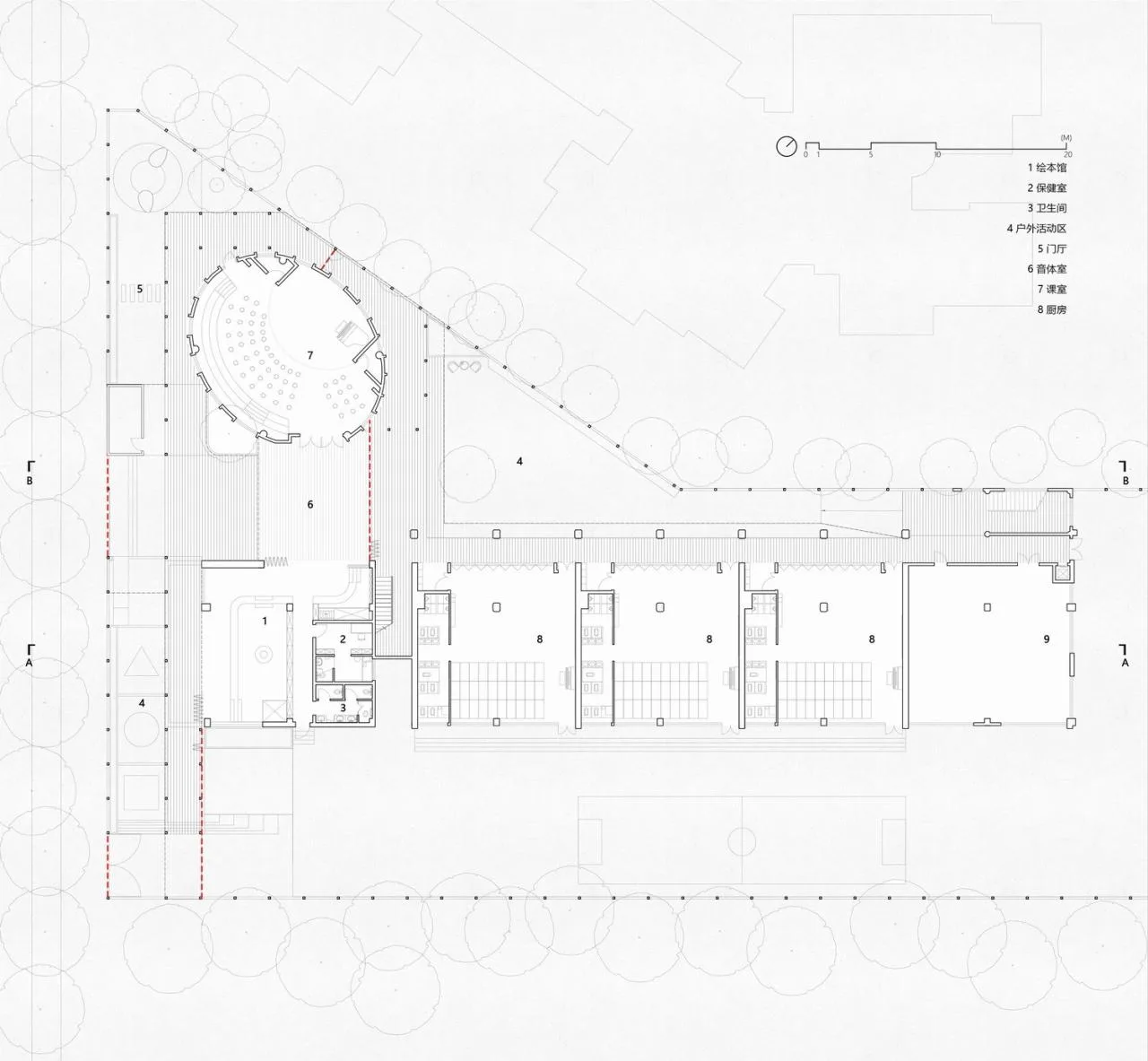
△ Plan view
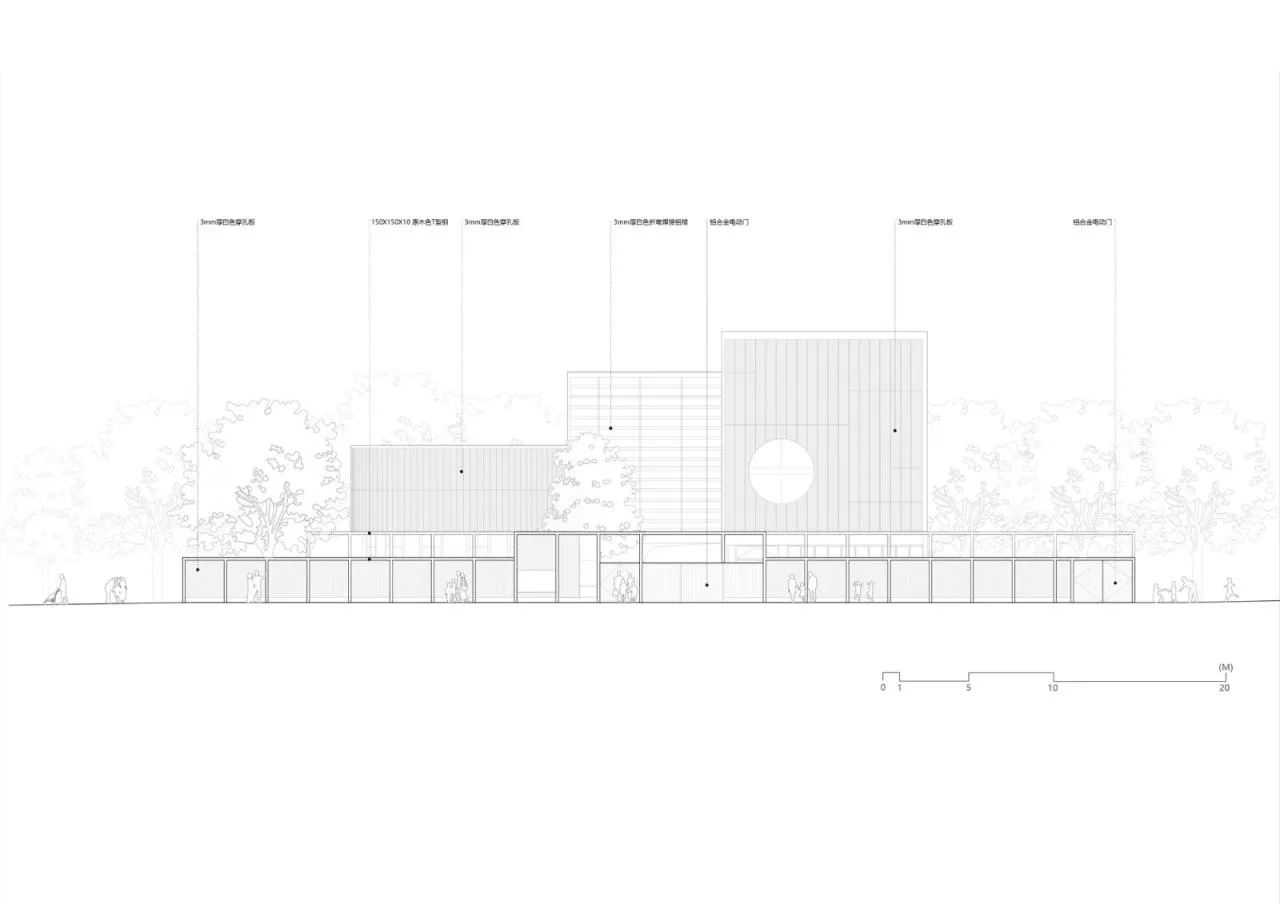
△ Elevation drawing
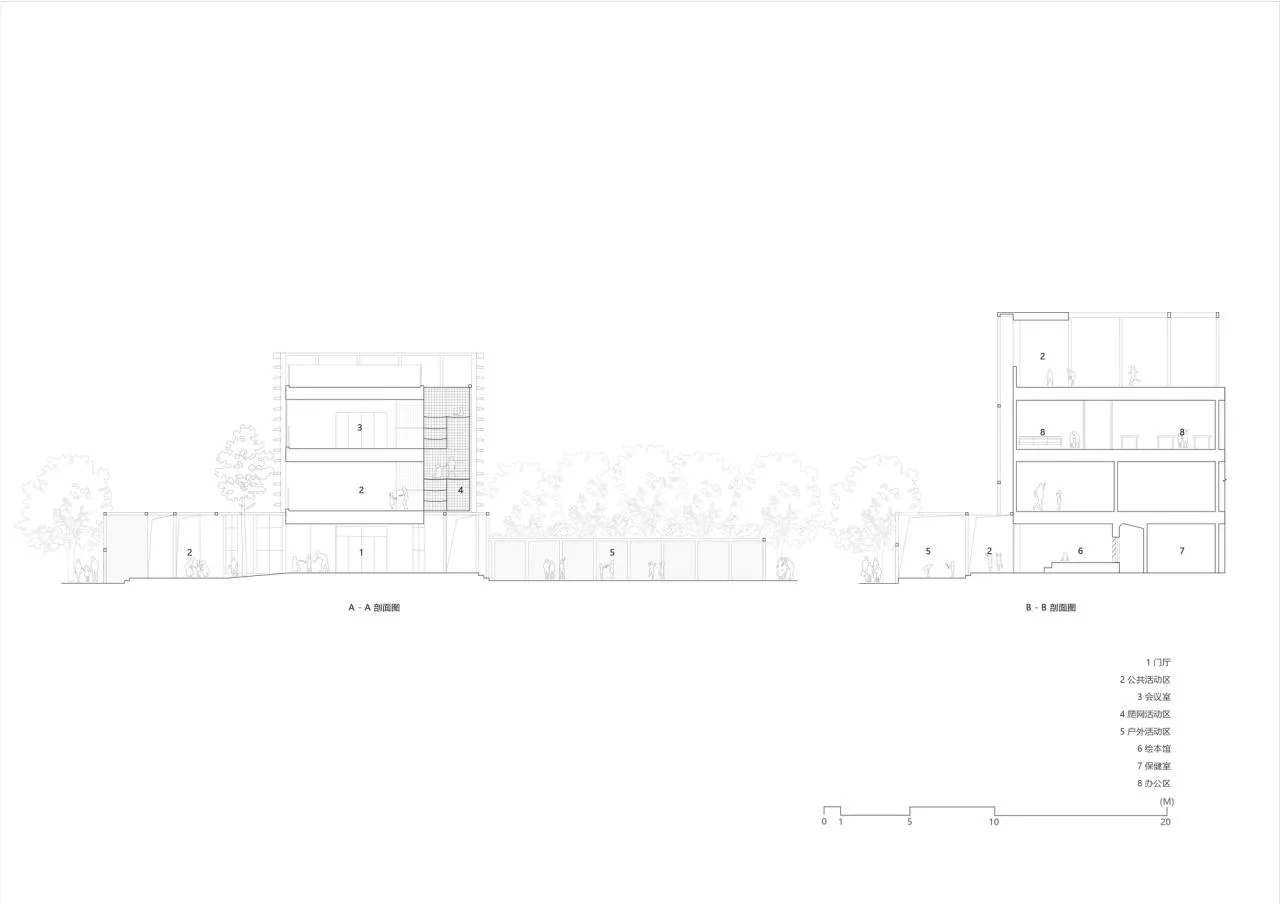
△ Section diagram
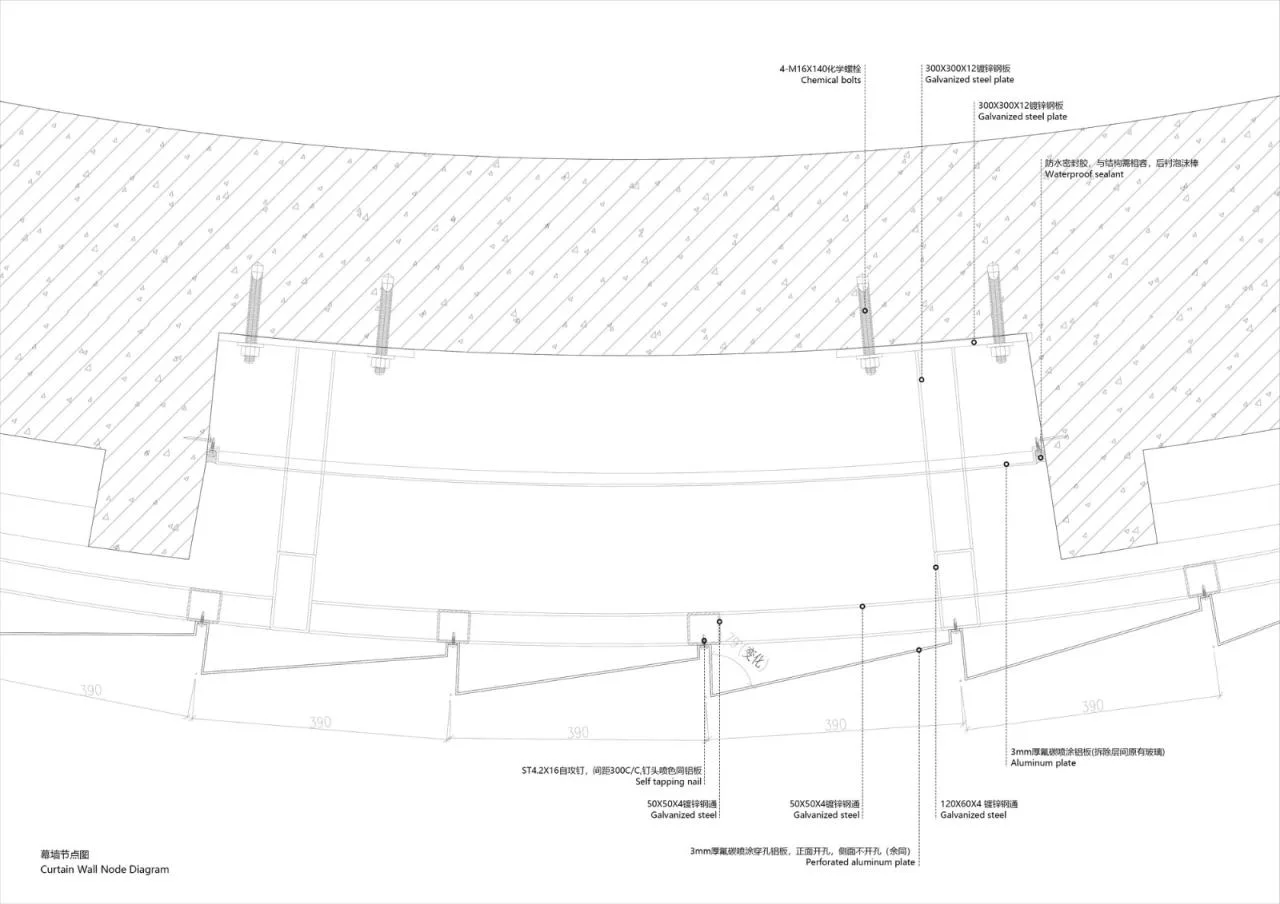
△ Curtain Wall Node Diagram
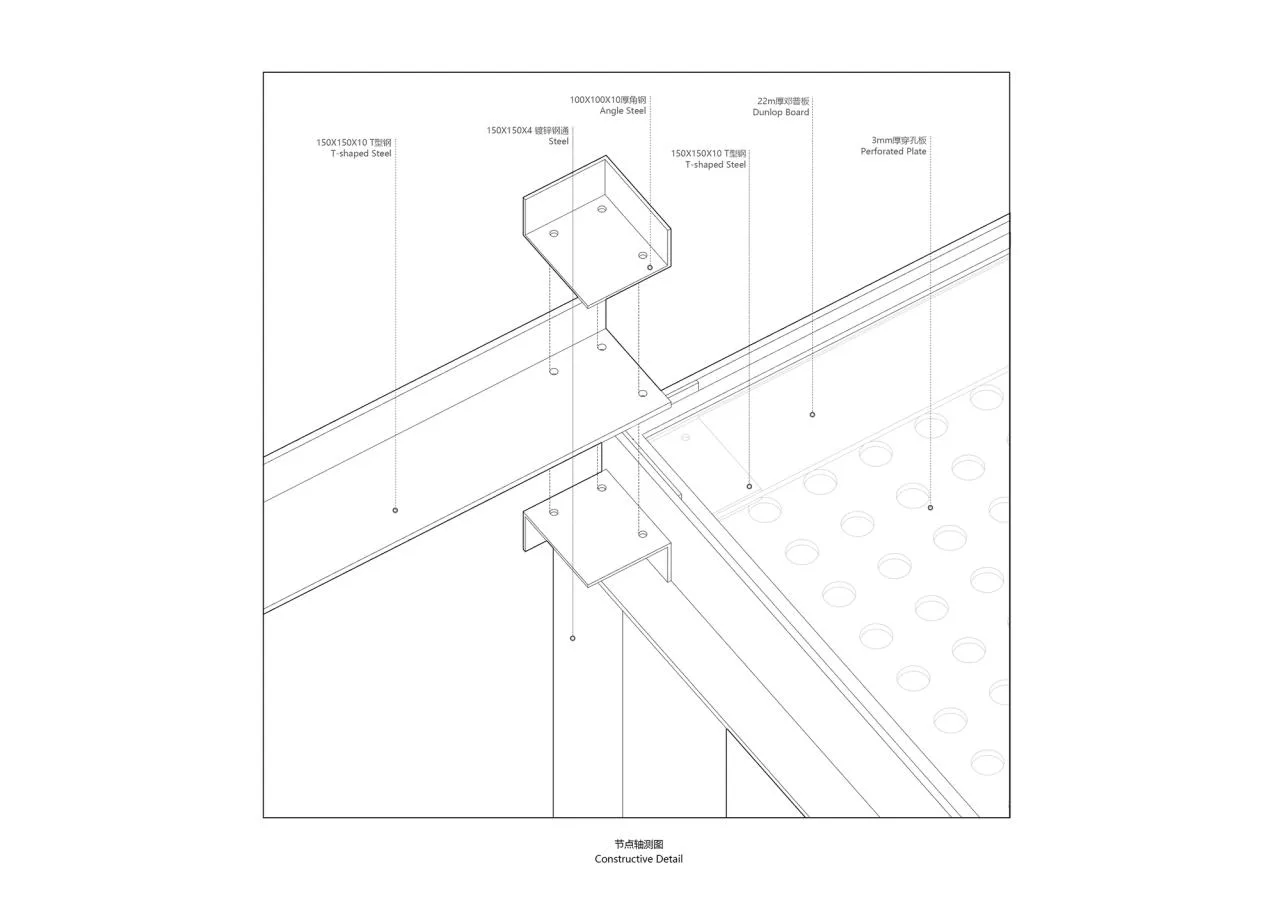
△ Node axonometric diagram
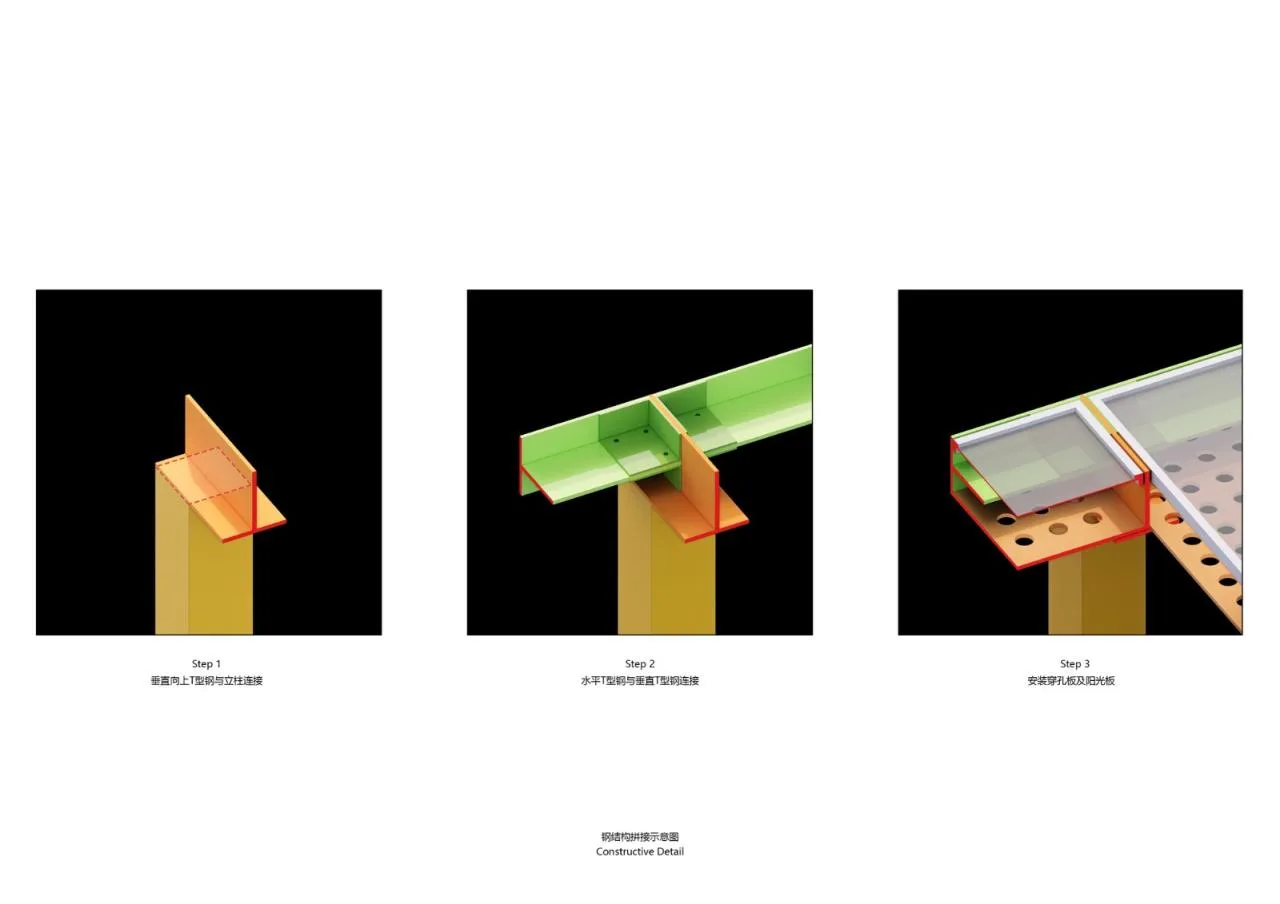
△ Schematic diagram of steel structure splicing
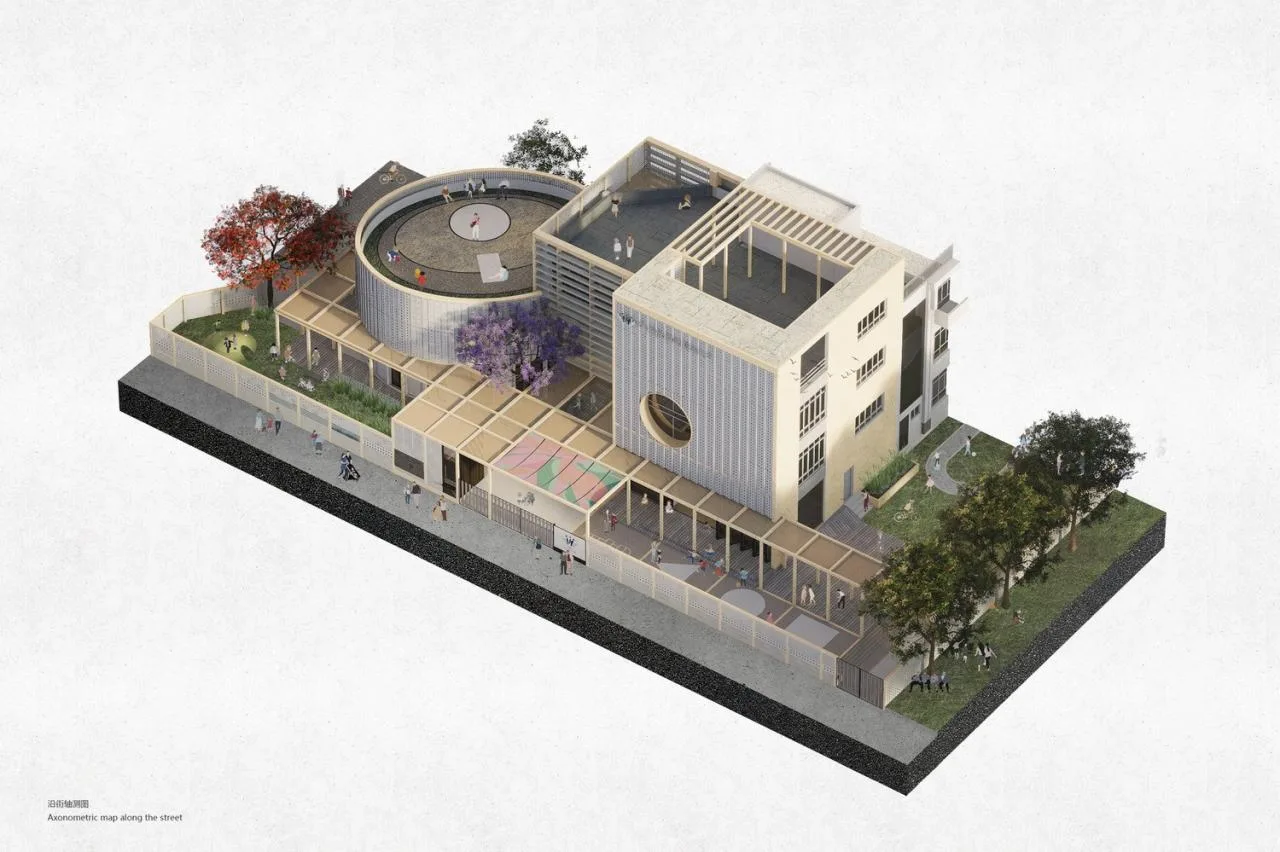
△ Axonometric diagram
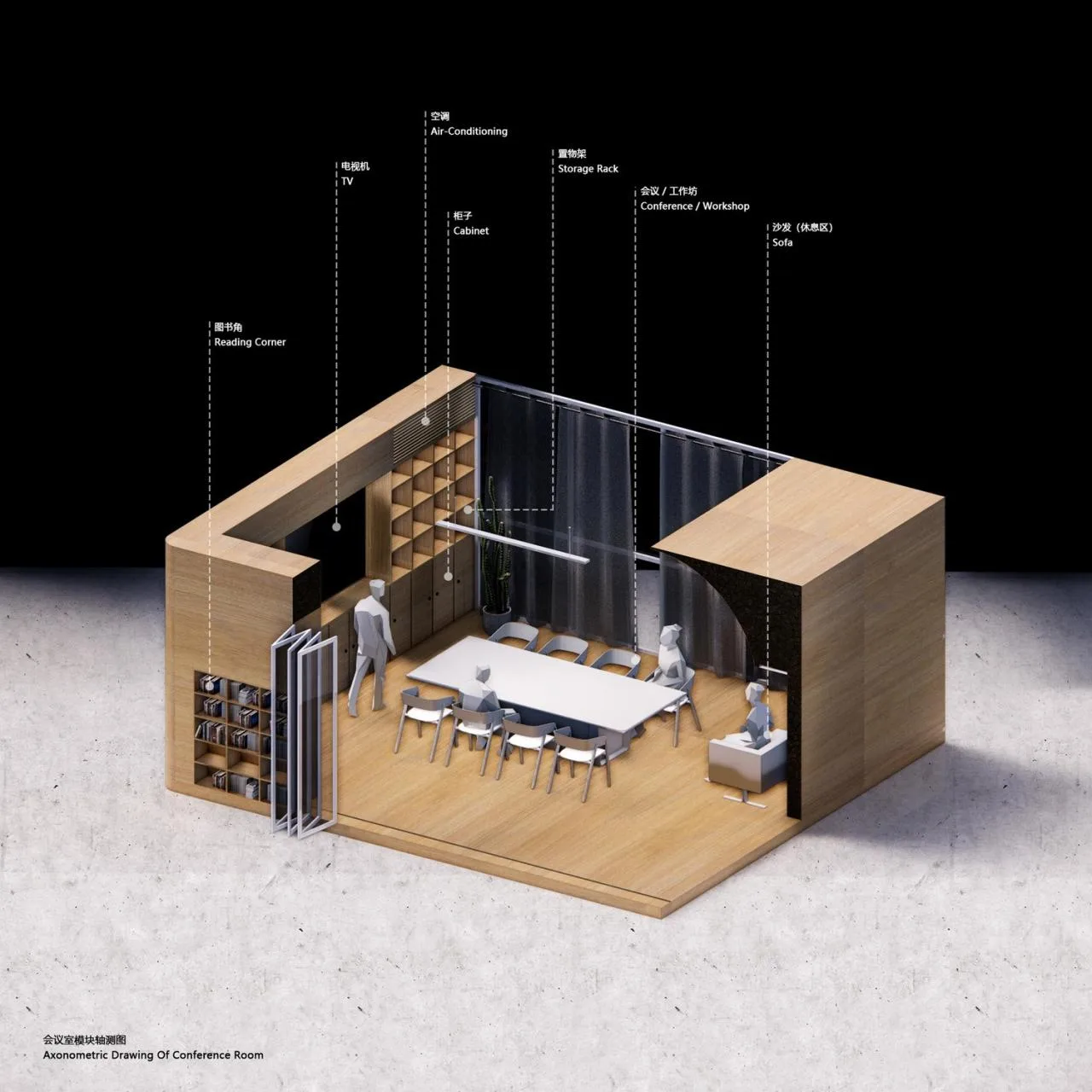
△ Conference room axonometric drawing
Project Information
Architect: Diagonal Architectural Design
Area: 1,260 m²
Project Year: 2023
Photographer: Zhang Chao
Suppliers: Guangdong Boer Si New Building Materials Co., Ltd.; Songxia Brand; Yile Brand Coatings
Main Creative Designers: He Qifan, Yin Shibo, Cui Yisong
Design Team: Zhong Jialuo, Chen Xujie, Yu Bin (intern)
Construction Drawing: Shenzhen Huiyu Construction Engineering Design Co., Ltd.
Landscape Consultant: Shenzhen Tangren Landscape Planning and Design Co., Ltd.
Interior Consultant: Shenzhen Mubochuangying Design Co., Ltd.
Curtain Wall: Shenzhen Sigma Curtain Wall Design Consulting Co., Ltd.
Amusement Facilities: Second Childhood Amusement Equipment (Shenzhen) Co., Ltd.
Location: Shenzhen
















Must log in before commenting!
Sign Up