
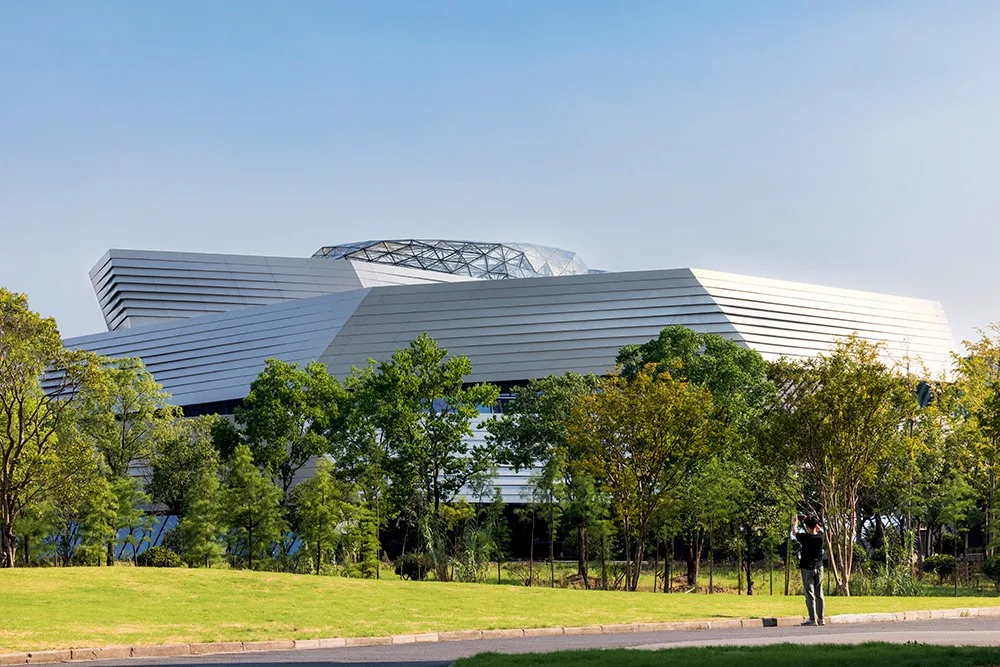
Each hexagram in the Eight Trigrams represents a possibility—whether of an event or existence itself. The imagination inspired by the rotation in feng shui floats through architecture like a drifting cloud.
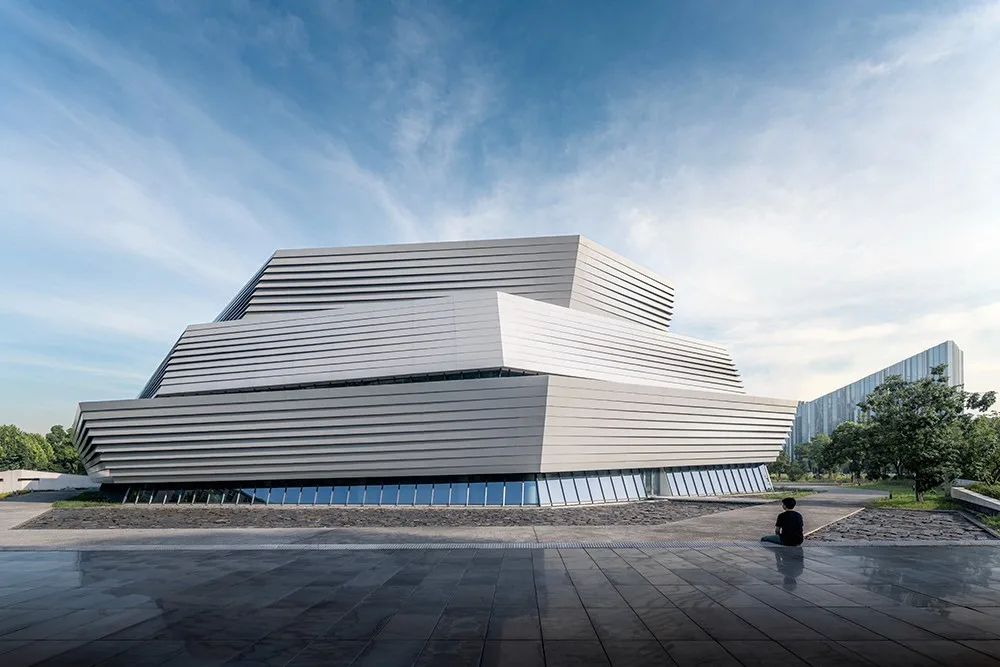
Overview
The Cloud Art Center, situated in the heart of Jiaxing’s Baibu Development Zone, is set to open as a creative hub that integrates industrial culture, design exchange, and art curation. The challenge lies in effectively utilizing industrial land, preserving local cultural heritage, and fostering a harmonious relationship between architecture and the environment within China’s design industry art centers.
Site & Settlement
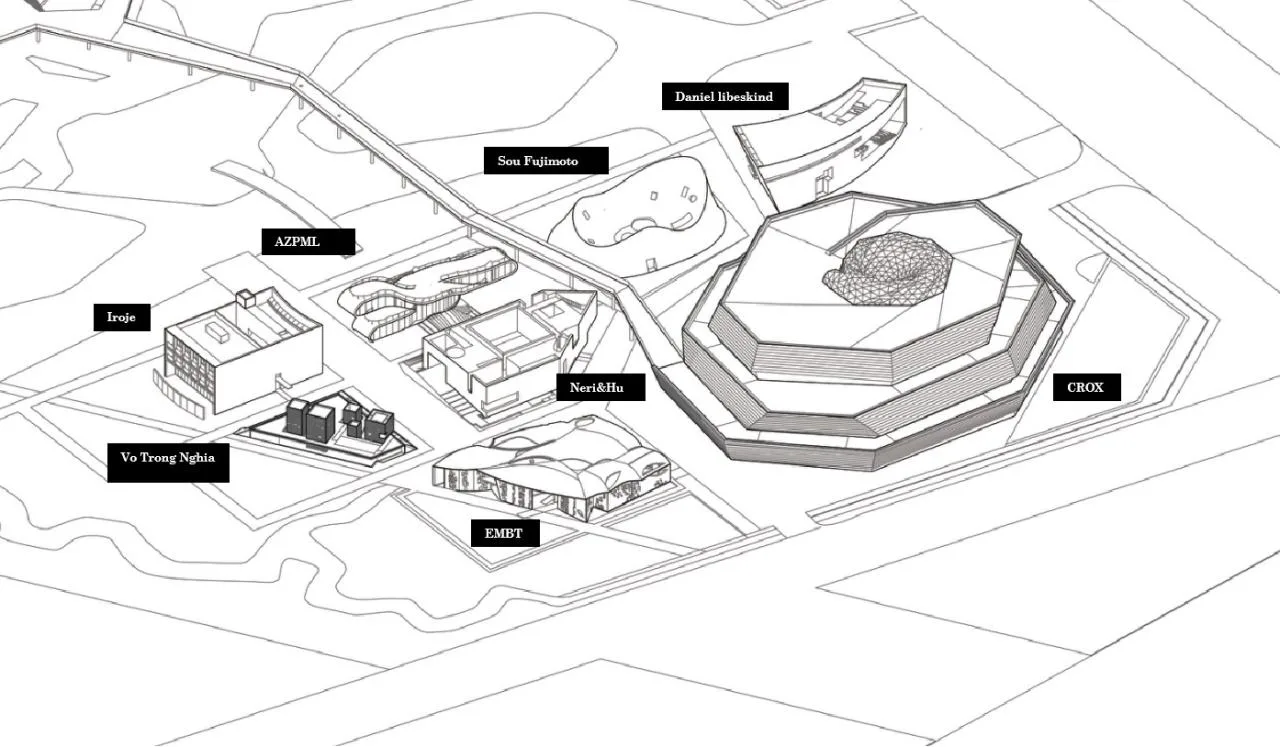
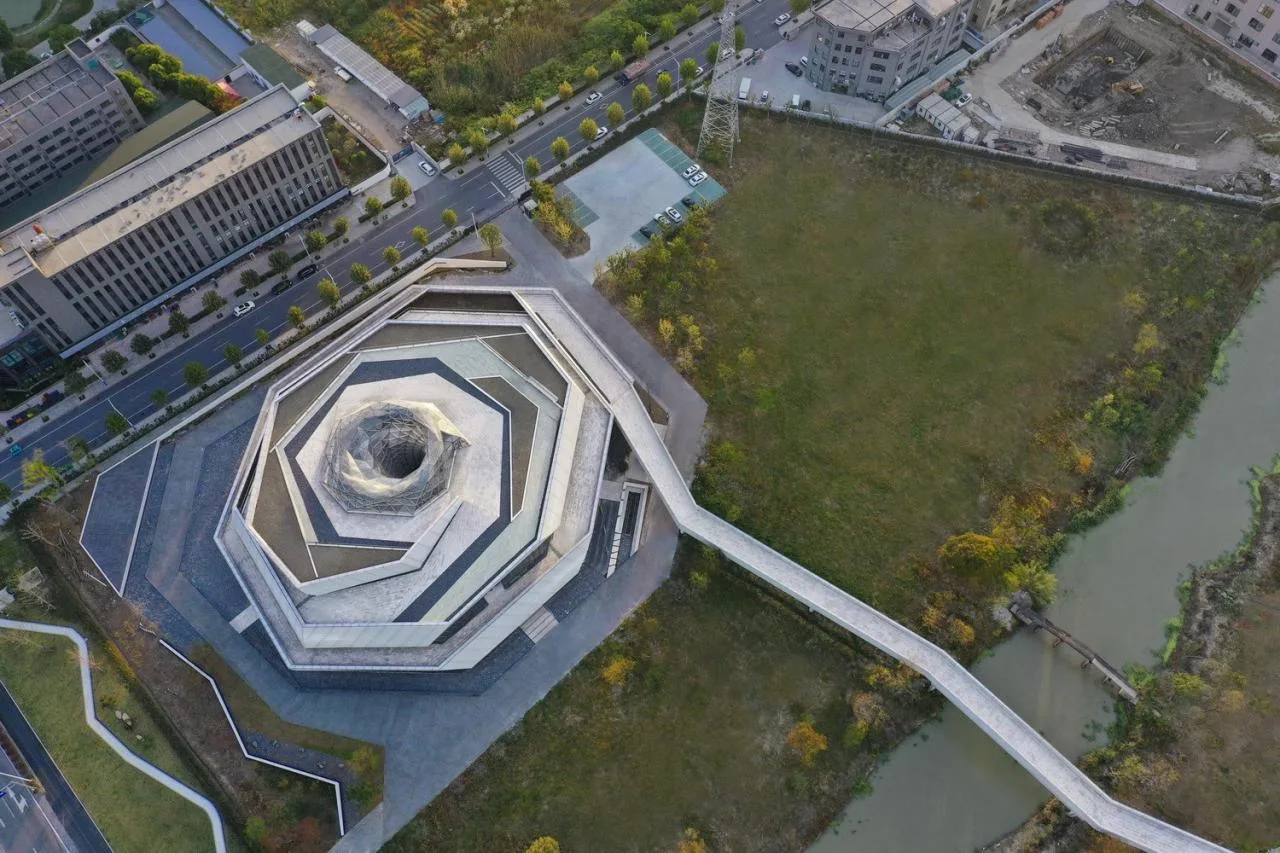
The design extends the park’s master plan by transforming the traditional Jiangnan water town’s small bridges and flowing water into a north-south linear system that connects with the natural surroundings. The northern production base opens up its ground floor to the public, while the second floor creates an open, continuous park walkway. Moving away from the conventional square industrial factory facade, the artistic core is positioned at the southern end of the park’s path. A north-south pedestrian bridge ascends and morphs into an “octahedron,” linking seven international architectural firms to collaborate on this innovative design settlement. This future assembly will harness public energy to generate a dynamic creative field.
The settlement design is led by Lin Congran (Taiwan, China) in collaboration with seven internationally acclaimed architectural firms, including Libeskin (USA), Nadita Tagliab (Spain), Shosuke Fujimoto (Japan), Alejandro Zarapolo (Spain), Chengxiao Xiang (South Korea), Wu Chongyi (Vietnam), Guo Xi’en, and Hu Rushan (Shanghai, China), who collectively brought this vision to life.
Concept & Philosophy
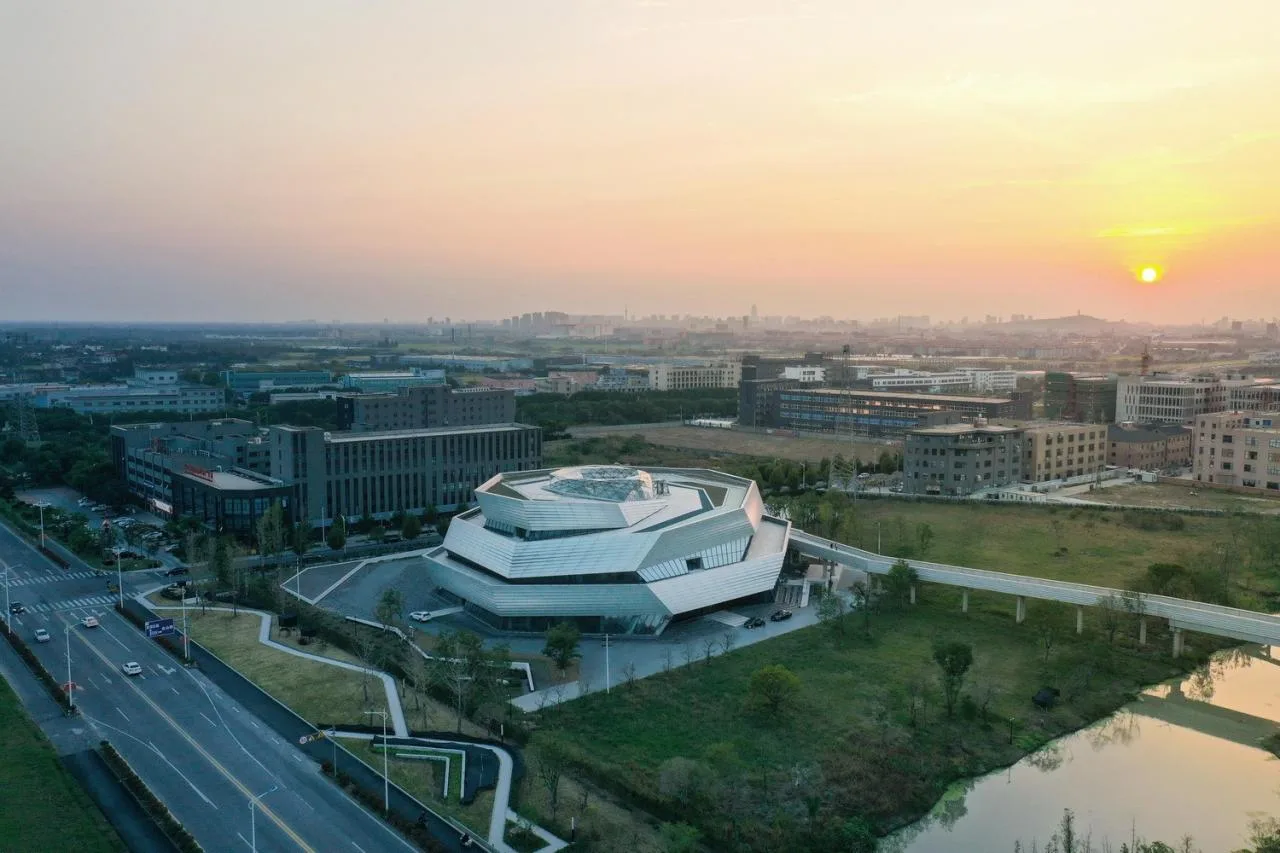
Tai Chi generates two rituals; two rituals generate four phenomena; and the four phenomena manifest as the Eight Trigrams. Everything in existence conforms to principles of discipline and ethics. The Eight Trigrams bridge heaven and earth, representing the source of the Great Dao. This philosophy of embracing the Great Dao with quietude aligns with the spirit of enterprise development—encompassing all aspects and interactions.
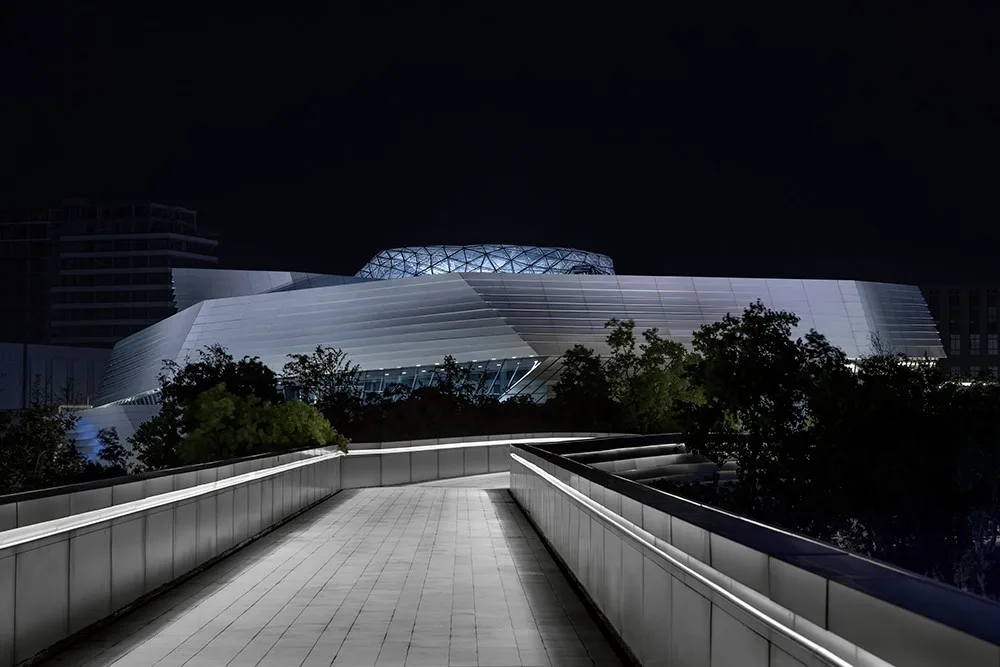
The Yunguan Art Center draws profound inspiration from the traditional Chinese philosophy of Bagua, symbolizing the balance of yin and yang, the cycle of life, and the infinite laws of change. Its architectural form is based on the Bagua Pavilion concept, maintaining traditional public-use features while presenting an open, iconic design. The center aims to connect global design energies and foster diverse innovation.
Architectural Design
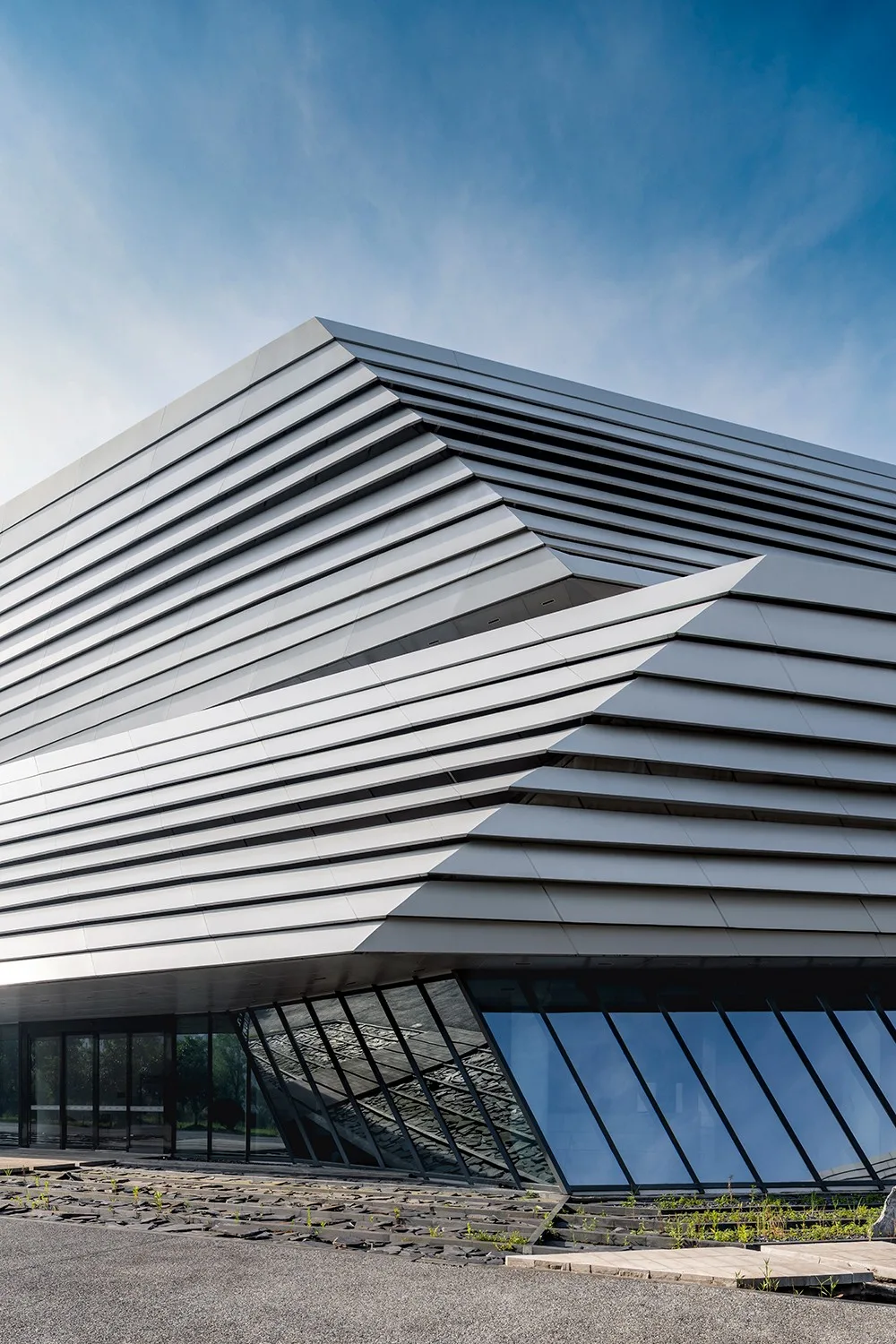
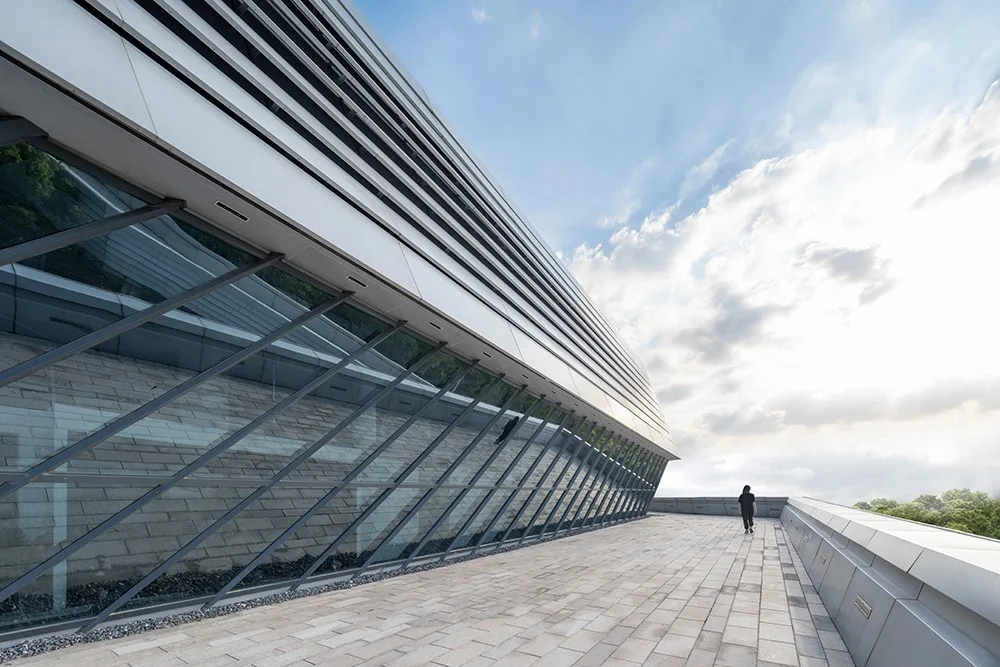
The Yunguan architecture integrates human movement paths, which intersect here to form a gently winding, receding slope. The building’s surface is shaped by these human actions, breaking the monotony and rigidity common in modern architecture. The gradually ascending path sculpts the building’s form, rotating upward to create a unique, winding walkway and distinctive views.
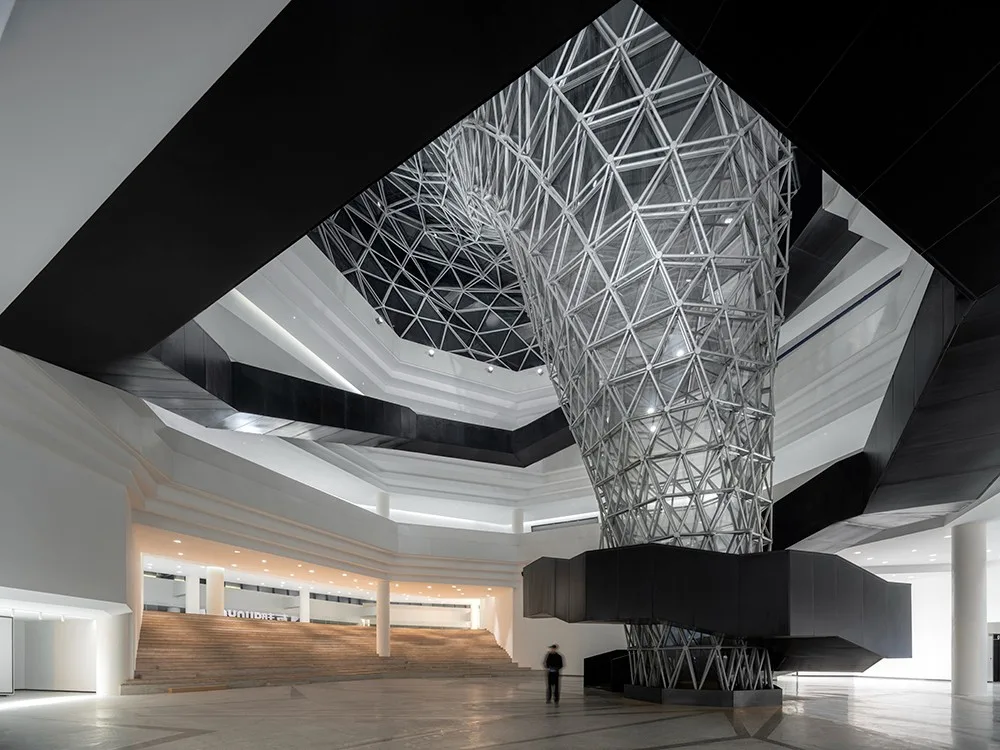
This three-level platform offers open spaces facing various directions, inviting visitors to freely enter the exhibition hall and enjoy a stroll up to the expansive rooftop garden. From the rooftop, guests can take in panoramic views of the entire park and enter the interior through an opening at the top. Visitors ascend floor by floor, following vortex-shaped columns. The interior layout centers on vertical circulation, with circular flow patterns leading to diverse functions—lecture halls, party building exhibition halls, corporate museums, multifunctional art centers, and designer studios. This design encourages visitors to immerse themselves in different spaces, freely exploring exhibitions and experiencing the site’s unique atmosphere.
Materials & Construction
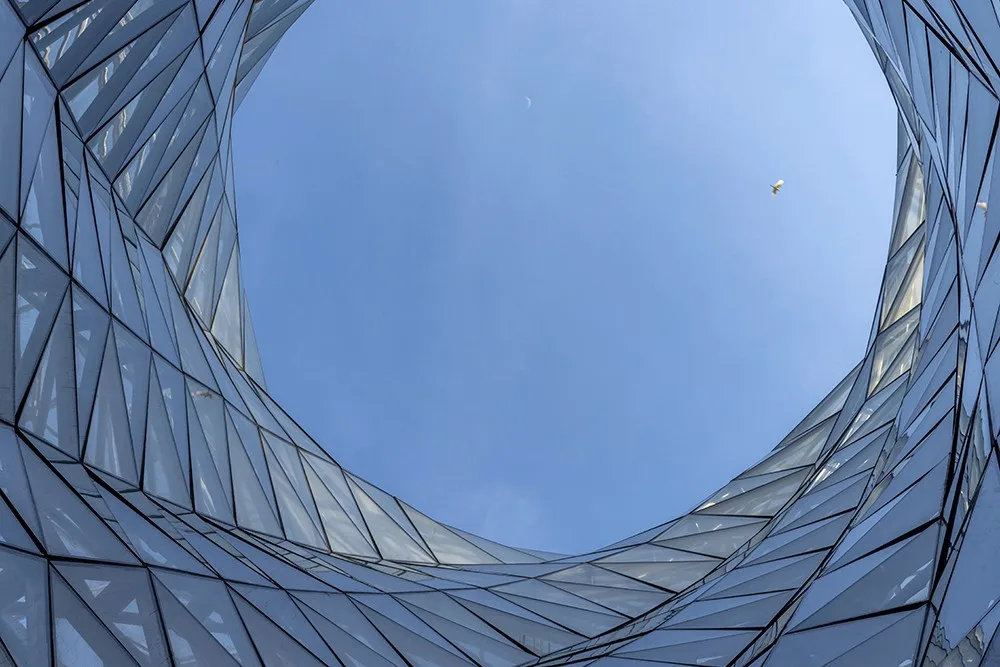
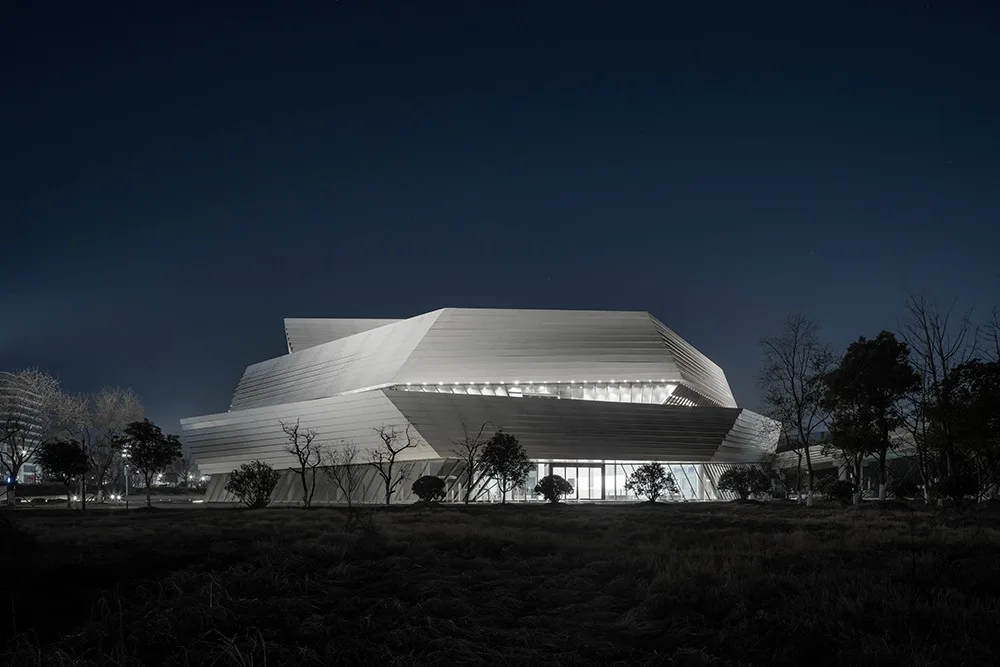
The building’s exterior features a rotating metal skin composed of aluminum panels independently developed and produced by the company. These panels are prefabricated, cut, bent, and assembled onsite, reflecting China’s culture of precision and craftsmanship. Each folded surface has continuous concave lines that create dynamic light and shadow effects, enhancing the building’s artistic expression.
An outdoor steel rock floor spirals upward, creating a channel between the floor and the exterior wall. This gap introduces diffused natural light into the interior, connecting visitors with the building’s interior and enhancing comfort within the exhibition hall.
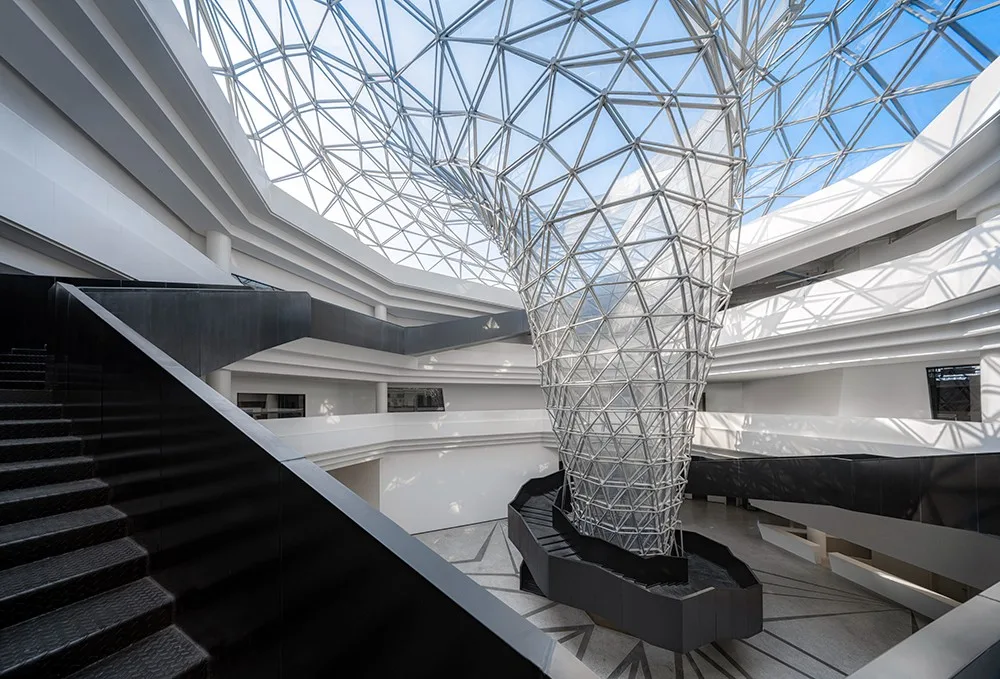
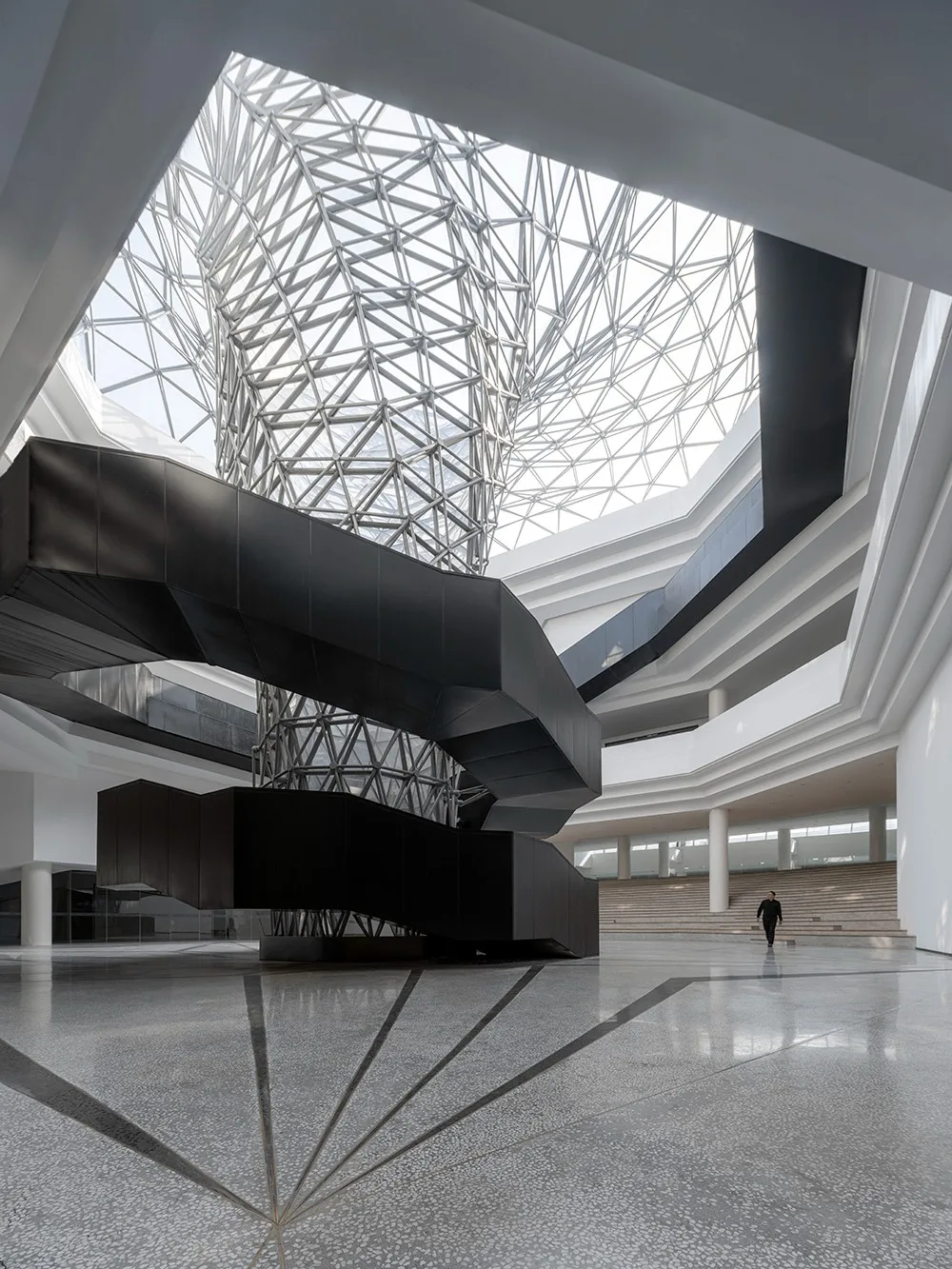
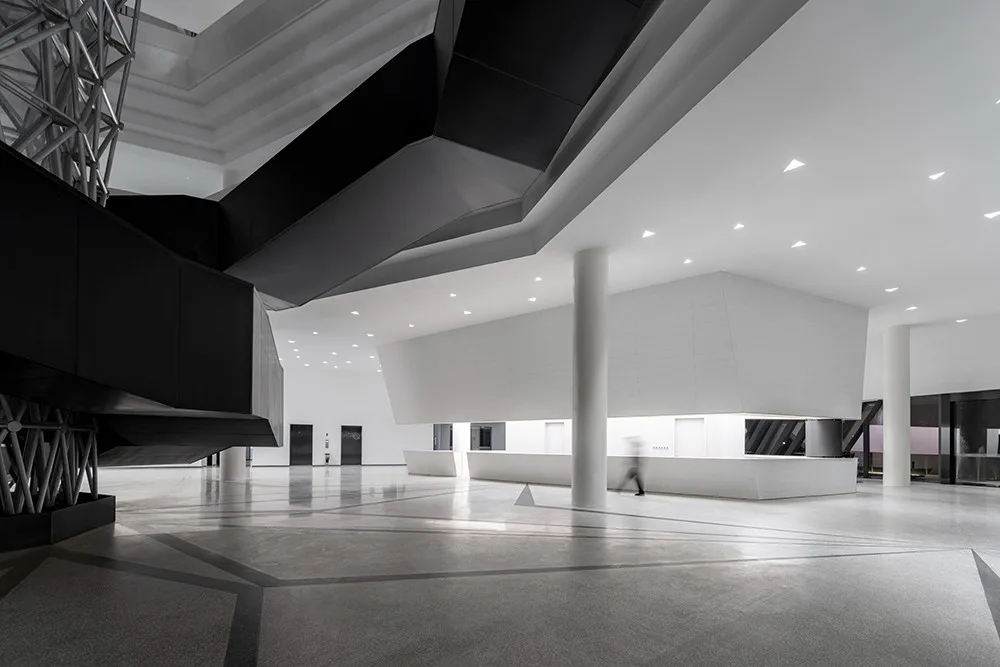
The central atrium is enclosed by a hollow glass structure, allowing natural light to penetrate from outside to inside. Operable glass windows serve both ventilation and daylighting purposes. A black steel spiral staircase, supported by a central core, connects the first through third floors. Each floor echoes the shape of the Eight Trigrams, divided into layered sections open to the sky.
Light cascades down the steps, filling the courtyard with dynamic shadows and reflections. The black and white terrazzo mosaic, white walls, and wooden stairs below create a ceremonial atmosphere reminiscent of a Tian Di Theater. The building’s exterior presents a rigid image, while the warm interior light conveys the soft strength of Eastern architecture, seamlessly blending interior and exterior environments.
This continuously rotating cloud pavilion acts as a vortex of energy within the Jiangnan region, dramatically transforming the mechanical and monotonous atmosphere of the development zone. The outdoor pedestrian bridge, scaled for human interaction, invites visitors into the building and establishes a harmonious connection with the surrounding environment.
Project Drawings
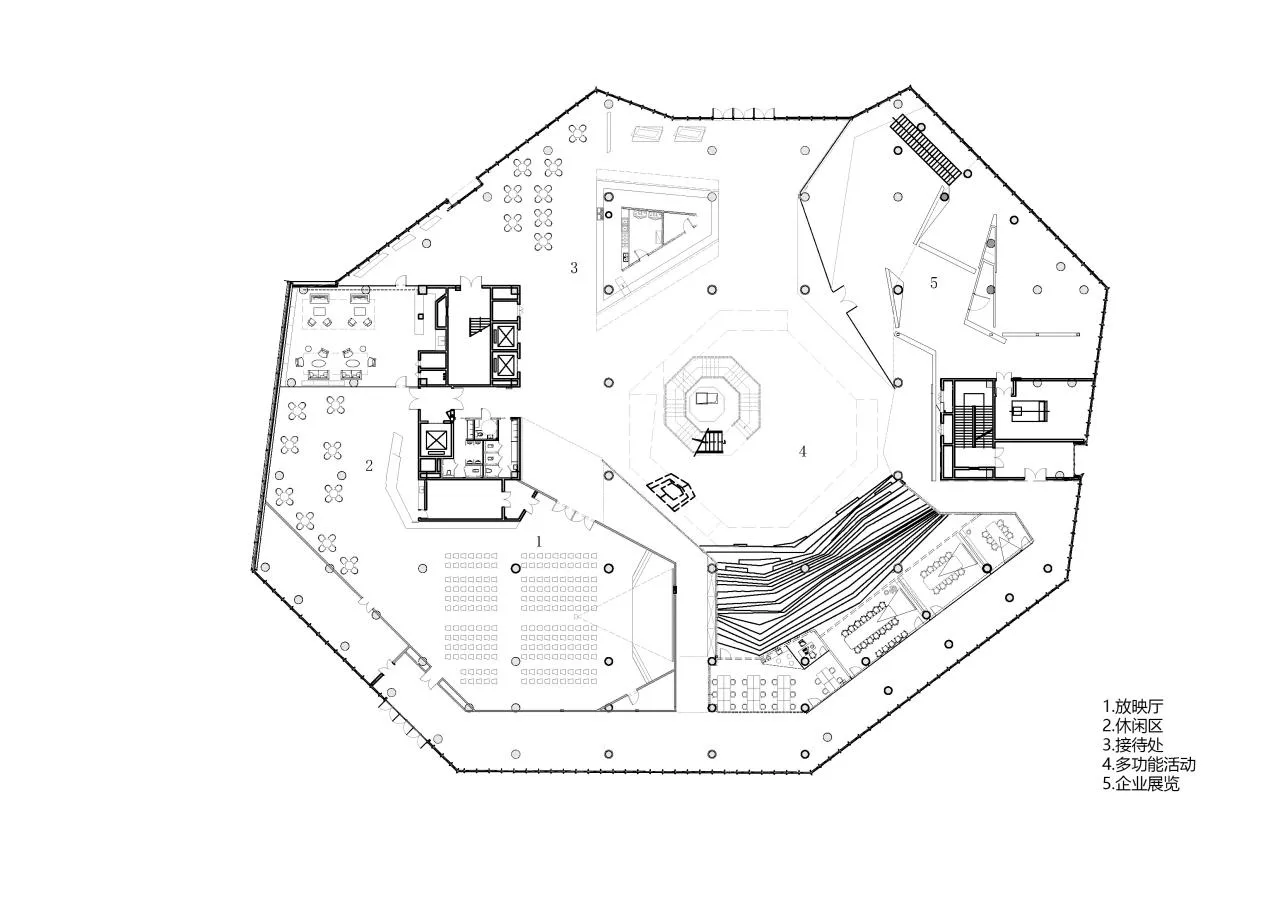
△ First Floor Plan
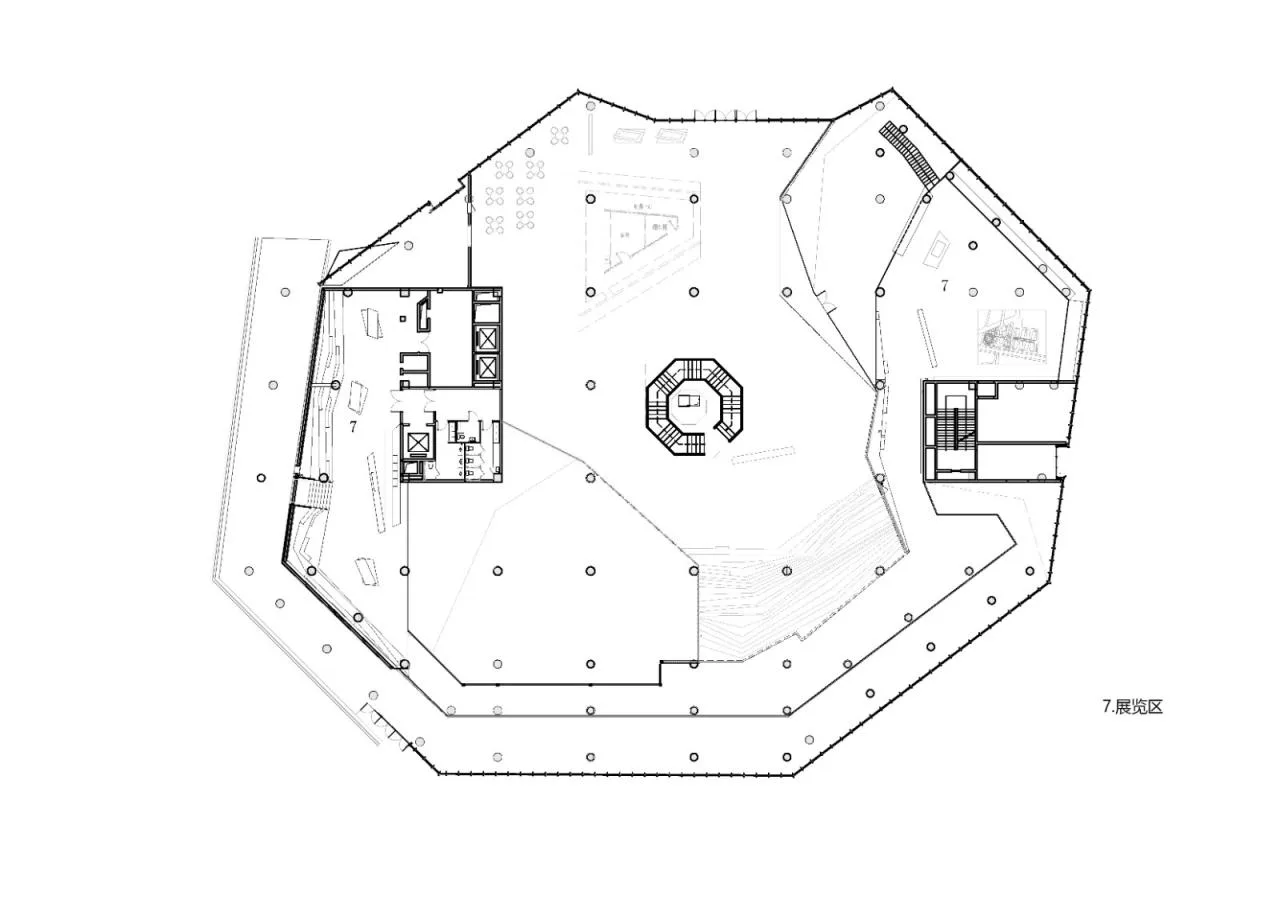
△ Mezzanine Plan
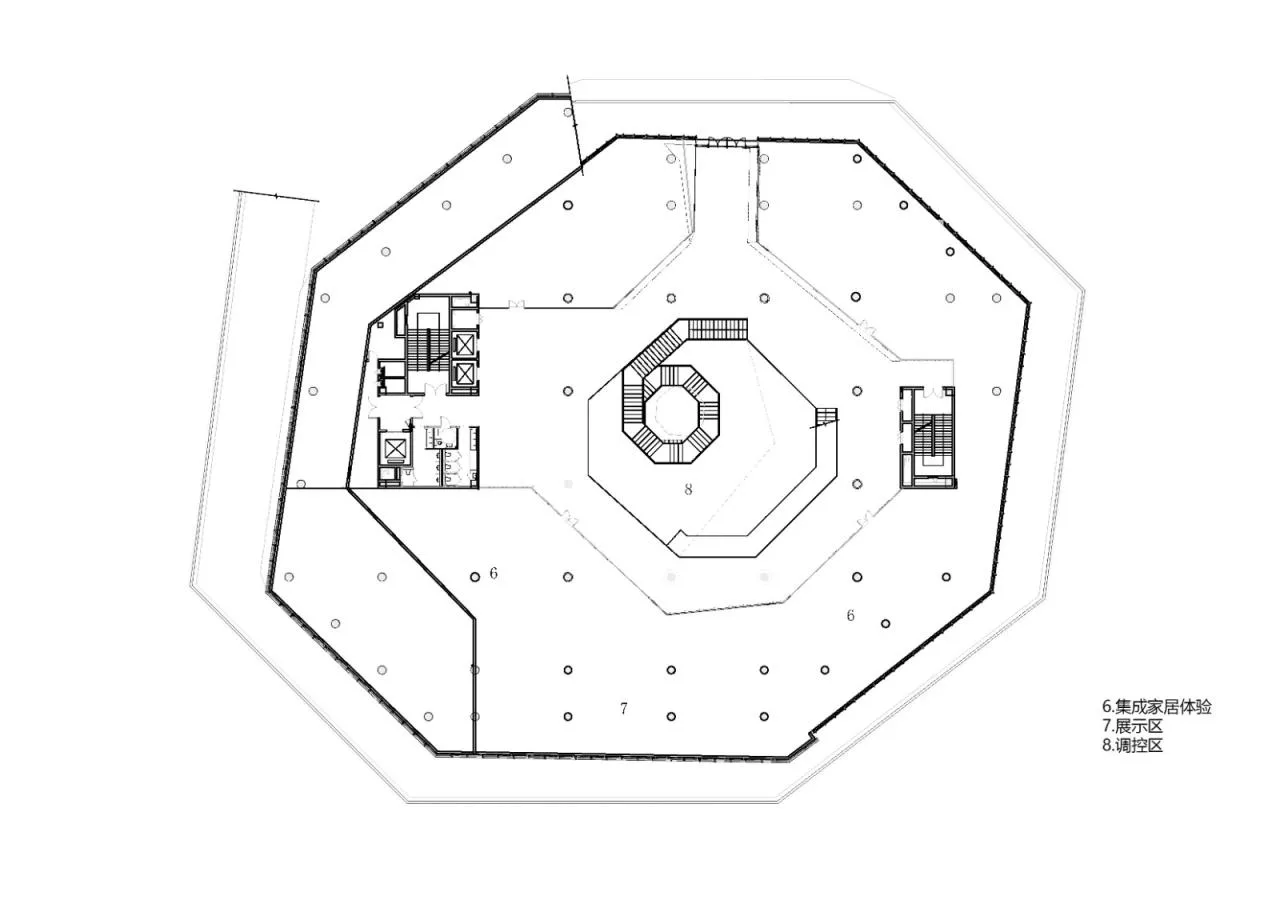
△ Second Floor Plan
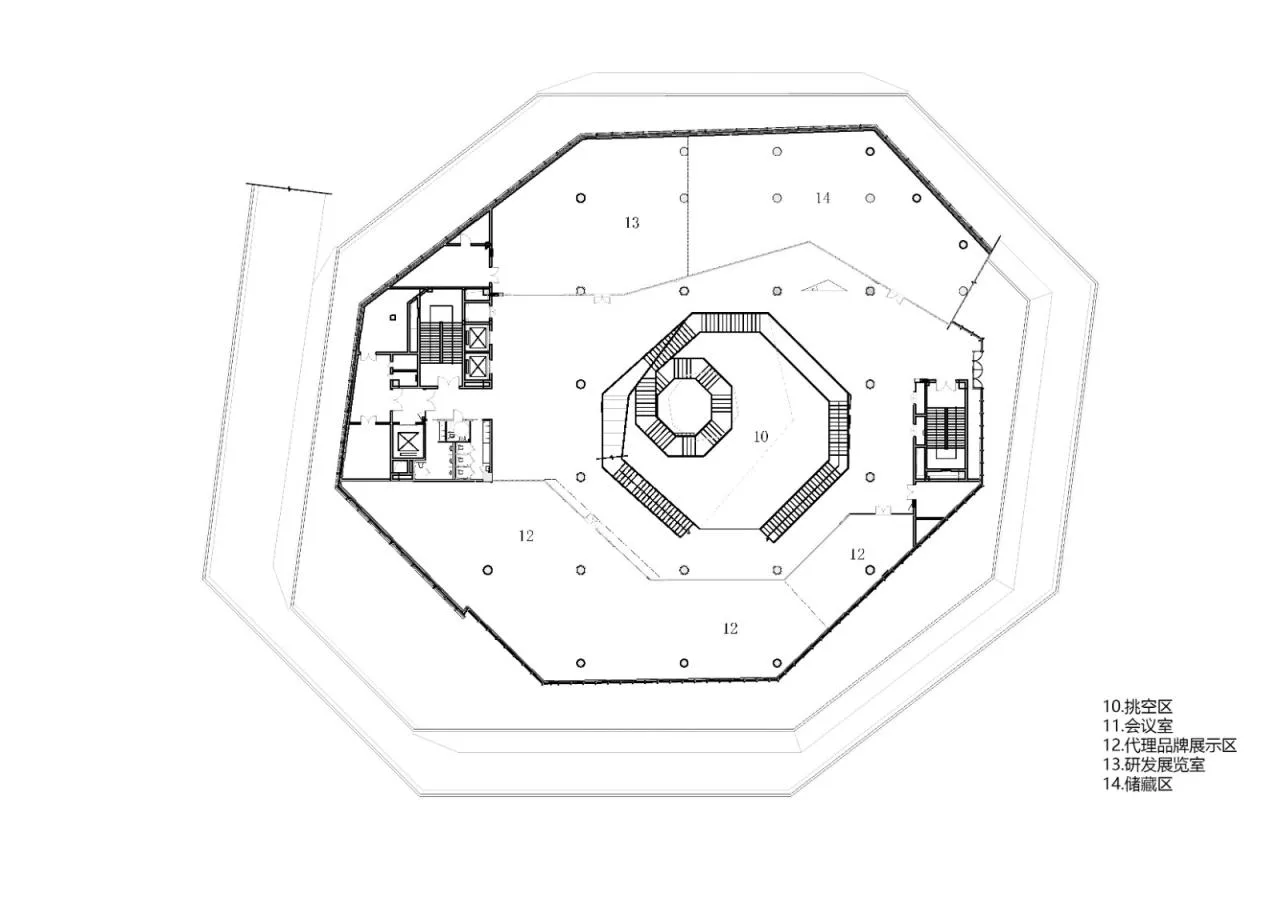
△ Third Floor Plan
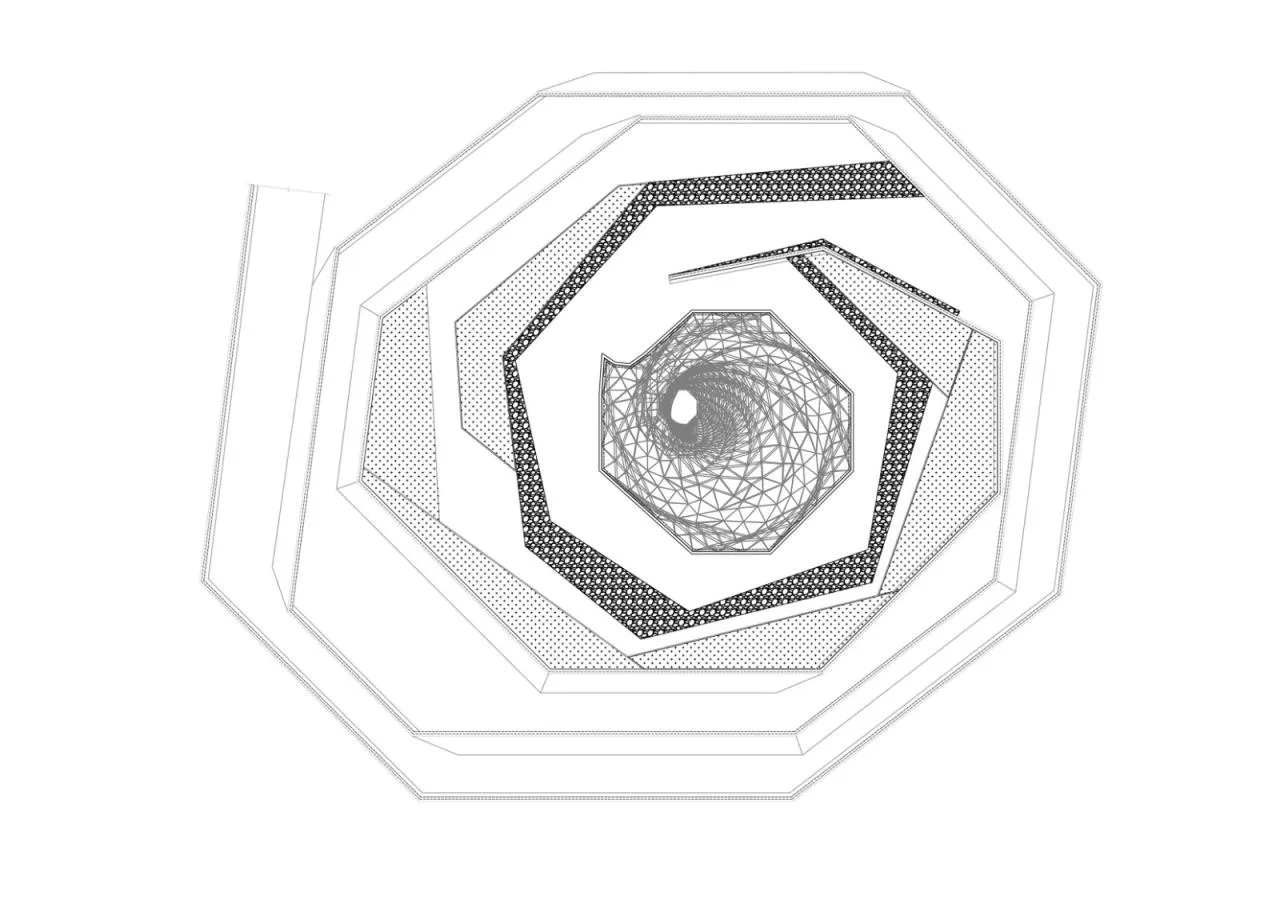
△ Roof Plan
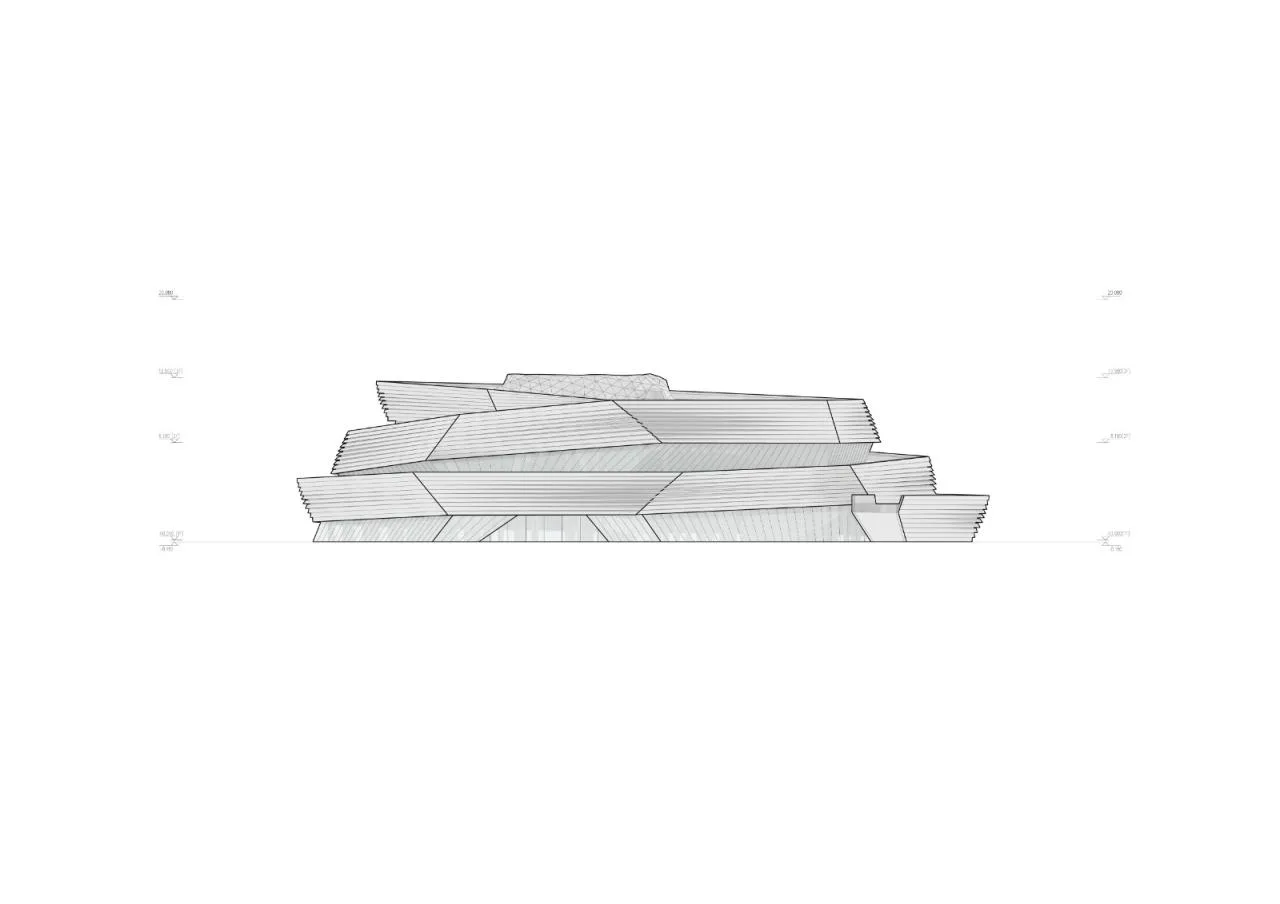
△ North Elevation View
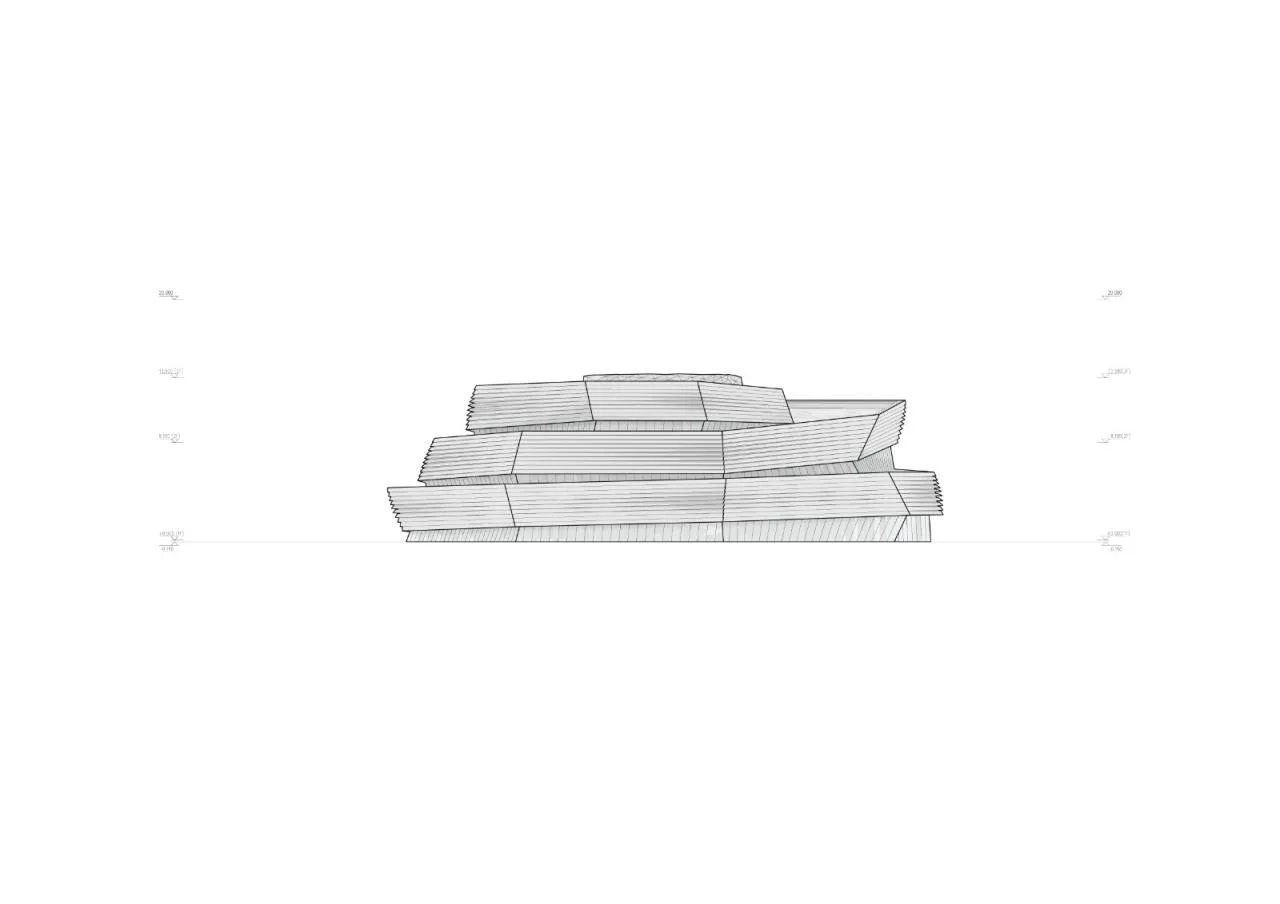
△ East Elevation View
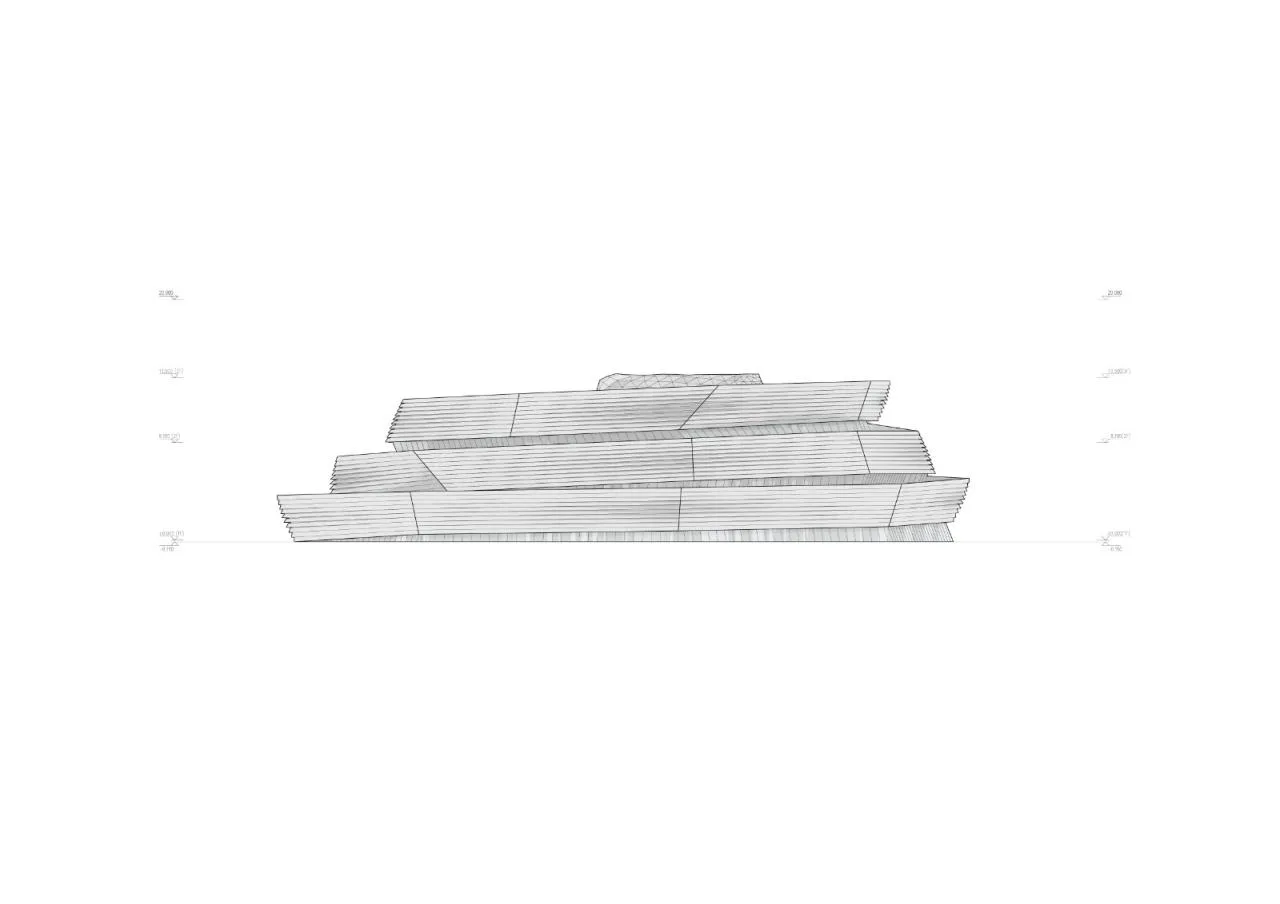
△ South Elevation View
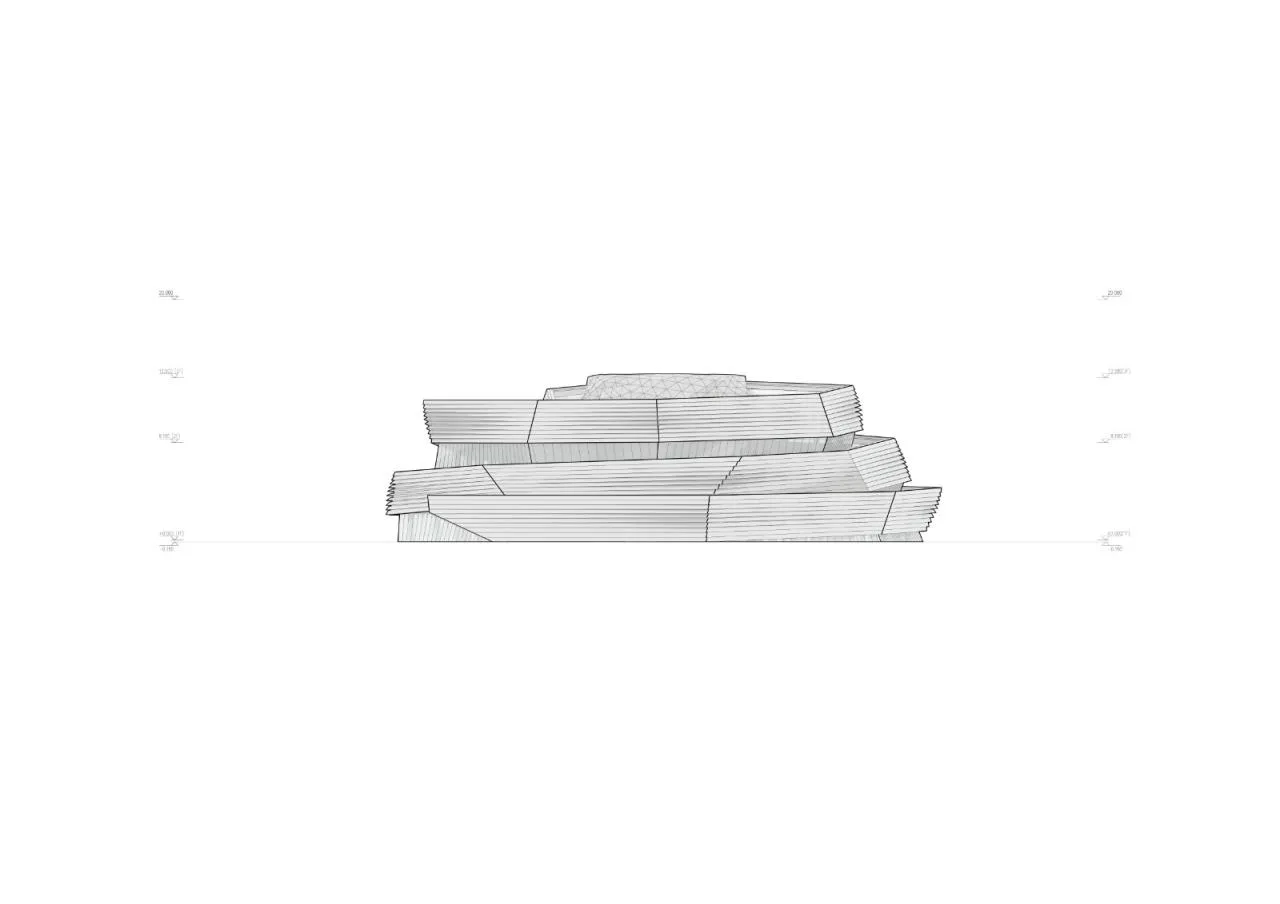
△ West Elevation View
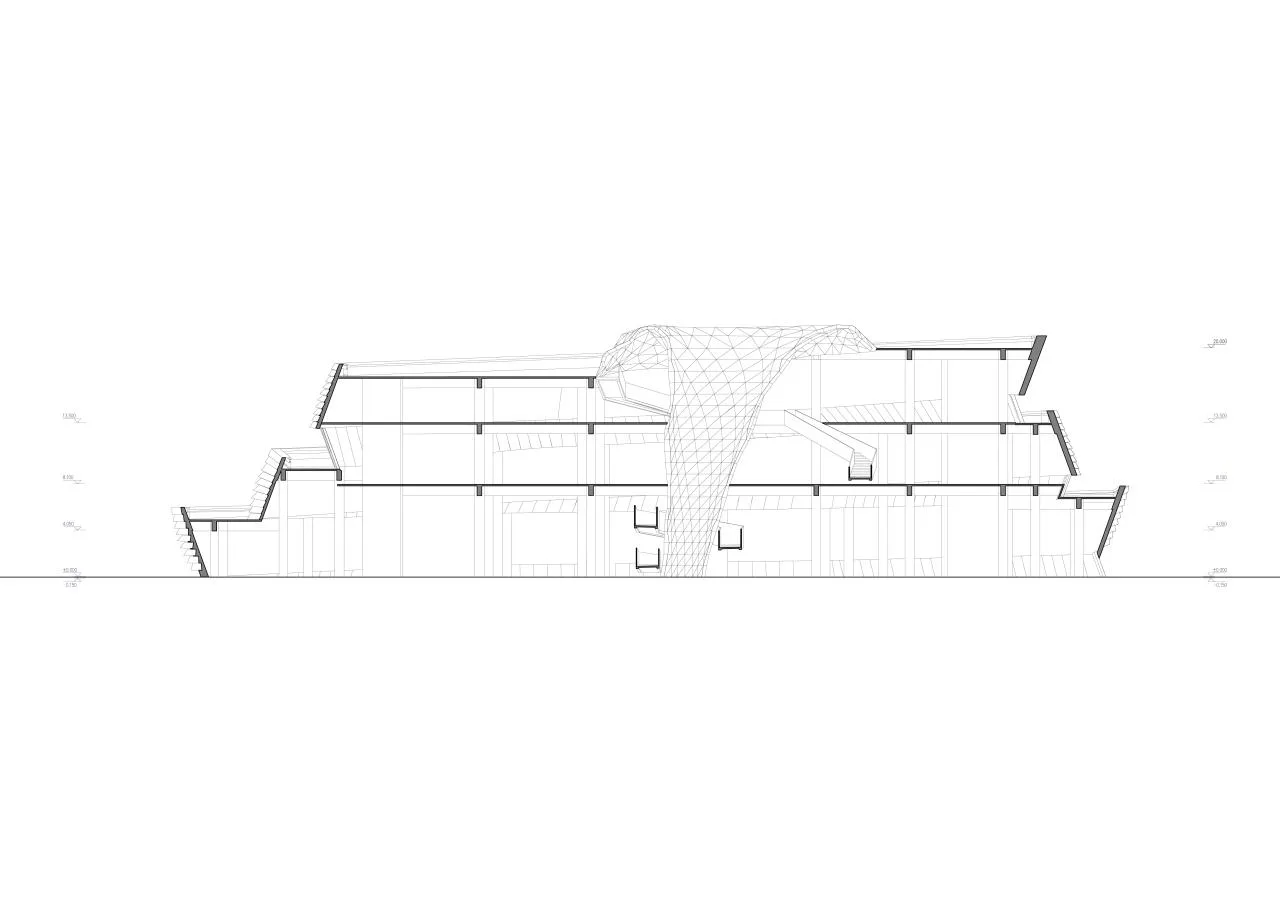
△ Section Diagram
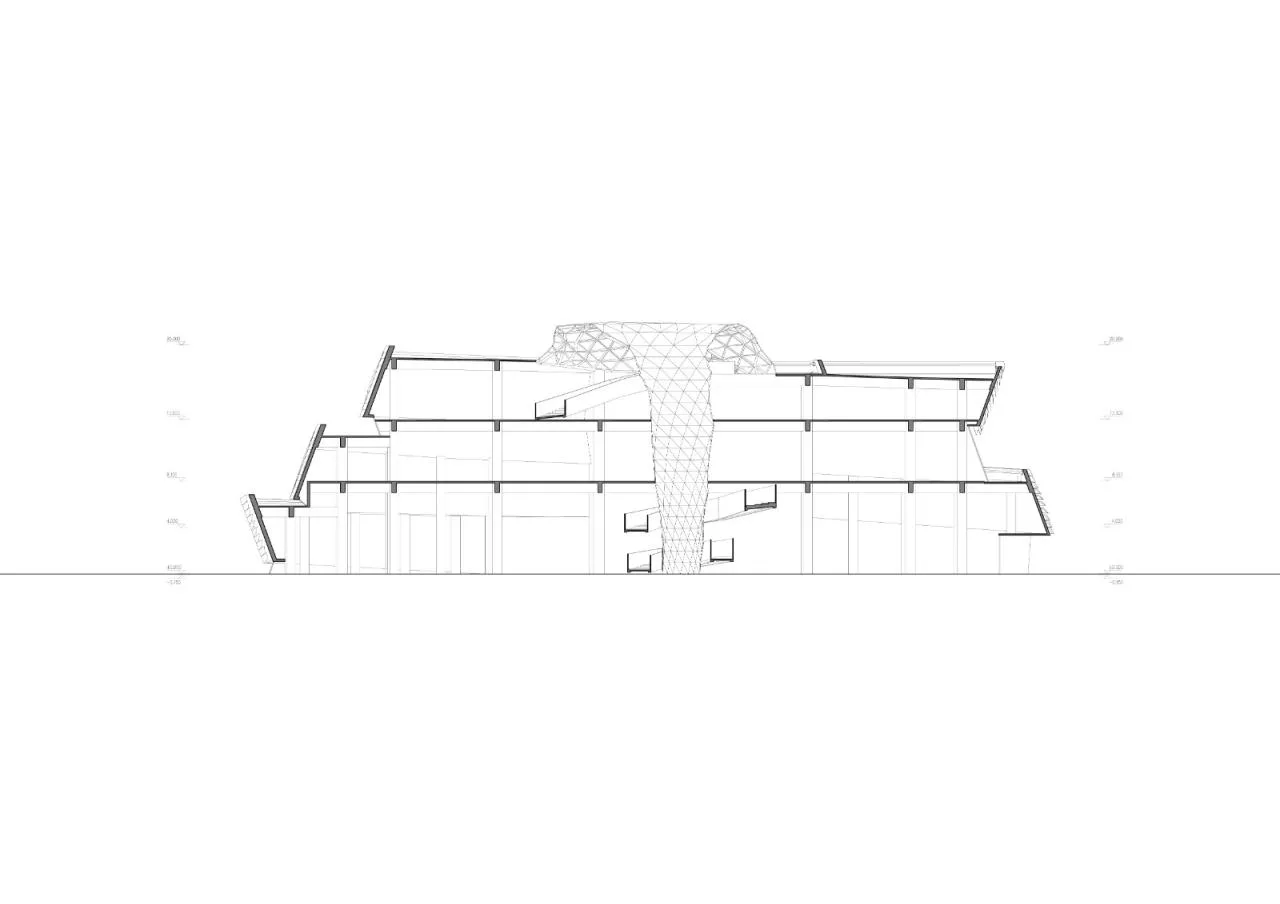
△ Section Diagram
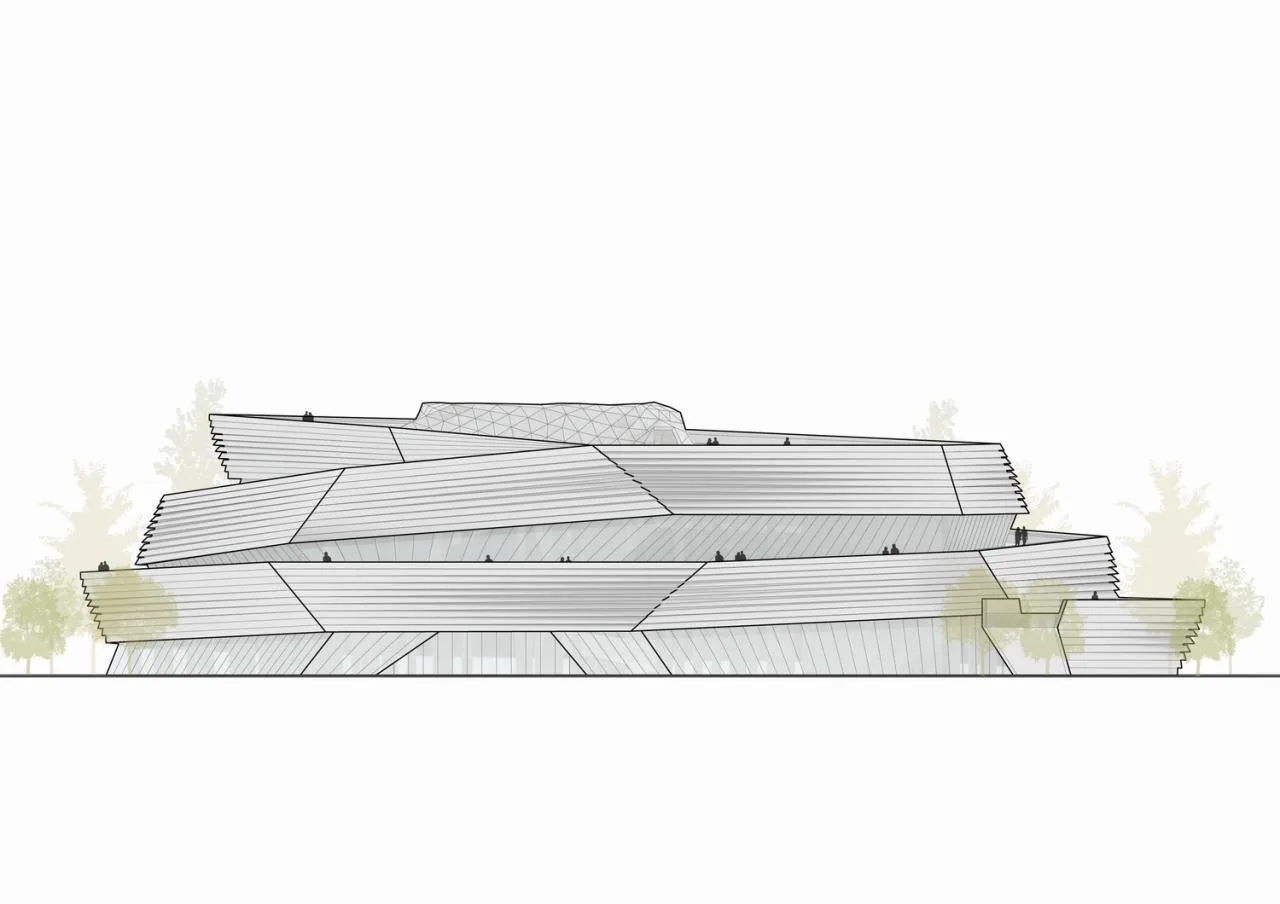
△ AIA Elevation View
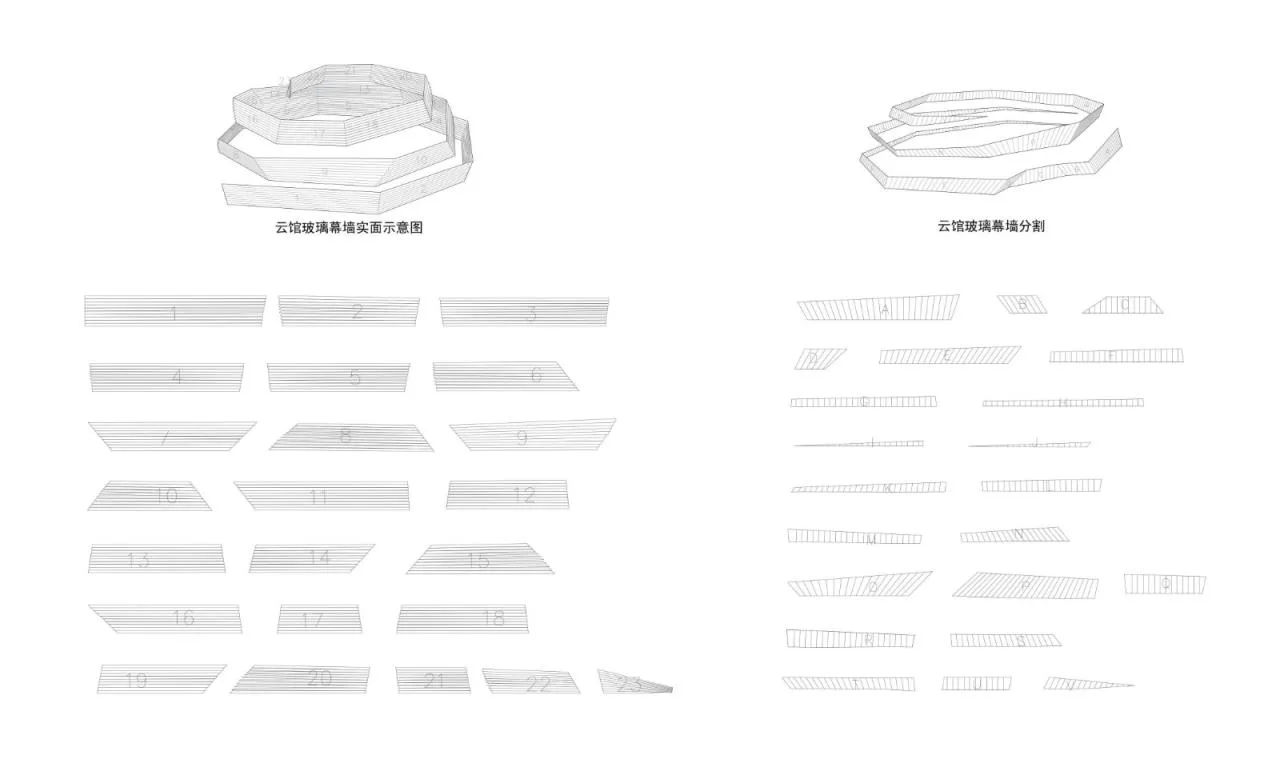
△ The Facade of the AIA Exhibition Center Unfolds
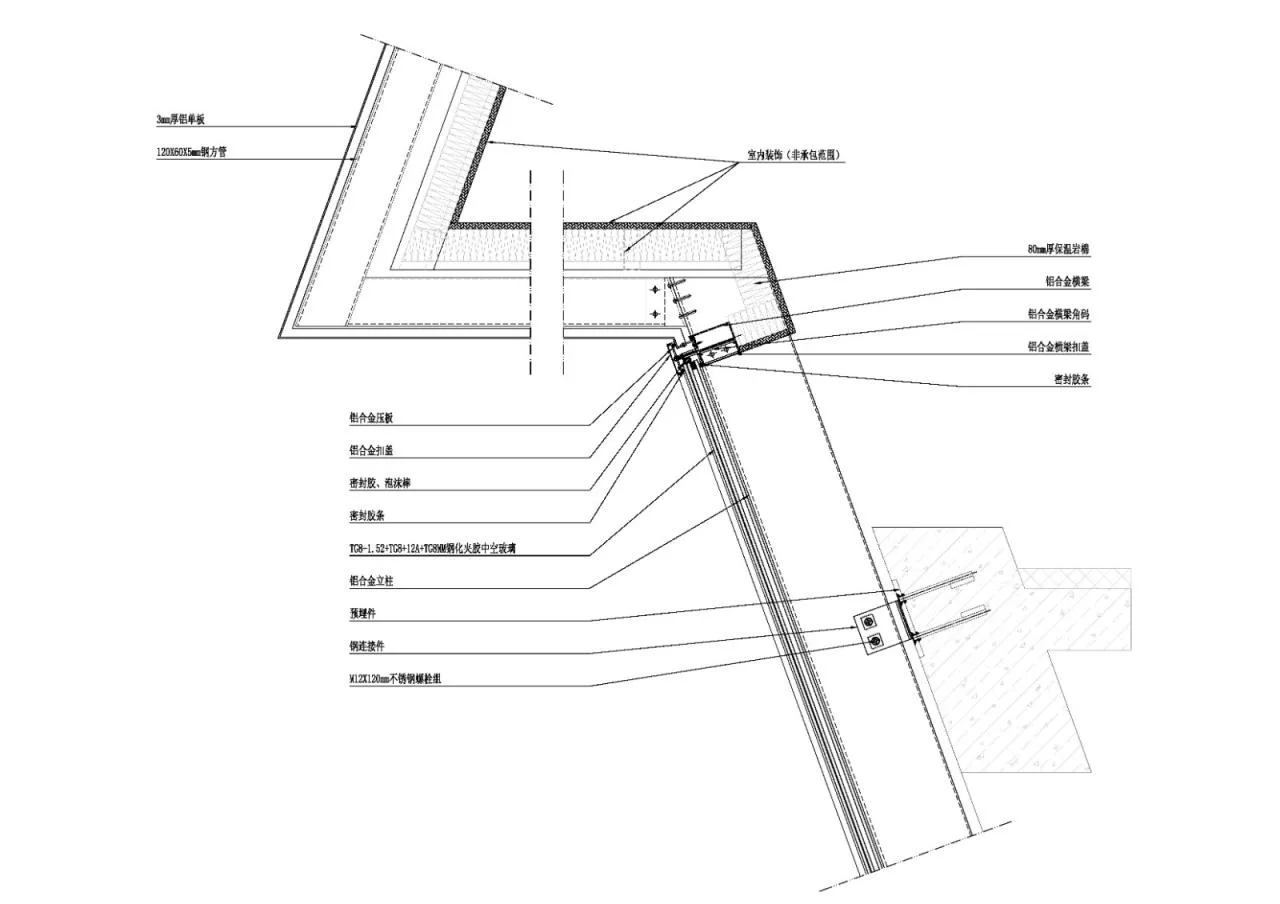
△ AIA Standard Node
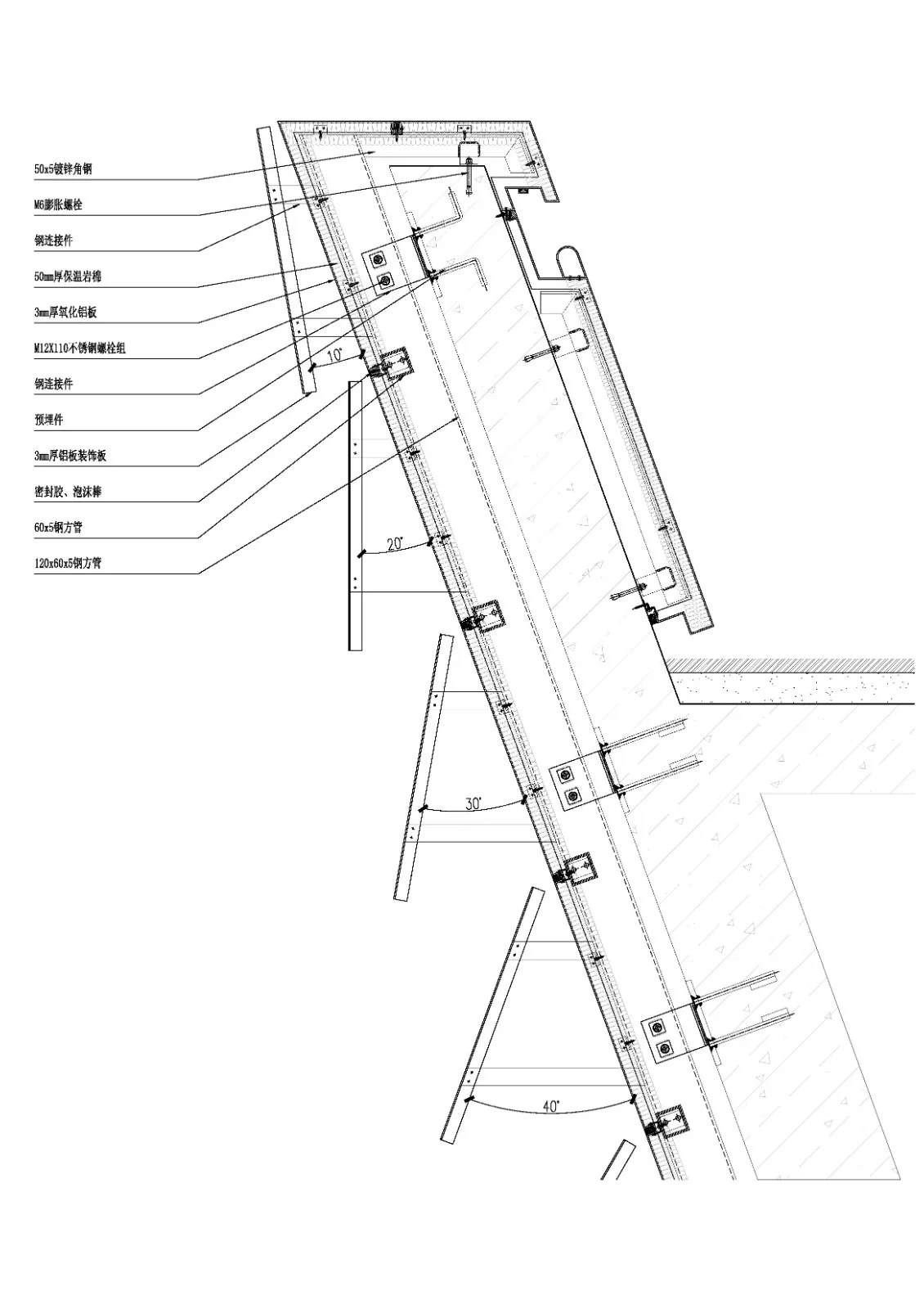
△ Node Diagram of Exhibition Hall Curtain Wall
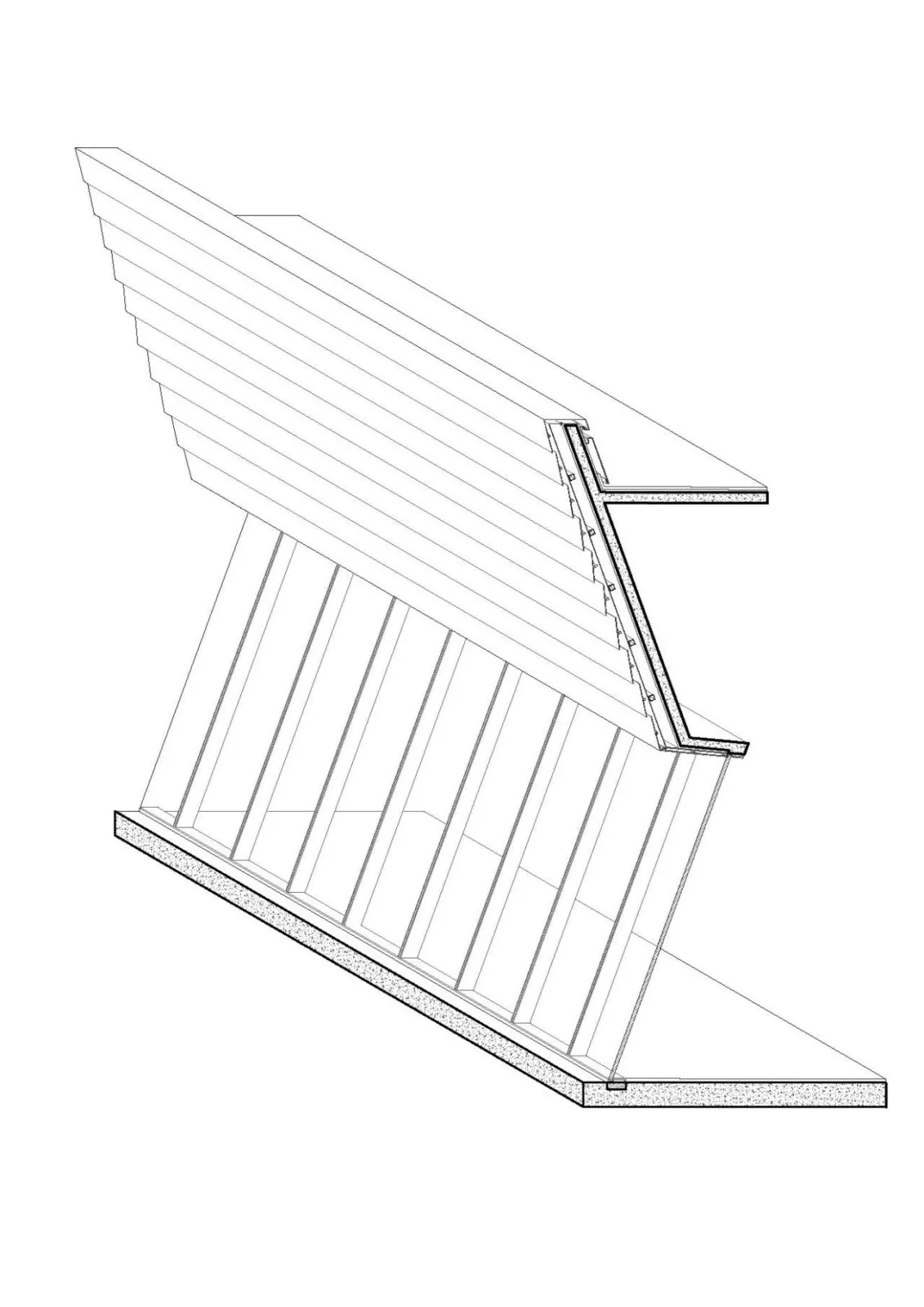
△ Curtain Wall Section Diagram
Project Information
Project Name: AIA Cloud Art Center
Location: Baibu Development Zone, Jiaxing, Zhejiang Province
Architectural Interior Design: Kuohe CROX
Design Team: Lin Congran, Chen Guanyu, Saunaam Yip, Darcy, Zhou Tianye, Zhu Jiayi, Yang Weiling, Lin Sen Yusi, Li Bentao, Yang Weiling, Wan Ruojia, Gu Bowen, Duan Meichen, Mo Shulin, Zhou Chenyuan, Zhu Qinghan, Huang Peigeng, Chen Can
Owner: AIA Integrated Ceiling Co., Ltd
Design Period: 2014–August 2019
Completion Date: February 2024
Building Area: 10,300 square meters
Construction Drawing Partner: Wenzhou Design Institute
Curtain Wall Design: Xumilin Curtain Wall Technology Company
Bridge Design: Zhejiang Hengxin Architectural Design Co., Ltd
Lighting Design: Dark Light Lighting Design
Materials: Aluminum panels, glass, water-milled stone, wooden flooring
Photography: Hu Yihuai
Imagery: Sun Zhongchuan














Must log in before commenting!
Sign Up