
Corridor-Stacked Courtyards: A New Interpretation of Ritual Sequence
Henan Anyang Zhenzhong School is a 60-class boarding high school located on the southern edge of Anyang’s urban area. This region has been a cradle of Chinese civilization for thousands of years, from the Yin and Shang dynasties through the city of Zhangde to the historic and cultural city of Anyang. Within this rich urban cultural context, emphasizing historical significance, integrating the campus environment with the city’s cultural traditions is a crucial design challenge.
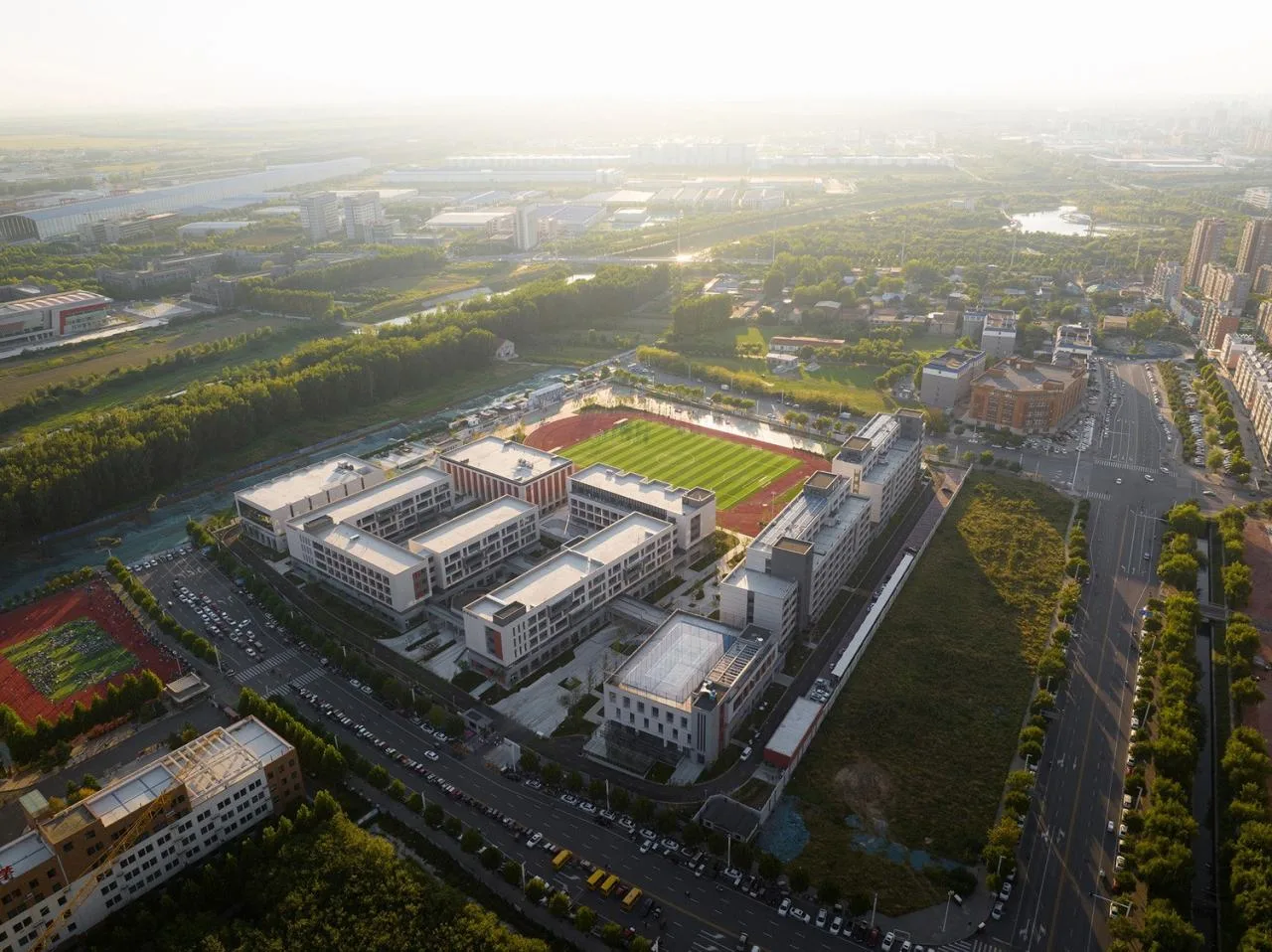
△ Aerial View of the Campus
At the same time, the evolving educational model and the school’s location—distant from the authentic historical environment—call for a design that relaxes the strict historical form constraints on campus spaces and styles. This approach embraces a more open and diverse spatial language, making it easier for today’s students to engage with and appreciate tradition.
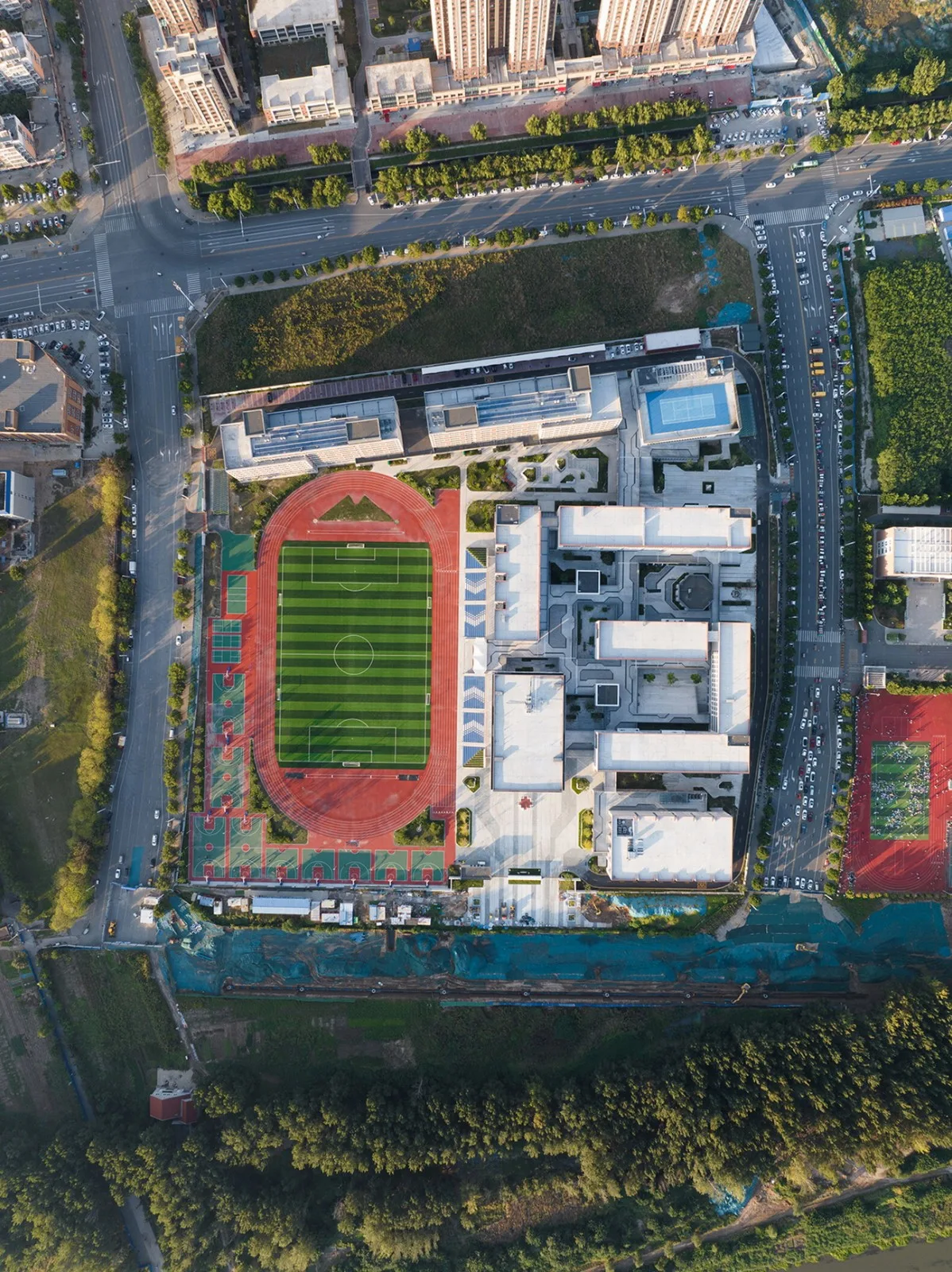
△ Top View of the Campus
The design draws on the traditional academy’s ritual sequence—center selection, front and back halls—as a foundational spatial framework. However, it deliberately separates ritual guidance and communication from the rigid symmetrical order defined by axial alignment and building mass offsets.
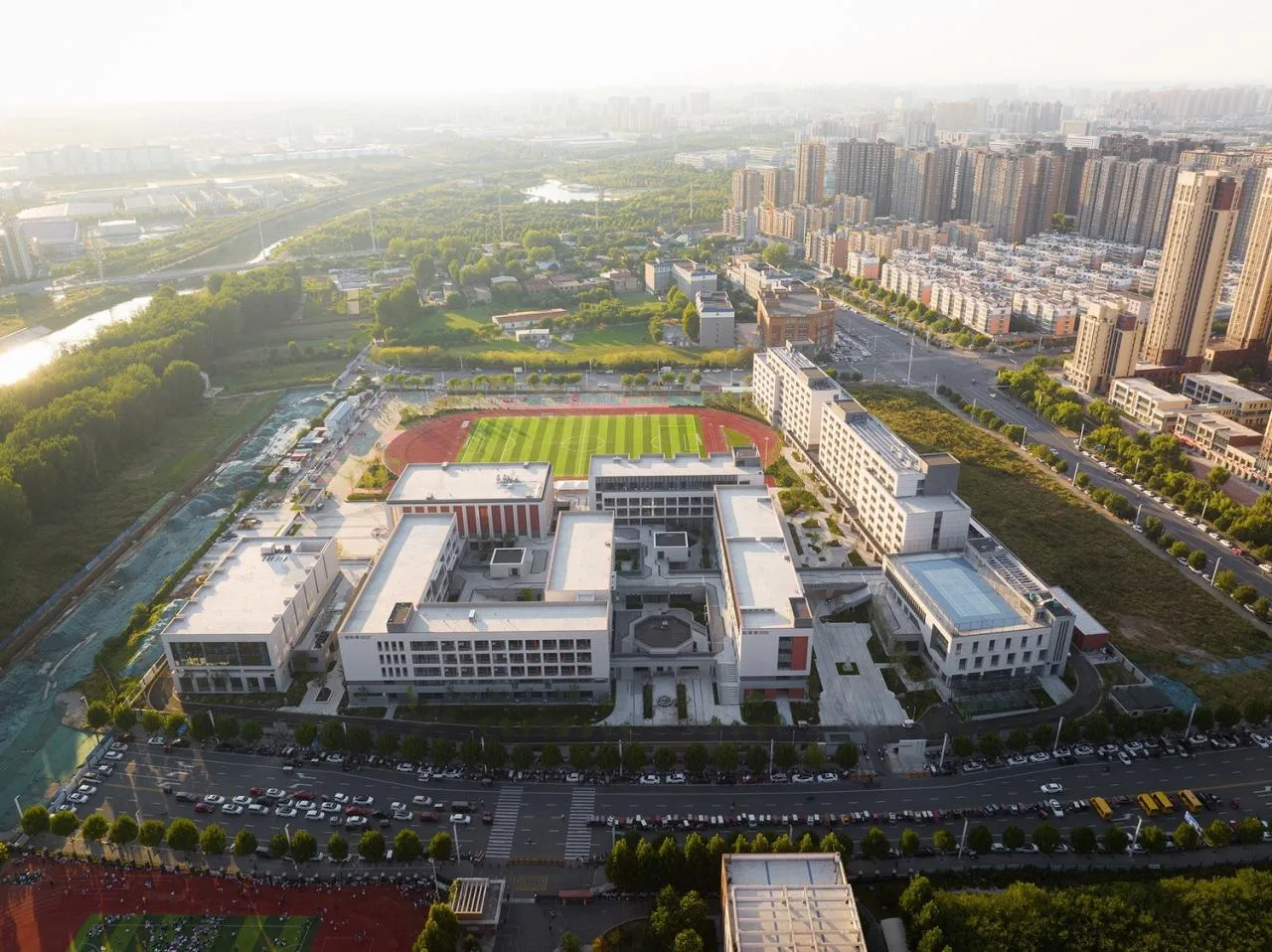
△ Campus Spatial Sequence
The campus layout transitions from a semi-enclosed main entrance plaza to two enclosed teaching groups and finally to a spacious living area. This progression from compact to open spaces strikes a balance between traditional academy etiquette and modern educational concepts, allowing students to experience subtle shifts between learning and daily life as they move through the campus each day.
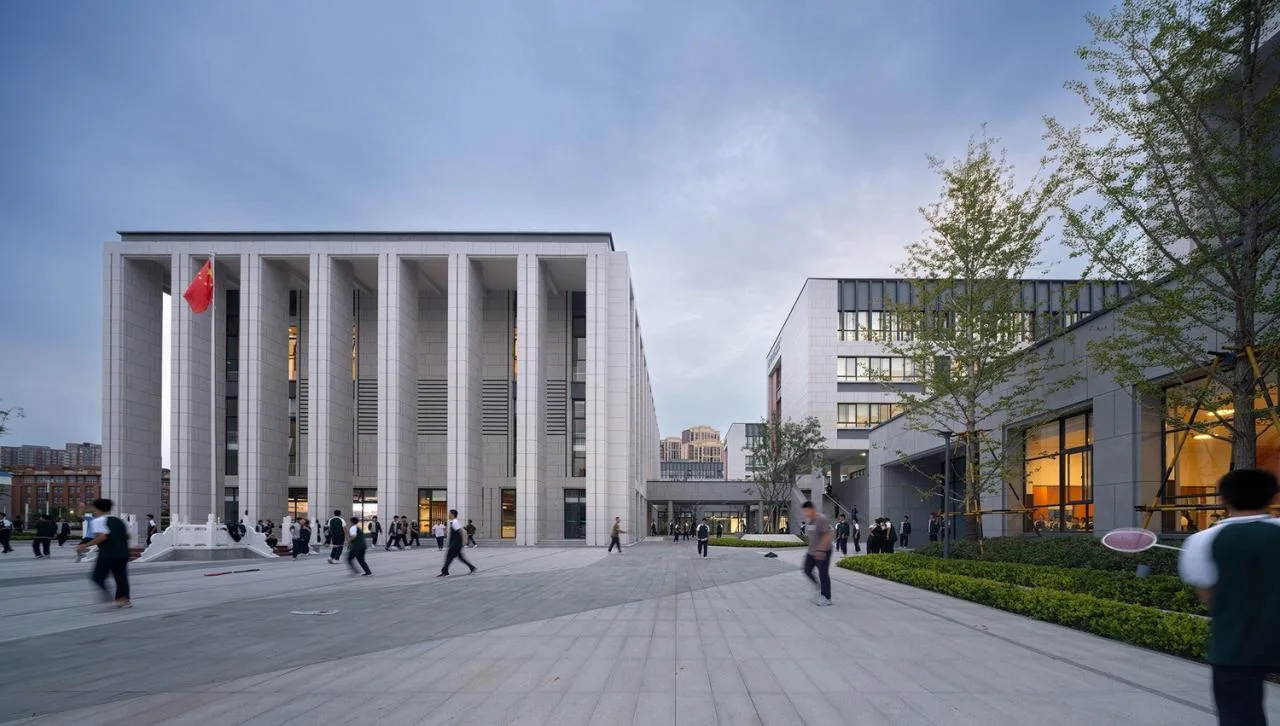
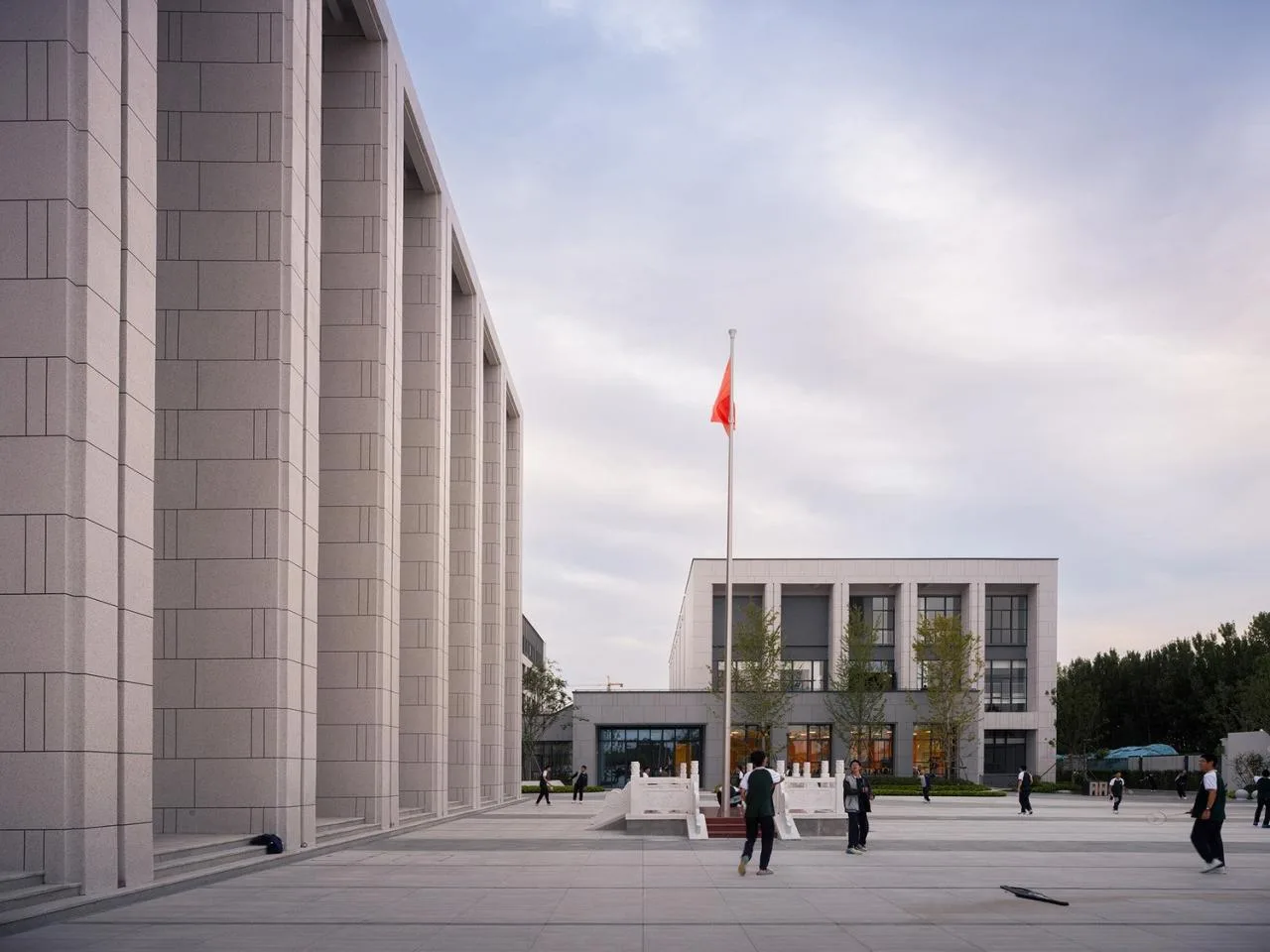
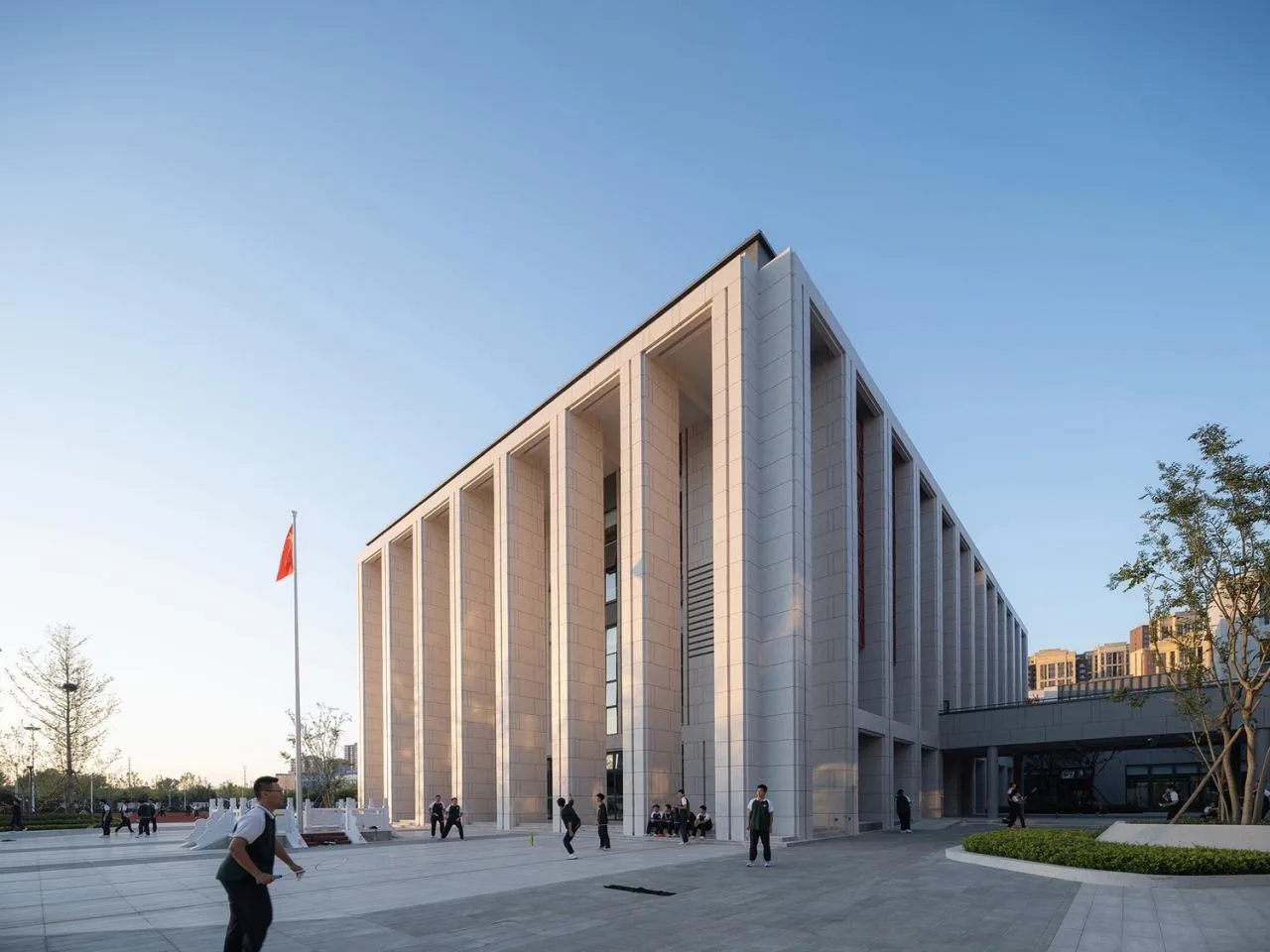
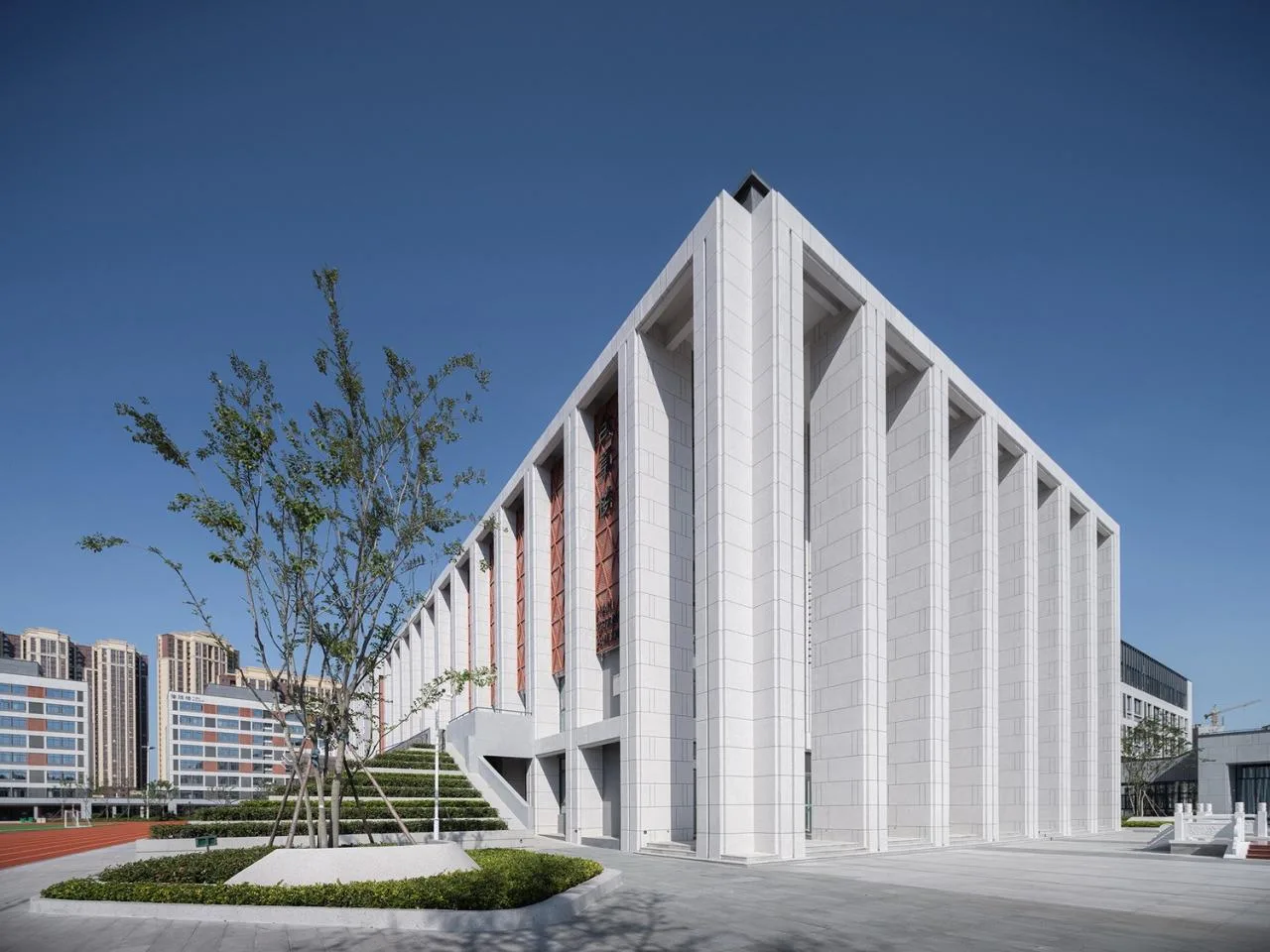
△ Main Entrance Plaza
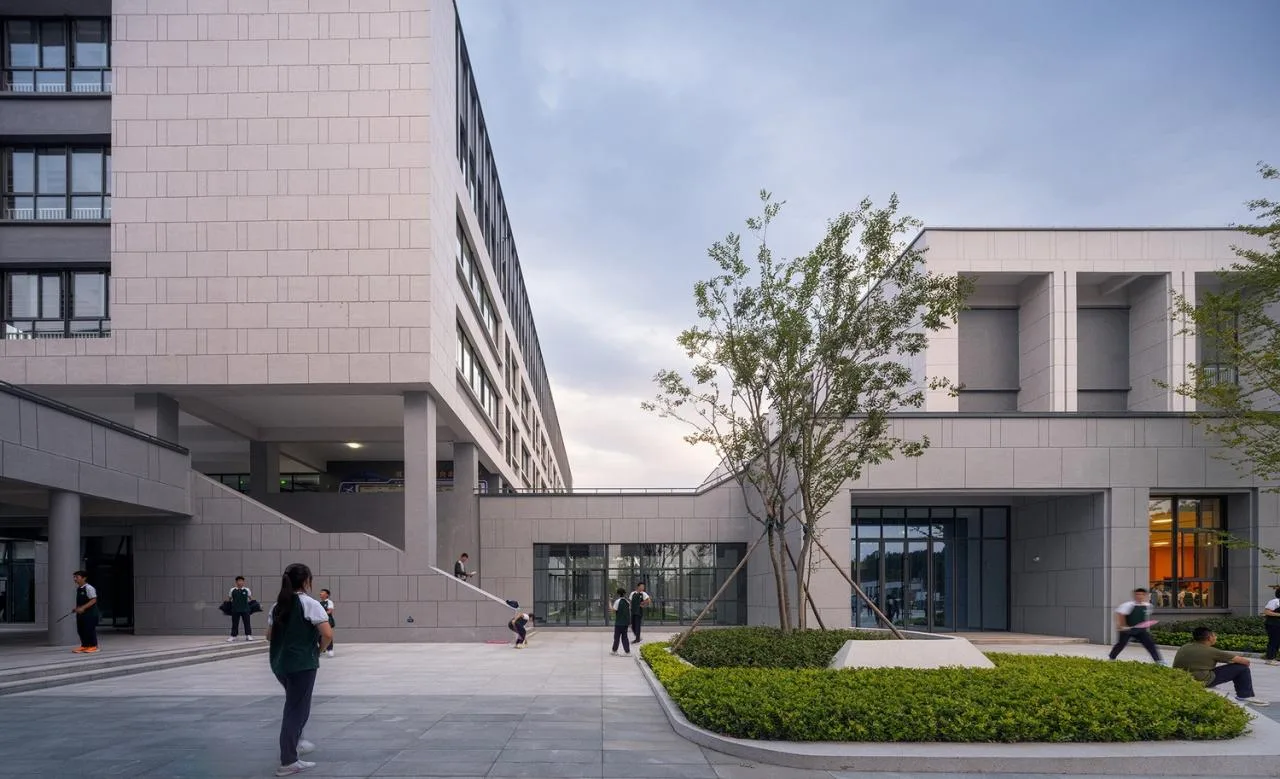
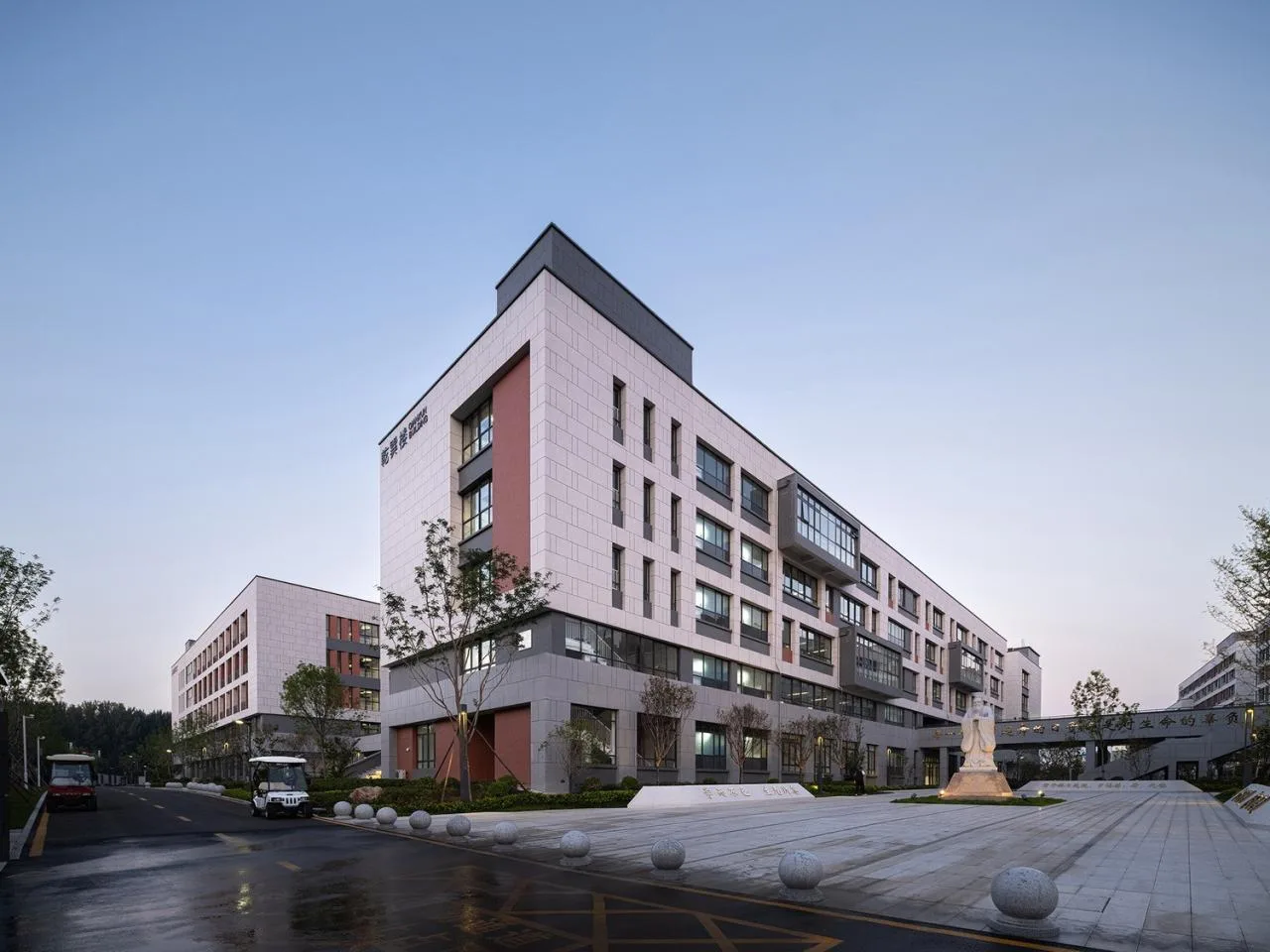
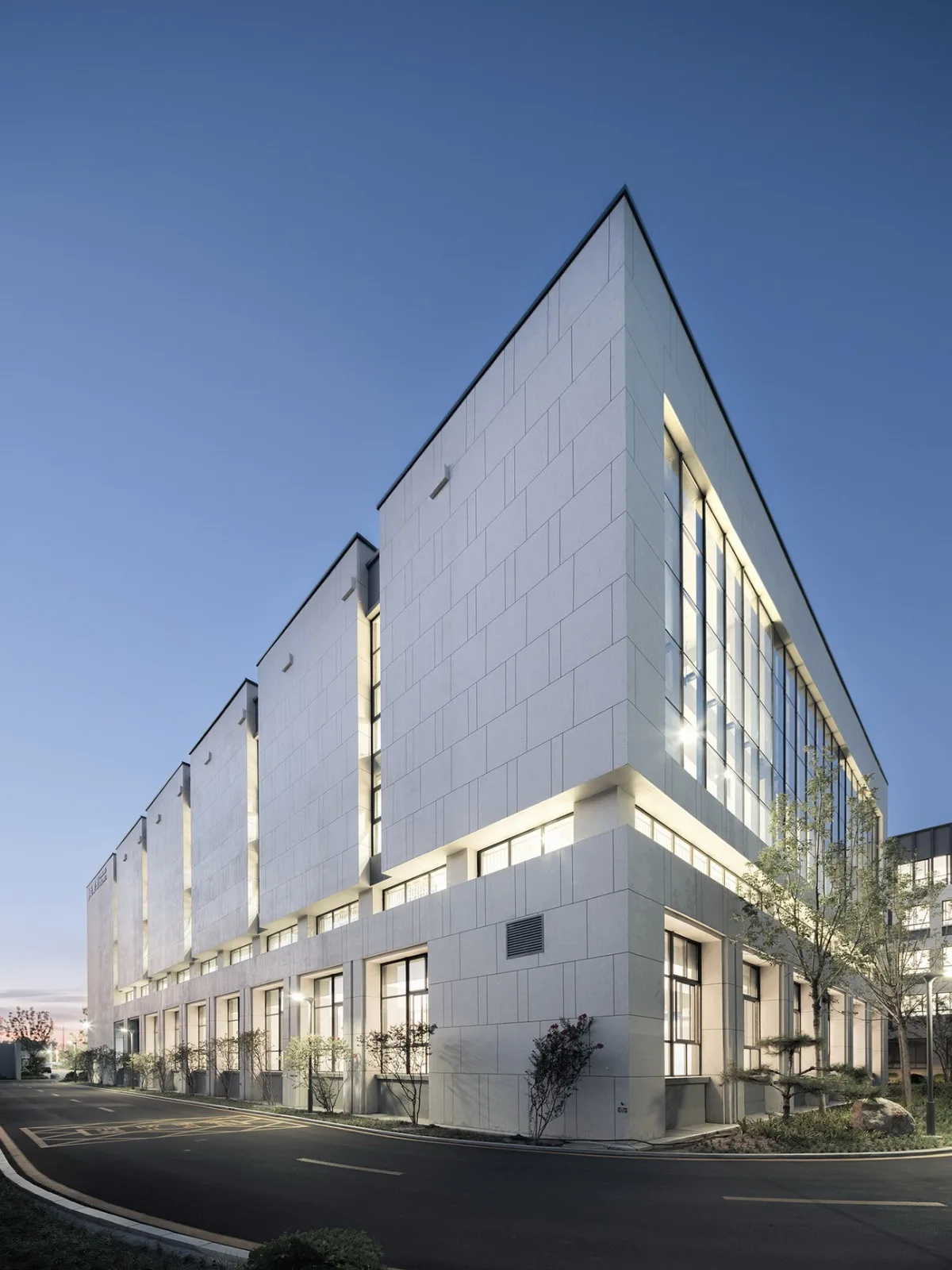
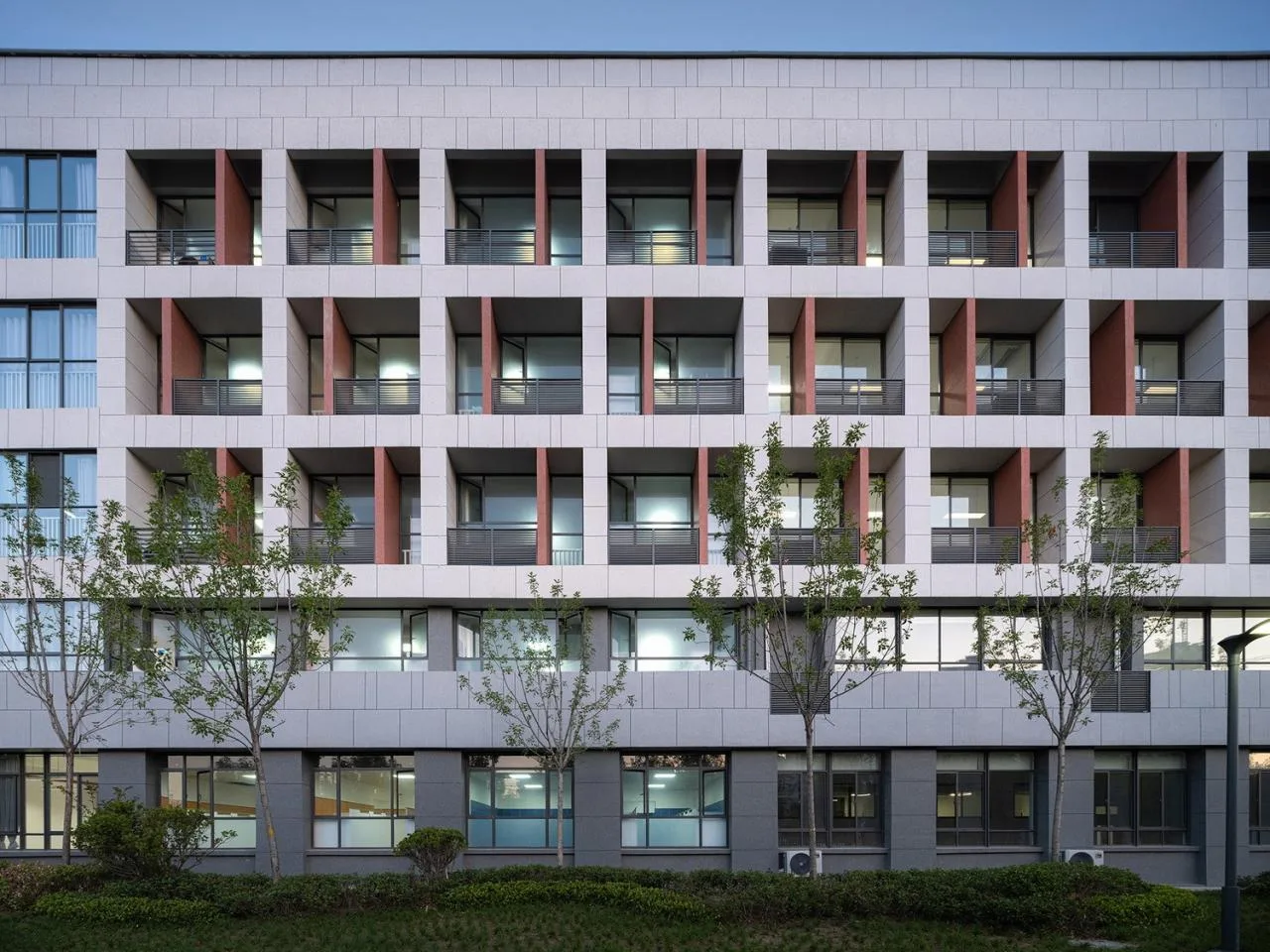
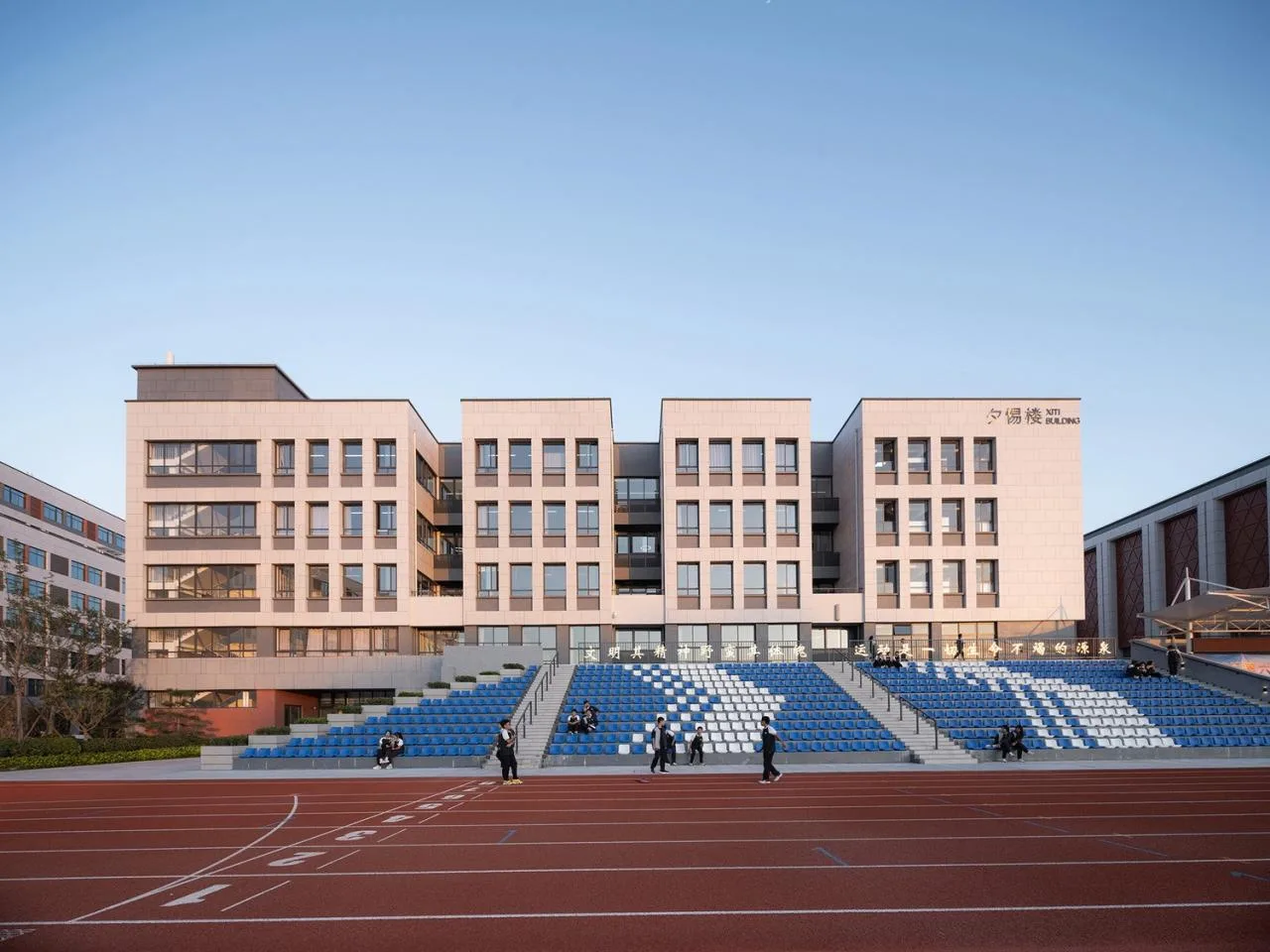
Modern Campus Embracing Traditional Rituals
Within the micro-environment and spatial design, the project repeatedly employs the traditional “stacked courtyard corridors” theme. This approach not only reflects the classic ideal environment that scholars envisioned for academies but also softens the ritual framework to foster diverse opportunities for children’s independent exploration.
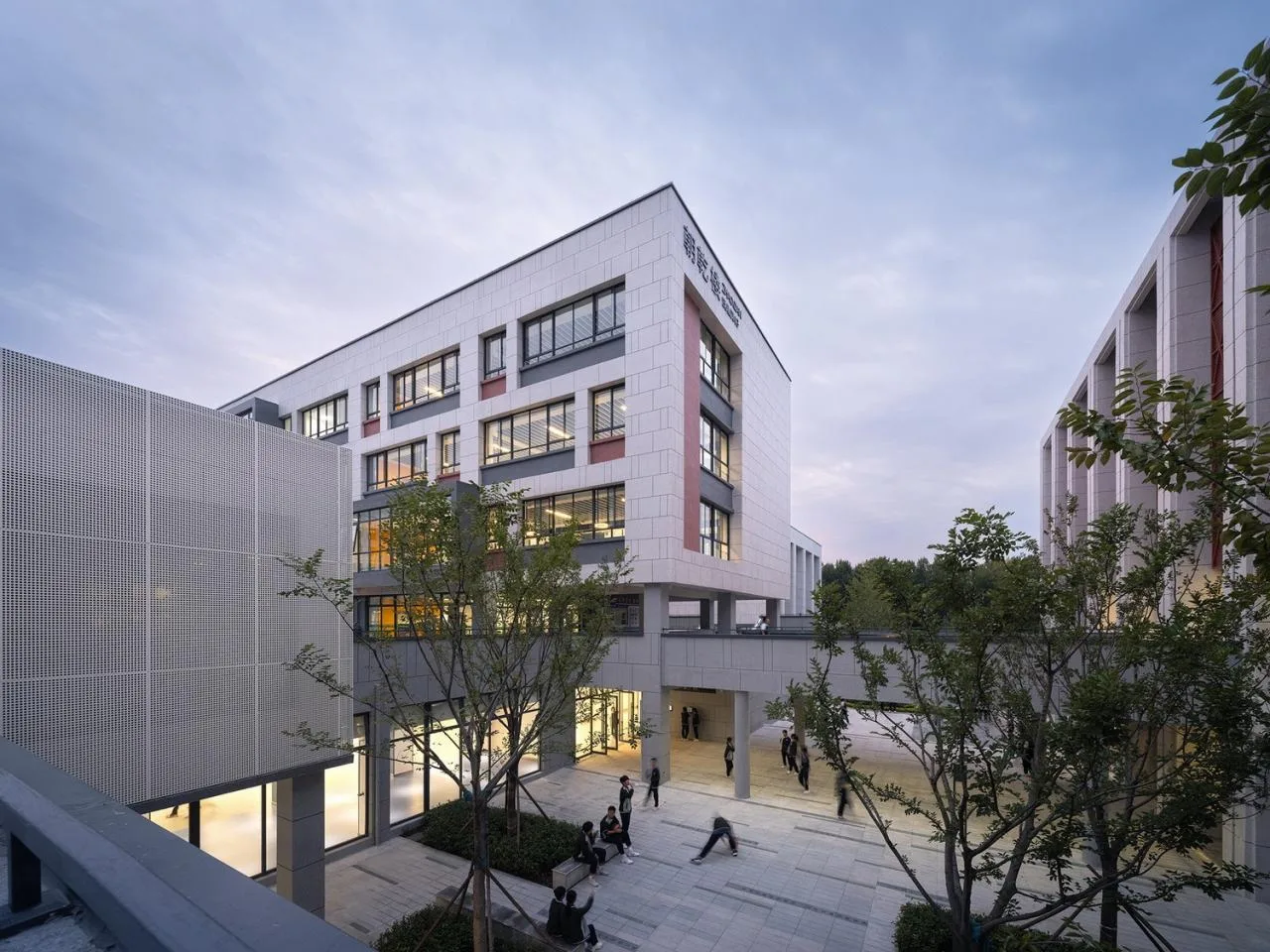
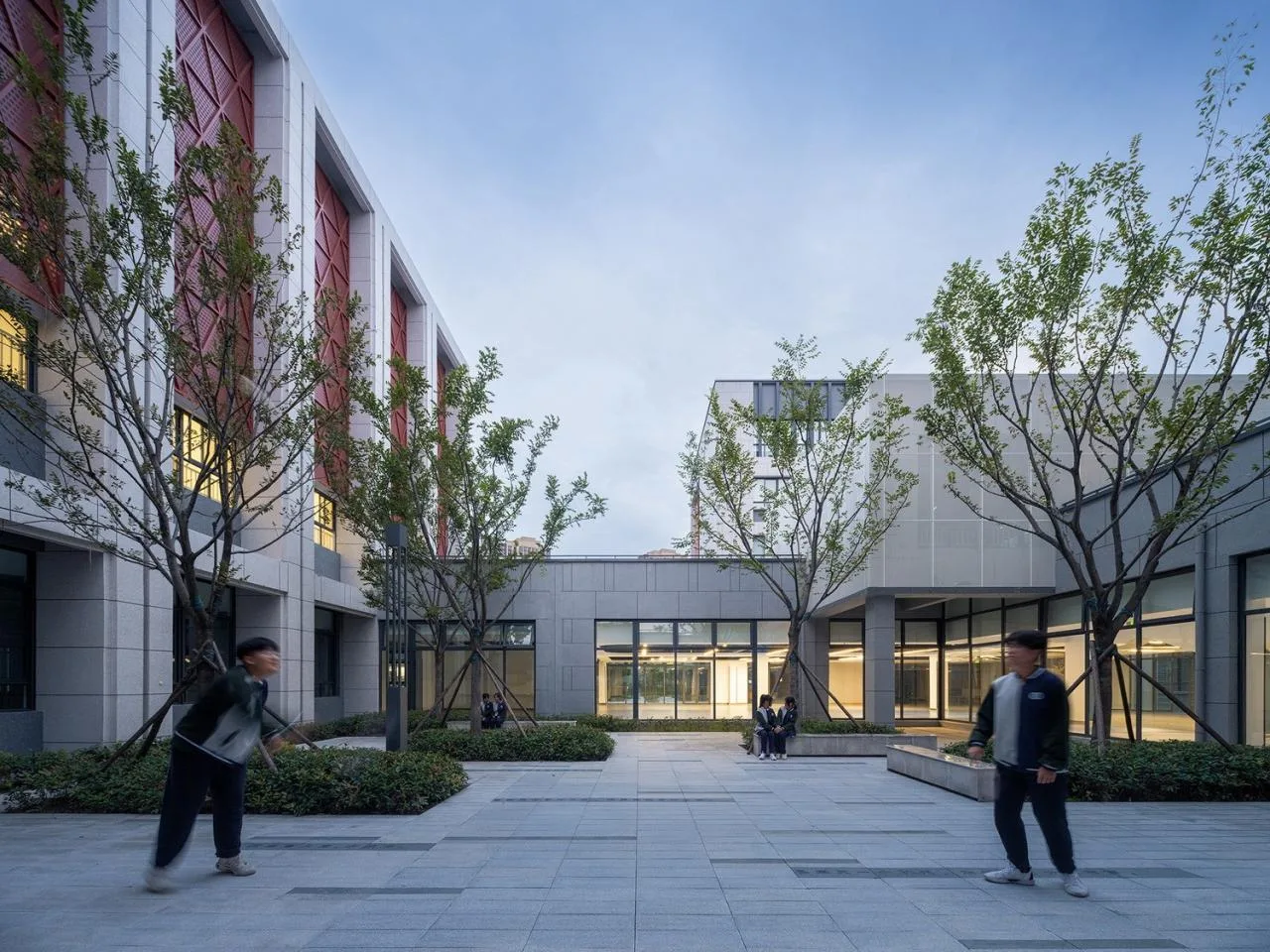
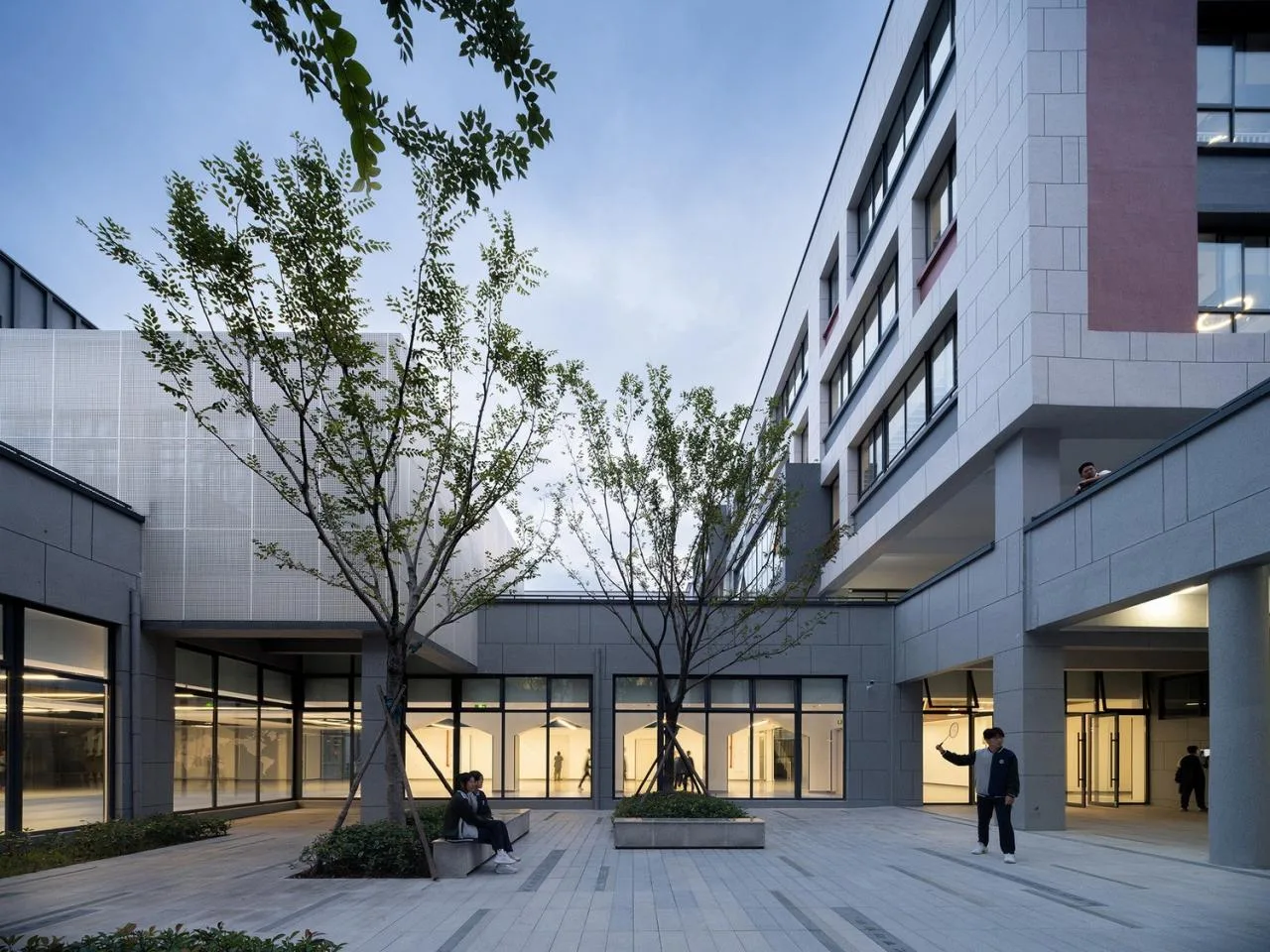
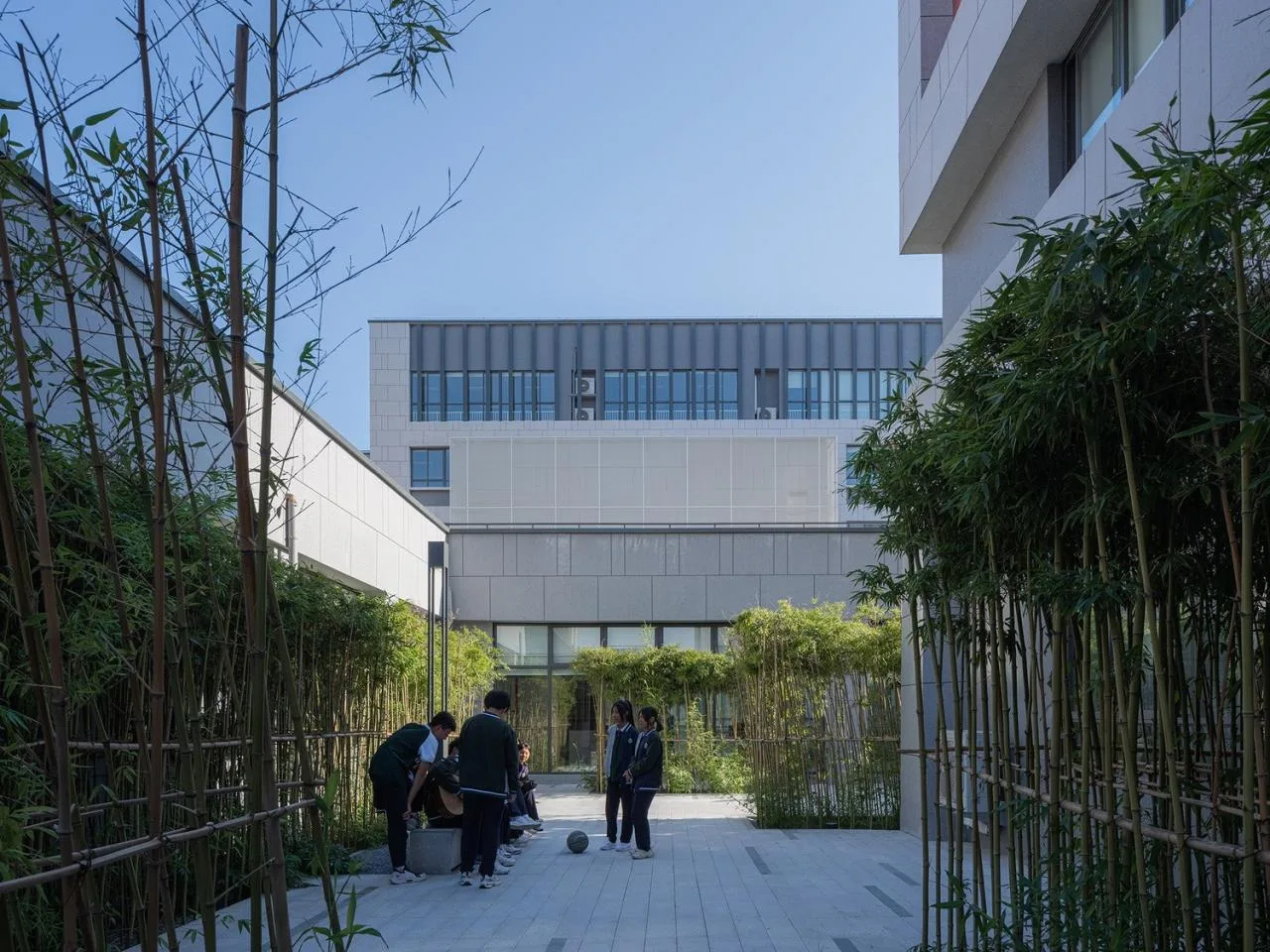
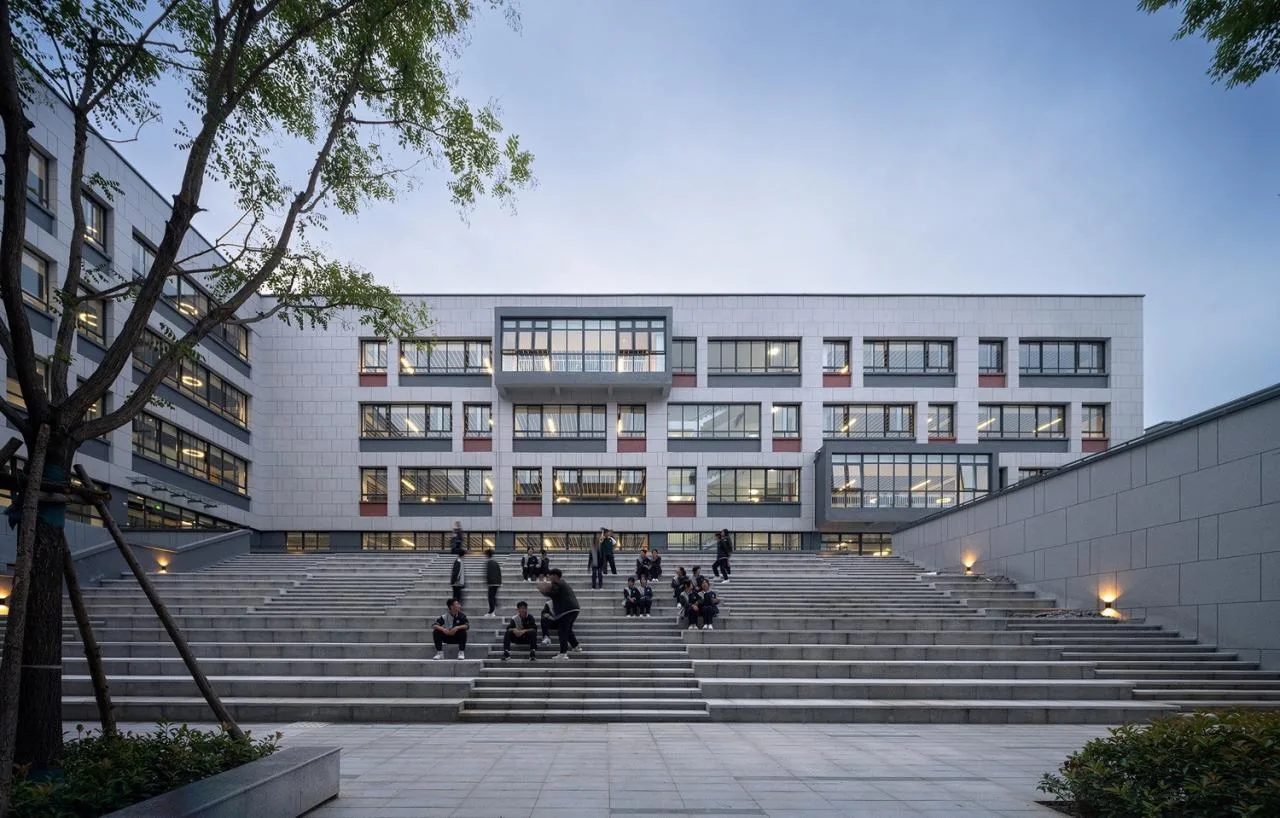
Diverse Courtyard Spaces
The campus features a wind and rain corridor system that creates a comfortable climatic boundary for students’ movement. Various courtyards, arranged within a grid pattern and adjacent to functional ground-floor classrooms, offer themed study areas that inspire poetic and imaginative thinking. Additionally, nested sunroofs connected to the buildings reduce the perception of bulk, allowing students to relax and rejuvenate during short breaks, enjoying natural sunlight and fresh air.
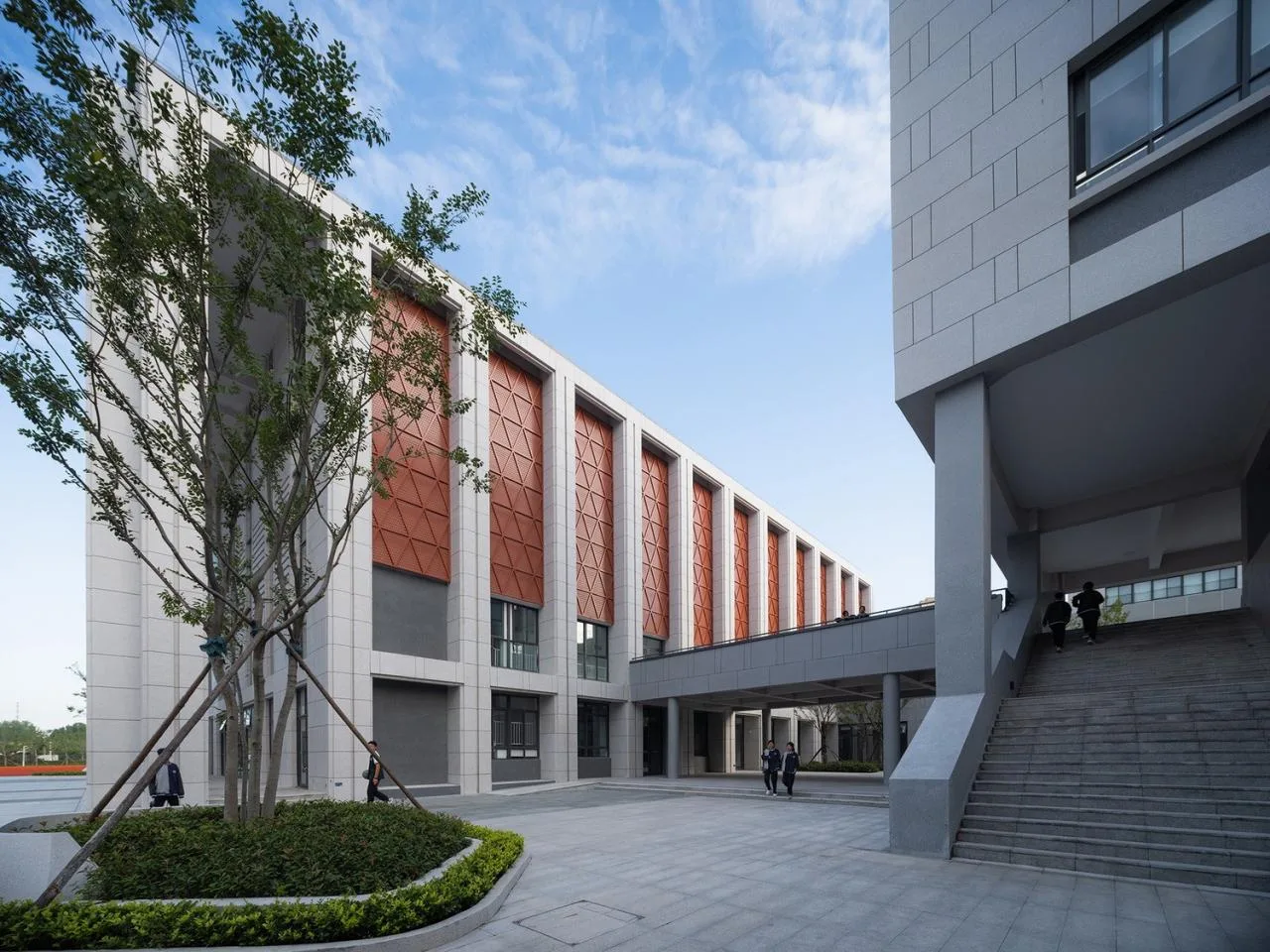
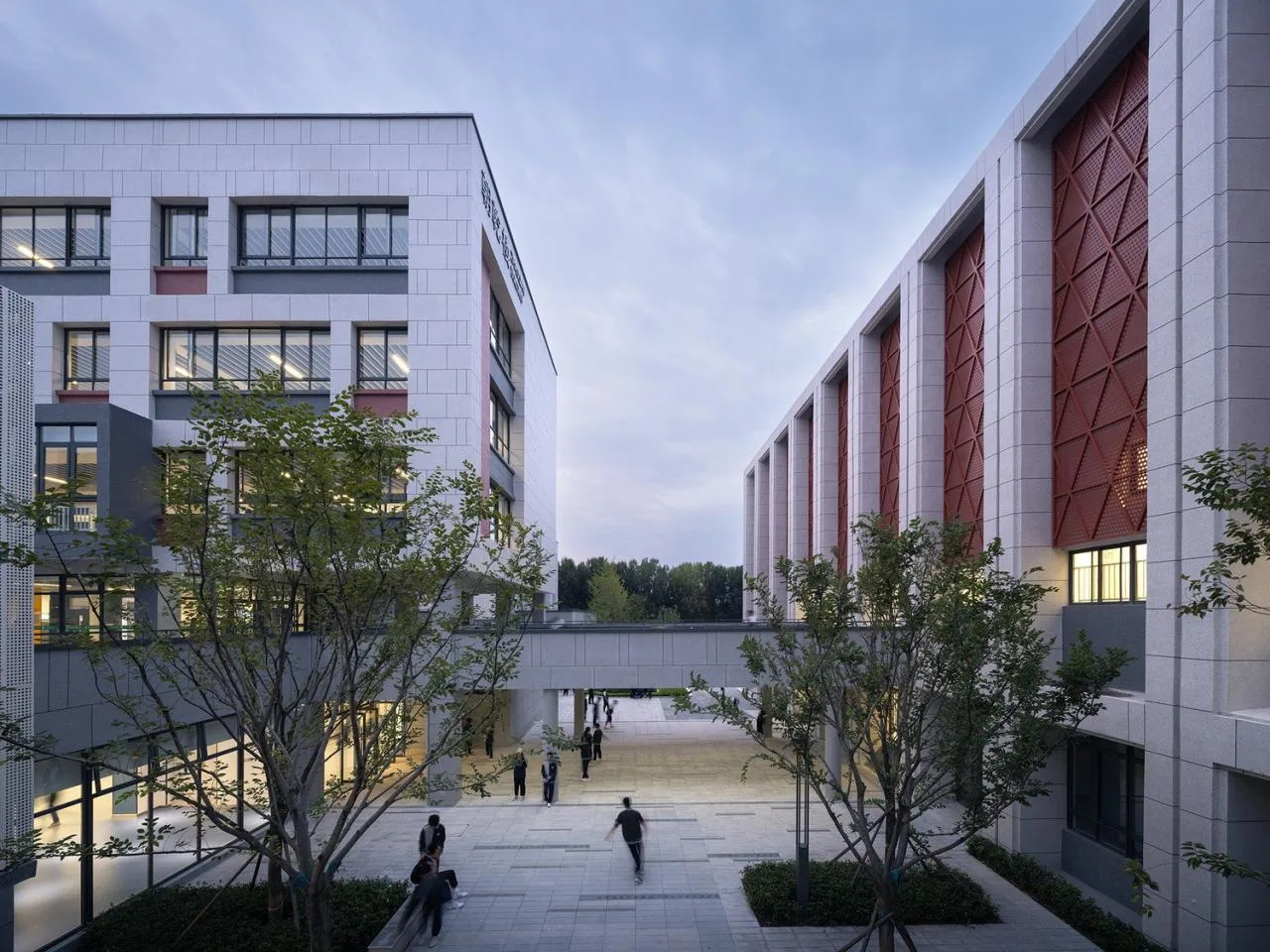
Wind and Rain Corridors Throughout the Campus
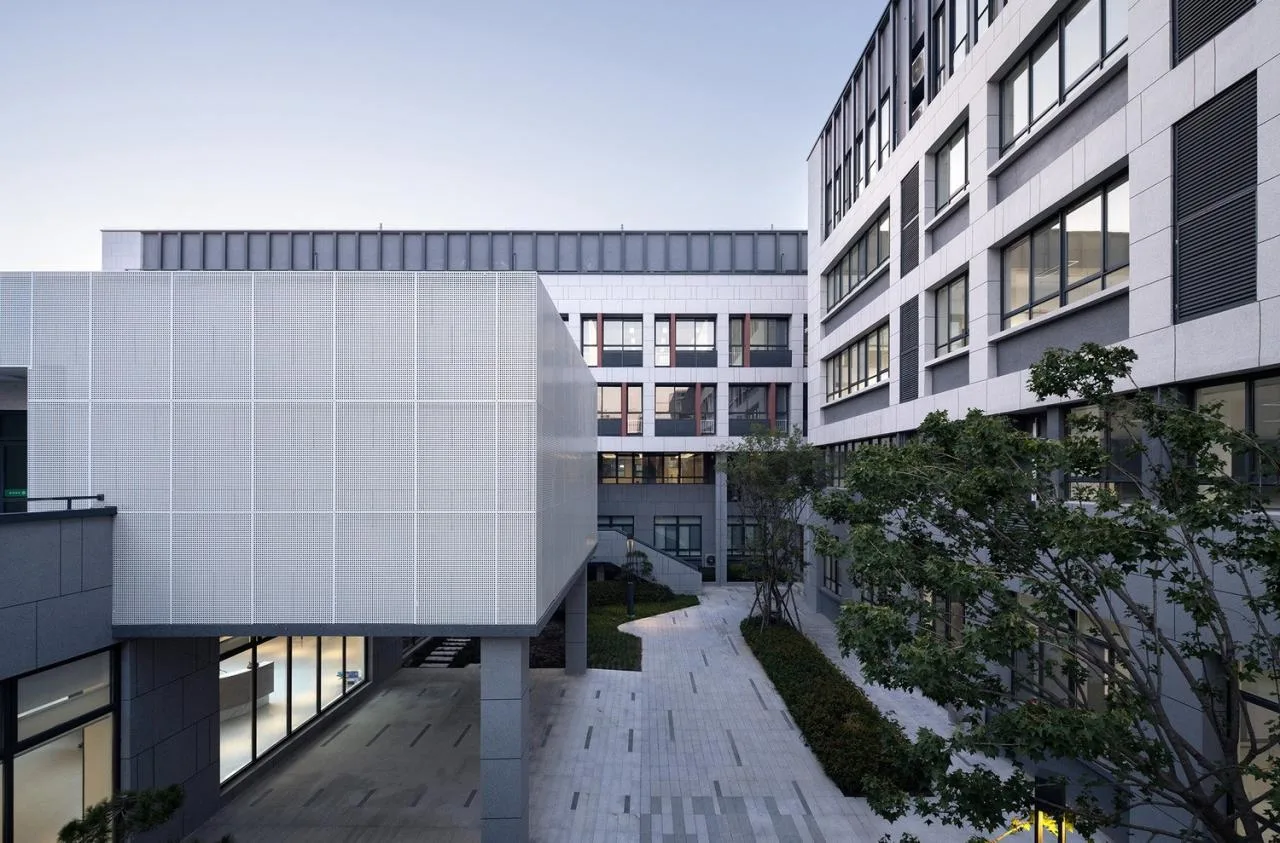
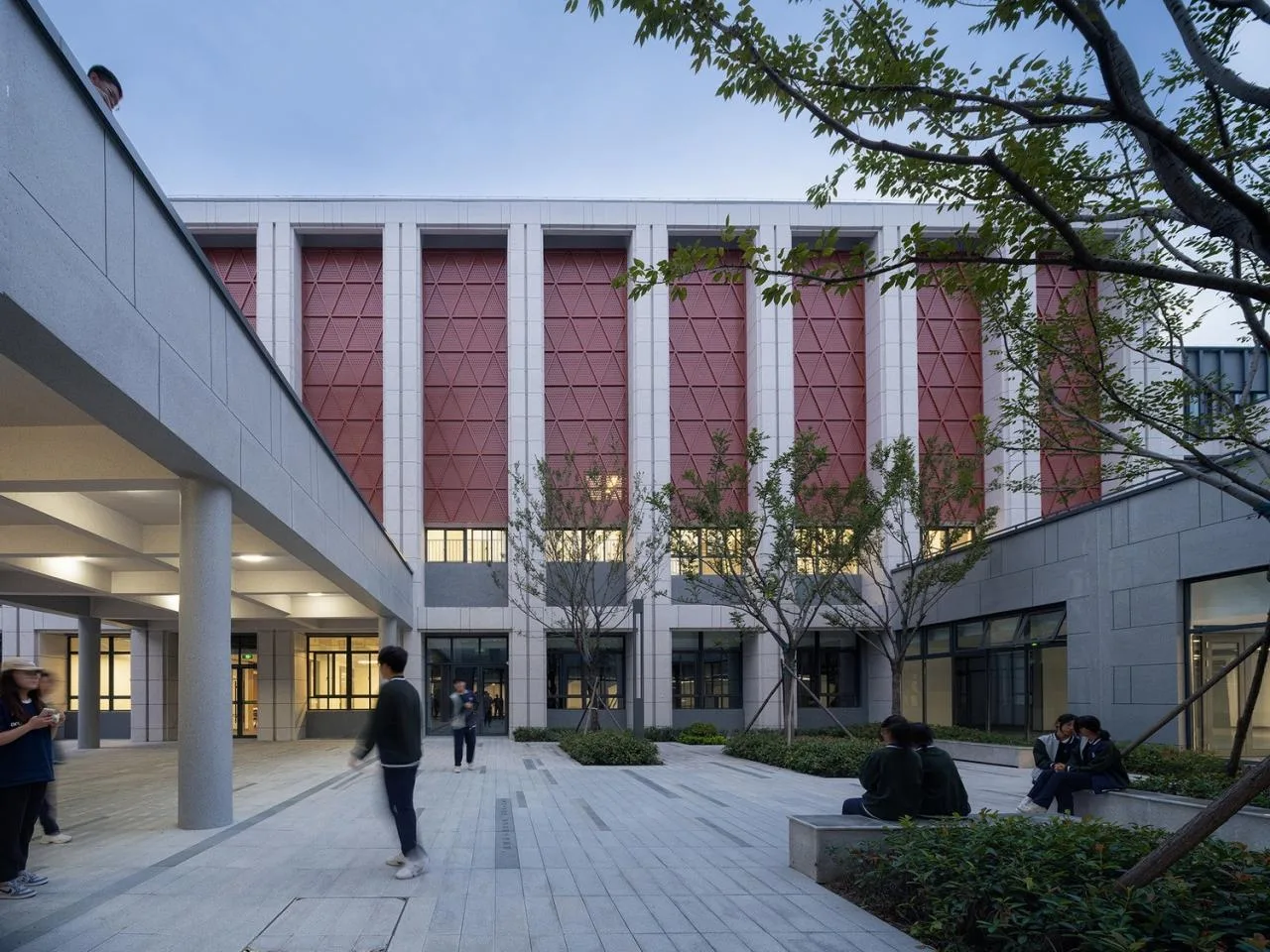
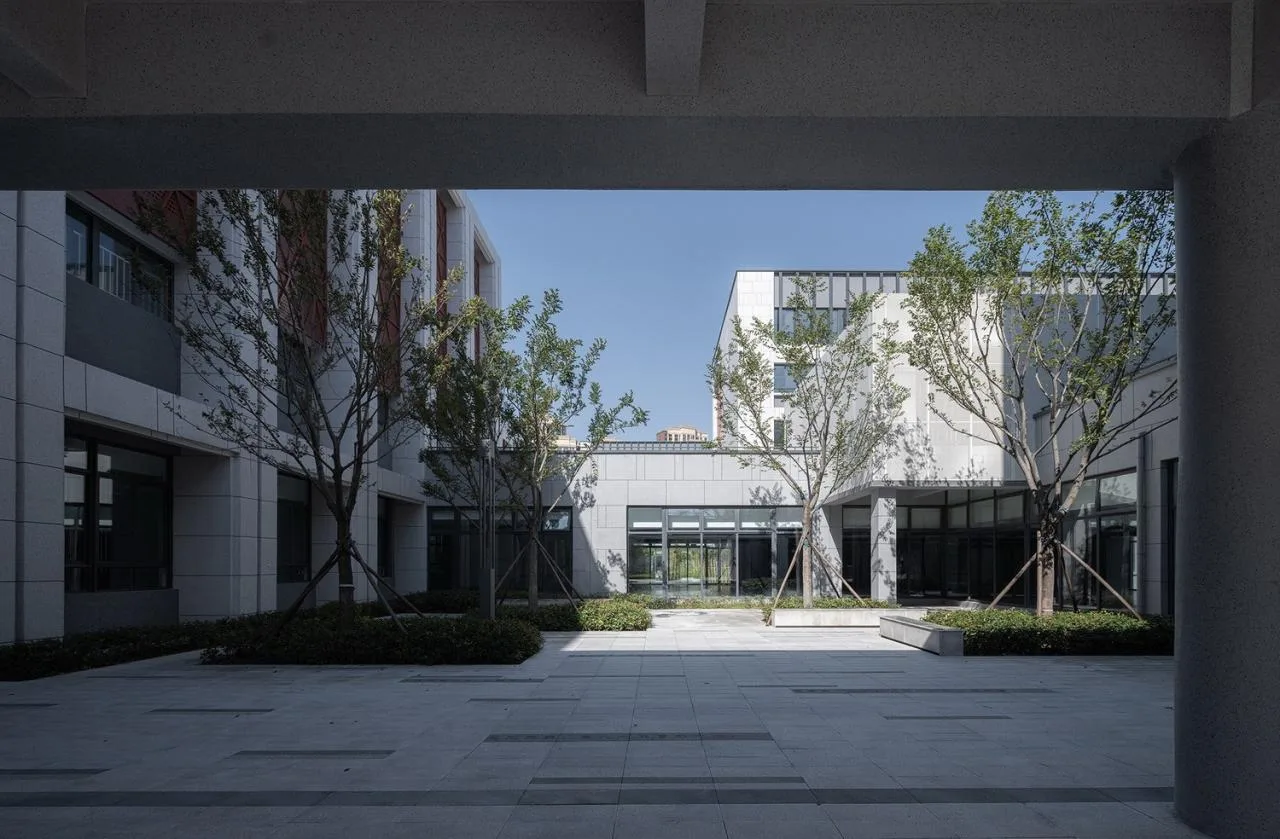
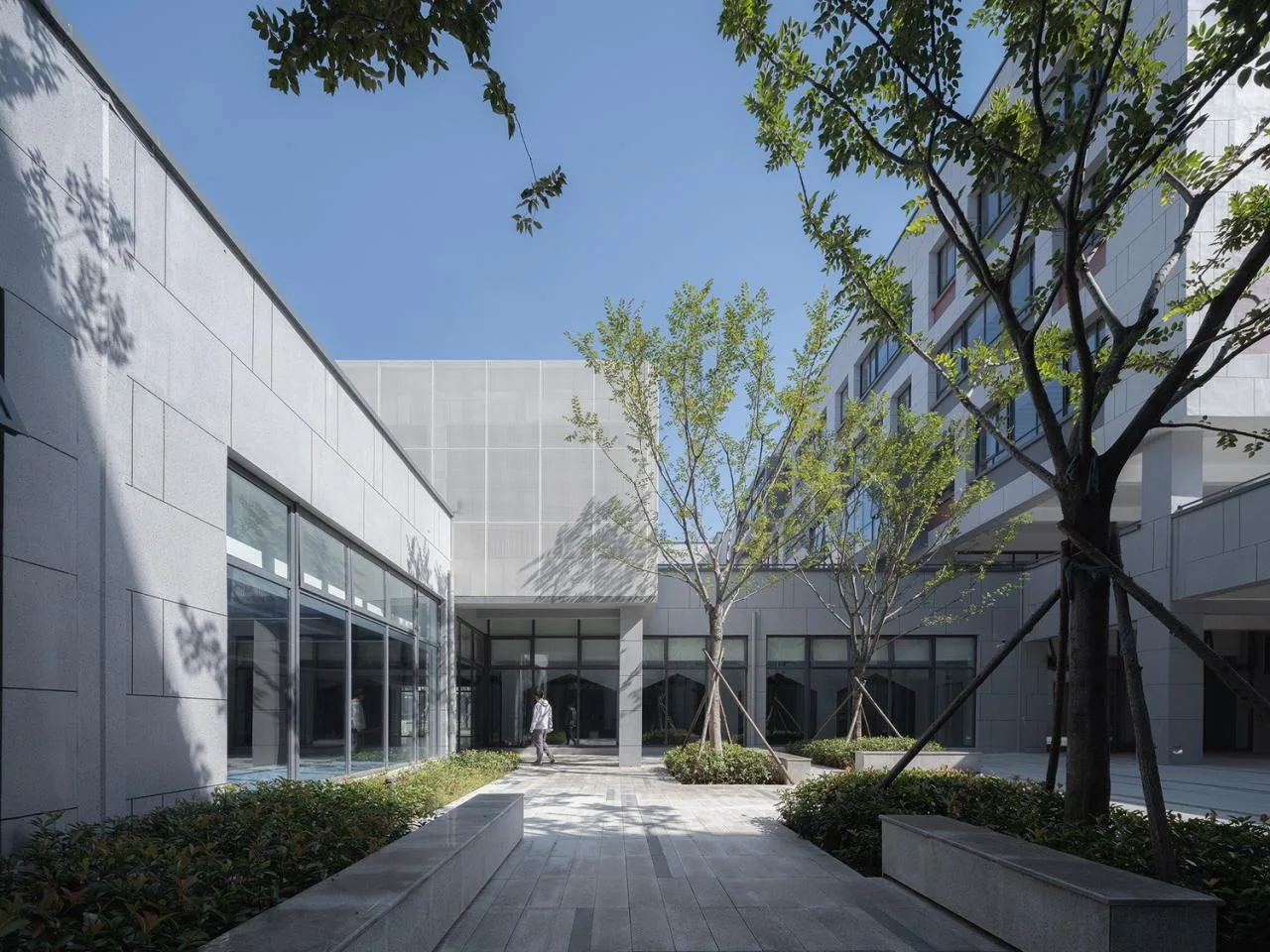
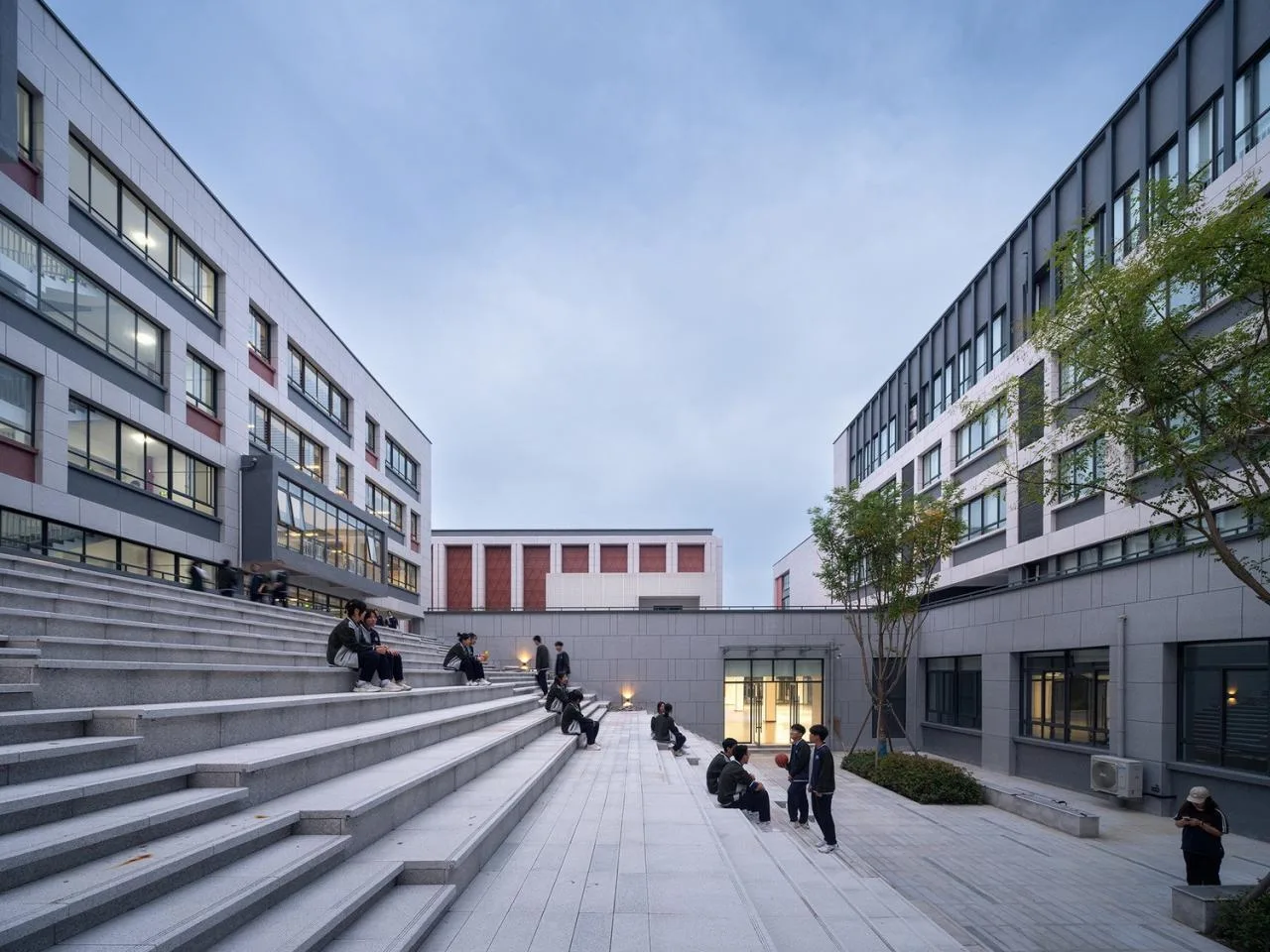
Large and Small Courtyards Arranged by Grid Order
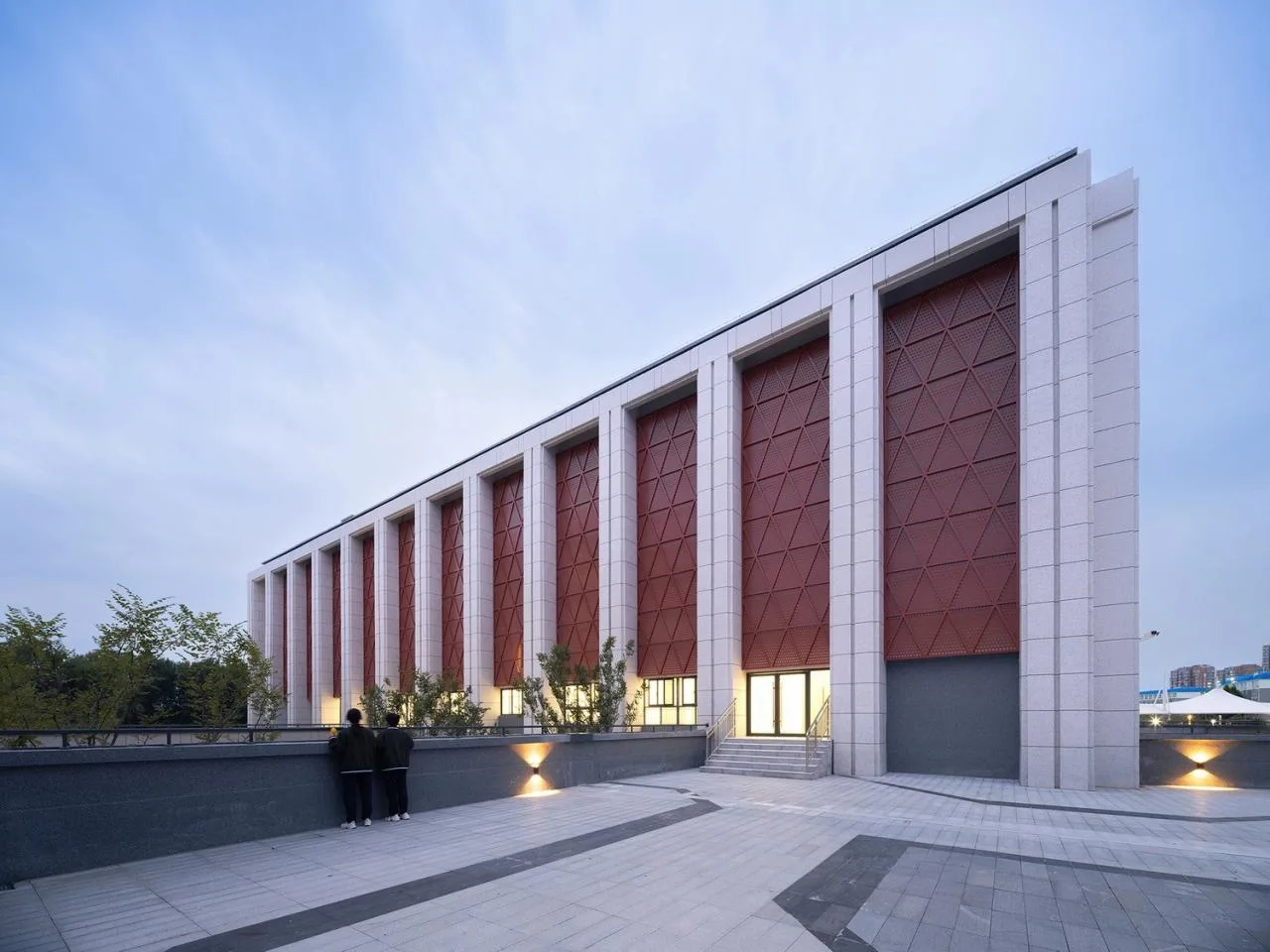
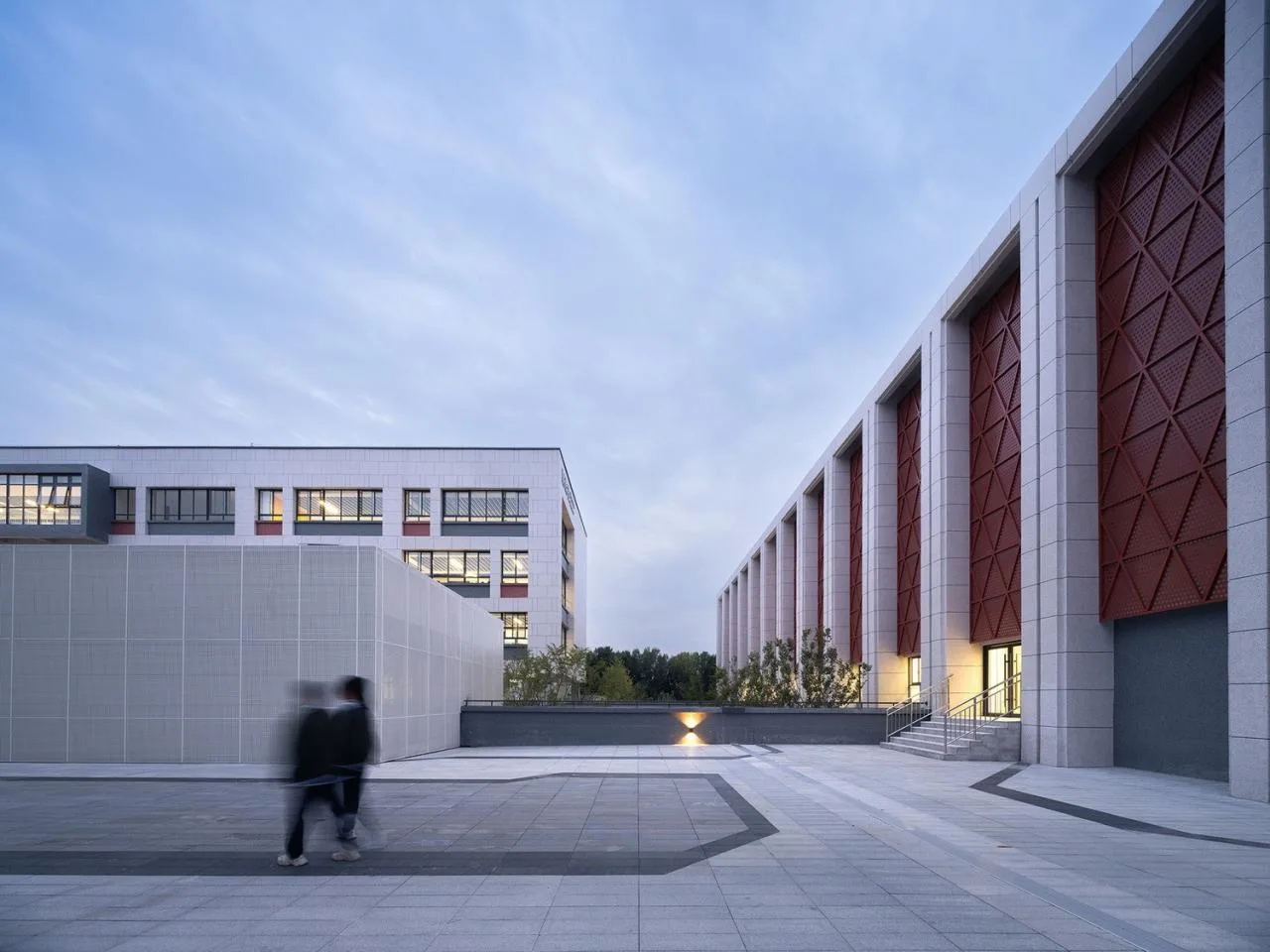
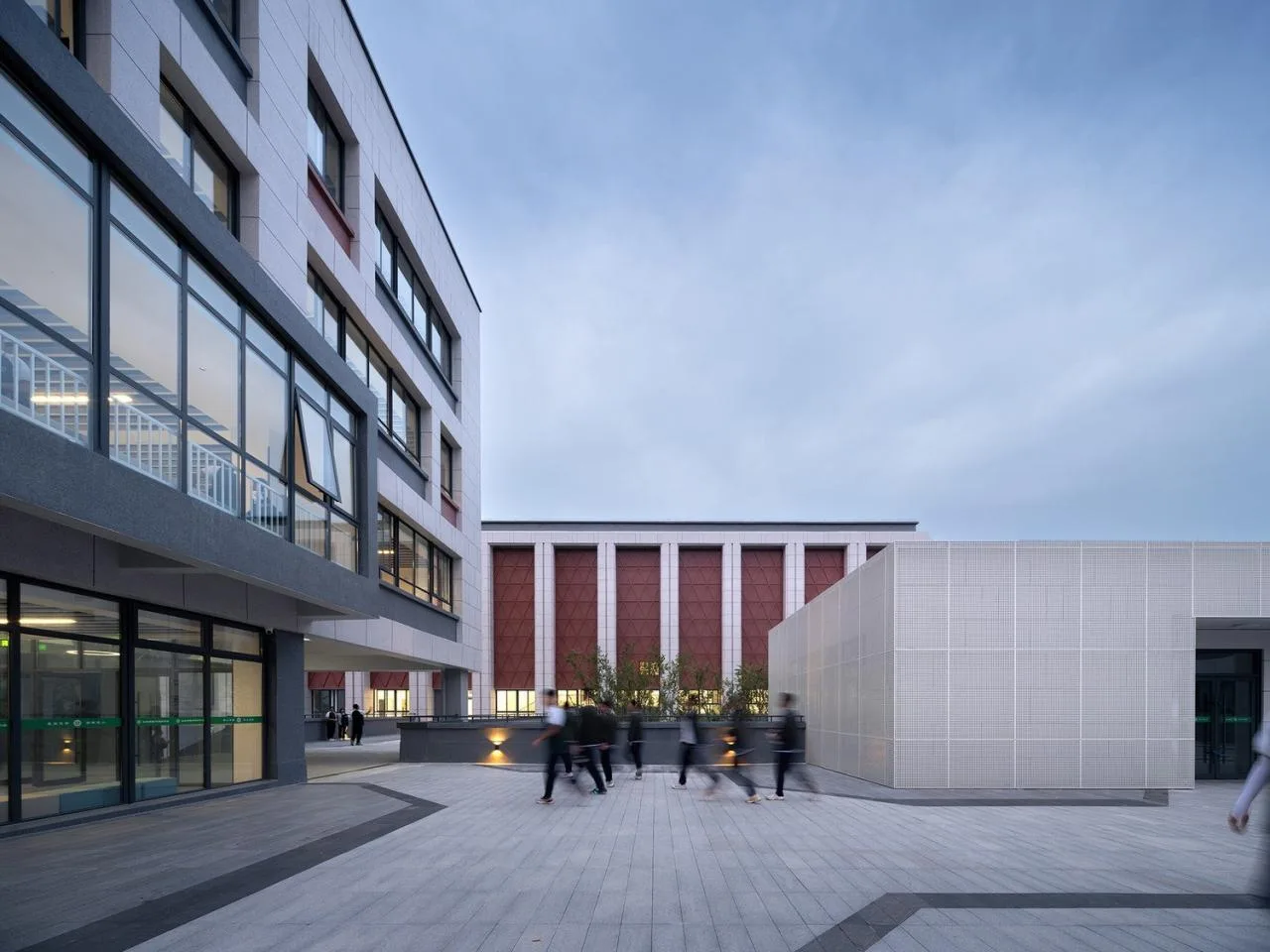
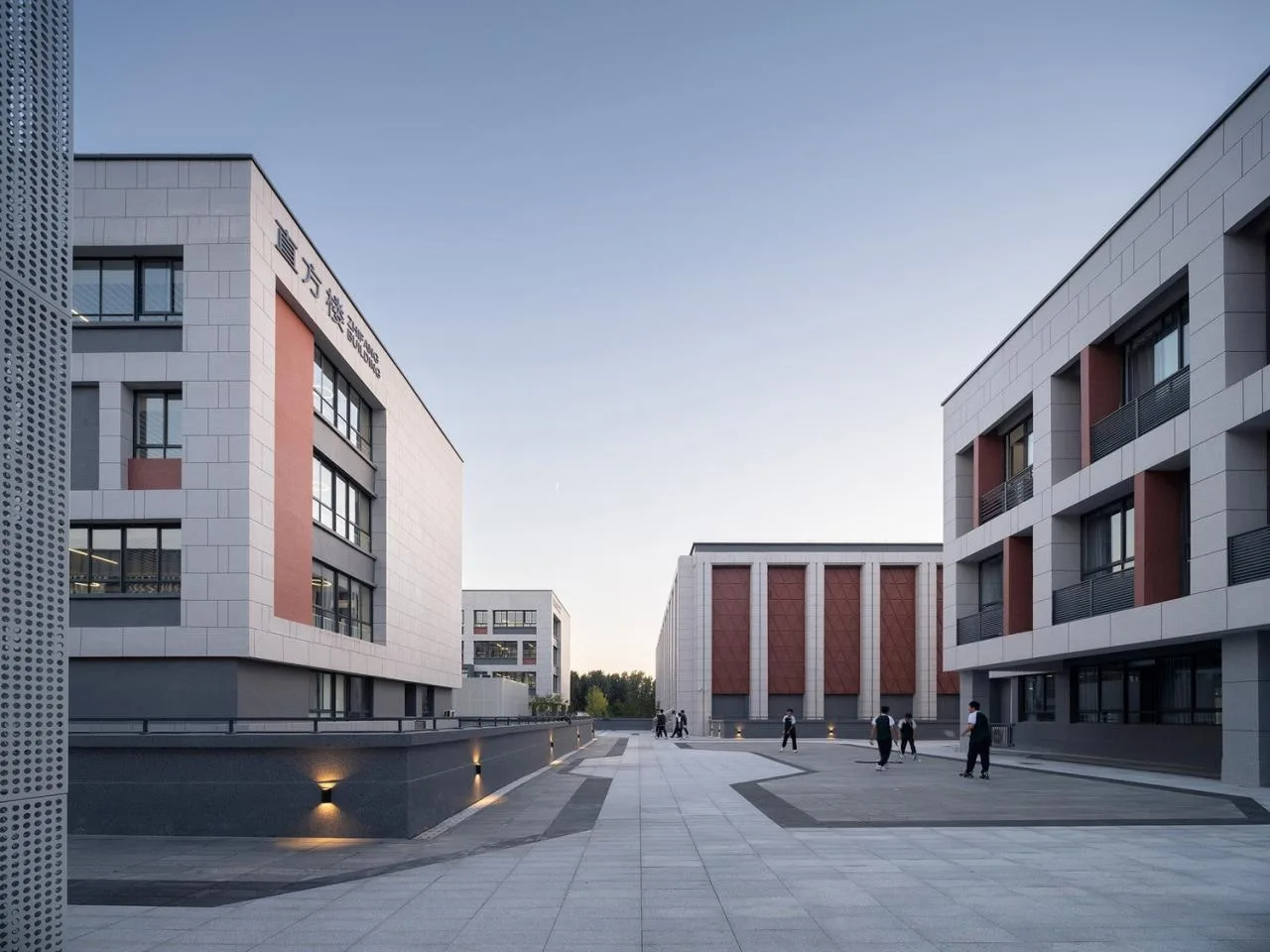
△ Sunlit Rooftop Integrated with Architecture
To meet the demands of new high school teaching models such as course selection and project-based learning, the design carefully balances class hours and space utilization efficiency to optimize the functional layout of main teaching spaces. In addition, given the relatively high plot ratio typical of northern campuses, the organizational model incorporates resource centers on the ground floor, standard teaching units above, and open project-based learning spaces in between. This structure offers efficient and flexible support for both teaching and learning activities.
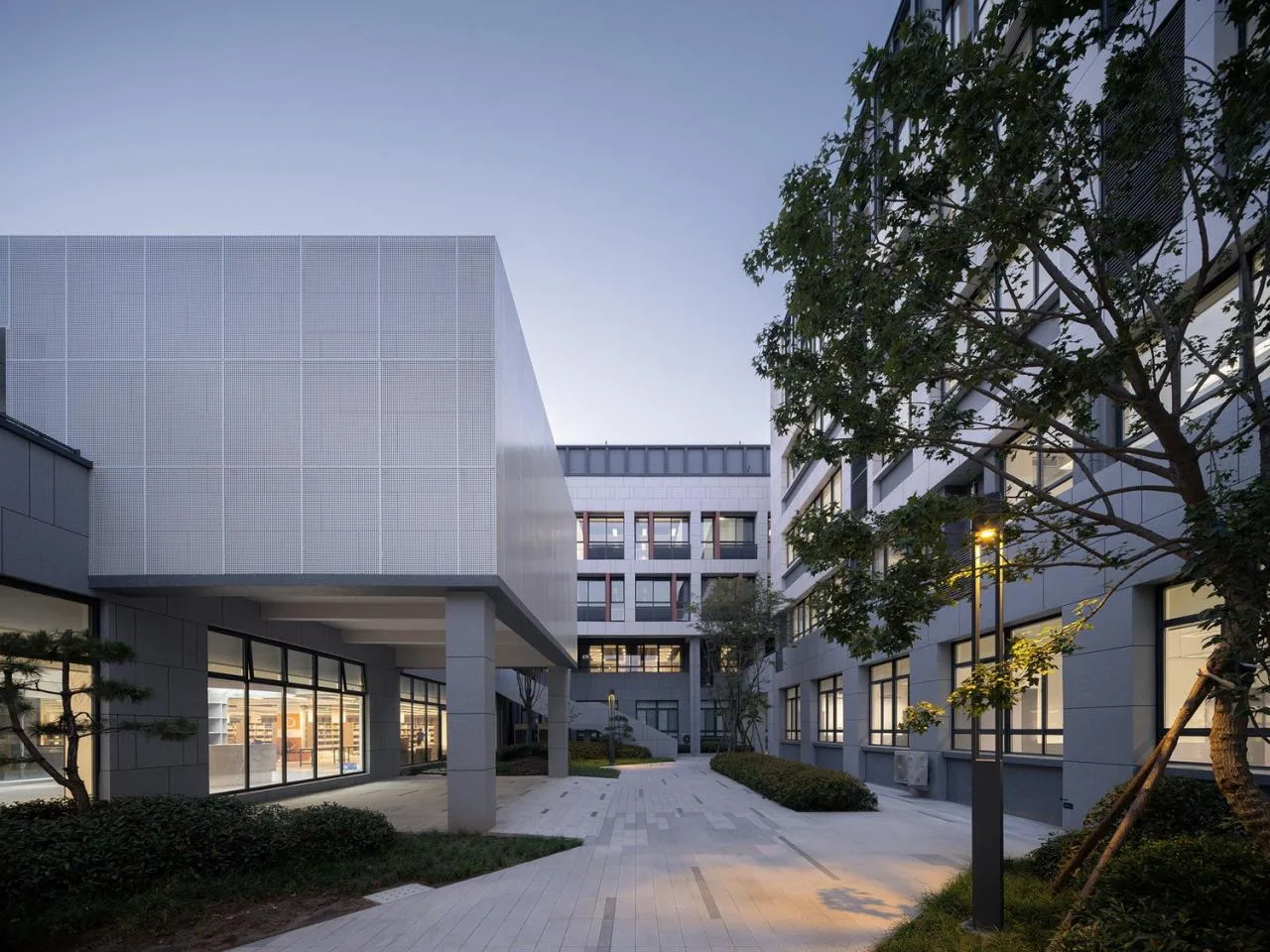
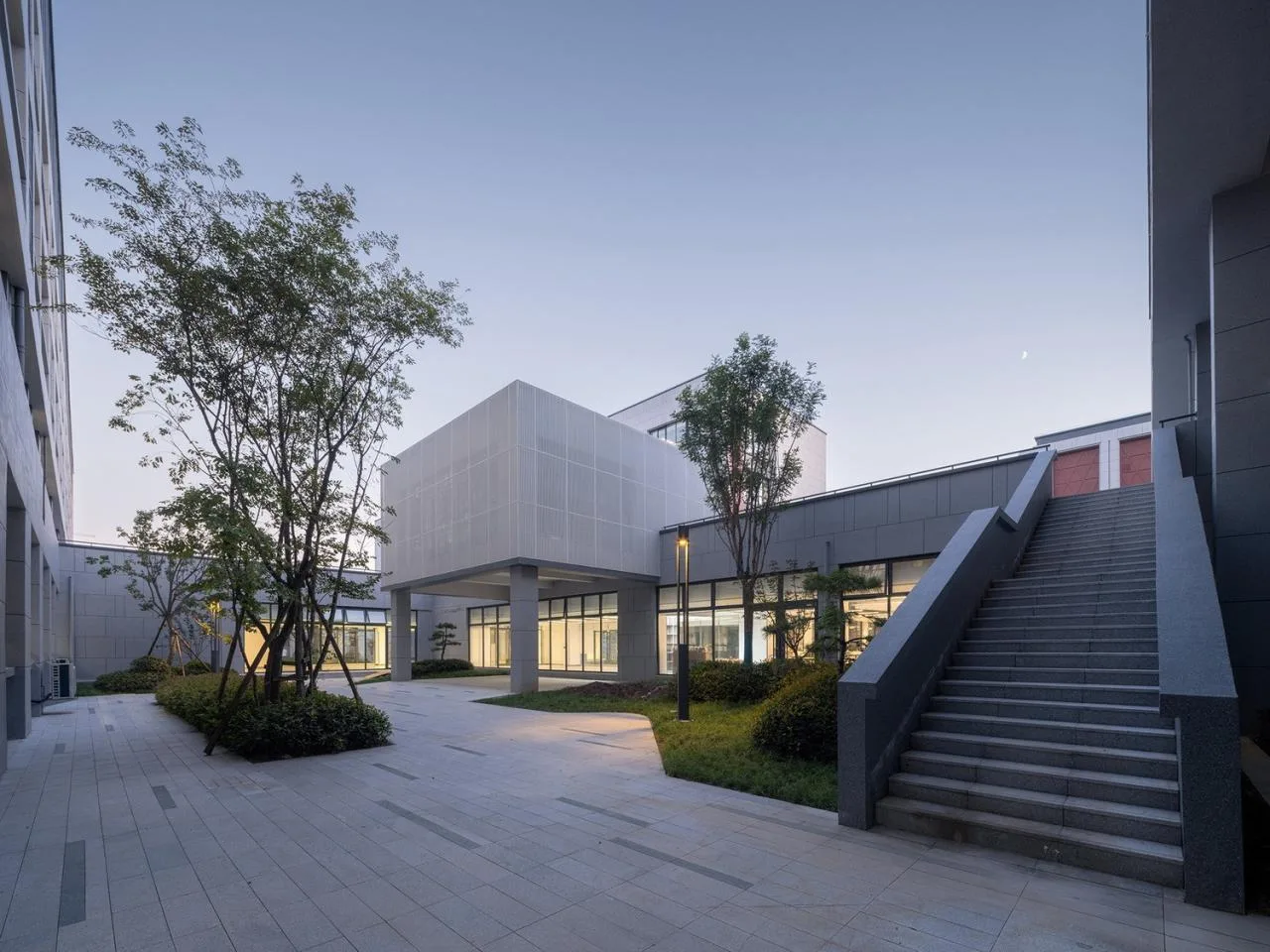
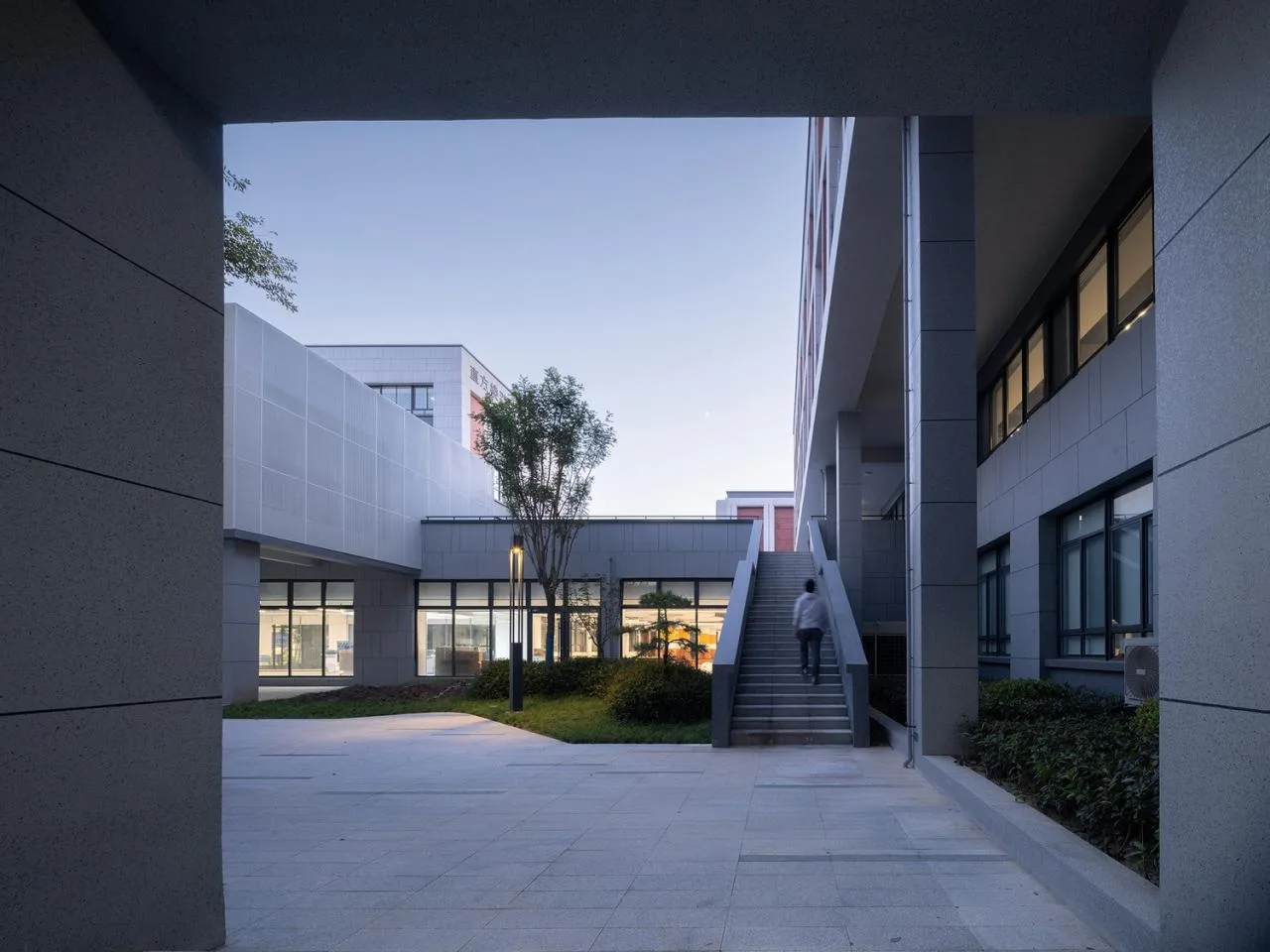
△ Campus Spaces Supporting Integrated Teaching Activities
Balancing the continuation and expression of humanistic traditions with new educational models and contemporary style remains a core challenge in campus design within Eastern cultural contexts.
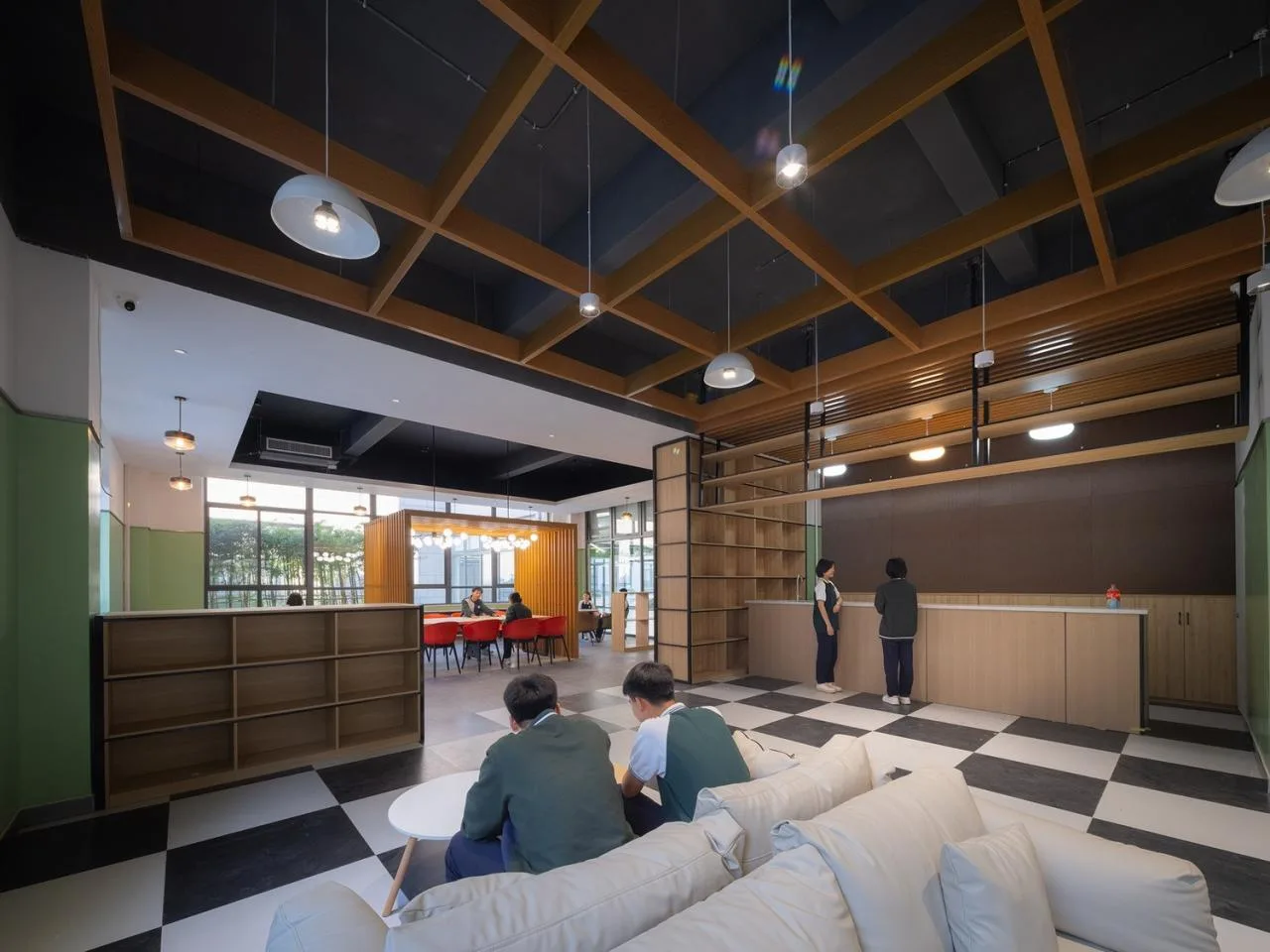
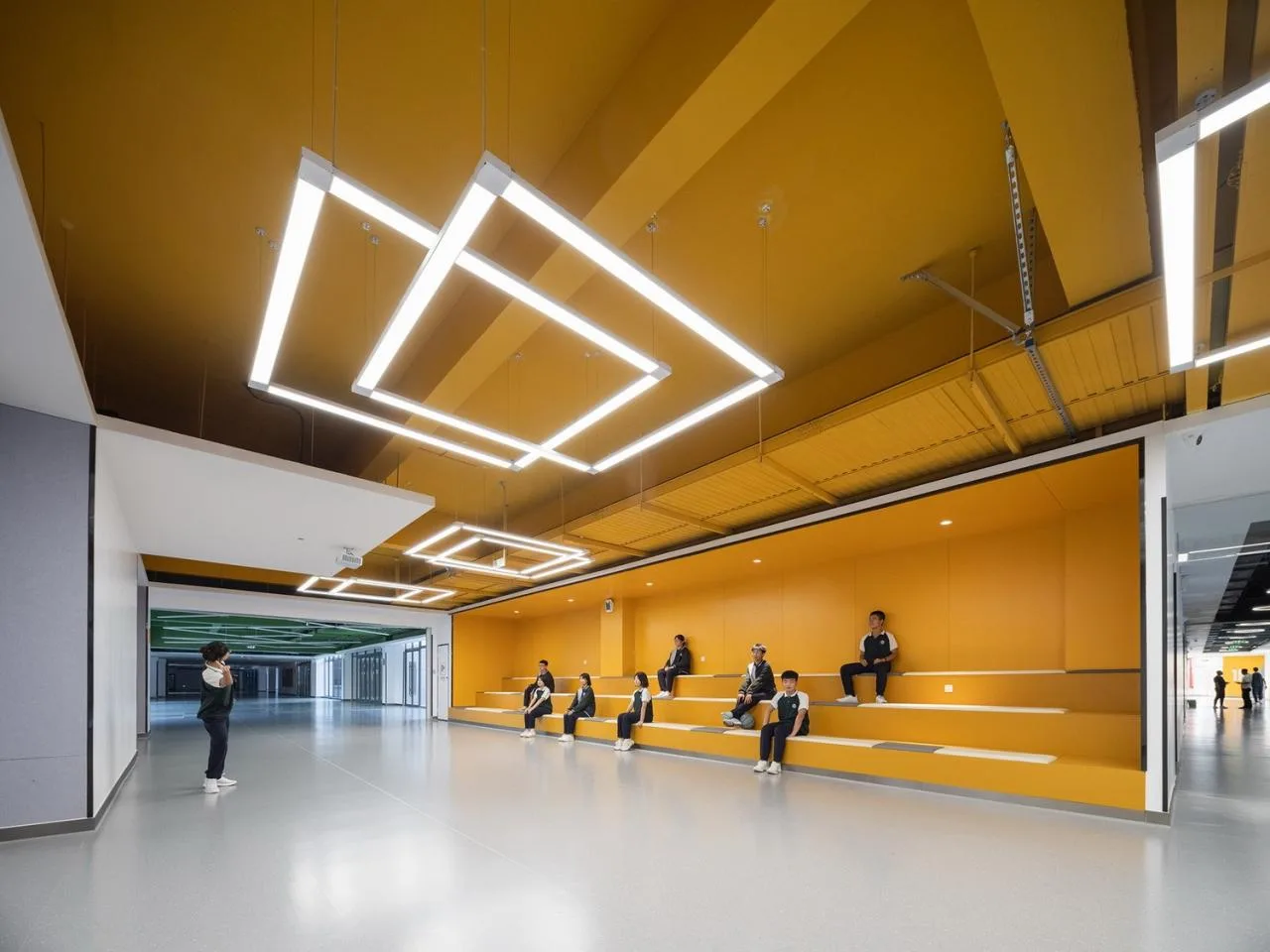
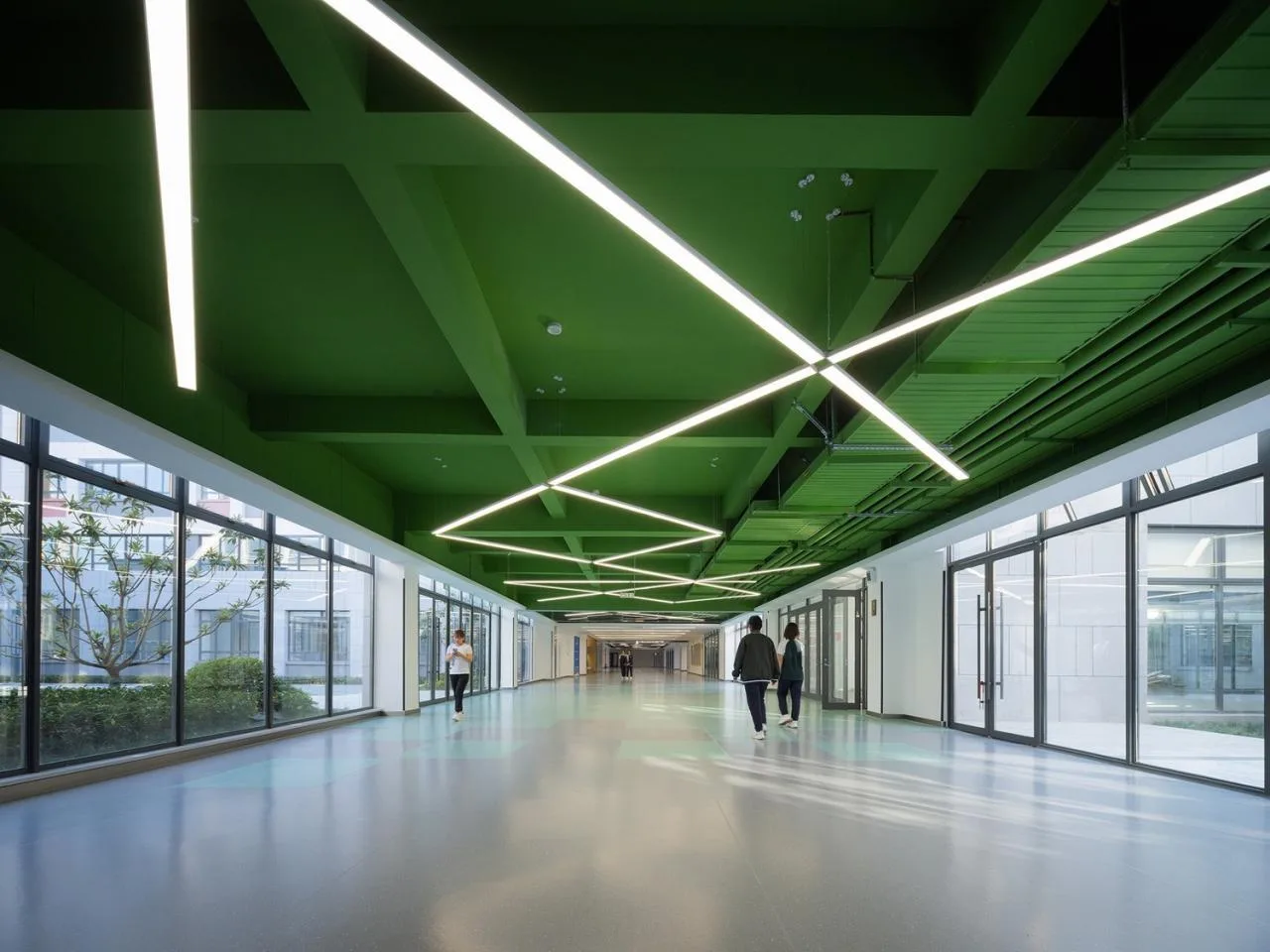
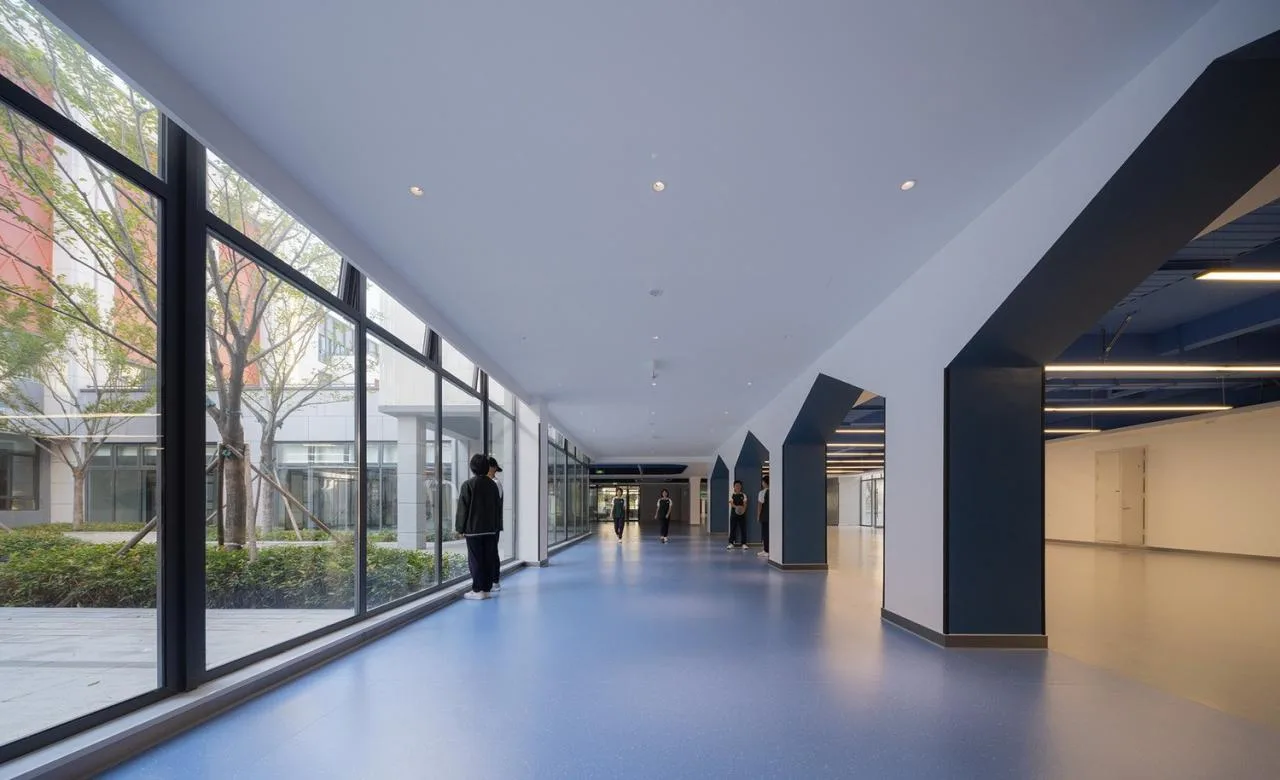
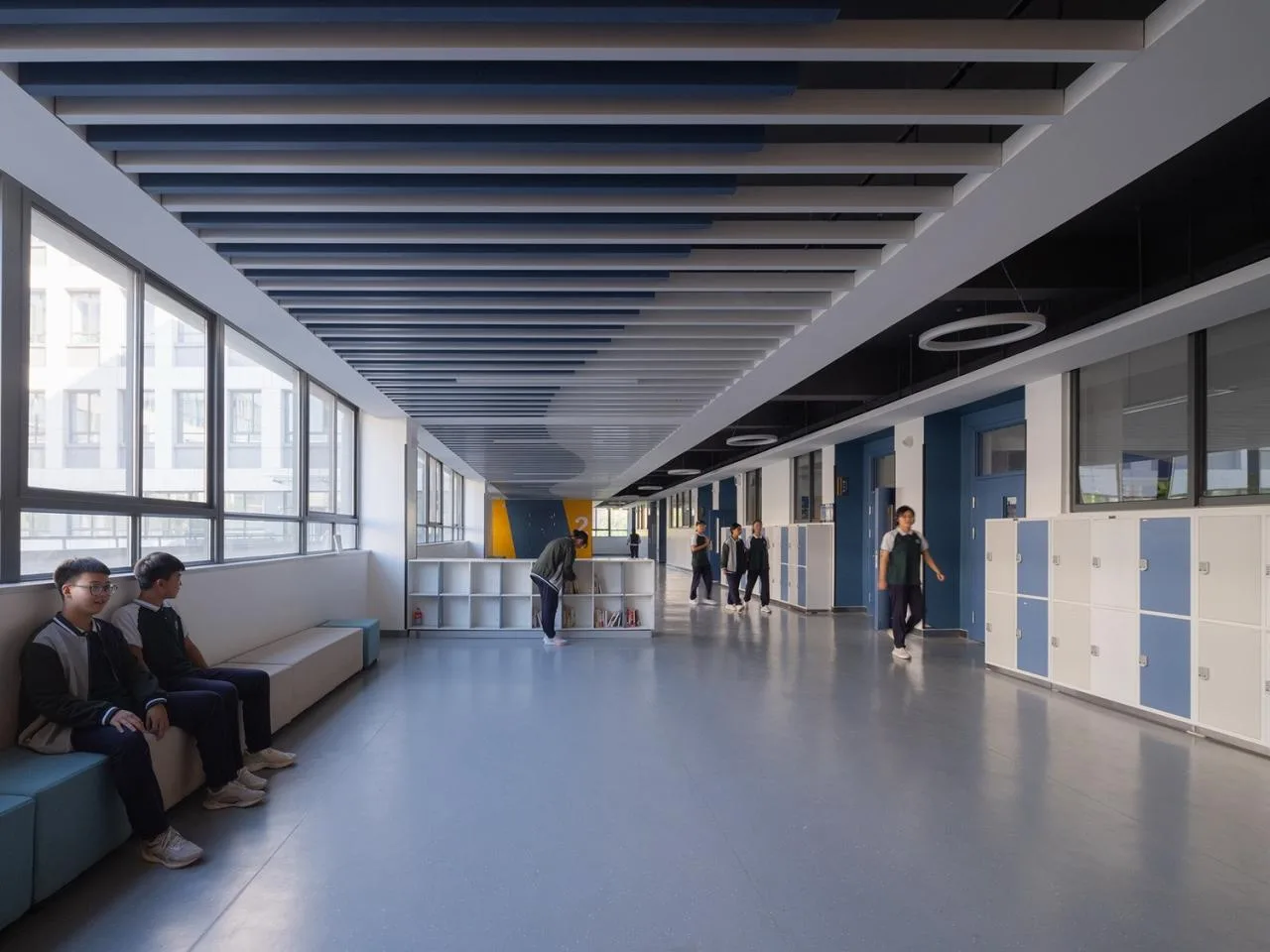
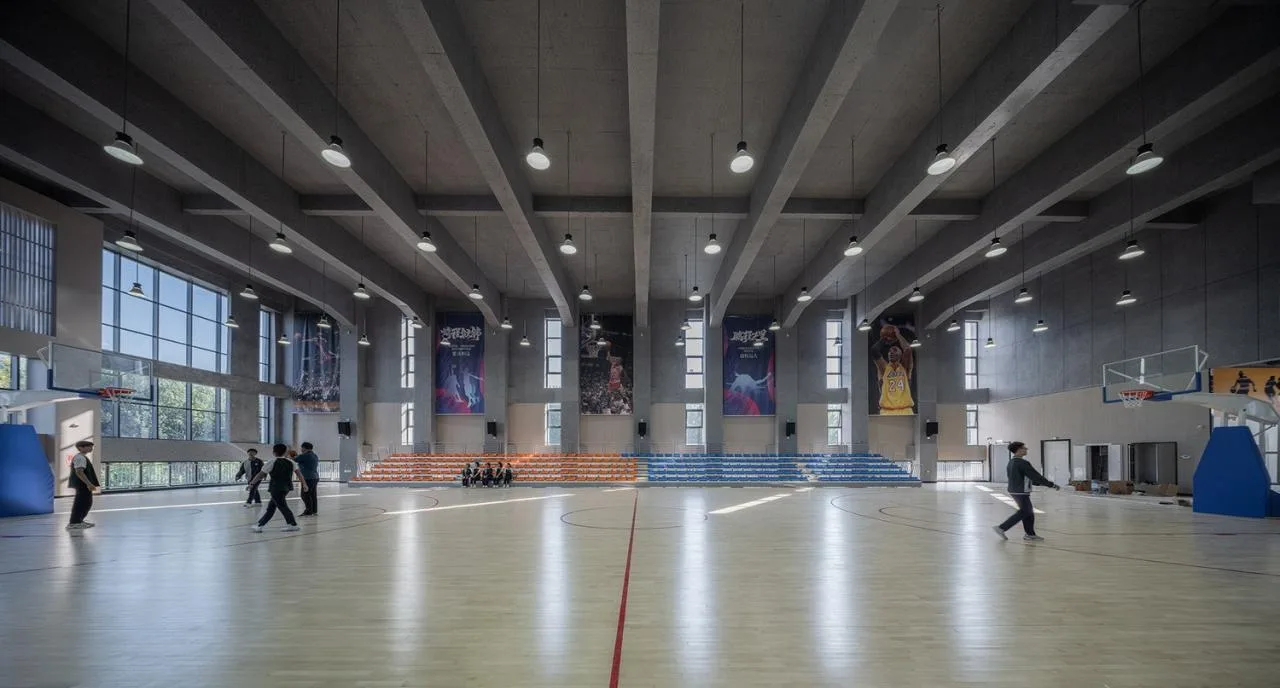
An Indoor Space Where Order and Activity Coexist
Since the campus is not situated within an authentic historical environment, it is impossible—and unnecessary—to recreate the exact forms of the academies and mansions where ancient sages taught. Instead of replicating symbolic structures like the “apricot altar,” the focus shifts to creating a spatial system that supports education without bias and adapts to individual learning needs. By paying close attention to diverse activities such as classroom engagement, daily life, and independent exploration, the design aims to foster genuine emotional connections between students and their environment.
Project Drawings
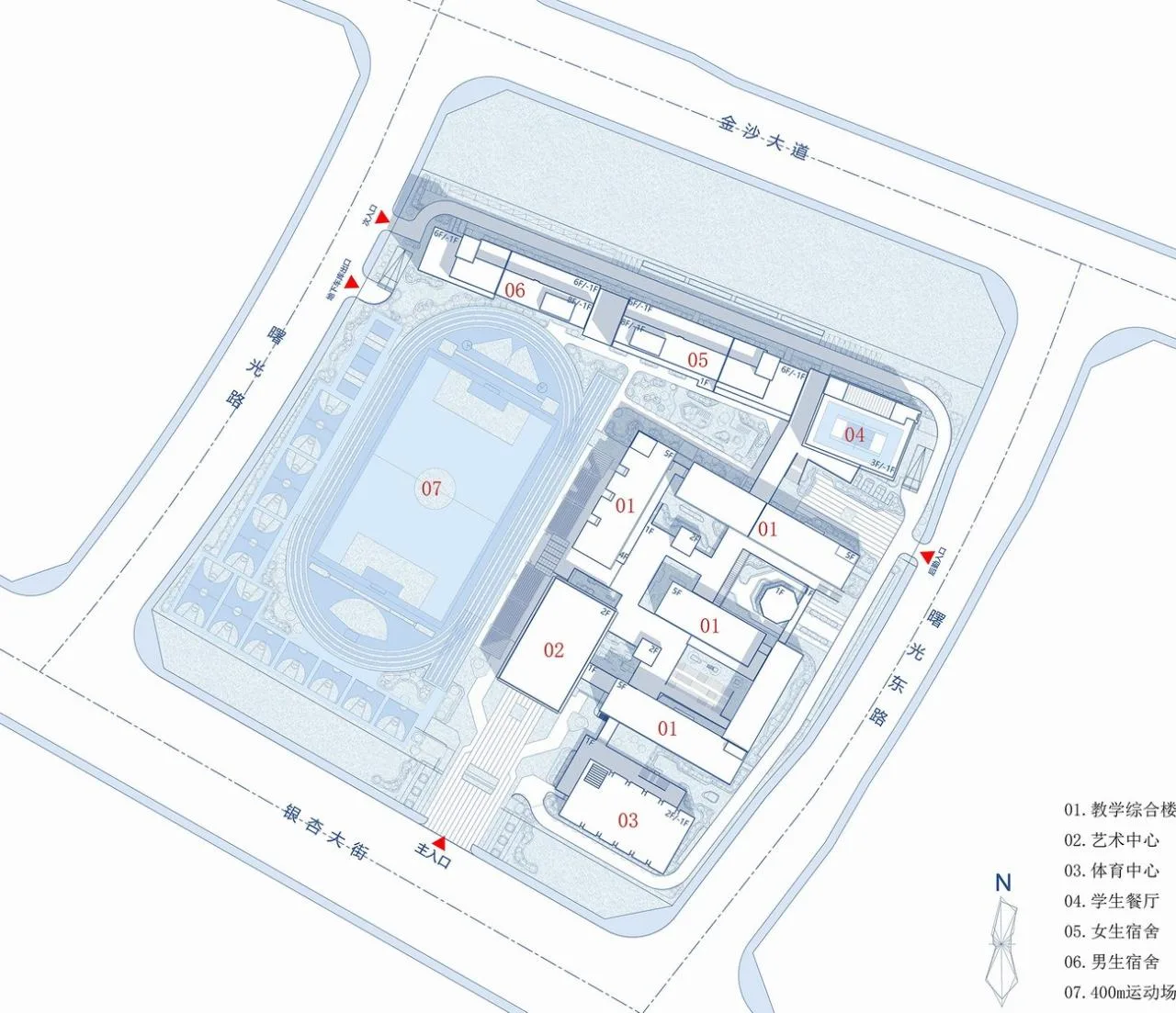
△ General Layout Plan
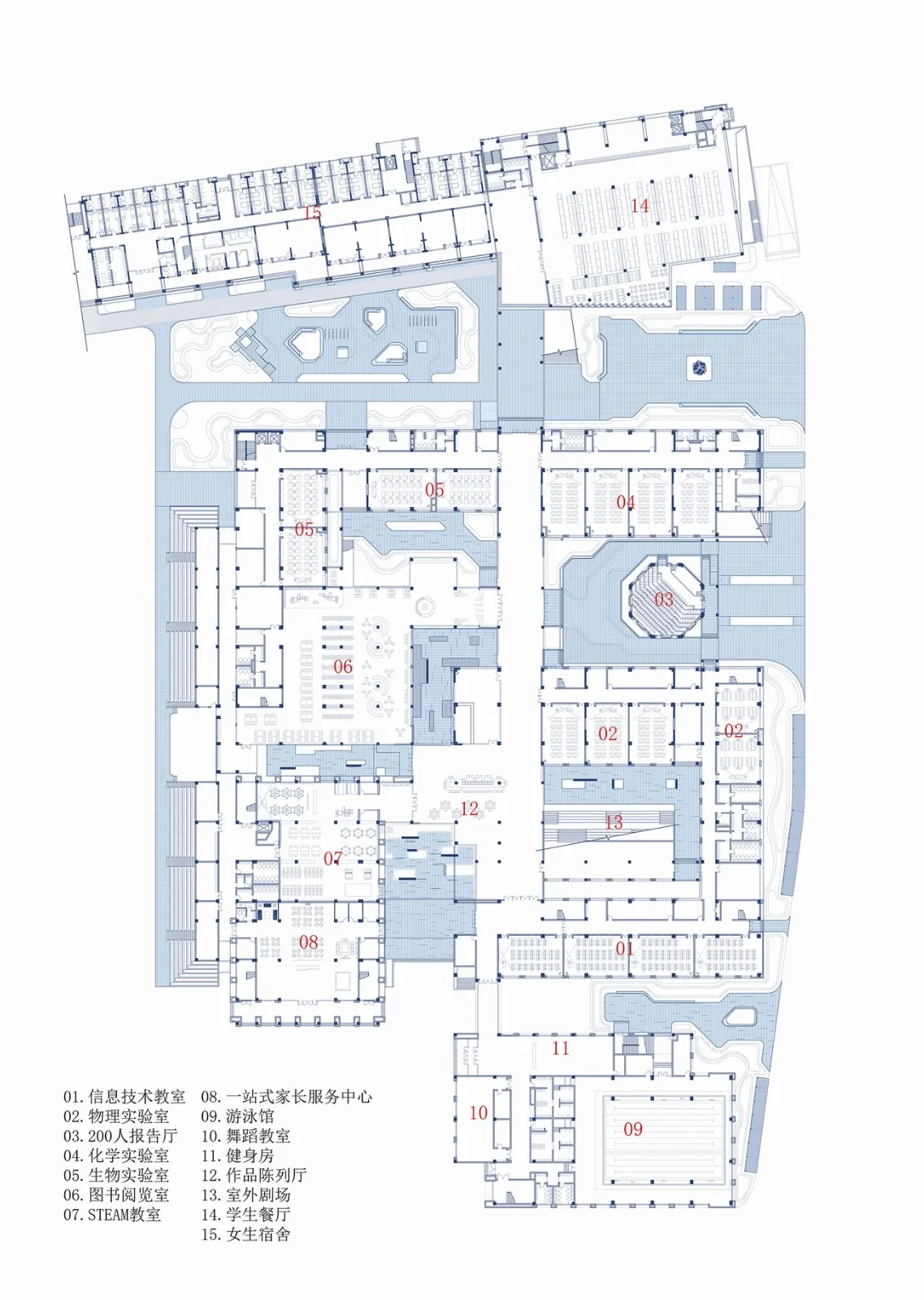
△ First Floor Plan
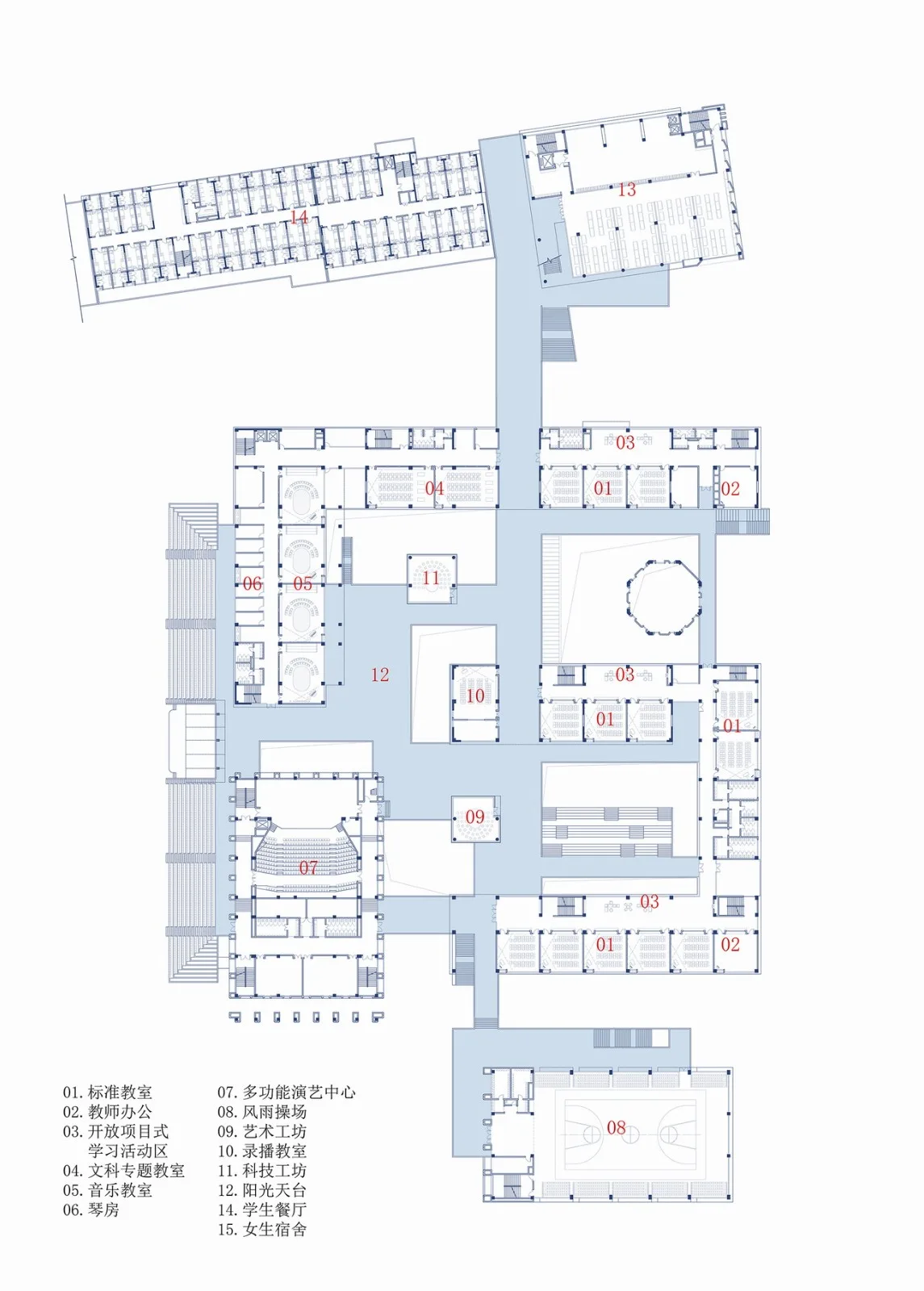
△ Second Floor Plan
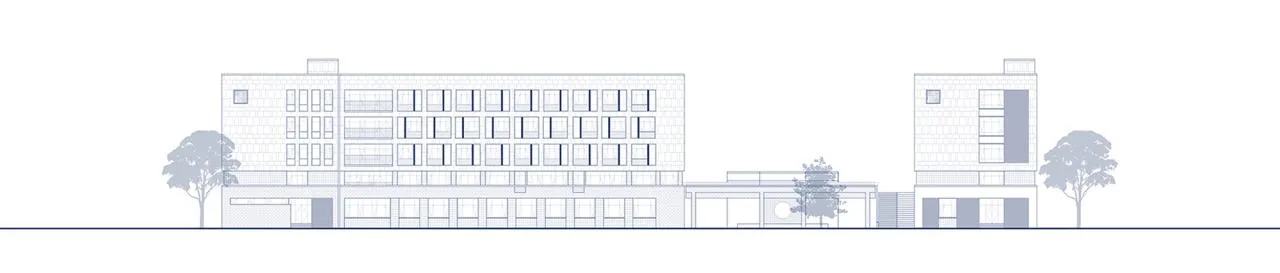
△ South Elevation of Teaching Area
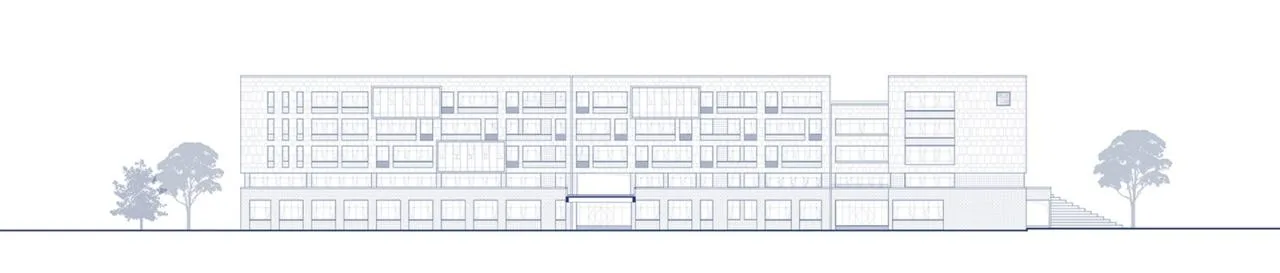
△ North Elevation of Teaching Area
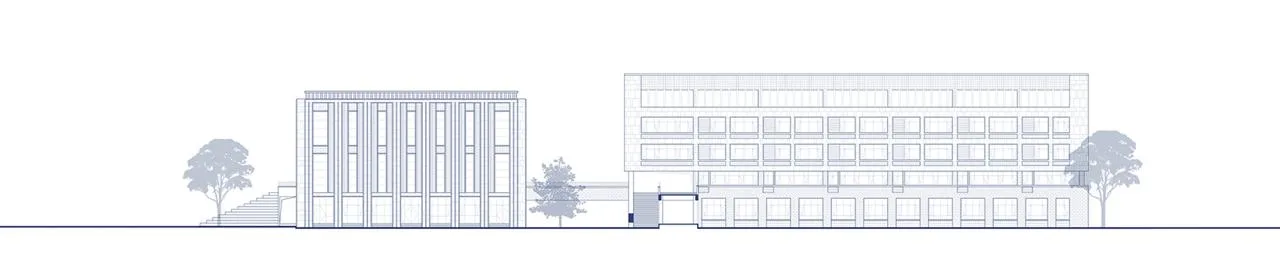
△ East Elevation of Teaching Area
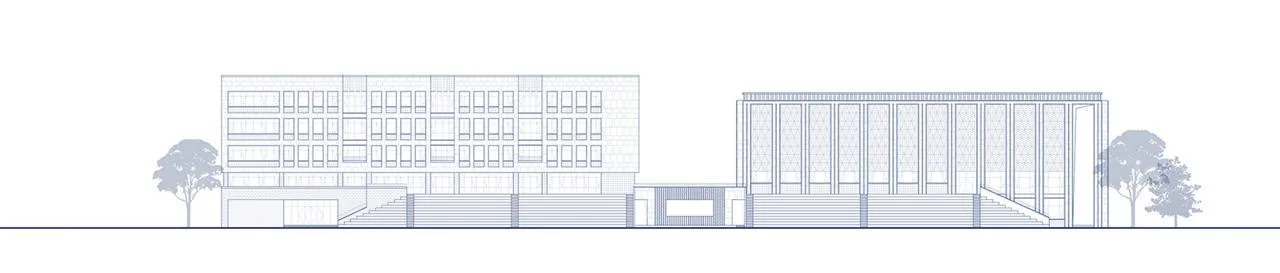
△ West Elevation of Teaching Area
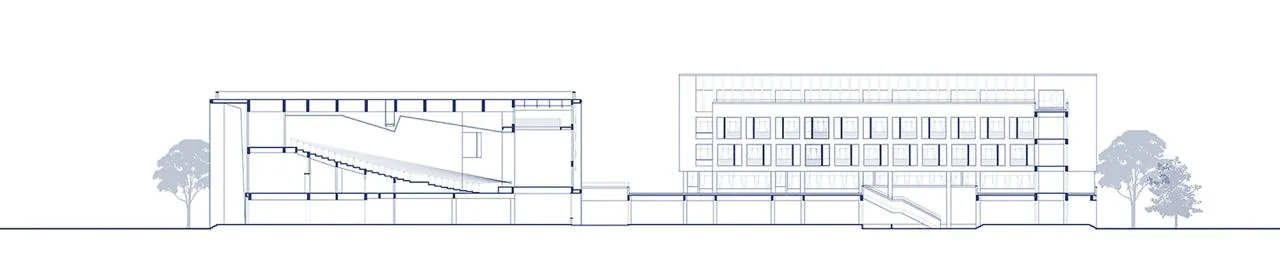
Section 1-1 of Teaching Area
Project Information
Project Name: Henan Anyang Zhenzhong School
Client: Anyang Zhenzhong Education Consulting Co., Ltd
Location: Wenfeng District, Anyang City
Design Period: Architecture: December 2021 – May 2022; Interior: May 2022 – October 2022
Completion: July 2023
Education Scale: 60 classes accommodating 2,760 boarding senior high school students
Site Area: 66,700 square meters
Total Building Area: 76,000 square meters
Design Team: Xiangwai Construction Studio, School of Architecture and Urban Planning, Shandong Jianzhu University
Lead Architect: Liu Weibo
Project Architect: Yu Wenyuan
Interior Design Team: Yu Wenyuan, Zheng Yanding, Zhang Zengwu, Sun Tao, Zhang Enwei, Sun Chun, Chen Jing, Qiao Karen, Liu Yuanjian (Intern), Yang Dexian, Song Zhenwei, Liu Jiaxuan (Intern), Yu Pengcheng (Intern), Zhang Guangyi (Intern)
Architectural Photography: Cui Xufeng, Time Difference Imaging














Must log in before commenting!
Sign Up