
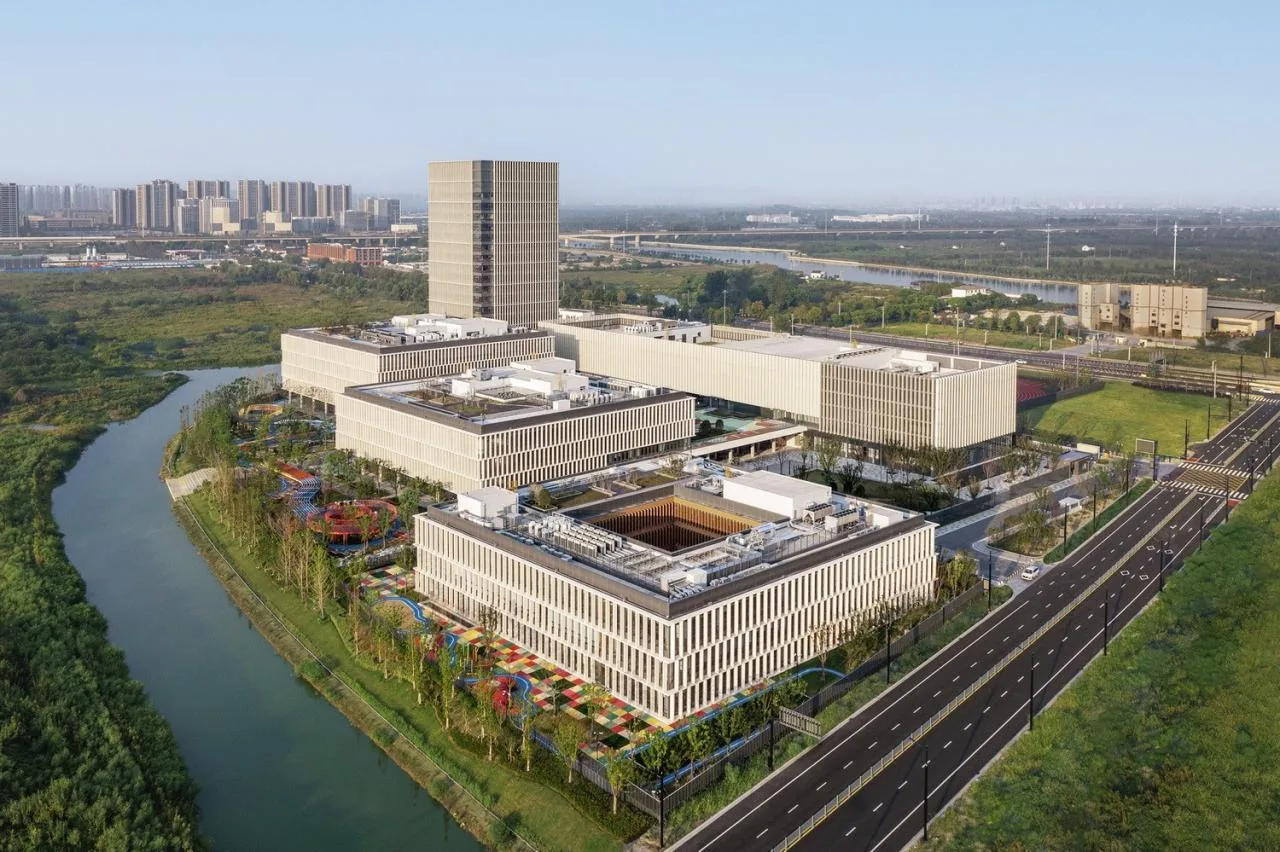
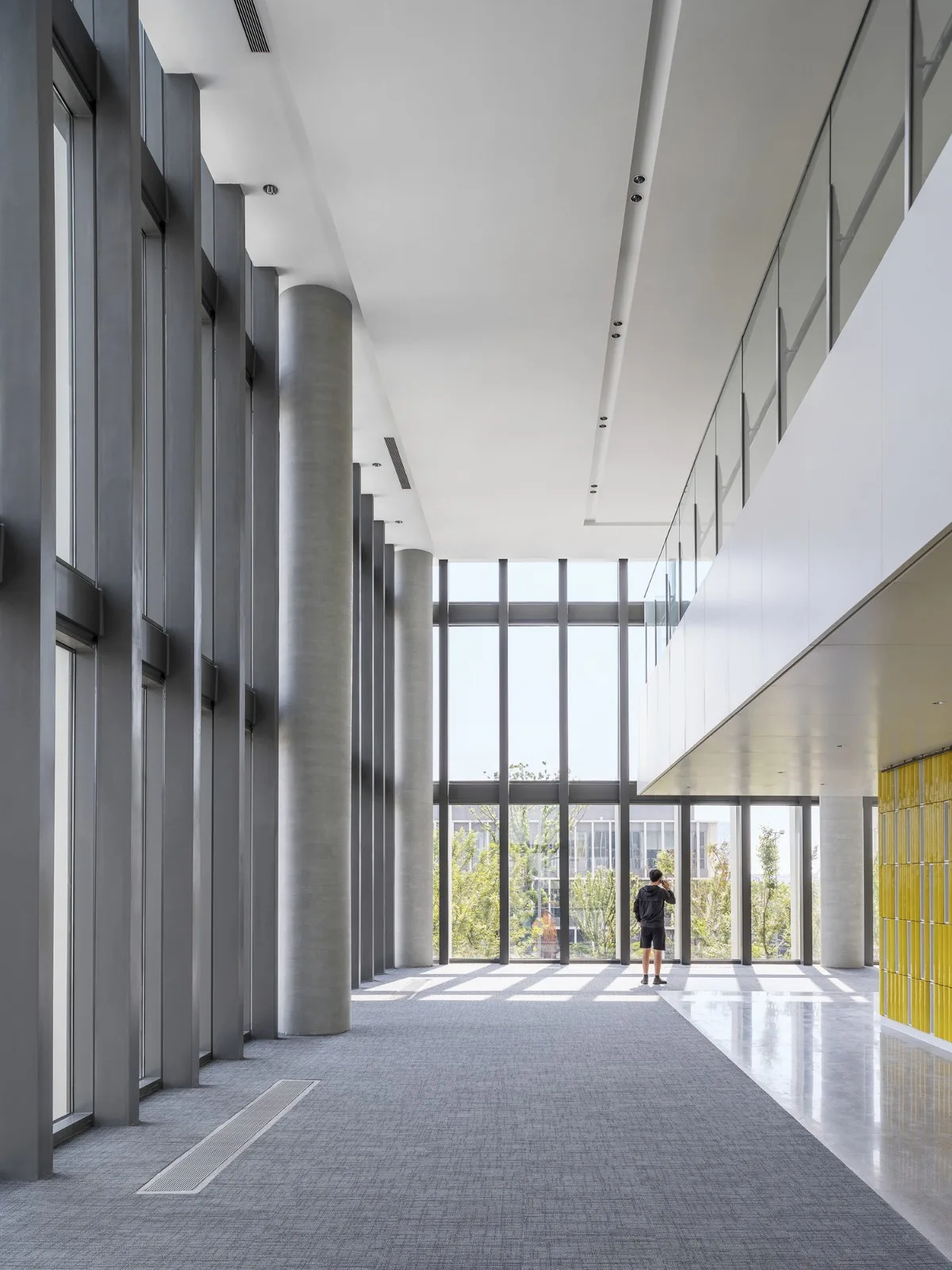
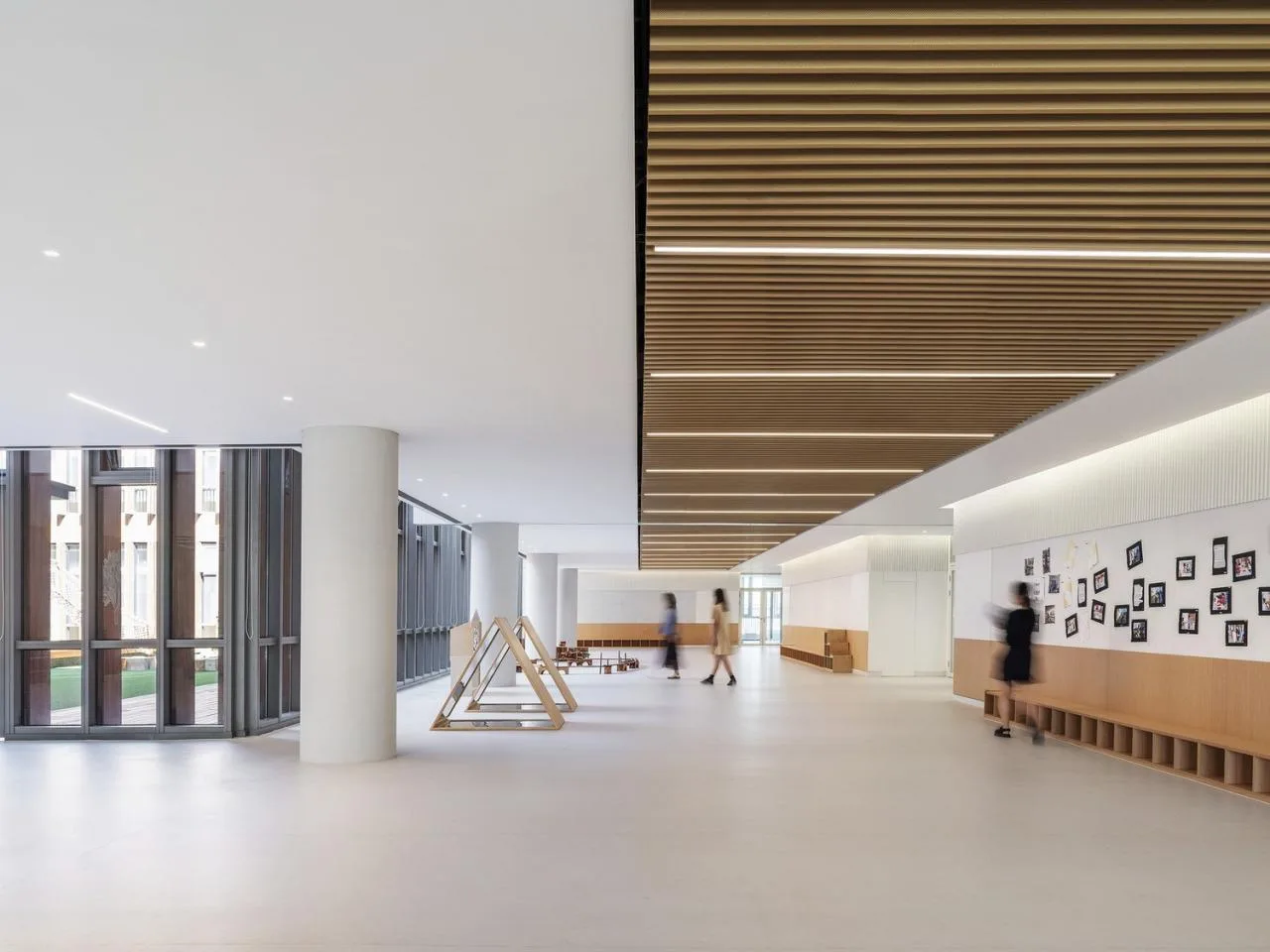
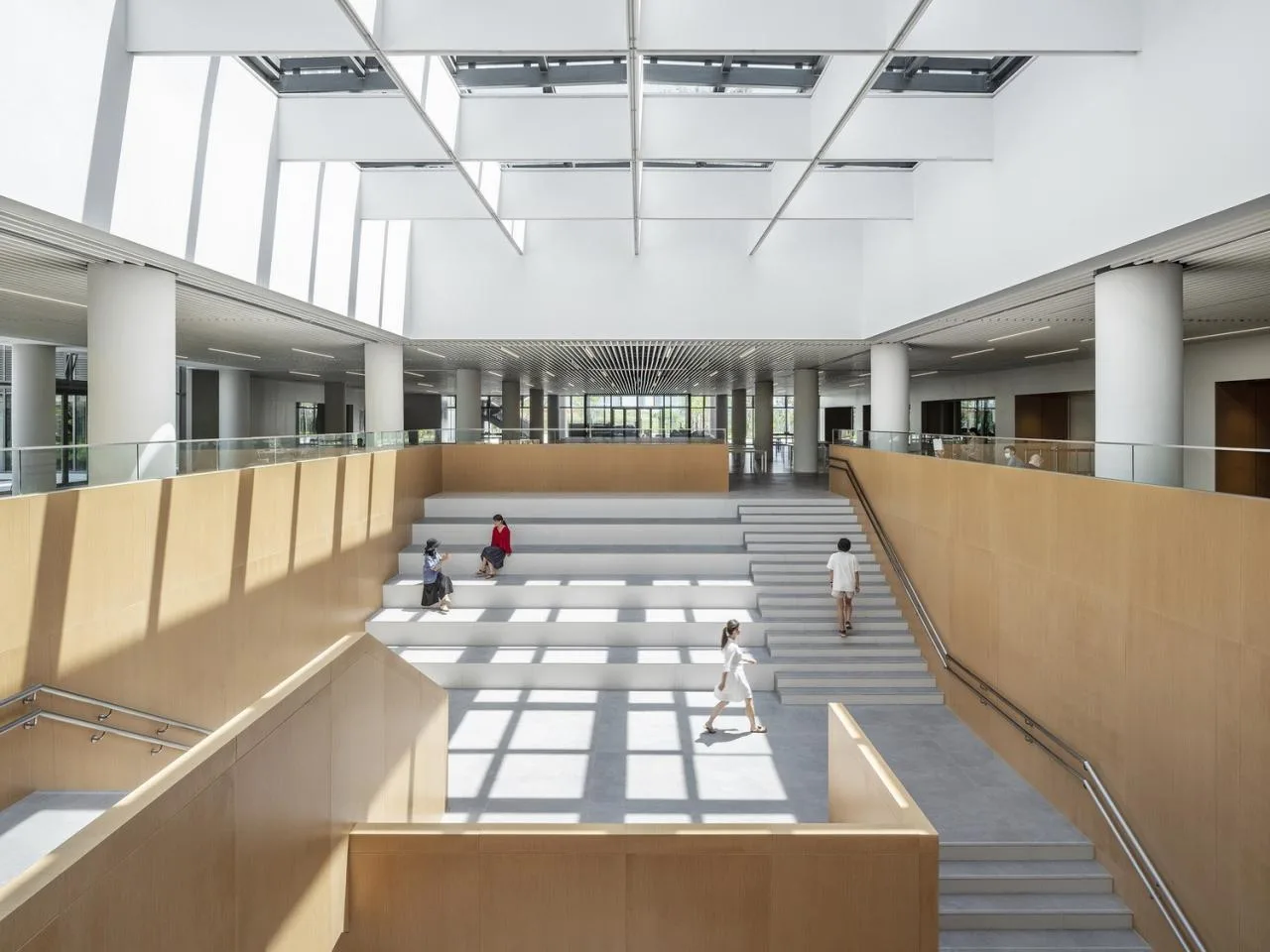
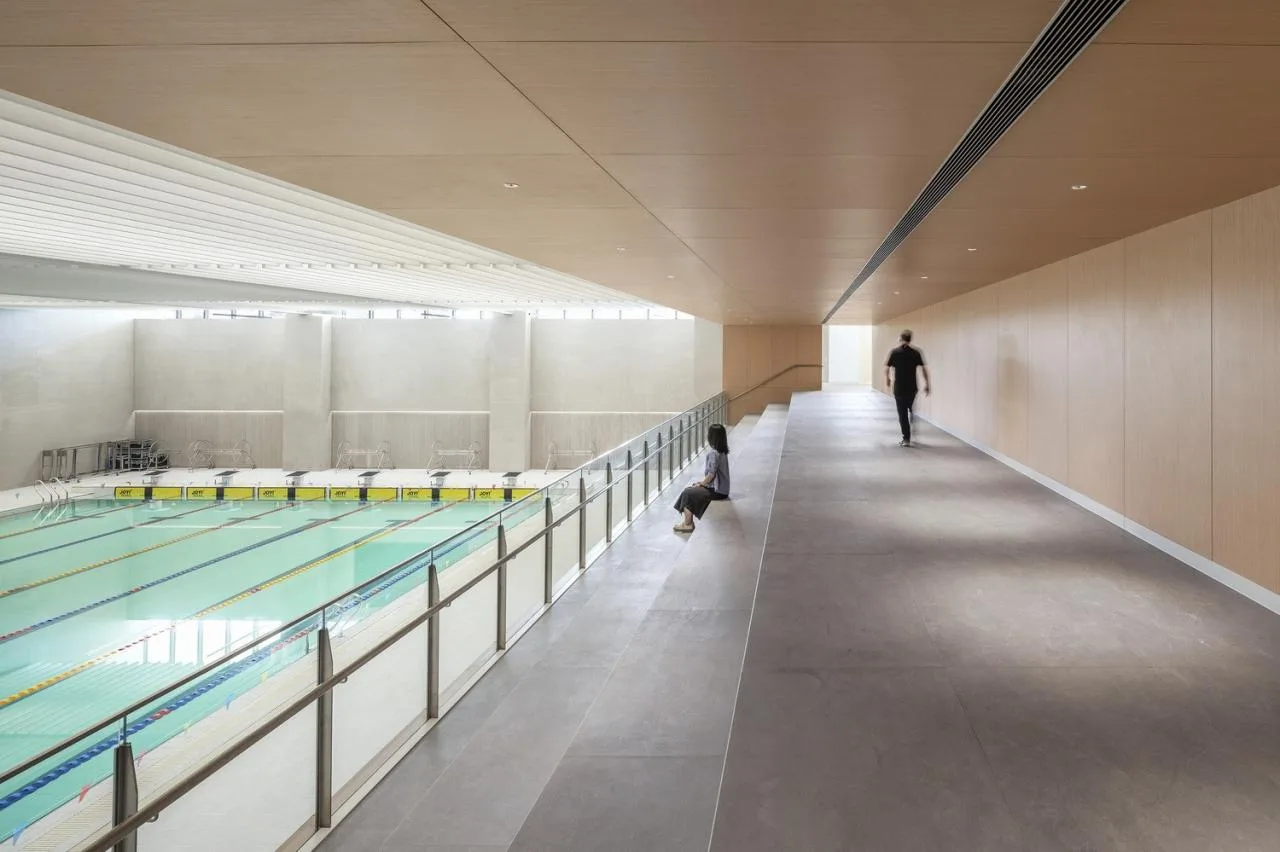
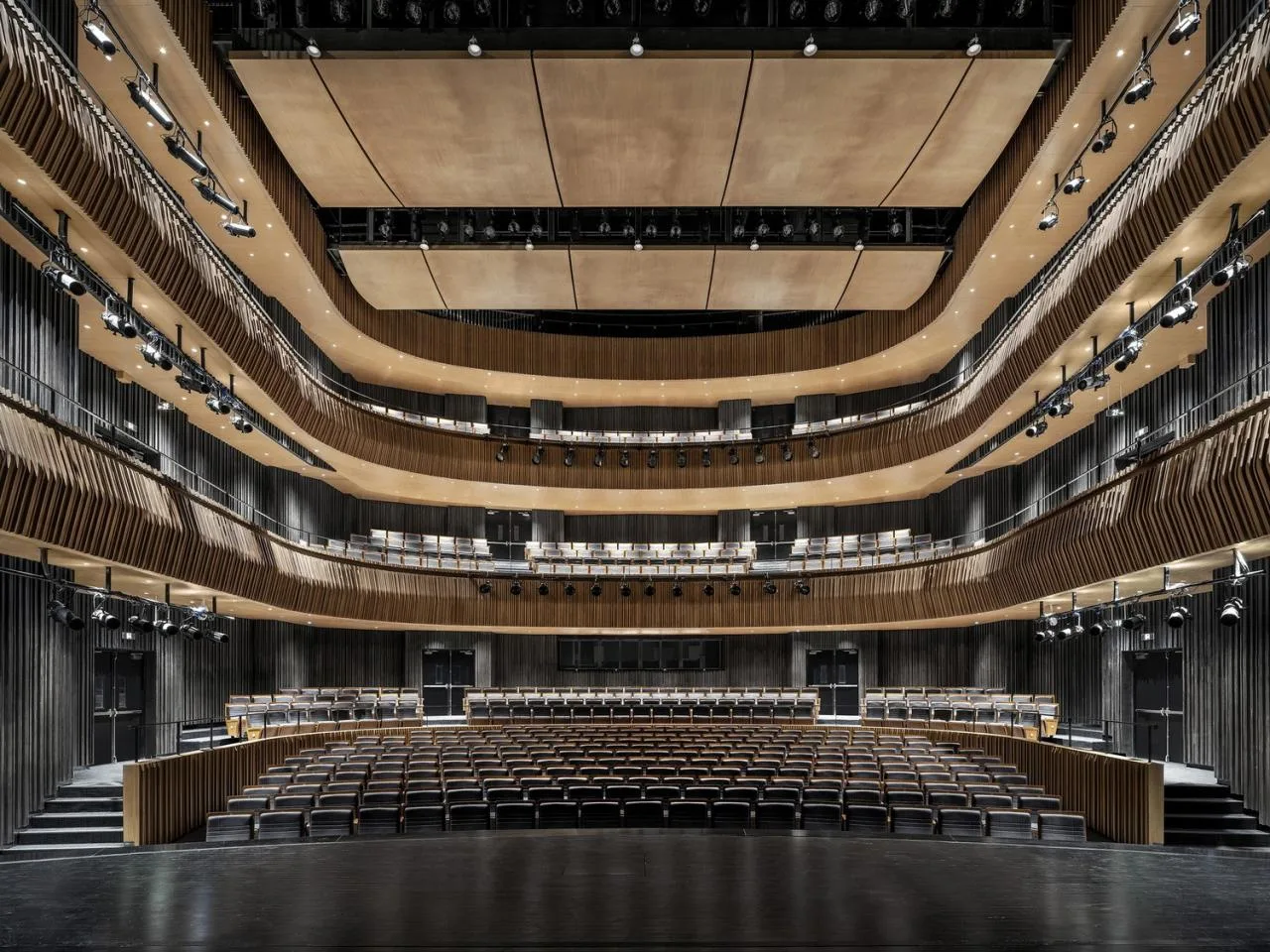
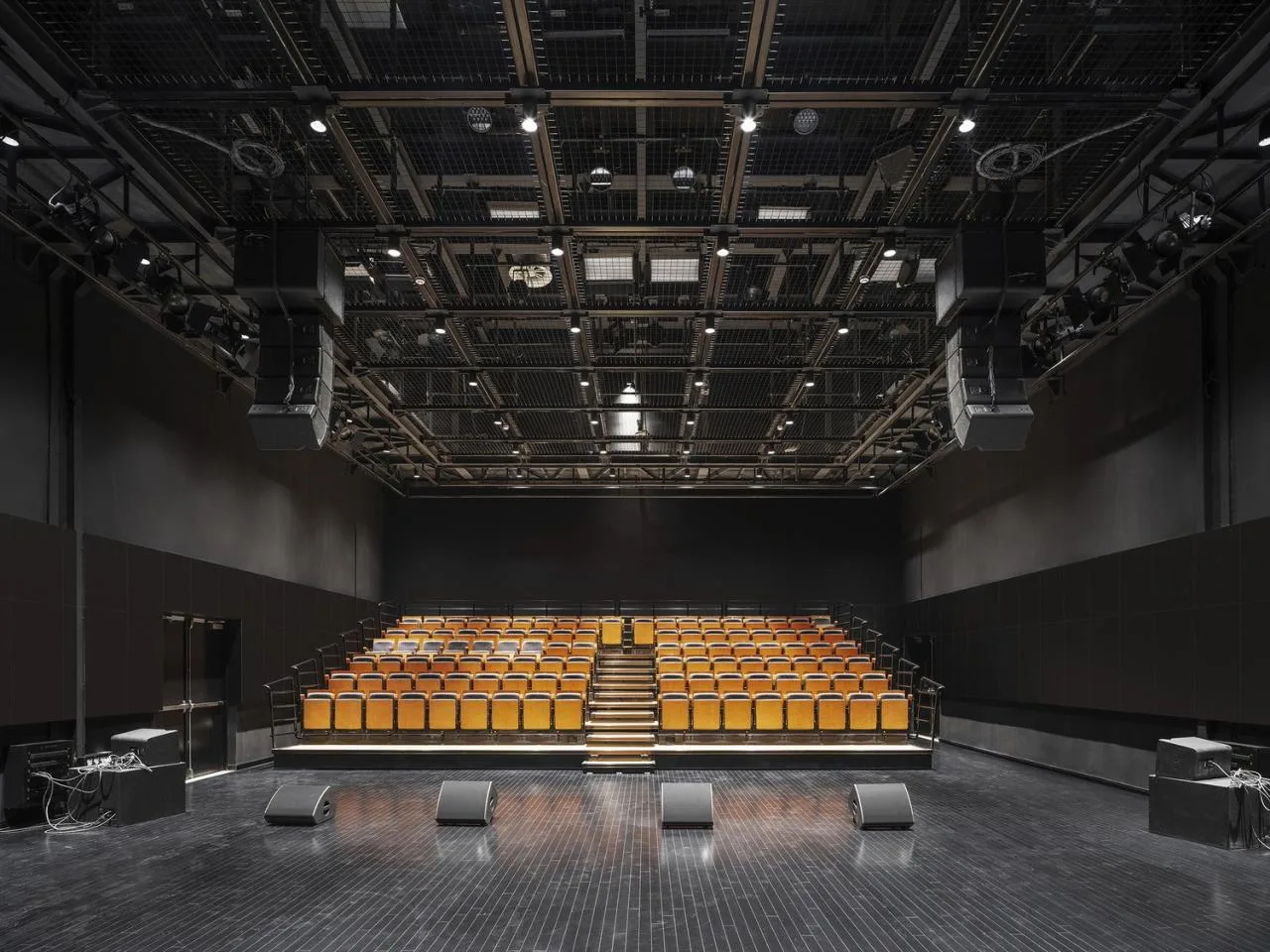
Suzhou Huitong School is situated in Suzhou High Speed Rail New City, occupying 7.5 hectares with a total built-up area of 119,000 square meters. This boarding school serves 2,500 students, ranging from kindergarten through 12th grade, fully embodying the school’s philosophy that “learning is always present and everywhere.” The campus features three courtyard-style teaching buildings, a sports and performing arts center, and dormitories accommodating up to 1,000 students.
The campus design emphasizes efficiency and flexibility, fostering interdisciplinary learning and critical thinking. Built to meet LEED Silver and China Green Building Two Star standards, it is set to become one of Asia’s most prestigious boarding schools.
Overall Planning Concept
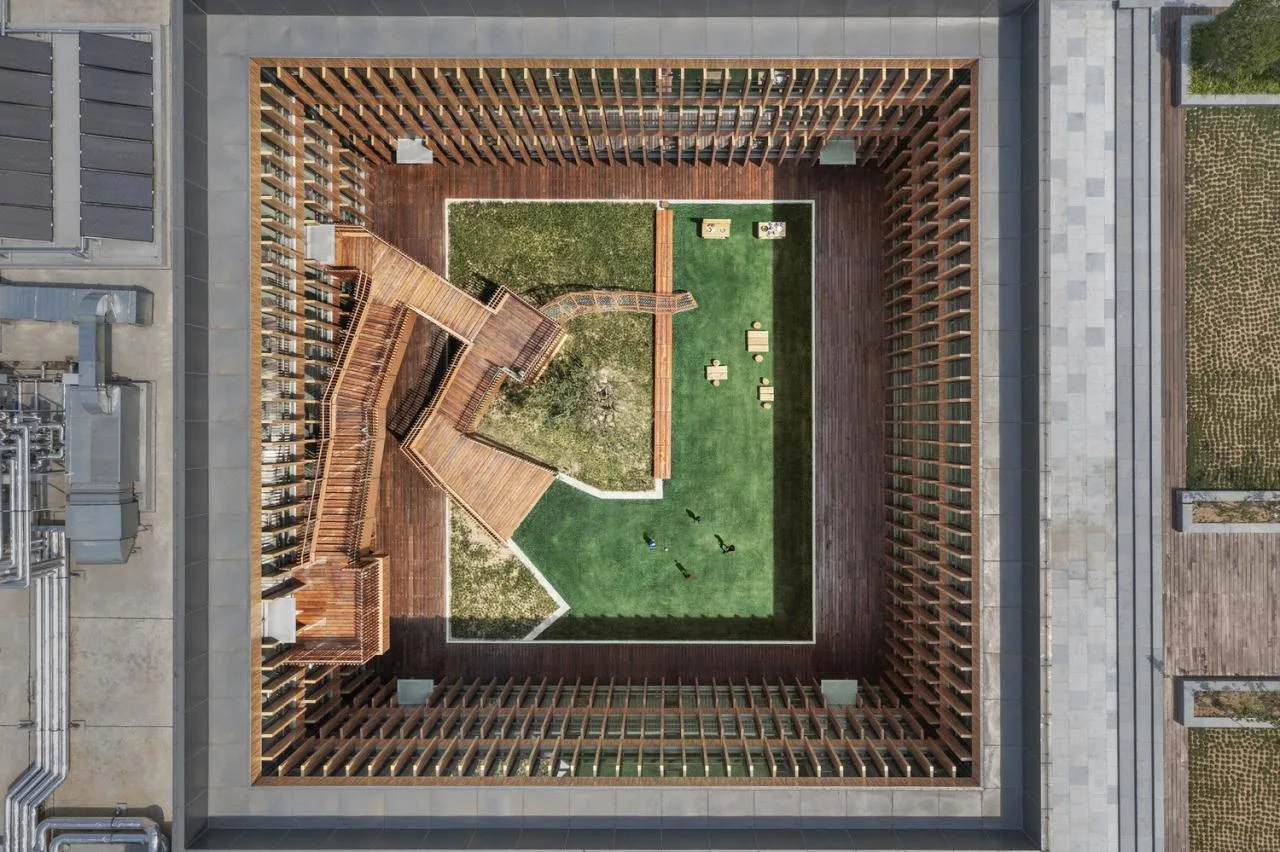
The campus master plan responds to both its external surroundings and internal functional requirements. To the southeast lies a newly constructed canal, while the north borders a city road. To the west, a highway and public green space frame the site. The campus divides into two zones: a lively, active sports area adjacent to the highway, and a quiet, contemplative academic zone along the canal.
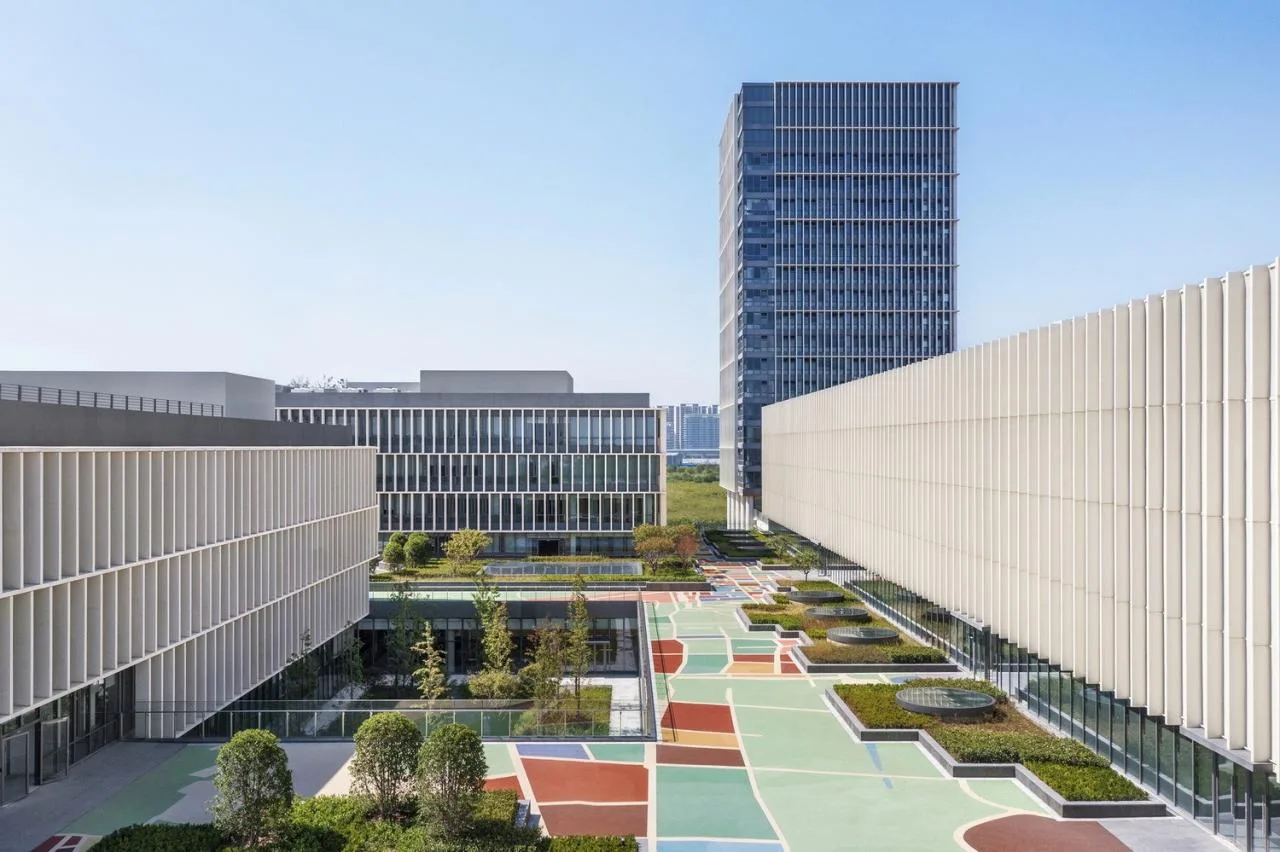
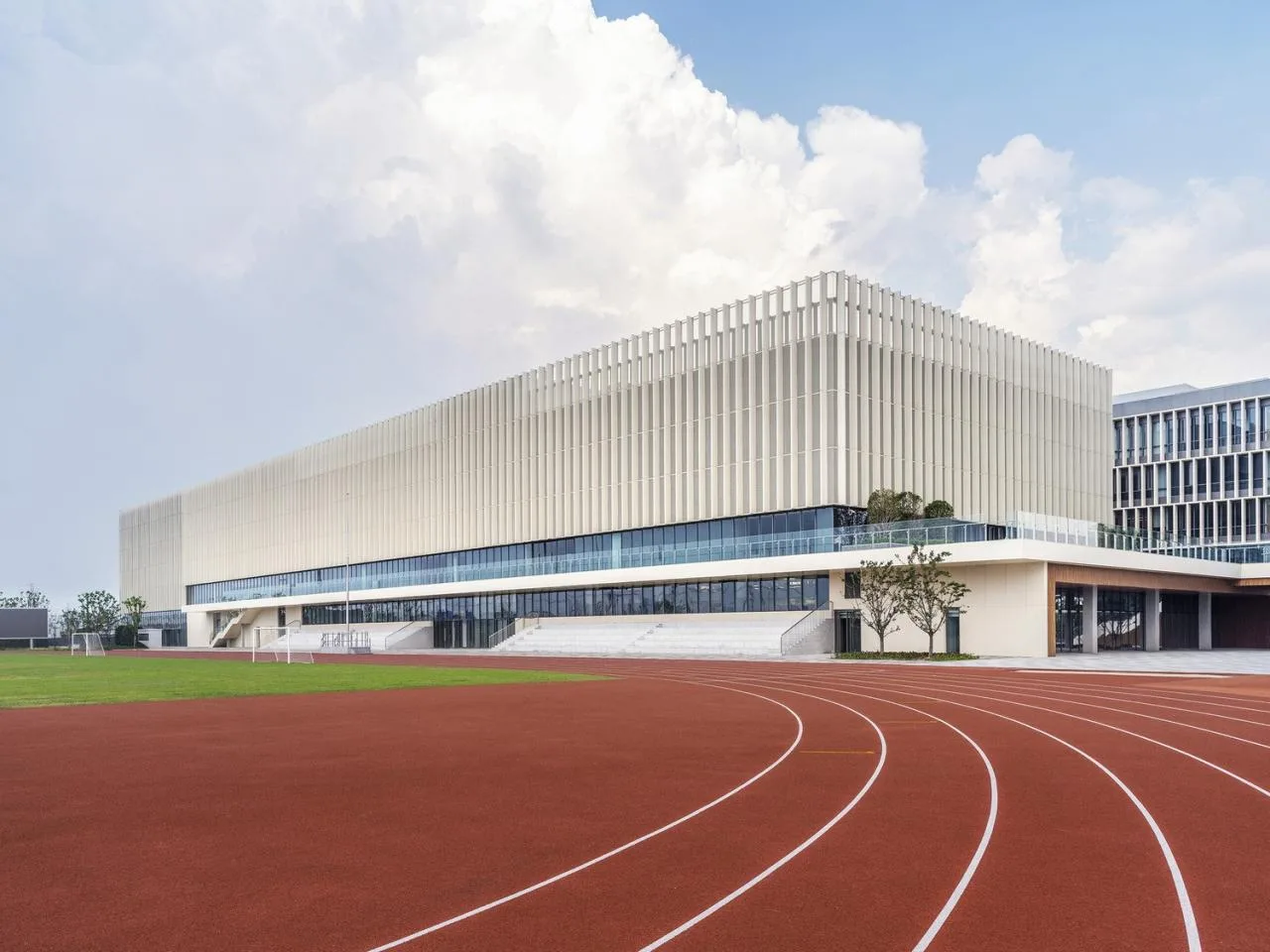
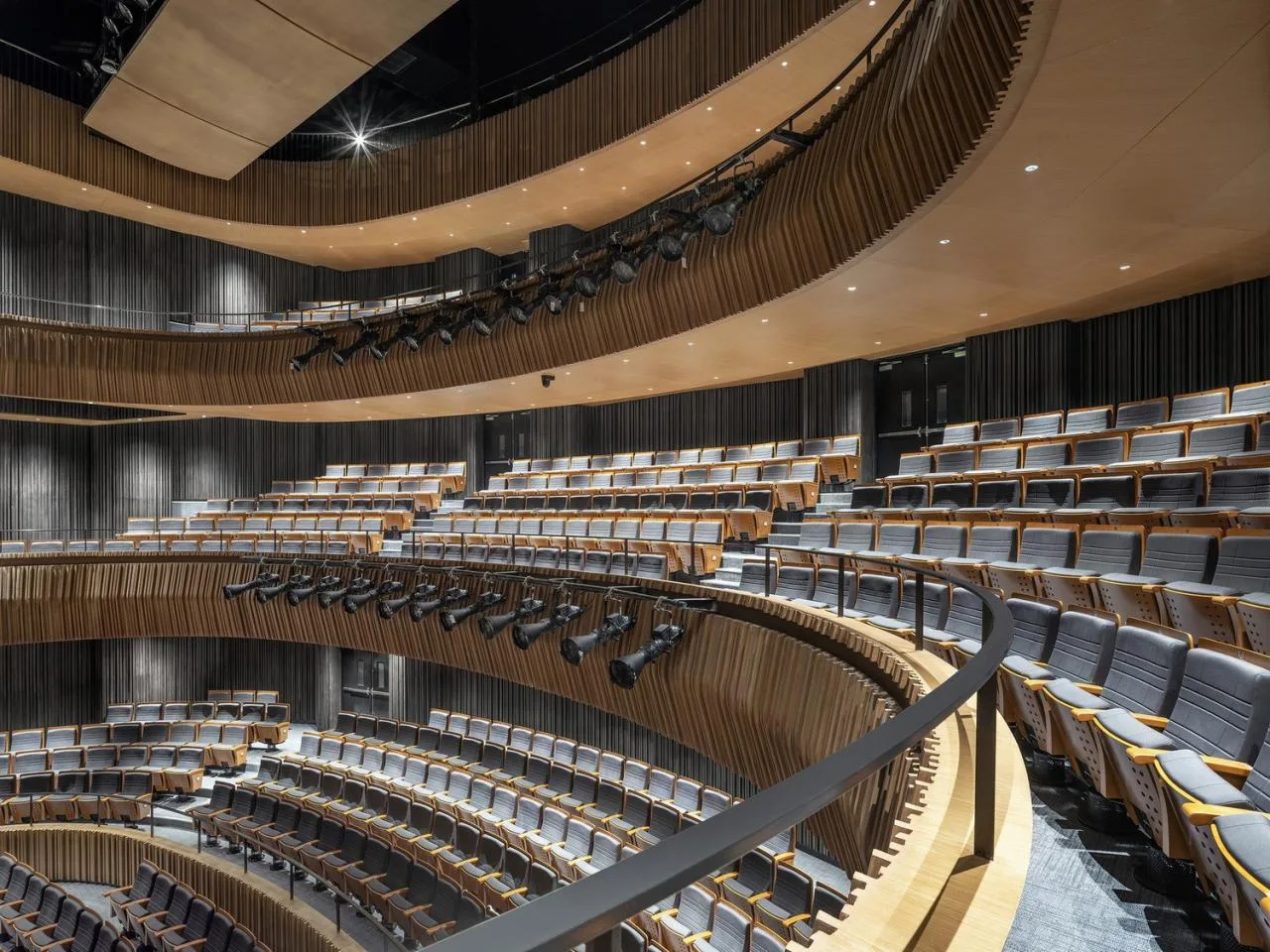
The three circular teaching buildings—dedicated to kindergarten, primary, and junior high school—are staggered along the riverbank to maximize sunlight exposure and scenic views. The Sports and Performing Arts Center is positioned along the north-south axis, serving as a buffer between the dynamic sports fields and the academic area.
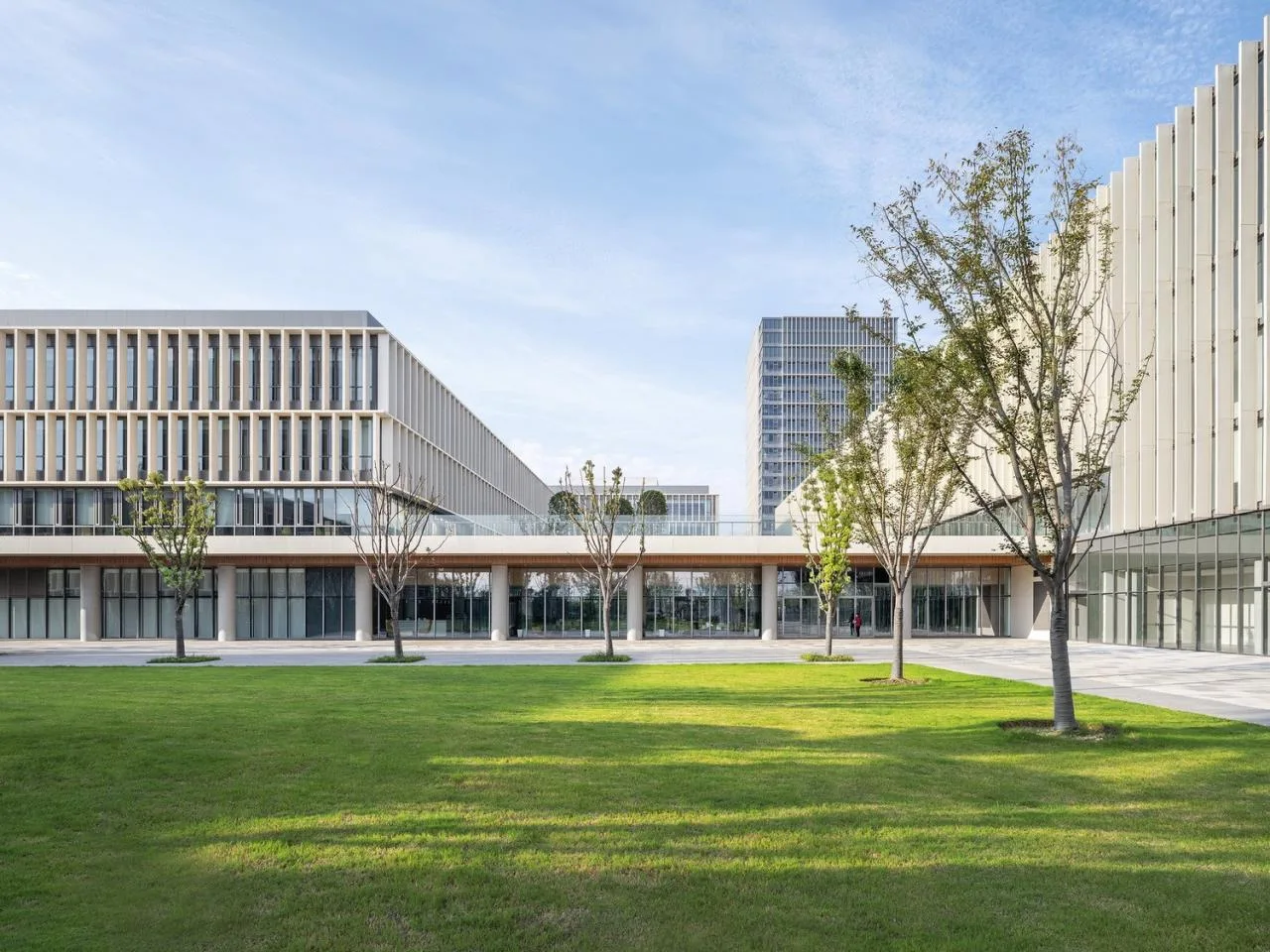
A single-story shared platform connects the three teaching buildings with the sports and performing arts center, forming the campus core and a landscaped terrace. At the southernmost end of the central axis, the student dormitory building is aligned along the river and linked to the sports center.
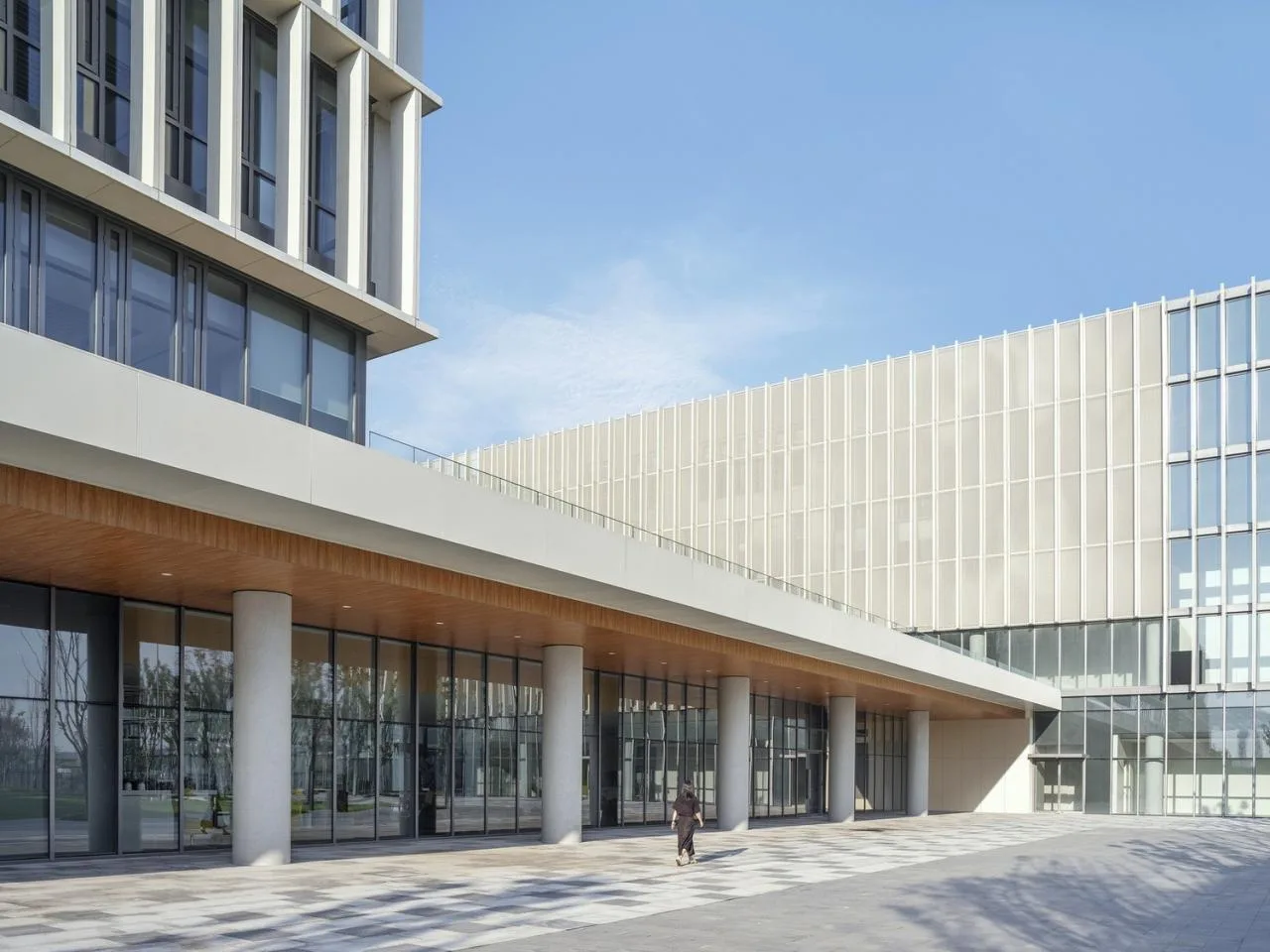
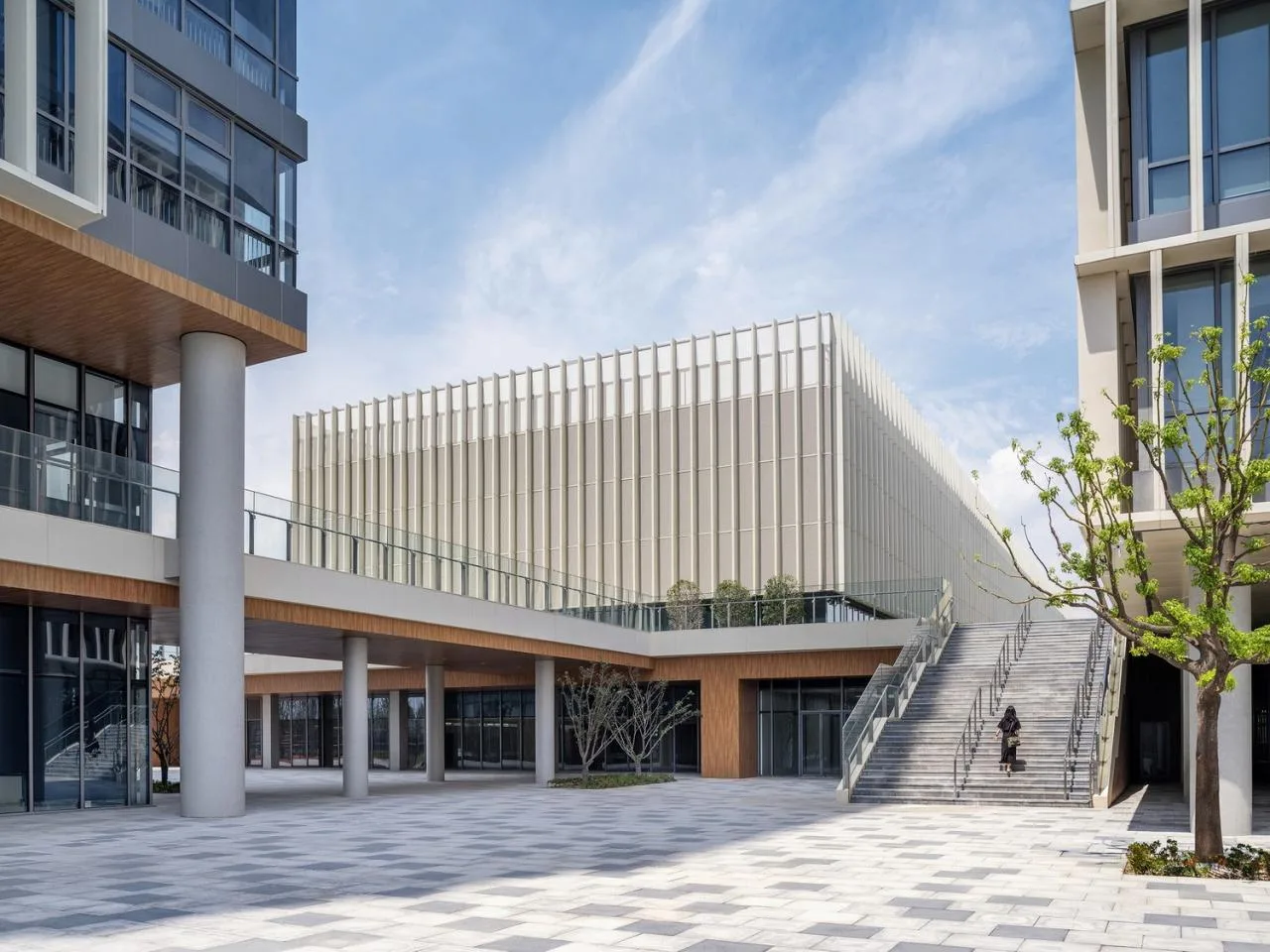
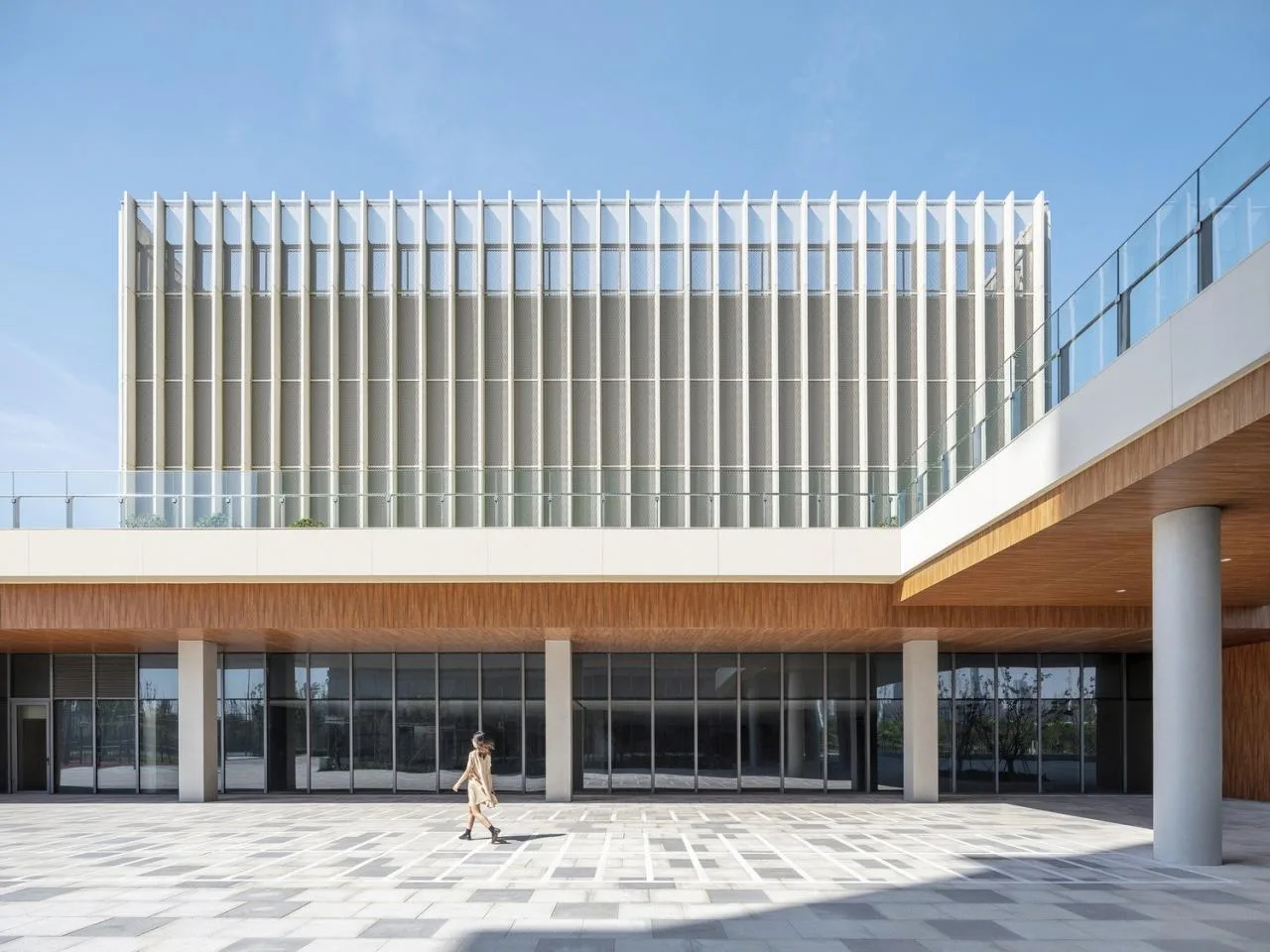
The exterior and architectural design draw inspiration from traditional elements of Suzhou gardens—such as screens, corridors, courtyards, and gardens—blended with modern materials to create a timeless and classic style.
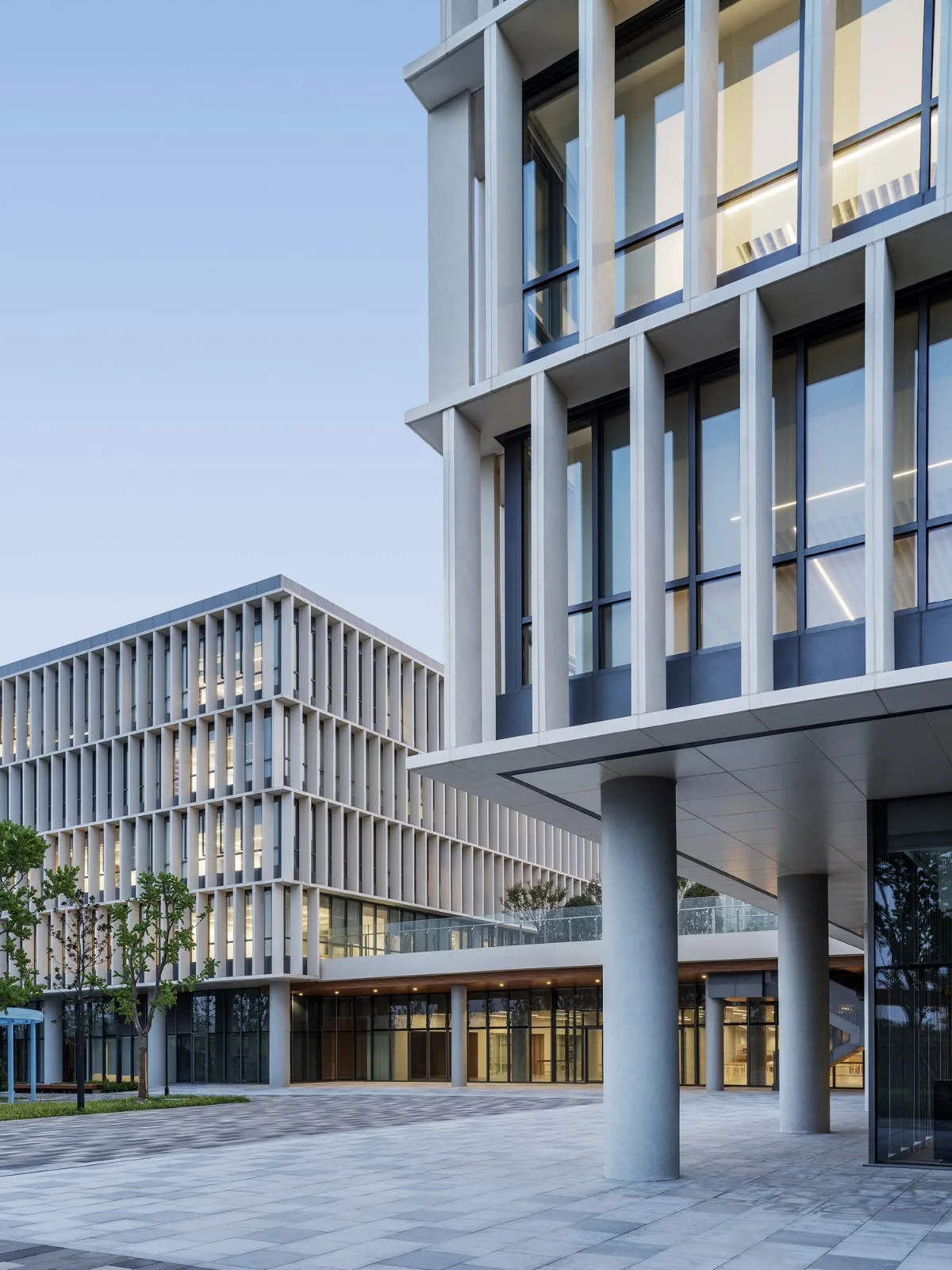
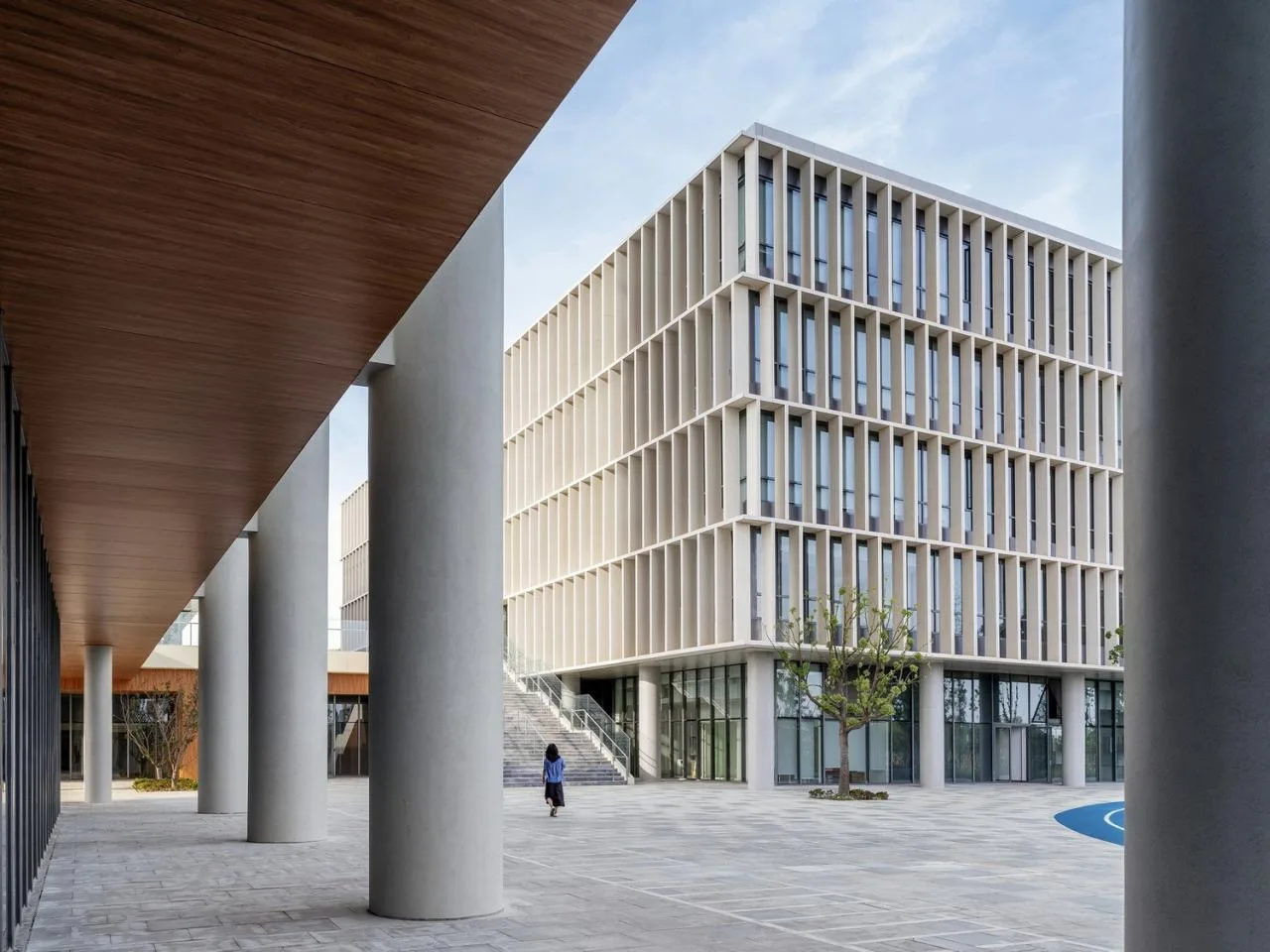
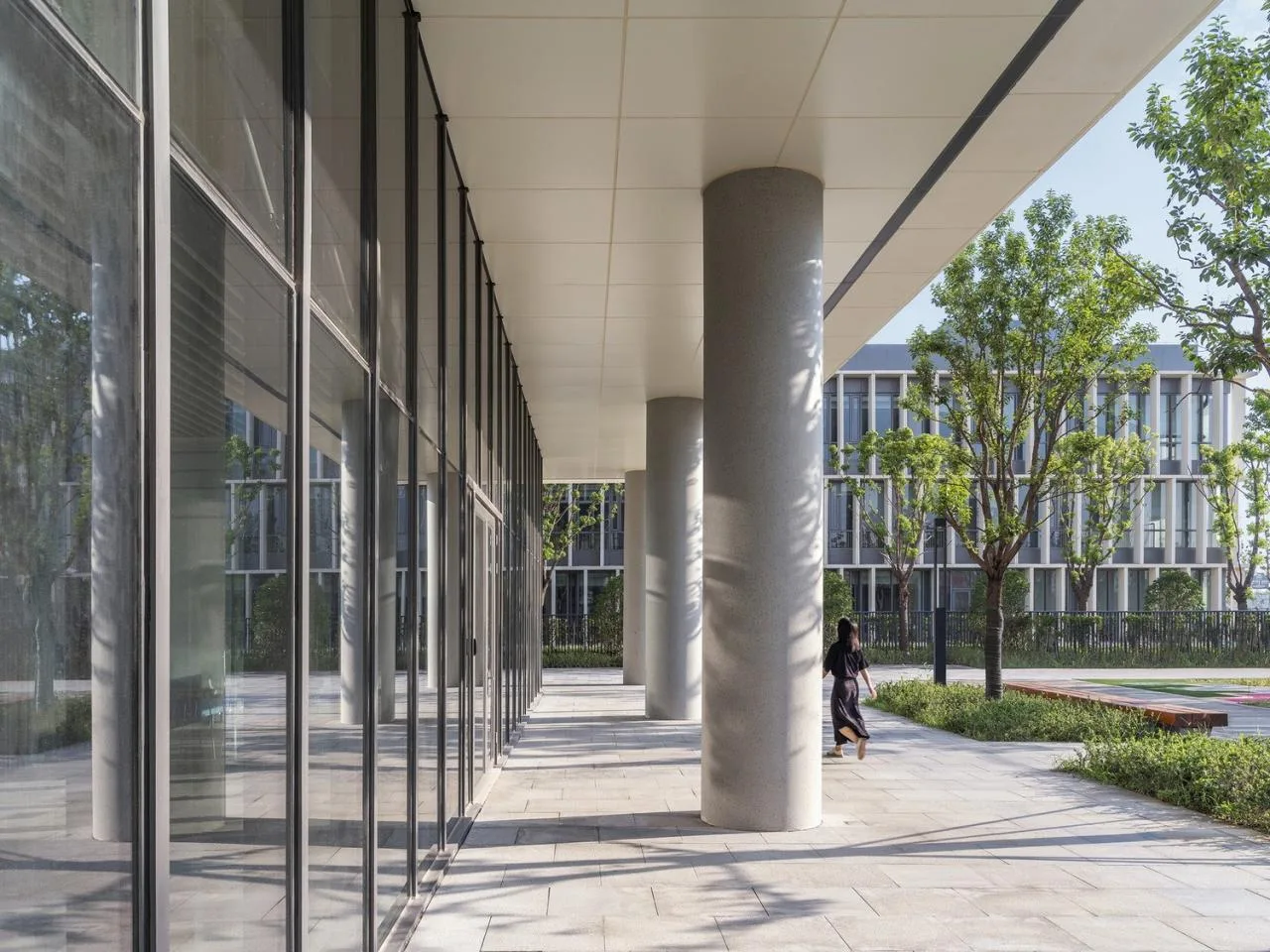
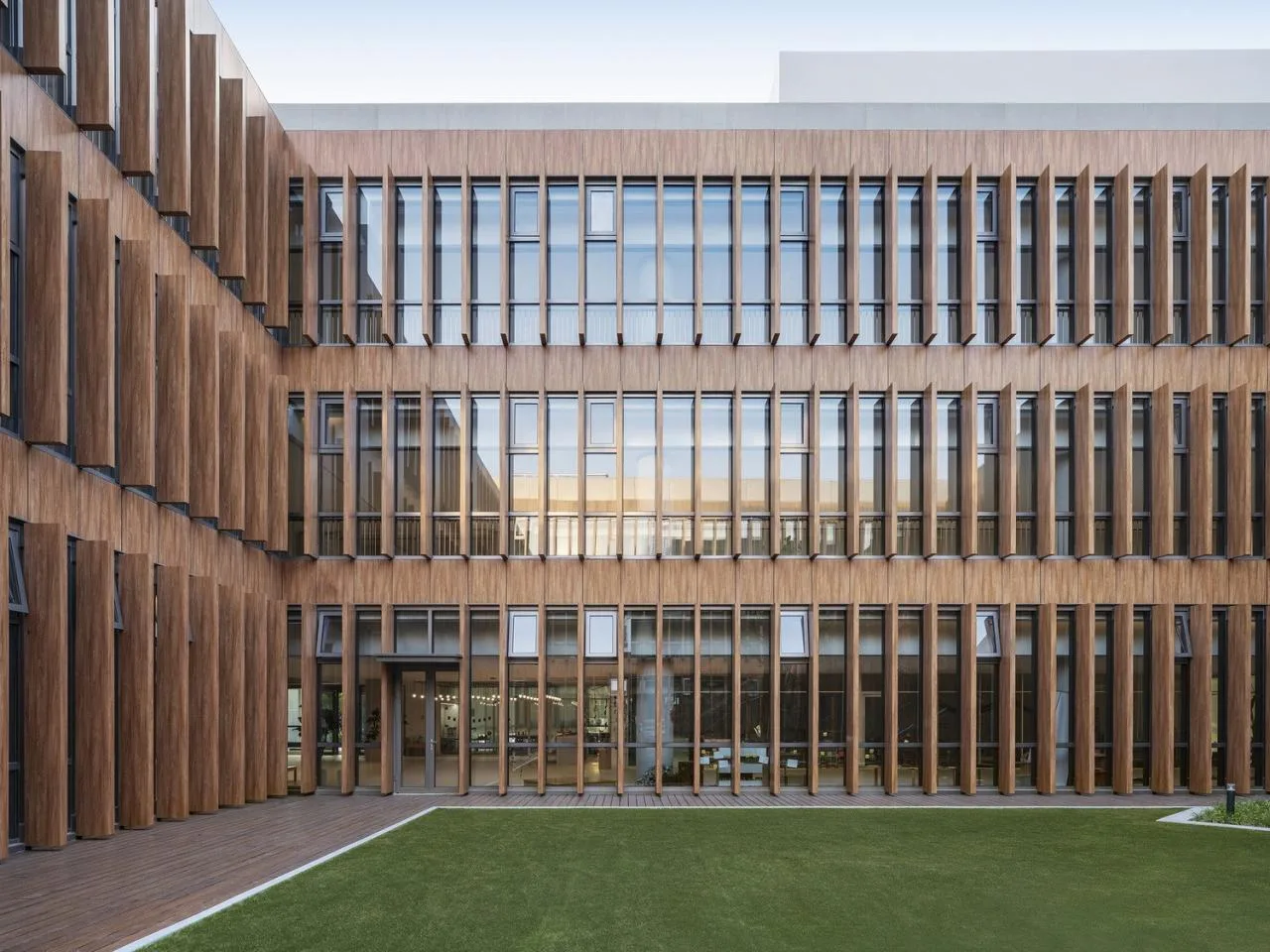
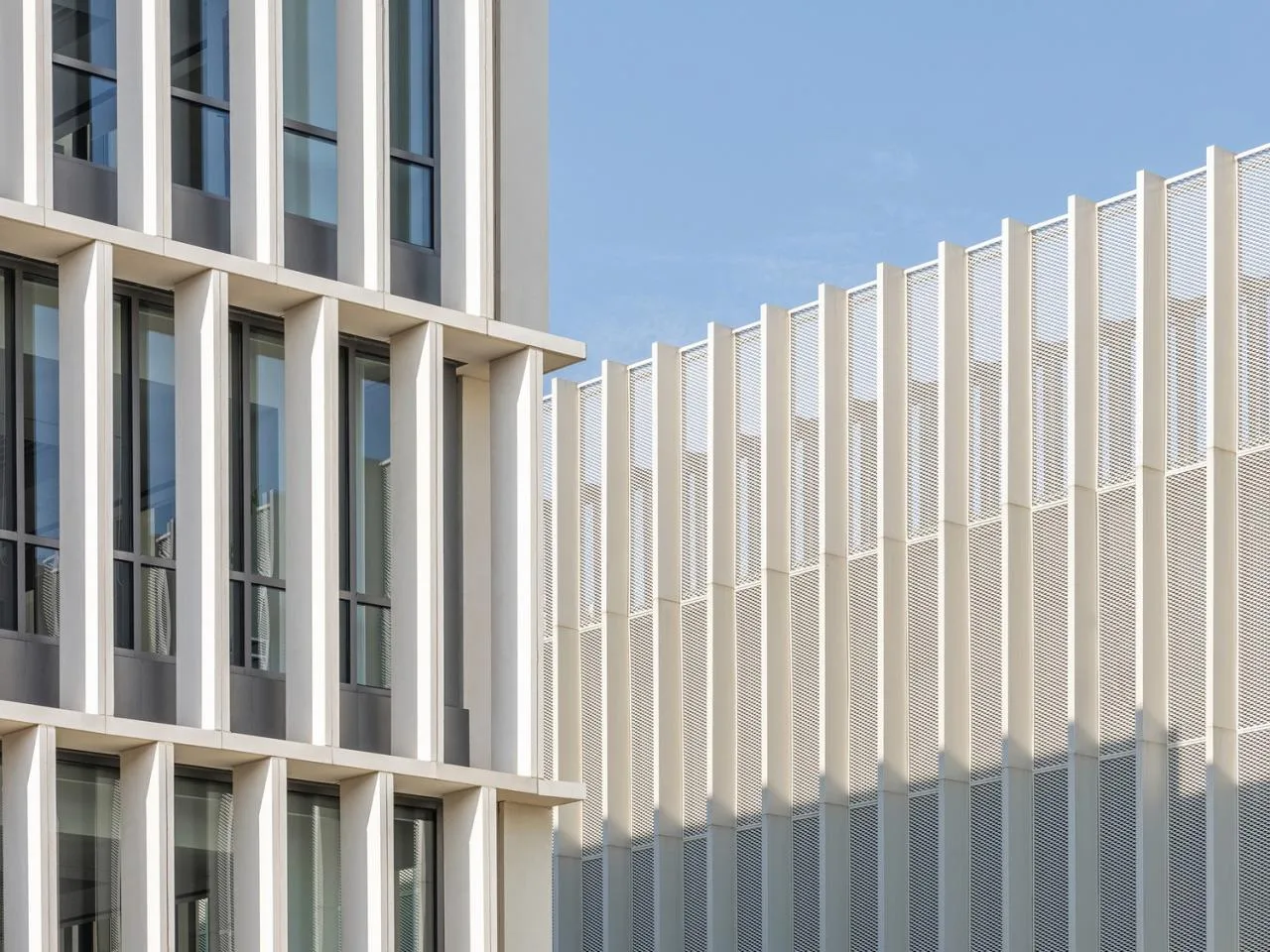
The campus screen design unifies the overall image while distinguishing each building. It incorporates an external sunshade louver system inspired by traditional Suzhou architectural screens. The louvers vary subtly based on lighting needs, glare control, orientation, privacy, and budget considerations. The façade’s external shading system uses ultra-high-performance concrete (UHPC), creating an iconic and sustainable appearance.
Surrounding the entire campus, the wind and rain corridors are also inspired by traditional Suzhou garden elements. These corridors provide a 24-hour sheltered walking environment for students and staff, while engaging with the landscape to create a multi-layered, human-scaled spatial experience.
Project Drawings
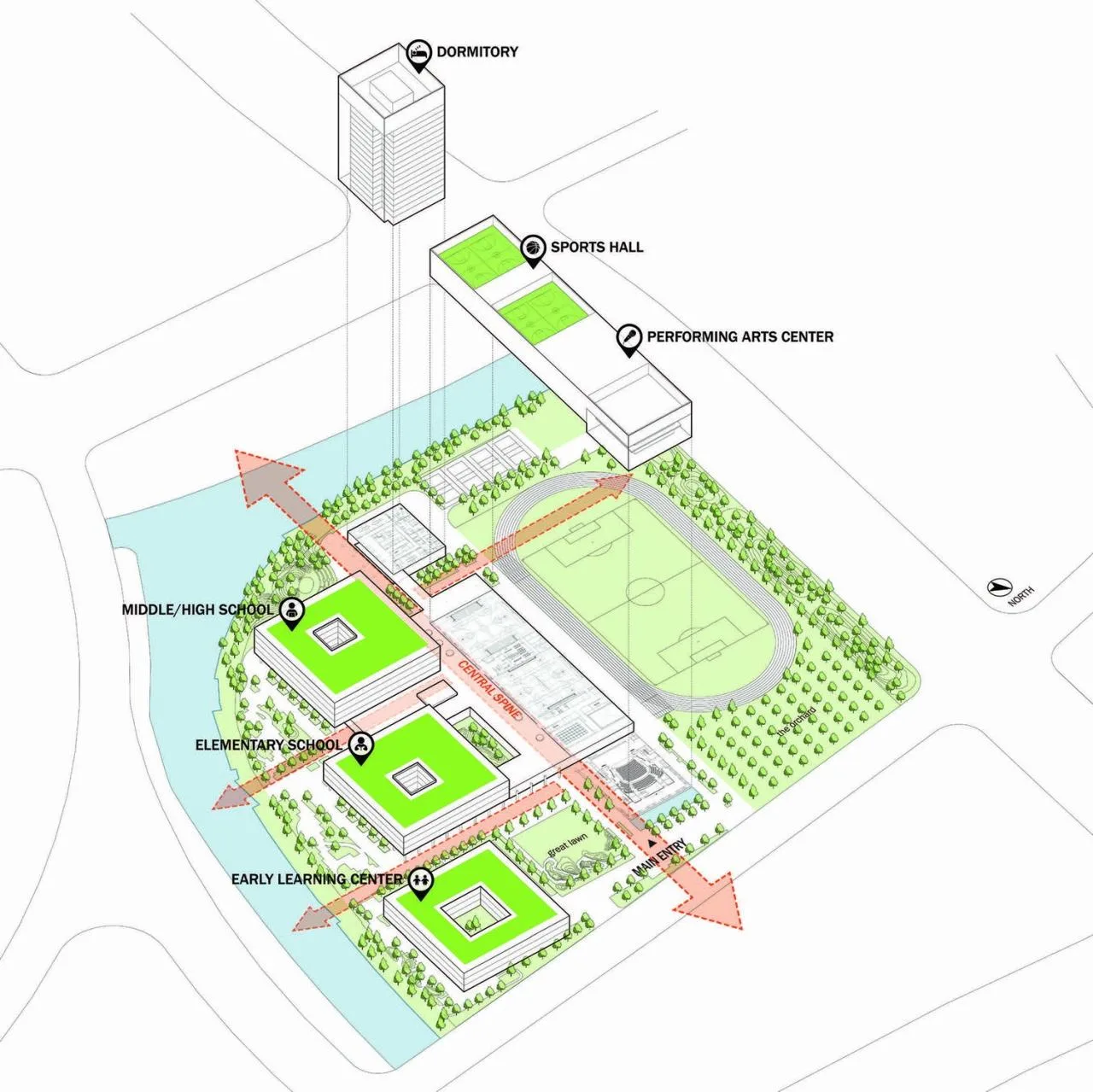
△ Functional Zoning
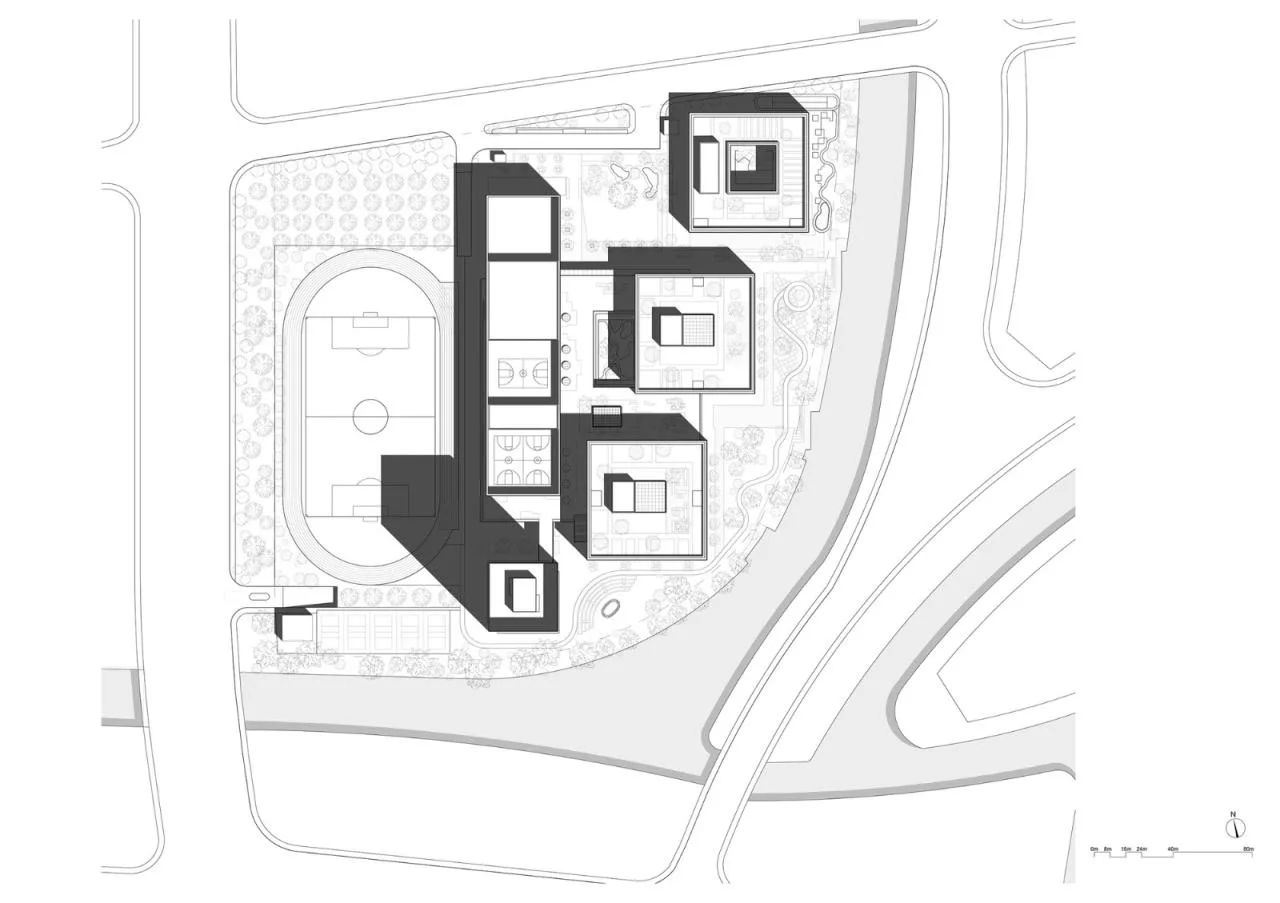
△ General Layout Plan
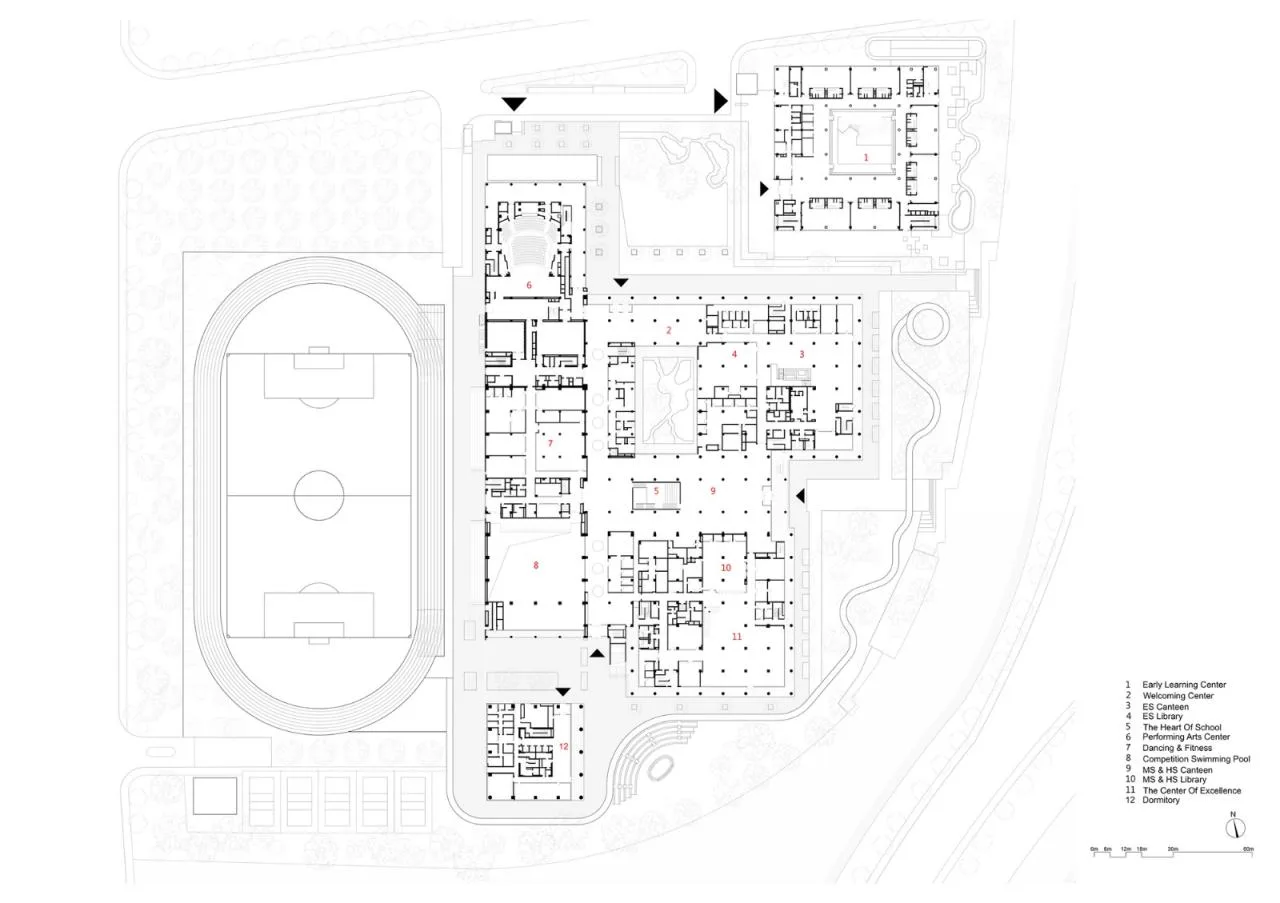
△ First Floor Plan
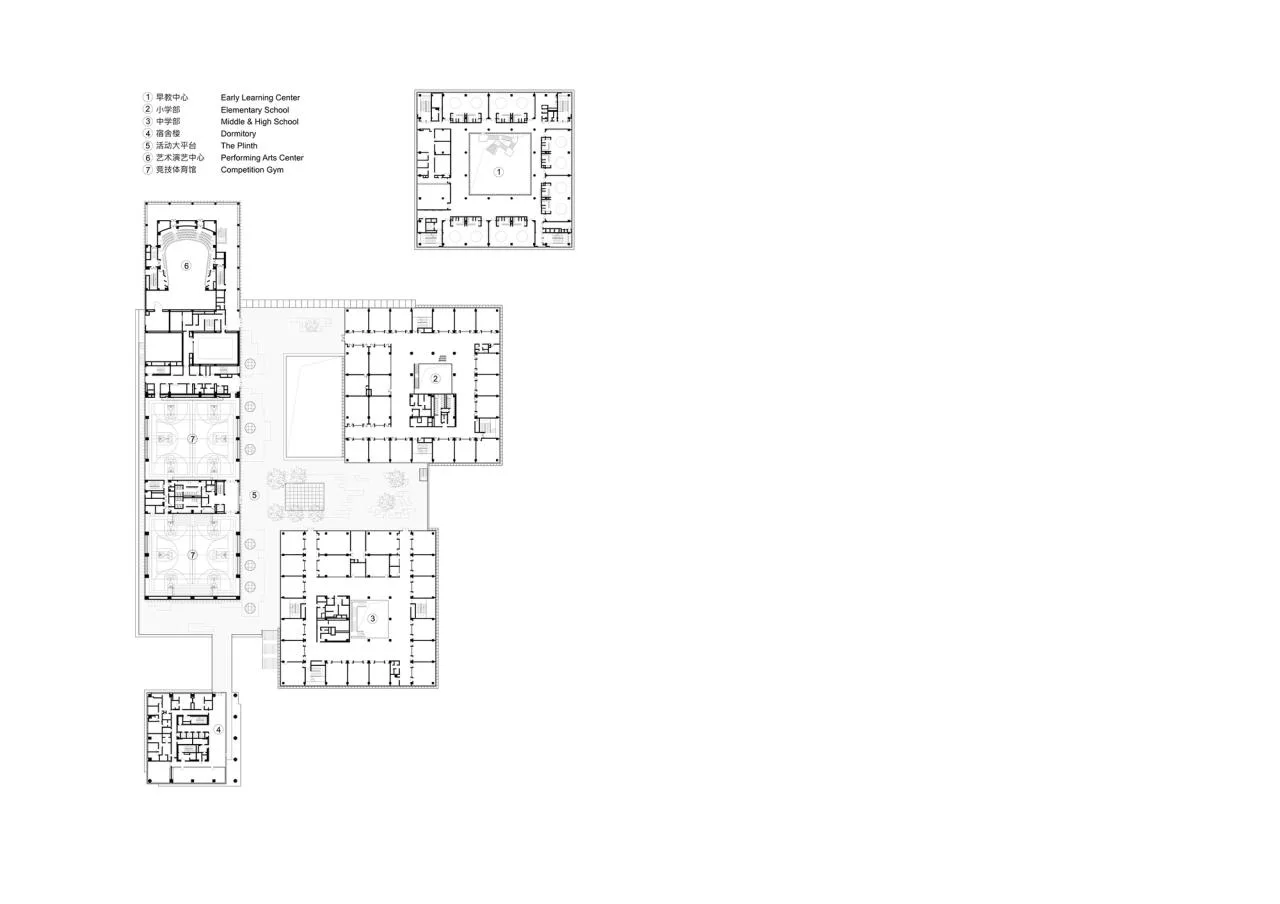
△ Second Floor Plan
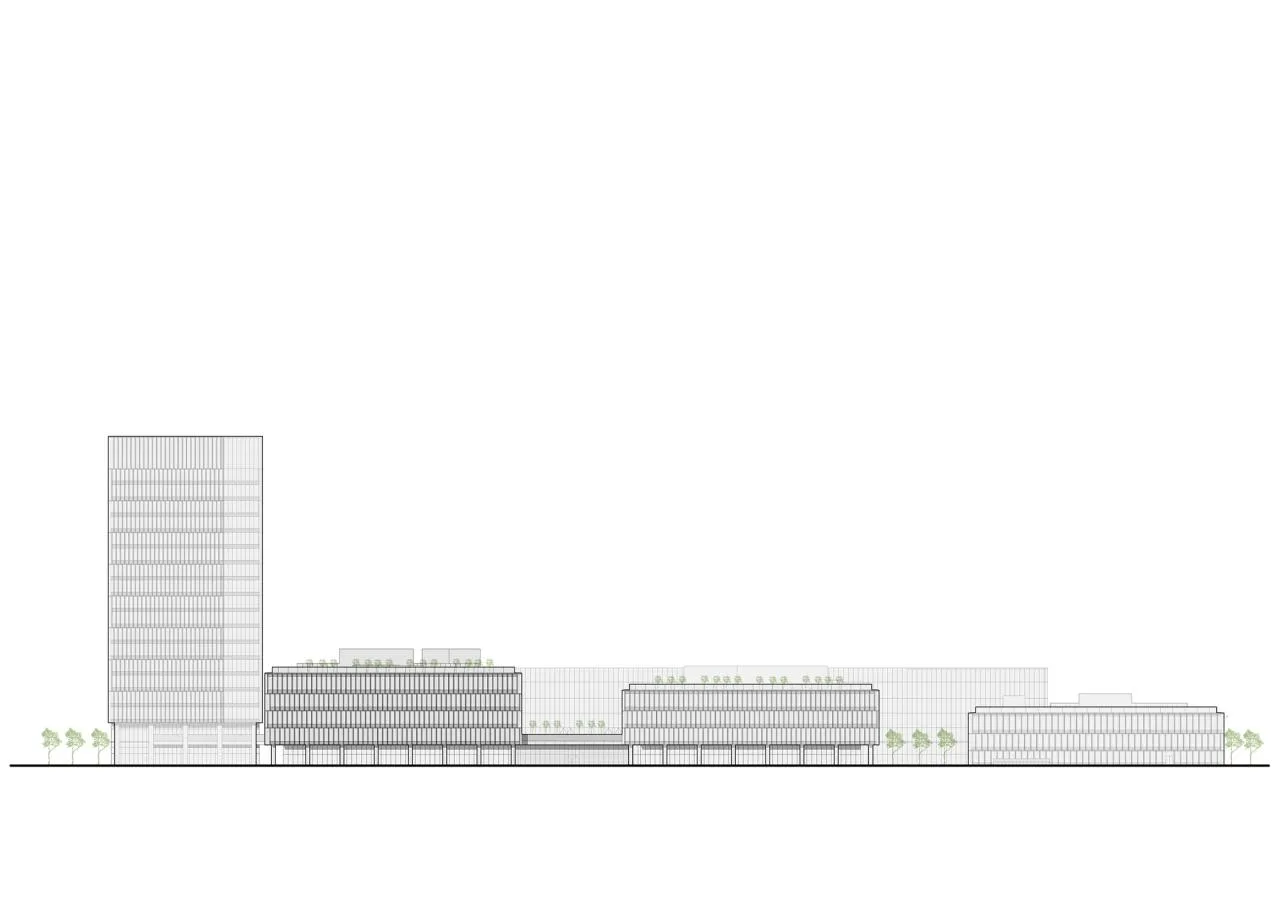
△ Elevation Drawing
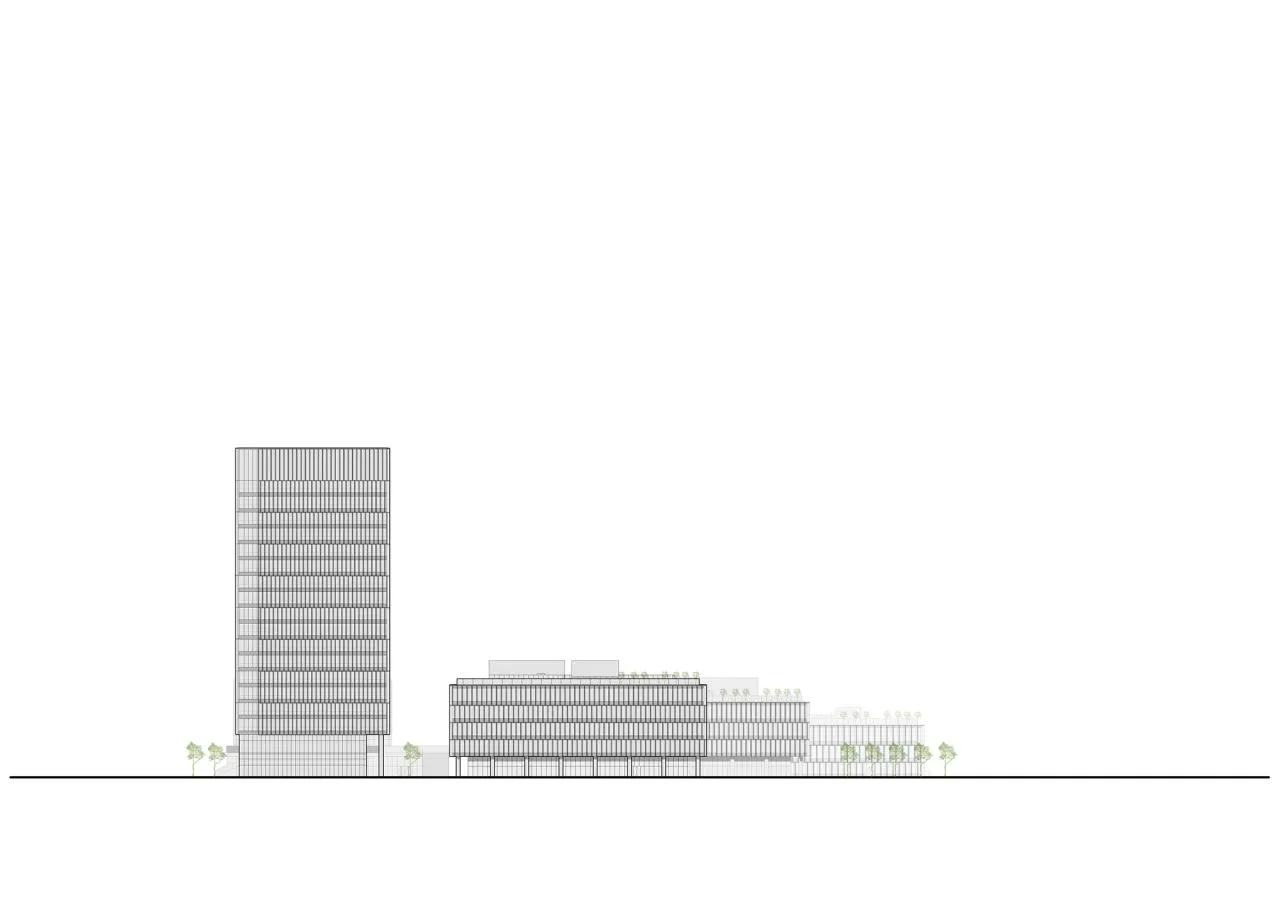
△ Elevation Drawing
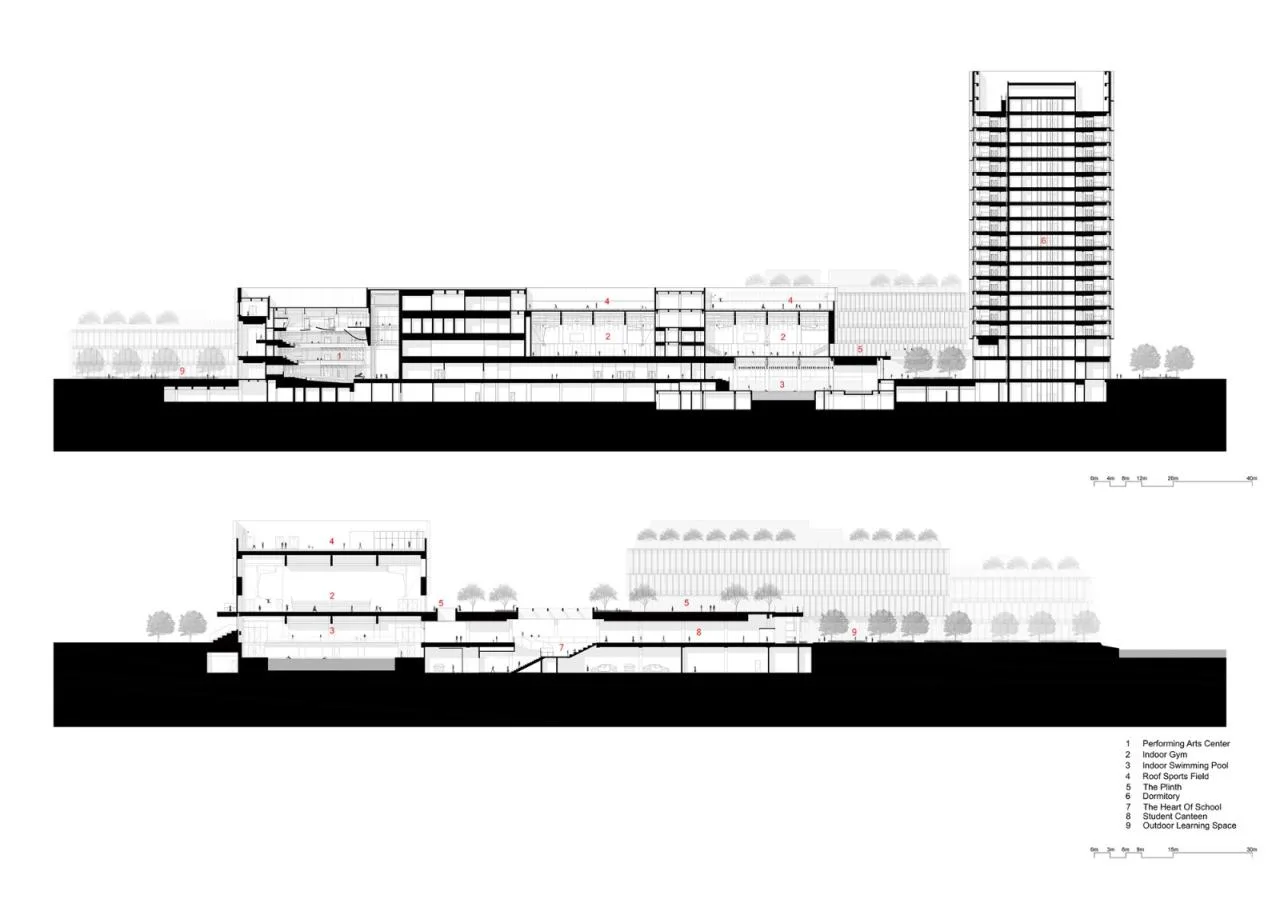
△ Section Diagram
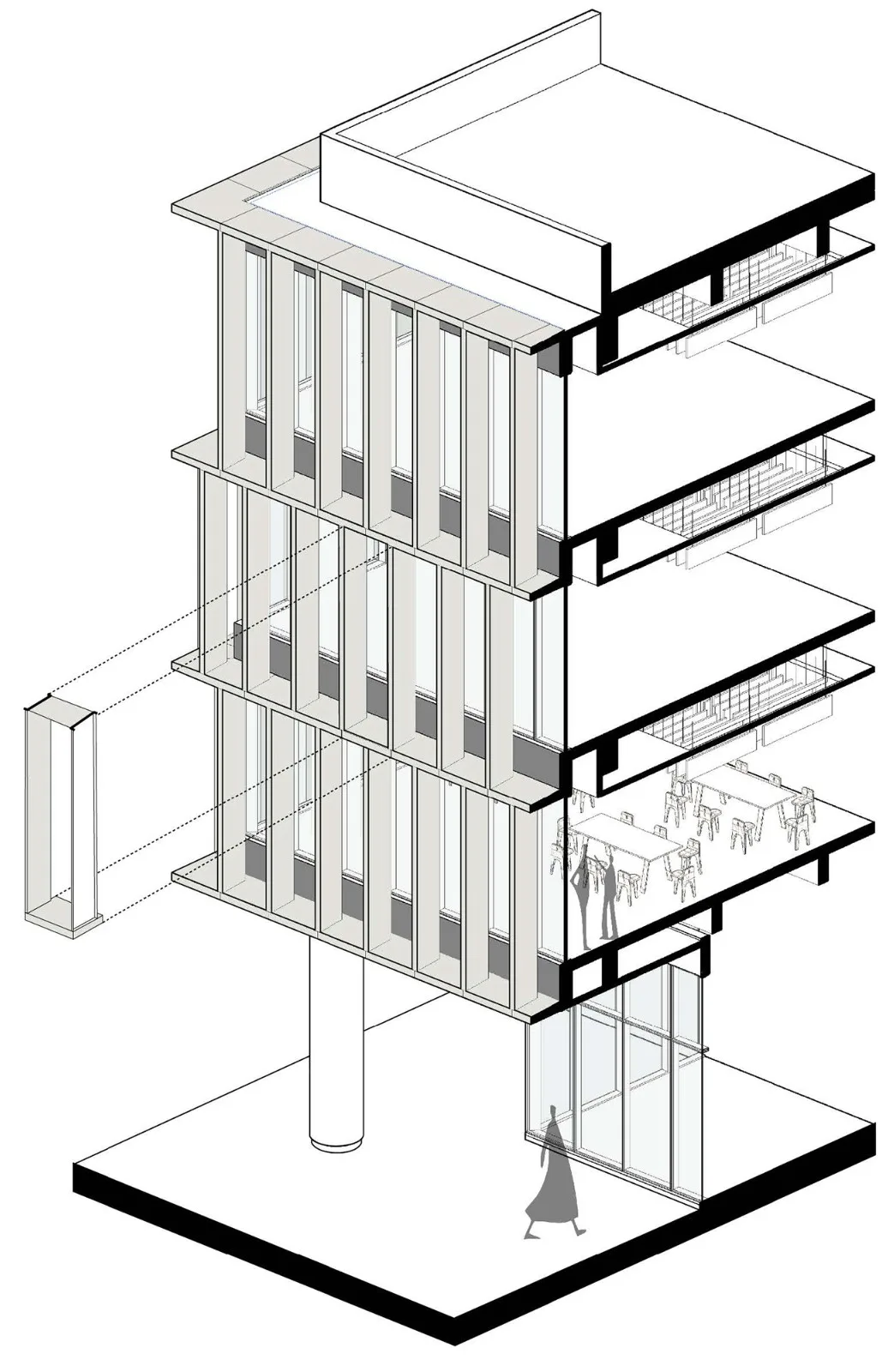
Local Sectional Perspective
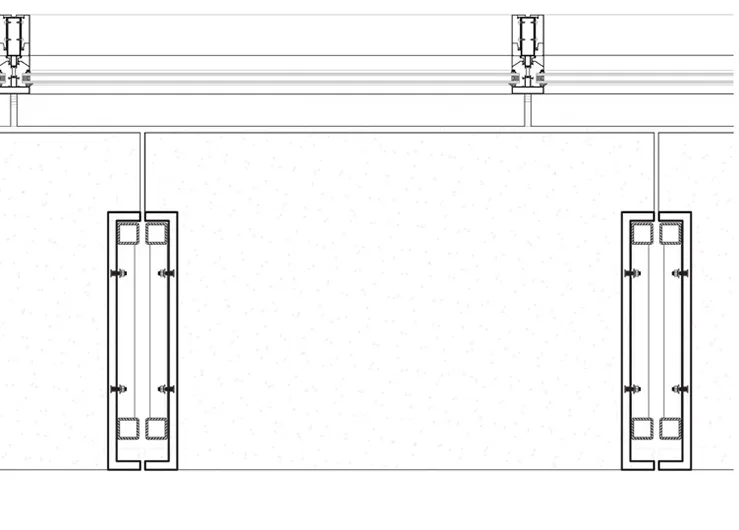
△ Detailed Structural Drawing
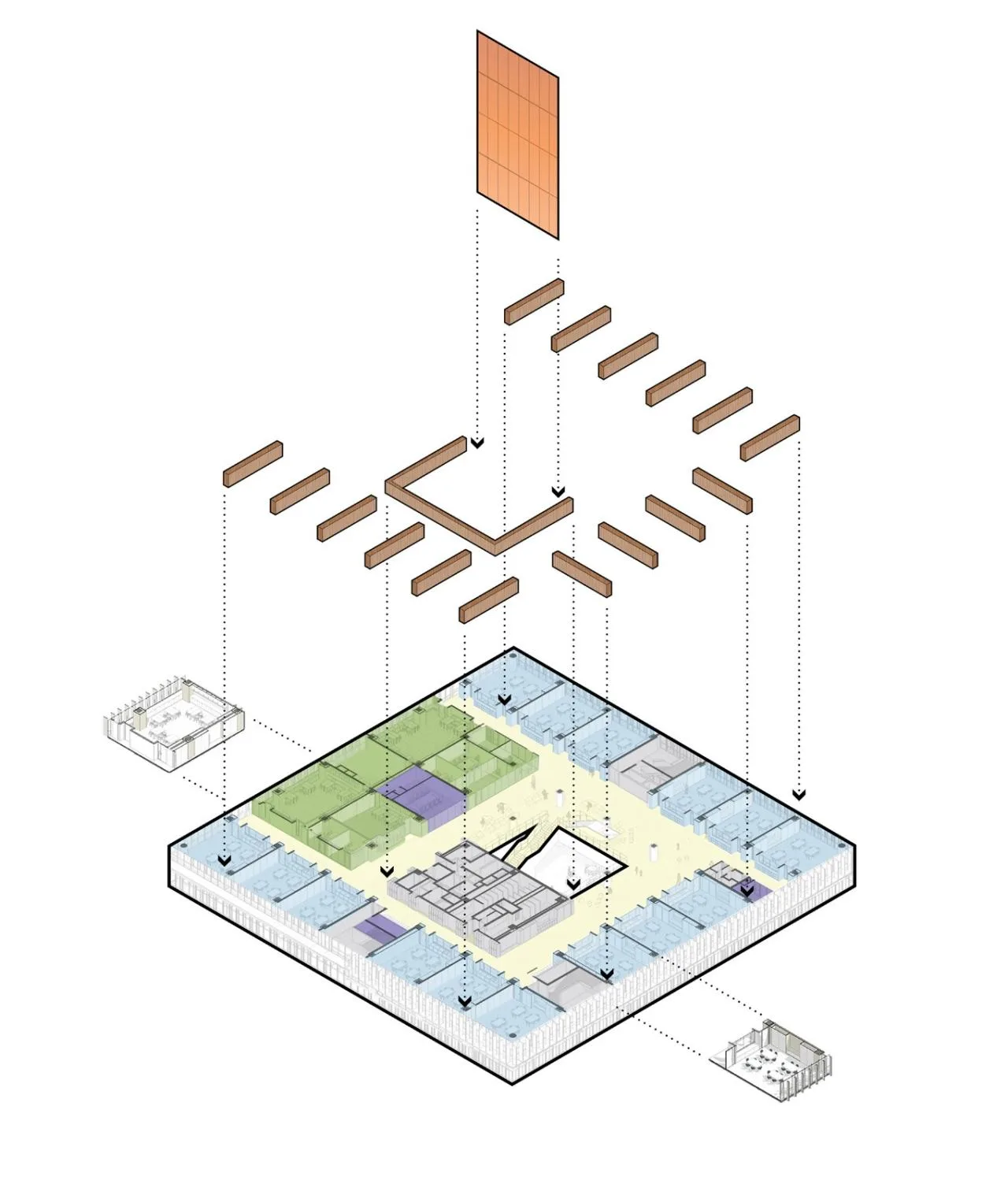
△ Analysis Chart
Project Information
Architect: Perkins Eastman
Area: 119,000 m²
Project Year: 2022
Photographer: Tian Fangfang
Manufacturers: CompactWood Interior & Exterior Surfaces, Gerflor Flooring Group, Jiangsu Trans Build Tech Co. Ltd.
Lead Architects: Ron Vitale AIA, Shen Yi AIA
Design Team: Ron Vitale, Shen Yi, Connor Glass, Yang Yun, Ren Jiajun, Chen Qi, Zhang Yu, Erum Ahmed, Charles Sinclair, Toby Bishop, Zhang Liting, Sha Qianmo, Sun Ying, Xu Shaobai, Xu Zijian, Ming Leung, Dan Yuge, Wei Miao, Zhang Mengluan, Shao Yuchen, Cai Qingyu
Structural Design: Qidi Design Group Co., Ltd
Landscape Design: DLC
Mechanical and Electrical Design: Syska
Theatre Design: Theatre Projects Company
Acoustic Design: SM&W
Swimming Pool Design: P&A
Lighting Design: Studio Illumine
Curtain Wall Design: Aurecon
Sustainable Design: BEE
Transportation Design: Beijing Ruiyouda Engineering Technology Consulting Co., Ltd
Construction: China Construction Third Engineering Bureau Eighth Branch
Location: Suzhou














Must log in before commenting!
Sign Up