
Outdoor experiences have become a popular new travel destination, offering a refreshing contrast to urban life. The mountain and sea environment surrounding the “Cloud Sea Station” intensifies this enchanting allure. Our goal is to amplify this dream through architectural space, transforming it into a captivating sensory and physical journey. – Meng Fanhao
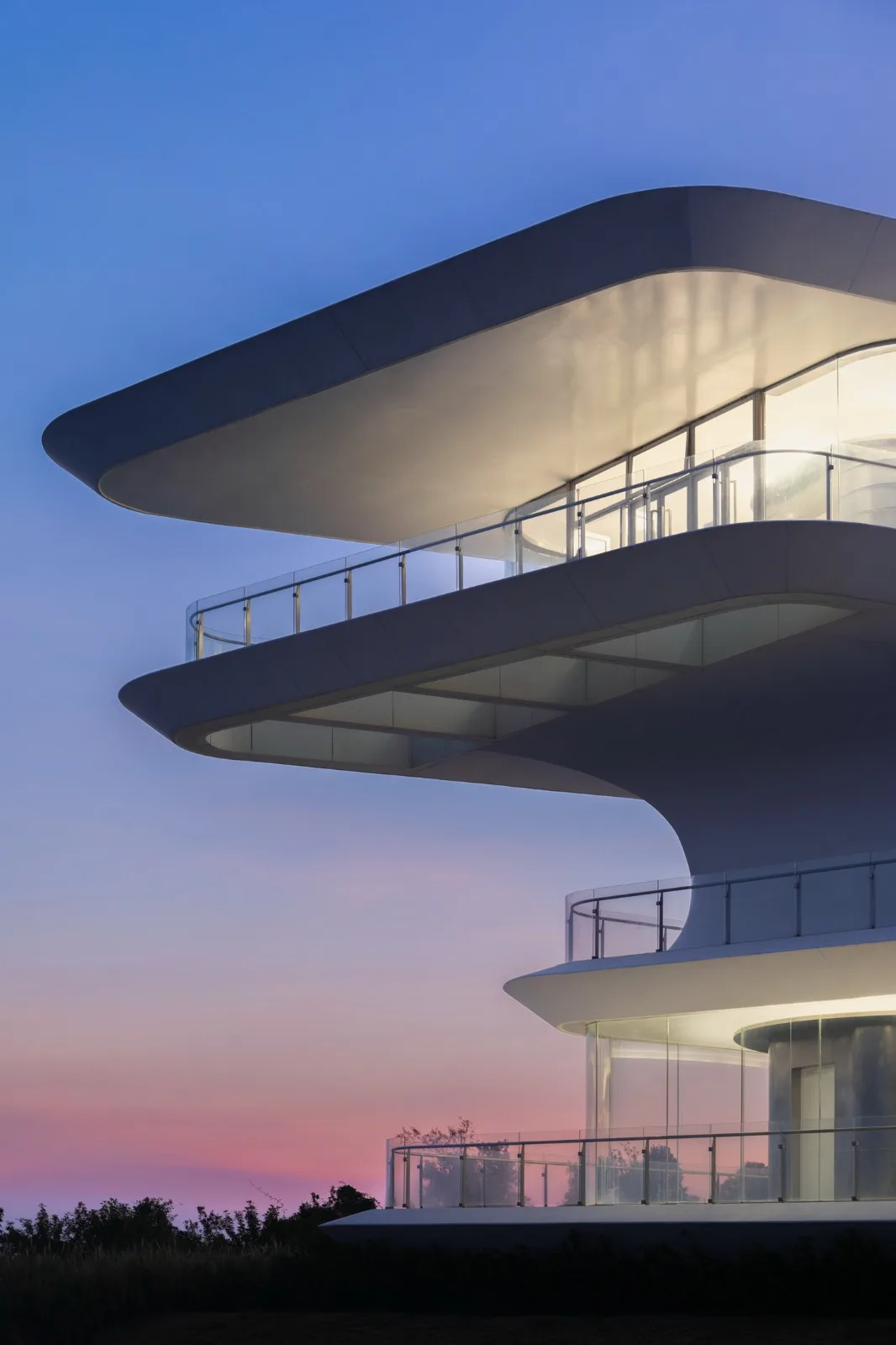
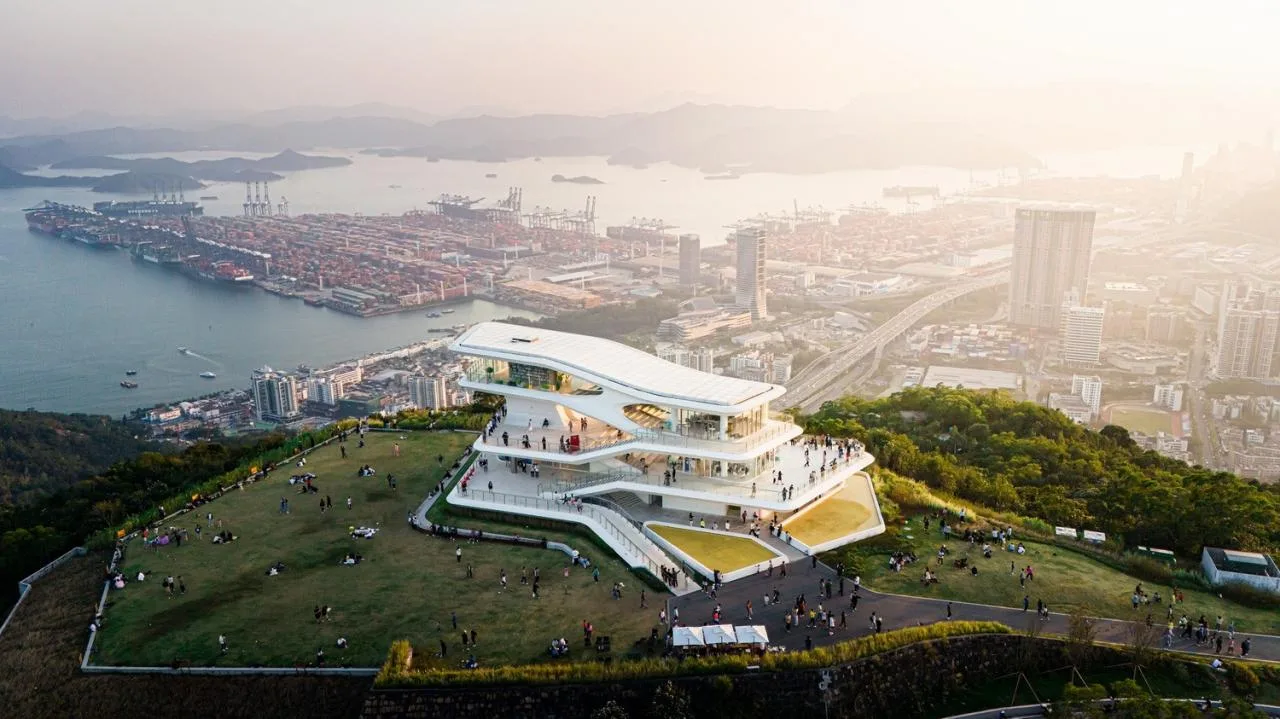
The Shenzhen Yunhai Station is situated in the heart of Sanzhoutian Forest Park. Serving as a landmark within the Half Mountain Park Belt, it plays a vital role in the Yantian District Government’s ecological vision of connecting mountains and seas with the city, creating a greener, more beautiful Shenzhen. Meng Fanhao, co-founder and lead architect of Line+, was commissioned by the Yantian District Government to lead this project as both architect and visionary.
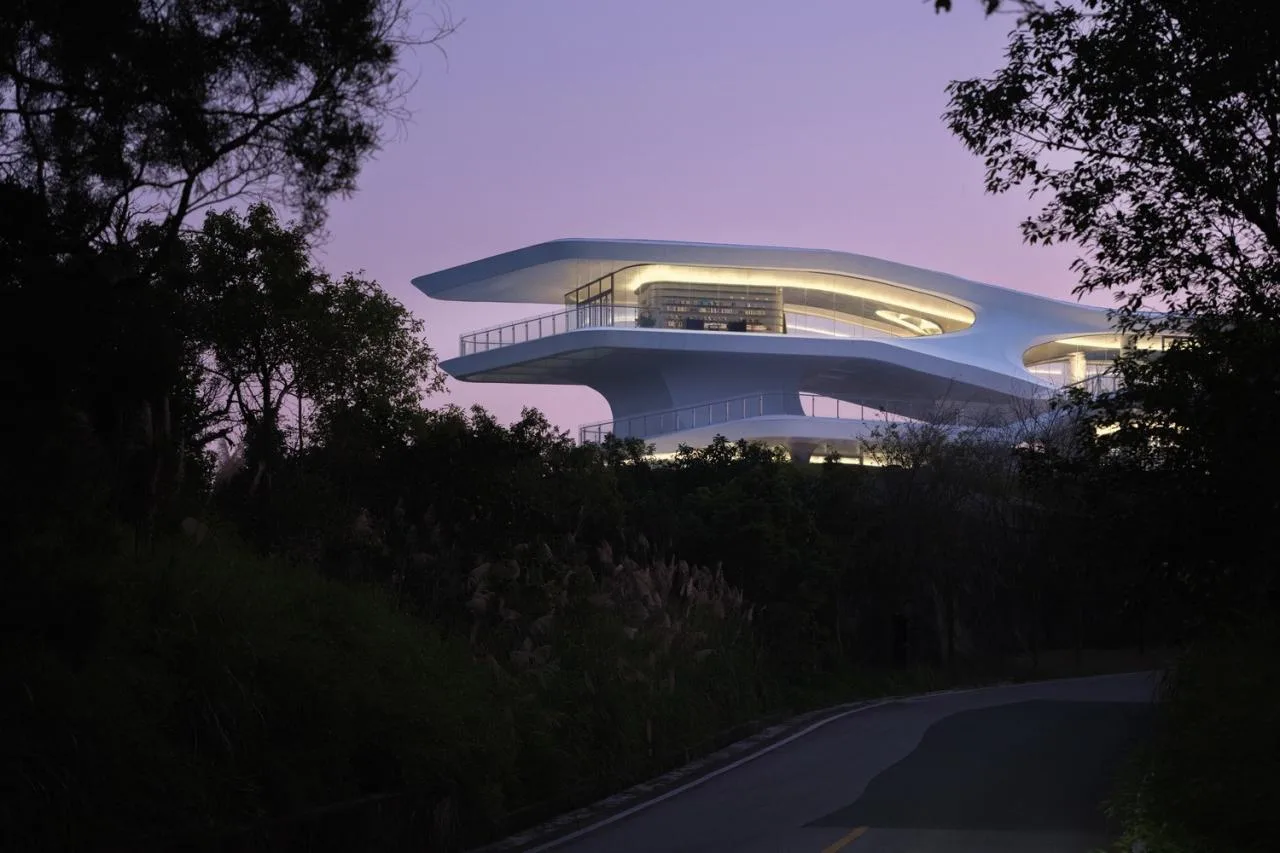
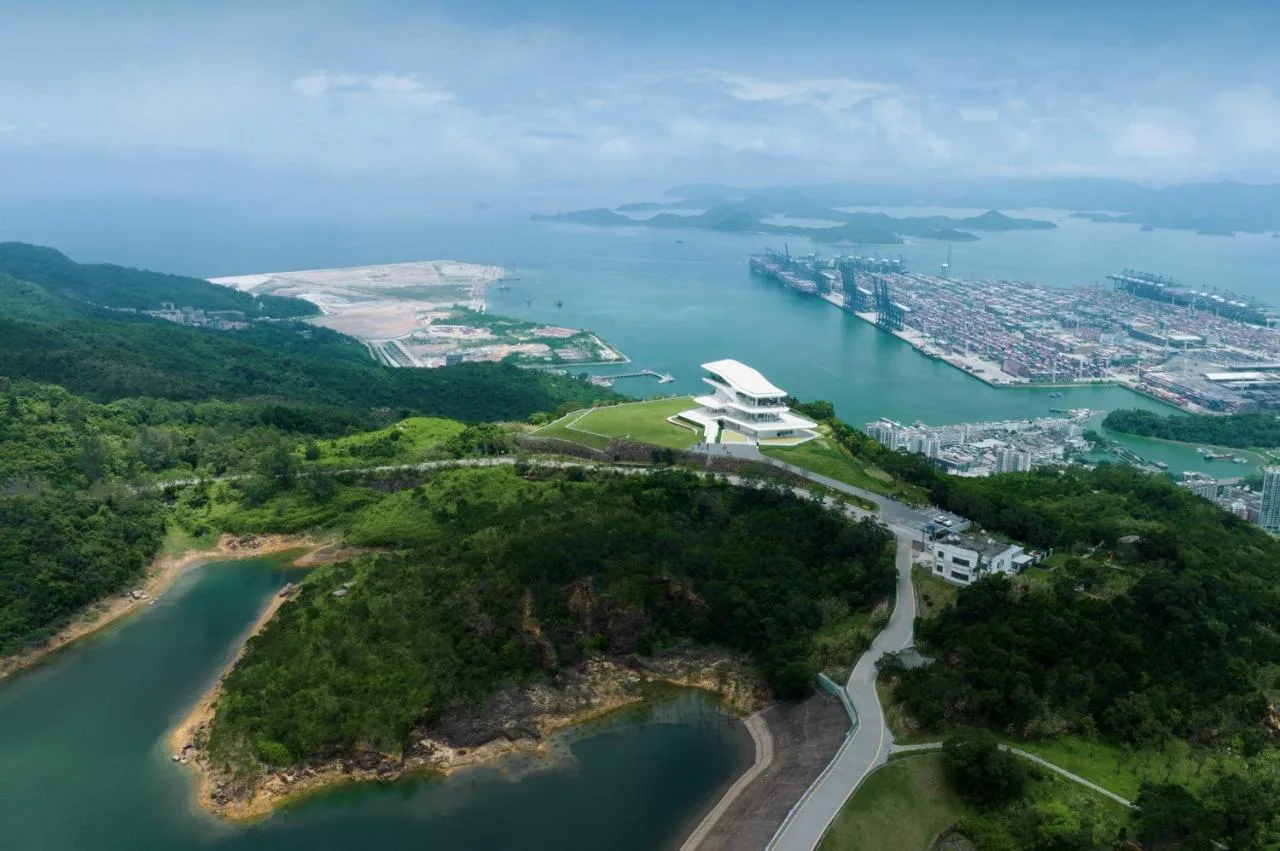
Overlooking the mountains and sea, nestled within forests and offering panoramic views of Shenzhen from the 380-meter-high Maluan Mountain, Yunhai Station is uniquely positioned between a busy port and an untouched forest. This setting creates a distinctive atmosphere that guided the design process. The project’s two core objectives—functionality and identity—reflect the owner’s desire for Yunhai Station to become a popular citizen gathering spot and a catalyst for the Mid Levels Park belt’s growth. Line+ embraces the tension between nature and urban landscapes, using architectural space as an experiential journey that awakens the senses, transforms infrastructure into an engaging outdoor landmark, and integrates public interaction and social activity.
PART 01
360-Degree Panoramic Folding Platform
The site sits on a terrace overlooking Dapeng Bay, backed by the Sanzhoutang Reservoir, offering unobstructed 360-degree views of Shanhaicheng. This makes it an ideal vantage point on Maluan Mountain. As essential infrastructure within the park, Yunhai Station houses facilities such as restrooms, a café, and a bookstore. The architectural design focuses on spatial platforms and three-dimensional pathways to maximize viewing angles within a compact footprint.
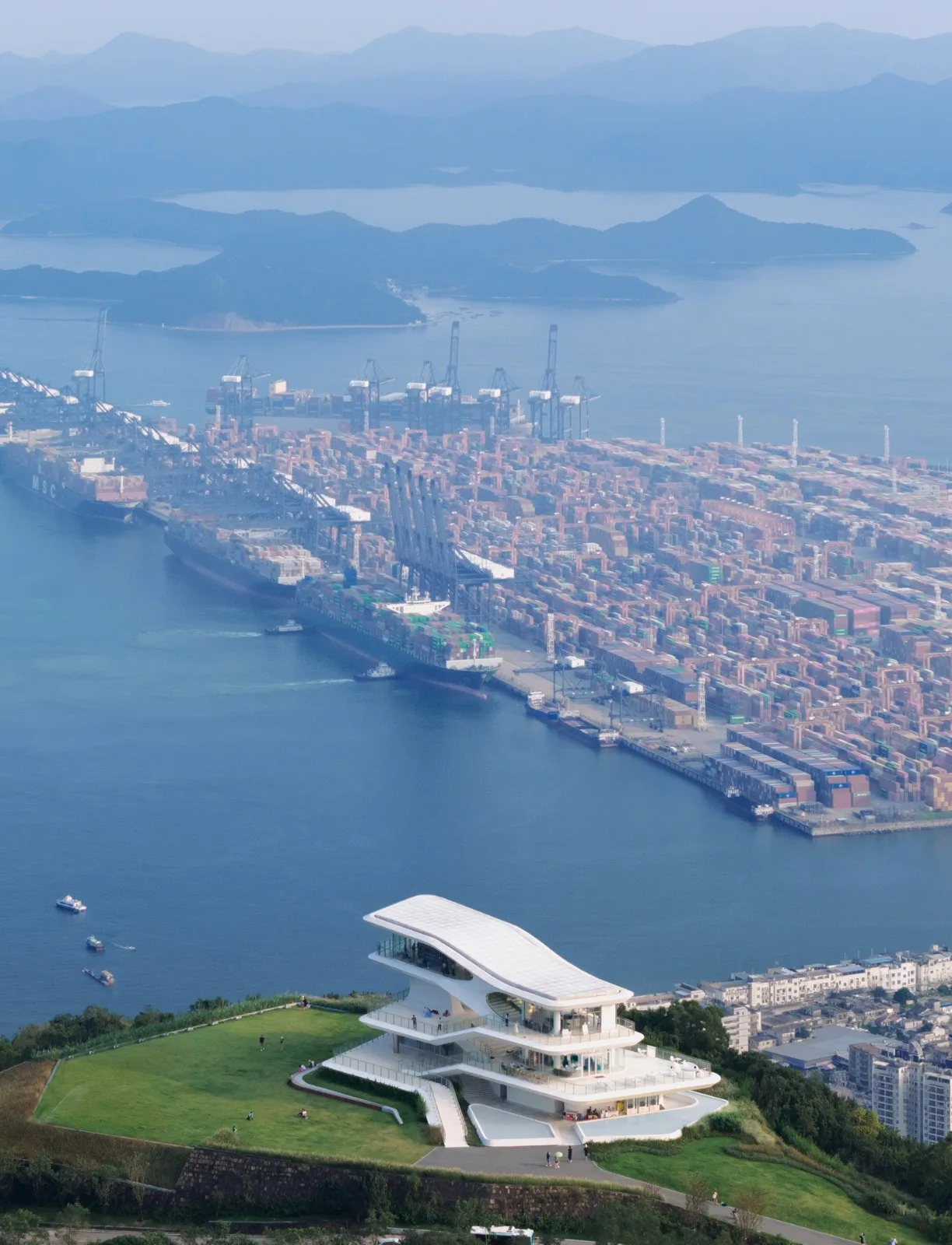
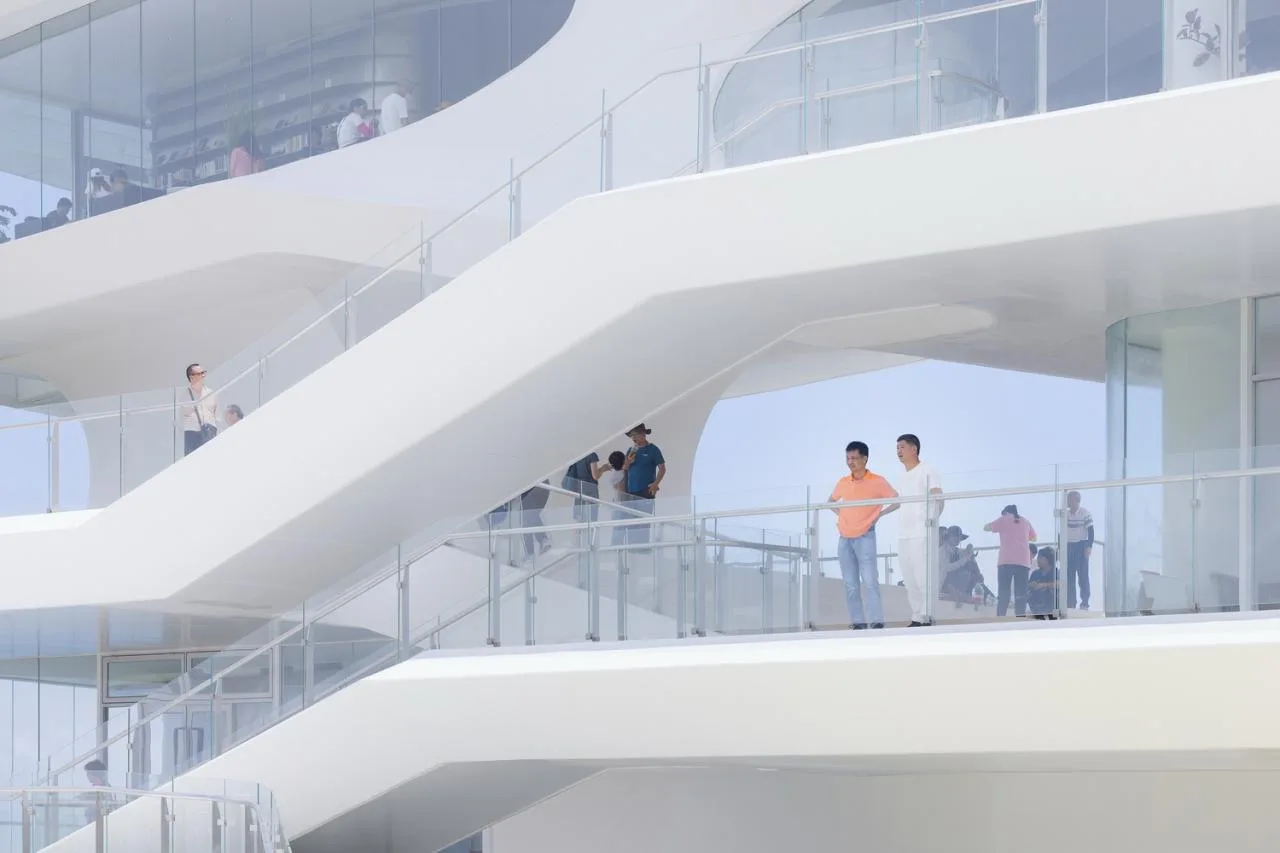
The site’s original three-story, unsafe building had collapsed, leaving a foundation pit. For accessibility and convenience, health service facilities were placed here with dedicated paths. The reception room, conference room, open spaces, café, and bookstore are arranged in a staggered layout, connected by a Z-shaped, multi-level ramp that gradually climbs upward. This design forms a multi-layered folded viewing platform and a spacious gray area, encouraging behavioral interaction with the site.
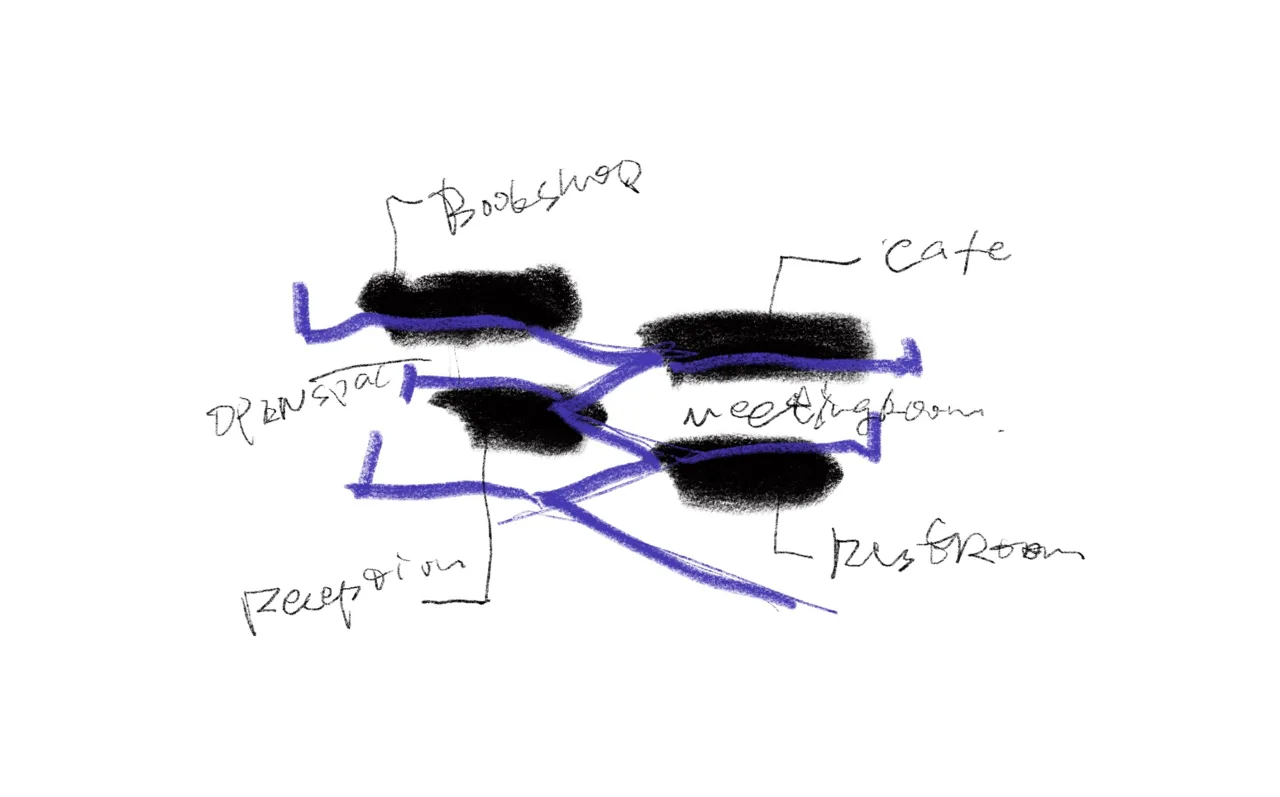
Concept Sketch
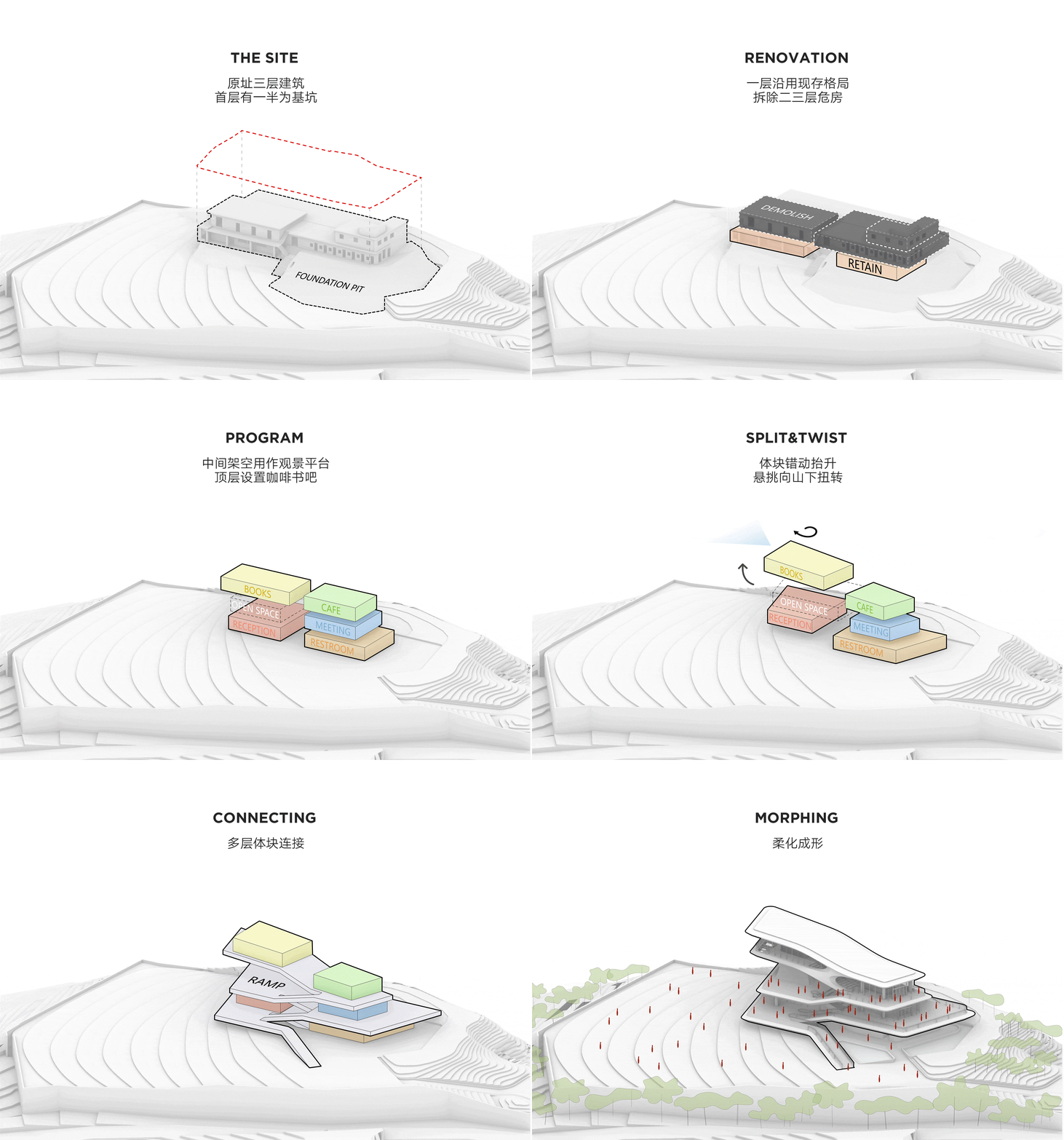
△ Design Generation Diagram
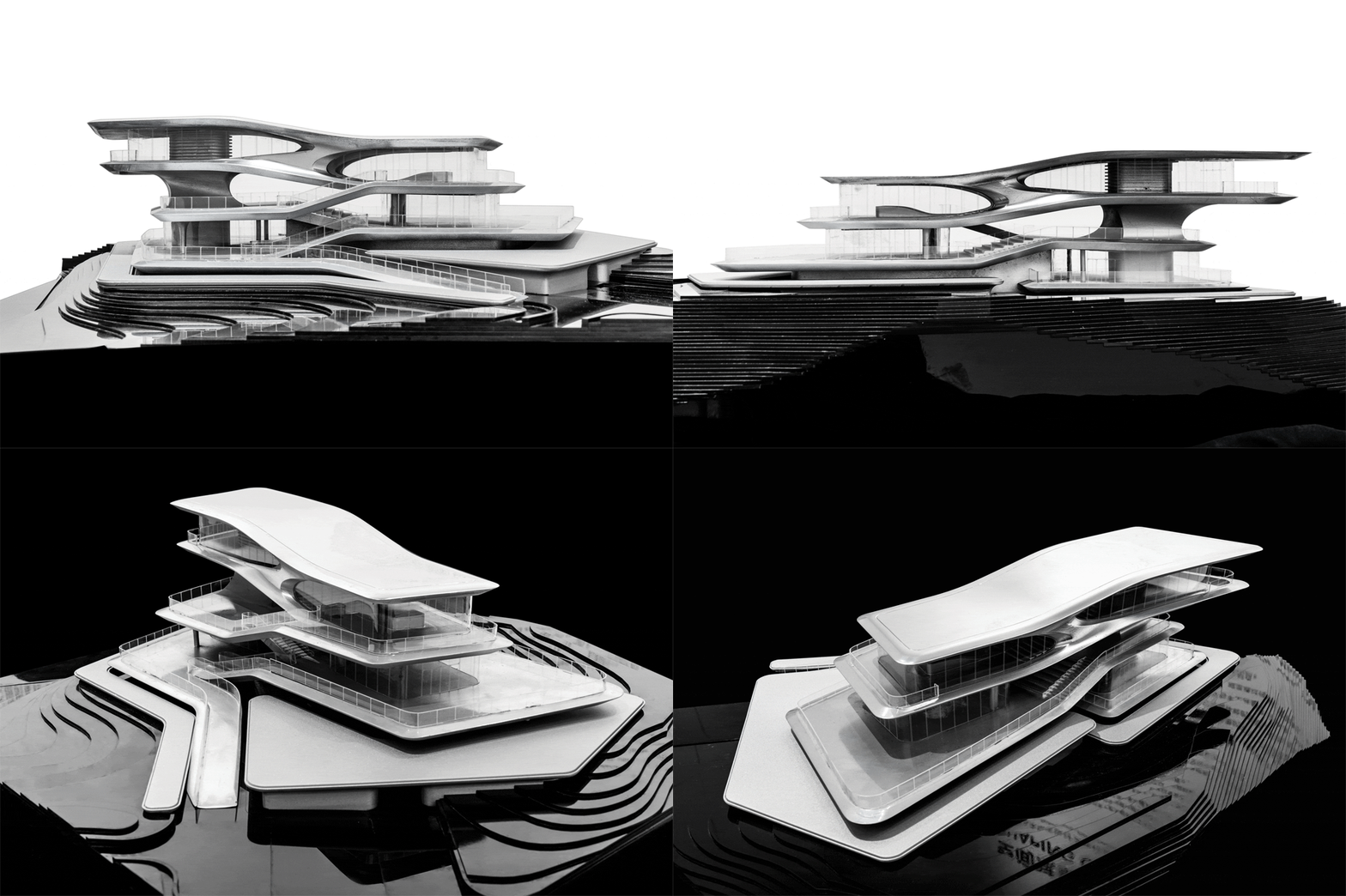
△ Model Photo
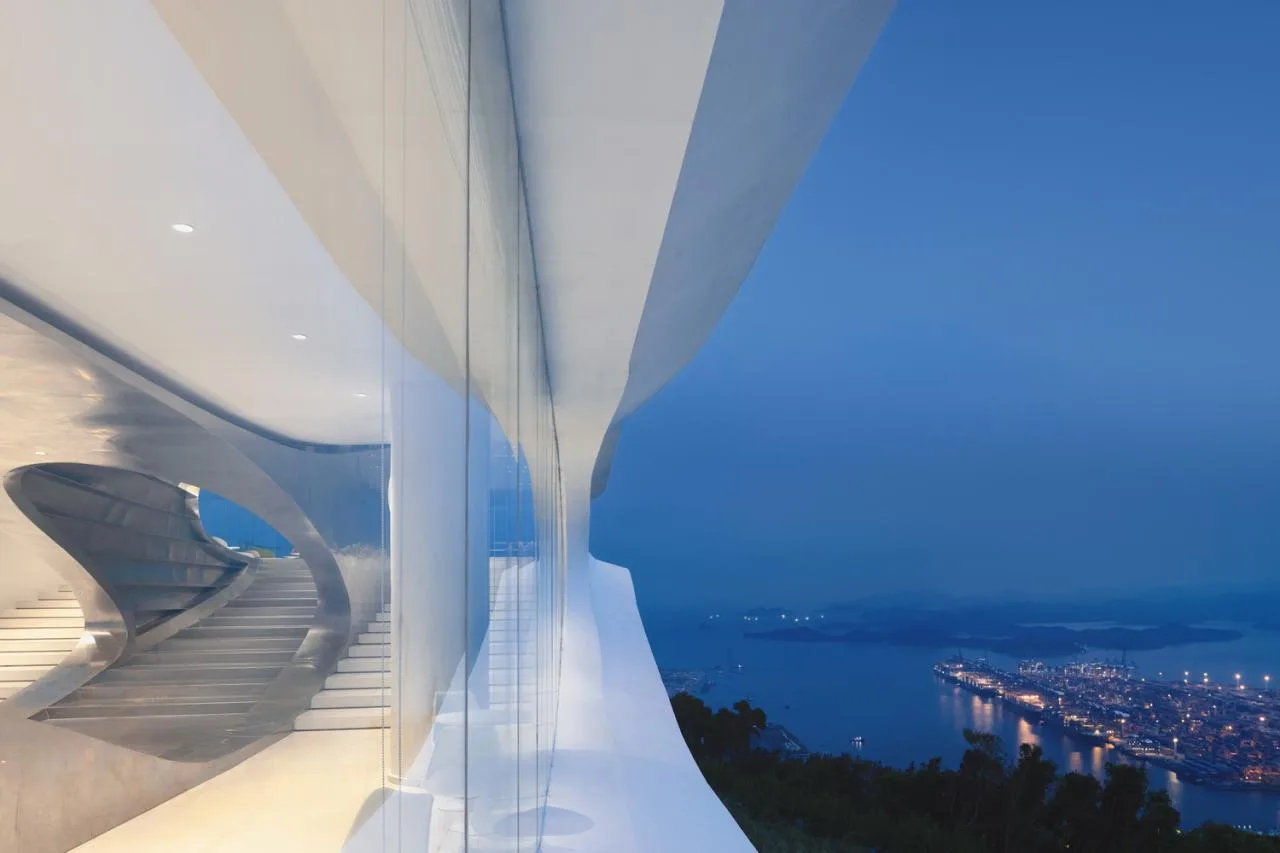
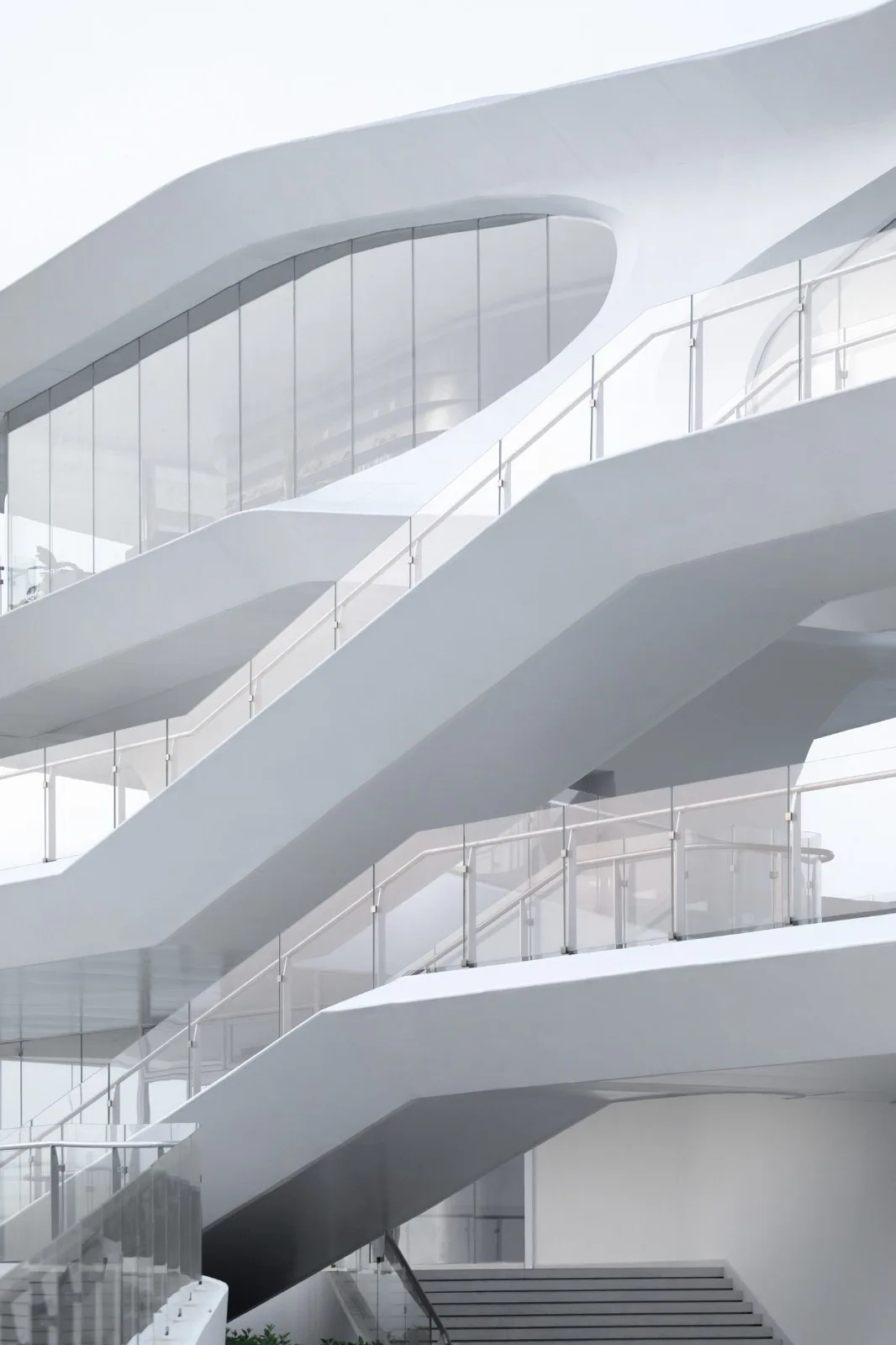
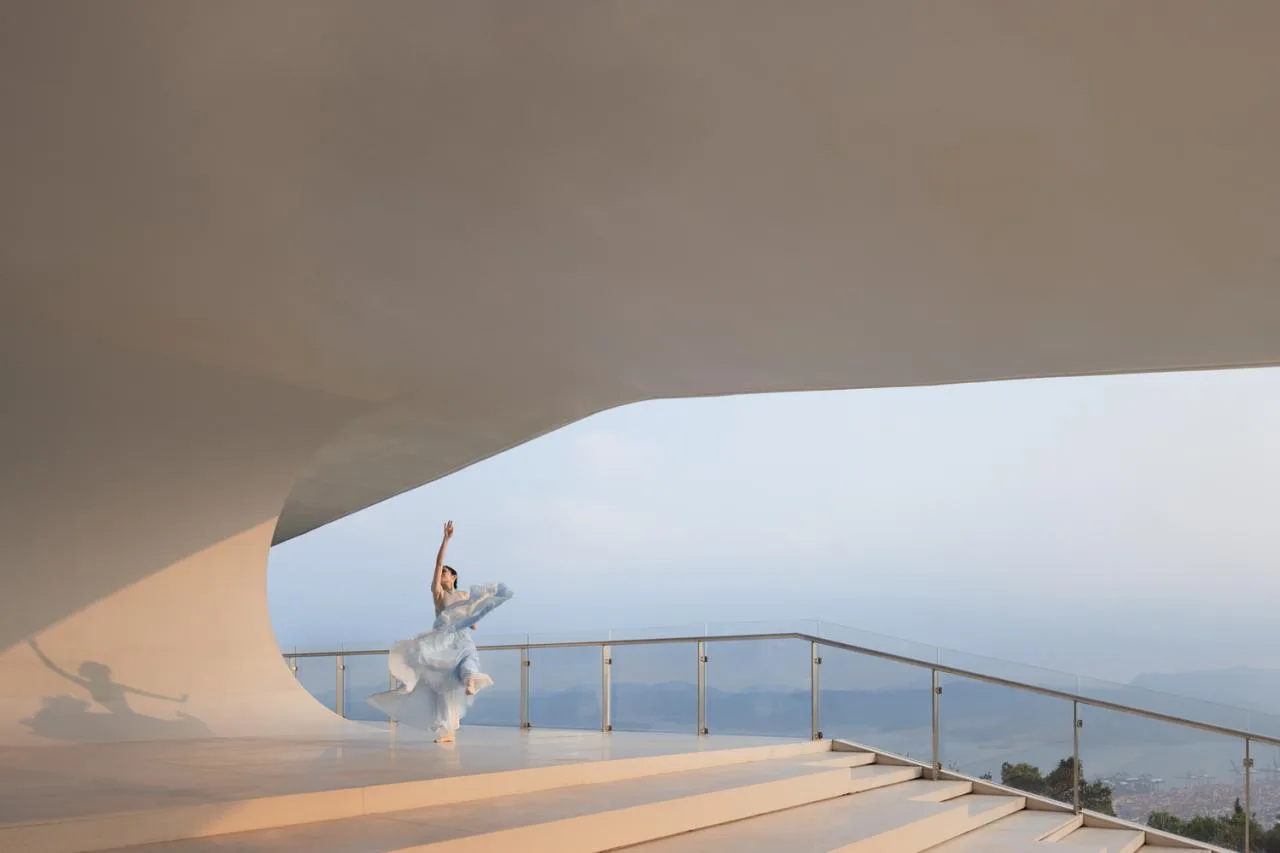
In this design, a path is more than just a route—it serves as an outdoor platform and multifunctional space. To accommodate pedestrian flow, the trail widens wherever possible. Gentle slopes, outdoor platforms, large steps for leisurely walking, and glass terraces create diverse opportunities for walking, pausing, and viewing, enriching the physical experience through varied spatial dynamics.
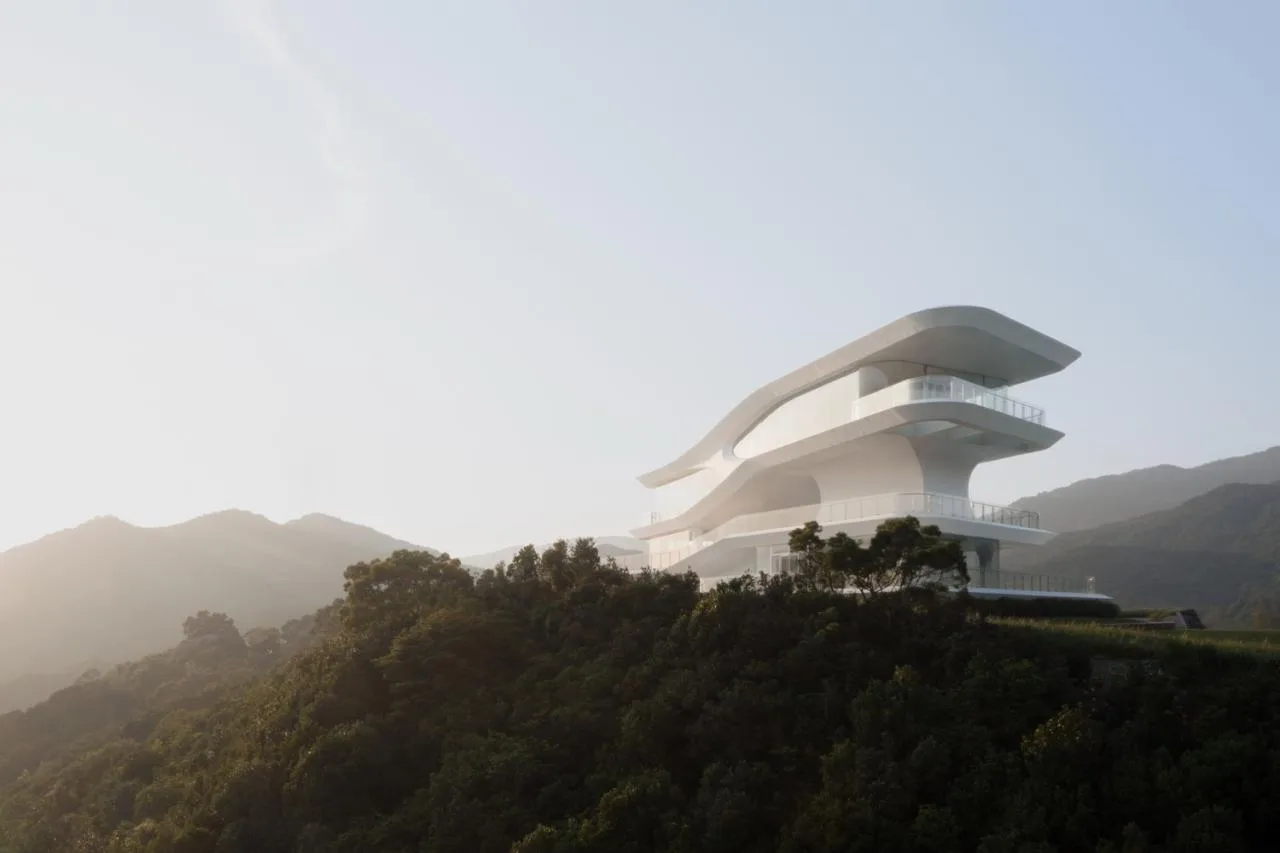
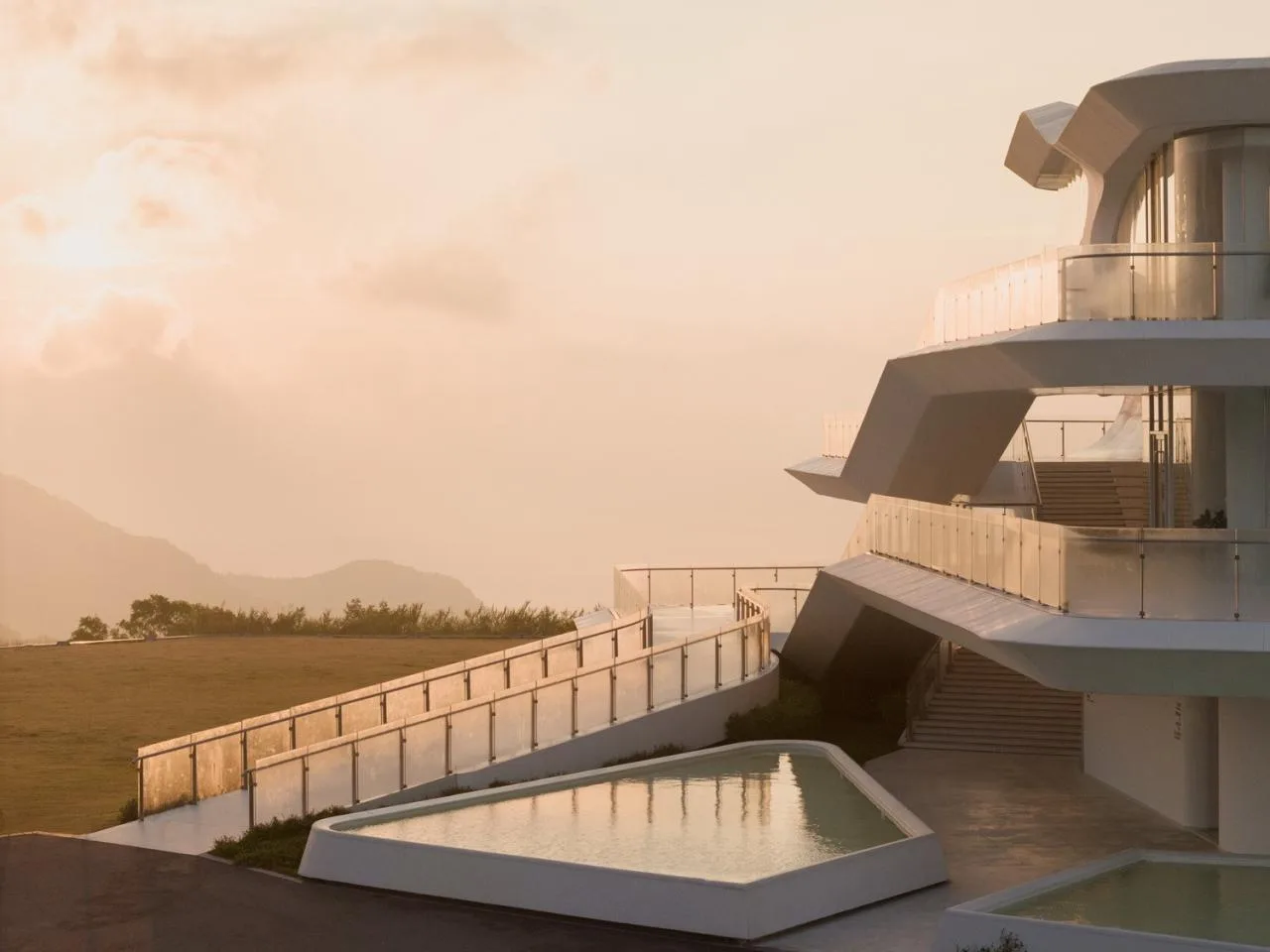
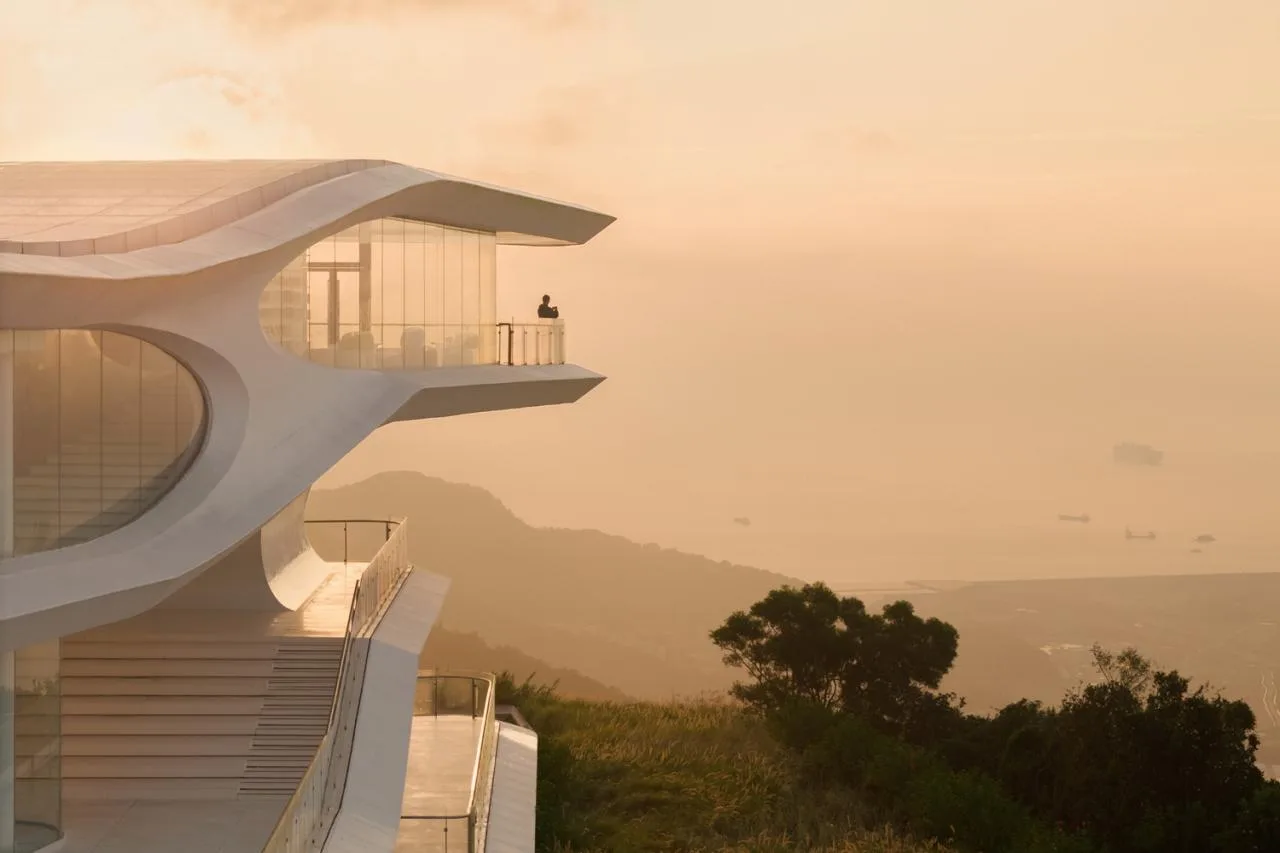
We envision visitors moving seamlessly between the city, docks, mountains, and sea, experiencing a folding of time and space that creates a surreal atmosphere beyond ordinary perception.
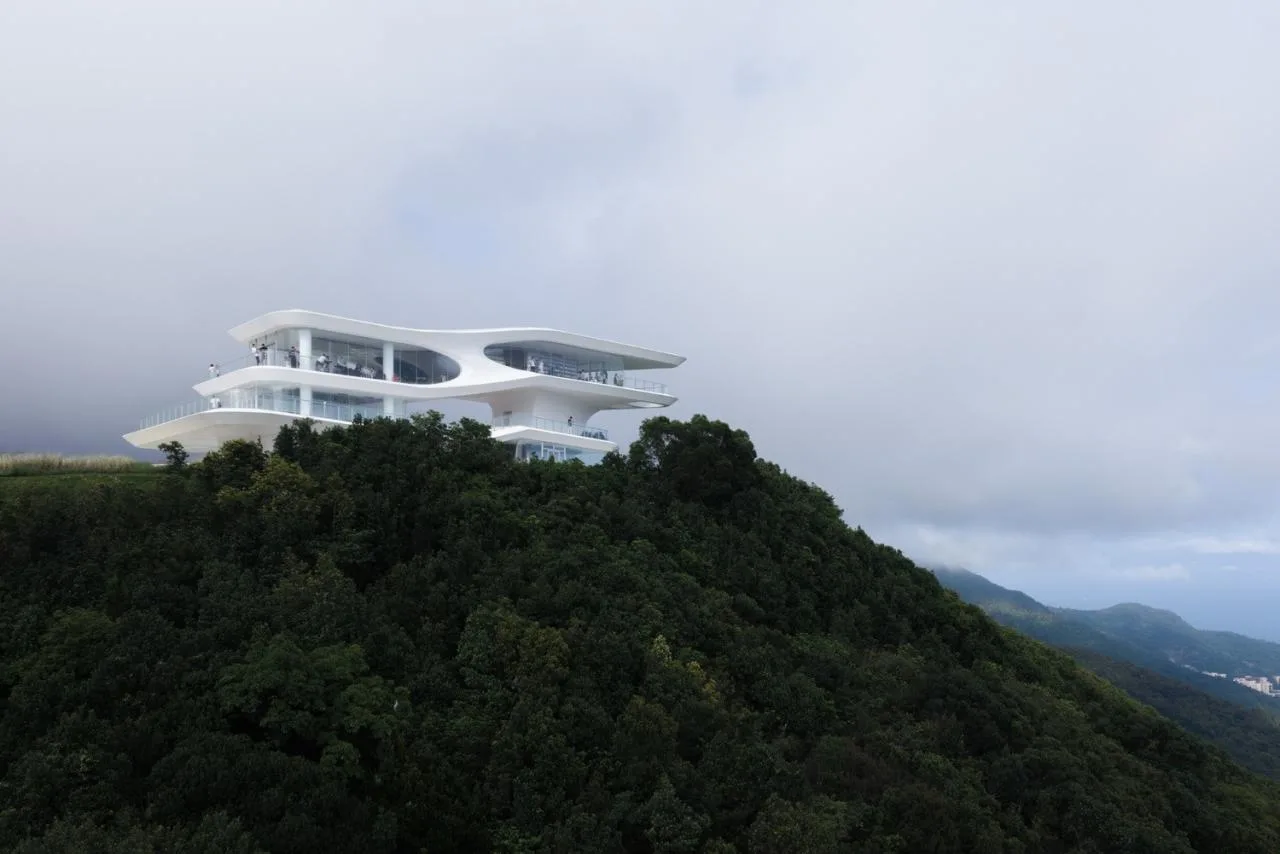
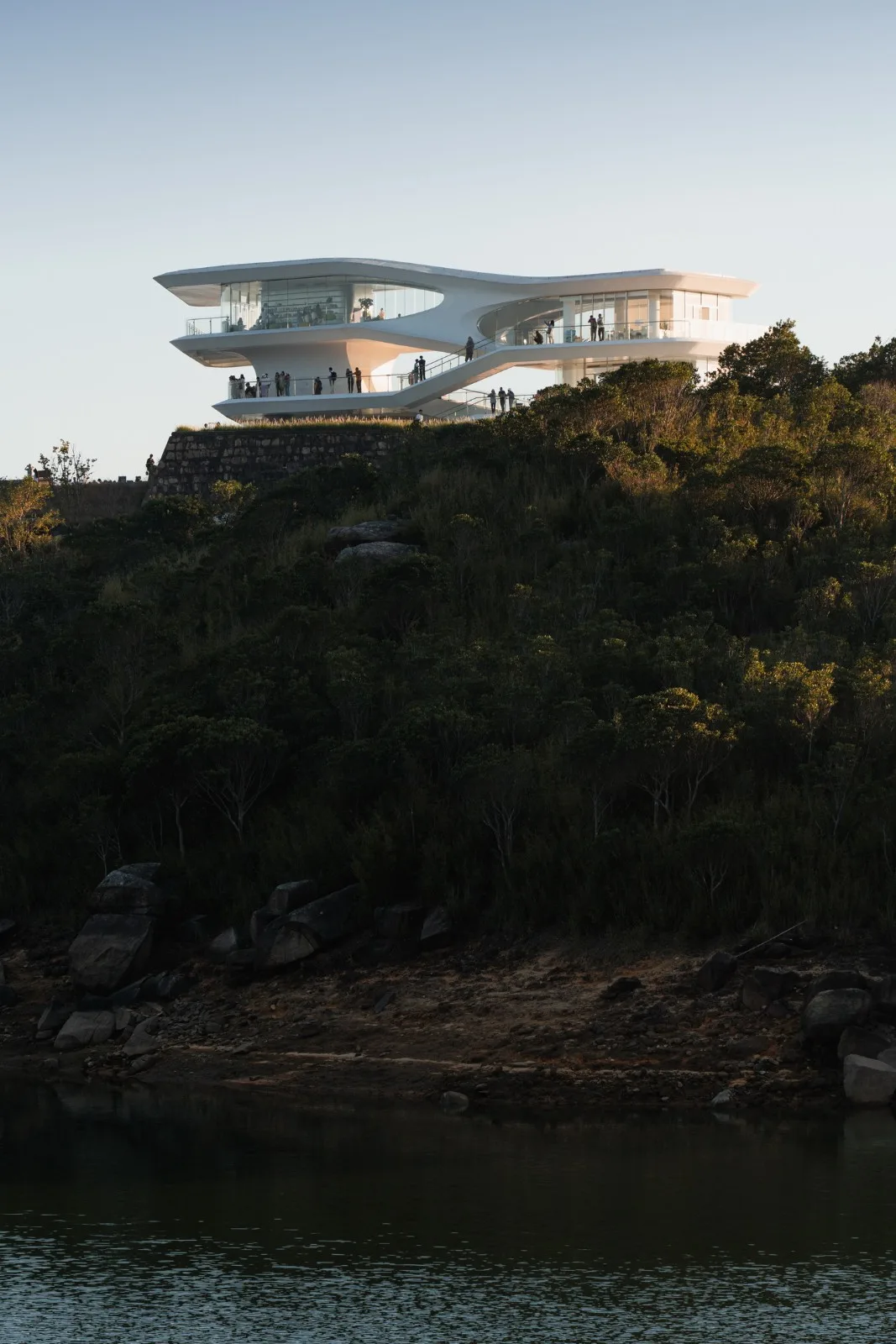
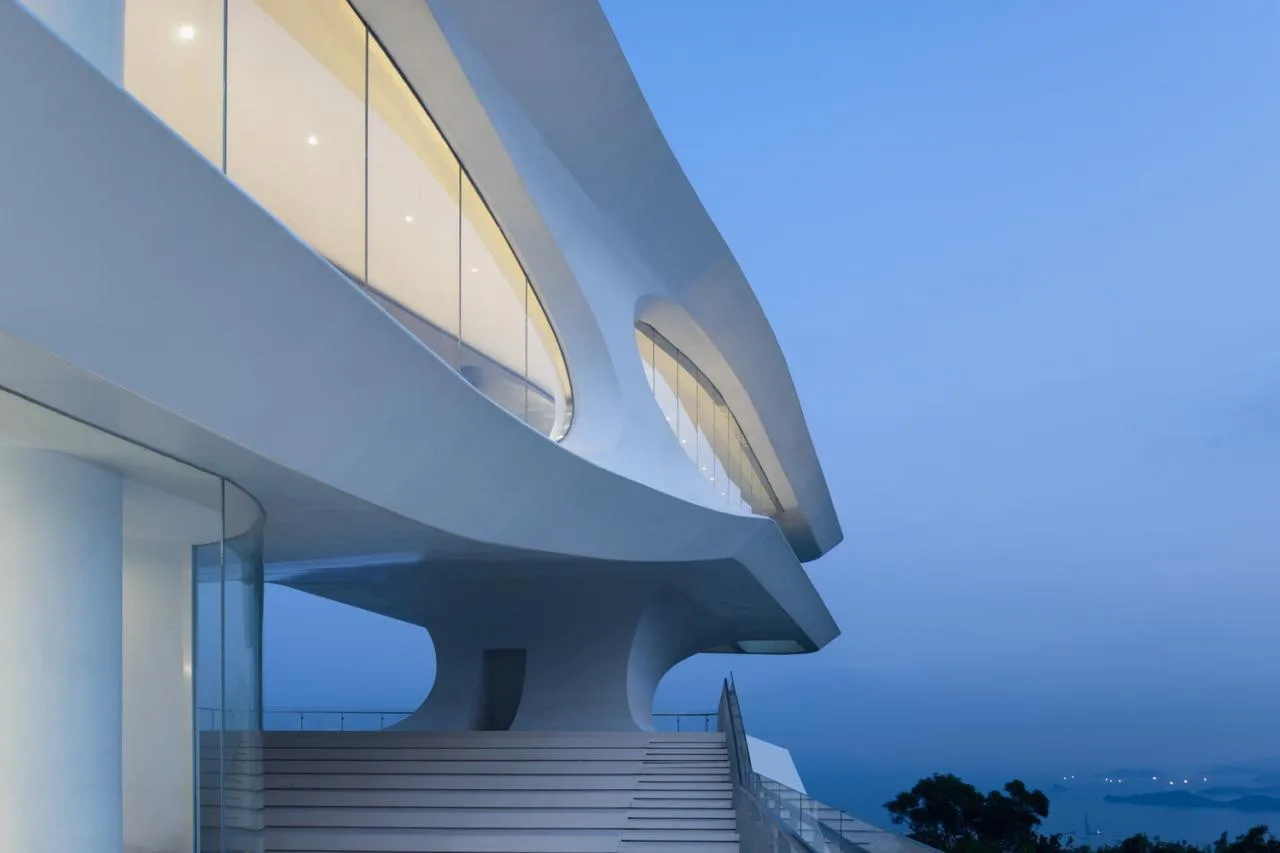
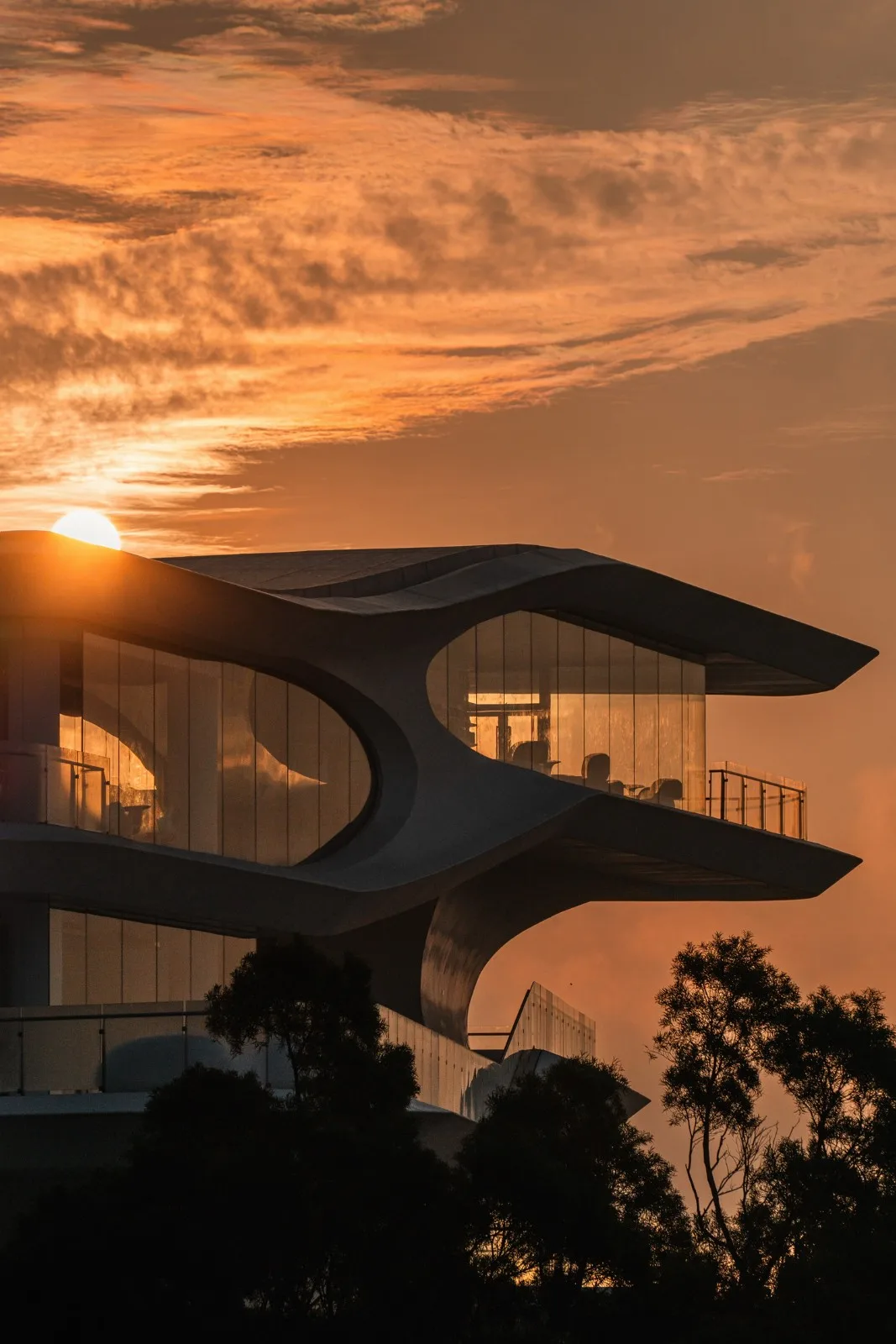
Upon completion of the entire pathway, the building’s form responds to the second key requirement: becoming a landmark. This reflects the evolving role of infrastructure—from simply supporting destinations to becoming destinations themselves. Cloud Sea Station is designed not only to be seen but also to be admired as a dynamic landscape, visible from various heights and angles.
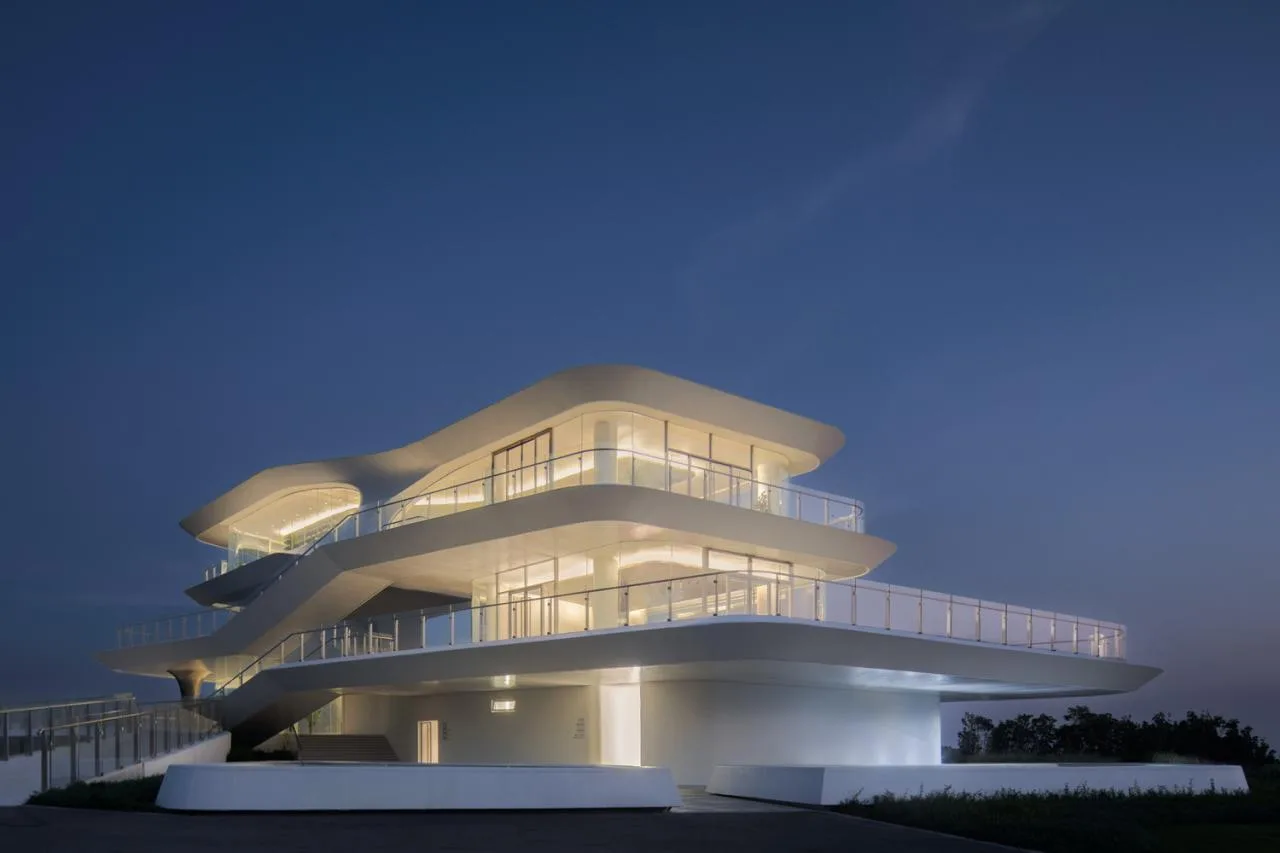
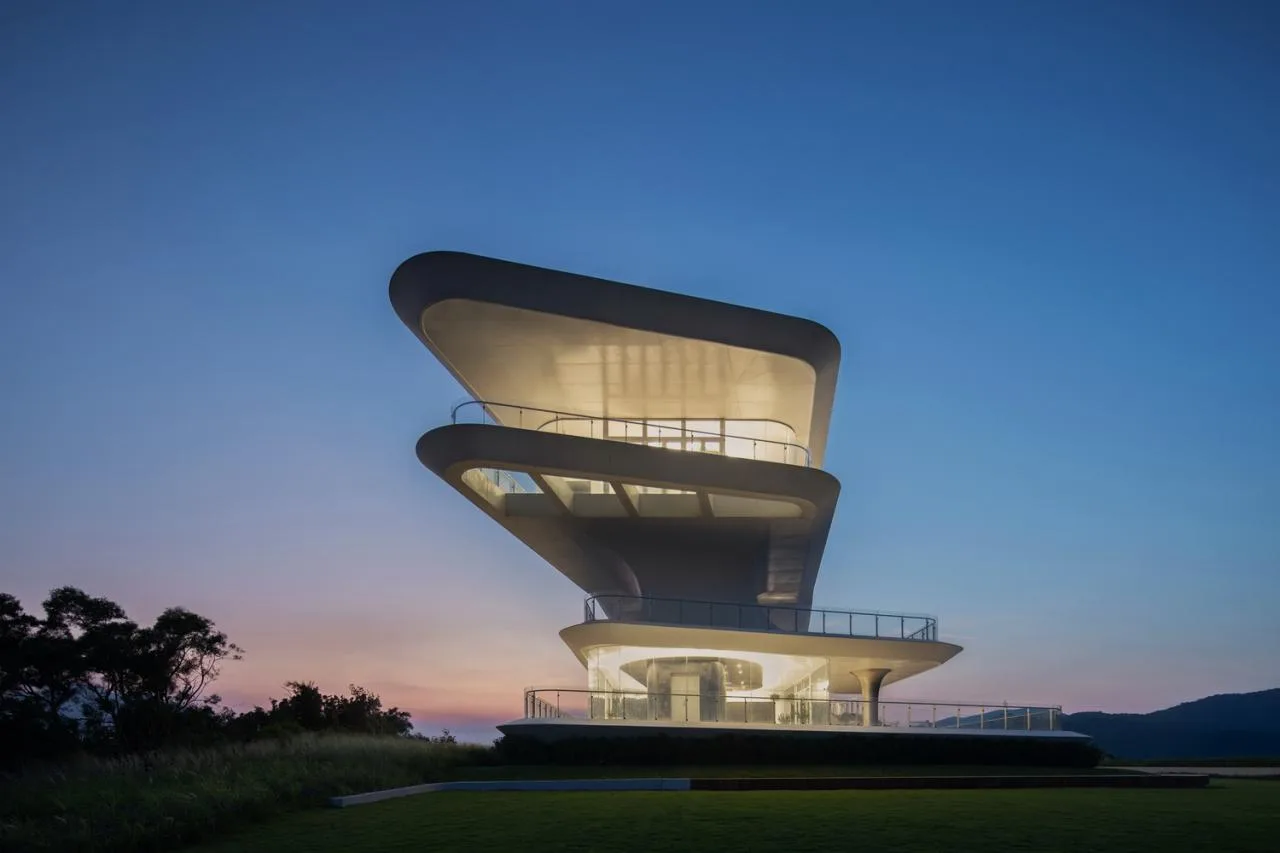
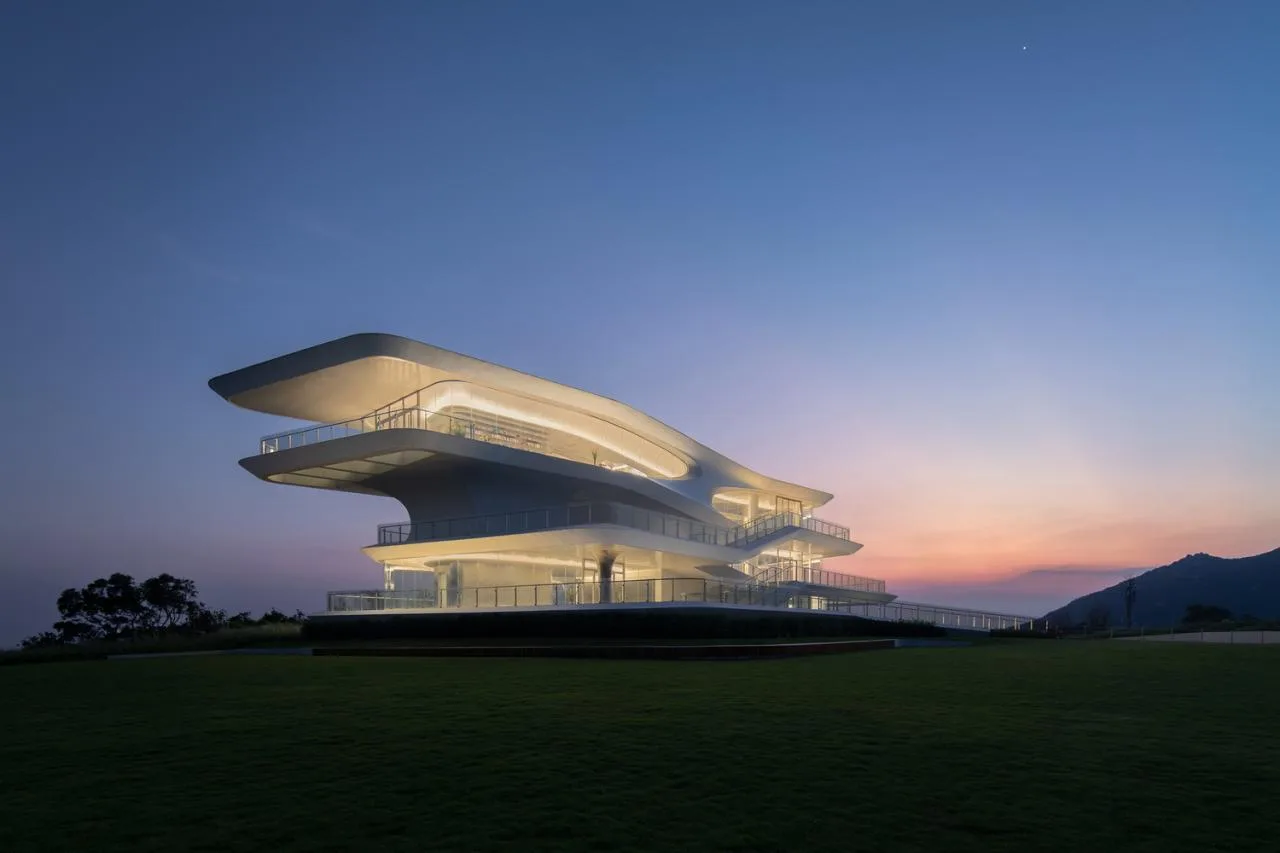
To achieve this, lightweight and transparent modern profiles were chosen to maintain the clarity of the viewing experience. The streamlined exterior creates an extraordinary curved space, enhancing the building’s visual impact within the mountain and sea environment.
PART 02
Experience of Different Time and Space
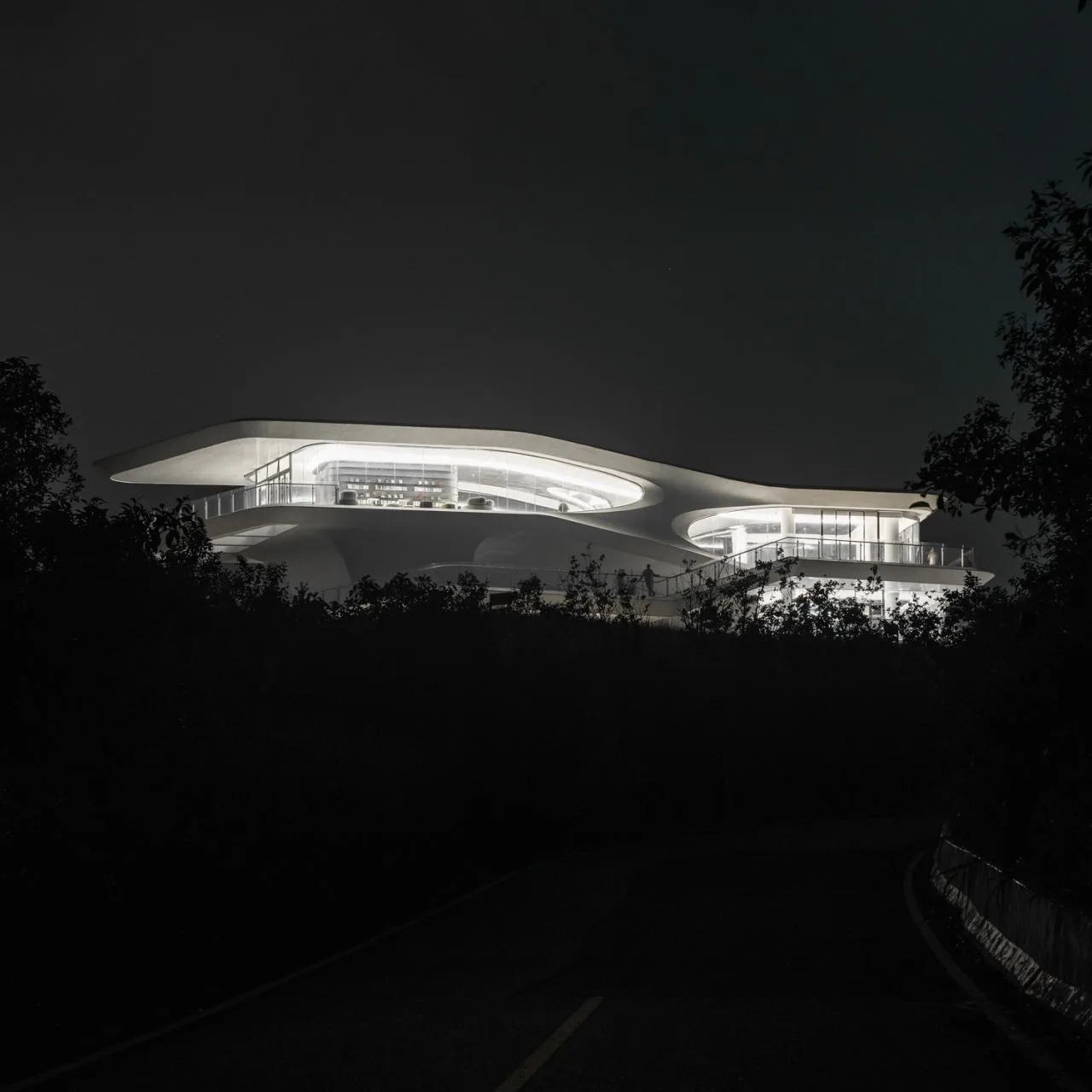
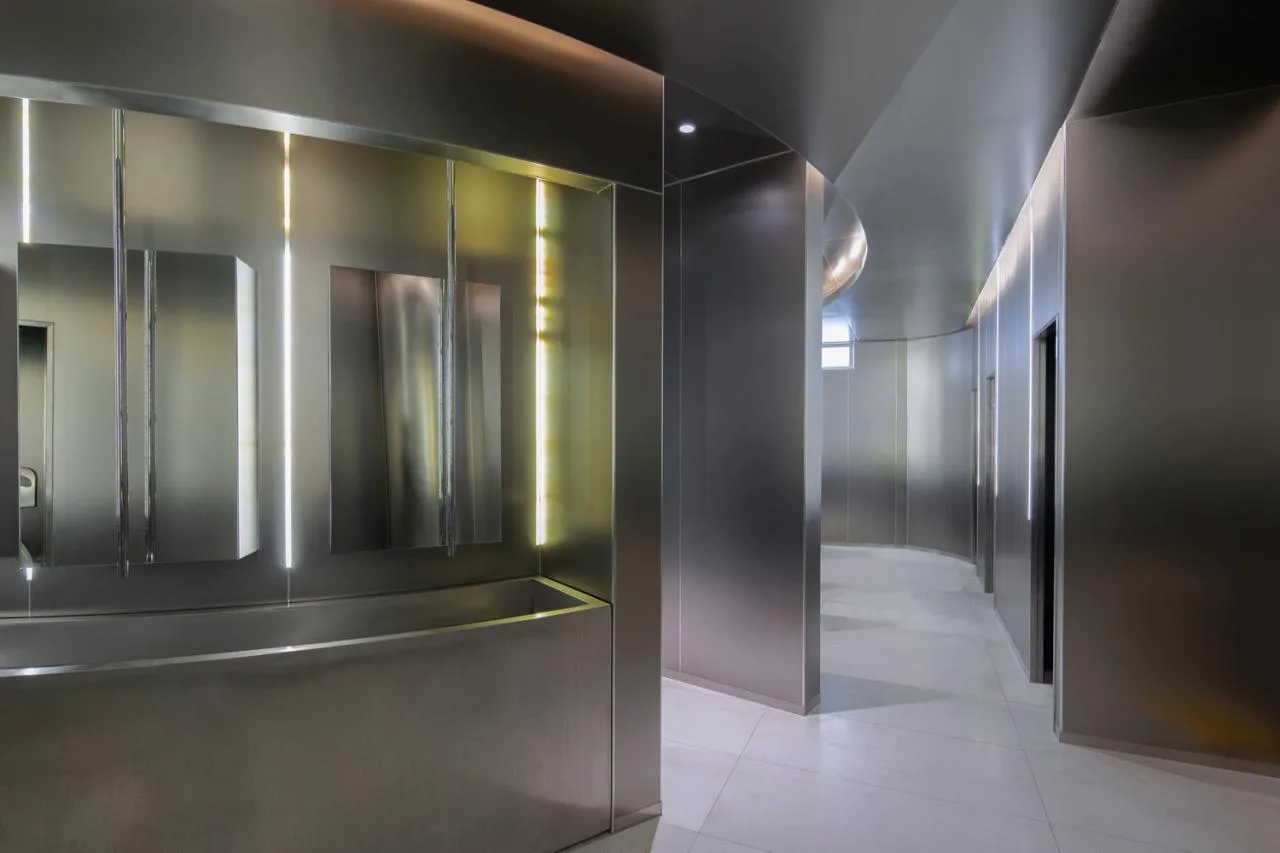
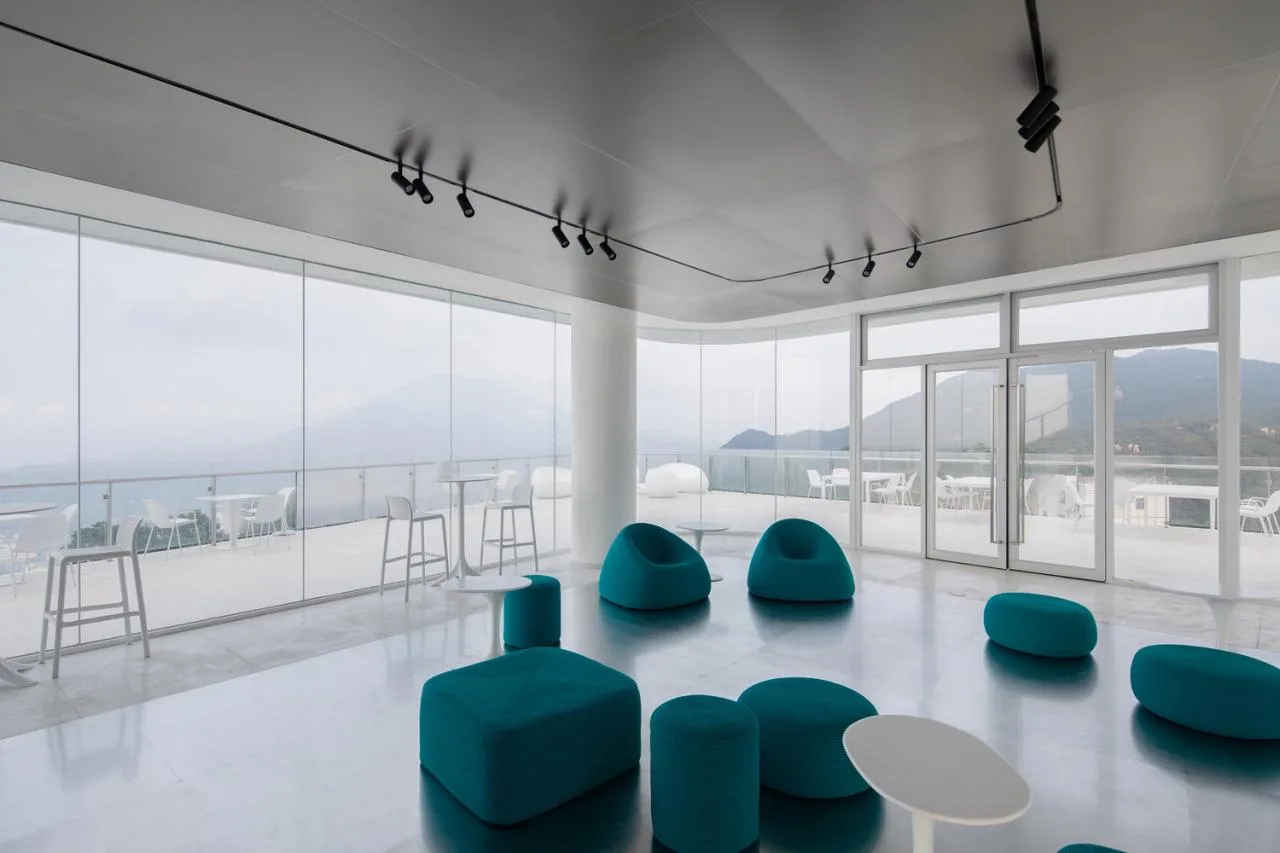
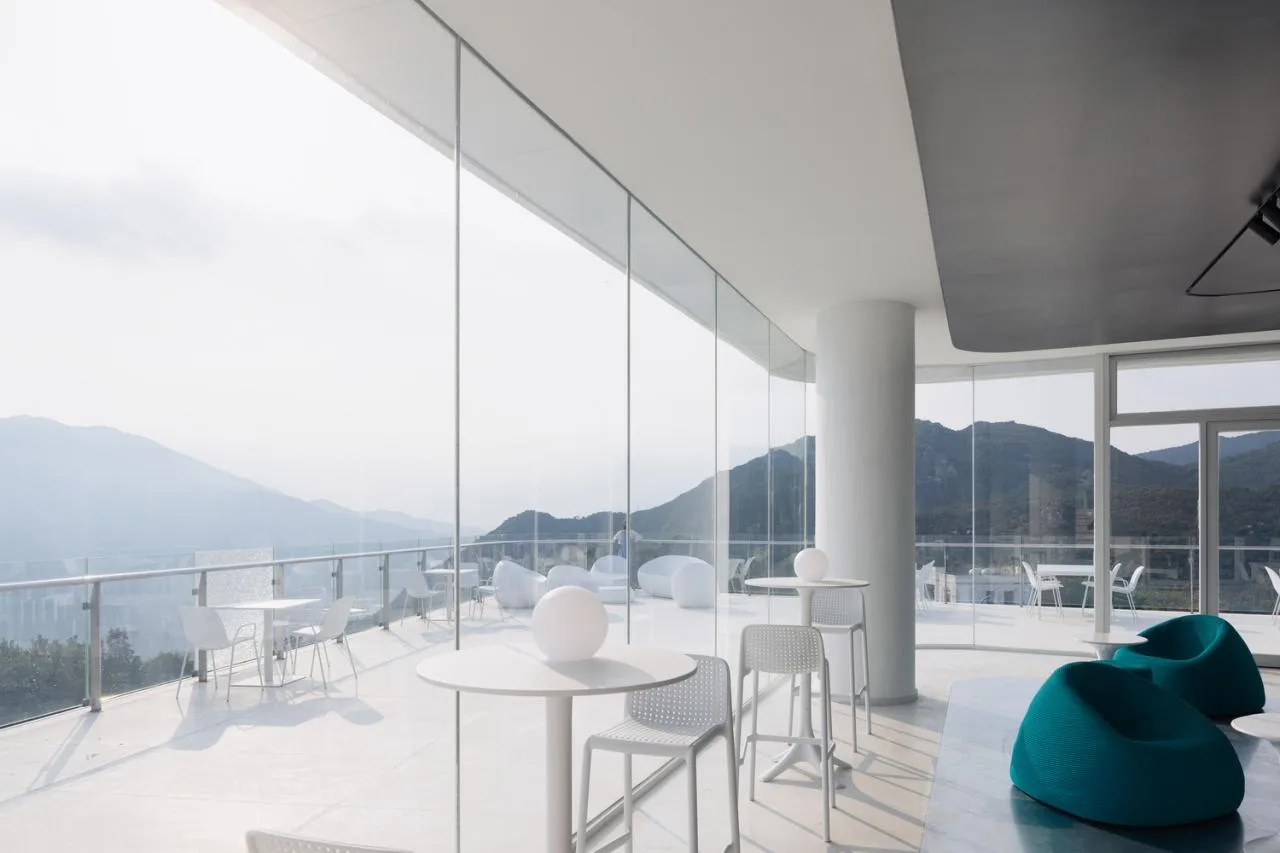
The interior design not only complements the surrounding landscape but also guides visitors through a profound spatial experience reflecting the essence of time and space. Utilizing curved forms and flowing volumes, the design employs rigid, uniform materials to unify the interior and exterior, generating strong spatial tension and enriching sensory engagement.
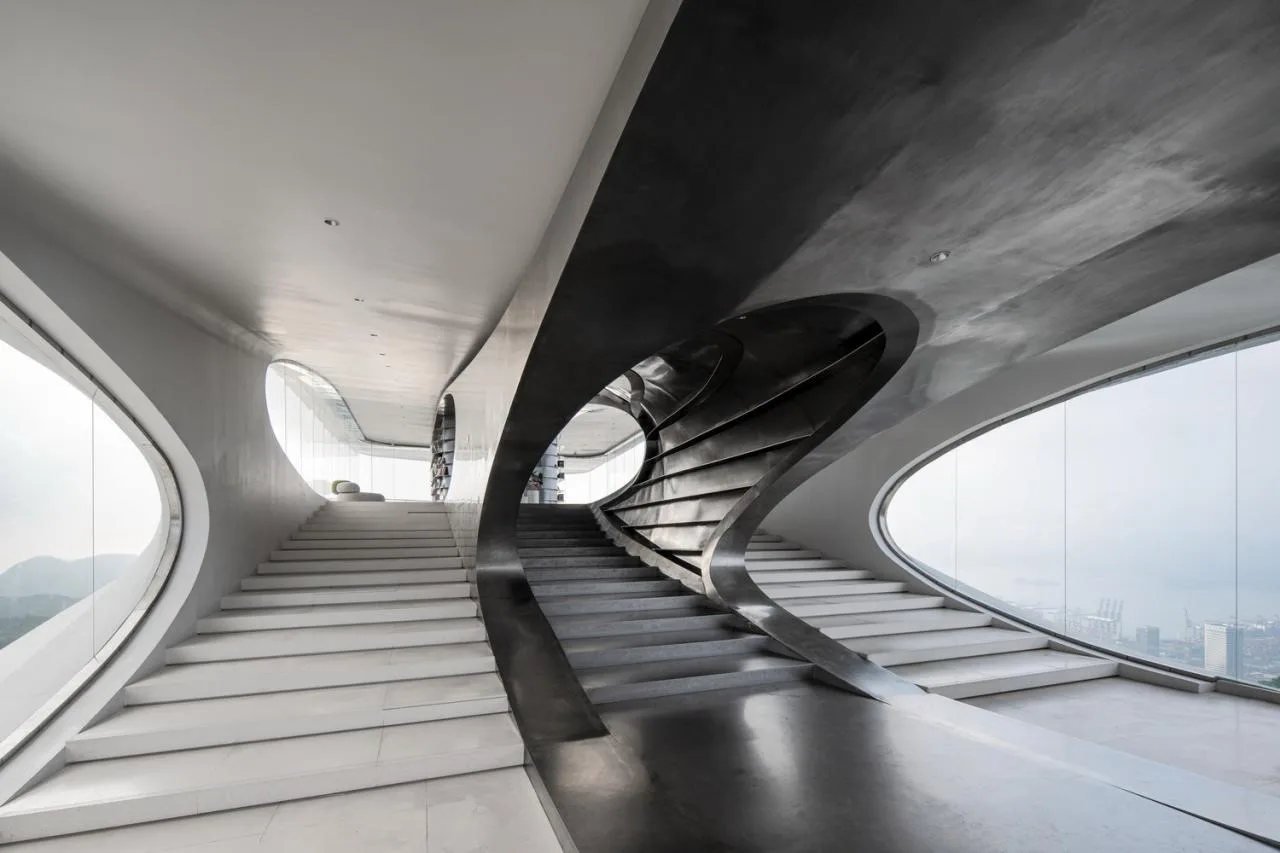
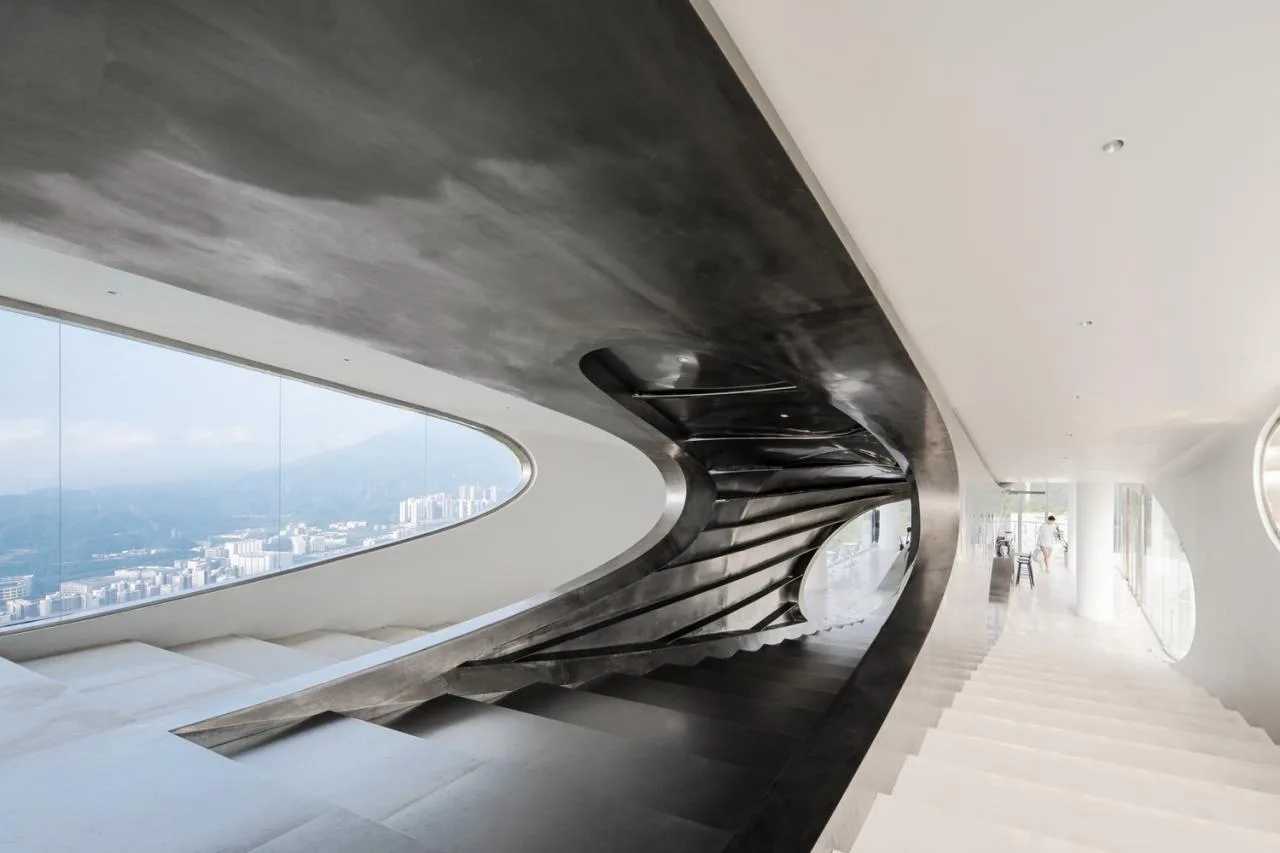
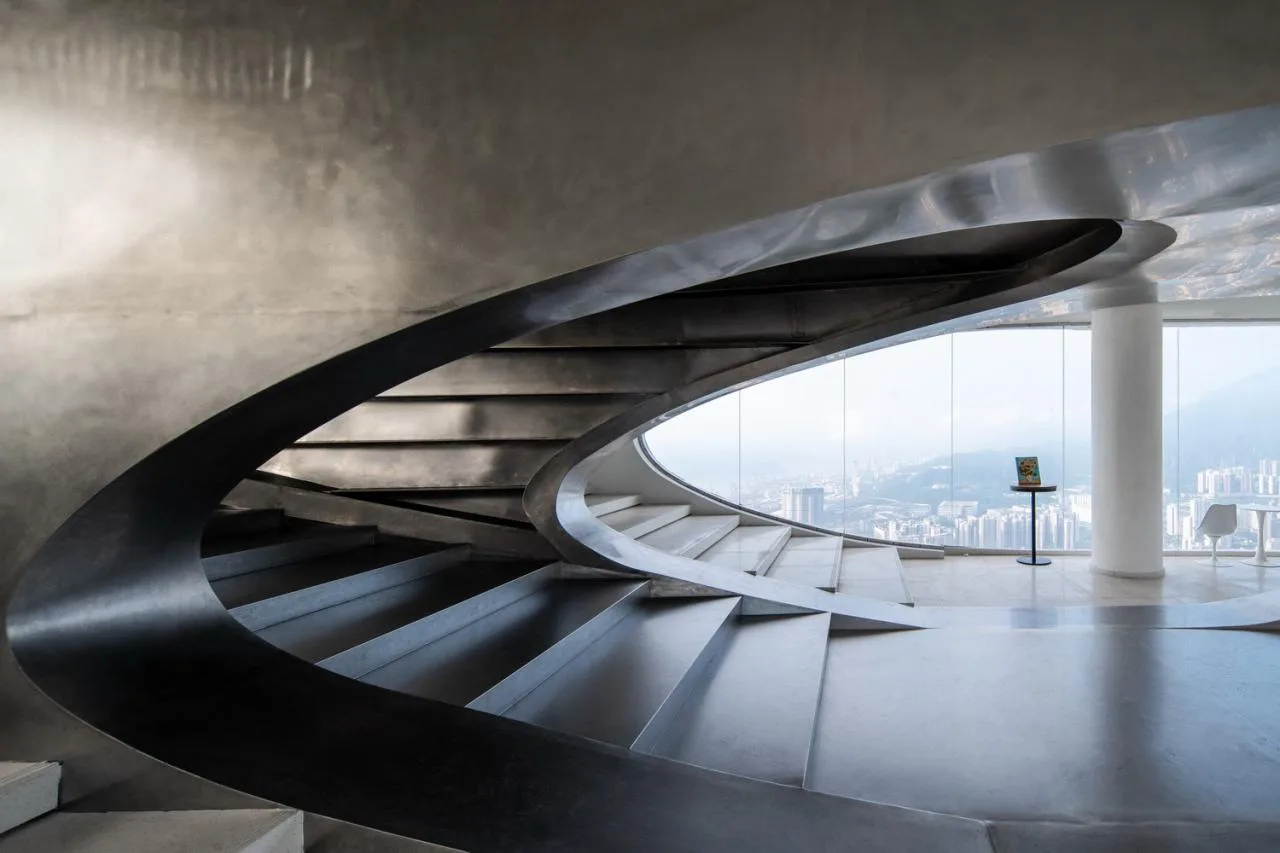
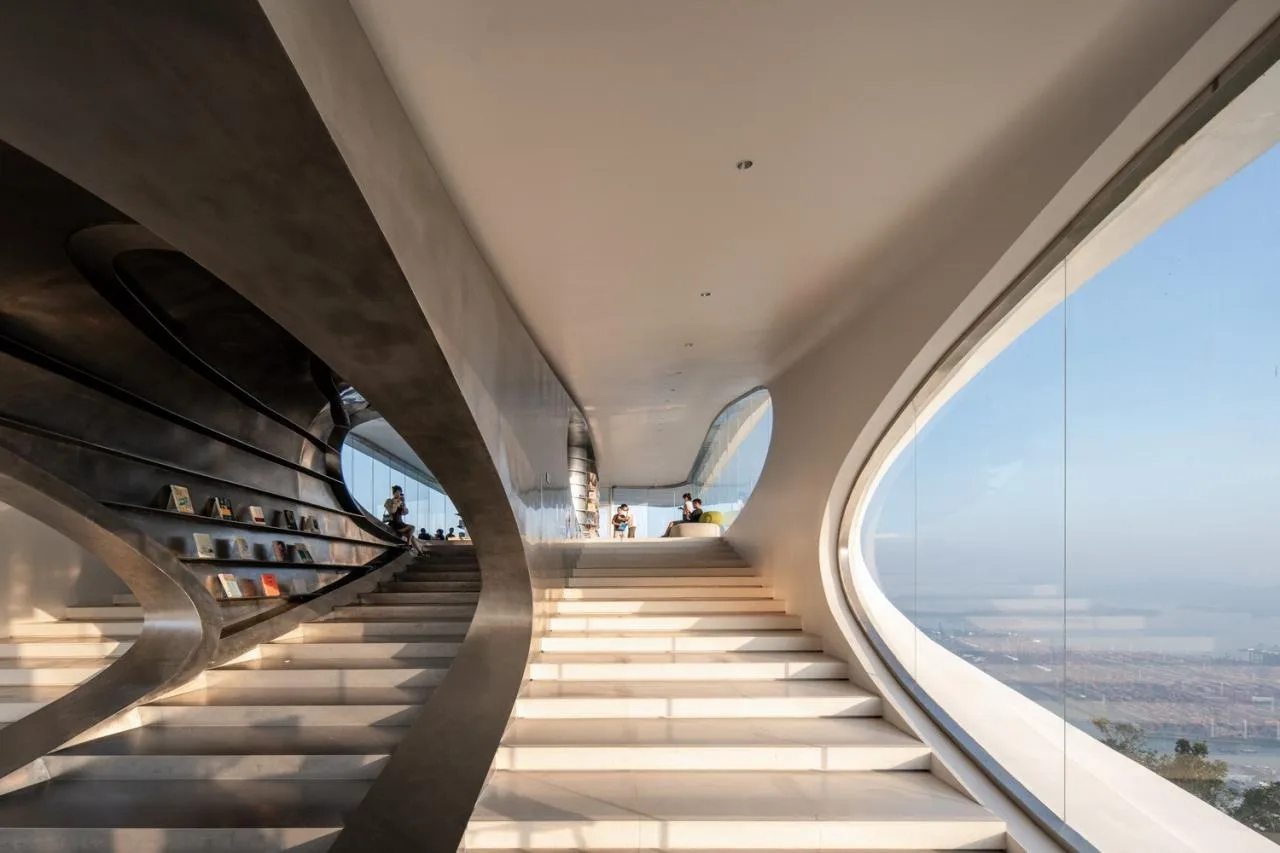
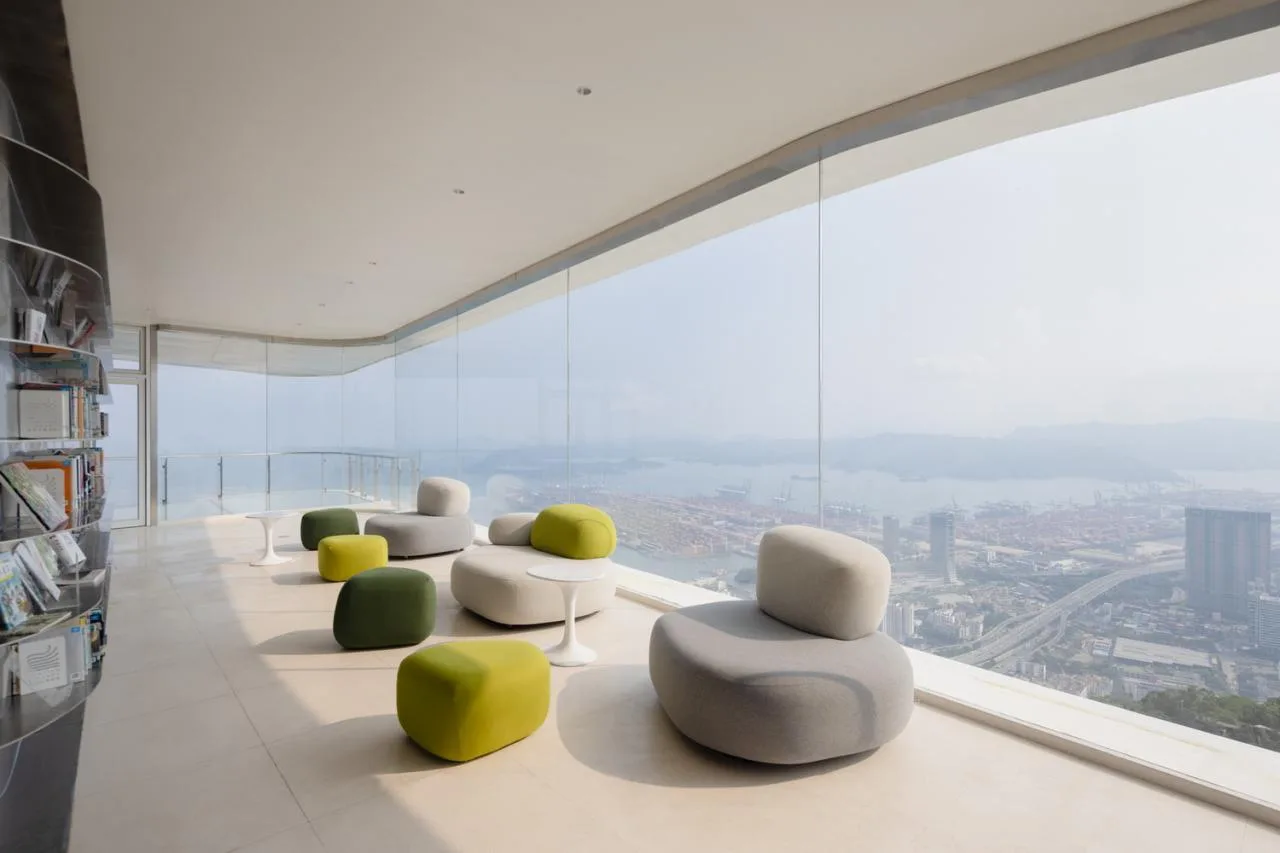
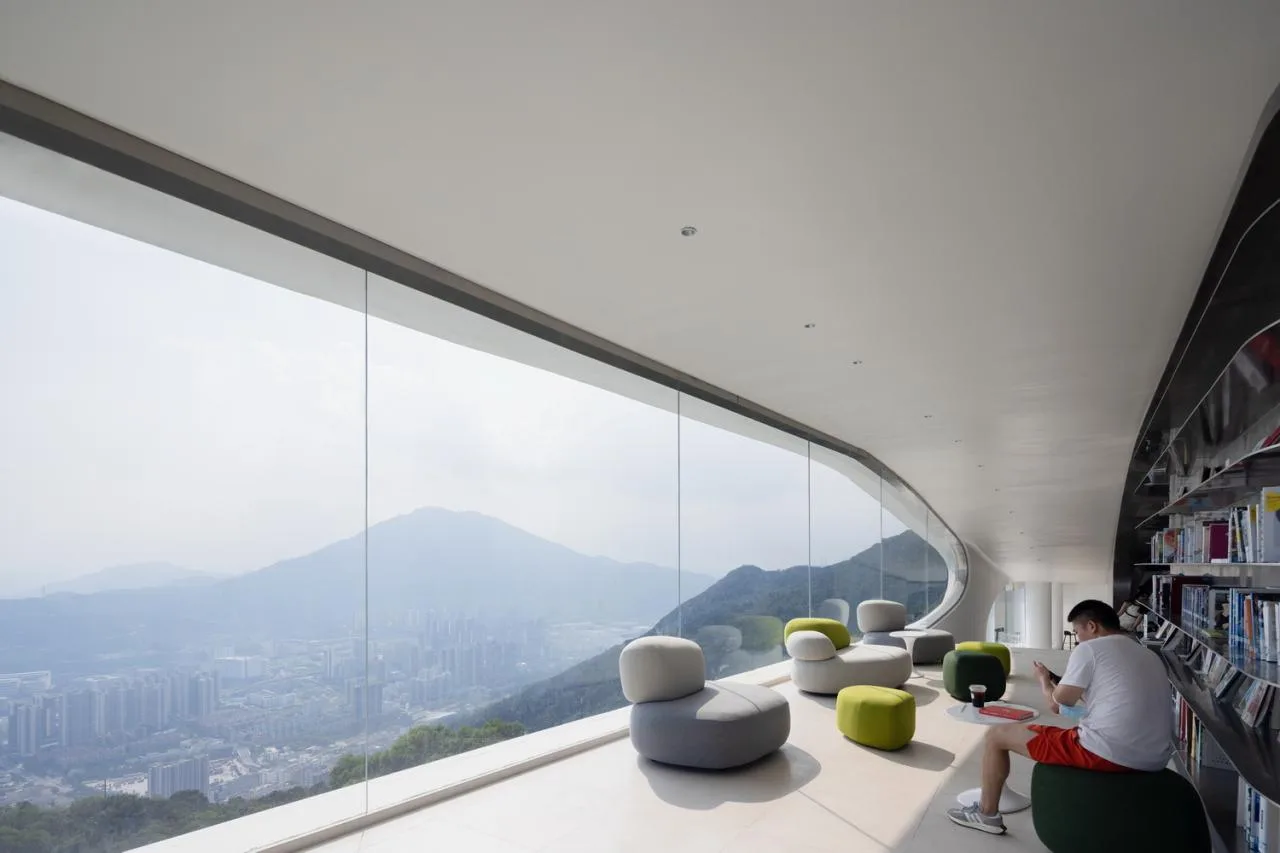
The floor plan follows the architectural pathway, integrating artistic installations at key locations within expansive spaces. A metal installation between the third-floor café and reading area combines functions such as bookshelf display and coffee preparation, effectively dividing the space. The contrast between the irregular stainless steel surfaces and the white terrazzo flooring creates a striking cyber-inspired atmosphere, framed by the mountain and sea landscape visible through the windows.
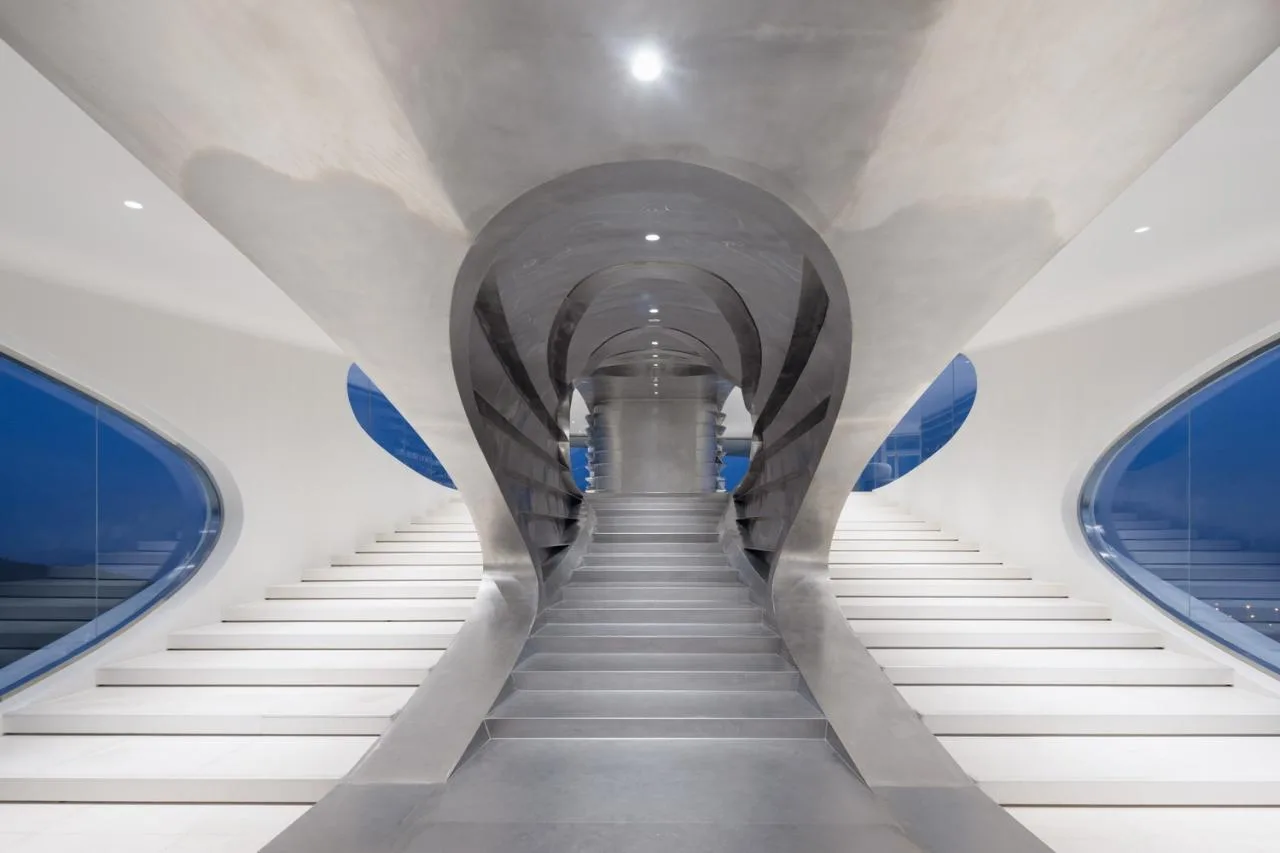
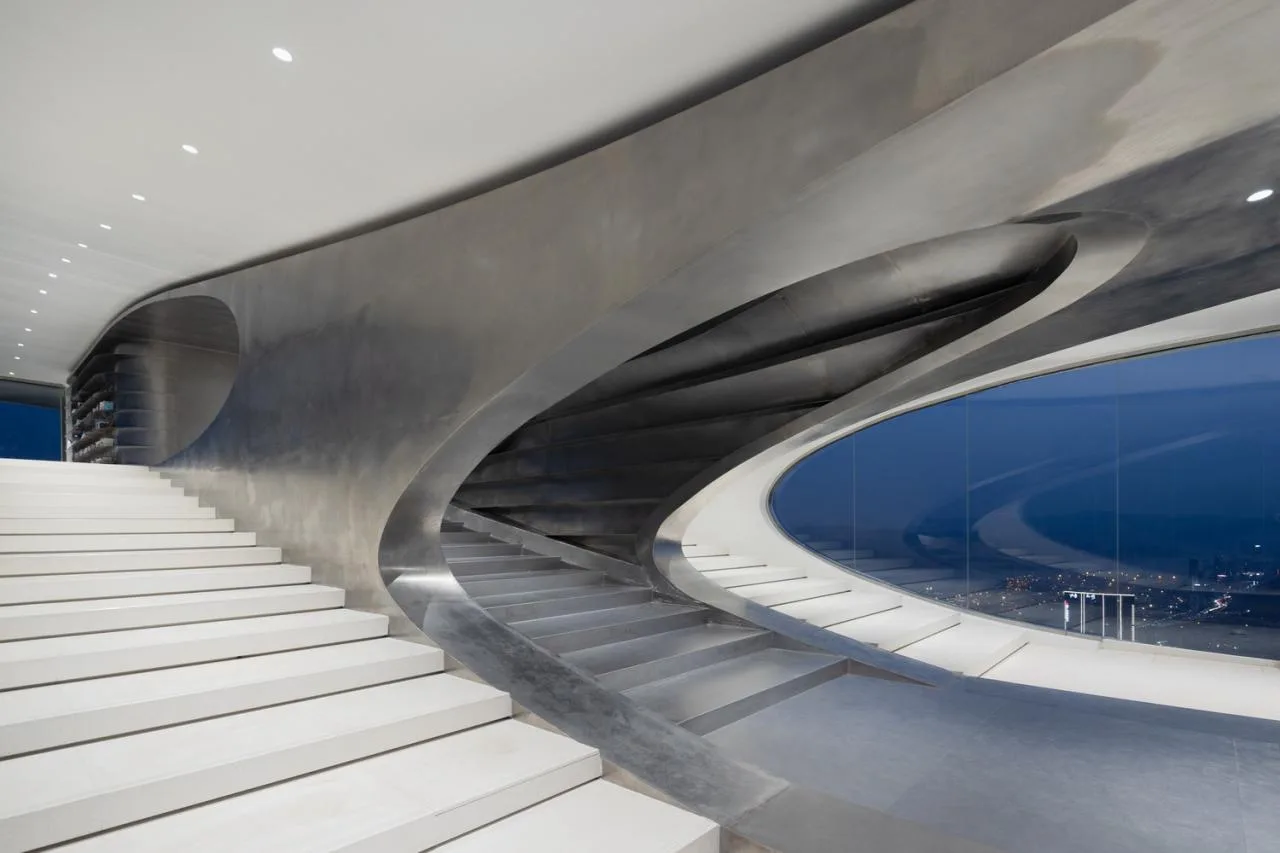
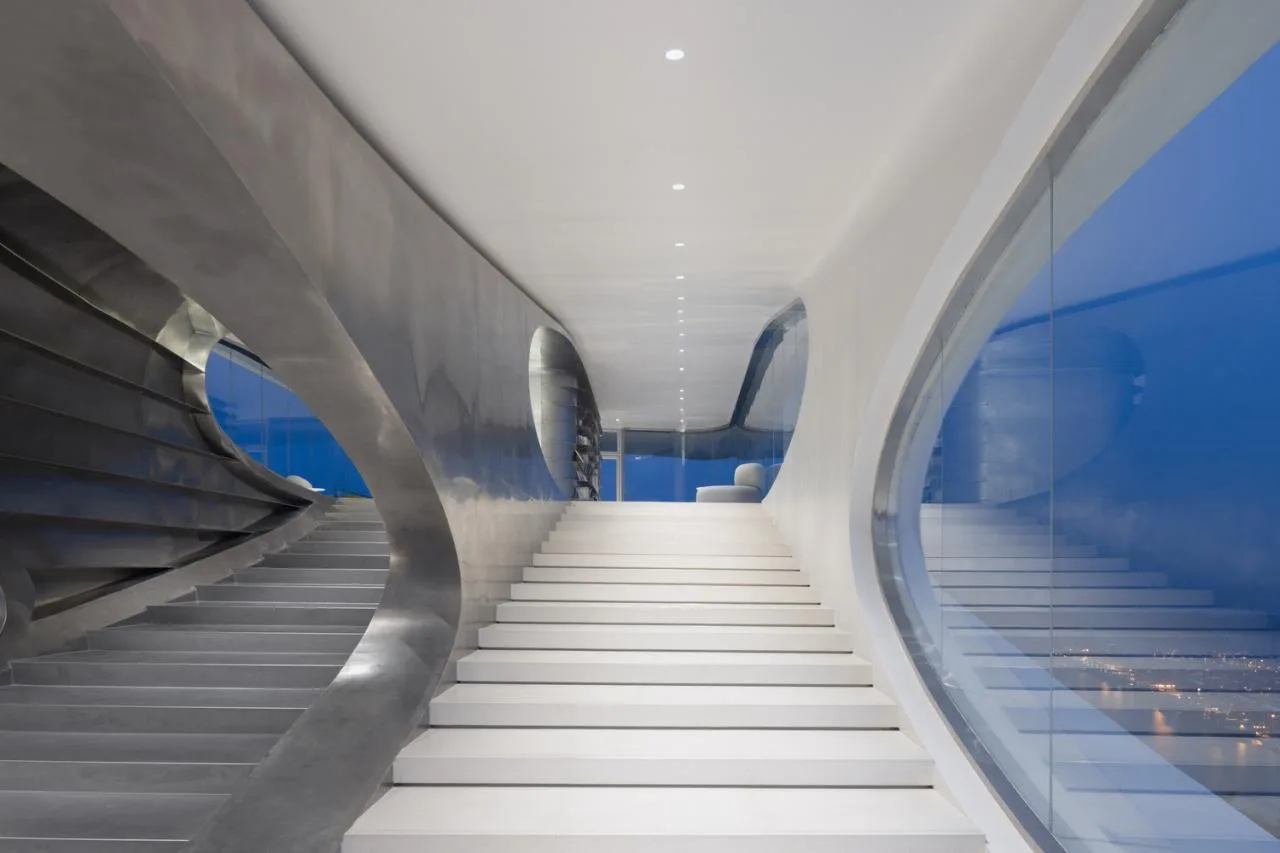
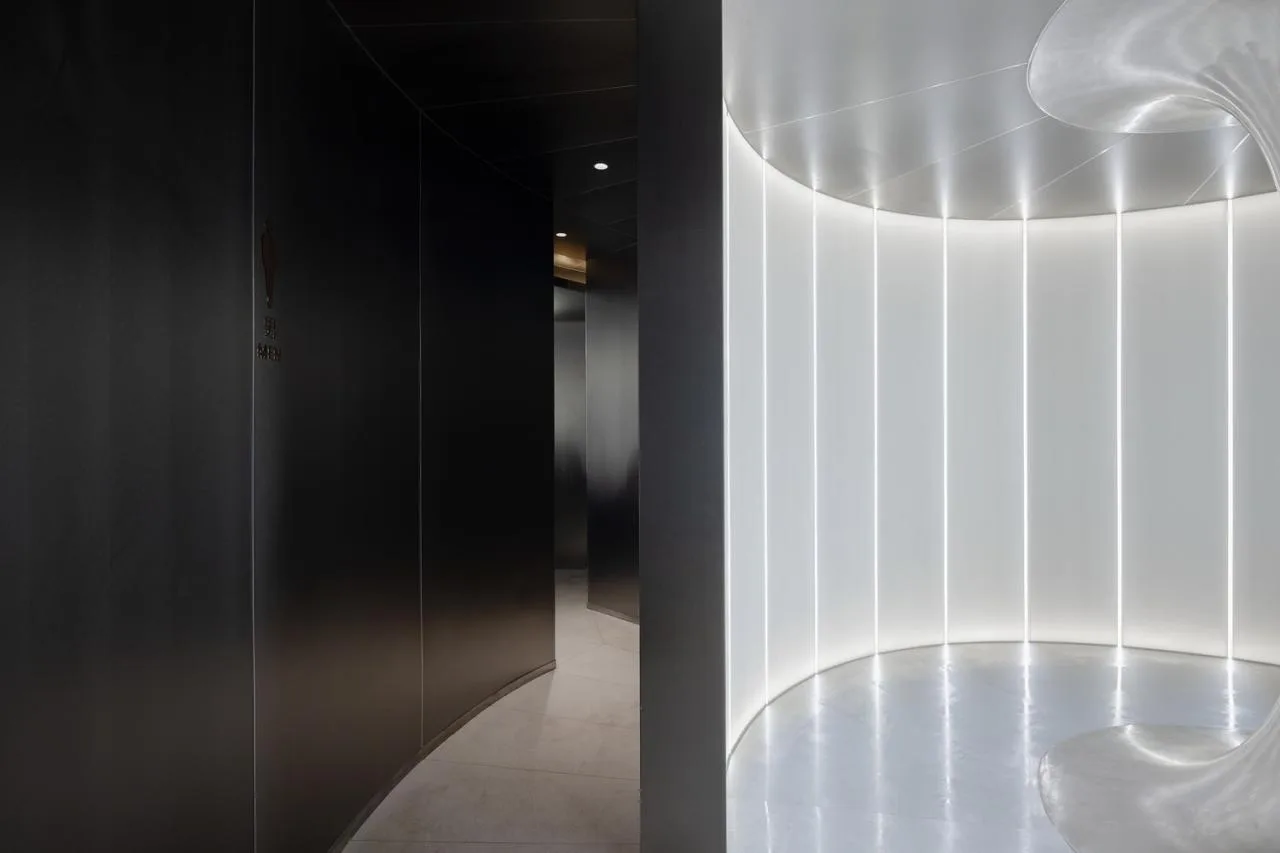
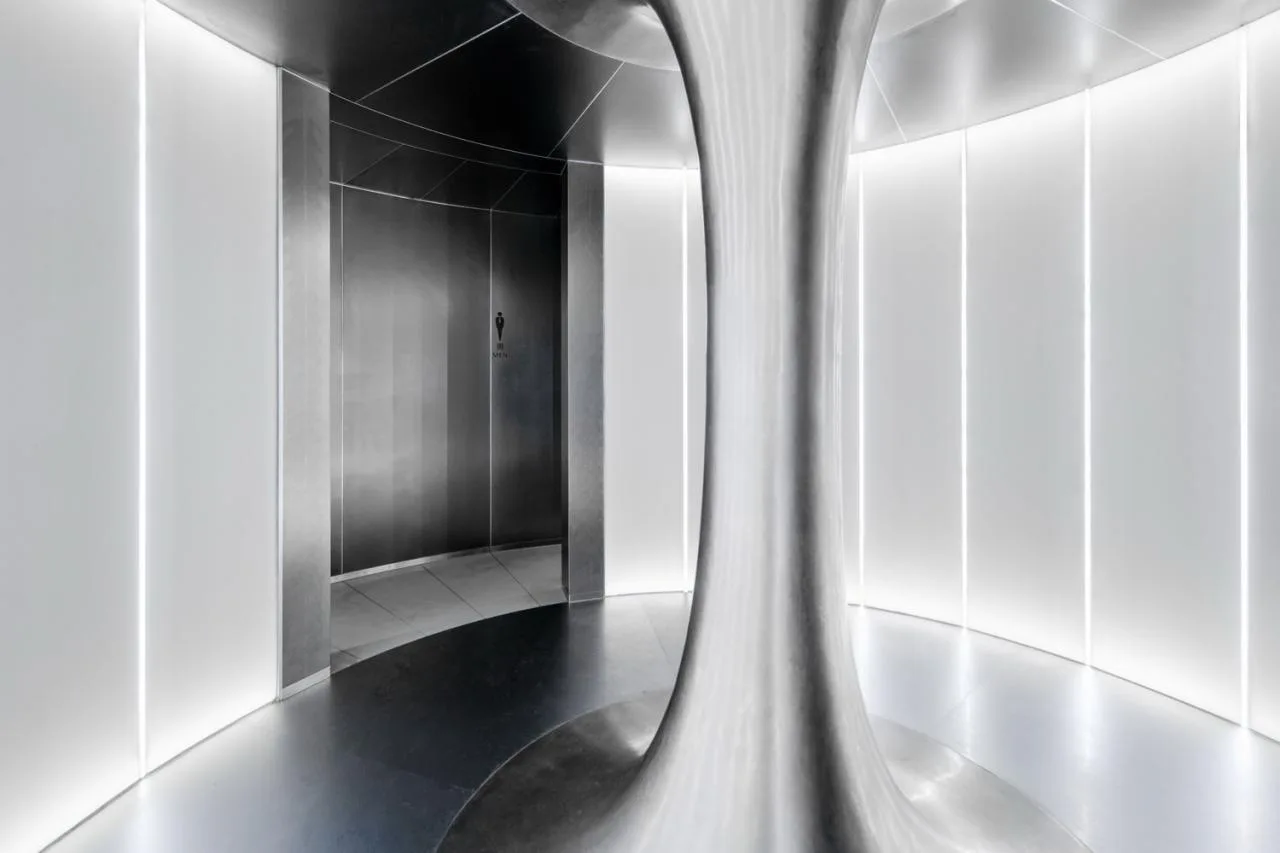
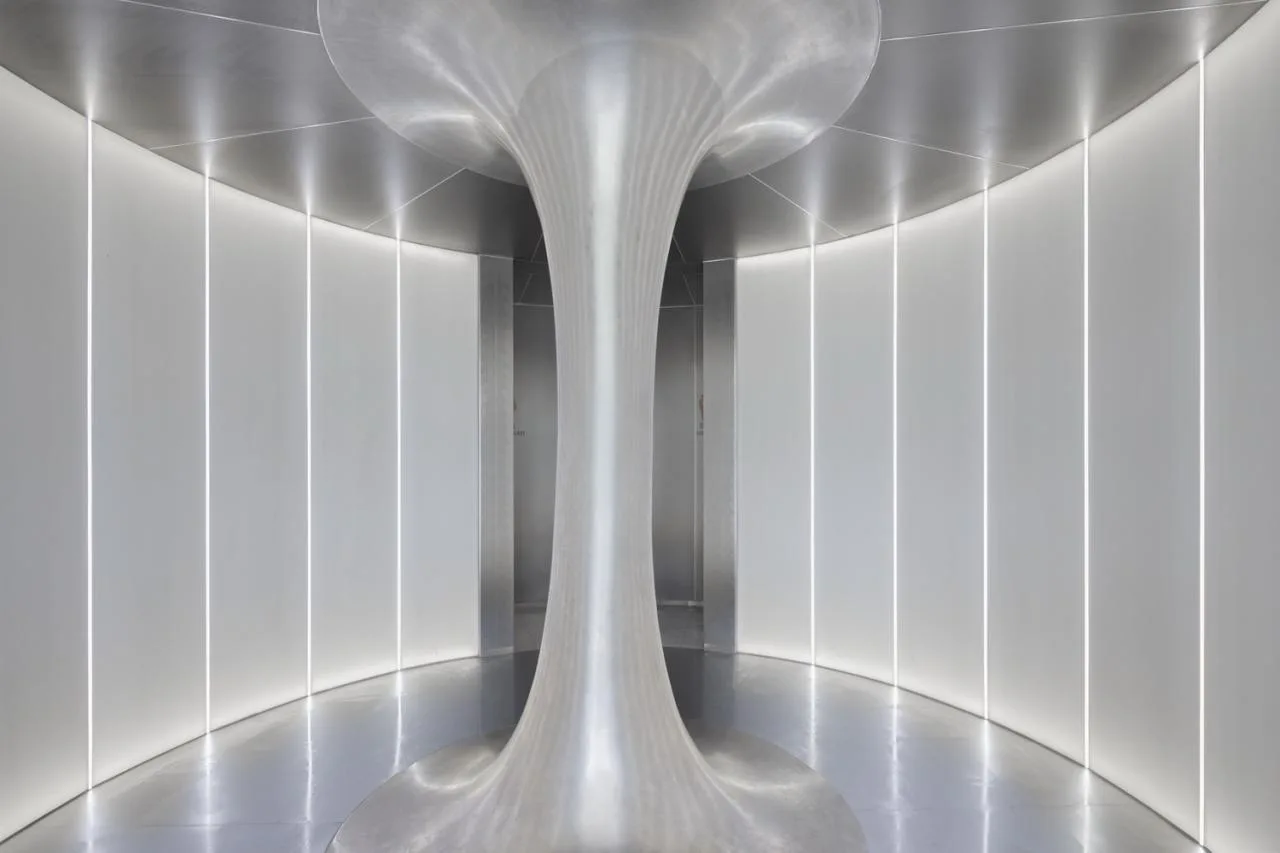
The first-floor restroom design also explores the theme of temporal and spatial contrast. At the entrance, a tall metal sculpture paired with a white semi-transparent curved acrylic wall evokes the beginning of a surreal journey. Inside, the space centers around a circular metal installation, balancing fluid form with privacy.
PART 03
Selection of Structural Materials
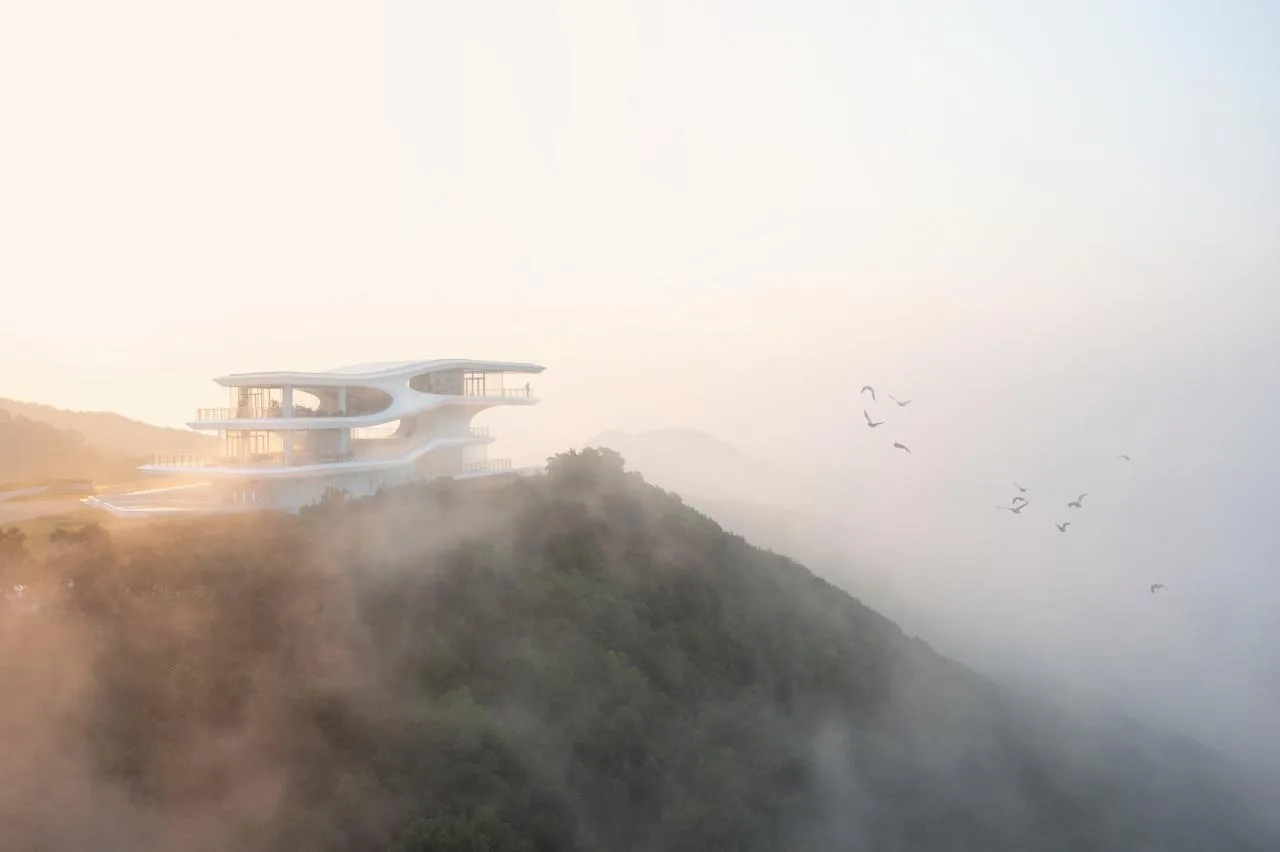
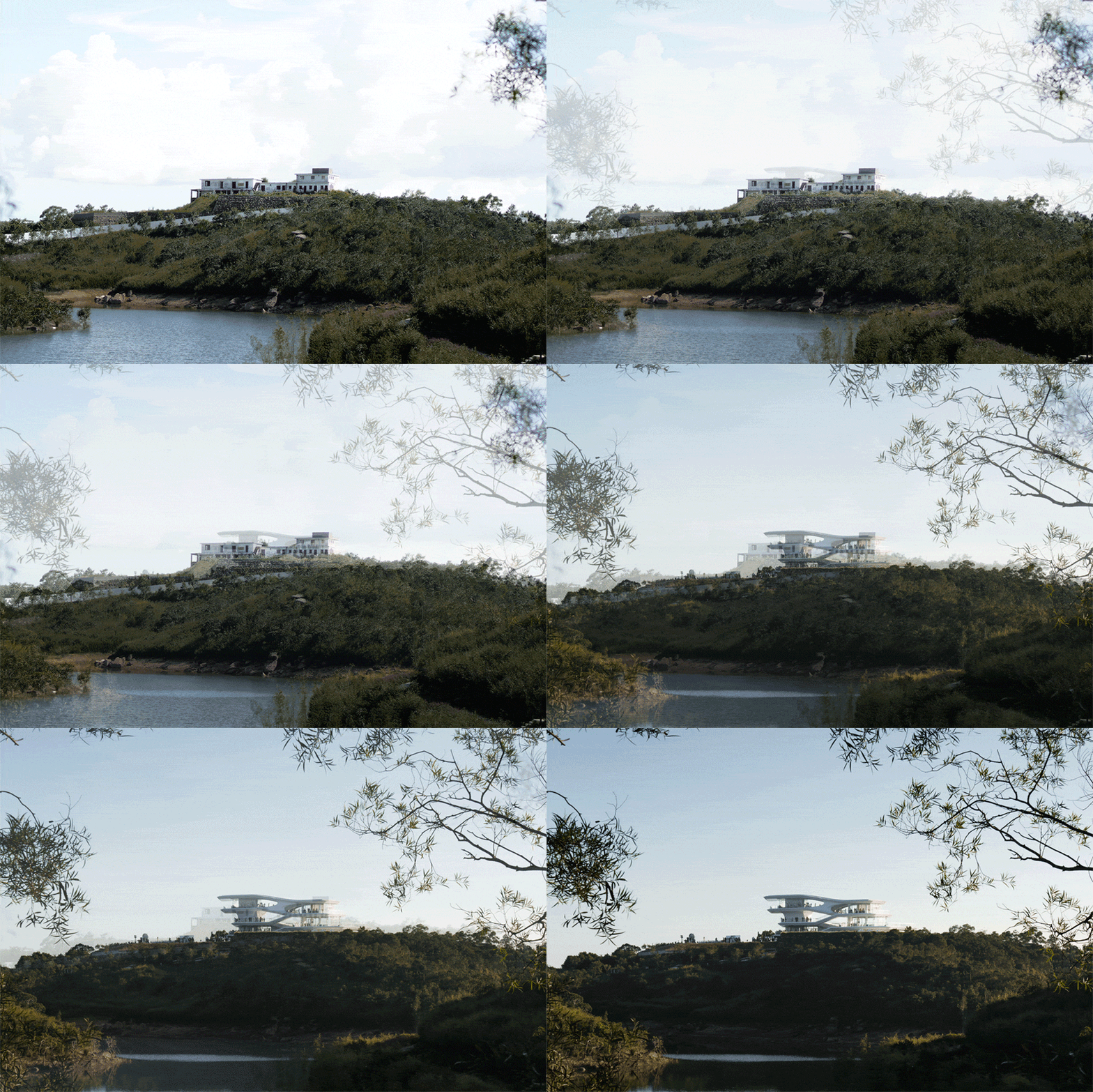
The structure and materials were chosen based on construction feasibility, environmental resilience, and the goal of creating a large-span, column-free, transparent, and multi-directional cantilevered space. The steel frame and dry-hanging curtain wall system were prefabricated off-site and swiftly assembled on location.
3.1 Steel Frame
The eccentric positioning of the core tube and the frame structure at the rear jointly provide a large-span, multi-directional cantilevered viewing platform. Structural feasibility analyses simulate wind pressure and load conditions typical of the mountaintop environment.
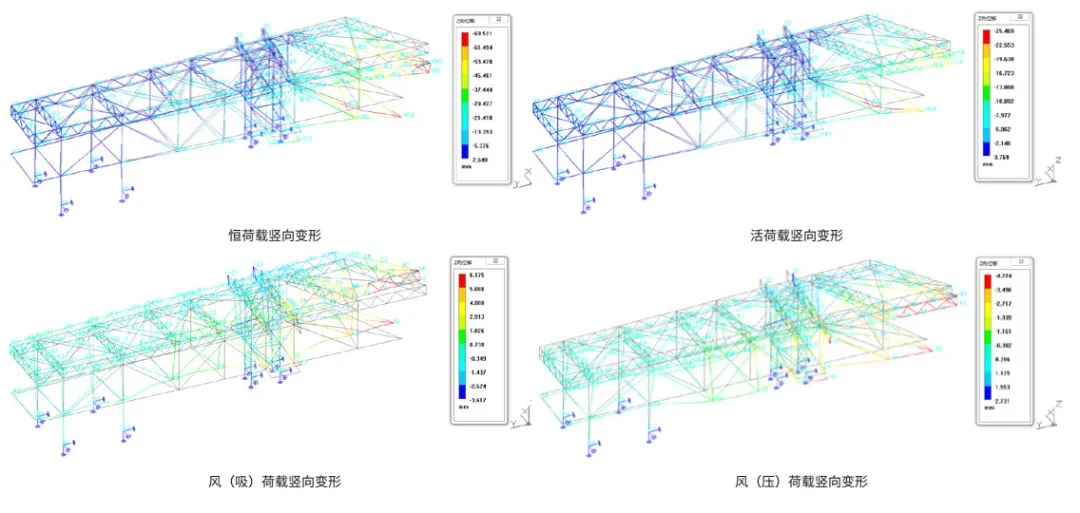
Feasibility Analysis △ Structure
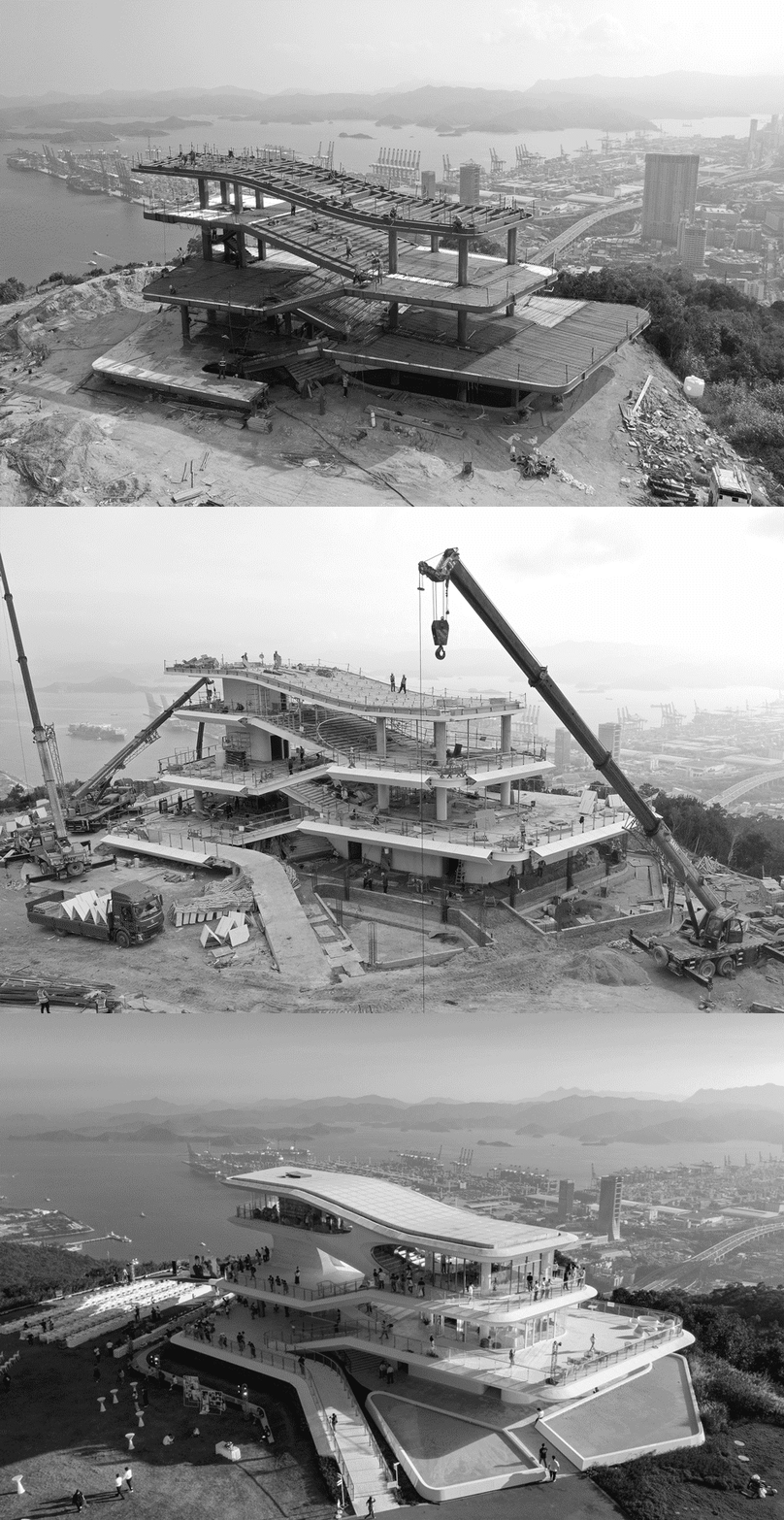
△ Construction Process
3.2 Building Envelope
The main exterior wall is constructed using UHPC (Ultra-High Performance Concrete), a material known for its impermeability and durability. It meets environmental resistance requirements and supports the complex curved and irregular shapes of the design.
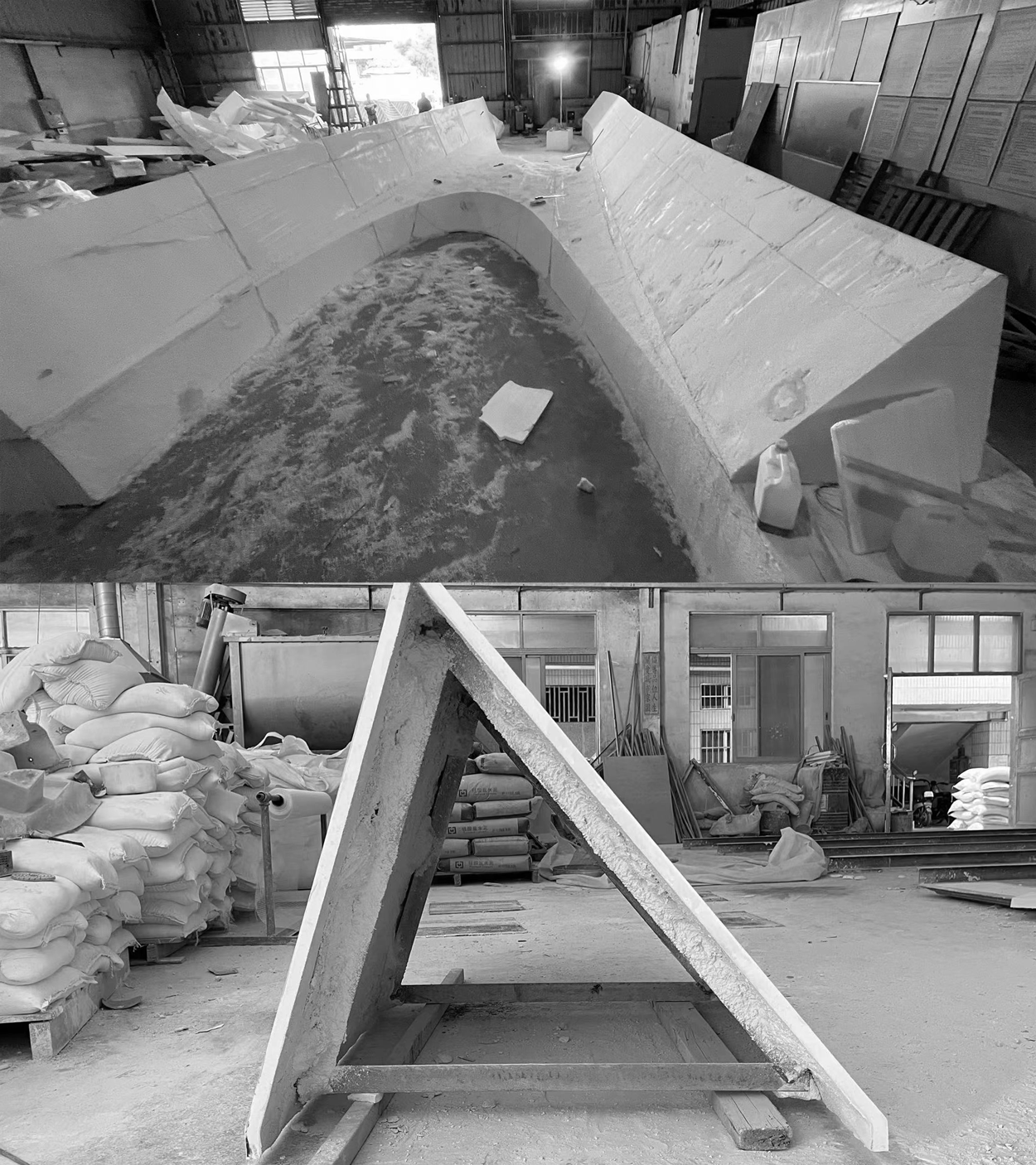
△ Production and Manufacturing Process
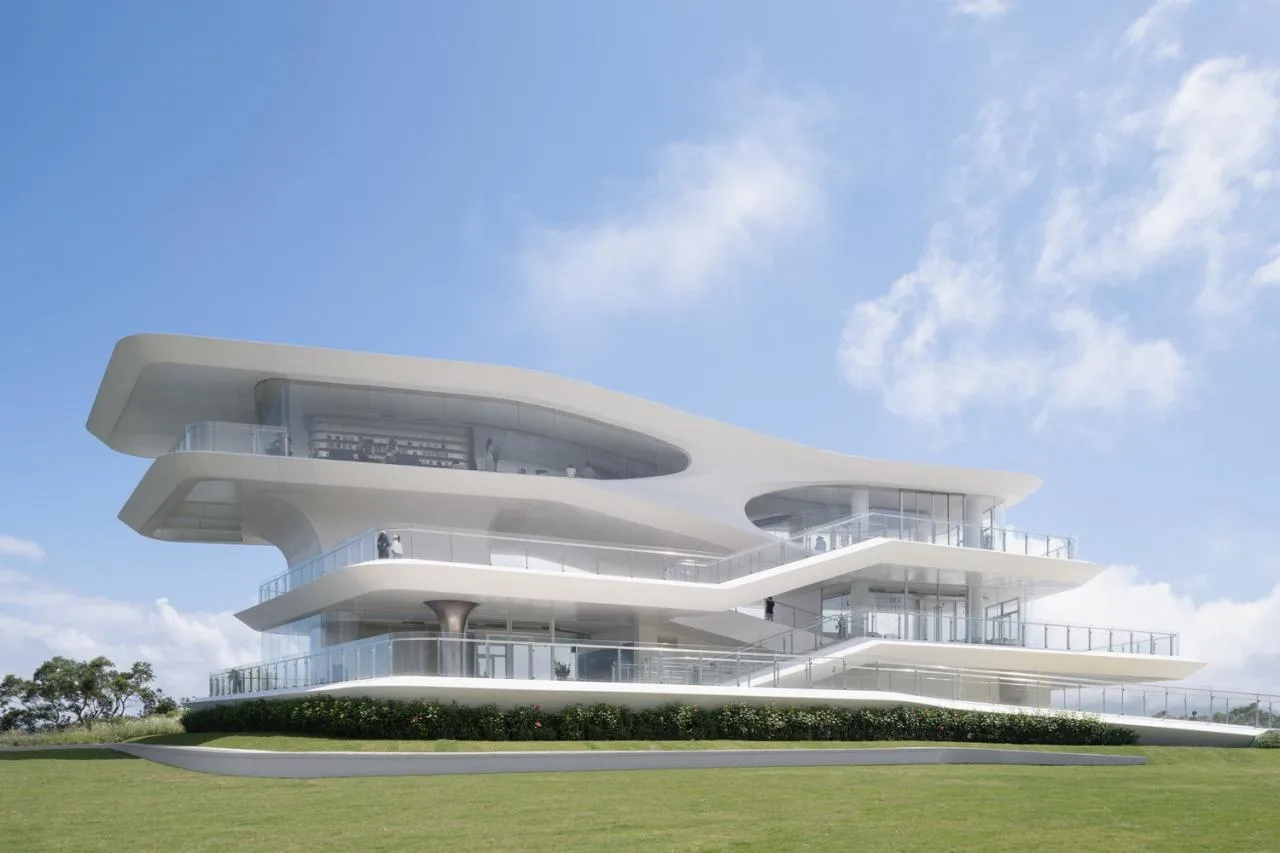
The UHPC panels are divided into manageable sizes (up to 0.9m by 2m) through 3D modeling to facilitate transport and installation. Once installed, the panels are smoothed by patching and polishing, then coated with protective agents. Drainage channels run along the panel edges.
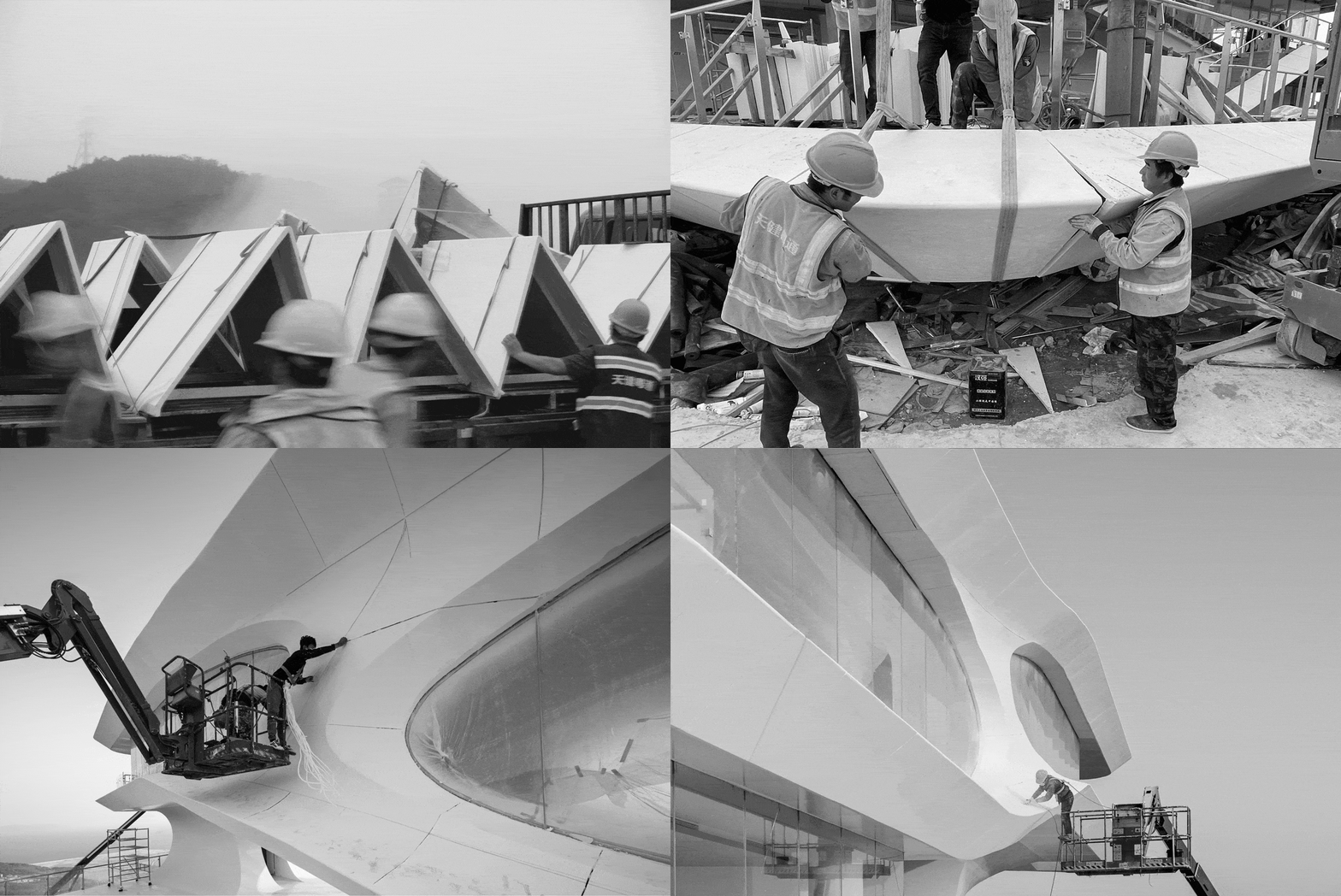
△ On-Site UHPC Panel Installation
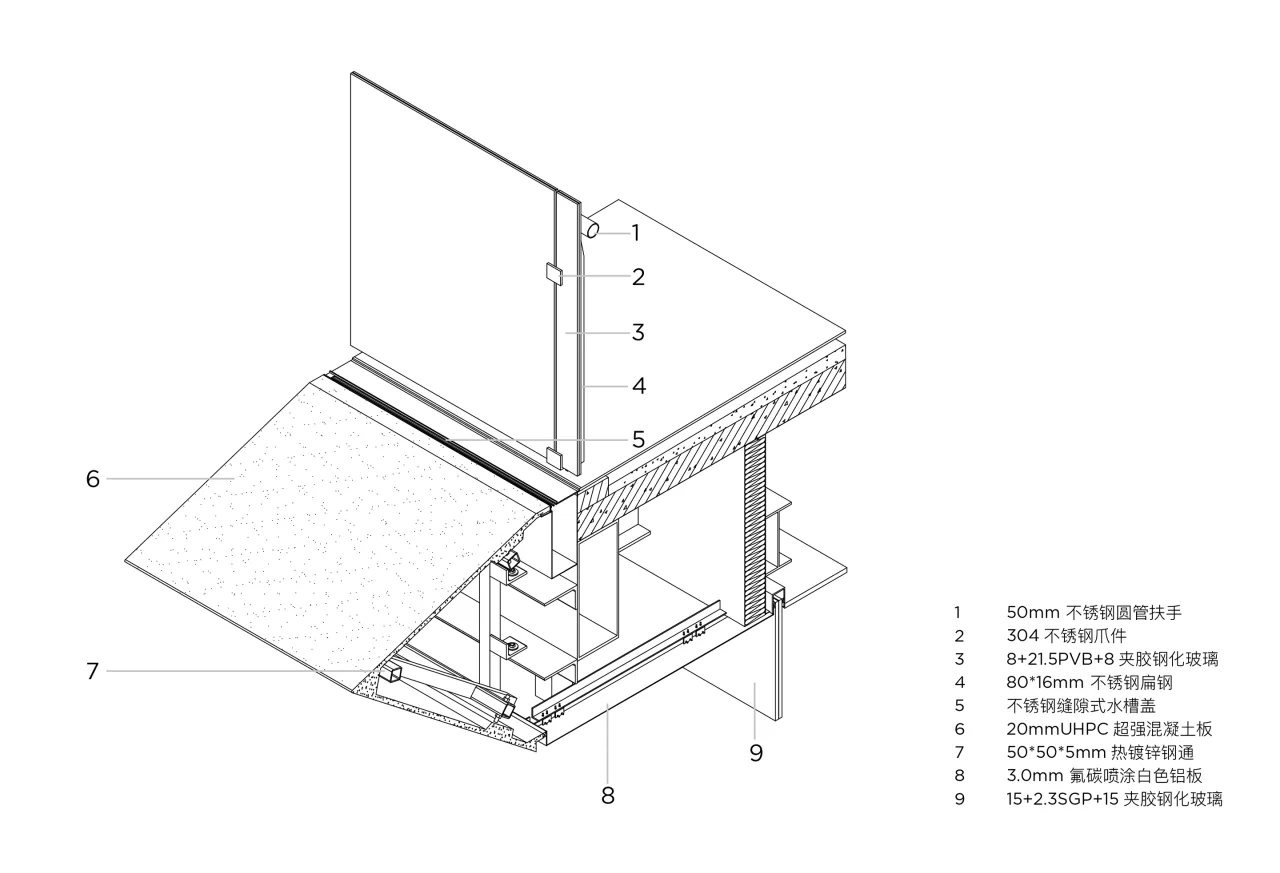
△ Node Axis Measurement
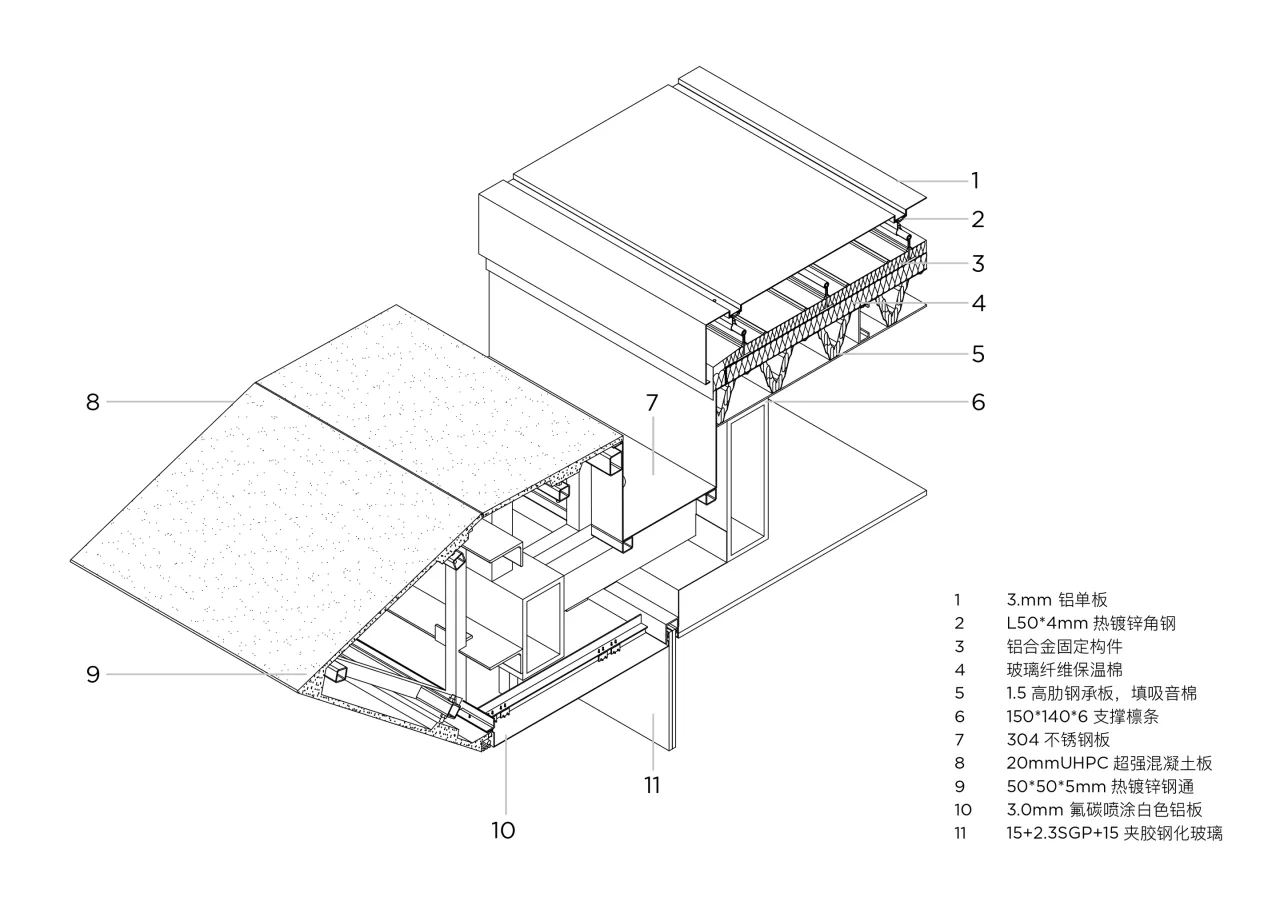
△ Node Axis Measurement
The outdoor ceiling features a large flat area clad with fluorocarbon-sprayed aluminum panels, designed with concealed drainage pipes. The junction with the UHPC naturally channels water runoff. The core tube’s exterior demands high strength and seamless curved surfaces, achieved using stainless steel panels coated with white textured paint. Prefabricated polished stone slabs were installed for the outdoor terrace flooring.
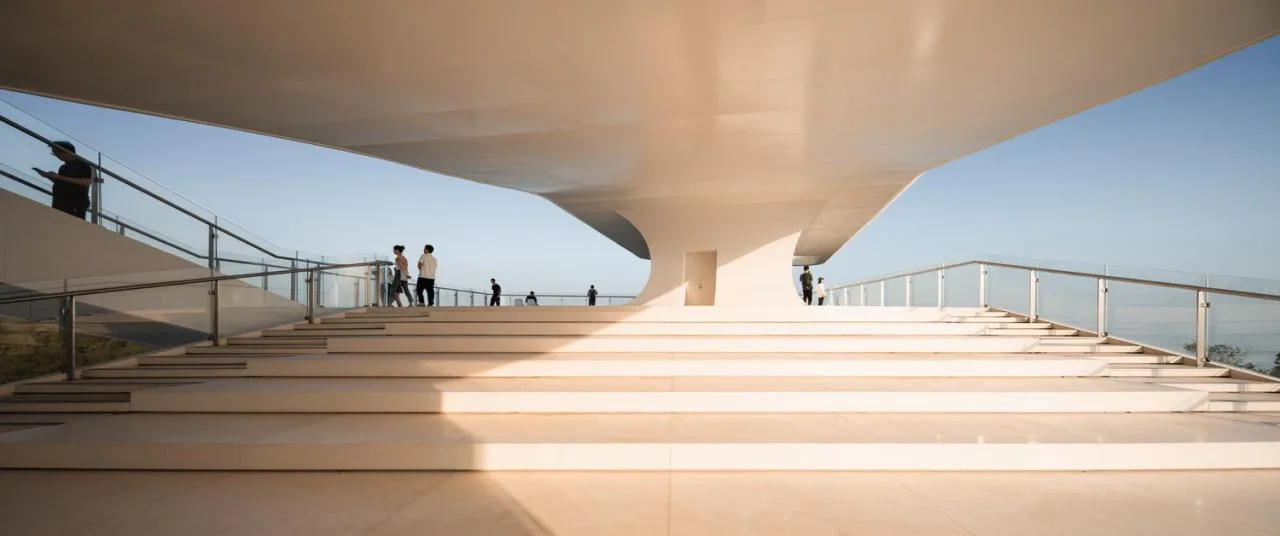
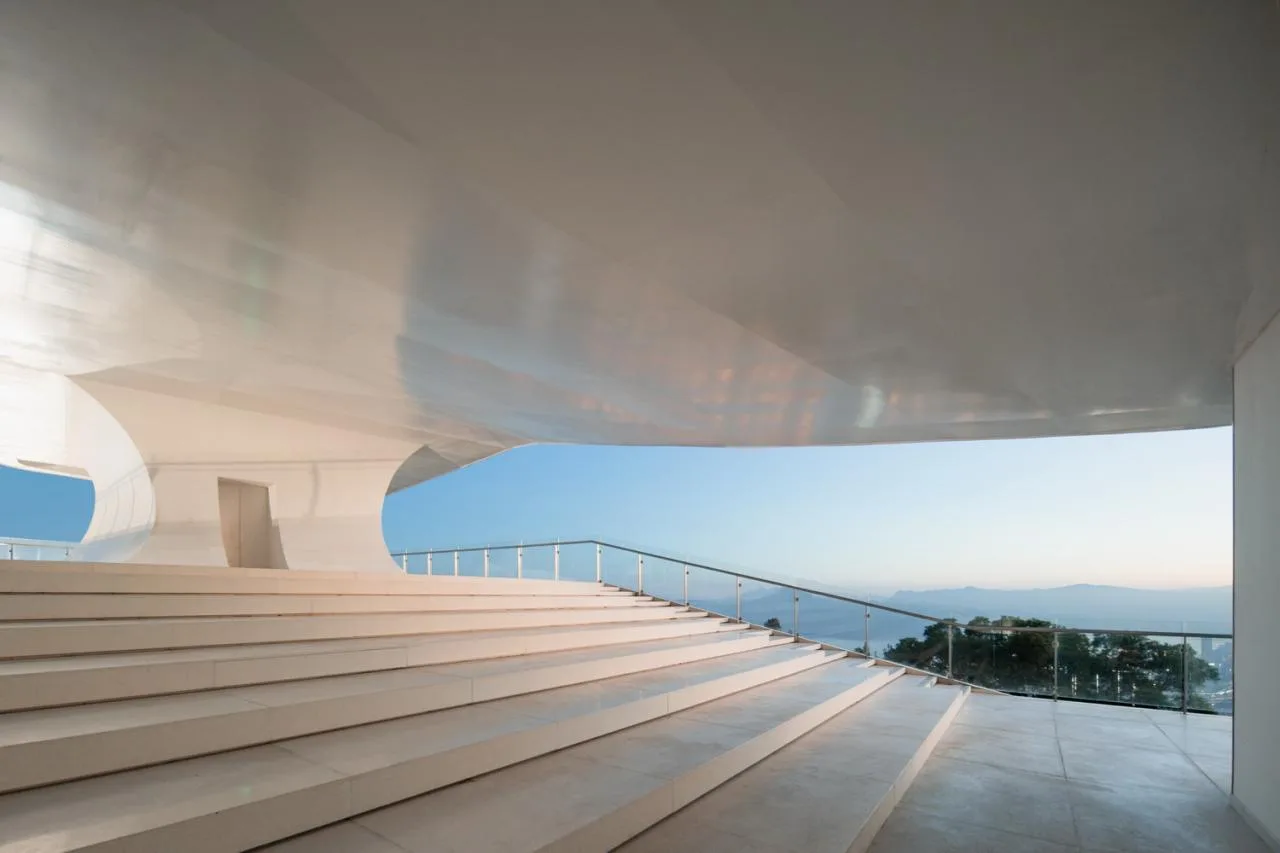
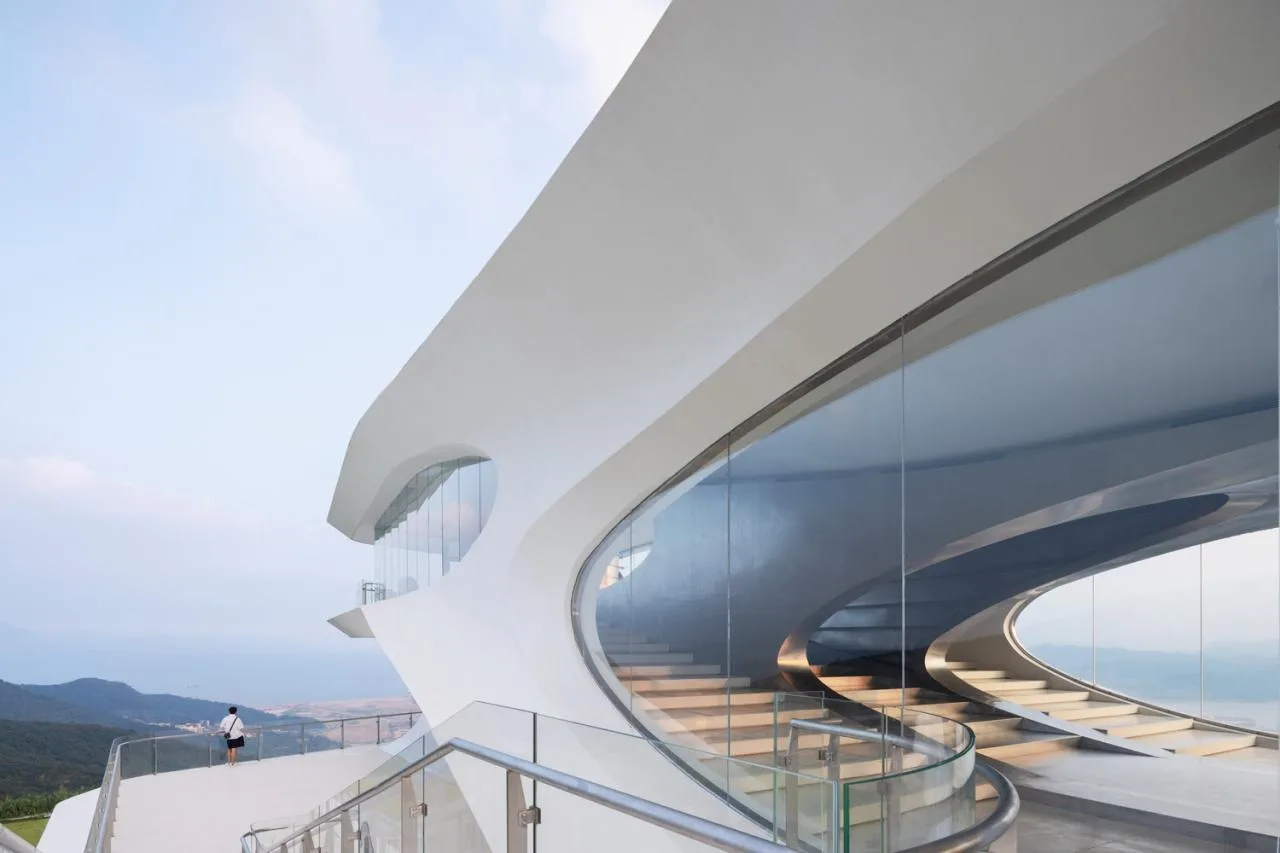
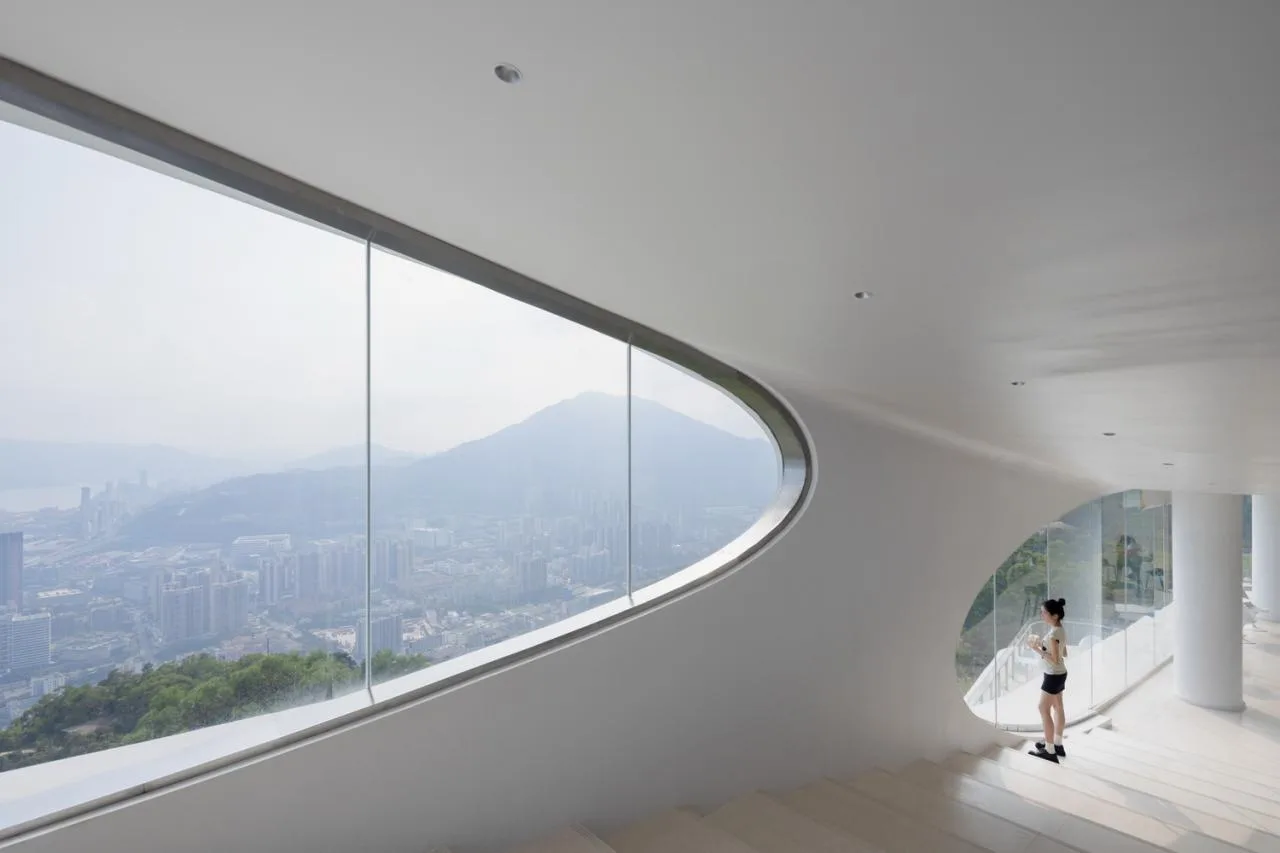
The curved glass curtain wall is supported by steel subframes and uses laminated glass without vertical mullions. Curved glass panels are installed at corners to maintain smooth continuity.
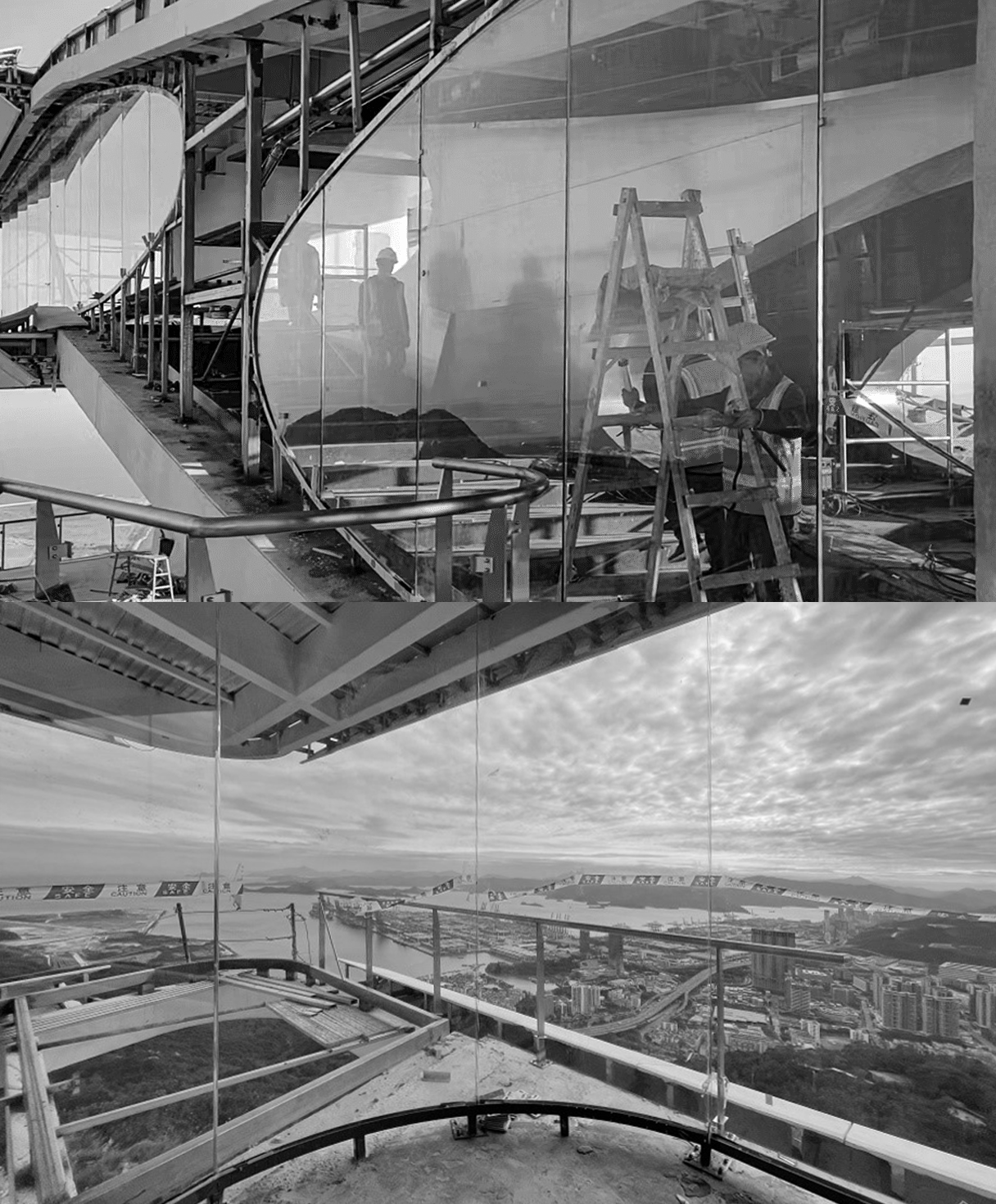
△ High Transparency Ultra-White Laminated Glass
3.3 Glass Terrace
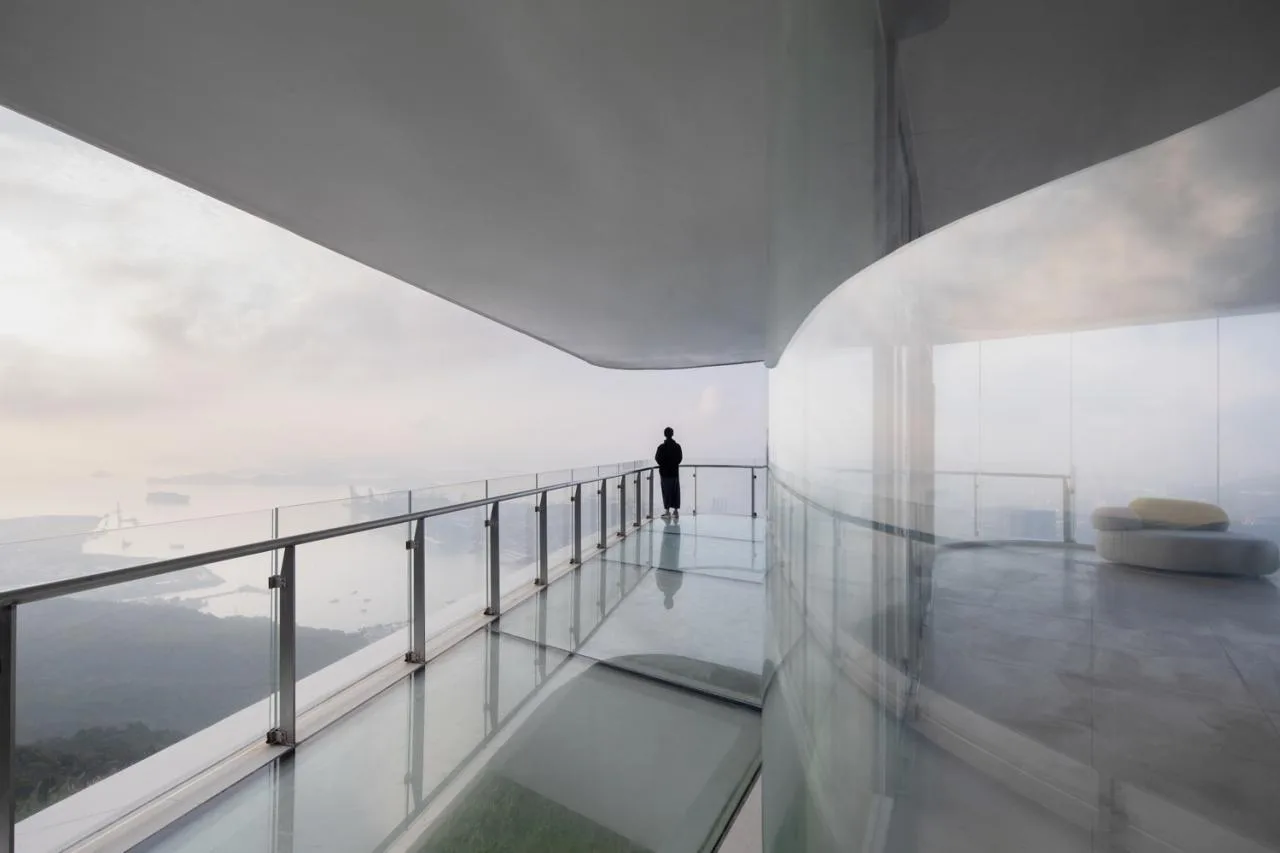
The glass terrace consists of four oversized 3-inch laminated glass panels, each up to 2.7m by 4.1m, arranged along structural beams to maximize transparency and create a floating effect.
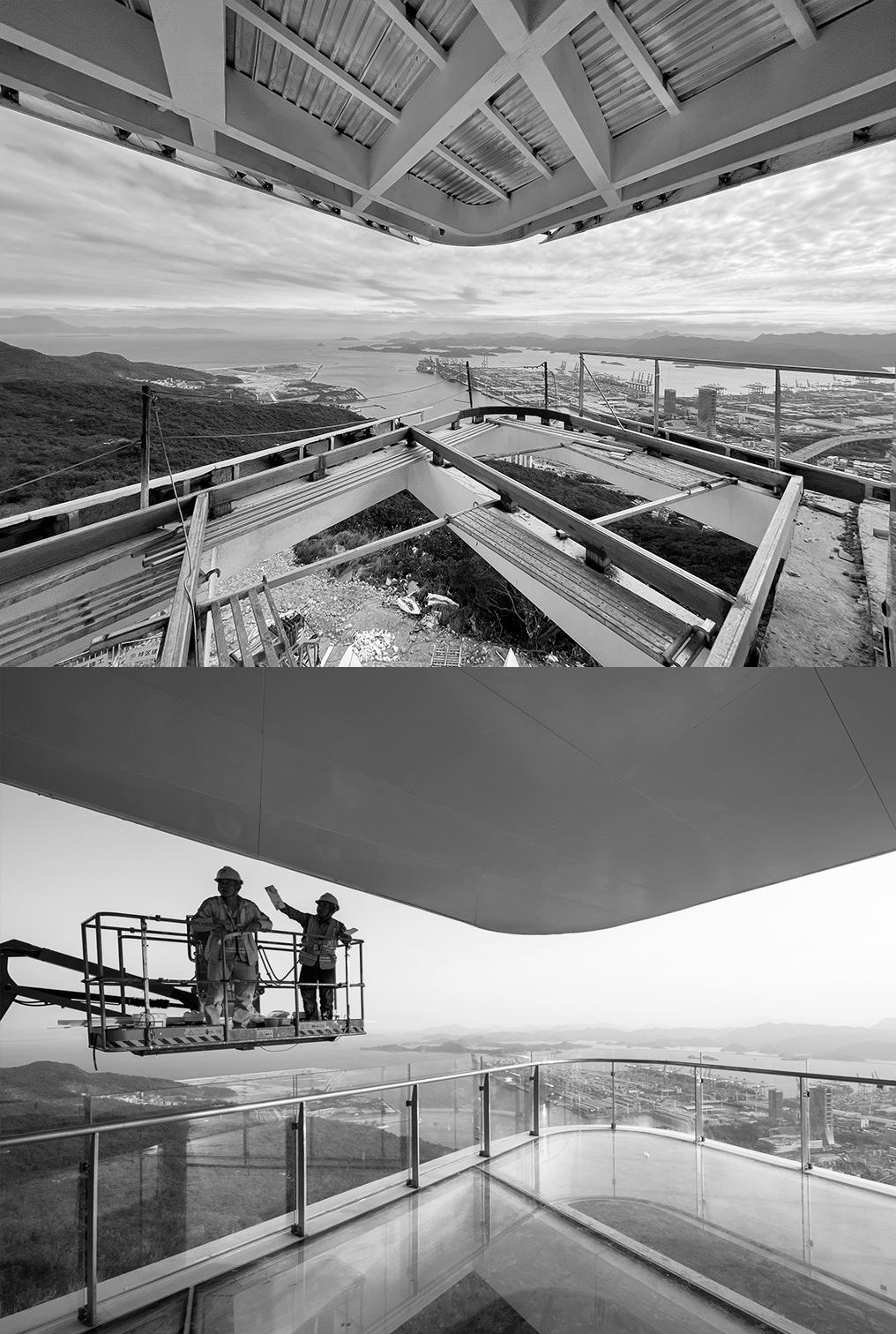
△ Glass Terrace Construction
3.4 Interior Space
The interior reflects the building’s exterior palette and textures, predominantly utilizing white stainless steel on walls and ceilings. Equipment is concealed within structural layers, with air vents cleverly hidden in gaps between metal forms and ceilings. Water pipes run through irregular side walls. A three-layer metal installation, framed by steel keels and clad with stainless steel, is welded and polished on-site.
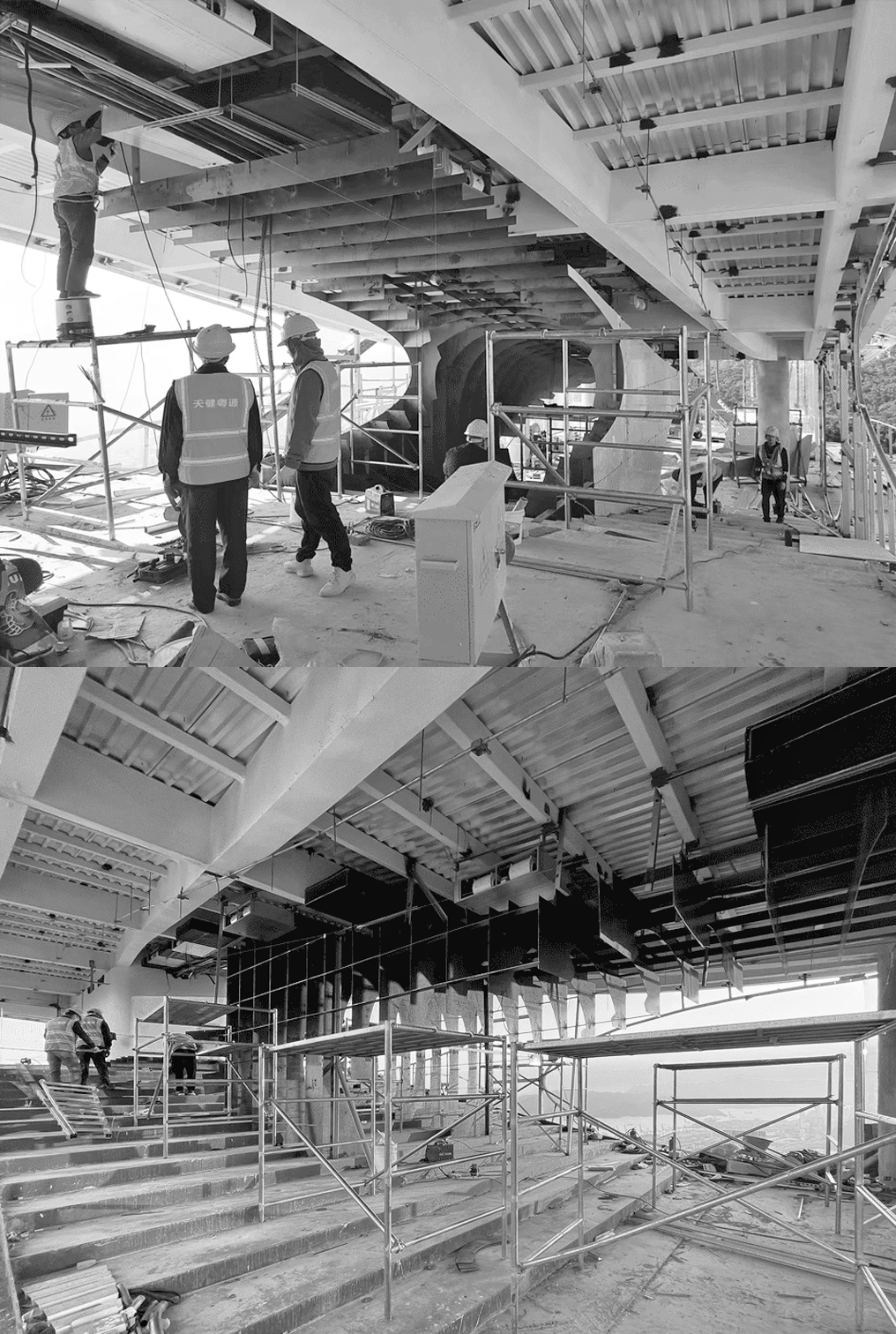
△ Construction of Three-Layer Metal Device
PART 04
Conclusion
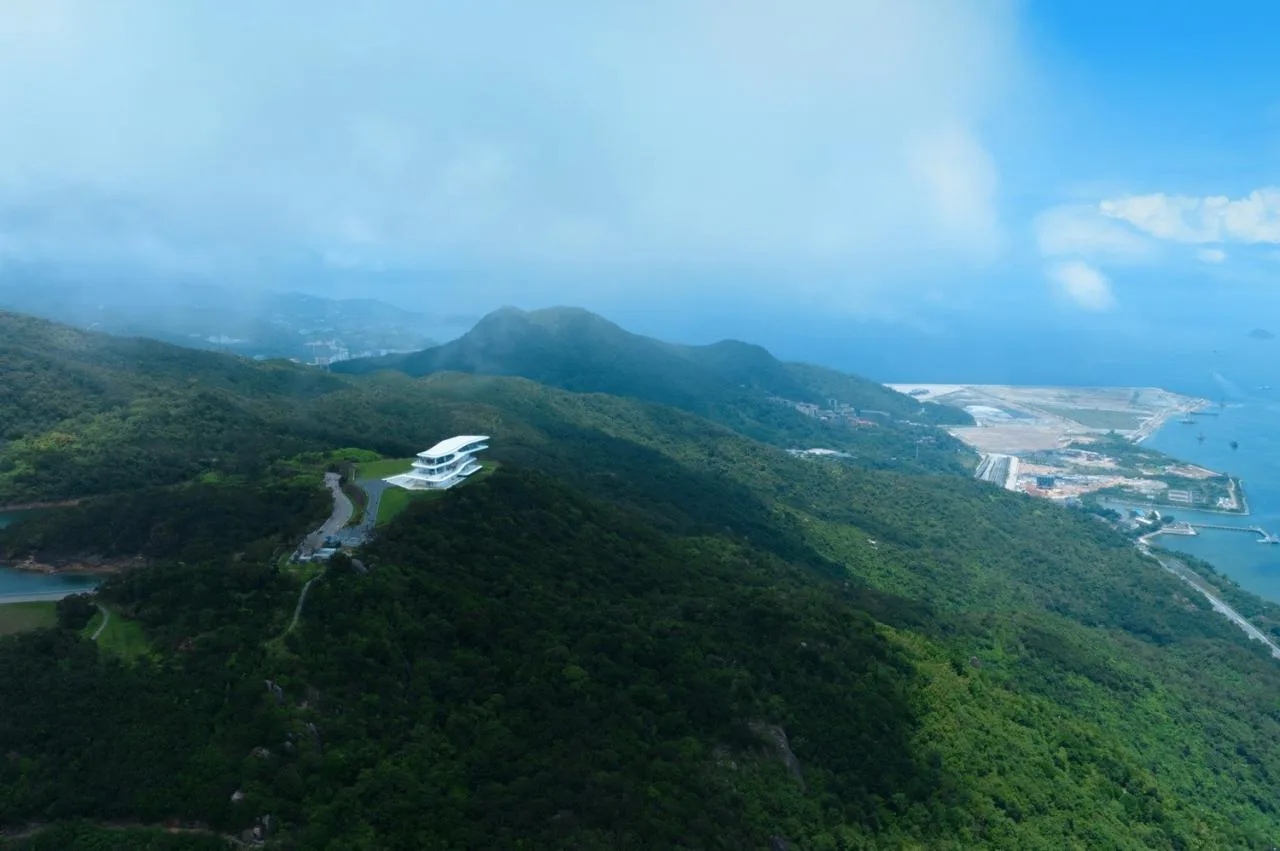
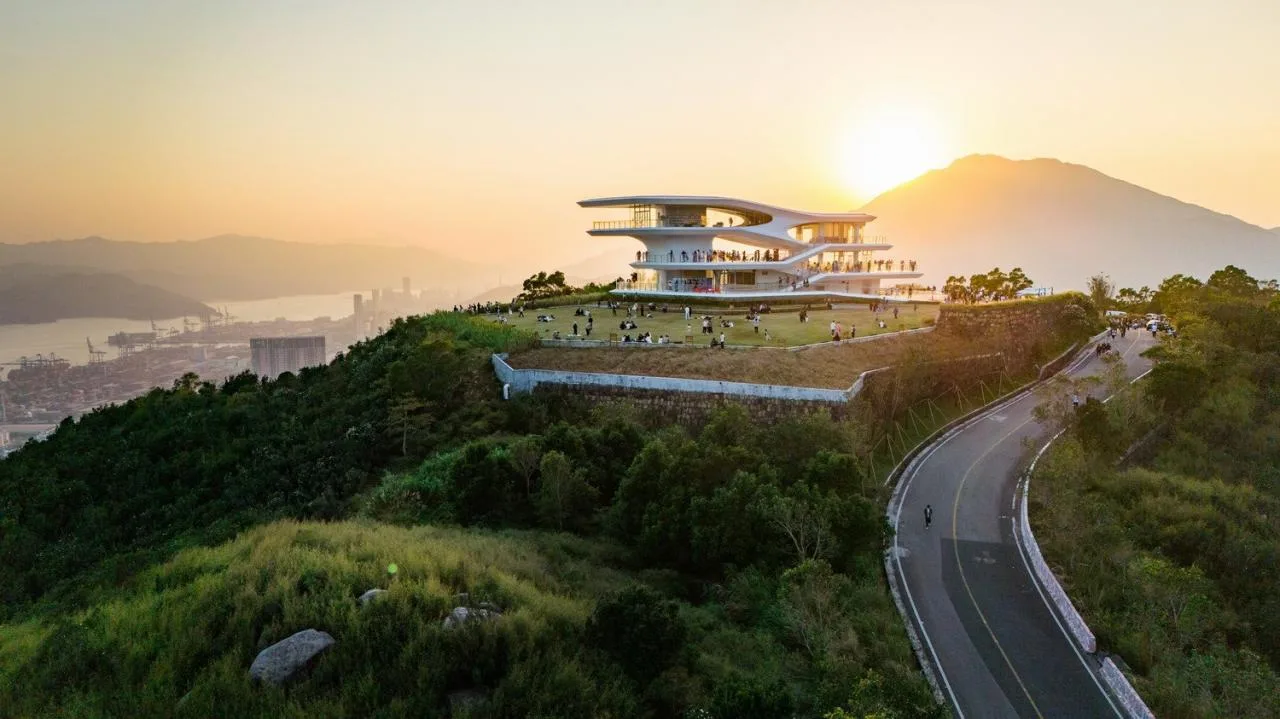
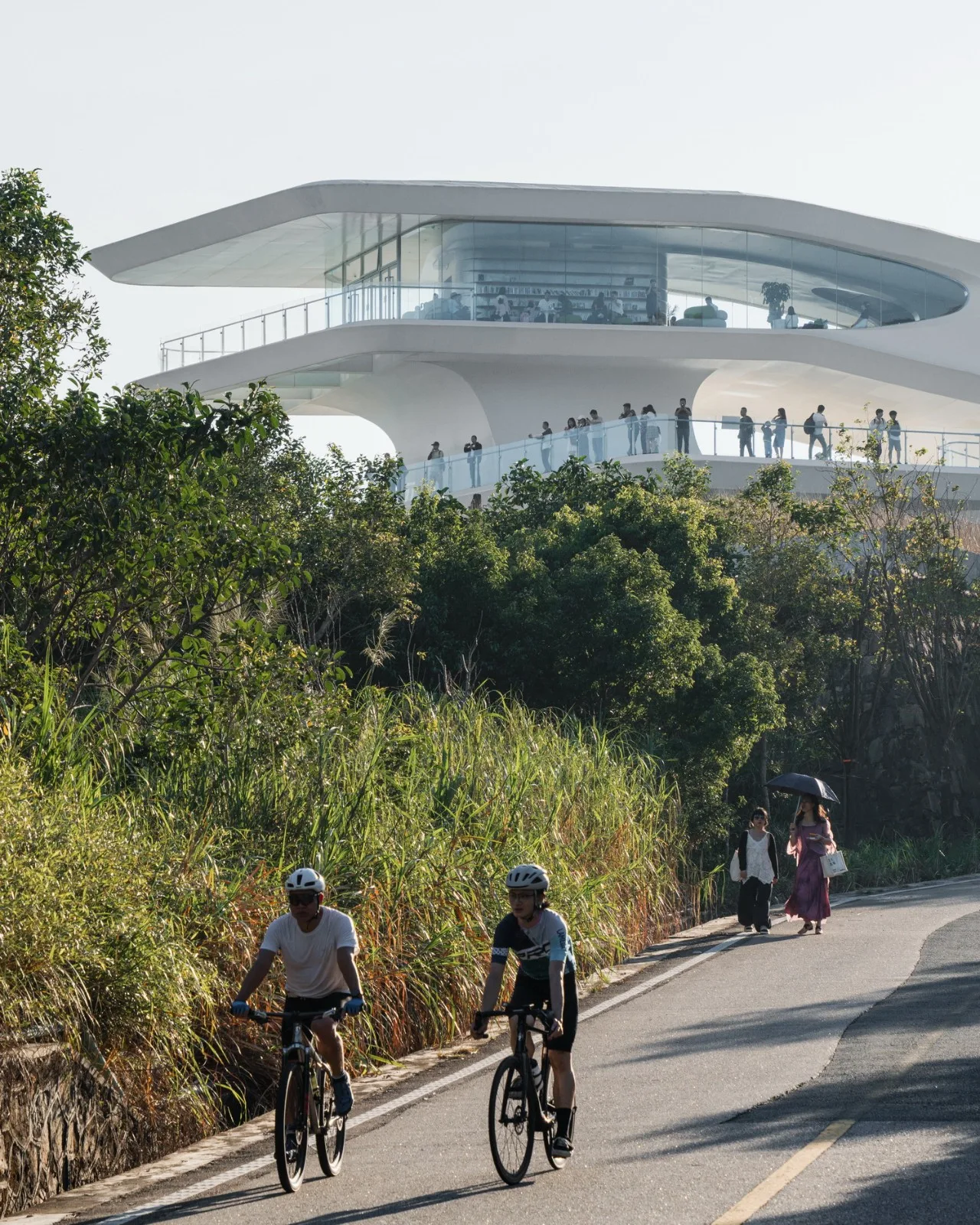
Earlier this year, as the building neared completion, it quickly captured the attention of Shenzhen’s residents. During the May Day trial operation, it experienced peak visitor numbers and was hailed as a trendy outdoor destination. In full operation, all areas except the third-floor book bar and café (which require reservations) are open to the public free of charge. Weekend daily foot traffic exceeds 2,000 visitors, with weekdays attracting up to a thousand. Citizens have embraced Yunhai Station as Shenzhen’s most popular new landmark and a stunning urban icon.
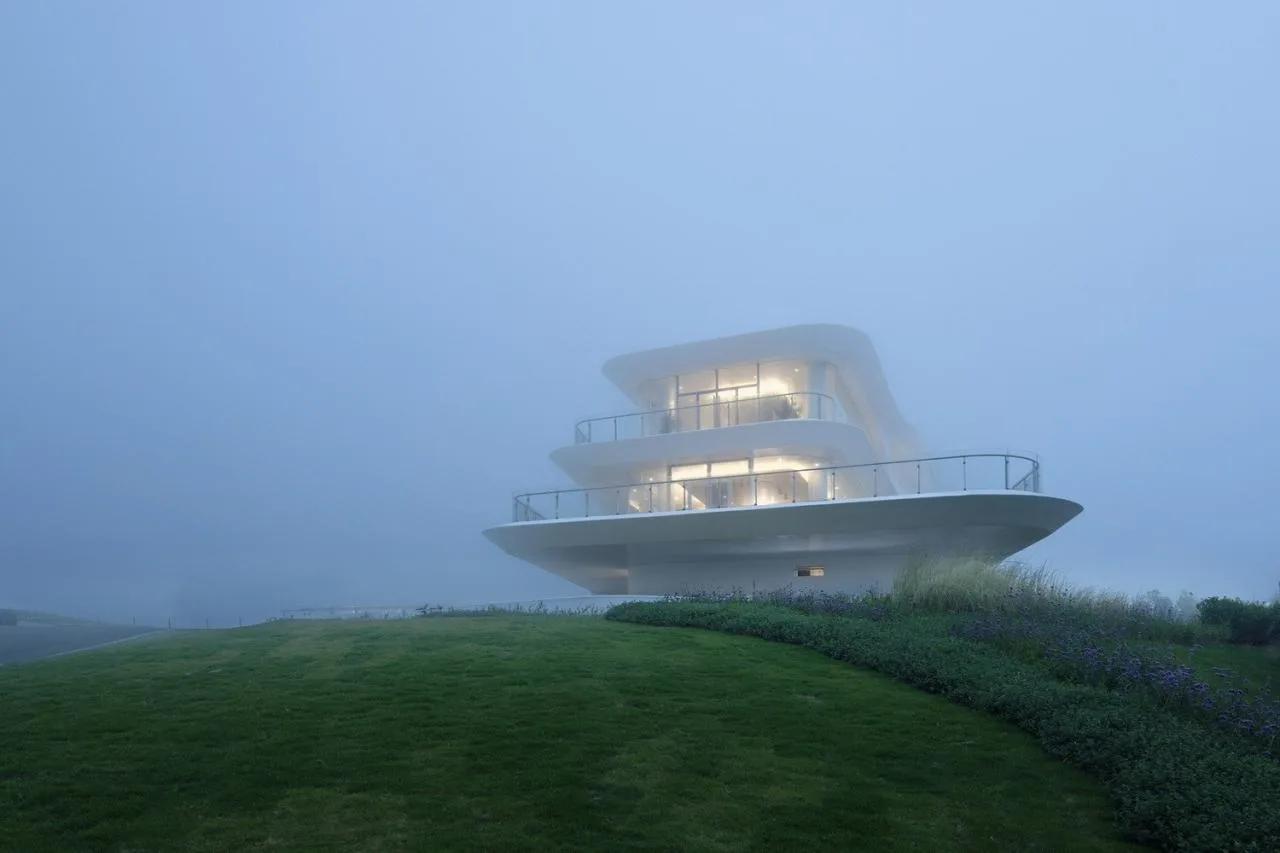
On social media platforms like Xiaohongshu, Yunhai Station is affectionately dubbed the “aerial cruise ship atop the mountains and sea,” where visitors can enjoy coffee, relax while watching the sea, and even hold weddings in the clouds. The actual use of the space has far surpassed the architect’s original vision.
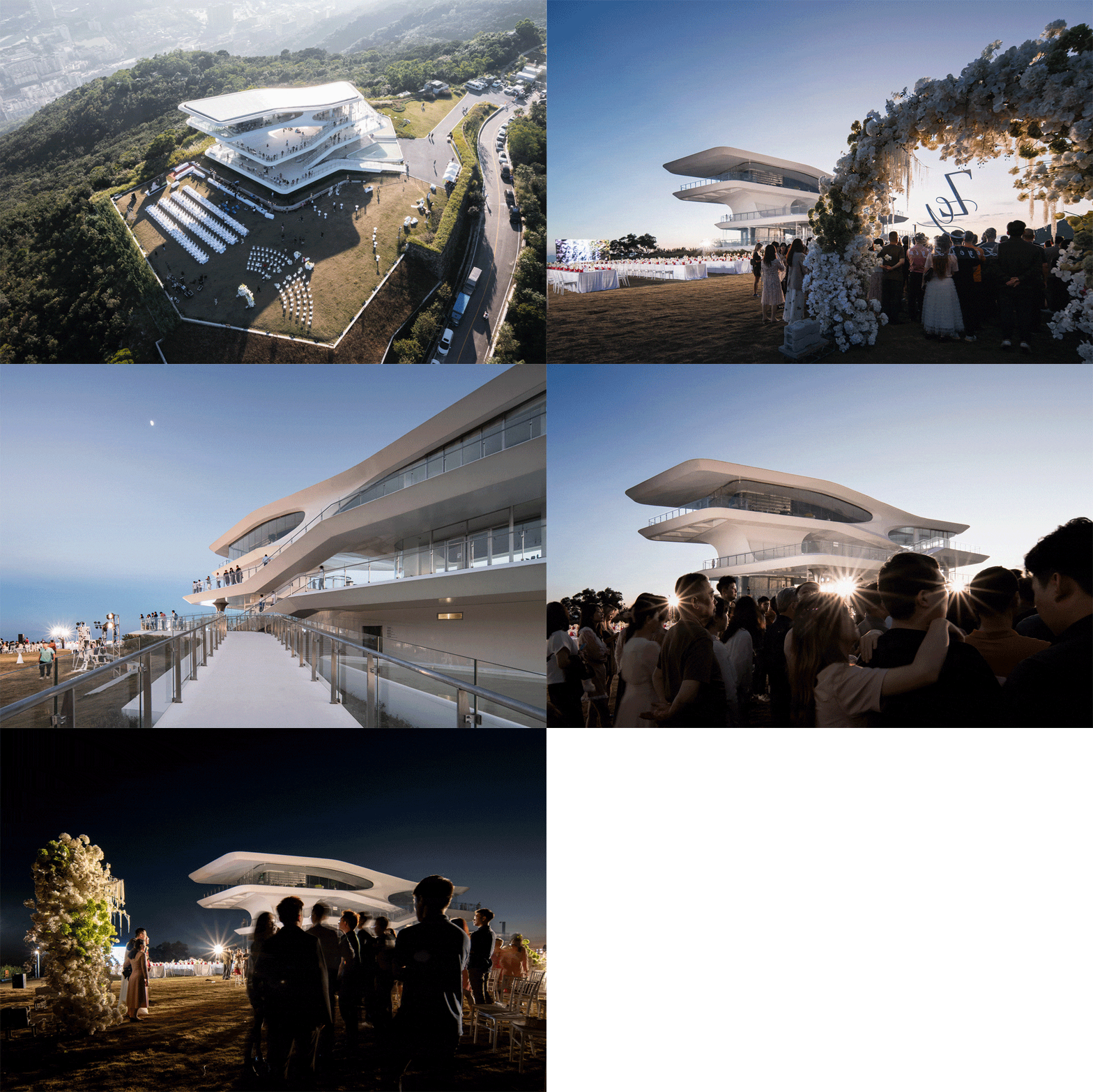
Beyond the “citizen check-in point” envisioned in the project brief, Yunhai Station has become a spontaneous cultural phenomenon embraced by the public. Numerous images and videos shared online vividly showcase Shenzhen Shanhai City’s unique landscape, amplifying the intended radiating effect.
Recently, prominent car brands including Ferrari, Porsche, Avita, and Roewe have selected Yunhai Station as the venue for new car exhibitions and launches. As a space for art exhibitions and public events, Yunhai Station continues to expand its role, becoming a crucial hub for cultural, commercial, and social exchange.
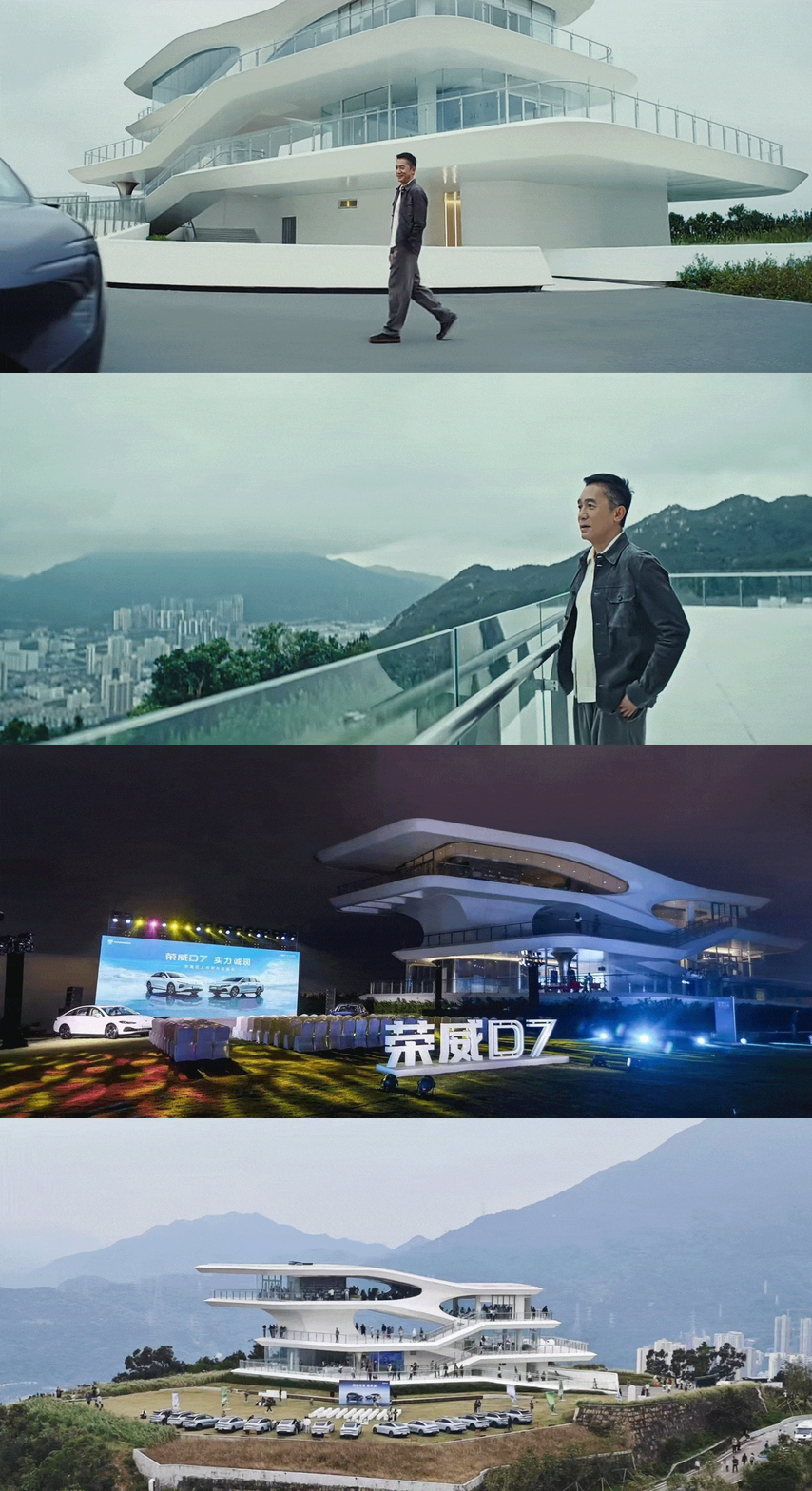
In today’s media-driven era, the role of public buildings is evolving. Beyond serving as iconic landmarks and photo-worthy subjects, Cloud Sea Station stands as a public platform with the power to inspire and fulfill limitless imagination.
Project Drawings
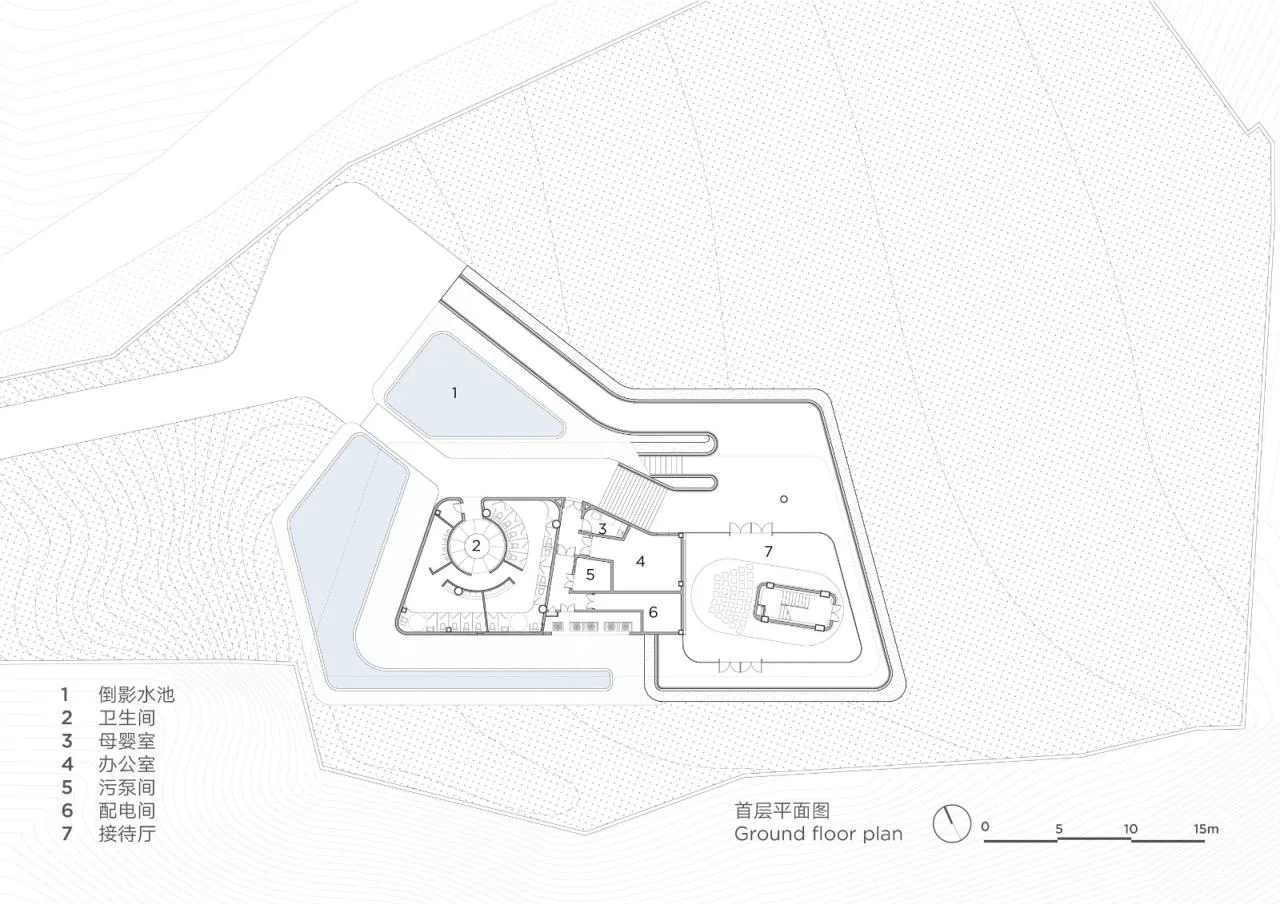
△ First Floor Plan
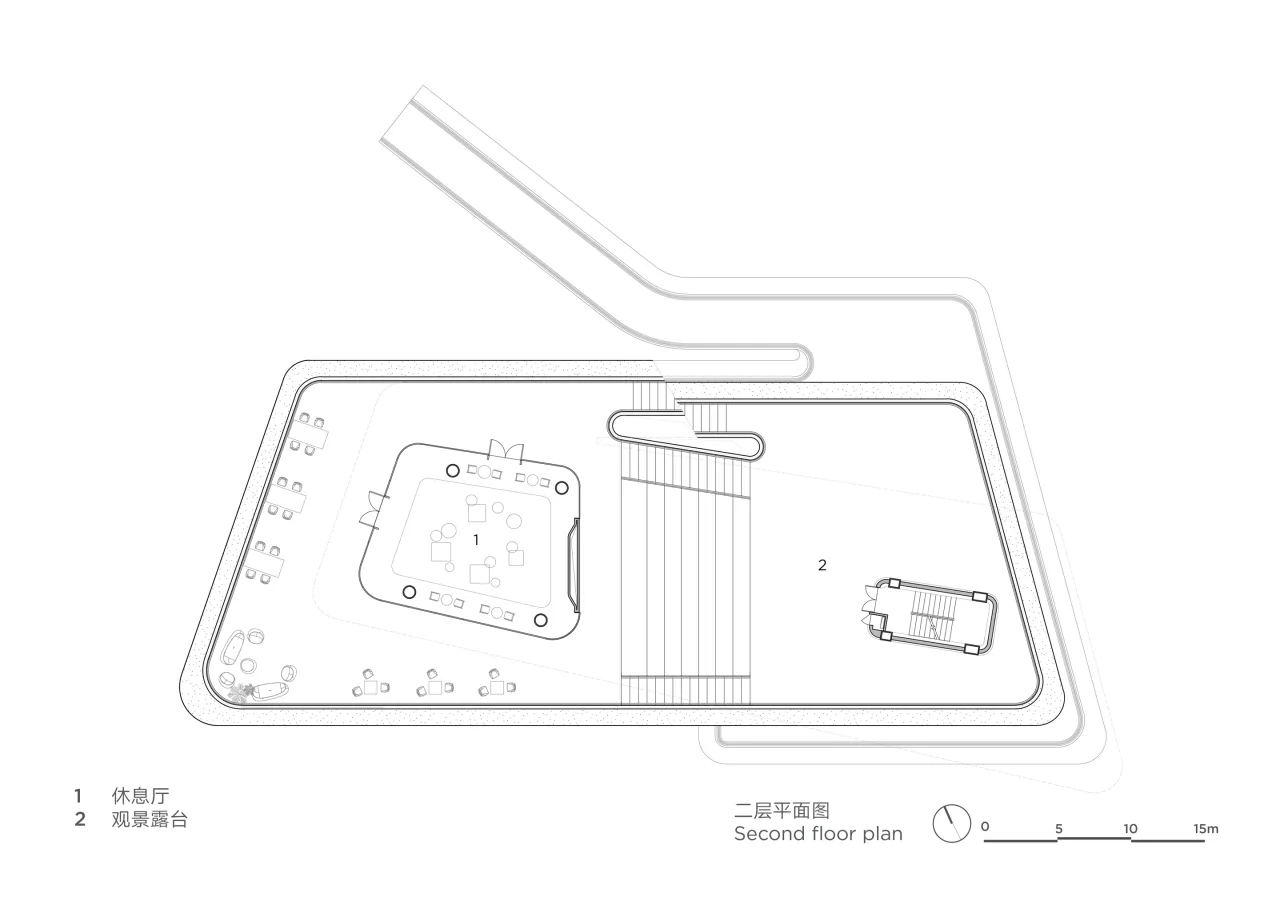
△ Second Floor Plan
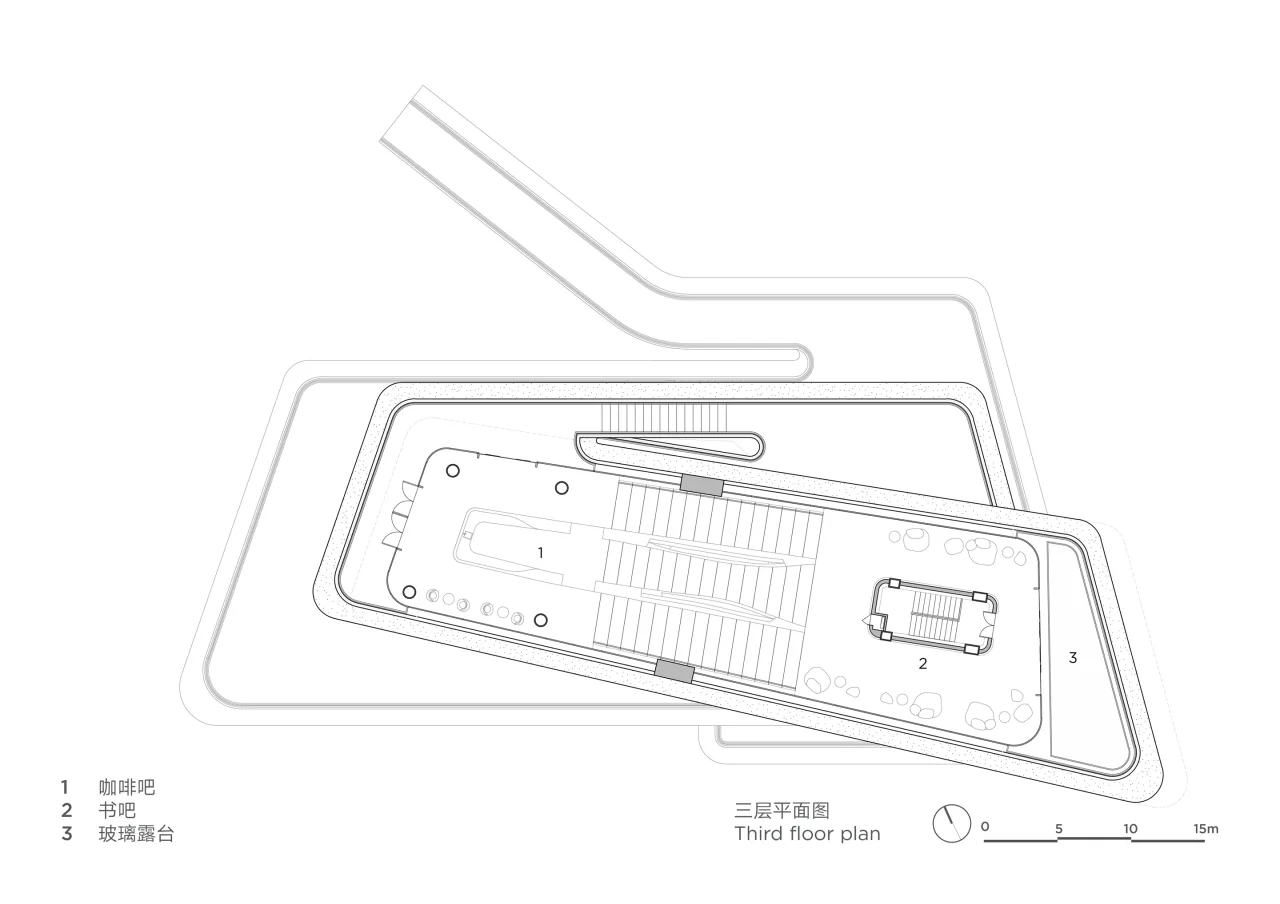
△ Third Floor Plan
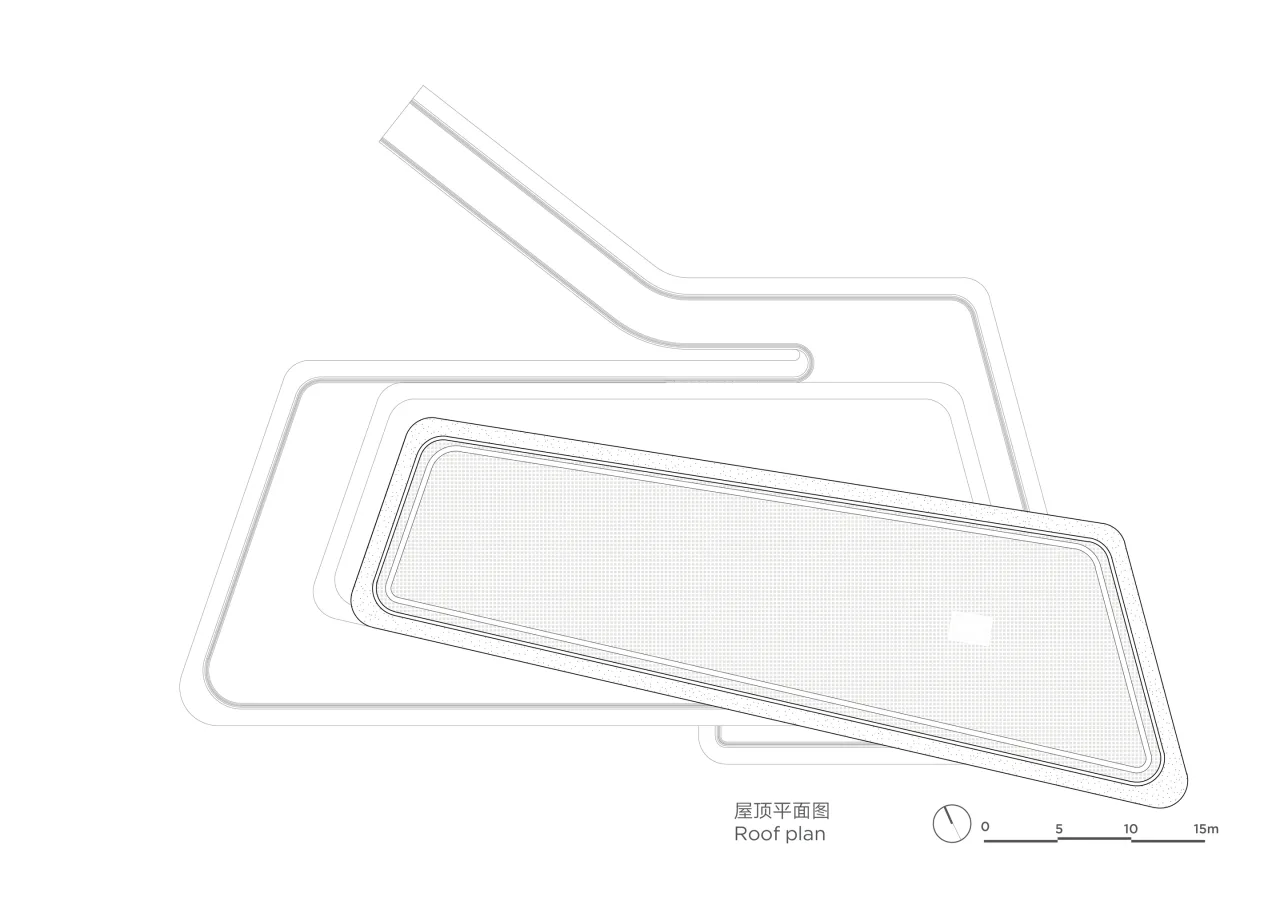
△ Roof Plan
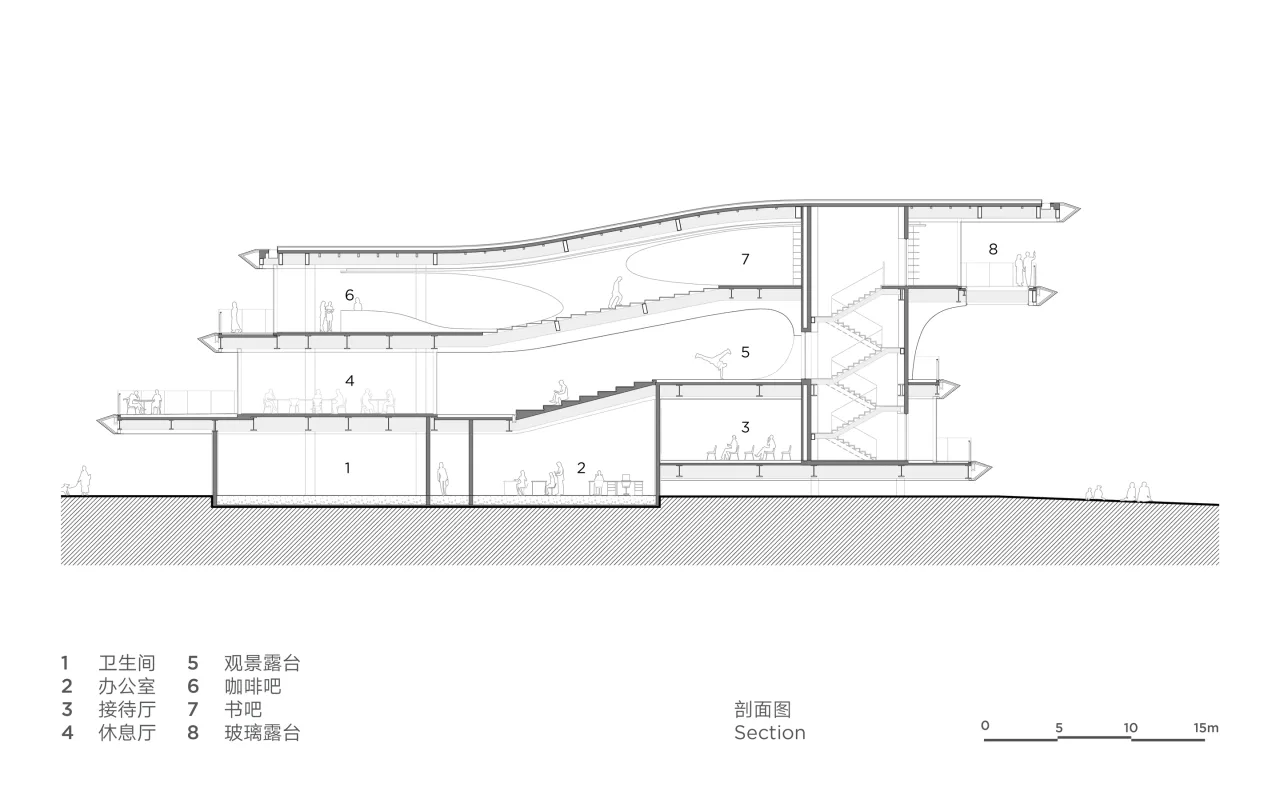
△ Section Diagram
Project Information
Project Name: Shenzhen Yantian Yunhai Station
Design Units: Line+ Architectural Firm (Architecture, Interior, and Landscape)
Lead Architect/Project Creator: Meng Fanhao
Project Architect: He Yaliang
Design Team: Xing Shu, Liu Chao, Xu Hao, Xu Yifan, Zhu Xiaojing, Li Changhao, Jin Lingbing (Intern), Wei Xuzhen (Intern), Shen Han (Intern), Yu Qizheng (Intern) (Architecture); Zhu Jun, Jin Yuting, Yang Li, Zhang Sisi, Lv Siqi (Interior); Li Shangyang, Jin Jianbo, Rao Feier, Wang Xinyu (Landscape)
Resident Architect: Xing Shu
Owner: Yantian District People’s Government, Shenzhen
General Contractor: Shenzhen Yuetong Construction Engineering Co., Ltd.
Construction Drawing Cooperation: China Railway Intercity Planning and Construction Co., Ltd.
Steel Structure Subcontractor: Shenzhen Special Zone Construction Steel Structure Co., Ltd.
Interior Construction Subcontractor: Shenzhen Chengwang Construction Co., Ltd.
Curtain Wall Subcontractor: Shenzhen Jian’an Building Decoration Group Co., Ltd.
Location: Shenzhen, Guangdong
Building Area: 1,390 square meters
Design Period: August 2021 – March 2022
Construction Period: July 2022 – January 2023
Structure: Steel Frame
Materials: Steel, Concrete, UHPC Panels, Curtain Wall Glass, Matte Stainless Steel, Terrazzo
Photography: Existence of Architecture – Architectural Photography by Line+















Must log in before commenting!
Sign Up