
△ Xiangfuqiao Traditional Style Block Video
On August 18, 2023, one of Hangzhou’s most significant recent urban renewal projects—the Xiangfuqiao Traditional Style Block—officially opened. Situated in Gongshu District, Hangzhou City, Zhejiang Province, this mixed-use development preserves the traditional town character while offering a vibrant cultural block, waterfront activity zones, primary schools, nursing homes, and future communes serving as public hubs. Goa Elephant Design has been deeply involved throughout—from design to implementation—providing EPC general contracting services.
This project merges traditional town streets and alleys with modern lifestyles, focusing on revitalization and renewal to reshape the lively urban atmosphere in northern Hangzhou.
Preserving Memory and Revitalizing the Region
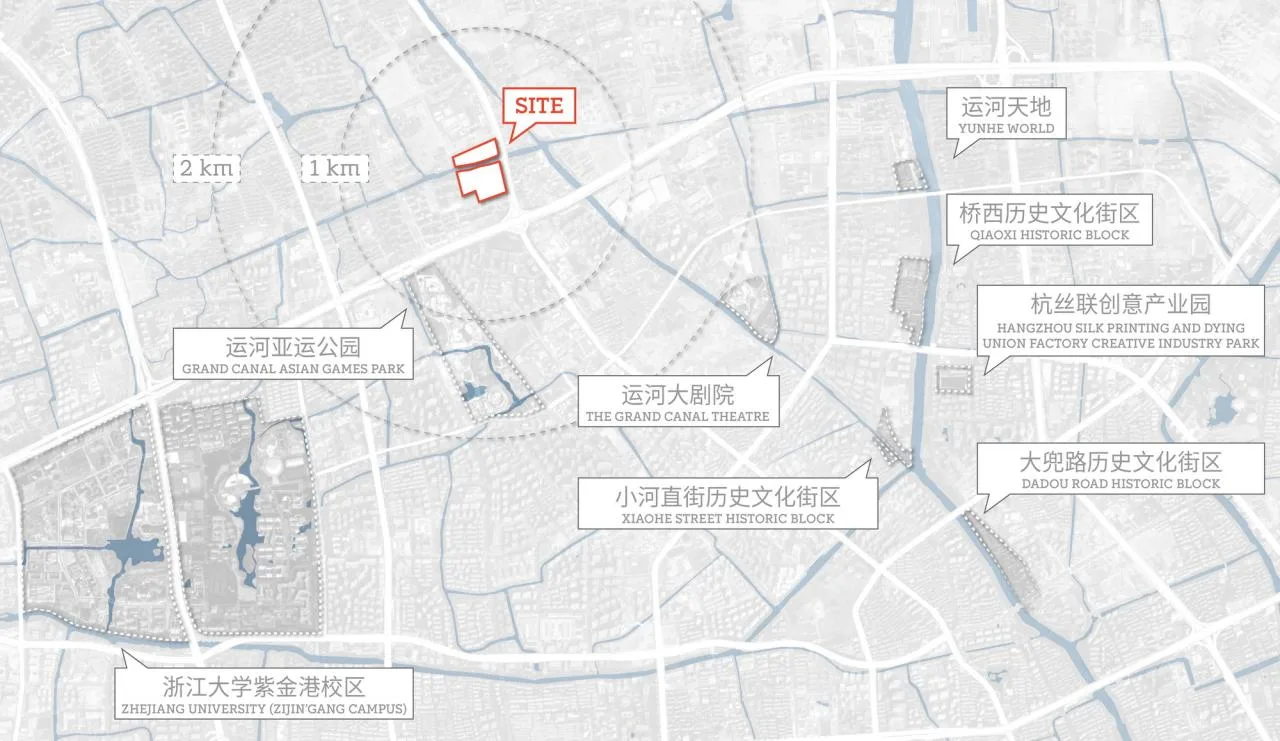
△ Site analysis © Goa Elephant Design
Since the Southern Song Dynasty, transportation and rice boats from Su, Hu, Chang, Xiu, and Run provinces passed through Xiangfu Town on their way to Hangzhou. Many cities along the canal flourished due to this waterway. The canal’s influence, along with its transportation, commercial, and market cultures, is deeply embedded in the cultural core and identity of the Xiangfu area.
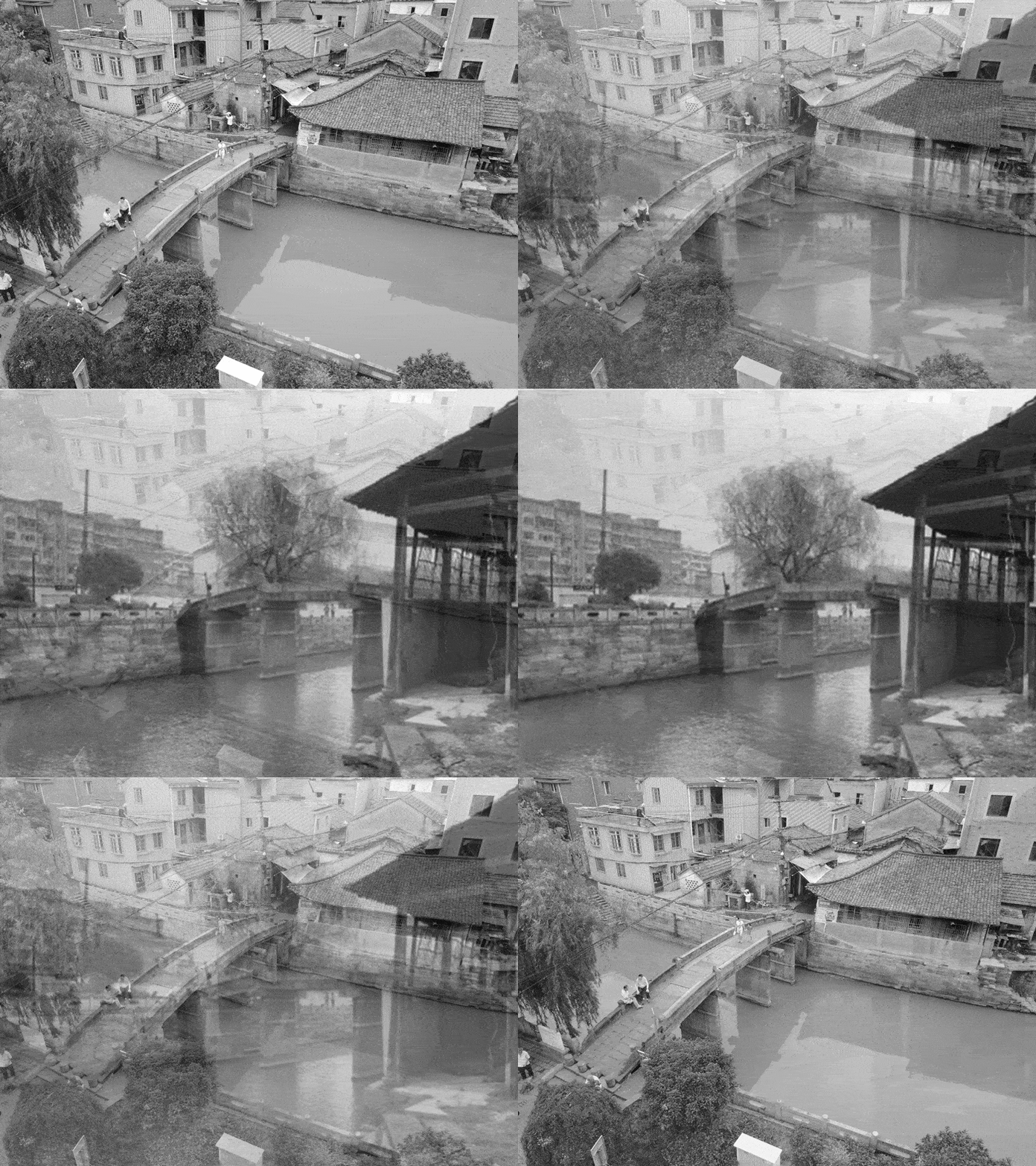
Historical images of the △ region (sourced from the internet)
Located on the Huantang River, a tributary of the Beijing-Hangzhou Grand Canal, Xiangfu Bridge was first documented in the Song Dynasty’s “Xianchun Lin’an Zhi” and rebuilt in the Ming Dynasty. This wooden and stone bridge, now a national cultural relic, carries centuries of history. The name “Xiangfu” has long been associated with ancient bridges, rivers, historic houses, and trade ports, symbolizing the simple and warm urban life of old Hangzhou.
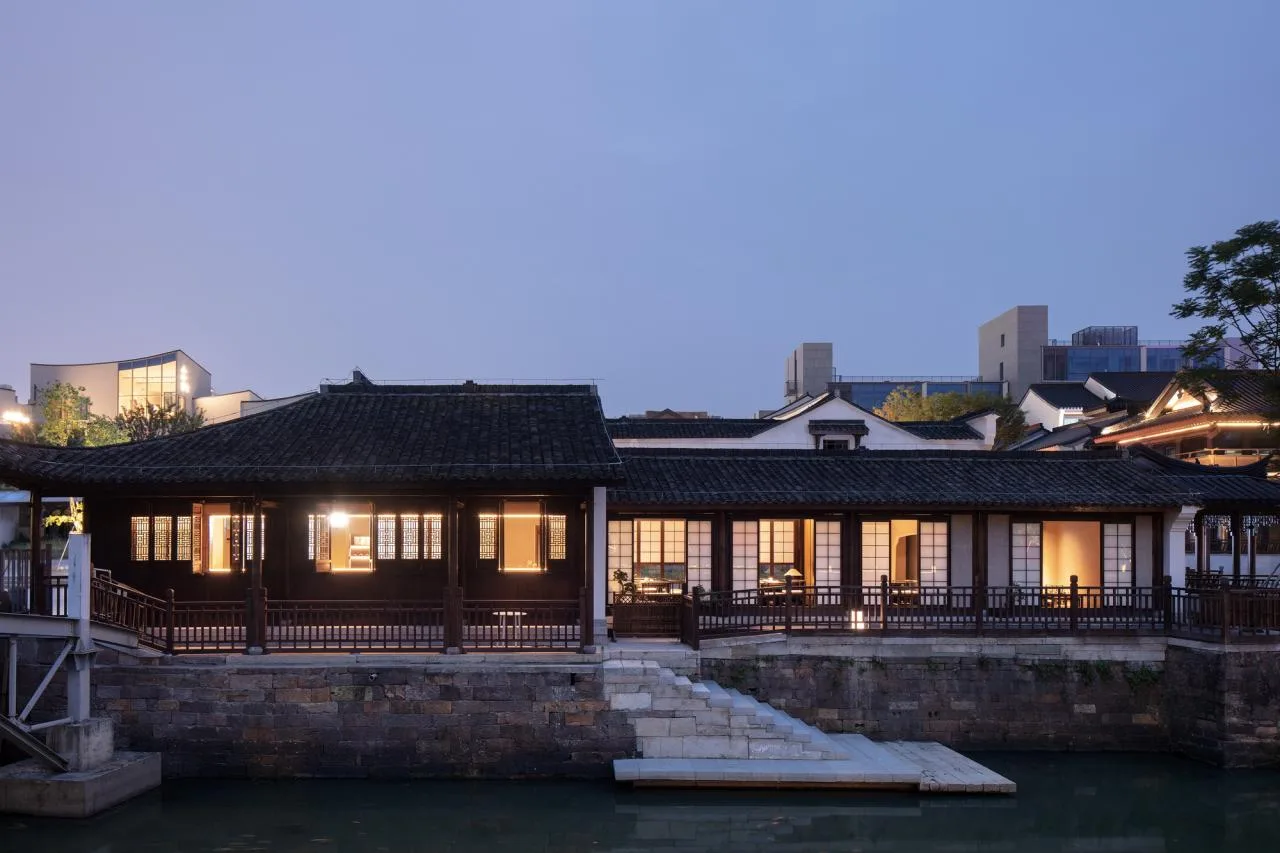
△ Waterfront scene after renovation © Summer Solstice
On one hand, the area holds genuine historical value; on the other, modern realities have fragmented its fabric. Before the project, this block was a chaotic old industrial zone at the urban-suburban boundary. The surrounding urban development was undergoing demographic shifts, with local residents, rather than tourists or passersby, being the primary users of the area.
Contemporary cultural heritage preservation has evolved beyond protecting physical structures to safeguarding community-level cultural and historical assets, including the site’s values and stories. Embracing this philosophy, the design team unanimously recognized the site’s historical significance and advocated for revitalization and renewal rather than demolition. Their goal was to breathe new life into the area by smartly integrating modern living while preserving the site’s memory.
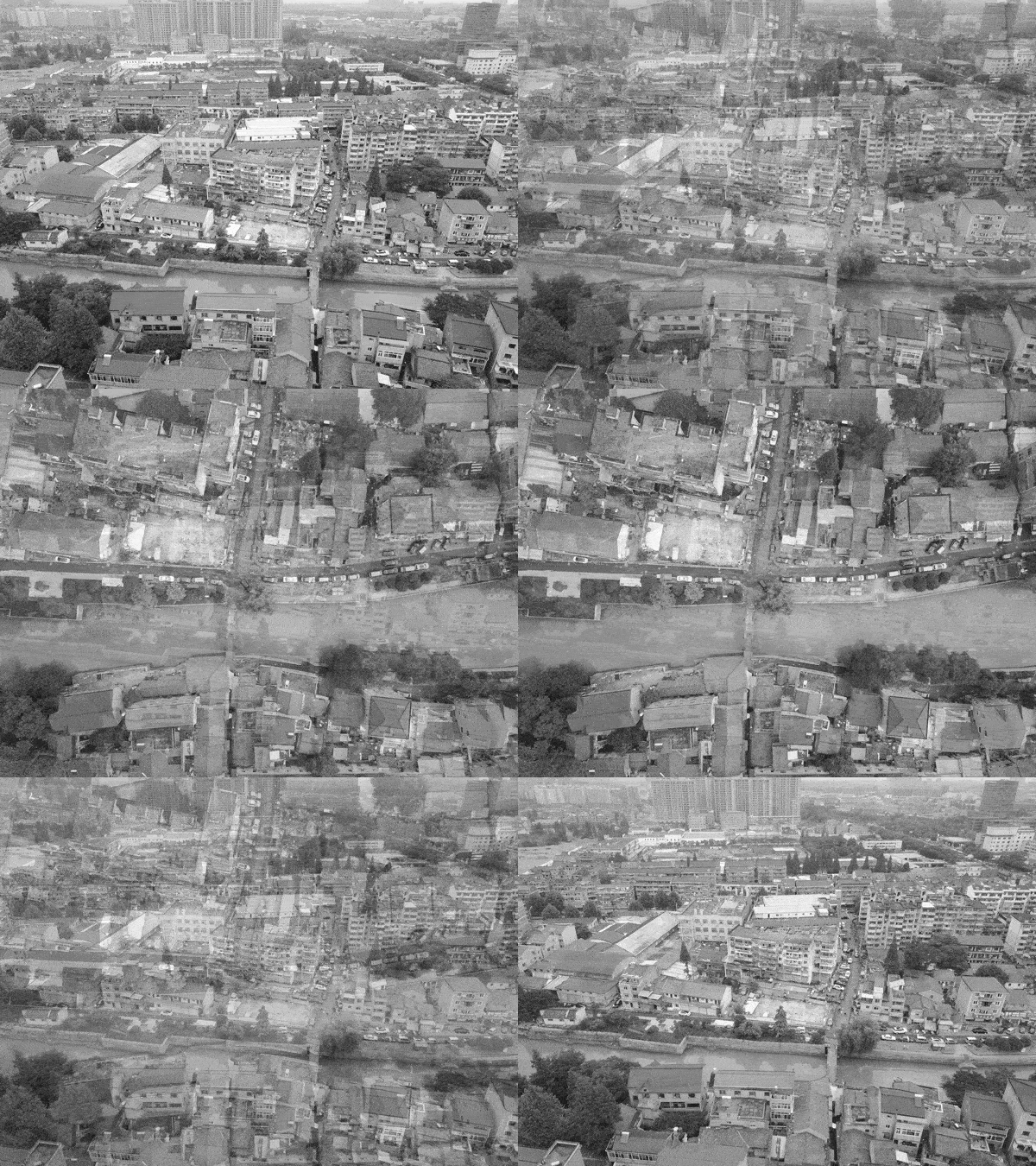
Before renovation of the block © Goa Elephant Design
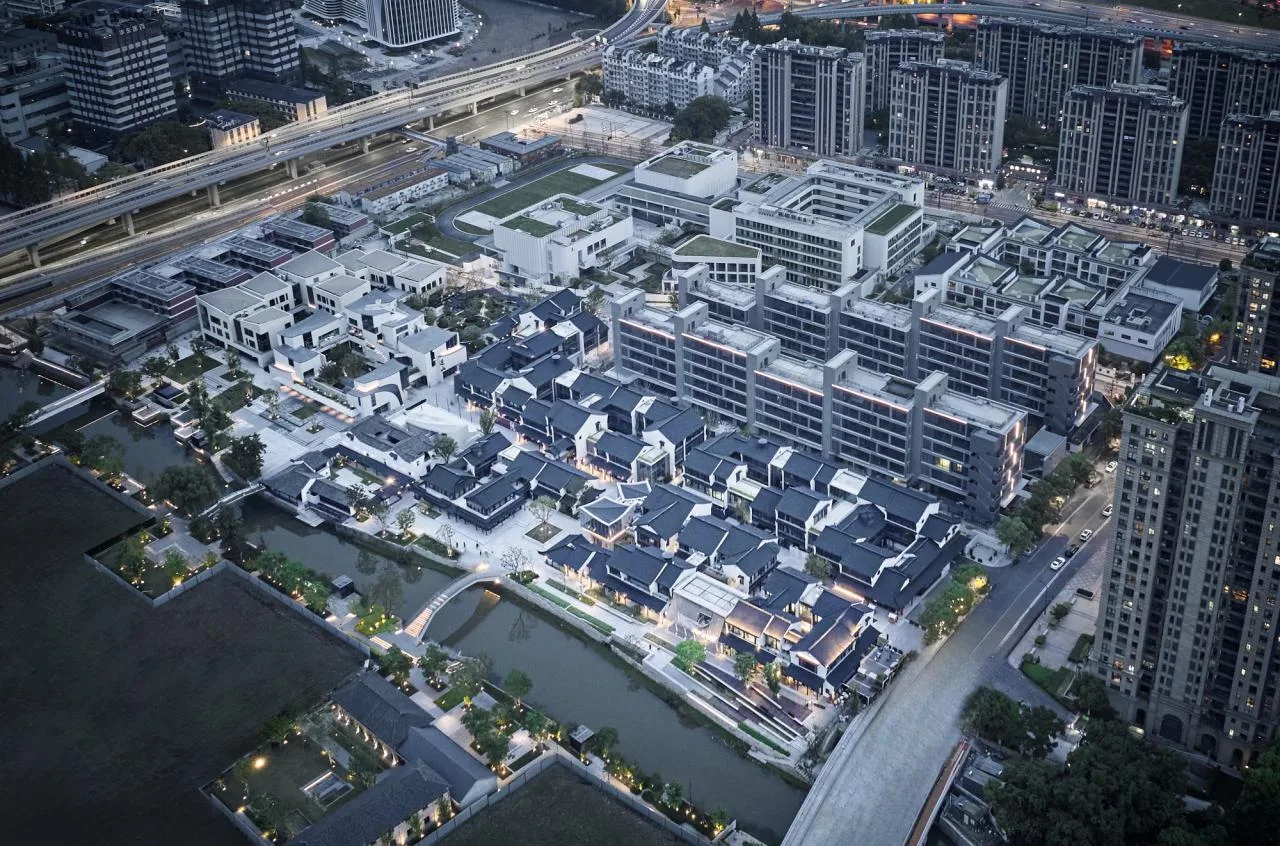
△ After renovation of the block © Aoguan Architectural Vision
Planning Framework Based on the Concept of “Market” and “Well”
The Chinese character for “market” symbolizes diversity and integration, while “well” represents openness and accessibility. Early in the design process, the team envisioned the urban layout of Hangzhou, establishing the cross-shaped framework of Huantang River and Xiangfu Straight Street as the planning backbone.
Within this framework, they organized the spatial structure into “one water, one street, one ring road, and three bridges,” creating a multi-layered block with rich spatial experiences.
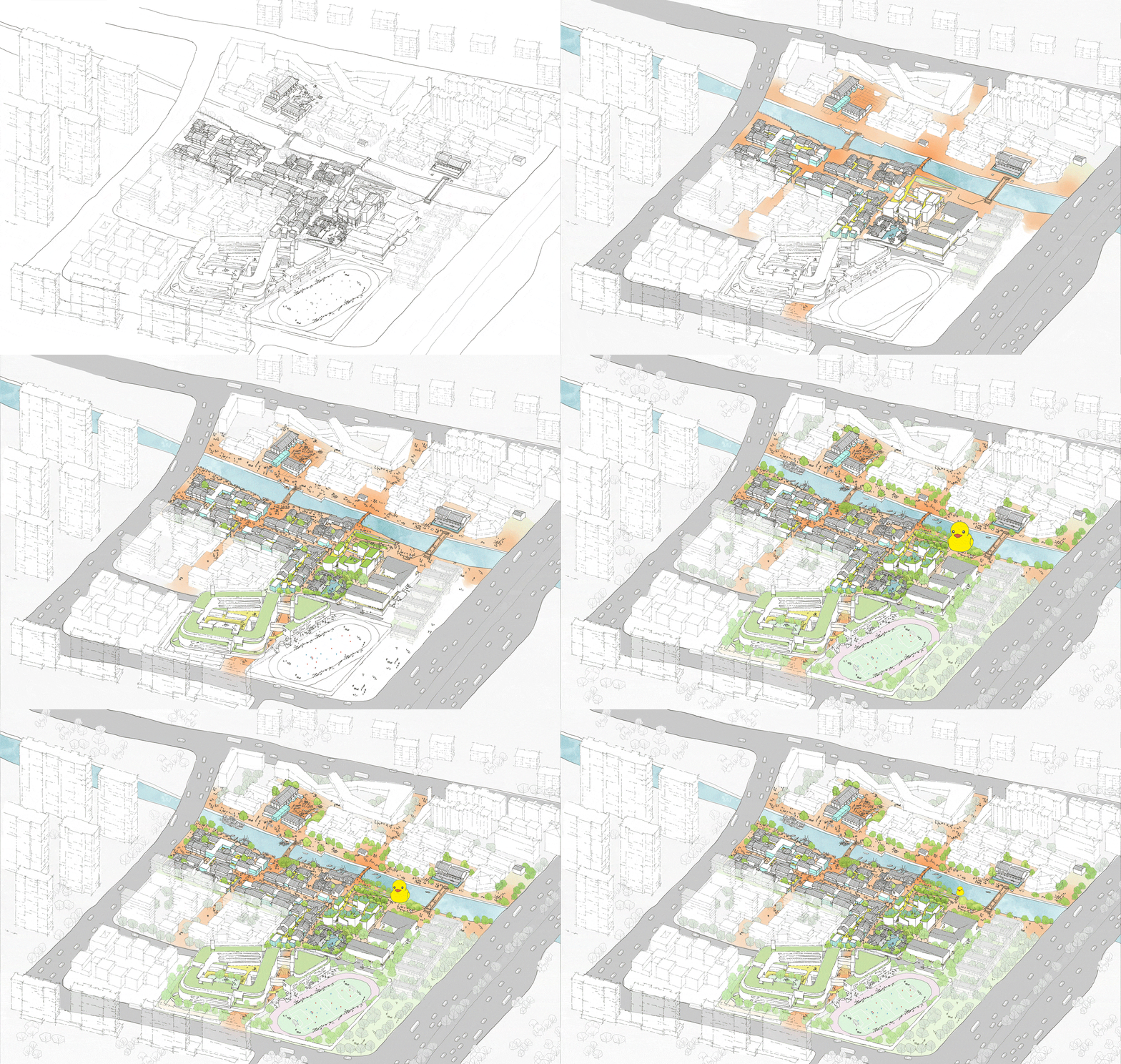
Conceptual vision © Goa Elephant Design
- Yishui: Developed a vibrant waterfront belt along the Huantang River, with cultural districts on both north and south sides.
- One Street: Preserved the original texture of Xiangfu Straight Street, perpendicular to the Huantang River.
- One Ring Road: Circles Xiangfu Bridge, linking historic sites such as the Cocoon Line, Granary, and Commune, forming a memory loop. This pedestrian-friendly route blends tradition with modernity.
- Three Bridges: Two new pedestrian bridges flank Xiangfu Bridge, easing traffic and enhancing connectivity between riverbanks.
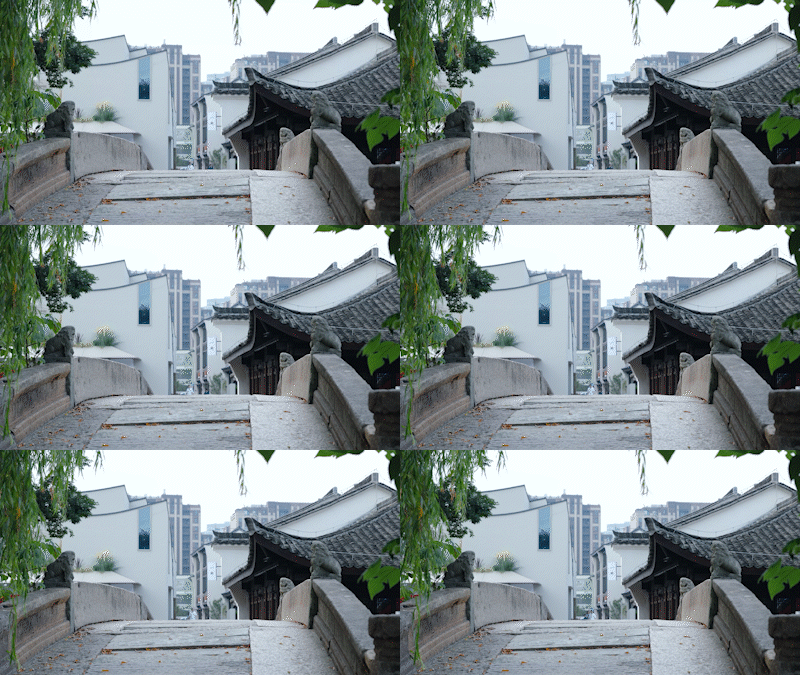
Xiangfu Bridge and the revitalized neighborhood © One ride photography
The design draws inspiration from Jiangnan neighborhoods, employing classic spatial prototypes such as courtyards, streets, alleys, platforms, and gardens. This approach creates a pedestrian street of comfortable scale with fluid transitions between spaces, preserving Hangzhou’s traditional street and alley forms.
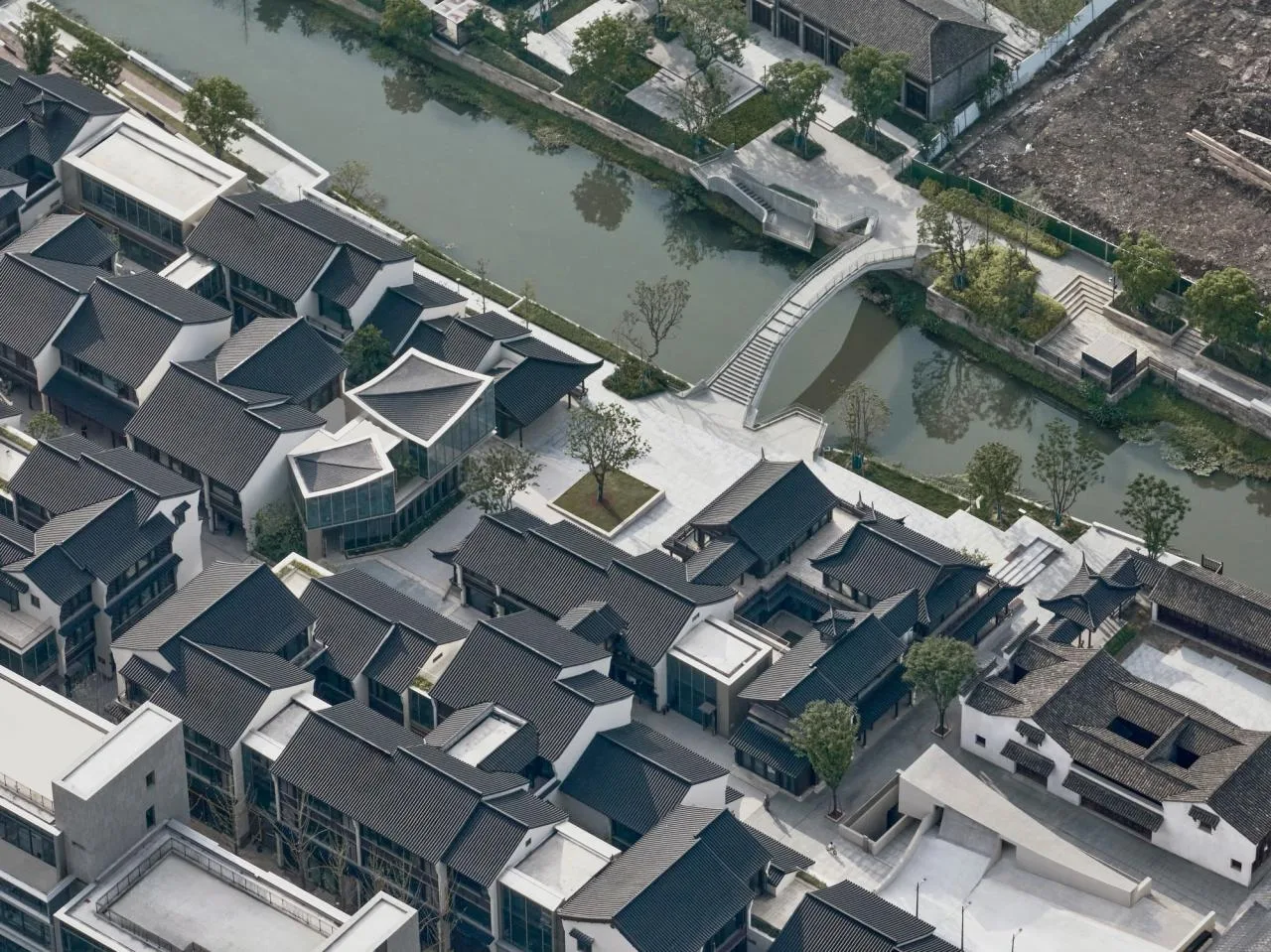
△ Cultural Block © Aoguan Architectural Vision
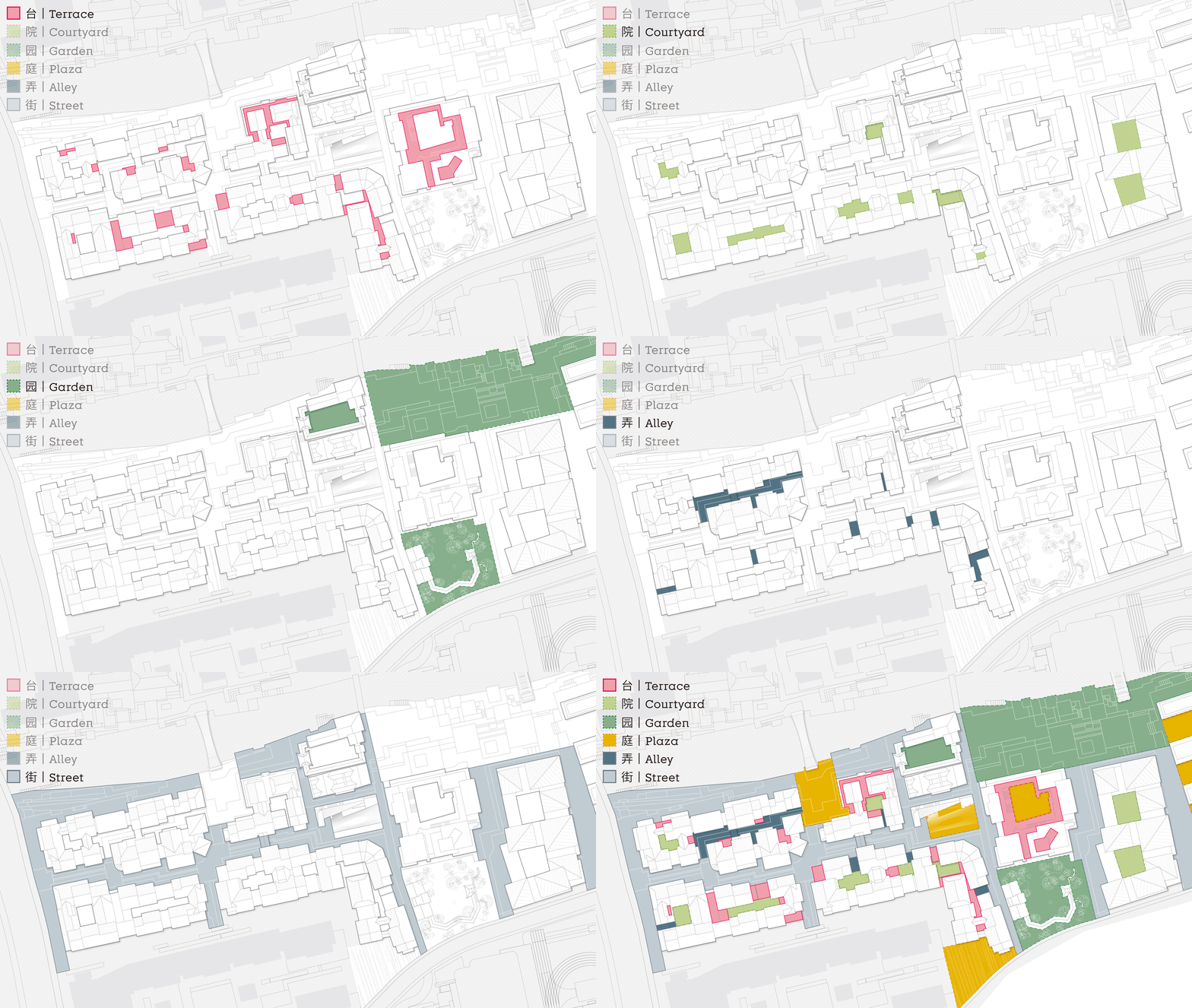
△ Cultural Block Spatial Sequence © Goa Elephant Design
Besides the nationally protected Xiangfu Bridge, the block houses historic buildings like bridgeheads, communes, cocoons, and grain warehouses. Most of these structures were preserved and restored in their original state. Communes were thoughtfully updated by maintaining their floor plans. New and old buildings coexist, blending traditional charm with modern meaning.
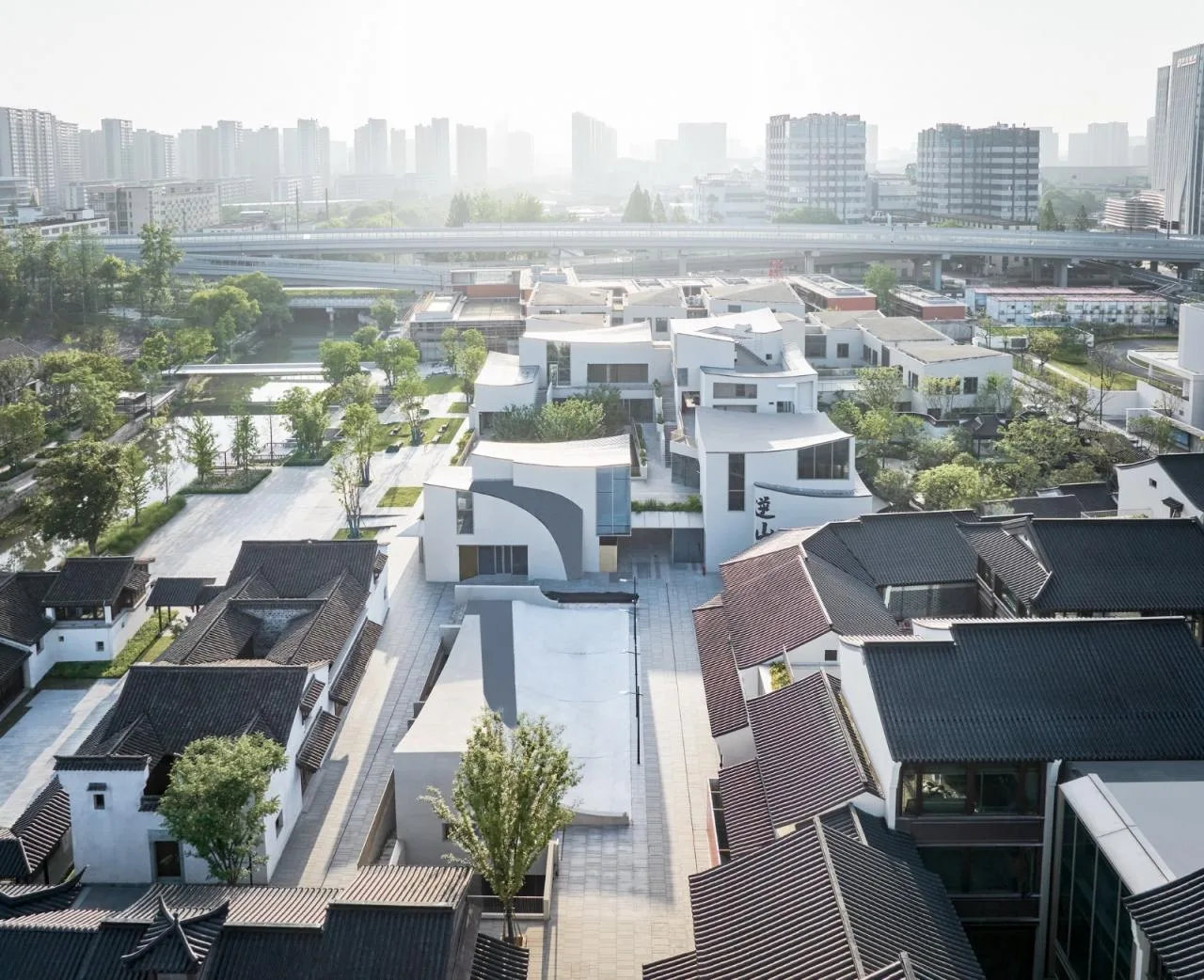
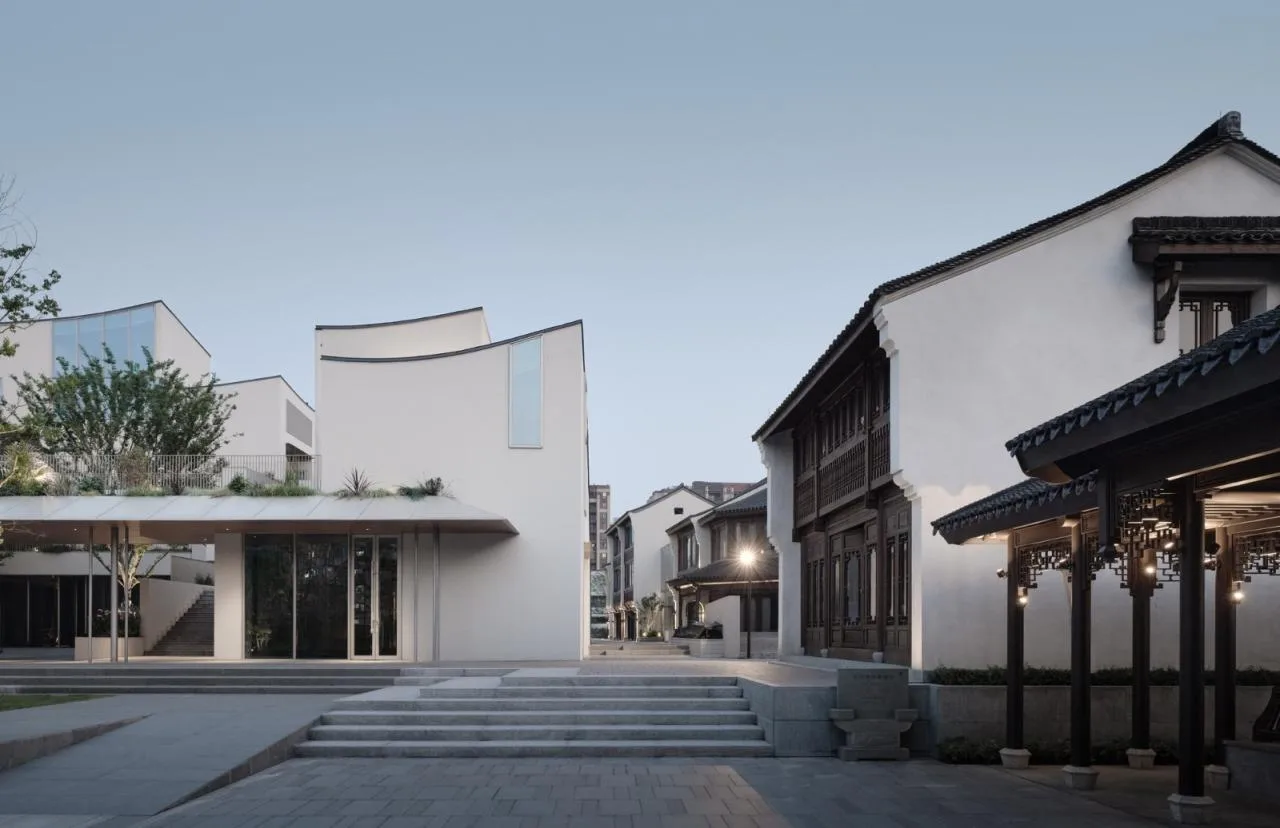
△ Block snapshot © Aoguan Architectural Vision
The Temporal Sequence of New and Old Bridges
Like many small bridges in Jiangnan, Xiangfu Bridge bears witness to the footsteps of ancestors. Its wooden and stone structure showcases the simple beauty typical of Ming Dynasty bridges, carrying water town memories across generations. Two new bridges, one to the east and one to the west, engage in a temporal and spatial dialogue with the ancient Xiangfu Bridge, presenting a concise and modern visual contrast.
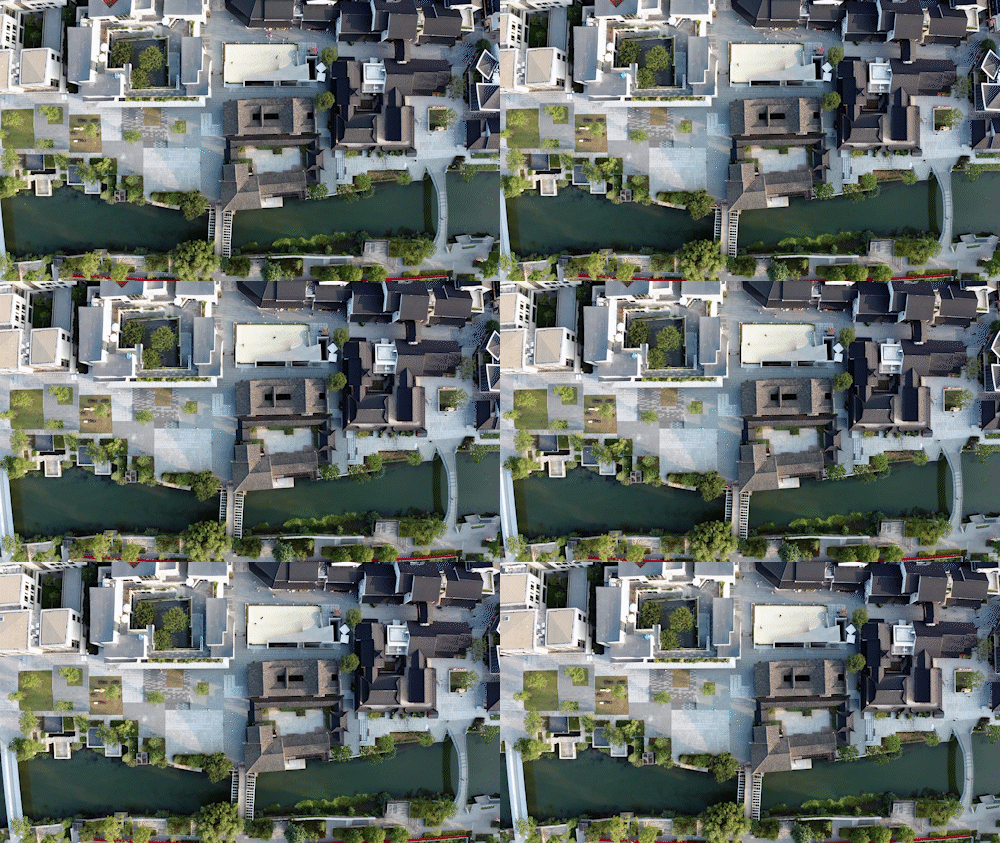
Three bridges © One ride photography
The newly built Wohong Bridge, on the west side of Xiangfu Bridge, frames the old bridge with a graceful arch, offering a clear and inviting view. Inspired by the “Hongqiao” from the Qingming Riverside Scene, its steel rib folded plate structure interprets traditional woven beam wooden arches with modern materials, achieving a lightweight aesthetic. The bridge is surfaced with old stone slabs, evoking memories of the ancient bridge.
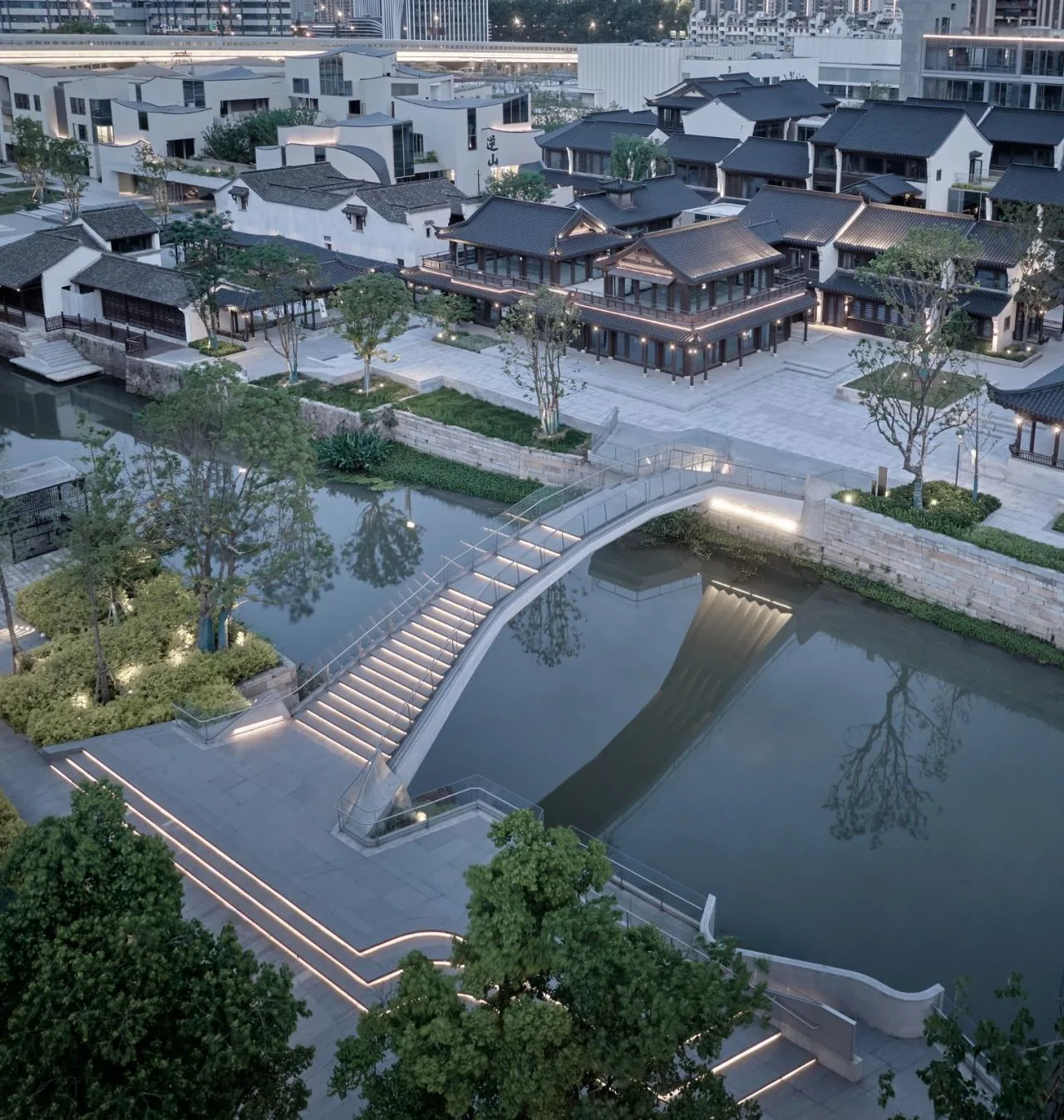
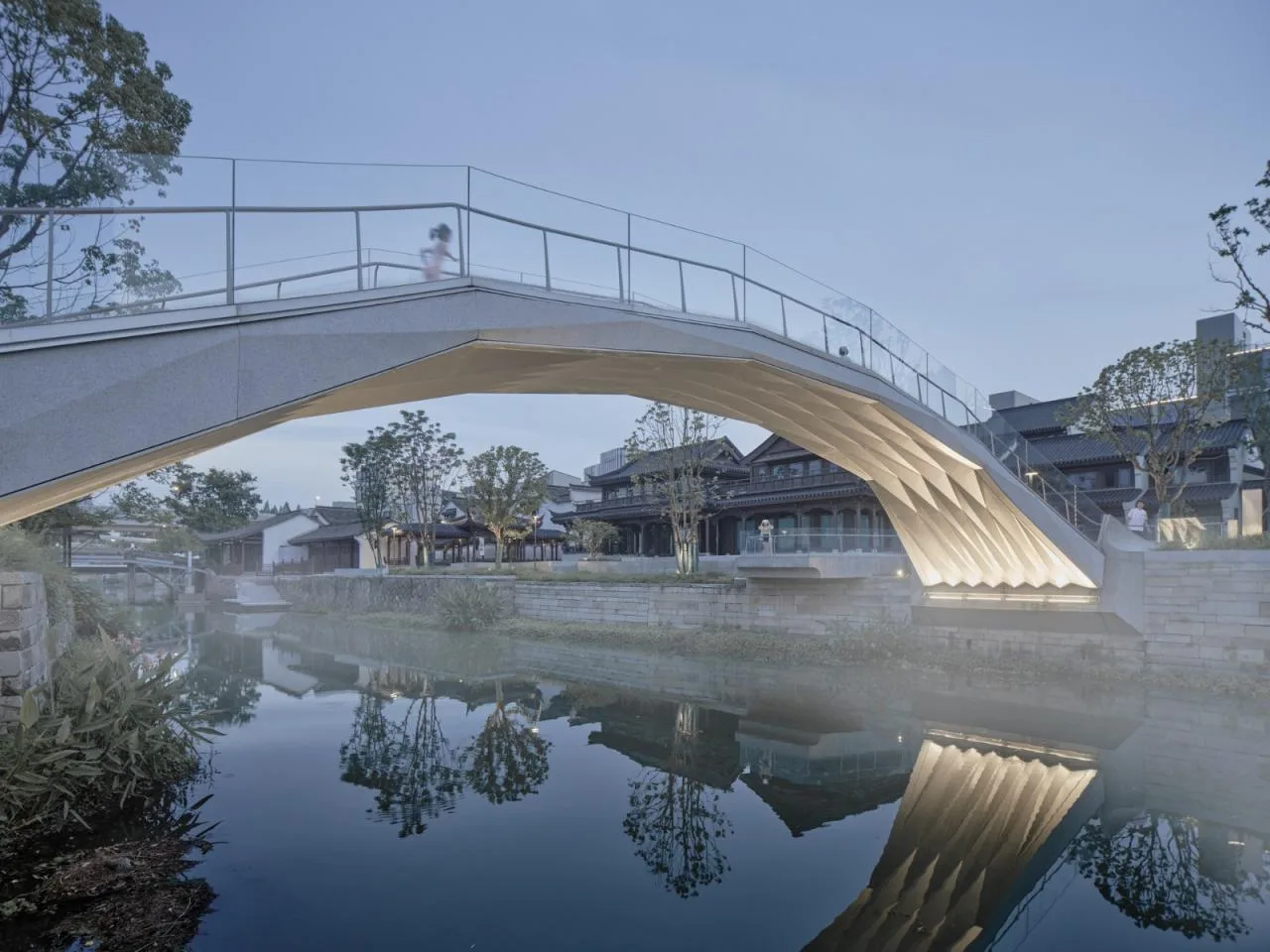
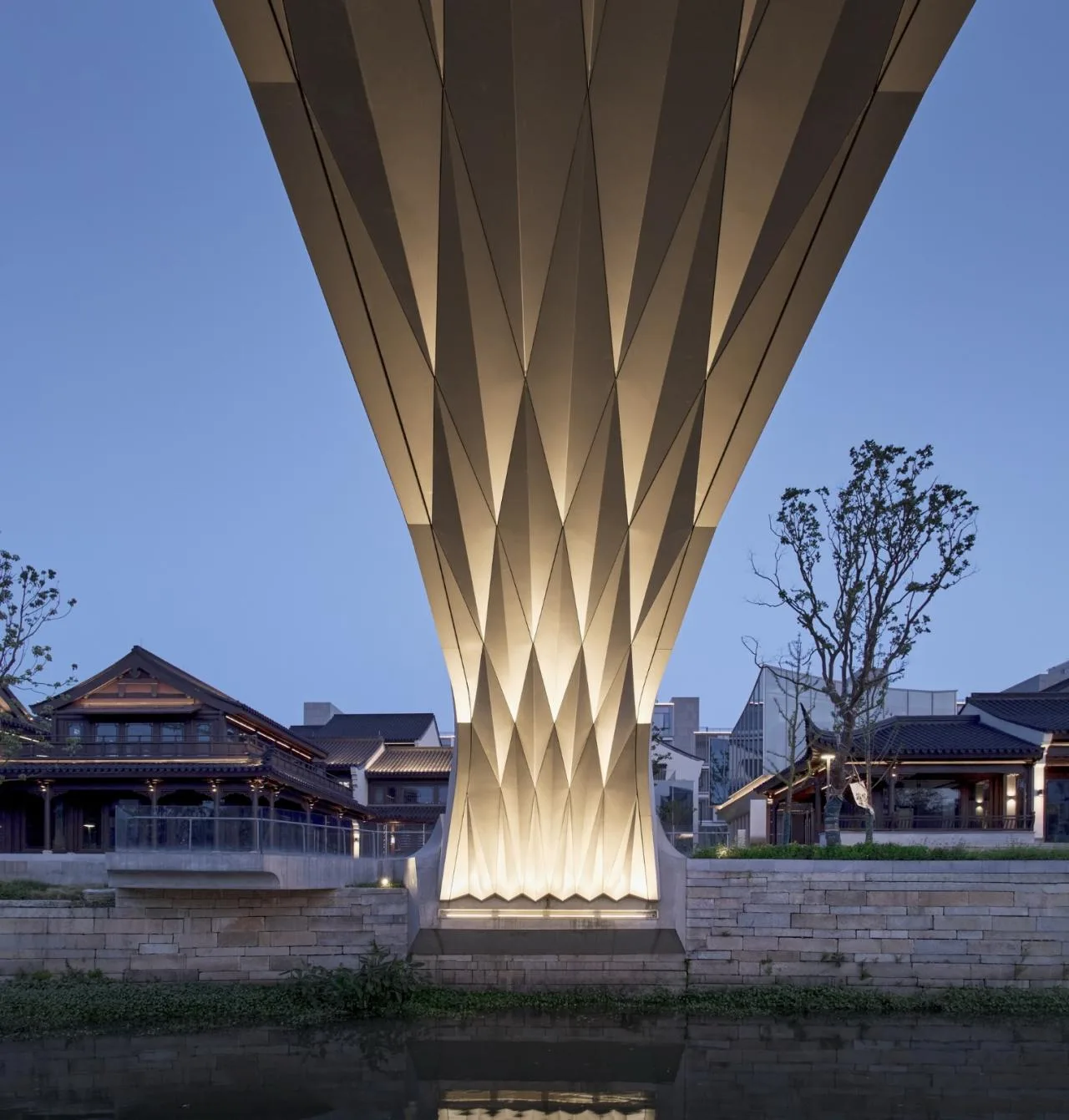
△ Wohong Bridge © Aoguan Architectural Vision
On the east side, the newly constructed Pingbo Bridge follows a principle of minimal obstruction. Its narrow sides and mirrored stainless steel underside resemble a thin folded paper hovering above the river, directing visual focus toward the historic Xiangfu Bridge.
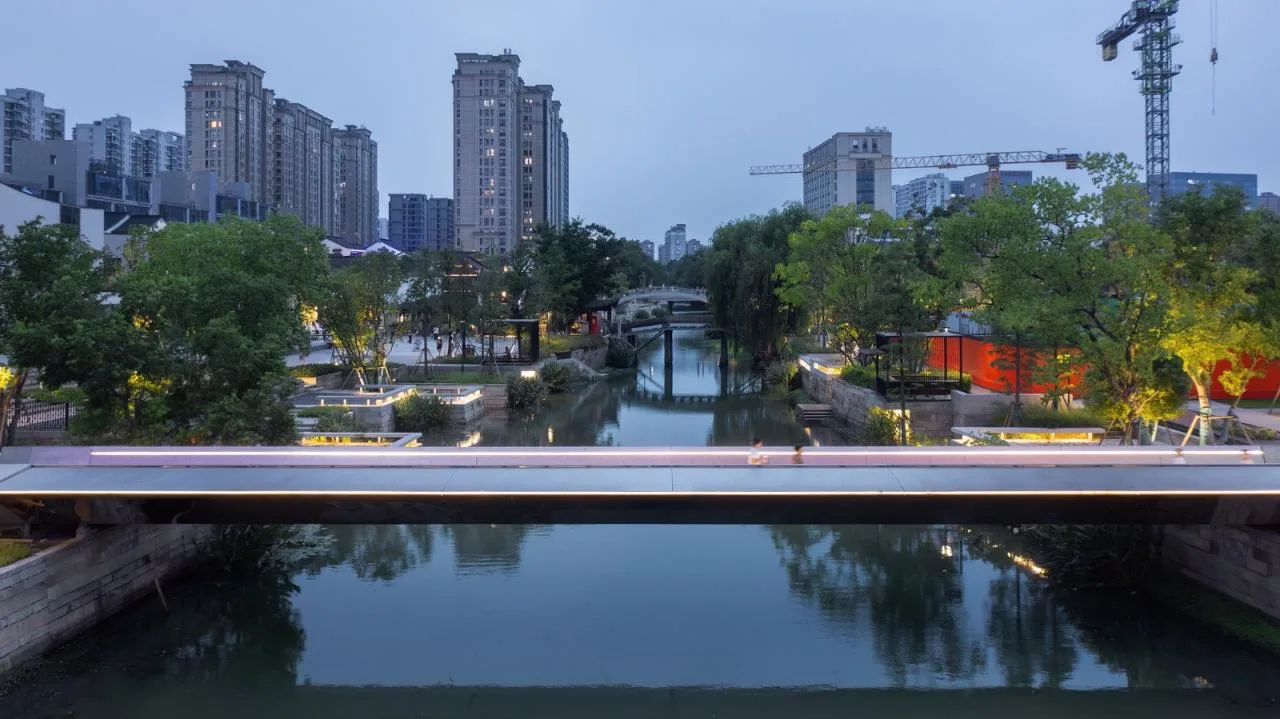
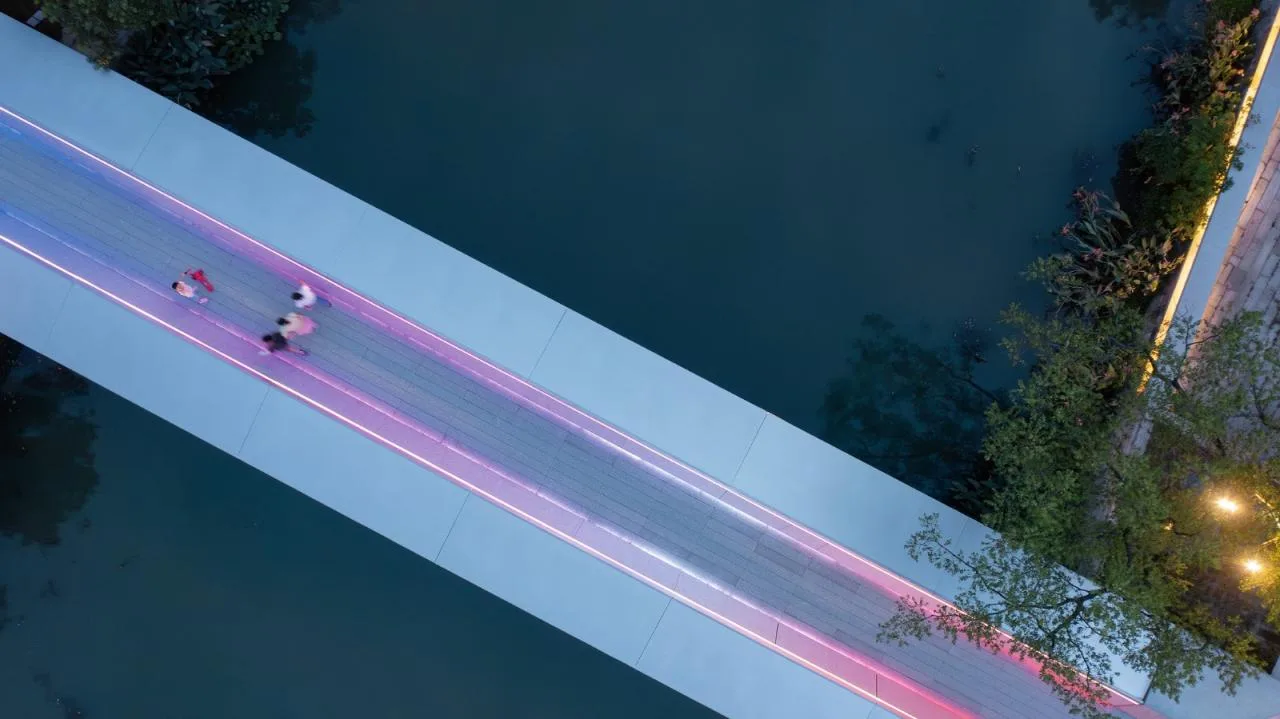
△ Pingbo Bridge © Summer Solstice
These two modern steel bridges offer fresh perspectives on Xiangfu Bridge, weaving a rich river landscape of old and new. This spatial and temporal sequence unfolds before visitors—from the traditional craftsmanship-inspired Wohong Bridge to the quaint historic Xiangfu Bridge, and finally the sleek, minimalist Pingbo Bridge.
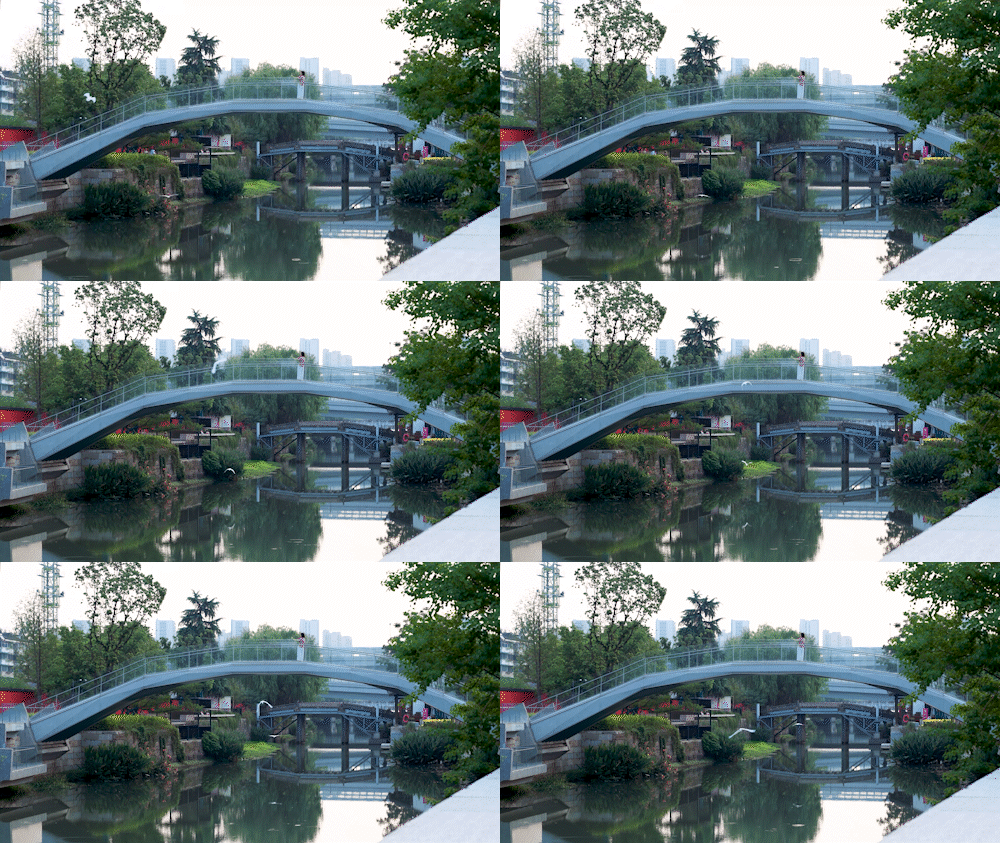
△ River landscape © One ride photography
Integrating into the Daily Life of All-Age Neighborhoods
The design team carefully considered the activities and functions the renewed block should support. Given its urban location, the goal was not simply to create a commercial tourist street but to develop an all-ages neighborhood that seamlessly integrates with the daily life of surrounding residents. This means providing spaces for all family members—elderly, children, and youth—to find a sense of belonging and engagement.
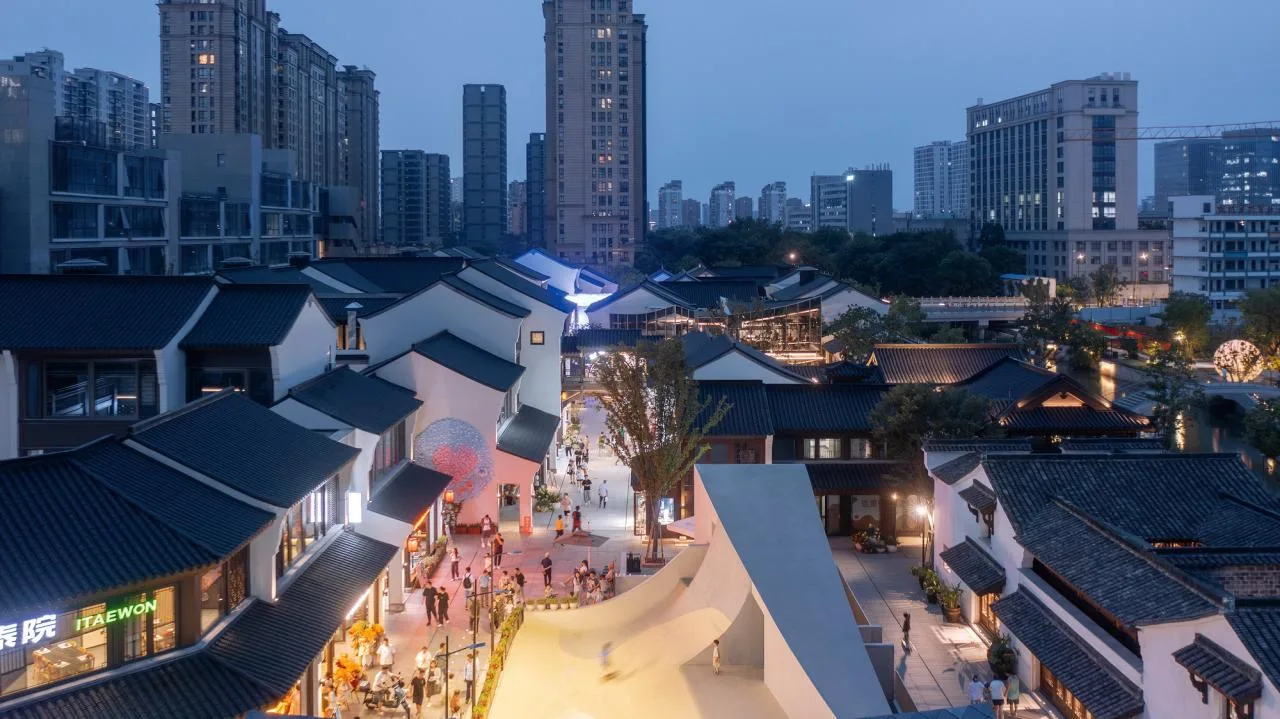
△ Cultural Block © Summer Solstice
Beyond the commercial street, the block hosts diverse functions including a future commune serving as a public activity center, a nursing home, a primary school, an art museum, a sports field, and other innovative facilities reflecting contemporary culture.
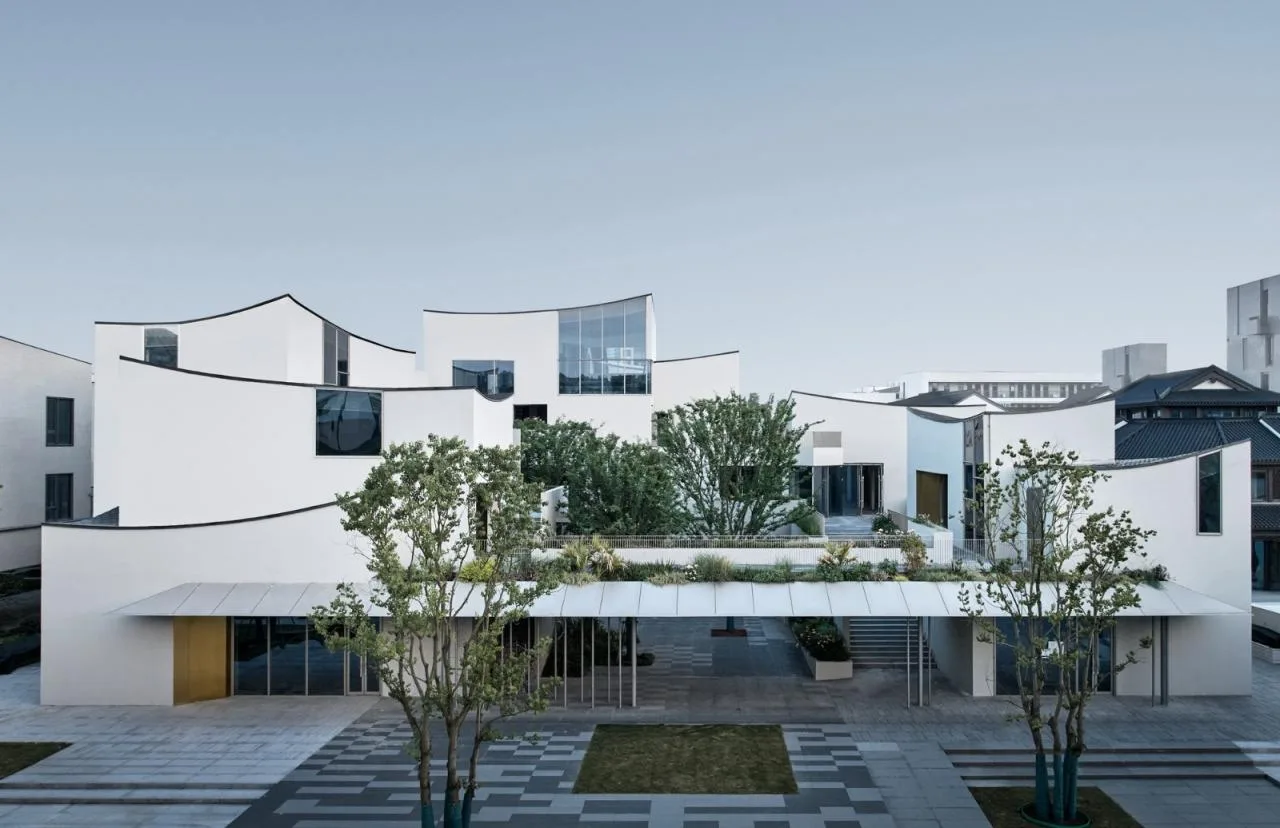
△ Future Commune © Aoguan Architectural Vision
The Future Commune continues the historical role of the “People’s Commune” as a public gathering space, emphasizing the integration and sharing of spiritual and cultural elements to create a welcoming and interactive environment adapted to contemporary public life.
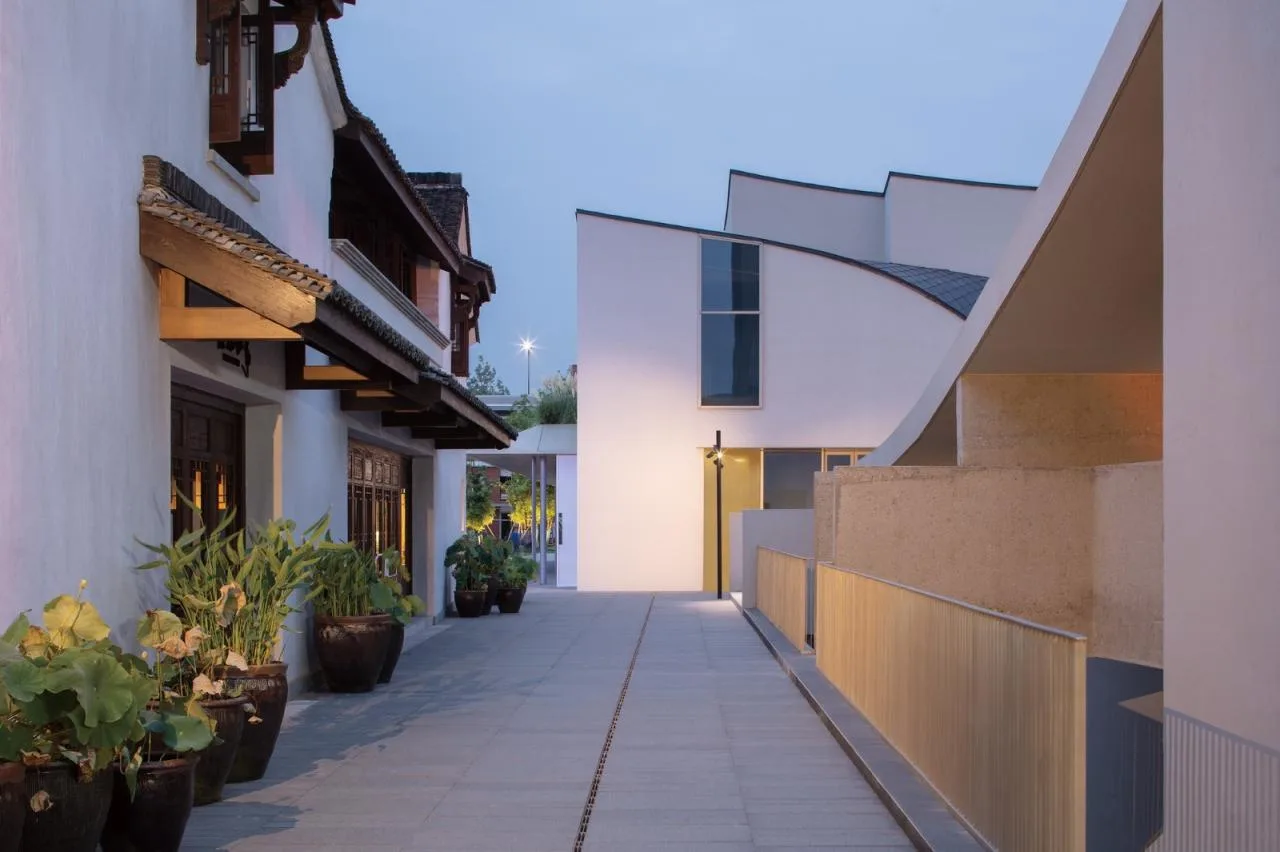
△ Future Commune and Art Museum © Summer Solstice
At the heart of the block lies a skateboard park, the neighborhood’s vibrant core. Made from prefabricated concrete curved panels, it offers a rare recreational space cherished by youth and children. The skatepark also serves as the roof of the art museum, inviting visitors into an underground exhibition hall to explore the arts.
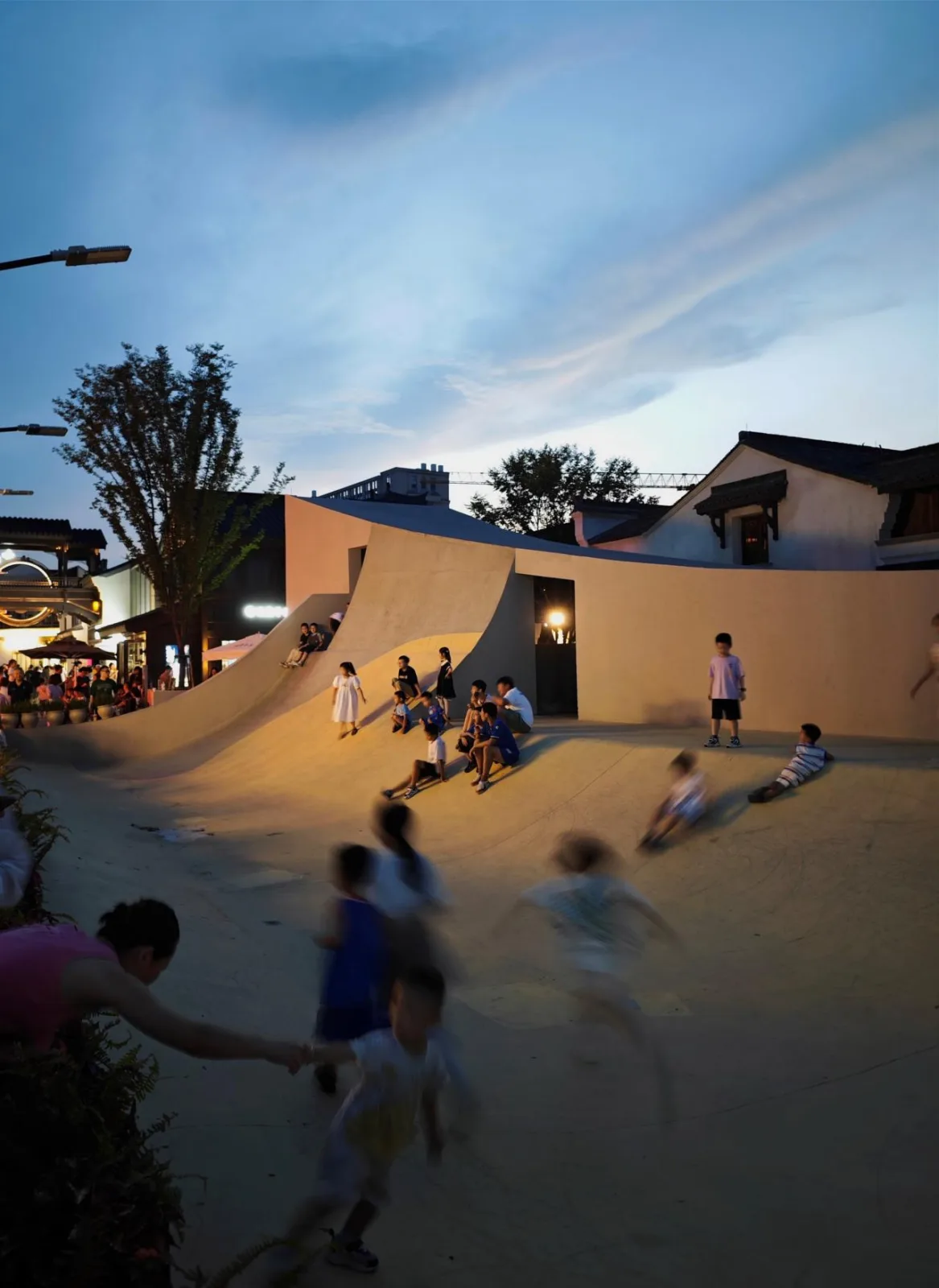
Skateboarding Park © Goa Elephant Design
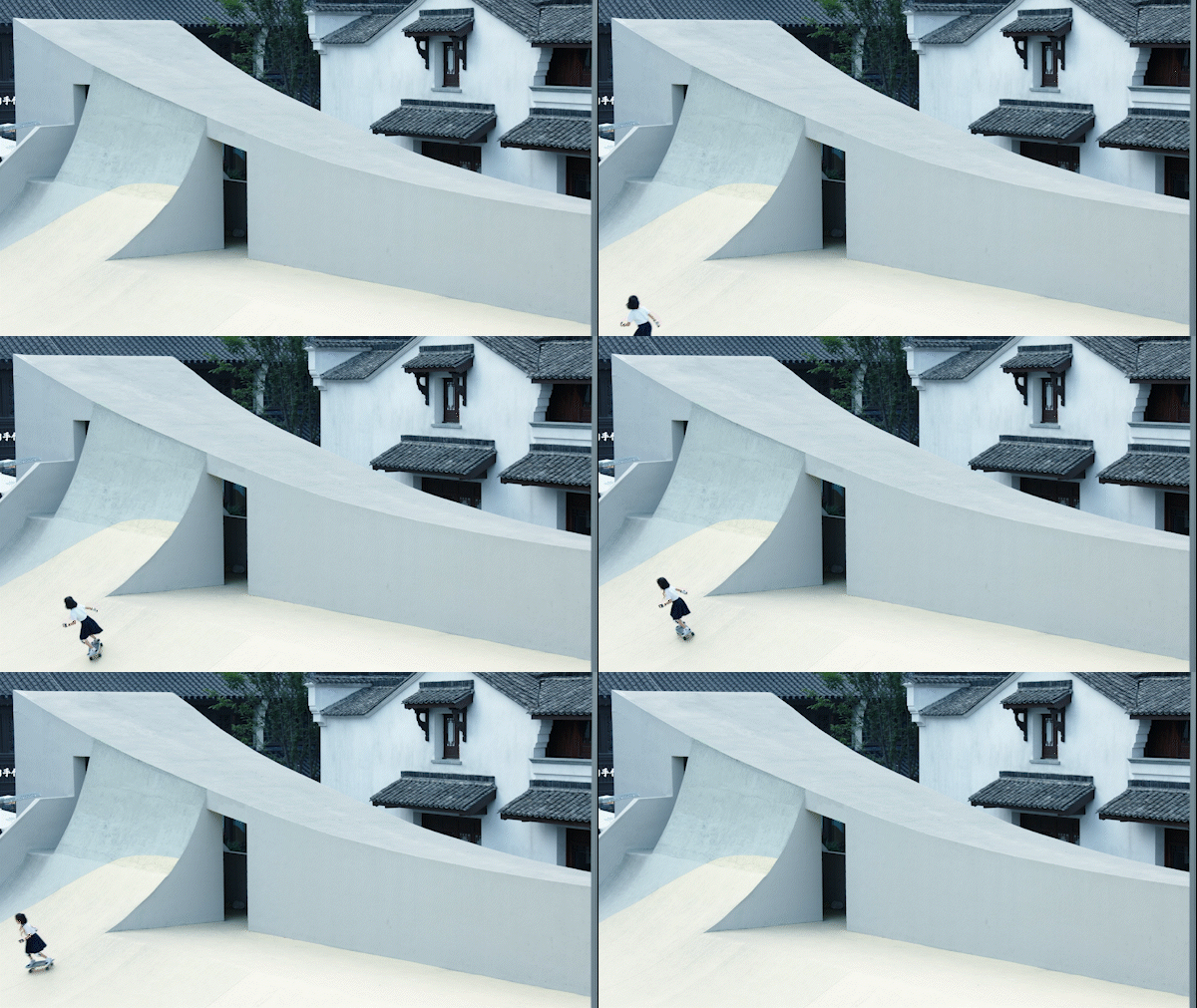
Skateboarding Park © One ride photography
The Xiangfu Campus of Daguan Elementary School, located on the block’s southern edge, was designed with a human scale in mind. The architect broke down the campus’ functional volumes to create a smooth transition between the block and surrounding buildings. Additionally, the continuation of Xiangfu Straight Street, previously interrupted, now serves as a public corridor through the campus, honoring the site’s history.
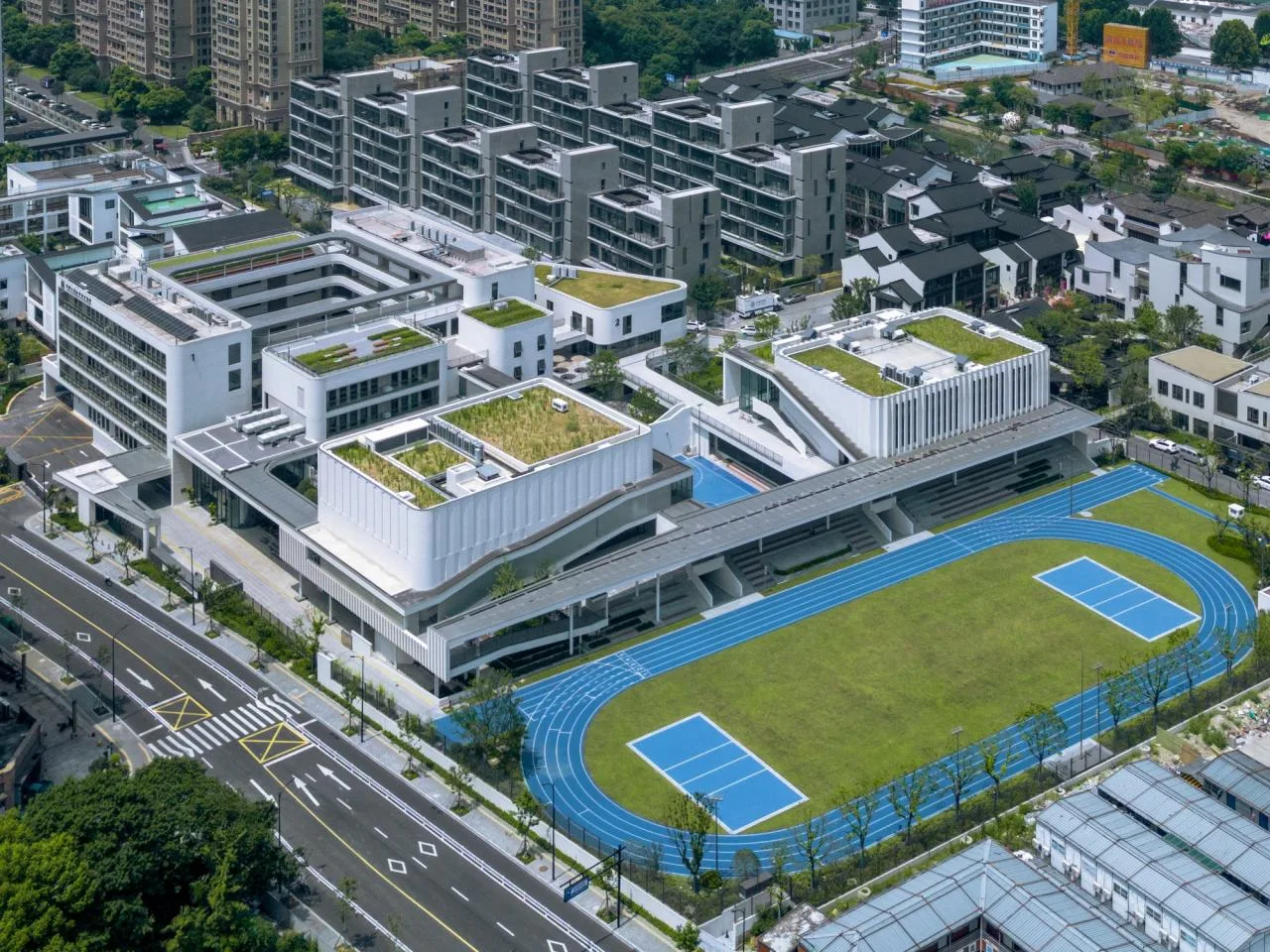
Xiangfuqiao District, Daguan Elementary School © Liu Guowei
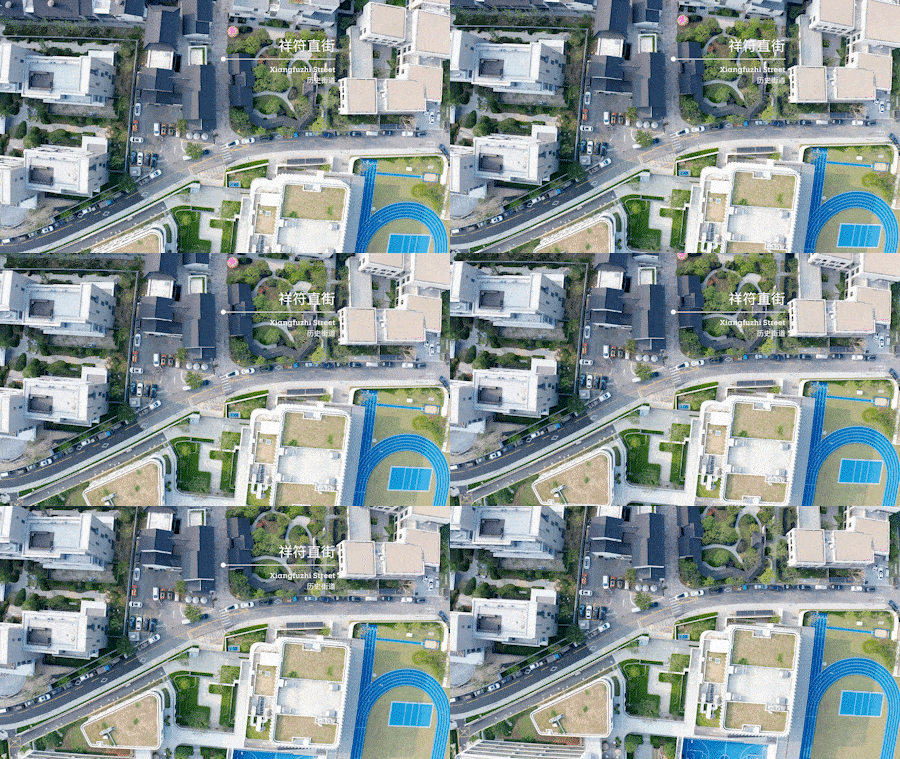
The relationship between campus and Xiangfu Straight Street © One ride photography
The Ever-Rising Fireworks Atmosphere
Since opening, the neighborhood has provided high-quality public spaces that were previously scarce in this dense residential area. It has become a beloved destination for leisure and children’s play, fulfilling the design goal of preserving Hangzhou’s lively “fireworks atmosphere” and sustaining traditional memories.
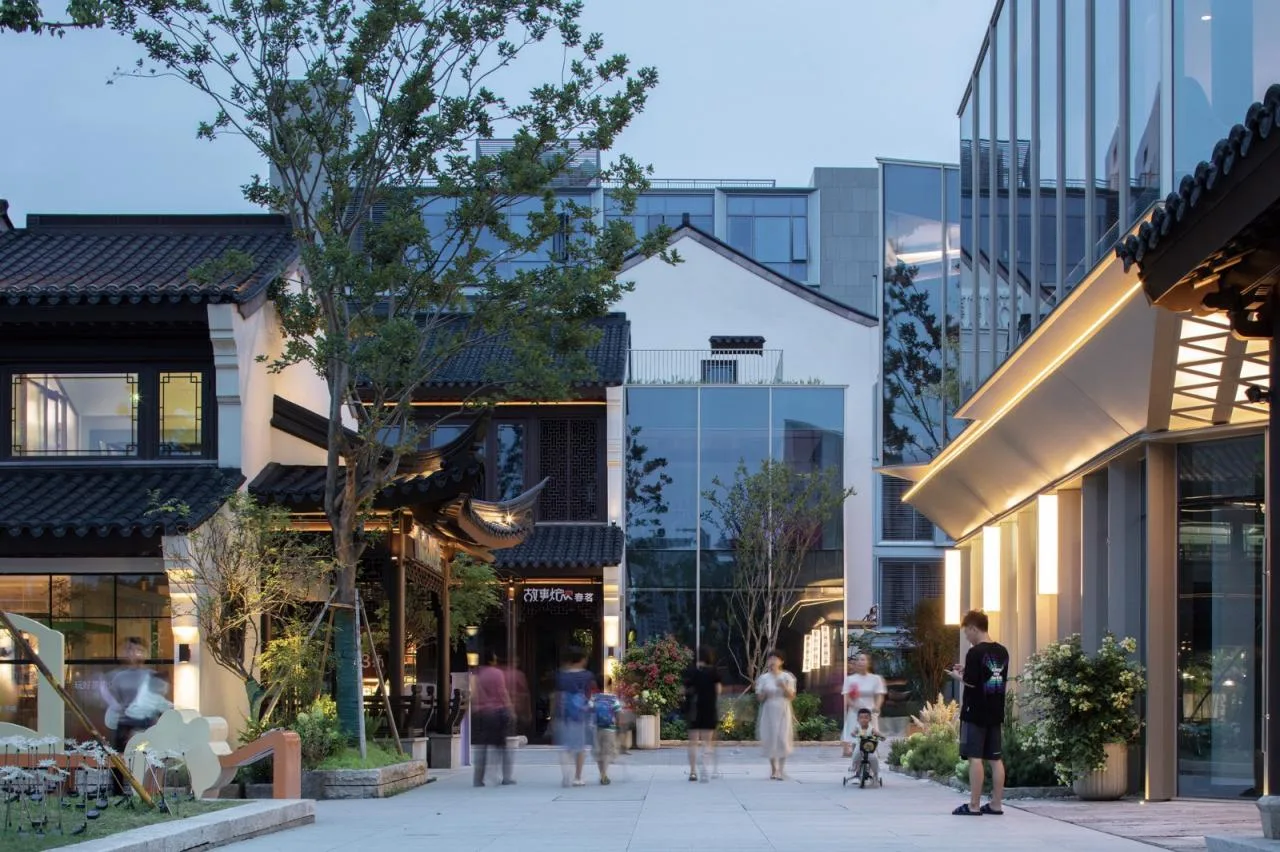
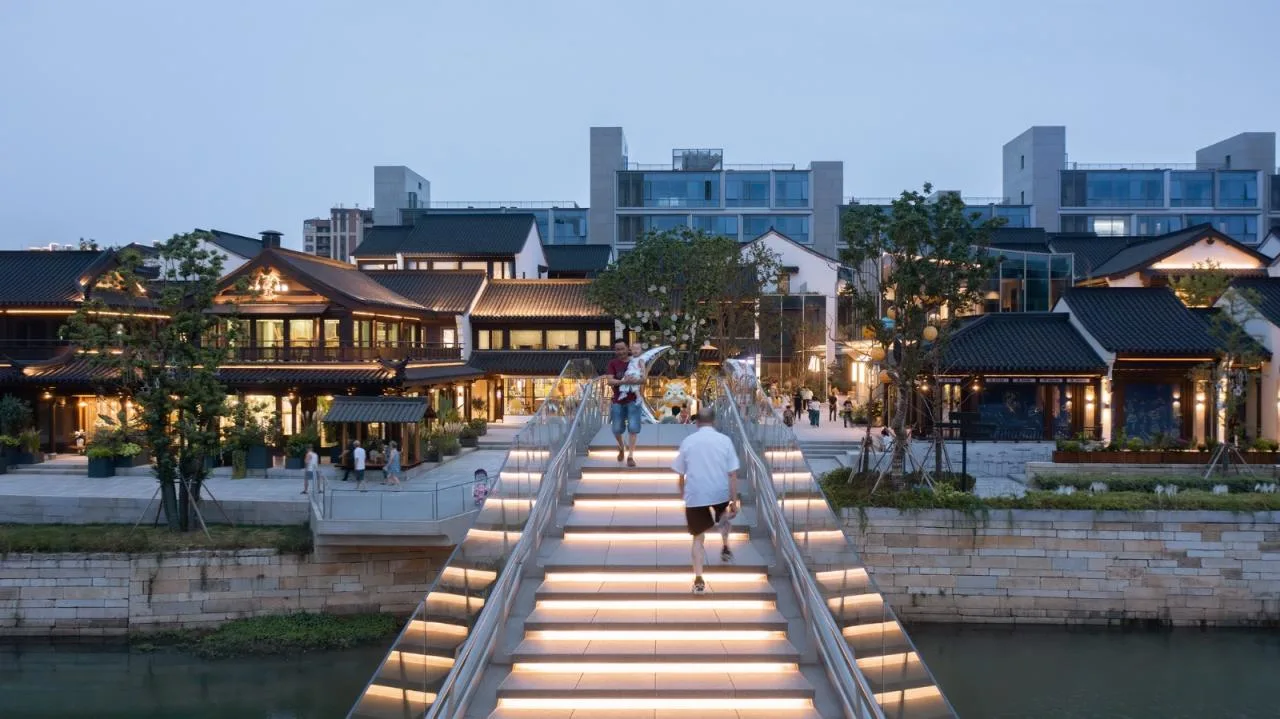
△ Streetscape after opening © Summer Solstice
As the project’s chief architect stated, “Culture is the accumulation of people’s living habits, value systems, and shared mental frameworks that have evolved over time.” Here, the intersection of traditional charm and modern lifestyle evokes warm urban atmospheres, reminding residents of the simplest, most genuine memories of life. It is this emotional connection that sustains authentic and valuable culture indefinitely.
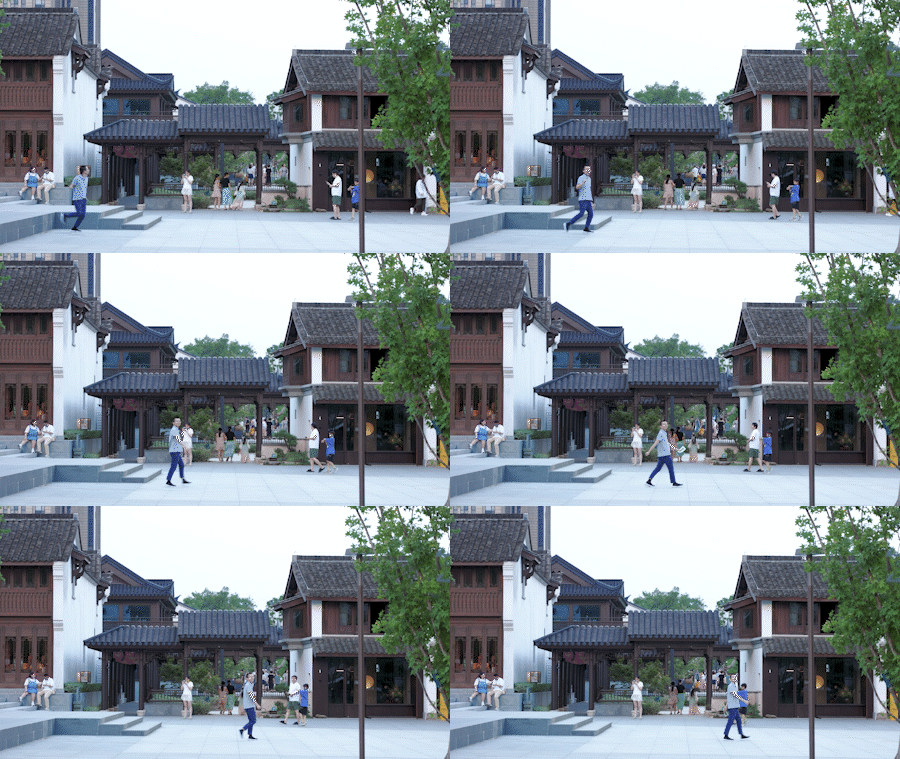
Daily life in the neighborhood © One ride photography
Project Drawings
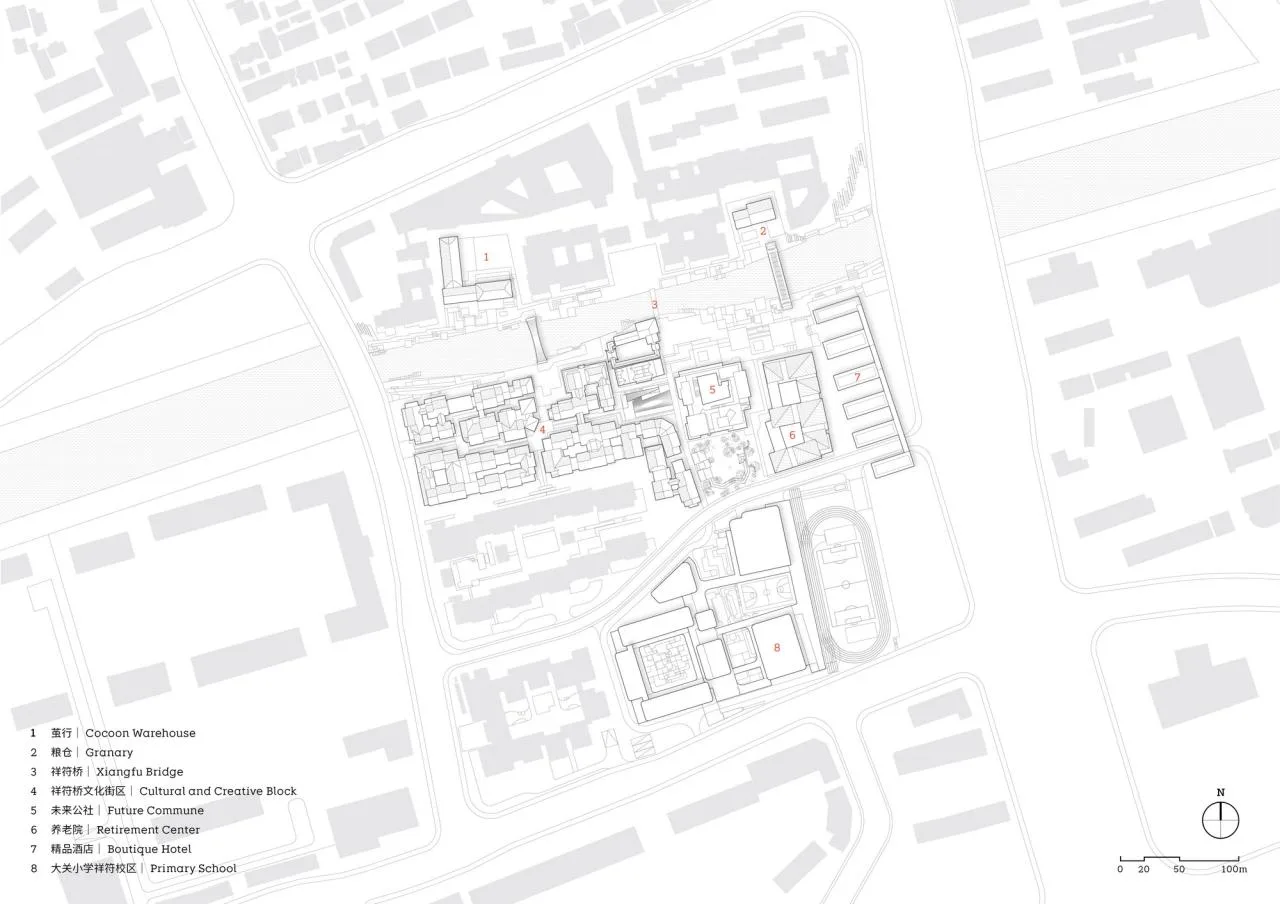
△ General layout plan © Goa Elephant Design
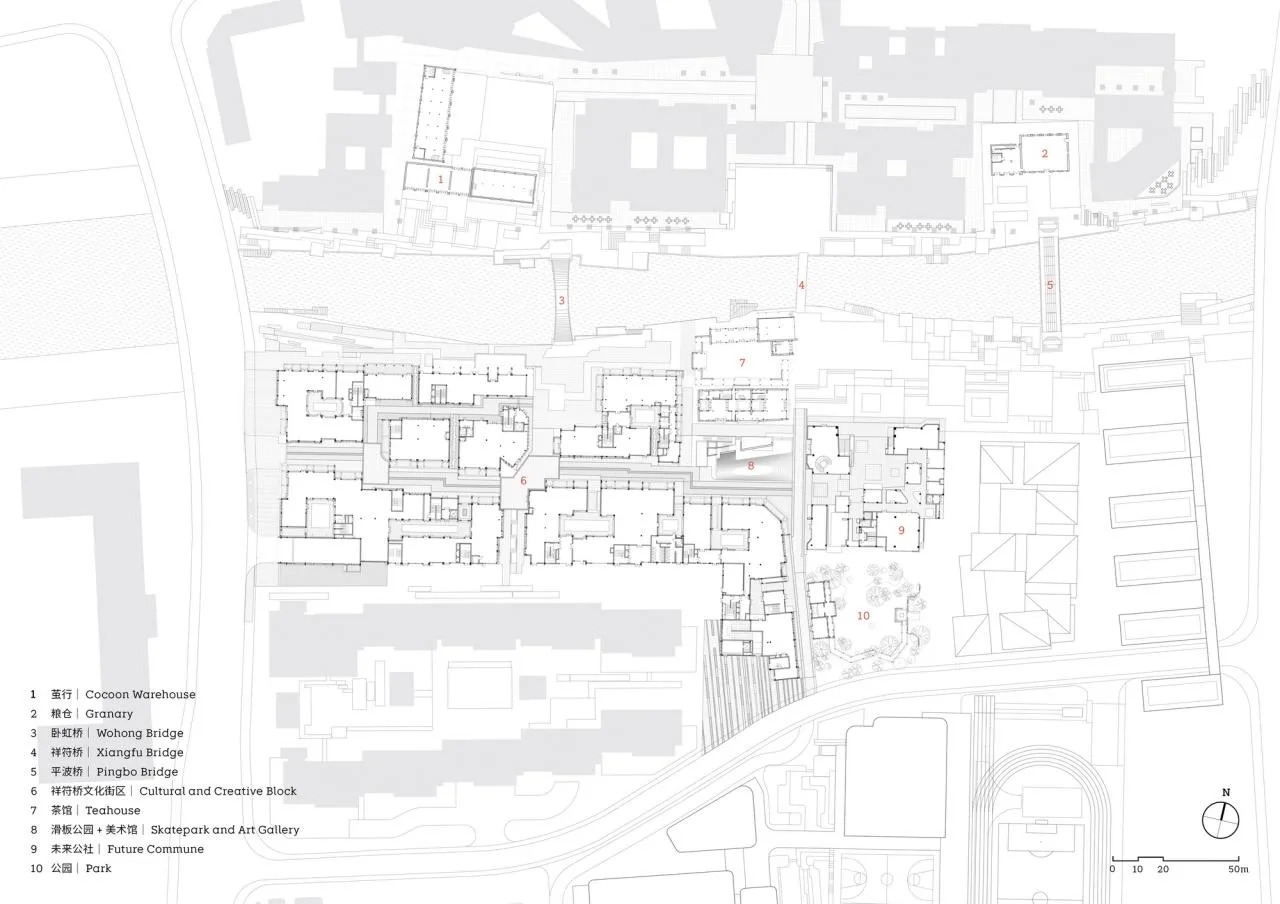
△ First floor plan of Xiangfuqiao Cultural Block © Goa Elephant Design
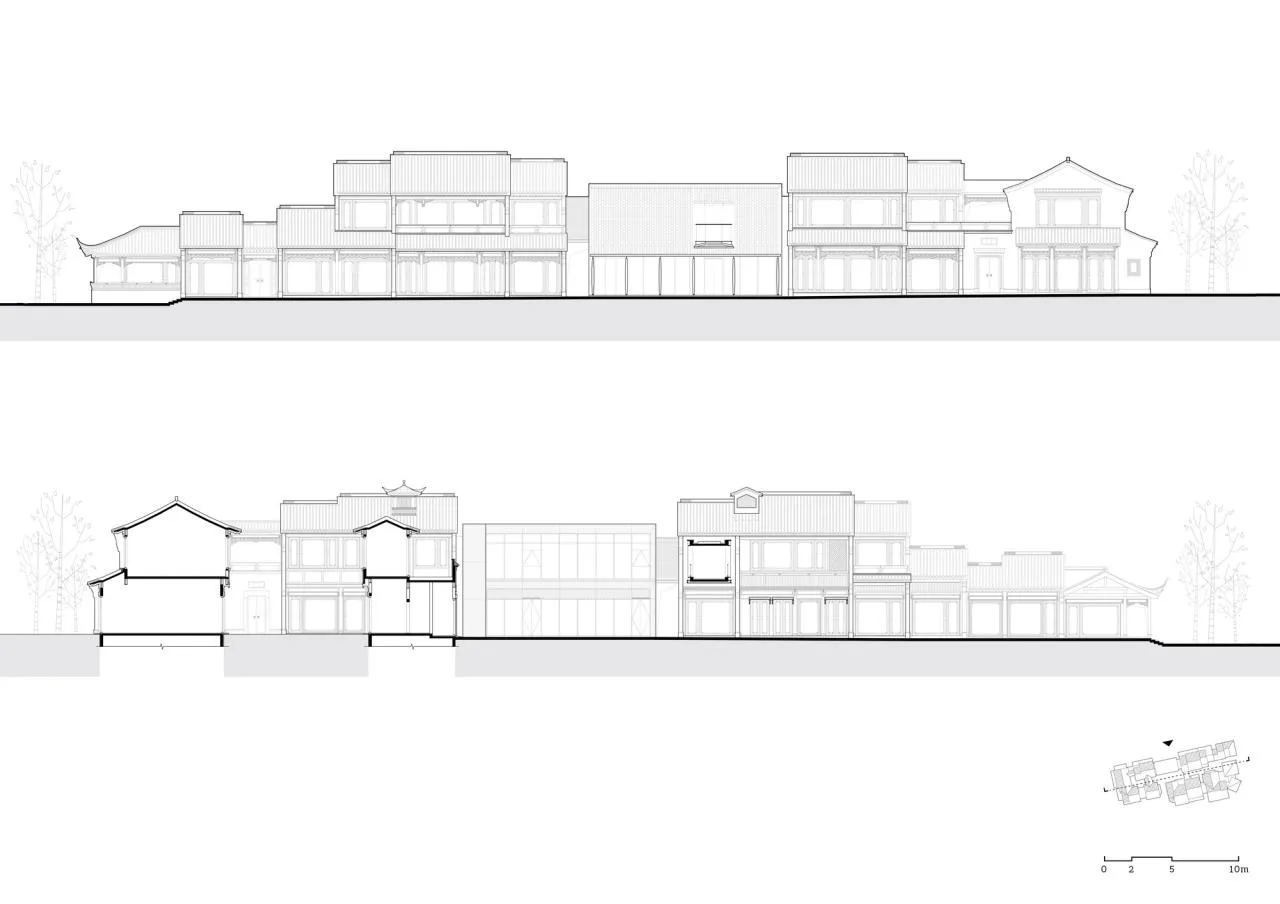
△ Section elevation of Xiangfuqiao Cultural Block © Goa Elephant Design
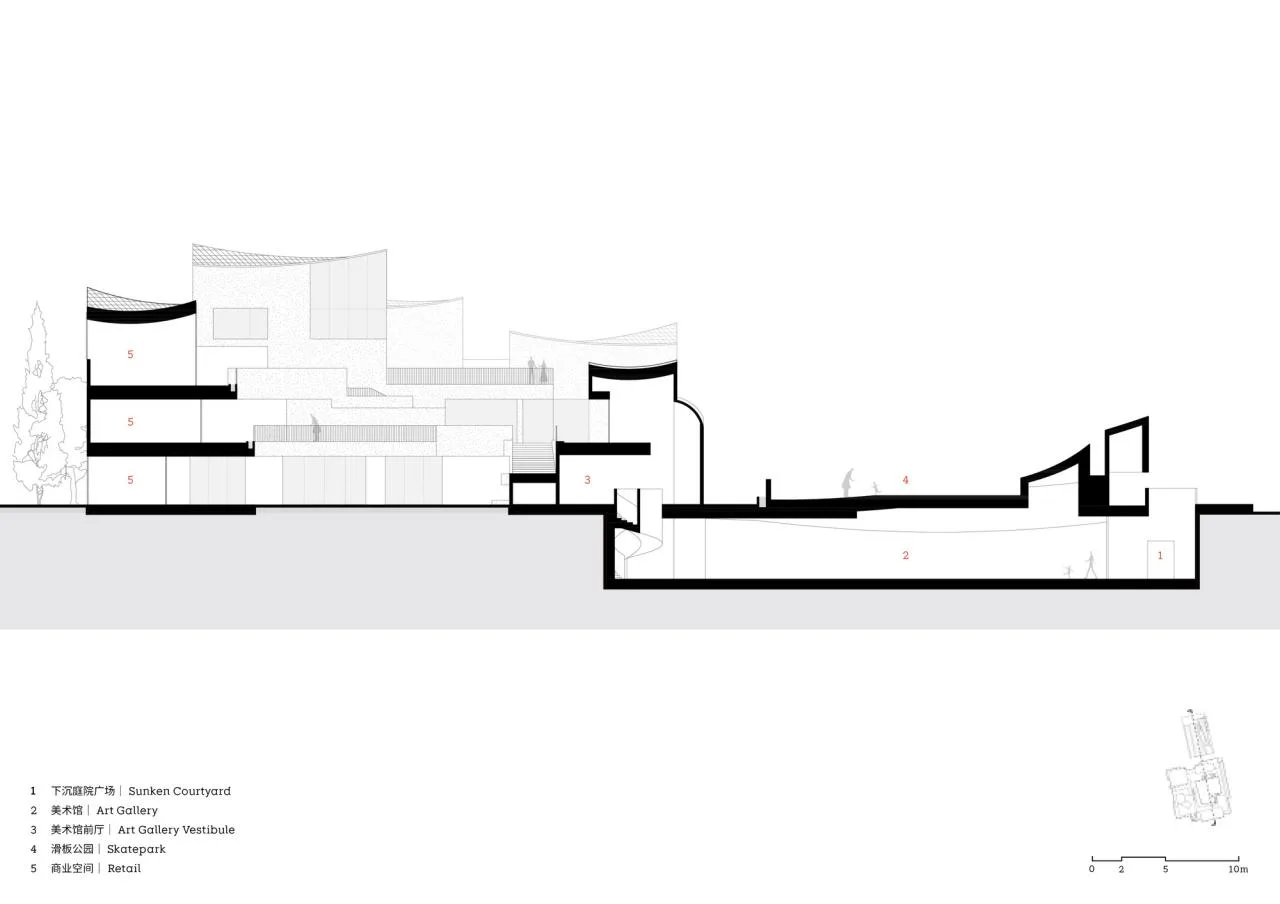
△ Profile of Future Commune and Art Museum © Goa Elephant Design
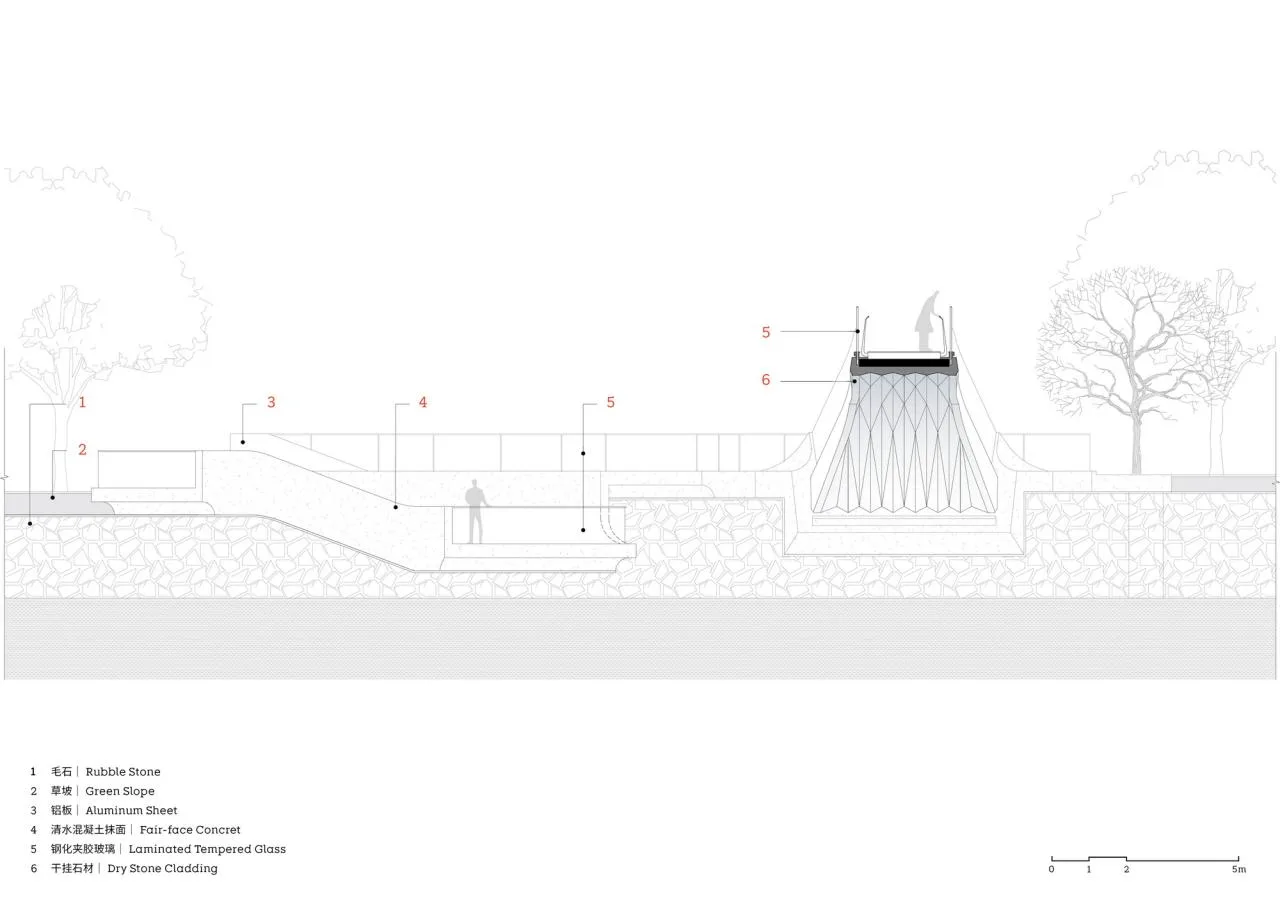
△ Sectional drawing of the riverside revetment and horizontal bridge © Goa Elephant Design
Project Information
Project Name: Xiangfuqiao Traditional Style Block
Location: Hangzhou, Zhejiang Province
Owner: Gongshu District Urban Construction and Development Center, Hangzhou City
Overall Planning, Architectural & Landscape Design: Goa Elephant Design
Landscape Design Along the River: TOPO
EPC Management: Goa Elephant Design
Design / Completion: 2019 / 2023
Building Area: 66,000 square meters
Image Credits: Aoguan Architectural Vision, Summer Solstice, Yicheng Photography, Liu Guowei, Goa Elephant Design















Must log in before commenting!
Sign Up