
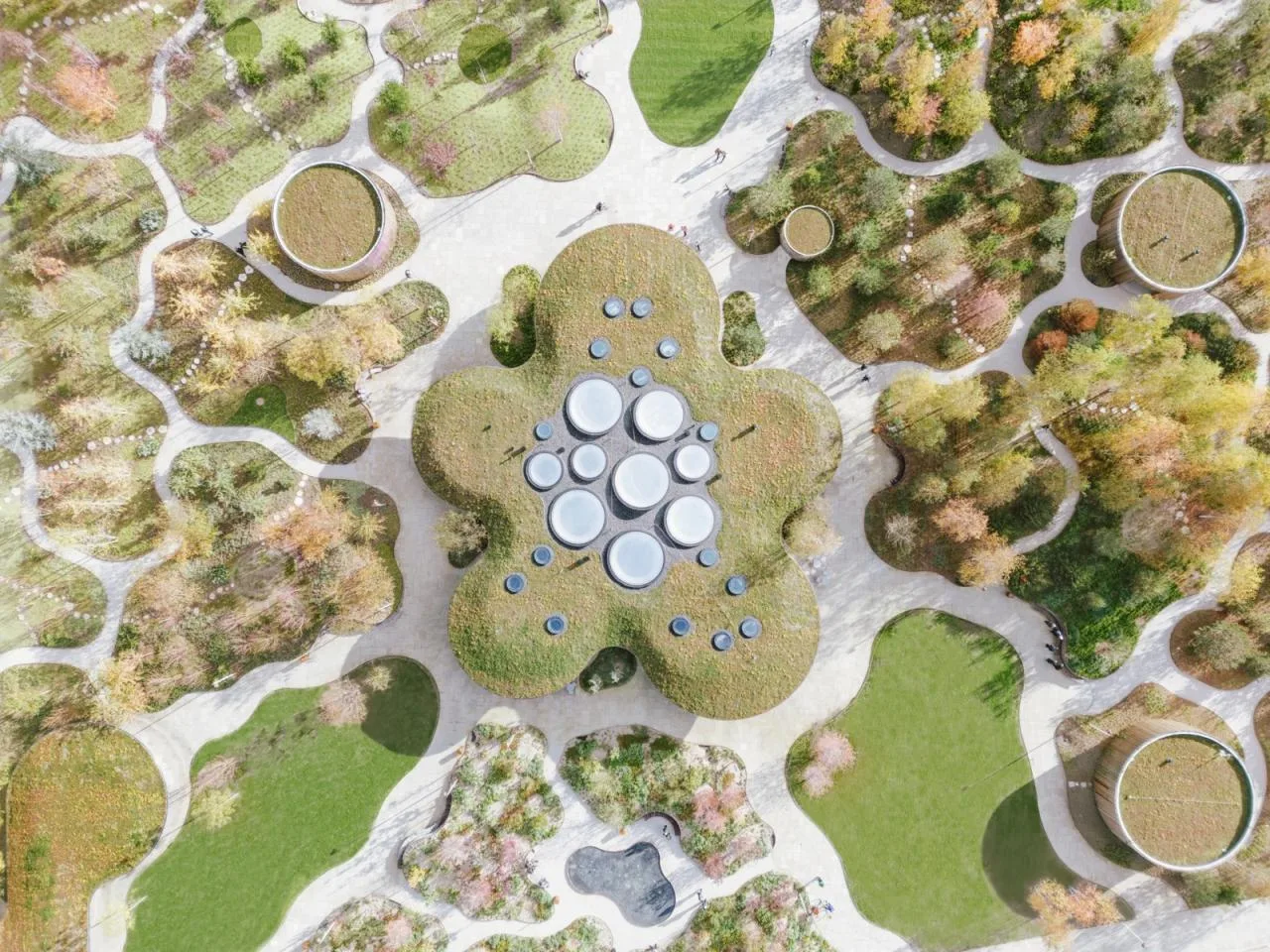
Opera House Park is a romantic garden thoughtfully designed to meet contemporary challenges. In 2019, following a design competition, the A.P. Møller Foundation selected the Danish architecture studio Cobe to create a new park on a former industrial island located in Copenhagen’s inner harbor. This island, right next to the Royal Danish Opera House, had remained a small green lawn for nearly two decades since the opera house was completed.
Originally intended as a prime site for residential development, the island has now been transformed into a rich and diverse natural landscape. The new harbor park, named “Opera House Park,” introduces a vibrant green corridor within Copenhagen’s densely built inner harbor area.
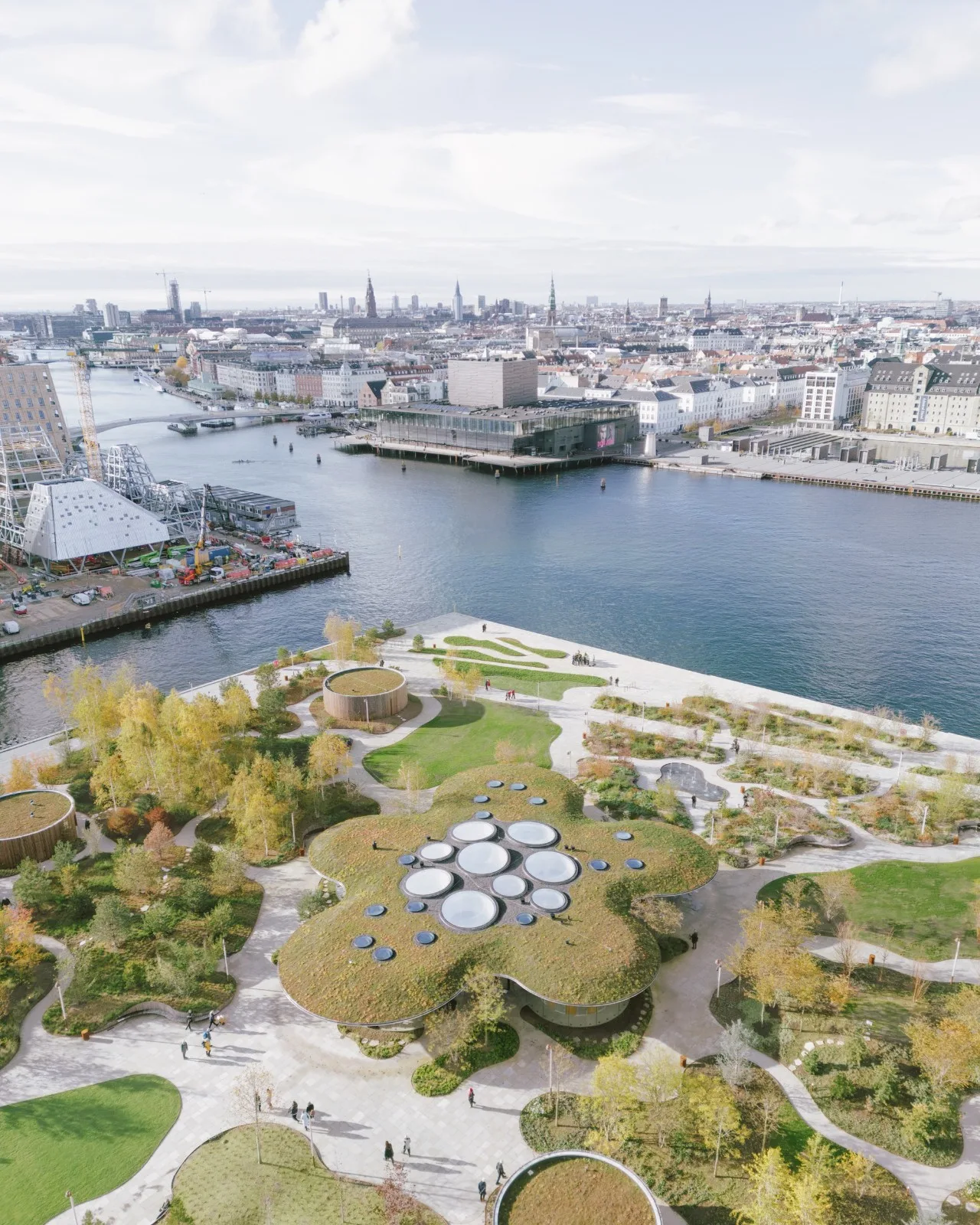
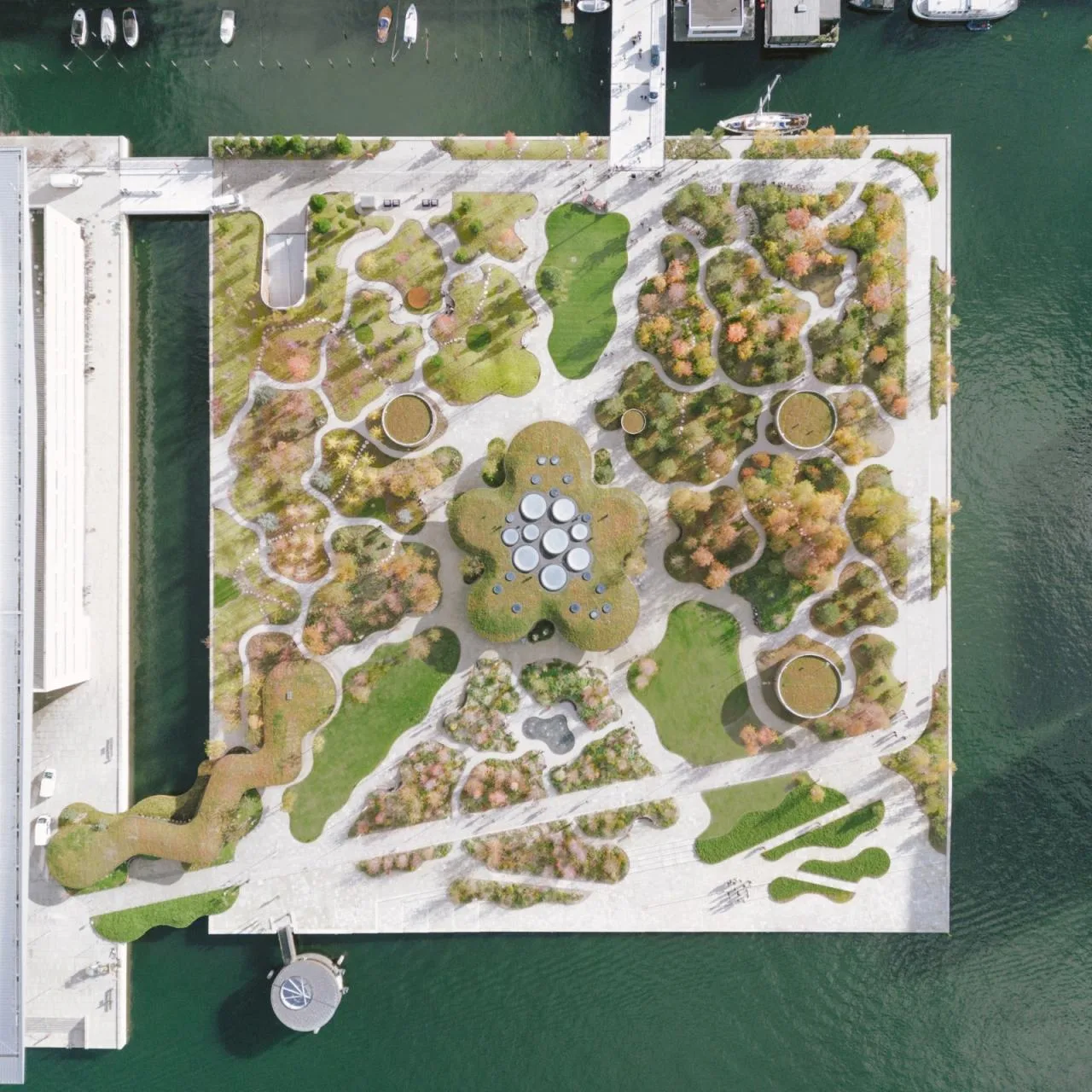
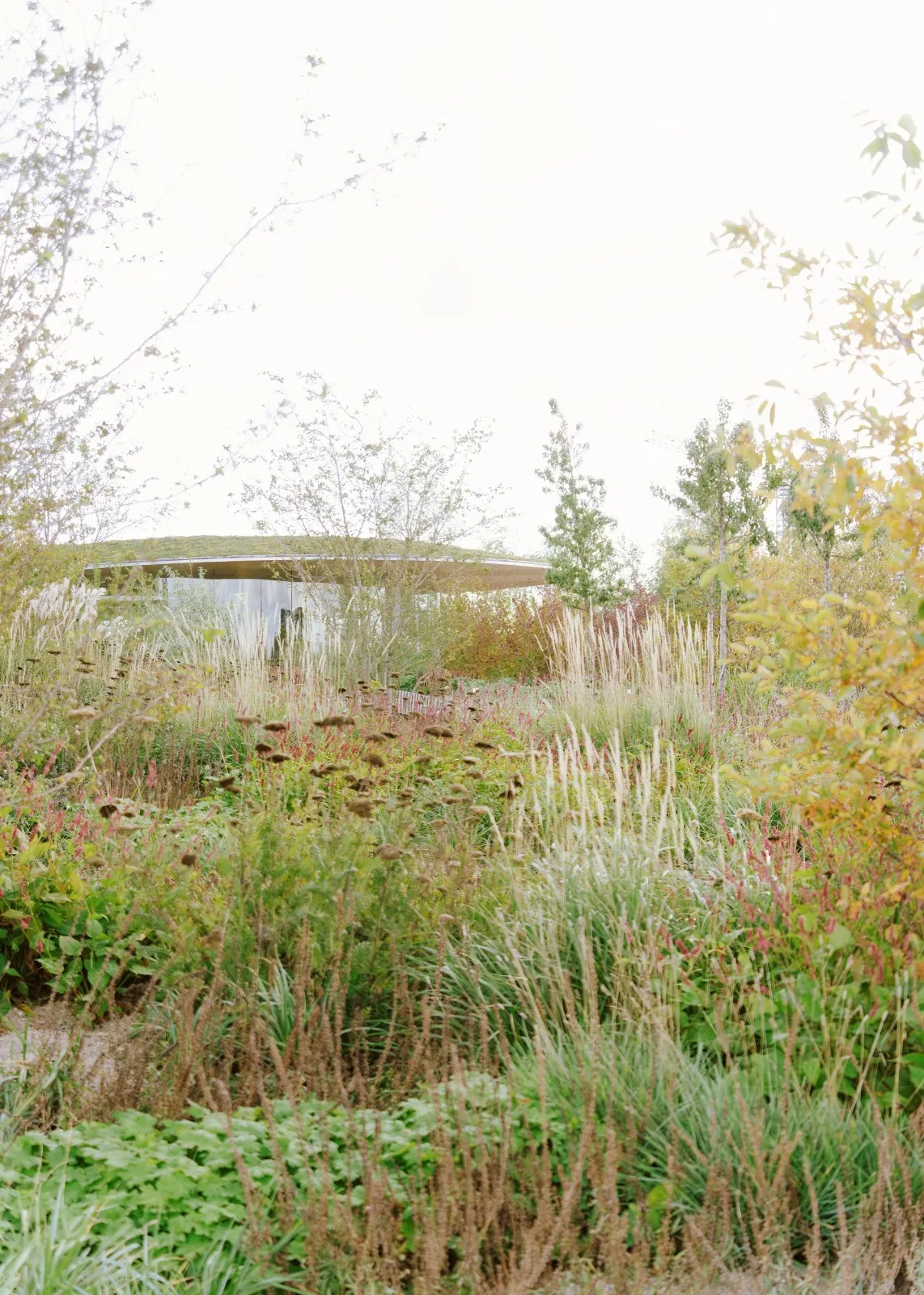
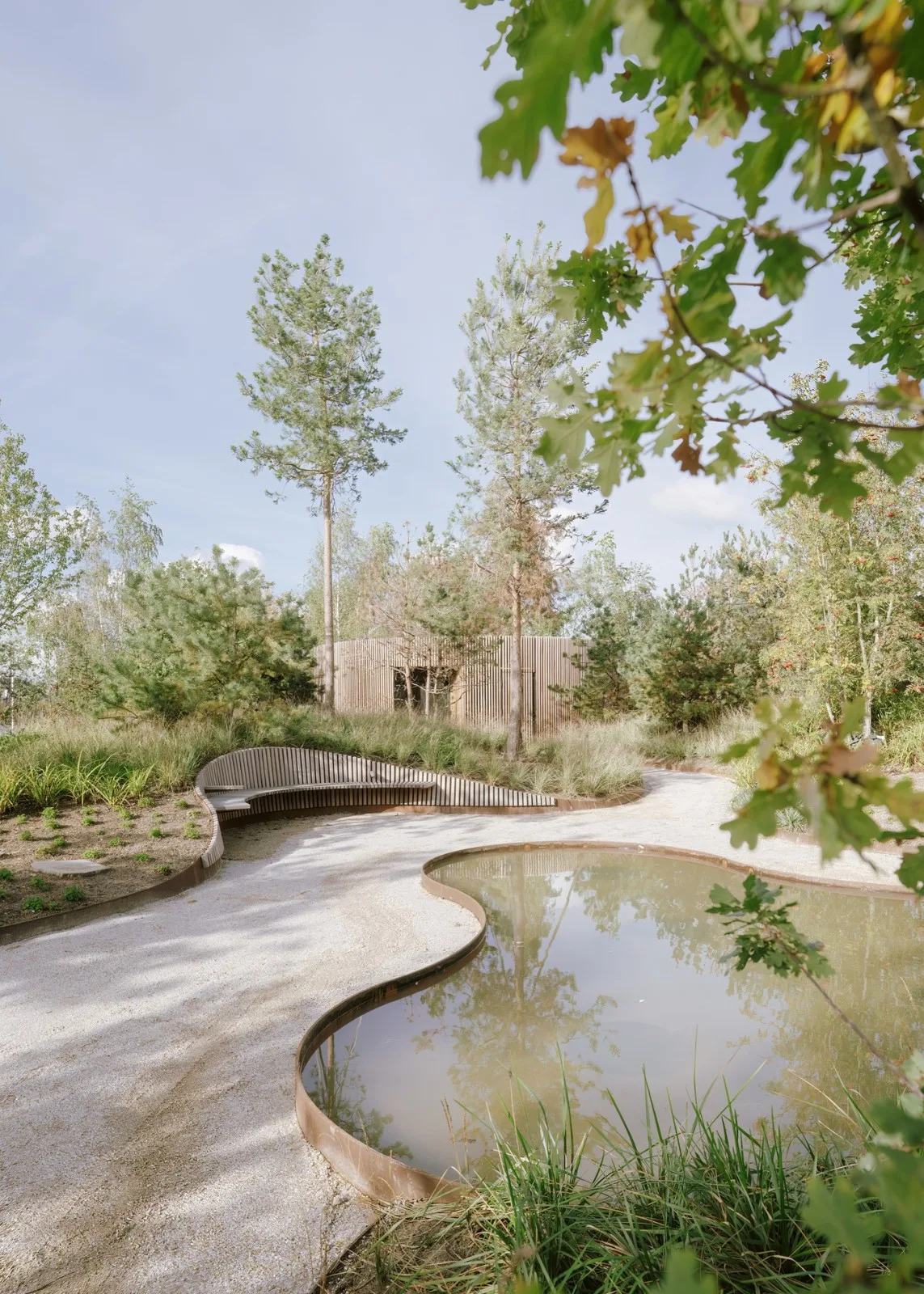
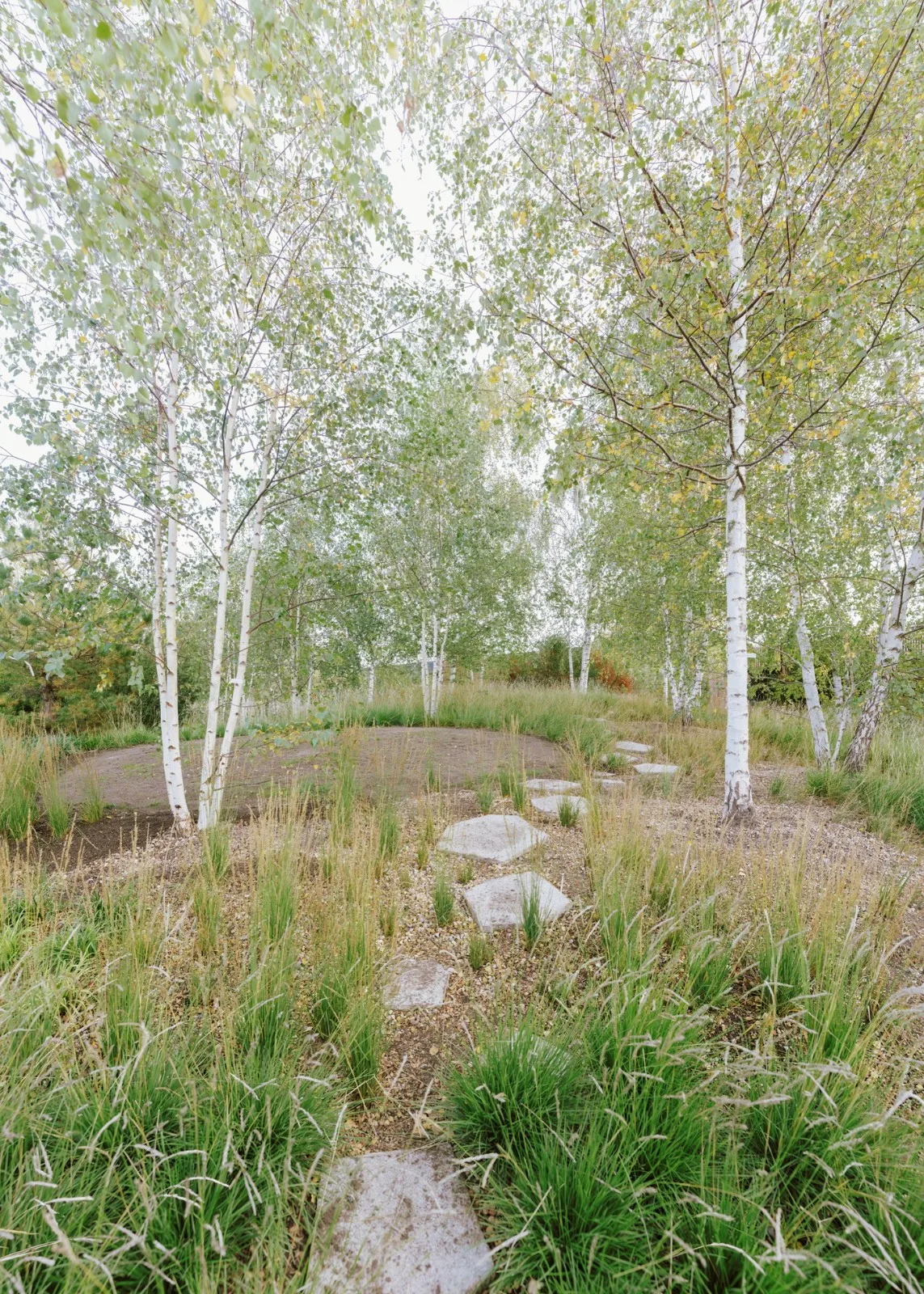
The park spans an area equivalent to three football fields and features six distinct gardens inspired by landscapes around the world: the North American Forest, Danish Oak Forest, Nordic Forest, Oriental Garden, British Garden, and a subtropical garden centered around a greenhouse and atrium.
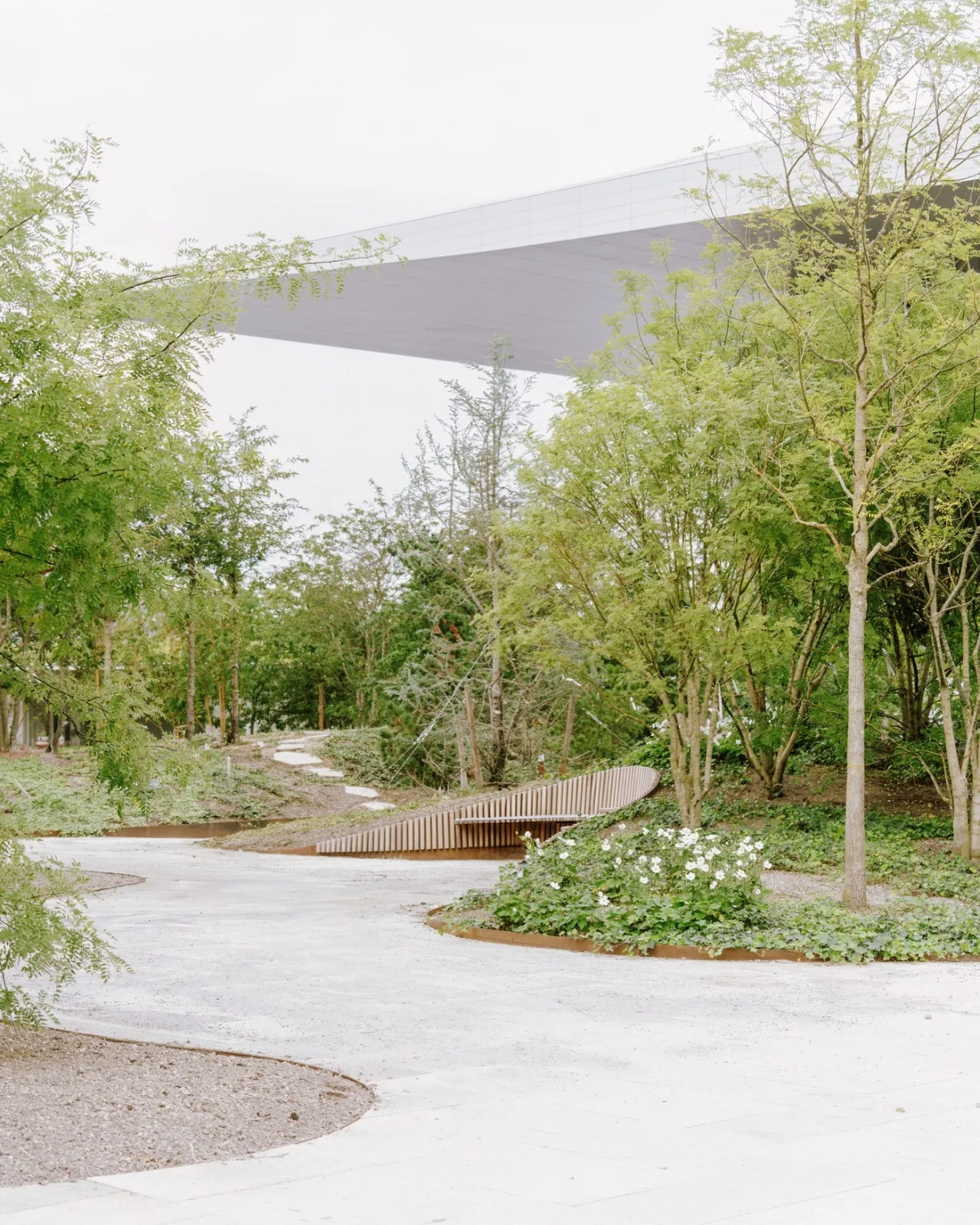
Visitors will discover delightful surprises throughout the park, including fountains, lotus ponds, and reflective pools. Water droplets softly tapping the surface create a calming rhythm, while winding paths and organically shaped flower beds seamlessly blend the park’s diverse elements into a harmonious whole.
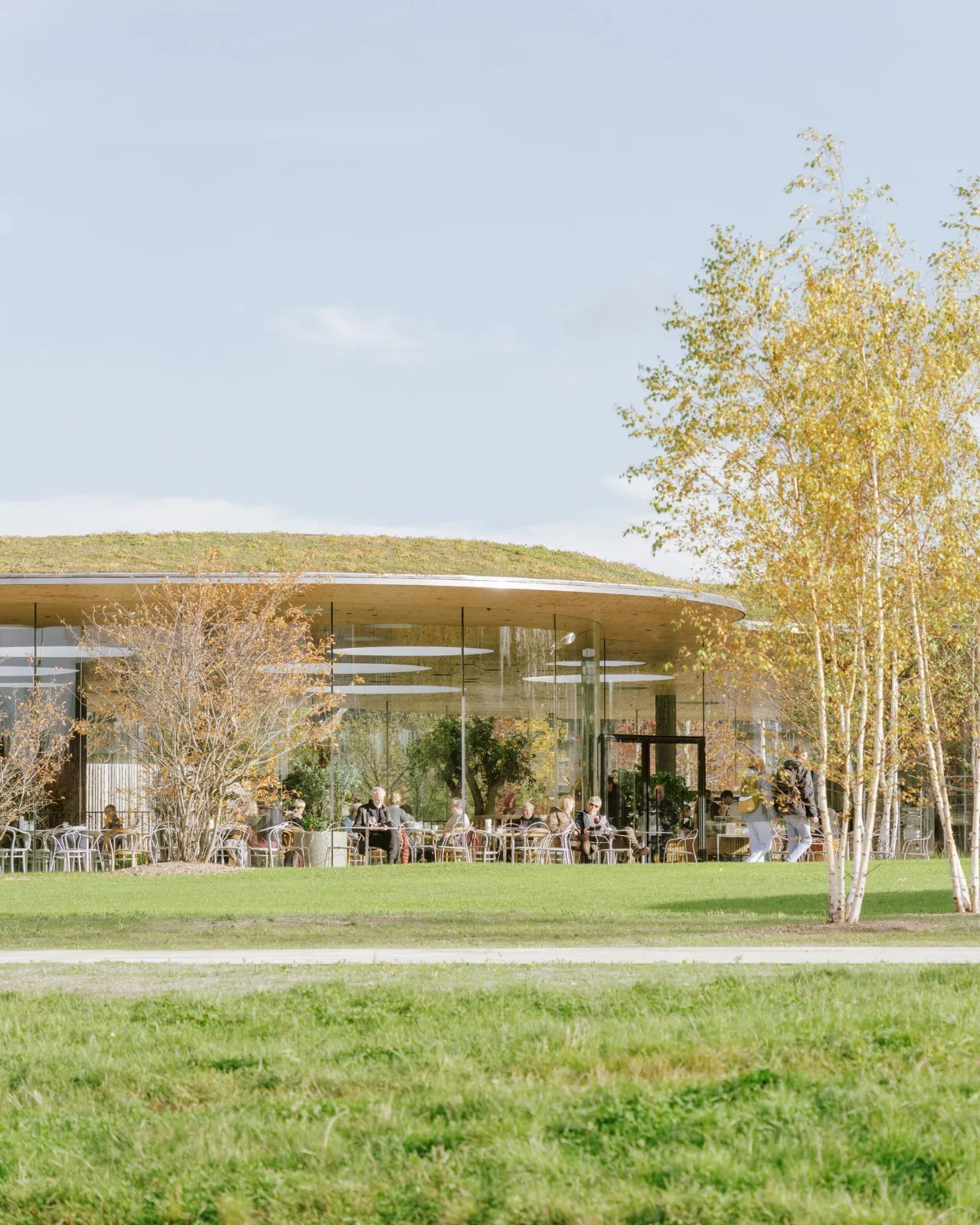
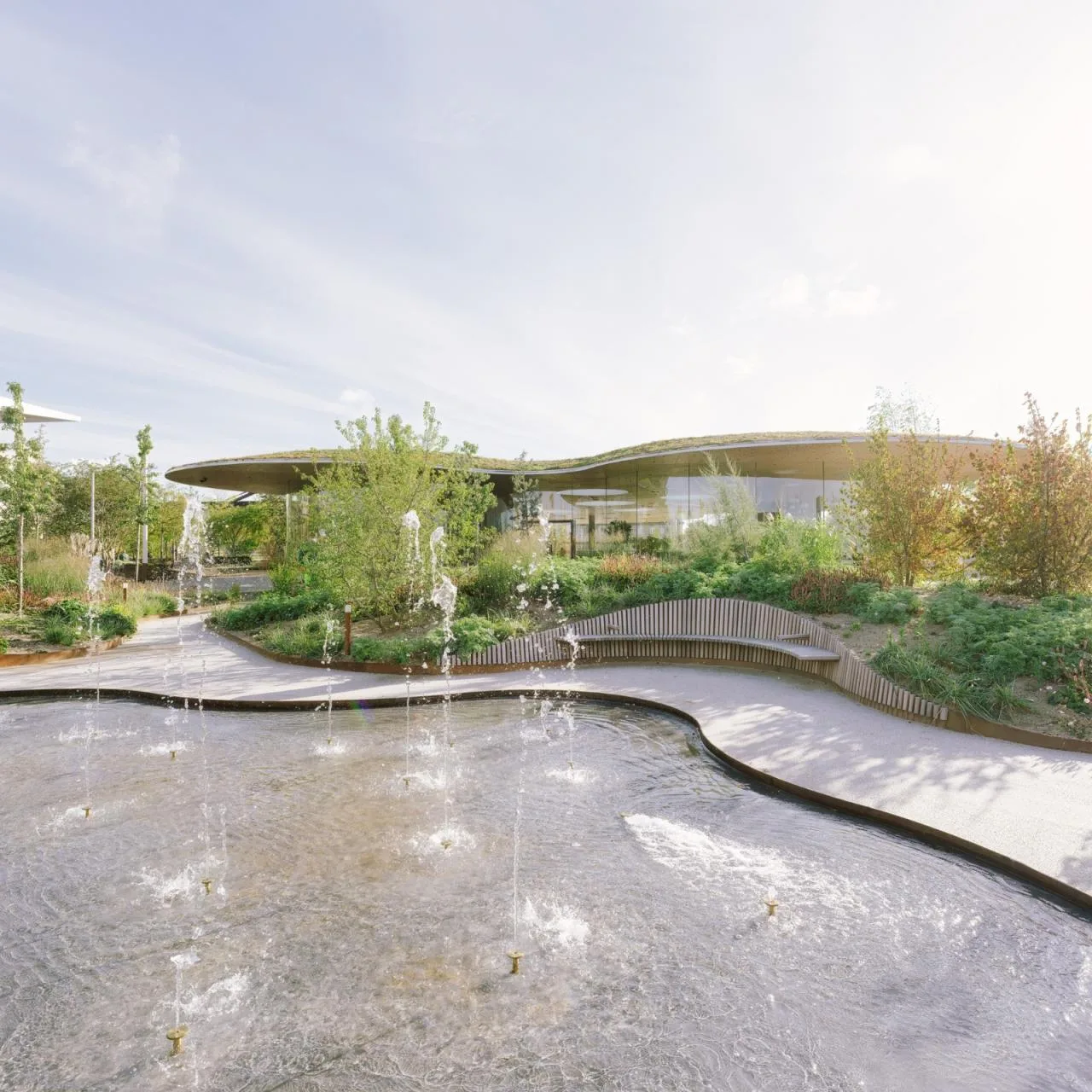
This year-round oasis serves as a vibrant stage for a variety of lifestyles. The park is home to 628 trees, 80,000 perennial herbs and shrubs, and 40,000 bulbous plants sourced globally. Altogether, 223 unique native and exotic species create a dynamic, ever-changing backdrop.
Seasonal transformations bring the park to life: colorful blooms in spring, lush greenery in summer, fiery reds and yellows in autumn, and evergreen pines with frozen ponds in winter. The diverse plant sizes also provide abundant food and habitat for local birds and insects.
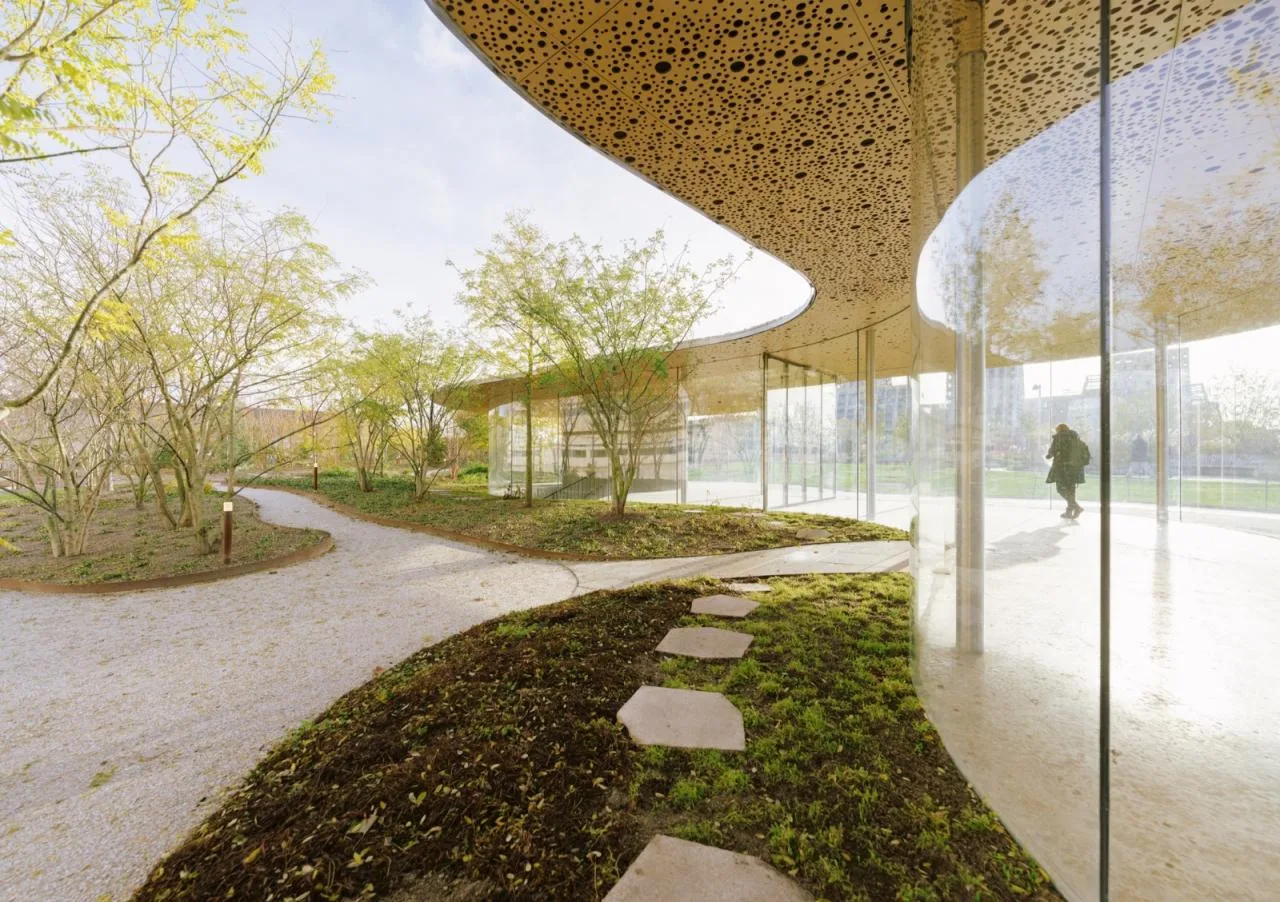
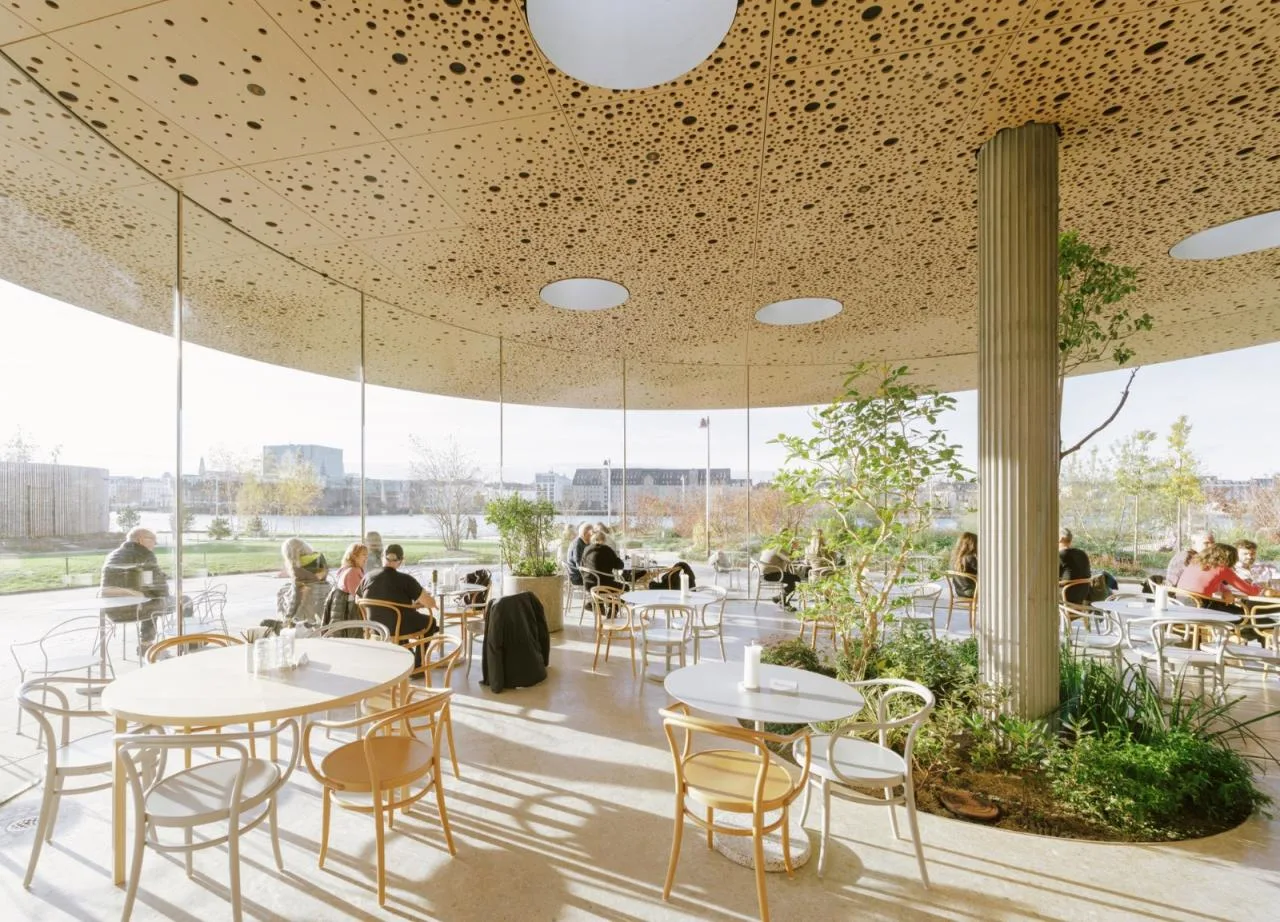
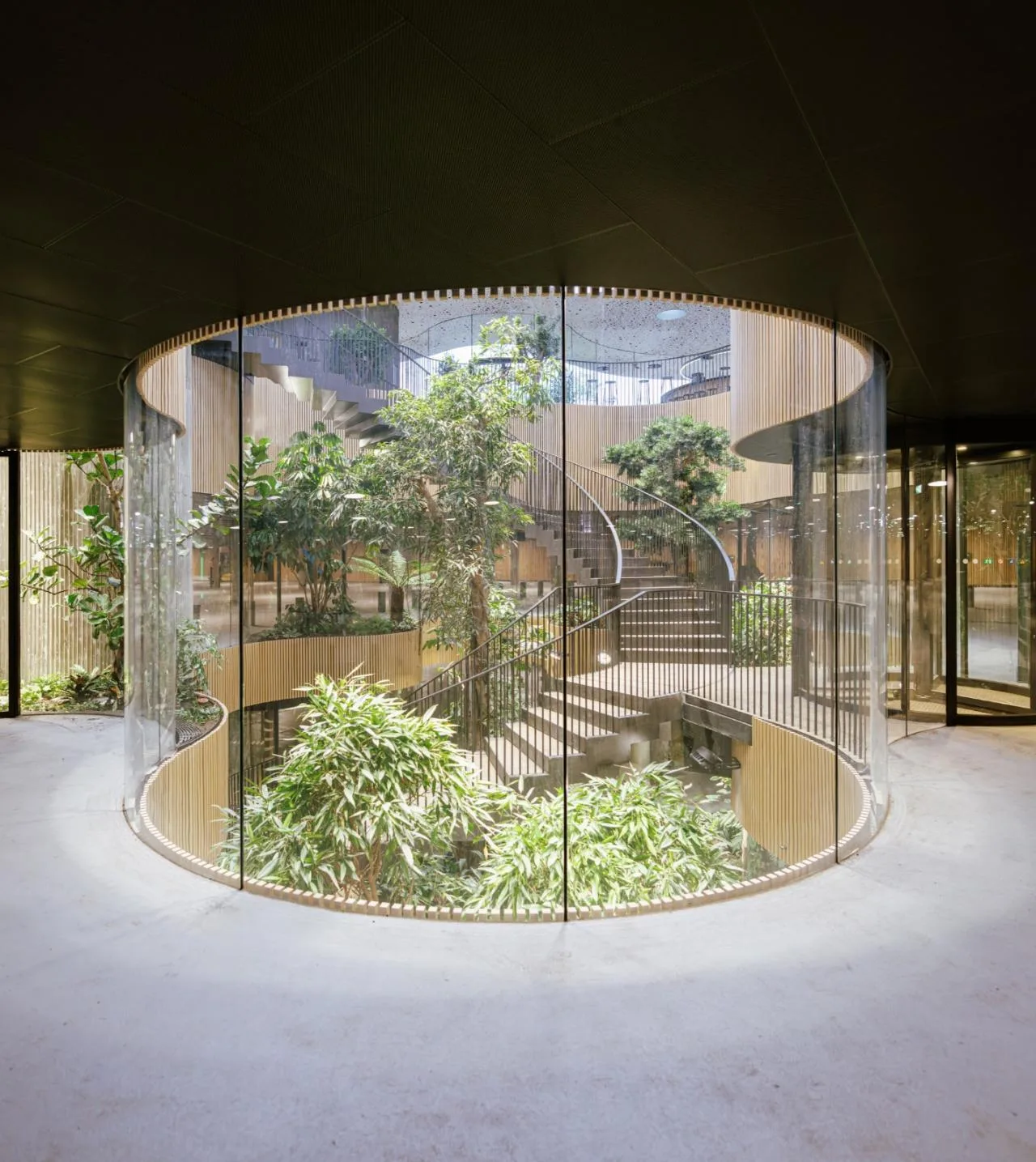
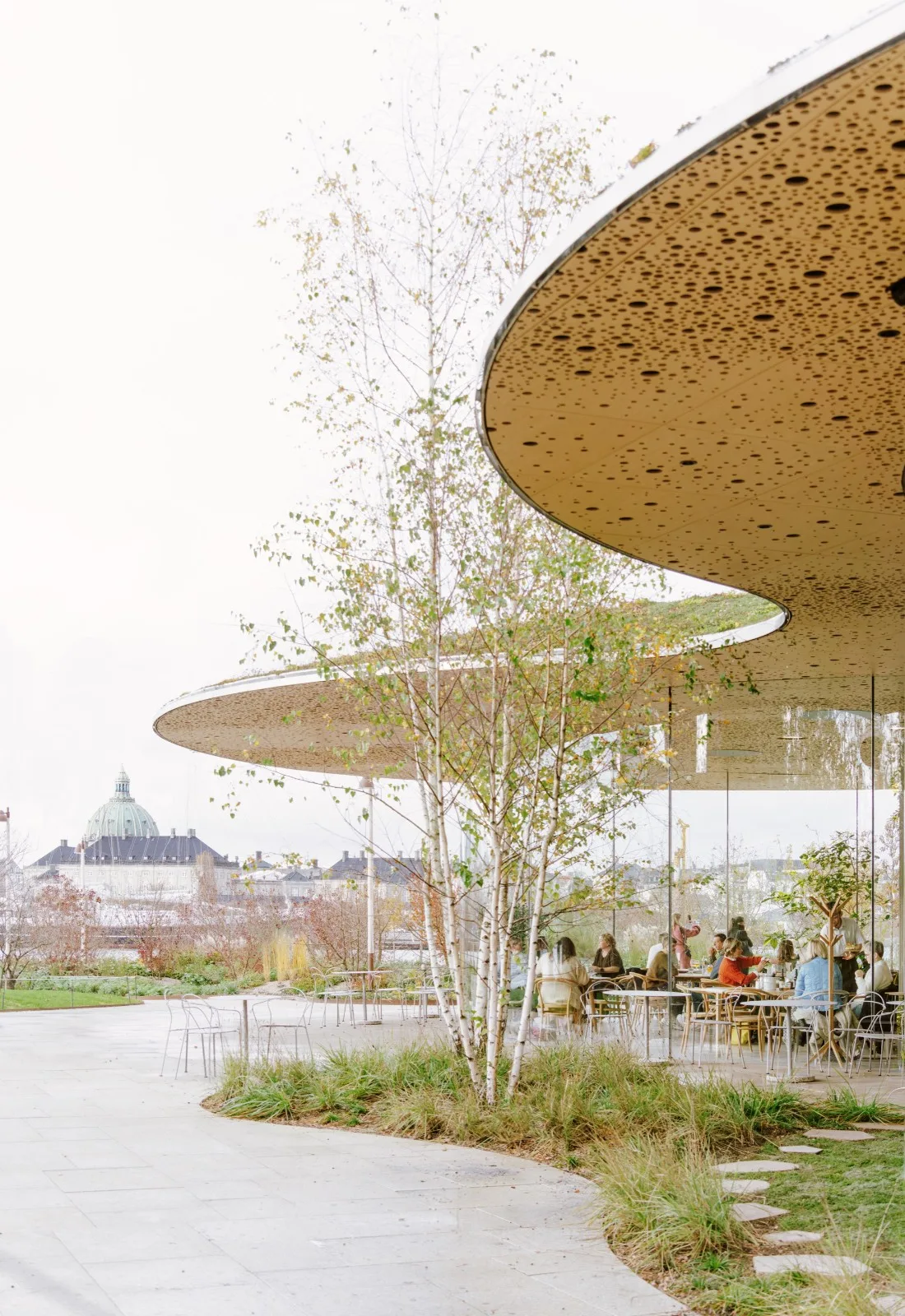
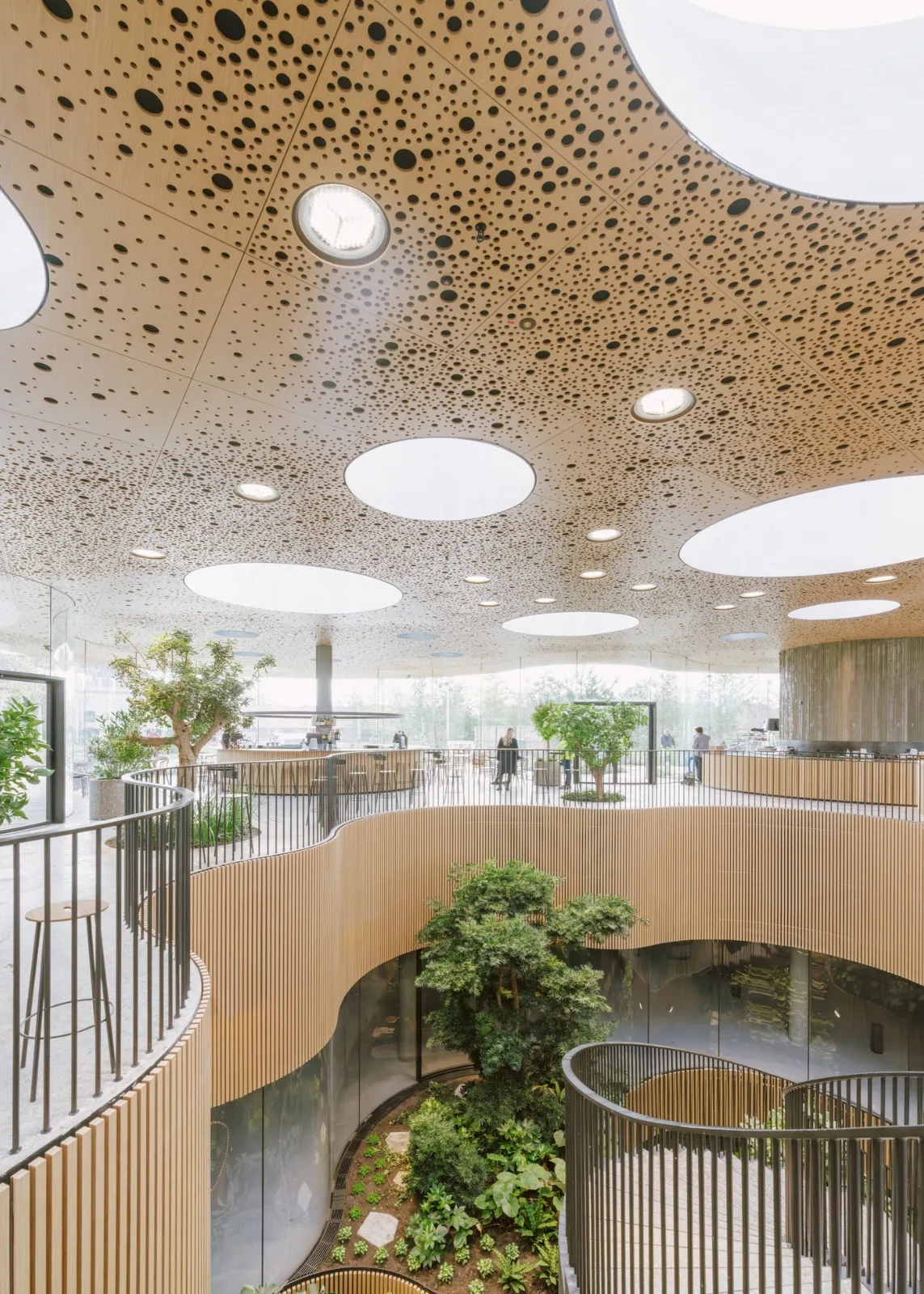
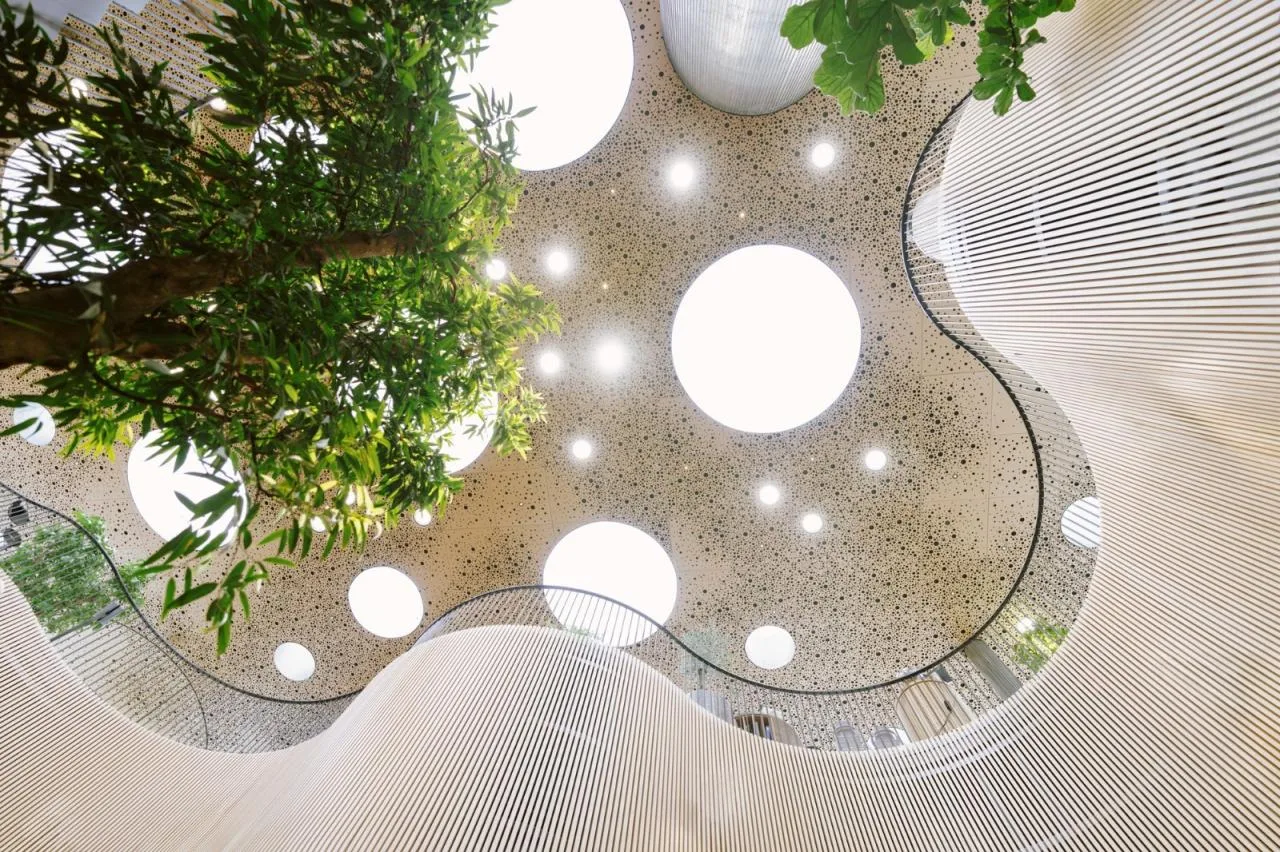
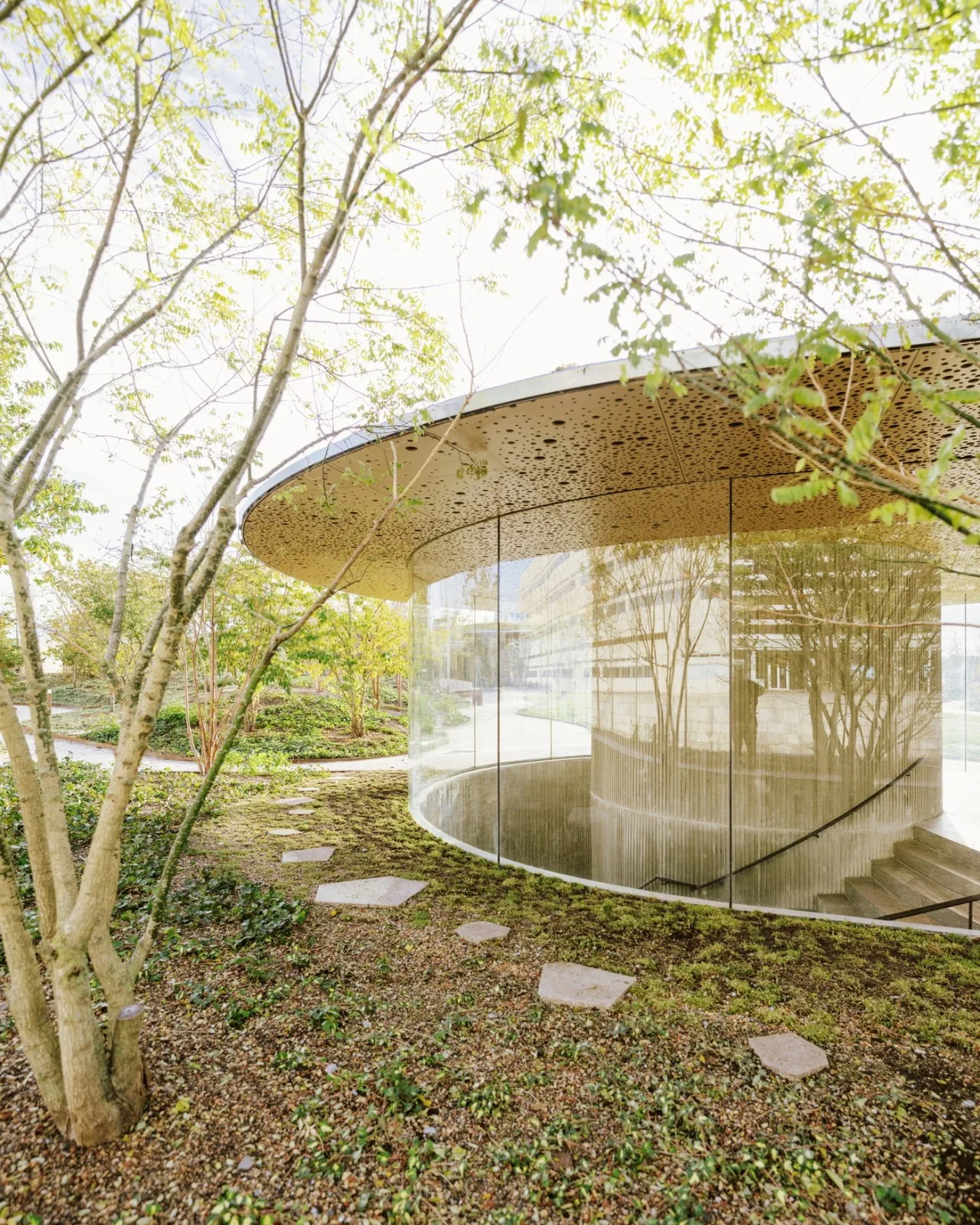
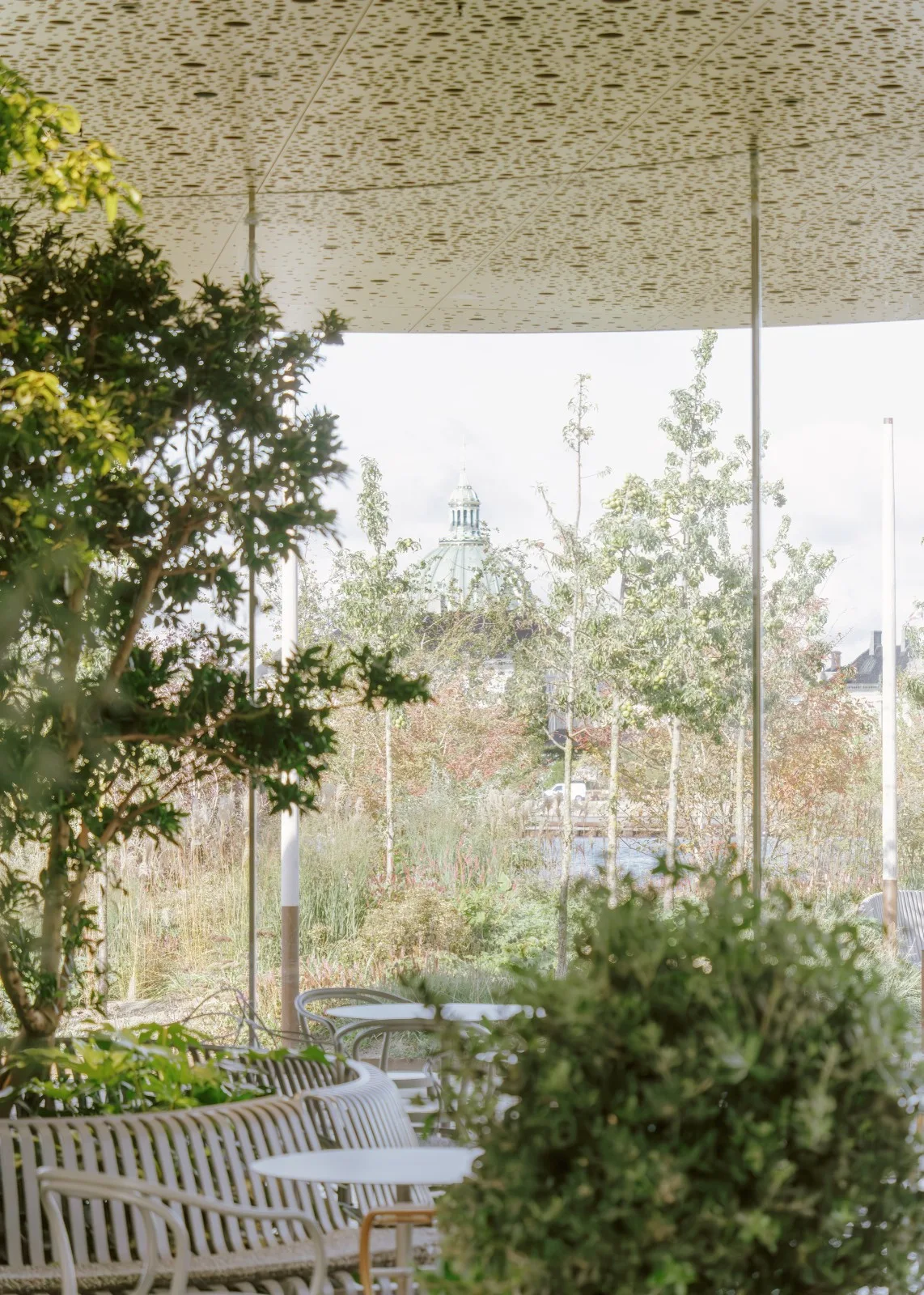
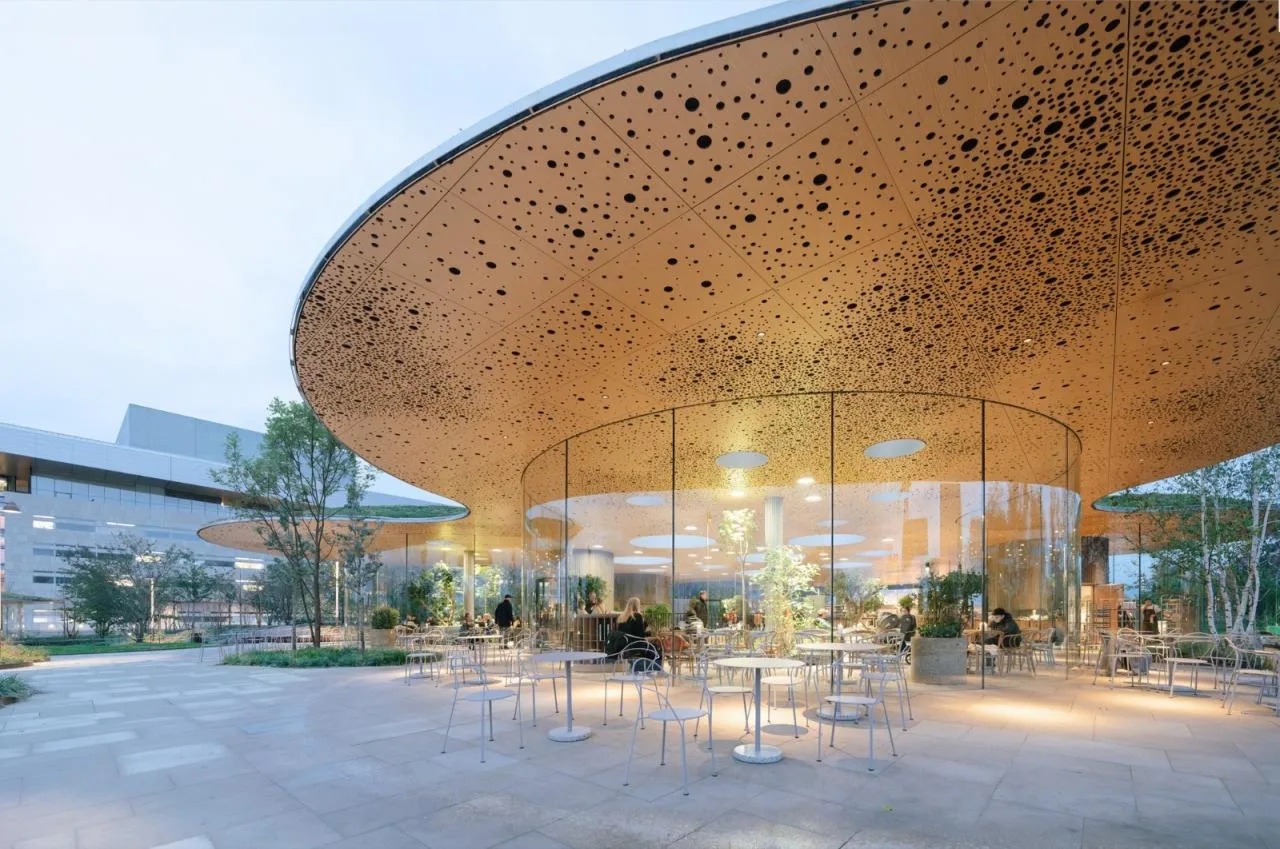
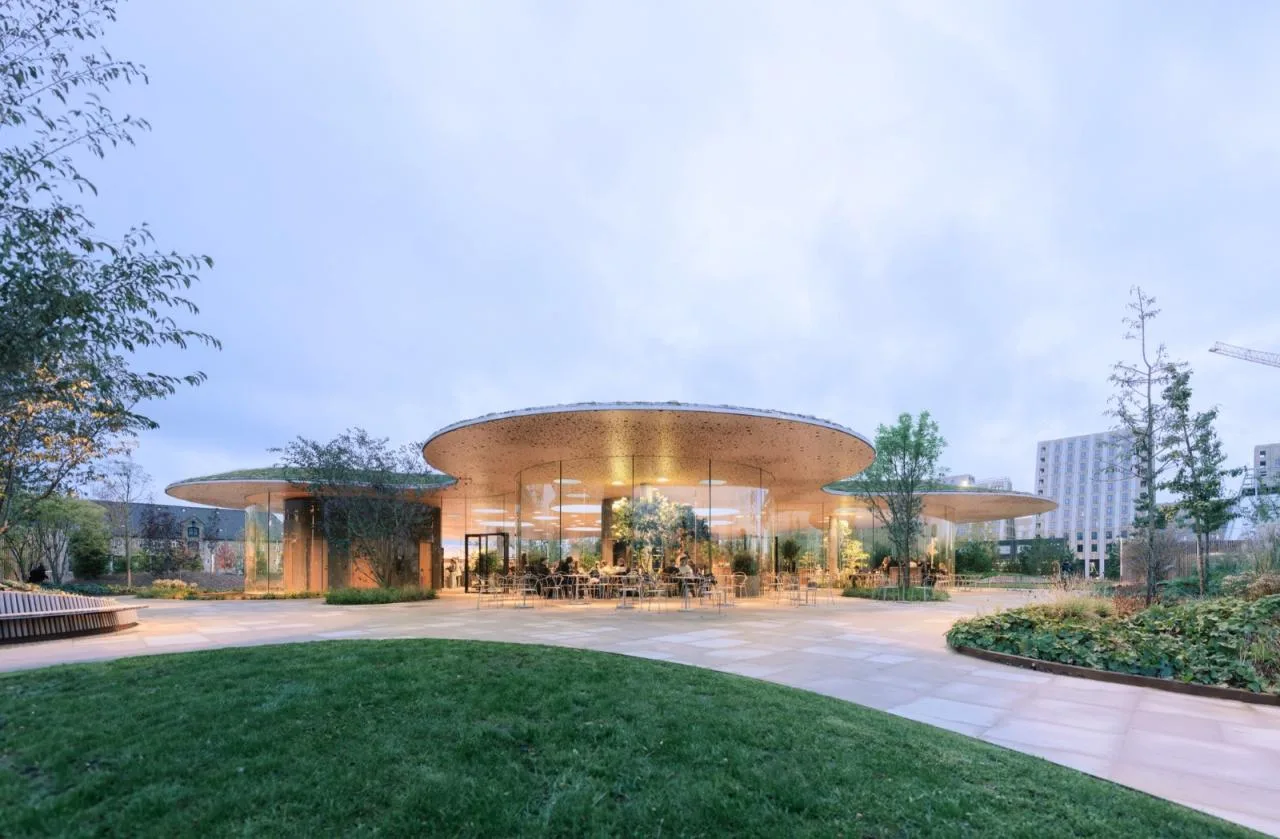
At the heart of the park lies a central greenhouse with a café that opens onto the underground parking lot. The greenhouse features an organic glass structure with a suspended roof, designed to surprise and delight visitors as they explore the lush surroundings.
The greenhouse and café help keep Opera House Park lively throughout the year, even during Copenhagen’s often bleak winters. Terraced fields inside the greenhouse extend down to the parking level, which accommodates 300 cars. The subtropical biome within the greenhouse also descends vertically, seamlessly connecting the park with the underground space.
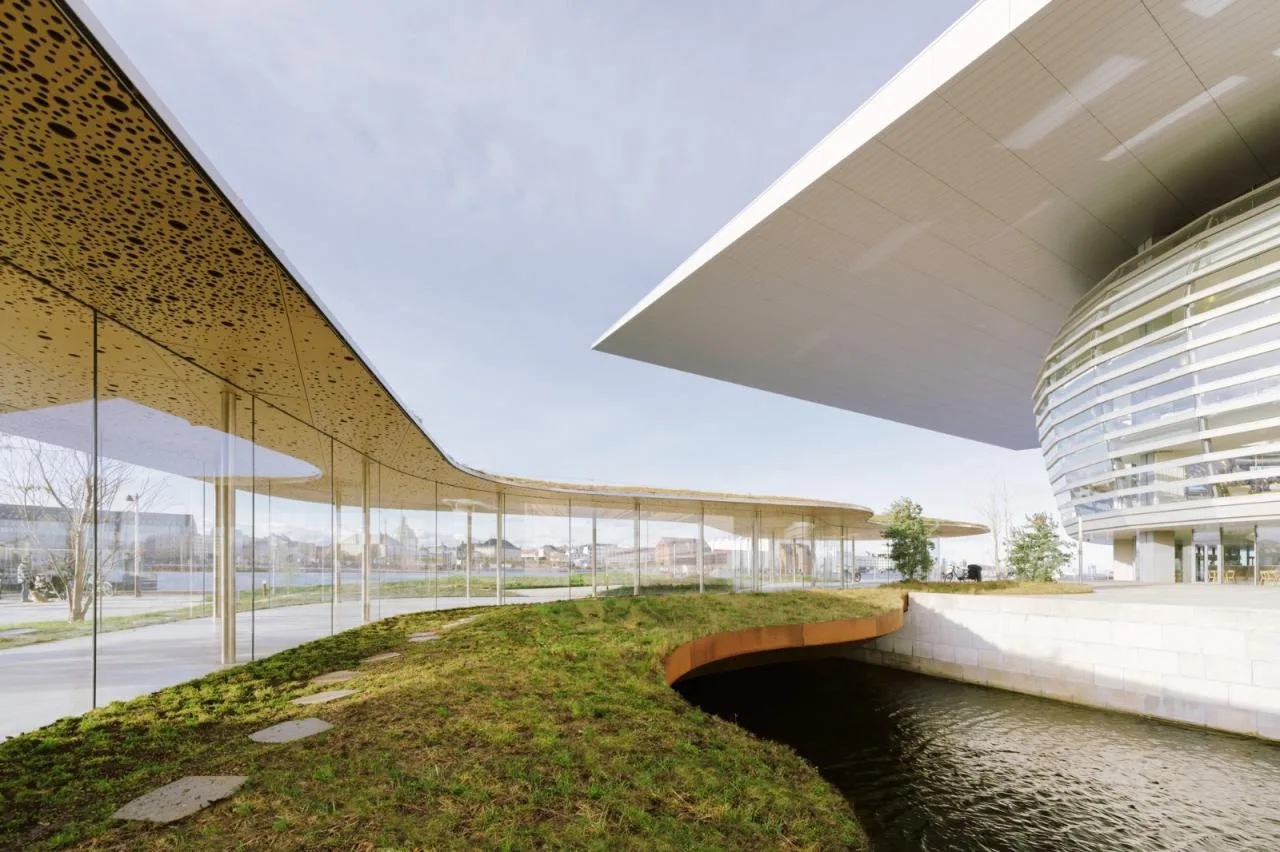
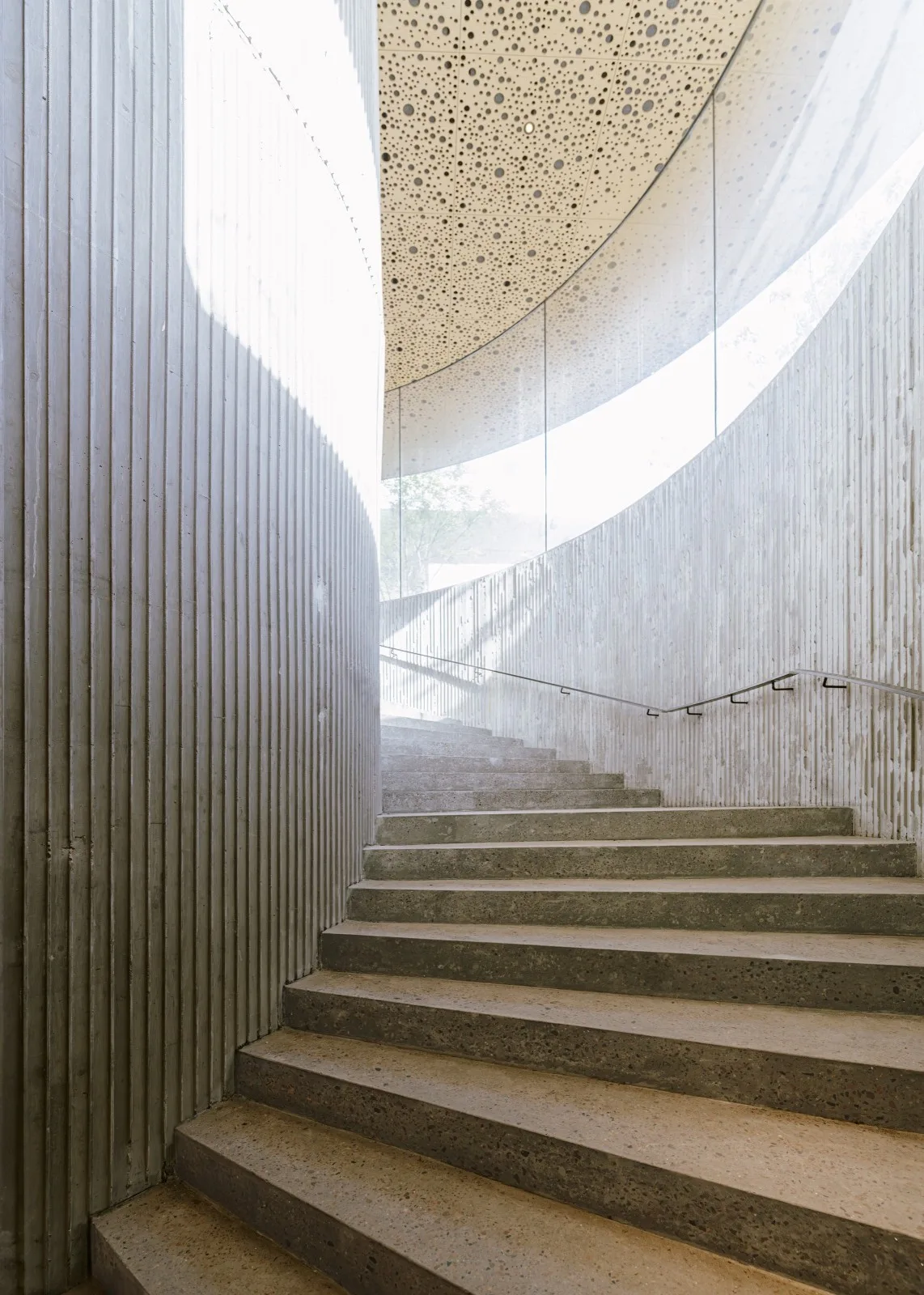
The park’s roof connects directly to the adjacent Royal Danish Opera House via a covered pedestrian walkway on the landscape bridge. This ensures visitors can move between the parking facilities and the opera house comfortably, regardless of the weather.
The walkway’s curved glass and floating roof echo the architectural style of the greenhouse, enhancing the landscape design along its winding path. As one of three bridges leading to the island, this connection spans the natural harbor canal, fully integrating the landscape with the surrounding architecture.
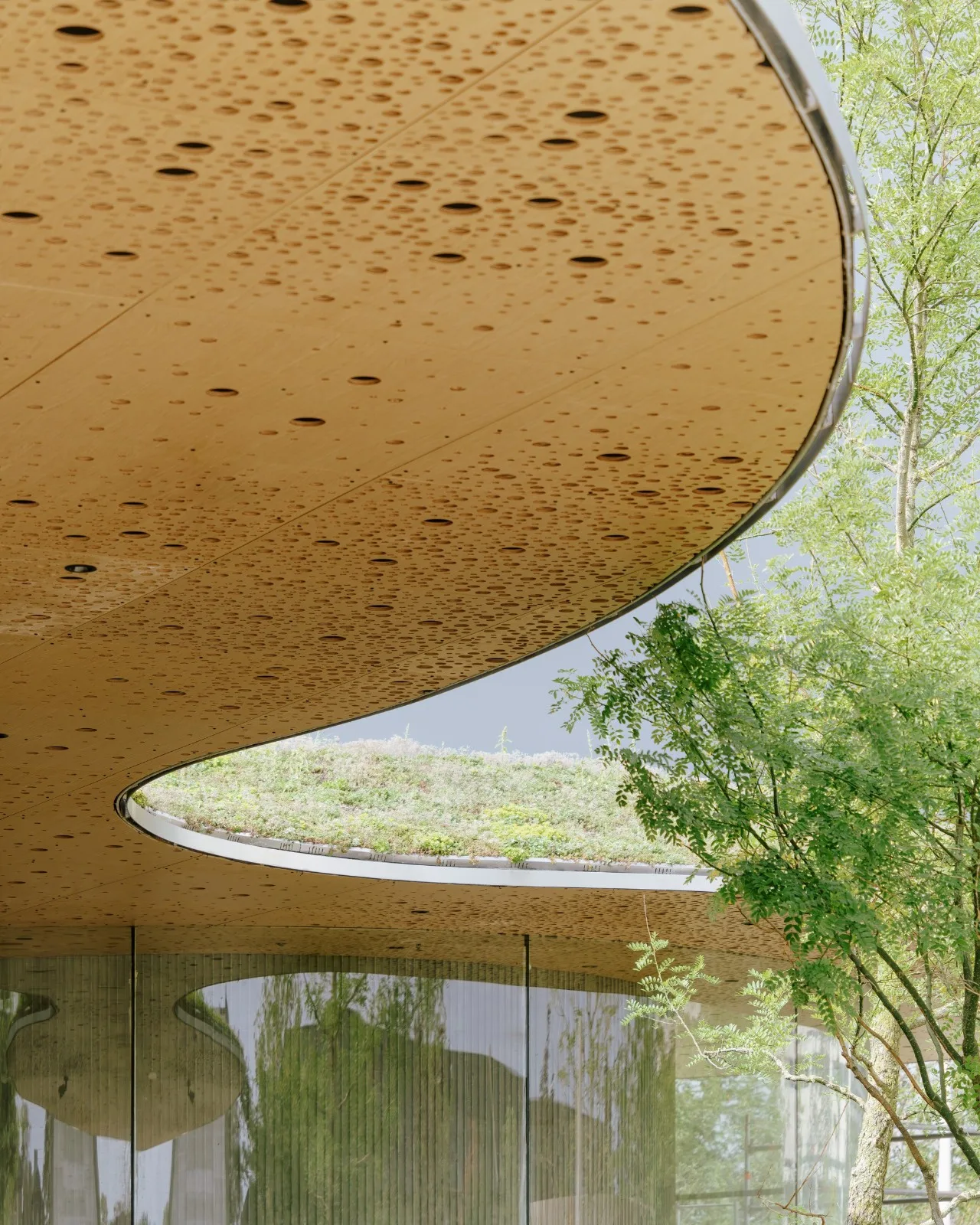
Rainwater and sunlight play key roles in sustaining the park’s ecosystem. Rainwater collected from the opera house roof is stored in an underground reservoir used to irrigate the greenhouse. The sidewalks are paved with permeable gravel, allowing excess rainwater to be captured in tanks for infiltration and evaporation.
The green roofs of both the landscape bridge and greenhouse collect rainwater, delaying runoff while providing a food source for park wildlife. Solar panels on the opera house roof supply electricity to the underground parking, park facilities, and greenhouse.
Materials chosen for the park are durable, fully recyclable, and designed to withstand strong winds from the harbor and sea. The dense vegetation reduces wind turbulence, enhancing visitor comfort. Additionally, the elevated terrain protects the island from flooding during storms or rapid water level rises in the harbor.
Project Drawings
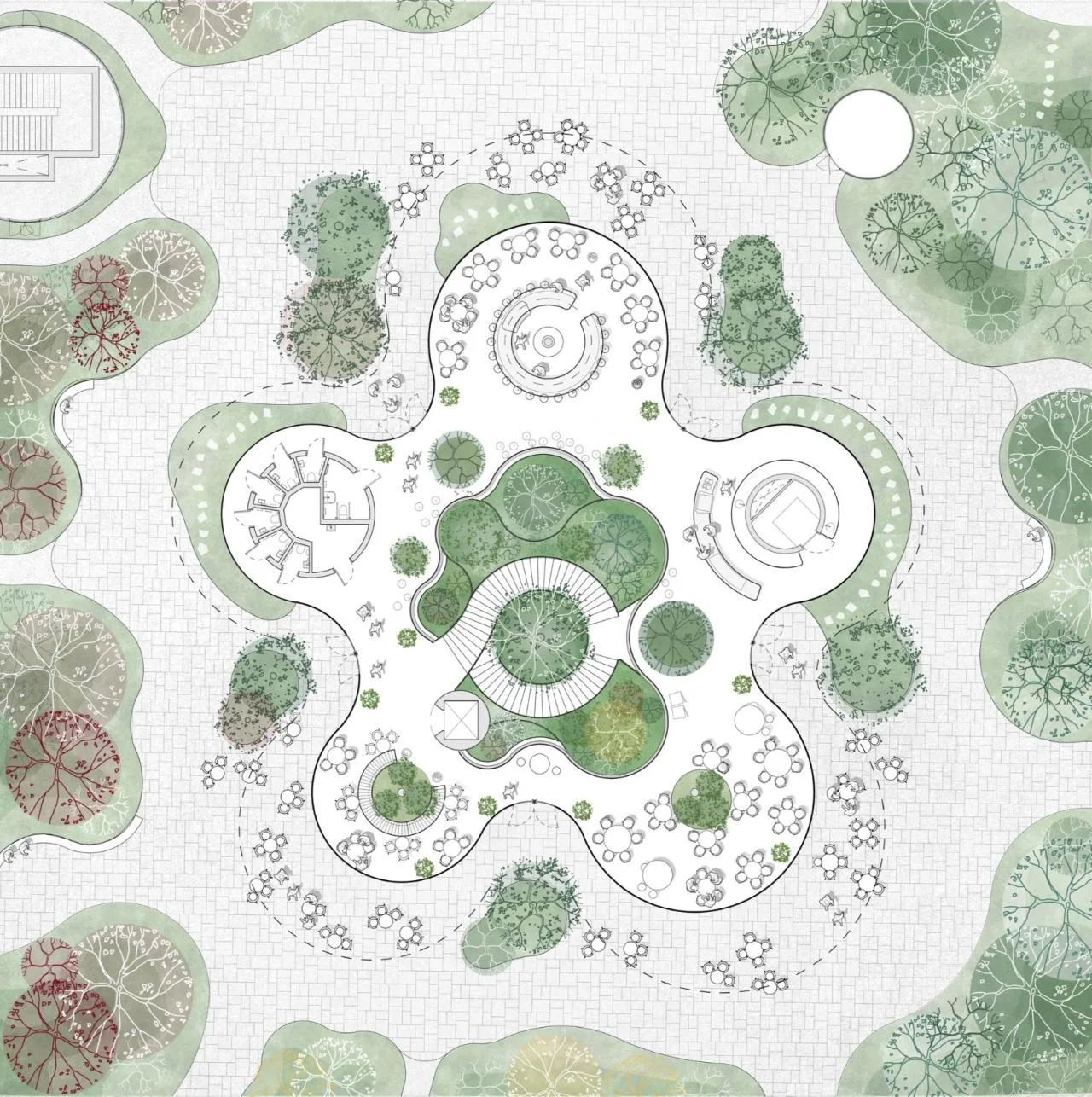
△ Plan view
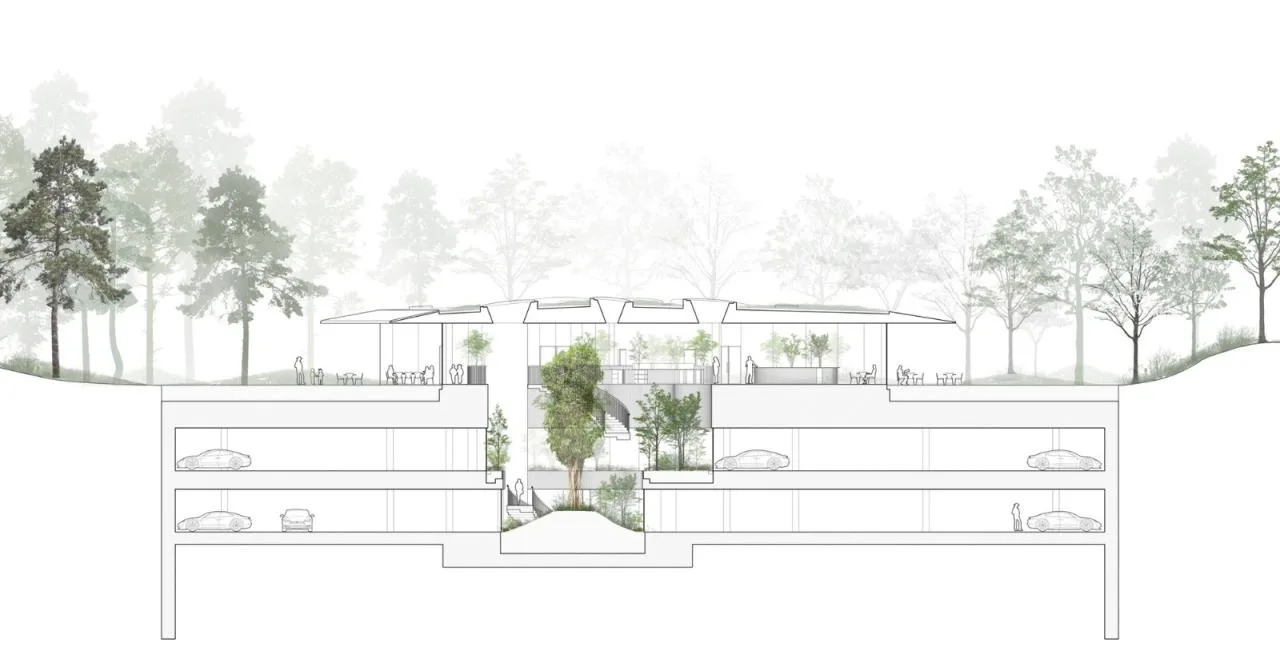
△ Section diagram
Project Information
Architect: Cobe
Area: 21,500 m²
Year: 2023
Photographer: Francisco Tirado
Location: Copenhagen, Denmark












Must log in before commenting!
Sign Up