
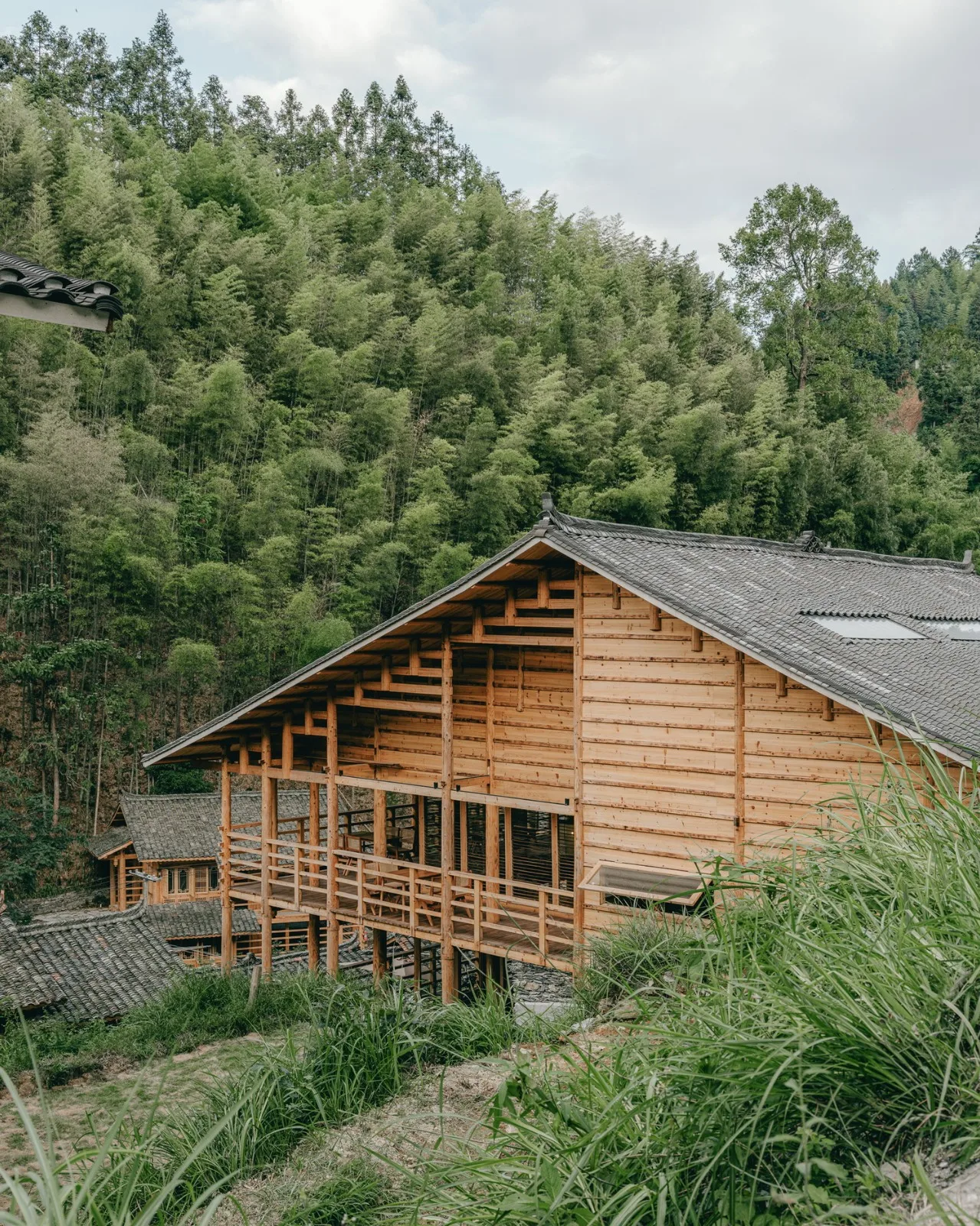
The site is situated on a terraced field featuring three stepped levels, with a maximum elevation difference of approximately 3 meters. Covering an area of 4,000 square meters, the plot is enveloped by stunning natural scenery. To the southeast of the ring road lies a peaceful bamboo forest, while a dense forest borders the northwest side. A winding rural path splits here, branching both upward and downward. One path heads northeast toward the mountains, leading to the villagers’ orchards and farmland; the other descends and merges into a section of the ring road.
Located at the edge of the village, the site is physically separated from the main residential area. Across the river, the forest and bamboo grove face each other, creating a contrasting natural setting, with the plot nestled precisely between these two landscapes.
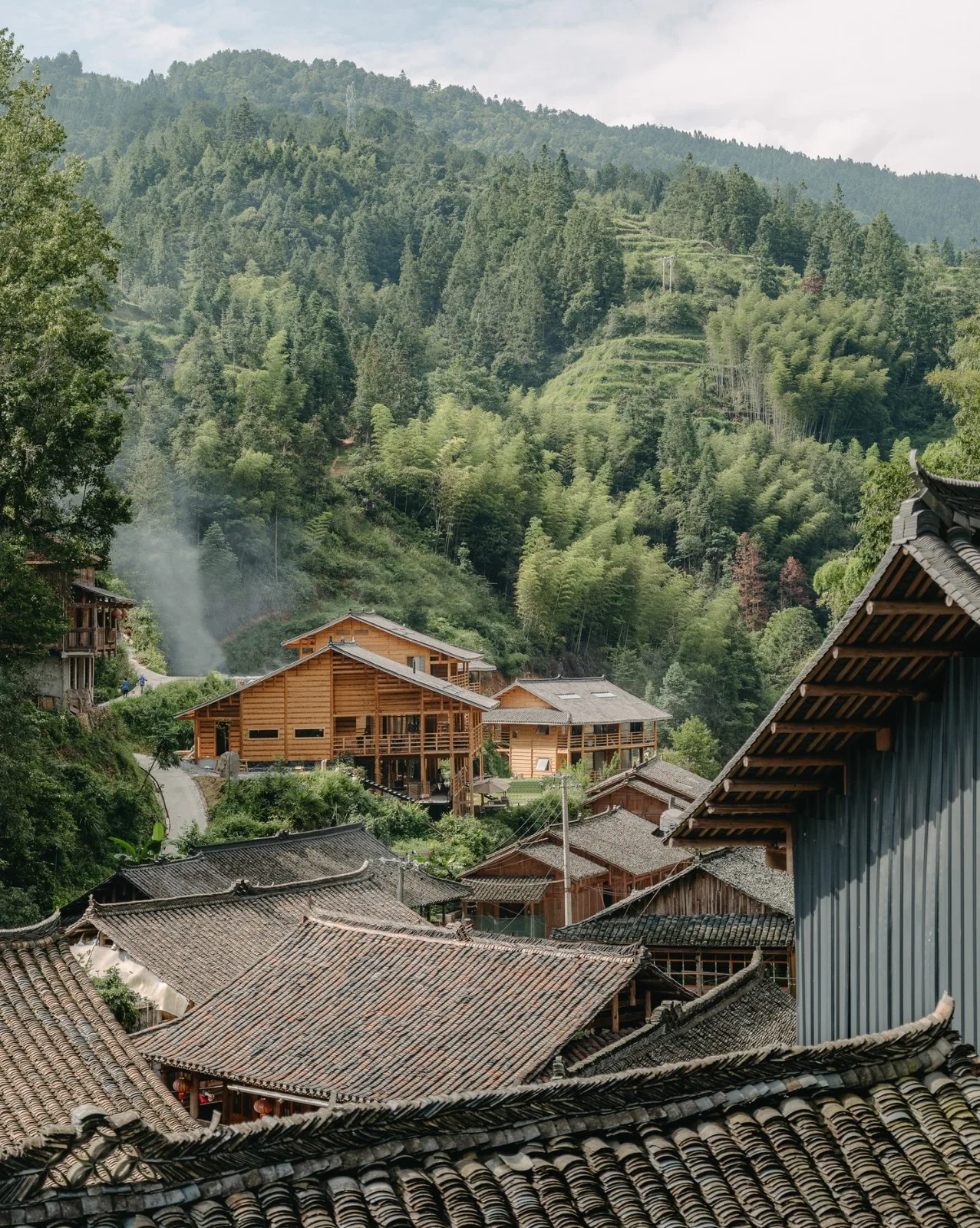
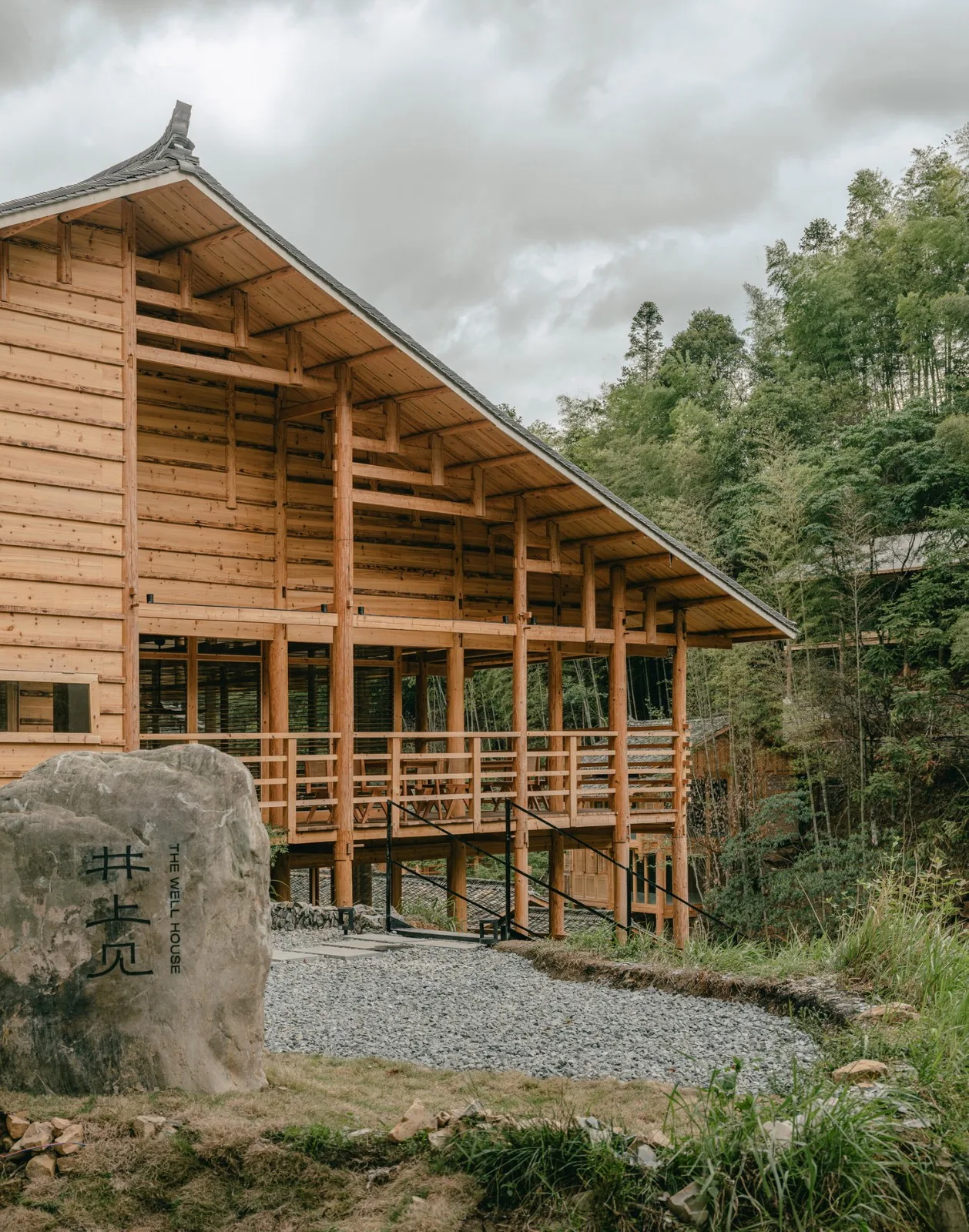
To maximize the integration and appreciation of the surrounding agricultural landscape while crafting a modern residential experience, ATLAS and Ermu Architecture devised a concept that “transplants the natural height variations of terraced fields into the interior space.” Addressing modern living needs with convenience and functionality, they developed a unique spatial form using classical principles of spatial aesthetics—such as density, scale, and light—as a foundation to support the growth of contemporary sustainable tourism in historic villages.
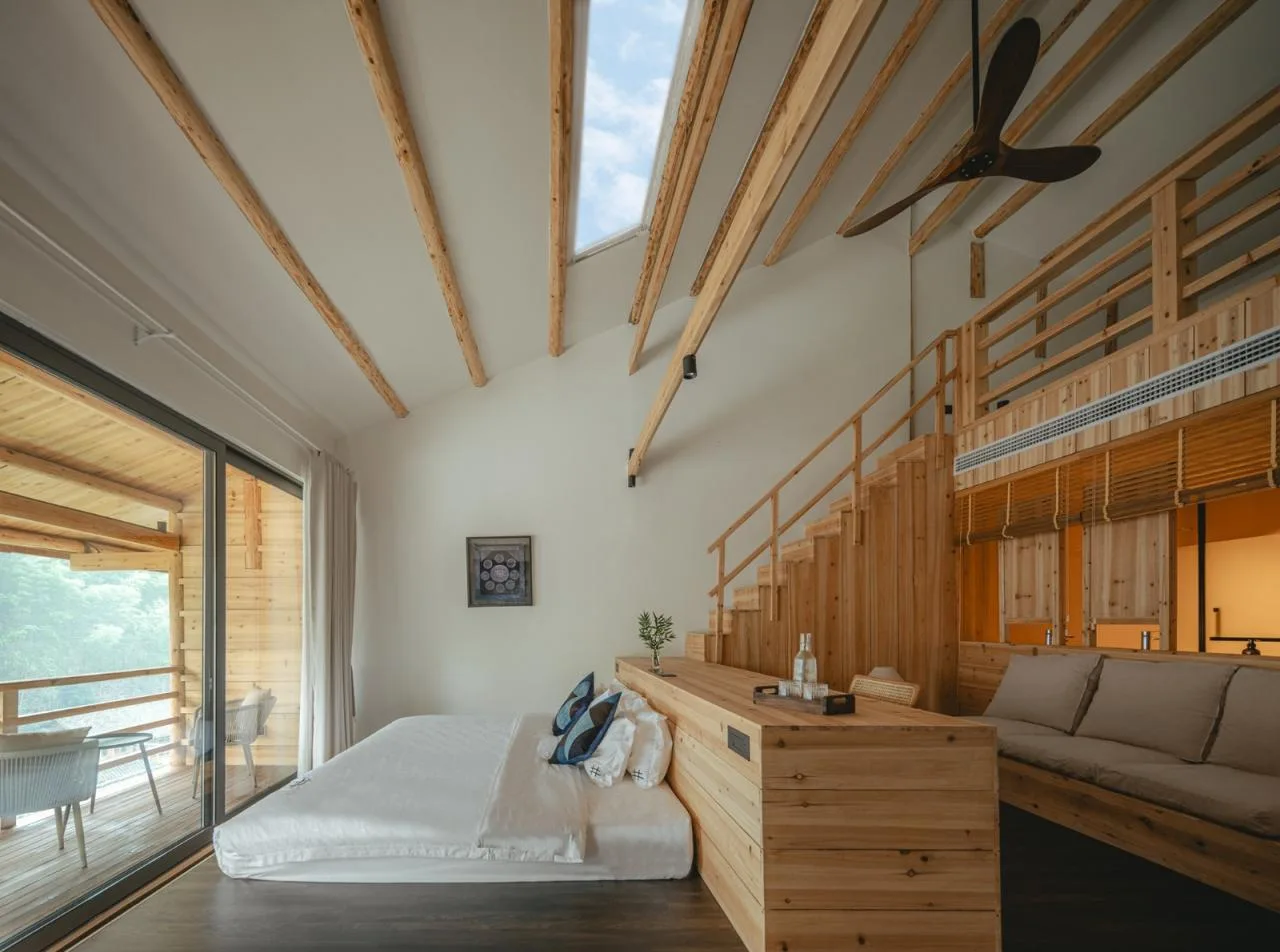
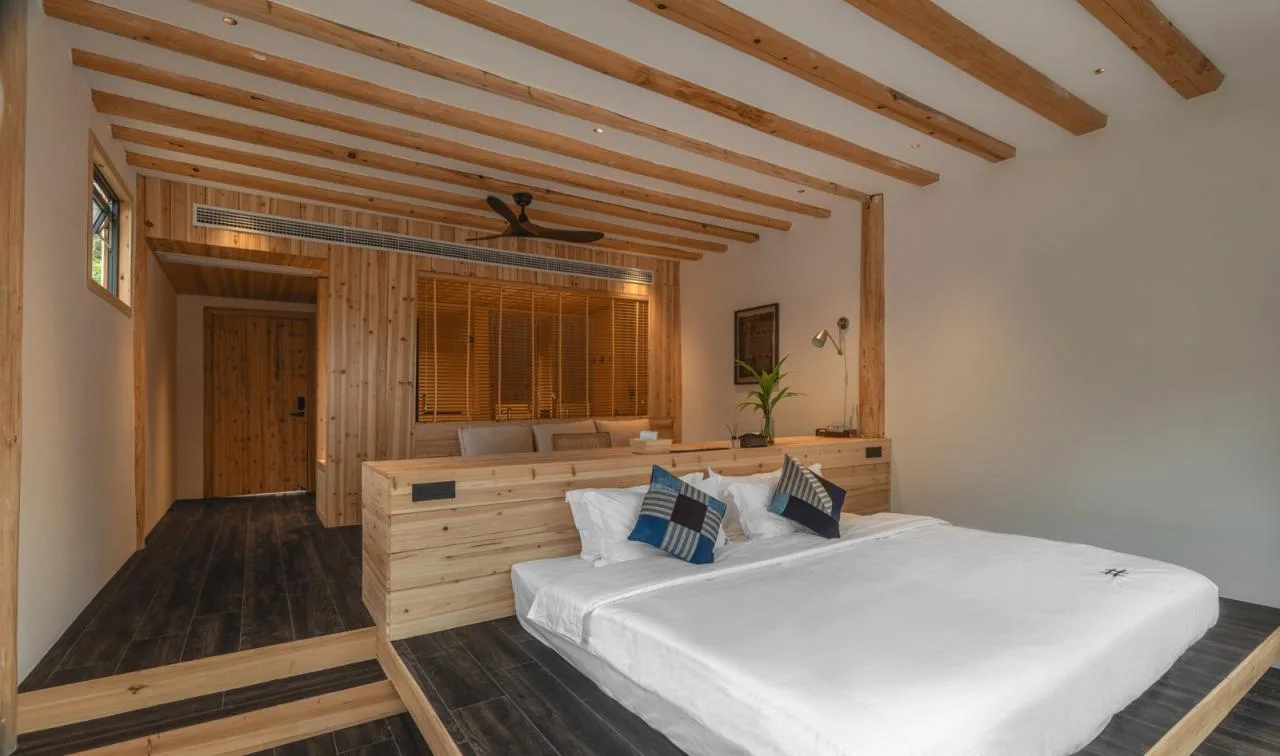
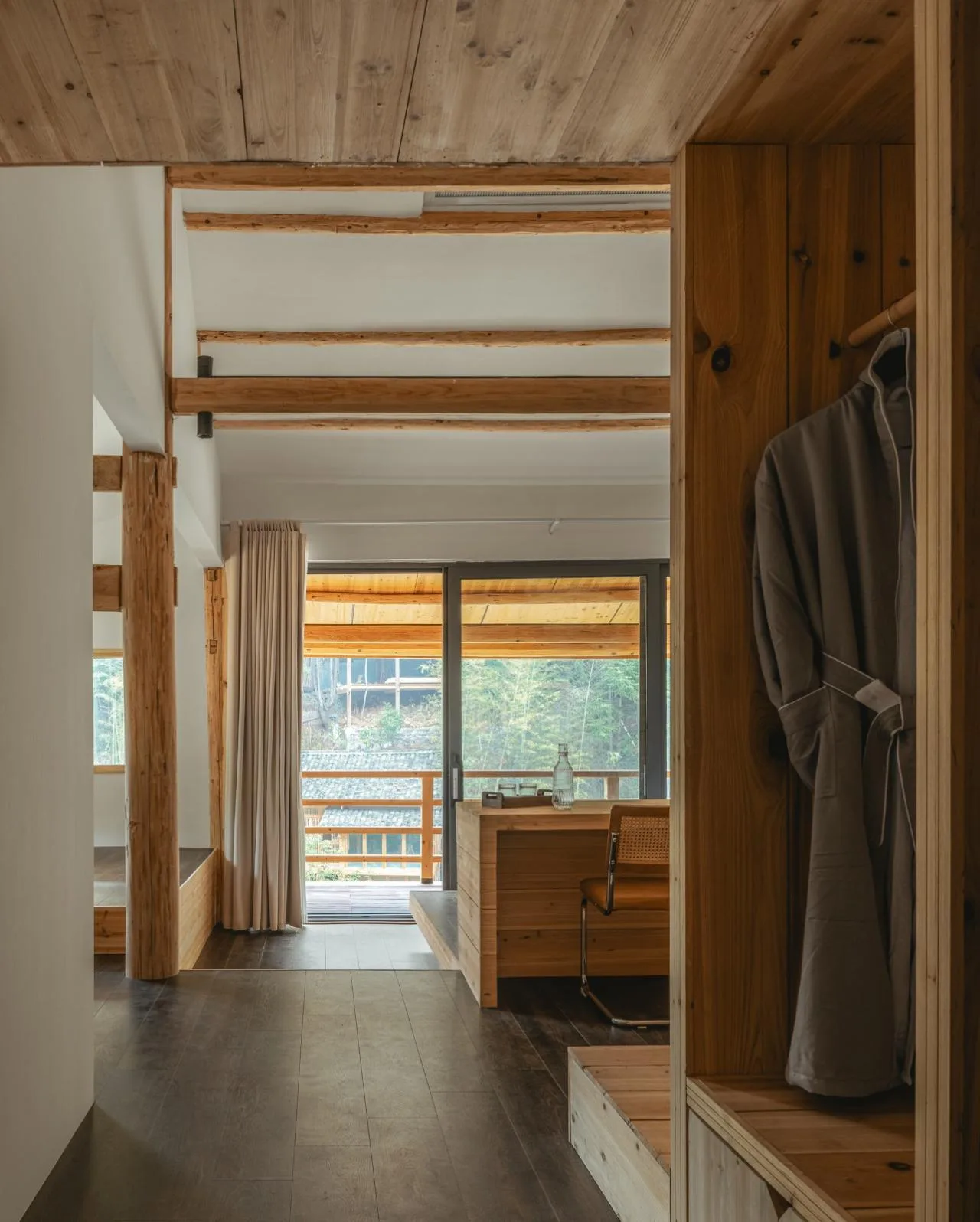
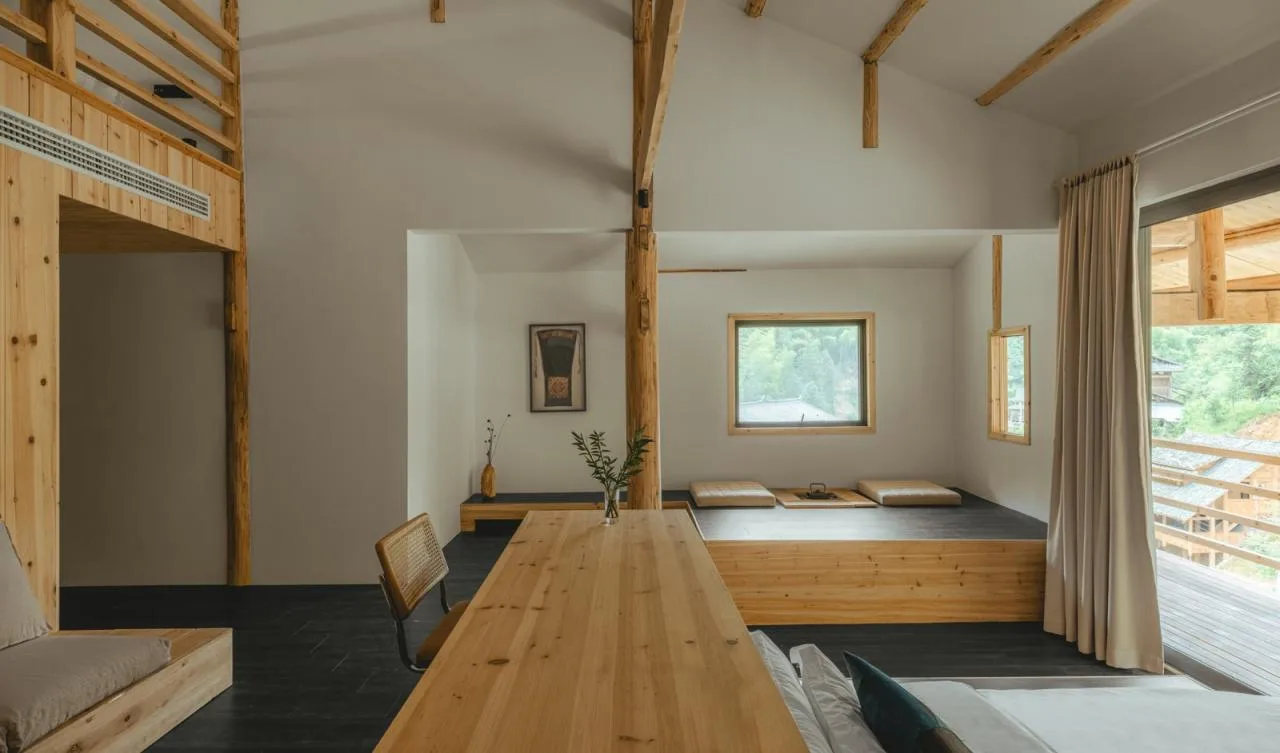
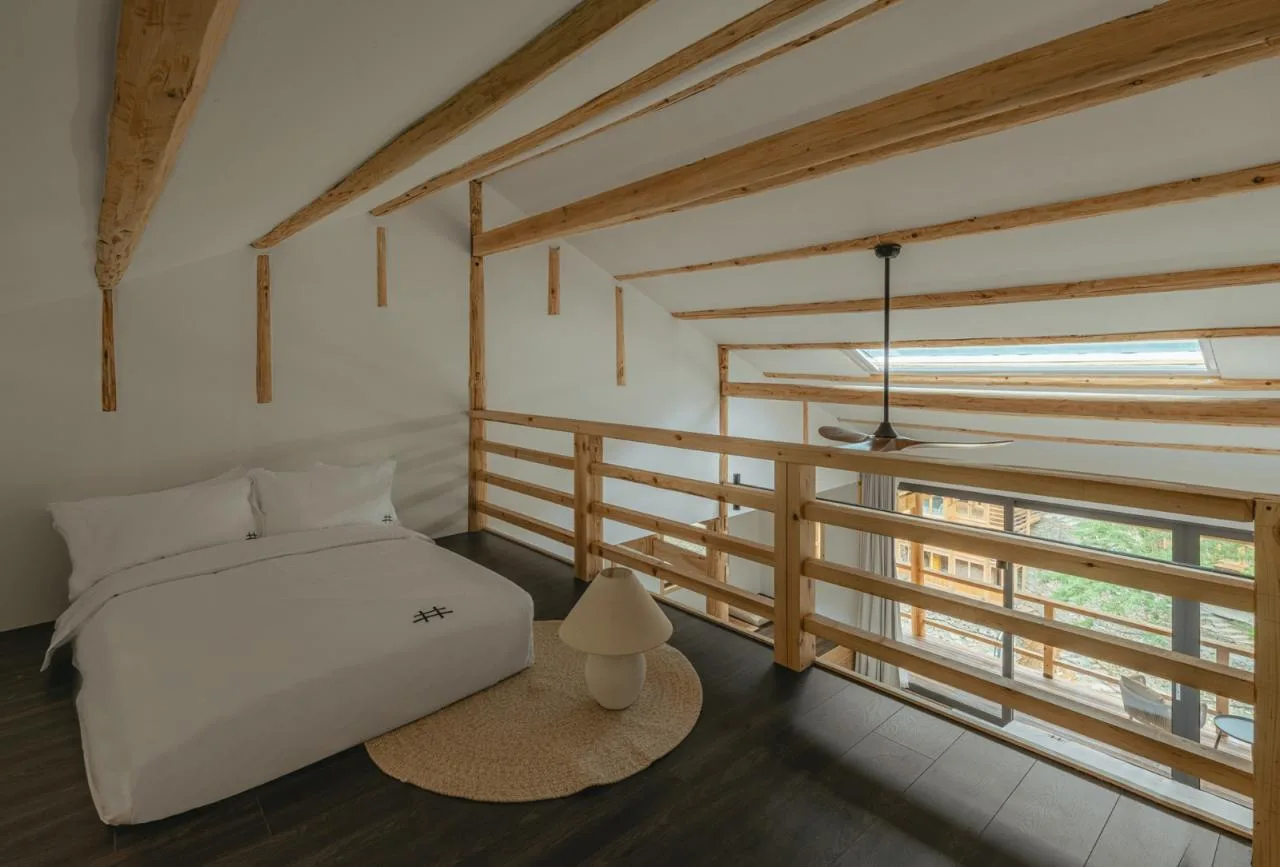
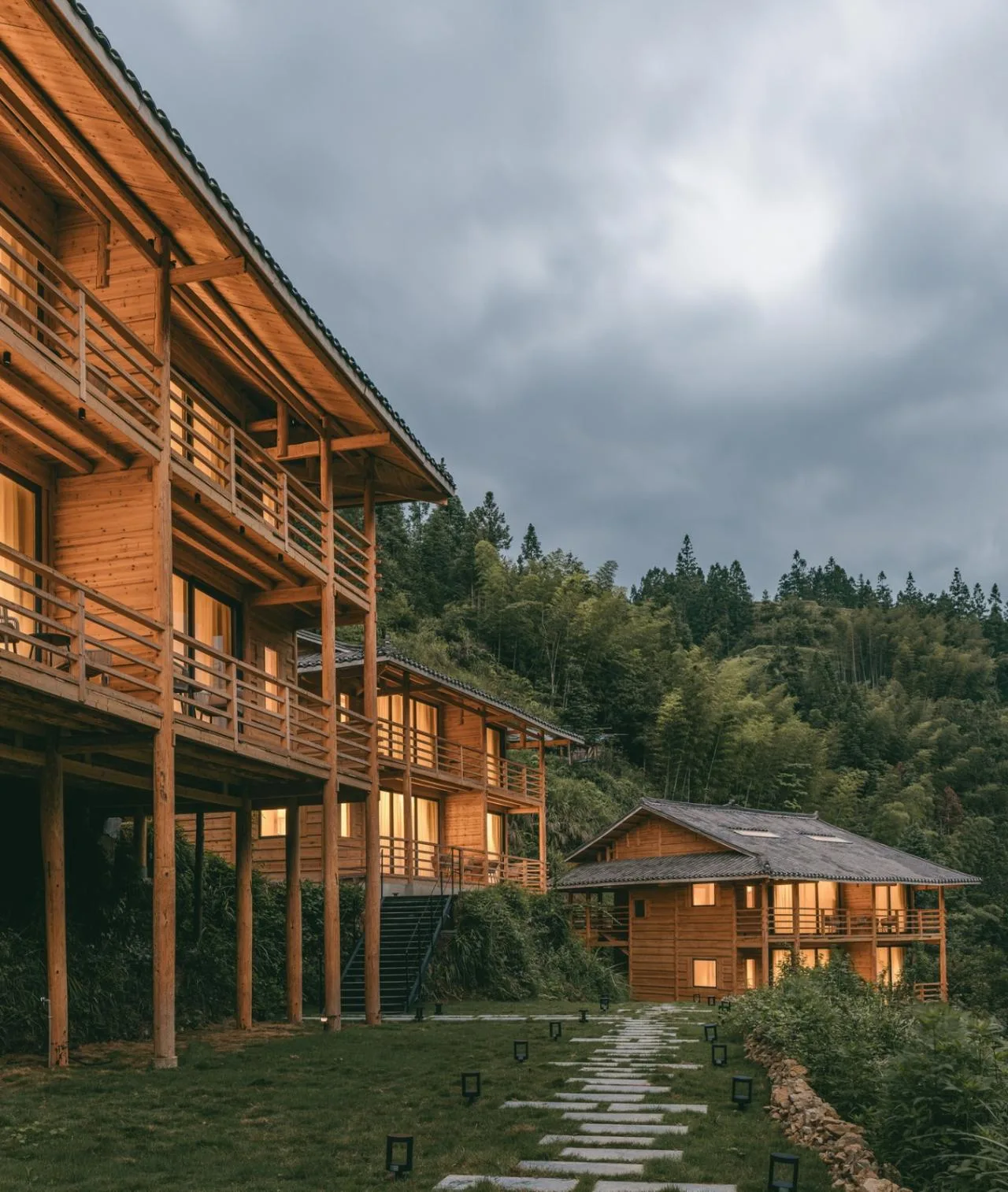
The design features three residential buildings, each with three levels of floor height differences. Starting from the entrance floor, the levels gradually descend toward the sleeping area and balcony. In suites with attic configurations, this terraced approach extends vertically, creating two distinct spatial zones—one above and one below.
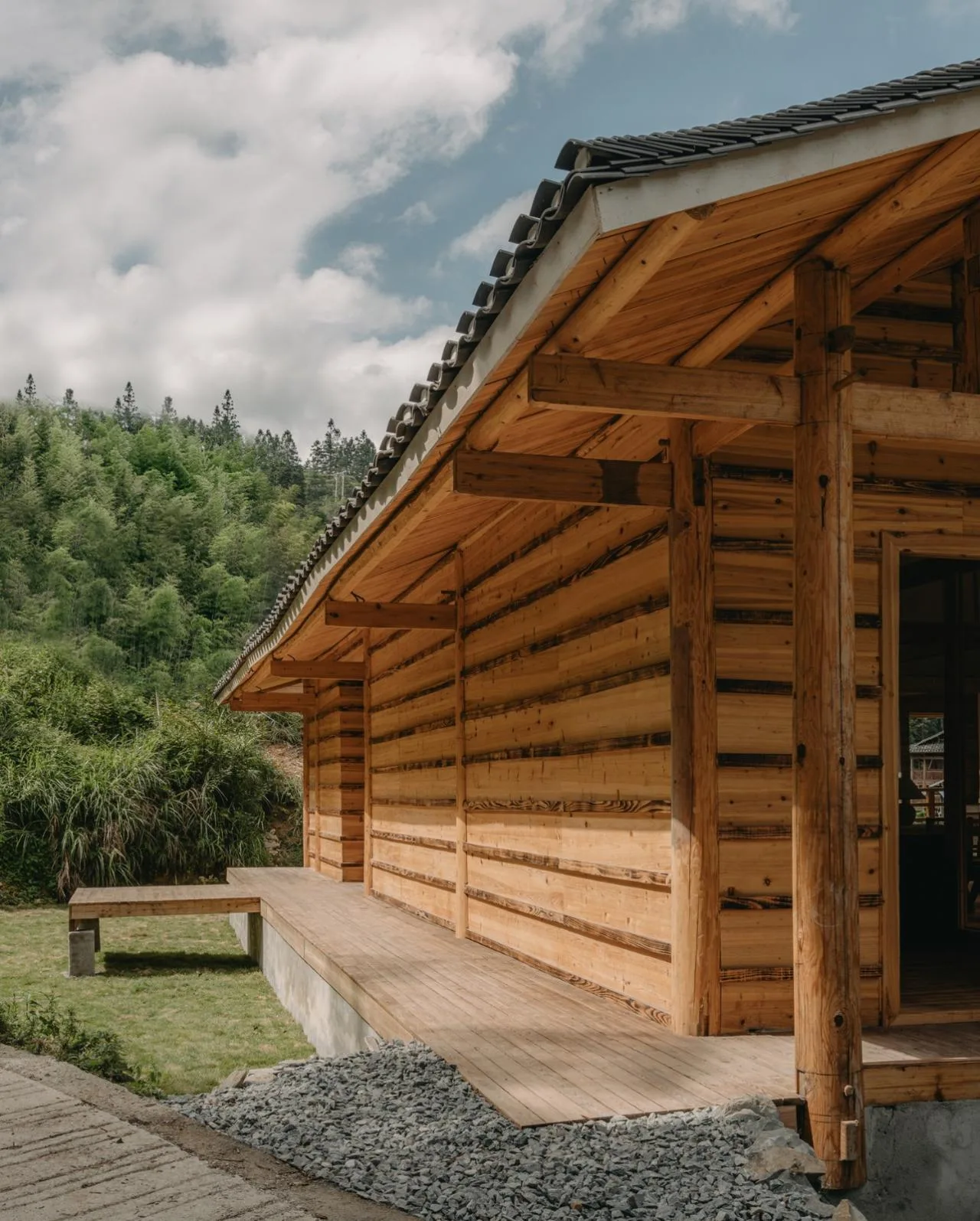
Furniture is integrated as an essential part of the spatial composition, functioning similarly to structural elements like columns, purlins, beams, and floors. Materials such as cedar, consistent with the building’s main wooden structure, were selected to tailor functional modules that fit each room’s actual dimensions. Larger-than-standard pieces—such as a 3.6-meter-long desk, a 2.6-meter-wide washbasin, and a 3.6-meter-wide sleeping table—are physically connected to maintain harmony between the interior and exterior of the wooden structural system.
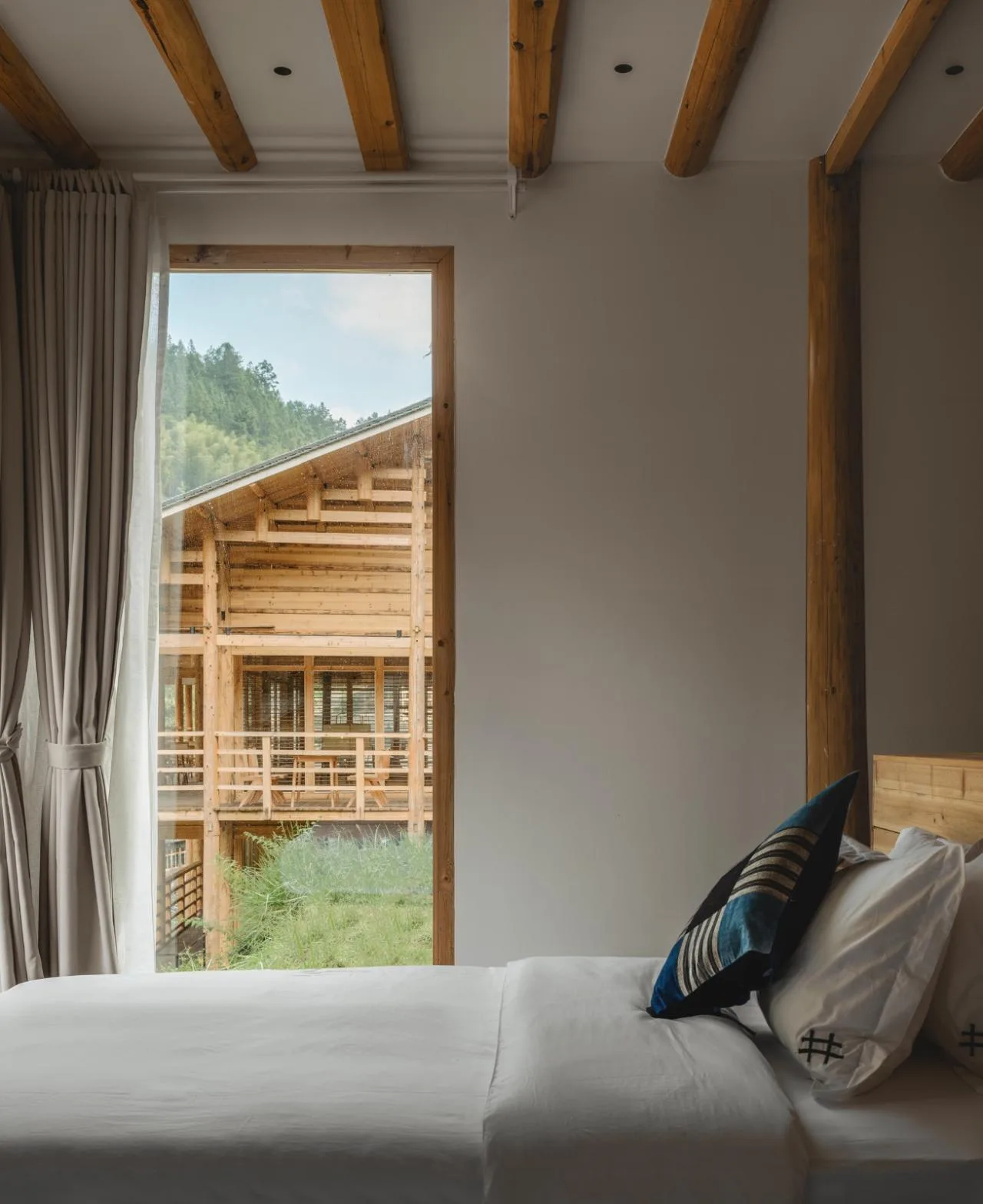
This integrated approach deepens the terraced field landscape experience. The accommodation rooms feature no solid partitions to preserve spatial fluidity. Instead, bamboo curtains and blinds gently separate the bedroom and bathroom areas. Exposed wooden structural elements echo the vibrant rhythm of natural architecture. Additionally, corner windows and skylights enhance the natural ambiance by “capturing the breeze and appreciating subtle beauty,” offering residents multiple perspectives to enjoy the surroundings.
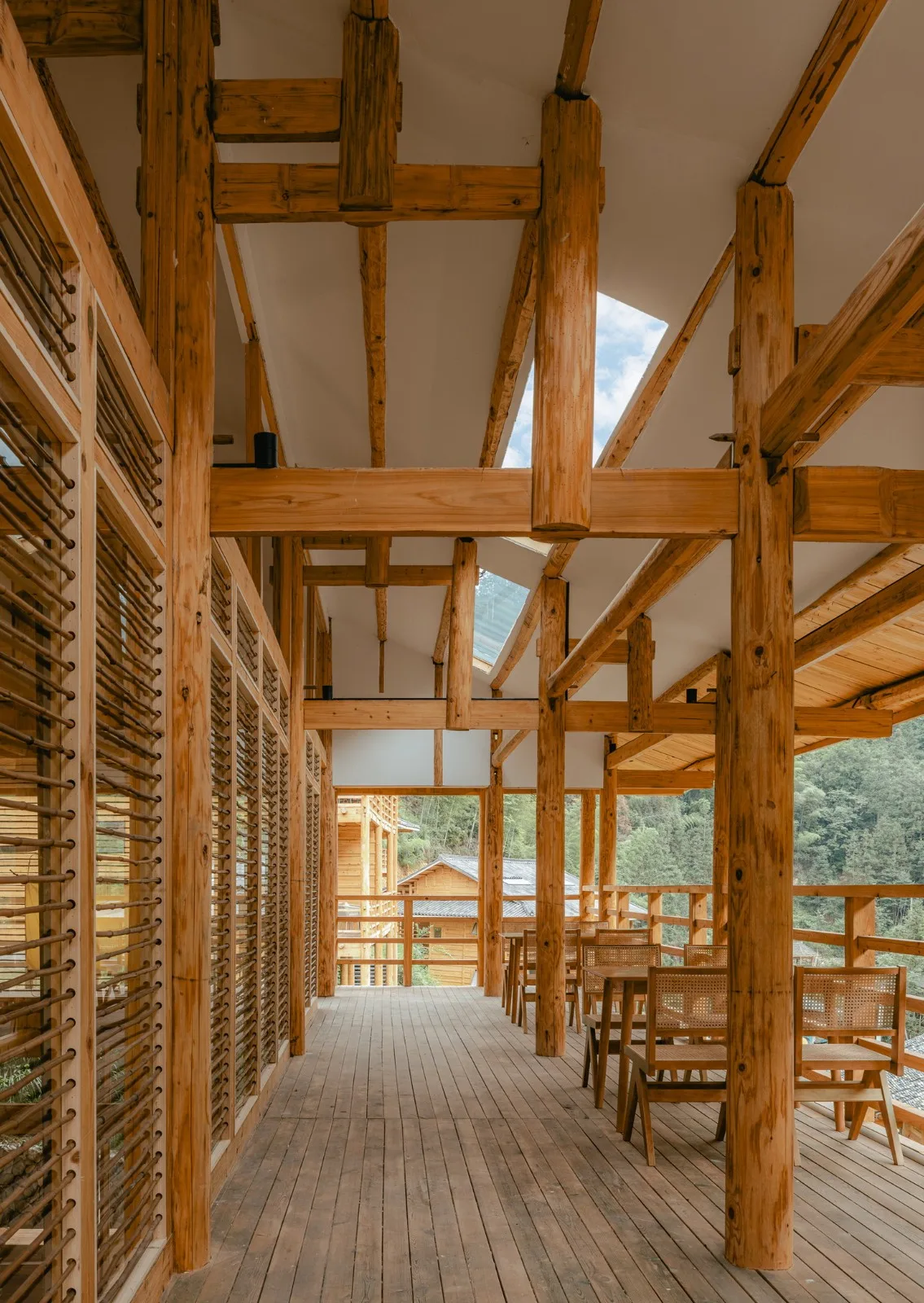
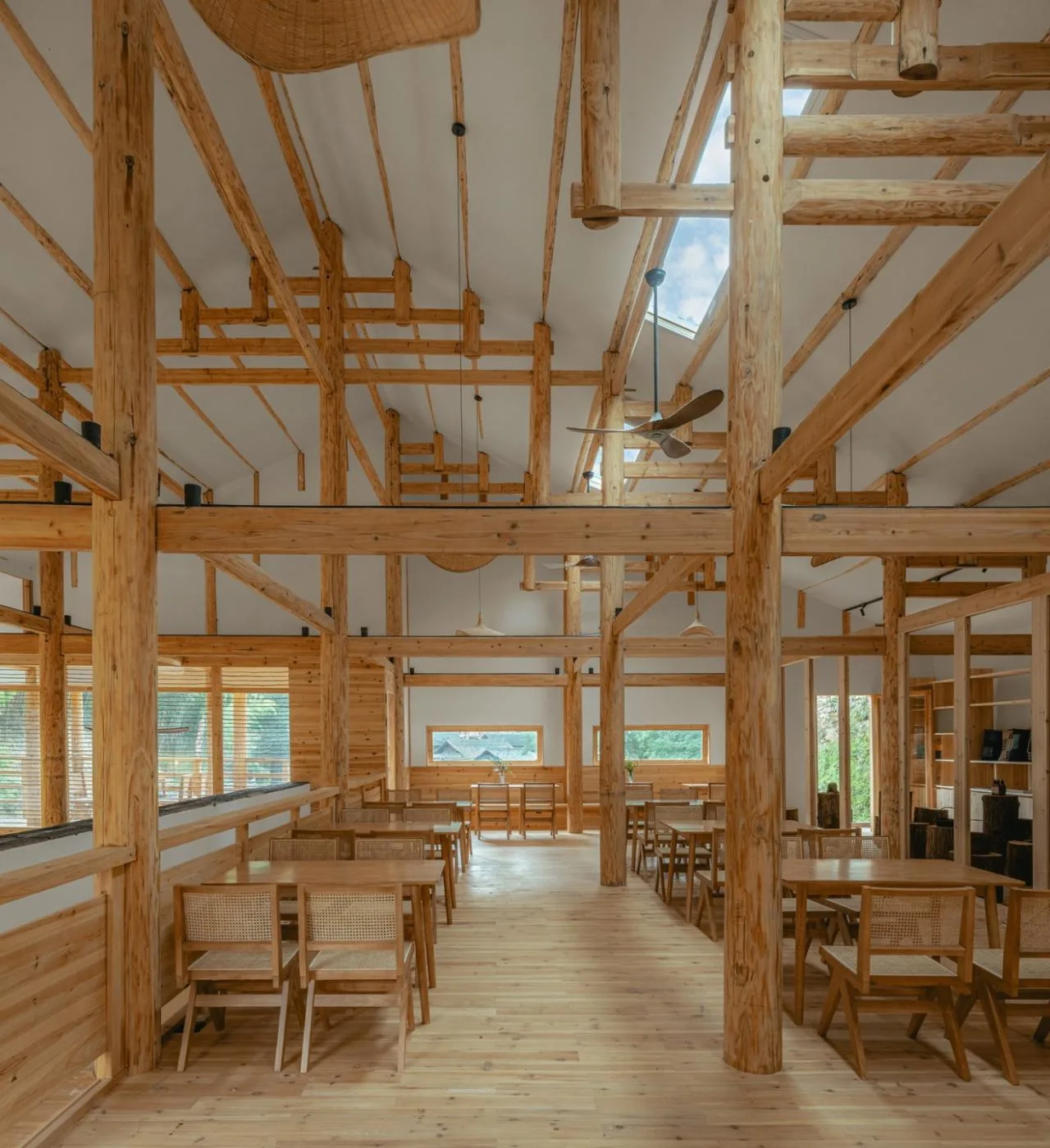
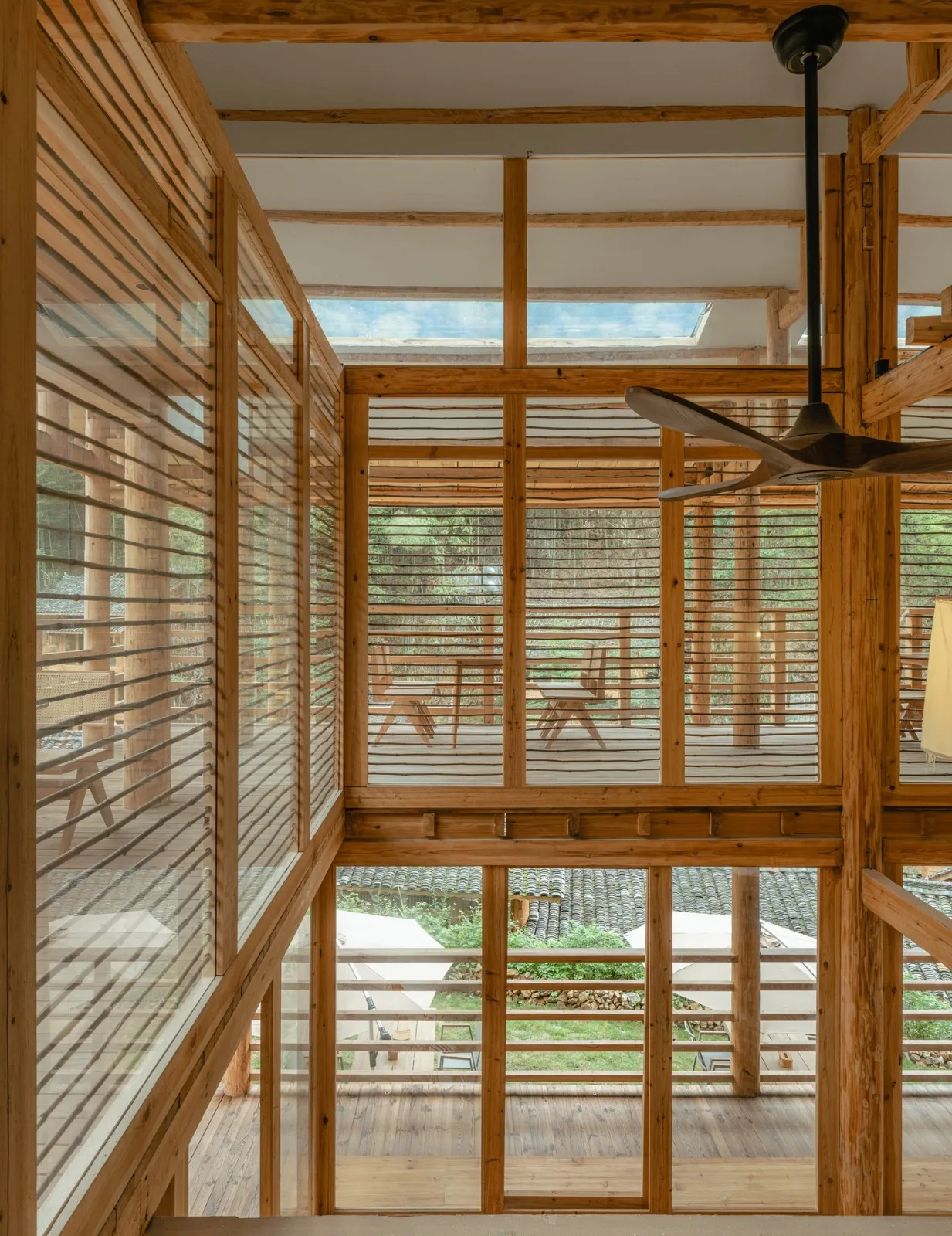
The designer aimed to strike a balance between respecting tradition and embracing historical practices. Architectural elements such as granaries, grain drying racks, flower bridges, and fire pits have been reinterpreted and transformed in the new buildings, moving beyond the collective narratives of ancient legends.
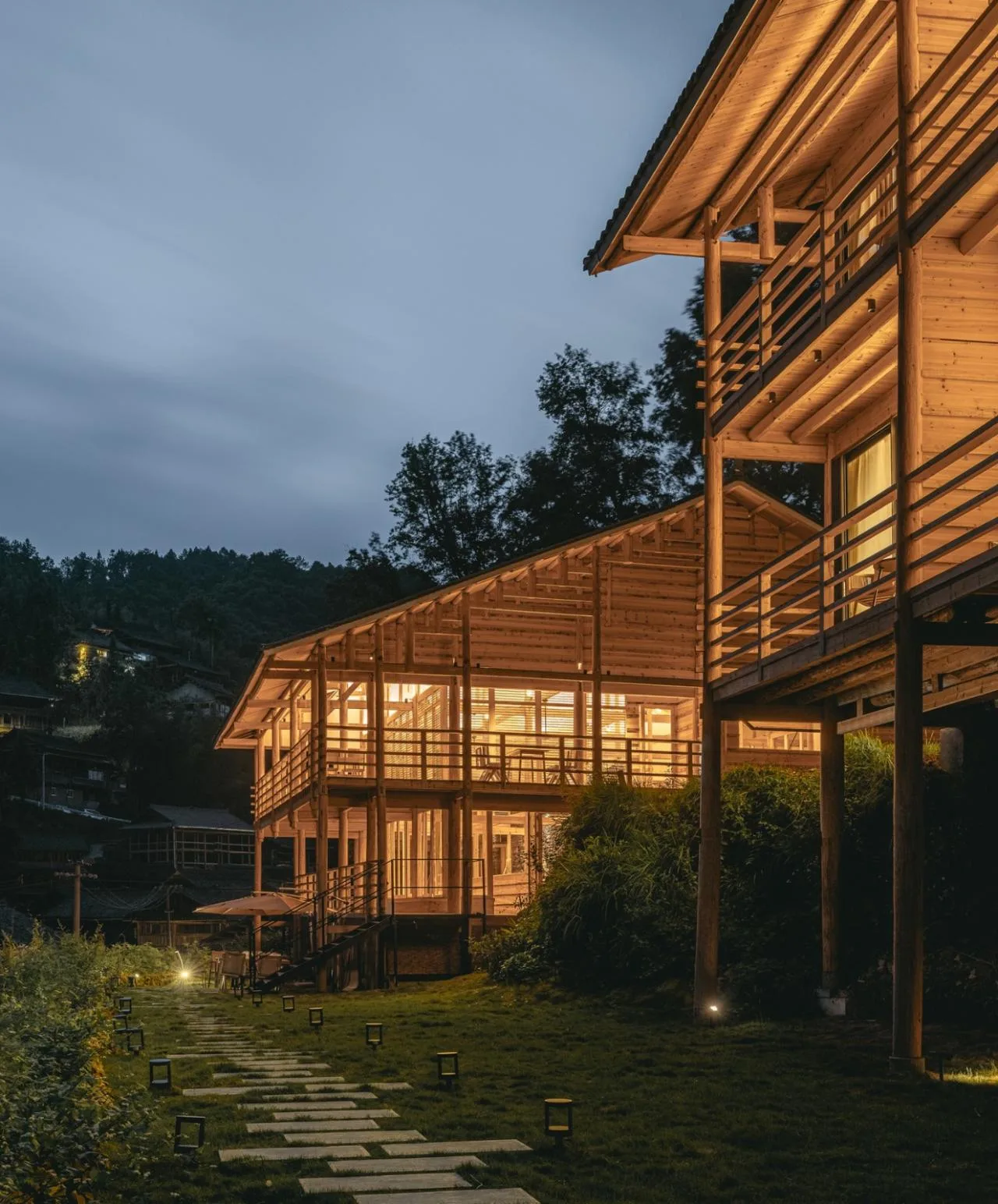
The building’s northwest facade resembles an enlarged barn, featuring peeled wooden boards without paint for a raw, natural look. Carbonized strips add horizontal rhythm, while the wide roof—almost twice as broad as typical—conceals the exterior walls beneath deliberately lowered eaves. As a public building, it maintains an eave height of 2.7 meters, blending unobtrusively with the mountain path.
A modest 2-meter-wide entrance opens directly into indoor shops, reflecting humility and harmony with the village environment.
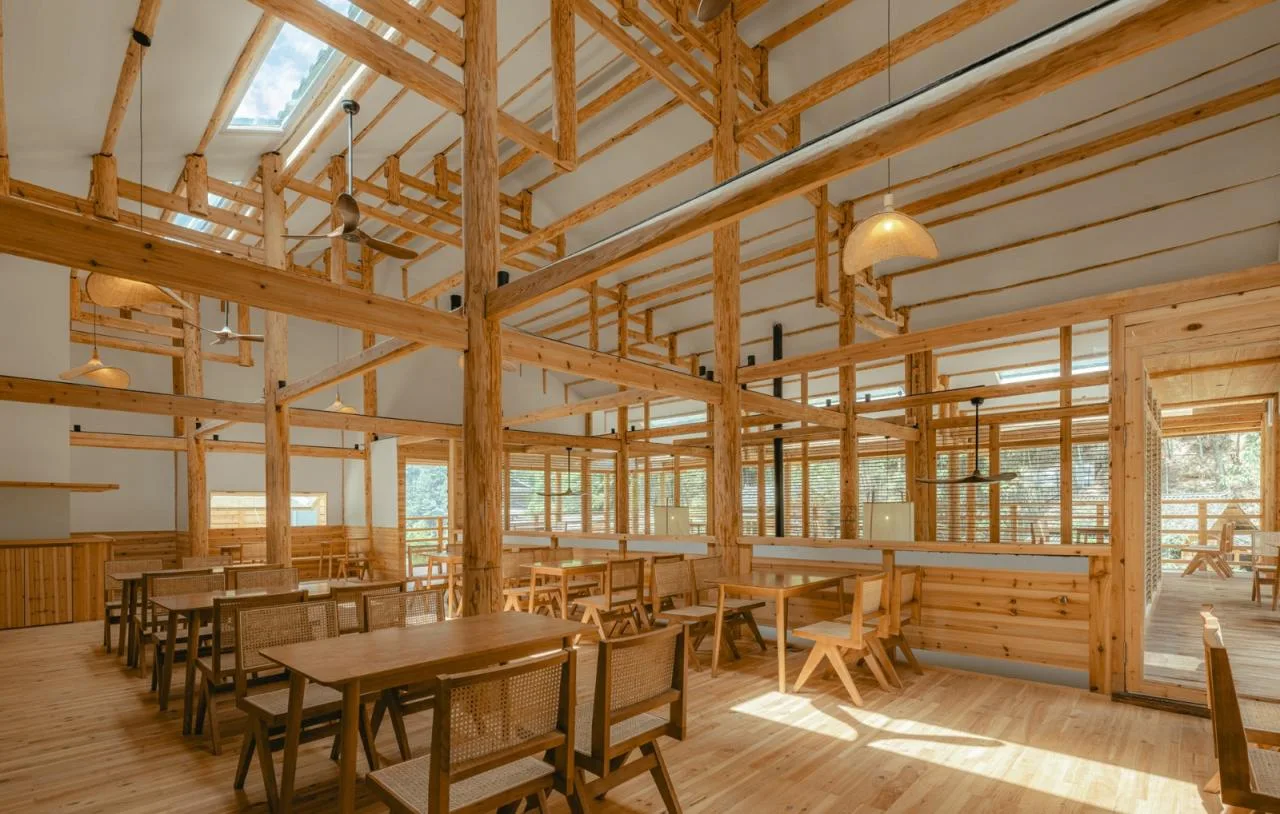
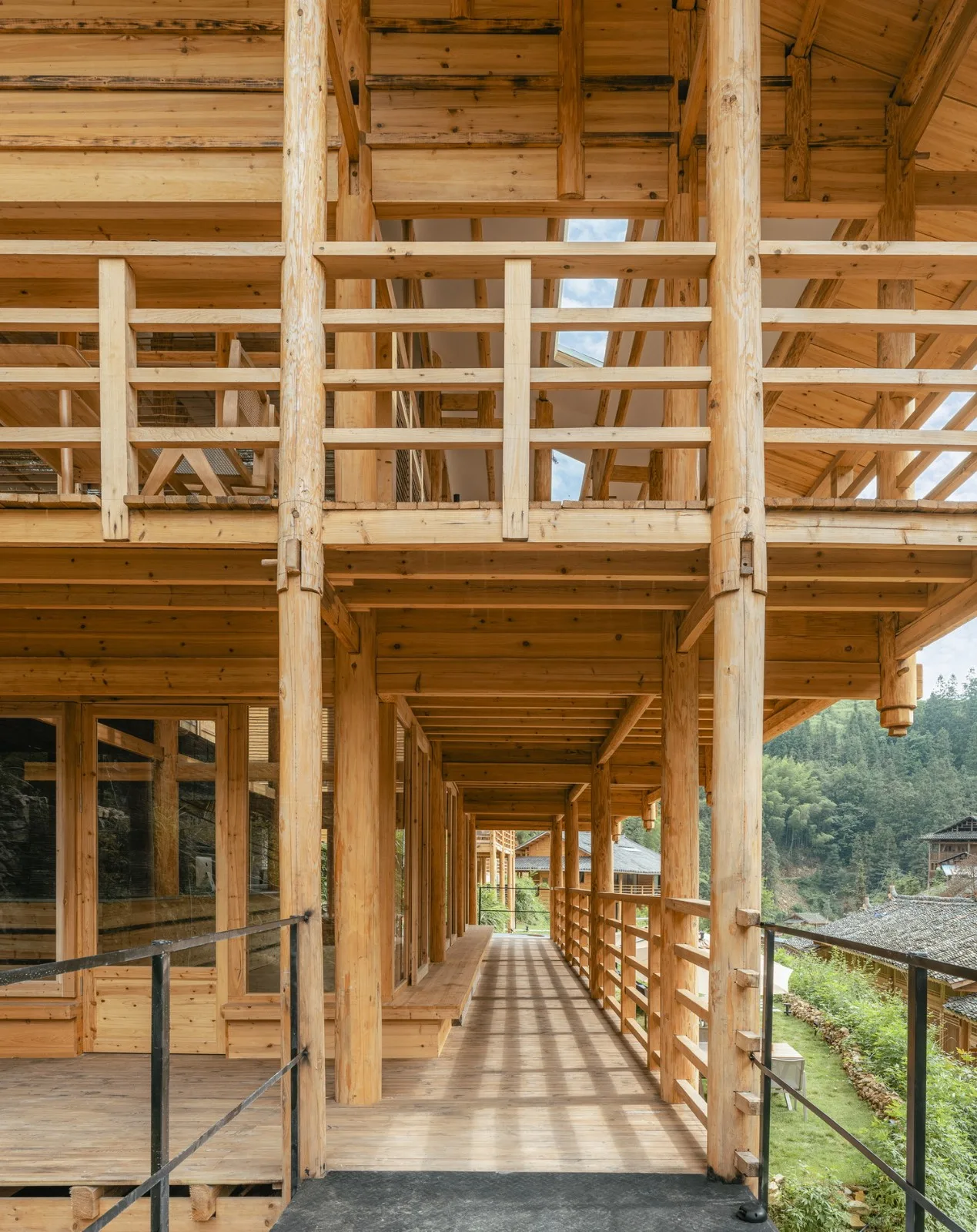
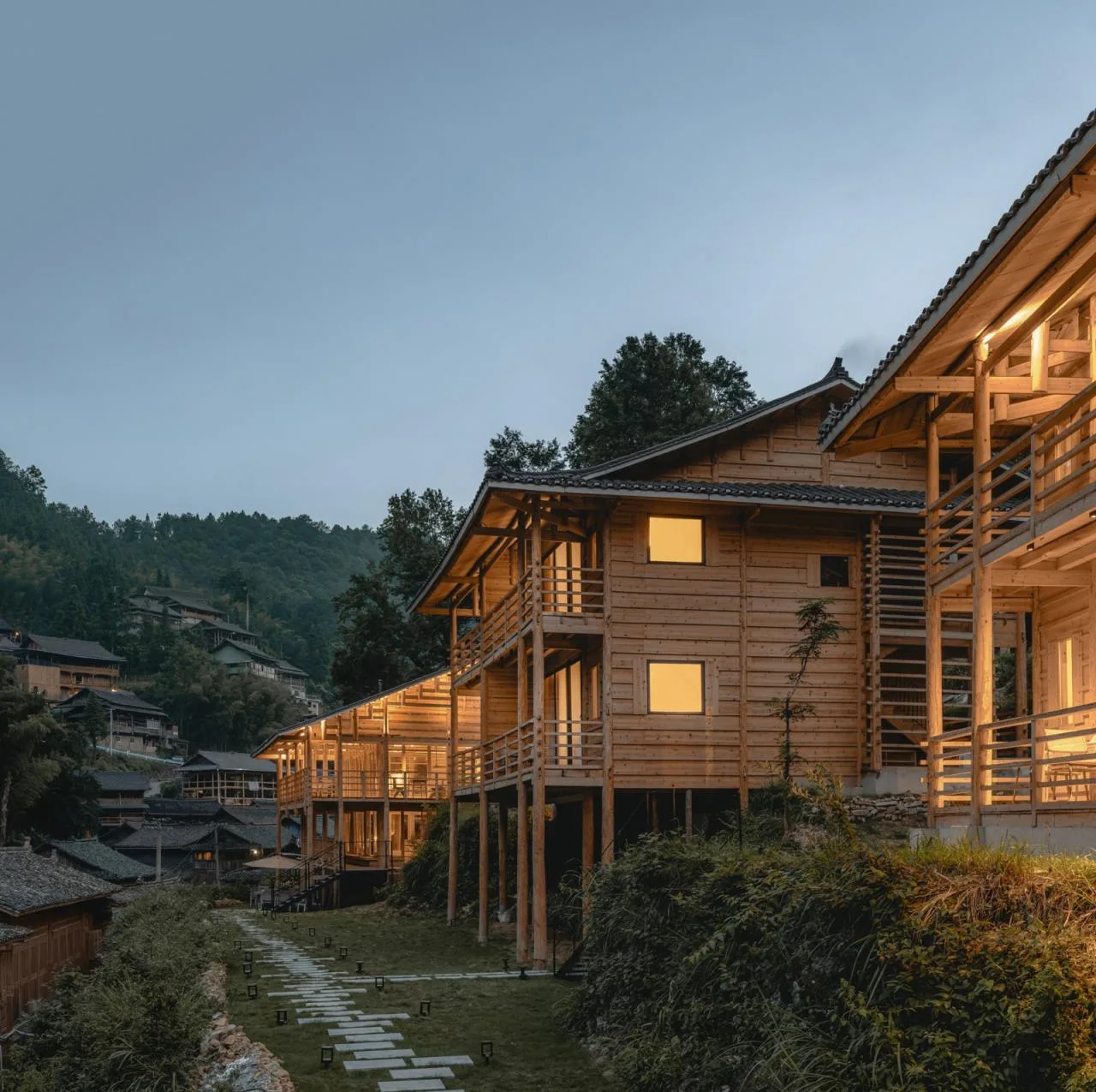
The southeast facade is organized with a horizontal rhythm of approximately 15 meters, defined by two hay racks that serve as railings for an elevated platform, connecting the other three facades. This “Huaqiao” is part of the village’s transportation network and serves as a communal space where villagers gather and socialize during leisure time.
The design of the cantilevered platform on the first floor of the reception hall draws inspiration from the Huaqiao. It features a long wooden corridor with wide column spacing—two-thirds of the normal distance—creating a natural hanging effect. The wide window sill, positioned about 50 centimeters above the ground, mimics the posture of villagers leaning on both sides of the Huaqiao, providing a comfortable place to sit or lie down.
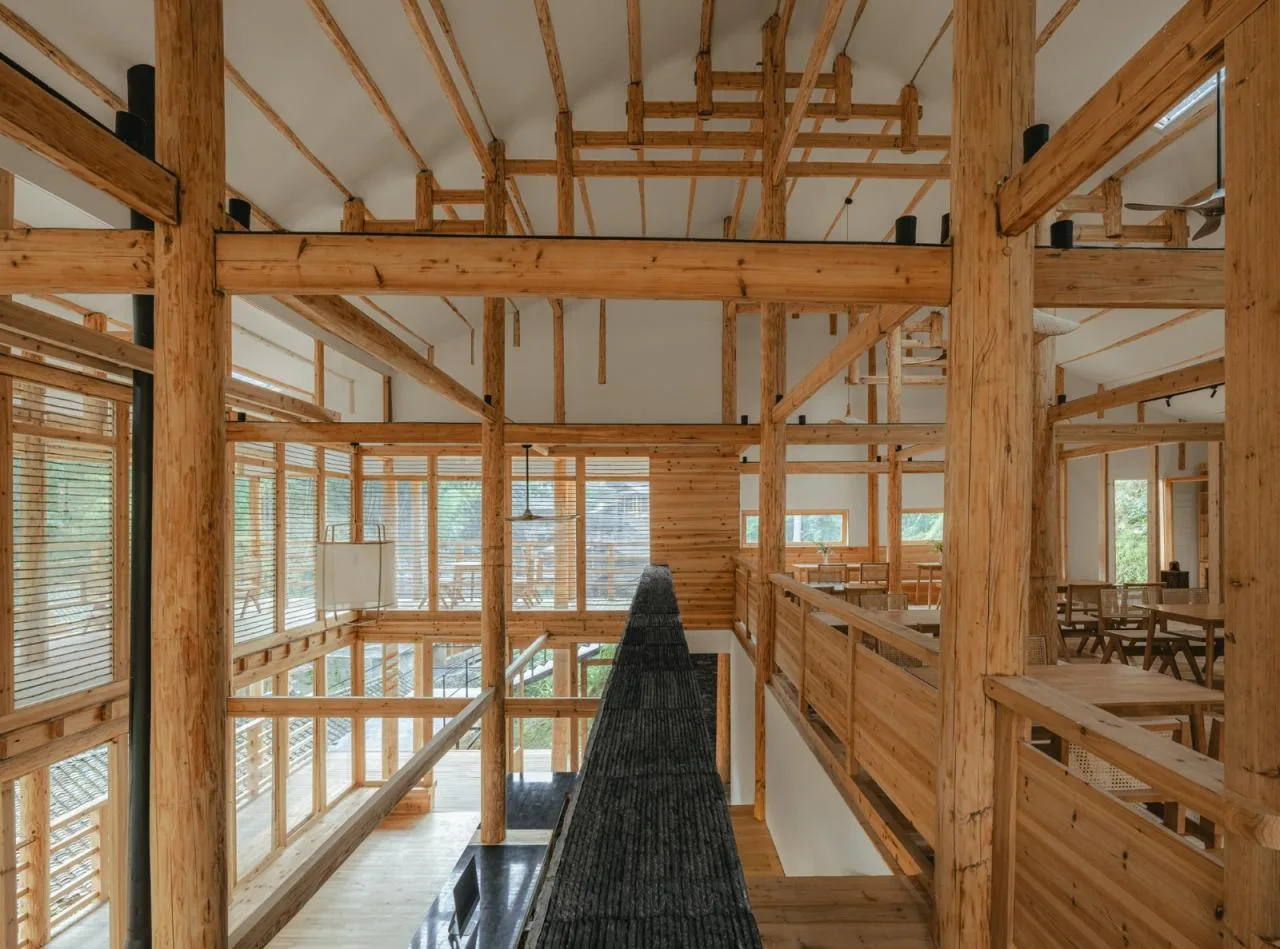
The lobby’s layout is divided into four key areas:
- An atrium spanning two floors that houses the reception area;
- A closed section containing service spaces such as the kitchen, linen room, equipment room, and storage;
- A double-layered elevated corridor platform wrapping around half of the building;
- A rural shop equipped with dining and display areas.
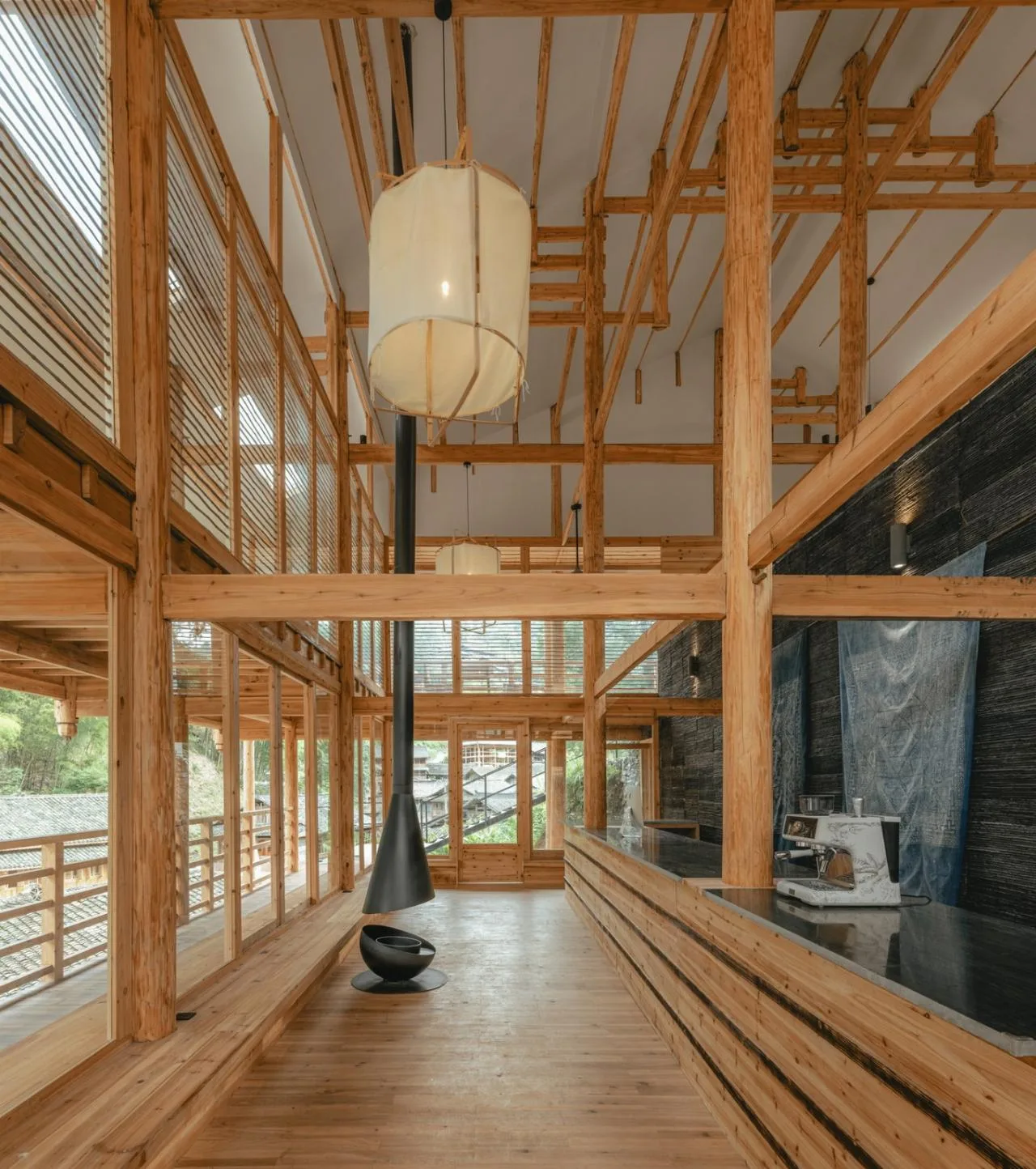
The indoor staircase connecting the first and second floors is concealed behind an extensive carbonized wooden wall in the reception area, effectively dividing the building in two along the mountain wall. The hall organizes spatial order around the “virtual” reception atrium, creating a sense of expansive depth.
Entering from the shop side, visitors experience a clear progression of spatial hierarchy within the wooden structure, moving from smaller to larger spaces, and from shallow to deep.
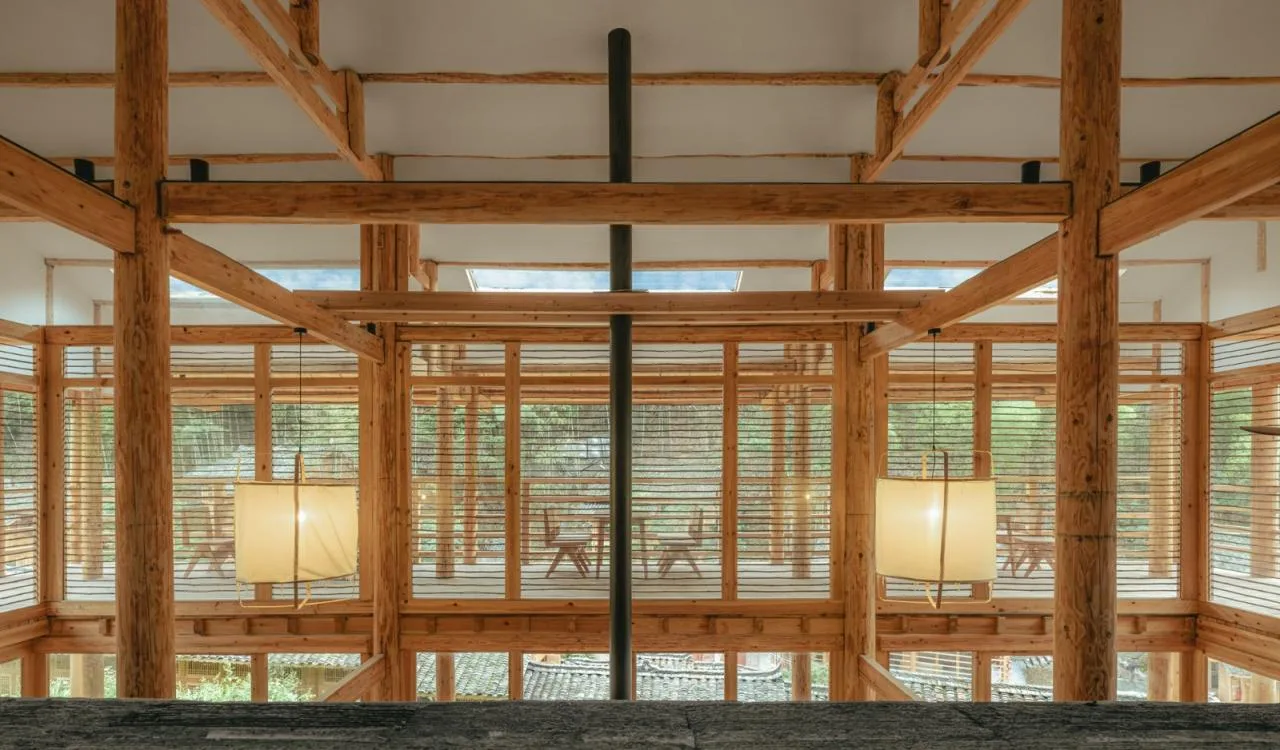
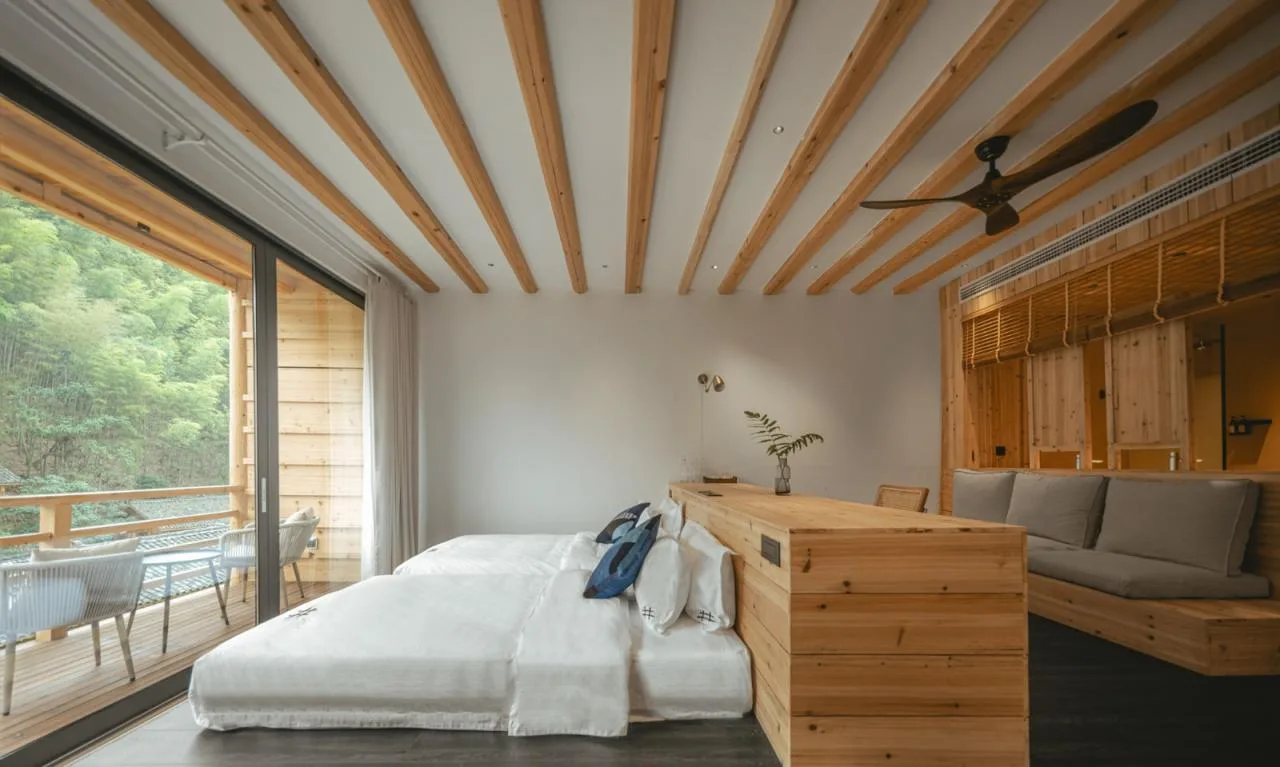
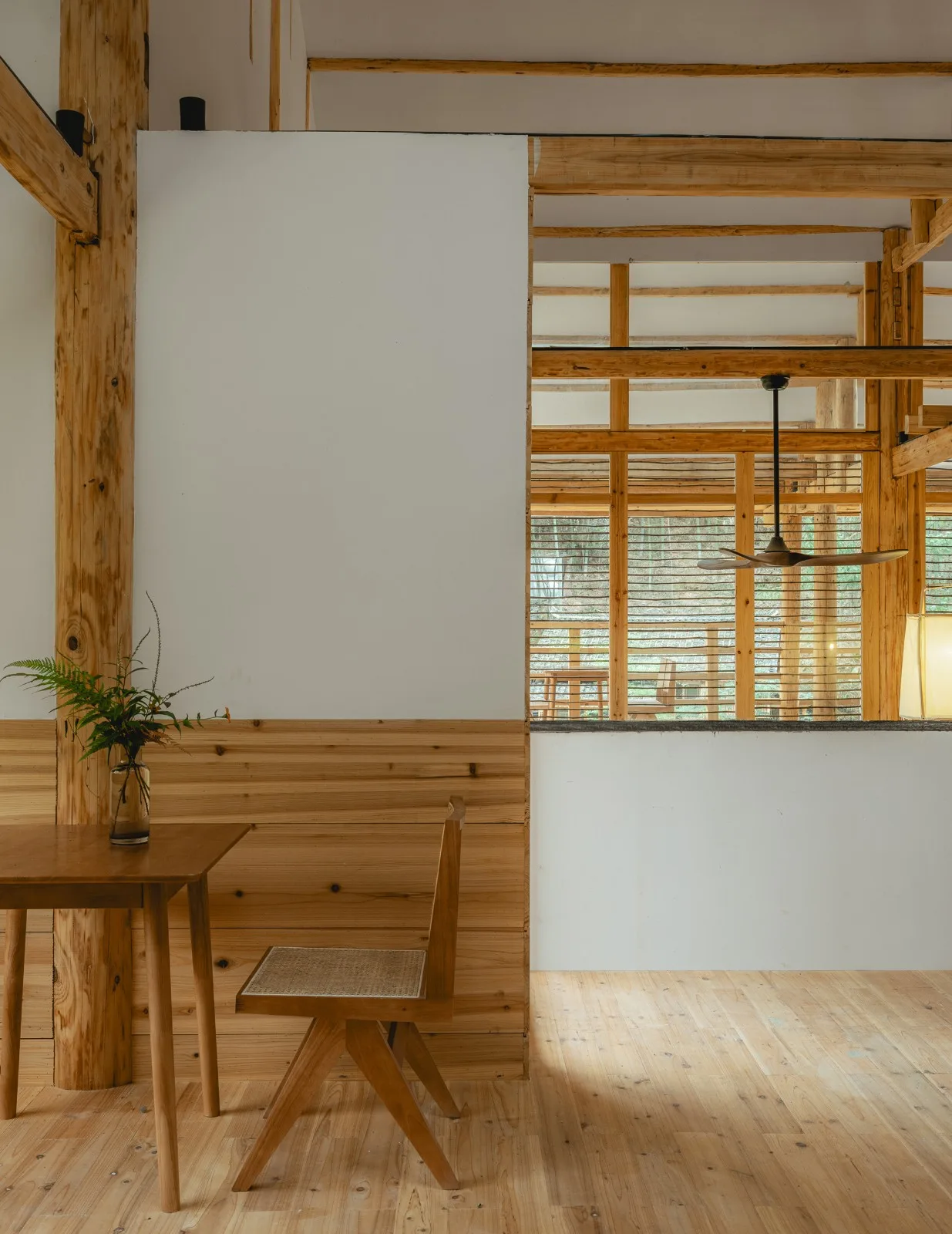
The use of varied partition materials and filtering techniques creates a multidimensional physical and psychological experience. The lobby benefits from three directions of natural light and offers continuous visual landscapes.
Fully integrated into the surrounding forest environment, the building’s interplay of light and shadow at night evokes a hidden, mysterious atmosphere—blurring the boundaries between reality and illusion. Both indoors and outdoors, the space expresses a rich depth, offering a captivating experience that unites body and mind, nature and artifice, and challenges the distinction between the real and the imaginary.
Project Drawings
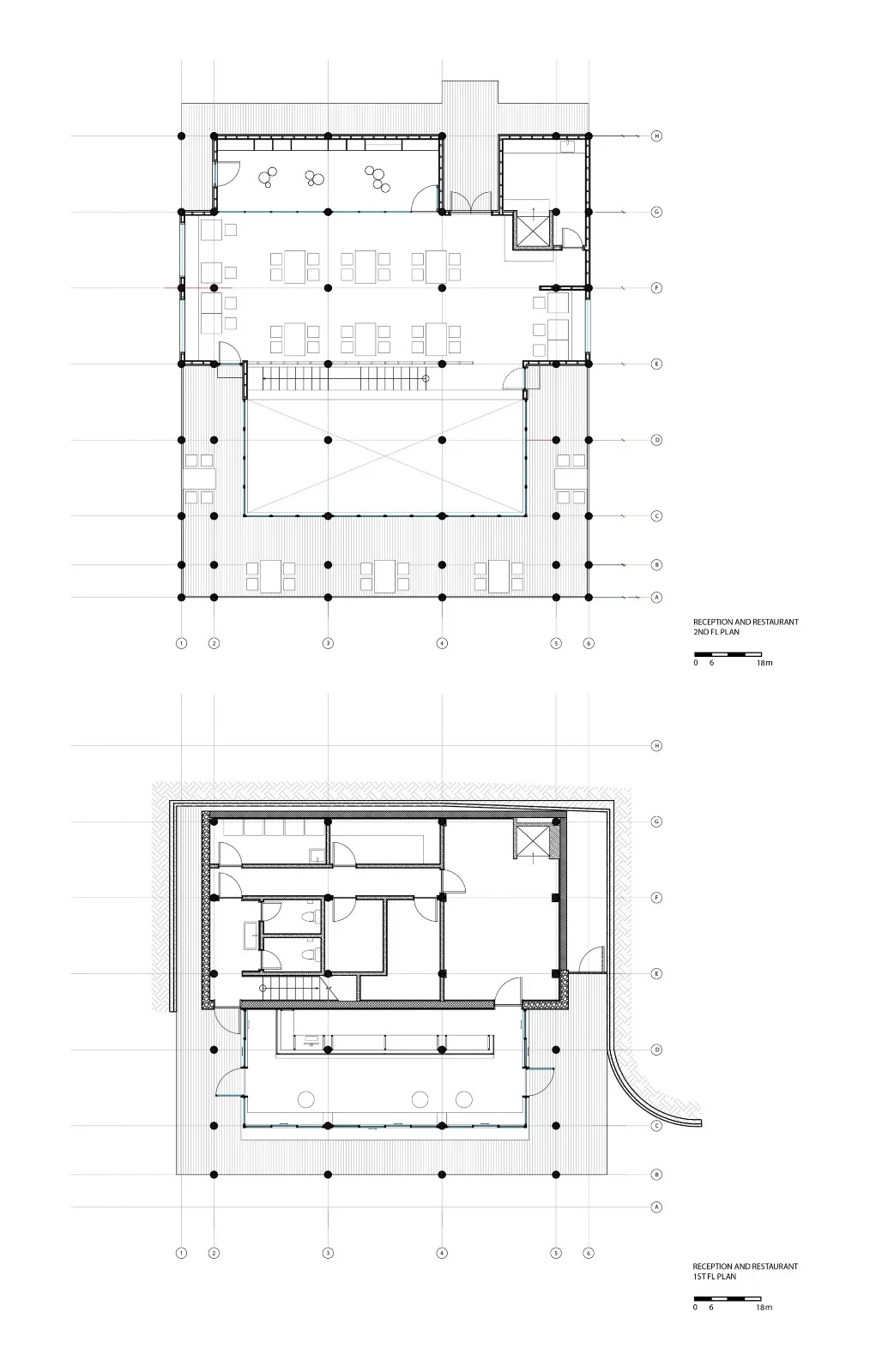
△ Reception Hall and Restaurant Floor Plan
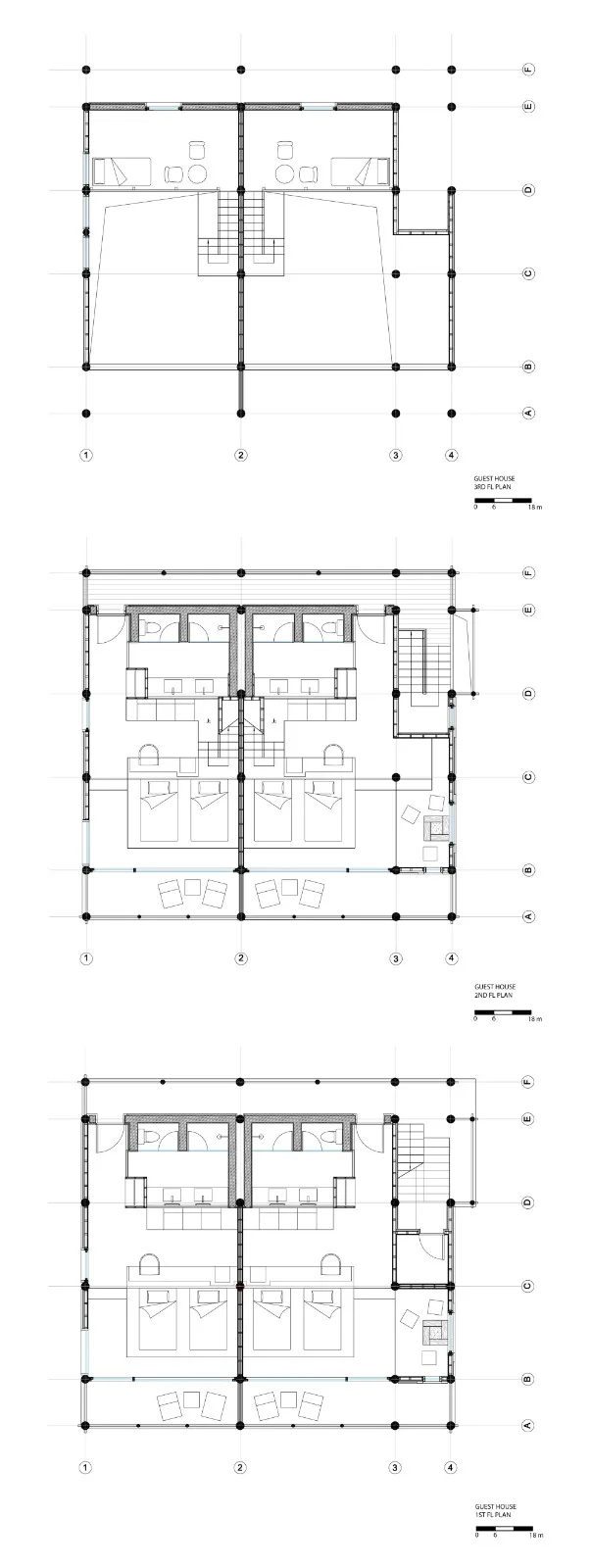
△ Room Floor Plan
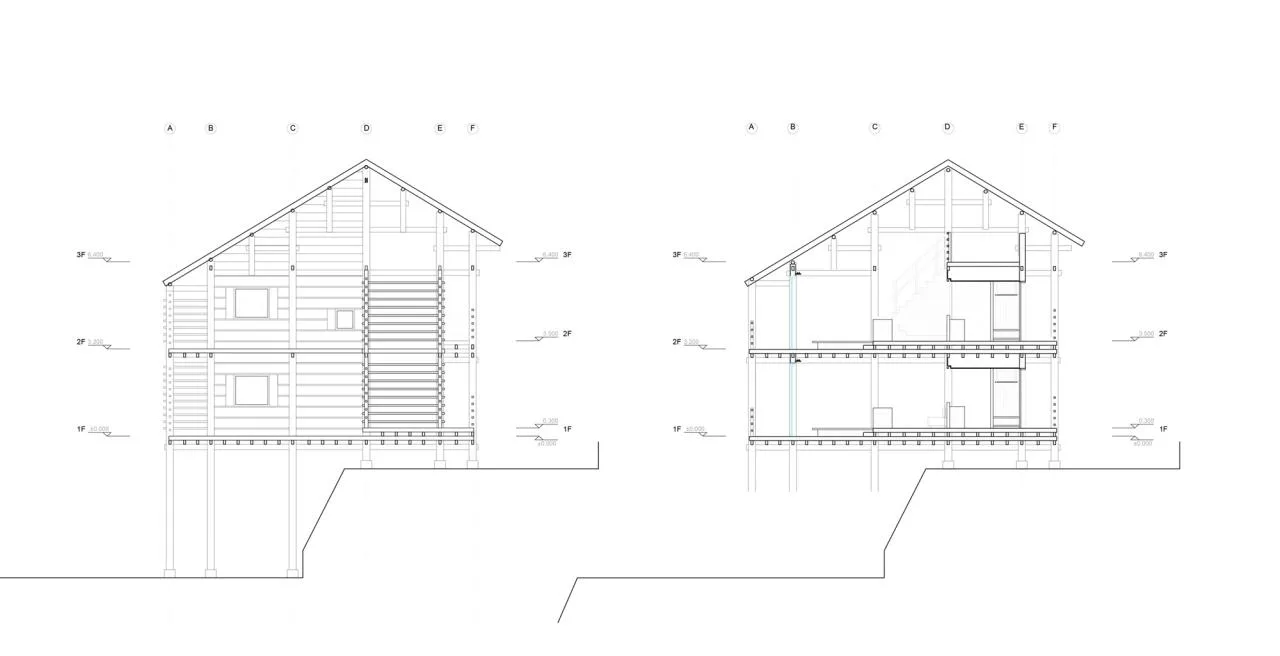
△ Section Diagram
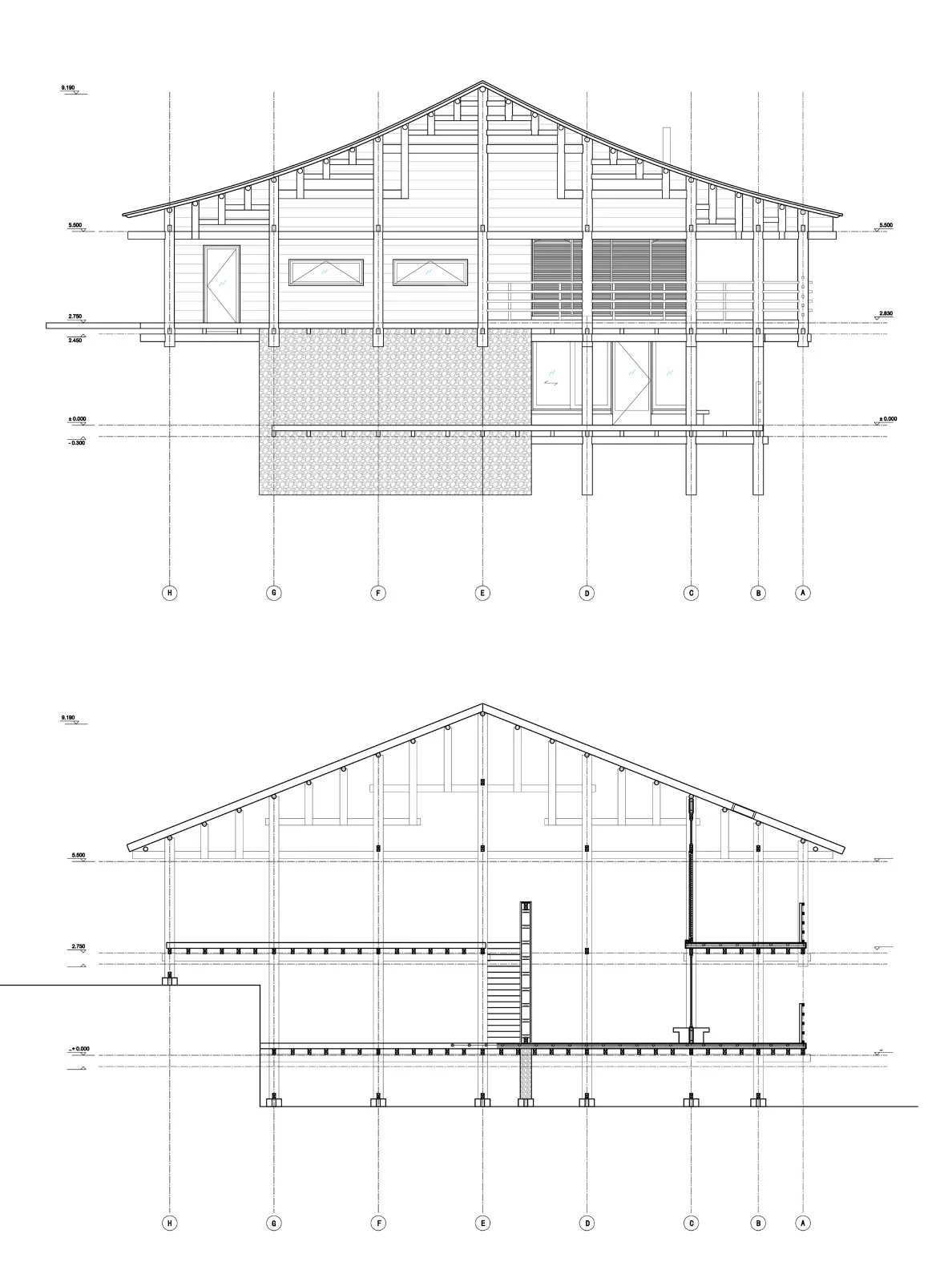
△ Section Diagram
Project Information
Architect: ATLAS STUDIO
Area: 1,028 m²
Project Year: 2023
Photographer: Zhu Yumeng
Design Team: Jenny Chou, Yihsuan Lin, Bruce Park, Hongcheng Yin, Xinru Liu
Partner: Unum Studio of Ermu Architecture
Owner: See You on Dali Well
Location: Southeastern Guizhou















Must log in before commenting!
Sign Up