
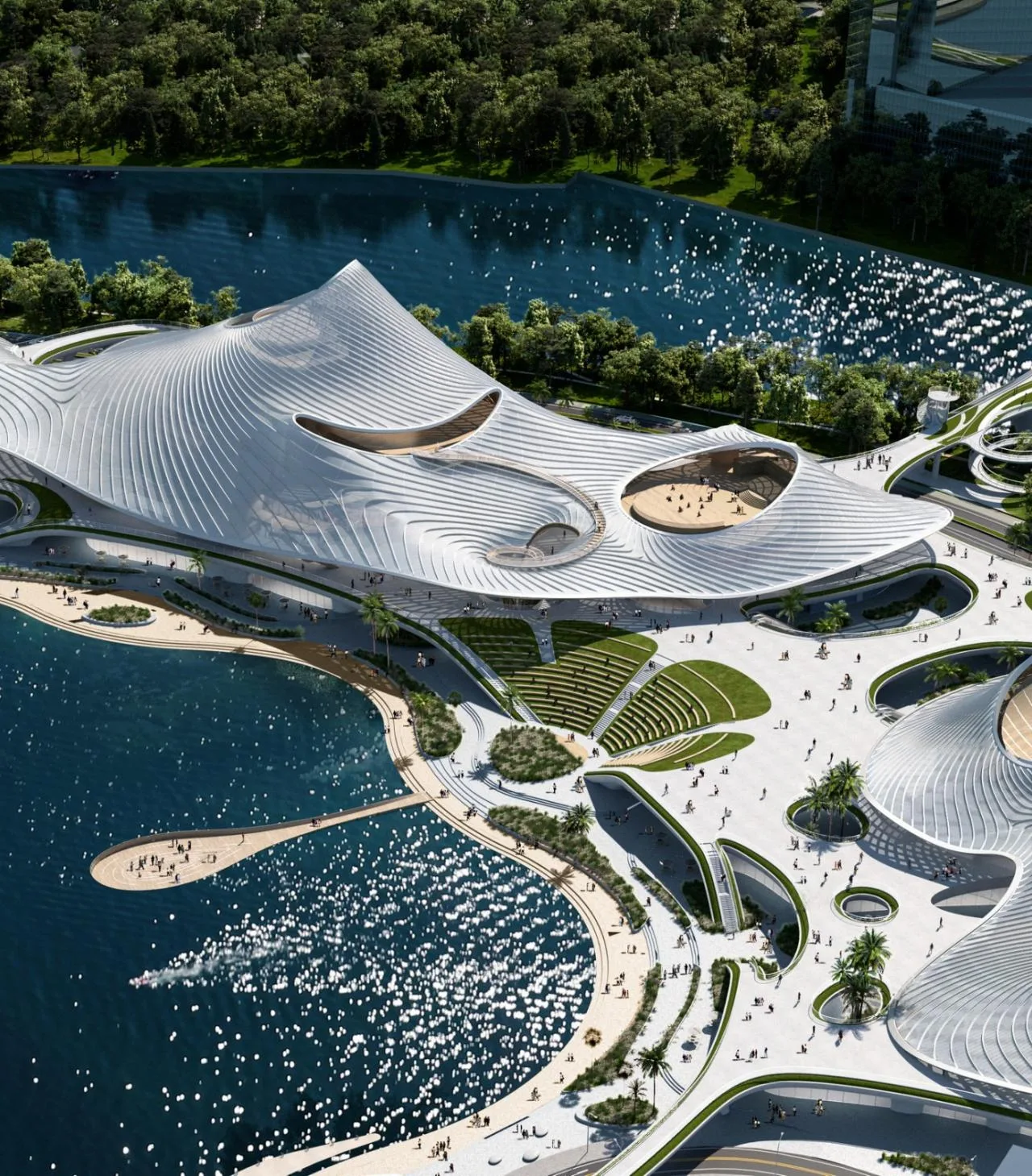
MAD Architecture Firm has unveiled the design for the forthcoming Nanhai Art Center, located in Foshan, Guangdong Province.
Foshan, Guangdong, plays a pivotal role as a key city within the Greater Bay Area, connecting Guangdong, Hong Kong, and Macao, and is central to the urban development of Guangzhou and Foshan. The Nanhai District sits at the midpoint between the two city centers of Guangzhou and Foshan, directly facing Guangzhou’s Liwan District across the water, underscoring its strategic importance. The Art Center is situated within the Nanhai Cultural Area, adjacent to the Foshan Waterway to the south, and overlooks the significant urban oasis of Qiandeng Lake Park, which spans 302 acres across the river.
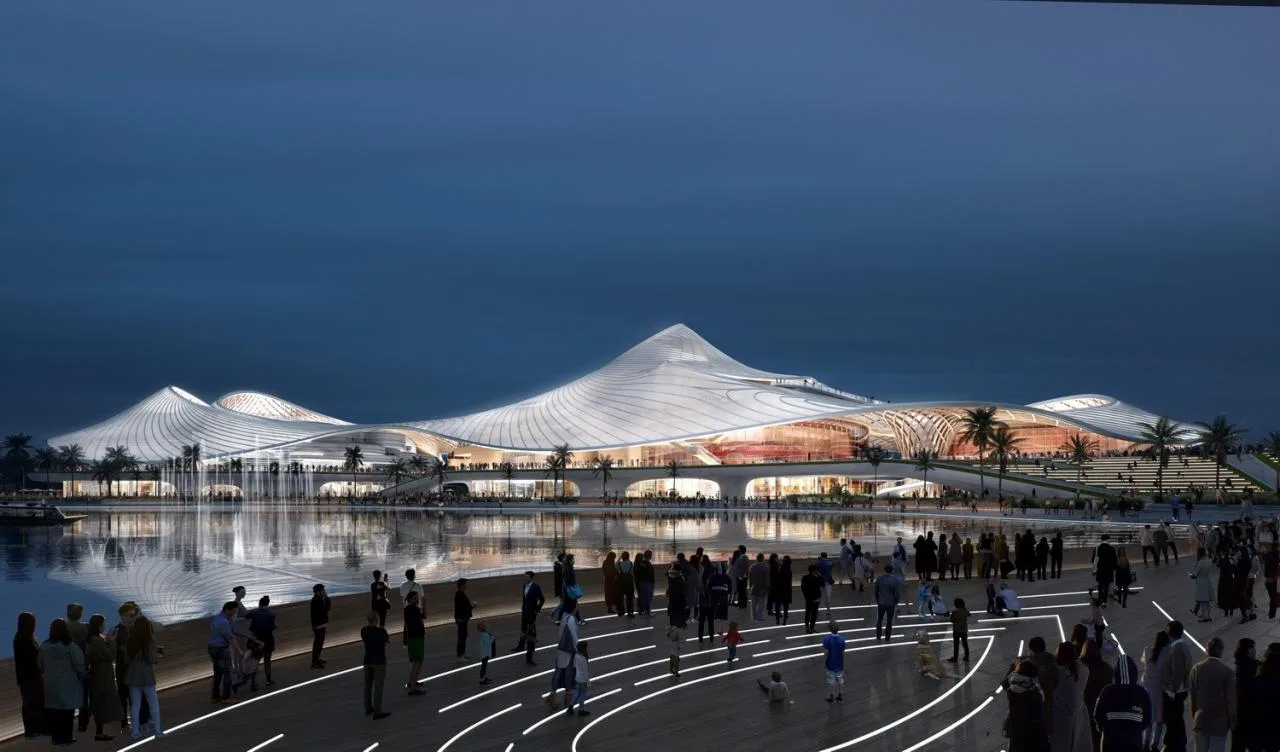
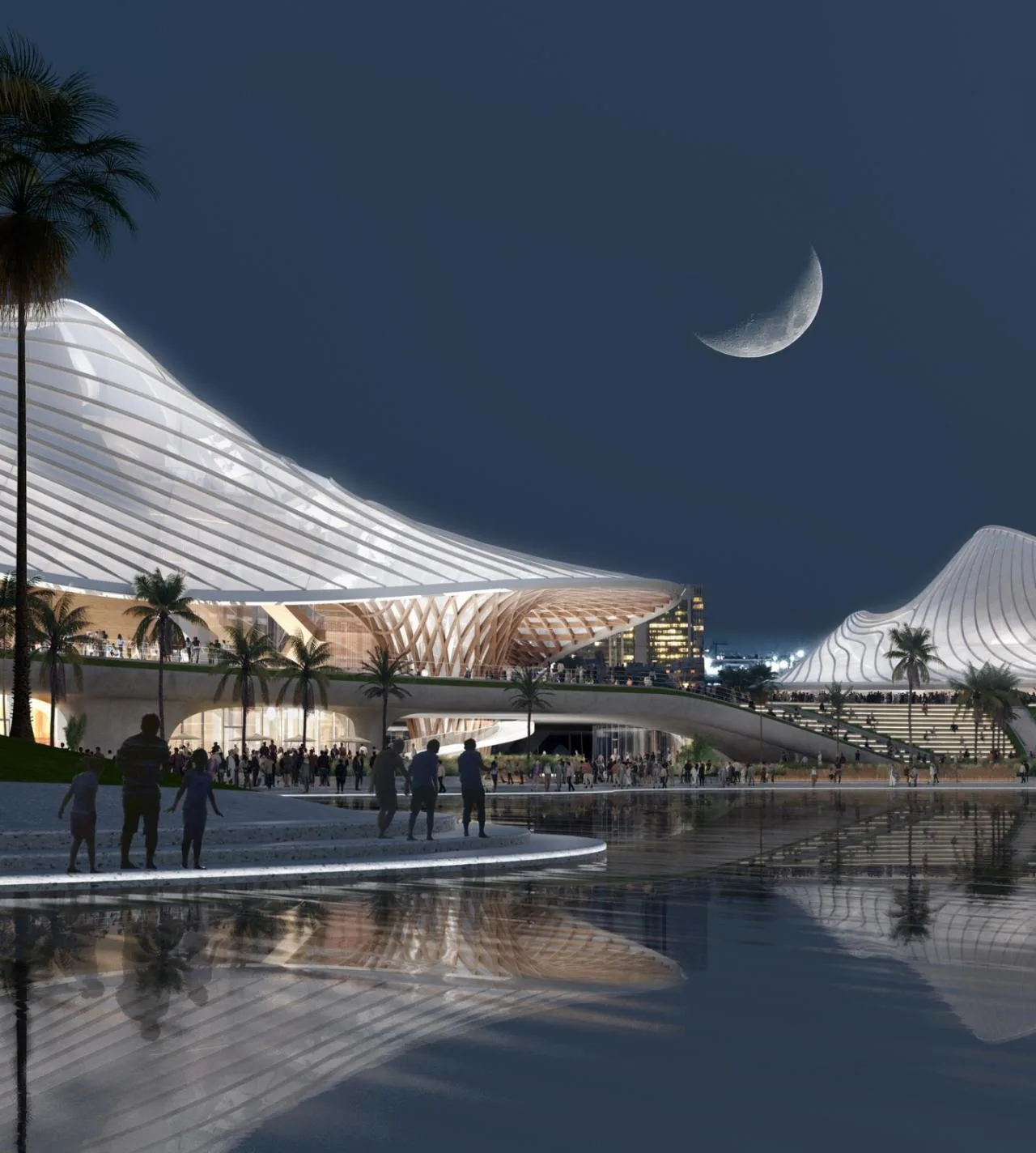
The Nanhai Art Center spans approximately 59,455 square meters and comprises three cultural venues: a grand theater, a museum, and a sports center. Once completed, this complex will become a central hub along the waterfront of the Foshan River, offering high-quality public urban spaces that blend cultural, artistic, and natural elements for the residents of Guangfo. It will also serve as a new urban gateway and social hub for the Guangfo area.
Ma Yansong, who previously contributed as an artist to the “South China Sea Land Art Festival,” remarked: “The traditional culture of the South China Sea in Guangdong is vibrant. Experiencing the Dragon Boat Festival and Lion Dance, you can feel the enduring spirit of hard work, progress, and innovation that has shaped Guangdong from ancient times to the present. This spirit remains embedded in contemporary urban life.”
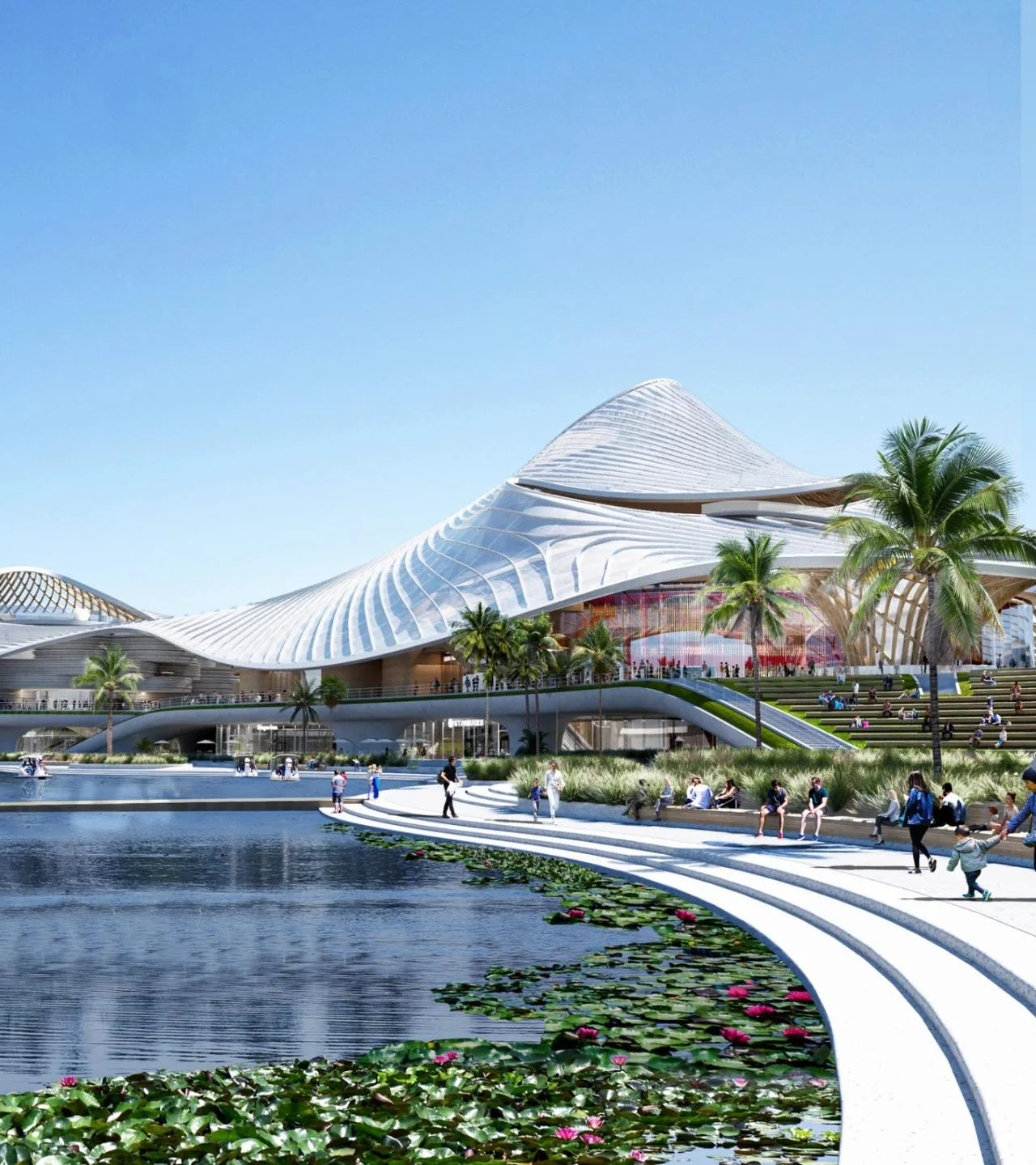
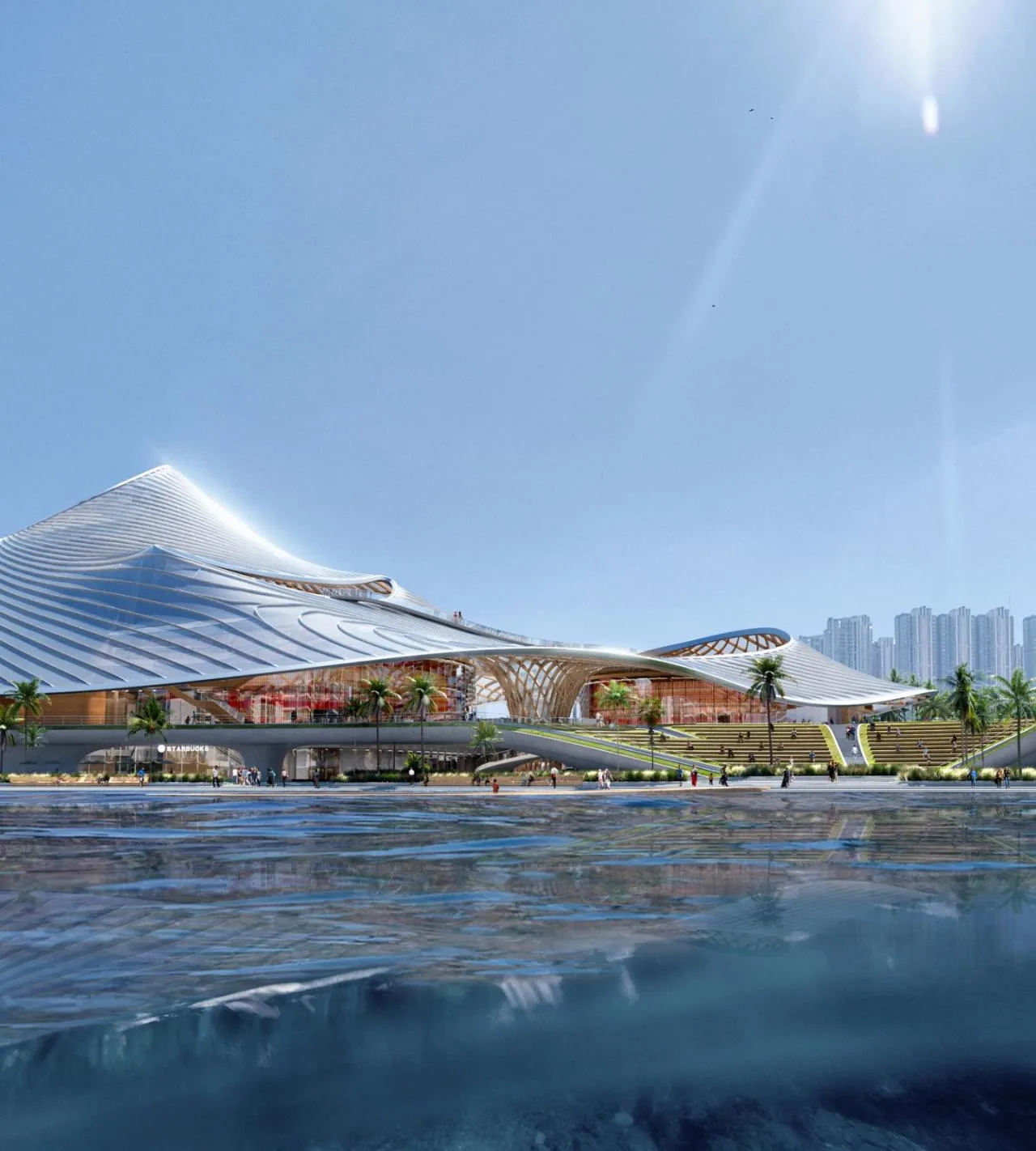
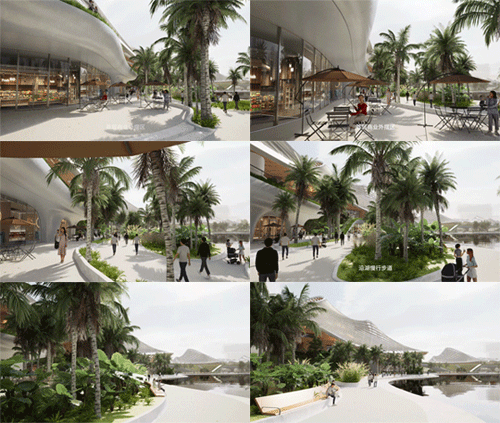
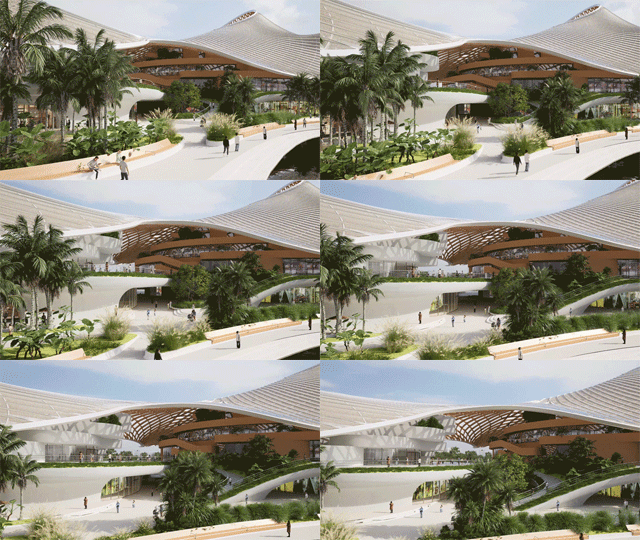
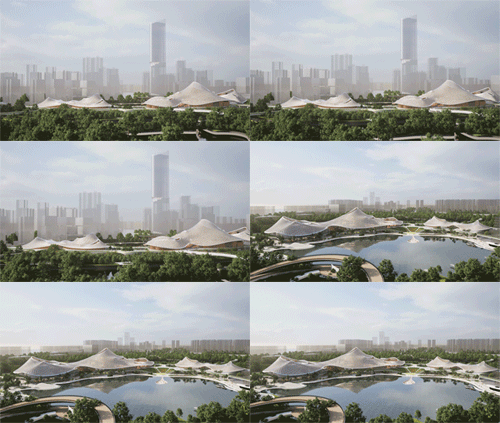
From a distance, the Nanhai Art Center resembles a flowing ripple of water, with its three main buildings softly emerging beneath a floating sunshade canopy. The semi-outdoor grey spaces surrounding the complex blend harmoniously with the central lake landscape and architectural functions. Visitors can explore various rooftop paths designed for sightseeing, interaction, and immersive experiences. MAD’s design embodies the essence of Southern Guangdong: welcoming, modest, and elegant, yet open and inclusive.
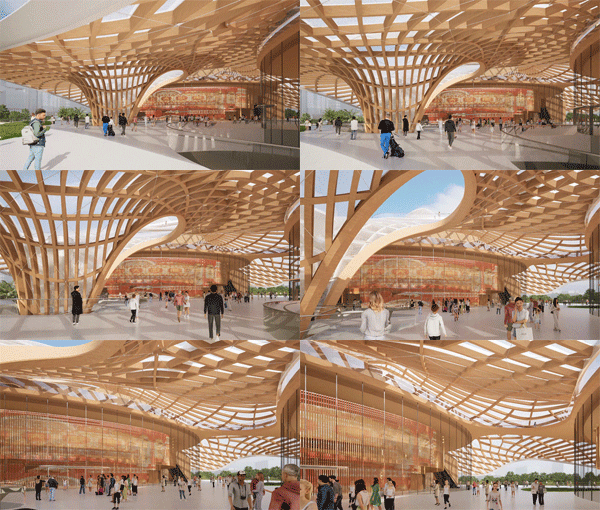
The design draws inspiration from traditional southern Guangdong architecture, featuring large eaves and grey spaces that provide shade, shelter, and ventilation. These architectural elements are adapted to suit the local climate, combined with innovative green technologies, to create a contemporary Lingnan-style architectural model.” – Ma Yansong
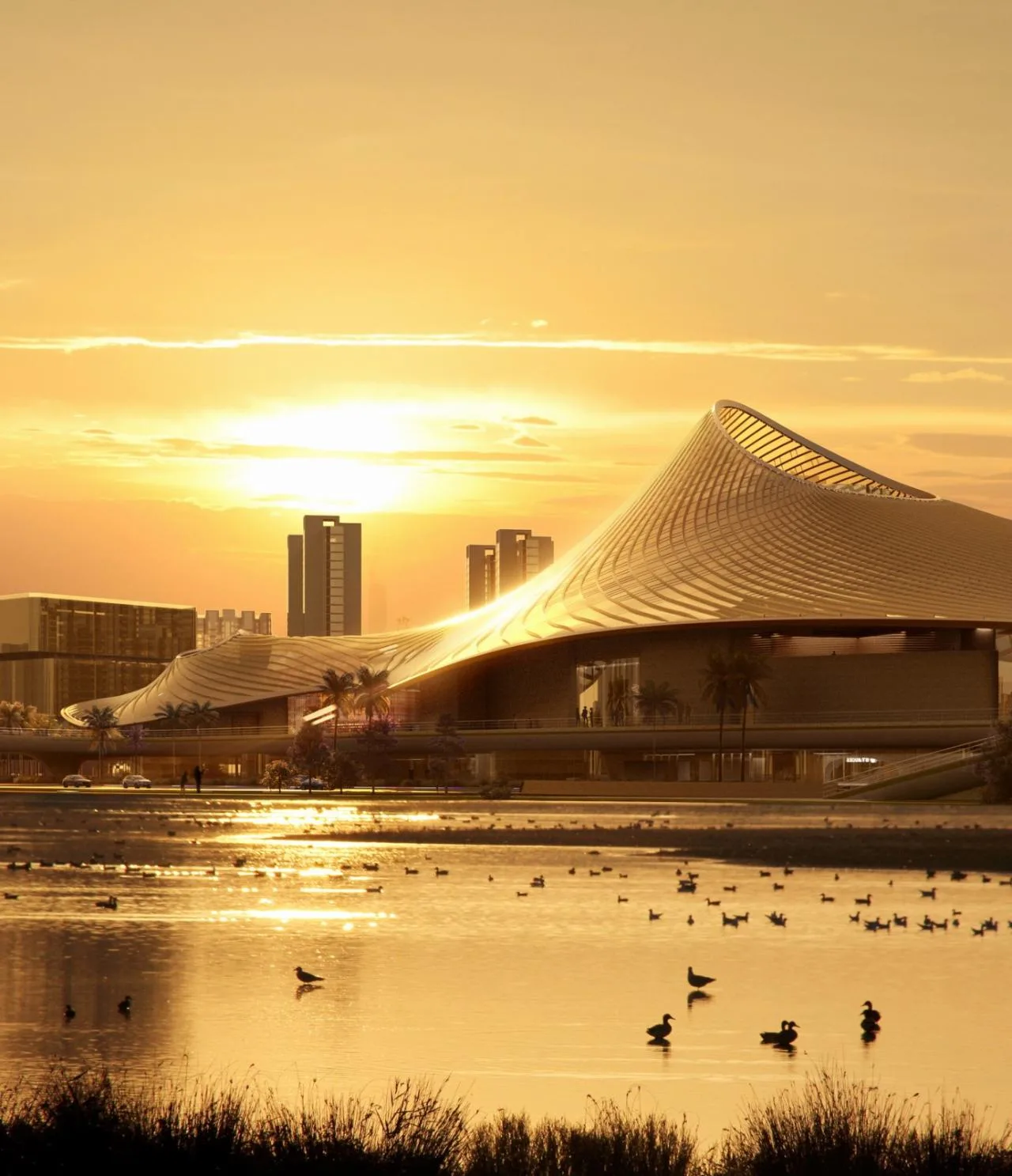
The design is organized along the central axis of Qiandeng Lake, with the sports center, grand theater, and museum positioned on either side, forming a seamless urban visual corridor. A two-story, three-dimensional landscape platform extends outward, organically linking the central lake and riverside park on the north side with the art center complex and urban spaces to the south.
Along the northern lakeside, the design concentrates the most vibrant cultural services and commercial spaces, creating a subtropical-style slow-paced commercial street that integrates culture, leisure, service, and shopping. This approach transforms cultural architecture from a static urban sculpture into a lively, accessible gathering place that encourages citizens to embrace a culture-centered lifestyle.
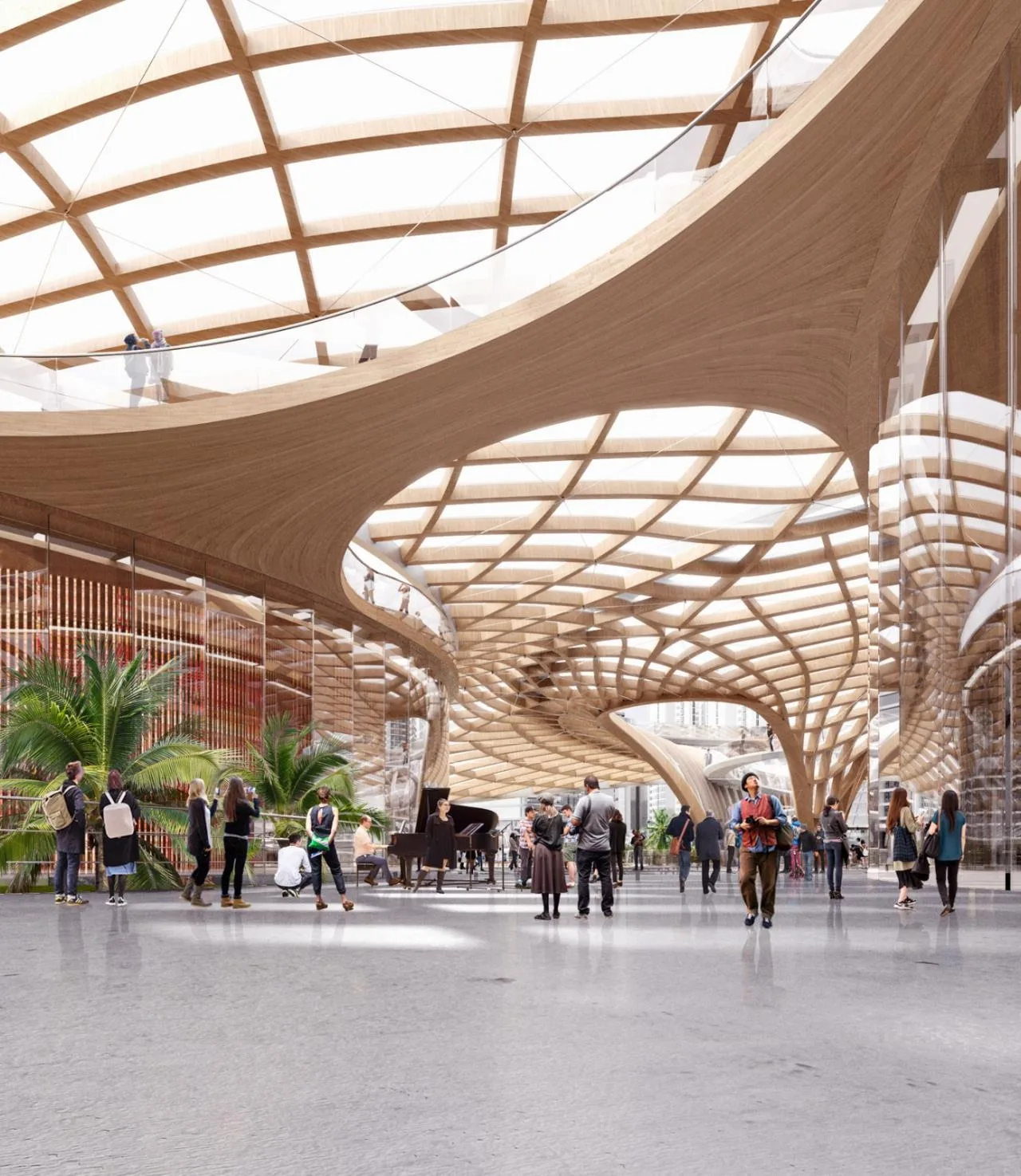
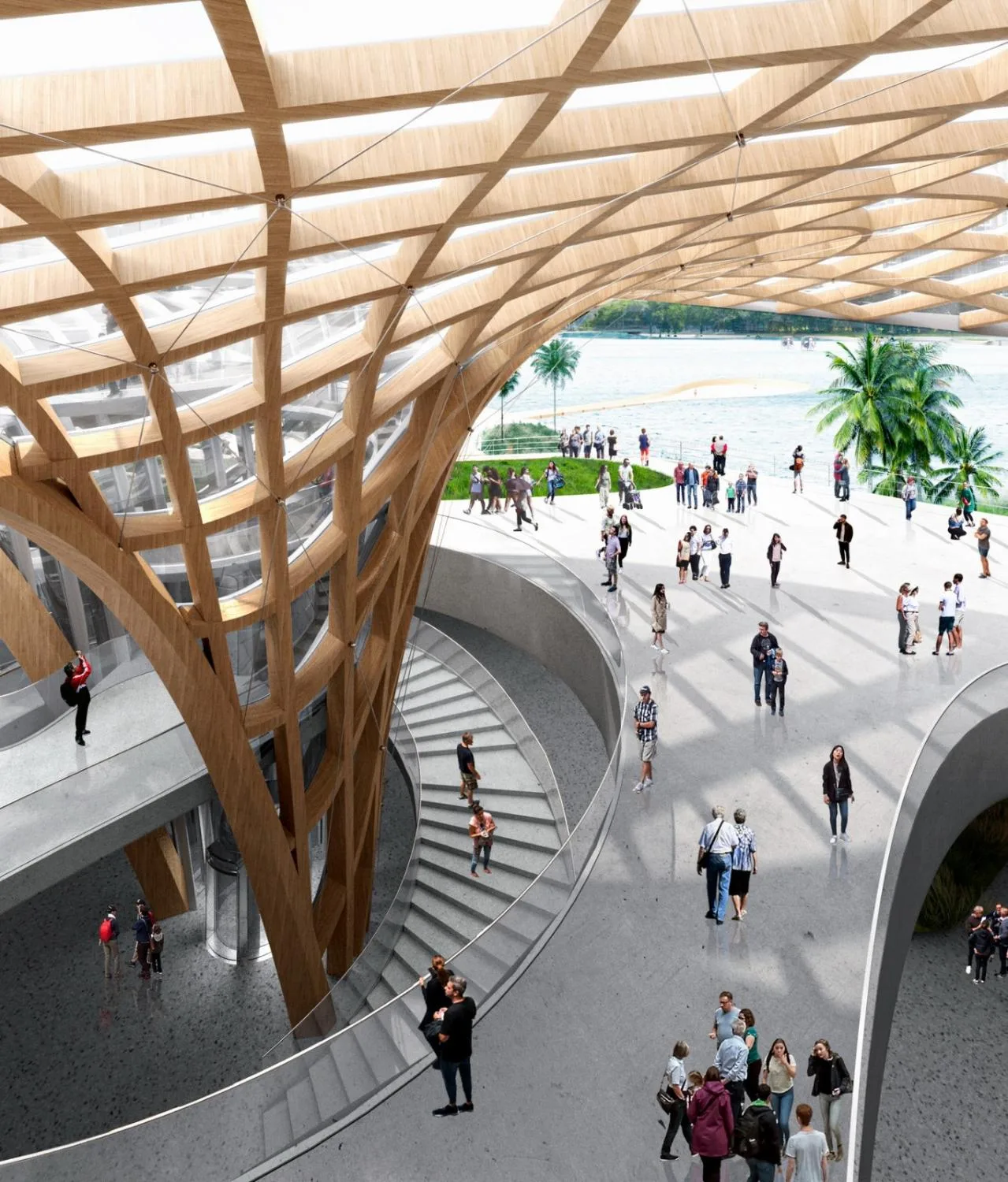
The three venues are interconnected by a 7-meter-high, two-story landscape platform. Beneath this platform lies the first-floor commercial service area, which also manages public parking and office logistics in an integrated way. Above, a pedestrian-friendly space leads directly to the main entrances of the venues. A central spatial zone has been established, featuring a city observation deck, sunken plaza, open-air theater, lake center platform, elevated sky corridor, and a cultural water landscape park on the east side.
Covered by a semi-transparent white ETFE membrane roof, the center offers ample urban grey spaces that provide shade and shelter from sun and rain. This design enhances comfort for summer visitors in southern cities and creates a vibrant new destination for cultural life within the Nanhai Cultural Area.
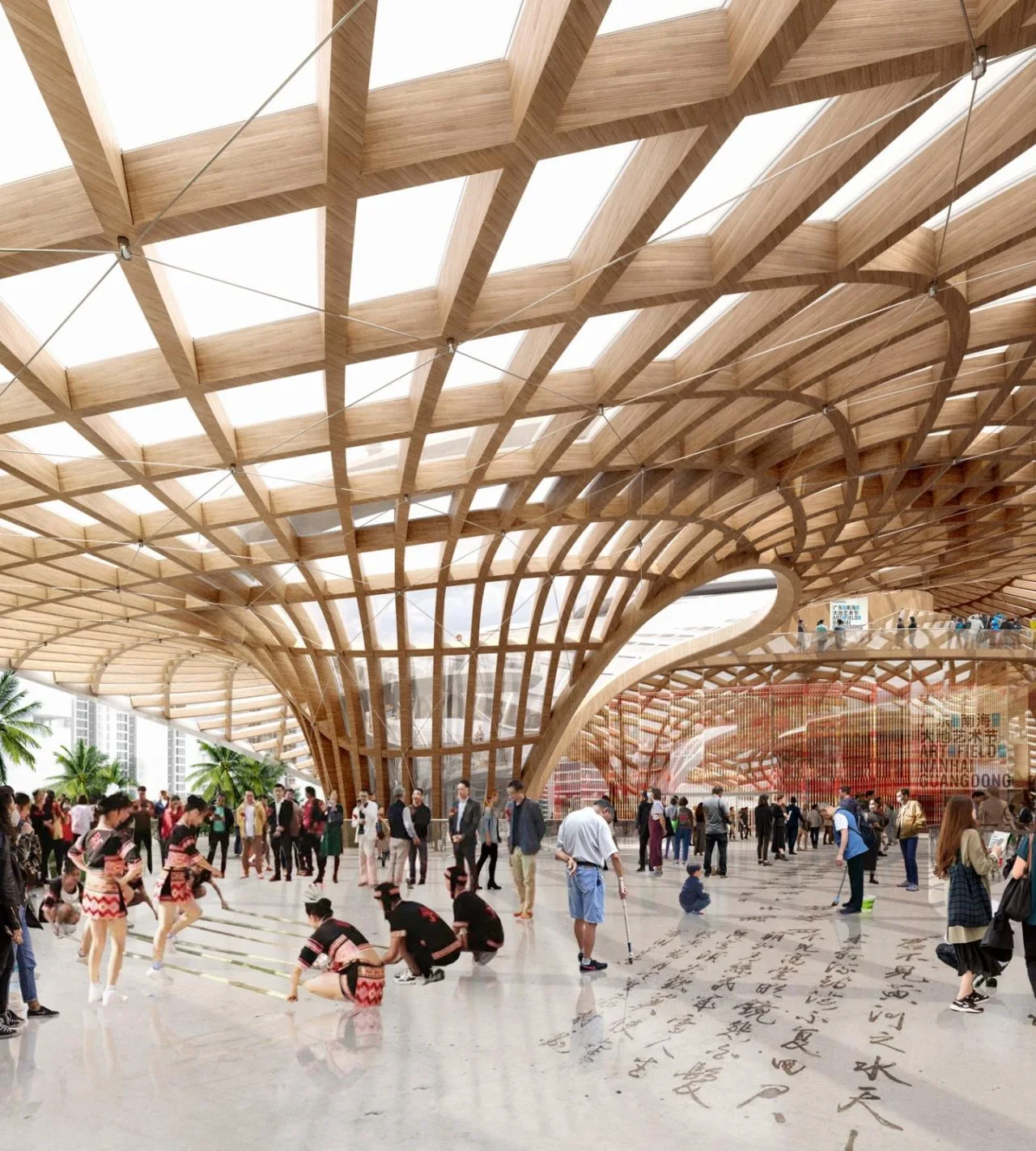
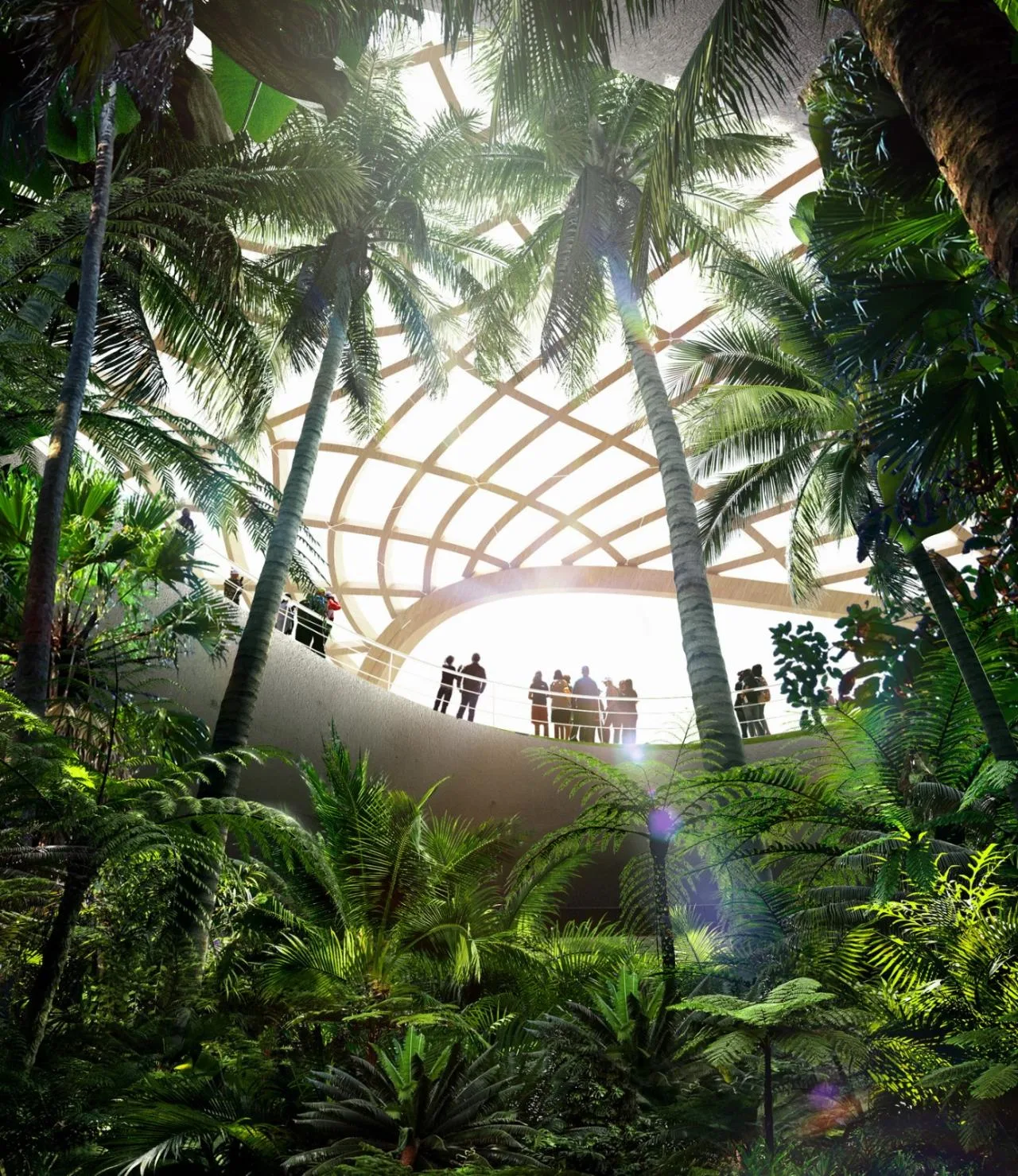
The Grand Theatre and Museum together cover around 38,975 square meters, with a total built-up area of approximately 89,269 square meters. The Grand Theater features a 1,500-seat main hall and a 600-seat multipurpose hall, accommodating a range of performances including opera, drama, musicals, symphonies, and choirs. The museum, once completed, will offer comprehensive exhibitions in line with its status as a national first-class institution.
The sports center covers roughly 20,480 square meters, with a total built-up area of about 32,006 square meters. It includes diverse sports facilities such as swimming pools, basketball courts, and badminton courts, providing residents with ample spaces for leisure and fitness activities.
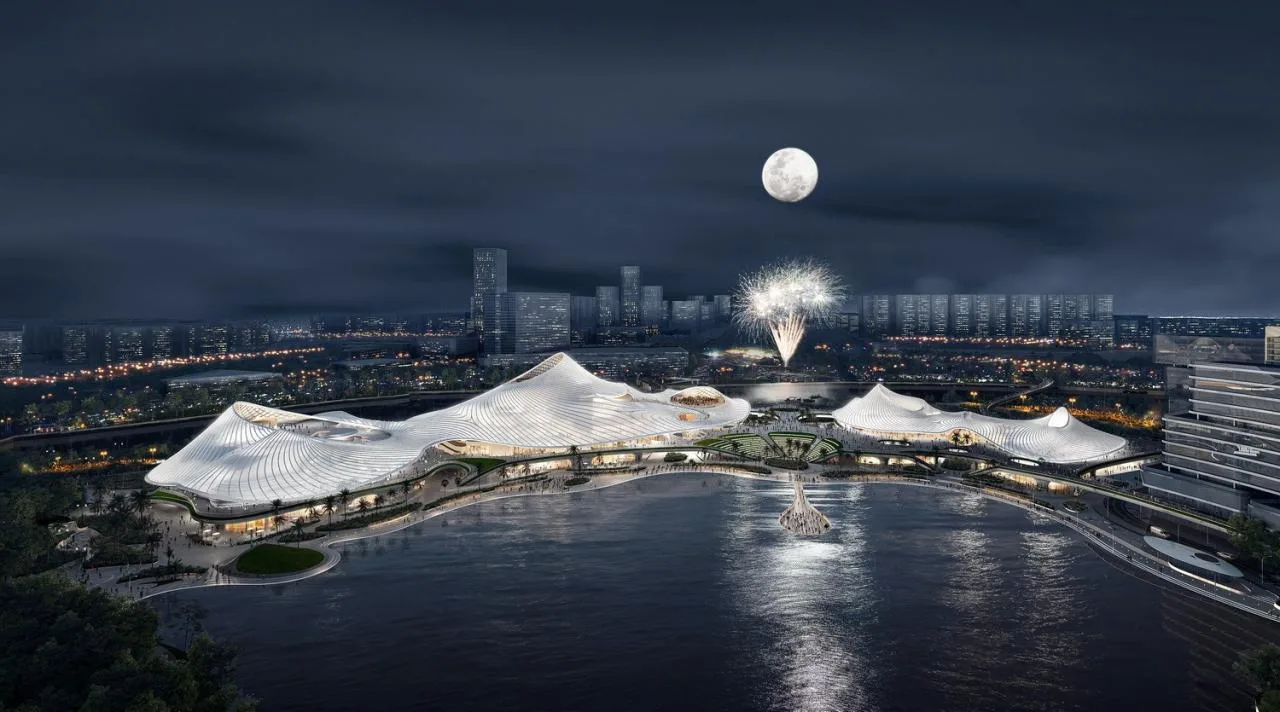
The roof design incorporates eco-friendly technologies such as cadmium telluride photovoltaic panels, rainwater harvesting and irrigation systems, and vertical greening, demonstrating a commitment to green architecture and carbon reduction.
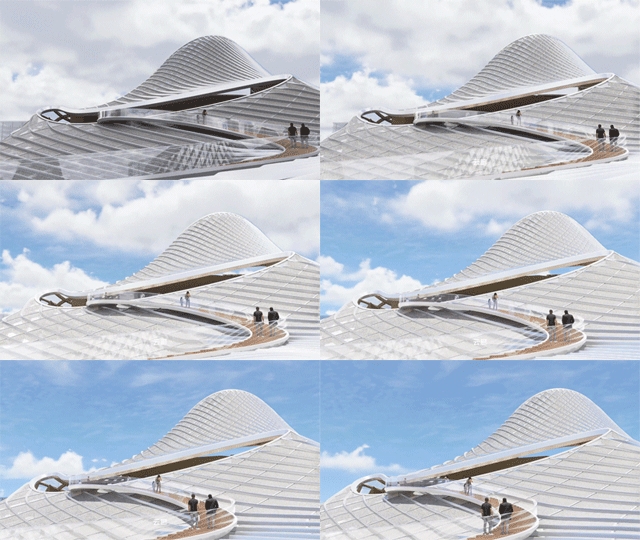
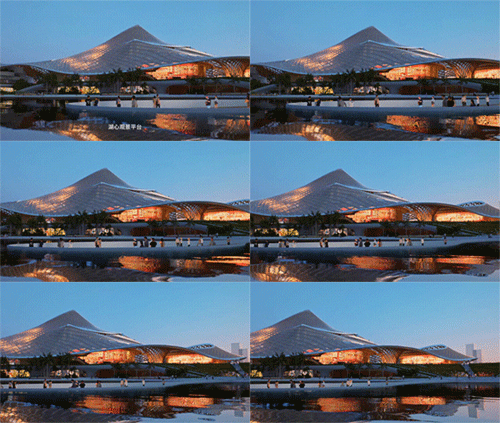
Construction of the Nanhai Art Center is planned to commence in 2024, with completion targeted for 2029.
Project Drawings
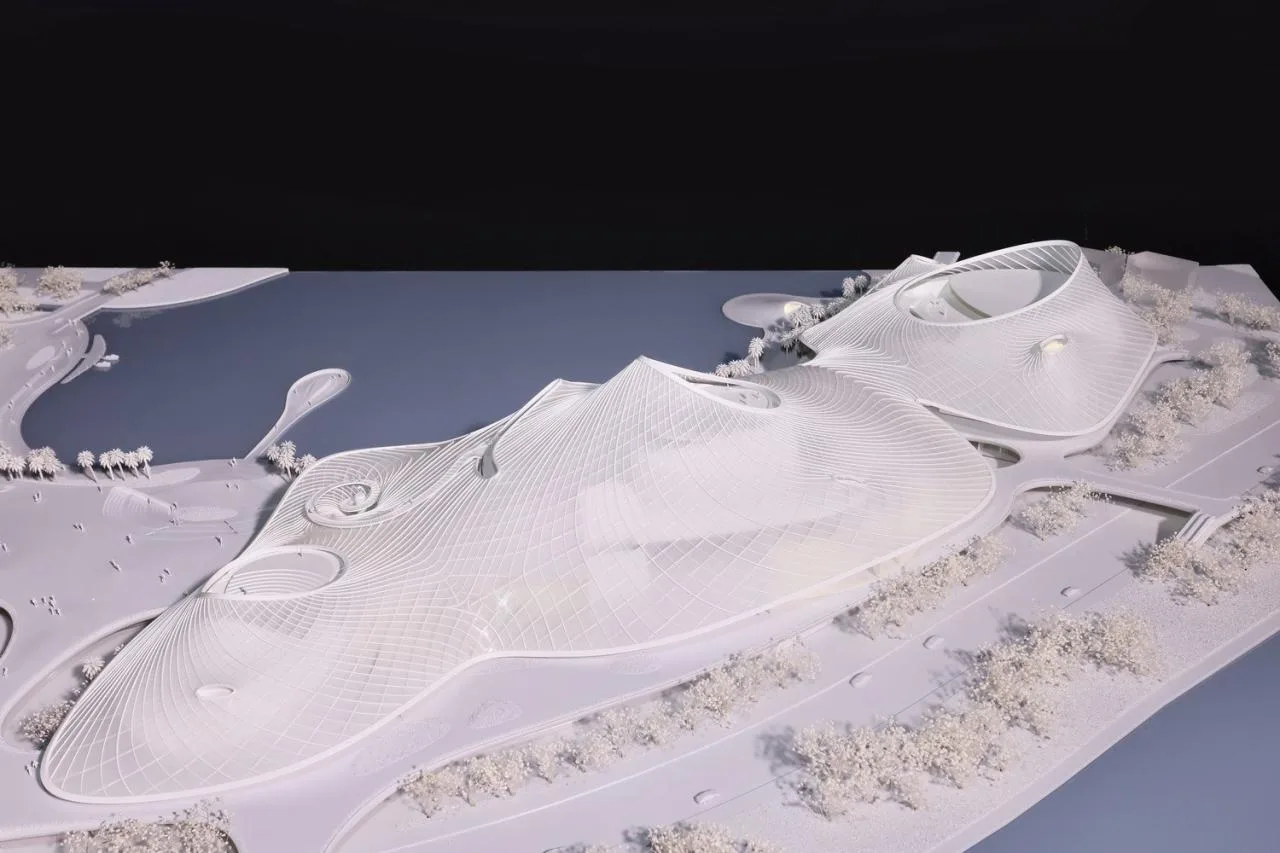
△ Model Diagram
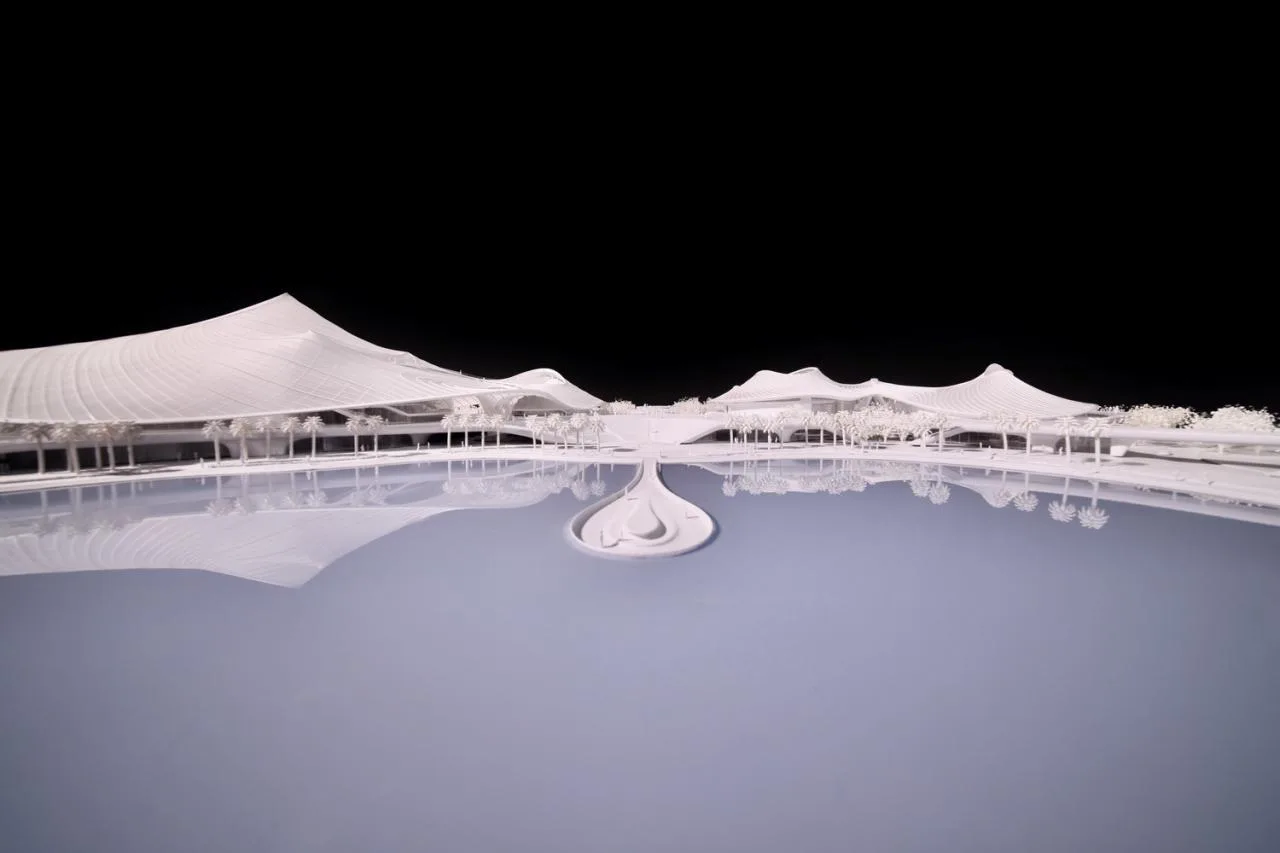
△ Model Diagram
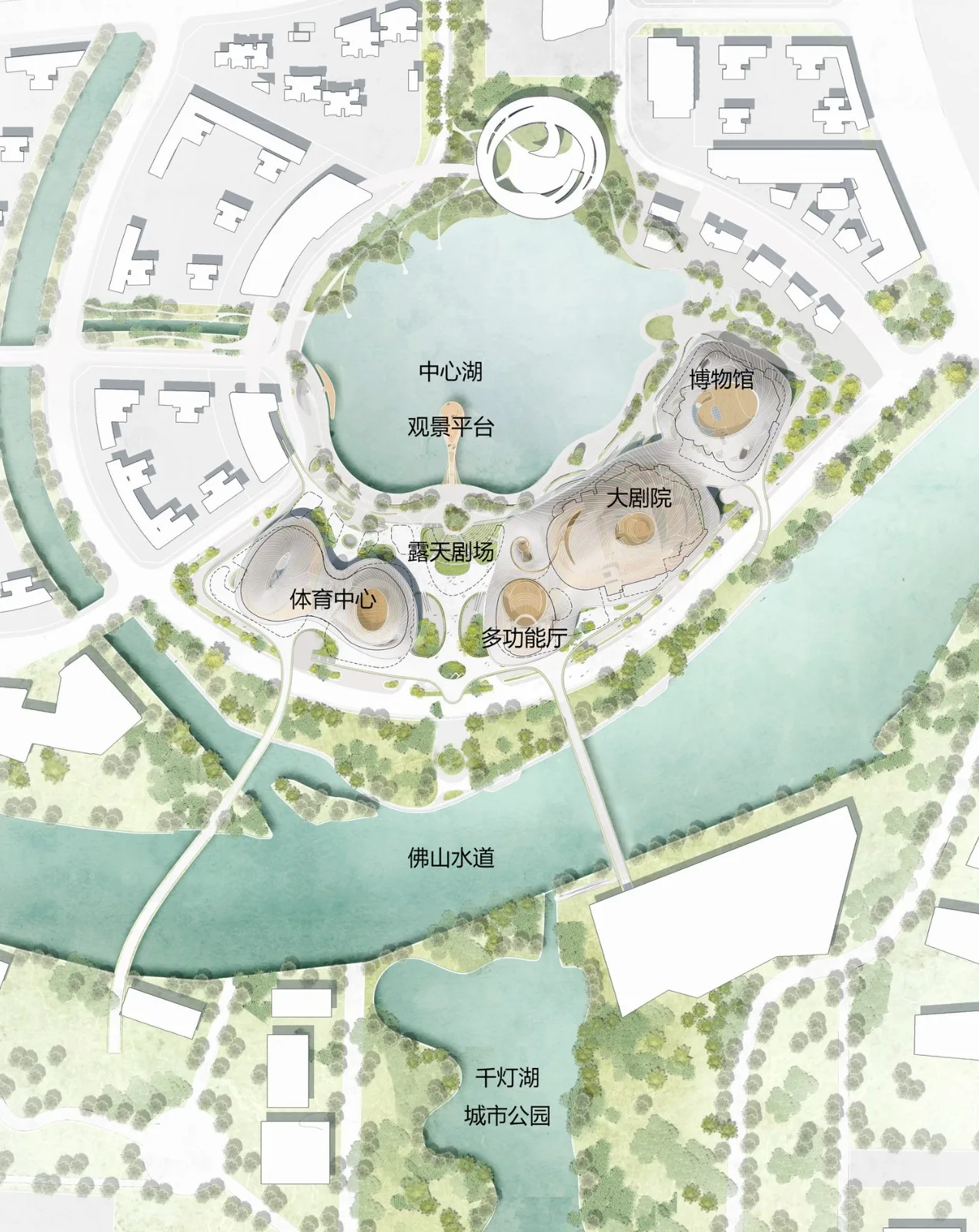
△ General Layout Plan
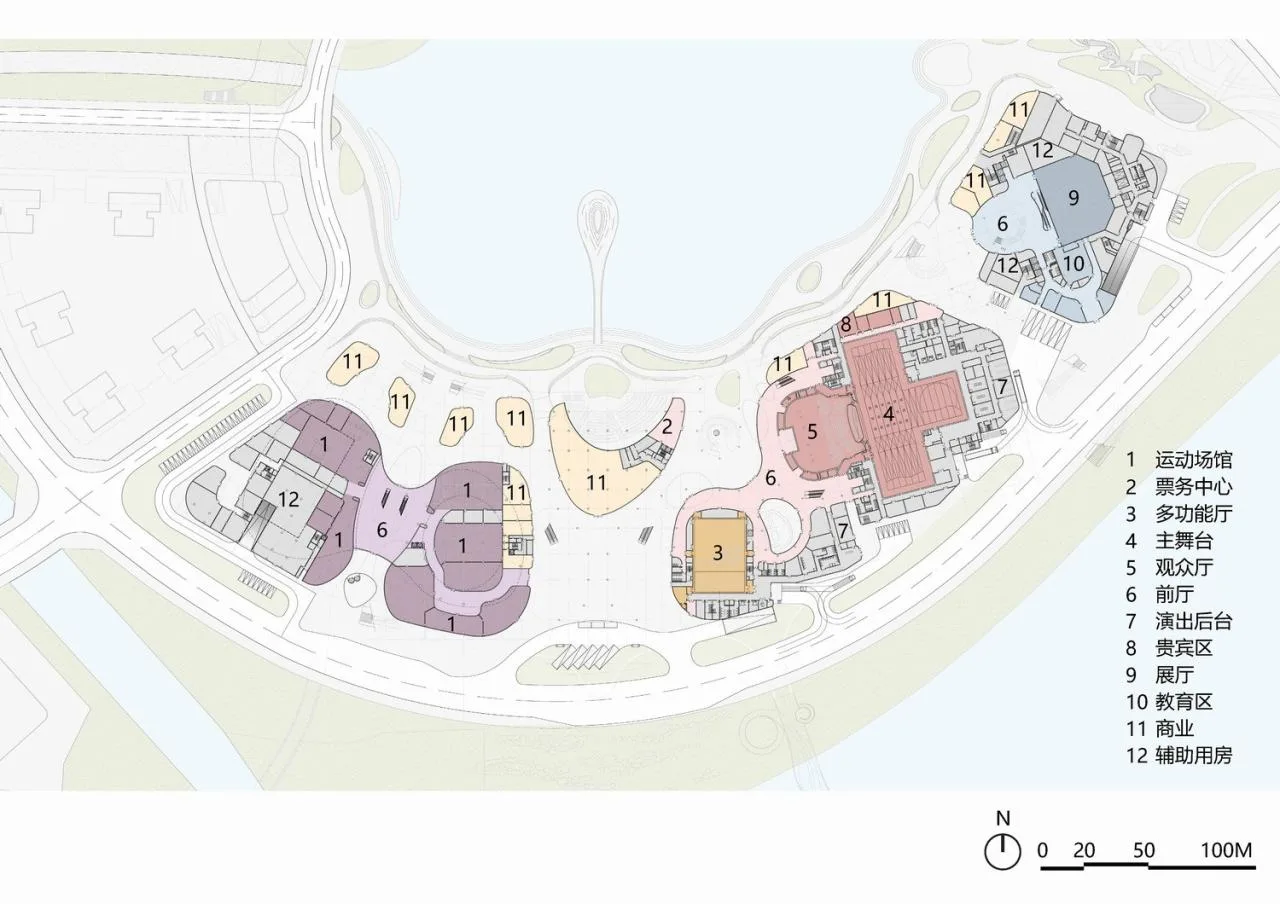
△ First Floor Plan
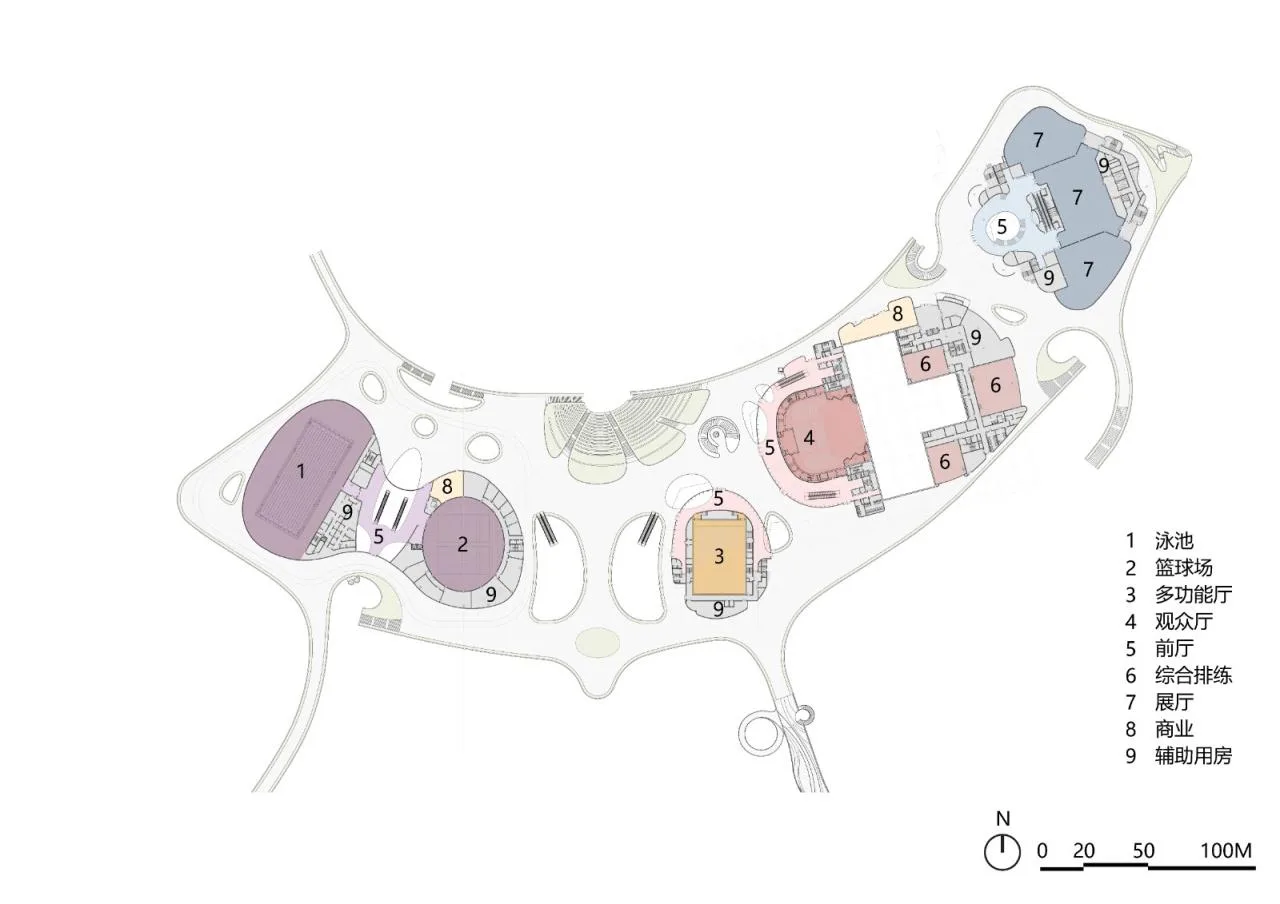
△ Second Floor Plan
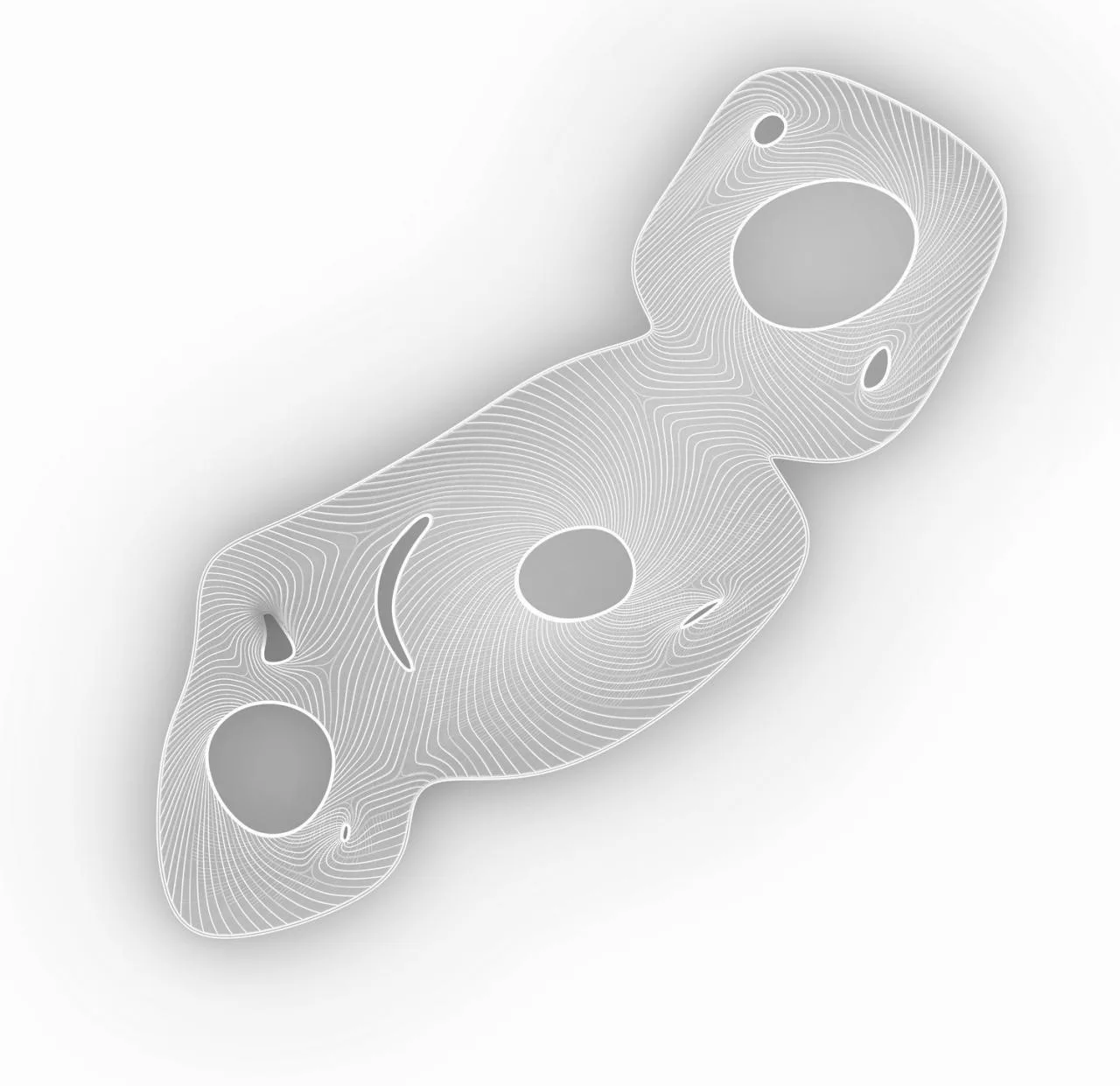
Schematic Diagram of Roof Height Differences
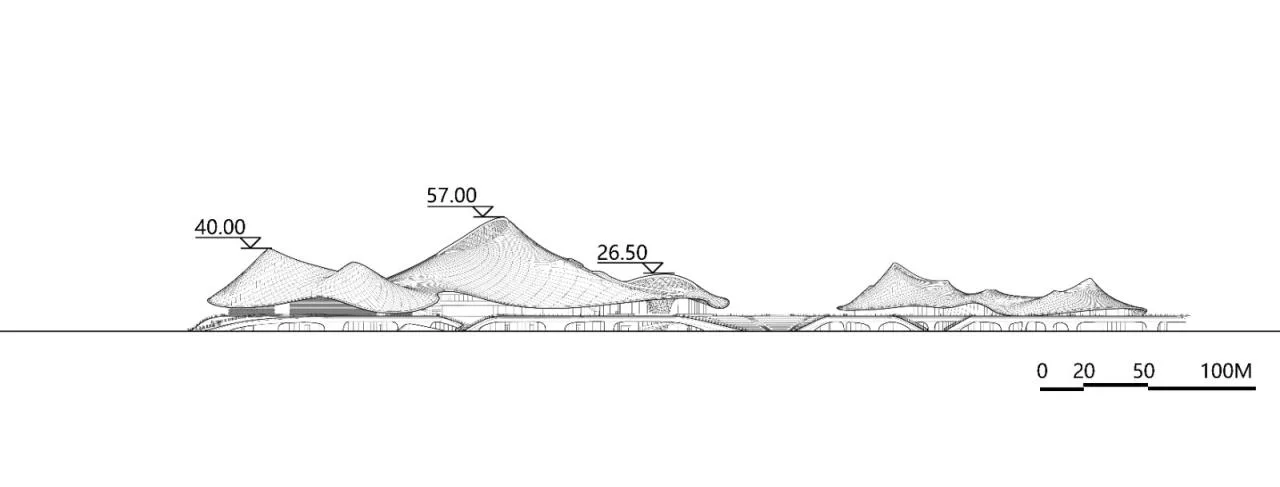
△ Elevation Drawing
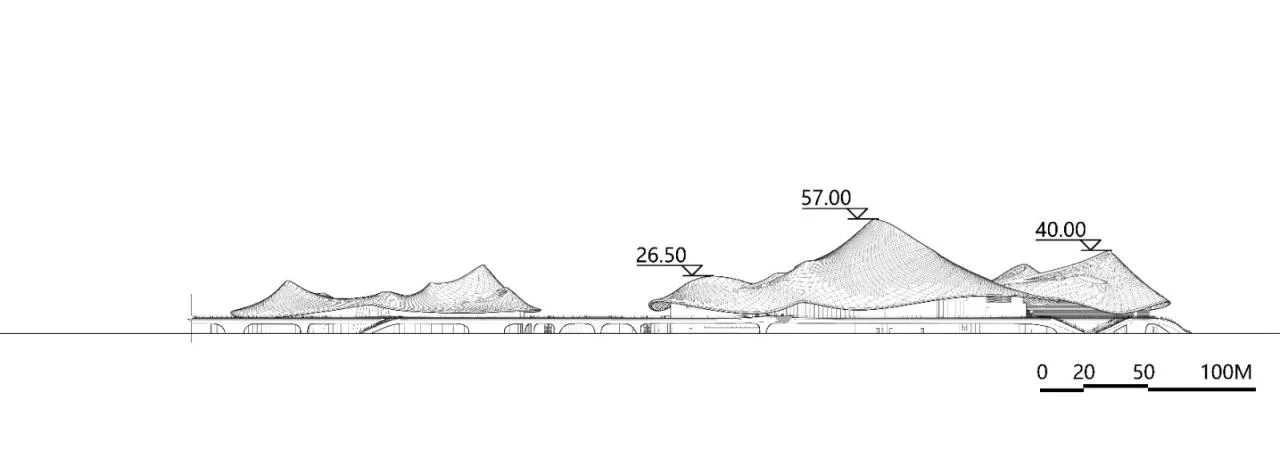
△ Elevation Drawing
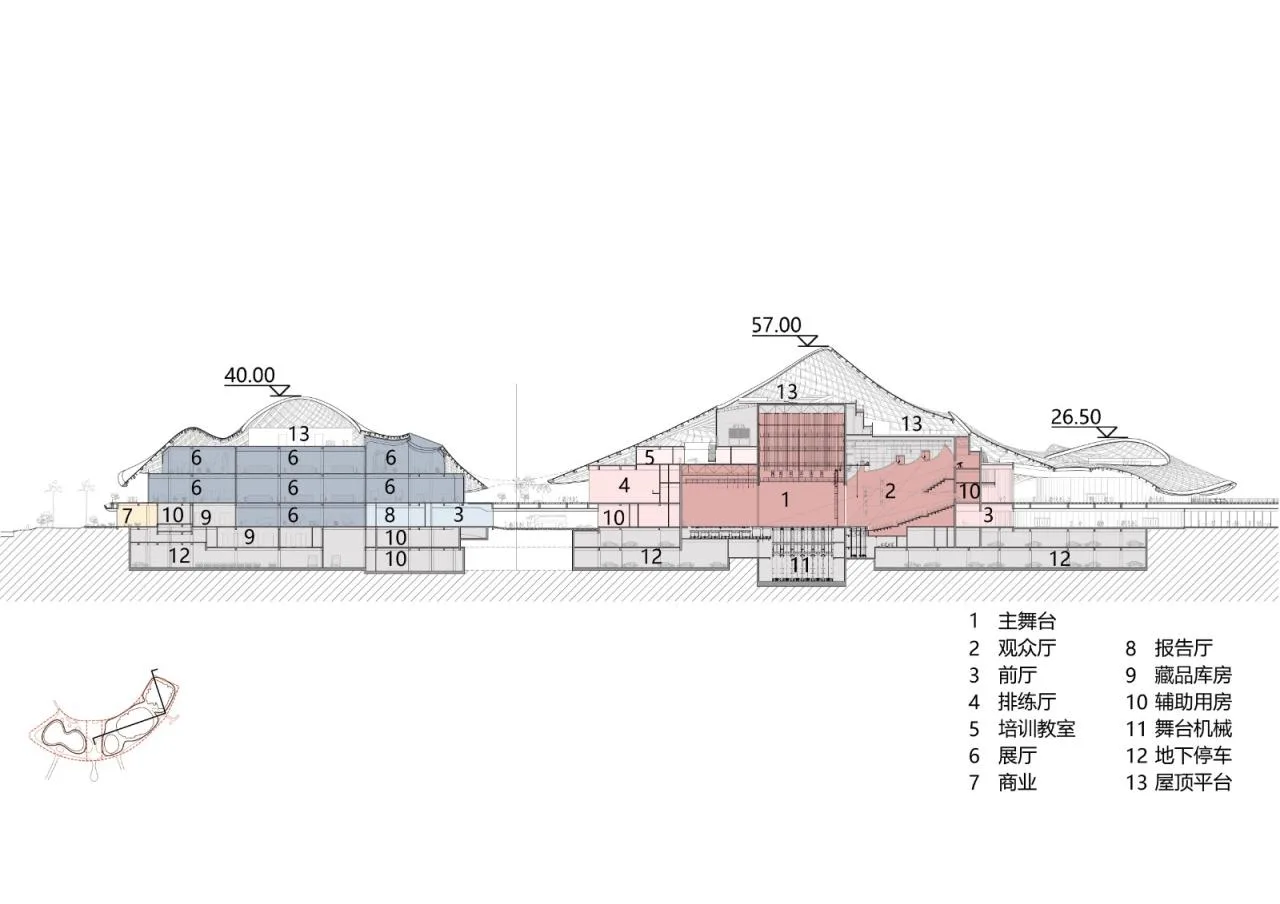
△ Section Diagram
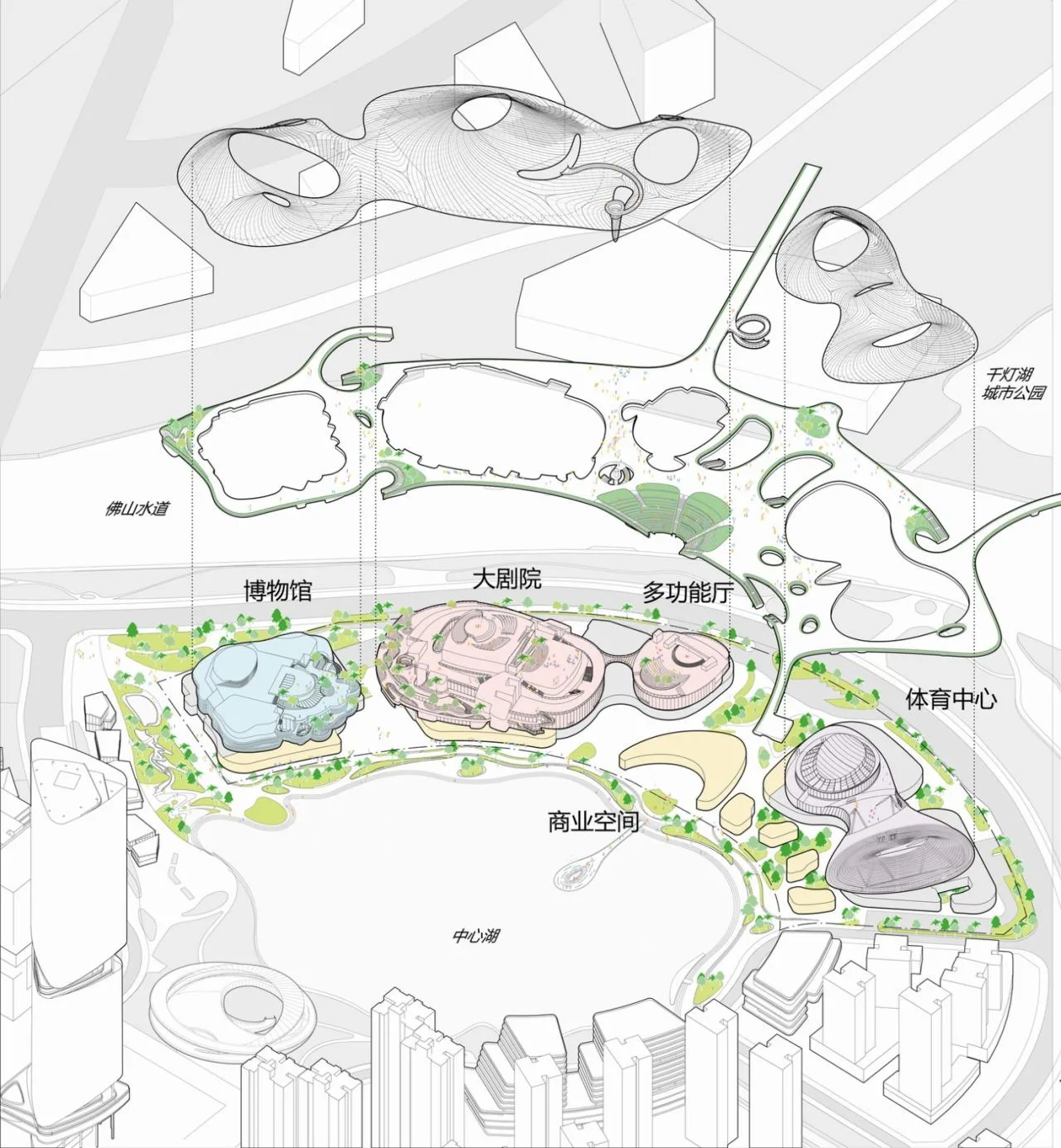
△ Function Diagram
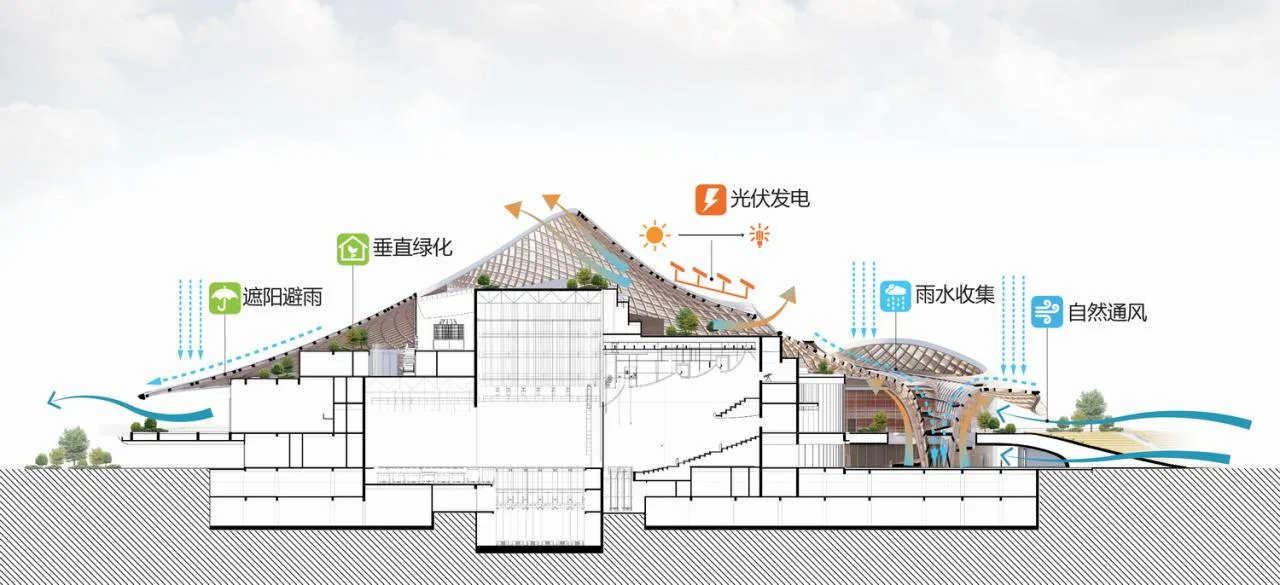
△ Green Building Diagram
Project Information
Type: Cultural Facilities – Theater, Museum, Sports Center, Commercial
Site Area: Approximately 59,455 square meters
Building Area: Approximately 121,275 square meters
Lead Partners: Ma Yansong, Party Masses, Yokosuke Hayano
Lead Vice Partners: Li Jian, Liu Huiying
Design Team: Li Cunhao, Zhang Ying, Yoshio Fukumori, Rozita Kashirtseva, Hao Ming, Orion Campos, Zhang Lipei, Gao Chang, Zeng Tianxing, Li Yuchen, Ma Ran, Hemant Jindal, Jiang Yunyao, Zhou Rui, Ma Juelan, Zhang Tong, Peng Guanjing
Owner: Foshan Nanhai Youwei Baiyue Culture Co., Ltd.
Construction Contractor: Liyayuan Real Estate Development Co., Ltd., Nanhai District, Foshan City
Class A Design Institute: Tongji University Architectural Design and Research Institute (Group) Co., Ltd.
Landscape Consultant: Pan Asia Landscape Design (Shanghai) Co., Ltd.
Lighting Consultant: Beijing Ningzhijing Lighting Design Co., Ltd.
Stage Craft Consultant: China Academy of Art and Technology
















Must log in before commenting!
Sign Up