
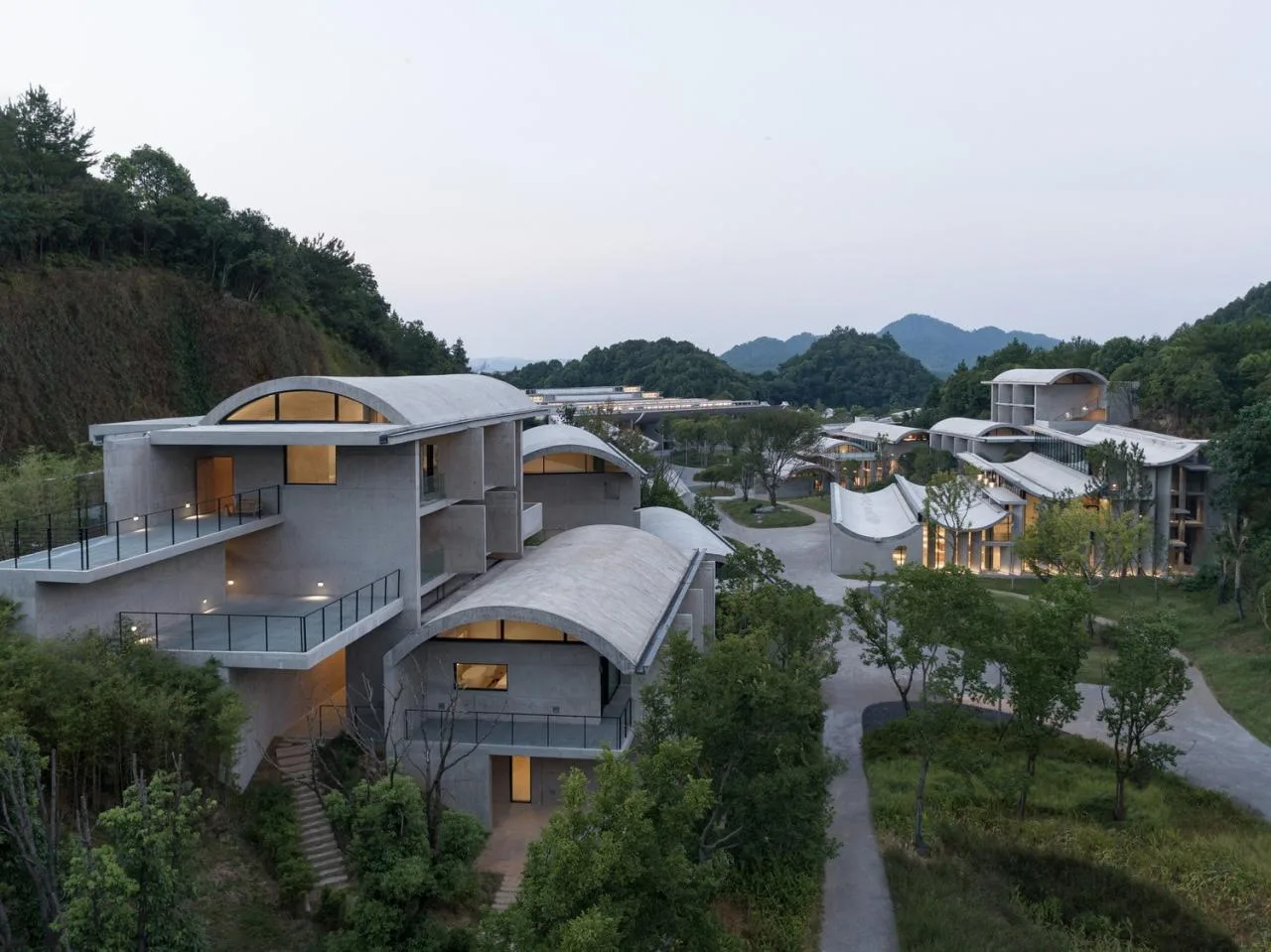
The Zijing International Club is nestled in the mountainous valleys west of Jingdezhen City, Jiangxi Province. Originally a dense, natural forested mountain valley, the site was transformed through extensive cutting and filling to create a long, narrow field used as a driving school training ground. These visible scars on the mountain serve as a stark reminder of the reckless expansion and overdevelopment driven by urbanization.
The Purple Crystal International Club presents an opportunity to adopt a fresh approach—one that fosters a harmonious and respectful relationship between the natural environment and human-made structures. Unlike typical urban construction practices, which rarely prioritize energy efficiency or human comfort, this project aims to fully honor local culture and the survival wisdom of the indigenous people, drawing inspiration from their traditions. This philosophy represents a core principle guiding our architectural practice across diverse regions.
Traveling along the high-speed railway from Wuyuan to Jingdezhen, one often sees villages naturally nestled among valleys and streams. These villages typically have their backs to the mountains and face north-south, featuring simple, cubic houses clustered together at the mountain base. This arrangement preserves the relatively flat land between valleys for farming. From a distance, these villages appear as clusters of cubes, perfectly integrating human settlements with the natural landscape.
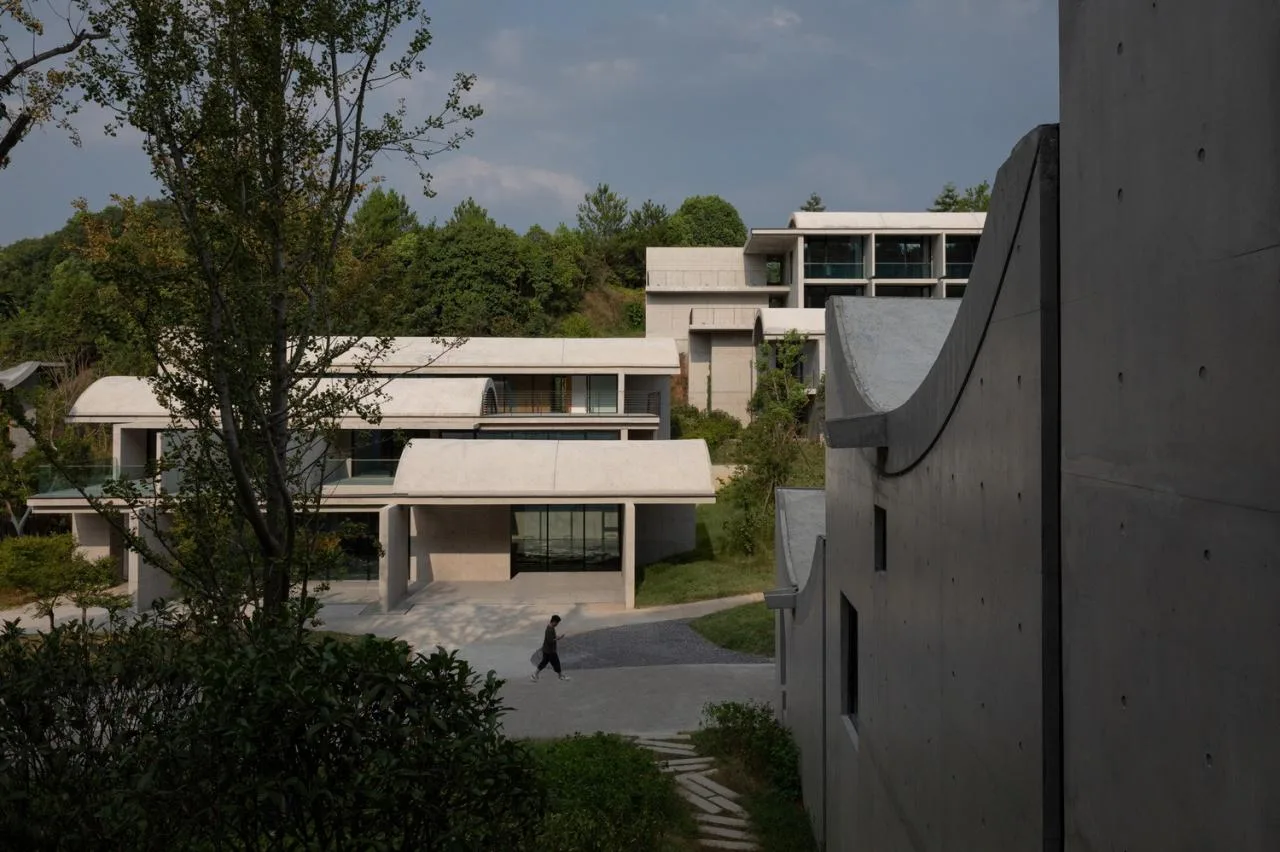
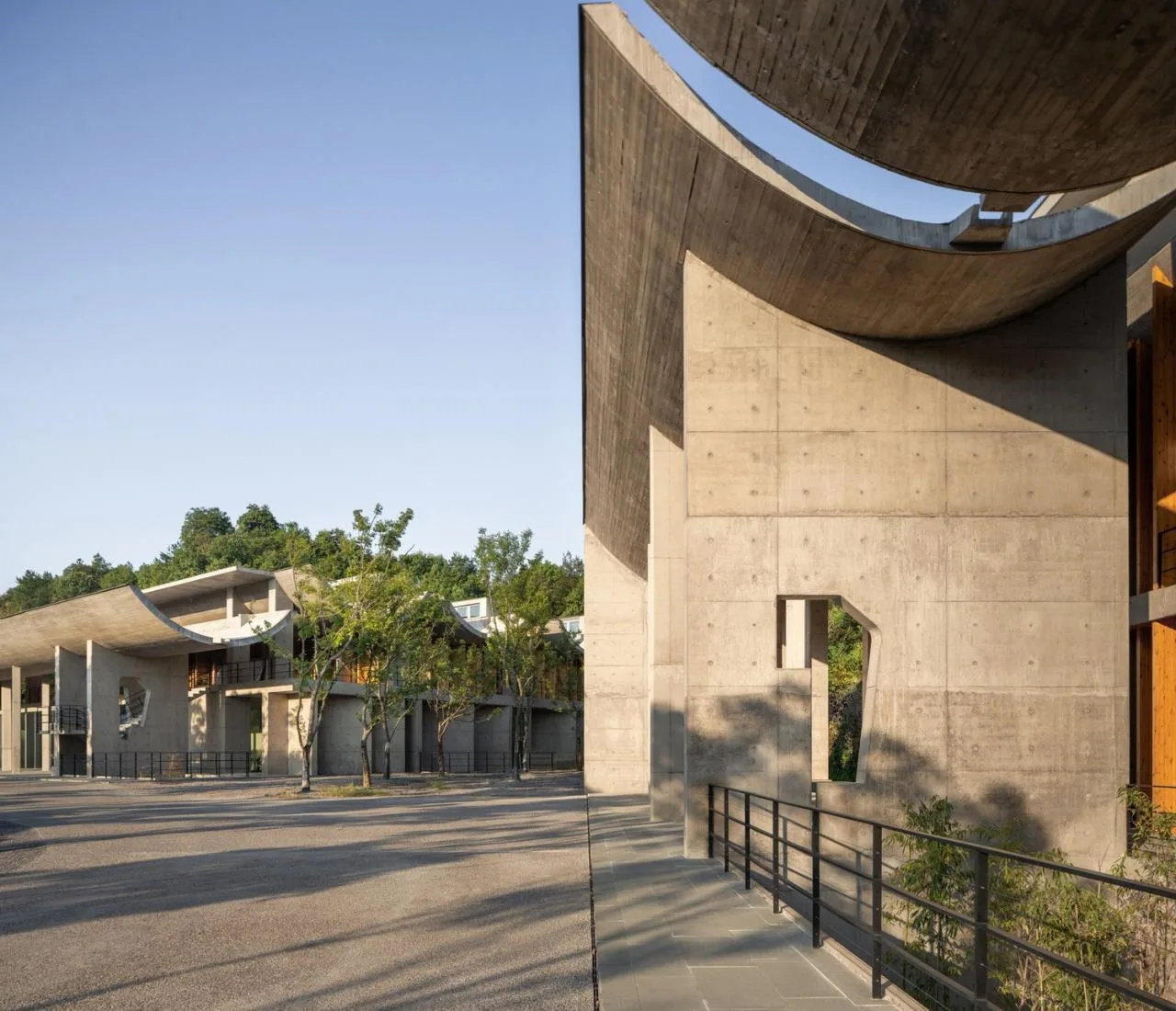
The close relationship between villages, farmland, and mountains reflects not only the local people’s deep-rooted beliefs in natural feng shui but also a thoughtful response to geographical and climatic conditions. The ancients lived here with a mindset focused on sustainably extracting resources from nature while preserving the vitality and stability of the land. Their simple yet intelligent building methods nurtured and protected their living spaces, creating an inseparable bond between humans, nature, and architecture.
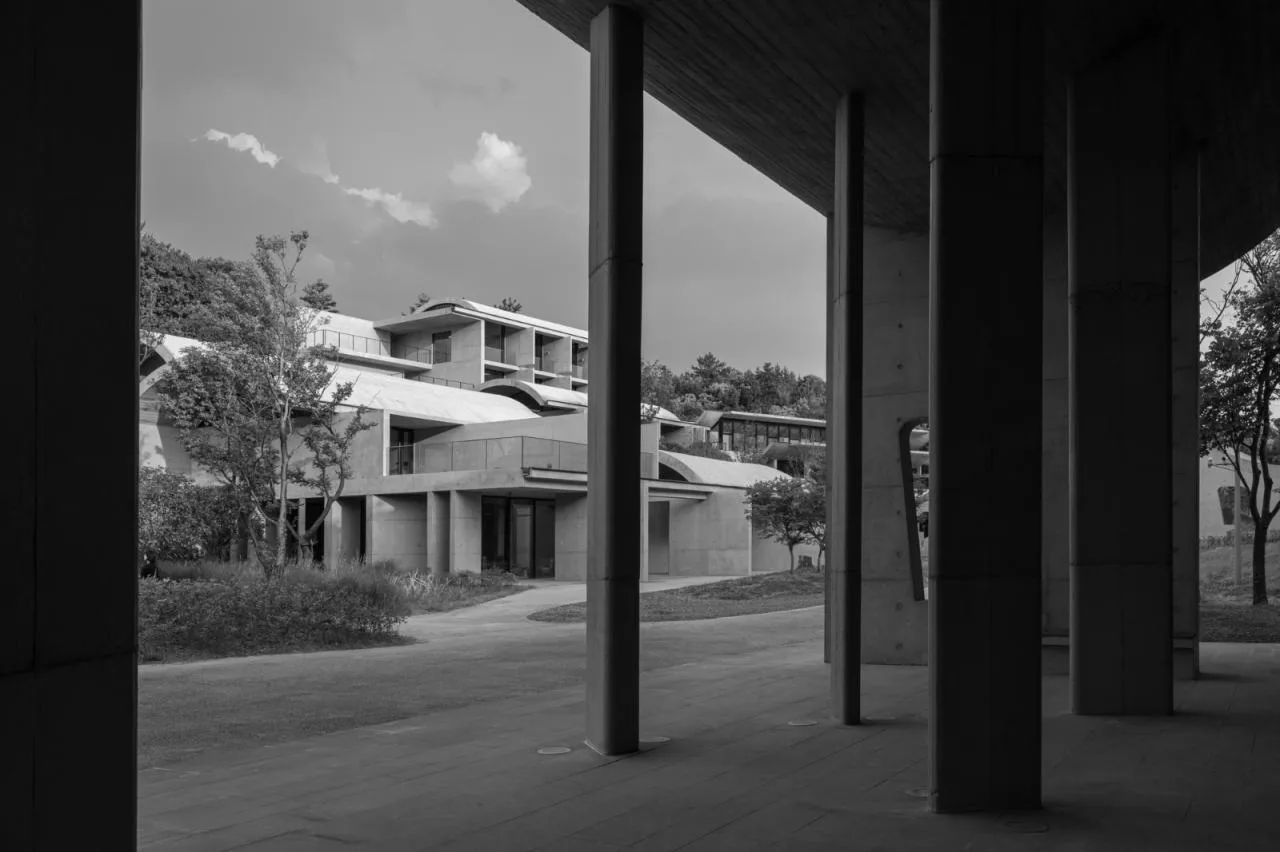
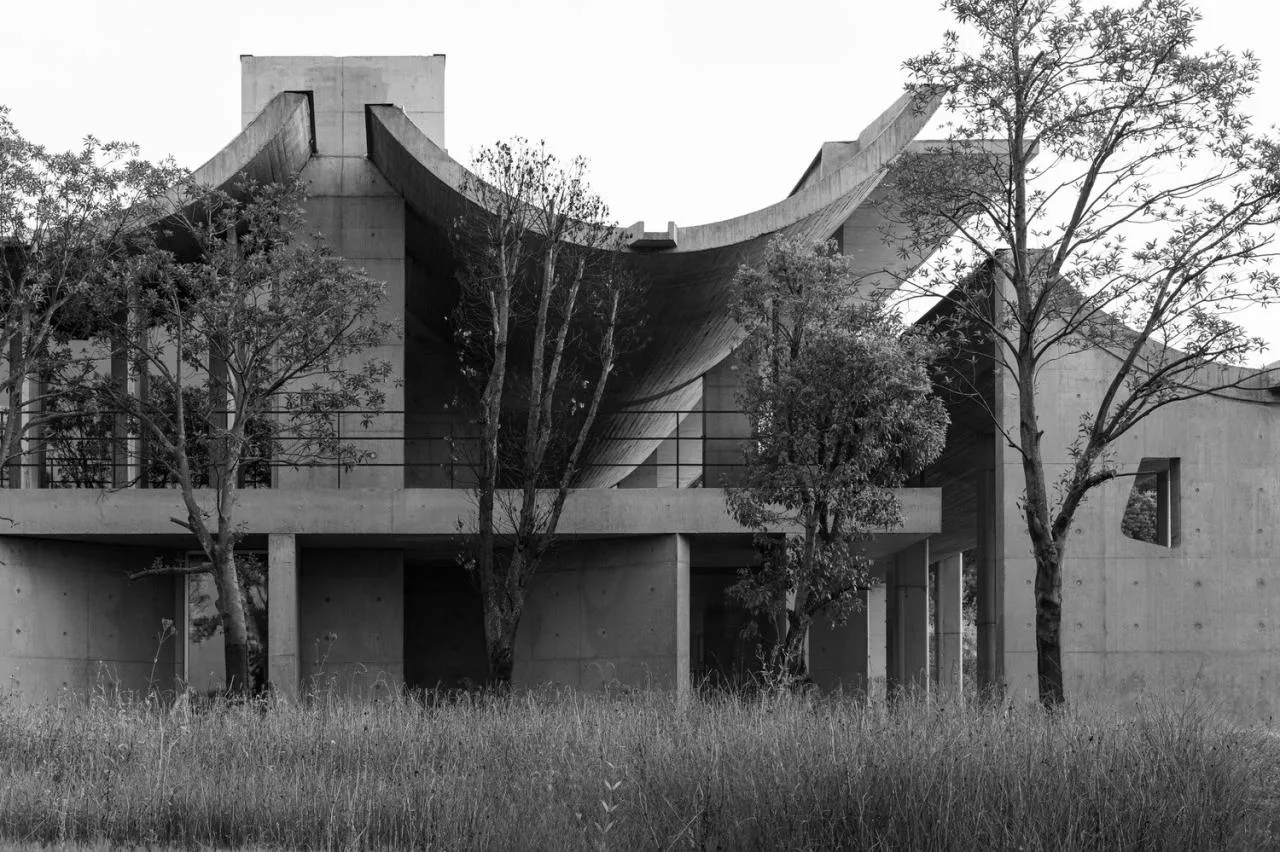
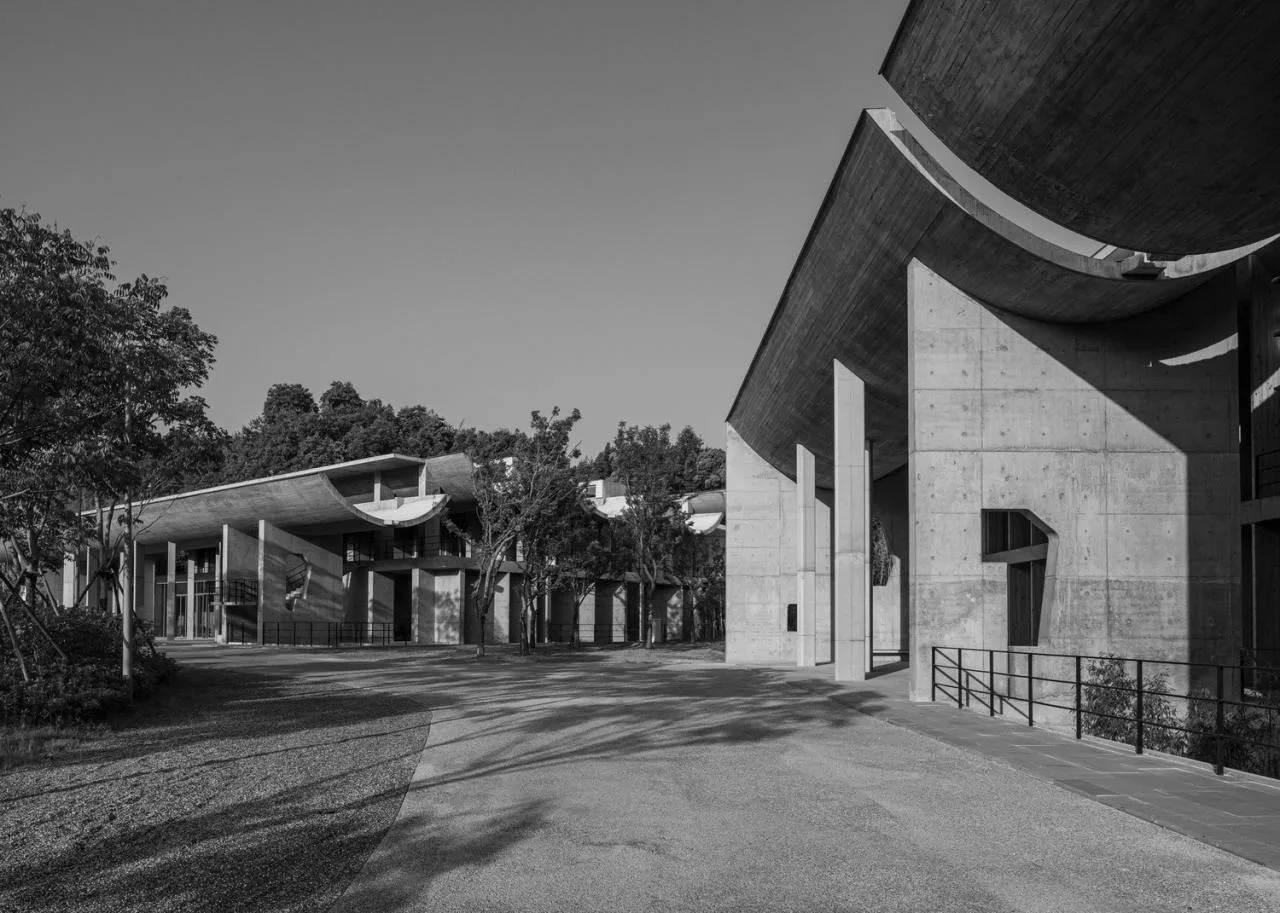
The key concept for this project was to design a “conference center” that belongs naturally to the city’s environment. Inspired by the relationship between traditional villages and landscapes, we introduced the concept of settlements, reinterpreting the “conference center” as a “meeting house.” Instead of a single large-scale building, the center is composed of decentralized, unit-style buildings dispersed along the mountain. These individual structures embrace both sides of the valley, leaving the central flat area open as a shared public space for interaction.
The complex unfolds horizontally following the mountain’s contours, resembling an ancient Jiangxi village, and reconnects the fragmented site with the surrounding nature. Human construction has historically been driven by survival instincts and shaped by local environments; Jiangxi’s regional architecture reflects this wisdom, adapting to its humid summers and cold, windy winters through design elements that emphasize shading and natural ventilation.
The Purple Crystal International Hui She, a cluster of “Hui She” settlements hidden within the mountains, continues this tradition. It embraces diversity, strategically integrating natural light and airflow, supporting human activities, and shaping an open, flowing architectural community that harmonizes with the valley landscape.
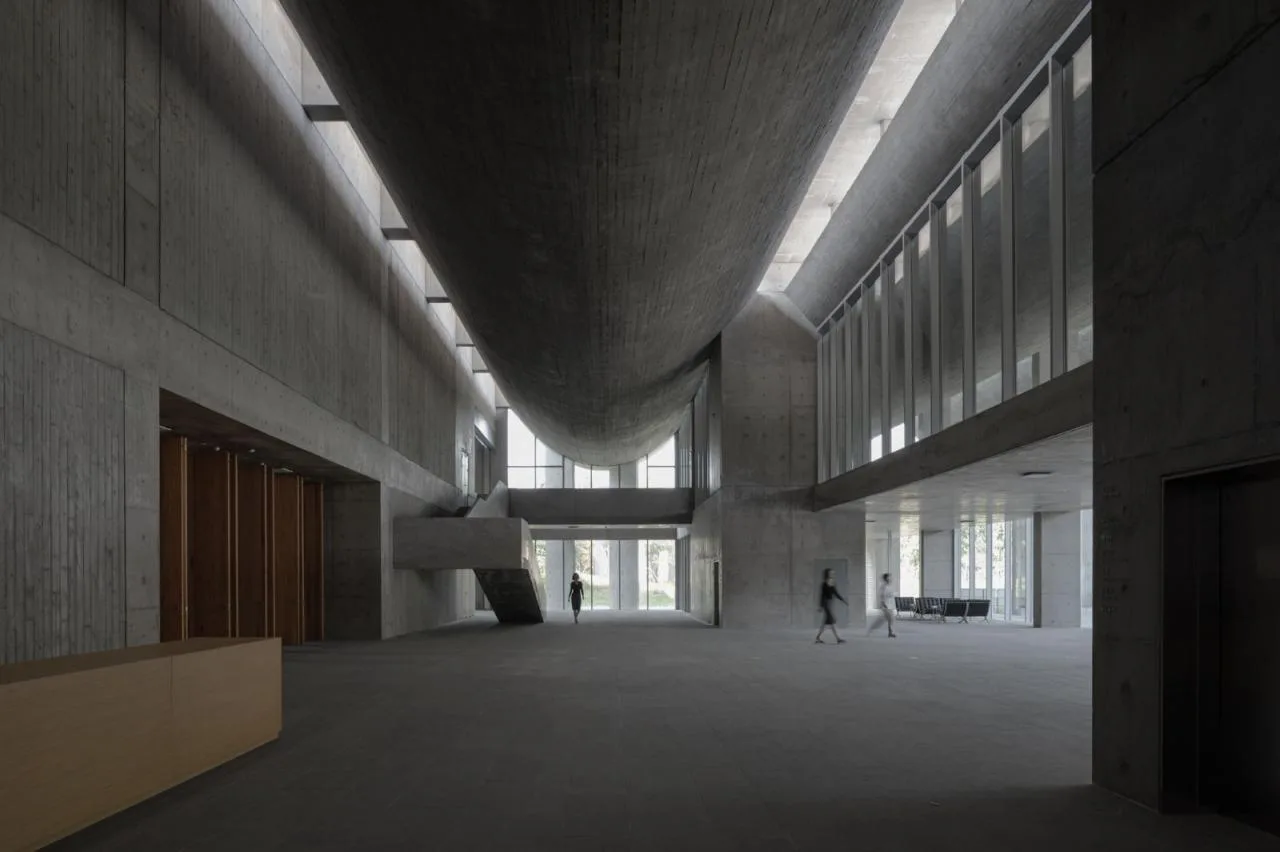
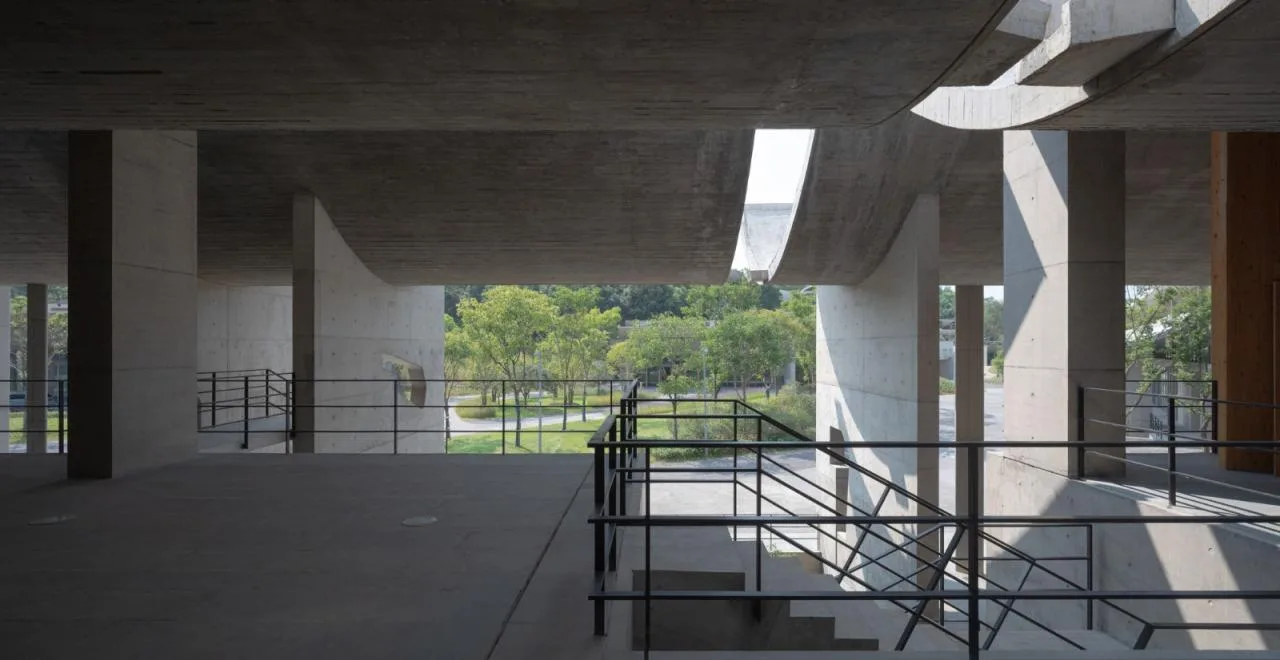
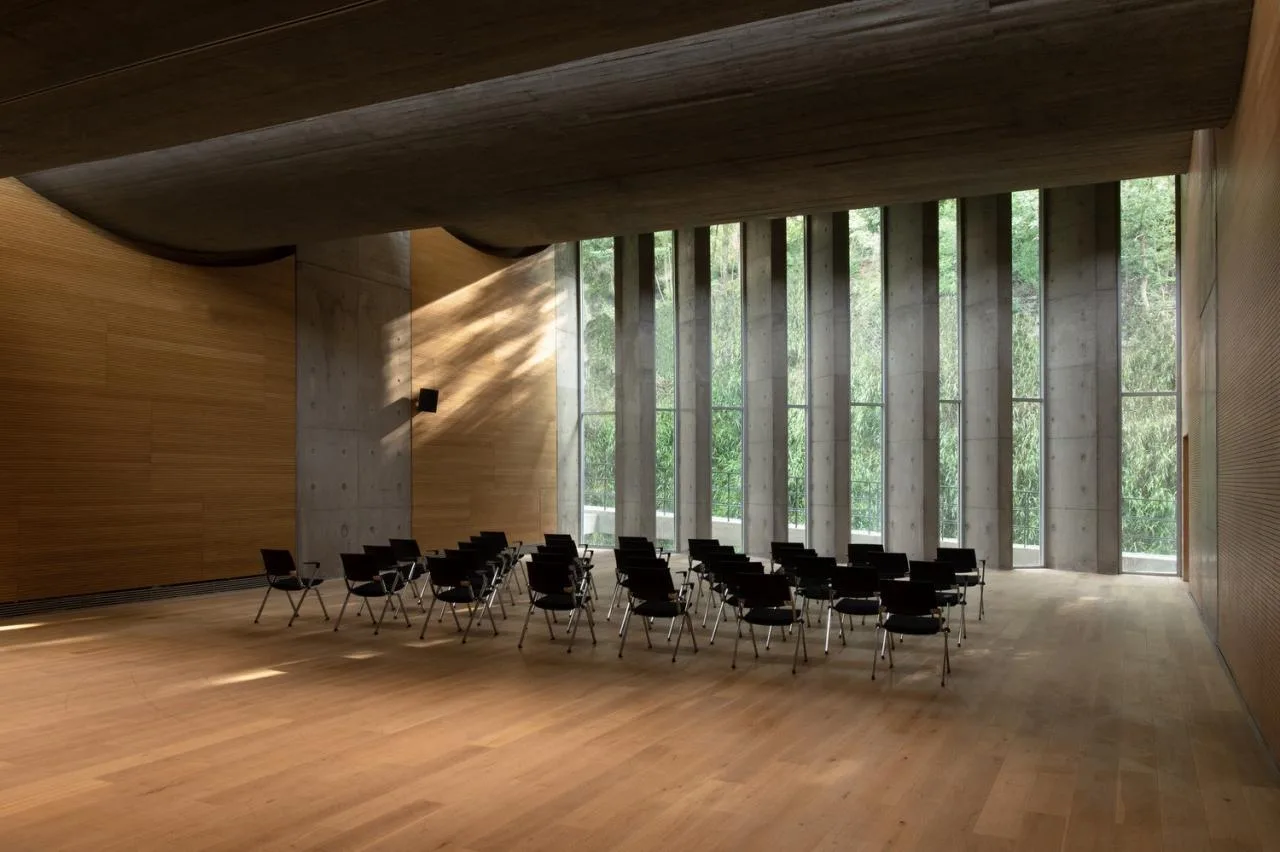
To realize this vision, the design embraces a simple, unpretentious, and practical structural form that responds to the site’s complexity. The initial structural concept is based on unidirectional, large-span arch beams supported by reinforced concrete walls at both ends. These arch units can be replicated and stacked, adapting naturally to the mountain’s shape, creating numerous openings that allow natural light to permeate the interiors, breaking the convention of dark, enclosed conference rooms.
Architecturally, the structure itself forms the building’s shape, with minimal enclosure, revealing an authentic and poetic expression of form. This approach seeks to rediscover the survival wisdom and cultural significance embedded in the architecture, resulting in a set of simple yet poetic “Huishe” buildings.
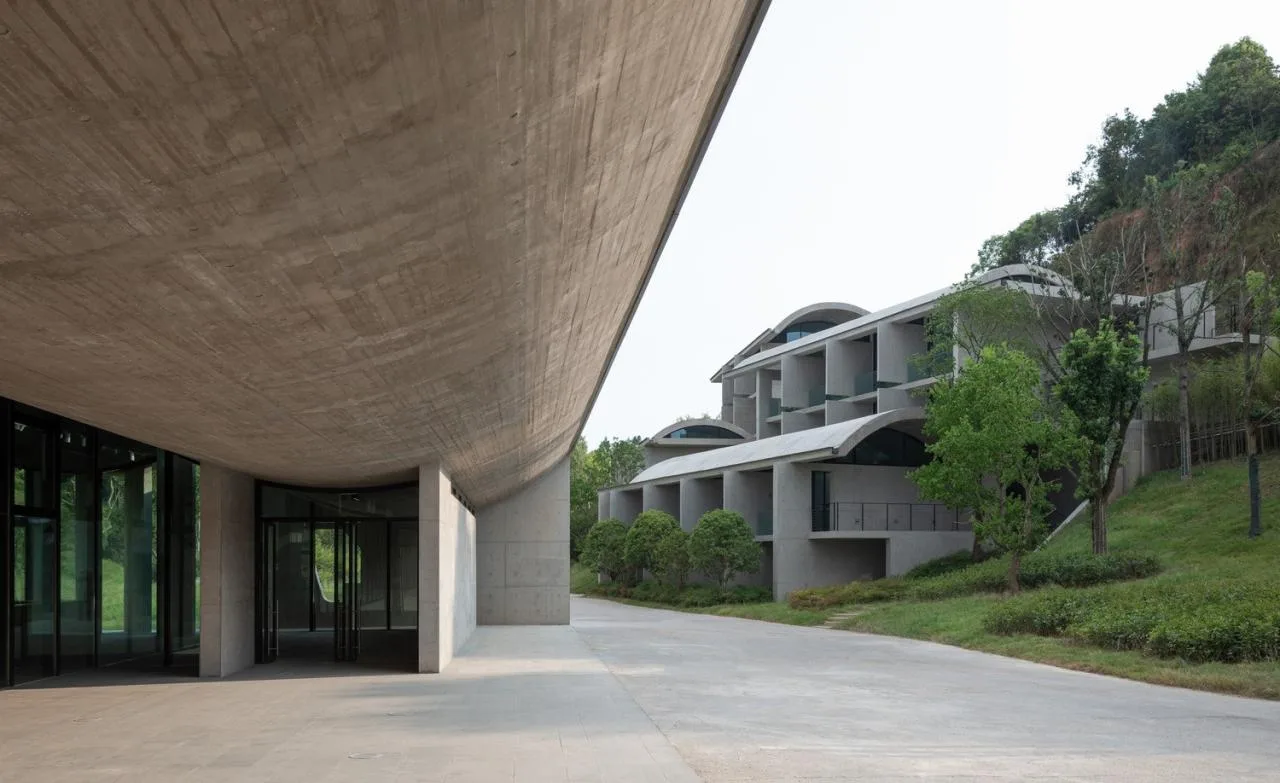
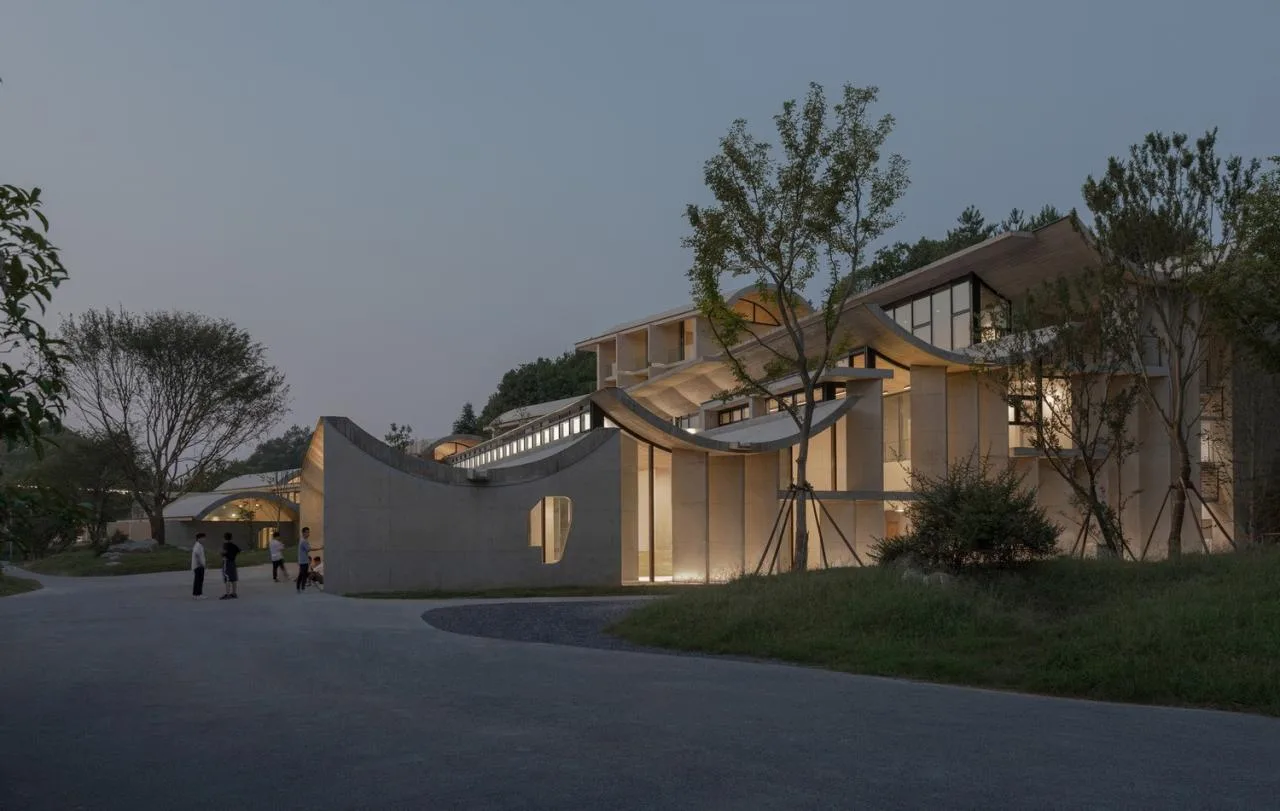
Many inverted single arches filled with structural tension are combined and varied repeatedly, metaphorically echoing the form of traditional double-eave architecture. The iconic curved eaves and gently arched roofs typical of traditional Chinese architecture are captured in the expansive curved surfaces of the Purple Crystal International Building, layered rhythmically and dynamically. The staggered arches play with light refraction and diffusion, enhanced by adjustable skylights and curtains, maximizing natural light and ventilation indoors.
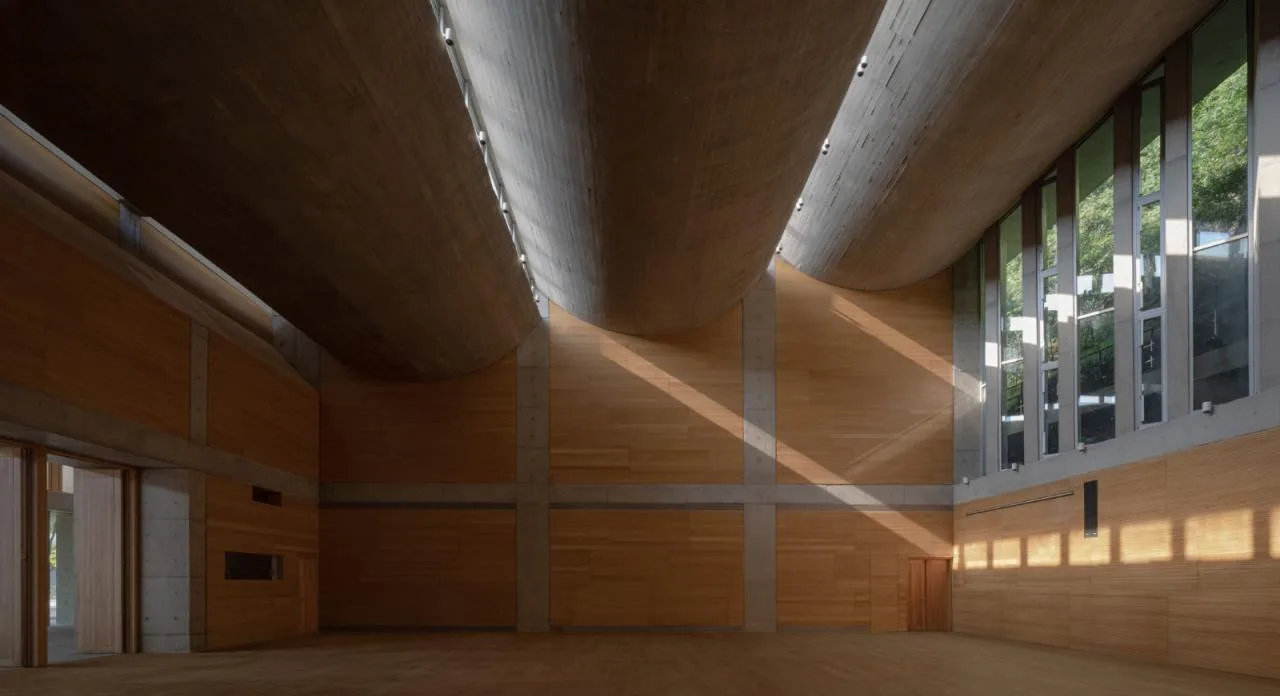
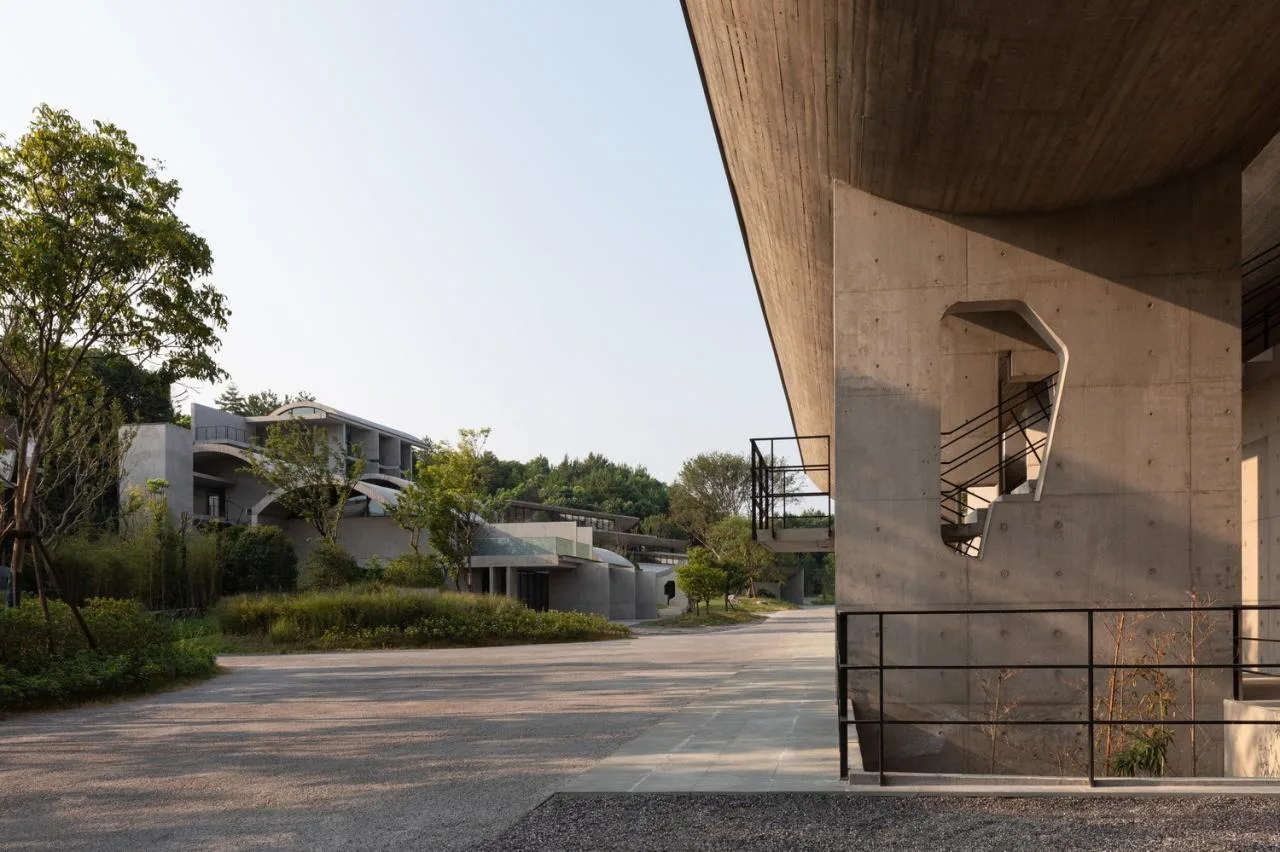
The Zijing International Building exemplifies the concept of “incomplete integrity” in natural architecture, achieving a seamless integration of architecture and mountainous environment in three dimensions. Horizontally, the settlement’s uneven edges interlock with nature, resembling a person’s two hands with ten fingers intertwined. This incomplete form creates an organic weave, blurring the boundaries between built and natural environments.
Vertically, the modular system adapts fluidly to the mountain’s slope, stacking units in harmony with the terrain. Though composed of seemingly simple structural elements, the repetition of arched roofs creates a rich rhythm and dynamic spatial tension, embracing the mountain’s sudden rises and shaping intimate architectural spaces.
Spatially, the architecture and nature intertwine through a blend of indoor and outdoor, real and virtual spaces. Numerous semi-outdoor areas and platforms connect the valleys, dissolving rigid geometry and enriching the spatial experience at the building’s edges.
Designed for the southern climate, the Purple Crystal International Building features a series of grey spaces—meeting rooms of various scales are linked by corridors, walkways, and shaded platforms beneath wide eaves. These eaves offer protection from sun and rain, creating comfortable shaded walkways during Jingdezhen’s hot summers.
Unlike traditional conference centers, visitors enter each building’s lobby and can freely move toward conference rooms, lounges, or banquet halls, or explore various pathways and courtyards leading into the mountain. This fluid circulation applies also to six individual guest rooms, which offer views and outdoor connections through observation platforms or winding forest paths.
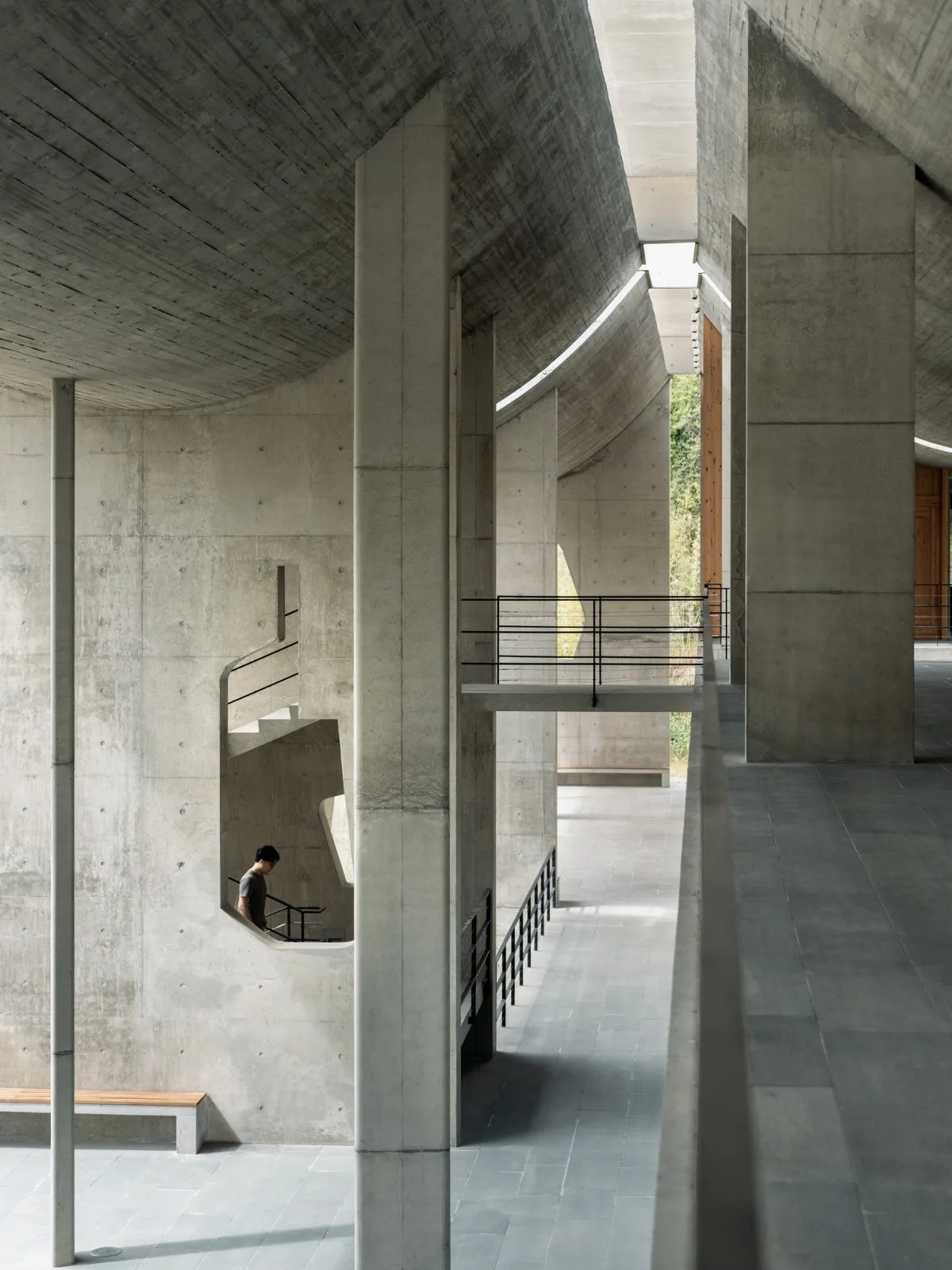
This design subverts conventional conference and hotel experiences, blending formal meeting functions with leisure and nature through carefully crafted environments. Under the arch roofs of the conference buildings, clusters of irregular concrete columns stand seemingly at random near entrances. These staggered columns vary in width and shape depending on the viewing angle, while sunlight casts warm glazes and intricate shadows on their surfaces.
Visitors can linger beneath these concrete canopies, glimpsing staircases behind porous walls. This sponge-like architecture invites sunlight, air, and sound, but most importantly supports human activity and emotion. Whether under morning mist, gentle rain, or the chorus of insects, the Purple Crystal International Residence offers a peaceful, simple, and soothing living experience.
Project Drawings
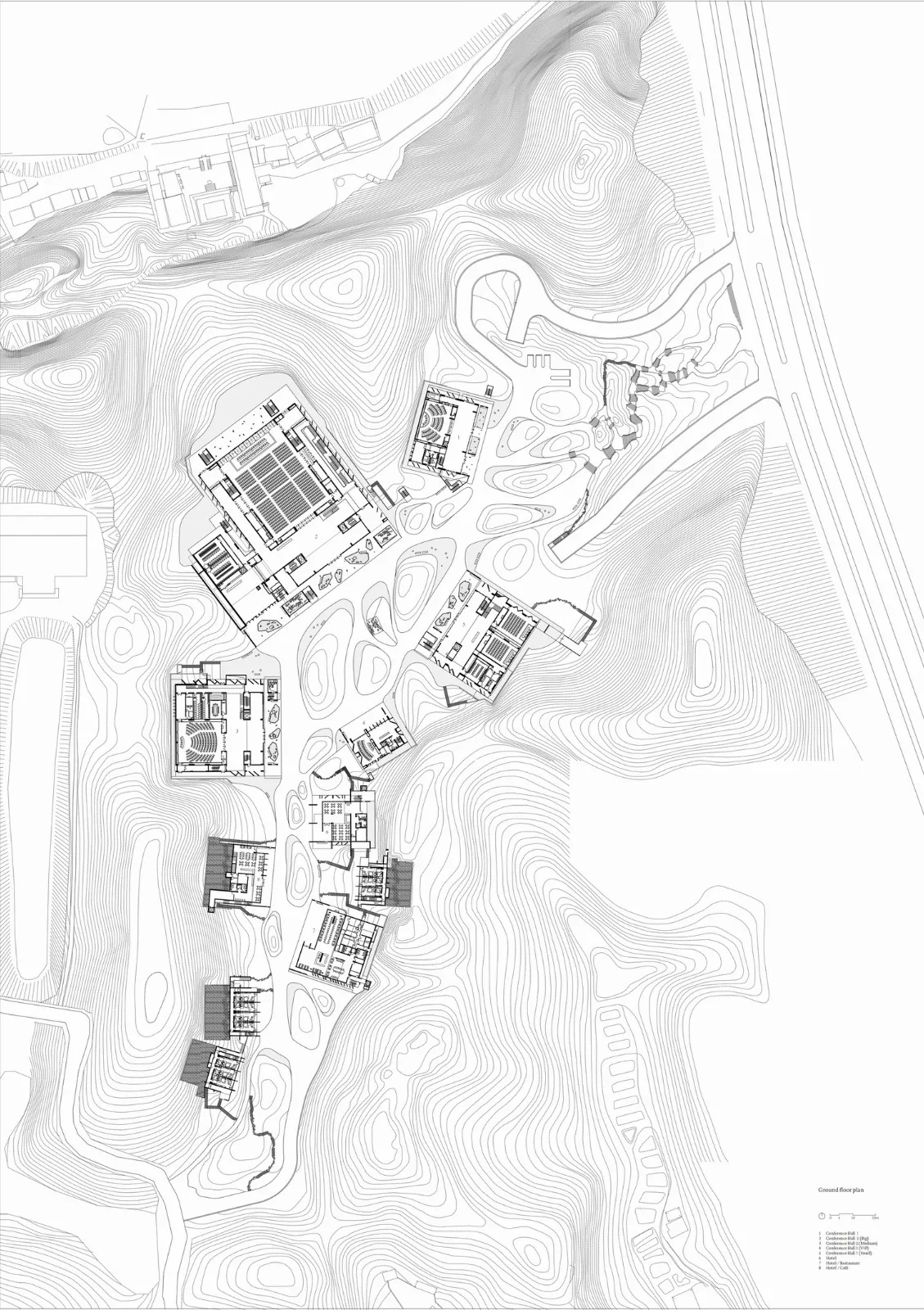
△ First Floor Plan
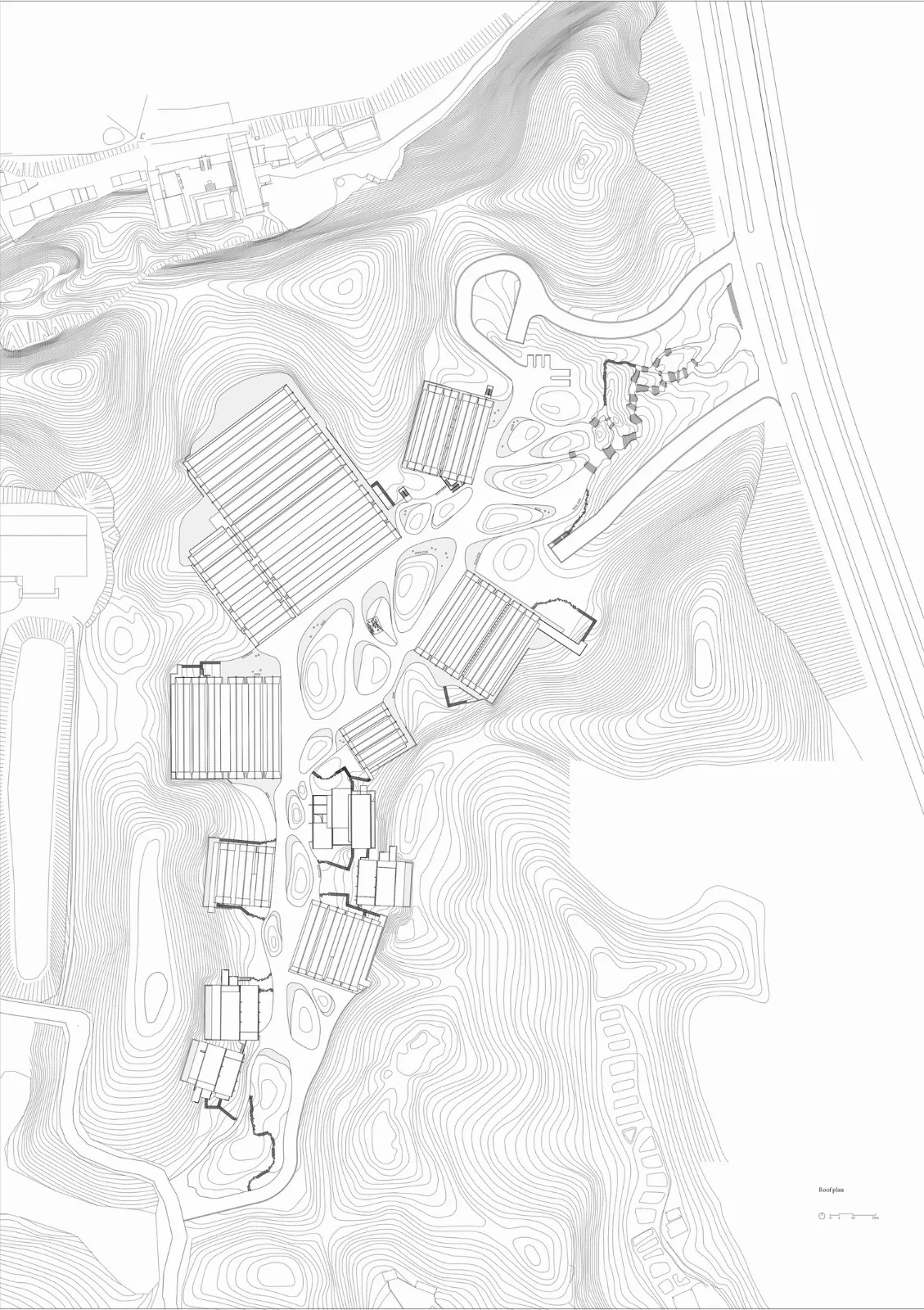
△ Roof Plan
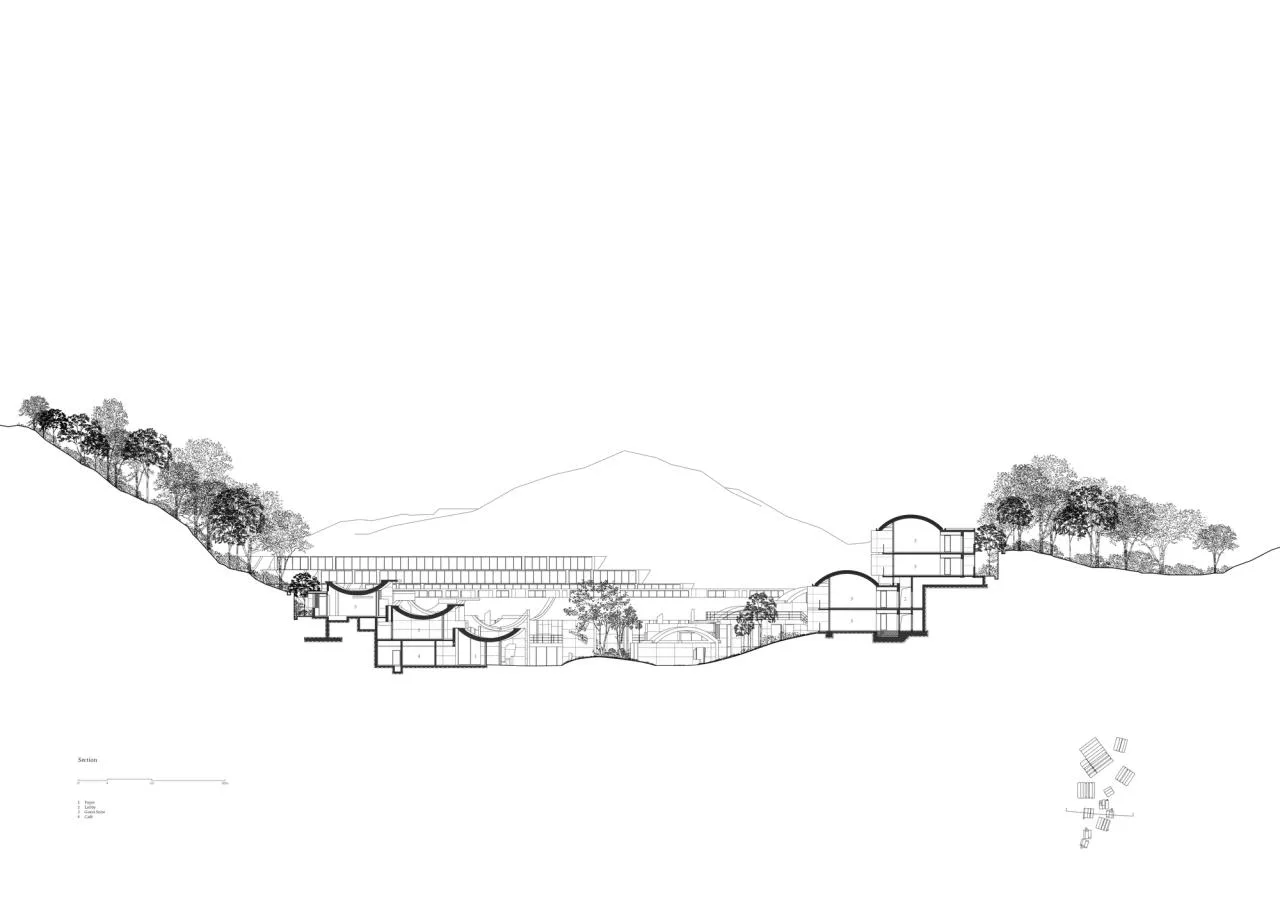
△ Section Diagram
Project Information
Architect: Zhu Pei Architectural Firm
Area: 40,107 m²
Project Year: 2022
Photographers: Su Shengliang, Zhang Qinquan
Manufacturers: Beijing Quncheng Construction Group Co., Ltd., Beijing Xinli Decoration Engineering Co., Ltd., Elevator, Jingdezhen Tianhan Lighting Co., Ltd., Wanyuan Hongrun Tengfei Stone Development Co., Ltd.
Lead Architect: Zhu Fen
Design Team: Mauro Pagliaretti, Zhang Shun, Liu Yi’an, You Changchen, Liu Ling, Ji Ming, Chen Yanhong, Han Mo, Cong Xiaoyu
Owner: Jingdezhen Black Cat Group Co., Ltd.
Curtain Wall Consultant: Jingyi Glass Engineering Co., Ltd.
Lighting Consultant: Beijing Ningzhijing Lighting Design Co., Ltd.
Acoustic Consultant: Hangzhou Zhida Construction Technology Co., Ltd.
General Contractors: China Construction First Engineering Group Co., Ltd., China Construction First Engineering Huajiang Construction Co., Ltd.
Location: Jingdezhen















Must log in before commenting!
Sign Up