
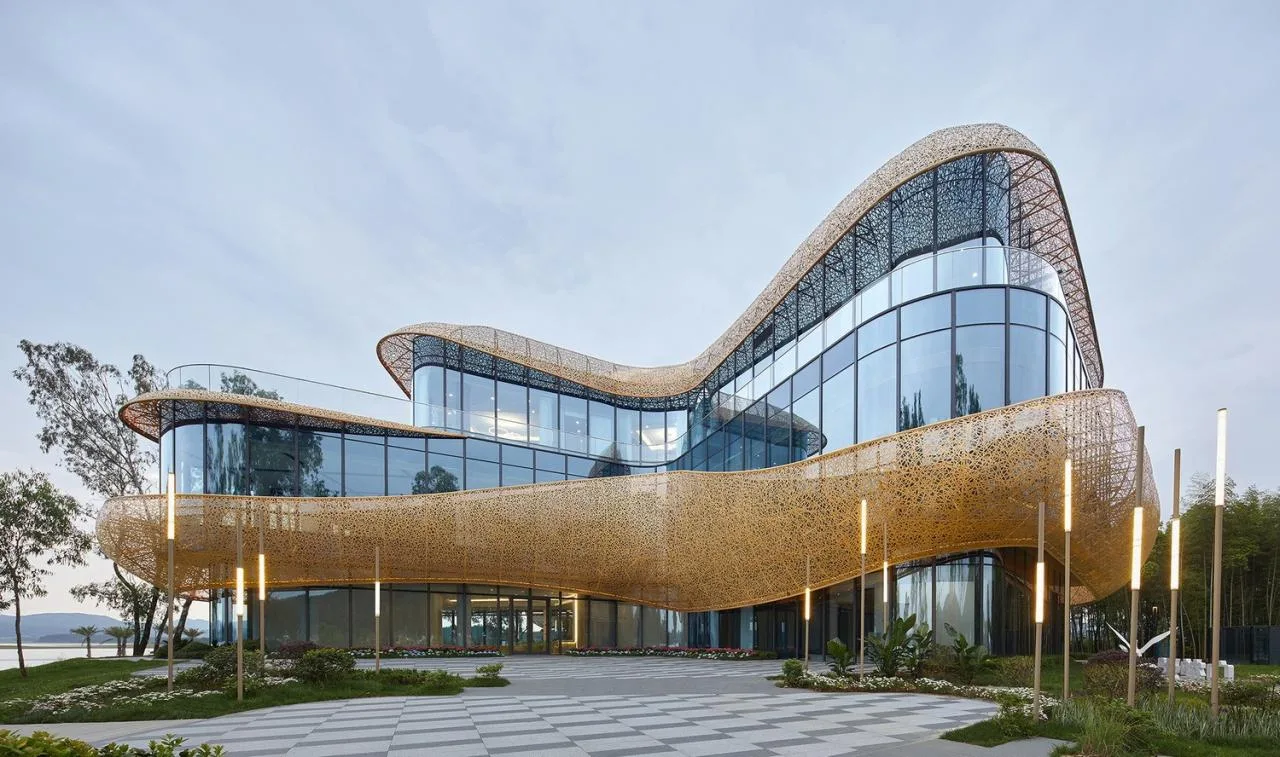
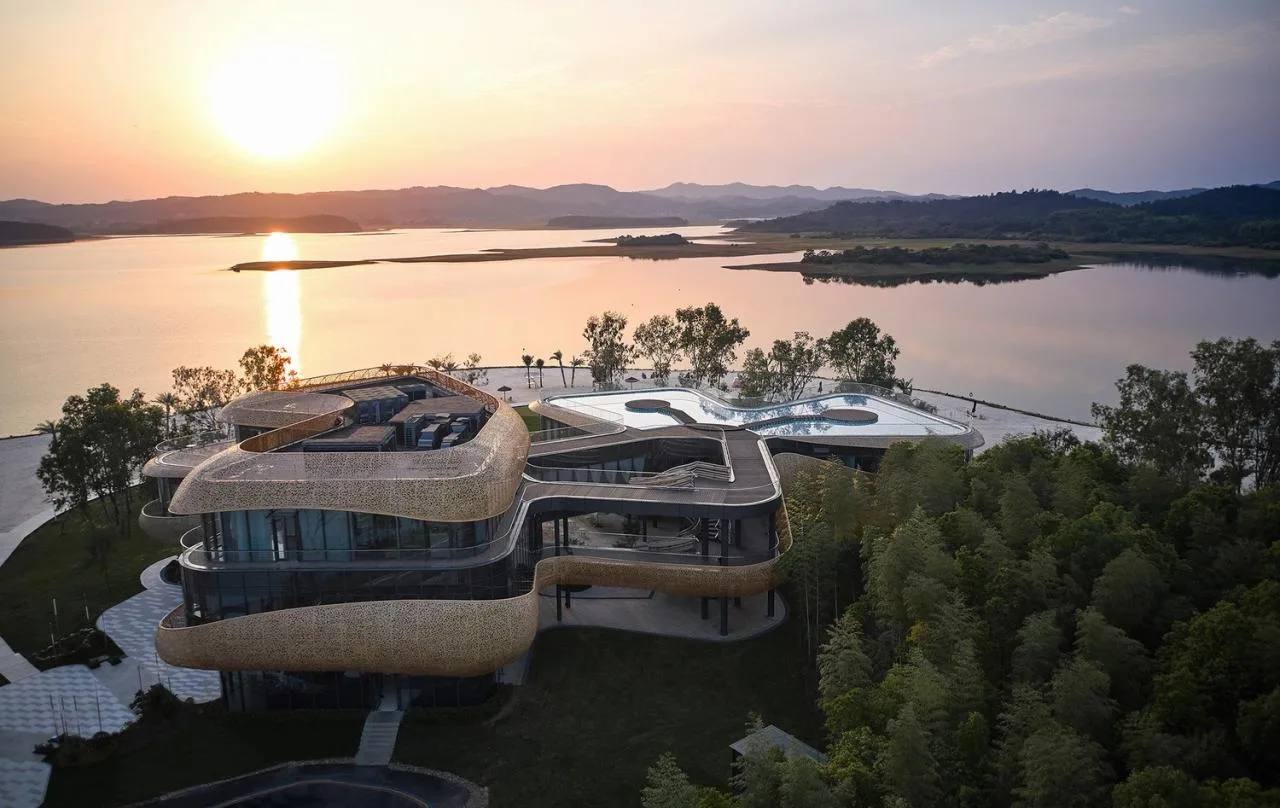
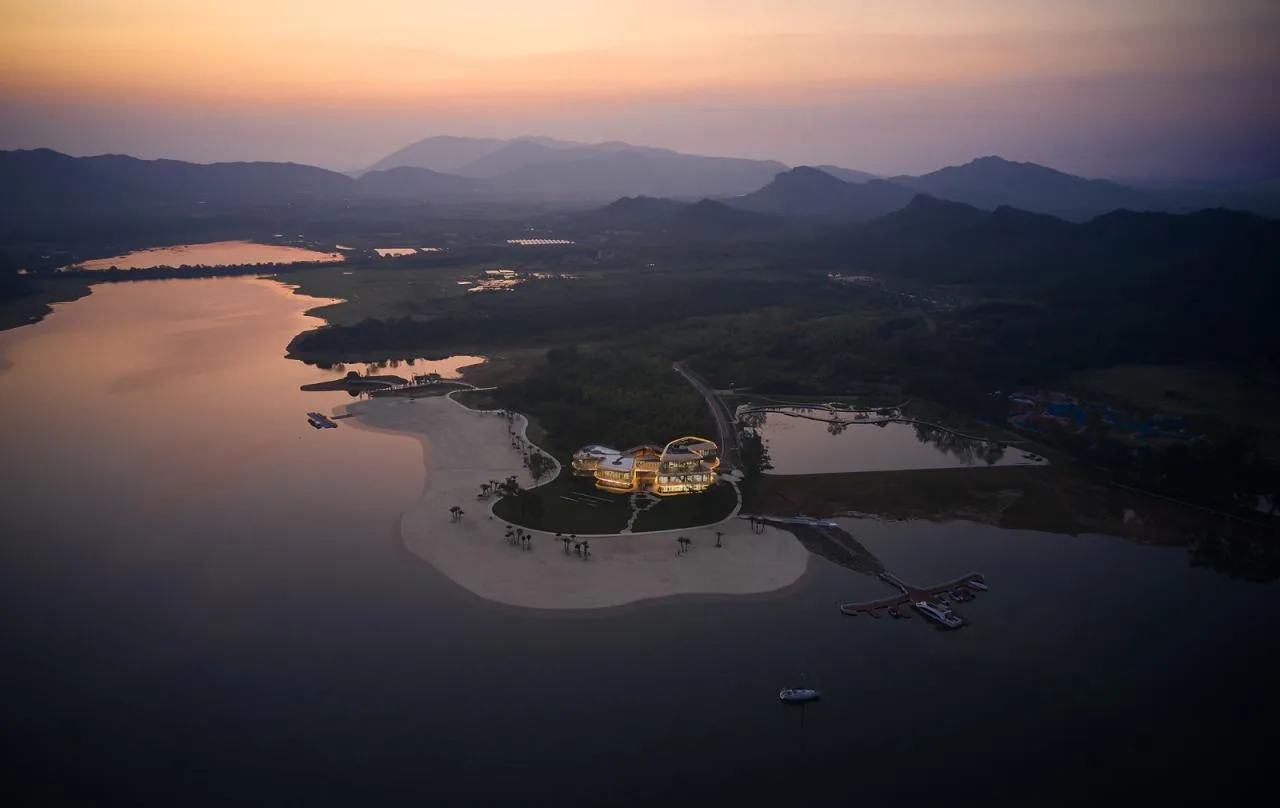
Baihe Lake, located in Yingtan City, Jiangxi Province, spans a water area of 10 square kilometers. The tourist center serves as the heart of Baihe Lake’s comprehensive tourism development. The main challenge was to integrate a modern cultural and tourism building into the serene mountain and water landscape. The design needed to meet functional requirements while harmonizing with nature, blending seamlessly into the forest, and complementing the water.
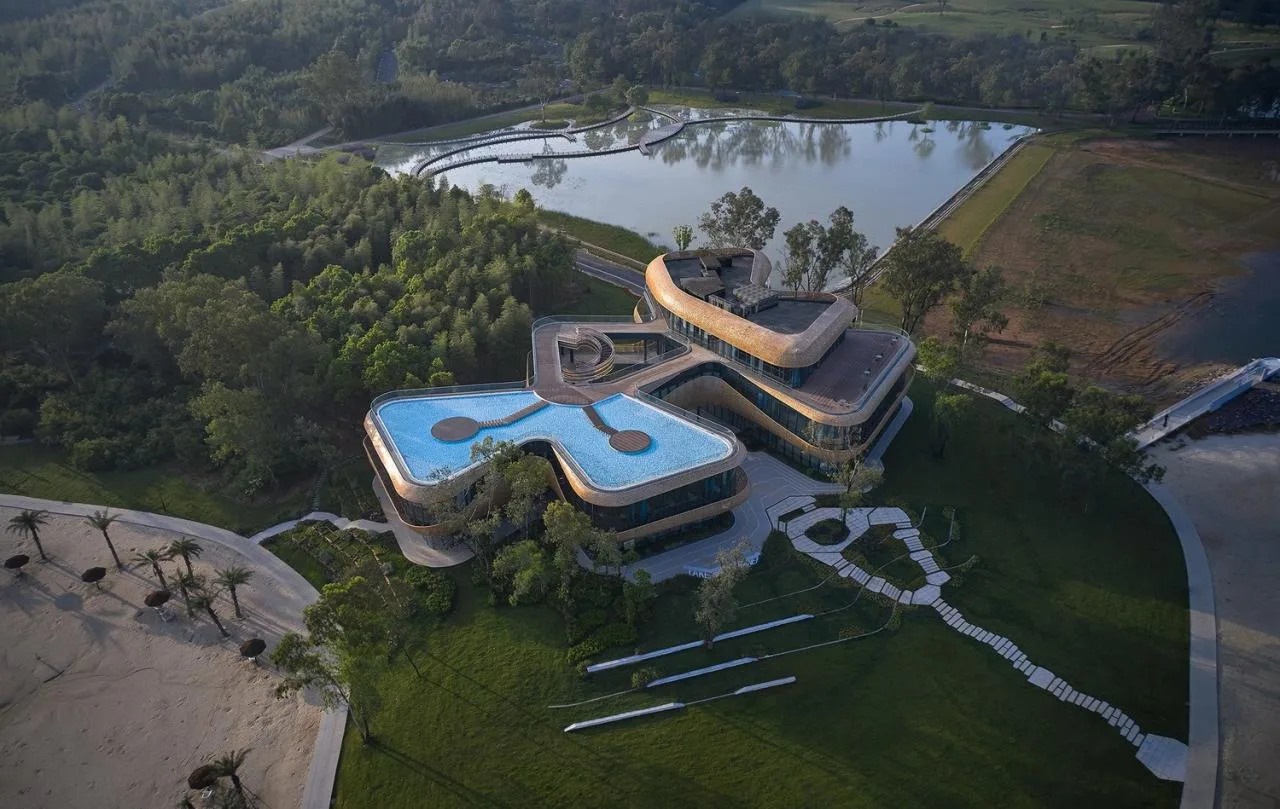
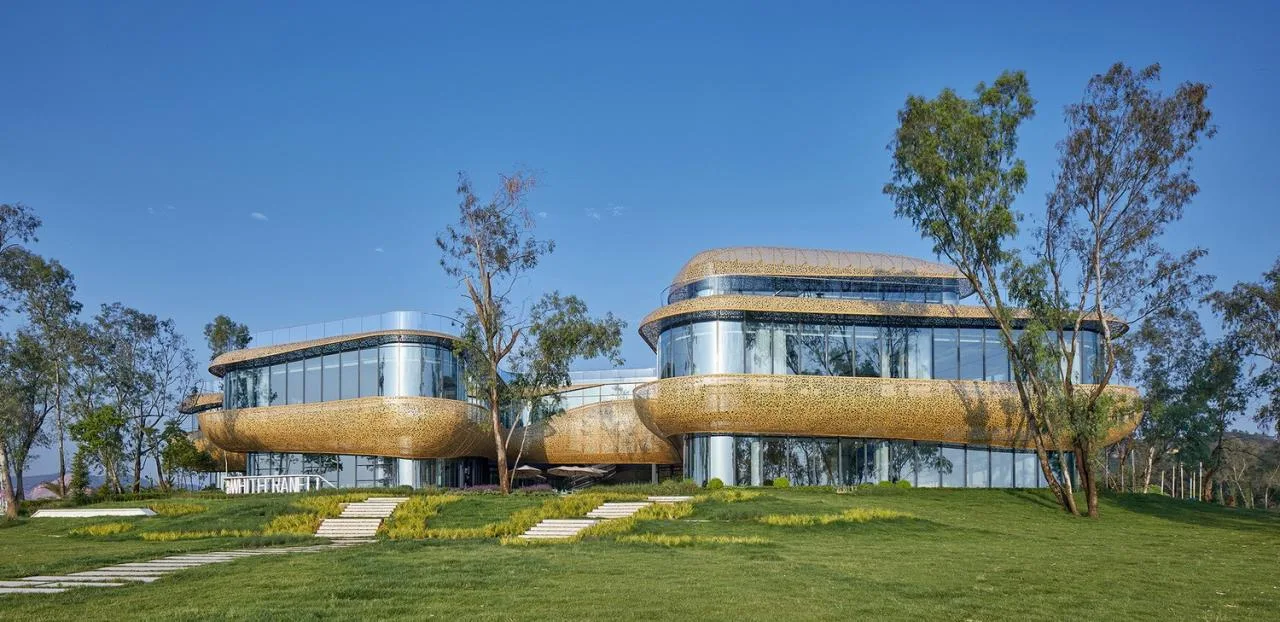
The designer’s intuitive on-site experience was crucial. The building was designed to be unique to Baihe Lake, avoiding strong references to local residential styles or an overt emphasis on traditional materials and methods. Instead, the focus was on highlighting the site’s inherent characteristics and fostering a dialogue with the natural landscape.
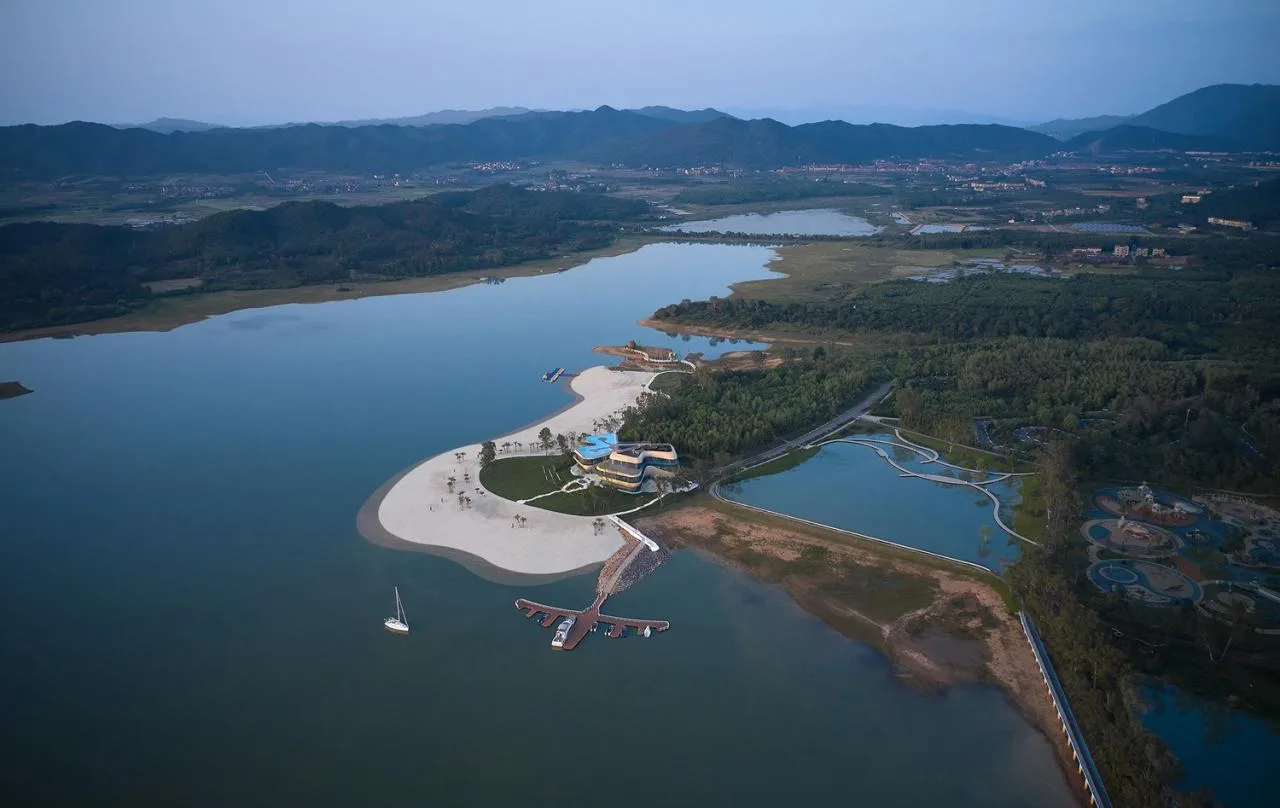
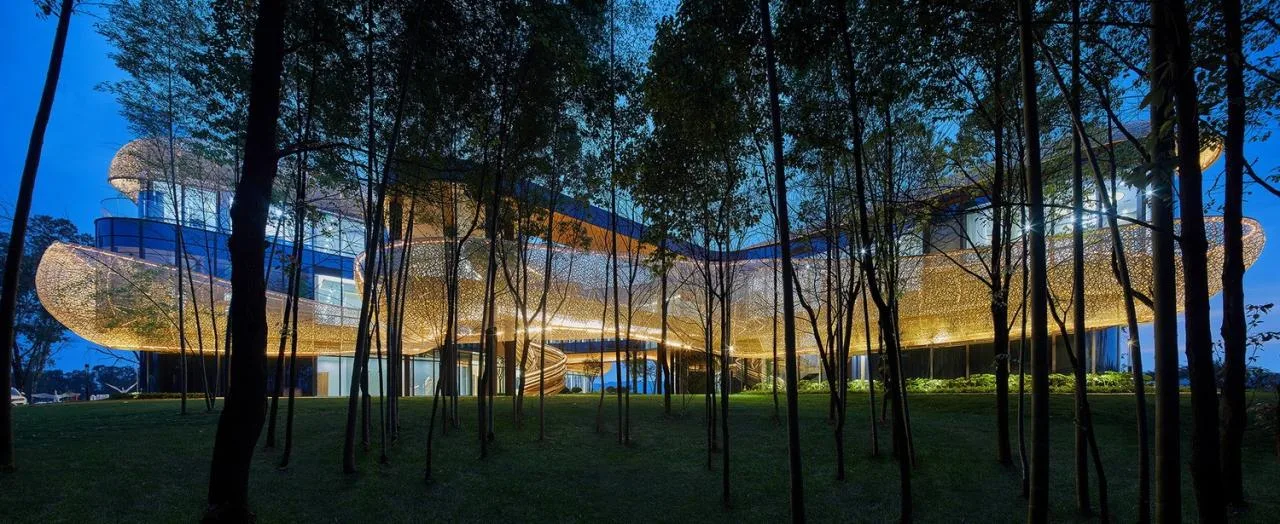
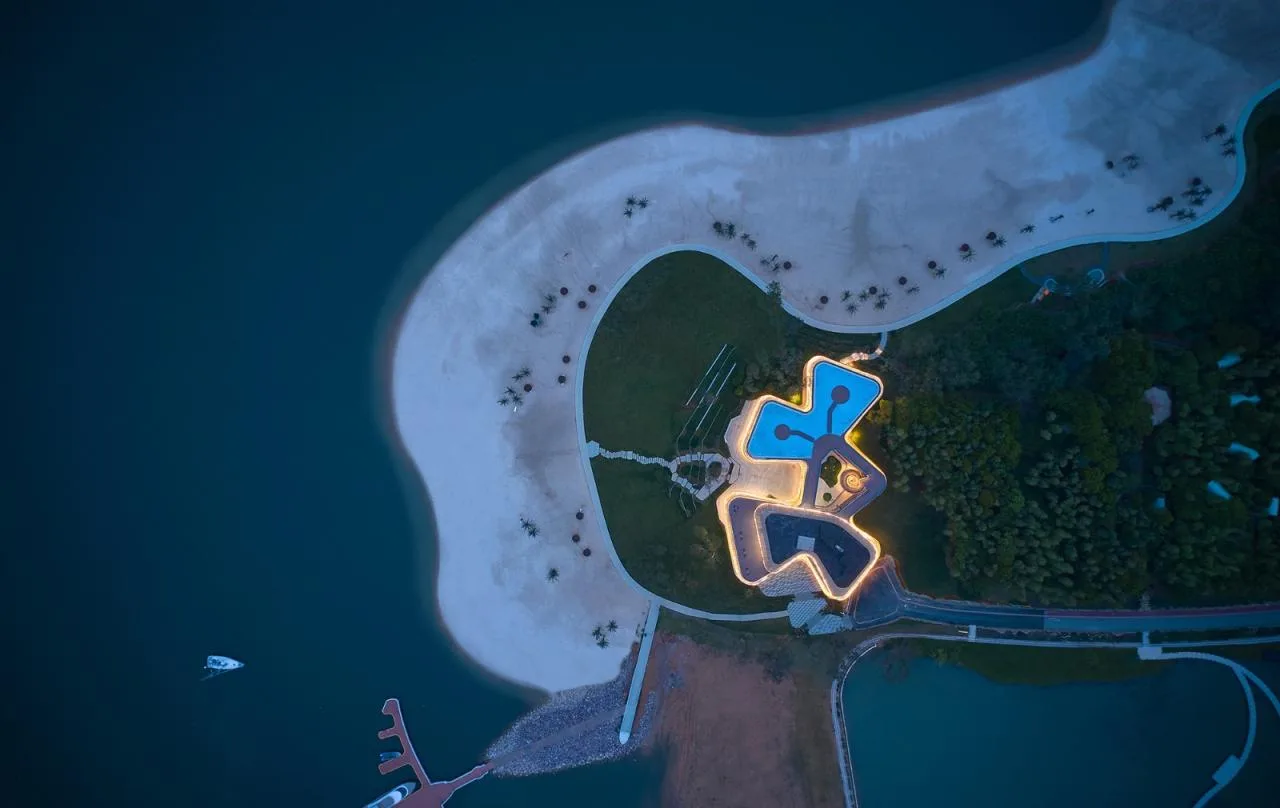
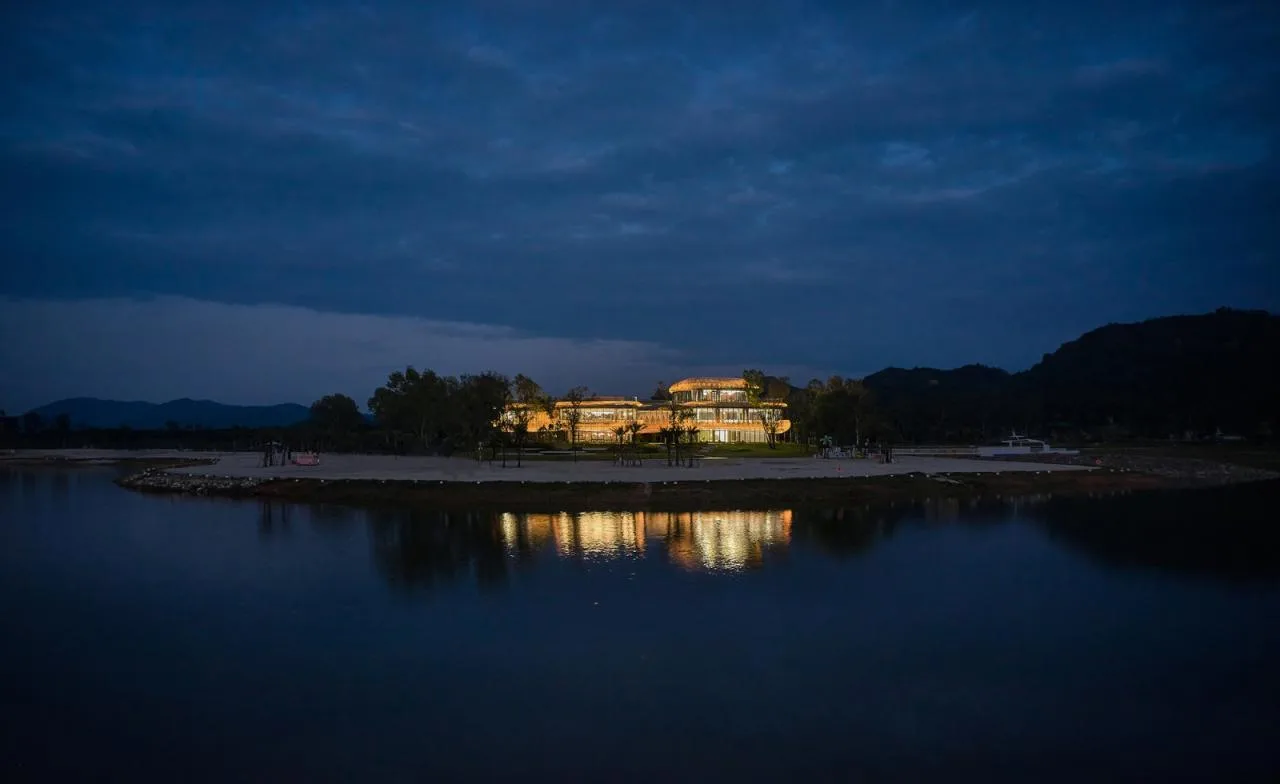
The tourist center is situated on a mudflat, surrounded by the lake on the south, north, and west sides, with a vast bamboo forest to the east. In the early morning, before sunrise, the lake is enveloped in mist and clouds mingling with the bamboo forest, evoking a sense of drifting through nature without a clear destination.
To capture this fleeting and magical atmosphere, the designer proposed the concept of “Waterfront Bamboo Cloud,” which integrates the elements of water, shore, bamboo, and cloud into a unified architectural expression. To minimize environmental impact, the building employs a decentralized layout with soft, rounded curves that harmonize with the surroundings.
This dispersed arrangement reduces the perceived scale of the building; visitors cannot view the entire structure at once. The elongated volumes appear to flow naturally through the landscape, guiding visitors’ sightlines and footsteps, creating a dynamic scene reminiscent of a scroll unfolding over water.
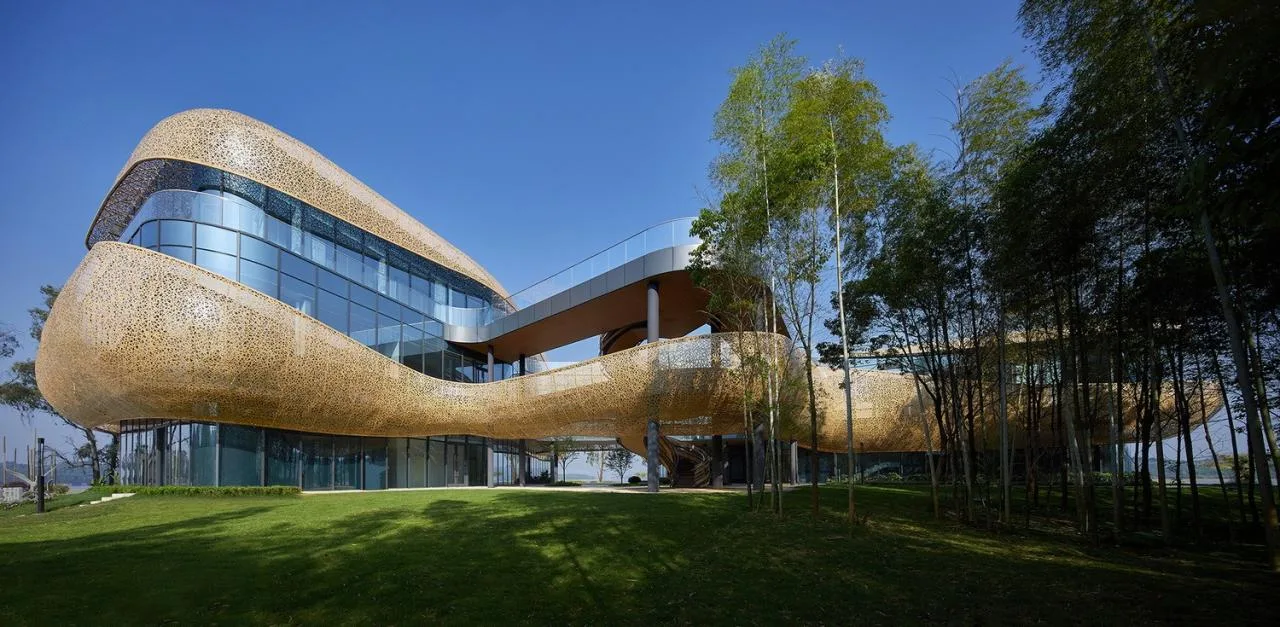
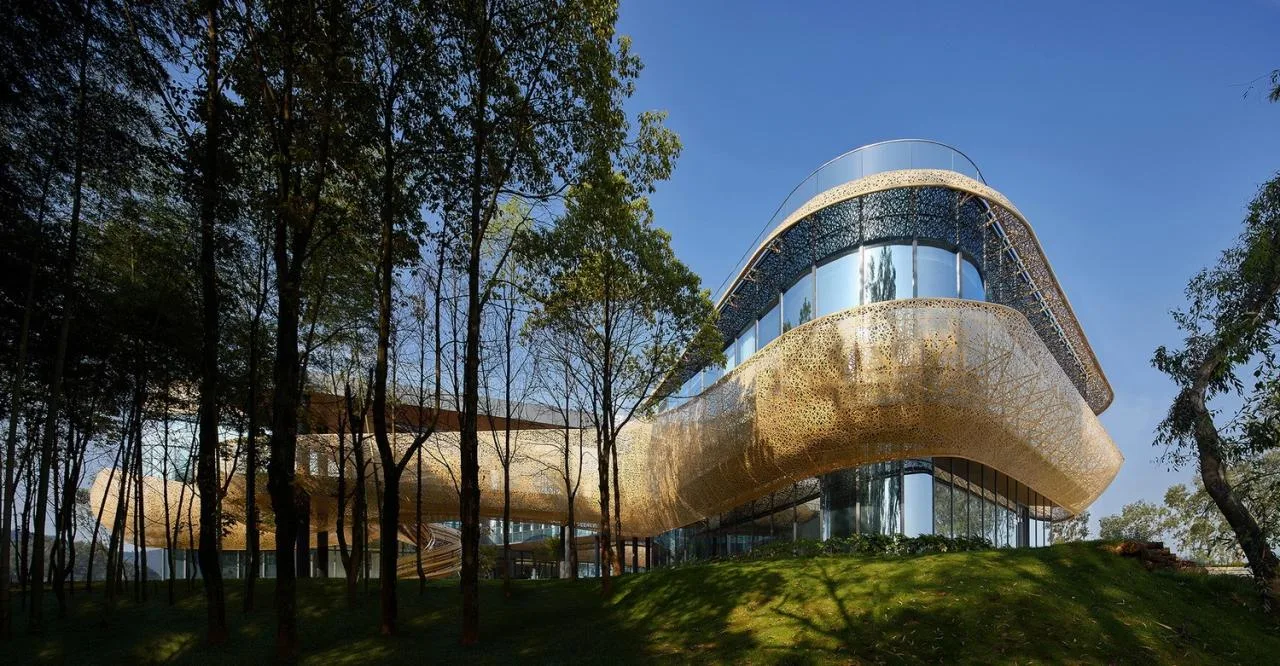
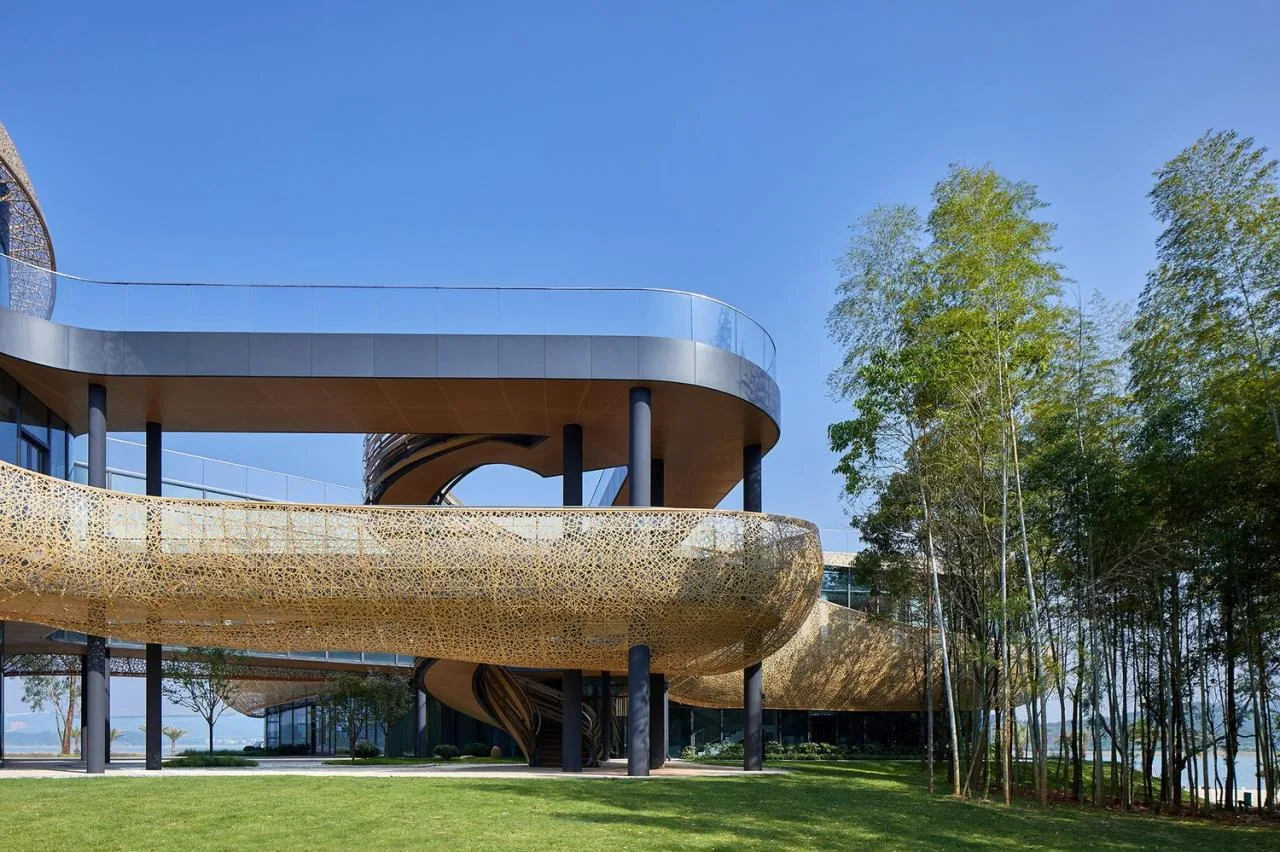
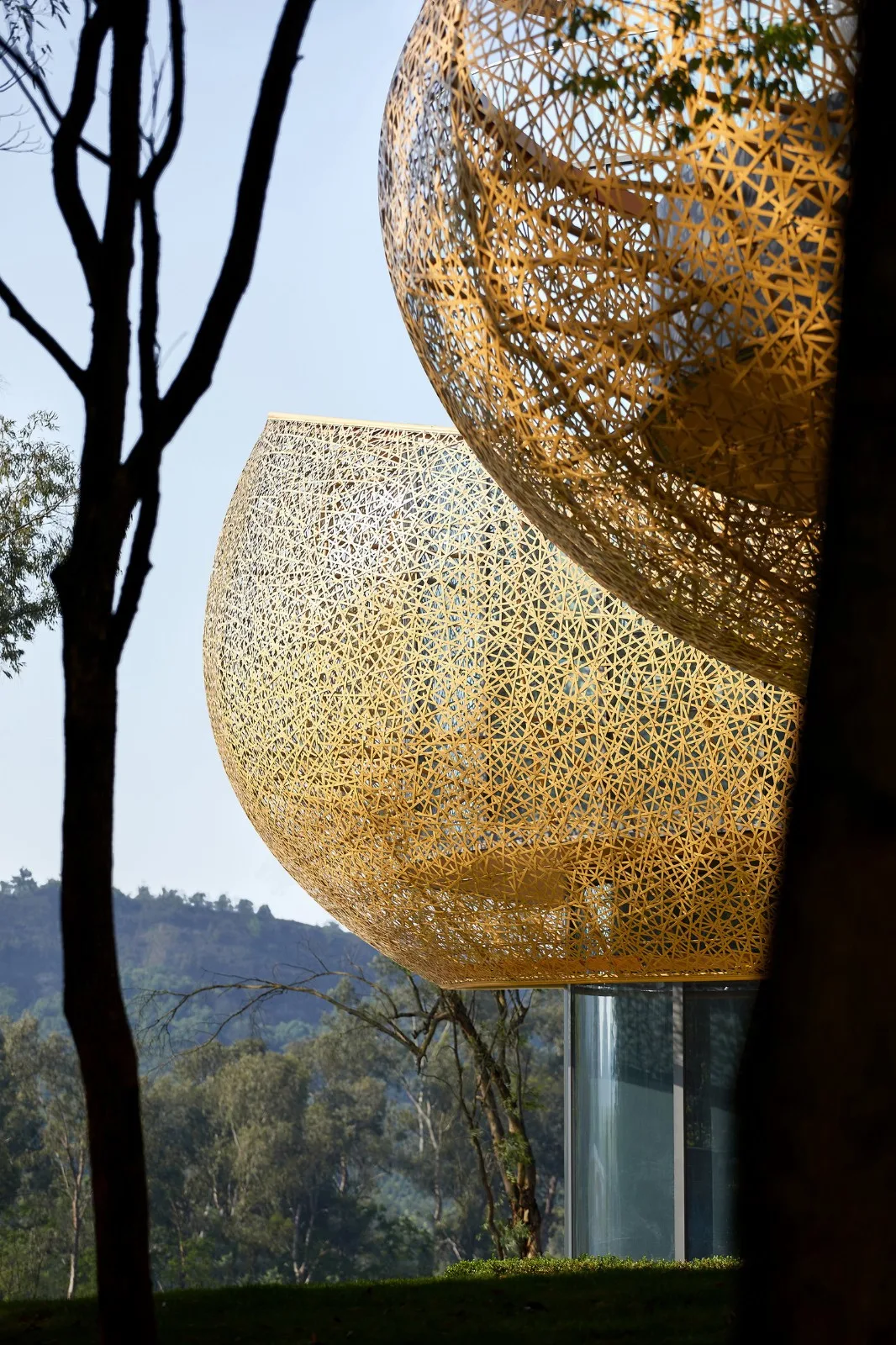
The exterior design incorporates a transparent glass box that integrates with the environment. Over this, a second layer of “bamboo skin” undulates around the building, resembling the wings of a white crane or a gentle bamboo cloud drifting along the water’s edge. This continuous skin unifies the building volumes, giving a sense of flow and blending naturally with the landscape.
The bamboo weaving skin was developed through a logical design process. Starting with the building outline as the main control line, secondary control points were adjusted based on functionality and views to create an undulating form. This design reflects the floating movement of bamboo clouds while maximizing the scenic views from indoor public spaces.
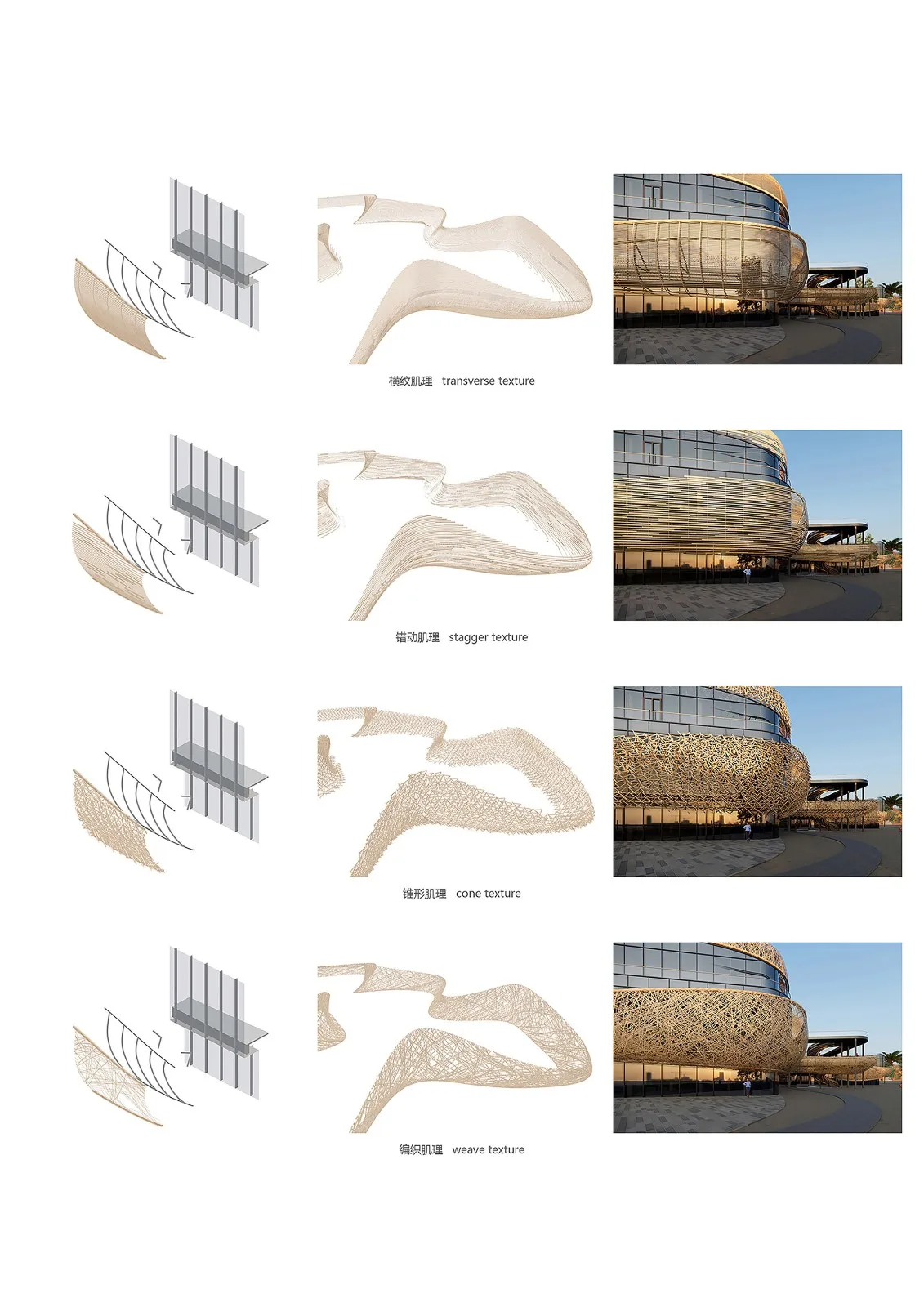
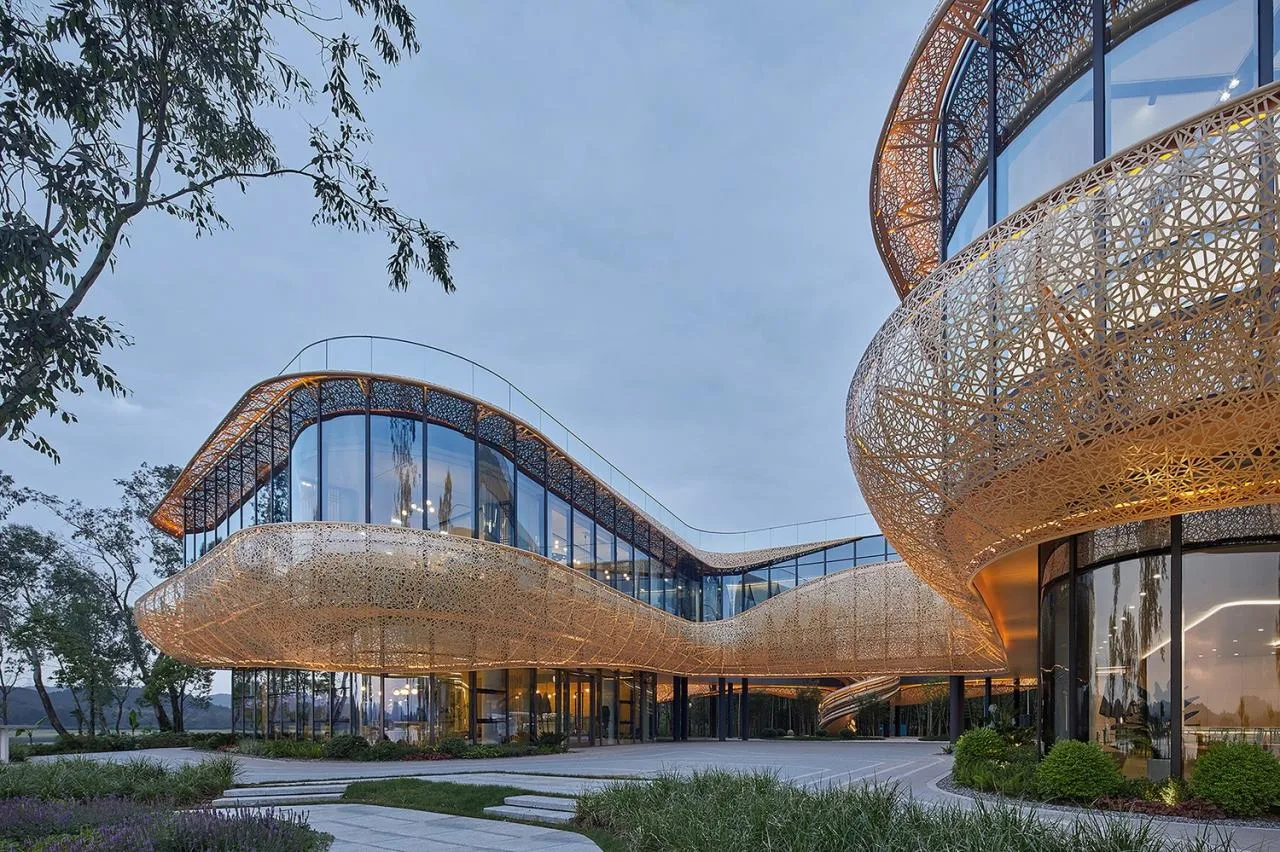
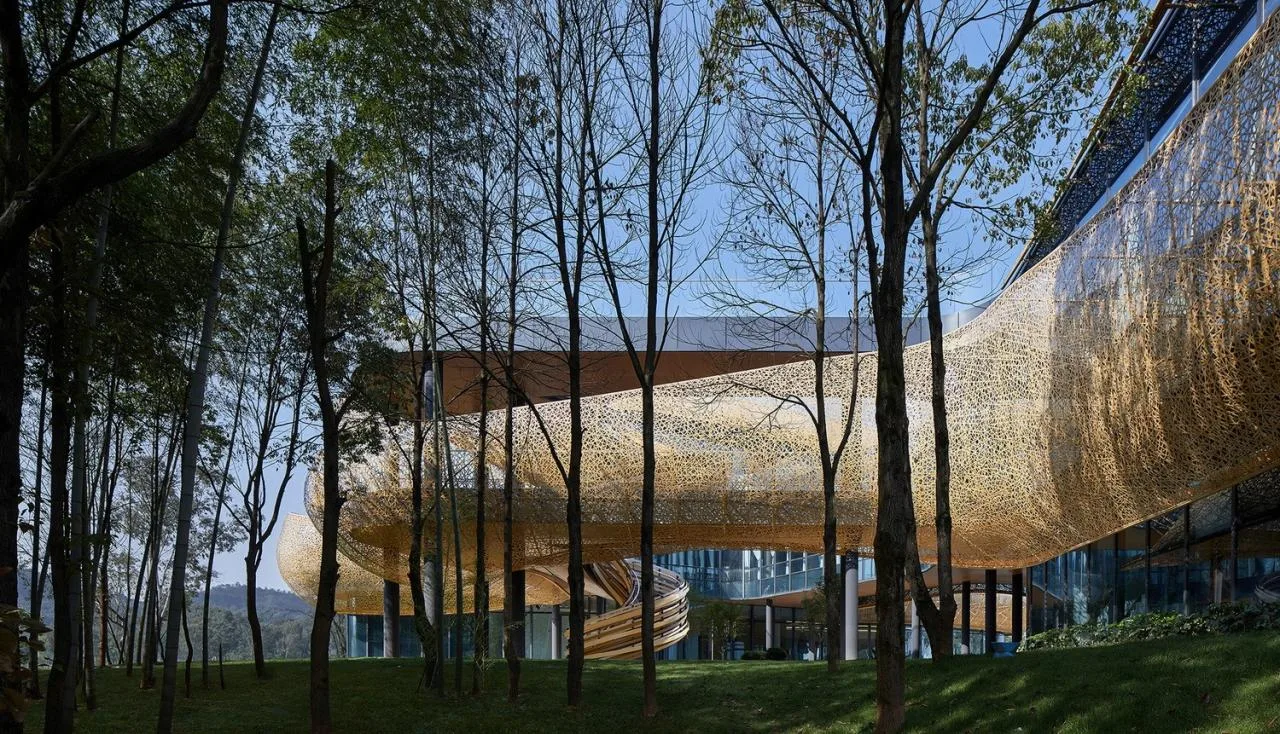
To explore the texture of the skin, the designer conducted extensive simulations using Grasshopper software, ultimately selecting a lightweight, transparent, and easily implementable woven texture. After thorough discussions and on-site testing with the owner and supplier, natural bamboo was replaced with a specially treated imitation bamboo metal alloy. This material replicates approximately 80% of bamboo’s texture and appearance, offering greater durability and reduced maintenance costs.
While this meant sacrificing some of the natural warmth and softness of real bamboo, it balanced cost, functionality, and maintenance—an important consideration for a public building of this scale.
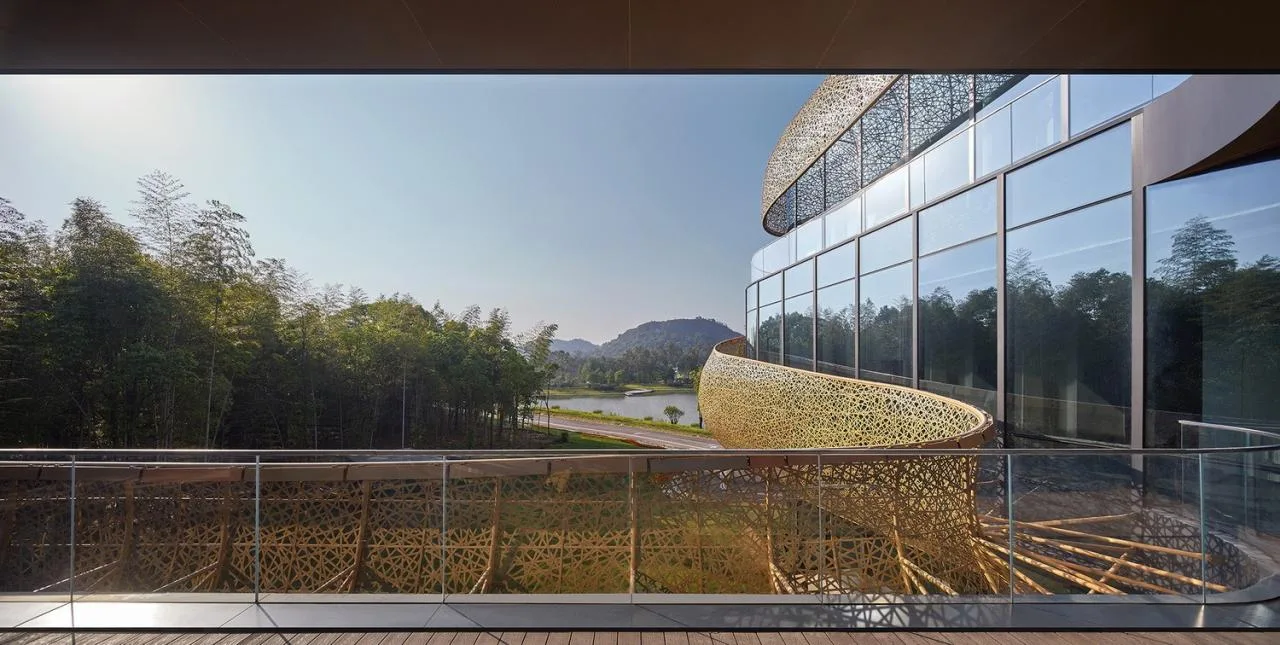
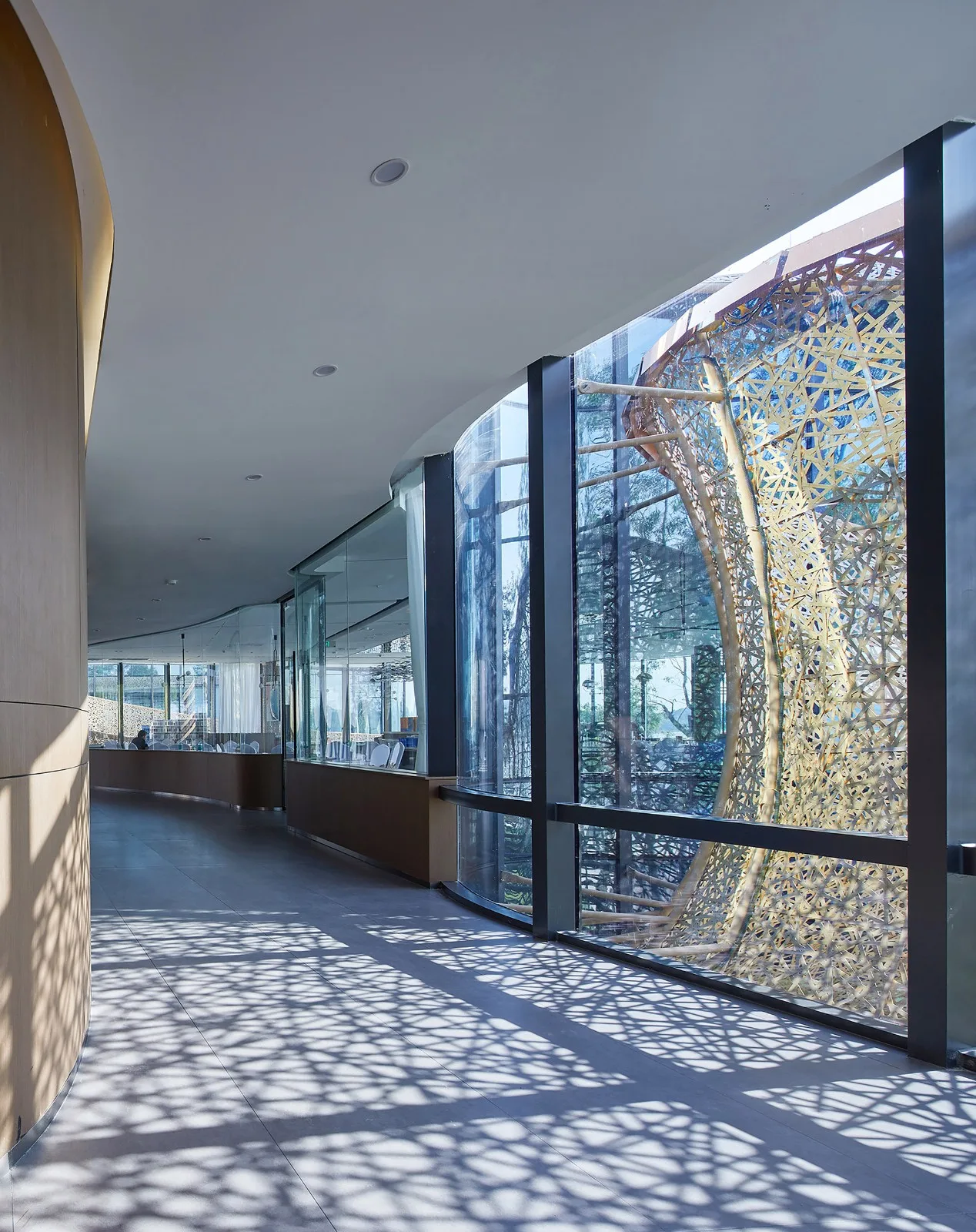
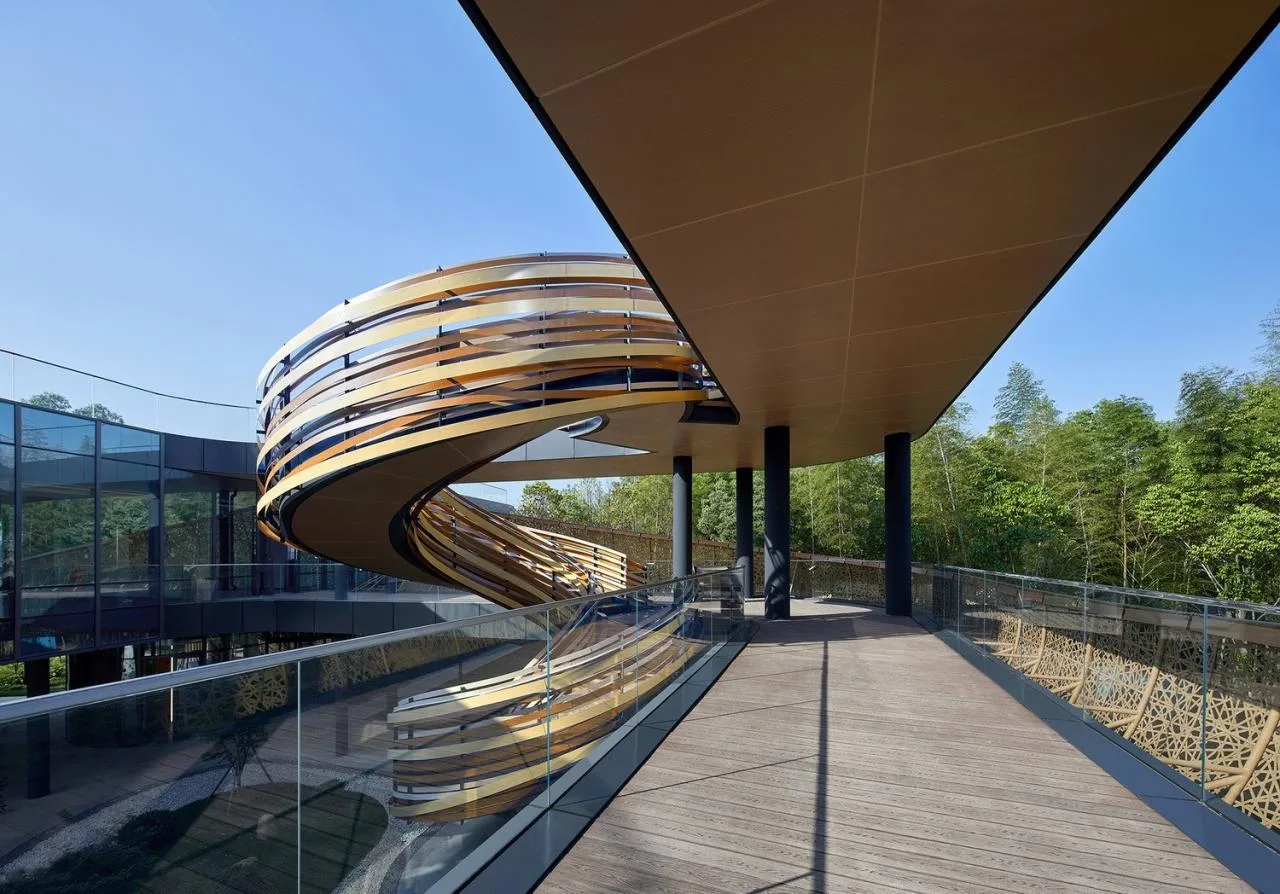
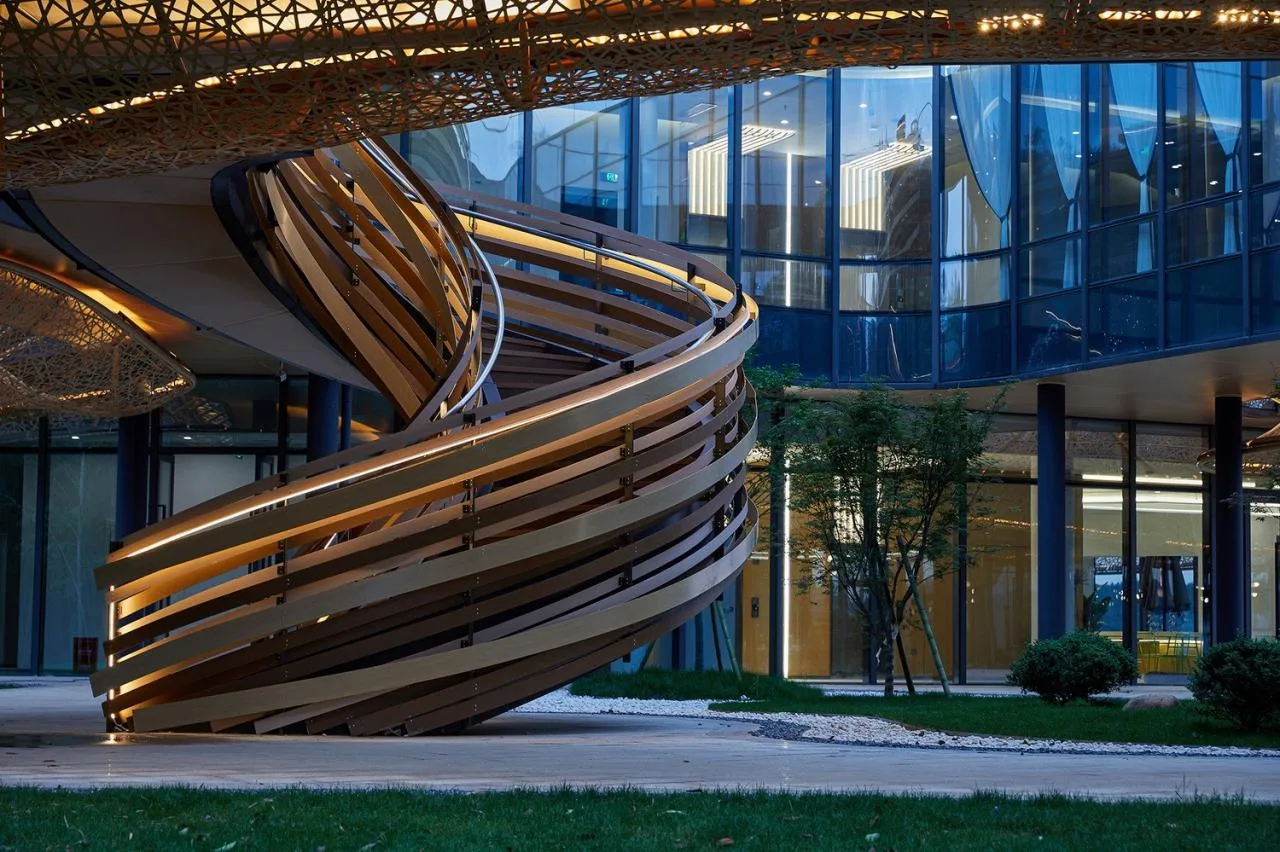
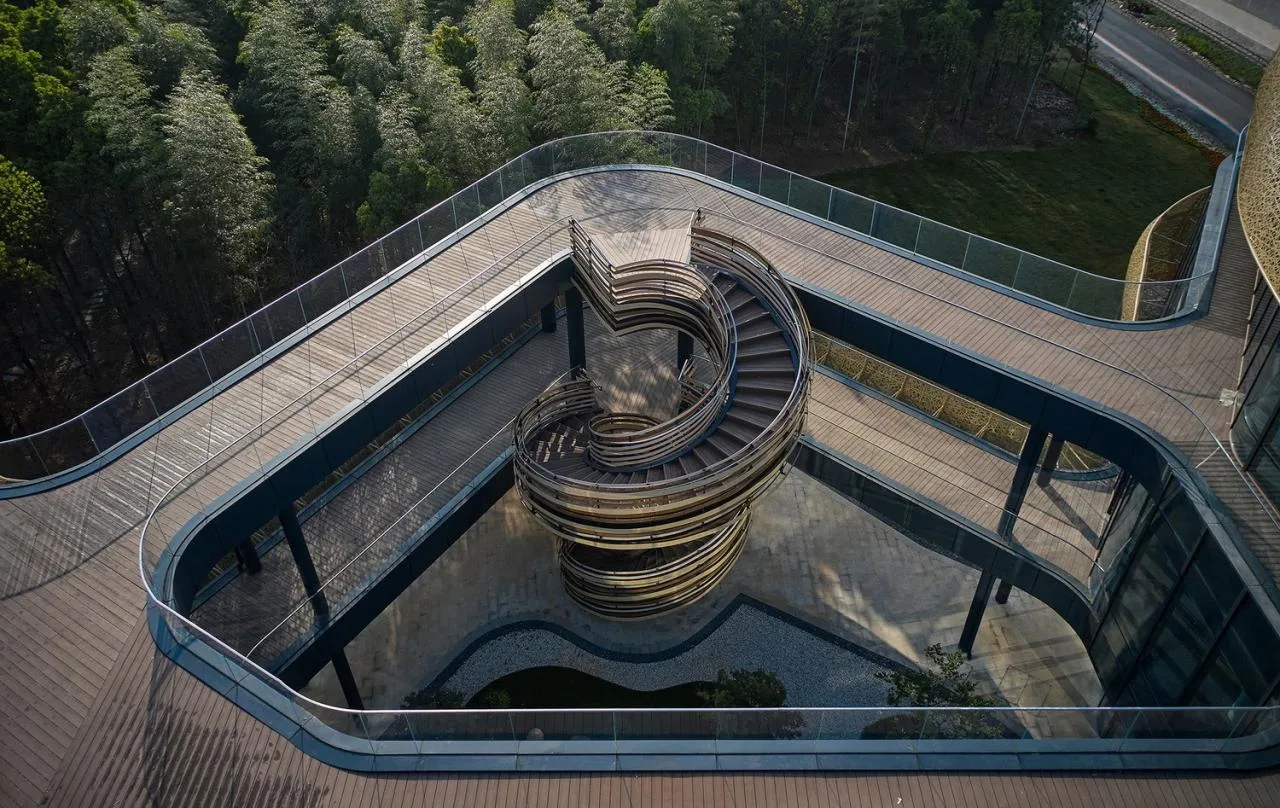
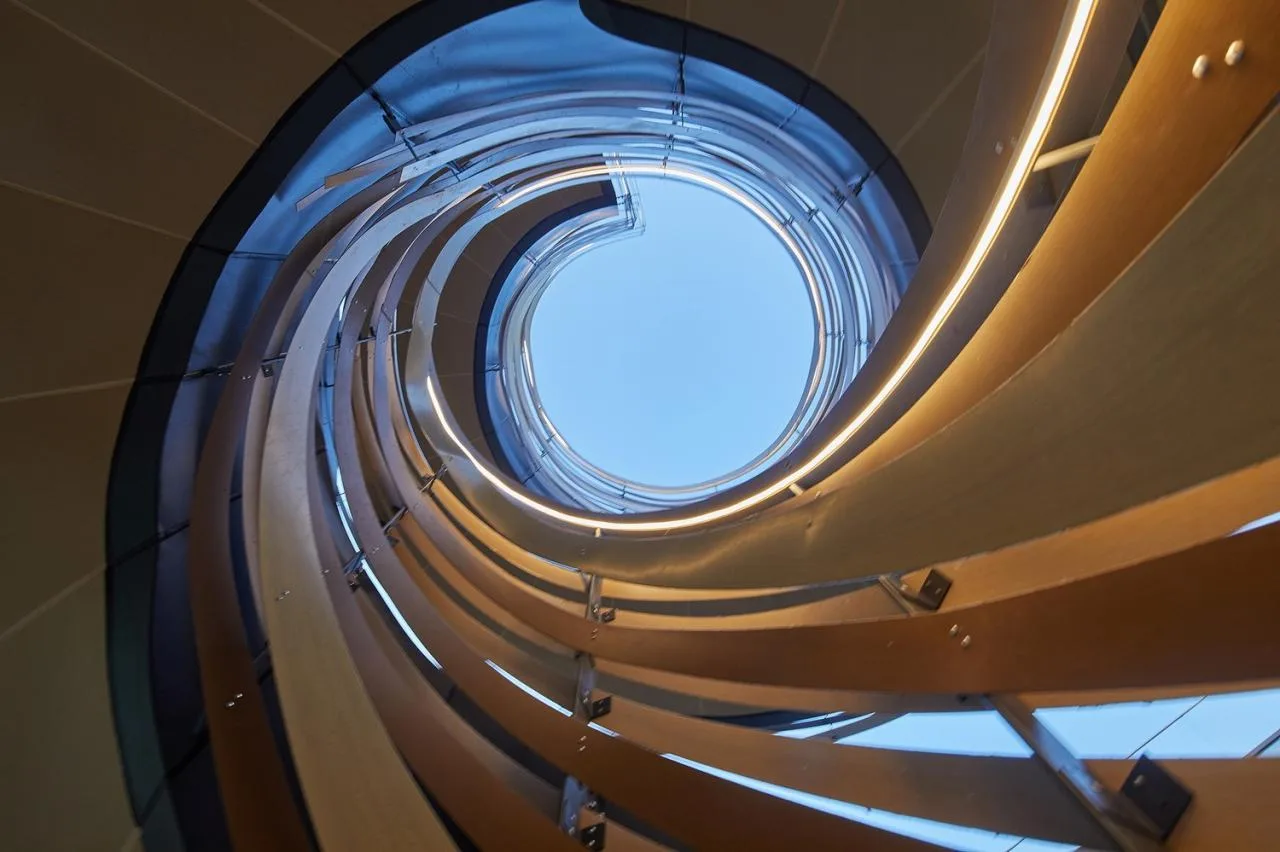
The rooftop pool is positioned within a courtyard enclosed by the building and connecting bridges. A carefully designed spiral staircase serves as both vertical circulation, guiding visitors from the ground level to the second-floor viewing platform, and as a striking visual centerpiece of the courtyard.
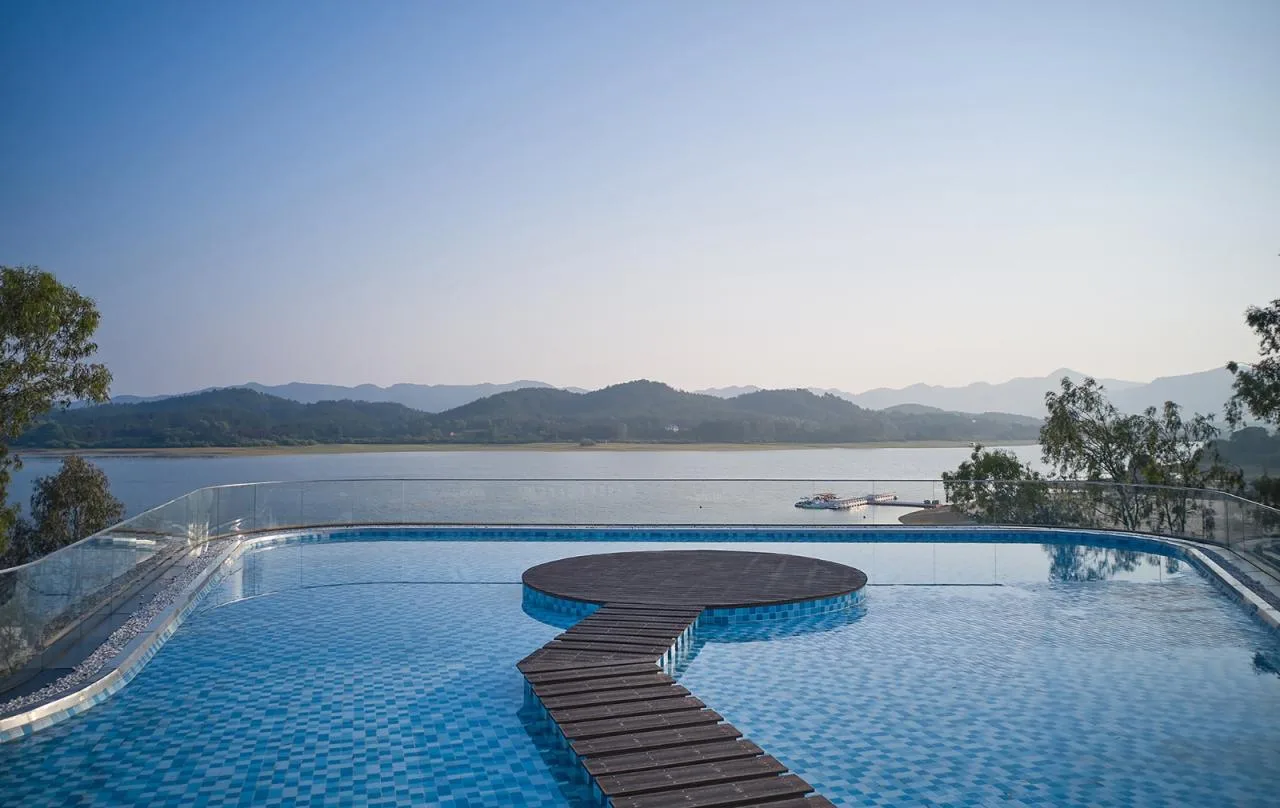
The concentric curved stairs with varying radii create a dynamic form, acting as a sculptural focal point. The second-floor rooftop terrace features a borderless infinity pool, offering unobstructed views that merge the pool surface seamlessly with the lake, blurring the horizon where sky and water unite.
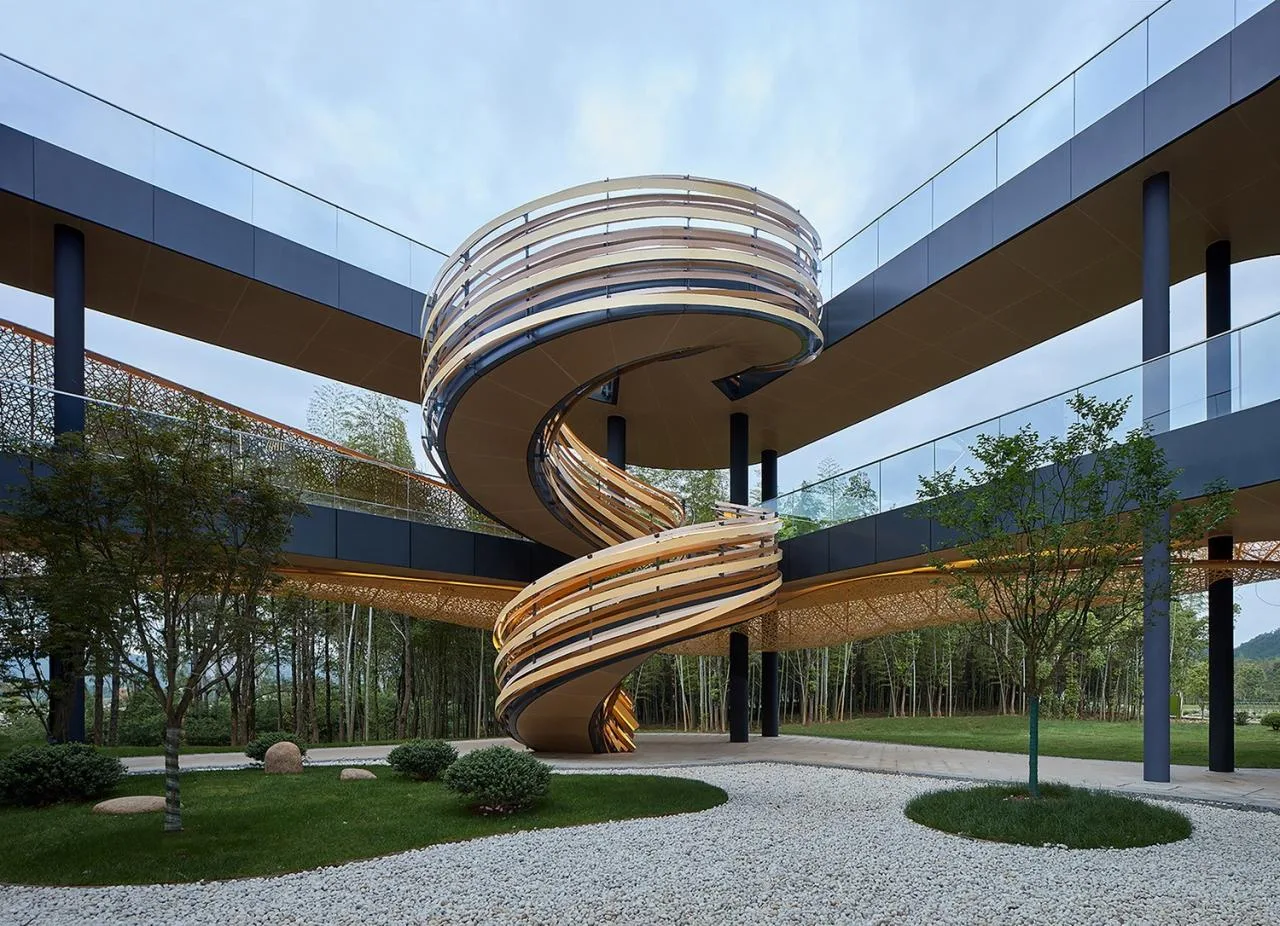
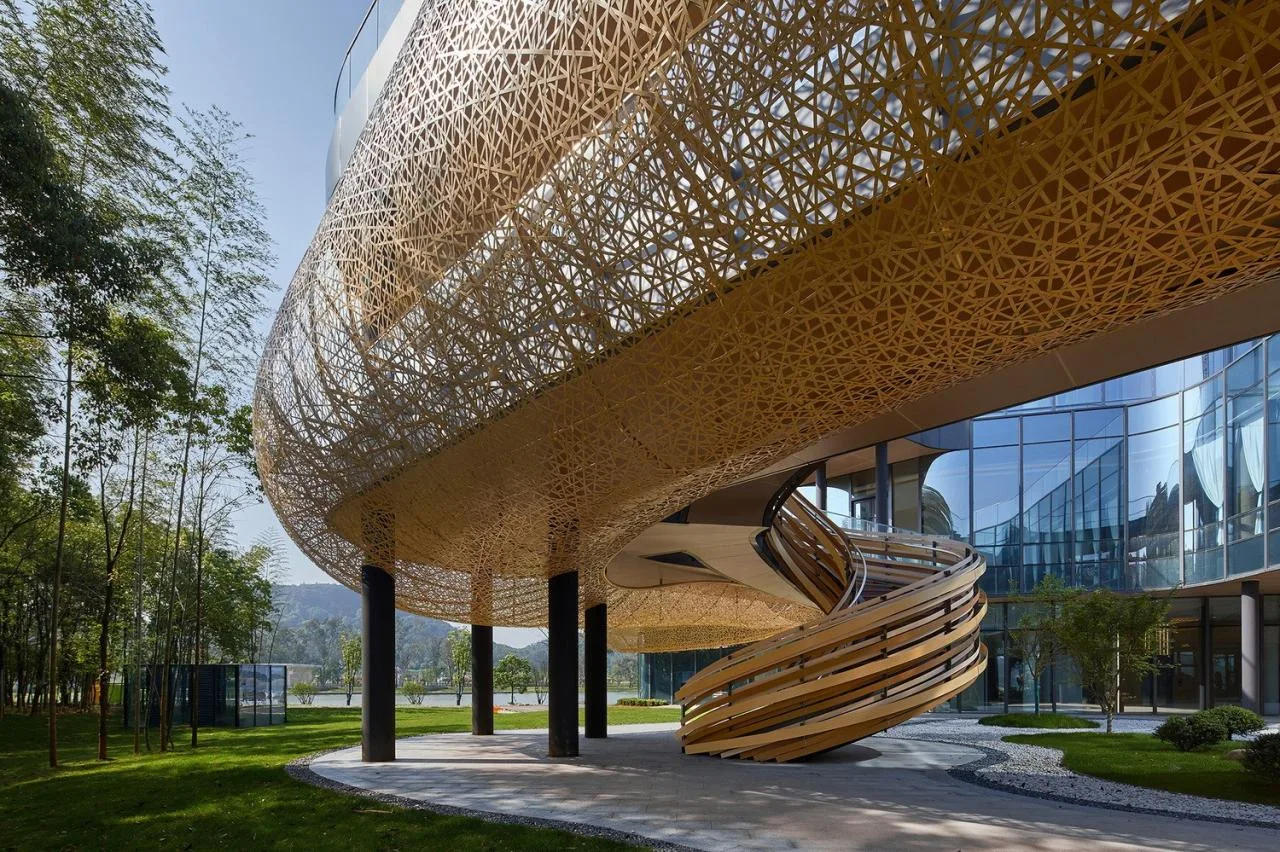
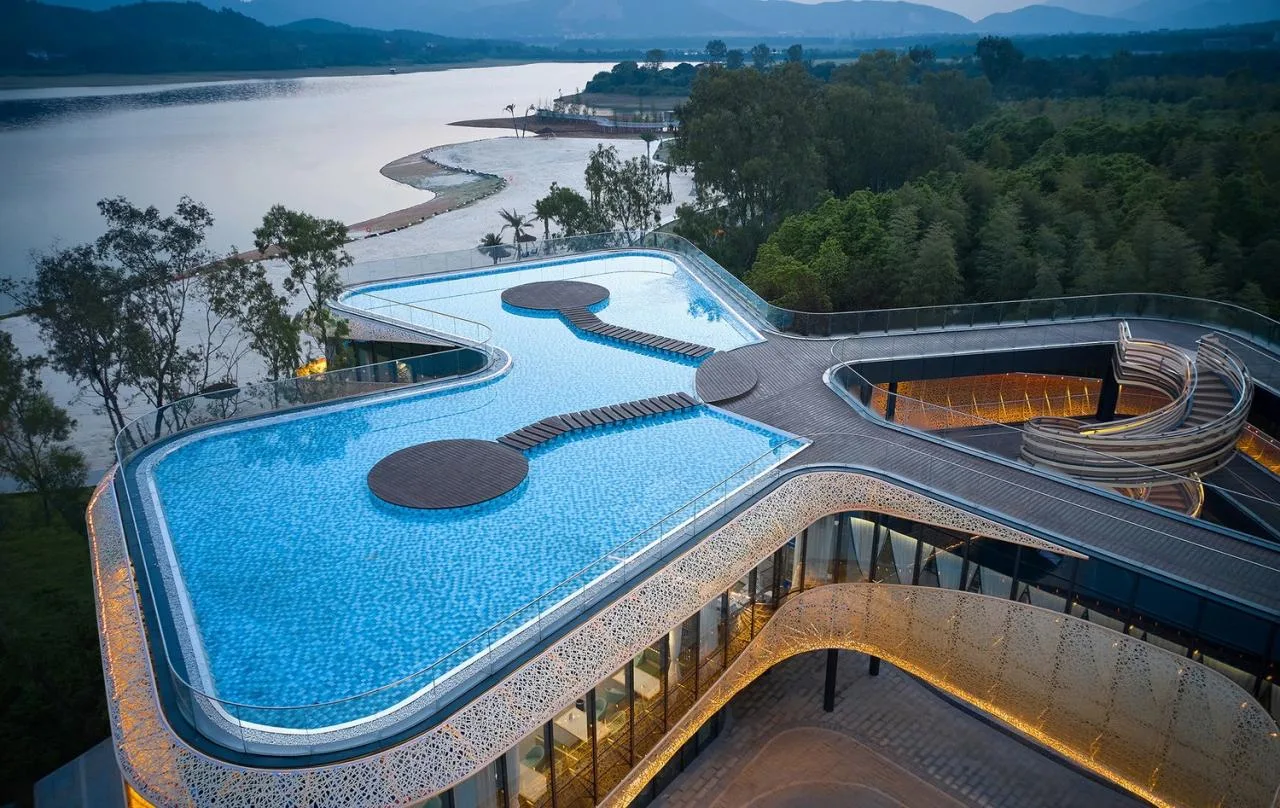
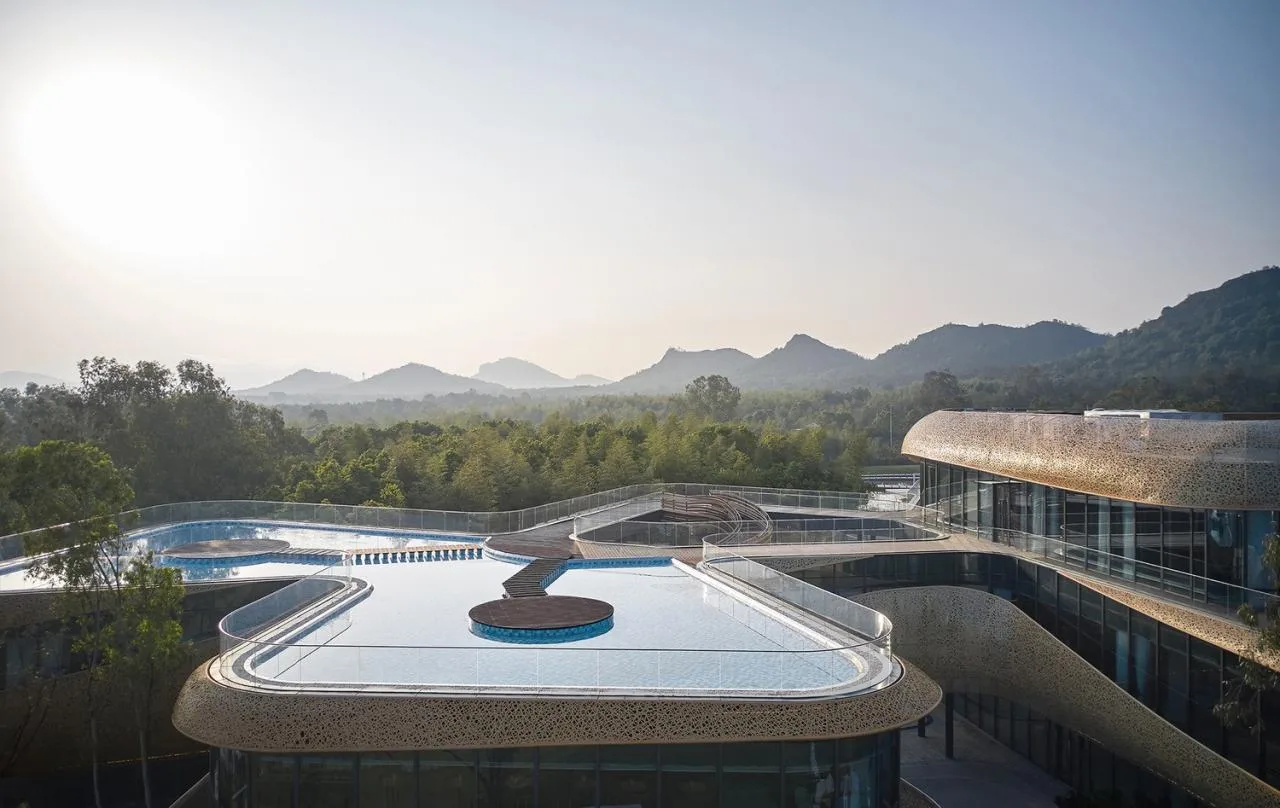
The dispersed volumes of the tourist center clearly separate functions: reception, dining, meetings, VIP clubs, and more. The reception hall is located in the southwest corner for easy access, the northwest corner with the best views hosts the dining area, logistics are situated privately in the southeast corner, and the VIP club occupies the top floor to maximize lake views.
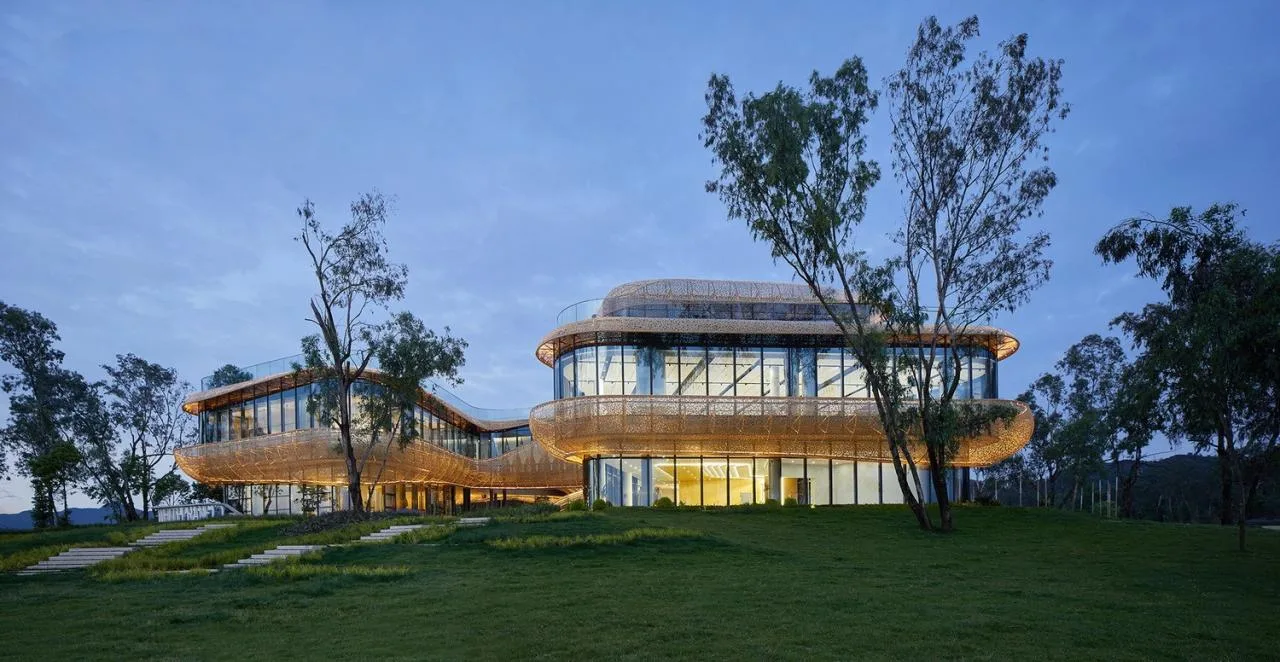
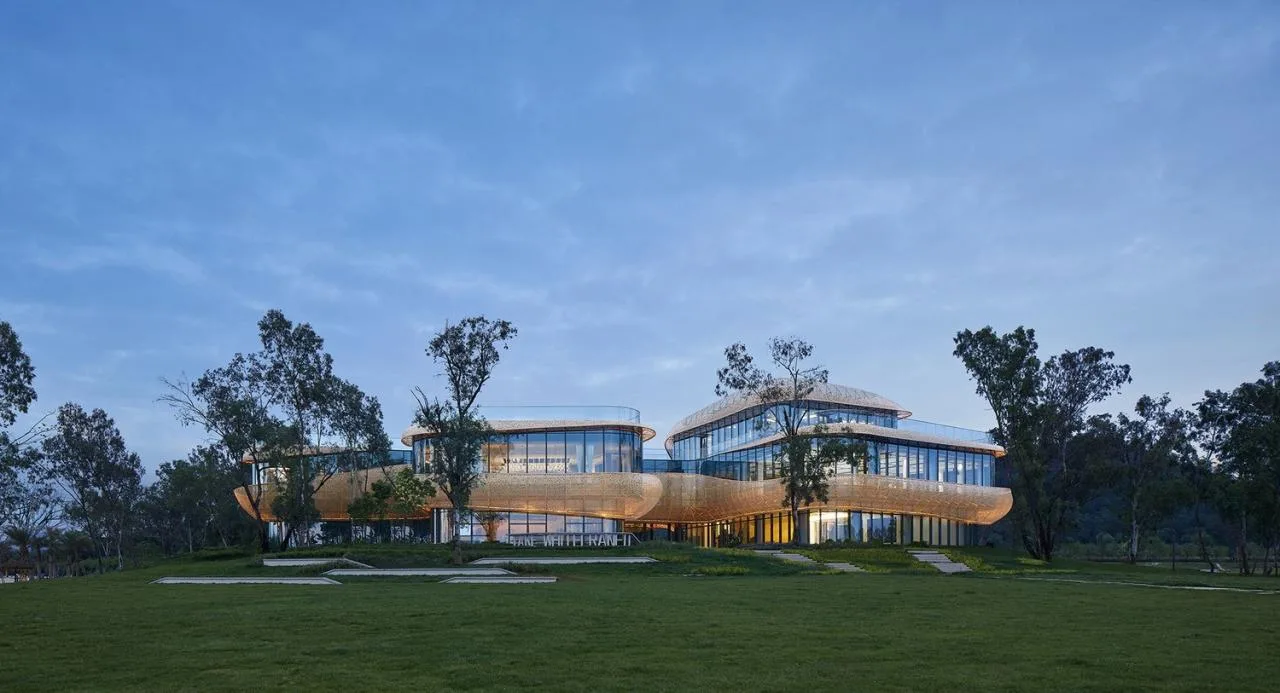
In conclusion, the architect treated the project as a “poetic imagination,” adopting the “Waterfront Bamboo Clouds” concept. This approach allows the new building to blend softly into the mountains and forests, becoming a natural extension of the environment. The morning mist and clouds that envelop the lake transform into floating architectural forms that gently retreat like drifting clouds along the shore.
Project Drawings
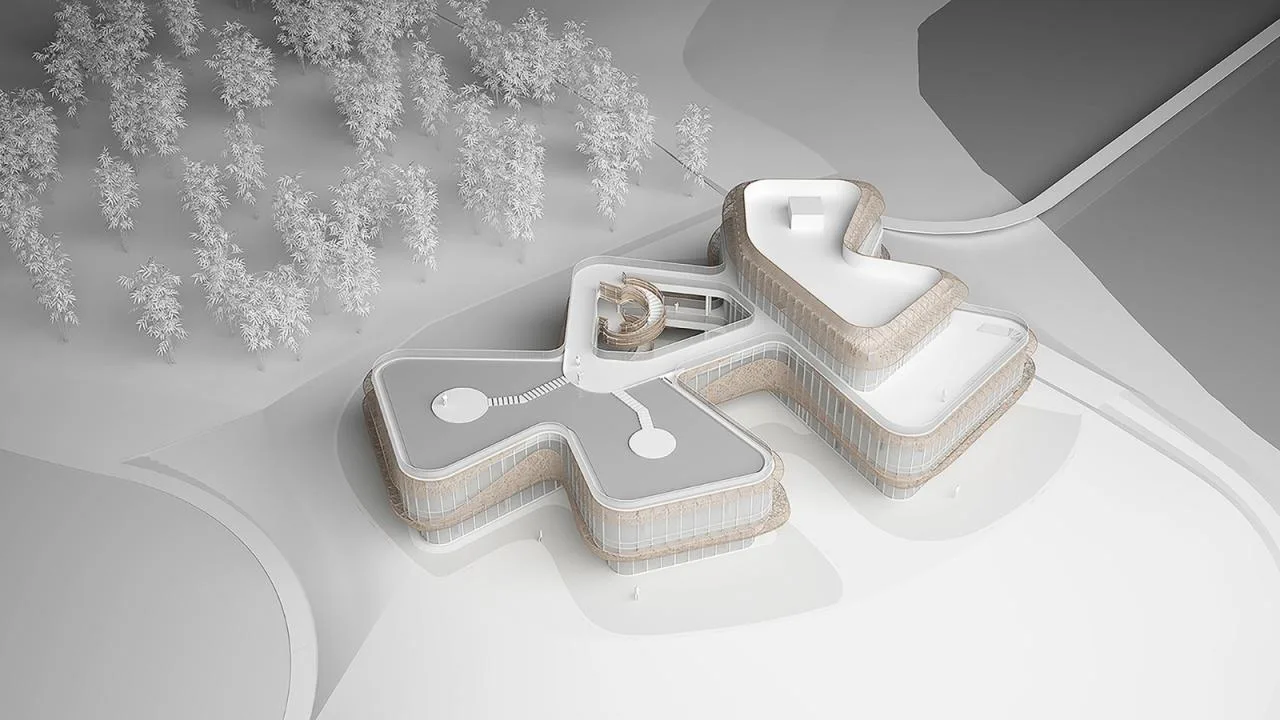
△ Model Diagram

△ Hand-Drawn Draft
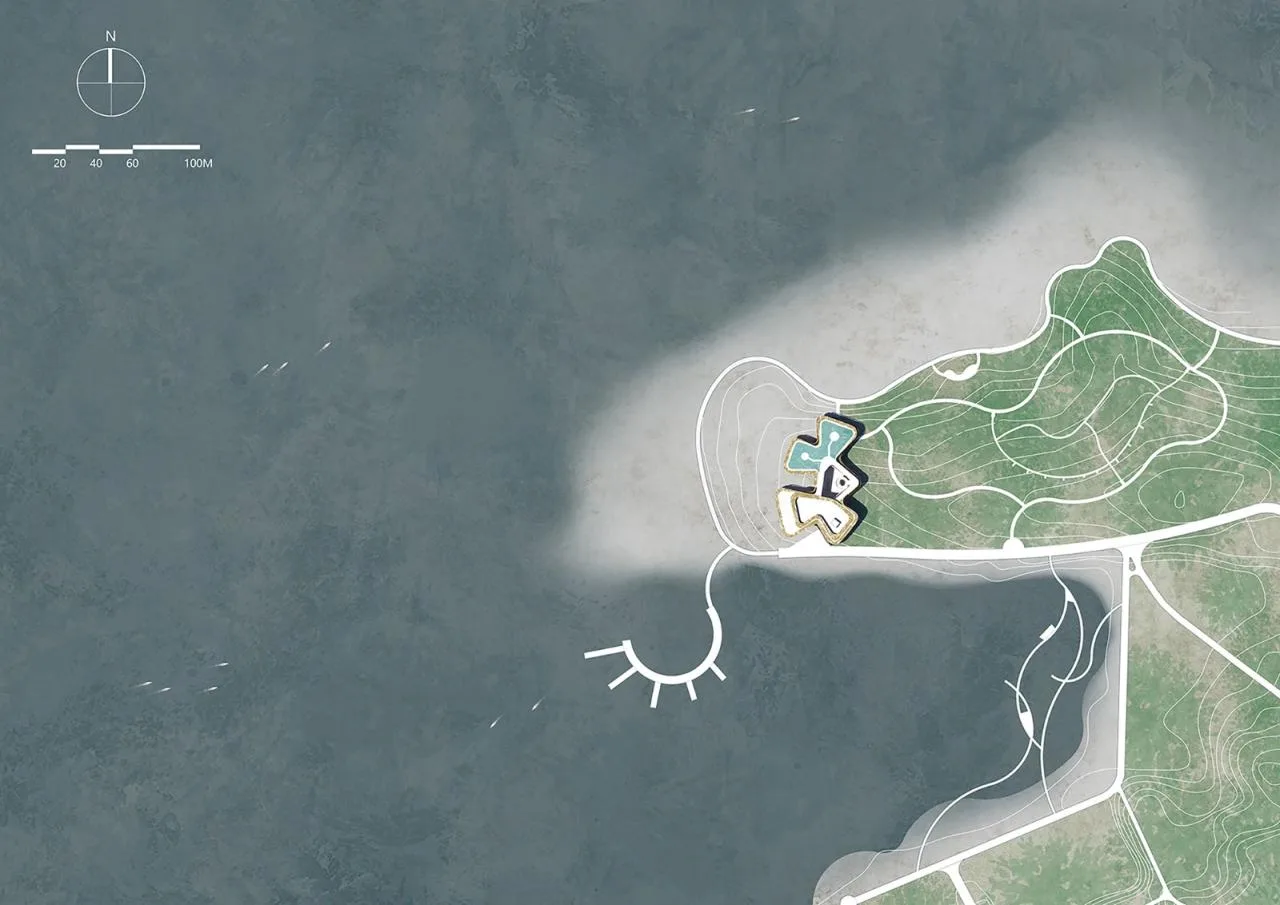
△ General Layout Plan
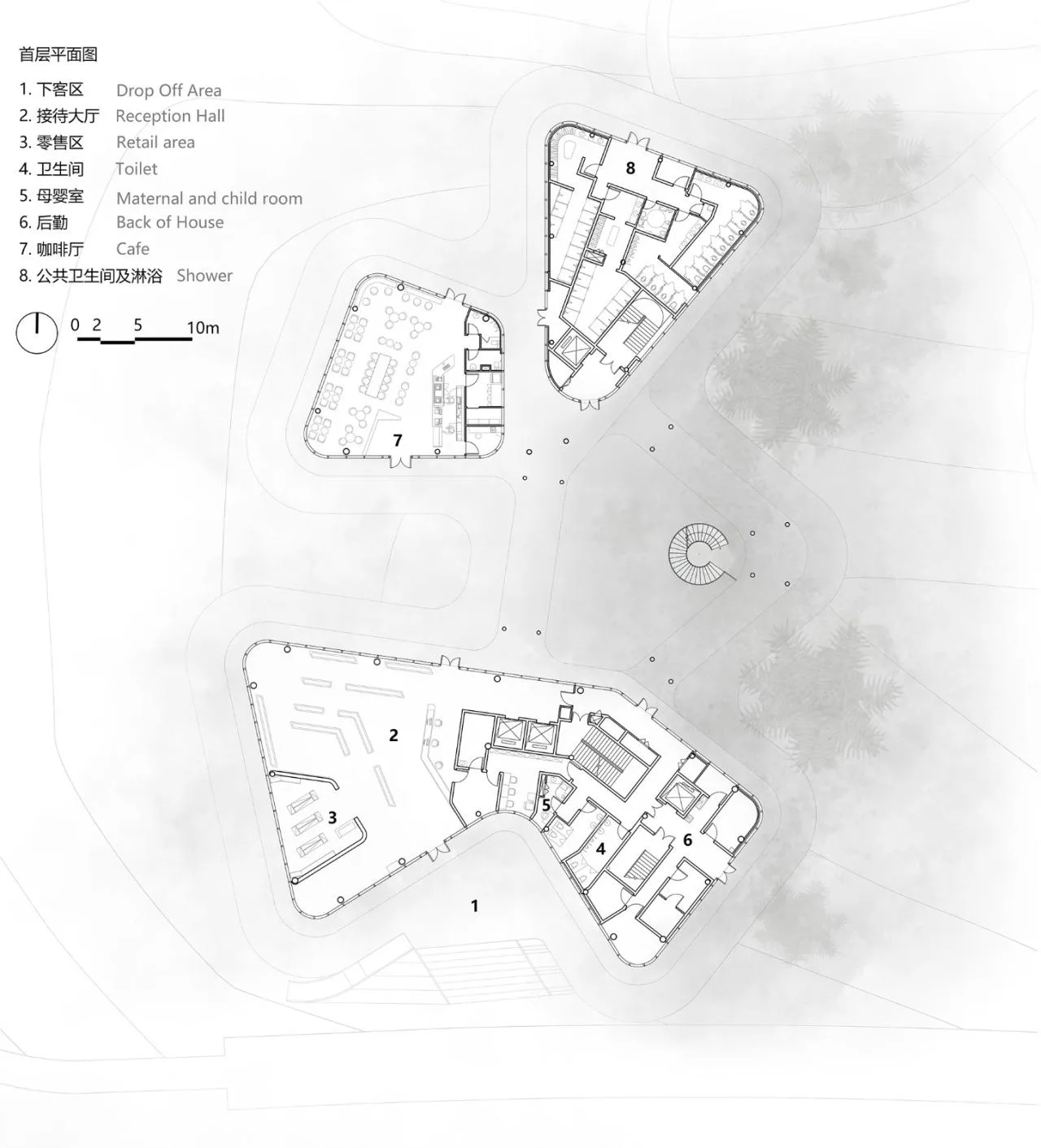
△ First Floor Plan
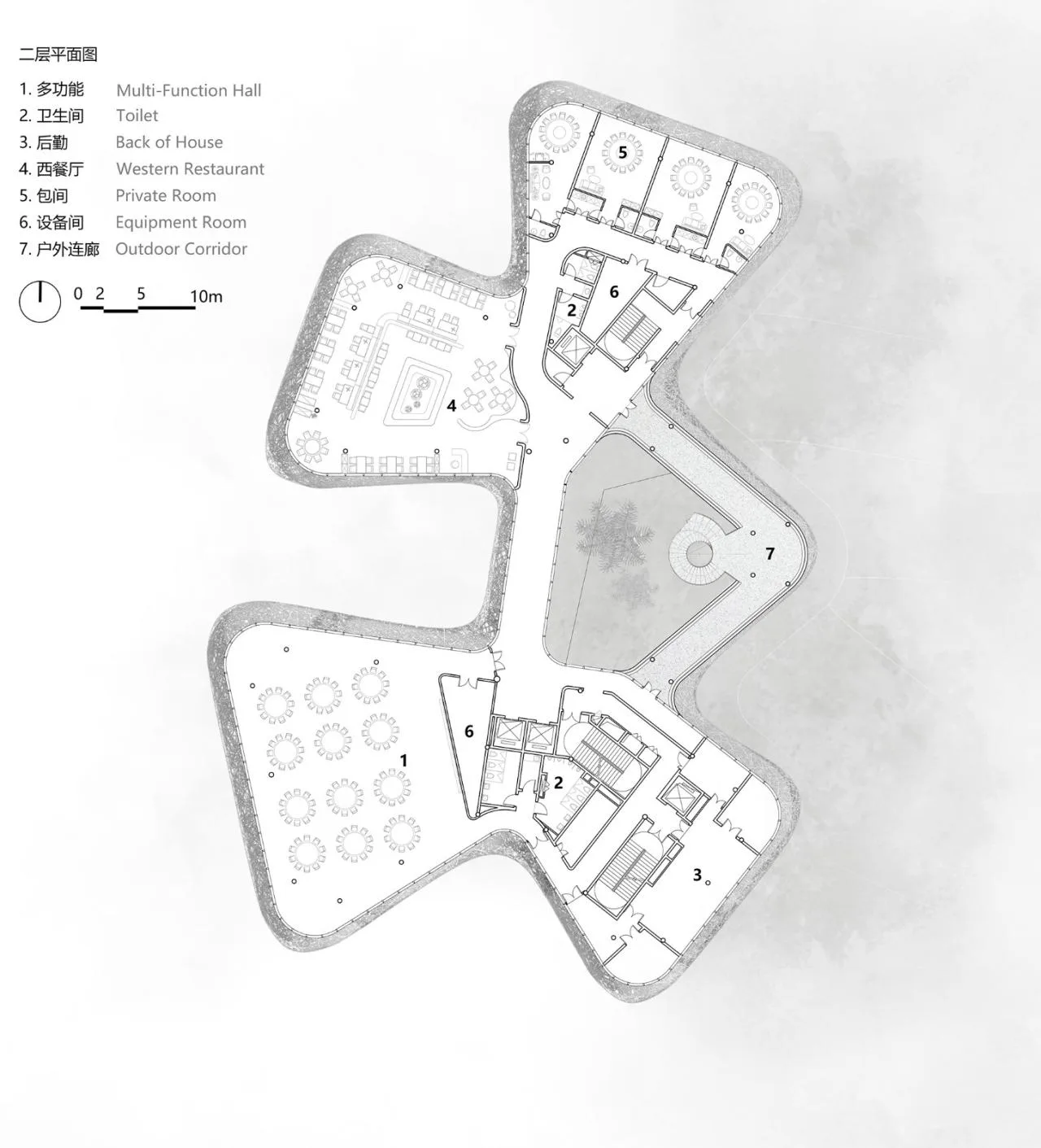
△ Second Floor Plan
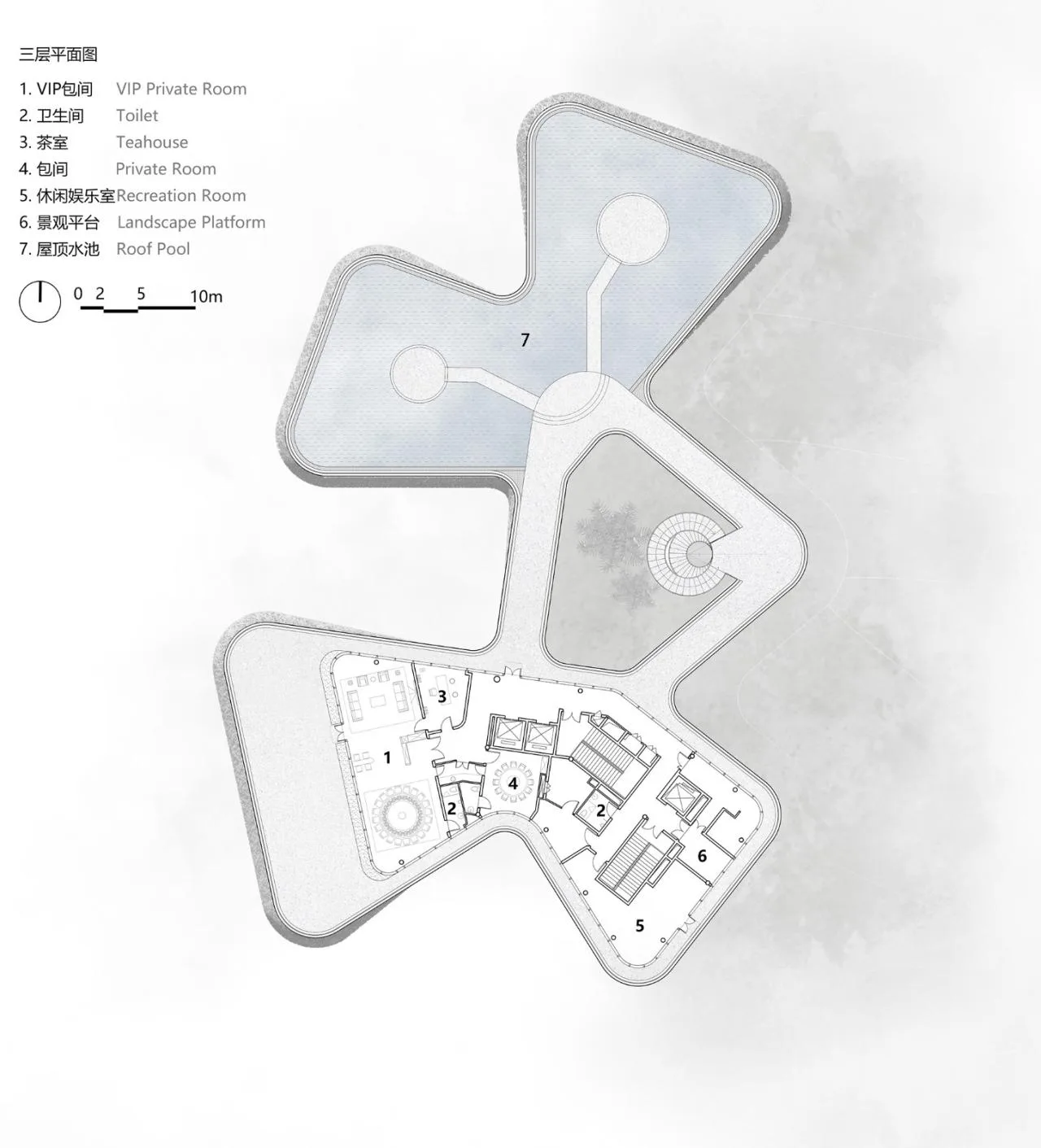
△ Third Floor Plan
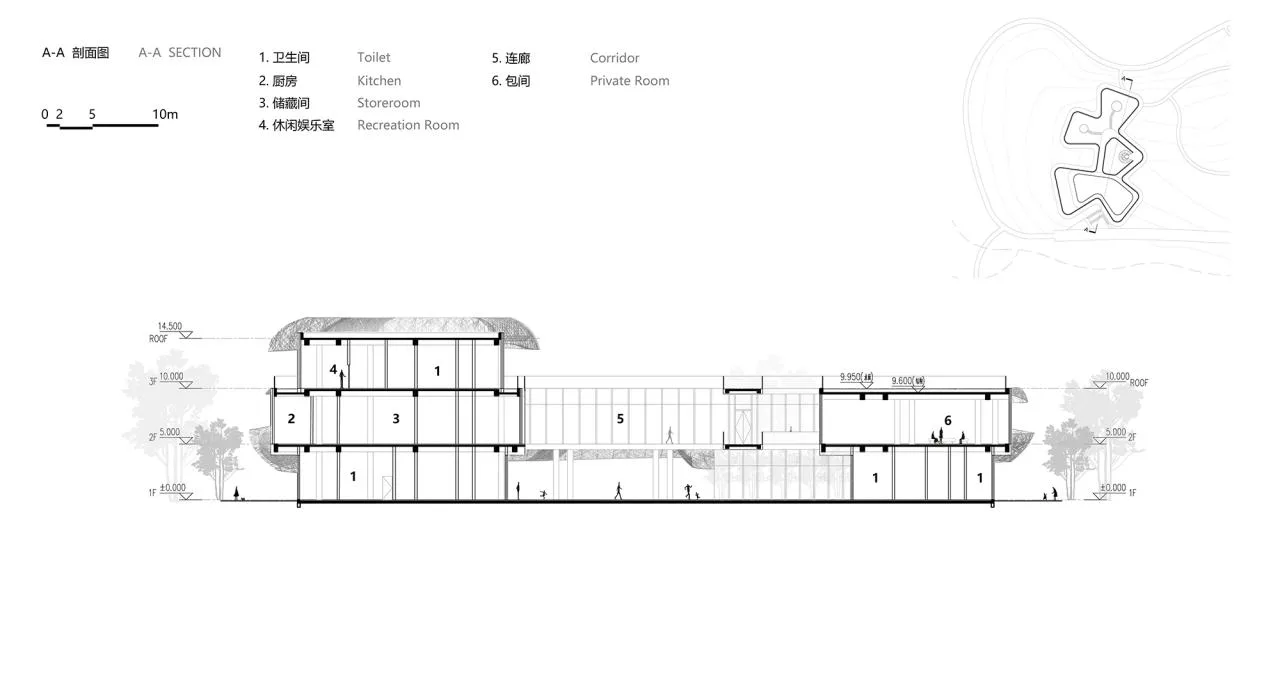
△ Section Diagram
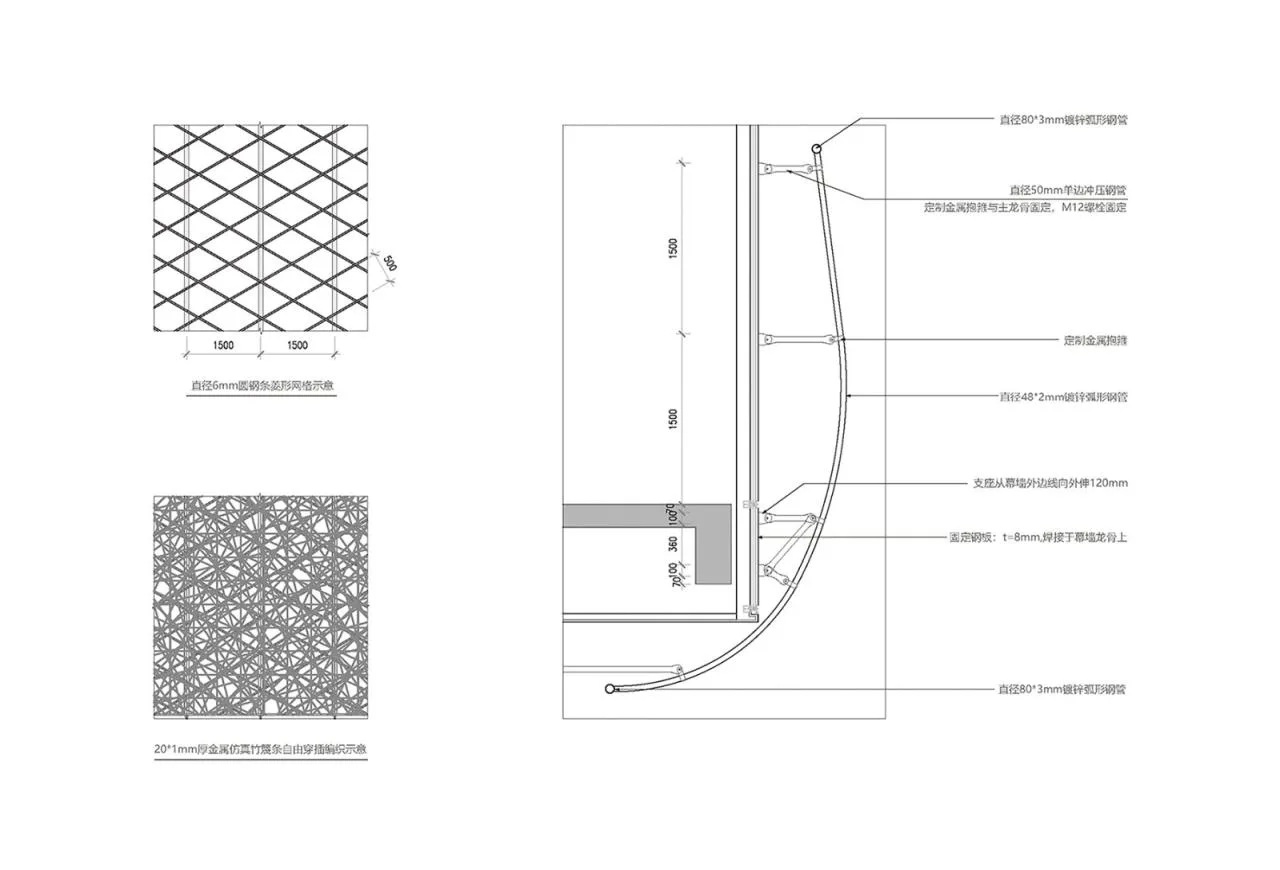
△ Detailed Drawing
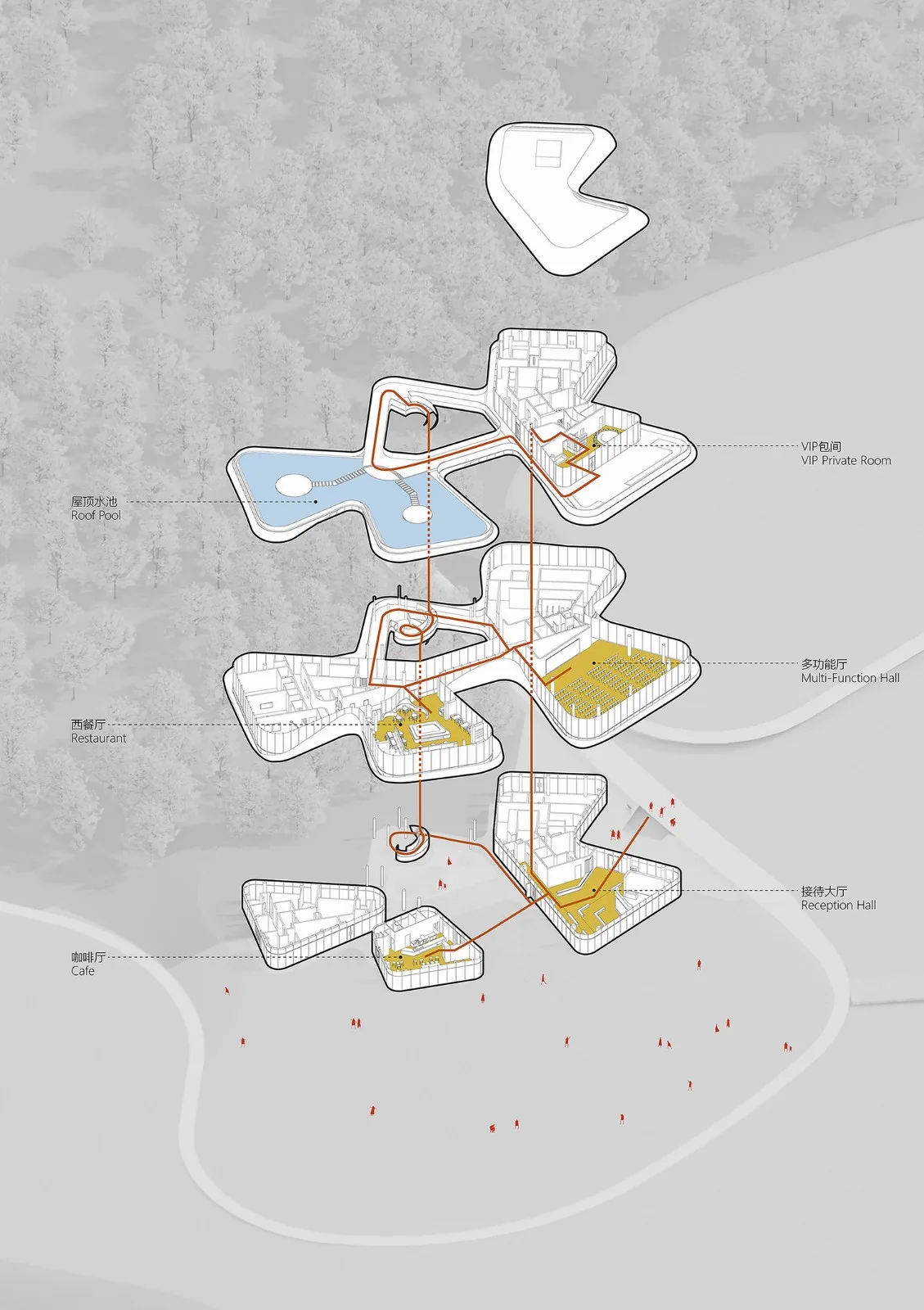
△ Exploded Diagram
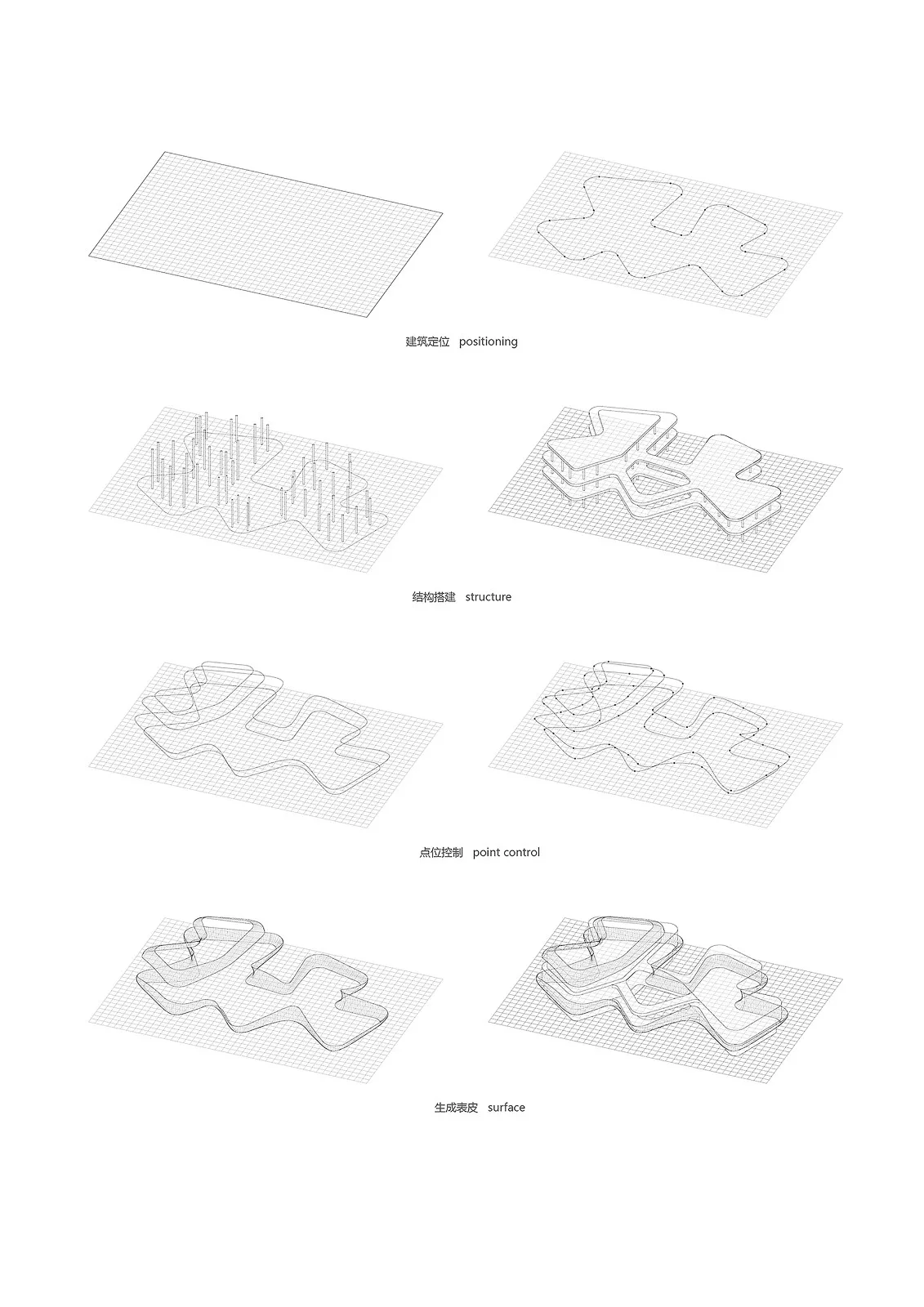
△ Analysis Chart
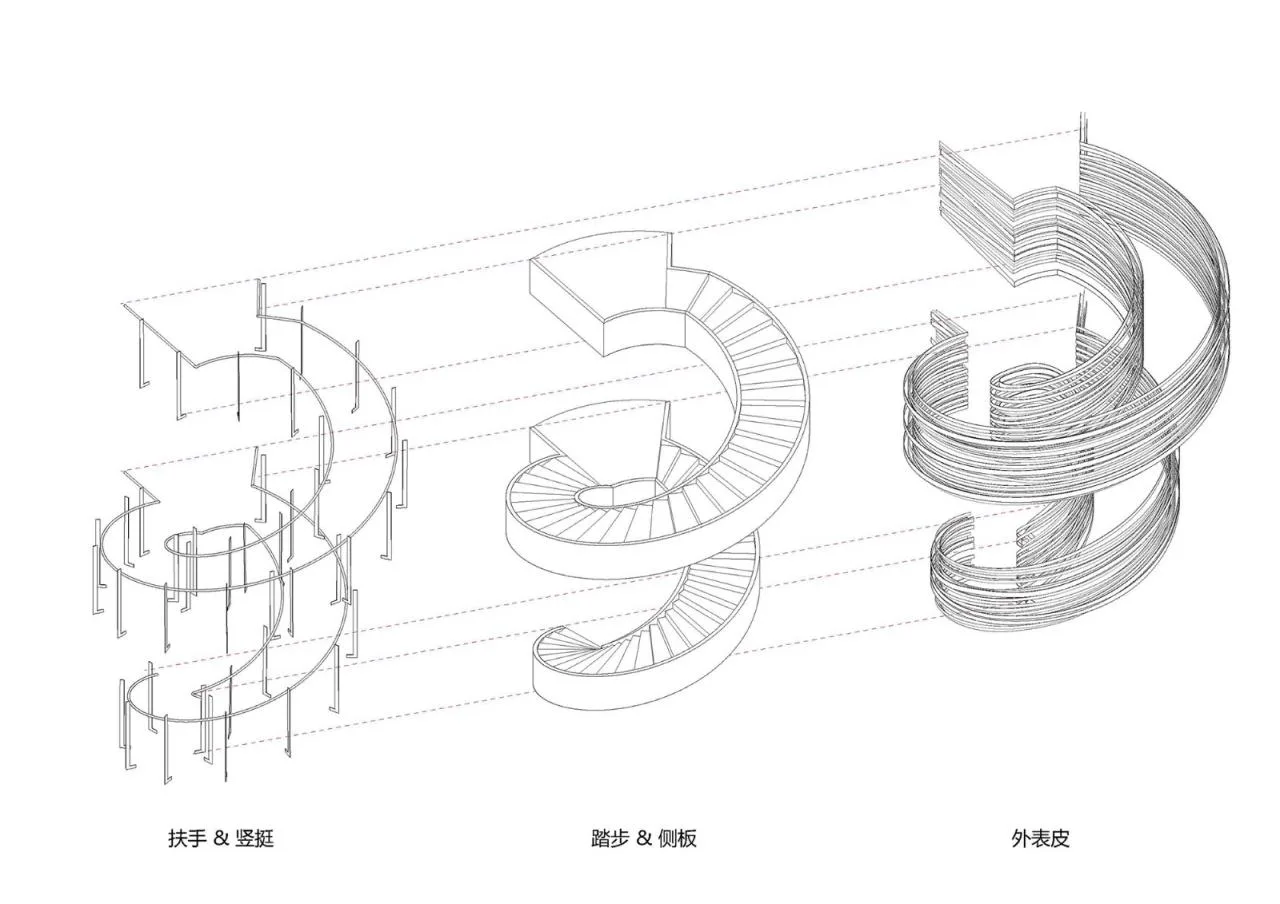
△ Analysis Chart
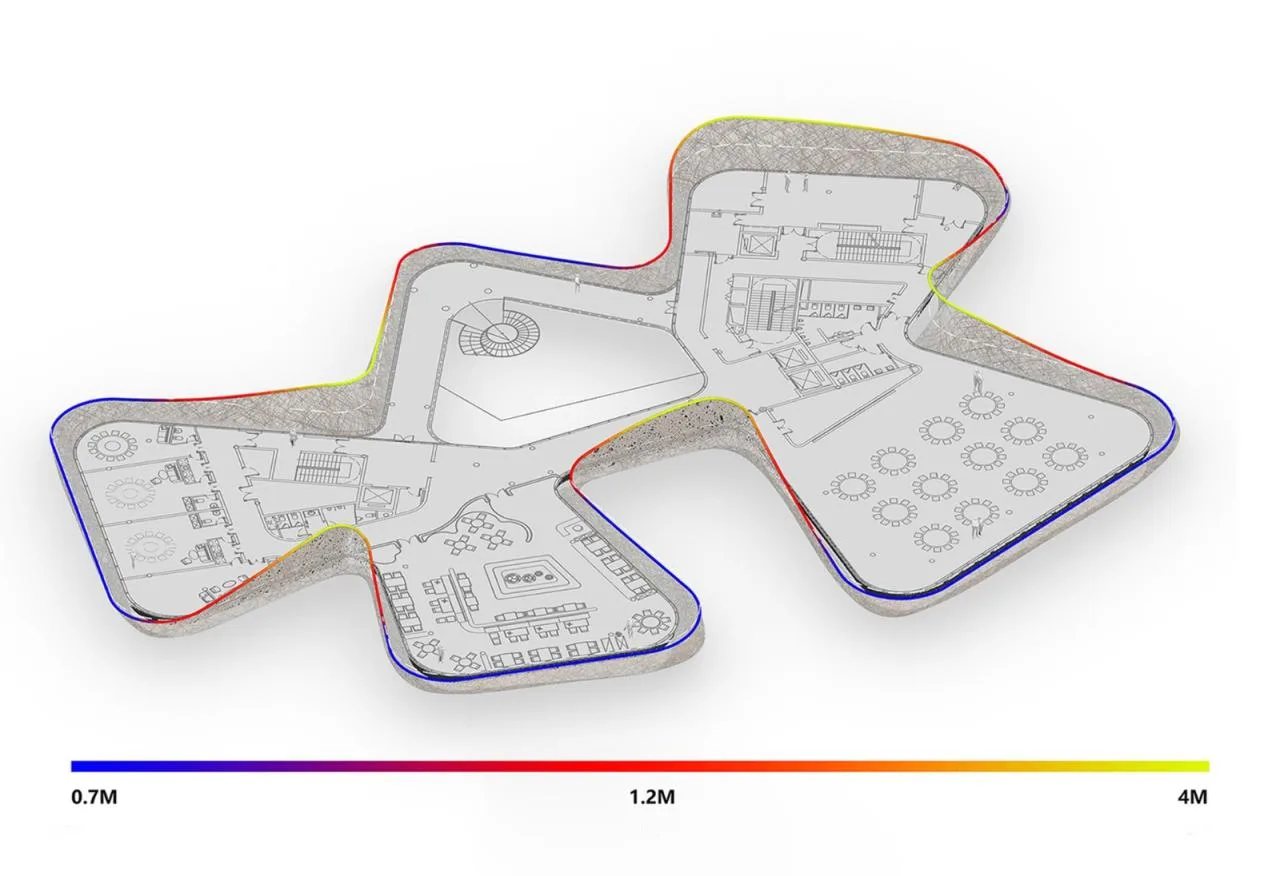
△ Analysis Chart
Project Information
Architect: Architectural Design
Area: 3,620 m²
Project Year: 2023
Photographer: Zeng Jianghe
Manufacturers: Jiangxi Jinmu New Material Co., Jiangxi Nanya Aluminium Co., Nanchang Jingguan Glass Co.
Principal Architect: Yang Jinang
Design Team: Huang Chuanhui, Wang Zhendong, Wang Huijuan, Zhang Zheng
Project Manager: Dai Lie
Construction Drawing Design: Jianxue Architecture and Engineering Design Institute Co., Ltd
Landscape Design: Shenzhen Aoya Design Co., Ltd. + Jiangxi Provincial Architectural Design and Research Institute Group Co., Ltd
Architectural Cooperative Design Party: Shanghai Zhaopin Architectural Design Co., Ltd
Interior Design: Jian Shi (Beijing) Design Consulting Co., Ltd
Lighting Design: Jiangxi Zhongye Landscape Engineering Installation Co., Ltd
Function: Public building, cultural building, tourist center
Client: Jiangxi Guogui Cultural and Tourism Development Co., Ltd
Location: Yingtan














Must log in before commenting!
Sign Up