
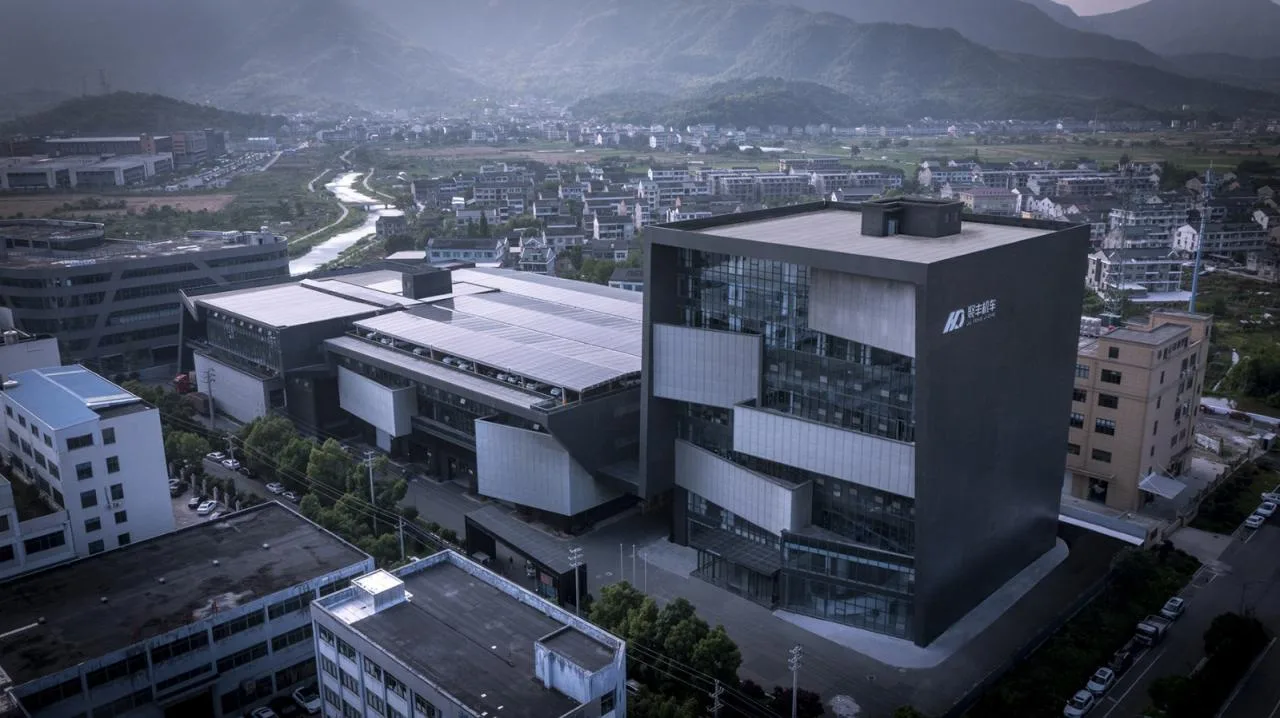
Project Background
This building is situated within an industrial park in Huangyan District, Taizhou City, Zhejiang Province—an area renowned nationally for its automotive and electric motorcycle mold manufacturers. Leading automotive and plastic enterprises across the country have converged here, fostering significant development in the region.
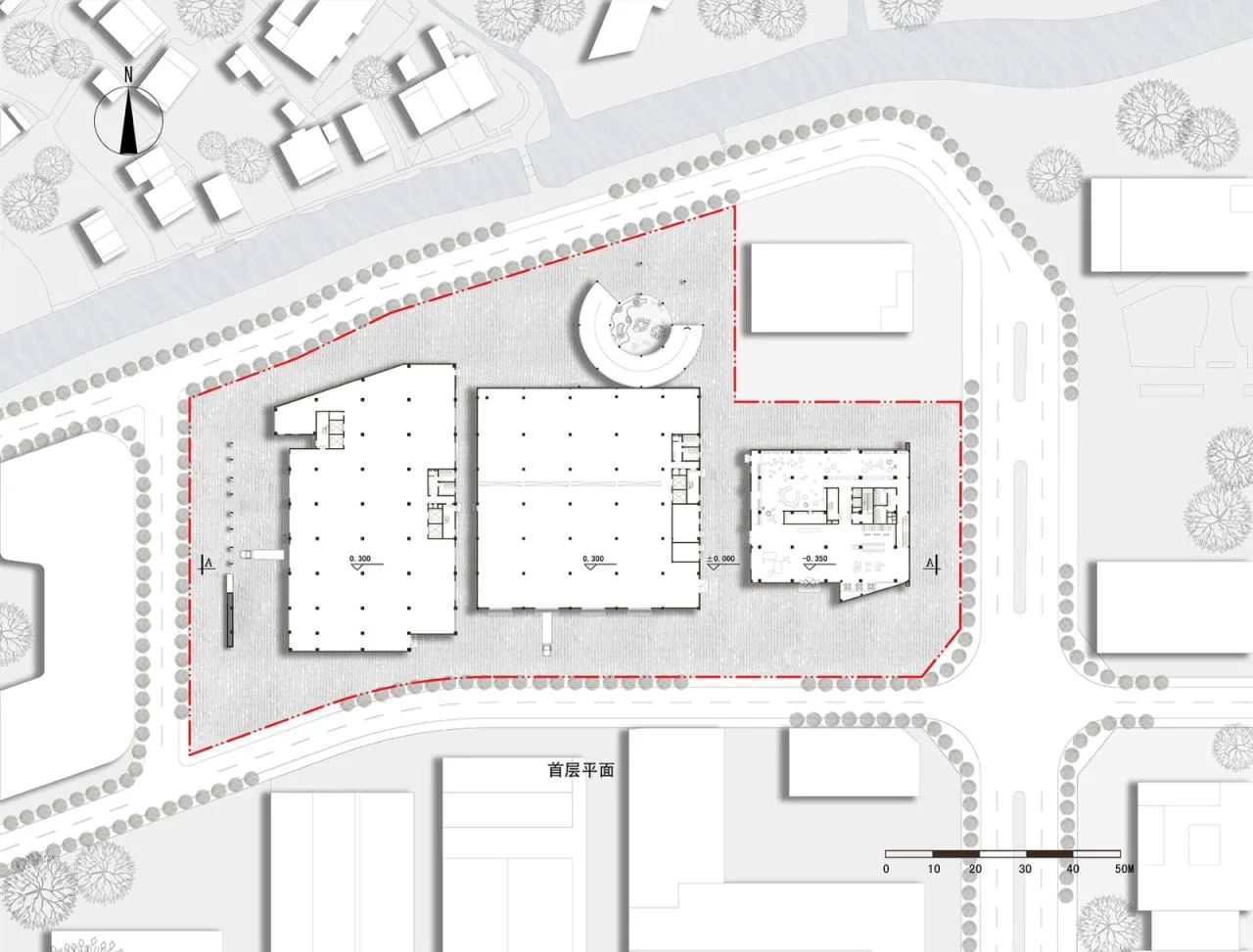
To the north of the factory lies a village, separated from the industrial zone by a river that acts as a natural boundary between dense industrial development and traditional settlements. The government envisions transforming this riverfront area into an industrial tourism town, integrating the river, northern villages, and surrounding mountains into a cohesive rural tourism and sightseeing strategy. This approach aims to combine rural and industrial tourism clusters for coordinated growth.
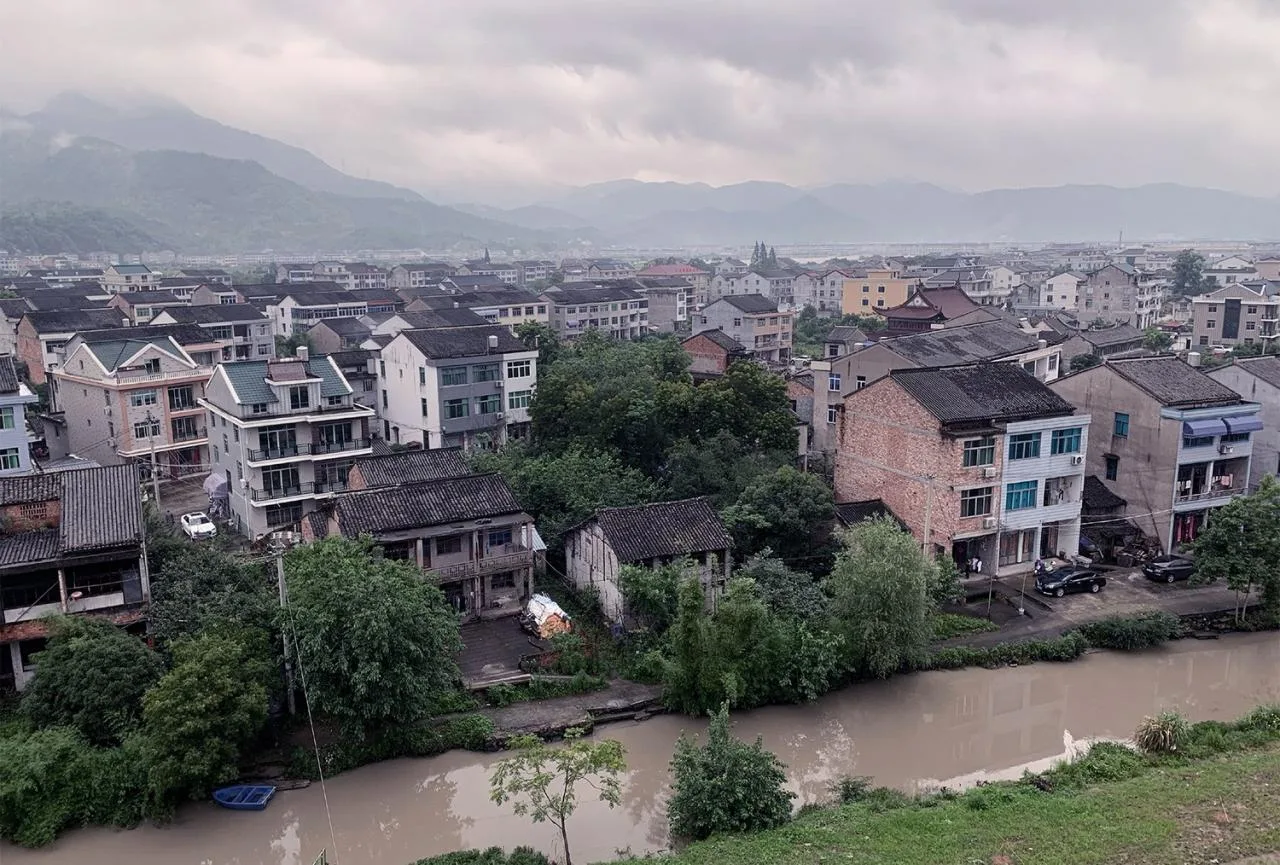
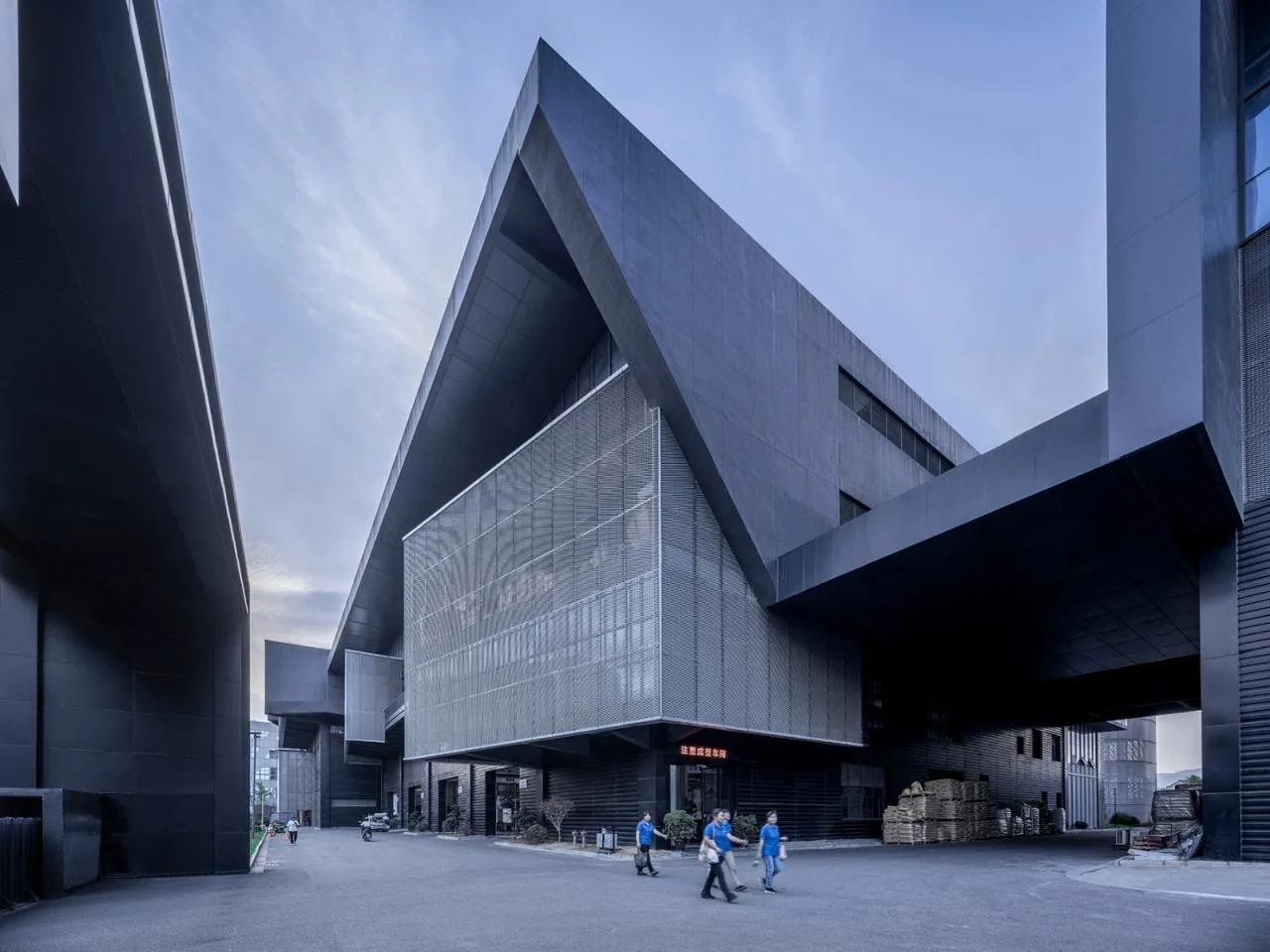
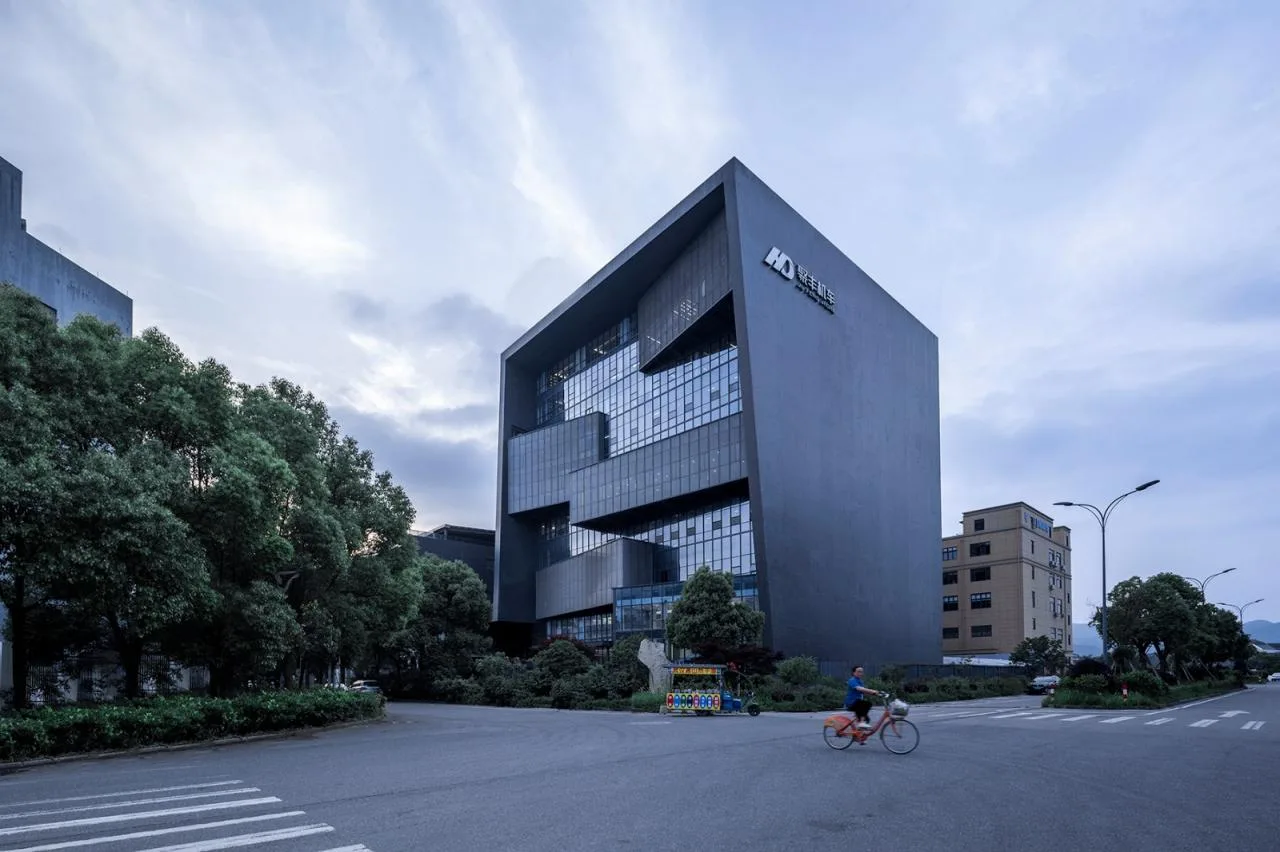
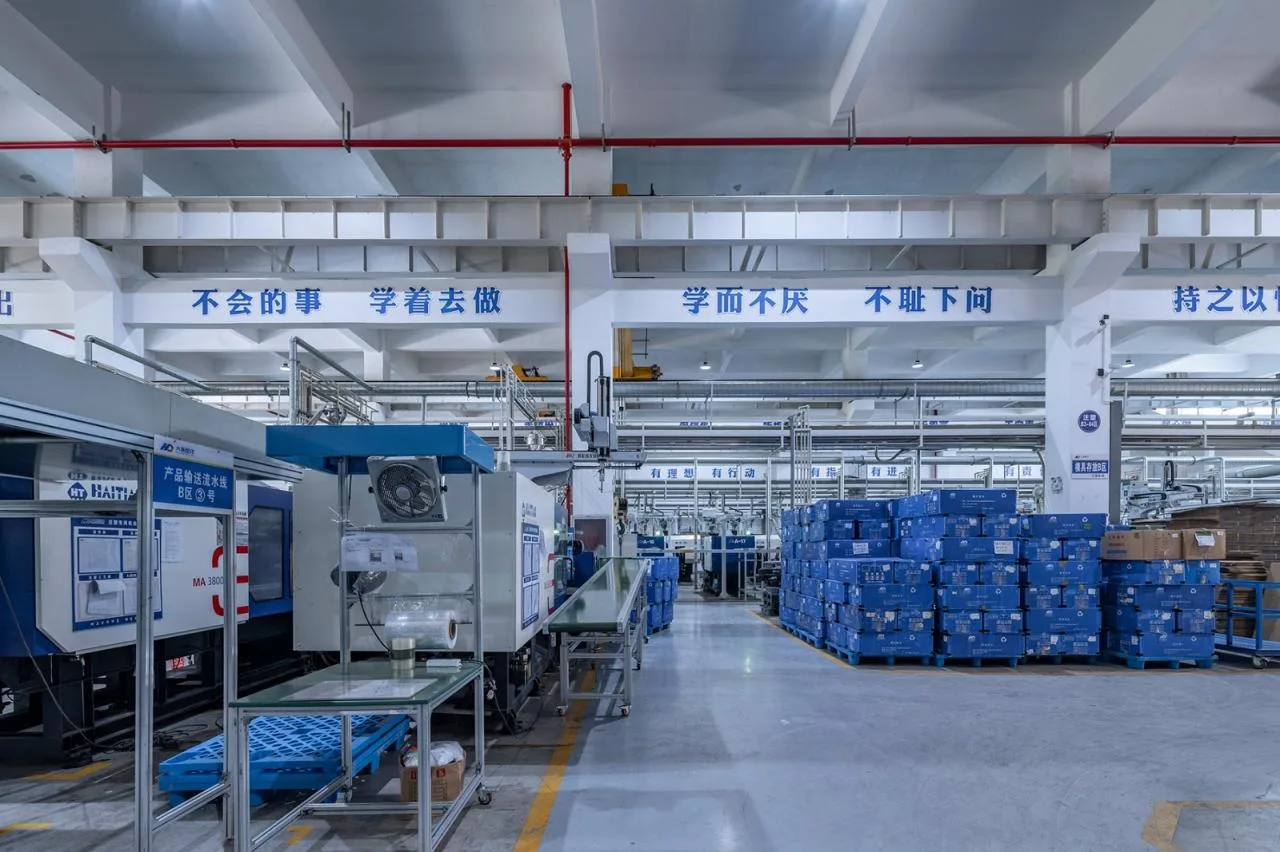
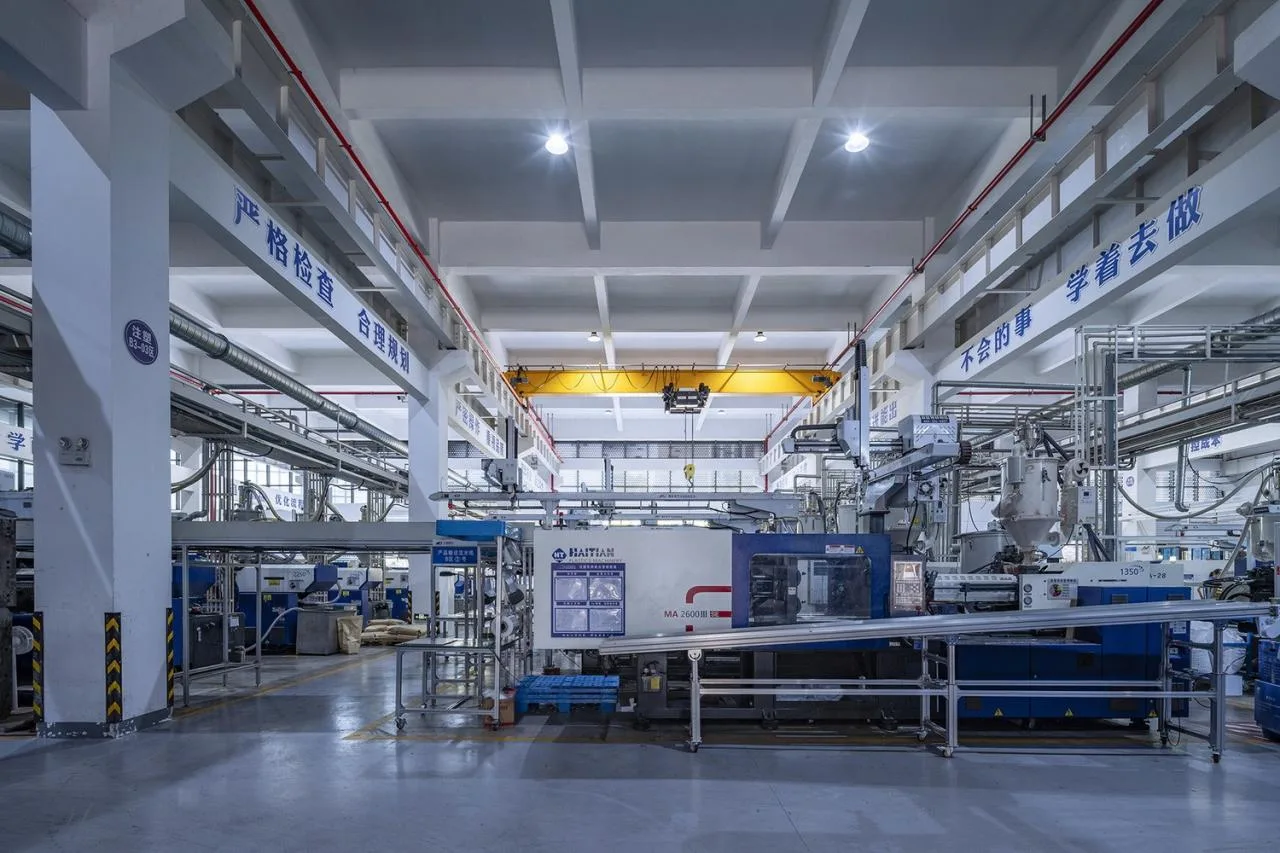
Before designing the locomotive headquarters, a thorough investigation was conducted focusing on the prototype of the family-style workshop. It revealed that the factory operated under a primitive, extensive mechanization system where various assembly line equipment was housed within conventional steel-framed buildings. Although Jufeng Group is a leading local brand, its diverse operations—including research, design, processing, production, packaging, warehousing, and logistics—are all integrated within a single factory space.
This setup mirrors many other factories in the region, presenting a chaotic spatial environment that reflects the prevailing manufacturing paradigm.
This situation originates from the family business model rooted in informal contract-based management, deeply influencing industrialization within China’s agricultural civilization context. Unlike Western industrial development, Chinese manufacturing enterprises often maintain strong ties to land, family, and clan.
Many private enterprises began as small workshops on family property, expanding into combined storefronts and factories. Over time, these grew into large factory complexes without fundamentally changing the underlying spatial structure of the manufacturing workshops.
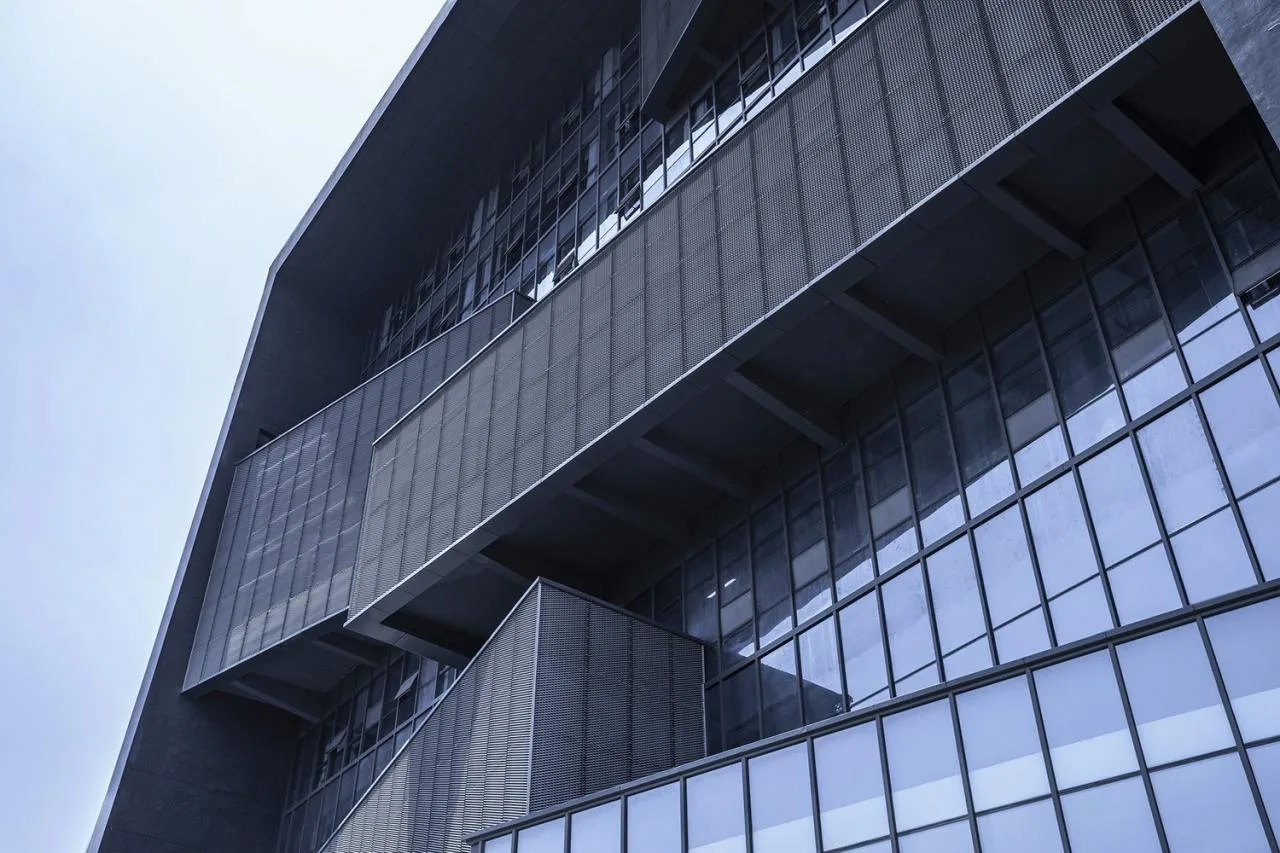
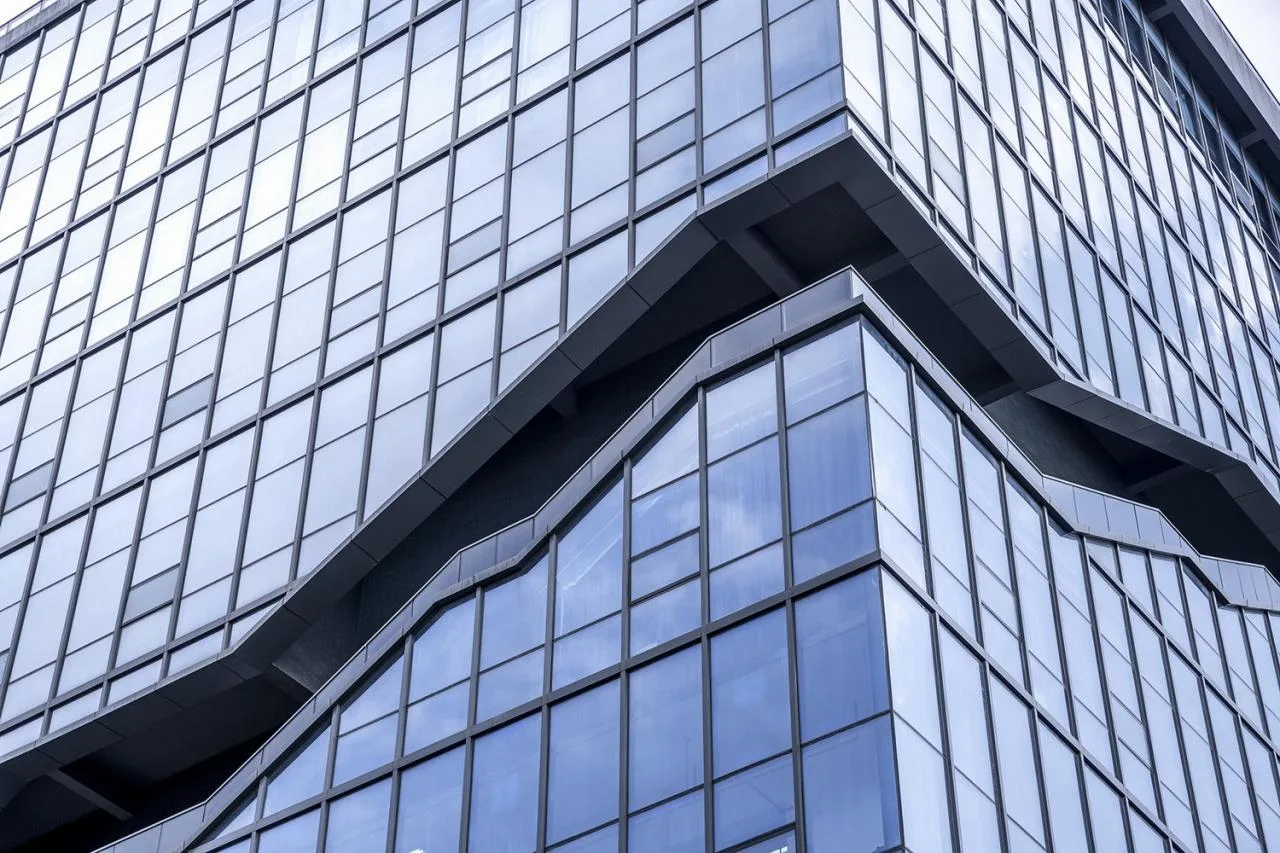
The industrial tourism narrative differs from traditional corporate exhibition halls, particularly regarding visitor flow. This new building is designed to serve as a regional industry benchmark and lighthouse, creating a demonstrative effect.
The narrative is structured on two levels. The first focuses on the producer: this space is the foundation of the narrative logic, serving as the starting point for visitor flow and enterprise operations. The entire production process—including the car workshop, workers’ activities, and research and development—is physically showcased within the building.
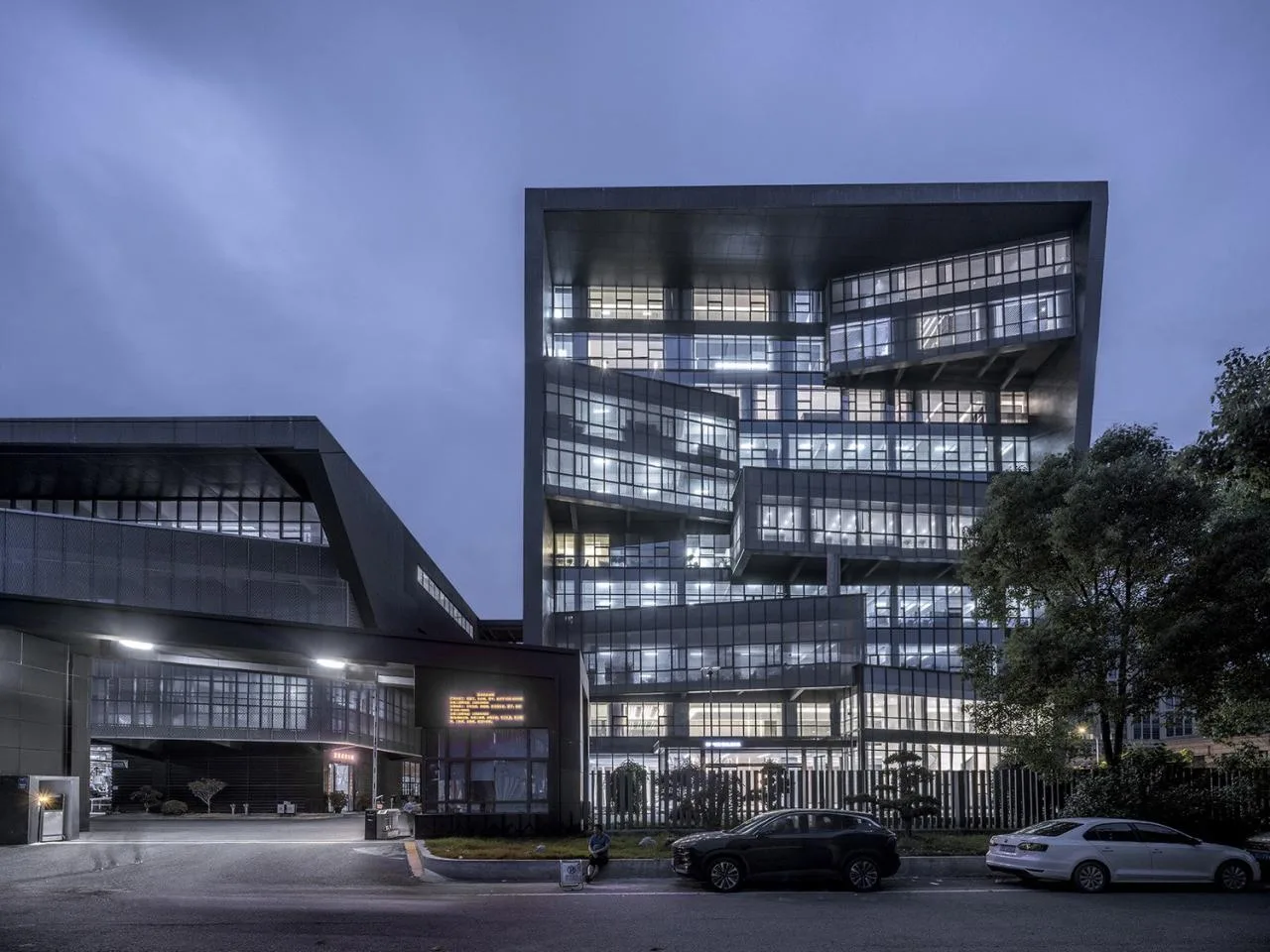
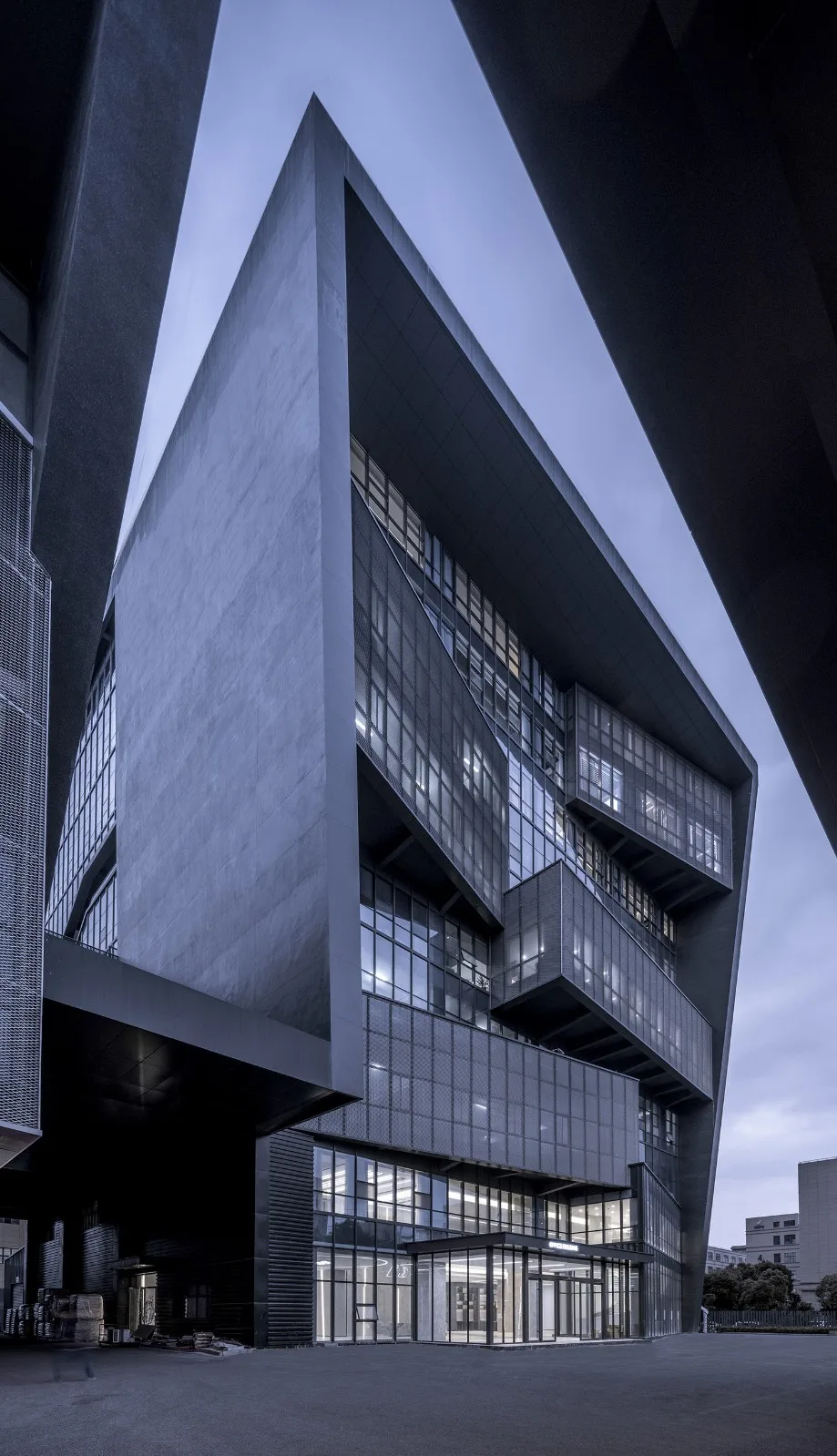
The second level is dedicated to visitors. An outdoor sightseeing path is integrated throughout the building, inviting external visitors to engage with the narrative. This route begins on the east side of the main building, passes through the hall, continues along the north facade to a viewing staircase leading to the second floor, and then follows the north side of the production workshop all the way west to the building’s farthest point.
From there, visitors enter the main factory area, completing a full sightseeing loop. Along this path, they can observe the industrial assembly line inside, as well as the natural scenery outside—rivers, villages, and distant mountains to the north. This trail seamlessly connects production with tourism.
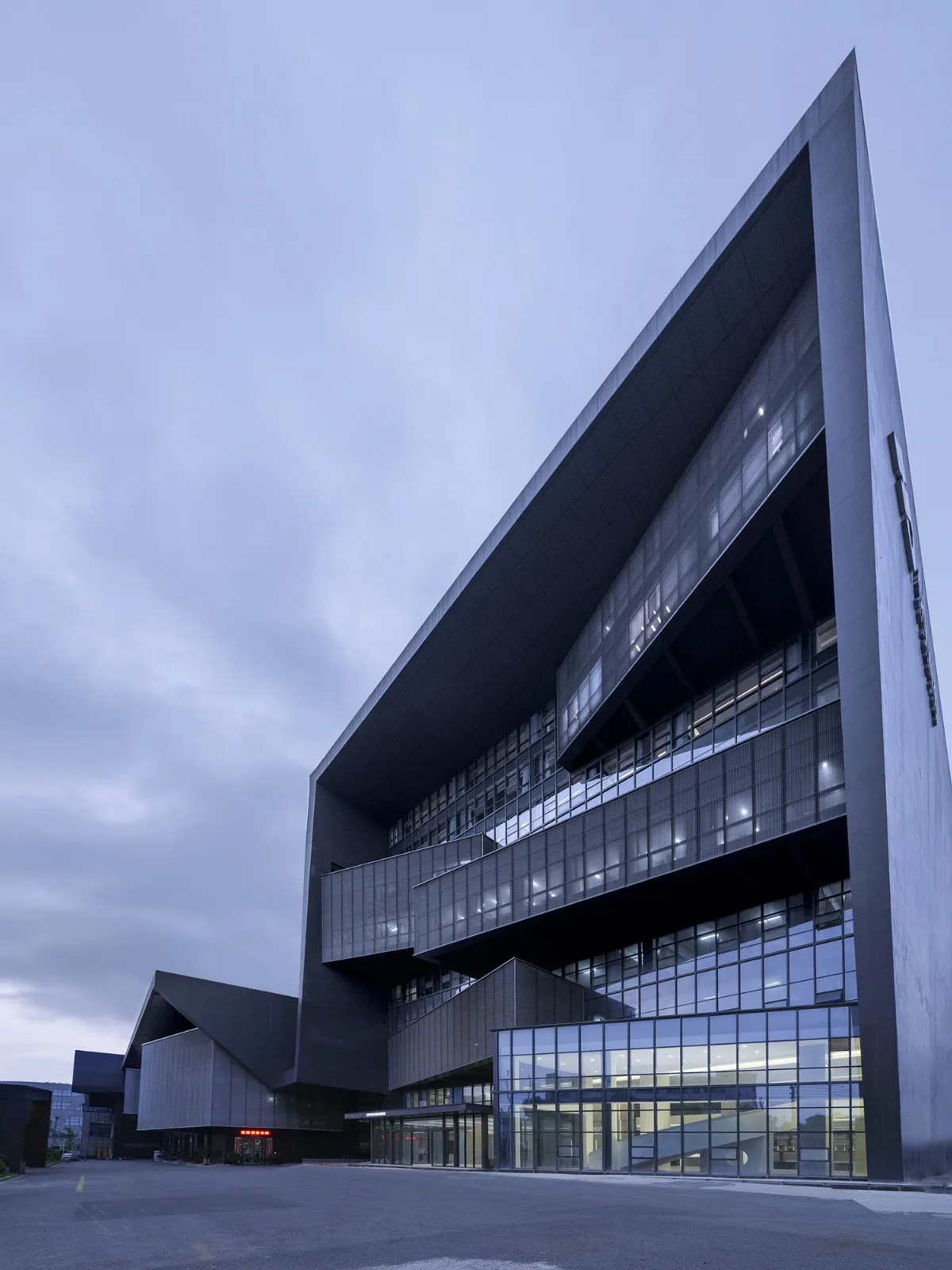
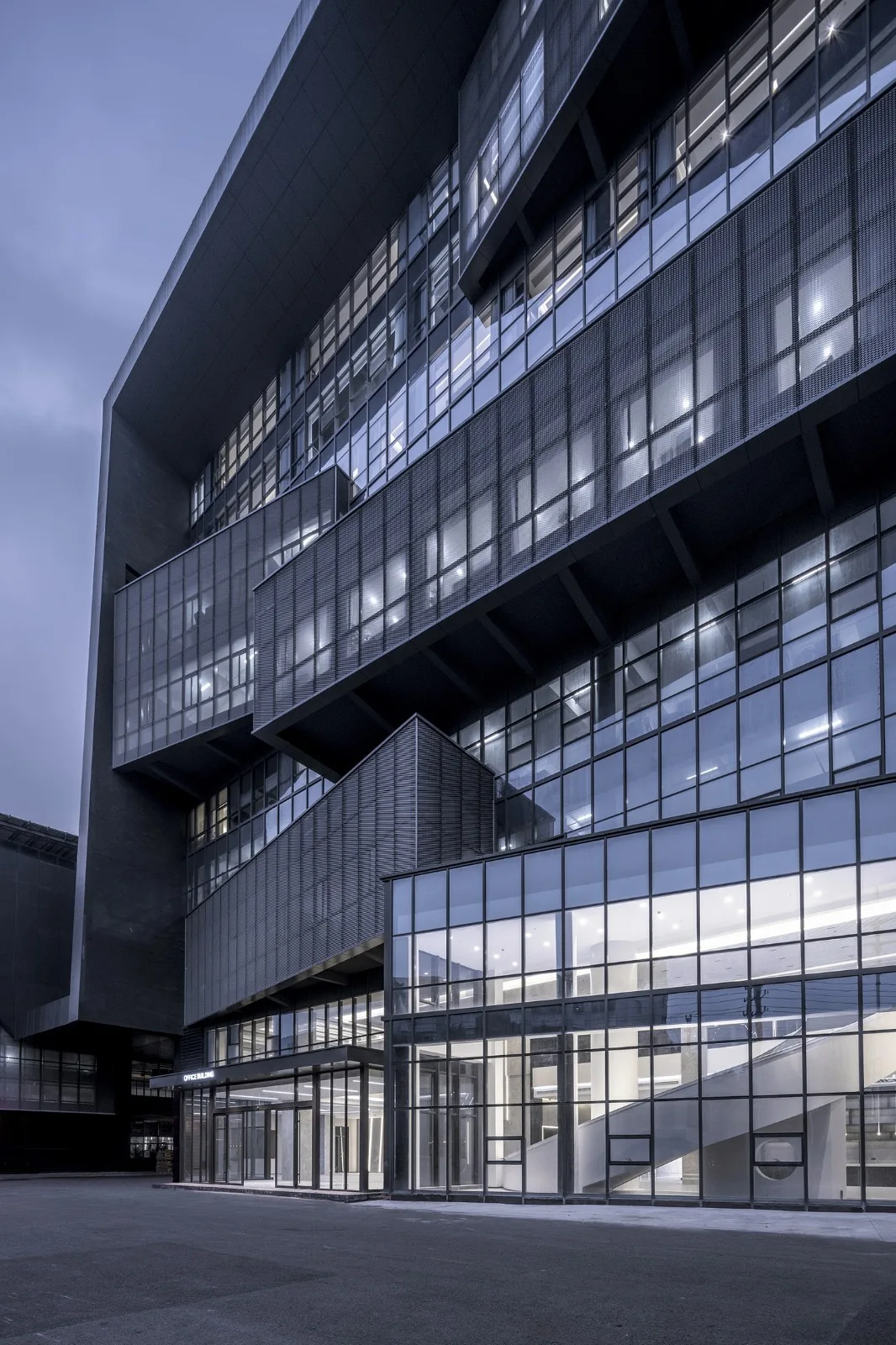
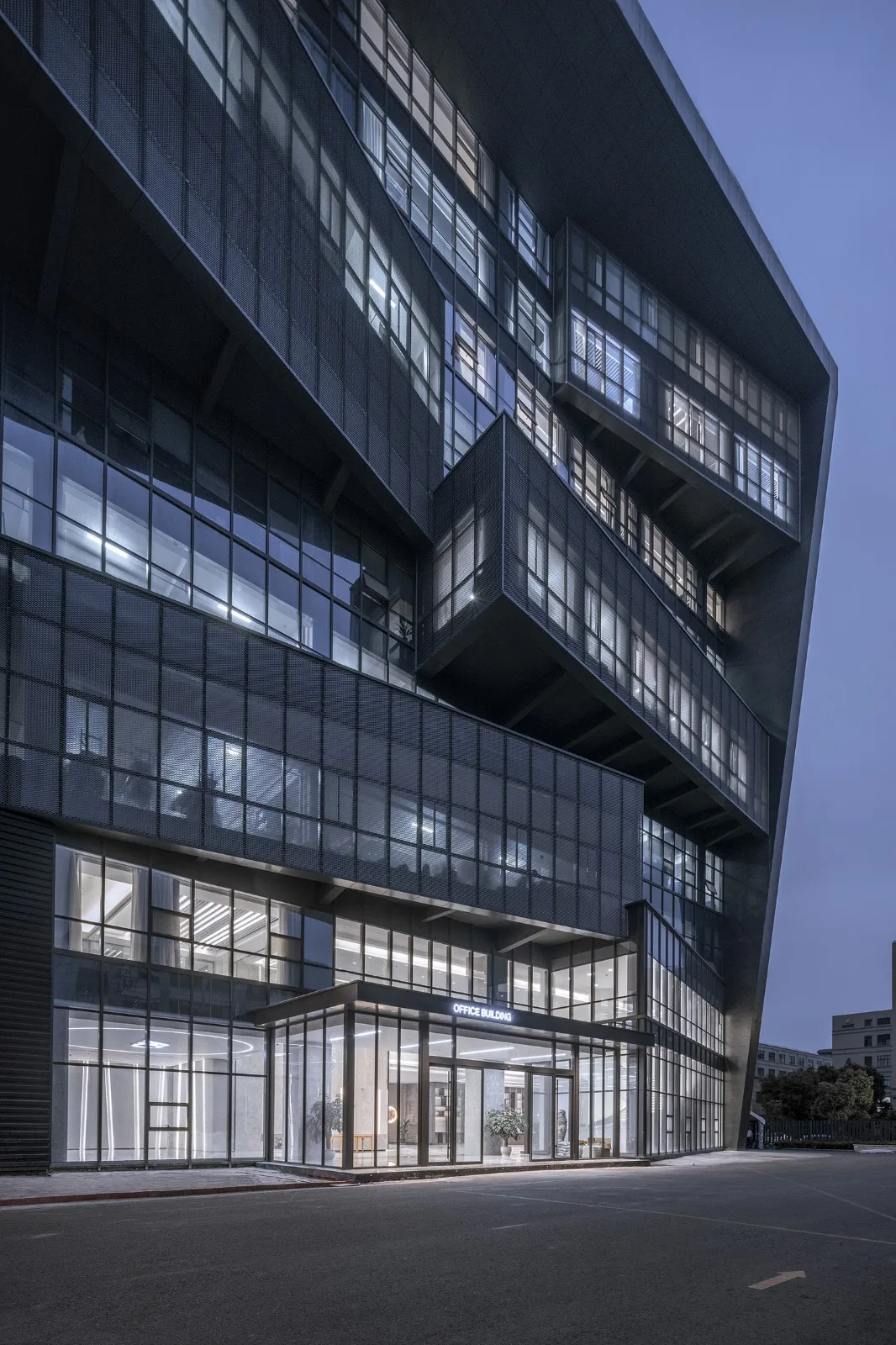
These two visitor flows intersect at key spatial nodes, such as the main hall and exhibition areas, where the storylines overlap. Most of the time, the paths remain separated to maintain production integrity and confidentiality, allowing visual transparency without actual access. This design balances openness with security, alternating between overlap and separation.
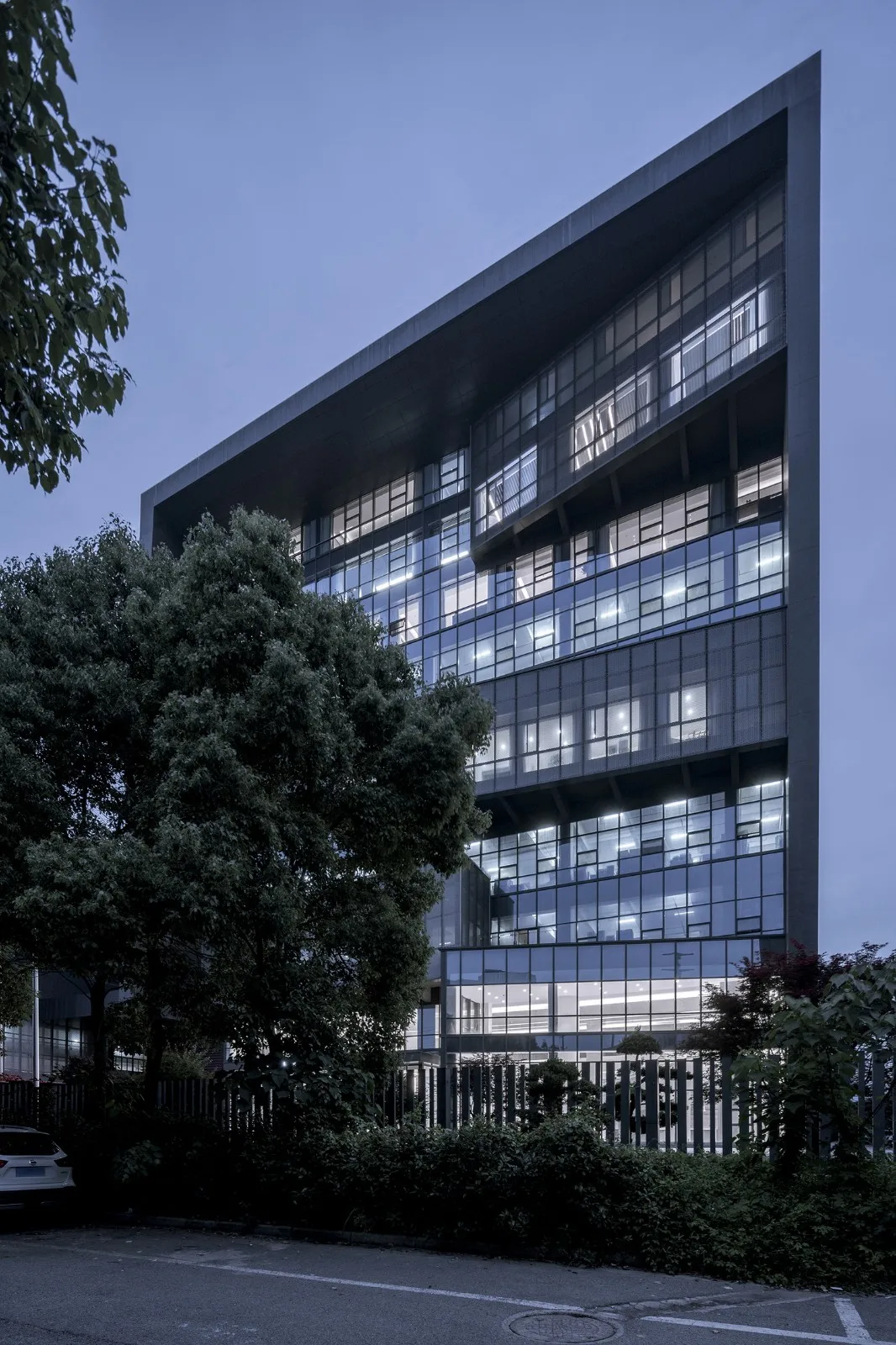
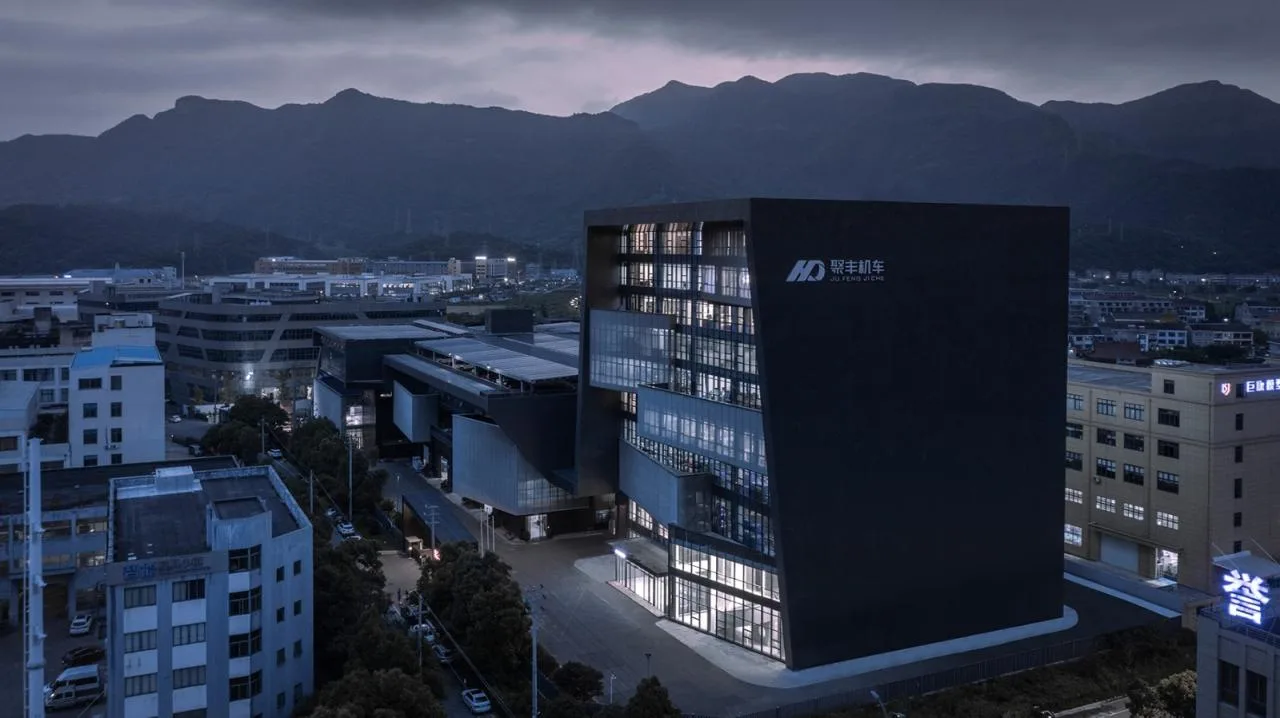
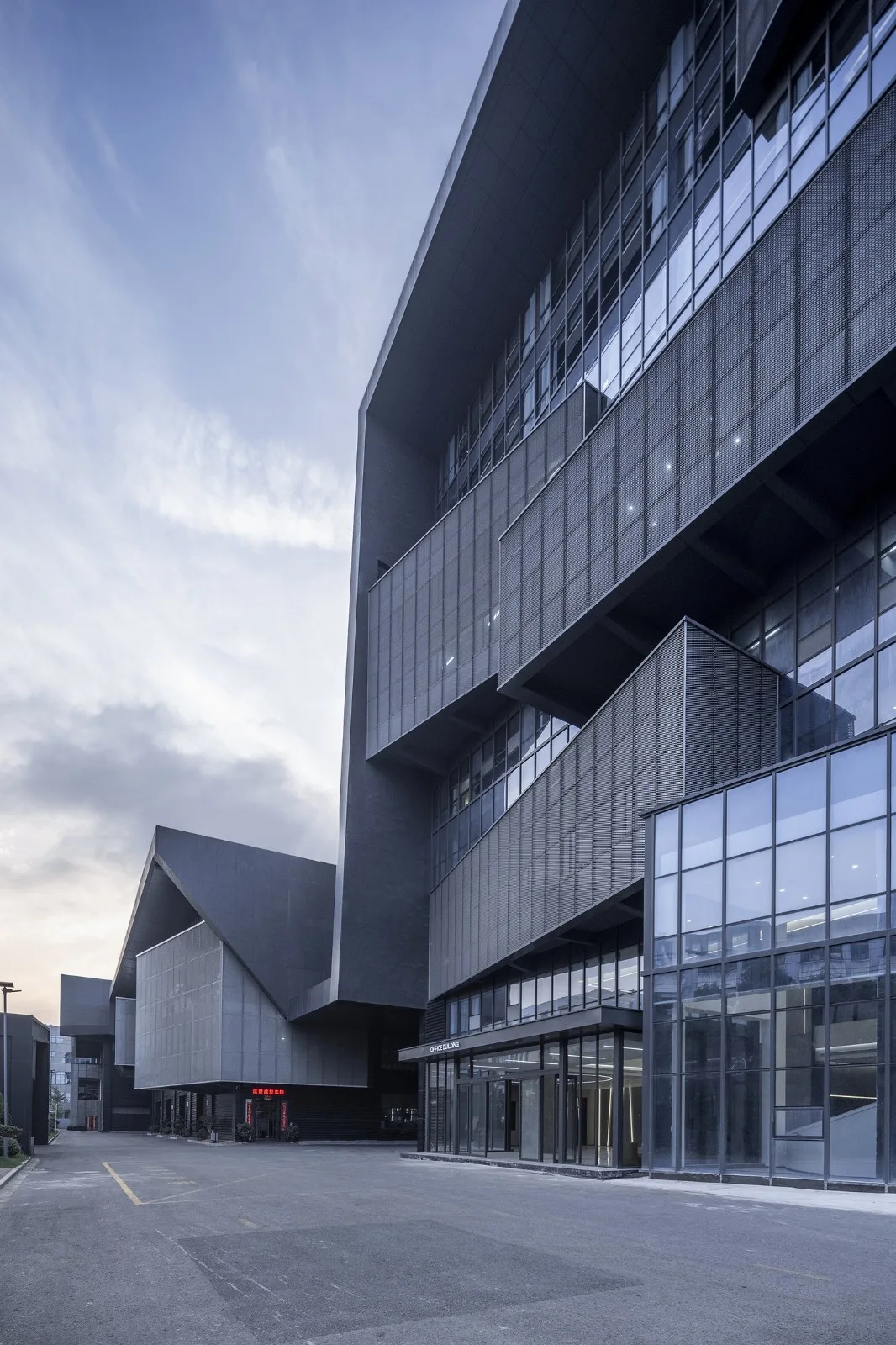
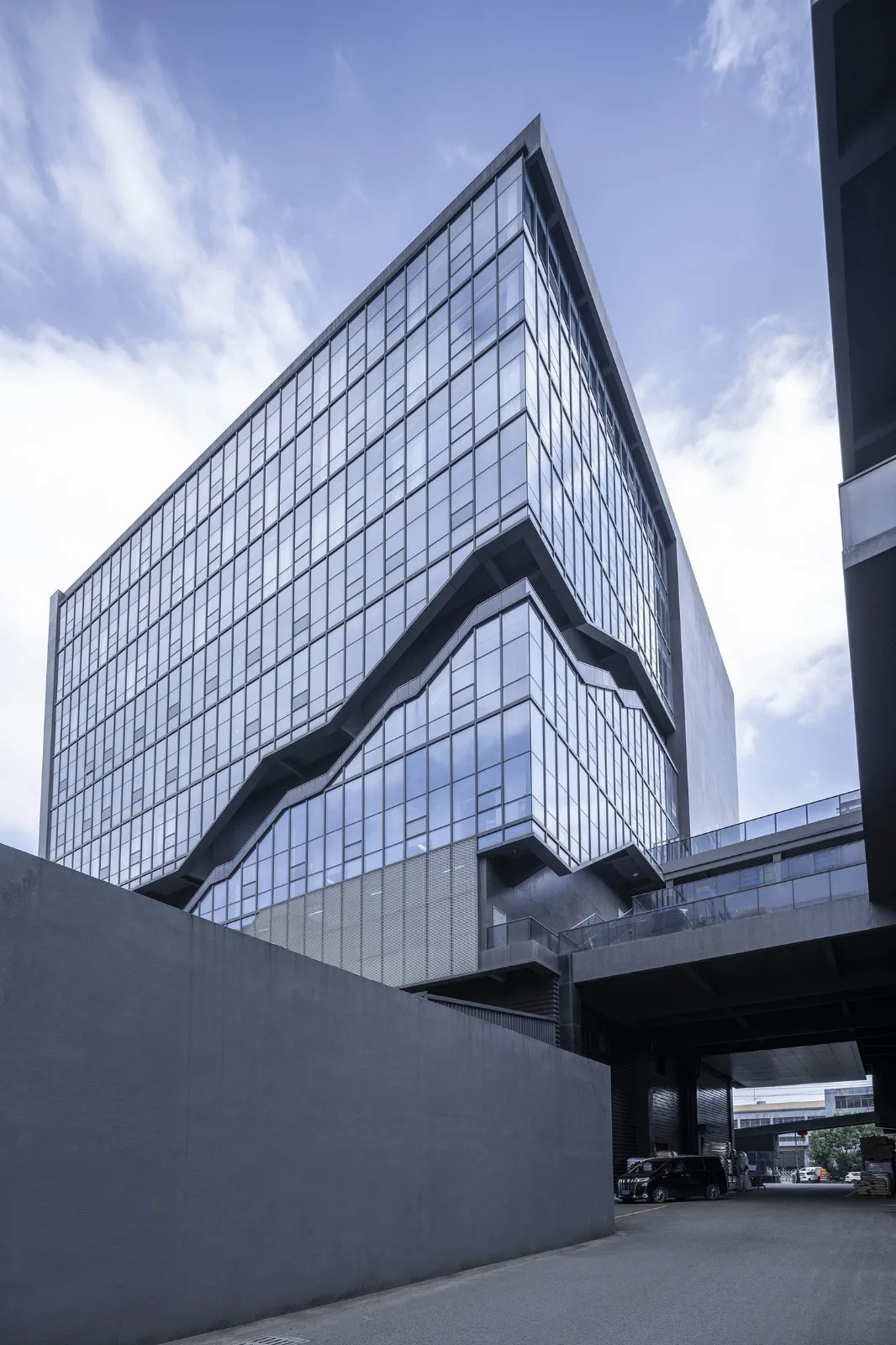
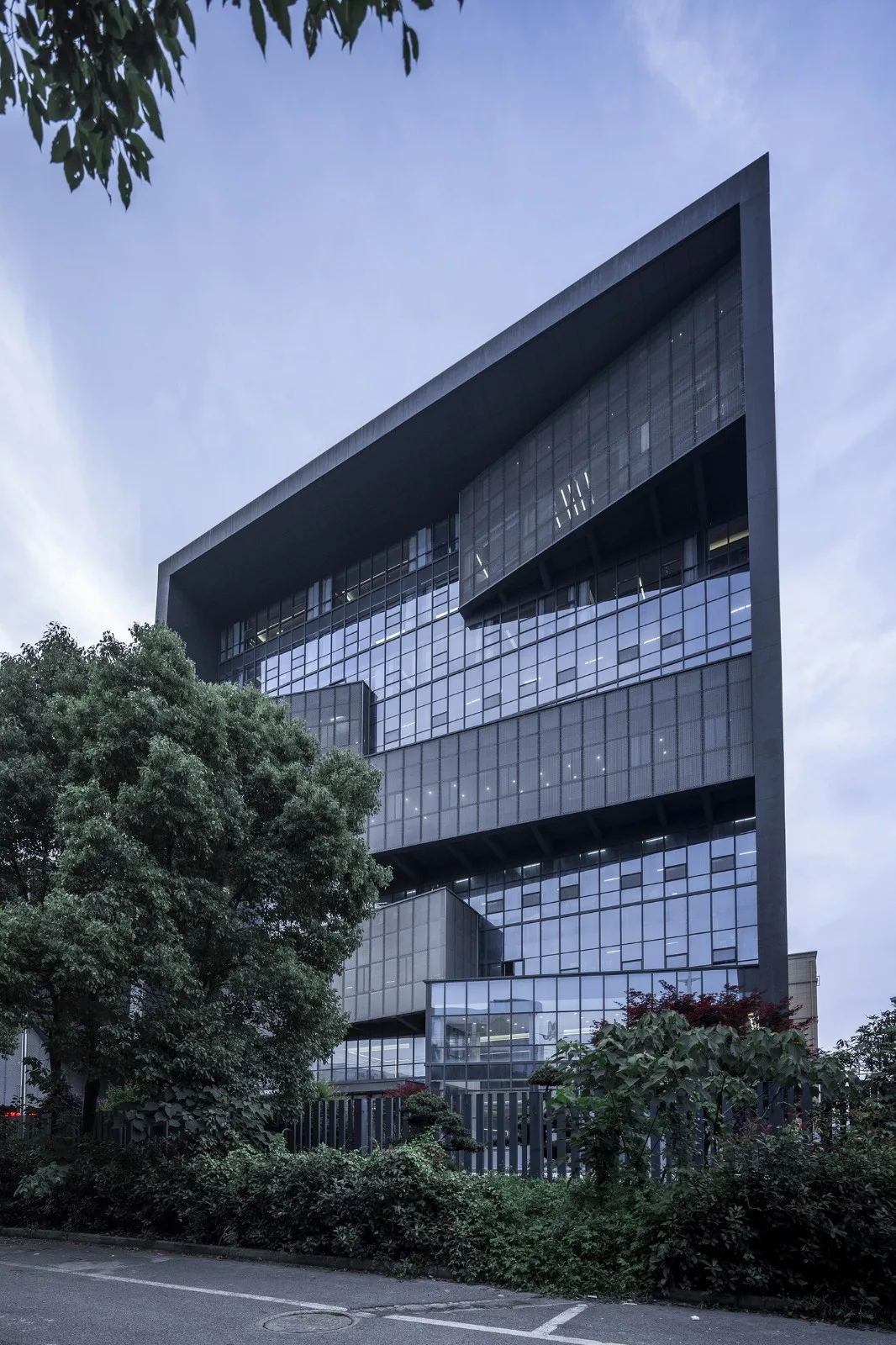
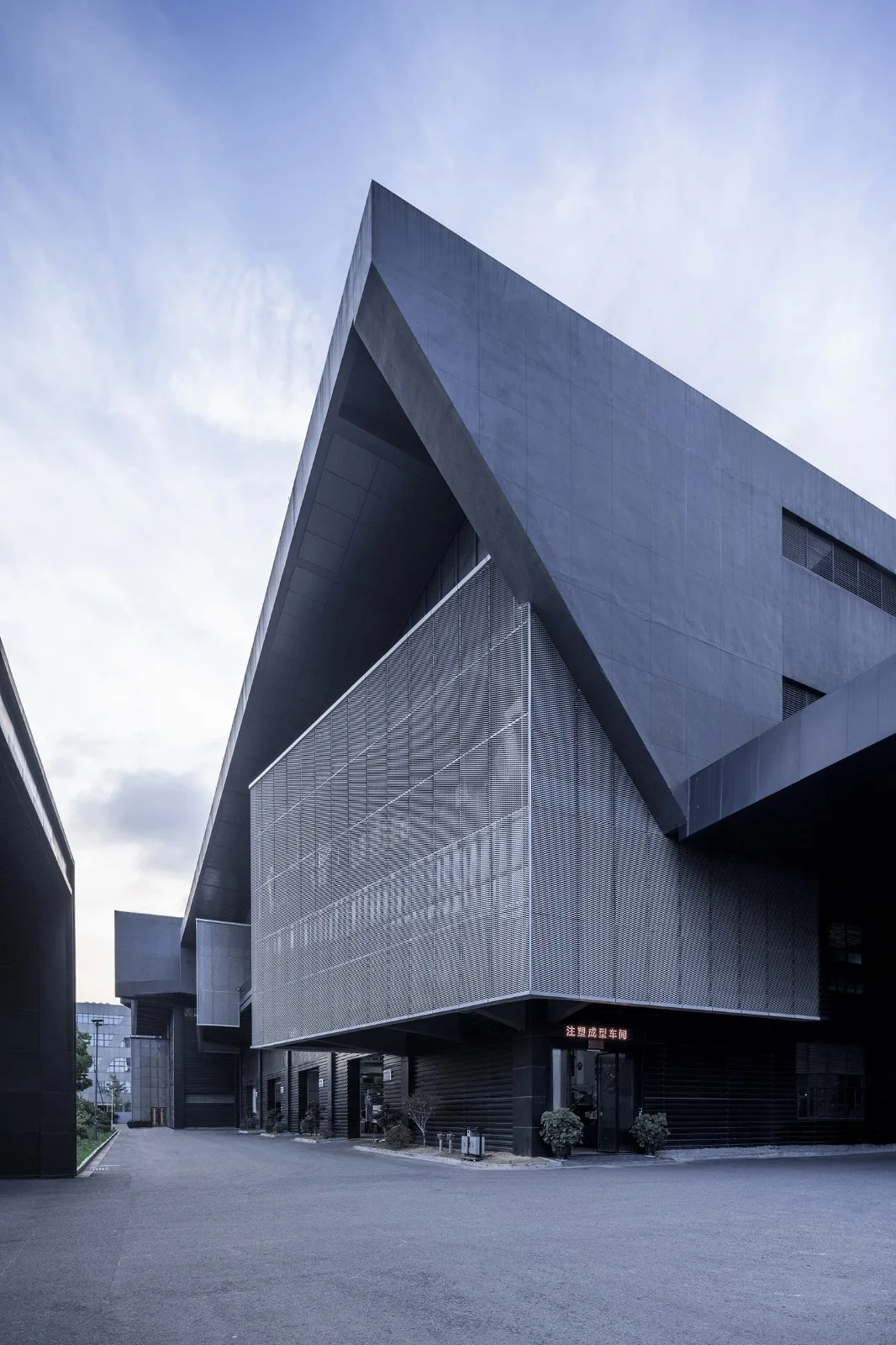
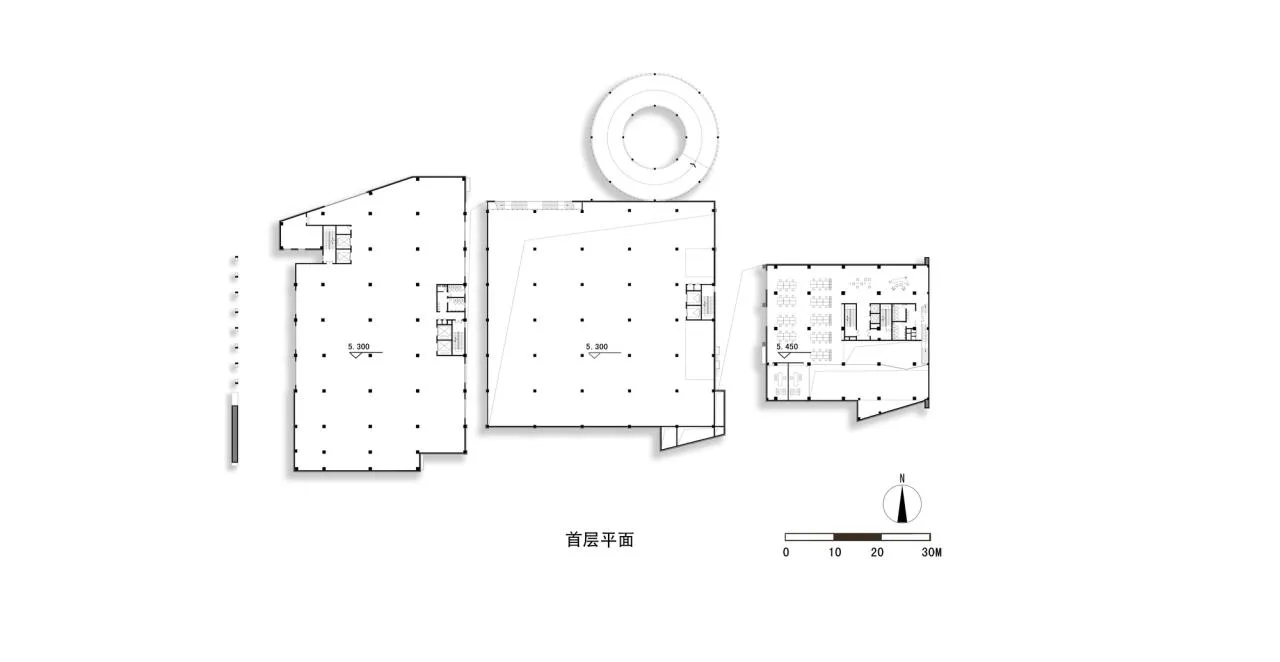
The building’s design features three main forms: the overall shape, a large folded roof, and three functional blocks dedicated to research & development, production, and logistics. These blocks, covered by the expansive folded roof, create a unified architectural expression.
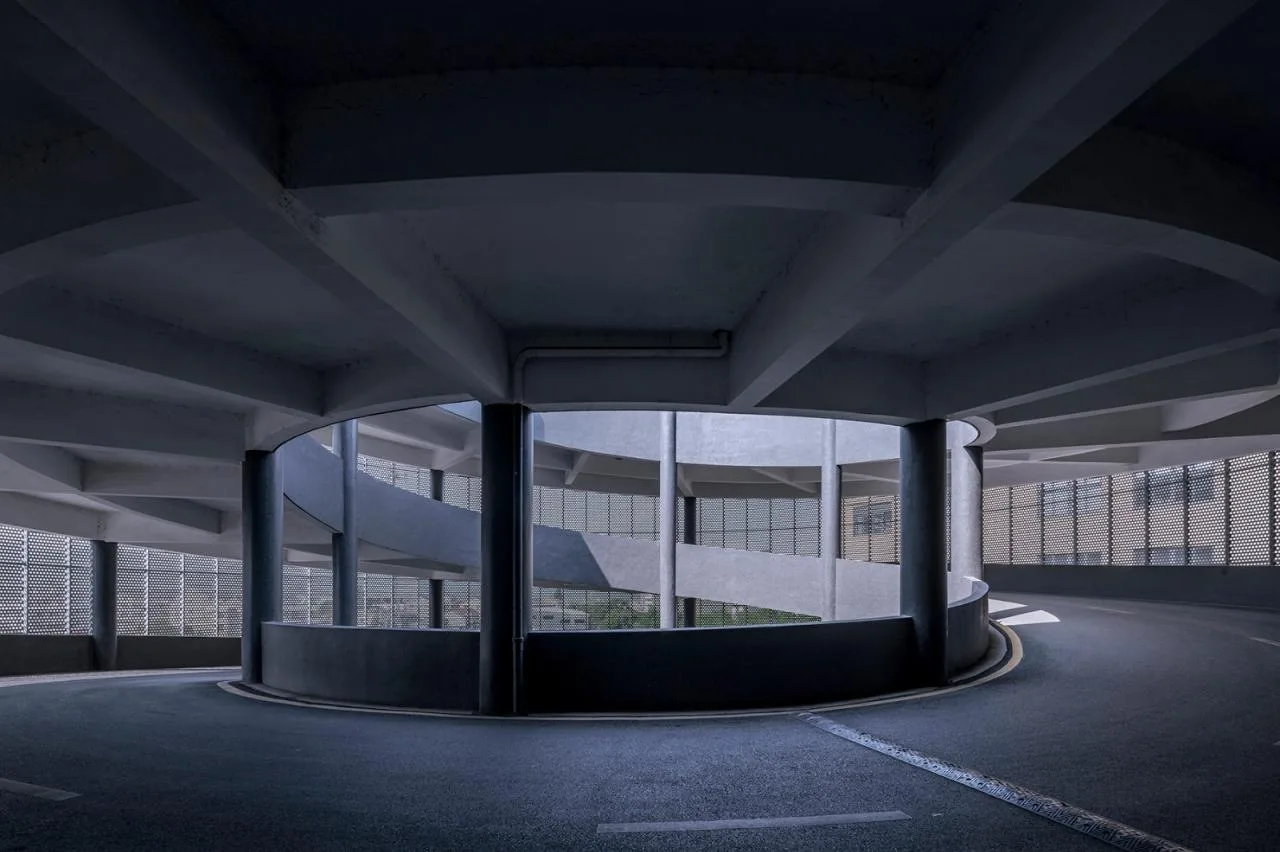
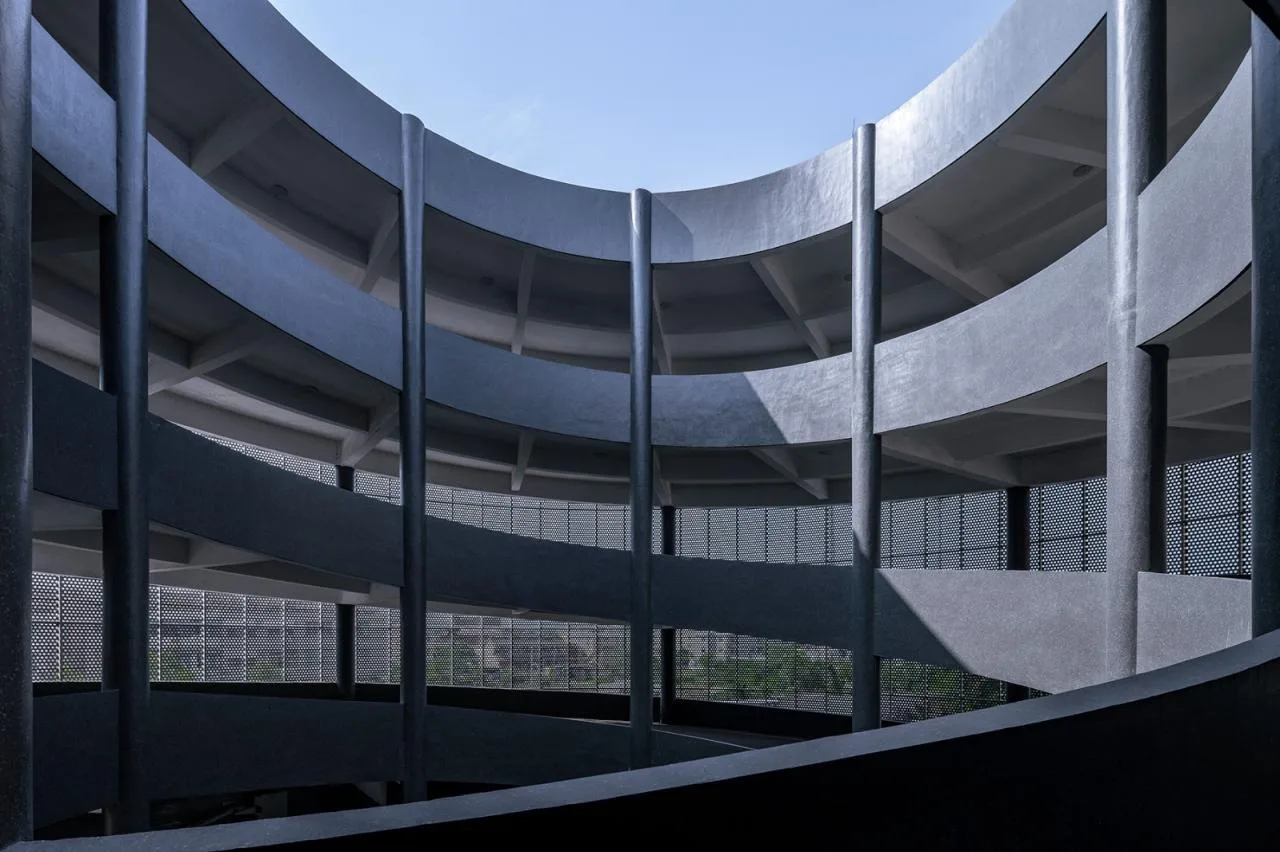
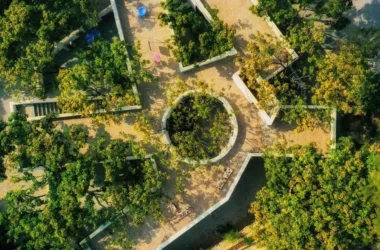
Protruding balconies break away from the traditional enclosed factory assembly line, offering outdoor spaces for workers in offices, R&D labs, and production workshops. The rooftop is multifunctional, serving as a parking area, solar panel installation site, and a venue for employee amenities such as a restaurant, cafeteria, and outdoor activity space. This design pays homage to the traditional village architecture across the river.
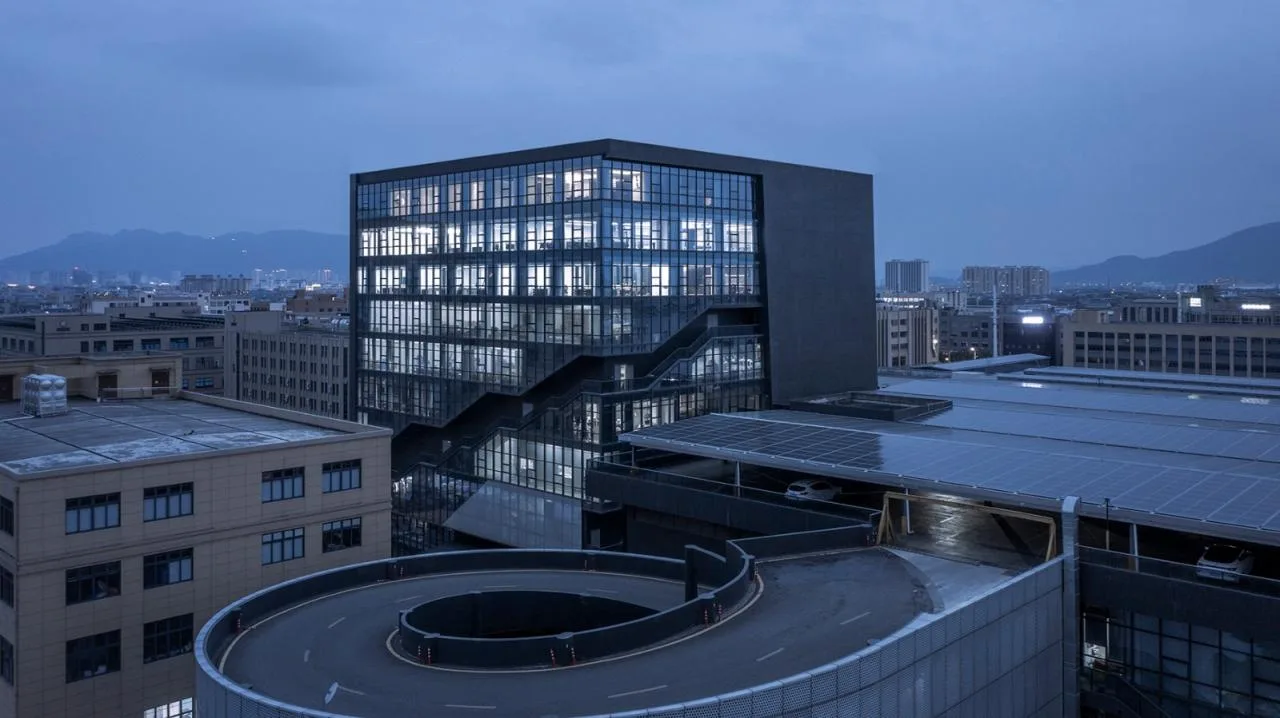
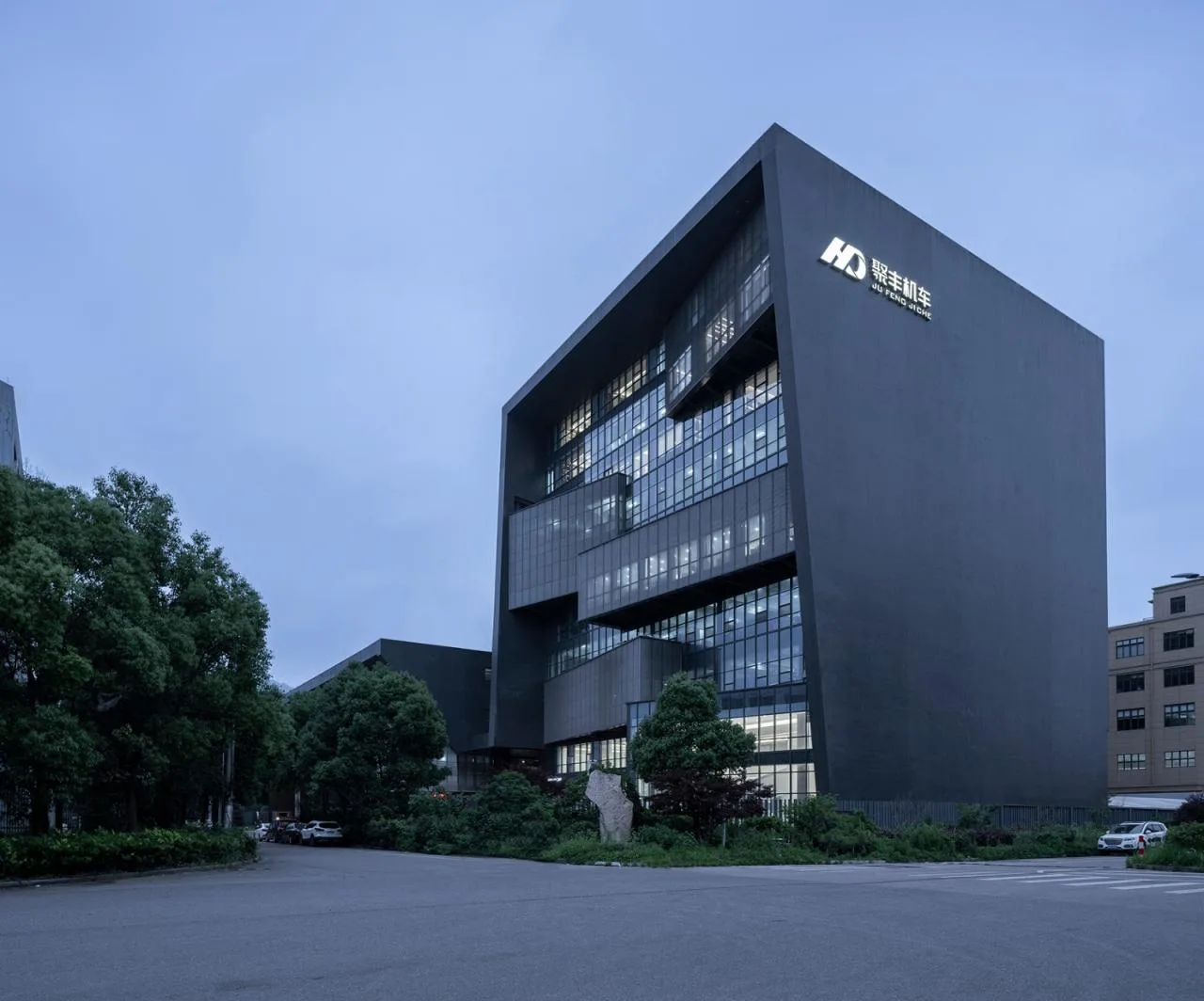
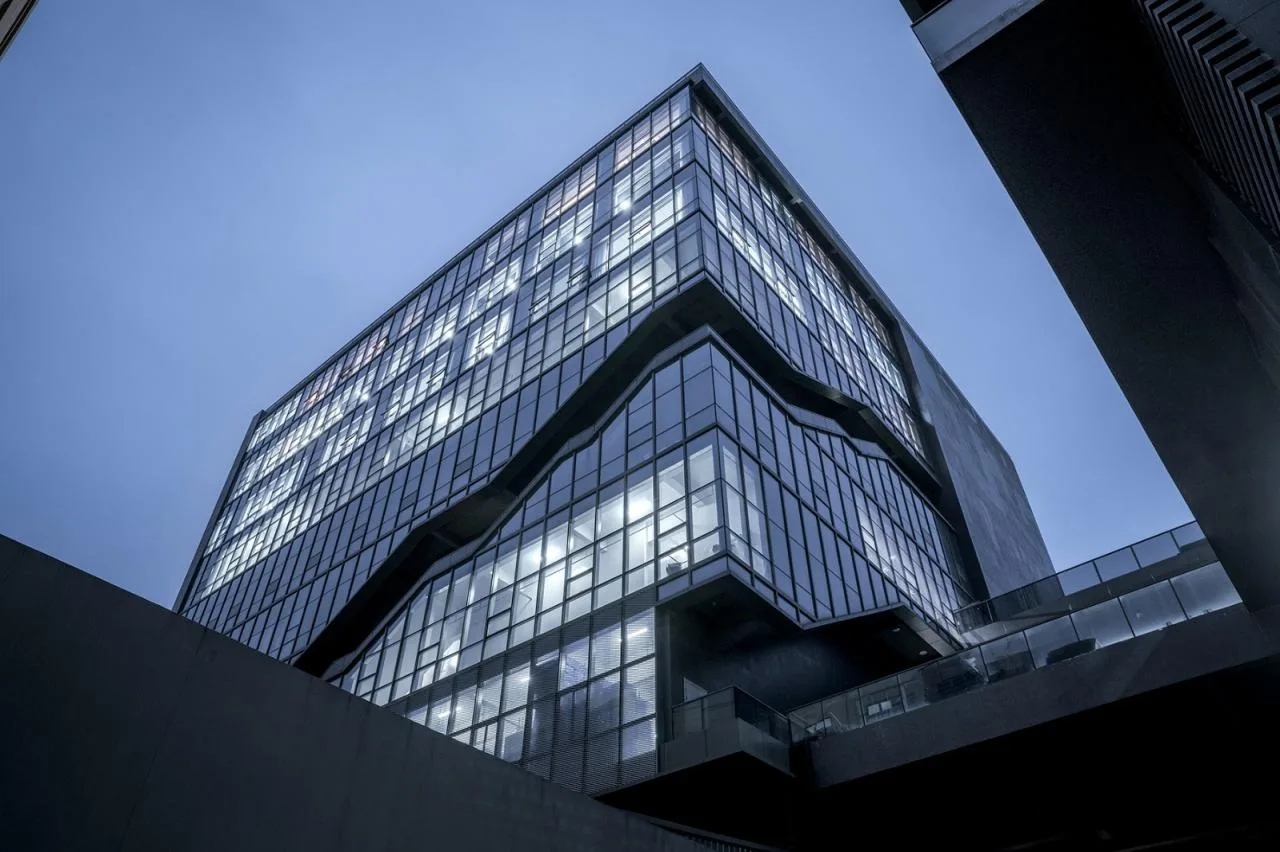
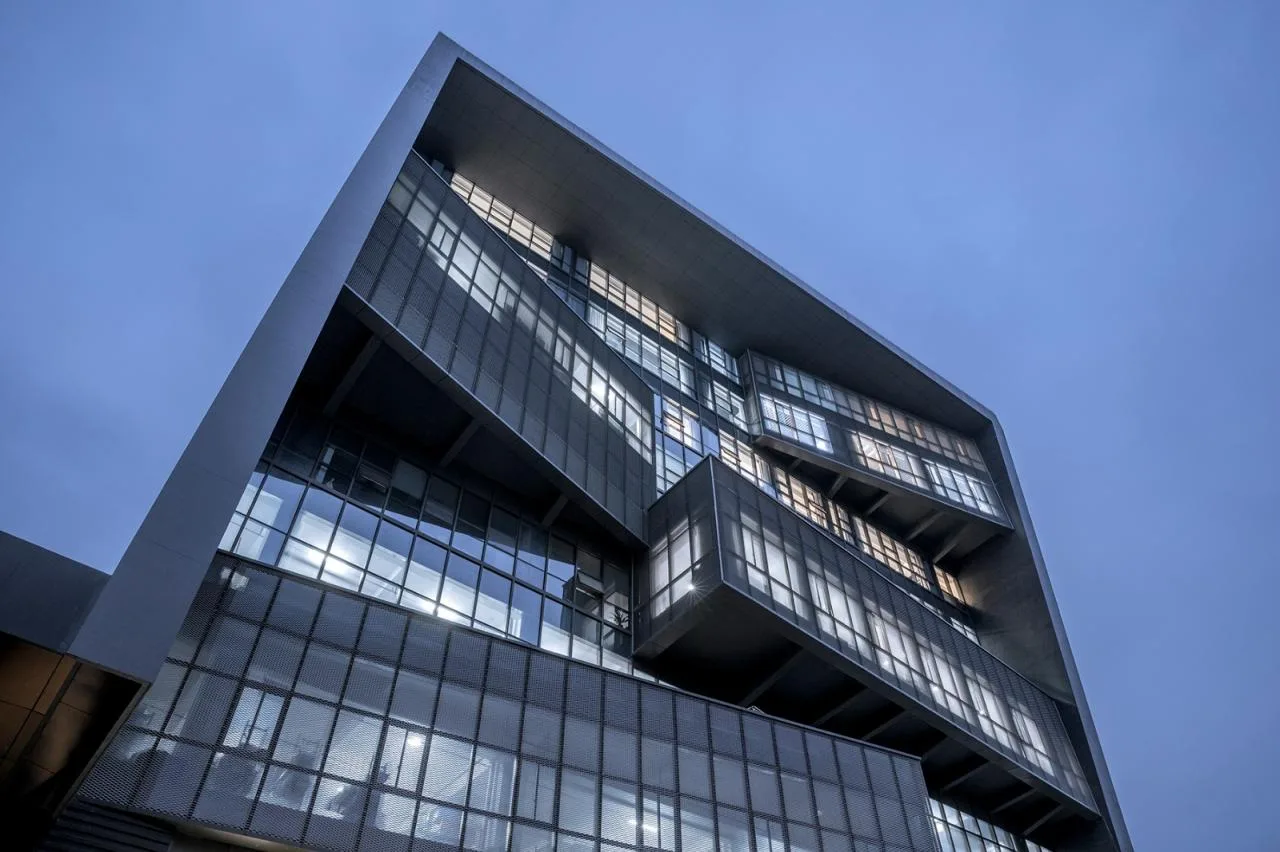
Amidst structural changes brought by industrial transformation, family businesses have found new opportunities for growth. As these enterprises evolve into modern global market players while retaining their original family roots, the new building serves not only production and tourism purposes but also as a spatial symbol of family life.
Project Drawings
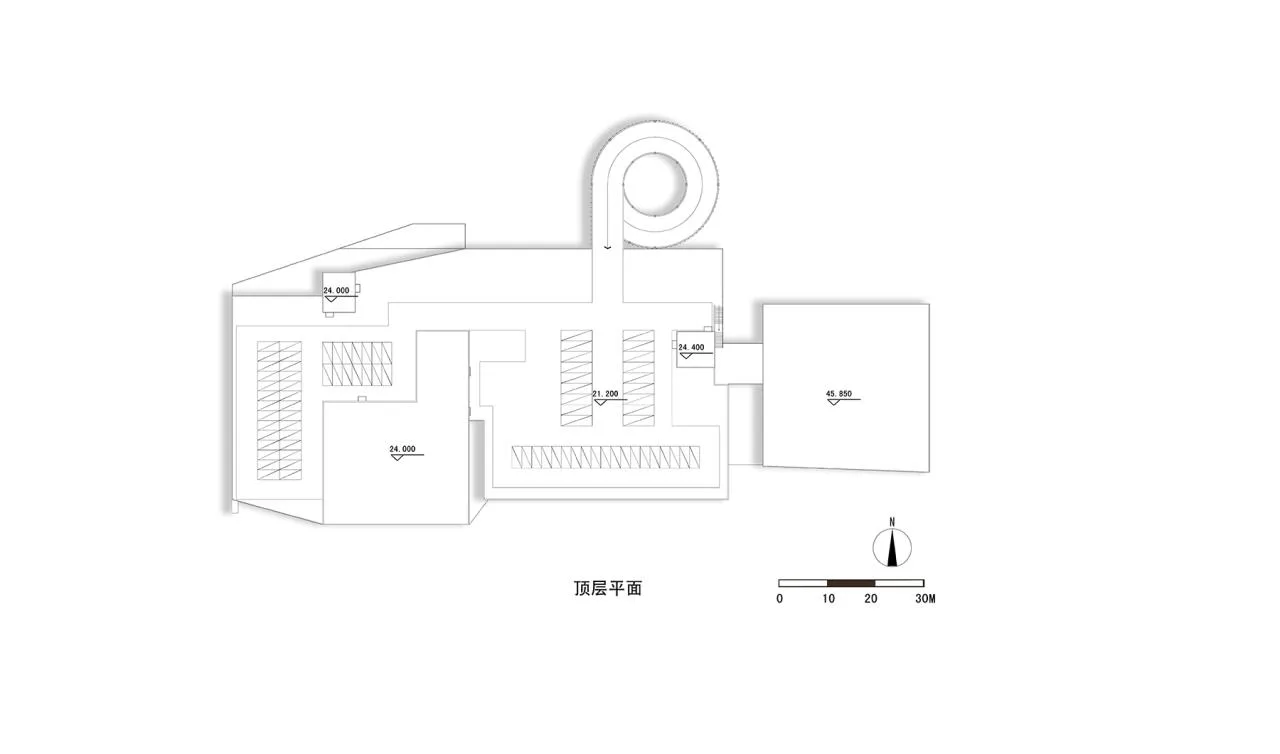
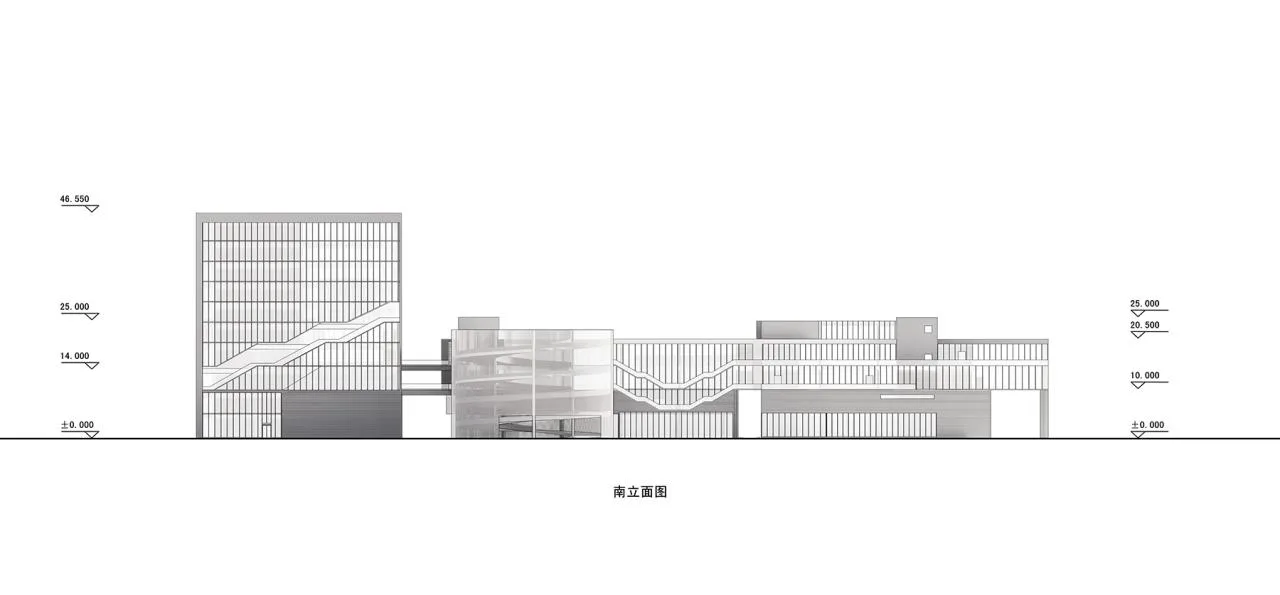
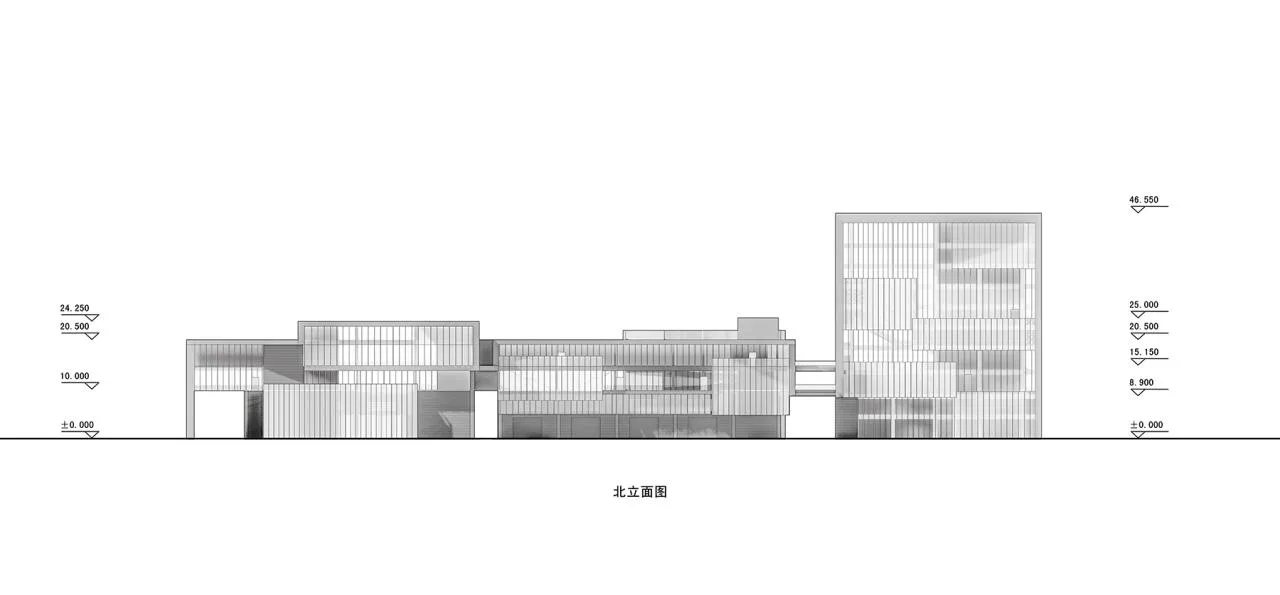
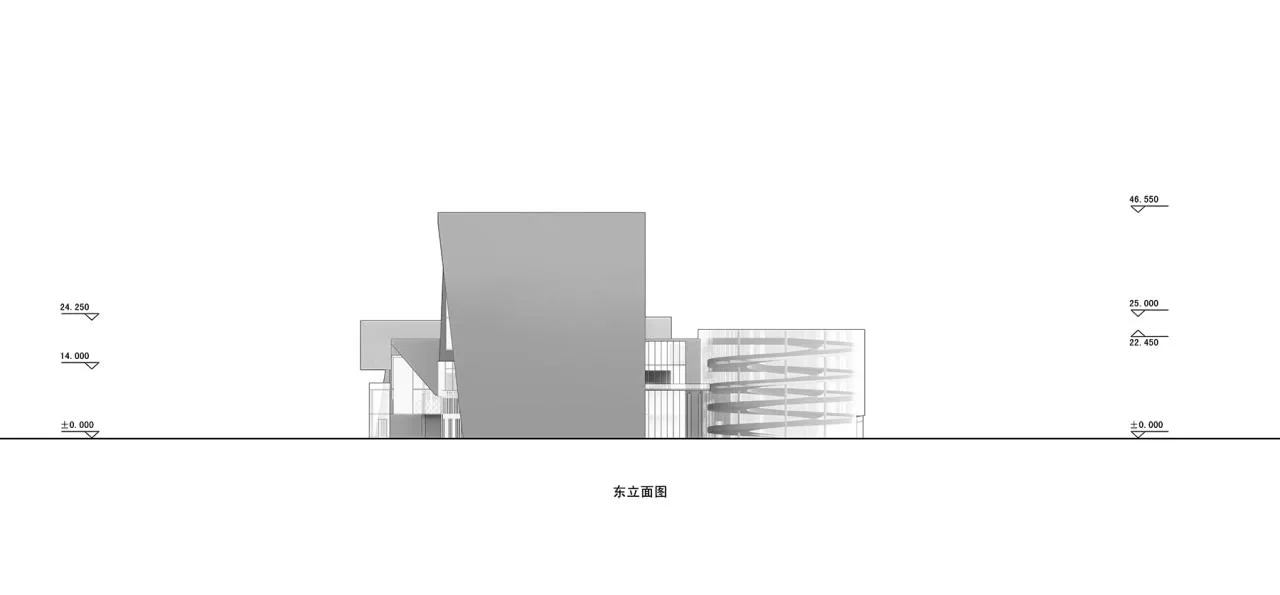
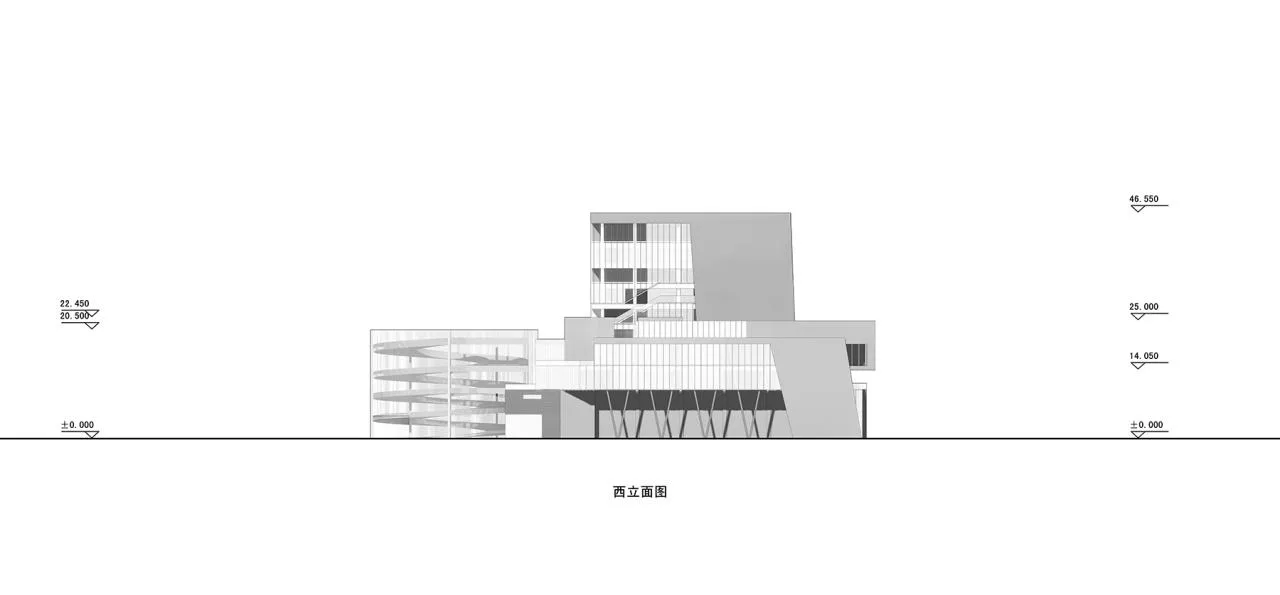
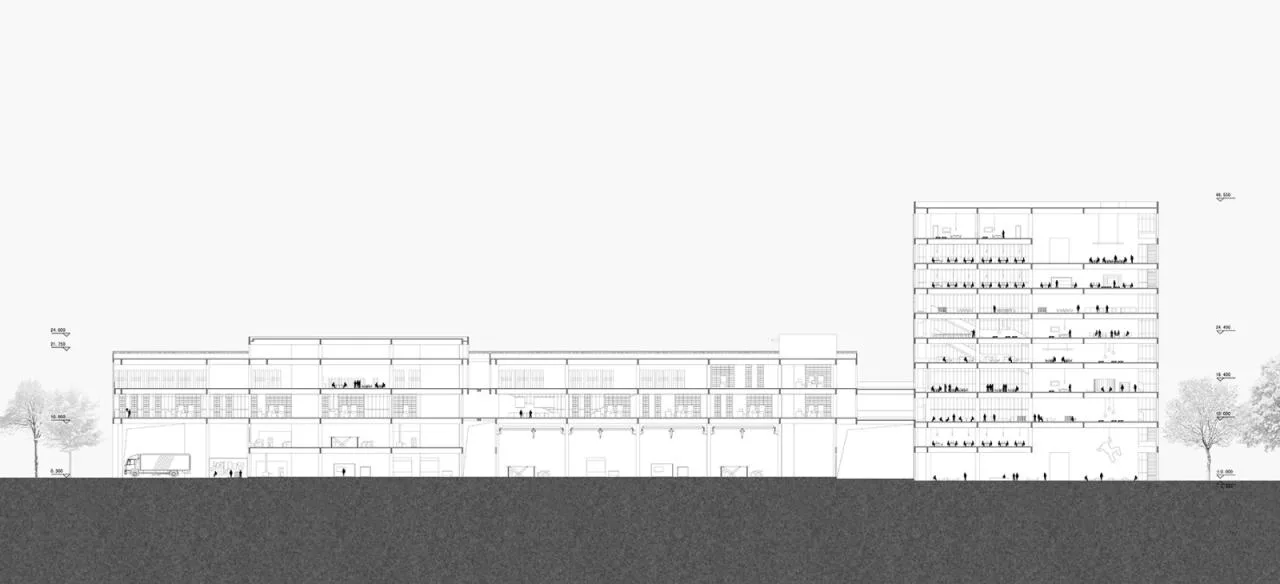
△ Section Diagram
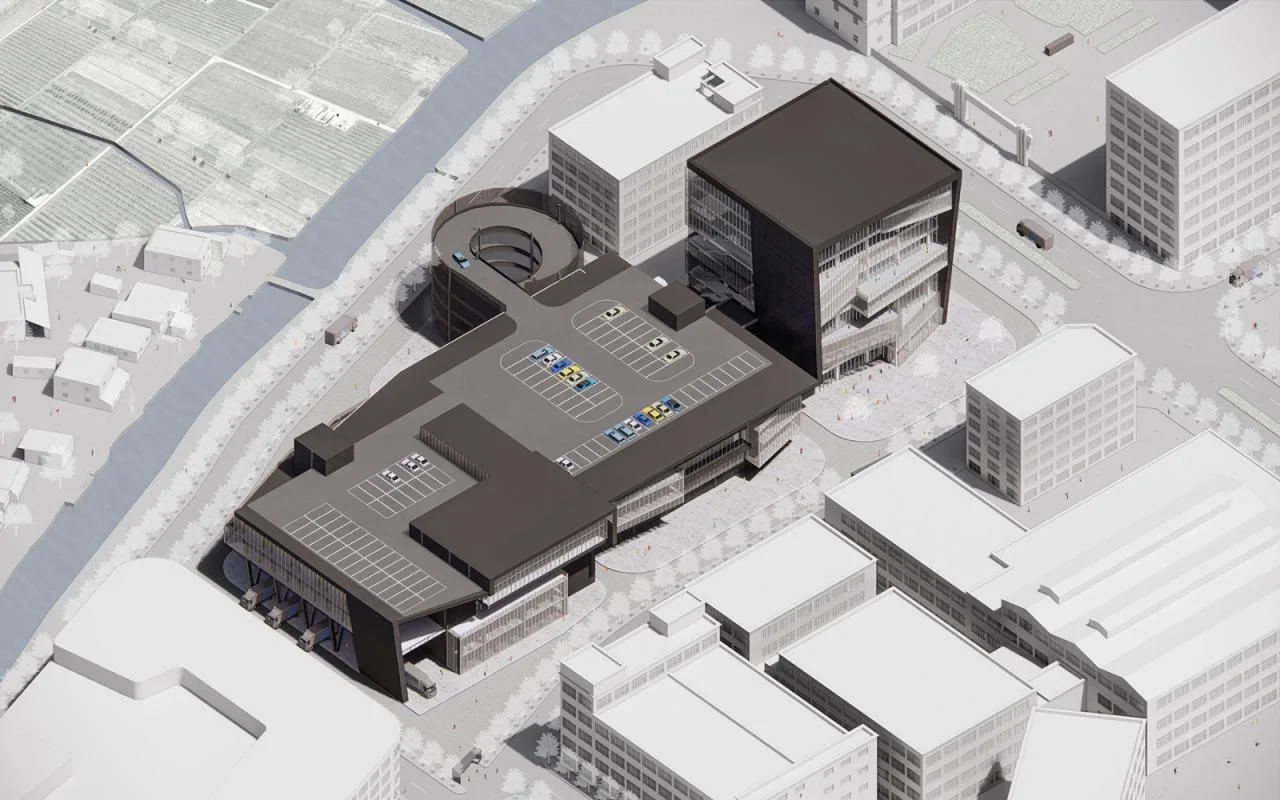
△ Axonometric Diagram
Project Information
Architect: Extraordinary Architecture
Area: 43,000 m²
Project Year: 2023
Photographer: Jin Weiqi
Manufacturer: KOB, Nippon Paint
Lead Designer: Shi Yang
Design Team: Li Shaojun, Guo Liming, Yin Manyu, Wang Ziming, Jiang Chao, Dong Ou, Chen Weiguang, Lv Yang
Co-designer: Zhejiang Gonghe Architectural Engineering Design Co., Ltd.
Client: Jufeng Locomotive Group
Location: Taizhou














Must log in before commenting!
Sign Up