
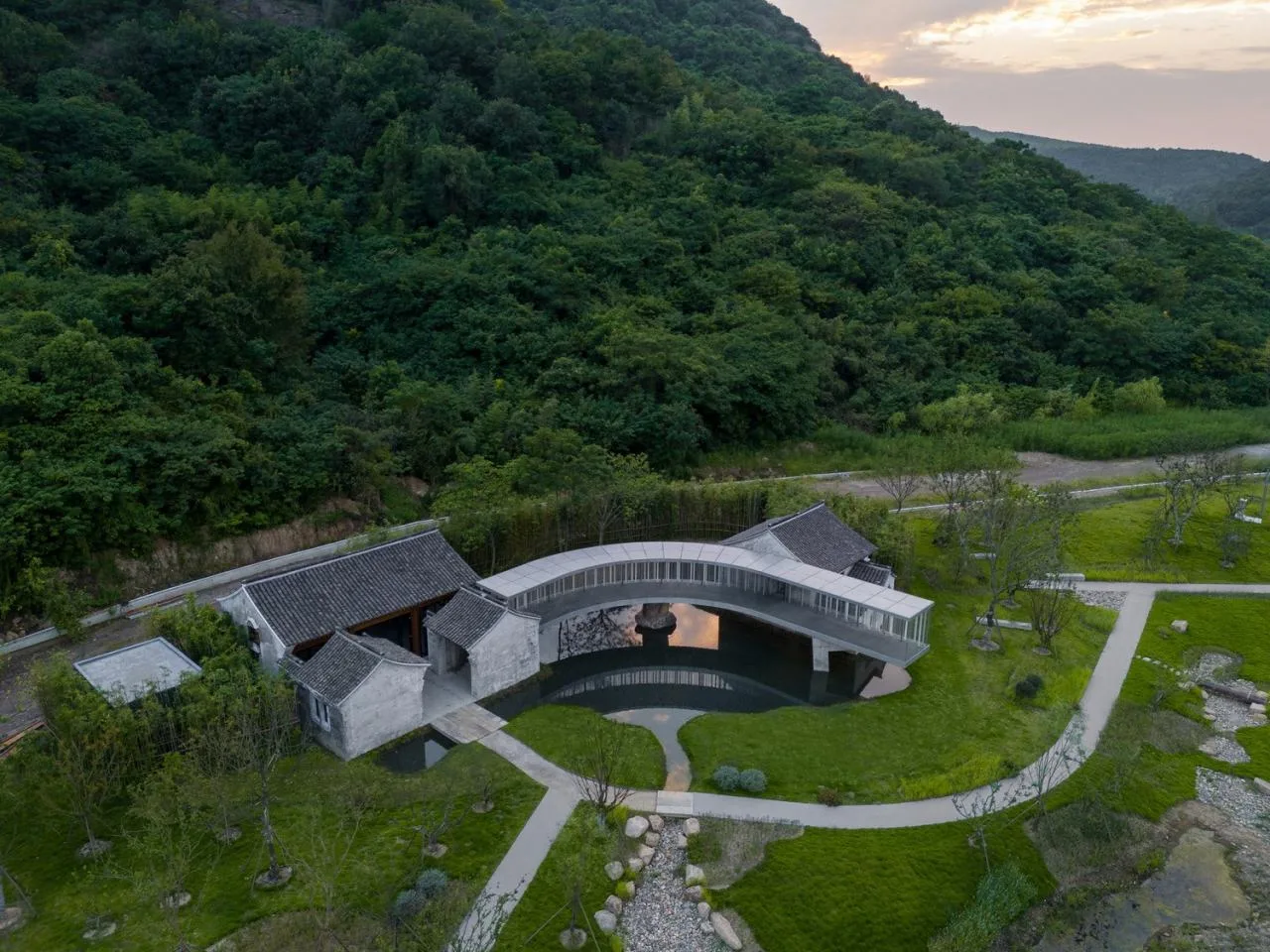
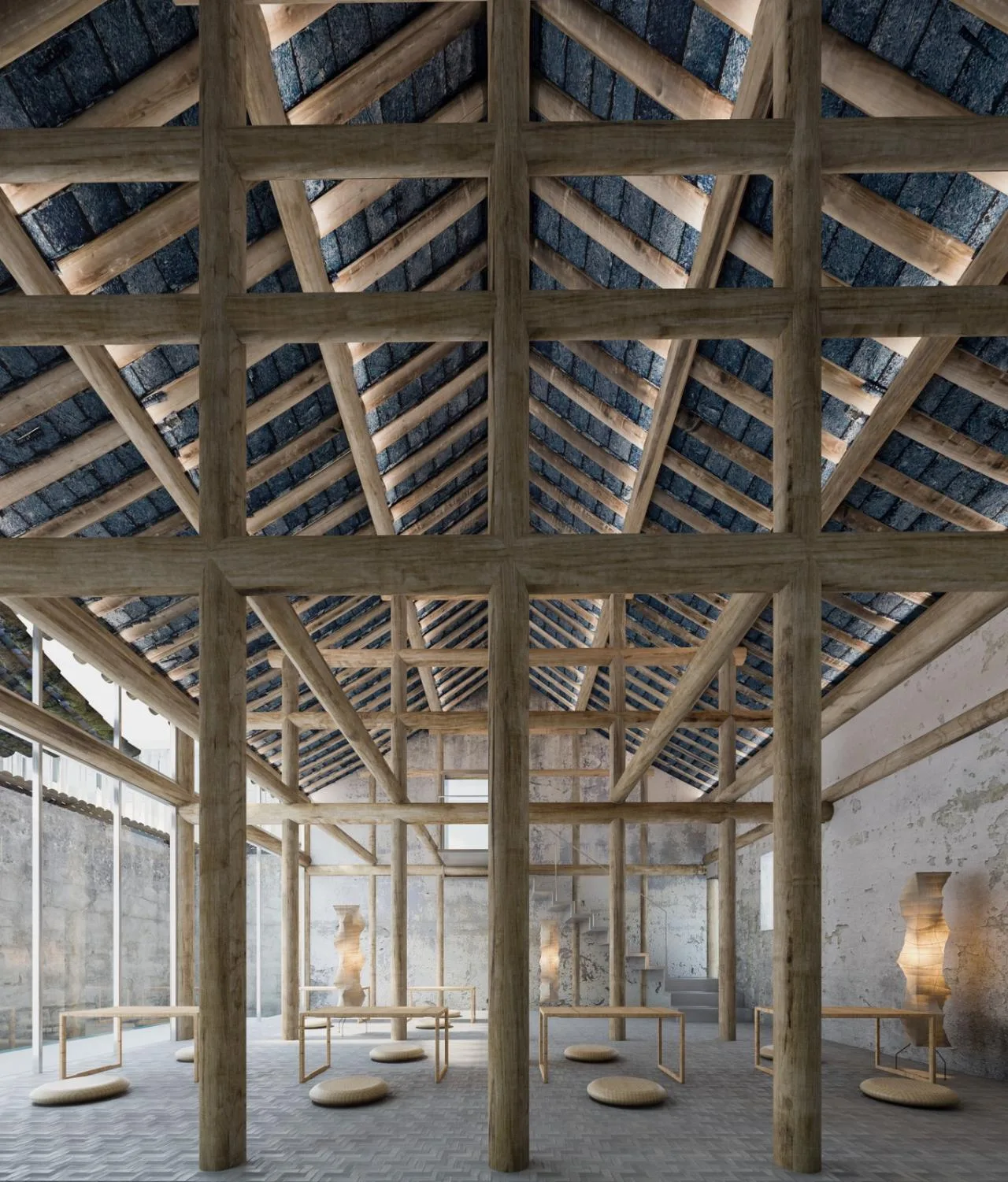
This project is situated just in front of a small hill near the lake, approximately one hundred meters from the water. The site features two traditional courtyard-style buildings from the Republican era, typical of Jiangnan architecture, arranged in a staggered layout. Some roofs and walls of these large courtyards have partially collapsed. The plan is to transform this site into a scenic station offering tea and coffee services. Currently, the project’s operator has yet to be determined.
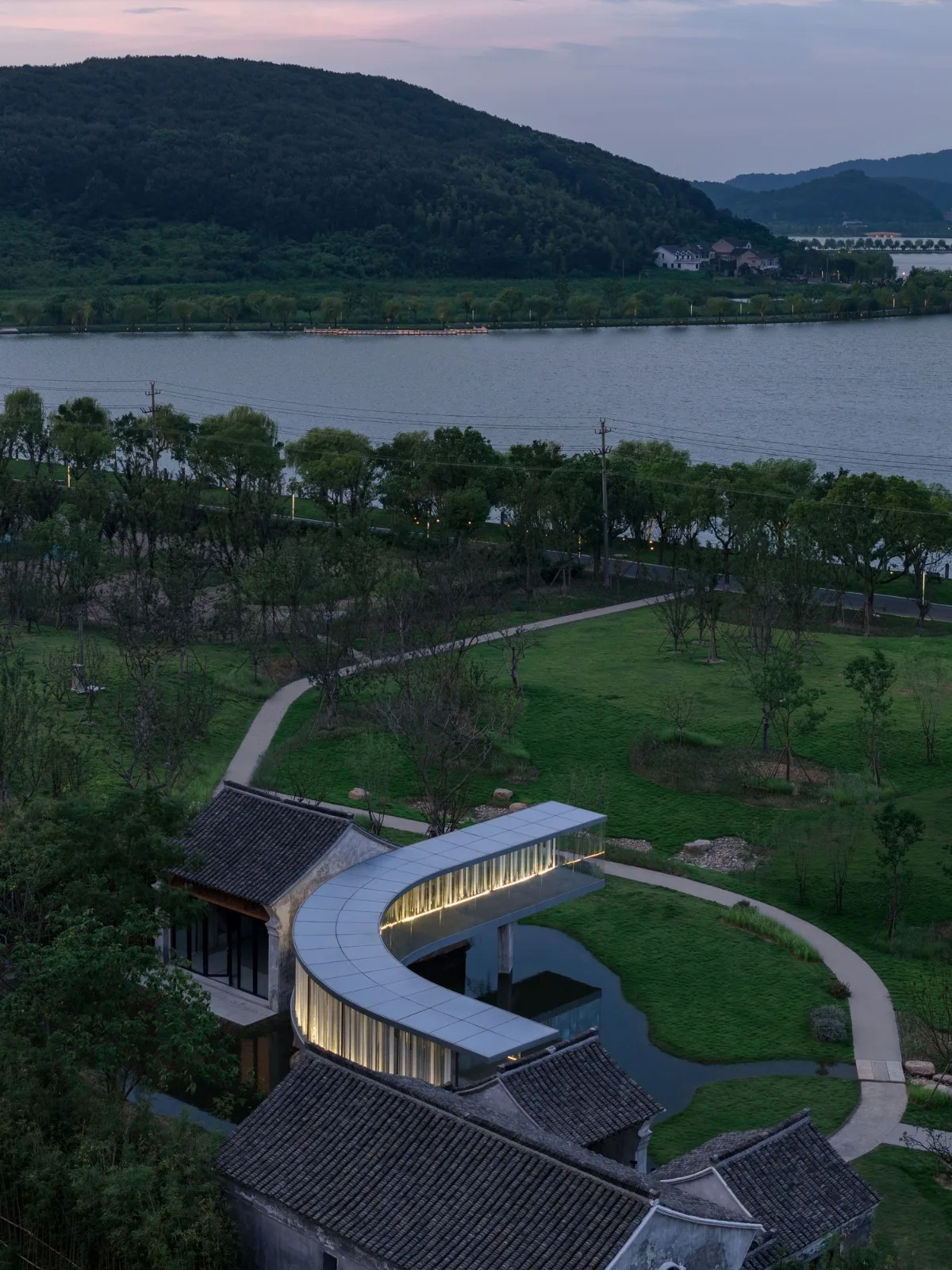
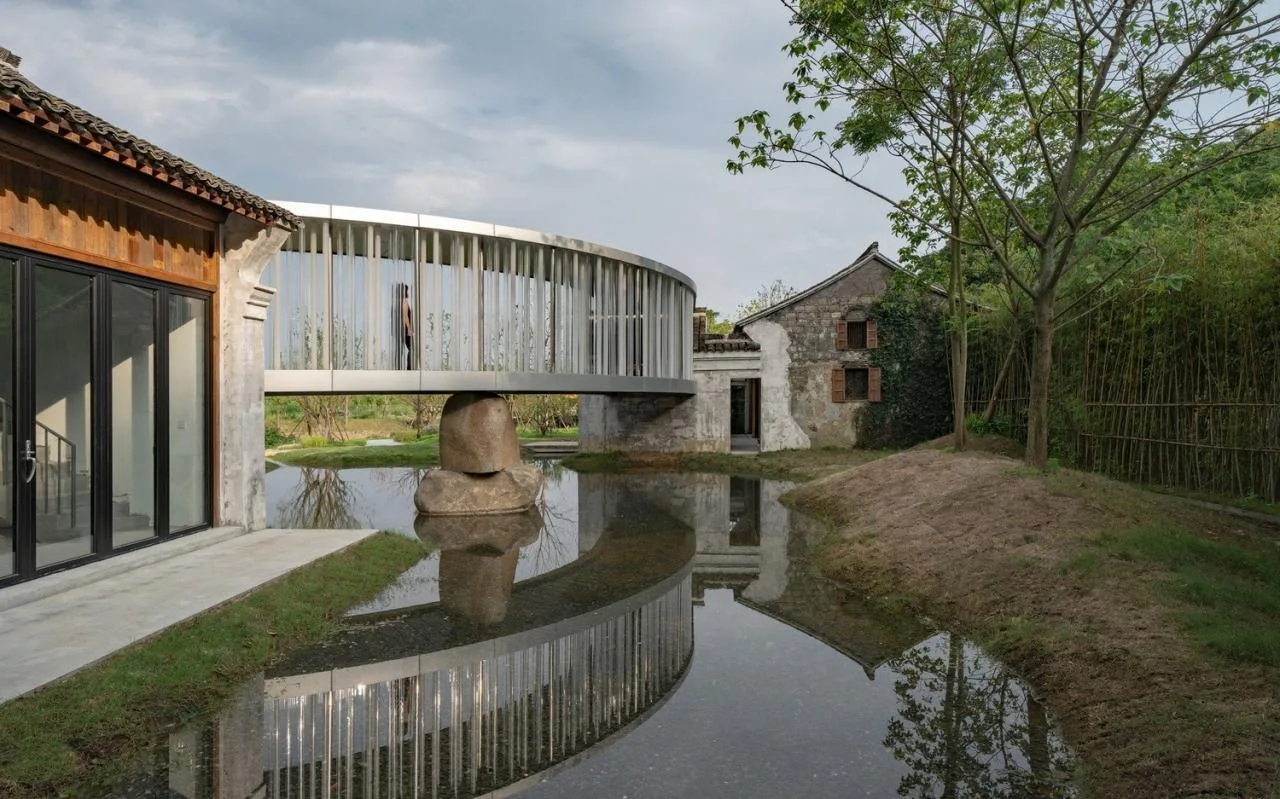
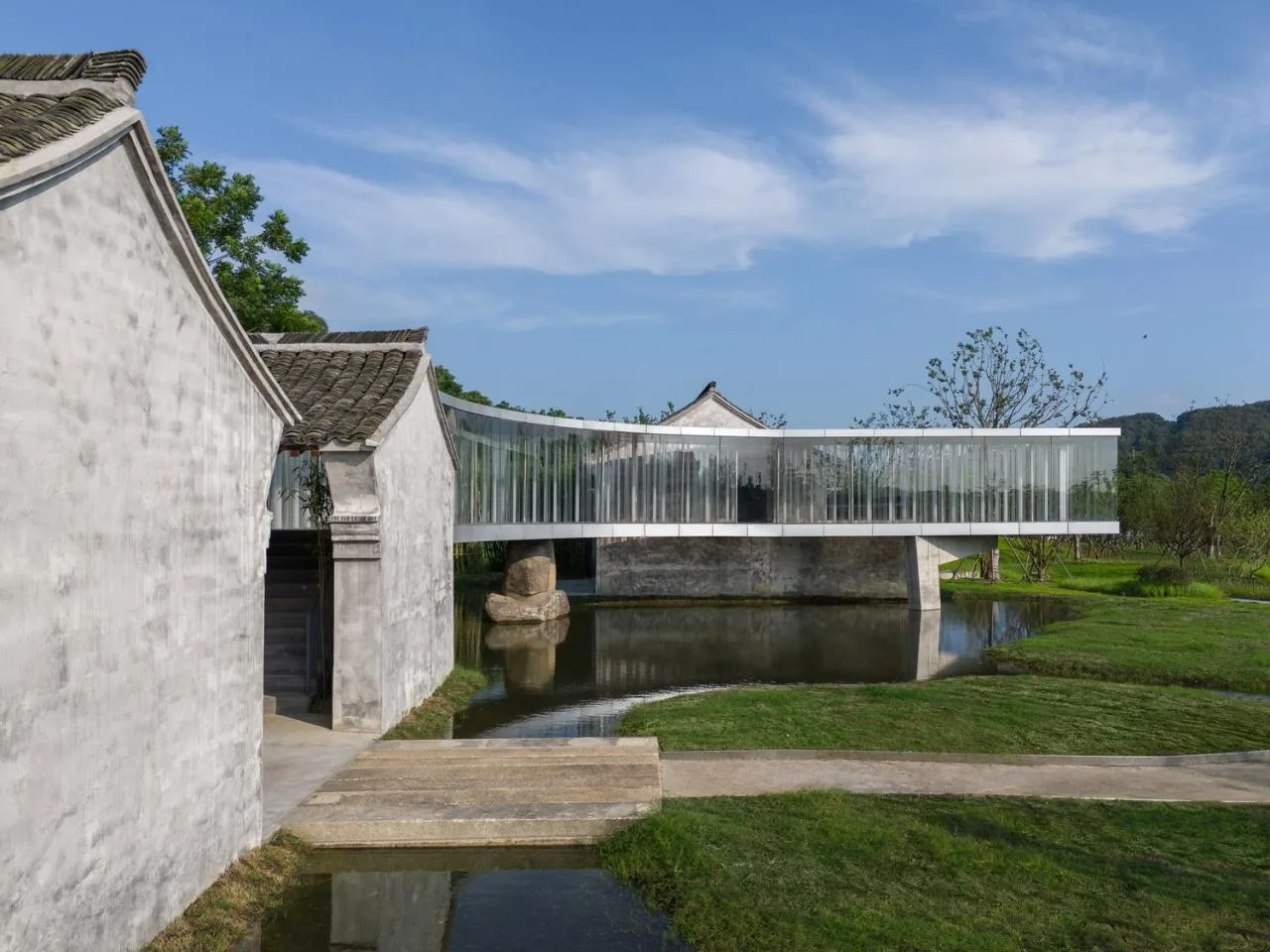
Our vision is to create a unique experience by juxtaposing tradition with modernity. We aim to preserve the existing buildings and structures as much as possible, while intervening lightly to minimize impact. The Nanbei Lake Scenic Area is renowned for its exemplary Song Dynasty landscape aesthetics. In traditional Chinese landscape paintings, corridors and bridges often serve as finishing touches—not only as passageways but also as spaces to pause and rest.
Moreover, the extended length of traditional landscape scrolls encourages viewers to appreciate scenes gradually, rather than all at once. We intend to bring this temporal and spatial transition experience into this project.
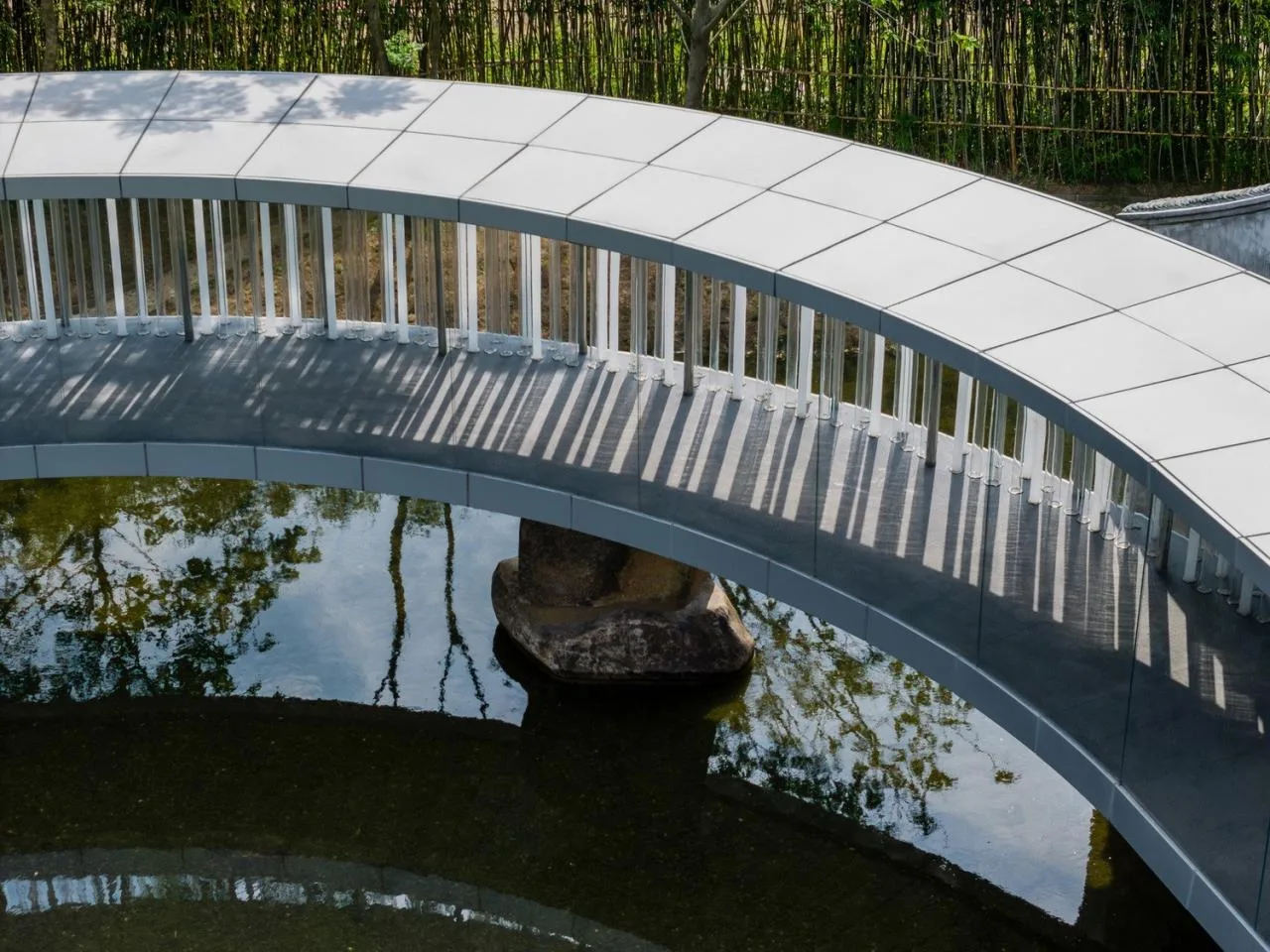
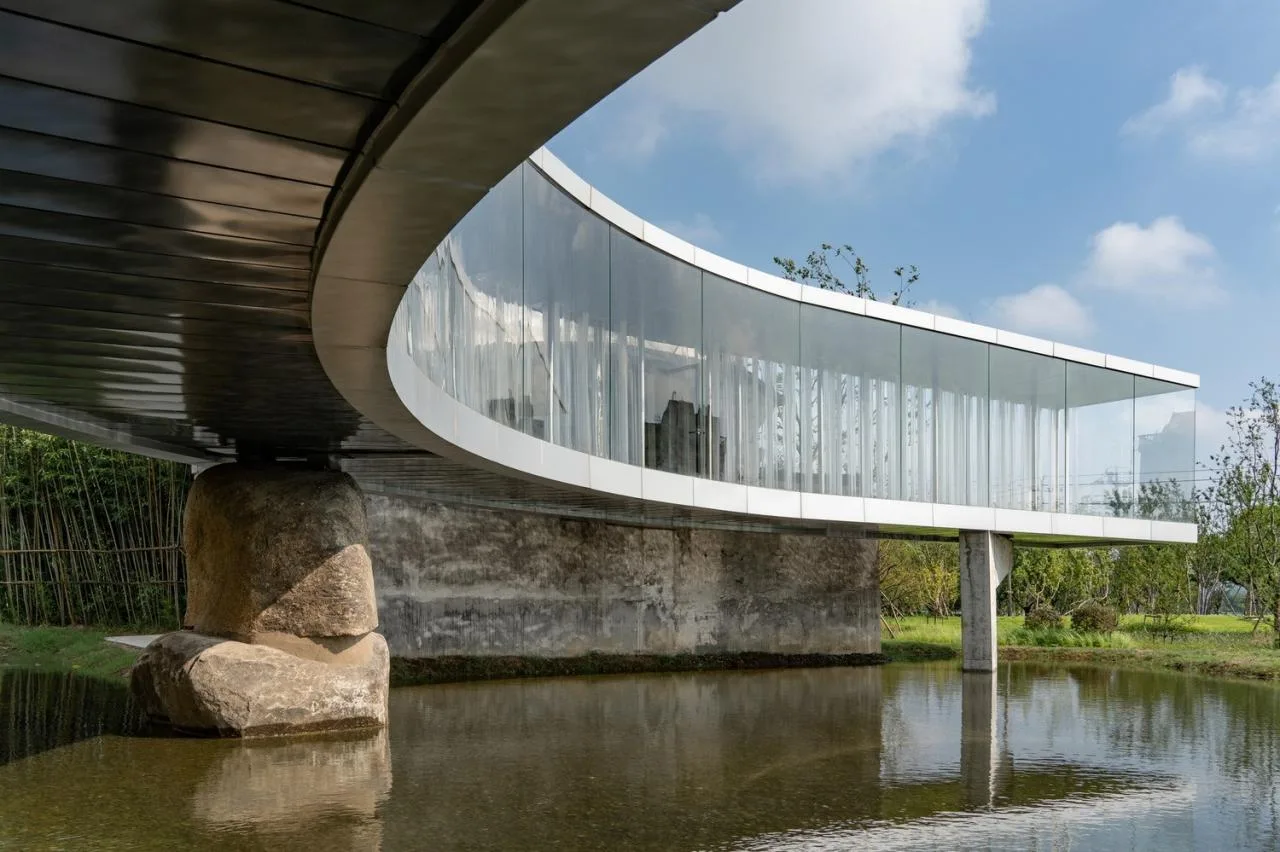
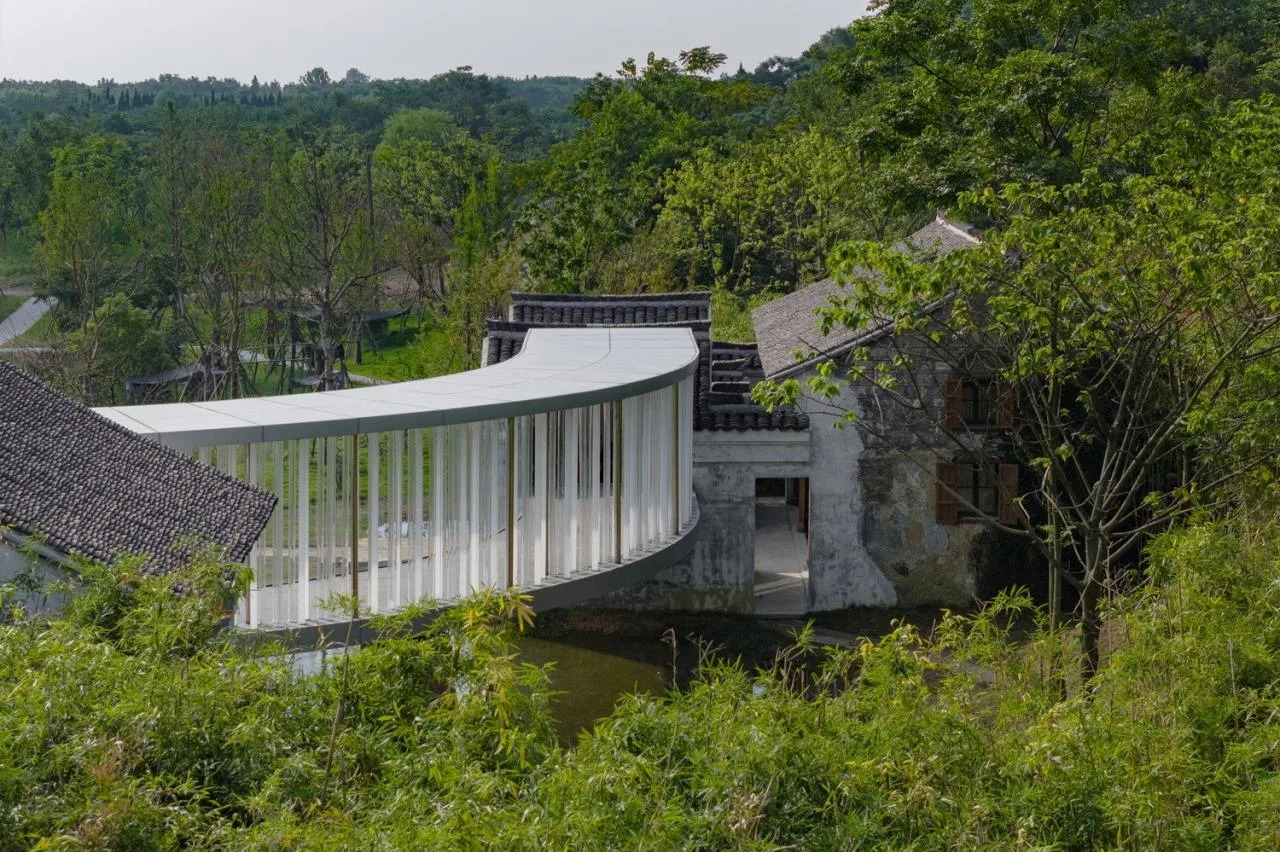
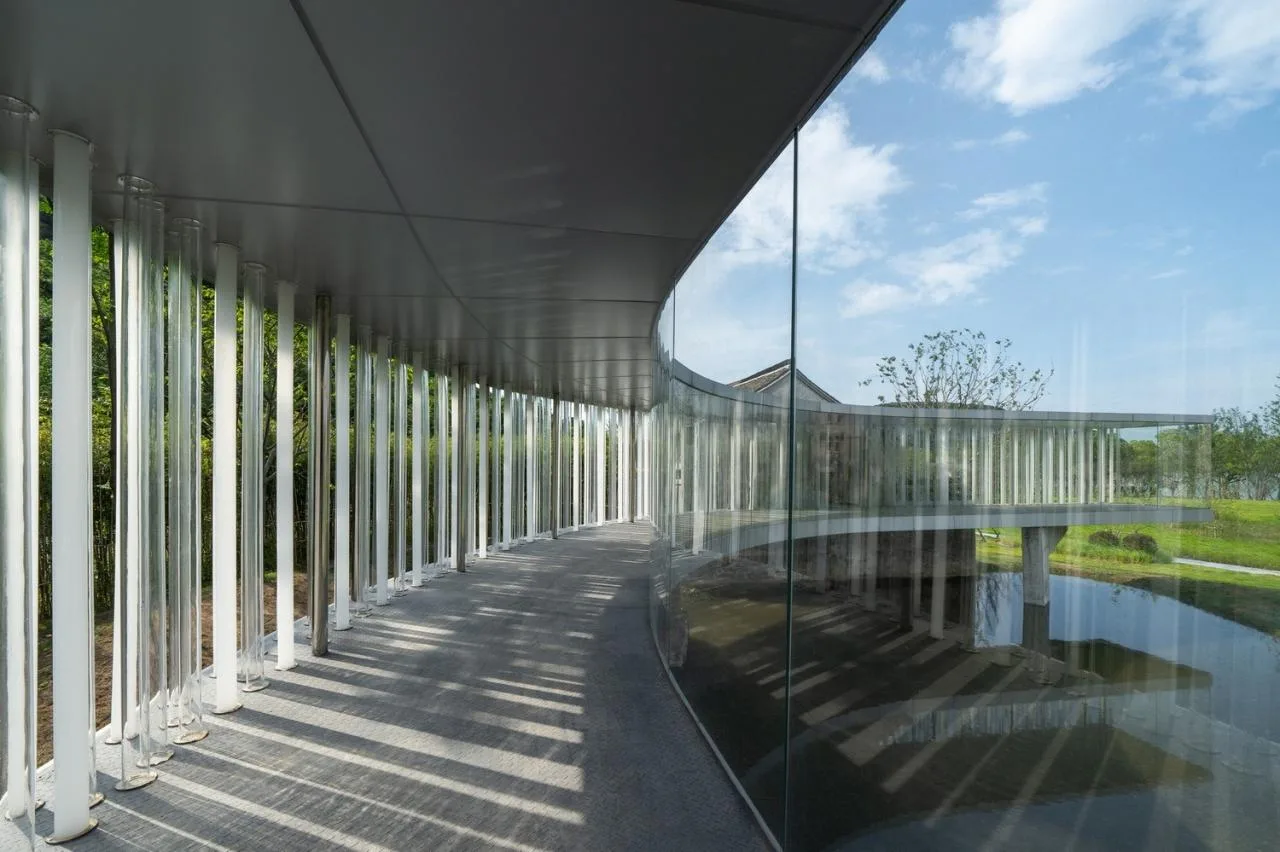
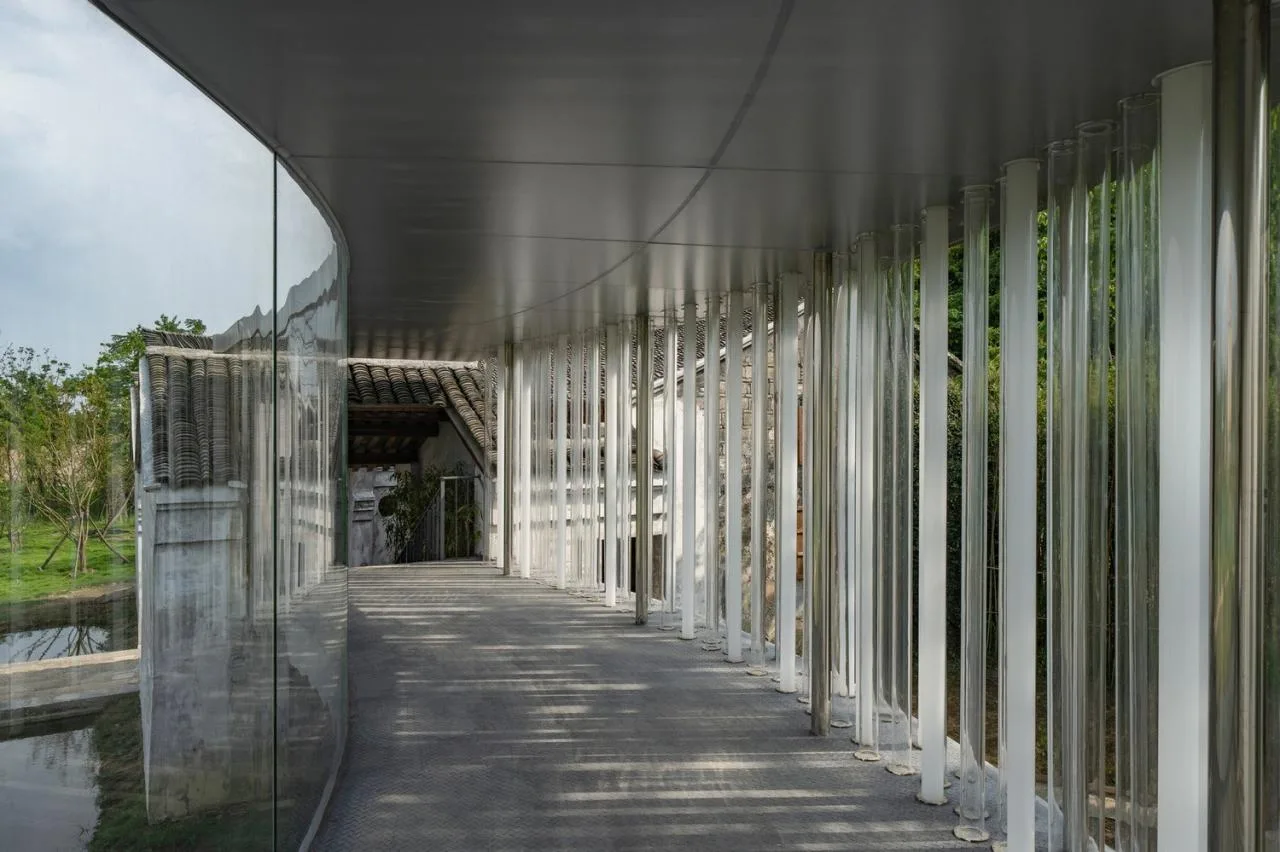
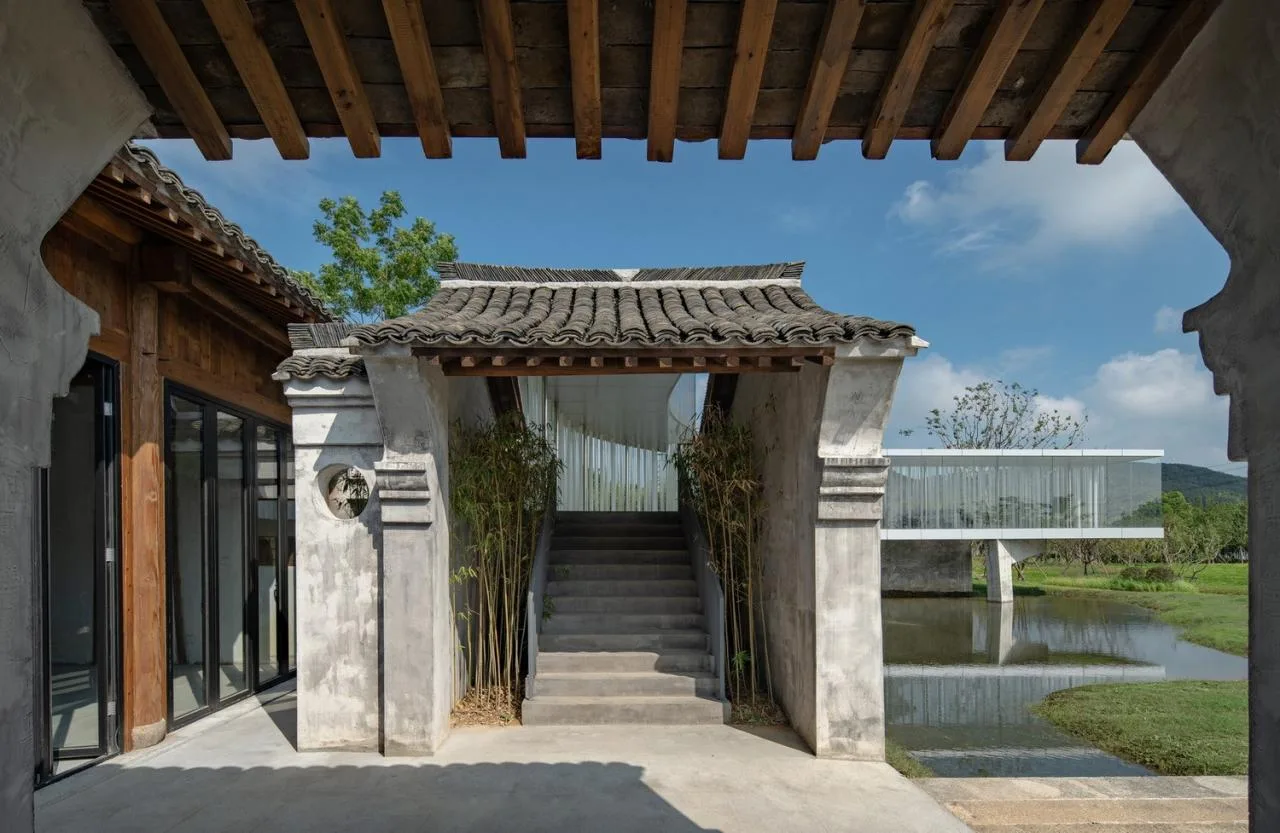
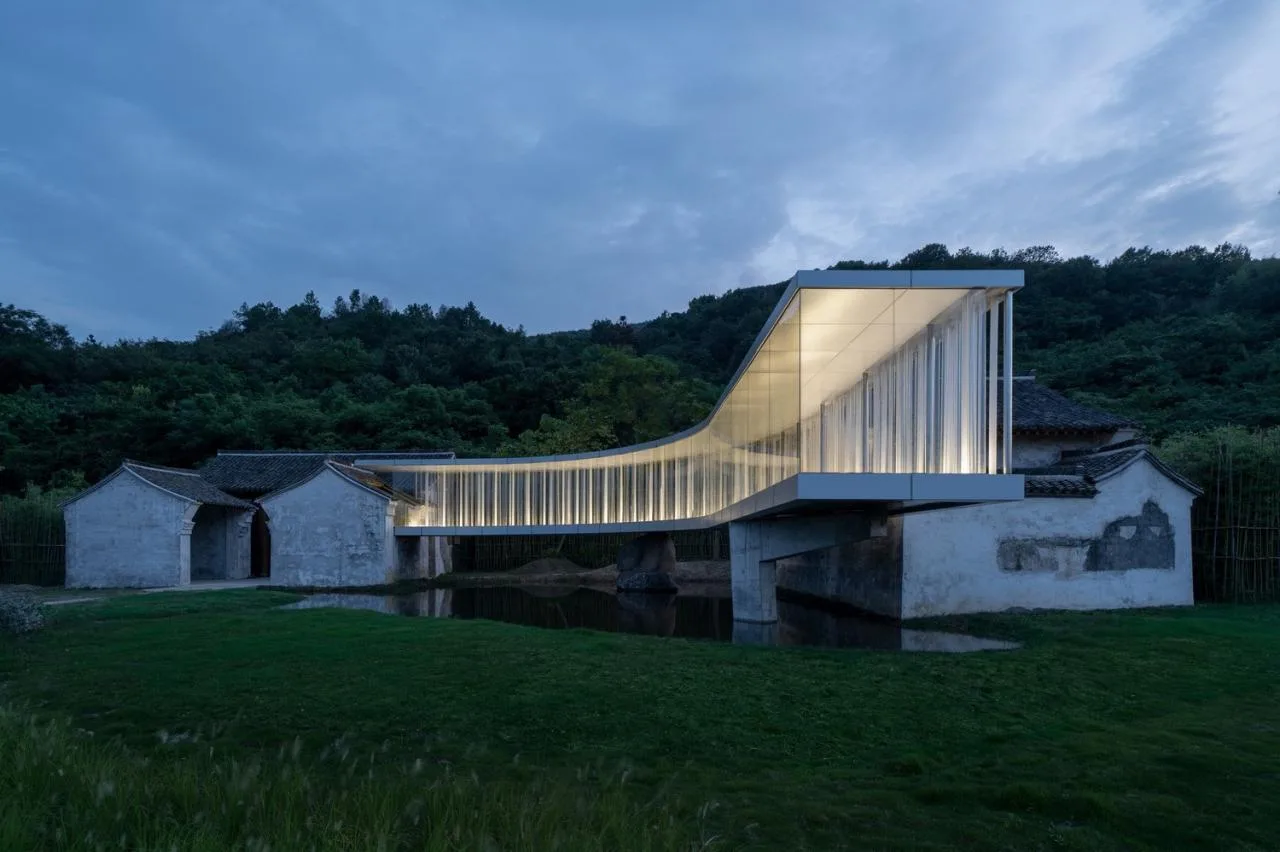
The two courtyards are connected by a simple covered corridor bridge. Starting from the collapsed small roof volume in one courtyard, the bridge passes alongside the mountain wall in the smaller courtyard. The intervention of the new covered bridge on the old buildings is minimal, limited only to newly added door openings in the mountain walls.
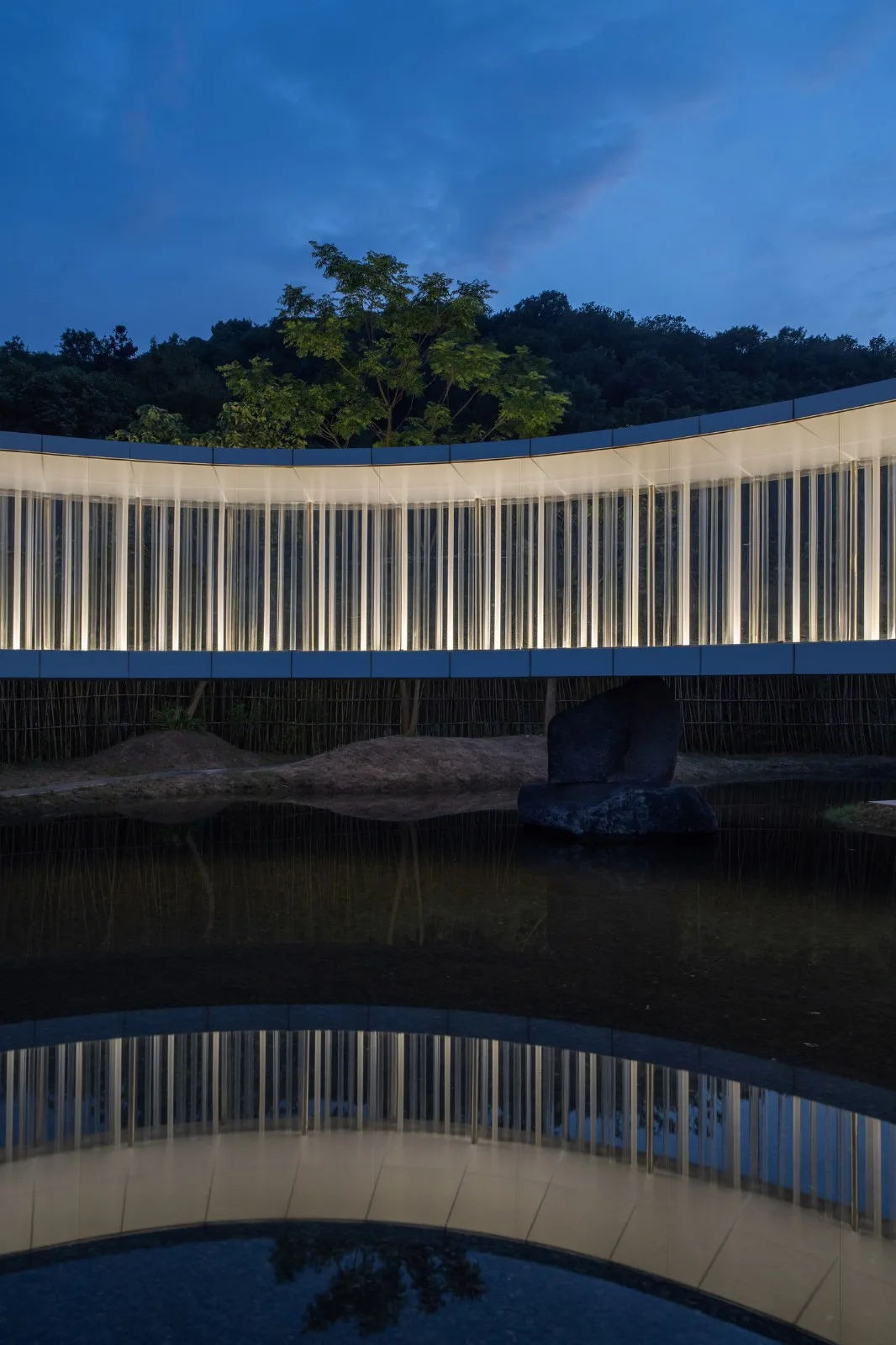
Walking through the corridor bridge, visitors encounter changing views framed by the curved arc, gradually unfolding the rolling landscape of mountains and rivers. This corridor bridge also serves as a tea break area.
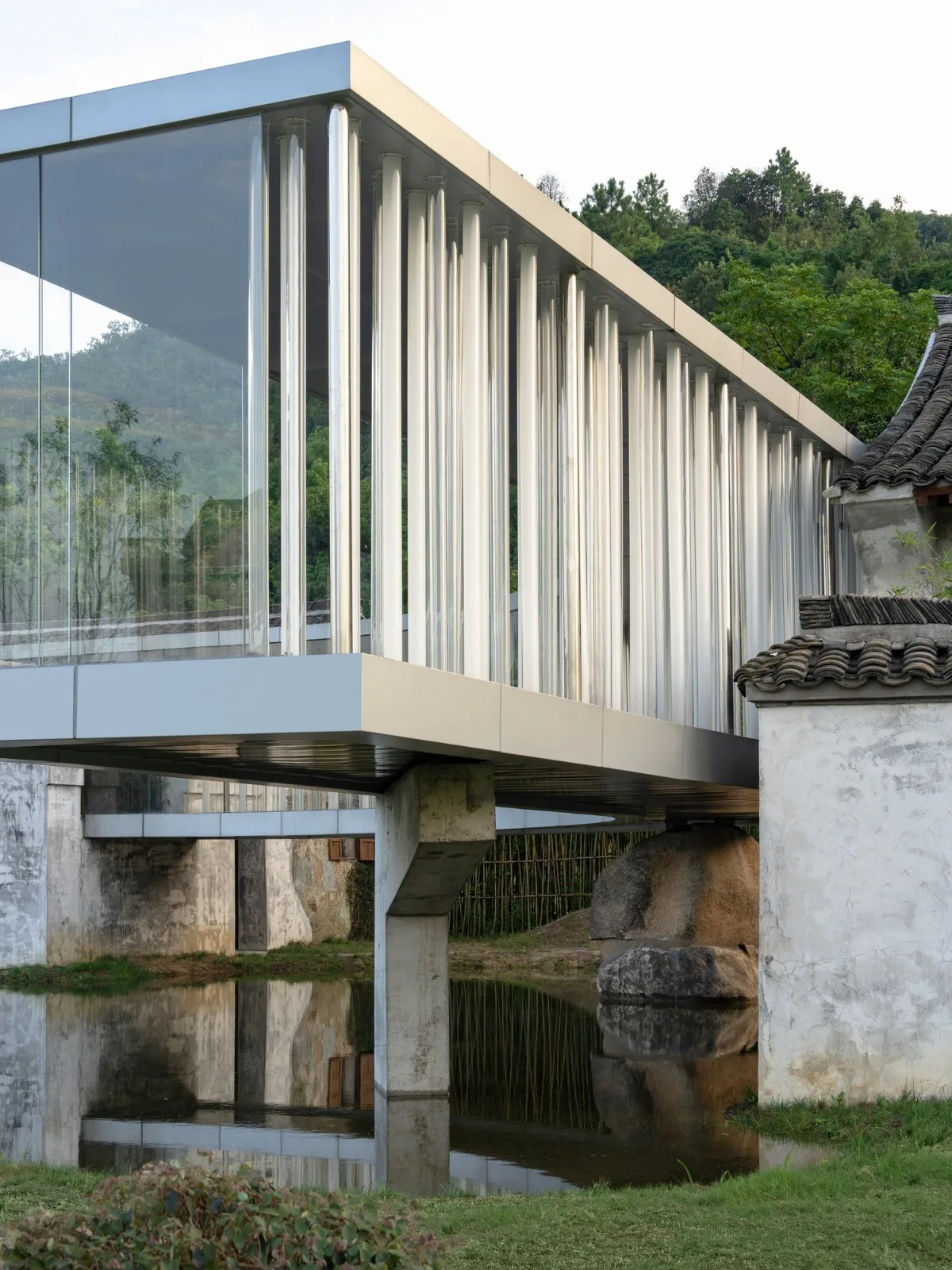
On the hillside side of the covered bridge, there is an irregular arrangement of three types of slender columns with mirror, frosted, and transparent surfaces. These create rich reflections and refractions, allowing filtered sunlight to cast enchanting light and shadow patterns. The spaces between the slender columns provide safety without obstructing views, while allowing excellent natural ventilation that prevents heat buildup within the corridor.
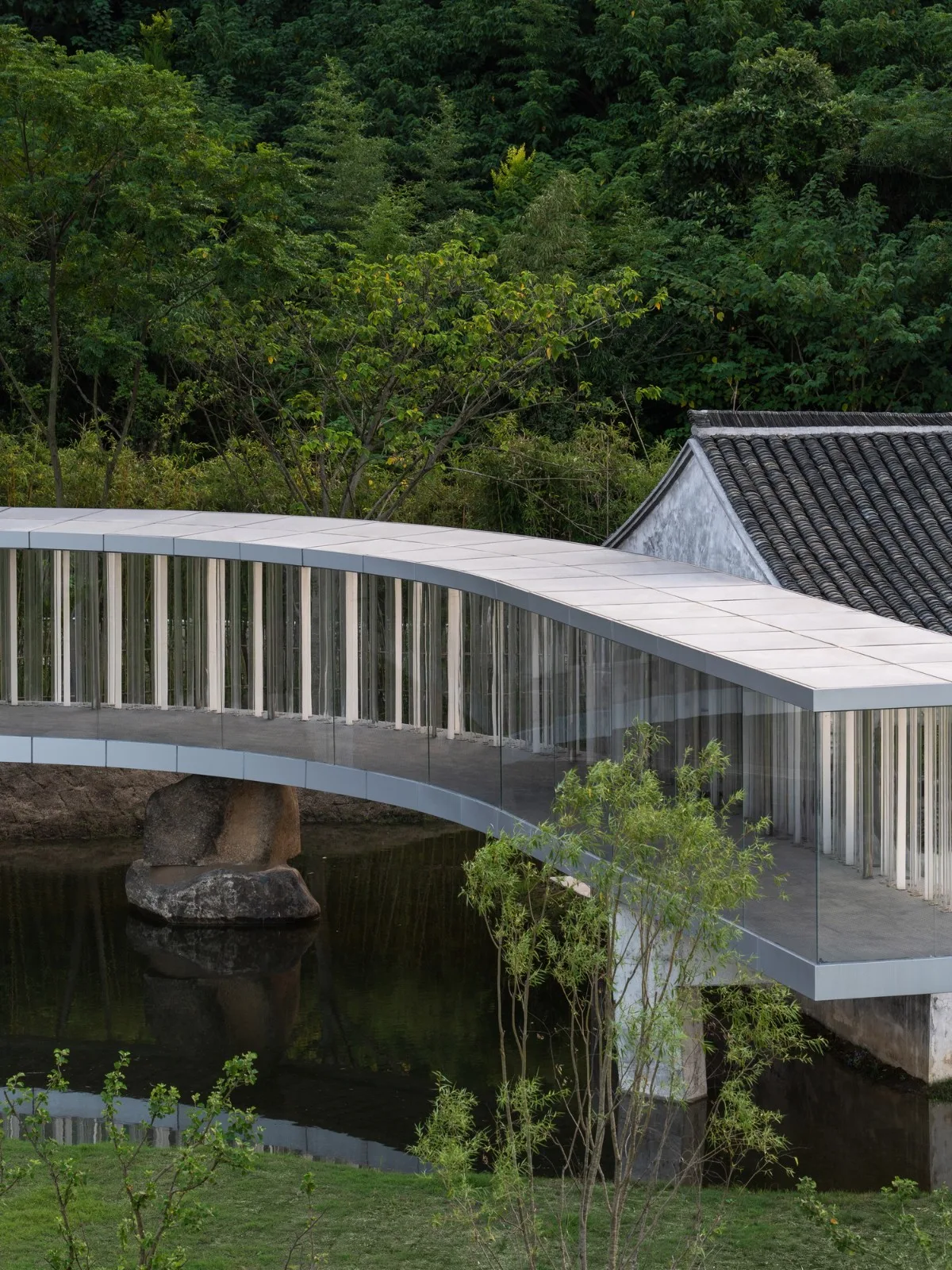
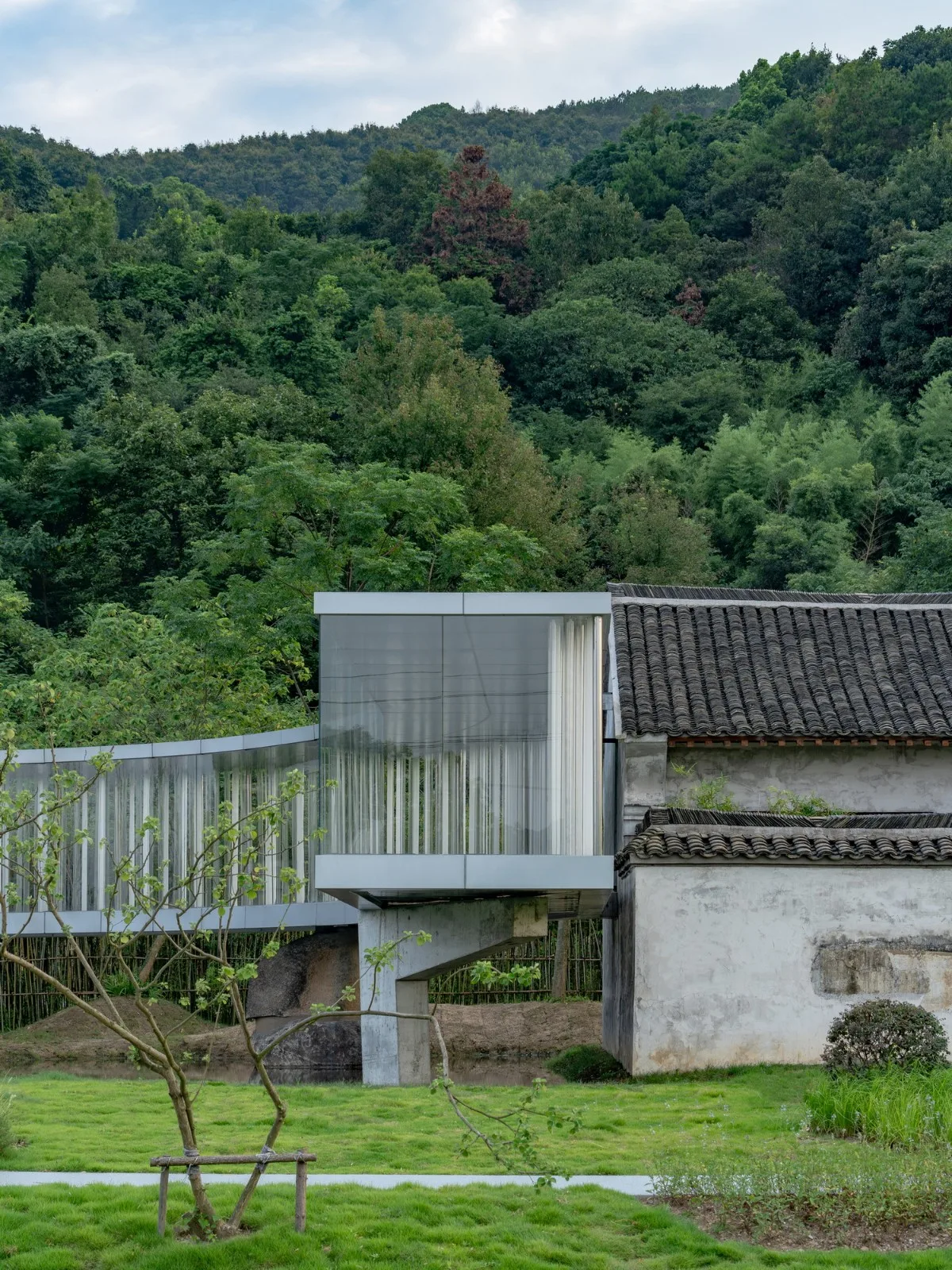
The land eroded by flowing water between the two buildings is transformed into a shallow water pool. Surrounding elements including waterside paths, platforms, stone slab bridges, old buildings, the new covered bridge, bamboo groves, pavilions, and existing trees create a complex spatial relationship within the limited site, reviving the charm of classical Chinese gardens.
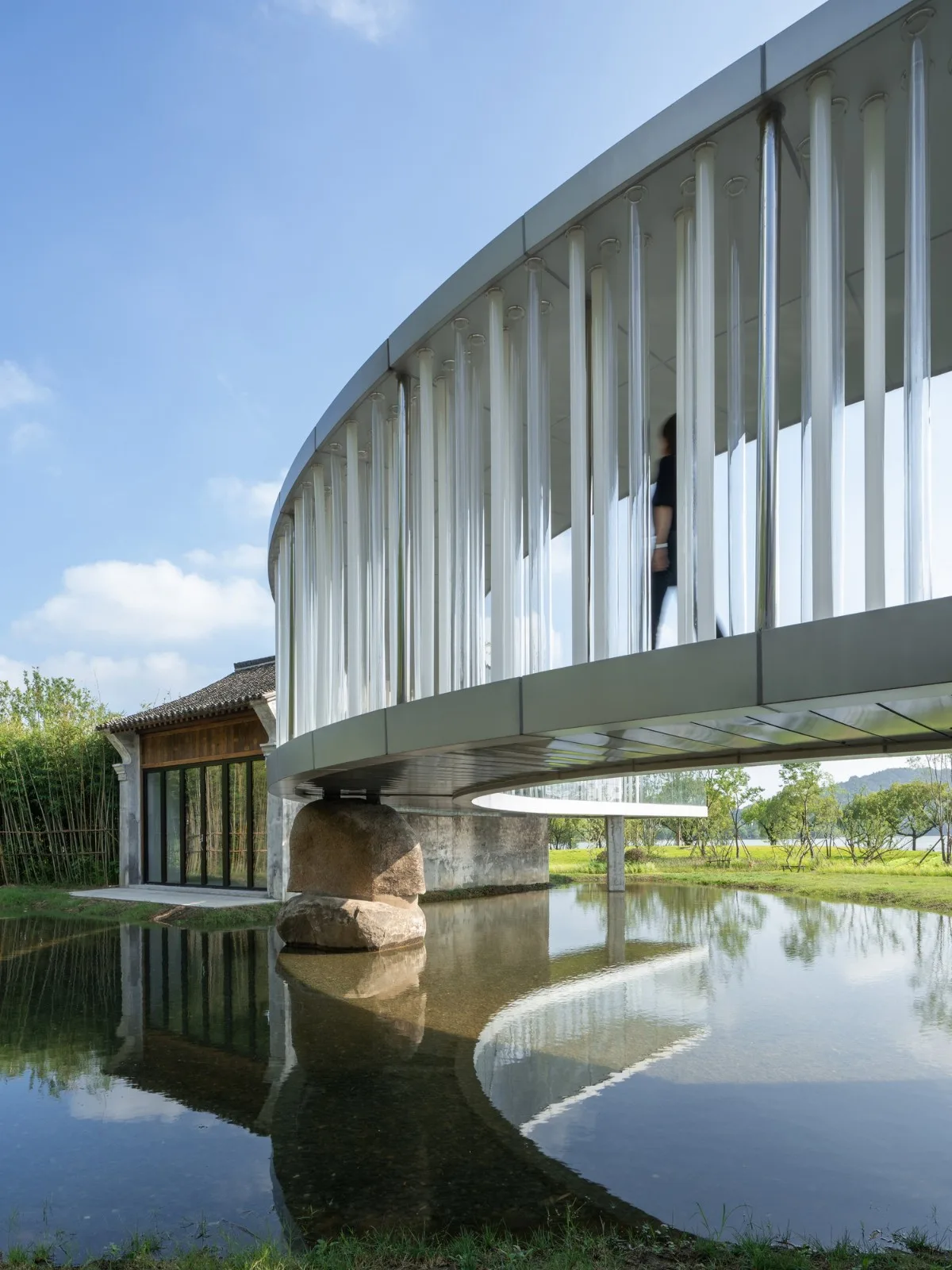
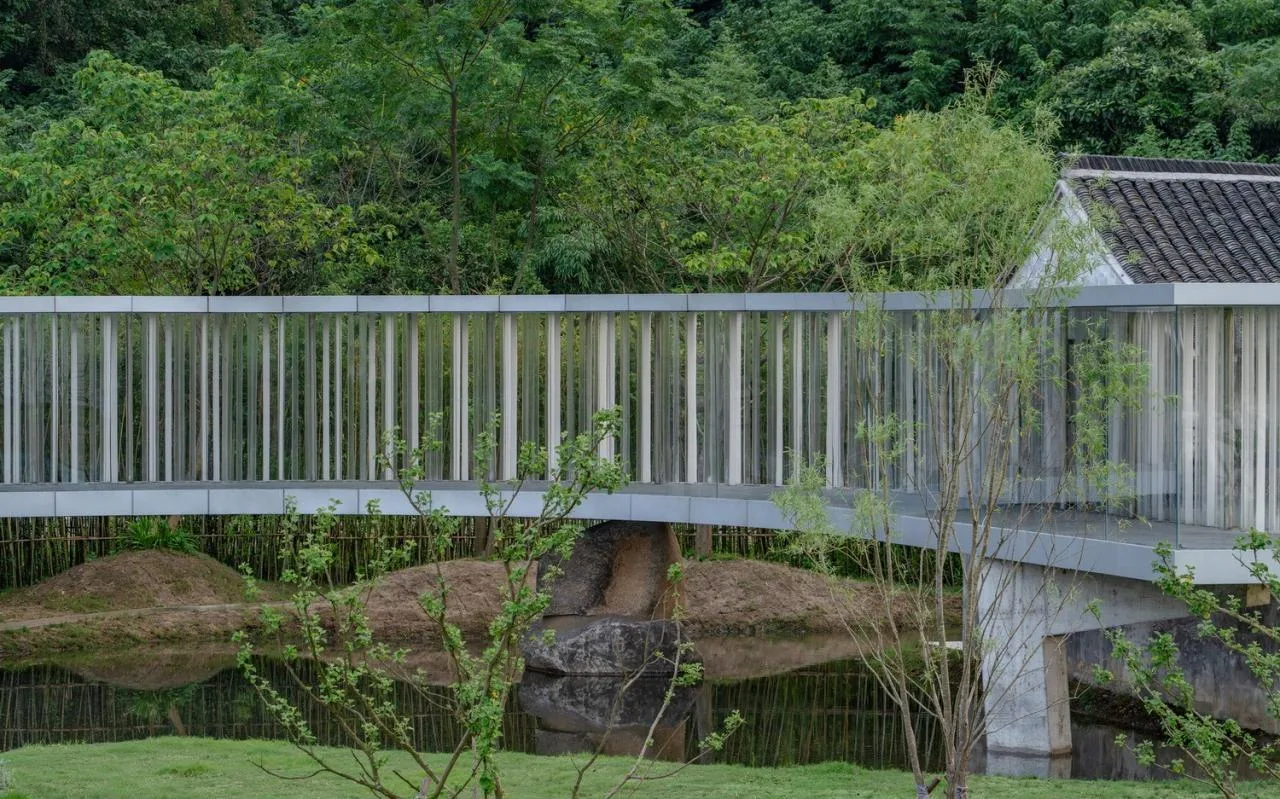
The two historic courtyards maintain their original quaint atmosphere, linked by a new steel and glass covered bridge that connects both the space and scenery, bridging two different eras.
Whether inside or outside, the dynamic spatial transitions create strong contrasts between temporal characteristics, allowing visitors to experience a journey through time and space within this modest scenic station.
Project Drawings
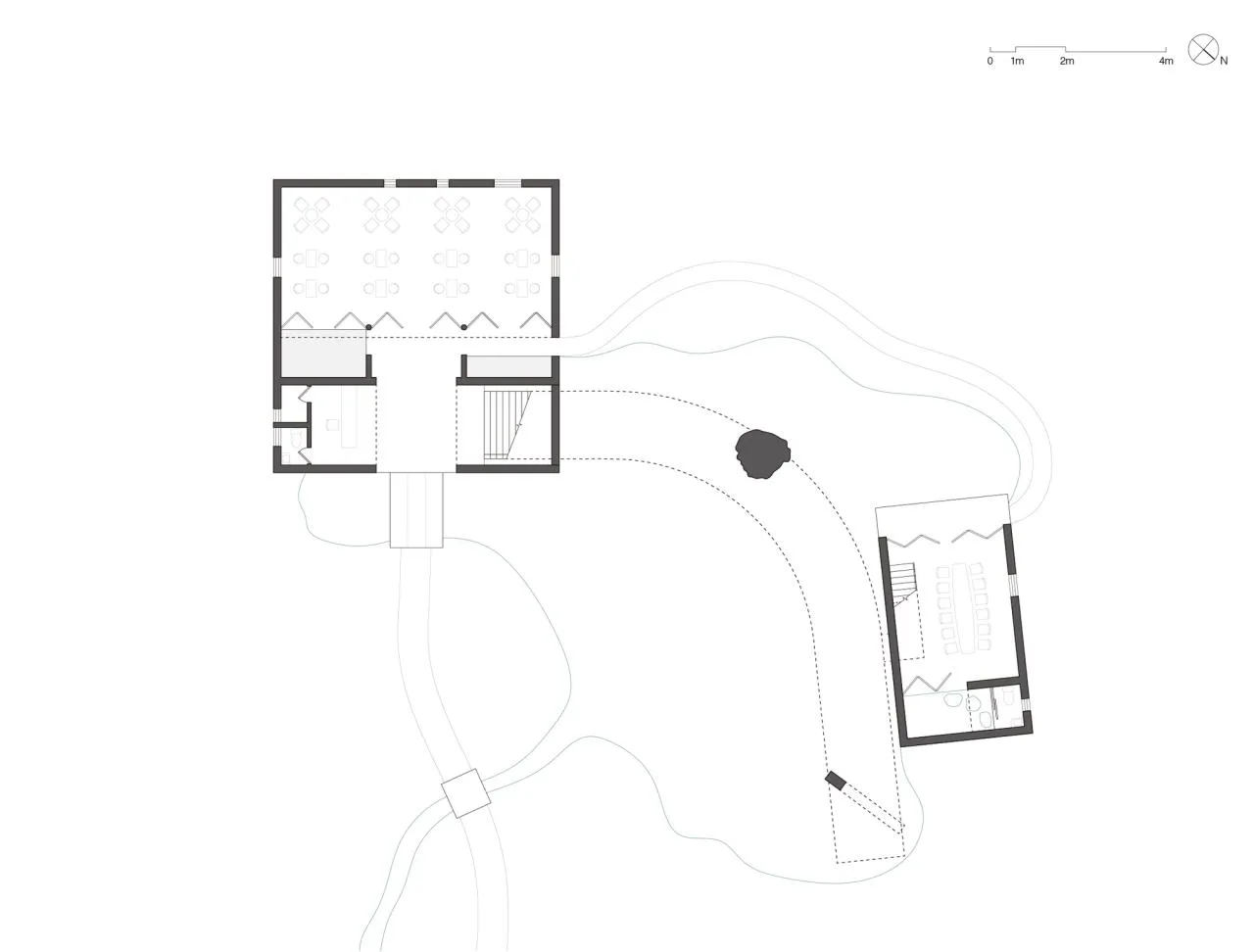
△ First Floor Plan
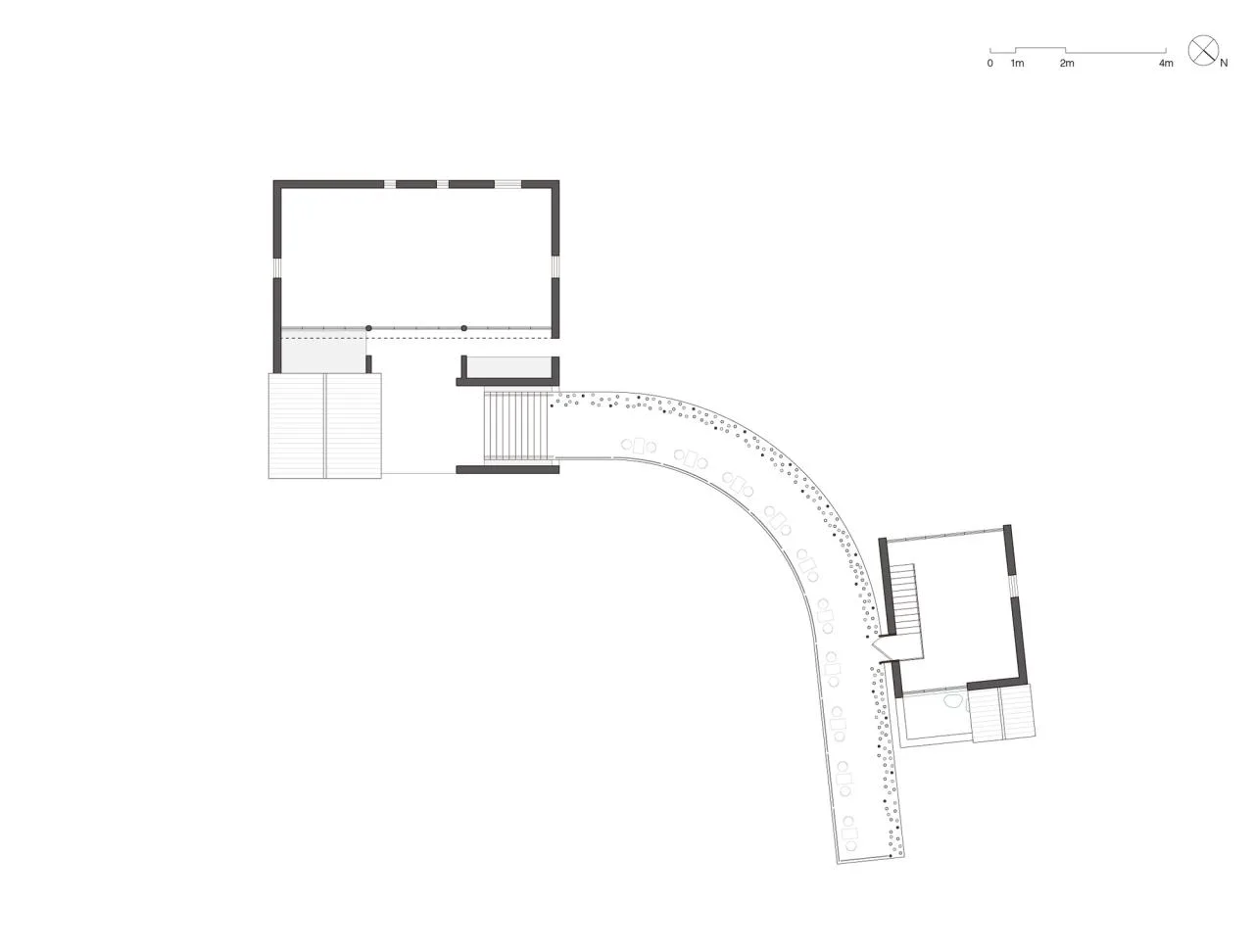
△ Second Floor Plan
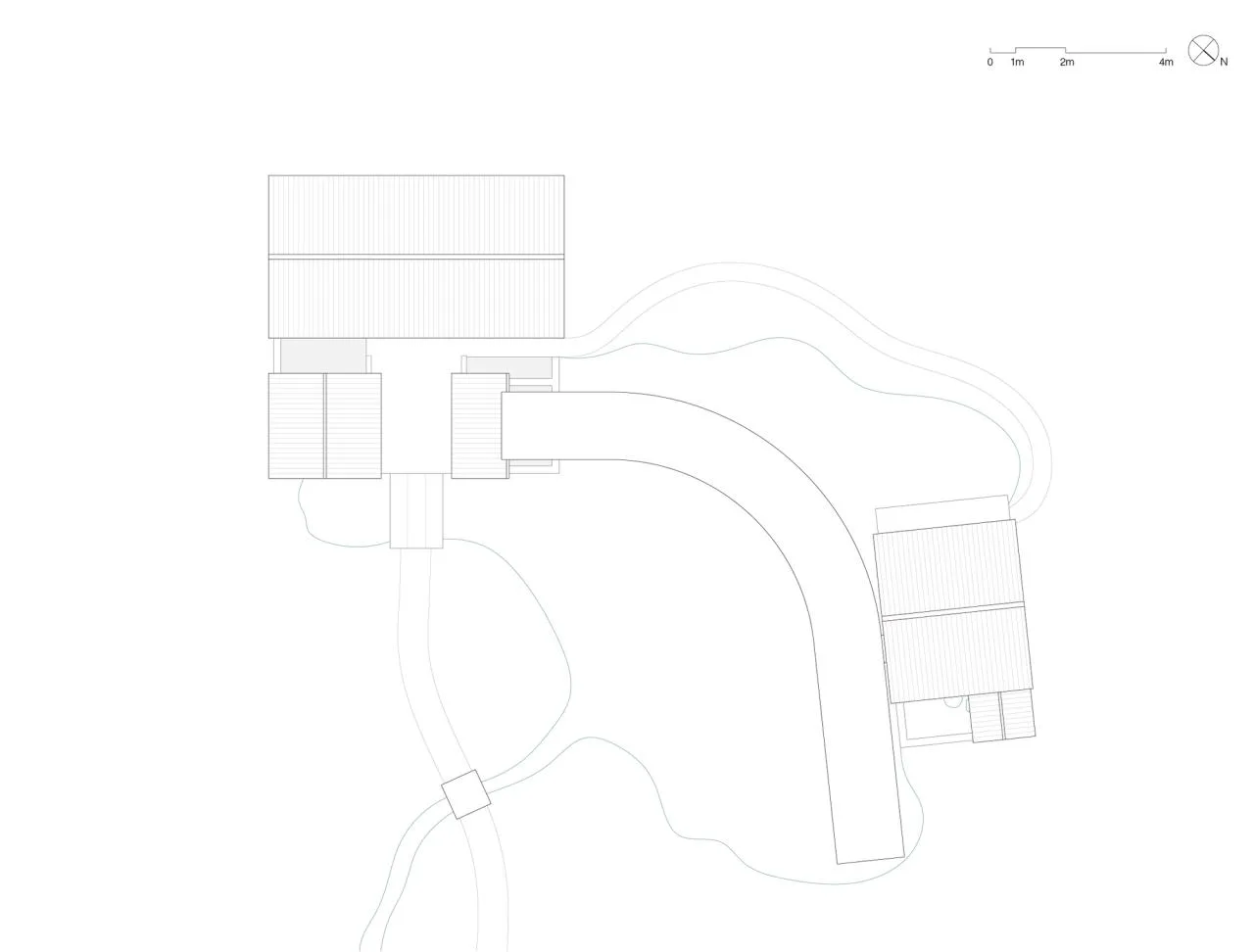
△ Roof Plan
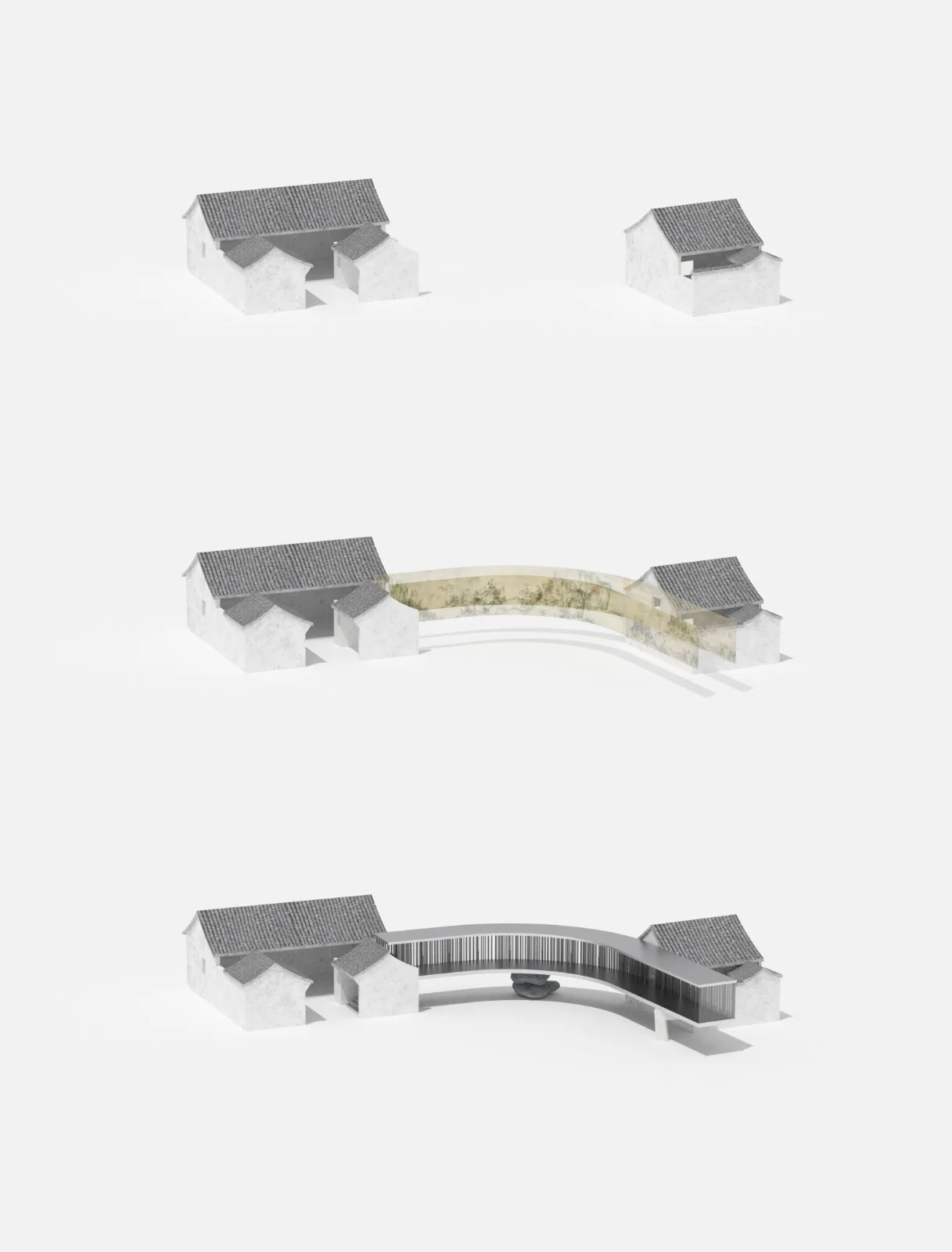
△ Analysis Diagram
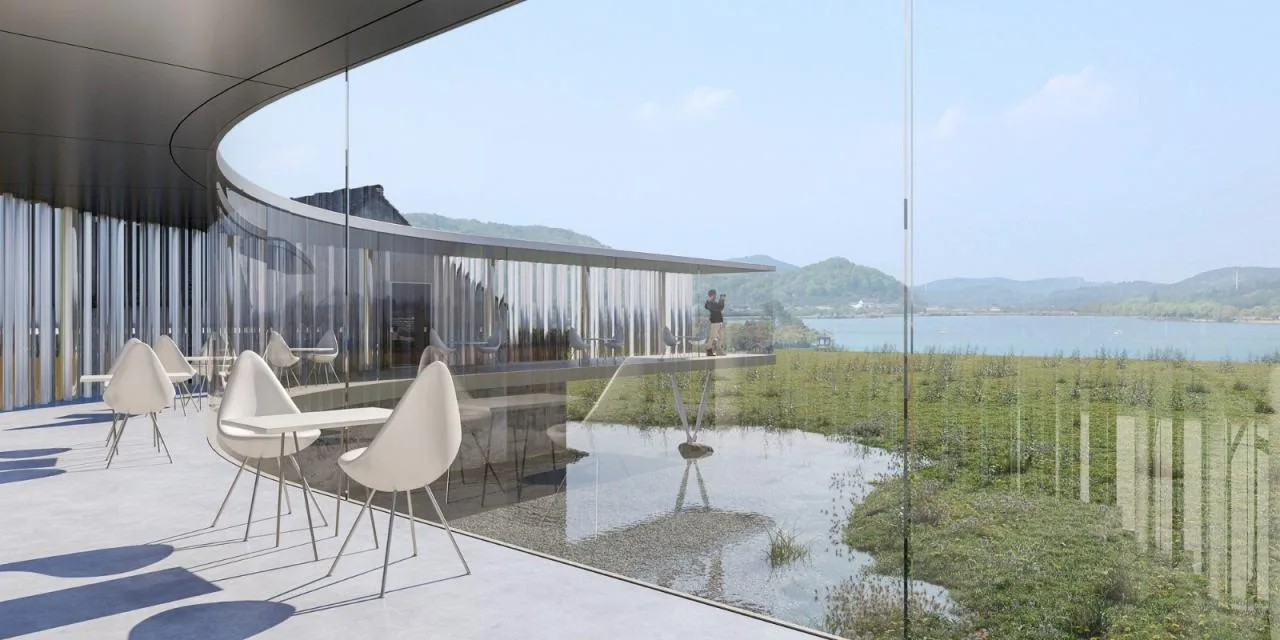
△ Rendering
Project Information
Architect: Ten Domain Architecture
Area: 245 m²
Year: 2023
Photographer: Zhang Chao
Lead Designer: Xu Xiaomeng
Design Team: Xu Xiaomeng, Hannah Wang
Structural Design: Hezuo Structural Architecture Research Institute
Construction Drawing Design: Zhejiang Hengxin Design Group Co., Ltd
Construction Contractor: Zhejiang Lixin Construction Group Co., Ltd
Client: Nanbei Lake Scenic Area Investment Management Co., Ltd., Haiyan County
Location: Shanghai
















Must log in before commenting!
Sign Up