
Bohai Experimental School (Ministry of Basic Education)
Located in the heart of the Binzhou Economic and Technological Development Zone within Bohai Science and Technology Innovation City, this integrated 12-year school features 60 primary and 24 junior high classes, all employing small class teaching methods. The Ministry of Basic Education supports a total enrollment of 1,800 students, including 1,200 primary and 600 junior high students, making it a key educational project for the Innovation City.
Innovative Visions for Future Education
Our vision for future education is a vibrant community where knowledge, information, and energy intertwine. Emphasizing sharing, diversity, and complexity, we aim to redefine education with an open international outlook, dynamic spatial experiences, and a communicative campus culture. The goal is to establish an educational environment that is free, humanistic, ecologically integrated, and promotes multi-dimensional sharing, ultimately creating a campus model of exceptional quality.
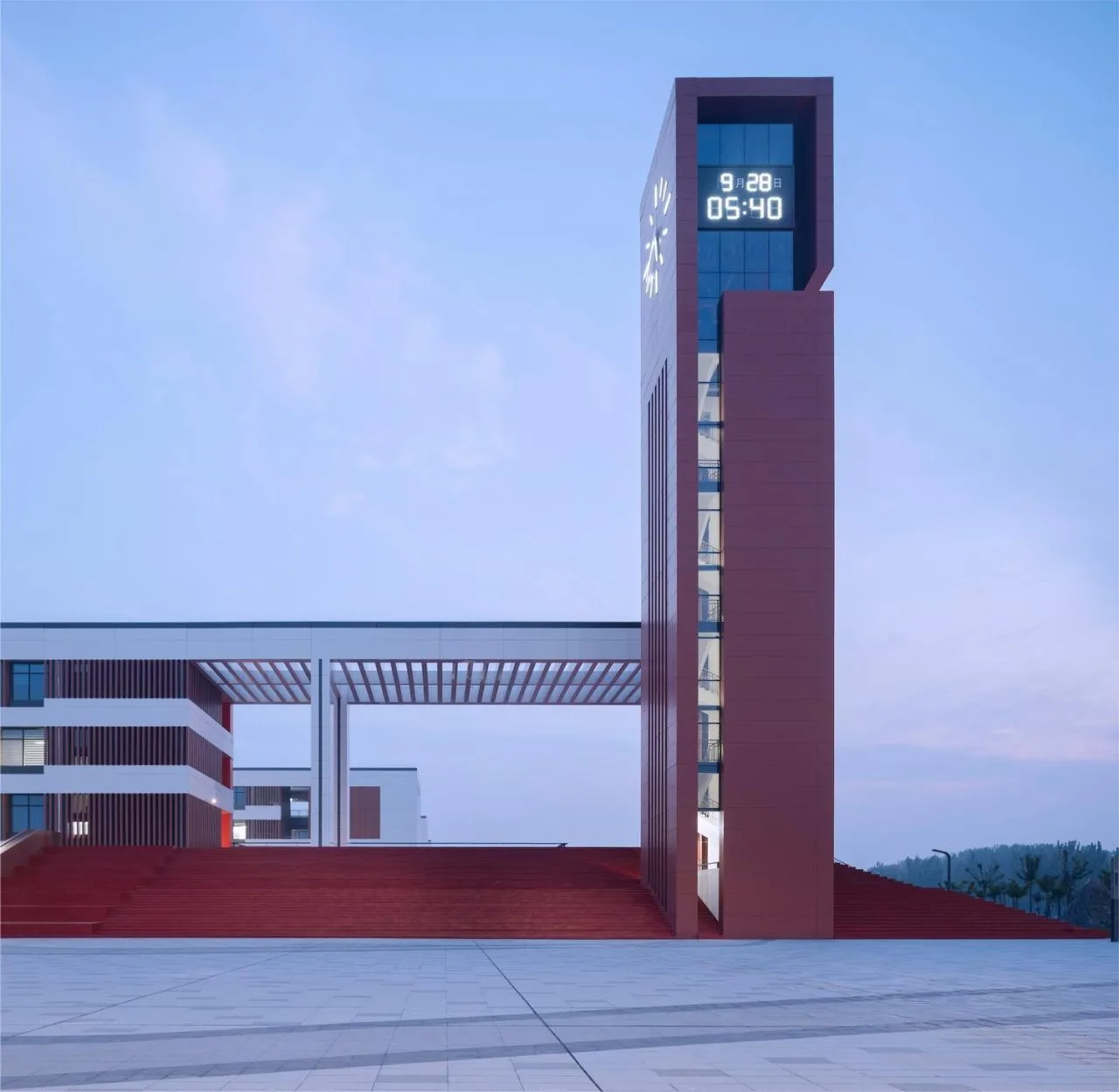
△ Main entrance on the south side of the campus
A Campus Atmosphere of Organic Growth
The overall layout of Bohai Experimental School reflects the concept of “Confucianism” in both form and meaning. The design extends along a central cross-axis, creating an organic campus flow that aligns with the city’s development axis. Open spaces such as art and sports facilities face major city roads, with distinct art centers and sports halls located at road intersections. This arrangement fosters a vibrant campus atmosphere and offers shared facilities for the wider community.
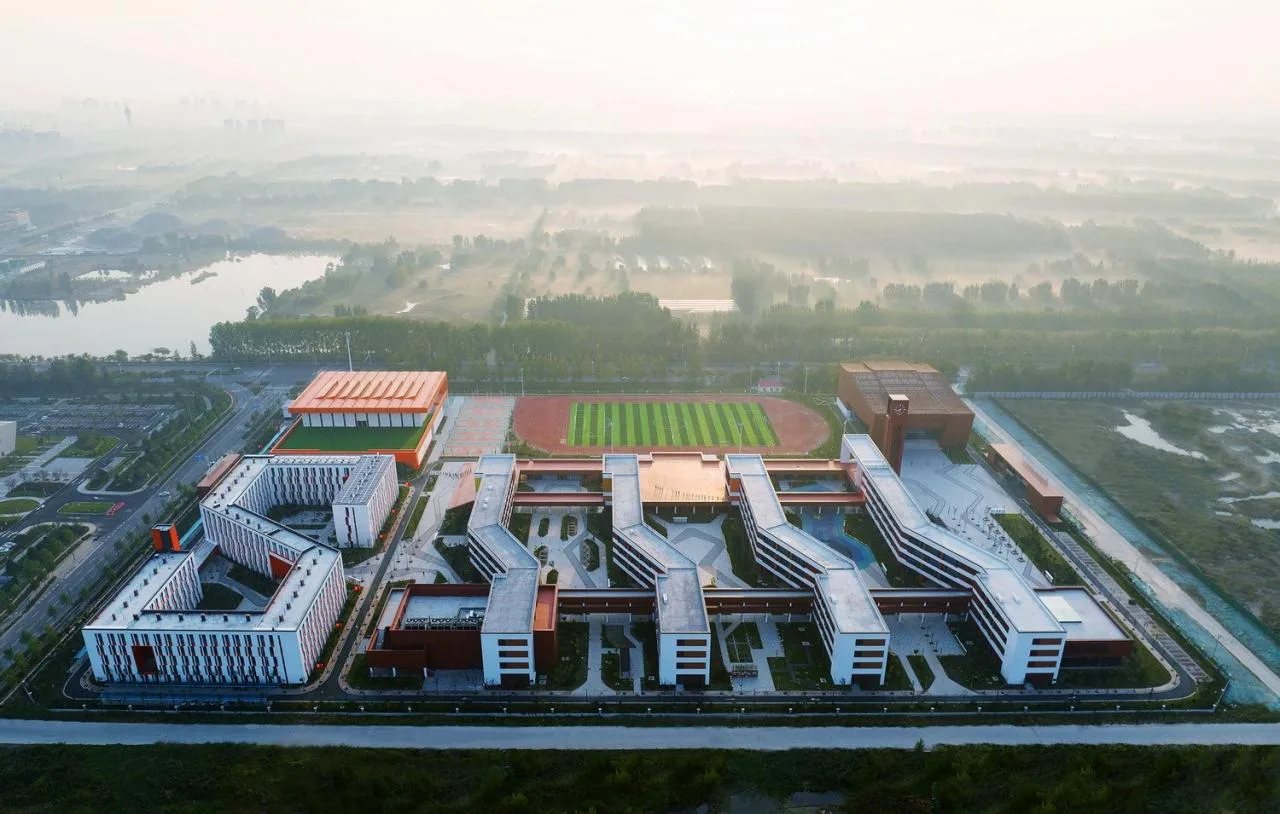
△ Aerial view of the west side of the campus
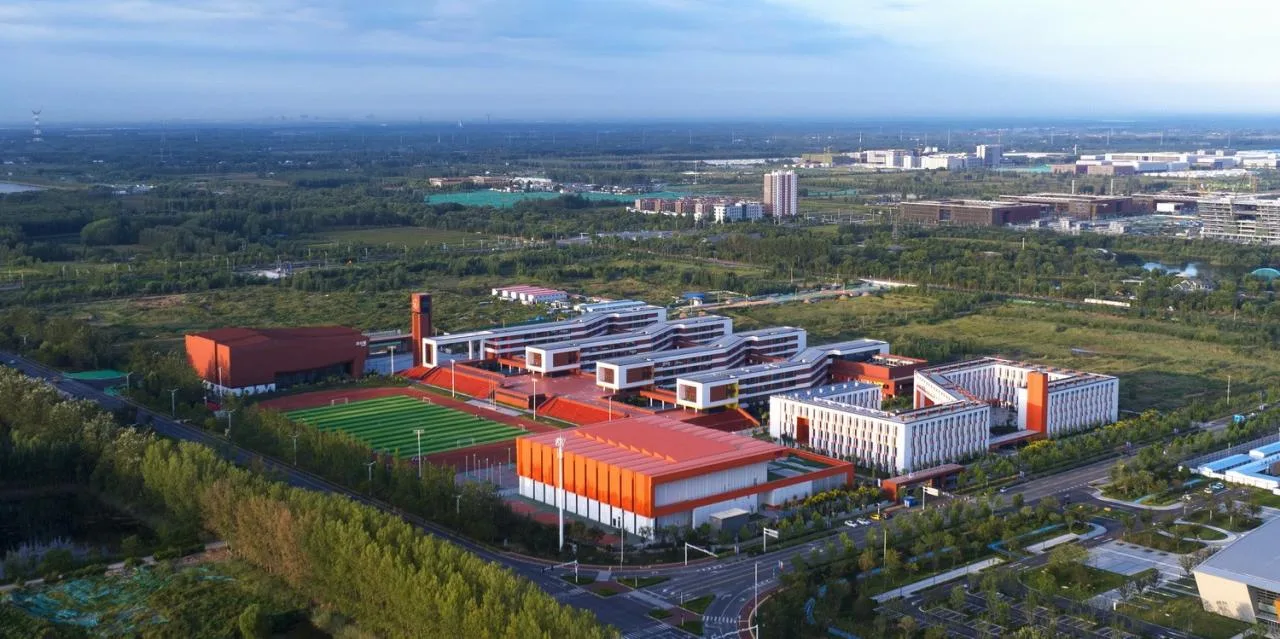
△ Aerial view of the northeast corner of the campus
Limitless Research and Learning Spaces
The campus features a rooftop research platform at the core of the professional teaching area, extending the traditional courtyard-style teaching spaces. Integrated with overhead corridors, study corridors, stands, bell towers, and academies, this design creates ubiquitous spaces for research and learning. Indoor and outdoor teaching areas blend seamlessly, fostering an organic flow of sharing and communication that encourages student innovation and builds a free, open campus environment.
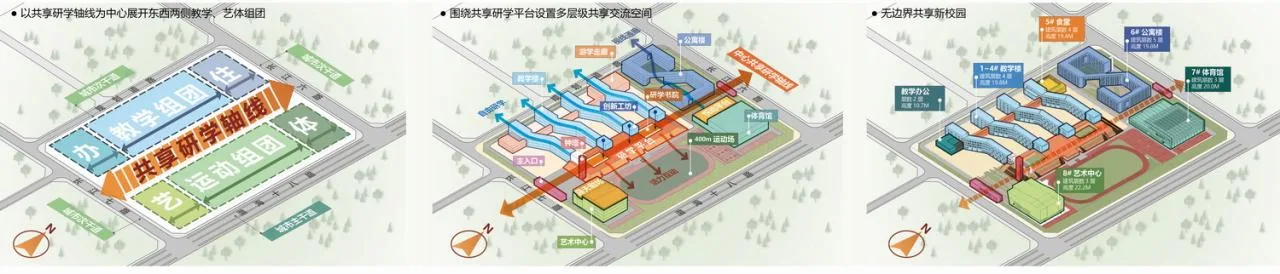
△ Campus Planning Analysis
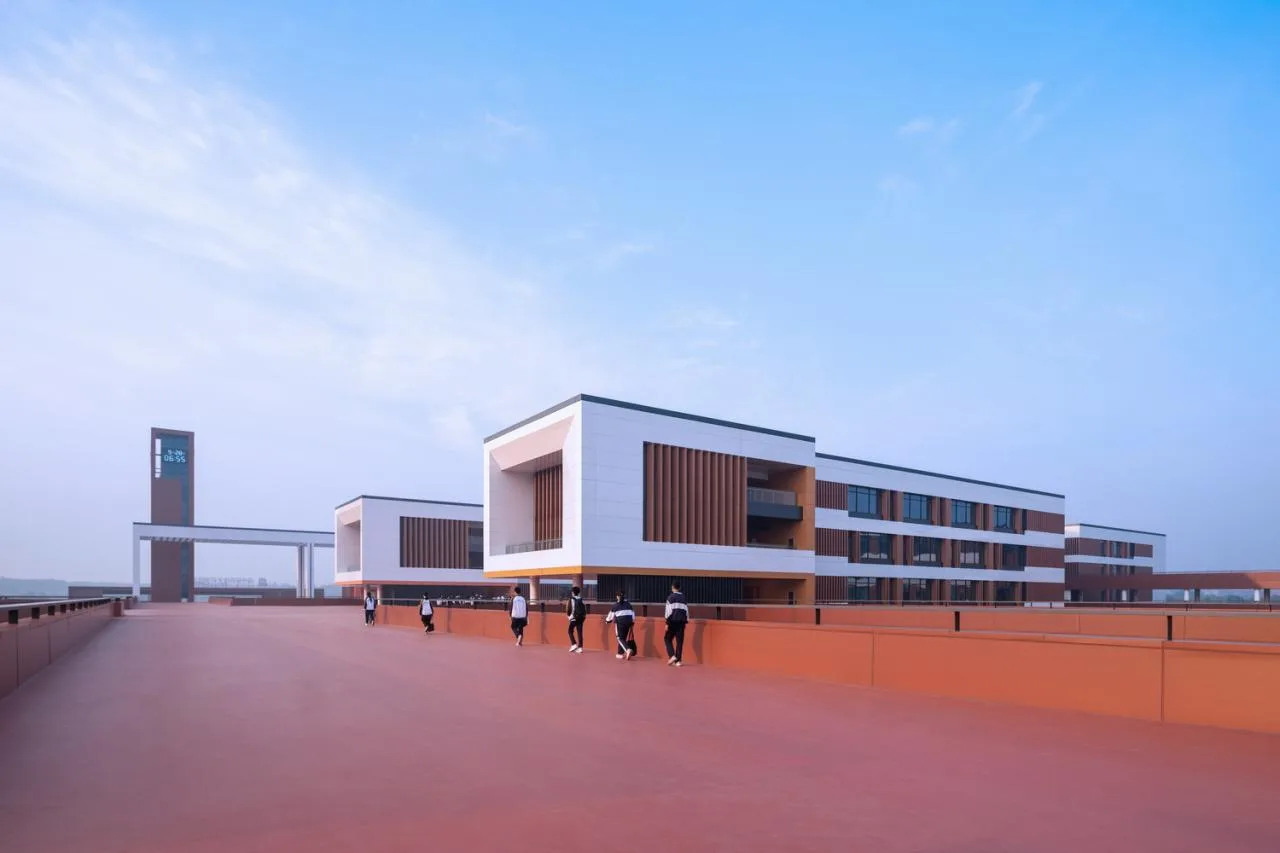
△ Campus Core · Study Platform
On the east side of the teaching building, a semi-enclosed space serves as an innovative workshop for student activities and discussions, breaking away from traditional classroom settings. Suspended above the platform and overlapping with the research platform, it forms a unique teaching venue and provides a distinctive urban viewpoint. The rich spatial layers and lively campus scenes create a joyful environment for students to grow and explore the future.
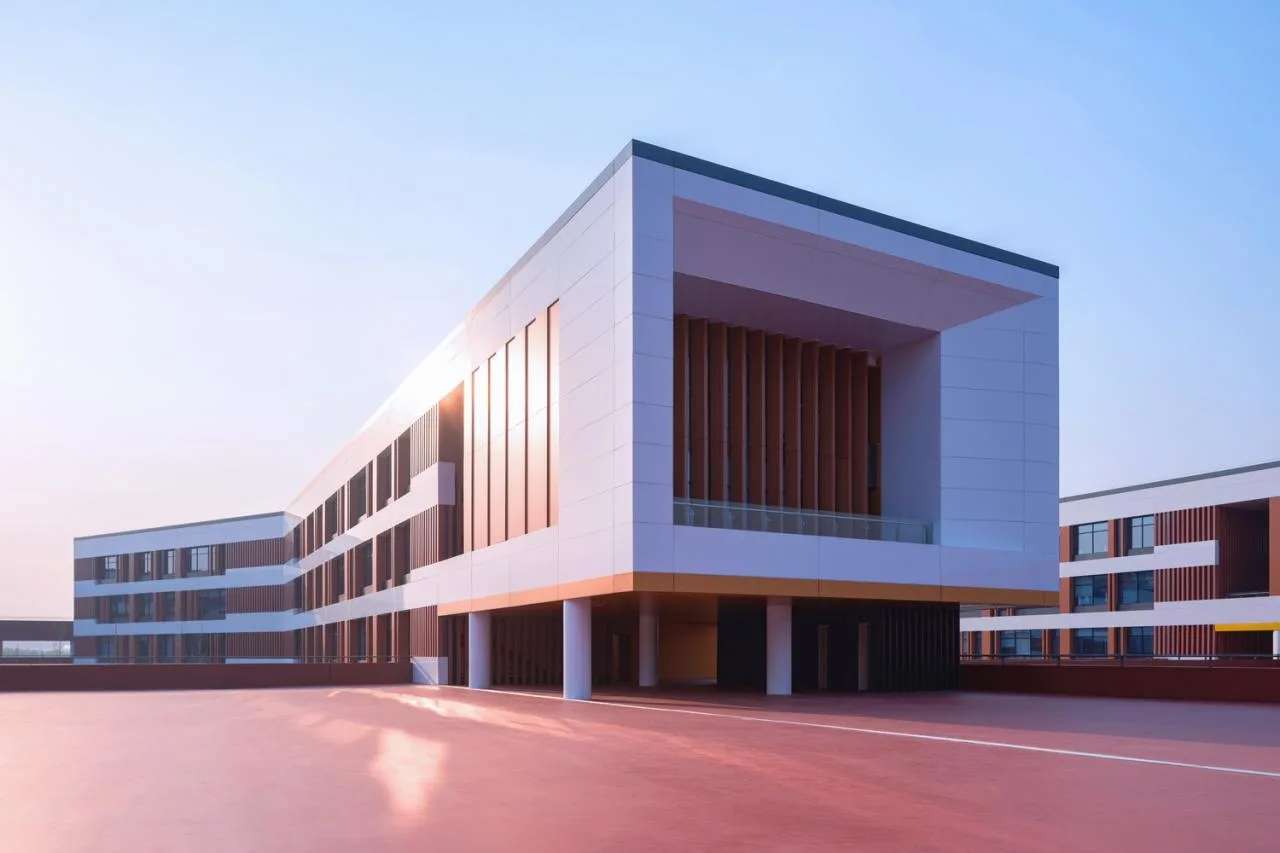
△ East side of teaching building · Urban viewfinder
The teaching area is designed to be open, integrated, and fluid. The interplay between courtyard spaces, platforms, and transitional zones on each floor blurs traditional boundaries, creating a seamless and boundless learning environment.
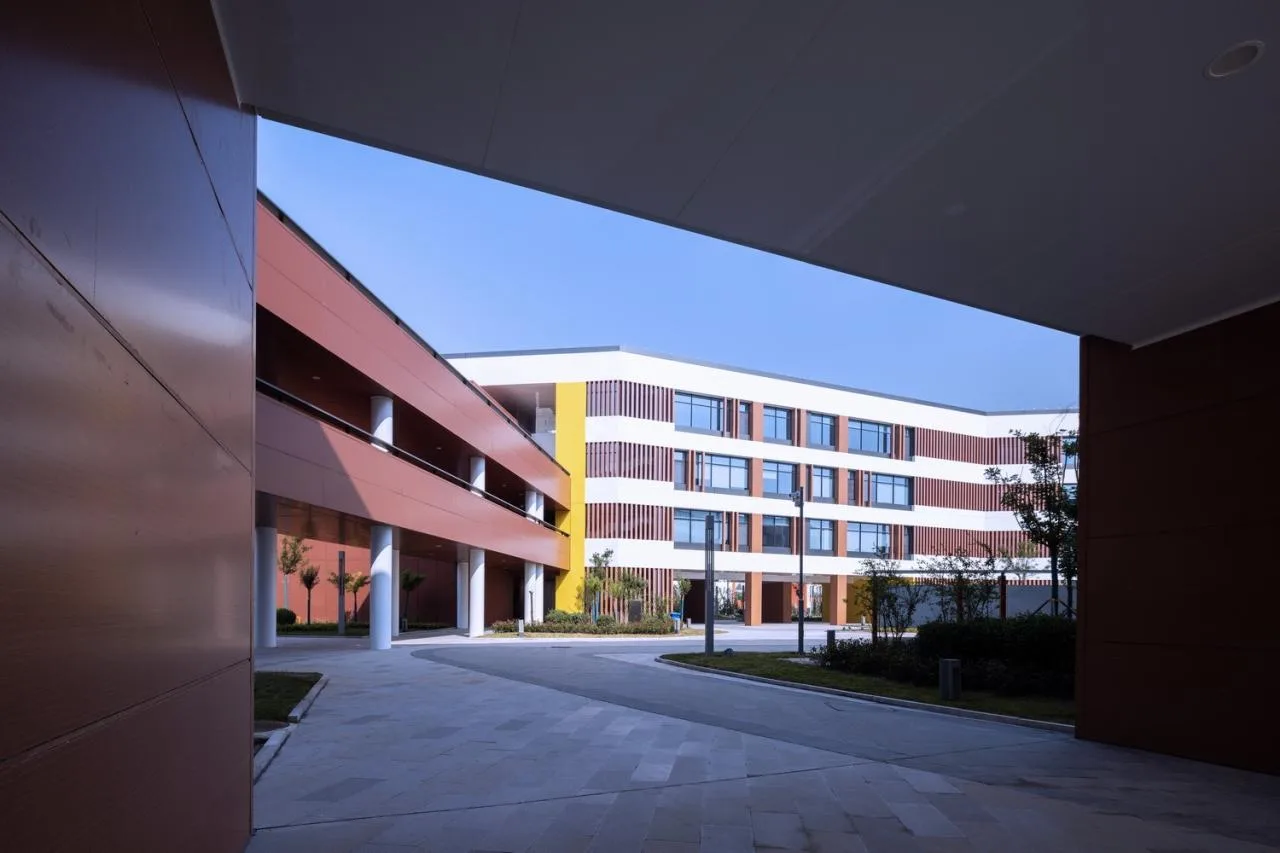
First Floor of Teaching Area · Courtyard
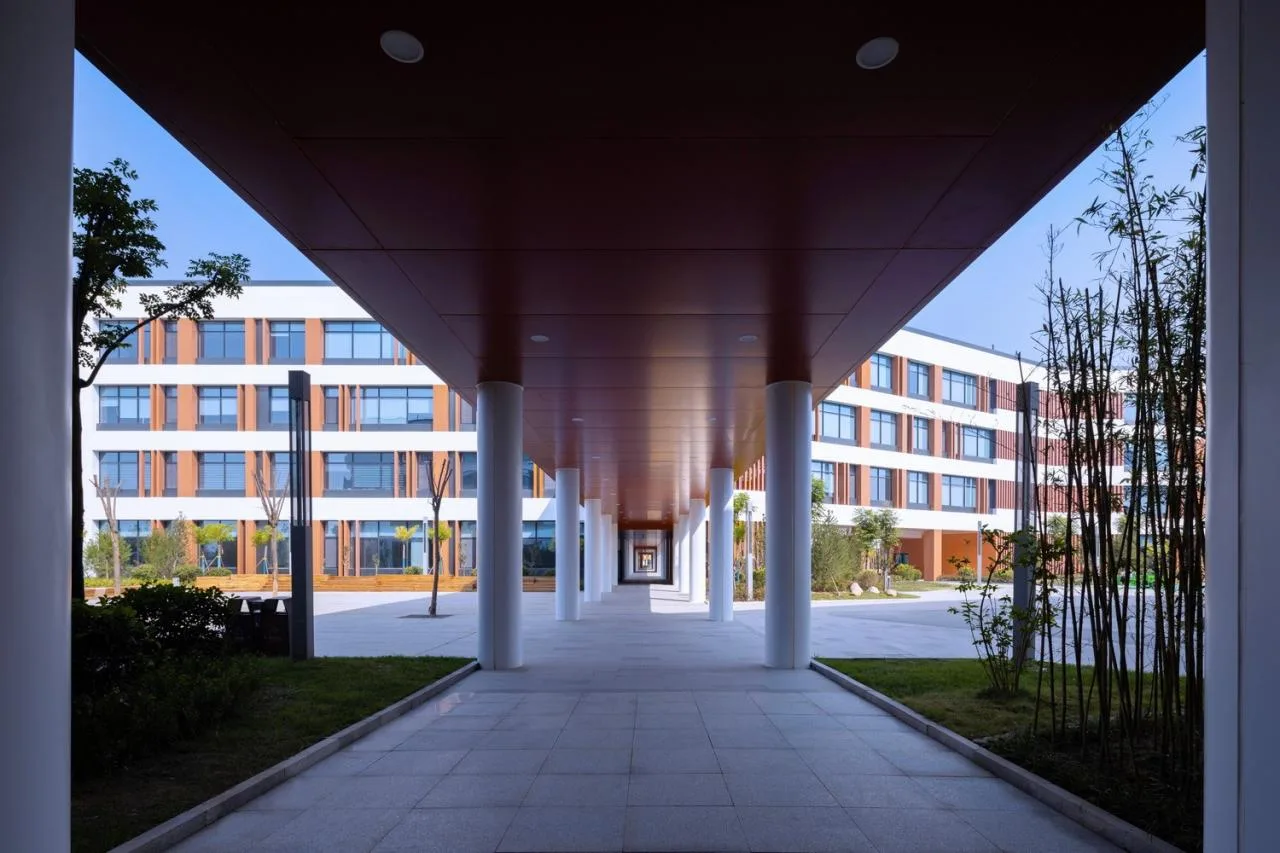
△ Teaching Area First Floor · Overhead Corridor
Diverse Spaces Promoting Exploratory Learning
The teaching area is organized into modular units with vertically stacked functions. The first floor houses public teaching spaces including specialized classrooms, shared reading rooms, lecture halls, and multifunctional halls. Upper floors accommodate standard classrooms and walk-in learning spaces. This layout supports practical teaching needs while encouraging exploration and communication through varied indoor and outdoor shared spaces. It fosters comprehensive, personalized development and opens up limitless possibilities for future educational scenarios.
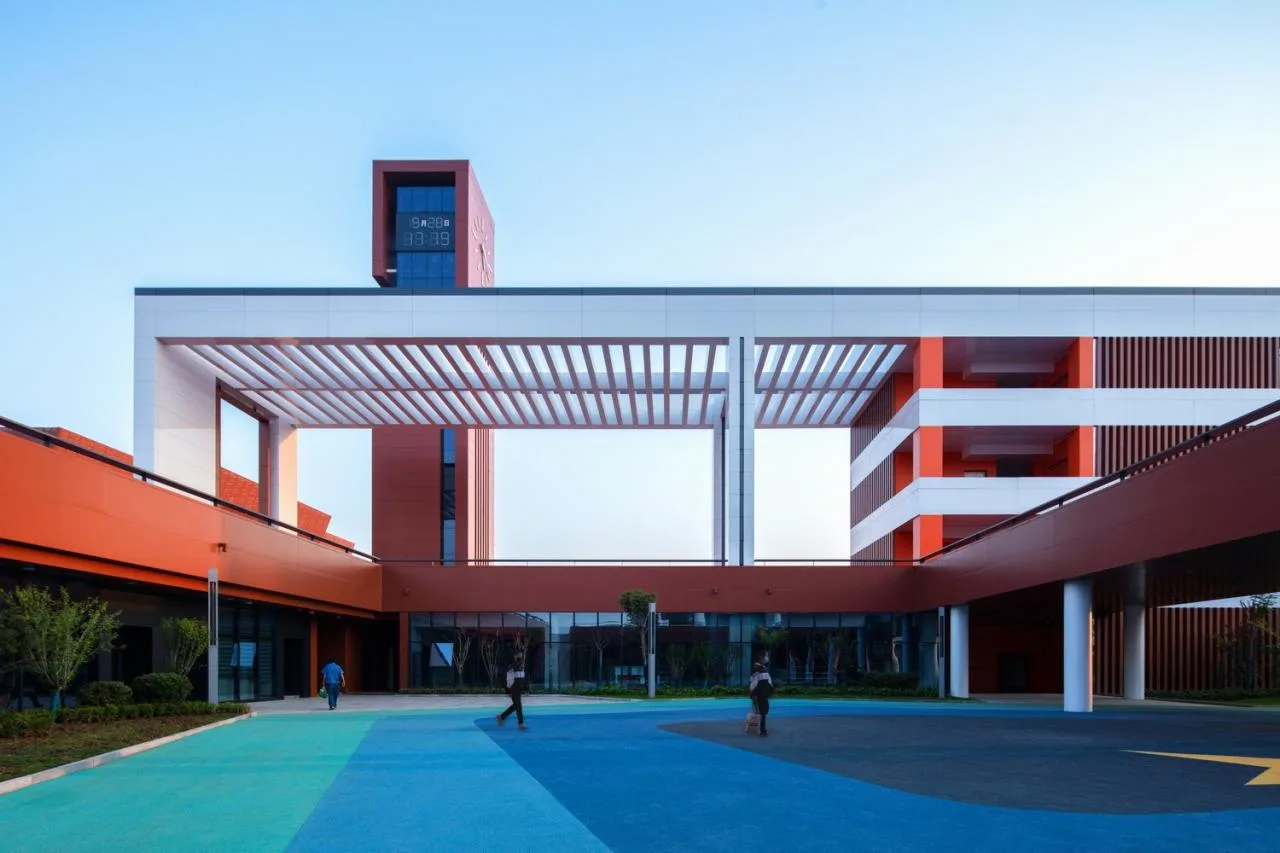
△ Teaching Area First Floor · Courtyard-style Professional Teaching Area
Multidimensional Layout and Cascading Shared Facilities
Serving as the campus’s vitality hub, the gymnasium utilizes both above-ground and underground spaces to accommodate badminton courts, swimming pools, basketball courts, and rooftop recreational areas. This diverse range of facilities provides numerous opportunities for both in-class and extracurricular activities for students and staff alike. The seamless integration of roof and facade design creates a sleek and dynamic appearance, inspiring enthusiasm for sports while enriching the campus atmosphere.
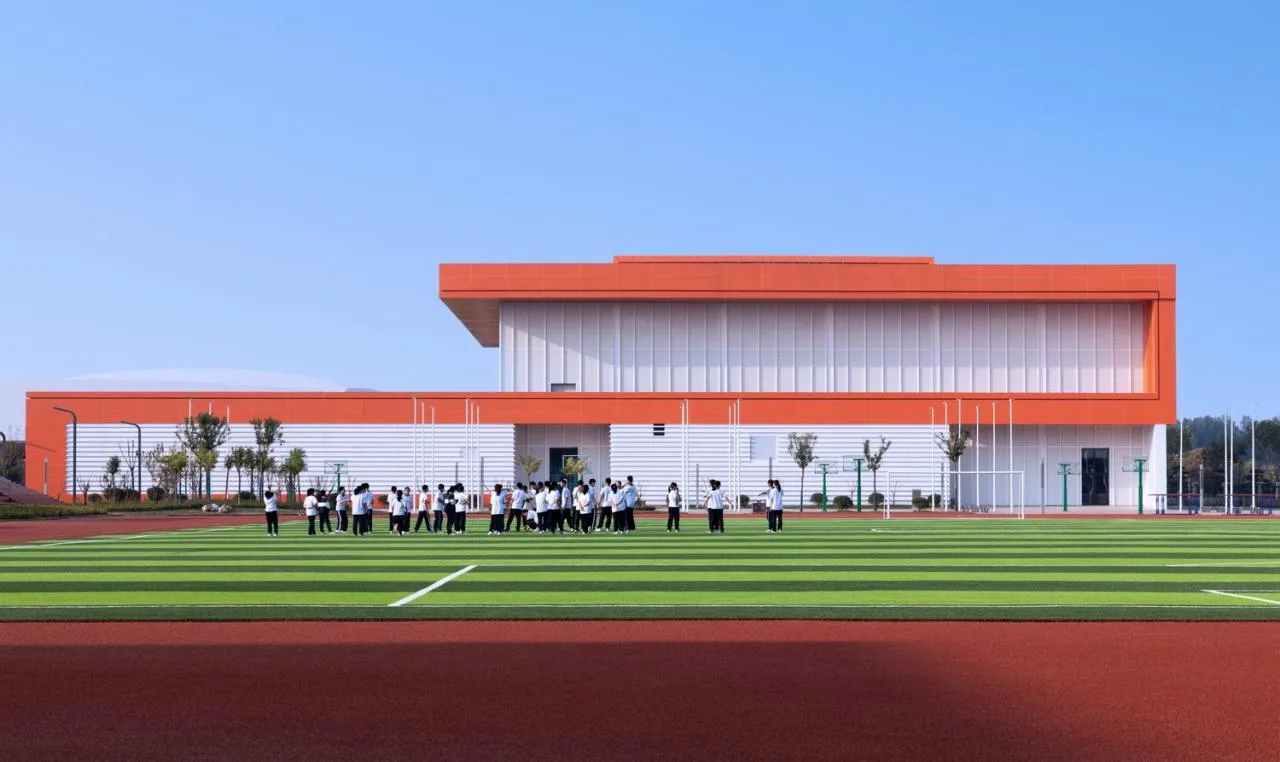
△ Sports Center
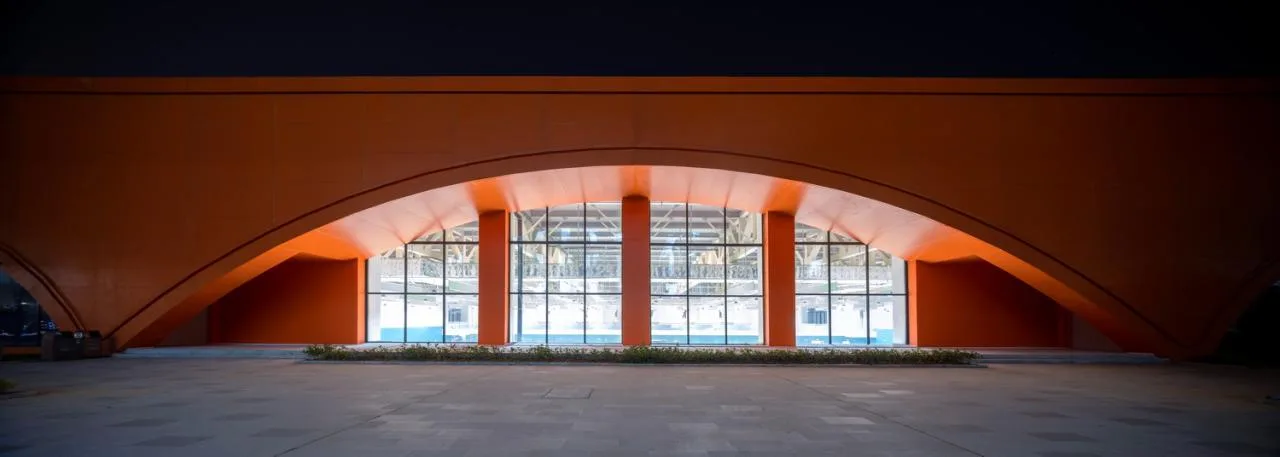
△ West side of the sports hall · First floor badminton hall
Functional Integration with Vertical Intensity
The art center is designed with a holistic approach, maximizing vertical space beneath its gentle curved roof. It houses a thousand-seat auditorium, a multi-functional small theater, and a rooftop open-air theater arranged vertically from bottom to top. The compact layout creates distinct yet interconnected spaces. The elevated entrance hall doubles as seating for the small theater, while the roof contours of both the indoor theaters provide seating possibilities for the open-air theater. A naturally descending metal mesh frame defines the outdoor theater’s boundary, seamlessly integrating indoor and outdoor vertical spaces with highly complex and three-dimensional functionality.
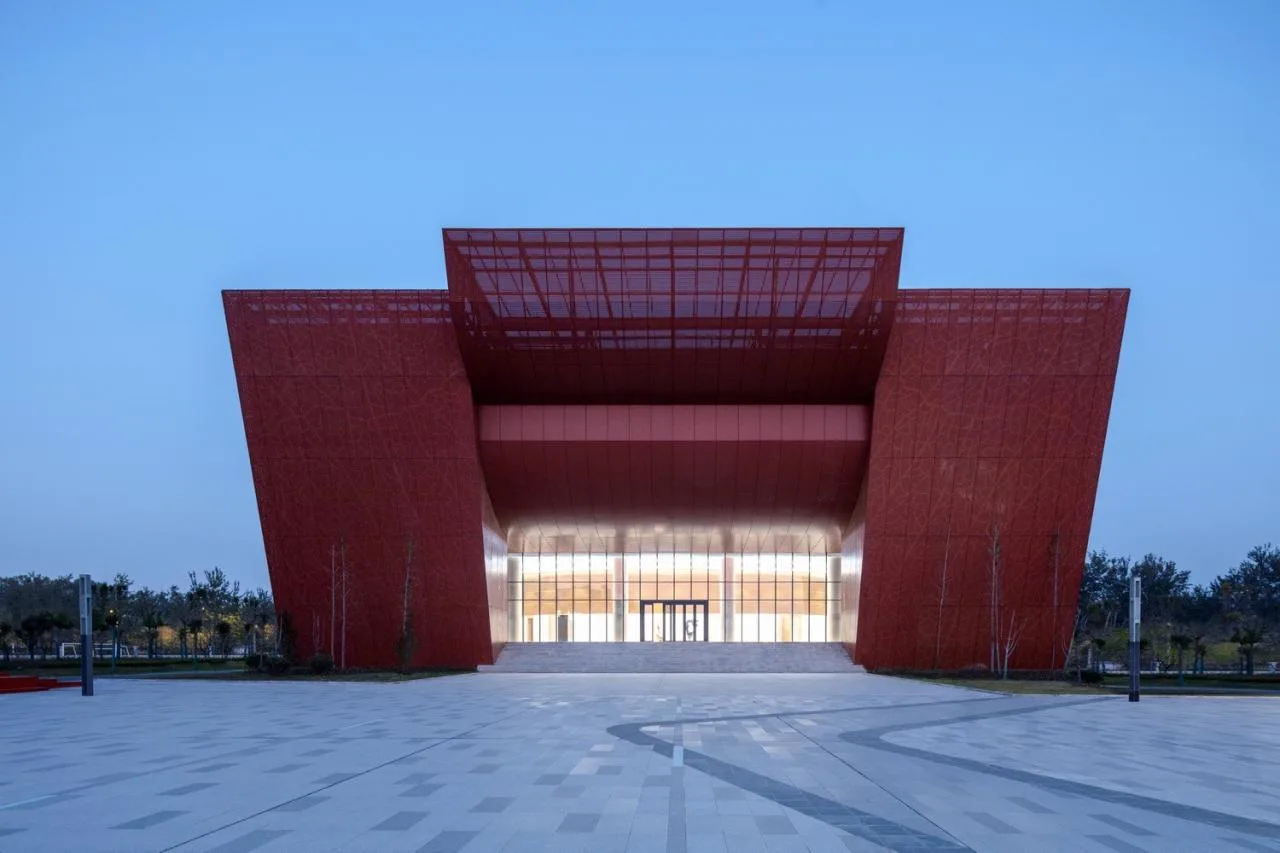
△ Main entrance curtain and stage of the art center
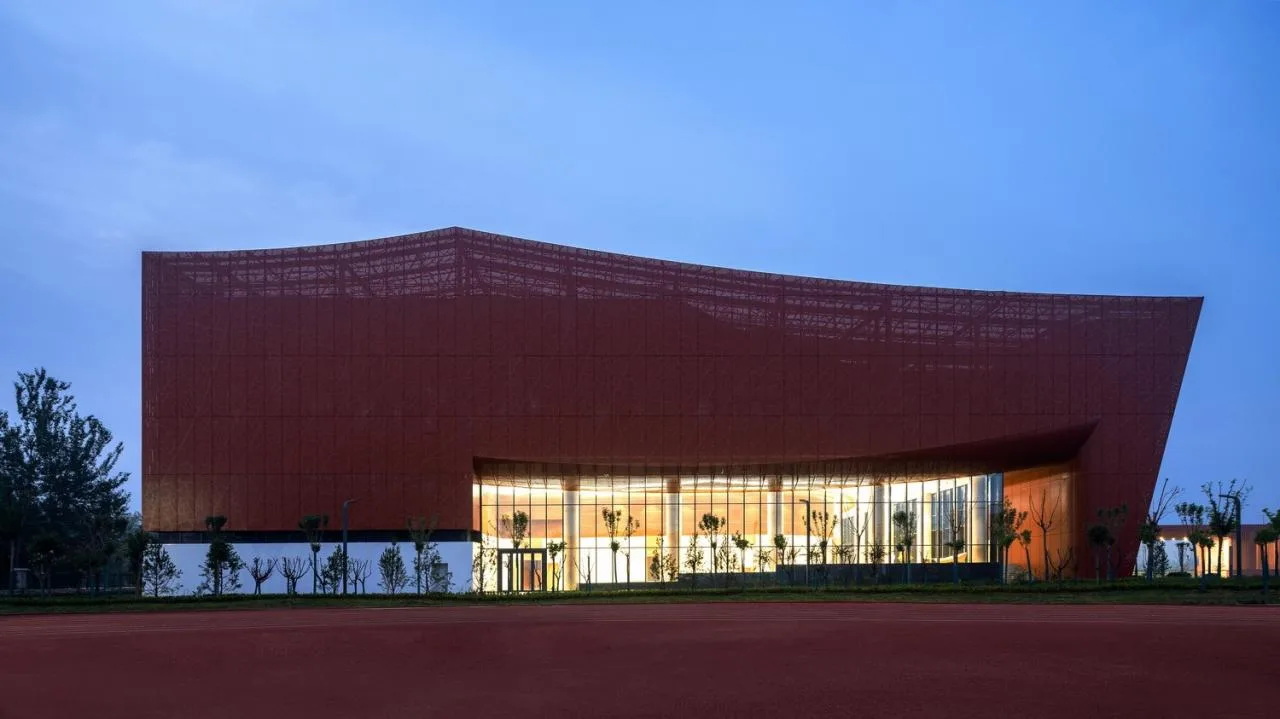
△ Art Center · Secondary lobbies overlooking the playground and city
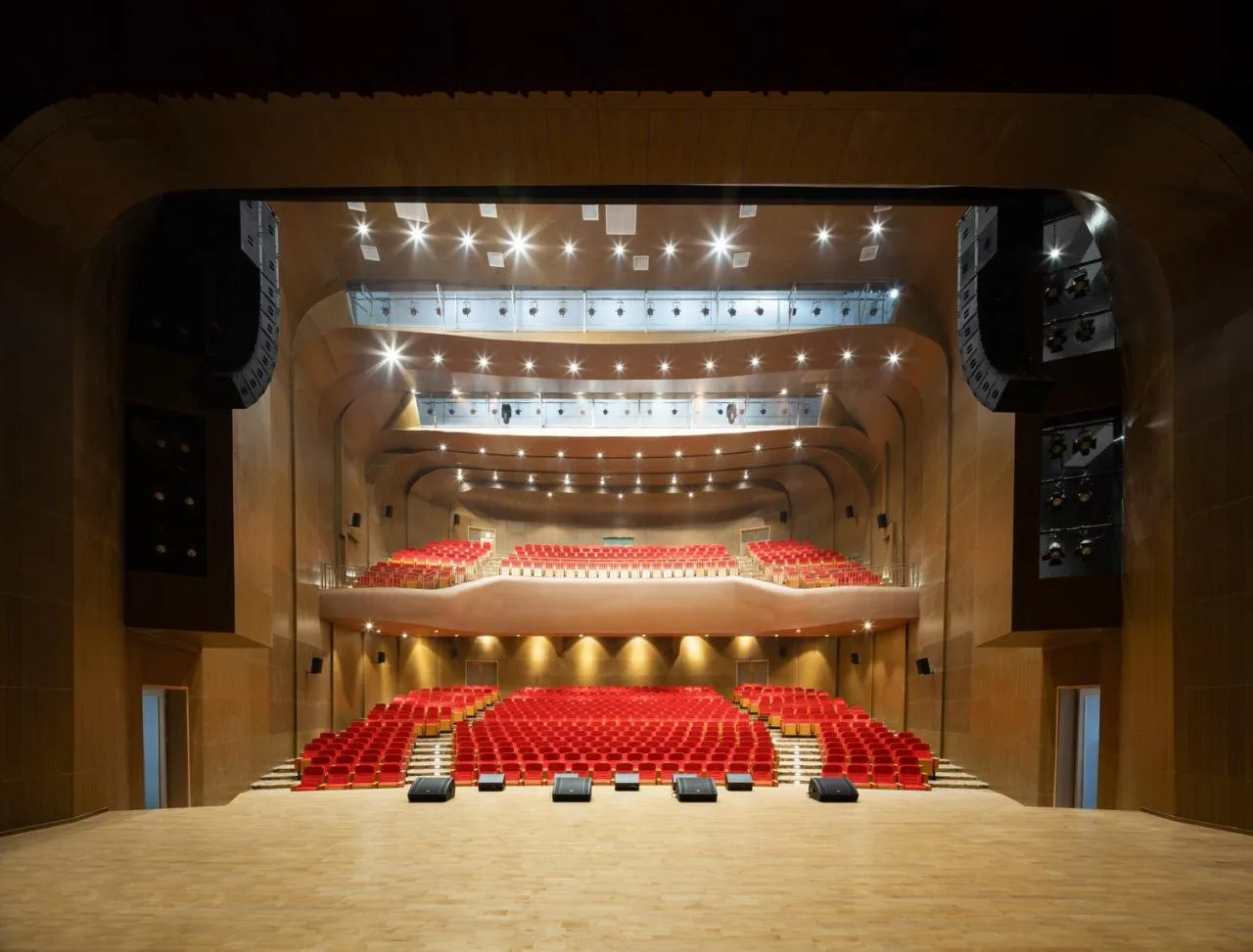
△ Art Center · Thousand-seat auditorium
Humanistic Freedom and Rhythmic Campus Life
The residential area adopts an elongated S-shaped layout, enclosing two semi-independent yet interconnected courtyards. The rhythmic facade defines informal campus spaces, expressing a graceful architectural character with a warm, humanistic, and romantic ambiance.
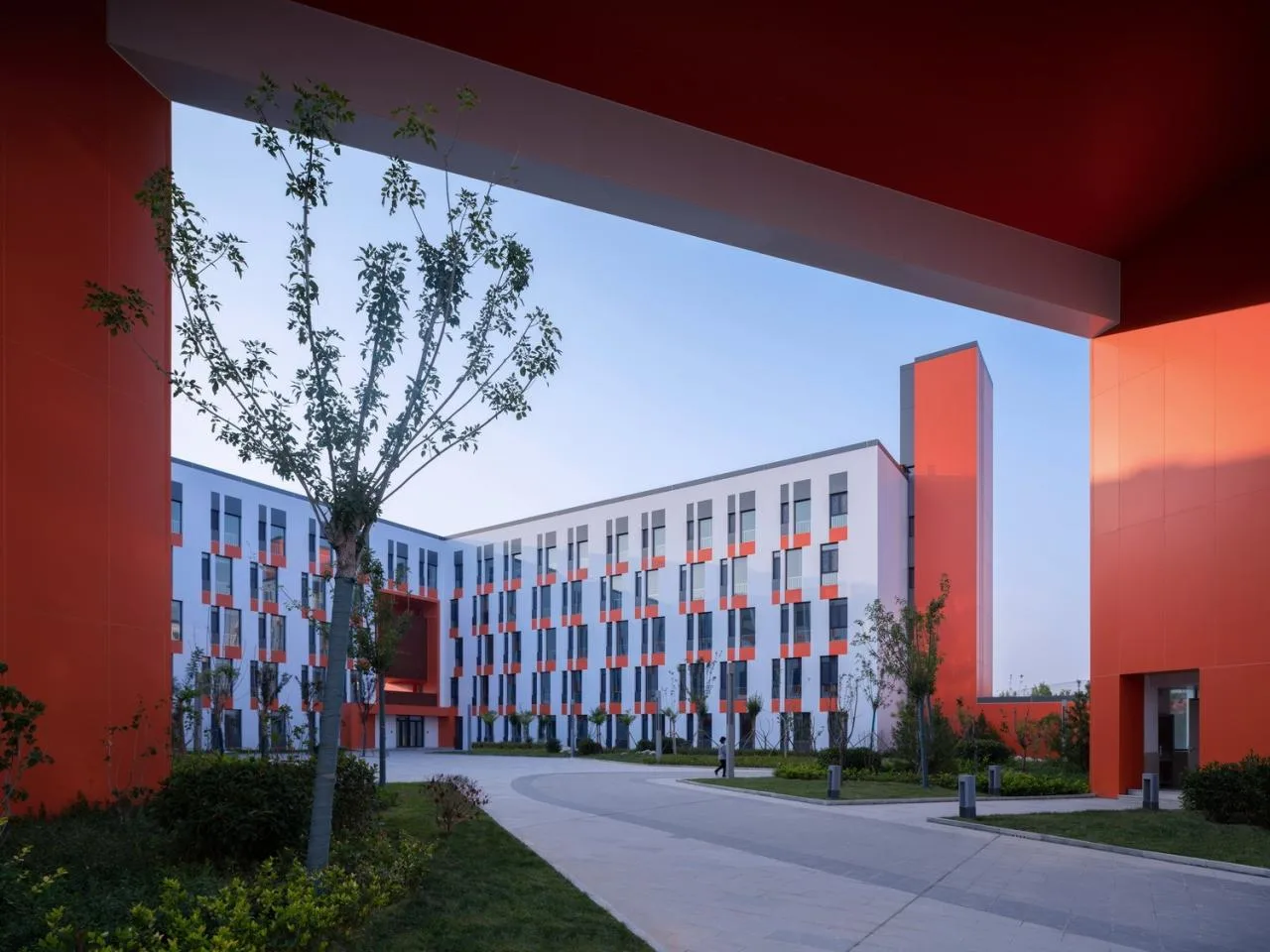
△ Residential area
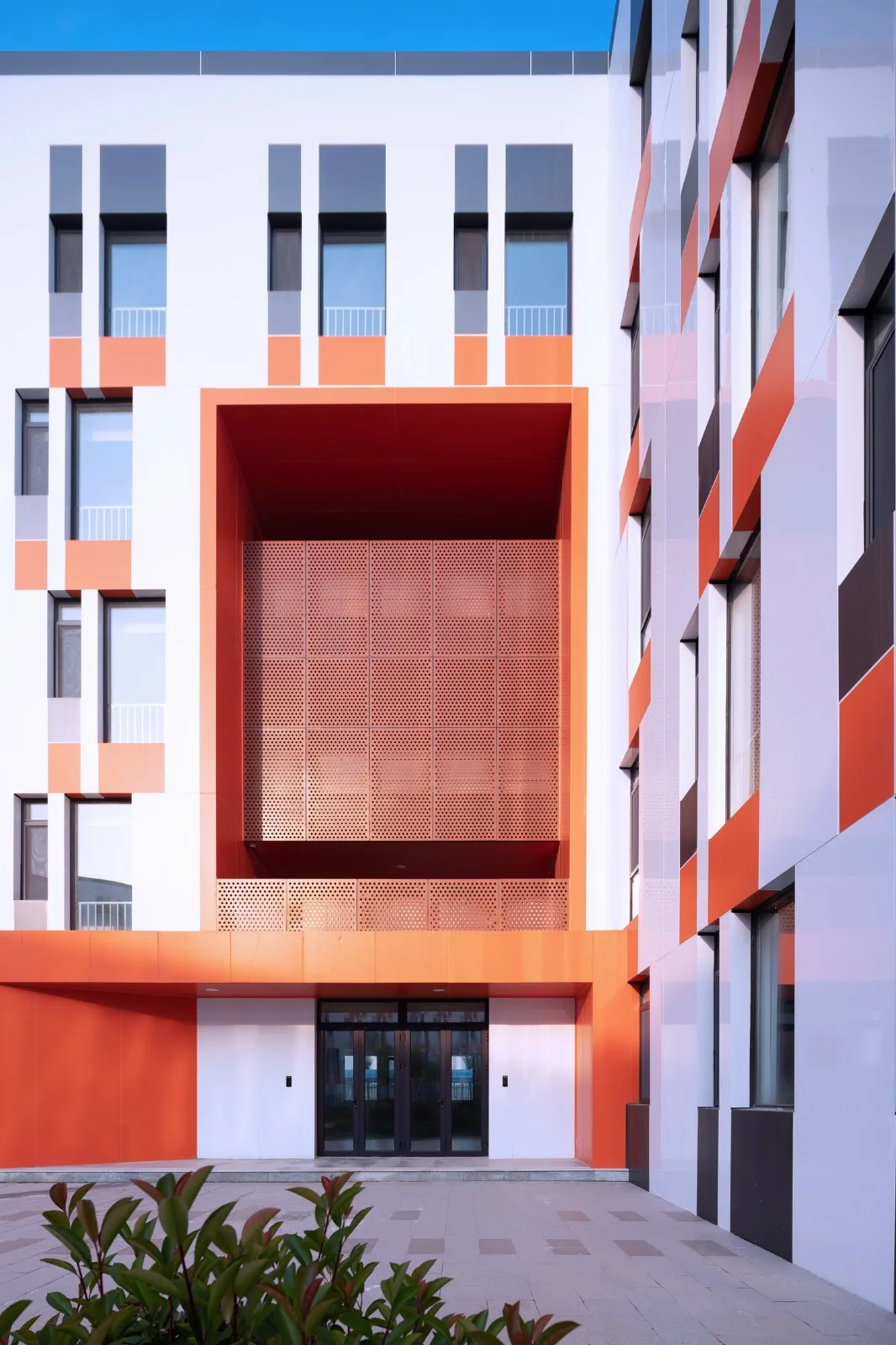
△ Residential facade details
The campus facade system primarily features white honeycomb aluminum panels, giving the school a modern and pure aesthetic. Accents of warm gradient colors like orange and yellow, combined with wood grain texture printing, add warmth and a humanistic touch to the campus environment.
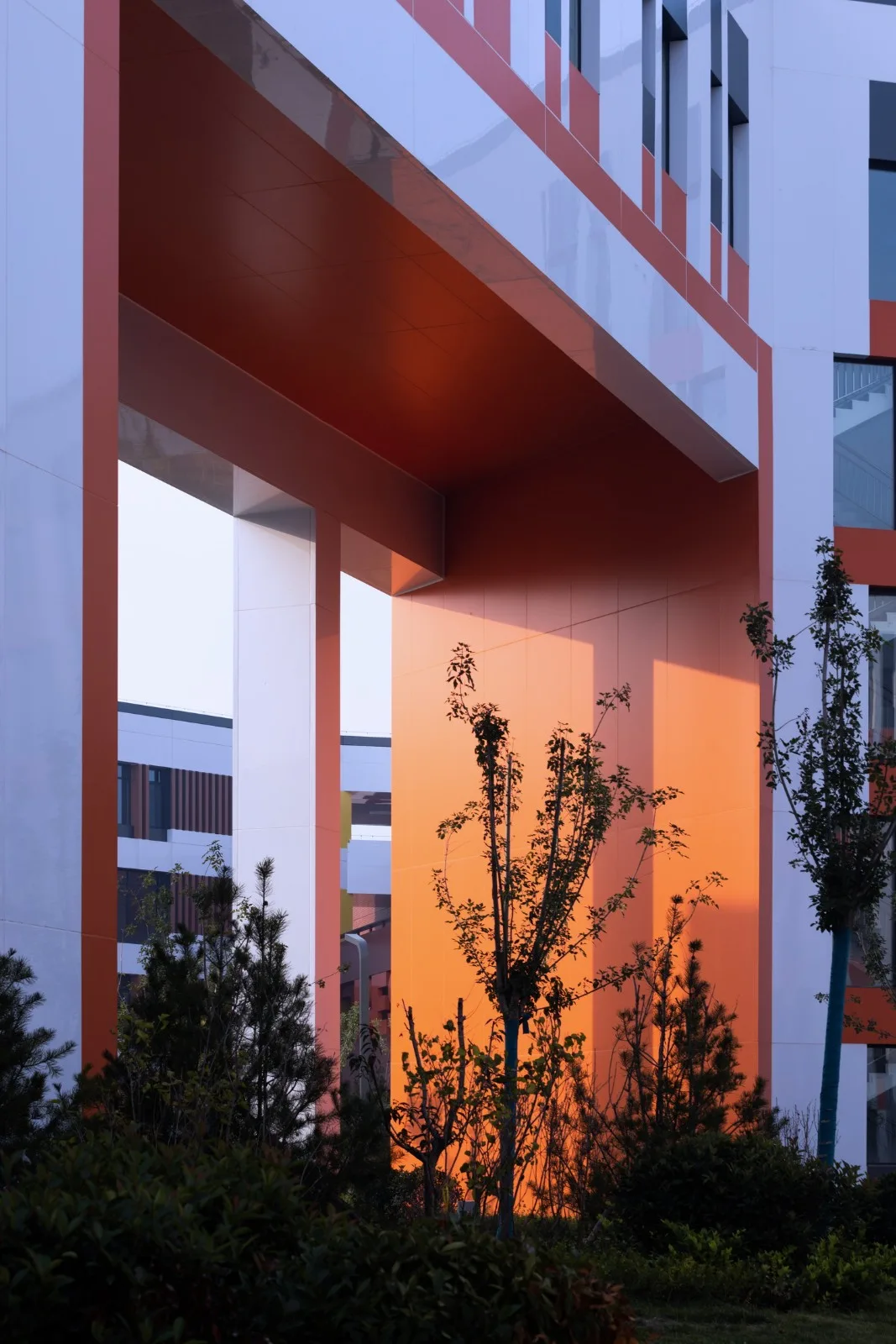
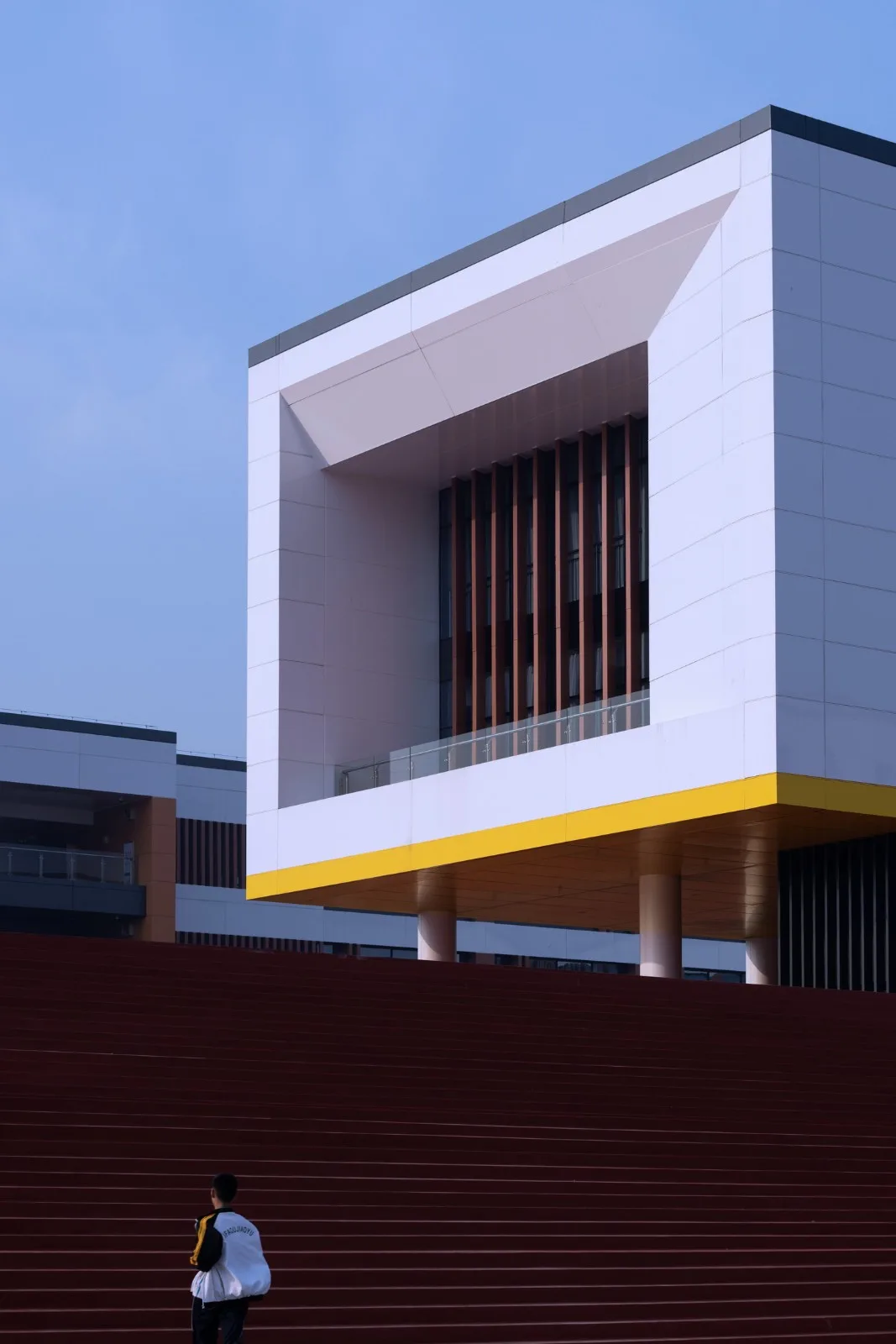
△ Teaching building details
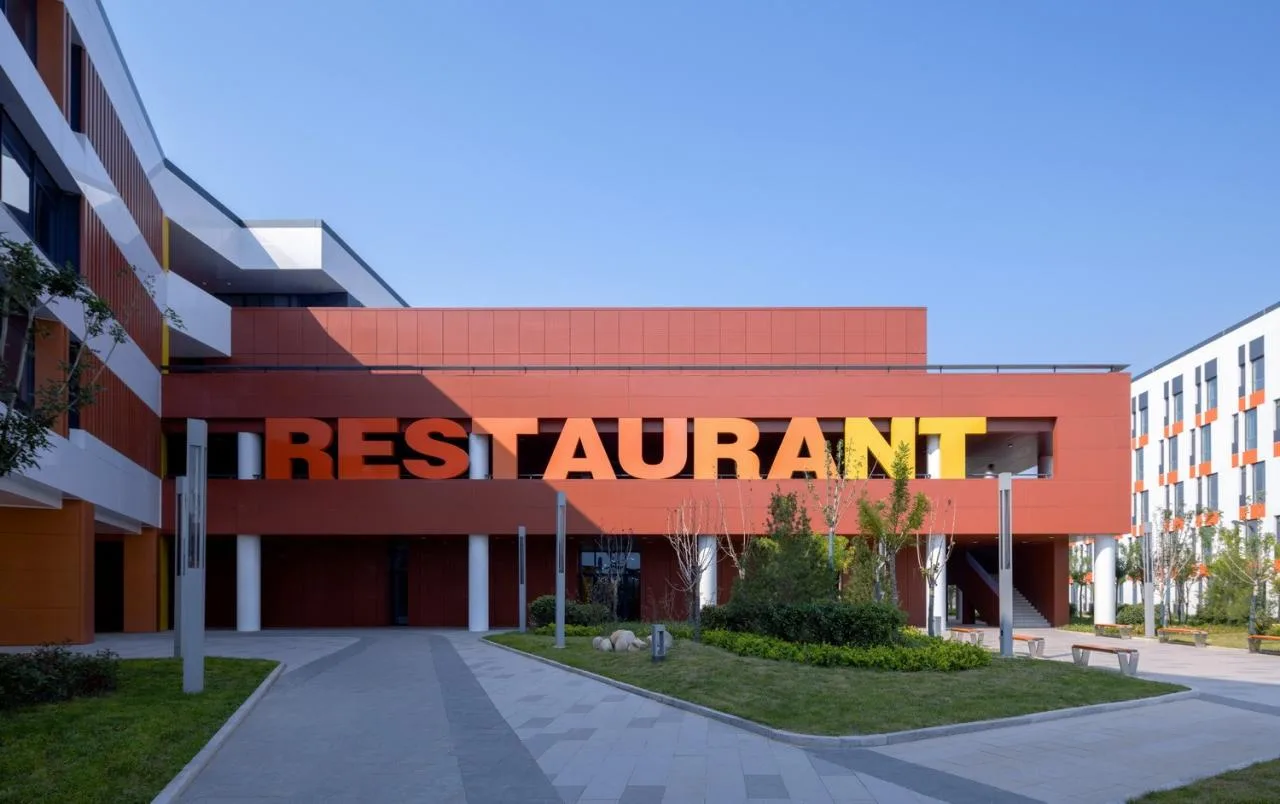
△ Teacher-student cafeteria
Project Drawings
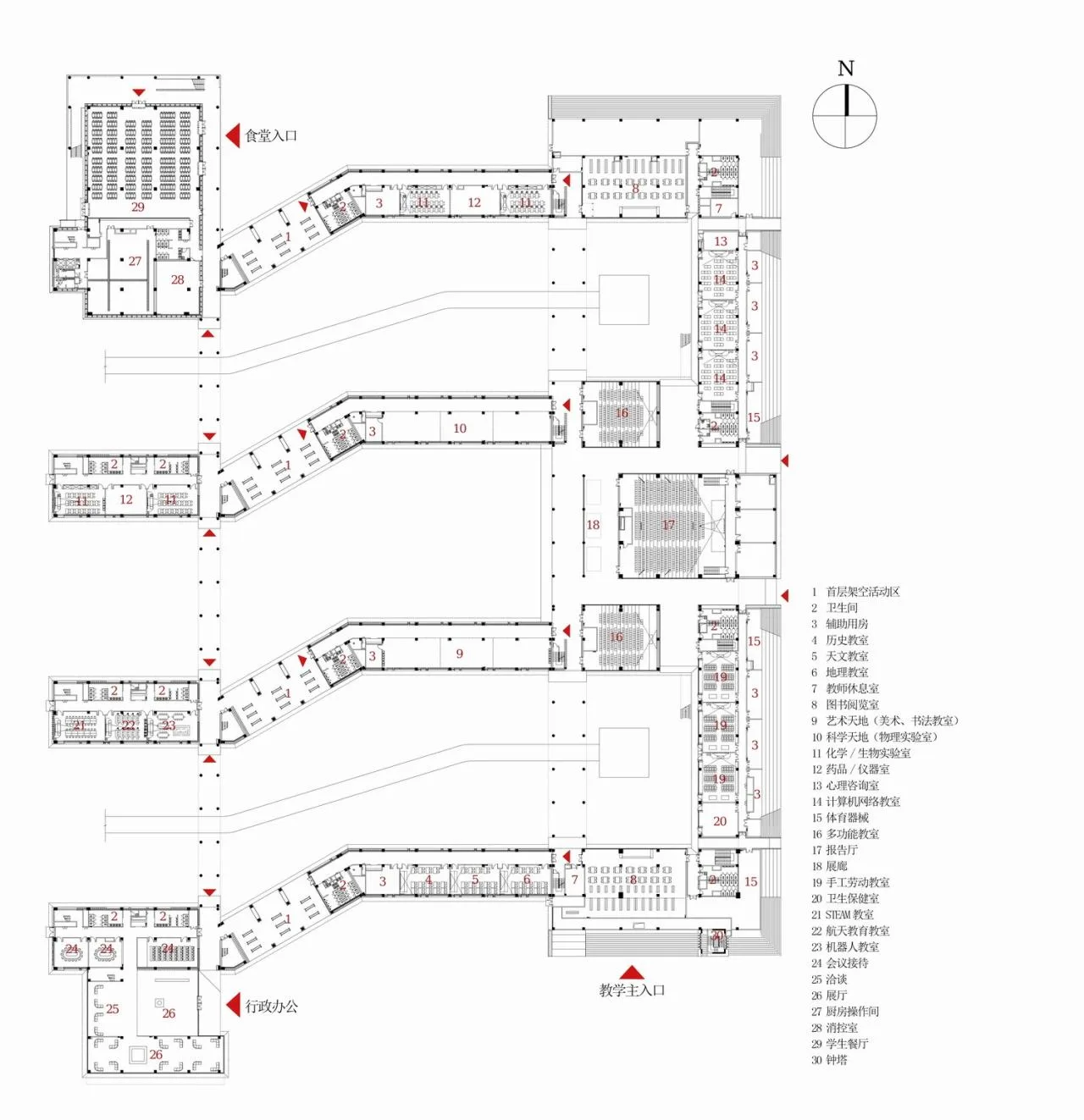
△ First floor plan
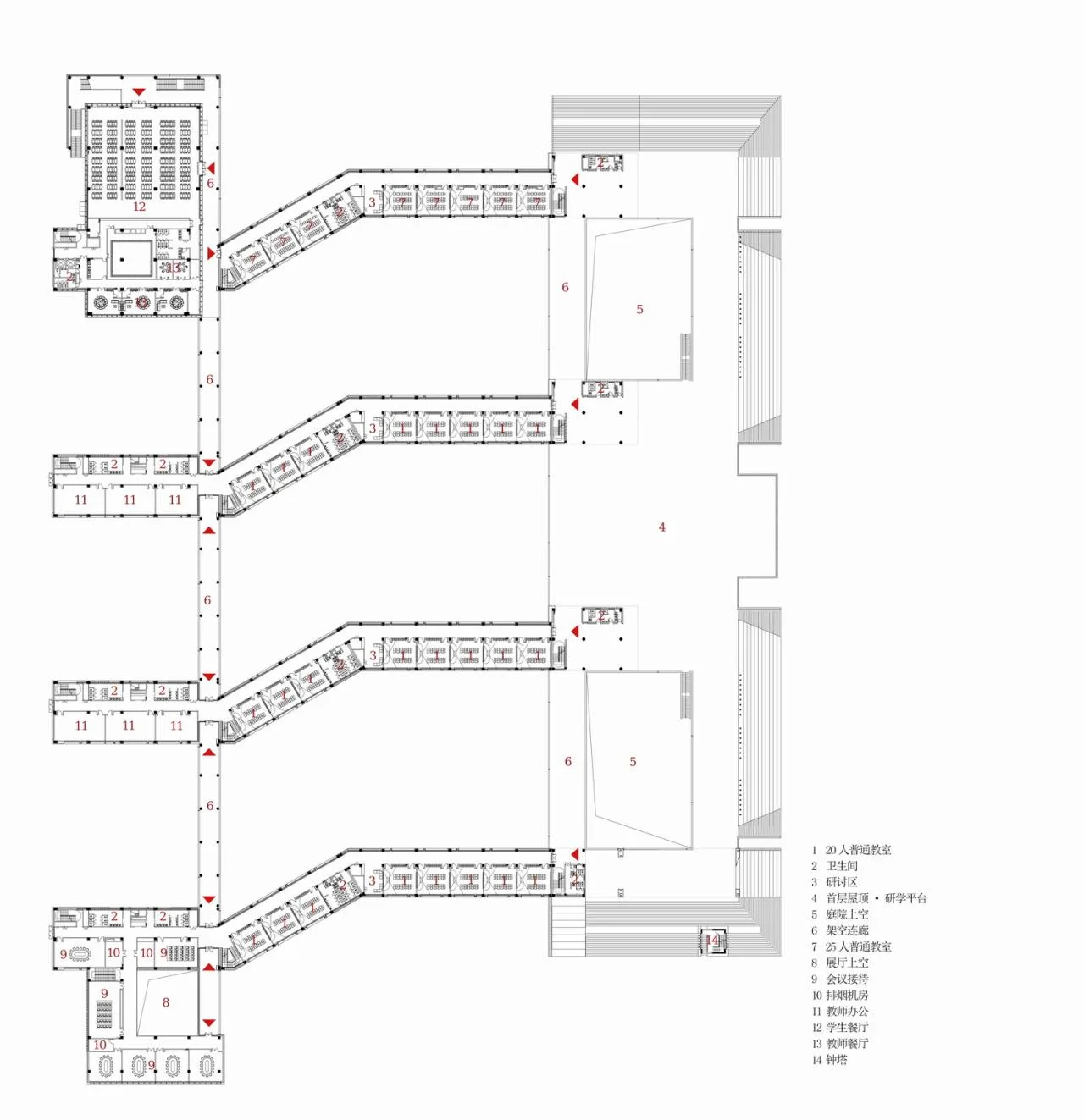
△ Second floor plan
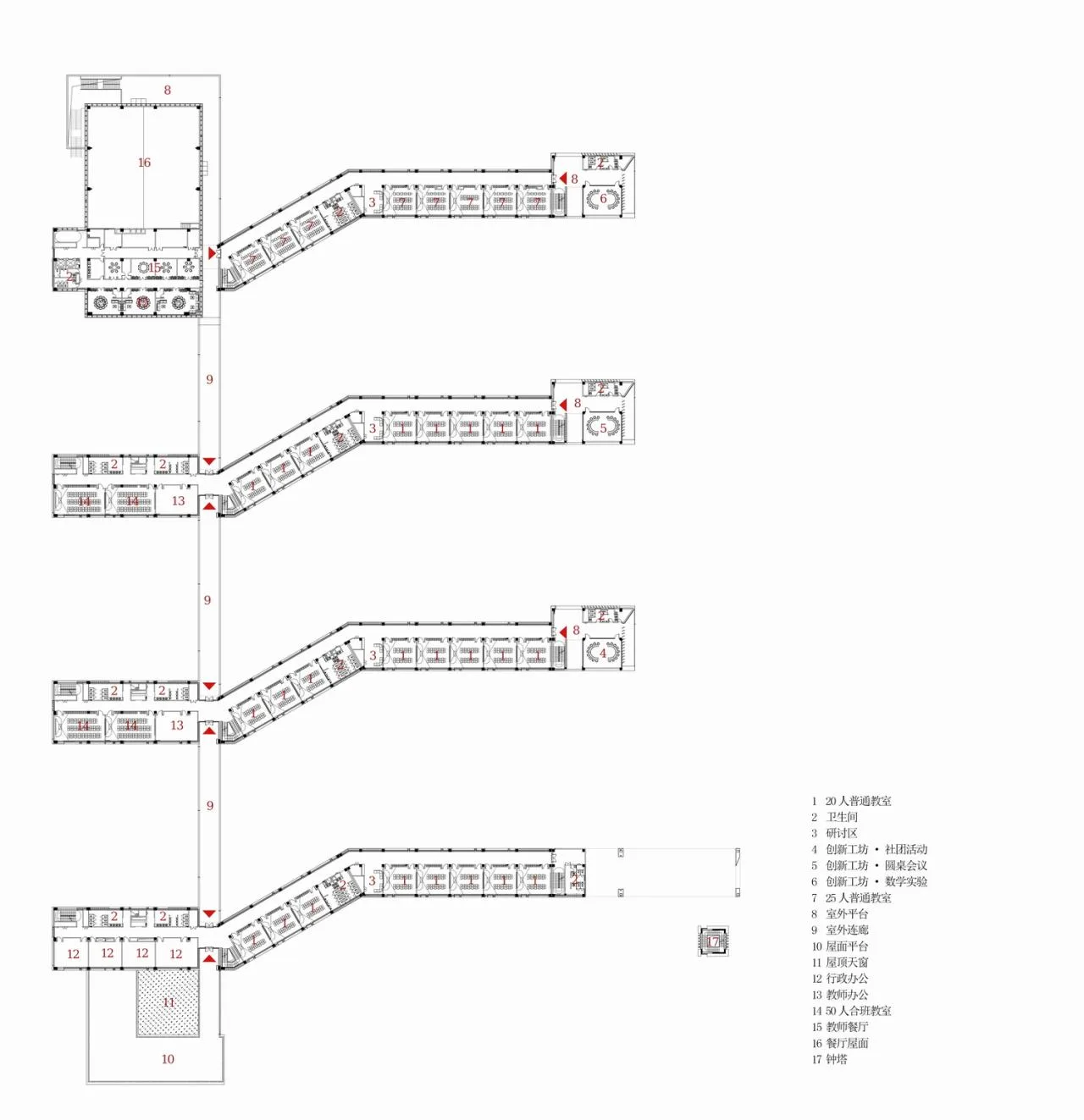
△ Third floor plan
Project Information
Project Name: Bohai Experimental School (Ministry of Basic Education)
Project Type: Educational Architecture
Location: Binzhou, Shandong
Design Firm: Institute of Architectural Design and Research, Chinese Academy of Sciences Co., Ltd
Lead Architect: Li Xinbin
Design Team: Li Xinbin, Huang Qiyuan, Zhang Chunyu, Zou Jinming, Liu Baoliang, Zhang Yaping
Construction Drawing Team: Liu Sitong, Wei Peng, Chen Kuisheng, Shao Changhao, Xu Wenhao, Tian Jiji, Yang Xiujin, Fan Xiulei, Xie Fengting, Bi Yunke
Award: Excellent Design Achievement Evaluation of Beijing Excellent Engineering Survey and Design Female Architect
Design Period: 2019–2020
Construction Start: 2022
Land Area: 114,800 square meters
Building Area: 90,812.18 square meters
Photographer: © Literal translation of architectural photography














Must log in before commenting!
Sign Up