
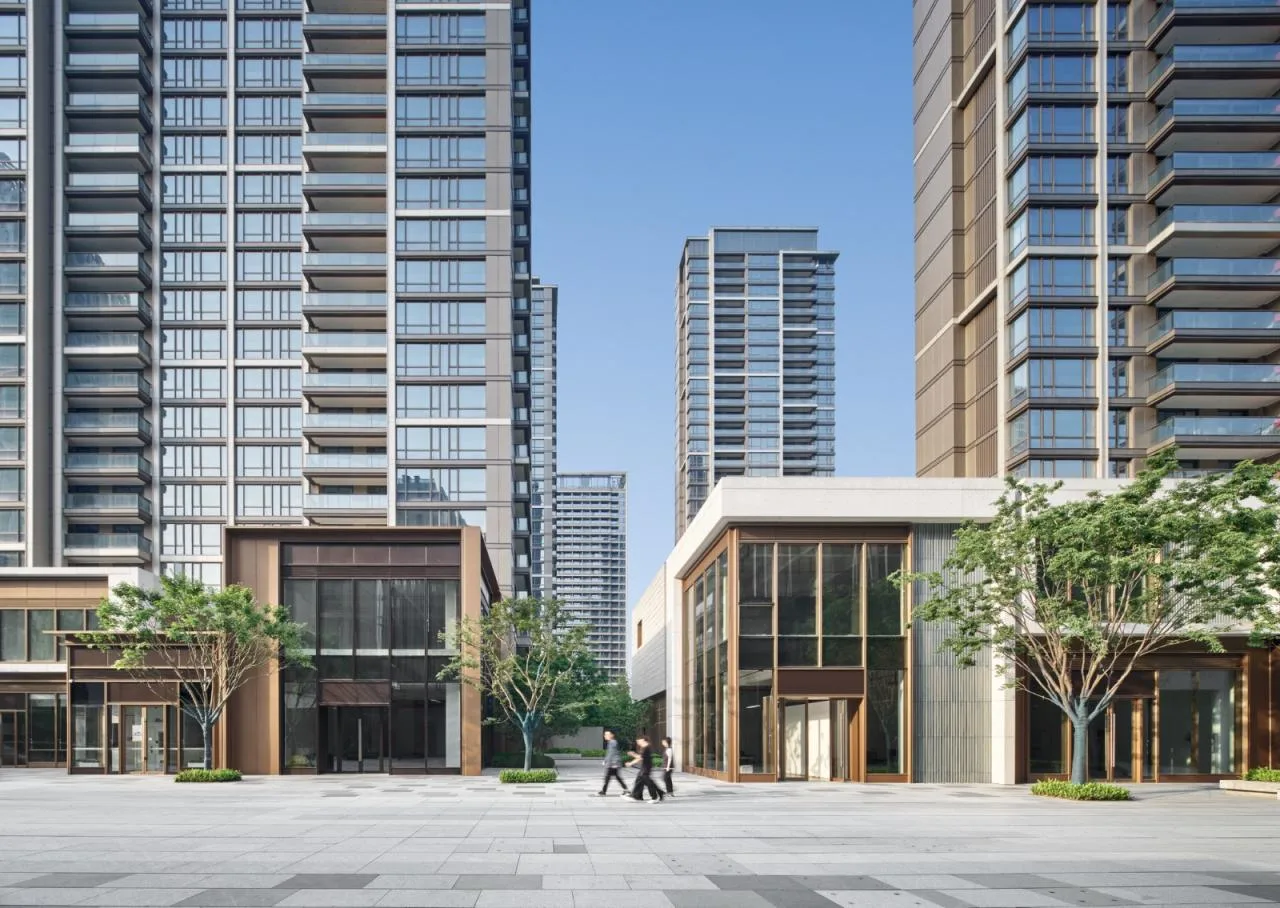
△ Commercial street facade along the street © AOGVISION
New City and Major Event Unite
A Grand Event and a Fresh Urban Vision
On September 16, 2015, Hangzhou secured the right to host the 19th Asian Games in 2022, becoming the third Chinese city—after Beijing and Guangzhou—to host this prestigious event. The Hangzhou Asian Games Village, situated north of Qianjiang Century City, comprises an athlete village, a technical official village, and a media village.
Goa Elephant Design was responsible for the Technical Officer Village (CR Asia Olympic City). Located in the southwest section of the Asian Games Village, it borders the central water axis to the south and the urban development axis known as the “Asian Games Axis” to the east. The development includes 12 high-rise residential towers, 5 elevated pavilions, 5 waterfront-level buildings, and one super high-rise tower. During the games, approximately 4,000 technical officials will be accommodated here. After the event, the project will integrate into a fully functional urban block alongside the adjacent shopping center, Kapok Hotel, and Olympic Center office building, managed by China Resources Land.
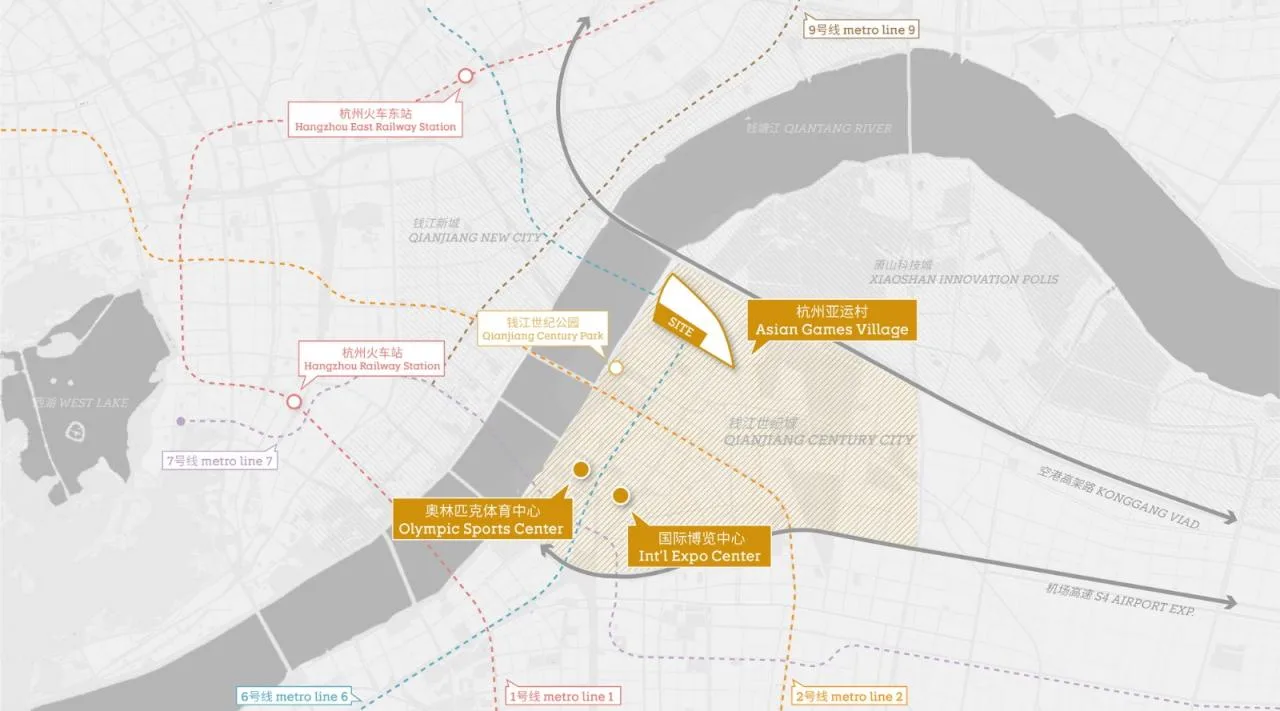
△ Location analysis © Goa Elephant Design
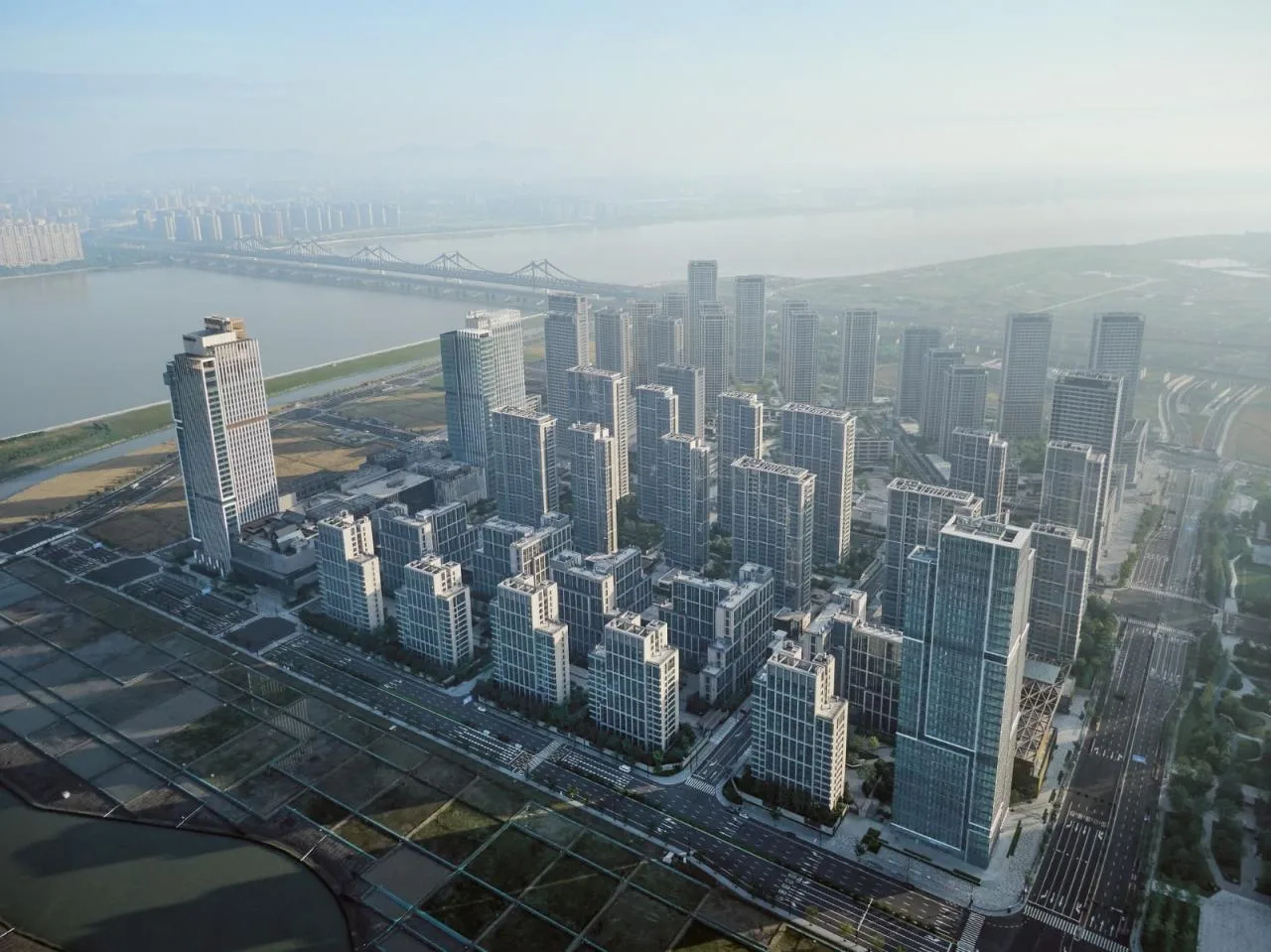
Technical Officer Village positioned at the southwest corner of the Asian Games Village © AOGVISION
As a pioneering pilot project for future communities in Zhejiang Province, the Technical Officer Village design reflects a forward-thinking vision of urban community living. The design’s primary goal is to blend Hangzhou’s local charm with the international spirit of the Asian Games, ensuring functionality during the event while fostering a sustainable urban lifestyle afterward.
The Layout of Small Streets and Secret Roads
Creating a Rich Pedestrian Network
The planning of small streets and dense pathways is the project’s core feature. Building on an embryonic urban design, KPF served as the master planner, collaborating with Goa Elephant Design’s architectural team to divide the site into human-scaled blocks. Emphasis was placed on shaping welcoming pedestrian streets between these blocks, balancing an open urban atmosphere with orderly community management.
△ Color Overall Plan (Process) © Goa Elephant Design& JCFO & Landau International Design

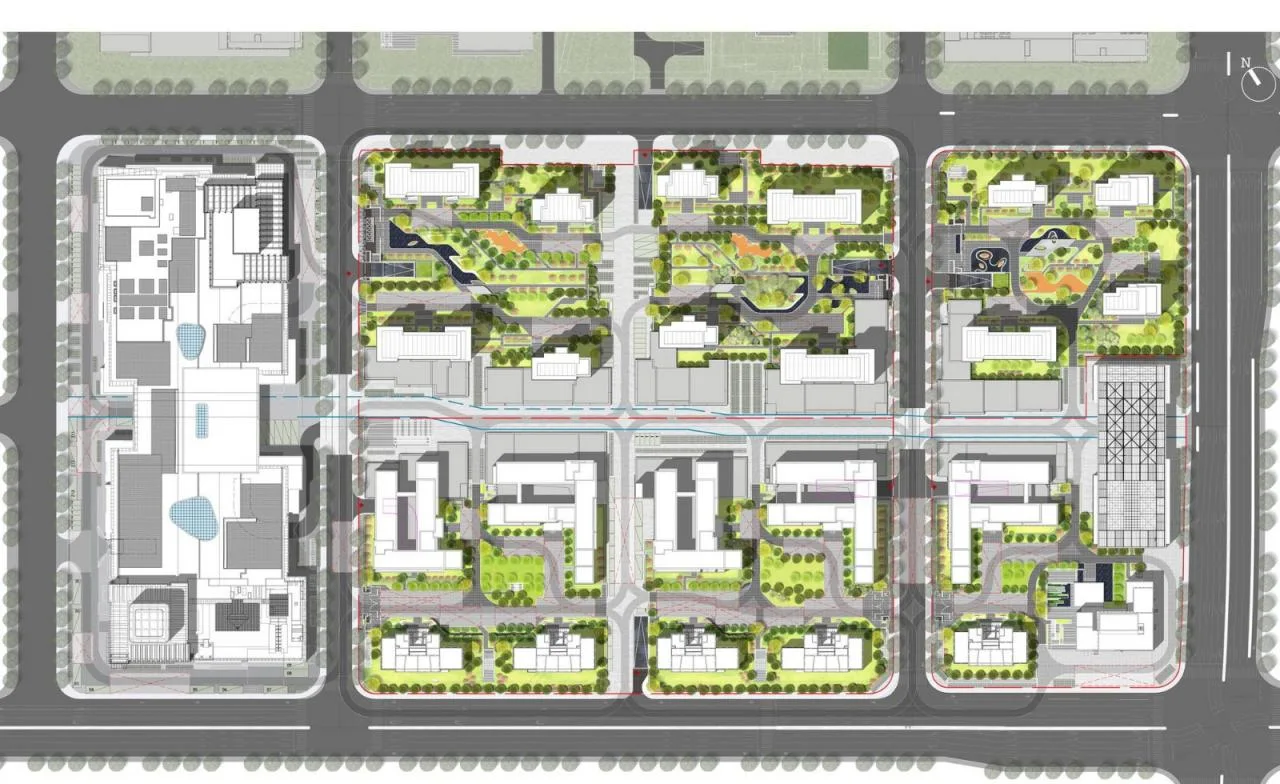
The planning structure of small streets and secret roads © Goa Elephant Design (Final road grid developed jointly by KPF and Goa Elephant Design)
The design employs a square grid of approximately 75m by 75m, expanded into a 150m by 150m road grid system. This divides the nearly 540m by 260m site into three narrow north-south roads and one east-west commercial street, enabling easy pedestrian movement. The dense road network organizes several clusters, with buildings arranged around shared gardens and open urban public spaces. The commercial street, roughly 400m long, connects the western shopping center to the eastern sports park along the Asian Games Village’s main axis. Street widths range from 15m to 44m, offering a diverse and engaging walking experience.
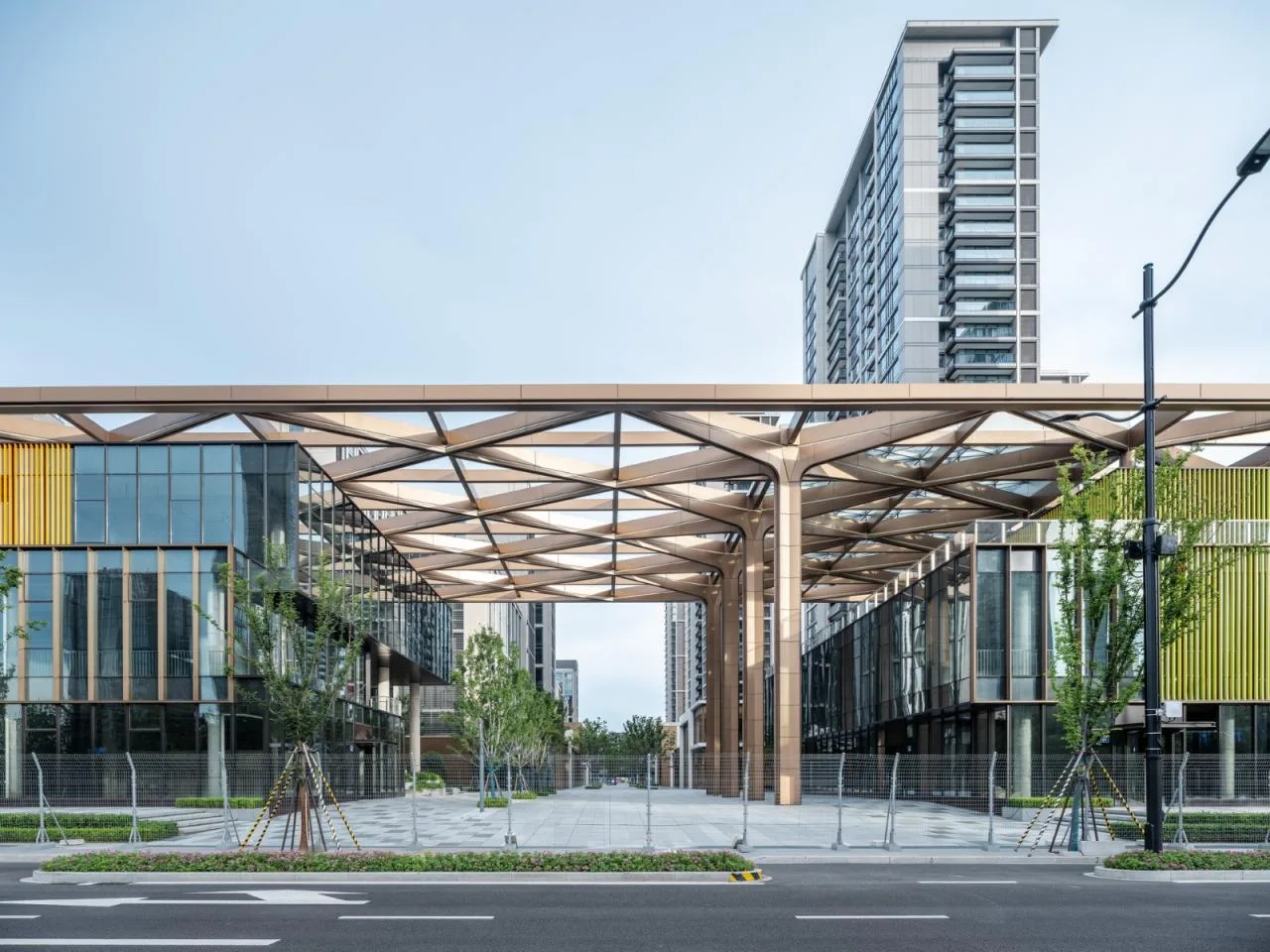
Starting point on the east end of the commercial street: Gate of Sports © Studio FF
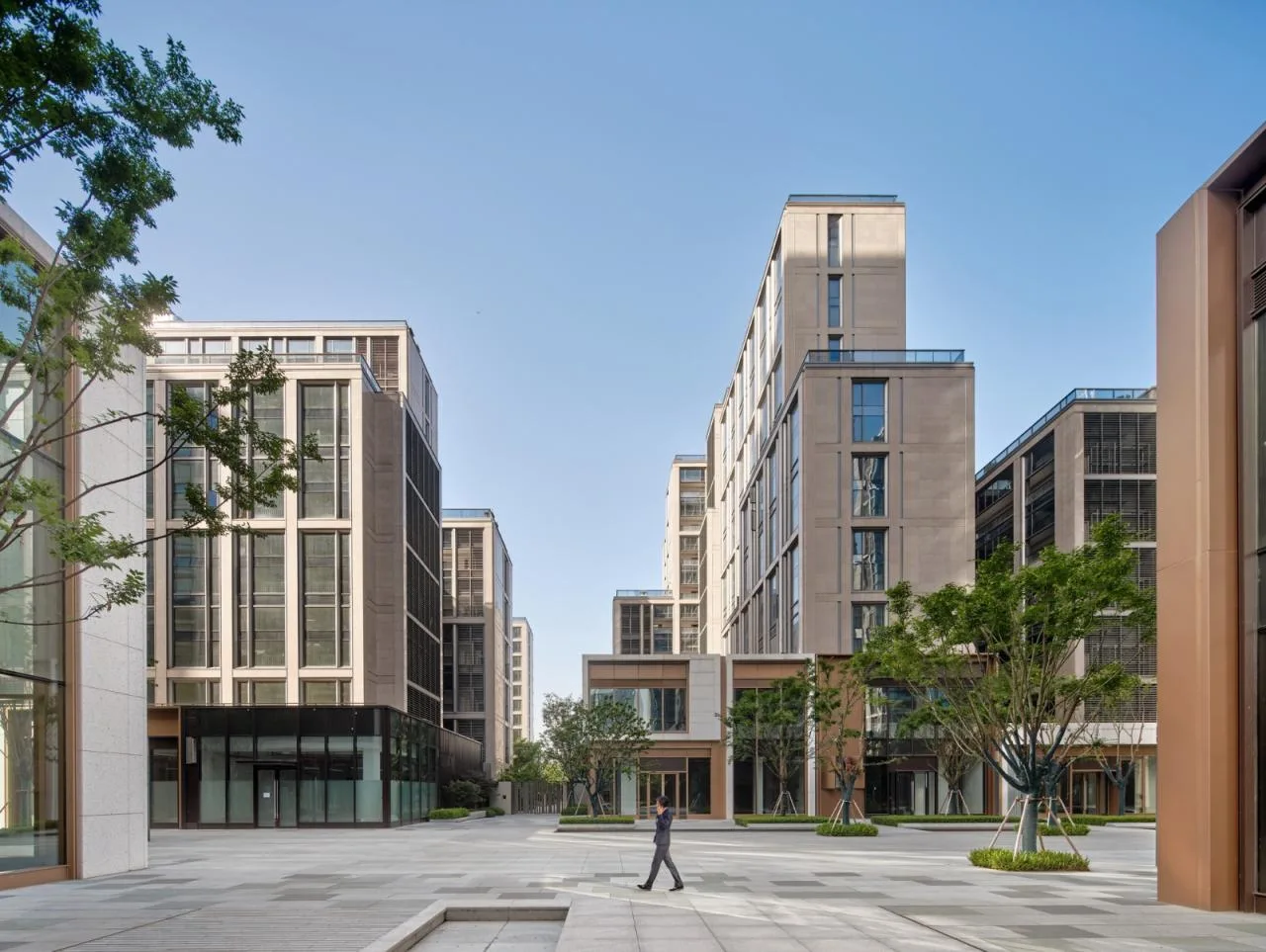
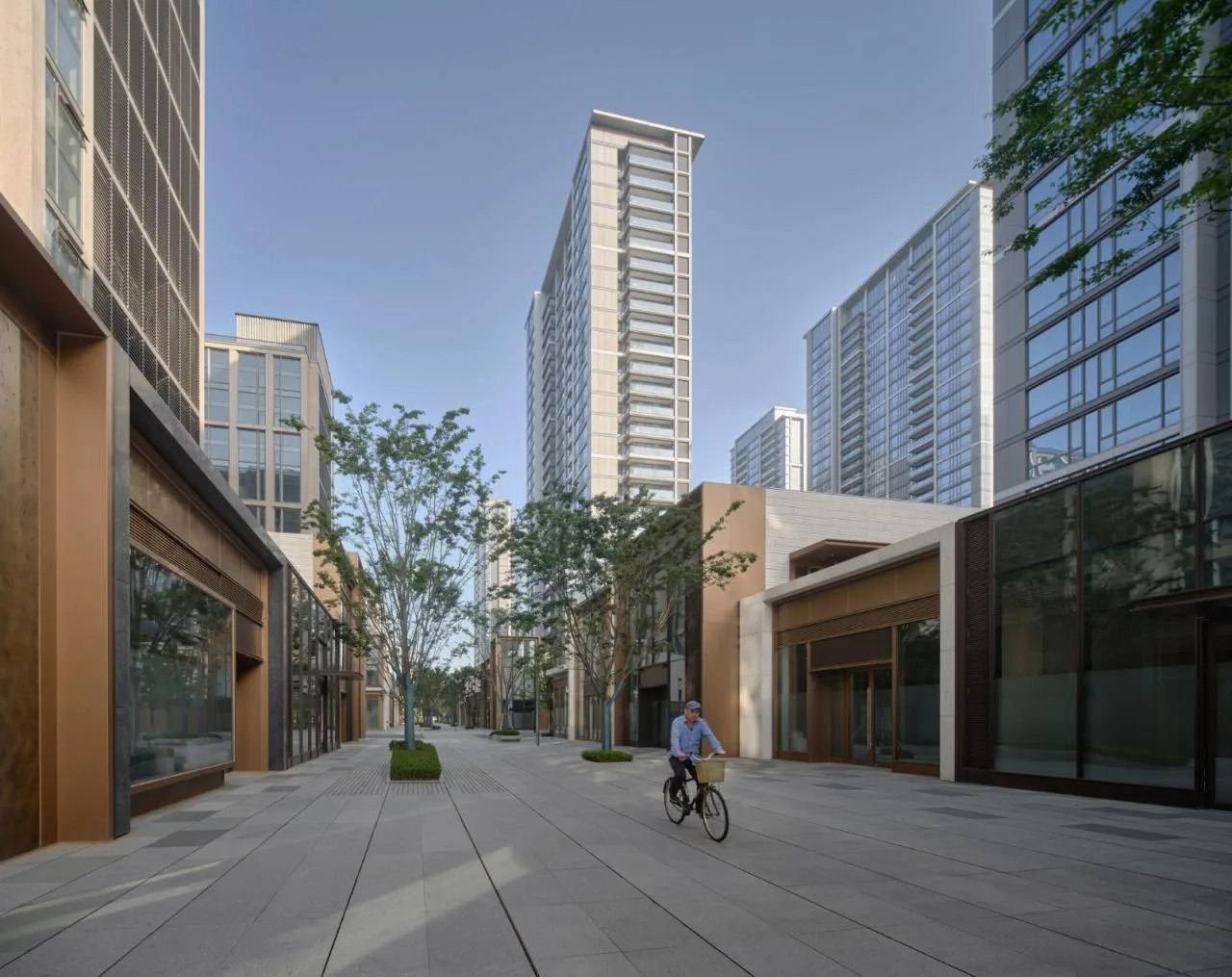
△ Interior view of Commercial Street © AOGVISION
The interface between buildings and pedestrian streets is carefully crafted to enhance interaction. High-rise and waterfront-level clusters have direct street access, while low-rise buildings and commercial areas are fully integrated. These junctions serve as service zones during the event and become social gathering spots afterward. Residential clusters feature multiple entrances and exits facing pedestrian streets, facilitating seamless community integration and vibrant street life.
Several north-south pathways created by the small street network also provide convenient access to the central green landscape belt on the south side, strengthening urban connectivity.
Translating Hangzhou’s Cultural Architecture
A Vibrant Emblem of Hangzhou
The Asian Games Organizing Committee set guiding principles emphasizing “national style, Zhejiang spirit, and Hangzhou flavor.” The design team explored Hangzhou’s geographical features and infused their unique charm into architectural forms.
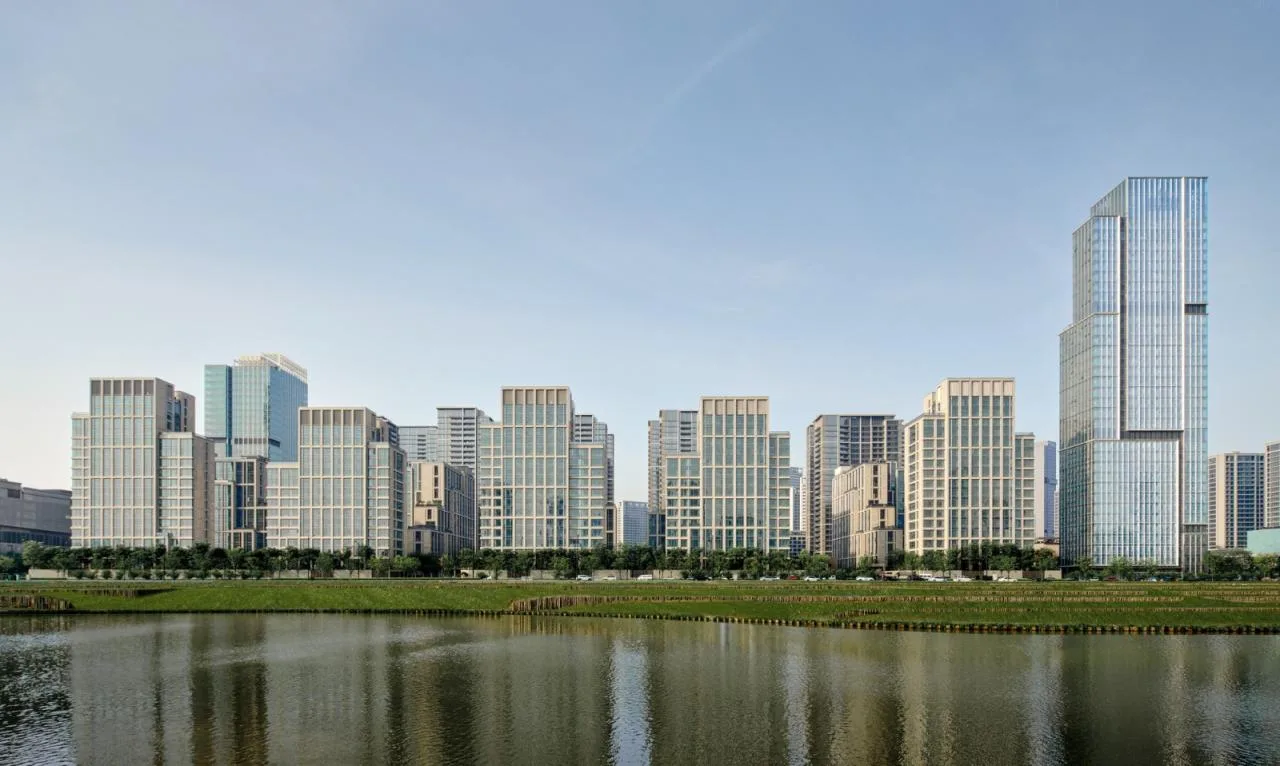
△ South facade of Technical Officer Village © AOGVISION
The organic, layered community layout mirrors the rolling mountains and hills of Hangzhou. The super high-rise tower anchors the site’s corner, with slightly lower towers in the foreground and scattered residential buildings behind, arranged in a harmonious sequence.
The commercial street along the central axis acts as a canyon within the site. Setbacks on both sides evoke a valley surrounded by lush tea gardens. The diverse commercial facades recall the traditional contours of residential streets and alleys.
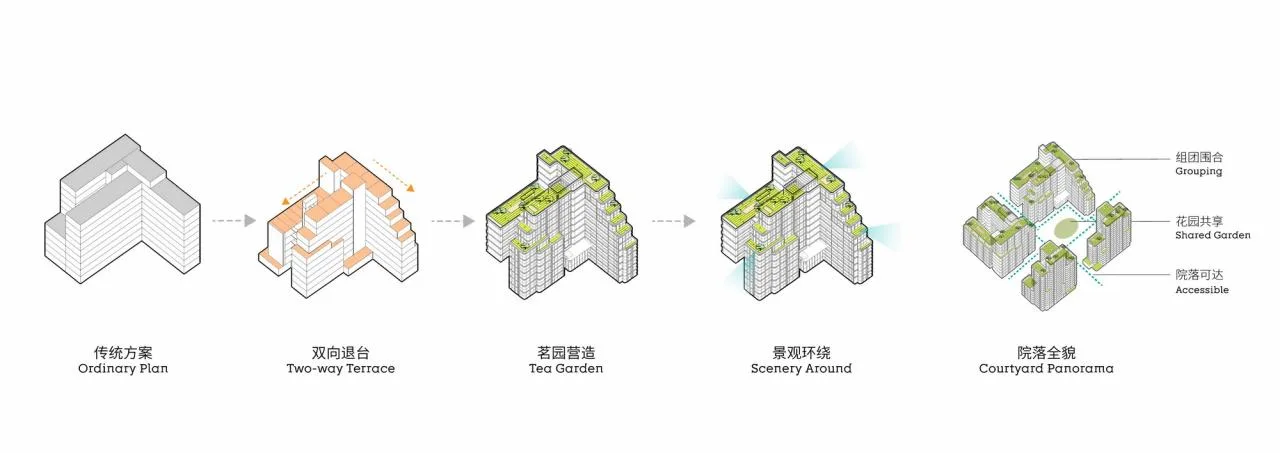
△ Logical Form of Small and High-rise Groups © Goa Elephant Design
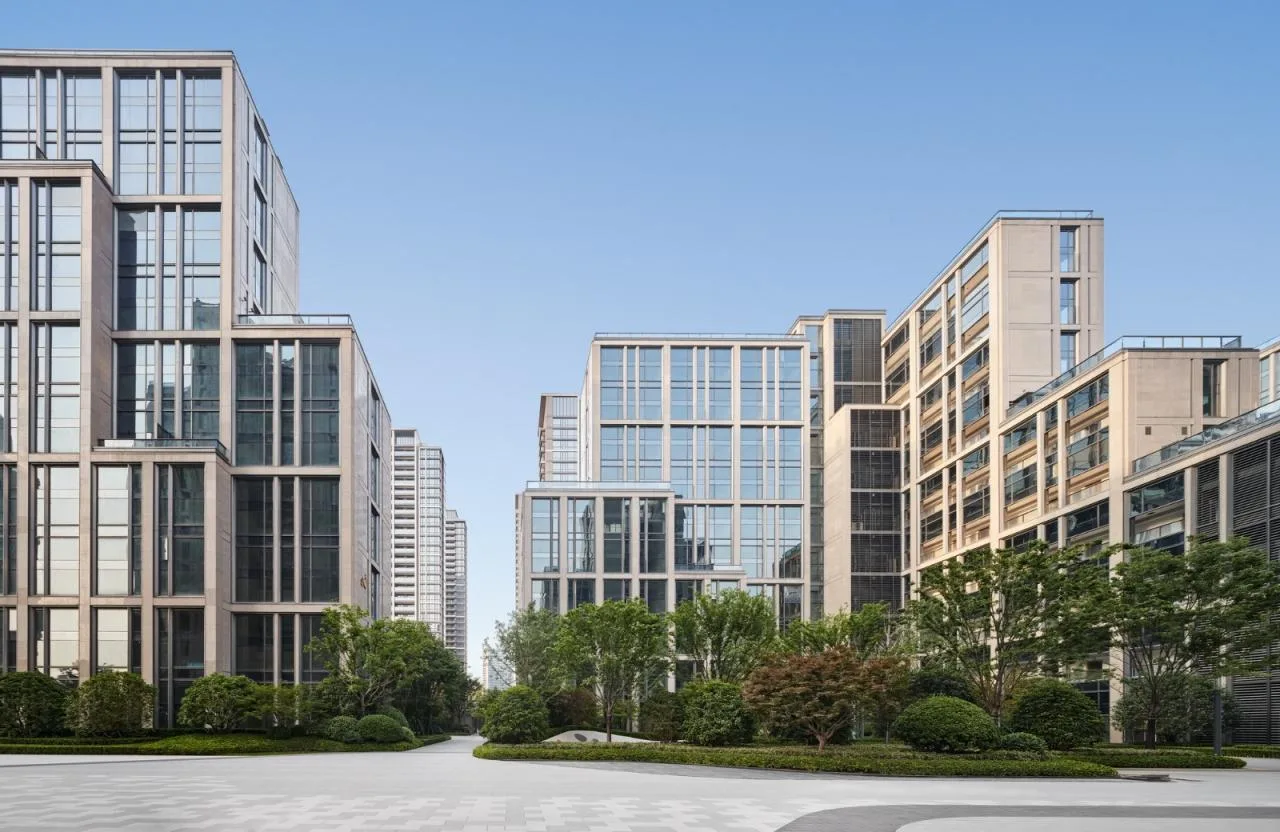
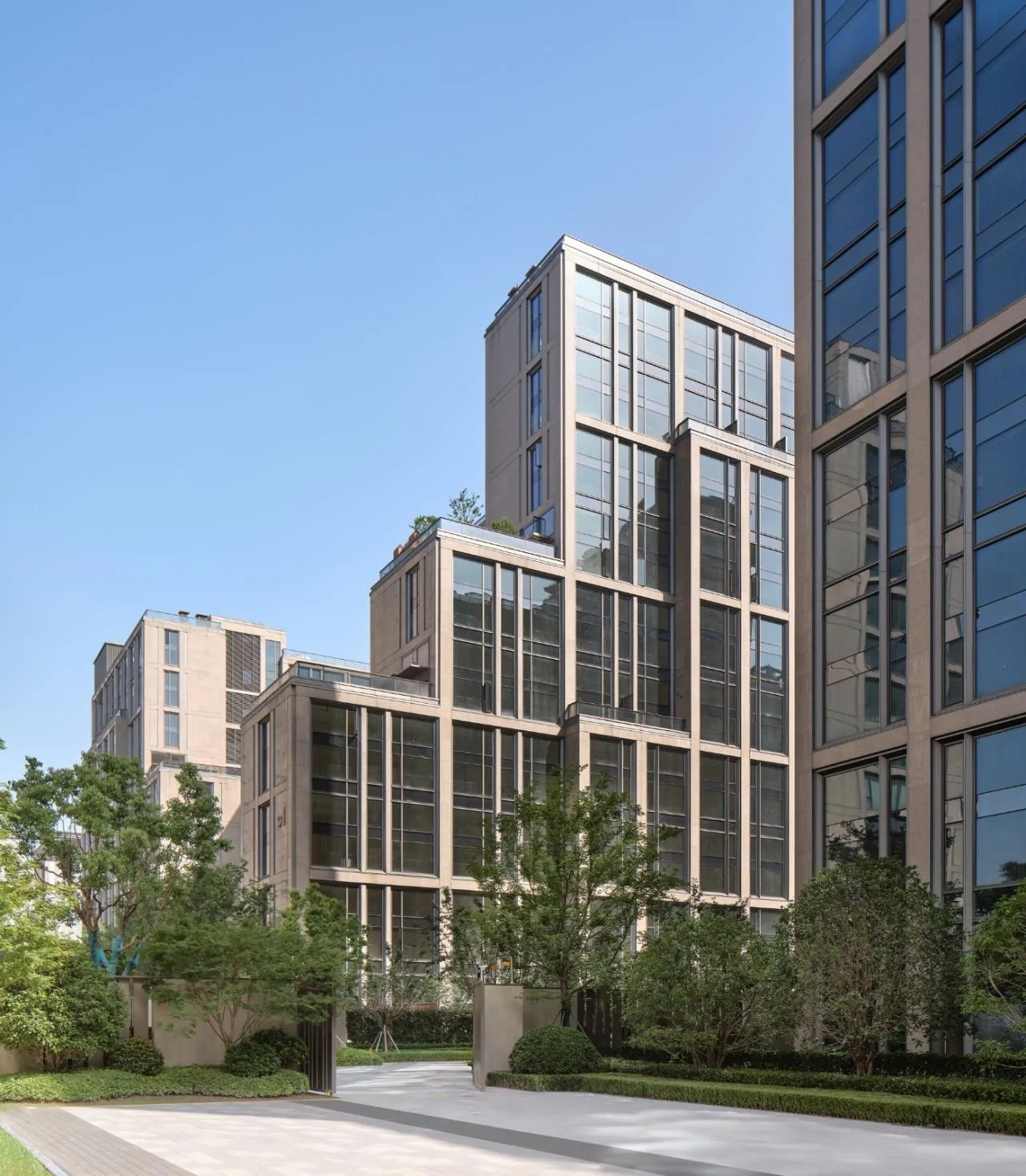
Diverse imagery of small and high-rise buildings © AOGVISION
Small and high-rise buildings use a two-way setback technique to create flexible, varied volumetric relationships, maximizing residents’ landscape views. L-shaped and F-shaped buildings form appropriately sized courtyards to meet sunlight and activity needs. High-rise residential towers are arranged following the “high north, low south” principle, creating an undulating skyline with varied volumes and offsets. Facades employ “asymmetric balance” techniques to convey freedom and fluidity.
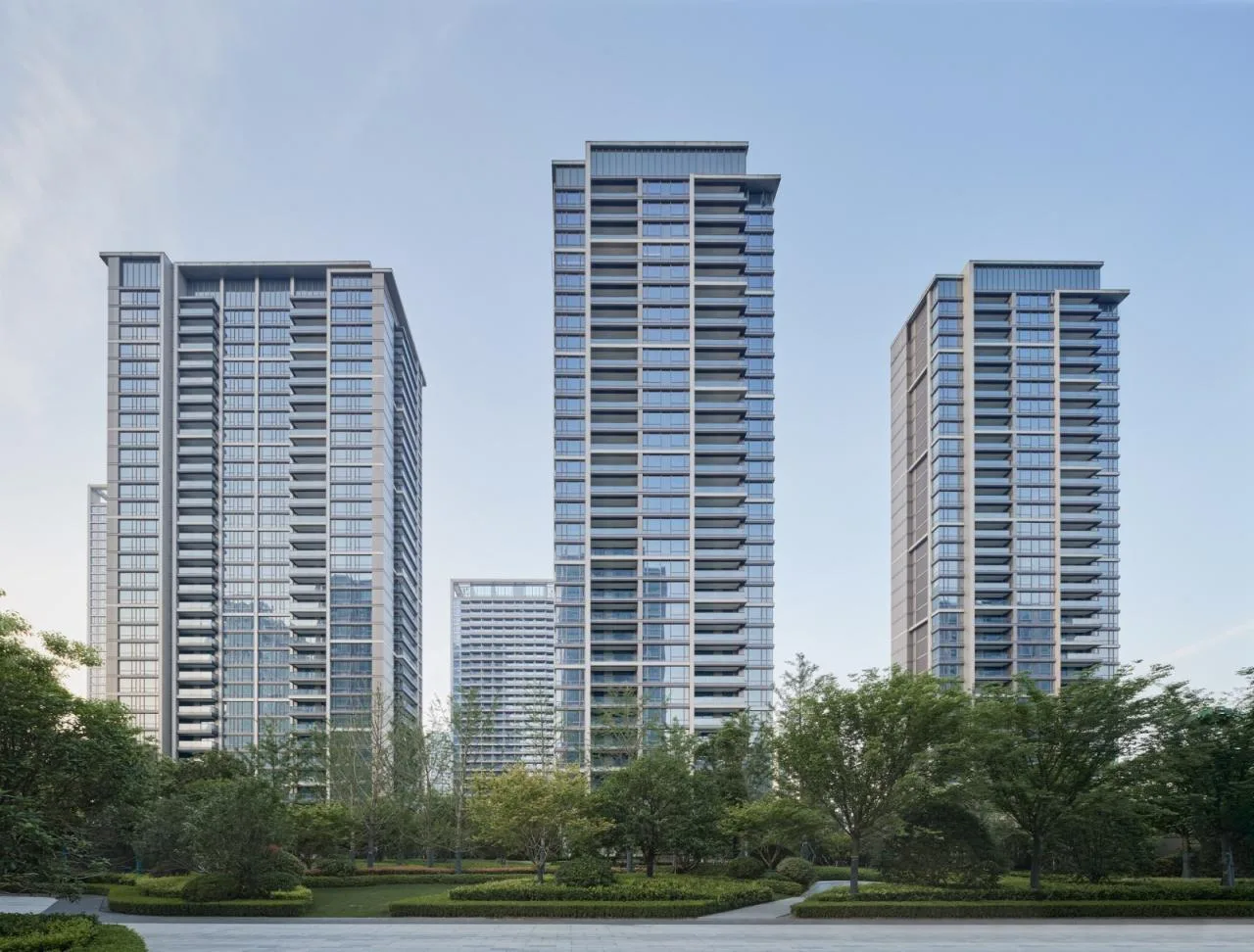
The undulating skyline of residential communities © AOGVISION
Elegant and Modern Architectural Language
Gracefully Blending Heritage and Modernity
The architectural materials and detailing reflect Hangzhou’s urban character, blending tradition with modernity. Small high-rise facades primarily feature light-colored glass and neutral gray stone, accented with dark metal, embodying elegance and warmth. Tall, slender glass windows invite the surrounding landscape inside, while vertical light gray perforated metal panels atop buildings enhance a sense of verticality.
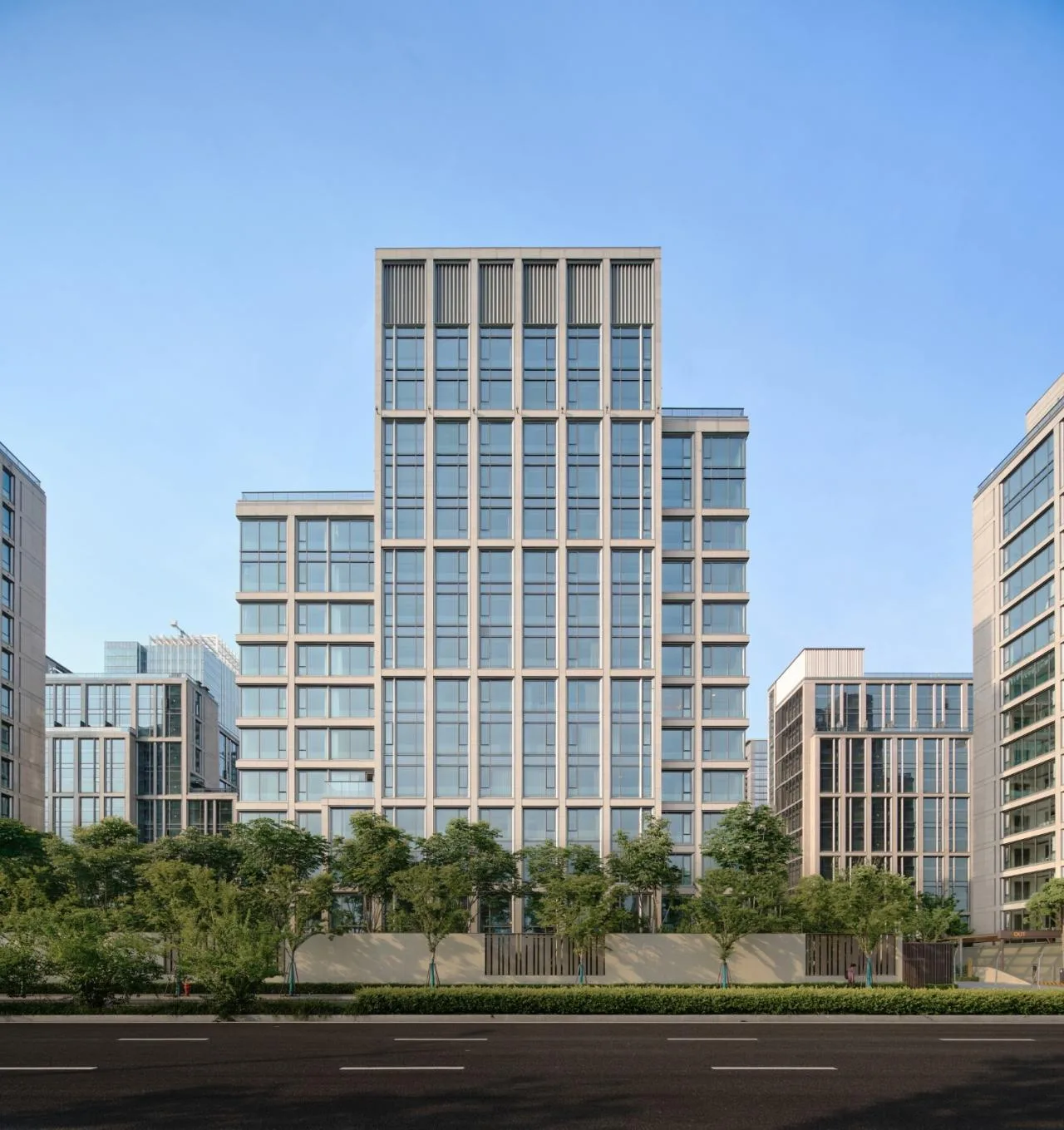
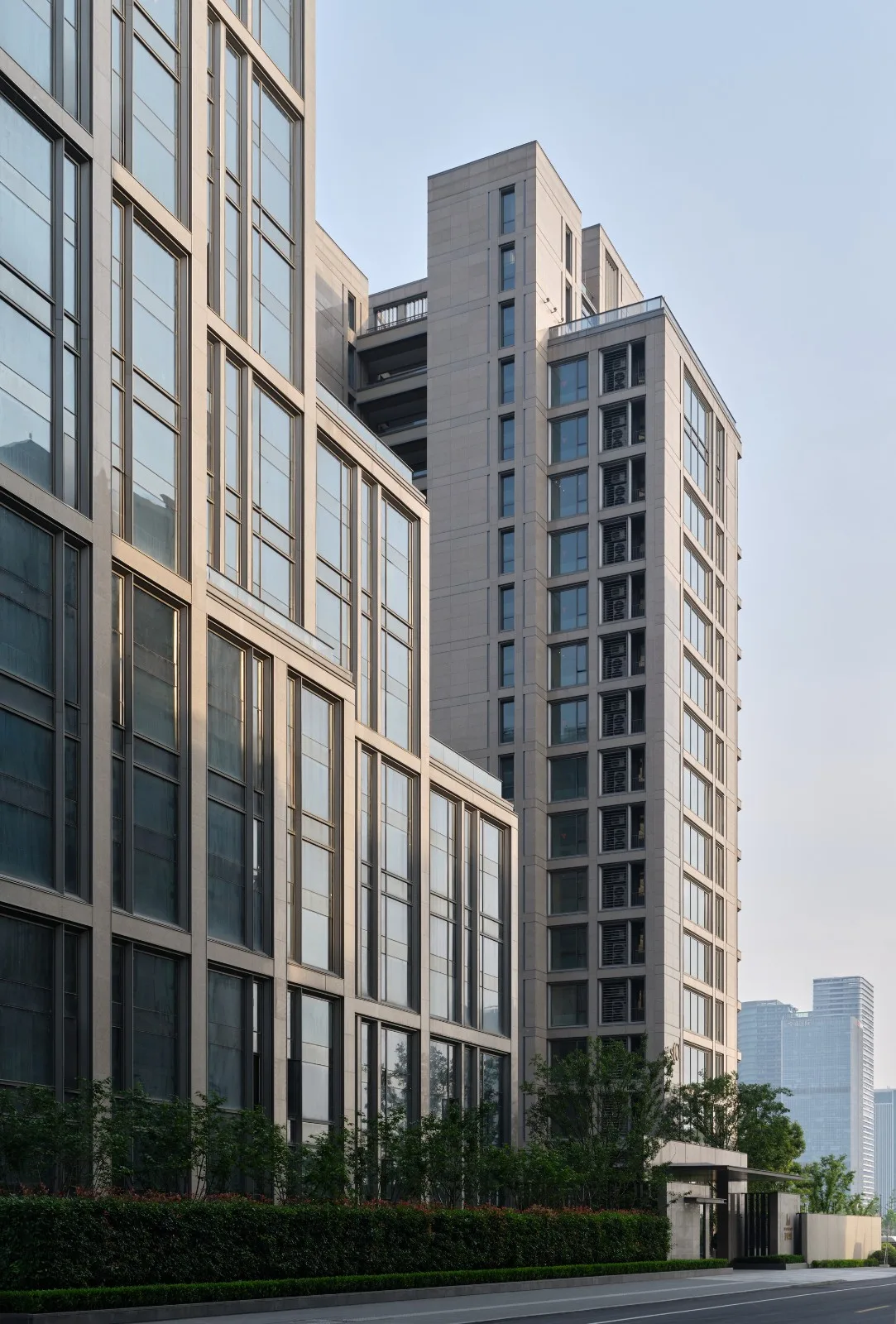
Details of small and high-rise buildings © AOGVISION
High-rise residential facades combine large glass surfaces with aluminum panels, presenting a light, elegant appearance with smooth vertical lines and floating roofs. This contrast of light and heavy, modern and classical elements complements the smaller high-rise clusters.
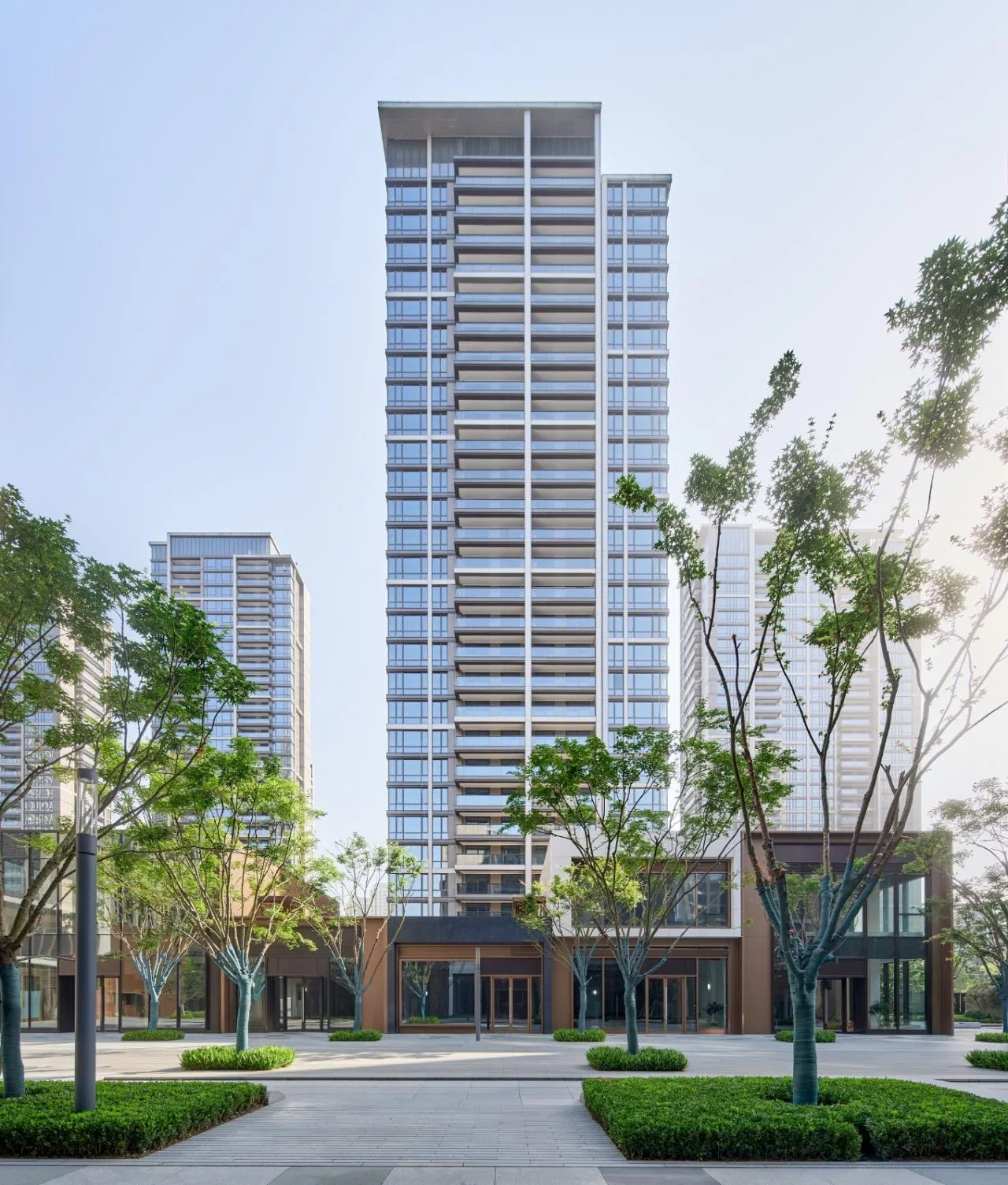
△ Residential and commercial streets © AOGVISION
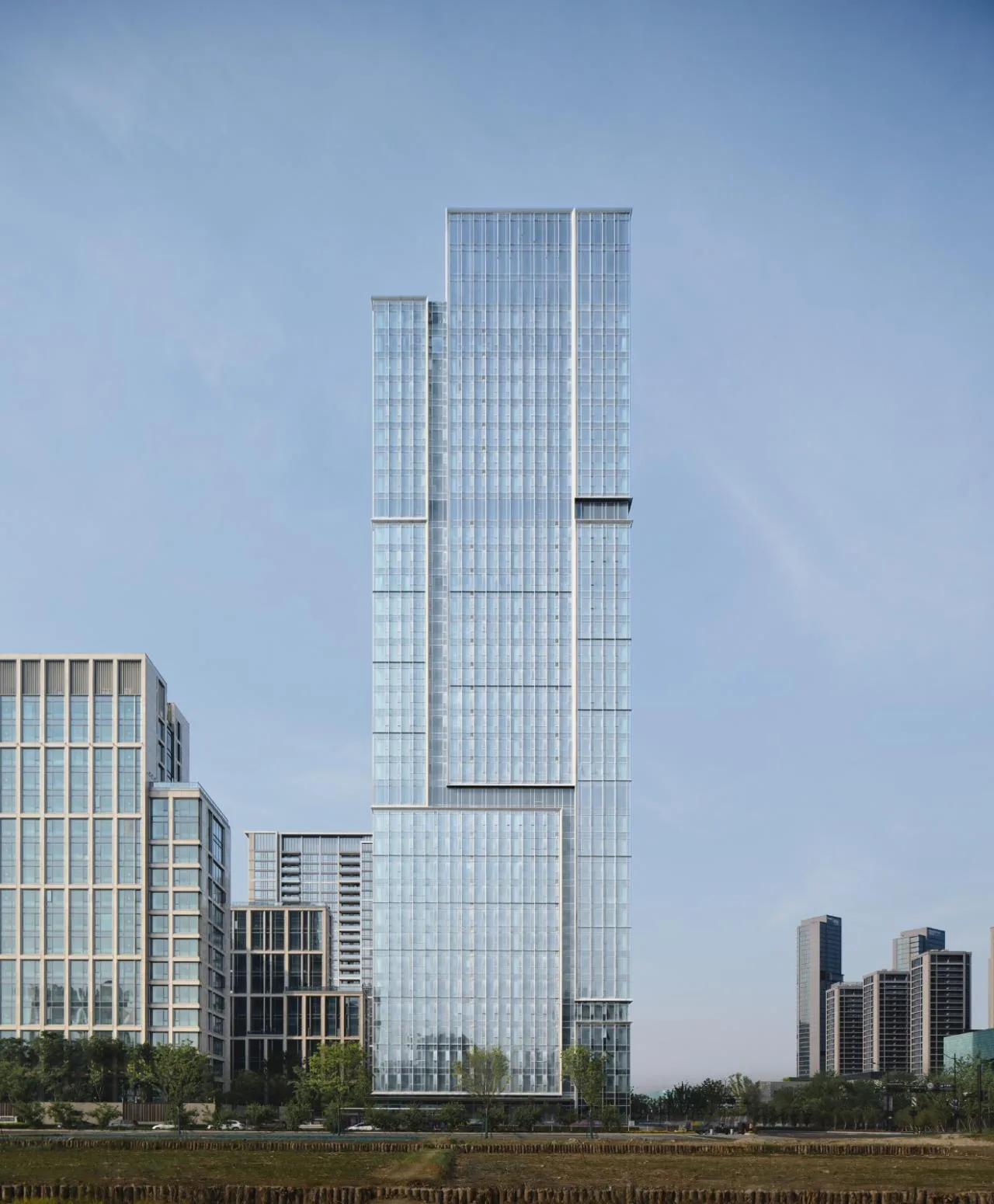
△ Super high-rise tower © AOGVISION
The super high-rise tower features a façade inspired by “bamboo nodes,” creating an elevated pattern with distinctive knots. Interwoven window pane lines break the static exterior, adding a dynamic visual rhythm to the building.
Aligned with the goal of green hosting for the 19th Asian Games in Hangzhou, all buildings in the Technical Officer Village are designed for easy conversion into urban residential, commercial, or other uses with minimal renovation. This project promises a memorable experience for sports officials from across Asia during the games, while contributing long-term vitality to Hangzhou’s urban landscape.
Project Drawings
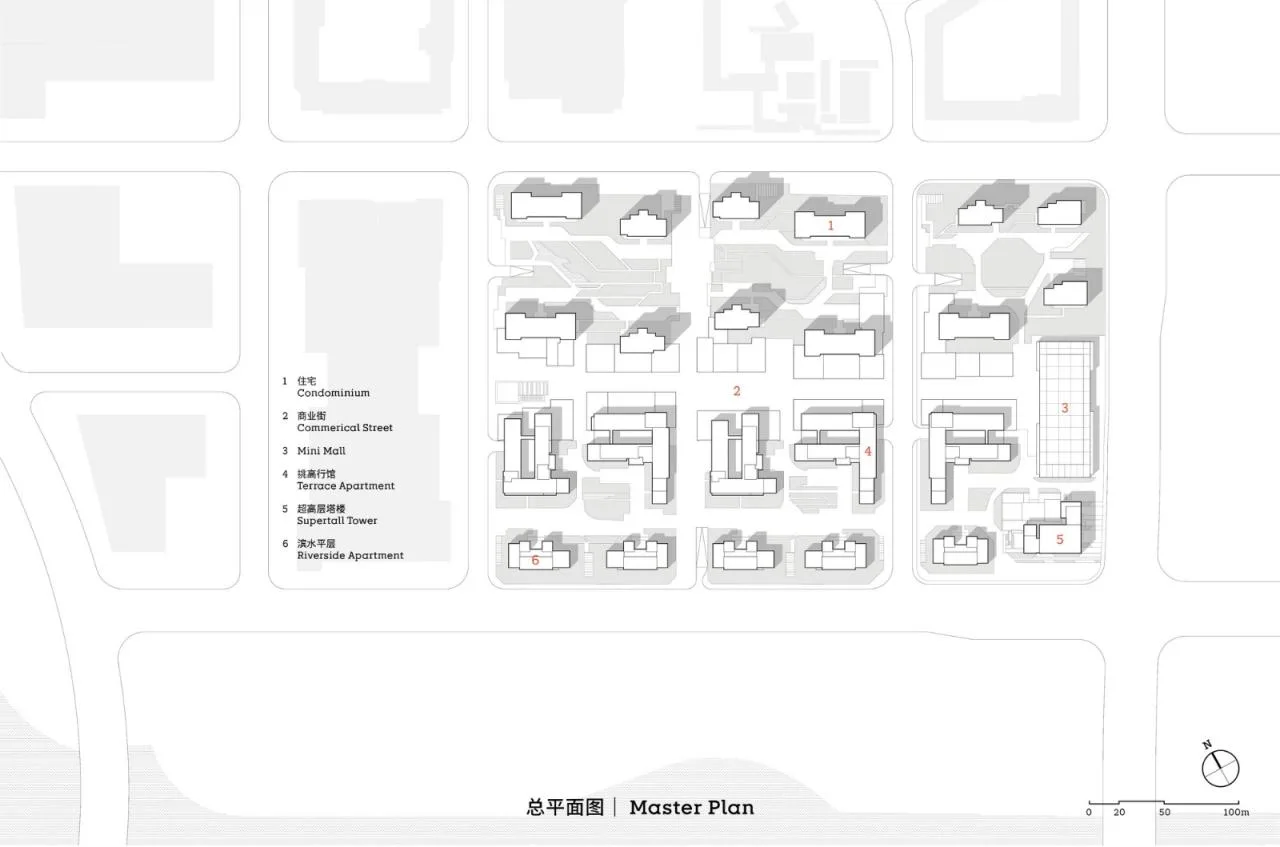
△ General layout plan © Goa Elephant Design
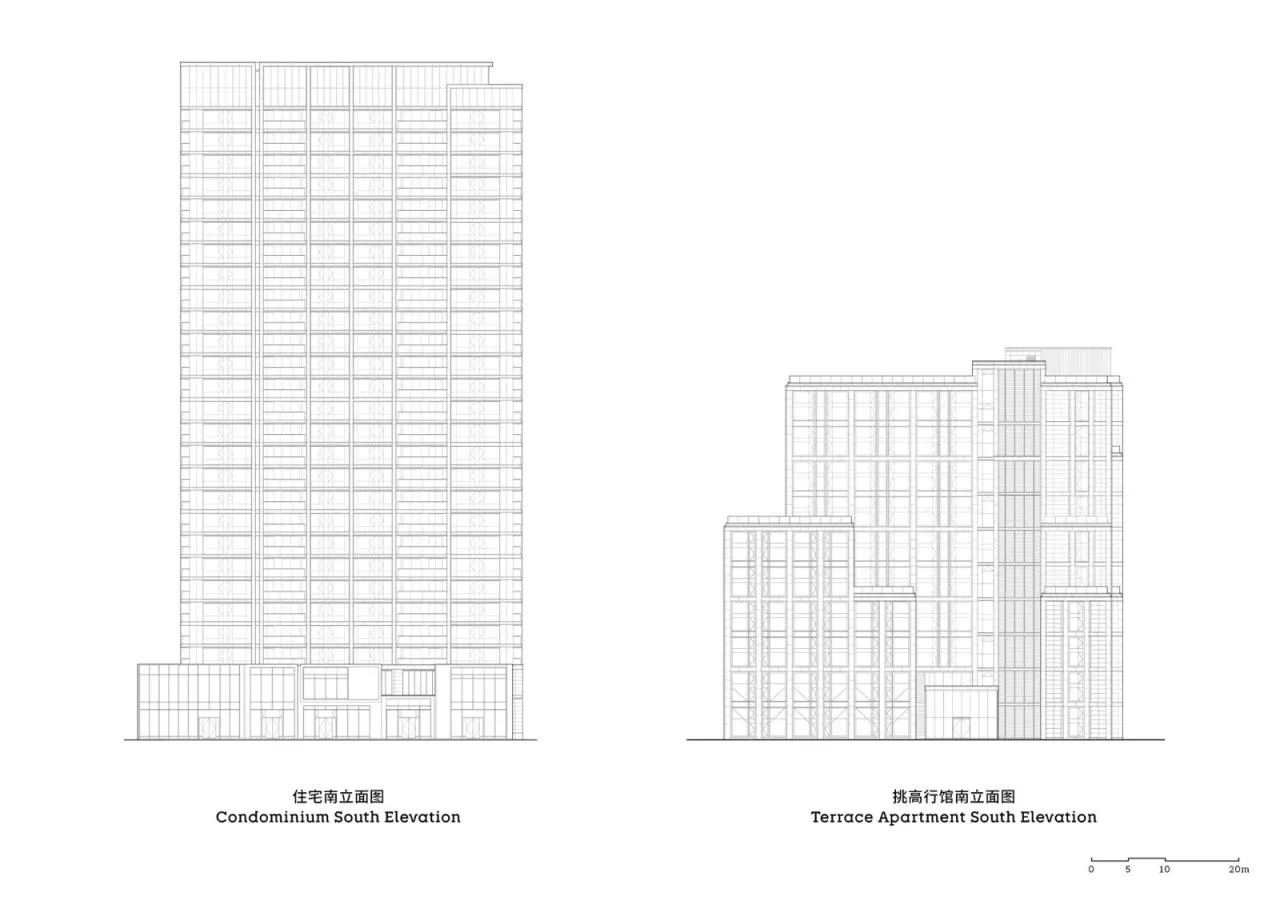
△ South elevation of residential buildings and high-rise pavilions © Goa Elephant Design
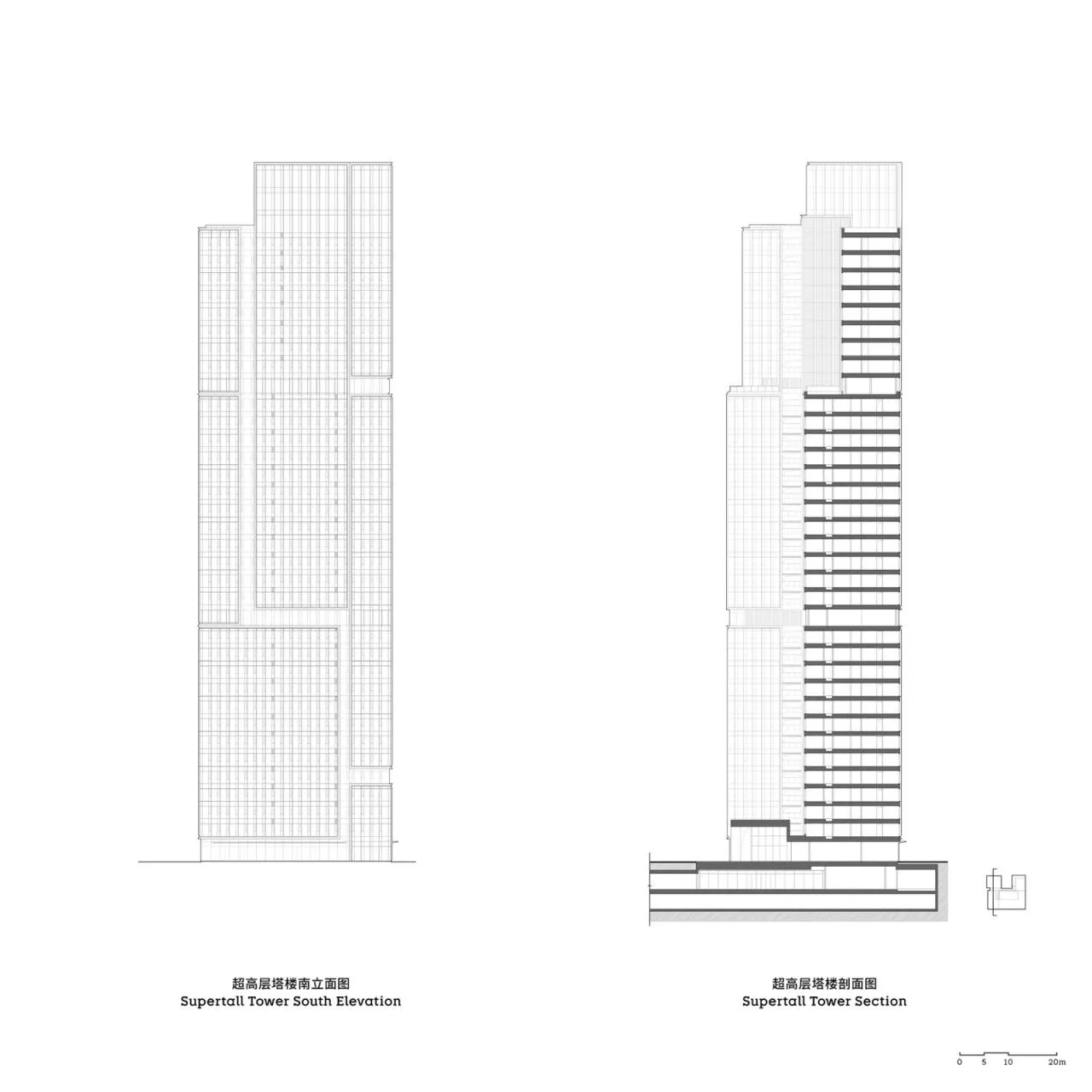
△ South elevation and section of super high-rise tower © Goa Elephant Design
Project Information
Project Name: Hangzhou Asian Games Village Technical Officer Village
Location: Hangzhou, Zhejiang Province
Building Area: 486,650 m²
Design / Completion: 2018 / 2023
Owner: China Resources Land
Master Plan: KPF
Architectural Design: Goa Elephant Design
Commercial Street Design: KPF
Landscape Design: JCFO, LANDAU Landau International Design
Construction Drawings: Zhejiang Provincial Institute of Architectural Design and Research
Photo Credits: AOGVISION, Studio FF, Goa Elephant Design















Must log in before commenting!
Sign Up