
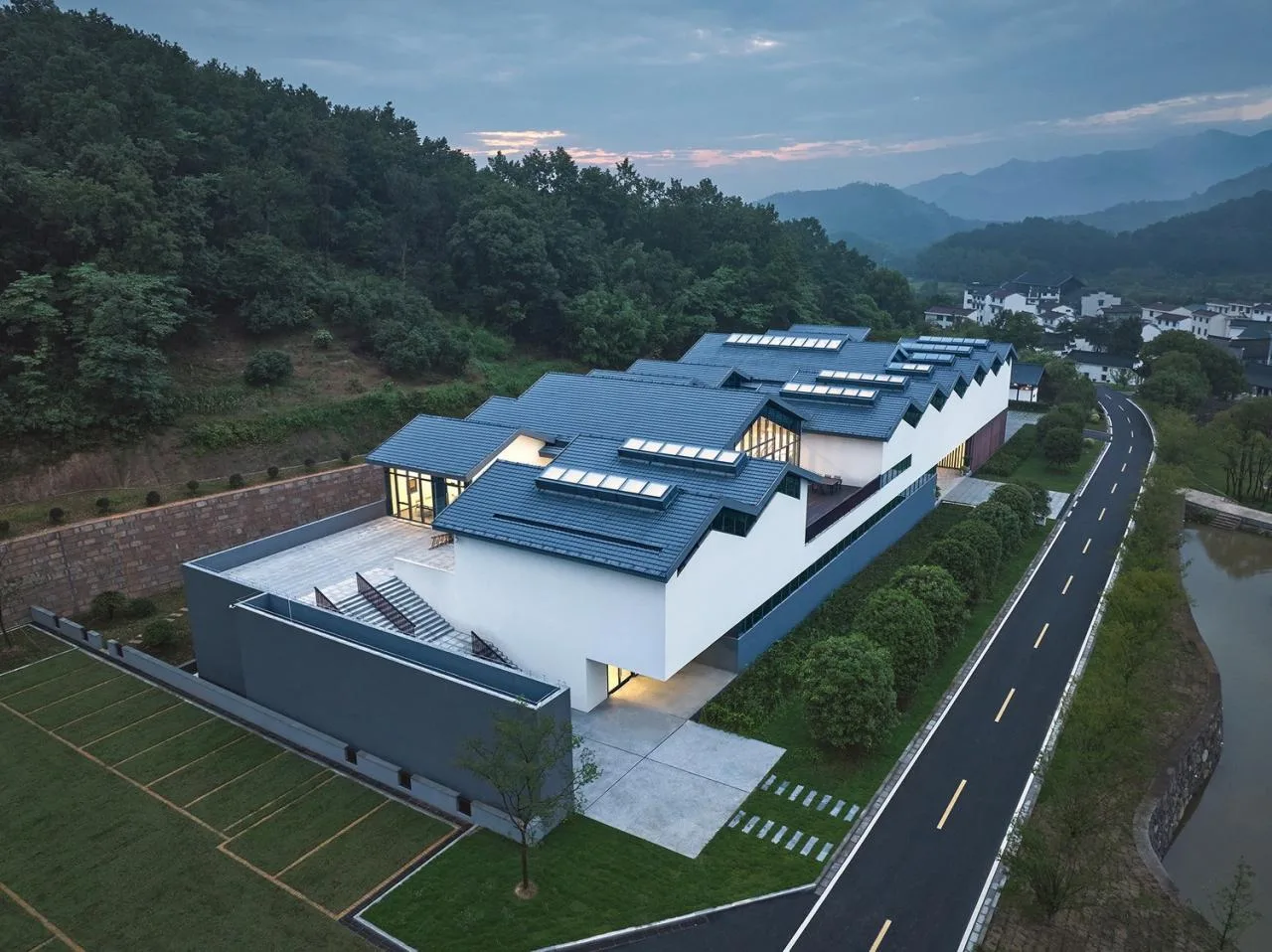
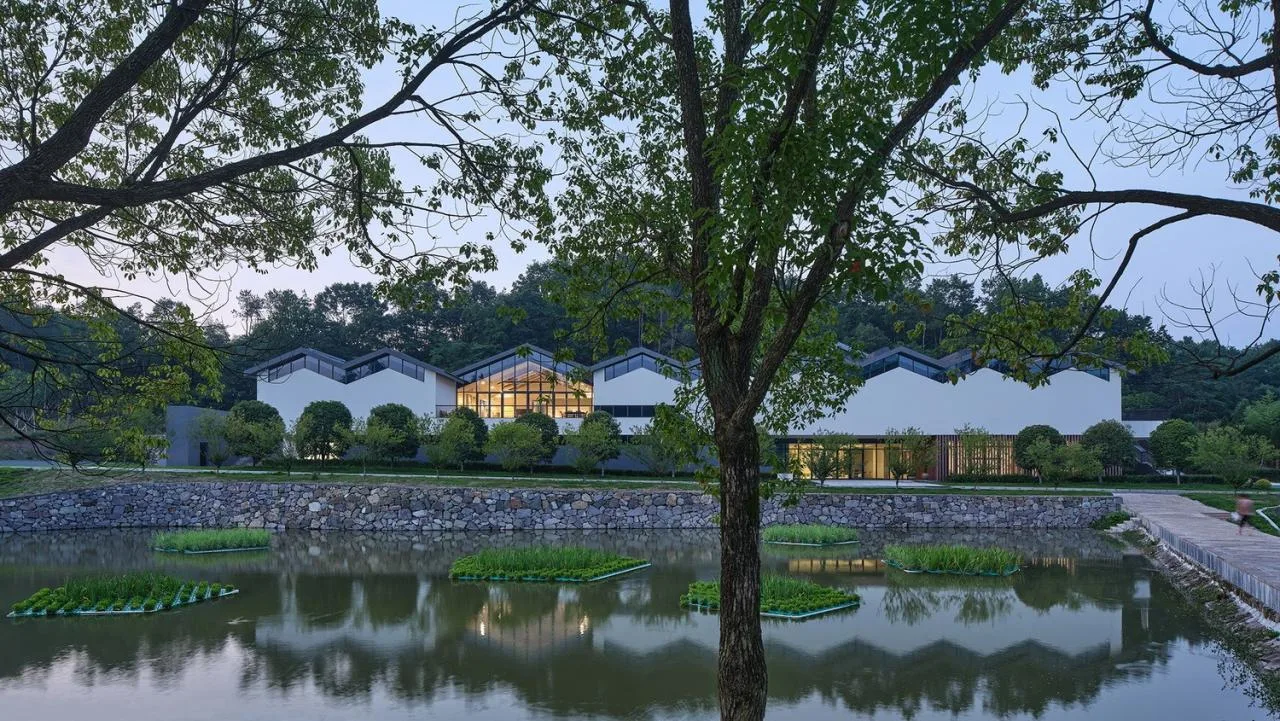
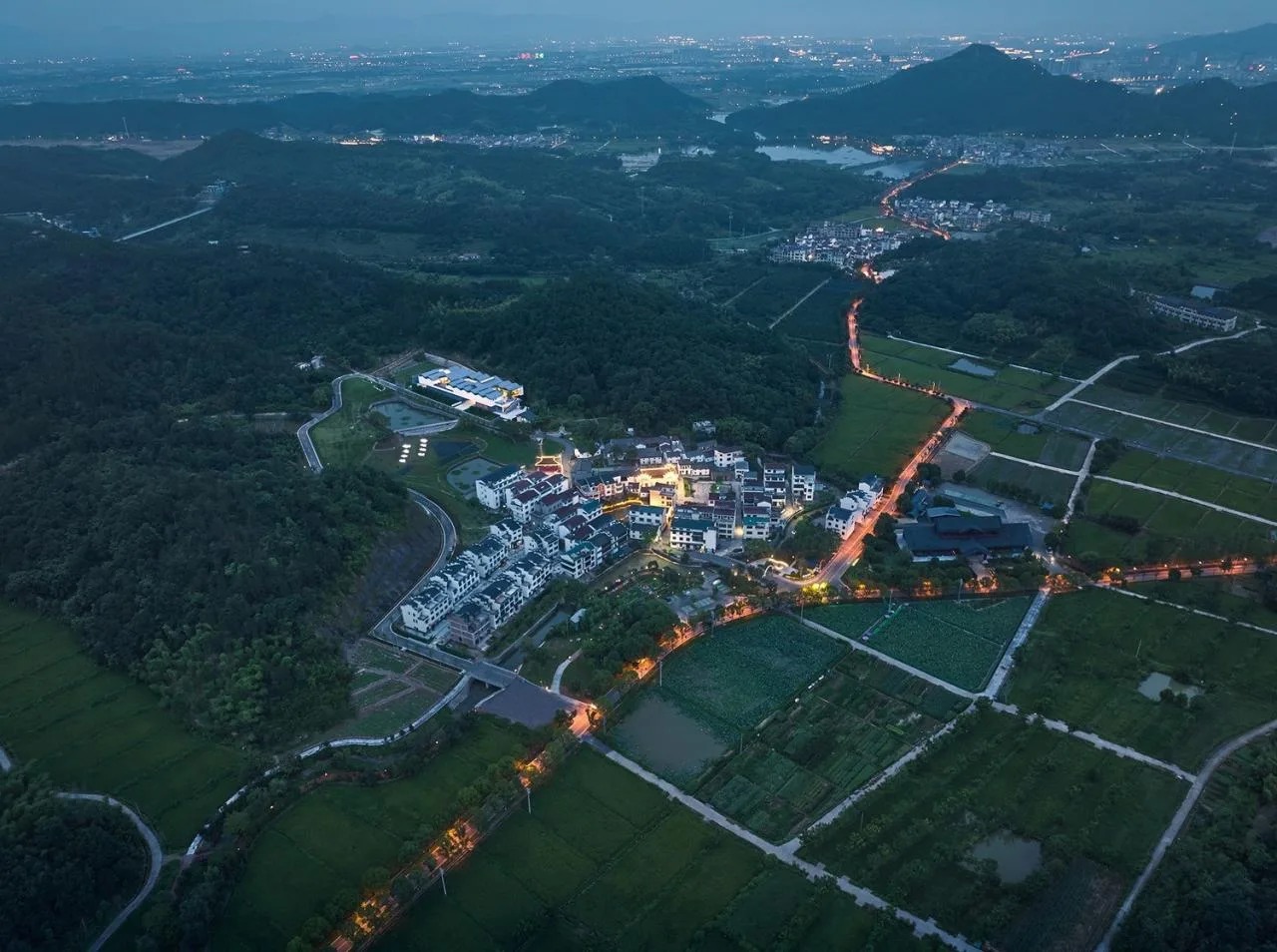
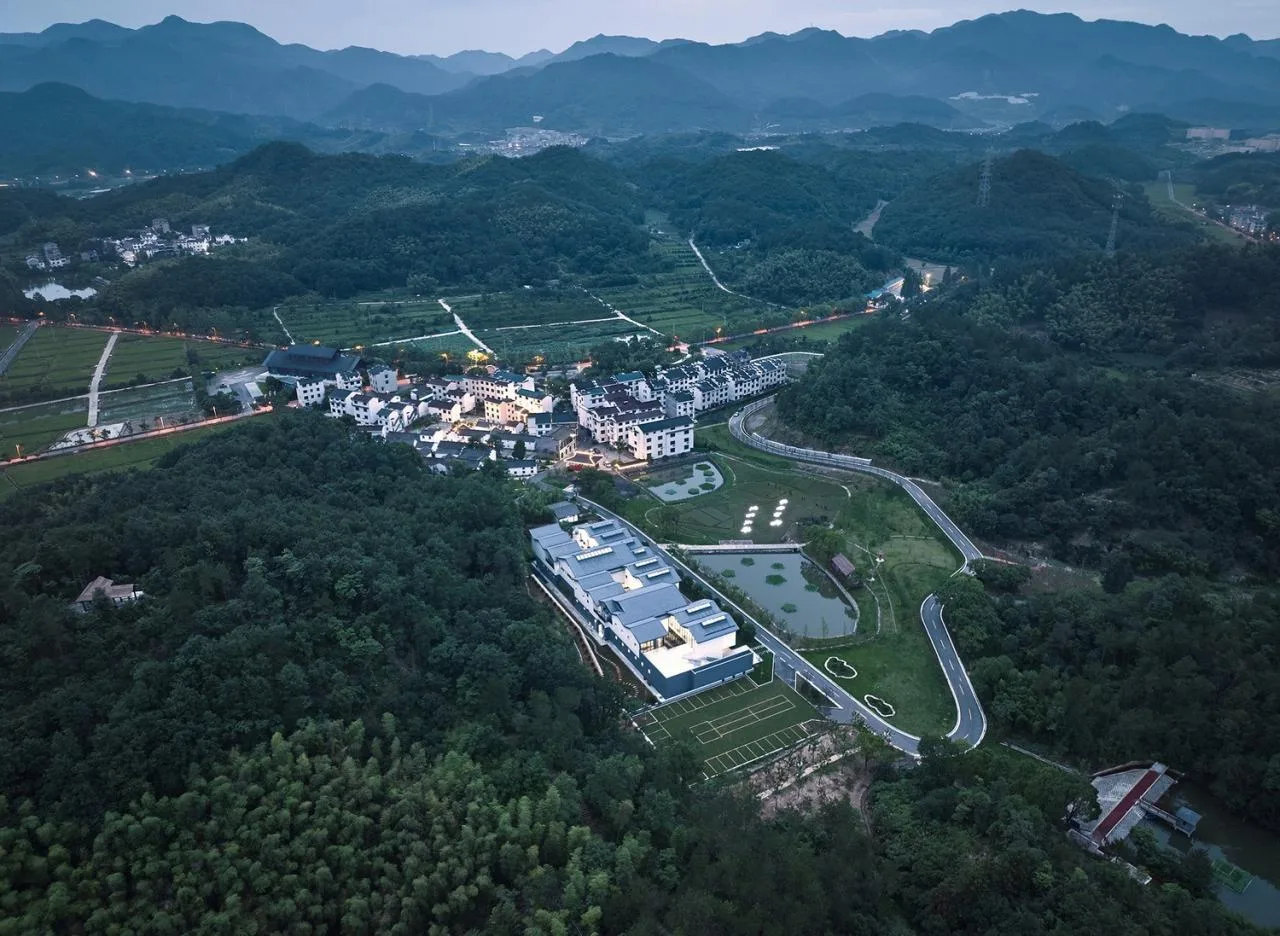
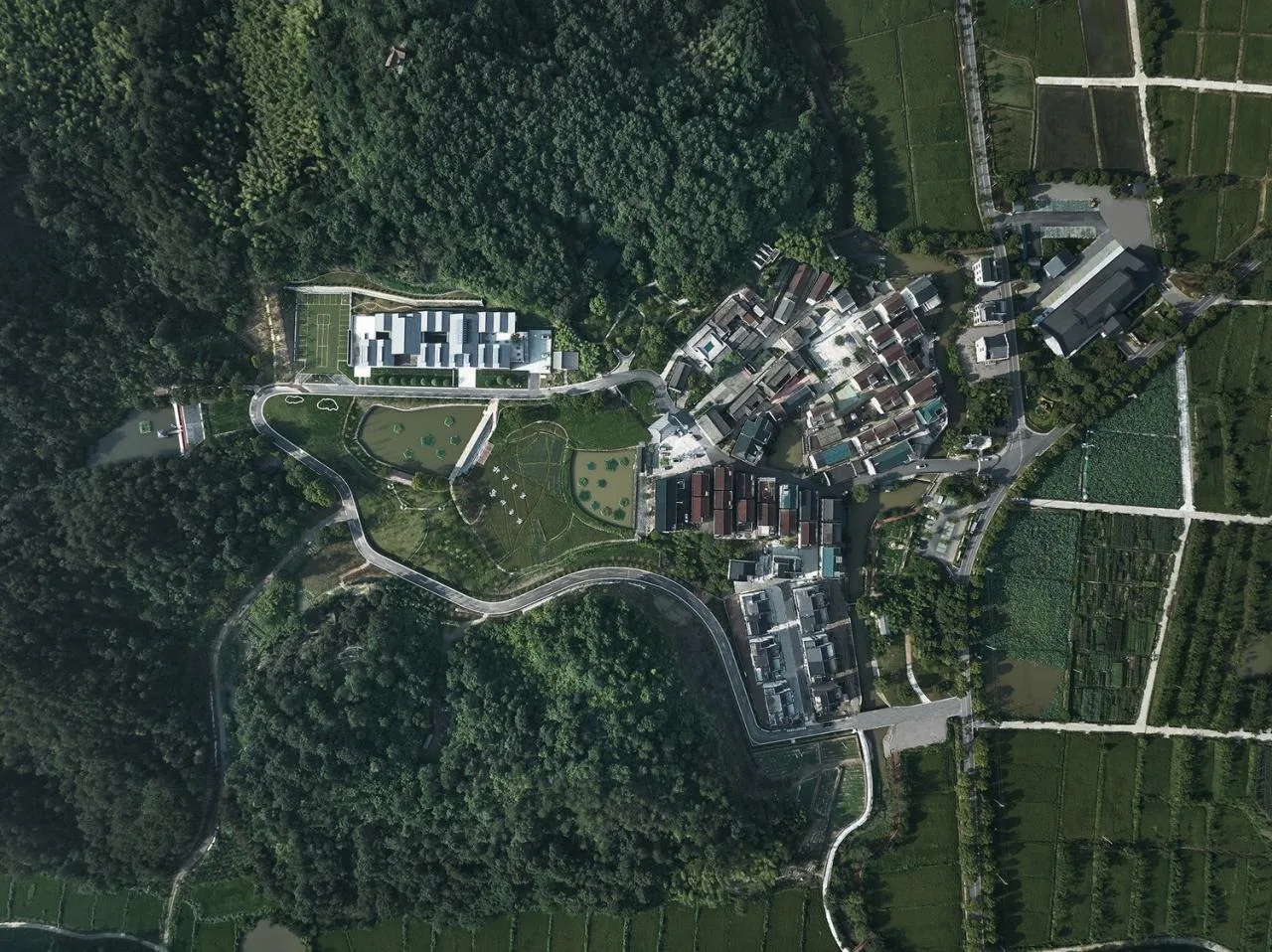
Shentan Village, home to just over 60 households, is the birthplace of Feng Xuefeng — the founder of the Leftist League, a renowned modern poet, and literary theorist. The Xuefeng Literature Museum is a dedicated literary museum deeply connected to the cultural heritage of Shentan Village and the life of Feng Xuefeng. This building is situated in an open area excavated at the foot of a mountain.
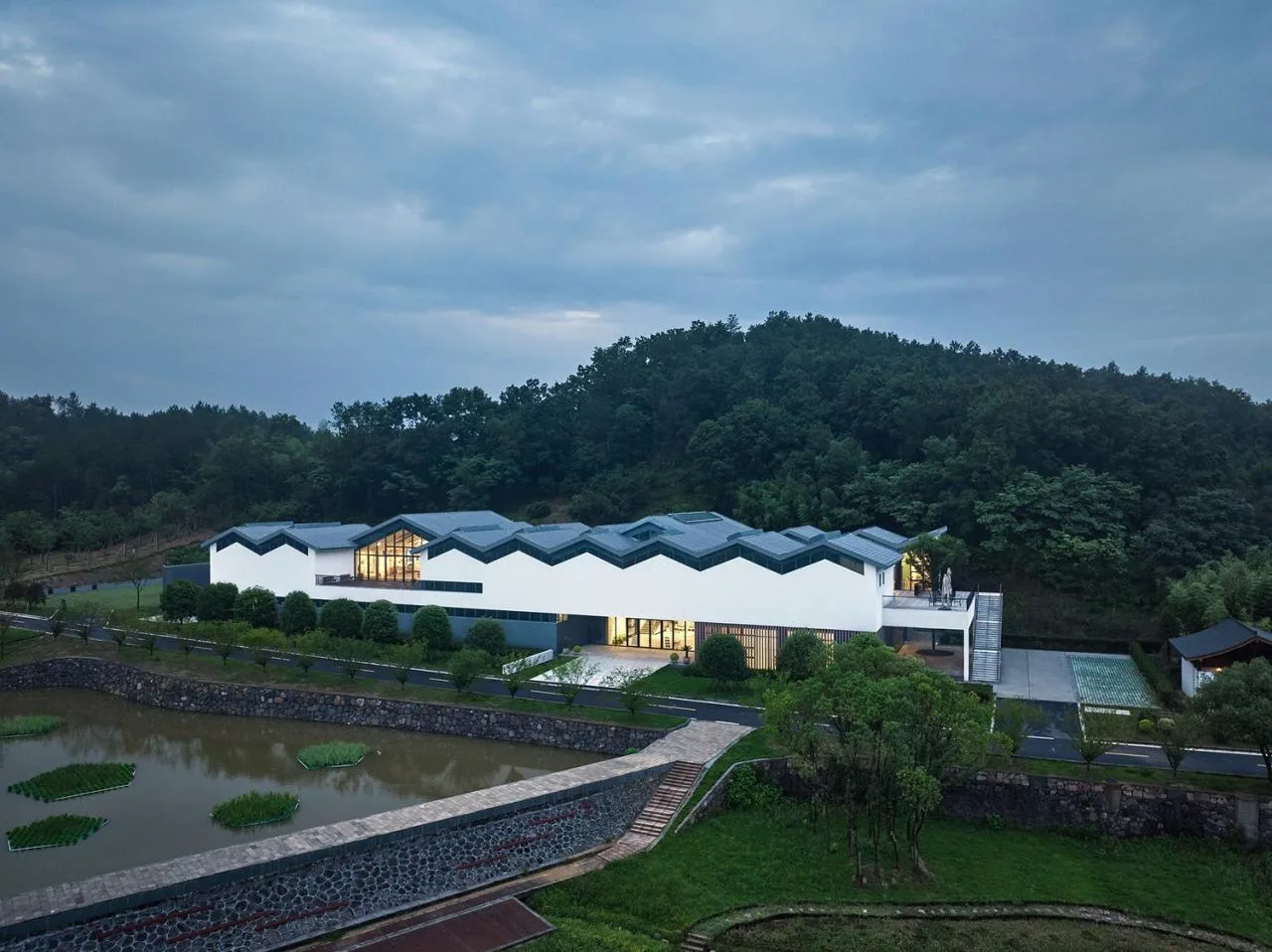
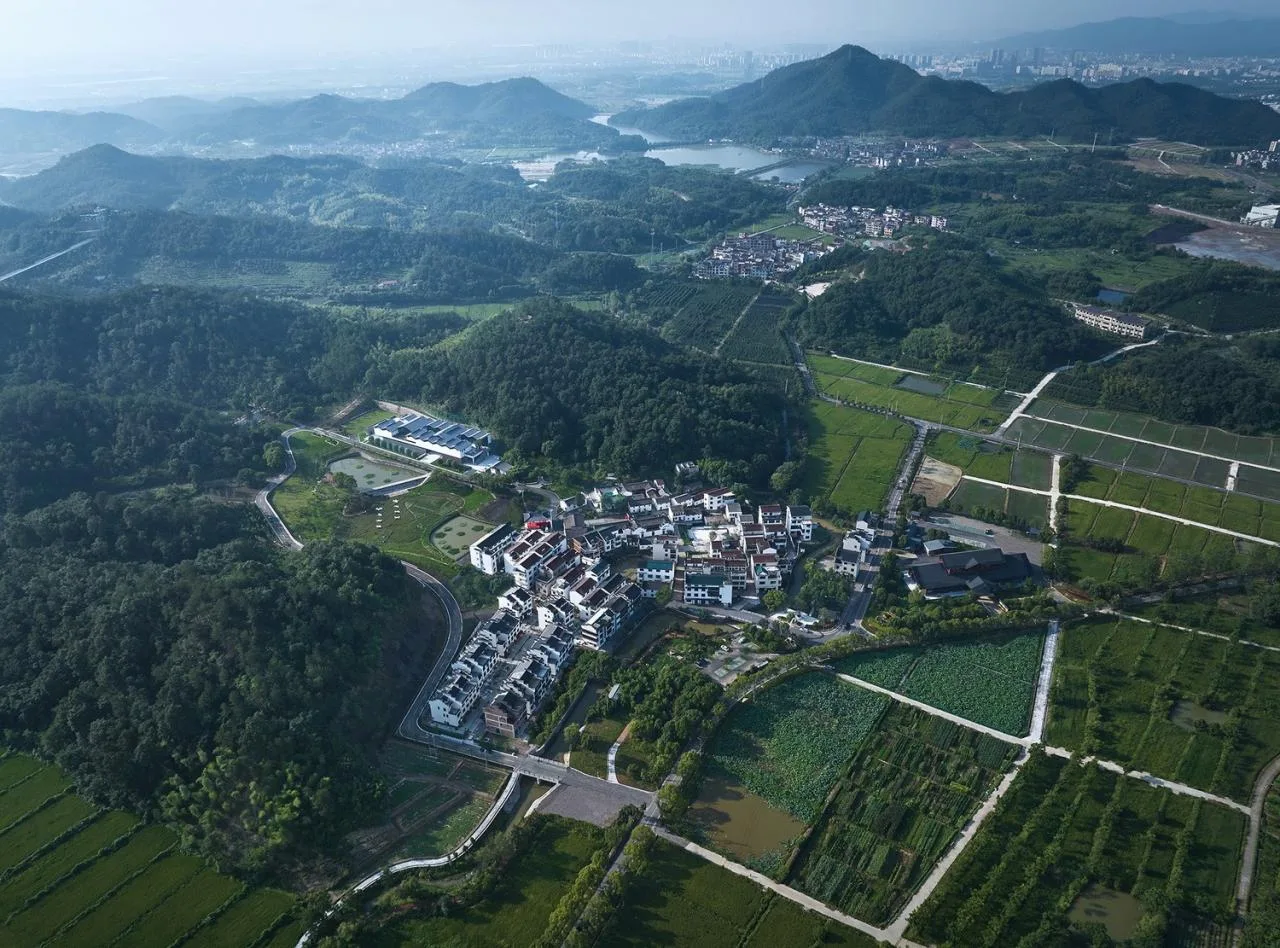
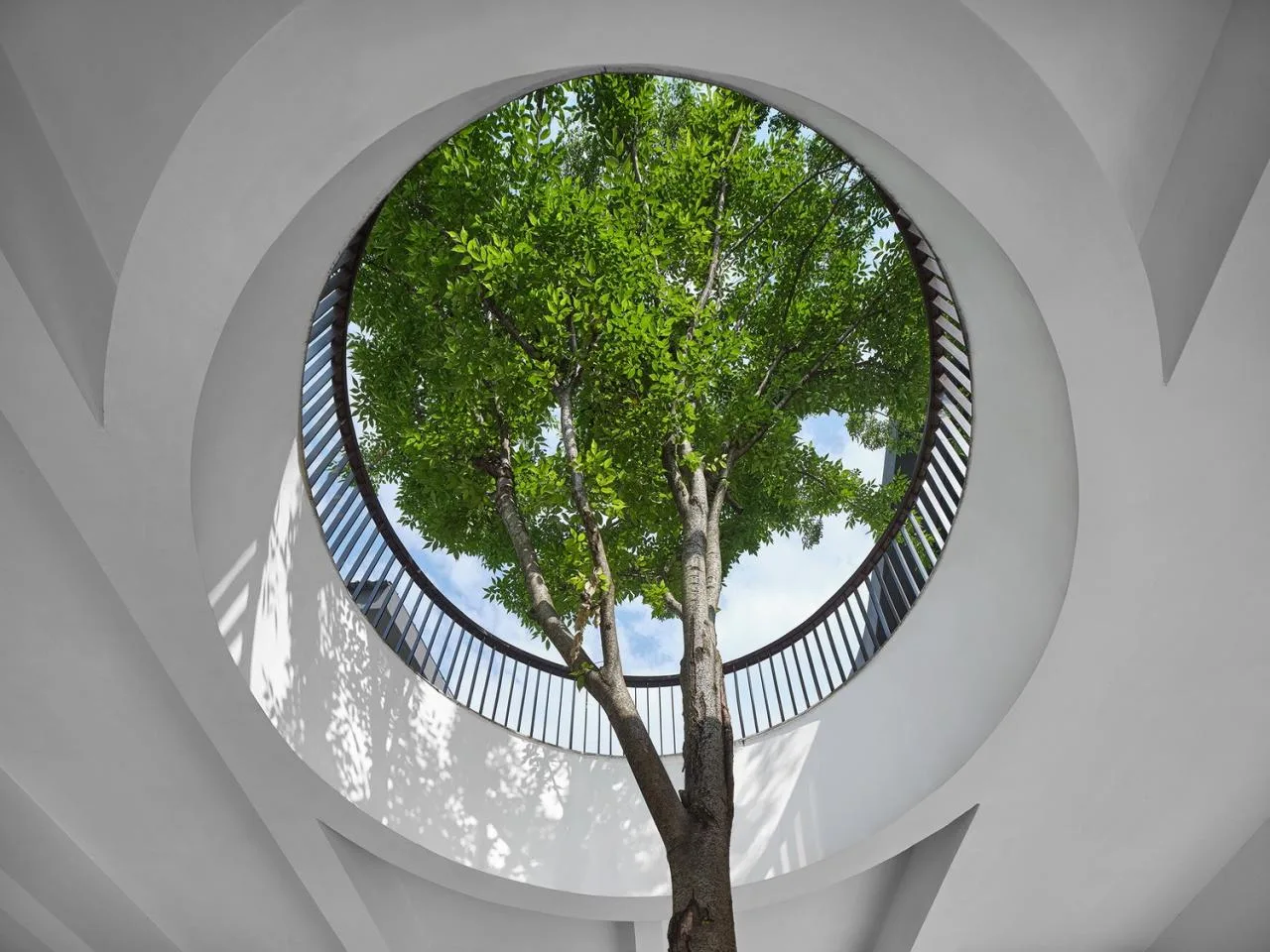
The design employs a courtyard architectural prototype characterized by “virtual and real alternation” and three-dimensional connectivity. This approach addresses the overall scale and creates a thermodynamically efficient spatial structure that promotes natural ventilation and lighting within the building. The layout features four three-dimensional courtyards and platform spaces, which break the uniform plane pattern and reduce the building’s volume to a minimal scale, thereby emphasizing the museum’s intimate, localized character.
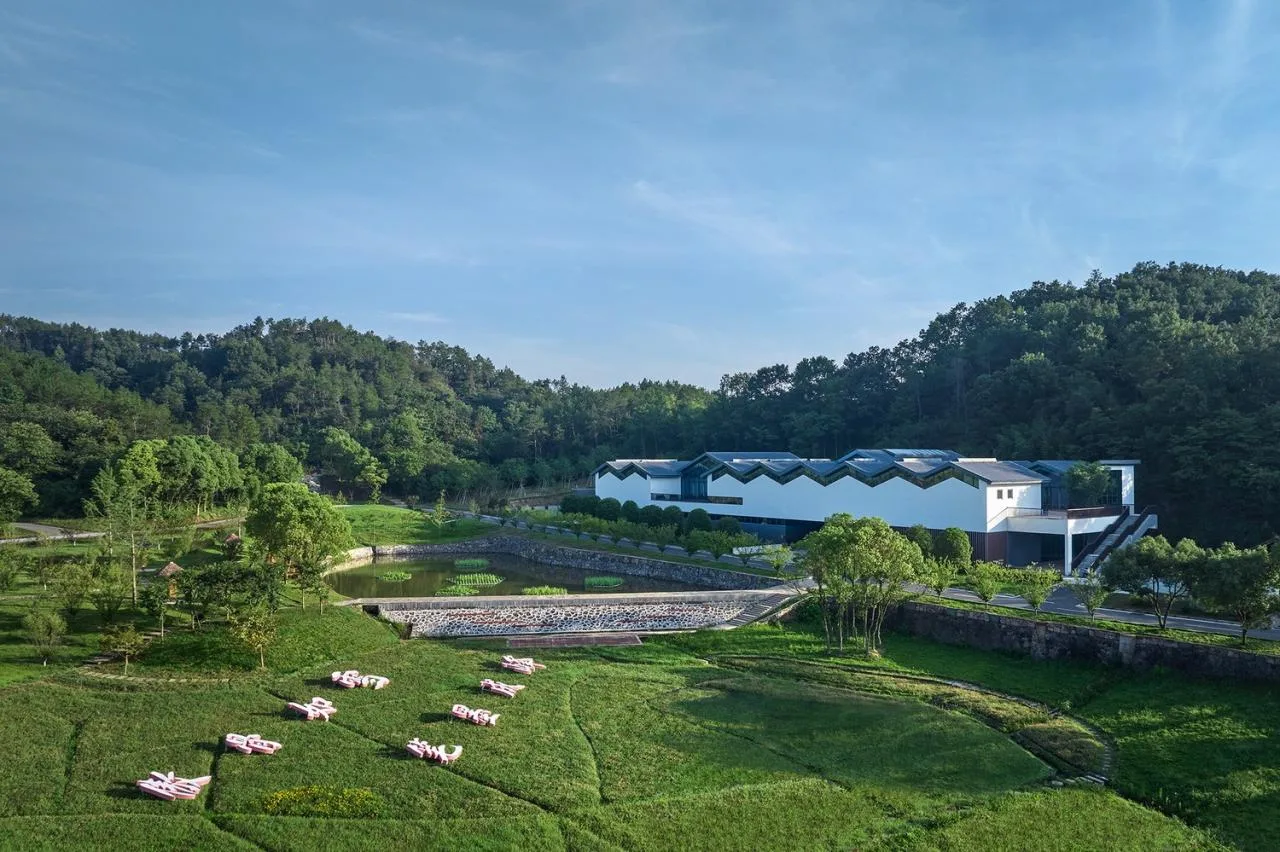
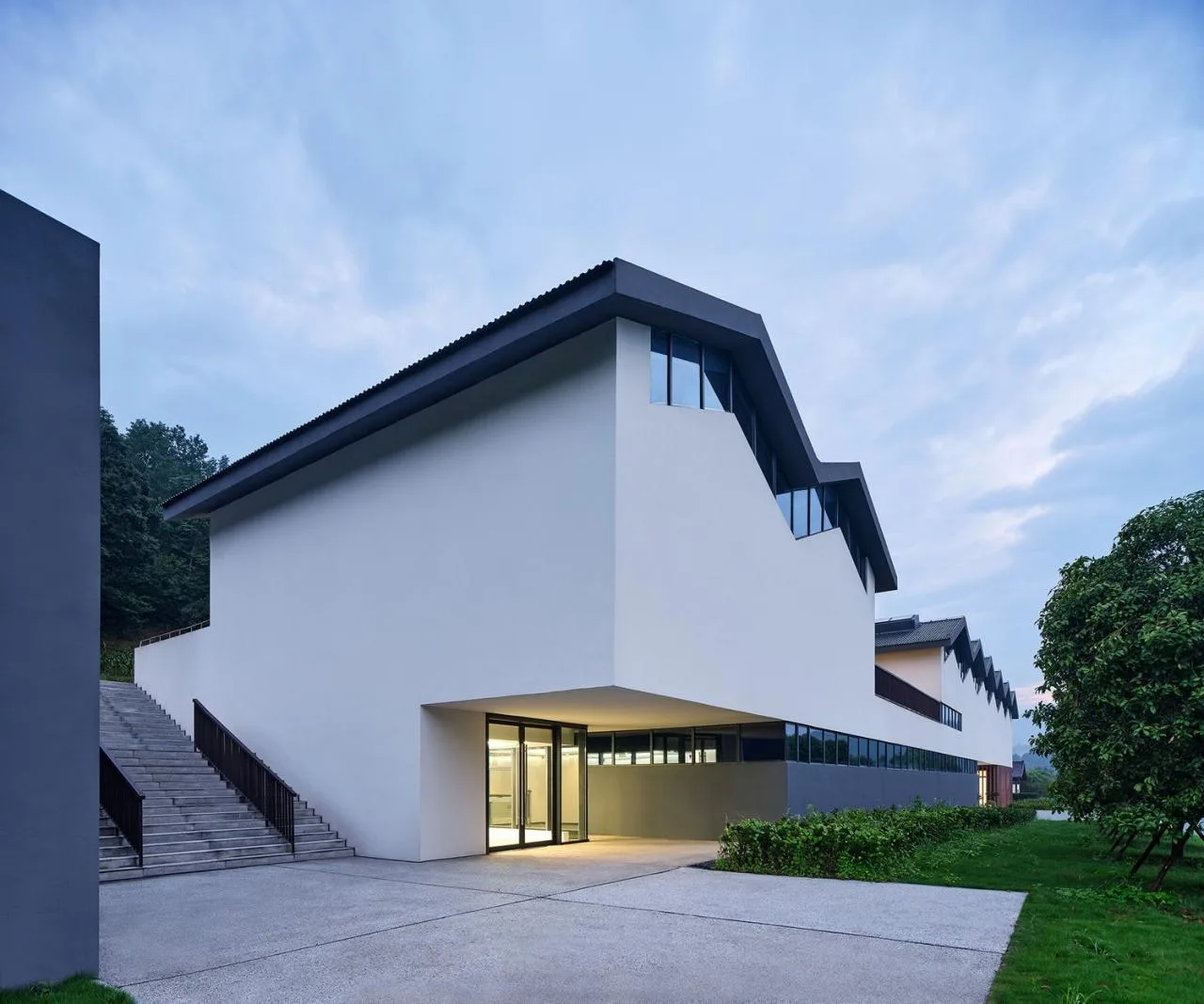
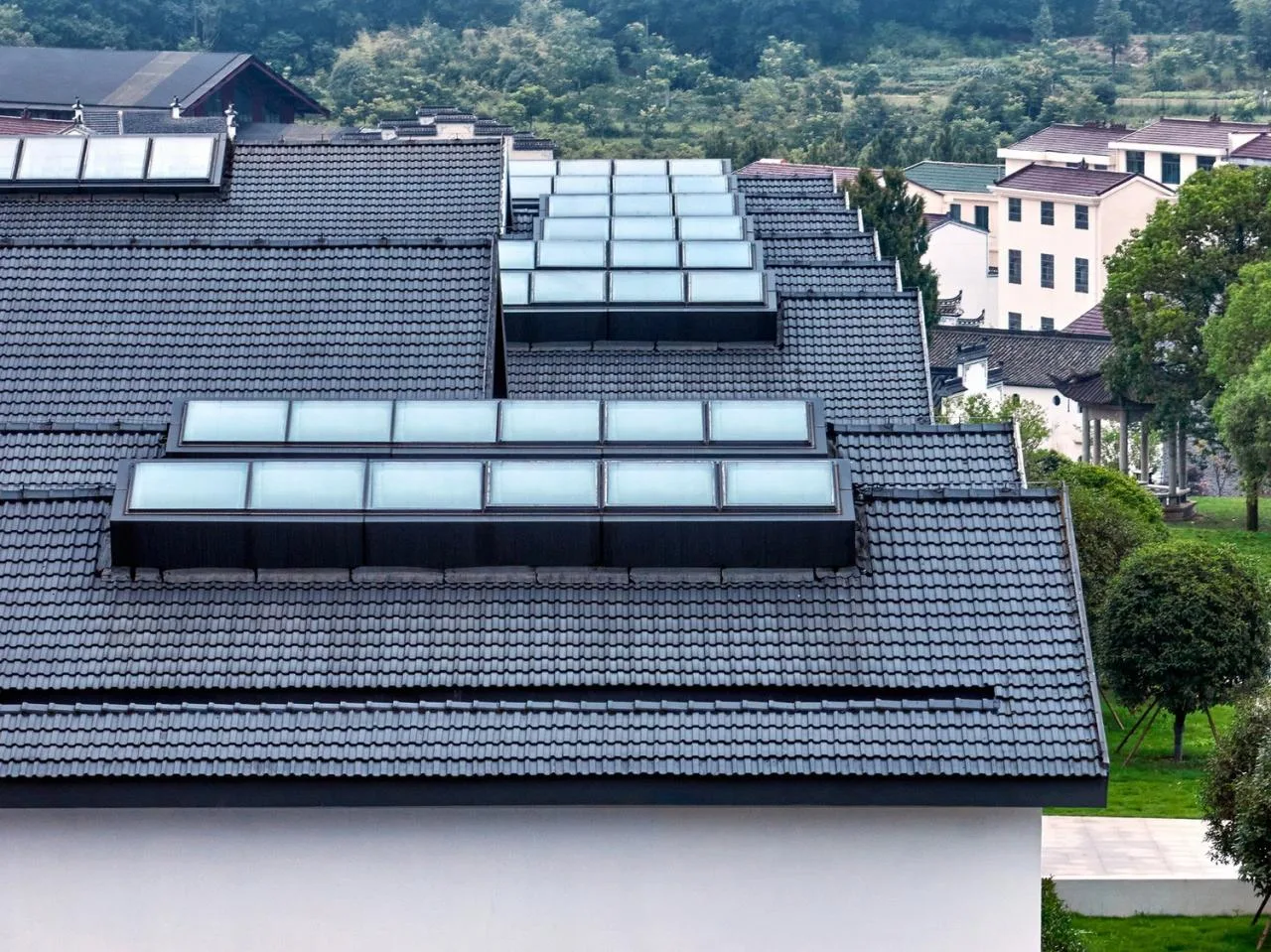
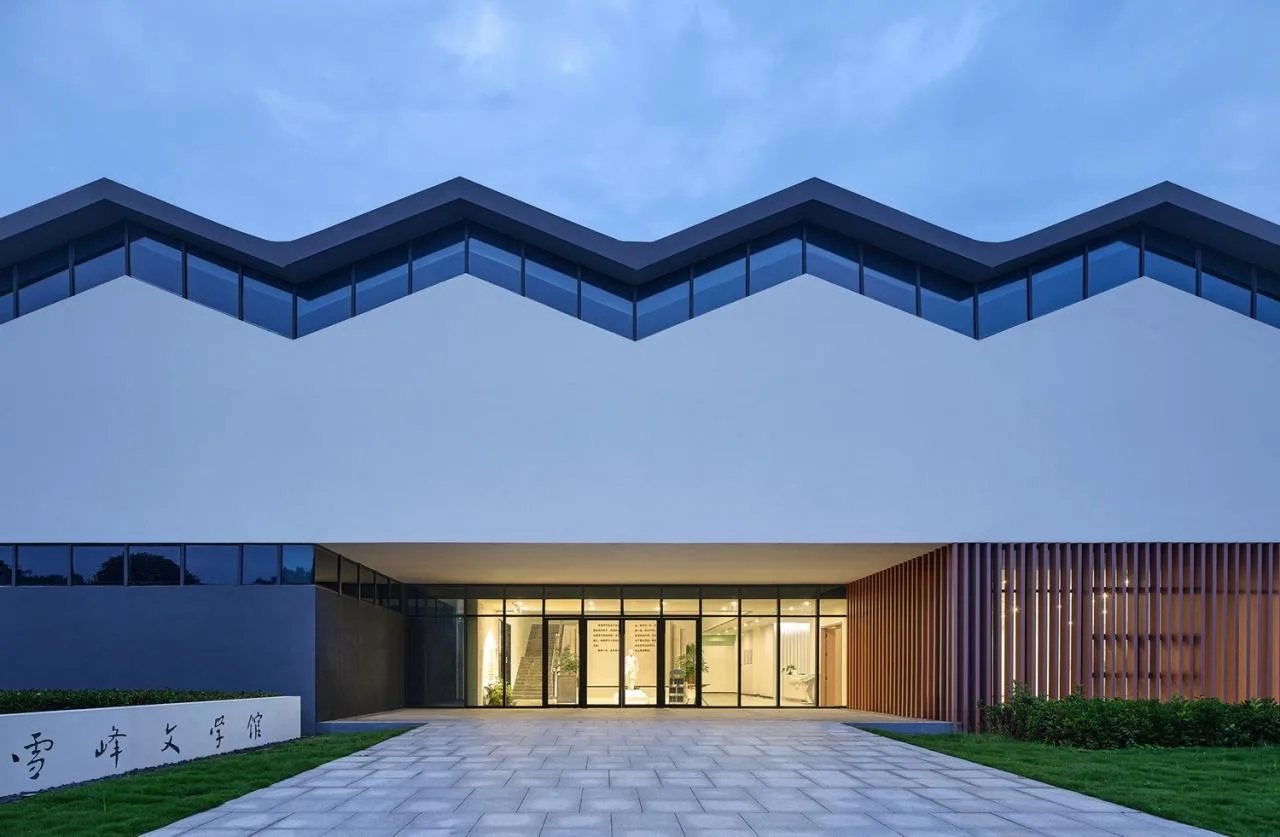
The building features vertical layering: the ground floor is raised to form the main entrance and terrace spaces that extend onto the second-floor roof. The second floor combines a platform with white volumes, conveying a sense of lightness and continuity, while emphasizing the building’s clean and powerful form. The roof is a deep gray folded structure that reinforces the undulating form of the site and echoes the surrounding mountains and village scale. At the southern end, the roof terrace creates a vertical spatial connection with the inner courtyard and aligns with the smaller mountain scale behind. This three-dimensional courtyard void, together with prominent ventilation skylights in the exhibition hall, creates an effective thermodynamic airflow path between interior and exterior spaces. The building’s longitudinal axis aligns with the prevailing southeast wind, shaping both its form and energy efficiency.
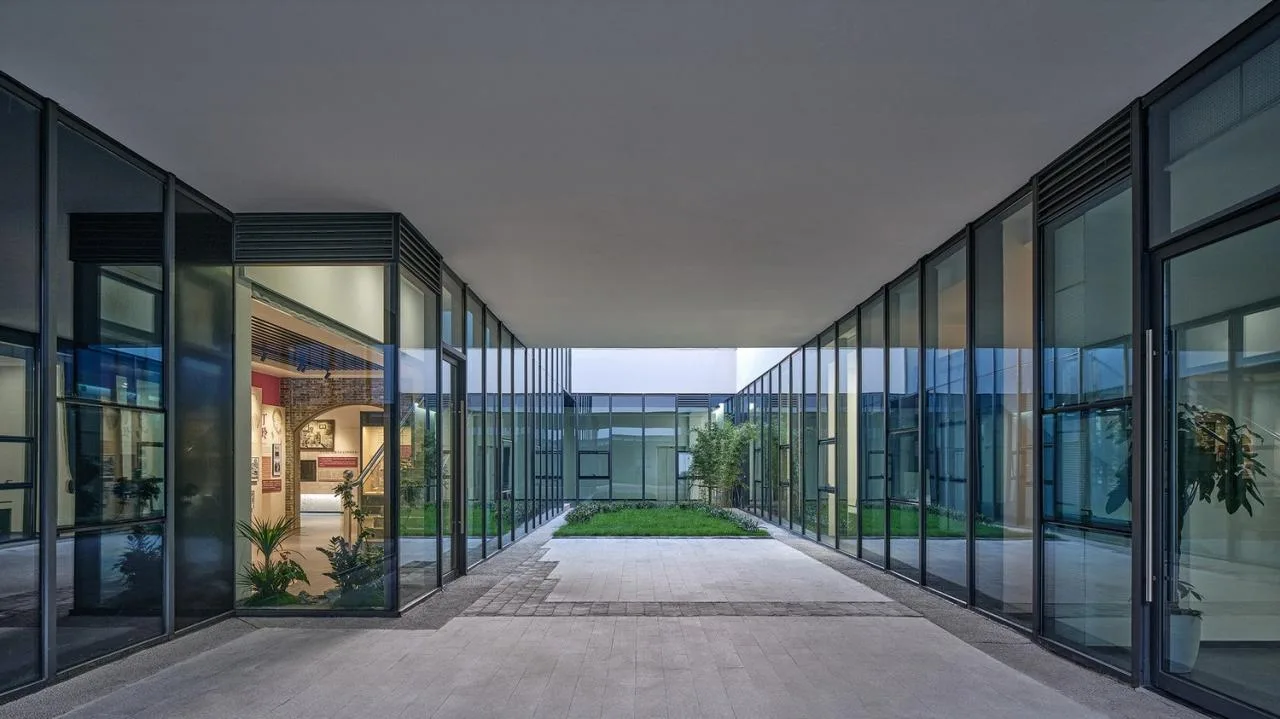
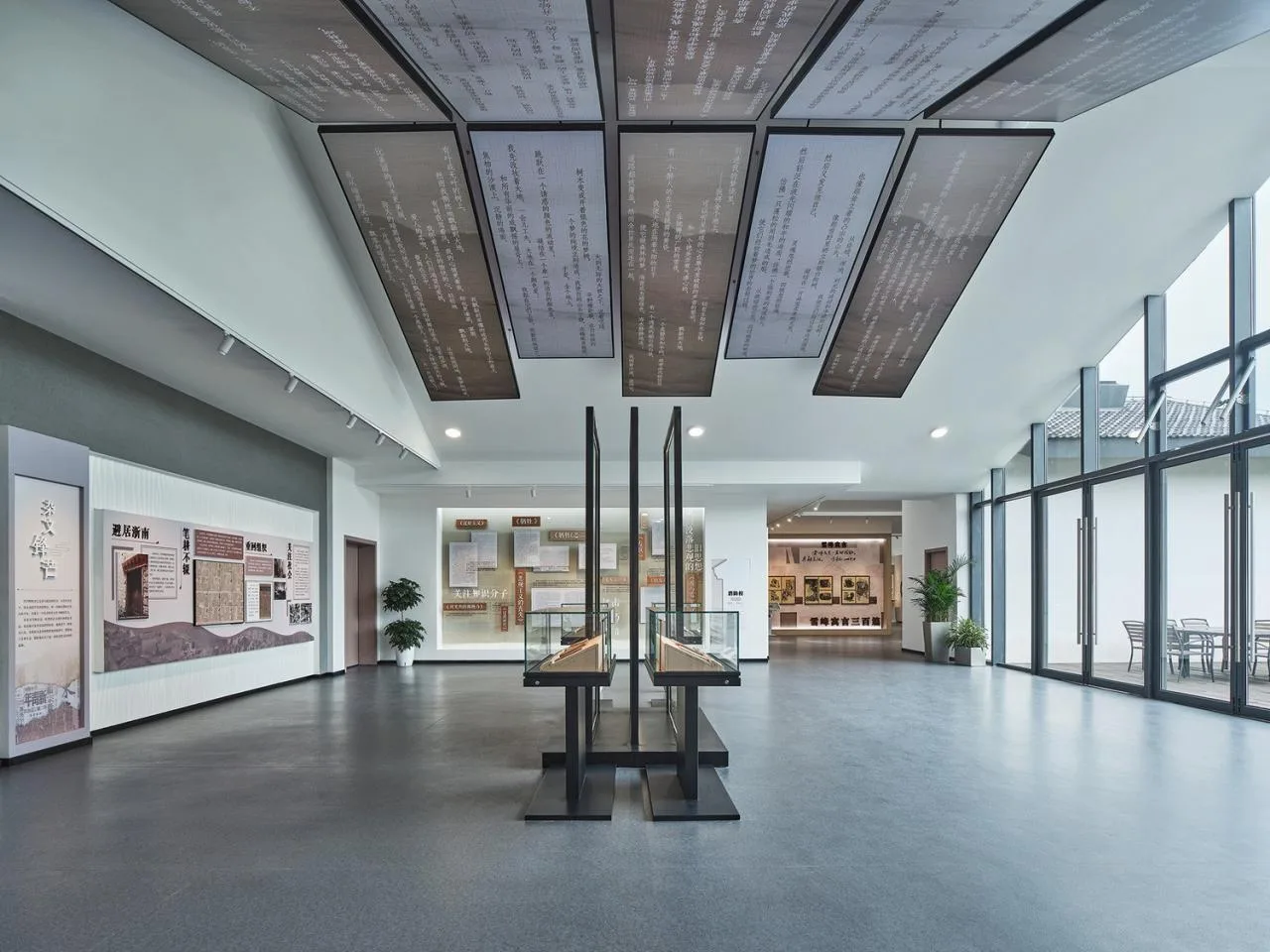
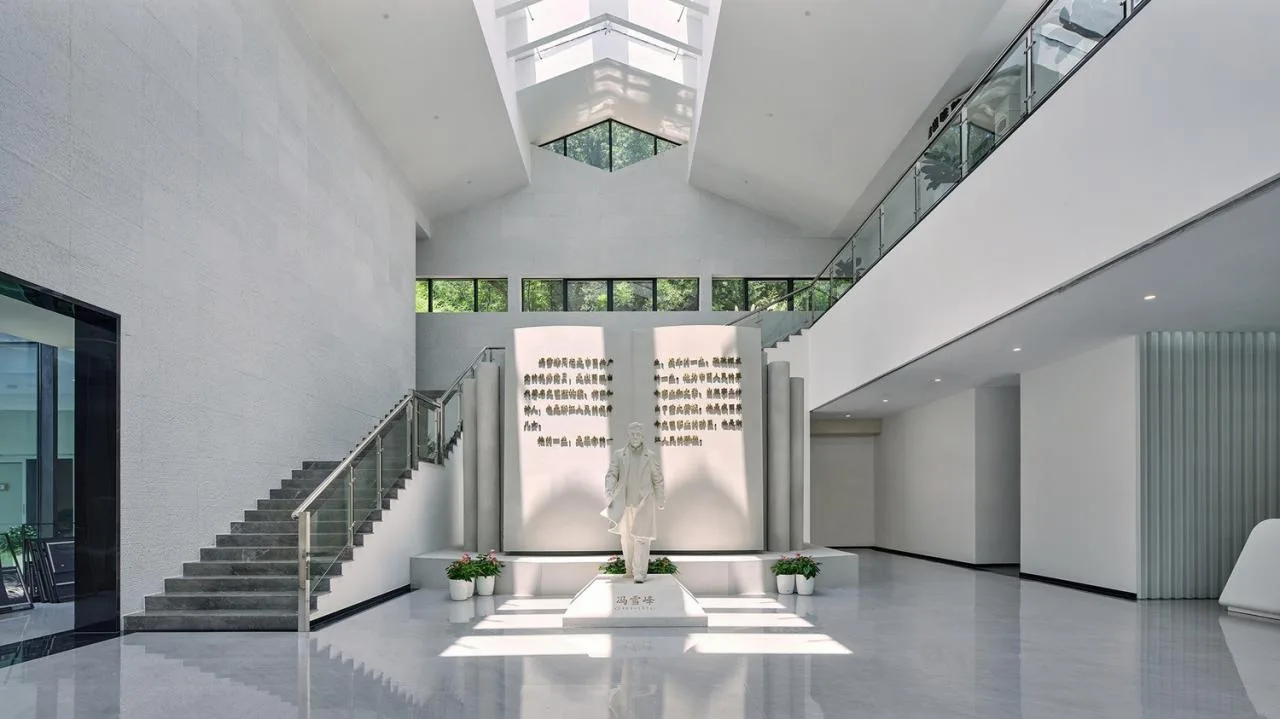
The building’s two-story central hall serves as the spatial core, around which the entire architectural narrative and visitor flow revolve. Flanking the hall are public service areas, including lecture halls and cafés, while the opposite side houses the main exhibition hall, office areas, and logistical spaces. A staircase encircling the hall provides access to the second-floor exhibition hall and coffee area, and connects to writer-in-residence studios and support facilities.
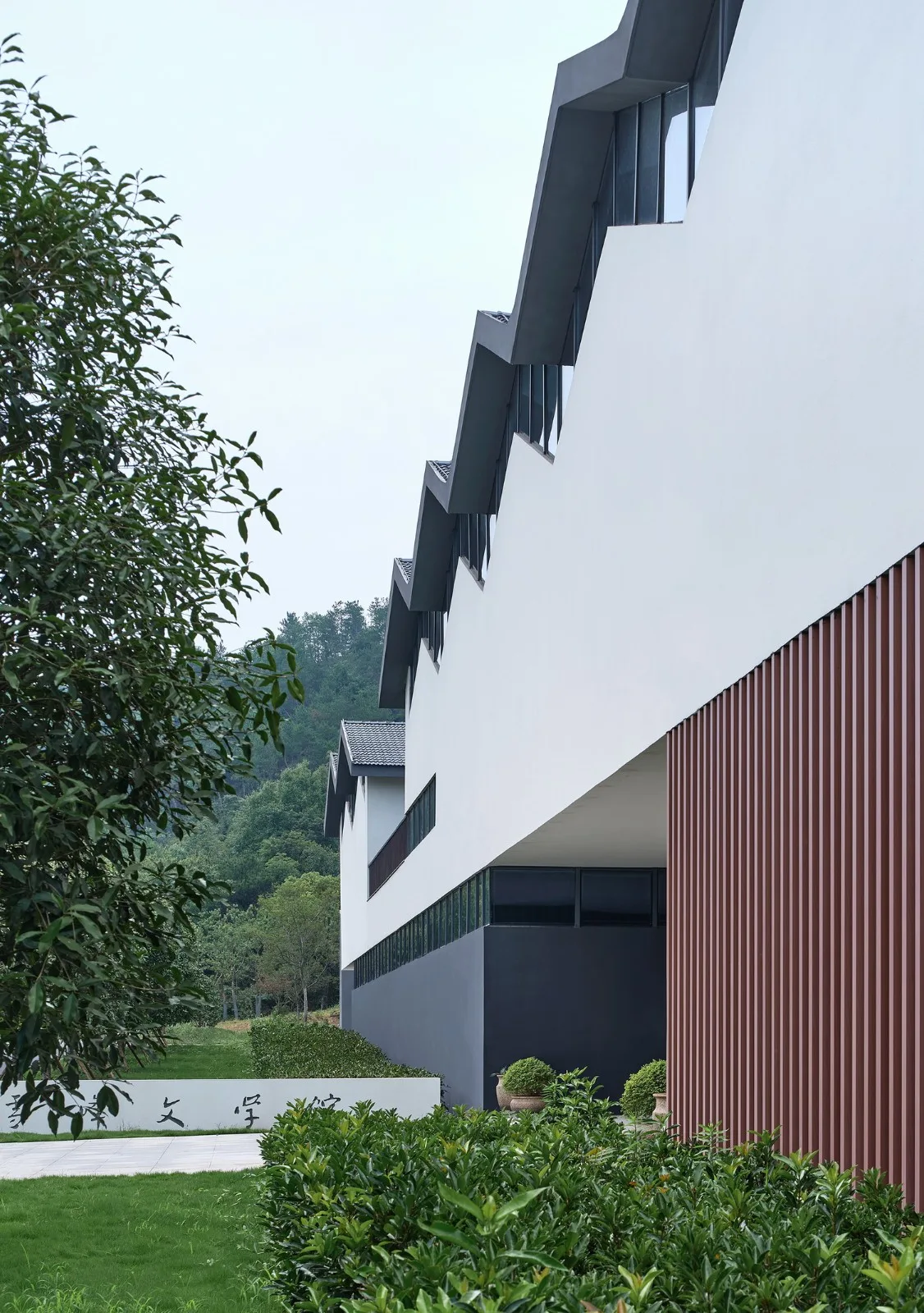
The exhibition hall offers a continuous internal flow from the first to the second floor, integrating courtyards and rooftop platforms. Situated to maximize views of the lake and village, it features a mid-level viewing platform for rest and reflection. The café area connects to the rooftop terrace, providing southeast-facing views towards the village and the Temple of God village, creating a “distant gaze” scene that links to Xuefeng’s former residence. Despite strict budget constraints, the building embodies historical and cultural significance through its material choices, contrasting light white and dark gray elastic texture coatings to convey stability, strength, and a sense of history.
Project Drawings
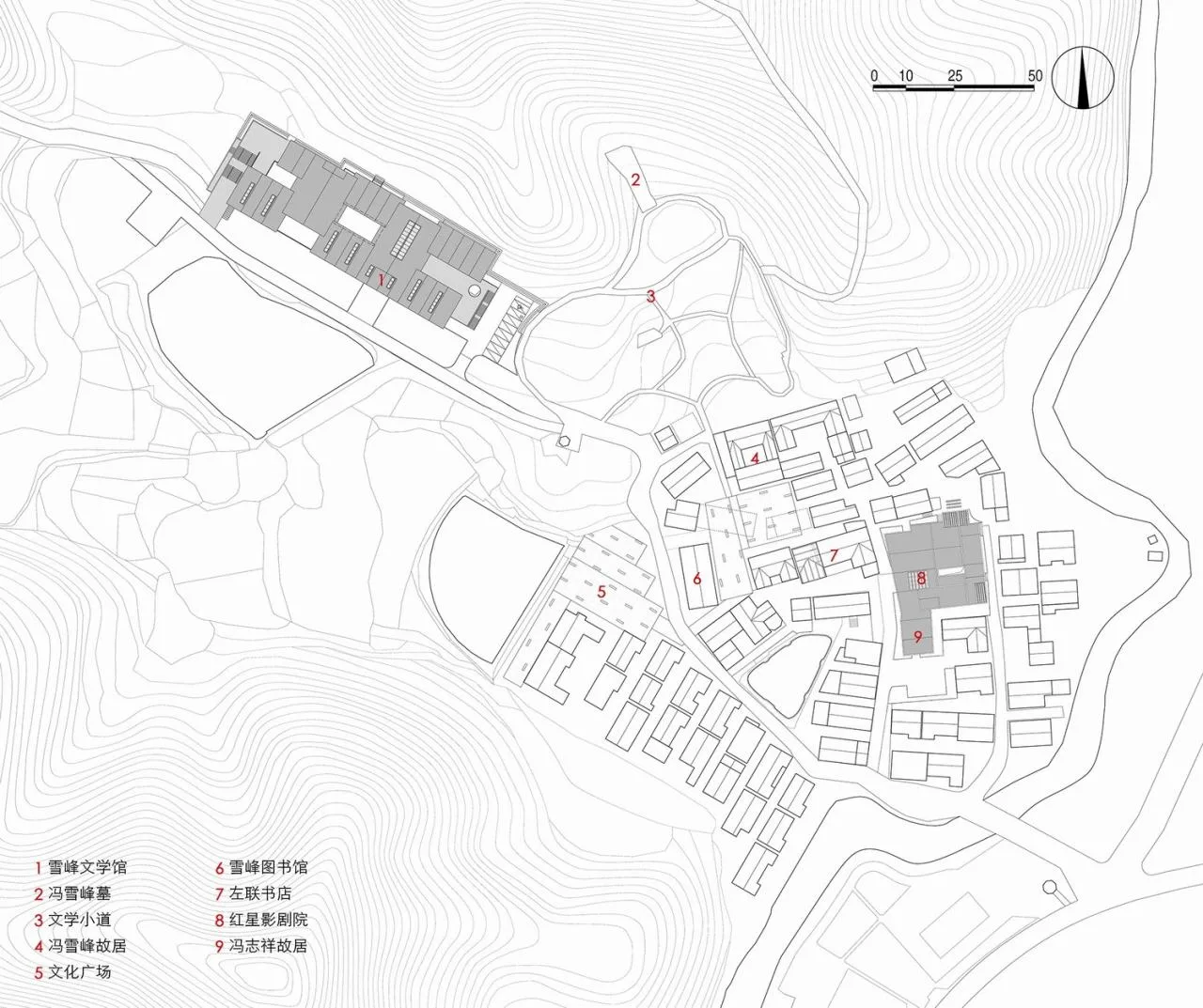
△ Base schematic diagram
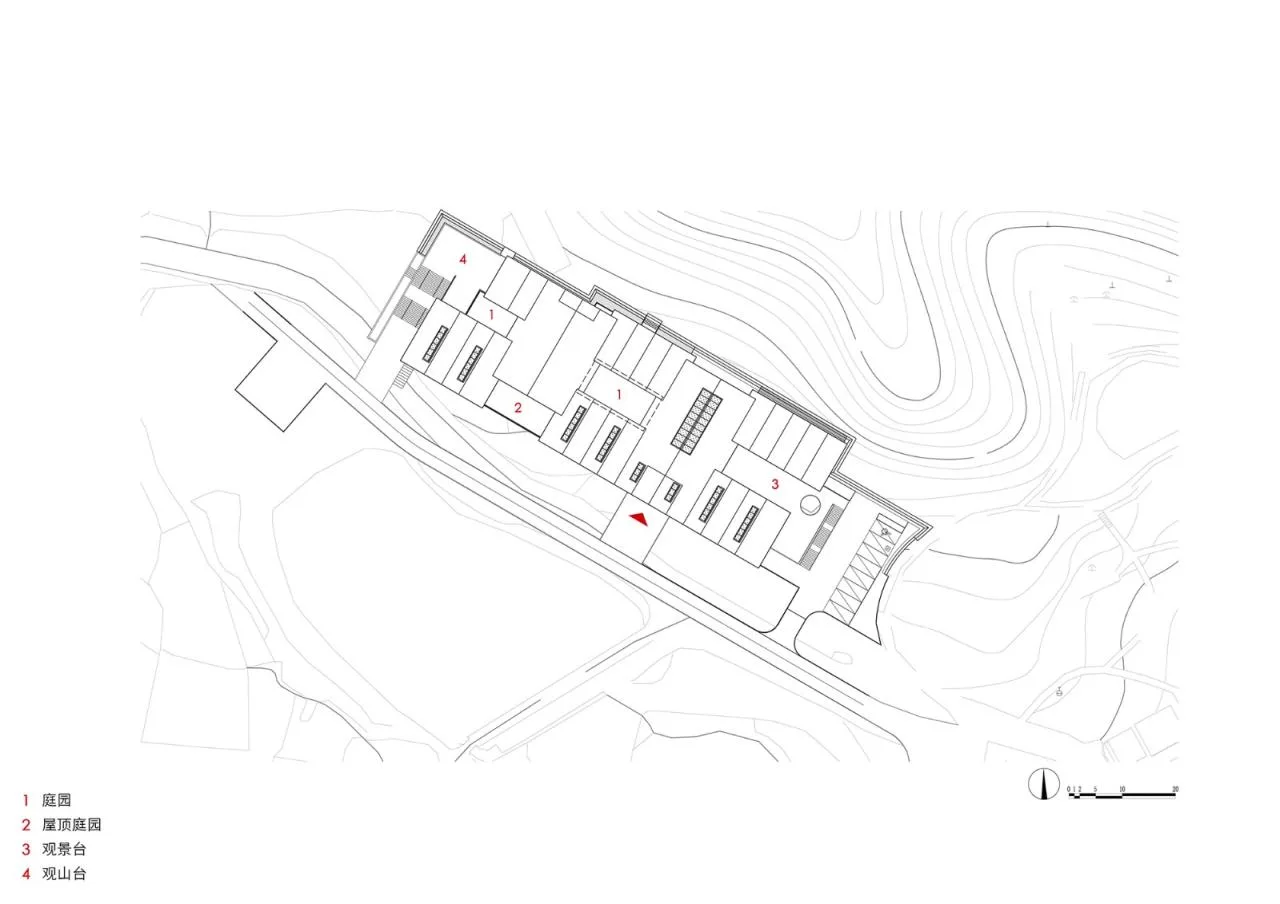
△ General layout plan
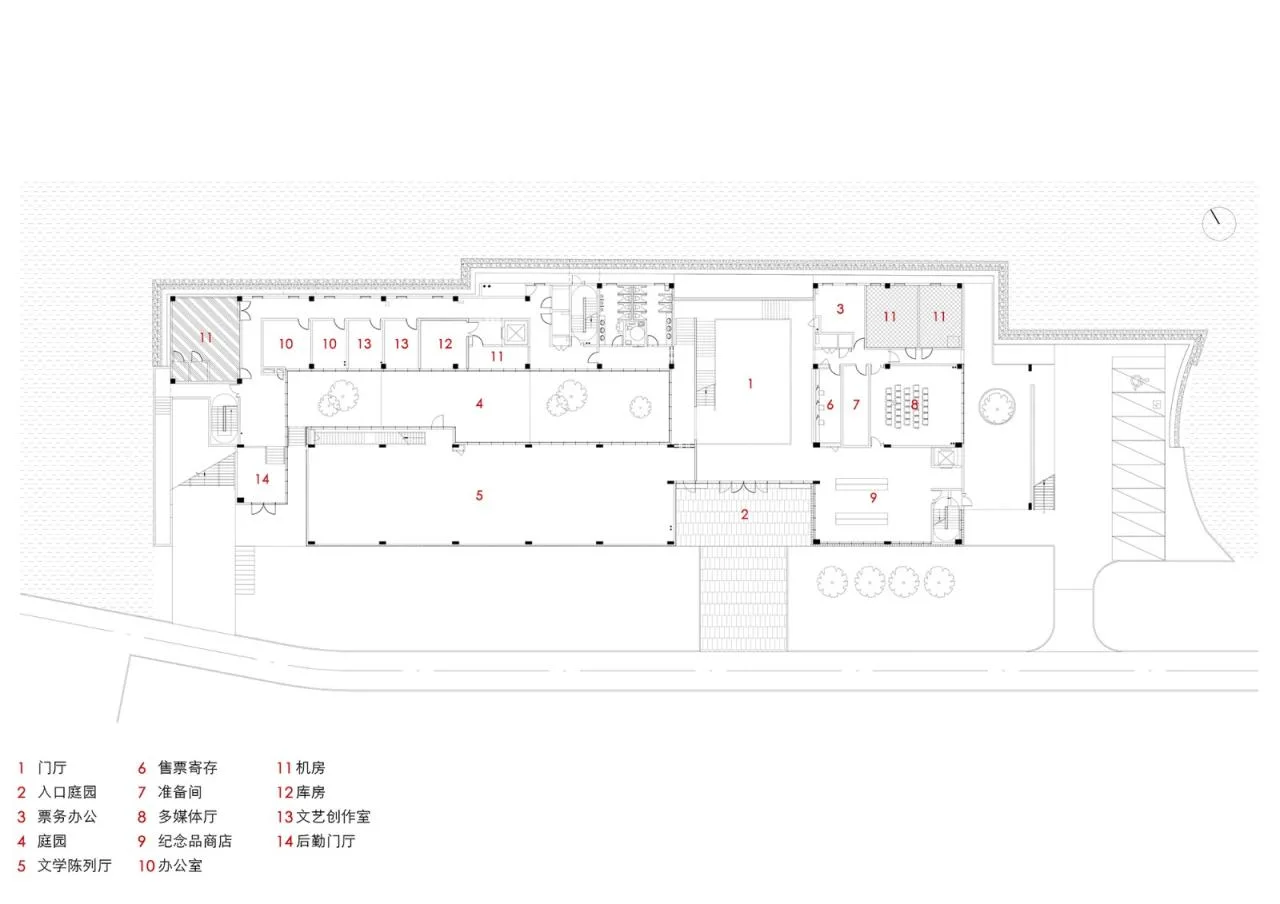
△ First floor plan
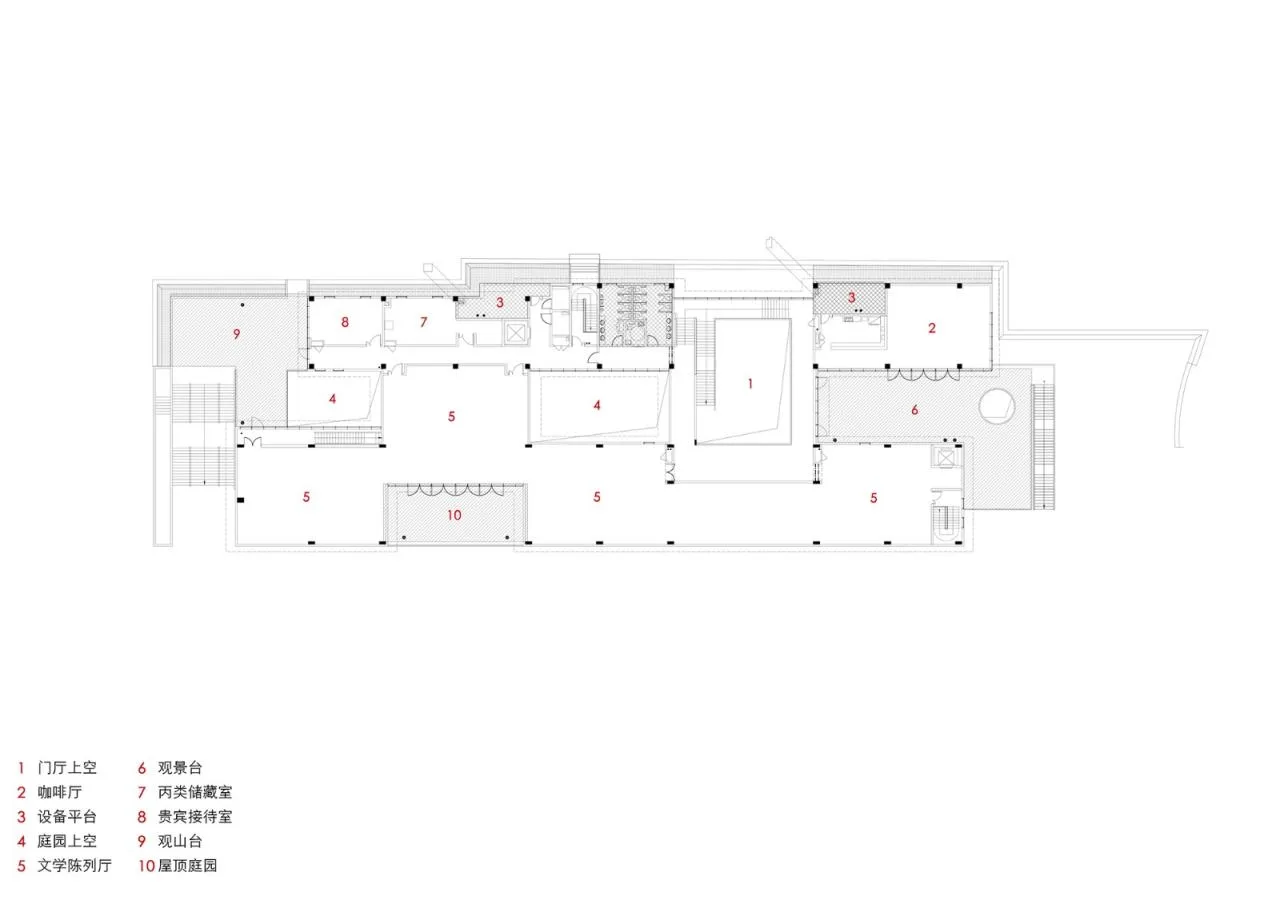
△ Second floor plan
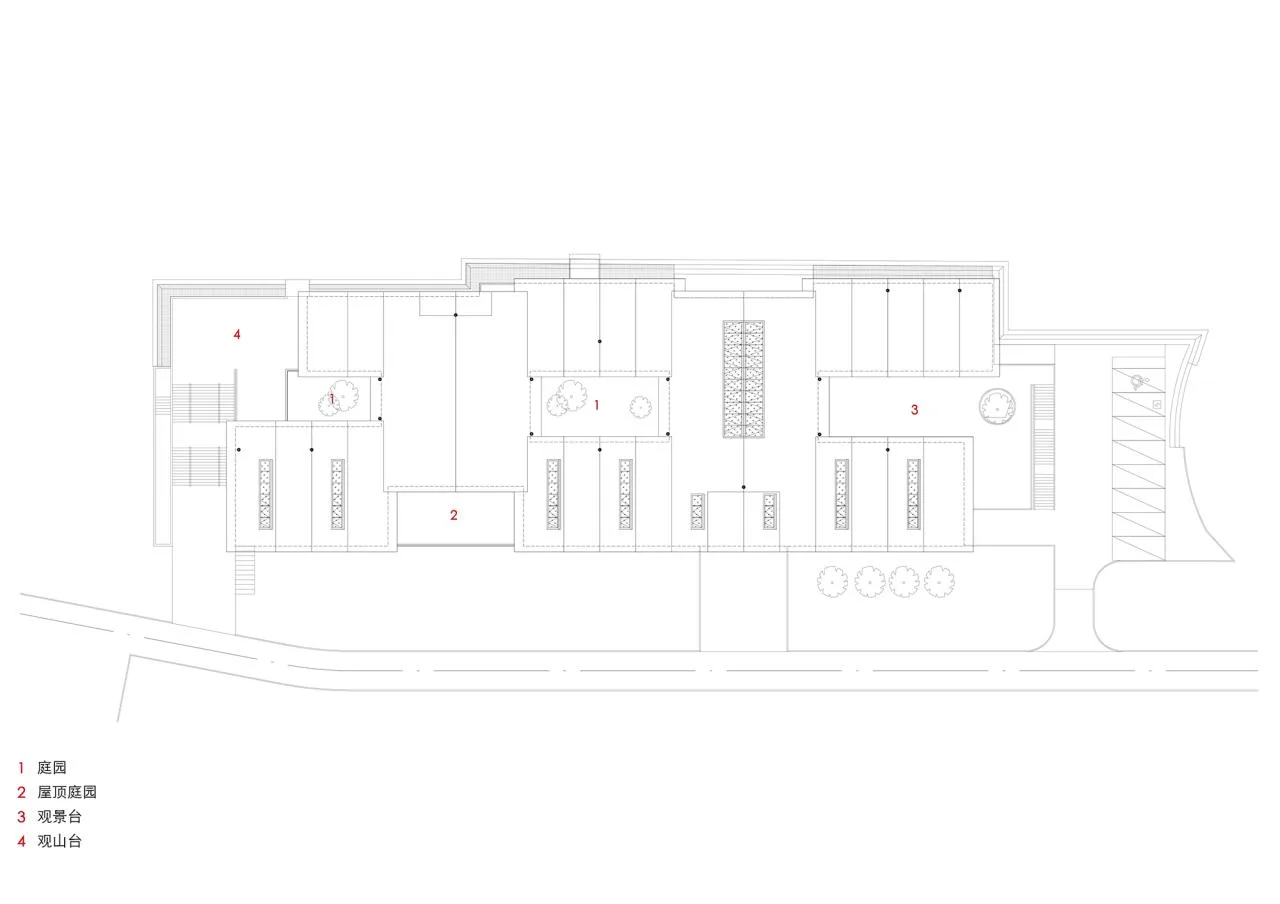
△ Third floor plan
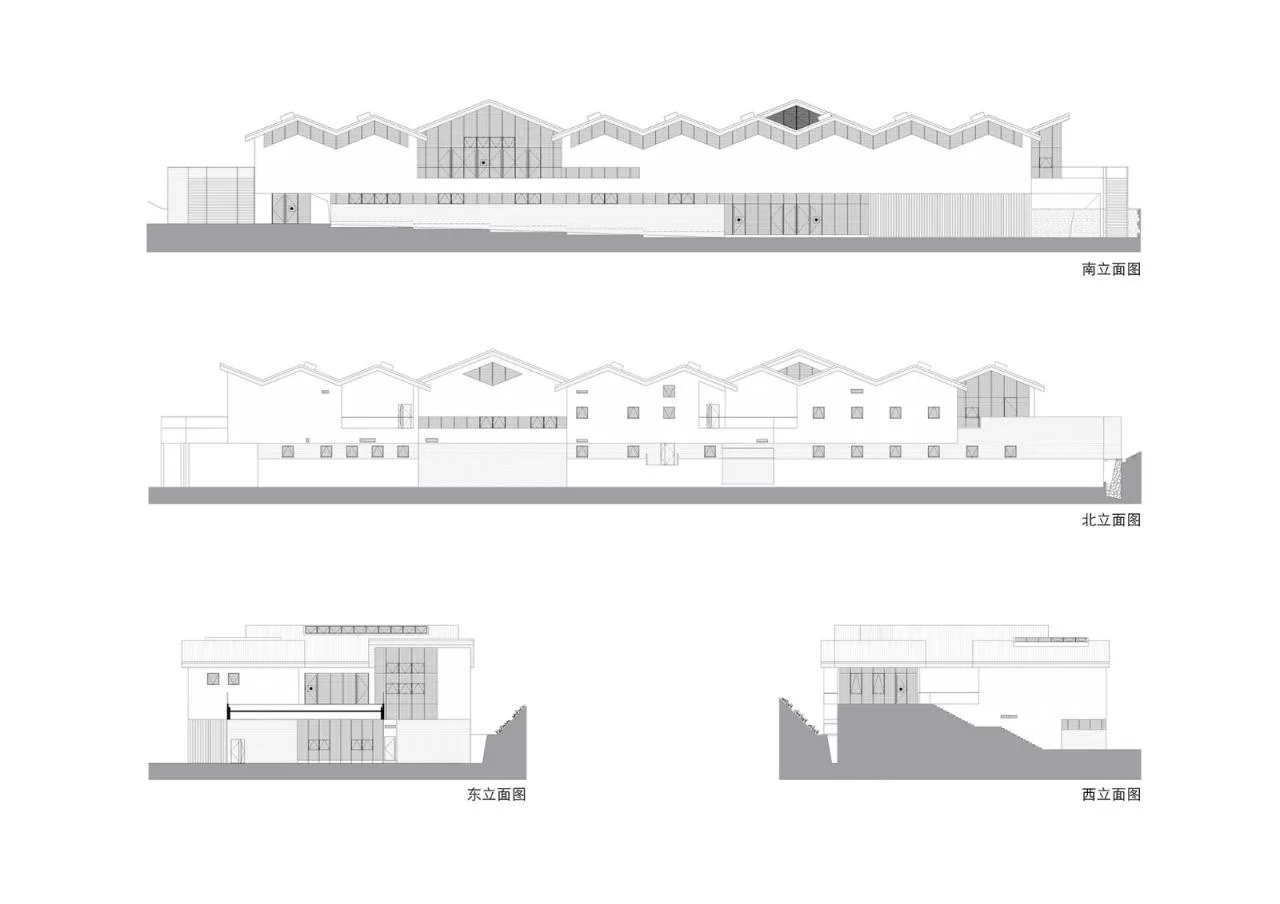
△ Elevation drawing
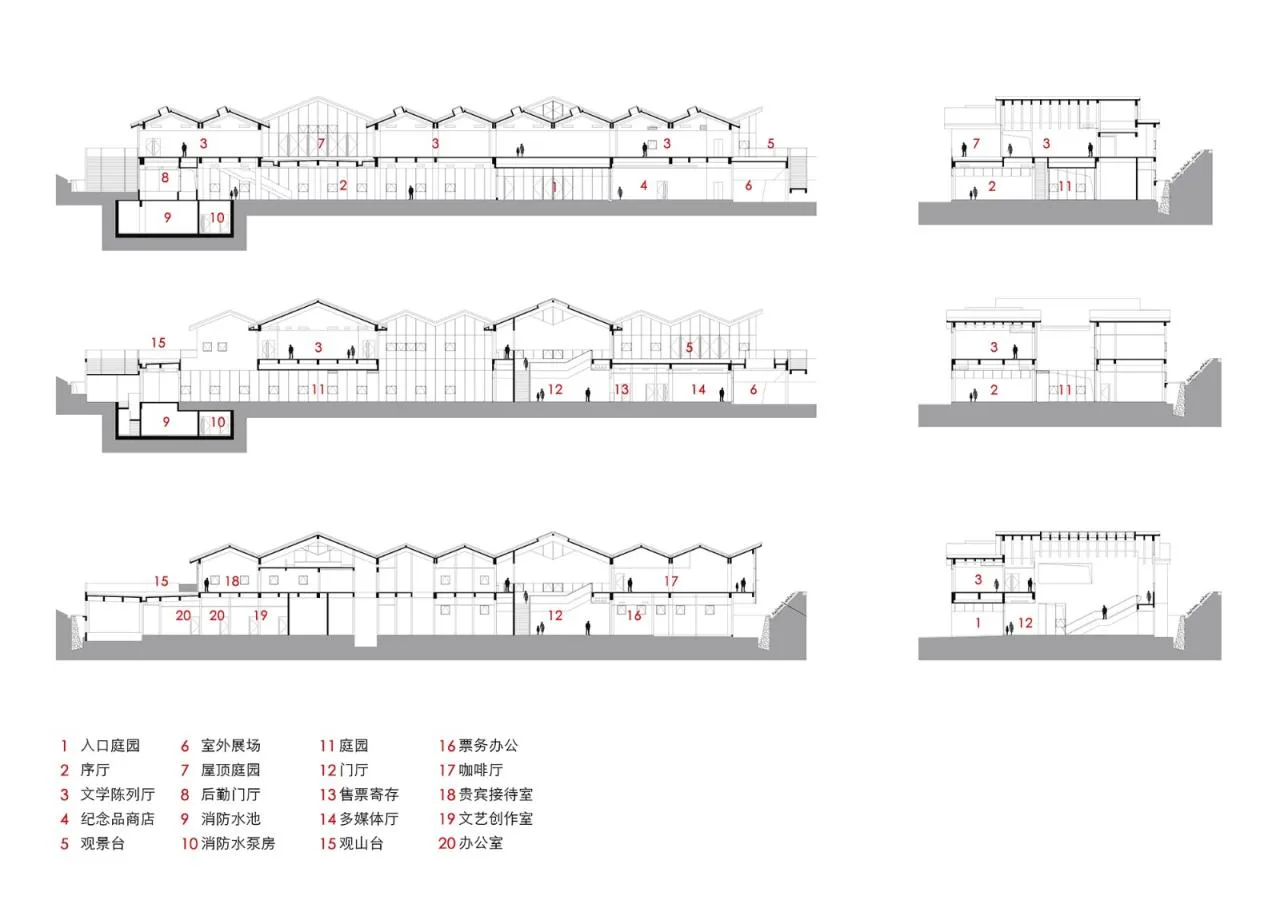
△ Section diagram
Project Information
Architect: Tongji Linhe Architecture
Area: 4,015 m²
Project Year: 2022
Photographer: Octopus Seeks Architecture
Manufacturers: Shanghai Concrete Creation, Sending Bamboo, Dingyan Stone
Design Team: Li Linxue, Zhou Kaifeng, Liu Yang, Jiang Yongqian, Wu Wenjing, Wang Ying, Liu Congcong, Wu Qiang, Su Changming, Zhang Yaotong, Hu Yu, Ye Xing, Yuan Ying, Bing Heliang, Jin Zhiqiang
Structural Design: Tongji University Architectural Design and Research Institute (Group) Co., Ltd
Landscape Design: Tongji University Architectural Design and Research Institute (Group) Co., Ltd
Construction: Zhejiang Jinrui Building Decoration Engineering Co., Ltd
Principal: Yiwu Urban Investment and Construction Group Co., Ltd
Location: Yiwu















Must log in before commenting!
Sign Up