
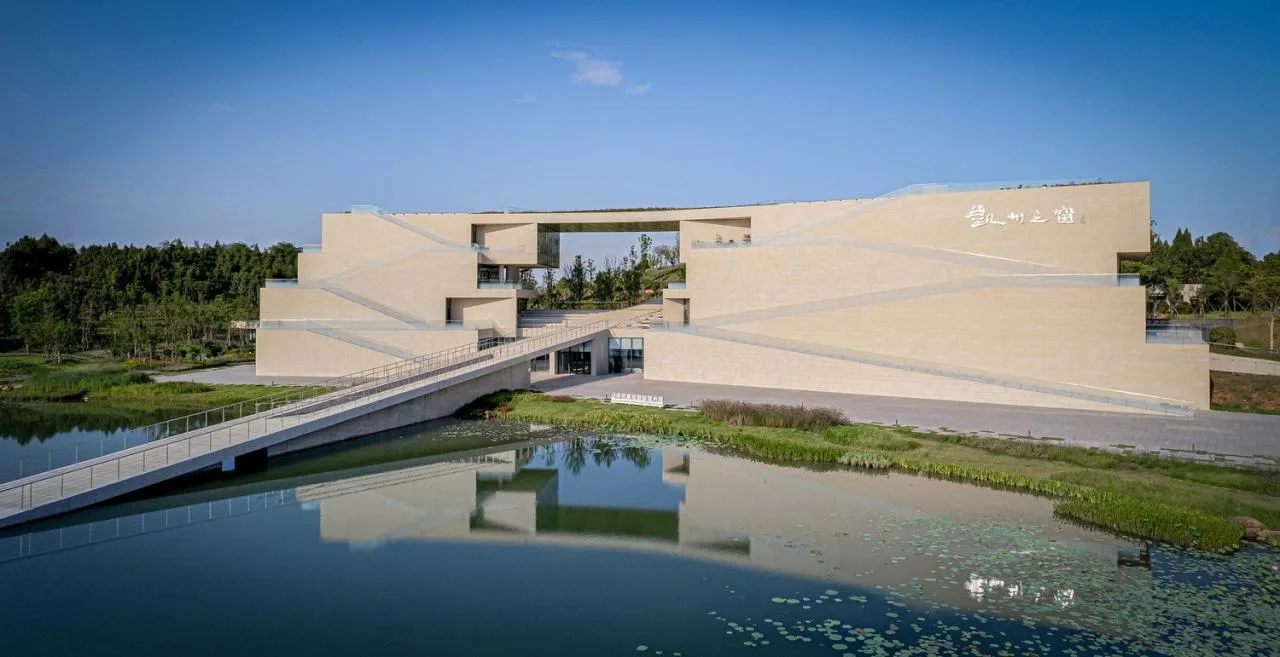
The Kaizhou New City Planning Exhibition Hall is situated within the Kaizhou New City Launch Zone, right at the intersection of the city’s two main axes. The horizontal axis is defined by People’s Canal Park, the core landscape belt of the launch zone, while the vertical axis is the Zhongjin Expressway, which connects the new urban agglomeration. Positioned at the forefront of new city development, this exhibition hall serves as a vital public space and acts as the city’s most direct showcase to the outside world.
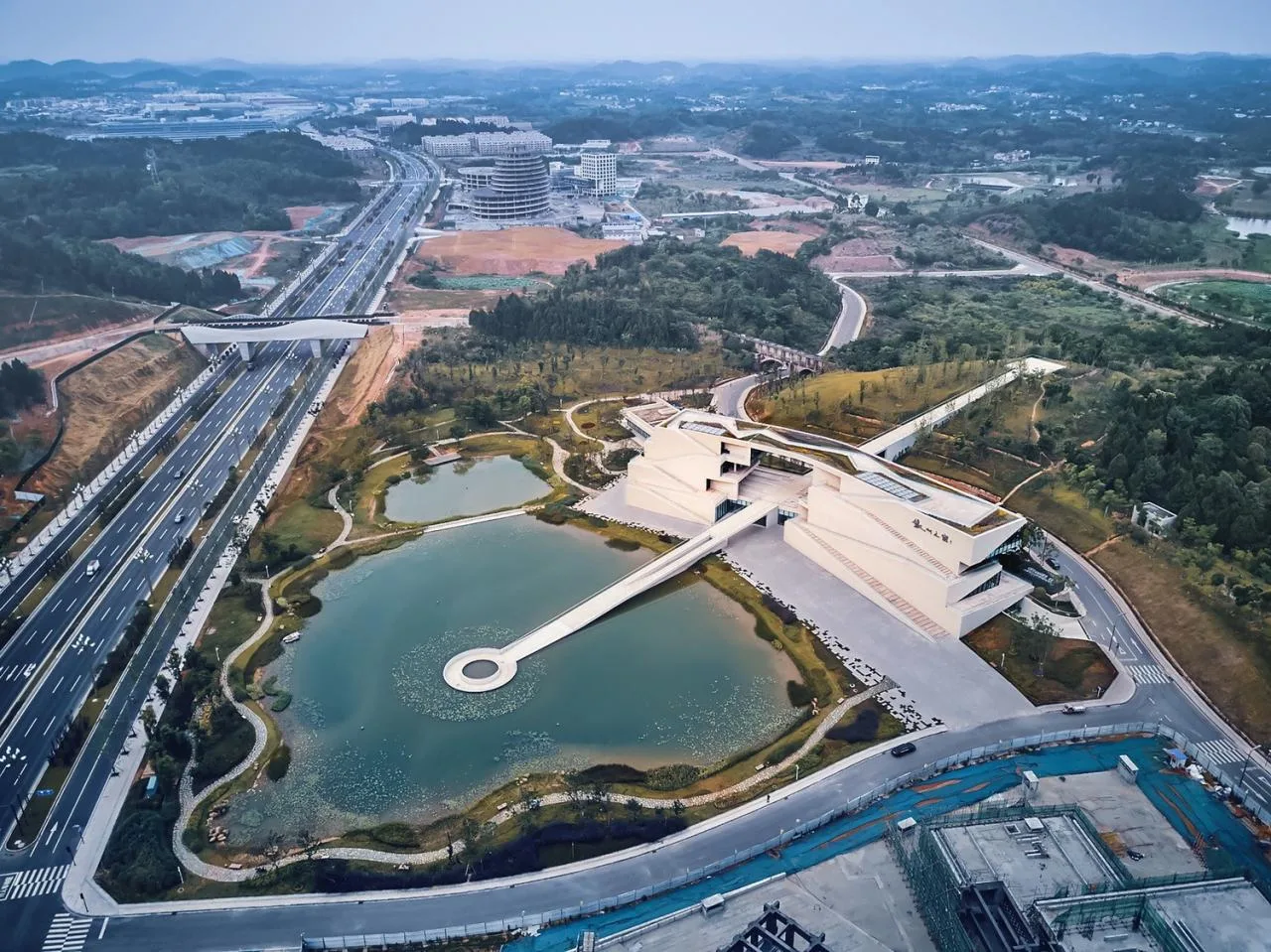
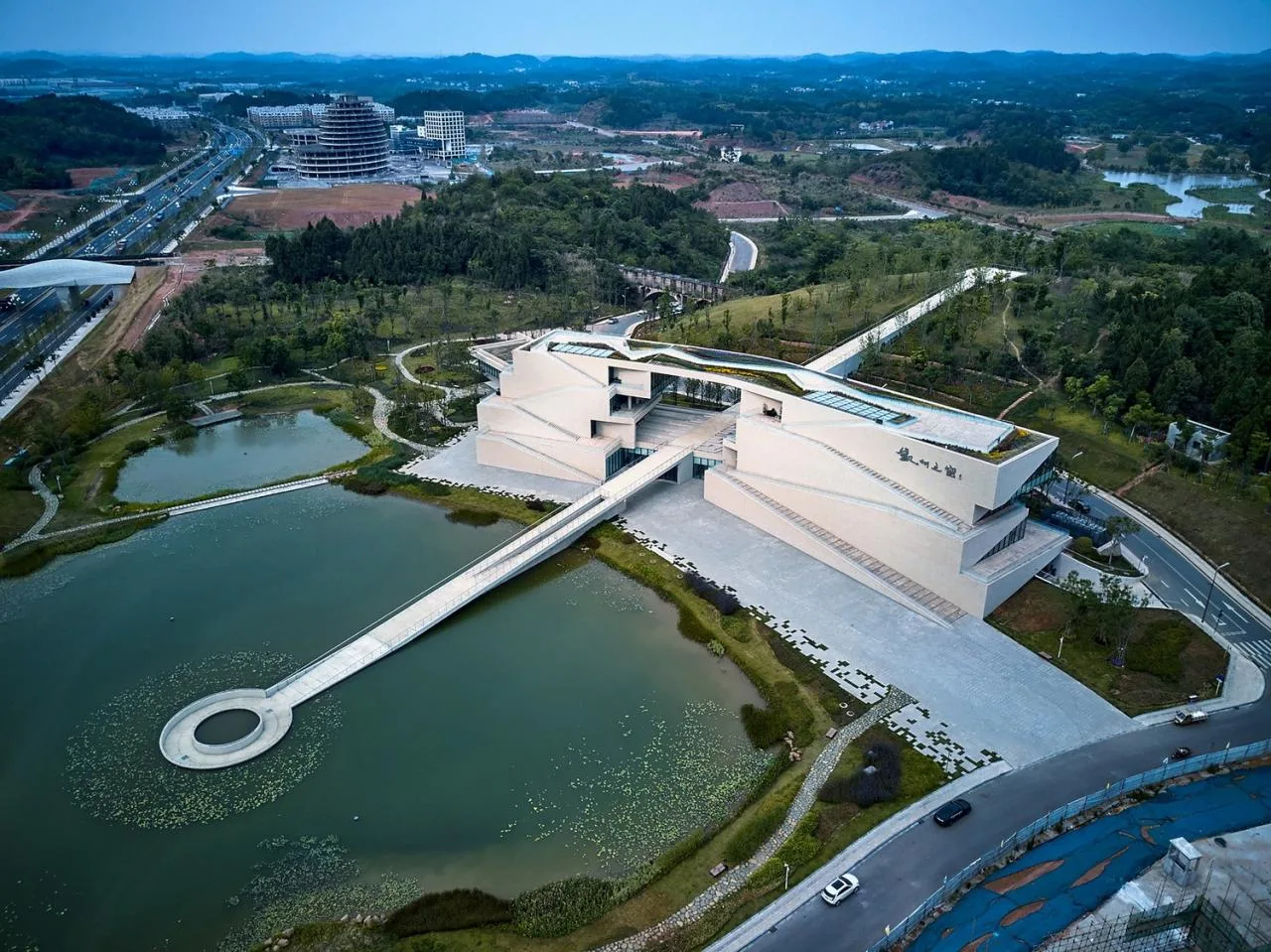
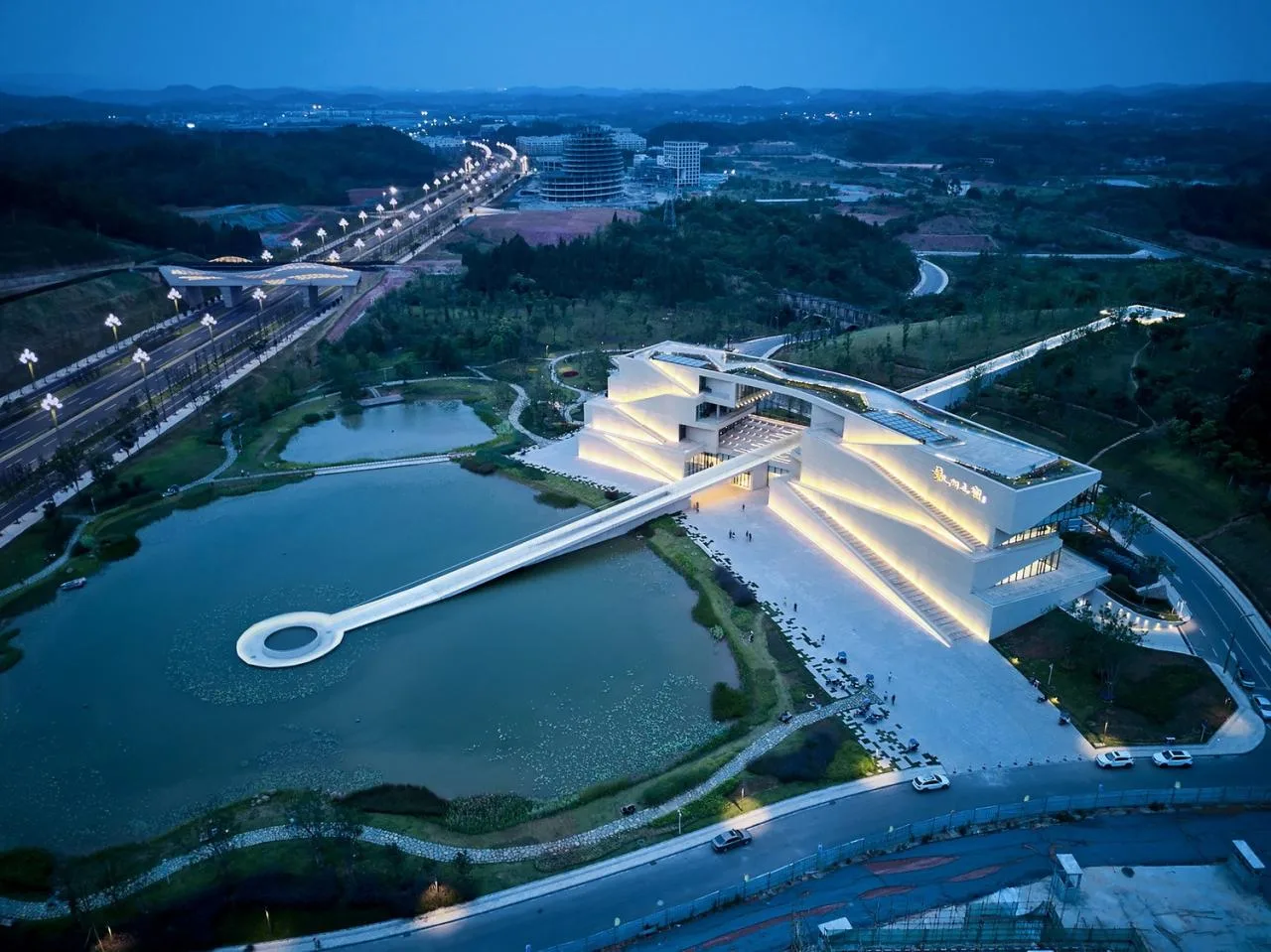
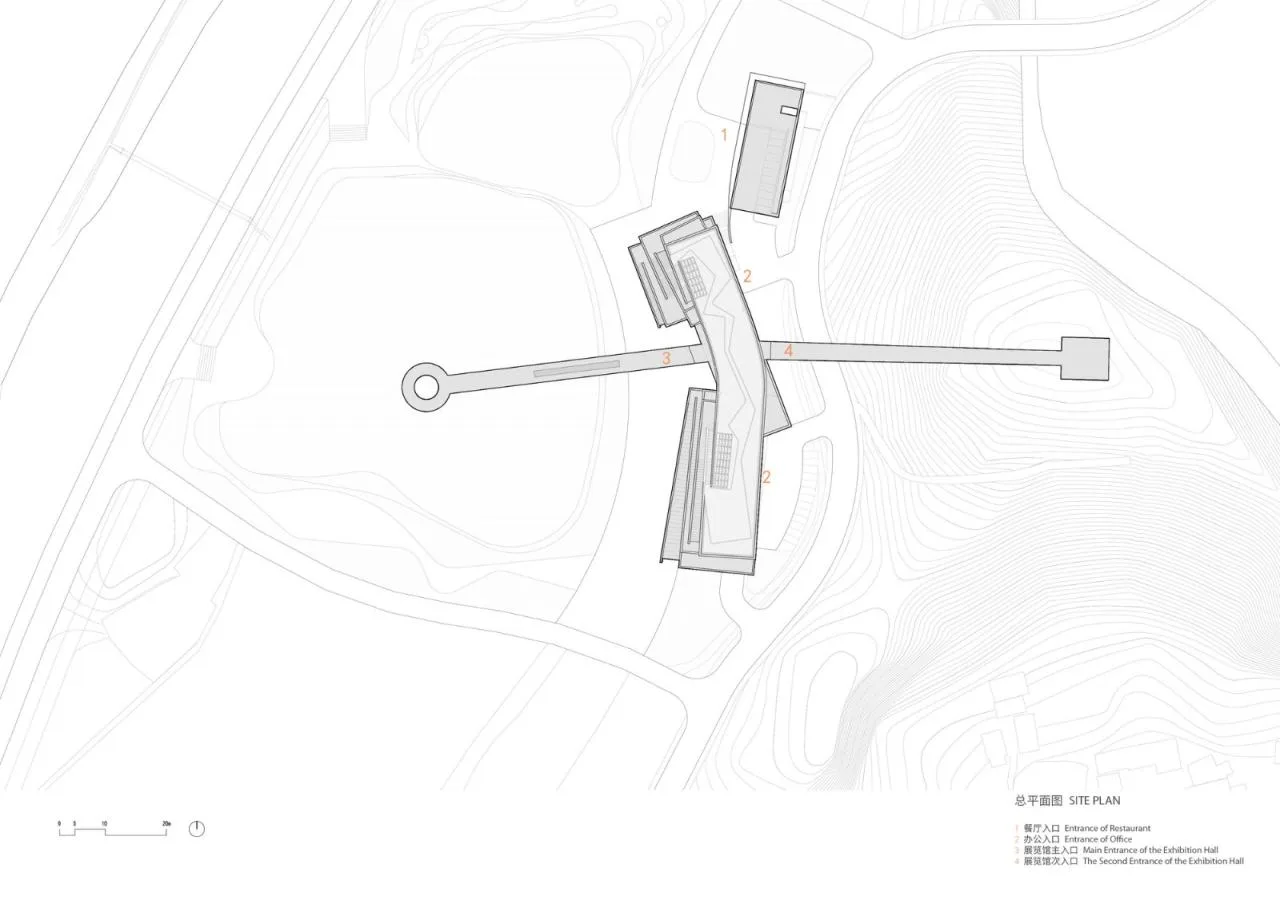
The exhibition center is located on the east side of Jinzhong Expressway, covering approximately 14,000 square meters. The site is bordered by a lotus pond to the west and hills to the east, with the People’s Canal flowing across the mountaintop. Nestled between mountains and water, the location is rich in natural landscape features. A small path running along the eastern hill into the village valley has been expanded into the main access road for the exhibition hall.
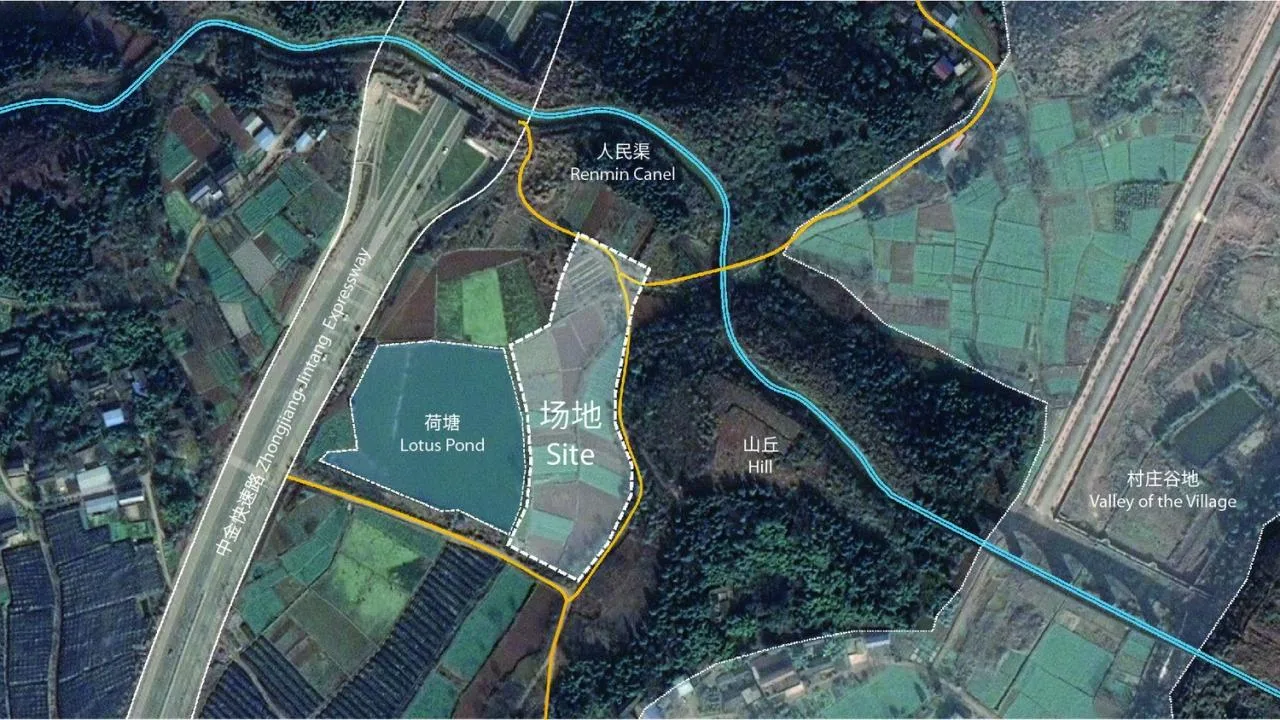
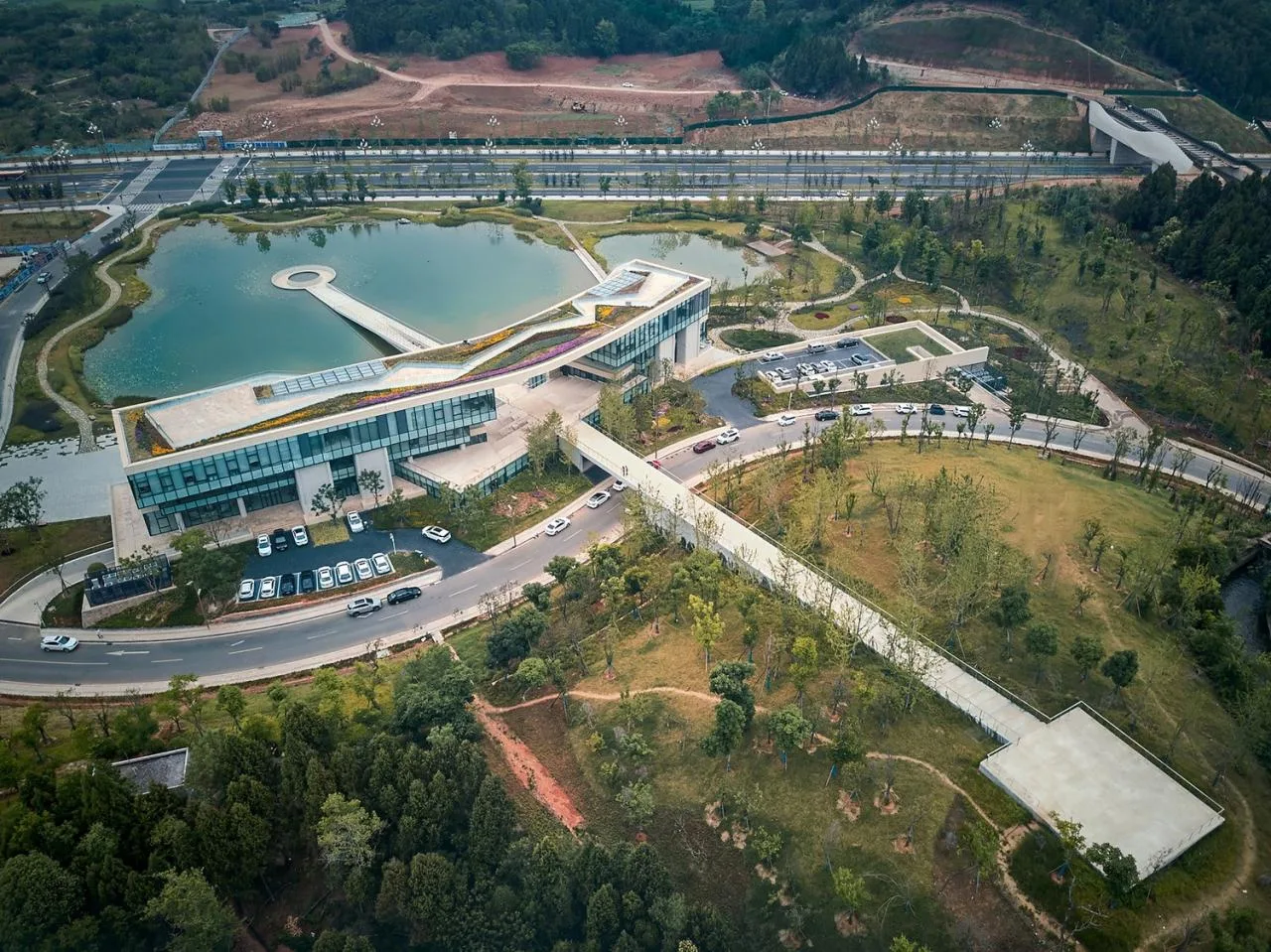
The site benefits from notable landscape features, including the natural beauty of the lotus pond and the cultural significance of the People’s Canal. The lotus pond continues the rural landscape characteristic of a traditional agricultural society, while the People’s Canal stands as a witness to the region’s historical production activities. The architects emphasize that building a new city requires re-examining the relationship between humans and nature, as well as between people and history. This involves responding to the site’s unique environment, activating existing temporal and spatial elements, and ultimately defining a clear creative direction.
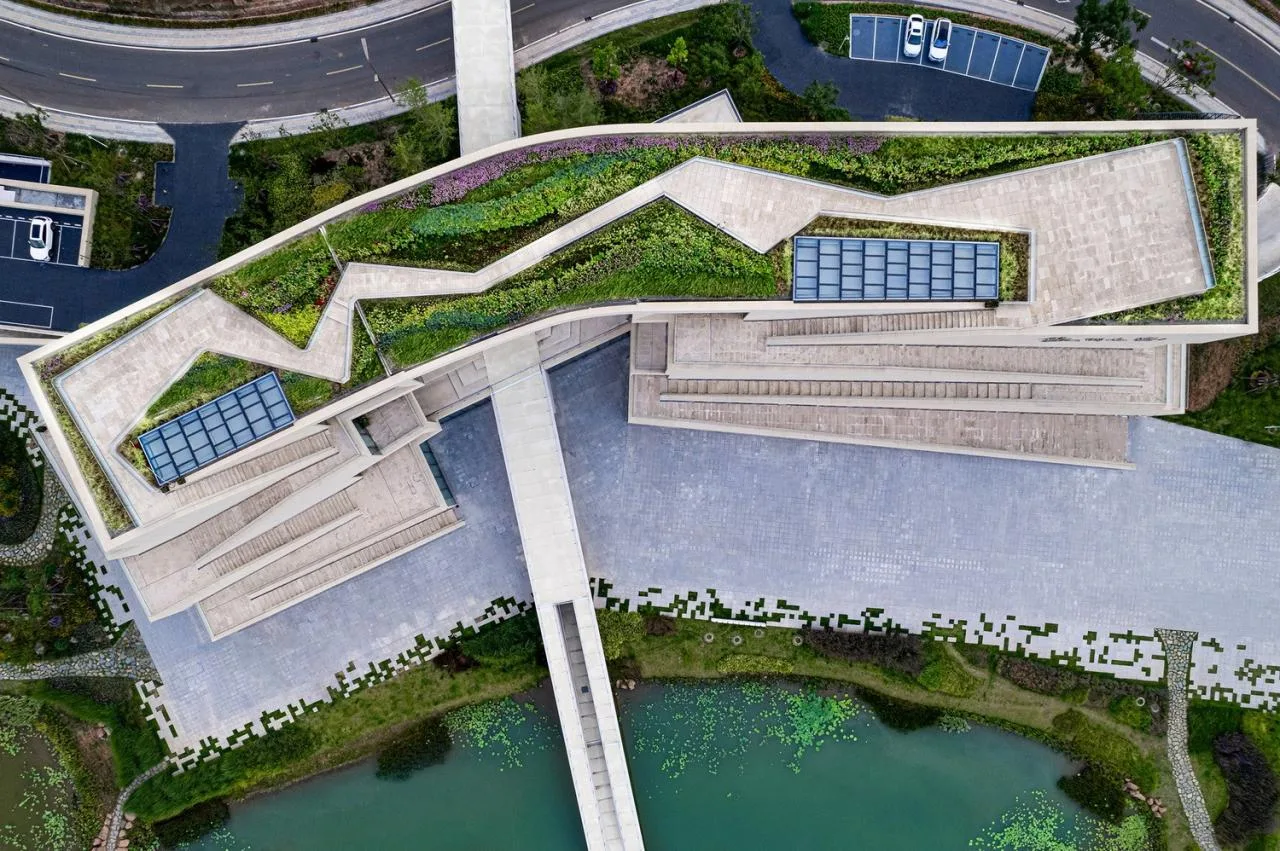
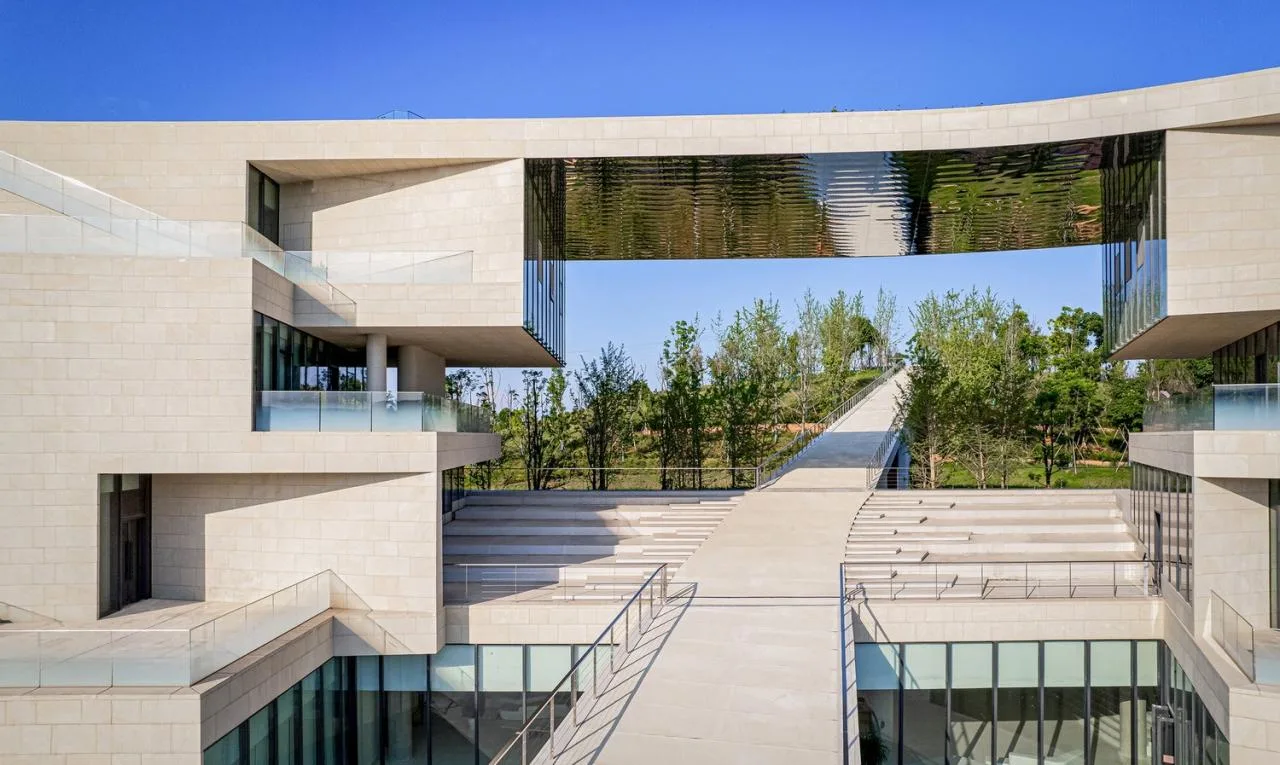
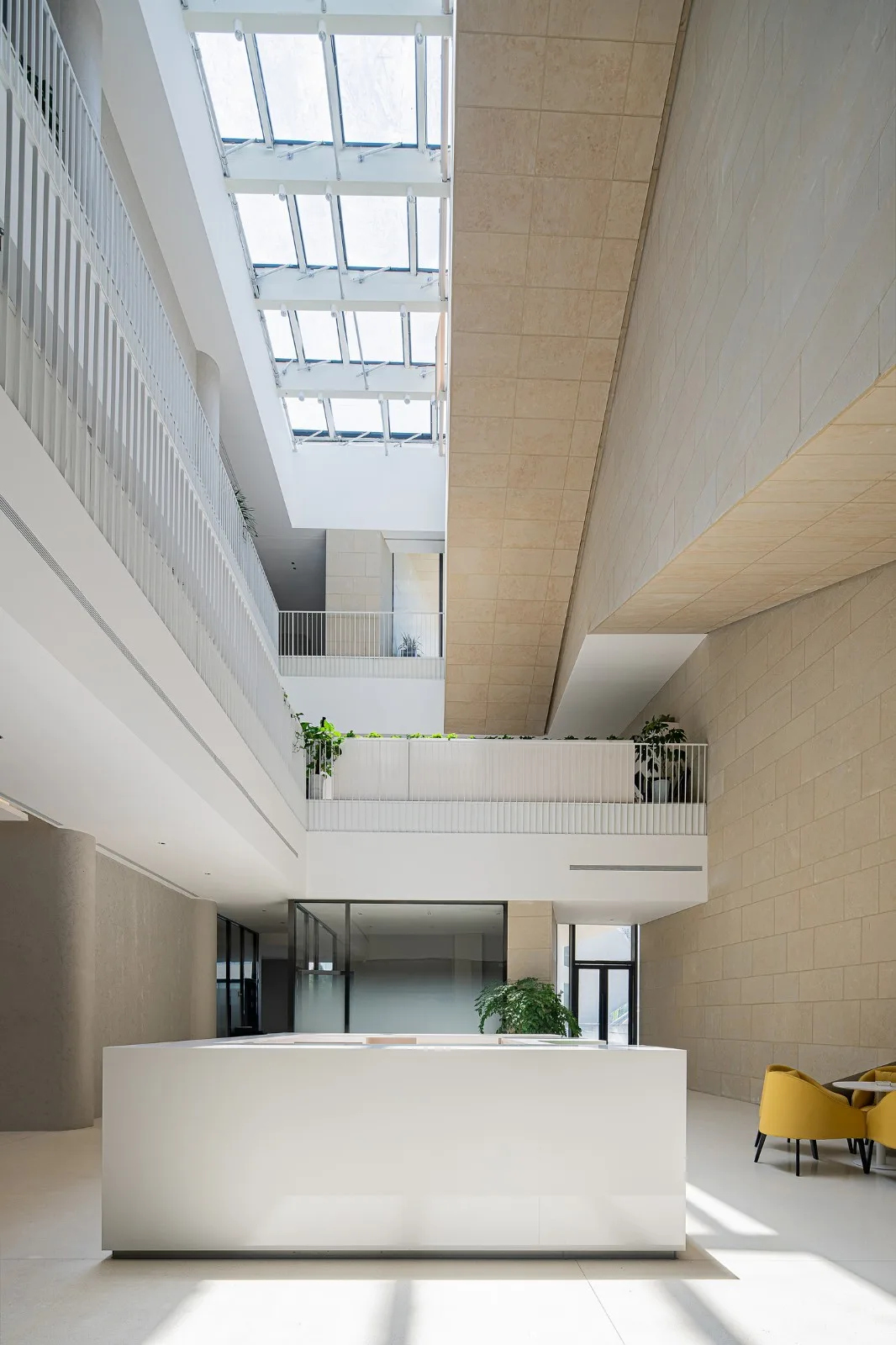
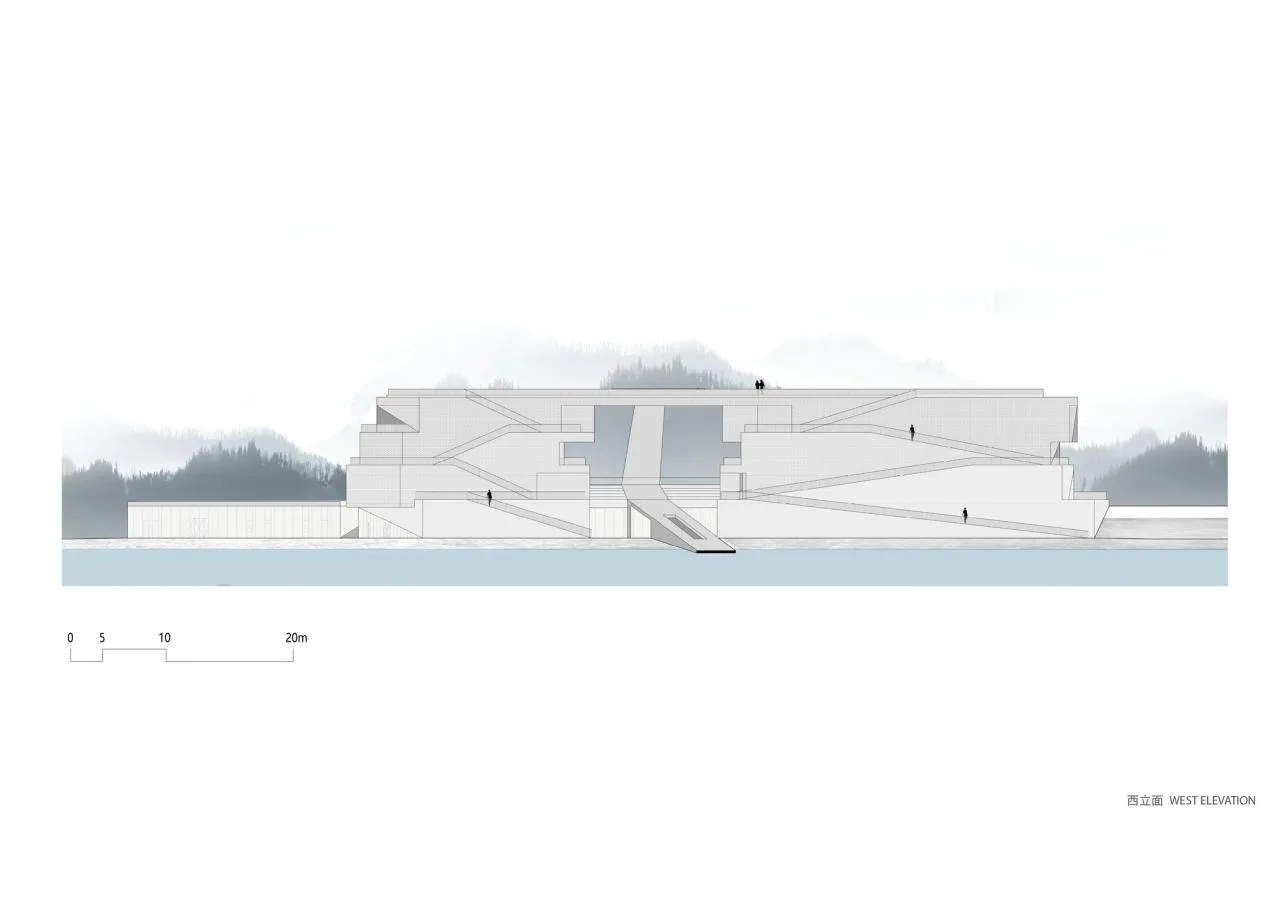
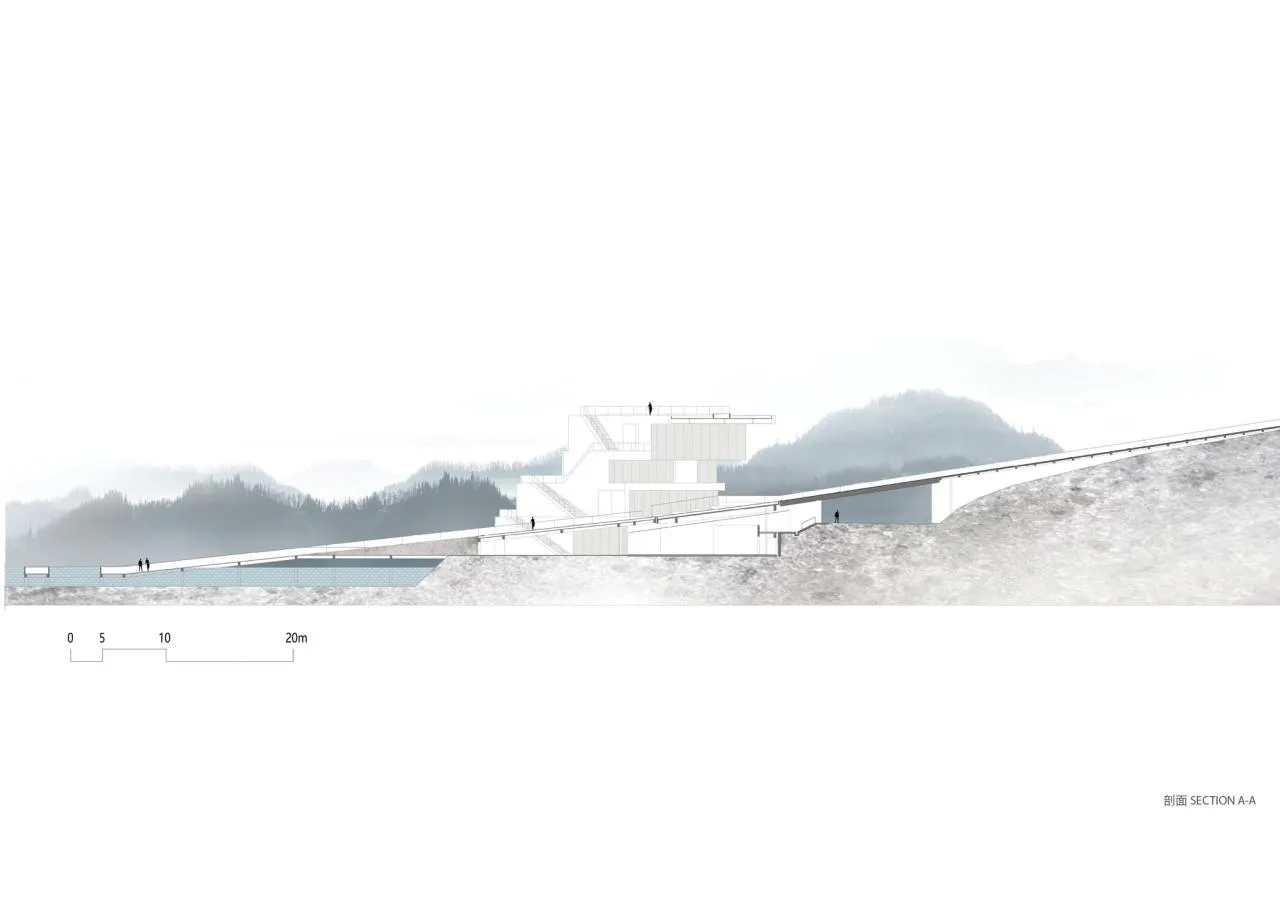
The design plan integrates functional requirements to create a primary volume measuring 20 meters in height and 100 meters in length. A corridor bridge passes through the building, linking the lotus pond to the mountaintop and intersecting the building volume to form a cross-like relationship. This creates a large opening in the center of the building, which serves as an outdoor public space and strengthens the dialogue between the natural landscape and architecture.
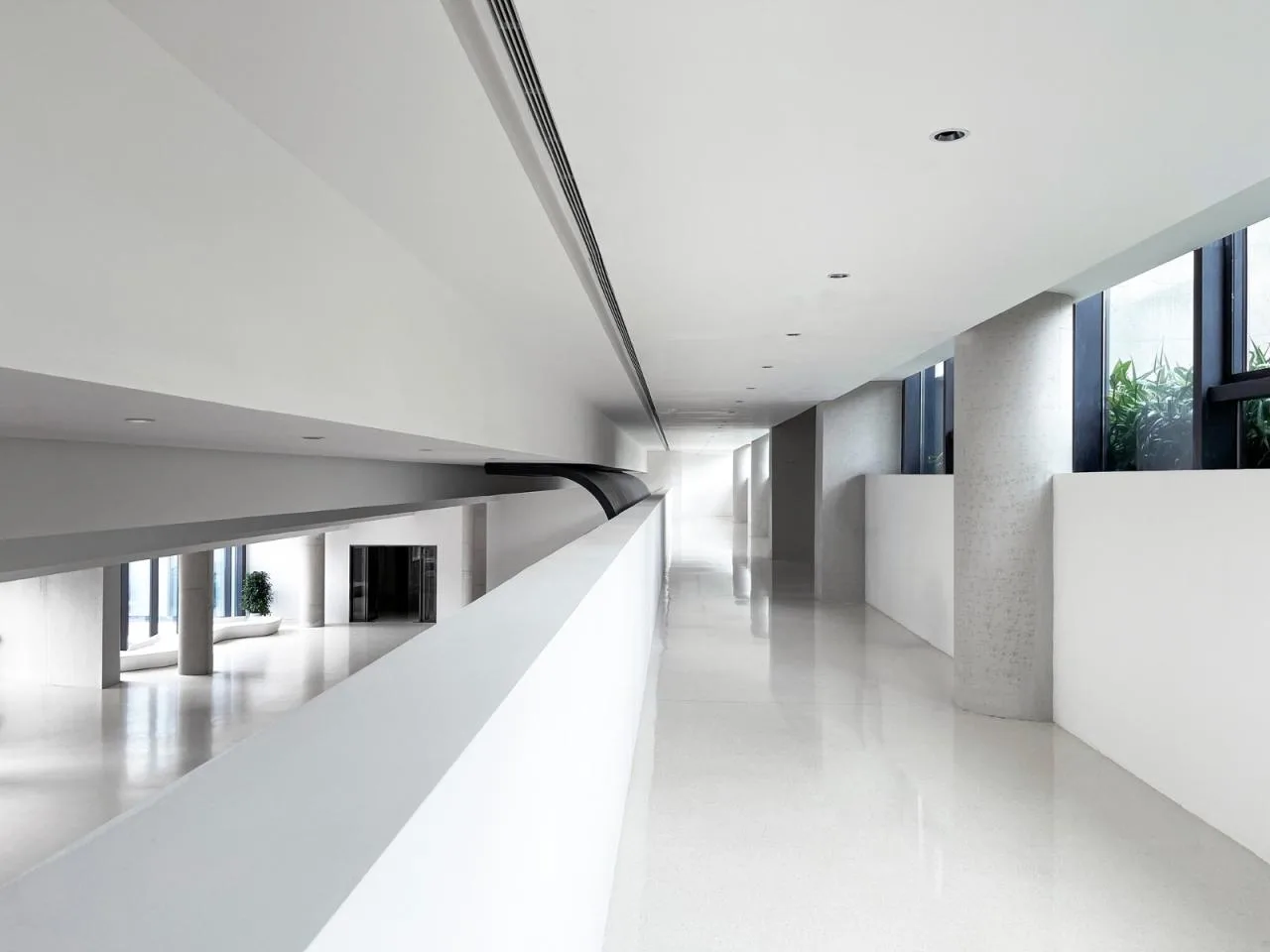
The corridor bridge crosses through the cave entrance, connecting visitors between the lotus pond and the hills. It acts as a window through which people can appreciate nature. Although the cave entrance was not originally a grand or unique landscape feature, the design’s visual constraints and openness suggest the presence of scenic views, offering visitors a fresh psychological experience.
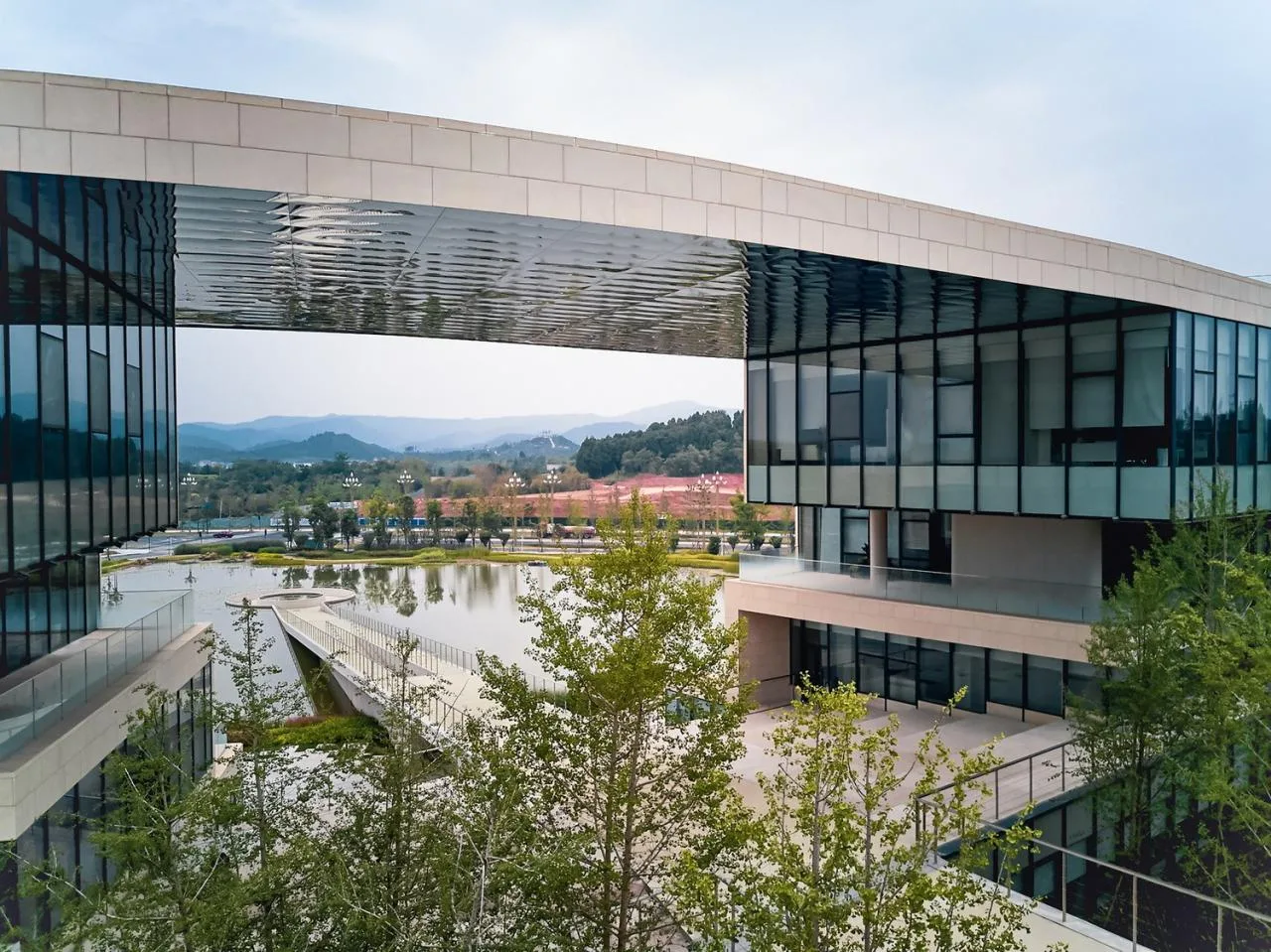
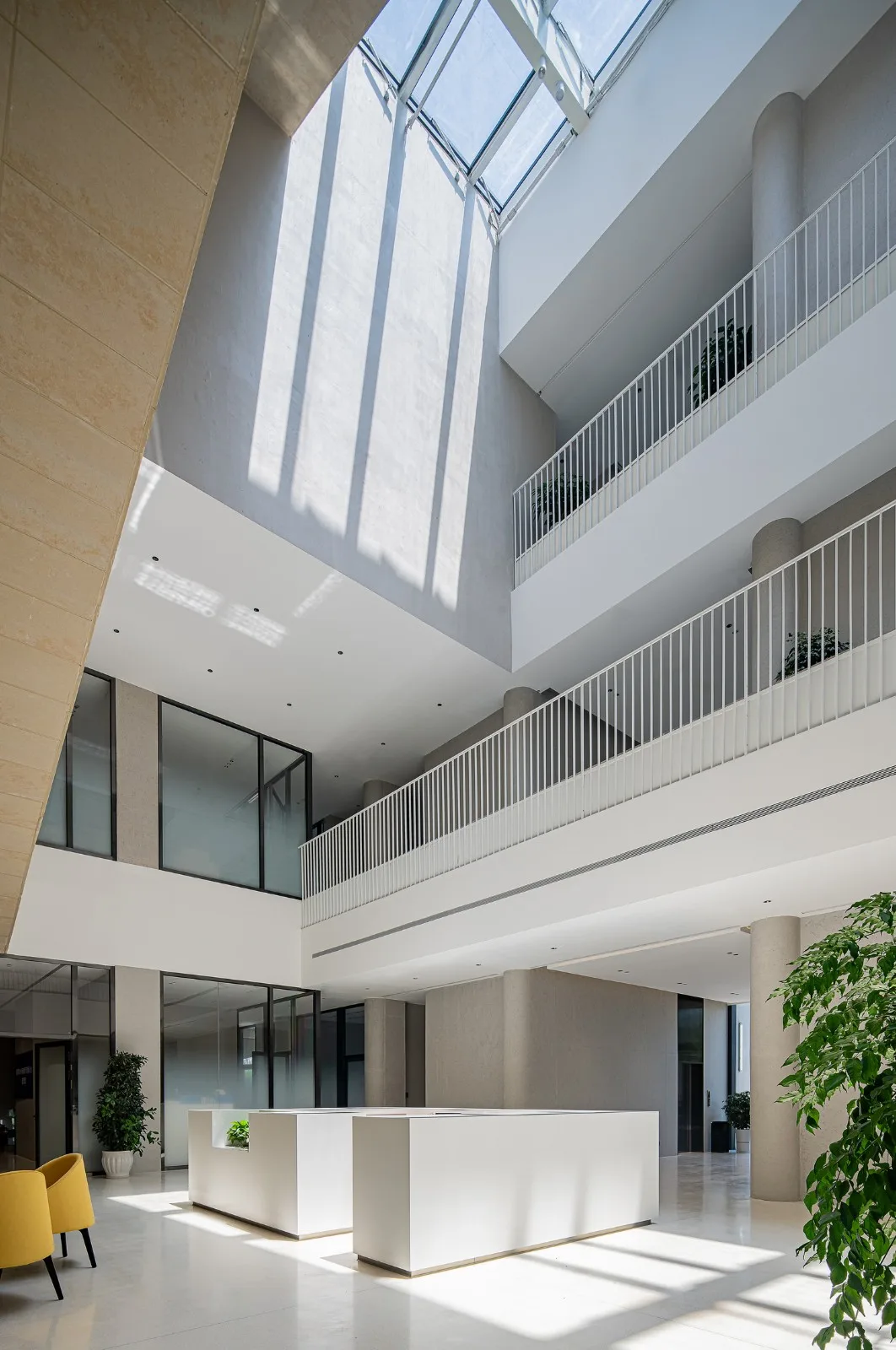
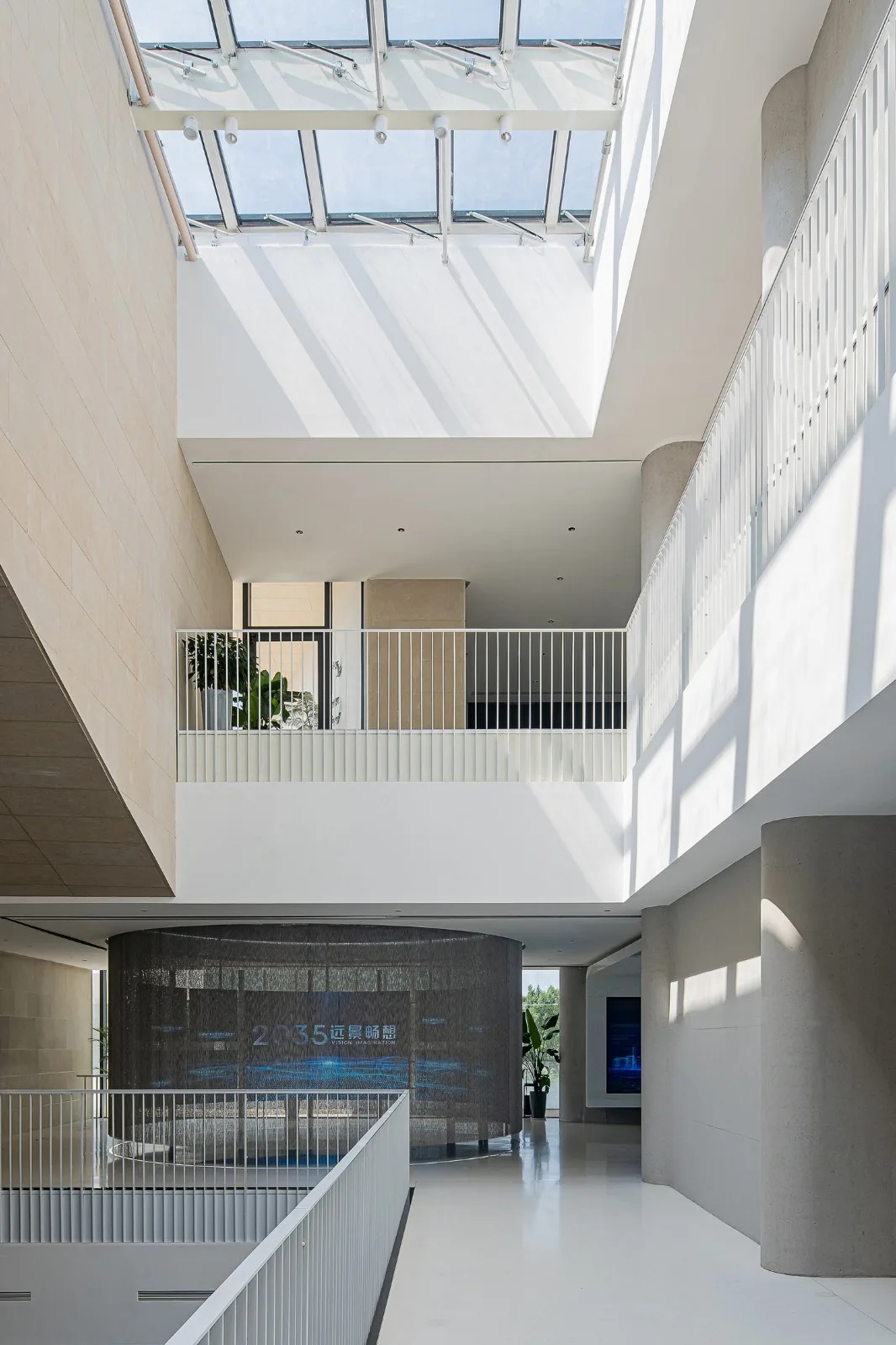
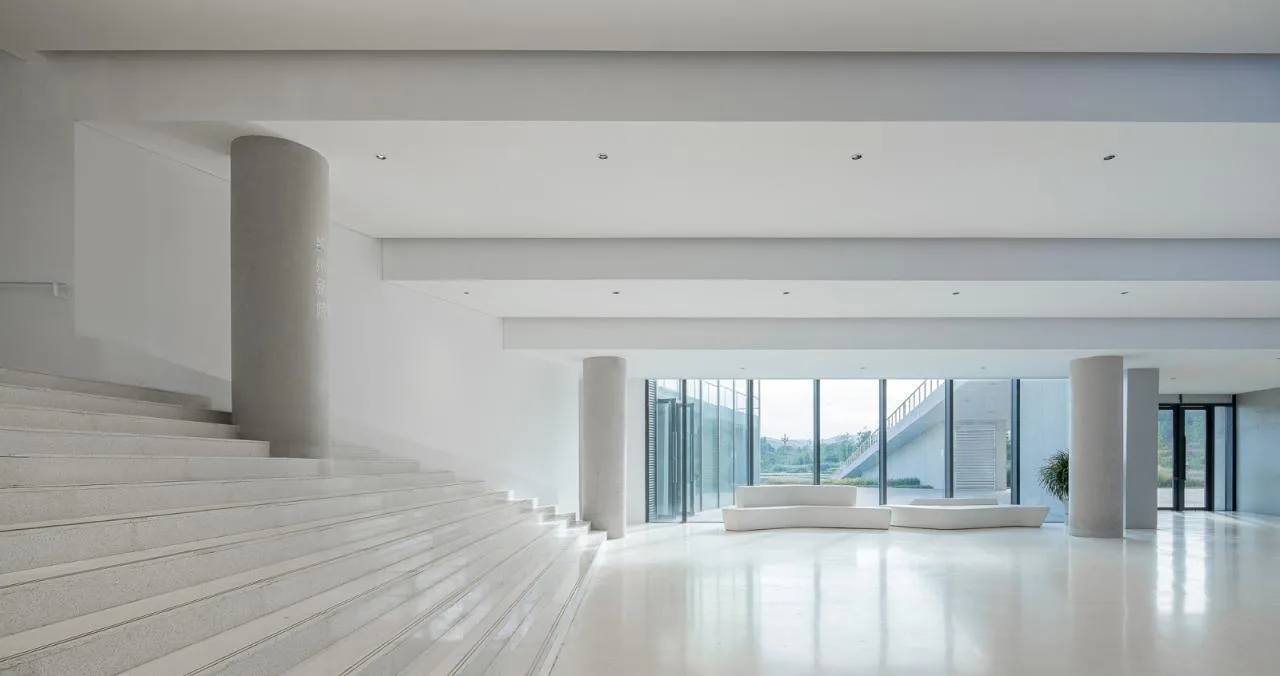
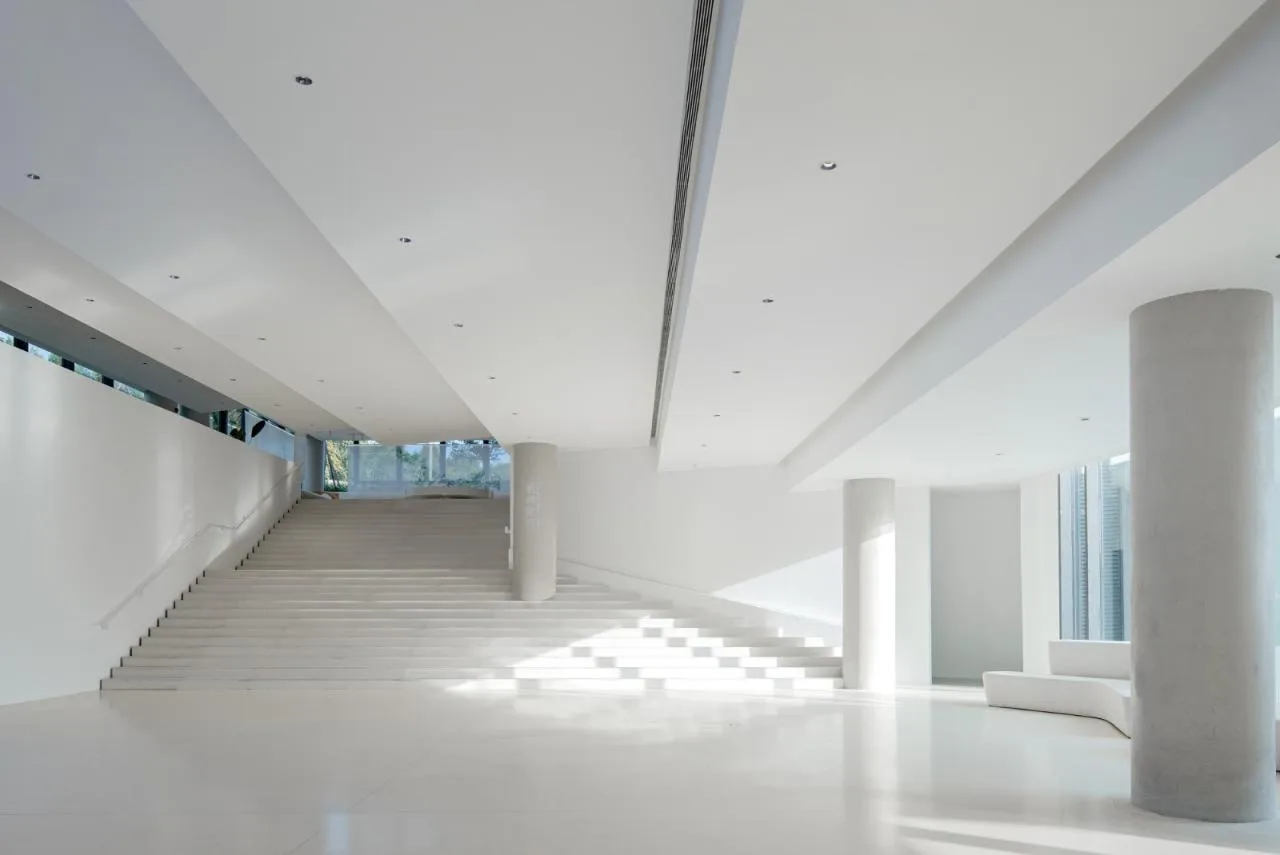
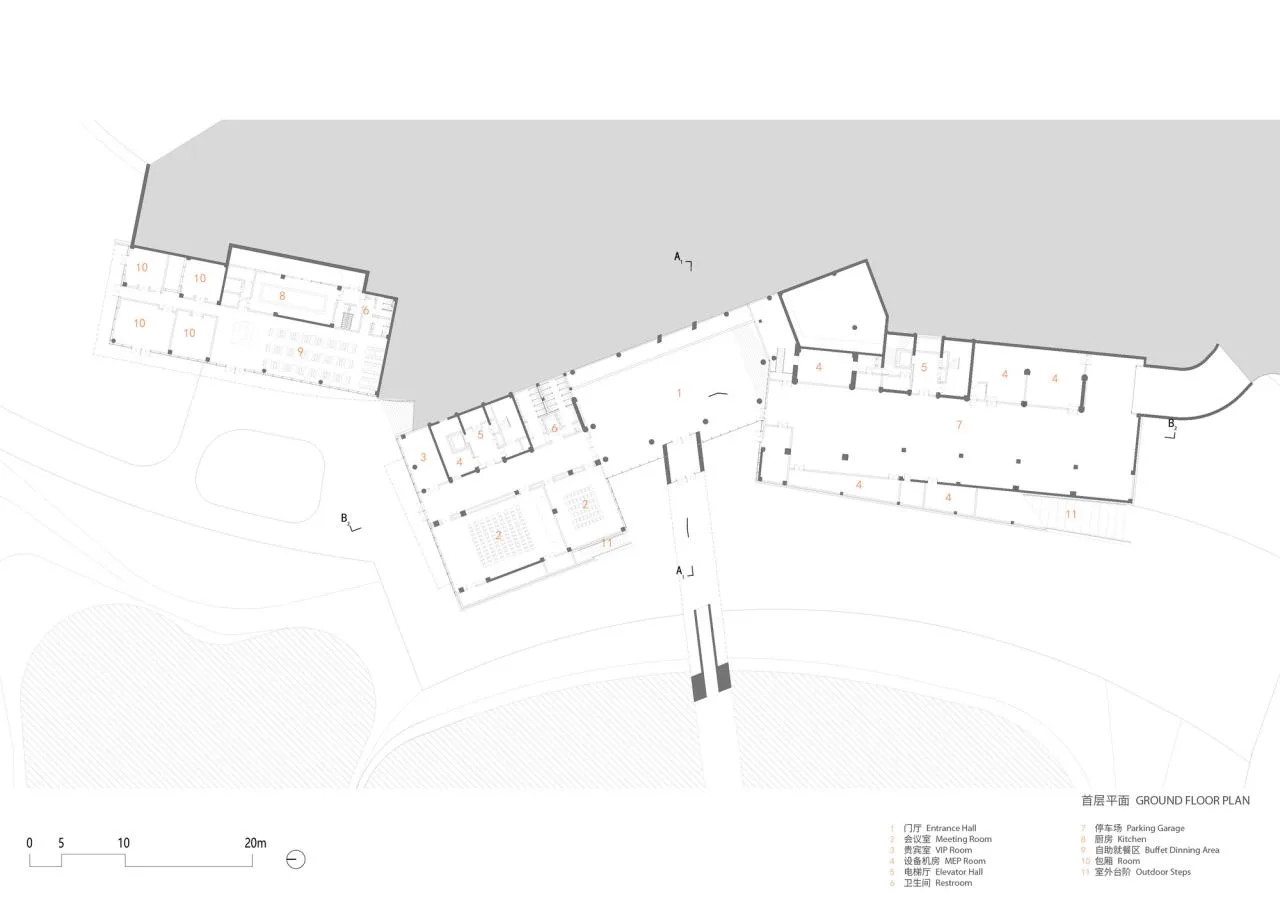
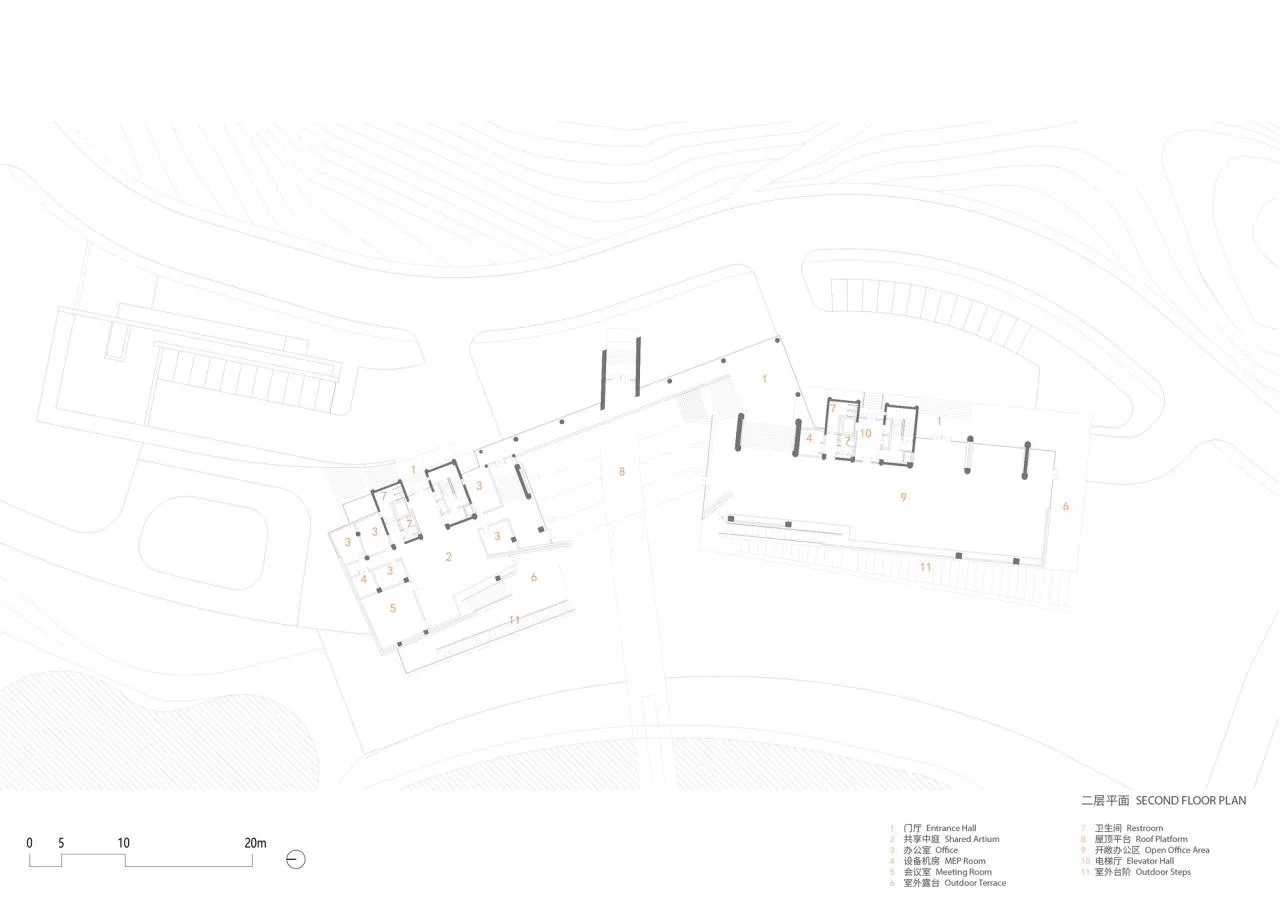
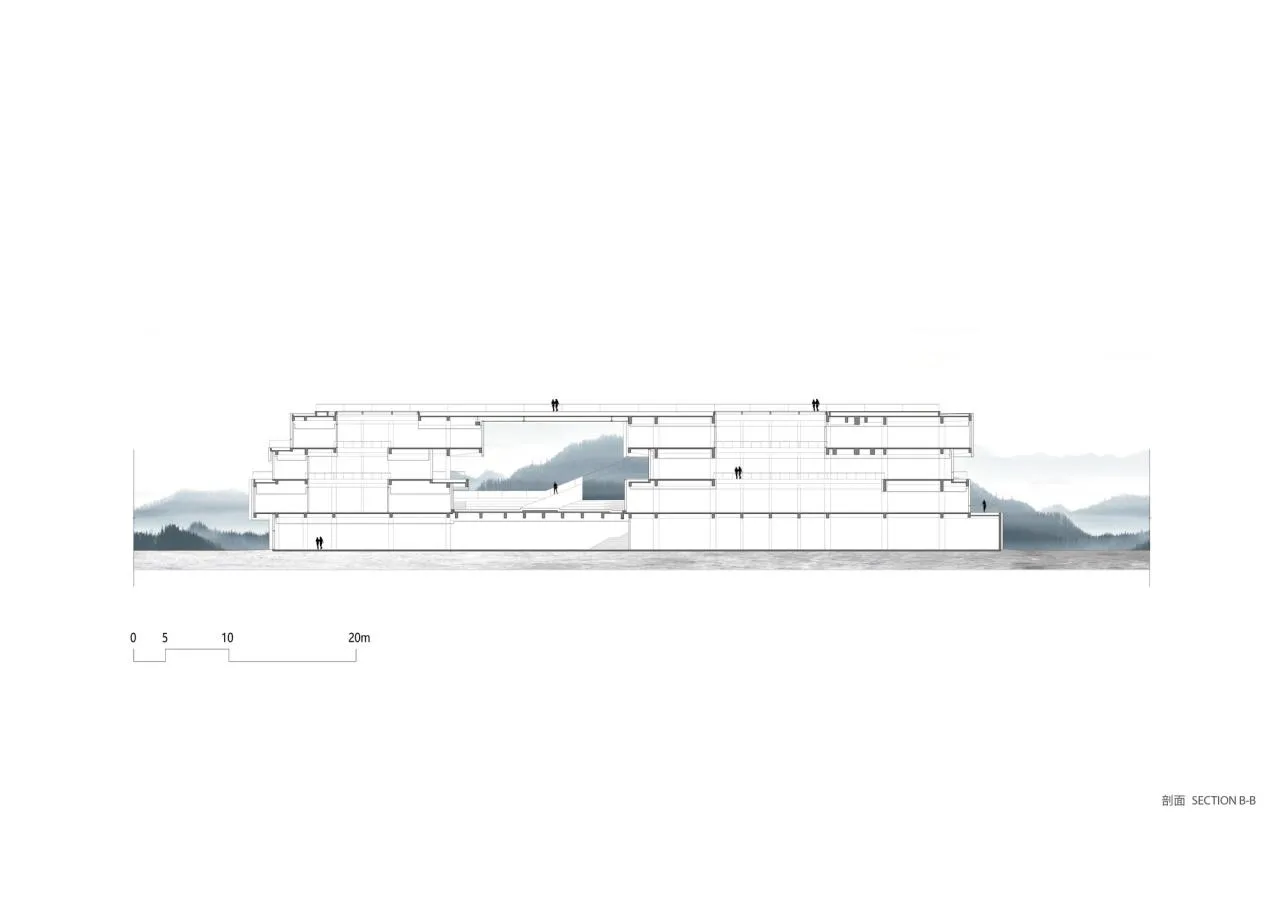
The building comprises a four-story planned exhibition hall and a staff canteen located on the north side. The main exhibition hall is split into two volumes—north and south—each with its own entrances, exits, and vertical circulation. The first-floor lobby acts as the central hub, connecting both volumes and serving as the main entrance and reception area.
Exhibition storage and conference rooms are situated to the north and south of the first-floor lobby. From the second floor upward, the building divides into two volumes but connects as a whole at the roof, featuring an open outdoor platform between them. The north side’s second to fourth floors are designated as office spaces, while the south side’s second and third floors house exhibition areas, with the fourth floor used for offices.
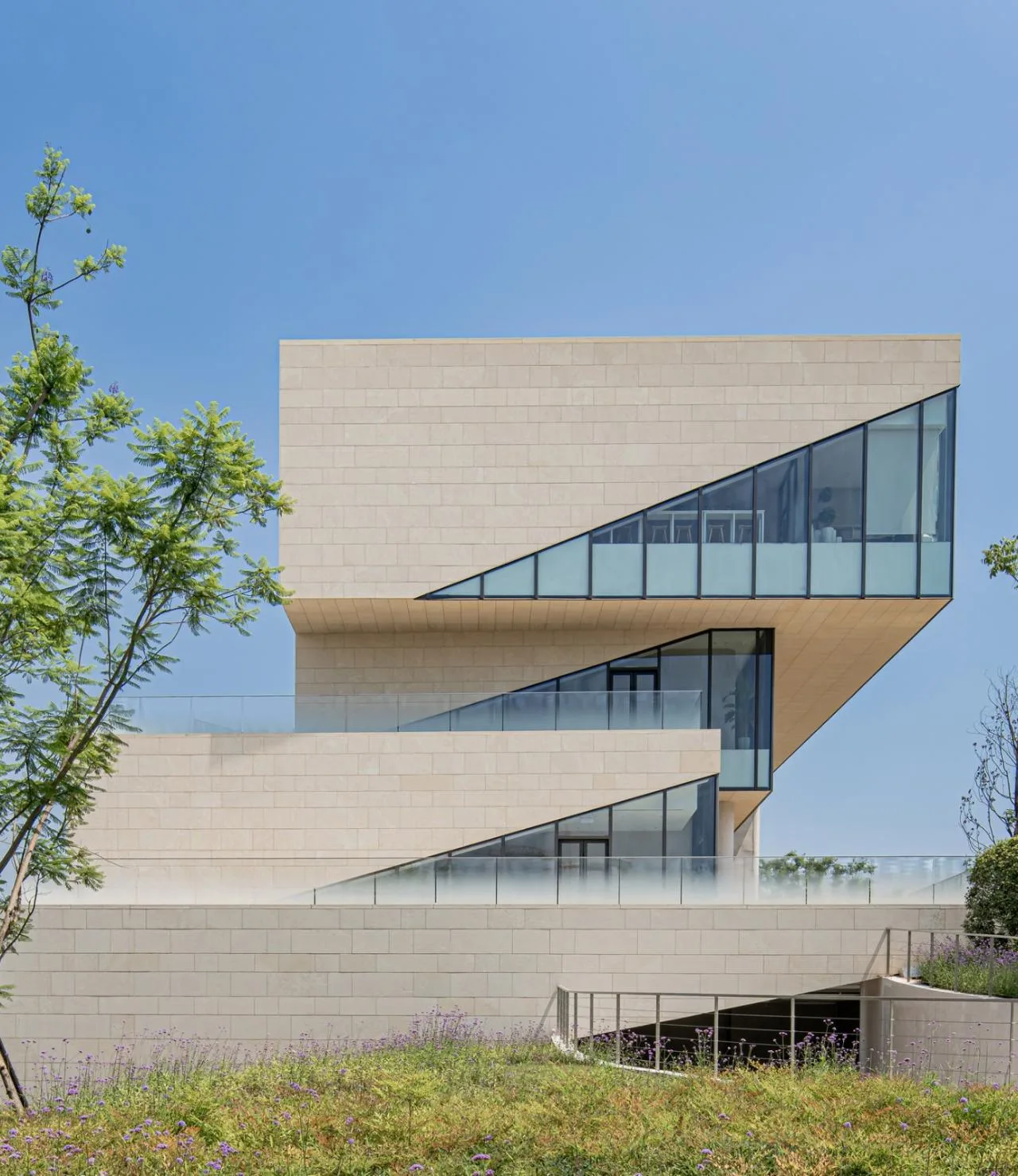
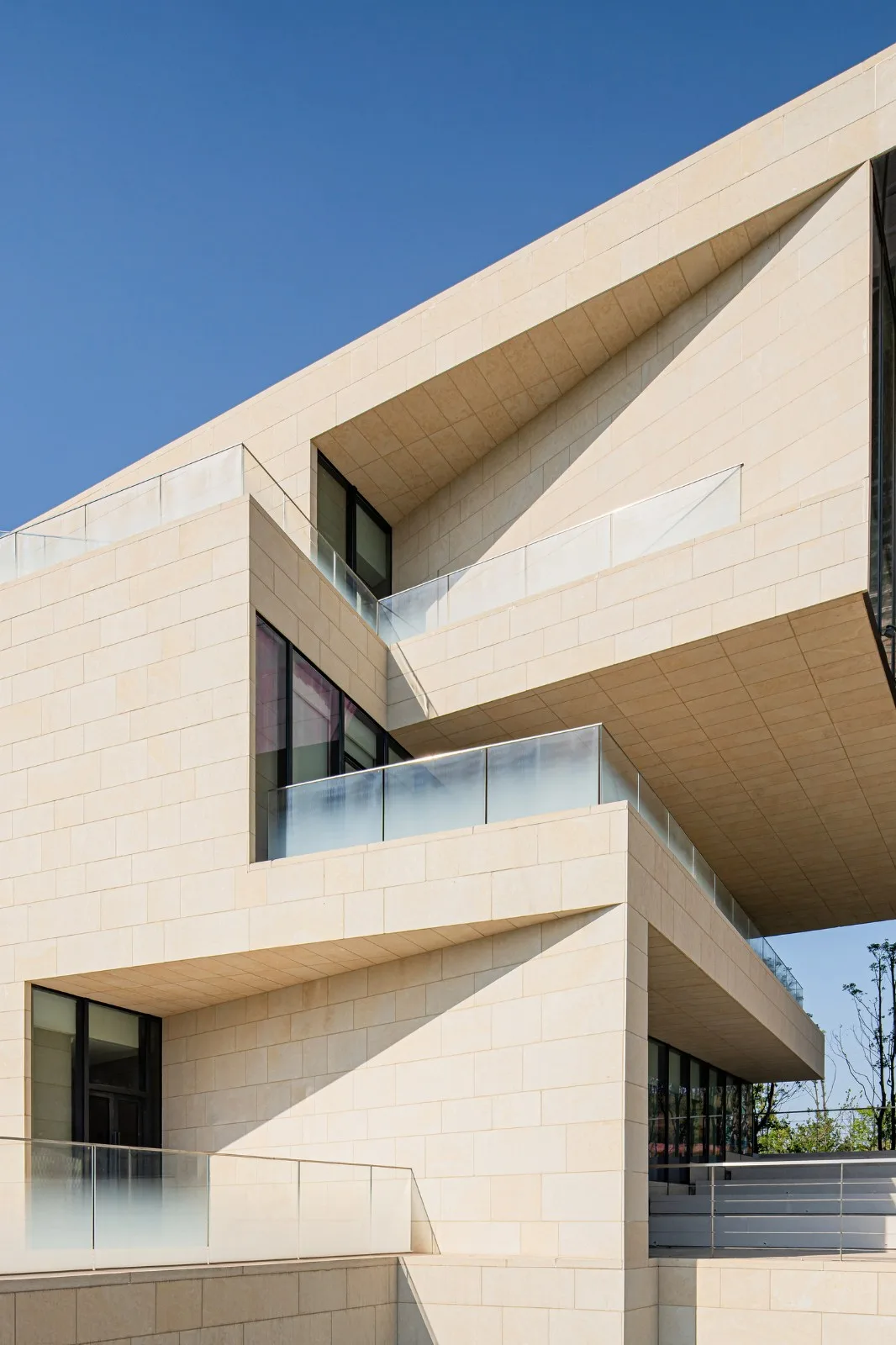
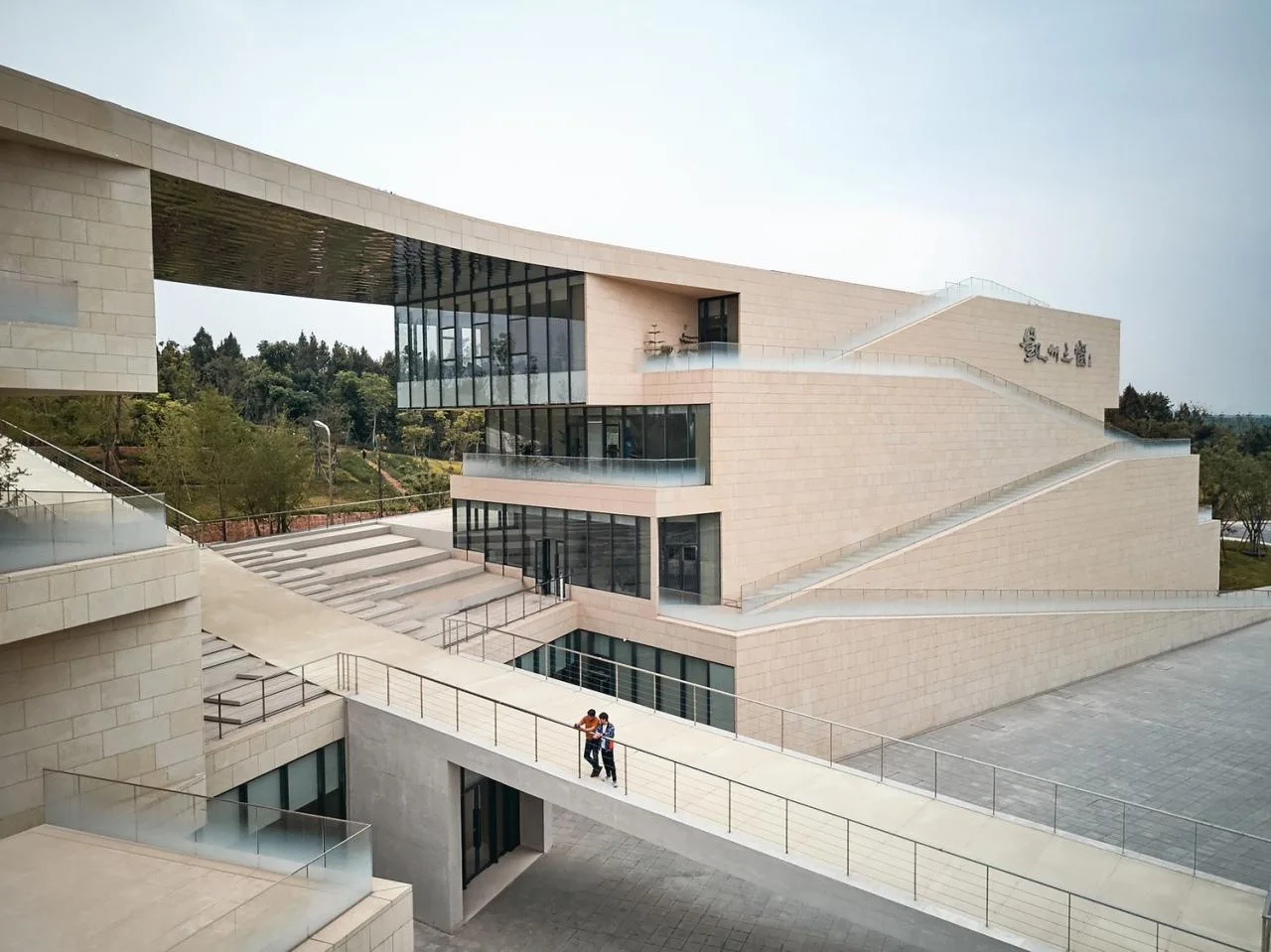
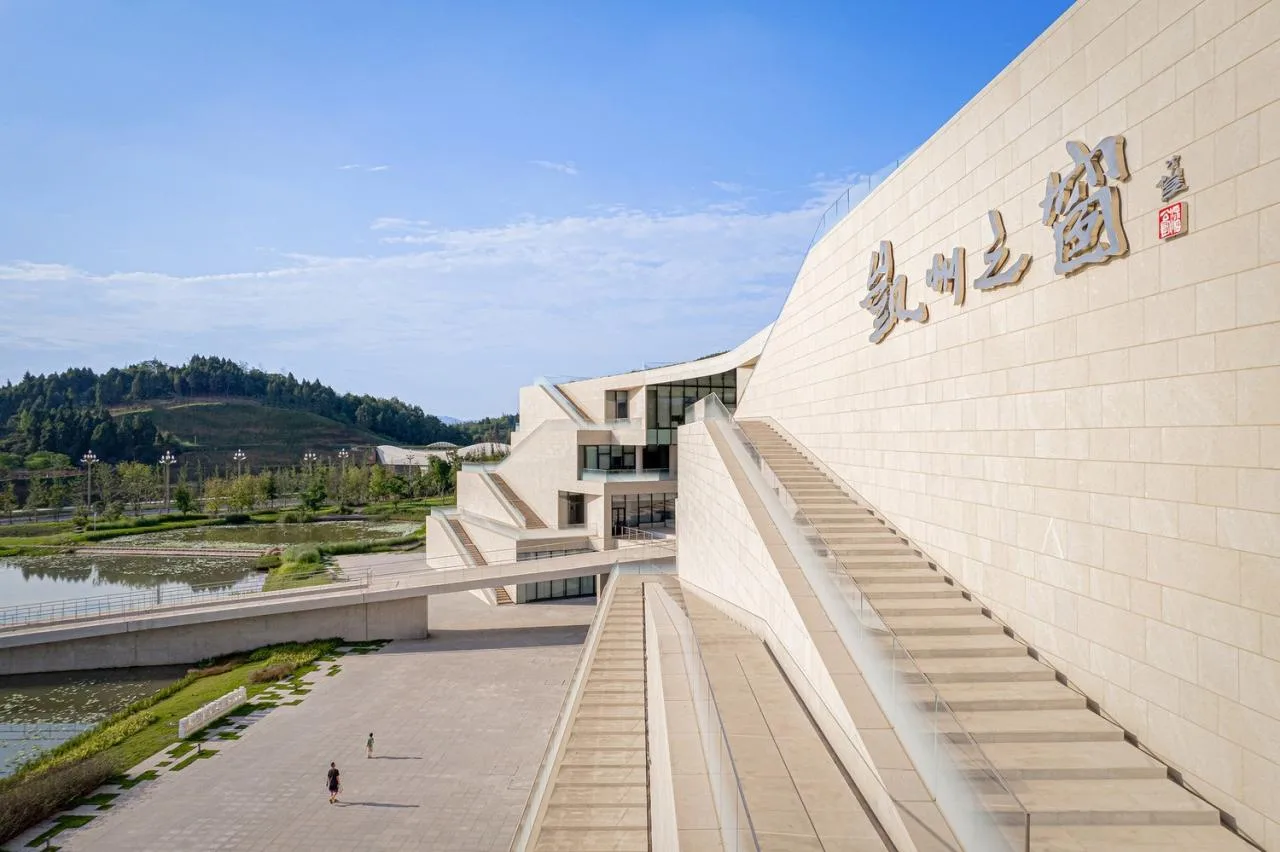
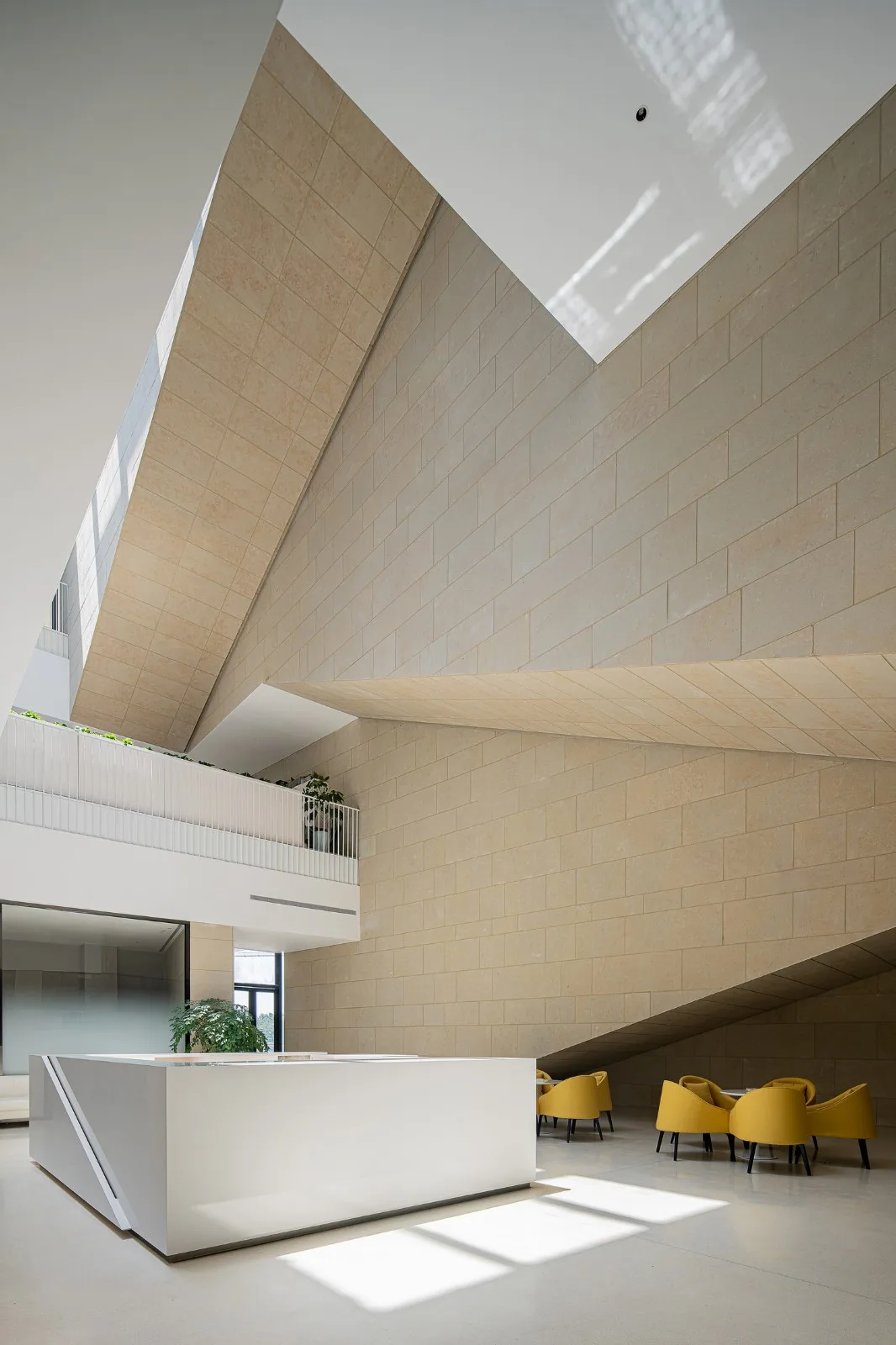
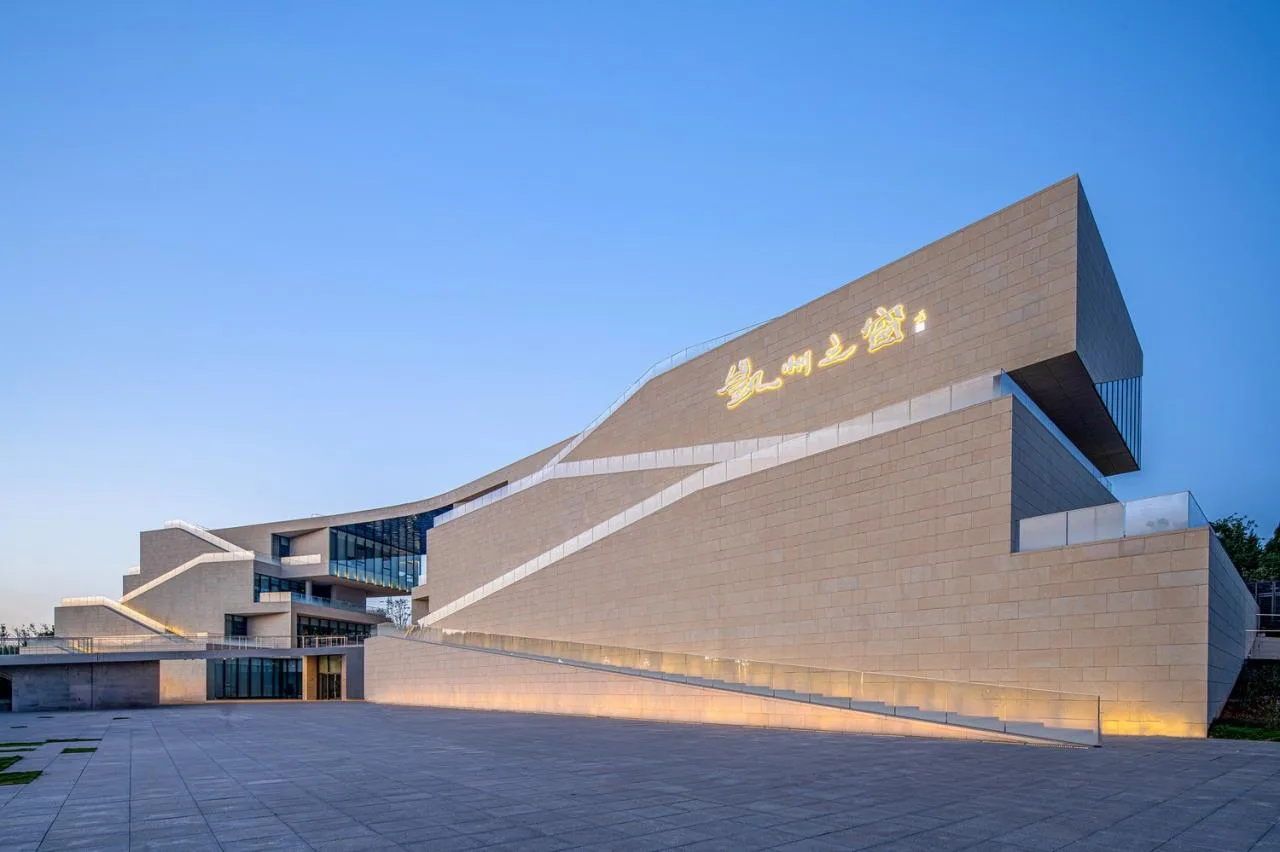
Architectural windows are primarily located on the east façade, providing ample natural light and ventilation tailored to the different functions inside. The west façade serves as the main display surface, designed to avoid direct sunlight by featuring a solid stone wall.
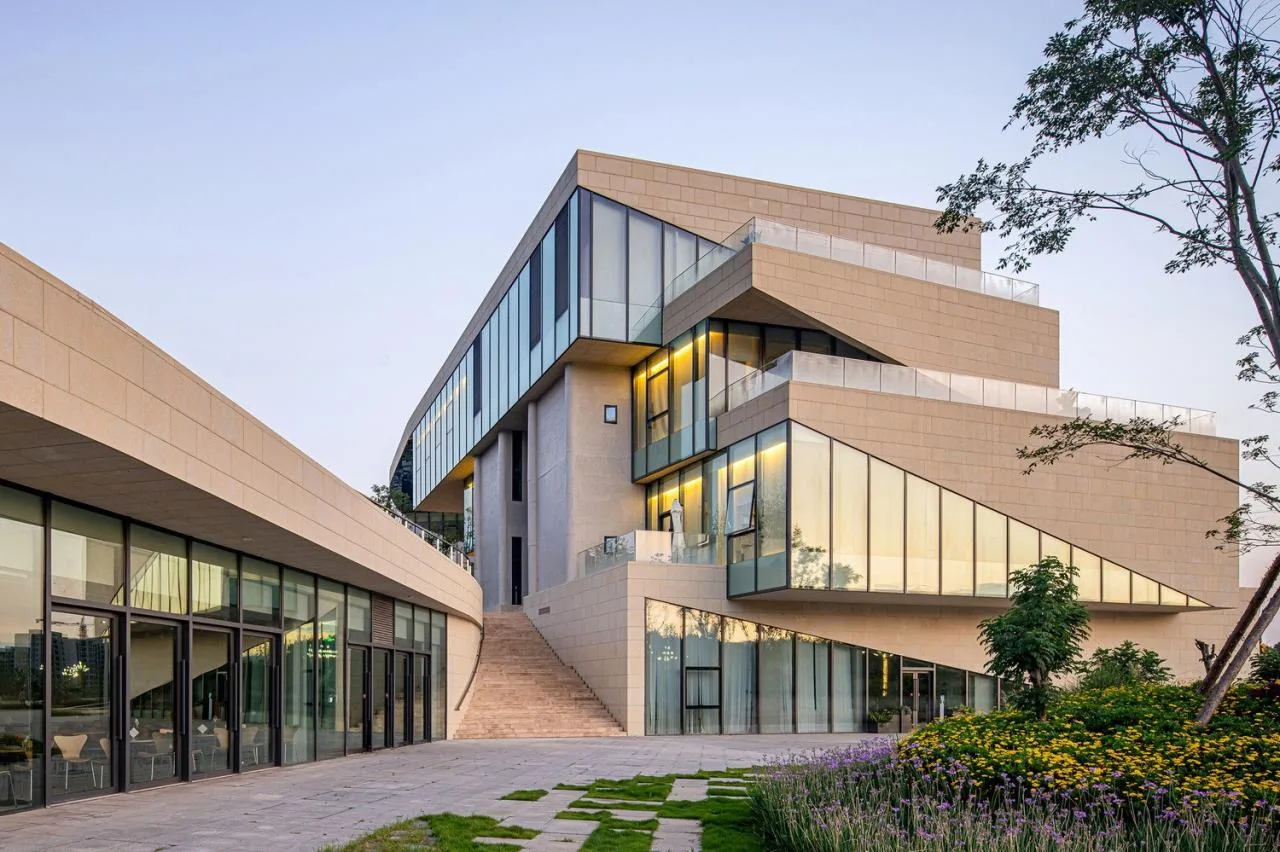
A central opening is formed by the overlapping floors on either side of the building, creating a complex negative space. The stone-clad volume on the west façade forms layered outdoor platforms connected by folding steps. These outline a simple yet powerful ascending path—from the ground level to the roof terrace—running the entire length of the façade.
This design not only fulfills safety requirements for evacuation and reduces redundant interior circulation space but also mitigates the imposing feel of the building’s mass, adding visual interest through varied forms. Most importantly, it encourages visitor movement, offering diverse perspectives of the architecture and its surroundings from different heights and rooftop vantage points. This platform showcases the ongoing construction and development of the new city in a tangible, interactive way.
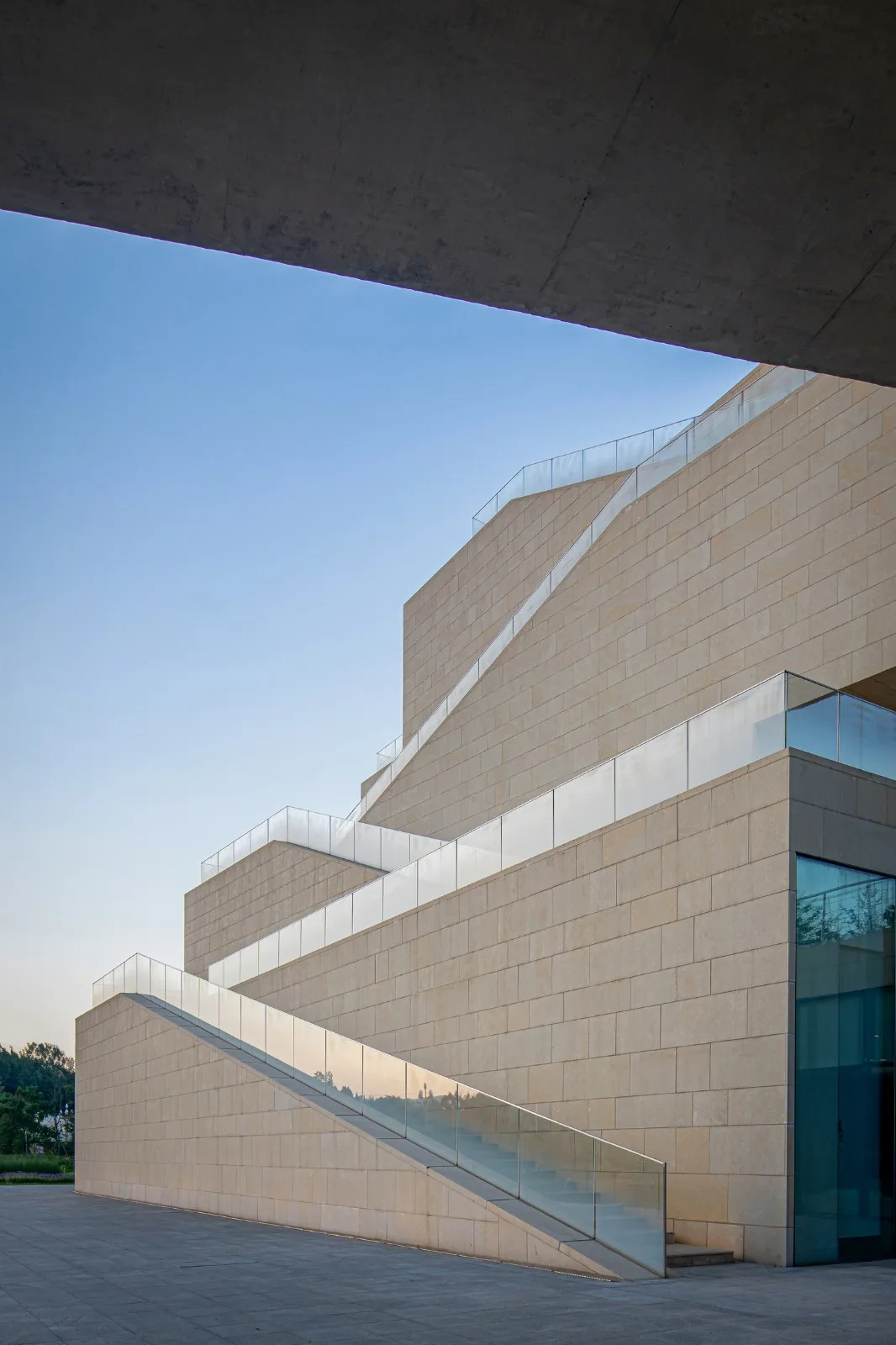
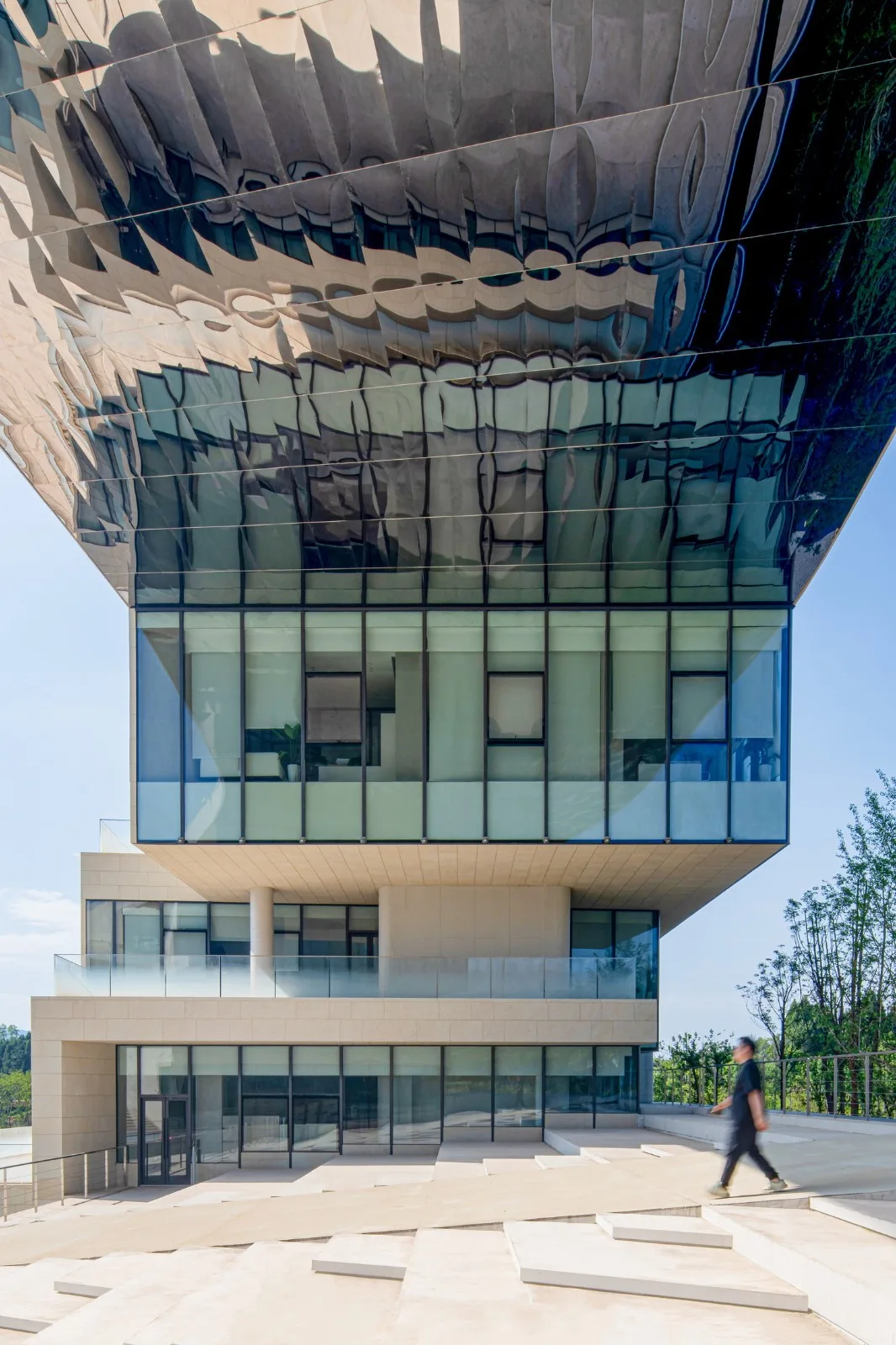
Visitors stroll, cross, climb, and gaze, where people, architecture, nature, and history merge to create a vibrant urban stage. This becomes the vivid “window to the future” of Kaizhou New City.
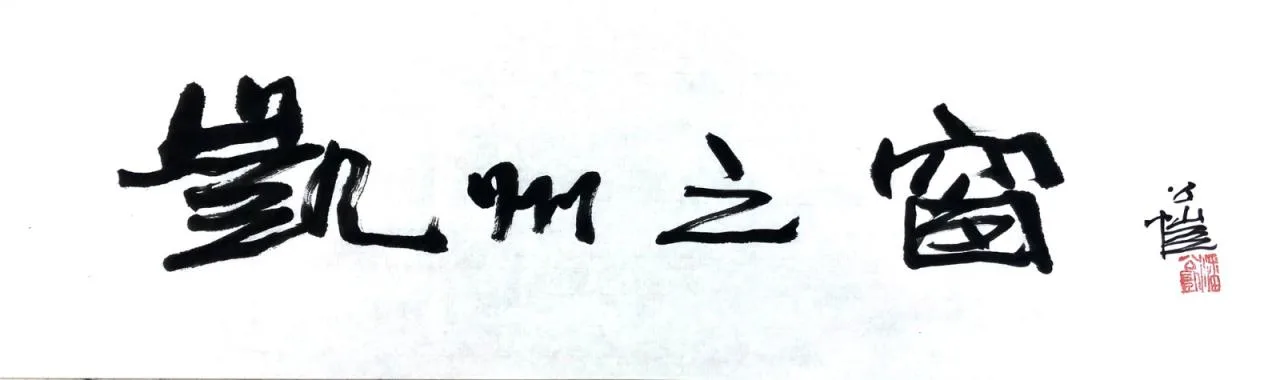
Inscription by Mr. Pan Gongkai
Project Drawings
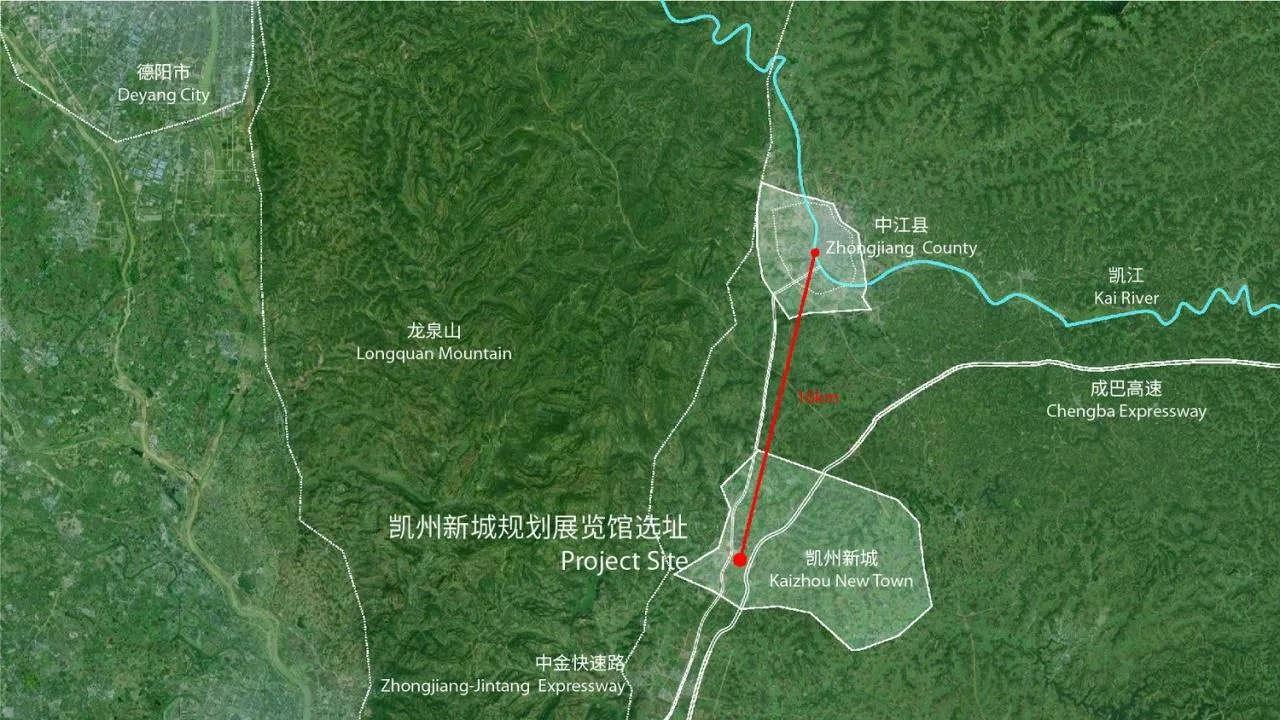
△ Location Map
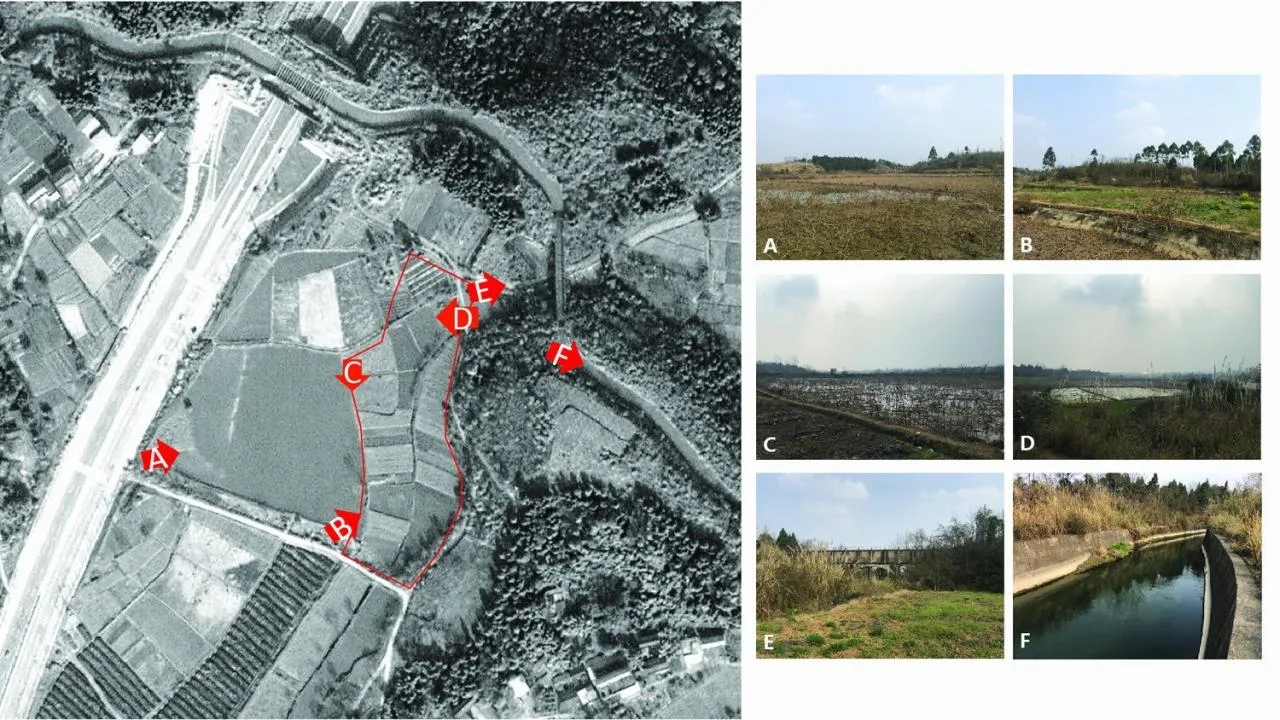
△ Surrounding Environment
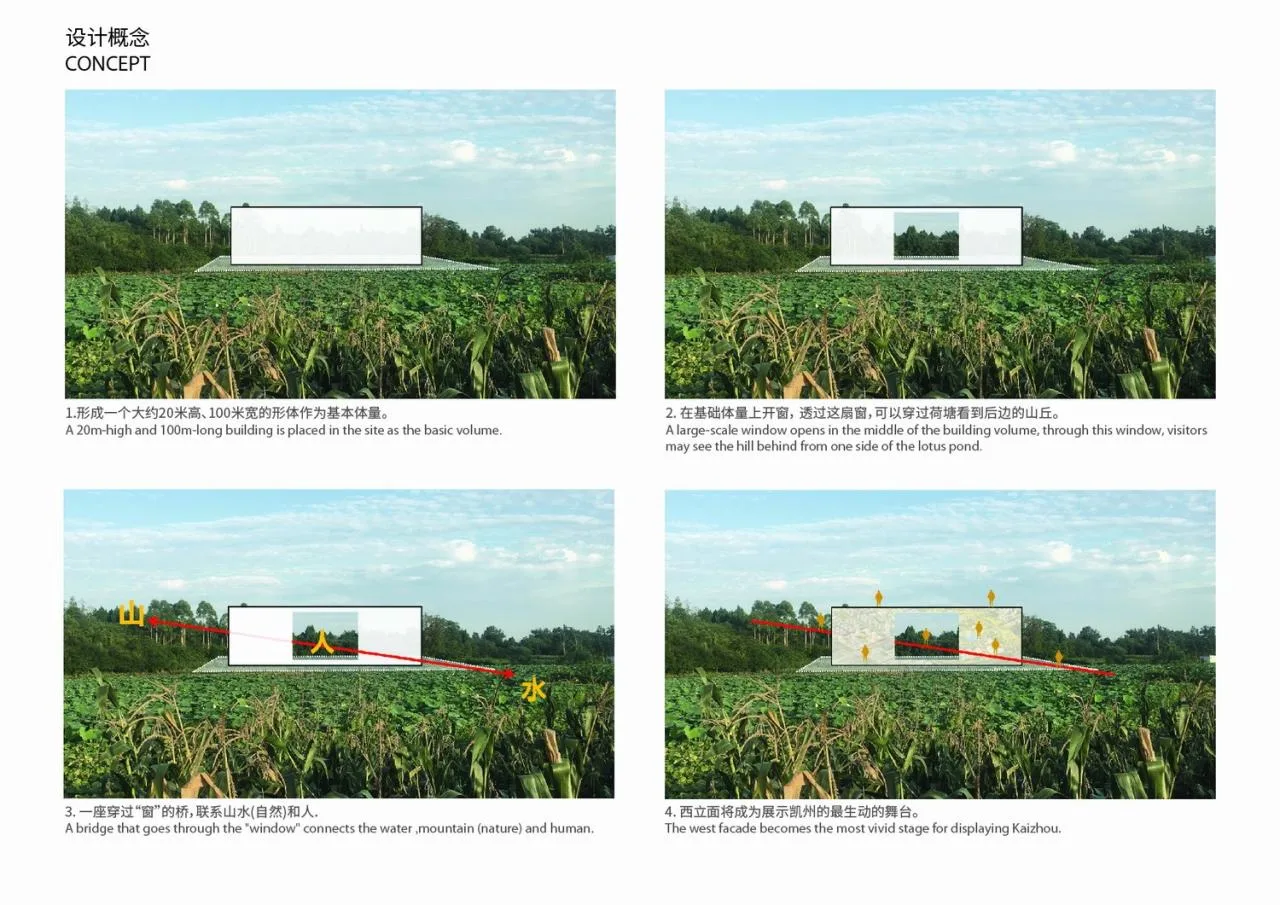
△ Design Concept
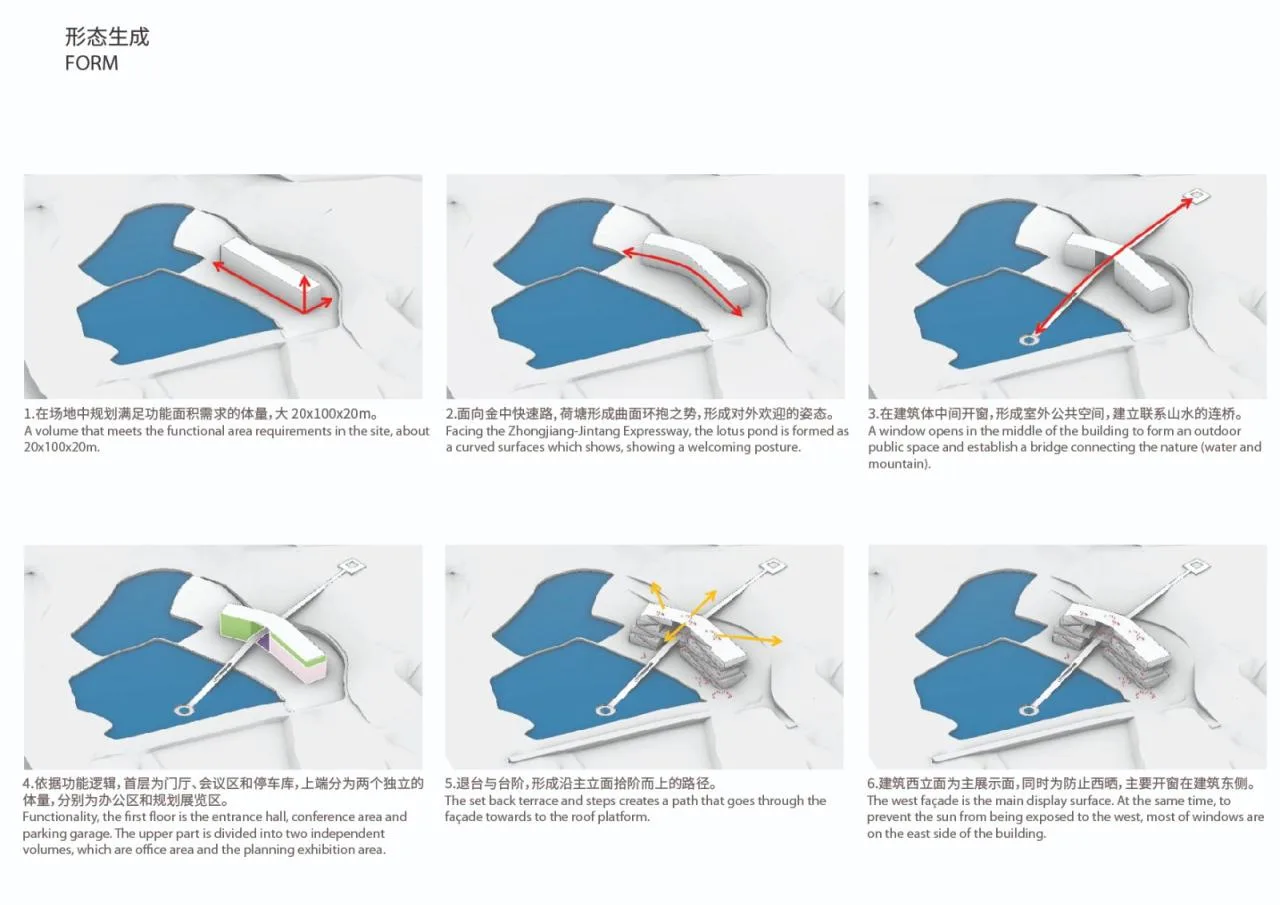
△ Shape Generation
Project Information
Architect: Beijing Institute of Architectural Design and Research, Zhu Xiaodi Studio
Area: 7,820 m²
Project Year: 2023
Photographer: Fu Xing
Suppliers: Chengtai Stone Industry Co., Dianyue Building Materials Technology Co., Wangqing Stone
Lead Architect: Zhu Xiaodi
Design Team: Jia Qi, Luopan, Sun Xiaoqian, Sun Shunzhu, Wang Ye, Ma Yibo, Li Yi, Wang Xiaodong
Structural Engineers: Chen Han, Yin Fei
Equipment: Cui Yue
Electrical: Bi Yachong
Lighting Design: Hu Fang and Li Yahui from Beijing Guanghu Purui Lighting Design Co., Ltd
Interior Design: Shi Shanshan and Yang Zilin from Beijing Jianyuan Decoration Engineering Design Co., Ltd
Principal: Deyang Kaizhou Investment and Development Co., Ltd
Architectural Function: Cultural Architecture / Museum & Exhibition / Exhibition Center
Location: Deyang















Must log in before commenting!
Sign Up