
The project is situated within a residential building along a street in Baihuayu, Mengshan Tourist Area, Shandong Province. The original site comprised two traditional residential courtyards, one of which belonged to the local village chief. The owner’s goal was to develop a new homestay while preserving a separate living space for the village chief within the existing building boundaries.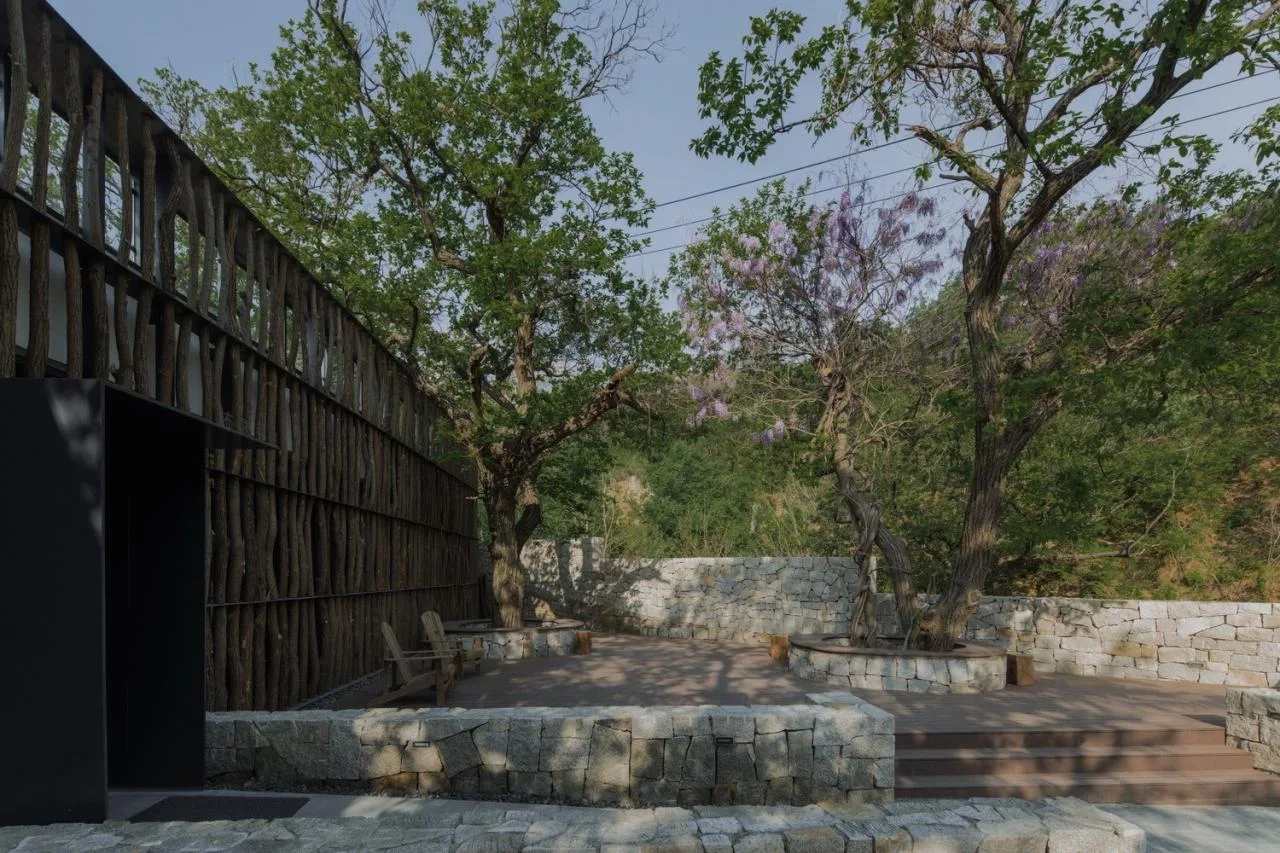
Project Overview
The original residences are surrounded by a dense cluster of chestnut trees, creating a distinctive natural landscape on the site. The front yard features a wooden treehouse built by the former village chief—simple yet charming. This spot frequently attracts art students who come here to sketch. The design prioritizes preserving the existing chestnut grove, recreating authentic, simple living scenes, and thoughtfully evolving the residential space typology in three dimensions.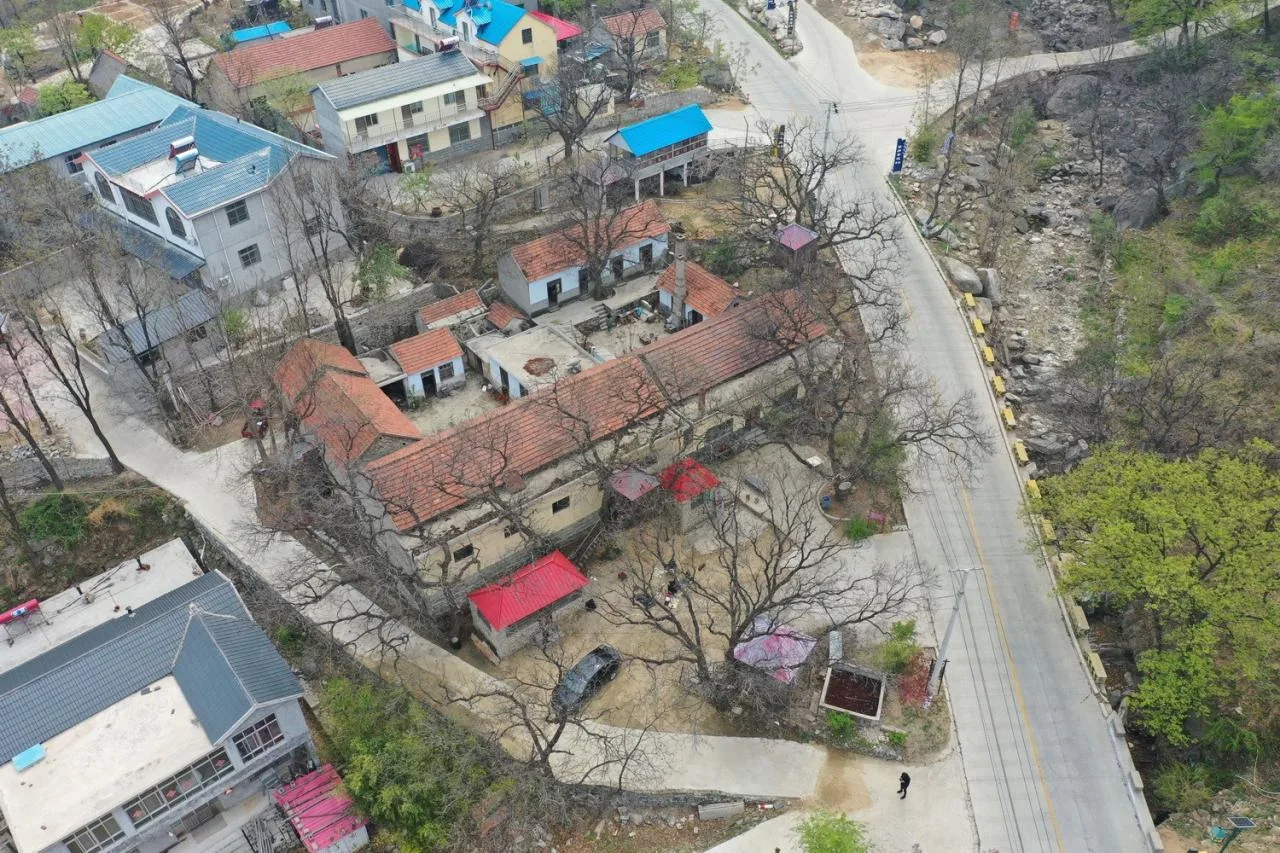
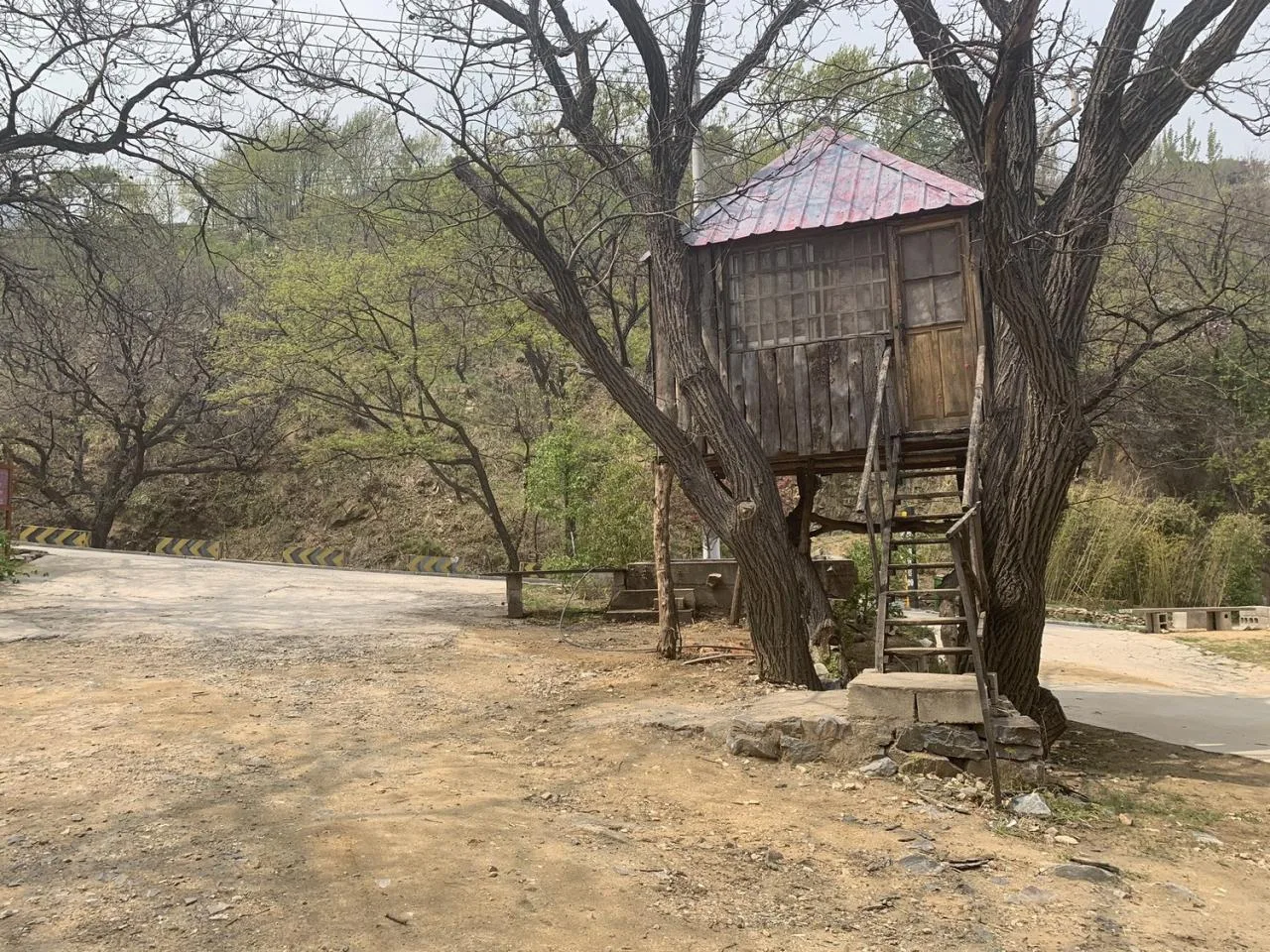
△ Original site (aerial view and treehouse)
Front Yard, Locust Tree, and Library
The design retains the triangular front yard as an entrance landscape space. All chestnut trees have been carefully preserved. The old village chief’s treehouse was repaired and updated to maintain the site’s original memory.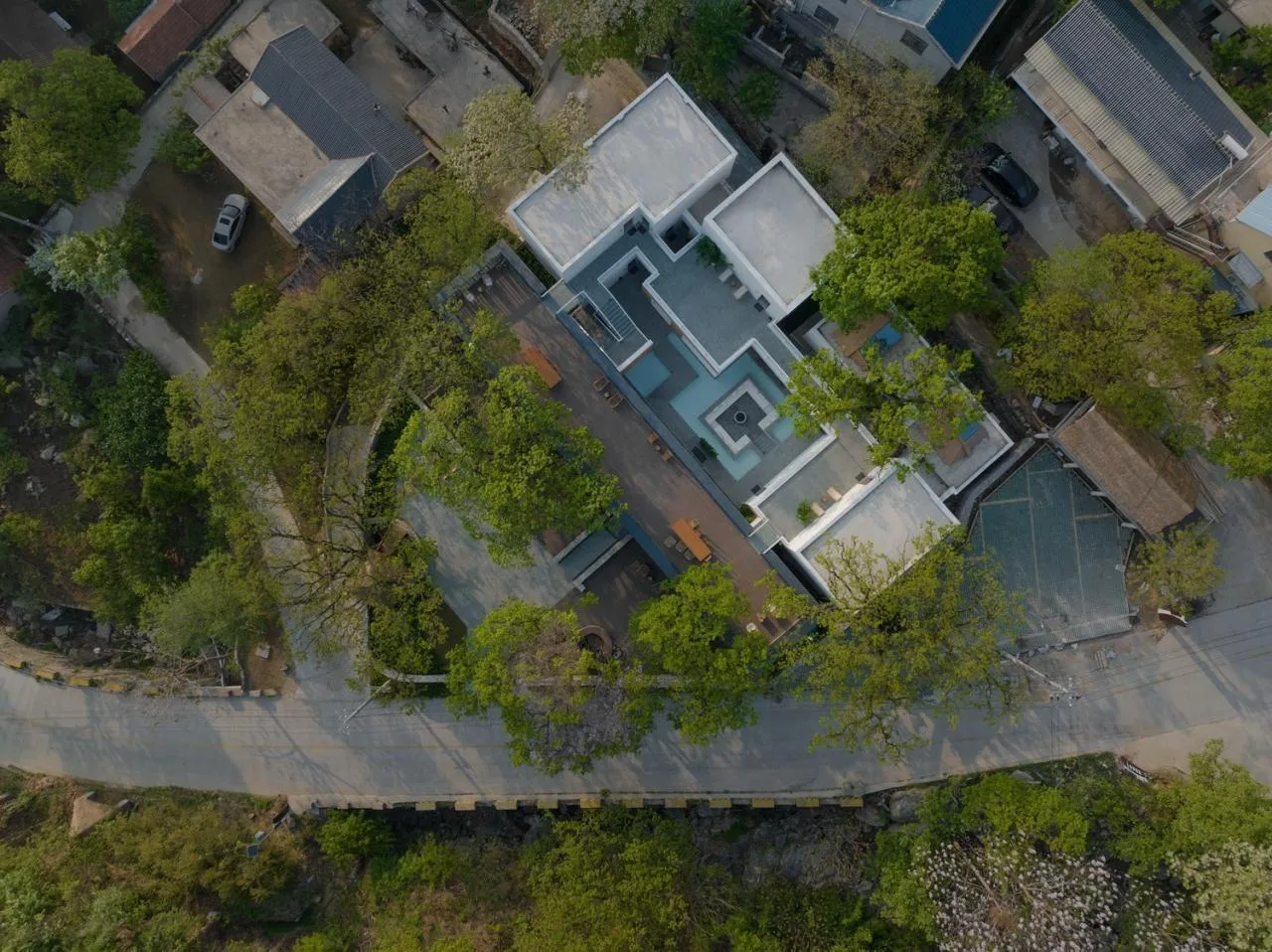
△ Aerial view
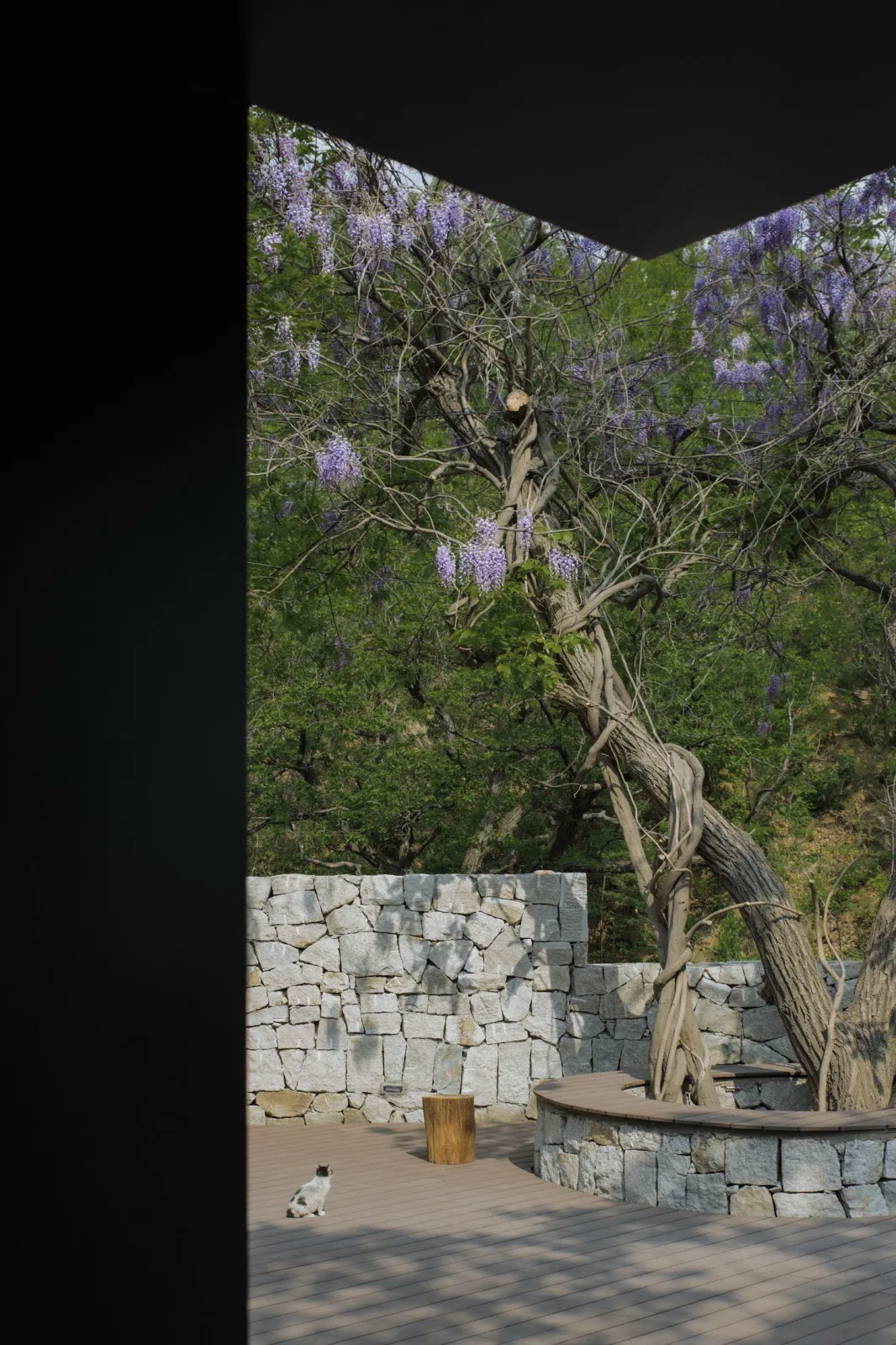
Reserved chestnut trees and wisteria
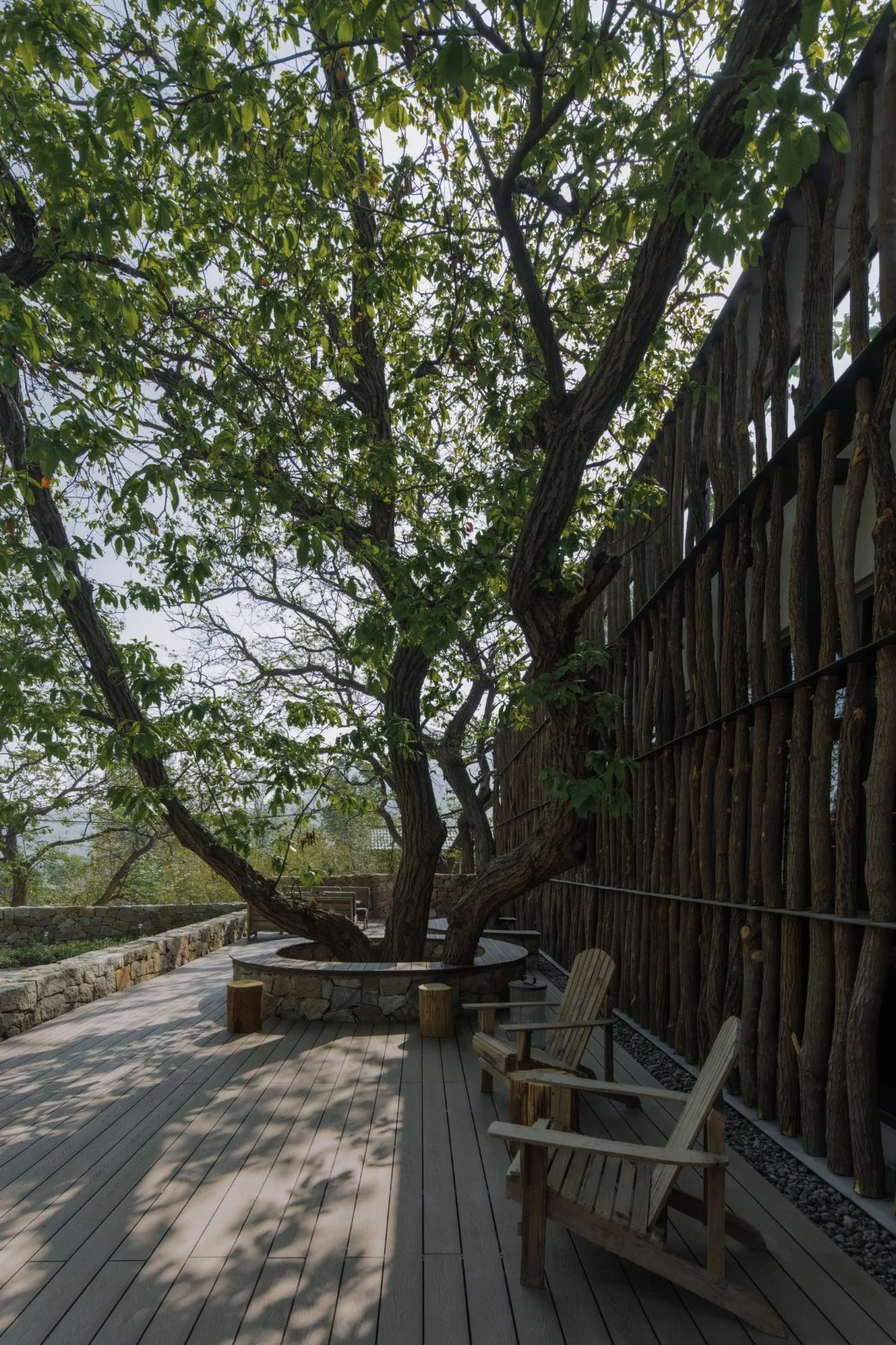
Preserved chestnut trees and landscape platforms
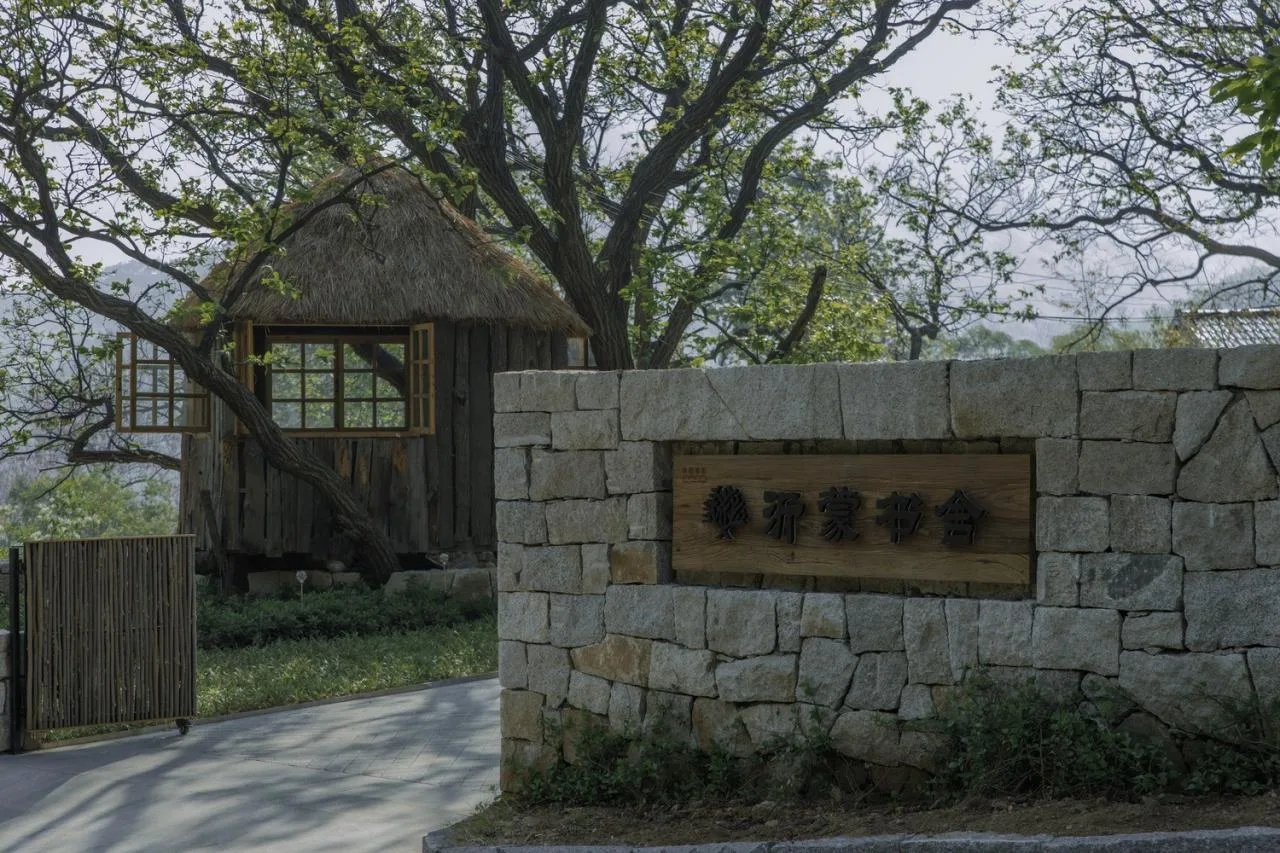
△ Renovated treehouse
We elevated the irregular triangular courtyard, enhancing the connection between the entrance building’s roof terrace and the surrounding trees. This intervention also created three separate terrace areas within the site, enriching the landscape and outdoor activity spaces.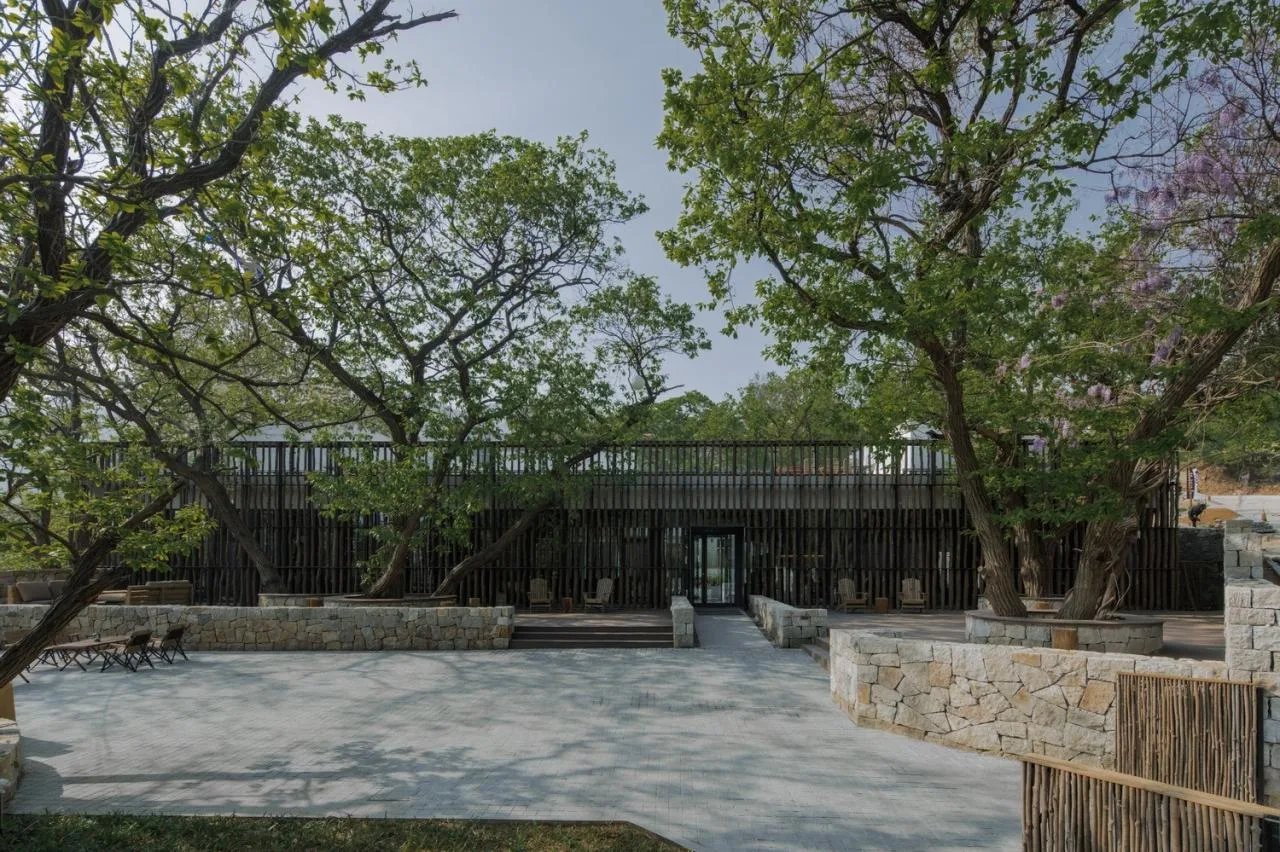
△ Front courtyard terrace space
The elongated entrance follows the original site boundary, separating the front and rear guest rooms. It serves multiple functions, housing reception, relaxation, and breakfast areas for the homestay, as well as operating as an independent bookstore. The design encourages openness, welcoming art students and passing travelers alike.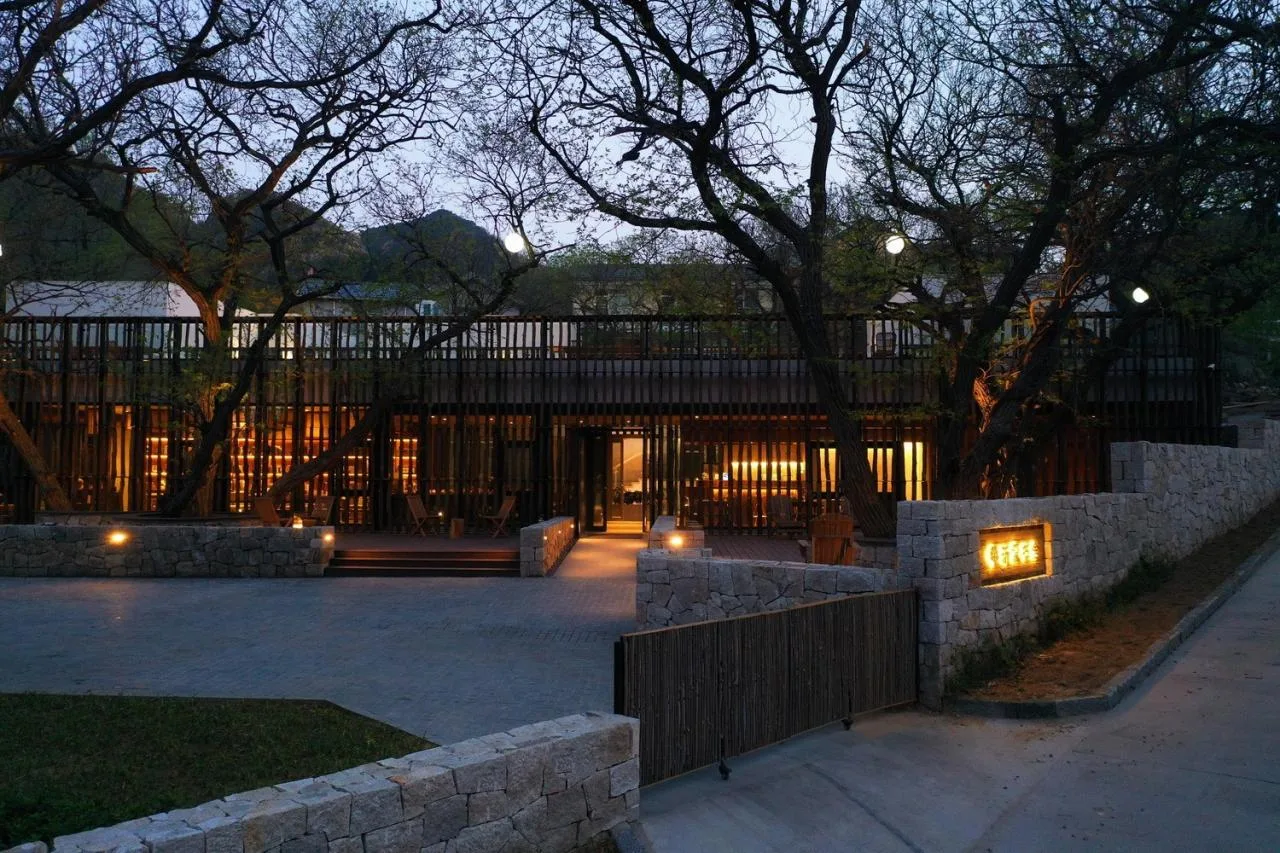
△ Night view of the bookstore
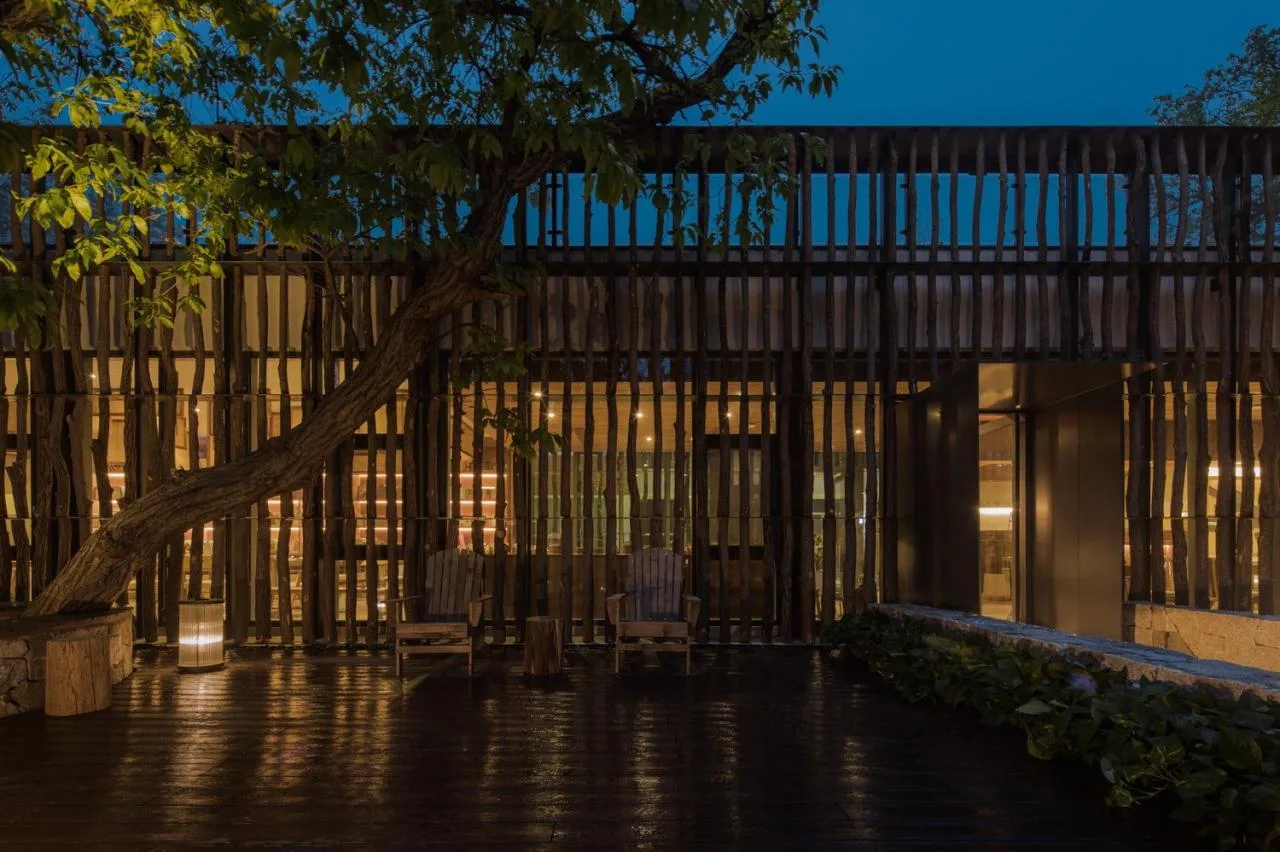
△ Night view of the bookstore
The library’s facade is constructed from locally sourced natural waste materials—trimmed locust branches. During early research, we discovered villagers stacking excess locust branches by the roadside, which inspired this façade treatment. The design allows the facade to subtly change with time and light, maintaining a modest presence while blending harmoniously with the surrounding trees.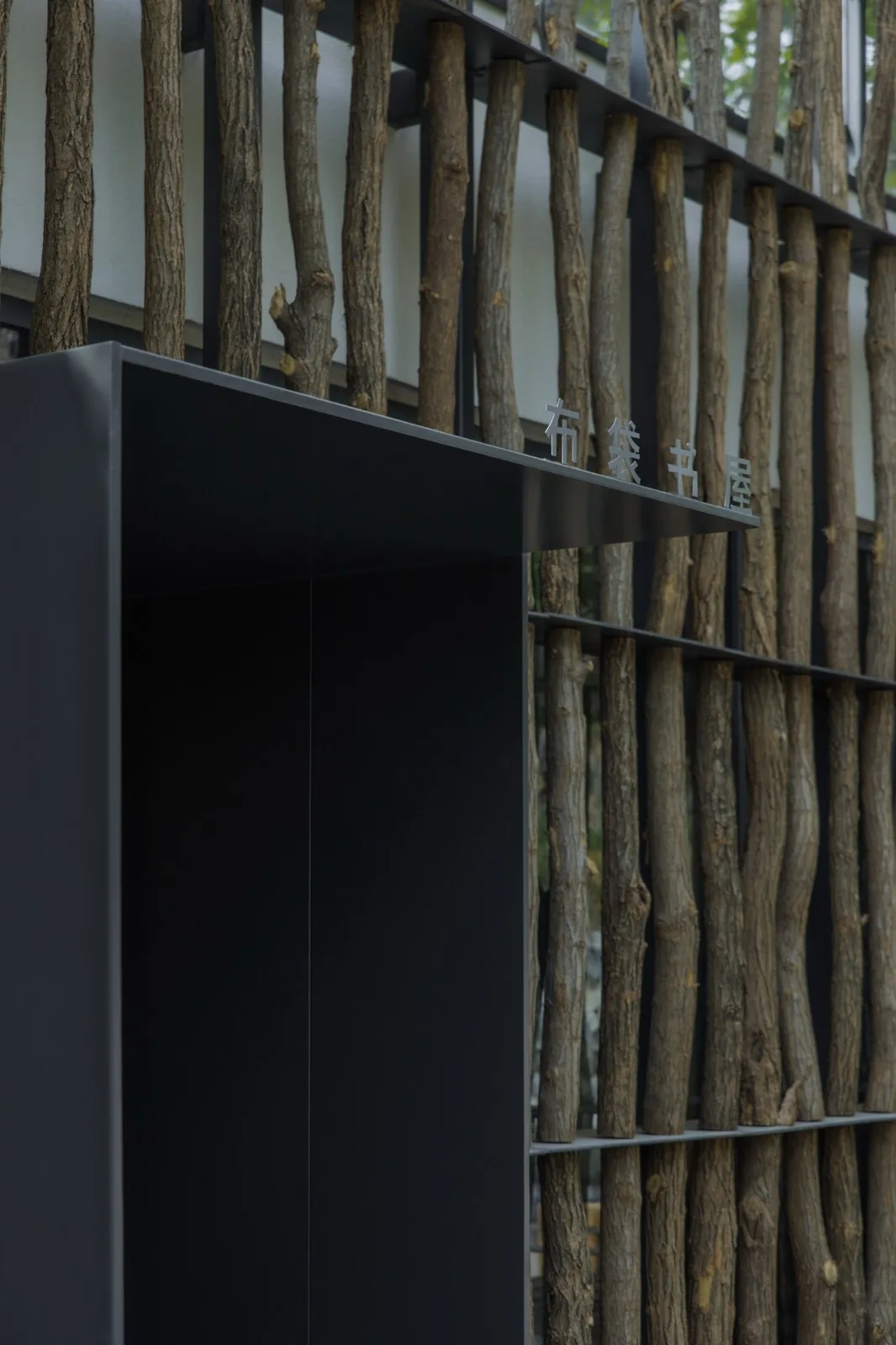
△ Library facade and entrance
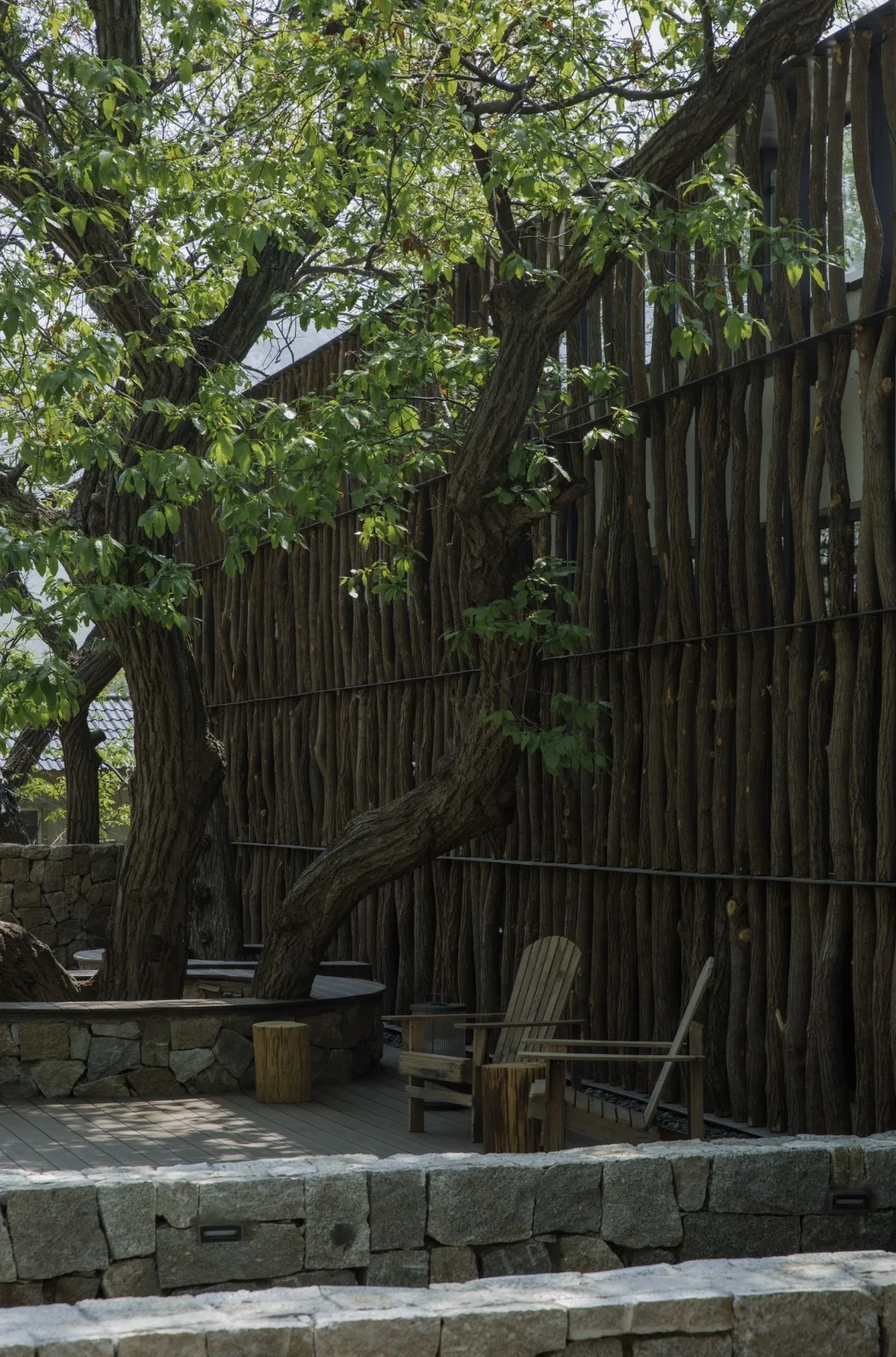
△ Library facade and resting platform
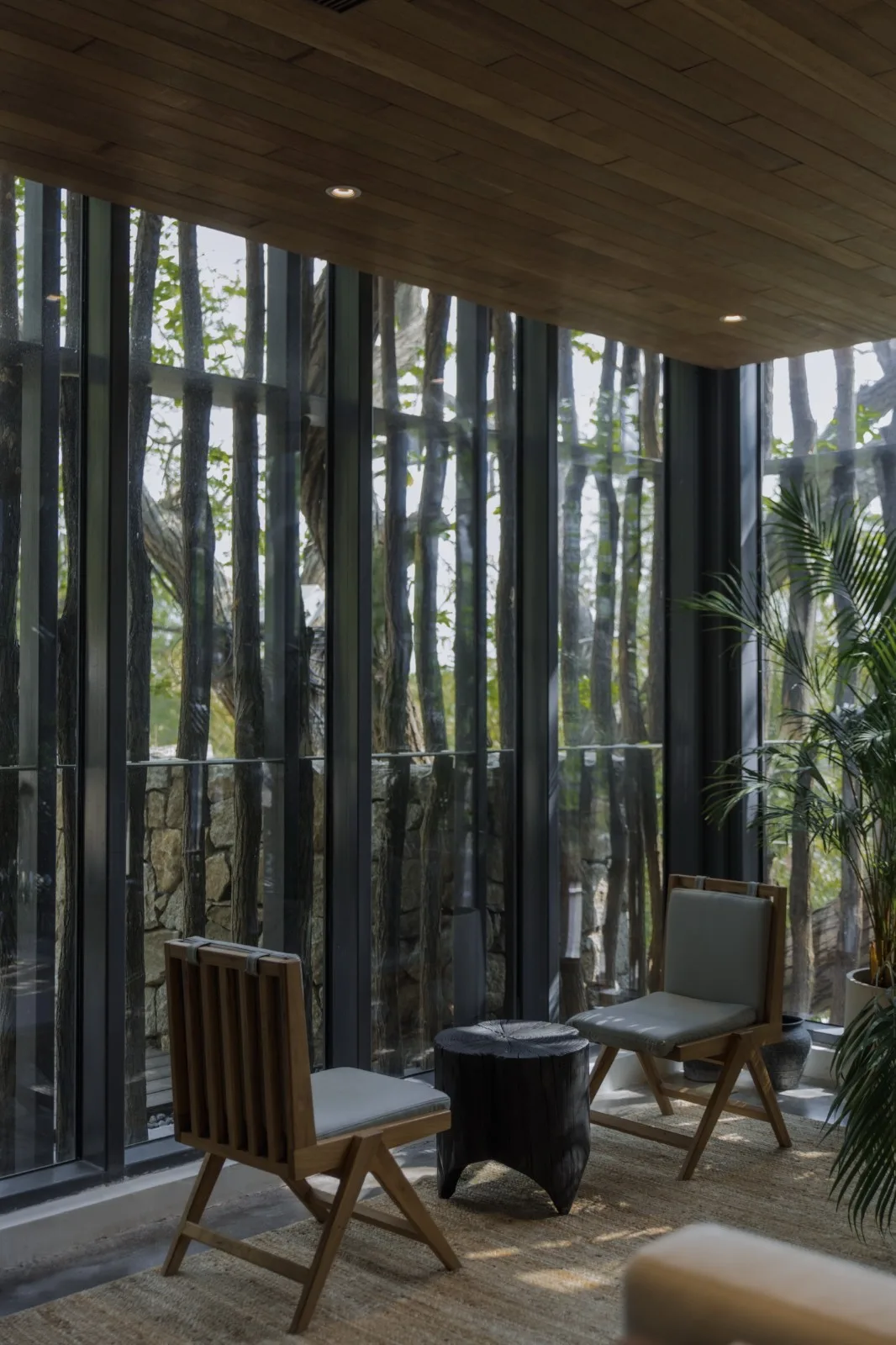
△ Inside the bookstore
Tree Shadows and Inner Courtyard
The inner courtyard maintains the enclosed layout characteristic of traditional residences. The rear guest rooms form a two-story building featuring a sunken courtyard surrounded by a shallow pool on the ground floor, along with a library. Corner windows in the guest rooms overlook the sunken courtyard, fostering an interactive connection.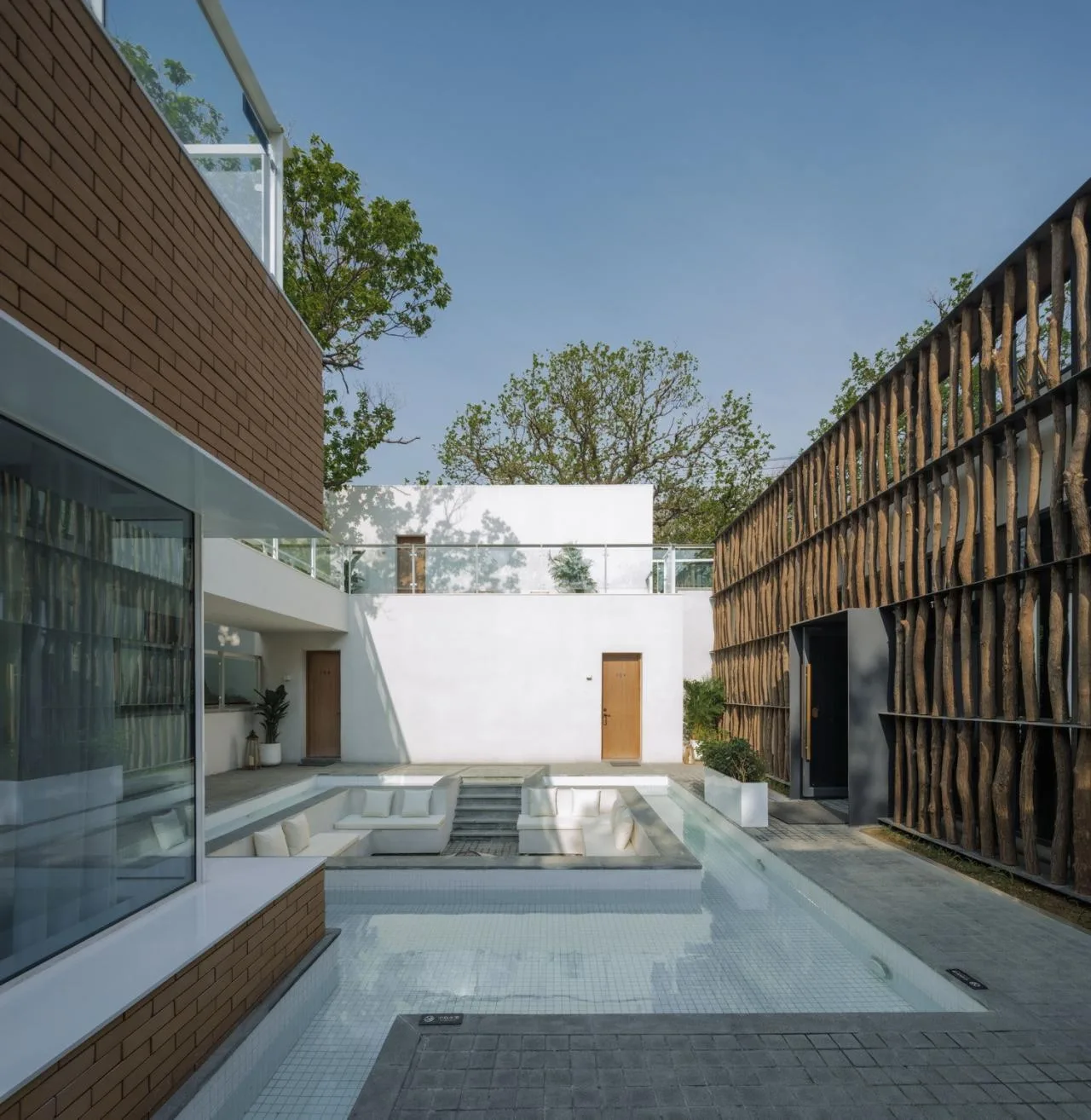
△ Sunken courtyard
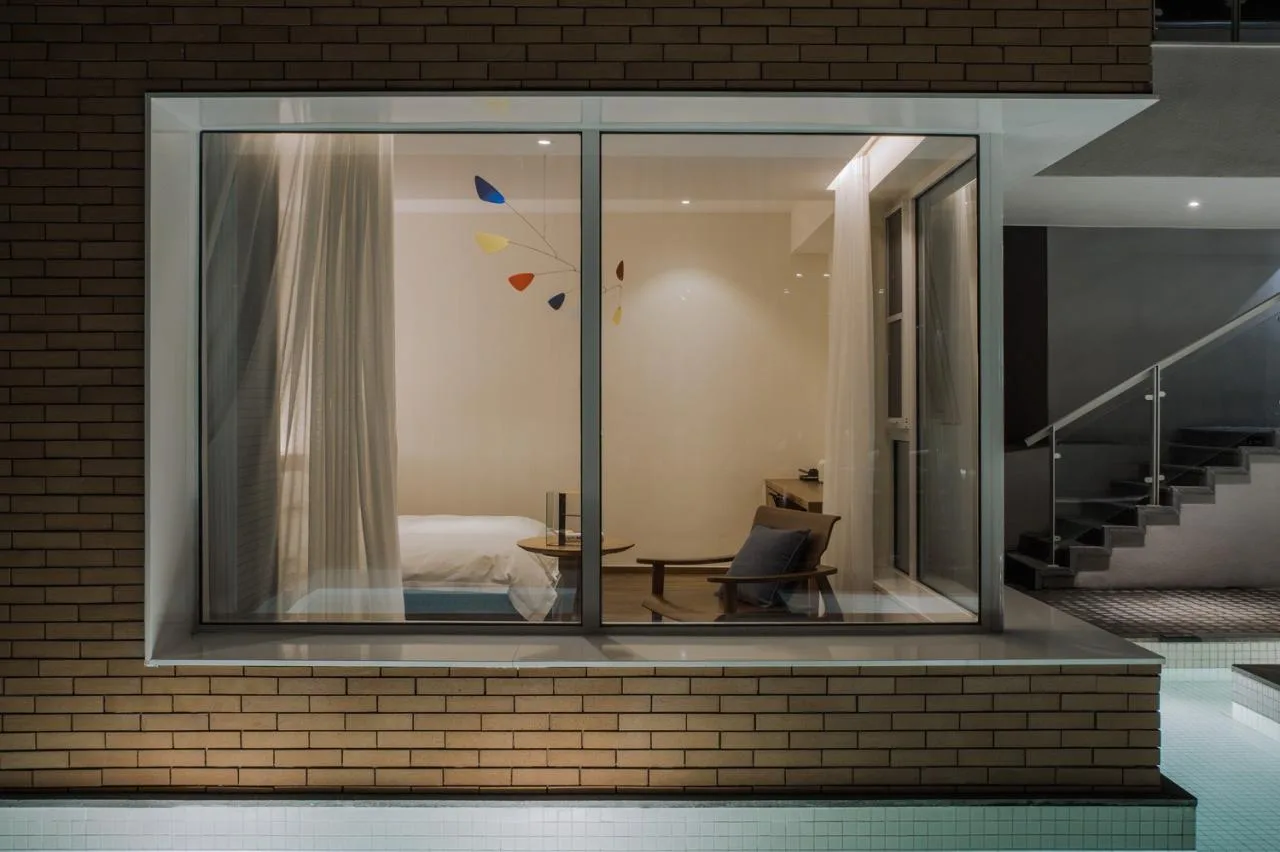
△ Bottom corner window and courtyard
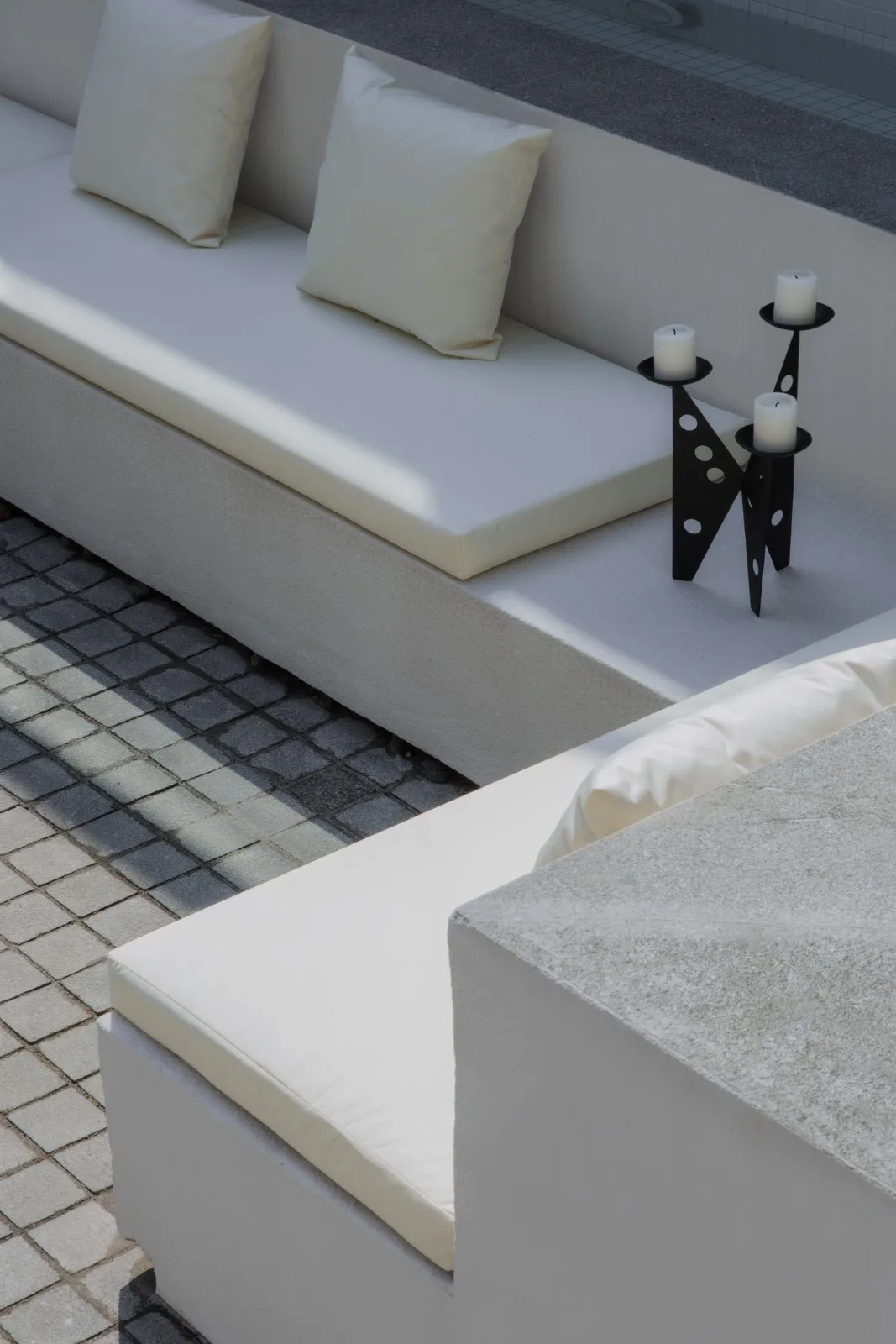
△ Details of sunken courtyard
The guest room’s second-floor exterior terrace extends continuously, connecting with the library’s roof terrace. The entire roof is embraced by the surrounding chestnut trees.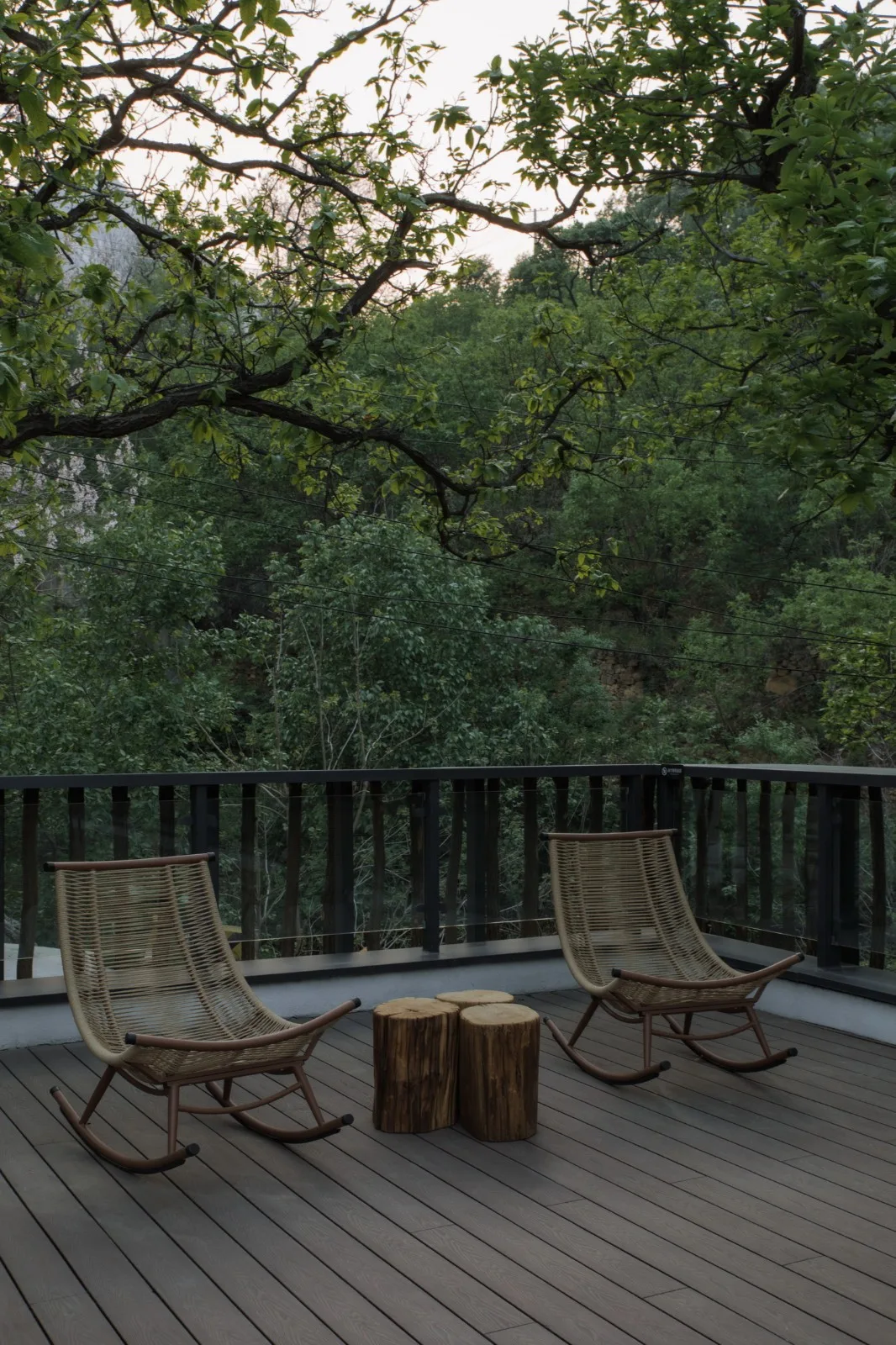
△ Library roof terrace and chestnut trees
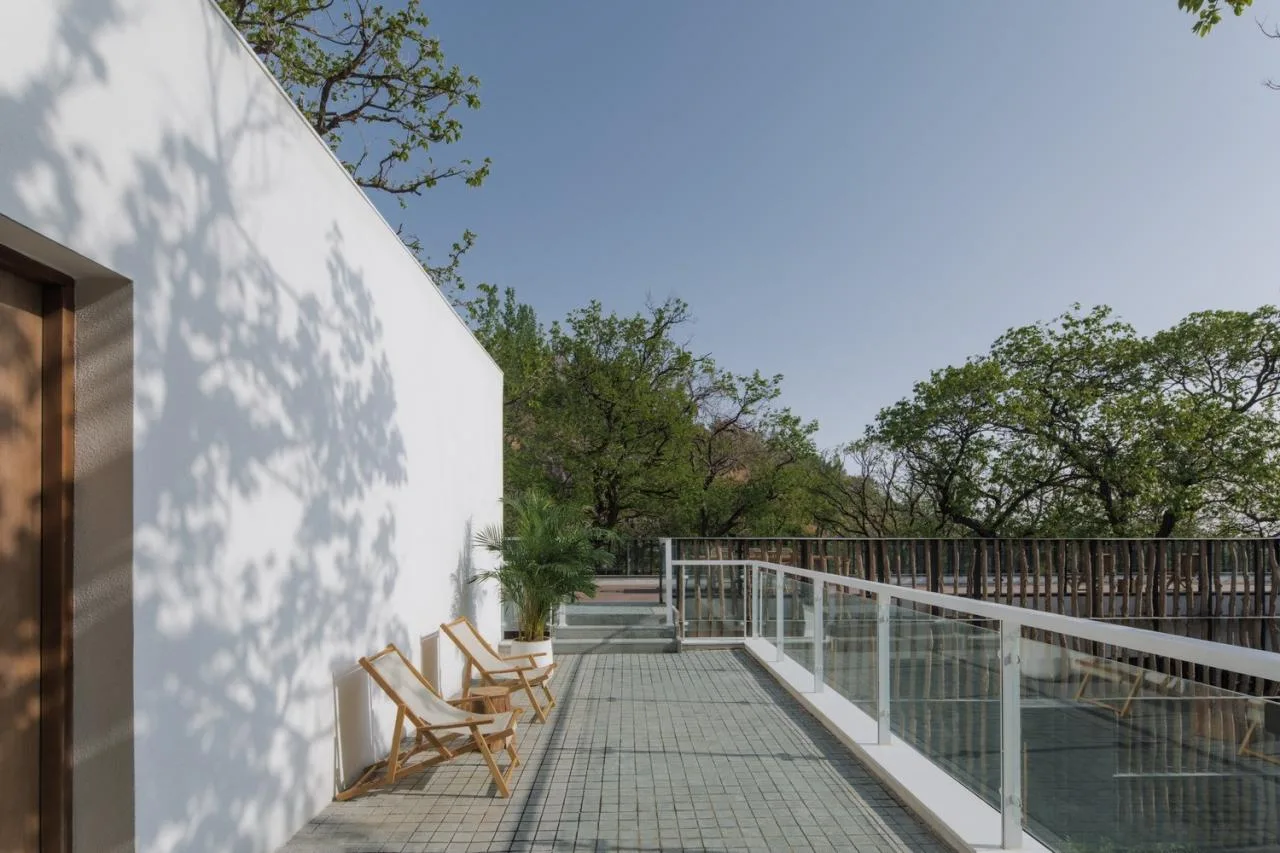
△ Exposed countertop space in guest rooms
The courtyard retains the original terrain’s elevation changes and the chestnut trees, while sloped roof skylights and tree shadows create dynamic, ever-changing light and shadow effects.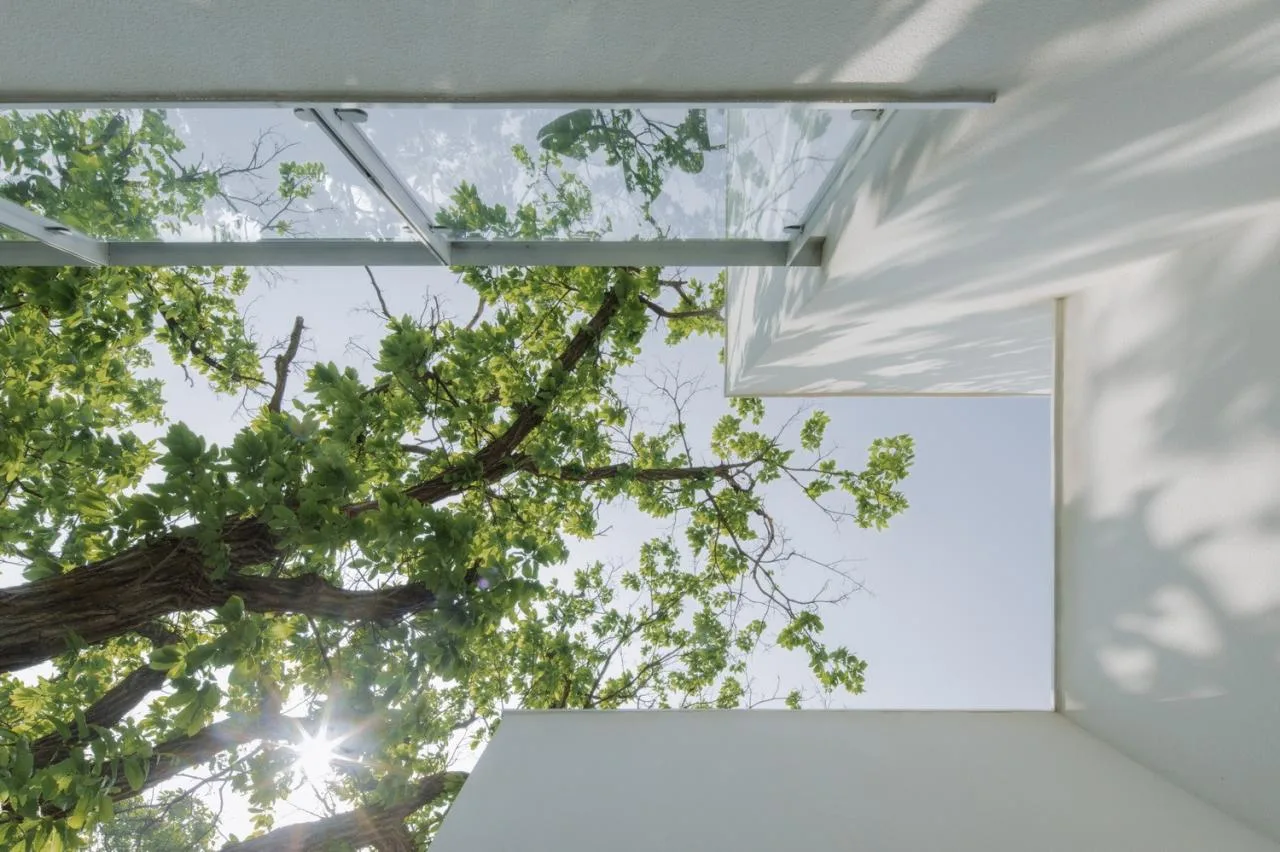
△ Guest rooms and chestnut trees
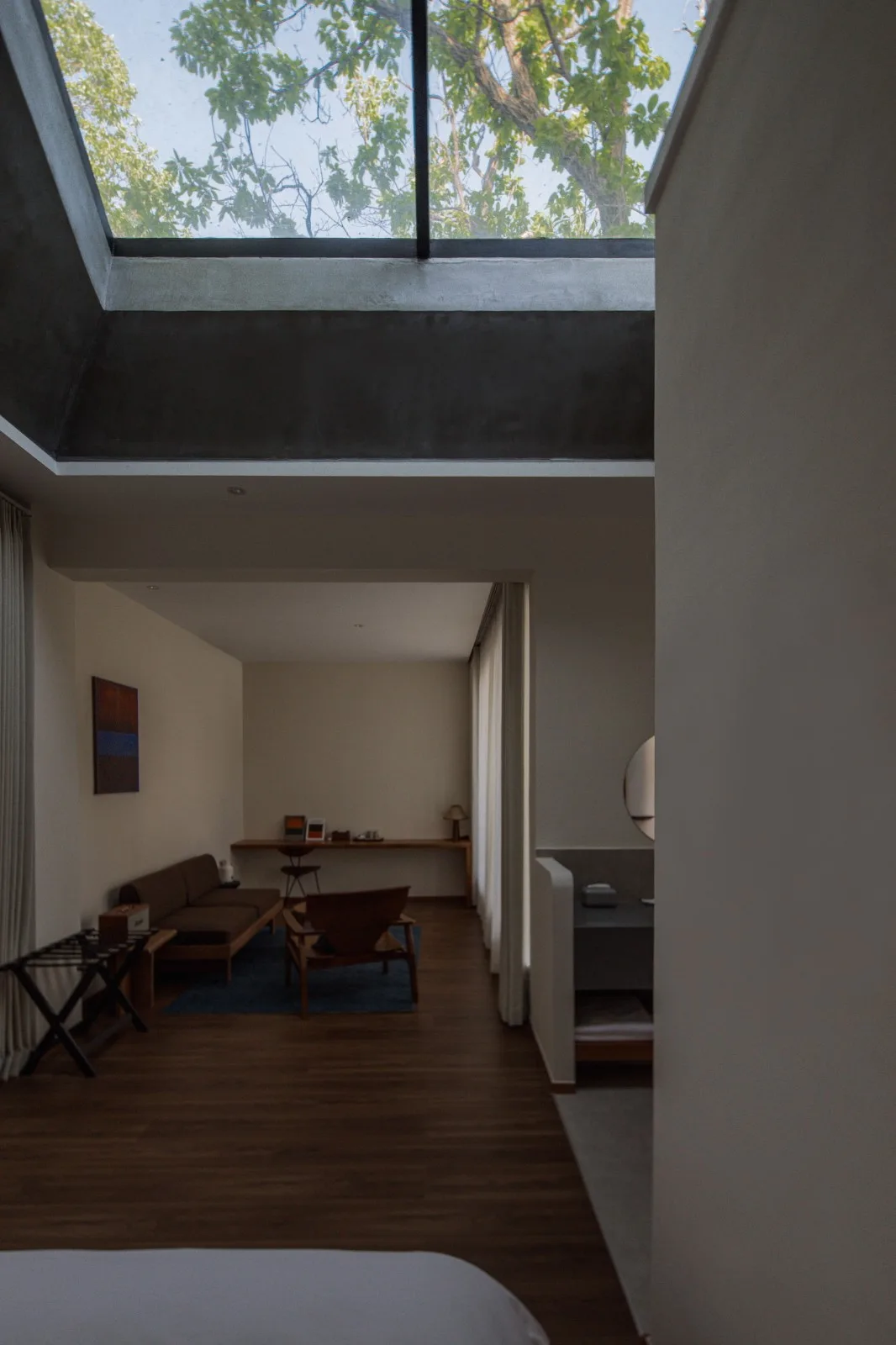
△ Roof skylight
The building’s overall relationship with its environment is inward-focused. Guest rooms open to nature through strategically placed corner windows, engaging in a visual dialogue with the surrounding mountains and courtyard.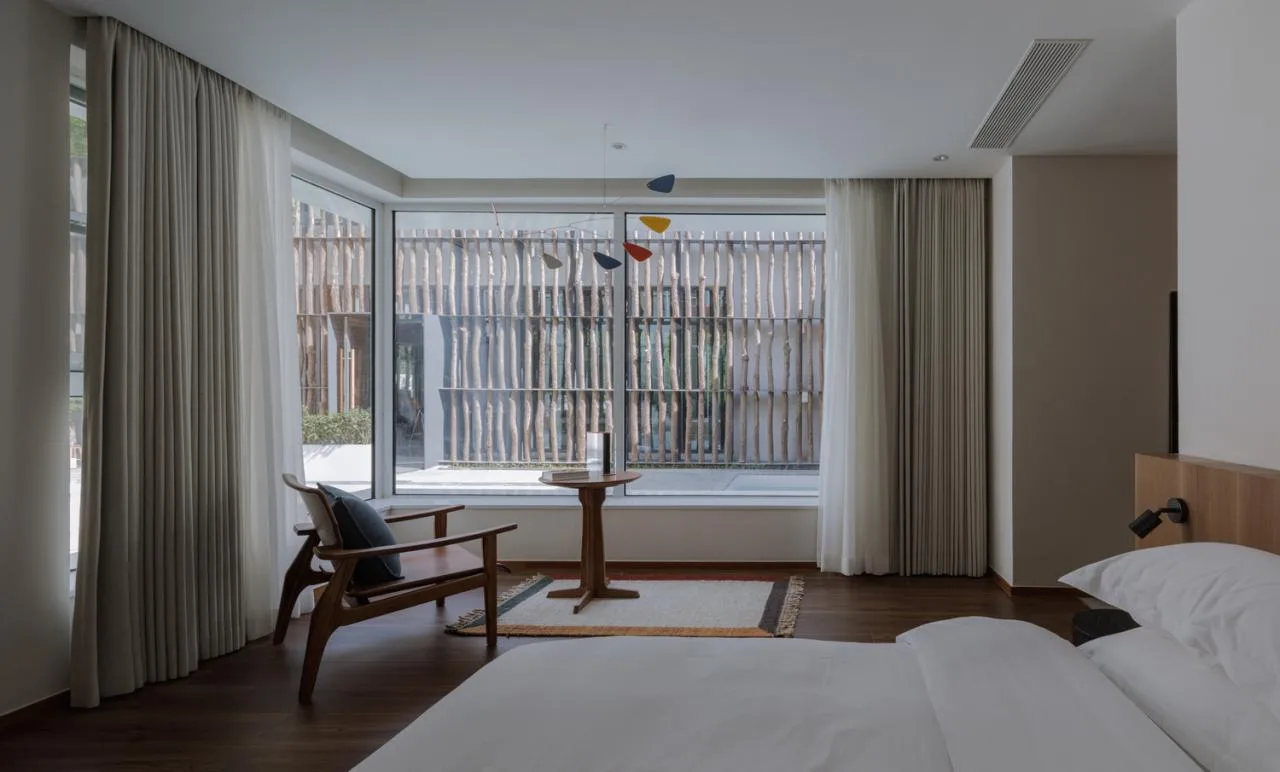
△ Indoor corner window
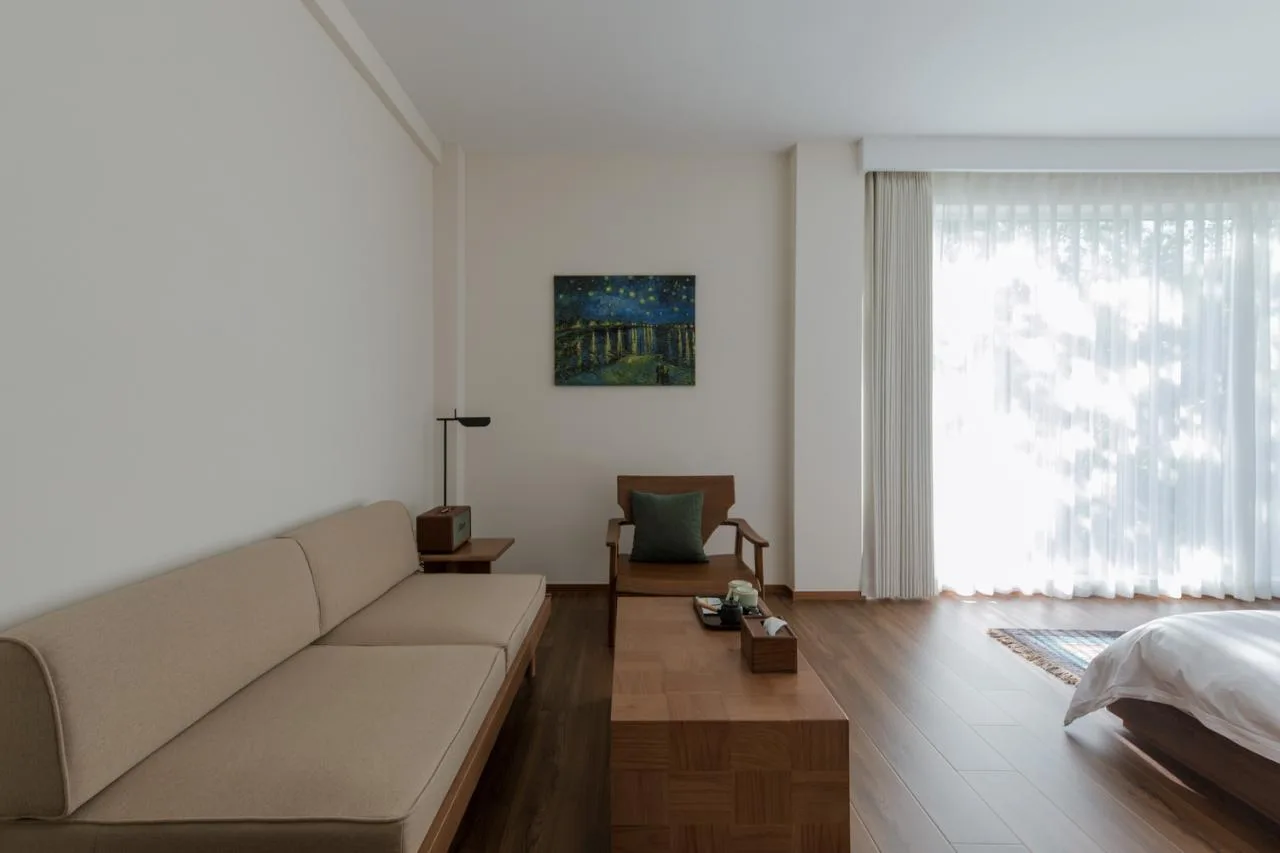
△ Indoor corner window
Art and Residence
Drawing on the cultural background of art sketching in the area and future operational strategies, the design incorporates eleven art themes to shape the indoor spatial atmosphere. Carefully curated color palettes and artistic installations create engaging connections between indoor and outdoor spaces, as well as architectural elements.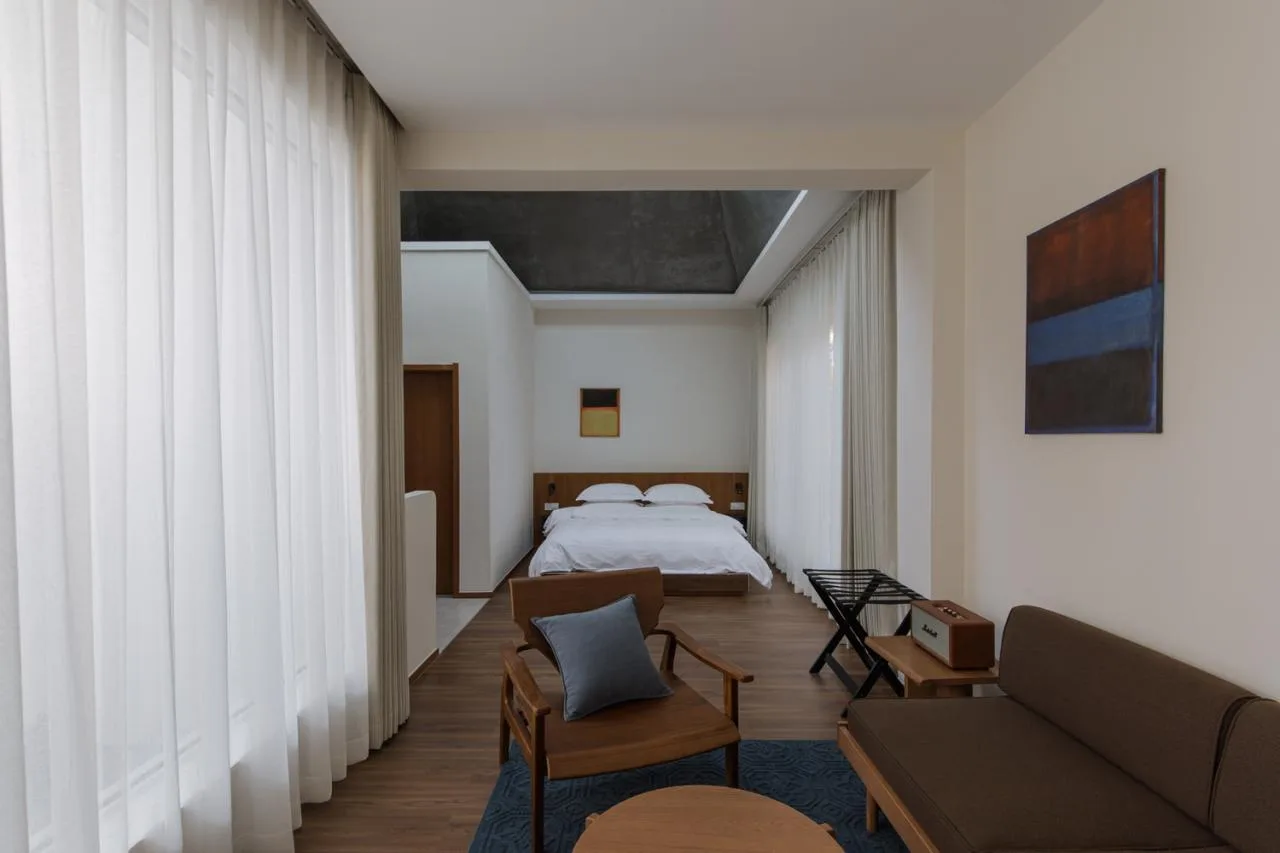
△ Indoor space and artistic themes
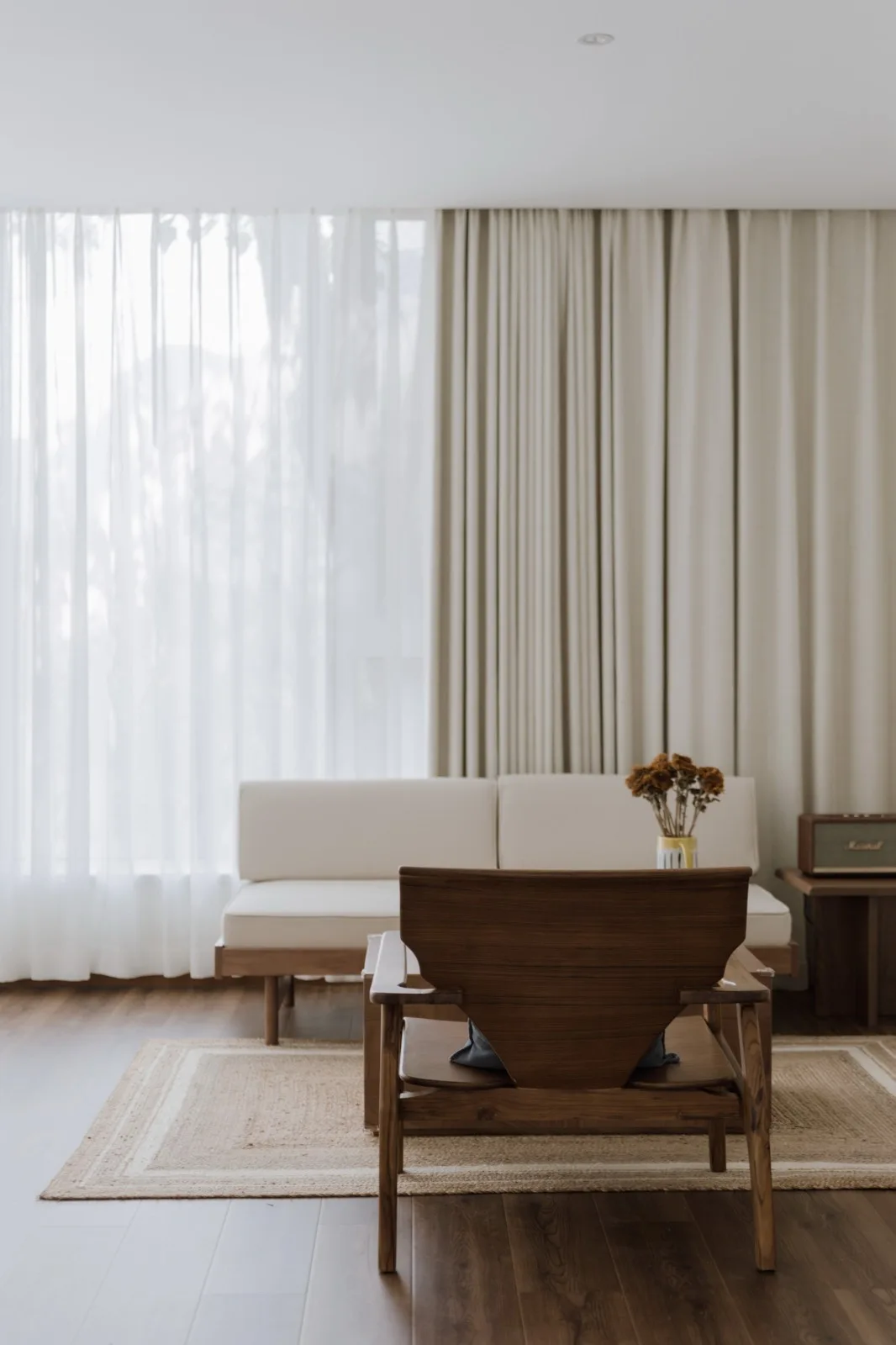
△ Indoor space and artistic themes
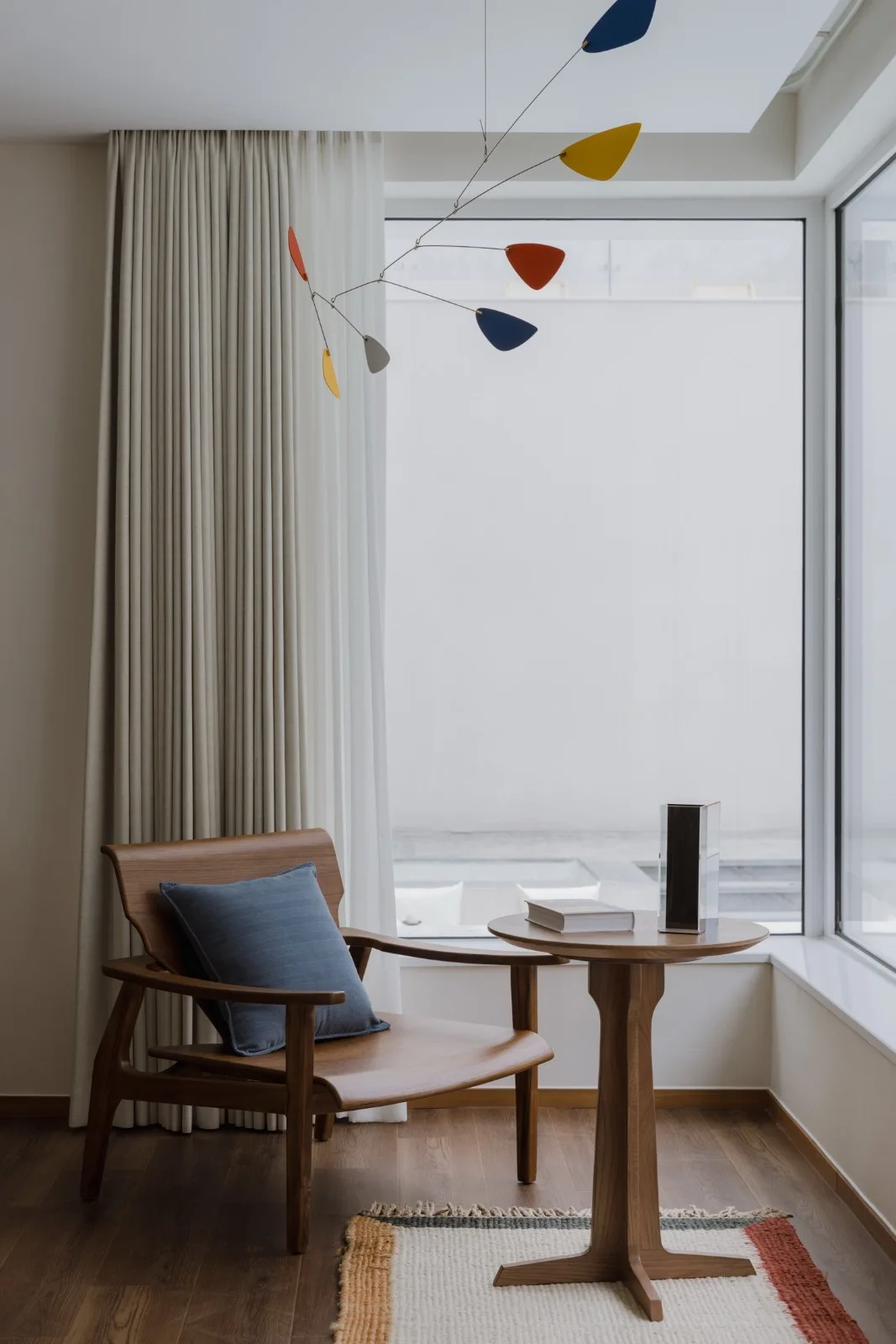
△ Indoor space and artistic themes
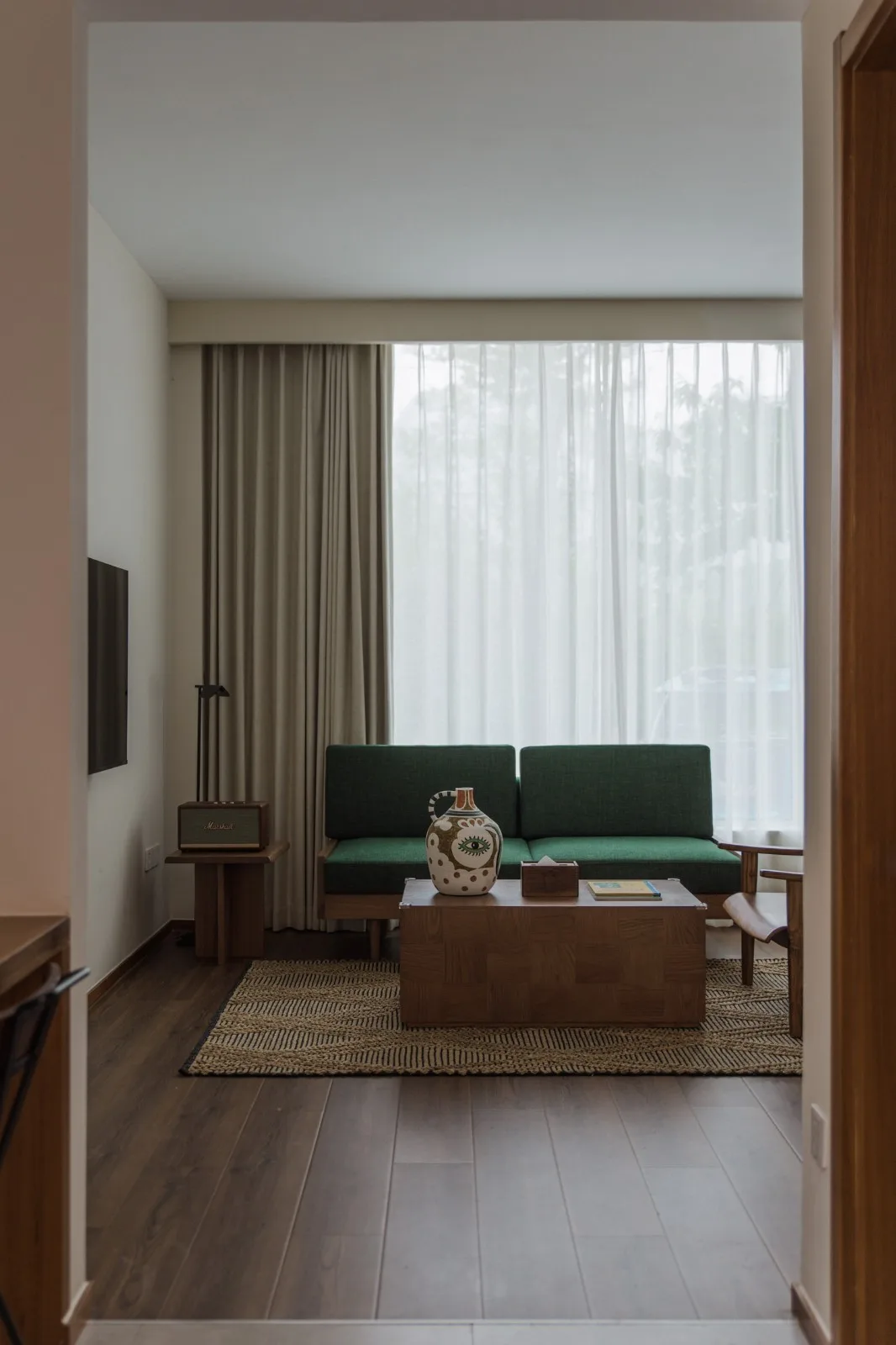
△ Indoor space and artistic themes
Project Drawings
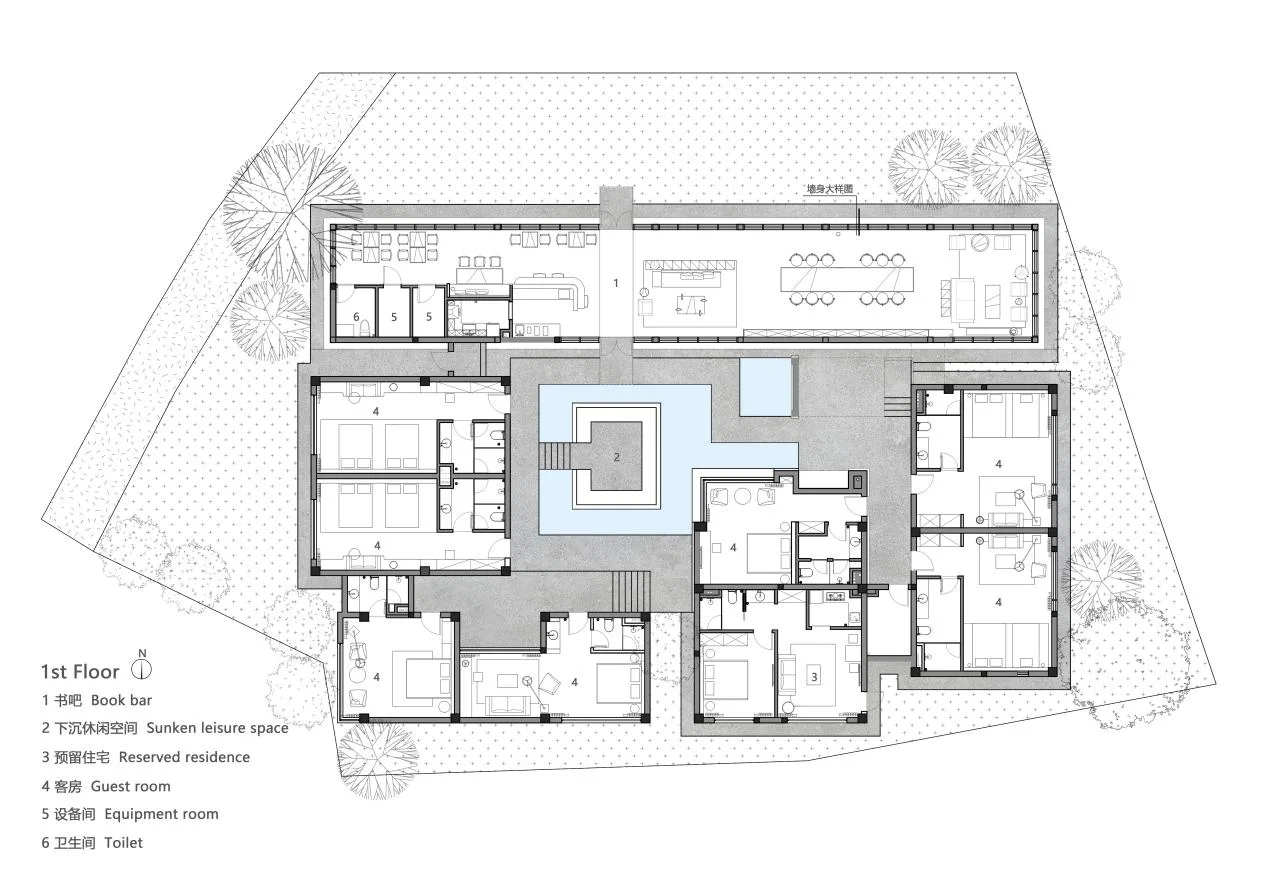
△ First floor plan
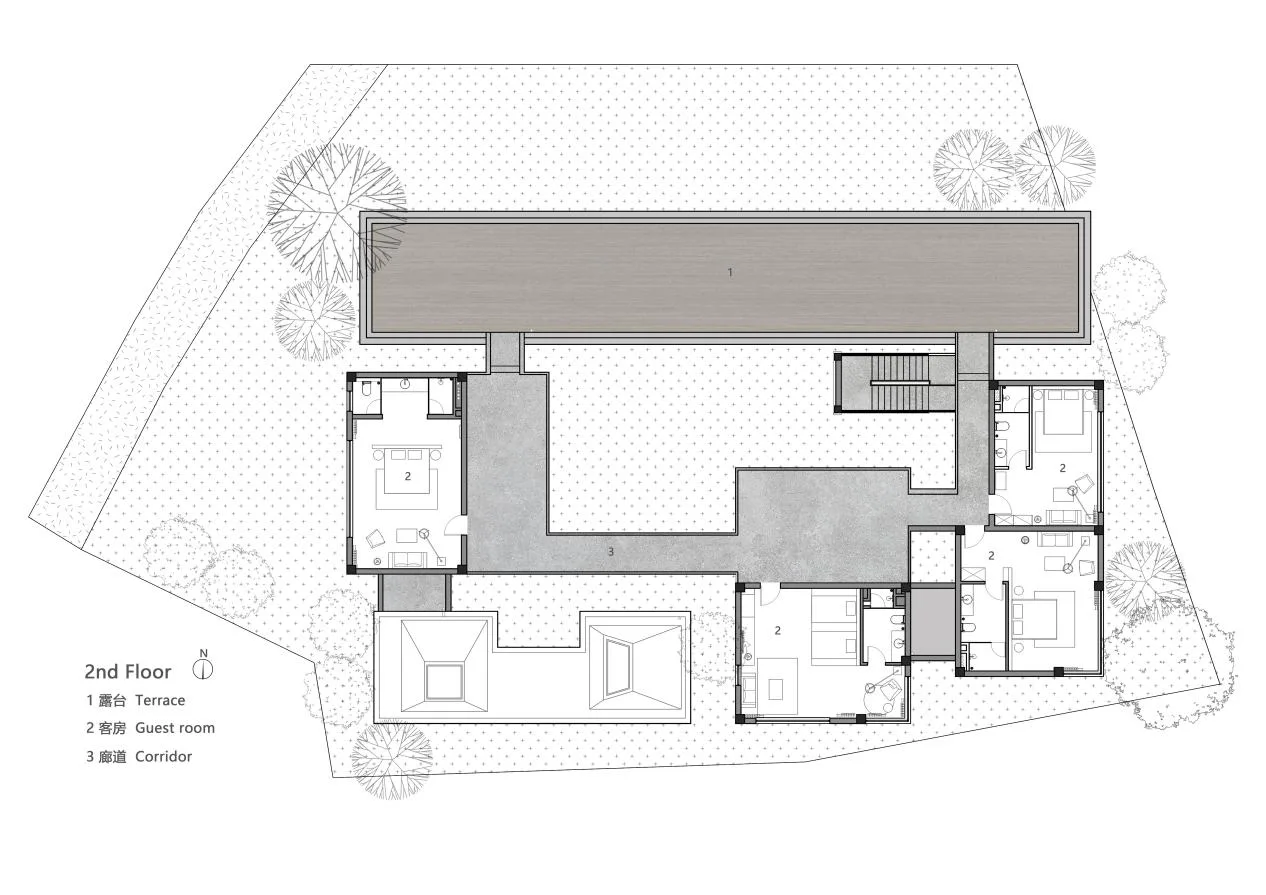
△ Second floor plan
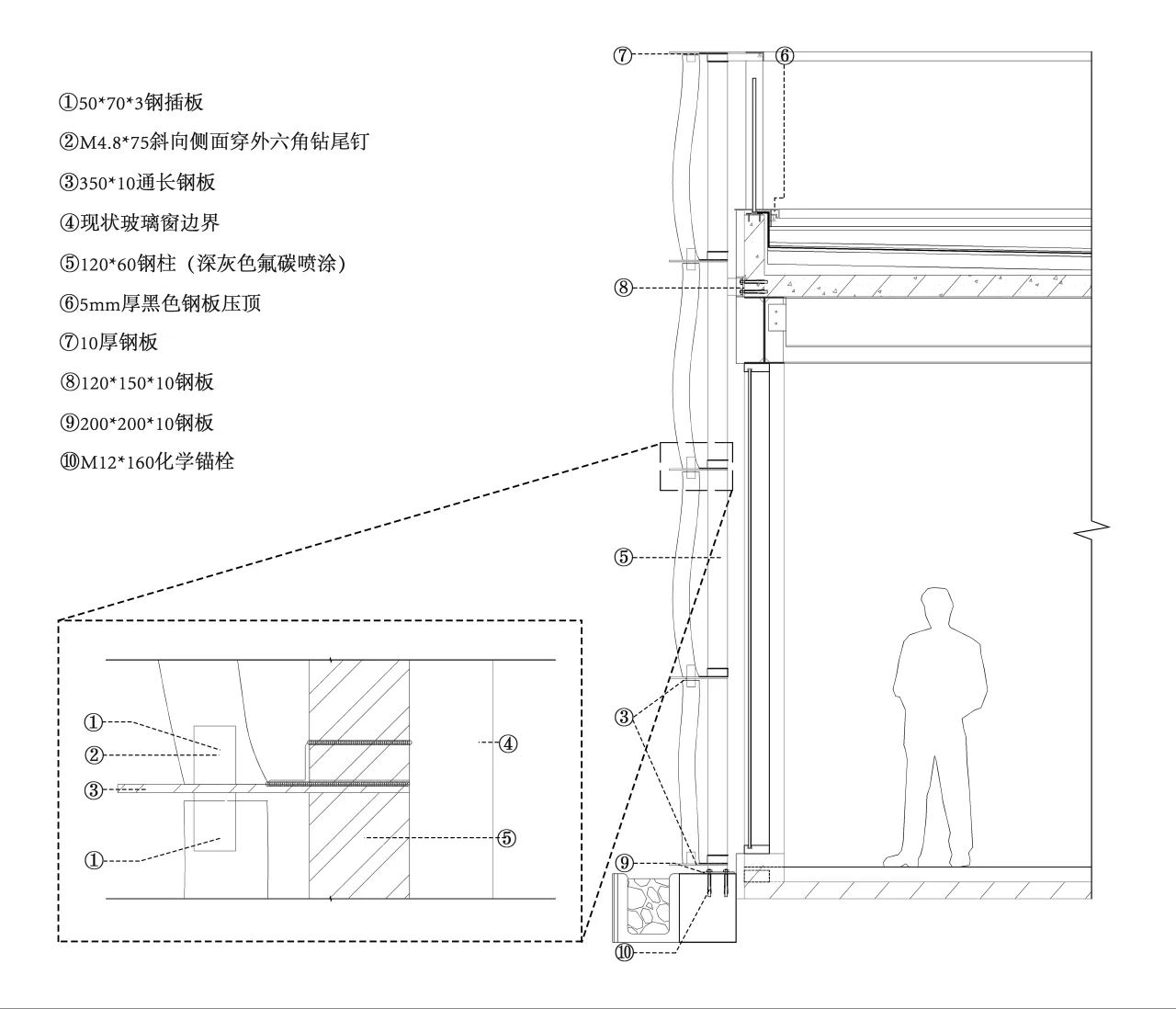
△ Node diagram
Project Information
Project Name: Shandong Yimeng Book House Homestay
Type: Architecture, Landscape, Interior
Location: Baihuayu, Mengshan, Shandong
Design Firm: Grey Space Architecture Firm
Lead Architects: Su Peng, Liu Moyan
Design Team: Ju Anqi, Ying Shijiao, Yao Jingjie, Mo Xian, Li Yuanyuan, Li Jiachen
Owner: Shandong Yimeng Slow Valley Cultural Tourism Development Co., Ltd
Status: Built
Design Period: April 2019 – February 2023
Construction Period: April 2023
Floor Area: 1,422 square meters
Building Area: 751 square meters
Structural Consultant: Ma Haiqing
Construction: Hangzhou Hometown Homestead Technology Co., Ltd
Materials: Robinia pseudoacacia, steel plate, wood
Photography: Chen Yang












Must log in before commenting!
Sign Up