
“What truly matters in a hit is not what you encounter, but what you remember and how you remember it.” – Gabriel Garcia Marquez
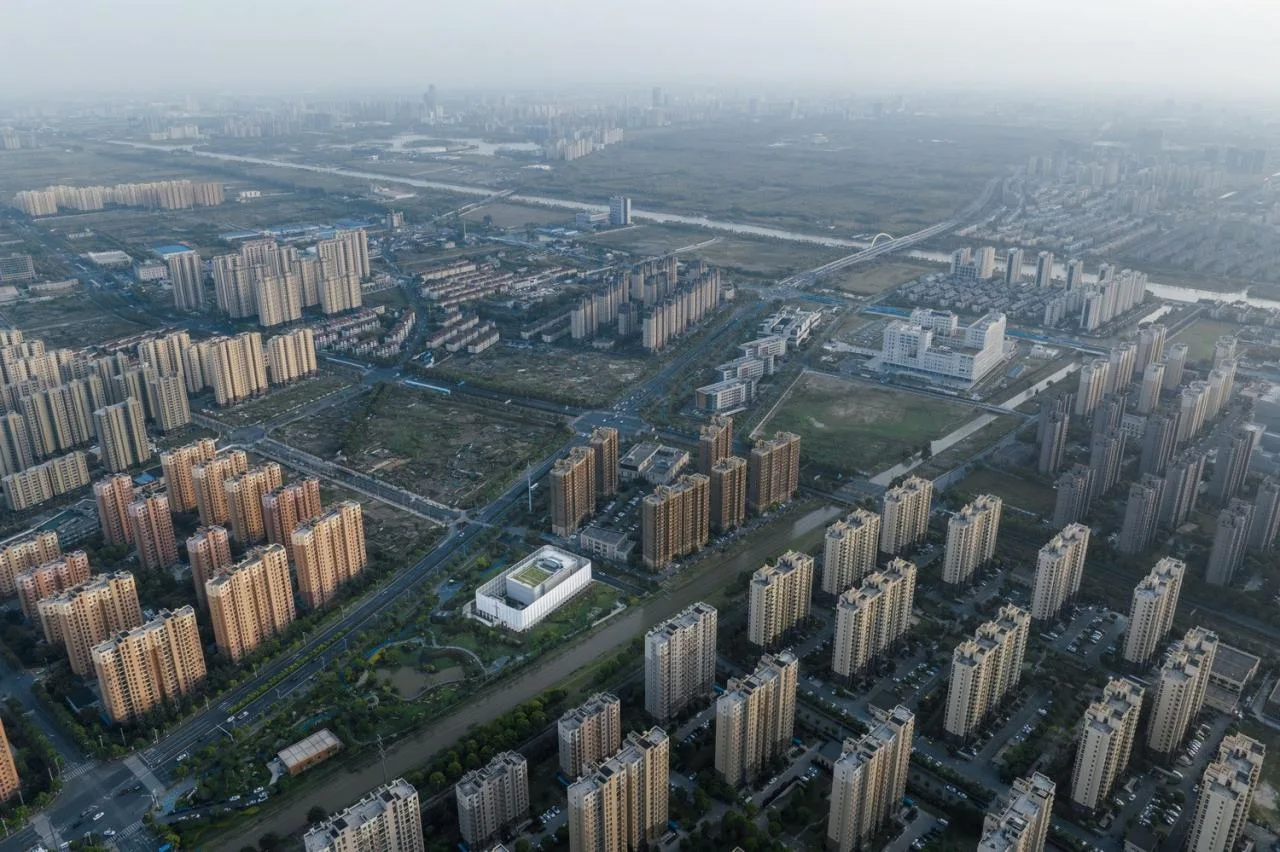
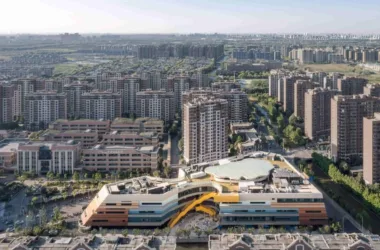
△ Aerial view © CreatAR Images
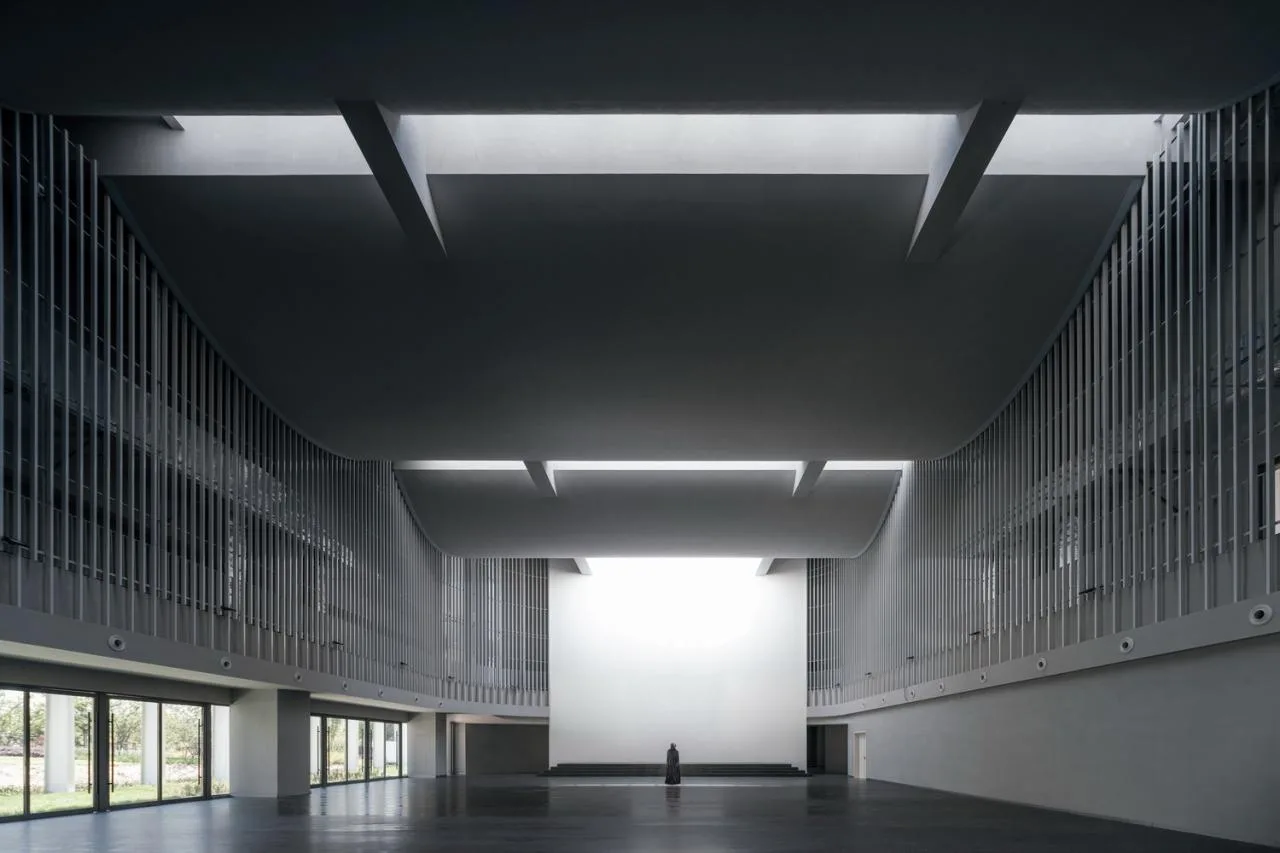
△ Grand Hall © CreatAR Images
In June 2023, the Fengxian Qixian Jesus Church, designed by Wutopia Lab, was finally completed after eight years of construction. Reflecting on the journey, I realized that some design decisions made earlier were somewhat unclear to me at the time. However, I was captivated by the use of translucency to express, in a contemporary way, my interpretation of the subtle beauty and underlying struggles of Jiangnan.
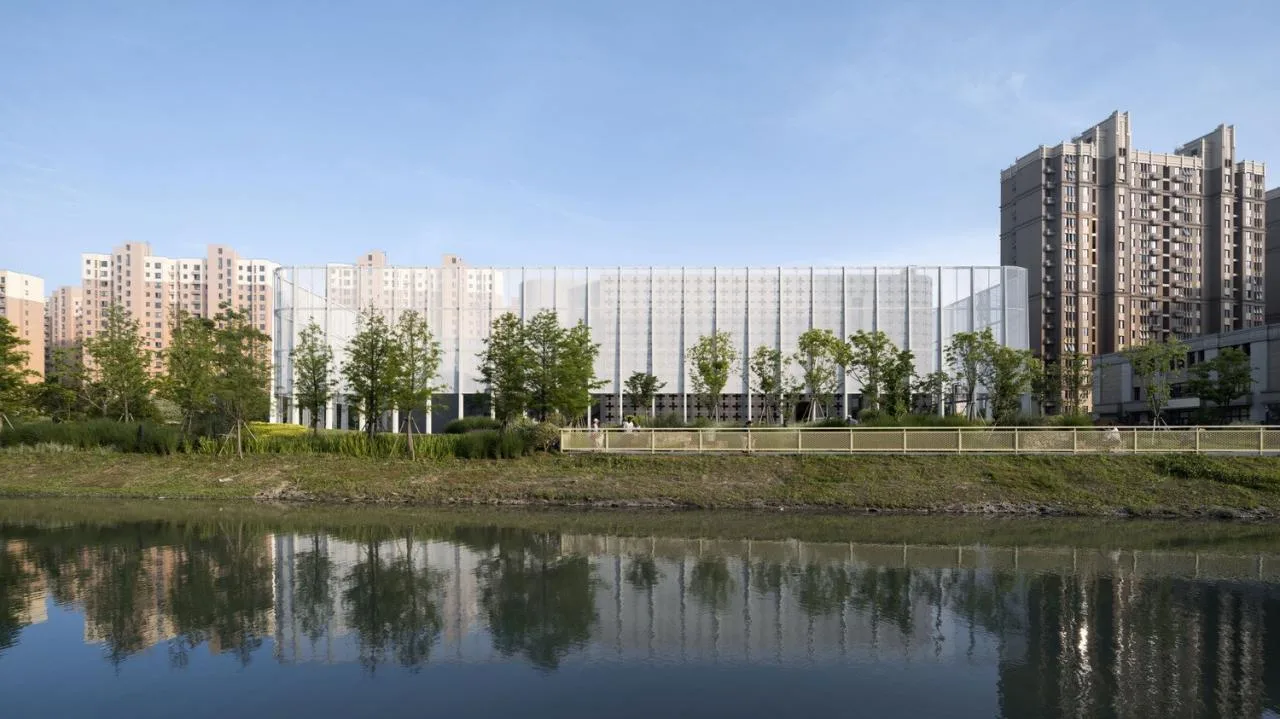
△ Riverside perspective © CreatAR Images
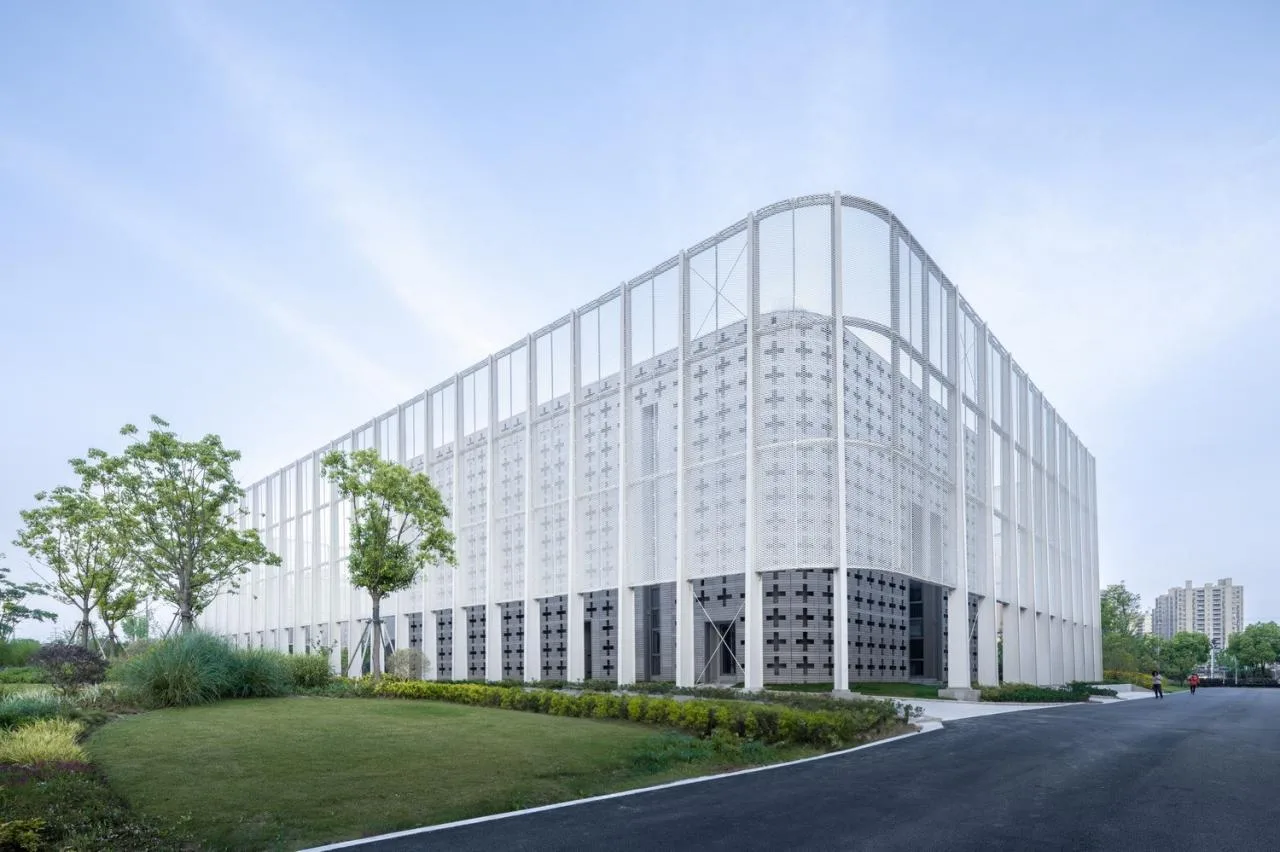
Northwest perspective © CreatAR Images
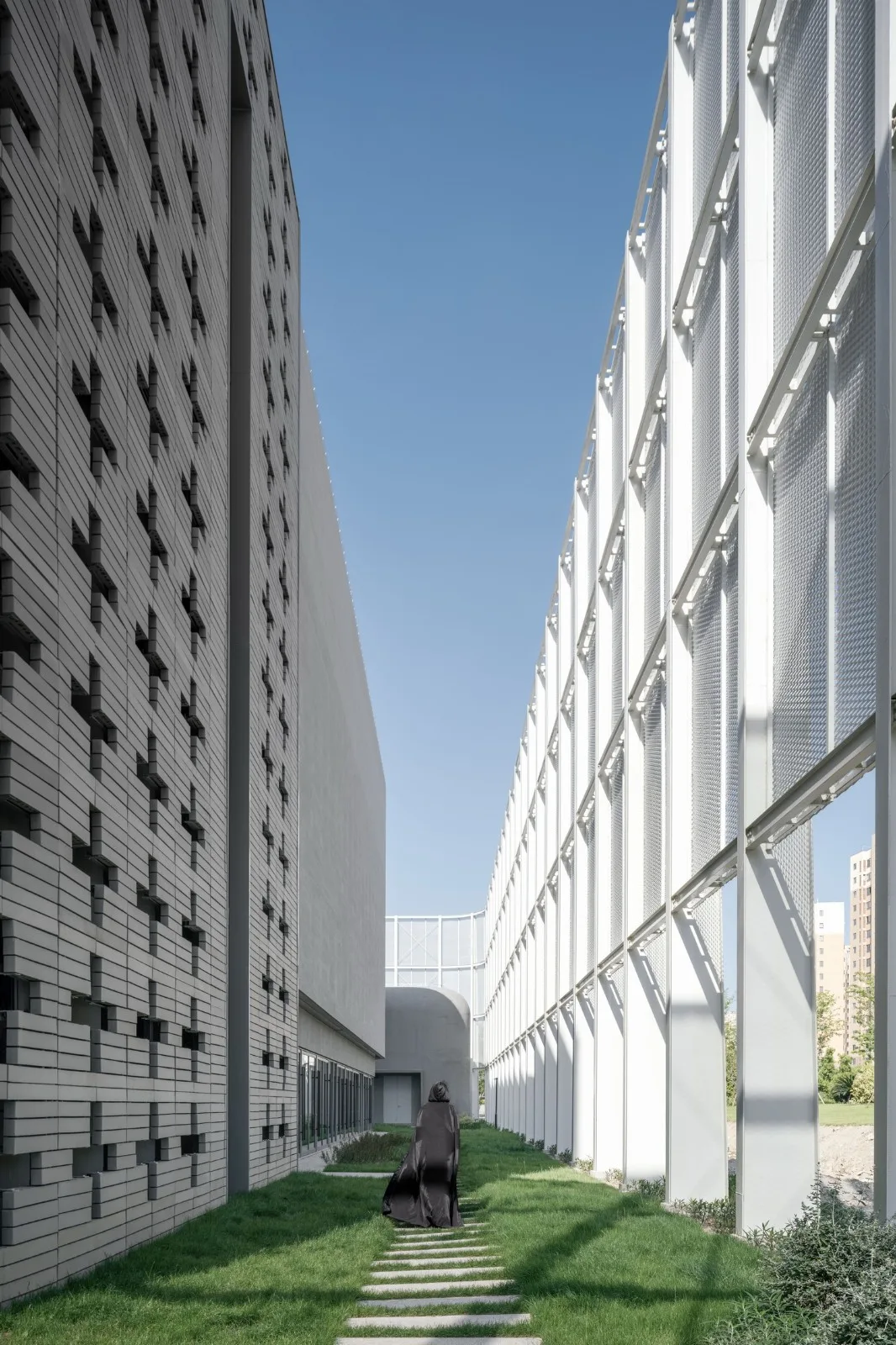
△ Architecture and Curtain © CreatAR Images
A Subtle Restraint
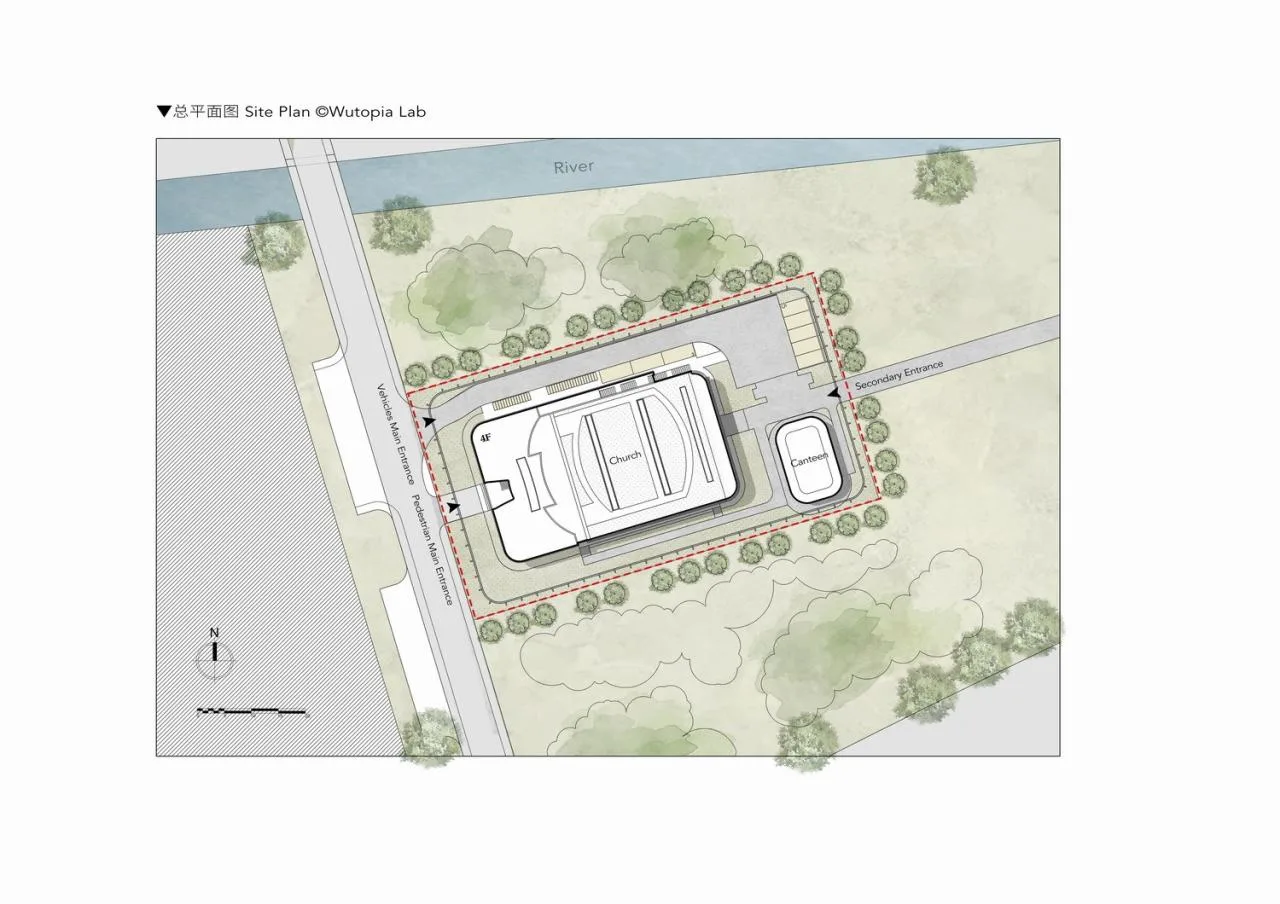
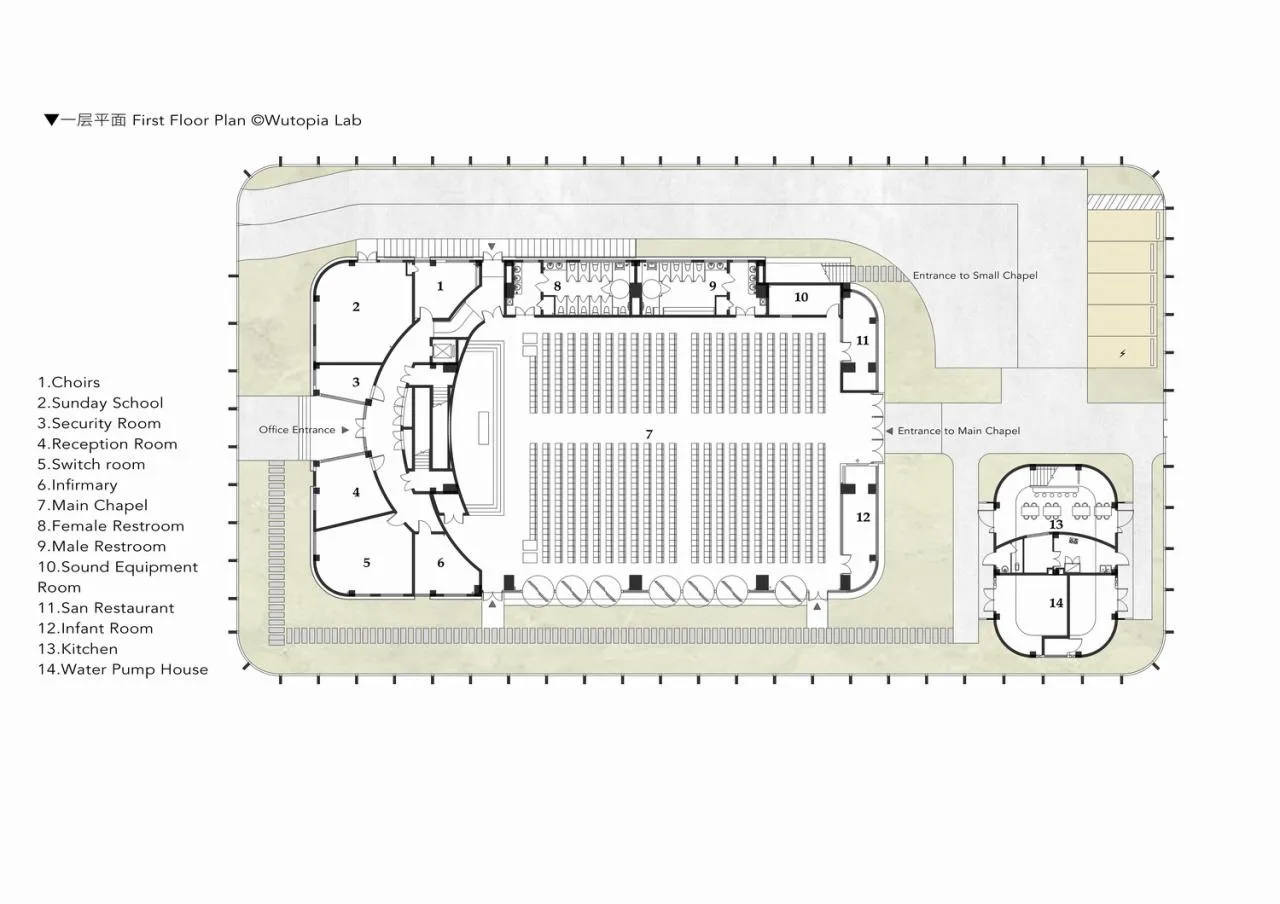
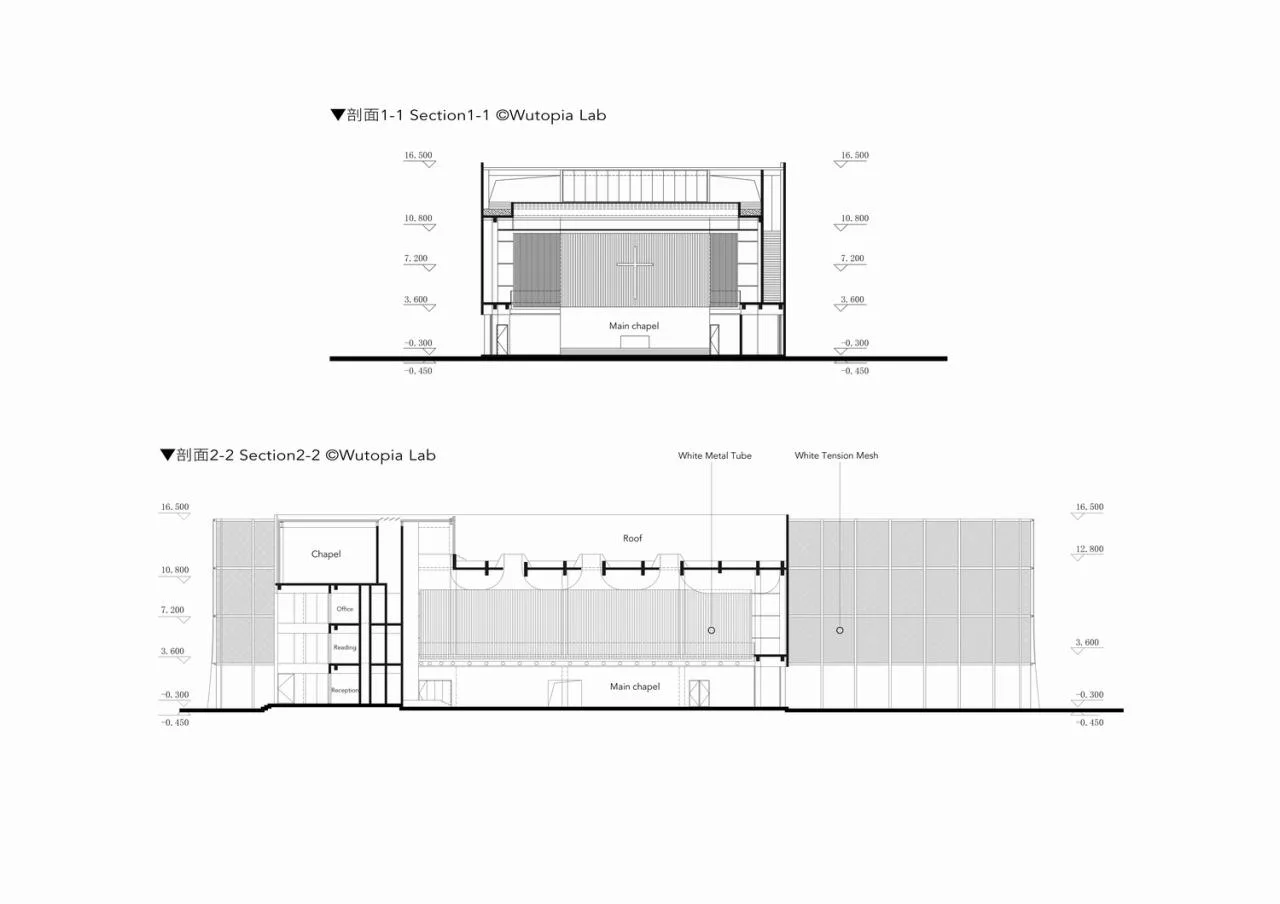
The project brief required the main and auxiliary buildings to be separate. I decided to center the main building around a 16.7-meter-high auditorium, with office and support spaces arranged along its west and north sides. The small auditorium was positioned on the highest floor of the office area. Essentially, the main building functions as a vertical community, while the auxiliary building serves as the cafeteria.
My key strategy was to treat the entire site as a singular architectural entity, or “place.” I erected a semi-transparent “veil” along the building control line to serve as a visual boundary. The main and annex buildings reside within this boundary, and together with the veil, they form a cohesive architectural statement—a complete place.
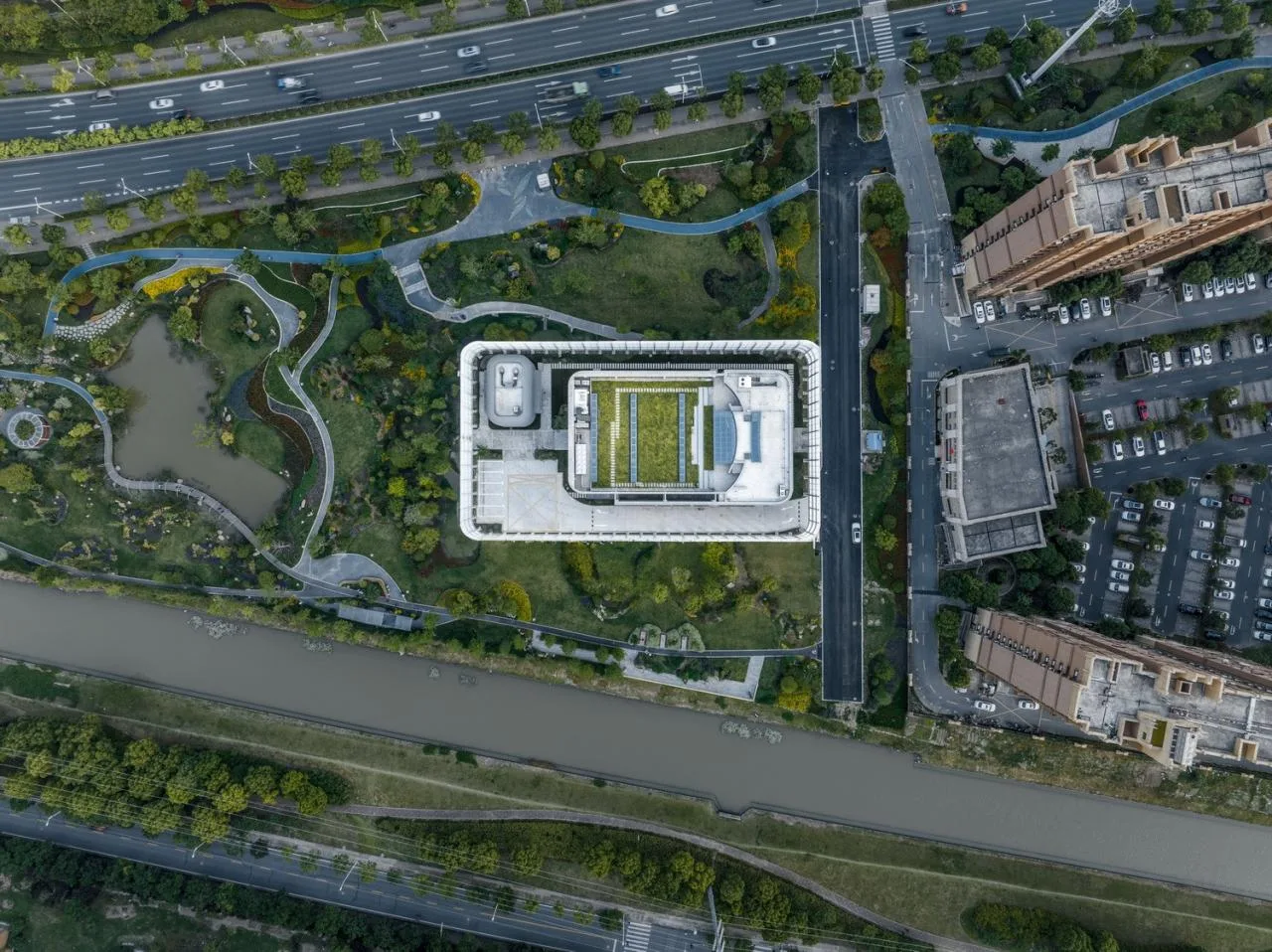
△ Top view © CreatAR Images
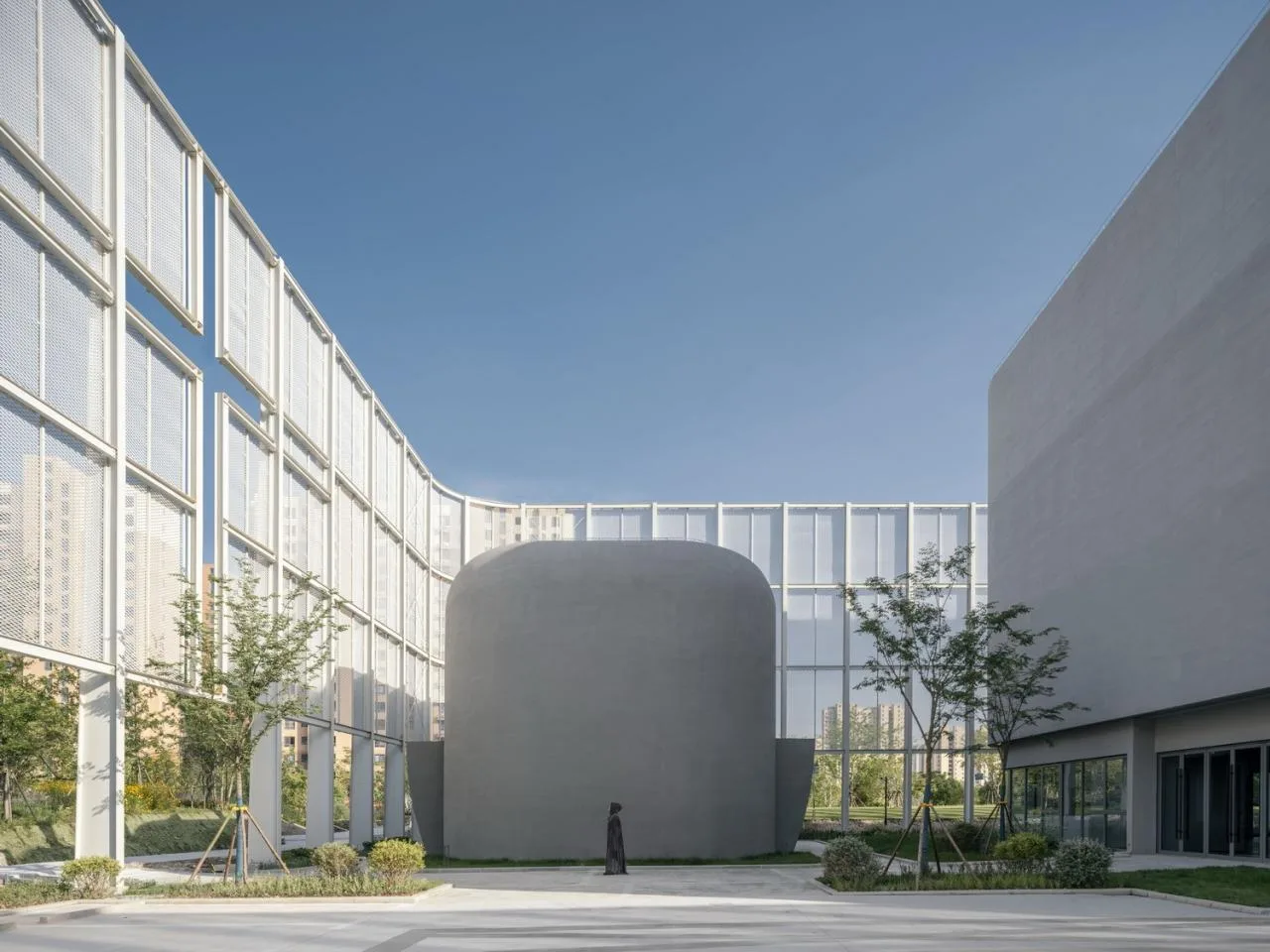
Within the venue © CreatAR Images
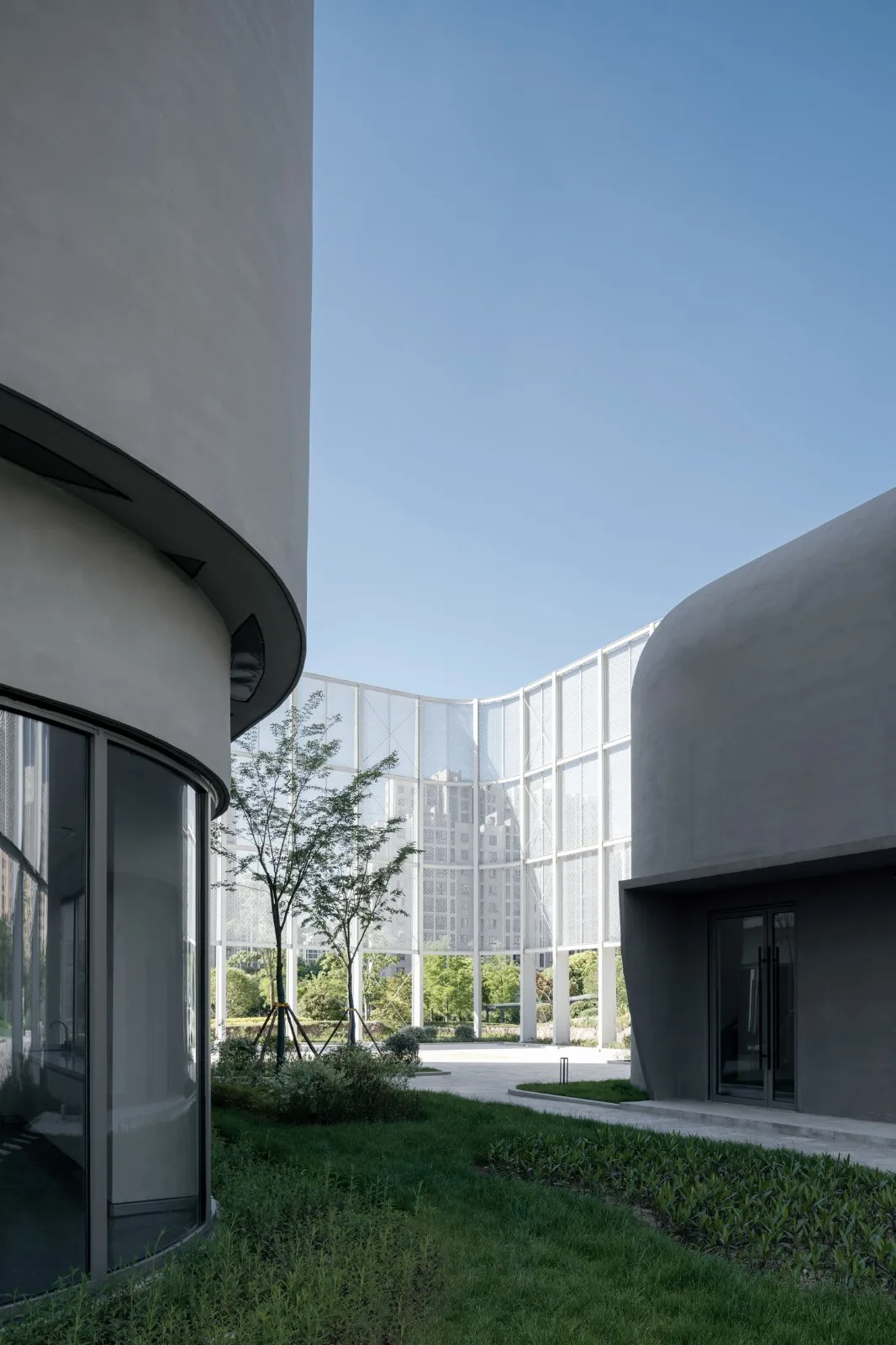
Within the venue © CreatAR Images
Balancing Symmetry and Dynamism
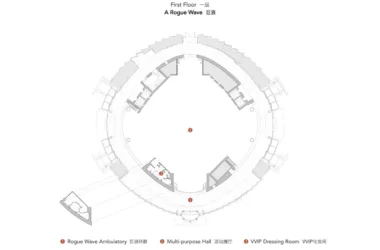
I aimed to maintain a sense of symmetry within the building, but introduced subtle shifts in the overall plan. The centerline of the main building runs parallel, but offset, from the base centerline. Similarly, the auditorium’s centerline is parallel but offset from the main building’s centerline. This arrangement introduces lively and dynamic elements while avoiding rigid symmetry, yet preserves sacred symmetry where essential.
This configuration also allows the auditorium’s first floor to face south directly. On pleasant days, the auditorium can fully open toward the south, extending the indoor space into the outdoors—effectively externalizing the auditorium.
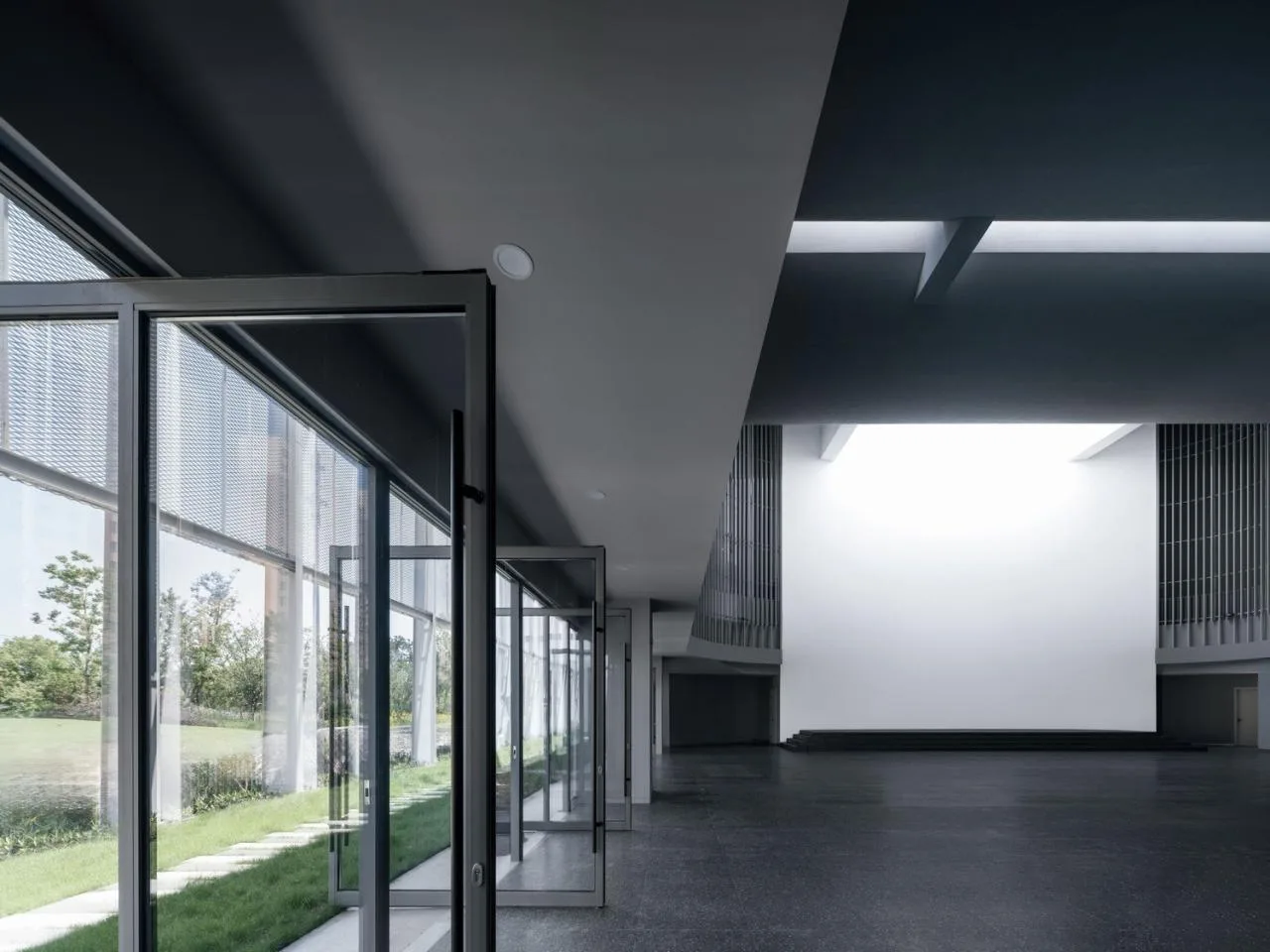
△ Grand Hall © CreatAR Images
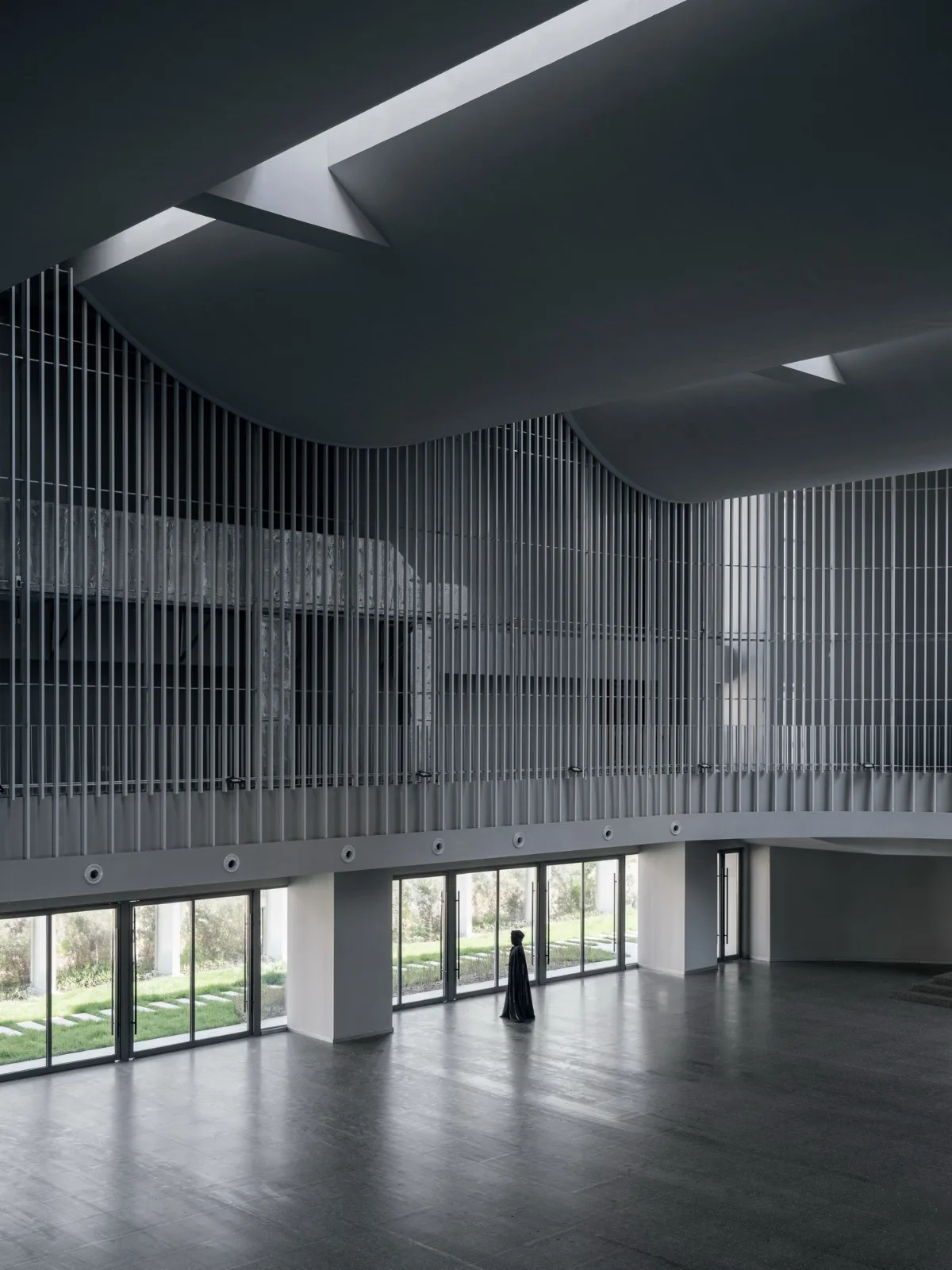
△ Grand Hall © CreatAR Images
The Unpredictable Light of Jiangnan
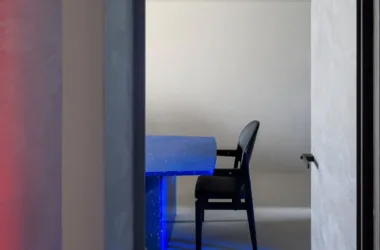
The semi-transparent “veil” serves as my architectural expression of Jiangnan’s ambiguous light. It reflects shifting shadows that change with sunlight—either from natural or artificial sources—projected onto or transmitted through it. Inside the veil, filtered sunlight creates a soft, unpredictable illumination reminiscent of Jiangnan’s ever-changing weather.
More importantly, this veil defines the enclosed area as a distinct place, marking it as a new territory to enter.
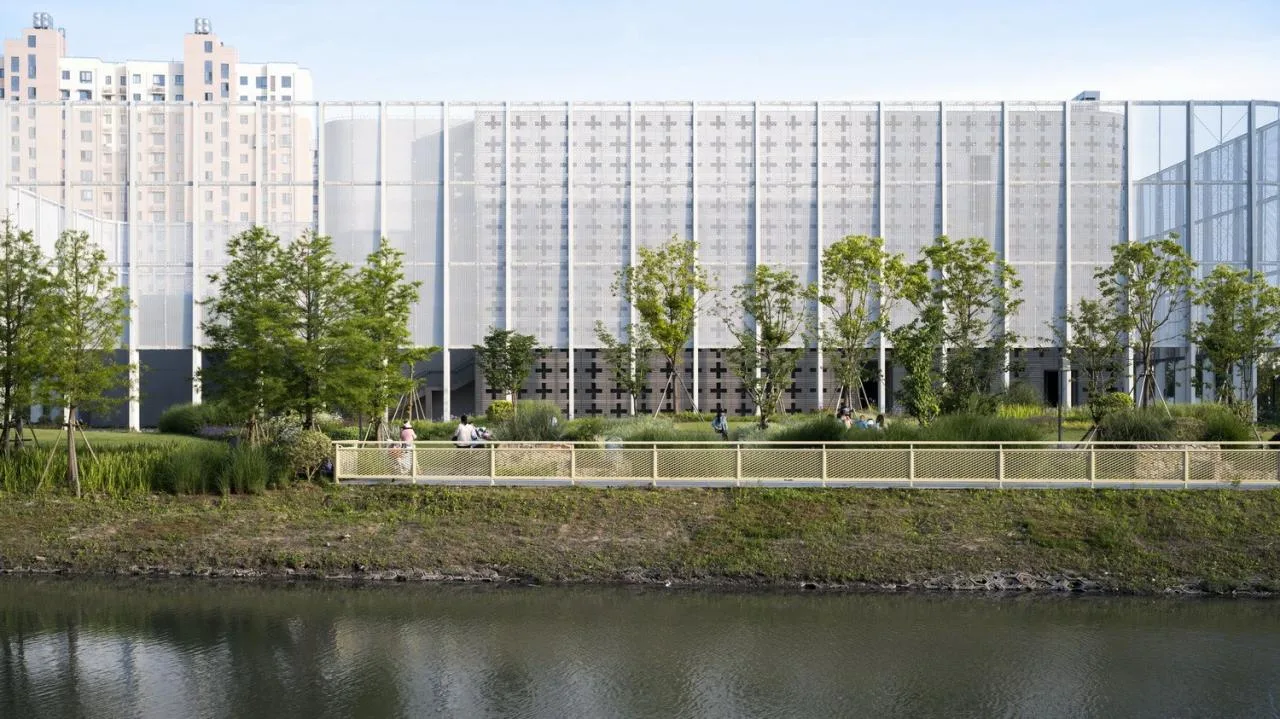
△ Curtain © CreatAR Images
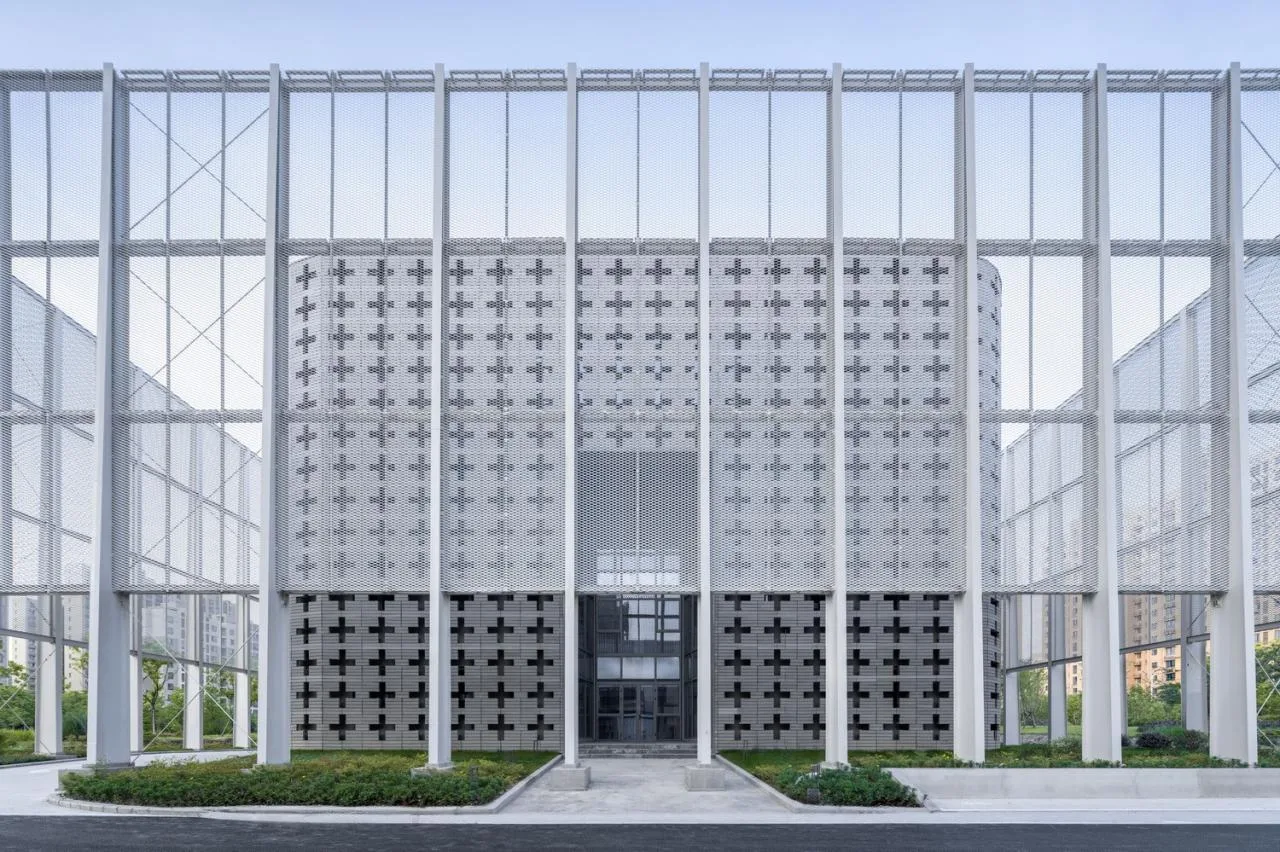
△ Curtain © CreatAR Images
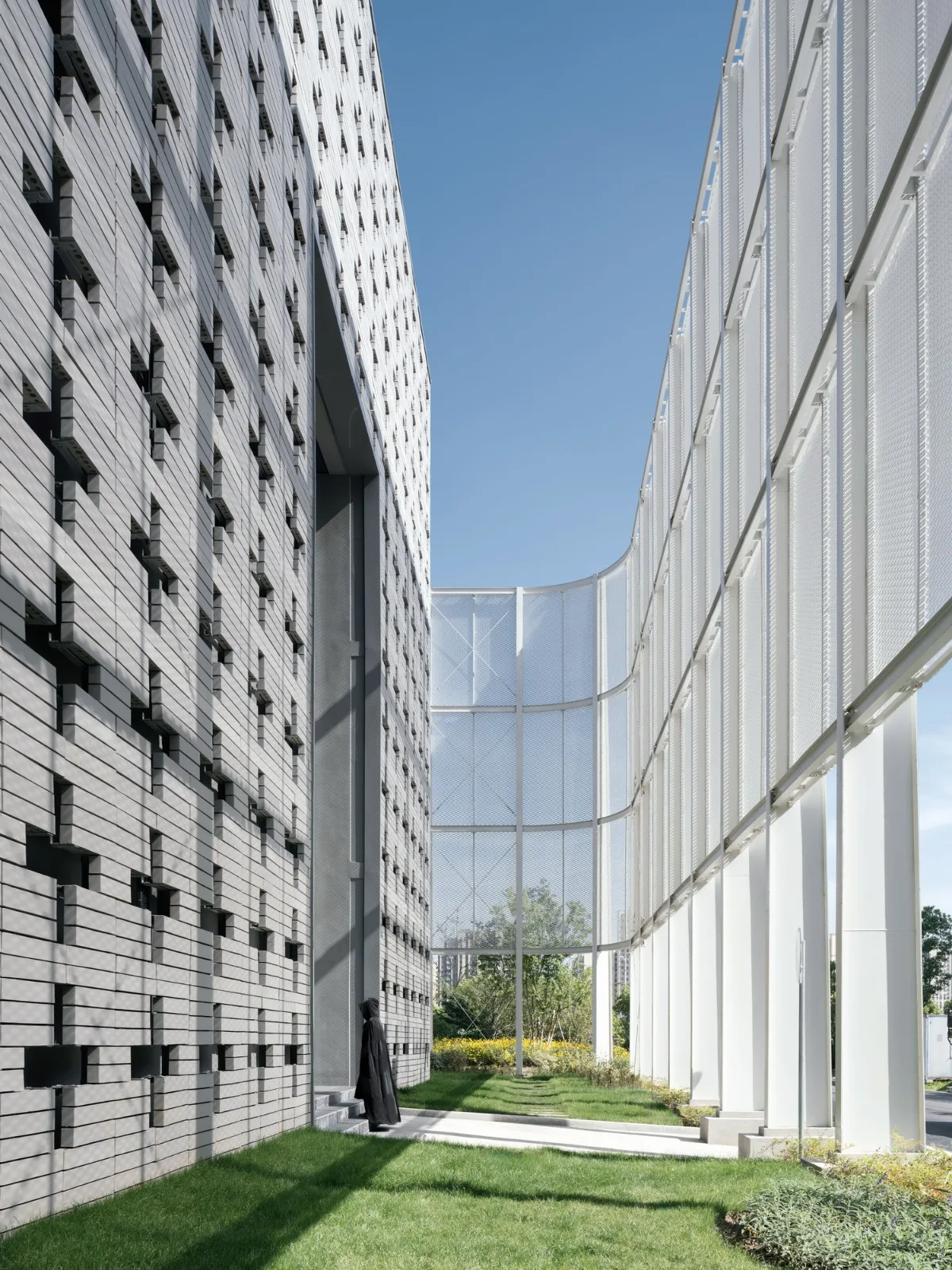
△ Curtain © CreatAR Images
Inside the auditorium, I used dense grilles to create a visual barrier that complements the north-south skylight. If budget allowed, I would have twisted the grille to create unpredictable reflections. The aluminum grille and skylight together form a light curtain that feels like rain, softly enveloping the audience to foster a sense of belonging.
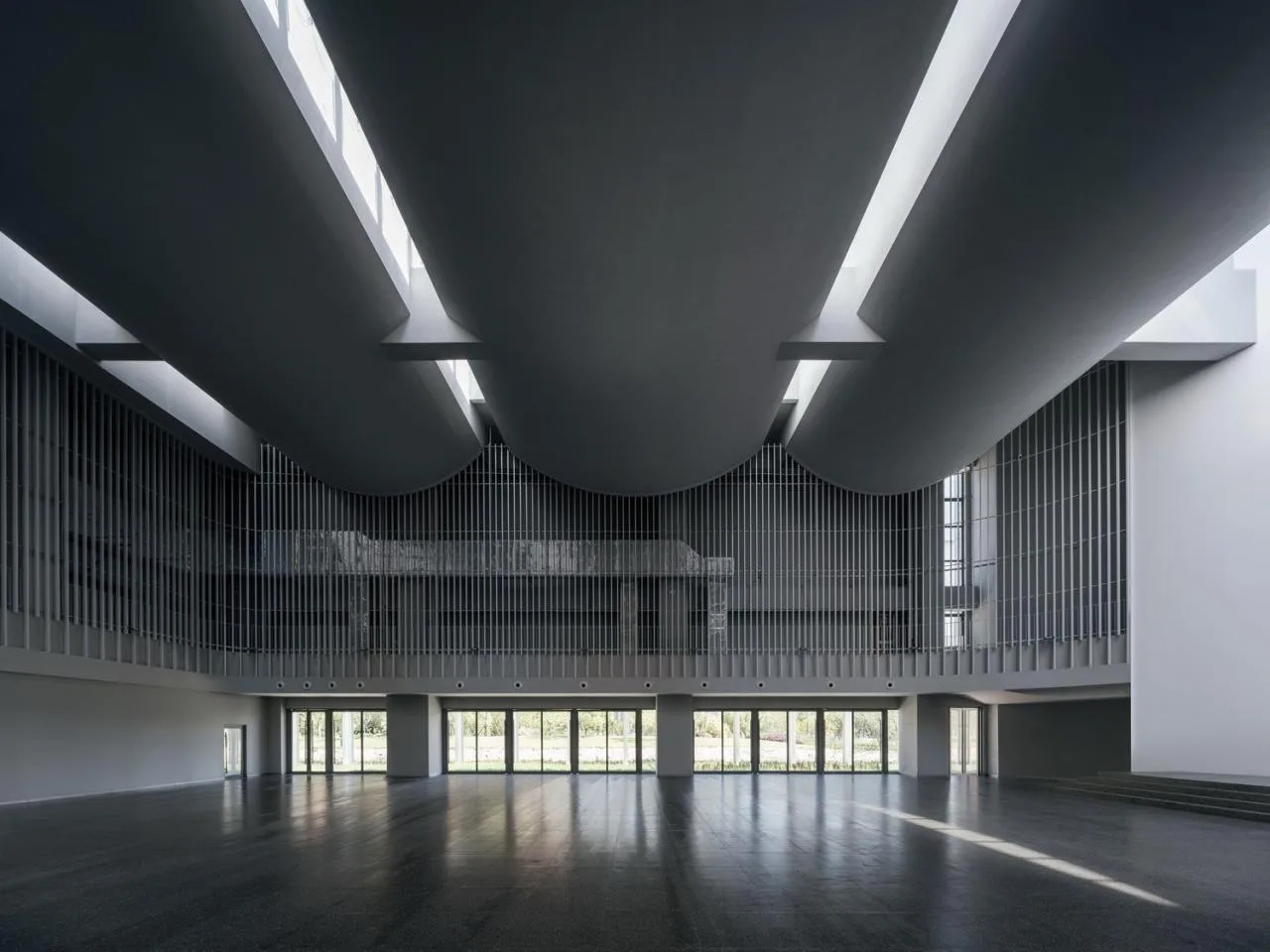
△ Grand Hall © CreatAR Images
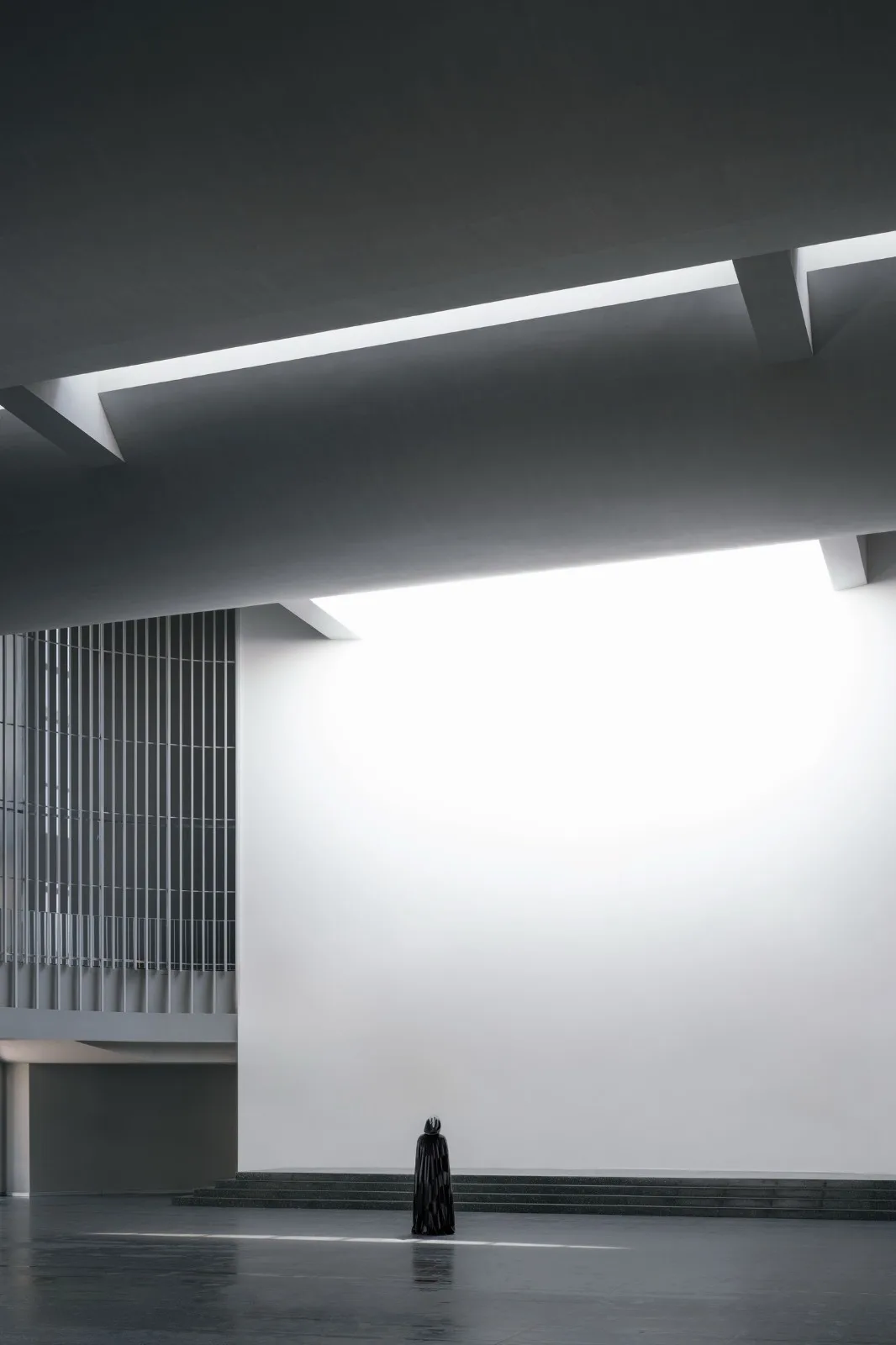
△ Grand Hall © CreatAR Images
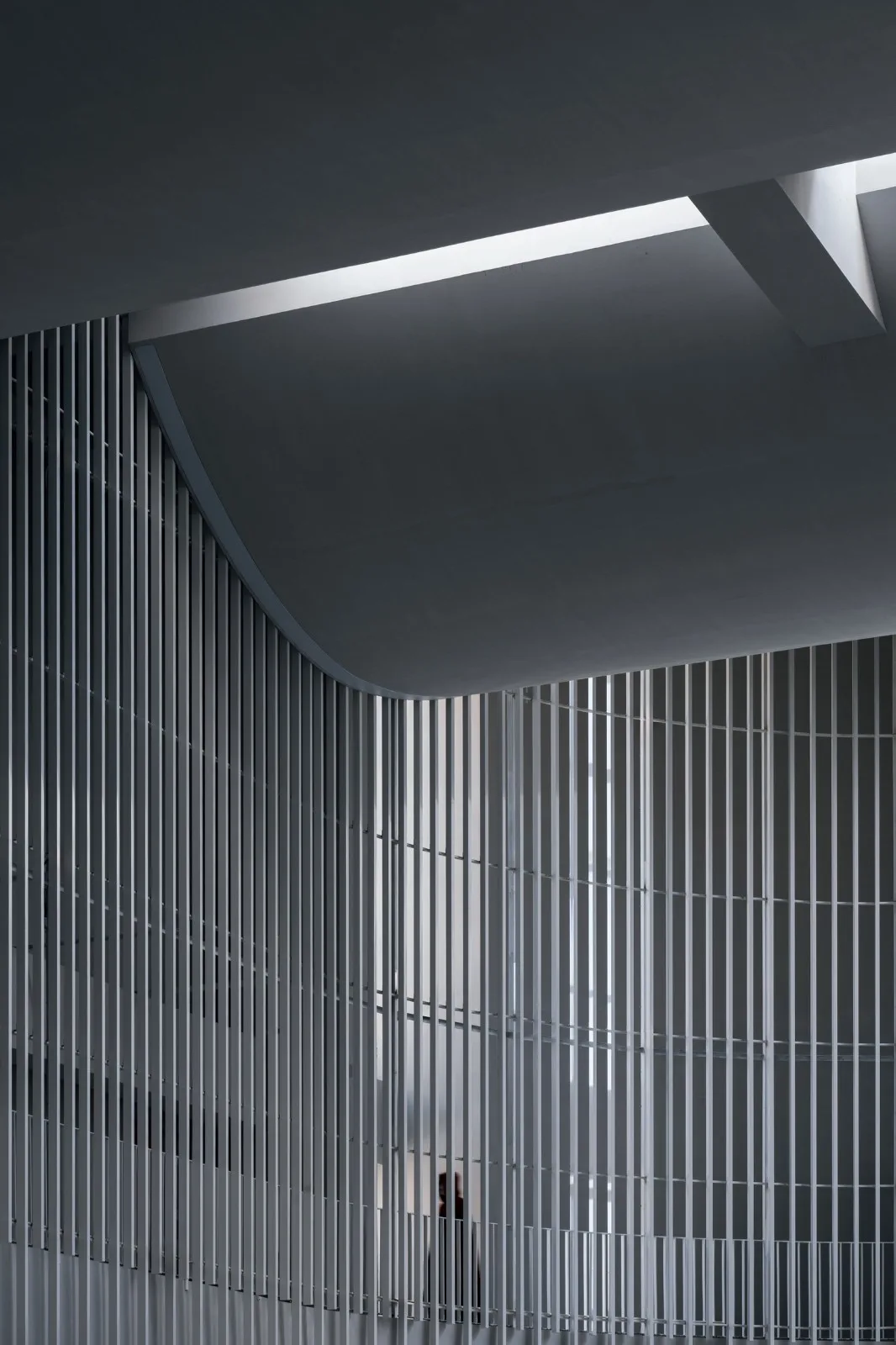
△ Grand Hall © CreatAR Images
To add subtle depth, I decorated different parts of the main building in varying shades of gray—representing the five colors of ink, peaceful amidst the misty waters of Jiangnan.
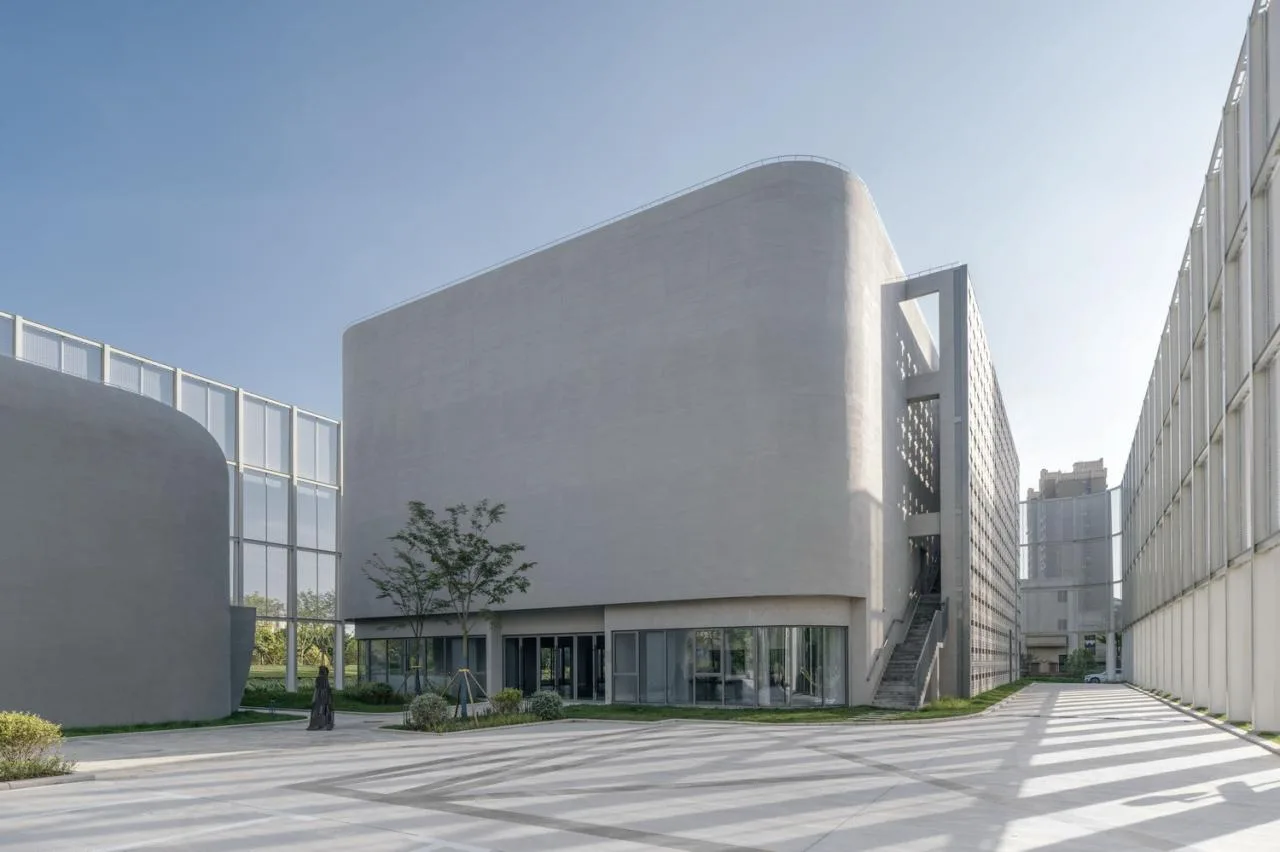
Within the venue © CreatAR Images
Eight Years of Evolution
Instead of using perforated aluminum or polycarbonate sheets, I chose an expanded metal mesh as the “veil” due to its lower cost and better wind resistance. To ensure strength and safety, I agreed to enlarge the cross-section of the supporting pillars and add diagonal braces at intervals.
To avoid additional approvals and increased costs, I accepted adding columns on both sides of the main auditorium to reduce large single-span spaces, as well as two large beams penetrating the curved ceiling and interrupting the horizontal skylight. Cost constraints also led to replacing the rose wall with a brick wall.
However, I rejected some proposed changes, such as extending supports on the main structure to assist the veil system, as I preferred the veil to stand independently.
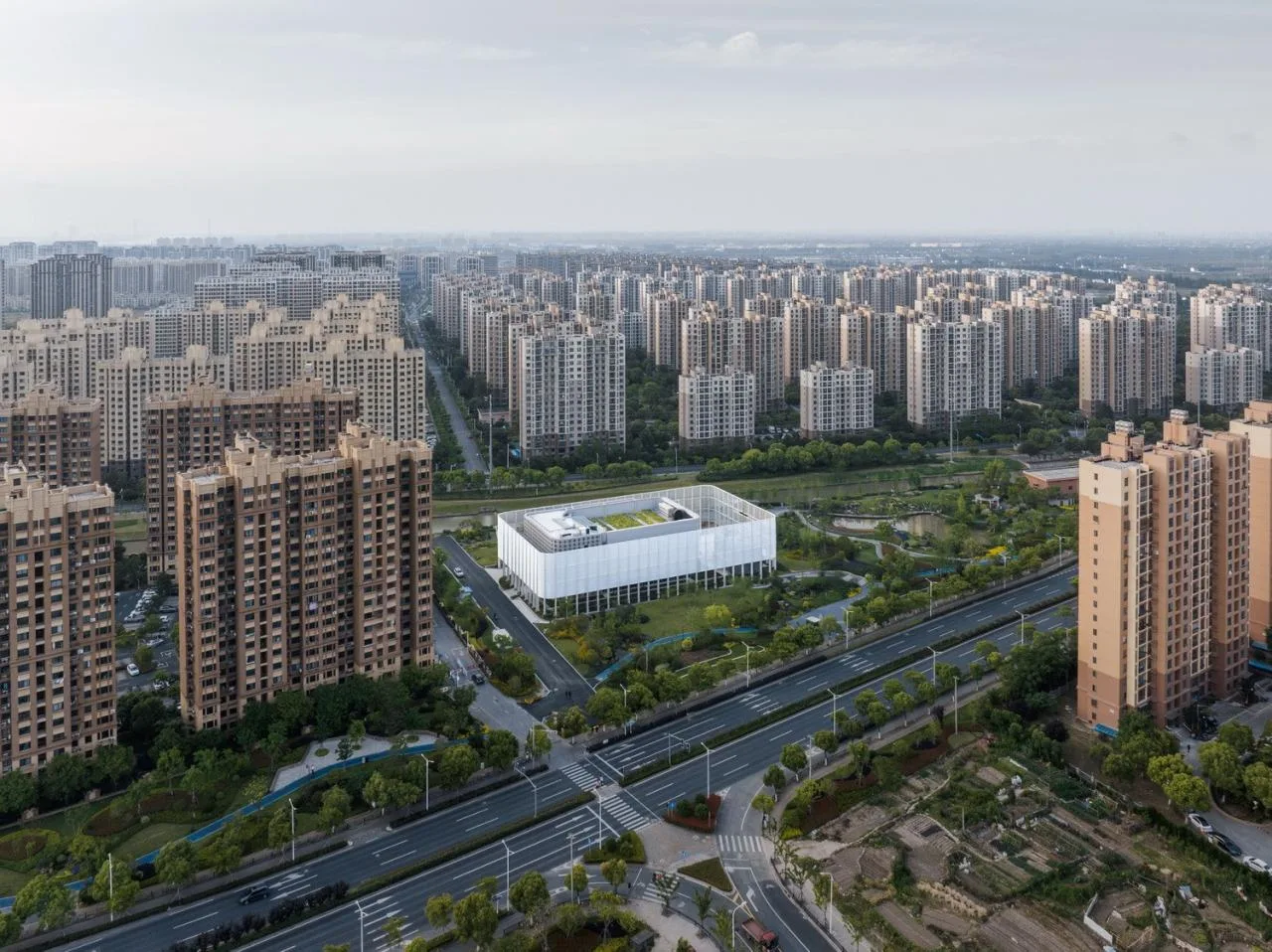
Southwest perspective © CreatAR Images
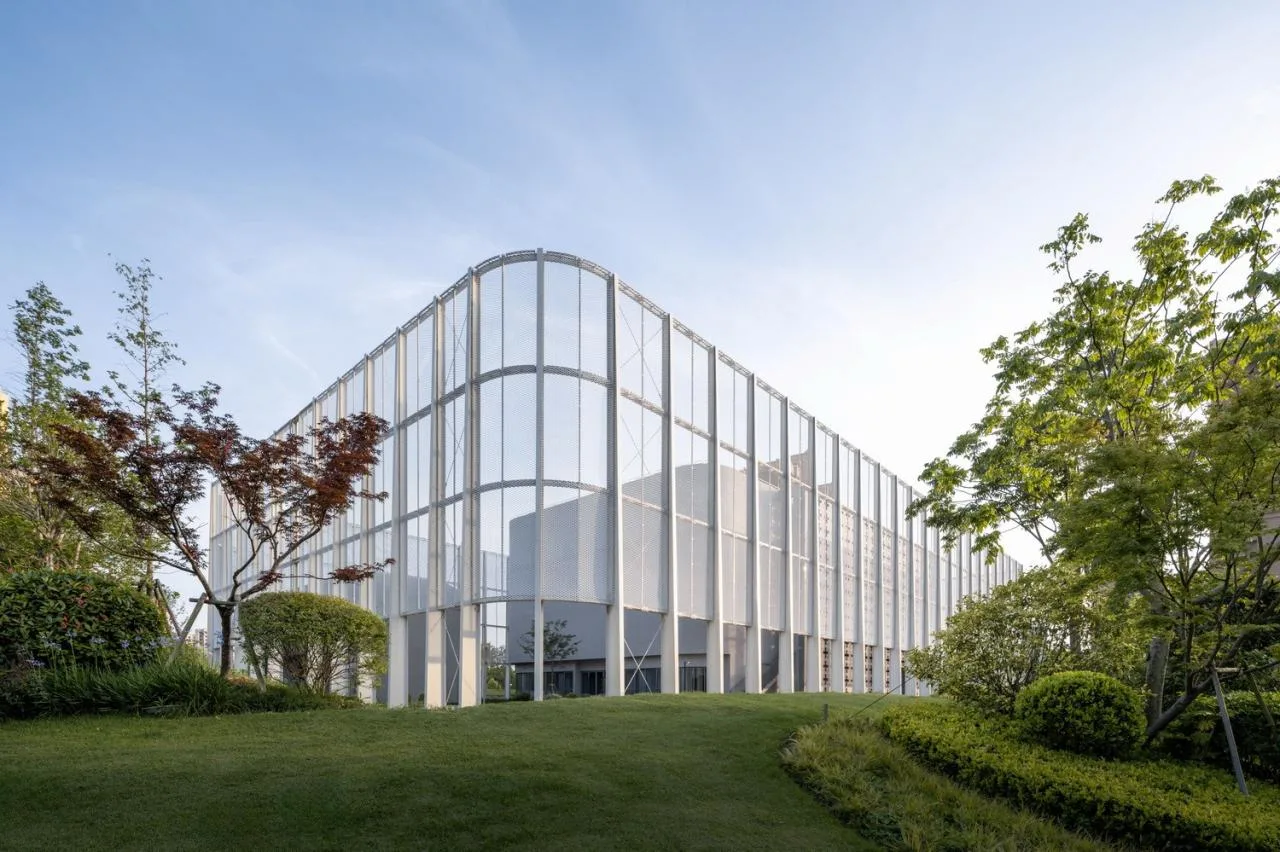
Northeast perspective © CreatAR Images
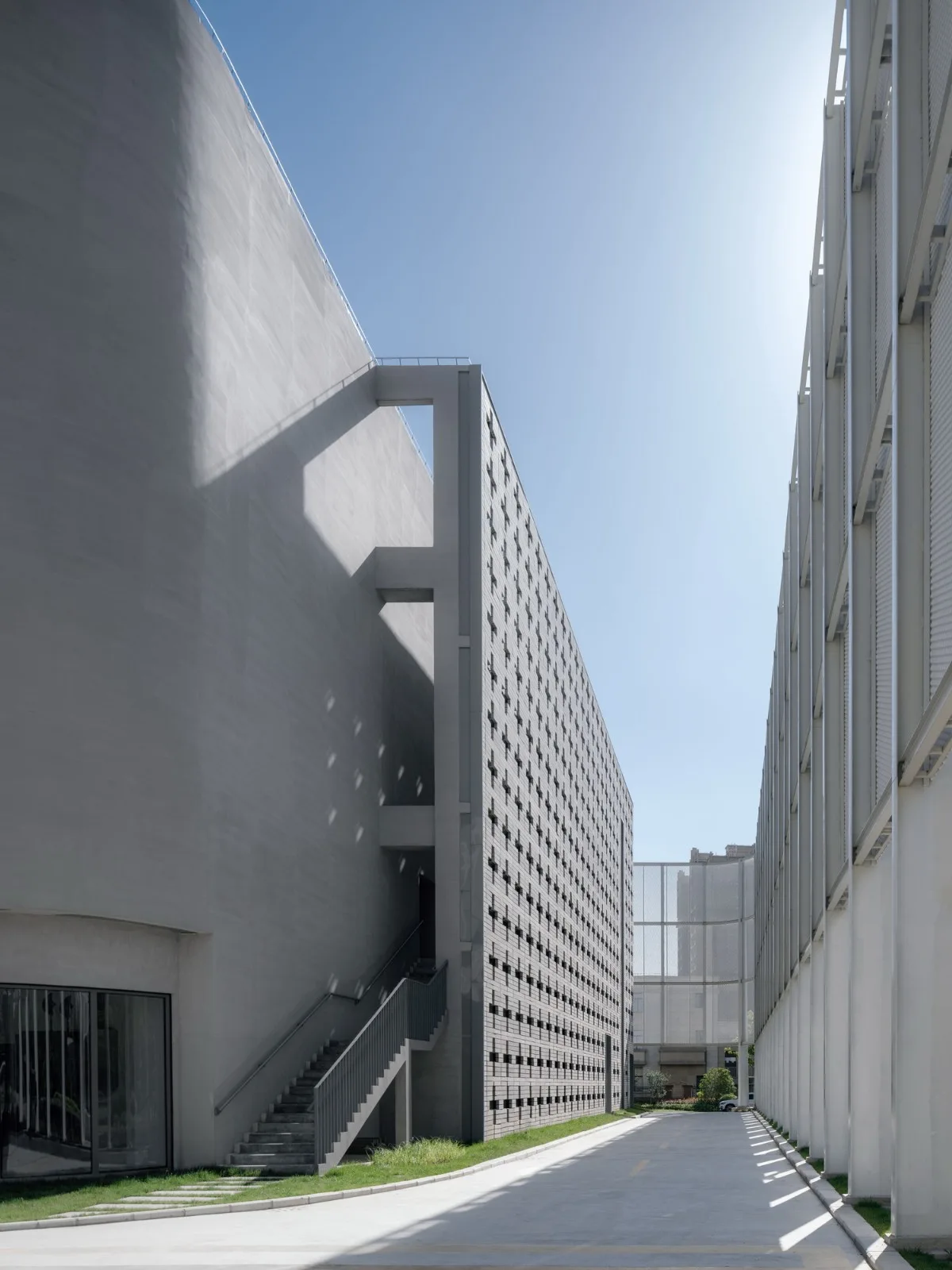
Within the venue © CreatAR Images
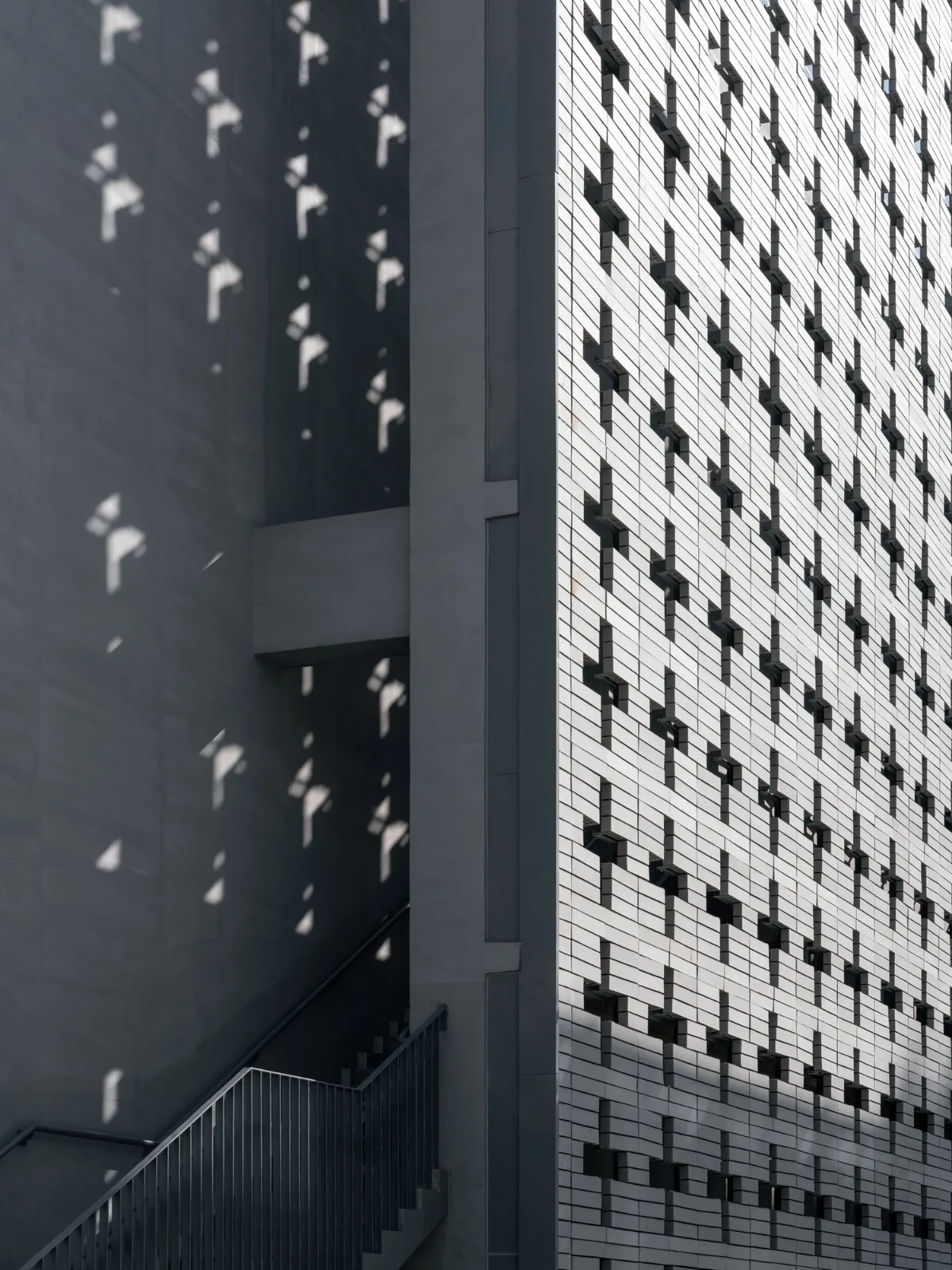
△ Flower brick wall © CreatAR Images
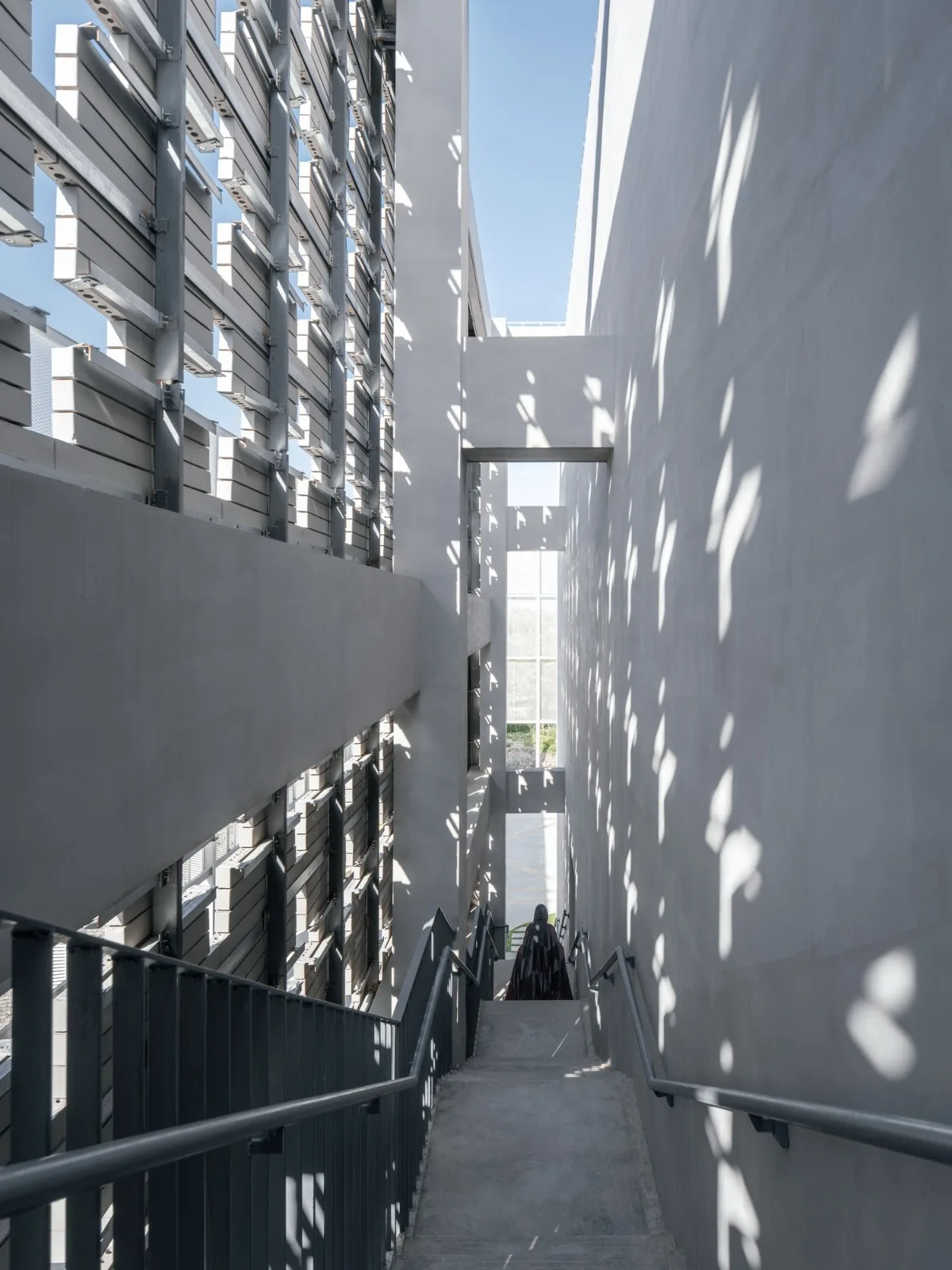
△ Flower brick wall © CreatAR Images
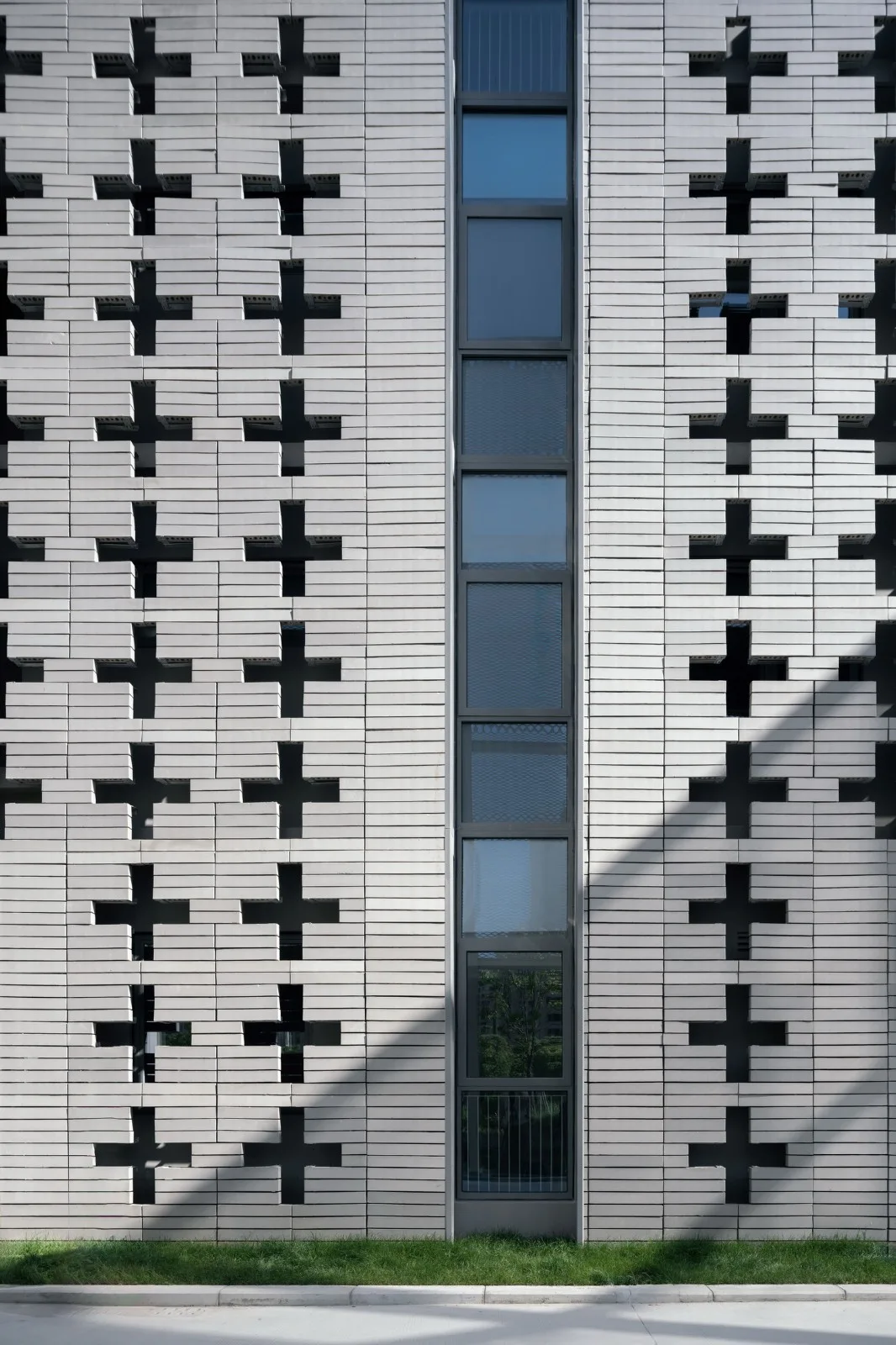
△ Flower brick wall © CreatAR Images
A Personal Transformation
I accepted many detailed revisions over time. When I was younger, I might have called this “compromise.” But after eight long years, I now understand the concept of “pine” in traditional Chinese architecture, as explained by Professor Zhuang Shen. It means flexibly adjusting details with tolerance to maintain visual integrity.
These changes were made without compromising the overall design, which remains largely true to the renderings produced eight years ago. This experience has prepared me to face future challenges with greater ease.
Standing in the main auditorium, where the indoor floor extends naturally into the outdoor earth, gentle sunlight falls like a drizzle. In that moment, the world feels as if it undulates like the sea.
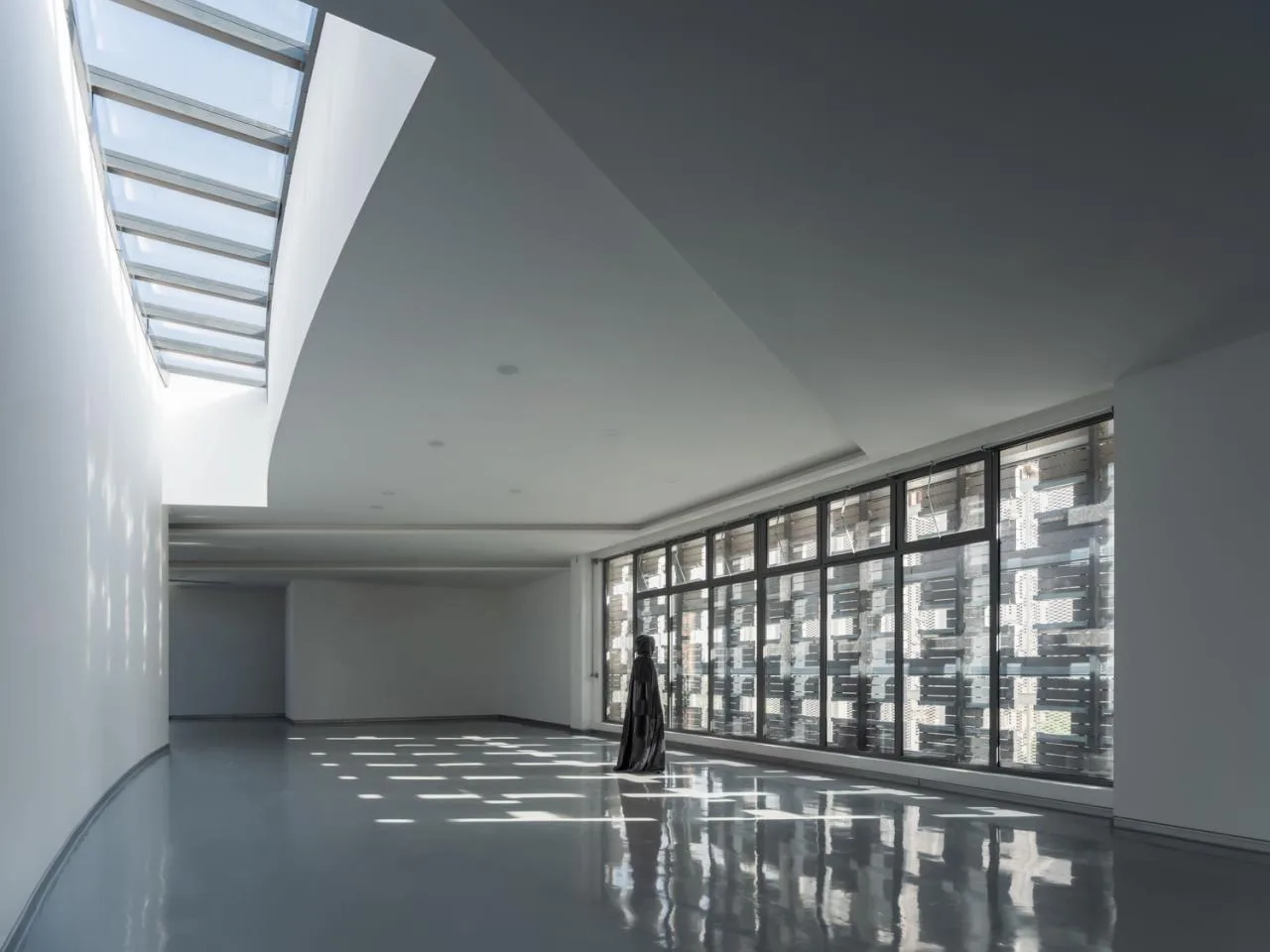
△ Small Auditorium © CreatAR Images
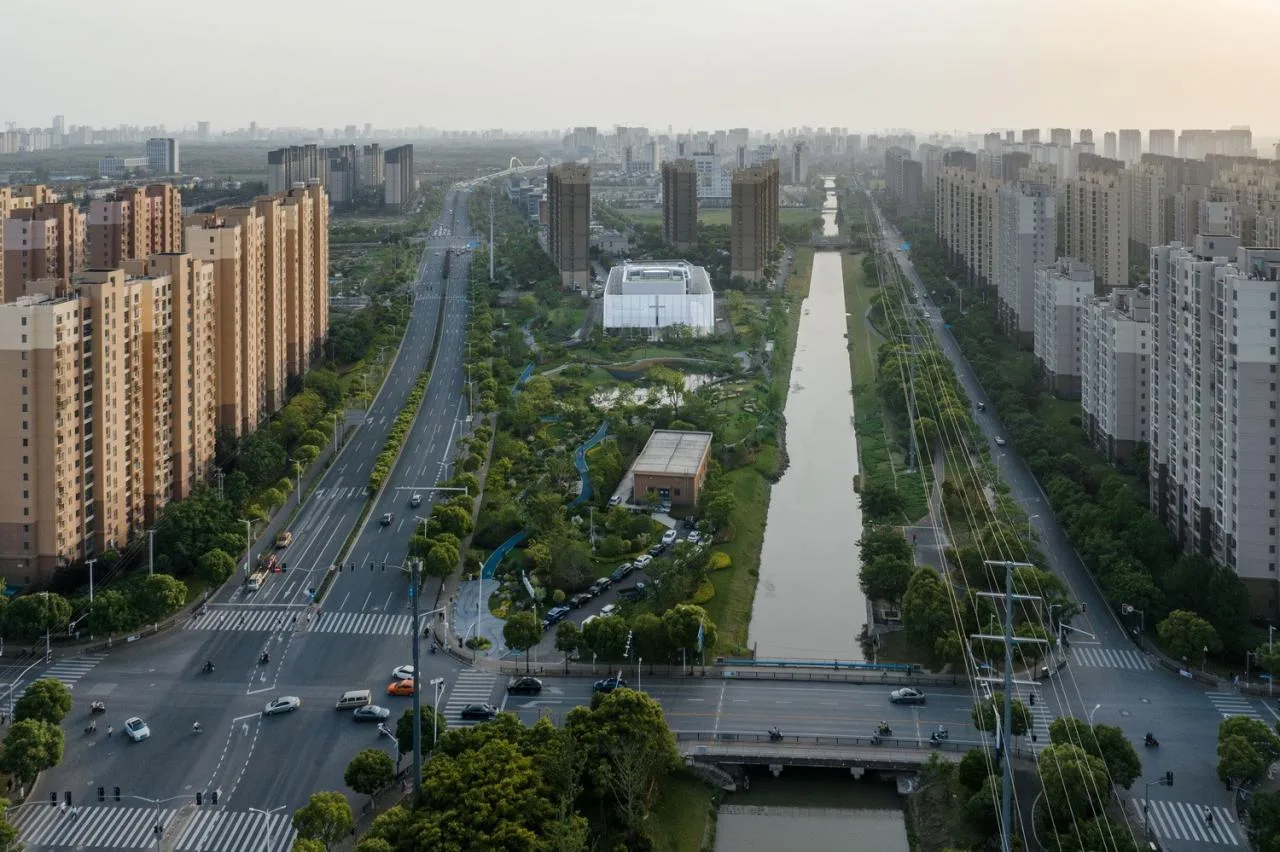
△ Aerial view © CreatAR Images
And this is the belief that even the smallest actions can help restore order in the world.” – Emmer Torres
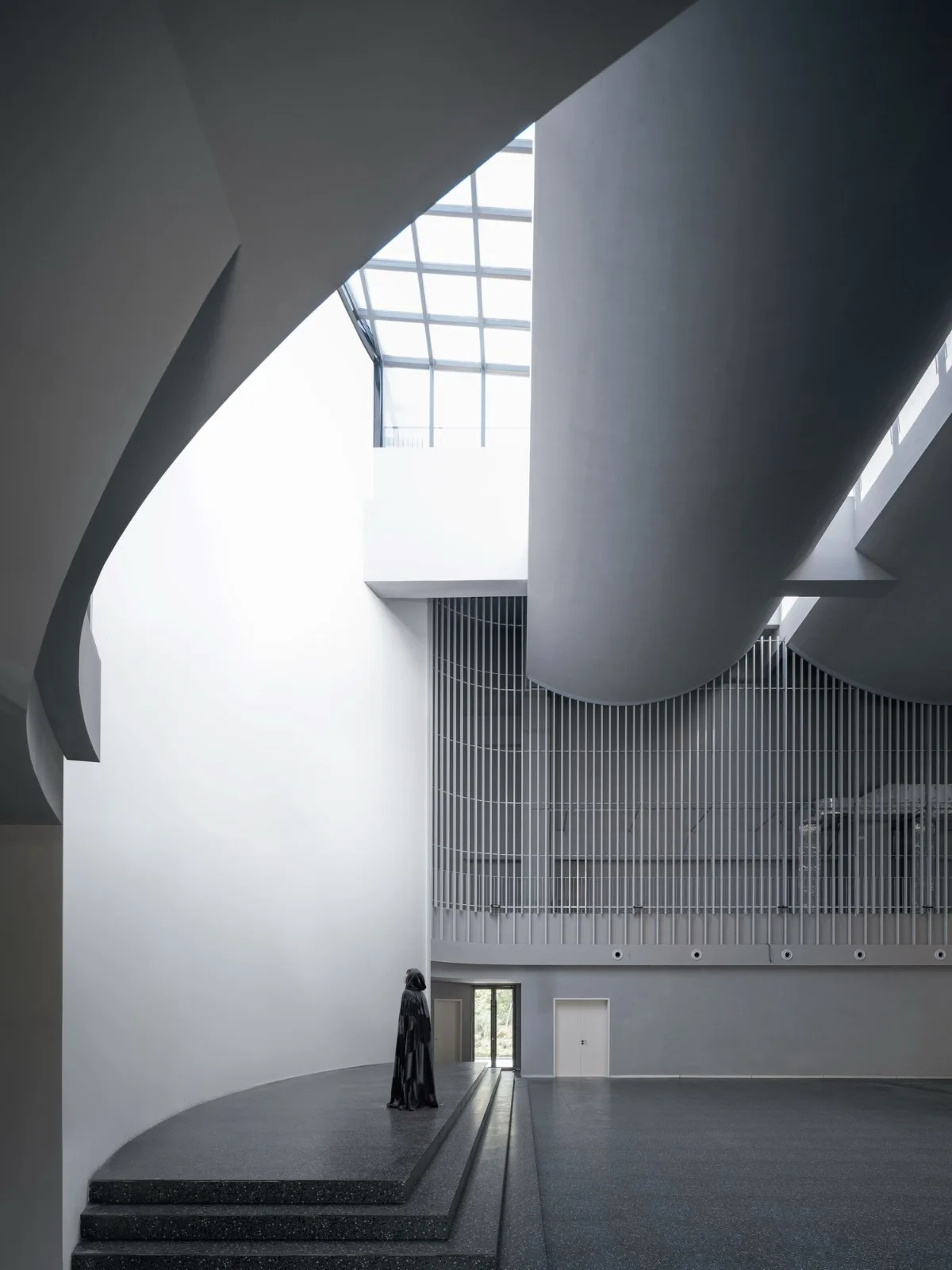
△ Grand Hall © CreatAR Images
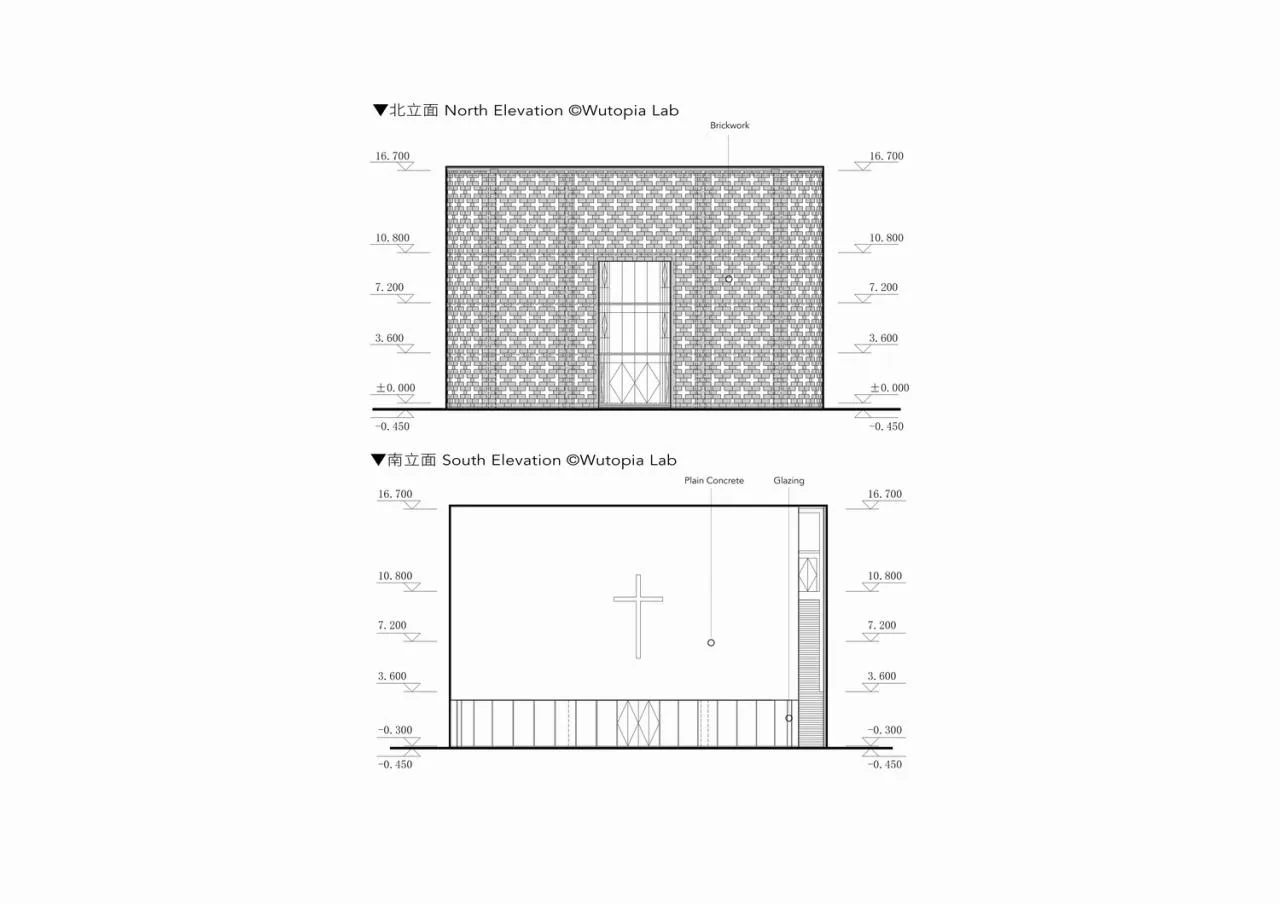
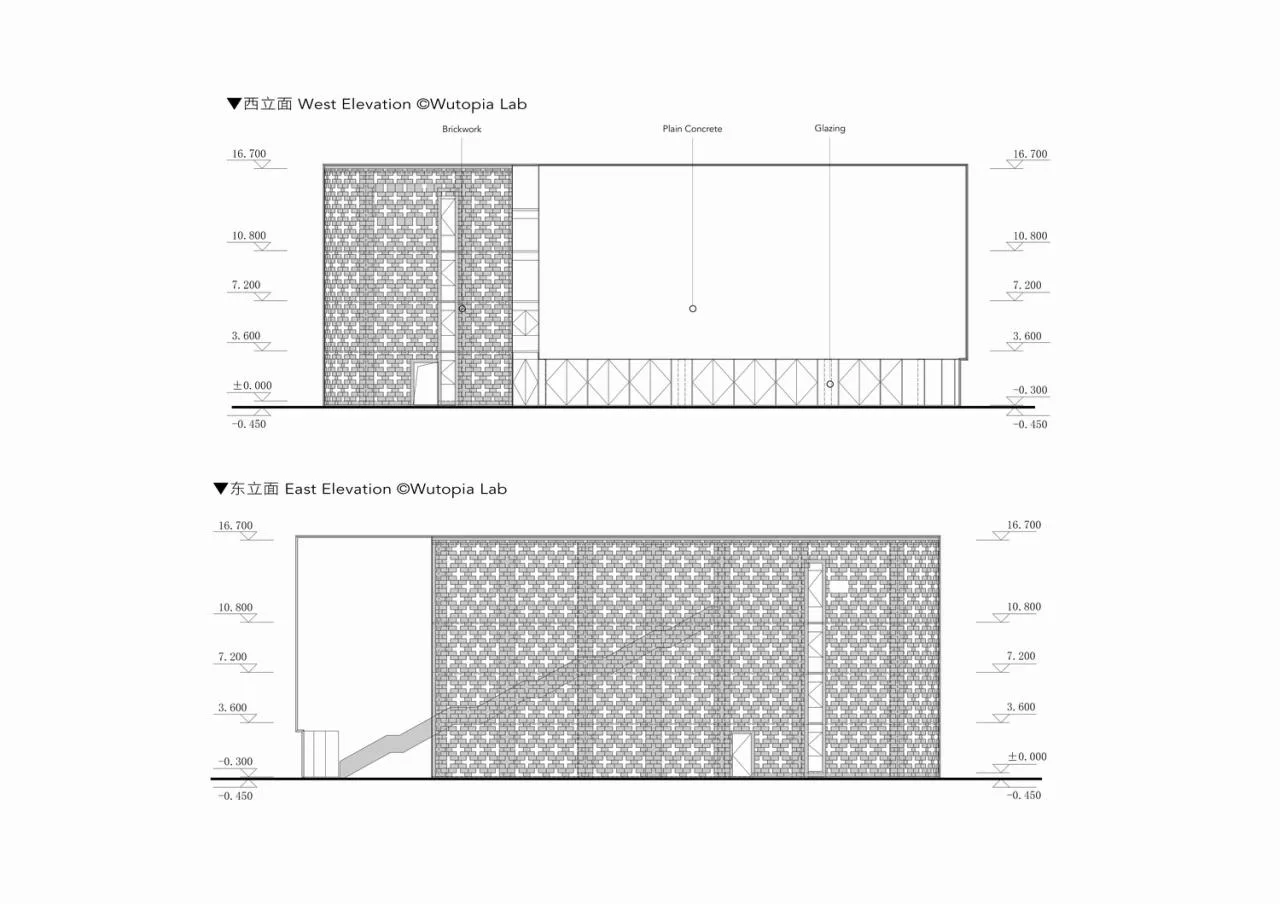
Technical Drawings
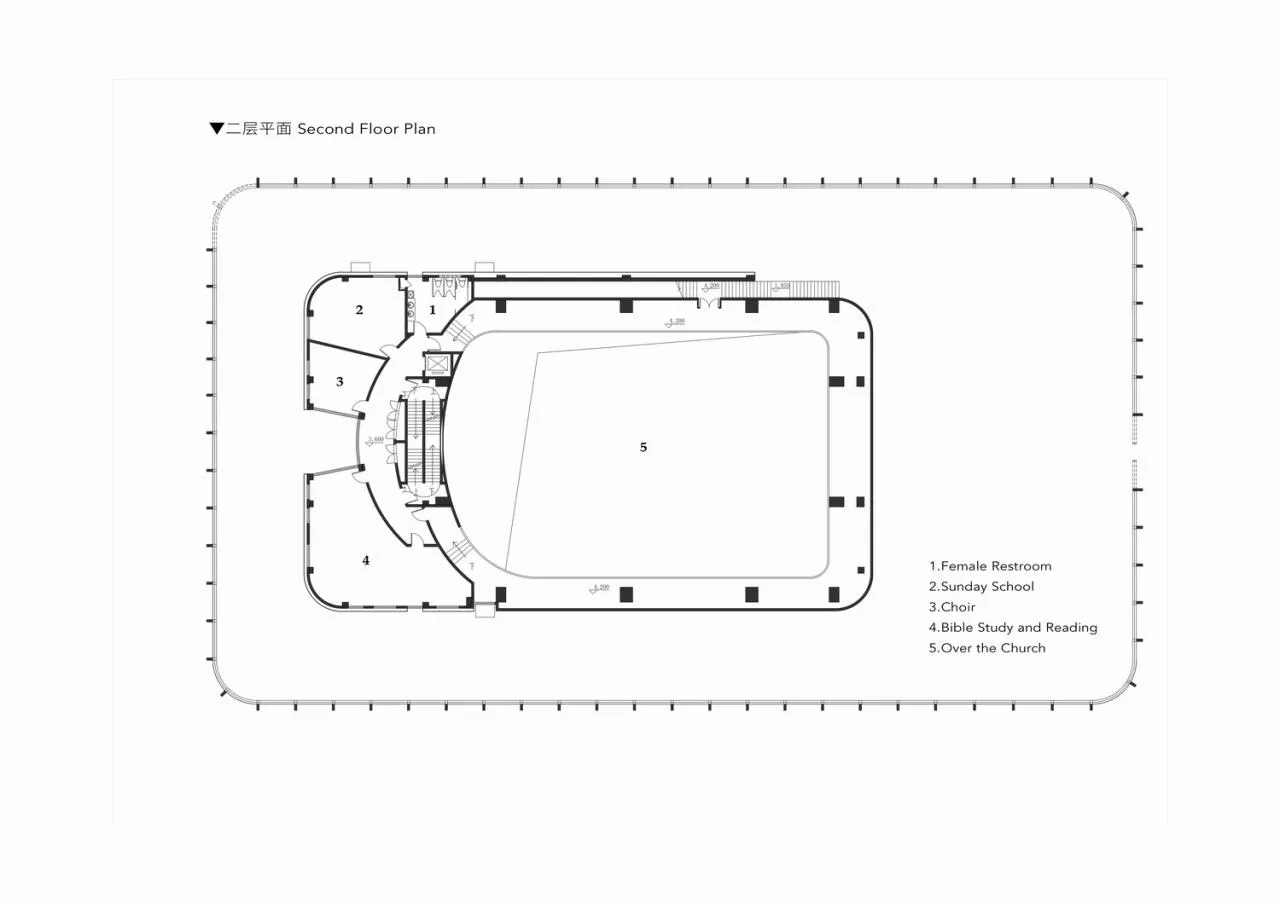
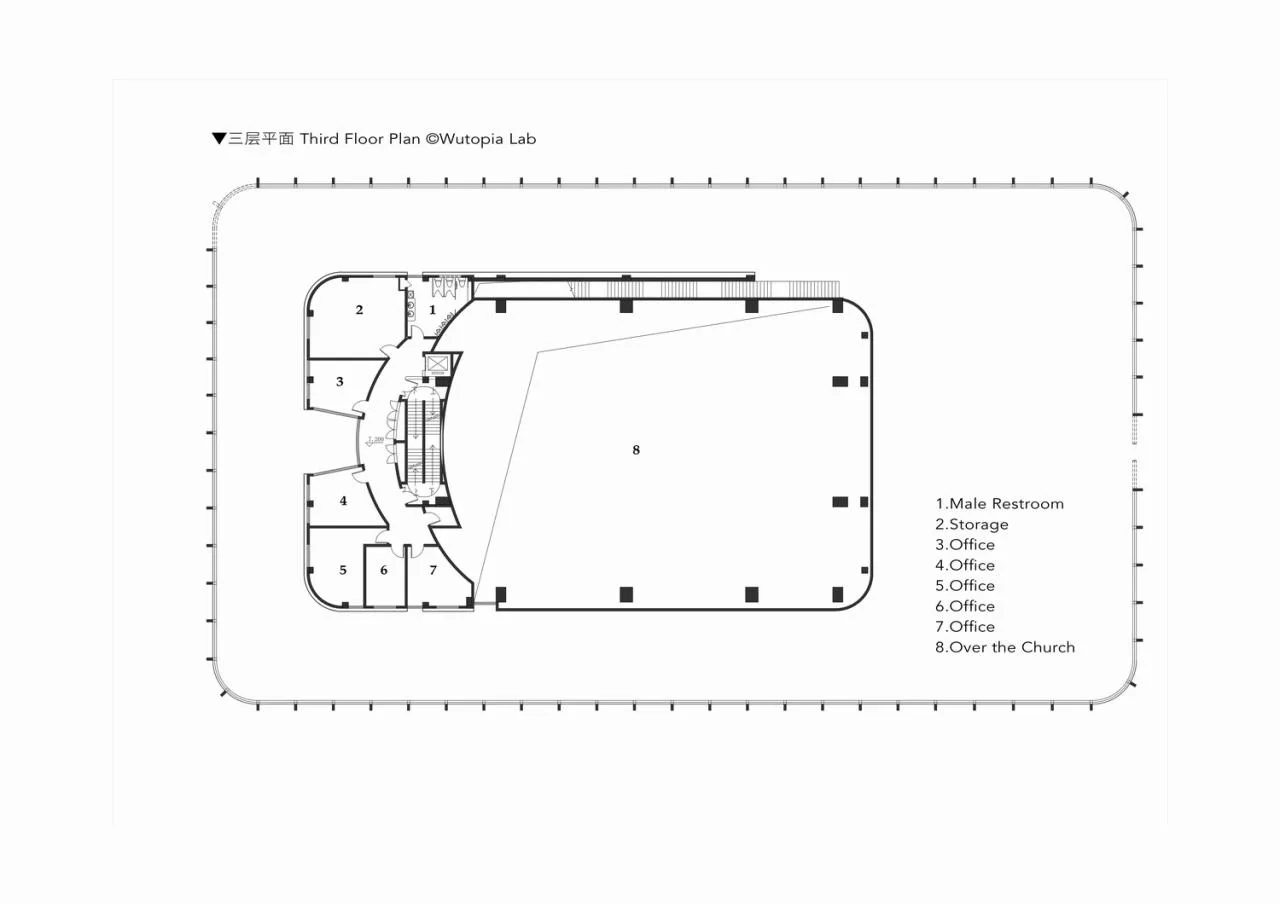
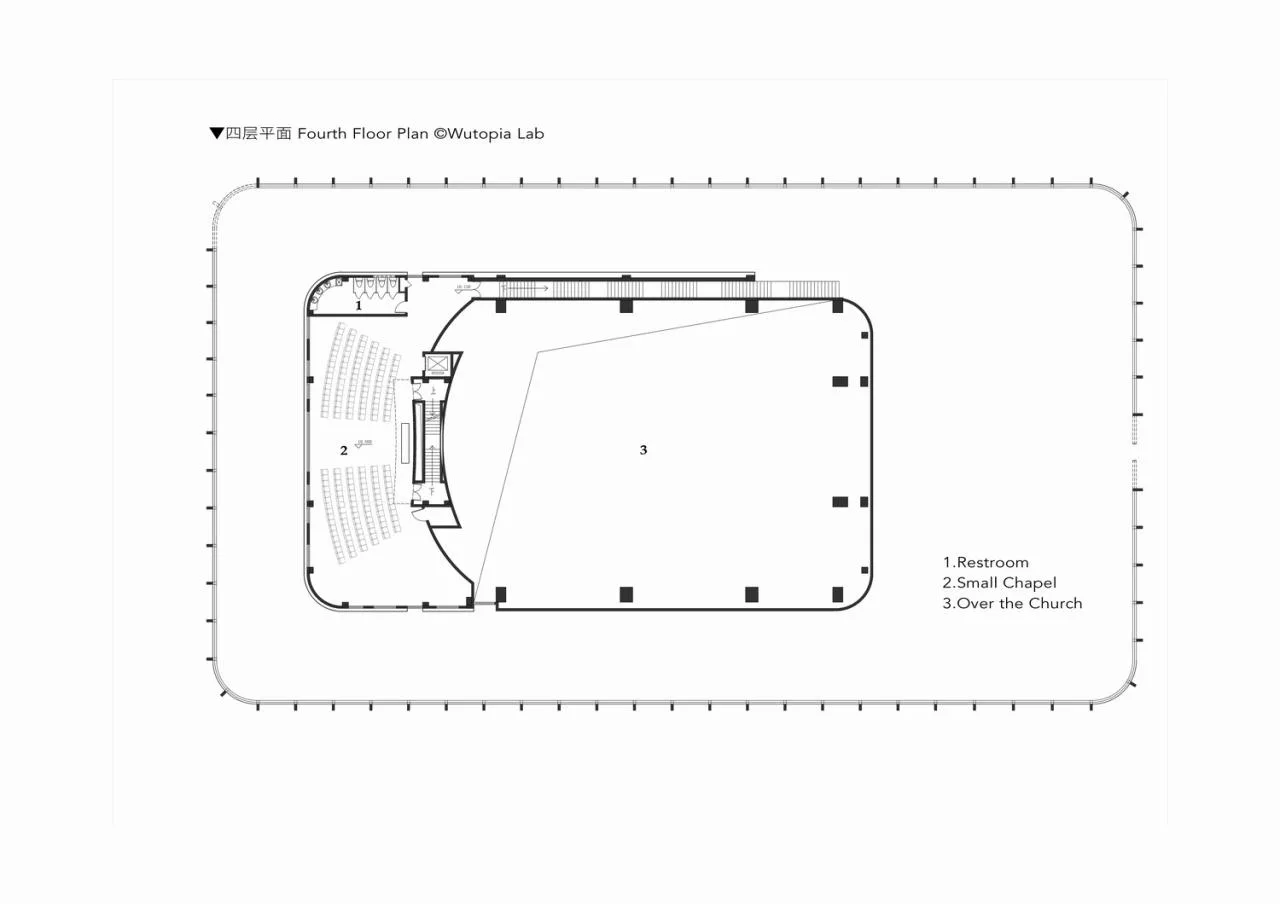
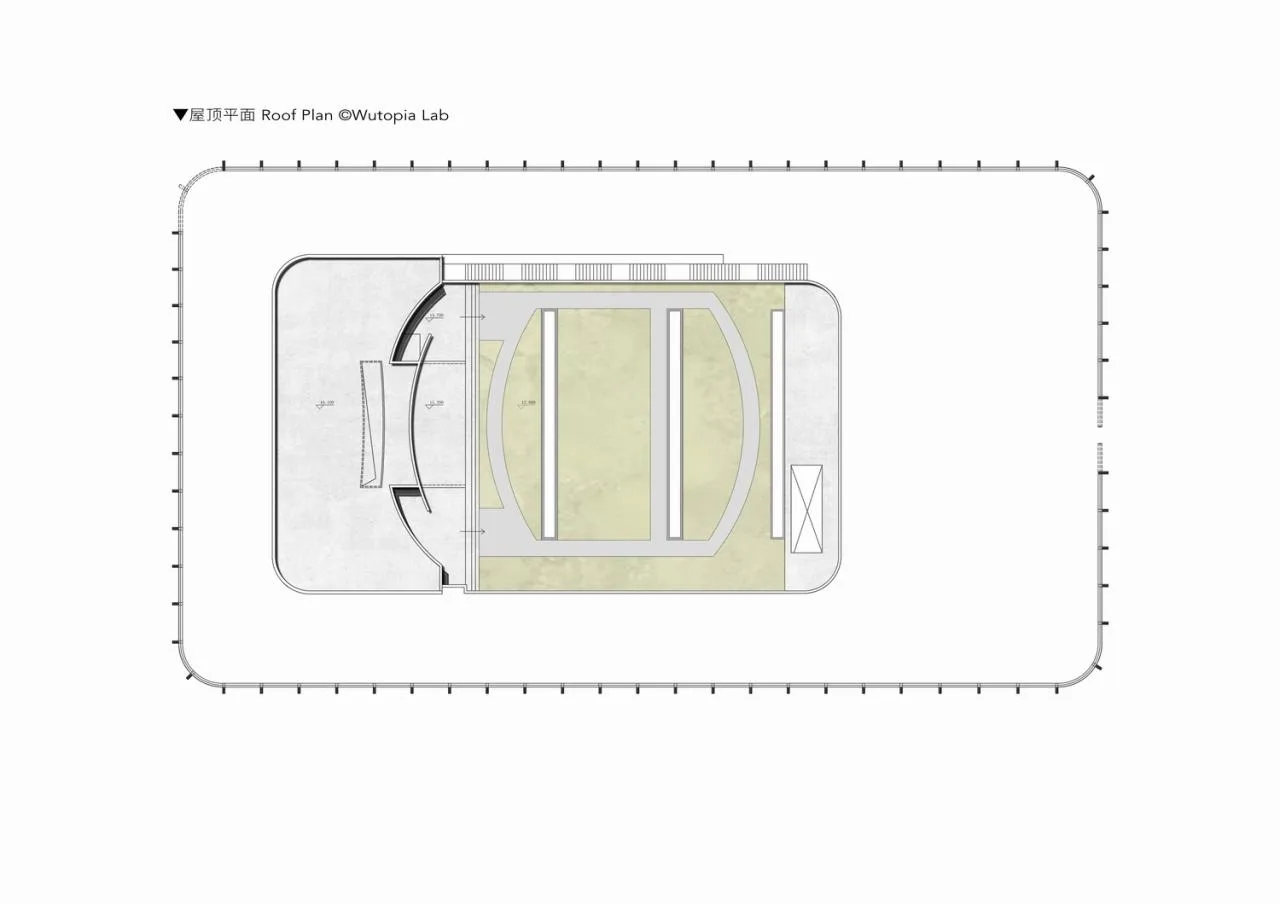
Project Information
Project Name: Fengxian Qixian Jesus Church
Design Company: Wutopia Lab
Lead Architect: Yu Ting
Project Manager & Project Architect: Dai Xinyang
Design Team for Third Phase (2022-2023): Mu Zhilin, Song Qining (intern), Zhang Yucheng (intern)
Design Team for Second Phase (2015-2017): Yu Jing, Song Mengjiao (intern), Cai Chengze (intern)
Design Team for First Phase (2015): Xia Murong, Wang Yubin (intern)
Structural Consultant: Miao Binhai
Lighting Consultant: Zhang Chenlu
Construction Drawing Design: Shanghai Zhijing Municipal Construction Planning and Design Co., Ltd
Project Manager: Cao Kewu
Architectural Design: Wang Ye, Le Junwei
Structural Design: Gu Jianping, Wang Gao, Ting Yang Chao
Mechanical and Electrical Equipment Design: Gong Yedan, Lu Jidong, Liu Yuhong
Decoration Design: Chen Zhengyuan
Principal: Shanghai Fengxian New City Construction and Development Co., Ltd
Architect of Party A: Li Na, Gu Hao
Construction Unit: Shanghai Construction Second Construction Group Co., Ltd
Project Location: Riverside landscape within the triangular area north of Fengpu Avenue and south of Huiliu Road
Building Area: 2,598 square meters
Design Cycle: July 2015 to August 2017
Construction Period: November 2021 to June 2023
Structural Form: Steel structure (curtain), Concrete structure (main building)
Photography: CreatAR Images
Featured Appearance: Sendy












Must log in before commenting!
Sign Up