
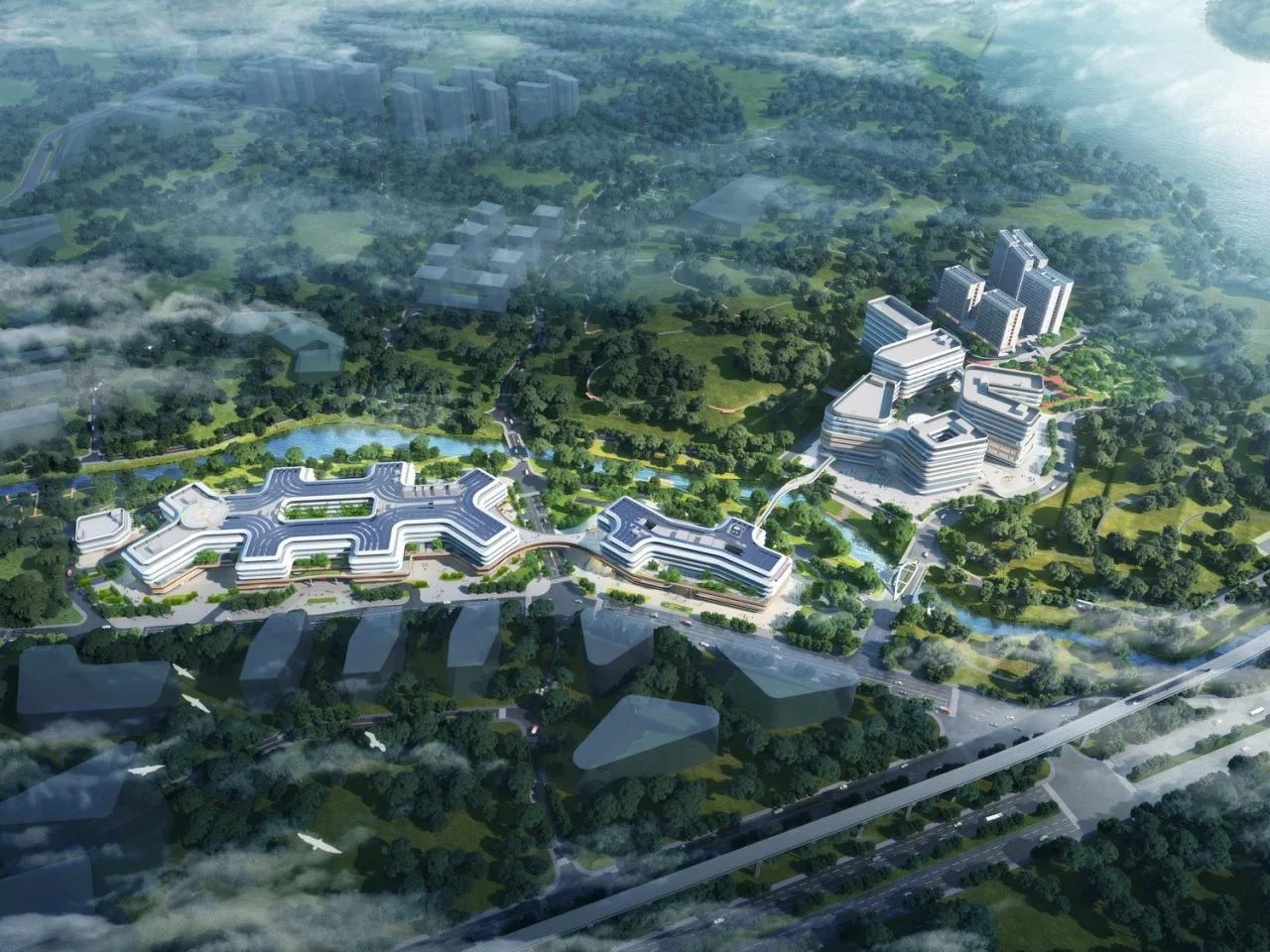
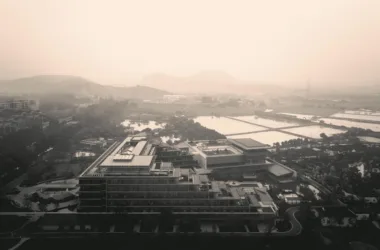
The Southern University of Science and Technology’s School of Medicine and its Affiliated Hospital (main campus) comprise two main components: the hospital, covering approximately 167,600 square meters, and the medical school, spanning about 164,000 square meters. Together, they form an integrated medical complex focused on “shared functions and integrated medical education.” The design embraces the concept of “mountain and water arteries,” seamlessly blending the architecture with the natural mountainous landscape while accommodating teaching, accommodation, research, and medical care facilities. This approach fosters a harmonious relationship between people, nature, and space, creating a building that naturally merges urban life with the environment.
01. Mountain and Water Arteries: Bridging City and Nature
Located within the Southern University of Science and Technology campus in Xili University City, Nanshan District, Shenzhen, both the medical school and hospital enjoy a prime setting surrounded by mountains and water. From the outset, the design prioritized a harmonious integration of architecture with nature, aiming to showcase the beauty of the environment while connecting the campus to its surroundings.
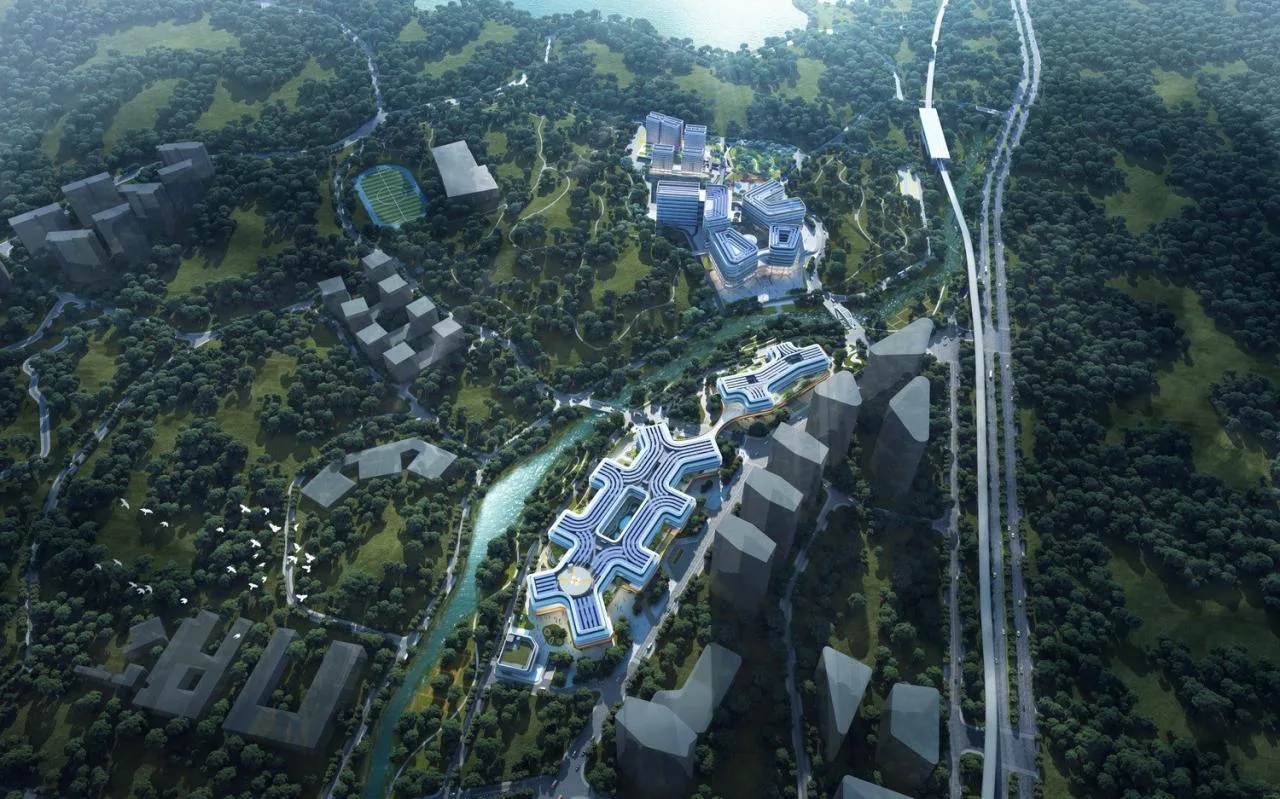
△ Overall rendering of the School of Medicine and Affiliated Hospital of Southern University of Science and Technology (Main Campus)
The “mountain and water artery” concept guides the design through multiple perspectives:
- Respecting Nature: The buildings are integrated into the mountainous terrain, adapting to the landscape while preserving cultural relics. Building heights and volumes are reduced to minimize environmental impact.
- Borrowing from Nature: The varying mountain elevations create dynamic outdoor spaces. Riverside landscapes are planned to complement the site’s proximity to water, incorporating natural elements into interior spaces.
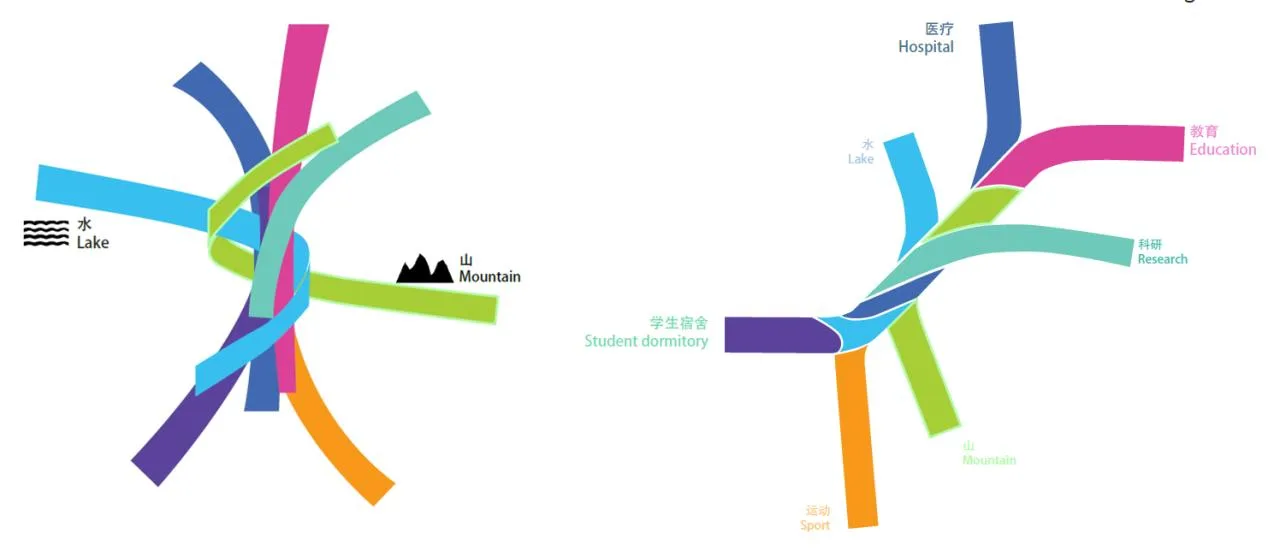
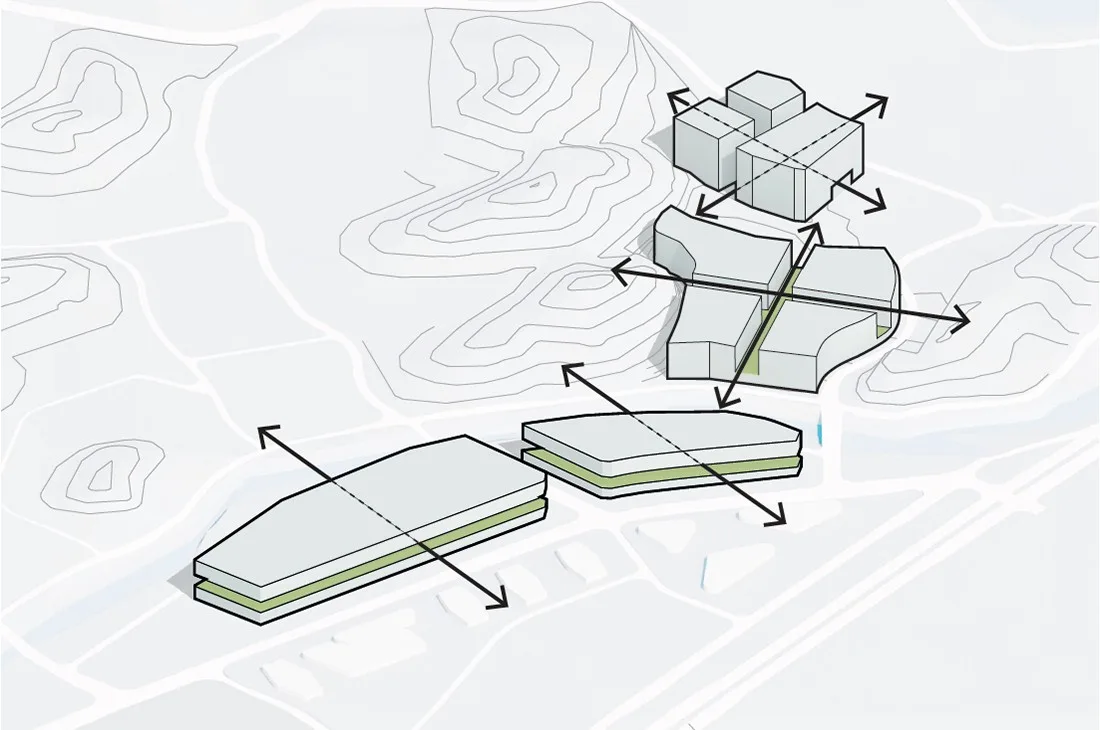
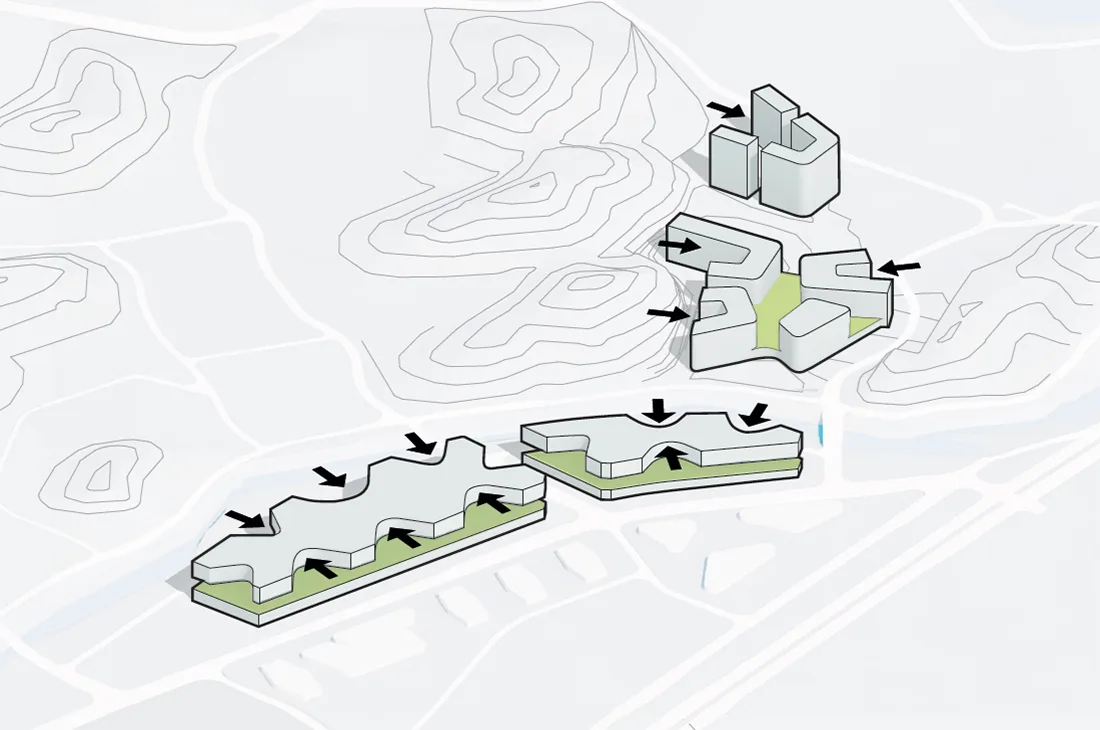
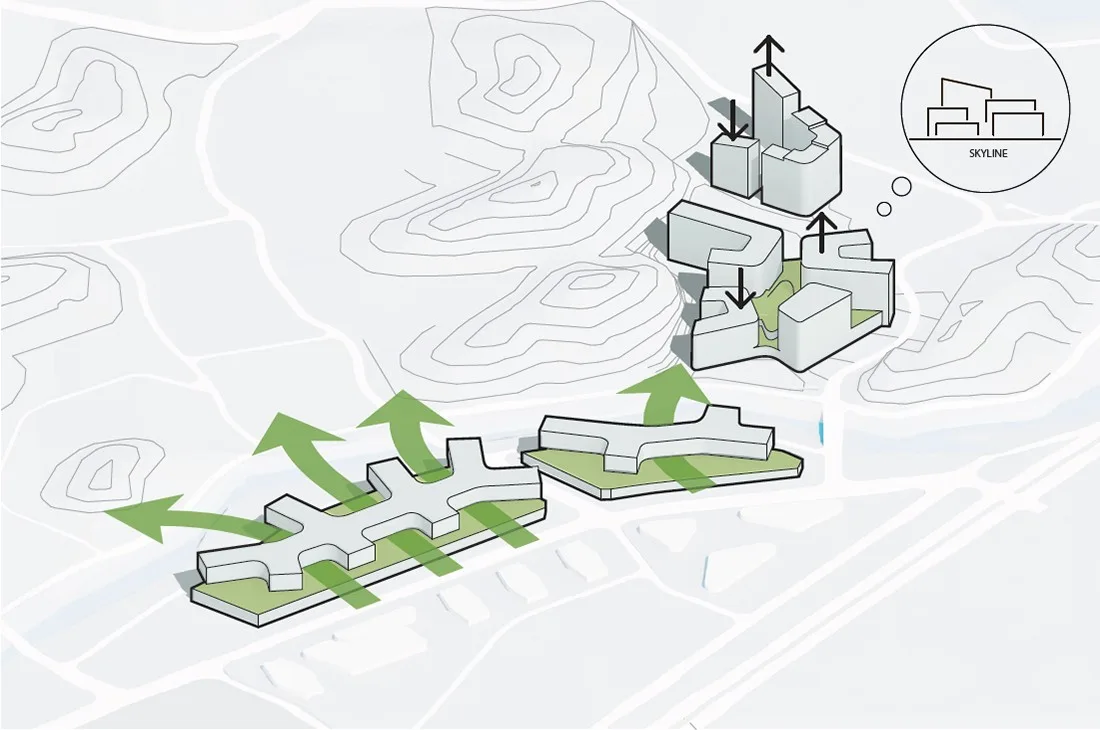
The architectural form evolves through the “mountain and water artery” concept, merging natural elements of mountains and water into an organic whole, resembling the arterial network of the human body. This design connects various functional areas, fostering an open, shared, and flexible spatial relationship.
Marius Ryrko, Executive President of Gabor Construction International and President of China Region, states:
“We believe that modern architecture should be a positive environment—a place where people can work diligently, heal, recover, and grow.”
02. Balancing Virtual and Real: Functionality Meets Aesthetics
The architectural layout of both the medical school and affiliated hospital features a U-shaped design with a fishbone tower arrangement.
The medical school wraps around a fishbone-shaped outdoor courtyard in a U-shaped form, reflecting the campus’s flexible and open planning philosophy. This configuration maximizes landscape views and encourages academic interaction through open indoor spaces and horizontal facades.
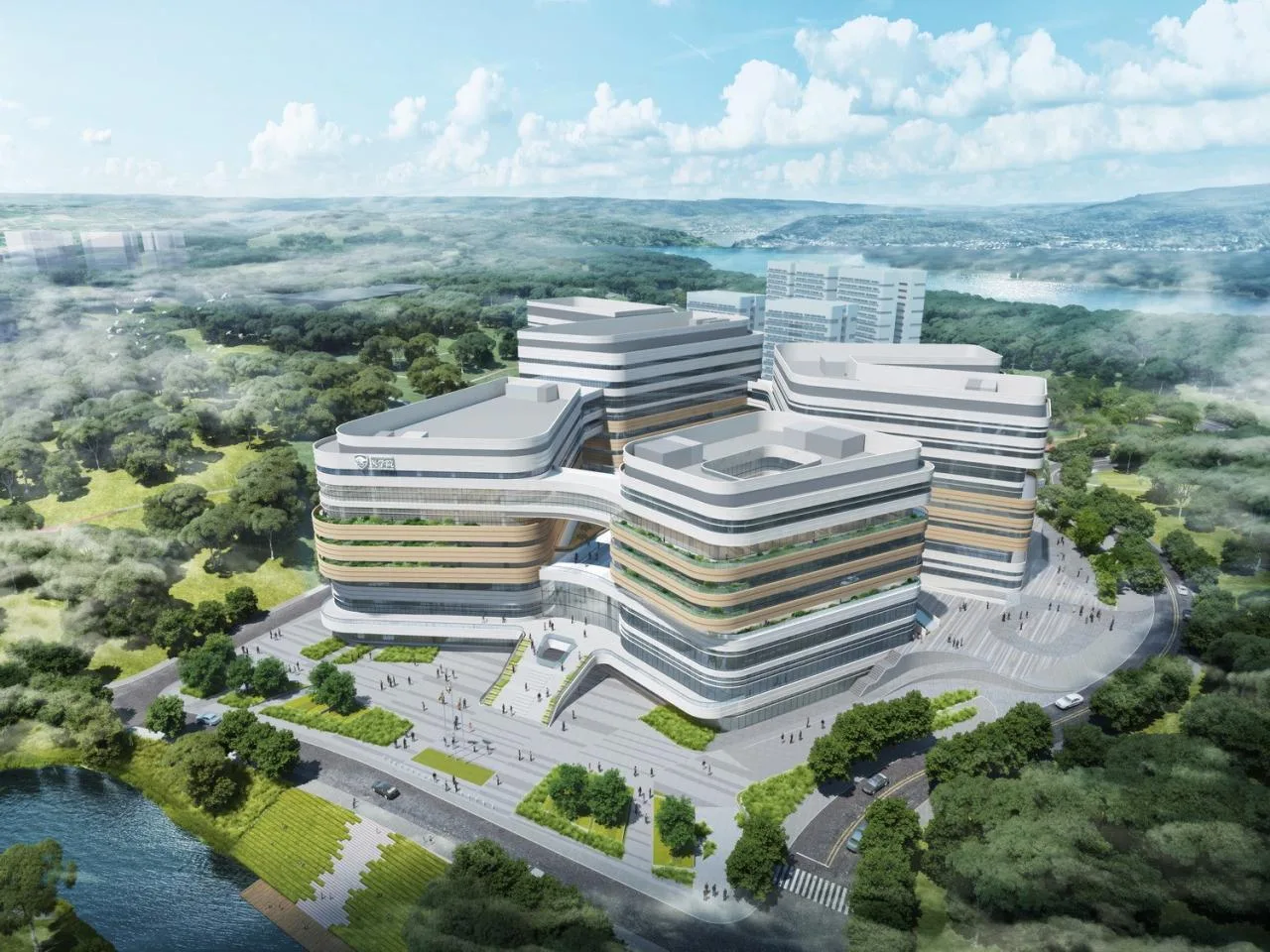
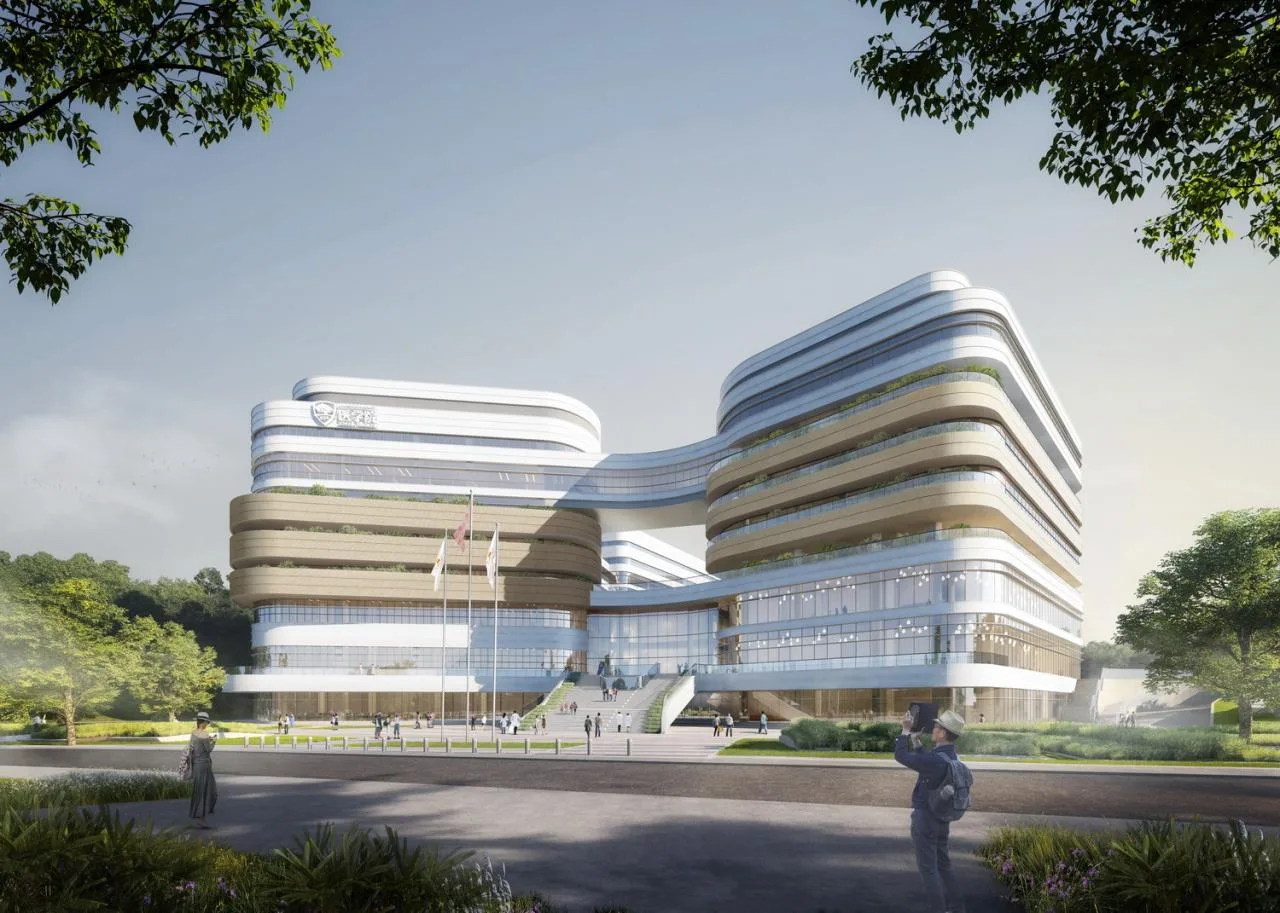
△ Overall and courtyard renderings of the Southern University of Science and Technology School of Medicine
Conversely, the affiliated hospital features a U-shaped outdoor space that carves out fishbone-shaped building masses. This design supports smooth internal circulation, enhances indoor-outdoor functional efficiency, and provides flexible layouts for ward units on upper floors—ensuring all wards offer views of the outdoors.
In the post-pandemic era, this fishbone layout also allows rapid zoning for isolation during public health emergencies, aiding in effective epidemic control.
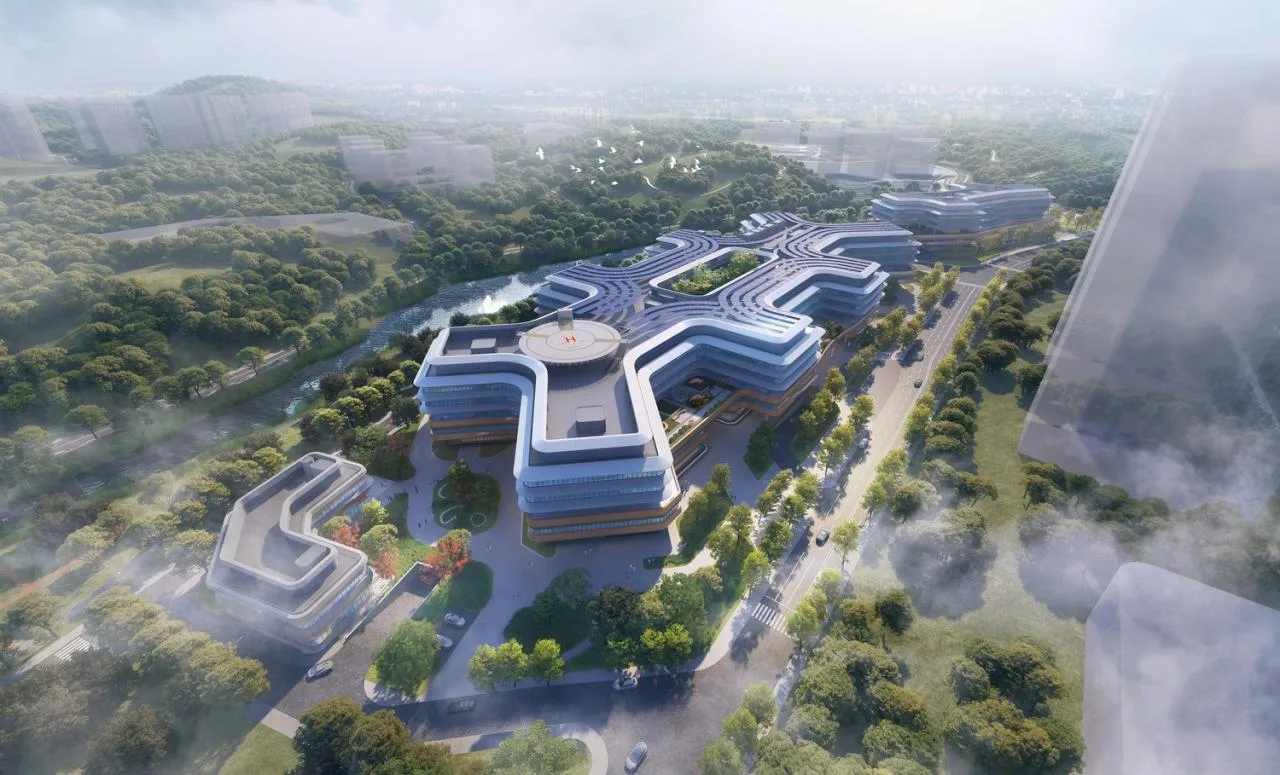
△ Overall rendering of Southern University of Science and Technology Affiliated Hospital (Main Campus)
Shared design elements link the two building groups visually, while complementary architectural languages give each a distinct identity.
One building is “virtual,” the other “real,” reflecting both their functional roles and aesthetic intentions. This duality also addresses the unique communication needs of both the school and the hospital.
03. Connected and Open: A Comprehensive Medical Community
Looking forward, medical architecture aims to unify regional healthcare capabilities—including research, education, and treatment—within a university health center. This design not only fulfills functional demands but also emphasizes user experience, reshaping medical and research spaces with human-centered, open, fluid, and interactive environments.
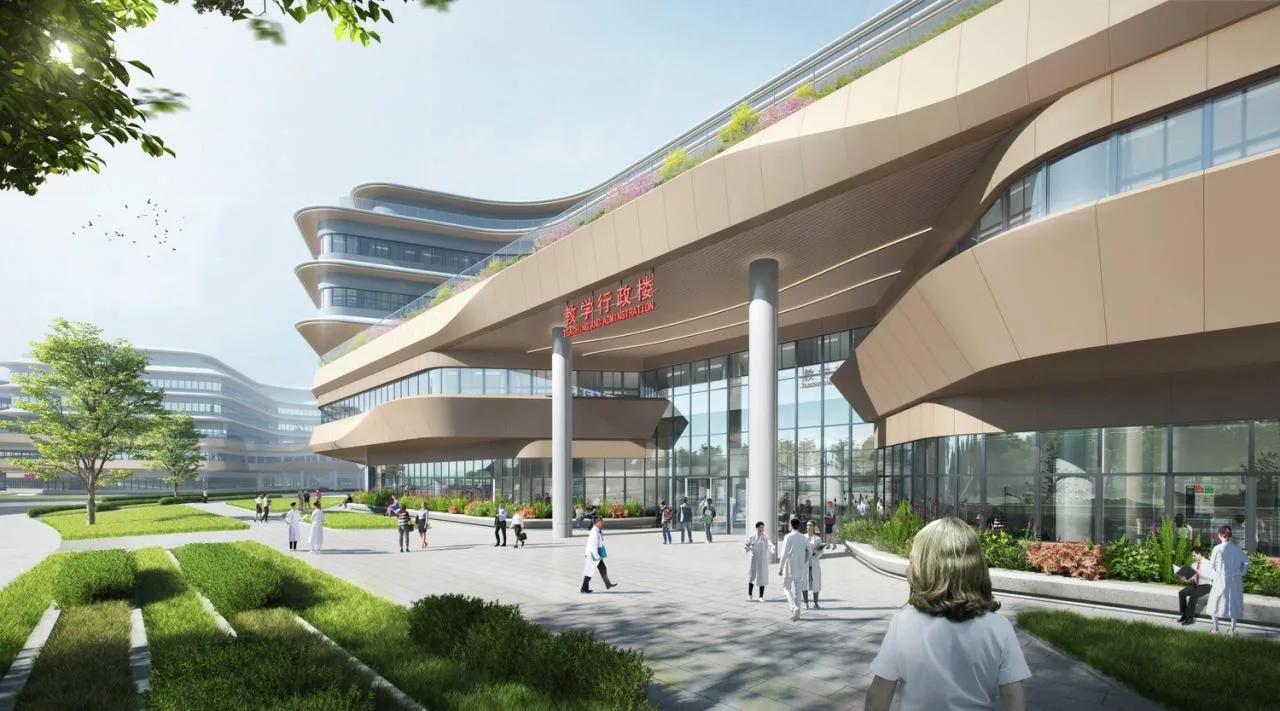
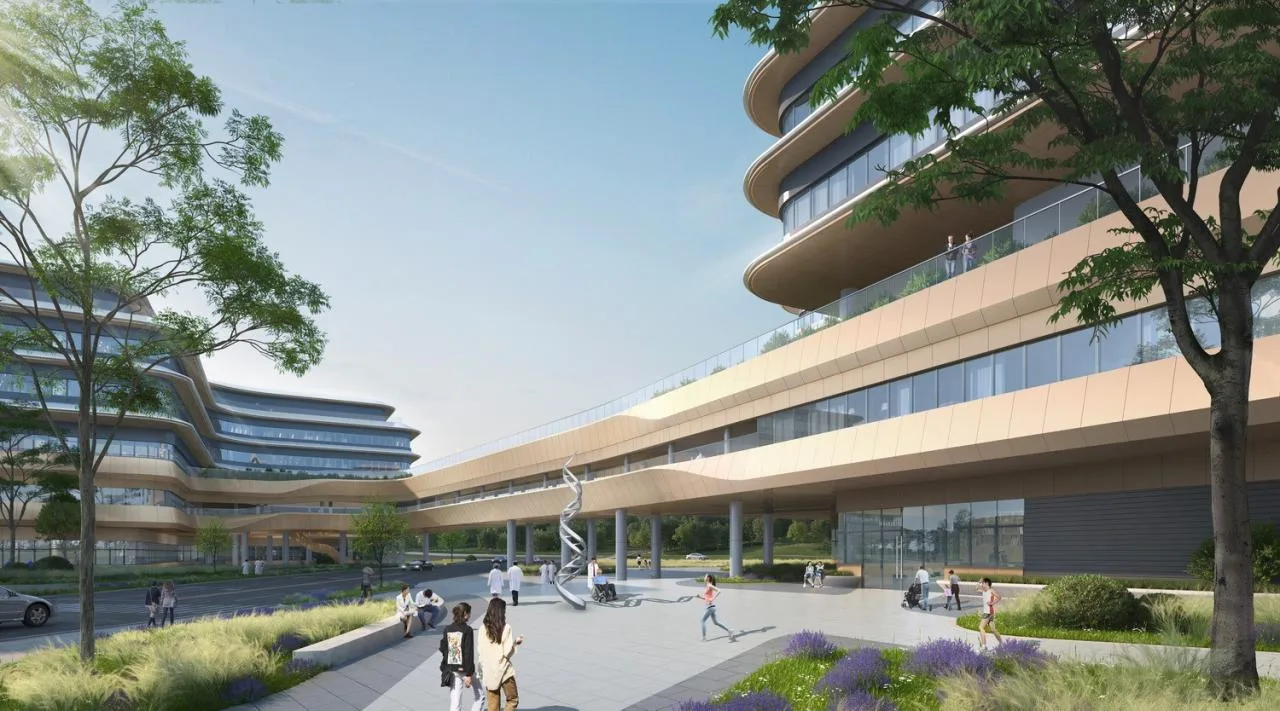
△ Entrance and corridor rendering of Southern University of Science and Technology Affiliated Hospital (Main Campus)
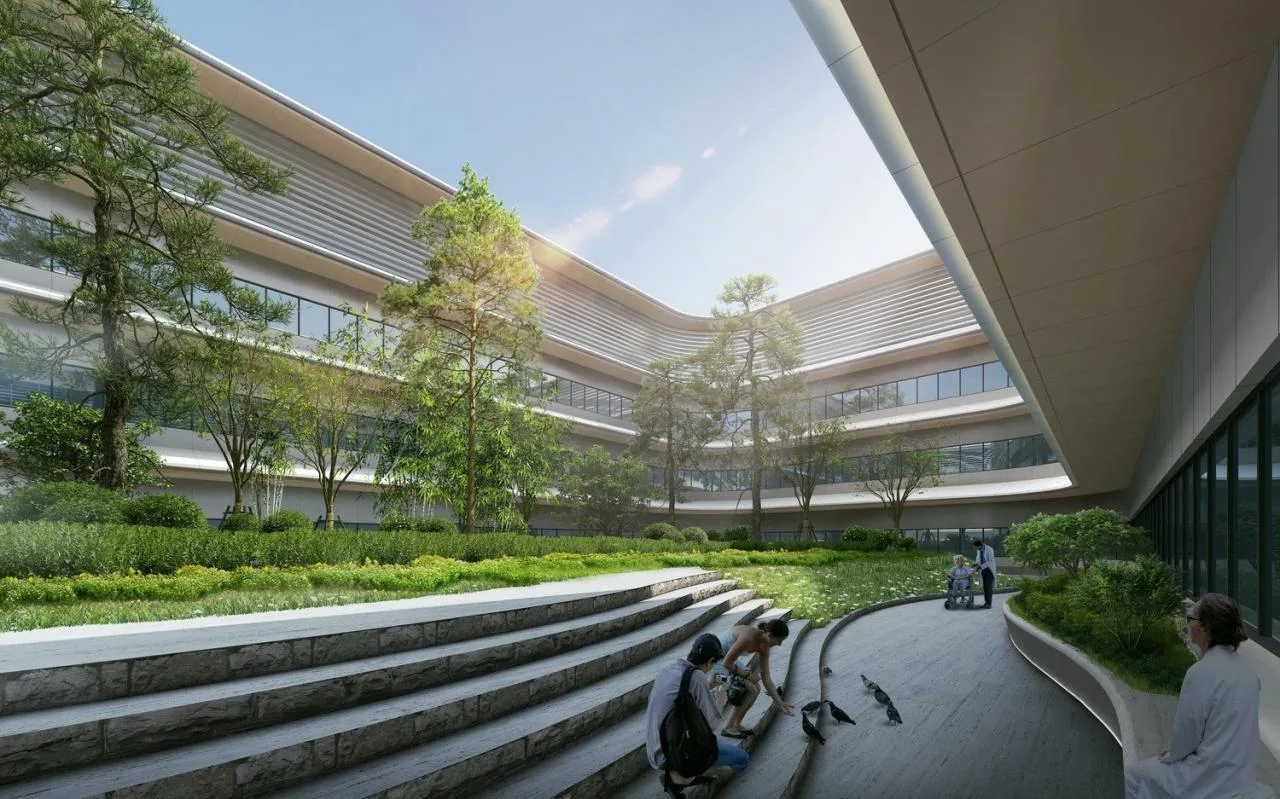
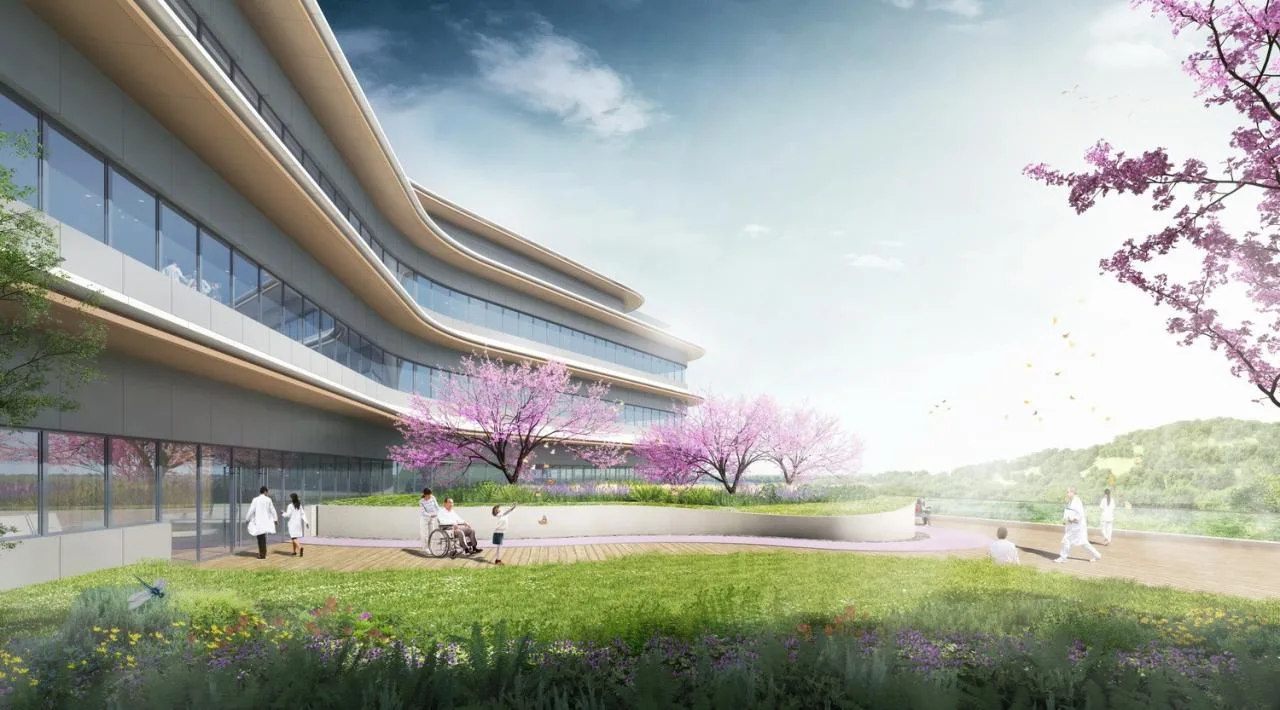
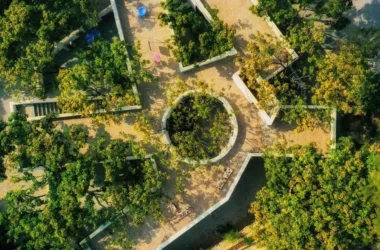
△ Healing courtyard visualization at Southern University of Science and Technology Affiliated Hospital (Main Campus)
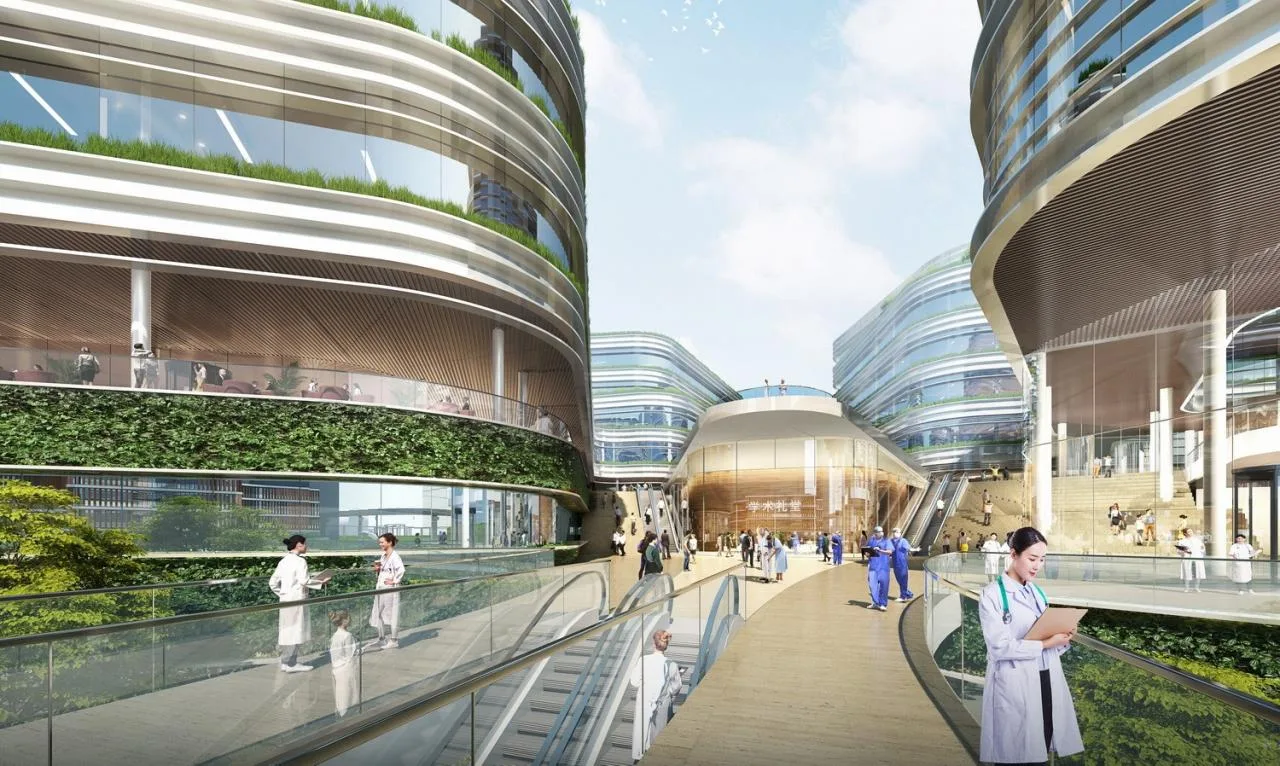
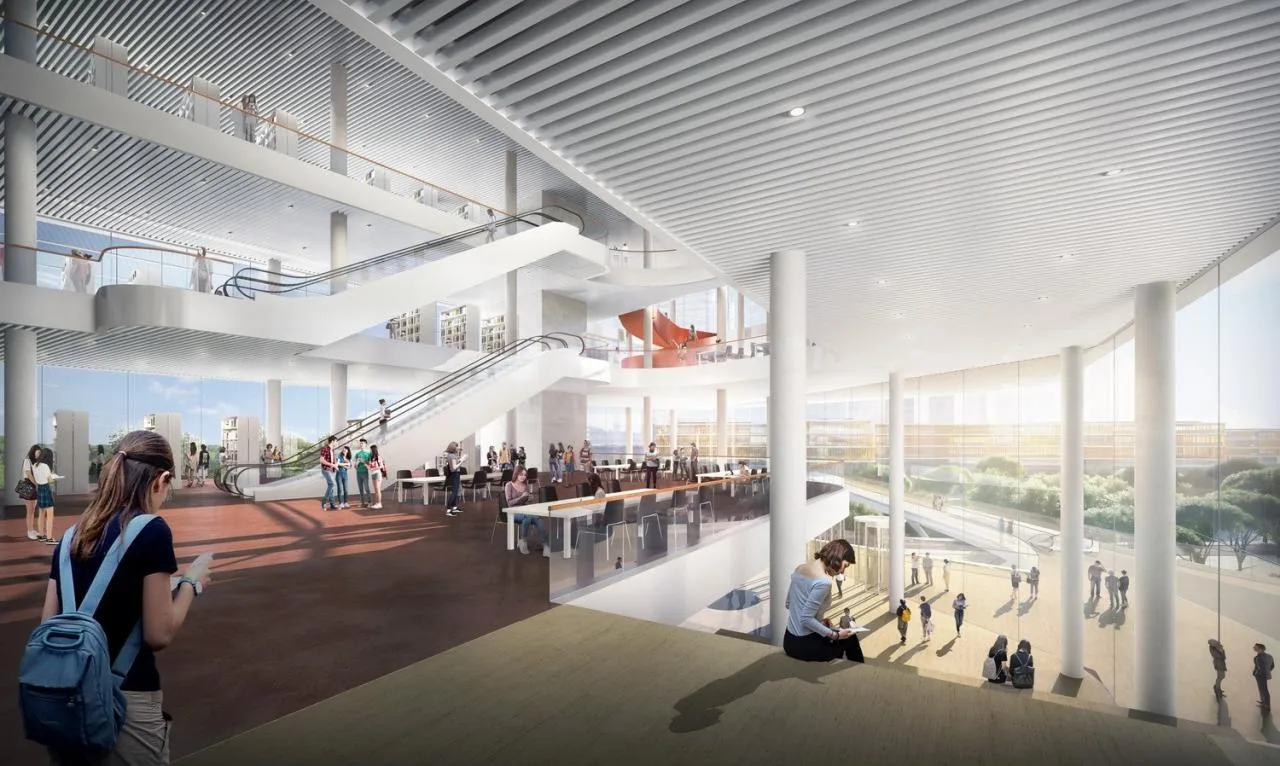
△ Entrance rendering of Southern University of Science and Technology School of Medicine (Competition Stage)
The medical school strives to cultivate a vibrant academic environment, while the affiliated hospital emphasizes a healing atmosphere that harmonizes with the surrounding mountains and water.
Both designs emphasize a humanistic and natural ambiance, incorporating user-friendly arrangements for functional layouts, circulation, and access points tailored to doctors, patients, faculty, and students. Coupled with garden spaces, the complex offers various areas for communication and relaxation, enhancing the user experience. Additionally, considering nearby high-rise buildings, the design features an artistic fifth façade formed by sustainable solar roofs.
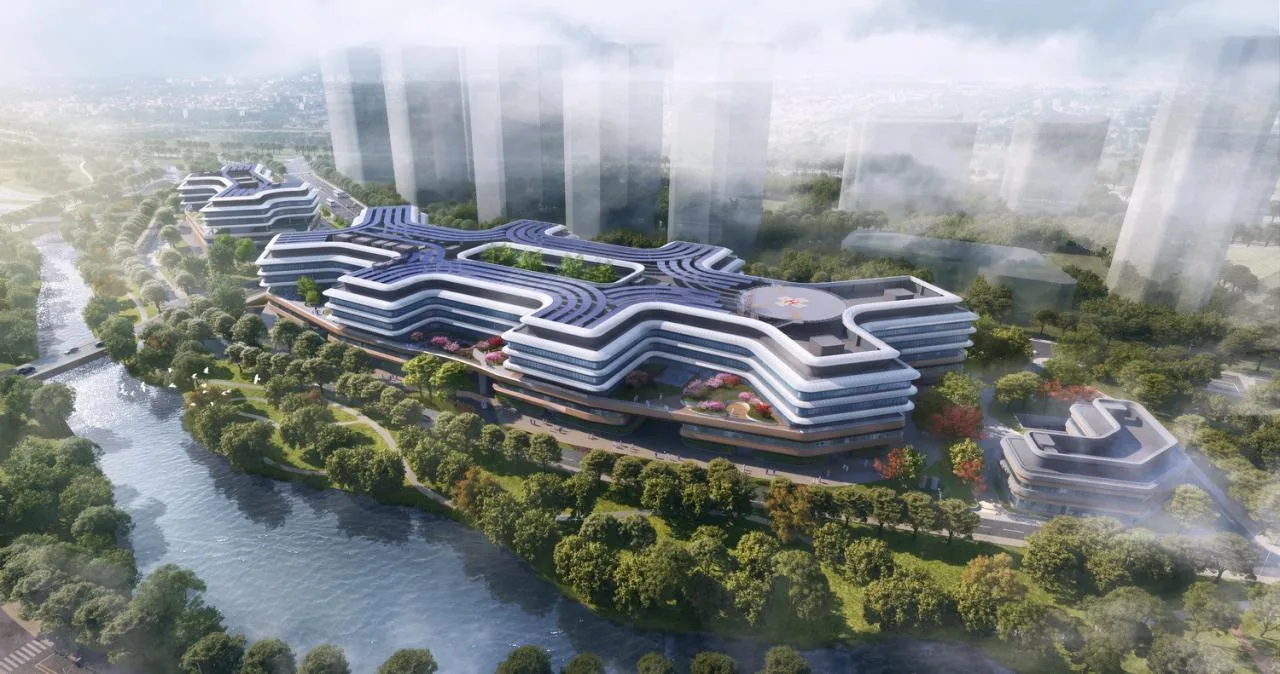
△ Fifth façade rendering of Southern University of Science and Technology Affiliated Hospital (Main Campus)
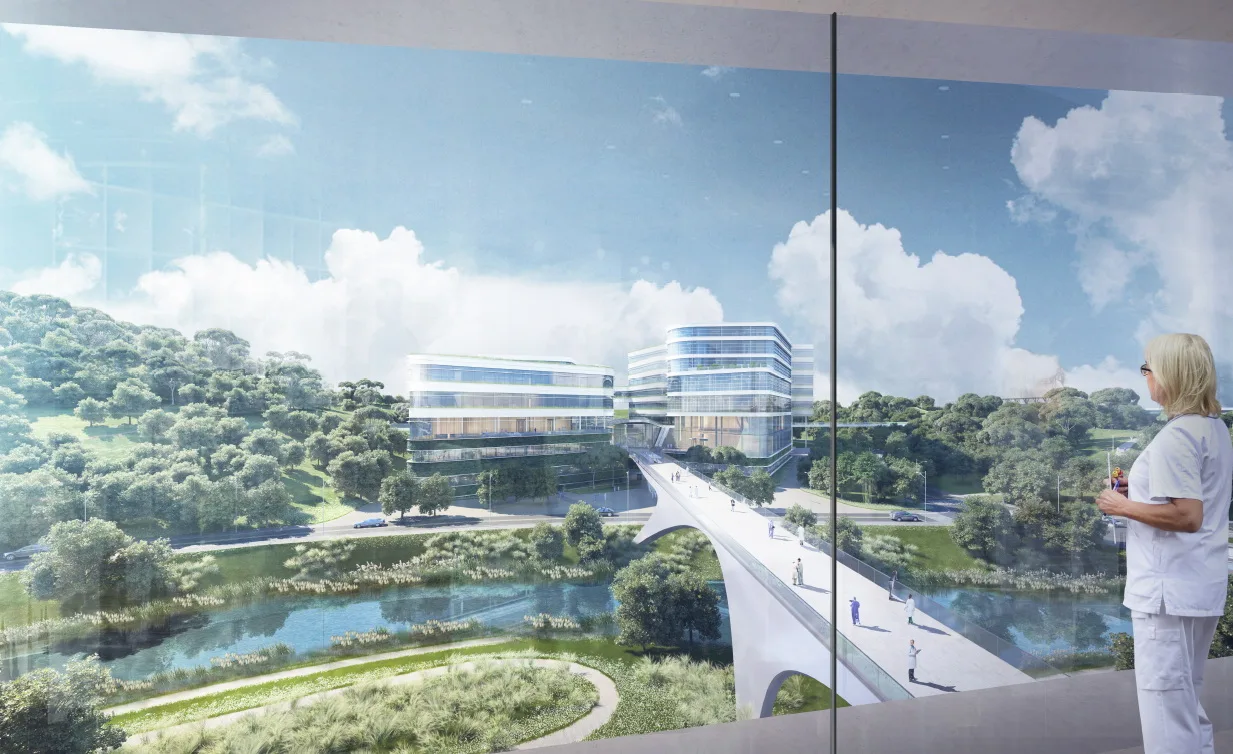
△ Rendering from the affiliated hospital to the medical school (Competition Stage)
The design connects the complex medical functions in the west building of the affiliated hospital with the research, development, and teaching activities in the east building. Across the Dashahe River lies the medical school’s administrative complex focused on education, alongside dormitories to the north. This efficient connectivity system forms a hybrid medical school model emphasizing “functional sharing and integrated medical education.”
Ultimately, the complex aims to evolve into a comprehensive community integrating medical treatment, scientific research, and healing spaces—exploring innovations in natural rehabilitation, medical talent development, and advanced healthcare.
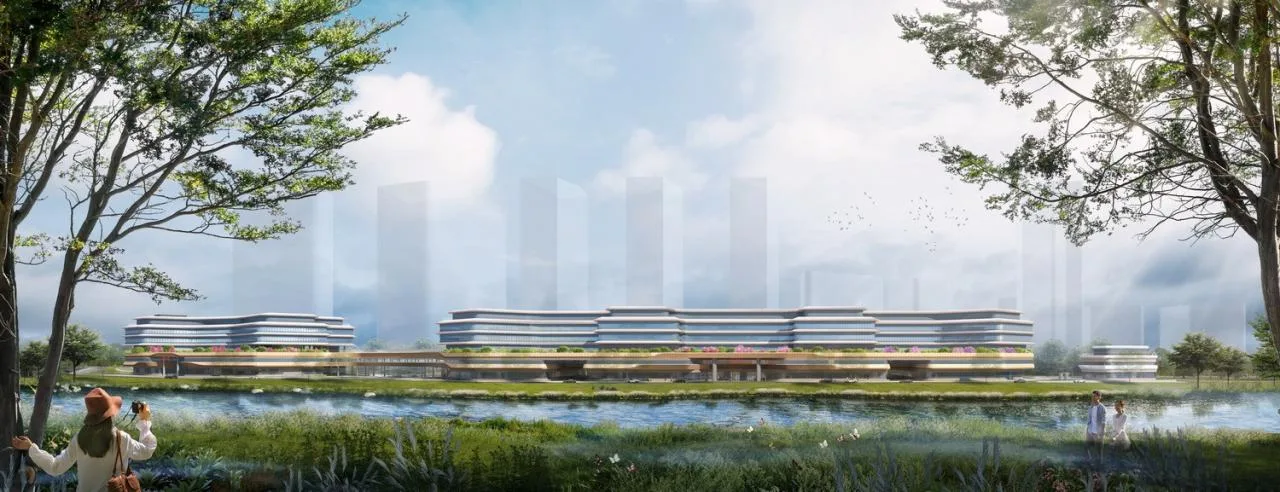
△ River view rendering of Southern University of Science and Technology Affiliated Hospital (Main Campus)
Project Drawings
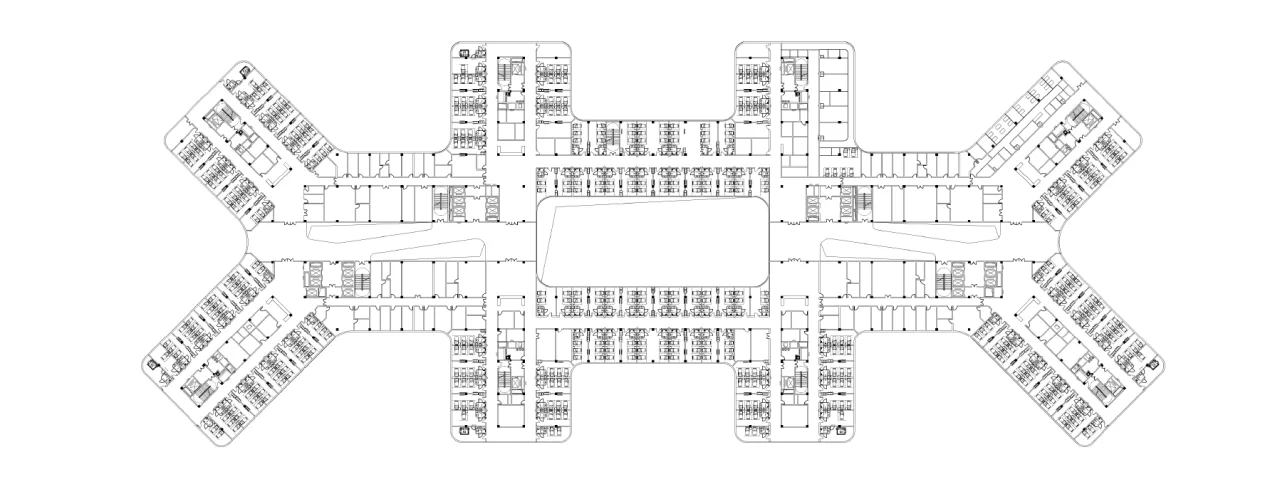
△ Fourth floor plan of the west building, Southern University of Science and Technology Affiliated Hospital
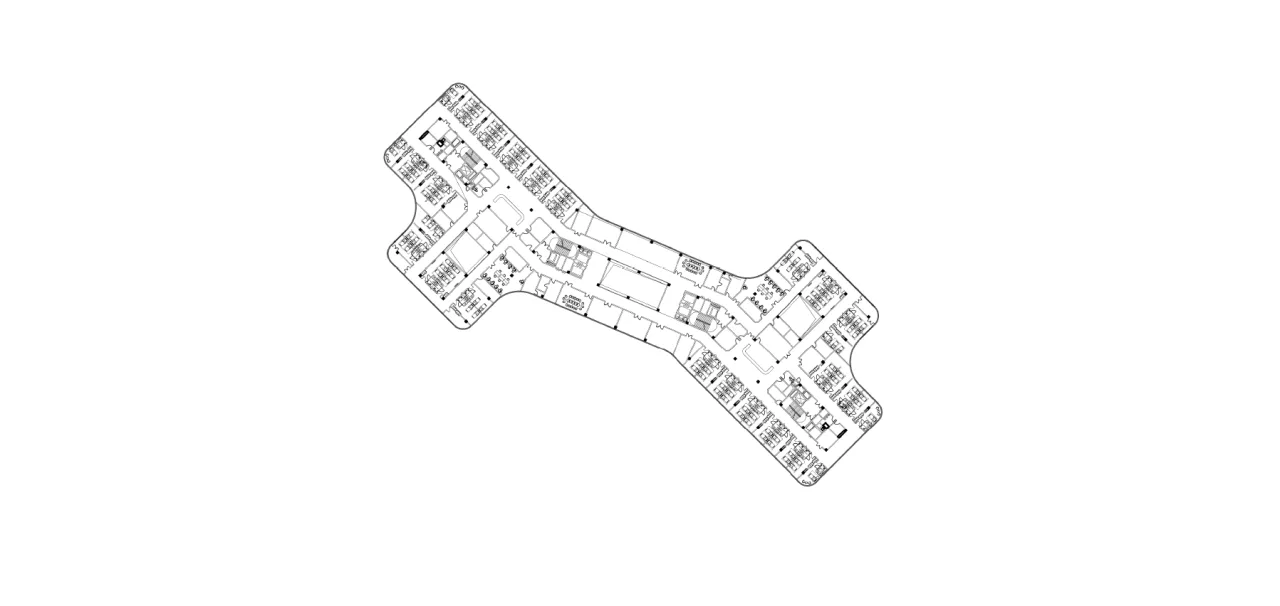
△ Fourth floor plan of the east building, Southern University of Science and Technology Affiliated Hospital
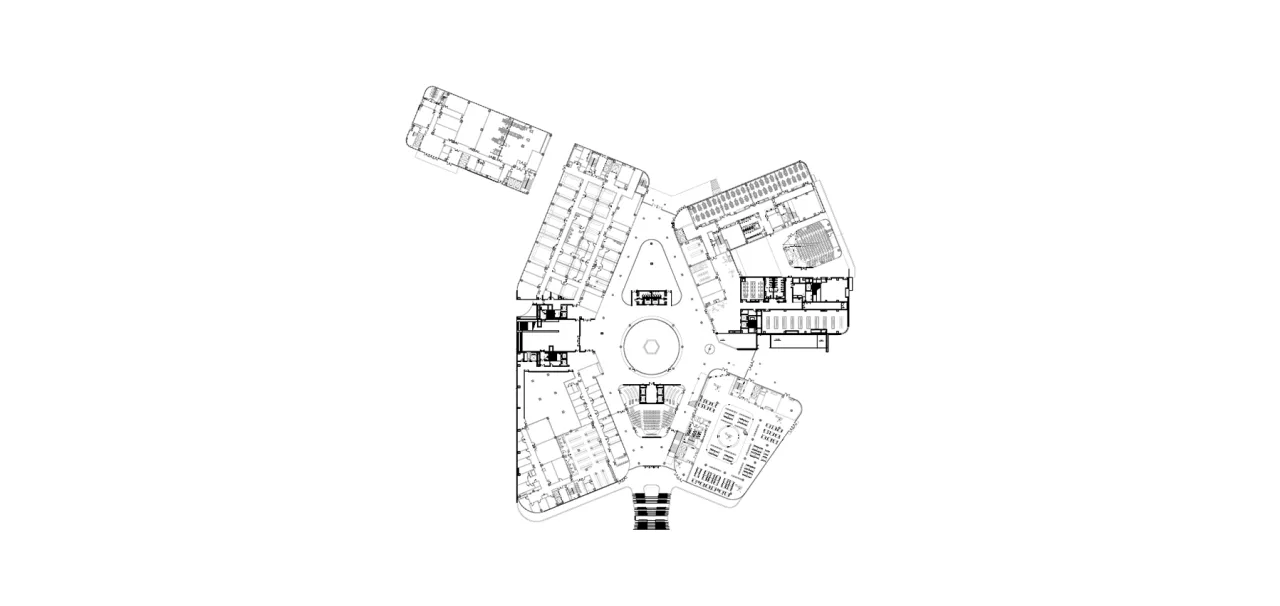
△ First floor plan of the administrative complex building, School of Medicine, Southern University of Science and Technology
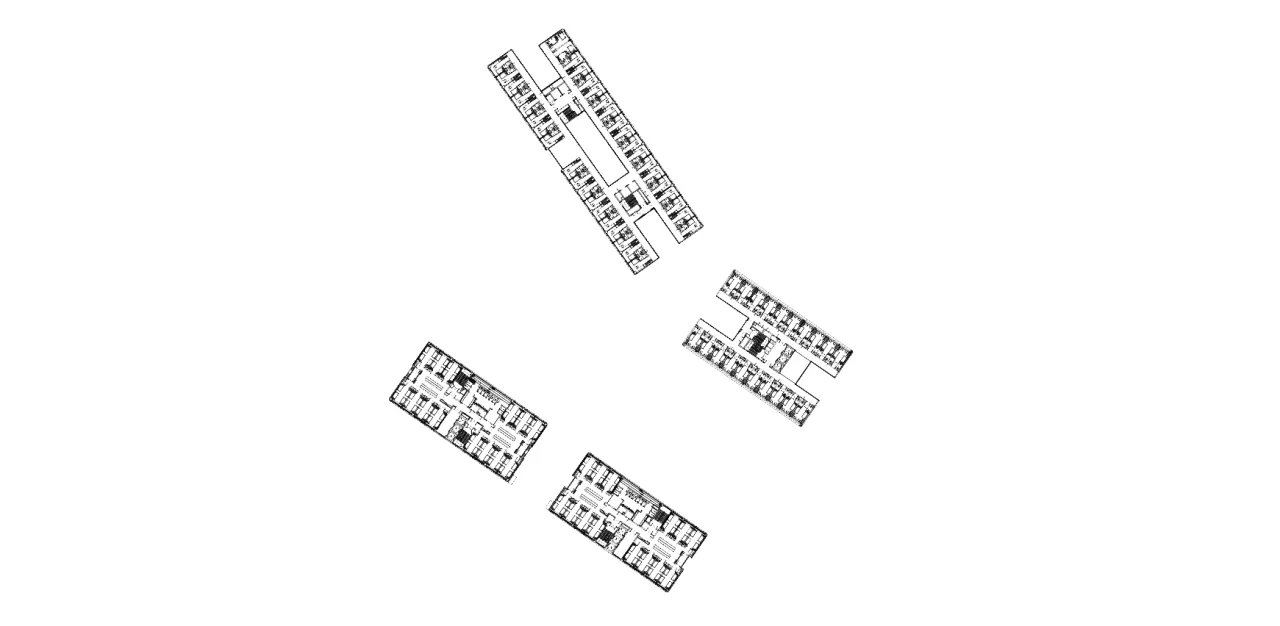
△ Standard floor plan of the dormitory building, Southern University of Science and Technology School of Medicine
Project Information
Owner: Southern University of Science and Technology
Construction Unit: Shenzhen Construction and Engineering Bureau
Project Type: Medical / Educational
Location: East side of Southern University of Science and Technology campus, Xili University City, Nanshan District, Shenzhen
Competition Period: 2020-2021
Medical School Construction Timeline: 2023-2026
Affiliated Hospital Construction Timeline: 2023-2027
Land Area (Medical School): approximately 63,600 square meters
Land Area (Affiliated Hospital): approximately 55,000 square meters
Building Area (Medical School): approximately 164,000 square meters
Building Area (Affiliated Hospital): approximately 167,600 square meters
Design Consortium: Gerber Architekten / Shenzhen Huasen Architecture and Engineering Design Consulting Co., Ltd.
Design Scope: Master planning, architectural design, landscape design, interior design
Full Process Engineering Consultant (Medical School): Beijing Guojin Management Consulting Co., Ltd. / Shenzhen Huasen Architecture and Engineering Design Consulting Co., Ltd.
Preliminary and Construction Drawing Design Unit (Medical School): Shenzhen Huayang International Engineering Design Co., Ltd.
Full Process Engineering Consultant (Affiliated Hospital): Shanghai Tongji Engineering Consulting Co., Ltd.
Preliminary and Construction Drawing Design Unit (Affiliated Hospital): Shenzhen Architectural Design and Research Institute Co., Ltd.
Gaibo Architectural Design Team: Professor Eckhard Gerber, Marius Ryrko, Bo Li, Pin Lu, Haixi Zhu, Mario Barkley, Dongyue Tan, Sean Hoo Chng, Yu Lin, Diwen Yang, Shutian Jiang, Szabolcs Veress, Qi Lin, Yabing Liu












Must log in before commenting!
Sign Up