
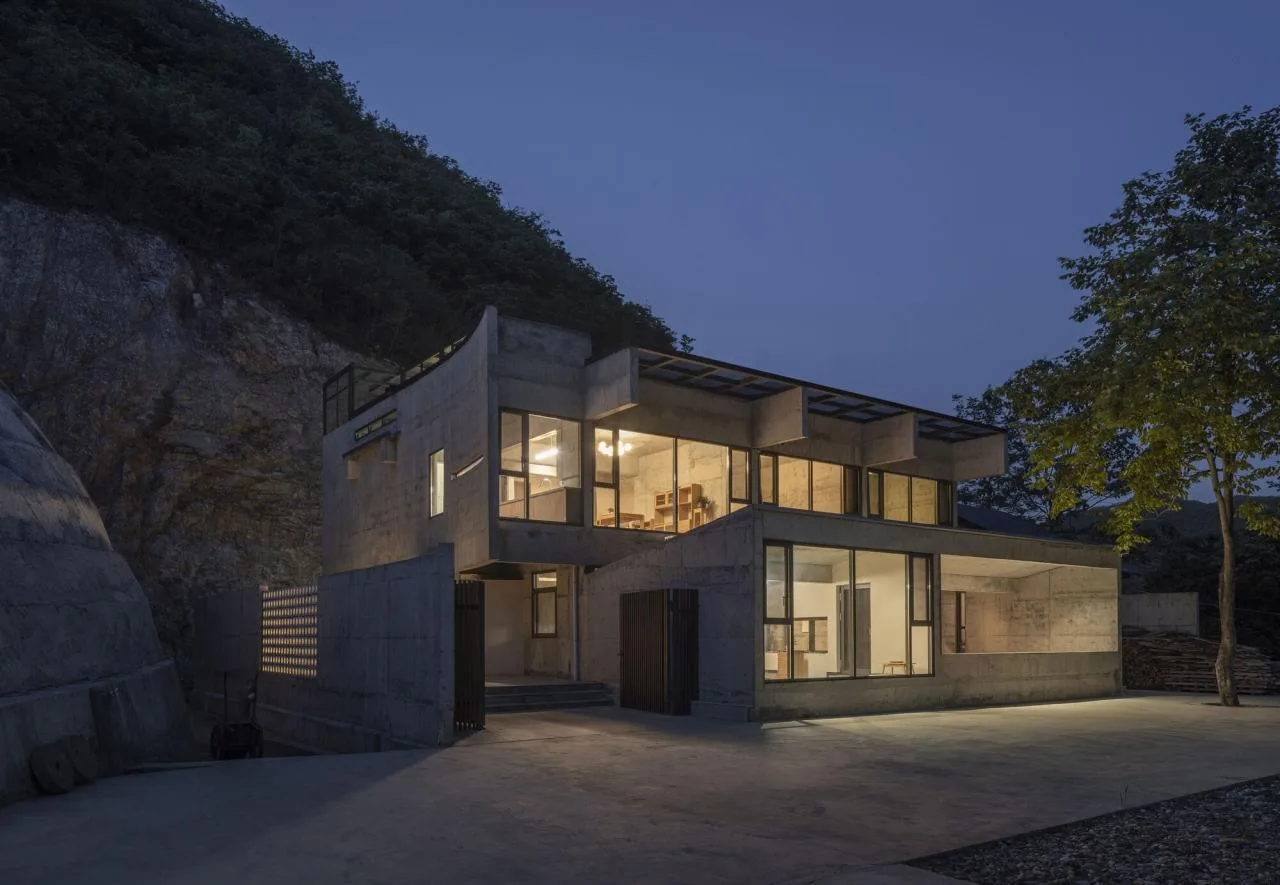
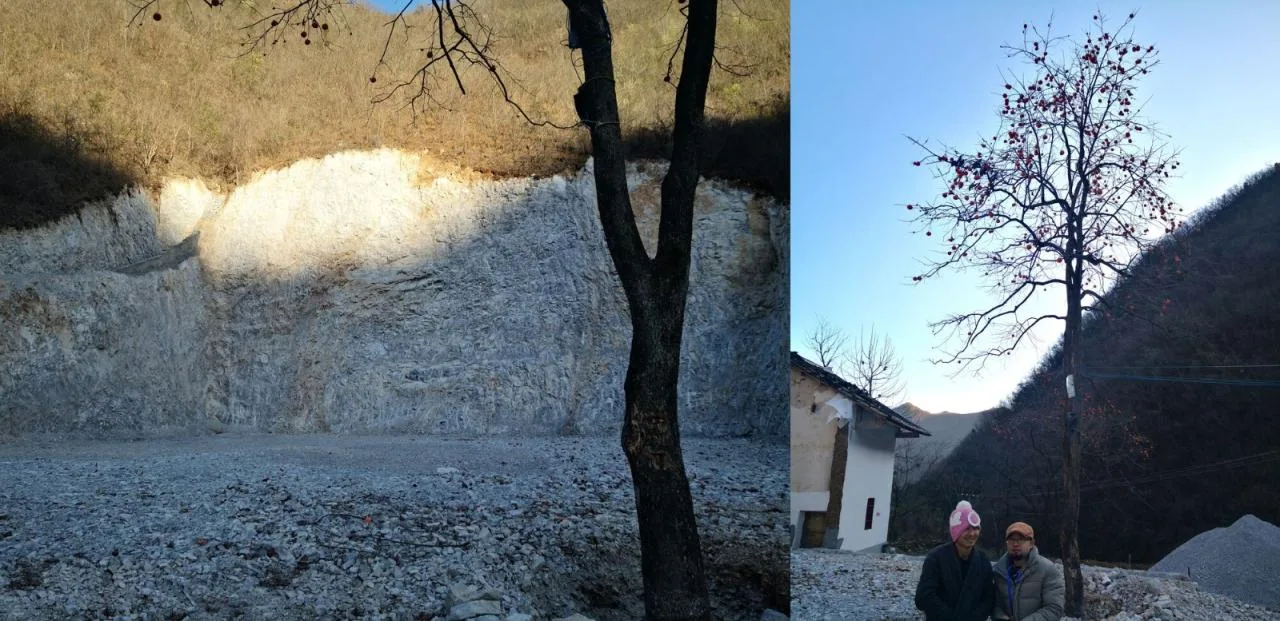
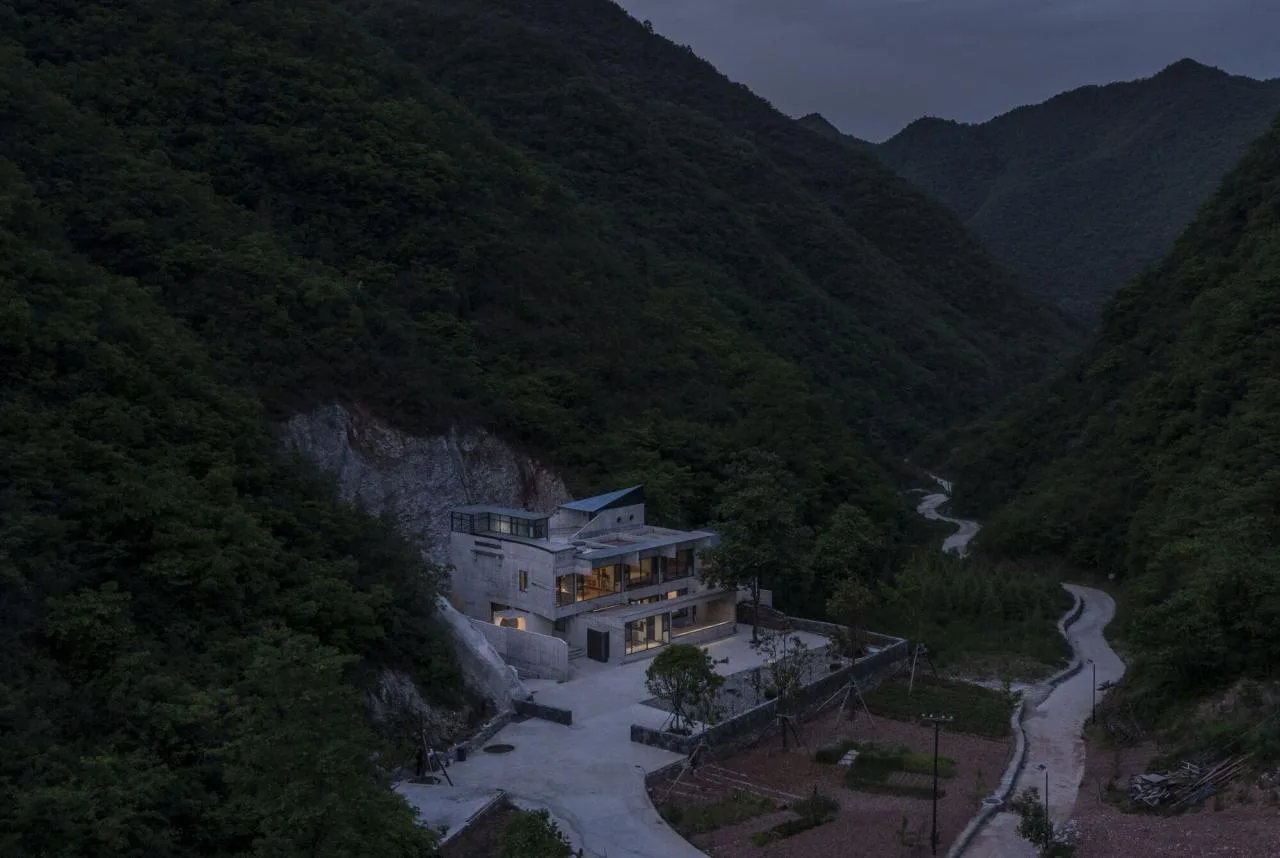
Four years ago, Mr. Wang from Dongguan reached out to a law firm, mentioning he owned a plot of land in his hometown of Xunshan District, Shiyan, and wished to build an independent residence. He asked me to help design it. After thorough discussions, we discovered several challenges: local transportation was inconvenient, delivering building materials was very difficult, there were few young workers nearby, and labor costs were high. Additionally, I was pursuing a PhD in Tokyo at the time, making it impossible for me to be onsite for extended periods. These obstacles almost made me decline the project. However, upon visiting the site, I was inspired to proceed for one compelling reason—the cliff.
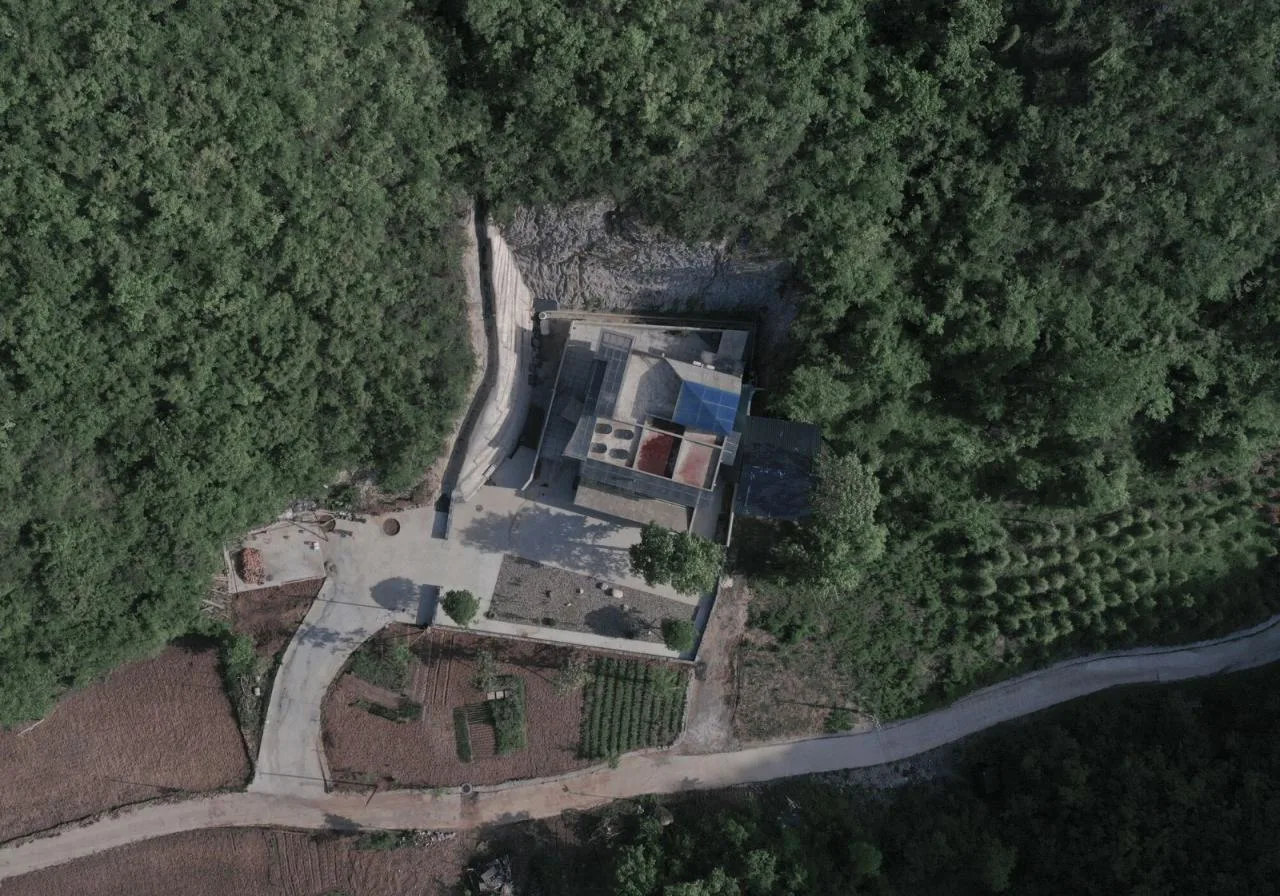
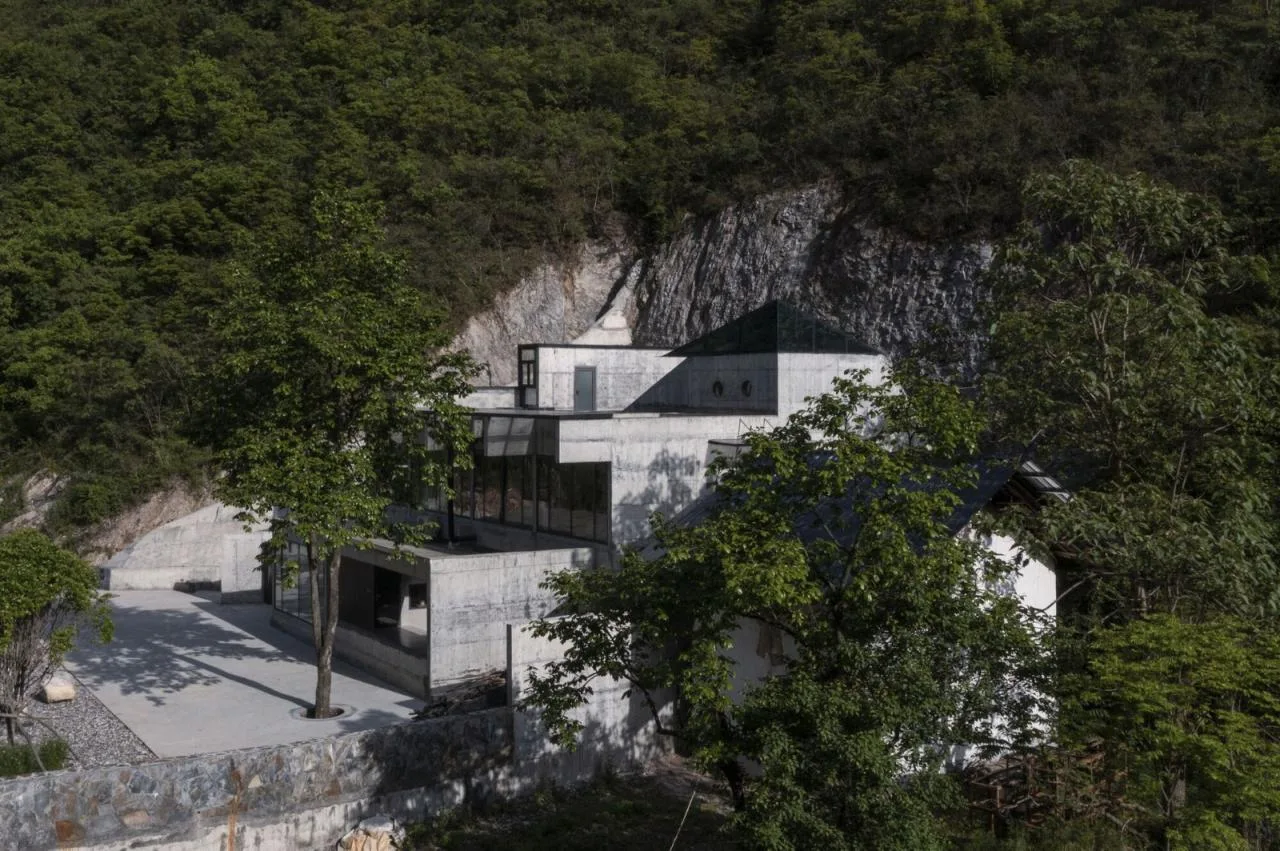
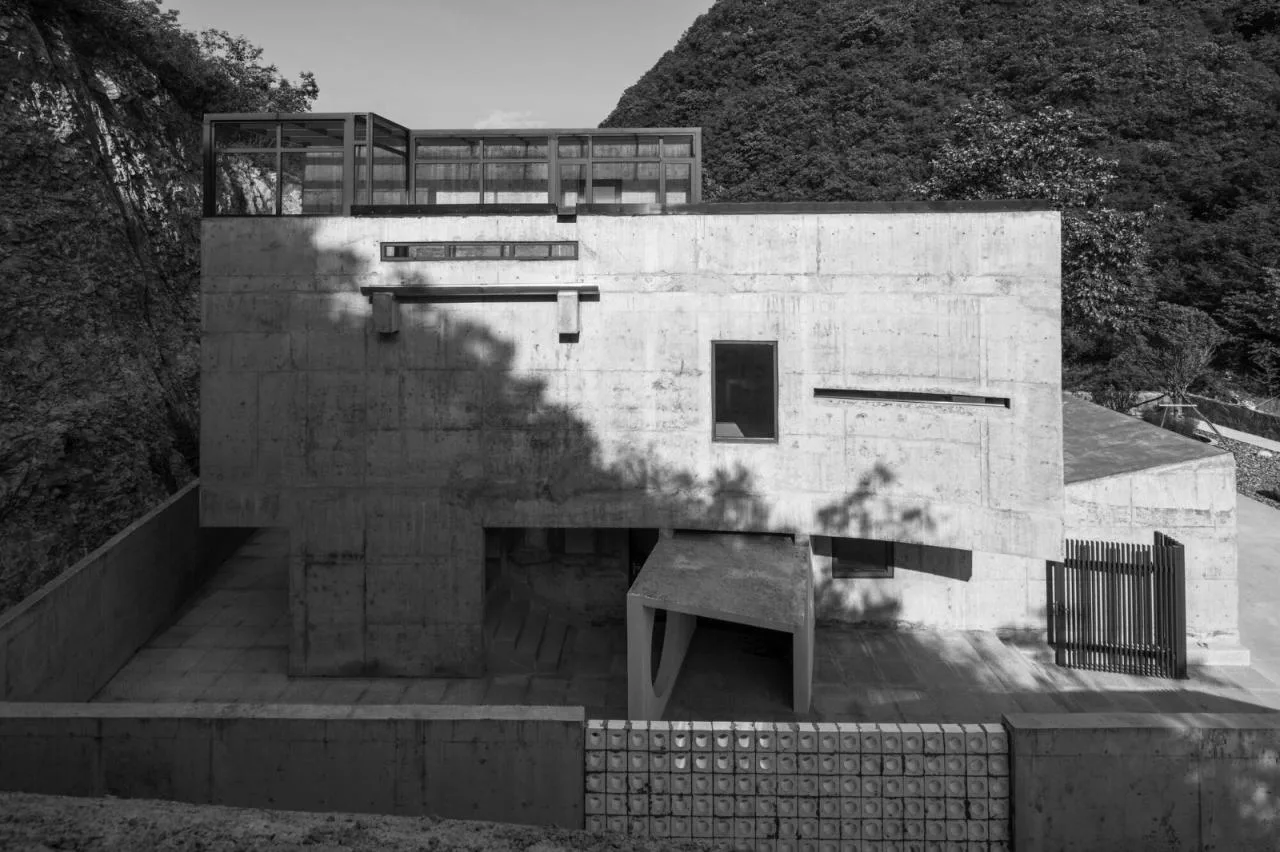
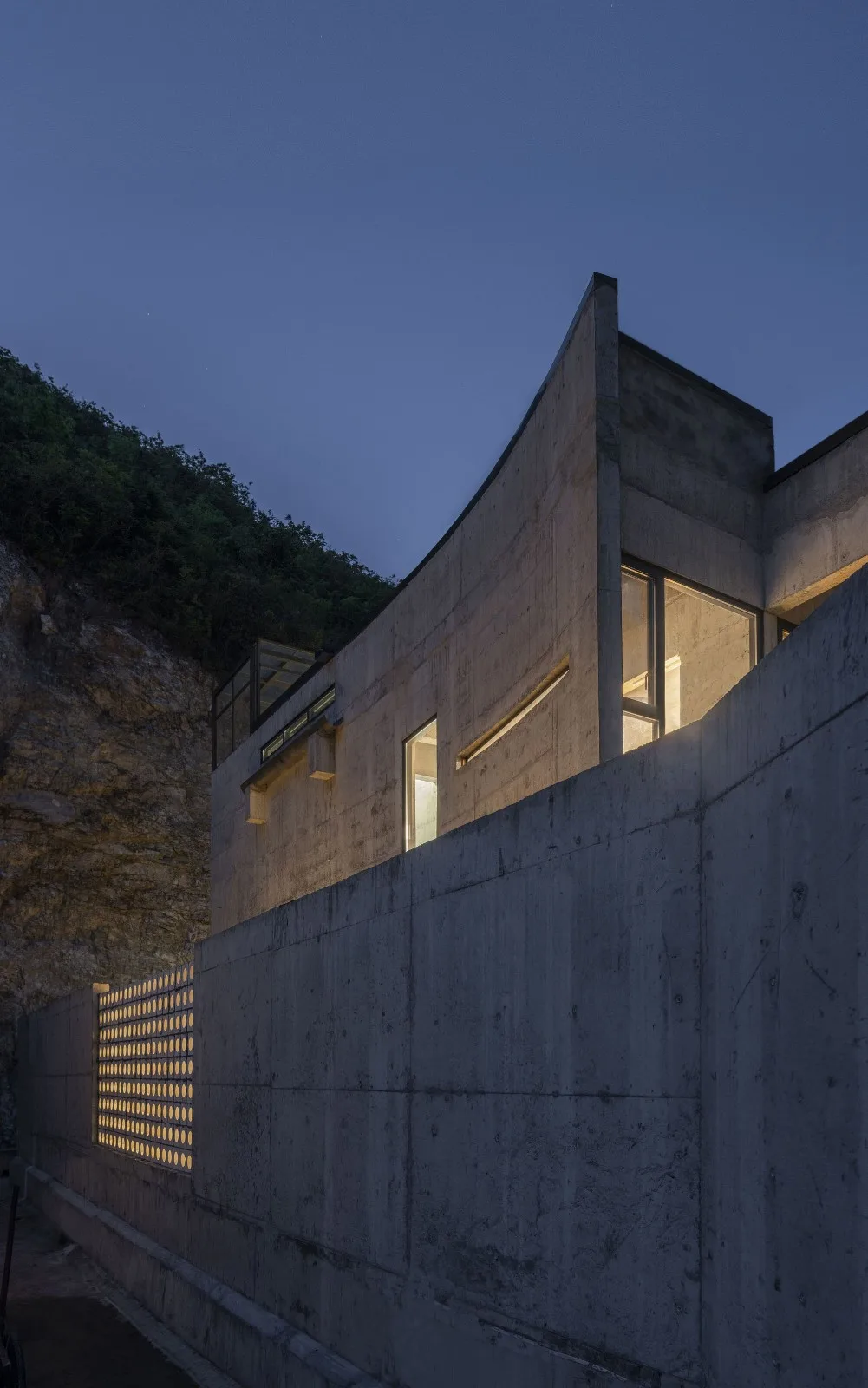
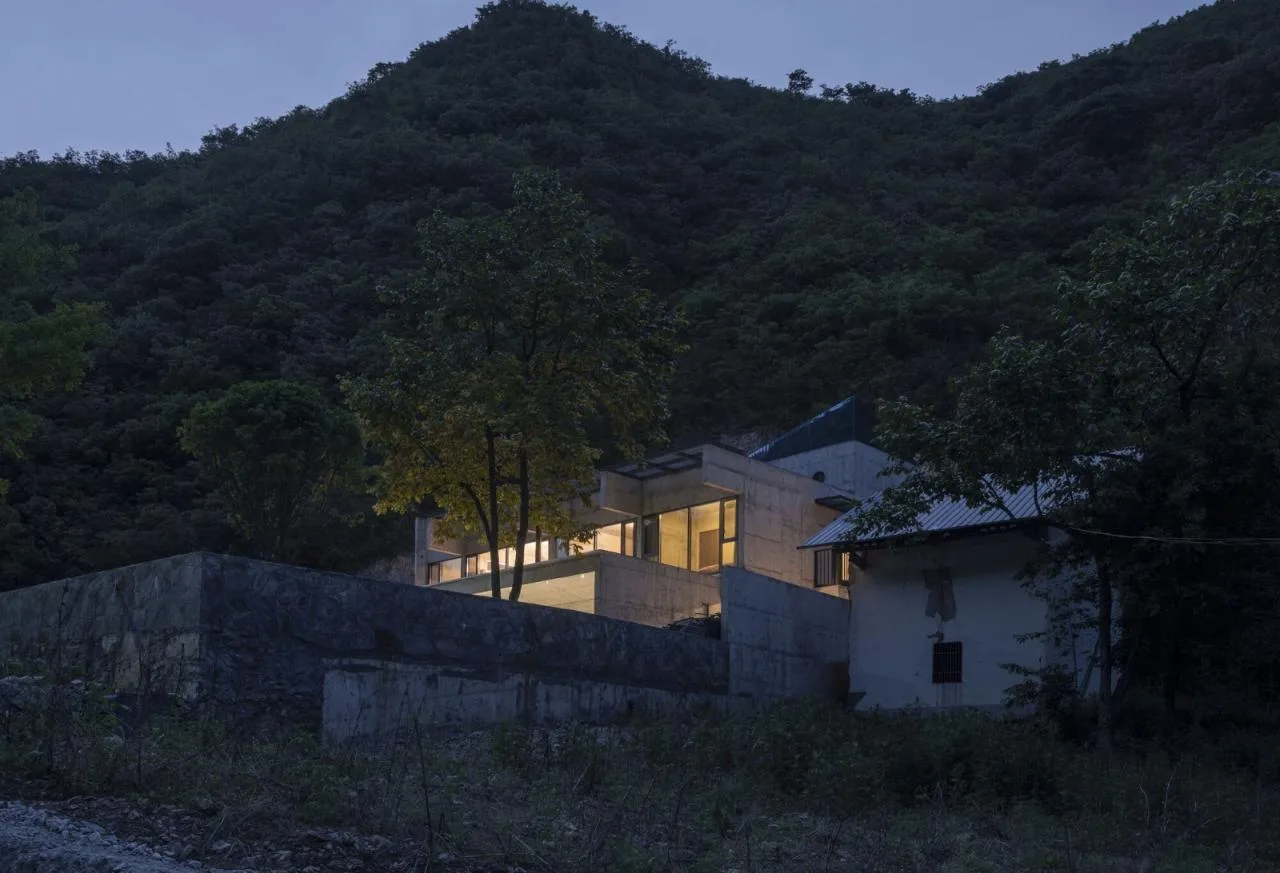
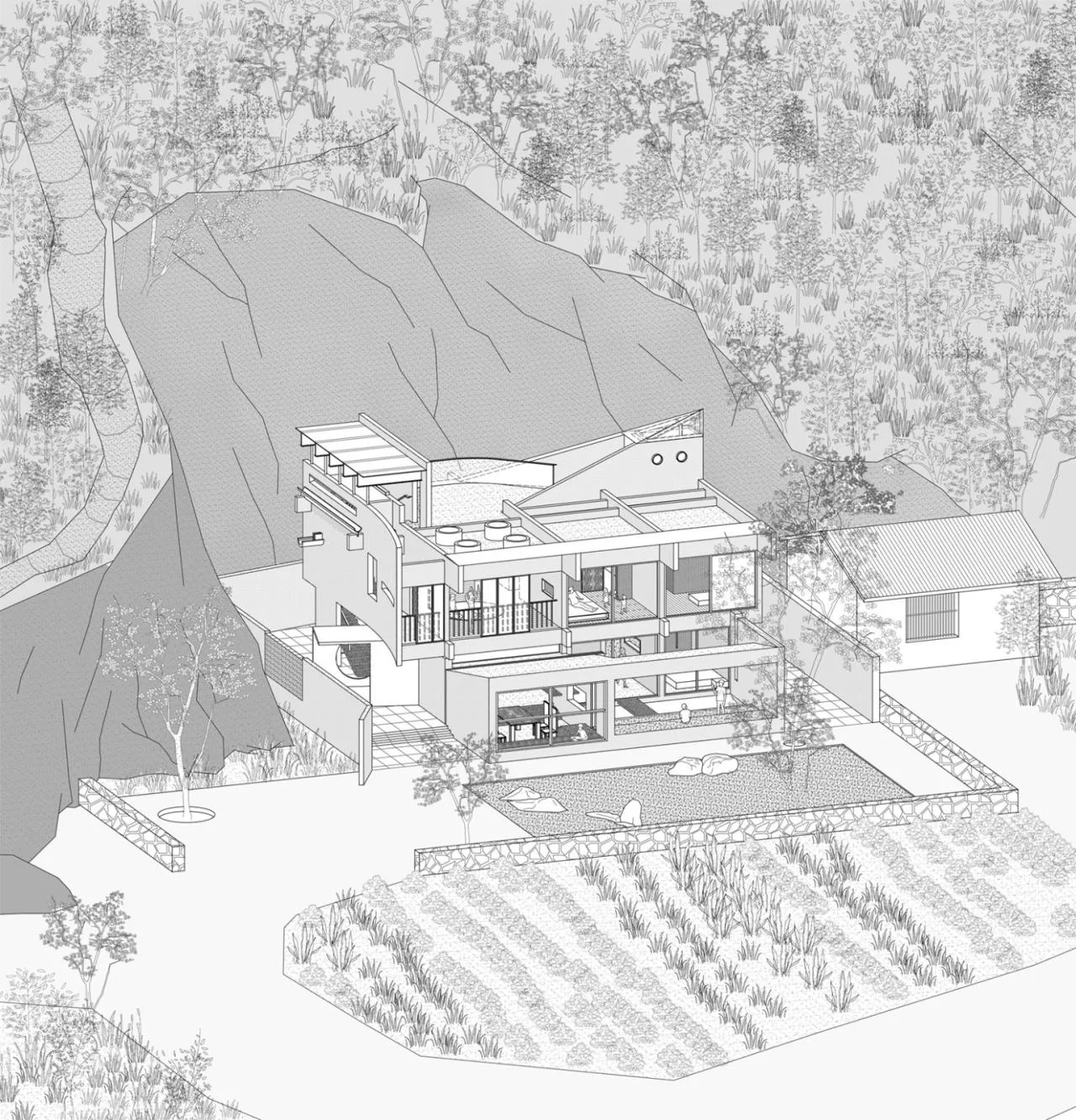
Yunxi County, located in Shiyan, Hubei, is a small region bordered by the Qinling Mountains to the north and the Han River to the south. The rugged terrain and mountainous landscape make transportation difficult. The 20-square-meter cliff base is nestled deep within the mountains, formed by the owner excavating a slope several tens of meters high on the northern side. The cliff face is extremely hard with a rough texture, resembling the palm of a giant reaching out.
The construction took place in late autumn. The southern mountains appeared like a gentle smile, and persimmon trees in the courtyard had already borne fruit. Imagine enjoying fresh tea while gazing at the green mountains and picking ripe, fiery red persimmons. The valley around the base is tranquil, with lush forests and cliffs shielding the buildings from the cold northern winds. The sharp mountain corners, straight cliff lines, and winding mountain roads all evoke a sense of geometric harmony.
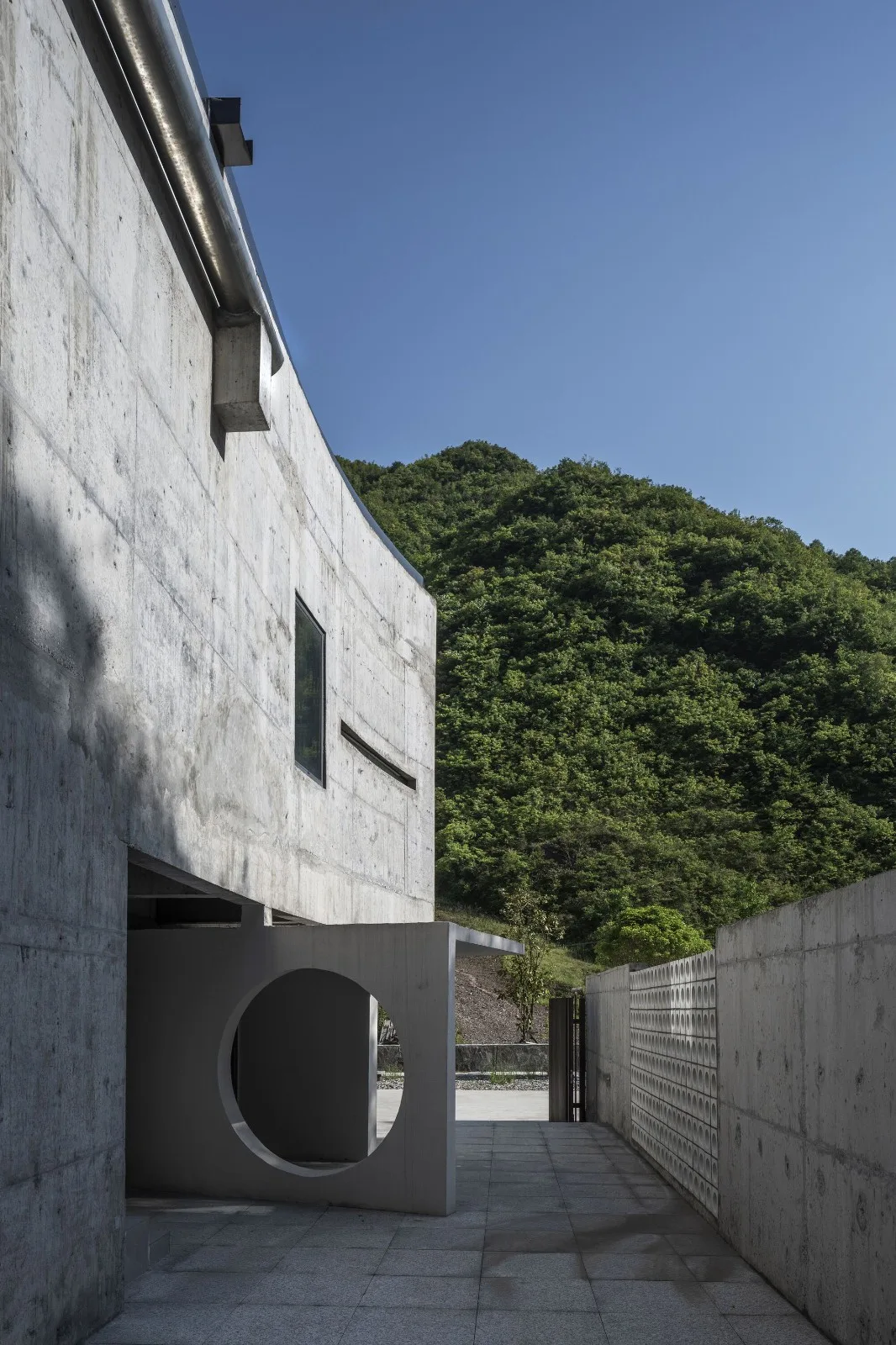
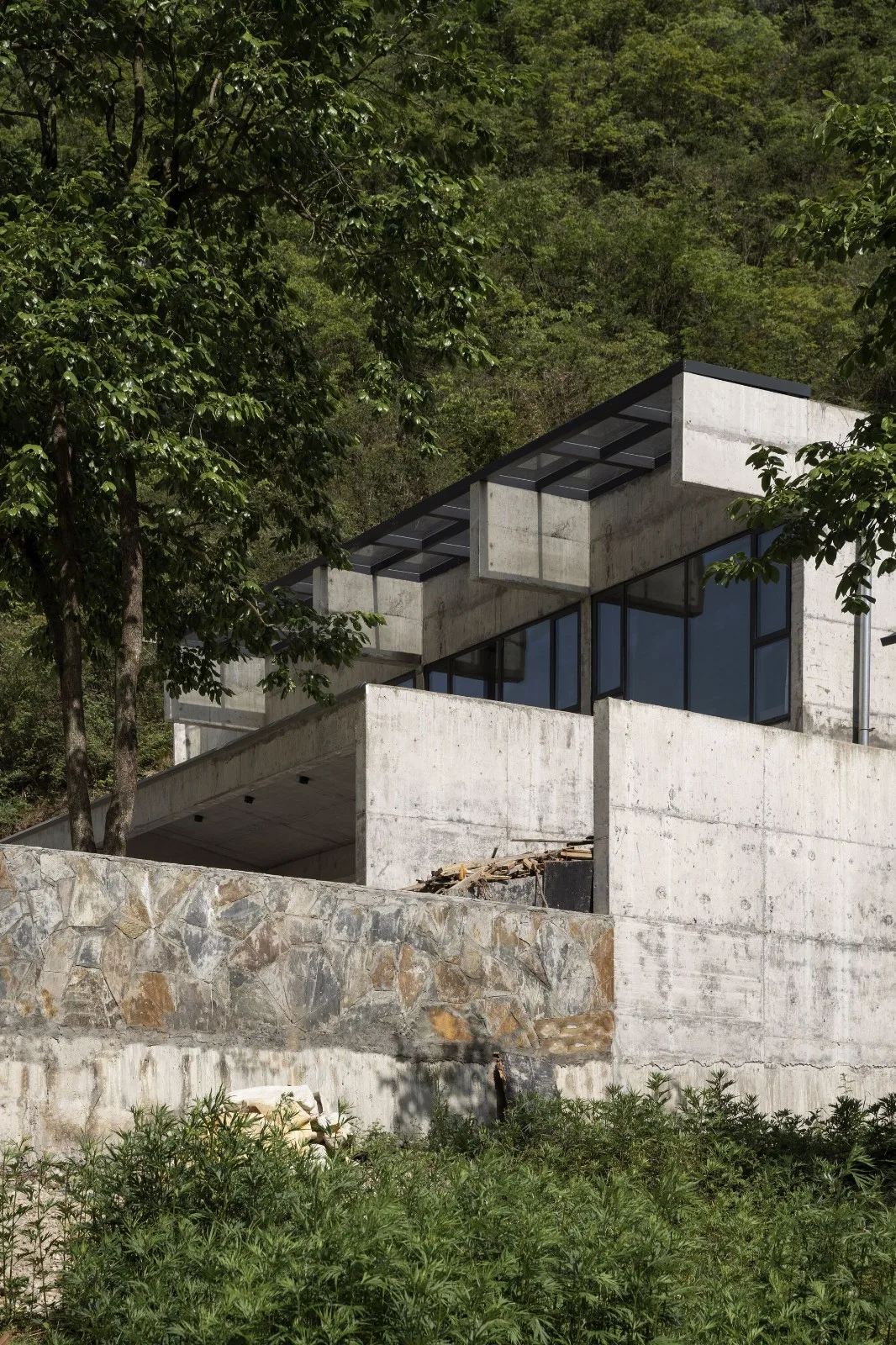
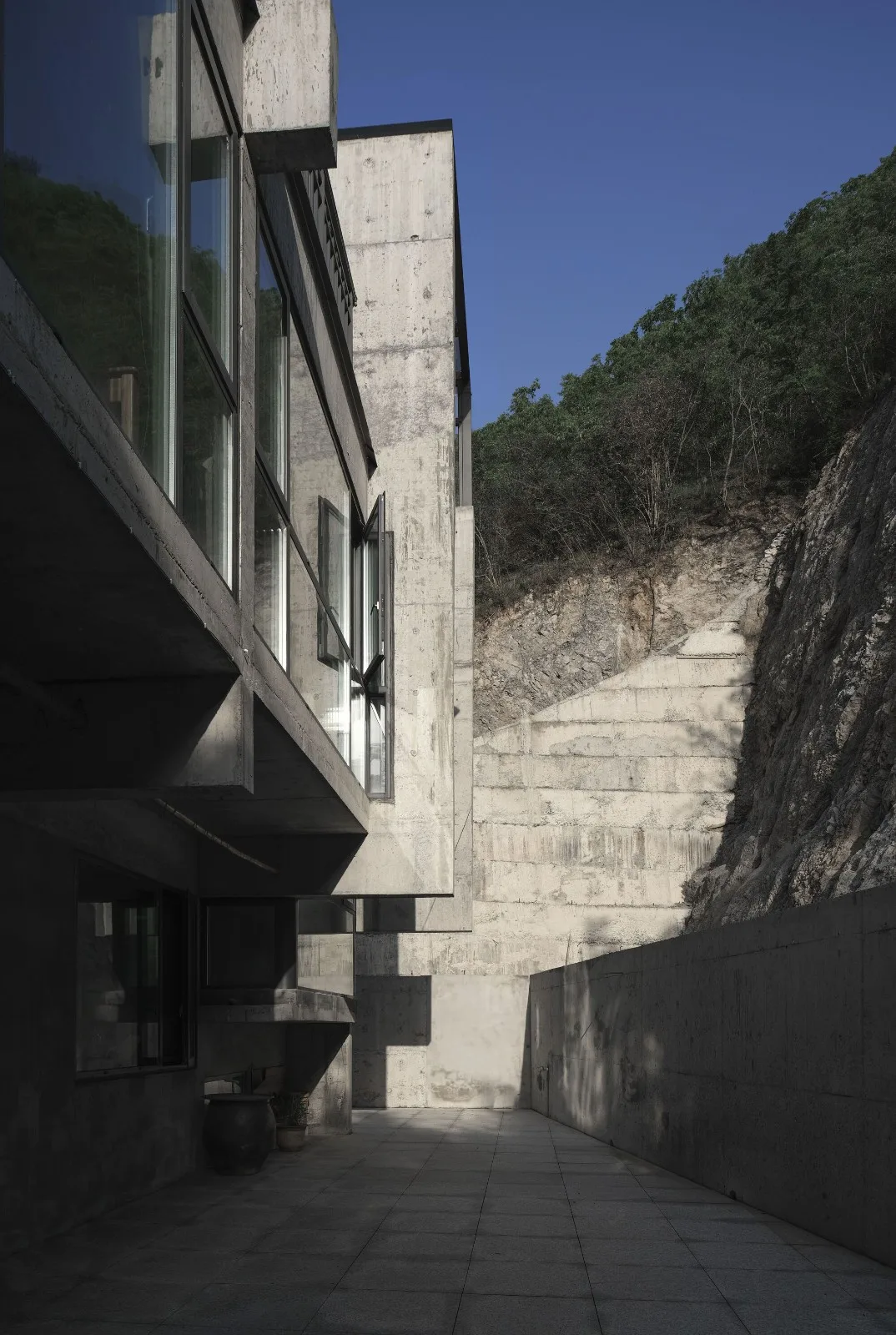
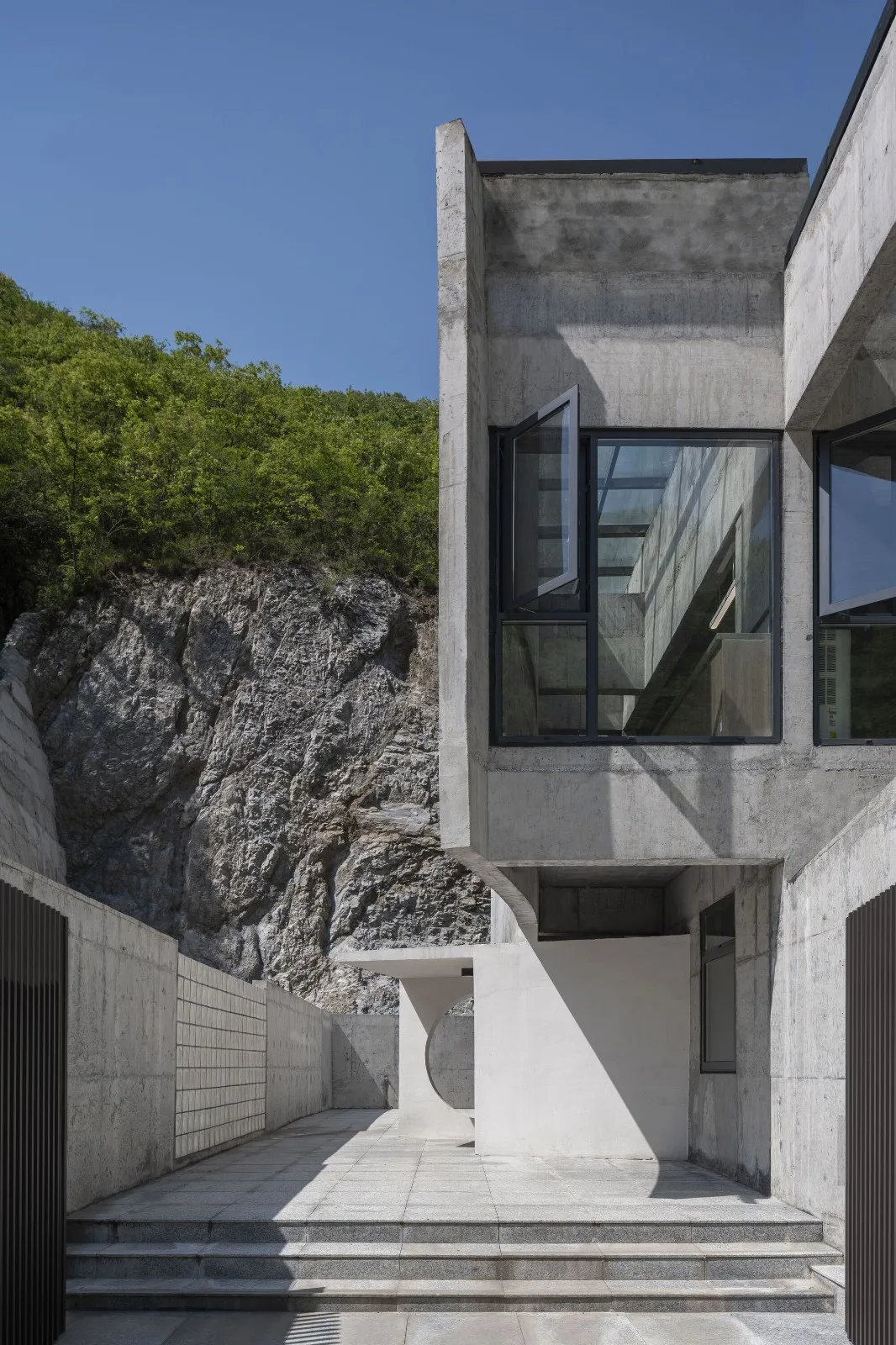
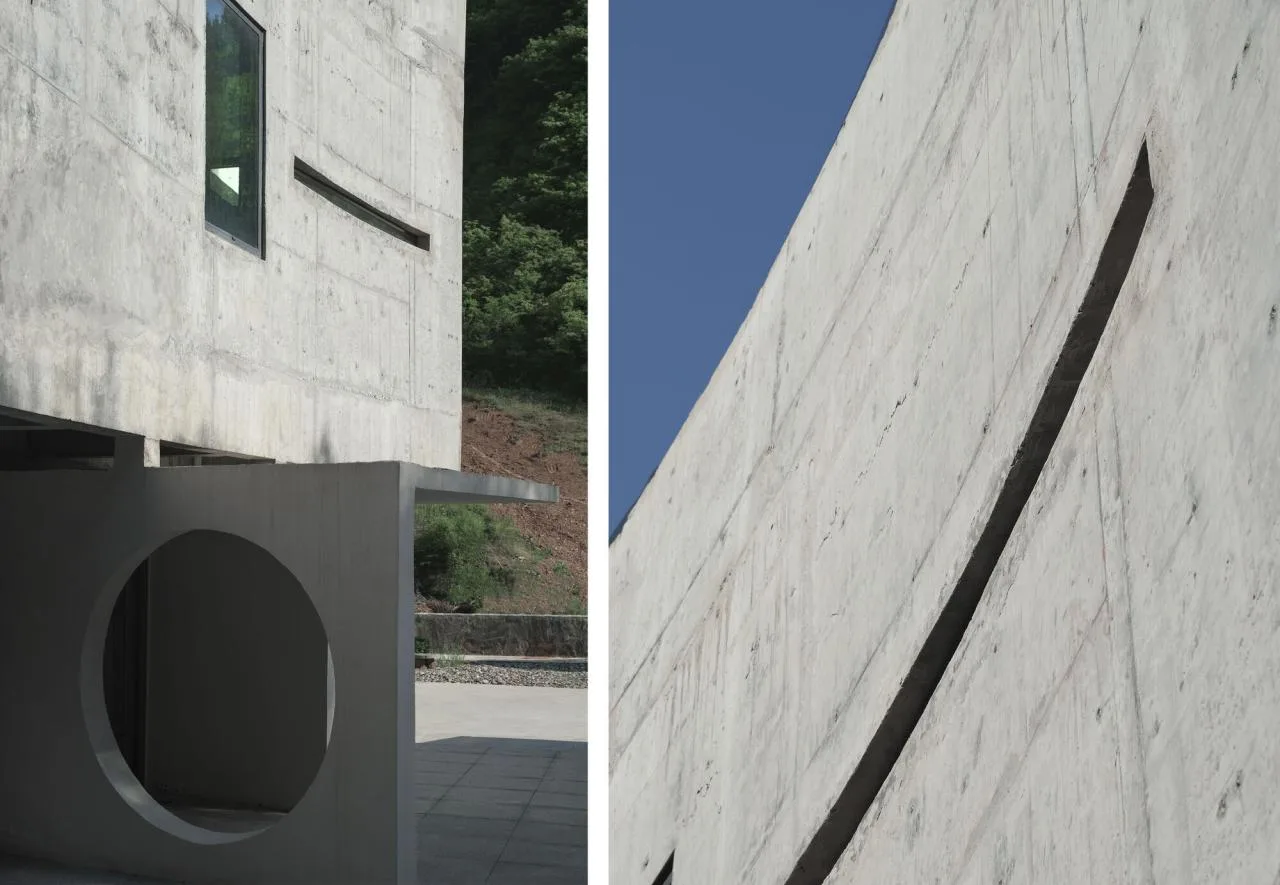
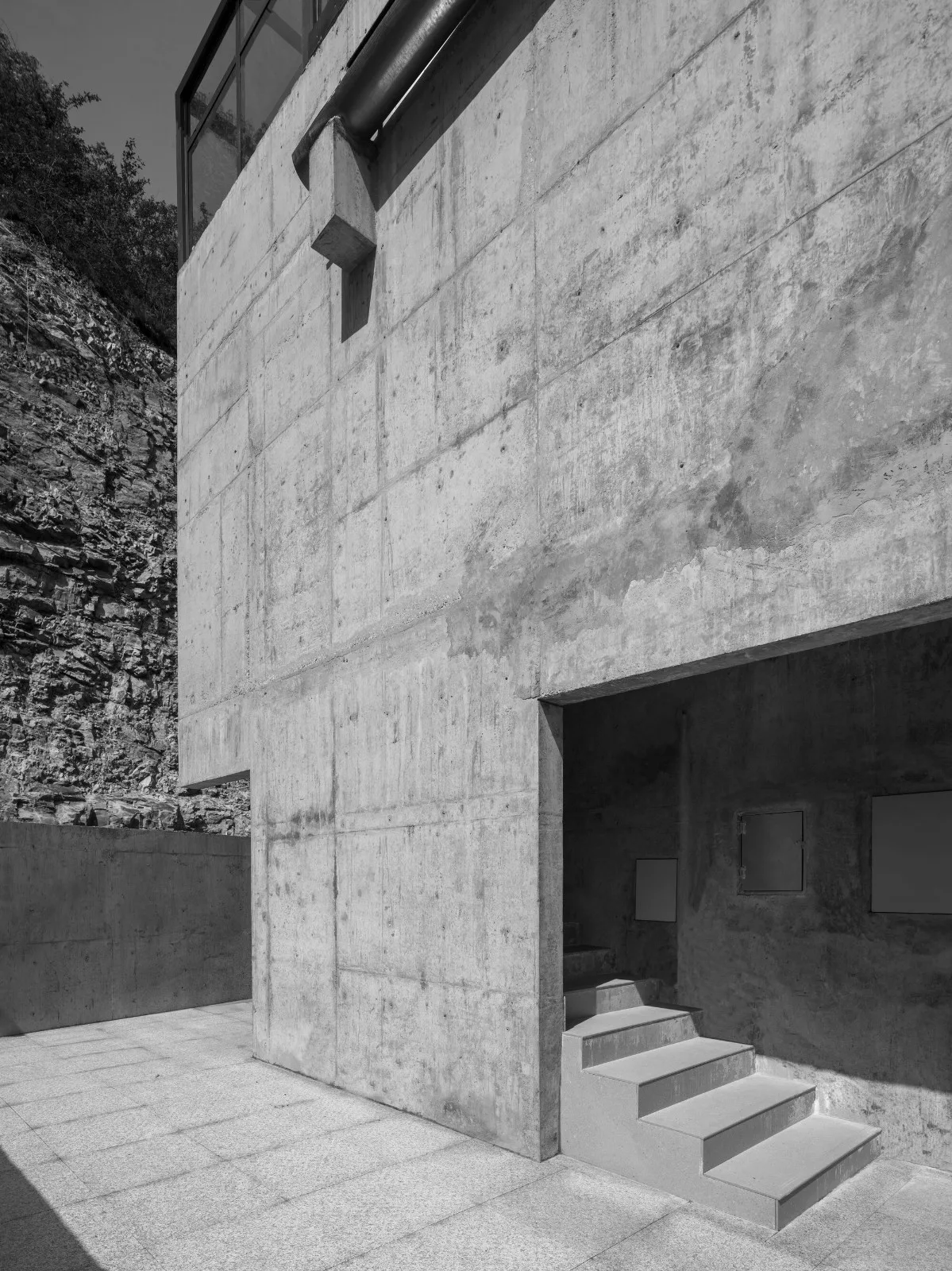
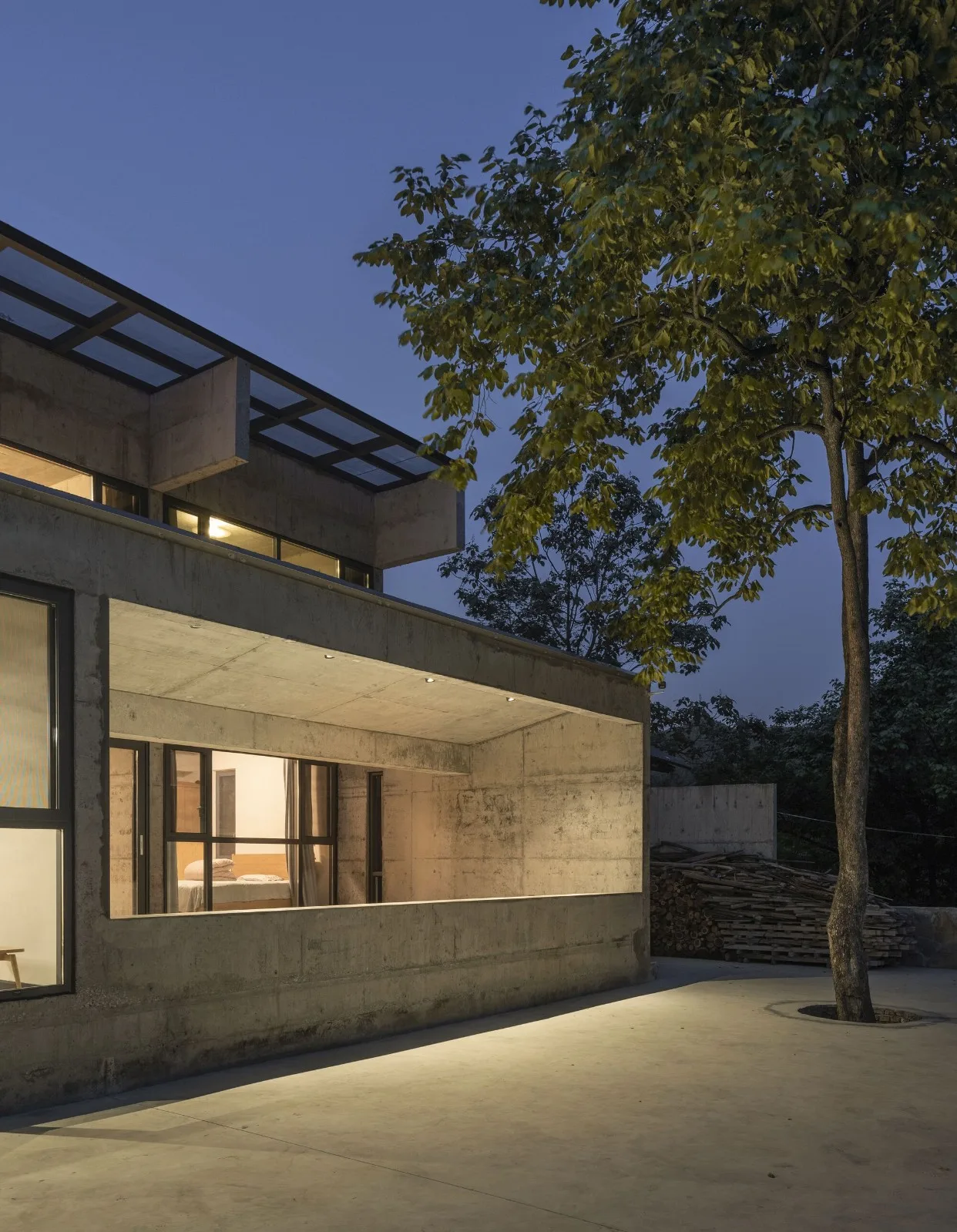
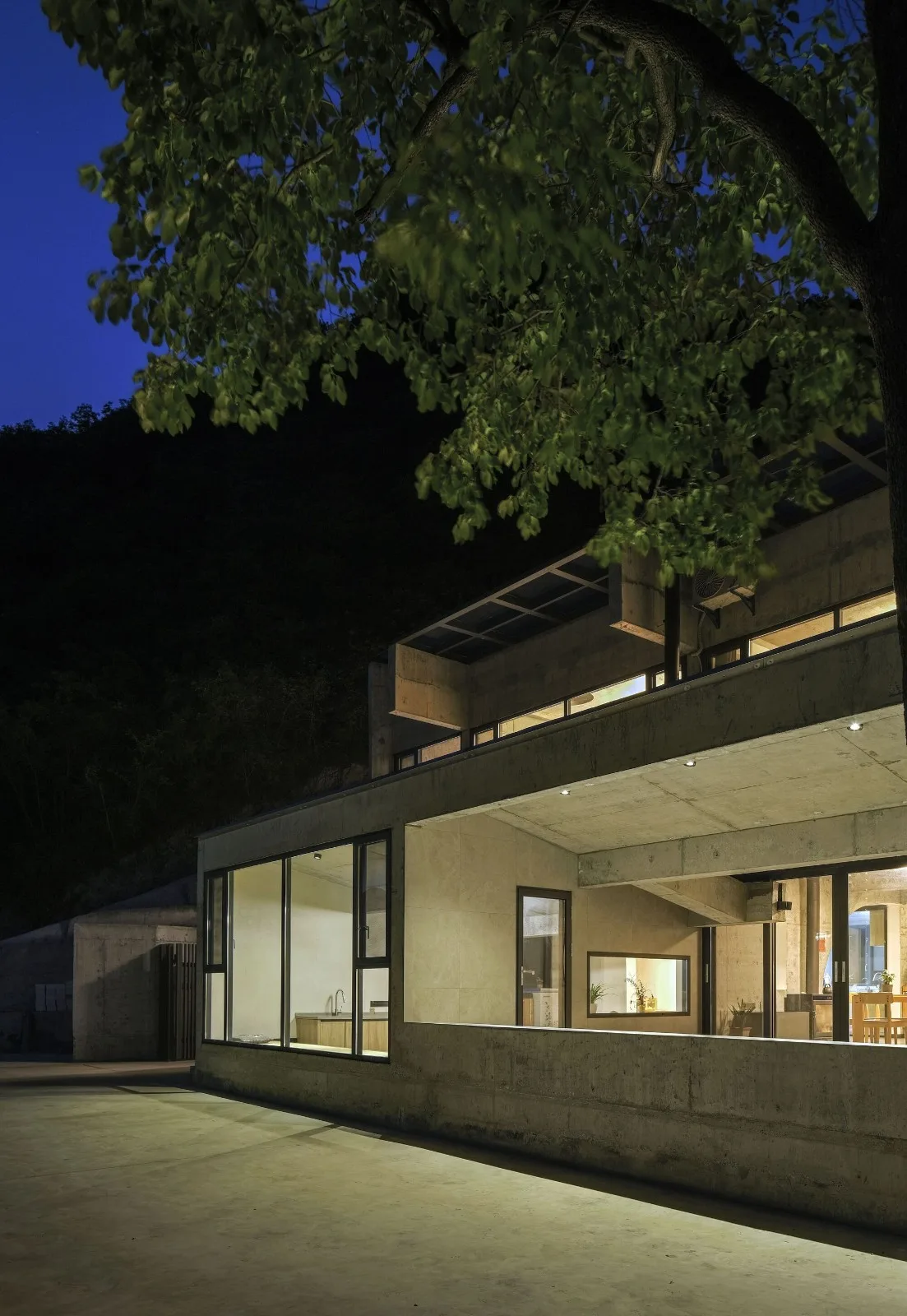
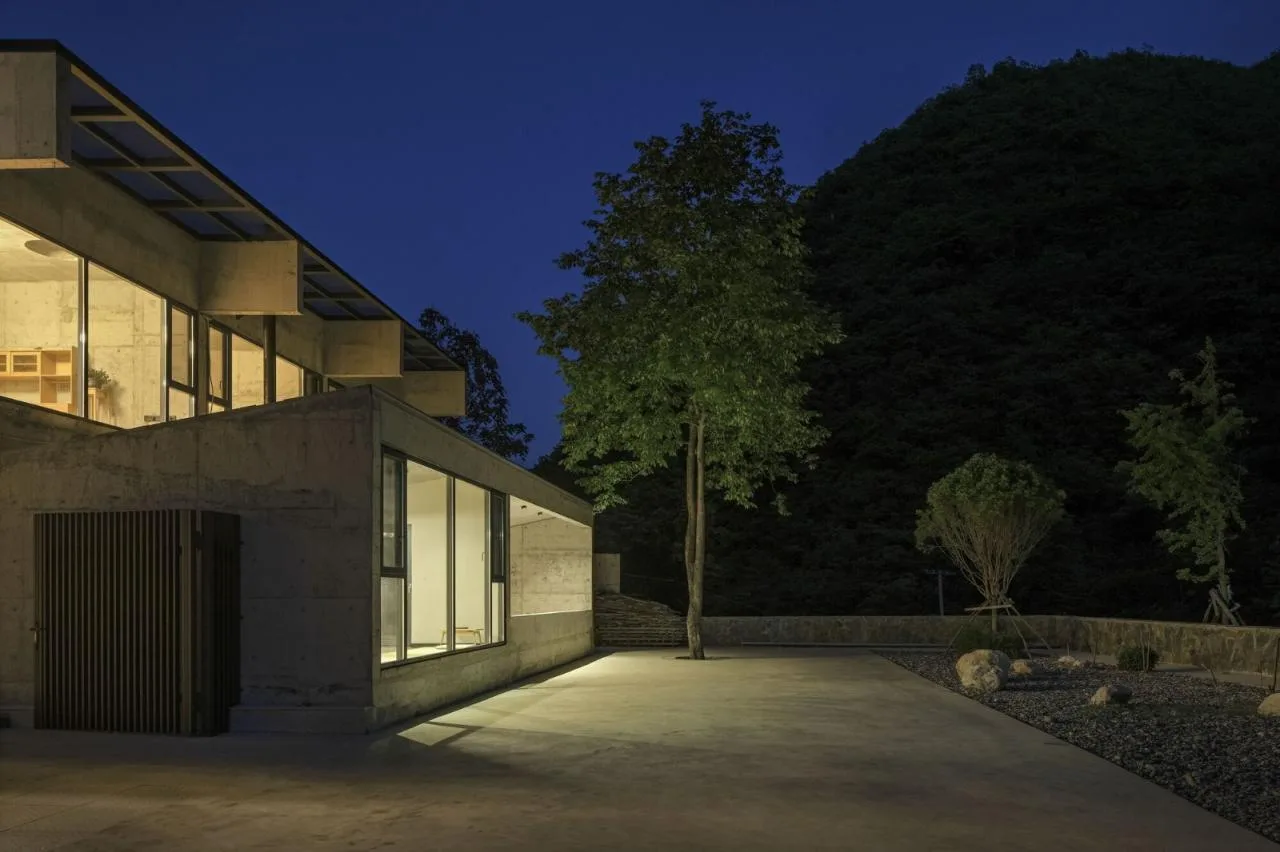
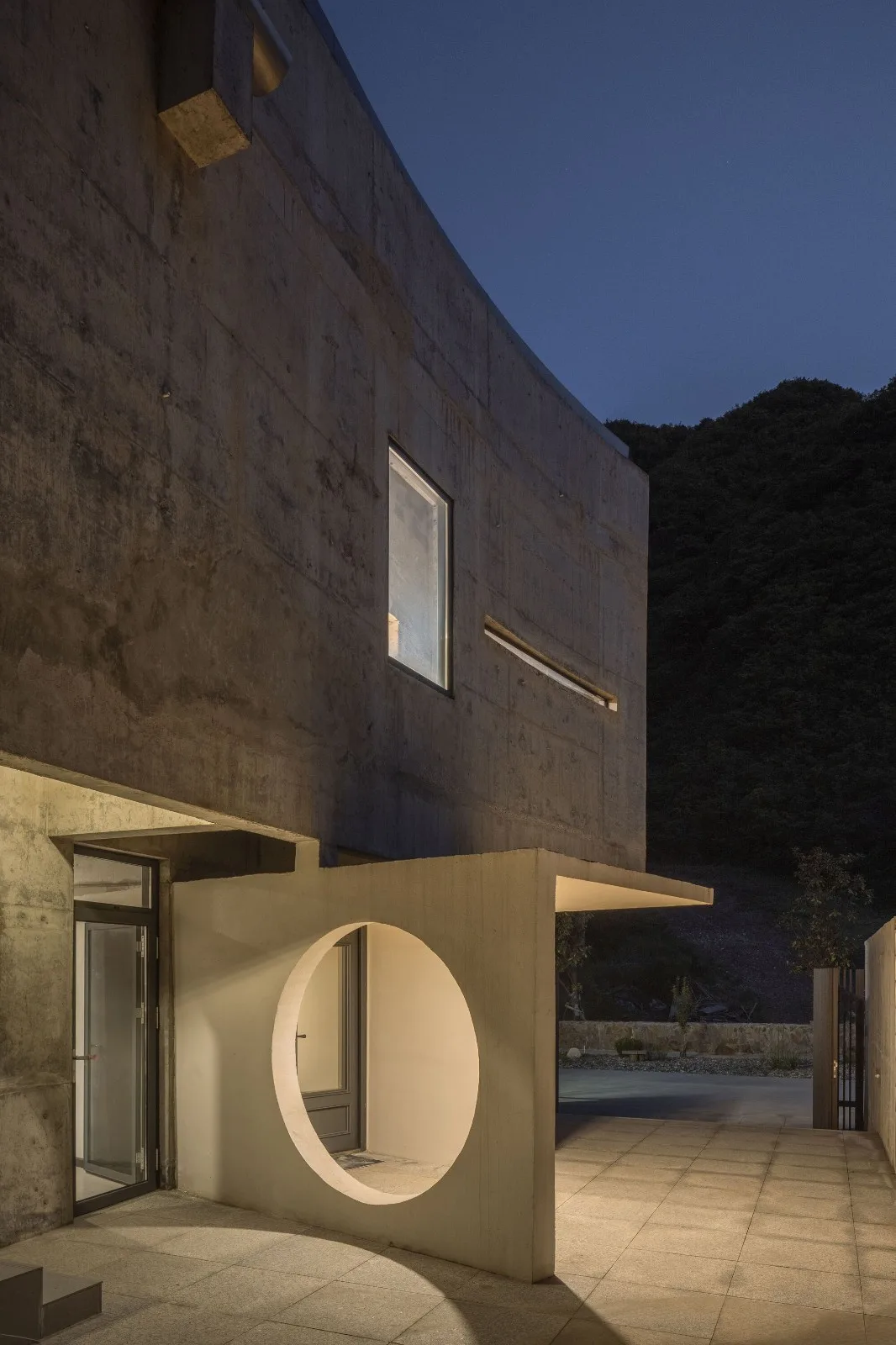
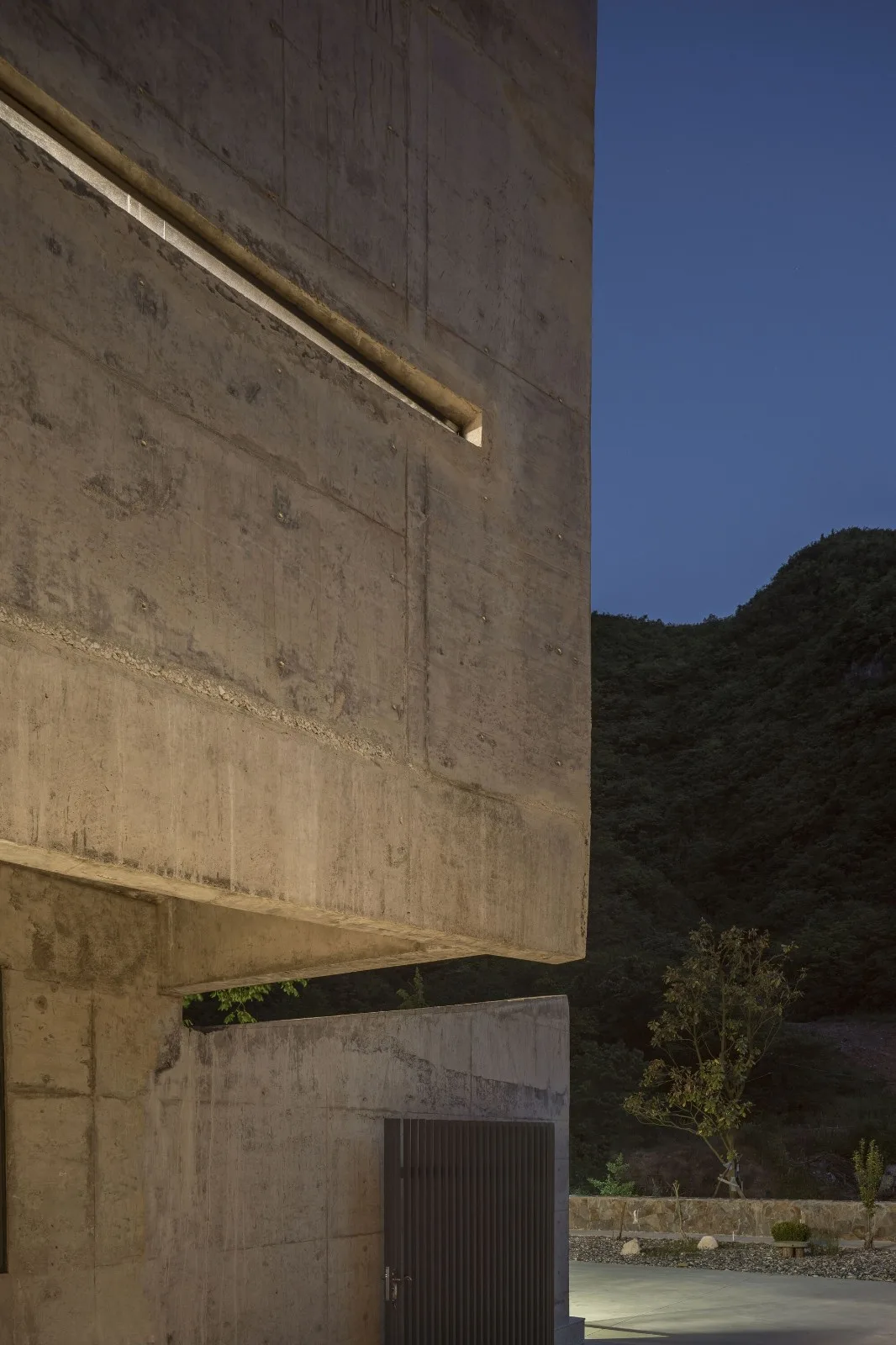
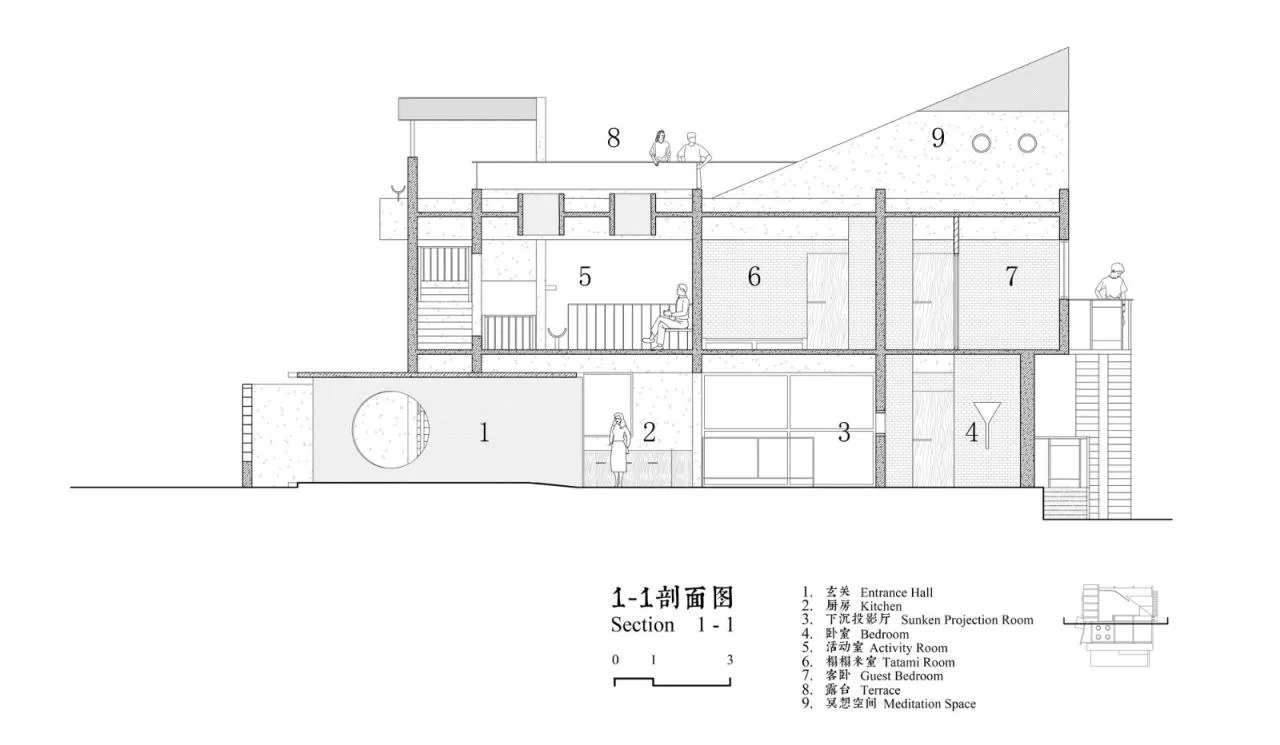
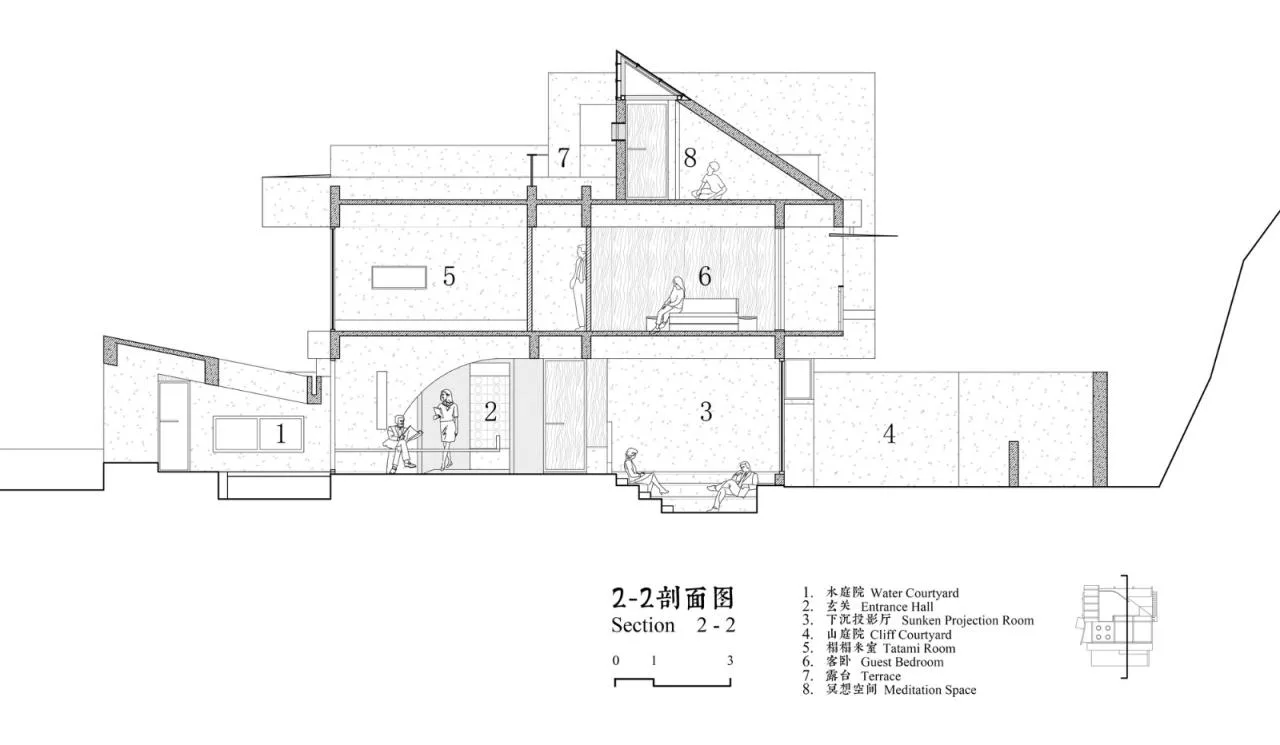
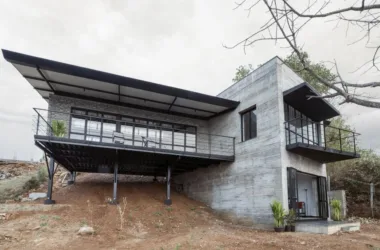
The building’s wall bends diagonally around the western mountain, creating a narrow entrance. On the second floor, a curved wall follows the mountain’s contour, supported by a massive crossbeam that extends both north and south, as if it were growing out of the cliff itself. The north side of the house sits close to the cliff, forming a narrow linear garden, while the south side faces the green mountains, opening up to embrace nature.
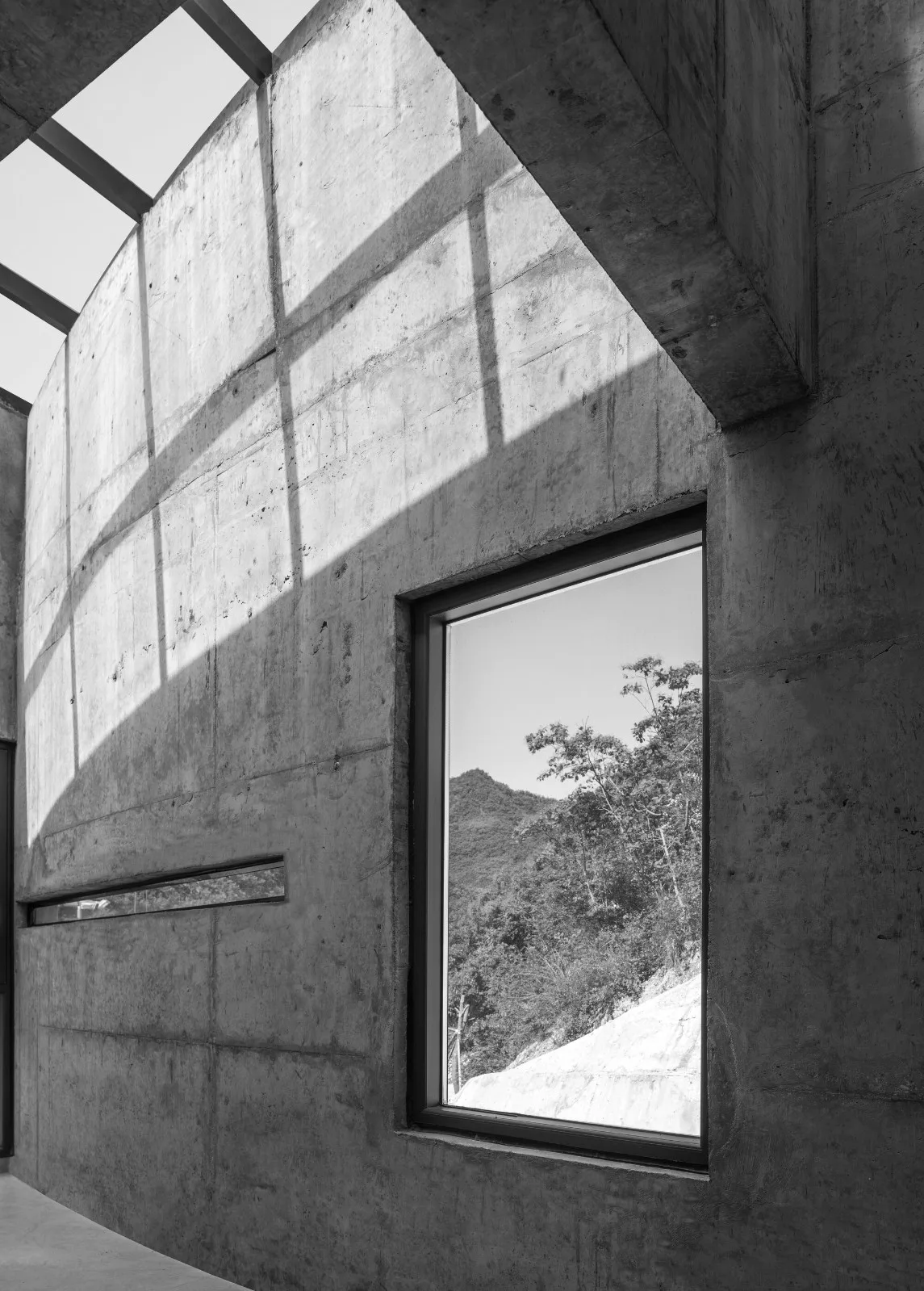
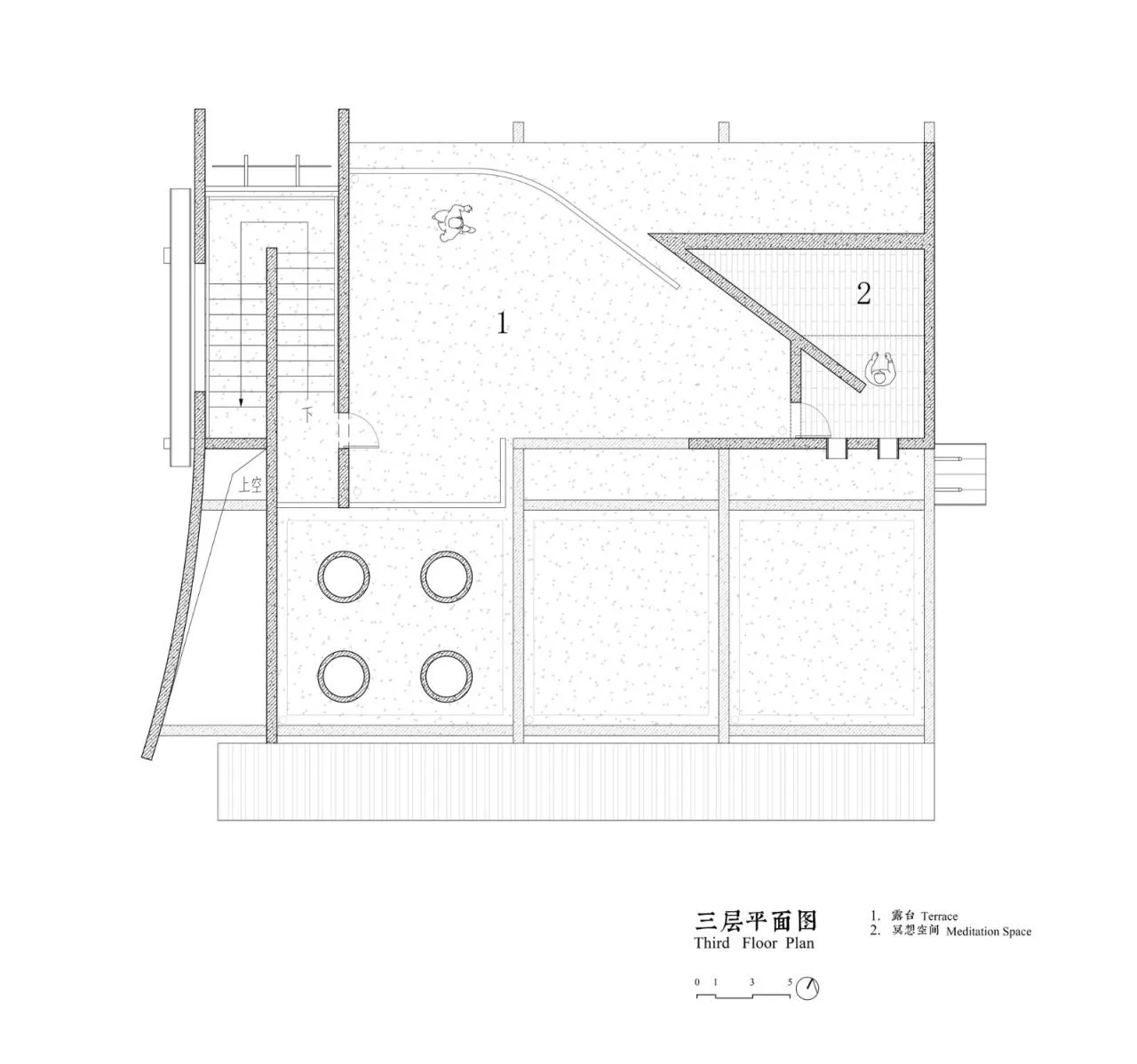
The roof features a cone-shaped space that echoes the mountains, allowing only two round windows to frame views of the outside. Natural light enters from above, creating a contemplative space designed for solitude and reflection.
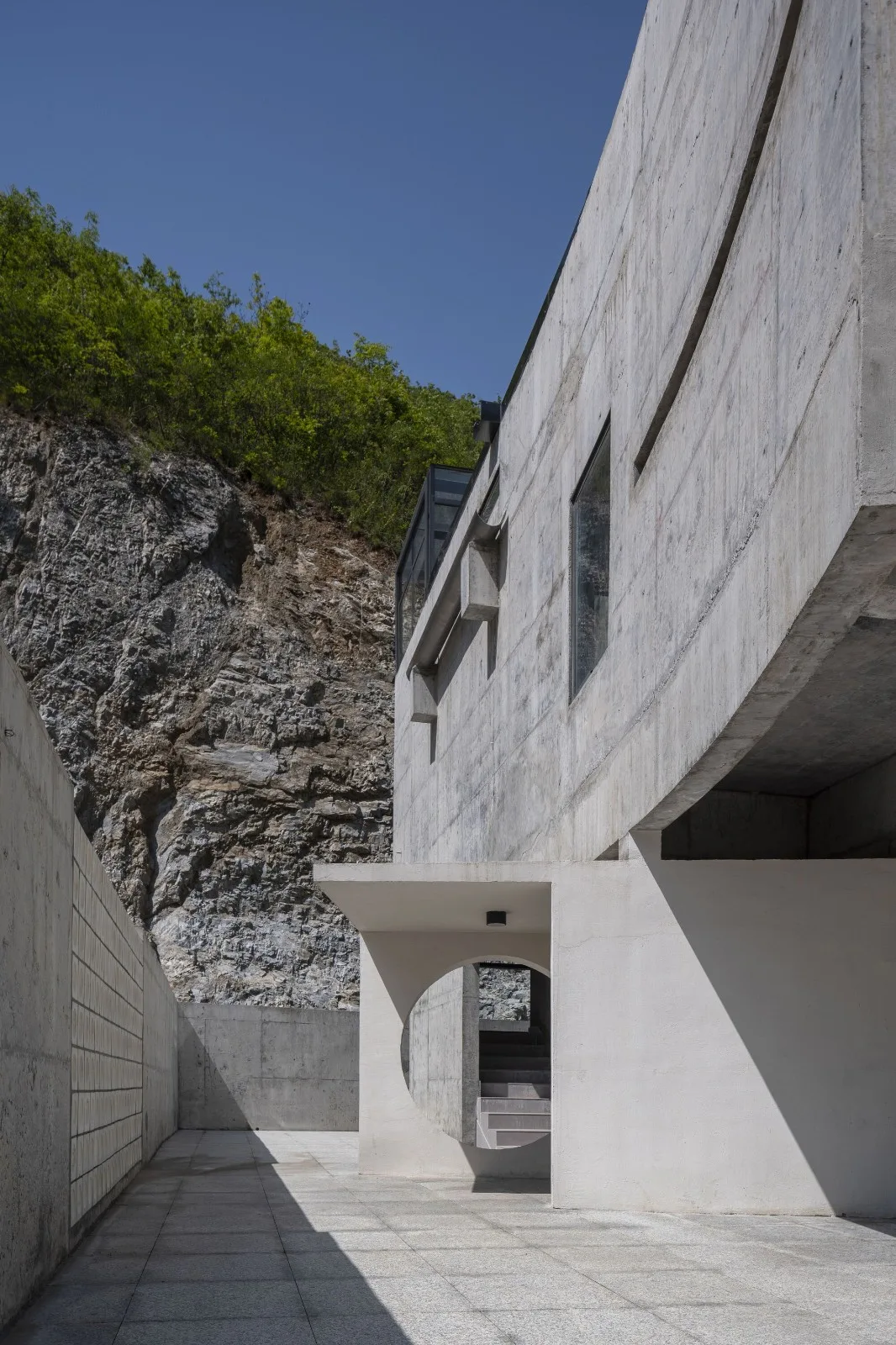
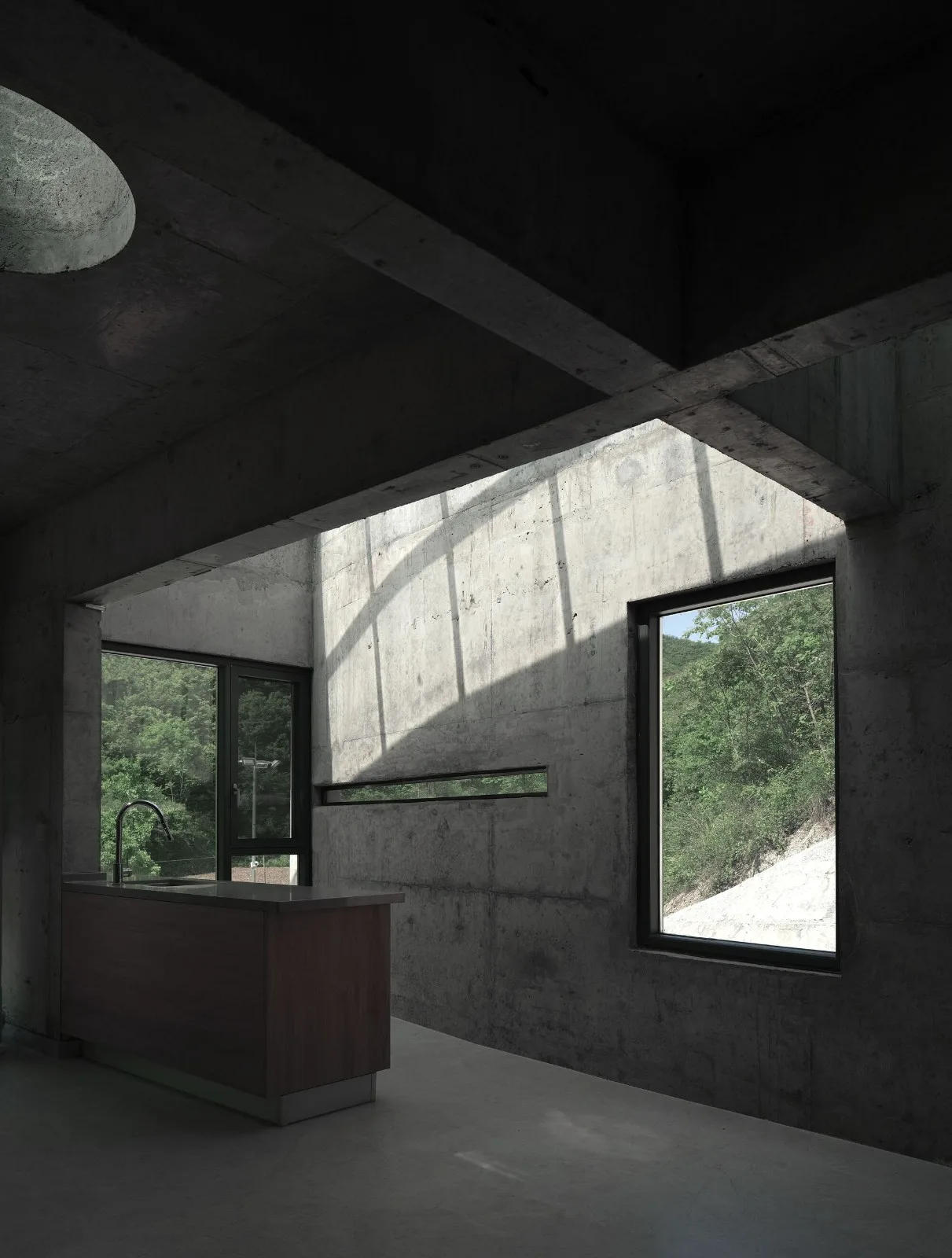
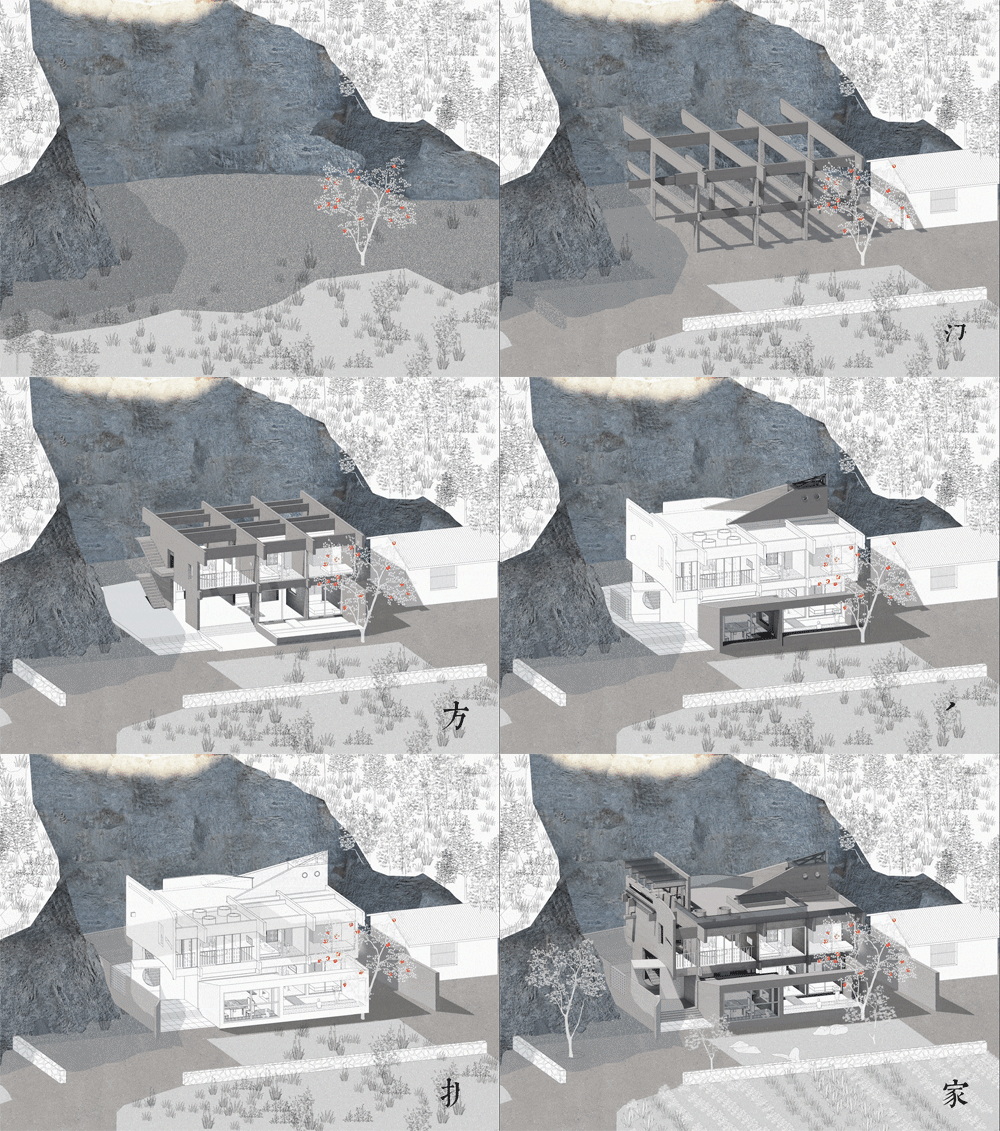
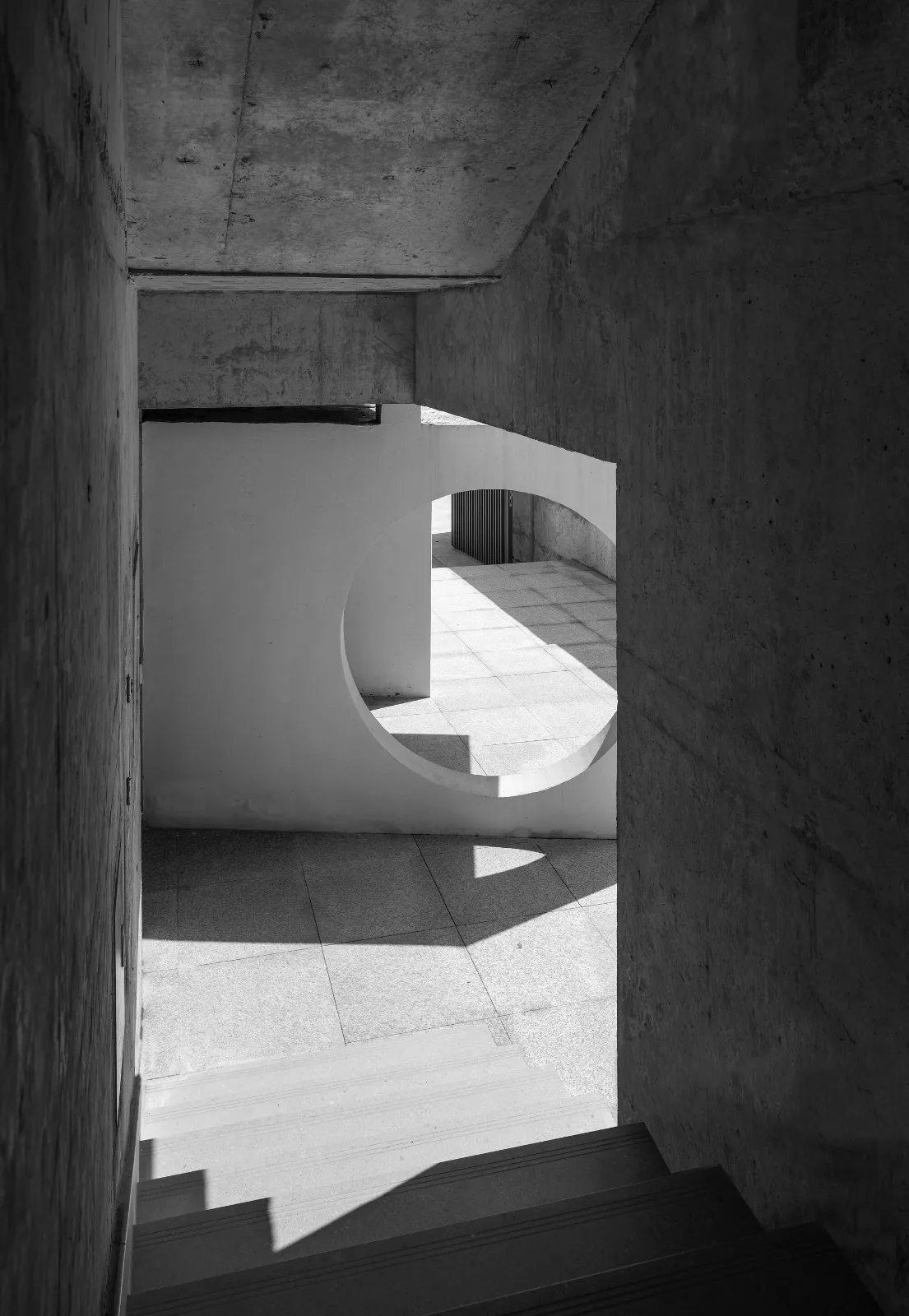
The interplay between squares, angles, folds, and natural forms defines the spatial beauty of the Cliff House. The architecture engages with local life through four design elements: square, circle, corner, and fold.
“Square” represents the living room and bedroom, the regular spaces for daily life. “Circle” relates to the entrance and skylight, symbolizing emotional connection. “Corner” reflects the mountain’s shape and serves as a meditation space, guiding one inward. “Fold” is the wall that wraps and embraces the surrounding environment.
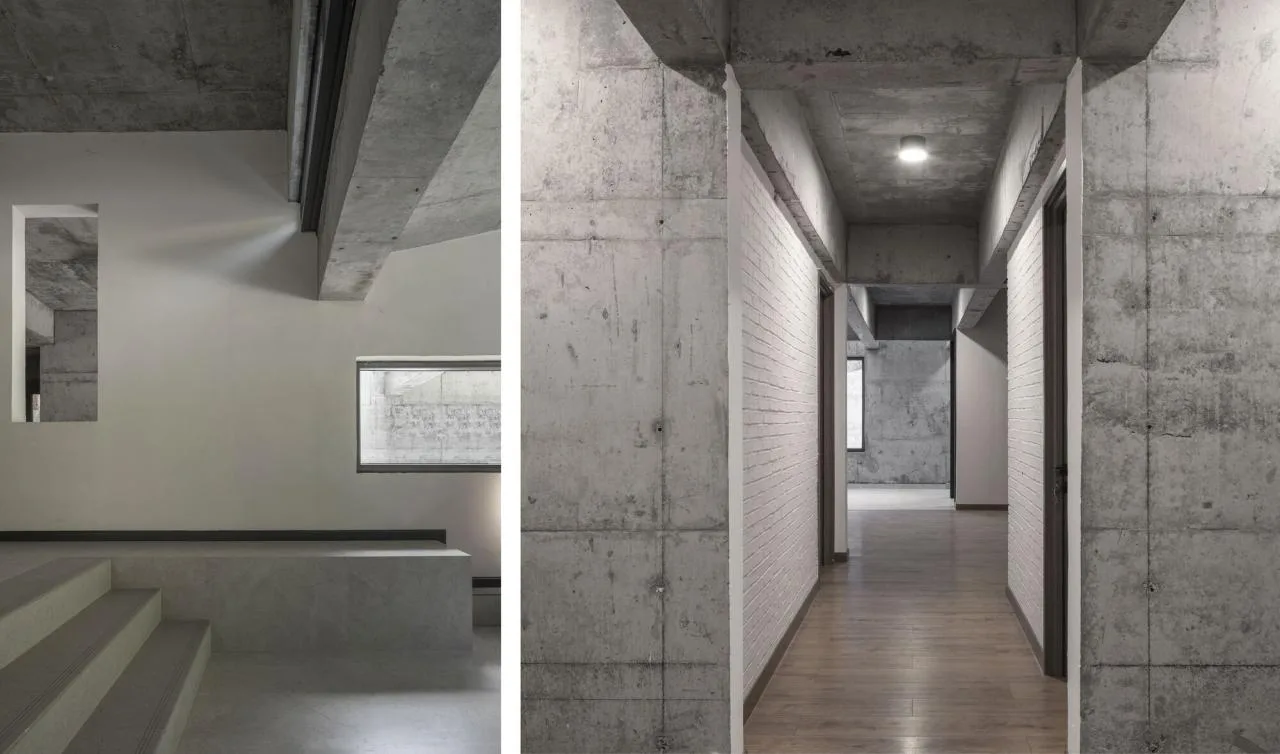
The interior design continues this geometric language, allowing light to enter from varying angles throughout the day. Qingchuan and Cliff are two mountain forms, with the latter closely mirroring the mountain’s profile. Together, they bear witness to the natural cycle of growth and decay in vegetation. Varied window types on different sides of Jingshan Mountain enable the building and its occupants to experience the rhythms of life together.
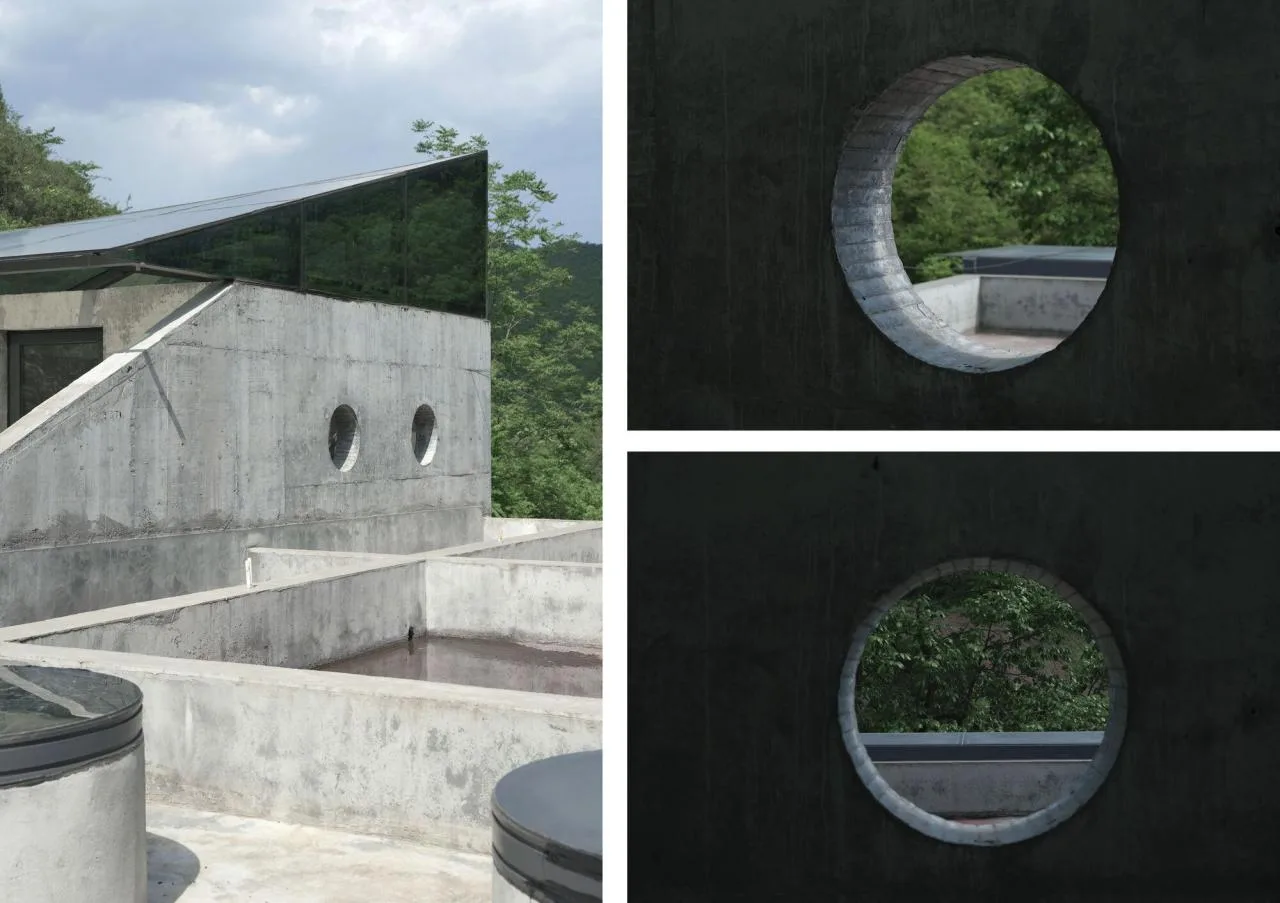
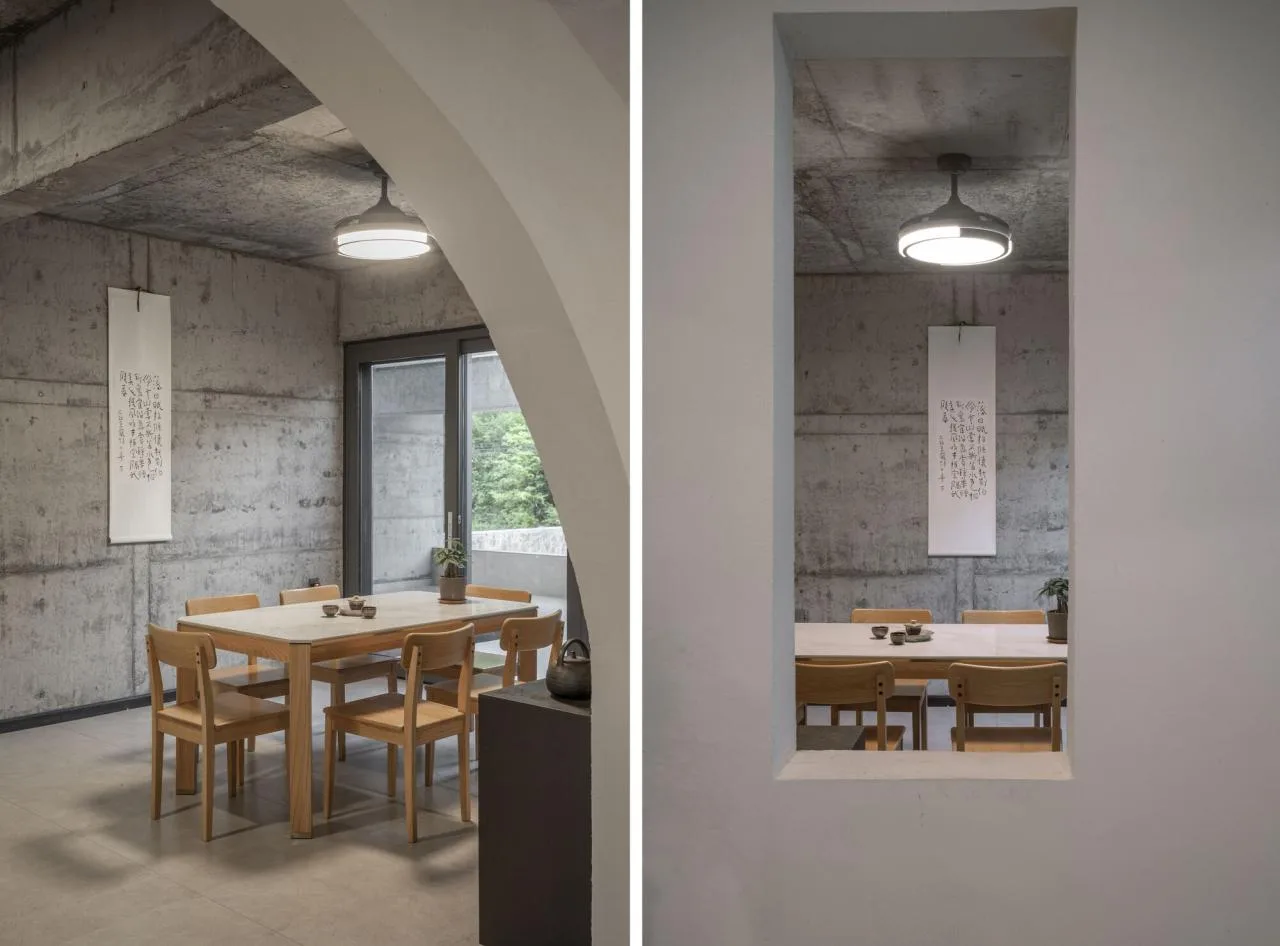
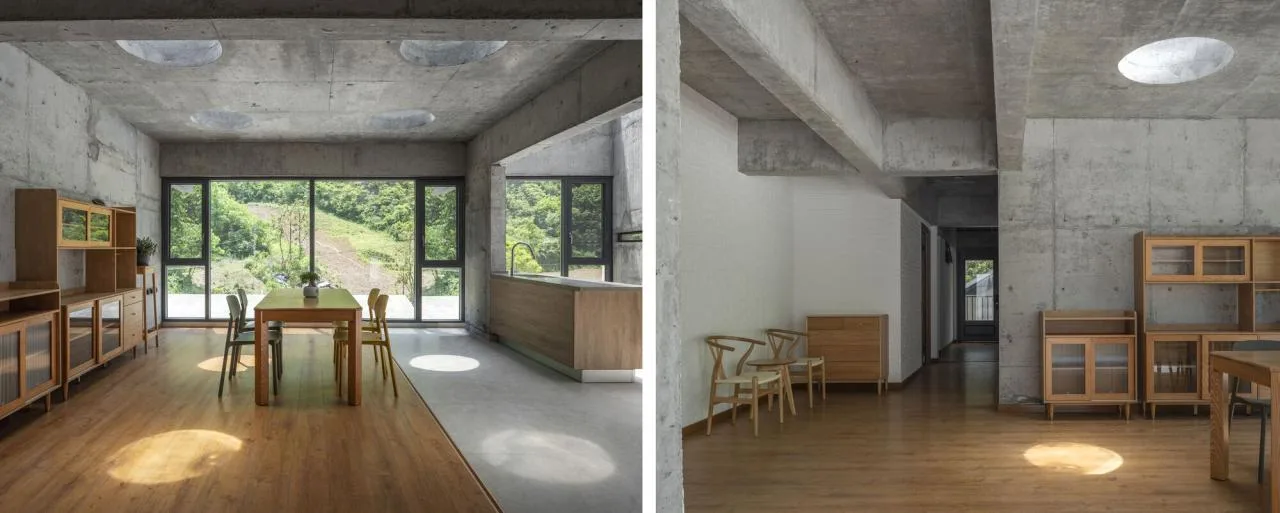
Rough yet refined. Today, many people favor plain concrete, but often what they appreciate is not its original rough texture, but rather a treated, silky smooth surface. Since sand and gravel, essential components of concrete, originally come from mountains, observing cliffs reveals that silky smoothness is not a natural trait. Concrete should retain its rugged texture, resembling stubborn stones.
Still, roughness can be delicate. We experience the changing seasons in diverse ways and encounter unexpected light from every direction, contributing a rich atmosphere to the building.
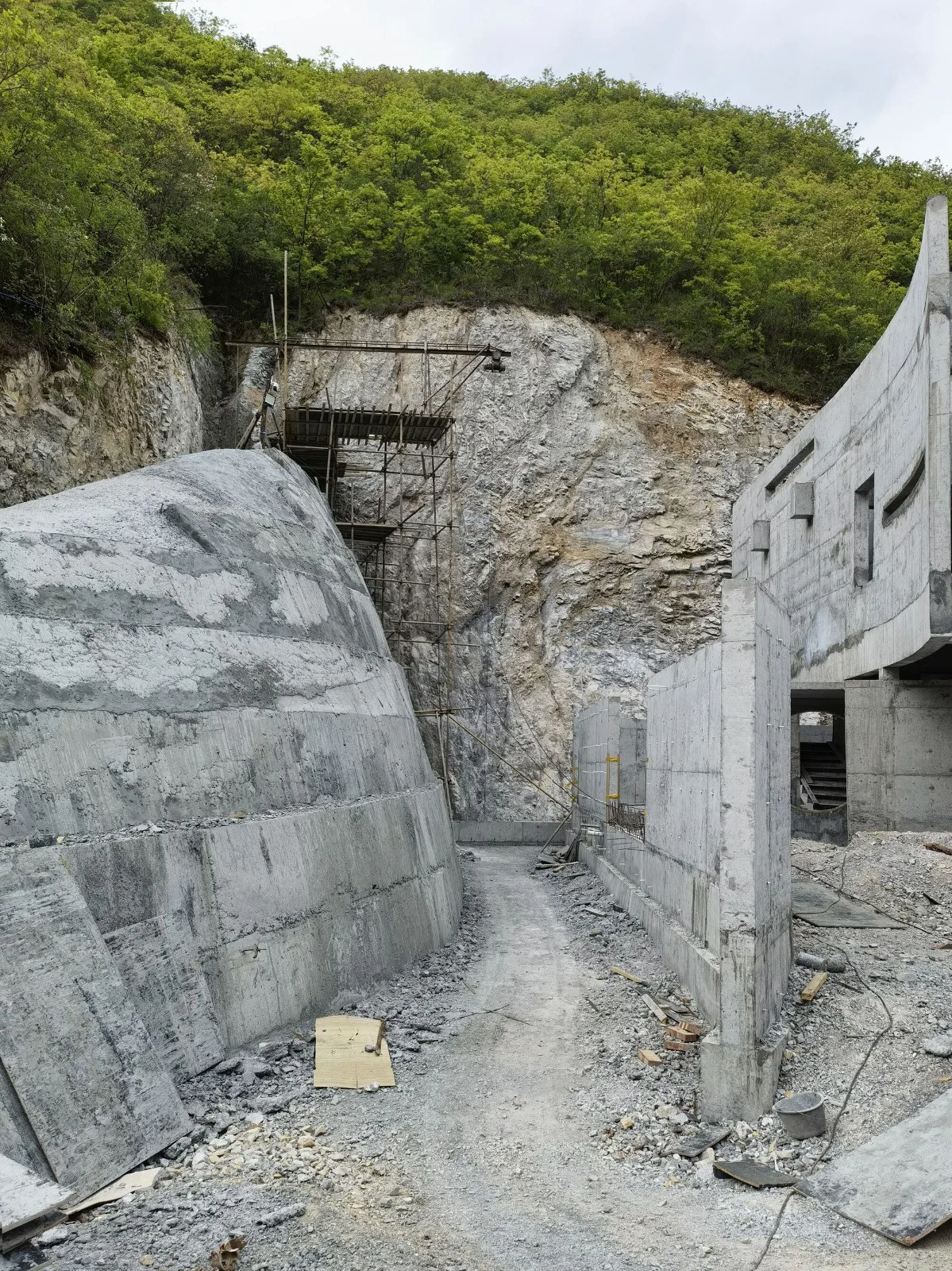
After four years and four seasons, the house was finally completed. Cliff House is the third independent residence designed by our studio. It has been 15 years since my first residential project in college. Some say architecture is an art of delayed gratification, but I believe that if you embrace this journey, the images in your mind will come to life many years later.
Project Drawings
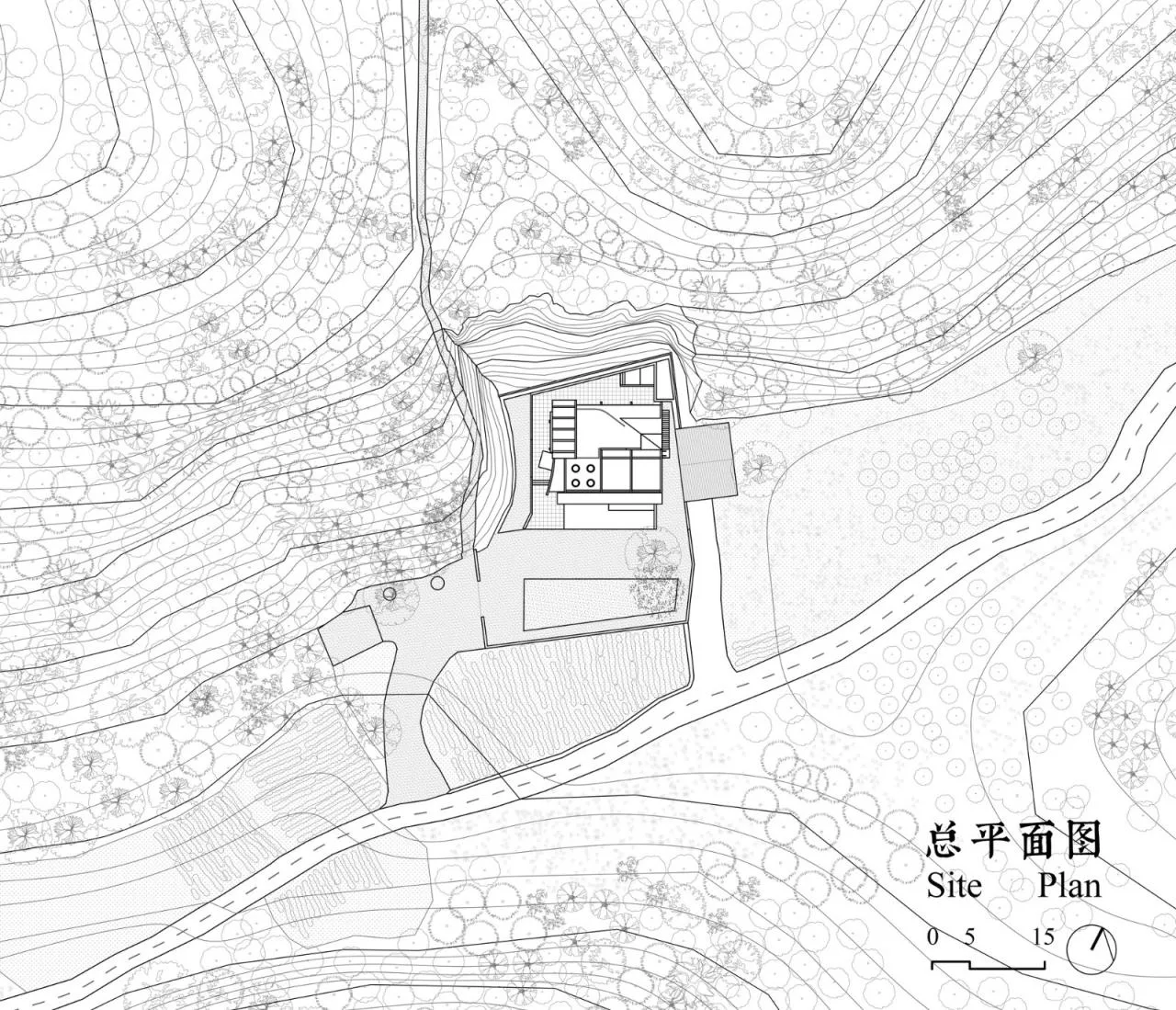
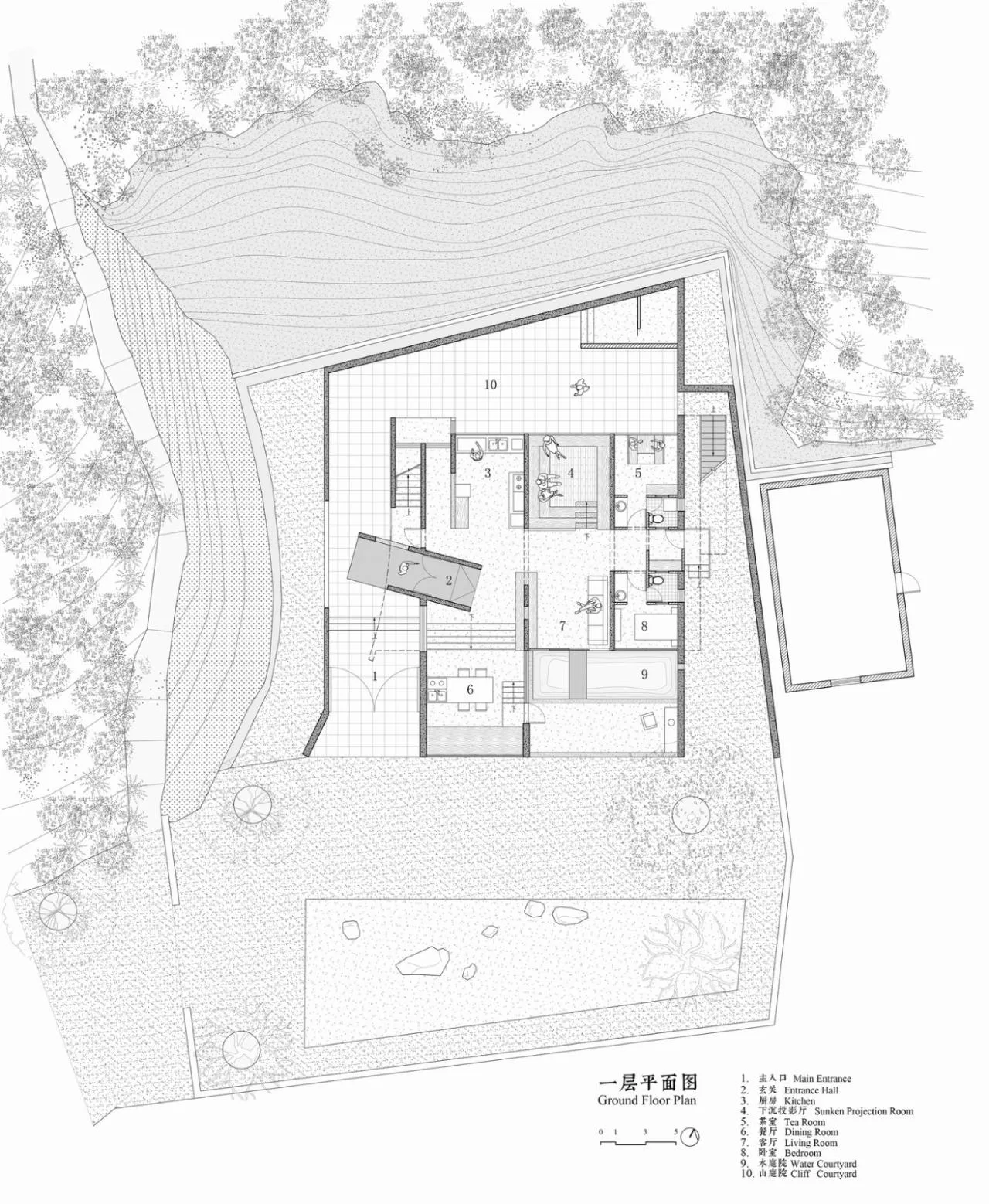
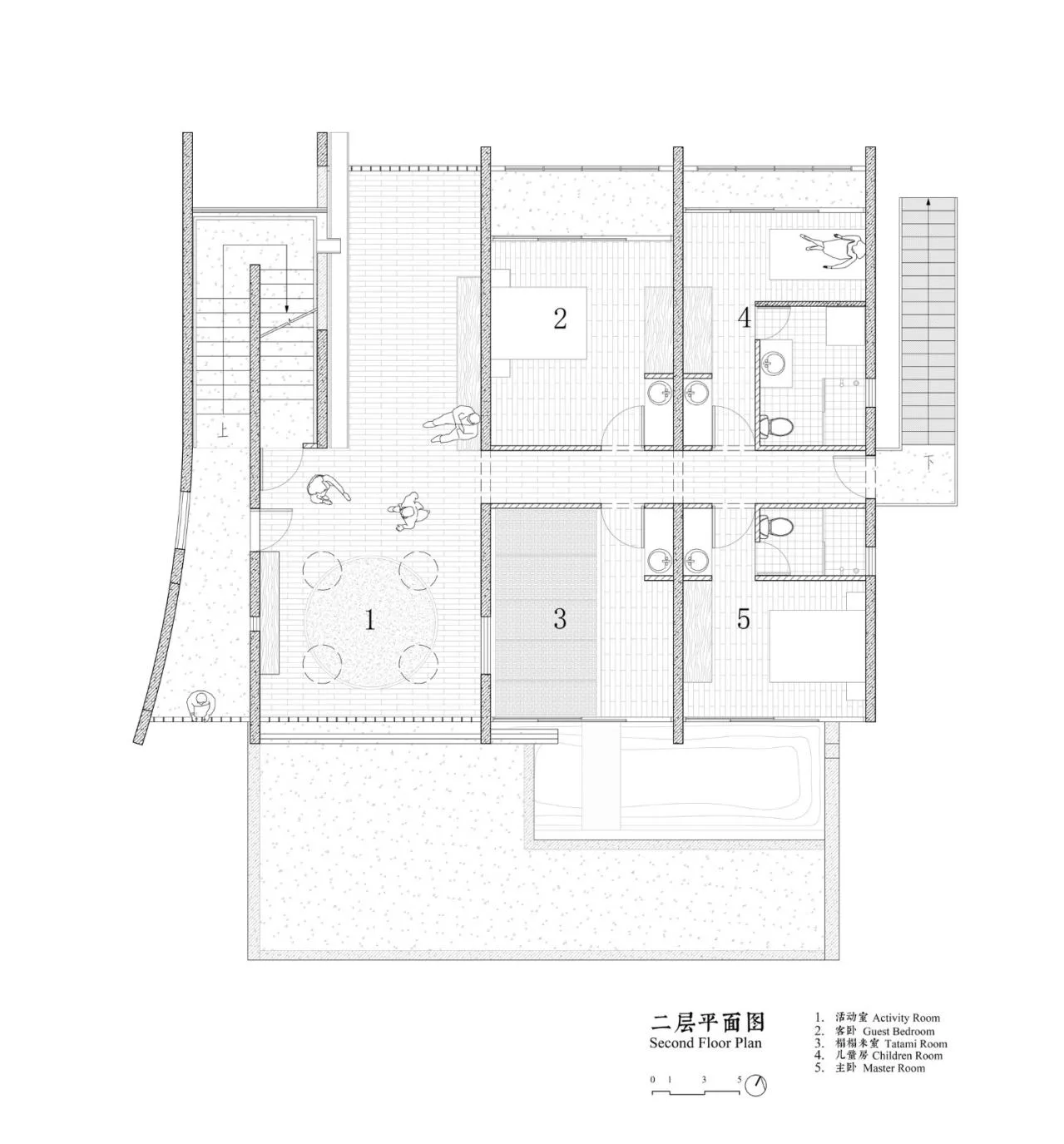
Project Information
Architect: Li Wenxi Architectural Firm
Area: 450 m²
Project Year: 2023
Photographer: Jin Weiqi
Manufacturers: Yuanmao Building Materials – Shiyan Local Processing Factory, Shiyan Local Brick Factory, Jinjing Glass
Lead Architect: Li Wenxi
Structural Design: Zhou Wuji, Lin Shangliang, Wu Shunchi, Ye Shengtao, Lai Pengfei
Electrical Engineer: Wang Hongying
Water Supply and Drainage Design: Jiang Yujuan
Location: Shiyan














Must log in before commenting!
Sign Up