
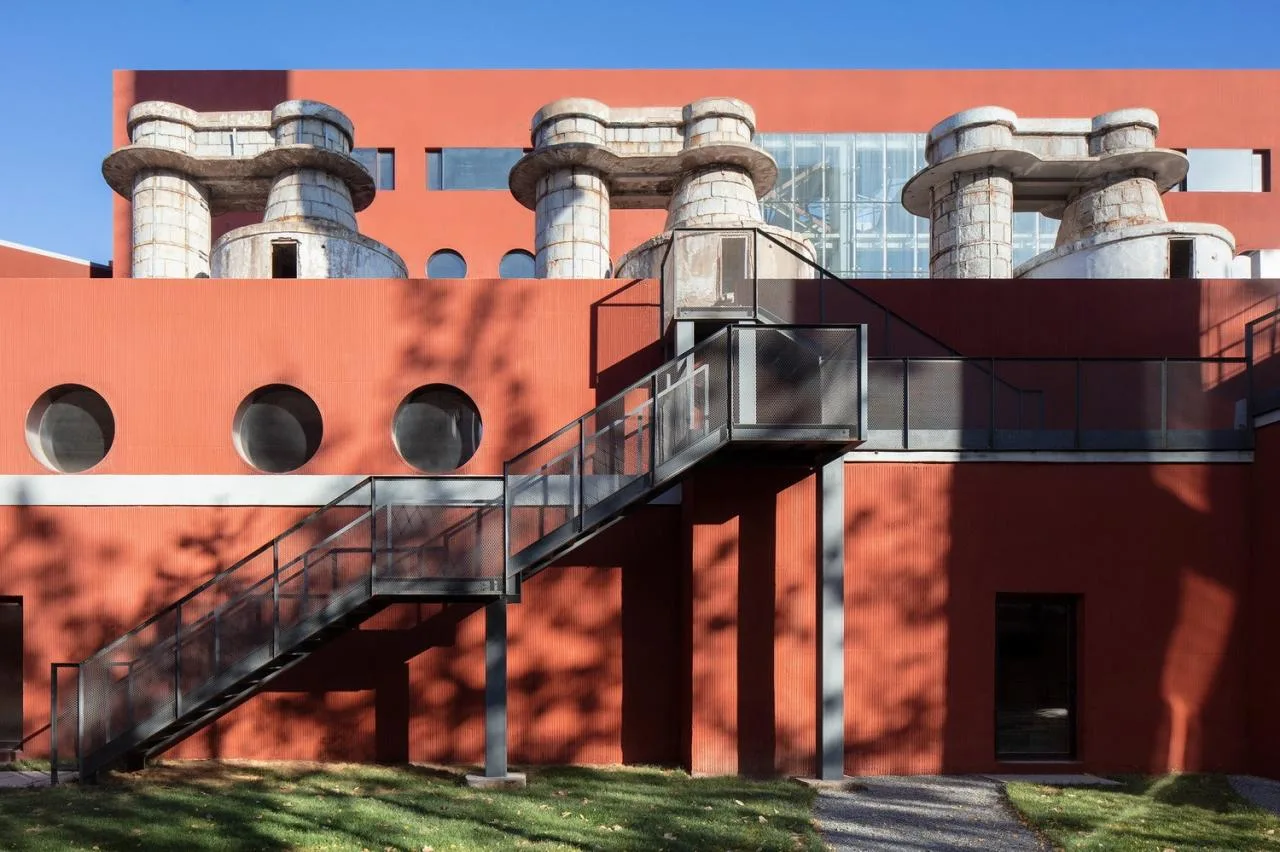
With increasingly strict environmental regulations, many urban coal-fired factories in China face inevitable decline. The Beijing Nanxiaoying Heating Plant, constructed in the late 1980s, was shut down a decade ago. Once a vital regional energy hub, it has since become a neglected site, starkly contrasting the surrounding residential neighborhoods. The factory grounds have fallen into disrepair, and memories of its past have faded.
Now, this site is presented with a fresh opportunity: to be transformed into an open urban block integrating office, commercial, cultural, and sports functions — the Cross Border Jinhui Garden. The original buildings aim to reveal the site’s hidden character through external interventions, restoring the personality, dignity, and strength of the abandoned heating plant. By injecting new vitality, the project creates a connection bridging past and future, allowing these timelines to overlap and coexist, rekindling the extinguished fire.
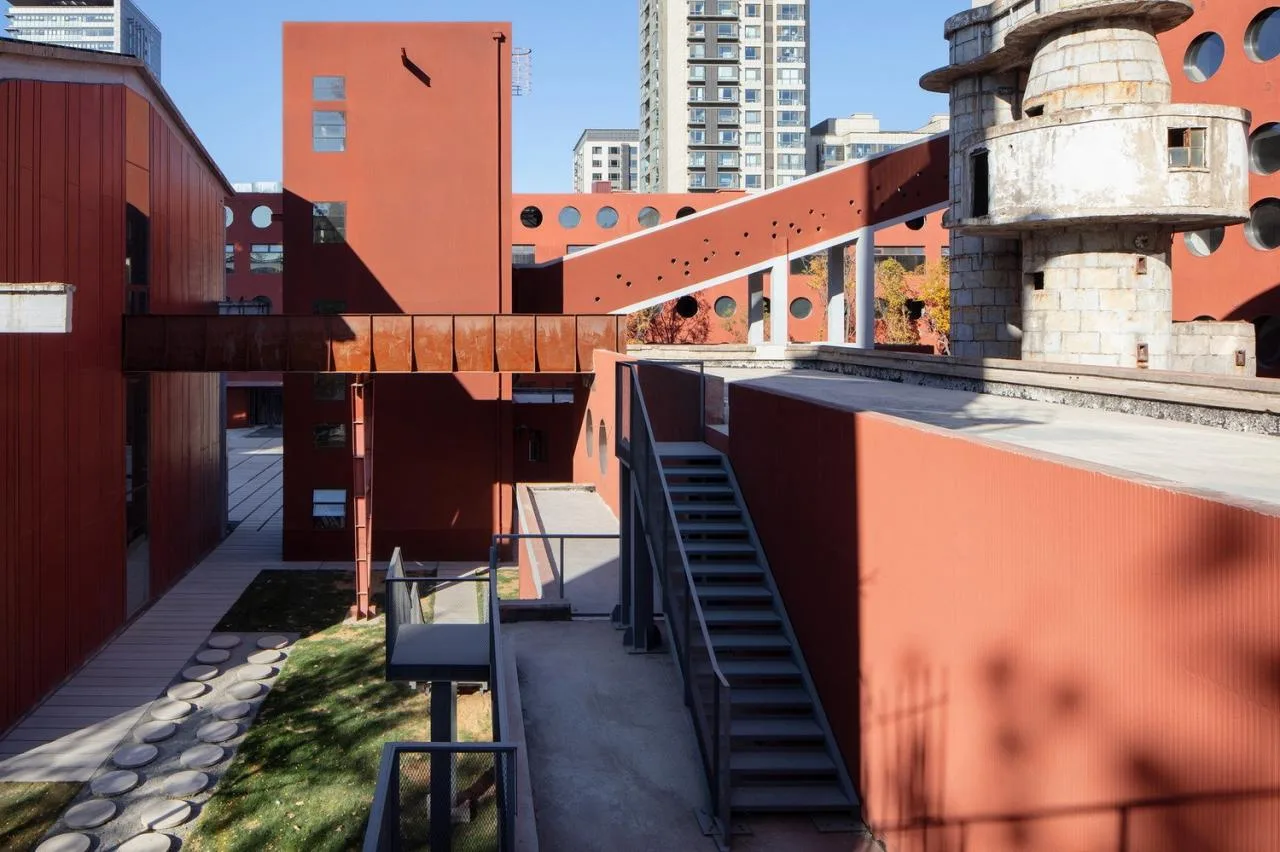
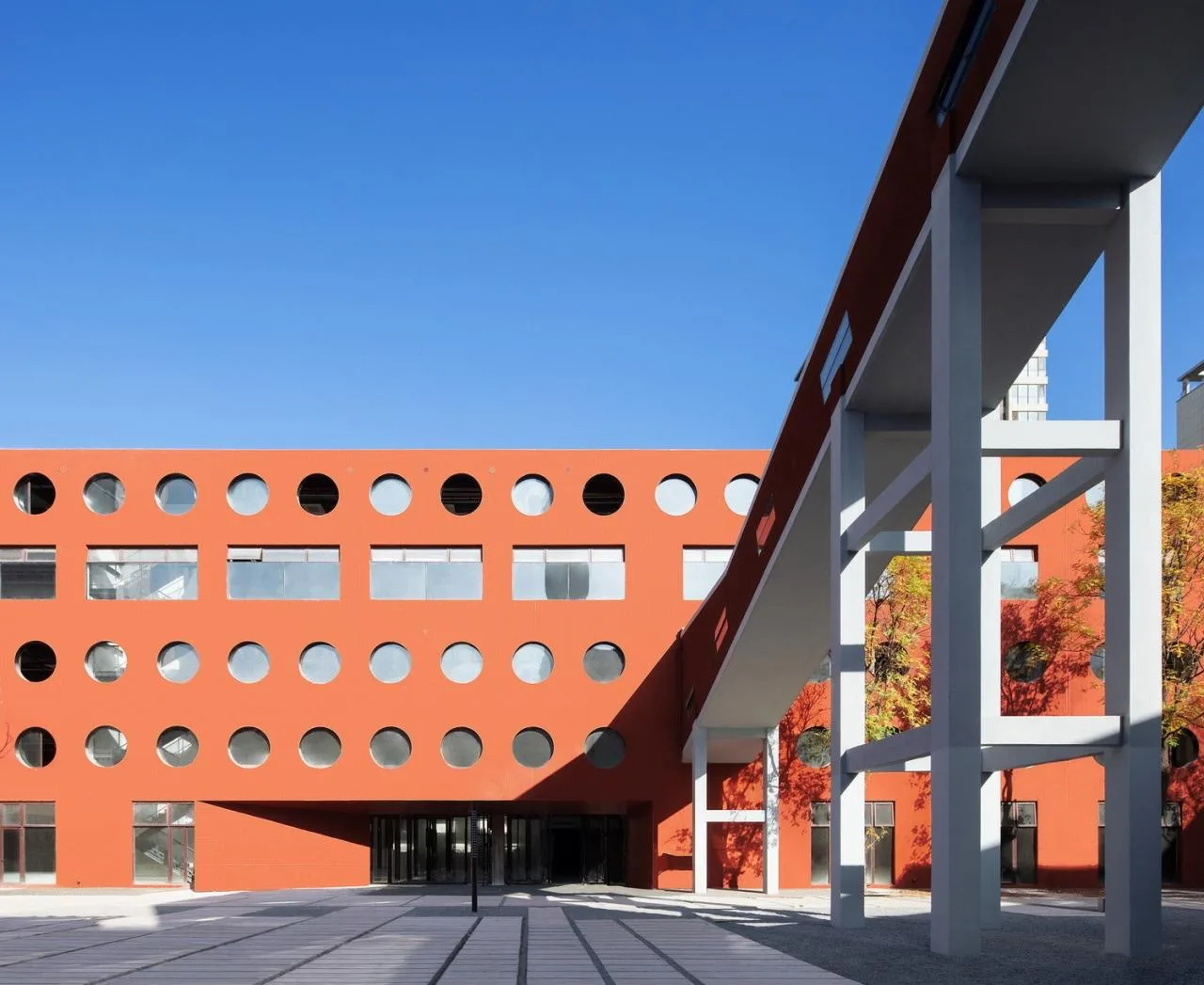
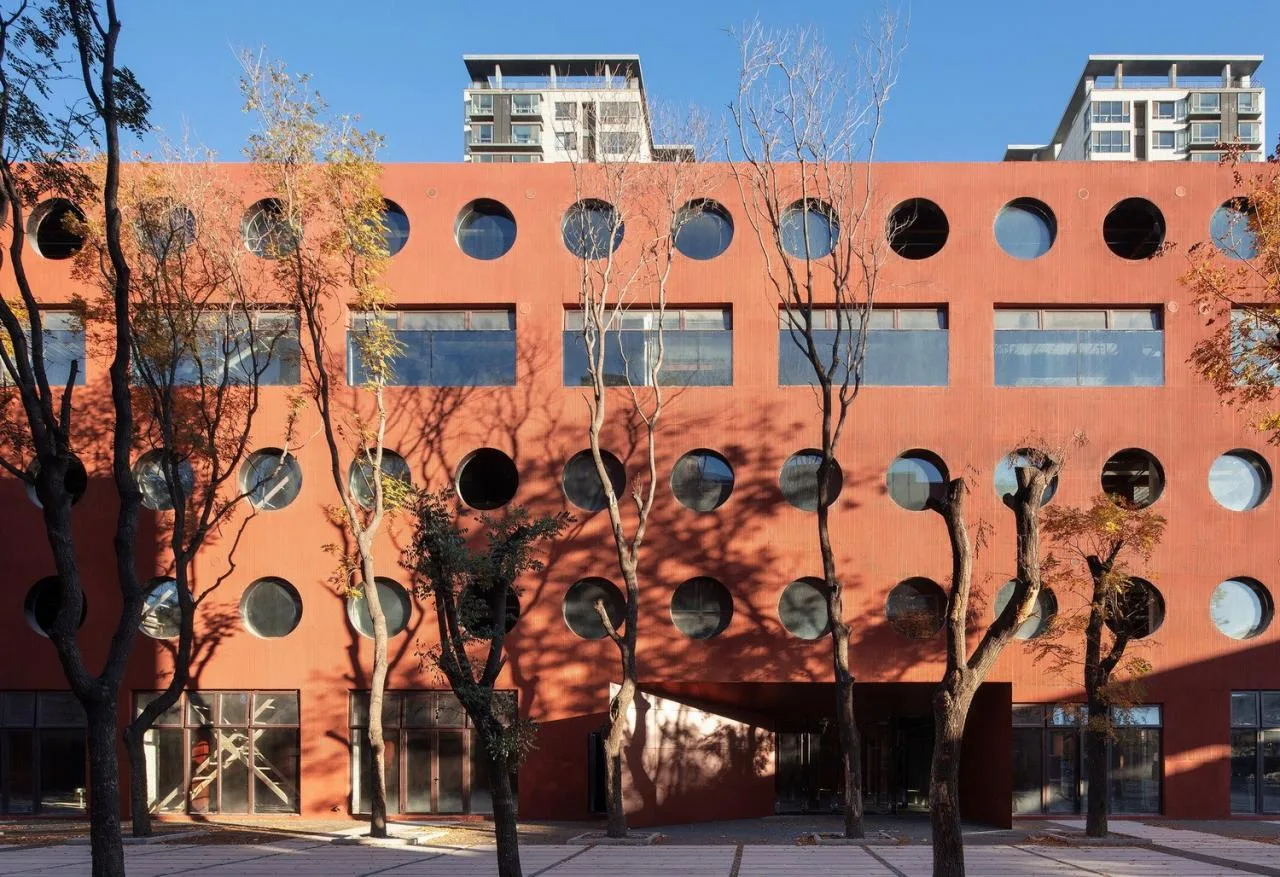
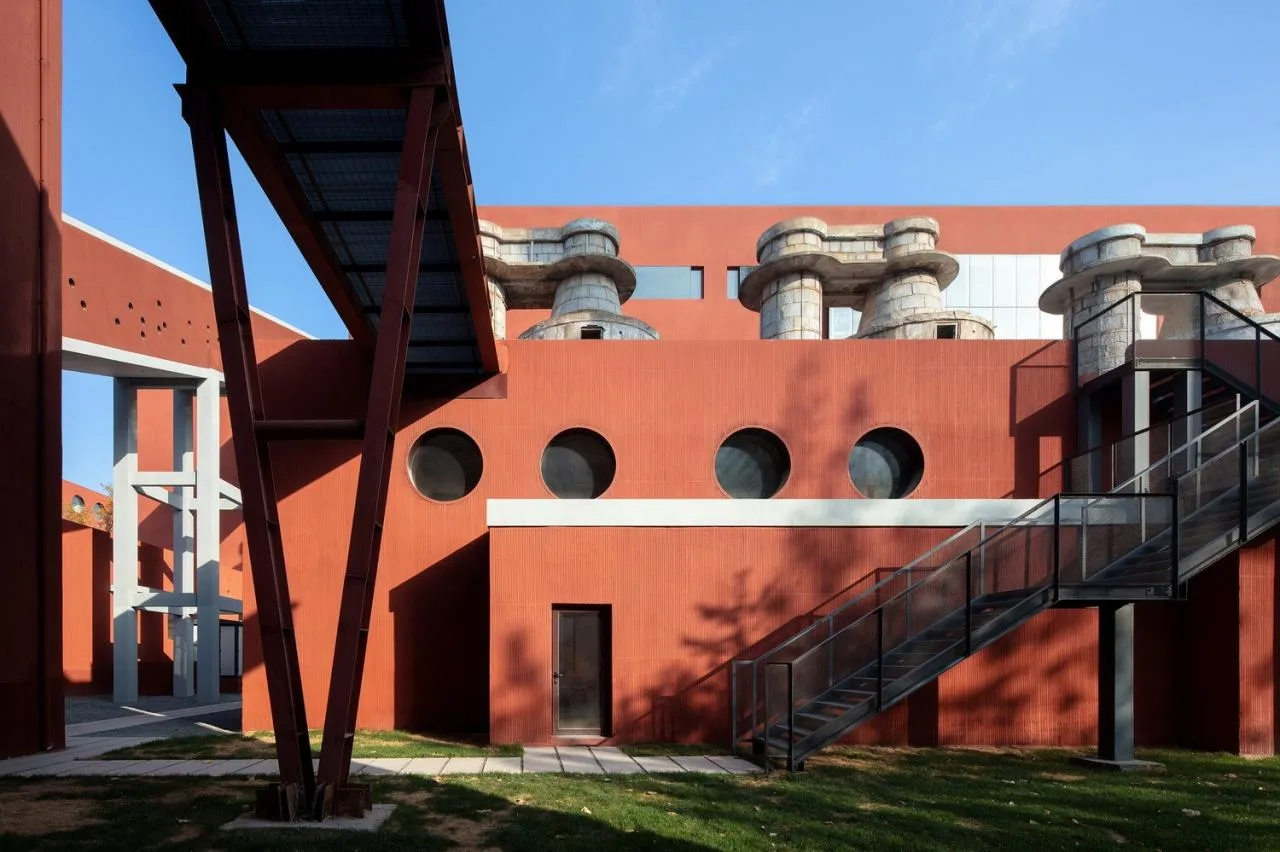
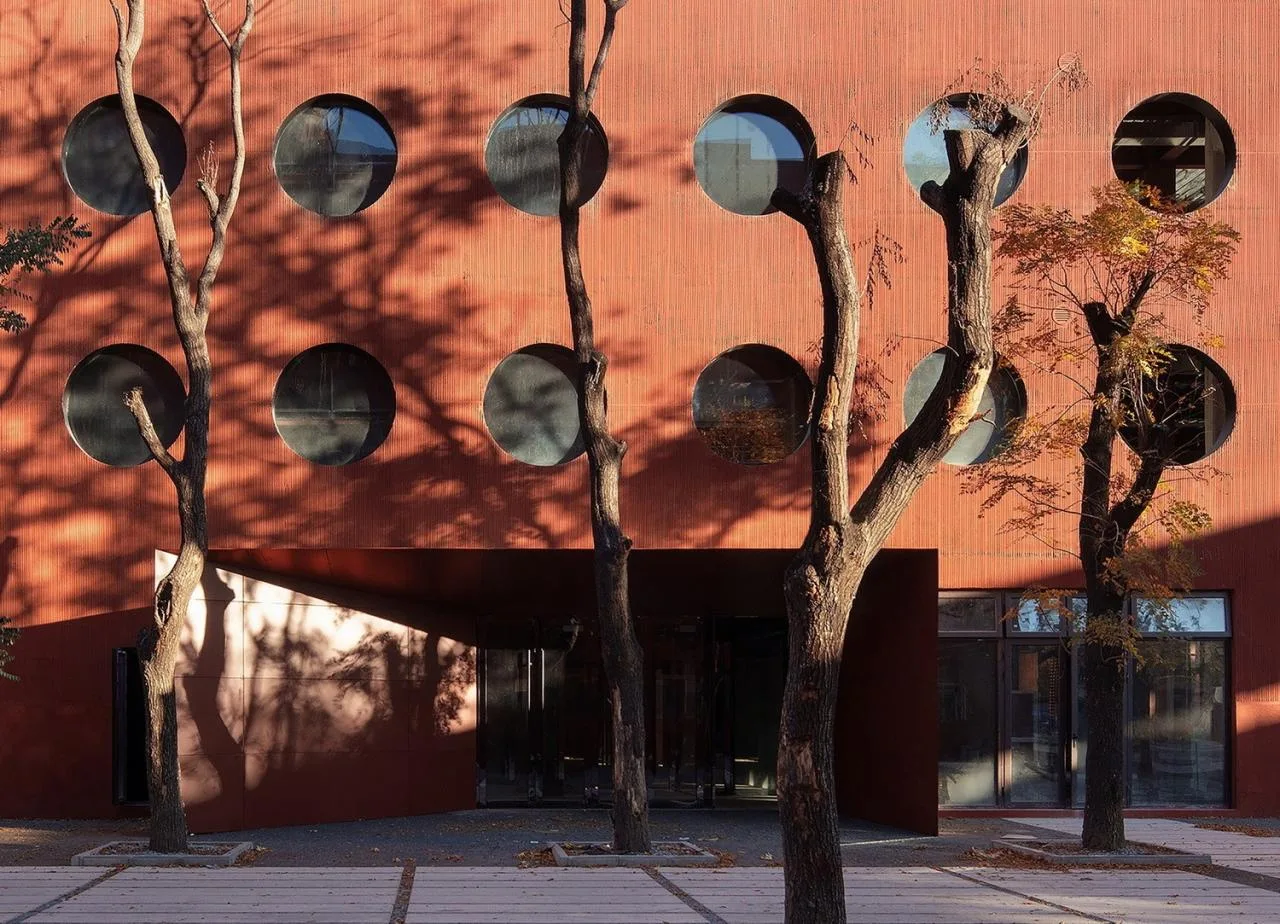
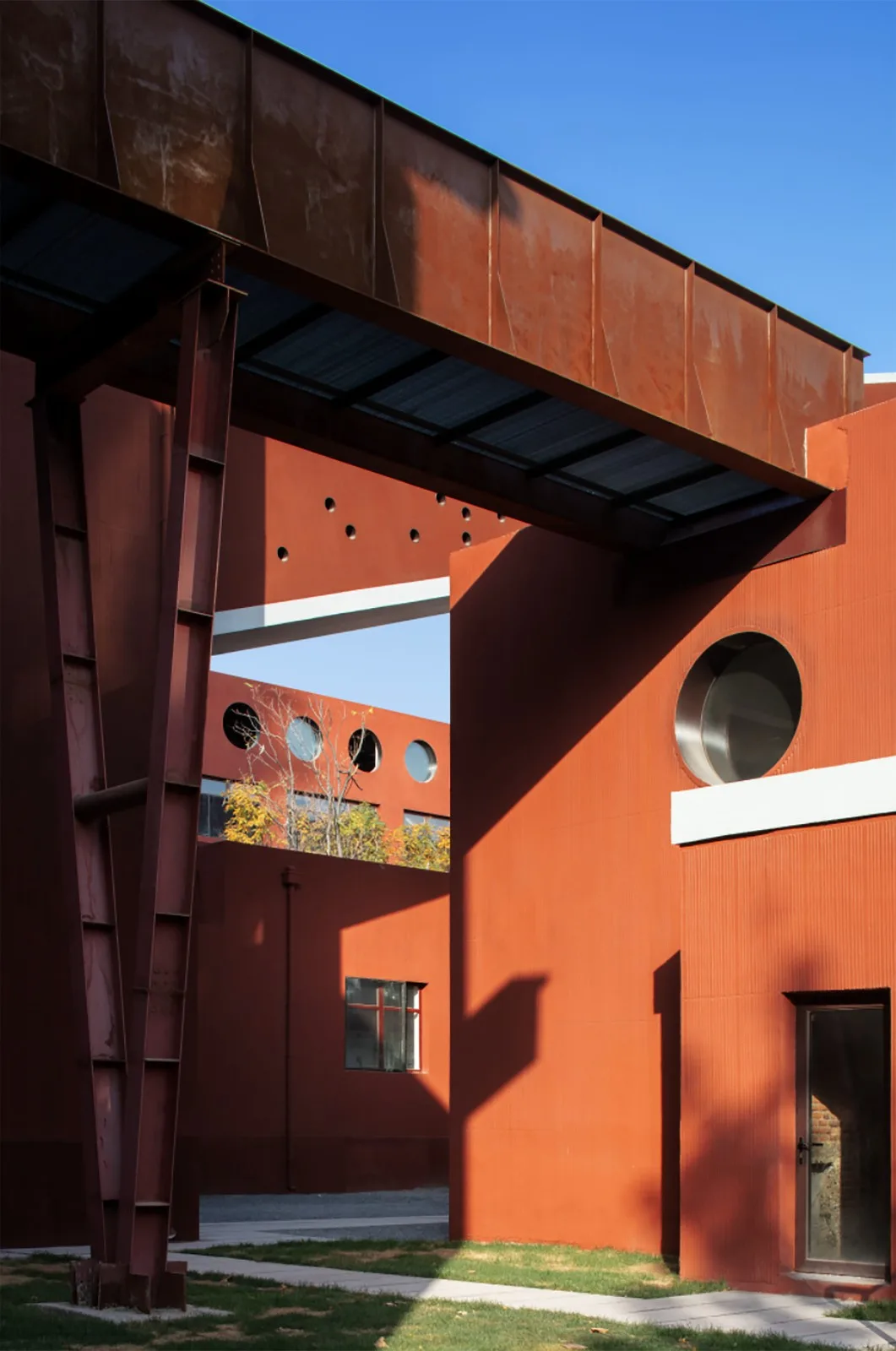
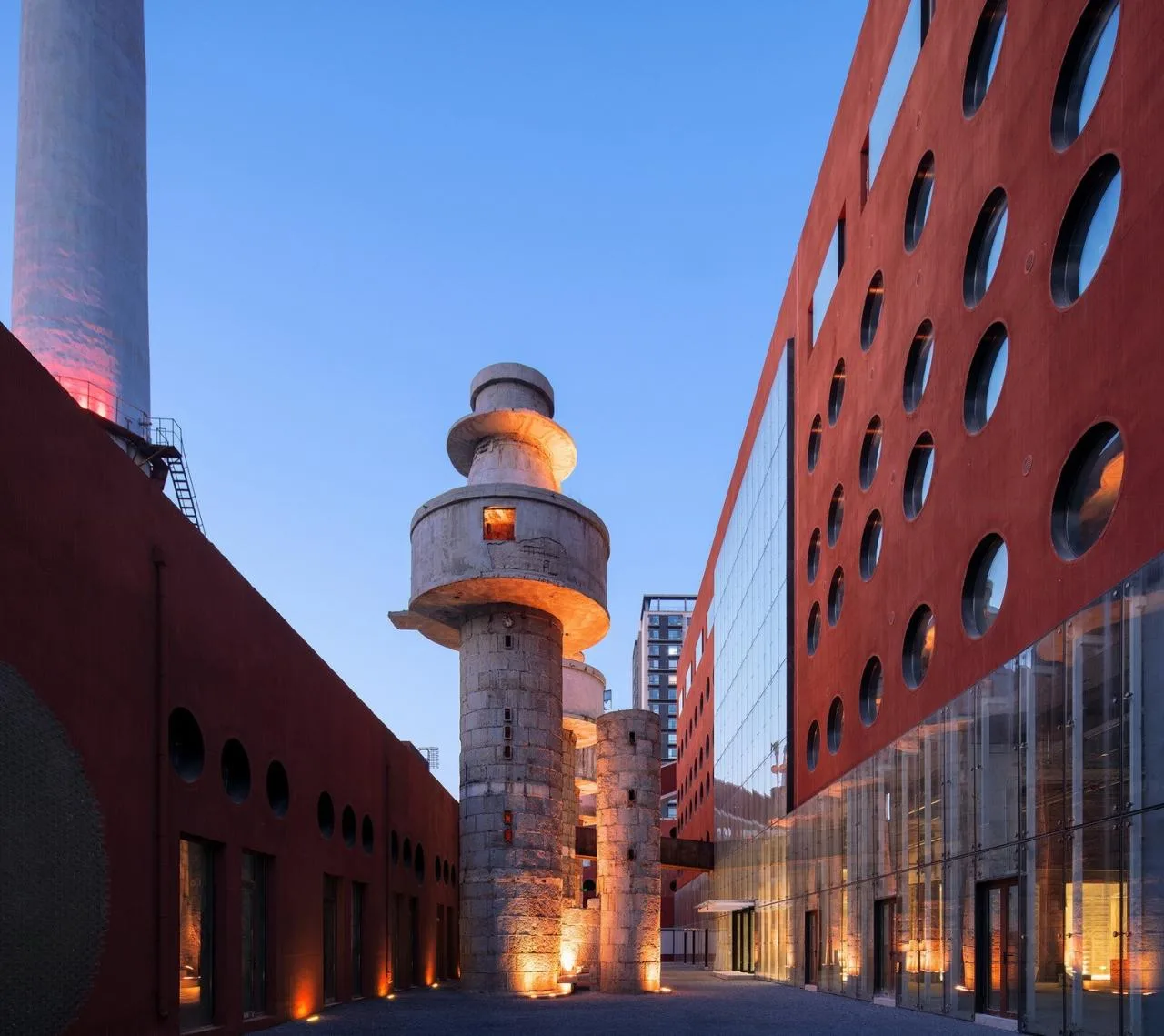
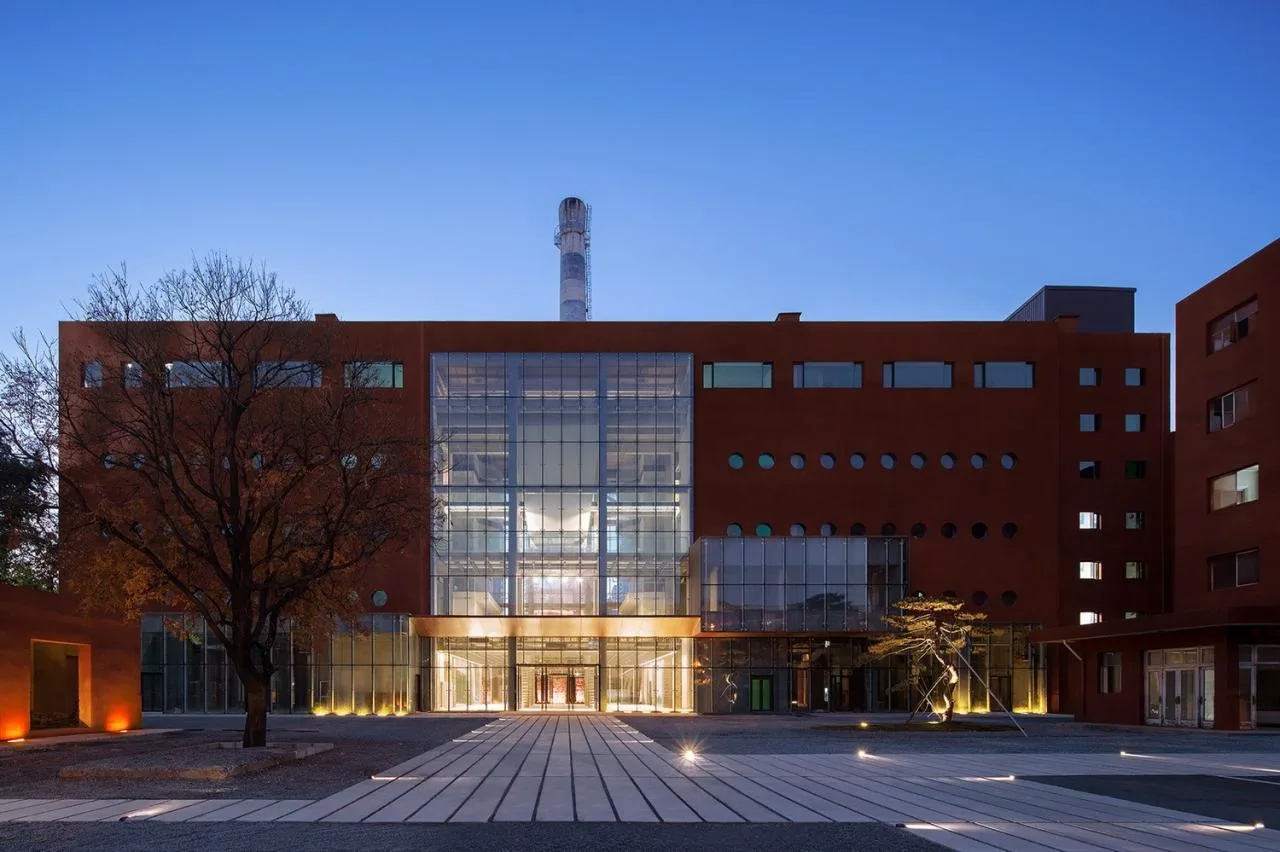
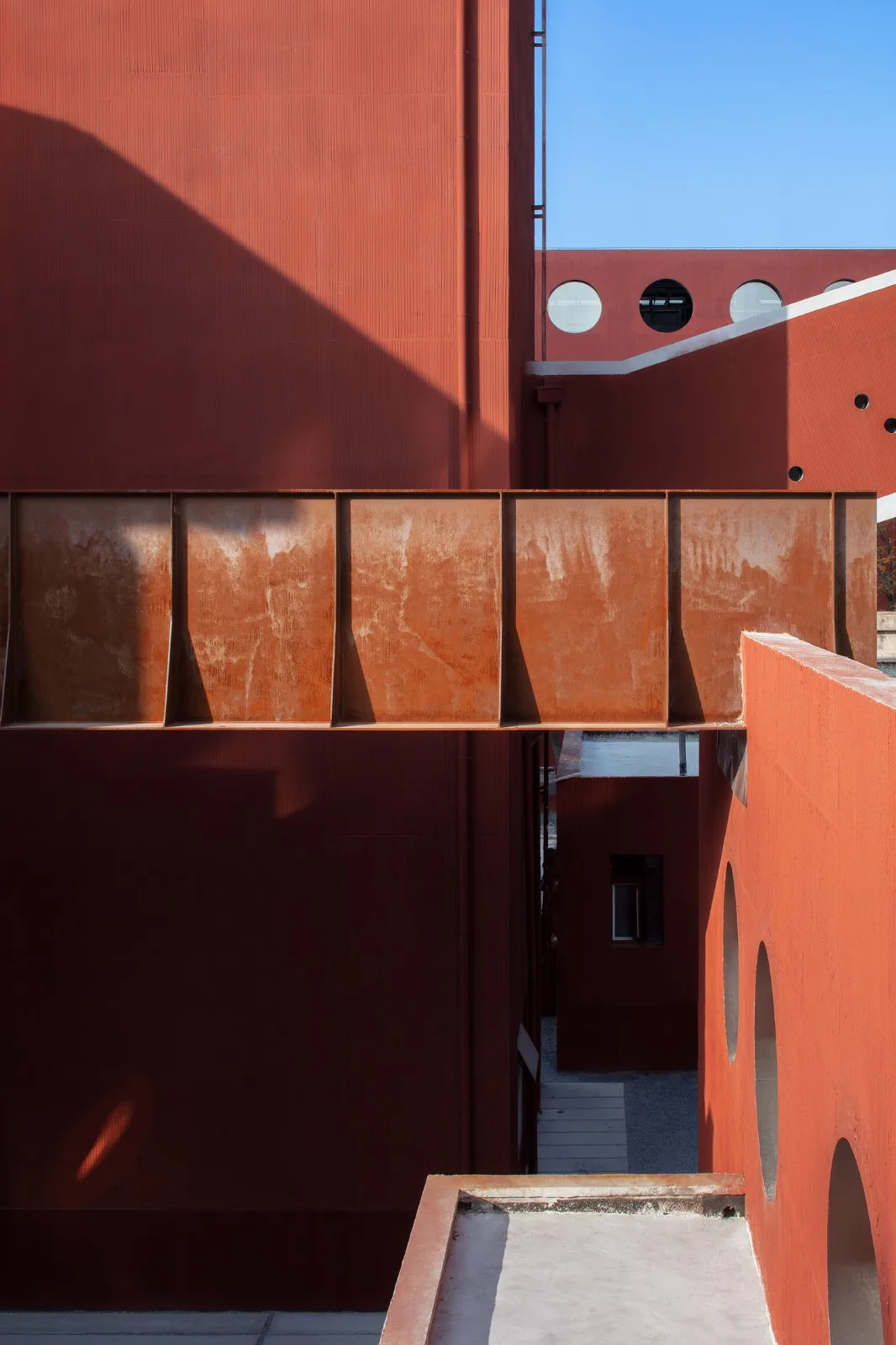
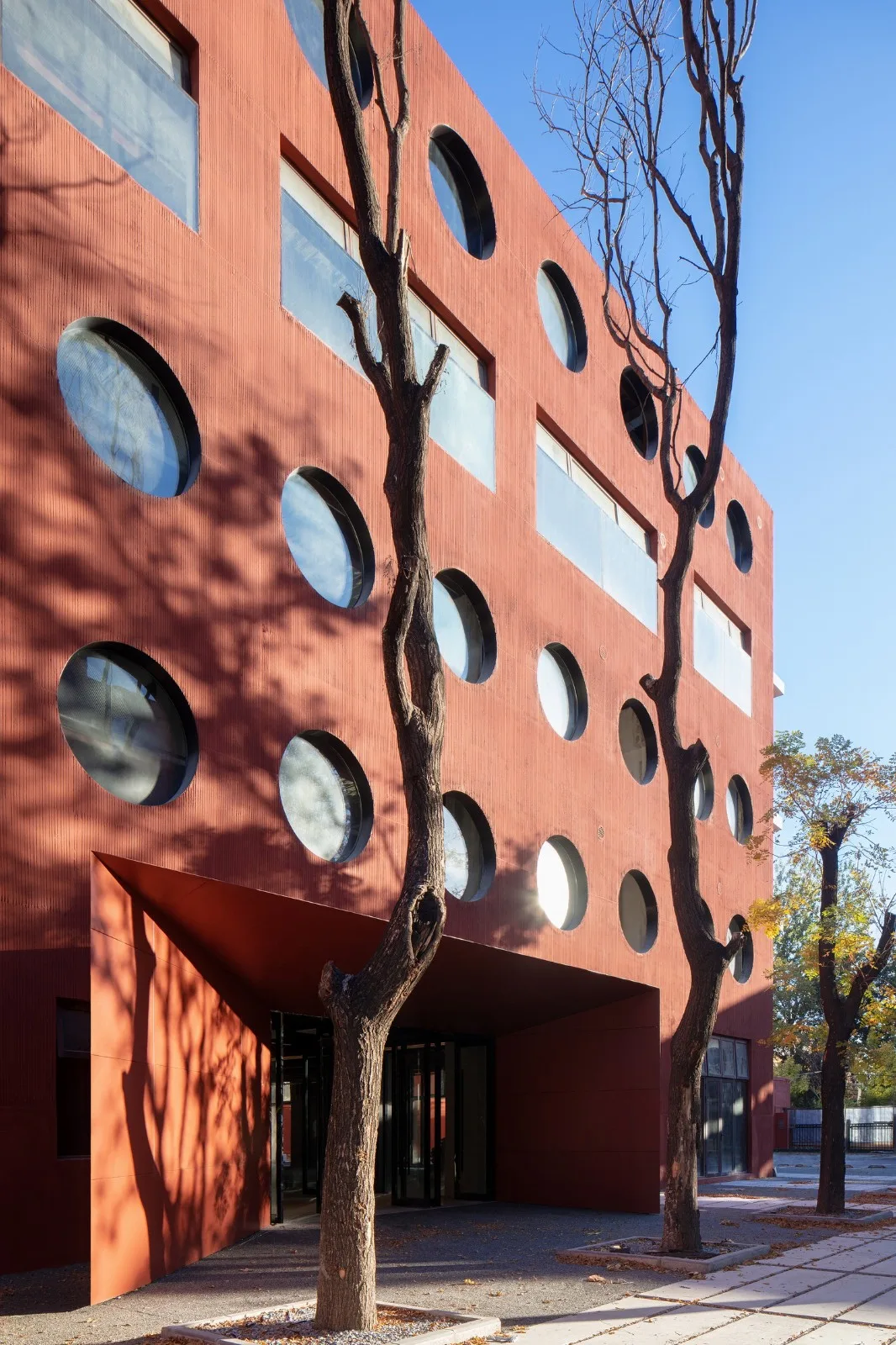
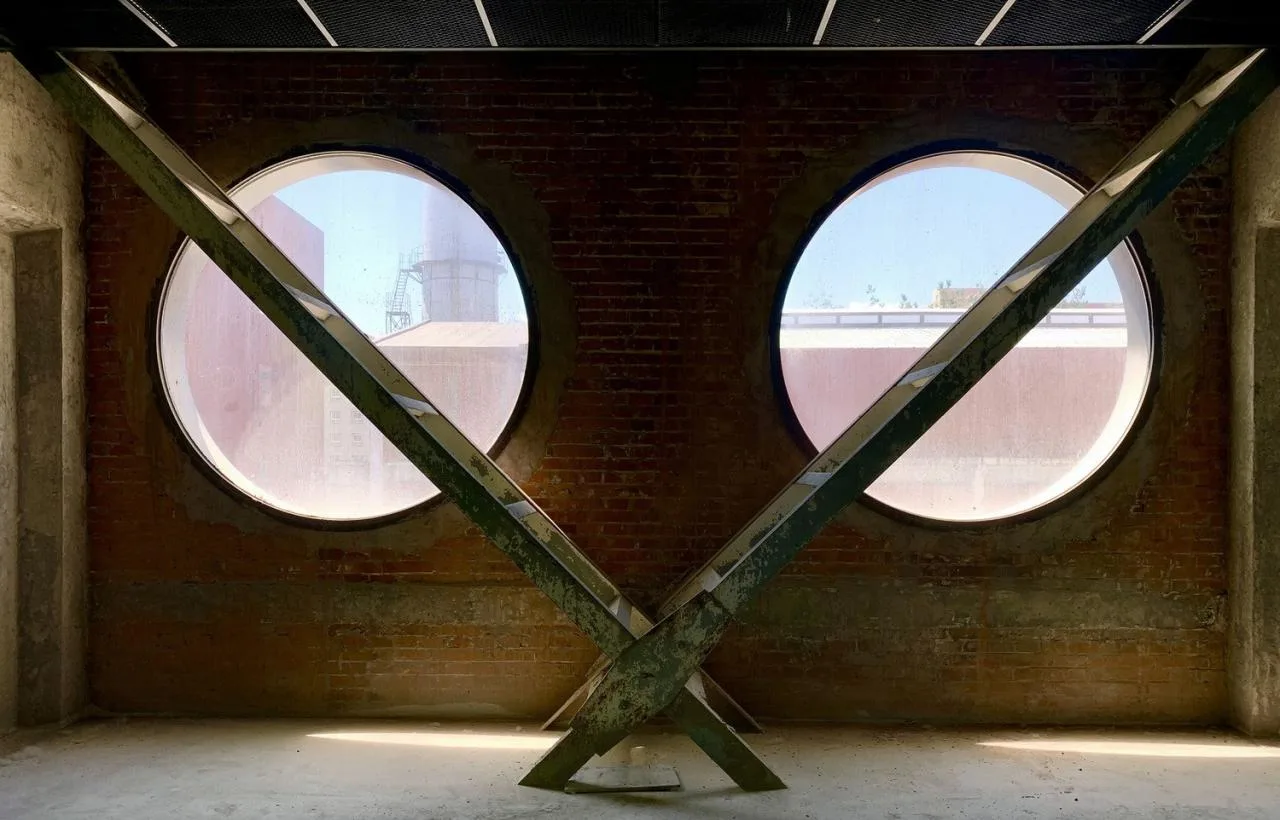
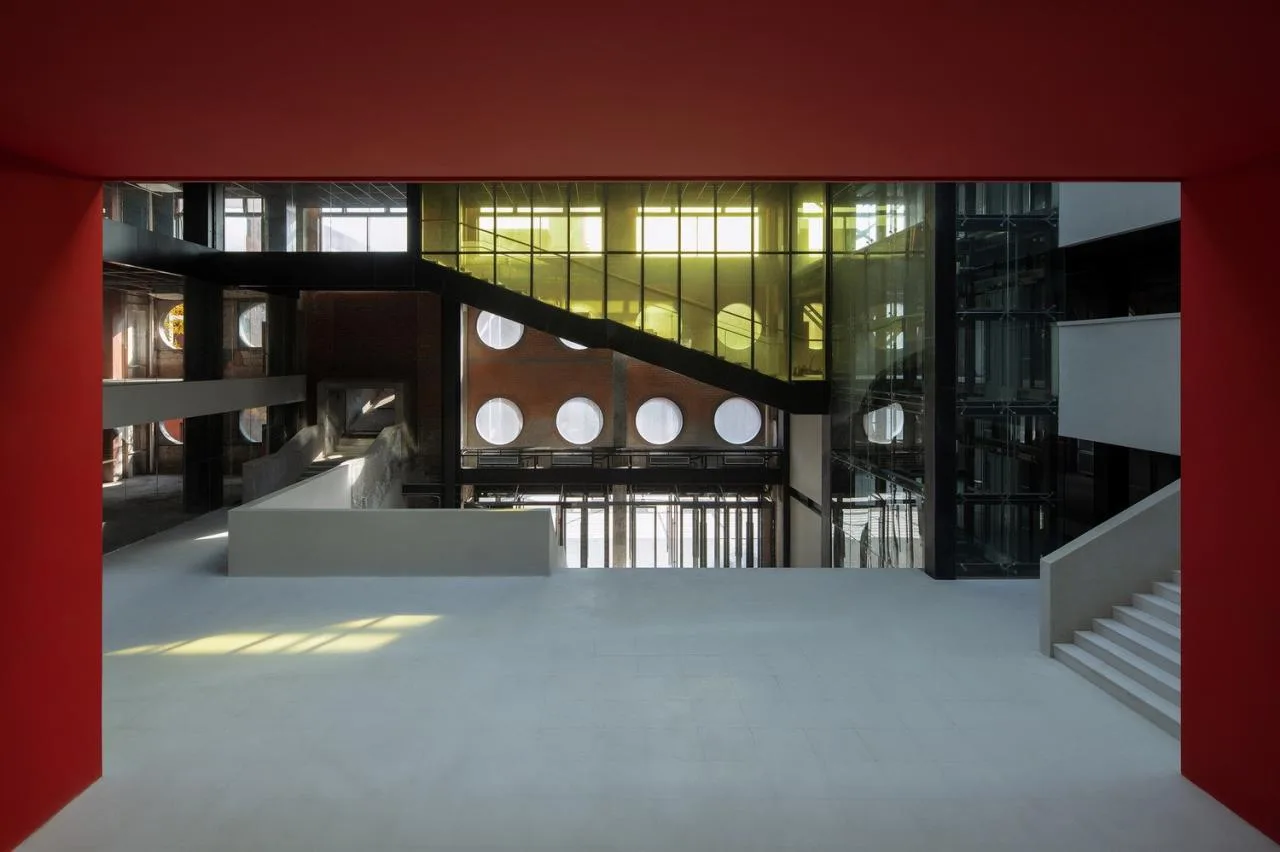
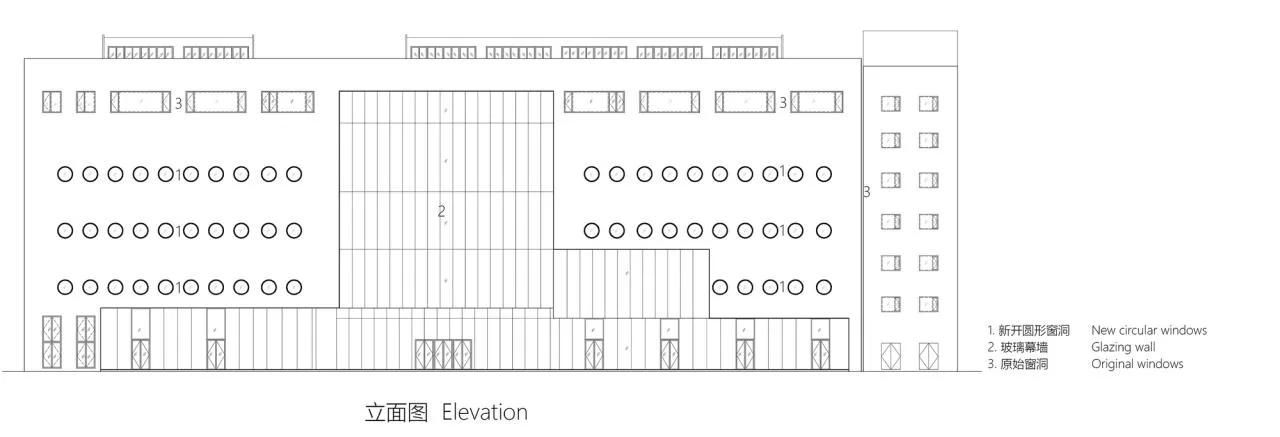
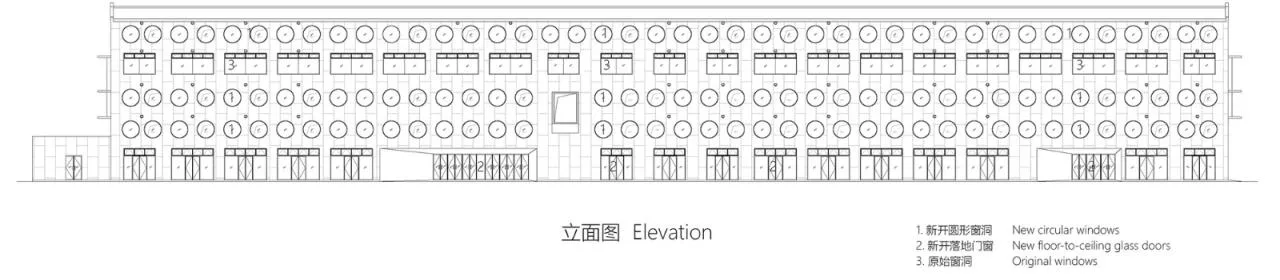
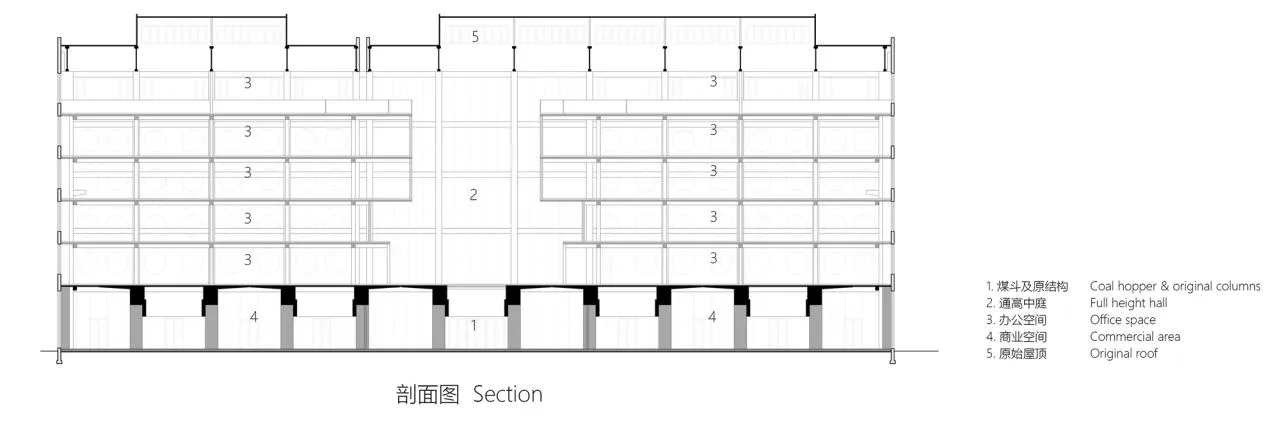
The factory’s main buildings, including the boiler room, coal storage, and induced draft fan room, originally housed heavy equipment and fuel. These spaces are tall, enclosed, and dark — resembling a dormant, eyeless giant. Leveraging the structural qualities of the original masonry exterior walls, over 400 circular openings were carefully created to balance maximum light and airflow with minimal disruption to masonry integrity.
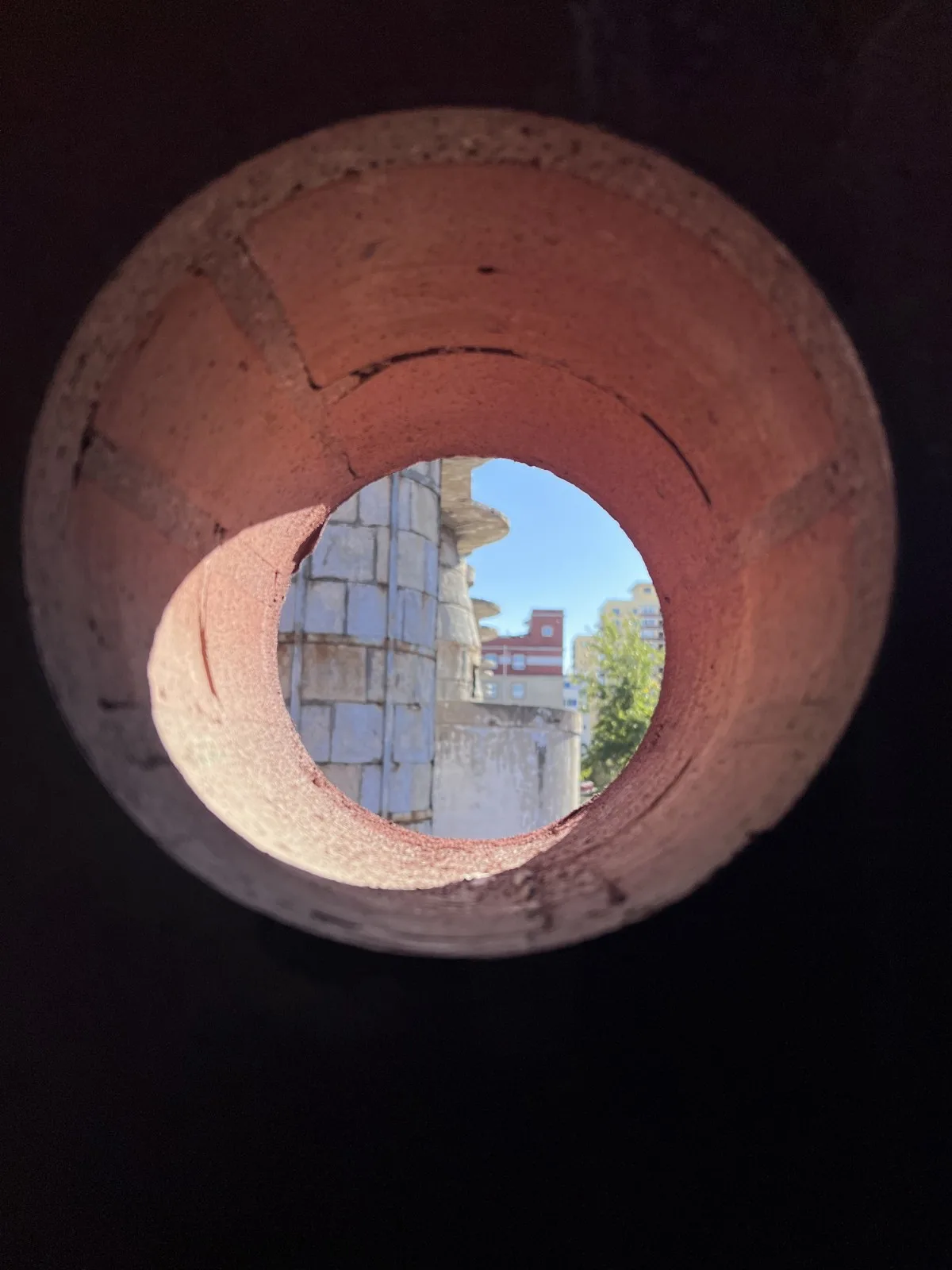
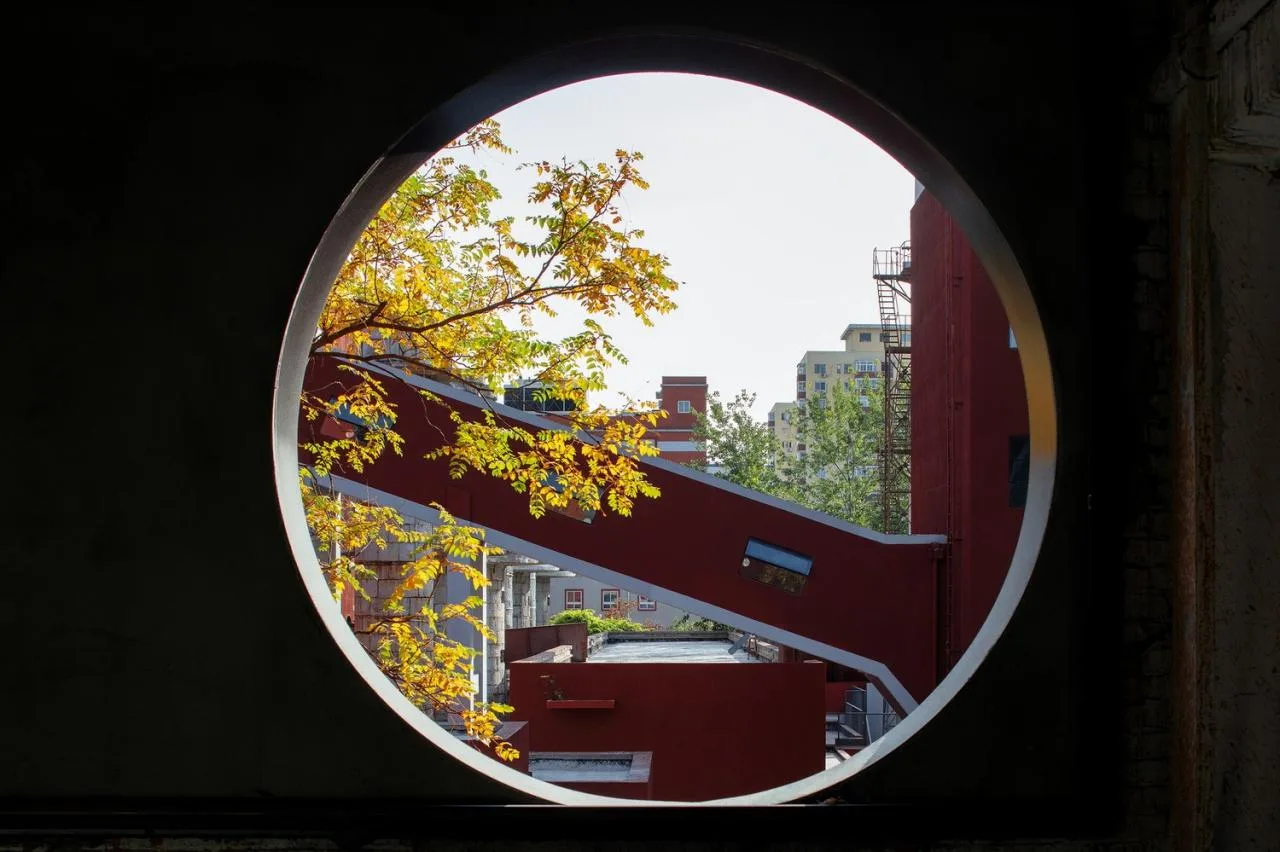
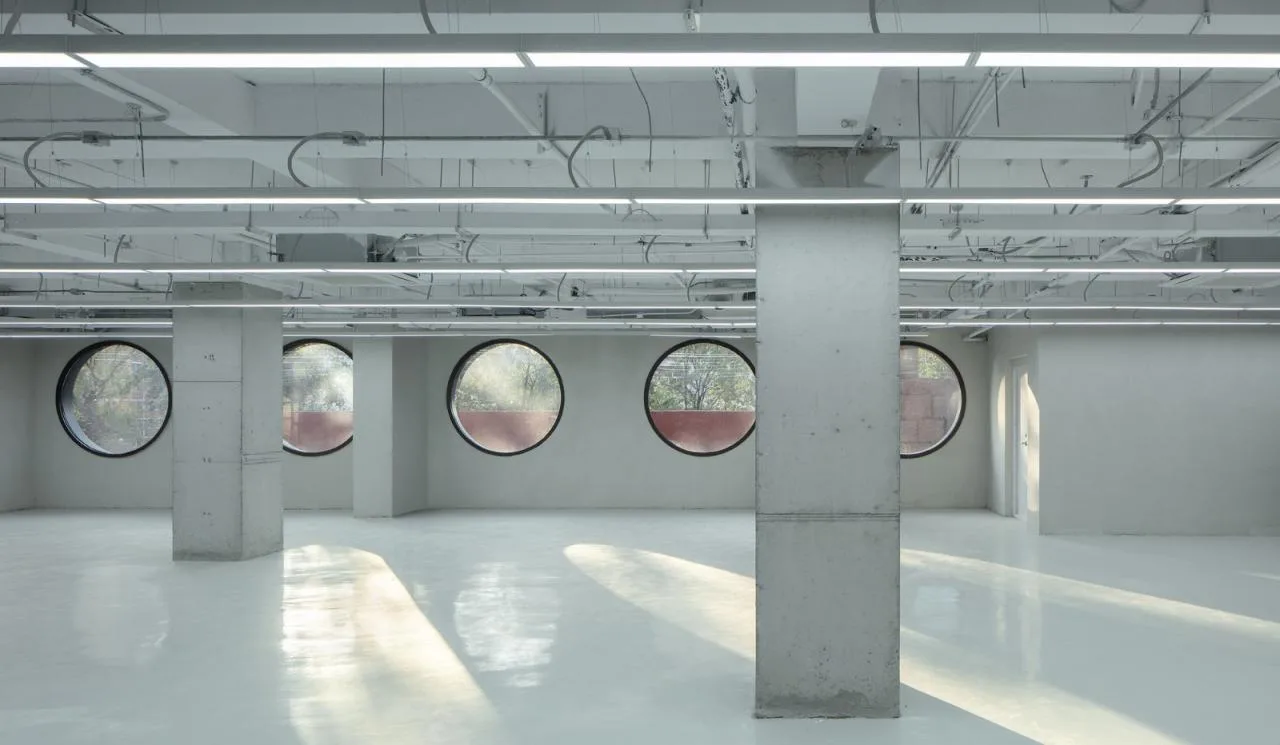
Sunlight and fresh air now penetrate the building, dispelling darkness and casting unique patterns of light and shadow. These pupil-like apertures reshape the views outside, guiding the gaze and fostering a dialogue between the present and the industrial relics beyond. Unlike the few original square windows, the new circular openings imprint a fresh identity onto the park.
The original building features differently sized round windows, small light holes, and circular air vents tailored to various functions. Custom opening structures and mechanisms were designed to ensure adequate ventilation and smoke exhaust.
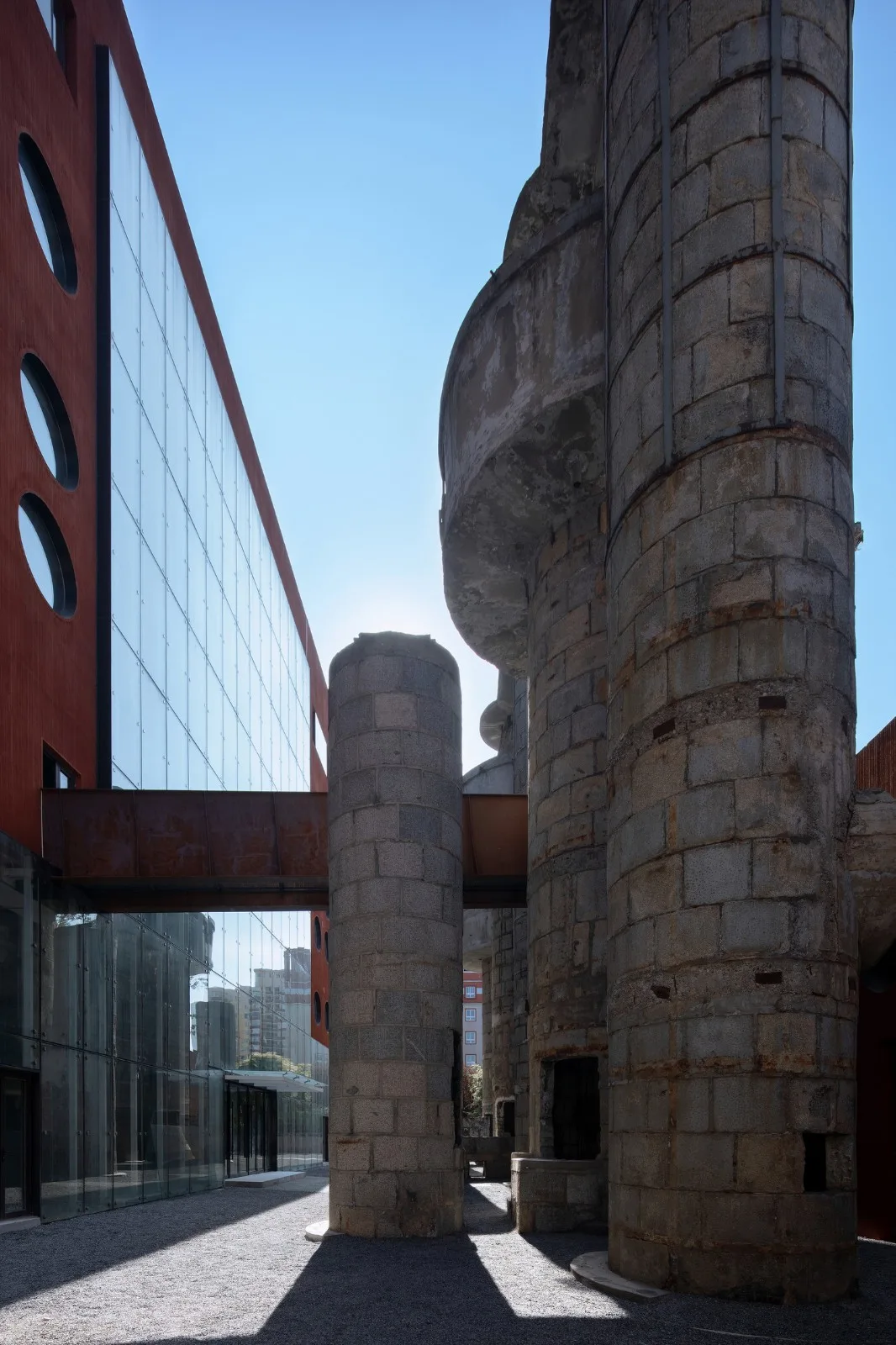
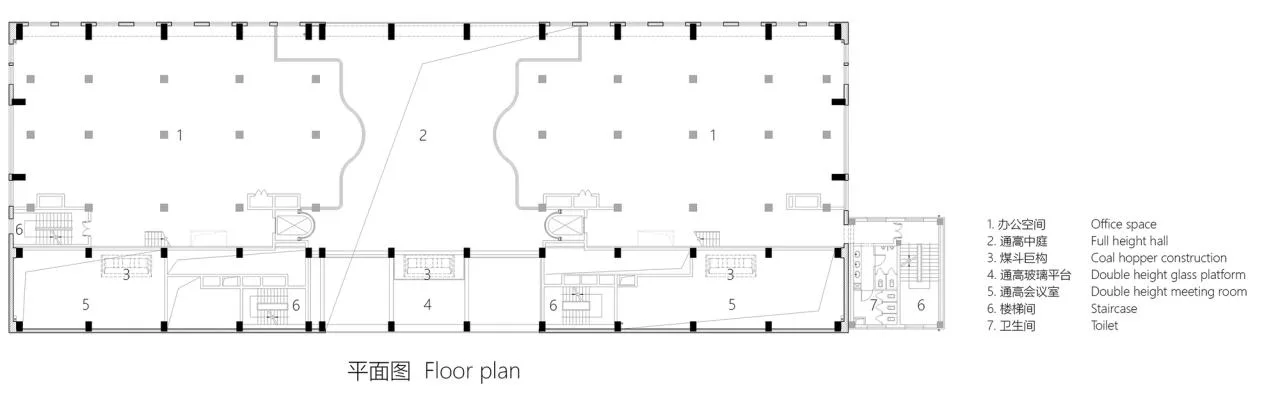
Rather than polished restoration, this project embraces the raw, rugged spirit of the industrial relics themselves. At the park’s main entrance, the exterior walls flanking the boiler room are opened up, allowing sunlight to pour through the suspended massive coal hopper into the courtyard, creating a visual corridor connecting front and back.
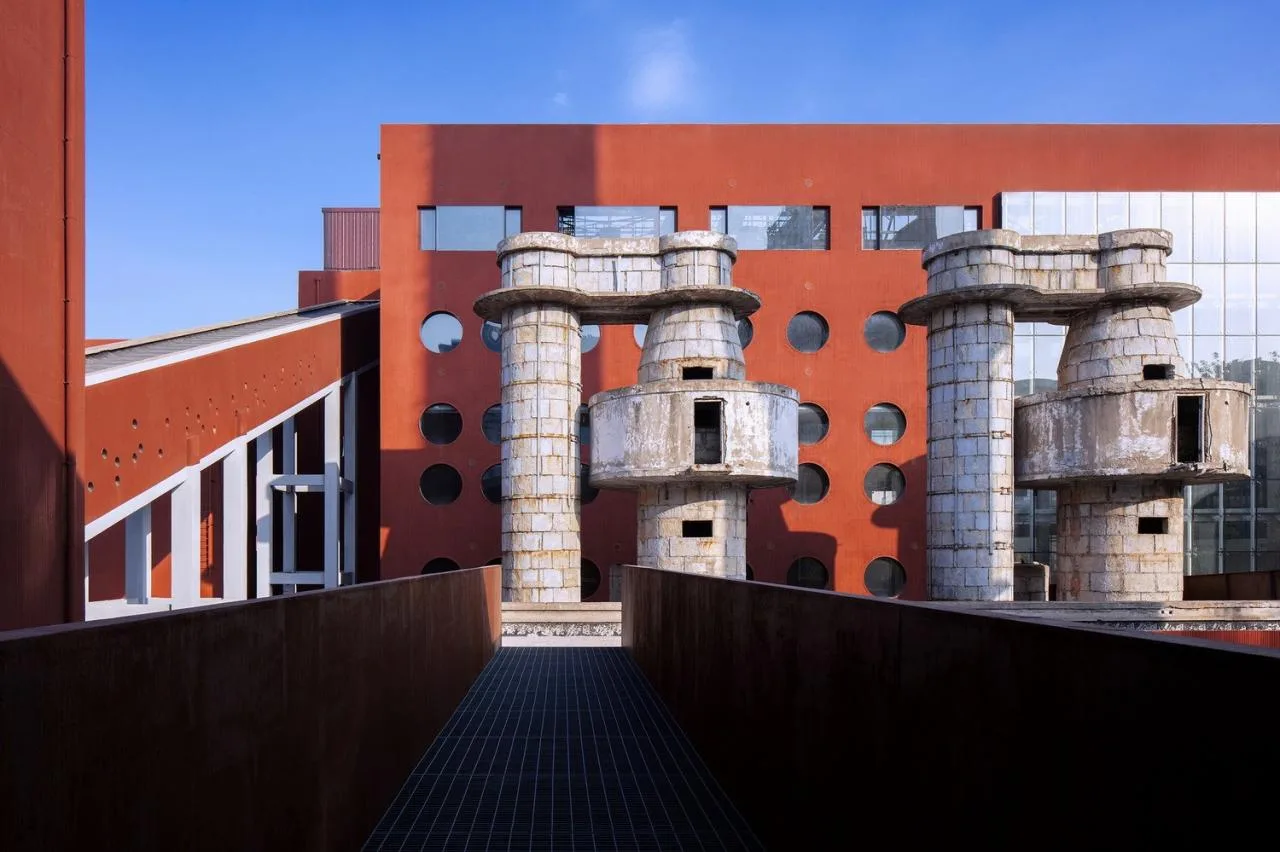
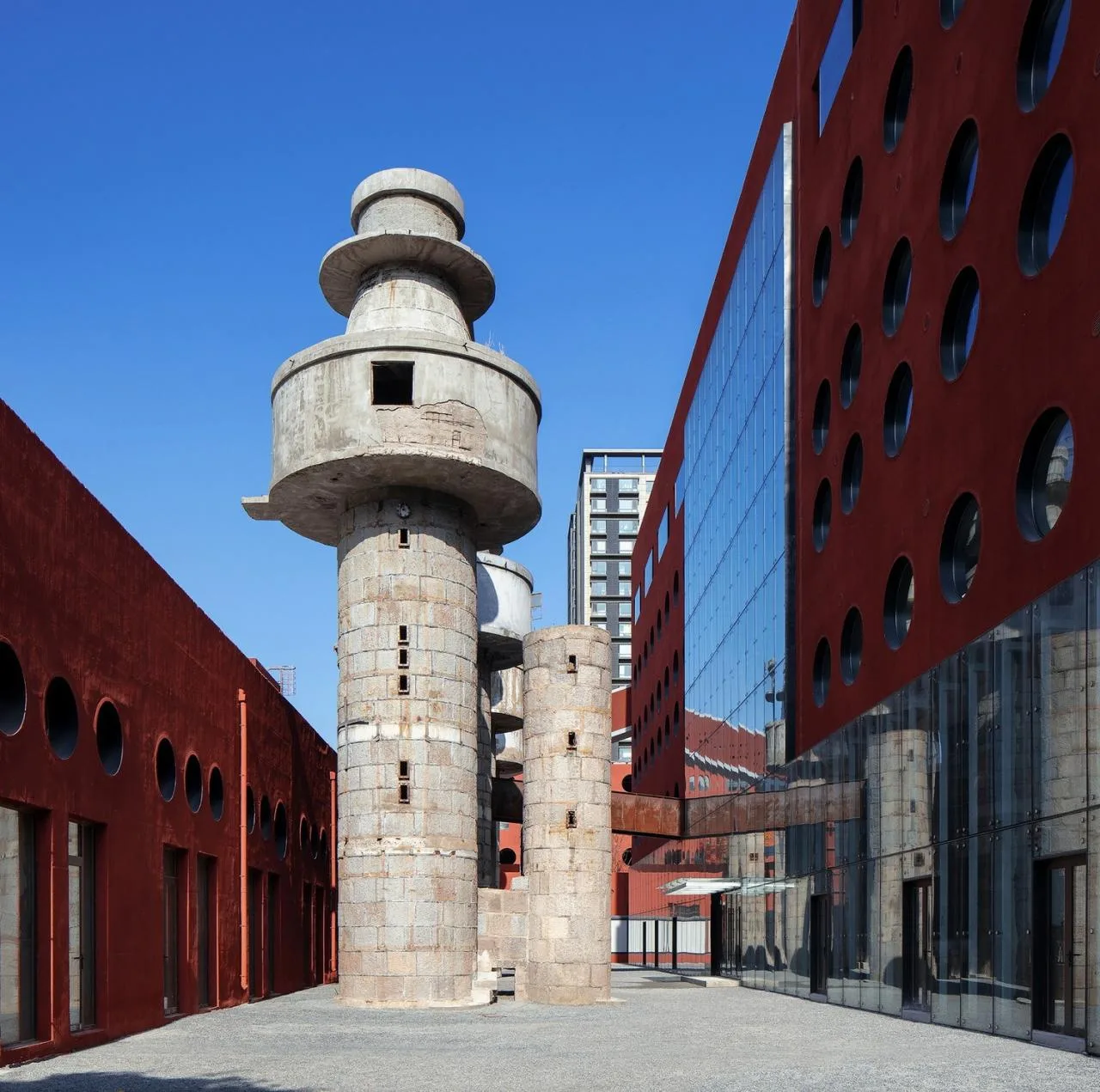
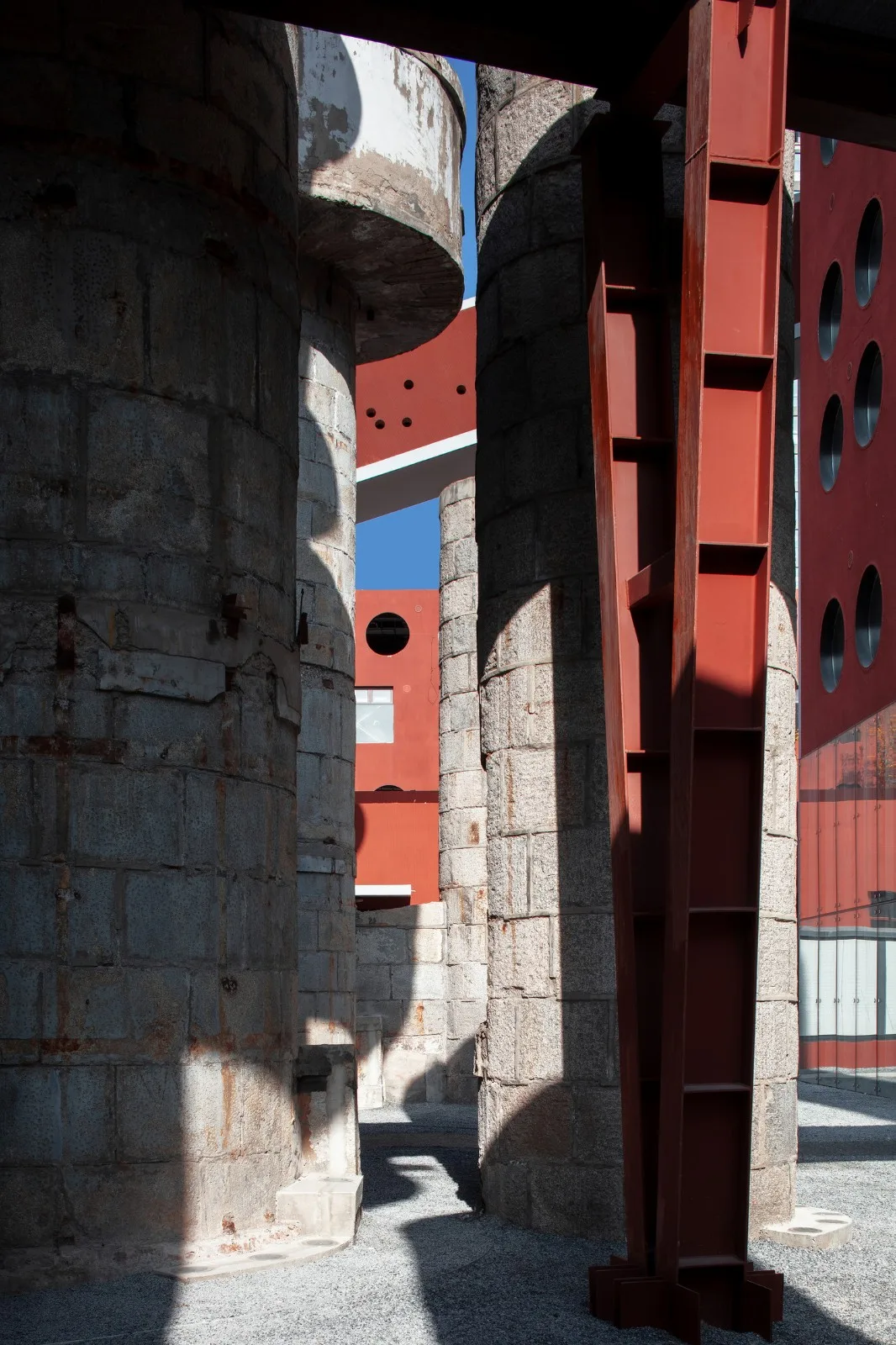
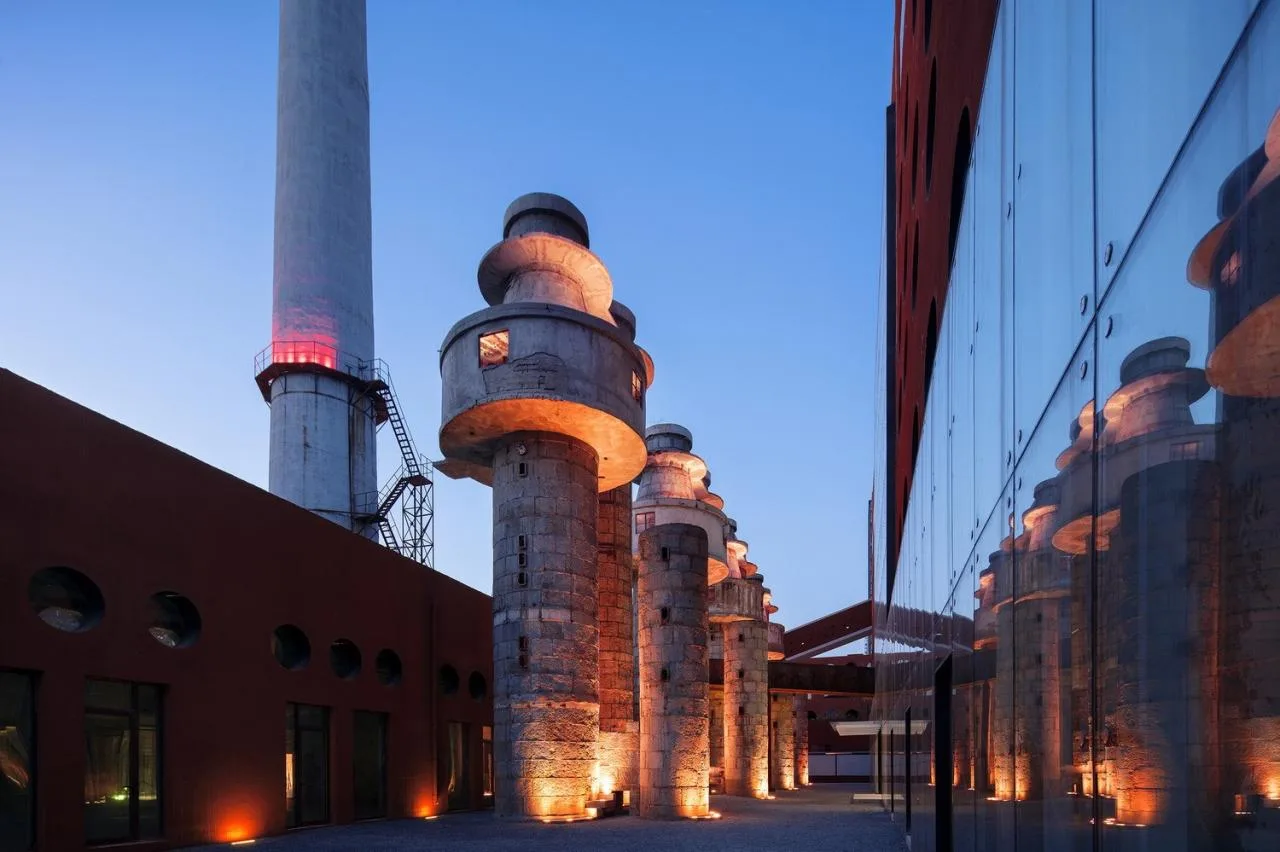
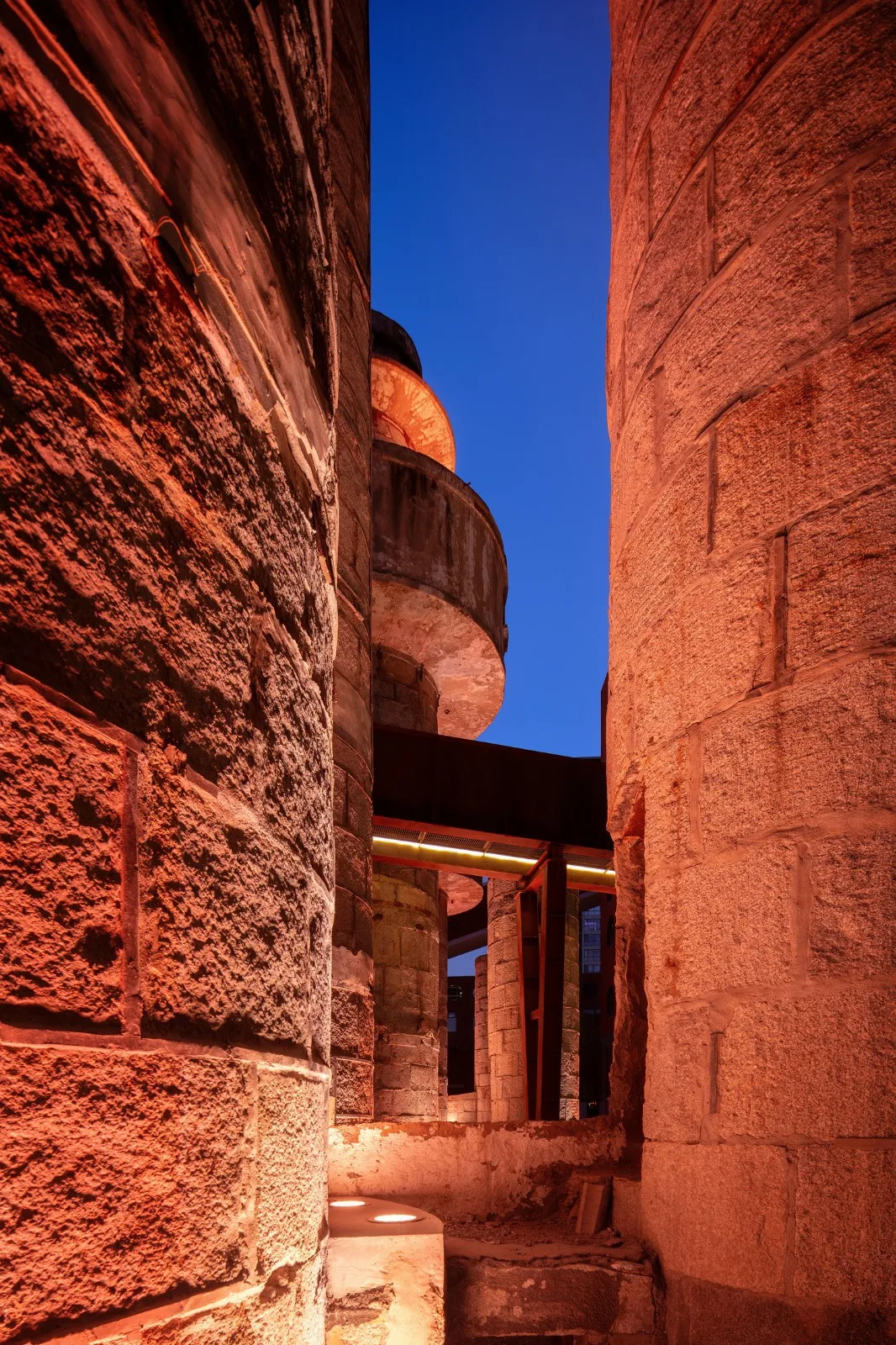
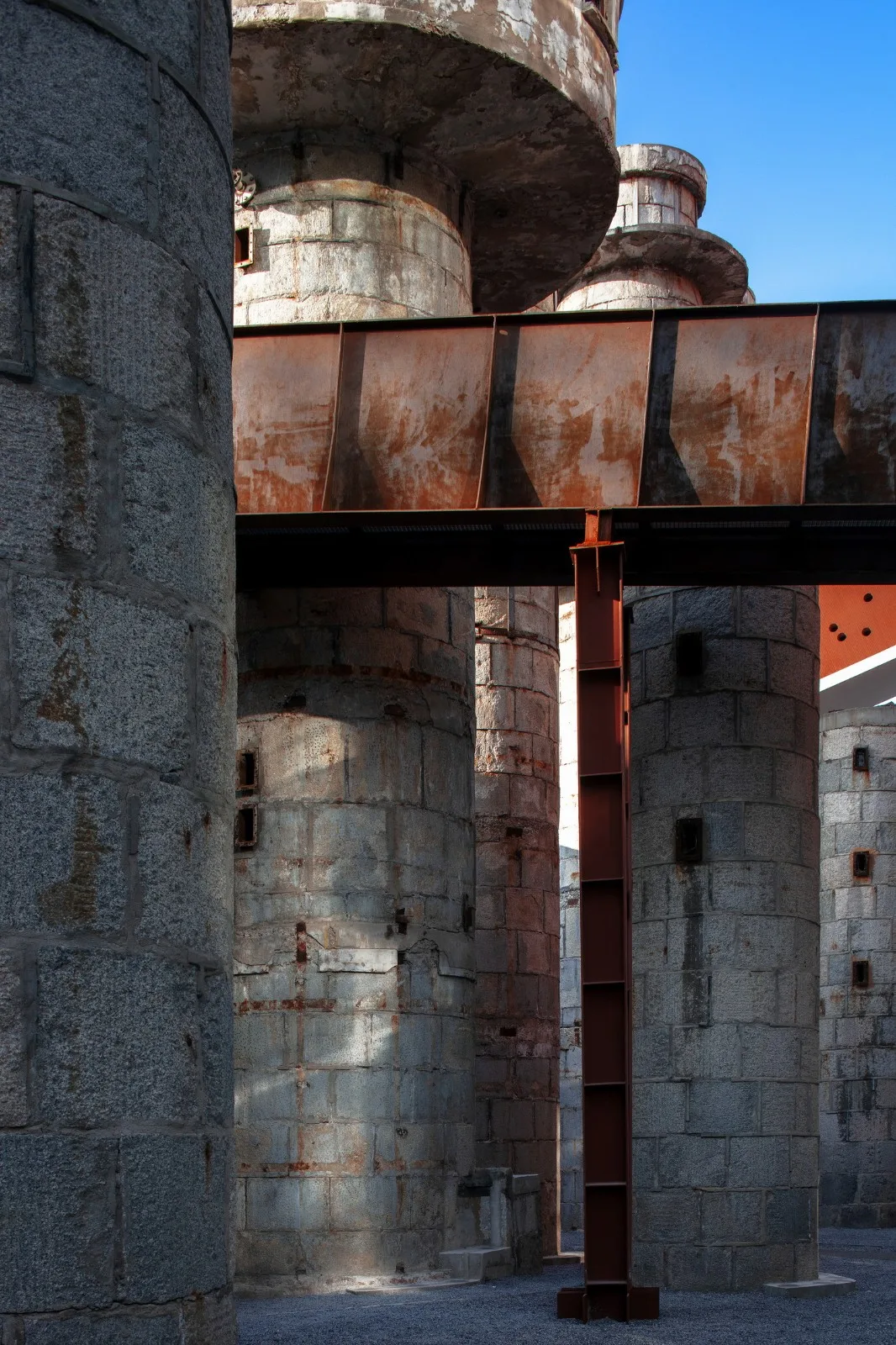
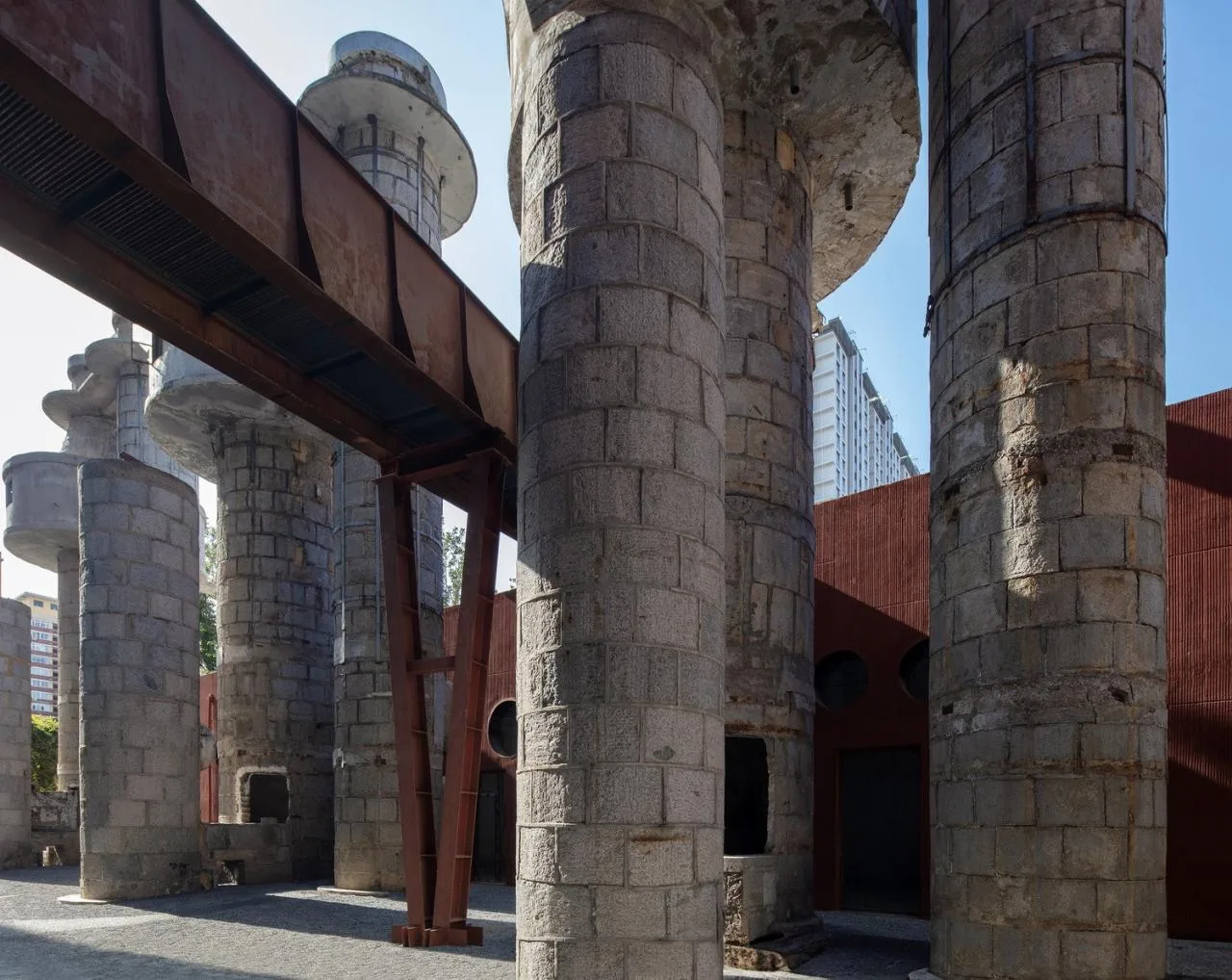
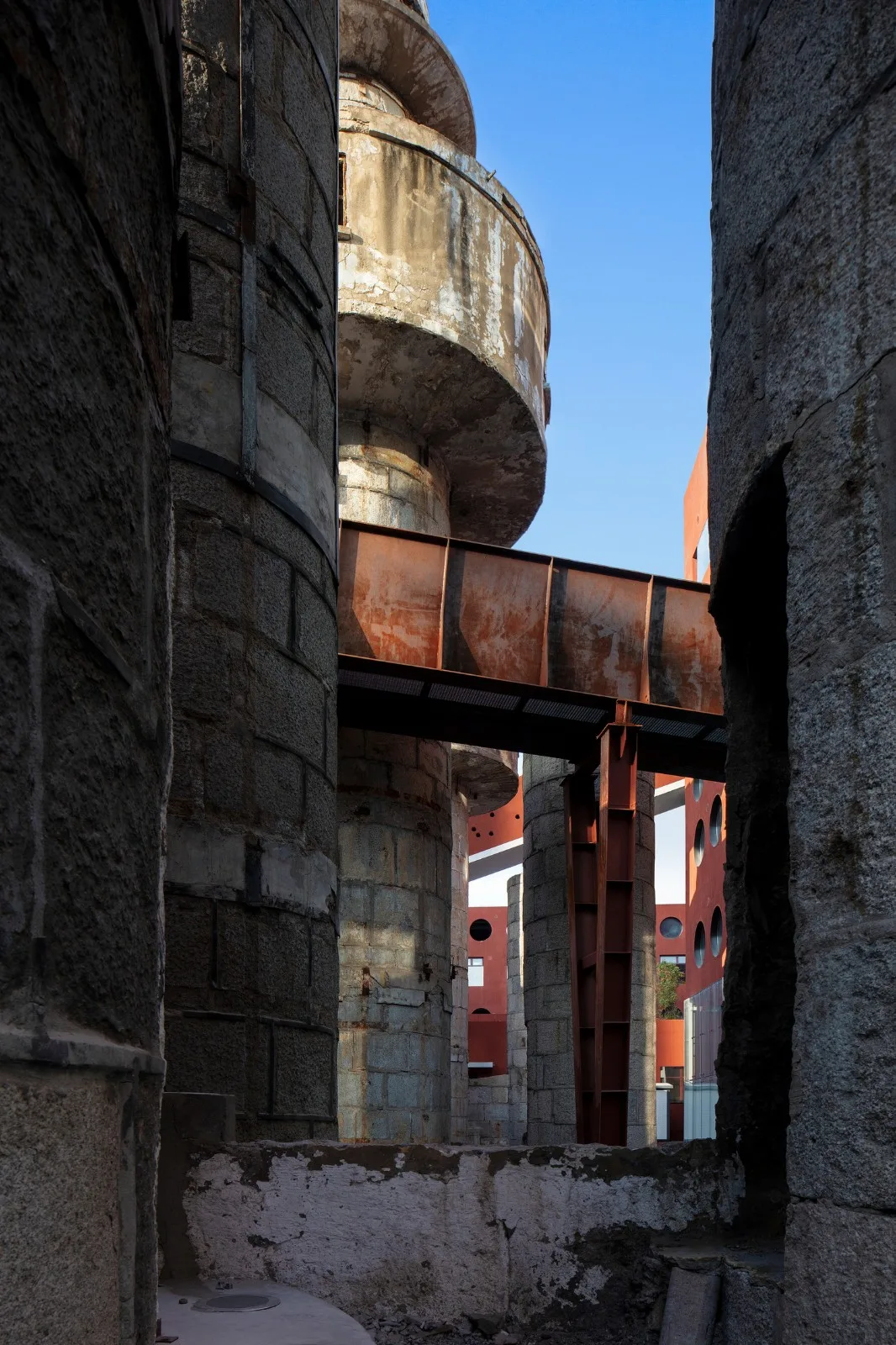
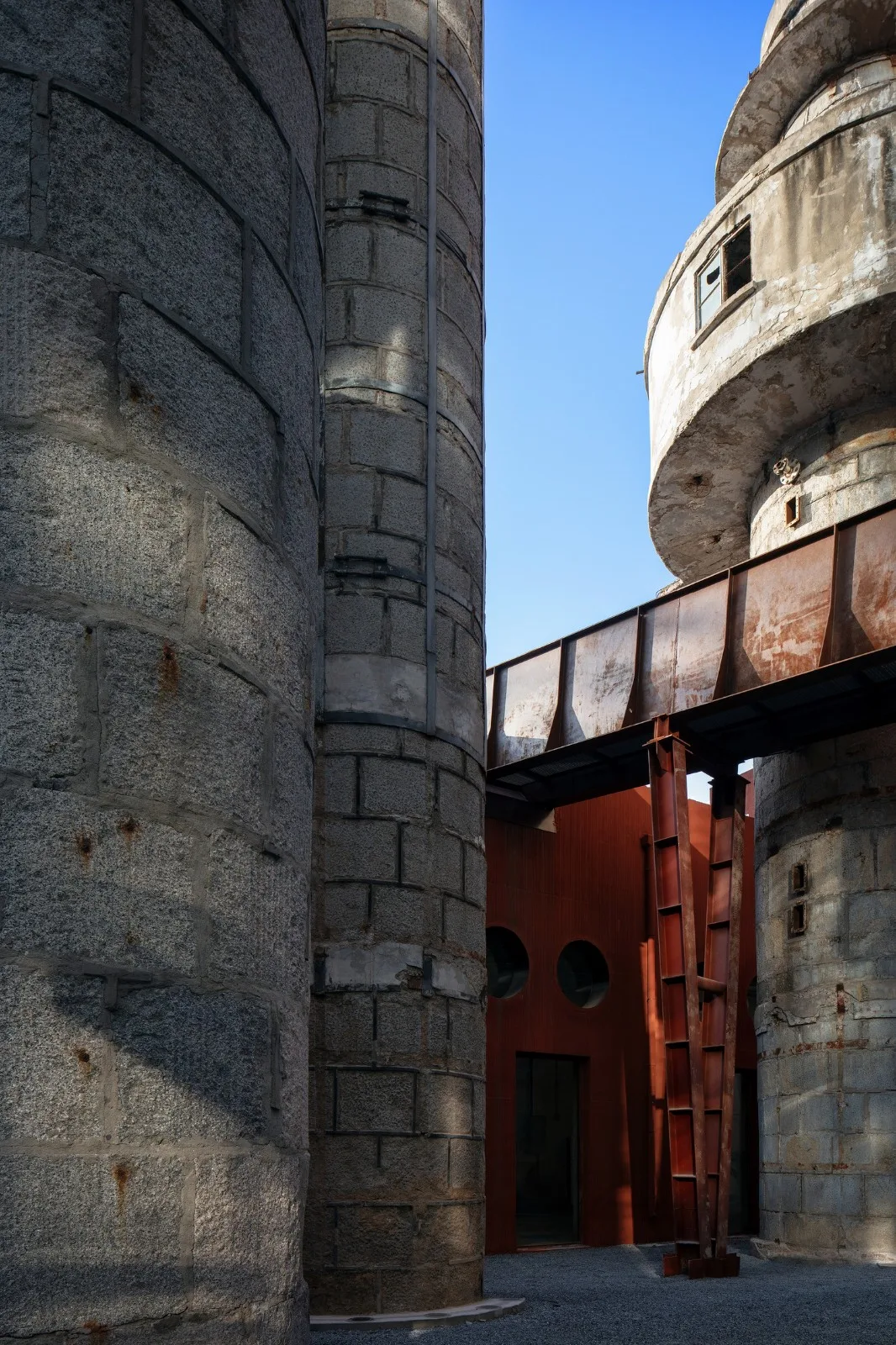
Behind the building, four groups of twelve stone dust removal towers, once hidden in a garbage dump, have been cleared and exposed at the center of the courtyard. These tranquil stone towers stand starkly on open gravel, resembling mysterious and awe-inspiring industrial totems.
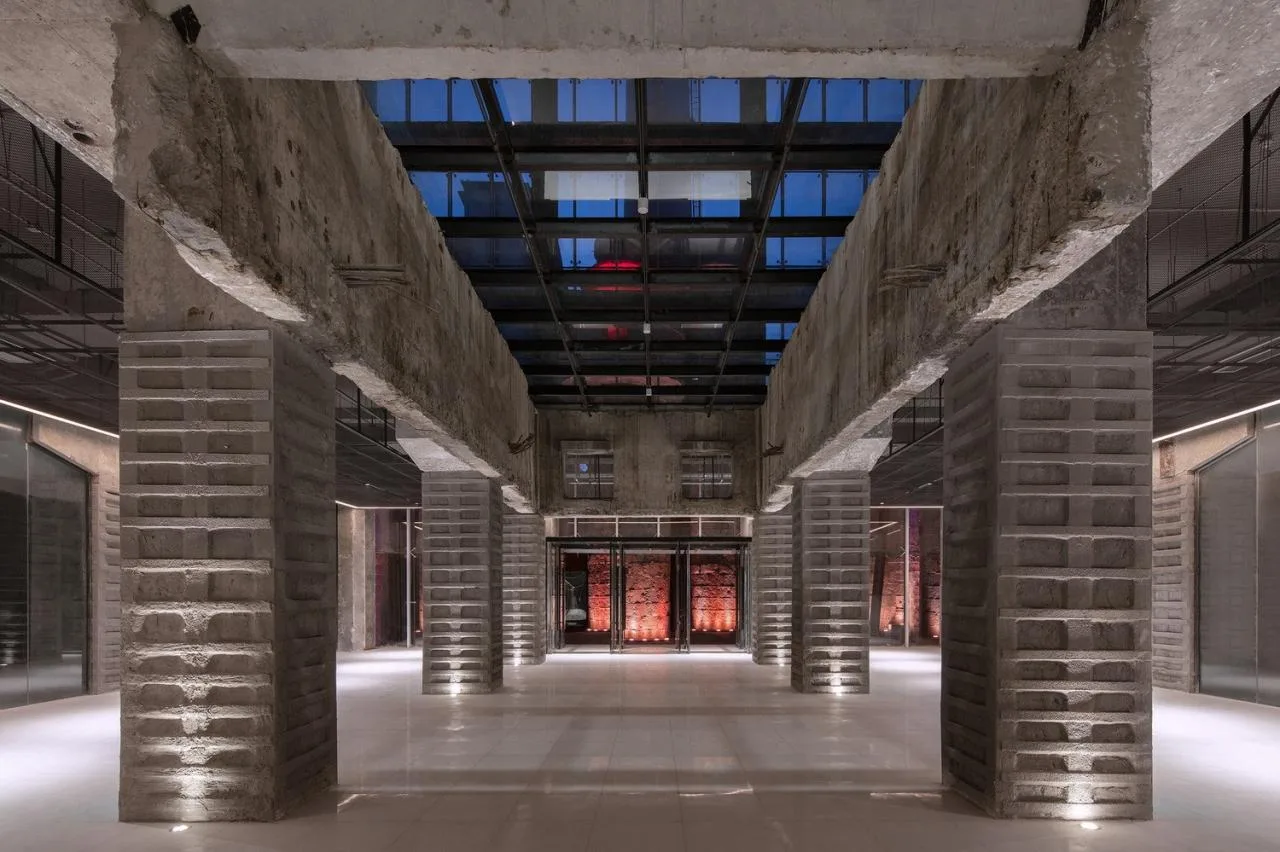
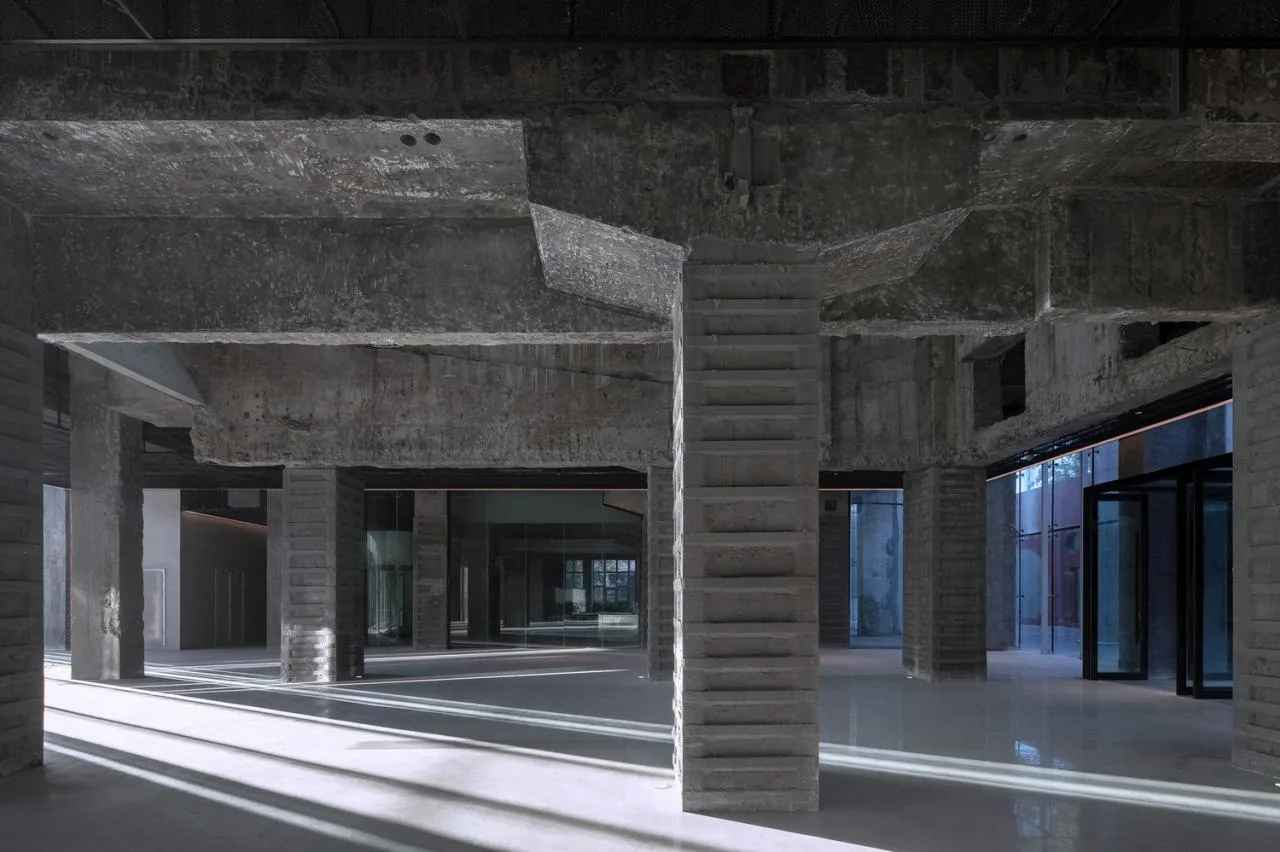
The boiler base within the partitioned boiler room walls has been stripped of coatings, reinforced, and cleaned, revealing rows of mottled, rough concrete columns in the empty ground-floor hall. The towering chimneys, columns, coal hopper, and backyard stand in contrast and echo one another, anchoring deep memories of the industrial past along the park’s main axis and rekindling long-forgotten industrial energy.
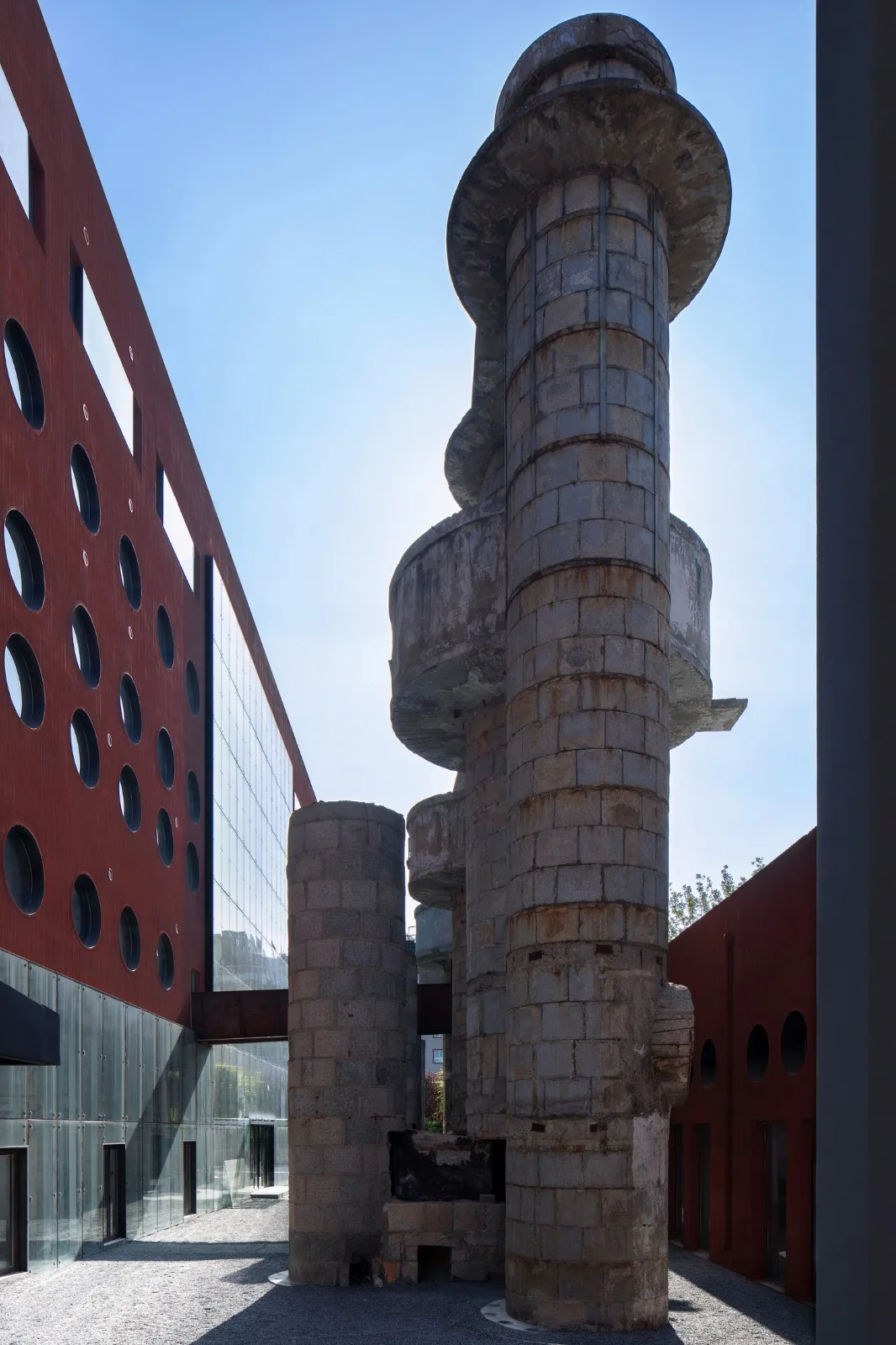
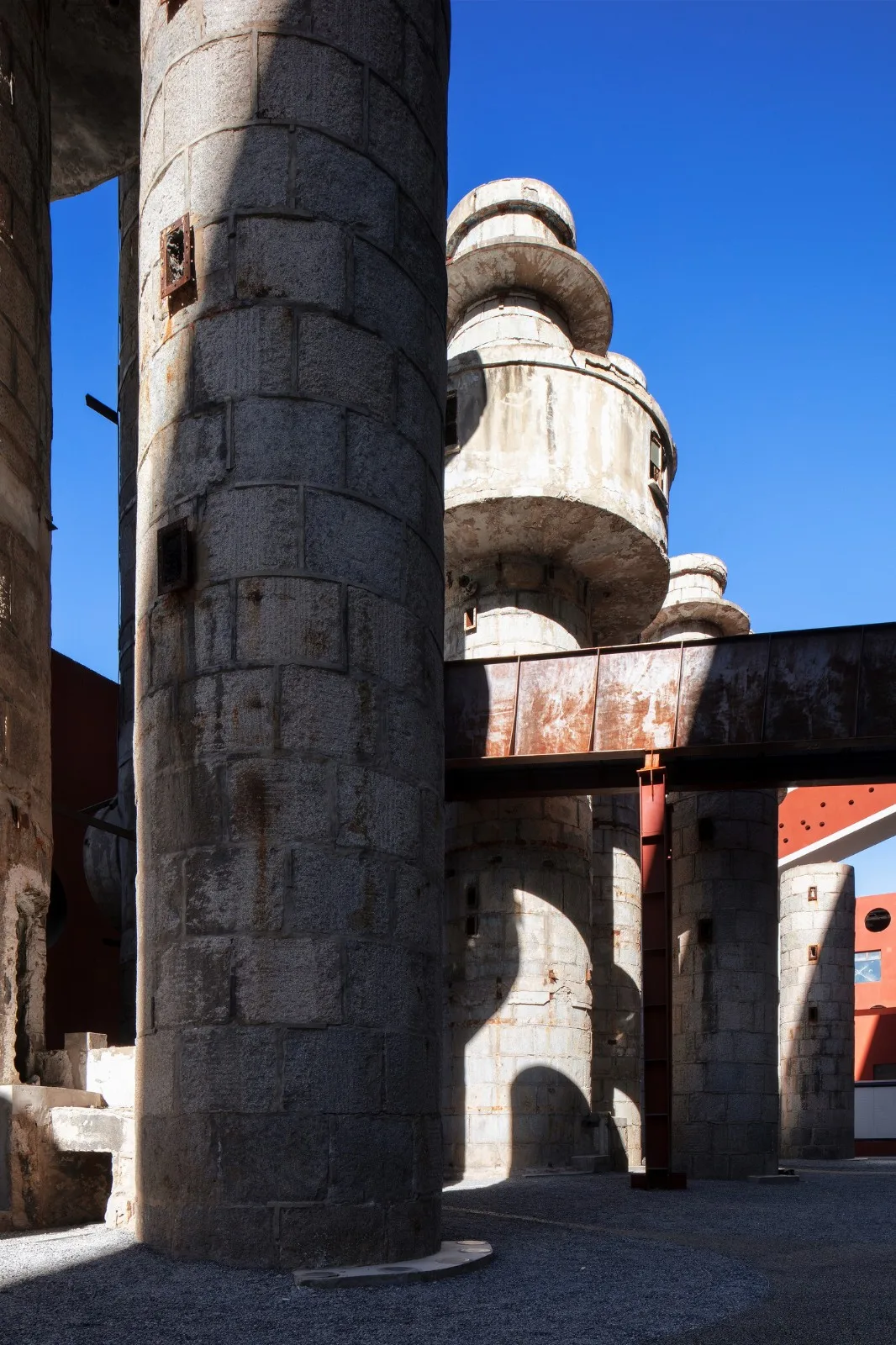
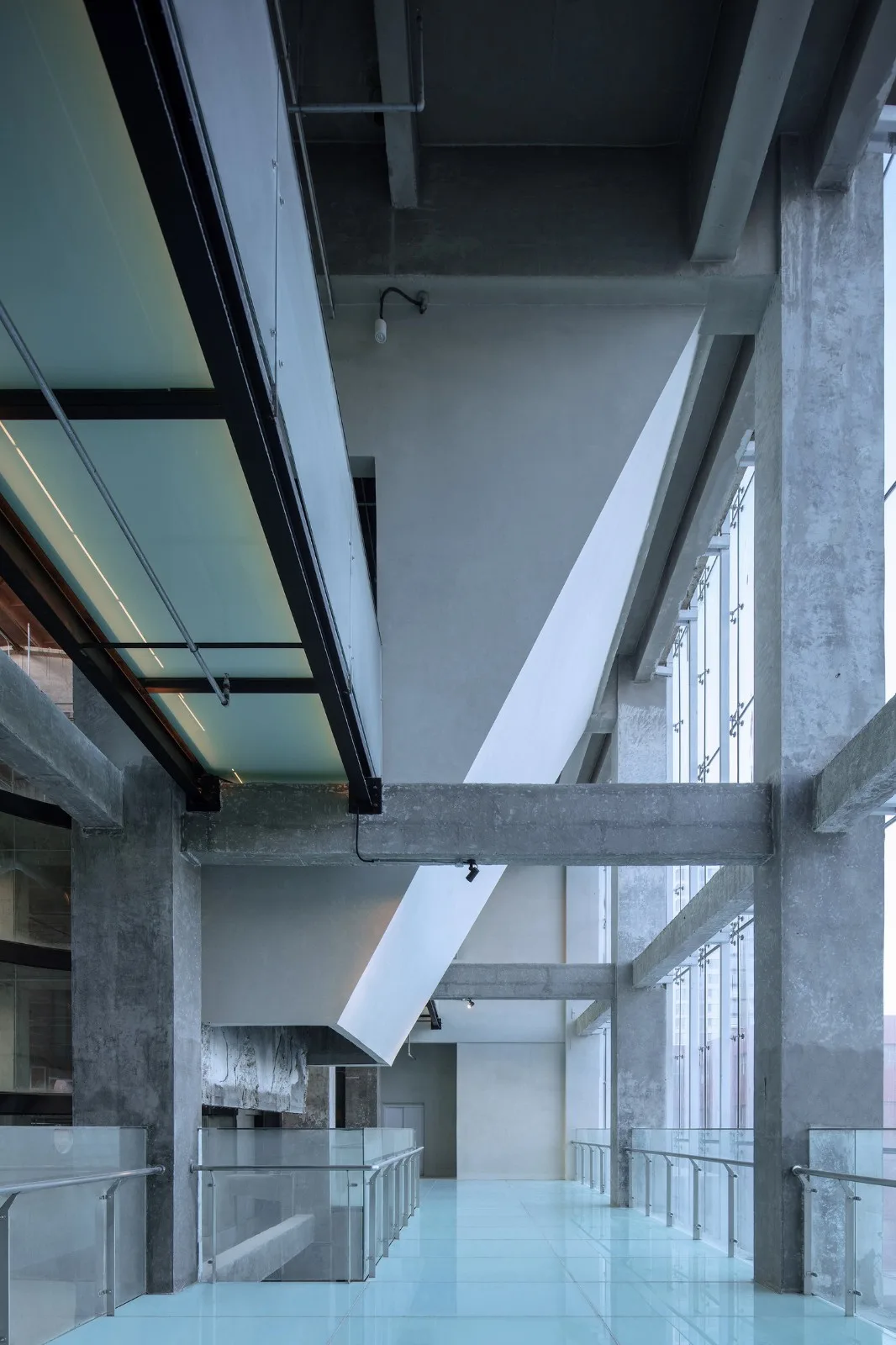
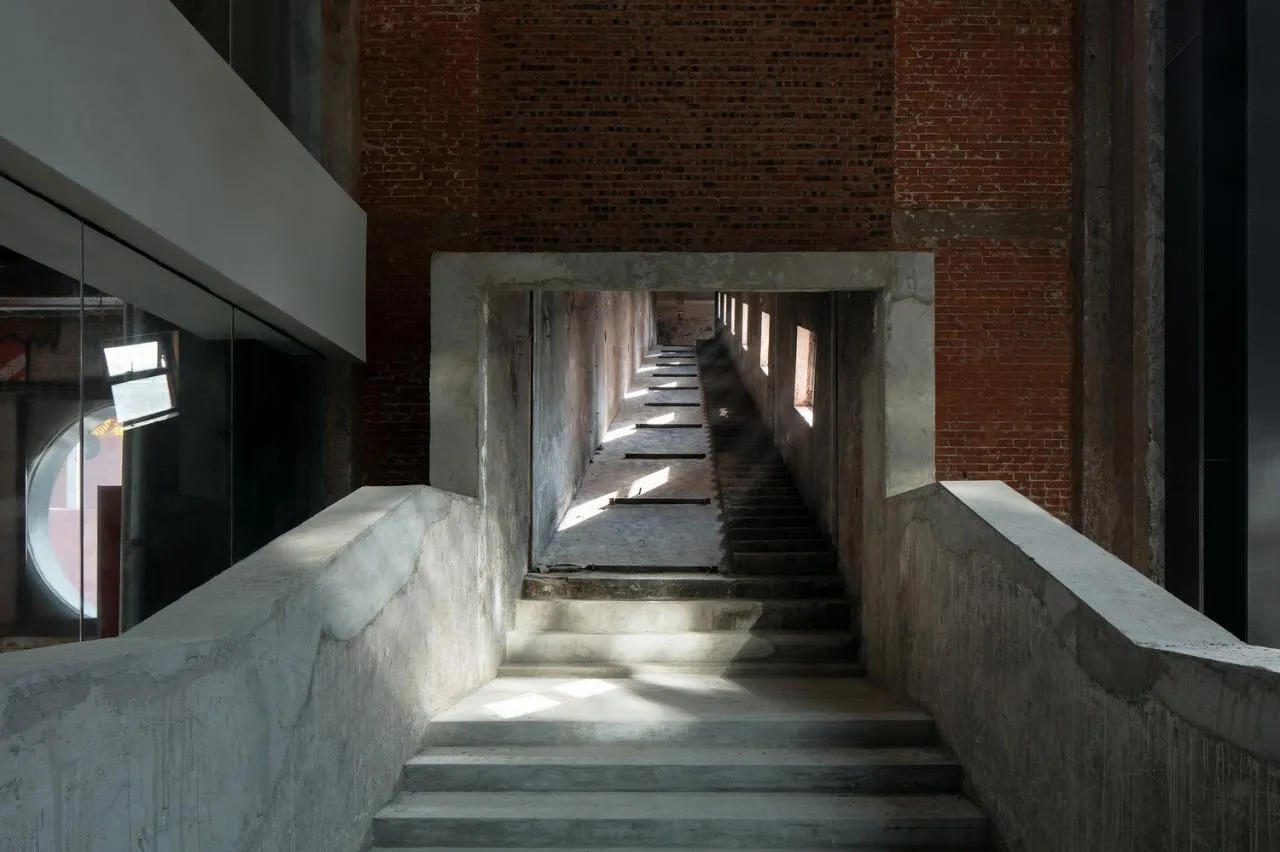
The two inclined concrete coal transportation channels running through the factory have been preserved as exhibition spaces within the original buildings. These unique spatial features are emphasized, developed, and evolved in the renovation.
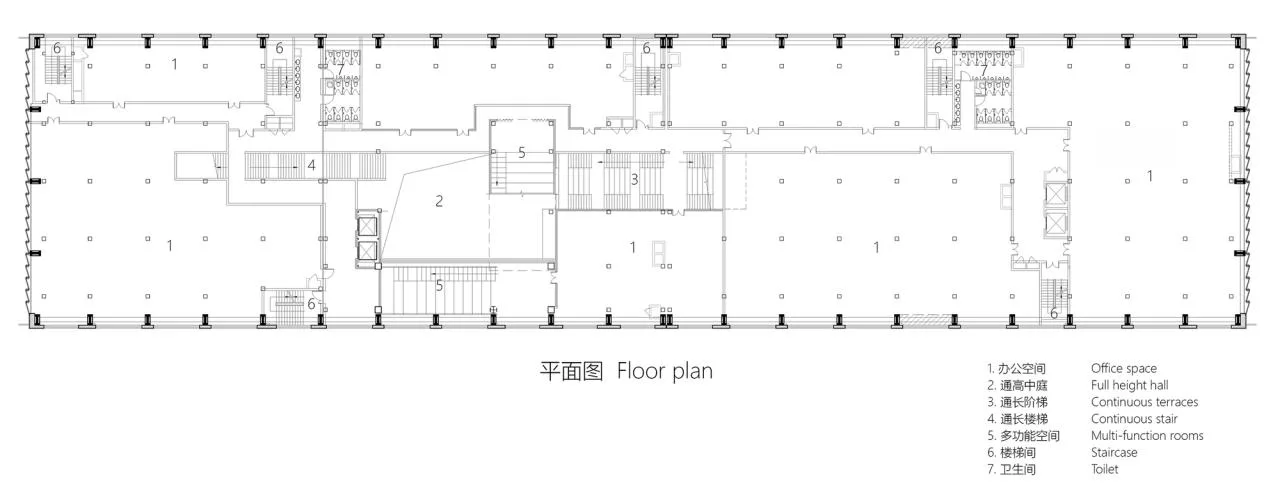
Up to 15 spatial walkways, each with distinct character from different eras, are embedded both inside and outside the buildings like floating fragments. They create elusive, wandering paths weaving between modern scenes and abandoned ruins, overlapping reflections of time.
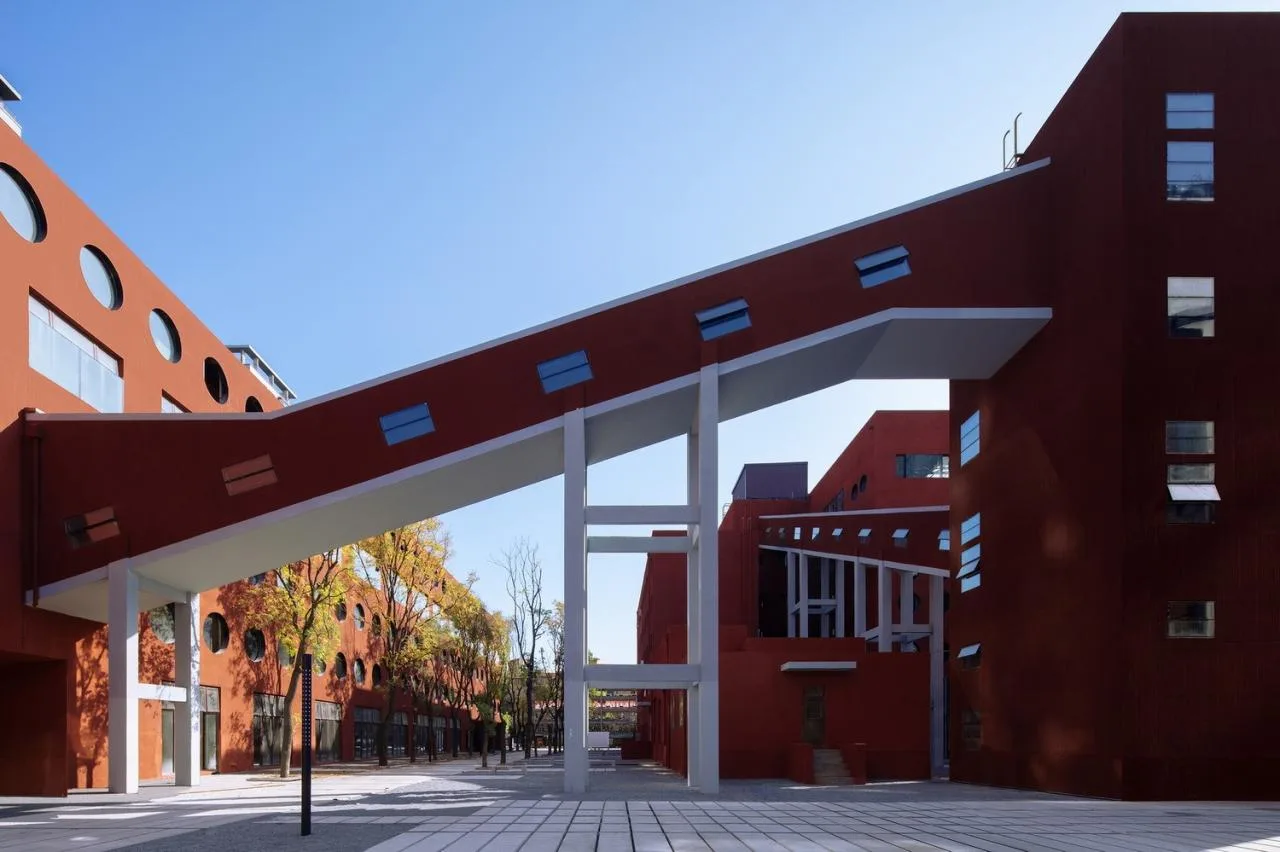
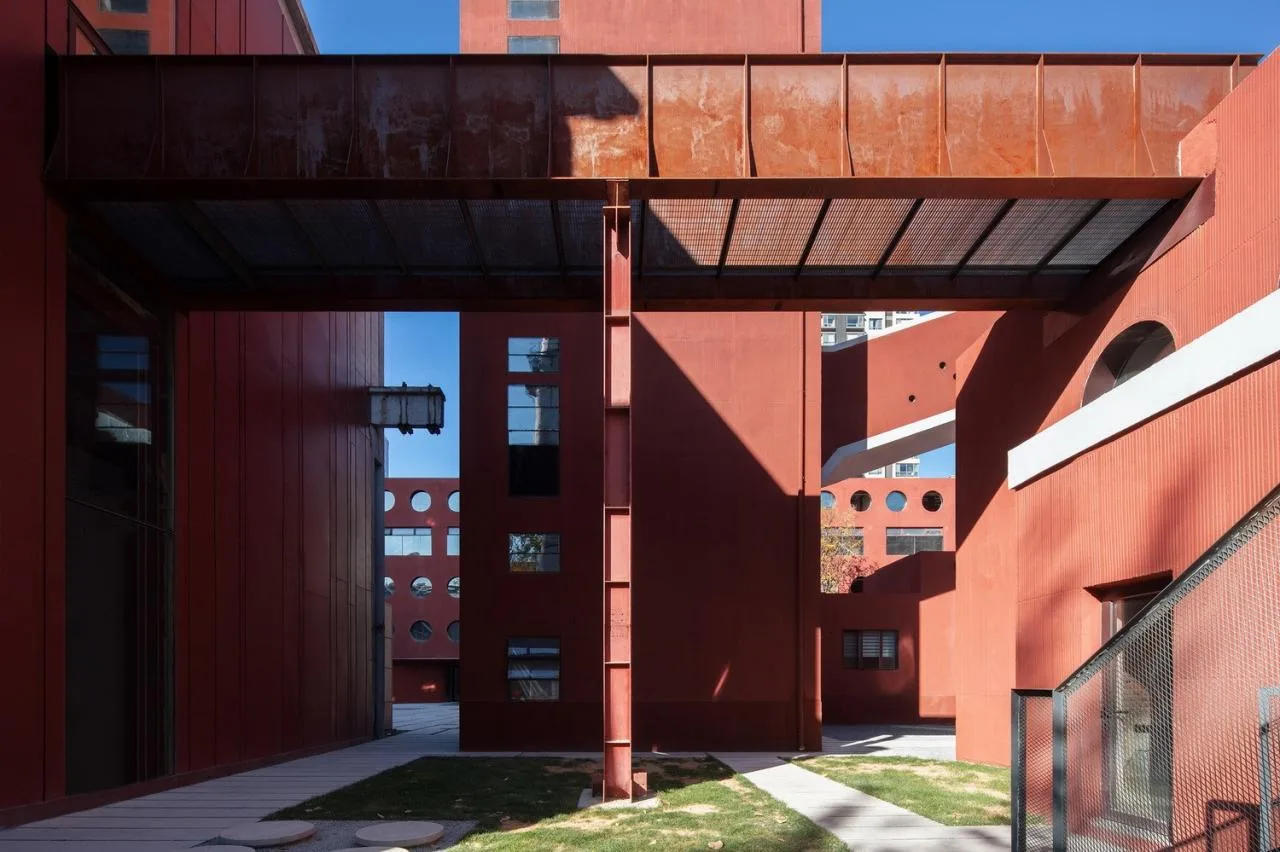
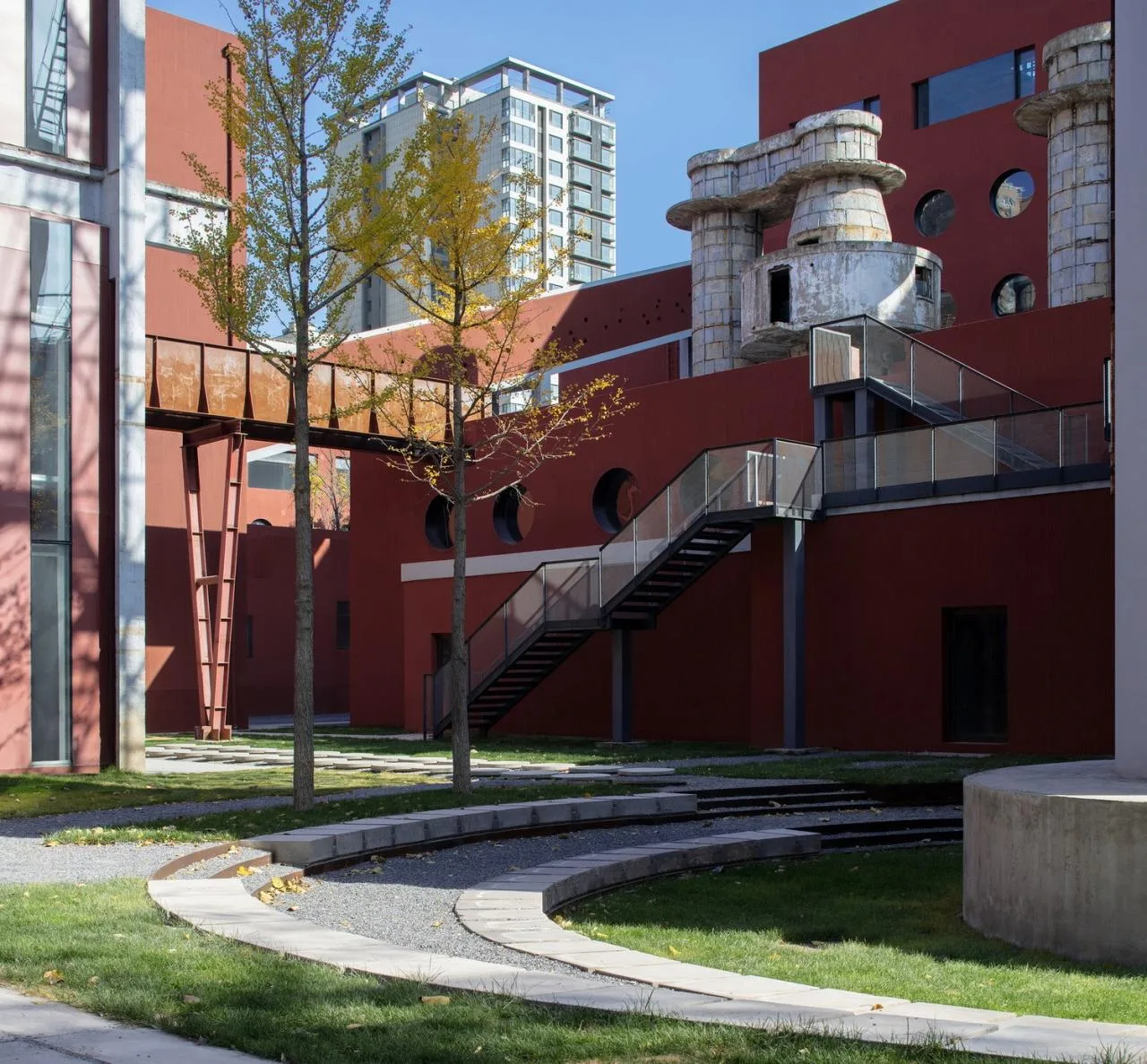
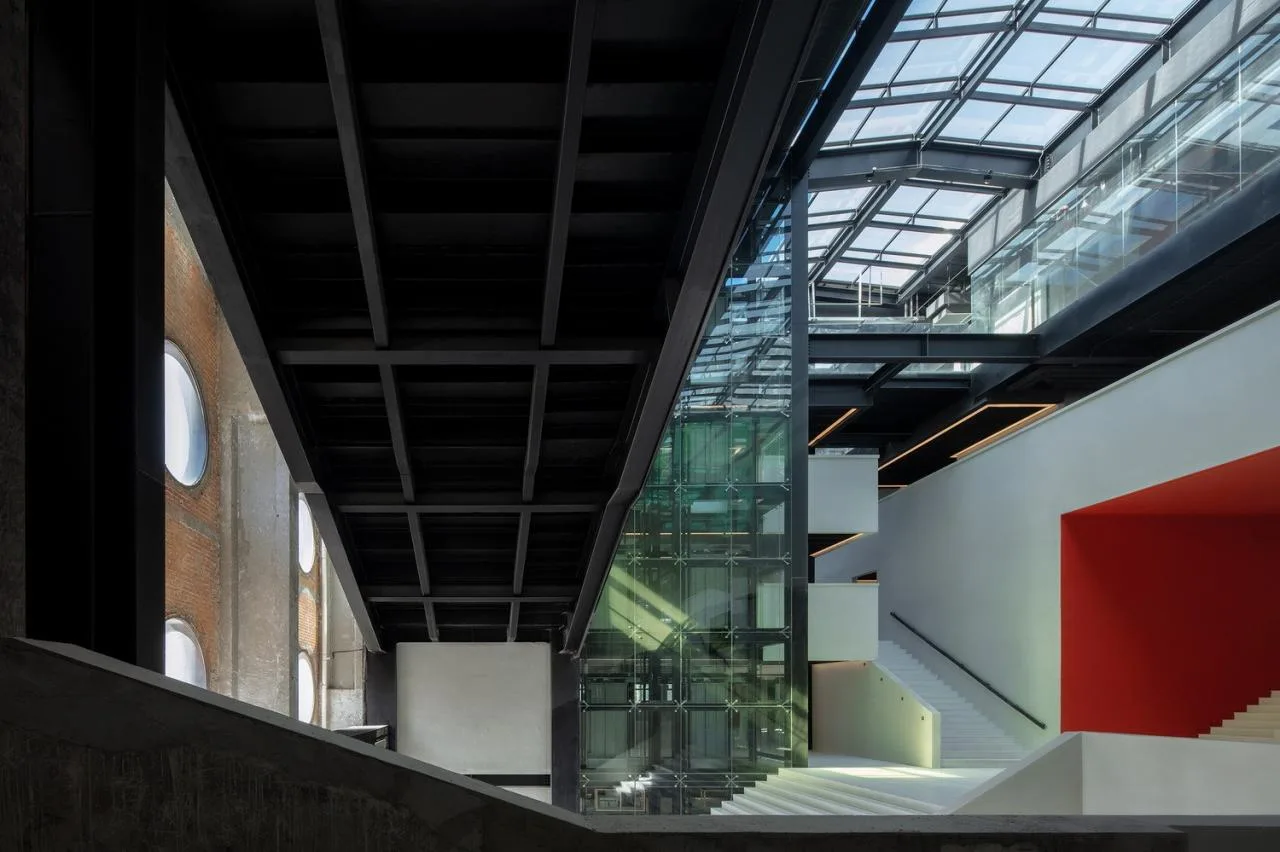
The robust, weather-resistant steel bridge structure spans gaps in the tower, standing in strength and time alongside the heavy stone towers. Smooth, delicate glass walkways pass through the interior of the elevated coal hopper, reflecting the contrast of eras.
Metal mesh staircases climb along walls, casting intricate light and shadow on the exterior surfaces. These newly introduced elements engage in a dialogue with the original structures, providing close access to industrial relics and creating continuous connections between indoor courtyards, aerial terraces, ground-level gardens, chimney ladders, and sports facilities.
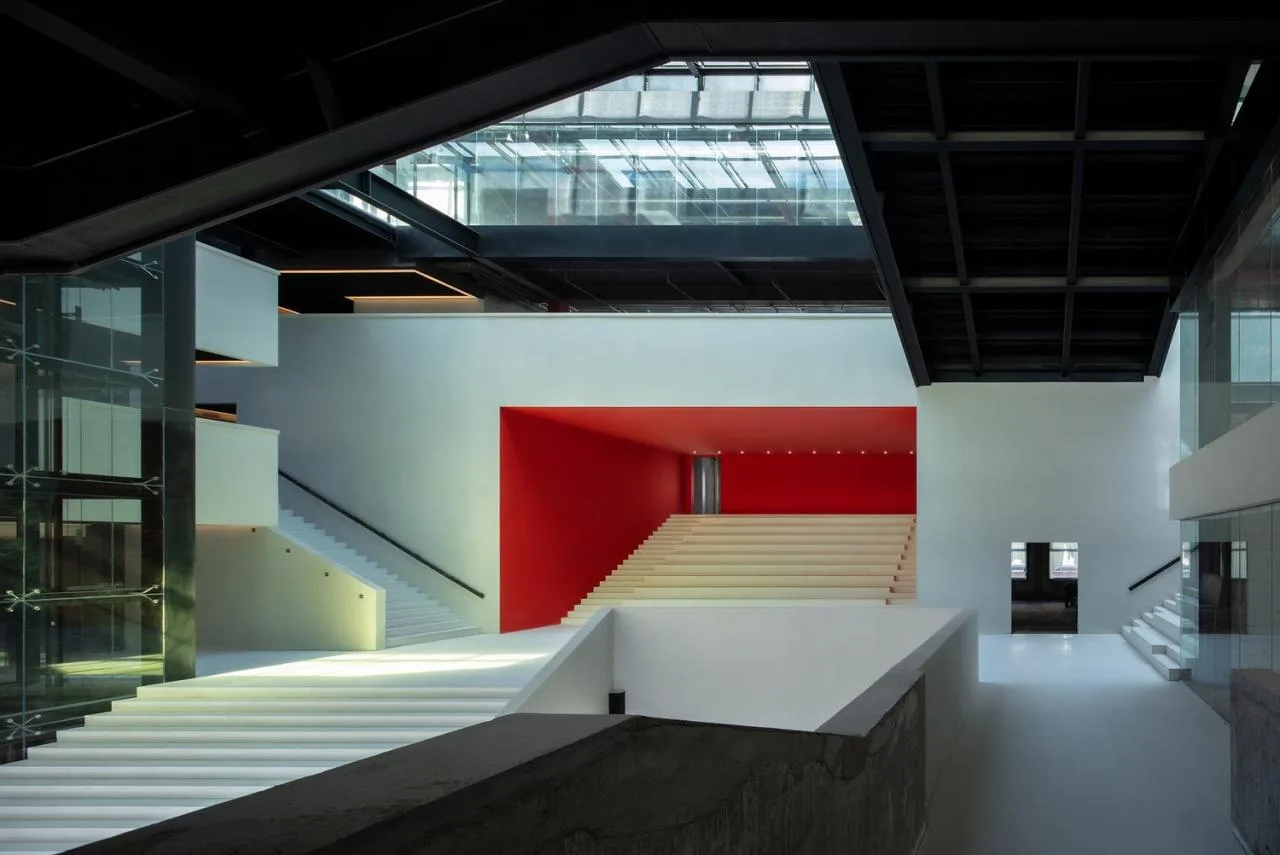
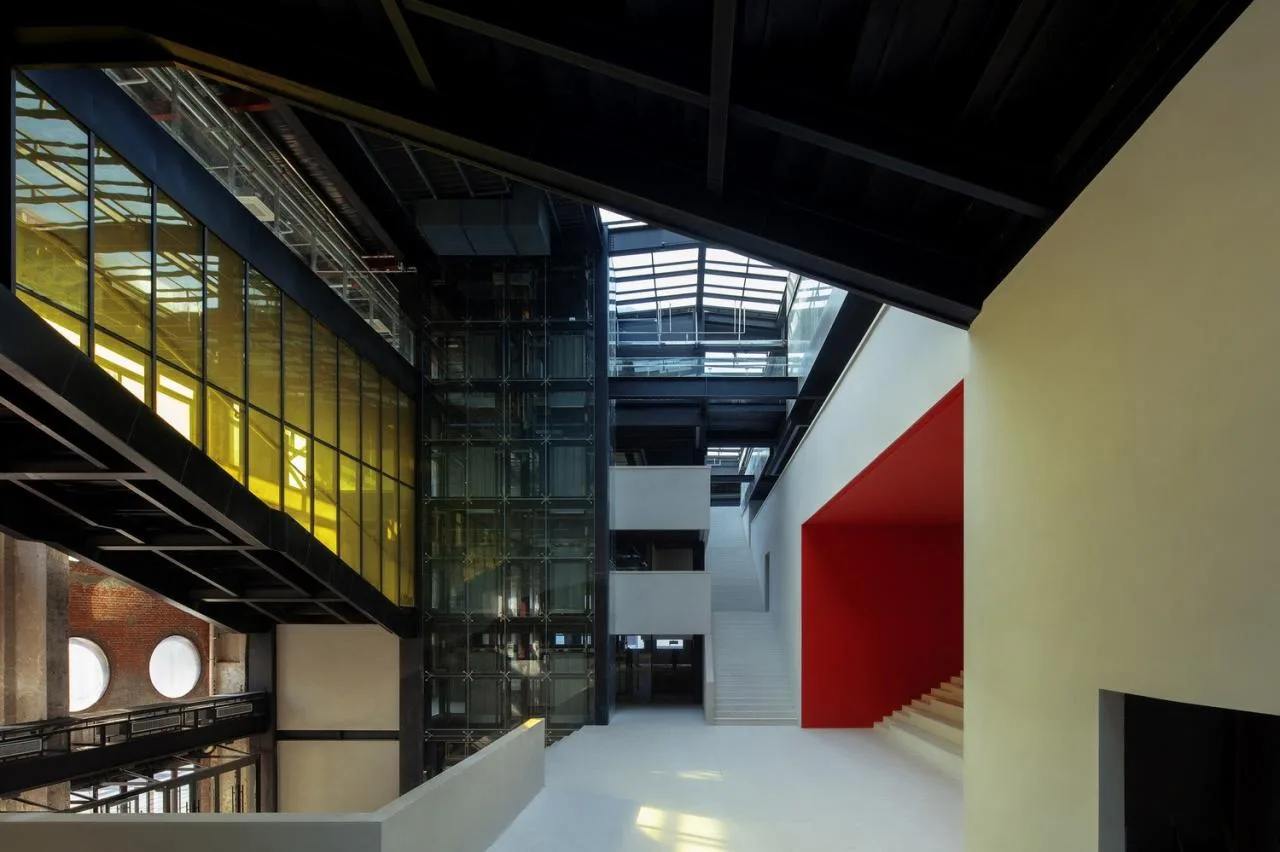
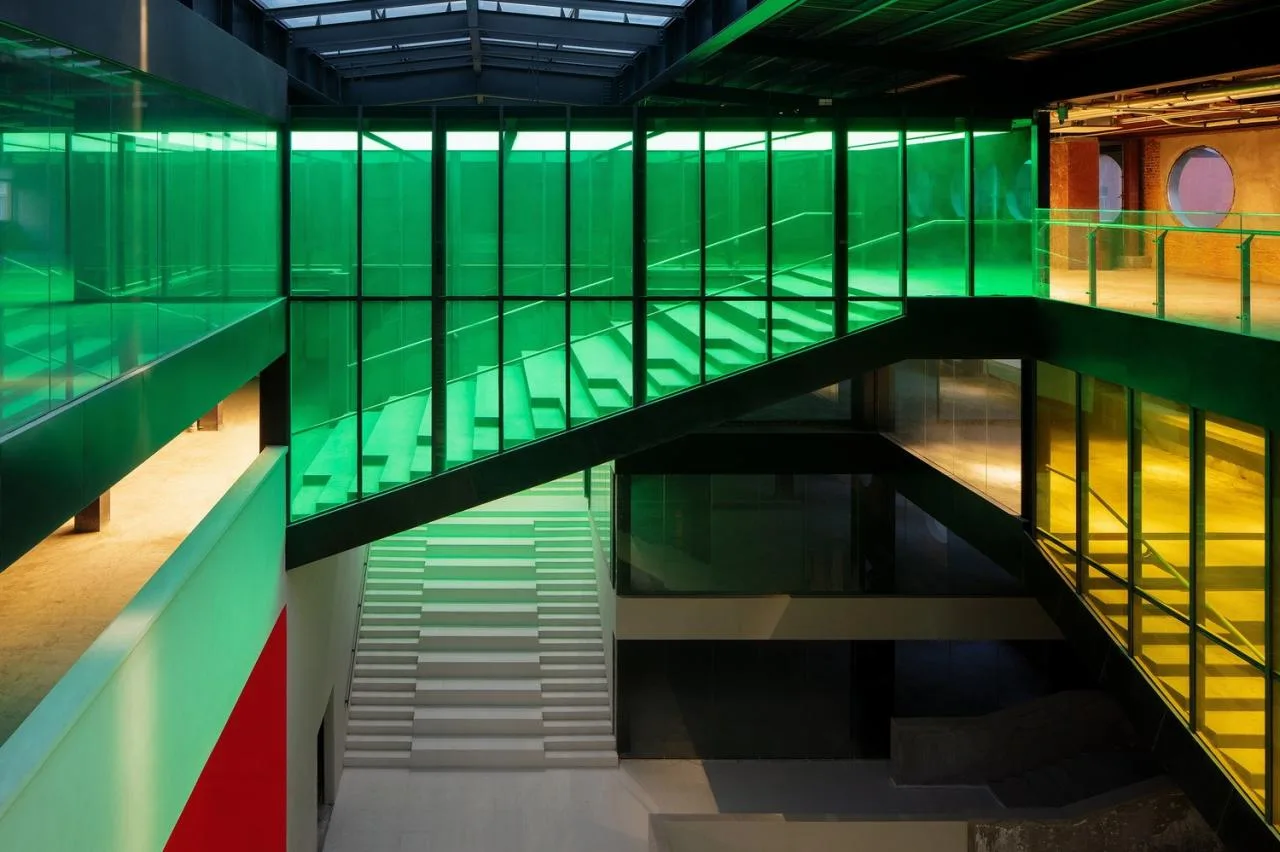
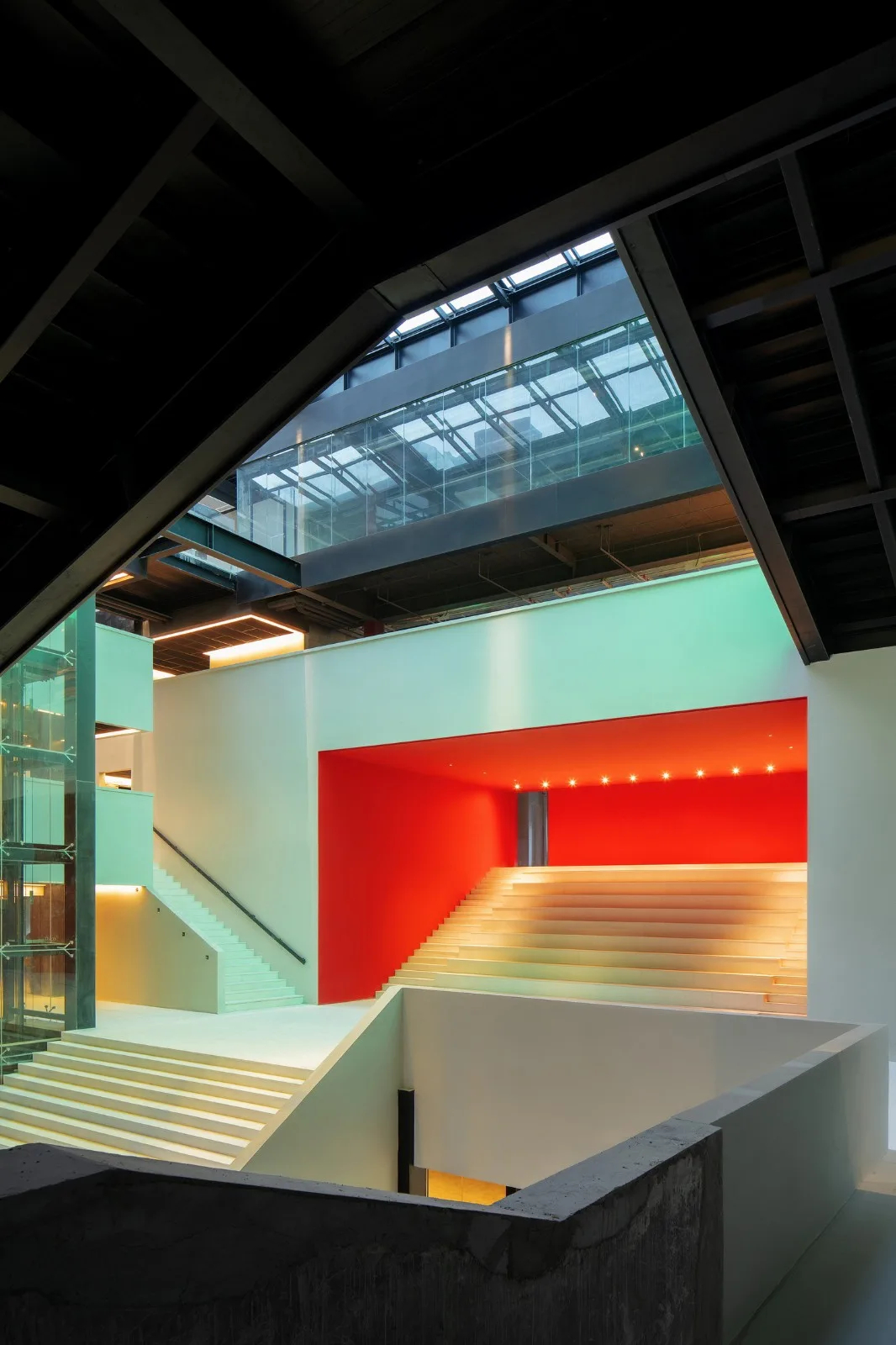
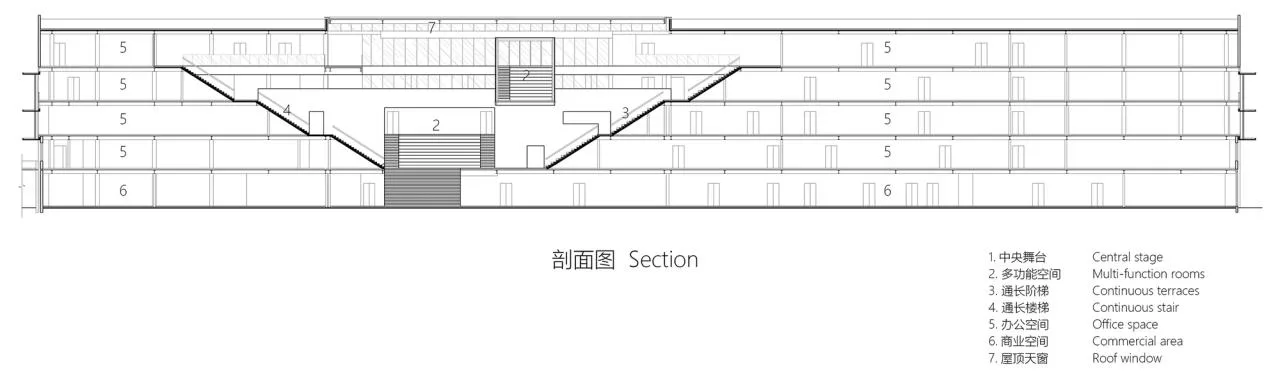
Beginning from the coal conveyor walkway that enters the interior, the architect expanded the Sunshine Canyon embedded within the modern office space of the coal warehouse. Visitors freely explore a network of wide and narrow paths extending in all directions, looking up at the undulating steel stair bridges suspended above the canyon, surrounded by vibrant colors and shifting light.
This three-dimensional, interwoven stage hosts a variety of cultural activities, where individuals can enjoy moments of relaxation and discovery.
Cross Border Jinhui Garden adopts an organic, phased renewal strategy designed for the post-pandemic era. Spatial transformations will be carried out in stages, with business operations gradually evolving and adapting over time.
The park’s ground landscape features large expanses of gravel and concrete block trails that serve as industrial relics, forming rich outdoor activity zones. The architectural complex is coated with a specially formulated dark red, coarse-textured finish that changes in depth and intensity with shifting light.
At night, red lighting illuminates the chimneys, harmonizing with the overall warm atmosphere of the park. This color scheme symbolizes the flames of the coal-fired era of the past while embodying contemporary hopes for the rebirth of prosperity and economic recovery.
Project Drawings
Project Information
Architect: On Site Construction
Area: 33,000 m²
Project Year: 2023
Photographer: Summer Solstice
Lead Architect: Li Ji
Project Architects: Wang Wendi, Ye Qiang
Design Team: Li Ji, Wang Wendi, Ye Qiang, Zhang Hao, Chen Sicong, Wang Jing, Xiao Di
Client: Jinhe Tongchang (Beijing) Commercial Management Co., Ltd.
Key Lighting Design: Zhang Xin Studio, School of Architecture, Tsinghua University
Engineering Design Coordination: Zhongzhu Tianhe Architectural Design Co., Ltd.
Landscape Design Coordination: Atras (Beijing) Planning and Design Co., Ltd.
Construction Contractor: China Construction 13th Engineering Bureau Co., Ltd.
Location: Beijing















Must log in before commenting!
Sign Up