
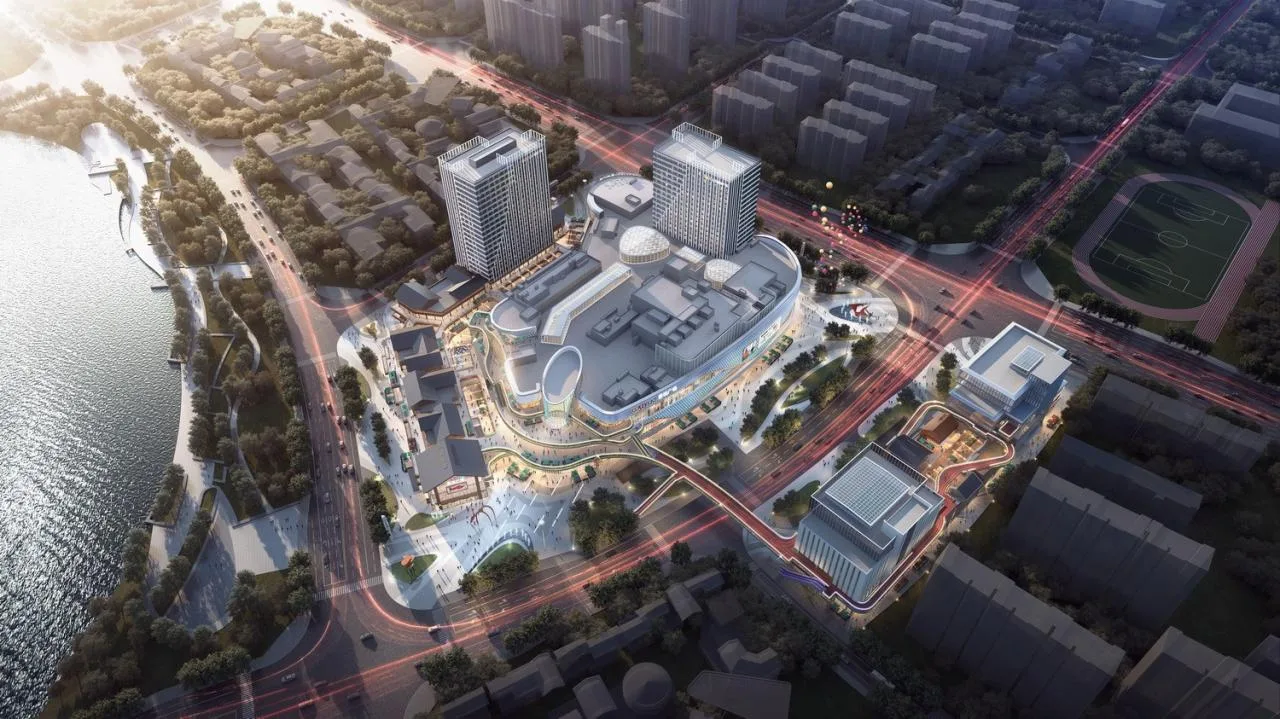
— From “creating a place” to “creating a journey”.
01 Design Background
Tai’an City, named after Mount Taishan, symbolizes peace and safety for its people. As a nationally recognized historical and cultural city, the project is situated in the comprehensive service center of Mount Taishan District. The area benefits from developed transportation links and complete residential and supporting facilities; however, it lacks large-scale commercial complexes. With regional plans aiming to “create new cultural and leisure hotspots” and “develop a livable city surrounded by water and mountains,” there is an urgent need to introduce large-scale commercial enterprises to fill the existing business format gap.
02 Project Challenges
The site lies north of the Panhe Riverside Scenic Area and south of the Nanguan Street Historical and Cultural Axis, where historical, cultural, and ecological communities converge. The project area is split into two plots by a major urban road: the western plot covers approximately 11,500 square meters, while the eastern plot spans around 47,000 square meters. The total planned construction area reaches 267,000 square meters.
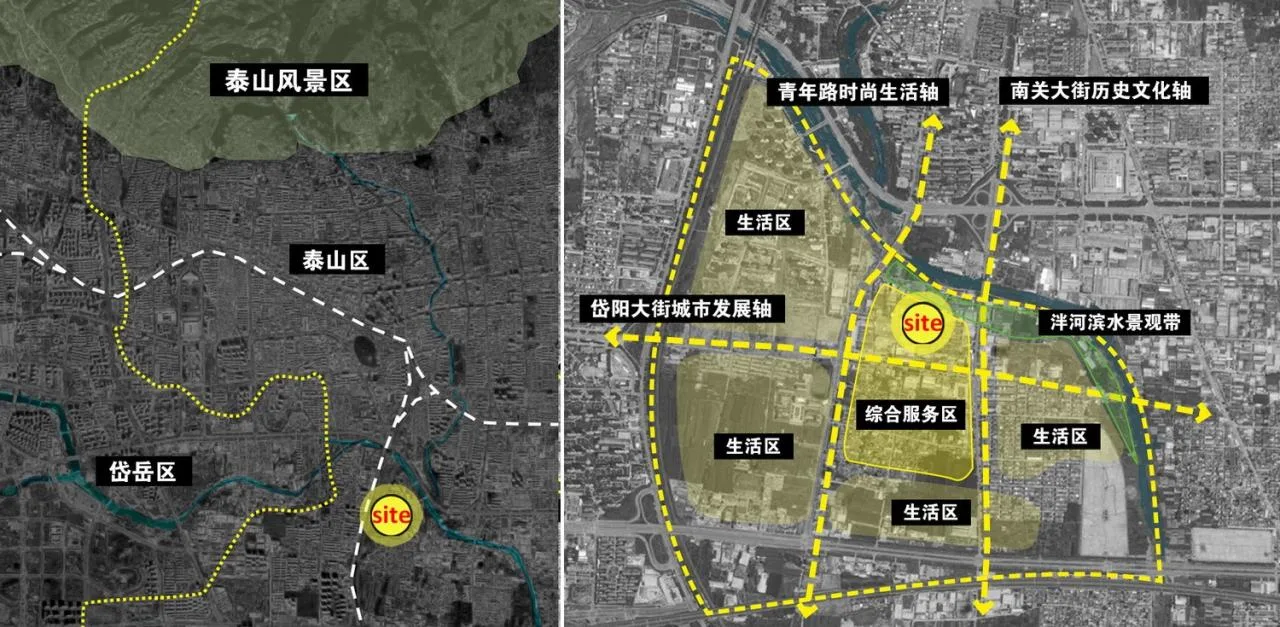
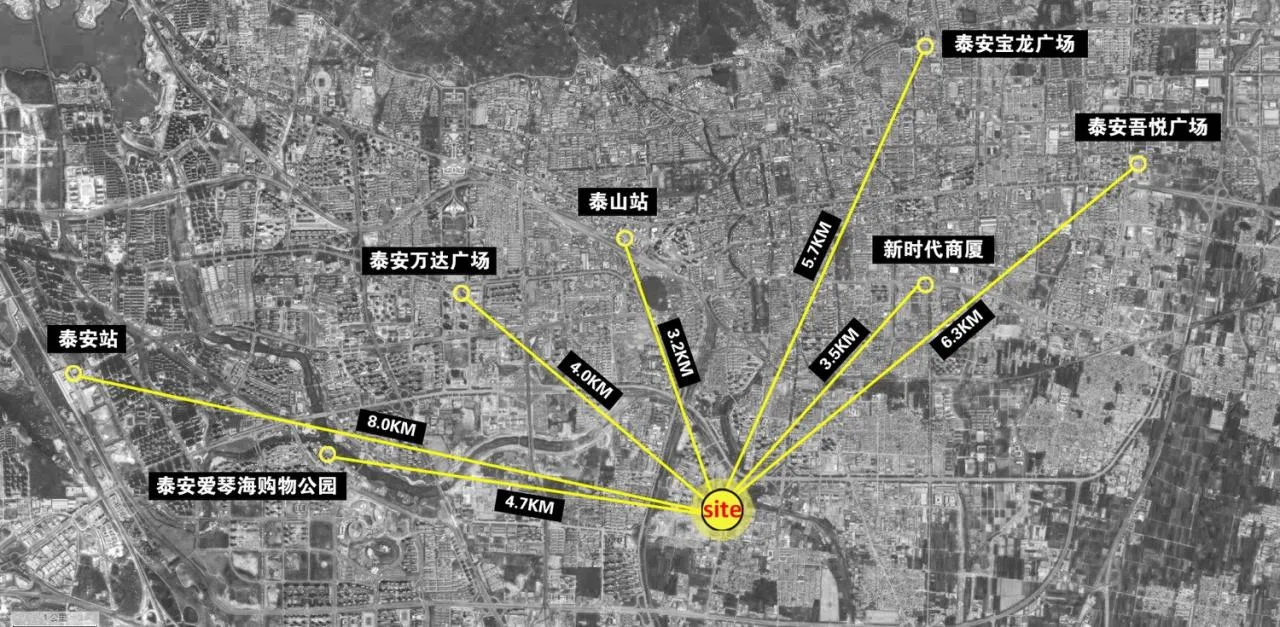
Key challenges include:
- How to seamlessly connect multiple dimensions in both plan and space to activate the entire site.
- How to develop complementary business models despite complex conditions such as large volume, dynamic flows, split plots, and high plot ratios.
- How to enhance the shopping experience within a relatively compact underground space while effectively showcasing retail businesses.
- How to craft a unique urban spatial experience that reflects Tai’an’s mountainous and watery landscape.
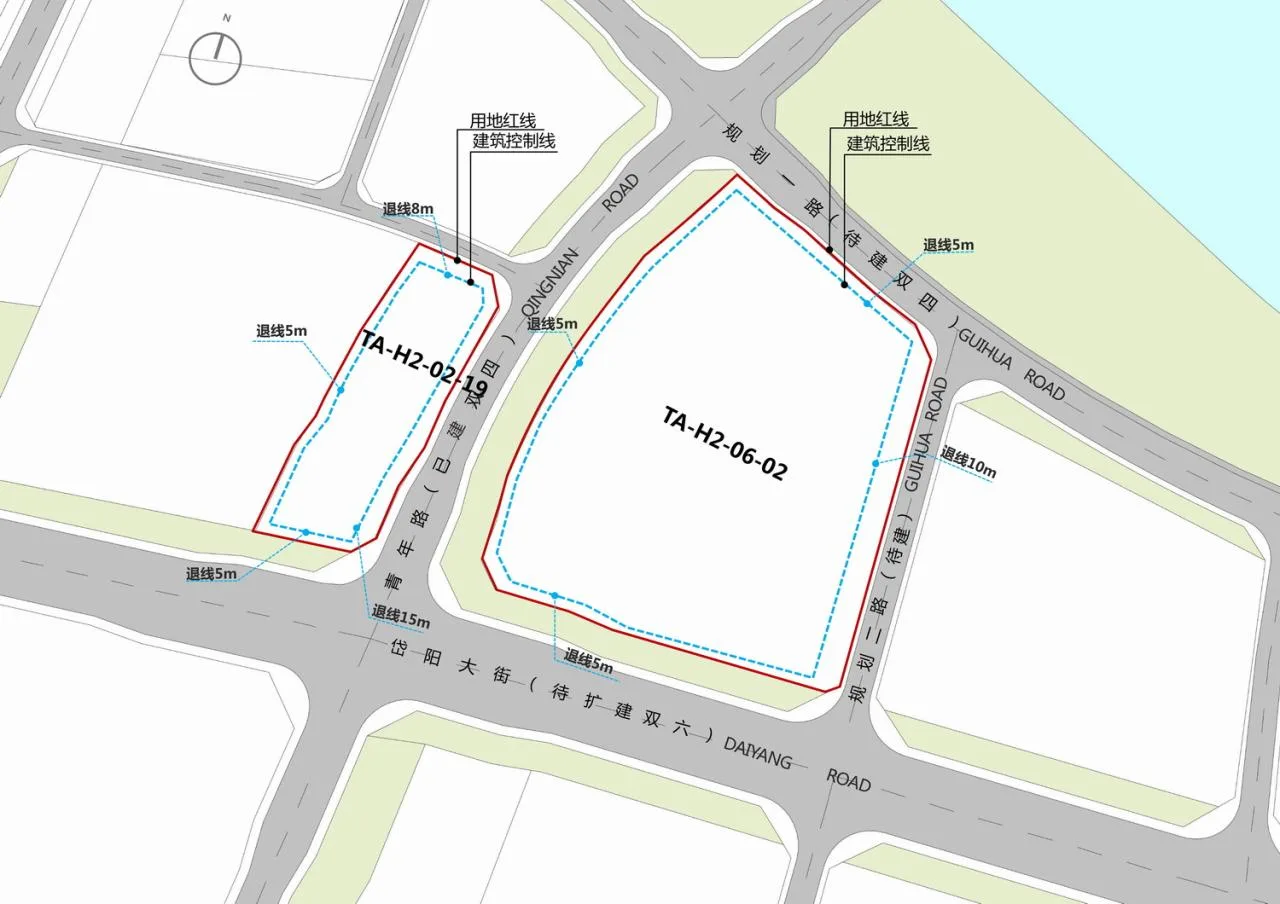
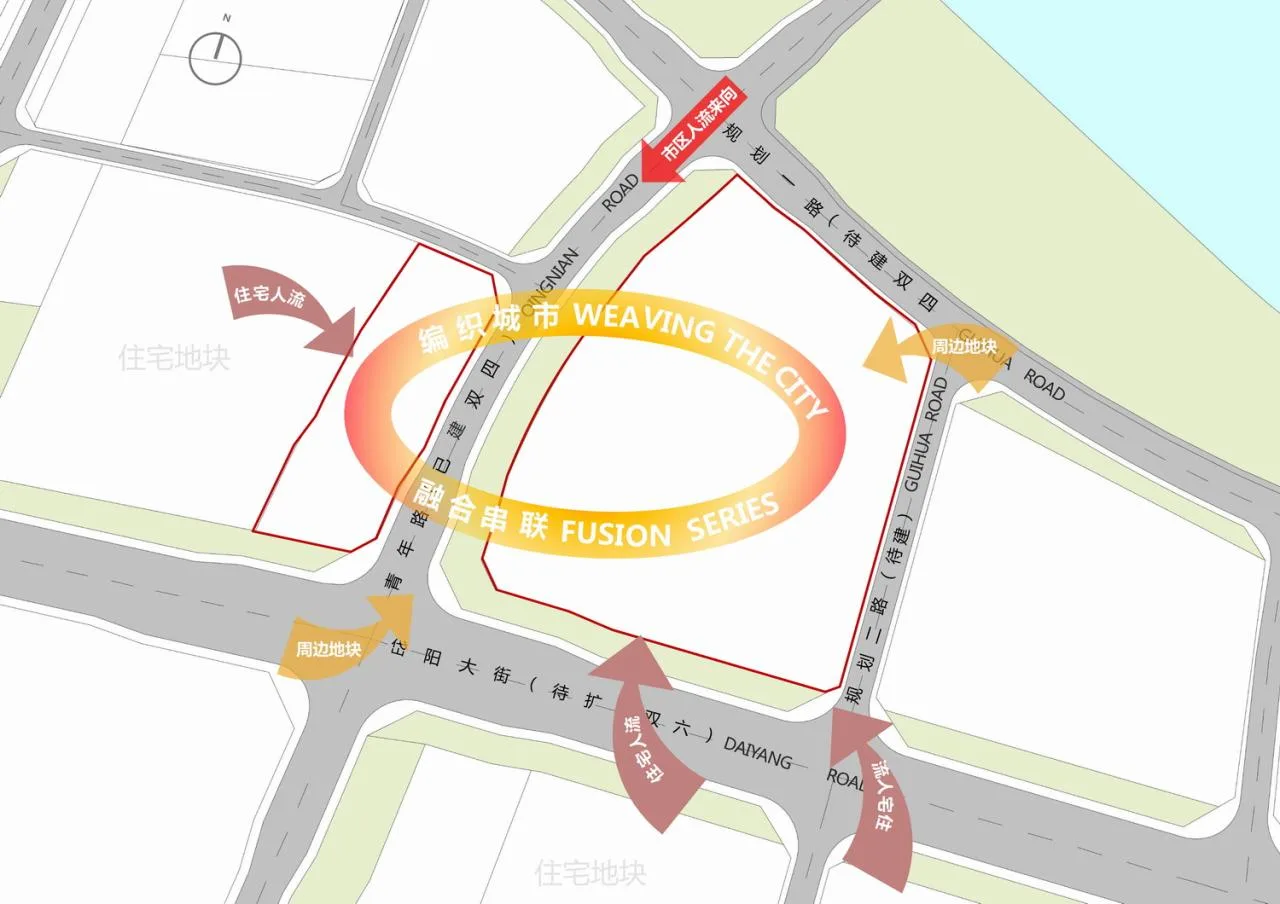
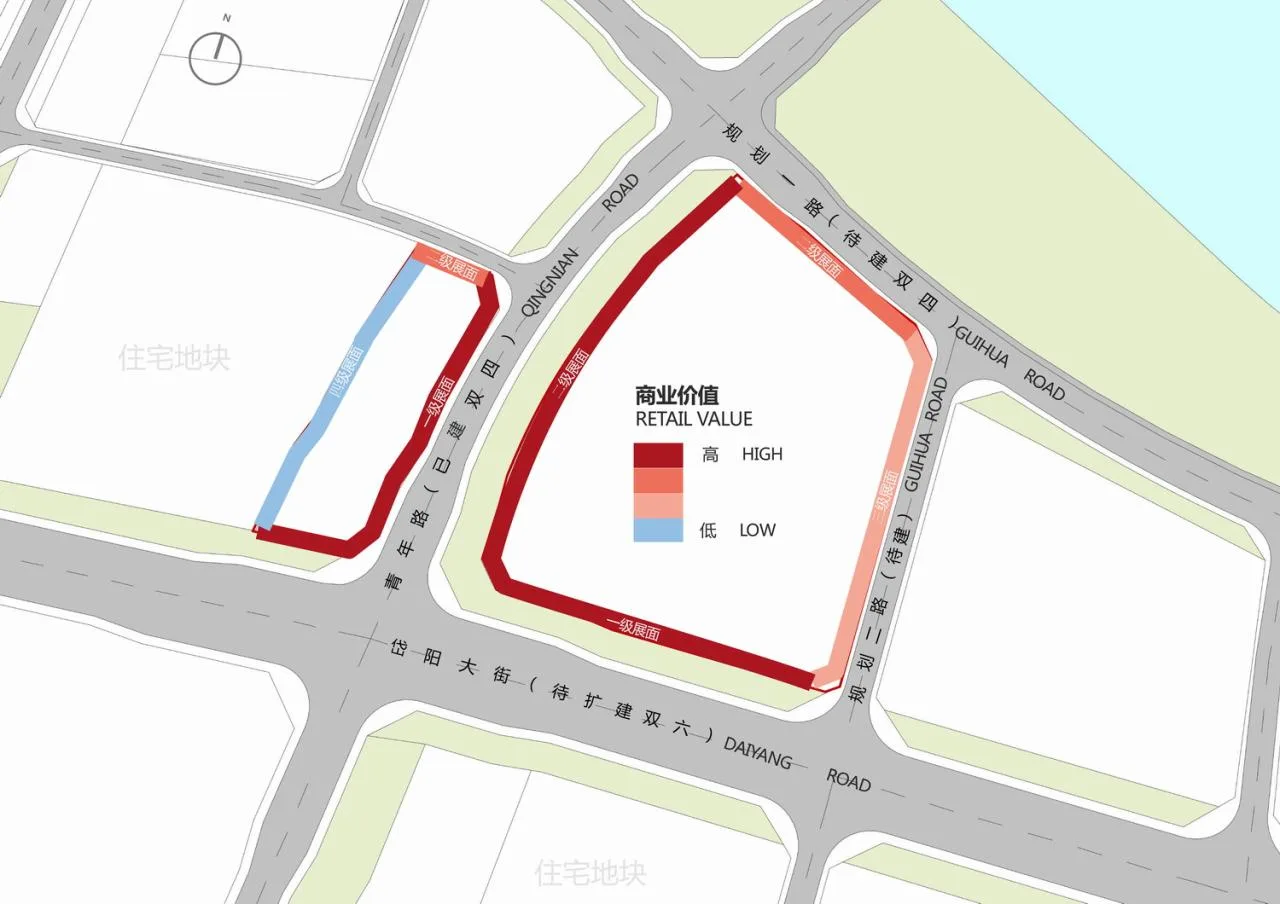
Achieving the right balance between commercial viability, spatial experience, functionality, and architectural aesthetics is essential to unlocking the project’s full potential.
03 Design Strategy: The “Third Space” of Mixed-Use Urban Development
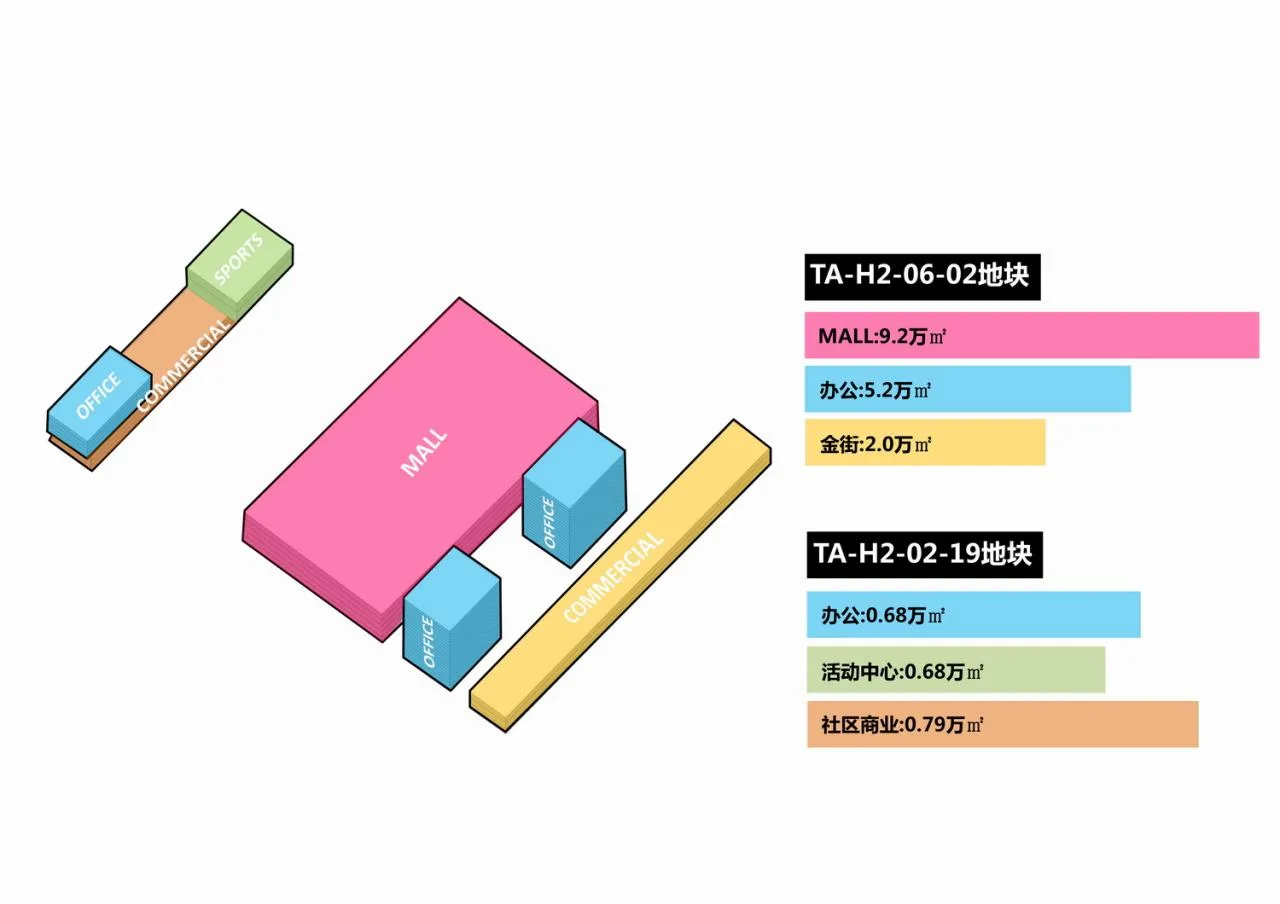
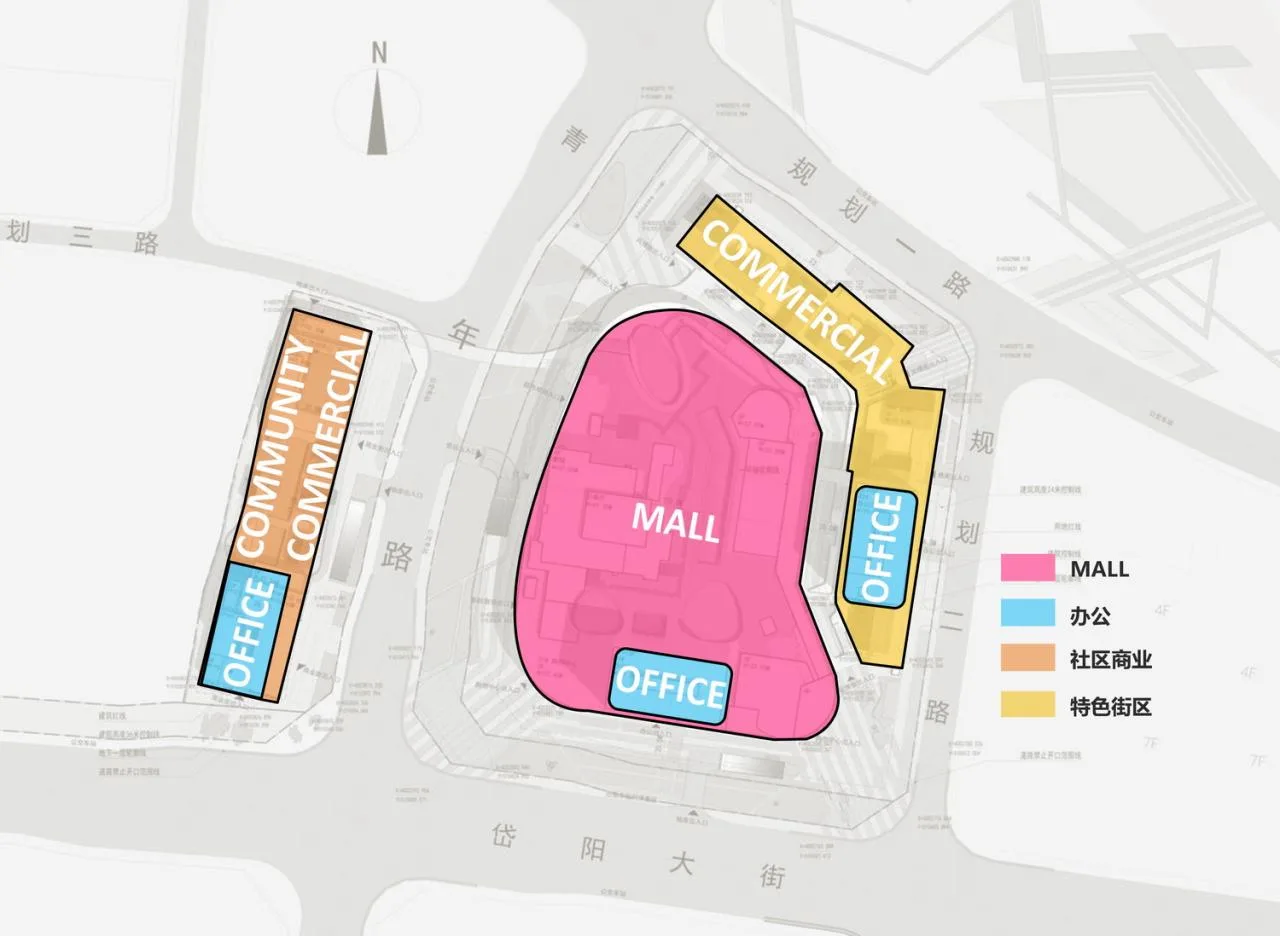
To address these challenges, the design team developed differentiated urban spaces through varied product positioning, creating a diverse mixed-use complex composed of retail boxes, office blocks, and large-scale businesses across the two plots.
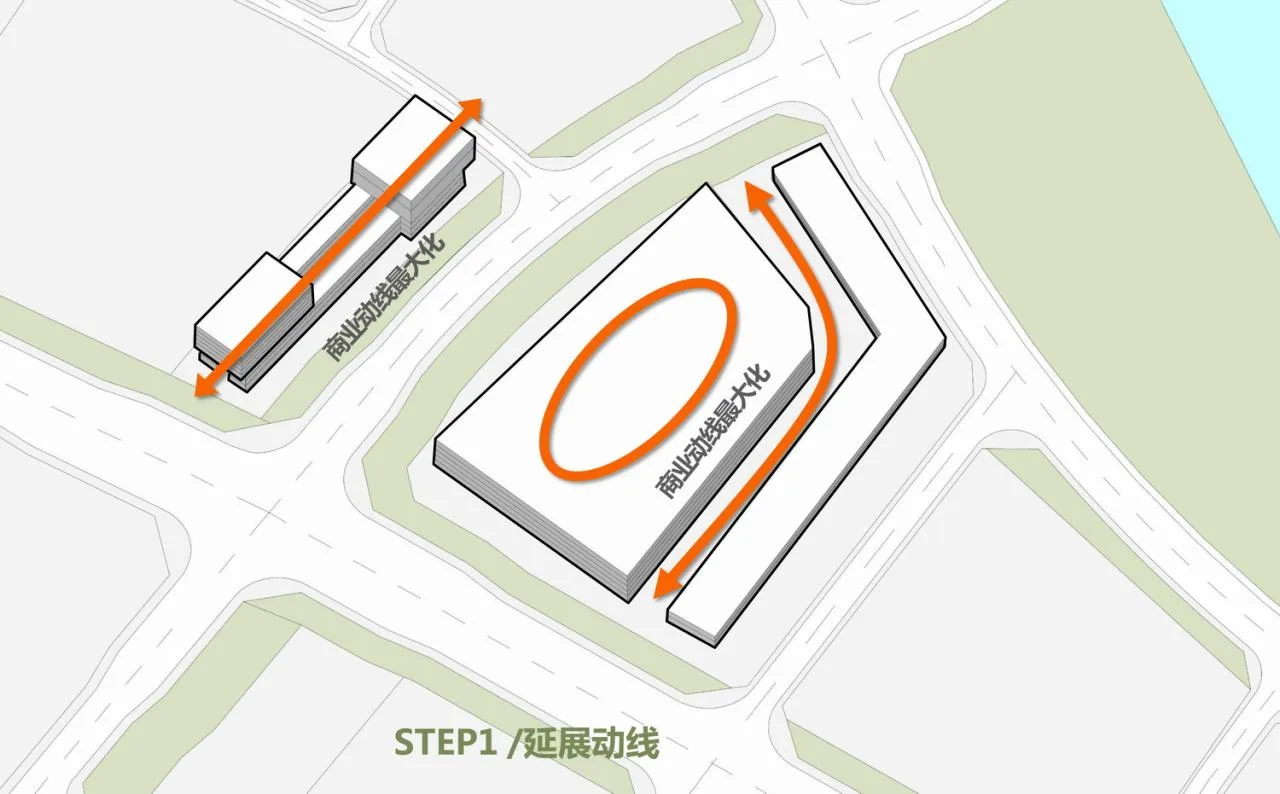
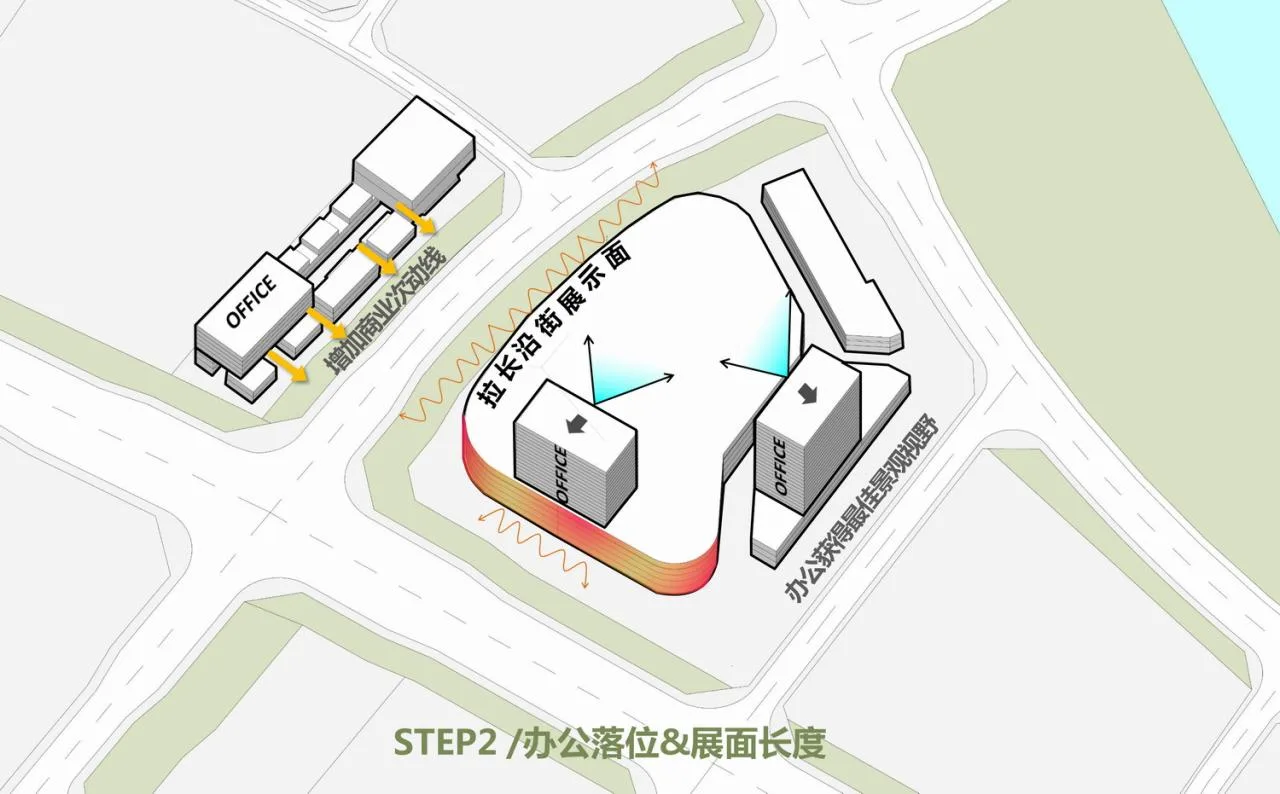
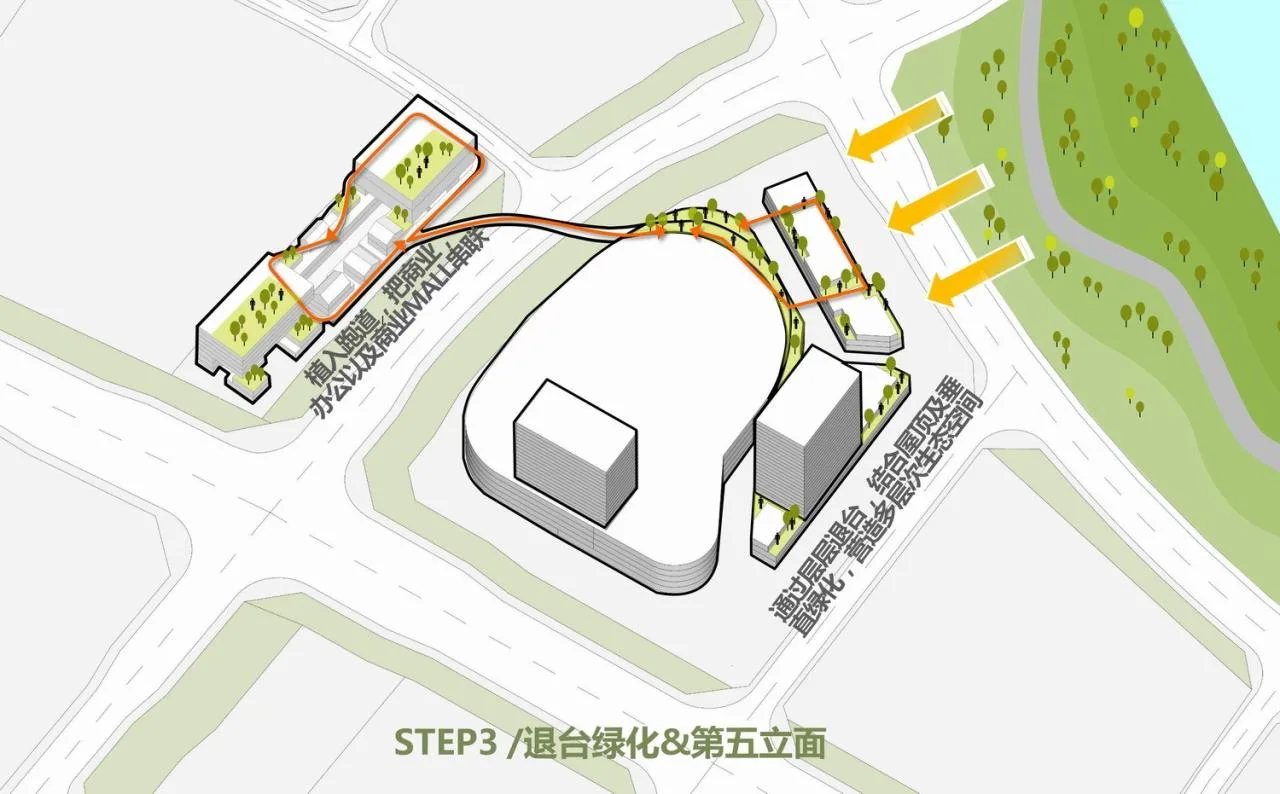
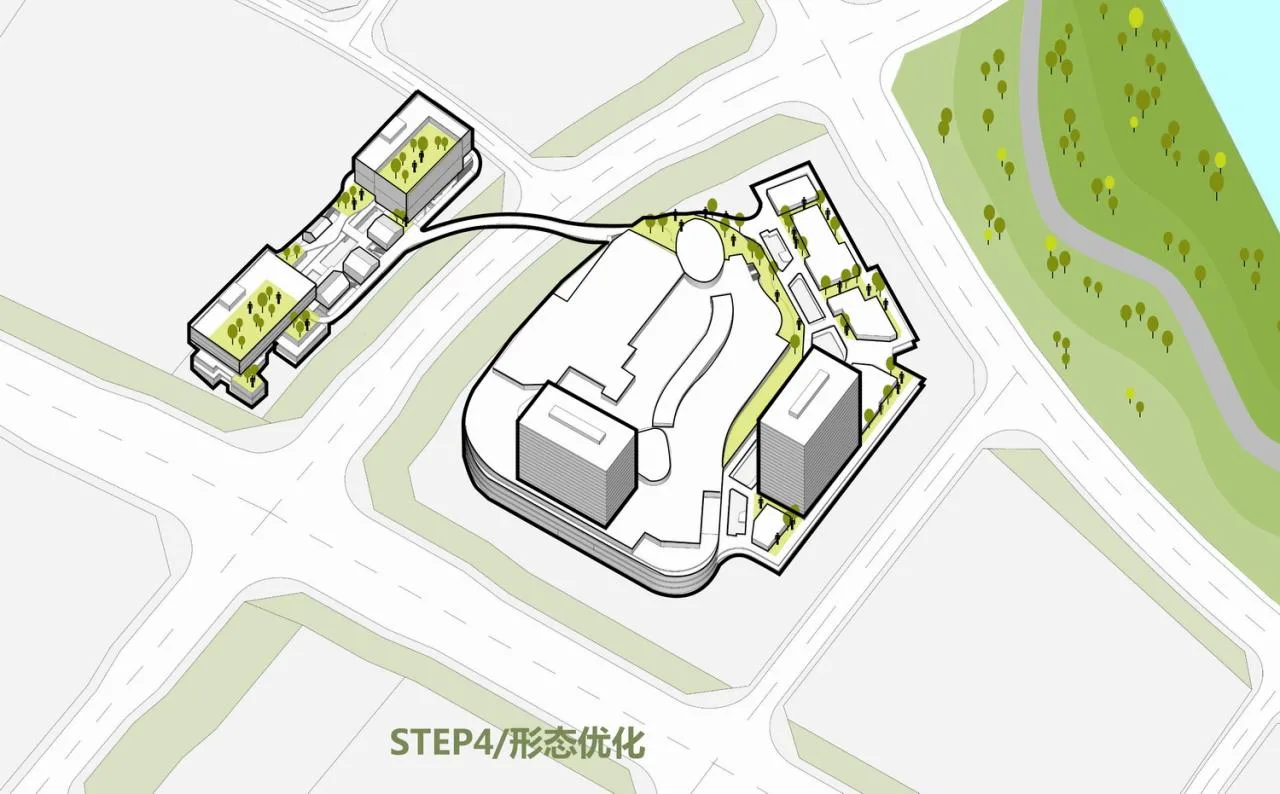
On the eastern plot, a circular shopping center and commercial block form a premium urban showcase facing Daiyang Street and Qingnian Road, the area’s most commercially valuable corridors. The riverside’s northern edge steps back gradually, maximizing landscape views while blurring the boundaries between indoor and outdoor spaces and the ecological surroundings.
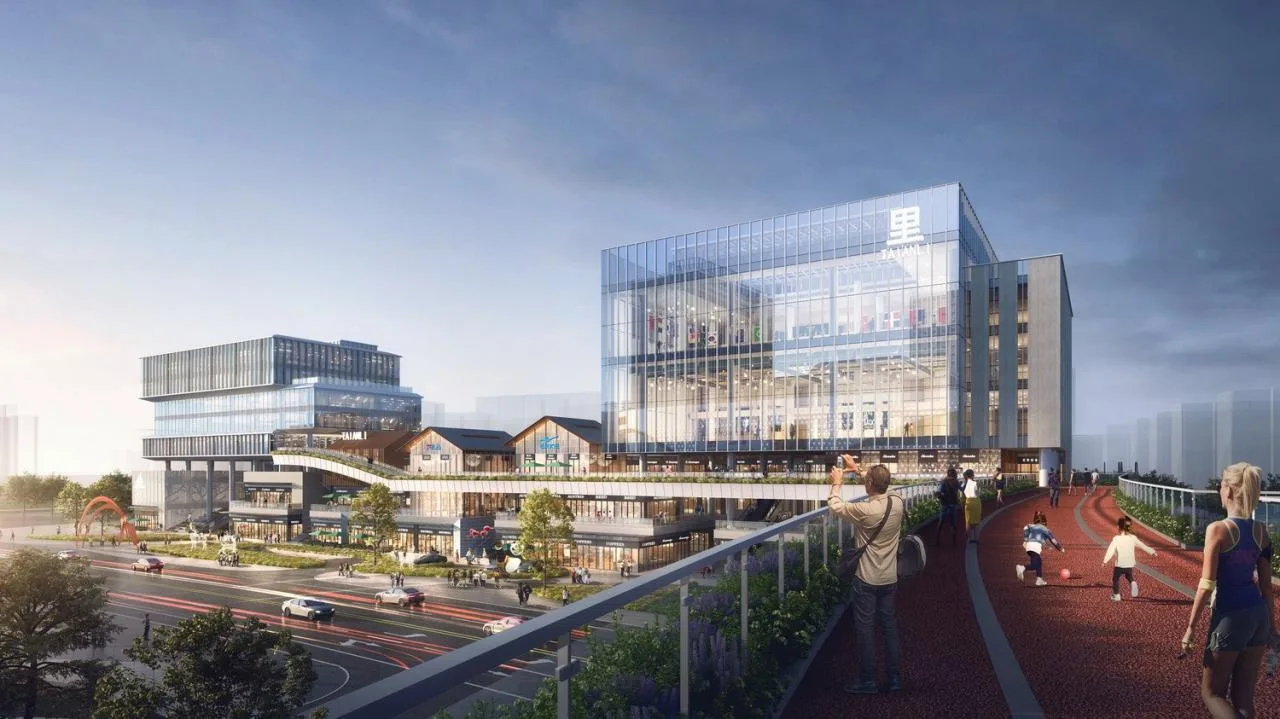
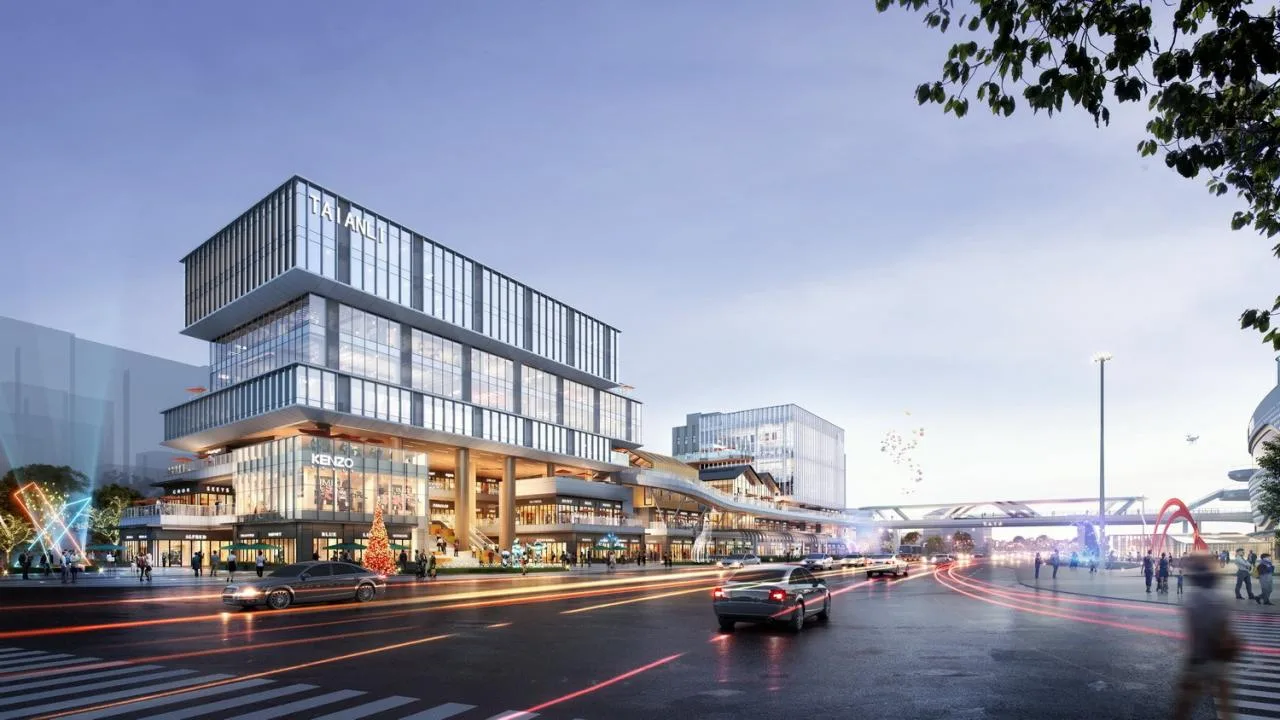
The western “Tai’anli” plot breaks down commercial, office, and sports functions into distinct blocks. These interact with shopping centers via running tracks and cross-street rainbow bridges, collectively creating a composite urban “third space”—a vibrant environment outside of work and home—and an innovative ecological integration of urban functions.
04 Road System: Multi-Dimensional Connectivity with Open Access
The design team envisioned the project not as a closed shopping mall but as an accessible, open, and ecologically interactive public space. To minimize traffic impact, parking garage entrances and exits are positioned close to city roads.
The entire complex is linked by a pedestrian network, truly making it a “city living room” for the public.
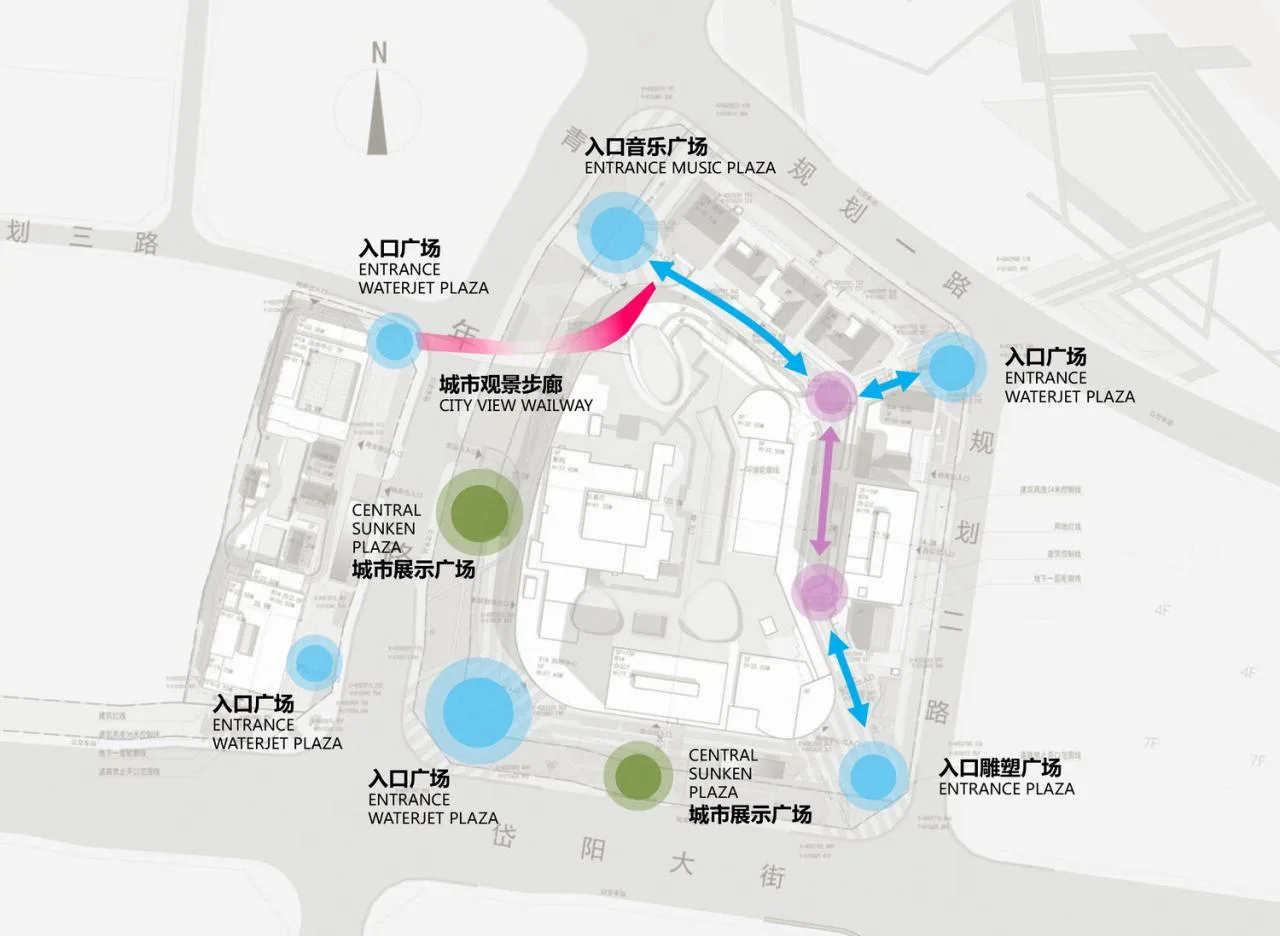
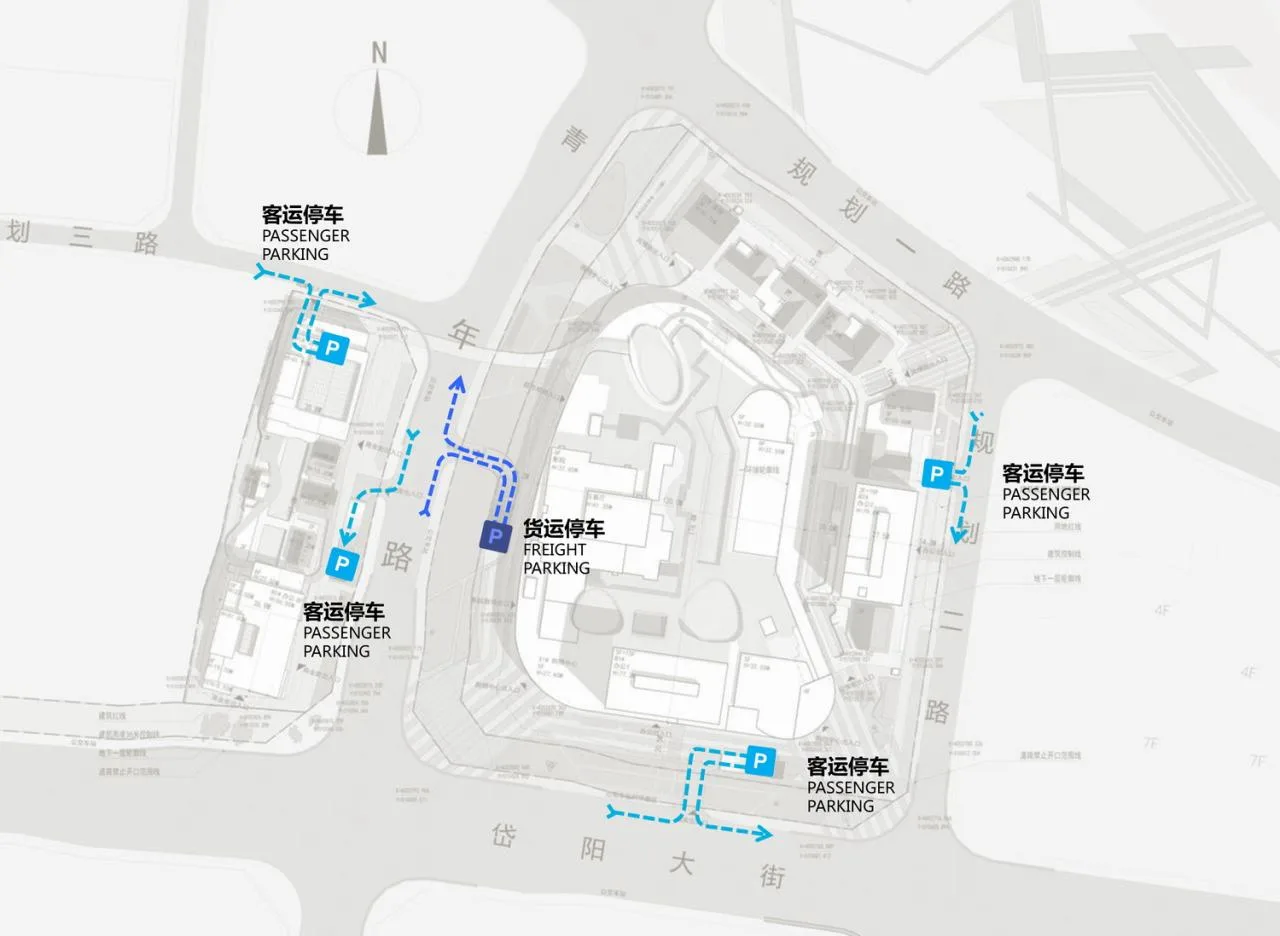
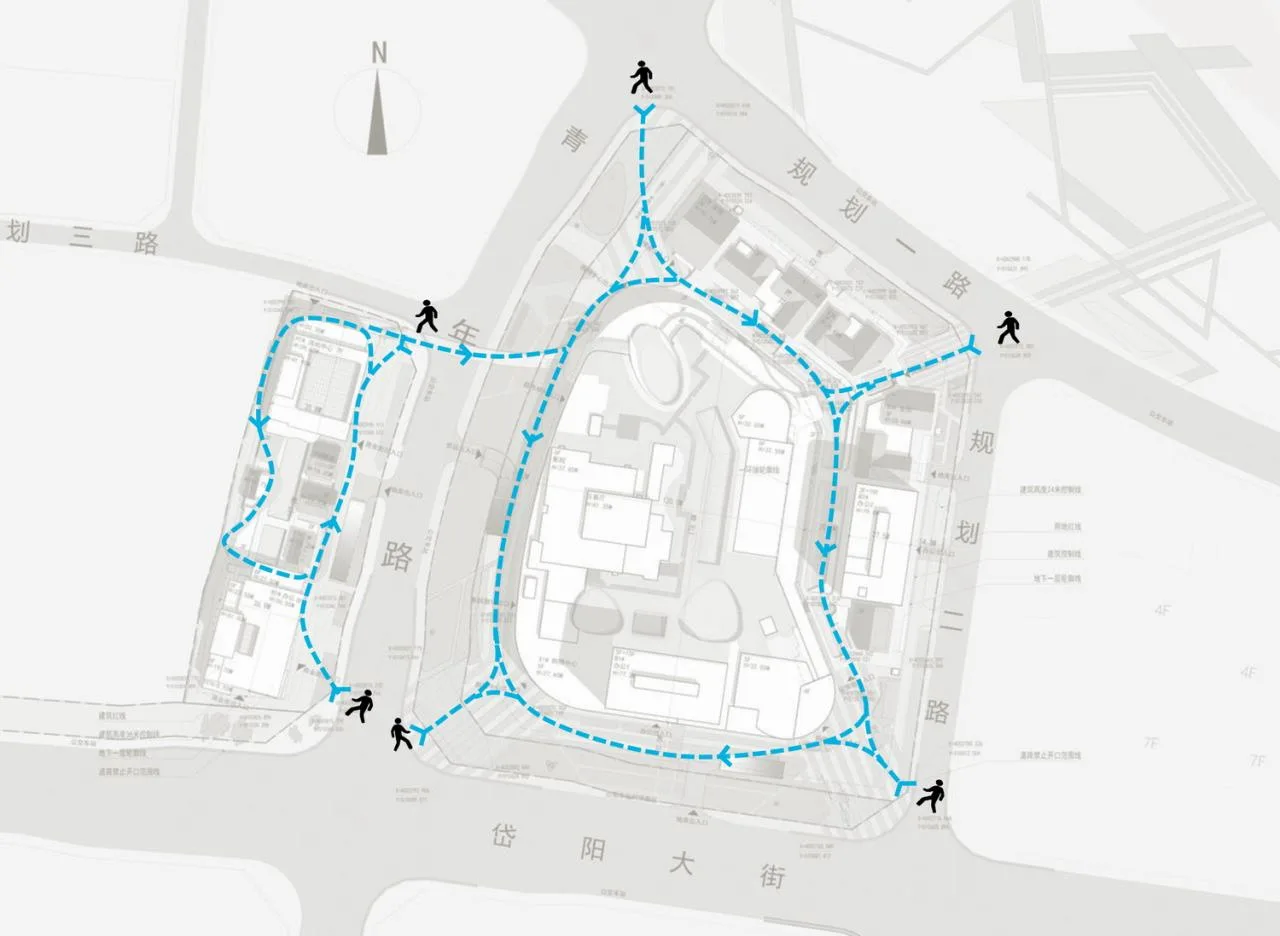
Based on pedestrian flow patterns, main entrance plazas are positioned at the northwest and southwest corners of the shopping center plot, with secondary entrances at the northeast and southeast corners. The Tai’anli plot features commercial street entrances at its northeast and southeast corners.
A cross-street rainbow bridge, along with escalators and indoor/outdoor connections, creates unique spaces on the middle and upper levels, encouraging foot traffic circulation across the complex.
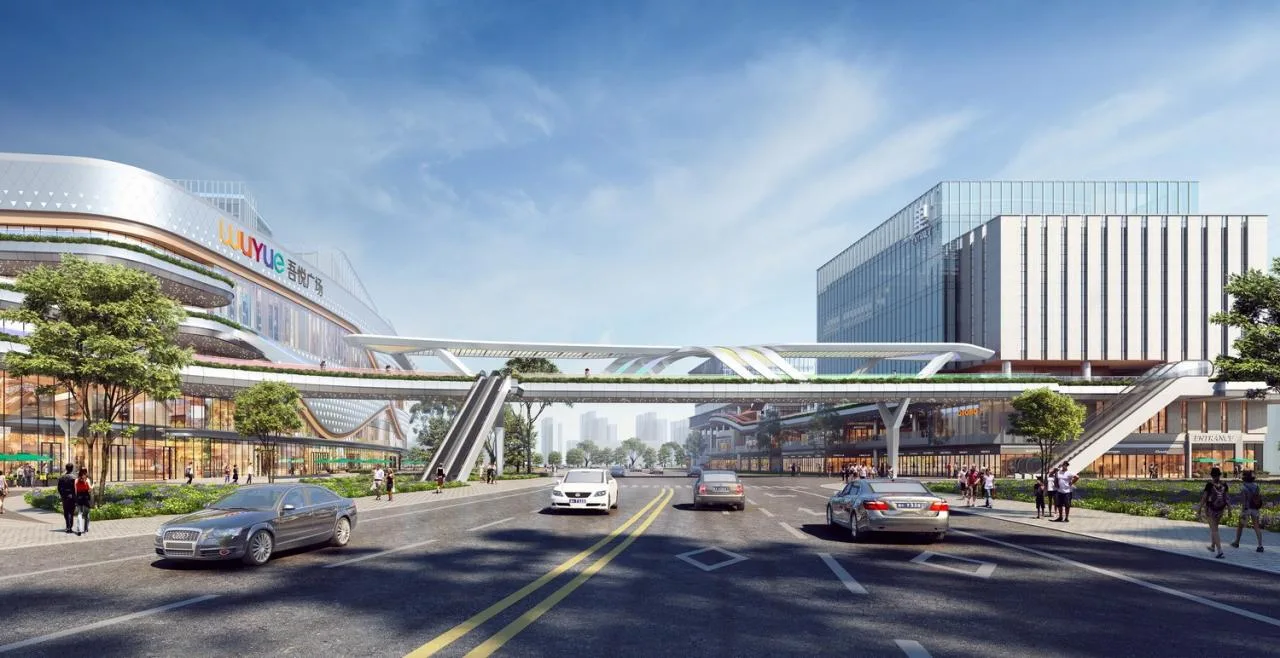
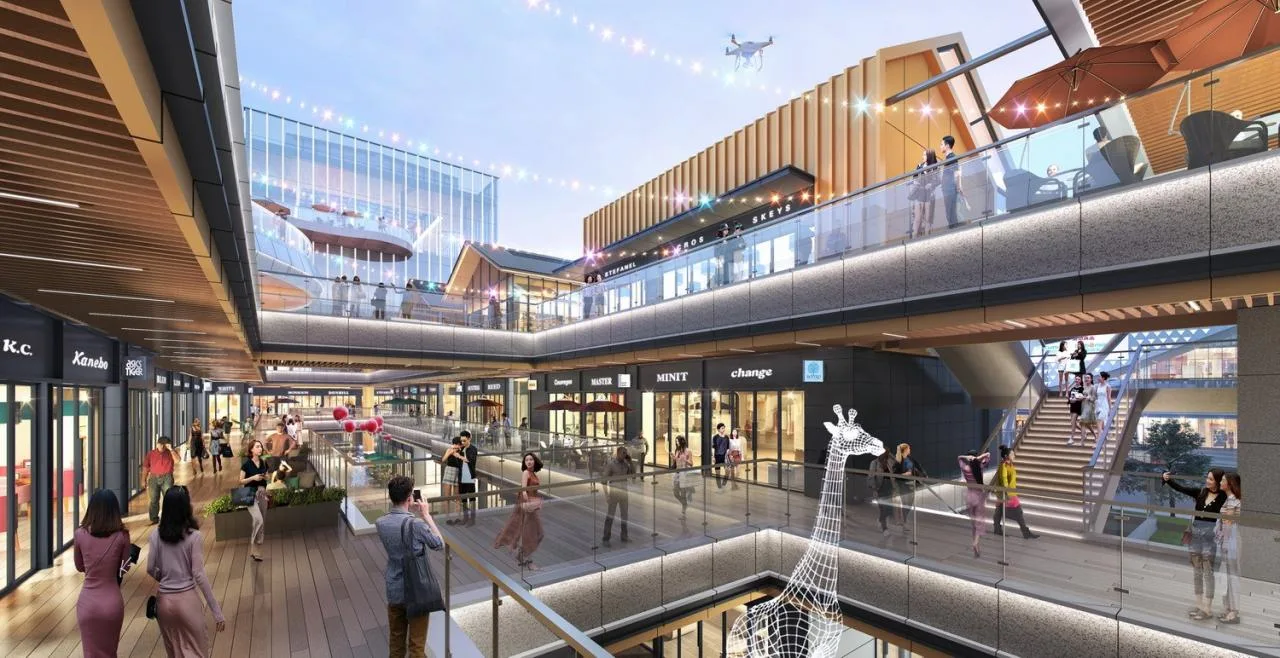
The pedestrian system integrates squares, commercial streets, and shopping centers on multiple levels, connecting indoor and outdoor retail spaces, activity areas, and landscaped zones. This multi-dimensional connectivity offers visitors an engaging and dynamic experience.
05 Facade Techniques: A Landscape Scroll
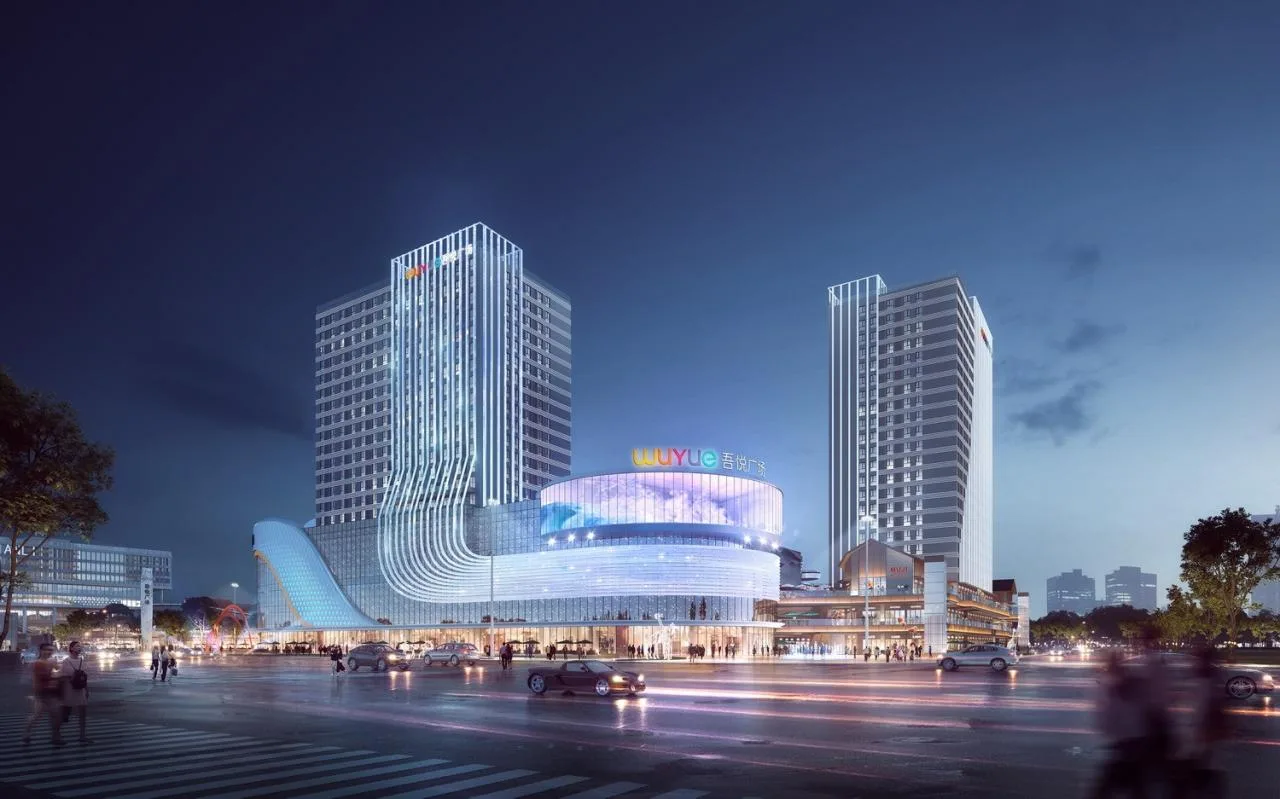
To avoid the overwhelming impact of the building’s large volume on the city and surrounding neighborhoods, the design draws inspiration from Tai’an’s natural and cultural heritage. Winding, undulating mountain-like curves soften building edges at street corners and urban interfaces, presenting a more approachable and inclusive urban image.
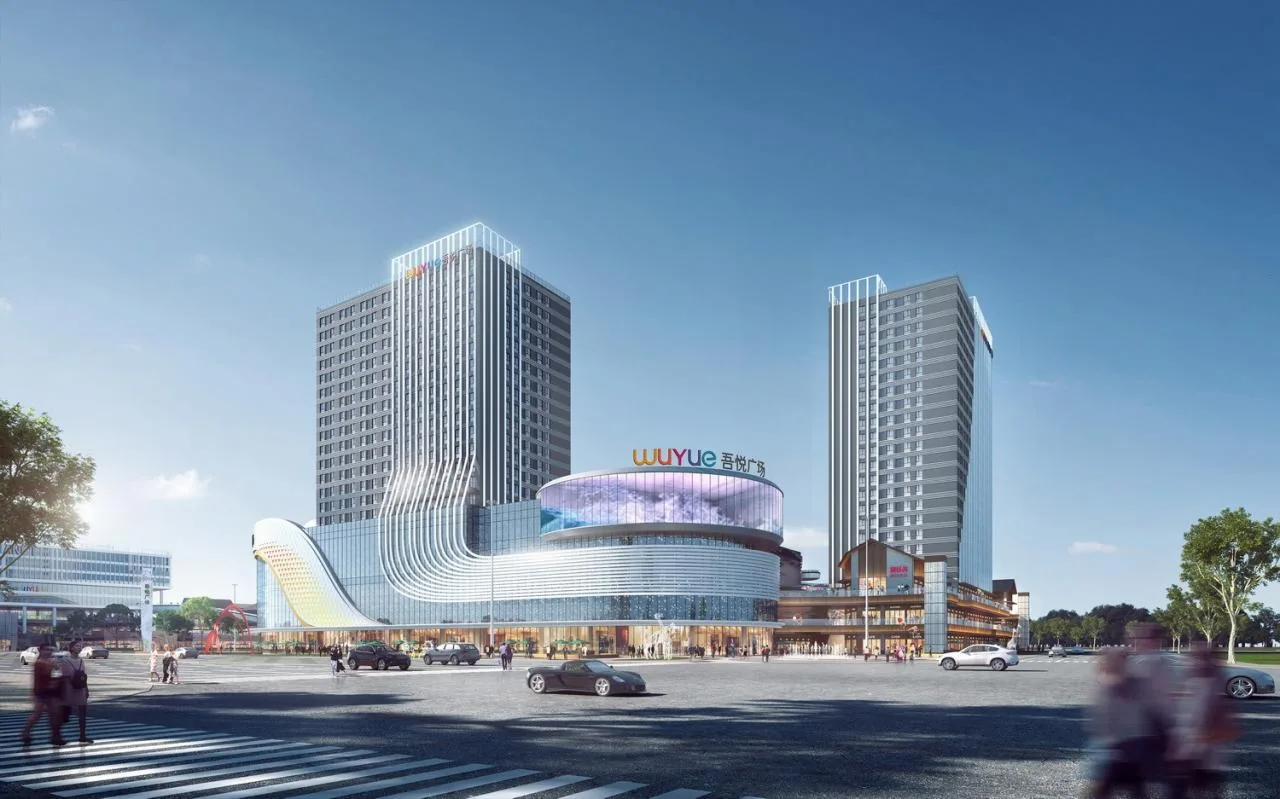
Flowing decorative lines emulate waterfalls cascading amidst towering mountains, balancing softness with strength and contemporary style.
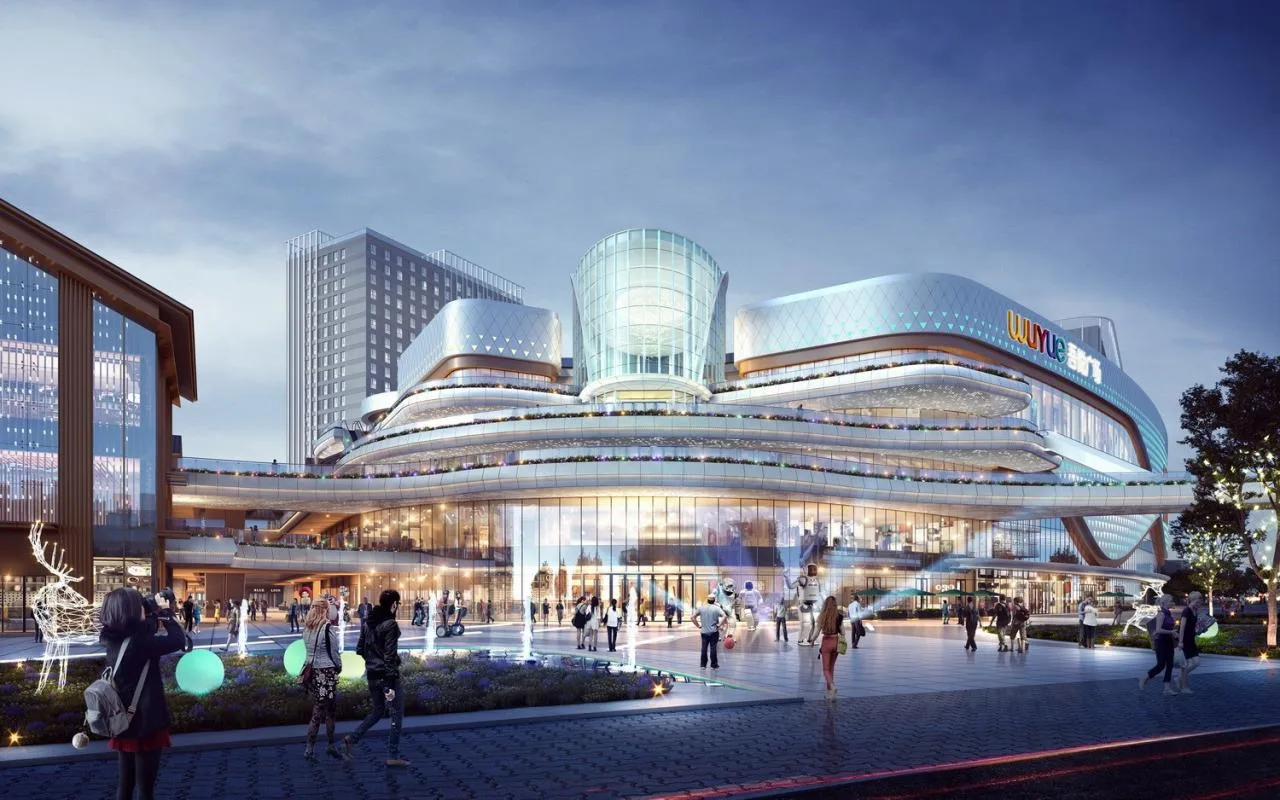
The waterfront facade steps back gradually, softening the building’s mass while creating inviting outdoor terraces and extending ecological landscapes to each level.
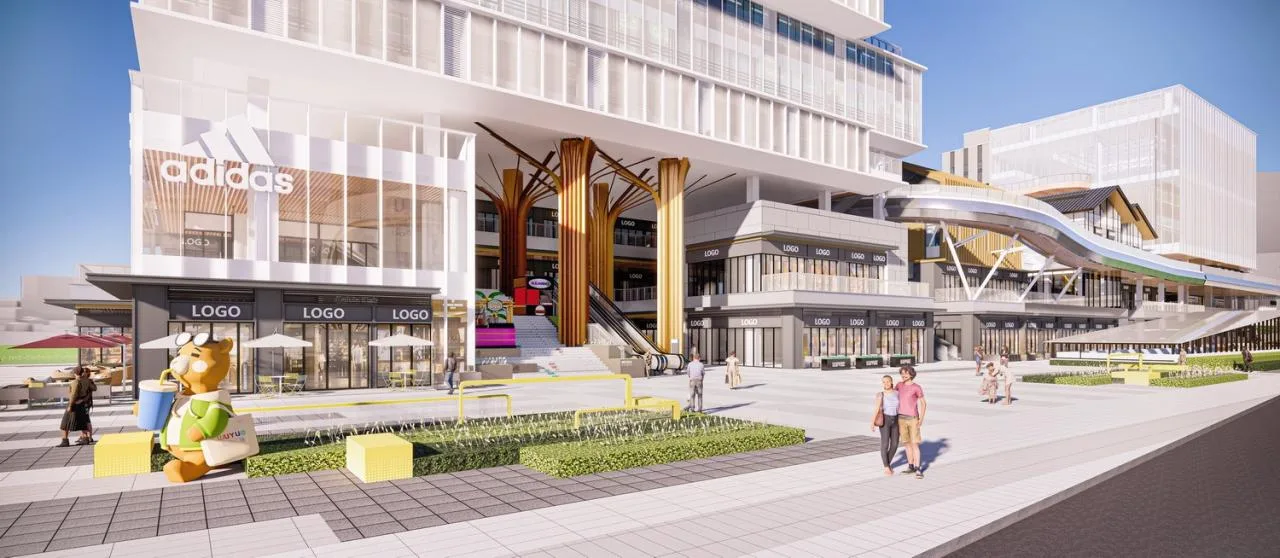
The commercial district and Tai’anli plot interweave traditional streets, alleys, and courtyards in a staggered layout. Uneven sloping roofs arranged rhythmically create a vibrant atmosphere that blends traditional architectural techniques with modern shopping centers and office towers, forming a cohesive and dynamic whole.
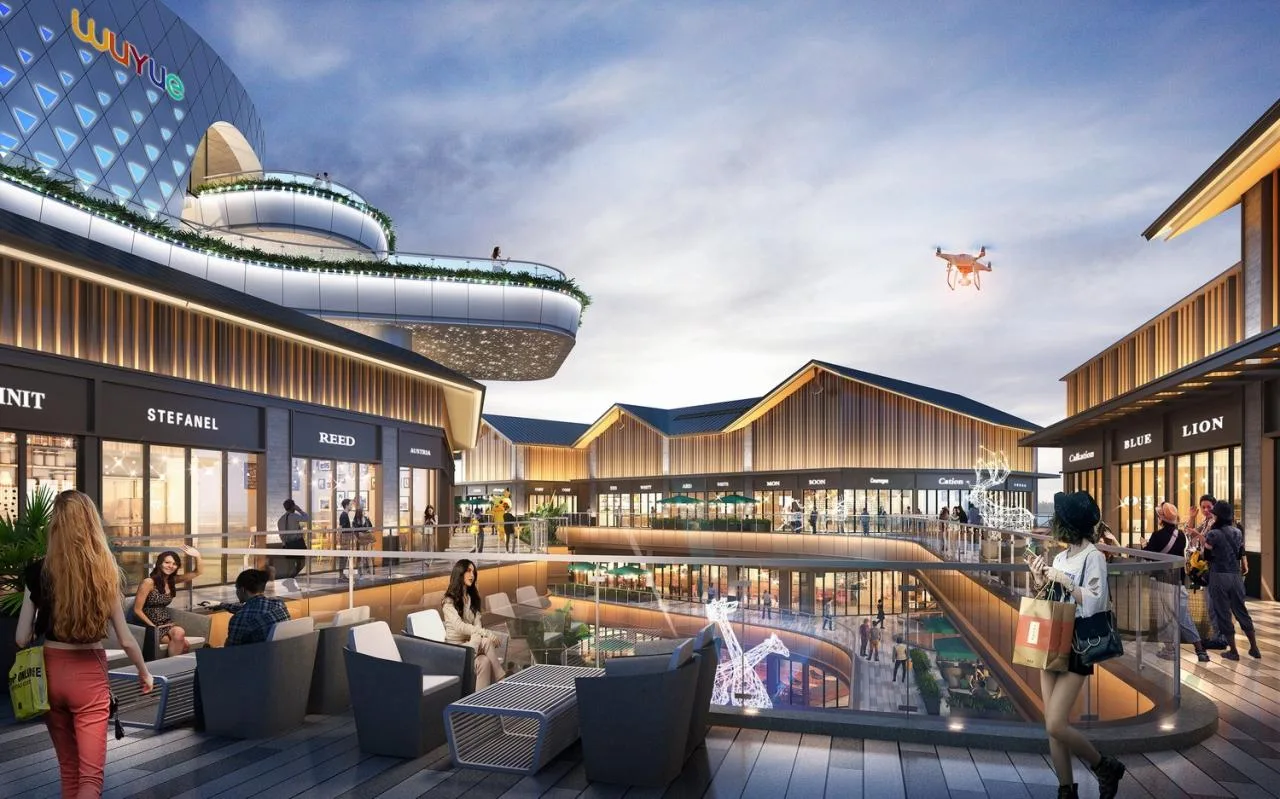
06 Interior Space: Visible, Accessible, and Memorable
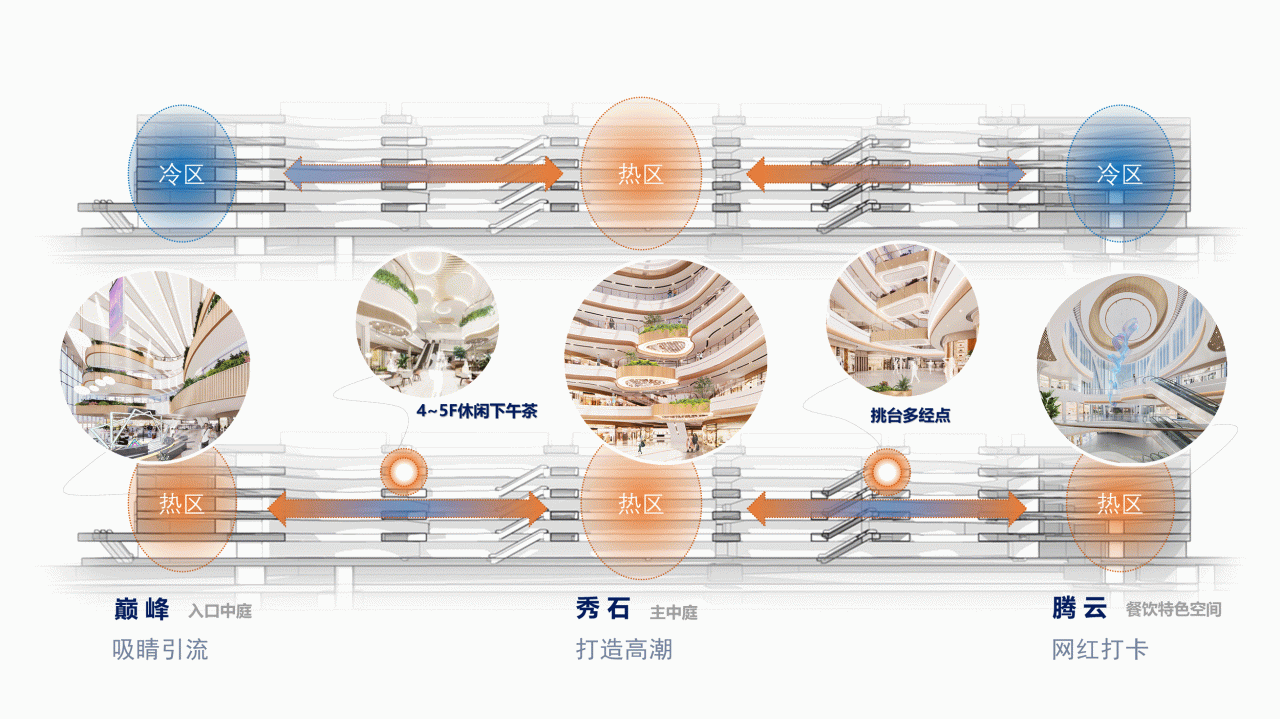
The interior design continues the external design language, creating comfortable and pleasant spatial scales and rhythms. Balancing commercial principles with unique design strategies, the team focused on enhancing shop visibility and accessibility while crafting distinctive cultural landmarks to foster memorable experiences and encourage visitors to linger.
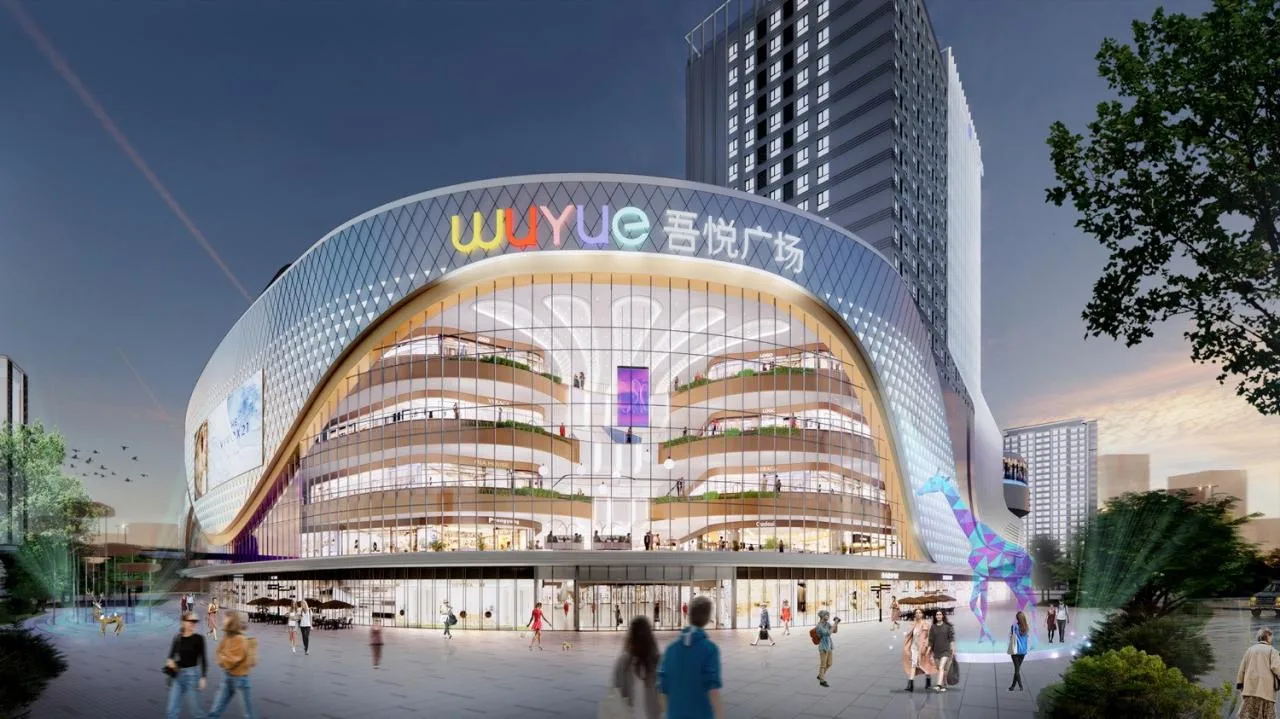
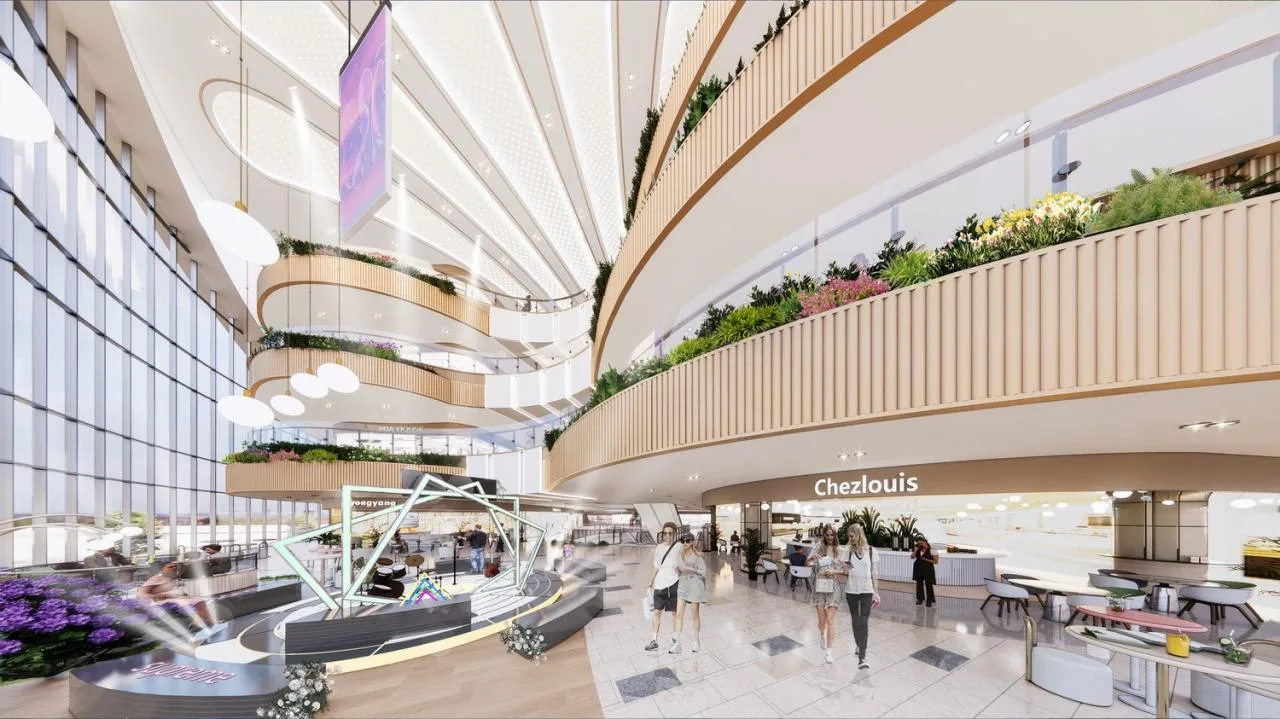
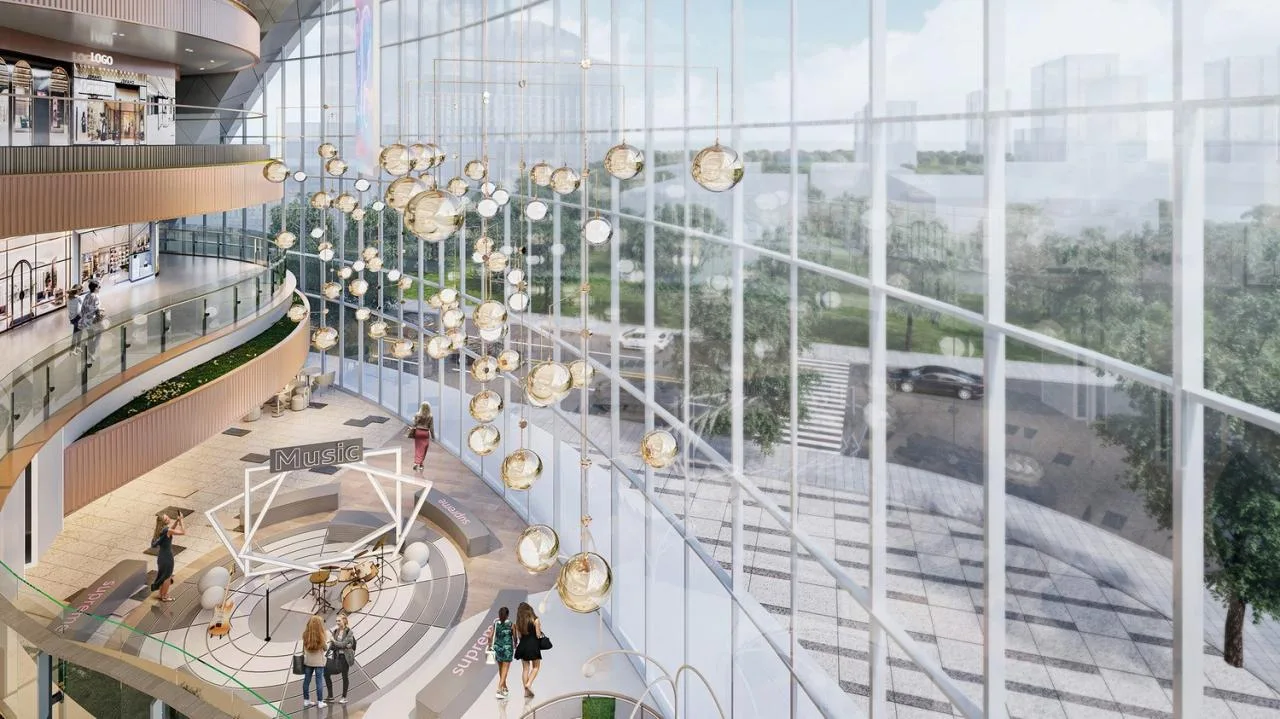
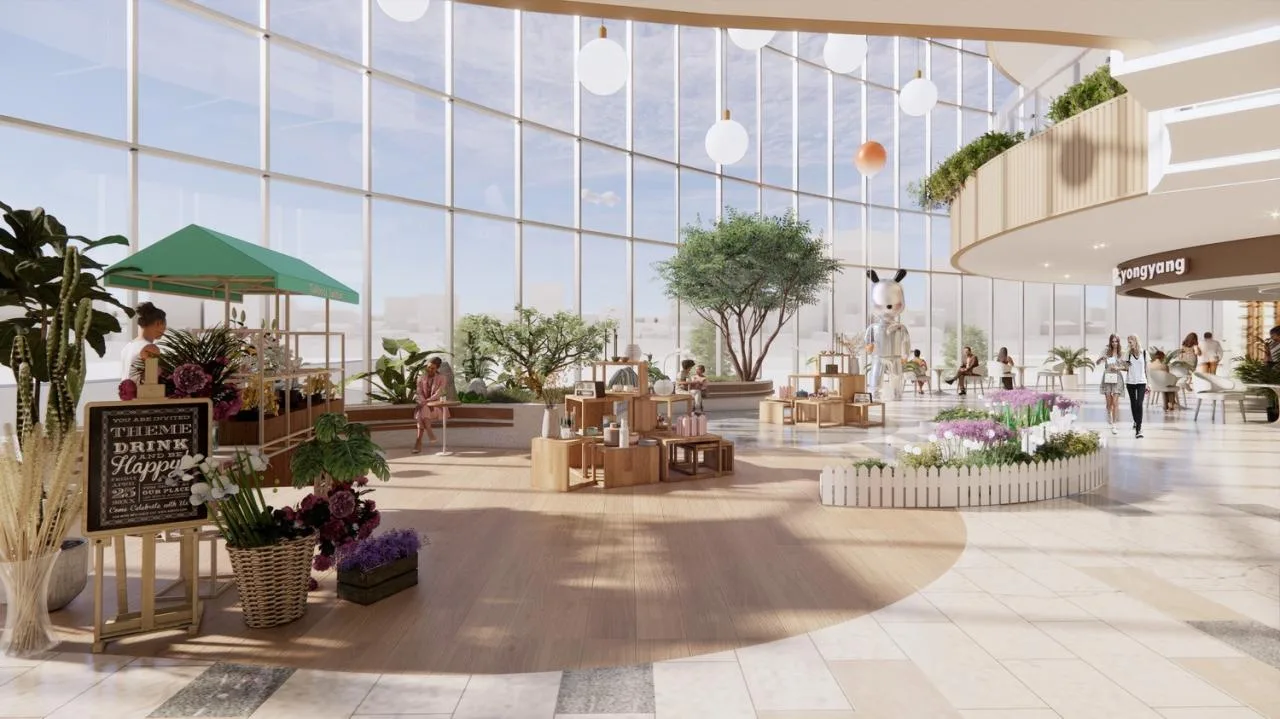
The entrance atrium breaks from traditional entryways by introducing an open vertical space that enhances visual connectivity between indoors and outdoors. Its layered, stepped design mimics the “peak” of Mount Taishan, reflecting the mountain’s grandeur and reinforcing spatial depth and permeability.
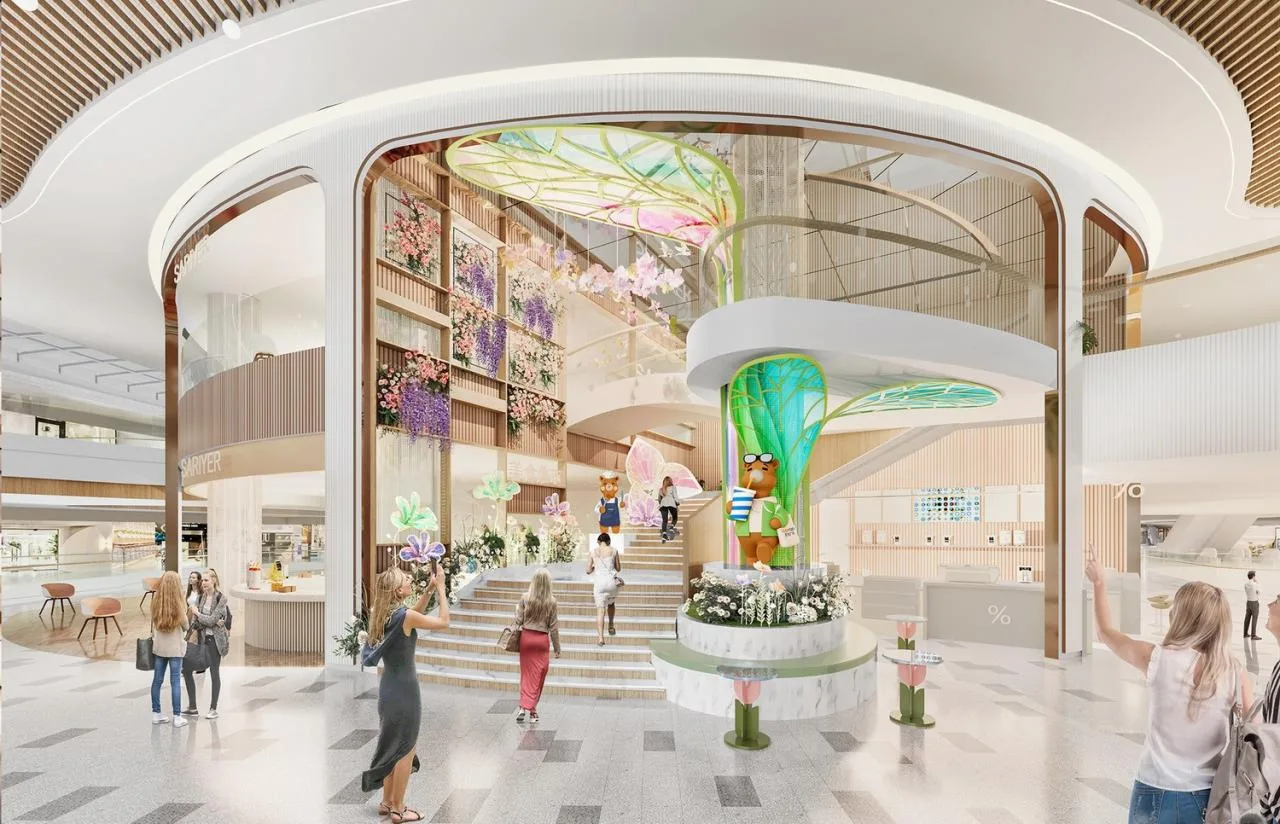
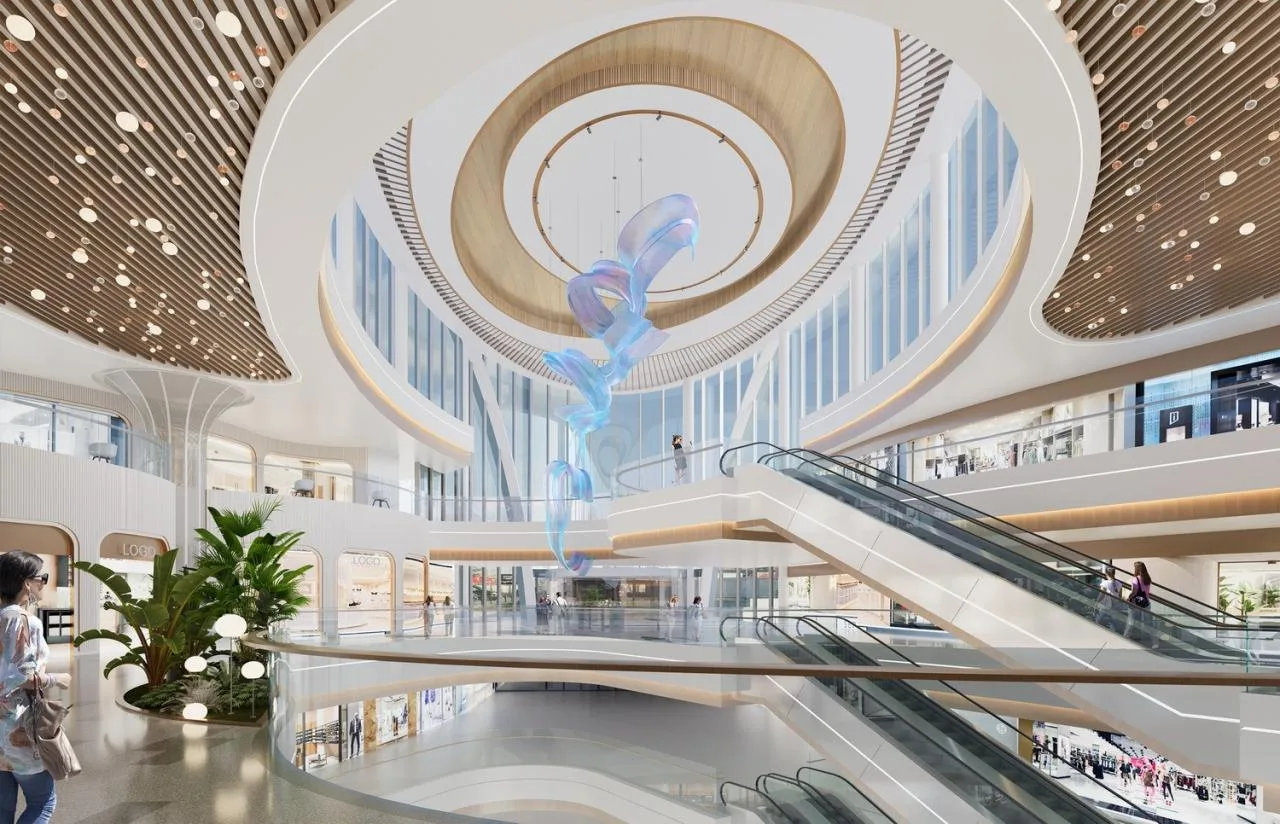
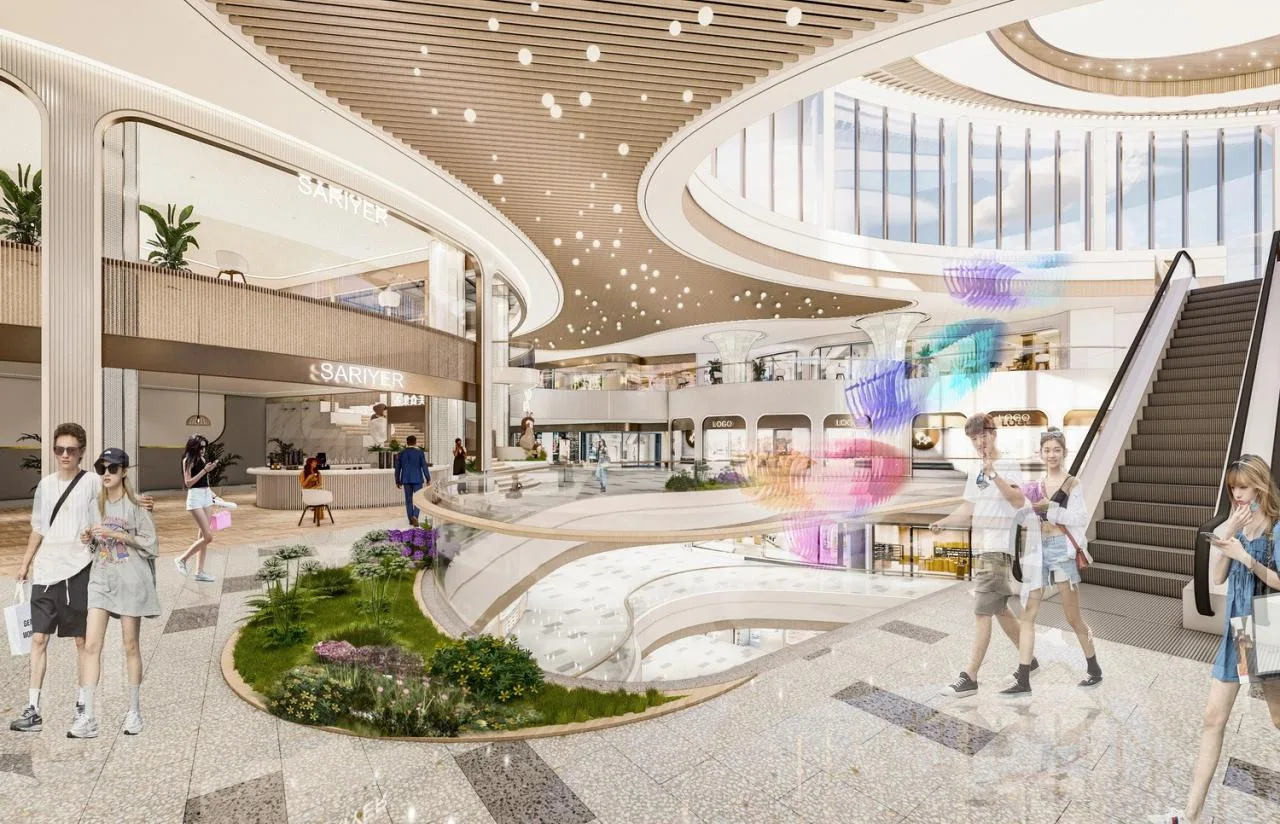
The dynamic curves evoke the sensation of “soaring clouds,” offering a sense of changing scenery and elusive beauty. Elements inspired by dense forests are integrated throughout the mall, creating a natural, comfortable, mysterious, and enchanting atmosphere.
07 Conclusion
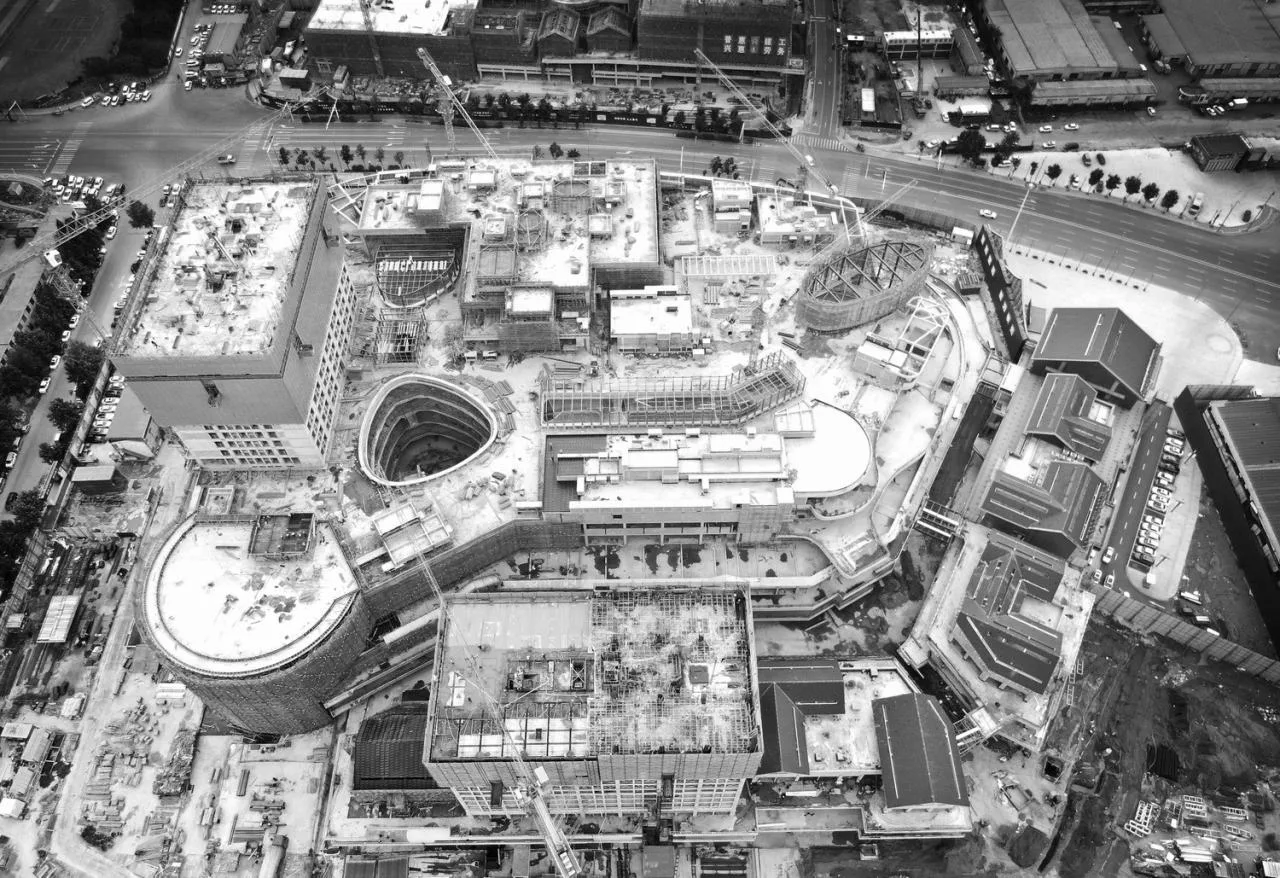
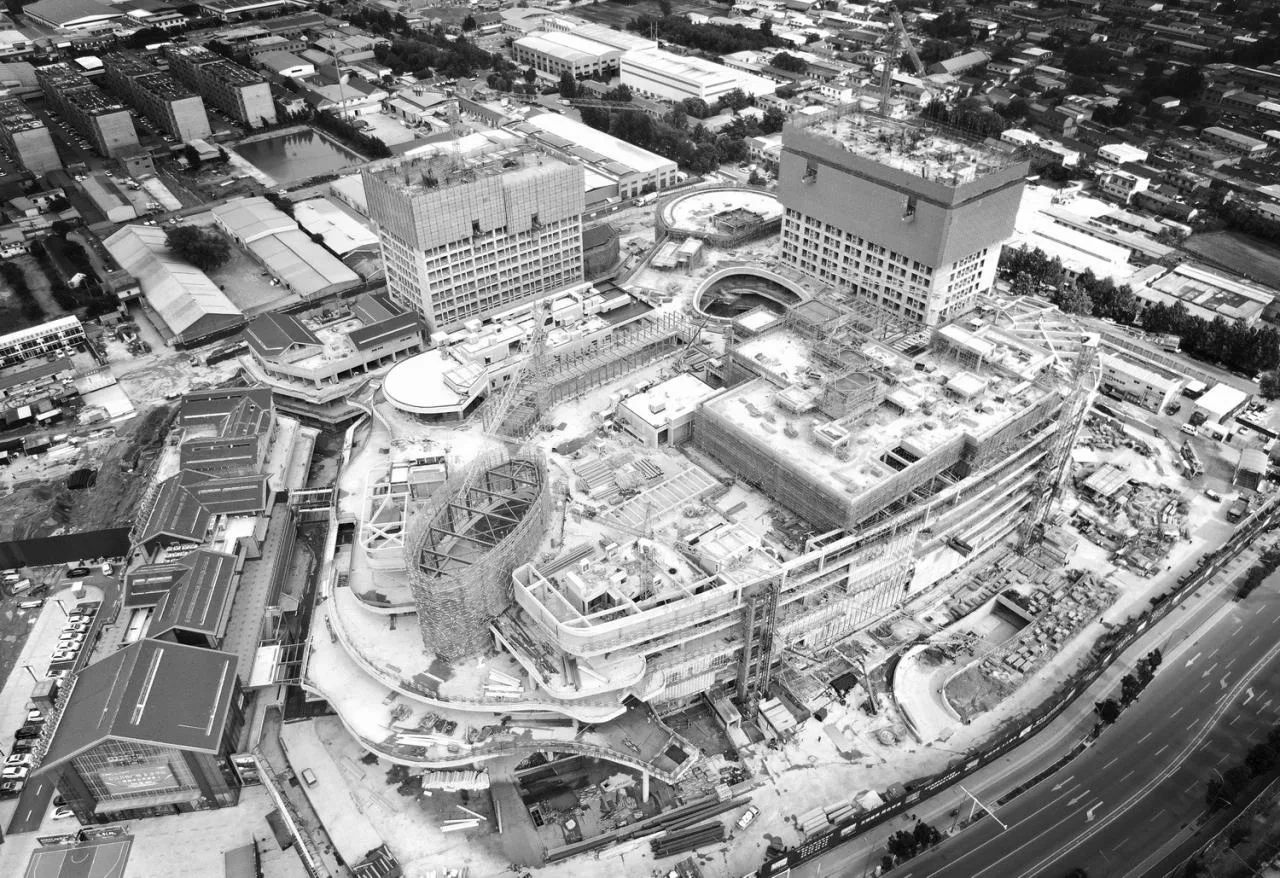
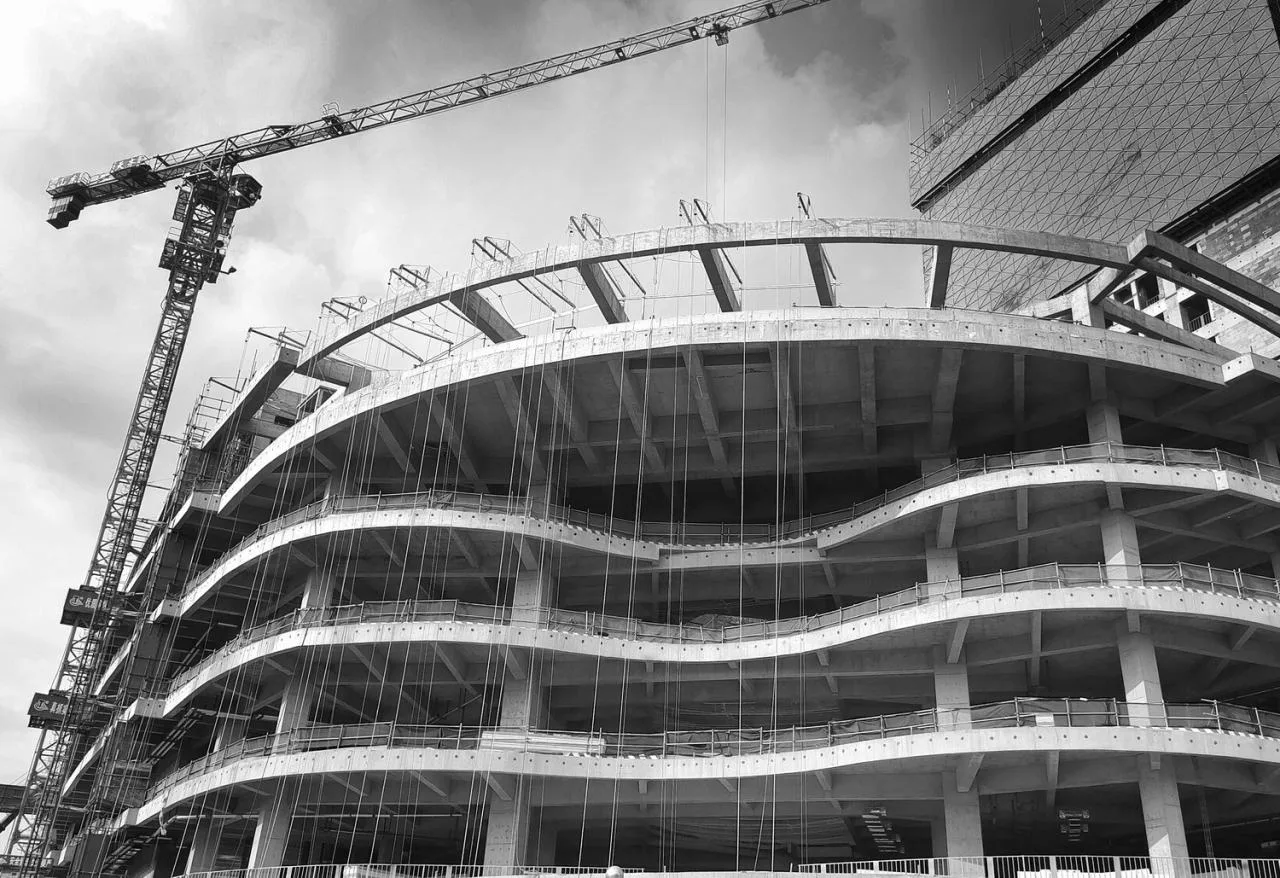
The Taiwen City Plaza project is currently in its final construction phase, with an anticipated official opening in June 2024. Jianhe Architecture, with extensive experience in commercial design, continues to evolve its understanding of commercial spaces. Committed to creating value for clients, the firm embraces the responsibility to enhance urban spatial experiences and pioneer innovative, vibrant commercial environments.
Project Drawings
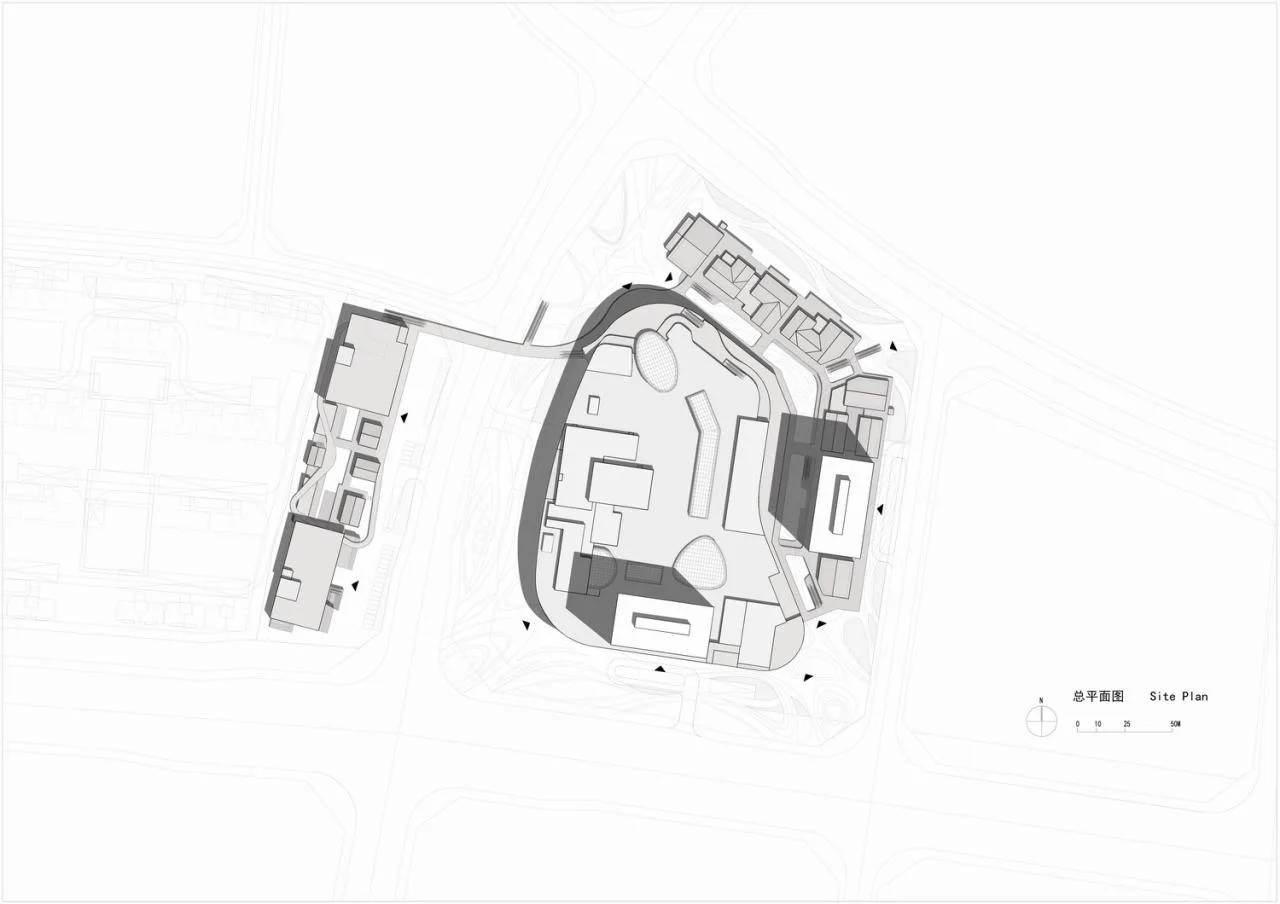
△ General layout plan
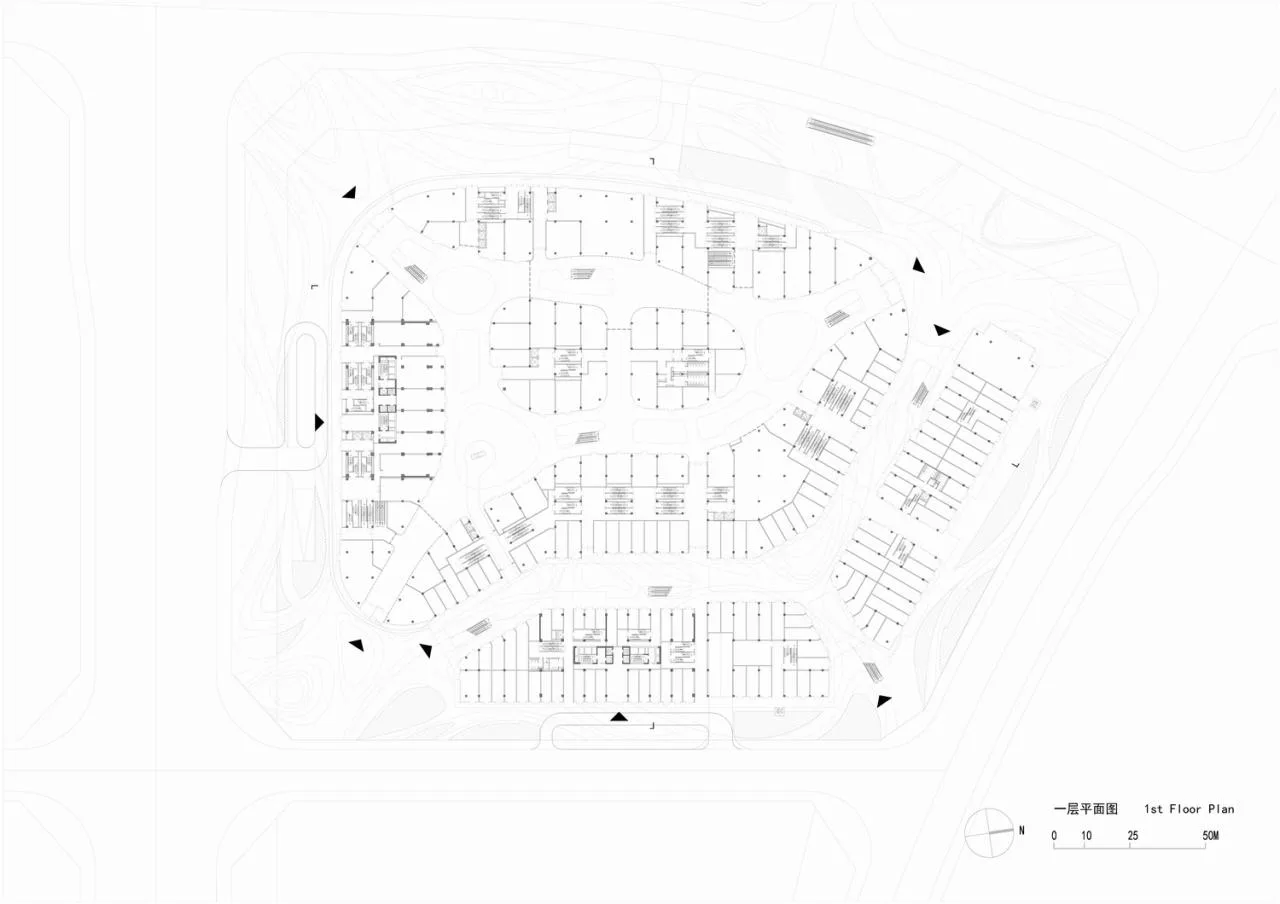
△ First floor plan
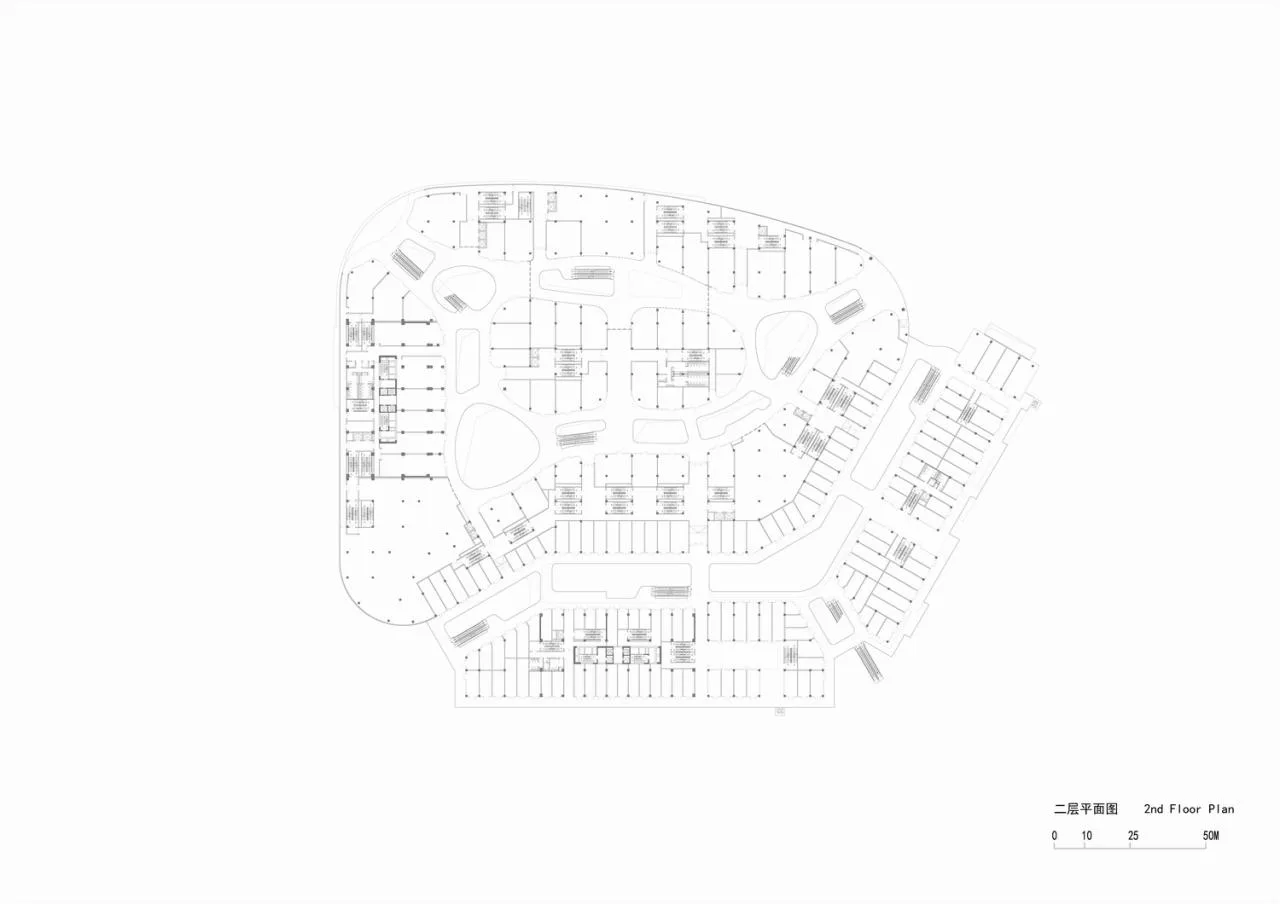
△ Second floor plan
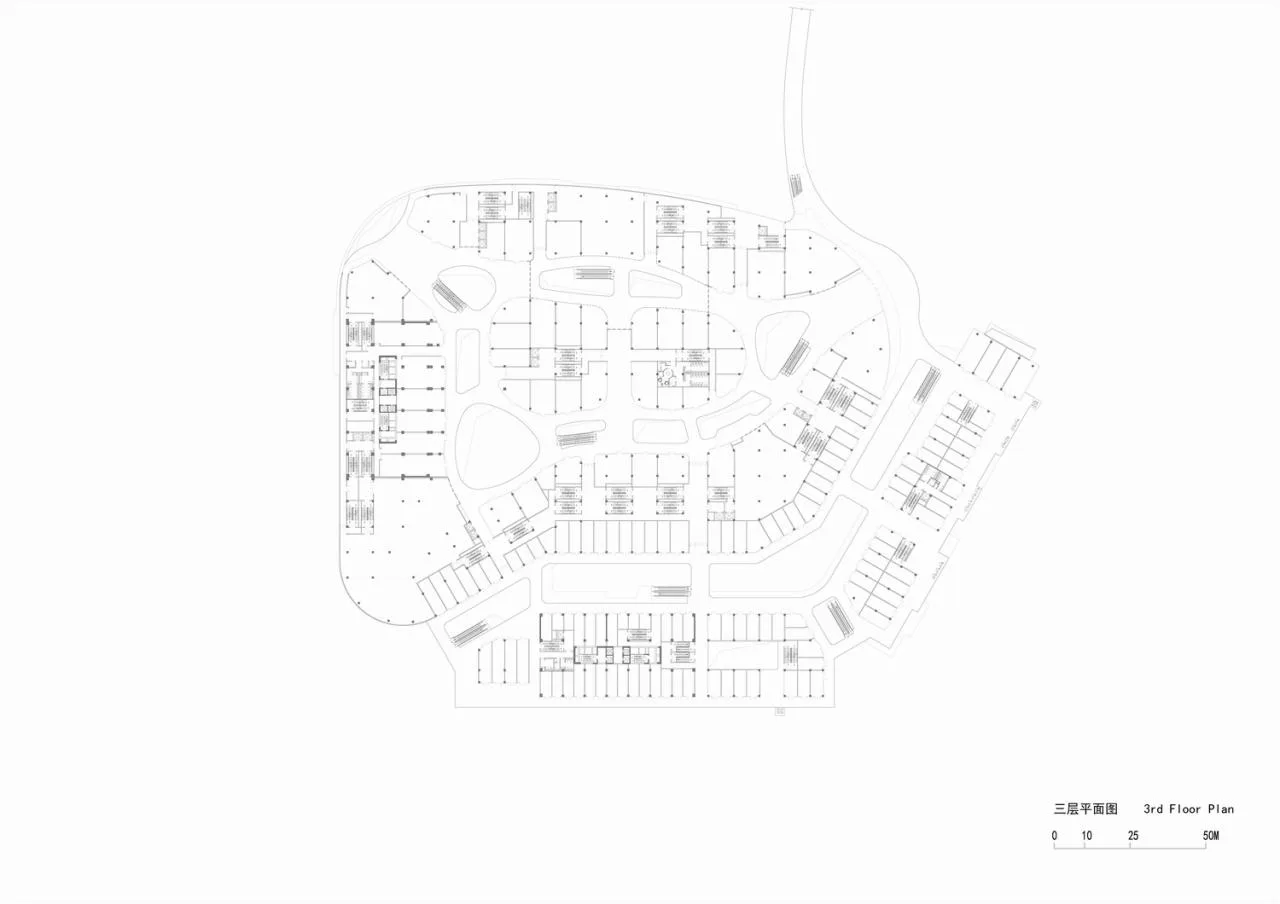
△ Third floor plan
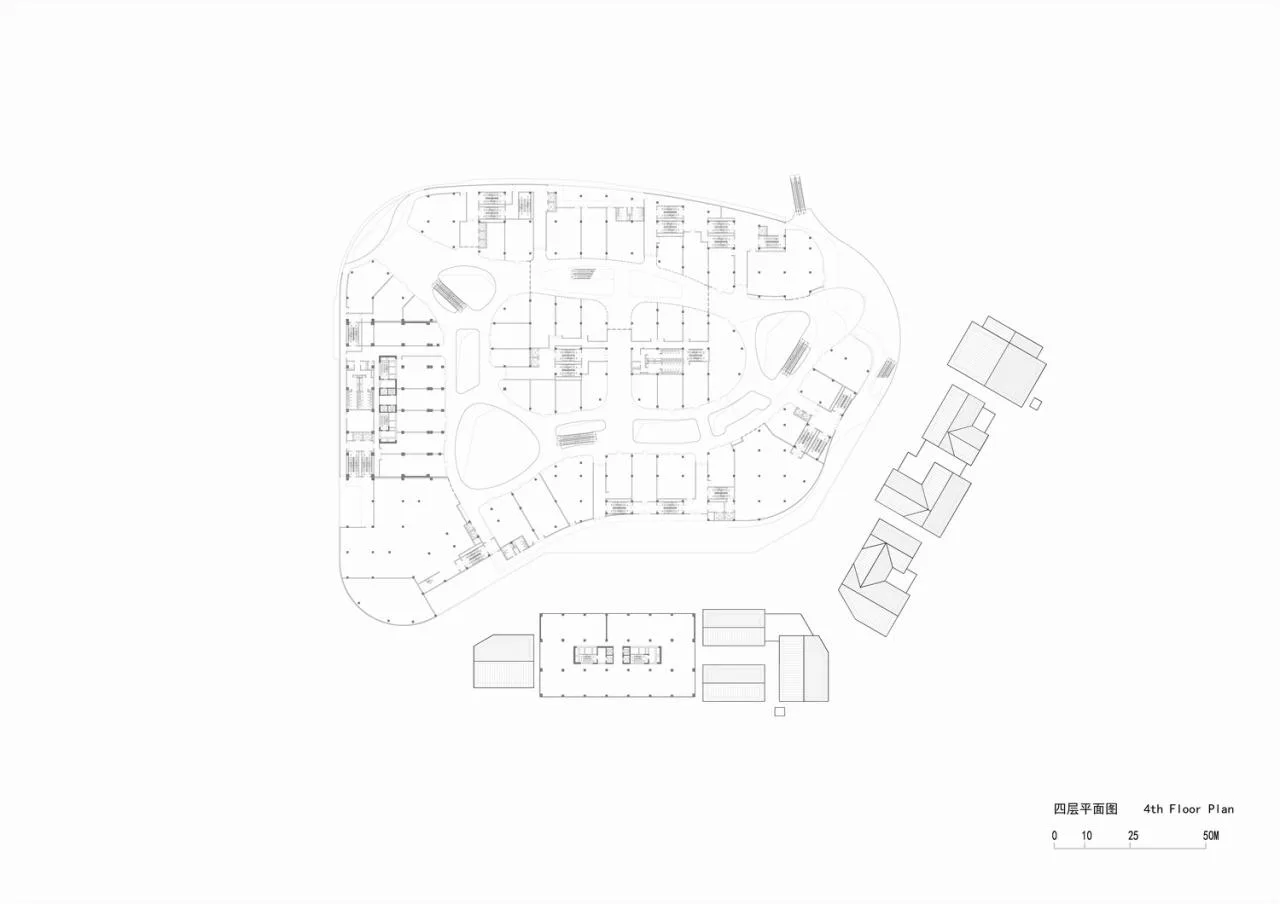
△ Fourth floor plan
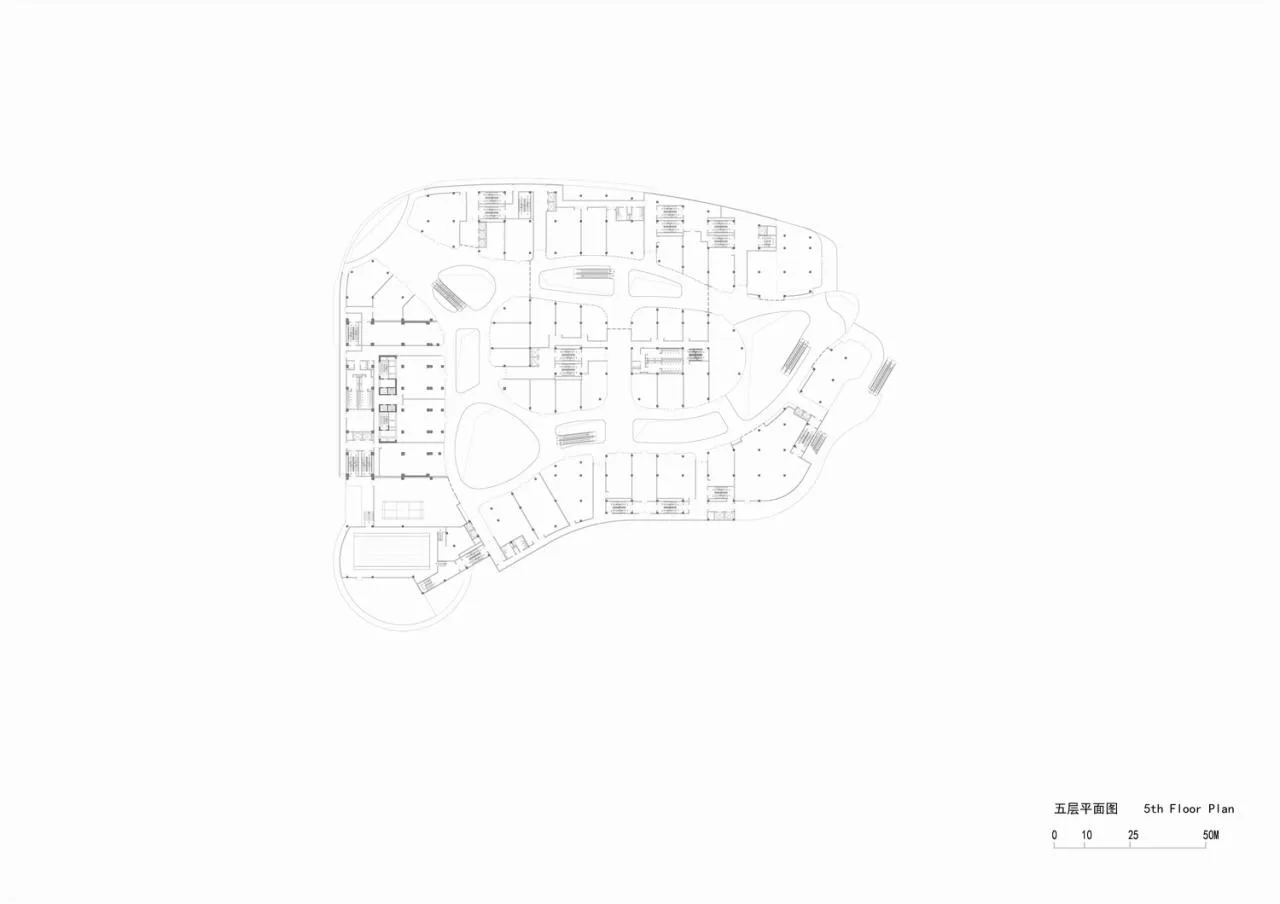
△ Fifth floor plan
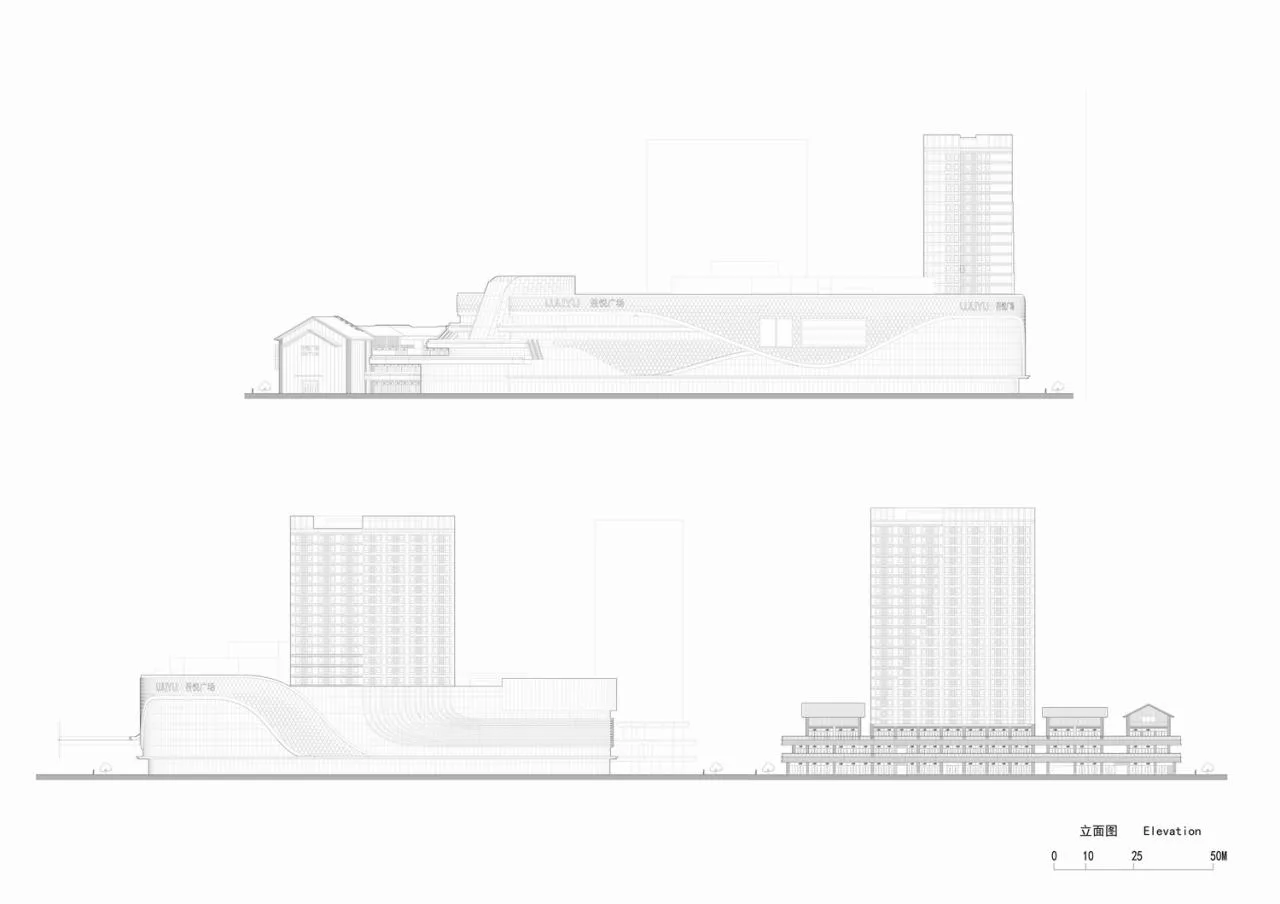
△ Elevation drawing
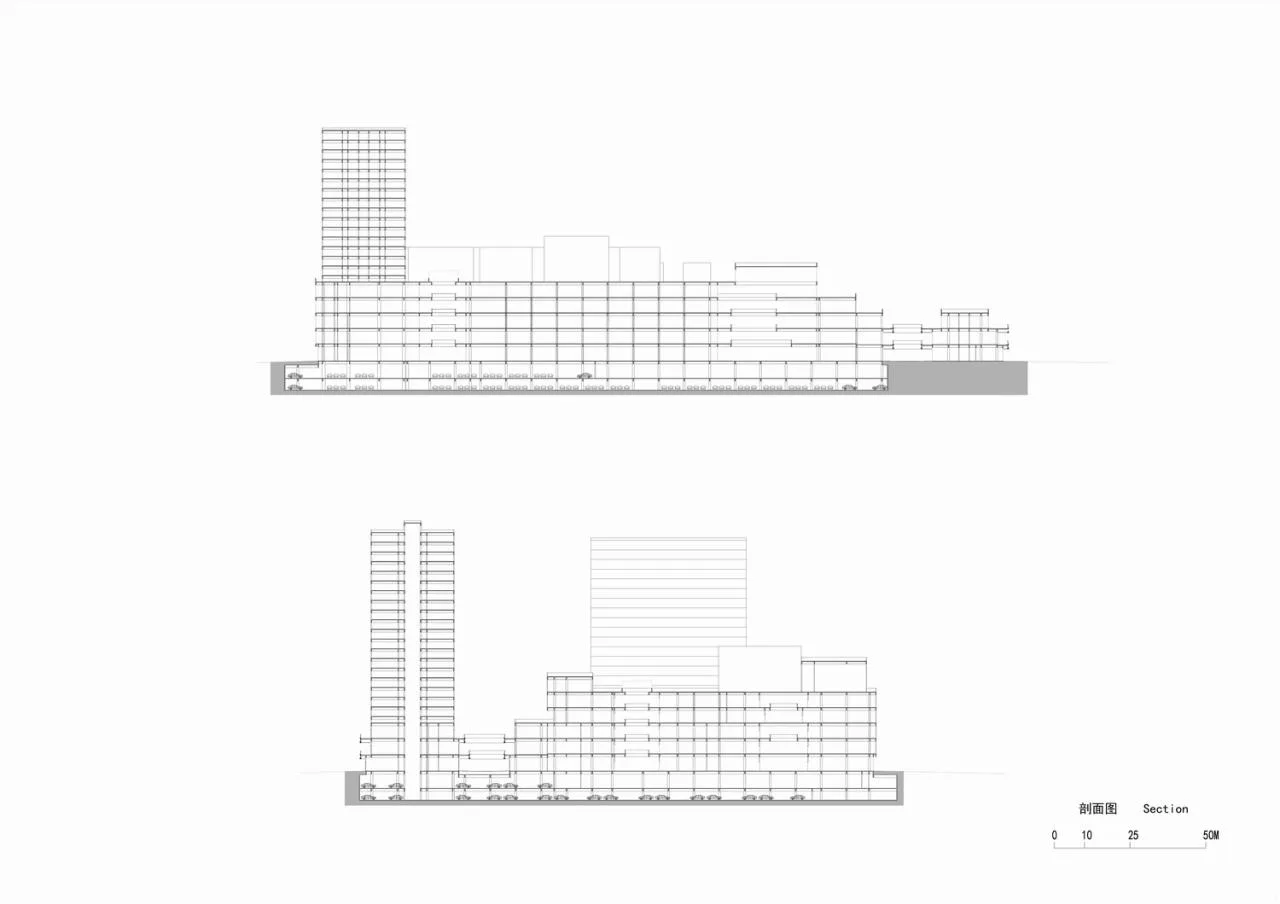
△ Section diagram
Project Information
Project Name: Taiwen City Plaza Project
Owner Company: Shandong Taiwen Industrial Co., Ltd
Design Company: Zhusen Design Jianhe Firm
Design Date: April 16, 2022
Opening Date: June 2024
Building Scale: 267,000 square meters (235,000 sqm for Wuyue Square and 32,000 sqm for Tai’anli)
Design Team: Yan Feng, Wu Sheng, Xing Meiling, Wang Tianyu, Wang Yingshuai, Tong Peng, Lin Shaokun, Li Jiabin, Wu Yating, Yu Xiaoqin
Construction Drawing Design: Wu Qifan, Lu Bo, Zhao Lijuan, Zheng Qi, Fei Xia, Ma Pan, Wang Xuming, Kong Linjun, Wang Zhilei, Liu Jie
Curtain Wall Design: Liu Shusheng, Xia Bo, Xu Miao, Ruan Xiao
Landscape Design: Ma Bin, Li Jialin, Li Suxin, Li Na, Cao Kexin, Chen Meiling, Liu Dong, Xu Jing
Interior Design: Paiwo Design
Lighting Design: Jiangsu Zhusen Architectural Design Co., Ltd., Three Color Stone Environmental Art Design (Suzhou) Co., Ltd















Must log in before commenting!
Sign Up