
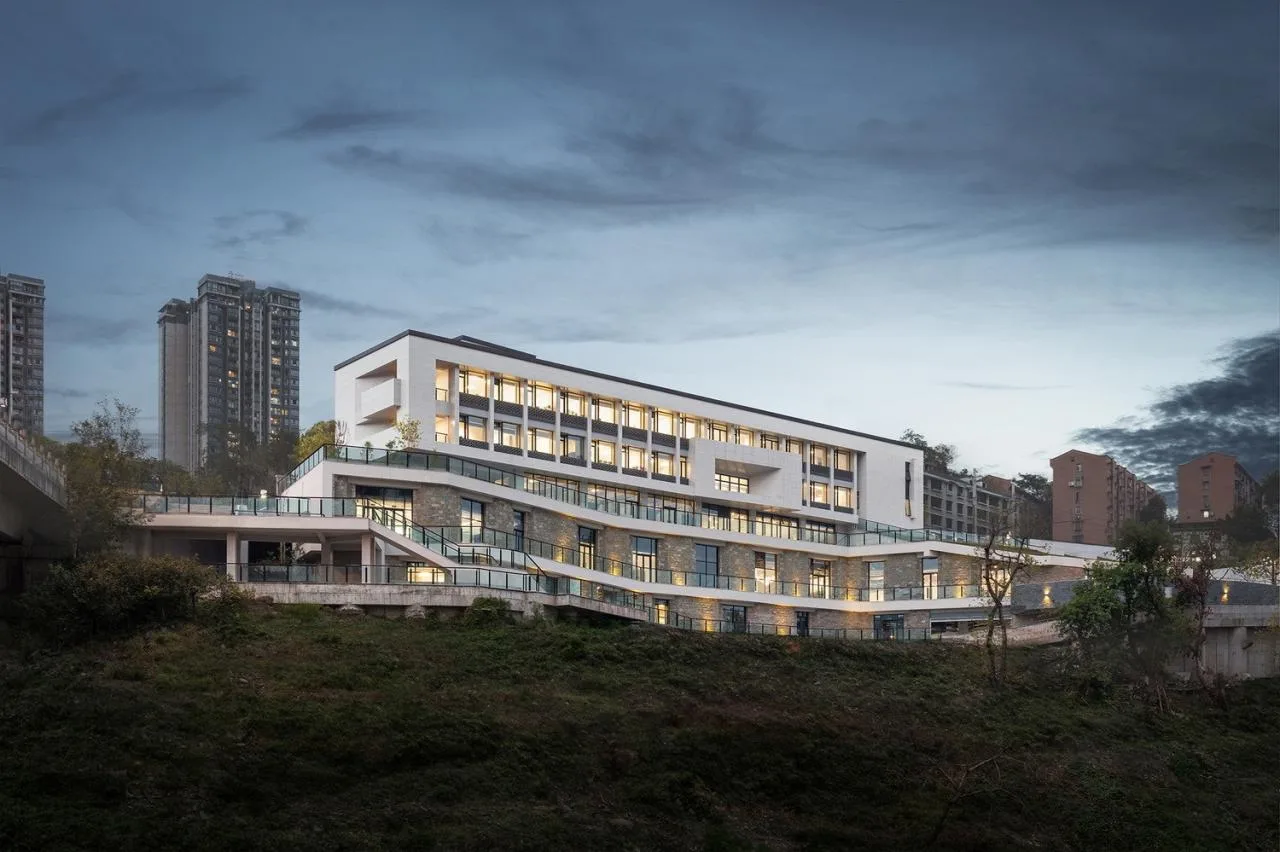
In recent years, comprehensive, one-stop administrative service buildings have evolved, shifting focus from grand narratives to delivering diverse values. The Ciqikou Service Center exemplifies this shift—it serves as a key office space for the Ciqikou Management Committee (street) while also acting as an “urban living room” that welcomes the public.
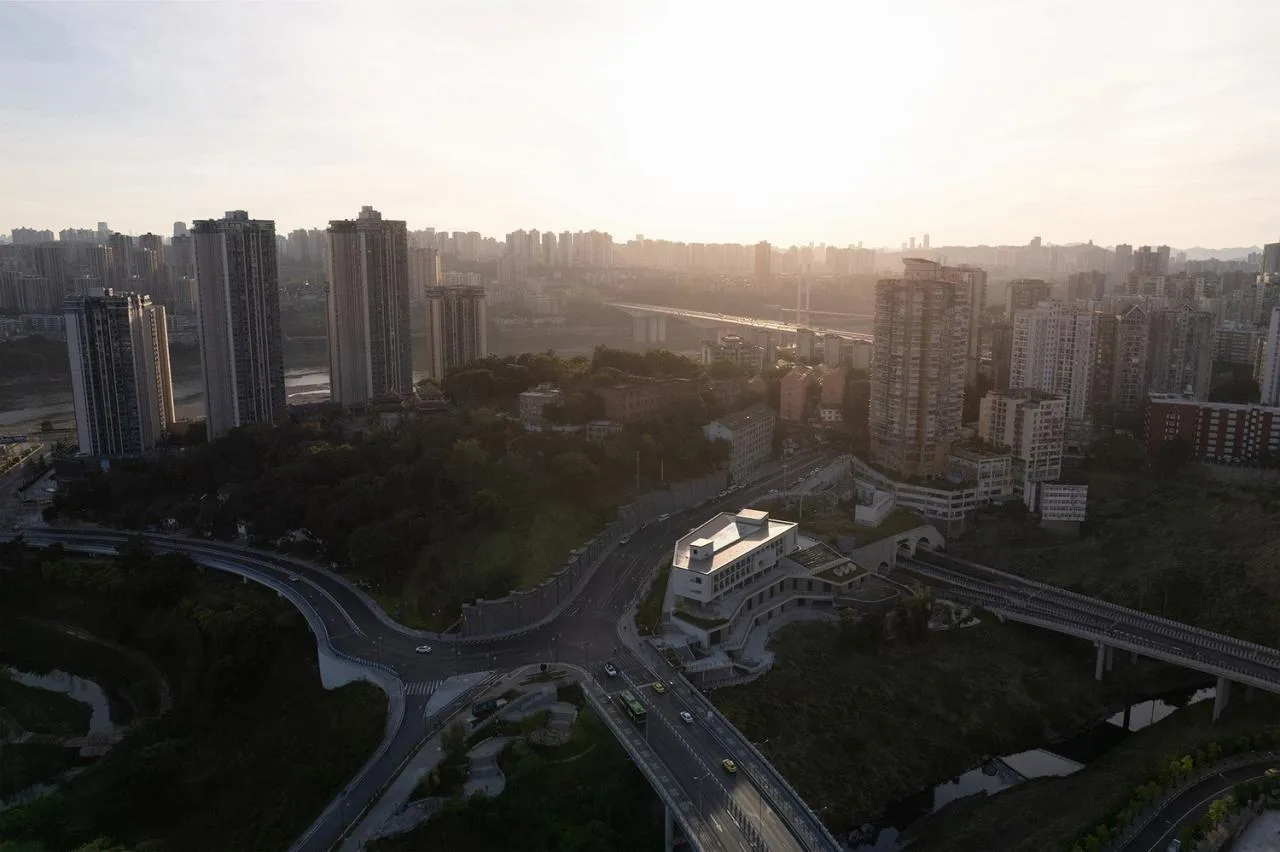
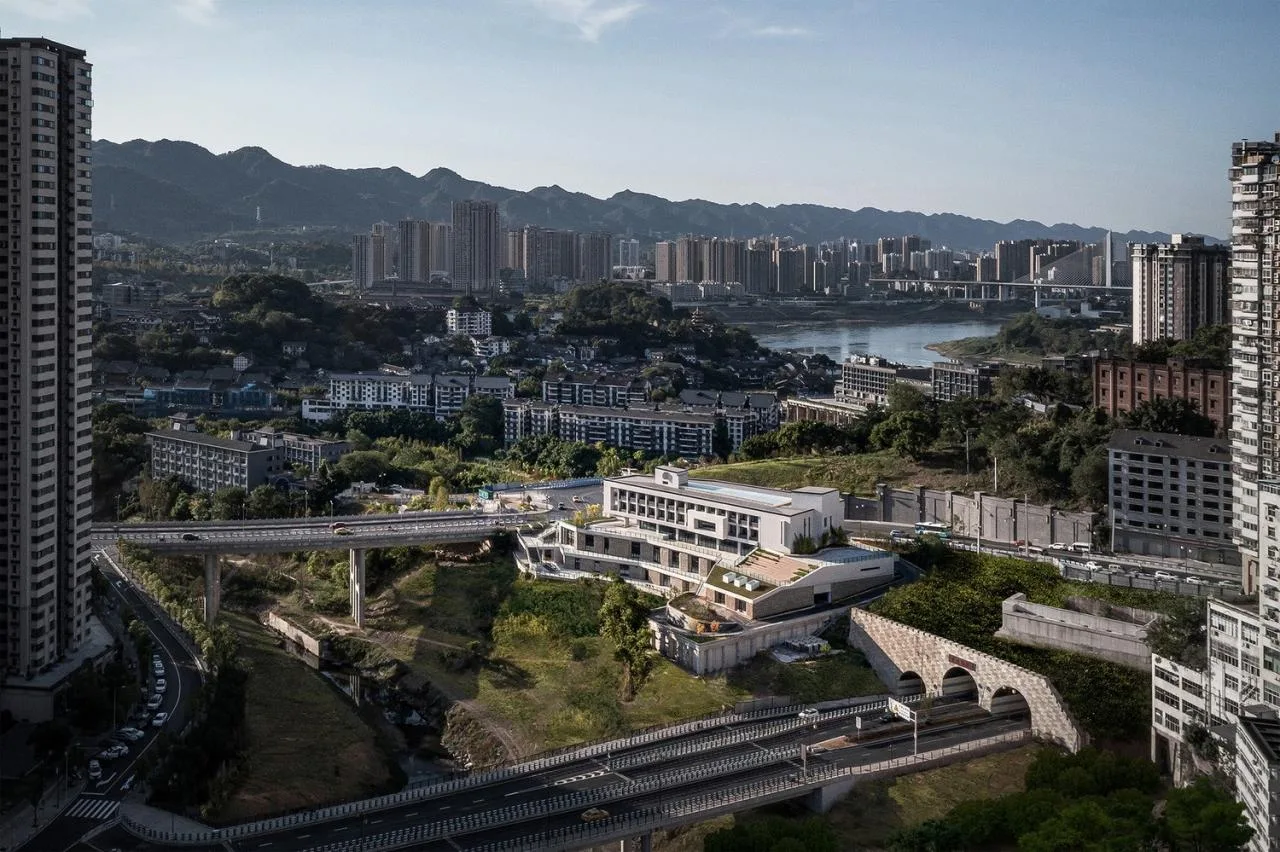
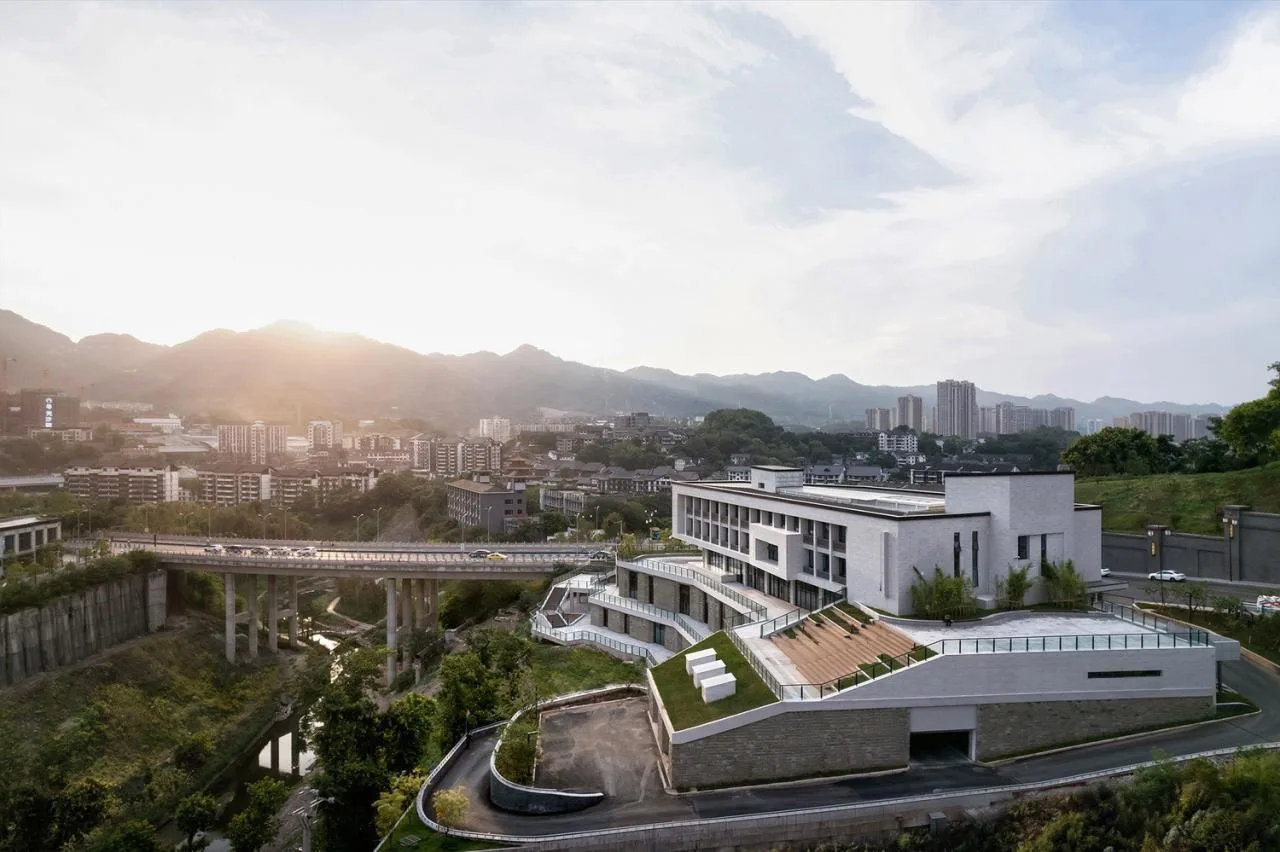
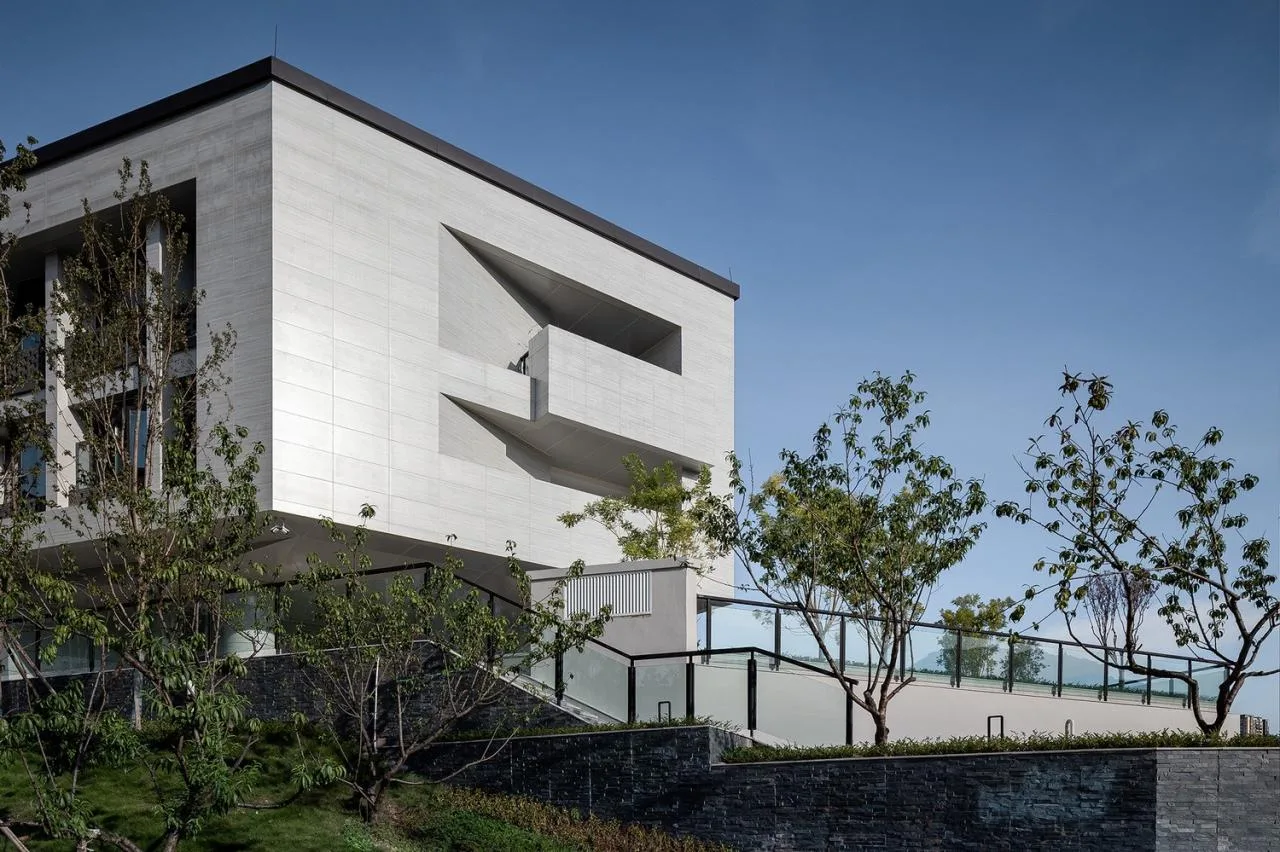
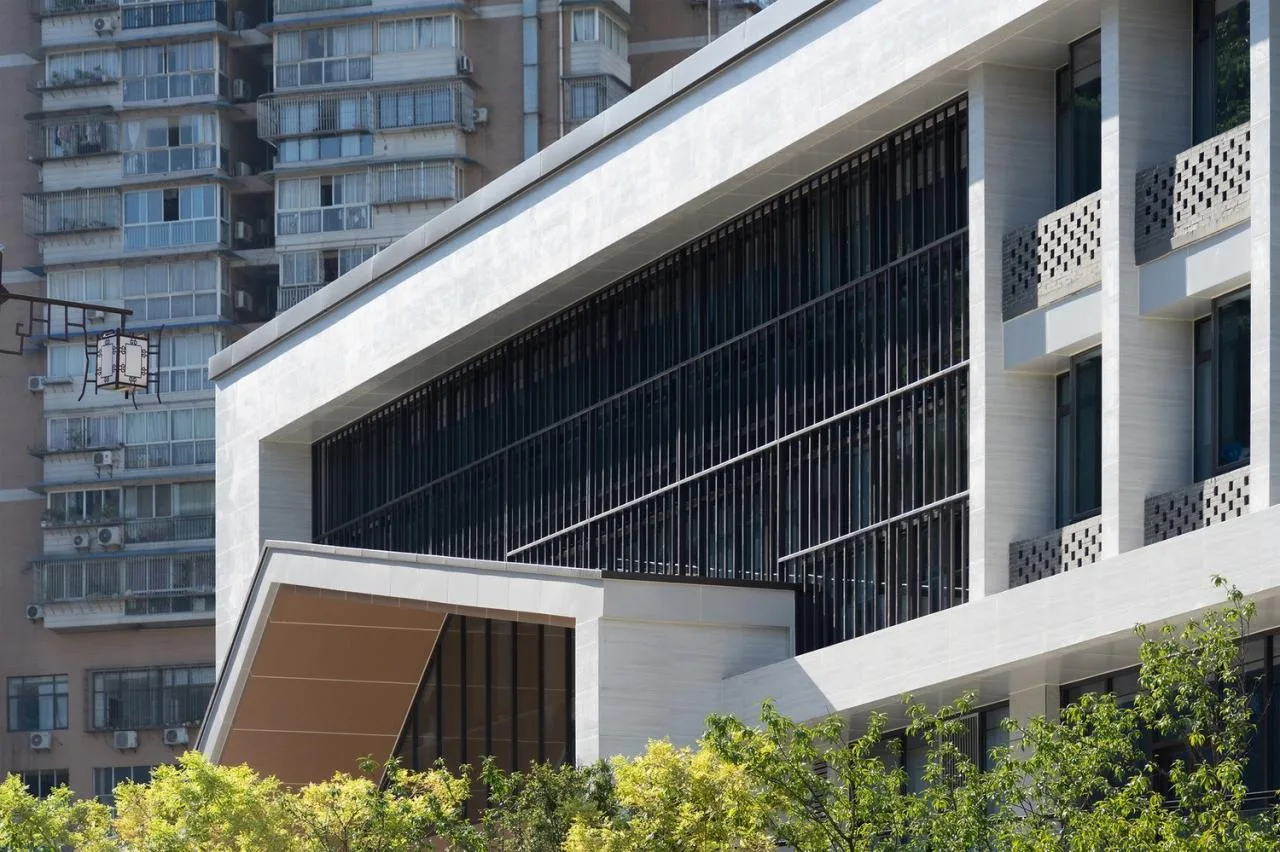
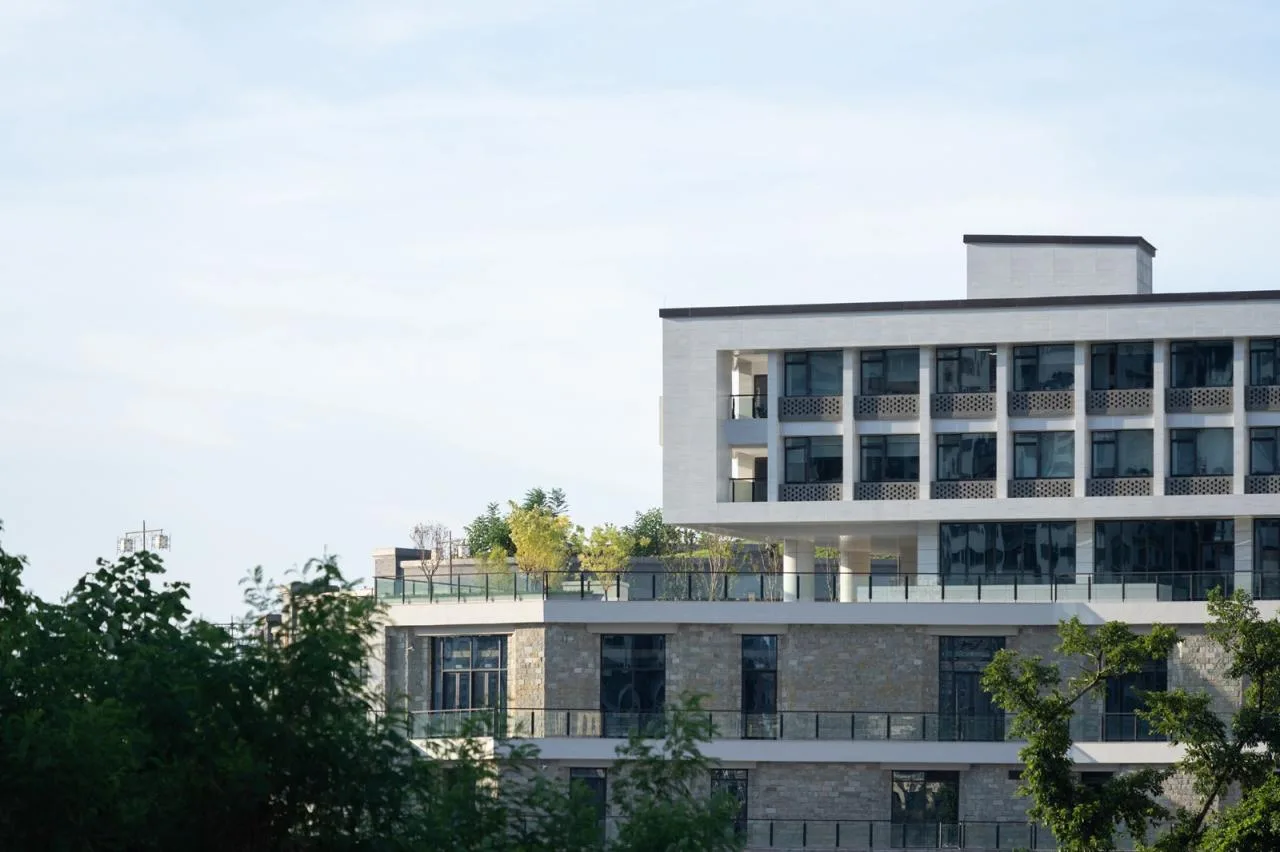
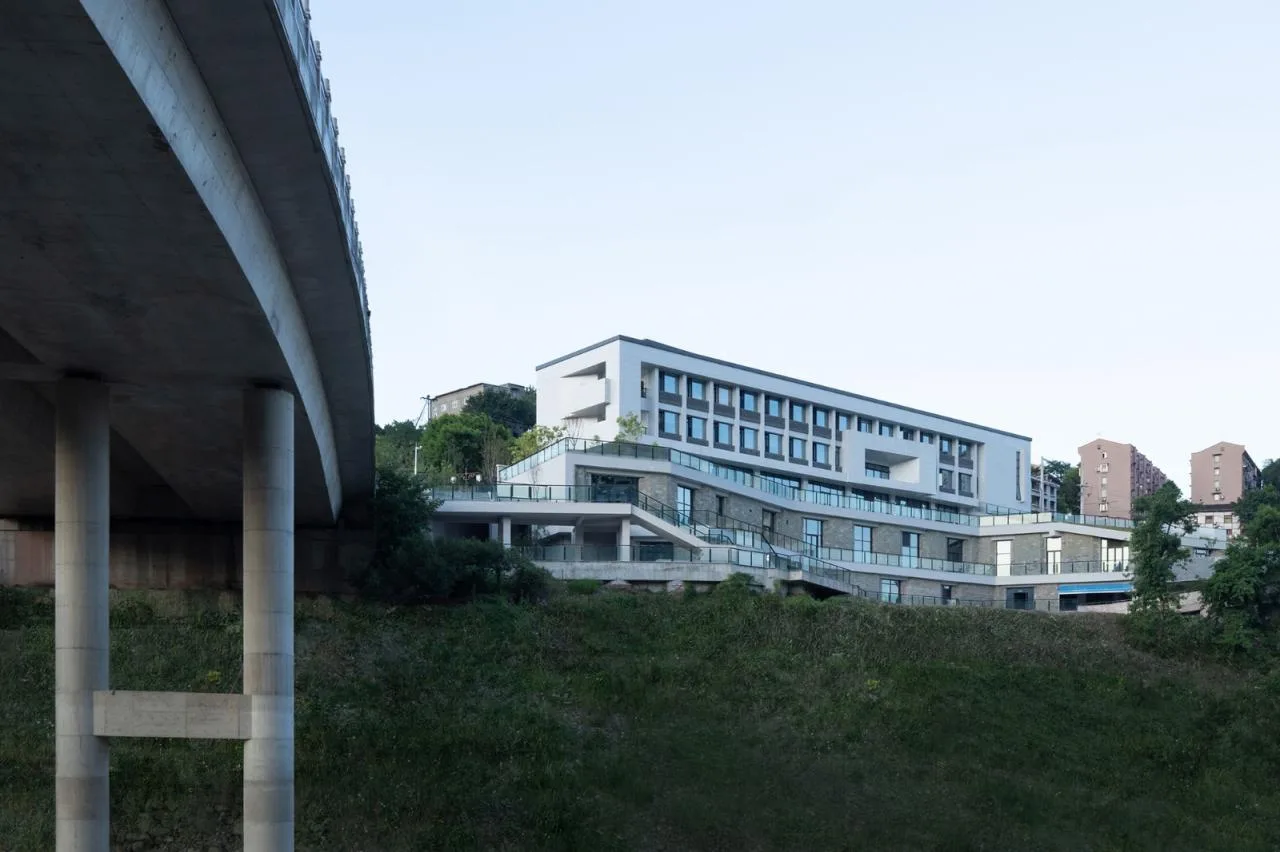
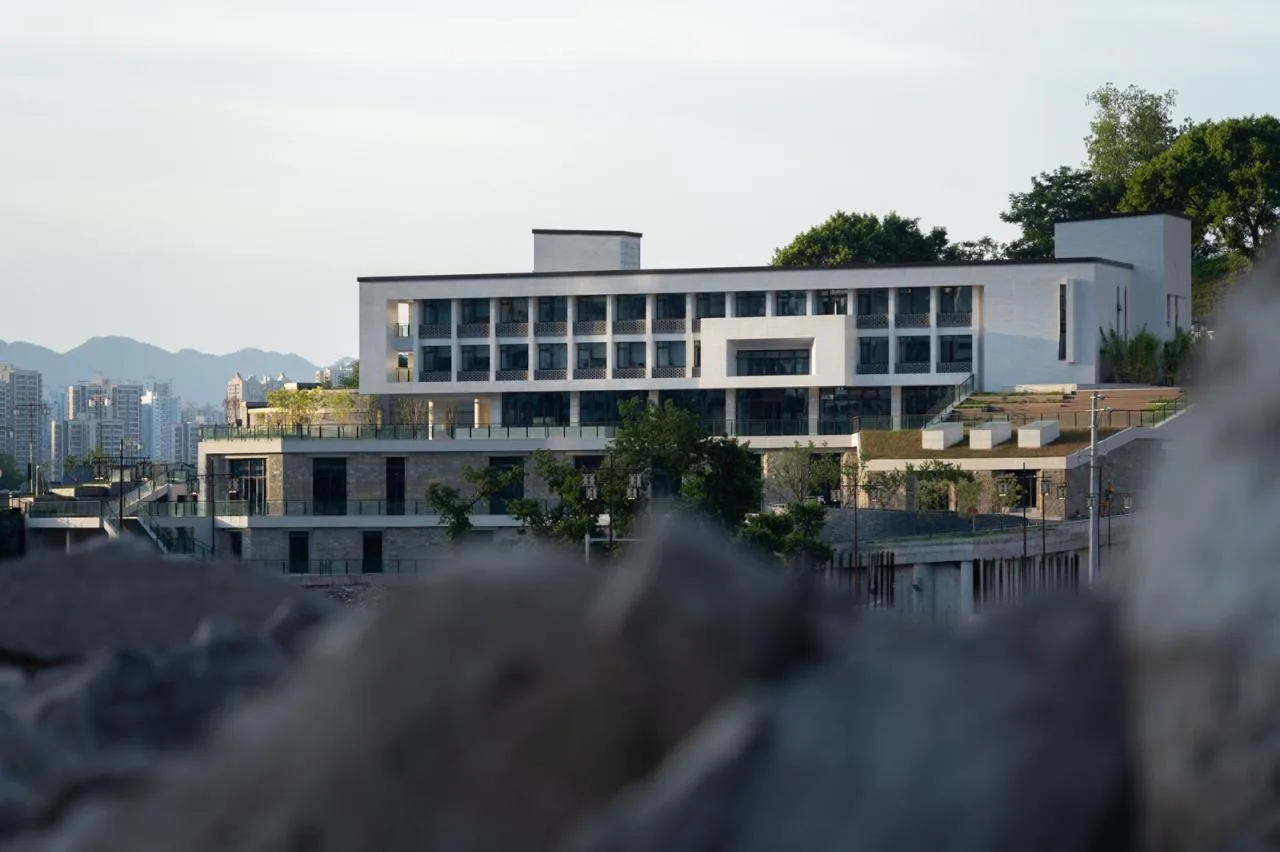
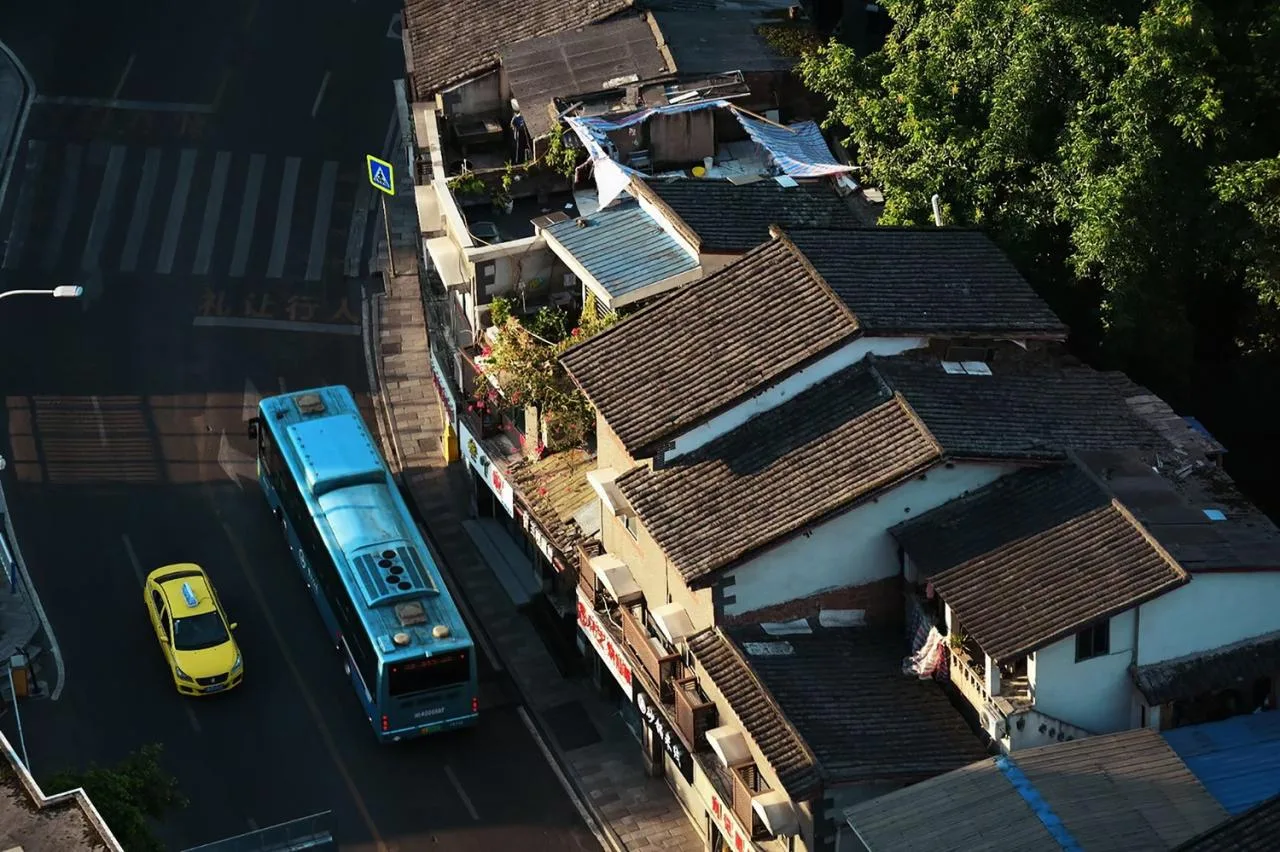
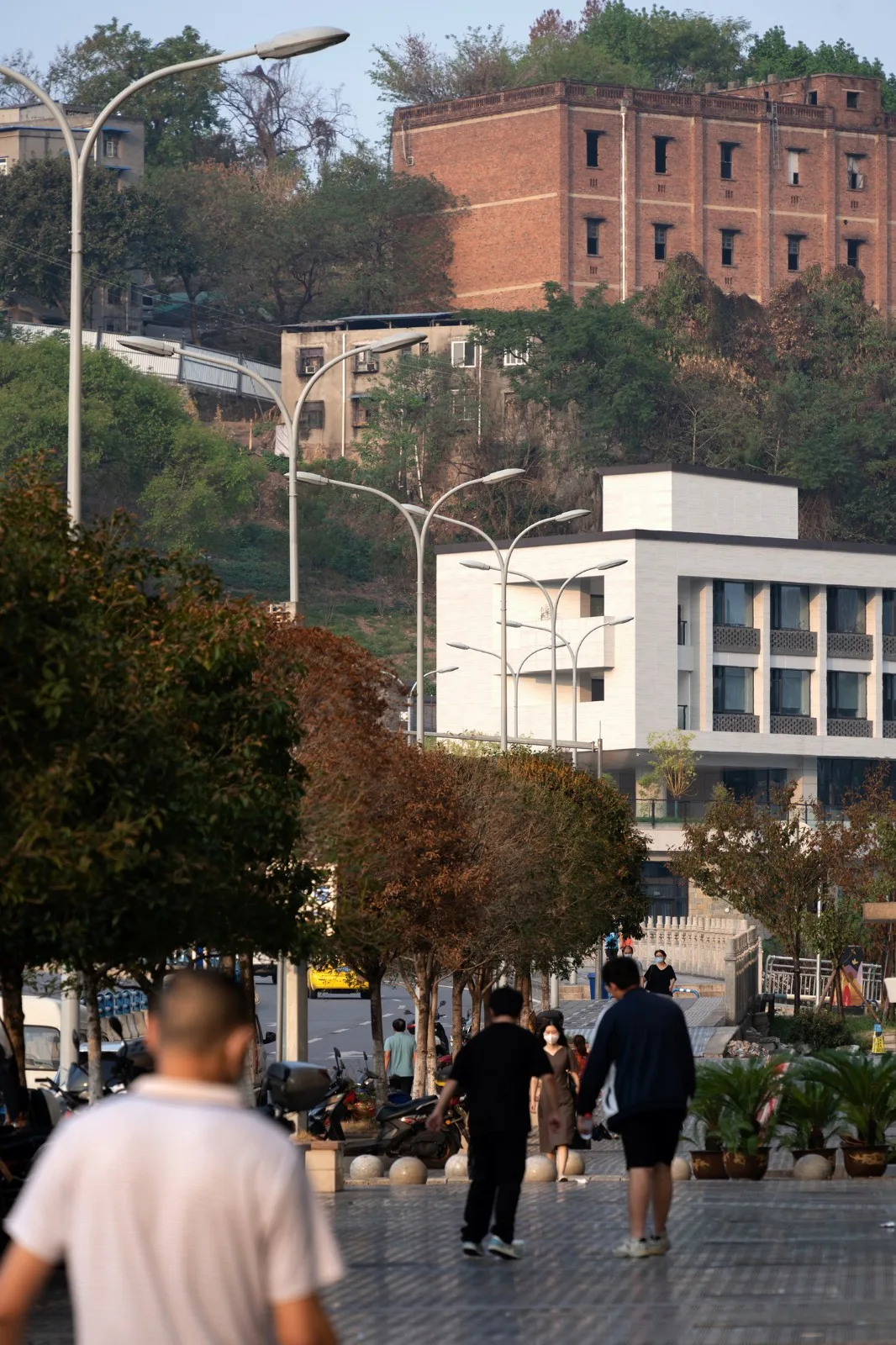
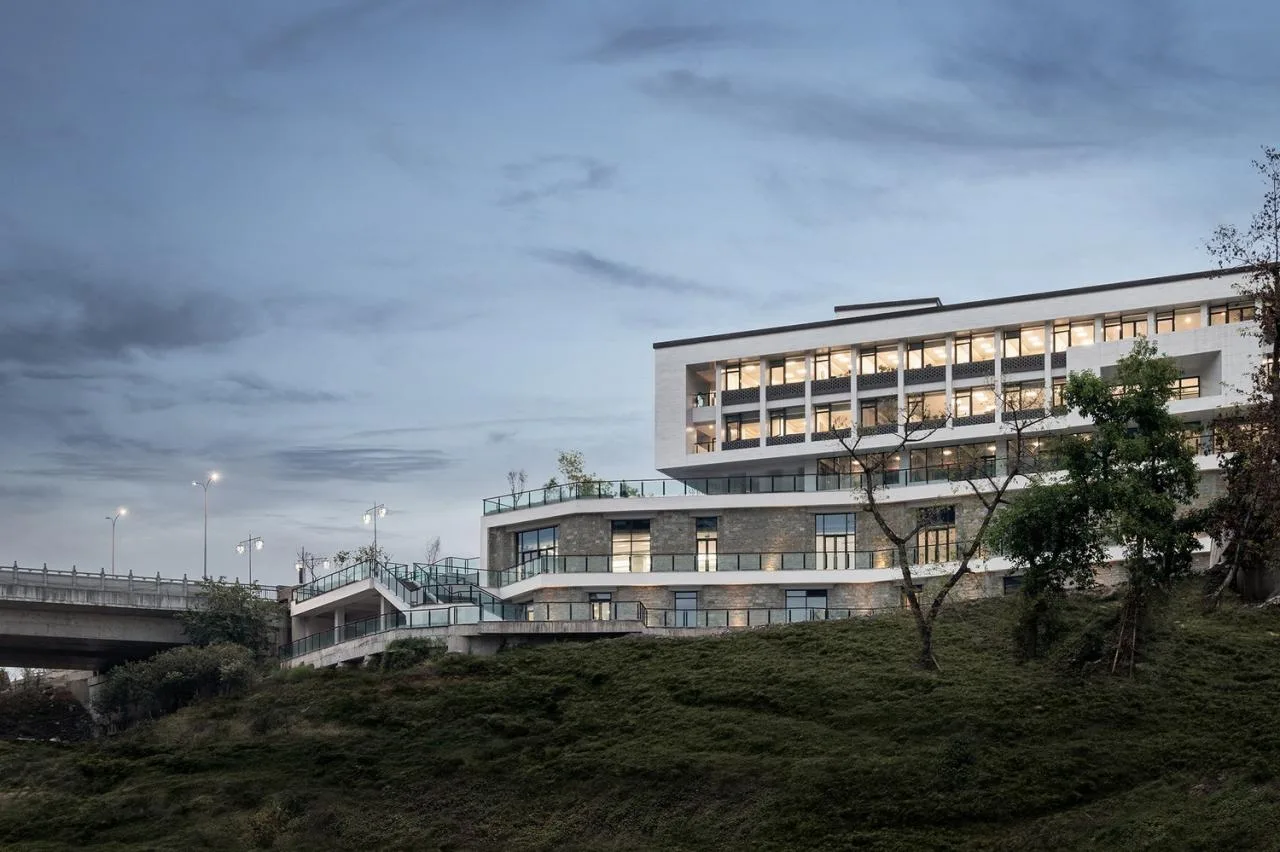
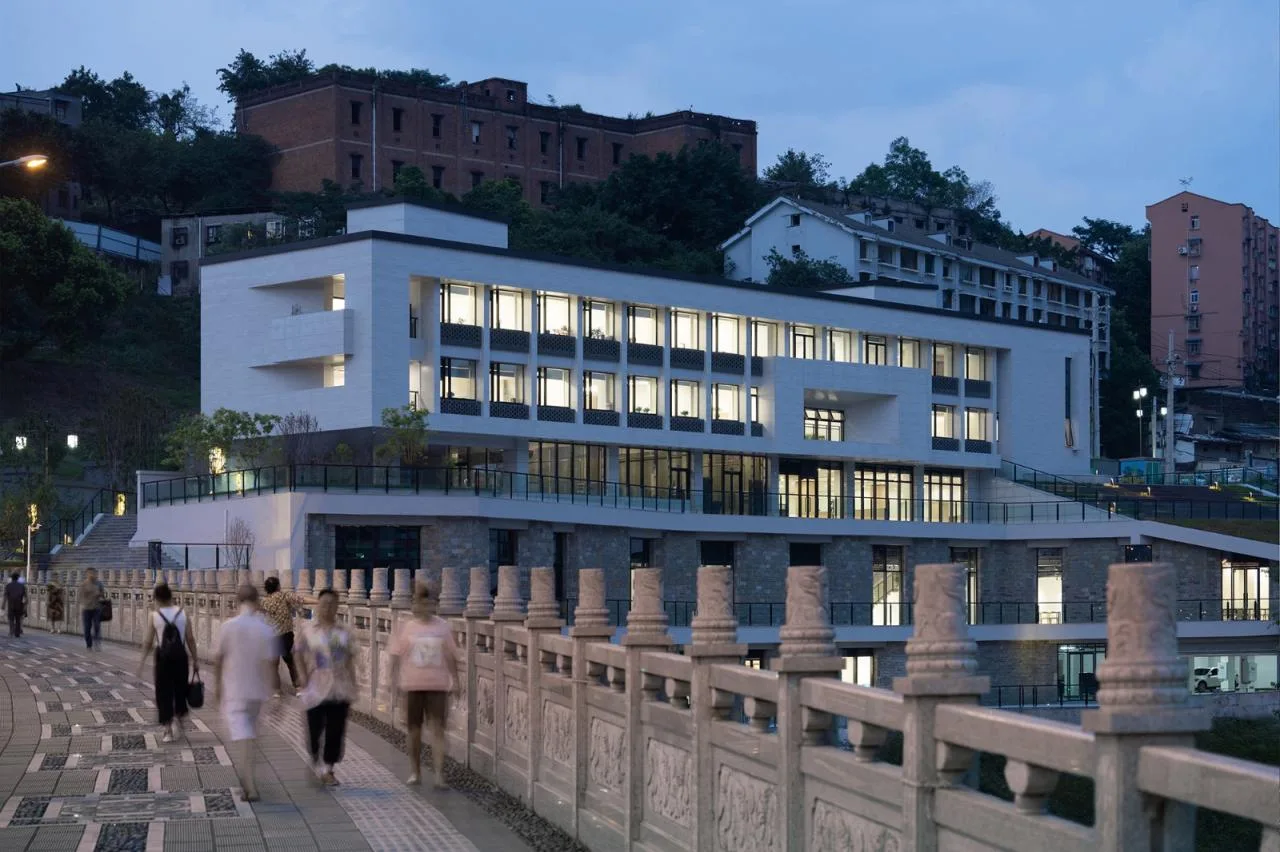
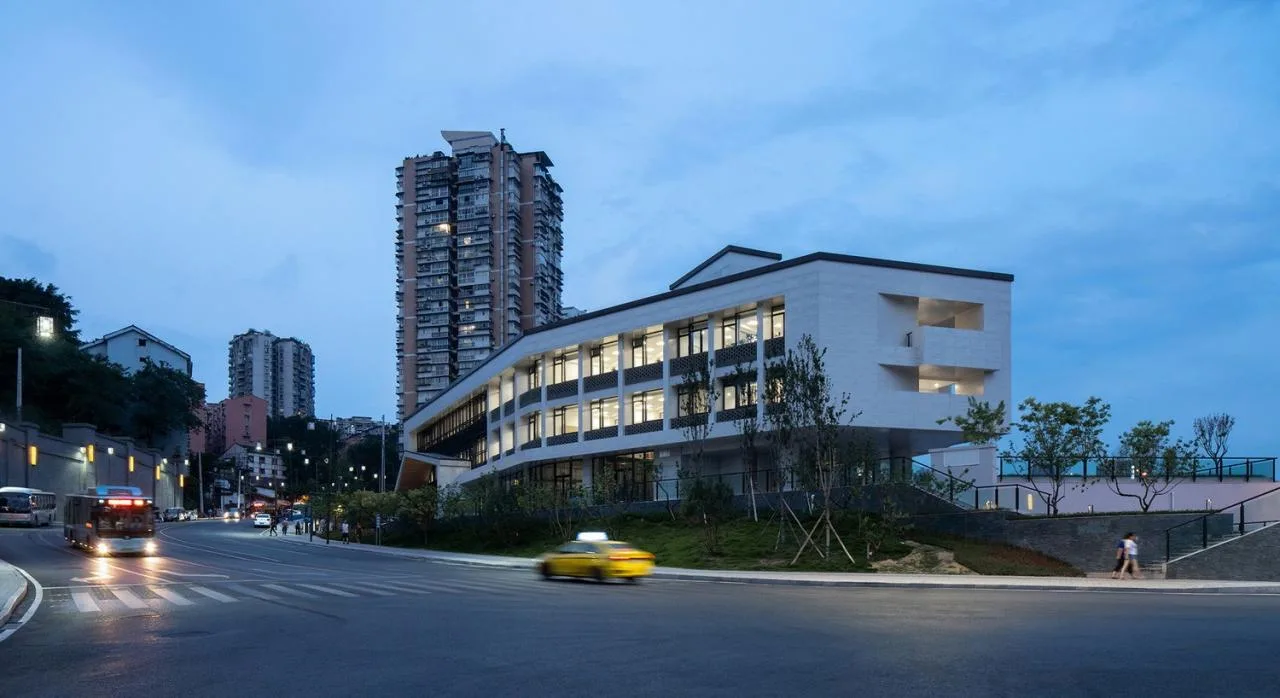
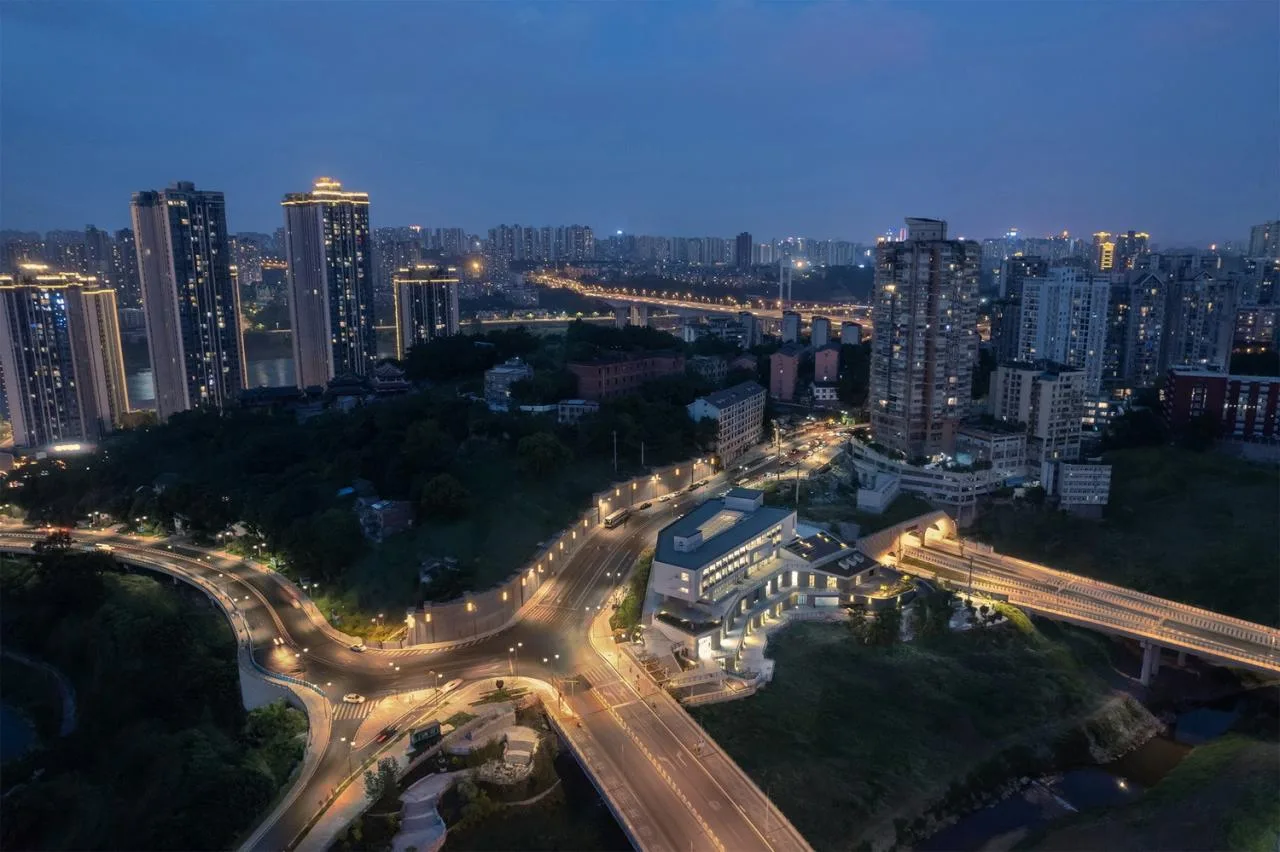
The site is an irregular, compact terrace with a 14-meter height difference between its northern and southern edges. It is surrounded by ancient towns, green mountains, streams, factories, and residential areas. The design cleverly interweaves visible and hidden elements by dividing the building into three parts. The lower rubble base is integrated into the mountain, creating a concealed five-story volume. Above, a geometric form stands prominently as the city hall, while a single-layer glass section in the middle moves vertically in unison. This interplay between visible and hidden elements anchors the building harmoniously within its mountainous environment, achieving a balanced scale and volume.
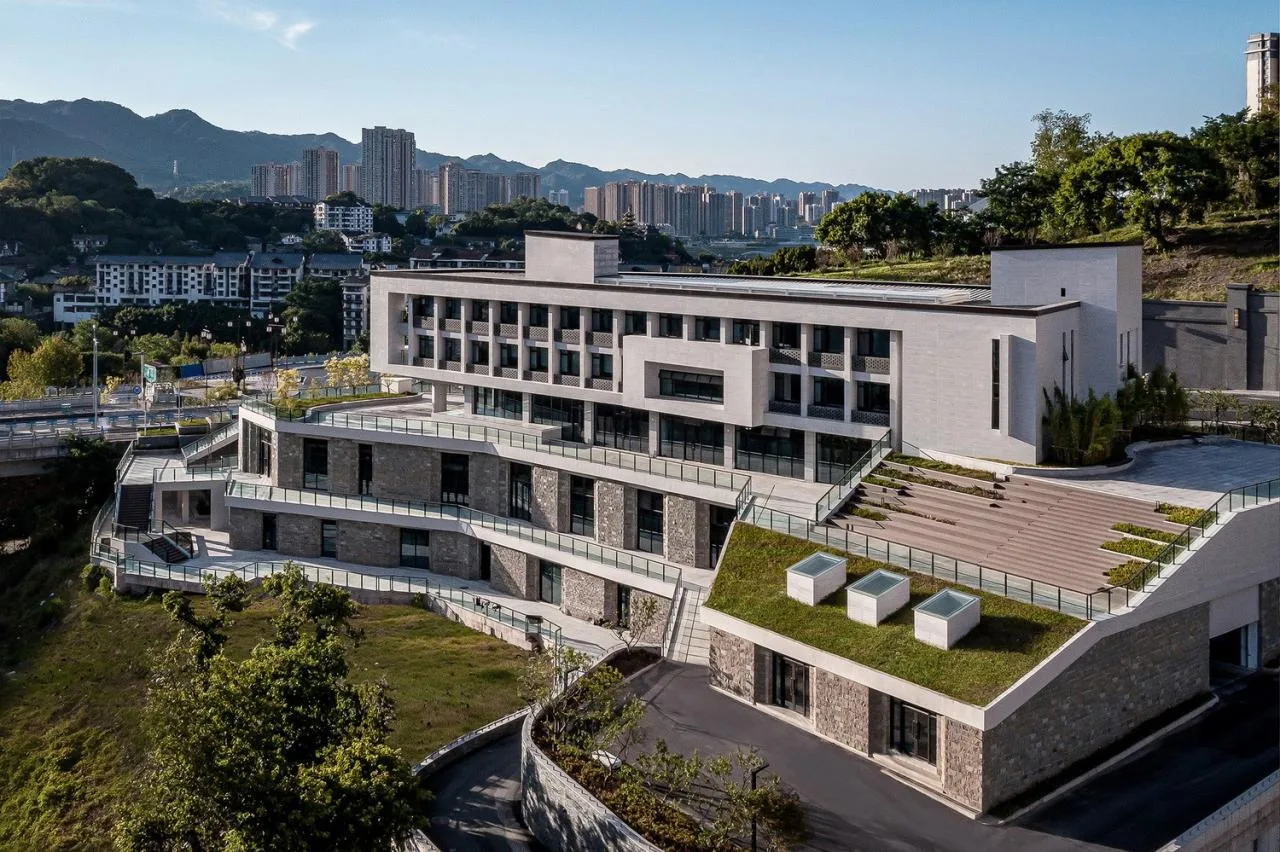
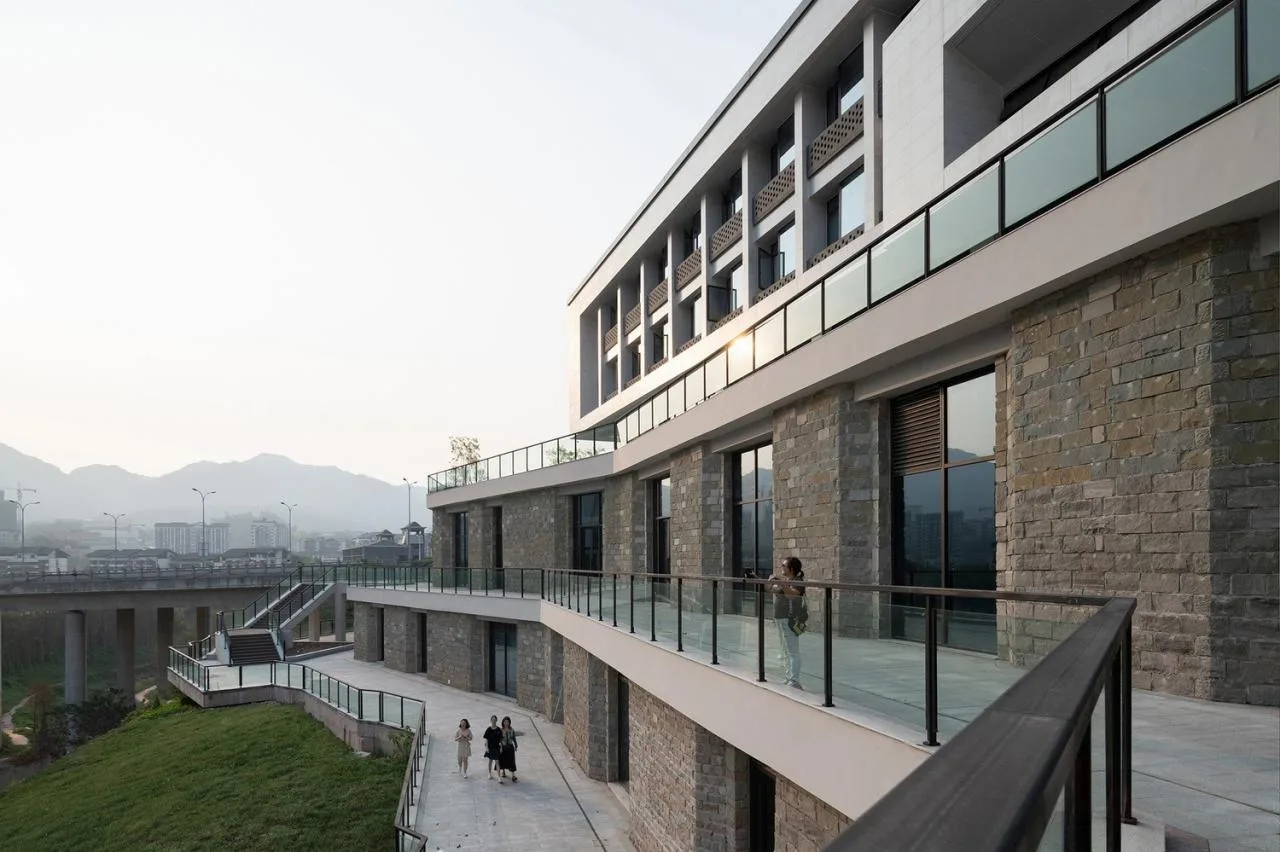
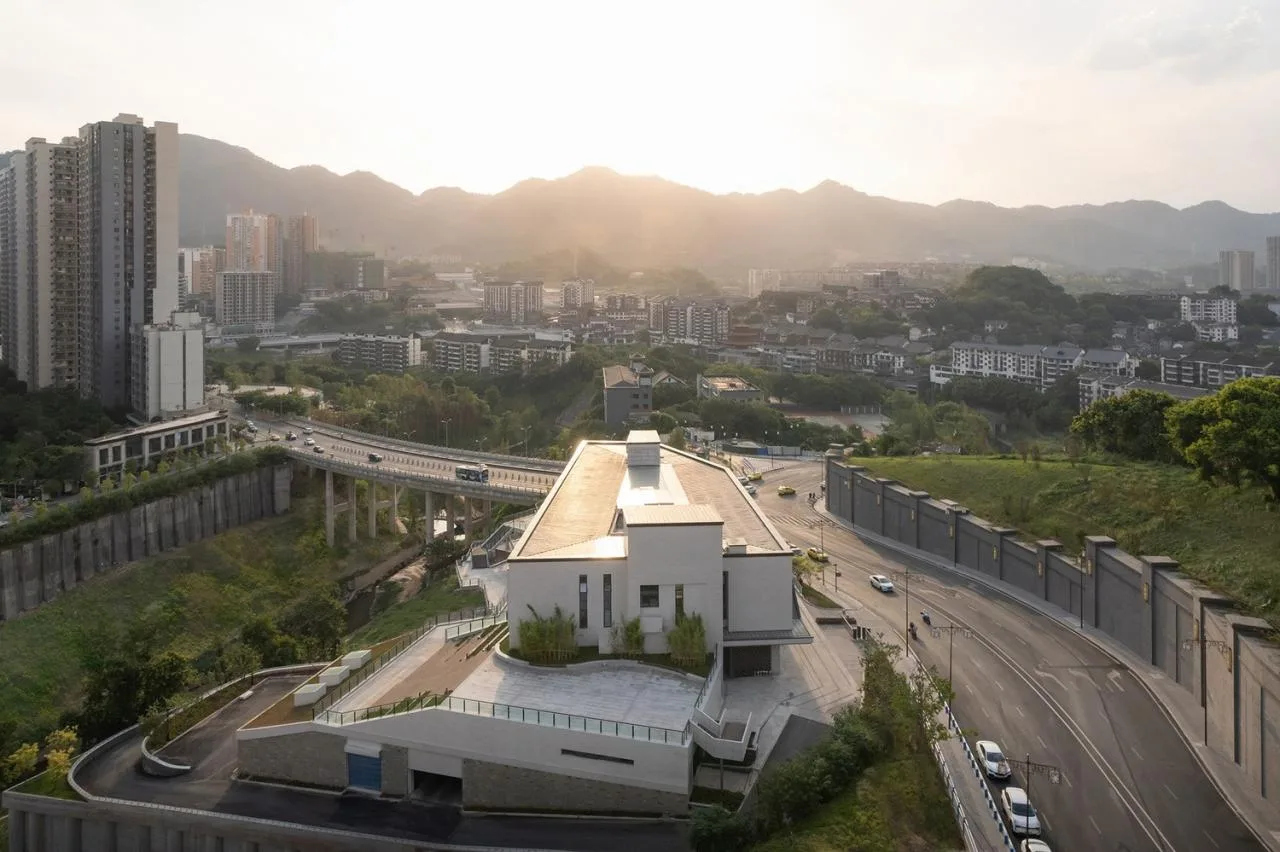
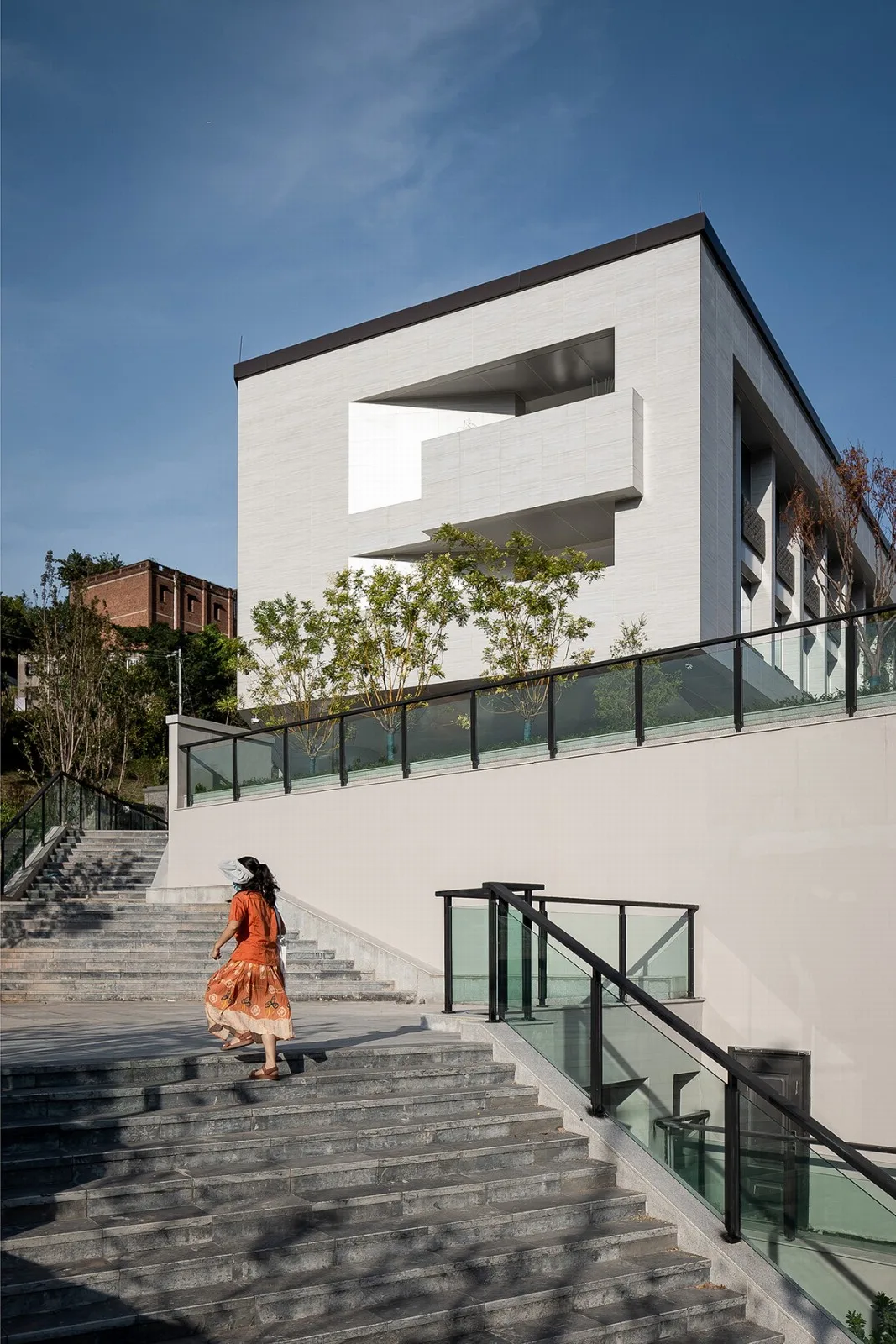
Inspired by the mountainous surroundings, the building features a three-level stepped design that descends gradually. It connects with stairs and platforms on either side, forming a three-dimensional viewing path that creates a captivating spatial experience. This pathway is also designed for efficient traffic flow, guiding visitors through four different elevation levels and establishing a dynamic, interconnected public space.
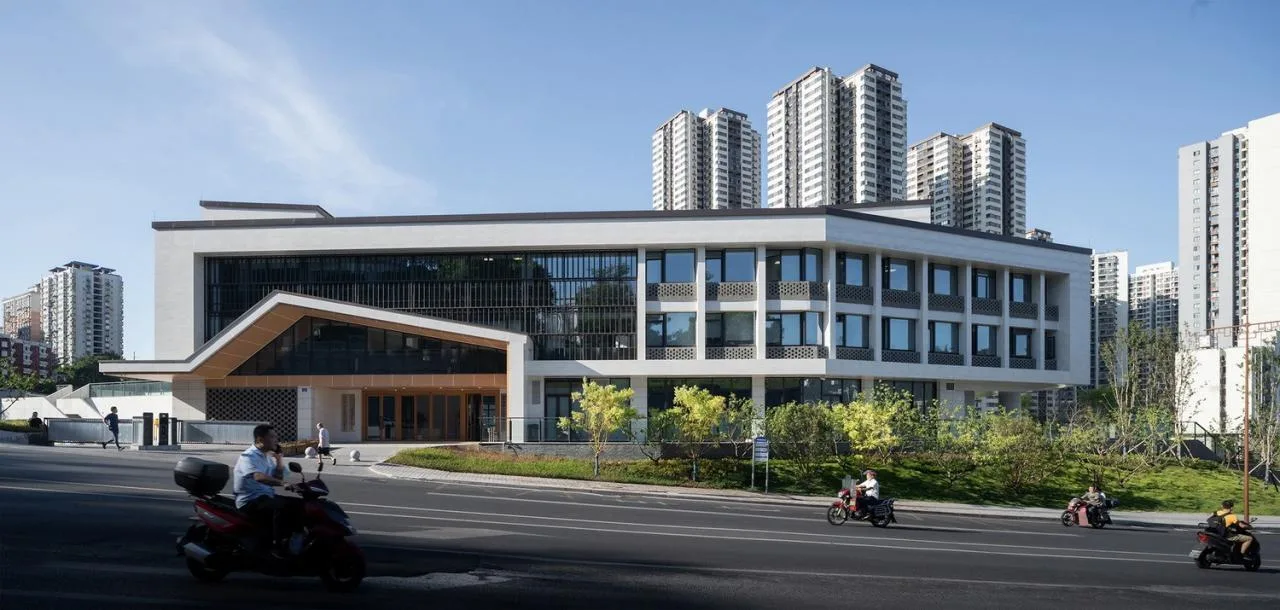
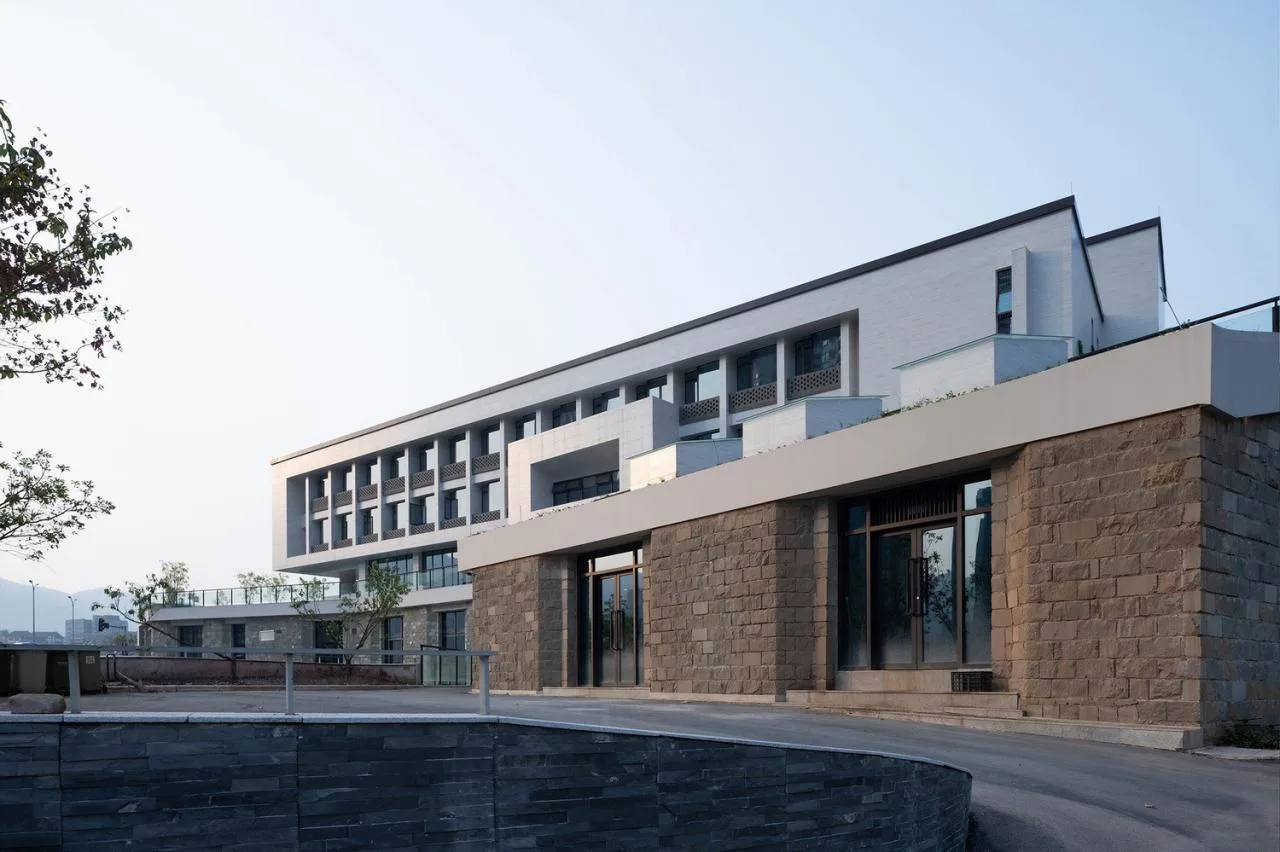
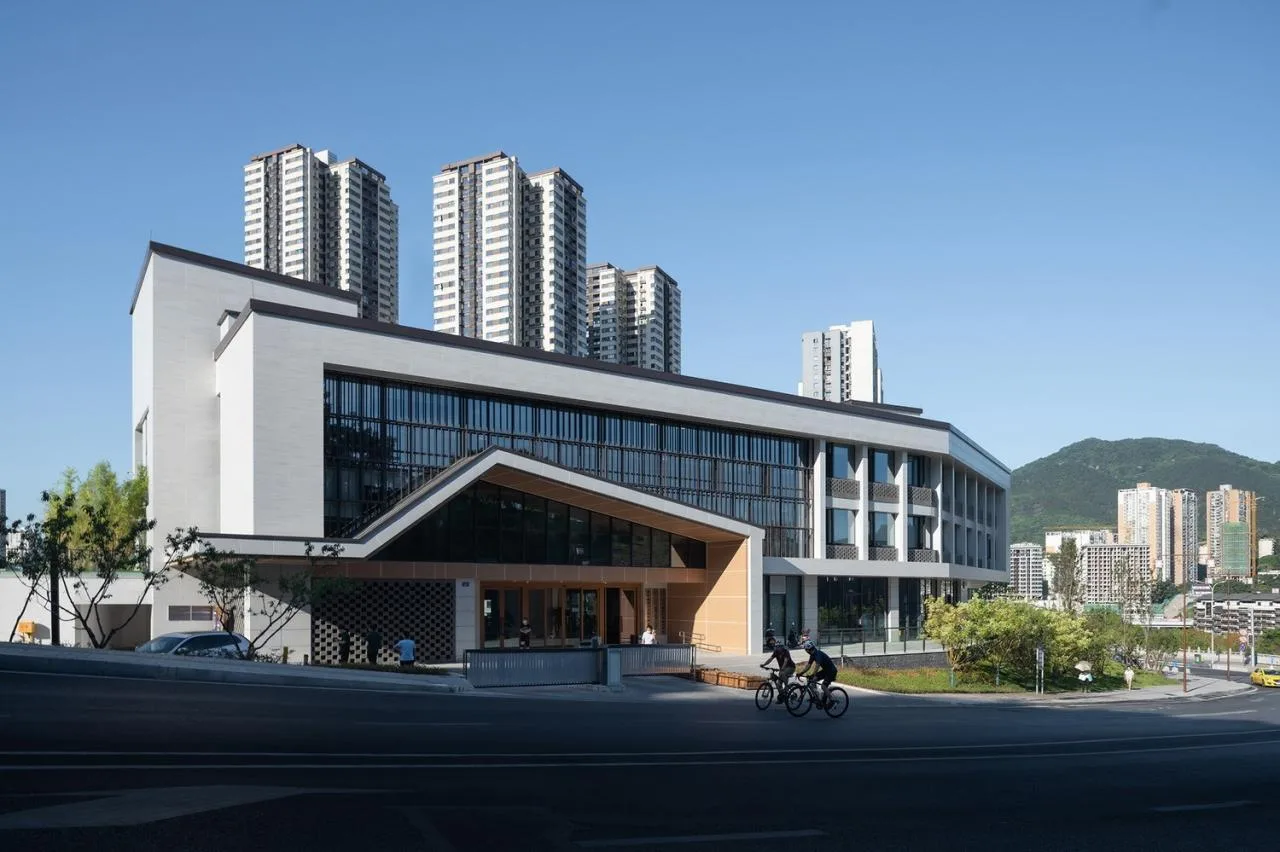
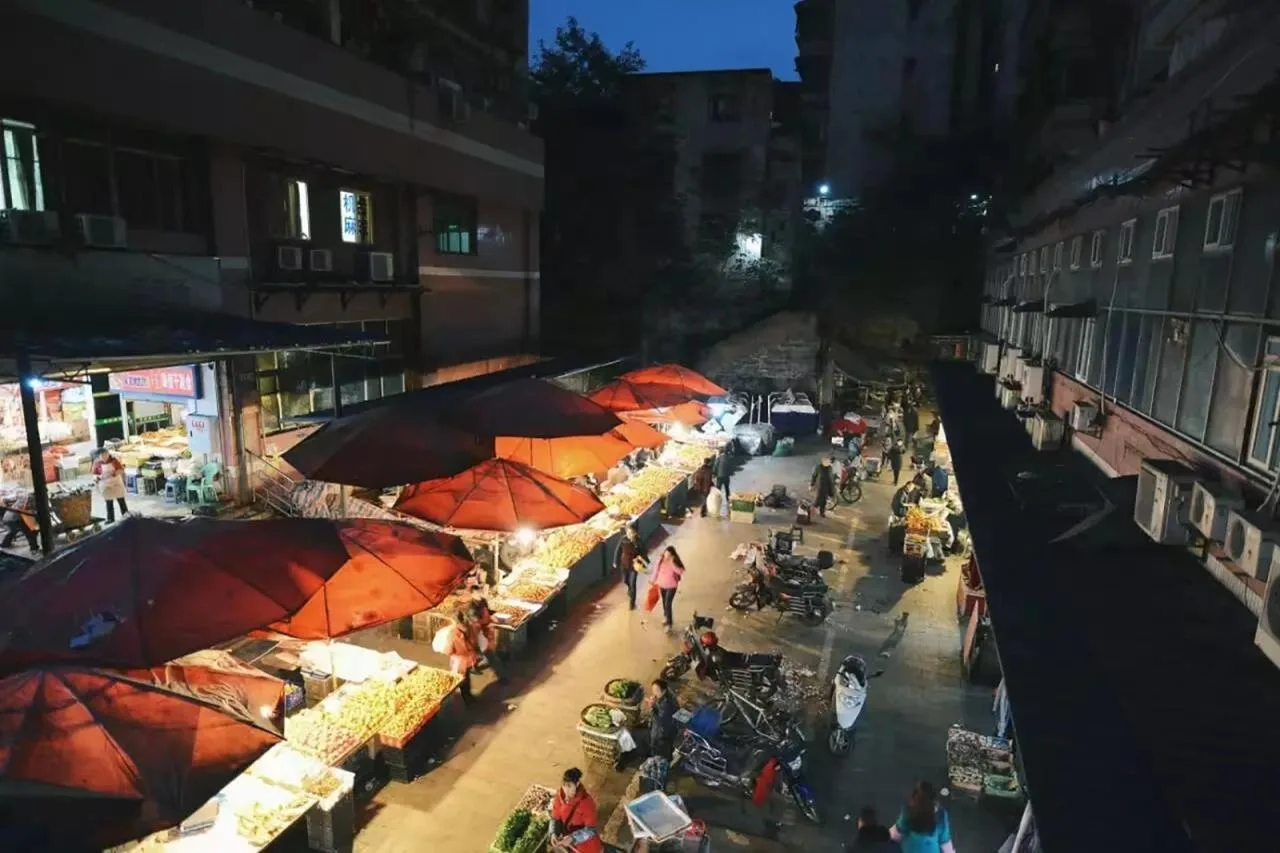
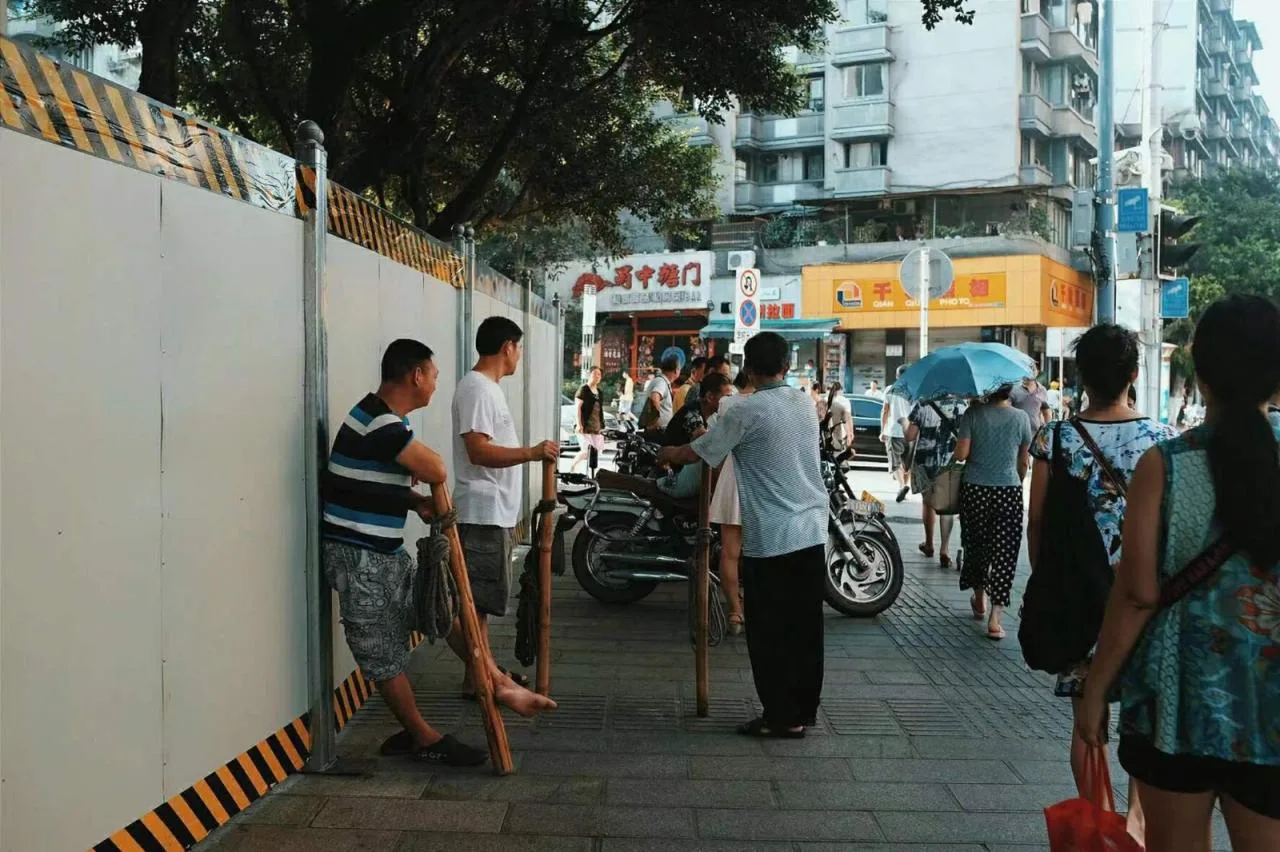
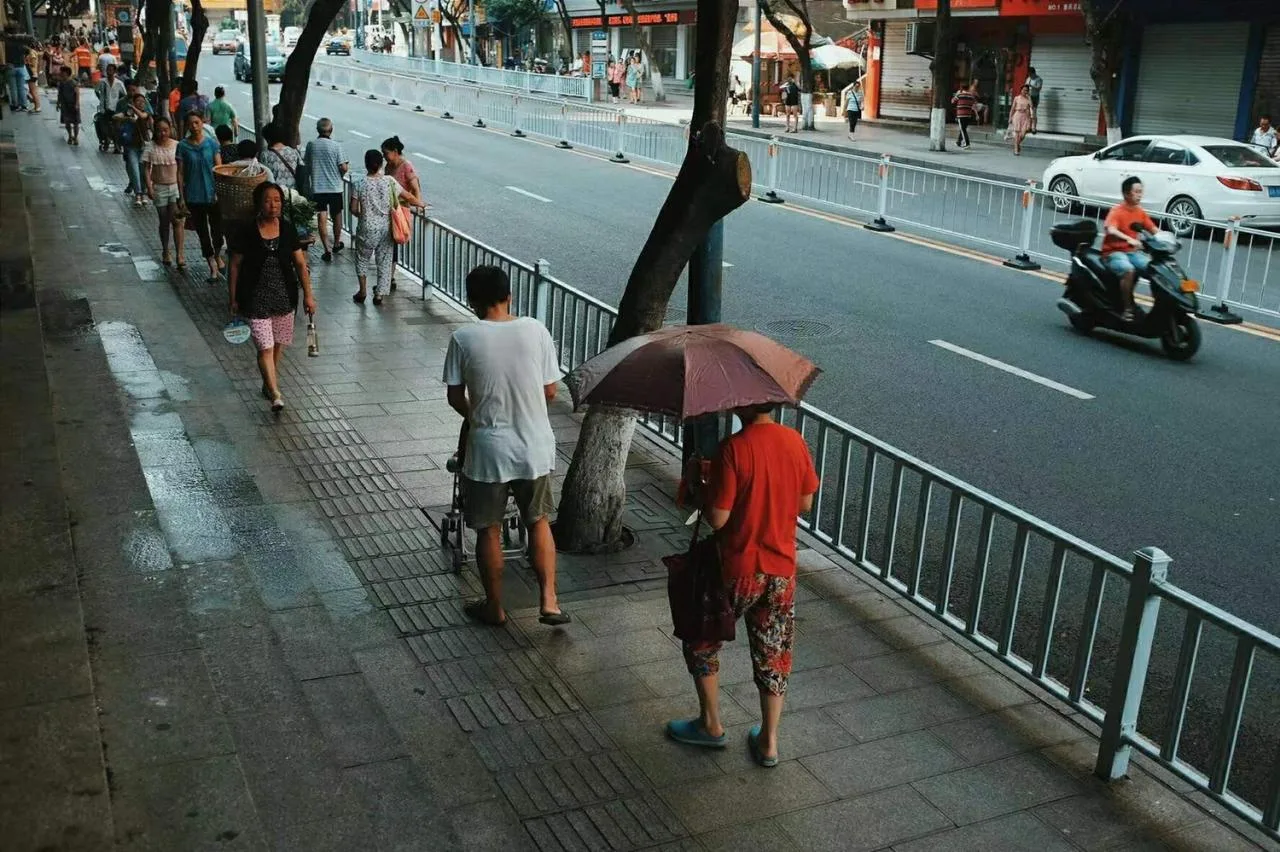
The numerous outdoor spaces emphasize openness and everyday use, highlighting the building’s role as a public facility. Citizens can stroll, gather, and exercise in the eastern staircase area, the rooftop terrace, and the three-story setback platform on the south side. For the community, the Ciqikou Service Center serves as a vibrant venue for daily activities.
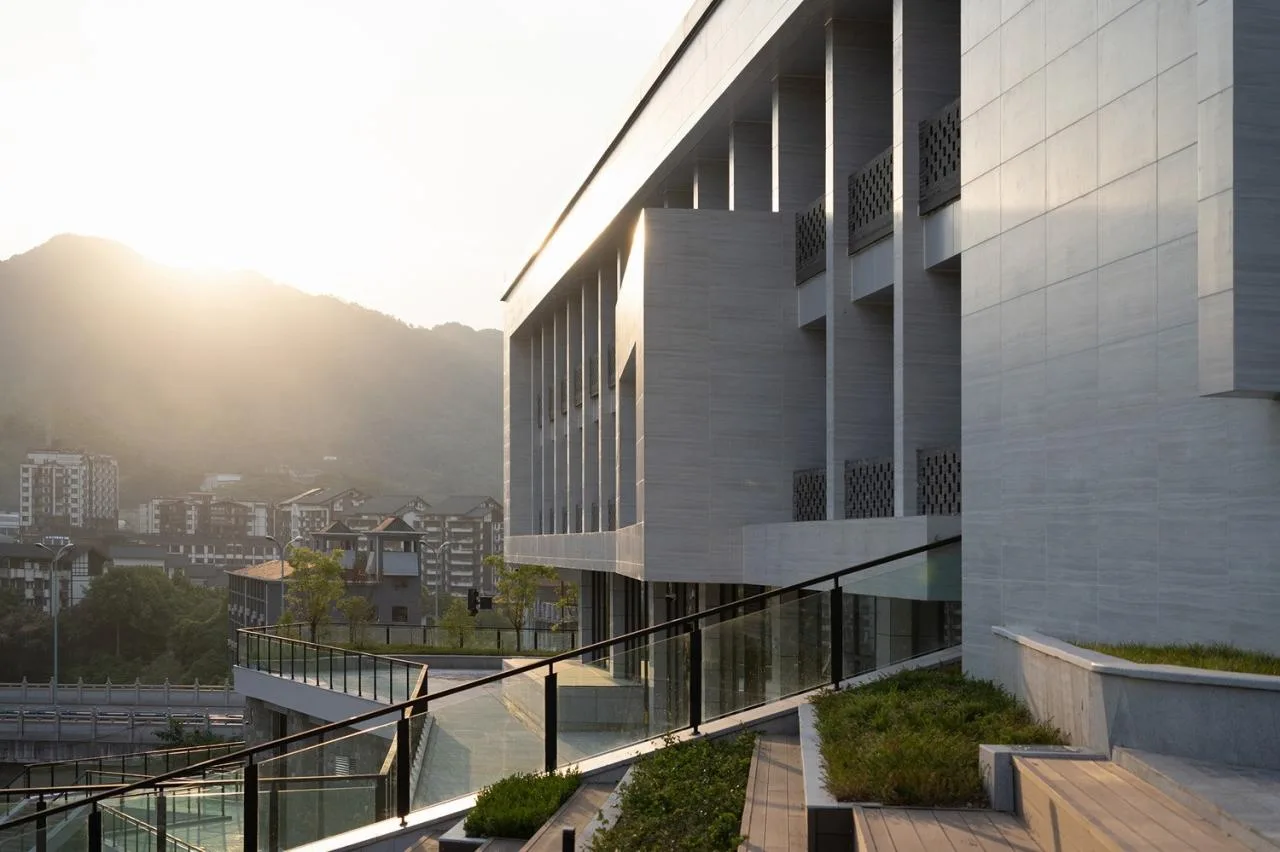
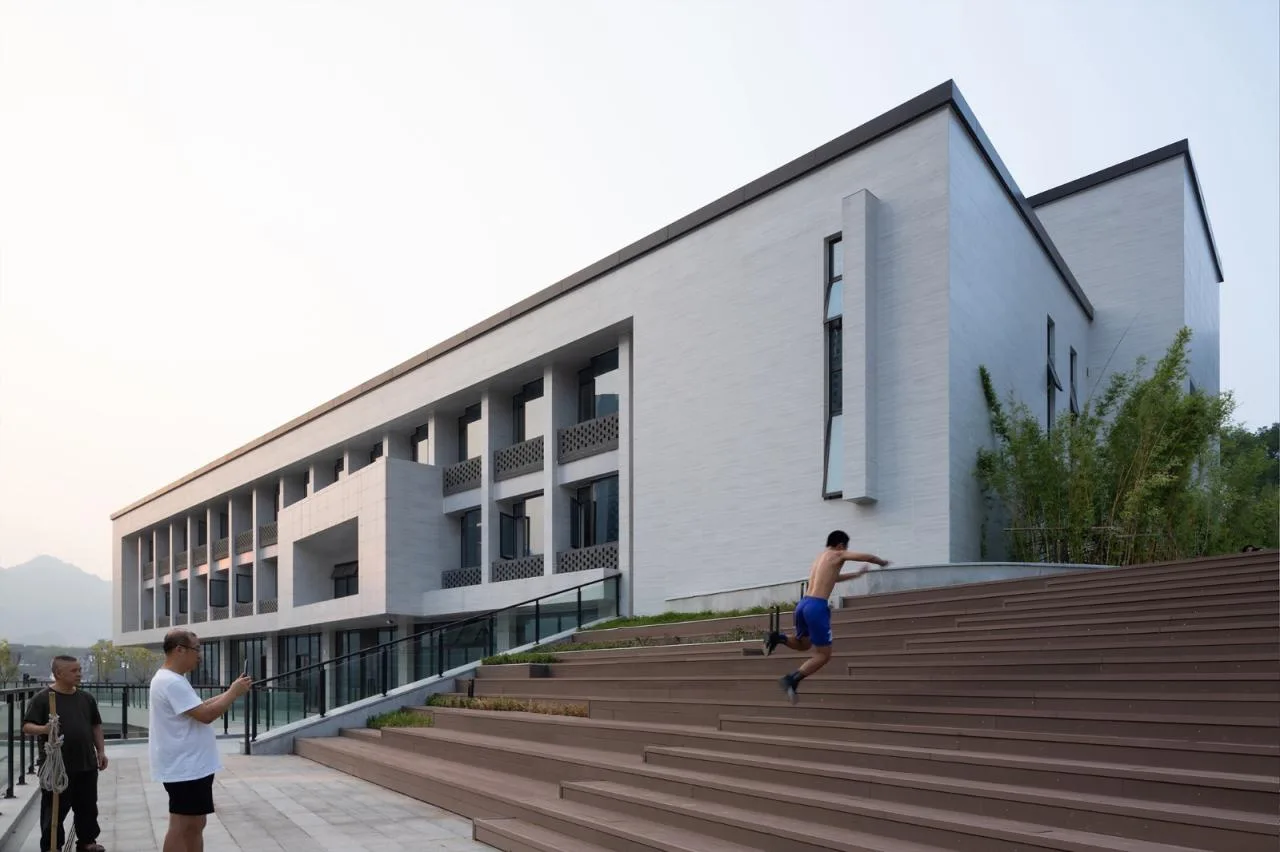
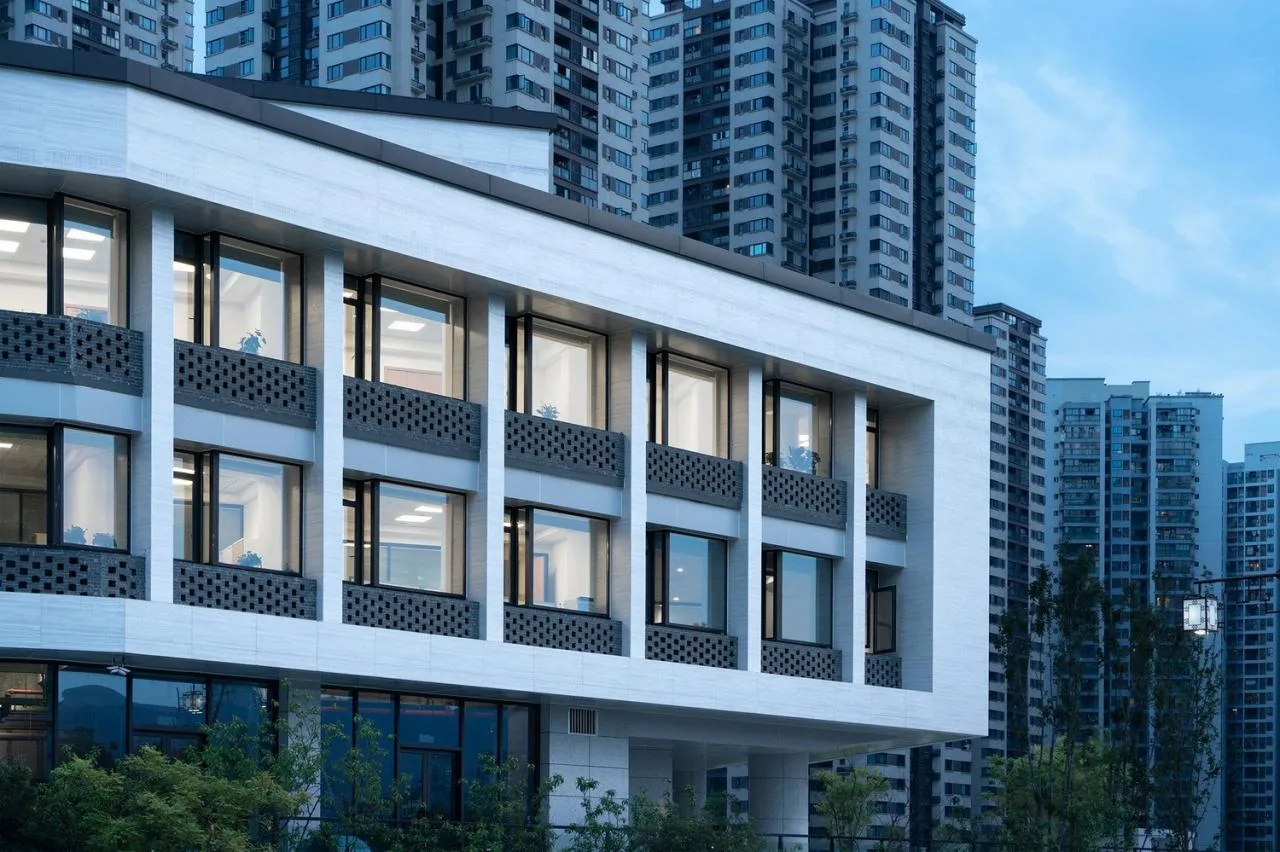
The building’s multi-level, stacked layout organizes functions according to their public accessibility. The first and second floors accommodate various service halls, staff dining areas, and support facilities, while the second and third floors provide office spaces. This layered design introduces mezzanine lecture halls, trapezoidal courtyards, large staircases, and cantilevered conference rooms to address diverse spatial needs.
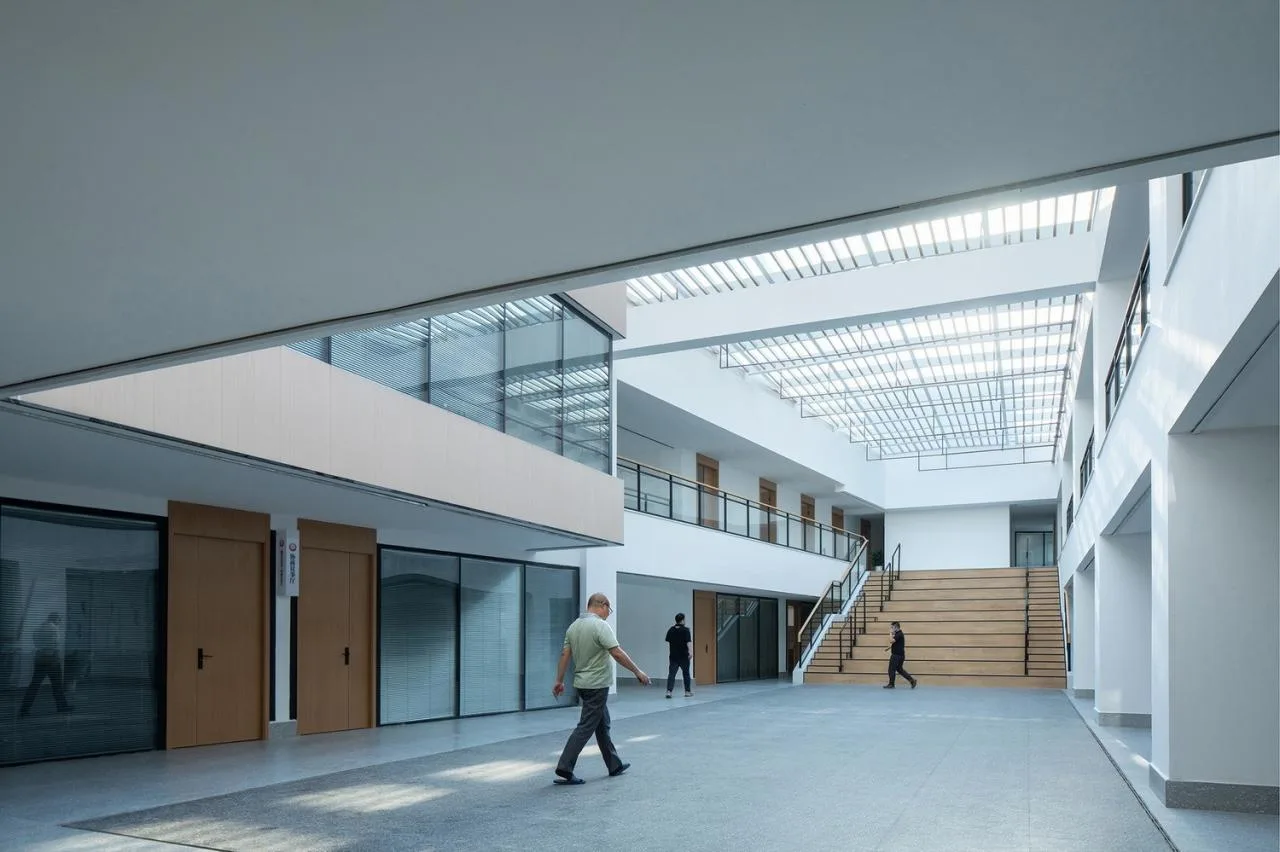
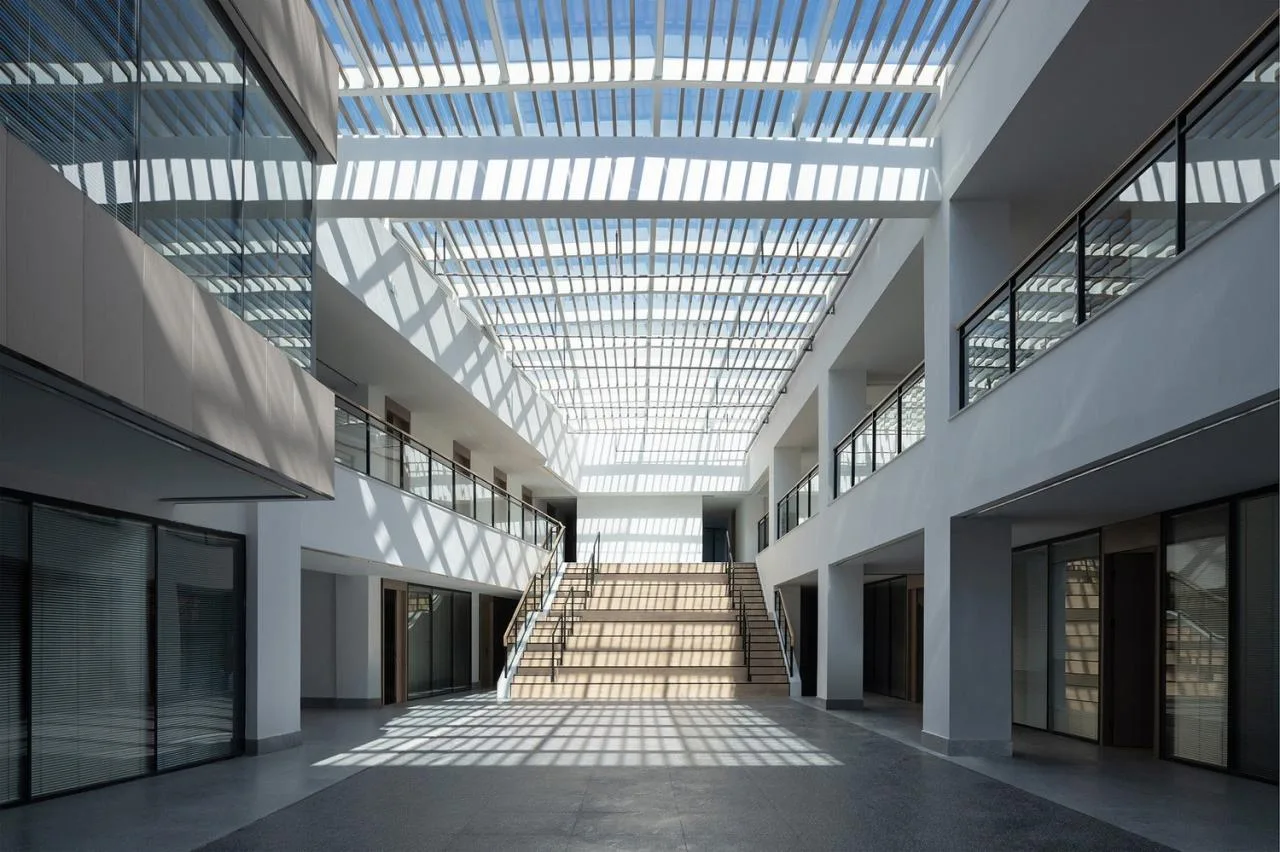
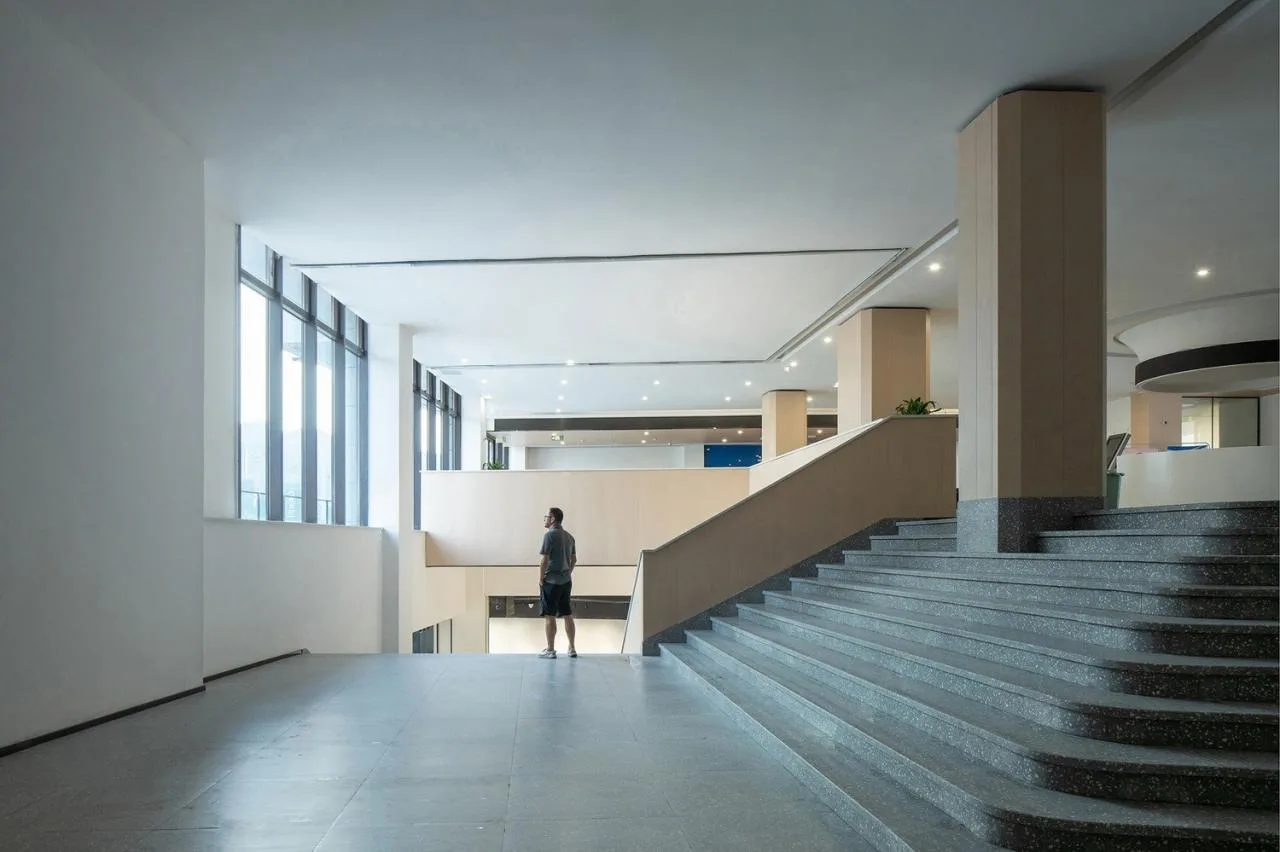
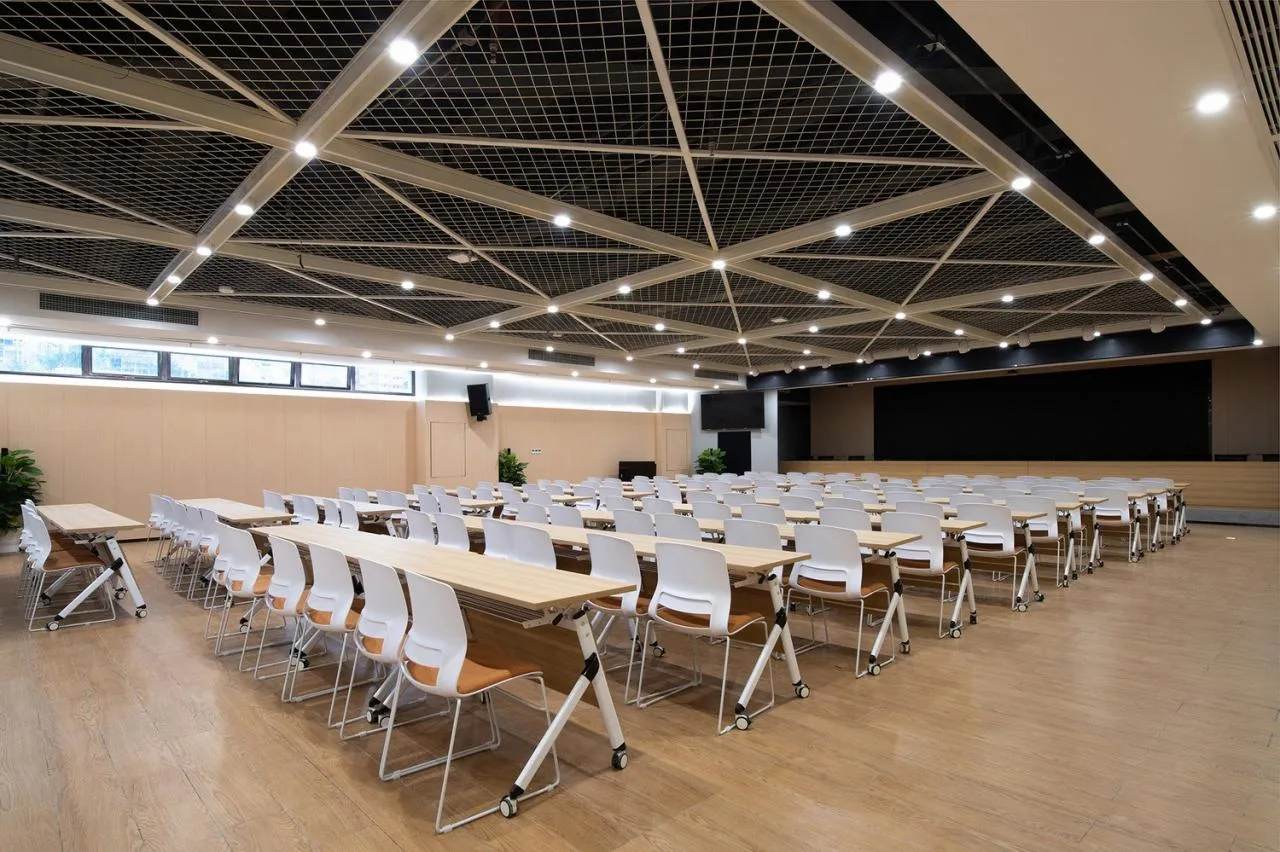
The Public and Magnet Mouth Service Center represents a deliberate departure from the traditional “prototype” government building. Rather than a flamboyant landmark, it is a grassroots government service complex designed to meet practical needs. Without exceeding the typical cost per square meter of similar buildings, it fully expresses its comprehensive and everyday nature, remaining accessible to all citizens.
Project Drawings
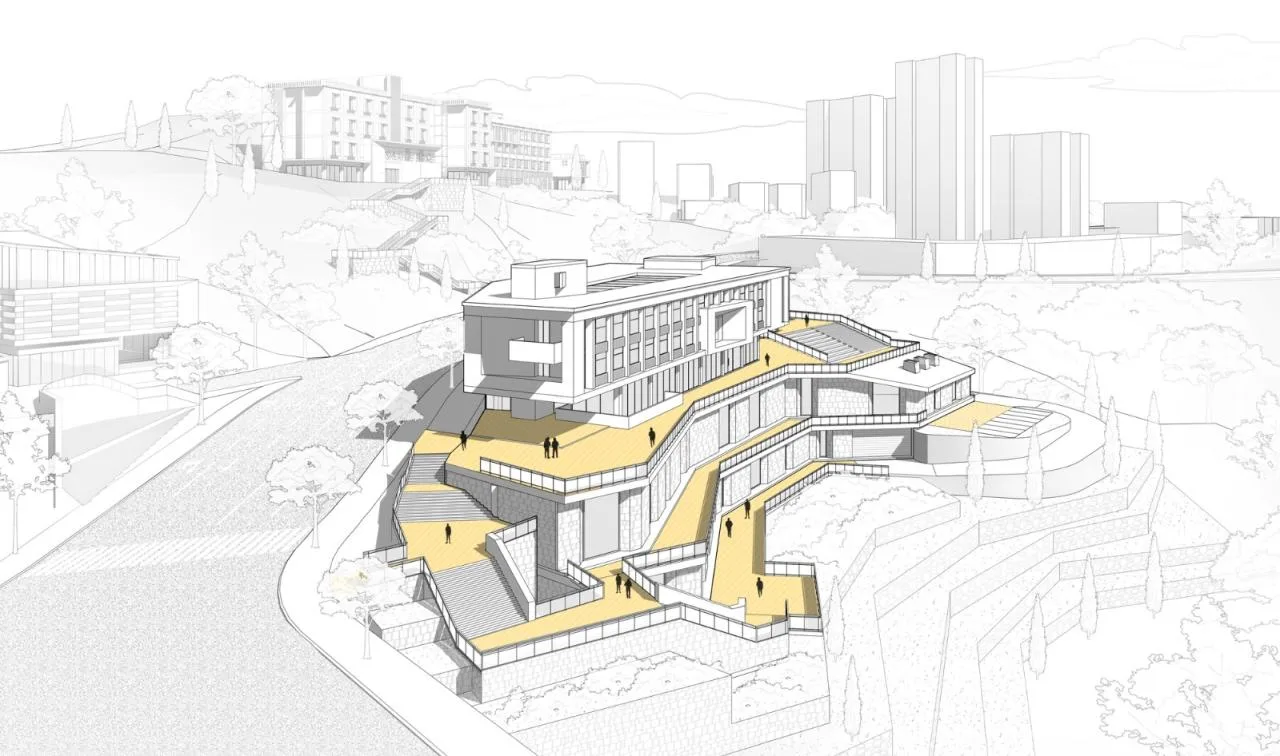
△ Perspective View
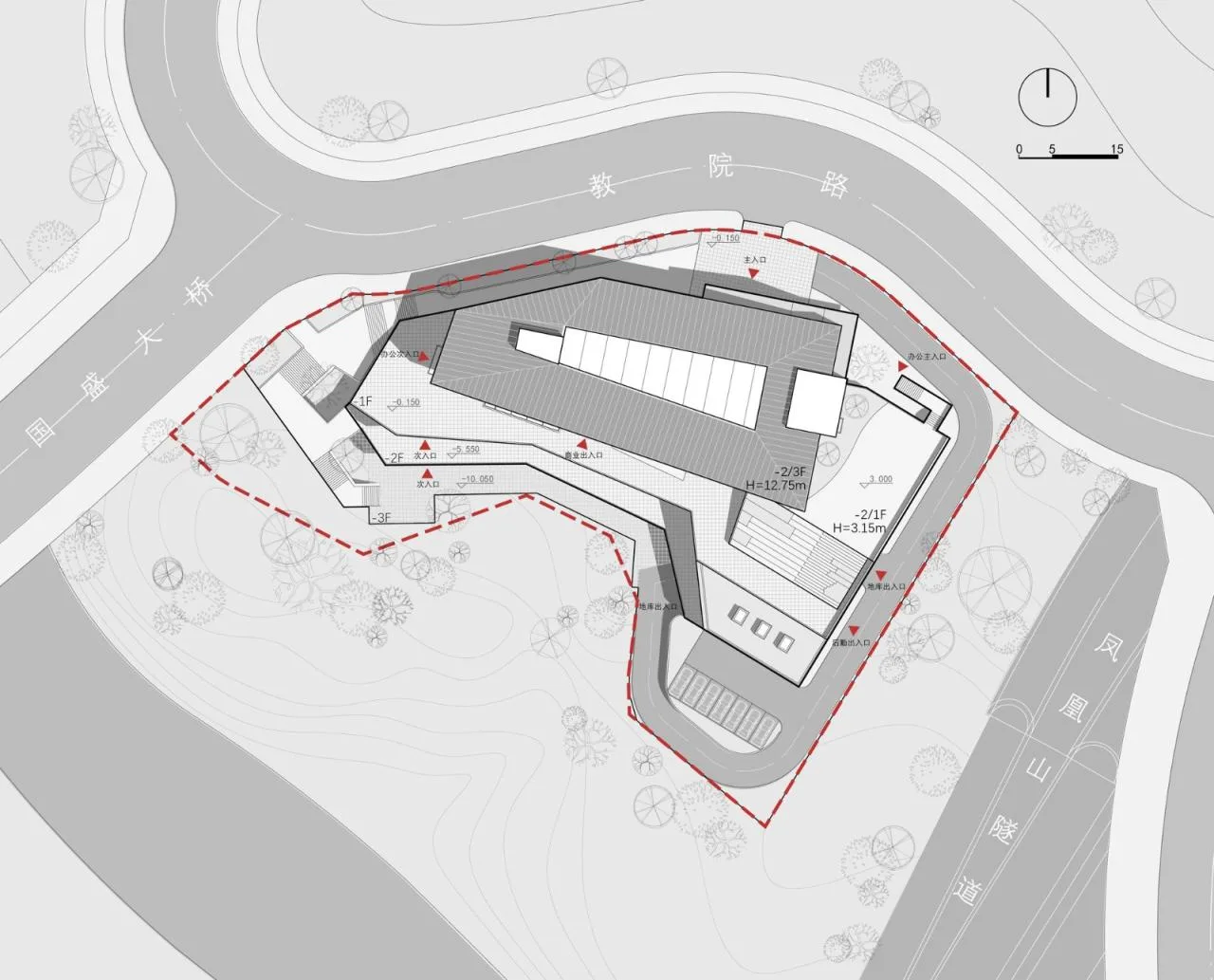
△ General Layout Plan
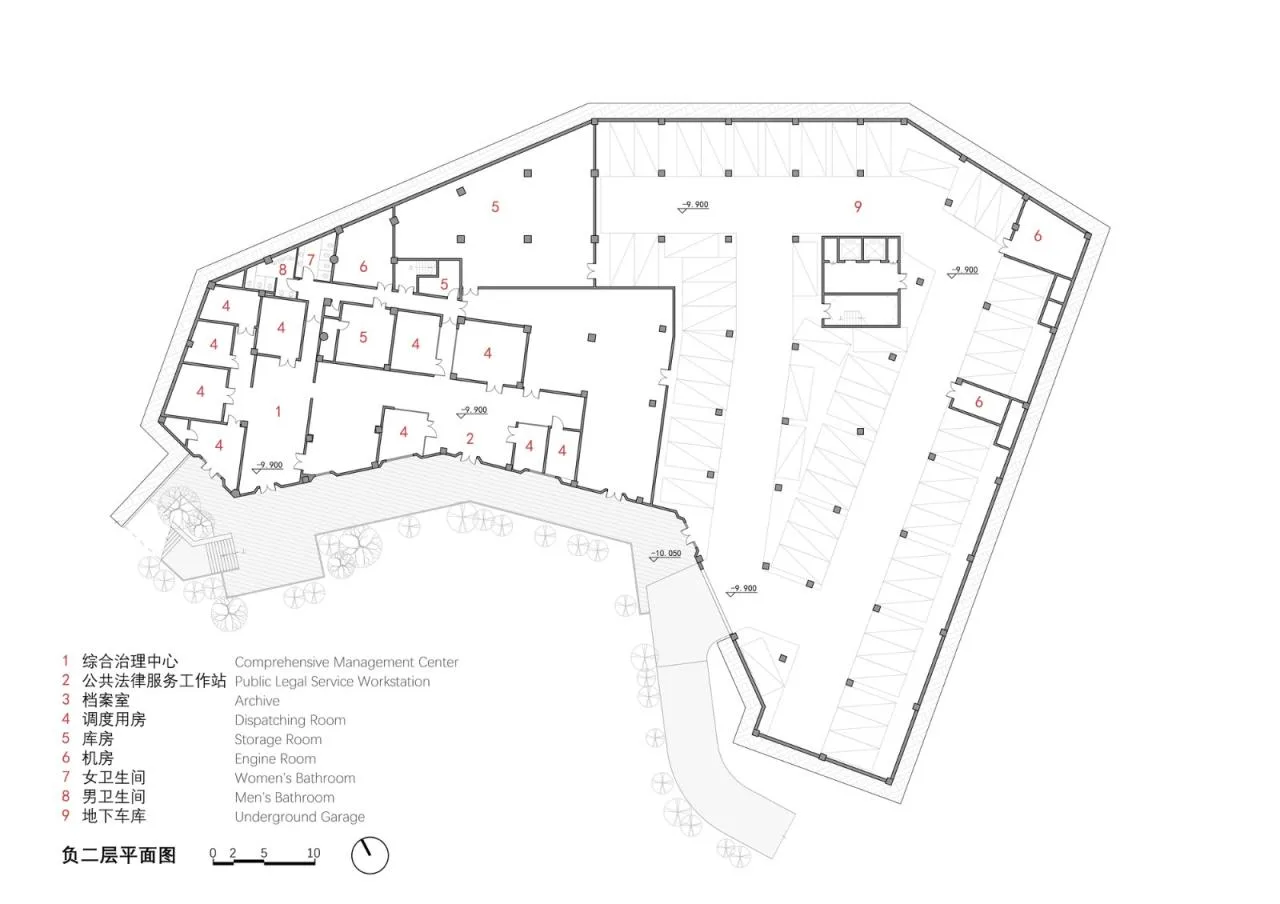
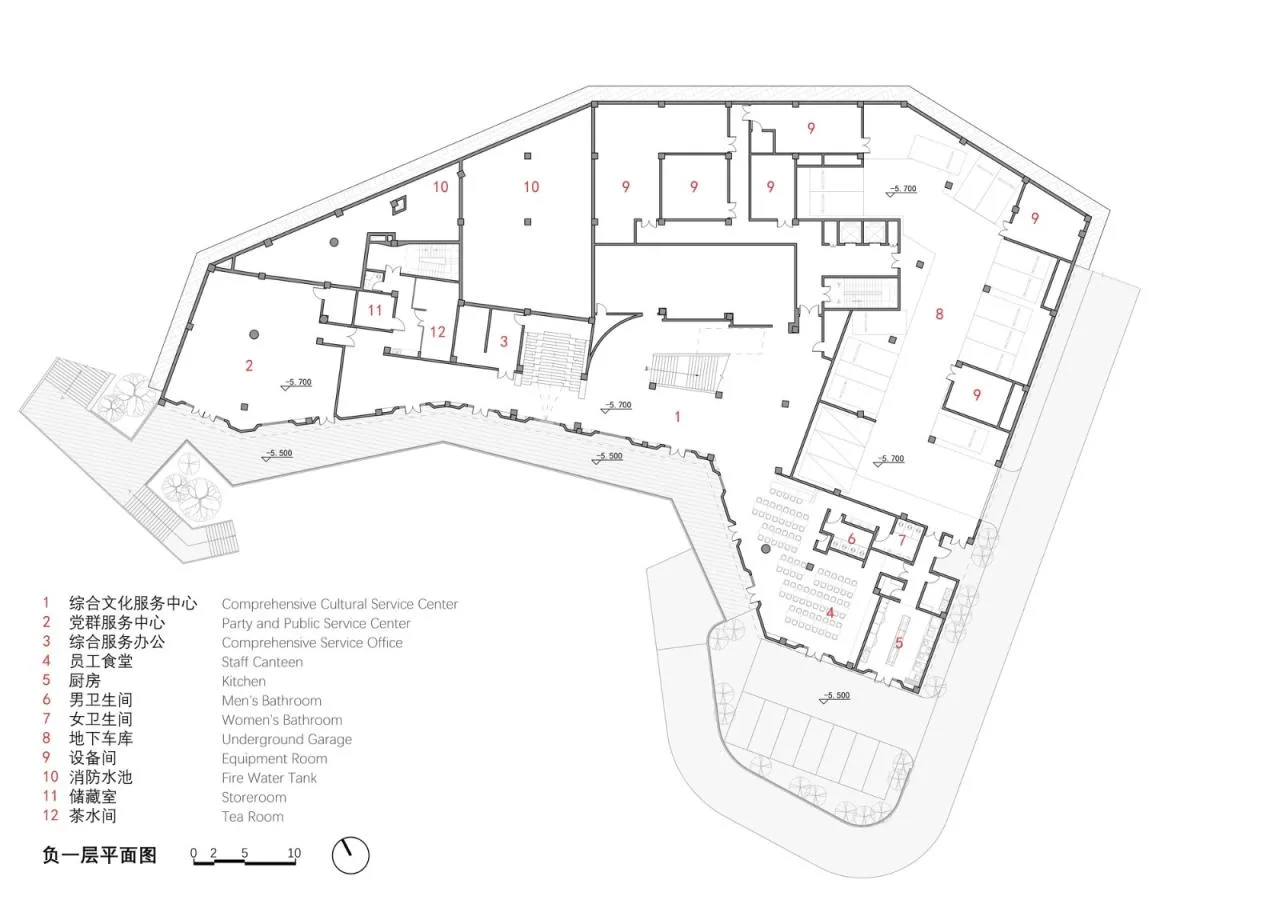
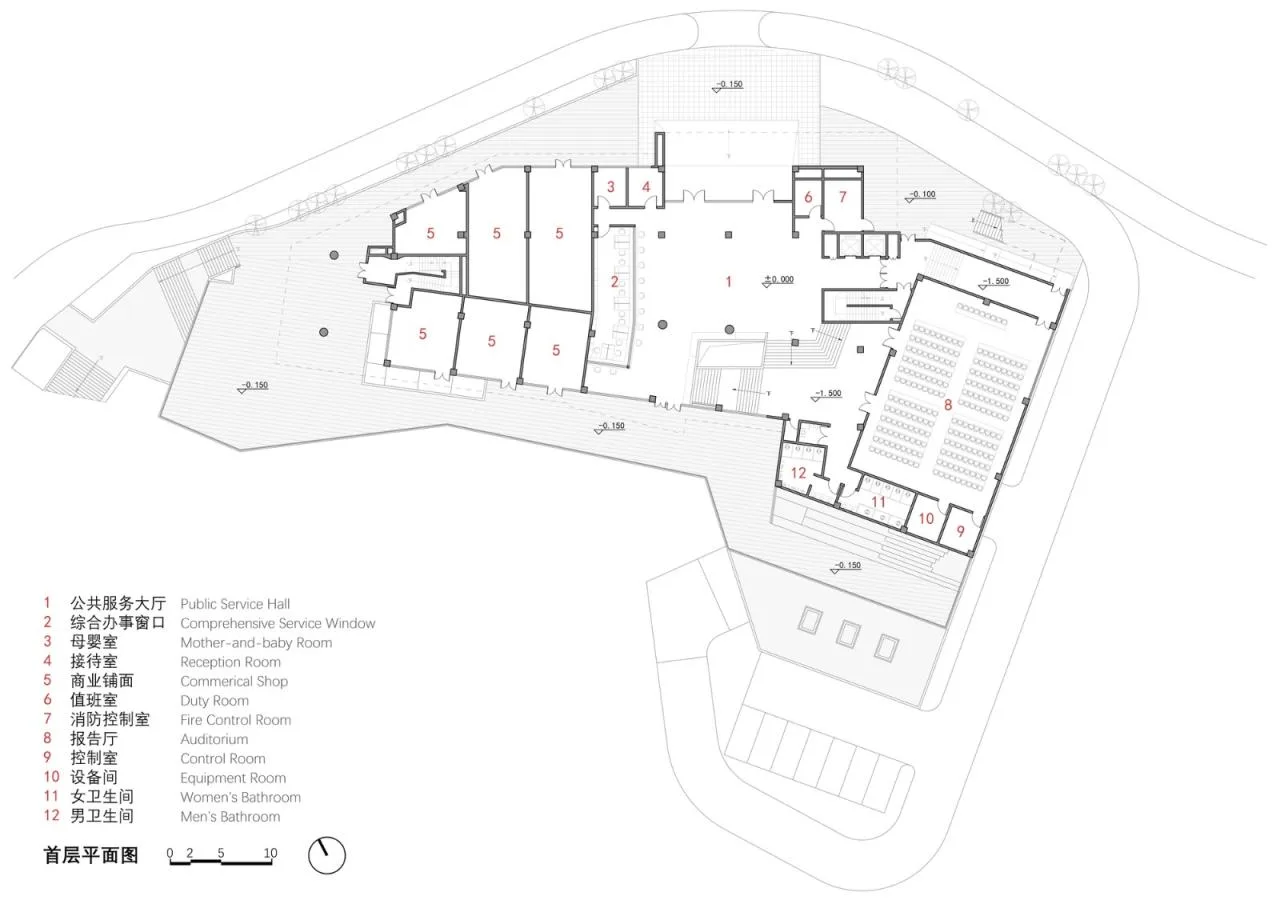
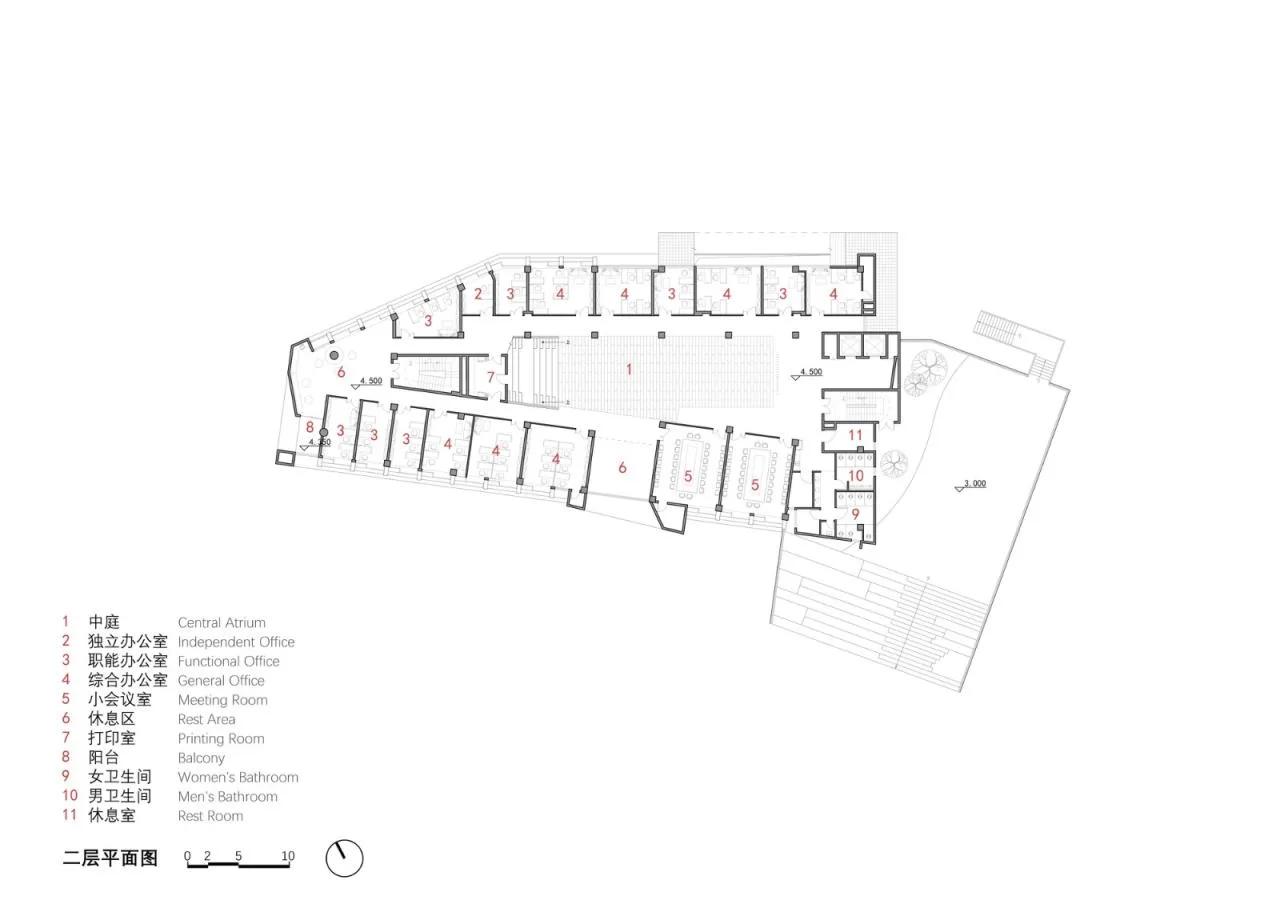
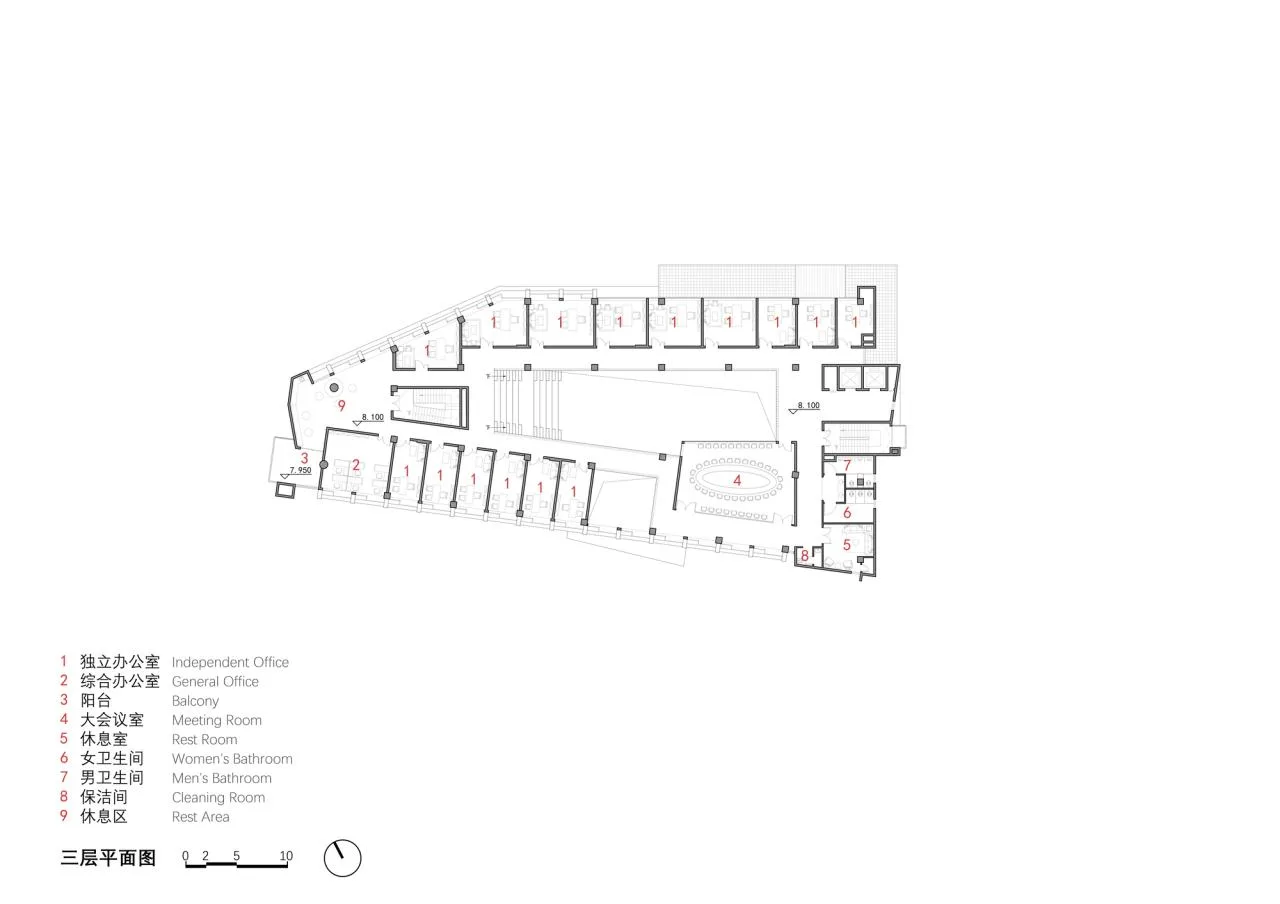
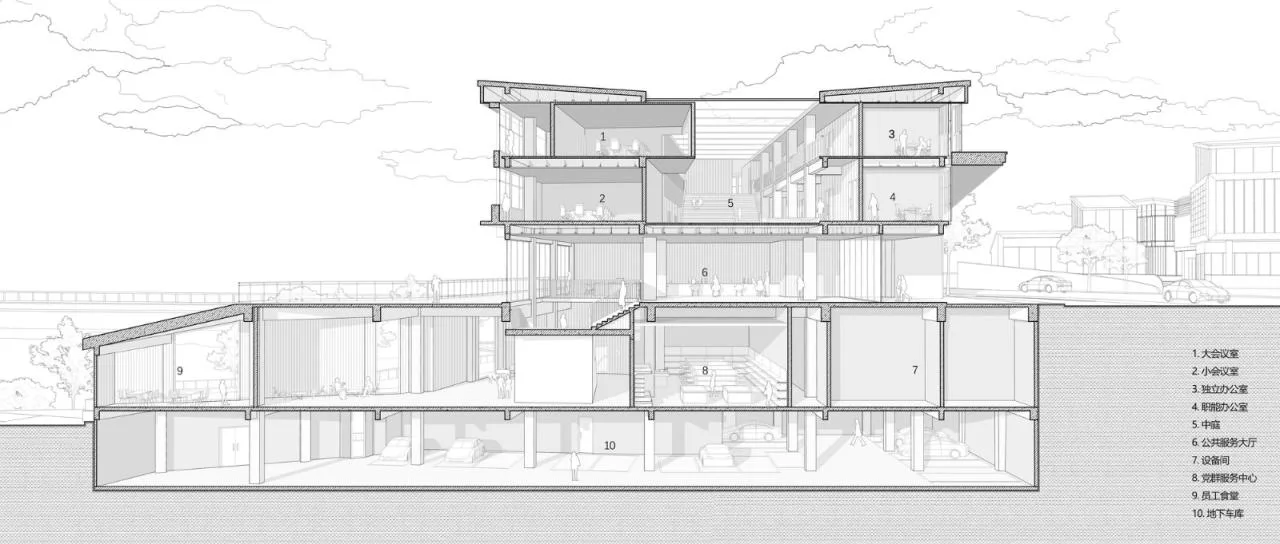
△ Sectional Perspective
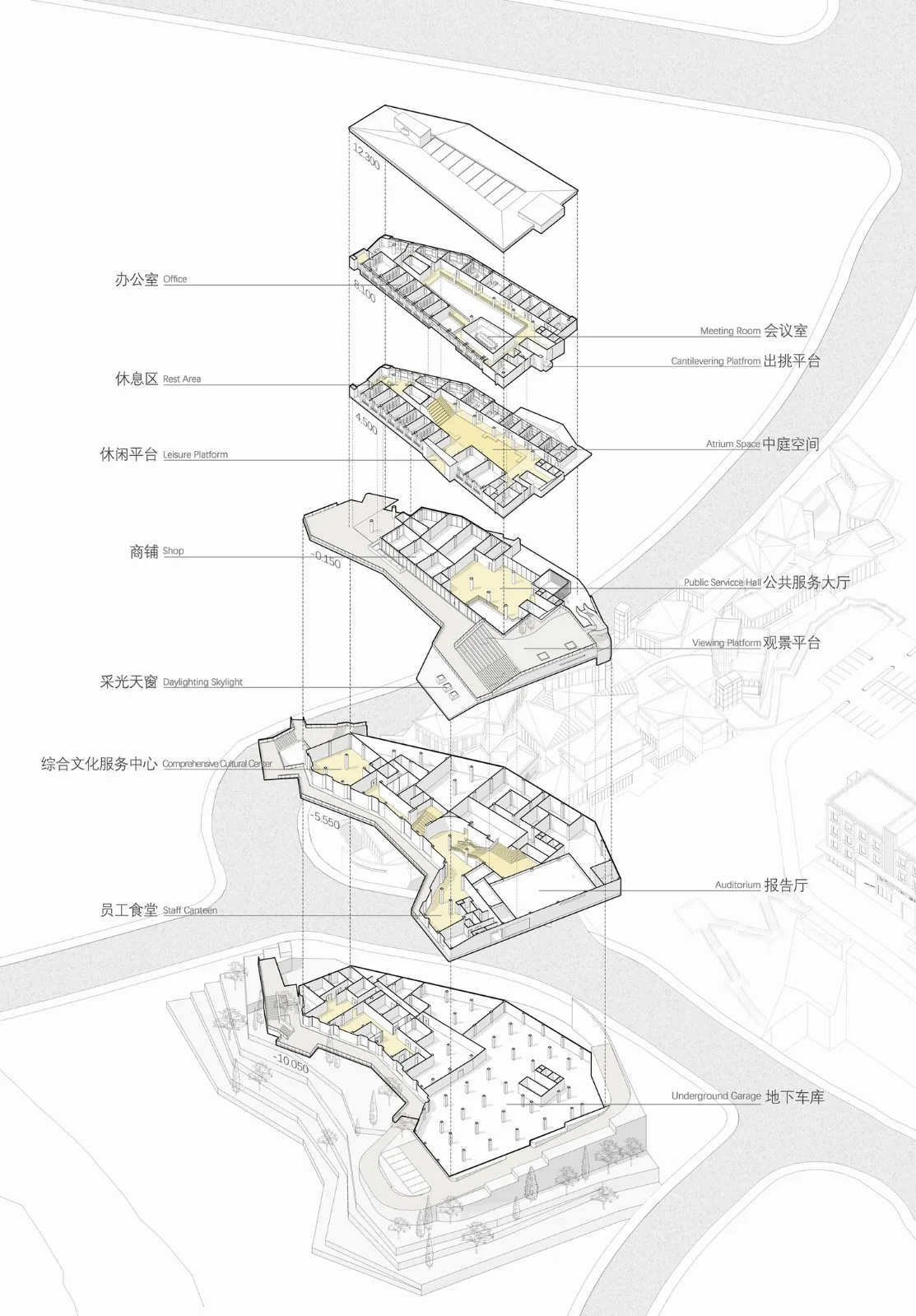
△ Exploded Diagram
Project Information
Architect: Yueji Architecture
Area: 10,393 m²
Project Year: 2022
Photographers: Chang Wenyu, PrismImage, Tian Qi
Lead Designers: Tian Qi, He Biao, Li Jun
Design Team: Wan Liangqing, Li Tao, Dan Chenghu, Xie Chengping, Xu Xiangdong, Yuan Wenguang, Wu Meng, Wang Yuedong, Chen Wei, Weng Yuzhan (intern)
Construction: Chongqing Construction Seventh Construction Engineering Co., Ltd.
Project Principal: Chongqing Xuchen Industrial Development Group Co., Ltd.
Location: Chongqing, China















Must log in before commenting!
Sign Up